aae2016 Research Based Education - Volume Two
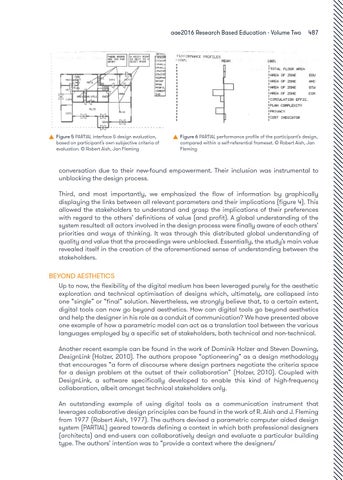
Figure 5 PARTIAL interface & design evaluation, based on participant’s own subjective criteria of evaluation. © Robert Aish, Jan Fleming
487
Figure 6 PARTIAL performance profile of the participant’s design, compared within a self-referential frameset. © Robert Aish, Jan Fleming
conversation due to their new-found empowerment. Their inclusion was instrumental to unblocking the design process. Third, and most importantly, we emphasized the flow of information by graphically displaying the links between all relevant parameters and their implications (figure 4). This allowed the stakeholders to understand and grasp the implications of their preferences with regard to the others’ definitions of value (and profit). A global understanding of the system resulted: all actors involved in the design process were finally aware of each others’ priorities and ways of thinking. It was through this distributed global understanding of quality and value that the proceedings were unblocked. Essentially, the study’s main value revealed itself in the creation of the aforementioned sense of understanding between the stakeholders.
BEYOND AESTHETICS Up to now, the flexibility of the digital medium has been leveraged purely for the aesthetic exploration and technical optimisation of designs which, ultimately, are collapsed into one “single” or “final” solution. Nevertheless, we strongly believe that, to a certain extent, digital tools can now go beyond aesthetics. How can digital tools go beyond aesthetics and help the designer in his role as a conduit of communication? We have presented above one example of how a parametric model can act as a translation tool between the various languages employed by a specific set of stakeholders, both technical and non-technical. Another recent example can be found in the work of Dominik Holzer and Steven Downing, DesignLink (Holzer, 2010). The authors propose “optioneering” as a design methodology that encourages “a form of discourse where design partners negotiate the criteria space for a design problem at the outset of their collaboration” (Holzer, 2010). Coupled with DesignLink, a software specifically developed to enable this kind of high-frequency collaboration, albeit amongst technical stakeholders only. An outstanding example of using digital tools as a communication instrument that leverages collaborative design principles can be found in the work of R. Aish and J. Fleming from 1977 (Robert Aish, 1977). The authors devised a parametric computer aided design system (PARTIAL) geared towards defining a context in which both professional designers (architects) and end-users can collaboratively design and evaluate a particular building type. The authors’ intention was to “provide a context where the designers/