aae2016 Research Based Education - Volume Two
345
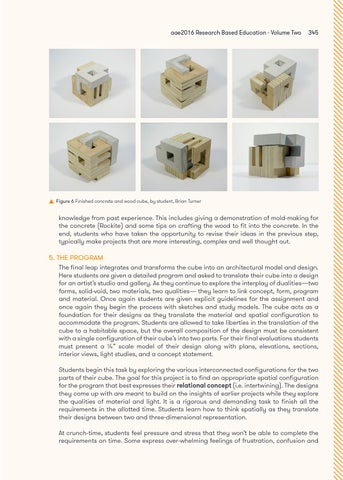
Figure 6 Finished concrete and wood cube, by student, Brian Turner
knowledge from past experience. This includes giving a demonstration of mold-making for the concrete (Rockite) and some tips on crafting the wood to fit into the concrete. In the end, students who have taken the opportunity to revise their ideas in the previous step, typically make projects that are more interesting, complex and well thought out.
5. THE PROGRAM The final leap integrates and transforms the cube into an architectural model and design. Here students are given a detailed program and asked to translate their cube into a design for an artist’s studio and gallery. As they continue to explore the interplay of dualities—two forms, solid-void, two materials, two qualities— they learn to link concept, form, program and material. Once again students are given explicit guidelines for the assignment and once again they begin the process with sketches and study models. The cube acts as a foundation for their designs as they translate the material and spatial configuration to accommodate the program. Students are allowed to take liberties in the translation of the cube to a habitable space, but the overall composition of the design must be consistent with a single configuration of their cube’s into two parts. For their final evaluations students must present a ¼” scale model of their design along with plans, elevations, sections, interior views, light studies, and a concept statement. Students begin this task by exploring the various interconnected configurations for the two parts of their cube. The goal for this project is to find an appropriate spatial configuration for the program that best expresses their relational concept (i.e. intertwining). The designs they come up with are meant to build on the insights of earlier projects while they explore the qualities of material and light. It is a rigorous and demanding task to finish all the requirements in the allotted time. Students learn how to think spatially as they translate their designs between two and three-dimensional representation. At crunch-time, students feel pressure and stress that they won’t be able to complete the requirements on time. Some express over-whelming feelings of frustration, confusion and