tulip doesn’t strive to impress anyone. It doesn’t struggle to be different than a rose. It doesn’t have to. It is different. And there’s room in the garden for every flower.”
// MARIANNE WILLIAMSON
Concord Memorial Garden in Concord, North Carolina
PHOTO BY ROBERT CLARK
Visit a renovated roadside attraction, swamp settlement, colonial port, and missile base 10
Celebrate America‘s expansion, Easter baseball, and a state park opening 18
evergreen
Explore an isolated lighthouse, river trail, sandstone maze, and movie-worthy springs 14
Consider these must-have essentials for your next backroad adventure 22 24 committing to the climb
A South Carolina couple finds kindness and simplicity on the Appalachian trail
38 love where you live
Find out why place attachment thrives in small, rural communities 50 there and
Revisit a time when oxen pulled the family home into town
Experience afternoon tea in Charleston, Ridgeway, Augusta, and Savannah
conversation
Meet a Hollywood screenwriter who returned to the Sunshine State 56
creation
Read tips for how to start writing your memoirs 66
landscape
Discover sandstone formations, a Cherokee legend, and more 74
bulletin
Add spring adventures to your calendar 86
portfolios
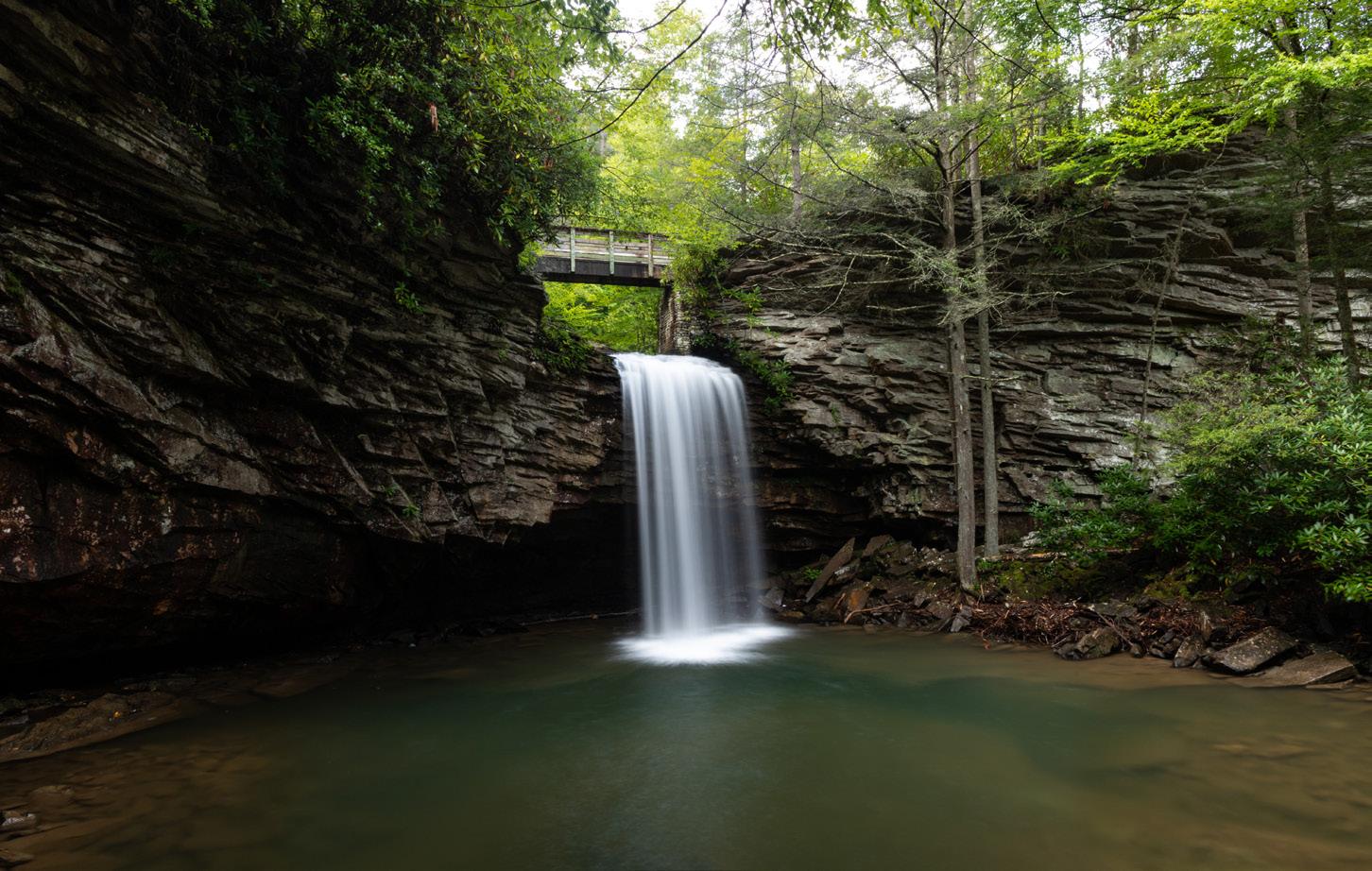
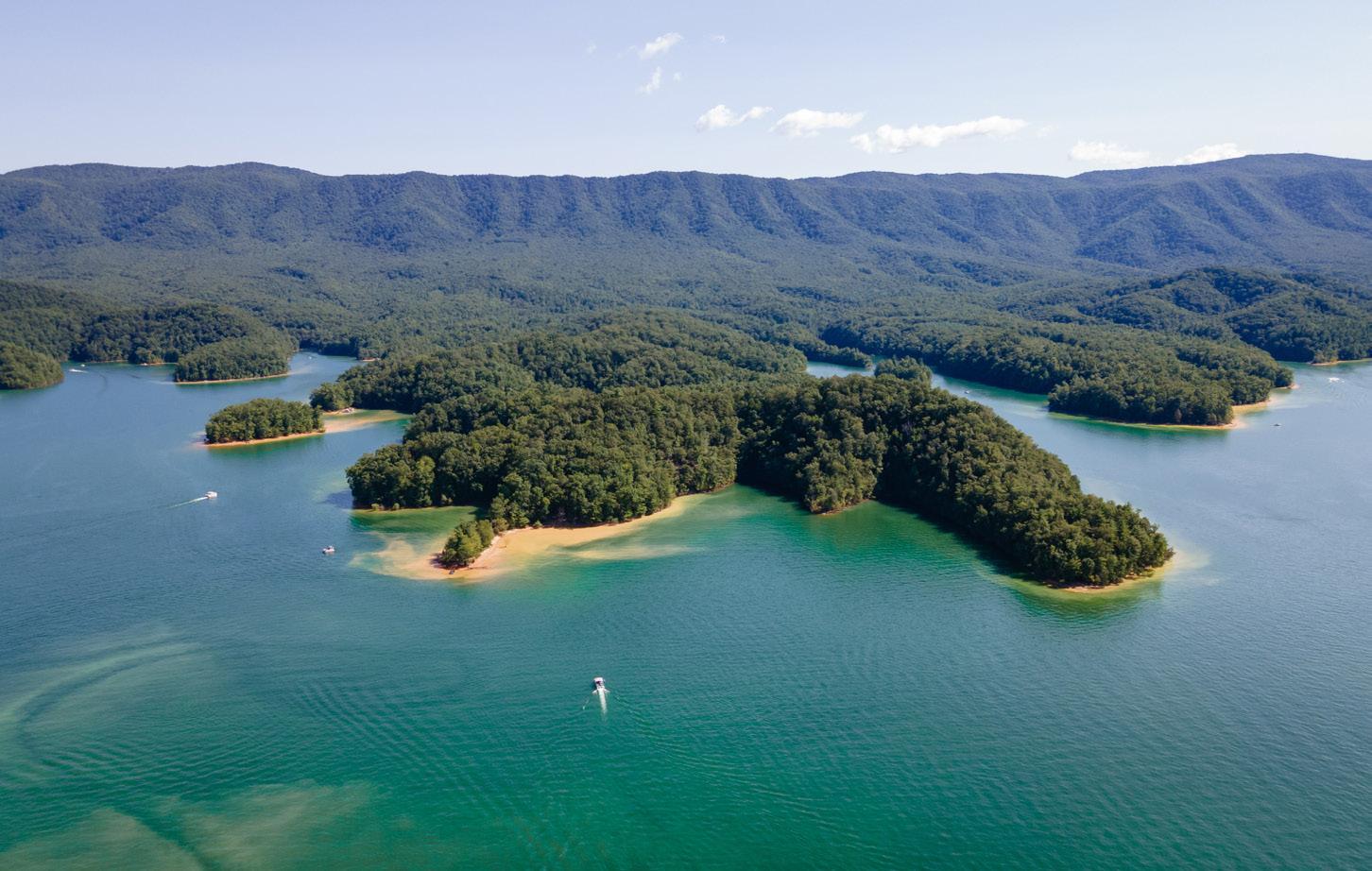
Tennessee Treasure 8-9
Tropical Tranquility 12-13
Pretty in Pink 16-17
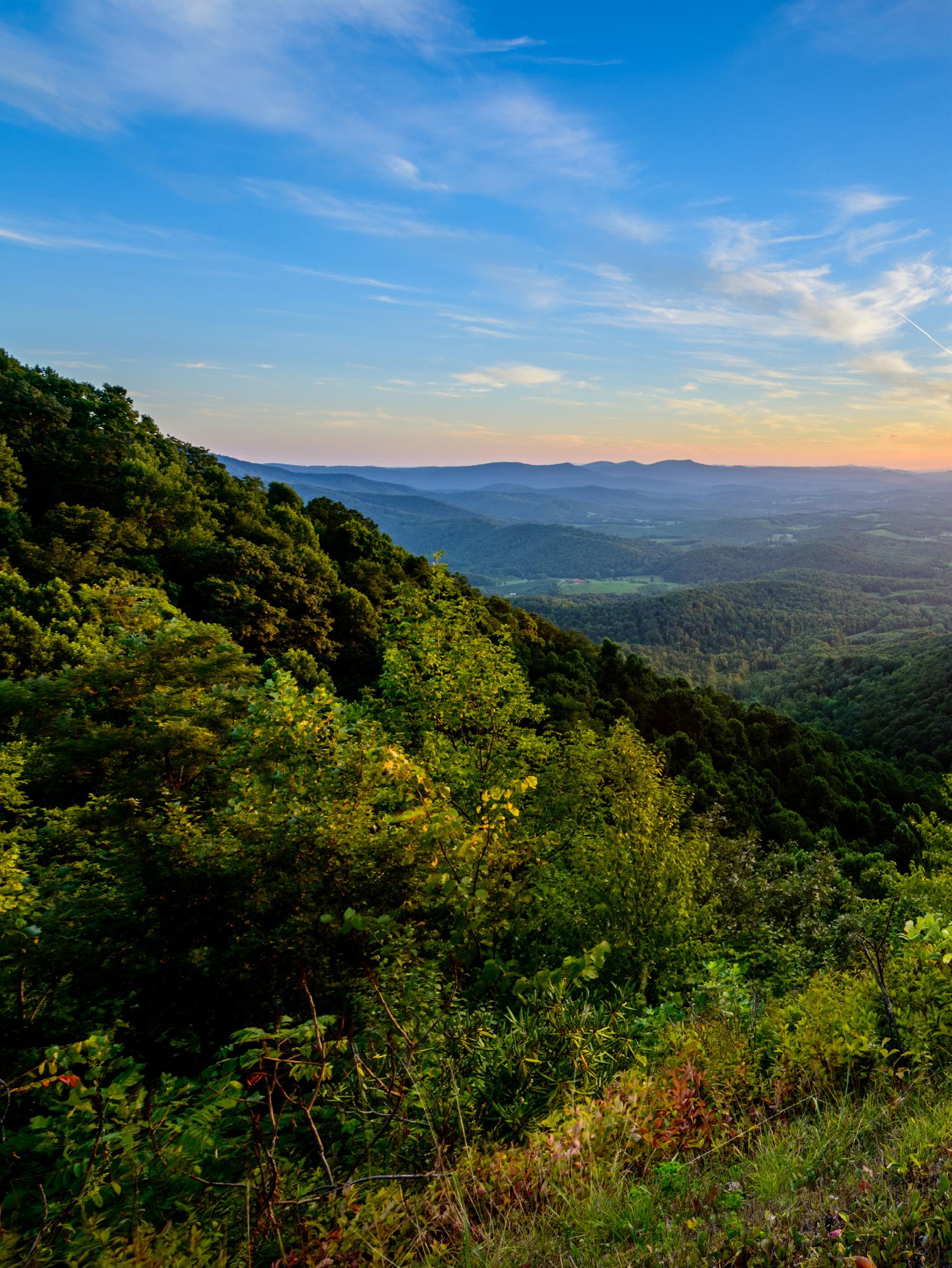
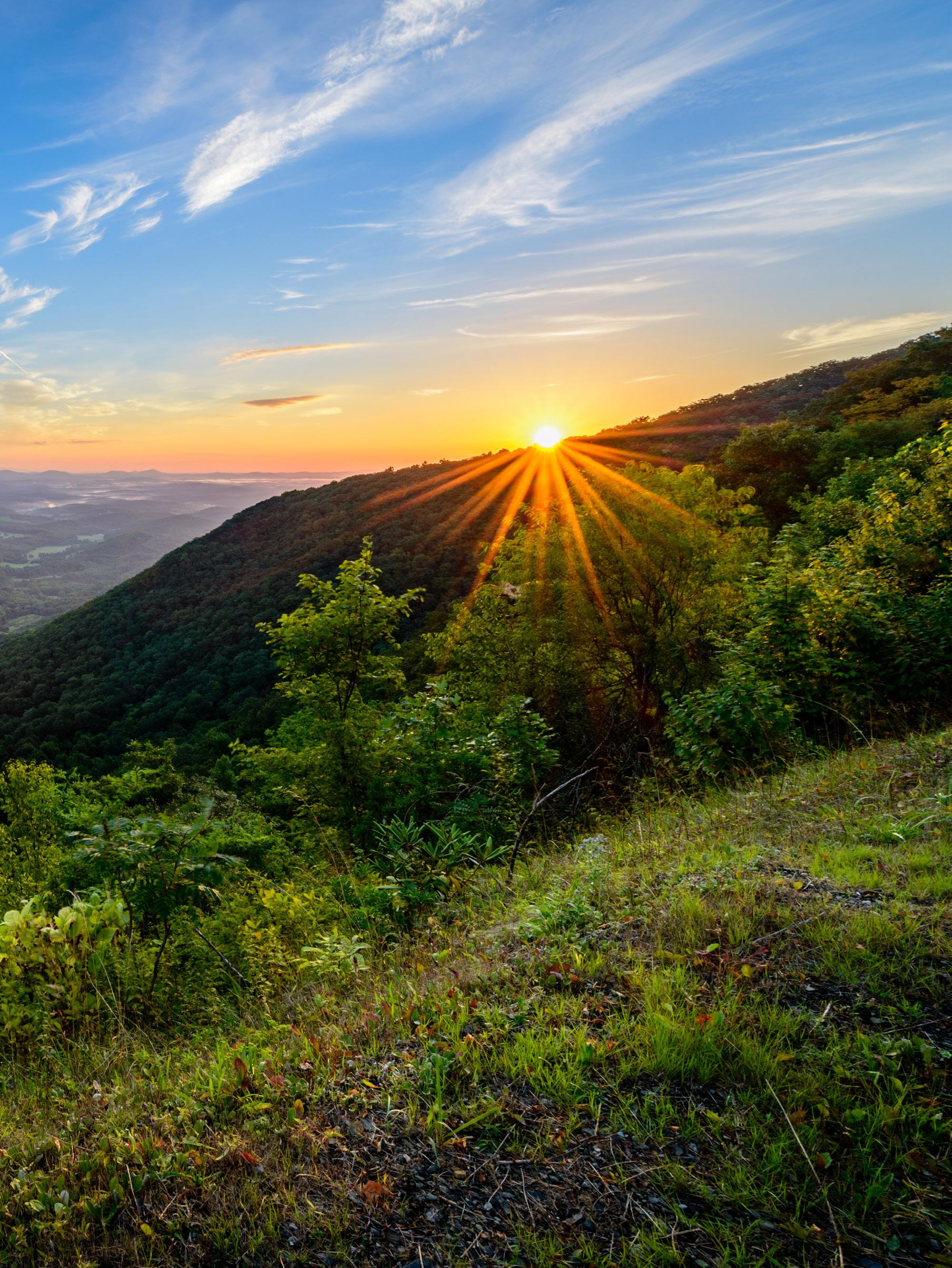
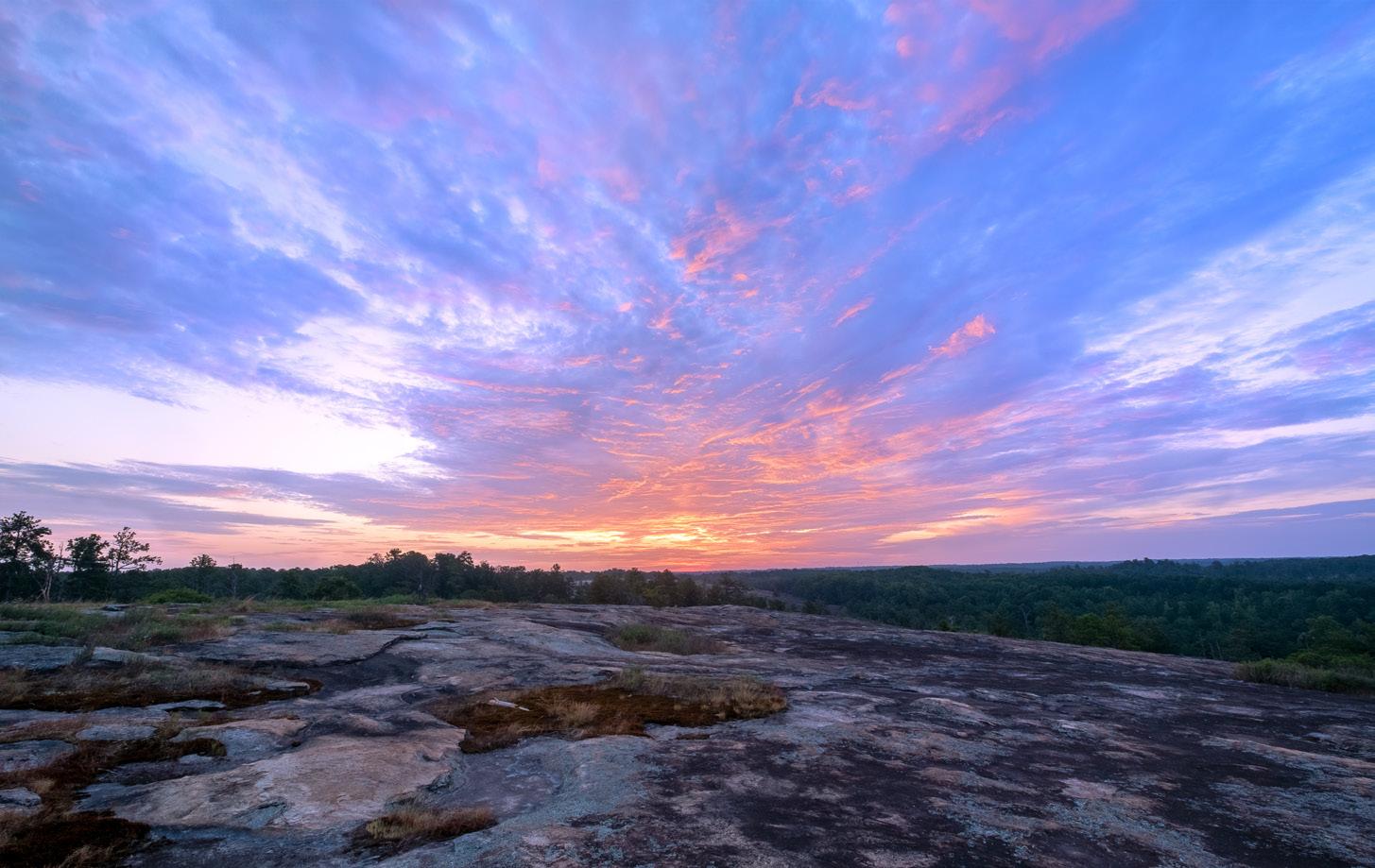
Appalachian Sunrise 22-23
Peaceful Passage 37-38
Sunset Glow 45-46
preservation
Read about South Carolina's legendary Curryton Magnolia 62
philosophy
Learn how one man unlocked a family secret 68
inspiration
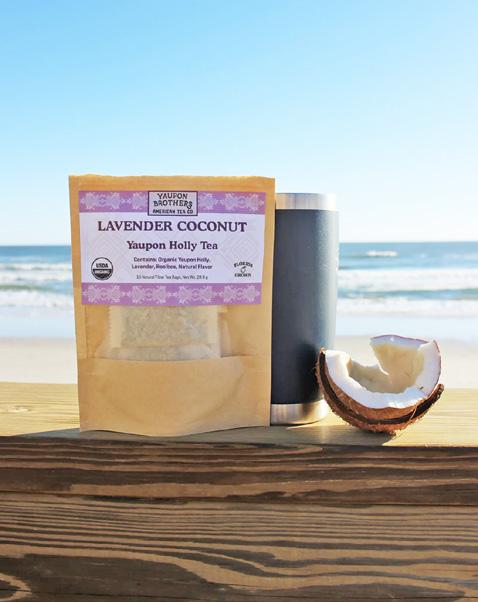
Shop for traditional tea time treasures 79
contributors
Meet this issue’s featured writers and photographers 88
Sentinel Palm 60-61
Spring Anticipation 71
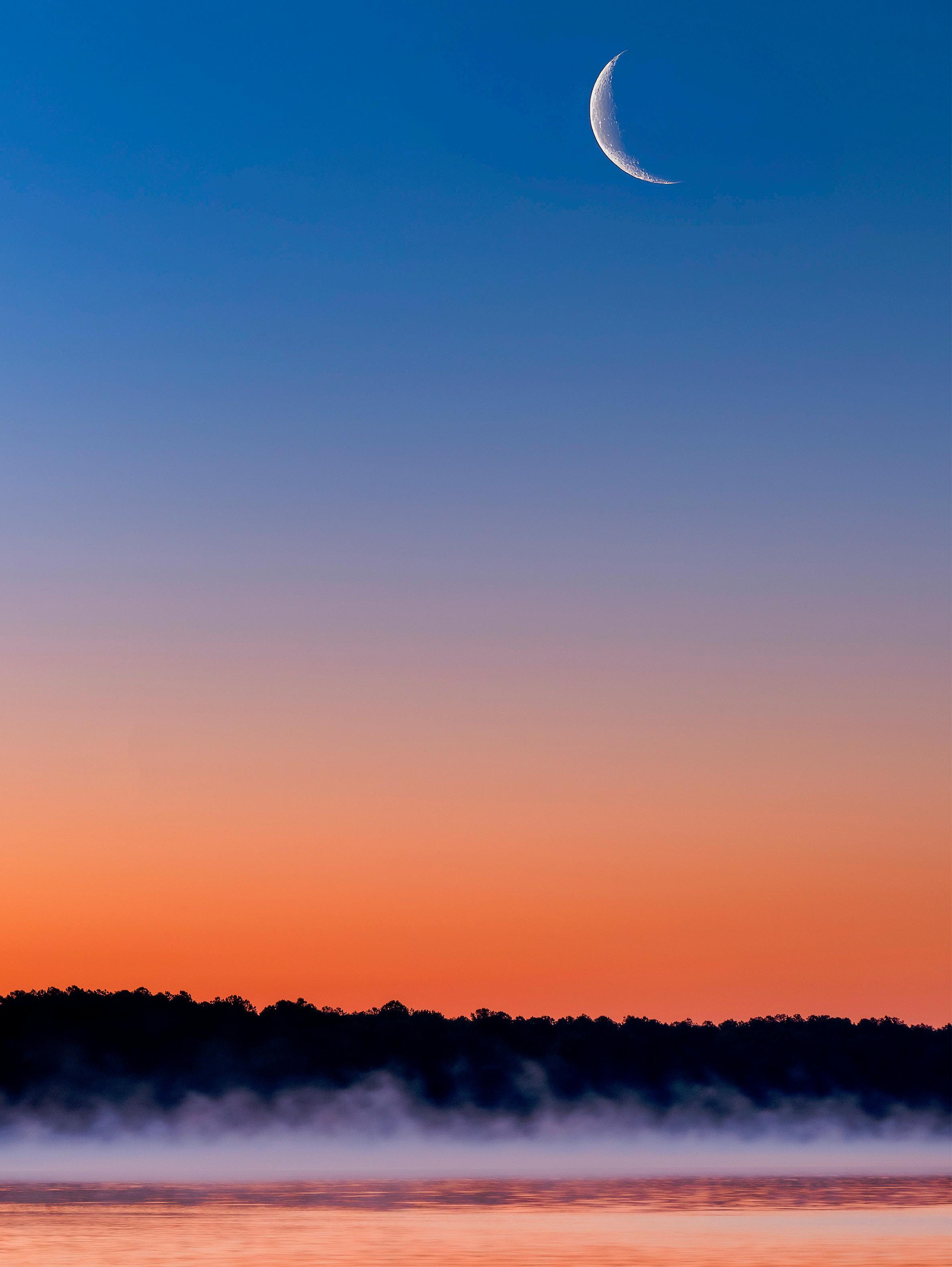
Misty Horizon 72-73
Moon River 78
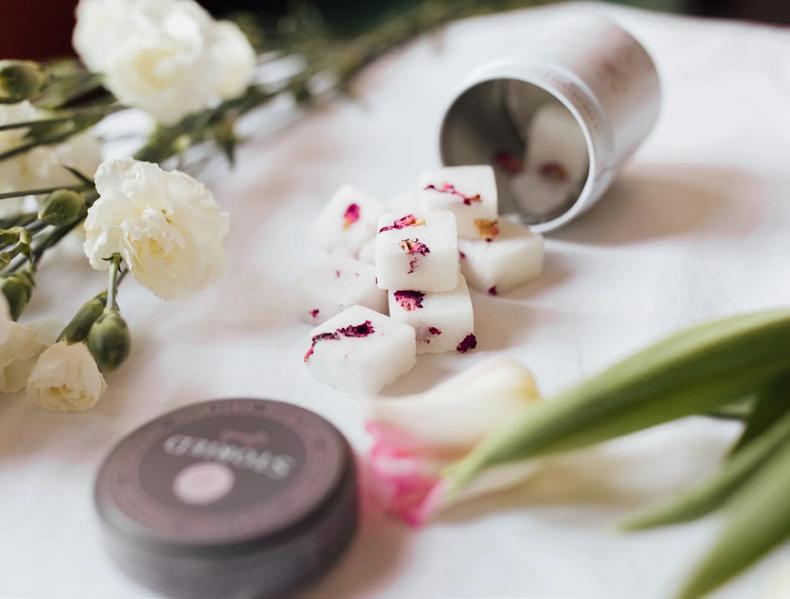
Atlantic Art 80-81
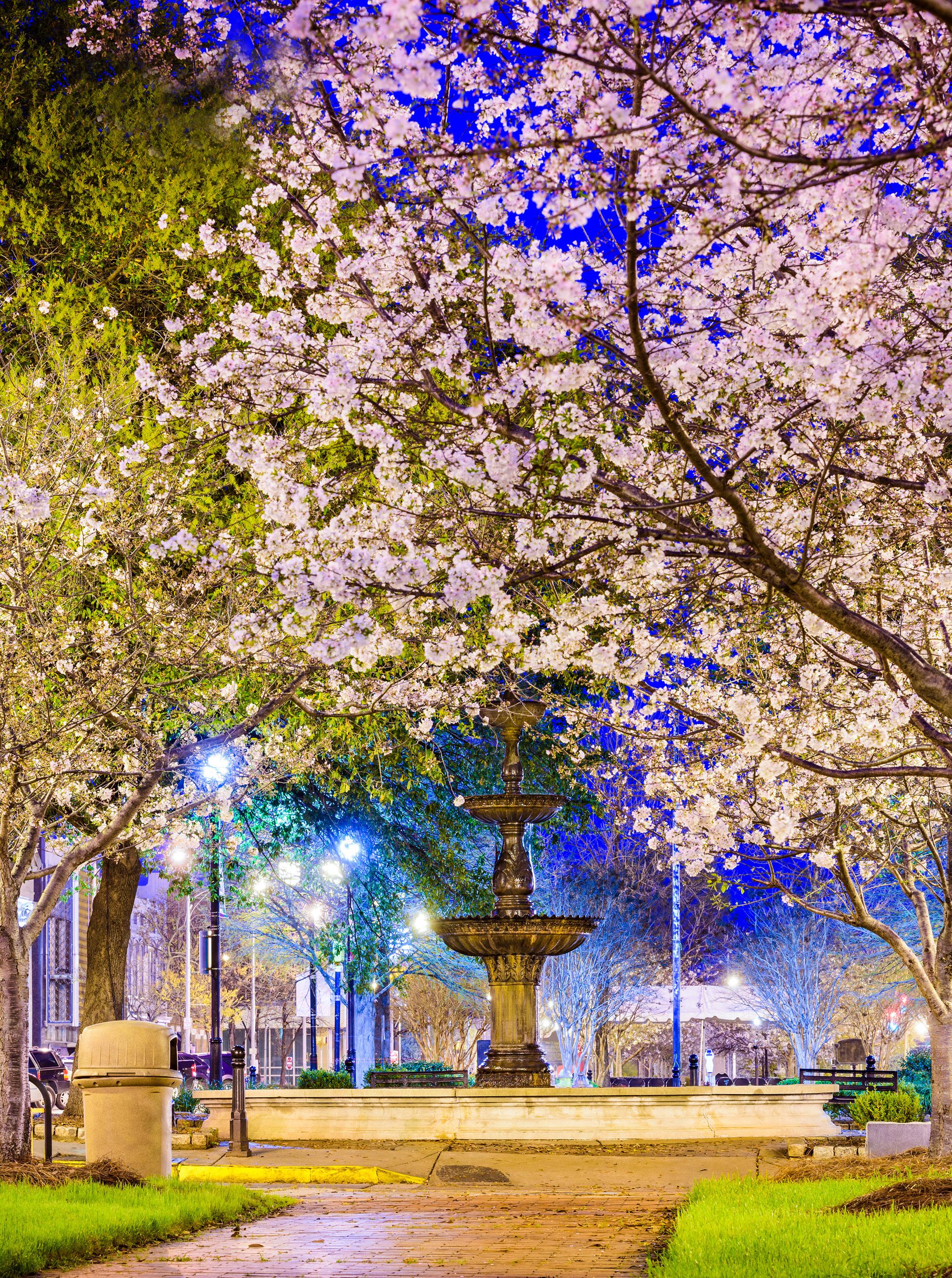
Fountain of Blooms 82
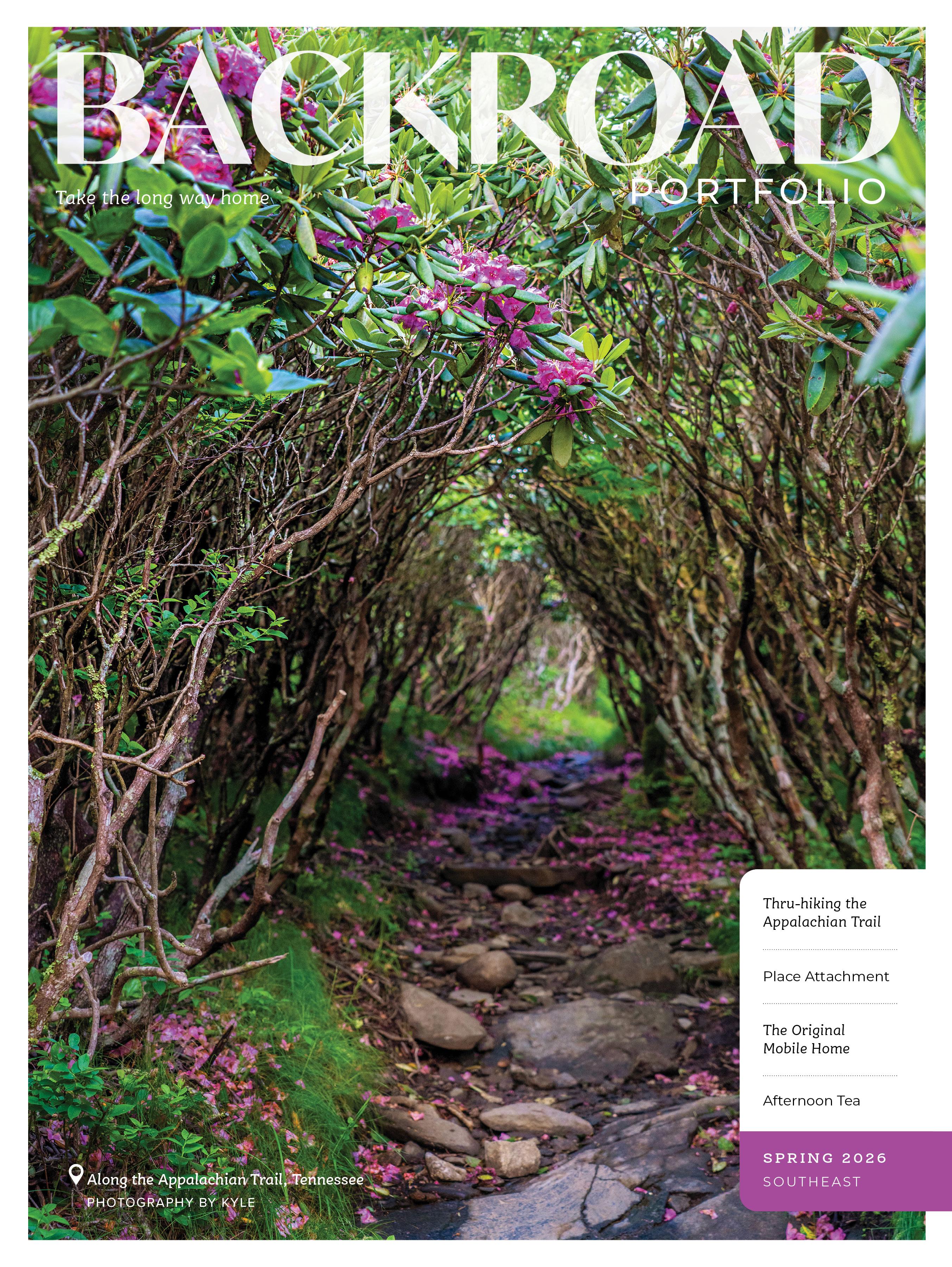
On the cover PHOTO BY KYLE
Blooming rhododendrons frame the path forward along the Appalachian Trail in Tennessee’s Roan Highlands.
Volume 10 • Spring 2026
Backroad Portfolio covers Florida, Georgia, South Carolina, North Carolina, Tennessee, Virginia, and West Virginia.
Published by EPS Media LLC and Summer House Creative, Inc.
Email backroadportfolio@gmail.com for advertising, subscription, and submission info.
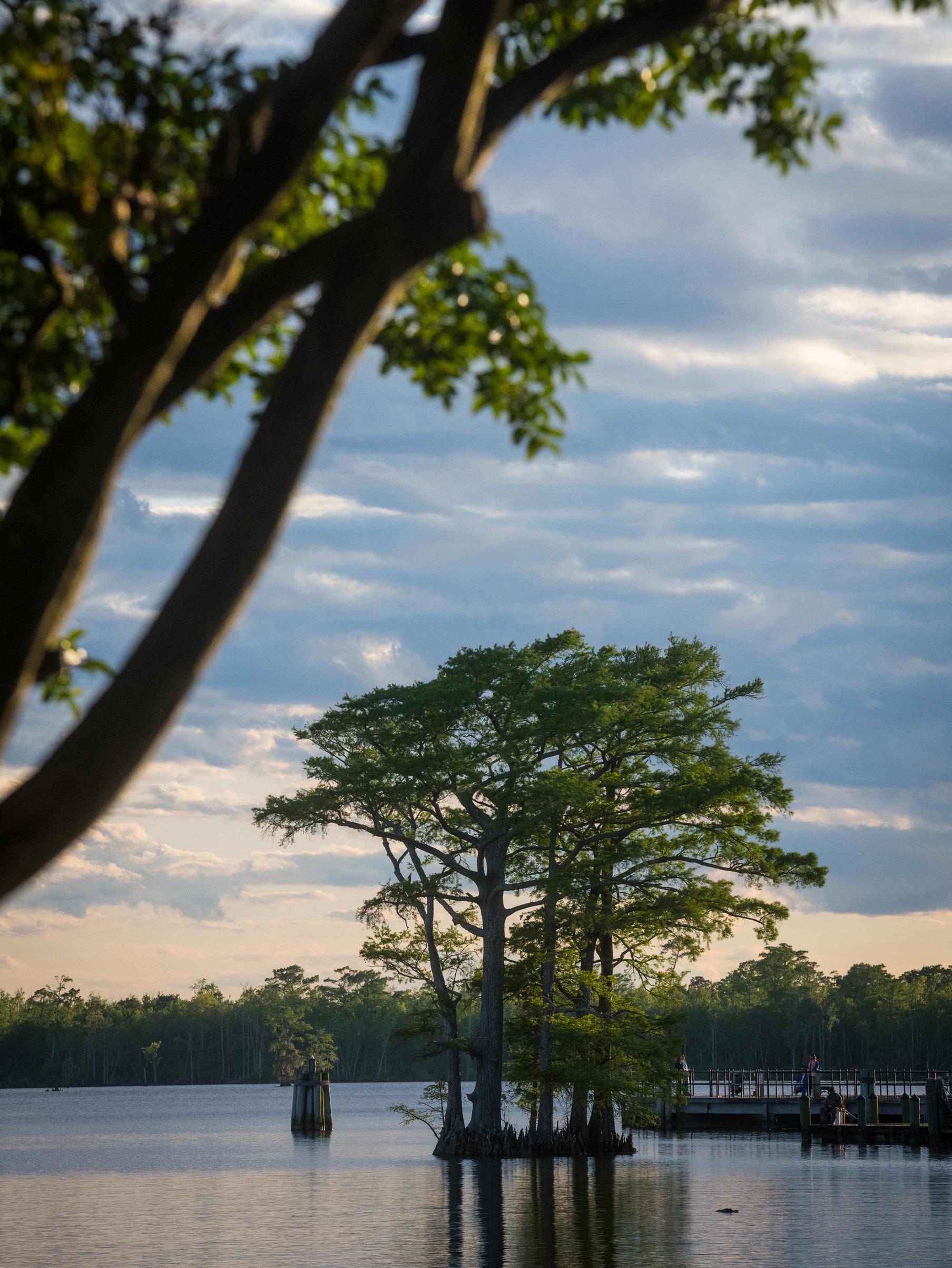
Edenton, North Carolina
Trees stand sentinel over the Chowan River.
KATE MEDLEY
What does it take to love where you live? The perfect home? Your own land? A caring community with friendly places to shop, dine, worship, and relax? It’s likely a combination of all of those things and more.
Our Spring 2026 issue explores the concept of “place attachment”—the emotional bond people form with meaningful places, and how it shapes the way they think, feel, and act. Find out why place attachment often occurs organically in small towns, then travel to one in Georgia where this concept was further refined during the 1840s, when people bonded with their homes so intensely, they moved them into town to be closer to businesses and amenities.
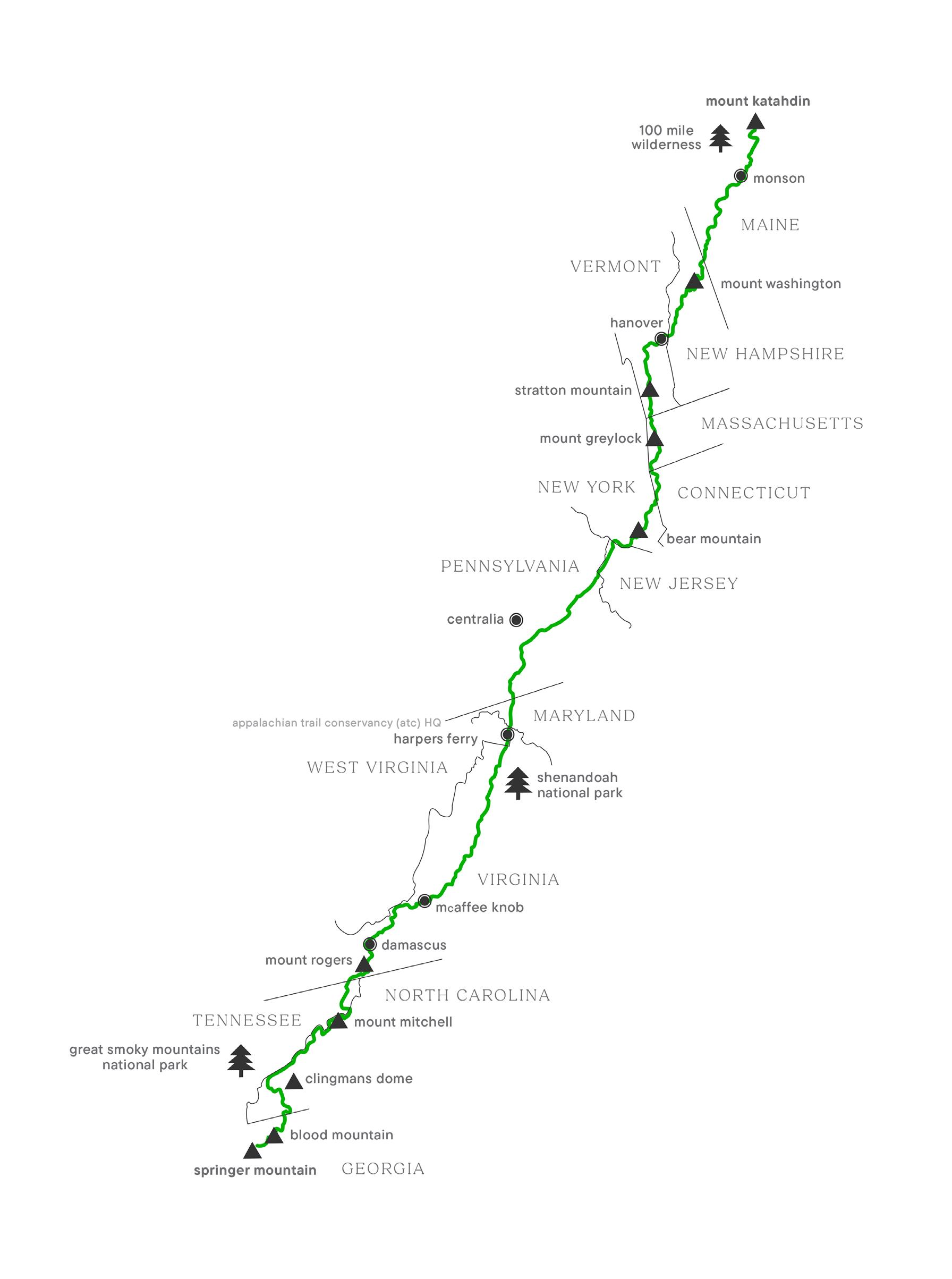
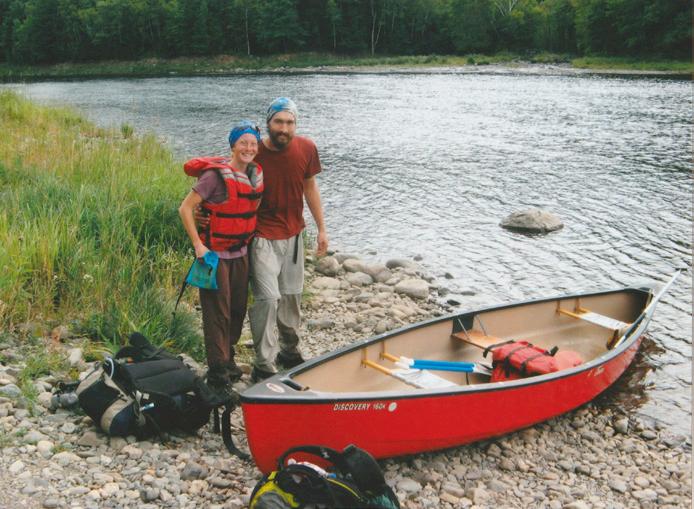
For nearly six months in 2007, Ron and Kelly Gaulden called the Appalachian Trail home while thru-hiking roughly 2,175 miles northbound through snowstorms, rhododendron tunnels, and bear encounters. Discover how this experience still echoes through their lives, nearly two decades later.
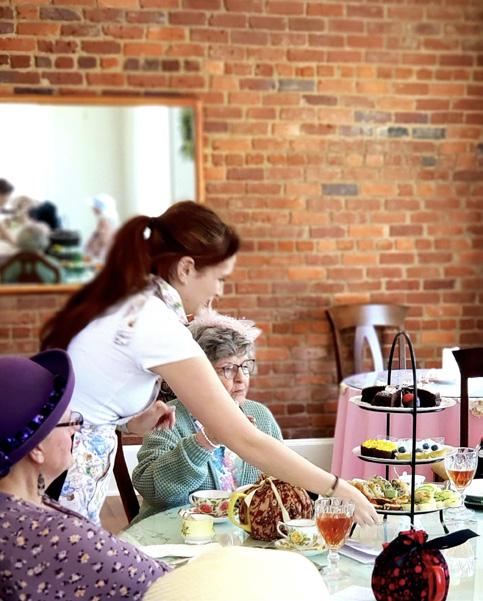
Our spring There and Back Again journey celebrates the Victorian tradition of afternoon tea in South Carolina and Georgia, featuring services that offer herbal tea varieties alongside tiered trays of sweet and savory delicacies.
Beginning with this issue, we’re expanding our coverage to include two new states. Meet a Jacksonville, Florida-based Hollywood screenwriter who shares her beloved backroad escapes across the Sunshine State, then head north with us to West Virginia to discover some of its backroad treasures.
Plus, discover how one man found the key to a family secret in North Carolina, stand in awe of the towering Curryton magnolia in South Carolina, and learn how to write your own memoirs.
A sense of place is more than geography—it is memory, meaning, and the quiet ties that shape our lives. Wherever you call home, we hope this issue inspires you to notice the bonds that root you there and the journeys that bring you back again.
EDITOR +
CO-CREATOR
ART
DIRECTOR + CO-CREATOR
Discover a hidden gem
SD BOWER
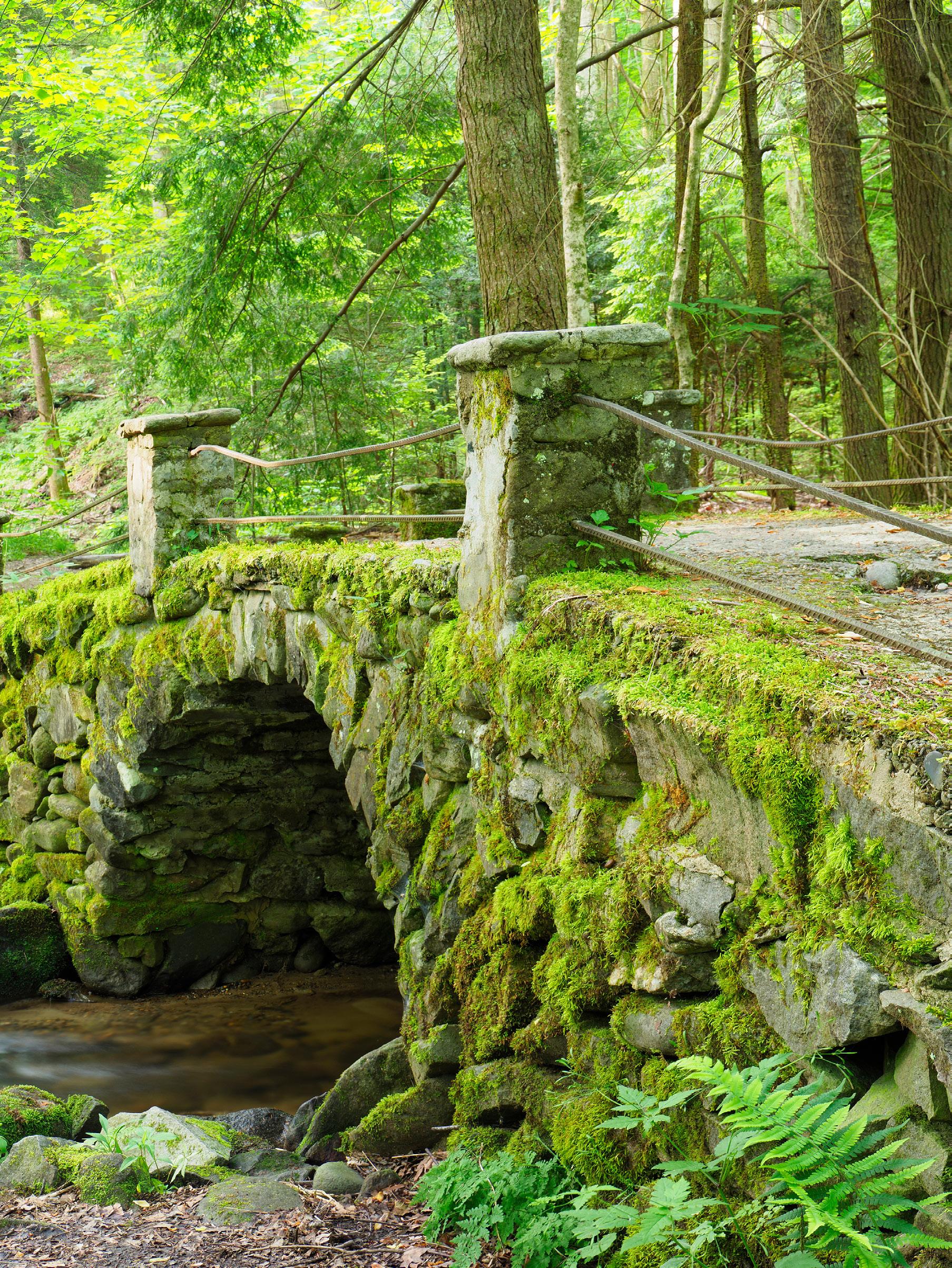
Near Gatlinburg, Tennessee
in the Smoky Mountains along the Little River Trail: the Elkmont Troll Bridge, built in the early 1900s.
Uncover backroad secrets within roadside attractions, primitive swamps, colonial ports, and declassified military bases.
ROADSIDE RESTORATION
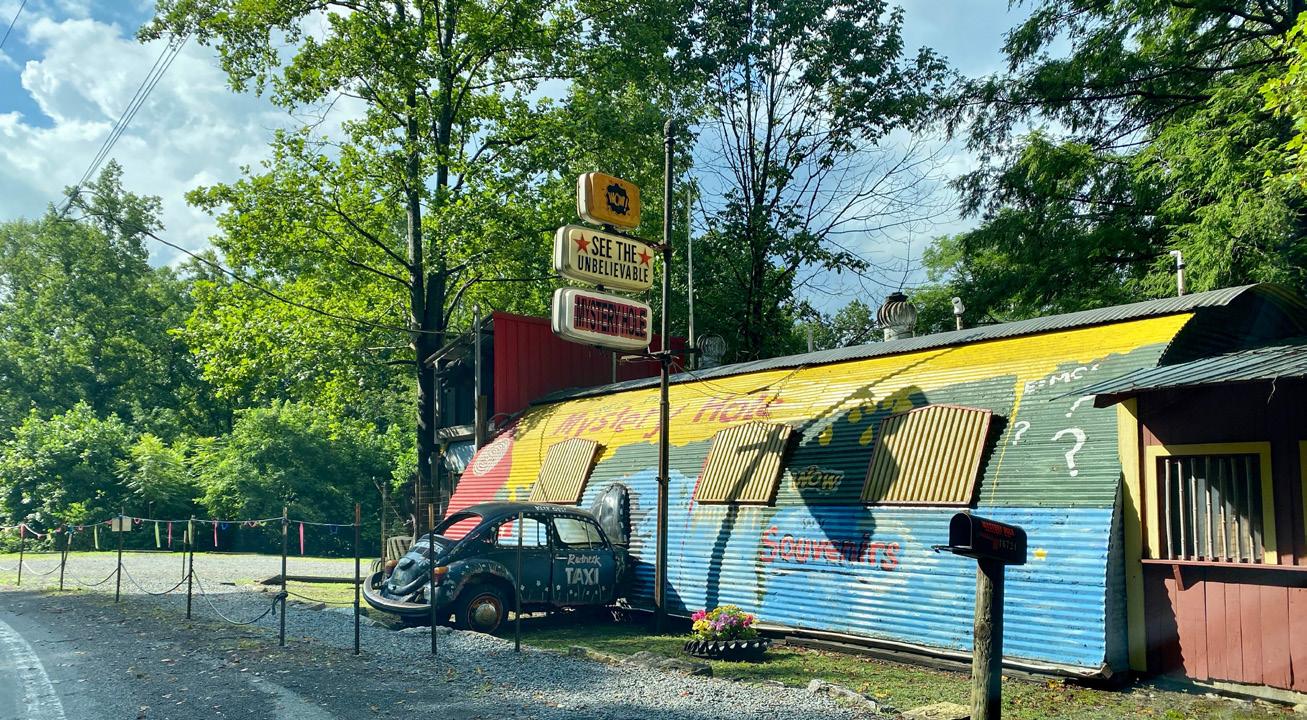
Ansted, West Virginia
In 1973, Donald Wilson opened Mystery Hole, a roadside attraction featuring optical illusions in a slanted basement chamber, where visitors experience perplexing effects like tilted rooms, balls rolling uphill, and people standing at impossible angles. After closing in 1996 amid declining tourism and neglect, which followed Wilson’s death, new owners Will and Sandra Morrison revived and restored the roadside attraction, complete with a colorful gift shop. Visitors are welcome May through October from 10:30 a.m. to 5:30 p.m. on select days. Learn more at mysteryhole.com.
SWAMP SETTLEMENTS
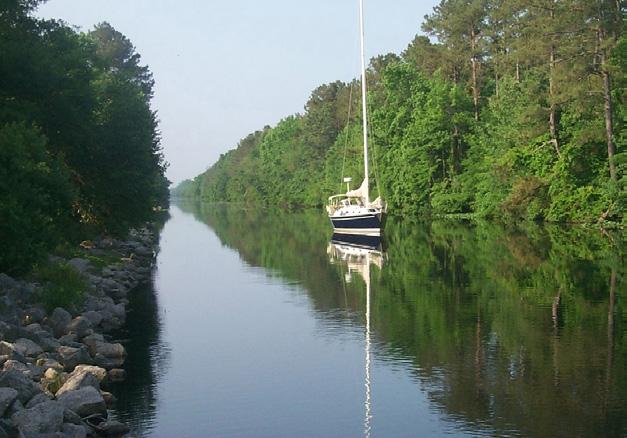
Virginia and North Carolina
The Great Dismal Swamp hides remnants of maroon communities, which were self-governing settlements formed by escaped enslaved people during the 1700s and 1800s who took refuge in the dense, mosquitoinfested wilderness. Archaeologists have discovered cabin footprints, white clay tobacco pipe fragments, lead shot, gunflints, pottery shards, Native American arrowheads repurposed as tools, and more. Largely unexplored, the swamp that once covered more than a million acres is now a 113,000-acre National Wildlife Refuge straddling southeastern Virginia and northeastern North Carolina. Its trails allow glimpses into a long-lost chapter of American survival and defiance. Learn more at fws.gov/refuge/great-dismal-swamp.
PHOTO OF THE SWAMP CANAL BY THE U.S. ARMY CORPS OF ENGINEERS, COURTESY OF WIKIMEDIA COMMONS
PHOTO BY CHRISTOPHER ZIEMNOWICZ, COURTESY OF WIKIMEDIA COMMONS
REVOLUTIONARY RELICS
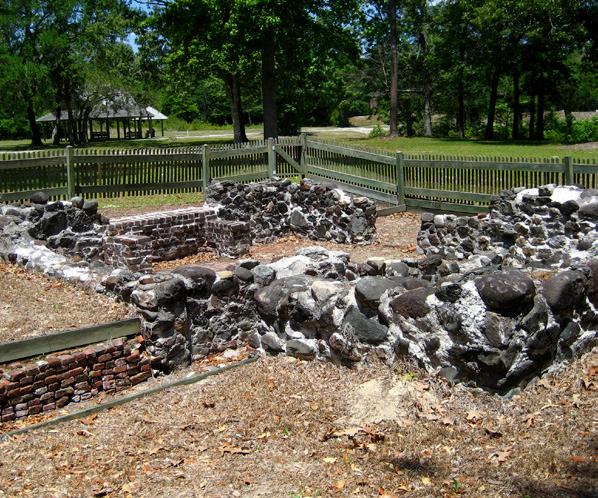
Winnabow, North Carolina
Brunswick Town, a pre-Revolutionary colonial port founded in 1726 then destroyed by British troops in 1776, was never rebuilt. Today, its relics lie below Confederate Fort Anderson’s earthworks near the Cape Fear River. Excavations have revealed foundations of homes, a church, and fortifications, plus artifacts from enslaved Africans and merchants. The town’s remnants, unmarked graves, and stories of buried treasures and ghosts—including a soldier’s apparition—offer a glimpse into pre-Revolutionary life.
Learn more at historicsites.nc.gov/all-sites/ brunswick-town-and-fort-anderson/plan-your-visit.
DEMYSTIFIED DEFENSES
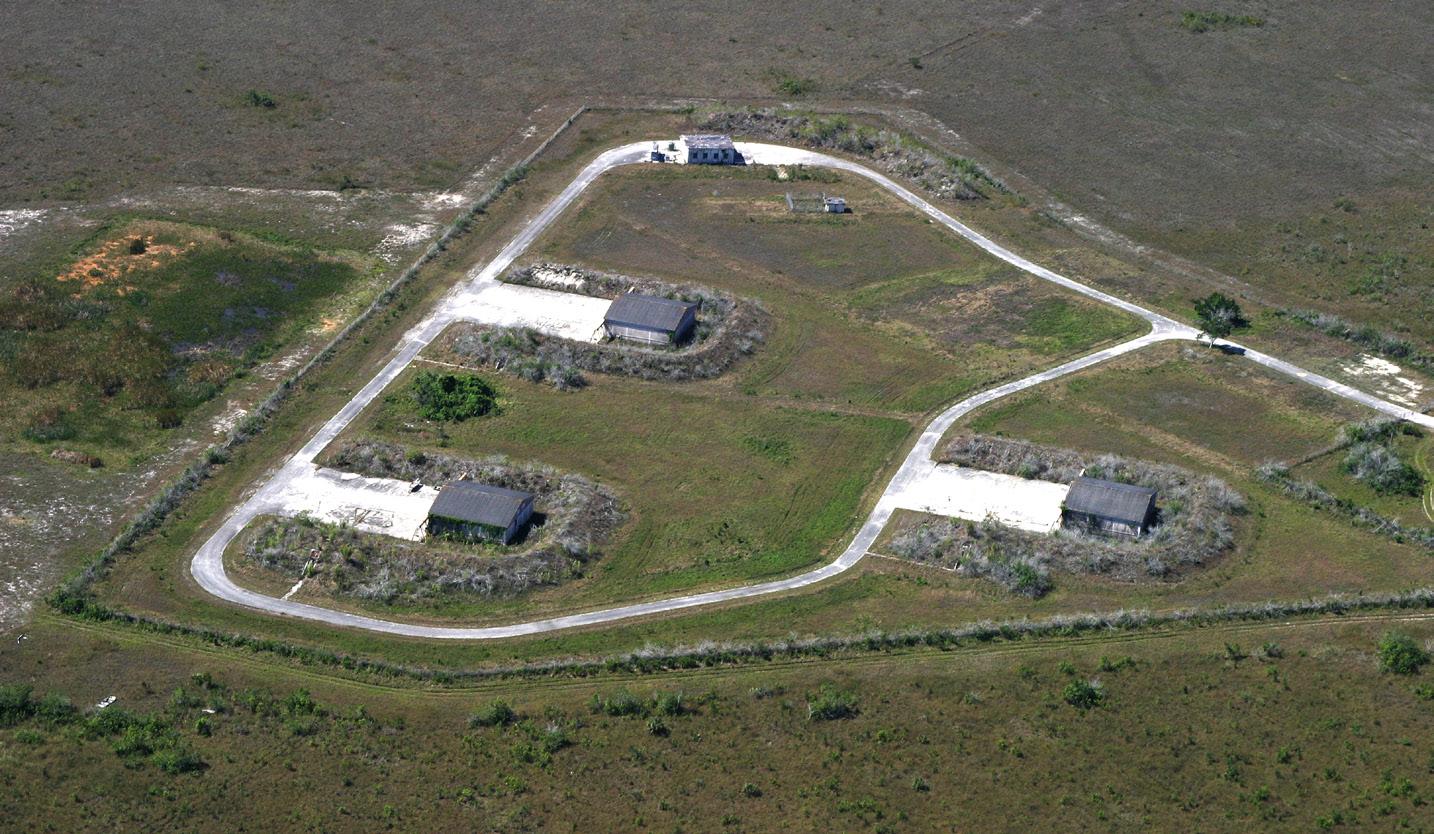
Homestead, Florida
Tucked in Everglades National Park, the Nike Missile Site HM-69 was a secret Nike Hercules missile base active from 1964-1979 during the Cold War, guarding against threats that followed the 1962 Cuban Missile Crisis. Declassified in 2004, it features bunkers, radar towers, and missile barns. Tours reveal underground magazines and guard dog kennels. Unconfirmed UFO sightings by personnel add to the site’s intrigue. Located in Florida’s swamps, the base remains nearly the same as it was during its official use. Learn more at nps.gov/ever/learn/historyculture/hm69.htm.
AERIAL VIEW OF THE NIKE MISSILE SITE HM-69 COURTESY OF WIKIMEDIA COMMONS
PHOTO OF BRUNSWICK TOWN RUINS BY FOUND_DRAMA, COURTESY OF WIKIMEDIA COMMONS
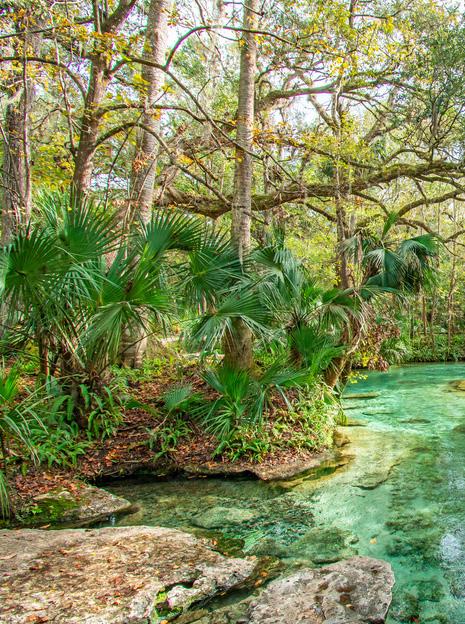
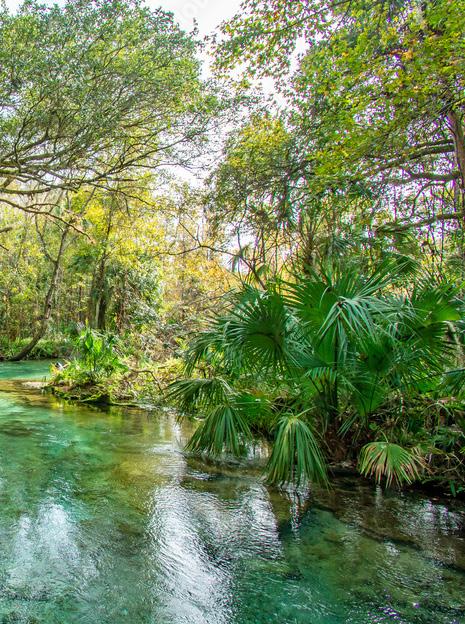
Apopka, Florida
Clear freshwater flows through Kelly Rock Springs Park, just north of Orlando.
RYAN TISHKEN
No matter what time of year you venture out, Southeastern backroads will transport you to these evergreen destinations.
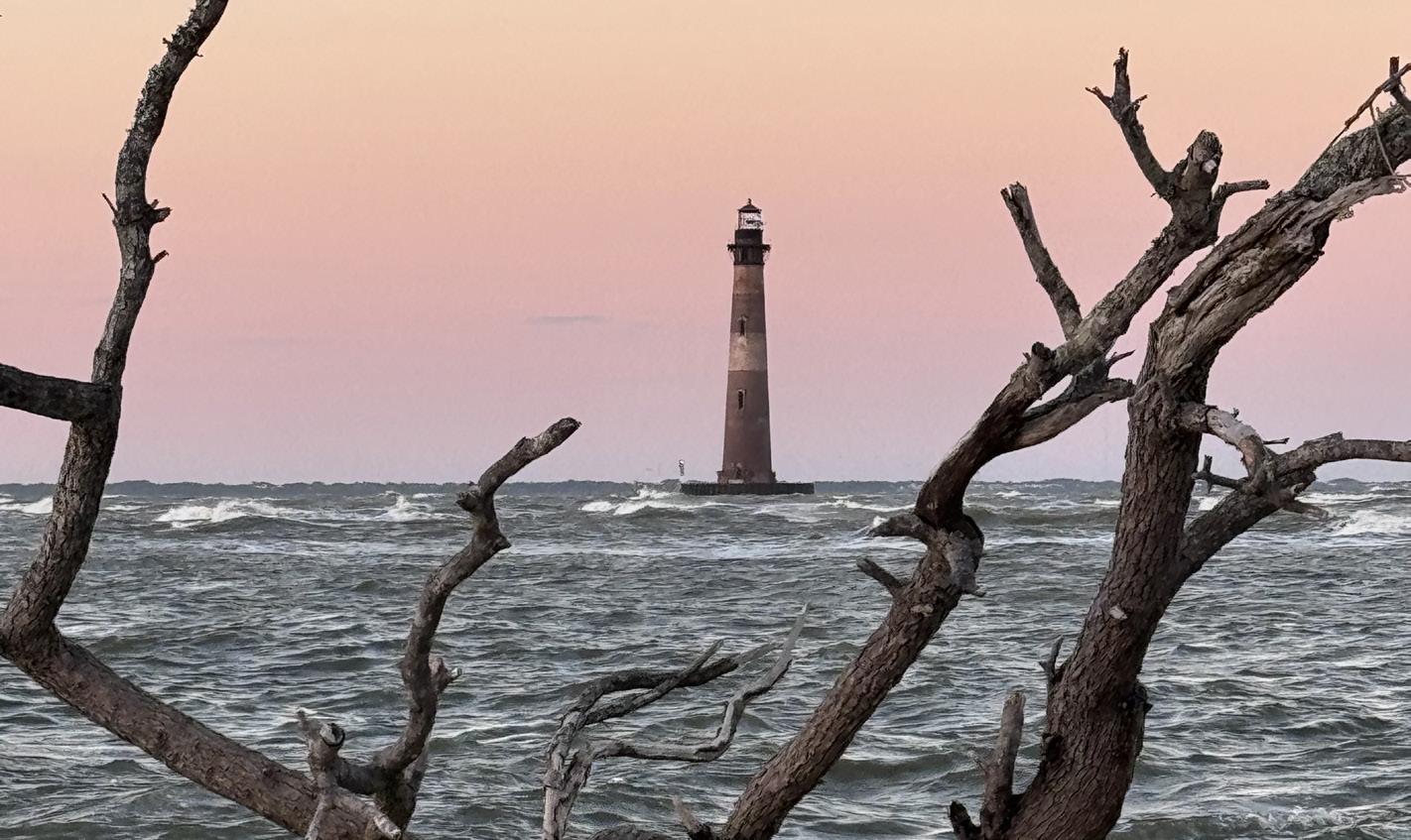
MORRIS ISLAND LIGHTHOUSE
This iconic 161-foot cast-iron lighthouse, built in 1876, is the third to stand sentinel at the entrance of Charleston Harbor after wars and storms destroyed its predecessors. Severe erosion washed away the keeper’s quarters and the island upon which Morris Island Lighthouse once stood, making it only accessible by boat or kayak, with viewing opportunities from Folly Beach Lighthouse’s Inlet Heritage Preserve. An organization called Save the Light is leading ongoing restoration efforts to maintain the lighthouse, which is listed on the National Register of Historic Places. Learn more at savethelight.org.
1750 E. Ashley Avenue
Folly Beach, South Carolina
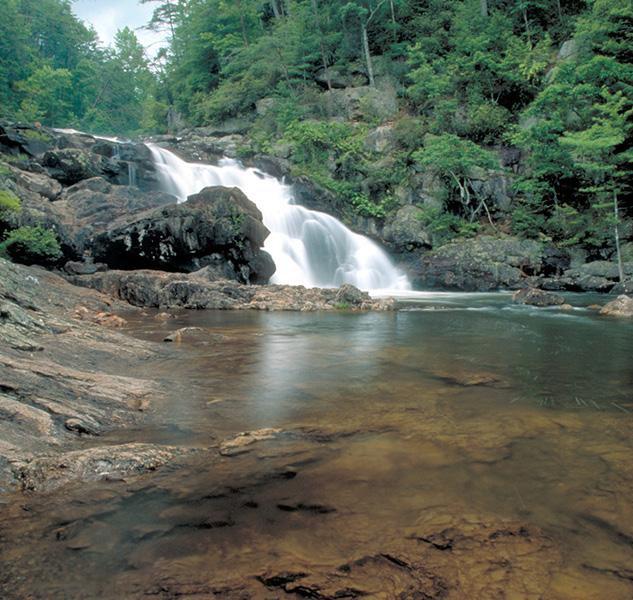
JACKS RIVER FALLS TRAIL IN THE COHUTTA WILDERNESS
This vast, remote wilderness in Chattahoochee National Forest offers one of Georgia’s most secluded backpacking experiences. The Jacks River cascades into a rocky, grassy riverbed surrounded by dense forests and abundant wildlife. Best for experienced hikers, the Jacks River Falls Trail is around 9 miles round trip, extending 4.5 miles through rugged wilderness before looping back. Portions of the trail along the river fall atop the roadbed of the old Conasauga Railroad once used to bring out felled logs from timber camps in the mountains around. Learn more at atlantatrails.com/hiking-trails/ jacks-river-falls-beech-bottom-trail.
Epworth, Georgia (visit the website for directions)
JACKS RIVER FALLS COURTESY
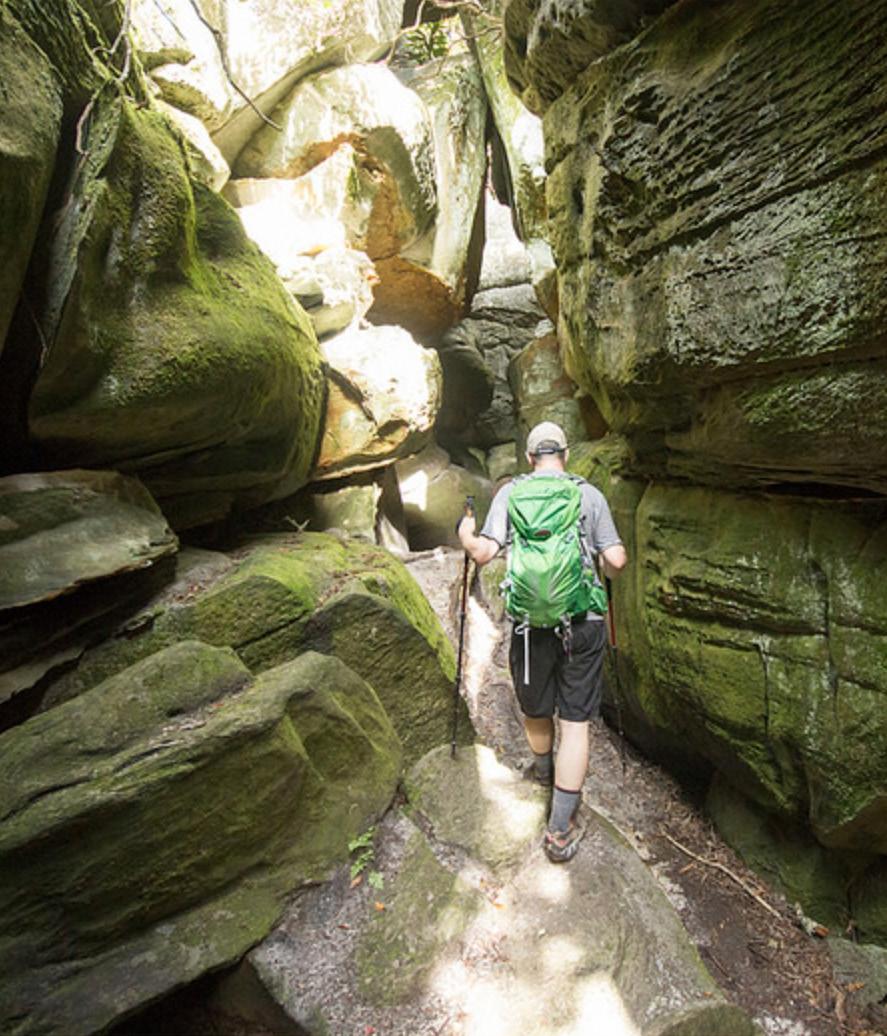
THE CHANNELS NATURAL AREA PRESERVE
The Channels Natural Area Preserve protects a 721-acre site atop Clinch Mountain in Southwest Virginia, featuring the Great Channels of Virginia. This unique 400-million-yearold sandstone outcropping has eroded into a maze of deep crevices, narrow slot canyons, towering boulders, and rock formations resembling a natural labyrinth. Hikers access it via moderate-to-strenuous trails like the Brumley Mountain Trail or Channels Trail, leading to stunning 360-degree views. There are no facilities and only about 10 parking spots available. Use 4250 Hayters Gap Road, Saltville, Virginia 24370 for GPS directions.
Brumley Gap Road or Hayters Gap Road Saltville, Virginia
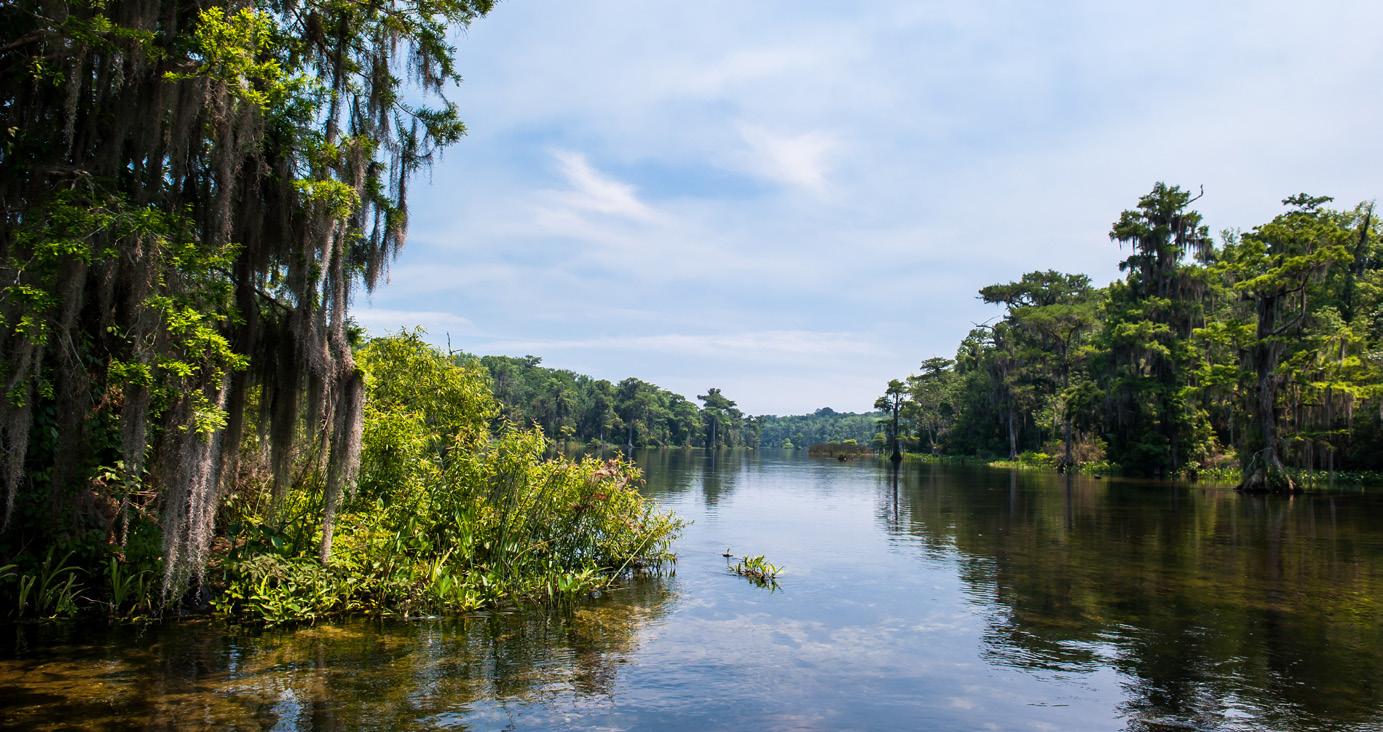
One of the world’s largest and deepest freshwater springs, Wakulla Springs is home to manatees, alligators, and other wildlife that can be viewed from a riverboat or diving platform. Human use of Wakulla Springs dates back 15,000 years to Paleo-Indians who lived in the area. Edward Ball bought the site in the 1930s, constructing its iconic 1937 lodge as a preserved retreat and Hollywood filming backdrop for movies like Tarzan’s Secret Treasure (1941) and Creature from the Black Lagoon (1954). The State of Florida purchased it in 1986, creating Edward Ball Wakulla Springs State Park to protect this natural treasure. Learn more at floridastateparks.org/parks-and-trails/edward-ball-wakulla-springs-state-park.
Access points:
465 Wakulla Park Drive
Wakulla Springs, Florida
WAKULLA SPRINGS STATE PARK
PHOTO COURTESY OF VIRGINIATRAILGUIDE.COM
PHOTO BY CHONGBUM THOMAS PARK
GREG KULLMAN
Morgantown, West Virginia
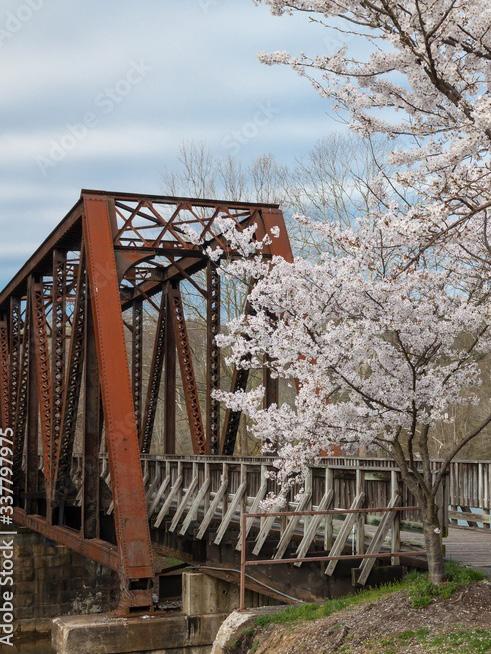
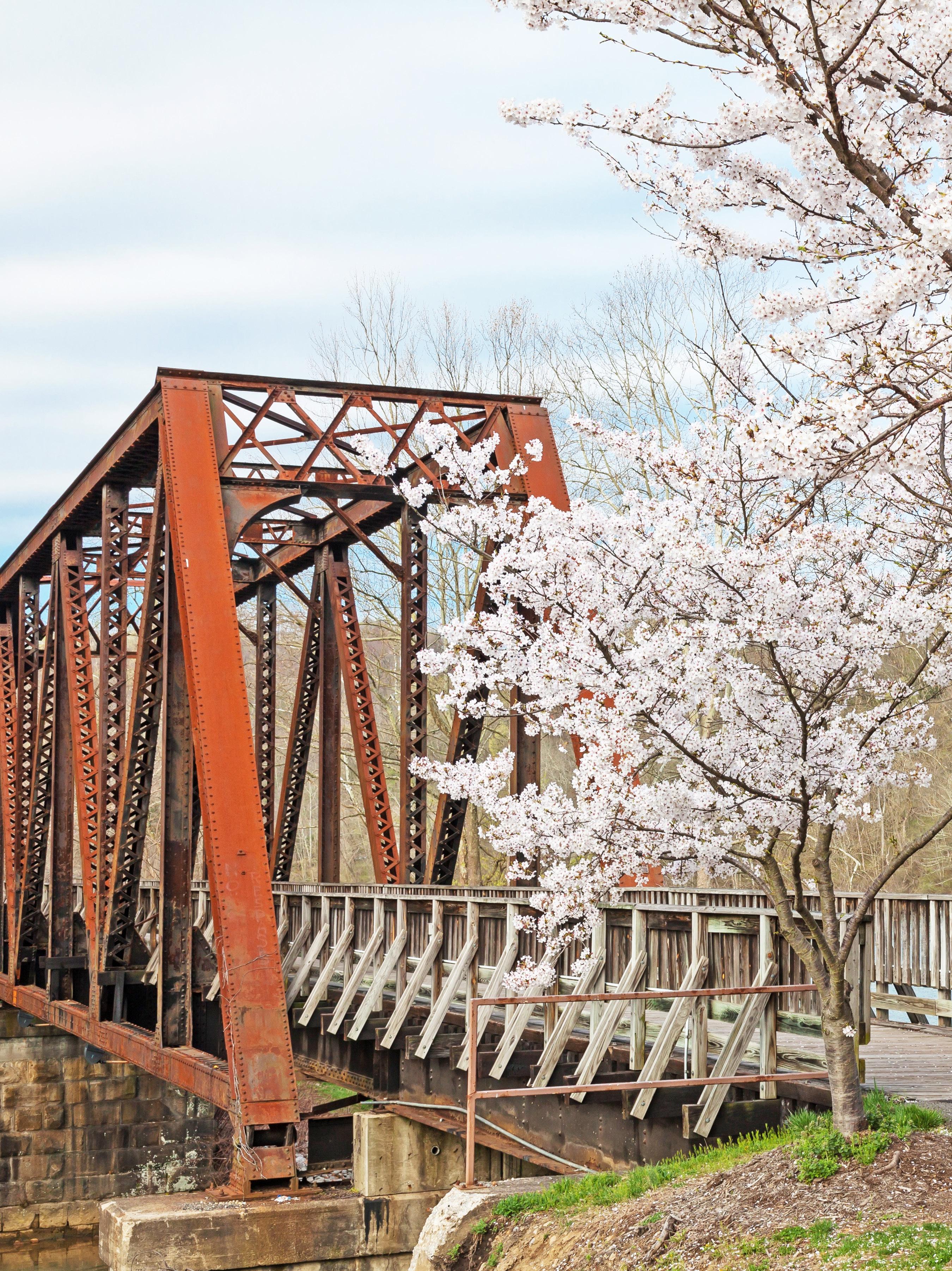
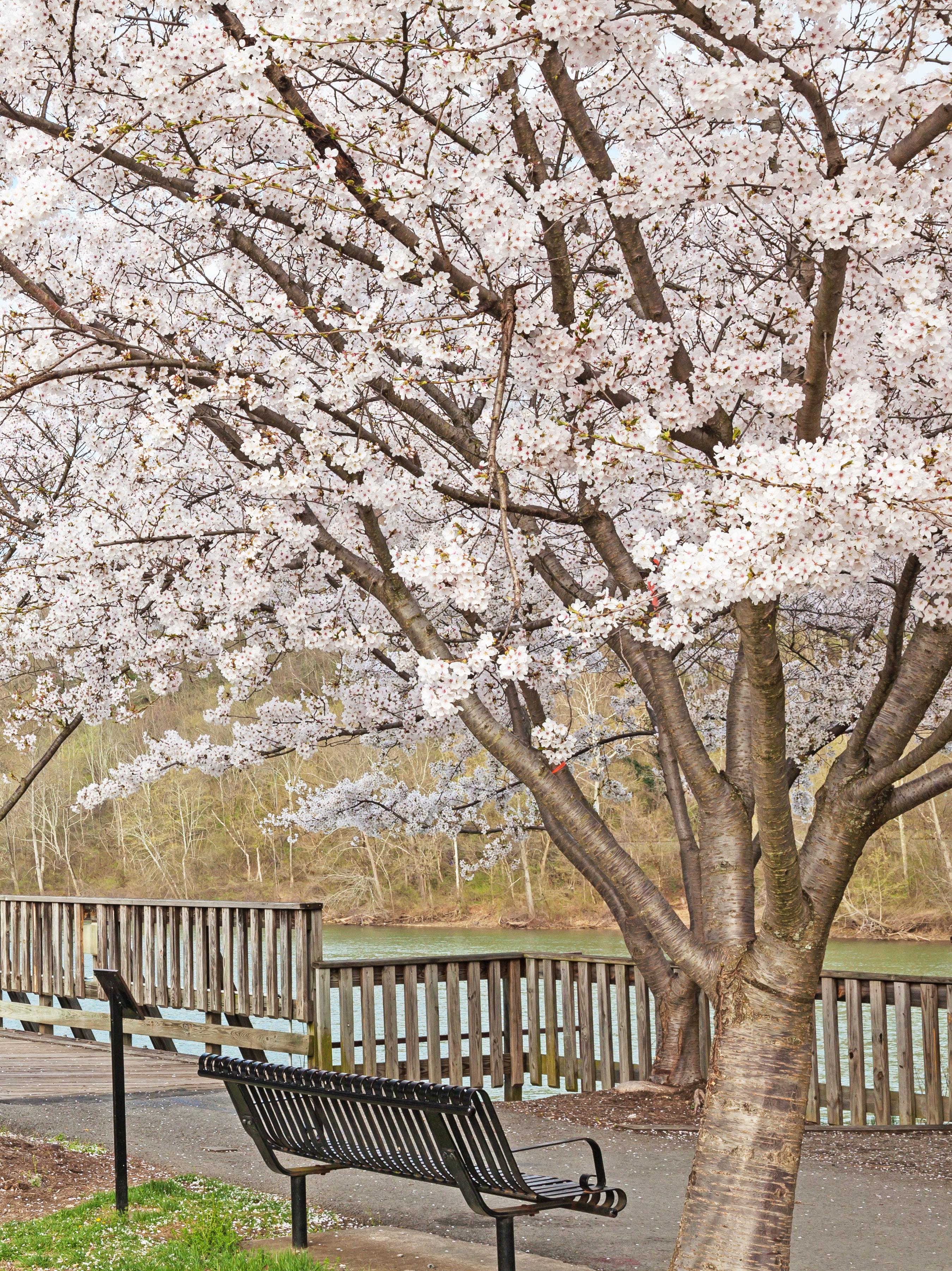
See cherry trees in full bloom at Hazel Ruby McQuain Park.
Backroads transport us to the places and events that commemorate our country’s history. Here are some from Southeastern springs of the past.
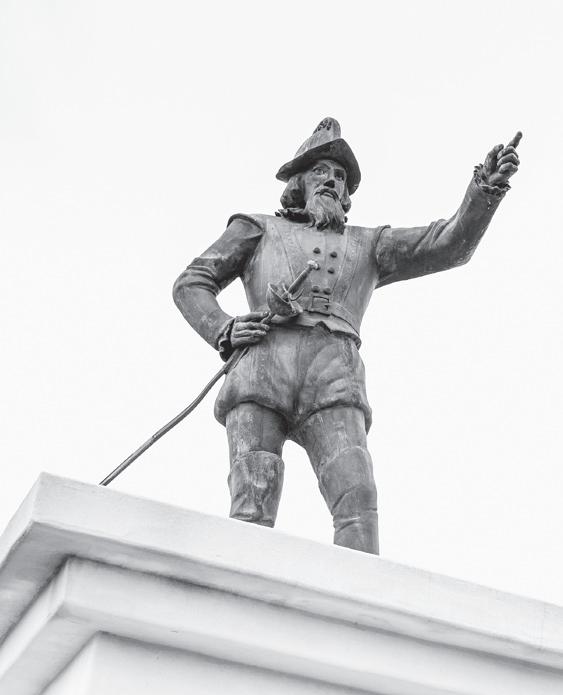
PONCE DE LEÓN CLAIMS FLORIDA
APRIL 2, 1513
Spanish explorer Juan Ponce de León, searching for the legendary Fountain of Youth, sighted Florida’s east coast in late March and landed on April 2, 1513, during Easter season. He called it Pascua Florida, which means “Flowery Easter” or “Festival of Flowers,” and claimed the land for Spain, marking the first documented European contact with mainland Florida. Encounters with indigenous Calusa and Timucua peoples followed, initiating Spanish exploration, missions, and colonization efforts that shaped Florida’s early history. Learn more at dos.fl.gov/florida-facts/florida-history/a-brief-history/ european-exploration-and-colonization.
Near St. Augustine, Florida
PHOTO BY BY JULIA DORIAN
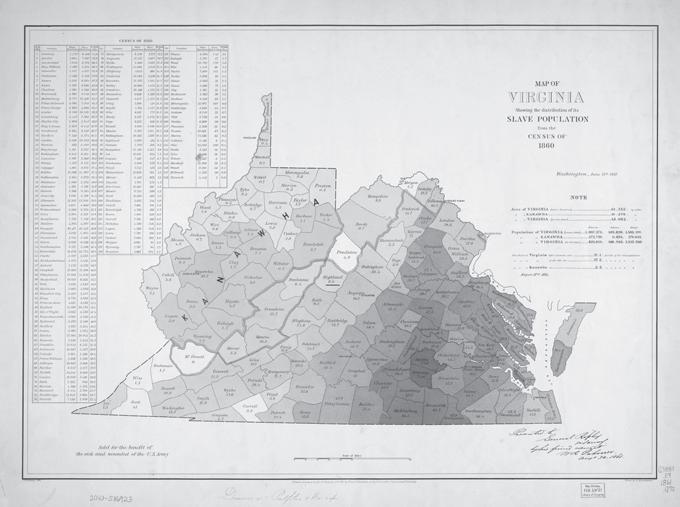
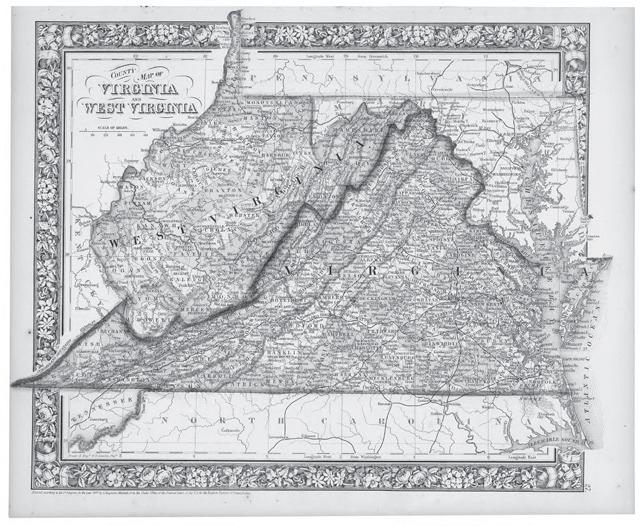
THE FORMATION OF WEST VIRGINIA
JUNE 20, 1863
West Virginia became the thirty-fifth state in the Union on June 20, 1863, during the Civil War after deep political and economic divisions separated the western counties from eastern Virginia. Virginia had seceded in 1861, prompting Unionist delegates in the northwest to form the loyalist Restored Government of Virginia under Governor Francis H. Pierpont. Claiming to represent the legal state government, it authorized the creation of a new state, which was originally named Kanawha but later became West Virginia. Congress approved admission once gradual emancipation of enslaved Africans was required, and President Abraham Lincoln signed the bill on December 31, 1862, clearing the way for West Virginia’s statehood.
Wheeling, West Virginia
1863 SECESSION MAP COURTESY OF SAMUEL AUGUSTUS MITCHELL VIA WIKIMEDIA COMMONS
1861 MAP OF KANAWHA COURTESY OF DUBYAVEE VIA WIKIMEDIA COMMONS
EASTER MONDAY BASEBALL
APRIL 16, 1900
Easter Monday baseball was a cherished North Carolina tradition spotlighting the rivalry between Wake Forest College (now University) and North Carolina State University. The first game took place on Monday, April 16, 1900, with North Carolina State winning 1-0. As the tradition continued, it drew crowds of up to 7,000 fans who would travel to the games via special excursion trains, then pack the grandstands. In 1935, the state legislature declared Easter Monday a holiday, largely so fans could attend the games. The tradition faded after Wake Forest College’s 1956 relocation to Winston-Salem and ACC realignments.
Crooked River State Park in Southeast Georgia unofficially opened on March 27, 1947, offering recreational opportunities amid salt marshes, forests, colonial tabby ruins, and other historical sites. The park showcases Georgia’s indigenous Timucua history, early settler life, and biodiversity, providing educational programs on ecology and folklore.
St. Mary’s, Georgia
PHOTO BY JACKIE DEBUSK
The new edition is available now!
tompol@earthlink.net
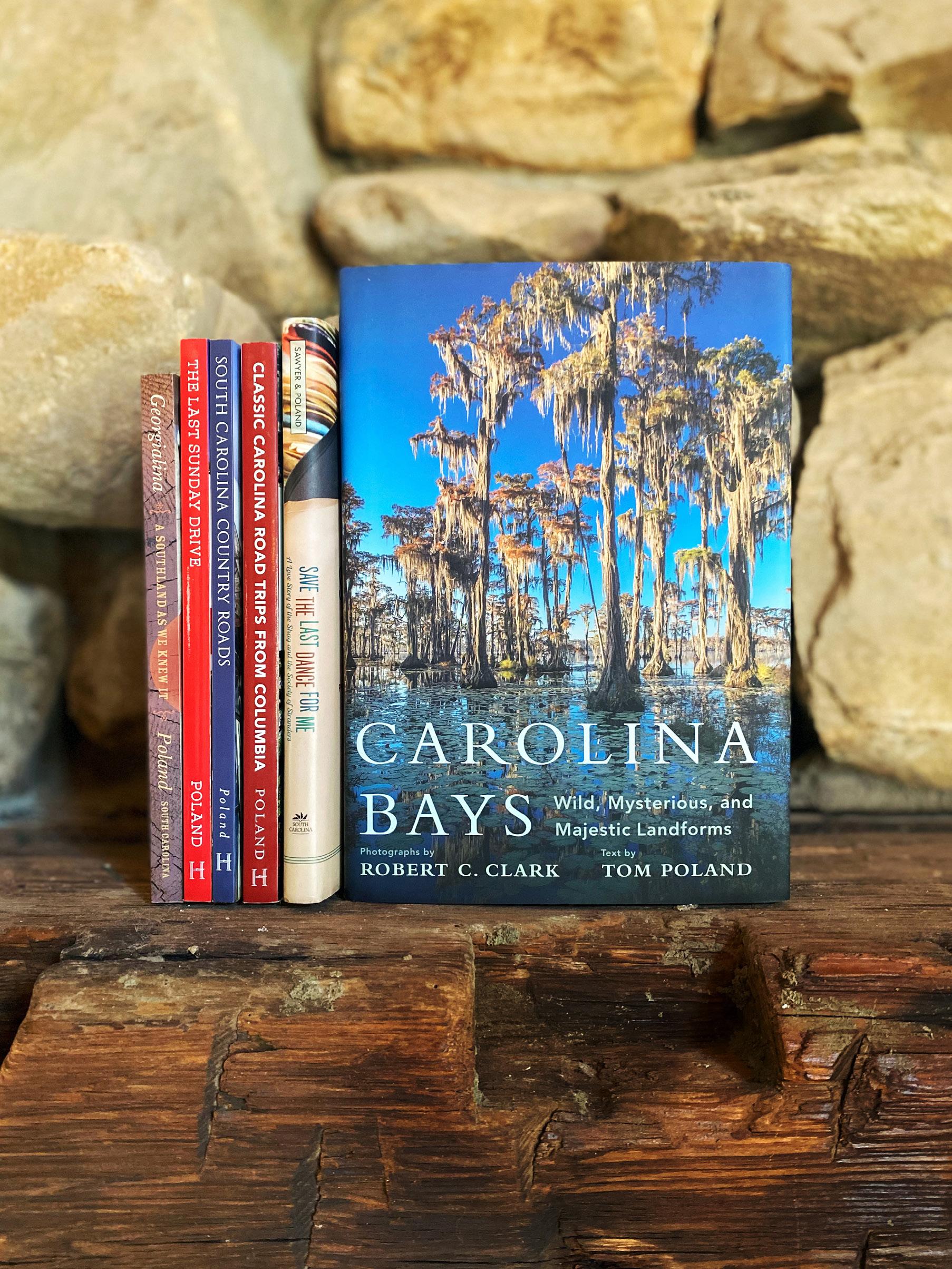
Tom Poland travels southern backroads seeking evidence of how those before us lived, worked, and survived. Each day their farms, barns, outbuildings, stores, churches, and once-essential structures succumb to time and the elements. He photographs and writes about a forgotten land so that others can know it was there. A writer, author, and photographer, his books cover the backroads, vanishing cultural ways, and natural areas at risk. He and co-author Robert Clark document what is, a land that may well become what was.
Take something you want, something you need, something to wear, and something to read on your next backroad journey.
SOMETHING YOU WANT
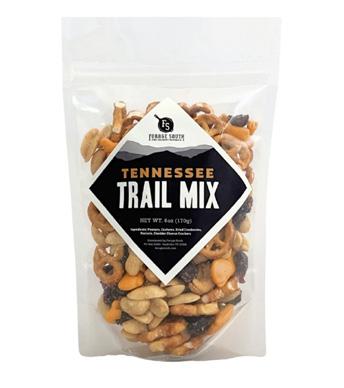
Tennessee Trail Mix, $9.95 per 6-ounce bag foragesouth.com/products/tennessee-trail-mix
Handcrafted in Nashville by Forage South, this chef-inspired trail mix delivers a perfect savory-sweet balance with roasted peanuts, cashews, tangy dried cranberries, crunchy pretzels, and cheddar crackers—all without added sugar for sustained energy on the go. It's an ideal portable snack for your spring backroad journeys.
SOMETHING TO READ
SOMETHING YOU NEED
Flowfold Voyager Pouches, $20-$66 flowfold.com
Made in the USA from lightweight, water-resistant recycled materials, these compact pouches feature multiple compartments for cables, chargers, passports, or small essentials. Slim and durable, they keep your road-trip gear tidy and accessible in your car or backpack—and dry when hiking during a sudden shower. Choose from small, medium, or large pouches, or bundle all three together in one purchase.
SOMETHING TO WEAR
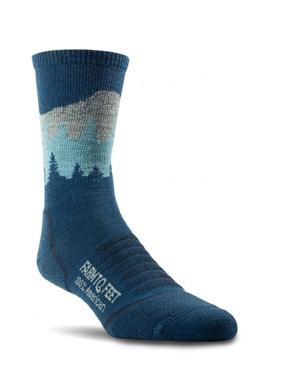
Farm to Feet Trail Socks, $25 farmtofeet.com
Made in Mount Airy, North Carolina, from U.S.-sourced merino wool blended with recycled nylon, these cushioned, moisture-wicking socks feature seamless toes and targeted padding for blister prevention on extended hikes. Odor-resistant and durable, they're ideal for keeping feet comfortable on trails from the Blue Ridge Mountains to the coastal plains.
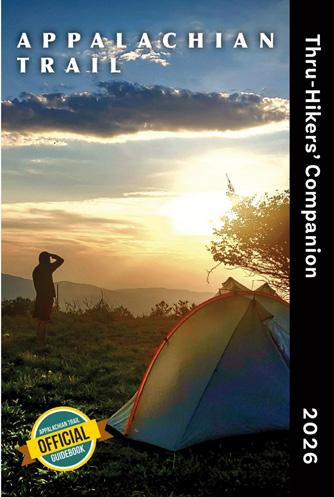
The Appalachian Trail Thru-Hikers’ Companion, $19.95
By the Appalachian Long Distance Hikers Association atctrailstore.org/books-maps/at-thru-hikers-companion-2026
If you’re thinking about thru-hiking the Appalachian Trail, pick up a copy of this essential, annually updated guide to help plan your journey. Published collaboratively by the Appalachian Trail Conservancy and the Appalachian Long Distance Hikers Association and beloved for 28 years, the guide provides essential trail data, information about town services, gear contacts, post office hours, and more. All proceeds support the Appalachian Trail.
SCOTTYMAN PHOTO
Hot Springs, North Carolina
The sun rises over Lovers Leap along the Appalachian Trail.
committing to the climb
a south carolina couple finds joy, kindness, and simplicity on the appalachian trail
WRITTEN BY RON AND KELLY GAULDEN
INTRODUCTION BY THE BACKROAD PORTFOLIO STAFF
PHOTOS PROVIDED BY THE GAULDENS UNLESS OTHERWISE SPECIFIED
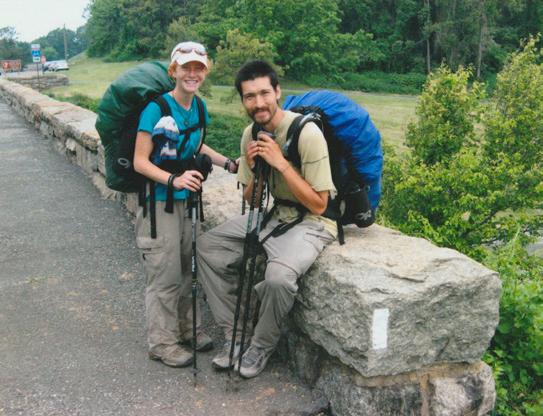
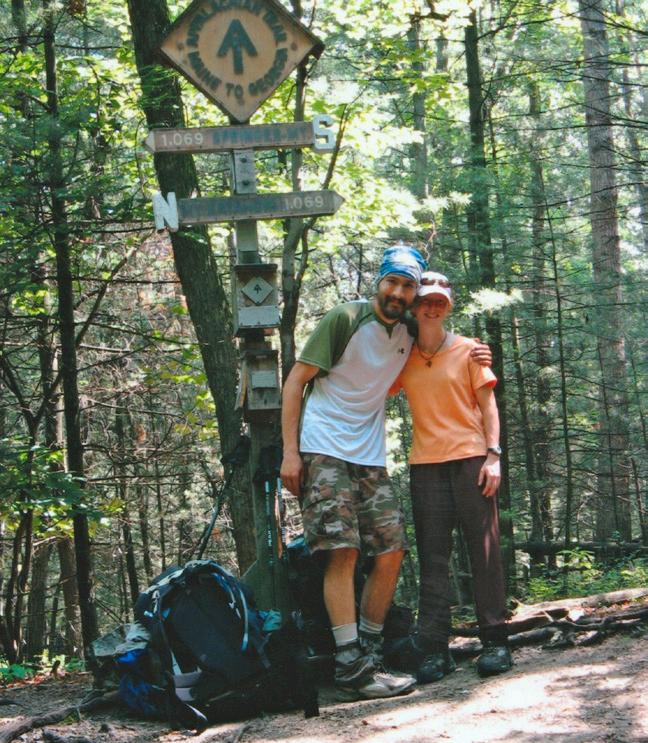
In 2005, Kelly Gaulden was teaching middle school. Her husband, Ron, was working for a print publication. Both graduates of Appalachian State University, the Gauldens enjoyed life in Charlotte, North Carolina, but weekend hikes along the Appalachian Trail inspired them to take their adventures a step further, literally.
“One evening while talking over dinner, we decided that if we didn’t set a date for a thru-hike, we’d never commit to it. So, we decided on March of 2007, which was about two years out,” Kelly said. “That gave us time to research, plan, save money, acquire new gear, and make it come to fruition.”
Over the course of those two years, they studied gear reviews and tested their purchases during practice hikes. “Our first overnight hike together on the AT was near Roan Mountain by Grassy Ridge Bald and Little Hump and Big Hump mountain in Tennessee. There were about two feet of snow on the trail, so it really tested our gear and our resilience,” Kelly said.
During another hike, some thru-hikers “flew by us,” Kelly said, “before we met up with them by a road crossing. They were out there for so long, but their packs were smaller than ours. Since it was our last day out and we were hiking back to our parked car, we offered them our leftover food. The way they ravenously accepted it with such appreciation really amazed me.”
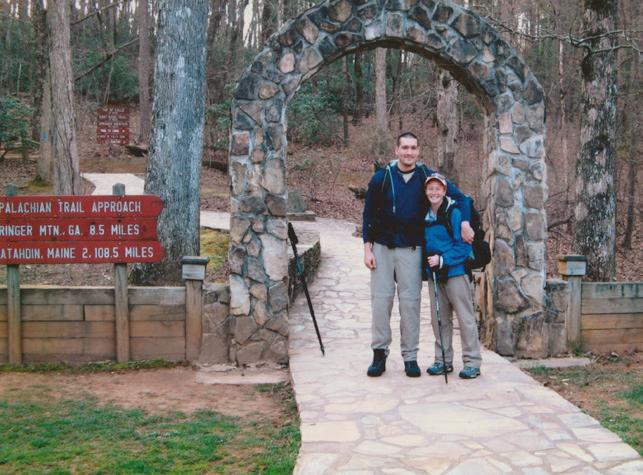
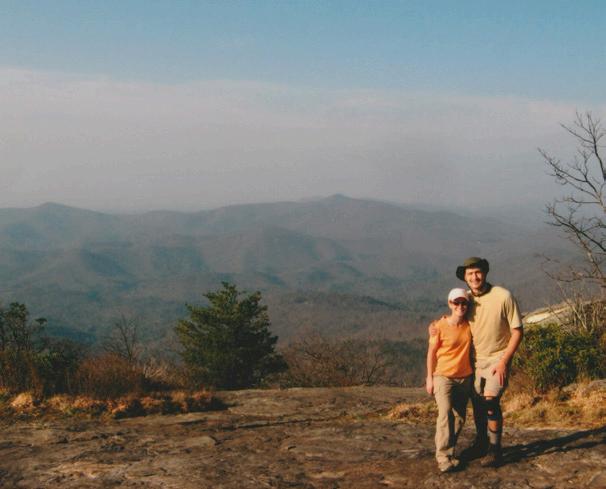
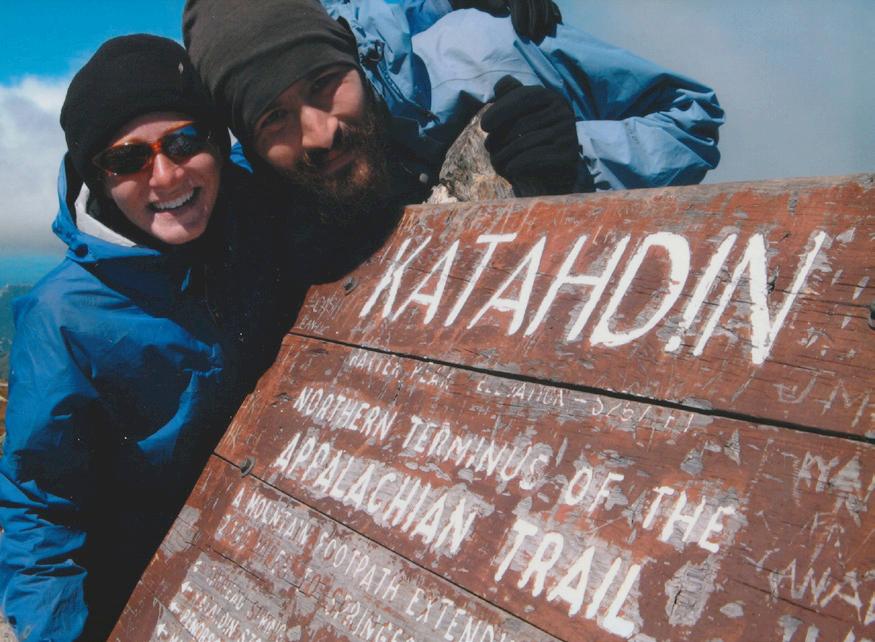
On March 25, 2007, the Gauldens stepped onto the 8.5-mile Approach Trail at Amicalola Falls State Park in Georgia—their packs heavy with dreams and gear. Five and a half months later, on September 5, they stood atop Katahdin in Maine’s Baxter State Park, having covered roughly 2,175 miles northbound through snowstorms, rhododendron tunnels, and bear encounters.
Camping companions and experiences helped create their trail names: “GG” (Gentle Giant) for Ron and “Rhodo” for Kelly, thanks to her love of the Appalachian Trail’s rhododendron tunnels and “the fact that I would curl up tight in my sleeping bag, just like rhodo leaves curl up in the cold temperatures,” she said.
Here, in their own words, Ron and Kelly share how their experience of hiking the Appalachian Trail—nineteen years later, and now residents of Greenville, South Carolina—still echoes through their lives.
SETTING OUT
We are so grateful to have shared this experience, for the wonderful people we met along the way, and the wildlife we encountered. This was our first (and so far only) thru-hike, but we had done small sections of the trail in North Carolina, Tennessee, and Virginia while in college at Appalachian State. We’d go out for one or two nights on the weekends, and we were always curious about what was around the next bend, and contemplated how neat it would be to just keep going one day.
We did a traditional NOBO (northbound) hike, and back, then there were some SOBOs (southbound hikers) and flip floppers (people who hiked to a point mid-way up the trail, then traveled to Maine, and hiked back down to their midway point). It was a real treat to meet up with flip floppers on our hike because we had met some of them at camp in the southern sections of the trail months earlier.
Exchanging stories was encouraging. By Vermont, we were also regularly sharing campsites with SOBOs. This was always fun because we could ask them about Maine, the infamous moose* in the Mahoosuc Notch that we had been hearing about, and the White Mountains of New Hampshire. We were amazed by these hikers who had completed these strenuous sections, and they were amazed by us because we had so many miles under our belts by then.
*In July 2007, an unfortunate moose fell in the boulder-choked Mahoosuc Notch, known as the Appalachian Trail's toughest mile, suffering severe injuries. The distressed animal, unable to escape the rugged slot canyon near the trail, became a grim, infamous sight for passing thru-hikers that season, its plight underscoring the wild, unforgiving nature of Maine's Mahoosuc region.
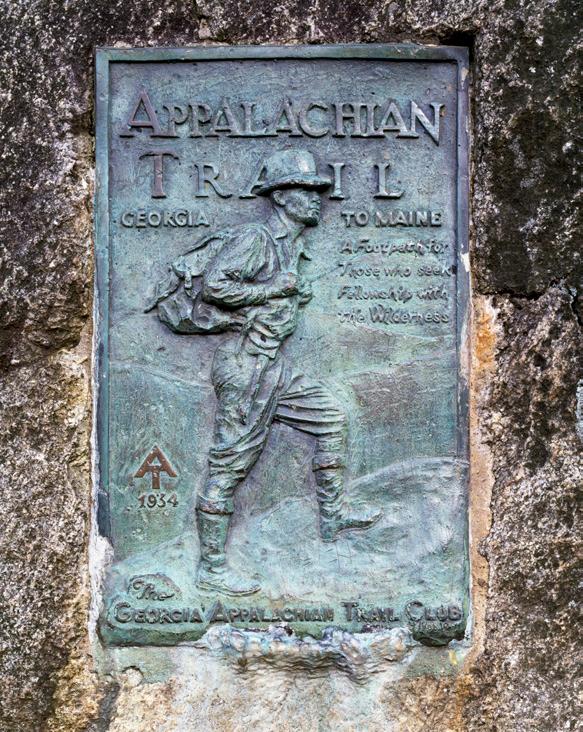
TOP LEFT: A plaque marks Unicoi Gap in Chattahoochee National Forest near the start of the trail in Georgia; photo by Carol M. Highsmith, courtesy of the Library of Congress
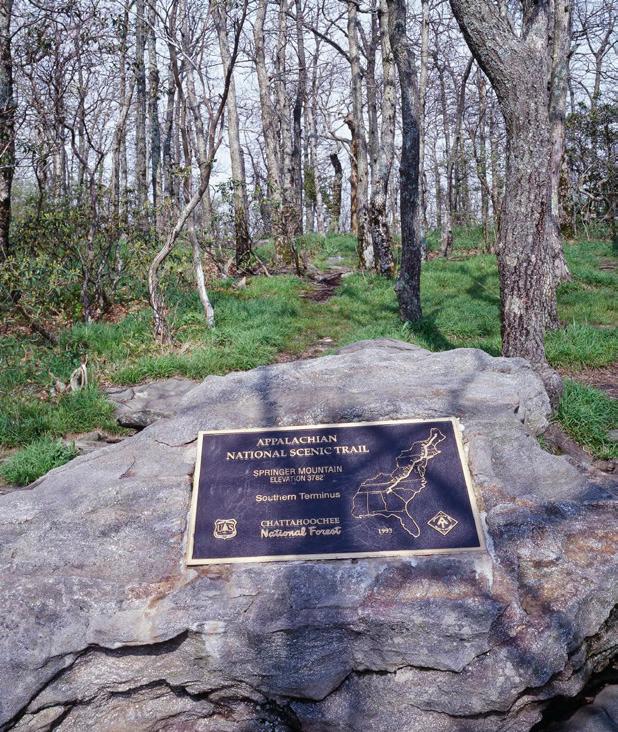
TOP RIGHT: Springer Mountain, Georgia, at the beginning of the Appalachian Trail; photo by Carol M. Highsmith, courtesy of the Library of Congress
LOWER LEFT: Ron and Kelly head out for their NOBO thru-hike at the starting point of the Appalachian Trail.
AN AVERAGE DAY
We met a group of hikers along the way who became our friends. We arranged to summit Katahdin with them as well. One of them, Crazy Bear, would wake up each morning and ask, “What do you want to do today?” And we’d say, “I don’t know. What do you feel like doing?” And he’d say, “Um … Let’s walk north.”
But it definitely wasn’t like Groundhog Day. Every day was different, even when we got in our groove. We’d wake up to the birds and then do the hiker hobble to find a private spot to use the bathroom. Then we’d eat breakfast and break down camp.
We would usually pump water at our lunch stop, then hike to our anticipated camp spot. Sometimes we decided to go farther; other times we would cut it short because we were tired or there was a gorgeous campsite. From time to time we would sleep in the shelters, especially when the weather was really crummy. Usually, we opted to pitch the tent, though, since there aren’t mice or multiple snorers, like in the shelters.
We always looked forward to getting to camp, unclipping our hip belts and removing our packs for the day. We hardly ever camped without people around us, and it was awesome to eat dinner with them and chat. Sometimes we’d make campfires, which we called “hiker television,” because we’d sit around and stare at it. One neat thing about campsite discussions is how, at the beginning, people talked about where they were from and what jobs they had left to be on the trail. Not too far up the trail, though, discussions were always about food, gear, and the next town stops. There was way less talk about “home” because the trail quickly became our home.
“I was always cold, so I’d eat a quick breakfast of granola with powdered milk, or a bar, and start hiking once the tent was packed up. Walking warms you up quickly. During those first solo miles, I would say the Rosary on my fingers against my hiking pole and admire the sunlight through the trees, or the pitter patter of rain on my jacket. After about an hour or so, I’d stop to take a snack break and wait there until Ron had caught up.” —KELLY
“I’ve never been much of a morning person, so I’d start the day slowly, boil water for coffee, and watch the moss grow. After meeting up with Kelly, we’d talk about what we had seen, who we had passed, and then continue hiking the rest of the miles that day together.” —RON
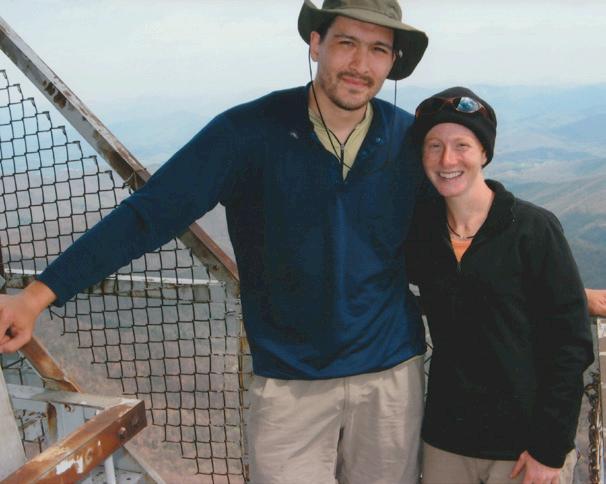
Ron and Kelly at the Albert Mountain fire tower in North Carolina (left) and at the summit of Blood Mountain in Georgia (right).
AN AVERAGE NIGHT
We usually got to camp between 5 and 6 p.m., but sometimes we did have to hike with our headlamps to get to a good overnight spot. The first thing we would do was set up the tent or lay out our sleeping mat and bags inside the shelter. We would get to know the other campers at the site and catch up with people we had already met along the trail.
We had read that the trail is more crowded at the beginning before hikers drop out, but we didn’t know how crowded the campsites would be the first week or so in Georgia.
Oftentimes, especially on the weekends, we met section hikers or overnighters. Then, we’d filter water from whatever source was at that campsite.
Sometimes, the blue blazed side trail to water was half a mile or so from the campsite, so we joked that cumulatively, we hiked way more than 2,175 miles by the time we reached Katahdin.
Dinner usually consisted of a Knorr/Lipton side of rice or noodles. We would add packaged chicken or tuna for protein and some olive oil for a little fat. Thanks to the advice from other hikers, we learned that pepperoni and a hard block of cheddar cheese would be fine unrefrigerated in our packs, so we often would roll that inside a tortilla. Whoever didn’t cook that night would wash the pots and spoons.
Hikers would often share food with each other, and the unwritten rule if someone offered you trail mix was to hold out your hands and let them pour it into them. This etiquette makes sense so a hiker’s dirty hands didn’t land straight into someone else’s bag of food. We would then chat with other hikers and dream about what food we would eat when we got to the next town. Nine o’clock is known as Hiker’s Midnight, so usually everyone was hunkering down for the night by then.
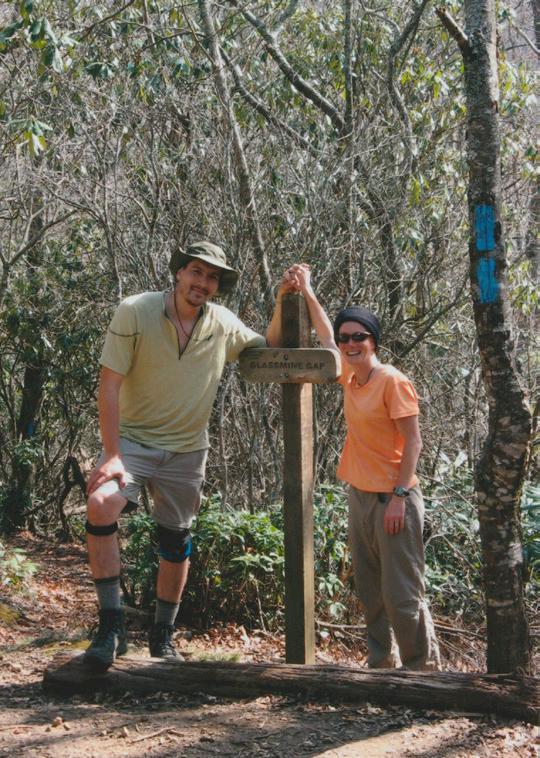
Top: 100-mile mark at Glassmine Gap in North Carolina
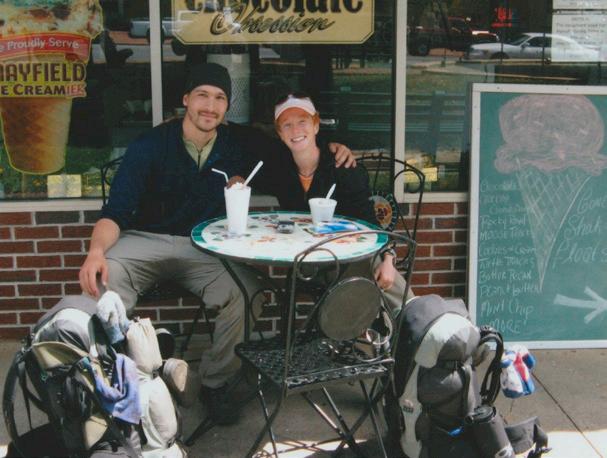
Bottom Left: Our first ice cream stop in Franklin, North Carolina
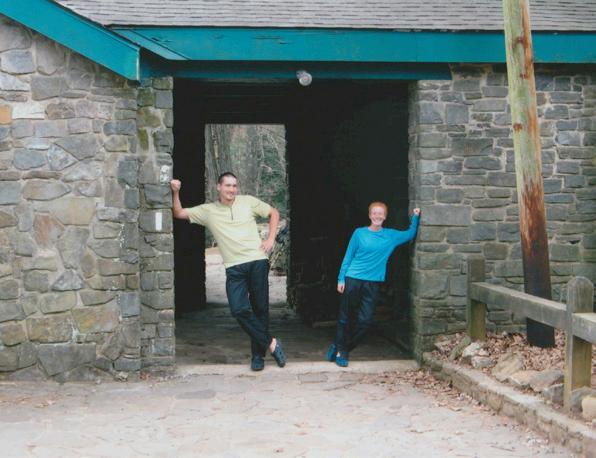
Bottom Right: All clean after our first shower at Walasi Yi in Neal Gap, Georgia
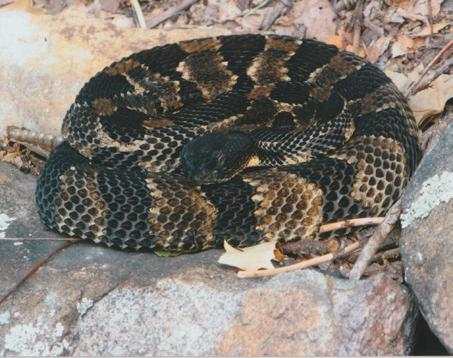
Opposite page: A timber rattlesnake on the trail
THE WILDLIFE
We were surprised at some of the wildlife along the way. The deer in Shenandoah National Park were so tame that we could practically reach out and pet them. We saw lots of timber rattlers, especially in Pennsylvania. They’re actually very timid.
We usually slept well on the trail, but we would wake up during thunderstorms. The peeper frogs were so loud at one campsite in Virginia that we barely slept a wink. There was also a campsite in New Jersey where this strange sound kept us up. All. Night. Long. We later learned it was a whippoorwill.
Massachusetts is where we noticed the squirrels were smaller and redder. (They were also meaner. Sometimes they would perch in trees to toss nuts and pinecones onto our tent.)
We didn’t have any bear scares during the nights, but we did unzip our tent one July night in New Jersey to find a huge pile of bear scat a few feet from our tent. So, even though we slept soundly through it, we did have a visitor at least once.
“The first bear we saw along the trail was in Virginia. I was hiking alone while Ron had hung back. I was looking down to watch my footing, and when I looked up to check for the next white blaze trail marker on the trees, I saw a black bear about 100 yards ahead. I did everything I was not supposed to do—paused, took out my camera, and snapped a photo—before following the protocol of holding my jacket over my head to look big and yelling to scare the black bear away. The bear scurried off immediately after that, and by then Ron had caught up to me.” —KELLY
THE MAGIC
“I asked Kelly if there was a little dog or something on the trail, and she informed me that I had heard her intimidating “woop woop” that scared the bear away. By the time we reached the Shenandoahs a week or so later, we saw many more bears. On one day alone, we saw eight, including a mama teaching her cubs to climb a tree.” —RON
We were surprised by and grateful for the “trail magic” along the way, when people would leave treats like cold drinks in a creek or a cooler of food at a road crossing. The best one was a cooler with hard boiled eggs and fruit. After all of the packaged meals we ate, this fresh food was heavenly.
Oftentimes, we got to meet the people who offered the trail magic. One road crossing had directions to a nearby cabin where hikers could get a meal. We learned that this type of magic usually came with the caveat of listening to some preaching. One of our hiker buddies coined this type of trail magic “Jesus Magic.”
We were surprised at how ravenous we became on the trail. When we got to Manchester, Vermont, we checked in at the infamous Green Mountain House hiker hostel. Then, we found a Friendly’s restaurant where we ate a couple of entrees each. We both ordered the large ice cream dessert that is meant to feed an entire table. We could have eaten more, but we were saving room for the pizza joint up the road!
THE PEOPLE
We met so many wonderful people, many of whom we still keep in contact with now, nineteen years later. Every year we exchange Christmas cards with “Blue Skies” from Denmark. “Dances with Sloths” from Texas sometimes comes back to the East Coast to hike sections of the trail, and makes a point to visit us with his dog, Match. We have fond memories of “Green Hornet” from Ohio who had served in the Navy. The “Four People” consisted of “Crazy Bear” from Arizona, “Paloma” from Ohio, “Ghetto Blaster” from Virginia, and “Carpenter” from Massachusetts. We were so glad to summit Katahdin with them. Plus, now Ghetto and Paloma are married with two kids— and their oldest is named after Benton MacKaye, the originator of the Appalachian Trail!
One day, we met “The Bird Couple” on their section hike. They were out for a short trip, birding along the way. Warren and Lisa graciously helped us identify several birds we had photographed on our digital camera. Thanks to them, we learned about the scarlet tanager, red winged blackbird, and hermit thrush. We carried that knowledge with us throughout the trail.
Fun fact: We were recently listening to a Substack by Heather Cox Richardson. She quoted Warren Strobel from the Washington Post, and Ron said, that’s our bird guy! Ron reached out to him on social media, and he responded right away. He remembered meeting us on the trail all those years ago.
We can tell you stories about “Laredo,” “Sheephead,” “Dirty Ernie,” “Aussie,” “Chico,” “Barking Spider,” “Gator Gump,” “M&M,” “Backyard Boogie,” “Tom Dooley,” and “Pooch.” They were all so wonderful. And aren’t their trail names great?
We met some awesome section hikers who helped us out in various ways. “Baby Steps” had thru-hiked the trail years earlier, and she was back out on the trail doing sections. Her stories and encouragement meant a lot to us.
We met Jim camping in the Shenandoahs. He had thru-hiked in the 1980s, and was riding his motorcycle from his home in Copenhagen, New York, to Myrtle Beach, South Carolina, where he was going to photograph the wedding of one of his former soccer players. Jim told us to give him a call when we got to Massachusetts, and sure enough, he picked us up at a road crossing, took us one at a time on his motorcycle to an awesome campsite that he had reserved (not on the AT), cooked us fajitas, and provided us with comfort and friendship where the trail was really thinning out of people.
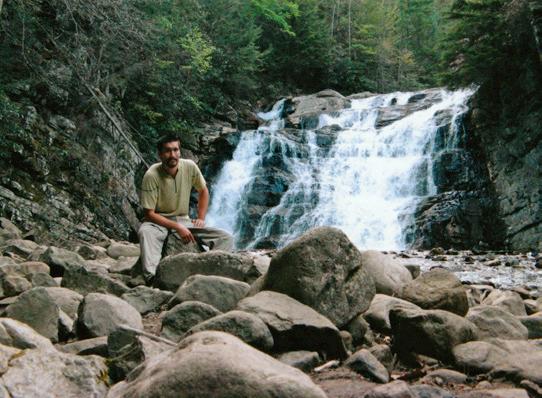
Top Left: Laurel Falls, Tennessee | Bottom Left: Rockfish Gap, Virginia Bottom Right: The 1,000-mile mark at David Lesser Shelter in Mechanicsville, Virginia
The same is true for “Stuntman.” We met him in The Whites of New Hampshire, and he picked us up in Maine, took us out to dinner, and let us stay overnight at his cabin.
Even the people who drove us into town for resupply or back to the trail were great. Our favorite was probably “Steve Baby,” a 70-year-old man who was in Gatlinburg, Tennessee, for a bridge tournament. He asked if we were “roughing” it because to ride in his car we’d have to sit on the floorboards. He had removed the passenger seat and backseats of his little two-door sedan so he could sleep in his car when driving all around the country for the tournaments.
The Walasi-Yi Outdoor Center at Neel Gap in Blairsville, Georgia, is about 30 miles from Springer Mountain on the Appalachian Trail. This is a popular spot for thru-hikers to have employees inspect their packs and mail home unneeded gear. We met a hiker from Massachusetts named “Fah-mah” who must have mailed home ten pounds of gear. The employees were so tickled that he had a backscratcher, that they made him keep that. Fah-mah decided to flip flop his hike so he could be at Katahdin before Baxter State Park closed for the season. We saw him on his way south, and it was the best reunion. He had a summit picture on Katahdin holding up his back scratcher, and that thing also made it all the way to the end of the trail for him!
“The lakes in New Jersey are so pretty, and it was nice to get off the trail there and bring some new trail friends to my aunt and uncle’s house. It was a family reunion with about 50 people, and we stayed for two nights and ate our hearts out.”
—KELLY
“...On our way to get picked up by Kelly’s aunt for a much needed respite, we must have experienced the most dense amount of lightning strikes during our whole thru-hike (news later reported over 1,000 strikes in ten minutes). I remember there were about five hikers and we all spread out and ditched our hiking poles. I sure thought Kelly made a good call on her carbon poles.” —RON
Top: Lake Marcia on the AT, near New Jersey’s highest point; photo by Carol M. Highsmith, courtesy of the Library of Congress Bottom: Below Bear Mountain bridge, along the AT in New York; photo by Carol M. Highsmith, courtesy of the Library of Congress Right: The halfway point near Pine Grove Furnace in Pennsylvania
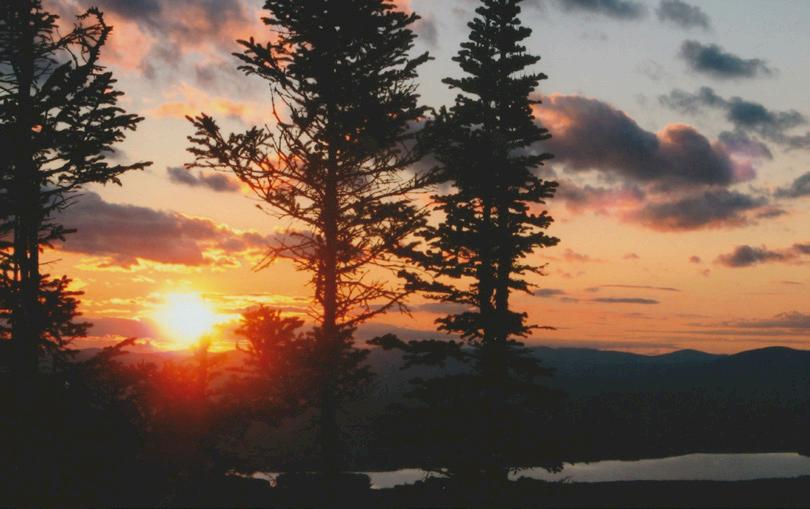
Top Left: A view of the sunset from Bemis Mountain in Maine | Top Right: Crossing the Kennebec River near Caratunk, Maine
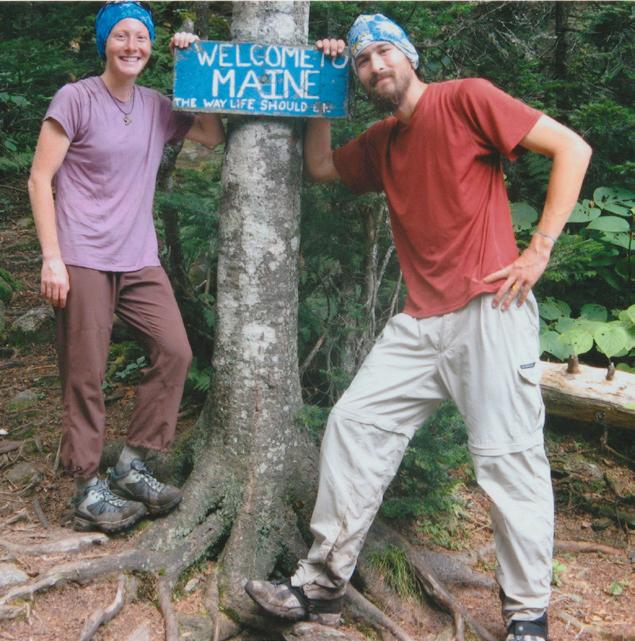
Middle Left: Welcome to Maine | Middle Right: Katahdin summit. 10:30 am 9/5/07 {THE END!}
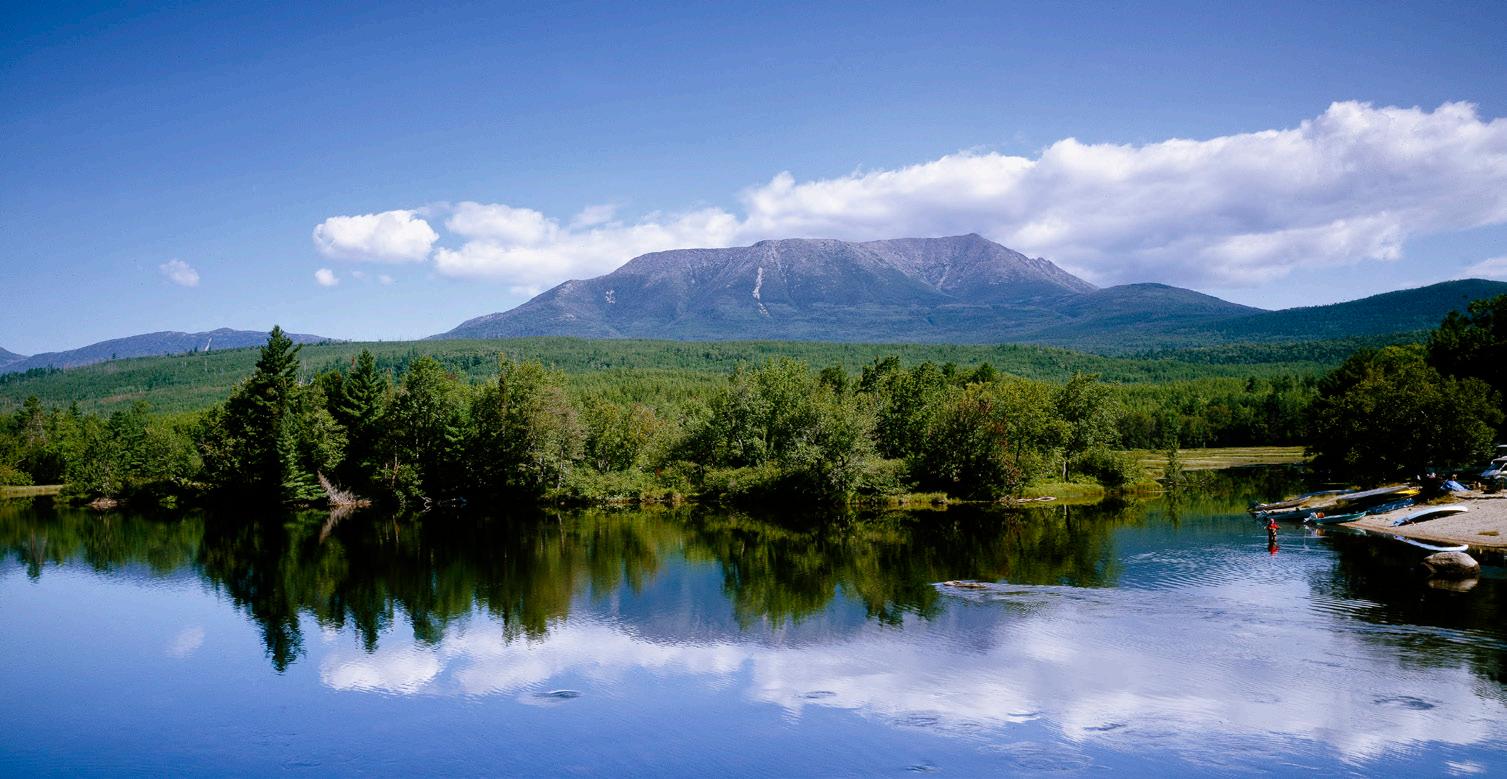
Bottom: View of Mount Katahdin in Maine from the Appalachian Trail; photo by Carol M. Highsmith, courtesy of the Library of Congress
THE WEATHER
It was an unseasonal 80 degrees the day we started the trail on March 25. Less than a week later, it was 9 degrees, and we hiked through the first of two snow storms we encountered. We were at Max Patch (in North Carolina) in whiteout conditions with sleet and snow slamming into our faces. We lost the trail because the blazes painted on rocks were covered in snow, and the wooden posts with trail markers were literally blowing over in the wind. We accidentally summited twice during the storm but finally just started hiking down in one random direction. Luckily, we were able to locate the trail again once we were at a lower elevation and out of the high winds. Camping that night in the freezing cold with a hilarious group of hikers packed together was a memorable experience. We went back to Max Patch for our tenth wedding anniversary. It was a sunny day, and the view was terrific.
Hiking in spring was gorgeous. There were sections of the trail blanketed on either side with Virginia spring beauties as far as the eye could see. We loved seeing the purple and yellow trillium and pink lady slippers. The various trees were gorgeous and the green rhododendron tunnels became our comfort.
THE LESSONS
Hiking the Appalachian Trail helped us appreciate simplicity. When you just put one foot in front of the other, solve problems as they come, and witness how genuinely good people are, it is hard not to be happy.
It also heightened our awareness of the importance of conservation. It really is amazing that the Appalachian Trail corridor runs through the most populated region of the entire country. There’s even a spot in Pawling, New York, where the trail crosses train tracks near the Dover Oak—the oldest tree on the Appalachian Trail. Some hikers take a train to New York City. One moment, they’re enjoying the wilderness, then, less than two hours later, they’re eating lunch in Chinatown. When so many people live within pretty close proximity to The Trail from Georgia to Maine, it’s a great opportunity for people of all ages to get out there and learn about how important our trees are, how vital it is for us to keep our water sources clean, and how we can all be stewards of the natural world.
Also, even all these years later, we don’t take running water or hot showers for granted.
FINAL THOUGHTS
It’s hard to pick a favorite section of the trail, but the diversity made it special. Roan Mountain and The Balds in Tennessee have great views, and they’re special to us because that’s where we first got on the Appalachian Trail while in college. Last fall break, we brought our two sons to Mount Rogers in Southwest Virginia for three days and two nights, and they loved it.
There’s an adage among hikers that “A bad day on the trail is still better than a good day in the real world.” We really would not have traded any part of our experience, including the rain, hail, sleet, and snow. No pain, no gain. No rain, no Maine.
THE SUPPLIES
As far as gear, we really used everything we brought. Here are some of our thoughts on the supplies we chose after a lot of testing and research.
Tent: We decided on the Tarp Tent Double Rainbow tent by Henry Shires. We had to seam-seal it ourselves.
Backpacks: We used Granite Gear Vapor Latitude backpacks* because we loved the side panel for easy access to supplies during lunch breaks or any other time we needed to access gear easily but weren’t at camp yet. Our base weight was 18 pounds. With water for the day and enough food to get us to our next resupply, our packs weighed 25 pounds (Kelly) and 28 pounds (Ron.) This was considered pretty light in 2007. Now, with all the improvements in the gear world, it’s possible that hikers have lighter packs without going ultra-light.
Hiking poles: Hiking poles helped immensely on the downhills, especially later on in the hike when our knees were sore. Kelly splurged for the carbon fiber poles—safer in lightning situations since carbon fiber is significantly less electrically conductive than aluminum.
Hiking boots (Ron): I went through two pairs of boots. My first pair delaminated in Virginia, so I switched from boots to Montrail trail runners, which I liked a lot.
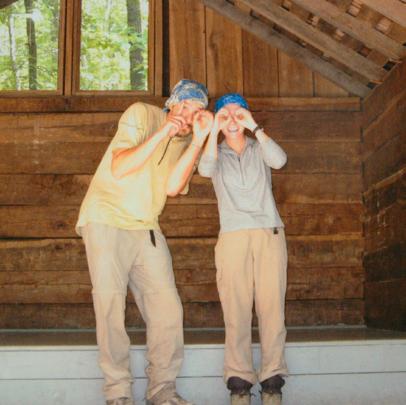
Clothing: Splurging on good rain gear is definitely worth it. Merino wool is pretty awesome for base layers. We had sock liners, three pairs of socks (two to switch back and forth and one sacred pair for town visits), pants, two shirts, a fleece layer, hats, rain pants, a rain jacket, and a pack cover for when it rained and to protect the pack against brush in tight parts of the trail. We also had gaiters to keep dirt and moisture out of our boots. In the early months when it was still cold, we had down jackets, down pants, and down booties. Also, we treated ourselves to “Buffs” in Virginia, which are like tube socks for your head that can be worn as a bandana, head covering, or neck covering.
Water: Even though we used a water filter, we packed iodine tablets just in case. That was very useful in one section of North Carolina because the filter froze when the temperature went down to single digits.
Miscellaneous: We had head lamps, waterproof stuff sacks, a food bag, and rope to hang the bag at night (away from bears), a Swiss army knife, Montbell down sleeping bags, sleeping pads, gloves, a ditty bag (with a toothbrush, toothpaste and biodegradable soap), titanium pots, an MSR pocket rocket stove, and long-handled titanium spoons (easier for the times when we ate food out of bags).
Kelly's most useful gear
Down jacket, down pants, a waterproof journal, and a pencil.
Ron's most useful gear
Hiking poles and a Smartwool beanie hat.
*The Granite Gear Latitude Vapor backpack has been discontinued, but the company offers plenty of backpacks with similar features at granitegear.com/outdoor/backpacks.
TIPS + TRICKS
• Hike your own hike. It’s probably the oldest trail cliché but it’s so true. Some days you go farther, other days you cut it short. That’s okay. Some people want to camp with a big group. Other people hike off a bit for solitude. That’s okay. Some people tent, some people hammock, and some only sleep in shelters. It’s all good.
• Test out your gear. Go on practice hikes to try out your gear before you start.
• Use your hiking poles in clever ways. Our lightweight tent could be staked down or used freestanding by clipping it to our hiking poles. This was immensely helpful when hiking through The Whites and the terrain was too rocky to stake it to the ground. [Note: Not all tents have this capability.]
• Purchase a guidebook. Our Thru-Hiker’s Companion trailbook was probably the No. 1 most useful item because it had mileage, campsites, shelters, water sources, and other helpful information. It was basically our Bible out on the trail.
• Bring a GPS device. We had a Garmin GPS in which we entered all of the AT shelters. This was very helpful at the end of the day while hiking at night, since it’s easy to miss the side trail to camp.
• Bring duct tape. We each had some duct tape wrapped around our hiking poles that we could peel off and use if needed to patch rips in any gear.
• Resupply in town. We had prepacked eight mail drops that Kelly's sister sent along the way, but we learned that resupplying in town was usually sufficient. Also, what we had prepacked consisted of a lot of Cliff Bars. Cliff Bars became “tired” quickly and we ended up trying an assortment of candy bars instead. The Snickers bar seemed to stay tasty for all 2,000 miles.
• Pack dental floss, and not just for flossing. We packed dental floss and a sewing needle to repair gear. Glide dental floss is stronger than regular thread, and also waterproof.
• Wipe your beard before bed. One of our favorite stories was of a hiker who went to sleep in a shelter and woke up to a mouse eating crumbs off of his beard!
“Hiking together really was great because we balanced each other out well. We often joke that if Ron hiked solo, he’d still be having a beer at some town in Georgia. If I hiked solo, I’d wear myself out too soon by nervously trying to get to Baxter State Park before it closed for the cold weather season. I also learned that it’s good to have a general plan, but being able to pivot and adjust is necessary and very enjoyable.” —KELLY
“I liked how everything was reduced to basic needs and it brought the best out of us as humans. Life on the trail cuts through the BS, and the societal influences of your identity start to disappear. People’s commonalities allow you to connect with each other on a much more genuine level. I also gained leg strength and lost arm strength!” —RON
JENNIFER LINNEY
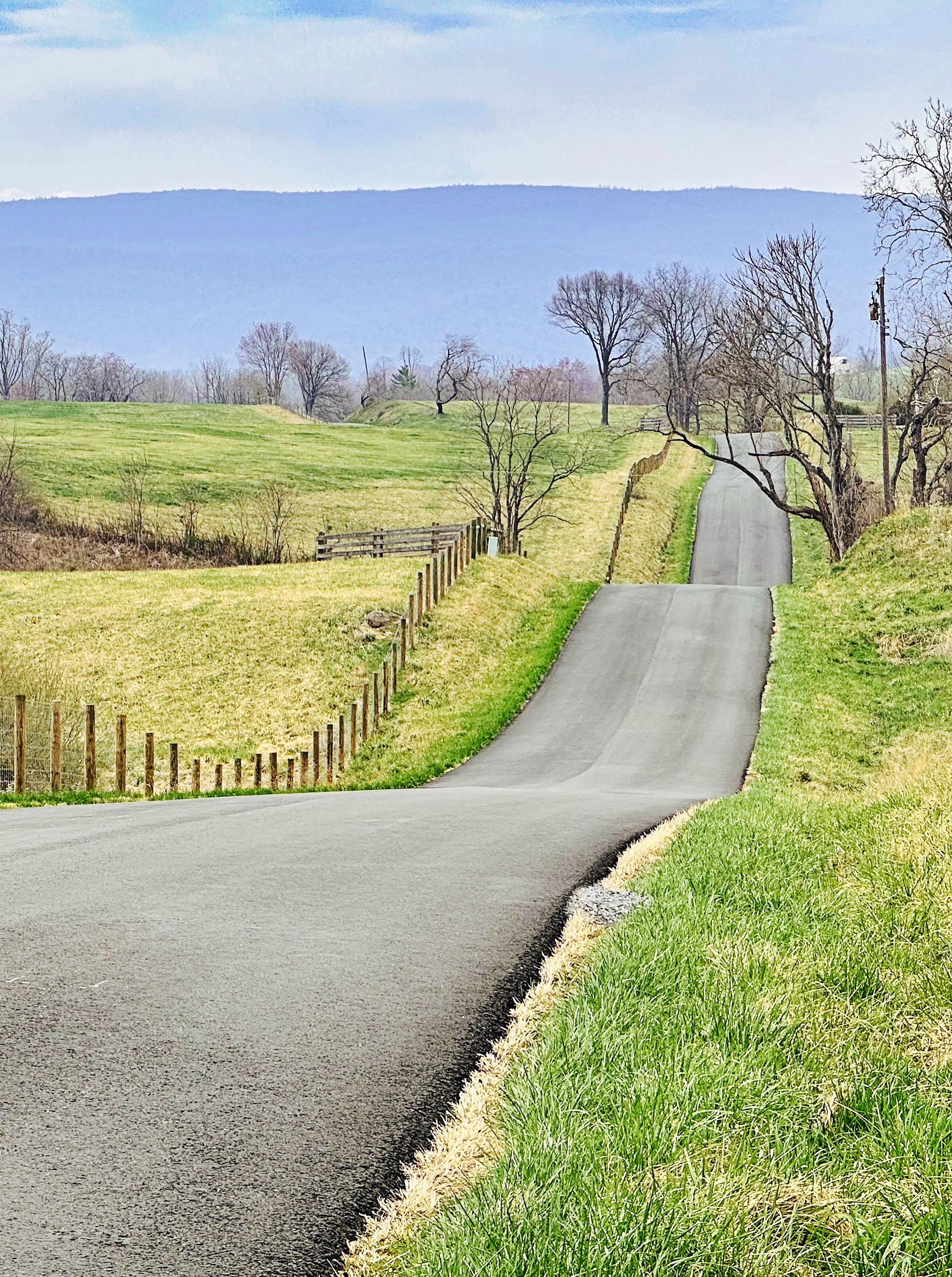
Fauquier County, Virginia Hume Road ripples over the hills like ribbon candy.
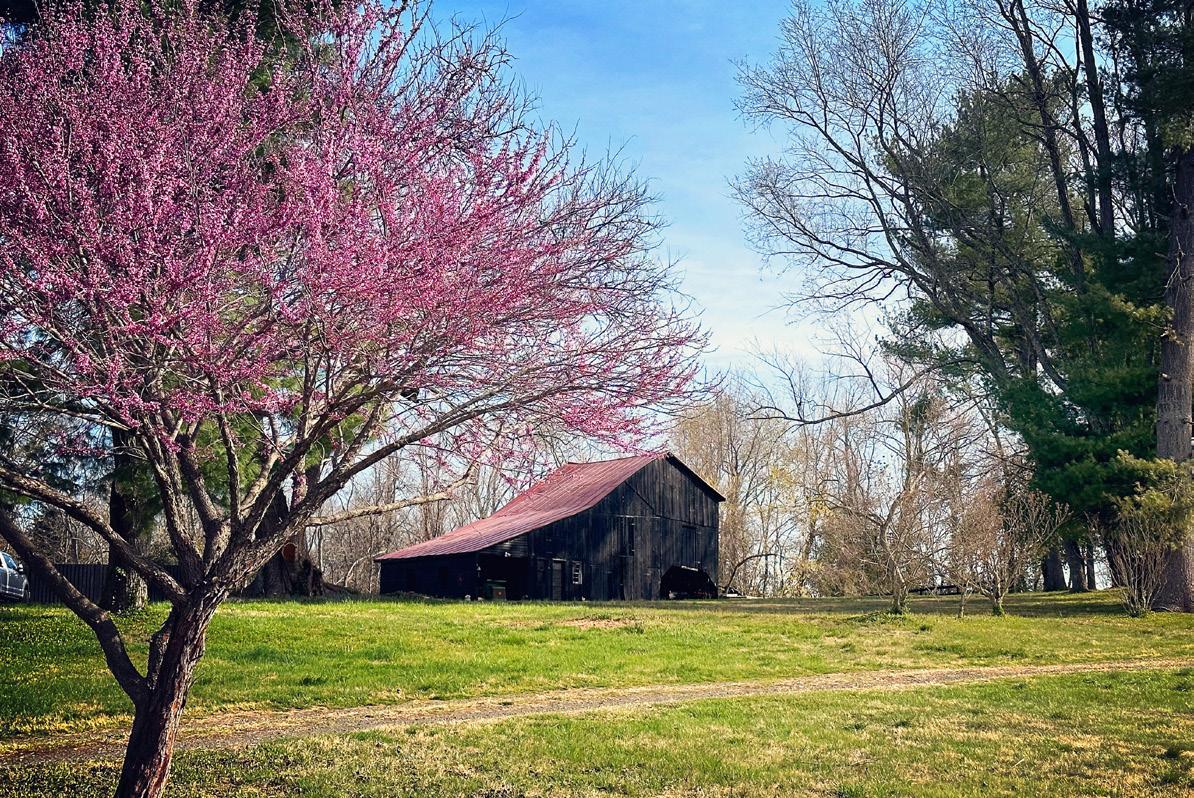
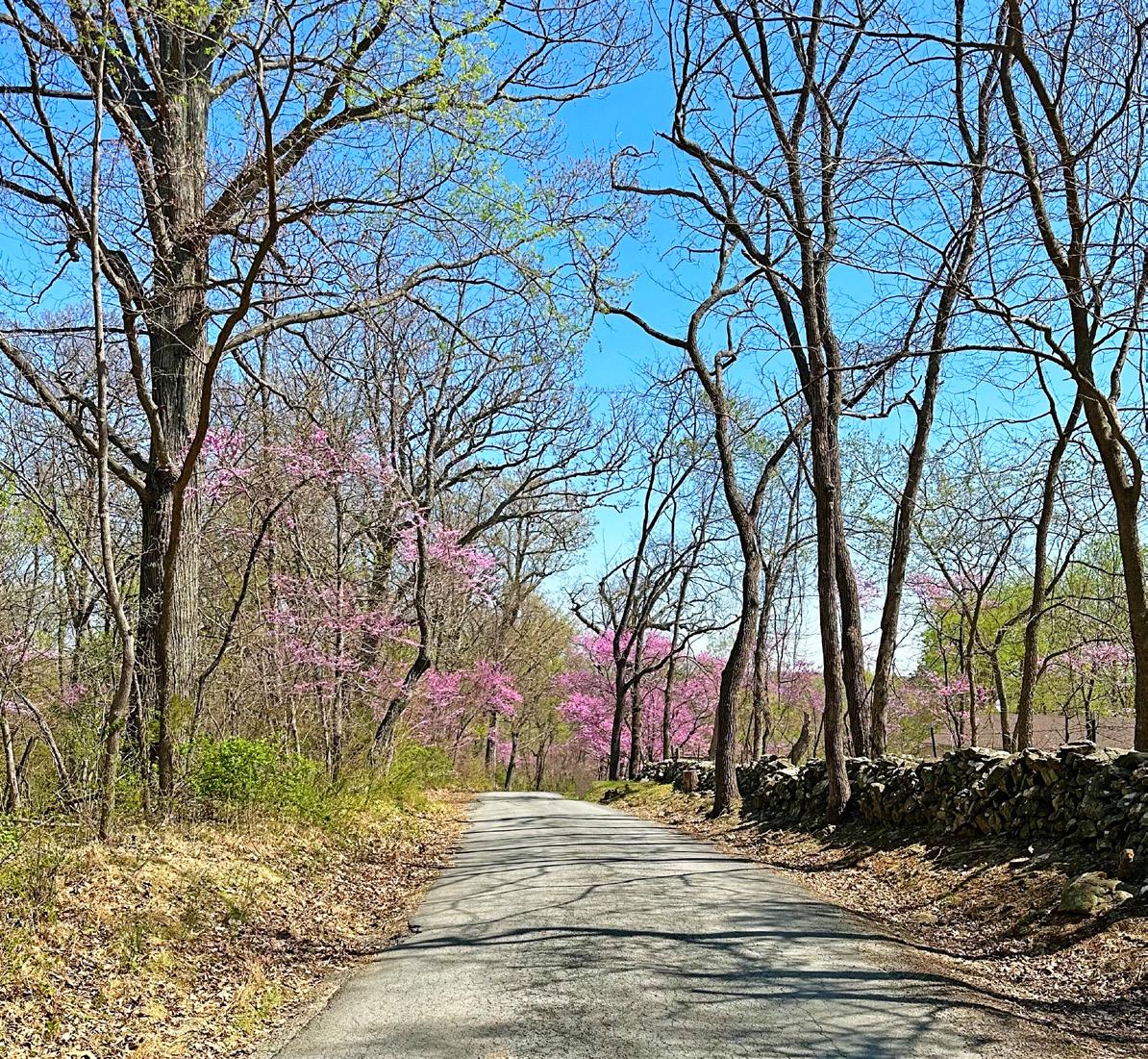
TOP: A REDBUD IN ORLEANS, VIRGINIA, BLOOMS IN A CHURCHYARD NEXT TO A RUSTIC BARN.
BOTTOM: REDBUDS LINE A QUIET DIRT ROAD IN ALDIE, VIRGINIA, SIGNING THAT THAT SPRING HAS ARRIVED. PHOTOS BY JENNIFER LINNEY
Love Where You Live
Place attachment in small and rural communities
BY DR. KATHERINE LOFLIN
For nearly two decades, my work has centered on one deceptively simple question: Why do people love where they live—and why does that love matter?
What I’ve learned: Our relationship with place determines far more than we realize. When we feel that we “fit” where we live, we don’t just survive—we thrive.
Across countries, cultures, and community sizes, I’ve consistently seen the same pattern. When people feel emotionally connected to their place, local economies strengthen, resilience grows, public health improves, and people invest their time, talent, and resources into the future of their community.
What I’ve learned through my research on communities around the world is that this love isn’t sentimental or accidental. It’s measurable. Predictable. Powerful.
I call this bond place attachment—the emotional connection between people and place that shapes how they think, feel, and act. Any community can cultivate it. But time and again, I’ve observed that small and rural communities possess natural advantages that make attachment easier to grow and sustain.
The Place Attachment Model
Through my national research with the Soul of the Community project and my subsequent global work, I developed a practical framework communities can use intentionally. The model identifies four core ingredients that consistently predict attachment:
• Social offerings
• Aesthetics
• Welcomeness
• Place identity
Social offerings, aesthetics, and welcomeness are all expressed through place identity.
The initial research was clear: Place attachment comes when residents highly rate the social offerings, aesthetics, and welcomeness of their community. However, different places manifest social offerings in different ways. New York City’s social offerings are very different from those of Beaufort, North Carolina—and with good reason. What matters isn’t scale or flashiness—it’s the authenticity for that place, and reaching its residents in such a way that they experience the manifestation of that authenticity.
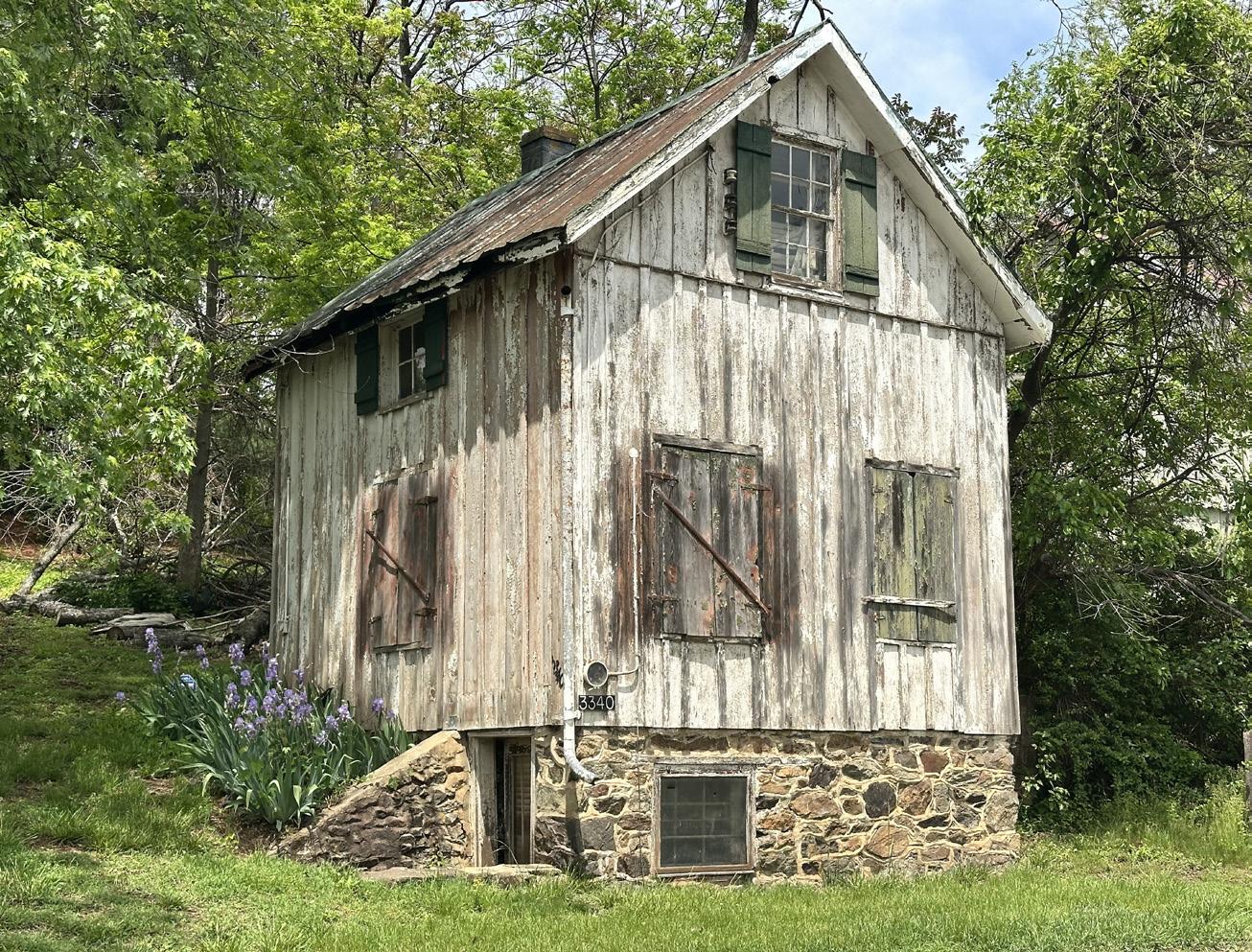
ABOVE: A CIRCA-1852 CATTLE SCALE BUILDING IN DELAPLANE, VIRGINIA, ONCE USED TO WEIGH LIVESTOCK, NOW STANDS WEATHERED YET INTACT WITH BLOOMING IRISES NEARBY. PHOTO BY JENNIFER LINNEY.
Why Small and Rural Places Have an Edge
In large cities, connection often requires programming and planning.
In small communities, it often happens organically.
As a result, you hear people in small towns describe their place in terms of a critical component of social life: the civility and closeness of the town’s people, which creates the social offering of connectivity, which humans crave. This helps build the love of place.
Next, the aesthetics of the environment and landscape in rural towns is often quite beautiful to behold—and the first and most consistent message a place sends about itself. A small town’s natural beauty is baked into its narrative and a key source of pride and love for its residents.
These two combine to create a sense of belonging, a welcomeness, that just feels right. There is a sense of community—of being in this together—that many humans also crave. They feel welcome in their place and believe others feel the same, which forges a common bond.
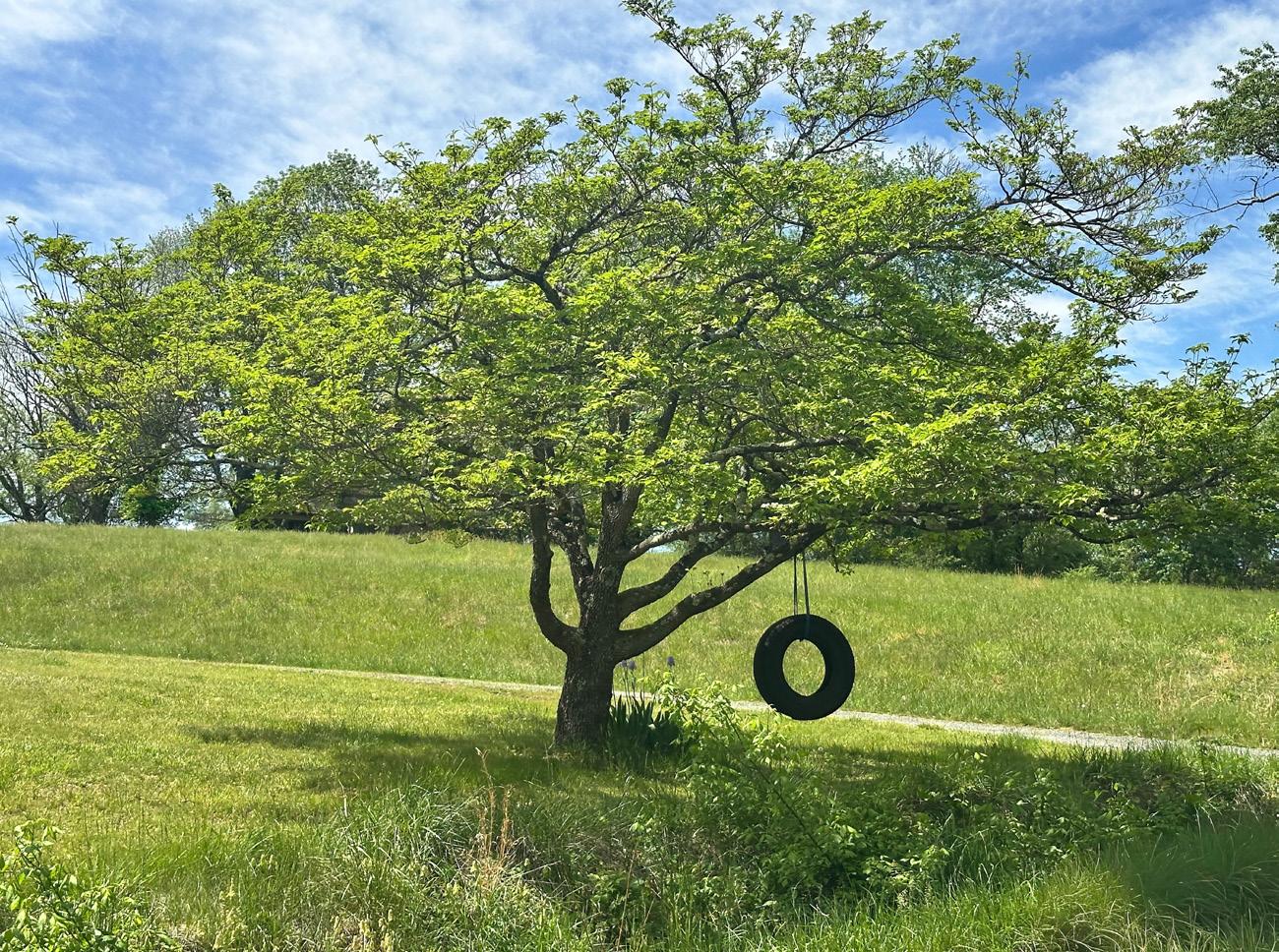
BELOW: THIS TIRE SWING IN MADISON, VIRGINIA, IS THE PERFECT WAY TO IDLE AWAY A SPRING DAY. PHOTO BY JENNIFER LINNEY.
Identity is the Anchor
Where small and rural communities truly shine is in the concept of identity.
There’s often a shared and understood narrative about the place people call home. They know and share their town’s local history. Landmarks—which can include historic farms, feed stores, homes, and churches—carry meaning. Families who have lived there often span generations. Their stories carry memories. The memories build identity. Identity shared through social offerings, aesthetics, and welcomeness build the attachment that makes others want to become a part of that story, too.
The Tourism Advantage
This attachment formula doesn’t only apply to residents. It’s equally powerful for visitors. One of the most effective tools I teach in tourism is the place narrative strategy—using storytelling to help guests quickly form emotional bonds to the place.
Today’s travelers aren’t looking for generic attractions. They want experiences that feel local, participatory, and meaningful: heritage walks, farm dinners, maker markets, oral histories, history productions, story-based tours.
People don’t attach to statistics and timelines. They attach to authentic stories and experiences. Visitors might forget your population count. But they’ll remember discovering an arrowhead in a farm field, hearing local folklore told by the town founder’s descendant, or learning how the town became the Gourd Capital of the World.
Small and rural communities hold a remarkable advantage here. Their stories are accessible, human, and authentic—exactly what visitors crave. Done well, tourism simply becomes attachment-building for newcomers.
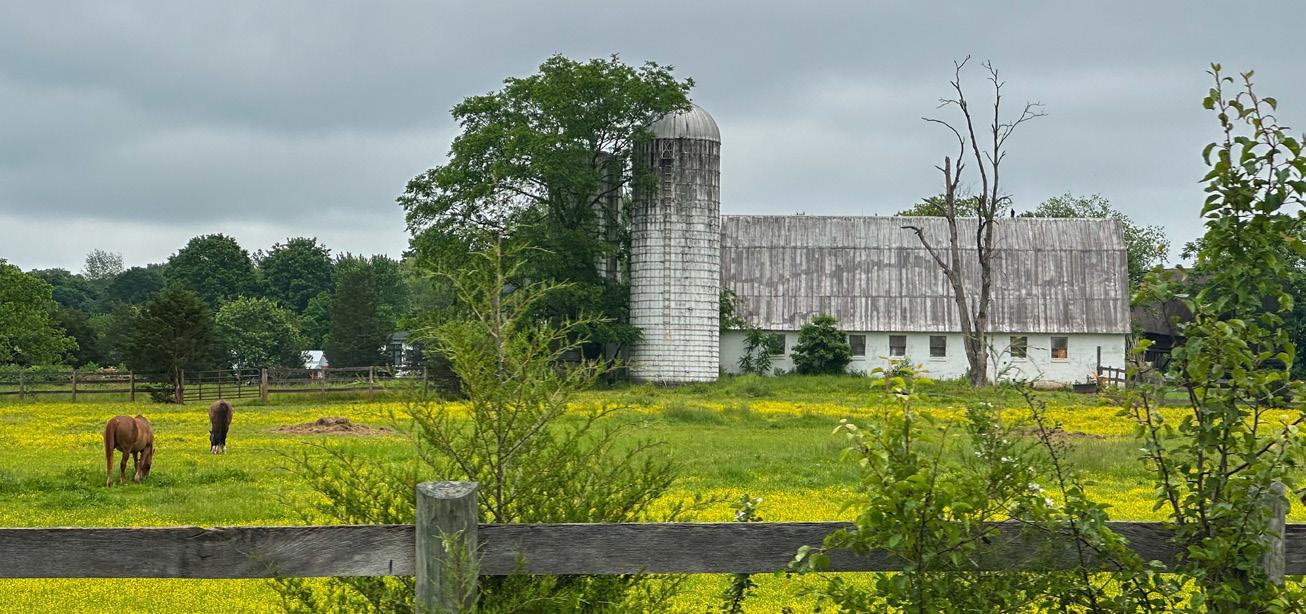
HORSES GRAZE IN A NOKESVILLE, VIRGINIA, PASTURE. PHOTO BY JENNIFER LINNEY.
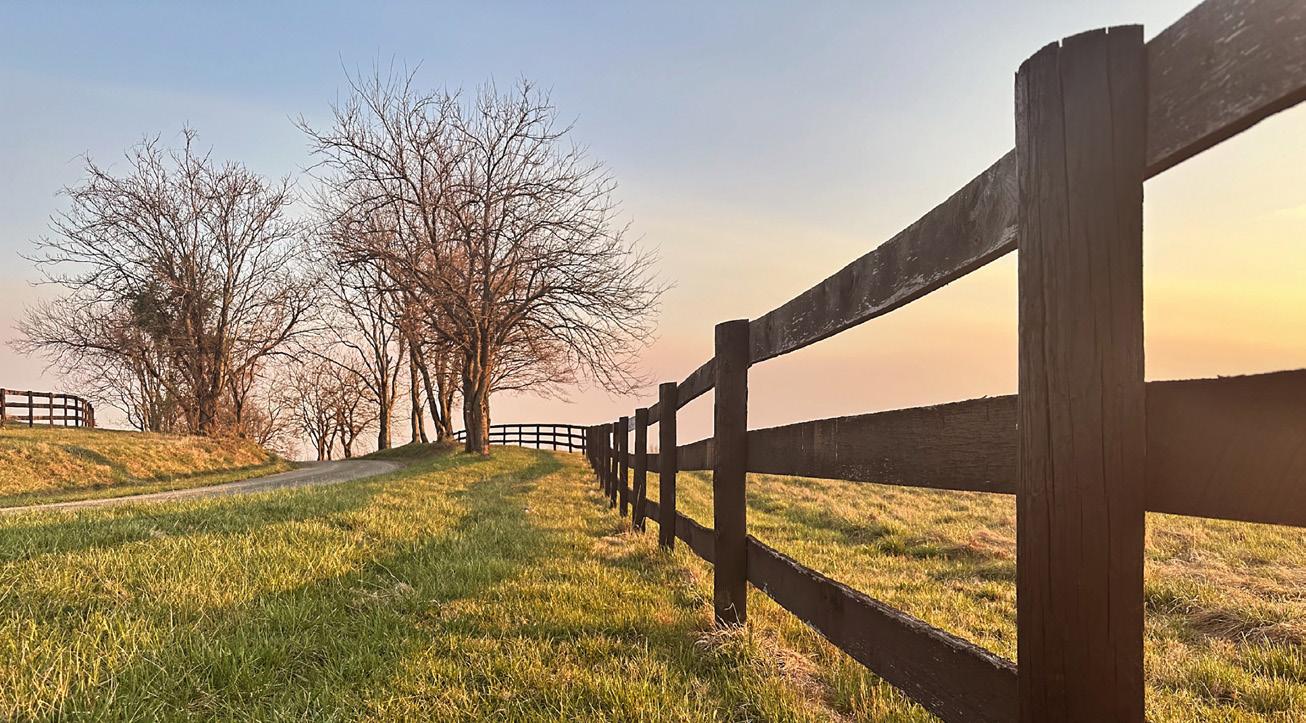
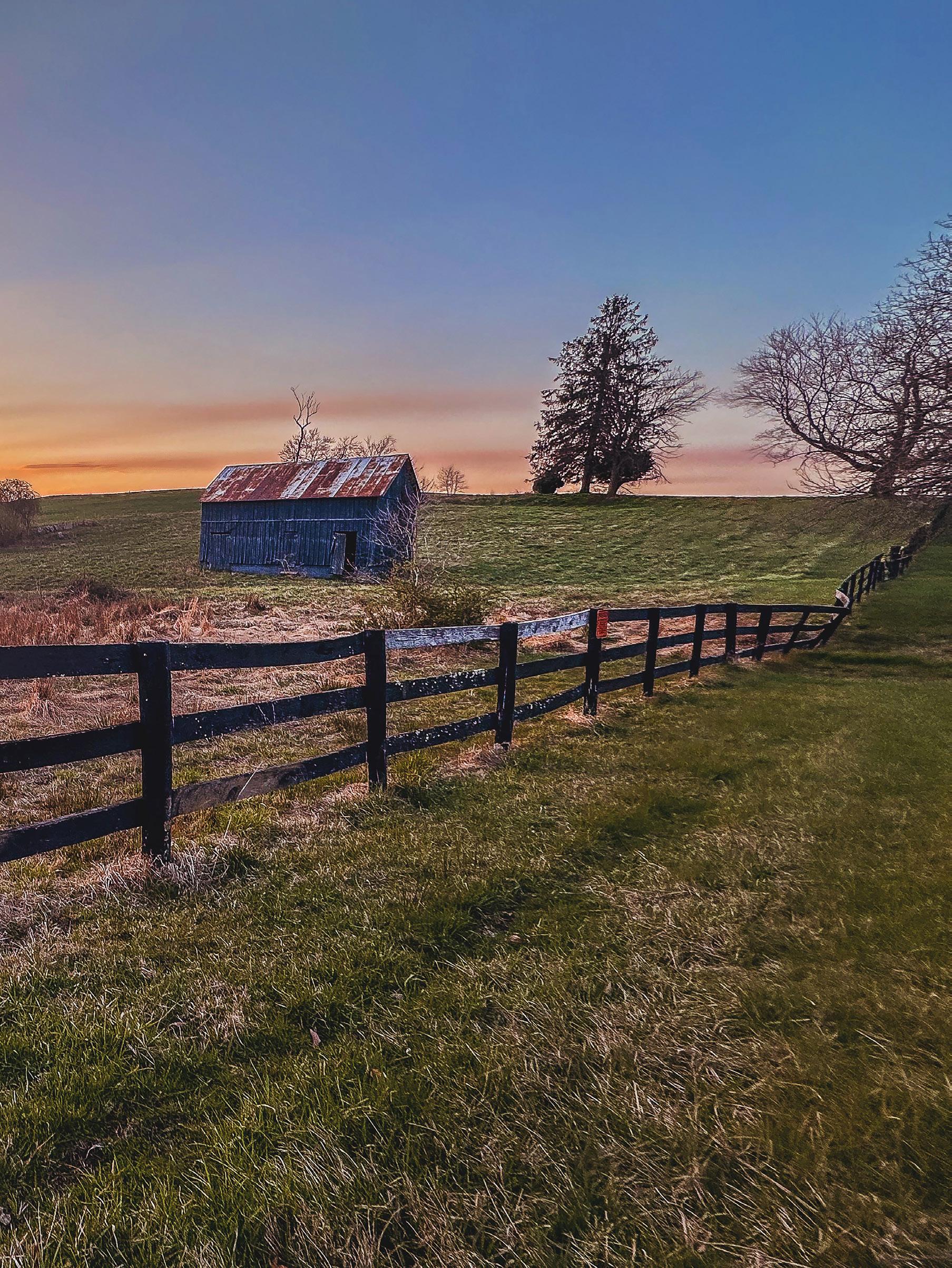
EVENING SETTLES OVER A SPLIT-RAIL FENCE AND WINDING LANE
From Attachment to Action
Place attachment isn’t just a warm, fuzzy outcome. It drives results that communities care deeply about. Higher attachment correlates with stronger economic growth, better health outcomes, higher educational attainment, greater resilience during downturns, improved talent retention, and even longer lifespans.
I’ve watched highly attached towns rally to save historic buildings, protect farmland, restore main streets, and reimagine “third spaces” such as churches, cafes, parks, and shops—not because a consultant suggested it, but because losing those places felt like losing part of themselves.
Attachment motivates action. It’s the secret sauce between communities that stagnate and communities that solve problems and move forward.
The Opportunity Ahead
In my research, small and rural towns consistently show higher attachment levels than large cities. Yet, these communities can sometimes underestimate this strength—or fail to realize it’s a strength to be harnessed.
You don’t need to become bigger to succeed. You need to become more you. Protect the things that matter most for place attachment—social offerings, aesthetics, and welcoming people—and do it in such a way that it honors your history and values. Honor your place identity while planning thoughtfully for growth.
When small towns do this intentionally, they unlock the extraordinary potential of becoming the heart of this country.
IN HUME, VIRGINIA. PHOTO BY JENNIFER LINNEY.
JENNIFER LINNEY
Fauquier County, Virginia
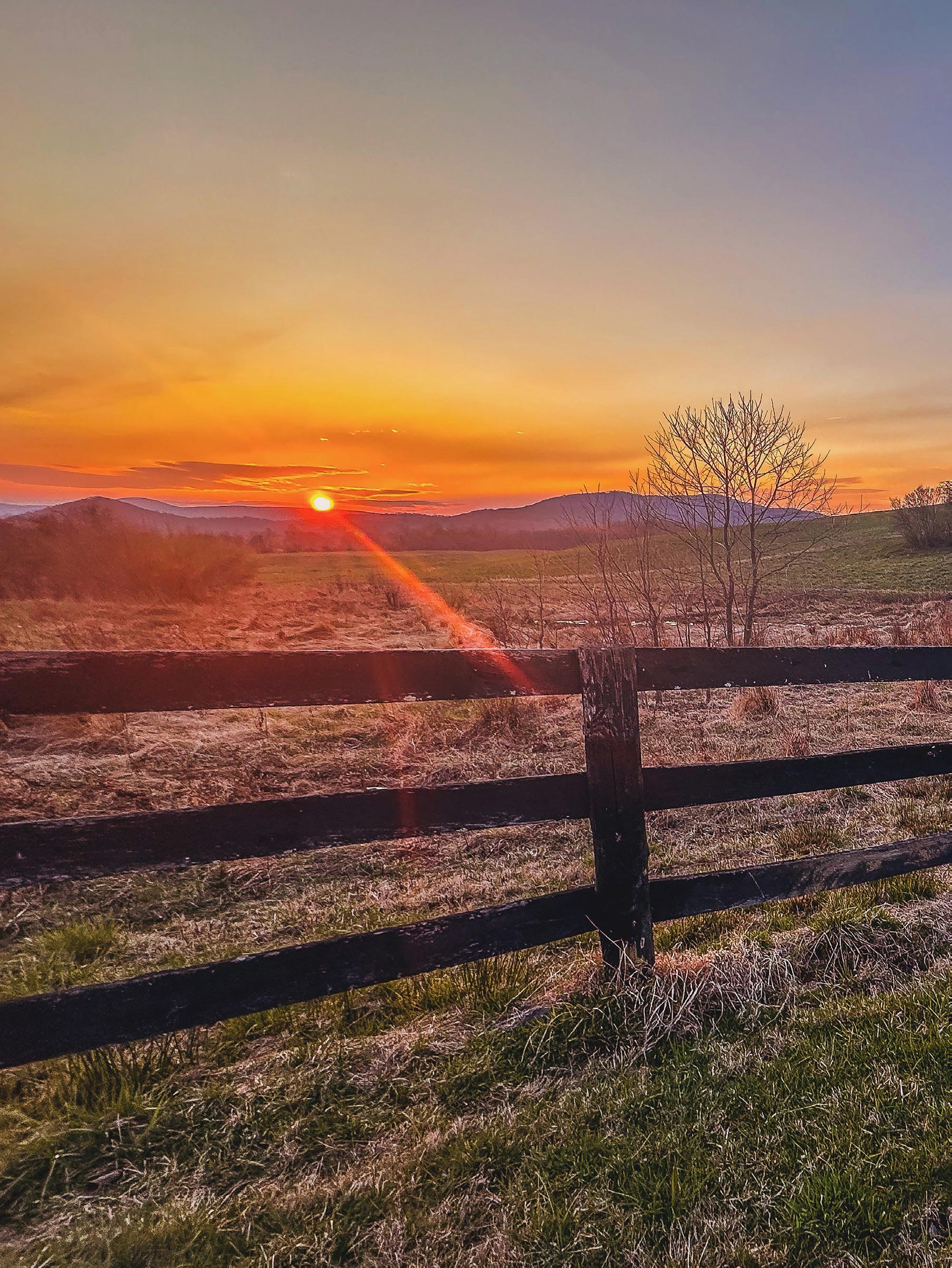
An early spring sunset glows over pasture fences and a lone barn.
The Original Mobile Homes
BY TOM POLAND
I’ve been traveling Highway 378/78 to Athens, Georgia, all my life. When I can, I avoid the bypass and drive through the heart of Washington, Georgia, a beautiful town named in honor of our first president. Living across the Savannah River, when I drive to Athens, I take my South Carolina friends through Washington so they can marvel at its majestic Southern homes.
“Beaufort, Aiken, and Camden have many fine Southern homes,” I tell them, “but wait until you see Washington, Georgia.” These old homes never disappoint.
This glimpse of the past came about thanks to a feature I wrote. The writing life introduces me to some memorable people. Among them are memories of the late Steve Blackmon. He found me when his daughter, Myra, read my feature, “Remembering Danburg,” in an online journal of Southern culture. She told her father about my story and Steve called me. “Would I speak to his Kiwanis Club?” I did.
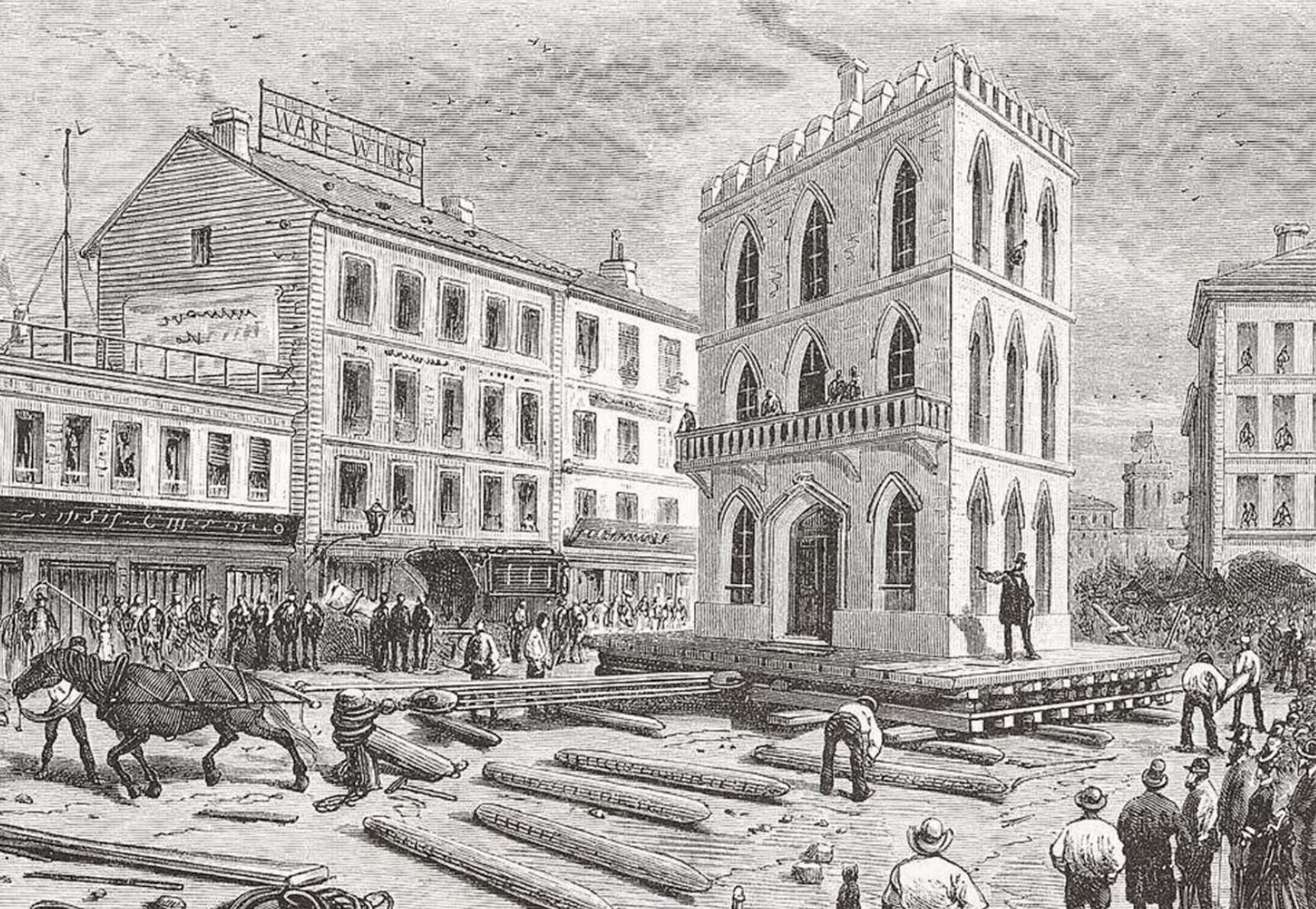
ABOVE: AN 1877 ENGRAVING SHOWS A HORSE MOVING A HOUSE; COURTESY OF RAREHISTORICALPHOTOS.COM
How well I remember my day in Washington, Georgia.
I had no clue about how many beautiful and interesting homes Washington has until I spoke to Steve’s Kiwanis Club. Prior to speaking, Steve gave me a tour of seven historic homes that had something unique in common. All had been moved in total or in part to their current location. And moved for good reason.
Arriving at Steve’s I met him and his wife, Eleanor. Steve had made a list of eight homes to visit, complete with a timetable an airline scheduler would envy. (One home would be unavailable to us.) I appreciated the tight scheduling. A book event back in Columbia that evening had me in a squeeze.
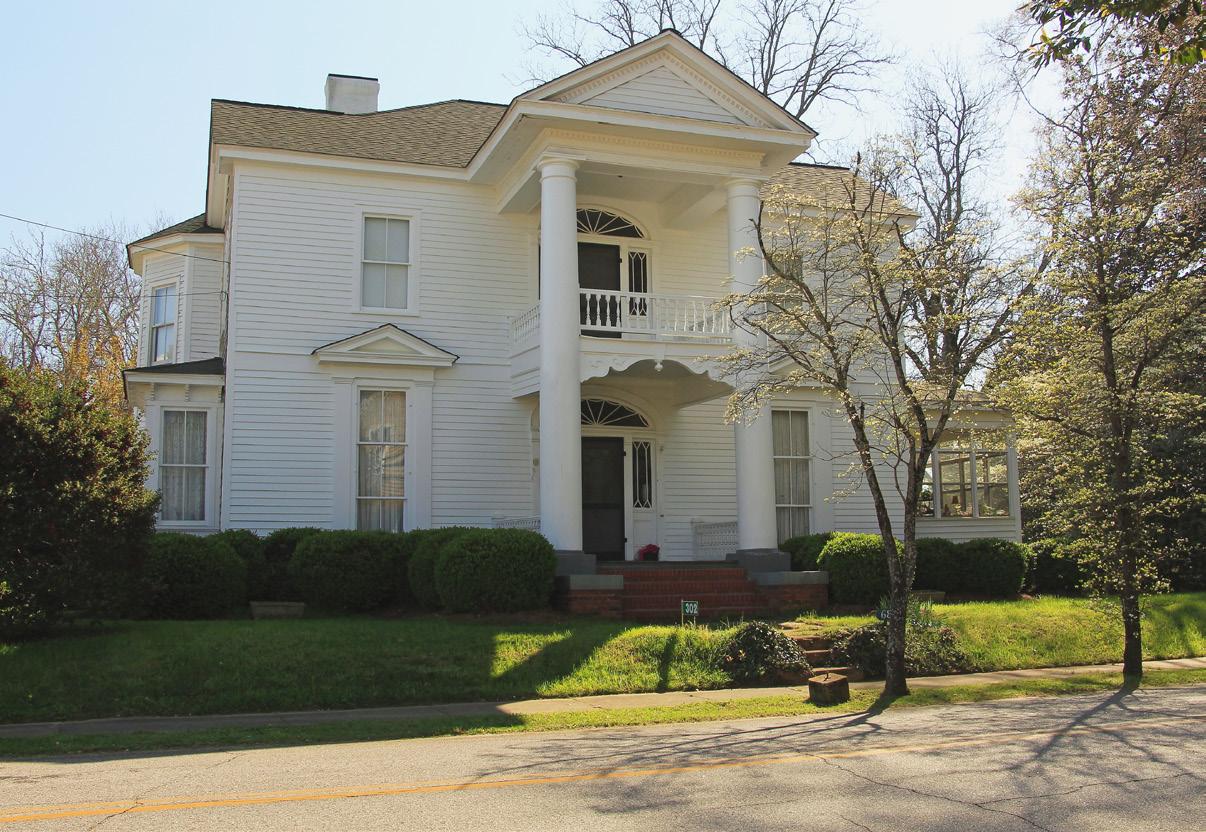
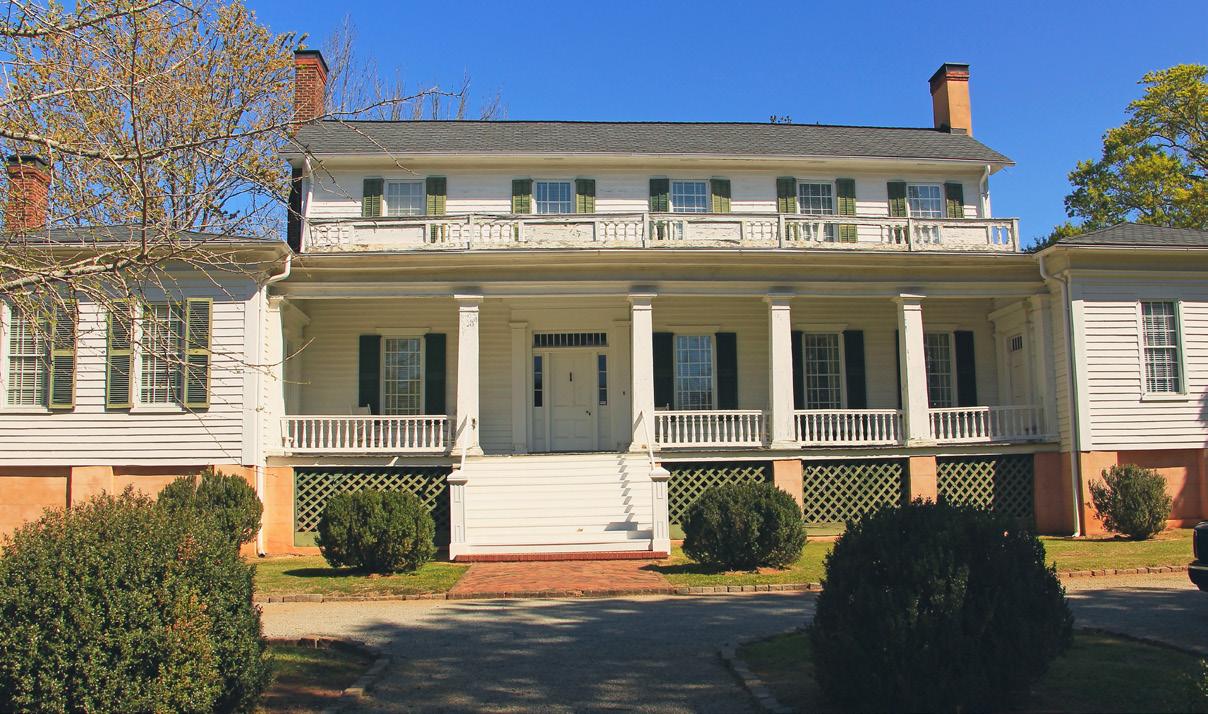
Now, these mobile homes were not trailers or doublewides as we know them today, mind you. As Steve drove me to homes with names like Holly Court, Hollyhock, Woods Huff’s House, and Colley House, we talked of the old days. Our reflections, combined with Steve’s “mobile” home tour, amounted to a time capsule of a day.
BORN OUT OF NECESSITY
I was in for a memorable day. Besides the star attractions, I’d see a millstone inlaid among bricks as a walkway centerpiece, a volume of Jericho, The South Beheld, by James Dickey and Hubert Shuptrine. I’d hear a deflating story about a letter Mrs. Jefferson Davis left the wartime owners of Holly Court was purloined during a home tour. I’d see Civil War artifacts and vintage oil paintings and remarkable old homes that share a unique heritage born out of necessity.
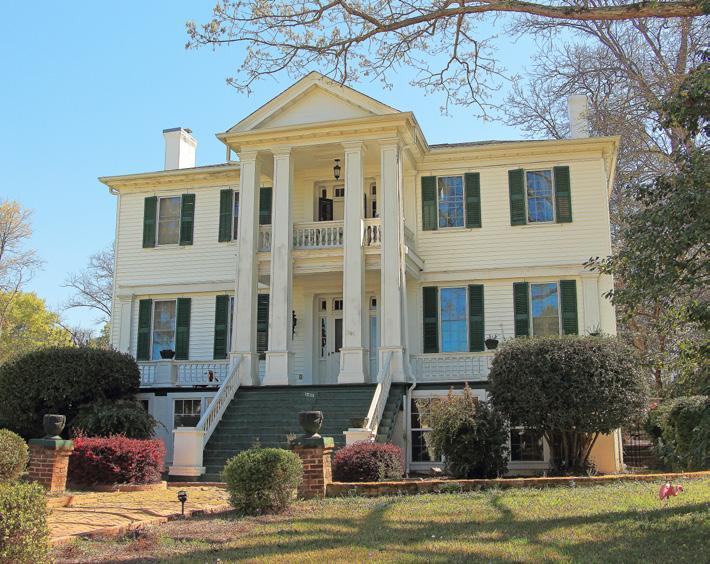
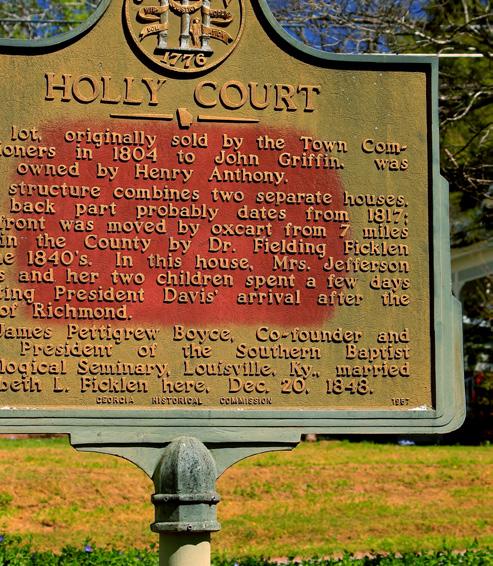
LEFT: HOLLY COURT IN WASHINGTON, GEORGIA; RIGHT: A HISTORICAL MARKER AT HOLLY COURT PHOTOS BY TOM POLAND
In the 1800s, the plagues of old age made going to see the doctor too much of a challenge. For others, fashionable excursions such as going into town, say, to enjoy the opera spurred changes. The solution? Well, it was something near impossible to do today. They moved their home into town.
In 1978, a feature in The Christian Science Monitor titled, “The Traveling Homes of Washington, Ga.” found its way into the Washington Post. The feature quoted historian Robert M. “Skeet” Willingham Jr. “In the early 1800s, when boards were hand-hewn and nails were handmade, houses were not simply demolished when no longer needed. They were recycled,” Willingham said.
“Our 19th-century counterparts knew much more about recycling than we do. If a certain home was no longer needed, it was either disassembled and rebuilt in another form or moved as it was to another location,” Willingham said.
According to the feature, Washington’s “prefab” houses were manor houses brought in from nearby plantations as it became fashionable to live in town between 1820 and 1840, a time when local farmers prospered after switching from tobacco to cotton farming.
ABOVE: THE LINDSAY HOME IN WASHINGTON, GEORGIA
OPPOSITE PAGE: SLATON HOUSE IN WASHINGTON, GEORGIA PHOTOS BY TOM POLAND
SLOW AND STEADY
Let’s return to the era when power lines and utility poles didn’t hem in roads. Envision teams of oxen hauling a house down a dirt lane. Not mules, mind you, but oxen. Now mules may have been used but handling them wasn’t always easy with their tendency to bolt. Oxen plod along, were reliable, and resilient. Moving a house best happens at a slow, steady pace. That would be what oxen do, and best of all, oxen are world-class strong.
The houses were moved on logs, much like how a pencil rolls across a desk. How did they lift the homes onto the logs? First, screw jacks and steel rods lifted the house and then the jacks would lower it into position onto logs. Ropes were tied to the house and oxen pulled the house forward with logs being reset ahead of it as it inched its way to the new destination. Families, neighbors, and field hands shepherded the homes to their city location. In the 1978 feature, Willingham speculates that “several teams of fine oxen could have carried the load placed on a flat wagon made of long logs.”
He added that it took several days to move a house 10 or 15 miles and then reassemble it. Of course it’s more complicated than that, but that’s the big picture.
Thanks to Steve Blackmon’s thoughtful tour, I left Washington, Georgia, with a deeper appreciation for how our Southern forebears reinvented home itself—proof that true mobility has always been about carrying history forward, one slow, oxen-drawn mile at a time. From that day on whenever I drive through Washington, I look for the original mobile homes, remembering them, and Steve.
PHOTO BY LIZ CONDO; COURTESY OF VISITNC.COM
CREATED
BY
THE BACKROAD PORTFOLIO STAFF
Backroads transport us to the places in between. This recurring feature takes you to and from two destinations via winding rural roads lined with charming small towns, captivating landscapes, historic structures and, in this particular journey, southern tea rooms and services that offer refined and delicious experiences.
Enjoying more than one or two tea services per day is indulgent, but not impossible. We’ve designed this journey to span three days, but you can stretch it out to four or five if you choose.
We’ve suggested some accommodations for each location and also provide the history of how tea and tea time came to America.
Google map links will be included in the online version of this story. Be sure to check websites for updated information or schedule changes at each stop along the way. Let’s get started.
Note: travel times vary depending on day and time of travel.
We recommend making Charleston’s luxurious Loutrel hotel your starting point. Arrive on day one of your journey in time to enjoy Lady Loutrel’s afternoon tea service, then book a stay at the hotel that night before heading to Ridgeway the next morning.
Lady Loutrel’s Afternoon Tea
theloutrel.com
Enjoy afternoon tea at the Loutrel’s private, biophilic-inspired rooftop in downtown Charleston. Savor heritage botanical blends from Oliver Pluff & Co.—including Countess Grey, Masala Chai, Jasmine, and more—poured into elegant Estelle Colored Glassware. The tiered tea tower features delicate finger sandwiches such as smoked salmon, pimento cheese, chicken salad, and cucumber. Finish the experience with warm scones and an array of sweet Southern pastries and confections. This two-hour experience includes optional alcoholic sips and is available Thursday through Sunday from 11 a.m. to 5 p.m. by reservation. A minimum of four people is required and prices start at $340.
61 State Street, Charleston, South Carolina
Laura's Tea Room
laurastearoom.com
Experience a charming three-course afternoon tea in an inviting upstairs tearoom within a restored 1911 building. Begin with the iced tea of the day, then share a pot of hot tea, and select another tea from an extensive menu of black, green, white, herbal, and literary-inspired blends. Enjoy scones with Devonshire cream and fruit, a seasonal specialty such as soup or salad, and a tiered tray of sweets and savories. The service is offered Tuesday through Saturday starting at 11 a.m., with the last sitting at 1:45 p.m. Reservations are required and the service costs $37.95 per person.
After experiencing Laura’s Tea Room, make the scenic drive to Augusta for afternoon or evening tea at Royal Tea on Reynolds. We recommend staying in Augusta at one of the nearby hotels in the Riverwalk area, or you can make the drive to Savannah and stay overnight there before heading to your final tea experience.
Where to Stay
Royal Tea on Reynolds linktr.ee/royalteaonreynolds
Experience a refined afternoon tea in this charming downtown Augusta tea house that blends traditional British style with Southern hospitality. You’ll be served finger sandwiches, scones, and an array of sweet and savory pastries on fine china. The tea house also offers take-and-bake scones so you can relive the experience at home. Tea times vary but are often available into the evening hours. Call 803.474.4435 for pricing and to make a reservation.
1024 Reynolds Street, Augusta, Georgia
Here are a variety of accommodations offering modern conveniences blended with history, charm, and southern culture.
CHARLESTON
South Carolina
The Loutrel 61 State Street theloutrel.com
RIDGEWAY
South Carolina
Hotel Bennett 404 King Street hotelbennett.com AUGUSTA Georgia
Pecan Hill Estate 400 South Dogwood Drive pecanhillestate.com
Whispering Willows B&B 2402 East Peach Road whisperingwillowsbandb.com
Olde Town Inn 349 Telfair Street oldetowninn.online
Queen Anne Inn 406 Greene Street queenanneinnaugusta.com
SAVANNAH Georgia
Perry Lane Hotel 256 East Perry Street marriott.com
We’re starting day three in Augusta, but if you opt to stay in Savannah, adjust your starting point to the address of your accommodations there. You’ll end your journey back in Charleston. Feel free to stretch this experience out to four or five days to provide more time for exploring all the region has to offer.
Gryphon Tea Room
scadgryphon.com
This charming café near the Savannah College of Art and Design presents an elegant afternoon tea service in a historic 1926 Scottish Rite building on Madison Square. Guests enjoy a refined three-tier experience featuring a selection of delicate tea sandwiches, warm scones with Devonshire cream and jam, and an assortment of pastries and petits fours, paired with a pot of premium loose-leaf tea from varieties like Earl Grey, Darjeeling, or Hot Cinnamon Spice. The full afternoon tea is priced at $31 per person. À la carte options include a pot of tea for $9, scones for $10, tea sandwiches for $13, and tea sweets for $13. The cafe is open from 11 a.m. to 4 p.m. daily except for Sunday, when it closes at 3 p.m. No reservations are required.
337 Bull Street, Savannah, Georgia
Camellias Afternoon Tea
hotelbennett.com/dining-and-lounges/camellias
End your journey with a sophisticated tea experience at Camellias in Hotel Bennett—a breathtaking, Fabergé-inspired space with pink interiors, an etched mirror ceiling, and a dazzling crystal chandelier. Savor a luxurious three-tier service featuring assorted chilled canapés, delicate tea sandwiches, warm scones with clotted cream and jam, and exquisite pastries from La Pâtisserie, paired with premium loose-leaf teas from Tealeaves. The adult tea price is $80 per person, while children ages 12 and younger cost $55 each. The Crown Tea option includes a flute of premium sparkling rosé. Tea times are 11 a.m.-1:30 p.m. and 2-4 p.m. Thursday through Sunday, with an additional 4:30-6:30 p.m. service available on Sundays. Reservations are required.
404 King Street, Charleston, South Carolina
Tea Time in America
Tea first arrived in North America during the 1640s through Dutch settlers in New Amsterdam (presentday New York City), a bustling port settlement that served as the capital of the Dutch colony of New Netherland. The Dutch East India Company pioneered tea imports to Europe around 1610, shipping Chinese tea leaves as part of its lucrative trade network.
Dutch households in the area quickly embraced tea drinking as a social custom, displaying tea tables, teapots, sugar bowls, and silver strainers and establishing an early tea culture in the colonies before British forces captured the Dutch colony of New Amsterdam without resistance in 1664 and renamed it New York in honor of the Duke of York, the future King James II.
Fast-forward two hundred years. Afternoon tea originated in England around 1840 and is credited to Anna Maria Russell, the seventh Duchess of Bedford. As one of Queen Victoria’s ladies-in-waiting, she reportedly experienced a “sinking feeling” in the late afternoon due to the long gap between lunch and dinner, which was often served as late as 8 or 9 p.m. To bridge this hunger, she requested a private tray of tea, bread and butter, and cake in her rooms.
The practice proved delightful, and she began inviting friends to join her, transforming an afternoon snack into a fashionable social ritual among the aristocracy that soon spread widely. This structured Victorianstyle afternoon tea spread to America in the late 19th century after the Civil War, embraced by the upper class and offered in grand hotels and tearooms.
As the practice spread among the Victorian aristocracy it evolved into a refined social occasion. Thinly sliced finger sandwiches—often crustless and dainty, featuring fillings like cucumber, egg and cress, or smoked salmon—emerged, inspired by the 1762 invention of the sandwich by John Montagu, the fourth Earl of Sandwich. (He was an avid gambler and is believed to have requested meat placed between two slices of bread so he could eat without leaving the card table.)
Scones with clotted cream and preserves later joined the tea table, particularly in the 20th century, while an array of pastries, small sponge or seed cakes, and other sweet baked goods expanded the offerings. By the late 19th century, the tiered presentation of savory sandwiches followed by scones and then elaborate sweets became the elegant standard.
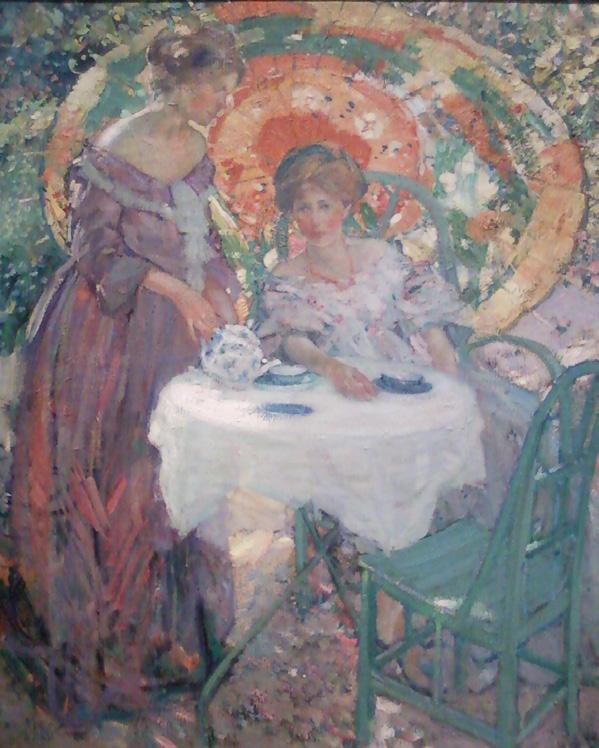
TOP: AFTERNOON TEA , OIL ON CANVASS, PAINTED IN 1910 BY AMERICAN IMPRESSIONIST RICHARD E. MILLER
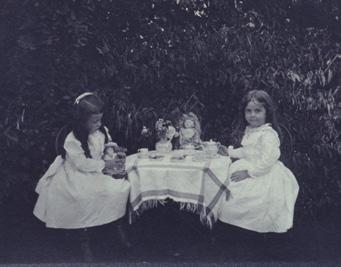
LOWER RIGHT, TOP: CHILDREN ENJOY TEA IN 1900; PHOTO COURTESY OF THE LIBRARY OF CONGRESS
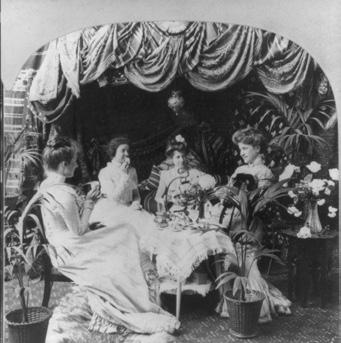
LOWER RIGHT, BOTTOM: A GROUP OF LADIES TAKE TEA IN 1901; PHOTO COURTESY OF THE LIBRARY OF CONGRESS
From Florida to Hollywood, and Back A conversation with Sharon Y. Cobb
Introduction and interview By Elizabeth
Poland Shugg
Recipe and photography courtesy of Sharon
Y. Cobb
When we decided to expand Backroad Portfolio’s coverage to include Florida, I immediately thought of my first boss, Sharon Y. Cobb. Two weeks before graduating from Virginia Tech in May 1995, I applied to work for a new magazine being published in Maitland, Florida, titled Coastal Home—later renamed Coastal Living. Jack Thomasson, the mastermind behind HGTV Dream Homes between 1997 and 2016, created this shelter magazine in 1995 and hired Sharon, a Florida native, to be its editor. At the time she lived in Beverly Hills where she also worked as a screenplay writer. She chose me to be her assistant. Fresh out of college, I could not have asked for a more exciting job.
So, here’s my conversation with Sharon, who returned to Florida in 1999. She talks about her interactions with literary icon Tennessee Williams, who helped inspire her to launch her screenwriting career, and shares favorite Sunshine State destinations. She also shares a favorite recipe, which aligns nicely with our tea time feature on page 50.
How long have you lived in Florida, and what Florida towns and cities have you lived in?
I was born in DeLand, Florida, and have lived in Jacksonville, MacClenny, Key West, Neptune Beach, and Atlantic Beach. I also lived in Beverly Hills for eight years from 1993 to 2001.
How did you become interested in cooking, and what led to you writing a cooking column for Jacksonville Today?
Growing up in my grandmother’s and great grandmother’s kitchens, eating down-home Southern cooking created a curiosity in me about what other people around the world ate, so I subscribed to Bon Appetit magazine in my early 20s. Using those recipes, I experimented on friends, cooking global cuisines in my little apartment. Friends who were opening a restaurant in the Five Points area of Jacksonville thought our city was ready for a more adventurous dining experience and asked me to come in as a partner and chef. The name of the restaurant was Lady Fingers, and we served eclectic cuisine. I stayed there until I left to open an advertising agency and a few other businesses in Jacksonville. The cooking column for Jacksonville Today came much later after I had lived in Key West as an artist and returned to Jacksonville to establish a publication with partners called Florida Travel Directory, a directory of Florida accommodations and attractions for travel agents. I eventually sold my interest in the directory and was hired by Jim White, who owned Jacksonville Today, to become their editor. He gave me the freedom to do almost anything creative that I thought readers would like, and a cooking column was at the top of my list.
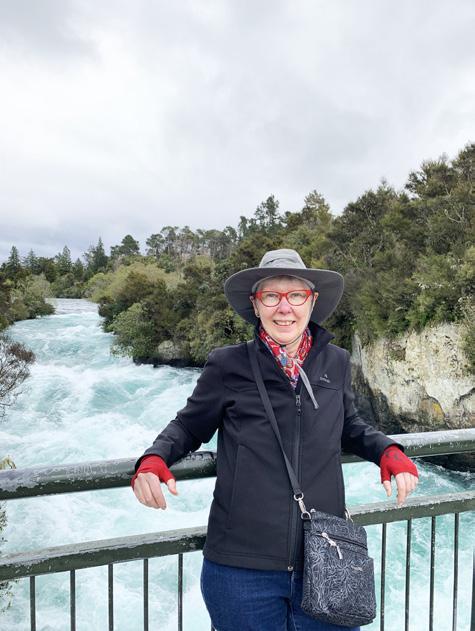
SHARON AT HUKA FALLS IN NEW ZEALAND.
What launched your Hollywood screenwriting career?
When I lived in Key West from 1981 to 1987, one of my neighbors inspired me to begin writing short stories. I loved his work and he used to walk by the gallery on Duval Street, where my art studio was located, and tip his straw hat with his cane. One afternoon, on a wild whim, I dashed across the street and asked his advice about how to start writing fiction. He was flabbergasted and answered, “Well, you just write.” There were a few words of profanity included, but that was okay because this was Tennessee Williams giving his advice to a clueless young artist who dreamed of being a writer. I took a few classes at the Tennessee Williams Fine Arts Center and started writing.
Years later when I moved back to Jacksonville, I found myself in a screenwriting workshop and that’s when I started writing films. That was 1989. By 1993, I had moved to Los Angeles to pursue a screenwriting career. I was very lucky to find an agent within three months who sent a comedy script I wrote out to studios and production companies. That kickstarted my brilliant career. At that time there was no internet, so you had to be in Hollywood. I was very lucky to get writing assignments and even sell a pitch to Fox Studios, with a writing partner, Carolyn McDonald, who ran Danny Glover’s production company. After marrying the love of my life, Robert J. Ward, who was a film journalist from New Zealand I met in LA, we moved back to Jacksonville to be close to my family. I continued to write screenplays and even got a film made in London in 2001 shortly after coming back to Florida. The most recent script I co-wrote that was made into a film is titled The Man in the White Van. I wrote it with the director, Warren Skeels, and it was distributed theatrically in December 2024. It premiered in the No. 1 spot on Starz when it began its streaming distribution in February 2026.
Do you bring your Florida roots into the scripts you write? If so, how?
Many of the themes in the scripts I write reflect lessons I’ve learned growing up in Florida. One of the themes that appears, one way or another, in most of my work is: Who you are on the inside is more important than what you own on the outside.
What brought you back to Florida after your time in Hollywood?
After marrying Robert in October 1999, our union, Writers Guild of America, was set to strike, meaning I could not work or even meet with producers. We decided to move back to Florida before the strike. Ironically, the strike was called off before it began. But by that time, we were determined to get back to Florida to be with my family.
LEFT: SHARON Y. COBB | MIDDLE: SHARON'S BOOK, FALSE CONFESSIONS OF A HOLLYWOOD SCREENWRITER; RIGHT: SHARON ON THE RED CARPET WITH DIRECTOR WARREN SKEELS.
Name some of your favorite Florida backroad destinations and rural treasures. What makes them special or important to you?
My favorite is Little Talbot Island and Fernandina Beach north of Jacksonville. Little Talbot is wild and a good example of Florida before it was over-developed. Fernandina is a little fishing village with great restaurants and historical sites.
What are your favorite Florida flowers, wildlife, parks, pastimes, and other attractions across the Sunshine State?
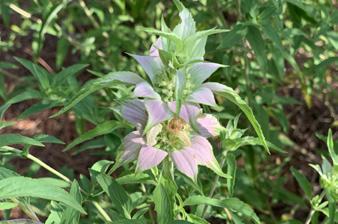
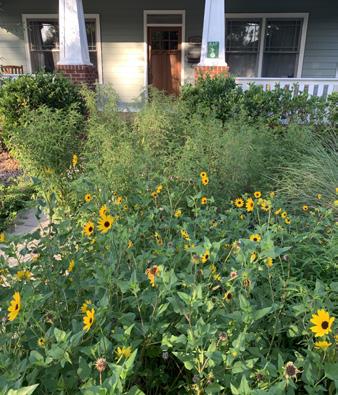
My yard is filled with native Florida plants and trees. Some of my favorites are spotted bee balm, beach sunflowers and flatwood plum trees. My favorite parks are in our neighborhood. I take my cairn terriers, Ziggy and Maxie, for walks around Fishweir Park almost daily. And sometimes we get over to Boone Park.
What recipe, in your opinion, is Florida most known for?
A classic Florida recipe is Key Lime Pie, of course. I use the recipe from The Pier House in Key West. But many of my favorite recipes are from my late husband’s New Zealand. You can find some of those and other random favorites on my website, SharonYCobb.com.
Sharon Y. Cobb is a member of Writers Guild of America. Her feature thriller, The Man in the White Van, co-written with director Warren Skeels, enjoyed a 500-venue theatrical release in December 2024. Video-on-demand and streaming began in January 2025 and it was No. 1 on Starz streaming in February 2026. Sharon has written other features such as June and Lighthouse Hill. Her TV movie for TBS, On Hostile Ground, premiered to high ratings. She has written and won awards for many short films for 48 Hour Film Project filmmakers worldwide, and is the author of False Confessions of a True Hollywood Screenwriter, and Secrets to Writing A Killer 48 Hour Film Project Screenplay. She is a former publisher, editor, journalist, rock musician, and race car driver who began fiction writing after meeting Tennessee Williams when she lived in Key West.
TOP LEFT: BEE BALM IN SHARON'S YARD AT HER HOME IN FLORIDA.
BOTTOM LEFT: SHARON'S FRONT YARD, FILLED WITH NATIVE FLORIDA PLANTS.
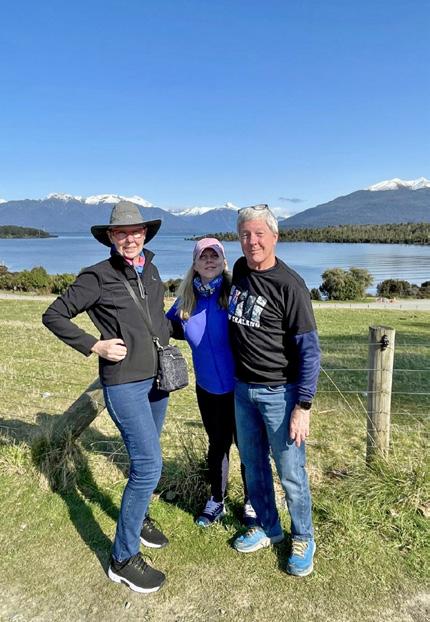
MIDDLE: SHARON IN NEW ZEALAND WITH FRIENDS.
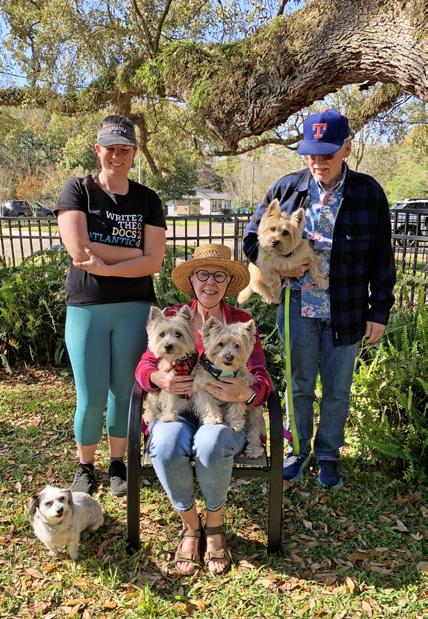
RIGHT: SHARON AND FRIENDS WITH HER DOGS, ZIGGY AND MAXIE, IN HER LAP.
Sunshine Muffins
Recipe by Sharon Y. Cobb
Yield: 12 Yummy
Muffins
Always looking for nutritious and delicious muffins to bake for Robert to take to work for afternoon tea, I found this recipe in the March 2013 issue of Health magazine. It makes yummy muffins and uses some very interesting ingredients. Since cranberries are not sweet and can be very bitter, when I first saw them in the recipe, I thought, “Yikes, that’s going to be one tart muffin.” But the sugar in the batter offsets the tartness and creates a well-balanced, tasty muffin. And this recipe uses olive oil instead of plain vegetable oil. It makes the muffin really moist.
Directions
Ingredients
• 2 cups of whole wheat pastry flour (I use King Arthur)
• 2 teaspoons of baking soda
• 2 teaspoons of ground cinnamon
• ¼ teaspoon of ground cardamon
• ½ teaspoon of salt
• 1 orange
• ¾ cup of sugar
• 2 large egg whites
• ¼ cup of extra virgin olive oil
• ½ cup of fat-free plain Greek yogurt
• 2 cups of grated carrots
• 2 cups of fresh or thawed frozen cranberries, divided
• ¼ cup of shelled pistachios, finely chopped
Preheat the oven to 375 degrees. Line a muffin tin with silicone or paper liners.
In a large bowl, whisk together the first five ingredients.
In another bowl, grate 1 teaspoon of orange zest and squeeze ¼ cup of juice. Whisk in the sugar, egg whites, oil, and yogurt.
Stir the wet ingredients into the dry ingredients until just moistened. Don’t over mix or the muffins won’t rise well.
Fold in the grated carrots and 1½ cups of the cranberries, reserving ½ cup for the muffin tops. (This has nothing to do with muffin tops around your waist when wearing skinny jeans. Oh, wait, maybe it does!)
Divide the batter among the muffin cups lined with silicone or paper liners. Top the muffins with chopped pistachios and the remaining cranberries.
Bake until a toothpick inserted in a muffin comes out clean, about 22-25 minutes.
Let the muffins cool on a wire rack for 5 minutes. Take the muffins out of the pan and cool them completely on the rack.
Sarasota, Florida
known
JIM SCHWABEL
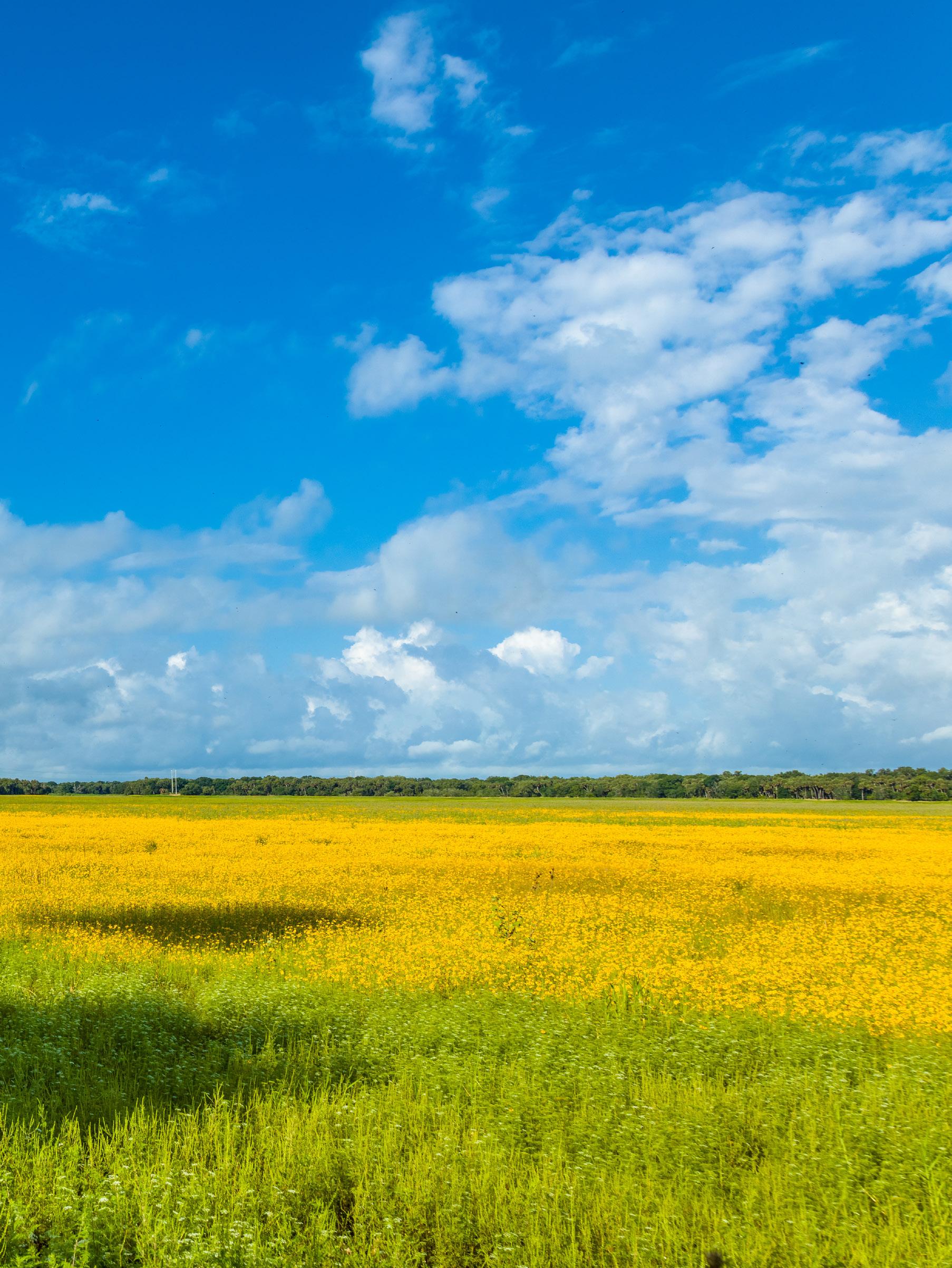
A field of Coreopsis wildflowers (commonly
as tickseed and the official wildflower of Florida) brightens Myakka River State Park.
The Curryton Magnolia A monumental tree and school of consequence
WRITTEN
AND PHOTOGRAPHED
BY TOM POLAND
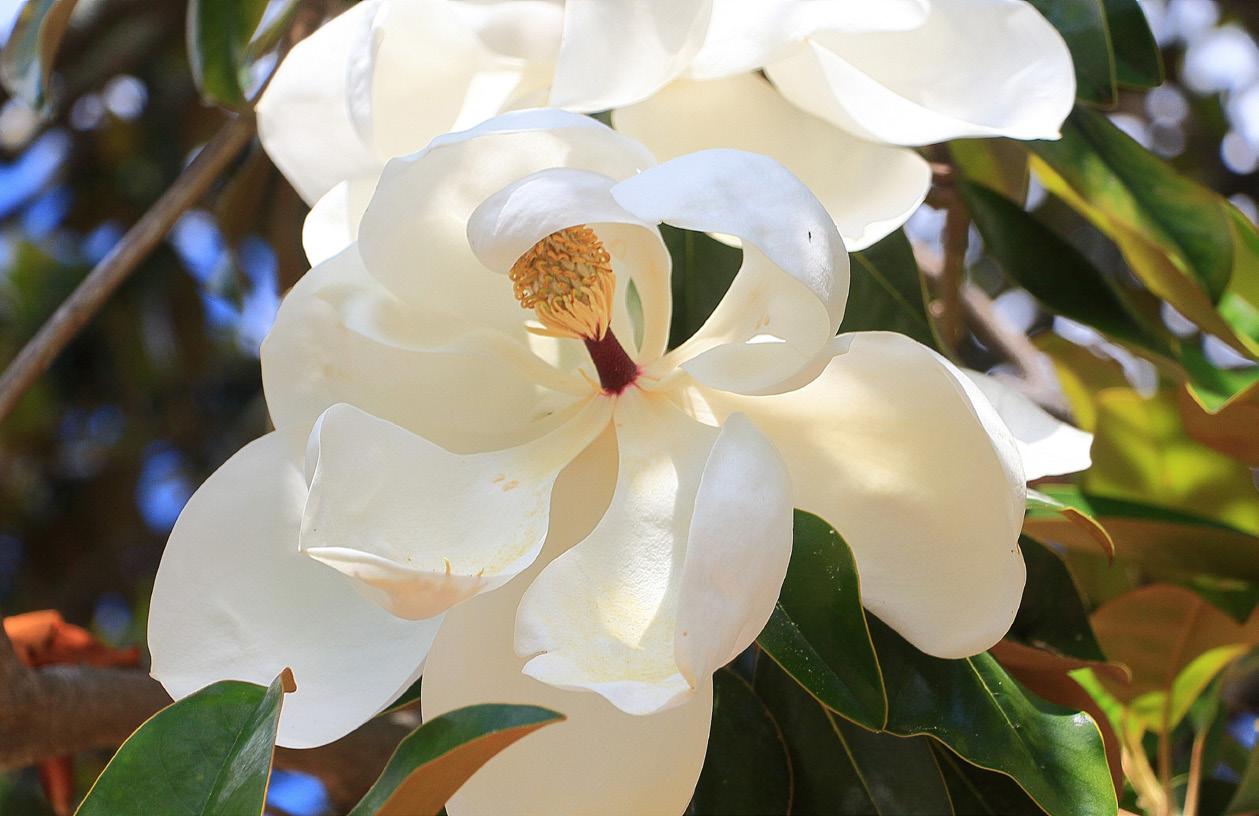
Magnolia. Three syllables conjure up snow-white blooms, antebellum homes, old churches, and home places where magnolias anchor a landscape rich with dogwoods and azaleas. And there’s that lane where 122 magnolias welcome dignitaries to the world’s grandest golf course.
To be Southern, y’all, is to walk among magnolias. I’ll never forget the magnolia my mother and I planted at my boyhood home or the magnolia at my grandfather’s old home place. When I conjure up those magnolias in my mind’s eye, boyhood returns. Many years later a drive to another magnolia would bring those boyhood memories back.
My journey began with a suggestion. “You need to see the magnolia down in Edgefield County. It might be a record tree.”
That was enough for me. I went.
A DRIVE INTO HISTORY
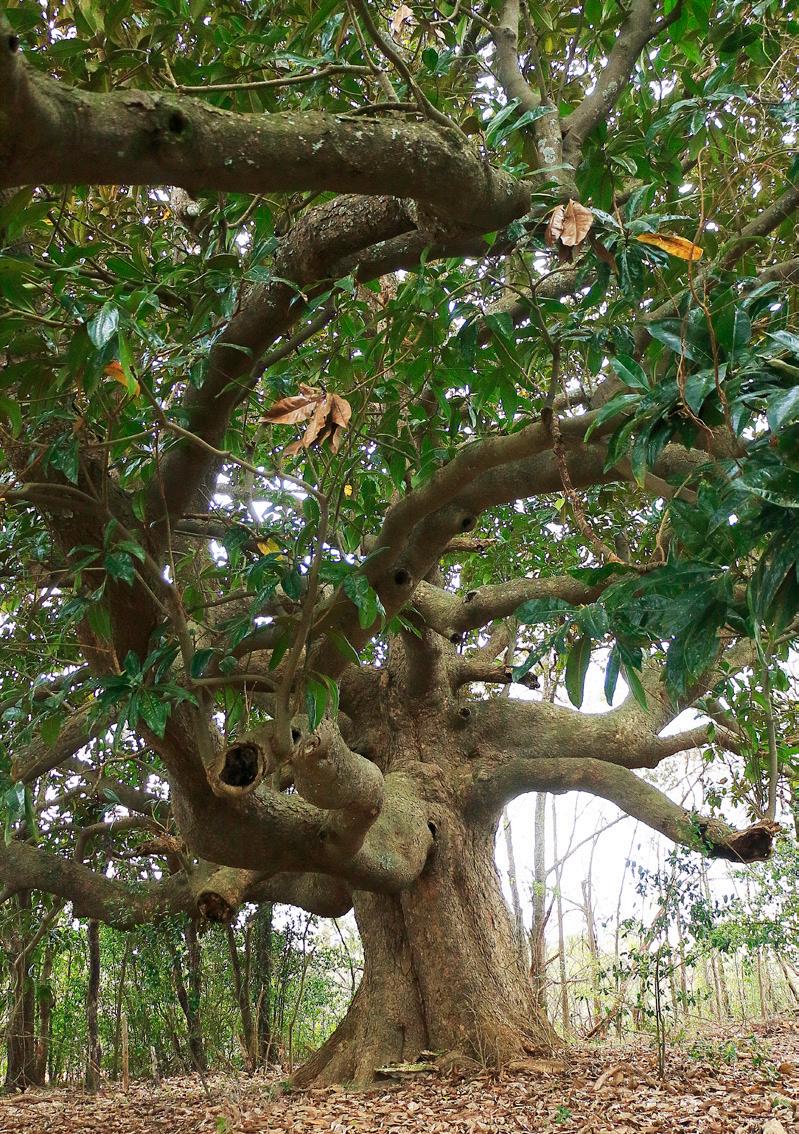
Driving down Edgefield way, I felt a bit like William Bartram, that legendary explorer who documented a magnolia of “great perfection.” On a March afternoon, blue sky streaked white with fleecy clouds, I drove to the site of the old Curryton Academy. Topping a rise, I spied the crown of a magnolia rising from a copse. Younger trees huddled around the old tree as if seeking advice. “O great one, what’s your secret for living nigh 173 years?”
The Curryton Magnolia’s secret resides in man’s desire for knowledge and the protective acts of men 172 years later. Upon hearing the tree’s site would become a residential development, men took action to spare it. The tree merited preservation for good cause. One, it’s a magnolia that has doubled its normal lifespan. Two, it stands on a historic site, and three, it may be a state record tree.
The tree’s journey began August 10, 1853, when some 1,200 people gathered at Sweetwater Springs to choose a site for an academy. Joel Curry gifted 1,000 acres and $2,000 for an academy. Thus did “Curryton” name the magnolia and the academy.
It’s no stretch to say the old magnolia’s roots intertwine with men’s desire to educate others. Joel Curry, Robert Meriwether, George Boswell, Samuel Getzen, Dr. Hugh A. Shaw, A.P. Butler, and Andrew J. Hammond, among others, founded an academy, which consisted of two schools. One school stood where the magnolia stands. What’s unknown is whether it was the girls’ school or the boys’. The other school stood a short piece near the presentday site of Old McDonald’s Fish Camp.
My journey took me down the rise. Driving closer in didn’t help. Trees kept me from seeing a tree akin to Bartram’s “great perfection” of a magnolia. I needed a close view of the magnolia’s trunks and limbs. I parked and, camera in hand, made my way through the shrubs and trees huddled around it. Leaves crunched beneath my feet as I approached the massive trunk. I looked up. Immense limbs and the sockets of limbs long perished fired up my imagination, evoking images of what could be an elephant and what seemed like an octopus in the grand tree’s limbs. I stood beneath the tree, grateful to know others could experience what I was feeling. I took photos, made some mental notes, and looked around.
A home stood nearby—one home, not many. For that I was grateful also. Trees like Angel Oak and Curryton
Magnolia deserve their own space. It should feel sacred when you visit the site of aged trees, survivors of note.
A MEASURE OF MAGNIFICENCE
Did the people who founded Curryton Academy in February 1854 plant this great magnolia? It’s believed they did. That means this monument of a tree is nearly 173 years old. Most magnolias live 80 to 100 years. That makes this one an exception, a tree with more time to grow. Might it be the state record magnolia?
Determining that falls upon the Clemson University SC Champion Trees program. It determines a champion tree, the largest of its species according to a formula based on trunk circumference, tree height, and average crown spread. A formula is applied to measurements to determine the champion. To be eligible, a tree must be native to or naturalized in the continental United States.
Jim Oliver of the Edgefield County Planning Commission wrote to Stephen Pohlman Jr., Clemson Extension Area Forestry Agent, to find out whether the Curryton Magnolia might be a state
OPPOSITE PAGE: CLOSEUP OF A CURRYTON MAGNOLIA.
record. Its measurements place it just behind one other magnolia in Charleston County at the Hampton Plantation in South Carolina. A magnolia in Sumter County previously held the record as the largest of its kind until lightning killed it. While the Hampton Plantation magnolia may be larger, it’s doubtful it can match the Curryton Magnolia’s magnificent trunk and limb structure.
The Curryton Magnolia is likely the state’s secondlargest magnolia. The tree is to be re-measured and checked again for its status. Champion or not, without a doubt it’s the more handsome of the two, owing to its remarkable shape.
ROOTED IN GRANDEUR
Taking the grand Curryton Magnolia down could have happened, but it didn’t. Edgefield’s Bettis Rainsford and others consulted with the developer, Blue Sky Properties & Investments, LLC.
Owners Stuart and Dave Thompson deeded enough acreage to the Edgefield County Historical Society to build a historical park around the magnolia. A $27,565 grant from the South Carolina Conservation Bank to the Edgefield County Historical Society will enable it to purchase more land around the tree for its park. The tree will live on, a reminder of men’s desire to equip those who follow with knowledge.
I made a second journey to the tree. July 24, 2022, four months after I first visited the Curryton Magnolia, I returned to witness the dedication of the tree and site as Curryton Academy Park.
In a ceremony beneath the magnolia, now clear of the trees and growth that had obscured it, people stood near the site of Curryton Academy.
LeRoy H. Simkins, a direct descendant of Edgefield founder Arthur Simkins, and perhaps the most knowledgeable expert in the region regarding trees, spoke movingly about magnolias.
He summed it up with a cautionary note: “Protect the roots.”
Artists, photographers, and writers have long honored magnolias. You can, too. Choose a day when the blooms sweeten the air. Stand beneath its arcing limbs and you’ll sense something good—and sense is the word, for magnolias please the ear, hand, and nose.
Leathery leaves crunch and crackle beneath your feet. Blossoms perfume the air with that heady fragrance, and their soft silky petals please the sense of touch.
ABOVE: THE TOWERING CURRYTON MAGNOLIA
ROBERT CLARK
Concord, North Carolina
A magnolia blooms at Concord Memorial Garden.
Start writing your memoirs Share Your Story
BY ELIZABETH POLAND SHUGG
We Southerners turn every decent memory into a blockbuster and every hardship into a footnote—yet those small, unvarnished truths stick with us longest.
For me, it’s 1980s Georgia soil under my bare feet as I scurry down the path to my grandparents’ creek. The taste of Southernfried chicken, sweet tea, and coconut cake at a family gathering. The smell of oranges in my Christmas stocking and the pride I felt pinning a track medal on my letter jacket. My wedding day. The birth of my children …
To be sure, we all suffer from selective memory. But cherished recollections help us make sense of our lives, pass on grains of wisdom, and affirm that our life matters in some way. The memories we hold onto are worth sharing—and reason enough to start writing our memoirs.
I recently learned the importance of passing memoirs down to future generations while reading my great-grandmother’s, which she wrote during the 1980s. Katharine Rowland Crane was born in 1896 and lived to be 101. I’m currently transcribing her memoris from a type-written PDF and sharing them with family and friends in a weekly Substack series called Memoirs of a Southern Centenarian. Reading about her everyday experiences has been quite extraordinary.
If a long-lost memory is nagging at you—good, bad, or hilariously exaggerated—here are some tips, apps, and platforms that can help you get your stories down, honestly and without apology. Your friends, family, and future generations will thank you for it.
TOP: THE ROWLAND FAMILY "SUMMER HOUSE" C.1910 | BOTTOM: KATHARINE ROWLAND CRANE ON HER WEDDING DAY
TIPS FOR GETTING STARTED
Since I’d like to write my own memoirs one day, I did some research. Here are tips from the experts about how to get started if you’d like to write yours.
• Start small. Write or voice-record one memory per sitting. Don't aim for the whole life story— start from your earliest memories and move forward chronologically, or focus on a theme like “growing up” or “lessons from hard times.”
• Be honest but kind to yourself. Acknowledge poignant memories, then decide what feels important enough to share.
• Use prompts. “What’s a childhood moment I laugh about now but hurt me back then?” or “What story did my family tell over and over?”
• Set low-pressure goals. Write fifteen to thirty minutes a day, three to four days a week. Track progress in a simple notebook or app.
• Revise later. Get that first draft down, then edit for truth and flow later.
Formats and Structures
Memoirs don’t have to be full autobiographies. They can zoom in on a specific theme or period. Pick a style that fits how you want to share your stories.
• Chronological, with a twist: Start with a key event, then flash back and forward.
• Thematic: Focus stories around one idea, such as an out-of-state move or family gatherings.
• Vignettes or chapters: Write short, standalone scenes, or essays that focus on a strong theme.
• Coming-of-Age: Show personal growth through a series of events that define how you grew up.
• Braided: Weave the past and present by sharing current reflections on past events and experiences and how they shaped you today.
Apps and Software for Writing
Here’s a curated list of digital platforms and products to help you streamline the memoir-writing process. Many offer free trials or basic versions.
• Memowrite: A guided memoir app with 50-plus prompts, editing, and options for printed books. Ideal for beginners; prices start at $49–$129 depending on plan. getmemowrite.com
• Storyworth: This service sends weekly email questions to prompt stories and compiles them into a bound book at the end of the year. It also includes family collaboration features, and unlimited stories and photos; $99/year. storyworth.com
• Day One: This journaling app asks for daily entries with photo integration and location tagging. It can be exported to a PDF or book; $49.99/year. dayoneapp.com
• KindredTales: This collaborative platform offers speech-to-text translation, family input, and multimedia options. It then turns stories into digital or printed memoirs; from $90. kindredtales.net
• The Life Writer: This app features customized questions and auto-transcription technology, and produces digital downloads or printed books. From $19.90/month or $129/year. thelifewriter.com
Note: Pricing and features are current as of February 2026. Check websites for the latest details.
Unlocking a Family Secret
STORY BY AND PHOTOS COURTESY OF GARRY E. MOORE, PH.D.
Sometimes, history is not found in a library. It is found in the keepsakes passed down to the next generation. Recently, I discovered a long-forgotten treasure: a small metal box containing a key chain that belonged to my grandfather, William Wilson “Willie” Moore. I wondered what the keys had unlocked.
The attached metal tag was cold and tarnished, a silent witness hidden away for decades. At first glance, the stamped characters were an indecipherable blur of faded letters. But as I squinted at the letters worn by time, his name and the word “Cleveland” emerged.
“Cleveland” acted as a bridge to the past, linking the physical artifact to the lives of Willie Moore (1877–1952) and his wife, Lottie Blanch Bowman (1899–1975). Willie never owned a car, so these keys did not start an engine— they opened a door, presumably to a house where Willie lived. He had kept them until the day he died. But where was this house, and where was Cleveland?
In my 2023 book on the history of this Moore family, I had inadvertently discovered another clue hidden in Willie’s 1918 World War I draft registration in Rowan County, which described a married man of medium height and build with striking blue eyes and dark hair. His wife’s name was Lottie. While he was never selected to serve, this record preserved vital data: his permanent mailing address in Cleveland, Rowan County, North Carolina, and his occupation as a self-employed farmer.
With this context, the faded letters on the key tag finally made sense: W. W. Moore; Cleveland, N.C. RFD-2—Willie’s postal mailing address. This did not necessarily mean that he lived in Cleveland, so I had to research the history of Cleveland and Rural Free Delivery (a predecessor to the modern postal service that provided free mail delivery directly to rural homes and farms).
The roots of Cleveland, North Carolina, go back to 1884, when the people of Third Creek decided to rename the community and its post office to Cleveland. But, we knew that Willie was born and raised in Rowan County’s Scotch Irish Township, not Cleveland Township. From 1881 till 1904, Scotch Irish Township had no cities or towns and was served only by small post offices, where farmers had to pick up
their mail in person. The first Rural Free Delivery in North Carolina, established in Rowan County in 1896, was a “post office on wheels” that delivered mail directly to the farmer’s gate and was the lifeblood of rural communications.
Cleveland RFD-1 was established by 1903, followed by Cleveland RFD-2 between July 1905 and July 1907. Cleveland RFD-2 was a specific 20-mile postal route in Rowan and Iredell counties. Willie was living with his parents, his sister Mamie, and his Uncle Lindsay in Scotch Irish Township, according to the 1910 Census. The timeline of the key chain aligns with a dramatic chapter in Willie and Lottie’s lives as newlyweds. A July 2, 1916, news article in The Charlotte Observer revealed that Willie and Lottie had been secretly married in January 1916:
“The marriage of Miss Lottie Bowman, daughter of J. L. Bowman, of Cool Spring, Iredell County, and W. W. Moore of Rowan County, was announced Sunday when Mr. Moore called at the home of his bride to take her to his home in Rowan. The couple was secretly married in Statesville last January, and managed to keep their secret until Sunday afternoon, the time set for the bride to join the groom in their new home.”
THIS POSTAL ROUTE MAP SHOWS THE RFD-1 (GREEN), RFD-2 (BLUE), AND FORMER POST OFFICES, AS WELL AS THE FARMS OF WILLIE’S FATHER, GEORGE E. MOORE (RED), AND HIS UNCLE, ROBERT S. MOORE (PURPLE).
In January 1916, Lottie was not quite sixteen and Willie was almost thirty-nine. On June 17, 1916, Willie and Lottie (who was falsely listed as eighteen years old) were issued a marriage license at the Iredell County Courthouse. Later that year on September 23, 1916, their son, Edgar Lafayette Moore, was born. His birth certificate shows that he was born in nearby Cool Springs Township in Iredell County, where his parents were also residing. The couple may have used Lottie’s parents’ address at the time of Edgar’s birth.
However, on September 12, 1918, Willie’s draft card showed Willie and Lottie at Cleveland RFD-2 and self-employed. Could this be the address of Willie’s new home in Rowan County that he had prepared for Lottie and their son?
The next known address for Willie in the 1920 Census shows that he had traded the farm life in Rowan County for the industrial boom of Winston-Salem, living with Lottie, Edgar, and his parents in Broadbay Township, Forsyth County, and working as an inspector in a knitting mill.
Since there are no records after September 1918 of Willie living in Rowan County, the metal tag with his name and address was most likely the address of the new home that Willie had prepared for his bride in Cleveland RFD-2. It is possible that this home was the home of his parents, who may have already moved to Winston-Salem and given Willie their home, as the only male heir; however, there are no records of a sale like this.
As a former intelligence analyst, I spent decades decoding secrets. But no analysis has ever been as rewarding as decoding my grandfather’s treasured memories. I would like to think that the keys were a memory of his first home in Scotch Irish Township with Lottie and the independent life Willie was building in secret for Lottie while the world—and their families—believed they were still courting. By keeping it tucked away in a metal box, he was holding onto thoughts of his youth, his parents, and early years with Lottie and Edgar, who was the first of their eight sons.
A PORTRAIT OF LOTTIE AND WILLIE WITH EDGAR, THEIR FIRST SON (AND THE AUTHOR’S FATHER) IN WILLIE’S LAP.
BETSY TUCKER
Davie County, North Carolina
An American Goldfinch rests on a black gum branch awaiting spring’s treasures.
RICHARD
Near Fayetteville, West Virginia Fog rolls over the New River Gorge Bridge during sunrise.
LANDSCAPE Rest under a canopy of trees surrounding a mountain waterfall.
LITTLE STONY FALLS
Hidden within the woods of the Jefferson National Forest near the small town of Dungannon in Southwest Virginia, the falls offer a peaceful retreat along a woodland trail. A small parking area along Forest Road 700 marks the trailhead, where a brief walk leads visitors to the cascading water. In spring, the surrounding forest floor often comes alive with native wildflowers such as trillium, violets, and foamflower. Surrounded by mossy stone, rushing water, and the quiet canopy of the mountains, the scene captures the timeless beauty and quiet rhythm of Virginia’s highland streams.
Little Stony Falls, Virginia Forest Road 700
Coordinates: 36.8286° N, –82.4974° W fs.usda.gov/jefferson
View a resilient granite outcrop weathered by time.
ARABIA MOUNTAIN
Arabia Mountain in Georgia rises from the landscape east of Atlanta as a vast granite outcrop shaped by time, weather, and quiet resilience. Part of the Arabia Mountain National Heritage Area, the mountain’s broad stone surface supports rare plant life, seasonal wildflowers, and shallow reflective pools that appear after rain. From sweeping views across rolling forests to the delicate patches of diamorpha that bloom each spring, the landscape feels both ancient and unexpectedly vibrant, offering a distinctive and peaceful natural escape within the Georgia Piedmont.
Arabia Mountain, Georgia
3787 Klondike Road
Coordinates: 33.6657° N, –84.1183° W arabiaalliance.org
LANDSCAPE Take refuge in the woods of a secluded shoreline.
SOUTH HOLSTON LAKE
South Holston Lake in eastern Tennessee stretches through the Appalachian highlands, where clear blue water winds between wooded ridgelines and rolling mountain coves. Formed by the South Holston Dam on the South Fork Holston River, the lake is known for its calm, glassy surface and peaceful forested shoreline within the Cherokee National Forest. From secluded fishing spots to sweeping views along the Tennessee–Virginia border, its tranquil waters and surrounding mountains create a timeless retreat in one of the most scenic corners of the southern Appalachians.
South Holston Lake, Tennessee 918 Holston Dam Road
Coordinates: 36.5283° N, –82.0946° W tva.com/recreation/dams/south-holston
Explore an abandoned town that once thrived on coal and commerce.
THE GHOST TOWN OF THURMOND
This forgotten town in Thurmond, West Virginia, sits quietly along the New River, tucked within the steep forested gorge that once fueled its rise as a bustling railroad hub. In the early 1900s, Thurmond thrived on coal and commerce, its narrow streets lined with hotels, banks, and businesses serving the Chesapeake & Ohio Railway. Today, time seems to pause among its preserved depot, weathered storefronts, and silent rail lines. Surrounded by the rugged beauty of the gorge, Thurmond offers a rare glimpse into Appalachian railroad history, where the echoes of industry linger in a landscape reclaimed by nature.
Thurmond, West Virginia
Thurmond Road
Coordinates: 37.9551° N, –81.0782° W nps.gov/neri
ROBERT CLARK
Lake Wateree, South Carolina
The moon rises over Lake Wateree's mist-covered surface.
Inspired by our tea room travel feature on page 50, we’re showcasing pieces made by regional creators—including one from across the pond—designed to add whimsy, fun, and flavor to tea time at home.
Lavender Coconut Yaupon Tea, $15–$20 per pack yauponbrothers.com
Yaupon Brothers’ herbal Lavender Coconut Yaupon Tea is made with yaupon holly, the only native North American caffeinated tea plant. Handpicked from organic farms across Florida, Alabama, and Mississippi, the tea is packaged in compostable bags and offers a smooth, energizing boost with refreshing lavender and coconut notes that are earthy yet invigorating.
Infused Sugar Cubes, $18-$20 storied-goods.com
Elevate your afternoon tea—or evening cocktail—with infused sugar cubes handcrafted by Storied Goods in Roanoke, Virginia. They come in unique flavors like rose petal, orange-cherry, cinnamon vanilla, and celebration sparkle, and contain natural ingredients. Purchase them in individual containers, gift sets, or make-your-own custom bundles. They’re also perfect hostess gifts.
Hummingbird Teapot, $173.50 bluerosepottery.com
This handpainted Hummingbird Teapot made by Rock Hill, South Carolina-based Blue Rose Pottery features vibrant, hand-painted traditional Polish patterns with delicate hummingbird motifs on durable, high-fired ceramic. Glazed for stain resistance and easy cleaning, it holds up to four cups and is ideal for entertaining, gifting, or pairing with matching mugs.
Blue Calico 3-Tier Cake Stand, $115.00 thebeeskneesbritishimports.com
Our spring collection wouldn’t be complete without a cake stand from across the pond, where the daily regimen of enjoying scones, sandwiches, pastries, and desserts at tea time has been perfected for centuries. This elegant three-tier stand from Burleigh’s iconic Blue Calico collection is inspired by 19th-century indigo fabrics. Handcrafted by Middleport Pottery artisans using centuries-old tissue transfer printing from handengraved copper rollers, it adds quintessential English tearoom charm to your table.
MARCUS JONES
Carolina Beach, North Carolina
This Carolina Beach Boardwalk mural welcomes visitors with a bouquet of colors.
Macon, Georgia
SEAN PAVONE
Downtown Macon bursts with cherry blossoms each spring.
Celebrate cherry blossoms, Appalachian culture, and Lowcountry cuisine.
International Cherry Blossom Festival | March 20-29, 2026
Macon, Georgia
cherryblossom.com
Dubbed the “Cherry Blossom Capital of the World,” Macon explodes with pink blooms this time of year and hosts a festival that includes parades, concerts, food, arts, and unique blossom-themed events celebrating the region’s vibrant Yoshino cherry trees.
Mule Day | April 9-11, 2026
Columbia, Tennessee
muleday.com
Attend a celebration of mules with mule pulling, shows, competitions, craft fairs, music, and a liar’s contest during this multi-day tradition highlighting agricultural history and Appalachian spirit.
Florida Birding and Nature Festival | April 9-12, 2026
Apollo Beach, Florida
floridabirdingandnaturefestival.org
This four-day celebration of West Central Florida's birds, wildlife, and natural lands features expert seminars, keynote speakers, field and boat trips during peak spring migration, a free nature expo, and bird shows.
World Grits Festival | April 10-12, 2026
Saint George, South Carolina
worldgritsfestival.com
The small town of St. George, known as the "Grits Capital," celebrates Southern grits and Lowcountry heritage with tastings, a grits-eating contest, a parade, live entertainment, arts and crafts, carnival rides, and family activities.
Celebrate sweet onions, apple blossoms, cornbread, and wildflowers.
Vidalia Onion Festival | April 23-26, 2026
Vidalia, Georgia
vidaliaonionfestival.com
Celebrate these famous sweet onions with tastings, parades, concerts, and arts vendors in this annual celebration of Vidalia, Georgia’s agricultural heritage. Enter contests and participate in family-friendly activities.
Shenandoah Apple Blossom Festival | April 24-May 3, 2026
Winchester, Virginia
thebloom.com
Celebrate Virginia’s blooming orchards with parades, carnival rides, wine tastings, and live music at this century-old tradition showcasing Shenandoah Valley agriculture and community spirit in a picturesque setting.
National Cornbread Festival | April 25-26, 2026
South Pittsburg, Tennessee nationalcornbread.com
Enjoy cornbread tastings, arts and crafts, live music, and “Cornbread Alley” food vendors. Celebrate this Southern favorite with live music, a cookoff, and family fun in the Appalachian foothills.
Explore West Virginia’s spring wildflowers through guided hikes, birdwatching, and educational sessions in Canaan Valley State Park. Participants learn about Appalachian flora and fauna from experts in a serene, natural setting.
Rooster Walk | May 21-24, 2026
Martinsville, Virginia
roosterwalk.com
This festival at Pop’s Farm in the rural Blue Ridge foothills of Virginia features four days of live bands, art, and adventure at a scenic outdoor venue. Voted best music festival in the region, it features eclectic performances surrounded by forests and fields.
Enjoy mountain scenery, topiary displays, live music, and yard sale treasures.
Bear Shadow Festival | May 29-31, 2026
Near Highlands, North Carolina bearshadownc.com
This three-day music festival features world-class Americana and roots performances amid stunning mountain scenery. Attendees also enjoy daytime adventures like guided hikes and fly fishing.
South Carolina Festival of Flowers | June 4-7, 2026
Greenwood, South Carolina scfestivalofflowers.org
This longstanding event showcases beautiful topiary displays, garden tours, live music, food trucks, a Flower Power Fun Run, Kidfest activities, Blooms & Beats concerts, a garden symposium, and family-friendly events.
Mountain Music Festival | June 4-6, 2026
New River Gorge, West Virginia mountainmusicfestwv.com
Set in the rural New River Gorge National Park at ACE Adventure Resort, this event combines live music from over 20 bands with outdoor adventures like rafting, mountain biking, rock climbing, paddle boarding, and zip-lining. It also features art galleries and workshops.
This massive yard sale spans a 100-mile stretch of U.S. Highway 301 in North Carolina—from Roanoke Rapids to Dunn—and features a treasure trove of bargains, vintage items, and antiques from local vendors. The event attracts visitors from across the United States and Canada.
Meet the people behind the stories, photography, and art featured in this issue.
Elizabeth Poland Shugg
EDITOR AND CO-CREATOR
Chapel Hill, North Carolina
Born in Lincolnton, Georgia, Elizabeth grew up in nearby Athens on 200 acres of family land. At 13, she moved to rural Virginia, spending summers in South Carolina. Now in Chatham County, North Carolina, she enjoys traveling backroads and exploring small towns. A professional writer and editor for 30 years, Elizabeth has worked as editor of seven magazines, four of which she helped launch. She, her husband, and their Brittany, Luna, love hiking and traveling with their three adult children.
Erica de Flamand Olin, North Carolina
ART DIRECTOR AND CO-CREATOR
Erica, a UCONN Fine Arts graduate, has worked over 20 years as a designer, photographer, and creative director in adventure travel, conservation, finance, national security, and event planning. Featured in over a dozen gallery installations, she’s earned numerous awards and taught as an adjunct professor. Erica runs The Summer House studio and a nonprofit offering nature-based mental health services in rural North Carolina. Erica lives in the Blue Ridge foothills with her husband, two dogs, and horses.
Tom Poland
WRITER AND PHOTOGRAPHER
Columbia, South Carolina
Tom Poland writes about the South’s people, culture, and nature, with interests in music, writing, and photography. His weekly column, in over 65 newspapers and journals, reaches 100,000 readers. His books include Georgialina, Carolina Bays, and his latest with Robert Clark, South Carolina Reflections: A Photographic Journey. Learn more at tompoland.net and on Substack at tompolandwriter.substack.com.
Robert Clark
PHOTOGRAPHER
Columbia,
South Carolina
A resident of Columbia, South Carolina, and native of Charlotte, North Carolina, Robert Clark’s photography has appeared in National Geographic, Newsweek, and Smithsonian. Specializing in architectural, editorial, and fine art photography, Robert has photographed seven South Carolina books, including Carolina Bays (2019) and his latest with Tom Poland, South Carolina Reflections: A Photographic Journey. Robert is also a PPA member. View his work on Instagram at instagram.com/robertclarkphotographer.
Dr. Katherine Loflin
WRITER AND SPEAKER
Cary, North Carolina
Dr. Katherine Loflin is an internationally award-winning speaker and researcher in place attachment, creative heritage tourism, and community vitality. Her pioneering work has shaped community development strategies worldwide. A native North Carolinian, she is the author of Place Match and Hidden History of Cary, with Haunted Cary forthcoming.
Garry E. Moore PhD
WRITER
Rosemount, Minnesota
Dr. Garry E. Moore is physicist, fly fisherman, trombonist, and former military intelligence analyst, who has turned his analytic talents to solving family mysteries about his ancestors who lived in Iredell and Rowan Counties, North Carolina. He has written three books: Adam Campbell Family History, History of the Ancestors and Descendants of James N. Moore, and Ancestors and Descendants of Andrew Madej Find him on Substack at garryemoore.substack.com.
Jennifer Linney
PHOTOGRAPHER
Prince William County, Virginia
Jennifer Linney has always enjoyed taking the long way home. Before she started photographing old barns and farmhouses, she’d make mental notes while driving by would-be photo opportunities, intending to return. One afternoon, after passing an abandoned tavern, she mused her usual, “I need to photograph that one day.” Moments later, she declared, “I have to stop that ‘one day’ bit and take photos when I see them.” “Yup, you do,” her son agreed. The next weekend, Jennifer began roaming backroads, scouting rusted roofs, and peering up country roads. The rush she gets when a barn comes into view or winter reveals an abandoned farmhouse previously shrouded behind summer’s leaves, is pure bliss. Jennifer shares her photos on Instagram @alwaystakethebackroads.
Betsy Tucker
PHOTOGRAPHER
Advance, North Carolina
Betsy Tucker lives in Davie County, North Carolina, where she works as a regulatory compliance attorney but is often found daydreaming about her next trip outdoors. Even as a child she sought out and watched wildlife, and over the years she has grown more serious about photography. She loves combining the delight of creativity with the work of figuring out where animals will be and why because it makes every successful photo feel earned.
Ron and Kelly Gaulden
Greer, South Carolina PHOTOGRAPHER
Ron, an Appalachian State University graduate with a B.F.A. in graphic design, is passionate about the outdoors. He enjoys mountain biking, hiking, and backpacking, especially when sharing these activities with his family and dog. Indoors, Ron's interests include cooking, coffee brewing, and tinkering with technology. Kelly, also a graduate of Appalachian State University, is a former middle school teacher and currently volunteers at her children’s schools and with local organizations for the underprivileged. When she's not driving her kids around to their activities, she enjoys running, gardening, reading, and having a nice bowl of ice cream. Ron and Kelly thru-hiked the Appalachian Trail in 2007. They have two sons, Jack and Fletcher, and a lovable mutt, Mooney, who keeps up with them just fine on trail hikes.
Eifel Kreutz
PHOTOGRAPHER
Charlotte, North Carolina
Eifel Kreutz is a landscape photographer and occasional real estate photographer based in Charlotte. A resident of North Carolina since 2018, he loves exploring the region’s natural beauty, especially in the mountains of Western North Carolina. Eifel enjoys hiking and other outdoor activities, as well as traveling, reading, and watching soccer. He also loves maps, and his full-time job is in the field of geographic information systems (GIS). View Eifel’s photography work and prints at eifelkreutz.myportfolio.com.
Bruce DeBoer
PHOTOGRAPHER
Raleigh, North Carolina
Bruce DeBoer has over 40 years of experience creating visual stories through photography and filmmaking. He discovered photography at age 12 on Long Island, and earned a bachelors of science in advertising photography at Rochester Institute of Technology. Bruce has worked in Boston, Kansas City, Chicago, and now Raleigh, where he currently lives. He has held roles at Hallmark Cards and Erickson Productions. A founding partner at Stone Soup Productions, Bruce runs DeBoerWorks. Learn more at deboerfineart.com.
Nestled in the foothills of the Blueridge Mountains in Stanley, Virginia, Shenandoah Woods is a private 200-acre estate spanning from one ridge line to the next and the valley between. We offer romantic log cabins perfect for couples, lodges for larger groups, and a wedding venue with fantastic views of Virginia’s iconic Shenandoah Valley.
Stanley, Virginia
PHOTOGRAPHY BY JASON CAVE
With over 50 years of experience, South Carolina travel photographer Robert Clark explores the Southeast in search of dynamic imagery. Robert’s fine-art collection is available for purchase as custom-printed artwork for your home or business. To see more of Robert’s artistry, follow him on Instagram or send an email if you’re interested in attending Robert’s photography workshops.
rcphoto@yahoo.com @robertclarkphotographer
“Spring is a happiness so beautiful, so unique, so unexpected, that I don't know what to do with my heart. I dare not take it, I dare not leave it— what do you advise?”