


2023 $5.00 | www.avinationusa.com SPRING Brought to you by: ATTRACT, EDUCATE & EMPOWER YOUTH IN AVIATION INSIDE AviCom 2023 Ambulances to Airplanes A Different Perspective Something in Your Heart: Sierra Jackson's Journey

The Chicago Department of Aviation (CDA) manages all aspects of Chicago’s two major aviation hubs: O’Hare and Midway International Airports. In addition to managing world class airports in Chicago, the CDA is a regional leader in business, employment and sustainability. CDA is committed to being a valuable partner for Chicagoland residents and visitors.

Are you interested in future employment opportunities with the Chicago Department of Aviation (CDA)? If so, follow the steps below to view open positions.
• Exposure to careers in Aviation and other opportunities around the airports
TO VIEW:
1. Go to https://uat.flychicago.com/community/ employment/pages/careers.aspx
2. Click on current open positions at CDA.

3. Select position that match your desired and apply.
CDA designed a ten-week summer work program, which includes mentoring and networking opportunities for students. Students will be assigned to the following divisions within the Chicago Department of Aviation: Airfield Operations, Communication & Media, Concessions, Construction & Design, Contracts, Customer Service, Environmental, Facilities, Finance, Human Resources, Information Technology, Legal, Marketing, Planning & Noise, Real Estate, Safety & Security, Vehicle Services, and Workforce Development.
4. OR Scan this QR Code using your smartphone and click open link to the Chicago Department of Avaition’s website to review open positions.

For more information or to apply, please visit flychicago.com/community or scan the QR code.
• Building confidence and strengthening business connections
• Shadow members to gain subject matter expertise
• Better understanding of work within the airport environment


About AviNation
AviNation exists to attract, educate and empower youth in aerospace. AviNation magazine strives to give readers insight into the future by focusing on students, programs, events and innovative approaches to the promotion and continued growth of the industry.

Staff & Contributors
Publisher: Jacob Peed
Copy Editors: Nancy Nwelati Coll and Vicky Rink
Design & Production:
Barb Stuve, Lime Valley Mankato, MN
Business Development:


Thomas W. Flavin
Phone: (310) 709-0844
E-mail: Tom-flavin@roadrunner.com
Correspondence
Editorial submissions and other correspondence
E-mail: jppeed@gmail.com
Phone: (515) 408-3763 www.avinationusa.com
Advertising
Phone: (515) 408-3763
E-mail: jppeed@gmail.com www.avinationusa.com
Contributing Writers
Austin Banttari
Ava Rian Shelly
Benson Truong
Brianna Ricketts
Carrie White
Cecil Witherspoon
Damien Ramirez
Francis Turoski
Jacob Burdette
Kathy Beazley
Neil Glazer
Nick Poucher
Sean Hobbs
Spencer Doyle
Sydney Lavoi
Tom Flavin
Tomekia Simeon
Thank you to our Cornerstone Supporter
If AviNation is to live up to its mission to attract, educate, and empower more pilots, A&P mechanics, engineers, and industry leaders, then, we all need to have brief meetings (and lengthy ones, too) to learn, and of course, get to the point!

The AviNation American Dream Tour takes inspirational stories back to states and local communities to reach and inspire youth in-person at area high schools, colleges and events. We do this to support you and your community.

Over thirty years ago, I left Lake Charles, Louisiana (LA) to arrive in Los Angeles, California. People in the other L.A. would ask in a conversation, "So, what’s your point?"
In essence, they were asking, "How does this affect me?" And, if it didn’t affect them, then it would often end their discussion with me.
These were not my words, not my attitude and not my approach. So, I began responding to that statement by saying, "I’m from Louisiana, and to have a conversation is the point!"
One can’t get much accomplished staying in a silo or not having a conversation. This means using internal and external communication with family, friends and industry leaders. Phone call, Zoom meeting, email, text and the preferred in-person talk. The AviNation American Dream Tour 2023 celebrates the idea that the conversation is the point.
AviNation is so grateful to the education and industry leaders in aerospace throughout Louisiana and Florida. We are making stops and working with leaders in the cities of Belle Chasse, Lafayette/New Iberia and Lake Charles in Louisiana and Pensacola, Tallahassee and Orlando in Florida.
Sharing your story to inspire others is what AviNation asks of the young and the young-at-heart. From day one, that has been AviNation’s Big Ask!

Now, anyone can share their inspirational story and photos in an upcoming printed issue, via video at AviNationUSA.com, and if you are going to SUN ‘n FUN in Florida from March 28 to April 2, 2023, in a virtual photo booth with backgrounds and stickers from the show.

At SUN ‘n FUN Aerospace Expo, do not forget to use and ride the AviNation Tram. Our young ambassadors will be conducting interviews and outreach to all. The AviNation Tram will take you to special locations throughout the show. Plus, make sure to tell them that you read it here first.
Be on the watch for the American Dream Tour in Alabama, California, Illinois, Nebraska and Texas, with more states coming soon!

From January 31st to February 1st, high school students from across South Carolina gathered aboard the USS Yorktown in Mt. Pleasant to participate in the first-ever South Carolina High School Aviation Competition: AviCom! AviCom 2023 was developed and led by event chairman Doug Adomatis of Greenville Technical Charter High School with support from the Triple Tree Aerodrome. Doug, an aviator and educator, has been leading the charge to enhance and promote aerospace education throughout high schools in his state. Part of these efforts involves developing programs that challenge and engage students to further refine and expand their skills in aviation.

As a high school educator, Doug has worked with students for years now, understanding what sparks their desire for learning and retaining new concepts such as those of flight, pilotage, and aerodynamics. Out of this, AviCom was born!

AviCom is a high school aviation competition where students demonstrate their knowledge and skills through events that evaluate three criteria: Airman Knowledge, Airmen Identification, and a Simulated Flight Mission. Students were tested on aeronautical knowledge, challenged on their identification skills,and asked to demonstrate their ability to conduct a simulated VFR flight while adhering to FAA Airmen Certification Standards. Students from across South Carolina competed head-to-head, and on teams, in these contests aboard the USS Yorktown.
The inspiration for these contests came from Doug Adomatis’ experience within his classroom.

“The idea for the competition stems from the success I was having in the classroom.” Doug stated, “I saw an immediate improvement in their abilities when they began to compete with each other on the flight simulators.” Creating healthy, engaging competition among the next generation of aviators encourages an environment of learning and development.
In addition to competing in events, students engaged with panelists from all sects of aviation to learn about careers and opportunities across the industry. Students also had the opportunity to hear from many leaders in their communities, such as Congressman William Timmons, South Carolina Superintendent of Education, Ellen Weaver, and Medal of Honor Recipient, Maj. Gen. James Livingston.
“I have been involved with aviation educational programs for over two decades. I can say, without a doubt, AviCom is one of the most significant events to happen for young men and women in our region,” stated Robb Williams, Executive Director of Triple Tree Aerodrome. “We are proud to be a leading supporter of this great event, and look forward to watching it grow in future years.” Organizations such as Triple Tree Aerodrome recognize the importance of these events and the role they play in shaping the futures of the next generation of aviators.
The overall State Champion of AviCom 2023 was Phillips Simmons High School in Charleston, South Carolina. The individual State Champion was Andersen S. of Phillip Simmons who won a trophy and a $1,000 flight training scholarship from Triple Tree Aerodrome.
All participating schools are invited to the 2023 Young Aviators Fly-In, where the winning team will receive flight experiences in Triple Tree aircraft. South Carolina is the first State in the nation to organize a statewide aviation competition for high school students on this scale. Organizations such as Triple Tree Aerodrome are proud to support this inaugural event and to help develop a framework that promotes success for the next generation of aviators across their state!


“I just love the people I work with, and I think that’s pretty important; it makes you want to come to work every day.”
“It’s so rewarding to completely tear down an airplane, put it back together, and have a happy customer and happy team at the end. You really feel like you’ve accomplished things.”
 Juia Cwiek, Airframe Team Lead
LEARN MORE: www.DA.aero/pathways/julia
Duncan Aviation is the largest family owned Maintenance, Repair and Overhaul (MRO) facility in the world! We are proud of our 65 year history and excellent reputation. Most of all, we are proud of our expert team members who bring their best every day to ensure Duncan Aviation remains a competitive leader.
SUN ‘n FUN Aerospace Expo, powered by E3 Aviation Association, soars back into Lakeland, Florida March 28 - April 2. As one of the largest and most successful aviation events in the world, SUN ‘n FUN is the first major air show and expo of the year, bringing in more than 200,000 aviation enthusiasts to enjoy what has become known as Aviation’s Season Opener and Spring Break for Pilots. Each year during the Expo, SUN ‘n FUN hosts a fundraiser called, THE BASH, with funds going towards a designated project. This year, THE BASH, a party with a purpose, will be held on Thursday, March 30 from 6:00 to 9:00 p.m. Tickets are available at flysnf.org.
In 2022, THE BASH raised more than $250,000, which funded the all-new John ‘Lites’ Leenhouts Media Lab, named after the Expo’s recently retired CEO. Leenhouts was at the helm of SUN ‘n FUN for more than a decade and has worked in the industry for 48 years. The John ‘Lites’ Leenhouts Media Lab is a state-
of-the-art media lab that aviation enthusiasts will enjoy experiencing. The lab is a full production studio with on-site editing stations. The Expo’s stellar volunteer, Dave Kalahar, led in the design and installation of the John ‘Lites’ Leenhouts Media Lab, which will be unveiled to the public during the upcoming Expo.


This year’s SUN ‘n FUN Aerospace Expo fundraising goal is to raise $300,000 to develop an aviationthemed playground, which will be attached to the Florida Air Museum. This will inspire the next generation of aviation professionals and feature a unique learn-through-play approach to STEM. The area will also include shade for year-round enjoyment for all ages. The new playground will debut during the 50th anniversary of the SUN ‘n FUN Aerospace Expo in 2024.
From its humble beginnings in 1974, SUN ‘n FUN Fly-In, Inc. is a 501 (c)(3) non-profit that markets and

supports dozens of year-round events. Proceeds from these events are the primary source of funding for The Aerospace Center for Excellence (ACE), which has emerged as a nationally recognized leader in STEM-related and aerospace education through its various learning centers, outreach programs, scholarships, and summer camps aimed at engaging, educating and accelerating the next generation of aerospace professionals. In addition to SUN ‘n FUN, ACE is the home of the Florida Air Museum, Florida’s Official Aviation Museum and Education Center, and the Lakeland Aero Club, which is the country’s largest high school flying club.
To learn more about the SUN ‘n FUN Aerospace Expo and to purchase tickets to THE BASH fundraiser, visit at flysnf.org. Join the conversation on Facebook (@FlySNF) and follow SUN ‘n FUN on Instagram (@FlySNF), Twitter (@SunnFunFlyIn) and on TikTok (@flysnf).
With an eye to the future, Auburn University’s School of Aviation is preparing aviation leaders who will shape the next century of flight. Auburn’s aviation program consists of two degrees:




 By Spencer Doyle
As a flight simulator hobby enthusiast, one of my first goals was to learn to fly an airliner, in a simulation that was as realistic as possible. No doubt, some of you have also had the overwhelming experience, as I have, of jumping into a Boeing or Airbus cockpit, having a look at the dozens upon dozens of switches, and felt the task too daunting. In the following paragraphs, I’ll detail the journey that I followed from a mere beginner in the hobby to flying the most complex “study-level” airliners available in Microsoft Flight Simulator. If you’re new to flight simming, and aspire to fly complex airliners, then hopefully this roadmap can set you on the right path.
My recommendation is to start with a bush plane, such as the Zlin Aviation Shock Ultra, and load into your local airport at a General Aviation parking spot. Your time should be spent learning how to follow a simple

also be learning a more complex checklist and have more instruments to monitor during flight. For learning purposes, I like to fly short flights around 50 NM or so, getting as many take-offs and landings as possible for your time. Focus on landing at airports that have ILS, as that will be your most common instrument landing approach when you get to the airliners. This is also a good time to start learning about airport lighting, and
startup checklist, setting your barometric pressure, mastering your plane’s lighting, learning how the MSFS air traffic control system works, and following taxi instructions. When you get in the air, it’s helpful to perform some pattern work there. Just get the feel for taking off and landing, doing touch-and-goes, working on understanding how and when to use flaps to slow your approach and land. All of these skills will apply no matter which plane you end up flying in the simulator. When you are comfortable with your proficiency in these skills, it’s time to move on to something a little more complex.
For the next plane, I recommend flying either the Cessna 172, with the glass cockpit, or the Cessna Grand Caravan. Both planes use the Garmin G1000 avionics system. Once you have the basics down, it will be time to learn how to create, input, and fly IFR flight plans, along with mastering the autopilot system. You will
to begin understanding how to read PAPI lights. These are essential for maintaining a proper glideslope on approach, no matter which airplane you’re landing. This is also a great time to learn how to set trims for take-off, landing, and level flight.
The final plane I recommend mastering, before moving on to airliners, is the Cessna Citation Longitude business jet. Make sure you’ve downloaded and installed the “Citation Longitude Enhanced” available for free in the in-game Marketplace. You could also fly the Cessna Citation CJ4 here, as well, if you’re on PC with the Working Title version. These are both fantastic high-altitude business jets that closely mimic airliners in flight planning and approach procedures. You will step up again with slightly more-complex checklists, and, finally, flying a multi-engine jet aircraft. This will


also be your first time flying an aircraft with retractable landing gear, so really follow your checklists carefully. Your primary focus will be to start learning about and following SIDs & STARs, along with approach charts, and to master the AP system. I like to choose airports that provide about an hour-long flight, with a SID at the Departure airport and a STAR at the Arrival airport; and of course, you still want to focus on airports with ILS available. Another major focus should be on using the VNAV system for the plane you’re flying, and mastering that descent.
After you’ve mastered the business jets, it will finally be time to progress to the airliners. By this time, you will have learned the
basics about airport taxiway markings, airport lighting, using the in-game ATC system, and flight planning. You will be able to fly patterns, use your NAV radio for instrument approaches, read SID/STAR and approach charts, monitor your plane’s instruments, utilize flaps, trim, throttle, understand your plane’s lighting system, stay on glideslope on approach, and have mastered Autopilot. This is the time to move up to the airliner of your choice.
As for recommendations, the PMDG Boeings are always a top-notch simulation if you prefer to fly a Boeing. If you’re an Airbus fan, the free FlyByWire A32NX is a great choice, along with the Fenix Simulations A320. No matter which you choose, the biggest difference will be the more complex startup checklist. Take the time to read the manual, if available, for your airliner of choice. Once you get it rolling, you will find that many of the skills you spent so many hours mastering will come into play, and you should have the confidence to fly whatever plane your simulation hobby leads you to fly. Hopefully, during your journey, you learn that the flight simulation hobby allows you to have fun while always learning something new.

Ohio State CFI, Noelle Dzurnak, enjoys an ‘office’ with a view by Carrie White, professional writing intern, The Ohio State University Airport (KOSU)
Everybody wants a corner office with a view, but what if your office was thousands of feet in the air with a view of, well, everything?! That’s what Noelle Dzurnak gets to experience every day as a Certified Flight Instructor (CFI) at The Ohio State University Airport.
Flight instructors are employed at flight schools around the country and are tasked with teaching students about the ins and outs of flying a plane. Many CFI’s are working on securing their own flight hours so that they can fly commercially with airlines, while some make a full-time career out of teaching.


For Dzurnak, she dreams of working for an airline. She has a passion for travel and engineering, so piloting commercially is her one-way ticket to her aspirations. Dzurnak has been with Ohio State for a year now and has already racked up 700 hours of flying time, expecting to complete her goal of 1,250 hours in the next year. For now, she is loving her life as a CFI.


“It’s really rewarding when you see your students succeed,” says Dzurnak. “They are so excited and so happy – it makes it all worth it.”
At Ohio State, there is a list of students waiting to fly, so CFI’s are always booked and busy. Ohio State is a Part 141 flight school, which provides a high level of standards and structure to employees. Dzurnak is assigned students and works with them one-on-one, both on the ground and in the air. Every student is different, and the lessons are designed and tailored by the university to fit the specific needs of each student; this allows Dzurnak to focus on the student rather
 Buckeye Aviators enjoy navigating the skyways above Columbus, Ohio.
The flight line at The Ohio State University Airport.
Flight student Noah Pattan learns from CFI Noelle Dzurnak Ohio State’s airfield provides pilots the opportunity to navigate skies that are sometimes busy and sometimes quiet
Buckeye Aviators enjoy navigating the skyways above Columbus, Ohio.
The flight line at The Ohio State University Airport.
Flight student Noah Pattan learns from CFI Noelle Dzurnak Ohio State’s airfield provides pilots the opportunity to navigate skies that are sometimes busy and sometimes quiet

than lesson planning. “It’s very structured,” she says. CFIs at Ohio State always have a consistent schedule, with students ready to learn from the best.
There is more to being a CFI than just getting your flight hours. Assistant Chief Flight Instructor, Luke Prosek, dove into the world of opportunities that come with the gig, stating, “You get the opportunity to work on projects that go beyond aeronautical.” As a CFI, you grow skills in customer service, organization, management, aircraft maintenance – the list goes on. “You get to make actionable decisions to improve flight school systems, work on safety committees, stay engaged with community events and local schools,” says Prosek.

A main part of the job is the opportunity to give back - to your community, to the program, and to your students. Prosek shared these final words of wisdom: “Being a flight instructor is an incredibly rewarding experience. There’s something about that that you just don’t find in a lot of other professions.”
 Ohio State Flight Education affiliates, including Noelle Dzurnak (far right) strike an O-H-I-O pose.
My name is Damien Ramirez. I am 25 years old and attending California Aeronautical University (CAU) to obtain my aviation maintenance technician certifications. I was first exposed to aircraft at a young age. My father, Chris, was in the Marine Corps for many years working in aviation ordnance. Living on Camp Pendleton, I often had the opportunity to view the aircraft my father was working on, as well as having the best front row seats for the aircraft flying overhead. As I grew older, I discovered my love for maintaining cars and motorcycles, and I briefly considered becoming an auto mechanic. However, the average pay and working conditions were enough to prevent me from entering the field. For a few years, I spent my time working in healthcare and emergency medicine, obtaining my emergency medical technician certification in the process. In 2020, my home in Santa Cruz, CA burned down, requiring me to move to Bakersfield, CA.
Living in Bakersfield, I put my certification to use and began working as an EMT for the local ambulance service. However, I came to realize very quickly that I wasn’t happy. All of the negative aspects of the position began to overtake all the positives. The low pay, 48 hour shifts, traumatic work, and lack of real career opportunities began to take their toll. One day, while transporting a patient, I saw a billboard for CAU which highlighted the AMT program. It seems obvious now, but prior to that I had never even thought about who maintains the aircraft. I did some research and it all clicked. I discovered a career which seemed to
perfectly fit my strengths and passions. Some of the best things I found were the fantastic pay, abundance of advancement opportunities, hands-on work, and, of course, getting to work with some of the coolest machinery around. I spoke with my father and several of his friends from the Marine Corps about their experience in the field. Between their experiences and my own personal research I could tell that the people working in this field seemed to really enjoy their jobs. They were passionate, challenged, and happy; a far cry from EMS work culture. I was in need of a drastic change, and this seemed the perfect direction.
One day, I made the leap and changed career paths, starting school in May 2022. I am very thankful to my family for their support in helping me pursue my education. To date, I have completed the general course, written exam, and I am close to completing my Airframe course. I am truly loving every second of it.


CAU’s mechanic program is still in its infancy, as I am a member of the fourth class to go through the program. While there are still some growing pains associated with such a young program, the staff and instructors are highly knowledgeable and receptive to feedback. As a result, the course is growing and improving every day, and it is exciting to be witnessing it on the ground floor.
Looking beyond my education at CAU, there are endless opportunities for mechanics. Due to the current shortage of AMT’s, the demand for these

An insanely comfortable active noisecanceling aviation headset with Bluetooth - at a price that EVERY pilot could afford

positions is ever increasing. We have had presenters come from all over to share their opportunities and I have spoken to recruiters on all aspects of aviation, including major airlines, regional airlines, general shops, specialty shops, corporate aviation, and defense contractors. There are also many non-aviation careers for AMTs.


I cannot stress enough how much I have been enjoying my time in this program. I’m even more excited to graduate and go out into the world with all this knowledge. This is the first time I’ve been so passionate about a career. Everything has clicked; and when I walk into class every day, I’m always eager to learn and grow. When people think of careers in aviation, the first that usually comes to mind are the pilots. But pilots are grounded without the strong support of a good mechanic team. They are always in demand. If you’re interested in a mentally stimulating career that allows you the opportunity to work with your hands, I highly recommend looking into this program.

www hobbsflyer com 651-383-1047


Dillard University is a historically Black institution that cultivates leaders who live ethically, think and communicate precisely, and act courageously to make the world a better place. LOUISIANA’S


I am 23 years old with 4000 hours and a Captain with Air Borealis in Labrador, Canada flying the legendary De Havilland Twin Otter. Air Borealis is a local company in Happy Valley-Goose Bay that services the coast of Labrador with our fleet of 10 DHC-6-300 Twin Otters. Air Borealis is the lifeline for the Labrador coast. We do scheduled passenger flights, a bunch of different charters, and freighter flights. We also do an outpost charters which is when we take the indigenous people into the country land for fishing/hunting trips. This is one of my favorites because we really get to fly the Twin Otter to its limits. We have big tundra tires, STOL kit (vortex generators, wing fences) and we land on eskers and bogs. Definitely a huge adrenaline rush! We also put one of our aircraft on floats in the summer and bring fishermen into fishing camps (Flowers River Lodge, Hunt River, Igloo Lake Lodge, and lots more). Definitely my favorite part of the job, the Twin Otter on floats is incredible.


The job is very tough, there is no doubt about it. Labrador is one of the most challenging places to fly in the world. There are days when the wind chill is -50C and 80+ km/h wind in low visibility and the weather can be so unpredictable. The biggest challenge is definitely the weather. Each of the communities on the coast have short gravel strips and in the winter it’s like landing on a sheet of glass, super slippery and challenging at times. Also, all the airstrips have RNAV approaches, but occasionally the weather is so bad that we can go a week or more without flying. Nain is definitely our most challenging place. It has the shortest airstrip on the coast, with only of 1,986 feet of runway with the ocean on each end. You will always have a crosswind in Nain…sometimes 30 kts+, 90 degrees off the runway. It definitely keeps you on your toes! You have to fly the plane, plus load/offload 10,000+ pounds of freight (fruits/vegetables, Amazon

packages, fuel drums, lumber, and sometimes dead caribou/fish) to the communities in these extreme weather conditions. Even though the job is tough, I do this work with pride and a smile on my face.
I’ve been flying with Air Borealis for almost four years now and was hired by the company back in 2019 when I turned 19! I did three years as a First Officer and loved every second of it. I’ve been flying since I was 14 years old and that's when I completed my first solo, becoming the youngest female in Canada to fly solo!
I definitely have to thank my amazing parents Brian and Ginette Ricketts. I would have never been able to accomplish so much without them by my side every day! They’re my best friends.
I also must thank the Air Cadet Program for sparking my interest in aviation and giving me accolades like no other. I completed my Glider Pilot License at 16, my Private Pilot License at 17, and my float rating two days after my PPL. I completed my Commercial License at 18 years old and became a Class IV Flight Instructor by 19 at my hometown flight school, Gander Flight Training. I then proceeded with a Multi engine/IFR rating in Cornwall, Ontario. I received Top Air Cadet of Newfoundland & Labrador for 2017/18. Then I ventured North and began my journey with Air Borealis…
Living in the north you definitely fall in love with the outdoors. Dad and I are big into salmon fishing and we have a Cessna 172 on floats that we both share and go on lots of crazy adventures together. Iceberg hunting is one of our favorite pastimes as well. This past winter I purchased my first Skidoo and I’ve had many epic adventures and lots of great times on that. I also do cross country skiing and play competitive table tennis.
I’m very proud of my achievements and I am still so young and know that I have so much more to accomplish in my aviation career. I’m so thankful for all the amazing people who have pushed me to be my best possible self and I am honored to represent women pilots all across the world.
Live life to the fullest, enjoy every moment and always smile. You only live once.
"The plane doesn't know or care about your gender as a pilot. You just have to perform and do your job exceptionally well. That's what matters."


Hello again everyone! After a very busy semester of flying, work, and classes, I am finally a Multi-Engine Pilot and a Certified Flight Instructor

Jacob is one of two 2020 FMA Solo recipients. The FMA Solo program welcomed 86 student musicians into the FMA network this year alone. The scholarship portion will assist the selected recipient(s) through the solo portion of their flight training. Fourteen students have been recipients of the FMA Solo scholarship in the eight years of its existence. Jacob is also a student ambassador of the Flying Musicians Association at Kent State.
To start things off, I’ll break down my multi-engine checkride. We started the oral by going over multi-definitions and then V speeds for the Piper Seminole. After that, we talked about multi-aerodynamics and the critical engine We then moved on to systems, which made up most of the oral. Starting with the systems, we talked about the landing gear and I was given some scenarios about a hydraulic leak and where we would first see the indication. We then talked about what I would do if I only saw 2 gear-down indications which led to the microswitches on our aircraft. Next, we moved to the propeller. I was asked what keeps the prop from feathering. After the propeller, we discussed the fuel tank which was the longest part of the questioning of the system. My DPE asked me to draw out the fuel system for the Seminole, which I was able to do with no problems. He then asked me some scenario questions about cross-feeding and what the fuel selectors would look like if we shut an engine down. To finish up the systems, we talked about the heater in our aircraft and how to turn it on and off both on the ground and in the air. Once the weather finally cleared, we were able to continue with the flight. After we started up and completed the run-up, I did a short field takeoff and headed to our southeast practice area. Once we were about to cross into the practice area, my DPE moved the right engine’s fuel selector to the off position, and from there we did a full engine shutdown. Once my DPE was satisfied with my control on one engine, we restarted the engine and entered our area. In the area, we did power on and off stalls, steep turns, slow flight, and a Vmc Demo. All of these maneuvers went pretty well, especially my steep turns. My steep turn to the left was so good, my examiner tapped the altimeter to make sure it was still working. We then did an emergency descent down to 3,500’. We then elected to do the RNAV 27 into KPOV. When we were on the base leg to intercept the final approach course, my left engine was pulled to idle and we conducted a single-engine approach. The approach went fairly well, getting no more than a 1 dot deflection at any point. After we landed, we took off again, but on this takeoff, my engine was pulled to idle to simulate an engine failure on takeoff. We then took off again, and did a short field back into KPOV, where I nailed my point. We then took off and headed back to Kent, and I was finally a multi-engine rated pilot!

In addition to receiving my Multi-Engine in December, I just earned my Certified Flight Instructor Certificate on January 15th! The oral was only three and a half hours long and was one big scenario of a 60-year-old person wanting to become a pilot with no knowledge of flying, and I had to take him through all the steps needed to obtain his private pilot certificate. We first started off with the TSA endorsement, medical classes, durations, where to find an AME, and how to obtain a student pilot certificate. With the medical certificates, I was asked about disqualifying conditions, what a SODA is, and what it can be used for. Staying with the aeromedical factors, we talked about the 4 types of hypoxia and the causes of each kind. In addition to hypoxia, we talked a lot about the gas laws like Fick’s Law, Boyle’s Law, Henry’s Law, and Dalton’s Law, and how they all related to hypoxia and the other aeromedical factors.
We then moved on to controlled field operations and runway safety. We discussed runway sign markings, hotspots, and where to find more information about them in the chart supplement. In addition, we talked about Land and Hold Short Operations and who can accept them and LAHSO ops per Kent’s SOPs. Lastly, with controlled field ops, we talked about nonmovement areas and where we might find them.
Throughout the whole oral, I was asked about which endorsements I would give the student when they reach each milestone in their journey to become a private pilot. With that, we also talked about what endorsements I would need to give to a student if they were to fail the written or the practical exam. Regarding pilot certificates, we talked a little about category and class with respect to the airmen and the airplane. To end the logbook and endorsement section, we talked about who a CFI can endorse and what medical certificate a CFI needs to hold depending on who the CFI is instructing.
I was also asked some systems and aerodynamic questions. I was asked about the starter and the engine systems of our planes. I was asked to describe what happens when we turn the starter to “start” and describe the process with all of the solenoids, impulse coupler, etc. I was also asked some basic questions about the functionality of the engine, the components, and how everything was connected. With aerodynamics, I had to teach through the power curve and how we can use it in everyday flight.
by Jacob BurdetteAs I took the oral exam, the fundamentals of instruction were spread throughout, covering professionalism, Maslow’s hierarchy of needs, laws of learning, defense mechanisms, and flight instructor responsibilities.
On the day of the flight, the weather conditions were perfect. We had calm winds and clear skies. I started out the flight by teaching through the engine start, taxiing, and uncontrolled field operations. I did a soft field takeoff out of Kent and walked through the departure procedures and the corridors. During our climb to the practice area, I put on my foggles and did constant airspeed climbs. At our cruising altitude, I discussed some of the possible emergencies, and then I did my first simulated engine failure into Portage of the flight. Everything was going well until I was about 2800’ MSL. There were two planes in the pattern which were not an issue, but there were two other planes that were also joining the pattern, and my examiner and I decided to go around and do the sim engine failure later. In the practice area, I did chandelles, power-off stalls, accelerated stalls, steep spirals, turns around a point and 8s on pylons. We then headed back to Portage to do the short-field landing. We did a short field takeoff from Portage, and when we were 550’ AGL, my examiner pulled my engine so I had to make the impossible turn. We landed about ⅓ of the way down the runway, made a 180 on the runway, and departed again. We then headed back to Kent, discussed a few more emergencies, and did a soft field landing, and then I was officially a CFI!
I have been hired to be a CFI at Kent and am currently working on my CFII and tailwheel endorsement. I’m very excited to start teaching because I want to show my students how amazing aviation is and to start this exciting new chapter in my professional life.

The Lakeland Aero Club, in conjunction with Kash Floats, will be rigging and placing our Patriot Recruit Cub on a new set of carbon fiber floats. For SUN ‘n FUN attendees that visited the Lakeland Aero Club in 2021, this is the same aircraft that was built by our high school students during that week. This project will demonstrate the entire process of converting a conventional gear aircraft to an aircraft with straight floats, opening up a new type of flying experience to our students as there are no options to rent a seaplane. Furthermore, the Lakeland Aero Club is excited to invite all SUN ‘n FUN attendees into our hangar to learn about this process, starting with lifting the aircraft off the ground, assembling the floats, and getting it ready to place in the water. In addition to the assembly being open for observation, we also encourage visitors to join us on Friday during the fly-in as the aircraft parades its way from the Aero Club hangar to the Island where it will be on display the rest of the week.


 By Benson Truong
For anyone interested in aviation, flight, and travel, the idea of entering the aviation industry as a professional can seem overwhelming. Many members of the Professional Asian Pilots Association felt the same way growing up. In 2017, a group of regional pilots sought to change that to make it easier for those following in their footsteps to achieve their aviation goals.
“As a scholarship recipient, PAPA has helped me alleviate a huge financial barrier of attending flight school so that I can focus on studying and flying!” says PAPA member and 2021 Scholarship Recipient, Megan Esqueda. Interested in a career as a pilot, Esqueda hit a roadblock when trying to begin her studies, but now she’s working through her commercial pilot certificate, well on her way to becoming a professional pilot. “My PAPA mentor Emily has been a huge support while I navigate the aviation industry. PAPA has helped turn my dreams into reality, and I’m so honored to be a part of this organization!”
In April of 2017, with a mission of helping more young aviators see themselves in the field, they created Professional Asian Pilots Association (PAPA), a 501c3 non-profit organization. The organization has grown from a group chat to a nation-wide network of aviation enthusiasts, who participate in PAPA’s mentoring programs, social meet-ups, careers events and more. Just last year, PAPA hosted its first-ever industry expo, which it will be hosting again this year.
In the United States, fewer than 3% of airline pilots identify as Asian, but PAPA is seeking to change
that. PAPA connects individuals who share a common vision of overcoming Asian underrepresentation in aviation, and works to inspire, advocate, engage, and empower aviation professionals.


Since 2017, PAPA has awarded over $1.2 million in scholarships to PAPA members. These scholarships help cover the cost of flight training, helping them to pursue their dreams. The 2023 Spring Scholarship Window is now open, and will close on March 31, 2023. More information can be found by visiting asianpilots.org/scholarship.
In addition to scholarships, PAPA is hosting its second annual expo on May 18-19, 2023 at the Westgate Resort in Las Vegas, Nevada. This event is a celebration of Asian culture and a platform for the Asian American community to connect and support each other in the aviation industry. The two-day event will feature a career fair, along with food, cultural activities, performances, guest speakers, and more. This is a unique opportunity for attendees to meet recruiters from the industry, learn about the latest developments in the aviation world, and network with other PAPA members.


The inaugural PAPA Expo in 2022 was a huge success, hosting over 60 companies, 350 exhibitors and nearly 1,000 attendees. The organization has taken feedback from the first event and expanded the second annual expo to two days, allowing for even more exhibitors, attendees, and opportunities to connect. This year’s event is set to be even bigger and better, a must-attend for anyone who is passionate about the aviation industry.
PAPA is more than just an organization; it is a community that is passionate about the aviation industry, committed to empowering the Asian American community. The second annual PAPA Expo will be an opportunity for the community to come together, celebrate their culture, and support one another in their careers. Whether you are a seasoned professional or just starting out, the PAPA Expo is an event that you do not want to miss. Buy a ticket, register for the events, and take your first step towards a fulfilling career in the aviation industry! Learn more at asianpilots.org/expo.

 By Tomekia Simeon
I would like to thank everyone for their support and encouragement with the DU Rocket Team over the last three years. This past weekend, we all completed and will receive our L1 certification from the National Rocketry Association (NAR). The launch was held in Winnsboro, Louisiana, with the Tripoli Rocket Association.
Several of the students, including myself, failed the first day, but we burned the midnight oil and came back to re-launch successfully.
I'm still waiting to hear back from NAR, if our number holds the record for most certifications earned (five) from a HBCU.
The students had to repair issues with the main rocket, and we will be traveling to Alabama this
Friday for a relaunch. It is a requirement that they send documentation to NASA's Subject Matter Experts (SMEs) before the April launch held in Huntsville, Alabama.
Students that participated in this project increased their knowledge in space science rocketry and technology. More importantly, they learned valuable skills, such as teamwork, communication, critical thinking, leadership, perseverance, and grit. This also enhances DU's research portfolio and marketability to NASA, NOAA, and other private-sector space companies. Support for this project was made possible through the LaSPACE Grant Consortium.

When Merici, the author of ‘My Little Eagle: Theo Learns to Fly’, first attended AirVenture in 2010, she never imagined that years later she would be the author of an aviation-inspired children’s book. Born and raised on the Caribbean island of St Lucia, Merici loved reading as a child. She was always fascinated by the fairytales and Caribbean folktales that her mother and grandmother told her. These interests helped her develop a love for creating and writing stories.


Merici moved to the U.S. to pursue a bachelor’s degree. During her first year of college, she met her future husband Sean, who was also from the Caribbean. They first attended AirVenture together in 2010 while living in Wisconsin. They were both blown away by the experience; so much so that Sean obtained his pilot’s license the following year. To celebrate obtaining his private pilot license, Sean took Merici on her first flight in a Cessna 172 to a fly-in restaurant for dinner. They both refer to that date as the most expensive dinner they’ve ever had. The AirVenture experience and her first flight in a Cessna really sparked Merici’s interest in aviation, and she has been fascinated with aviation ever since.
My Little Eagle: Theo Learns to Fly, is Merici’s first book. It is an aviation-inspired rhyming story about a little eagle named Theo who could not fly because his wings were too short. As a result of his disability, Theo’s dream of flying seemed impossible. However, Theo soon realized there was another way to make his dream come true. The story is meant to entertain and inspire children of all ages to dream and believe in themselves. The story is filled with lessons about self-reliance, facing fears, overcoming challenges and disabilities, and achieving goals. It is also meant to spark a child’s interest in airplanes and aviation, and inspire the next generation of pilots.
Merici currently lives in Minnesota with her husband Sean and their two sons. Merici was inspired by her husband and sons to write the book. Her six-year-old son constantly asked her to create stories, and Sean has always encouraged her to write and publish some of these stories. She wrote this book hoping to inspire her sons and other children to follow their dreams and to help them realize that sometimes you have to get a little creative to make your dream come true. Merici and Sean frequently attend air shows, including AirVenture in Oshkosh, Wisconsin, and the local Twin Cities Girls in Aviation Day Celebration.
To learn more about Merici’s book, and to obtain your very own copy of ‘My Little Eagle: Theo Learns to Fly’, visit Sean and Merici’s online store: www.hobbsflyer.com.

Piedmont Airlines is a great place to start your career in aviation. Not sure where to begin? Piedmont is committed to developing the next generation of aviation professionals and will assist you in pursuing your goals.
Interested in becoming a pilot? Discover your journey through Piedmont’s cadet program, the most flexible program in the industry. Build time where you want, when you want - no partner school required. Not to mention a flow program that guarantees you a job at American Airlines -no further interview required.
Have a natural problem solver mindset? Then, enroll in Piedmont’s Maintenance Tuition Program at one of our partner schools located across the east coast. Students will receive full tuition coverage with additional Piedmont support throughout the program.
Piedmont has a career for everyone. Learn more and join our team today!
Piedmont-Airlines.com


Patty Wagstaff is a legendary aerobatic pilot who has made a huge impact in the aviation world. Born in Saint Louis, Missouri in 1951, she grew up in a family with a strong connection to the aviation industry with her father being a pilot for Japan Airlines. Despite this early exposure, it wasn’t until her senior year of high school that she discovered her passion for flying. After taking a solo flight lesson, she knew that she wanted to make a career out of it, and went on to study to be a commercial-rated pilot and a Certified Flight Instructor. She holds type ratings in the TBM Avenger, T-28, L-39 and Tucano. Her sister, Toni, is a pilot for United Airlines.
Patty’s passion for flying continued to grow, and she became involved in aerobatic flying, which is a type of aviation that involves performing complex aerial maneuvers. Aerobatic flying was not a well-known or widely practiced sport at the time, but Patty was drawn to its excitement and challenge. She worked as a commercial pilot while also competing in aerobatic competitions, where her talent and skill quickly became apparent.
 By Ava Rian Shelly
Championship, the first woman to do so; and in 1993, she won her first World Aerobatic Championship.
In addition to her competitive achievements, Patty was also a sought-after air show performer. Her aerial displays were thrilling and awe-inspiring, and she quickly became one of the most recognizable names in the air show world. She traveled the globe, performing at air shows and aviation events, captivating audiences everywhere she went.
Despite being a trailblazer in the field of aerobatic flying, Patty faced numerous challenges and obstacles. As a woman in a male-dominated industry, she faced significant barriers and criticism from those who believed that women were not capable of performing complex and dangerous aerial maneuvers. However, she refused to let these obstacles stand in her way, instead using them as motivation to prove her doubters wrong. Her hard work and determination paid off, and she became an inspiration to young people everywhere, especially to women and girls who were interested in pursuing careers in aviation.
Patty’s achievements in the field of aerobatic flying are a testament to her skill, determination, and bravery. She has won the prestigious “World Aerobatic Champion” title six times, and has been inducted into the National Aviation Hall of Fame and the International Women in Aviation Pioneer Hall of Fame. Her contributions to the aviation world have not gone unnoticed, and she has been honored with numerous awards and recognitions.
I have had the honor of flying with Patty, not once, but twice, at her aviation school in Saint Augustine, Florida. Her flight school is covered wall-to-wall with memorabilia from her past achievements, airshows, autographs, and the collection of a lifetime of aviation mementos. It was truly an honor to be in her hangar!
The Extra 300 we flew is just as beautiful as you can imagine. With a sleek design and classic paint job, it screams of speed! The pre-flight brief was quick and to the point: Parachute, check. Lesson plan, check. Buckled-in, check. GoPro on, check.

The first flight was an introduction to aerobatics, flying the sportsman sequence over Florida’s sunshine covered coast. It was amazing! Aileron rolls, loops, hammerheads, and more. I was hooked on aerobatic flight like never before. Patty gave me the controls often, and with her instructions, I felt confident

executing the maneuvers. Her demeanor is pure business in the air; flying is a dangerous game, even more so when inverted.
My second flight with Patty was even better than the first. After completing the introduction flight, I was ready to grab the stick and do even more. The lesson didn’t disappoint, and we continued with technical skills and understanding the basics of aerodynamics better than before. The debrief with Patty is amazing because she is truly a wonderful person. Her dogs are always there to greet you when you get back to the hangar.
In addition to her aerobatic accomplishments, Patty is also known for her dedication to aviation education and her commitment to promoting the sport of aerobatic flying. She has served as a mentor to many aspiring aerobatic pilots, and has worked tirelessly to raise awareness about the sport and encourage more people to get involved. She has also been an advocate for aviation safety, using her platform to promote safe flying practices and to raise awareness about the importance of proper training and education.
Patty’s impact on the aviation world is undeniable, and she will always be remembered as one of the greatest aerobatic pilots of all time. Her story is a reminder of the importance of pursuing your passions and following your dreams, no matter how difficult the journey may be. She has inspired countless young people to pursue careers in aviation, and her legacy will continue to inspire generations to come.
Patty Wagstaff is a true aviation icon who has made an enormous impact on the world of aerobatic flying. Her achievements and contributions to the industry are unparalleled, and her story serves as a source of inspiration to people everywhere because of her dedication to aviation education and her commitment to promoting the sport of aerobatic flying.


I feel blessed to have Patty as a mentor and someone who helped break down barriers before I started my aviation journey, to the point where I don’t notice any discernible differences between myself and male students. I know that all of the female aviators before me are responsible for clearing this path that I walk. With a huge smile on my face, I enjoyed this ride over Saint Augustine, upside-down with Patty!


PilotMall.com is a family-owned and operated Aviation Superstore located in Cartersville, Georgia.
Pilot Mall commenced operations at a time when the aviation industry relied on mail-order houses with print catalogs. Pilot Mall filled a void because there were no reliable internet-based pilot supply retailers in the late 90s.


Pilot Mall came from humble beginnings. Originally located in New Windsor, New York on Stewart Airport (KSWF), the first office was just 600 sq ft. Over the years Pilot Mall relocated as the company grew. First to Saint Petersburg, Florida and years later to a warehouse and retail storefront on Lakeland Linder Airport (KLAL), home of the annual SUN ‘n FUN Aerospace Expo. In 2021 Pilot Mall moved to our current showroom and warehouse in Cartersville, Georgia.
With more than 8,000 items in stock at Pilot Mall, you will find the latest in aviation products—including
By Neil Glazertraining material, pilot supplies, and one of the largest assortments of aviation-themed gifts available—all at affordable prices, backed by our world-class customer service.
In addition to Pilot Mall, we also manufacture scale mahogany models of general aviation and military aircraft, airliners, corporate jets and spacecraft that evoke wonder, stir memories and inspire. High Flying Models is a curated selection of over 300 licensed models.
Aeroplane Apparel Company, our apparel brand is where we celebrate our country’s rich aviation history and pays homage to the industry’s landmark innovations with our licensed tees, ball caps, and much more.
For more than 20 years—Pilot Mall’s mission has been to provide the absolute best in product selection, customer service, quality, and value. A family-owned and operated business, Pilot Mall proudly serves the unique needs of the aviation community—both locally and nationwide.
If you are a pilot, or know a pilot, Pilot Mall has what you need.
Proven in Flight Schools: Outstanding flight characteristics, low operating costs, a corrosion resistant metal airframe and excellent reliability has made the Evektor Harmony LSA a leader in flight schools in the USA and Worldwide. Ourproduct support has made the Evektor Harmony LSA a leading choice for pilot training.

A proven performer in todays busy flight school environment
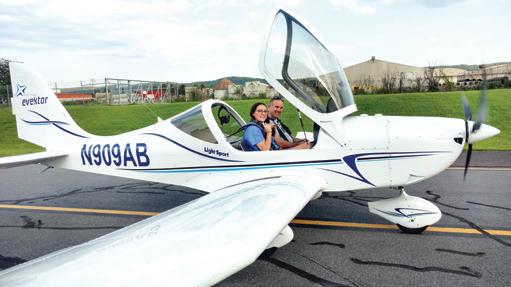


Modern, fully equipped IFR capable trainers


Low operating cost
Aircraft leasing available


Custom Built Electric Guitar & Autographed by John Rich, a country music celebrity, costar of Celebrity Apprentice, owner of Nashville’s Famous Redneck Riviera, FOX News guest, a Hero to our Veteran Heroes, & an American Patriot


 By Francis Turoski
Most people would not have considered me a shoo-in for becoming a pilot six months ago. I only had seen Pilotsmith as a possible avenue for a career path. I wanted to do something meaningful and develop a skill that I could use for the rest of my life. I don’t quite understand how I fell into this career path, but I am glad that I’m in it now.


Walking into a student consultation without a clue about aviation, I wanted to hear about the aviation world. Two and a half hours later, I left the consultation with four pages of notes and a job offer from Pilotsmith in Green Bay. I didn’t realize how different the aviation world would be! Pilotsmith gave me the ins and outs of starting an aviation career and offered to invest in me to develop a professional pilot. I spent two and a half hours talking with the flight school manager, and in that meeting, I realized how much they valued students as individuals and the need for pilots in the state of Wisconsin.
Being in a team of professionals, as an employee and a student pilot is an incredible opportunity to learn the aviation industry. I am on the ground floor of a flight
school that is undergoing some major growth. We moved into a new facility the day I began on the Pilotsmith team and took on a whole new type of work. I was immediately thrown into the mix with our end of year audit on student documentation. Pilotsmith encouraged me to listen in on conversations about company growth, project management, and collaborative leadership among our team members.
Being a big part of the transitional period for this company has taught me how important it is to be upfront and honest with our students, our flight instructors, and our maintenance department. There is so much that happens in the course of a day at a flight school that does their own maintenance. We saw everything from maintaining a plane to sending our instructors and students out for a flight. Having the bird’s eye view as an administrative employee and a boots on the ground view
of the flight school as an employee, I feel like I know so much more about the flight school than I ever would have known just as a student pilot.

By the end of the second month, I was taking on new exciting tasks like onboarding new students and even interviewing CFIs with our hiring manager. The management at Pilotsmith allowed us to learn how to talk about our program to potential students, renters, and investors.
We went to career fairs and talked to the teachers in the greater Green Bay area as well as the students at local highschools. The team here taught all about how Pilotsmith’s program lines up with the industry and made a huge impression on my ability to articulate why Pilotsmith is such an outstanding professional academy.
I’m glad to be part of this Cirrus training center and professional flight school. I‘m not sure where it will take me, but I know Pilotsmith will build me into a successful professional in any realm of aviation.
Francis Turoski Flight Training Advisor Pilotsmith Inc. “Forging Tomorrow’s Pilots” Green Bay, Wisconsin
From a young age, I have always loved big machines, from semi-trucks to excavators. I enjoyed watching planes fly overhead, but I didn’t really become interested in aviation until I was given the opportunity to take an aerospace class in my eighth-grade year. We were promised a discovery flight, and, of course, that piqued my interest. I applied for the class, and was accepted.
We started with learning the phonetic alphabet and the four forces of flight. Then, we learned about stalls and how the engine worked. We built ninety paper rockets with different wing types and launched them to see the best shape, made controllable airplanes out of styrofoam, and shot many bottle rockets. Just as we were starting our rocket engine unit, Covid-19 was spreading. We had also just started picking our dates to go on our discovery flight, but we were not able to go because our school shut down and no school field
trips were allowed. I was upset that we couldn’t go; so, for months, I asked my parents to let me take a discovery flight. They were very nervous, as there are no other pilots in my family. I finally convinced them, and it was love at first flight.
From there, I began the flight training that would change the rest of my life. This came with many hurdles. My city was hit by hurricanes, Laura and Delta, which stopped my flight training for a period of time. I eventually made my way back to the airport and started training again. I was ready for my first solo flight, but I was still fifteen years old. I eventually turned sixteen and soloed on my birthday, a feeling I’ll never forget!
I had some trouble with my instructor, so I stopped flying for another period of time. During the time I did not have an instructor, I was studying for the written exam. I took it after two months and passed! The next week, I was on my way to OshKosh, Wisconsin, for the largest airshow


in the world, AirVenture! I had won a scholarship through Cajun’s Aviation Dream to attend the EAA Advanced Air Academy. At the camp, we were able to attend the last three days of AirVenture. Once that was over, we rotated between classroom and workshop activities every day. We built a wing rib, welded a spark plug holder, and made our own kneeboard with epoxy. We learned about aviation weather, different career paths in aviation, and more. It was one of the best experiences I’ve ever had.

Once I got back home, I found a new instructor, but it came with a new hurdle. I had to switch to a new airport and aircraft. It felt like I was starting over, but I was not going to let that stop me from following my dreams. I eventually re-soloed in the new aircraft, completed all the requirements for my private pilot’s license, took my checkride, and passed! It took many hours of preparation, chair-flying, and studying, but it was well worth it. I am now a seventeen-year-old, first generation female private pilot! I have learned that if you want it bad enough, you will work for it; and that’s what I did. This is just the beginning of my aviation journey. I plan to go to Louisiana Tech for aviation and then, to the airlines. For now, I am enjoying the privileges that come with having a pilot's license.


AUGUST 18TH-20TH YOUNG AVIATORS FLY IN 2023
www.tta.aero
Spend the weekend at the only fly-in that is run completely by the next generation of young aviation professionals!
Airport iD: SC00
Airport iD: SC00
@tripletreeaero
Airport iD: SC00
Learn all about remote control and general aviation flying, get a chance to take a first airplane ride through the Young Eagles, and hear about ways to get started in your aviation journey!


@tripletreeaerodrome www.tta.aero
@tripletreeaero
@tripletreeaerodrome www.tta.aero
@tripletreeaero
@tripletreeaerodrome www.tta.aero

330 Mary Hanna Rd Woodruff, SC 29388
330 Mary Hanna Rd Woodruff, SC 29388
330 Mary Hanna Rd Woodruff, SC 29388
Airport ID: SC00 | @tripletreeaero | @tripletreeaerodrome
330 Mary Hanna Rd Woodruff, SC 29388
Sierra Jackson first got into flying at 12 years old, and credits her grandfather for sparking her interest in aviation. That interest quickly grew from a spark into a potential career path, and has now blossomed into a full-fledged passion. What started with her first orientation flight at 12-years-old has led to her plan for the future - a plan that includes college, the Air Force, and more.

Jackson, currently studying mechanical engineering, said flying is something she plans to do long-term. She said she hopes to follow a path similar to her grandfather’s career. “My grandfather was a pilot in the Air Force and, later, a commercial pilot. I was really
wanting to follow in his footsteps. I want to go to the Air Force for the pilot training program, and right after that, go to one of the commercial airlines,” Jackson said.
Flying plays a big role in Jackson’s family, as both her grandfather and mother earned their pilot’s licenses. Jackson said those family ties have helped her on her journey in aviation.


“My grandfather and my mother both have their pilot’s licenses; and, it’s really nice having my mom there for me because we can learn and study together. She’s there to pave the way,” Jackson said.
Not everything has come easily during Jackson’s time training and learning to be a pilot, though. Last year, her flight instructor, Lawrence Latimer, passed away.


you’re dealing with. You just go up, fly, enjoy the learning experiences, the view, just the sounds and feelings of the airplane. Definitely look forward to all of those,” Jackson said.
She mentioned that finding the right person to train and mentor young aviation enthusiasts is important as well. “When you just start to get into aviation, find that person that you can have as a mentor. Having one helps you so much. It gives you a little motivation, like “I want to be like someone,” you know? “I want to be like this person.” It really gives you motivation for sure,” Jackson said. “That’s what I have always done. You know, my grandfather, my mom, my flight instructor - I want to be like them. I want to fly.”


First Place Prize: 2018 Van’s RV-12 ULS Aircraft or $65,000 Dollars
Second Place Prize: New Axis 500 4x4 UTV or $4,999 Dollars

Third Place Prize: Pair of VVolt E Bikes or $1,200 Dollars

Funds will support aviation scholarships, building of our aircraft, and other flight experiences for students.


Learn how test pilots and engineers apply STEM principles in developing new aircraft, experiments, and advances in aerospace at Edwards AFB, home of the Air Force’s Test Center. FREE resources, classes, lessons, and materials for all learners.



Learn how test pilots and engineers apply STEM principles in developing new aircraft, experiments, and advances in aerospace at Edwards AFB, home of the Air Force’s Test Center.

FREE resources, classes, lessons, and materials for all learners. Scan the QR code or go to: www.afftcmuseum.org/ education


Border:


Building an airplane is the ultimate project for groups, individuals and clubs. Zenith Aircraft Company supplies great designs, shipped as complete kits (with advanced nal hole size match drilled parts) that are easy, simple and fun to build. zenithair.com


METRO AVIATION IS MORE THAN A DREAM JOB, A GREAT CULTURE, AND A PAYCHECK. Metro is a lifestyle. Chase your dreams. We'll support you with work-life integration and an investment in your health, wealth, and career journey.
metroaviation.com/careers


Manson, IA 50563-0056
Since 1926, the nation’s oldest and largest aeronautical university has offered leading-edge pilot training that can take you straight to the flight deck.

Embry-Riddle’s renowned aviation programs feature cutting-edge aircraft, the latest in simulators and technological training aids along with industry partnerships that provide a direct route to airline careers.
Recent forecasts show the need for 763,000 pilots within the next 20 years, and Embry-Riddle is playing a vital role in meeting this unprecedented demand.
Ready for take-off? See where you can go with Embry-Riddle.
embryriddle.edu
AVIATION BUSINESS SPACE
ENGINEERING
APPLIED SCIENCE
SECURITY, INTELLIGENCE & SAFETY
COMPUTERS & TECHNOLOGY