3 minute read

from swimming lessons
Next Article

How to tell if a learn to swim course is actually well-run
Once you accept that learning to swim is about safety and control first, the next question becomes practical: how do you tell a solid course from one that just looks organised on paper? In practice, quality shows up in a few repeatable signals — not glossy timetables or promises of fast progress.
What matters most
A good learn to swim course is defined by how it manages risk, progression, and attention — not by how quickly students move through levels. Reliable programs use clear skill benchmarks, keep class sizes realistic, and prioritise breathing and buoyancy before strokes. Courses fall short when structure exists on paper but isn’t enforced poolside, especially under staffing pressure.
4
How can you judge course quality before enrolling?
The most reliable indicators are operational, not promotional. Look for published supervision ratios, defined skill outcomes for each stage, and clarity about what happens if a participant isn’t ready to move on.
In well-run programs, instructors slow the group down without apology. In weaker ones, learners are advanced to keep schedules tidy. I’ve seen confident-looking swimmers panic later because early gaps were never addressed.
Decision clue: Ask how instructors decide someone is “ready” to progress. If the answer is vague, that’s telling.
Do instructor qualifications actually make a difference?
They matter — but not in isolation. Nationally recognised training frameworks exist to ensure teachers understand water safety, risk management, and progression logic. In Australia, organisations such as AUSTSWIM set those baseline standards so teaching isn’t improvised.
What often matters more day to day is staff continuity. A qualified teacher who sees the same learners each week will usually achieve more than rotating instructors with identical credentials.
Constraint: Casual staffing models can disrupt consistency even in otherwise reputable programs.
What class structure works best for beginners?
Smaller groups allow faster correction, but they also reduce peer learning. Larger groups lower cost, but quiet strugglers are easier to miss. There’s no perfect size — only trade-offs.
Common advice says “choose the smallest class possible”. That fails when the program shortens lessons or rushes progression to compensate.
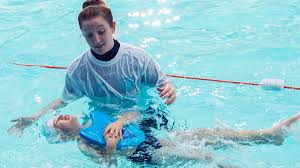
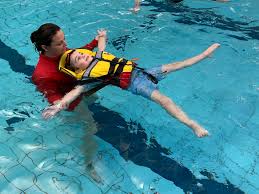
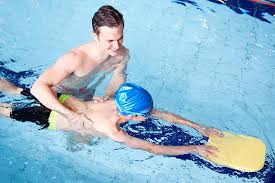
Practical implication: Look for lesson length (not just group size) and whether instructors are in the water actively assisting beginners.
How do recognised frameworks help protect learners?
Structured frameworks exist to reduce variability. They define minimum competencies for floating, treading water, and self-recovery — skills that matter outside a pool.
Programs aligned with these standards tend to document progress clearly and intervene earlier when learners stall. One example of a national framework provider is AUSTSWIM, which outlines teaching and water safety expectations used by many centres.
Why this matters: Frameworks don’t guarantee excellence, but they make poor practice easier to spot and harder to excuse.
When does a “good” course still fall short?
Even strong programs can struggle when learners attend irregularly or avoid the uncomfortable early stages. People often stick with habits that feel safer — keeping the head up, holding the wall — even when those habits slow progress.
Context changes outcomes. A learner practising once a week may need months to reach skills another person gains in weeks with consistent exposure.
What to do differently: Choose a course that encourages repetition and patience rather than constant advancement.
Closing perspective
Validation isn’t about finding the “best” learn to swim course. It’s about confirming that the structure protects learners, adapts to reality, and values readiness over speed. When those pieces are in place, progress usually follows — at its own pace.