3 minute read
TORUS AUDIO ELITE AVR

transparent than it had ever been. Wow, a power conditioner!
Advertisement
The dilemma of procuring a bass trap was postponed for the time being. There would need to be greater analysis and testing of the AVR Elite, which would require many, many bass-rich tracks being played. But then a thought arose: what if the prior power
17 conditioner had been the culprit all along? This would take a third avenue of research— the wall.
However, before going to the wall, I wanted to take note of the other areas of improvement where the TORUS AUDIO AVR Elite might provide noticeable benefits. As I prepared to review the TORUS AUDIO AVR Elite power conditioner, I began going through a very long list of music to gain further insight into the AVR Elite and what appeared to be its system changing abilities that lifted or “righted” the music in every respect.
The Sound
As per above, it is immediately becoming clear what the AVR Elite did for the reference system components relative to the rendering of bass notes from upper to mid to lower bass. All such notes were now immediately tighter, better defined, and more what one imagines they were intended to be. The massed tympani in the “Infernal Dance of King Kashchey” (Stravinsky, Reference Recordings) where the previous power conditioner had apparently done harm, was now “cured.” The rounded bass notes, bass humps and boom, had disappeared. And bass instruments and their notes, often to the farthest corners of a given stage, were now realized and vital, taunt and well resolved. Was it the resulting black quiet background via the AVR Elite that orchestrated this none too subtle improvement across the bass region?
What was most notable across the midrange was again clarity and then a foundational weight that created a greater sense of the in-room presence and the textural palpability of performers—a reach out and touch event. There was a greater sense of space and separation, of depth and air, and threedimensionality that no doubt provided assistance and empowered components to beautifully recreate the music entrusted to them. There was also an ease, a lack of harsh edges, a commanding quiet and stillness, and a continuity that one might associate with analog.
At the treble end of things, violins soared unencumbered and refined, nuanced, beautifully resolved and transparent, and freed of treble nasties, which also came as quite the shock. Was the previous power conditioner truly so poor in empowering the various reference components or was the TORUS POWER AVR Elite just a far better solution? There was even more to the AVR Elite. The soundstage across the board gained as I was now able to hear the depth and breadth of a given stage, a result of the background quiet, no doubt. And as mentioned above, soundstage cues or spatial information —positioning, layering, relative space, air, ambiance, and even movement —were all vastly improved. This led to a more clearly envisioned venue and a naturalness experienced, in toto, across the entire frequency domain when the AVR Elite was part of the system. Bravo!
DESIGN-FUNCTION
If you’re simply going for the TORUS AUDIO AVR Elite, as a power conditioner, it is very easy to install and get going. However, if you are looking to take advantage of its advanced Torus Power Connect capabilities, you’ll need to consult the instruction manual.
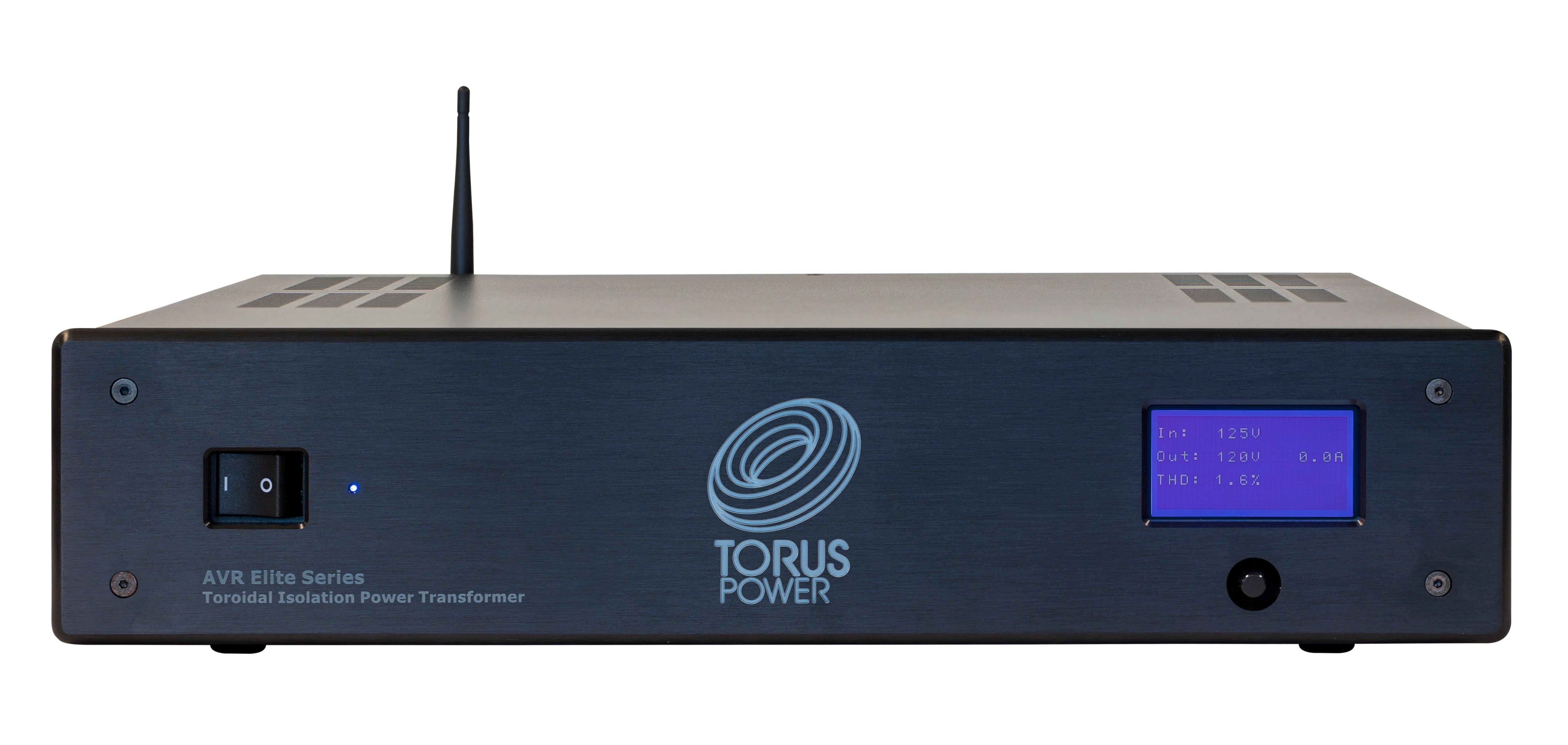
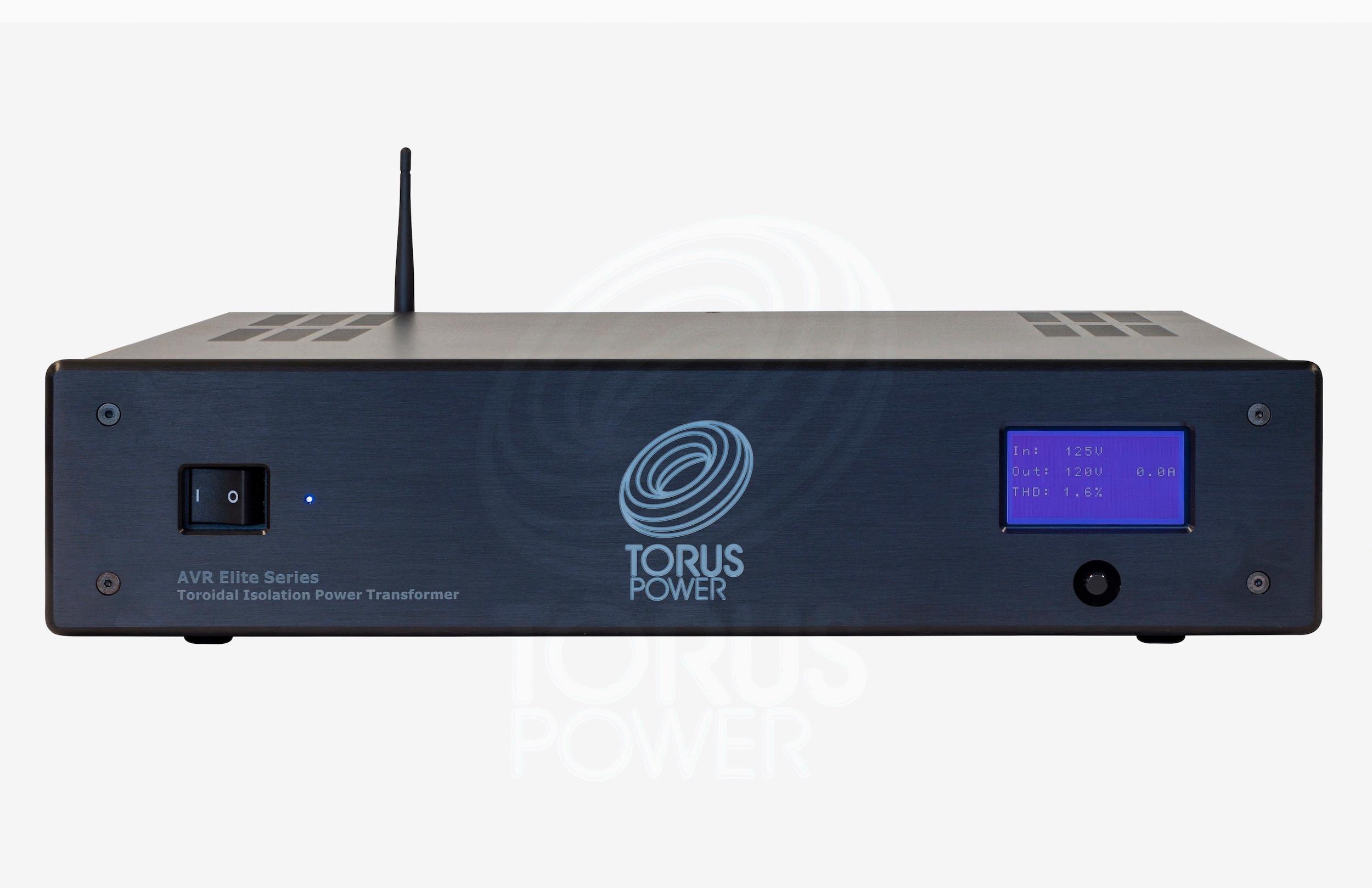
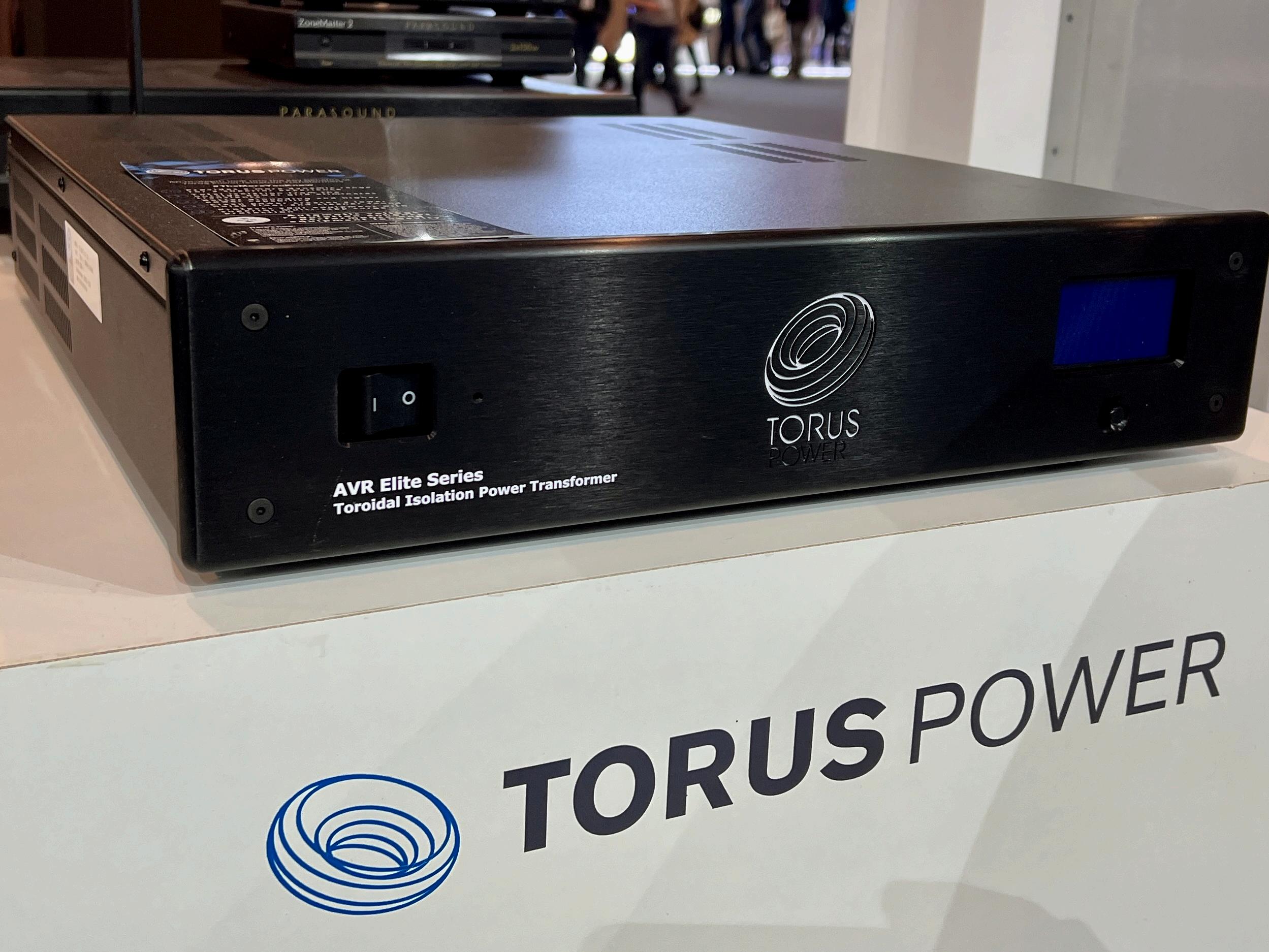
The front face of the AVR Elite is clean and simple. There is an On/Off switch on the far left that shines blue when active and an LCD control screen on the far right. The TORUS AUDIO logo stands prominent front and centre on the components’ face.
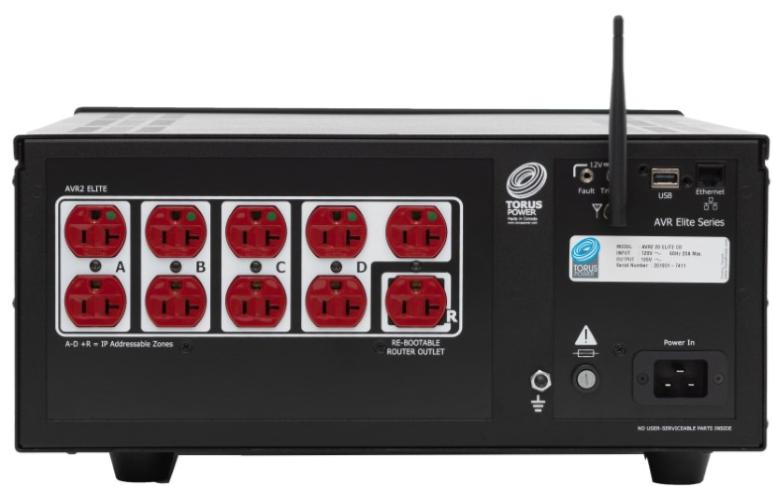
The back face of the AVR Elite bears 10 receptacles for power cords, an IEC receptacle for the AVR Elite’s power cord, an ethernet port, a USB connector, and a 10A input fuse. The function, of course, is to provide clean, continuous power to components that are did provide better bass definition than the Other Power Conditioner (it is our philosophy not to throw products under the bus, thus no name) but The Wall was edgy, harsh, strident when compared directly to the AVR Elite. There was also greater noise introduced into the signal with The Wall, which diminished clarity, background quiet, and the identification of spatial characteristics, now buried, needed to