6 minute read
THE OVERVIEW

By Gérard Rejskind
HI-FI’S CANADIAN ROOTS
Advertisement
High fidelity for the home began just after the Second World War. The hostilities were over, and so was the Great Depression. The industrialized world was about to enter a long boom period, with people earning enough disposable income to indulge their taste in music and the technology that underpinned hifi. Hi-fi began as a hobby, but rapidly became an industry.
It was, however, a fledgling industry, one in which it was expected that a purchaser would be comfortable with a soldering iron. Early amplifiers had switches that felt as though they might break off.
Enter the Japanese. Japan was not yet the industrial powerhouse it would become, and product names like
Sony, Panasonic, and Pioneer were not yet household words. Still, their hi-fi products found space on store shelves. They had slick styling and controls that were at once solid and silky. The only problem was that they didn’t sound all that good. The result was a second wave of products, mostly from Britain and some Western European countries, with improved aesthetics and superior sound. Oddly enough, these systems caught on first in… Canada. One result was that a number of Canadian companies became pioneers in the quest for better music reproduction
Bryston
This Ontario company claims 35 years of history, but it is in fact older than that. It began by making technical equipment for hospitals. From there, it produced audio gear for sound professionals, and then joined the hi-fi revolution, making amplifiers and preamplifiers. More recently, it has developed digital-to-analog converters and other products for the digital age. It now belongs to a loudspeaker company, and so it has added loudspeakers to its product repertoire.
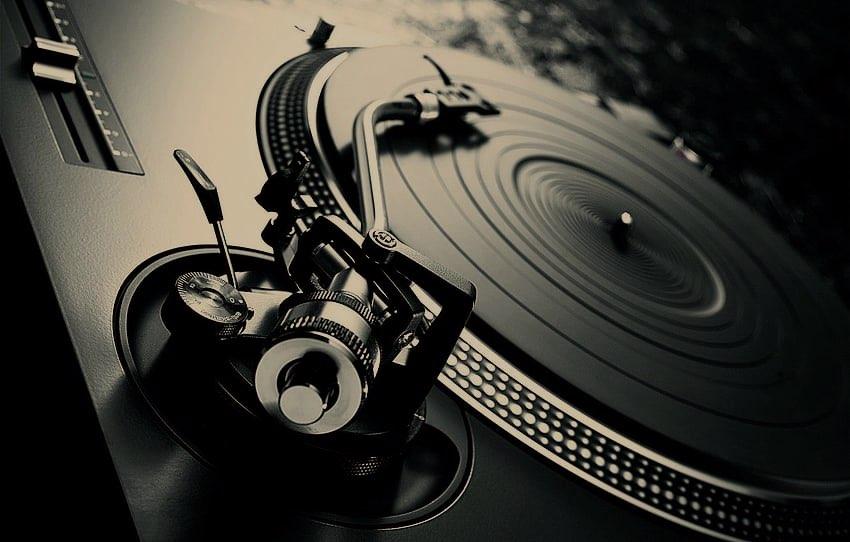

Bryston was among the first in the industry to offer a 20-year warranty. In actual fact, it would not verify the purchase date, simply repairing any unit that didn’t work. Internet sales and the grey market have forced it to require proof of purchase, as other companies do.
Victor
Sima (Simaudio)
Victor studied electronics in his native Israel before moving to Montreal and building amplifiers for commercial applications. I met him just after my magazine (UHF) had published a warm review of the Robertson 4010, a power amplifier from Singapore. He was convinced that if we played his amplifier alongside the Robertson, the difference would be slight. I invited him to test his hypothesis. I played music through our reference system of the day, including the Robertson. Then I substituted the Sima amp and we listened again. When it was over, there was a long silence. “I’ll be back in two months,” he said. True to his word, he returned with his first true hi-fi amplifier, the 2050, and a month later, the 3050. I welcomed him to the hi-fi club.
The rest is history. Victor eventually developed a totally new configuration that he called Céleste, which could give a large amplifier the liquid clarity we associate with much smaller amps. Before selling Sima Audio to what became a larger company now called Simaudio, he developed a new circuit that would power some of the best amplifiers of the time.
Vince Bruzzesse (Totem)
It’s difficult to remember that at one time, a small loudspeaker was a cheap loudspeaker. Early speakers were mostly big, perhaps too big for their own good, and you got a “bookshelf” speaker if you couldn’t afford anything better…which is to say, bigger.
So I was surprised when an audio distributor sent me a pair of startlingly small speakers and asked me to advise him on whether he should take them on. I knew that small speakers could have their own advantages, but at $1,500, the projected selling price of the Totem Model One was high for the time. Moreover, the Model One was Totem’s only model, which made it difficult to compete with larger speaker lineups.
But they really did sound good, clean and clear, with a convincing stereo image. My advice: take these little speakers on, but put better connectors on them. How could you convince potential buyers that a lot of money had been spent on the inside if they couldn’t see something good on the outside?
Equipped with WBT gold-plated binding posts and with $100 trimmed from its initial sales price, the Model One was a success. The designer, Vince Bruzzesse, developed many more speakers, and his brand became famous worldwide. The factory is still in Montreal, but Totems are sold around the world, and small speakers get far more respect.
Winslow Burhoe (Energy)
Starting in the late 1970s, the National Research Council invited several speaker manufacturers to join a research project. The goal: to identify speaker characteristics that would make speakers “sound good in blind tests.” Participants would be able to use the NRC’s large anechoic chamber. The characteristics were no surprise. Broad frequency response was an important criterion, as were low distortion and wide sound dispersion. Winslow Burhoe, a Boston engineer and musician who came to Canada to take up the challenge, developed some of the most astonishingly musical speakers available then or since. His magnum opus was a series of speakers dubbed the Energy 22, built by EPI (Epicure Products Inc.) in Toronto. I still own a pair of his best speakers, the Energy Reference Connoisseurs. The rectangular enclosures looked conventional, but the drivers did not. The dual hyperdome tweeter had extraordinarily wide dispersion, one of the desired characteristics. The custom-built woofer was unusual too, with a long throw that could handle high power without distortion. The synthetic materials chosen could not be bonded together with glue, so Burhoe sewed them together.
EPI continued Energy production for some years. Along the way, it picked up another Canadian speaker maker, Mirage. EPI itself developed the Mirage flagship, the M1. It was a money loser because it cost more to produce than speakers could reasonably sell for at the time. Alas, the EPI founder had no succession plan, and at the end of his life his huge assembly facility closed down. The Energy and Mirage brands were sold to Klipsch.
Reference 3A
The company’s founder and designer, Daniel Dehay, is not Canadian, but his loudspeakers were destined to attract Canadian ears and his company would find a home in Ontario.
I first met Dehay at the Summer CES show in Chicago in 1990. He had a room filled with speakers with carbon fibre woofers, with a lively sound that kept visitors from wandering away. One visitor accused him of cheating and of having concealed a subwoofer behind the speaker. Without saying a word, Daniel dropped one of the speakers, still playing, on the visitor’s lap.
Daniel Dehay was on his second company, both based in France: 3A and then 3A Design Acoustique. His new series was by far the most marketable. The entry model, which didn’t sound like an entry product at all, was priced at just above $1,000.
Most of Daniel’s speakers shared certain design features: slanted fronts for better coherence, carbon-fibre woofer cones that were not conical at all but with flattened-out profiles for better dispersion, and crossover networks reduced to their simplest expression: a single high-quality capacitor to protect the tweeter from overload.
As the speakers became more popular, Dehay took on partners with deeper pockets and like many designers before him, lost control of his company. The new owners, however, didn’t have the technical knowledge that running a high fidelity company required, and 3A disappeared.
But it would return. Daniel Dehay moved to Switzerland and launched his third company, Référence 3A. He created higherend versions of his best-known designs, culminating in the Suprema II, a Corian-clad two-way speaker seated atop a massive pushpull passive woofer operating from 50 Hz down to bedrock. I still listen to music mostly through the Supremas.
By then Dehay was ready for retirement, and the company was sold to his Canadian distributor, Divergent Technologies. Dehay gave Divergent some 40 notebooks of designs, and the new Canadian company brought a number of them to market.
Oracle
The turntable company was founded in Quebec’s Eastern Townships by two brothers, Marcel and Jacques Riendeau, in 1979. The original Oracle turntable was a luxury product, intended to be as much a work of art as a music source. It was not an overnight success. Early models had difficulty maintaining accurate speed, and their tone arms looked and sounded unfinished. A small but influential US audio magazine attacked the fledgling company, accusing designer Marcel Riendeau of dilettantism and somehow simultaneously, industrial espionage. The company outlived the magazine and gradually acquired a high profile among aficionados.
Lower-priced turntables appeared alongside the Oracle, with spectacular styling but without the performance the brand seemed to promise. Amplifiers and other electronic products joined the lineup. A few years ago, the Oracle Origine was warmly reviewed for both its relatively affordable price and its musical performance.
Gershman Acoustics
This Canadian speaker maker needs little introduction, since its products are celebrated worldwide. The company is celebrating its 30th anniversary.
Eli Gershman learned his craft in Israel. He engineers the company’s easily identifiable speakers, while his wife, Ofra, is responsible for their visual design. She is also Gershman’s public face and plays a major role in its success.
Oracle speakers have sold at widely varying prices, though its current models cannot be described as entry-level. Indeed, its top model, the Posh, is aimed at audiophiles with substantial budgets.
AKRM-C