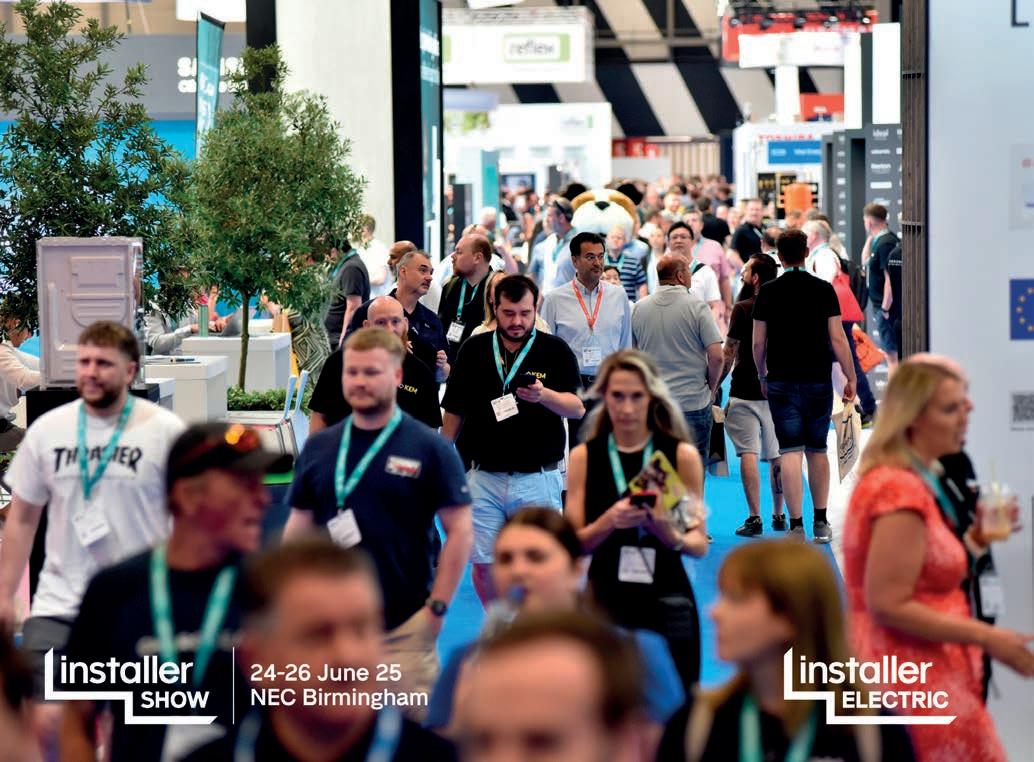
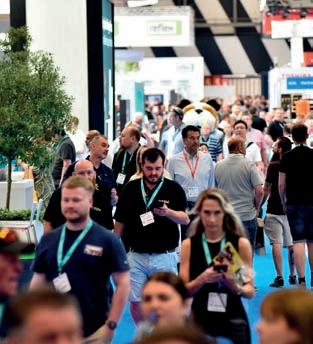
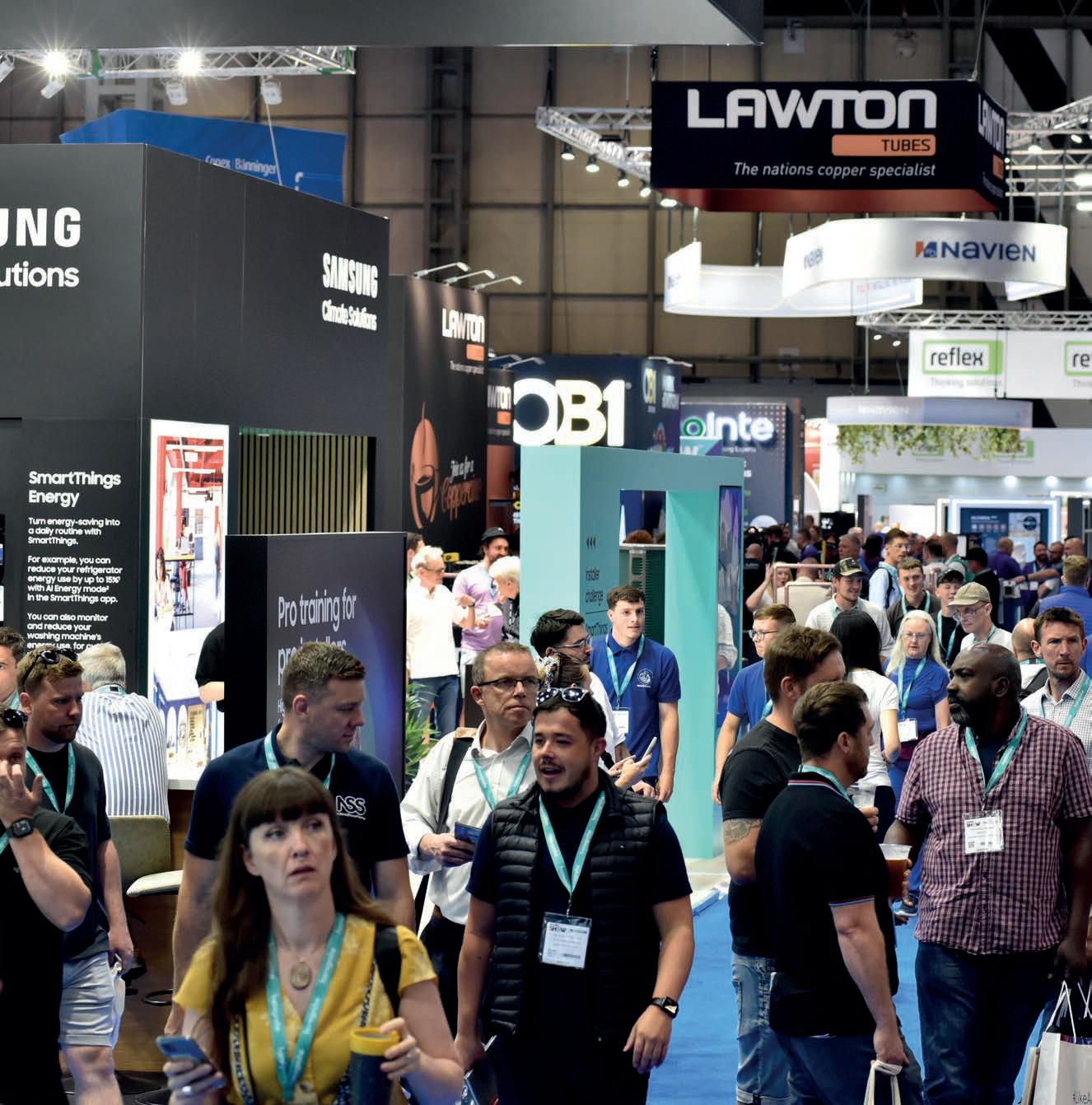
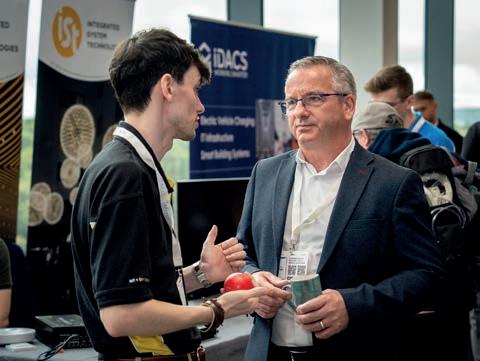
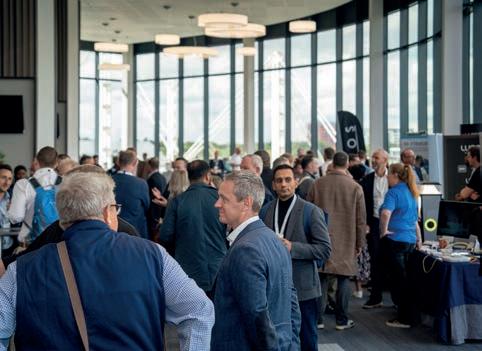
InstallerSHOW, the UK’s must-visit event focusing on sustainability in the built environment, is just around the corner, taking place on 24-26 June at the NEC Birmingham. Bringing together more than 800 exhibitors and 30,000 visitors across three halls, and with the introduction of new features including InstallerELECTRIC, it’s a not-to-be-missed event for electrical professionals.
InstallerELECTRIC will deliver three days of engaging live content for electrical professionals that includes a curated programme from industry experts and peer-to-peer sessions from well-known electricians such as Mark Allison and Kimmy The Sparks. The InstallerELECTRIC theatre, supported by ECN, will blend CPD-accredited sessions, panel discussions, tech talks, training tasters and live podcasts.
Tickets for InstallerSHOW 2025 are free, and so is parking thanks to Amazon Business. Don’t miss out, register for your free ticket today!
Turn to page 12 for the full
DON’T MISS INSTALLERELECTRIC AT INSTALLERSHOW
YOU CAN ACCESS 3,000+ TOOLS RIGHT HERE!
NEXT-DAY DELIVERY OPTIONS AVAILABLE!
A NEW CHAPTER BEGINS
Hello and welcome to the June issue of ECN. This one’s a little bittersweet for me, as it’s my last issue as Editor, as I’m moving on to pastures new.
Over the past five years, it’s been an absolute privilege to lead ECN and be part of the incredible electrical industry. I can genuinely say it’s the most revolutionary, dynamic and welcoming sector I’ve ever worked in. The innovation, the energy and, most of all, the people – it’s been a real privilege to be part of it all. I’ve made some amazing connections and will truly miss being part of such a brilliant community.
On a personal note, I want to give a special mention to my partner-in-crime, Kelly. Working alongside her has been one of the greatest joys of my role. From industry events to internal meetings, her passion, professionalism and deep knowledge of the sector have been inspiring. Together, we’ve achieved so much – most notably launching the ECN Awards in 2023. The event is our shared legacy, and I’m incredibly proud of what it has come to represent. With Kelly at the helm, I have no doubt it will continue to grow and thrive.
I’m honoured to continue serving as an Ambassador for the Electrical Industries Charity, so you’ll still see me around on LinkedIn, championing the amazing work that the charity does.
I’m happy to say that ECN will be left in safe hands – Simon Rowley, who has been working as Deputy Editor of the magazine for the past year and who was also ECN’s previous Editor – is taking over the reins. Simon is a brilliant editor and knows the magazine inside out, so it will be business as usual for our readers and clients. I wish him all the best and know he will take the magazine to even higher heights. He can be contacted at simon@allthingsmedialtd.com or 01634 673163.
I’m not disappearing completely – I’ll be moving into the battery and energy storage space, so I’m sure I’ll bump into many of you again. And if you fancy staying in touch, feel free to connect with me on LinkedIn.
I’m not leaving empty-handed – I met my husband at ECN, so I’m taking a pretty special souvenir with me!
Thanks for all the support, the laughs and the inspiration. It’s been a real pleasure. Take care and see you around.
GROUP EDITOR: CARLY WELLER
T: 01634 673163
E: carly@allthingsmedialtd.com
DEPUTY EDITOR: SIMON ROWLEY
T: 01634 673163
E: simon@allthingsmedialtd.com
SALES DIRECTOR: KELLY BYNE
T: 01634 673163
E: kelly@allthingsmedialtd.com
STUDIO: MARK WELLER
T: 01634 673163 E: mark@allthingsmedialtd.com
CEO: DAVID KITCHENER
T: 01634 673163
E: david@allthingsmedialtd.com
MANAGING DIRECTOR: IAN KITCHENER
T: 01634 673163
E: ian@allthingsmedialtd.com
ACCOUNTS
T: 01634 673163
E: susan@allthingsmedialtd.com
Carly Weller, Group Editor
DESPITE INCREASING CHALLENGES, APPRENTICESHIPS STILL WORTHWHILE
Employing an electrical apprentice can produce a positive return from year three of the apprenticeship, according to new figures published by The Electrotechnical Skills Partnership (TESP). For those charging apprentices out at higher rates, positive returns can be gained as soon as the first year.
Funded by National Electrotechnical Training (NET) and carried out by Pye Tait, this latest research updates the 2019 calculations from TESP that explored the return on investment (RoI) that can be made from electrical apprenticeships.
Using scenarios based on differing charge-out rates for unskilled and skilled work, following detailed interviews with 101
employers of all sizes across England, the overall net costs and benefits of apprentice recruitment were projected.
For low and medium charge out rates, an apprentice will make money for the company by year three; at higher charge rates they show positive returns in the first year. By year four, apprentices provide positive returns to the business at all charge out rates of between £12,024 and £27,469.
The rates at which apprentices are charged out plays a major factor in the total return realised over four years. At the medium rate, the four-year net benefit is £26,580 (£34,076 in 2019) and the higher rate is £51,292 (£56,756 in 2019). There has
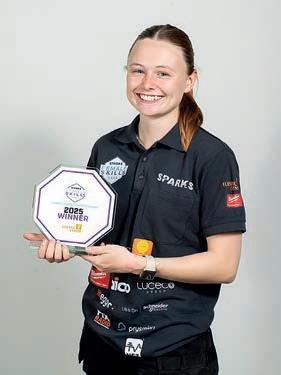
SPARKS FEMALE SKILLS COMPETITION 2025 WINNER ANNOUNCED
At the Grand Final, held at Stephenson Campus, SMB College Group, Gracie Donaghy from Weston College was officially crowned the winner at the SPARKS Female Skills Competition 2025.
Six of the UK’s top female electrical students and apprentices were brought together in a high-pressure installation challenge. The competitors completed a live installation under the scrutiny of an expert judging panel, including Darren Oates from National Electrotechnical Training (NET), Amy Barratt-Singh (Amy the Sparky), Gina York (The Daughter Electrical) and last year’s winner and runner-up, Charlotte Bobbett and Anne Greaves.
Gracie impressed the judging panel with her technical precision,
problem-solving skills and confident approach under pressure. Expressing her excitement, she says, “Honestly, I have no words, for once in my life I’m truly speechless. I found it challenging but in a good way. I like that we have to test our skills. Everyone’s lovely, obviously we’re all here to win, but it is really nice meeting everyone. Everyone’s really friendly and it’s nice to share experiences with each other. Every single prize is insane.”
The SPARKS Female Skills Competition is dedicated to supporting and celebrating the next generation of female talent in the electrical trade. Now in its third year, it continues to provide a vital opportunity for Level Two and Three learners to showcase their skills
UK POWER NETWORKS HARNESSES THE SUN’S ENERGY
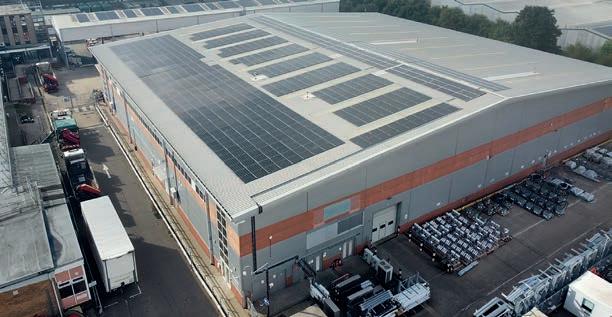
UK Power Networks is harnessing the sun’s energy to supply a third of the electricity on its West Suffolk site.
UK Power Networks owns and runs the cables and substations which deliver electricity from the National Grid to 8.5 million homes and businesses across the East, London and the South East of England, serving approximately 20 million people.
It is celebrating the installation of around 650 solar panels at its site in Barton Road, Bury St Edmunds which employs more than 400 people who work in its offices, depot and training centre.
Meter points have been installed across the site, with the panels generating 344kW of energy. On top of this, the green energy system saves 78 tonnes of CO2 annually.
The panels took longer than anticipated to install after contractors had to stop working on one roof due to nesting gulls.
been a significant drop in value for those charging out at lower rates, with the overall benefit now just £97 compared to over £11,000 in 2019.
The calculations take into account the weekly costs of an apprentice and supervision, the percentage of time spent on supervision and the increasing amount of time the apprentice spends completing the work of a qualified electrician.
in real-life scenarios while gaining valuable exposure to the industry.
SPARKS, sparks-magazine.co.uk
UK Power Networks, ukpowernetworks.co.uk
With apprentice charge out rates having such a clear impact on determining RoI, NET is now funding further research into how employers set these rates and more granular detail on the work apprentices undertake, to see what support or guidance might be developed for businesses.
TESP, the-esp.org.uk
SCREWFIX CROWNS TRADE APPRENTICE 2025
Apprentice electrician, Dan O’Shea, has beaten over 2,700 apprentices from across the UK and Ireland to be named this year’s Screwfix Trade Apprentice champion.
Dan, aged 20, from Longford, Ireland is currently completing Phase 2 of his electrical apprenticeship with F White Electrical, located in Ballymahon, and takes home a prize bundle of tools, training and technology worth €10,000 – while also receiving €2,000 worth of Screwfix vouchers for his college.
During the two-day final, which took place in London, Dan impressed the panel of industry judges, including representatives from Screwfix, NICEIC, the Chartered Institute of Plumbing and Heating Engineering (CIPHE) and the Federation of Master Builders (FMB) with his passion for the electrical industry.
Since starting his electrical apprenticeship, Dan has not only unlocked a passion for renewable energy and sustainability, but he’s also become an advocate for making the trade more inclusive for others thinking of following in his footsteps.
Commenting on the announcement, Dan says, “To hear my name called out was unbelievable. Having met with the other finalists, I knew the competition would be a tough one, and honestly any one of us would have been worthy winners. This award is going to be such a boost to my career and will really take me to the next level. I still can’t believe I’ve won!”
The Screwfix Trade Apprentice competition celebrates the best new talent in the trade industry, and this year’s competition received more than 2,700 entries.
Screwfix, screwfix.com
Gavin Roberts, the electricity distributor’s Principal Consultant of solar assets says, “The building at Bury was perfect for a solar installation with the large south facing roof space that provided the ideal area. The system now provides clean low carbon power directly to support our operations from Bury St Edmunds.”
INDUSTRY NEWS
IRONMONGERYDIRECT PUBLISHES MENTAL HEALTH IN THE TRADES REPORT
Trade supplier, IronmongeryDirect, has released its annual Mental Health in the Trades Report, which helps shed light on the ongoing challenges around mental health in the industry.
Tradespeople from across the country were surveyed for the report, and the research looks at the sheer scale of the problem, the leading causes of poor mental health among trade professionals, their access to support, and how further help can be delivered. It also includes the incredible stories of tradespeople who have faced mental health difficulties and bravely shared their struggles to highlight the importance of seeking help.
The report’s findings show that mental health challenges in the industry persist and by some measures are more widespread than 12 months ago. This year’s survey found that a staggering 91% of tradespeople say they’ve experienced work-related stress in the last year, with 56% indicating they experience these stresses at least once a week. This is a significant increase from last year’s report when just over a quarter (27%) reported weekly work-related stress.
The mental health report also highlights the stigma that sadly still remains around talking about mental health. In fact, 56% of tradespeople revealed that they don’t talk to anyone about their mental health and almost half (48%) say they worry about
EIC ANNOUNCES STUART PEARCE AS NEWEST PATRON
The Electrical Industries Charity (EIC) has announced that former England footballer and qualified electrician, Stuart Pearce, has joined the charity as its new Patron.
Before rising to football fame, Stuart began his career as an apprentice electrician with Brent Council, later running his own electrical business. Even during his early football days at Coventry City and Nottingham Forest, he continued working as a tradesman – famously advertising his services in matchday programmes.
Stuart’s first-hand experience in the trade means he truly understands the pressures, demands and challenges faced by those in the industry, making him the ideal ambassador to help raise awareness and champion the EIC’s cause.
EIC says that throughout his career, Stuart has embodied resilience, integrity and commitment – qualities that align perfectly with the charity’s values. As Patron, he’ll play a key role in amplifying EIC’s work and helping the charity reach more people who need vital support.
Stuart says, “I am truly honoured to become Patron of EIC. Before my professional football career took off, I was settling into life as an electrician, so I have a real appreciation for the hard work and dedication of those in the electrical and energy industries. I know first-hand the challenges that can come with the job, which is why I’m so passionate about supporting the incredible work that EIC does.”
Keep an eye out for upcoming events and initiatives featuring Stuart, including EIC’s flagship powerBall event in November 2025. EIC, electricalcharity.org
how others will perceive them if they do open up. In addition, over one-fifth (22%) of tradespeople are unsure how to access the mental health support services they need.
Ellis Osborn, Head of Ecommerce at IronmongeryDirect, comments, “The findings of our report make it clear that there is still so much more that needs
RUTH DEVINE MBE BECOMES ECA PRESIDENT
Ruth Devine MBE has become the 112th President at the Electrical Contractors’ Association (ECA). She is the second female President in ECA’s 124-year history, after Diane Johnson, who served from 2010-2011.
For the past 18 years, Ruth has been a director of contractor SJD Associates, based in Milton Keynes. A prominent figure in the electrotechnical and engineering services industry, Ruth brings extensive industry experience, a deep commitment to apprenticeships, and a passion for building a more inclusive and sustainable sector.
Outside of her professional role, Ruth Chairs ECA’s Skills Committee, which advises ECA Council on relevant skills matters and supports member engagement with the skills system.
Ruth is also employer Chair of The Electrotechnical Skills Partnership (TESP), which supports the industry with clear entry and progression routes, high quality training and assessment and leading research to support industry action.
In 2023, Ruth was awarded an MBE in the King’s New Year Honours list, for her services to further education and apprenticeships.
Speaking on her appointment, Ruth comments, “It’s an honour to take on the role of ECA President at such a critical time for our industry. As we face the triple challenges of increasing demand for electrification, improving and demonstrating competence for better building safety and closing the skills gap, there has never been a more important moment to unite behind a
ALMOST HALF OF BRITS AREN’T AWARE OF RCDs
A survey commissioned by NICEIC says that 46% of Brits don’t know what Residual Current Devices (RCDs) are, and only 16% know if their home has one.
As summer approaches, the nation’s use of electrical outdoor appliances and gadgets will increase. Recent research has found 96% of garden electrical products fail safety tests due to substandard plugs, counterfeit fuses and water ingress, meaning that RCDs could be lifesaving.
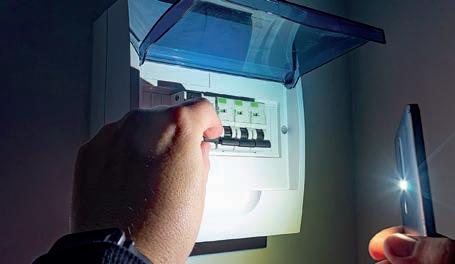
RCDs are designed to automatically cut off power if an earth fault is detected in indoor and outdoor electrical circuits, helping to prevent electric shocks, fires and potentially expensive damage.
The data also reveals that young people (aged 25-34) are the most likely to say they know what an RCD is, with just 32% being unfamiliar with the device. 29% know their home has at least one RCD. By comparison, 52% of respondents aged 55 and over are unfamiliar and only 17% know if their home has RCDs installed.
Regionally, awareness is lowest in Northern Ireland and Wales, with half of respondents saying they don’t know what an RCD is.
The Northwest follows closely behind at just over 49%, with the East of England at 48%. At the other end of the scale, the Northeast has the highest awareness level, with only 35% unaware of the device, followed by Greater London (40%) and the East Midlands (41%).
There are also marked differences between homeowners and those privately renting. 49% of respondents living in private
to be done to tackle this crisis, which is impacting so many tradespeople. This has to change! We hope that by shining a light on the scale of the problem we can help effect a meaningful change in the industry.”
IronmongeryDirect, ironmongerydirect.co.uk
vision of excellence, opportunity and innovation. I look forward to working closely with our members, association staff and stakeholders to champion the future of our sector.”
ECA, eca.co.uk
rental accommodation don’t know what an RCD is, compared to 44% of homeowners with a mortgage and 43% of homeowners without a mortgage.
Paul Collins, Technical Director of the NICEIC, says, “It’s crucial that homeowners understand the importance of having a fully functioning RCD in place and that any electrical work, including the installation or replacement of an RCD, should always be carried out by a NICEIC-registered electrician.”
NICEIC, niceic.com
INDUSTRY NEWS
REGIONS STILL LACKING EV CHARGING INFRASTRUCTURE
The number of electric vehicle charging points has declined in some parts of northern England since the beginning of 2025, Department for Transport figures have revealed.
Now, experts from LeaseLoco are calling for more to be done to upgrade EV infrastructure across the country.
The number of charging points per 100,000 of population has fallen slightly in the North East region since the beginning of January and now stands at 95.
Other northern regions are even less well-served, with the North West being equipped with only 69 charging points per 100,000 people and Yorkshire and the Humber region just 66.
The figures contrast starkly with London which enjoys 263 public charging points per 100,000 people.
Northern Ireland is lagging far behind the rest of the UK, with the latest Department of Transport figures showing there are a meagre 35 charging points per 100,000.
In Scotland, the number of charging points per 100,000 is 123, and in Wales it is 104. The average across England is 115, but that number is massively concentrated in Greater London.
The new figures showed that the number of chargers has fallen in both the north east of England and Northern Ireland during the first three months of 2025, although across the UK as a whole it rose by 4%, adding an additional 3,173 chargers – many in London.
However, the capital is less well-served than other parts of the country when it comes to fast charging points rated 50kW and above.
The government data shows there are only 15 of these per 100,000 people in London – lower than anywhere else in the country, apart from Northern Ireland, where it is just 10.
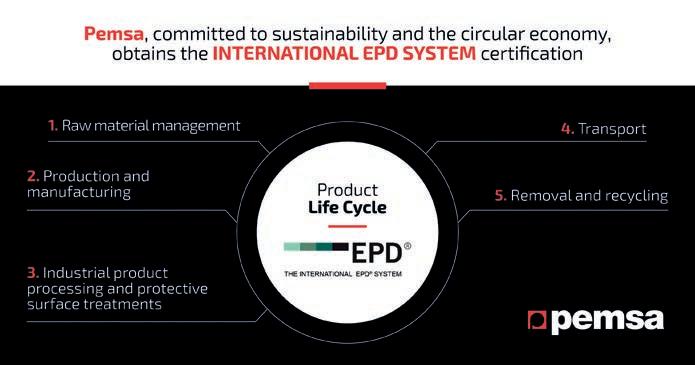
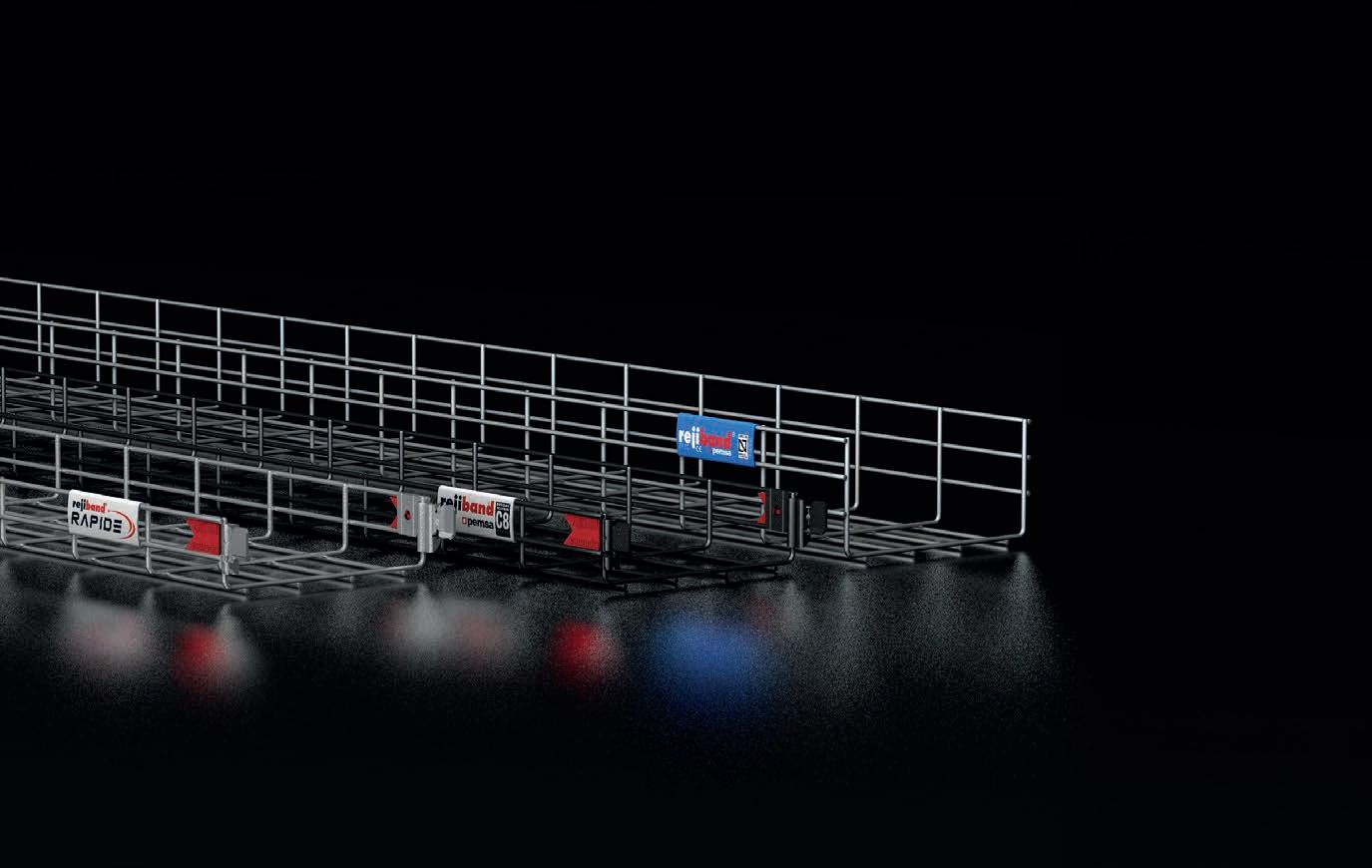
PEMSA OBTAINS EPD VERIFICATION
Pemsa has announced that it has obtained verification for its cable tray systems under the International EPD System (IES), a global programme for Environmental Product Declarations (EPDs).
This recognition consolidates Pemsa’s commitment to sustainability, the circular economy and transparency, and applies to its entire cable tray range, including the Rejiband, Rejiband Rapide, Pemsaband and Megaband systems.
Thanks to this certification, Pemsa’s EPDs have been verified according to the highest international standards, ISO 14025 and EN 15804, which is a key reference for the environmental performance of construction products.
MOVERS & SHAKERS…
Each of these product ranges now has its corresponding verified Environmental Product Declaration (EPD), issued by AENOR under its Global EPD programme and now also backed by the International EPD System (IES), providing a clear competitive advantage for use in sustainable building projects.
“The acquisition of International EPD System verification for our EPDs is a seal of quality and transparency. It also marks a key milestone in our transition to a more responsible and efficient industrial model that is aligned with the Sustainable Development Goals,” the company says.
Pemsa, pemsa-rejiband.com
Niglon has announced the appointment of Steven Robinson as the company’s new Technical Support Manager. With extensive experience in electrical installation, circuit protection and wiring accessories, Steven brings a wealth of knowledge and expertise to the team.
The lack of fast chargers in London could be because most of the charging stations there are devices rated 3kW up to 8kW, which are located on residential streets. LeaseLoco, leaseloco.com
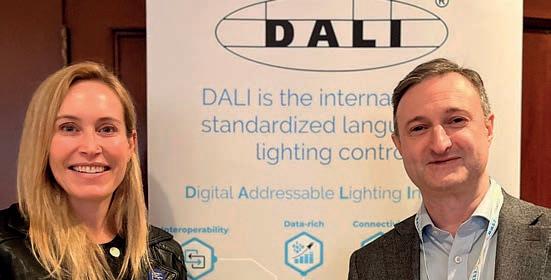
DALI ALLIANCE AND IES TO ADVANCE LIGHTING INDUSTRY STANDARDS
The DALI Alliance and the Illuminating Engineering Society (IES) have announced a strategic collaboration aimed at advancing the development, adoption and harmonisation of educational initiatives around global lighting standards. The collaboration is designed to promote innovation and best practices across the lighting ecosystem.
Through this collaboration, the DALI Alliance and IES will coordinate on activities such as education and training programmes, and outreach to designers, engineers and specifiers. The goal is to create greater alignment across lighting technologies and accelerate the deployment of intelligent and sustainable lighting technologies worldwide.
“This partnership reinforces our shared commitment to open standards, cross-industry collaboration, and delivering real value to the global lighting community,” says Paul Drosihn, General Manager of the DALI Alliance. “By working closely with IES, we’re better positioned to support the evolution of lighting systems that are smart, interoperable and standardised.”
As part of this collaboration, the organisations will explore opportunities for joint initiatives, including marketing committees, publications and knowledge-sharing efforts that benefit manufacturers, lighting professionals and end users alike.
DALI Alliance, dali-alliance.org
Scolmore Group has appointed Daniel Thomas as the company’s Group Specification Manager for Wales. Daniel joins a growing specification team, which has responsibility for creating demand for products from the Scolmore Group portfolio across a variety of sectors.
Multidisciplinary engineering firm adi Group has announced the appointment of Tom Jennings as the new Managing Director of adi Electrical. Tom completed adi Group’s apprenticeship programme and has worked his way through a variety of roles in its Electrical division, culminating in his new position.
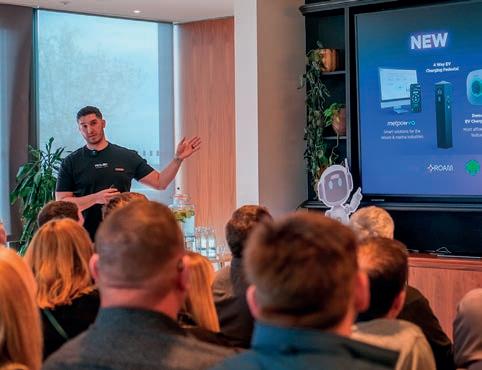
A LOOK AHEAD TO INSTALLERELECTRIC
An in-depth look at how InstallerELECTRIC is shining a spotlight on the electrical sector at InstallerSHOW, taking place on 24-26 June at the NEC Birmingham.
InstallerSHOW, the UK’s must-visit event focusing on sustainability in the built environment, is just around the corner, taking place on 24-26 June at the NEC Birmingham. Bringing together more than 800 exhibitors and 30,000 visitors across three halls and with the introduction of new features including InstallerELECTRIC, it’s a not-to-be-missed event for electrical professionals.
The InstallerELECTRIC Theatre
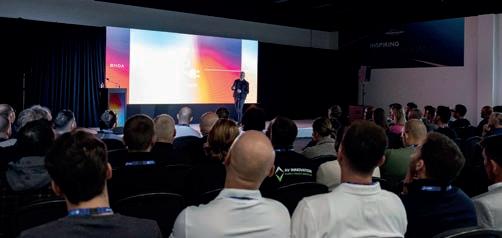
InstallerELECTRIC will deliver three days of engaging live content for electrical professionals that includes a curated programme from industry experts and peer-to-peer sessions from well-known electricians such as Mark Allison and Kimmy The Sparks.
The InstallerELECTRIC theatre, supported by ECN, will blend CPD-accredited sessions, panel discussions, tech talks, training tasters, and live podcasts. In addition to core technologies, InstallerSHOW gives electricians the chance to connect with companies in the tools, solar, EV, energy storage, electric showers and electric heating sectors.
InstallerELECTRIC State of the Industry survey report
InstallerELECTRIC has been asking electrical professionals what they really think about their sector in a new State of the Industry survey. This research will provide insight into the electrical market by focusing on challenges, opportunities and pressures, the technology they work with now and in the future, and the products and solutions they can’t go without. The findings will be presented at a special live session in the InstallerELECTRIC theatre – with analysis from industry leaders –
published free of charge, and shared with industry stakeholders, ensuring that their opinions will be heard.
Get hands on with new products
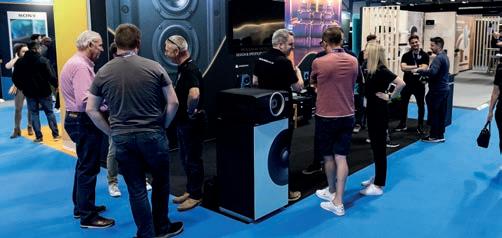
In addition to the wealth of content on offer, InstallerSHOW is where innovation takes centre stage. Many of the exhibitors use the show as an opportunity to unveil cutting-edge products and solutions, in front of a live audience, allowing you the chance to learn and connect with the teams behind the products. Discover just some of the new products being launched at InstallerSHOW 2025 below:
• LG Electronics – LG R290 Monobloc Heat Pump, offering eco-friendly, energy-efficient heating and hot water with R290 refrigerant, smart control and a sleek design for easy installation.
• Genesis Global Systems – Vision System, offering a range of premium profiles for commercial and domestic applications. Designed to accept Universal LED systems and RGB systems for steps, listellos, edges and skirting.
• Danfoss – Danfoss Icon2 and Danfoss Ally, the floor heating system that makes life easy for you and your customers. With its smart temperature control, it keeps energy use low and comfort high.
• DUCO Ventilation & Sun Control –Introducing the DucoBox Energy Sky: Compact. Efficient. Smart. Experience the DucoBox Energy Sky, the ultimate ventilation solution for compact spaces. With a sleek design, just 30cm in height and weighing only 19kg, this system offers unparalleled flexibility. Mount it on a wall, ceiling or even hide it in a false ceiling – installation is a breeze, requiring just one person.
To see the full list of new products being launched at InstallerSHOW 2025, visit installershow.com/new-product/showcase.
Sessions in the InstallerELECTRIC Theatre include:
Tues 24 June – 1pm The future of electric: Domestic electrification, with Dani Putney, Head of Standards at NICEIC
Tues 24 June – 3pm From electrician to smart home installer, with Ben Pratt, White Onyx
Wed 25 June – 11am Regulations, standards, codes of practice and scheme rules, with Sam Donaghy, Head of Technical Advice and Practice at NICEIC
Wed 25 June – 12pm Where can domestic battery storage systems be installed? With Steve Humphreys, MIET Electrical Specialist at NAPIT
Thur 26 June – 11am 5 levels of smart wellbeing, with Jason Girarider of Snap One
Thur 26 June – 1pm Powering the future: Training & certification for renewable energy professionals, with Alex Hughes, Head of Scheme at MCS
InstallerTRADES
Located next to InstallerELECTRIC in Hall 3a, InstallerTRADES brings together tools, workwear, vehicles and van essentials under one banner. Visitors to this zone within the show can expect discussions, debates and content surrounding topics that affect everyone working in the trades, including:
• How to get paid on time
• How to avoid cowboy customers
• Diversifying and growing your business
• Taking on an apprentice
• Boosting your business through social media
Visitors can also expect to get hands-on with all the latest products and technology as the tool demo area returns to InstallerTRADES for a second year. The area will feature the latest innovations from leading tools companies and emerging players such as Hilti, HiKOKI, Milwaukee, SawStop, Arco and VanGuardian.
The InstallerTRADES hosts – fellow tradespeople and familiar faces from social media – will be on hand to try out products live at the show and share valuable insights on power tools, hand tools and more.
Stamp your way to £10K!
2025 marks the 10th anniversary of InstallerSHOW. To celebrate, the organisers will be giving away £10,000 cash to one lucky visitor by simply participating in a show-wide passport stamp collection activity. Visitors will be invited to collect a passport upon entry and obtain stamps from 15 participating exhibitor stands.
The £10K Giveaway will run for the duration of the event, and the prize draw will take place at the close of the show. Don’t miss out – register for your free ticket today, including free parking courtesy of Amazon Business, and join thousands of industry professionals at the NEC this June. Register here: forms.reg.buzz/ installer-2025-visitor/ecn-print-june.
InstallerSHOW, installershow.com
Get ready for InstallerELECTRIC
InstallerSHOW is just around the corner, taking place on 24-26 June at the NEC, Birmingham. With three action-packed days of content tailored for electricians, it’s a not-to-be-missed event!
Discover what’s on offer for electrical professionals:
Tuesday 24th June at 11am. Protective devices for net zero with the ECA.
Wednesday 25th June at 3pm. RCD considerations for renewable technology with Hager.
Scan the QR code to register for your free ticket
Thursday 26th June at 1pm. Powering the future: Training & certification for renewable energy professionals with MCS.
24-26 June 25
NEC Birmingham
GRIDSERVE LANDS NEW BATTERIES AT LONDON GATWICK ELECTRIC FORECOURT
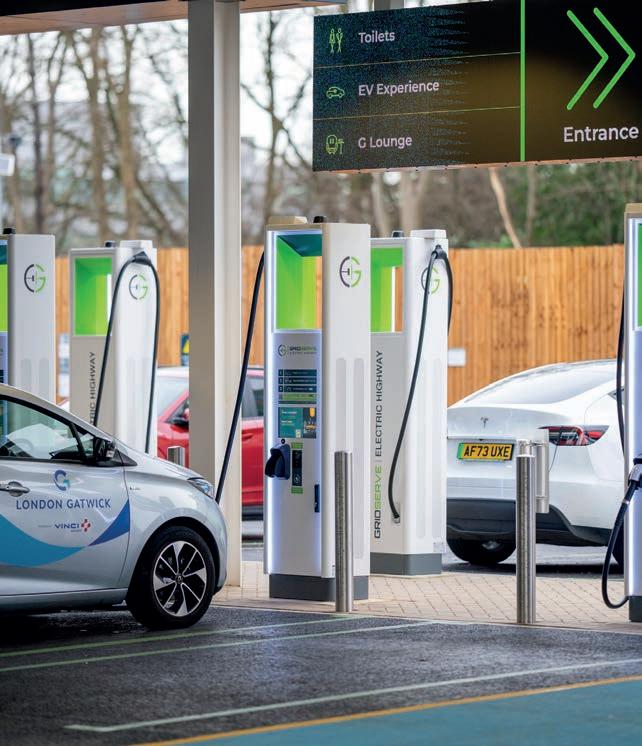
GRIDSERVE and UK Power Networks have connected a new Battery Energy Storage System to the electricity network, supporting EV charging at London Gatwick Electric Forecourt.
Two 3.6MW SYL batteries have been connected to UK Power Networks’ distribution network. The batteries can supply EV chargers from stored electricity at peak times, to support EV charging, lower carbon emissions and efficiently use the grid.
London Gatwick Electric Forecourt opened last year on the South Terminal with 30 bays, providing a strategic charging hub for the airport’s passengers, staff, taxi fleets and the local community in line with the country’s net zero ambitions. The new
batteries can power the whole site for three hours at full capacity.
The forecourt building also has a 33.3kW solar panel system on the roof with 114 panels to supplement the power needs of the shops and facilities at the site.
Network connection design and delivery teams at UK Power Networks worked closely with GRIDSERVE to commission the new network. This included a voltage management scheme at the grid substation and adoption of the 33,000V network to the customer’s site. It also connected transformers for auxiliary power at GRIDSERVE’s electricity substation.
UK Power Networks, ukpowernetworks.co.uk
ECO-FRIENDLY FIT-OUT AT DPL GROUP
Marshall-Tufflex is reinforcing its commitment to sustainability with the installation of its innovative Sterling Compact trunking at DPL Group’s newly constructed head office in Ipswich.
DPL Group provides electrical design, installation and maintenance services across Suffolk, Norfolk, Essex, and Cambridgeshire, and the new two-story headquarters is part of its ongoing success and growth plans for the business.
The project includes a ground-floor storage area and luxurious first floor glass-walled offices with an open-plan layout. A high-quality dado trunking system was required to manage the power and data services throughout the office space, and Marshall-Tufflex’s Sterling Compact was deemed the ideal solution.
Sterling Compact is a stylish and economical three-compartment trunking system ideal for modern workplaces. Manufactured using 54% recycled material, it aligns with today’s sustainability demands whilst offering a sleek and practical design. The system provides efficient cable segregation, ensuring optimal organisation and accessibility for electrical and data installations. Moreover, the range features adjustable internal and external bends to ease installation into corners that aren’t perfectly square.
The installation of Sterling Compact trunking at DPL Group’s head office reinforces the company’s reputation as a reliable and environmentally responsible choice for modern electrical projects. Marshall-Tufflex, marshall-tufflex.com
HAMWORTHY INSTALLS HEAT PUMPS AT CAMBRIDGE SCHOOL
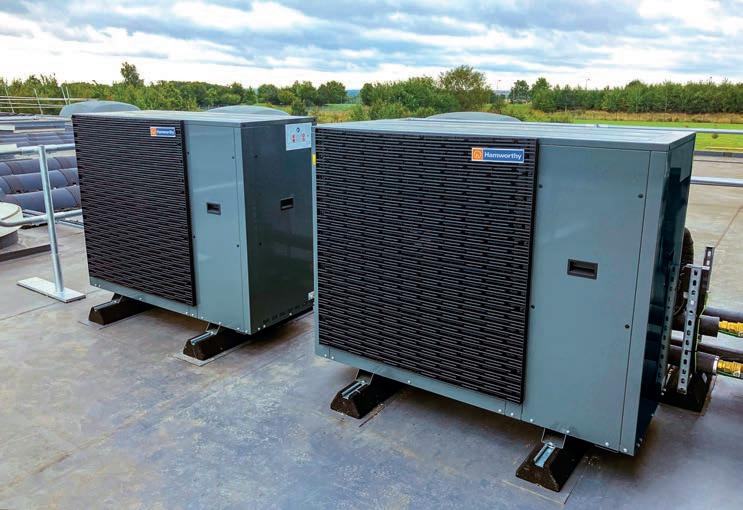
Two Tyneham 290HT 27kW air source heat pumps from Hamworthy Heating have been installed in cascade for underfloor heating in a new extension at a primary school in Cambridge.
To accurately meet the heating requirements of the new school extension and ensure an even distribution of heat, the new system from Hamworthy Heating includes two 290HT 27kW Tyneham heat pumps with natural refrigerant, configured in a hydraulic cascade set up. The heat pumps are connected to a 500L buffer cylinder, which also features an electrical heating element, controlled by a BMS. The buffer connections, Exogel anti-freeze valves and degassers were also supplied by Hamworthy Heating.
This cascade arrangement allows for the heat capacity to be equally distributed according to the specific heating demands of the new school building.
Rather than rely on a larger single heat pump that could run inefficiently at partial load, the new cascade set up enables the units, which have inverter-controlled compressors, to adjust their capacities as needed, which will enable the school to achieve a more accurate match to its actual heating demand and optimise performance.
Additionally, as the new system can adjust to keep the heat pumps operating at their most efficient state, cycling of heat pumps and unnecessary energy consumption is avoided.
The two new Tyneham 290 HT heat pumps also provide the school with increased protection against breakdowns. Unlike a single heat pump installation, which can result in complete downtime, the new system now supplies the new building with uninterrupted heating.
Hamworthy Heating, hamworthy-heating.com
Ready, Set, Charge!
Half day in person course
• Practical, hands-on learning with charge points
• Commercial EVCP installations focus
• Hardware installation & software configuration
• Load balancing and connectivity
• Back-office management
KOMATSU UK PARTNERS WITH AR POWER TO INSTALL SOLAR PV SYSTEM
Komatsu UK has partnered with solar installation company AR Power to install a 1.76MWp solar photovoltaic (PV) system at its North East manufacturing facility. The installation of the advanced solar system is part of Komatsu’s ongoing strategy to improve energy efficiency, reduce operational costs and meet sustainability goals across its manufacturing operations.
The new solar PV installation, which comprises 3,912 panels, is expected to generate approximately 1.6 million kWh of electricity annually. Komatsu will significantly reduce its reliance on grid electricity, cutting its carbon emissions by an estimated 8.75 million kilograms per year.
Komatsu chose an asset finance model over a Power Purchase Agreement (PPA) due to the higher return on investment and anticipated payback period of around seven years. The solar PV system, once fully operational, will be owned outright by Komatsu following the completion of the finance term, allowing the company to benefit from long-term energy savings.
The project, which began at the start of the year, is scheduled for completion by July 2025. The solar PV system will provide
LUCECO PROVIDES LIGHTING UPGRADES AT AKZO NOBEL
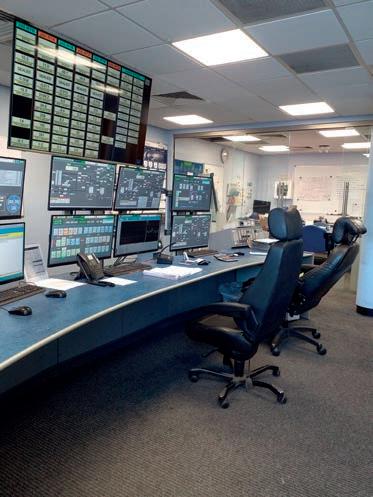
Luceco has helped Akzo Nobel upgrade the lighting system in the Polymer Plant Controls Room at its facilities in Gateshead.
Working with electrical contractor NEP Services, Luceco replaced the former wired wall switch and handheld remote-controlled lighting with a widely accessible digital dimming solution that works with the lighting specialists’ flagship LuxPanel Backlit LED panels.
The room was first modelled using lighting design software, Relux, to confirm illuminance levels. Based on this, Luceco then recommended its flexible Platform technology for ease of use and speed of installation.
The LuxPanel Extra features backlit LED panels with modules mounted to the rear of the panel body, enabling direct downward light distribution. This eliminates the need for a Light Guide Plate (LGP), resulting in enhanced performance and balanced illumination.
To ensure compliance with safety standards, Luceco also recommended upgrading emergency lighting in the space using its Tempus Exit Boxes and Bulkheads.
Luceco, luceco.com
reliable, cost-effective energy for Komatsu’s operations at the Birtley site, where the company manufactures and supplies
critical equipment for industries including construction and mining.
AR Power, arpower.co.uk
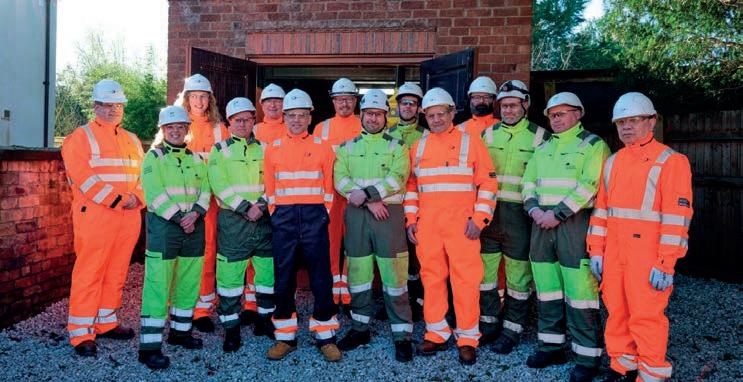
UK’S FIRST NON-SF6 SWITCHGEAR ENERGISED
Electricity network operator, SP Energy Networks (SPEN) has energised the UK’s first non-sulphur hexafluoride (SF6) switchgear from Lucy Electric, marking a significant milestone in the UK’s grid decarbonisation journey.
The innovative Sabre EcoTec non-SF6 ring main unit (RMU) – which uses synthetic air instead of the SF6 greenhouse gas currently used to insulate critical electrical network equipment – has been installed and energised at a substation in SPEN’s Mid-Cheshire district.
The unique product ensures lower emissions from network operations, addressing the challenge of a gap in available products ahead of the anticipated UK ban on SF6 in 2026. Taking up the same space as traditional switchgear, Sabre EcoTec is also designed to fit within the existing substation footprint and can be directly mounted to the transformer, removing any need for costly adaptations.
This first installation is a vital step on SPEN’s journey to develop what it’s calling ‘truly sustainable substations’, which will be environmentally sustainable at every stage of development – from design through construction to operation.
Lucy Electric, lucyelectric.com
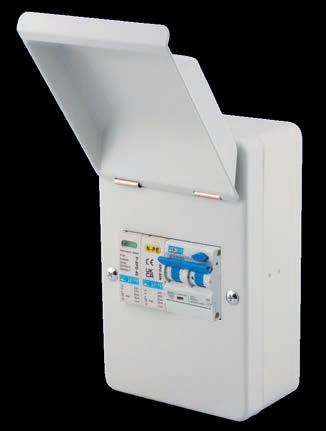
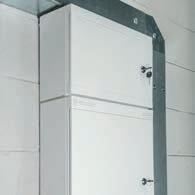
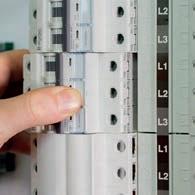
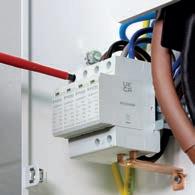
PRODUCT FEATURES:
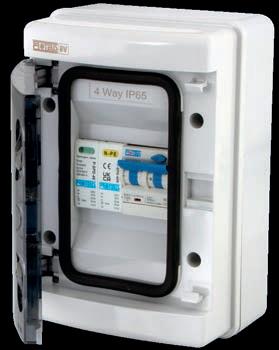
• 40A DP type A RCBO as standard
• Suitable for a range of EV chargers
• B or C curve RCBO option
• Busbar connection
• Internal earth and neutral included
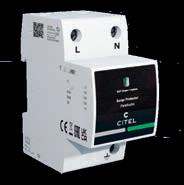
• Type 2 surge protection
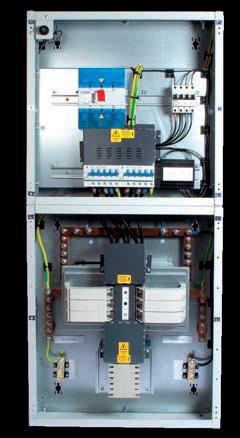
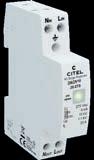
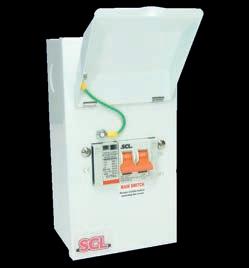
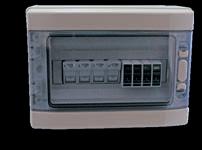
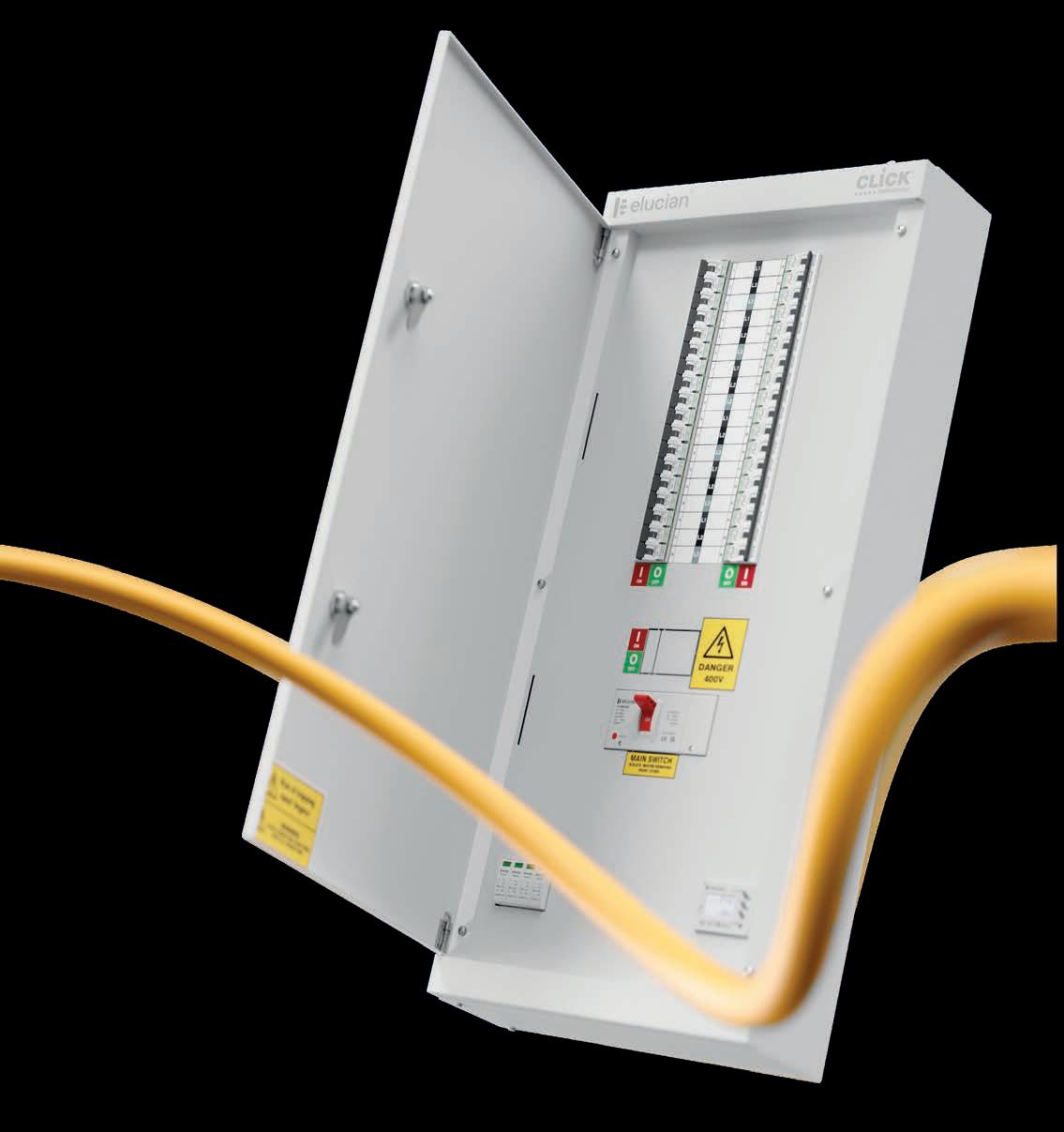
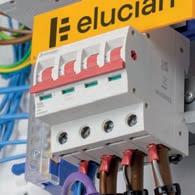
200A distribution boards, fitted with O-PEN® technology for detection of a break in the PEN conductor. Switching 3 phases, neutral and earth ensures total disconnection of the EVC. There are two dedicated busbars for MCBs / RCBOs up to 63A and MCCBs up to 160A.
FLEXIBLE PATHWAYS INTO ELECTRICAL ENGINEERING: MEETING DEMAND WITH OPPORTUNITY
The trades have reached a turning point – with an ageing workforce and a critical skills shortage, the mission is set to recruit and retain new talent, ready for the transition to electrification. Mark Krull, Director at Logic4training, delves into the diverse pathways to becoming an electrician and emphasises the importance of making career transitions into building services more accessible to prevent the loss of valuable talent.
It’s no secret that the UK is facing a skills shortage across the trades. The latest TrustMark report, Skilled to Build, confirms what many of us working in the industry have known for years – there simply aren’t enough trained professionals to meet the growing demand, with the electrical sector being no exception.
And with electrification, net zero targets and smart technologies driving change across the built environment, this shortage isn’t just an issue now. It’s a long-term challenge – but one that brings with it real opportunity.
The electrical industry needs new talent and the good news is there are more routes than ever before to get qualified and start working in a field that’s not only future-proof but also rewarding.
The skills gap: a growing shortfall
The report highlights the timely issue of both a recruitment and skills gap. We’re not just talking about replacing those retiring or leaving the industry, we’re looking at a fundamental shift in the kinds of skills that are needed, from installing EV charging points to integrating solar panels and smart home tech.
Both heating and transport are on course to switch to electric power, thus the sector is rapidly transforming. But without enough trained electricians, we risk slowing down that transition. That’s why training must be flexible, accessible and geared toward the modern demands of the industry.
Flexible pathways into the industry
Traditionally, apprenticeships have been the go-to route into electrical engineering. They’re still an excellent choice, especially for school leavers looking to earn while they learn. Apprenticeships combine hands-on experience with classroom-based learning over a few years and often lead straight into employment.
But apprenticeships aren’t the only way in, nor are they suitable for everyone due to their longer-term commitment. Existing
workers, for example, can’t just down tools to study full time.
Many training providers now offer fast-track, part-time and modular training options, opening doors for career changers and older learners who can’t commit to full-time education. The ‘bite-sized’ approach is particularly beneficial for those transitioning from other industries and/or balancing existing commitments.
These alternative pathways allow learners to build qualifications in stages, starting with domestic electrical work, and then moving on to more technical roles requiring a higher qualification level. This way, individuals can gain the fundamental skills needed to start working in the sector, with further training available for career progression. And the industry benefits too, because a more diverse workforce brings fresh thinking and real-world experience.
A word of warning here: Before handing over money for training, check what qualifications you’ll come out with at the end and be cautious of courses that rely too heavily on online-only modules before any in-person instruction. E-learning should complement, not replace, face-to-face training, as lack of hands-on experience and guidance often leads to unpreparedness and high dropout rates. Visit the training centre, meet the tutors and make sure you’ll have access to well-equipped practical facilities.
Real people, real pathways
Logic4training has seen people from hospitality, retail and office jobs retrain in their 30s, 40s and beyond.
Take Ohla, for instance, a former coffee barista who completed a new entrant domestic electrical installer course after being made redundant – a great example of seizing the opportunity to make a fresh start as an electrician.
Syed, formerly working in biotechnology, has completed three qualifications at Logic4training to prepare himself for an entry level position with an electrical installer. With ambitions to complete a Level 3 qualification, Syed is equipped for a stable and fulfilling career with opportunities to progress further down the line.
With the right training, support and motivation, people are successfully forging new careers in electrical engineering every day.
Now’s the time
If you’re thinking about your next move –whether just starting out or making a change – the electrical industry is packed with potential. There’s demand, there’s variety and most importantly, there are accessible ways to future proof your career.
Logic4training, logic4training.co.uk
Logic4training’s New Entrant Domestic Electrical Installer course is a flexible training programme for candidates who want to begin a career in the electrical industry, and is ideal for career changers or tradespeople, such as plumbers and heating engineers, looking to offer a multi-skilled services. Renewable technology upskill courses are also available including: Solar PV training, Battery Storage and Electric Vehicle (EV) charge point installation.
ARC FLASH HAZARD AND ELECTRICAL CONTRACTING: PART 1 — THE HAZARD AND UK LEGISLATION
This article is the first of two parts written by Mike Frain CEng FIET MCMI on the arc flash* hazard and UK legislation. It discusses the dangers posed to individuals during everyday tasks and the risks faced by contracting companies that fail to manage this hazard properly.
In 1989, as an electrical contracting engineer, I was called by the Health and Safety Executive to testify in court against a contracting electrician under the Health and Safety at Work Act 1974. The electrician’s apprentice had been injured in an arc flash, and I was first on the scene to secure the area. I knew of other arc flash incidents, including two fatal ones at the same company in the late 80s involving 11kV oil-filled switchgear during post-maintenance service.
In the same year that I was to testify in court, the Electricity at Work Regulations 1989 were published. A year later, I helped write and publish new low voltage codes of practice for my company and trained 400 contracting electricians. Since then, I have dedicated my efforts to the safety of electrical workers by participating in international standards committees. I have also provided
consultation to numerous leading companies across Europe and other regions, and have authored many articles on the subject, including the European Arc Flash Guidebook
Does arc flash affect electrical contractors?
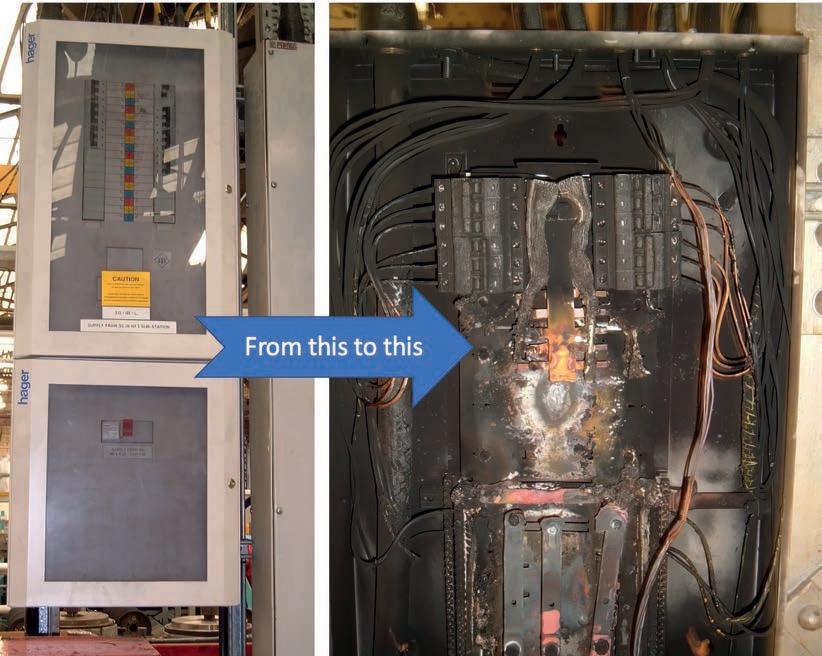
Arc flash (electrical flashover) is a hazard that impacts electrical contractors, and, in the UK, arc flash injuries are most common among electrically qualified workers. Individuals working with or near electricity may not fully understand the potential for serious injury or equipment damage resulting from arcing faults.
Recently, an electrical contractor was fined £1,000,000 plus costs for breaches of section 2(1) of the Health and Safety at Work Act 1974. This was following burns to an electrician who was undertaking routine testing on low voltage circuits.
Another case was at a mining company where two contracting electricians suffered severe burns in separate incidents. One electrician received serious burns from an 11kV electrical system after placing a vacuum cleaner nozzle into a live electrical chamber. Another electrical contractor received serious burns during electrical testing works on a 400V electrical system at the same site. The fine was £3.6 million with £185,000 costs after an investigation by the Health and Safety Executive (HSE).
Consequences of arc flash accidents
Although most deaths due to electricity are caused by shock, numerous injuries result from electrical burns, and arc flash incidents can also be deadly. My book, the European Arc Flash Guide, discusses incidents that have resulted in fatalities, injuries and those where no injuries occurred. Arcing incidents often cause significant losses, regardless of whether individuals have been injured.
What other ‘significant losses’ are we discussing? Apart from personal injuries, arc flash can lead to fines and compensation claims for companies and individuals. A damaged brand name may also result, such as when an electrical contractor faces prosecution or receives HSE notices for core competence issues. This could lead to difficult questions from clients during tendering for work and usually needs to be disclosed in pre-qualification questionnaires for contracts.
The reason for working live on equipment is often cited as avoiding production interruption. If the affected equipment is so severely damaged that it is put out of action for prolonged periods, then this will usually counter this reasoning.
What are the causes of arc flash?
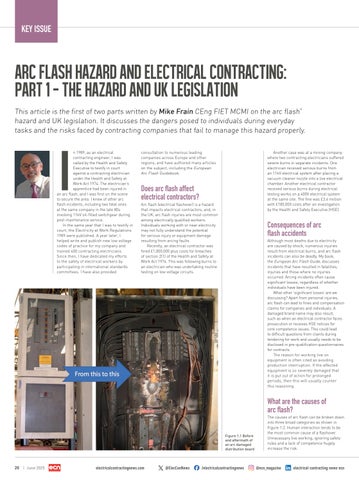
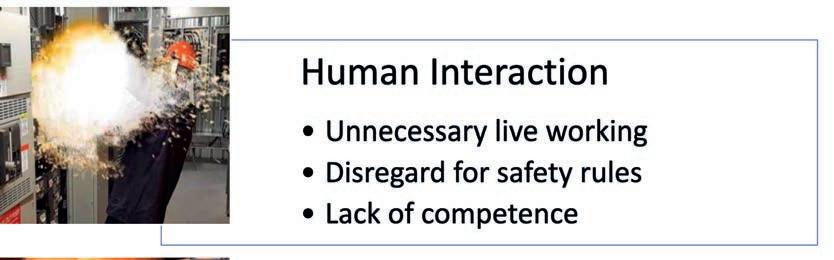
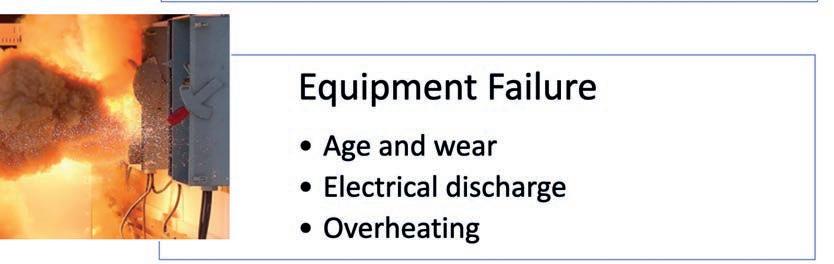
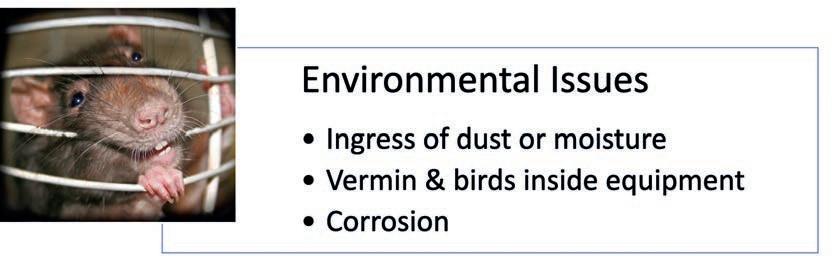
The causes of arc flash can be broken down into three broad categories as shown in Figure 1.2. Human interaction tends to be the most common cause of a flashover. Unnecessary live working, ignoring safety rules and a lack of competence hugely increase the risk.
Relevant UK legislation and HSE guidance
The legislation in the UK is primarily risk-based, goal setting and non-prescriptive. The strategic approach of the HSE is that of simplification, meaning that duty holders are expected to manage the risks that they create, as they are best placed to control them. They are expected to do so in a proportionate and practicable way, meaning that a prescriptive approach to arc flash risk management will not meet the needs of every industry or environment. As a result, it is unlikely that the prescriptive American National Standard, NFPA 70E Standard for Electrical Safety in the Workplace, which is often quoted as a means of managing the arc flash hazard, would not be suitable for use in the UK without careful amendment. There are other issues to do with differences in permits and the justification for live work, which may clash with UK expectations.
The following is a list of UK legislation which is pertinent to arc flash risk management. This is not exhaustive but provides a basis for discussion. Note that all the documents in italics are available to download free of charge from the HSE website, hse.gov.uk.
• The Electricity at Work Regulations 1989 (Northern Ireland 1991) (EAWR) are
made under the Health and Safety at Work etc Act 1974, the purpose of which is to require precautions to be taken against the risk of death or personal injury from electricity in work activities. Note: The primary legislation in Northern Ireland is the Health and Safety at Work (Northern Ireland) Order 1978.
• The Electricity at Work Regulations 1989 Guidance HSR25 highlights what can be done by duty holders to achieve electrical safety compliance with the duties imposed by the regulations, including the safe design of electrical installations.
• Electricity At Work: Safe Working Practices, HSG85 (Third Edition), published 2013. The guidance covers the key elements to consider when devising safe working practices and is for people who carry out work on or near electrical equipment. Among references to arc flash is a requirement that, if there is a risk of burns from arcing or flashover that cannot be avoided, consider the use of adequately rated, thermally insulating, flame-resistant PPE.
Regulation 4 of the Personal Protective Equipment at Work Regulations 1992 (as amended 2022) (Northern Ireland 1993) introduces the last resort principle, and that other measures should be considered first. The guidance on the regulations HSE L25 sets out the hierarchy of risk controls.
Regulation 4 of the PPE Regulations also requires that PPE takes account of ergonomic requirements and the state of health of the person or persons who may wear it.
Risk assessment for arc flash hazards
The need for risk assessment comes from the Management of Health and Safety at Work Regulations 1999 (Northern Ireland 2000) (MHSWR).
Regulation 3(1)(a) states, ‘Every employer shall make a suitable and sufficient assessment of the risks to the health and safety of his employees to which they are exposed whilst they are at work.’ In summary, we must:
• Identify what could cause injury (hazards). For arc flash, this may require a prediction of the severity of the hazard, usually in terms of thermal energy, but may be subdivided into several other hazardous effects such as ignition of insulating medium, ballistics, noise and optical.
• Decide how likely it is that someone could be harmed and how seriously (the risk). This is influenced by system conditions, including the condition of the equipment, the quality of the installation, measures implemented to contain an arc during switching under both normal and fault conditions, the maintenance level, and adherence to the original design during operation. Furthermore, it is directly related to the task to be executed.
• Take action to eliminate the hazard, or if this isn’t possible, control the risk. In Part 2 of this article, the resources listed give a great deal of information and highlights the use of the 4P approach to eliminate or control the risk.
Part 2 of this article will be published in the July 2025 issue and highlights the available resources for the management of the arc flash hazard.
* ‘Arc flash is a non-contact short circuit between an energised conductor such as a busbar or cable with another conductor or an earthed surface. Put simply, arc flash is precipitated by insulation breakdown and very often, the insulation in question on low voltage systems is air’. IET Fact file – Arc flash risk management. Also referred to as ‘electrical flashover’.
Mike Frain is the author of The European Arc Flash Guide and an expert for the British Standards Institute and International Electrotechnical Commission (IEC) TC 78: Live Working Committees. He is the Convenor for the IEC arc flash working group (TC 78 WG 15) and the Team Leader for the IEC arc flash end user guidance project team. He is the former Vice Chair of the IET Engineering Safety Policy Panel and led the IET Arc Flash Working Group. He is a Chartered Engineer, a Fellow of the Institution of Engineering and Technology, and a Corporate Member of the Chartered Management Institute.
Figure 1.2 Causes of arc flash incidents
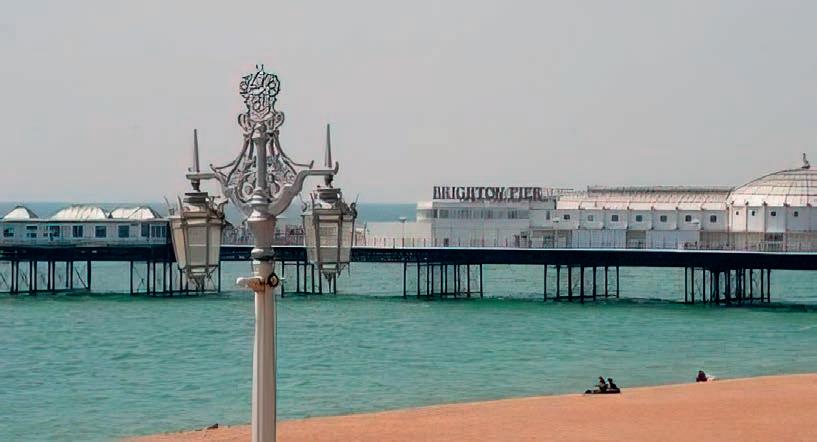
BRIGHTON SEAFRONT LIGHTING REVIVAL UNDERWAY
In a landmark project, Brighton and Hove City Council, in partnership with CU Phosco, is set to restore the city’s historic Grade II listed seafront lighting to its former glory. This eagerly awaited project has been years in the making, with the first phase commencing in Spring 2025.
For residents who have missed the original ambience of Brighton and Hove’s iconic shoreline, this restoration marks a momentous step toward recapturing the historic charm and character of the beloved seafront. The project will restore 100 lanterns and listed columns, ensuring they continue to illuminate the city for future generations.
During the initial phase, five lampposts will be removed for full restoration.
Each column is being individually logged to ensure correct reinstatement. The project has been carefully developed in collaboration with Historic England and a specialist metal conservator to maintain historical integrity.
The lampposts, which date back to the late 19th and early 20th centuries, will undergo a meticulous process of lead-paint removal, structural assessment, damage repair and protective coating before returning to their original locations.
Brighton and Hove City Council has appointed expert industry partners to oversee different aspects of the project:
• Cast Iron Welding Services will handle the transportation, conservation and structural restoration of the lampposts.
• CU Phosco, originally commissioned in 1982 to manufacture replica lanterns of the classic copper originals, will produce historically accurate lanterns and brackets. These will remain true to their original design while incorporating modern, energy-efficient LED lighting.
Brighton and Hove City Council has worked in close collaboration with Historic England to develop a restoration plan that carefully preserves the historical integrity of the heritage columns, brackets and lanterns.
Tom Foxall, Regional Director at Historic England, says, “We’re delighted to support this essential project to restore Brighton’s unique historic lampposts. These elegant structures are a defining feature of the seafront and an important part of the city’s heritage.”
The restored lanterns will undergo rigorous testing, including a 2,000-hour salt spray assessment, to withstand the unique demands of the coastal environment. Using a combination of cast rather than
pressed aluminium – an improvement over previous designs – the restored fixtures will offer enhanced longevity and resilience, combining tradition with energy-efficient LED lighting in a warm, sympathetic 3,000K colour temperature, which matches the original lantern’s colour and brightness.
Matt Murray, Sales Director, CU Phosco Lighting, comments, “This is a very proud moment for CU Phosco, after years of development to ensure that the lanterns replicate the original designs, with innovative and sustainable solutions to enable the seafront to be returned to its former glory. The project team focused on providing energy-efficient, maintenance-friendly, and aesthetically pleasing products, maintaining the authenticity of the original lanterns. Proving that existing heritage lanterns can be replicated with circularity in mind.”
The project’s funding, totalling approximately £4 million, comes from the council’s Carbon Neutral Fund, capital reserves, and remaining funds from the LED streetlighting project. Notably, some of the experts working on this project are also involved in the Madeira Terrace restoration, reinforcing Brighton and Hove’s commitment to preserving its heritage assets.
The journey to restore the entire collection is planned for completion by 2027. This project represents a major step in safeguarding Brighton and Hove’s architectural legacy, ensuring that these cherished landmarks continue to illuminate the city’s iconic seafront for years to come.
CU Phosco, cuphosco.com
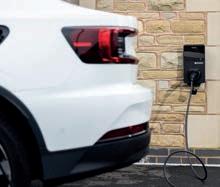
LIGHTING THE WAY TO A GREENER FUTURE WITH THE IO6 PRO
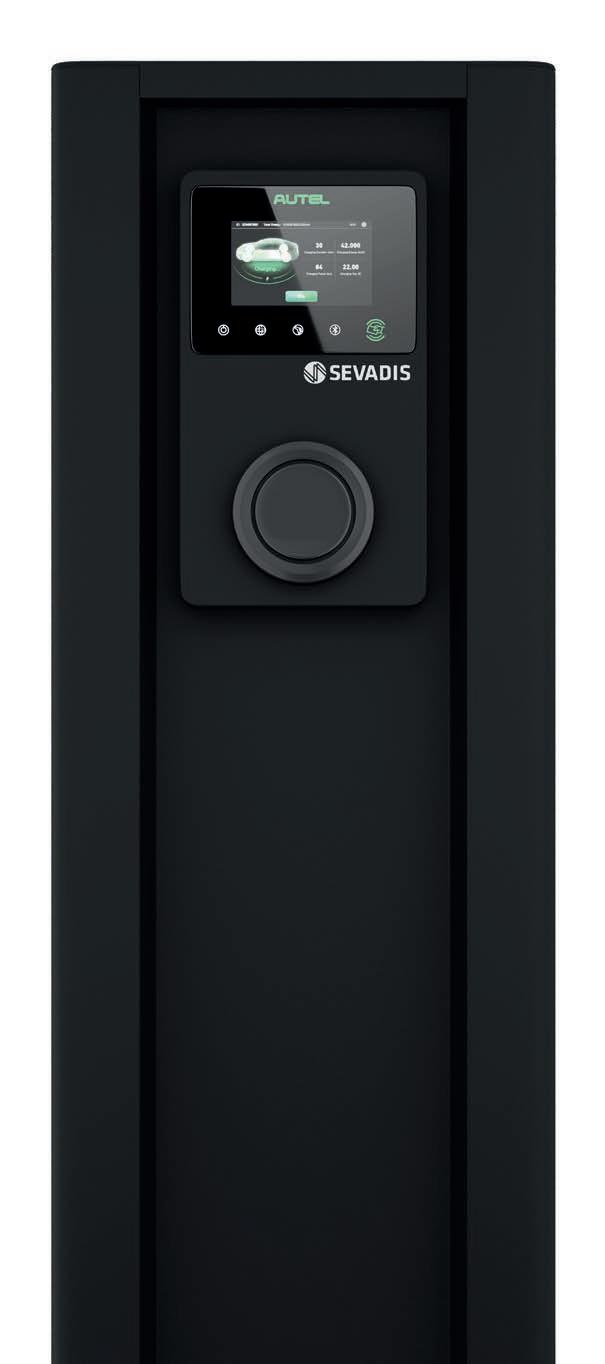
Ratio EV Charging has announced the upcoming launch of the io6 Pro Series, the highly anticipated upgrade to its best-selling io6 charger. Engineered for both EV owners and professional installers, the io6 Pro is smarter, faster, safer and greener. Whether you’re charging at home, at work, or installing for clients, the io6 Pro delivers unmatched performance and user experience.
Ratio has taken the core strengths of the original io6 and elevated every element. The result?
A next-generation charger that’s packed with cutting-edge features and built to meet the needs of a rapidly growing EV market.
What’s new in the io6 Pro?
• MID-certified power meter: Gain ultra-precise insights into energy usage with integrated metering – perfect for accurate billing and monitoring.
• Built-in PEN fault protection (Single and 3-Phase): No earth rods required. This built-in safety feature protects against open PEN faults, ensuring peace of mind and compliance with regulations – while saving time and installation costs.
• Simplified installation: Designed for professionals, the io6 Pro features click-in terminals, clear wiring layouts, and accessible ports, reducing setup time and complexity.
The io6 charger is packed with cutting-edge features
Why you’ll love the io6 Pro
• Fast and flexible charging: Up to 22kW output, available in both wall-mounted and post-mounted versions.
• Smart load management: Supports both static and dynamic load balancing via the io6 Sensor Box.
• Energy efficiency: Schedule charging during off-peak hours and save on energy costs.
• Remote control: Use the upgraded Ratio app to monitor and manage your charger from anywhere.
• Built to endure: Weather-resistant and rugged – ideal for both residential and commercial environments.
• Solar-ready: Seamless integration with solar panels and home energy storage systems.
• Connectivity: Supplied with 4G SIM as standard
• Flexible: Choose RFID card access or integrate with major back-office systems thanks to full OCPP 1.6 compliance.
• Quick and easy installation: Fewer steps, clearer guides and faster setup times with click terminals.
• No extra equipment: With PEN fault protection and MID metering onboard, there’s no need for additional components.
Introducing the io6 Pro Lux
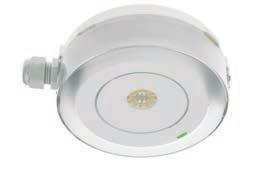
Coming in October 2025, the io6 Pro Lux offers an added layer of intelligent safety with Lux Technology. Using radar-based detection, it activates a soft white light when a user approaches and illuminates the charging cable – enhancing visibility, accessibility and safety, especially at night or in low-light conditions.
Built with purpose
Sustainability is in Ratio’s DNA. The io6 Pro doesn’t just reduce emissions on the road – it’s delivered in sustainable packaging, reinforcing Ratio’s commitment to a cleaner planet.
“The io6 Pro series represents a significant step forward in EV charging technology,” says Tom Jennings, General Manager at Ratio. “With smarter energy use, faster installs, and eco-conscious design, we’re proud to deliver a charger that benefits both users and professionals.”
Ratio EV Charging, ratioev.uk
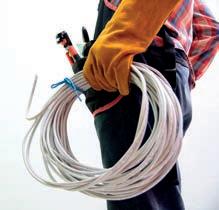
HOW TO SPOT SUBSTANDARD CABLES: A CHECKLIST FOR UK ELECTRICIANS
Substandard cables can compromise the safety and performance of your projects, exposing electricians and installers to legal issues and significant financial losses. Bemco has created this checklist to help you avoid these hazards and help you find cables that meet British regulations and your clients’ needs.
Demand BASEC approval and BSI Kitemark
BASEC (British Approvals Service for Cables) certification is a must for cables used in the UK. It meets British Standards (BS) and passes strict fire safety tests. Pair this with the BSI Kitemark, a symbol of independent quality assurance, and you’ve got a cable you can trust.
The red flag: Suppliers offering cables with vague ‘CE’ markings but no BASEC or BSI logos. Cheap imports and unverified suppliers often lack these certifications.
“The most common question customers ask is whether cables are BASEC-approved with the BSI Kitemark,” says Gordon Robertson, Branch Manager at BEMCO Electrical Wholesalers, Glasgow. “These certifications are non-negotiable. Cheap imports, especially from Turkey or Asia, often cut corners on materials like chalk in earth cores or use rigid PVC sheathing that’s impossible to strip cleanly.”
Check for British Standard (BS) compliance
UK wiring regulations (BS 7671) require cables to meet specific standards:
• Twin and earth: BS 6004
• SWA cables: BS 5467/BS 6724
• Fire-resistant cables: BS 6387 (CWZ) for critical circuits
If a cable lacks a BS number, it’s best to steer away. It’s likely not suitable for UK installations and could fail inspections.
“Always verify BS numbers and BASEC approval,” says Darren Grimwood, Branch Manager at BEMCO Electrical Wholesalers, Dartford. “Substandard cables often lack these entirely, risking failed inspections and rework.”
Scrutinise insulation quality
Thin or rigid PVC sheathing is a hallmark of substandard imports. UK electricians often face problems with low-cost twin and earth cables. The outer sheath can crack during installation or may not strip cleanly.
Put it to the test: Bend a sample cable 180 degrees. If the sheath whitens or cracks, it’s poor quality. Quality UK-compliant insulation remains flexible and smooth.
“Thin outer insulation is a clear sign of poor manufacturing,” says Darren. “We’ve seen cables fail mid-installation, causing delays and lots of frustration.”
Gordon adds, “Cheap imports often use rigid PVC compounds that make stripping a nightmare. Quality sheathing stays flexible.”
Verify chalk content in twin and earth
This is a typical British problem: Low-cost twin and earth cables lack enough chalk in the earth core. Chalk acts as a separator, allowing the earth wire to strip cleanly from the sheath. Cutting back on chalk – a common way to save money – makes the earth core stick to the insulation.
Put it to the test: If the earth wire sticks to the sheath like glue, the cable fails the chalk test.
Confirm CPR ratings for data/control cables
UK Building Regulations state that CPR (Construction Products Regulation) ratings determine where data and control cables can be installed. For example:
• Residential projects: May require Euroclass Dca.
• Commercial/defence sites: Often need B2ca or higher fire resistance.
Many contractors fall for suppliers selling cheap CAT5/CAT6 cables. These often have wrong CPR ratings or use copper-coated aluminium (CCA) cores. CCA cables might look right, but their high resistance and poor continuity breach BS EN 50173 standards for data cabling.
Ask for: CPR documentation and insist on 100% copper cores for data networks. Darren cautions, “Contractors get caught out by specs requiring specific CPR ratings. That’s why we use a CPR guide internally. Never assume all cables meet the project’s needs.”
Avoid Copper-Coated Aluminium (CCA) cores
CCA cables are flooding the UK market, masquerading as budget-friendly alternatives. While they are fine for low-voltage DIY projects, they’re a liability in professional installations. Under BS 7671, cables should manage fault currents without overheating. However, CCA’s higher resistance prevents this.
Put it to the test: Measure resistance with a multimeter. Pure copper should read ≤ 9.5Ω per 100m (24 AWG). Anything higher may suggest aluminium contamination.
Trace the cable’s origin
‘Made in the UK’ doesn’t guarantee quality. However, cables from trusted UK or EU brands, like Prysmian or AEI, are more likely to meet UK standards.
Ask your suppliers: “Can you provide a full supply chain traceability report?”
If it’s too cheap,
it’s probably faulty
A bargain price often means compromised quality. BASEC-approved 1.5mm² twin and earth usually has a price range of £50-60 per 100m. If a supplier offers it for £35, suspect substandard materials.
Gordon advises, “If a deal seems too good to be true, it most likely is. Cheap cables mean future headaches.”
Stay updated with UK industry resources
Subscribe to:
• ECN: The definitive trade magazine for the UK’s electrical contracting industry
• NICEIC/SELECT newsletters for regulatory updates
• IET Wiring Matters for technical guidance
• CPR Guides
Final tip: Test before you terminate
Don’t wait until you’re on-site to discover a cable’s flaws. Before bulk buying:
• Strip a sample to check chalk separation and sheath flexibility.
• Measure conductor resistance.
• Verify markings (BASEC, BS numbers, CPR class).
Conclusion
Cutting corners with cables can be risky and costly. By sticking to this checklist, you’ll protect your work, your clients and your reputation. Stay compliant, stay safe and always insist on cables that meet the mark.
Bemco, bemco.co.uk
SUSTAINABILITY STARTS AT HOME!
In this month’s interview, Carly Weller speaks to Frankie Mellon, Managing Director of Rolec, about his beginnings in the industry, his expectations as to how the EV industry will evolve, his favourite project to date, and more.
CW: Hi Frankie, please tell us about yourself and how you got into the sector.
FM: I’ve always been passionate about technology and sustainability, which led me to explore the electric vehicle sector. I joined the industry with a focus on supporting the transition to a greener future, which aligns closely with my personal values.
Over the years, I’ve gained experience in various roles within the sector, ultimately finding my place at Rolec, and after seven thrilling years with the company, stepping up to Managing Director. My journey has been powered by a desire to contribute to the growing demand for clean tech and the development of reliable charging infrastructure.
CW: For those who may not know, can you tell us more about Rolec?
FM: Rolec was established in 1990 by a founder with a passion for innovation and green technology.
While it’s true that electric vehicles weren’t prevalent on the roads at that time, Rolec’s origins weren’t rooted in the EV industry. Instead, the company carved out its niche in the leisure sector, establishing itself as a pioneer in manufacturing outdoor electrical equipment, water and sanitation utilities tailored for caravan and holiday parks.
In 1990, Rolec introduced the UK’s first purpose designed utility pedestal for the leisure industry. Soon after, the company ventured into the marina industry, encountering a unique set of challenges that spurred Rolec’s innovation. It was within this sector that Rolec first experienced the demand for smart services. It didn’t take long for the team to engineer connected hardware solutions that gained traction across marinas globally.
In 1995, Rolec introduced BerthMaster, the world’s first combined electricity and water computer management system for the marina industry – completing a pioneering smart project in Gibraltar. Today, Rolec maintains its position as a world leader in marina services and utility products.
As Rolec embarked on its journey of evolution, the company introduced its latest division, EV charging, in 2007 – which even then was early for the EV industry. When Rolec launched the WallPod, there were only two other companies in the UK dedicated to EV charging, which might be hard to believe now. Since then, Rolec’s trajectory has been marked by a solid track record of delivering innovative EV charging solutions for domestic, commercial and public settings.
CW: Rolec has been involved in some prestigious projects. Can you highlight a project that you are particularly proud of?
FM: Center Parcs, Rolec’s flagship project, where we developed and installed a bespoke delayed charging system; when at the time, very few hardware or software solutions on the market could support such functionality. It is the largest destination charging deployment on a single UK site, and has now been expanded across six Center Parcs locations.
Initially built on Rolec’s native back-office platform, the system has since been successfully migrated to Monta while retaining key scheduling capabilities. A tailored mix of Quantum and BasicCharge units created a daytime and nighttime charging network for guest use.
The chargers also serve a dual purpose, incorporating built-in LED amenity lighting to enhance safety and usability for guests in remote locations.
CW: How does Rolec stay ahead of the competition in terms of innovation and technology?
FM: Last year presented challenges for many in the EV industry, but Rolec thrived with a clear mission: to grow profitably and strengthen its global position by manufacturing and supplying leading tech products to Rolec’s niche industries. In today’s fast-moving, volatile market, staying focused and having a disciplined, exceptional team is more important than ever. Rolec has actively engaged with its electrical contractor base for feedback on the challenges they face and the improvements that would make installations easier and quicker. The company has taken on board first-hand insights from the people who matter most – end users and the installers who work with Rolec’s chargers daily. This
feedback has been essential in refining the company’s strategy, which has ultimately improved the customer experience and increased customer success.
One way Rolec has stayed ahead in 2025 is through the launch of the new RolecConnect app – the all-in-one installer software service. Free to use, the platform supports electrical contractors with EV chargepoint, caravan hook-up and marina service installations.
CW: What are your long-term goals for Rolec and how do you plan to achieve them?
FM: The company’s long-term goals focus on solidifying Rolec’s position as a global leader in EV charging solutions and expanding its reach into new markets abroad. Rolec’s core focus will always revolve around strengthening its partnerships with wholesale partners and electrical contractors.
In terms of growth, Rolec continually invests heavily in R&D to advance its product offerings, while also enhancing the company’s customer service capabilities, so that Rolec remains at the forefront of innovation.
Development never stops! We are already working on RolecConnect phase two, coming later this year. Further developments will include platform enhancements, platform APIs and more.
In addition, new and improved chargers are going to be added to the range in June; there will be enhanced electric boat charging; solar energy and management solutions; electrical test and inspection, with annual maintenance packages; and future-proofed DC power cable refinement.
Looking ahead, Rolec will remain true to its business model, journey and product roadmap.
CW: How do you envision the future of EV charging infrastructure in the UK and globally?
FM: I think we can expect manufacturer consolidation, as larger, more profitable players acquire smaller companies that struggle to stay afloat or deliver the high-value services needed to compete.
CW: What are your interests away from work?
FM: I’m a family man, with two young kids and my partner, and weekends are active – we’re always on the move, and always electric! We enjoy taking the kids out on their electric motorbikes, quads, and off-road buggy. My dedication to electrification and sustainability starts at home!
Rolec, rolecserv.com
PUTTING CONSUMER PROTECTION AT THE HEART OF MCS
Ian Rippin, CEO at Microgeneration Certification Scheme (MCS), explains how its new Customer Commitment will strengthen consumer protection.
NEXT TIME…
In addition to our regular range of news and viewpoints, the next issue of ECN will contain special features relating to exterior lighting, EV charging, software & apps and wholesalers & distributors.
The features will include articles and information from major companies, providing a range of information about the latest issues and technological developments affecting the sectors. For electrical contractors, the features will prove to be a valuable reference point for all that is happening within these areas.
To make sure that you don’t miss this major opportunity to advertise your products to ECN’s 20,000+ readers, call Kelly Byne on 01634 673163 / kelly@allthingsmedialtd.com
MCS, the UK’s quality mark for small-scale renewable technologies like solar PV and heat pumps, has reformed its installer Scheme, with the next 18 months being a transition period as installers transfer over from the current Scheme. The new requirements include a Customer Commitment that installers must follow, which sets out what customers can expect from an MCS certified installer.
It places an emphasis on supporting customers to ensure they have the best possible experience when investing in home-grown energy, putting a requirement on installers to provide them with the information they need to operate and understand their installation.
The introduction of the Customer Commitment means that MCS installers will no longer have a mandatory requirement to be registered with a consumer code when on the redeveloped Scheme, although some may choose to retain membership. Instead, an installer’s duty to consumers is outlined in the new document through six core responsibilities:
• Be trustworthy
• Be responsible
• Communicate well
• Contract with clarity
• Handover
• Handle complaints well
An installer’s responsibility
One of the requirements outlined in the Customer Commitment is to fully demonstrate each system clearly upon installation. Giving accurate and uncomplicated information
improves understanding of renewable technologies, giving consumers confidence in their system.
Providing prompt responses and committing to finding a resolution if an issue arises with the installation will ensure installers continue to uphold a duty of care to consumers. This includes performing strict due diligence measures on any subcontractors. A new direct relationship between MCS and installers under the redeveloped Scheme will mean MCS can work more closely with them to understand and resolve customer complaints. This is made easier thanks to complaints becoming centralised under the new MCS, providing MCS with greater oversight of the number and nature of consumer complaints about renewable technologies.
A consumer’s responsibility
The Customer Commitment also outlines what customers should do before entering into a contract and how they can help to ensure that they have the best experience. Ultimately, it lays out expectations on all sides to ensure the smoothest process possible, providing installers with the tools they need to carry out installations effectively and to a high standard.
Complete transparency should be provided to customers by ensuring they have access to the new policy. Through the Customer Commitment, MCS is reinforcing its dedication to protecting and safeguarding customers through continued adherence to consumer protection laws. In doing so, the redeveloped Scheme focuses on increasing confidence in home-grown energy to help drive uptake of renewable technologies and continue to grow our industry.
MCS, mcscertified.com
Exterior Lighting
EMERGENCY LIGHTING YOU CAN RELY ON
An in-depth look at why more installers are turning to Zemper for emergency lighting that works – fast.
In the world of electrical installation, Zemper understands that time is money. Whether you’re working to a tight site schedule, balancing multiple jobs, or simply trying to keep your clients happy and your team efficient, delays and faults can have a serious impact on your bottom line.
That’s why more and more UK installers are switching to Zemper for their emergency lighting requirements.
Known across Europe for reliability, performance and speed of service, Zemper is now serving the UK market with a growing reputation for getting the right product on site quickly, delivering peace of mind for years after installation.
Here’s why Zemper is fast becoming the go-to name for installers across the UK:
Fast, UK-based delivery –products on site within 48 hours
One of the most common frustrations for electrical contractors is long lead times and delayed deliveries. When you’re ready to move, waiting days or even weeks for lighting stock to arrive is more than just inconvenient. It disrupts schedules, increases labour costs, and puts pressure on your relationships with main contractors or end clients.
Zemper understands the reality on the ground. That’s why the company offers 48-hour delivery on a wide range of stocked products right here in the UK.
This fast turnaround is a game-changer for reactive jobs, tight programmes, or last-minute spec changes. There is no need to compromise on quality just to get something delivered quickly; with Zemper, you get the best of both worlds: premium emergency lighting with reliable UK delivery.
Low failure rates and a six-year warranty that includes batteries
Emergency lighting must work – full stop. Yet in the real world, installers know that not all products live up to their promises. Too many fittings fail post-install, resulting in costly call-backs, warranty wrangling, and unhappy clients.
Zemper tackles that problem head-on. Its products are engineered for durability using high-quality components and are backed by decades of technical expertise. The result is a product range with exceptionally low failure rates; a key reason why Zemper is gaining ground with installers who want to do the job once and do it right.
Backing this up is one of the most generous warranties on the market: a six-year guarantee, including batteries. That’s not just confidence, that’s commitment. It’s peace of mind for you as the installer, and long-term value for your clients.
Quick, straightforward installation – with excellent spacings that save time
On site, every fitting counts. That’s why Zemper puts real focus into making its products easy to install and efficient to deploy.
Many of the company’s emergency fittings offer market-leading spacings, allowing you to illuminate larger areas with fewer luminaires. A standout example is the Spazio Plus, which offers up to 30m spacings depending on ceiling height and conditions.
This means fewer units to install, less time spent on placement, and more flexibility when working in complex environments like schools, offices, warehouses or healthcare settings.
Zemper products are also thoughtfully designed for quicker installation:
• Pre-wired solutions and push-fit terminals where possible
• Clear, accessible mounting systems
• Compact, discreet profiles for visual simplicity
• Fully compliant with UK standards and regulations
For an installer, this all adds up to a faster, smoother install, and more time to focus on other parts of the job.
Introducing Spazio Plus
Spazio Plus is just one of the products in this range. It can be used for both recessed and surface mounting applications with three-hour, non-maintained emergency operation, as well as self-test and DALI controlled.
The Spazio Plus gives superb optical performance with up to 30m spacings with a choice of two optical distribution lenses, designed for maximum spacings in corridors and open areas. Both lenses are supplied as standard for ease and speed of installation.
The Spazio Plus uses the latest lithium battery technology (LiFePo4) for long life and low total cost of ownership. All versions are IP42 and IK04 rated.
In 2019, the Spazio Plus was awarded the highest commended product by Lux Awards in the UK.
Solutions for all emergency lighting needs
Zemper’s broad range of emergency lighting goes far beyond standard bulkheads and exit signs. From energy efficient solutions to IP65-rated weatherproof fittings, there’s a product for virtually every emergency lighting scenario, whether you’re working on:
• Offices or commercial spaces
• Industrial or warehousing environments
• Schools, universities or healthcare buildings
Quick access to useful information
Zemper offers solutions that combine form, function, and fast installation – without compromising on performance.
The Zemper website offers quick access to datasheets, photometric files and installation guidelines, helping you select the right products for your layout and lighting design.
You’ll also find product videos, certification information and case studies showing how Zemper lighting is being used in real projects across Europe and the UK.
Installer-focused support that makes the job easier
Zemper works closely with electrical wholesalers, contractors and consultants to ensure its products are not just available but supported.
If you need help with a lighting plan, photometric spacing checks or product selection, the UK-based team is on hand to provide clear advice – fast. Their goal is simple: to make your job easier, not harder.
And because Zemper’s logistics and stock are UK-based, the team is also well-placed to react quickly to new requirements or project changes.
It’s the kind of direct, responsive service that installers rarely get from larger, slower-moving manufacturers, and one more reason why Zemper stands out.
Trusted Group backing – Part of FW Thorpe
While Zemper’s products speak for themselves, there’s added reassurance in knowing who’s behind them.
Zemper is proud to be part of FW Thorpe, one of the UK’s most respected lighting groups. With a portfolio that includes brands like Thorlux Lighting, Philip Payne and TRT Lighting, the Group brings deep expertise in lighting innovation, compliance, and support.
Being part of a large, well-established, UK-owned Group means Zemper customers benefit from long-term product support, UK-based technical assistance, supply chain stability, group-level sustainability commitments and R&D, and a proven reputation in both the public and private sectors.
This backing matters. It means you’re not just choosing a product; you’re choosing a trusted partner with the scale, stability and integrity to support you now and in the future.
Built for performance, backed by trust
Ultimately, choosing the right emergency lighting is about more than ticking boxes on a spec. It’s about finding a supplier you can trust – one that delivers on time, installs easily, and performs when it matters most.
Zemper delivers on all three. With UK-stocked products available in 48 hours, six-year warranties including batteries, and smart designs that speed up installation, Zemper gives electrical contractors the confidence to get the job done right, and move on to the next.
Add in the strength of FW Thorpe, and you have a partner that’s serious about quality, consistency, and long-term value. If you haven’t yet installed Zemper, now’s the time.
Ready to make your next emergency lighting install faster, smoother, and more reliable? Explore the Zemper range or speak to the team today.
Zemper, zemper.com/uk
EMERGENCY LIGHTING SOLUTIONS FOR
ALL APPLICATIONS
Emergency lighting
Exit signs
Explosion-proof range
Luminaries for low temperatures applications and cold rooms
Pathway lighting
SPAZIO
WIN AN IP65 RATED ELUCIAN GARAGE UNIT BOARD!
Click Scolmore is offering two lucky winners the chance to win an Elucian IP65 Rated Garage Unit Board, complete with protective devices.
The new Elucian IP65-rated 5-way garage board offers a robust solution for both internal and external locations where electrical systems are exposed to the elements. It is engineered to provide dependable power in areas such as garages, extensions, workshops and sheds.
Constructed from high-quality die-cast aluminium, the garage board guarantees superior strength, corrosion resistance and long-lasting durability for any installation. Its advanced design ensures the IP65 rating is upheld, with a gasket around both the front cover and main body, plus an additional seal around the devices that compresses when the lid is shut for added protection. Additionally, the unit is designed to accommodate a security wire, preventing access to the internals even if unlocked.
For ultimate flexibility in installation, the unit includes multiple 20mm gland knockouts for easy cable entry. For larger cable entries
such as M25 and M32, a hole saw can be used to create a custom fit using the guide grooves. Prioritising security, the board also features a pre-fitted lock that prevents unauthorised access and tampering, offering peace of mind to both installers and end users.
The Elucian IP65 Garage Board comes in two contemporary finishes — White and Anthracite Grey, and there are three versions available to suit varying electrical requirements:
• 5-way IP65 Garage Unit unfurnished (five free ways)
• 5-way IP65 Garage Unit with 100A MS (three free ways)
• 5-way IP65 Garage Unit with 63A RCD (three free ways)
Click Scolmore is giving away a fully populated garage unit complete with 2 Pole 100A Mains Isolator Switch, 20A Single Pole 6KA B Curve MCB, 6A Single Pole 6kA B Curve MCB and 2 Pole 40kA Type 2 SPD.
Elucian, scolmore.com
To be in with a chance of winning an Elucian IP65 populated Garage Board, simply answer the following questions correctly:
1. What rating does the new Elucian Garage Board offer?
How many free ways does an unfurnished new Elucian Garage Board offer?
Which two finishes is the new Elucian Garage Board available in?
Matt Black and Bronze
April Competition
The winner of the April competition – a £200 Virgin Experience voucher, courtesy of ESP – was Sean Upton.
Closing date
All entries must be returned by 30 June 2025. The editor’s decision is final. For the full terms and conditions, visit electricalcontractingnews.com/ competition-terms.
The name of the winner will be published in the August issue of ECN.
*Prize not exchangeable.
IP-RATED SOLUTIONS FOR ENCLOSURE PROTECTION AGAINST THE ELEMENTS
When it comes to electrical installations outdoors or in challenging environments, the durability of your connection enclosures is paramount. Whether on a construction site, coastal installation or garden lighting system, ensuring long-term reliability and safety starts with a clear understanding of ingress protection (IP) ratings – and making the right product choices accordingly.
WISKA specialises in delivering robust solutions designed to protect electrical connections from dust, water, temperature extremes and the often-overlooked issue of condensation. With WISKA’s COMBI junction boxes, venting technology and advanced gel solutions, you can have complete confidence in your outdoor electrical installations.
Understanding IP ratings: The basics
IP ratings – Ingress Protection ratings – are an internationally recognised standard that defines how well an enclosure is sealed against external elements. The IP code typically includes two digits. The first digit represents the level of protection against solid objects like dust, while the second digit denotes protection against moisture or liquids.
Let’s take a closer look at the common IP ratings often used for outdoor electrical applications:
• IP65 – Fully dust-tight and protected against water sprayed from any direction.
• IP66 – Dust-tight and capable of withstanding high pressure water jets.
• IP67 – Offers protection against strong water jets and temporary immersion in water.
• IP68 – Dust-tight and designed to withstand complete and continuous submersion in water.
• IP69 – Dust-tight and designed to withstand complete and continuous submersion, and protection from close-range, powerful high temperature water jets.
Each of these ratings increases in robustness and suitability for harsher outdoor conditions. The ideal rating for your installation depends on the environment, the likelihood of exposure to rain, water jets, immersion and the amount of dust present.
The WISKA COMBI range: IP66/67 protection and beyond
WISKA’s iconic COMBI Junction Box range carries dual protection ratings of IP66 and IP67, making it a highly reliable choice for external use. Whether you’re installing connections in coastal zones, industrial sites, agricultural settings or public infrastructure, the COMBI junction box delivers outstanding performance even under punishing conditions. Its tough exterior ensures that no dust particles enter the enclosure, while its waterproof design resists both direct water jets and temporary submersion. However, real-world conditions present another hidden challenge that can undermine even the best-rated enclosures: condensation.
The hidden threat: Internal pressure and condensation build-up
While achieving a high IP rating is essential, it’s not the whole story. Sealing off an enclosure from the outside world also traps the internal air. When temperatures fluctuate – a common occurrence outdoors or in environments exposed to sunlight or varying humidity – air inside the enclosure expands and contracts.
This pressure differential can cause the enclosure to draw in humid air through microgaps or damaged seals. Over time, this results in a build-up of condensation,
“me and you are meant to go together COMBI 308!”
which collects as moisture droplets inside the box. Moisture can lead to corrosion of electrical components, short circuits and eventual failure of the entire system.
Additionally, this pressure stress can damage seals, compromise the IP integrity and reduce the expected lifespan of the enclosure – especially in sealed units designed for permanent outdoor use.
The inadequate solution: Drain holes
To mitigate condensation, some installers resort to drilling small drain holes at the bottom of the enclosure. While this may allow built-up moisture to escape, it completely invalidates the IP rating. An enclosure with a drain hole is no longer sealed, meaning dust, insects and water can freely enter, especially during rain or cleaning operations.
This not only defeats the purpose of using a rated enclosure but also introduces further risks, such as corrosion, contamination and eventual failure of the components inside.
Fortunately, WISKA offers engineered alternatives that maintain both protection and performance.
“you complete
WISKA’s two-pronged solution to moisture management
WISKA believes in designing systems that address every aspect of real-world installation challenges. That’s why the company offers two fully compliant, high-performance solutions to the issue of condensation and pressure management: venting technology and insulating gels.
Option 1: Pressure equalisation with WISKA’s VentGLAND and VentPLUG
WISKA’s VentGLAND and VentPLUG are innovative components designed to maintain the integrity of sealed enclosures while allowing internal air to equalise with external conditions. These products use a breathable membrane that allows air to flow freely while blocking moisture ingress. By using a venting device, the internal pressure within the enclosure remains balanced with the environment, effectively preventing the formation of condensation. What makes this solution even more powerful is that both the VentGLAND and VentPLUG maintain an impressive IP68/IP69 rating, ensuring protection against full submersion and high-pressure water jets – even with airflow occurring. VentGLANDs has an integrated cable gland, combining pressure equalisation with secure cable entry. VentPLUGS, on the other hand, are standalone venting units that can be threaded into pre-moulded holes in the enclosure body or lid. Benefits include:
• Continuous prevention of pressure build-up
• Long-term resistance to seal damage
• Maintenance of full IP rating
• No compromise on dust or water protection
Option 2: Total encapsulation with WISKA’s MP One Gel
For scenarios where pressure equalisation isn’t feasible or where complete protection from any moisture is critical – such as buried enclosures or underground installations – WISKA’s MP One Gel offers a powerful alternative.
MP One Gel is a twist and go gel and is a two-component gel in one single bottle. No measuring or stirring required, twist the lid to release the activation gel into the bottle, shake for 15 seconds and pour into the enclosure. The gel completely encapsulates all the internal components. Once cured – typically in just eight minutes at 23°C – it forms a flexible, jelly-like substance that:
• Seals around cables and terminals
• Blocks moisture entirely
• Maintains electrical insulation
• Is removable and re-enterable if needed
Because it sets into a soft, rubbery material, MP One does not stress components or cables, making it ideal for delicate or complex installations. It’s non-toxic, non-corrosive and suitable for both domestic and industrial use. This method is particularly popular in:
• Underground lighting connections
• Exterior CCTV and security systems
• Coastal or marine installations
• Harsh industrial environments
Once set, the enclosure can even be fully buried, with zero risk of water ingress or condensation damage over time.
“me and you are meant to go together COMBI 206!”
Why WISKA?
WISKA understands that protection is more than just a rating on a product label. It’s about performance in the field, under real conditions. That’s why the company invests in the development of solutions that go beyond basic compliance – solving problems like condensation, pressure damage and long-term reliability.
Whether you’re specifying products for a high-stakes industrial site or simply protecting a garden lighting circuit, WISKA’s range of junction boxes, venting devices and gel solutions offers the complete toolkit for dependable, professional-grade installation.
• COMBI junction boxes – with IP66/67 protection, robust materials and modular design for various installation needs.
• VentGLAND and VentPLUG – intelligent pressure relief without compromising enclosure integrity.
• MP One Gel – fast-setting, non-conductive gel for total sealing and peace of mind.
Future-proof your installations
Electrical connections are only as reliable as their protection. With weather becoming more unpredictable and installations more critical, taking shortcuts on enclosure protection is no longer an option. WISKA products are designed to meet these demands with German-engineered precision and a deep understanding of installer needs. Don’t let condensation, water ingress or incorrect IP assumptions put your systems at risk. Choose a brand that leads with innovation, reliability and practical problem-solving.
Contact WISKA today to learn more about its full range of protective solutions. The company’s experts are available via email, telephone or by visiting wiska.co.uk.
WISKA, wiska.co.uk
“who was that COMBI 308 I saw you with?”
WHY DEMAND IS GROWING FOR CATEGORY 3 CONTROL FIRE PERFORMANCE CABLES
There is a reported rise in the electrical supply chain for Category 3 Control fire performance cables used in many critical fire safety applications. Here, Stuart Dover, General Manager of AEI Cables looks at the dynamics.
The increase in the development and construction of high-rise buildings in our towns and cities only emphasises the need for even greater levels of quality and safety of the components which make the building safe for those people moving about in them.
Cables which can survive during a real fire play a vital role in making these buildings safe. However, there is a lack of understanding among decision-makers in the supply chain about the part played by these products.
There is a range of industry regulatory authorities that offer technical guidance on the cable characteristics, why they should be specified and the relevant installation procedures.
Within the range of fire performance cables, Category 3 Control fire performance cables are critical, not least because the systems powered by these cables assist fire services in firefighting and a safe evacuation in the case of life safety.
AEI Cables has seen growth in the demand for these cables ever since the introduction of the revised British Standard BS8519: 2020 Code of Practice.
These regulations were brought in to add a further level of safety in the supply of power to critical applications such as evacuation alarms for care homes and smoke and heat extraction systems in tall buildings, office spaces, hospitals, shopping malls and stadia.
Lives and property are at stake here. With the correct choice of cabling, people moving about in these buildings can rely on power supplies for firefighting, should it be necessary. Building managers and owners can be assured that they have met all requirements to meet compliance of power supply in the event of a real fire.
AEI Cables has been highlighting the importance of the selection and installation of cables for Category 3 Control fire performance cables for some time. These cables reduce harmful smoke, toxic gases and flame spread in the event of a real fire.
To ensure electrical systems are not compromised, including all their components and installation methods, it is essential to subject them to joint testing and certification and ensure that the whole system complies with the relevant Codes.
For those responsible under the revised Code, AEI Cables advises a check of the detailed guidance for Category 3 Control fire performance cables and what it means. The latest guidance was issued
and you are meant to go together COMBI 308!”
in 2020 but is still entirely relevant for these important cables.
The Code is intended to inform and guide designers, contractors, fire engineers, regulators and enforcers including building control bodies, fire authorities, Health and Safety inspectors and equipment suppliers and manufacturers.
The Code of Practice for Category 3 Control fire performance cables under BS 8519: 2020 covers how to select and install fire-resistant power and control cable systems that, in the event of a fire, will maintain their circuit integrity for life safety and firefighting.
It is primarily intended for use in buildings which, due to their size, height, form or use, require the installation of life safety and fire-fighting systems, e.g. sprinkler pumps, wet riser pumps, smoke control systems, fire-fighting and evacuation lifts or other systems as required by a fire engineering strategy.
BS 8519:2020 makes reference to the recommendations of BS 9999 and BS 9991, with regard to the design and installation of the electrical distribution systems for life safety and fire-fighting equipment.
AEI Cables’ Firetec Enhanced cabling has been approved and certified by LPCB to BS8519 (Annex B), Category 3 Control in addition to Category 2 Control. The BS Code of Practice under BS8519 contains six categories of cables, three for power cables and three for control cables, each covering survival times of 30, 60 or 120 minutes.
Using the very latest in technology and science, the Firetec Total Fire Solutions range offers Mineral Insulated Cabling (MIC), Firetec Enhanced fire performance cabling, accessories and technical support from the AEI Cables distribution facility at Washington, Tyne and Wear.
AEI Cables, aeicables.co.uk
“me and you are meant to go together COMBI 308!”
“you complete me MP One?”
A perfect match
Somethings are just mean‘t to go together!
MP One Gel is the perfect gel solution for filling our iconic COMBI Junction Boxes!
Ultimate protection for you connections.
BEYOND COMPLIANCE: ENVIRONMENTAL CONSIDERATIONS WHEN CHOOSING CABLES
This
guide by Webro’s Sales Director, Chris Bacon, and Chris Mellor-Dolman, Head of Marketing, explores key environmental factors that
should
inform your cable selection, going beyond basic compliance to embrace truly sustainable practices.
In today’s environmentally conscious world, cable selection has evolved beyond technical specifications and cost considerations. As sustainable construction practices become increasingly vital, understanding the environmental impact of cable choices represents both a regulatory requirement and an opportunity to reduce your project’s environmental footprint.
The environmental impact of cables
Raw material sourcing and production
The environmental journey of every cable begins with its raw materials. Insulation and jacketing materials have evolved to address environmental concerns:
• Low-Toxicity Polymer Formulations eliminate harmful additives such as lead stabilisers, certain phthalates, and halogenated compounds, reducing potential soil and water contamination throughout the product lifecycle.
• Bio-Based and Renewable Polymers are emerging as promising alternatives to traditional petroleum-derived materials, reducing fossil resource consumption while often offering comparable or superior technical performance.
Manufacturing processes
When evaluating cables from an environmental perspective, consider:
• Energy consumption in manufacturing contributes substantially to a product’s overall carbon footprint. Cables produced in facilities powered by renewable energy can reduce embodied carbon by 20-40% compared
to conventional manufacturing. Look for ISO 14001 certification as it demonstrates a commitment to continuous environmental performance improvement.
• Waste reduction initiatives throughout the manufacturing process deliver environmental benefits by conserving resources and reducing landfill impact.
Leading manufacturers implement comprehensive waste management strategies, including the reprocessing of production scrap and continuous process optimisation.
Key environmental factors for cable selection
Energy efficiency
and operational impact
Perhaps the most significant environmental consideration is energy efficiency during operation, as the cumulative impact of even small efficiency differences becomes substantial over a cable’s operational lifetime.
Conductor size optimisation represents a fundamental opportunity to improve energy efficiency. Proper sizing, sometimes increasing beyond the minimum required by safety codes, can significantly reduce energy losses, particularly in high-utilisation circuits.
High-conductivity materials deliver efficiency advantages throughout the operational lifetime. Pure copper conductors offer superior conductivity compared to alternatives, reducing energy losses during operation.
Longevity and durability
The environmental impact of cables is significantly influenced by their operational lifespan, with longer-lasting products reducing resource consumption and waste.
“me and you are meant to go together COMBI 206!”
Environmental stress resistance determines how well cables withstand the specific challenges of their installed environment. Cables engineered with enhanced protection against UV exposure, moisture, temperature extremes and chemicals maintain performance characteristics for longer, extending replacement intervals and reducing environmental impact.
Mechanical durability influences both installation survival and long-term performance. Cables engineered with robust mechanical properties withstand installation stresses and ongoing physical challenges without suffering damage that could compromise performance or necessitate replacement.
Chemical composition and hazardous substance reduction
Low Smoke Zero Halogen (LSZH/LSNH) cable formulations represent an important environmental advancement, particularly for interior applications. Unlike conventional PVC cables that may release dense, toxic smoke and corrosive gases when exposed to fire, LSZH/LSNH formulations dramatically reduce these harmful emissions.
“who was that COMBI 308 I saw you with?”
Rejiband®
Heavy metal elimination has been another significant advancement in environmentally improved cable formulations. Modern products have eliminated problematic ingredients such as lead, cadmium and mercury in favour of safer alternatives that deliver comparable or superior performance without the environmental liability.
End-of-life considerations and circular economy
Design for recycling features significantly influence the environmental impact of cables at end-of-life. Cables specifically engineered for recyclability incorporate construction techniques that facilitate component separation, dramatically improving recovery rates for valuable materials such as copper and aluminium.
Documentation and marking systems play a crucial role in ensuring appropriate end-of-life handling. Clear identification of cable materials through detailed documentation and physical marking provides essential information to future decommissioning teams and recycling processors.
Application-specific environmental considerations
Commercial buildings
Indoor air quality impacts have gained increasing attention as research reveals the potential contribution of building materials, including cables, to indoor air pollution. Cables with low-emission formulations minimise the release of volatile organic compounds (VOCs) and other potentially harmful substances.
Fire performance characteristics influence both safety and environmental outcomes. Applicable ranges include products meeting current Construction Product Regulations (CPR) standards up to Class B2ca, providing options appropriate for every area of commercial projects.
Industrial installations
Chemical exposure resistance becomes critical in environments where processes may involve solvents, oils, acids, bases or other potentially damaging substances. Cables with enhanced chemical resistance maintain their integrity in these challenging environments, preventing premature degradation.
Extreme temperature capability ensures continued performance despite exposure to process heat, refrigeration or outdoor temperature variations, preventing efficiency losses and system failures that could result in waste and environmental impact.
Residential developments
Reduced toxicity materials take on particular importance in residential applications where occupants live in close proximity to installed building materials for extended periods.
Future-ready infrastructure ensures that residential cabling can adapt to evolving technology needs without requiring disruptive and wasteful renovations. Forward-thinking cable installations reduce the likelihood of premature obsolescence and associated waste.
Regulatory landscape and compliance
Construction Products Regulation (CPR)
The CPR has transformed the European cable market by introducing standardised classifications for fire performance:
• Reaction to fire classifications from Eca to B2ca provide a standardised framework for evaluating cable performance. It’s vital that products are chosen to meet current CPR requirements.
• Smoke production and acidity measurements incorporated in the CPR additional classifications provide important environmental information beyond basic fire resistance. Cables with superior ratings produce less smoke and fewer acidic gases during combustion, reducing environmental contamination.
REACH and RoHS regulations
Substance of Very High Concern (SVHC) elimination under the European REACH regulation has driven substantial improvements in cable formulations by restricting or eliminating substances with particularly concerning environmental or health profiles.
RoHS compliance ensures that cables meet strict limits on certain hazardous substances, including lead, mercury, cadmium, hexavalent chromium and certain brominated flame retardants.
Balancing environmental factors with practical considerations
While environmental considerations are increasingly important, they must be balanced with practical project requirements:
• Total cost of ownership calculations often reveal that environmentally superior options deliver financial benefits over the entire lifecycle despite potentially higher initial costs.
• Availability and lead times represent important practical considerations in environmentally responsible cable selection. A dedicated commitment to extensive stockholding, next-day delivery and cut-to-length flexibility helps customers to meet environmental goals without sacrificing schedule reliability.
Conclusion
Selecting environmentally responsible cables requires careful consideration of multiple factors, from raw material sourcing and manufacturing processes to installation performance, operational efficiency and end-of-life recycling. The key is to partner with cable distributors who are committed to supporting environmentally responsible construction with high-performance cable solutions that meet or exceed environmental standards. This should be coupled with vast industry knowledge and a flexible support service to be able to deliver to exacting standards on projects with strong environmental ambitions.
Webro, webro.com
As a high-end installer you want your customers to experience the full potential of the electrical installations that you create for them. Insure your reputation with award-winning cable & connectivity solutions from Webro that deliver dependable performance.
Built to Last. Engineered to Perform. Delivered by a dedicated support team of experts that you can rely on - always.
Because your success is our business.
INTO THE DANGER ZONE
There are a lot of products we see in our daily life that we don’t pay much attention to, especially when it comes to electrical installations. Think plug sockets, light switches and cable trunking.
Lee Frizzell, Technical Director of CMP Products looks at cable glands and how these unassuming looking products play a vital role in any electrical installation’s functionality, safety and performance.
Cable glands are unobtrusive products; so much so that asking a typical civilian to locate them in an electrical installation and explain their purpose would most likely lead to a blank stare.
So, what are they and what do they do?
In a nutshell, cable glands are mechanical cable entry devices that are used throughout all industries in conjunction with cable and wiring used in electrical, instrumentation, control and automation systems.
They provide environmental protection, facilitate earth continuity, are able to withstand a short circuit fault current, and maintain a restraining force on the cable to prevent slippage, which ultimately prevents cable pull loads from being applied to the cable conductor terminations inside the enclosure.
Cable glands also provide additional sealing on the part of the cable entering the enclosure and maintain the ingress protection (IP) rating of the enclosure.
There are a huge variety of electrical installations and different cable types, and therefore the construction of cable glands varies enormously. At the most basic level, this can be seen in the material they are manufactured in, which can be metallic or polymeric. From there, differences include everything from the required level of ingress protection to fire retardancy.
Cable glands used in explosive atmospheres can differ significantly from cable glands manufactured for normal industrial use – and it’s easy to understand why when you consider the way explosive atmospheres are categorised, defined and governed by industry regulations.
Cable glands are typically installed in Zone 1 or Zone 2. Zone 1 is where an explosive gas atmosphere is likely to occur in normal operation occasionally (e.g. 10 to 1,000 hours per year). Examples can be around the openings of storage tanks, near process pipework, filling or emptying
points. Zone 2 is where an explosive gas atmosphere is not likely to exist under normal operating conditions, but if it does, it will exist only for a short period of time (e.g. less than 10 hours per year).
There are then Equipment Protection Levels (EPL Code) which classify equipment according to the level of protection it provides against ignition. The EPL clarifies the suitability of equipment for use in Zones 0, 1, and 2 (and their dust equivalents). Finally, there’s IEC 60079-14, which sets out the rules for installers of cable glands in explosive atmospheres.
When used in explosive atmospheres, it’s crucial that cable glands are appropriately certified and selected correctly according to the specified installation code or standard requirements, taking into account any certification limitations or conditions of use. They must also be approved for the type of cable selected and be suitable for
“me and you are meant to go together COMBI 206!”
“who was that COMBI 308 I saw you with?”
the specific application, expected ambient temperatures, local climate, environmental exposure and any other adverse conditions. The easiest, fastest and most cost-effective way of ensuring the safety of electrical equipment is to use high quality cable glands from manufacturers whose products are tried, tested and trusted in all environments.
Electrical installations are vital wherever they’re found; operating equipment is costly; and installation is time-consuming and can only be carried out by experts. Take all that into account and then consider that an electrical installation failure can impact people, businesses and property – it’s clear that there’s no room for error, especially in explosive atmospheres. Put your trust in the experts and don’t leave anything to chance. CMP Products, cmp-products.com
Surge
Protection Devices
Rail Surge Protection
• AC Surge Protection Devices
• Type 1, 2 & 3 SPD’s
• Up to 100kA Imax
• Suitable for all earthing & lightning systems
• 1 Phase + N & 3 Phase + N
• Visual & Remote status indicators
• MOV & GDT+MOV Versions
• Plug in Modular Construction
• 18th Edition compliant
• cULus, TUV, CSA, EAC & CE/UKCA Approved
• IP40 Metal Clad or IP65 ABS Enclosed versions
• AC & DC Surge Protection Devices
• Type 1, 2 & 3 SPD’s
• Main Switch, MCB, RCBO or Fuse protection
• Up to 50kA Imax
• Suitable for all earthing & lightning systems
• 1 Phase + N & 3 Phase + N
• MOV & GDT+MOV Versions
• Plug in Modular Construction
• 18th Edition compliant
• cULus, TUV, CSA, EAC & CE/UKCA Approved
• DC Surge Protection Devices
• Type 1 & 2 SPD’s
• Up to 40kA Imax
• Suitable for all earthing & lightning systems
• Up to 1500VDC Operating Voltage
• 100,000A Short Circuit withstand versions
• Visual & Remote status indicators
• MOV & GDT+MOV Versions
• Plug in Modular Construction
• 18th Edition compliant
• EAC & CE/UKCA Approved
SECURING CONNECTIONS
In the rapidly evolving world of electrical installations, effective cable management is no longer a mere afterthought – it’s a fundamental component of system reliability, safety and serviceability. Conduit plays a crucial role in cable management by providing protection, organisation and routing for electrical wiring and cables.
A key function of conduit includes protection – mechanically protecting cables from physical damage, moisture, chemicals, and environmental factors. This also reduces the risk of faults, such as short circuits and access to potential live parts. As well as mechanically protecting cables, conduit helps maintain a neat and organised wiring system. This systematic routing of cables prevents clutter and simplifies future maintenance or troubleshooting activities. When selecting the use of a conduit system, it is essential that the conduit accessories used are installed correctly to ensure adherence to the relevant electrical standards, which is vital for all types of installations.
Understanding the functionality of conduit accessories
Conduit accessories – such as connectors, couplings, elbows, straps, saddles and junction boxes – play a pivotal role in complementing conduit runs, ensuring secure, safe and efficient routing of electrical wiring.
These components serve several key functions. They provide mechanical continuity – couplings and connectors ensure seamless conduit runs, preserving structural integrity and maintaining the physical protection of cables across transitions and terminations. They also ensure safety and compliance – grommets and insulating fittings protect conductor insulation from abrasion at entry points, directly contributing to NEC and IEC compliance and reducing the risk of arc faults or short circuits.
Flexibility and accessibility are other key functions – junction boxes and access fittings allow for future system modifications and troubleshooting, significantly reducing downtime during maintenance.
Conduit accessories also offer support and strain relief – conduit straps, clamps, and hangers help distribute mechanical loads and prevent conduit sagging, thereby maintaining the integrity of the entire cabling infrastructure.
Enhancing installation efficiency
Conduit accessories are also essential for improving installation efficiency. For instance, quick-connect couplings and tool-free locking mechanisms can reduce labour hours and increase the speed of deployment – especially critical in large-scale commercial or industrial projects.
Additionally, colour-coded or pre-threaded fittings reduce onsite preparation time and improve accuracy in complex installations, such as those found in data centres or mission-critical environments.
and you are meant to go together COMBI 308!”
Material and application considerations
Different environments demand different materials. For example, metal accessories (e.g., galvanised steel or brass) are ideal for high-temperature or industrial environments due to their durability and resistance to corrosion. PVC and nylon fittings offer corrosion resistance in damp or chemically aggressive settings and are lightweight for ease of installation. Explosion-proof and watertight accessories are vital in hazardous areas, ensuring protection against gas ingress, dust and water under pressure. Choosing the correct accessories based on material, ingress protection (IP) rating and fire resistance is crucial for both performance and safety.
Q-Crimp conduit accessories
Unicrimp added a comprehensive collection of conduit accessories to its Q-Crimp product portfolio earlier this year. The range of conduit fittings and accessories has been designed to offer durability and ease of installation and to ensure that installations comply with safety regulations and standards, such as IET Wiring Regulations.
The Unicrimp range comprises more than 90 individual products, with key products including Conduit Boxes, Light Gauge Saddles, Inspection Tees, Inspection Bends, and Metal Hooks.
Conclusion
Conduit accessories are more than supplementary components; they are essential enablers of a safe, efficient and adaptable electrical infrastructure. From mechanical integrity to system scalability, they underpin the success of modern cable management systems across residential, commercial and industrial sectors.
As electrical codes tighten and system complexity increases, the selection and application of conduit accessories will remain a critical factor in the overall performance of any wiring installation. For contractors and designers alike, understanding and leveraging the full capabilities of these components is a professional imperative.
Unicrimp, unicrimp.com
LIGHTING CONTROL SYSTEM TRANSFORMATION AT IET SAVOY PLACE
This case study explores how IET Savoy Place transitioned from a failing legacy system to a future-ready lighting control infrastructure – one that not only enhances operational efficiency but also delivers substantial long-term savings.
Nestled in the heart of London, IET Savoy Place has been a landmark venue for over a century, home to the Institution of Engineering and Technology and a hub for world-class events. Following a major refurbishment in 2015, the building’s lighting control system was expected to hold up for years
to come. But as time passed, cracks began to show.
The proprietary system, once cutting-edge, became a source of frustration – frequent failures, limited support and growing maintenance costs. By 2024, it was clear that a change was not just necessary, it was urgent. The new system needed to be smarter, more flexible, easier to maintain, and significantly more cost-efficient. The result? A strategic investment with long-term savings of £30,000 per year.
The challenge
The issue wasn’t just technical; it was systemic. The old system ran on a closed protocol, meaning only the original installers could manage it. Every fault required their intervention, and every repair added to the mounting costs. For a venue as active and high-profile as IET, this lack of flexibility wasn’t sustainable.
The team sought an open protocol lighting control system that would allow the freedom to choose who installs, maintains and adapts the system. One that wouldn’t lock them in. One that could evolve with the building and support a more efficient OPEX strategy.
Choosing the right system
After evaluating several candidates, one solution stood out: KNX. As an open standard for building automation, KNX offered what the IET team needed most: control without constraints. Its advantages were clear:
• Lower ongoing maintenance costs
• Long-term flexibility and scalability
• An extended system lifespan
• Reduced operational expenditure
• Easy servicing by any qualified provider
• Internationally recognised reliability
• A strong global support ecosystem
Implementation in action
IEI won the tender to carry out the installation, selected for its experience with complex system upgrades and its ability to work within tight timeframes. This was crucial, as the project coincided with one of the venue’s busiest periods on record. What the company found on site was a real challenge: some rooms had up to seven Light Control Modules (LCMs). These were all replaced with just two KNX panels, simplifying the infrastructure and eliminating multiple failure points.
IEI’s hands-on, solution-driven approach kept the project moving. And to ensure seamless compatibility across the board, all lighting components were sourced from a single manufacturer: Zennio Avance y Tecnología.
Zennio supplied everything needed:
• Touch panels
• Power supplies
• IP routers
• Presence detectors
• DALI lighting controls
• Dimmers
• Blind and shutter actuators
Beyond the technology itself, Zennio’s fast lead times, UK-based support, and five-year warranty made the company a solid choice for a project that demanded both speed and trust.
The result
Today, IET Savoy Place operates with a lighting control system that fits the building’s status – modern, efficient and easy to manage. All control is routed through a KNX panel, connected to a central server and accessible via mobile devices, giving the IET team full command from any room.
The benefits were immediate: simplified maintenance, smoother operations, and a system built to evolve with the space.
Conclusion
This project proves what happens when strong planning meets the right technology. The new lighting control system not only reduces costs and complexity but also enhances user experience throughout the building.
Thanks to the professionalism of IEI and the integration of Zennio’s complete KNX solution, IET Savoy Place is now set for the future.
“We are extremely satisfied with the results of the project,” the client says. “The new lighting control system has provided us with better control, reliability and reduced maintenance costs. The dedication of IEI and their ability to adapt to the unexpected challenges that arose during the installation was invaluable. A big thank you to everyone involved in delivering this successful outcome.”
Zennio, zennio.com
HOW ENVIRONMENTAL SENSORS BENEFIT LANDLORDS AND PROPERTY MANAGERS
In this article, Aico delves into the transformative potential of environmental sensors in property management. By leveraging real-time data and smart technology, landlords can proactively address issues, reduce costs and comply with regulations, ensuring their properties remain safe, efficient and comfortable for all residents.
Navigating the complexities of modern property management can be daunting. From stringent regulations to sustainable building management, landlords face numerous challenges to ensure tenant health and well-being. As a result, they are constantly seeking ways to improve their properties, and embracing innovative solutions is crucial. One increasingly popular solution is the use of environmental sensors.
Environmental sensors are a form of smart technology that can significantly enhance property management operations by improving safety, enhancing efficiency and creating a safer, healthier living environment for residents. So, what benefits do environmental sensors offer landlords?
Understanding environmental sensors
Environmental sensors use Internet of Things technology which monitors indoor environment and provides opportunities for remote property management. In doing so, they continuously collect real-time data on factors that impact a property’s environment, including:
• Temperature
• Humidity
• Carbon dioxide
• Indoor air quality
Aico’s Environmental Sensors, the Ei1020 and Ei1025, connect wirelessly to the Ei1000G Gateway, all of which are part of the 1000 Series and form the Connected Home Solution. This system extracts and collates data directly from the environmental sensors and transmits it to the user-friendly HomeLINK Portal. Through the portal, landlords can gain insights into each
property’s health, identifying potential issues across their housing stock, such as damp and mould and poor ventilation, before they escalate. Actionable insights are also available through the portal, enabling preventative measures and proactive maintenance to be taken on the properties. Additionally, the HomeLINK Resident App provides an opportunity for residents to take control of their living environments. Like the HomeLINK Portal, residents will be able to see when conditions aren’t optimal in their homes and receive personalised recommendations via the app to prevent issues from occurring.
The value of environmental sensors
The value of environmental sensors extends beyond monitoring, delivering tangible benefits across multiple domains:
• By detecting subtle changes in environmental conditions, landlords can address issues like damp and mould early, minimising costly repairs and safeguarding property integrity. This proactive approach is essential for maintaining healthy living environments.
• Analysing temperature and humidity data allows landlords to identify properties with excessive energy consumption. Targeted interventions, such as improved insulation and resident education, can significantly reduce energy costs while minimising environmental impact.
• In an era of increasing scrutiny, environmental sensors help landlords meet stringent legislative requirements, such as those outlined in Awaab’s Law. Continuous monitoring provides enhanced timely support, demonstrating a commitment to tenant safety and well-being.
• Real-time data empowers residents to take proactive steps to improve their living conditions, such as adjusting
ventilation and heating. This contributes to enhanced comfort and satisfaction.
• By providing residents with access to environmental data and actionable insights, landlords can foster a sense of shared responsibility. This collaborative approach strengthens landlord-tenant relationships and promotes a culture of proactive maintenance.
Maximising the benefits
To maximise the effectiveness of environmental sensors, proper installation and integration is essential. Aico recommends strategic sensor placement, typically in bathrooms, kitchens and principal habitable rooms. Key considerations include:
• Wall-mounting at breathing height
• Avoiding direct sunlight and heat sources
• Ensuring clear communication pathways between sensors and the Gateway
• The Gateway should be sited two metres above floor level, away from any obstructions
The newly introduced HomeLINK Case Management system further streamlines property management, providing a comprehensive platform for:
• Issue identification
• Portfolio management
• Data analysis and intervention assessment
• Resident communication
In conclusion, environmental sensors represent a strategic investment for landlords seeking to enhance property management efficiency, improve tenant satisfaction, and create sustainable living environments. By embracing this technology, landlords can proactively address environmental challenges, optimise energy consumption, and foster healthier, more comfortable homes.
Aico, aico.co.uk
THE SMART BUILDINGS AND SUSTAINABILITY LEADERS’ FORUM
A special look ahead to the The Smart Buildings and Sustainability Leaders’ Forum, a conference and networking event which will feature presentations, panel discussions and networking discussions – all with the intent of driving collaboration and innovation across the built environment.
The Smart Buildings and Sustainability Leaders’ Forum on 18 September 2025 at the Vox Conference Centre in Birmingham is a dynamic, high-impact conference and networking event designed to drive collaboration and innovation across the built environment. Its unique format blends keynote presentations, expert panel discussions and curated networking sessions alongside an Innovation Showcase, creating an immersive experience for senior professionals leading the charge in sustainability and smart technologies. Unlike traditional conferences, the forum focuses on intimate, content-rich conversations, enabling meaningful engagement between industry leaders, technology providers, architects, developers, policymakers and end-users. The agenda is thoughtfully selected by industry experts to spotlight real-world case studies, emerging technologies, and proven strategies for achieving net zero goals, improving energy efficiency, and enhancing occupant wellbeing across a variety of sectors.
A core strength of the forum lies in its aim to bridge the gap between ambition and execution. By combining thought leadership with practical end-user insight, it empowers attendees to turn vision into action. Discussions address greenwashing and other potential pitfalls, focusing on actionable solutions around smart infrastructure, ESG reporting, AI-driven energy management, and data-led building optimisation.
High standard of industry experts
This year’s conference will showcase a dynamic lineup of senior speakers delivering insightful talks across these key themes: Digital Healthcare, Smart Hospitals & Virtual Wards, Intelligent Buildings and FM, Intelligent Sustainable Transport, and Technology & Strategic Insights. The programme features diverse perspectives from representatives across the supply chain, designed to spark engaging discussions and foster collaboration. By bringing together end-users and key players in the smart technology ecosystem, the conference aims to promote a deeper understanding of end-user needs, emerging innovations and their practical applications.
Chair of CIBSE’s Intelligent Buildings Group, Dr Yangang Xing, remains a strong advocate for the SBS event and will be returning as Chair of CIBSE’s IBG’s Intelligent Buildings and Facilities Management plenary, to deliver an engaging line-up of new research initiatives for the advancement of intelligent building technologies and proactive management of facilities. The session is always expertly curated with a view of helping building owners, property managers and occupants realise their goals in the areas of cost savings, lifetime energy management, well-being, convenience, safety, long term flexibility and marketability to achieve buildings which have high social, environmental and economic values.
CIBSE’s IBG emphasises the importance of the building services engineer in the design, management and operation of intelligent buildings. The group of 900 members explores innovative new technologies, from smart materials and nanotechnology to embedded sensor technology, in addition to the assessment of whole life value of intelligent buildings. The group is a key contributor to the development of strategies for healthy and sustainable buildings using appropriate levels of technology, as well as integration strategies for products, processes and people.
New partners with shared strategic goals
Amongst this year’s new SBS Strategic Partners is the Lister Alliance, a consortium of partners working with NHS Trusts, practitioners, industry partners and academia to reshape the future of healthcare technology and create better outcomes for patients. The Lister Alliance was formed three years ago to address the complex issues facing the NHS in the wake of the Covid-19 pandemic, and set about building a network of partners to
collaborate on a series of projects intended to enable digital transformation and help our health service get back on its feet – and be fit for the future.
The Lister Alliance’s unique approach avoids historically siloed methods by testing new technologies in ‘Living Labs’ within a number of healthcare settings, where digital solutions can be tested out in ‘real time’ by real staff, caring for real patients, in real NHS settings. By doing so, they are able to physically demonstrate how digital technology meaningfully impacts healthcare outcomes, while supporting a more resilient, adaptable and sustainable NHS.
The Lister Alliance has also overturned the traditional top-down approach to technology implementation by working closely with frontline healthcare staff to understand their greatest challenges, engaging in knowledge transfer expertise sharing, both organically and through facilitated activities, co-creation with staff, and evidence-based evaluation of solutions in the healthcare space.
SBS is also thrilled to be billed as a partner event within the inaugural West Midlands Life Sciences Week, a pioneering programme designed to bring together professionals, researchers and businesses shaping the future of life sciences.
Running from 15-19 September, the week-long initiative in Birmingham will explore the latest advancements, medical breakthroughs and innovative technologies and their vital role in reducing environmental impact and improving resource efficiency across a wide variety of sectors.
As we face growing environmental challenges, the integration of life sciences into sustainability efforts is
crucial for creating a more resilient, resource-efficient, and eco-friendly future for generations to come. Through biotechnology, precision agriculture and bioremediation, life sciences hold the key to more sustainable manufacturing, food production, and sustainable healthcare.
Birmingham has set a precedent as centre for Life Sciences innovation and is home to world class institutions like the University of Birmingham, Aston University and the Institute of Translational Medicine, which bridges the gap between academic research and commercial application.
Nina Archenhold, Conference Director of the Smart Buildings & Sustainability Leaders’ Forum, comments, “We are delighted to welcome our new strategic partners to the fold to share their own specialist knowledge and expertise. The goals of the Lister Alliance and West Midlands Life Sciences Week are strategically aligned with those of the SBS event Leaders’ Forum: driving environmental change and innovation through collaboration, investment, best practices and knowledge-sharing among end-users, academics and all stakeholders across the entire supply chain.”
Returning strategic partners and SBS advocates
The EnOcean Alliance, an organisation which plays a crucial role in driving innovation and adoption of self-powered, interoperable wireless sensor solutions and standards for smart buildings, will be returning as a key SBS 2025 partner. Graham Martin, founding CEO & Chairman EnOcean Alliance, states, “Originally launched with seven companies, the EnOcean Alliance now unites over 400 members worldwide and is one of the most successful alliances in the area of smart building monitoring and control. We are proud of our success story with millions of buildings now using our standard, helping to save energy, reduce CO2 output and creating smarter and healthier buildings”.
Reasons to attend SBS:
• Most diverse gathering of senior thought leaders and decision makers influencing adoption of smart and sustainable technologies.
• Dynamic hub for unrivalled networking and peer-to-peer learning.
• Innovation Showcase featuring over 20 companies demonstrating transformative digital technologies pertinent to multiple industry sectors.
• Key topics covered include cyber security, AI, digital twins, ESG targets and strategies, Nano materials, retrofit lighting solutions, and much more!
• Complimentary tickets for public sector and healthcare professionals wanting to be brought up to speed on digital transformation and sustainable technologies.
ECN readers can join us for free at SBS 2025!
ECN has been a valued supporter and media partner of the SBS Leaders’ Forum for three years, and this year, the SBS Team are pleased to offer a 100% discount off Conference Delegate tickets to the first 20 ECN readers to apply for the ECN discount code by emailing marketing@ sbsleadersforum.com.
Attendees benefit not only from the knowledge shared on stage, but also from peer-to-peer learning and targeted networking. SBS offers a rare opportunity to benchmark strategies, share challenges, and spark partnerships that accelerate progress. The forum is a must-attend for forward-thinking leaders shaping the future of sustainable, intelligent spaces.
SBS Leaders Forum, sbsleadersforum.com
BUILDING A MORE SUSTAINABLE FUTURE WHILST ENSURING BUSINESS AS USUAL
Kas Mohammed, VP of Digital Energy at Schneider Electric, explores why retrofitting existing structures
is not just a sustainability imperative, but a strategic advantage in today’s evolving business landscape.
Amajor yet often overlooked hurdle in achieving sustainability lies in the buildings businesses occupy. Currently consuming around 30% of the world’s energy and accounting for almost 40% of annual CO2 emissions, the built environment provides one of our largest opportunities to address the climate crisis.
Despite this, many businesses are failing to incorporate buildings in their wider sustainability goals and strategies. For some, this could be due to the fear of disruption when undertaking a retrofitting transformation. In today’s tough economic climate, every second counts and it’s easy to see why a loss of productivity over a period of weeks, months or even years would be seen as off-putting.
Building more sustainable structures is a crucial step towards achieving net zero. For businesses, the long-term benefits often outweigh the initial costs. When executed effectively, decarbonising office spaces can lead to substantial financial savings alongside positive environmental impacts.
Retrofitting vs. new construction
With reports estimating that 80% of today’s buildings will still be in use in 2050, it’s clear that simply commissioning an increasing number of new eco-buildings is not the solution. While new builds can be designed with green credentials in mind, many older buildings are not fit for purpose when it comes to implementing environmental strategies.
Instead of looking to new builds, businesses should focus on retrofitting existing buildings to make them more energy-efficient and reduce the carbon emissions that come from them. Being aware of this could be a game changer for businesses on the journey to net zero, with recent research finding that retrofitting office buildings can slash carbon emissions by up to 70%.
Retrofitting offers more than just emissions reduction. Upgrading office spaces enhances employee comfort, health and well-being, lowers energy costs, and meets the increasing demand for stronger sustainability practices from employees.
Retrofitting will soon be legally required, as the Minimum Energy Efficiency Standards (MEES) will mandate improved energy performance ratings. Currently, the legal minimum Energy Performance Certificate for non-domestic properties is E, but businesses and building managers must improve this to C by 2027 and B by 2030.
Is the hesitation around retrofitting justified?
Despite sustainability being top of the boardroom agenda, many businesses are failing to think about the spaces that they operate in when considering their wider sustainability goals and strategies. For some, this is accidental, and for others, the fear of disruption is holding them back. However, retrofitting does not necessarily need to be a disruptive rip-and-replace project. A digital-first approach can help to ensure business continuity while delivering on sustainability progress.
Renovating with digital technologies is not only less disruptive to daily operations but also more effective from a lifecycle carbon perspective – a true sustainability win. Moreover, failing to decarbonise buildings quickly could lead to stranded assets that lose value and become less appealing to investors, making the risk of not retrofitting greater than the investment itself.
A digital-first approach
A smooth retrofitting experience means maintaining productivity whilst becoming more sustainable. The truth is that we already have the digital tools available to transform the carbon footprint of existing building stock and minimise the impact of new builds. By following three key steps – strategise, digitise and decarbonise –
business leaders can ensure that buildings are future-proof and ready for incoming regulations and employee scrutiny.
First, developing a clear, achievable roadmap to reduce emissions will help the retrofit process go as smoothly as possible. By defining the level of implementation needed, the potential impact on emission reduction, and accounting for any operational disruption, leaders can assess the timescale to reach ROI and gain board buy-in.
Next, digitisation allows businesses to measure and monitor energy consumption and carbon emissions. After all, leaders don’t know what energy they are wasting until they are tracking it.
Finally, decarbonisation can be achieved through smart energy management. With technologies and solutions such as automation and IoT devices, renewable energy sources, and upgraded building systems and infrastructure, businesses can make great strides towards improving their green credentials. This electrification and digitisation of buildings will enable businesses to effectively reduce energy waste and costs, without compromising on the successful running of the building. By focusing on areas that will have the biggest climate impact, such as minimising energy demand and reducing reliance on fossil fuels and unsustainable energy sources, leaders can create a digitally-driven strategy that brings maximum reward with minimum disruption.
se.com
Schneider Electric,
SAINSBURY WELLCOME CENTRE OPTIMISES RESEARCH FACILITY WITH AI-ENABLED BUILDING CONTROLS
Schneider Electric’s suite of smart building control solutions have been deployed by the Sainsbury Wellcome Centre to ensure the optimal conditions needed for scientific research and sustainability at the neuroscience research institute.
The deployment of a set of AS-P and RP-C controllers to monitor operations and regulate temperature levels in the new 800ft2, 5th Quad four-storey extension marks the latest phase of a design concept that was first discussed between the Sainsbury Wellcome Centre and UCL in early 2021.
A combination of AI-enabled digital tools, predictive analytics and connected equipment enables the facilities management team to accurately monitor power consumption to maintain energy and cost efficiency. Specific attention is paid to the performance of steam boilers, chilled water and low temperature hot water (LTHW) supplies. The network of electrical equipment and digital solutions has expanded to match the Sainsbury Wellcome Centre’s changing requirements.
All systems are linked to the Sainsbury Wellcome Centre’s BMS (Building Management System) that is underpinned by Schneider Electric’s Building Advisor EcoStruxure platform and remote bureau monitoring that delivers a dedicated alarm management system. The integrated solution, which covers the entire site, was initially deployed in 2019 to support the installation of Schneider Electric’s MV/LV power distribution equipment and energy metering solutions. Smart metering data is fed into the Building Advisor platform to ensure that energy usage and utility costs are closely aligned.
The integrated AI-powered monitoring solution manages the complexities of the building’s operations 24/7, to ensure regulated climate control to support lab conditions, and to provide a comfortable and efficient working environment.
Performance data and analytics pulled from HVAC, lighting and other plant equipment is also used to support planned and condition-based maintenance that minimises risk and downtime.
The Building Advisor platform is configured to spot any anomalies in terms of energy, comfort and maintenance. Any deviation to temperature or conditions that may affect scientific research or building performance is reported immediately via critical alarms that are triggered automatically. Remote system access ensures that the facilities team receives notifications outside of business hours. The team can immediately consult with qualified engineers and skilled experts remotely via Schneider Electric’s Connected Service Hub, which provides 24/7 remote management and assistance.
The Building Advisor platform and integrated tools are also configured to support sustainable building strategies to help the Sainsbury Wellcome Centre reduce carbon intensity and meet its net zero targets. The research institute, which is located within UCL, can leverage the platform’s data analytics to align with UCL’s targets.
Doug Ward, Head of Building Facilities and Compliance, Sainsbury Wellcome Centre for Neural Circuits and Behaviour, explains, “We’re responsible for a scientific research facility with complex requirements. Our role is to ensure optimal conditions that contribute to a safe and productive working environment. We chose to partner with Schneider Electric because their management solutions and products met our requirements. Their data-led system integrates seamlessly with our BMS to support energy efficiency and operations management across a site that needs to be operational 24 hours a day, 365 days a year.
“The BMS system also supports our sustainability journey as we gradually decarbonise operations. They have evolved with us to meet our changing requirements as we expand our research capabilities. This is complemented by the regular consultancy and training they provide to upskill our team.”
Kas Mohammed, Schneider Electric’s Vice President of Digital Energy, UK & Ireland, says, “The Sainsbury Wellcome Centre is a scientific research institute that requires a smart and flexible solution that can manage the complexities of the facility. We’ve been fortunate to work with them over the past few years as the site has grown, helping to optimise lab conditions and building performance. Our onsite and remote teams are always on hand to help future-proof the facility using AI, predictive analytics and other digital tools. Sustainability is high on their agenda, and we have the infrastructure in place to support the eventual migration to a microgrid solution.” The Sainsbury Wellcome Centre brings together world-leading neuroscientists to generate theories about how neural circuits in the brain give rise to the fundamental processes underpinning behaviour, including perception, memory, expectation, decisions, cognition, volition and action.
Schneider Electric, se.com
Smart home solutions for the professional installer, designed for every project!
An online introduction to the Yubii Ecosystem with Nice & Aldous Systems - 10th June, 5PM
Follow the link or scan the QR code to registerhttps://bit.ly/Yubii-Introduction
Timeless, clear design, high-quality technology
Available in two colour variants
‘Glow’, selectable ambient lighting
3 m to 16 m range
Electronically and mechanically adjustable range
beg-luxomat.com
ADI SNAP ONE DELIVERS PERFORMANCE AND PEACE OF MIND AT HEATHROW AIRPORT
Advertising installations at Heathrow Airport’s Terminal 2 are now benefitting from professional-grade power management, dependable networking and remote system support, delivered using ADI | Snap One brands, WattBox, Araknis and OvrC. Specified and installed by specialist integration firm, Arcstream Systems, these solutions were chosen to support a long-running series of digital activations for the client, Heathrow Express.
Heathrow Express required a system that would ensure consistently reliable performance of projectors, digital tracking cameras and PCs that deliver content across two prominent zones within the terminal. As highly visible touchpoints for Heathrow Express, these installations need to operate seamlessly at all times, even in the face of power fluctuations or network interruptions and provide a significant upgrade on the existing set up. With Heathrow Express staff on-site but technical support operating remotely, the solution had to be simple to manage and built for 24/7 operation.
Resilient infrastructure for demanding environments
“Getting the network and power right is absolutely critical. In an environment like this, you can’t afford downtime,” says Steve Harper, Technical Director at Arcstream Systems.
To protect key devices and streamline support, Arcstream installed two identical installations in two key areas across Terminal 2, one landside and one airside. Each setup includes a WattBox 800 Series power management unit, an Araknis router and switch, all monitored via ADI | Snap One’s OvrC Pro remote management platform.
“Working at an airport often requires permits which can make it difficult to access the site for maintenance or issue resolution, making remote monitoring and control crucial for addressing issues quickly.
This setup combines surge protection, scheduling, and remote reboot capabilities, giving engineers full visibility and control from anywhere in the world,” Steve explains. With reliable infrastructure and remote management working seamlessly together, the project highlights how ADI | Snap One solutions are better together – offering partners a complete ecosystem of premium products, backed by dependable logistics and support to deliver robust, reliable results in demanding environments.
Robust networking with Araknis
Araknis AN-110 routers and AN-110 5 port switches form the reliable backbone of the infrastructure, serving as the primary point of connection for all devices. Designed specifically for professional installations, Araknis routers and switches effectively manage traffic and connect to the PCs and projectors, ensuring seamless communication across the system. Their dependable performance across multiple zones has helped eliminate connectivity issues and network dropouts.
Advanced power management with WattBox
WattBox also plays a vital role in protecting and managing power. The 800-Series model enables remote shutdown and reboot during outages, while real-time outlet-level voltage and current monitoring enhances troubleshooting. With Safe Voltage and advanced surge protection built in, this professional-grade unit ensures the connected technologies stay protected and operational even in the most demanding conditions.
Seamless integration with OvrC
Everything is tied together through the integration of WattBox with the OvrC platform, making it quick and easy to access, manage and monitor devices remotely whilst providing a seamless user experience. Through a single login, OvrC Pro can provide greater diagnostics and troubleshooting tools, such as monitoring device status, updating firmware, making network adjustments or rebooting individual endpoints without setting foot on site – often before anyone even knows there’s an issue.
Remote management benefits
Since installing the ecosystem from ADI | Snap One, Arcstream has significantly reduced the need for in-person maintenance. Issues that would once have required airport access and overnight work, such as unresponsive signage displays or networked devices, can now often be resolved in minutes.
“One time we were abroad when we got a call about a network issue,” Steve recalls. “We logged into OvrC from our phones, saw the problem immediately and rebooted the device through WattBox. It was back online in less than a minute.” The ability to manage the system remotely has not only improved response times but also reduced disruption to airport operations, keeping essential systems online and avoiding unnecessary downtime.
Built for scale, designed for service
Reliability and ease of service are vital in busy commercial environments. With ADI | Snap One, Arcstream can offer a proactive support service to fix issues before they escalate and deliver trusted performance. Because WattBox, Araknis, and OvrC are designed to work together, the installation process was also simplified. From rack-mounted power units to network switch configuration, every element was simple to integrate and manage, saving valuable time during installation. “Snap One’s ecosystem works seamlessly. It gives us complete control of the system, and peace of mind that we can support it long after handover,” Steve adds.
Future-ready commercial integration
From supporting system performance to enabling fast, remote service, ADI | Snap One’s professional-grade solutions are helping Arcstream keep Heathrow Express’ high-profile activations running smoothly and meet the daily demands of one of the UK’s busiest environments – day in, day out.
“The entire setup has been rock solid since we put it in,” Steve concludes. “It’s an invaluable tool for everyone involved in maintaining the system and has made a huge difference to our day-to-day operations.”
ADI | Snap One, snapone.com
FOR PRO POWER CONTROL, CHOOSE
Integrate WattBox power products with OvrC, the industry’s leading remote management platform, to enable seamless remote servicing. WattBox continuously monitors connected devices and automatically reboots them if they become unresponsive. It can also be programmed for scheduled power-cycling, improving system reliability while reducing maintenance time and costs.
ADOPTING SMART AIR VENTILATION: WHY THE RELUCTANCE?
Smart buildings, equipped with advanced air ventilation sensor technologies, promise to improve air quality, enhance occupant comfort and contribute to sustainability efforts. So why is it that there is still widespread reluctance among building developers to implement these systems? Facilities management company, OCS, reports.
Research shows that effective ventilation systems help to maintain acceptable levels of indoor pollutants and CO2, reducing the risks of headaches, drowsiness and cognitive impairments.
As indoor spaces become more occupied, ensuring optimal ventilation is no longer just an operational consideration but a fundamental health imperative.
And yet, even in the wake of the COVID-19 pandemic, where the importance of indoor air quality has taken centre stage, uptake of such technologies remains hesitant. Addressing these concerns, therefore, is crucial to promoting a healthier indoor environment for the buildings of the future.
Addressing cost concerns
One of the primary barriers to adopting air ventilation sensors is the upfront cost. Building owners often question whether the long-term savings from reduced energy consumption will justify the initial investment; upgrading existing building management systems to incorporate these advanced technologies can be complex and costly. However, in buildings with high energy costs, the savings generated from optimised HVAC usage can quickly offset these initial expenses. Phased implementation strategies and financing options can also help mitigate upfront costs, making the transition more manageable. Incentives or rebates for energy-efficient technologies in many regions can further improve the financial viability of these smart systems.
This real-time responsiveness of smart air ventilation systems also significantly improves energy efficiency. Traditional ventilation systems operate on a constant basis, often resulting in energy wastage. In contrast, sensors that adapt to actual occupancy and air quality requirements can drastically reduce energy consumption, leading to cost savings that can offset the initial investment. Whilst the cost-saving
benefits of air ventilation systems are not initially apparent, the long-term ROI is clear.
Simplifying technical integration and maintenance
Integrating smart air ventilation systems introduces concerns about technical challenges and maintenance requirements. The complexity of upgrading existing infrastructure can lead to worries about building compatibility. Concerns about technical expertise and the need for specialised training to effectively utilise the sensors can also persist. Maintenance of these systems requires ongoing attention, which adds another layer of concern regarding time and resource allocation.
Building managers can appoint expert maintenance providers who can offer ongoing support, regular calibration and updates. This approach alleviates the burden of technical issues and ensures that the systems function optimally. Alternatively, providing basic training for in-house staff can equip them with the necessary skills to interpret data and perform routine upkeep, reducing reliance on external resources.
Data privacy and security
Data privacy and security issues also contribute to the hesitance. As smart air ventilation systems collect extensive operational data, building managers may be wary of how this information is stored, used and protected. Compliance with data protection regulations is paramount, and the potential for misuse of collected data can deter stakeholders from adopting these technologies. Implementing robust data security measures is essential to alleviate these concerns. Ensuring compliance with relevant privacy regulations and adopting anonymised data collection options can help build trust among occupants and stakeholders. By prioritising data security, building managers can address fears and create a more conducive environment for the adoption of smart technologies.
A cautious approach
Regulatory compliance is another area of hesitance when it comes to adopting smart air ventilation systems. Building owners and managers must ensure that new smart technologies meet legal regulations. If air ventilation sensors do not demonstrate clear energy savings or improvements, they may face scrutiny during the approval process, potentially delaying implementation. Local planning authorities may have specific requirements regarding alterations to existing buildings, especially in conservation areas or listed buildings. This can complicate the installation of new technologies if they are deemed to disrupt the building’s character or heritage.
Ahead of implementing air ventilation systems, it is therefore essential for building managers to ensure they are clear on any potential regulatory barriers. Proactive planning, including early engagement with regulatory bodies, thorough risk assessments and clear communication about the benefits and compliance of air ventilation sensors, are also key.
Conclusion
The perception of new technologies in itself can act as a barrier to their adoption; many stakeholders associate innovation with complexity and uncertainty, leading to a reluctance to transition from established systems. Building managers may favour long-used, tried-and-tested conventional methods, even in the face of compelling evidence supporting smart technologies.
Education surrounding the wealth of benefits smart air ventilation sensors bring to an indoor environment is imperative when it comes to encouraging their adoption. The health benefits, improved operational efficiency and energy-saving advantages all contribute to creating safer, more comfortable spaces for occupants.
OCS, ocs.com
Take your listening experiences to new heights.
Take your listening experiences to new heights.
The all-new 8” ln-Ceiling Speakers by Sonos and Sonance feature completely new acoustic components, offering natural, room-filling sound with discrete installation.
The all-new 8” ln-Ceiling Speakers by Sonos and Sonance feature completely new acoustic components, offering natural, room-filling sound with discrete installation.
Pre-order now at your distributor
Pre-order now at your distributor
UNLOCKING THE POTENTIAL OF SMART LIGHTING
In this article, we speak with Chris Anderson, Technical Manager at Ansell Lighting, who explores smart lighting in depth, offering expert advice on how to design and implement an effective smart lighting system, the benefits it can deliver, and the emerging innovations that are taking its potential even further.
Smart technology is transforming the built environment like never before – driving improvements in efficiency, sustainability, monitoring and maintenance across a wide range of applications. At the heart of many smart buildings is smart lighting: a highly adaptable, energy-efficient solution that plays a vital role in intelligent design.
Smart buildings have revolutionised the modern world. From heating and cooling systems to advanced security installations, modern technology has made buildings more responsive, efficient and easier to manage and maintain.
At the heart of this lies smart lighting. Using wireless protocols such as Wi-Fi, Bluetooth and Zigbee, smart lighting works by connecting luminaires across a space into a unified, intelligent network that can be centrally controlled and automated via an app, remote control or voice control.
Ideal for all types of applications – from homes and schools to offices, retail stores, hospitals and even stadiums – smart lighting can be used anywhere and everywhere where wireless protocols are reliably available and is equally effective indoors and out.
The major appeal of smart lighting is the precise level of control it offers. From the timings of operation, to the colour, brightness, intensity and combinations of lamps in use, the output of every individual light fitting within a building can be controlled and automated to meet specific requirements. This has numerous advantages.
The first is that it improves energy efficiency; it is estimated that smart lighting can reduce lighting energy consumption by up to two-thirds, offering impressive savings in terms of both energy use and expenditure.
It also offers huge advantages when it comes to safety and security. Smart lighting systems can be programmed to automatically illuminate outdoor areas like car parks or paths at dusk, reducing risks.
They can also be paired with motion sensors or daylight harvesting fittings to further regulate energy use. Similarly, automated lighting schedules can be used to simulate the appearance of an occupied space if it is vacant, deterring potential intruders.
As with any lighting project, when it comes to designing a smart lighting installation, understanding the space, layout, ceiling heights and intended use of each area is crucial. This will help determine where fittings should be installed.
Smart lighting systems come with a few additional considerations compared to traditional installations, particularly around building structure. Since most smart lighting relies on wireless communication, factors such as thick walls, long corridors, high ceilings or split-level layouts can impact signal strength and overall performance. Taking these elements into account during the design phase allows for more reliable connectivity and ensures the system operates as efficiently and effectively as intended.
Interoperability is another essential consideration. A truly effective smart system should be compatible with other devices, platforms and ecosystems. This enables central control from a single interface, futureproofs investment, and avoids being locked into a single manufacturer’s ecosystem. It also makes it much more convenient to use.
It’s also worth choosing products compatible with a wide variety of modules, drivers, sensors and switches. This adds flexibility, supports phased upgrades, and makes system expansion easier in the future.
In commercial environments, smart lighting control is evolving even further thanks to the introduction of light monitoring dashboards.
By gathering real-time data from each device and displaying it in a central interface, these dashboards offer users a comprehensive view of lighting system performance, energy use, and occupancy trends. Facilities teams can quickly identify where energy is being wasted, spot failing components, and adjust settings remotely –saving time and money.
This level of visibility is especially valuable in large or multi-site operations, supporting more effective planning, faster issue resolution, and data-driven energy management. Dashboards also simplify reporting by storing all relevant data electronically in one accessible location. This enables instant compilation of information for statutory reports, streamlines compliance audits, and ensures accurate, up-to-date documentation is always on hand.
Smart lighting is quickly becoming the must have technology in all buildings, and it is easy to see why; from reduced energy costs and lower carbon emissions to improved comfort, security and control, its benefits are hard to ignore. Whether you’re upgrading a home, designing a new school, or retrofitting a complex estate, incorporating a well-designed smart lighting system will futureproof the space, improve daily living or working conditions, and deliver long-term operational value.
Ansell Lighting, ansell-lighting.com
Three Phase distribution boards and protective devices.
Versatile Configuration (Interchangeable RCCB, 125A or 250A Isolator)
Stacked Boards
Easy Device & Front Cover Alignment
SPD Installation (Housed within Main Board)
Trunking Entry & Ventilation Slots
Quick Release Doors
SAFE ISOLATION — FIVE KEY QUESTIONS ANSWERED
Proving dead effectively and safely is vital when it comes to safe isolation and the safeguarding of people and assets. By introducing a robust safe isolation procedure, compliance with the latest standards is assured, writes Steve
Dunning, Managing Director of Martindale Electric
Proving dead sounds relatively simple, but establishing real confidence around the procedure and understanding exactly how to prove dead starts with the creation of a more rigorous electrical safety process and the introduction of safer working practices. Isolation, locking off, labelling and proving dead are all critical components of the overall safe isolation process. Choosing the right equipment to support that process is key.
By creating a complete safety system, ensuring a high level of training and making certain that a proving unit and lock off kits are always available and used, the margin for error is reduced and points of failure are minimised.
The five key questions below give a basic overview of safe isolation considerations.
Why do I need safe isolation?
Safe isolation procedures are necessary to ensure workers on site are not exposed to danger when working on or near live electrical systems. Electrical Safety First, in association with other industry bodies such as SELECT, has produced a document that covers best practice for safe isolation (Best Practice Guide 2 Iss. 3). This includes guidance on proving isolated equipment or circuits are dead, using suitable test lamps and voltage detectors.
What equipment
is required for safe isolation?
The point of isolation should be locked off using a unique key or combination, retained by the person carrying out the work or appointed person, and a caution notice attached to the point of isolation. Locking off the circuit is just one part of the procedure. Before carrying out any
work, it’s essential to verify that the circuit is definitely dead. Circuits are frequently mislabelled, so there is no certainty that the correct circuit is locked off. To do this, you should use a dedicated voltage indicator and a proving unit.
What is the correct equipment to use for proving dead?
You should use a dedicated voltage indicator and a proving unit when carrying out this procedure. Equipment must comply with BS EN61243. It is important to note that the voltage indicator should function without the need for a battery. If you are using a device that needs a battery in order to work and the battery is flat, you will not be able to prove if the circuit is dead or not.
Why can’t I use a multimeter or non-contact voltage detector to prove dead?
The use of multimeters or non-contact voltage detectors is advised against in the HSE guidance. For multimeters, it is very easy to select the wrong range, plus they rely on battery power to function, thus there is a high risk of making a false ‘dead’ reading on a live circuit. Non-contact voltage detectors also require a battery in order to work and are often sensitive to other signals, such as static electricity. It’s also not possible to prove they are working correctly with a standard proving unit. Whilst these units can be used to detect live cables, they cannot reliably be used to prove dead.
How can I find more information?
These questions have only briefly touched on safe isolation procedures – further information can be found in the HSE’s publication Electricity at Work – Safe Working Practices (HSG85), the ESF Best Practice Guide 2 or guidance and resources at martindale-electric.co.uk/ resources-support.
With guidelines well established and safe isolation kits readily available, implementing safe isolation procedures is neither difficult nor expensive, and it has been proven to save lives and avoid injury. It’s essential for compliance with Electricity at Work Regulations for safe working when installing and maintaining electrical equipment and systems.
Martindale Electric, martindale-electric.co.uk
BORN IN FIRE...
In the heart of Germany, where steel meets flame, C.K Tools pliers and cutters are forged with a craftsman’s pride and a relentless pursuit of perfection.
Every curve, every edge, every grip—shaped by generations of engineering excellence and a deep respect for the trades they serve. These are tools with soul. Made to feel right in your hand. Made to last a lifetime.
Born in fire...
COMING SOON
THE VITAL ROLE OF HIGH-QUALITY TEST EQUIPMENT IN ELECTRICAL ENGINEERING
Sim Sharphouse, Operations Manager at mechanical and electrical engineering specialist firm, Salko UK, explores the importance of high-quality test equipment to ensure quality installation and management of electrical environments.
In the evolving landscape of electrical engineering, where systems are becoming increasingly complex and critical across industries, the demand for accuracy, reliability and efficiency has never been greater.
Modern electrical systems are the backbone of operations across multiple sectors. A minor fault, left undetected, can escalate into major downtime, costly repairs or even complete outage.
This is where the value of precision testing equipment becomes paramount – not only does the testing process allow for the verification of system integrity during and after installation, but it also serves as the frontline defence in ongoing maintenance strategies. Regular diagnostics with calibrated instruments enable teams to detect wear, deterioration or irregularities before they develop into significant failures.
One compelling example of the critical nature of such equipment can be found at the Woodsmith Project, where Salko UK is undertaking the electrical installation
at two of the deepest commercial mineshafts in Europe.
Salko UK’s role at the project includes the complete management of supply and installation of the electrical distribution system within both the production shaft, reaching 1,594m, and the service shaft, reaching 1,565m.
The scope of work spans equipment logistics and change management, and central to this infrastructure is the Transformer 1813-TX-001, which supplies the system at 400V from an 11kV source.
To ensure the optimal performance of such a critical installation, Salko UK deployed rigorous testing protocols, including the use of advanced test instruments to confirm the capacity, integrity and continuity of the electrical distribution network.
Some of the electrical test instruments used included low resistance ohmmeters, insulation resistance testers, multifunction testers, proving units and approved voltage indicators – all of which are calibrated annually to ensure the test results provided are accurate and valid.
Testing at this level not only validates the original installation but also sets a benchmark for ongoing maintenance, ensuring that the system continues to operate at peak health throughout its lifecycle.
Implementing a robust testing system at the initial stages is an incredibly important step, as continuity of operation is imperative to ensure success. Unplanned downtime and unexpected outages can be incredibly costly, and often complicated to correct after the fact.
Across the industry, these practices must become standard. Investing in superior tools and test equipment equals faster fault resolution, safer work environments and more streamlined maintenance schedules.
In sectors such as mining and utilities, where uptime is directly tied to revenue and safety, this investment is essential. Ultimately, the difference between reactive repair and proactive maintenance often lies in the quality of the diagnostic tools.
Whether verifying a new installation or monitoring an existing system, reliable test equipment empowers electrical professionals to keep operations running smoothly, anticipate issues and deliver consistent performance.
As projects grow in complexity and the demand for uninterrupted operation increases, electrical engineers are under more pressure to deploy comprehensive testing strategies.
Any environment powered by electricity must also incorporate a reliable backup system to safeguard against unexpected outages.
Recent large-scale power outages have reinforced the need for effective planning in advance, should power be lost without notice. Renewable battery generators offer a sustainable and immediate solution to keep critical systems online during maintenance, grid failures or interruptions.
Without such contingency measures, even brief interruptions can result in significant financial losses from halted operations. Investing in renewable backup power will further advance tool equipment strategies to enhance resilience to outages, minimising interruptions and, ultimately, keeping projects to timescale and deliverables.
Salko UK, salko.co.uk
AUTOMATIC TESTING TO LIGHT THE WAY FORWARD
David Lang-Smith, Sales & Marketing Director UK & Europe at Mackwell, explains why emergency lighting automatic testing is the future of compliance and cost-efficiency.
Emergency lighting plays a critical role in safeguarding occupants during a power outage or emergency event. Yet, many buildings still rely on outdated methods to maintain and test these essential systems. Traditional emergency lighting testing methods are time-consuming and labour-intensive. In many buildings, routine testing still depends on manual inspections, increasing the risk of oversight, errors and non-compliance.
With an increasing focus on building safety, accountability and operational efficiency, there is a growing demand for smarter solutions that offer accurate records, real-time data and reliable performance. This is where Automatic Test Systems (ATS) come into their own, offering a significantly advanced solution for emergency lighting maintenance.
Regulations such as BS 5266-1 and EN 50172 outline strict requirements for emergency lighting testing, including monthly functional tests and annual duration tests. Meeting these requirements manually is both resource-heavy and vulnerable to human error.
Automatic Test Systems (ATS) automate the entire process, conducting function and duration tests at scheduled intervals, logging results automatically, and alerting of any faults. This automation removes the inconsistencies of manual testing, ensuring buildings stay compliant without relying on human involvement.
In addition to improving safety and compliance, Automatic Test Systems (ATS) also help reduce carbon footprints.
Traditional manual testing often requires engineers or responsible persons to regularly travel to and from multiple sites, simply to carry out routine inspections. This not only consumes valuable time and resources, but also contributes to unnecessary vehicle emissions. By enabling remote monitoring and automated reporting, ATS drastically cuts down on travel-related carbon output. Fewer site visits and inspections mean lower fuel consumption and a direct reduction in greenhouse gas emissions, supporting wider sustainability goals. Instead of attending in person or scheduling routine manual inspections,
responsible persons can now focus their efforts on addressing identified faults, optimising maintenance resources and ensuring systems are operational at all times.
Beyond compliance, faults like luminaire failures, battery degradation, or wiring issues are detected earlier, long before they escalate into safety risks. This level of insight enables proactive intervention, rather than reactive repairs. Over time, the ability to analyse system performance allows for smarter budgeting, more accurate lifecycle planning, and better control of building systems.
While the upfront cost of an ATS may seem higher than manual alternatives, the long-term savings can be substantial. By replacing costly reactive maintenance and time-consuming manual inspections, there can be a dramatic reduction in costs. When viewed across the lifecycle of a building or estate, the investment in ATS pays for itself many times over, not just in lower operational costs, but in improved compliance, reduced risk, smarter resource allocation, and enhanced environmental performance.
Automatic Test Systems are no longer a luxury – they are essential for future-ready companies and facilities. For those seeking to improve safety, reduce maintenance burden, and gain a clearer view of performance, it’s time to start thinking about making the switch from fish keys to technology.
Mackwell, mackwell.com
E-LITE — THE NEW POWER SWITCHABLE LINEAR BATTEN FROM OVIA
The latest addition to Ovia’s growing portfolio of lighting solutions is the E-Lite – a Power Switchable Linear Batten that is designed to deliver superior performance, flexibility and ease of installation.
Apremium performing luminaire, the E-Lite is available in Microwave Sensor, Emergency, and Microwave Sensor & Emergency versions. Operating at an impressive 120lm/W, the E-Lite is available in two varied sizes and wattage combinations – 1,200mm (15-30W) and 1,500mm (23-40W).
Built for convenience and durability, this luminaire offers a range of features and benefits to enhance the installation process and its performance:
• Piano key terminal for easy wiring and quick installation.
• 600mm fixing centres across the full range, allowing retrofit of many batten brands.
• Power switchable to allow the installer to change the wattage to suit the environment.
• Adjustable CCT to suit any environment (3,000k, 4,000k and 6,000k).
• Option to be surface mounted, mounted with a BESA box, or suspended.
• IP44 Rating (ceiling mounted).
• Self-Test Emergency to remove the need for manual testing.
• Security screw caps (3mm allen key).
• Optional microwave sensor available, offering variable detection area adjustment, hold time, daylight threshold and a corridor function.
• Optional emergency converter pack with three-hour lifespan.
The modular design enhances product sustainability as microwave sensors and emergency packs can be retrofitted in-house by distributors or contractors without the need for tools. Clear markings on the gear tray guide installation, with easy wiring via colour-coded connectors.
Offering unparalleled value for electrical contractors, the E-Lite is compatible with a wide range of environments, including schools, gyms, sports halls, commercial spaces and more. With a
focus on performance and adaptability, the E-Lite is set to become the go-to solution for projects requiring high-quality, energy-efficient lighting.
The E-Lite comes with an industry-leading five-year warranty.
More information can be found on the Ovia website and the Scolmore Group app, or watch the video at youtu.be/MIzNoH5Vu-0.
Ovia, oviauk.com
ROINTE REVOLUTIONISES THE MARKET WITH THE FIRST INVERTER FOR ELECTRIC HEATING
Rointe has announced the launch of its new product catalogue, featuring the innovative Inverter Smart Adaptive technology, alongside a new all-in-one connectivity app, Rointe Nexa, designed to centralise control of all connected devices from the brand.
This new technology has been fully developed by Rointe’s in-house team and is the result of years of R&D. With this launch, Rointe says that it reaffirms its position at the forefront of the sector, committed to delivering faster, more efficient and smarter solutions for sustainable home heating.
The triumph of adaptive heating Rointe is setting the new standard.
Inverter Smart Adaptive technology
for electric heating isn’t just an improvement – it’s a paradigm shift in efficiency and comfort.
The Inverter Smart Adaptive technology redefines climate control with a unique combination of speed, efficiency and savings. Thanks to its integrated artificial intelligence system, connected products can heat up to 25% faster, maintain 35% more stable temperatures, and operate 10% more efficiently, using 100% of their power from the start and then automatically adjusting output once the desired temperature is reached.
This technology enables intelligent operation that adapts to the environment and user habits, achieving up to 65% energy savings without compromising comfort.
An app to keep everything under control
As part of this launch, the brand also introduces its new official app, Rointe Nexa, which brings together all Rointe product connectivity in a single platform. From a smartphone or tablet, users can monitor their energy use and adjust the power of installed devices.
NEW UNSWITCHED SAFETY SHUTTER SOCKET OUTLETS FROM CLICK SCOLMORE
Click Scolmore has added new Unswitched Safety Shutter Socket Outlets to some of its popular wiring accessory ranges.
This new range brings 1-gang and 2-gang unswitched socket outlets, with integrated 3-pin safety shutters as standard, to the Mode and Part M collections, as well as to the most popular finishes in the Deco and Deco Plus ranges – satin chrome and stainless steel.
The 3-pin safety shutter is a feature that prevents foreign objects from being inserted into live contacts, which brings a crucial layer of protection, making these sockets ideal for both residential and commercial installations.
The new unswitched safety socket outlets in the Deco and Deco Plus finishes are available with a choice of black or white inserts, further expanding the possibilities of a project’s appearance.
Each product is rigorously tested to BS 1363 standards, offering installers and end-users peace of mind alongside Click’s 10-year warranty. Click Scolmore, scolmore.com
Rointe products with Inverter Smart Adaptive technology have been developed to align with the United Nations’ Sustainable Development Goals (SDGs) by optimising energy consumption and reducing CO2 emissions.
“This launch is a leap forward in energy efficiency. Inverter Smart Adaptive technology makes home comfort smarter, more accessible and more sustainable”, highlights Antonio Dengra, CEO of Rointe. Rointe, rointe.com
E-LITE – THE NEW POWER SWITCHABLE LINEAR BATTEN FROM OVIA
Ovia introduces E-Lite, a new Power Switchable Linear Batten that is designed to deliver superior performance, flexibility and ease of installation.
The E-Lite is available in Microwave Sensor, Emergency, and Microwave Sensor & Emergency versions. Operating at 120lm/W, the E-Lite is available in two varied sizes and wattage combinations –1,200mm (15-30W) and 1,500mm (23-40W).
The luminaire offers a range of features and benefits to enhance the installation process and its performance:
• Piano key terminal for easy wiring and quick installation.
• 600mm fixing centres across the full range, allowing retrofit of many batten brands.
• Power switchable to allow the installer to change the wattage to suit the environment.
• Adjustable CCT to suit any environment (3,000k, 4,000k, 6,000k).
• Option to be surface mounted, mounted with a BESA box, or suspended.
• IP44 Rating (ceiling mounted).
• Self-Test Emergency to remove the need for manual testing.
• Security screw caps (3mm allen key).
• Optional microwave sensor available, offering variable detection area adjustment, hold time, daylight threshold and a corridor function.
• Optional emergency converter pack with three-hour lifespan. Ovia, oviauk.com
WHERE STYLE MEETS VERSATILITY
Retrotouch is launching a new range of light switches, sockets and dimmers that make it easy for electricians, housebuilders and renovators to add a high-end finish to any new lighting scheme, or easily update and upgrade an existing one.
The Retrotouch Aura collection comprises a choice of attractive ‘clip on’ milled aluminium front panels that quickly and easily attach to the Retrotouch Aura base module, creating stunning finishes for design-conscious customers.
The key benefits of the new range are its modularity, quality materials and finish. Once installed, customers can easily change the covers with no need to wire in new sockets to change the look. Installation is simply fitting the base at First Fix and clipping on the face plates at Second Fix.
The designer-look front panels currently come in four finishes: Brushed Nickel, Brushed Brass, Brushed Bronze and Matt Black. Further colours and finishes are in development and will ensure that the clip-on panels stay on trend as interior design styles and requirements change over time.
“The innovative Aura range has been designed for electricians, housebuilders and renovators to deliver a seamless, high-end finish that adapts to changing décor styles with minimal effort,” says Amit Ravat, Managing Director of Retrotouch Switches & Sockets. “The switches meet growing consumer demand for well-designed, classic finishing touches to their interior design and lighting schemes – and make it easy to do this.
“As always with all our Retrotouch ranges, ease of installation has been a design priority. Installers will find them quick to fix into place and we can guarantee that, thanks to the quality materials and finish, customer satisfaction will be high.
“Whether you’re designing a contemporary new-build, refurbishing a period home, or upgrading commercial spaces, the Aura range offers a stylish, future-proof solution that ensures every interior shines. With its premium design and competitive price, the Aura collection is set to become a go-to choice for renovators and housebuilders looking for a seamless blend of style and practicality.”
Modular concept offers ultimate flexibility
A revolution in lighting design, the Retrotouch Aura collection brings modularity, elegance and ease of installation to modern interiors. The Aura system features a robust base unit with interchangeable ‘clip-on’ aluminium front panels. This means that once installed, you can effortlessly update the switches and sockets to match new colour schemes –without rewiring or replacing the entire unit. Simply swap the cover for an instant refresh.
Flawless finish, effortless installation
Aura has been designed with both aesthetics and practicality in mind. The installation process is divided into two key stages:
• First Fix: The electrician fits the Aura base unit during the initial wiring phase.
• Second Fix: Once painting and decorating are complete, the chosen front panel is clipped on, delivering a pristine, polished look with no paint marks or damage to the finish.
Premium materials and stunning finishes
Crafted from high-quality aluminium, Aura front panels offer a luxurious designer touch. Available in four sophisticated finishes: Brushed Nickel, Brushed Brass, Brushed Bronze and Matt Black.
Retrotouch Aura switches, sockets and dimmers are available from electrical wholesalers, or if you would like to be a reseller, contact sales@retrotouch.co.uk.
Retrotouch Switches & Sockets, retrotouch.co.uk
EASY INSTALL THE FOCUS FOR NEW TORNADO EVO FROM ANSELL
Lighting designer and manufacturer, Ansell Lighting , has relaunched one of its most popular industrial battens with a host of new features and an improved aesthetic.
The Tornado EVO has been upgraded to include three side conduit entries, a reduced number of diffuser clips and a moveable terminal block to make installation easier and faster. The terminal block has three positions so it can be located at either end or centrally on the luminaire, and the base and diffuser come disassembled, removing the need to unclip them before installation and saving even more time.
In addition, the luminaire, which is made from a durable, non-corrosive polycarbonate, is now rated IP66 and IK10 for increased ingress dust and water jet protection and impact resistance, making it suitable for heavy duty indoor or outdoor use.
Delivering optimum lighting performance and optics, the Tornado EVO offers high levels of efficacy up to 170lm/W, and is both power and CCT selectable at between 4,000 and 6,500K – reducing the number of luminaires required to achieve desired light levels in industrial settings.
Available in four sizes – 2ft, 4ft, 5ft and 6ft – the luminaire is multi-current and therefore has both low and high output in a hybrid body size, and comes with a seven-year warranty for peace of mind.
Designed with speed and ease of installation in mind, it can be both suspended and surface mounted, with emergency self-test options included as standard, plus an integral microwave sensor and OCTO smart control options, providing users with the ability to wirelessly control the light via a smart
THORNECO LAUNCHES NEW 2025 CATALOGUE
THORNeco has unveiled its brand-new 2025 catalogue, offering a comprehensive range of easy-to-install, energy-efficient lighting solutions, designed to meet the needs of today’s electrical contractors.
The updated catalogue introduces new products, including extensions to the popular Zoe range and exciting new additions, Sylvie and Maya. As always, THORNeco’s focus remains on providing solutions that are #EasyToInstall, #EasyToStock and #EasyToSell.
Across the range, installers can benefit from flexible features like VARIO and FLEX, allowing them to easily adjust colour temperatures or lumen packages on site –helping streamline stockholding and simplify installation. The new JUST feature also enables fast emergency conversions via a simple plug-and-play kit, offering one product for multiple uses.
Sustainability is a key focus too, with 100% recyclable and plastic-free packaging now standard across the THORNeco portfolio.
“Our latest catalogue reflects THORNeco’s commitment to making life easier for installers and wholesalers alike – providing versatile, energy-efficient products that deliver real on-site flexibility,” says John Lyons, Divisional Director – Trade at Thorn Lighting. THORNeco, thorn-eco.com
device to pre-programme timers, schedules, create groups and even operate systems remotely.
The Tornado EVO has also had a physical makeover with a new lighter
grey, textured matte finish and a cover over the CCT switch to further improve the aesthetic.
ELUCIAN AFDD+MCB COMBINATION UNIT FROM CLICK SCOLMORE
Part of Click Scolmore’s growing Elucian consumer unit and protective devices range is the AFDD+MCB Combination Unit, which is designed to deliver superior protection against electrical fires, overloads and short circuits in one compact, efficient device.
AFDDs (Arc Fault Detection Device) detect and interrupt dangerous arc faults that could lead to electrical fires, providing essential protection in residential, commercial and public buildings. MCBs (Miniature Circuit Breaker) offer standard protection against overcurrent and short circuits with high reliability and quick response. The integration of these two critical protection functions in a single modular device saves valuable space in the distribution board.
Available in 6kA and 10kA breaking capacities, the range comprises:
• 1 Pole True 10kA B Curve 10A AFDD & MCB
• 1 Pole True 10kA B Curve 16A AFDD & MCB
• 1 Pole True 10kA B Curve 20A AFDD & MCB
• 1 Pole True 10kA B Curve 32A AFDD & MCB
Ideal for applications where residual current protection is already managed, the AFDD+MCB range ensures safety and compliance with the latest standards. It offers Overcurrent protection, Series Arc Fault protection and Parallel Arc fault protection. Combining cutting-edge arc fault detection with trusted overcurrent protection, this product significantly enhances electrical safety with minimal installation complexity. Click Scolmore, scolmore.com
ESP ADDS NEW DUCERI CIRCULAR BULKHEAD MODELS
Recent additions to ESP’s comprehensive range of Duceri Emergency Lighting products are the new Circular Bulkheads, which offer contractors independently tested products that combine high performance with ease of installation.
These new Bulkheads are available in slimmer designs and offer selectable colour temperature (CCT) modes ranging from 3,000K to 4,000K and 6,000K, which ultimately improve overall lumen outputs. They are IP65 rated and come with three 20mm surface knockouts that allow flexibility and convenience for the installer.
The range now comprises:
• 14W LED Emergency Circular Bulkhead
• 14W LED Emergency Circular Bulkhead with Microwave Sensor
• 14W LED Mains Only Circular Bulkhead
• 14W LED Mains Only Circular Bulkhead with Microwave Sensor
The Emergency models now include Lithium batteries to complement the recent Duceri revamps and offer three-hour duration periods.
The full Duceri Emergency Lighting brochure can be found on the ESP website, as well as on the Scolmore Group app. ESP, espuk.com
UNICRIMP INTRODUCES PINK PVC SLEEVING REELS
Unicrimp continues to expand its comprehensive range of Q-Crimp cable management accessories, and its most recent development sees the launch of Pink PVC Sleeving.
Unicrimp’s new Pink PVC Sleeving is designed for use in applications where ‘functional’ and ‘protective’ earthing need to be distinctive
– a crucial element in order to comply with BS 7671 regulations. The standard BS 7671:2018+A2 identifies that functional earthing conductors must be identifiable to avoid confusion with other earthing systems. Specifically, it specifies that functional earth conductors should be marked with pink sleeving.
The pink-coloured sleeving should be applied to the conductor’s insulation, making it visibly distinctive from other conductors within the system.
It can be used in, but is not limited to, a range of applications including telecommunications, fire detection, medical devices and industrial control systems.
The new sleeving is available in three sizes – 100m x 2mm, 100m x 3mm and 100m x 4mm.
Unicrimp, unicrimp.com
AXIOM RCD PROTECTED WIRING ACCESSORIES
The Axiom Wiring Accessory Range by the CED Group features a wide range of 13A RCD protected sockets, plugs and in line connectors offering excellent short circuit and earth leakage protection.
Single and twin RCD sockets are available either unswitched or 30mA switched, with moulded versions across the range and metal clad options on switched sockets. A single RCD Spur is also available. Manufactured to BS7288 standards, these RCD sockets are suitable for 13A domestic and commercial applications. With 30mA sensitivity, they respond to DC pulsating earth current faults and trip instantaneously.
Whilst RCD protected sockets are the prime core of this Axiom range, the same protection is also available on 13A plug-in adaptors, 3-pin plug tops and in-line connectors. These BS7091 approved items offer protection on day-to-day products such as lawnmowers, drills, hedge cutters, water pumps, electric fires etc.
Quality is assured with the BS as well as CE and UKCA approvals.
CED Electrical, cedelectrical.co.uk
KNIGHTSBRIDGE IMPROVES DOWNLIGHT SAFETY AND LOOKS WITH FIRENOVA
Designed as a superior alternative to traditional ‘can’ style downlights, Knightsbridge’s FireNova range prioritises fire safety with its innovative open-back fire-rated design.
Since 1905, the Electrical Industries Charity has been a cornerstone of support for those in need within the electrical and energy industries. We are grateful that we have been able to support our industry for 120 years.
As part of our celebrations we are looking to raise an additional £120,000. Whether through fundraising, volunteering or spreading awareness, there are many ways to be a part of our anniversary celebrations.
By rallying 1,000 individuals to stand together and each contribute £120, we can make a significant impact. Every contribution counts, helping us provide vital support to those in need while breaking down stigma. Together, we can create meaningful change.