Beef Synchronization Protocols_Register.qxp_Layout 1 2/22/21 10:26 AM Page 2
2021 Beef Synchronization Protocols and Tips By Jackie Atkins, Ph.D. The Beef Reproduction Task Force, comprised of research scientists, allied industry, and veterinarians, provides beef cattle producers the best background reproductive information, and fully vetted tips and estrus synchronization protocols to ensure clear and current information is readily available. Each year this group puts together the most reliable estrus synchronization protocols for use by the industry (see the following pages). But this resource doesn’t stop there. Head to beefrepro.org to learn more about the estrus cycle of a cow, tips for using sexed semen, attend webinars, or watch previous presentations. If you have questions on how to set your herd up for success in reproduction, this group likely has your answers.
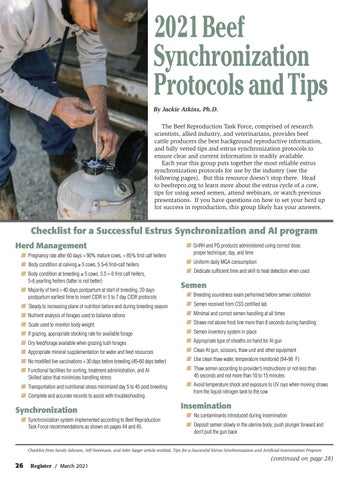
Checklist for a Successful Estrus Synchronization and AI program Herd Management ■ Pregnancy rate after 60 days > 90% mature cows, > 85% first calf heifers ■ Body condition at calving ≥ 5 cows, 5.5-6 first-calf heifers ■ Body condition at breeding ≥ 5 cows, 5.5 – 6 first calf heifers, 5-6 yearling heifers (fatter is not better)
■ Majority of herd > 40 days postpartum at start of breeding, 20 days postpartum earliest time to insert CIDR in 5 to 7 day CIDR protocols
■ ■ ■ ■ ■ ■ ■ ■
Steady to increasing plane of nutrition before and during breeding season Nutrient analysis of forages used to balance rations Scale used to monitor body weight If grazing, appropriate stocking rate for available forage Dry feed/forage available when grazing lush forages Appropriate mineral supplementation for water and feed resources No modified live vaccinations < 30 days before breeding (45-60 days better) Functional facilities for sorting, treatment administration, and AI Skilled labor that minimizes handling stress
■ Transportation and nutritional stress minimized day 5 to 45 post breeding ■ Complete and accurate records to assist with troubleshooting
Synchronization ■ Synchronization system implemented according to Beef Reproduction Task Force recommendations as shown on pages 44 and 45.
■ GnRH and PG products administered using correct dose, proper technique, day, and time
■ Uniform daily MGA consumption ■ Dedicate sufficient time and skill to heat detection when used
Semen ■ ■ ■ ■ ■ ■ ■ ■ ■
Breeding soundness exam performed before semen collection Semen received from CSS certified lab Minimal and correct semen handling at all times Straws not above frost line more than 8 seconds during handling Semen inventory system in place Appropriate type of sheaths on hand for AI gun Clean AI gun, scissors, thaw unit and other equipment Use clean thaw water, temperature monitored (94-98 F) Thaw semen according to provider’s instructions or not less than 45 seconds and not more than 10 to 15 minutes
■ Avoid temperature shock and exposure to UV rays when moving straws from the liquid nitrogen tank to the cow
Insemination ■ No contaminants introduced during insemination ■ Deposit semen slowly in the uterine body; push plunger forward and don’t pull the gun back
Checklist from Sandy Johnson, Jeff Stevenson, and John Jaeger article entitled, Tips for a Successful Estrus Synchronization and Artificial Insemination Program
(continued on page 28)
26
Register / March 2021