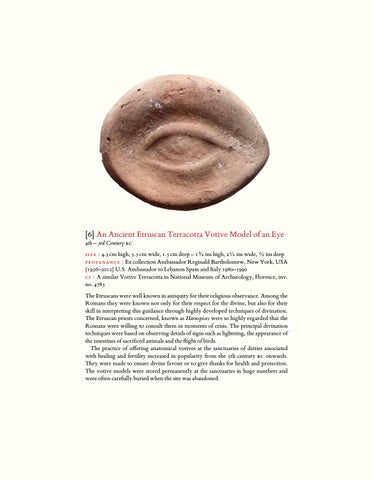
[6] An Ancient Etruscan Terracotta Votive Model of an Eye 4th – 3rd Century bc
s i z e : 4.5 cm high, 5.5 cm wide, 1.5 cm deep – 1¾ ins high, 2¼ ins wide, ½ ins deep p rov e na nc e : Ex collection Ambassador Reginald Bartholomew, New York, USA (1936–2012) U.S. Ambassador to Lebanon Spain and Italy 1980–1990 c f : A similar Votive Terracotta in National Museum of Archaeology, Florence, inv. no. 4785 The Etruscans were well known in antiquity for their religious observance. Among the Romans they were known not only for their respect for the divine, but also for their skill in interpreting this guidance through highly developed techniques of divination. The Etruscan priests concerned, known as Haruspices were so highly regarded that the Romans were willing to consult them in moments of crisis. The principal divination techniques were based on observing details of signs such as lightning, the appearance of the intestines of sacrificed animals and the flight of birds. The practice of offering anatomical votives at the sanctuaries of deities associated with healing and fertility increased in popularity from the 5th century bc onwards. They were made to ensure divine favour or to give thanks for health and protection. The votive models were stored permanently at the sanctuaries in huge numbers and were often carefully buried when the site was abandoned.