
FALL 2022 PO-TAY-TOES! BOIL 'EM, MASH 'EM, STICK 'EM IN A VODKA Can YOU DO IT? THERE AND BACK AGAIN: DRY FLY DISTILLING 10 YEARS LATER cheers TO 10 YEARS



BRAND STRATEGY | STORY DEVELOPMENT | NAMING LOGOS | PACKAGING | CUSTOM BOTTLES | PRINT | DIGITAL DRINK WITH YOUR EYES ® 2787 NAPA VALLEY CORPORATE DR, NAPA, CALIFORNIA 94558 T | 707 265 1891 WWW.CFNAPA.COM CFN216_ArtisanSpiritsAd_2_ FALL_2022.indd
TABLE of CONTENTS
QUARTERLY GUILD & INDUSTRY REPORTS 13
Updates from guilds and associations within states, across the nation, and beyond!
BOOTSTRAPPING YOUR BRAND — WHAT YOU REALLY NEED TO HAVE FOR LAUNCH 33 Brand Buzz with David Schuemann
THE SCIENCE OF SULFUR: METHYL THIOACETATE GENERATION AND CONTROL 37 From the Good Guy Distillers
DISTRIBUTING THE COMPETITION AMONG DISTRIBUTORS 41
Executive order aims to compel competition
MASH FILTERS ARE YOUR FRIEND 45
A humble brewers' tool
TRADEMARK APPLICATION CONSIDERATIONS 49
For alcohol beverage brands
TEN PRODUCERS REFLECT ON A DECADE (OR MORE) IN CRAFT DISTILLING 52 It's a party, and everyone's invited
DRY FLY DISTILLING 58 of Spokane, Washington
YEAST 63
Dissecting the flavor contribution of yeast
THE DISTILLER'S LIFE 66
A board game created just for you, just add dice!
FAIR GAME SHINES A SPOTLIGHT ON NORTH CAROLINA AGRICULTURE 68 Beyond the Bottom Line
A DECADE OF GIN 73 A ten-year retrospective
THE POWER OF PREGNANCY 77 How to grow a human and make whiskey: A guide
HOT POTATO 80 Colorado distillers tap into local spuds
THE GRASS IS GREENER FOR PUERTO RICO’S SAN JUAN ARTISAN DISTILLERS 84
A family business looks to rum’s future after a tumultuous decade
DEFINING A DECADE 88 What’s in craft
WHEN IT COMES TO SPIRITS AND COCKTAILS PRODUCTION, SHOULD YOU CAN IT? 92 Aluminum cans: steeling the way forward
THE AGE OF (DISTILLED SPIRITS) ENLIGHTENMENT 95 The inevitability of change
WHAT A DIFFERENCE A DECADE MAKES! 100 “There ain’t no laws when you’re drinking Claws.”
COMMUNITY BUILDING TAKES TIME 104 Jason Barrett reflects on Black Button Distilling's first 10 years
NO ALCOHOL, NO PROBLEM 106 Wilderton’s N/A spirits stand out on their own
MORE ON THE NEW WORLD OF FEDERAL EXCISE TAXES 109 Changes to the The Taxpayer Certainty and Disaster Tax Act of 2020
DISCUS, EPA PARTNER TO RELEASE ENERGY STAR GUIDE FOR DISTILLERIES 111 A new sustainability tool emerges
IT’S PARTY TIME — INTRODUCING HIGHER OCCUPANCIES 114 Fire and Life Safety Corner
THE SOUL OF SPIRITS 117 Bar Convent Brooklyn 2022 highlights why distilling matters
THE HISTORY OF PRE-MIXED DRINKS 120 The rise of the cocktail
BIG EXCITEMENT IN THE BIG EASY 122 The 2022 DISCUS Conference proves the industry is stronger together
EMERGING TREND: INCUBATOR BUSINESS MODEL 125 A new business model for craft
LETTER BAG 128
ADVERTISER INDEX 130
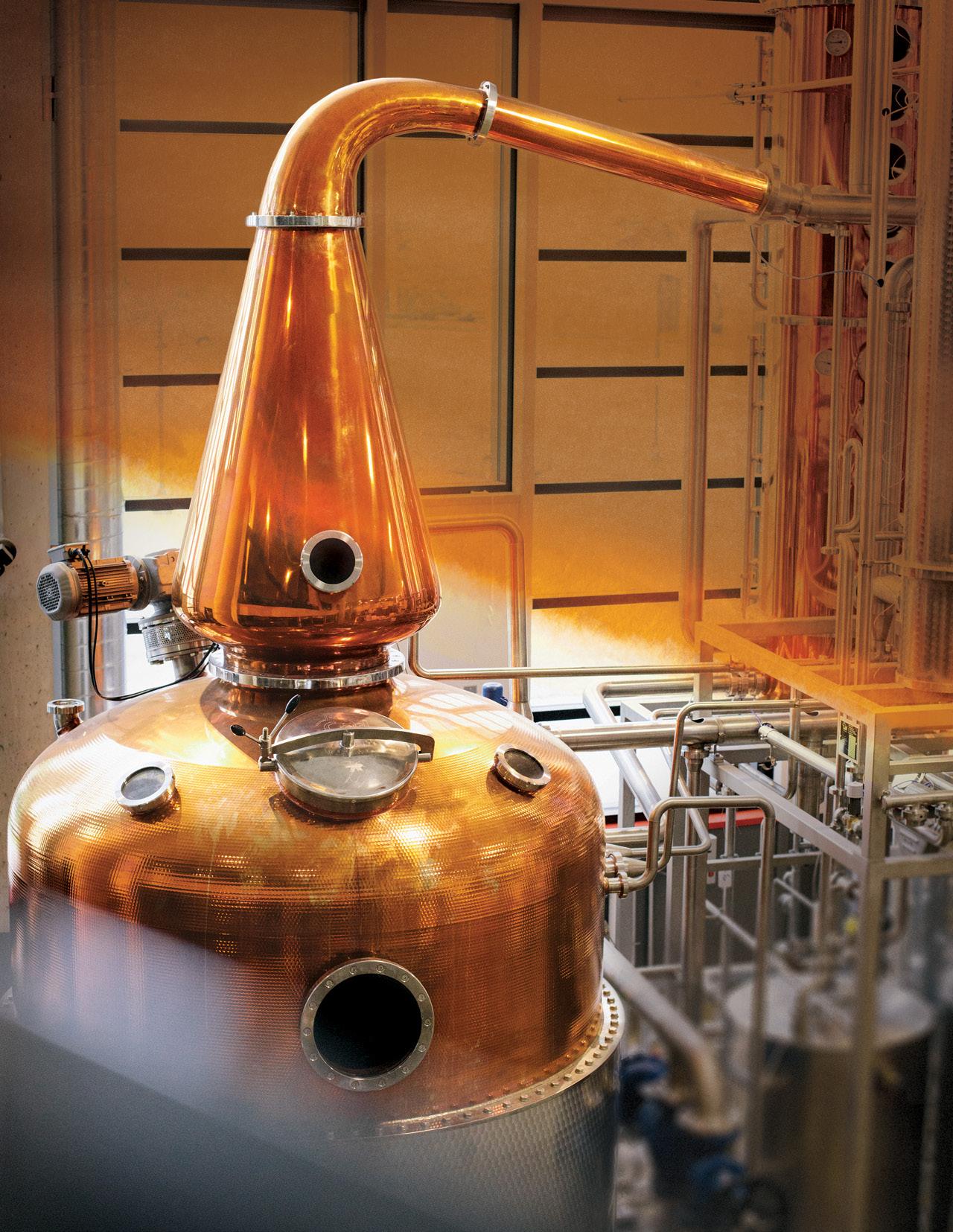
from the COVER Dry Fly Distilling in Spokane, Washington. Image by Amanda Joy Christensen. See their story on page 58
40
PUBLISHER & EDITOR Brian Christensen
CREATIVE DIRECTOR Amanda Joy Christensen
SENIOR WRITERS
George B. Catallo Devon Trevathan
CONTRIBUTORS
Luis Ayala
Shane Baker Jason Barrett Corey Day Carrie Dow Chloe Fisher Doug Hall Harry Haller Ashley Hanke Pat Heist, Ph.D. Reade A. Huddleston, MSc. Paul Hughes, Ph.D. Aaron Knoll
PHOTOGRAPHERS
Amanda Joy Christensen Carrie Dow
Francesca Cosanti
David Letteney
Rich Manning Jim McCoy
Michael T. Reardon, P.E. David Schuemann Gary Spedding, Ph.D. Grady Szuch
John P. Thomas Gabe Toth, MSc. Molly Troupe
Lisa Truesdale Margarett Waterbury
Ayano Hisa Carey McKelvey
ARTISAN SPIRIT
Ashley Monroe
Artisan Spirit Media.
General Inquiries (509) 944-5919
31494, Spokane, WA 99223
(509) 991-8112
All contents ©2022. No portion of this magazine may be reproduced without the written consent of the publisher. Neither Artisan Spirit Media nor ARTISAN SPIRIT magazine assume responsibility for errors in content, photos, or advertisements.


While ARTISAN SPIRIT makes every effort to ensure accuracy in our content, the information is deemed reliable but not guaranteed. We urge our readers to consult with professional ser vice providers to meet their unique needs.
At ARTISAN SPIRIT, we take the opportunity to enjoy many different craft spirits and adult beverages. However, it’s also our responsibility, and yours, to always drink responsibly. Know your limit, and never drink and drive.
ARTISAN SPIRIT’s number one goal is to share and celebrate the art and science of artisan craft distilling. But please remember to follow all the laws, regulations, and safety proce dures. Be safe, be legal, and we can all be proud of the industry we love.
ISSUE
/// FALL 2022
ILLUSTRATOR
SALES & MARKETING
is a quarterly publication by
www.artisanspiritmag.com facebook.com/ArtisanSpiritMagazine ArtisanSpiritM ArtisanSpiritM
Advertising
PO Box
INNOVATIVE SOLUTIONS since 1912
A barrel should be more than an aging vessel, it should be a partner in achieving your desired flavor profile. Using science-based research and experimentation, ISC barrel experts collaborate with world-class distillers to create innovative barrel solutions for their unique spirits.
iscbarrels.com
THANK YOU TO ALL OUR SPONSORS.

The American Spirits Exchange is a national importer and distributor serving the alcoholic beverage industry (spirits, wine, and beer). We provide domestic and international companies with access and support to the U.S. market. Regardless of your size — from micro, craft distiller to publicly traded multinational — our focus fuels your growth. Our flagship Foundations™ program provides companies with access to the U.S. market. We handle your business-to-business functions from start to finish: permitting, brand approvals, purchase order processing, invoicing, and compliance.
Founded in Boulder, CO in 2016, Arryved is a point-of-sale based software company specializing in the food, beverage, and entertainment industries: distilleries, breweries, cideries, wineries, brewpubs, restaurants, and music venues. In five short years, it grew from being an idea scribbled on a taproom coaster to a revered platform serving over a thousand happy customers across the country.
Arryved is a team of tech geeks with relentless passion for, and extensive experience in, the hospitality industry, as both employees and consumers. The goal is simple: Deliver a flexible, reliable, team-centric platform that puts service first in every way.

Arryved’s flexible, all-in-one system simply makes business easier, so you can focus on enjoying life — distilling craft spirits, lifting up your staff, and creating core memories within your community. We’ll cover the rest.
Boelter is a strategic partner to the most successful distilleries, breweries, beverage distributors, wineries, and cidermakers in the country. With over 90 years of beverage industry experience, we provide guidance and essential promotional products to ensure that through every service and season, our partners are performing at their peak. Our key product categories include glassware, tap handles, coasters, cups, and barware, but we pride ourselves on our willingness to work hard to serve our customers — whatever their need may be. We are passionate and enthusiastic because we believe we have a purpose that transcends the day-to-day work that we all do.

Montanya Distillers, Headframe Spirits, and Maker’s Mark. Seems like an odd list, right? Well, they are all certified B Corps. It’s not easy to make it in the spirits world much less do it while being mindful and transparent about staff, process, and environmental impact. — Colin Blake
Hanson Distillery. When developing their product, they allowed themselves over 100 attempts to achieve their final formula of grape varietals for their organic vodka. Their tasting room and distillery are perfectly situated on a vineyard in picturesque Sonoma Valley, lending to an incredible customer tour and tasting experience.

Which distilleries have impressed you recently and what could their peers learn from them?
Our mission at Artisan Spirit Magazine is to share and celebrate the art and science of artisan craft distilling.
6 WWW. ARTISANSPIRITMAG .COM
We are humbled by the support of our sponsors. With their help, we can further our common goals of supporting creativity, innovation, and integrity within the industry we all love so much.
BSG is focused on supplying craft distillers with the best ingredients from around the world. The craft distilling market trusts BSG to deliver the finest ingredients at competitive prices, without sacrificing customer service. With distilling malts and grains from Rahr Malting Co., Weyermann®, Simpsons, Crisp and Malting Company of Ireland, as well as a full range of yeasts, yeast nutrients, enzymes, botanicals, and finishing products, we have a wide range of distilling ingredients to help you create high quality, artisanal spirits.
Cage and Sons Distilling Systems build premium distillation systems and equipment for premier distilleries.
Every element of Cage and Sons equipment is designed and crafted to provide you with the very best distilling experience at an affordable rate because we know that bottom line matters, but so does function. At Cage and Sons, adequate is never an option, and we continue to develop and design new high functioning, cutting-edge distillation systems that enhance the distillation industry. Cage and Sons works every day to bring you the very best distillation systems for the very best value.
Unlike other agencies that work within a blinding myriad of industries; our focus is 100% within the spirits, wine, beer, and other alcohol sectors. This specialization has allowed us to become experts in the alcohol beverage category. We have an exceptional understanding of design that sells, complemented by professional project management and flawless production oversight. The result has been strategic solutions that consistently produce both critical acclaim and strong measurable return on investment for our clients.

The Distilled Spirits Council of the United States (DISCUS) is the leading voice and advocate for distilled spirits in the United States. Representing producers and marketers of distilled spirits, DISCUS advocates on legislative, regulatory, and public affairs issues impacting the distilled spirits sector at the local, state, federal, and international levels; promotes the distilled spirits sector, raising awareness and opening markets in the United States and around the globe; and encourages responsible and moderate consumption of distilled spirits as part of a healthy adult lifestyle based on evidence-based research and policy. DISCUS also powers Spirits United, a grassroots platform for the distilled spirits industry. Spirits United is comprised of a community of advocates united with a common goal: to ensure adult consumers can enjoy distilled spirits where they want, how they want, and when they want. Learn more at distilledspirits.org and spiritsunited.org.
Trusted Oak Expertise Since 1912.
We’ve been in this industry for over 100 years, during which time we’ve learned a thing or two about what makes a great barrel to age great spirits. Our R&D team and account managers have hundreds of barrels currently in experimentation. Partnering with distillers, we think outside the box to develop new products that push your vision forward.
Our Mission: To craft world-class oak barrels and other cooperage products so our employees, customers, and communities flourish.
WWW. ARTISANSPIRITMAG .COM 7
Lallemand Biofuels & Distilled Spirits is the industry leader in supplying fermentation products and valueadded services to the distilled spirits industry. We specialize in the research, development, production, and marketing of yeast and yeast nutrients as well as a solid belief in education of the distilled spirits industry.
A vital part of the alcohol production process, fermentation products from Lallemand Biofuels & Distilled Spirits have been designed and selected to create value by tailoring objective solutions to distillery needs.


Standing out in a crowded marketplace is an ongoing challenge for wine and spirits producers today. MCC’s experienced team of label engineers take a consultative approach, helping guide your project from inception to finished label. Whether it's an existing design, or a highly embellished new project, we are poised to give your brand the look it deserves. Housing many different printing technologies under one roof allows us to match our passion and expertise to your project, each and every time, without compromise. This ensures that your final packaging always achieves the desired look. With MCC and Fort Dearborn recently joining forces, we are poised to provide all spirits customers with amazing service and quality products.
Southern Distilling Company is one of the largest artisan distilleries in the nation. We offer product development, contract distilling (standard and custom mash bill whiskeys, rum, and agave spirits), barrel warehouse aging, batching, blending, bottling, and co-packaging of award-winning products. We also keep an extensive inventory of aged bourbon and rye whiskey available year-round.
Our spirits are distilled in top-of-the-line Vendome Copper & Brass Works continuous column stills. Our product development services include working with you to perfect an existing recipe and consultations to help you create your own recipe. We can barrel and warehouse age your product to meet both short and long-term goals. At Southern Distilling Company, you get standout spirits that make brands unforgettable.
For over 60 years Tapi USA has produced cork stoppers and a wide variety of bottle closures. Family-owned and operated since its inception, our company continues to develop new products and enter new markets. Tapi USA is proud to support the growth of the artisan distillery industry and is honored to be the Bottle Closure Sponsor for Artisan Spirit Magazine.
Total Wine & More is the country’s largest independent retailer of fine wine, beer, and spirits. Our strength is our people. We have over 5,000 associates, who must demonstrate comprehensive beverage knowledge before they are invited to join our team. After coming on board, all of our team members undergo an extensive initial training program. We believe that an educated consumer is our best customer. We want to demystify the buying experience for our customers so they will feel confident in choosing the bottle that is perfect for them. Total Wine & More works closely with community and business leaders in each market it operates to support local causes and charitable efforts.
8 WWW. ARTISANSPIRITMAG .COM






A LETTER FROM THE EDITOR:

What the hell are we doing?
I think I can finally answer that question. Perhaps not with absolute confidence, but that’s never really stopped us from trying.
That question, which appeared in our very first issue of Artisan Spirit Magazine 10 years ago, has been a guiding mantra for our inde pendent trade publication. It was a question we asked ourselves, but more importantly it was the question our readers were asking themselves. Hundreds of new entrepreneurs jumping into a fledgling craft industry where the art and science of distilling were common ly shrouded in mystery and misinformation.
At the time we were four outsiders talking about starting a distillery, and quickly real ized we were completely inept and ignorant. Luckily we had a wide range of skills we could blindly throw at a new idea. Graphic design, web development, sales, and whatever it is I do (I talk to people, mostly).
Like so many startups the ideas morphed into something different. In our case, the business became a trade publication. A print trade publication. Oh, and we wouldn’t allow paid “advertorials,” and we would always pub lish more content than advertisements, and then we would give a copy to any distiller in America for free!
Yes, we were very idealistic, but somehow the ethics stuck. More importantly, those ideals resonated with an audience. We found ourselves surrounded by like-minded people who forgave our naivete and embraced the sincerity that drove us.
Within a year the team running Artisan Spirit was a core group of three friends: Editor Brian Christensen, Creative Director Amanda Christensen, and Director of Sales and Marketing Ashely Monroe. Within two years Artisan Spirit Magazine was our full
time job, backed by an incredible group of talented writers, academics, and distillers all around the world.
Over the course of 10 years Artisan Spirit Magazine has gone from a 36-page “pam phlet” to a respected 100+ page quarterly journal, distributed in 44 countries, read by almost every DSP in the United States, and now publishing a companion peer reviewed scientific journal (Journal of Distilling Science) and a wildly irreverent podcast (the Still Talking Podcast).
None of this happened in a vacuum. It wasn’t just three scrappy friends who made this happen. It was a collection of industry mentors and organizations that bent over backwards to guide us and support our vi sion. People like Steven Faith, former VP of Spirits at Total Wine and More who said, and I quote, “You would be complete dumbasses not to make a magazine like that.” Or our first two sponsors, the “Jacks.” Jack Joyce, founder of Rogue Ales and Spirits who was my very first industry interview, and who classically said, “Anything worth doing should be done half-assed. If you can make it work by bare ly trying, it’s probably a good idea.” And Jack Vogel, then of St. Louis Litho, now of MCC Label, who was a consistent sounding board, advisor, and advocate for the educational po tential of suppliers.
So many people helped us and opened their doors without question. Complete strangers like George Manska of Neat Glass who offered to share his booth with us at an Oregon state trade show. Distillers like Don Poffenroth, our first cover story and fellow Spokane, Washington resident, John and Courtney McKee along with Johnny Jeffrey who would eventually go on to form the Good Guy Distillers, Ted and Dana Huber who invited us into their homes and distillery year after year, and godfathers of the industry like Ralph Erenzo and Jimmy Russell who would take the time to share a drink and a sto ry with young nobodies like us.
There were the incredible industry pro fessionals like Leah Hutchinson and Penn Jensen who we randomly met in an elevator at an American Distilling Institute convention 10 years ago, and would soon go on to help form the American Craft Spirits Association. Also, Frank Colman of Distilled Spirits
Council of the United States (DISCUS) who just happened to be walking by during our first meeting of advisors in year two, and pulled up a chair to lively and graciously de bate what “craft” was.
Groups like the Kentucky Distillers Association, Washington Distillers Guild, American Distilling Institute, and DISCUS all welcomed us into the industry without question or pretense.
Not to mention those first few advertisers who answered Ashely’s cold call and then spent 40 minutes on the phone inundating us with ideas before asking us if they could ad vertise in a publication that didn’t even exist yet.
Most importantly, the readers, who picked up the phone or emailed with ideas and sug gestions. Always feeding us with positivity and encouragement to keep doing what we were doing.
Finally, because they rarely get a chance to speak up (did I mention I talk a lot?), I want to thank the true heart of this publication. My partners Ashley Monroe and Amanda Christensen. They are the best people I have ever known. It is impossible for me not to im mediately smile when I think of them. Hard working, clever, wildly creative, talented, gracious, and kind. They are my partners, my family, and my friends.
I could go on for several thousand more words thanking and recognizing the people who helped us, who continue to help us, ev eryday. I hope you know who you are, and please understand that you have made the last 10 years the most professionally and person ally rewarding decade of our lives.
So, what the hell are we doing? We are fos tering a community of scientists, artists, en trepreneurs, and fellow nerds. Sharing your stories, and welcoming the next generation of distillers into this industry with open arms.
With greatest appreciation,
(509) 944-5919 /// brian@artisanspiritmag.com PO Box 31494, Spokane, WA 99223
Brian Christensen
10 WWW. ARTISANSPIRITMAG .COM



Sales@TheTierraGroup.com ww w TheTi er r aG r oup. c o m 1 . 844 . 825 . 828 2 O R GA N I C B L U E A G A V E G R O W N • H A R V E S TED • P R OD U CE D 100% ORGANIC BLUE AGAVE CONCENTRATE PREMIUM 100% BLUE AGAVE SPIRITS - USA 100% BLUE AGAVE TEQUIILA - MEXICO The Industry Standard for creating distilled agave spirits Distilled bulk Agave Spirits Bottled TEQUILA MIXTO - MEXICO AGAVE DISTILL - MEXICO Bulk Bulk, Great for RTD Products AGAVE SYRUP Bulk P E R F E C T I N G THE S PIRI T OF A G A V E
UPDATES FROM GUILDS AND ASSOCIATIONS WITHIN STATES, ACROSS THE NATION, AND BEYOND!
QUARTERLY GUILD & INDUSTRY REPORTS

State guilds are the most important organizational entities within the spirits industry. There, I said it, and I’d fight to the death to defend my mostly subjective opinion. In our experience it's the guilds that are consistently the front lines of regulations, legislation, consumer attitudes, and industry fortunes. More than national associations or news nerds like Artisan Spirit, the guilds know what's coming down the pipe before the rest of the industry. That's why it has consistently been the most-read, best-reviewed section of this publication since it debuted. Selfishly, it’s one of my favorite parts of Artisan Spirit, and we are delighted to set up the soap box for the state distilling guilds every issue. With that said, buckle up, because we have 14 guild updates in this anniversary edition of ASM. There is a lot to go over.
Brian Christensen Editor, Artisan Spirit Magazine
AMERICAN CRAFT SPIRITS ASSOCIATION
Fall is here, and so is election season in many places around the country. The American Craft Spirits Association (ACSA) would like to remind every distiller to connect with your elected offi cials at every level. They want to hear your feed back on policies and how market conditions are affecting you. 2022 has proven challenging for most members with supply shortages, increasing costs, and tightening margins. Both your state guilds and ACSA are working at every level to improve your business landscape, from advocat ing for more flexibility in packaging with TTB, to working with your state legislatures toward parity with wine and beer. The number of craft distilleries is increasing yearly, as is our political power, but we need distilleries to work together
to make progress happen. If you aren't already involved, dip your toes in the water either in a na tional committee with ACSA, or with your state guild — it's also a great way to connect with the community of fellow distillers on a personal level. Market access is still the primary challenge facing small independent distillers. The 2022 Craft Spirits Data Project results will be out in November, and over the past 10 years, distillery starts are up tenfold. In that same time, the num ber of wholesalers has decreased by a third due to consolidation. ACSA is working to help distillers understand and navigate this changing landscape with our distribution partners, while at the same time, working to improve access to the distri bution system by creating and improving ways
QUARTERLY REPORTS
13
to connect distillers with their customers through expanding access to direct-to-con sumer shipping and other tools available to breweries and wineries.
Look for more information on the advoca cy work of ACSA at www.americancraftspir its.org. Cheers!
AMERICAN DISTILLING INSTITUTE
California is the largest spirits market in the U.S., and is home to Gallo, the largest winemaker and one of the largest distilleries in the country. A few years ago, the California Artisanal Distillers Guild, in the effort to get basic business rights such as being able to sell tastings and bottles directly from a tasting room, got legislation passed that also defined a craft distiller as making fewer than 150,000 proof gallons per year.
This definition is now being used by dis tributors and retailers to create division between the large and small distilleries in California and in other states to retain the status quo and prevent direct-to-consumer (DTC) legislation. At the time of writing, it appears that CA SB620 will not be moving forward, which means that California will not have DTC shipping any time soon. This is a huge setback to the 229 distilleries in the state — and any distilleries who wish to sell to California consumers.
Much like the efforts to get the Federal Excise Tax reduction passed, we need to work with all distilleries and make sure they are in cluded, not excluded, from new legislation. We hope that we can work with state guilds and all distillers to get laws changed, in and out of state.
Changing topics, ADI 2022 Craft Spirit
Conference & Expo returns this year with a new look to reflect a modern, determined, and forward-looking industry. The 19th annual ADI Conference will be held at the Americas Center Convention Complex in St. Louis, Missouri, from September 14 to 16. With a renewed focus on education, ADI expects re cord attendance in 2022 of more than 1,900 attendees and 190+ sponsors and exhibitors. In addition to being the world’s largest gather ing of craft distillers and suppliers, the event is chock full of exciting first-ever features. The jam-packed agenda features over 50 top ic-specific breakout sessions and workshops, distillery tours, and tastings. Registration is now open at Distilling.com.
The St. Louis Conference kicks off on Wednesday, September 14, with an all-day Corn Whiskey Masterclass. This immersive workshop features a theoretical session, fol lowed by a visit to Wood Hat Distillery led by its founder Gary Hinegardner. We are also holding several other pre-convention work shops, including our first-ever financial work shop for distilleries.
Also on Wednesday the 14th is the Legislative Summit, hosted by DISCUS for the U.S. guilds. The Legislative Summit will focus on U.S. guild collaboration on legisla tive topics of interest and actionable items
CRAFT MALTSTERS GUILD
Craft maltsters are continuing to adjust to the ever-changing grain market issues driven by the conflict in Ukraine. Traditional market prices soared during the initial weeks of the war’s start and have remained volatile as win ter wheat harvest began in late May and early June. In an odd twist, these conditions have provided an opportunity to educate brewers
and distillers on the value of sourcing from more stable, local suppliers. Maltsters antici pate continued market disruption and higher overall prices throughout the remainder of 2022.
In May, the guild hosted the first in-person Advanced Class in Craft Malt Production since 2019! This course was developed
Rebecca L. Harris President, Head Distiller, Catoctin Creek Secretary, Board Member, STEPUP Foundation President, American Craft Spirits Association
for our industry’s state leaders. Wednesday’s events culminate with an evening open ing night tasting in collaboration with the Missouri Craft Distillers Guild at the Marriott St. Louis Grand, our headquarter hotel locat ed steps from the convention center.
On the morning of Thursday, September 15, the ADI Conference kicks off with a key note from Dr. Anne Brock, the Gin Guild’s Grand Rectifier and the much-celebrated master distiller at Bombay Sapphire. The evening of the 16th features a visit to the Gin World event at the St. Louis Grand, one of the world’s largest gin consumer events. The day after the 2022 Conference, September 17, ADI convenes the Gin Summit at the Marriott St. Louis Grand. Please see ADI’s monthly e-newsletter and Distilling.com for updates and registration details on all our events.
“The 2022 Conference promises to be our biggest ever,” said ADI President Erik Owens. “And it’s the perfect set-up for next year’s 20th anniversary conference, ADI 2023 Las Vegas!” For those who plan to attend the 2022 St. Louis ADI Conference, don’t miss any issues of ADI’s e-newsletters, which will feature famous travel and beverage reporter Virginia Miller’s reviews of the best bars and restaurants in “the Lou.”
Erik Owens President, American Distilling Institute
by Hannah Turner from Montana State University and Hugh Alexander, an experi enced maltster from Scotland. The course was designed to serve the needs of malthouses in planning as well as staff training for existing malthouses. Topics included engineering, safety, grain selection, and quality control. Students also received hands-on training on
14 WWW. ARTISANSPIRITMAG .COM

OUR CRAFTED RECIPES AND CUSTOM MASH BILLS MAKE SURE YOU WON’T BLEND IN CONTACT US TO DISCUSS YOUR PROJECT TODAY SouthernDistilling.com + 704-978-7175 Custom Mash Bills + Guaranteed Consistency + Contract Distilling
germination testing and sensory evaluation. The course was hosted by Southern Illinois University at their beautiful new Fermentation Science Institute in Carbondale, Illinois. The next Advanced Class is slated for March 13-16, 2023, in Portland, Maine, and will precede our seventh annual Craft Malt Conference.
This fall, the guild will host the third annu al Craft Malt Week from September 11-17. Each year this event is designed to coincide with the Harvest Moon as a way to connect the craft beer and spirits lovers with the
agricultural roots of their chosen tipple. Malthouses, breweries, and distilleries are invited to plan tasting events, educational presentations, bottle releases, and collaborations to celebrate.
The guild will also host our sec ond annual Malt for Brewers & Distillers Workshop on September 19-20. This intensive two-day workshop will be hosted by the University of California Davis and will include lectures on sensory evalu ation, certificate of evaluation assessment, barley breeding efforts, and malt production.
Attendees will also tour the UC Davis Brewing Program’s pilot brew ery and fermentation science labs and visit Admiral Maltings in Alameda, California.
As we look to 2023, we hope to (finally) make it to Portland, Maine, for an in-person Craft Malt Conference. Please stay tuned to www.craft malting.com for more information on con firmed speakers and registration information.
Brent Manning Board President North American Craft Maltsters Guild
DISTILLED SPIRITS COUNCIL OF THE UNITED STATES
Happy 10-year anniversary to Artisan Spirit Magazine! We are proud to sponsor and celebrate such an incredible outlet that shares the creativity, innovation, and integrity of our industry!
Annual DISCUS Conference: Stronger Together
It was great to see many folks in the indus try at our annual conference in New Orleans this year. From the opening welcome fea turing a marching band with Lt. Governor Billy Nungesser (R), to the trade show and innovation showcase, to closing with a Spirits United parade right on Bourbon Street, we were thrilled to be together again. This year we celebrated the outstanding contri butions of the following exemplary leaders who have each, in their own way, support ed the growth of our great industry and the wider appreciation of our great products: DISCUS Lifetime Achievement Award, Dr. Joy Spence, Master Blender, Appleton Estate Jamaica; DISCUS Dave Pickerell Memorial Craft Member of the Year, Scott and Becky Harris, Owners Catoctin Creek Distillery; DISCUS Humanitarian/Service Award, Women of the Vine & Spirits Foundation (Deborah Brenner, President); and DISCUS Impact Award for Emerging Leaders, Nicole Austin, General Manager and Distiller, Cascade Hollow Distilling Co. This year’s
grand winner of the innovation showcase was SoMax Circular Solutions for their inno vative resource recovery technology, which uses hydrothermal carbonization and can help distilleries convert distilling byproducts, including spent grains, into renewable energy, eliminating disposal cost while also improv ing the environment.
DISCUS Launches New Industry Website and Foundation
The DISCUS team is excited to share the launch of two new initiatives to con nect and support the distilled spirits indus try: Destination Distillery™ and DISCUS Foundation.
DestinationDistillery.com is a new website providing a tourism-driven experience and educational journey into the cultural heritage and history of spirits in America. Visitors to the website will be able to explore many of America’s most famous distilleries as well as up-and-coming ones, state-by-state trails, the economic impact of the spirits industry by state, and important landmarks connected to the history of distilling and spirits in our country. By showcasing distillers large and small, Destination Distillery™ will serve as a unifier for our industry and will continue to drive tourism to local regions and further the economic contributions that all distillers make to their communities.
If you know a distill ery looking to partici pate, simply have them fill out the intake form to opt into the platform.
DISCUS Foundation, the association’s new 501(c)(3) charitable arm, was established to operate exclusively for charitable purposes in support of the betterment of the distilled spirits industry. Specifically, the DISCUS Foundation will support the sector by:
1) Providing education scholarships that support personal and business develop ment within the industry to bolster the growth of a diverse talent pipeline;
2) Increase awareness and adoption of industry sustainability best practices;
3) Increase opportunities and funding for diverse distilleries and promote diversi ty across all levels of employment across the industry;
4) Promote social responsibility and adver tising guidelines and best practices to educate consumers and businesses on responsible consumption; and
5) Support the industry’s continued growth in key U.S. and global markets.
Fill out Destination Distillery™ intake form
Learn more about Craft Malt Week
Learn more about the Malt for Brewers & Distillers Workshop
16 WWW. ARTISANSPIRITMAG .COM
Where S cience Meets Ar t
Yeast, Nutrients, and Process Aids
At La l l e m a n d D ist i l l i n g, o u r si n g l e s o u rce p h i l o s o p hy p rovide s t h e hig h es t q u a l i t y i n g redi e nt s, t a i l o re d te c h n i c a l s e r v i ce a n d e d u c at i o n , a n d i n d u s t r y l e a di n g experi e n ce to s u p p o r t yo u r n ee d s. Yo u r spirit s a re o u r p a ss i o n , yo u r needs a re o u r m o t i vati o n .


Contac t us to learn more today.

w w w.lallemanddistilling.com

As the leading voice and advocate for dis tilled spirits in the United States, DISCUS is uniquely positioned to set the industry standard for giving back to our communities, rising leaders, and consumers. The DISCUS Foundation will serve as our industry’s stan dard-bearer when it comes to providing funds to support the betterment of our sec tor through nurturing our future workforce, enhancing sustainable practices, promoting diversity and supporting the growth of our great spirits industry. Financial donations to the DISCUS Foundation are tax-deductible and can be applied to a specific initiative or to the general fund.
Securing Wins in the States for the Spirits Industry in 2022
As the first half of 2022 wraps up, DISCUS’ efforts on the state level have resulted in sup plier savings of at least $176 million. This
includes: Defeating tax threats in four states (CO, HI, MS, NY); engaging on spirits-based ready-to-drink bills in 15 states including passing a tax reduction and retail access ex pansion in VT; securing studies in three states (ME, MD, WV); defeating a bill to limit con tainer sizes for spirits-based RTDs to receive a reduced tax rate in NE; passing permanent cocktails to-go (CTG) in two more states (DE and RI) bringing the total to 18; passing CTG extensions in another three states (ME, MA and VA) and adding a new temporary measure in New York bringing the total to 16; monitoring direct-to-consumer shipping in 15 states; engaging on bills in seven states and securing a study bill in Maine; passing or expanding distillery sales laws in Iowa, Minnesota, and New Hampshire; and gaining additional market access wins in 13 states.
Virtual Bar Helps Educate Distillery Visitors & Consumers
It’s easy to say “know your limits and stick to them” when it comes to drinking, but much harder to learn what your limits should be — that’s why we created the new and im proved Virtual Bar app. Our Virtual Bar is a blood alcohol concentration (BAC) calcula tor that uses the latest science to help folks get a better understanding of how different factors like food, age, gender, height, weight, alcohol content, and others affect their in dividual BAC. Just this summer we gave the Virtual Bar a fresh coat of paint and other en hancements to make it even easier and clearer for consumers to understand their limits and know what “drink responsibly” means for them. Find the Virtual Bar in the Apple App Store and Google Play stores, or at www.re sponsibility.org/virtualbar.
Chris R. Swonger President & CEO
AMERICAN STATE GUILDS
ARIZONA CRAFT PRODUCERS ASSOCIATION
The Arizona Craft Producers Association has spent the past decade laying legislative foundations and affecting changes to Arizona’s liquor laws creating an extremely favorable
climate for craft production of exceptional distilled spirits. This environment has prov en successful in international markets and competitions for our members, from winning numerous Best of Class, Best of Show, global top 10s, and icon awards. Arizona has moved to the forefront of American rum production
led by distilleries in Kingman and Elgin. Guild/Association lobby measures have cre ated a unique and positive relationship with wholesalers and retailers, and their lobbies, that don’t exist in most markets. This rela tionship allows for further advancement of our young Arizona industry.
Dr. Garrison Ellam, Ph.D. D.Sc. Arizona Craft Producers Association
CALIFORNIA
CALIFORNIA ARTISANAL DISTILLERS GUILD
I am writing this from the ACSA confer ence in New Orleans and looking back to my first industry meeting at ADI in Louisville, Kentucky 2012. So much has changed, and yet many things have stayed the same. The California Artisanal Distillers Guild was
formed in 2012 and immediately went to work on legislation. We met with Senator Nancy Skinner and wrote AB #933 which gained us the privilege to pour tastings, ¼ ounce with a maximum of six per person/per day. Then the focus was bigger and AB #1295 was written in 2014 and became known as the California Craft Distillers Act.
CADG has had to raise money, find
members, and elect board of directors all while remaining a 100 percent volunteer or ganization. We have paid for top-flight rep resentation with Nossaman LLC, Richard Harris was our representative and passed the torch this year to Nate Solov. There have been a number of smaller “wins” alongside those two big bills as well. But, nothing prepared CADG for the storm that became SB #620.
Distilled Spirits Council of the United States and Responsibility.org
ARIZONA
18 WWW. ARTISANSPIRITMAG .COM



During COVID-19, California came to a grinding halt and tasting rooms became stag ing areas for hand sanitizer orders. Distillery life became more of a fight to survive, while also helping the public deal with a global pan demic. It was during this time our work with ABC paid off and we were offered a chance to work on some relief efforts aimed at helping us stay in business. We gained DTC shipping on an emergency basis, and many distillers found a new way to keep customers involved and in touch with their businesses. Those sales kept the lights on, overhead paid, and employees on the payroll. Unfortunately, that temporary status came to an end on March 31, 2022. Our customers are slowly coming back, but giving up DTC shipping was much tougher than anticipated. A combination loss of revenue and disappointing the customers with “I’m sorry we can no longer ship to you” made the summer of 2022 a rough one. That brings us to SB #620 that held so much hope for small distillers in California.
The bill was the result of nearly two years of negotiations with every interested party we could think of. The original bill was as inclu sive as possible, and was greeted by the spirits industry as a “best case”. Unfortunately, the
senate governmental organization commit tee was not as welcoming, and immediately pulled out the trimming scissors. Gone were distillers producing more than 150,000 gal lons a year and alliances questioned. CADG was told the senate is only going to allow small distillers (Type 74) to ship DTC, no type 4, type 7 and nobody over that production cap. Our decision was to take it and live to fight another day, or turn our back on the authors and everyone loses. That decision was clear, we had to support the bill that helped the vast overwhelming number of our members.
This new language was to be heard by the assembly G.O. committee in June, but that was not allowed to happen. Forces not orig inally considered came forward to voice op position, even though the bill did not affect their membership in any way. The Wine Institute was concerned that accepting limits may be seen as the new direction DTC ship ping could go and wine’s unlimited shipping harmed. ACSA and the distributors stayed and supported CADG while other industry groups did not; ultimately the bill was pulled from being heard and died.
Now we are back to square one and a very important lesson has been learned. Industry
unity, joining trade associations, being in volved and doing the hard work is vital. We can’t just make whiskey, vodka, or gin and ex pect our business environment to get better. Hard work, money, and time are needed to gain what’s needed. For 10 years CADG and other state guilds have worked with ACSA to make the distillers' business environment bet ter. It takes volunteers who step up and work together on these legislative efforts and raise money to pay the bills.
CADG has experienced so much over the years, and the number of licensees shows the result of that work. Our first meeting had seven attendees, we now have over 50 mem bers. The new type 74 license now accounts for 169 DSPs out of a total of 191, more than all other license types. That explosion has truly made CADG a statewide association with a wide variety of products. The original pioneers St. George Spirits, Charbay Spirits, and Germain-Robin opened up this industry in 1982. The job over the next 10 years is to bring unity, a singular voice, and dedication to local, state and national issues affecting the distilling industry. It is a very big job, but somebody has to do it.
Cris Steller Executive Director, California Artisanal Distillers Guild
SAN DIEGO DISTILLERS GUILD
We recently added three more festivals to our annual activities. North County, East County, and South County, in addition to our main Distiller's Guild Festival on August 27
at the Lane in Downtown San Diego. We will also be offering a "consumer" level mem bership for $250 per year that will include a t-shirt, custom Glencairn tasting glass, and inclusion to all four festivals. Some distilleries
will be offering perks at their tasting rooms (10 percent off, special releases, member events, etc.) too.
THE DISTILLERS OF SAN LUIS OBISPO COUNTY
The beverage and tourism industry in San Luis Obispo County continues to grow. The Distillers of SLO County increased its mem bership to 14 distilleries this year. Our mem ber distilleries are churning out a wide variety of innovative spirits, including whiskey, bran dy, rum, gin, vodka, and liqueurs. We enjoyed welcoming our community and its visitors
to our third annual Distillery Trail Weekend from August 12-14. During Trail weekend, each distillery was able to showcase their ar tisan spirits as well as unique experiences like craft cocktails, food pairings, music, distillery tours, and more. For the first time, the growth of our organization has warranted the expan sion of our executive team: Lynette Sonne has been hired as our executive director.
Aaron Bergh
President & Distiller, Calwise Spirits Co.
Founder & Distiller, Old Harbor Distilling Co.
THE DISTILLERS OF SAN LUIS OBISPO COUNTY OFFICERS
PRESIDENT
Aaron Bergh, Calwise Spirits Co.
VICE PRESIDENT
Monica Villicana, Re:Find Distillery
TREASURER
Lola Glosner, Pendray’s Distillery
SECRETARY
Max Udsen, Bethel Rd. Distillery
Michael Skubic
20 WWW. ARTISANSPIRITMAG .COM
COLORADO
COLORADO DISTILLERS GUILD
It has been a busy spring and summer for the Colorado Distillers Guild. Outside of our legislative agenda (outlined below), we have been diligently working on re-launching the Colorado Spirits Trail. The trail will now live in an app which can be downloaded onto your Apple or Android devices. The trail in cludes all of our guild members with tasting rooms and will serve as a platform for tourism to our distilleries once again!
During the 2022 Colorado Legislative Session, which finished-up a few weeks ago, the Colorado Distillers Guild was forced to fight a defensive battle against multiple threats. These included:
I. A BILL THAT WOULD HAVE APPLIED A “SIN TAX” ON ALL ALCOHOL, TOBACCO, AND OPIOID MANUFACTURERS AND DISTRIBUTORS IN COLORADO.
Without going into a lot of detail, we and the other affected constituencies were able to work together to keep this bill from ever being formally drafted and sent forward. The concern, however, is that it will likely be pro posed again next year.
II. HOUSE BILL 22-1355
The Producer Responsibility Program for State-Wide Recycling. This bill requires all industries that use any sort of packaging to pay fees (essentially another excise tax, based upon production volume) into a fund to cre ate a non-governmental agency to pay for recycling in Colorado. This agency under the proposed legislation would have had no over sight, and very broad powers to fine produc ers and “remove products from the Colorado market,”
This bill is backed by can manufacturer Ball Industries and Coca-Cola (a major owner of recycling centers in Colorado). It is essential ly a green-washing of the recycling and alu minum can industry’s business development efforts in an attempt to force Colorado’s man ufacturers to pay for recycling services that the bill’s underwriters would provide.
We and others worked hard to defeat this bill unsuccessfully, as it could cause significant harm to Colorado’s distillers. We were able to get changes made to the bill that was signed
into law that made much of the bill a “study,” and required oversight of the new nonprofit’s operations. We were also able to get language put into the bill excluding smaller businesses (including the majority of Colorado’s distill ers). Regardless, this issue will remain prob lematic for all manufactures and food produc ers of any sort in Colorado and will need to be revisited in the near future.
III. HOUSE BILL 22-1417
Alcohol Beverages Task Force and Retail License. This bill was a cobbled-together piece of proposed legislation that included both a task force to rewrite Colorado’s liquor laws and a liquor compromise that would have un done the prior liquor compromise Colorado’s liquor constituencies worked so hard to put in place several years ago. Most notably, this would have eliminated the “Liquor-Licensed Drug Store” license that allows grocery stores to bring in spirits over time, while delaying wine in grocery stores for a few years.
The latter half of this piece of draft legisla tion was an attempt by certain members of the alcohol constituency here in Colorado to delay big-grocery’s proposed upcoming bal lot issues that will bring wine into all grocery stores, and allow for third-party delivery of beer and wine.
The first half of this piece of draft legislation was to create, by statute, a task force to spend the next two years rewriting and renegotiat ing all of Colorado’s liquor laws. This piece of the bill was strongly backed by Governor Polis. The structure is something that was largely considered as unconstitutional by many. Further, it proposed that the distilled spirits industry would have only one member on this task force to represent all manufactur ers, both here in Colorado and elsewhere.
There were lots of problems that would have caused harm to Colorado’s distilleries in both parts of this piece of legislation. Fortunately, so many people opposed part or all of this legislation that it was killed in committee.
IV. FORMATION OF THE COLORADO LIQUOR ENFORCEMENT DIVISION’S 2022 ADVISORY GROUP
In the aftermath of the failure of HB221417 to make it out of committee, Governor
Polis’ office has called for the formation of an advisory group to look at rewriting Colorado’s Liquor Laws (essentially the same task force that HB22-1417 would have created).
While this effort will move forward, the Colorado Distillers Guild was successful in both making sure that there are two represen tatives from our industry in the group — one representing “local” manufacturers and one representing “large” manufacturers — and that one of those two be a Colorado Distillers Guild representative.
Since this effort is no longer in statute as it was originally proposed, it means that the next couple of years’ legislative sessions will be heavily dominated by additional liquor is sues coming out of the group’s recommenda tions forcing the Colorado Distillers Guild to continue to be on the defensive.
V. ALCOHOL BALLOT ISSUES
The grocery industry has proposed multi ple ballot issues to ultimately bring wine into all grocery stores and to allow beer and wine products to be delivered directly to consum ers by third-party providers. While the most broad-reaching of these ballot issues has re cently been struck down by the Colorado Supreme Court, Ballot Initiative 121 (wine in grocery) and 122 (third-party delivery) will ultimately move forward. Given the polling, Coloradoans will likely vote to approve both next year, giving the beer and wine catego ries much greater market access then spirits, and threatening the future of the majority of Colorado’s liquor stores.
In response the Colorado Distillers Guild will need to work with the other alcohol con stituencies and the legislature next session to work out some sort of parity deal if possible. That may be an uphill fight.
In conclusion, the current legislative and regulatory environment in Colorado is rap idly changing, posing significant threats to Colorado’s distillers. As such, rather than being able to work on issues such as directto-consumer shipping and other things to help our businesses, the Colorado Distillers Guild will need to continue to focus most of our efforts on defense in our legislative and government affairs activities for the next cou ple of years.
22 WWW. ARTISANSPIRITMAG .COM
Lastly, it should be noted that throughout this past legislative session the Distilled Spirits Council of the United States (DISCUS) has been incredibly supportive and cooperative with the Colorado Distillers Guild. This is
largely due to both their CEO’s increased sup port of craft producers and their new regional Government Affairs Director, Kristi Brown. While the Colorado Distillers Guild and DISCUS won’t always have common ground
or interests, many of these current issues are areas where we do share common purpose and their additional “reach” will continue to be incredibly valuable to us.
Stephen A. Gould Golden Moon Distillery Board Member for Government Affairs, Colorado Distillers Guild
CONNECTICUT
CONNECTICUT SPIRITS GUILD
Congratulations on 10 years!
In the same ten year span, the Connecticut craft spirits industry began to catch steam and has grown as well. One of the oldest craft dis tilleries in the US, Westford Hills Distillery, is our oldest here in Connecticut and it and about 15 others and thriving today within the small Connecticut footprint. We have
award-winning and unique distilleries in all four corners and the center of our state with more in the pipeline. In 2016, we founded the Connecticut Spirits Trail and started out with 10 distilleries. Through the ensuing years, we have accomplished with the state legislature a lot for the state's distillery industry including being able to sell bottles in our tasting rooms, offering visitor tours and tastes, local deliv ery and shipping of bottles and cocktails to go, the ability to operate a Connecticut craft
cafe or full restaurant, and the ability to sell bottles at festival events. Of course, we are al ways looking to formulate changes to the law, whether it be to encourage more favorable taxation, overall business environment fac tors, and marketing/sales opportunities.
We truly appreciate everything you have done for our industry including allowing us to contribute to this space in your wonderful publication. Cheers to a great ten years and to many, many more!
Tom Dubay
Co-founder, Hartford Flavor Company President, Connecticut Spirits Trail
FLORIDA
FLORIDA CRAFT SPIRITS ASSOCIATION
The Florida Craft Spirits Association (FCSA) officially ramped up in 2020, and we hit the ground running! FCSA hosted the first Sunshine Spirits Festival in Tampa in the Fall of 2021 where almost 30 Florida distilleries showcased their hard work and unique flavors to hundreds of attendees. The second annu al Sunshine Spirits Festival is taking place Oct. 15, 2022, in Jacksonville, and we are
thrilled to announce that the FCSA will be releasing the Florida Bastard, a blended whiskey using distillate from our member distilleries at this year’s festival. As far as we know, this is the first time a blended whiskey has been released exclusively from multiple Florida distilleries made of only Florida dis tillate. The Florida Bastard will be a limited release available only at the Sunshine Spirits Festival, and all proceeds from sales will go back to the FCSA.
Also, this past April we officially launched
the Florida Distillery Trail, to lead adventur ers on a journey through the Sunshine State to discover the flavors and cultures that make up Florida’s vibrant landscape. Our member distilleries have given out more than 10,000 maps to date, and we've seen incredible par ticipation among spirits enthusiasts. The trail map can also be found on our website with more distilleries to be added in the future. Email floridacraftspiritsassoaciation@gmail. com for more information.
David C. Cohen
President & Head Distiller, Manifest Distilling President, Florida Craft Spirits Association
ILLINOIS
ILLINOIS CRAFT DISTILLERS ASSOCIATION
The Illinois Craft Distillers Association (ICDA), a membership organization consist ing of and advancing the interests of indepen dent craft distillers in the state of Illinois, with associate membership for industry suppliers, voted to elect two new members to the Board of Directors ahead of the 2022 term. The
ICDA board of directors then elected officers.
The ICDA held its first in-person member meeting of the year on April 6, with the main topic of discussion being the guild’s legisla tive agenda for the year. Following success ful efforts to update craft distillers’ license classes to achieve greater parity with other beverage alcohol sectors in the state in 2019, the guild’s membership identified Direct to Consumer Shipping (DTC) as its principal priority for Illinois’s next legislative session.
ILLINOIS CRAFT DISTILLERS ASSOCIATION OFFICERS
PRESIDENT
Ari Klafter, Thornton Distilling Company
VICE PRESIDENT
Nick Nagle, Whiskey Acres
TREASURER
Jordan Tepper, Apologue Liqueurs
SECRETARY
Andy Faris, JK Williams Distilling
24 WWW. ARTISANSPIRITMAG .COM
Representatives from the Ship My Spirits campaign attended this meeting to update the guild on their DTC efforts in New York and elsewhere.
To help guide and streamline our DTC
efforts, the ICDA Board has been in touch with DISCUS, the ACSA’s DTC committee, the Kentucky Distillers Association, and oth er key stakeholders. The ICDA would like to invite leaders of any state guild that is finding
success in DTC-shipping legislation to reach out to discuss lessons learned and potential ways to partner. Please reach out to Ari at President@IllinoisDistillers.org to connect.
Ari Klafter
President, Illinois Craft Distillers Association Head Distiller, Thornton Distilling Company
MAINE
MAINE DISTILLER’S GUILD
On December 2, 2014, a group of eight Maine distillers met at Sweetgrass Farm Winery & Distillery in Union, Maine, to form the Maine Distiller’s Guild (MeDG) with the purpose of joining together to focus on mar keting, legislative actions, and other indus try needs for Maine distilleries. Now seven and a half years later, the number of Maine distilleries has grown to 20 and so have the accomplishments. Also in 2016, the MeDG launched www.MaineDistillersGuild.org website to showcase the unique and varied members of the guild from across the state. Included in this website is an interactive map of distillery locations, information, and driv ing directions. Additionally, MeDG focused on legislative actions through work with BABLO, Maine Liquor Control, as one voice in regulation and legislation to accommodate changes to improve business for craft distill ing in the state of Maine and saw the passage of key legislation that eased onerous product transportation rules for distilleries.
In 2017 the MeDG focused on building relationships with national craft spirit groups, other Maine beverage guilds, state liquor control, the bar associations, restaurateurs, and spirit marketing groups with its target of developing a Maine spirit event. The MeDG partnered with Maine Spirits, the exclusive
wholesale distributor for spirits in the state of Maine. Maine-made spirits and distilleries now have a dedicated section on their website, www.mainespirits.com. With Maine Spirits’ assistance the MeDG rolled out a campaign to consumers, bars, and restaurants to choose locally made spirits. The slogan “Make Mine from Maine” is now ubiquitous throughout the state.
In 2018, the MeDG worked on marketing efforts to showcase member spirits at events in Maine. The first was a partnership with Portland’s spectacular food and drink celebra tion called Harvest on the Harbor, harveston theharbor.com. This event showcases locally made spirits in cocktails paired with Mainesourced foods. The second was the MeDG joining the Maine Harvest Festival, which celebrates the bounty from farms across the state, www.maineharvestfestival.com. These events are ongoing each year and the MeDG is proud to be involved.
The MeDG’s major focus for 2019 was on needed legislation. MeDG partnered with the food and beverage division of the Bernstein Shur lobbying firm with efforts centered around three bills, the most im portant of which lowered the fee the state charges for products sold in our own tast ing rooms.
The year 2020 found the members of MeDG focusing on implications of the pandemic with our individual businesses.
Maine distilleries retooled to produce hand sanitizer, increased their wholesale business, found creative and safe ways to welcome visi tors on our premises, and took the opportuni ty to create new products. Then 2021 forced us to adjust to the rapidly changing circum stances of the pandemic, which interrupted our supply chains and employees.
This year, 2022, the MeDG will be coming back together to meet as a group, reassess our needs, and look to other states for guidance and perspective with new legislation and lobbying efforts that ease the burden on dis tilleries. The guild will continue to draft legis lation following the examples of other states that enjoy a more favorable business climate for distilleries. MeDG congratulates Artisan Spirit Magazine on its 10-year anniversary, gives thanks to all its support of state guilds and the growing distilling industry, and wish es Artisan Spirit continued success.
MAINE DISTILLER’S GUILD OFFICERS
PRESIDENT
Ned Wight, New England Distillery Company
VICE PRESIDENT
Jordan Milne, Hardshore Distilling Company
TREASURER
Jeff Johnson, Stroudwater Distillery
SECRETARY
Keith Bodine, Sweetgrass Farm Winery & Distillery
Constance A. Bodine Sweetgrass Farm Winery & Distillery
MINNESOTA
MINNESOTA DISTILLERS GUILD
As far as the legislative session, we are so excited for the omnibus liquor bill that was passed in Minnesota. We can now sell
one 750mL per person per day or up to two 375mLs per person per day. This will help so many of our distilleries that want to get their brand to the customers that are traveling to their distilleries and tasting rooms.
We had amazing support from so many of
our legislators and senators who got this bill across the finish line. We also had an incredi ble lobbyist who helped us along the way, and we couldn't have done it without the amazing Minnesota guild legislative committee.
As far as what's happening in the industry
26 WWW. ARTISANSPIRITMAG .COM
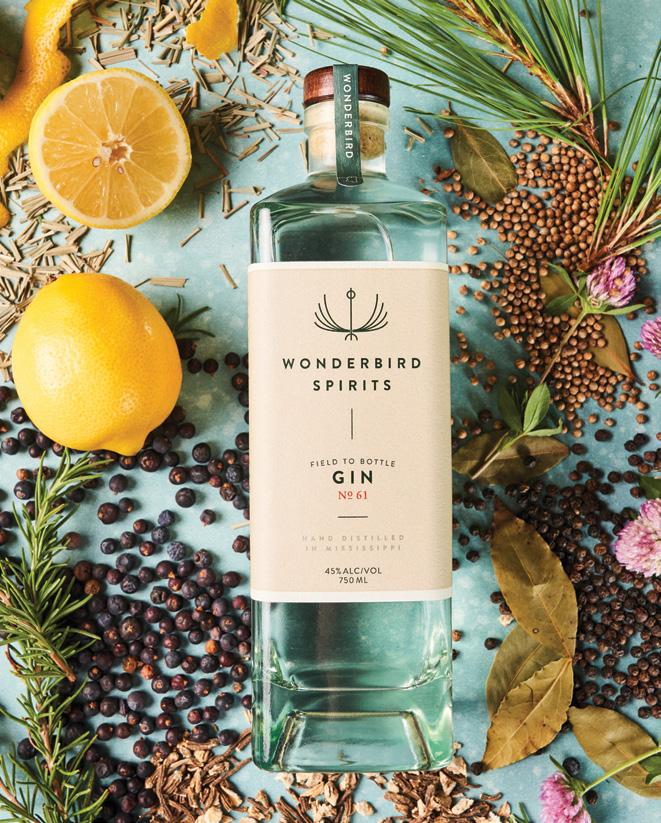
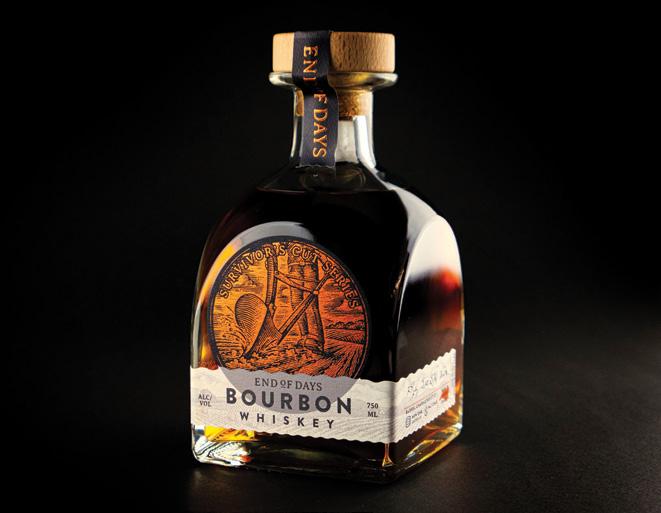
We’re a branding and design agency built to show brave brands a way forward. We deliver strategy, storytelling and package designs that move products off shelves as fast as they’re stocked.
creaturetheory.com The soul is in the details.
 See more examples of our branding and label design work
Photography: Andrew Welch
See more examples of our branding and label design work
Photography: Andrew Welch
here in Minnesota we are focused on working hard together now that everything is opening up. We're also highlighting all of the distilleries
using local grain fruit and botanicals. This will be our third year at the Minnesota State Fair, so a huge shout out to our president Mark
Schiller, and our state fair team that makes it happen every year.
Gina Holman
J. Carver Distillery, Founding Partner American Craft Spirits, VP Minnesota Distillers Guild, VP Minnesota Distillers Guild, Legislative Chair
MISSOURI
MISSOURI CRAFT DISTILLERS GUILD
The Missouri Craft Distillers Guild, found ed by five distilleries in 2018, is 39 members strong four years later. In March 2022, mem bers from 26 distilleries attended the annual meeting in Kansas City, hosted by Restless Spirits, J. Rieger & Co., and Tom’s Town Distilling Co. Industry ally members, and representatives from the Missouri Division of Alcohol and Tobacco Control and DISCUS attended as well. Elections were held, and the current board of directors responsible for promoting and advocating for Missouri’s growing craft distilling industry are listed to the right.
MCDG is ready to publish its third annu al Missouri Spirits Expedition brochure, an
MISSOURI CRAFT DISTILLERS GUILD BOARD OF DIRECTORS
Lynn DeLean-Weber, PRESIDENT Edelbrand Pure Distilling, Marthasville
Ryan Maybe, VICE PRESIDENT J. Rieger & Co., Kansas City
Sarah Miller, TREASURER & FINANCE COMMITTEE CHAIR Switchgrass Spirits, St. Louis
Tara Steffens, SECRETARY
Pinckney Bend Distillery, New Haven
Keith Hock, MEMBERSHIP & EDUCATION COMMITTEE CHAIR
Copper Run Distillery, Branson West
Van Hawxby, LEGISLATIVE COMMITTEE CHAIR DogMaster Distillery, Columbia
Brandon Eckardt, MARKETING COMMITTEE CHAIR Naked Spirits, Brentwood
experience that takes visitors across Missouri to meet its family-owned distillery mem bers and explore the spirits they love creating. Coming up in September, the 2022 ADI Conference is being held in St. Louis for the very first time. MCDG members will host the Welcome Tasting as part of the kickoff and unveil its new branding: Missouri –The Heart of American Craft Spirits. We are indeed excited to have our distillers gath er together to shine a bright spotlight on the vibrant craft distilling scene in our state.
Lynn DeLean-Weber President, Missouri Craft Distillers Guild Edelbrand Pure Distilling, Marthasville
NEW YORK
NEW YORK STATE DISTILLERS GUILD
The New York State Distillers Guild notched a significant public policy win this summer with the passage of a bill that creates parity within the craft beverage community by extending tasting room privileges to all distiller license classes. Before the passage of this bill, only products produced with New York agricultural products could be offered for sale in tasting rooms. This means a dis tillery that, for example, produces rum or gin made from out-of-state GNS can for the first time taste and sell on- and off-premise any spirit they produce.
The new law also reduces monthly price
posting requirements to annually. This signif icant win has been a priority for the guild for the past six years.
This fall the guild will build on this legis lative victory with a renewed push for di rect-to-consumer shipping. Like many states, during the pandemic New York allowed DTC shipping, which was a huge benefit to craft distilleries and demonstrated that other sales channels were not impacted by DTC ship ping. Since those privileges were rescinded, we have been working to enact permanent DTC in New York. This effort will include a coordinated effort by our members to turn our consumers into advocates for legislative change, as well as support from our national partners at ACSA and DISCUS.
The guild will also continue to press for equal tax treatment with other beverage manufacturing classes under the Alcoholic Beverage Production Credit.
On the marketing side, the guild is wrap ping up a year-long effort to help all our mem bers tap into guild online resources including listings on NYDistilled.com and guild social media channels (@nydistilled).
The guild is proud of its roughly 100-dis tillery membership representing the whole state and a wide range of world-class distilled spirits. Our distilleries are in cities, small towns, and rural areas. Please contact us at NewYorkStateDistillersGuild@gmail.com if you would like to join our community as a distiller or as a sponsor.
Teresa Casey Executive Director, New York State Distillers Guild
28 WWW. ARTISANSPIRITMAG .COM
NORTH CAROLINA
DISTILLERS ASSOCIATION OF NORTH CAROLINA
The Distillers Association of North Carolina congratulates Artisan Spirit Magazine for its 10th anniversary celebra tion! Cultivated Cocktails, my family’s distill ery, is also celebrating our 10th anniversary in business in 2022. Our longevity in the distill ing industry and overall success occurred be cause DANC’s advocacy for North Carolina’s craft distilling industry significantly improved business conditions for distilleries.
When we started our family business in 2012, North Carolina state law allowed dis tilleries to manufacture spirits and sell our products at wholesale to local ABC Boards and exporters in North Carolina. We could offer visitors free tastings of our products, but
they could not purchase our products direct ly. We had to send them to a local ABC store to buy our spirits. Despite these limitations, my family still opened a distillery!
Fast forward to 2022. We have expanded our business to two locations that include our production distillery and a tasting room/dis tillery that serves most of our visitors. At our tasting room, consumers can learn about our distilling process and receive a free tasting. As a result of DANC’s hard work advocating for our industry, consumers can now purchase our spirits directly from us with no bottle lim itations and on Sundays and holidays when ABC stores are closed. They can try our prod ucts in a cocktail, in our lounge, and learn how to create cocktails with our products at home. We can offer free consumer tastings at special events outside our distillery and ABC
stores which allow us to introduce our prod ucts to consumers who do not have an op portunity to visit our distillery. We can ship our products directly to consumers in other states where permitted by law (not in North Carolina). The legislature recently authorized distilleries to receive a mixed beverage cater ing permit which means we now can serve our spirits at catered events.
DANC’s advocacy for improving business conditions and reducing unnecessary regula tions is why North Carolina’s craft distilling industry continues to grow. By the end of 2022, North Carolina will have over 100 dis tilleries operating across the state. To support that growth, DANC is looking forward to the next 10 years and will focus on promoting our industry and advocating for improving busi ness conditions.
SOUTH CAROLINA
SOUTH CAROLINA CRAFT DISTILLERS GUILD
The South Carolina Craft Distillers Guild (SCCDG) is pleased to announce that it was able to provide its members with a massive legislative win during last year’s legislative ses sion (January 2021-May 2021). This victory allows South Carolina’s distilleries to include a restaurant, separated from the production side, which can serve unlimited quantities of its own product for on-site consumption and increased the number of bottles distilleries could sell directly to a consumer from three to six 750 mL bottles. In addition, the restau rant can serve food and other alcoholic prod ucts via a wholesaler. This win was possible due to the SCCDG engaging with
Sweatman Strategies Government Affairs, which led the guild in 2021 at the state house in successfully passing this legislation. The bill passed with bipartisan support on May 4 and became law when South Carolina Governor Henry McMaster signed it into law on May 17, 2021.
The guild decided to immediately build upon its victory by also retaining Sweatman Strategies for its association management. In six short months, the guild has accelerated membership growth, activity and participa tion with well-attended quarterly member ship meetings and a legislative reception. In addition, the SCCDG made significant updates to its website, and with all the re cent achievements and activity,
the Guild has also attracted affiliate members.
The South Carolina Craft Distillers Guild is excited to announce that it will be hosting its first ever trade show at our fourth quarter, full membership meeting on November 10, 2022, from 1 p.m. to 7 p.m. at High Wire Distilling in Charleston, South Carolina.
Learn more about SCCDG's upcoming event
Scott Blackwell President, South Carolina Craft Distillers Guild
Leah Howard
President, Distillers Association of North Carolina, CEO, Cultivated Cocktails
IS YOUR GUILD OR ASSOCIATION MISSING? Don’t miss out on this opportunity to reach a national audience of distillers and suppliers! Share your latest victories, recruit supporters, request suggestions to solve your latest challenges, and inspire fellow groups. EMAIL BRIAN@ARTISANSPIRITMAG.COM TO GET INVOLVED!
30 WWW. ARTISANSPIRITMAG .COM
BOOTSTRAPPING YOUR BRAND
WHAT YOU REALLY NEED TO HAVE FOR LAUNCH
With so many moving parts leading up to launching a new brand, it’s easy to get overwhelmed by next steps, logistics, and costs.
The road to launching a new brand is like riding a train: When everything is on track and run ning smoothly, your destination greets you with seamless speed and agility. When the train goes off the track or gets delayed, your journey can turn into a long and laborious trek, and in the worst cases result in absolute catastrophe.
BOOTSTRAPPING TIPS: THREE KEY BRANDING ELEMENTS
1 LOGO & PACKAGING
If your brand is the moving train, its packaging is the ticket. The logo and package are the first entry point into your world for the consumer. The way a package looks not only invites consumers to try your product, but it also reinforces its quality during consumption and assists with recall when your consumer wants to repurchase. Alcoholic beverage experts can act as a conductor and take a holistic ap proach to your launch while also getting granular; strategically realizing your vision while ensuring your precious time and money is never wasted on work you don’t like, and always adhering to regulatory standards.
2 WEBSITE
Eventually, you’ll want a fully built-out website that illustrates your brand’s story as well as your various offerings while allowing for quick purchases. But when you’re bootstrapping your launch, you at least need a landing page with contact information and a field for email list signups. While you can work with branding experts to de velop your initial landing page, you can easily create your own using WordPress, SquareSpace, Wix, and other DIY platforms. I recommend WordPress — it is a free, opensource content management sys tem that can easily allow your web site to grow as your needs increase, though it will take a bit more web site development knowledge to build on than would be required with a platform like SquareSpace.

BRAND BUZZ WRITTEN BY DAVID SCHUEMANN
WWW. ARTISANSPIRITMAG .COM 33
SOCIAL MEDIA

Every train needs passengers, and social media is a help ful tool to invite people along for the ride. Even before your brand launches, gaining traction with your target audience through photos and videos of your products and the peo ple behind them lets users get to know you and your brand well before their first sip. If you don’t have those yet, shar ing the development process can capture the soul of your brand and provide a fun inside look for users. You can also work with a branding firm to develop social media post templates for an overall ‘vibe’ that you can use to create a cohesive look — this can be done relatively inexpensively.
You’ve poured your soul into your brand, and its launch isn’t the end of your journey — it’s only the beginning. We can’t stress this enough — it’s never too early to start planning. Setting yourself up for success by having an organized, realistic plan for what you can manage on your own, and what you’d rather have a team help you with will help keep your train on its track. Choose strategic partners to help you set a clear road map, establish clear budgets, realistic timelines, and connect you to strong vendor partners you can trust. These will all be key in making your bootstrapped brand a huge success. All aboard!
David Schuemann is the owner and creative director of CF Napa Brand Design. For more information, visit www.cfnapa.com or call (707) 265-1891.

3
1 8 6 25 6 2 7 0 0 + 9 0 + V I S I T M O O N S H I N E U N I V E R S I T Y . C O M 34 WWW. ARTISANSPIRITMAG .COM
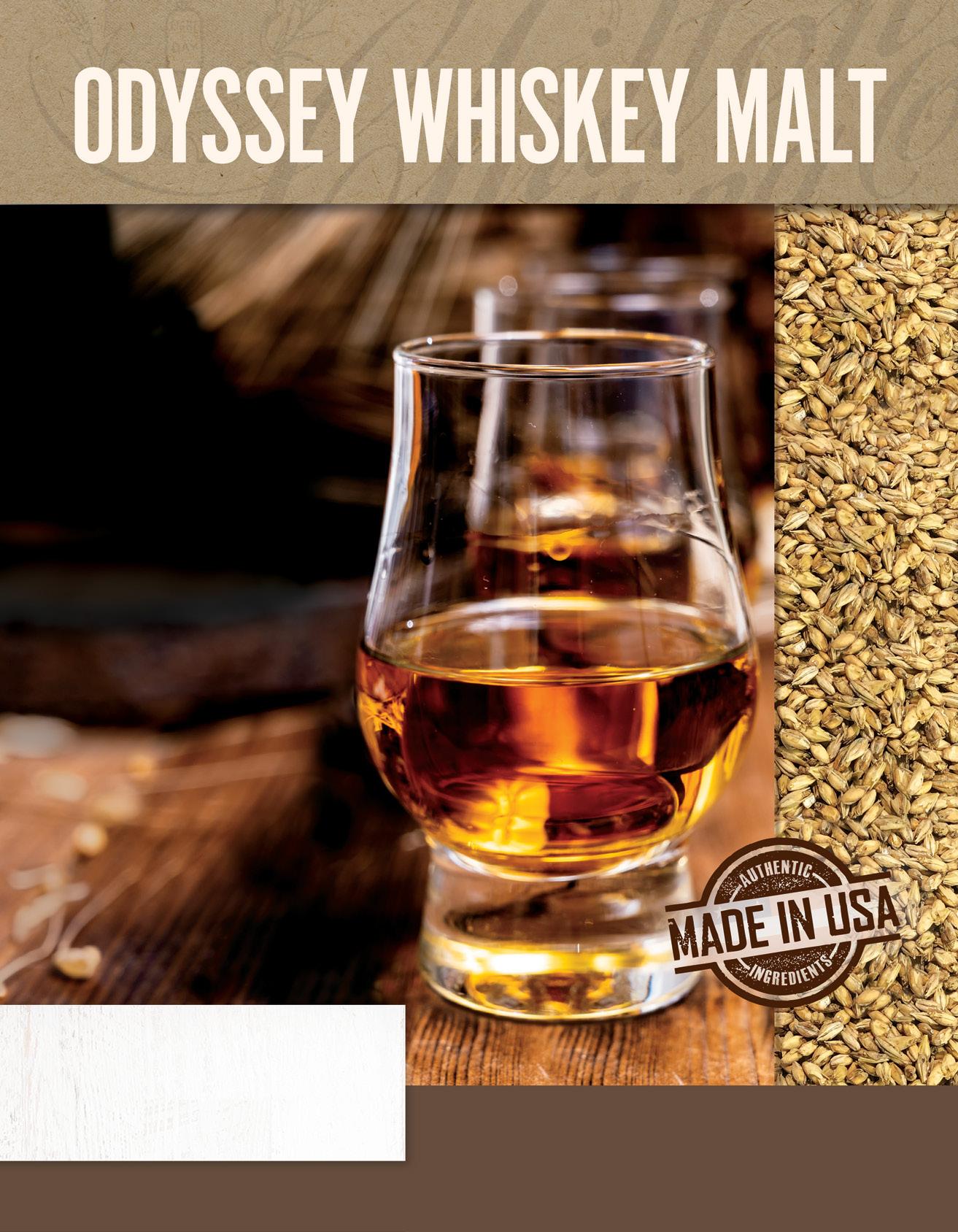
Non-GN, AMBA approved barley variety, assuring low levels of Ethyl Carbamate Predominant barley used to make single malt Scotch Sweet & bready, with notes of honey Available in whole kernel and flour Learn more about this whiskey malt at BrewingWithBriess.com/Odyssey ©2022 Briess Industries, Inc.

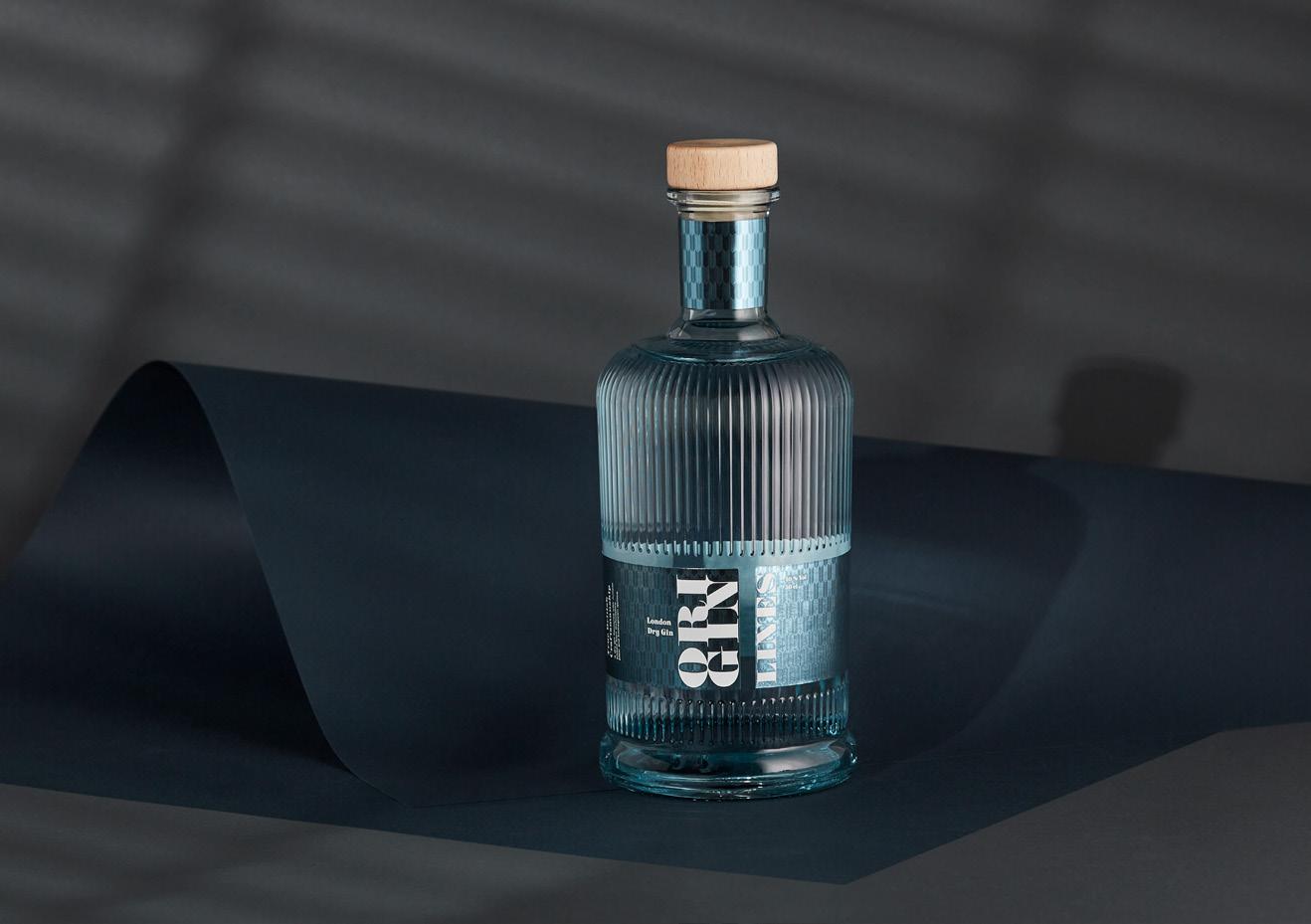
WHEN GLASS IS A TASTE EXPERIENCE. BY YOUR SIDE, SINCE 1994. Vetroelite Inc T: +1 646 559 0674 T: +1 (518) 984 3178 www.vetroelite.com ORIGIN LINES - VETROELITE ∧ SELF PROMOTION
S

ulfur compounds are of particular con cern in neutral spirits (e.g. vodka) as they can be detected easily because of the lack of other aromatic compounds usually found in gin and barrel aged spirits. In the distilling industry, there are many organic sulfurous compounds that can contribute to sensory faults. The three compounds that receive the most attention are the dimethyl sulfides, namely dimethyl sulfide (DMS) and dimethyl disulfide (DMDS), and meth yl mercaptan (MeSH). These compounds have low sensory thresholds, which means that their presence, even in low concentra tions, can have significant impacts. The sen sory thresholds for these compounds have been measured in wine and are 25 parts per billion (ppb), 29 ppb, and 3.1 ppb respective ly.1 It can be reasonably assumed that these threshold values would be even lower in a neutral spirit. Methyl thioacetate (MTA), a common compound created during fermen tation,2 is a thioester formed from acetic acid and methyl mercaptan, which has a sensory threshold of 50 ppb in wine.1 This compound is much harder to detect compared to the aforementioned compound. However, the problem arises when MTA naturally breaks down via a reduction reaction (Figure 1) into MeSH over time in a bottle of finished spirit.
This phenomenon has been studied in wine, which showed “[MTA] contributed signifi cantly to free MeSH concentrations in the wines post-bottling.”3
This is an order of magnitude shift in the sensory threshold limit. MeSH is a strong nucleophile, which often is oxidized to yield DMDS. Clean spirit that was put into the bottle would, over time, turn into a spirit no consumer would want. This is the issue that was discovered in the first few batches of vod ka produced at the distillery.
FIGURE 1: Reaction pathway of methionine to MeSH, MTA, and DMDS.
In the distilling industry, there are many organic sulfurous compounds that can contribute to sensory faults.
GOOD GUY DISTILLERS WRITTEN BY DAVID LETTENEY METHYL THIOACETATE GENERATION AND CONTROL IN DISTILLATION PROCESSES THE SCIENCE OF SULFUR Methyl Thioacetate Methyl Mercaptan DMDS Methionine H2S Reduction Oxidation Oxidation Reduction + Acetic Acid
WWW. ARTISANSPIRITMAG .COM 37
Before bottling any spirit, it is the role of the quality assurance department to assess the sensory characteristics of a spirit using a sensory panel. A sensory panel is a group of personnel trained to look for sensory faults in a spirit, and to determine if the spirit is true to brand. When the sensory analysis was con ducted prior to bottling those first batches, no faults were found, thus the spirit was ap proved to be bottled. It is standard protocol for another sensory panel to be conducted 72 hours after bottling, so ensure that the spirit has not changed as a result of the bottling pro cess, and is permitted to leave to facility for distribution. This 72 hour check also passed, and the vodka was sent out into the market. Six months later a bottle was checked ran domly and it was found to have a major sen sory fault. The complex sweet vanilla and cus tard notes had subsided to a mixture of garlic, cabbage, and halitosis. Immediate action was taken to pull back the spirits from the market, and to investigate the cause of this major sen sory change over a relatively short period of time.
The investigation began by having ana lytical testing done on the bottled vodka to determine the concentration of sulfur containing compounds. Ten common sul fur-containing compounds were quantified using GC-SCD (gas chromatography - sulfur chemiluminescence detector) by ETS labora tories on the first few lots of vodka. DMDS was found in 34-61 ppb range and MTA was found in the 173-411 ppb range, which could
only be estimated because it was outside the calibration curve range. There are many factors that contribute to these high values, lengthy fermentation times were discovered as being a crucial one (fermentation factors will be discussed shortly). After finding out that MTA (and its subsequent breakdown) was contributing heavily to the sensory fault, research was conducted to determine the genesis of MTA in spirits.
When designing the vodka profile for our distillery, we landed on a mash bill of 100 percent oats for various reasons; the coat ing mouthfeel, previously mentioned sweet vanilla and subtle custard notes, and unique overall qualities were a few. There was also not another distillery in the market who was distilling vodka from 100 percent oats, the reasoning for which was yet to be discovered.
There are many amino acids which are re quired by yeast for a healthy fermentation, one of which is called methionine. Table 1 depicts how methionine is found in relative abundance in oats (compared to common grains used for neutral spirit production), which presents yeast with the precursors needed to produce large amounts of MTA.4 Although we saw the highest levels of MTA created in the high oat mash bills, it was also
found in other spirits tested, including spirits that do not include oats in the mash bill. This discovery contributed to the investigation of fermentation health and length, which was found to be a significant factor in the creation of MTA.
Control of fermentation is paramount when investigating the genesis of sulfur cre ation. A healthy fermentation can minimize the amount of sulfurs created by yeast even in the presence of methionine. “Yeast me tabolism and yeast nitrogen nutrition are the major sources for [sulfur compounds, such as MTA] formation.”2 Yeast under stress will create more sulfurous compounds, so pa rameters such as pitch rate, starting gravity, enzyme use, and fermentation times were examined. The original batches had been al lowed to ferment for a minimum 12 days and a maximum of 27 days. It has been demon strated that allowing fermentations to sit at terminal gravity encourages the coloniza tion of the wort by bacteria. These bacterial strains will feed off the remaining sugars to create complex congener loads, which can be useful. For more complex spirits that use ag ing techniques, having the organic acids that are produced by certain bacterial strains can add depth to a spirit. One of the organic acids that is formed is acetic acid, which is used in the oxidation of MeSH to form MTA. These bacterial strains can also produce some of the same sulfur compounds that have been dis cussed. For this reason, fermentation times were minimized to four days, in order to limit the bacterial infection rates, minimize acetic acid formation, and keep the yeast in an unstressed fermentation state in order to minimize the metabolic pathways that lead to sulfur compound creation. A testing protocol was designed to measure sulfur generation during fermentation and removal during dis tillation. Fermentation samples were taken daily and analyzed for sulfur content. There was a noticeable trend during fermentation of a near linear increase of sulfur compounds from days one through three, which was
Day 1 Fermentation Day 2 Fermentation Day 3 Fermentation Low Wines Spirit Sample methyl mercaptan dimethyl sulfide dimethyl disulfide methyl thioacetate 180 160 140 120 100 80 60 40 20 0 FIGURE 2: Average sulfur generation during production. Wheat g/100g Barley g/100g Oats g/100g Corn g/100g Brown Rice g/100g Methionine 0.230 0.190 0.312 0.197 0.179 TABLE 1: Methionine content in common grains5 ppb 38 WWW. ARTISANSPIRITMAG .COM
more supporting evidence that these com pounds were being created by yeast.
After fermentation concludes, distilla tion is required to obtain the final product. Distillation has both advantages and disad vantages. The main advantage of distillation is the use of sensory for making cuts so that minimal amounts of sulfurous compounds are collected in the final product. The main disadvantage is that distillation concentrates nearly all congeners by the removal of wa ter and grist, thus allowing a proportionally higher amount of sulfurous compounds to potentially end up in the final product. This principle is shown clearly in the sulfur analy sis that was conducted on the spirit after the initial “low wine” distillation. Each of the compounds were concentrated significantly, which corresponded to the increase in eth anol content, from about 10% to about 40%. Having such high concentrations for sulfur compounds in the low wines meant very careful attention had to be paid to heads and tails cuts during the final distillation. Some of
REFERENCES:
1. Sensory threshold for DMDS and MTA https://www.awri.com.au/industry_support/ winemaking_resources/storage-andpackaging/pre-packaging-preparation/ removal-volatile-sulfur-compounds/
2. Wegmann-Herr P, W. P, Ullrich S, U. S, & Durner D, D. D. (2019). Approaches to limit S-offflavors during white wine fermentation with specific emphasis on yeast nitrogen nutrition. BIO web of conferences, 15, 02029. doi: 10.1051/ bioconf/20191502029
TABLE 2: Averages
Methyl Mercaptan (ppb) Dimethyl Sulfide (ppb) Dimethyl Disulfide (ppb)
Methyl Thioacetate (ppb)

Day 1 Fermentation 13.8 6.8
Day 2 Fermentation 1.9 34.7 51.8
Day 3 Fermentation 3.2 38.7 70.4
Low Wines 42.8 20.7 164.5
Spirit sample 3.9
the sulfur compounds have vapor pressures similar to the water ethanol mixture, such as DMS, which can be carried over with the hearts cut.6 Others have very low vapor pres sures, such as DMDS and MTA, which would boil after ethanol and remain in the pot with the rest of the tails fraction. As depicted in Figure 2 and Table 2, the distillers were able to make the appropriate cuts in order to mini mize, and all but eliminate the sulfurous com pounds of concern.
Although the control of these compounds through distillation has been exercised, many more avenues of research are being looked
into to control the generation of them. Trials are being conducted to determine how pitch rate, exogenous nutrients, and enzyme use can be fine tuned to minimize their produc tion. The understanding of what parameters can be adjusted to maximize the quality of a fermentation is of utmost importance in neu tral production. Using analytical equipment like GCMS, our distillery is actively research ing to provide insight into such issues.
David Letteney is quality assurance technician at Bently Heritage Estate Distillery.
3. Bekker, M. Z., Wilkes, E. N., & Smith, P. A. (2018). Evaluation of putative precursors of key “reductive” compounds in wines postbottling. Food Chemistry, 245, 676–686 doi:10.1016/j.foodchem.2017.10.12310.1016/j. foodchem.2017.10.123
4. Production of s methyl thio acetate from methyl mercaptan by brewers yeast. Matsui S I.; Amaha, M. Agricultural and Biological Chemistry 45(6): 1341-1350 1981 https://eurekamag.com/ research/006/193/006193053.php
5. U.S. Department of Agriculture. 2011. USDA national nutrient database for standard reference. http://ndb.nal.usda.gov/ Accessed January 30, 2015.
6. Demoranville, L., & Heist, P. (2021, August 5). The Chemistry of Bourbon. AIChE. Retrieved February 22, 2022, from https://www.aiche. org/resources/publications/cep/2021/august/ chemistry-bourbon
TTB Compliant Model XF460HP Volumetric Filler
WWW. ARTISANSPIRITMAG .COM 39




Executive Order Aims
Competition
DISTRIBUTING the COMPETITION AMONG DISTRIBUTORS
DISTRIBUTING the COMPETITION AMONG DISTRIBUTORS
Last year, the Biden Administration (Administration) issued an executive order that could great ly affect the alcohol beverage industry.1 The underlying premise of the executive order is to promote competition in several in dustries, including the alco hol beverage industry. The Administration contends that promoting competition will allow smaller companies to better compete in the market. Then in February of this year, the Treasury Department released a report2 discussing patterns of consolidation in alcohol beverage markets, and proposing various recommendations.
The findings of the report indicate two major trends within the industry. First, the number of small beer, wine, and spirits produc ers are growing significantly. Second, the beer, wine, and spirits in dustries are experiencing consolidation at various levels. All three industries are becoming consolidated at the distribution and retail levels and the beer industry is also experiencing consolidation at the production level. As a result, the Treasury issued various rec ommendations to address concerns stemming from these trends.
Horizontal Consolidation.
The first key concern the report addresses is the trend of in creased horizontal consolidation. Consolidation at both the prod uct and distribution stages has led to increased market power for larger firms. This has made it harder for smaller firms to compete. Larger brewers have also been gaining market power by acquiring smaller, craft breweries. As a result, the Treasury encouraged the Justice Department (DOJ) and the Federal Trade Commission (FTC) to examine the effects of horizontal consolidation through a more skeptical lens. As a result, you will likely see a decrease in the number of acquisitions and mergers specifically in the pro duction and distribution sectors. The Treasury also recommend ed that the DOJ and FTC consider conducting a retrospective on pricing, innovation, and distribution impacts from acquisition of craft brewers. It is also possible you will see revised merger guide lines especially for markets experiencing greater concentration.
1 https://www.govinfo.gov/content/pkg/FR-2021-07-14/pdf/2021-15069.pdf
2 https://home.treasury.gov/system/files/136/Competition-Report.pdf
Exclusionary and Anticompetitive Activity.
The report also addresses concerns of exclusionary and anti competitive behavior on behalf of the larger players. This exclu sionary and anticompetitive conduct includes the use of category management practices and tying arrangements.

Category management practices encompass a retailer’s pur chasing, stocking, and display decisions. While the Alcohol and Tobacco Trade Bureau (TTB) indicated in 2016 that these prac tices could lead to a violation, category management practices are still common in the alcohol beverage industry. The report pro posed that the TTB strengthen their 2016 ruling on category man agement and focus additional enforcement efforts to prevent these arrangements.
Tying arrangements typically allow wholesalers to require retail ers to buy their less popular brands as a condition of buying their more popular brands. Tying arrangements can make it difficult for smaller companies to get their brands into retail locations because larger brands have the capital to take up more space on the shelf. These arrangements also impact the retailer because retailers have less power to decide how to stock their shelves. The TTB current ly considers tying a violation, however it is rarely enforced. In its report, the Treasury recommends increased enforcement of tying arrangements to reduce their anticompetitive effects. Therefore, you will likely see greater enforcement of both category manage ment practices and tying arrangements going forward.
Another practice within the industry that affects competition in volves labeling. The TTB has created various labeling requirements to protect consumers. Complying with these requirements can be costly, especially for smaller firms, and can affect their ability to compete in the market. The Treasury recommends the TTB reexam ine its labeling rules to reduce or eliminate regulatory requirements
Written by CHLOE FISHER & COREY
to Compel
DAY
WWW. ARTISANSPIRITMAG .COM 41
that create compli ance costs, barriers to entry, and burdens to smaller businesses.


Enforcement.
The Treasury also indicated great concern over the TTB’s enforcement of exclusionary be havior. The TTB currently has discretion in their en forcement tactics. This discretion has allegedly led to the underenforcement of larger members within the industry. The Treasury recommended greater enforcement against larger players that are involved in anticompetitive conduct, so the TTB might begin to crack down on larger companies. It is also recommended that the TTB uses its enforcement discretion to soften enforce ment against smaller companies and those with less market share. This means that while enforcement of stronger market players may increase, there might be more leniency with smaller companies. Although the report suggests some potential effects of the exec utive order, even more changes may come from state legislatures. Since the 21st Amendment was ratified to end Prohibition, states have played a key role in the alcohol market. The Treasury’s report urges state legislatures to consider whether the three-tier system is
still effective. While not doing away with the three-tiered system, this report suggests states use that ability to decide to eliminate it. It also urges states to amend franchise laws because they have anticompetitive effects. The report also urges state legislatures to consider the direct-to-consumer distribution model. The report’s recommendations to state legislatures will purportedly make it easier for small producers to enter and compete in the market if state legislatures adhere to these recommendations.

While this report hints at the potential effects of the executive order, we will ultimately need to wait to see what enforcement agencies and state legislatures will do to know the true effects.
DISCLAIMER : This article is intended to be a source of general information, not an opinion or legal advice on any specific situation and does not create an attorney-client relationship with our readers.
Chloe Fisher is a student at McGeorge School of Law. While in law school, she became interested in alcohol law and took a class on Craft Beer Law. You can reach her at c_fisher4@u.pacific.edu.
Corey Day is an alcohol beverage attorney and litigator at Stoel Rives LLP and can be reached via email at corey.day@stoel.com or by phone at (916) 319-4670.

fermentis.com THE OBVIOUS CHOICE FOR RUM SafSpirit™ RUM AND TEQUILA S af S pirit ™ C-70 HIGH GRAVITY FERMENTATION S af S pirit ™ HG-1 RUM, SCOTCH AND SINGLE MALT WHISKEY S af S pirit ™ M-1 Join us at ADI, Booth #427 42 WWW. ARTISANSPIRITMAG .COM





www.corsairdistillery.com/bulk 615-351-9442 OUR NEXT AWARD WINNING SPIRIT, COULD BE YOURS New Fills Custom Mashbills Contract Distilling & Bottling CORSAIR DISTILLERY
Brewers and dis tillers have always shared similar equipment and techniques. Indeed, many distillers comment that the first step in making good whiskey is to make good beer. Despite this connection, there is one vital tool in the brewer's toolbelt that seems to have been overlooked by many distillers for more than a century. I am, of course, referring to the mash fil ter — a piece of equipment that is per haps a brewer’s best means for produc ing fermentable wort, off-grain.
distinct zones, the first is for mash and the second is for filtered wort.
These zones are separated by a fine filter, made of either cloth or polyeth ylene.5 The mash zone also contains an inflatable membrane which, when inflated, squeezes the contents of the mash up against the filter. This allows for a very fine grist — much finer than typical brewer’s or distiller’s roll er-milled grist — to be used because the filter will not allow any particulate grain through.
MASH FILTERS MASH FILTERS AREYOUR FRIEND
First invented in 1901 by Phillippe Meura, a Belgian brewing engineer, mash filters are a common sight in both small and large breweries around the world.1 Indeed, by some estimates roughly 25 percent of the world’s beer is produced using a mash filter, with such producers as Guinness, Goose Island and Chimay all utilizing them.2,3,4 Part of the reason for their ubiquity is the unde niable advantages that mash filters have to offer. Compared to more traditional lauter tuns, mash filters are far more ef ficient at producing large amounts of bright, fermentable wort in a very short period of time. So, what is a mash filter and how does it work?
Part of the reason mash filters are so efficient is due to their ingenious design. Mash filters take advantage of Darcy’s law, which is used to calculate the flow of a liquid through a porous medium. Darcy’s law states that by increasing the amount of surface area of a medium the flow rate of liquid through it will also be increased. Rather than having only the surface of the grain bed in a classical lauter tun with a space below to allow for run off, a mash filter sandwiches smaller amounts of mash between several se quential filter plates, thus increasing the overall grain surface area.2
A standard mash filter is made up of a set number of plates, usually between 10 and 60, that are placed in a horizon tal stack and squeezed together by a hy draulic press — not unlike a standard plate and frame filter.4 Each plate has two

Operating a mash filter requires spe cific training; however, once an operator has learned the requirements, they can produce consistent results at astonishing speeds. Each product that is produced with a mash filter will require a specific procedure, though all SOPs follow the same basic steps. The first step in operat ing a mash filter is the pre-warming step.
If a filter is either being turned on for the first time or has not been in operation for a certain period, it is vital that the filter be brought to a warm enough temperature that it does not inadvertently cool the mash that it is about to filter. To accom plish this, hot water is flushed through the entire system until the filter equili brates to an acceptable temperature, nor mally between 50-55°C (122-130°F).2
After the filter is sufficiently warmed, the plates are then filled from the base with mash at a set speed. Once full, the first wort will begin to filter through the plates and a filter bed of grain particu late begins to build up on the filters. In order to keep a consistent flow rate of filtered wort, the pressure at which mash is filled into the plates is increased until all the mash has been sent to the mash filter and a large bed of grain particulate has been developed. At this point, the air membranes are inflated to roughly seven PSI. This step, which is known as pre-compression, does not squeeze the grain bed but rather removes the last of the first wort and helps to homogenize the grain bed by reducing porosity.2,4,5
Once the collection of the first wort has slowed, it is time for sparging. Sparging is split into two distinct parts. During the
A HUMBLE BREWERS' TOOL
WRITTEN BY READE A. HUDDLESTON, MSC.
first part, hot water is pumped into the filter at a set rate and pressure while the air membranes are slowly deflated. This ensures that the grain beds remain in tact, and no channeling develops. Once the bags are completely deflated sparge water is then pumped through at an ev er-increasing rate to help maintain the rate of wort collection. Once the wort being collected has dropped below a set gravity, it is time for the final step: com pression. During compression, water is no longer pumped into the filter, and the air membranes are inflated to their maxi mum amount. This squeezes the last bits of wort out of the grain bed, leaving a rel atively dry cake that simply falls out of the filter once it is opened.4,5
As mentioned previously, mash fil ters are incredibly good at what they do. Thanks to their processing speed, a standard mash filter can produce rough ly 50 percent more mash per day than a similarly sized lauter tun. Their ability to handle hammer milled grain also al lows much more thorough recovery of fermentable sugars compared to a laut er tun; with most extract efficiencies clocking in between 98 percent and 99 percent. That means that a facility that was once producing a maximum of eight mashes per day with a lauter tun could make 12 mashes in the same amount of time with less grain when using a mash filter.
WWW. ARTISANSPIRITMAG .COM 45
There are some downsides to mash filters. First off, mash filters tend to be far more ex pensive to buy and install than the standard lauter tun.5 They are also more complicated to operate and typically require automation — especially when multiple different types of mashes are to be produced. Finally, they are far less flexible than traditional lauter tuns because they can only operate within very specific parameters. For example, a mash filter cannot efficiently operate if the mash charge drops by more than 20% in volume or if the milling specifications for a grain change too drastically, whereas these are not serious problems for a traditional lauter tun.5,6
Although mash filters are still relatively rare in U.S., partially because of American distillers' penchant for fermenting on-grain, they have already been adopted by both craft and large-scale whiskey producers abroad. Jameson’s Middleton distillery fa mously has one, as does Arbikie in Scotland and Archie Rose in Australia.7,8 Arbikie even
used their mash filter to produce a highrye mash completely off-grain, something that would be unthinkable with a standard lauter tun.9 Currently, there are several dif ferent companies that produce mash filters for commercial facilities. Meura, which invented the mash filter, is easily the most prevalent, but it does have competition. Ziemann, Nortek, and Landaluce all pro duce their own mash filters that can be customized for different grain bill require ments.2 Who knows, as American distillers continue to try and push the boundaries, and as malt whiskey becomes more and more popular, perhaps mash filters will be come more common.
Reade A. Huddleston, MSc. in Brewing and Distilling, is a beverage industry consultant based in Tampa, Florida. He is fascinated with all things drinkable and is always searching for strange and forgotten spirits. If you would like to contact him about said spirits, or anything else, please email him at ReadeHuddleston@gmail.com.
REFERENCES
1. Meura, 2022. Corporate History. Available from < https://www.meura.com/corporate/history.html> [May 28, 2022]
2. Emmerson, 2001. District Presentation The Meura Mash Filter [Powerpoint Presentation] Available from <www.mbaa.com> [May 29, 2022]
3. Verive, J., 2017. Mash Filters: Down to the Very Last Drop. Available from < https:// brewingindustryguide.com/mash-filters-down-tothe-very-last-drop/> [May 29, 2022]

4. Aegir, 2021. District Presentation Mash Filter Brewing [Powerpoint Presentation] Available from <www.mbaa.com> [May 29, 2022]
5. Andrew, J. 2004. A Review of Progress in Mash Separation Technology. MBAA Technical Quarterly Vol.(41)1. Pp. 45-49.
6. McElevey, C.A. 1974. A Modern Mash Filter. MBAA Technical Quarterly. Vol.(11)4. Pp. 233-239.
7. Scotchwhisky.com. 2018. What’s a Mash Filter and how does it Work. Available from < https://scotchwhisky.com/magazine/ask-theprofessor/17361/what-s-a-mash-filter-and-howdoes-it-work/> [May 28, 2022]
8. Meura, 2022. Archie Rose Distilling. Available from < https://www.meura.com/news/ archierosedistilling.html> [May 28, 2022]
9. Buxton, I. 2022. Arbikie and Inchdairnie, the Scots Rye Revival. Available from < https:// www.masterofmalt.com/blog/post/arbikie-andinchdairnie-the-scots-rye-revival.aspx> [May 31, 2022]
Since we first began more than 15 years ago we have been satisfied Prospero customers. We’ve continued to go back to them for all of our production equipment needs. No matter the category, we are always met with unique and effective solutions. From bottling lines and packaging support equipment to brew houses and now distillation systems, Prospero offers solutions for our production needs. We congratulate them on 50 years of bringing innovative solutions to the craft beverage community, and we look forward to continuing to work with them.
SCOTT VACCARO Founder • Current Spirits
PROSPEROEQUIPMENT.COM
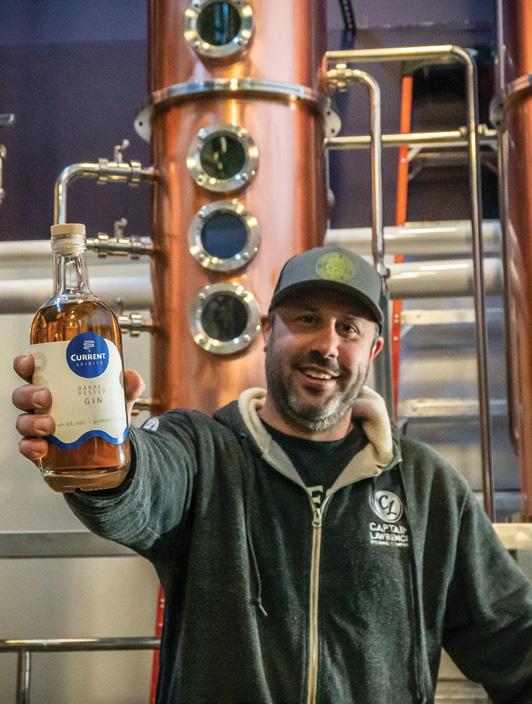
1-800-953-3736 info@prosperoequipment.com
46 WWW. ARTISANSPIRITMAG .COM

SPECIAL

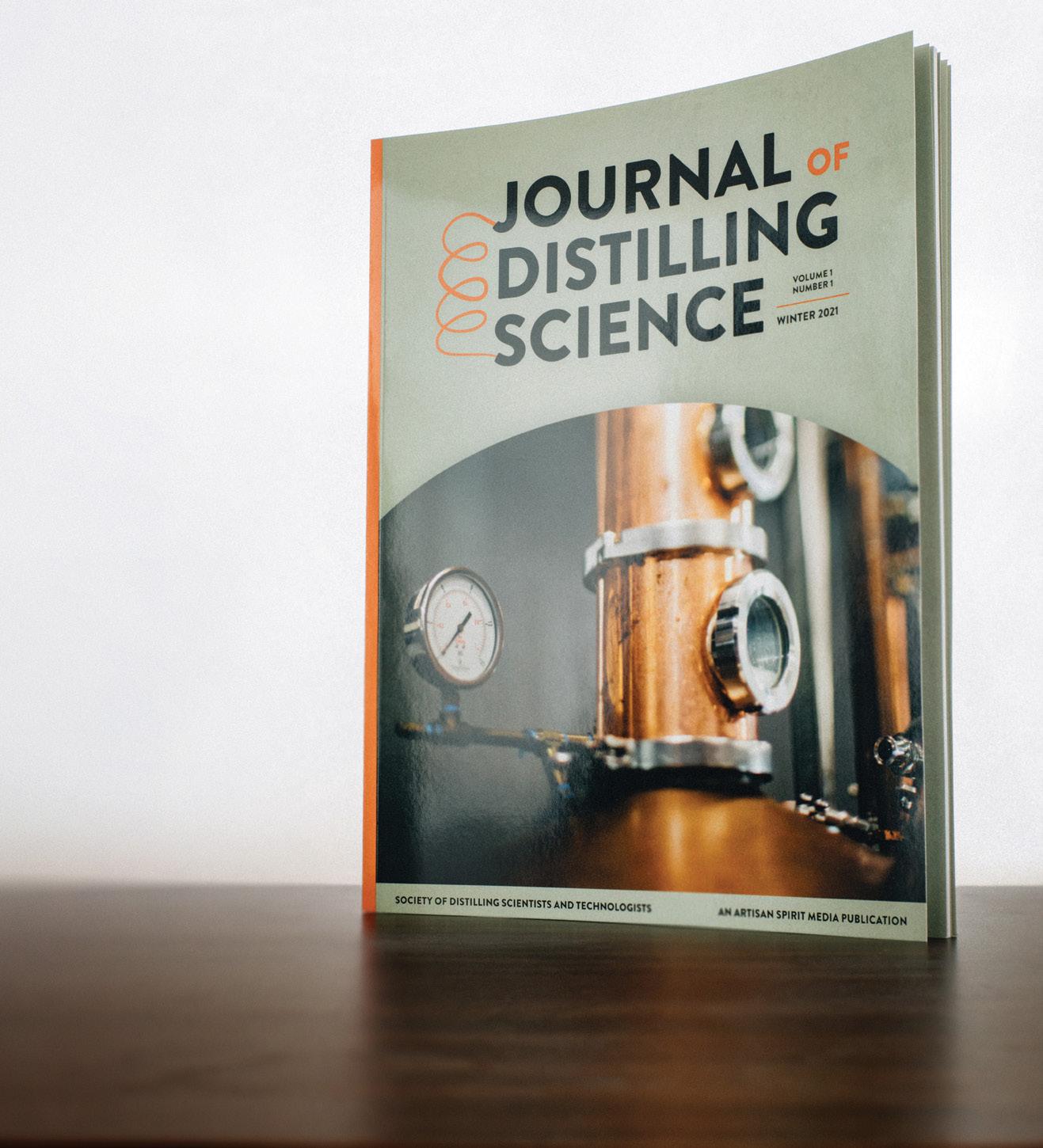
TO THE SPONSORS MAKING THIS POSSIBLE


THANKS
Peer-reviewed, original scientific papers • Reporting significant research • Technical reports • Applicable analytical techniques and methods • Reviews Scientific and technical disciplines applied to the distilling of high-quality, potable alcoholic beverages • Biology/microbiology • Chemistry/ biochemistry • Molecular biology • Physics and engineering International board members, contributors, and audience • Universities and colleges • Research institutes and industrial laboratories • Distilleries • Raw materials producers • Allied industries supporting the testing and quality control functions of distilling operations SIGN UP TODAY for access to the digital and print versions of the publication visit www.journaldistilling.com The FIRST EDITION of the peer-reviewed Journal of Distilling Science has arrived.
TRADEMARK APPLICATION CONSIDERATIONS
FOR ALCOHOL BEVERAGE BRANDS
Most craft distillers and alcohol bever age brands have come to appreciate the value in seeking trademark protection for marks that are used as brand names, spe cific product lines within a brand, the name of a craft distillery, or other alcohol-related offerings or services. Intellectual property is an important asset in every business, and like other valuable assets, many craft distilleries seek federal trademark registration to pro tect the reputation and goodwill that con sumers come to associate with a particular brand or distillery over time. Searching the United States Patent and Trademark Office’s (USPTO) and the Trademark Electronic Search System (TESS) is essential to con ducting a trademark clearance search to de termine whether there are any confusingly similar trademarks registered for the same or similar products and services. However, conducting a trademark clearance search and choosing to submit a trademark applica tion should not be the only considerations when seeking federal trademark protection, as application logistics are another import ant step in securing a trademark.
Once you have decided to proceed with a trademark application for a particular mark, it is also equally as important to adequate ly protect your trademark by ensuring that the scope of federal protection that your mark receives is fair, accurate, and provides you with the broadest scope of protection in relation to the types of alcohol beverages you produce and sell, or the types of services you provide. Therefore, choosing the proper
international class within which to register your trademark, as well as how you define the products and services that the trademark will represent is essential, since this will de fine the scope of federal protection afforded to your mark.
Choosing an International Trademark Class for Registering Goods and Services:
A trademark’s international classification provides information about the type of ser vice or goods that a trademark represents.
As of September 1, 1973, the internation al classification of goods and services, the “Nice Classification,” is the controlling clas sification system used in the United States.
Prior to registration, each good or service in a trademark application must be classified in its appropriate international class. For exam ple, distilled spirits and wine are classified under international class 33 and beer and other non-alcoholic beverages are classified under international class 32.
Choosing the international class for your
alcohol beverage brand, products, or ser vices for which you seek trademark protec tion is a rather straightforward decision; for distilleries, it usually comes down to a hand ful of options, such class 32 for beer prod ucts, class 33 for wine and distilled spirits products, class 35 for distillery start-up or incubation services, class 40 for distillery services, class 43 for restaurant or bar ser vices (state law permitting), and class 25 for t-shirts and apparel, commonly sold in dis tillery gift shops or tourist centers.
Describing Goods and Services Covered in a Trademark Application:
Upon choosing an international classifi cation, such as international class 33 which broadly encompasses all alcohol beverages except for beer, in some instances, the clas sification may be too vague to sufficiently identify and define the goods and services that the mark represents. Therefore, the USPTO provides a listing of pre-approved goods and services descriptions that can be found in the Trademark Next Generation ID
Written by ASHLEY HANKE
Many craft distilleries seek federal trademark registration to protect the reputation and goodwill that consumers come to associate with a particular brand or distillery over time.
WWW. ARTISANSPIRITMAG .COM 49
Manual (ID Manual), which is a helpful web-based application that provides users the ability to search for acceptable identifications of goods and services.
When drafting a goods and services description, it is important to remember that although you may be able to amend your description at a later date, you cannot amend the application to broaden the description of goods and services. You may be able to narrow a broad description, for example, by specifying “Brandy” instead of “Alcohol beverages except beer”, but the general rule is that you can not broaden the scope of an original identification of goods or services. Thus, it would not be possible to amend the goods and services description in a trademark application in class 33 from “Brandy” to the more generalized classification of “Alcohol bev erages except beer”.
It is also important to tailor your goods and ser vices description to products that you will actually produce, market and sell in commerce or services that you actually intend on offering to the public. Frequently, many trademark applicants are tempted to apply for “blanket” trademark protection in the broadest sense possible, however, whether you are already using the mark in commerce, or if you apply on an intent-to-use basis, it is important to keep in mind that you must ultimately provide a trademark specimen to the USPTO, which is a sample of your trademark as used in commerce. Trademark speci mens usually show evidence of the trademark being used as a source identifier used on or in connection with products and services at the point of purchase For example, photos of a bottle of gin bearing a product label containing the trademark at the point of purchase, i.e., on a retailer’s website checkout page, would likely be an acceptable specimen to prove use in commerce. Photos of a canned cocktail displayed in a cooler in a retail liquor store, with the trademark appearing on the label as either a specific coined product name or a brand name is another example of an adequate specimen to prove use in commerce. However, keep in mind that if you orig inally listed other specific types of alcohol in your goods and services description just to secure those specific types of alcohol in the event that you eventu ally branch out and produce or sell those additional products identified in your application, you would not be able to adequately prove use in commerce until you begin actually selling the specific types of products listed in your trademark application.
QUICK TIPS to Keep in Mind When Submitting a Trademark Application:
= When identifying products or services in a trademark appli cation, the USPTO prefers that applicants use preapproved descriptions when feasible. You can use the searchable USPTO Trademark ID Manual to search for listings of products and services and find pre-approved descriptions. Using preapproved descriptions of goods and services in your trademark application can also minimize unnecessary processing delays.
= You may have the opportunity to clarify, amend or narrow a goods and services description, but the general rule is that you cannot broaden the scope of an original identification of goods or services.
= In order to broaden the identification of goods and services used in connection with your trademark, you would need to file a new trademark application to cover any new services offered or products sold.
= Before a trademark for goods can be registered, proof of use in commerce is required for the specific goods listed in the initial application, which usually can be shown by providing evidence that the product is being sold within the United States in the ordinary course of business.
= An acceptable specimen for services must demonstrate how the mark is actually used in commerce in association with the ser vices listed in the application in a way that directly associates the mark with the services. For example, an acceptable specimen may consist of brochures or advertisements which show the mark and list the services offered, such as distillery contract production services.
Securing a distinct, source-identifying trademark, choosing the appropriate in ternational classification for your goods and services, and providing the USPTO with an accurate and complete identifi cation of your goods services are import ant steps in the trademark application
process, as they could ultimately impact the scope of federal trademark protec tion, and, in some instances, could make the difference between trademark regis tration or refusal of a trademark applica tion.
Ashley Hanke is an attorney at Malkin Law, P.A., a law firm serving the alcohol beverage industry. For more information, visit www.malkin.law, email ashley@malkin.law, or call (860) 394-7012.
Nothing in this article is intended to be and should not be construed as specific legal advice.
50 WWW. ARTISANSPIRITMAG .COM
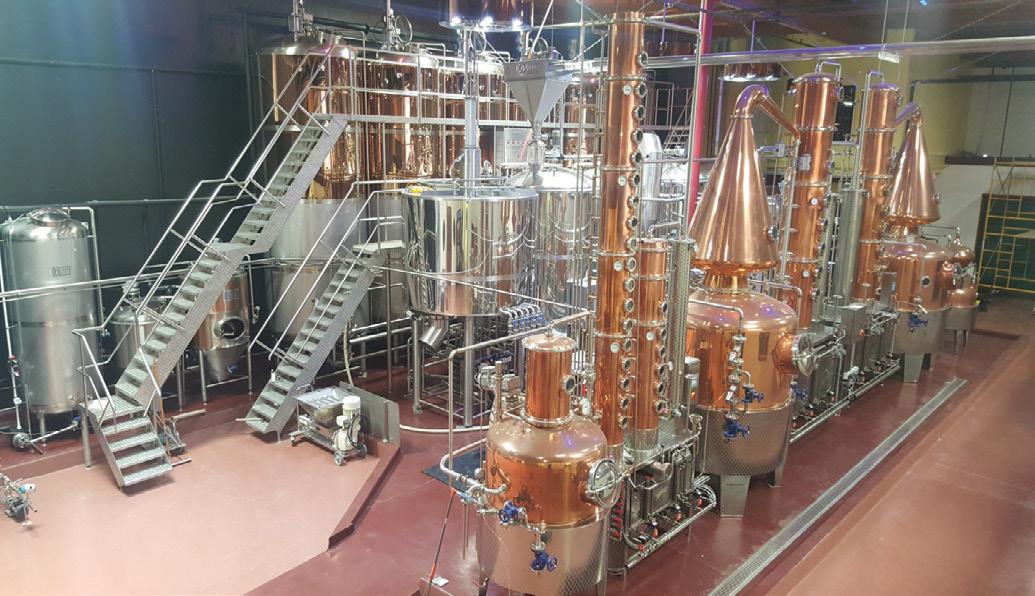
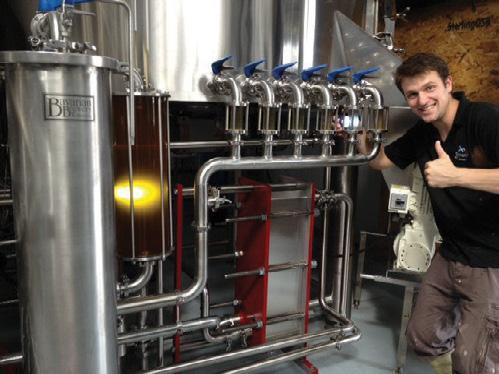
Bavarian Breweries & Distilleries A four-vessels mashing support system Efficiency is a matter of experience. We make your operation more efficient: - by providing higher yields, - by saving you ingredients, - by saving you labor, - by saving you time, - by helping you produce clean, crispy and tastier products, consistently. Our showroom, production and education center in Los Angeles Come and visit to see for yourself! offers individual stills, tanks or complete systems, automated or manual. For 30 years, Contact us: 8650 Hayden Place, Culver City, California 90232 - Telephone: +1 310-228-0905 Fax: +1 310-391-4530 - Email: LH@brewingsystems.com - www.brewingsystems.com WITNESS EFFICIENCY at Los Angeles Distillery. Operated by a single person. Design Capacity: 50,000 9L cases/year (8 hour shifts). Stills made by Arnold Holstein GmbH.
TEN
PRODUCERS REFLECT ON A DECADE or more IN CRAFT DISTILLING

IT 'S A PARTY, AND EVERYONE'S INVITED
Written by Margarett Waterbury
Artisan Spirit is turning ten — and like every big birthday, it’s sparked some reflection. To celebrate, we asked ten different producers who’ve all been in business at least ten years to share the accomplishments they’re most proud of, what they’ve learned over the past decade, and what advice they’d offer their younger selves and businesses.
CLEAR CREEK DISTILLERY
Hood River, Oregon
Caitlin Bartlemay, head distiller at Clear Creek Distillery and Joe O’Sullivan, master distiller at Hood River Distillers
If you had to describe the last decade of your business in one word, what would it be?
Caitlin: For the craft industry in general, the word I have is intrepid.
Joe: For craft in general, mine is solidarity.
What are you most proud of achieving over the past 10 years?
Caitlin: One hundred percent that I am the head distiller of Clear Creek Distillery. I got hired the day after my last final at Oregon State University.
I had this bright, shiny new bachelor’s degree in food science, and I was like, look at me! Then I spent
my first two days of real, have-a-degree work sorting sinkers from floaters. It was heartbreak ing. So that’s where I started, on the bottling line. To be the head distiller now, 13 years later, is pretty special.
Joe: The thing I’m definitely most proud of, and the thing I keep on fighting for, is recognition of Steve McCarthy and his role in American craft distilling, and the benefit to my life that he gave me by giving me this job. Honoring his principles and making sure that people under stand that these are not my own, but ones that I learned from somebody else, that’s what I’m most proud of. Seeing the growth of McCarthy’s is why I keep on coming to work.
What’s been the biggest challenge?
Caitlin: Consumer education. Certainly for Clear Creek that’s been extra important because we make eau de vie. Americans hear the word “brandy” and go, “Eek, I’m scared.” Everything we do is trying to inform the customer about why they should be choosing something local, and why they should choose a craft brand over a big, established, been-around-since-Prohibition
52 WWW. ARTISANSPIRITMAG .COM
brand, and why ingredients and careful distillation and mindful aging matter — on top of trying to ex plain what pear brandy is. Any time we spend educat ing them, the more likely they are to grab a craft bot tle off the shelf and give this weird local fruit brandy a chance. Every craft bottle sold is a win for all of us.
Joe: This is a wonderful job, but we are not wizards or alchemists, and I’m tired of us pretending we are. To me, we will do better and be more successful and be a bigger part of the larger drinking community if we can kind of knock down some of the smoke and mirrors we like to put up for marketing, that I think we put up out of insecurity. This is a thing Steve and I really differ on. If you call me and tell me you’re go ing to make pear brandy, I will tell you exactly how we make ours. I’m not threatened by competition. My enemy is not some small craft distillery trying to make pear brandy in Missouri. It’s larger corporations that make money off the trailblazing that craft does.
If you could go back in time to 2012 and give yourself one piece of advice, what would it be?
Caitlin: I’d say go harder and be bolder. Who among us doesn’t wish they could go back 10 years and make a lot more whiskey then? I wish we’d had more confi dence that what we were doing was actually as good as we thought it was, and we could go back and make that investment. Also, be a little less conservative with the ingredients and kinds of things we were willing to put out as products. I feel like we’ve always been fair ly conservative about the kind of R&D we do, and I think there’s growing room on the shelves for all sorts of really fun things that fit within the Clear Creek par adigm of growing within 100 miles of the distillery.

Joe: To be less frustrated about the limitations that a short time frame demands. Things will be fine. Craft is going to work out. Be a little bit less frustrated. Maybe have a little bit more fun and not focus so much on work.
KOHANA DISTILLERS
Kunia, Hawaii
Robert Dawson, Co-Founder
If you had to describe the last decade of your business in one word, what would it be?
Grow.
What are you most proud of achieving over the past 10 years?
We set out to do something very special by creating a true farm-to-bottle rum distillery that uses only heirloom sugar cane varieties brought to the Hawaiian Islands 1,000 years ago. When we start ed, no one was growing these plants out side of botanical gardens. Now, we have nearly 300 acres planted and several other distilleries in Hawaii are following our lead growing Hawaiian sugarcane to use in their products. I think what we've done has really made a difference, and I am proud of our team from the farm to the distillery and tasting room. We don't take shortcuts. We said we would only do it one way, and we have never wavered.
What’s been the biggest challenge?
Farming is hard. It's as simple as that. We started from scratch with less than one
acre that we planted ourselves, and we have added on year after year. Since we grow 100 percent of what we use in our rum, everything matters and there is no break. Farms don't take vacations or care if there is a pandemic that closes tour ism. No matter what, you must tend to the fields. Every step we take in planting, watering, and tending the cane will show up in the rum 12 months later. Neglect leads to low yield or poor quality. We are truly a 365-days-a-year business that never sleeps. Again, no shortcuts.
If you could go back in time to 2012 and give yourself one piece of advice, what would it be?
My first thought was, "Buy Tesla stock." The truth is I would say, "Enjoy the ride." It is rare that you get an opportunity to truly chase a dream in life. There are days that you just think that you lost your mind and should just flip houses, but the truth is this journey has been the most professionally fulfilling thing I have ever done. We still have a ways to go, but I plan on continuing to enjoy the ride and see where it takes me.
My enemy is not some small craft distillery trying to make pear brandy in Missouri. It’s larger corporations that make money off the trailblazing that craft does.
Joe O’Sullivan, master distiller at Hood River Distillers
There are days that you just think that you lost your mind and should just flip houses, but the truth is this journey has been the most professionally fulfilling thing I have ever done.
Robert Dawson, co-founder of KōHana Distillers
WWW. ARTISANSPIRITMAG .COM 53
STILL 630
St. Louis, Missouri
David Weglarz, Owner

If you had to describe the last decade of your business in one word, what would it be?
Unprecedented.
What are you most proud of achieving over the past 10 years?
Manifesting this idea in my head into reality and watch ing it grow to win TWO Best in Class — Whiskey awards from ACSA and the Best in Class — Gin award from ADI while becoming the most award-winning distillery in Missouri.
What’s been the biggest challenge?
Overcoming a lack of capital from the beginning. We've always been under-funded and that has slowed our growth.
If you could go back in time to 2012 and give yourself one piece of advice, what would it be?
Raise more money!
CEDAR RIDGE WINERY & DISTILLERY
Swisher, Iowa
Jeff Quint, Founder and CEO
If you had to describe the last decade of your business in one word, what would it be?
Growth.
What are you most proud of achieving over the past 10 years?
Being the first craft distillery in the country to become the number one selling bourbon in its home state. In 2019, our Cedar Ridge Bourbon surpassed both Jim Beam and Maker’s Mark, along with more than 100 other bourbon brands, in the 750 mL bourbon category here in Iowa. Since then, we've continued to expand that lead here in Iowa and are now beginning to gain significant market share in several contiguous states. This is an achievement we dedicated several years of ef fort/focus to achieve.
What’s been the biggest challenge?
Gaining effective distribution as a craft produc er. Finding the right distribution partners at the right time is a challenge for all producers, but es pecially for craft producers. We operate within an industry that has a few large producers and a few large distributors at the top. Getting a distributor's attention is very difficult, especially when the big producers have all the leverage.
We've had several "starts and stops" with various distribution models and have only recently be come properly aligned with well-respected part ners that are giving us an appropriate level of atten tion. I remember when we entered our first distribution arrangement about 15 years ago. I thought
our problems had all been solved. Boy, was I na ive! That was only the beginning of our problems! We've since learned the utility of "distribution." It's mostly logistical. We are still primarily responsible for getting the sale, or at least creating and leading the sales process. It's an expensive process that many craft producers are ill-prepared to fund and lead.
If you could go back in time to 2012 and give yourself one piece of advice, what would it be?
Cedar Ridge began producing spirits in 2005. At first, we produced everything (vodka, gin, rum, brandy, whiskey, cordials) and we were flattered to make small sales all over the country, to any buyer who came along. This activity may have gotten us through a given month, but it was doing nothing for the Cedar Ridge brand. Now, we still make sales in maybe half the states and a few foreign countries, but it was only when we honed in on the goal of becoming the number one selling bourbon in Iowa that our brand began to prosper.
The difference was that we invested in this single effort. There are a very limited number of invest ments we can make at any one time. In order to conquer a market (meaning to gain some mean ingful level of market share there that results in consistent reorders), we have had to invest in it at a level that would be unsustainable to make ev erywhere at once. We have become very strategic about where we invest, on a product-by-product basis.
I remember a senior leader at one of the bigger producers telling me that if they aren't willing to spend a quarter million dollars on a product in any new market they identify, they generally won't bother to introduce it there. You have to invest to the point where you gain enough momentum with a specific product in a specific market, that it will begin to throw off positive cash flow that will allow you to fund your move to the next market. Every new market generally requires an investment that is significantly more than the initial margins you generate from the initial product sales there. So you have to be selective and focused to build your brand.
I remember when we entered our first distribution arrangement about 15 years ago. I thought our problems had all been solved. Boy, was I naive! That was only the beginning of our problems!
Jeff Quint, founder and CEO at Cedar Ridge Winery & Distillery
54 WWW. ARTISANSPIRITMAG .COM
SOREL LIQUEUR
Brooklyn, New York
Jackie Summers
If you had to describe the last decade of your business in one word, what would it be?
Enlightening.
What are you most proud of achieving over the past 10 years?
A strong relationship with my com munity where conversations about how we can best serve marginalized communities is the norm, not the exception. I spent three years as a co-chair for the educational commit tee for Tales Of The Cocktail, and we had conversations no one was having before about racism, sexism, ageism, homophobia and transpho bia, and how to have strong mental health support in our industry. I’m proud that we had the first-ever all-Black seminar, and all women seminars, while I was at Tales. These things just weren’t done before, and now they’re part of the conversa tion. I sincerely believe we can’t be successful unless we care about the lives of the people we are working with.
What’s been the biggest challenge?
Avoiding cynicism and holding fast to my core values. My company has three basic rules. One is: Do things that matter with people you care about. I’ve done things that didn’t matter with people I didn’t like. I don’t want to ever do that again! Rule 2: Have fun, and make money. I’ve done things that were not fun and did not pay nearly enough. I don’t do either of those things anymore. I want that for not just me, but all my restaurants, bars, retailers, distribu tors. If we’re not having fun and
not making money, then what are we doing? The last thing is to take shit from no one. I was, at the time, the only Black person in the country who had a license to make liquor. People aren’t used to seeing a Black brand owner. I had to make sure I was not going to compromise any thing for sales. I can always make more money; I can’t make more in tegrity. It’s become more important to me to stand in the truth of who I am and let the world adjust to me. If you could go back in time to 2012 and give yourself one piece of advice, what would it be?
Hire employees, not partners. The sooner you can recognize a mistake, the faster you can correct course. I think that people always know when something’s wrong instinctively, but we’ve learned not to listen to our in stincts and force our way through situations. There’s a natural flow that things should have, and you have to stay in tune with yourself. If some thing feels off, it probably is off, and it might behoove you to take a second look and determine if you’re doing what you want or doing it the way you want. If any of those things aren’t true, it’s an opportunity to re assess. If you stick with something that’s not working and try to force it through, you’re going to make every body un happy.

BALCONES DISTILLING
Waco, Texas
Jared Himstedt, Head Distiller
If you had to describe the last decade of your business in one word, what would it be?
Stretching.
What are you most proud of achieving over the past 10 years?
Our culture. We have always kept the “making” at the center of the work. We are whiskey makers first and foremost; the whis key is always priority. We engage with the work (and the busi ness) with an eye to the meaning and significance it has both in our own lives and in the context of the whiskey community.
What’s been the biggest challenge?
Growth. Balancing the need to explore what it means and can mean to make whiskey here in Central Texas with creating and maintaining a viable business.
If you could go back in time to 2012 and give yourself one piece of advice, what would it be?
Be intentional. There will be periods that are difficult and re quire ridiculous time and energy commitments, but they are seasons. Choosing how to engage with the work rather than getting pushed and pulled around by the tide is crucial. Staying intentional is empowering, even if you're still working an exhausting number of hours. Protect your health and energy while giving all you can at any given time.
I sincerely believe we can’t be successful unless we care about the lives of the people we are working with.
Jackie Summers, Sorel Liqueur
There will be periods that are difficult and require ridiculous time and energy commitments, but they are seasons. Choosing how to engage with the work rather than getting pushed and pulled around by the tide is crucial.
Jared Himstedt, head distiller of Balcones Distilling
WWW. ARTISANSPIRITMAG .COM 55
RICHLAND RUM
Brunswick, Georgia
Stephen Oakey, Marketing/PR
If you had to describe the last decade of your business in one word, what would it be?
Evolvement.
What are you most proud of achieving over the past 10 years?
What stands out the most is the way that our rum has been received and recognized both domestically and in ternationally. Because of this recognition (which we owe to our wonderful patrons) we have been able to help re vitalize the local economies in Richland and Brunswick, Georgia, where our distilleries are located. Richland Rum began on our sugarcane farm in South Georgia in 1999, and now it is available in dozens of states and countries all across the world. It’s amazing to think that rum made from sugarcane grown in South Georgia is being enjoyed by people all the way from Atlanta to NYC to Zürich to Tokyo, and we are immensely proud of this fact.
It’s exciting to see first-time visitors in our small town of Richland who may never have had a reason to visit with out the distillery. In Brunswick, the downtown area has really taken off in the last few years. We were part of an initial wave of new businesses in 2018 who were dedicat ed to helping revitalize the historic city center. Now in 2022 there are dozens of local restaurants, craft brewer ies, galleries, shops and more for visitors to enjoy…and rum, of course.
What’s been the biggest challenge?
The ability to sell our products. It’s hard to believe, but up until just a few years ago, here in Georgia, we were not allowed to sell bottles of rum to visitors at our distilleries, or even to provide a tasting. We and plenty of other alco hol producers in the state celebrated when the law was passed that did allow us to sell directly at the distilleries, but the ability to reach more consumers more easily is something that is always welcomed, especially for small er/independent producers.
If you could go back in time to 2012 and give yourself one piece of advice, what would it be?
Enjoy a sip of Cask No. 56. We recently bottled this barrel that was distilled back in 2012. It’s delicious and one of the oldest bottlings we’ve ever had. We’d love to go back and taste this one on the day it was made and compare it to the flavor profile it developed 10 years later.
WIGLE WHISKEY
Pittsburgh, Pennsylvania
Meredith Meyer Grelli, Co-Founder and Owner
If you had to describe the last decade of your business in one word, what would it be?
Enriching.
What are you most proud of achieving over the past 10 years?
Restoring Western Pennsylvania’s whiskey heritage. The hundreds of deep commu nity partnerships we’ve cultivated, including the regional farms, nonprofit organi zations, causes, and neighborhoods we’ve contributed to. Our industrious, curious, and creative team members who are leaders in the industry. And of course, innovat ing new spirits in interesting ways that have helped enliven our industry!
What’s been the biggest challenge?
Managing a team through swift, sustained growth and then a period of rapid change over the past several years. This has been a complex decade to manage an enterprise through, and managing through all of it has delivered a strength, resilience, and flex ibility to our companies.
If you could go back in time to 2012 and give yourself one piece of advice, what would it be?
To paraphrase one of our favorite poems, “There will be time, there will be time.” Entrepreneurs are largely impatient people and that’s a useful character fault when starting a company. At some beautiful point that relentlessness can yield to a more patient resolve. And that’s a beautiful day to look forward to! It will come!
FAR NORTH SPIRITS

Hallock, Minnesota
Cheri Reese, Co-Owner
If you had to describe the last decade of your business in one word, what would it be?
Wild.
What are you most proud of achieving over the past 10 years?
A first-of-its-kind rye study that demonstrates, based on blind tastings with 200 people, that grain variety alone plays a role in the flavor of whiskey.
What’s been the biggest challenge?
Endurance. It's a marathon at a sprinter's pace. We're trying to build a legacy and a reputation, and it's a long game.
If you could go back in time to 2012 and give yourself one piece of advice, what would it be?
You will need five times as much money as you think you will. Also, be less earnest.
56 WWW. ARTISANSPIRITMAG .COM
WESTLAND

DISTILLERY
Seattle, Washington
Matt Hoffman, Head Distiller
If you had to describe the last decade of your business in one word, what would it be? Unbelievable!
What are you most proud of achieving over the past 10 years?
If I may cheat and merge two things into one, I would say I’m most proud of making amazing liquid in a timeframe most in Scotland would say is impossible, but also doing it in a way that showcases the region I call home here in the Pacific Northwest. Many people around the world not just appreciate our whiskey but fall in love with the uniqueness that comes from ingre dients like our local Garryana oak and unique barley va rieties that only grow here. And the best part is we’re just getting started!
What’s been the biggest challenge?
For sure the biggest challenge is that we are at the begin ning of a new category in a nation that is oriented around bourbon. When we have time to sit down with folks and talk through the possibilities in American whiskey, that we can make bourbon, rye, and single malt in this coun try because our agriculture supports all three styles, then we can connect. Ironically enough for a leading producer of American single malt whiskey, it is far easier to show case our new category in non-American whiskey mar kets. Bourbon is still mostly a novelty when you head to the biggest whiskey shops in London, Paris, Tokyo, or other global cities. Out there, single malt is king. And fortunately for us, there’s a high understanding of pro ducers from outside of Scotland.
If you could go back in time to 2012 and give yourself one piece of advice, what would it be?
Just one piece of advice? I feel like I’ve packed in a lifetime of learning in the past ten years and man, would I have appreciated all of it in 2012! I guess my one piece of advice would be to remember that it’s a marathon, not a sprint. Stay patient and understand things take a long time, es pecially in the whiskey industry. To not get stressed about things outside of your con trol and focus on the big picture.
WWW. ARTISANSPIRITMAG .COM 57
DRY FLY DISTILLING
industries. Poffenroth had been the director of marketing for a multimillion-dollar food company, so his background came in partic ularly handy. It was from this experience that he knew to invest so heavily in the brand’s logo, which has served them well.
“If you think starting a distillery in today’s world takes more than a leap of faith, imagine what it was like 5 years ago.” So began the first profile of a solo distillery to appear in these pages, ten years ago.
That was how the readership of Artisan Spirit was introduced to Dry Fly Distilling in Spokane, Washington, as well as its found ers Don Poffenroth and Kent Fleischman. Starting their distillery back in 2008 may have been challenging for the team at Dry Fly, but no one could have anticipated how wide, and competitive, the market would become, or how quickly it would develop. “I would give no advice to new distillery owners,” said Poffenroth when asked in 2022. “When we started 16 years ago there were 12 or 15 of us, now there’s 2,000. It’s just a different world for sure.”
Without a doubt, the landscape has shift ed. Back in the late aughts when Dry Fly was first casting off, many small distillery owners were still fighting for the legal right to distill in their counties — now a decent amount of distilleries can sell directly to their consum ers online in some fashion. When Poffenroth and Fleischman came to this business, they did so after having successful careers in other
Still, these last 16 years have offered cur veballs that even a seasoned marketing vet couldn’t have anticipated. Dry Fly’s facility and operation have grown; they’ve increased their output by quite a margin. Last year they finalized and moved into their new facility — they can now produce four times their origi nal capacity. Their new still, which like their old still was designed and manufactured by Christian Carl, is 10 times as big. Poffenroth still believes that equipment is crucial to an operation; without the right tools, you won’t be able to achieve the success you might be looking for. He, and Dry Fly, remain devoted to Christian Carl stills for the foreseeable fu ture, not because he doesn’t think that there aren't other talented still manufacturers. It’s more about the relationship that he has devel oped with the folks at Christian Carl, whom he says he can communicate with. “That’s a long-term relationship,” said Poffenroth. “I think we as a company are very loyal.”
Dry Fly have also built a restaurant in their new facility since they first graced the pages of this magazine, so they can now offer guests more than just a tour and tasting. While there were certainly elements to this new model that appealed to the folks at the distillery, it wasn’t a clear-cut decision. “We thought long
and hard and rejected and accepted that a hundred times while we were planning be cause it is a very difficult business to be in,” Poffenroth said. Staffing requirements — al ready a sore spot for so many right now — balloon with the addition of a restaurant, and turnover in that business can be notoriously bad. Finding the right people to operate a restaurant, who will also practically be acting as representatives of your brand, was a chal lenge in and of itself.
The restaurant and capacity upgrades were not the only developments that Dry Fly has experienced. Ready-to-drink beverages (RTDs) have also joined their portfolio since they were last featured. Dry Fly now offers six canned cocktails: two varieties of lemonade, a Moscow mule, a gin & tonic, a bloody Mary, and a greyhound. This is the fourth year that they’ve been producing RTDs. When Dry Fly first started, they were canning one or two at a time by hand. They now have an automat ed system that fills 100 cans a minute, so the growth has been significant. The folks at Dry Fly feel that canned cocktails are in line with the brand that they’ve created — far away on the East Coast they’re best known as the “fly fishing guys” — and that their consumer base, particularly the younger faction, appreciate the ease and mobility of having their prod ucts in a can. That synergy between brand and product category is the reason they decided to take a foray into canned cocktails in the first place. “I would take a bottle of whiskey on the river, but not a lot of other people do.
“
of Spokane, Washington
Written by Devon Trevathan
Photography by Amanda Joy Christensen
58 WWW. ARTISANSPIRITMAG .COM
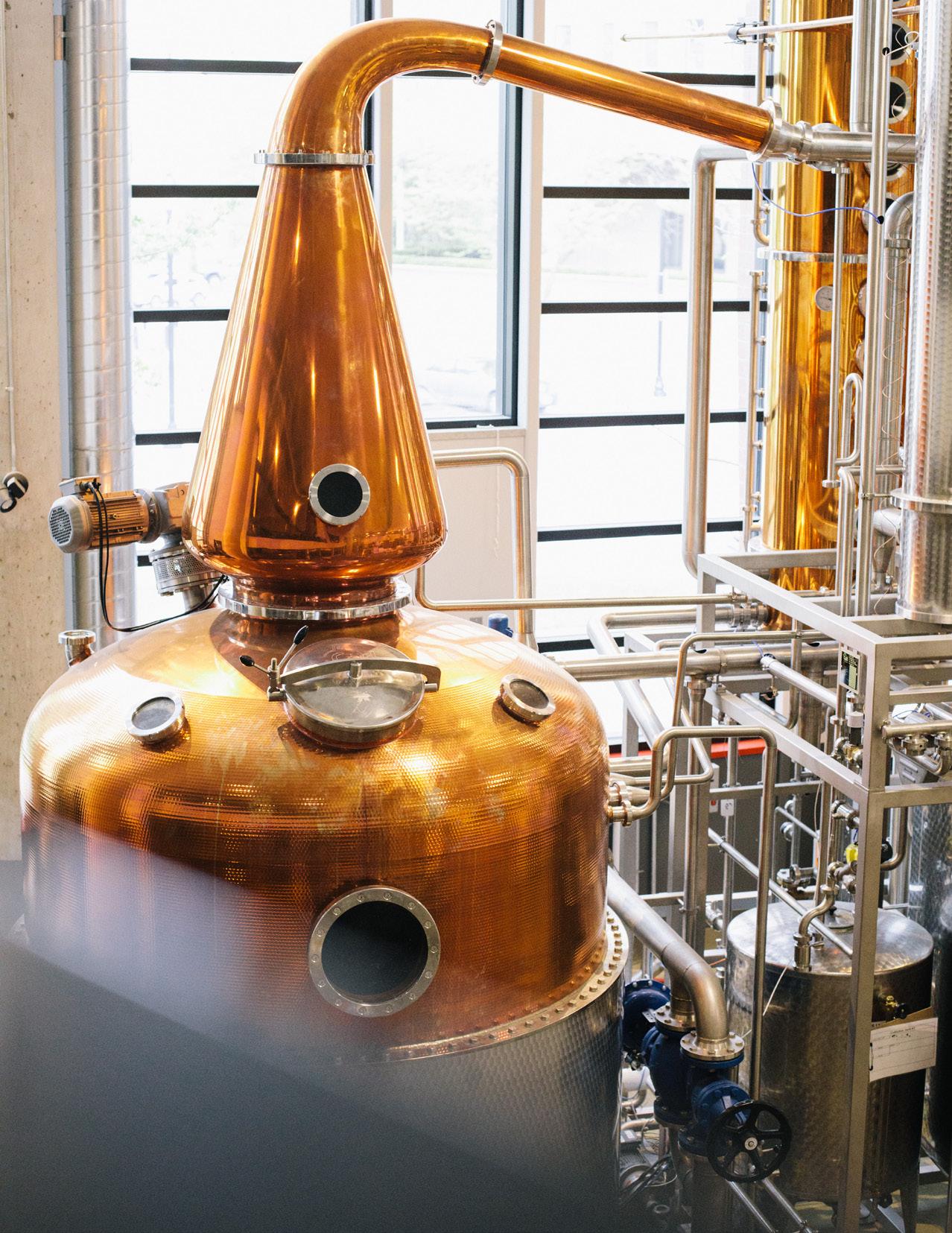
To take a couple of four-packs of cans is a fairly natural thing,” said Poffenroth. In true Dry Fly fashion, they approached this move hands on. They decided to learn as much as they could about sanitation and secondary fermentation since they package their cocktails at an alcohol level that’s closer to beer in terms of percentage. Poffenroth noted that “we had to understand spoilage and controlling the content of the can way better than if you just shove a bunch of alcohol in there and let that be your sanitizing agent.”
In 16 years Dry Fly has made many pivots, reacting in real time to an industry that seems perpetually in flux. It's something Dry Fly's lead distiller Patrick Donovan, who joined the team a few years after the distillery opened, has witnessed first hand. “I think the one thing that doesn’t change is that you always have to be changing,” said Donovan. When they first started out, they had intentions that are prob ably similar to any new distillery owner: get distribution, get in restaurants and bars, carve out a nice little slice of the market. It seems easy until you start doing it and realize that getting account placements is just the beginning — maintaining them, especially up against brands that are heavily moneyed, is just as taxing, if not more so. That realization came quickly for the brains behind Dry Fly. “We’re not an on-prem ise brand in any way, shape, or form. We don’t pursue it, we don’t have the resources to do so,” said Poffenroth. “It’s just not our gig, so we don’t chase it. If it happens by mistake, so be it.” They also quickly realized that distributors, re gardless of what they tell you up front, can only offer so much; even with a distribution partner most distilleries are responsible for continuing to make sales.
It appears change has been a constant in these intervening years, which wouldn’t surprise any one if they spoke with Poffenroth, who said that “if you’re not growing and learning every day you’re dying.” That applied to Dry Fly par ticularly during the move to the new facility. Poffenroth says he learned 50 new things about the process that they’ve had for 16 years. It’s probably the greatest takeaway that they can offer, and that with change comes the opportu nity for growth. The reality is that few of us are masters, even the ones who use that term. This is a complicated business that requires a lot of time, effort, and learning to get right. A couple
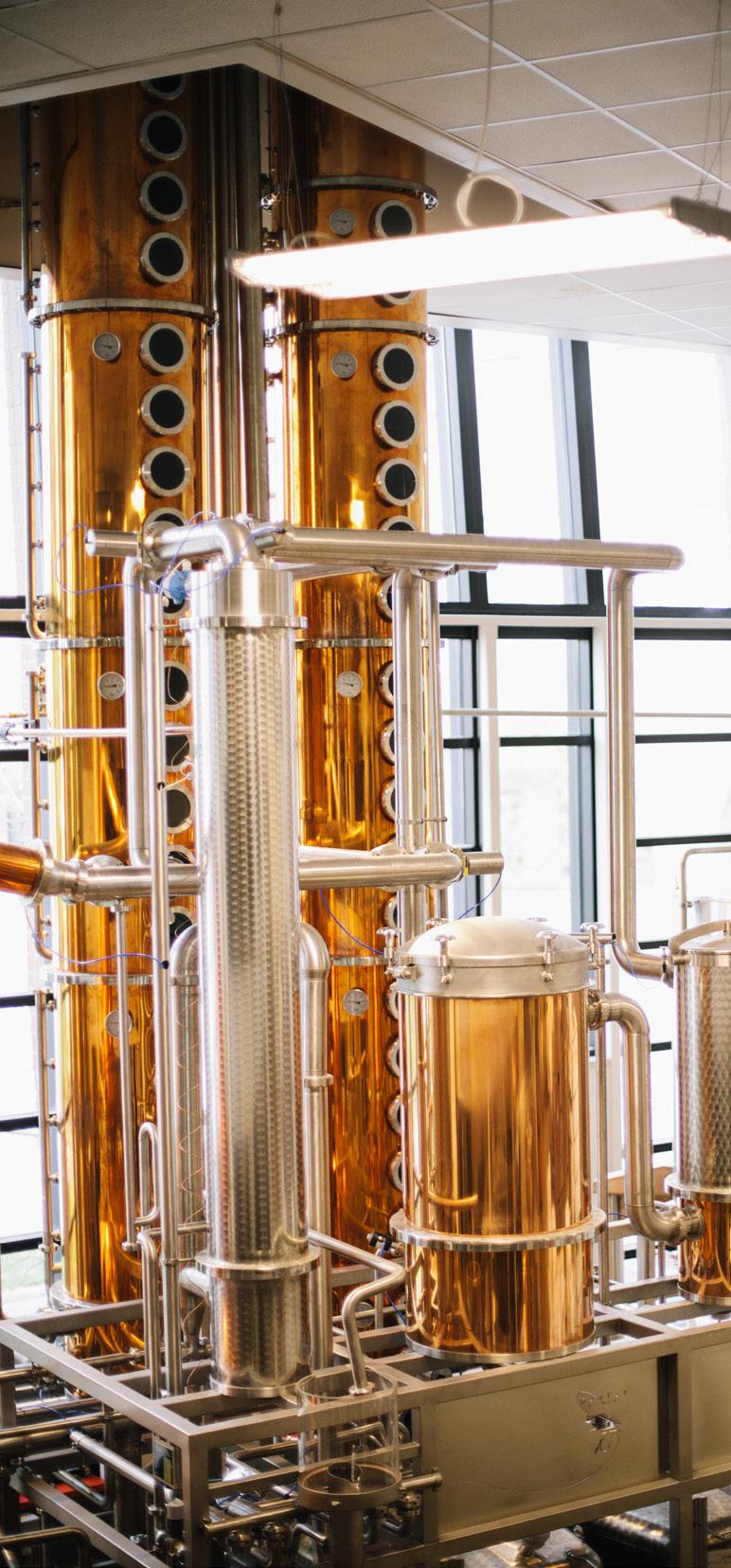
60 WWW. ARTISANSPIRITMAG .COM
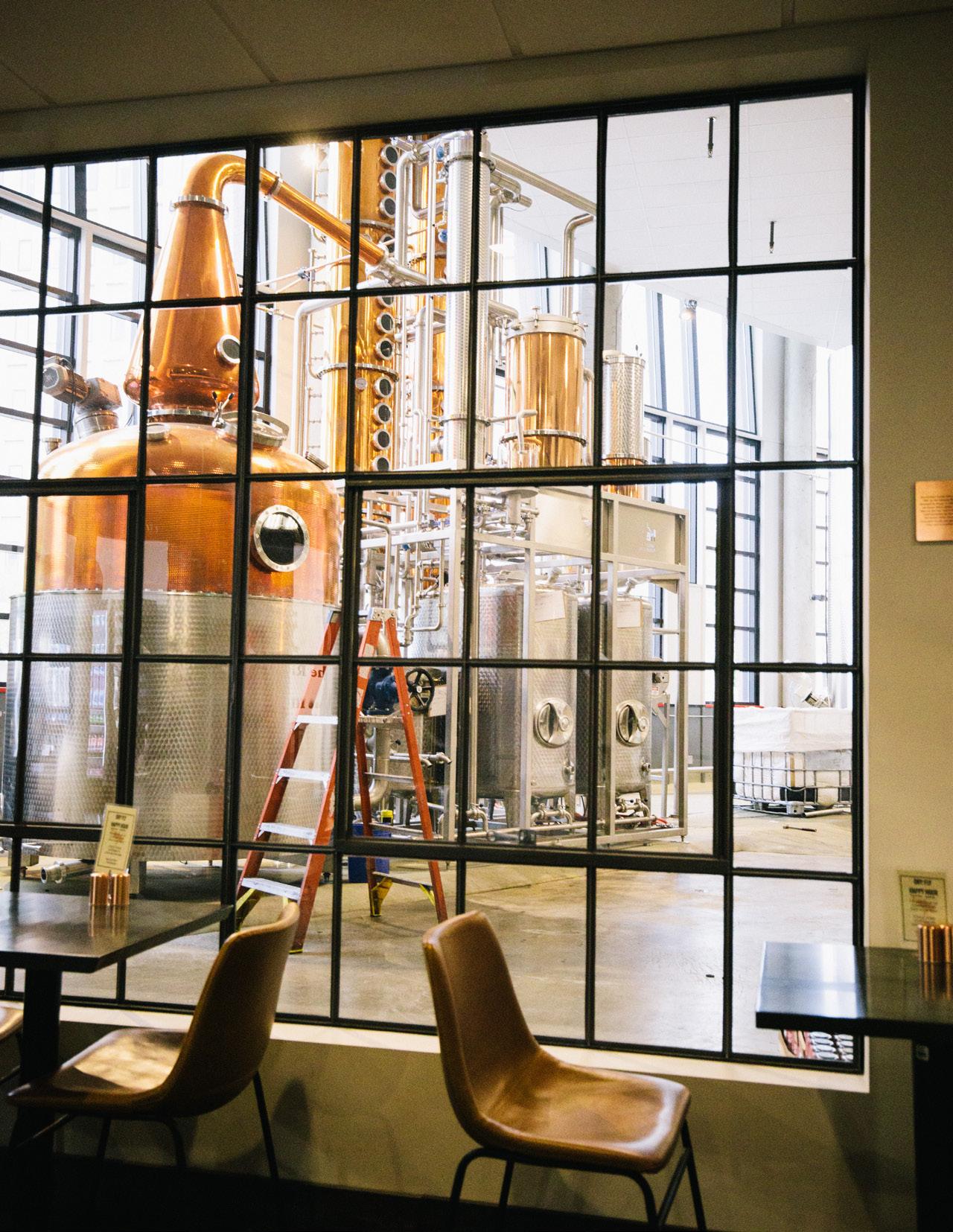
truths, however, may have stayed the same since Dry Fly’s team was first interviewed 10 years ago, including their tips from that time to maintain an edge when entering the dis tilling world:
“It’s not a part-time game and it never will be,” said Poffenroth. With the craft model it’s a matter of either you’re in it or you’re not, but to do so part-time is incredibly hard. Poffenroth feels that the contracting boom happening now is people’s attempt to get into this business partially, but even doing so in that manner still requires a near total com mitment of time and capital.
To this Poffenroth not only agreed but expanded his original statement: “Whatever you say you do, do it.” If you are a distillery that doesn’t make whiskey, say that. If you use artificial flavoring, say that. “We have to be as authentic as we can be or otherwise we’re just lying to each other and we’re lying to the consumer and sometimes the consum ers are smart enough to figure it out,” said Poffenroth.
“We spent a ton of money on the distilling side when we upgraded to computerize every thing and to pneumatically control and oper ate our equipment in a more efficient manner so it’s more repeatable,” said Poffenroth. This is particularly true if you are a distillery that’s growing. The bigger you get, the less unpre dictable your spirits can be. You need to de velop a certain amount of precision in your routine so that there is consistency in what you release.
At the end of the day, this business of mak ing booze is still a business. A few people have entered distilling simply because they had money and looked at it like a hobby. For Poffenroth and the rest of the team at Dry Fly, this is a living on which they depend. There can be a certain amount of romance, but ulti mately it comes down to the numbers.
Of course, the people who make up the heart of Dry Fly have remained consistent over the years, too. Don Poffenroth is still humble and genuine — traits that could be gleaned from his first interview. Despite being a craft distill ery that has weathered this business for longer than most, you don’t get the sense that Dry Fly is interested in throwing their weight around. “We don’t really toot our own horn, we don’t really talk about stuff,” said Poffenroth. “Rather than talking about it we just try to do it.”
The last three years in particular have illus trated that success in this business is hard to achieve and can be fleeting. Someone who is currently operating or looking to start should think long and hard at how they’re going to make their distillery profitable, and be real istic about the numbers that it’s going to take to get there.
It’s hard to say with any certainty what 10 more years in the business will bring to any dis tillery, Dry Fly included, but Donovan is hope ful that they can continue to hook more loyal consumers. “It’s a great brand, it’s great people, the product’s fantastic. I just want to get in a situation where more people can enjoy it and can enjoy our story.”
Dry Fly Distilling is located in Spokane, Washington. For more information visit www.dryflydistilling.com or call (509) 489-2112.
1“Get in and be committed.”
2“If you’re going to call yourself an artisan, be one.”
3
“Try to take out the romance, in your own mind; you can get blinded by that.”
4 “At the end of the day, it has to be a successful business.”
“We have to be as authentic as we can be or otherwise we’re just lying to each other and we’re lying to the consumer and sometimes the consumers are smart enough to figure it out.”
DON POFFENROTH Co-Founder, Dry Fly Distilling
5
“Control the front end and develop processes that you can repeat every day, precisely; then you will be okay.”
62 WWW. ARTISANSPIRITMAG .COM
YEAST
A Look at Flavor, Performance, and Other Factors Important to Bourbon and Whiskey Distillers
The debate about which component of the process lends the most flavor to whiskey is one that continues to incite emo tions amongst academic experts and the distilling community. No one seems to have it figured out yet, so there is a lot of room for creativity and interpretation. Many people can appreciate the no ticeable differences between a bourbon and a rye whiskey. Thus, the grain recipe or “mash bill” is a huge contributor to the whis key’s flavor and character. Other factors include how the grains are processed in the mashing/cooking step, sweet mash or sour mash, the yeast strain used, proof off the still, proof going into the barrel, proofing water used, the quality and type of barrel (length of seasoning of the wood, toasted or untoasted, char level, etc.), position of the barrel in the warehouse, location of the warehouse, climate, and on and on. While this subject is deserving of its own book, in this article we will look specifically at yeast and how it contributes to the flavor with a focus on U.S.-made bourbon and rye whiskies distilled from fermented whole mash (more on this later). We will also look at other important factors such as yeast performance in fermentation, alcohol yield, methods of inocula tion, and where to obtain yeast strains. So here we go…
Yeast and Flavor
Before we jump right to third base, let’s get to know each other a little bit and start with some general information about yeast. The scientific name of the yeast used for making beer or distilled spirits, and bread for that matter, is Saccharomyces cerevisiae. This yeast, along with other yeasts, is in the same kingdom as fungi like mushrooms and bread molds. In whiskey making, the yeast is most noted for converting grain sugars to alcohol and carbon dioxide in the fermentation process. But there is a lot more than just alcohol in the flavor of a matured whiskey that comes from the yeast.
Flavor is a sticky subject and as someone who talks about and uses yeast on a daily basis, how yeast factors into flavor is proba bly the most asked question I get. We already mentioned that the yeast is what makes all of the alcohol, so take away the alcohol from whiskey and what do you have left? Moldy, charcoal, woody,
wastewater sludge per haps? Based on that fact, yeast is pretty damned import ant to the flavor. Plus, the alcohol concentration serves a second purpose of keeping the liquid from spoiling as it is antiseptic (kills and prevents growth of spoilage organisms). Apart from producing various alcohols — ethyl alcohol (ethanol) being the most prevalent by far and gets to around eight percent ABV on average across fermentations destined for distillation to whiskey — along with trace amounts of methyl alcohol (methanol) and propyl alcohol (propanol), the yeast also produc es other chemicals like esters that can lend to some of the subtle fruity notes in whiskies and other distilled spirits as well as more complex flavors like floral that would result from chemical reactions that occur over time as it ages in a barrel. I think one common mis conception is that once fermentation is complete, the yeast’s role in the whiskey is over, but actual ly there are components produced by the yeast in fermentation, like organic acids (acetic acid), that could later serve as precursors for chemical reac tions that will further lend to flavor of the ma tured whiskey. For example, organic acids pro duced by the yeast can condense with alcohols to form esters as the whiskey ages in the barrel.
In conversations with brewers (and as an avid beer drinker), the importance of yeast to different beer styles is paramount. There are several reasons for this. First of all, with beer (and wine) you are drinking the end product of fermentation, which in many beers includes consuming the yeast itself. Another big difference between beer and most American whiskies, relative to the fermentation, is that beer is made from a fermented “wort.” In other words, the grain solids are removed or “lautered” prior to fermenta tion. This is why beer doesn’t have big chunks in it. Whiskies
Written by PAT HEIST, PH.D. Photography by AMANDA JOY CHRISTENSEN
WWW. ARTISANSPIRITMAG .COM 63
(bourbon and rye, for example) are most often fermented and dis tilled “grain on.” This means that all the pieces of the grain are left in during the fermentation and distillation processes, which lends to a different flavor outcome. Another way to put it is that yeasts have access to more ingredients in a whole mash (proteins, amino acids, oils, etc.), which can take the flavor in a different direction. If you’ve ever tasted finished beer from a whole grain mash at a distillery you can taste the alcohol, the acidity from the organic acids, and a lack of sweetness from full attenuation (discussed more below) from the yeast using up almost all of the sugars. It’s not anywhere near as pleasant as drinking a beer from a fermented wort, even if the same yeast strains are used. These are only some of the differences between what we see with beer from a brewery that is ready to drink versus beer made at a distillery destined for distillation.
More on yeast at the distiller’s beer stage. When I teach classes at various academic and industrial institutions, one of the exercis es we do involves inoculating the same mash, such as a wheated bourbon recipe, with 10 different yeast strains (in separate flasks of course) and allow them to ferment for two to three days. We also sterilize some of the starting mash as a control that has not had any yeast added for comparison. The class will then get to smell, and taste the fermentations and take notes. Again, these are whole-mash (grain on) fermentations ( distiller’s beer) prior to distillation. The students definitely notice differences between each of the strains, giving details (strawberry note, cinnamon note, creamy, etc.) and in some cases the whole class will pick the same yeast that they liked the best. So, when you sample the fermentation at the distillers beer stage, there are detectable differences that can be easily described. Take that beer and make a distillate and many of those noticeable flavors either disappear or become lost in the complexity or the con centration of the distillate. We go from roughly eight percent ABV to more than 65 percent ABV, just to show how the alcohol chang es from the beer to the distillate. This shows that when we make a distillate, many of the characteristics of the beer are lost in the mix. In this regard, the yeast has less influence on a distillate than a beer. This is also ASSuming (sorry, a science joke) that you are using a quality yeast strain with a track record for making a great distillate. When we are evaluating a yeast that we know nothing about, there is a chance that it will make a terrible beer and/or a terrible distillate. There is a lot of evaluation that goes into taking a yeast as an isolate from nature to determining if it will be a good fit for alcoholic bev erage production.
Performance
We talked a bit about flavor, now let’s look at performance vari ables. Every distiller wants to make a great tasting whiskey, that’s a given, but you also have to look at the business side of things, in this case “yield.” This isn’t how much whiskey you make, but it’s relat ed. Yield is the amount of whiskey you make per unit of feedstock, or in the case of whiskey, it’s the number of proof gallons (PG) of alcohol you are making per bushel (Bu) of grain, which should be somewhere close to or above five PG/Bu, if you are running your distillery correctly.
There are very clear differences in yield between different yeast strains, and there are reasons for why this happens related to yeast growth rate and oxygen consumption that would take another paper to describe. As scientists, we always say The Proof Is In The Pudding.
Temperature tolerance is another big plus. Yeast that can toler ate higher temperatures save energy by reducing cooling capacity (smaller chiller required) and normally achieve higher yields when temperatures are elevated, like during the hotter summer months, compared to less temperature tolerant yeast strains.
How long it takes the yeast to finish the sugars (reach full attenu ation; see below) and maximize alcohol production (total fermen tation time) is also important. By turning fermenters every 48 hours at Wilderness Trail, we are able to process three fermenters per day and only have a total of six fermenters (this is on our side that feeds a 36-inch Vendome column at 42-43 gallons per minute beer feed). If our fermentation time was longer we would need more fermenters, which is a major expense.
Flocculation, which relates to whether a yeast will settle out of solution, is important for beer makers as this makes it easier for brewers to recycle yeast (because they settle to the bottom) and it also plays well into beer styles that are normally offered as noncloudy or filtered such as pilsners. Since most U.S. distillers ferment with the grain left in, there really isn’t an opportunity to recycle the yeast and we aren’t drinking the beer, so clarity or the yeast settling out is also not important. In other words, distillers that process grain-on whole mashes to make whiskey don’t usuallycare about flocculation as a yeast attribute.
Attenuation is another term that describes whether the yeast fin ishes all the sugar in fermentation. If you are making beer or wine, you may want a little sweetness, so you would use a yeast strain that is not fully attenuated, meaning some sugar is left behind. If we leave behind sugar in a whole-grain whiskey mash, that affects our yield (PG/Bu), so distillers always want to use a yeast that has full attenuation, meaning it finishes all the sugar maximizing alcohol production. If you leave behind sugar in a fermentation destined for distilled spirits you are leaving behind sugar/grain you paid for that never got made into alcohol. Furthermore, fermentable sugars like glucose and maltose can create deposits on distillation equip ment. Try throwing some sugars in a pan on the stove and turn it up to 213F (common base temp of a column still) and see how long it takes to turn black if you want an in-home demonstration. (Disclaimer — Do Not Do The Sugar in the Pan Experiment).
Methods of Inoculation
The method of inoculation can vary depending on several factors. What we have seen working with hundreds of distilleries is that distilleries that have fermenters at or less than 100,000 gallons will likely just dry pitch the yeast. This means you open the bag of active dried yeast and dump it straight into the fermenter. We have had a lot of questions around whether the yeast should be hydrated prior to pitching, but we have seen little evidence that it helps. The main thing you want to ensure with dry pitching is that the mash is at an appropriate temperature (85-95F) and the yeast gets thoroughly
64 WWW. ARTISANSPIRITMAG .COM
mixed into the solution. We extended our fermenter fill lines so that they go all the way to the bottom of the fermenter, so we get a nice vortex early in fill allowing our yeast to go into solution readily. Non Yeast Related Side Note — The extended ferm fill header also allows for proper steam penetration to the bottom of the tank when we are cleaning and prevents mash from splattering on our internal cooling coils when filling.
Distilleries with larger fermenters (over 500,000 gallons total volume) or distilleries that cul tivate their own yeast may opt to propagate the yeast to generate their inoculum for fermenta tion. This is where you start with inoculum, which could be bags of active dried yeast or yeast colonies growing on a Petri dish. Whatever the starting material, when you propagate you are basically starting with a smaller quantity of yeast and making more of it by manipulating yeast reproduction. Things that are implemented in propagation to make the yeast grow rather than ferment include oxygen or aeration, mash dilution, and manipulation of sugars, to name a few. The amount of propagated yeast slurry it takes to inoculate a fermenter is normally between 1.5-5 percent of the working volume of the fermenter. So, if you have a 1,000-gallon fermenter to inoculate, you would need 15-50 gallons of propagation mix. This is also assuming it was car ried out correctly in a clean tank, which should put the propagation at around 350 million yeast cells per milliliter after eight to 10 hours with greater than 95 percent viability and a budding rate above 20 percent.
Sources for Yeast
Some distilleries want to capture their own yeast (from the grounds or equipment or piping from an old distillery, for example) and that is cool, but any time you go to the environment to capture a new yeast strain, you run the risk of failure in a couple different ways that we have seen first-hand. One method for capturing a yeast in the wild (and the most commonly used) is to set “traps” out in an area of interest. The traps could be buckets of corn mash, sweet wort, crushedup grapes, sugar water, or whatever you can think of that yeast like to grow on. Put these out in the field, hope the raccoons or other critters don’t clean you out, and in a few days bring them in and see if there is any fermentation activity like alcohol smells, bubbling from CO2 produc tion, etc. Then culture the yeast from ones that are showing fermentation activity. The problem with this method is that the substrates mentioned above are, by design, friendly environments for yeast, so, when you use them for yeast traps they may already have yeast in them. So, if you had kept a sample back at the house, you would have seen the same organisms grow as from the field samples. Not having the proper negative controls is the issue with a lot of these “naturally collected” yeast strains. You must fully sterilize any traps that are taken to the field to mitigate growth of organisms that were already in the substrate. The second issue is that once you get, if you get, a good yeast candidate from the field and are successful at isolating in pure culture, you still have to grow it up (propagate) every time you do a fermentation, which requires a lot of extra work and also allows plenty of additional opportunities for contaminating microbes (bac teria and wild yeast) to come to the party. That's why most distilleries use an active dried yeast.
Discussion
As you can see from this short synopsis, there are a lot of different factors to consider when trying to deconstruct the flavor of whiskey. It should also be clear from the information above that yeast has a serious role not only in alcohol production, but in many other facets relative to flavor. We will continue to investigate these differences through more investigation at our own distillery as well as the distilleries and breweries we work with to continue to gain knowledge. In the meantime… respect the yeast!
Dr. Heist’s education includes B.S., M.S., and Ph.D. degrees from the University of Kentucky in Plant Pathology and microbiology-related fields. Dr. Heist spent 6 years as a Medical Microbiology Professor at Kentucky College of Osteopathic Medicine before co-founding Ferm Solutions, Inc. In 2013, Dr. Heist, along with his business partner Shane Baker, co-founded Wilderness Trail Distillery. Dr. Heist also serves as an Adjunct Professor at the James B. Beam Institute in the College of Agriculture at the University of Kentucky.
TEXT SO CUTTING PIECES ON NEXT PAGE WON'T RUIN WWW. ARTISANSPIRITMAG .COM 65
PLAYING PIECES
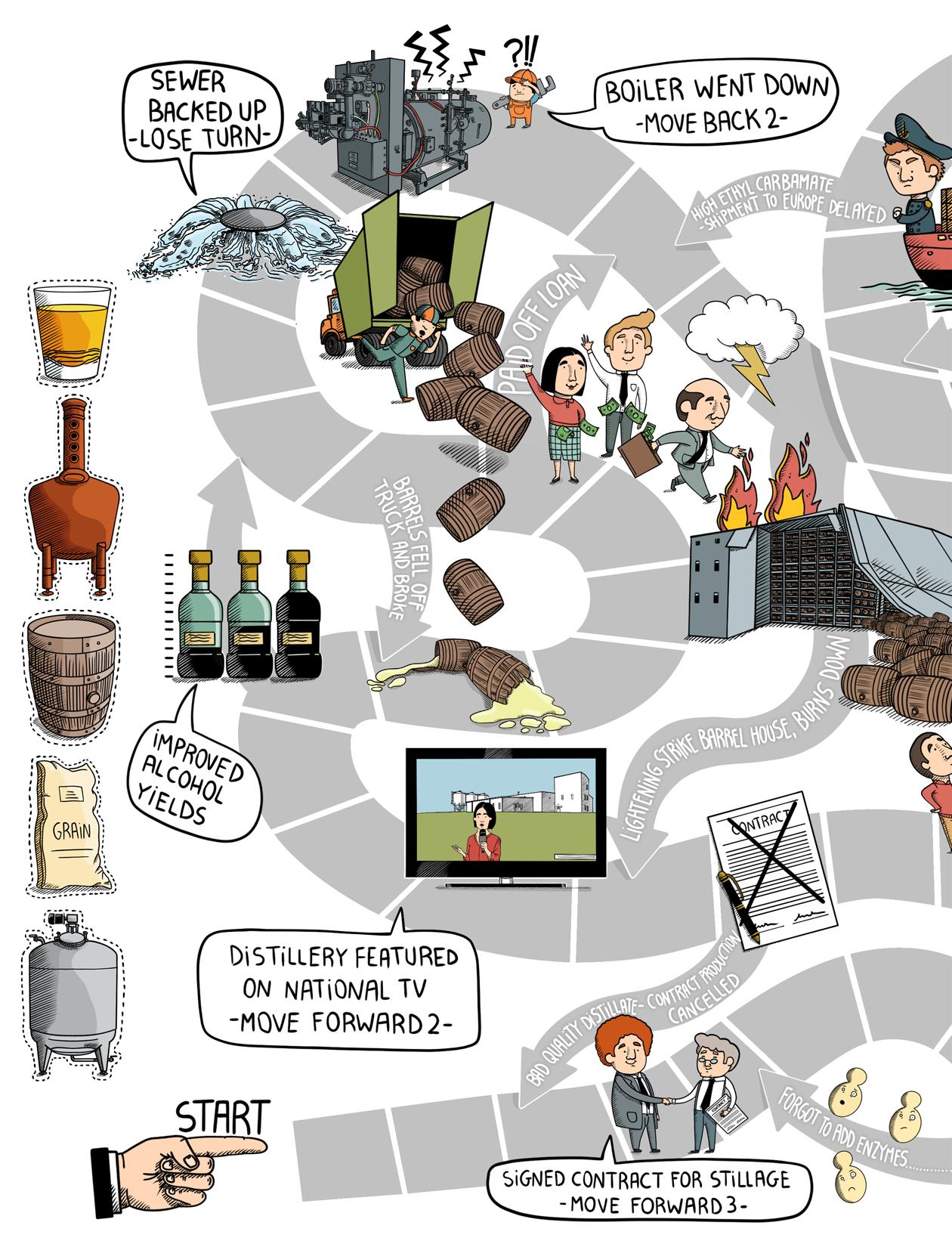
Cut along dotted line to remove.
Dice not included. Play using one or two.
66
THE
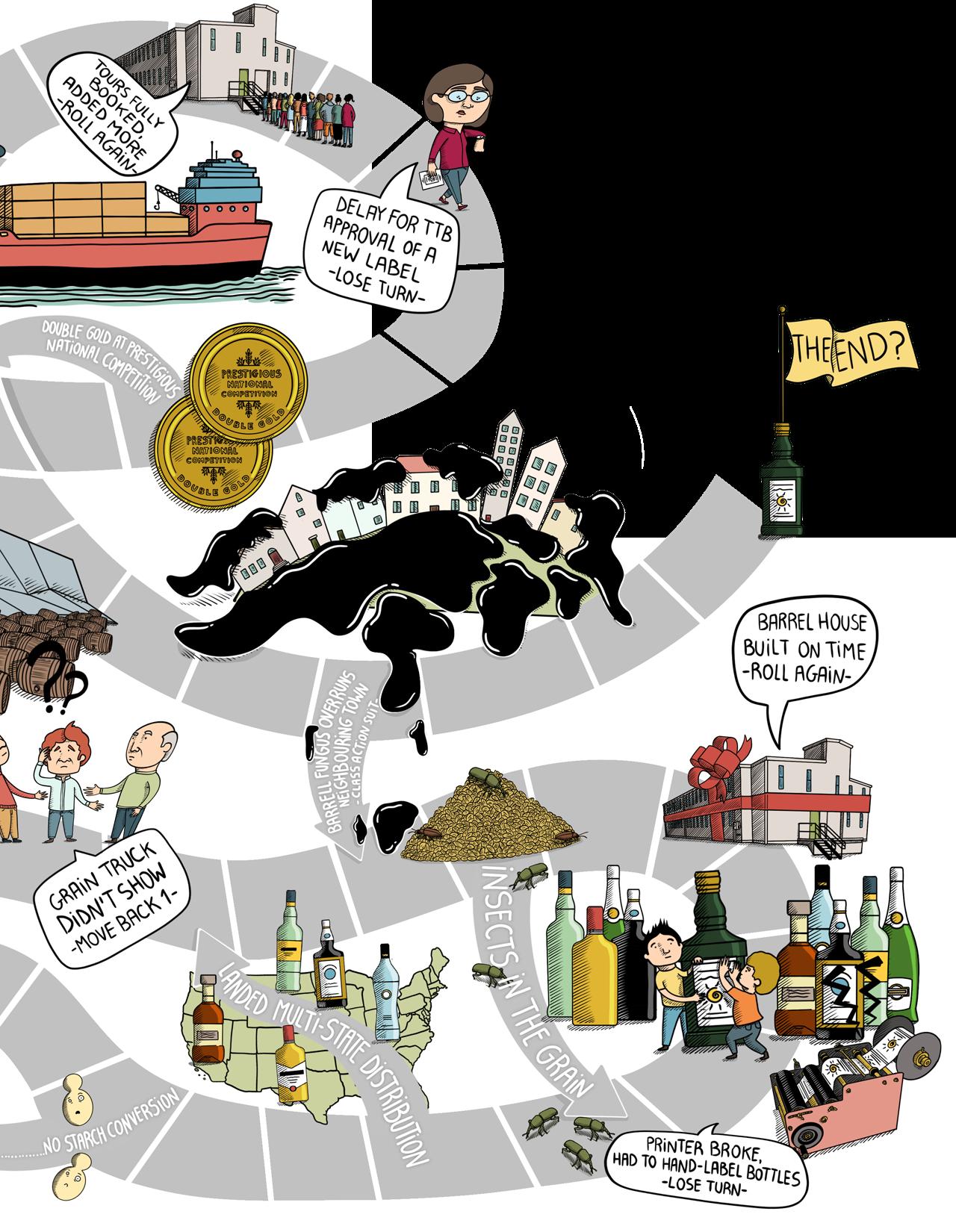 Written by DR. PAT HEIST & SHANE BAKER
Illustrated by FRANCESCA COSANTI |
Edited by HARRY HALLER
Written by DR. PAT HEIST & SHANE BAKER
Illustrated by FRANCESCA COSANTI |
Edited by HARRY HALLER
DISTILLER'S LIFE WWW. ARTISANSPIRITMAG .COM 67
FAIR GAME
SHINES a SPOTLIGHT on NORTH CAROLINA AGRICULTURE
 Written by Gabe Toth /// Photography by Carey McKelvey
BEYOND the BOTTOM LINE
Fair Game is a company that aims to do what’s best for the world by doing what’s best for their own special corner of it.
Founded in 2013 in Pittsboro, North Carolina, Fair Game Beverage Company is about more than spirits. It’s a B Corp that fo cuses on in-state agricultural products to be a value-added producer in the local foodshed, according to founder Lyle Estill. “I’m a local economy freak,” Estill said. “We mop up a lot of North Carolina produce and turn it into spirits. We buy tons of apples from the moun tains of North Carolina, sorghum grass from fifteen miles away for sorghum spirit.”.
The apples go into apple brandy, local aji dulce peppers into pepper vodka, peaches into brandy, South Carolina sugarcane into agricole rum, wash from local craft brewers for whiskey, and a variety of “odds and sods” that go into products only available in the tasting room.
Estill had been in biofuels prior to open ing the distillery. (At one point they installed a distillation column to try to remove water from used methanol, but never got it run ning.) When North Carolina opened up the laws to allow for craft distilling, he jumped in early with a small group of partners, open ing the 13th DSP in the state. “I was drawn to the notion of local ingredients, the notion of local production. When the world is ‘com modity everything’ and there’s a door that cracks open, we just went ahead and jumped through it,” he said. To that end, he named the company Fair Game as a nod to the county fair — “agricultural in nature, small-town feel ing. Sort of a bygone era thing.”
Estill was an early B Corp adopter at Piedmont Biofuels, and embedded the plan for Fair Game to become a B Corp in the initial business plan. Becoming a B Corp, a nonprofit certification that grades businesses based on their social and environmental im pact, was always part of the plan for the dis tillery, and Estill said they did it at Fair Game “the first chance we had.”
He added that being a B Corp is an allhands-on-deck affair at the distillery. They were initially certified in 2016, recertified in 2019, and are in the middle of a second recer tification. He walked through the certification
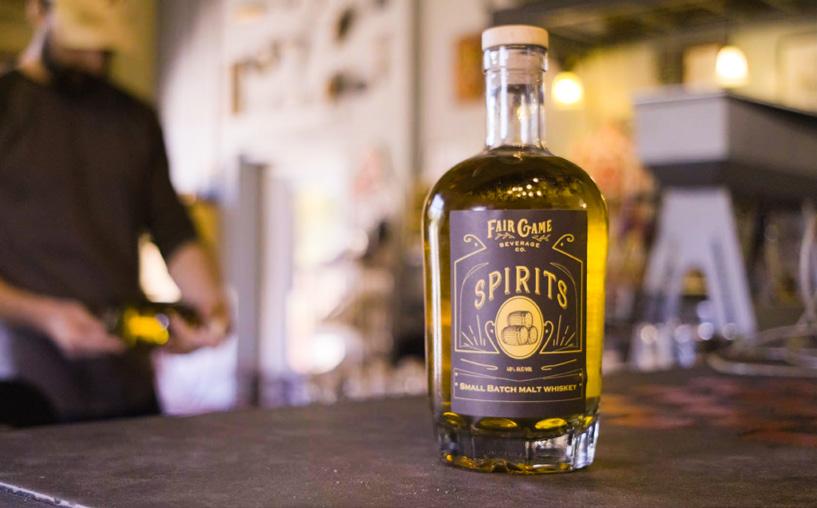
process with all Fair Game employees, mak ing sure that “all of our staff has a sense of what our mission is, who we are, and why we’re doing this.” If you work at a B Corp, you know that water matters, you know that ener gy matters, you also know that people matter. When we are moving through our day and our work life, we understand that,” he said.
The distillery has a solar array and com posting program onsite, and they recycle ev erything “down to the last beer cap” as a mat ter of course. “The environmental side of it is actually easy for us, because I came out of the sustainability space,” Estill said.
He said the personnel side of things is more challenging. The benefits package at Fair Game isn’t a strong one as far as B Corps go. “We don’t make a lot of money. This business is not awash with cash, it’s a labor of love,” he said, laughing.
The social factor is an area they initially
— Lyle Estill
excelled at, considering Fair Game’s focus on local sourcing. However, the B Corp certifi cation process gets more and more difficult as businesses are required to recertify every three years and meet an increasingly high bar.
“It’s getting harder and harder, but that’s good. It means the assessment tool is being improved,” Estill said. “I’ve been critical of the assessment tool, and I’ve been critical of B Corp. The good news is that a lot of those criticisms get adapted into the tool, and the tool doesn’t stay static. It changes.”
Fair Game has moved to Mechanics and Farmers, a small minority-owned bank in Durham, North Carolina, to refinance the company in recent years. It’s not something that earns any points with B Corp, which just wants to know that they’ve moved to a coop erative bank. (There isn’t one within 200 miles of the distillery.) But in the upset and turmoil of the early 2020s Estill said it was a statement
“I was drawn to the notion of local ingredients, the notion of local production. When the world is ‘commodity everything’ and there’s a door that cracks open, we just went ahead and jumped through it.”
WWW. ARTISANSPIRITMAG .COM 69
of support, putting his money where his mouth is. “It’s about living your values. If we think that Black lives matter, then we’re going to move over to a black bank,” he said.
Operating a B Corp with a mission to sup port local agriculture can come with some significant restrictions on the production side as well. When Estill wanted to make a peach brandy, there were few processors who could juice them locally, so he had to macerate the fruit himself. “That means hiring every high schooler I can get my hands on to stand there and hand pit, hand peel, and macerate peach es,” he said. If that’s too complicated, takes too much space, or is too expensive, he might say: “Well, let’s get a peach concentrate.” However, for a producer who only wants to use North Carolina peaches, or South Carolina peaches, or just North American peaches that aren’t coming all the way from Argentina, there sim ply isn’t an identity-preserved peach concen trate on the market.
“We have to command value because of our mission, because of our locality. It’s one thing to sell a $49 bottle of peach, it’s another thing to have to get $99 for that bottle of peach. I’m not interested in spirits so precious that they sit on my shelf forever.”
— Lyle Estill
“And that’ll be the end of the peach bran dy,” he said, noting that Fair Game has to walk a very fine line on pricing and can’t sit on a product too expensive to move. “We have to command value because of our mission, be cause of our locality. It’s one thing to sell a $49 bottle of peach, it’s another thing to have to get $99 for that bottle of peach. I’m not inter ested in spirits so precious that they sit on my shelf forever.” Ultimately, he made one batch that sold out, but there was no way to make it
an economically feasible product.
It’s also a constant effort to keep the staff focused on the broader mission, and not just the job right in front of them. They might have a strawberry cordial that does well, but the tasting room staff has to recognize when it’s the end of the season and let that product go for the year, rather than running down to the commodity grocery store and bringing back commodity strawberries.
It’s a big hurdle to push those values as far
70 WWW. ARTISANSPIRITMAG .COM
as possible into every corner of the business. He said it may not always be part of an em ployee’s mindset, and that can’t always be changed. But as a B Corp, Fair Game tends to attract potential employees who care about the mission.
As a result, it still takes work to make sure everyone is on the same page and to con stantly reinforce that there’s a higher priority than the bottom line. “It’s entirely possible for there to be a B Corp sticker on the bumper of your delivery truck, and the driver of the delivery truck doesn’t know he shouldn’t be idling because we’re trying to measure our carbon,” he said.
In general, business has been way up year after year through the pandemic. The tasting room became even more of a destination since they “accidentally” built a park. Estill said he wanted to get the open space adjacent to the distillery certified with the Audobon Society for birdwatching. He started to clean up the area to meet the group’s requirements and put up some amenities, and it became an outdoor, pandemic-friendly space that was open to distillery customers, as well as the brewery, meadery, and cidery that also con nect to the park. He provisionally called it Pandemic Park, but it’s since been renamed by the facility wedding director. “Basically,
we created a little beverage district. It’s all outdoor. We’ve got four or five alcohol bev erage manufacturers on a seventeen-acre mostly outdoor campus,” he said. “I couldn’t build shade structures and picnic tables fast enough.”
It’s also helped the business that North Carolina has loosened some of its restric tions, allowing distillers now to sell cocktails, for example. Estill said this is a much better avenue to showcase their product. “We’ve got a pretty robust cocktail program,” he said. “Before, it was, ‘Here, have a quarter ounce of room-temperature, pepper-flavored vodka.’ There’s ten percent of the world that is going to enjoy that. The other ninety percent just wants a bloody mary.”
Another regulatory win was the ability to sell bottles. He said that, as a distillery in a control state, they weren’t allowed to sell bottles when Fair Game first opened. Then the state said they could sell one bottle per customer per year, then five bottles per cus tomer per year, and then the efforts to restrict per-customer sales were dropped entirely.
Also helping to boost the bottom line is the fact that Fair Game Beverage Company is more than a distillery. The local mission extends beyond their own production line to include local beer, cider, wine, and a wide
variety of local food products. It’s a show case for all the delicious things that North Carolina has to offer. The Fair Game tasting room serves as the tasting room for a local cidery, offers local beer in their lineup of 14 taps, and offers a variety of local wines. Then there’s what Estill refers to as “the pantry,” which includes a varied selection of about 250 SKUs from more than 100 brands, in cluding local peanuts, jams, jellies, syrups, tonics, bitters, mustards, ketchups, cured meats, pickles, and more.
Visitors can come in for a beer or wine flight, fill growlers, grab a snack, or find some thing uniquely local to take home. The space has become a destination, filling a need for local products that might appeal to someone shopping locally or taking home a taste of North Carolina. “I think I’m kind of a souve nir shop,” Estill said. “I’m in a small southern town where there is a little co-op grocery store that does some specialty items, and a commodity grocery store that is not highend. They’re not selling a lot of nine dollar jams over at Food Lion.”
The high bar that’s applied to Fair Game’s own products remains in effect when they consider products for the pantry. There’s a rig orous selection process and plenty of home work that goes into signing a new product.
WWW. ARTISANSPIRITMAG .COM 71
“We look long and hard at the packaging, the food miles, the ingredients. It’s not just, ‘Oh that tastes good, I can sell it,’” Estill said.

He said it’s an approach that addresses a fundamental weakness he sees in the standard tasting room model. “I believe that there’s a built-in structural dilemma in every tasting room on earth. That is the absence of selec tion,” he said. “So we put on beer, wine, cider, threw in some specialty food products, and now we’re rolling out a kitchen. It’s all hyper local; it’s all North Carolina.”



One of the more fun aspects of the pantry,
he said, is working with some of the smaller vendors to develop products that use Fair Game spirits, such as a peach jam using peach brandy or pickled okra using pepper vodka. Estill said he’s looking forward to the release of a chocolate project two years in the mak ing: the Flying Pepper chocolate bar, made from scratch with cacao nibs soaked in pepper
vodka. He said it’s going to be “extraordinary” and “the world’s most expensive chocolate bar,” but that’s all part of the bigger picture.
“We’re raising the flag over hyper-local re storative economy,” Estill said. “We are defi nitely a mission-driven enterprise, and our mission is North Carolina agricultural prod ucts, and we’re true to that mission.”
Fair Game Beverage Company is located in Pittsboro, North Carolina. For more information visit www.fairgamebeverage.com or call (919) 548-6884.




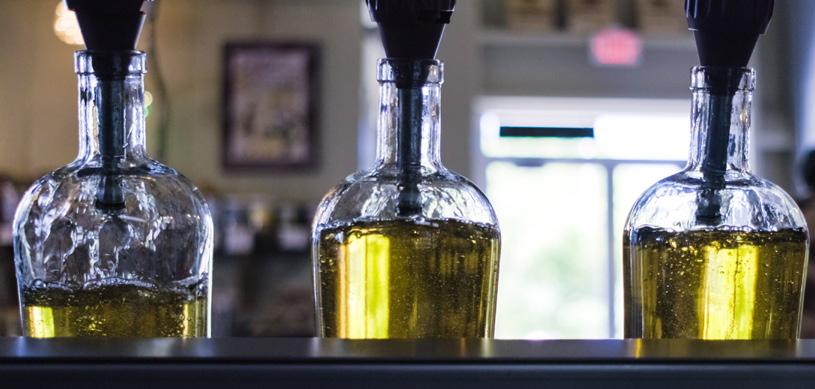
“We are definitely a missiondriven enterprise, and our mission is North Carolina agricultural products, and we’re true to that mission.”
— Lyle Estill
CONGRATSTO ARTISAN SPIRITMAGAZINE O N YEARS
72 WWW. ARTISANSPIRITMAG .COM
ADECADEOF GIN
A TEN-YEAR RETROSPECTIVE
A ccording to the American Distilling Institute, in 2012 there were hun dreds of craft distillers; in 2022 the number is in the thousands.1 Since Artisan Spirit’s first edition in 2012
which featured pieces on gin distillers such as Dry Fly and Hardware Distillery Co., the number of distilleries producing gin has continued to grow.
The average American consumer has seen their choices in gin explode in the past 10 years. In that time, fads have come and gone. We’ve seen pink, blue, and even black gins. Consumers are more knowl edgeable about the gin they’re drinking.

Celebrities like Ryan Reynolds, Wiz Khalifa, and category veteran Snoop Dogg have tied their names to gin
1 American Distilling Institute (2021).
brands, both elevating gin’s reputation and introducing new consumers to the category. According to Google Trends there are twice as many searches for gin today than there was a decade ago.2 Export volume of U.S. distilled gin has more than doubled in that same time span.3
However, it’s not been all positive develop ments for gin.
In 2011, DISCUS reported that 10.5 mil lion cases of gin were sold in the United States. However, in 2021 that number had declined to 9.9 million4 even as the number of gins available has grown. Per-capita consumption is down, and some market
2 Google (2022).
3 UN Comtrade (2021).
4 DISCUS (2022). Though it’s worth noting that decline doesn’t represent a clear trend. 2021 sales vol ume represents an increase over sales from 2015-19.
prognosticators don’t ex pect that to increase.5 Despite the growth of American distill ing, sales are still dominated by im ports.6 Behind the bar and on liquor store shelves where contemporary gins sit alongside flavored and London dry gins with little clear differentiation, consumer confusion between the differ ent subcategories persists. And finally, vodka remains the white spirit of choice for most consumers in the United States with over 79.6 million cases sold in 2021 alone.7 Overall, there’s been some good and some bad, but with an eye towards the future, here are ten of the biggest evolutions in gin during the past decade.
5 Statista (2021).
6 Beverage Information Group (2021).
7 Beverage Information Group p. 8 (2021).
The Gin Renaissance might have kicked off more than ten years ago, but that doesn’t mean the excitement and innovation has stopped.
Written by AARON KNOLL
WWW. ARTISANSPIRITMAG .COM 73
August 1,
1) PINK GIN
Ten years ago, if you were to say to some one “pink gin” they were likely to think of the cocktail — a combination of Plymouth gin and Angostura bitters with its origins in the 19th century. However, in the cur rent parlance it means something entirely different.
Pink gin is a gin with a distinctive pink hue. Many of these gins achieve the col or through the addition of ingredients post-distillation. Some, like Pinckney Bend Distillery’s Hibiscus Gin achieved the re sult by macerating ingredients after distil lation. Others, like Beefeater, added straw berry flavoring and coloring to achieve an almost neon presentation. These gins were striking visually making them great for social media where they also appealed to a new audience that weren’t tradition ally gin drinkers. Often mixed with soda, they helped spread the notion that gin was not gin and tonic alone. Edgerton is often credited with launching the first pink gin in 2011, however, by the late 2010’s dozens were already available commercially.
Pink gin was extremely popular in the UK and Europe (less so stateside). While many brands have continued to experiment with and release new pink gins, the popular ity has waned in recent years from its peak in 2018 and 2019.8 The pink gins best sit uated to persevere into the next decade are those which use natural post-dis tillation infusion and emphasize the natural aspect of the process.
8 Salience Search Marketing (2021).

1,
Canada
August 1,
August 1,
Google searches for gin in Canada, United Kingdom, and United States from August 8, 2012 – July 1, 2022.
United StatesUnited Kingdom
August 1, 2012 Canada August 1, 2015 August 1, 2018 August 1, 2021 United StatesUnited Kingdom Data from Google Trends
2012 50 75 25 0
100 August
2015
2018
2021
74 WWW. ARTISANSPIRITMAG .COM
Indonesia’s Spice Island Distilling Co launched East Indies Archipelago Dry Gin in 2021.18
At my own gin-focused website, TheGinIsIn.com, the top 10 countries for site visitors now includes Philippines (#5), Singapore (#6), India (#7), and Malaysia (#9). A decade ago it was exclusively North America and Europe.
5) FAKE GIN
In 2018, James Hayman of Hayman Distillers in the UK launched a campaign en titled “Call Time on Fake Gin” (also known as the Campaign for Real Gin). They even went so far as to host a summit at the distillery to discuss the definitions of gin and how the in dustry could regulate itself.19 While some of this focused around contemporary gin styles, which were lighter on juniper flavor than many well-established London dry gins. the issue became far more serious when the par allel trends of low-ABV (liqueurs with heavy sweetening and lower ABVs)20 and no-ABV (non-alcoholic) spirit alternatives gained traction — often appearing on the shelf alongside other gins, with the word “gin” on their labels, creating consumer confusion.
6) NON-ALCOHOLIC “GIN”
While it might be fair to say that it started with Seedlip, which branded itself as the “The World’s 1st Distilled Non-Alcoholic Spirits,” the trend itself is merely a reaction to the fact that alcohol consumption, especially in the U.S., is down.21 The “sober-curious” move ment has led to strong growth in sales for non-alcoholic drinks,22 and well-established brands are paying attention to data which suggests Millennials and Gen Z are drinking less — at least when compared to previous generations — or not at all.23
18 Speirs (2021).
19 Perrett (2018).
20 Woolfson (2021).
21 Brenan (2021).
22 Nielsen (2022).
23 Van de Sande (2022).
However, there’s good evidence that this trend may be more about moderation than abstinence. The same Nielsen study reported that 78 percent of non-alcoholic drink buyers were also buying alcoholic beers, wine and spirits.24 Today, people searching for gin alter natives will find a bevy of options including Fluere Non-alcoholic Gin, Ritual Zero Proof Gin Alternative, and 0.0 percent offerings from Tanqueray and Gordon’s. These gin al ternatives rarely replicate the gin experience sipped on their own, however, they’ve been designed to work well in mixed drinks, partic ularly gin and tonics.
7) THE SPANISH GIN AND TONIC (THEGIN TÓNICA)
While it originated in the Basque region of Spain sometime in the 2000s,25 the Spanish style of gin and tonic served in over-sized bowl glasses called copas, dolled up with nu merous ostentatious garnishes, took the U.S. by storm in the mid 2010’s. The gin and tonic was elevated from a mere mixed drink to art. Further buoyed by upscale tonic water, the humble G&T began to appear on cocktail menus at upscale cocktail bars.
While Gin Tónica is now dismissed as a gin fad of the 2010s, the serving style endures at bars like Denver’s Ultreia where the elaborate presentations remain a centerpiece of their bar program.
8) GIN AND NOT TONIC
In 2017 Good Housekeeping asked its read ers the question, “Would you swap your be loved tonic for soda instead?”26 In the years since the answer seems to be a resounding “yes.”
While home consumers have taken to mixing their gins with sodas, major brands such as Philadelphia’s Bluecoat Gin launched Bluecoat Gin for Seltzer as if to give permission
to home gin drinkers to try a new mixer.27 Additionally, pairing gin with seltzer is an op portunity for gin to gain a piece of the pie from another category that has seen meteoric growth in the last decade — hard seltzers.
9) GIN IN A CAN
Speaking of cans, ready-to-drink cocktails (RTDs), once a rarity on the American land scape, have grown from nearly zero a decade ago to a $1 billion off-premises market as of 2021. At one point dismissed as a pandem ic “stay-at-home” fad, they've continued to show growth even as customers return to bars. They now represent two percent of de livery service in Drizly’s overall sales.28
Vodka, tequila, and rum RTDs were the biggest growth sectors in 2021, however, gin has not been left out. In fact, gin is unique ly well positioned to capitalize on the trend. Distillers have the option to pre-bottle cock tails that often would have required gin drink ers to buy multiple specialty spirits for a single drink. Tattersall Distilling sells a pre-bottled corpse reviver. Others have taken to canning alternatives to the traditional gin and tonic. Lee Spirits Co. released a non-carbonated Fuego gin and lemonade in a can.
In other words, gin and RTD is far from synonymous with a simple G&T. The grow ing category and gin’s reputation as a spirit de signed for cocktails, uniquely positions gin to further capitalize on the shift away from hard seltzers29 to other canned beer alternatives.

10) GIN, TOGETHER
The past decade has seen gin distillers, bartenders, and even writers band together to evangelize, educate, and at times “pro tect” gin. The Gin Guild was founded in 2012.30 Today there are several hundred members that span the world.
However, The Gin Guild is not the
27 Craft Spirits Magazine (2021).
24 Nielsen (2022).
25 Newman (2021).
26 Chandler (2017).
28 Drizly (2022).
29 Drizly (2022).
30 The Gin Guild (2022).
WWW. ARTISANSPIRITMAG .COM 75
only organization that has been chartered to combat the challenges gin faces as a cat egory. In 2021, Melissa and Lee Katrincic founded the U.S. Gin Association to “in crease category awareness for American Gin.”31 Seeing the opportunities state side and the fact that the United States has seemingly not reached “peak gin,” the fledgling organi zation has assembled the col lective experience of several established American gin
producers (Stephen Gould of Golden Moon; Molly Troupe of Freeland Spirits; Jan and Marsh Mokhtari of Gray Whale Gin to name a few) to begin organizing with a goal of elevating the category of American gin through education and other programming. Interest was high at their initial gathering, with standing room only when they convened at the 2021 American Craft Spirit Association annual conference.32
In other words, if gin continues to
undergo as many trends and shifts in the next ten years as it has during the last ten, banding together may be the best way for the gin community to come out of the 2020s stronger and better than ever.

Aaron Knoll is a noted gin historian, critic, and consultant. He authored 2015's “Gin: The Art and Craft of the Artisan Revival,” which has since been translated into three languages, and additionally co-authored 2013's “The Craft of Gin.” He also founded leading gin website TheGinisIn.com in 2009.
31 Dingwall (2021).

SOURCES
Beverage Information Group. (September 30, 2021). Consumption of vodka in the United States from 2013 to 2020 (in 1,000 9 liter cases) [Graph]. In Statista. Retrieved July 06, 2022, from https://www-statis ta-com.i.ezproxy.nypl.org/statistics/463112/ us-consumption-of-vodka/ Beverage Information Group. (September 30, 2021). Leading brands of gin in the United States in 2020, based on volume sales (in 1,000 9 liter cases) [Graph]. In Statista. Retrieved July 06, 2022, from https://www-statis ta-com.i.ezproxy.nypl.org/statistics/463921/ us-leading-brands-of-gin-volume-sales/
Brenan, M. (2021, August 19). U.S. alcohol consumption on low end of recent readings. U.S. Alcohol Consumption on Low End of Recent Readings. Retrieved July 8, 2022, from https:// news.gallup.com/poll/353858/alcohol-con sumption-low-end-recent-readings.aspx

Briggs, F. (2021, June 12). Have we reached peak gin? new research shows vodka and martinis are more popular. Retail Times. Retrieved July 7, 2022, from https://www.retailtimes.co.uk/ have-we-reached-peak-gin-new-research-showsvodka-and-martinis-are-more-popular/ Chandler, V. (2017, July 17). Forget gin and ton ic, gin and soda is the new flavour combination Good Housekeeping.
Data. American Distilling Institute. (2021, March 13). Retrieved July 6, 2022, from https://distilling.com/resources/data/
32 Katrincic (2022).
Dingwall, K. (2021, June 30). A dedicated US Gin Association launches amidst American 'ginaissance'. Forbes.
DISCUS. (February 10, 2022). Sales volume of gin in the United States from 2004 to 2021 (in 1,000 9 liter cases) [Graph]. In Statista. Retrieved July 06, 2022, from https://www-statista-com.i.ezproxy.nypl.org/ statistics/325941/us-sales-volume-of-gin/ Drizly. (2022, June 29). Bevalc Insights' 2022 RTD cocktail forecast. BevAlc Insights. Retrieved July 7, 2022, from https://bevalcinsights.com/ bevalc-insights-2022-rtd-cocktail-forecast/ Freeman, Aleza. (30 Aug. 2017) Empress 1908 Gin Is the Spirit of Summer, Old Liquors Magazine.
Goh, D. (2022, May 24). Makers & Shakers #3: Jamie Koh, founder of Brass Lion Distillery Spirited Singapore. Retrieved July 8, 2022, from https://www.spiritedsingapore.com/2022/05/ makers-shakers-3-jamie-koh-founder-of-brasslion-distillery/ Google. (2022). Gin . Google trends. Retrieved July 6, 2022, from https://trends.google.com/ trends/ Guilfoyle, Kyle. “Empress Gin: 8 Things You Should Know about: Nimble Bar Co..” Empress Gin: 8 Things You Should Know, Nimble Bar Co., 16 Oct. 2020, nimblebar.co/empress-gin/ History of the gin guild. The Gin Guild. (2022, May 30). Retrieved July 7, 2022, from https:// www.theginguild.com/about-the-gin-guild/
gin-guild-history/
Hopkins, A. (2017, July 31). Beam Suntory to launch Japanese Gin Roku globally. The Spirits Business. Retrieved July 8, 2022, from https:// www.thespiritsbusiness.com/2017/07/beamsuntory-to-launch-japanese-gin-roku-globally Katrincic, M. (2022, July 1). American Gin Association. personal.
Murray, F. (2013, May 7). Optic nerve – gin distillers hit the spot. TheDrinksReport.com. Retrieved July 7, 2022, from https://www. thedrinksreport.com/news/2013/14910-opticnerve-gin-distillers-hit-the-spot.html
Newman, K. (2021, May 24). Make the Spanish G&T your own. PUNCH. Retrieved July 8, 2022, from https://punchdrink.com/articles/ make-spanish-gin-and-tonic-recipe-your-own/ Perrett, M. (2018, May 11). Hayman's Gin launches debate on protecting gin authenticity Harpers Wine & Spirit Trade News.
Philadelphia Distilling Unveils Bluecoat Gin for Seltzer. Craft Spirits Magazine. (2021, May 27). Retrieved July 7, 2022, from https://craftspir itsmag.com/2021/05/27/philadelphia-distill ing-unveils-bluecoat-gin-for-seltzer/ Salience Search Marketing. (January 30, 2021). Online search growth for alcohol products in the United Kingdom (UK) as of January 2021 [Graph]. In Statista. Retrieved July 06, 2022, from https://www-statis ta-com.i.ezproxy.nypl.org/statistics/1220305/ alcohol-products-search-growth-uk/
The sober curious movement is impacting what Americans are drinking. Nielsen. (2022, January 31). Retrieved July 8, 2022, from https://niel seniq.com/global/en/insights/analysis/2022/ the-sober-curious-movement-is-impact ing-what-americans-are-drinking Speirs, E. (2021, November 24). East Indies Gin debuts as Indonesia's first authentic distilled craft gin, made in Bali. NOW! . Retrieved July 8, 2022, from https://www.nowbali.co.id/ east-indies-gin-bali-indonesia/ Statista. (November 10, 2021). Average per capita volume of the gin market in the United States from 2012 to 2025 (in liters) [Graph]. In Statista. Retrieved July 06, 2022, from https://www-statista-com.i.ez proxy.nypl.org/forecasts/1275506/ per-capita-volume-gin-market-united-states
UN Comtrade. (November 15, 2021). Export volume of gin in the United States from 2012 to 2020 (in 1,000s liters) [Graph]. In Statista. Retrieved July 06, 2022, from https://www-statista-com.i.ezproxy.nypl.org/ statistics/466459/us-export-volume-of-gin/ United States, Food and Drug Administration (2022). Listing of Color Additives Exempt from Certification. Code of Federal Regulations, Government Printing Office.
Woolfson, D. (2021, July 1). Gin brands face an uphill struggle if they wage a 'war on gin liqueurs'. The Grocer. Retrieved July 7, 2022, from https://www.thegrocer.co.uk/alcohol/ gin-brands-face-an-uphill-struggle-if-they-wagea-war-on-gin-liqueurs-/590456.article
76 WWW. ARTISANSPIRITMAG .COM
THE POWER OF PREGNANCY
HOW TO GROW A HUMAN and MAKE WHISKEY: A GUIDE
I WAS FRESH FROM GRADUATE SCHOOL when I started in terviewing for my first industry position. I was young and eager to start making spirits and applied to just about anywhere I could think of, big or small. I managed to land a variety of interviews, and during the interview process, there were a number of times when I was asked questions that you can’t, and shouldn’t, ask a person regarding their desire to start a family.
Questions regarding your family status, as well as questions about your gender, nationality, citizenship, language, age, or religion, are illegal to ask during the interview process. However, regardless of le gality, questions on these topics are raised. As a young woman, when asked whether I was married or planning to start a family, I was instantly uncomfortable and onguard. It didn’t really matter what my answer was, the fact that it was asked meant that my potential future employer was potentially questioning my commitment to a job based-off my ability to carry a child. My initial experiences in this industry questioning my family planning almost made me rethink my career entirely.
Employers often ask questions about your family status to gauge your level of commitment to the company and to assess a vague employee cost analy sis. They want to know that your personal life won’t interrupt workflow and that you will be a “team player,” willing to go the extra mile. This whole thought process is entirely antiquated but persistently and in sidiously can be found throughout business. Since those first indus try glimpses, I have found myself in a very fortunate position. I am the master distiller and partner at a woman-owned and -op erated distillery where I am cared for and supported.
Prior to my role at Freeland Spirits, I found myself won dering what it would be like to start a family while work ing in production, especially since it seemed to come up in multiple interviews. I wondered what employers were so worried about and what type of burden they assumed I would place on their program. I amassed a list of questions but unfortunately did not have anyone to ask. The women I knew in this industry had often started along their distillery journey either childless or after having already started their families and did not find themselves in a relevant position for my questions.
My intention with this article is to be a resource, to share my experience, to offer guidance and compassion so that the next generation understands the nuances of pregnancy in production. To understand my experience fully, it is important for me to disclose the privileged position I find myself in at Freeland Spirits. I work in a highly supportive environment filled with kind and supportive management

and staff. Everyone was happy and willing to help along the way. I also had a low-risk pregnan cy, which allowed me to remain active my entire preg nancy. That is not the case for ev ery pregnancy, but regardless, this should not dictate the level of care and compassion received.
My experience as pregnant in production led me to a few takeaways: Pregnant people are incredibly strong, preg nant people are extremely capable, and preg nant people are completely underestimated.
STRONG
Pregnant people are strong as hell. Period. Pregnancy is a time in your life when you push your body to the lim it. Morning sickness, body aches, problems sleeping, etc, are all normal. But while you are growing an entire human being, you are also carrying on with normal life. Life does not stop. As long as the pregnancy is without complications that require change, you can continue carrying out the same tasks as you did before pregnancy. There are cer tainly limitations, but this often comes down to general safety. And the safety issues? They more than likely were issues prior to pregnancy that you ignored. Should you really be at the top of a platform ladder twisting or do you need to rethink that through a different lens? There are plenty of other safety concerns that
Written by MOLLY TROUPE
WWW. ARTISANSPIRITMAG .COM 77
get glazed over, but when you’re growing a human it becomes a top priority to implement. And a safer work environment benefits everyone. Take the opportunity to revitalize your safety program and make your production space more welcoming to anyone who may need more assis tance. Minimizing the amount of heavy lift ing that is required from production staff only maxi mizes the out put in other areas.
CAPABLE
We have all heard the story of the pregnant woman going to the cafe to order coffee and having a concerned citizen telling them that you can’t drink coffee while you’re pregnant. It does happen and it’s not exclusive to coffee! Pregnant people have this experience daily. If you are not a doctor, you should not be giving out medical advice. While this advice is often well meaning, it can be discriminatory.
There may be laws in place to prevent said discrimination, but just like those illegal family interview questions, it happens. Discrimination can include firing or not hiring due to pregnancy, not promoting, or not providing rea sonable accommodations, but it also includes harassment. Jokes about preg nancy, including the changing body, forgetfulness, commitment to work, birthing, lactation, etc, may feel more
judgemental than intended. While these jokes may seem harmless and off handed, they are not. They take away a pregnant person's feelings of capability. While pregnancy can be an incredibly empowering experience, it is also highly vulnerable. Anyone who has been preg nant can tell you how worried they were about discrimination and the effects that starting a family would have our their careers. These jokes have a way of undermining pregnant people and eroding their confidence in their work place culture.
UNDERESTIMATED
I can not tell you how many times I have been underestimated in my career and pregnancy only made this worse. One question I was asked repeatedly
A membership in ADI is a great investment that pays itself off rapidly:


• Access to member-only learning resources for your employees
• Update your company information and employees account 24/7 in your new member portal
• Great discounts for the conference and most ADI events
• Receive reduced fee for International Spirits Competition entries
• Upgraded online directory listings for our members, sponsors and advertisers
• Network and collaborate in several special-interest groups with like-minded colleagues
Join today at distilling.com! Membership has Benefits 78 WWW. ARTISANSPIRITMAG .COM
from people outside our organization was regarding how our sensory program would suffer because I was unable to taste the spirits I was producing. I get people’s concerns as we have all stared at the gov ernment’s pregnancy warning on so many liquor labels that it is basically memorized, but the answer is pretty simple: You don’t have to taste! A better question would be how impactful pregnancy could be on our sensory program. My nose had never been better now that it could sniff out a repel ling odor from 50 feet away. At the begin ning, I spent time adjusting my nose to its new normal so that my tasting decisions were the same as before, and once that was known, I was able to waft and make sensory decisions. If I did feel the need to sip and taste, spitting always remained an option.

What it comes down to are general izations. You can’t expect people to fit into a box. Pregnant people can’t be ex cluded from that; everyone has their

own experience. Some people may need more help than others, but pregnancy is just another stage in life. It is temporary. Professionally, pregnancy was a wonder fully freeing and creative experience. Due to my overall supportive work culture, my output did not falter. Society sometimes deems that pregnant people are unpro ductive and focuses on the risks associated with hiring or working with them. Most pregnant people in supportive environ ments will flourish. The peace of mind that comes when you know your employer is supportive is so valuable and it lets you fo cus on work.
One of the most expensive parts of own ing a business are employees and it is far
more costly to continually replace them. Treating people well isn’t a guarantee they will stick around longer, but it certainly doesn’t hurt. Not to mention, a healthy work culture is the way to increase output and maximize creativity. Treating people poorly will force them to leave, taking their training and experience elsewhere leaving a gaping hole that can only be slowly refilled by the next hire. Including people from all backgrounds on our team produces better results. Pregnant people, or those who may become pregnant, can’t be excluded from the effort to diversify. We are just humans growing humans, and we are all deserving of respect.
Molly Troupe attended Southern Oregon University where she earned a Bachelor degree in Chemistry. After SOU, she continued her education by attending Heriot Watt University where she earned a Master degree in Brewing and Distilling. In 2017, she joined forces with Jill Kuehler as Freeland Spirit’s Master Distiller and Partner. In 2018 she was featured on Forbes 30 Under 30 for Food and Beverage and, at 27, was the youngest woman Master Distiller in the United States.
WWW. ARTISANSPIRITMAG .COM 79
Written by GABE TOTH
Colorado is home to an extensive history of grain growing and a vibrant malting community. However, some distillers in the state are tapping into another longtime, but sometimes overlooked, staple in the state’s agricultural portfolio: the humble potato.
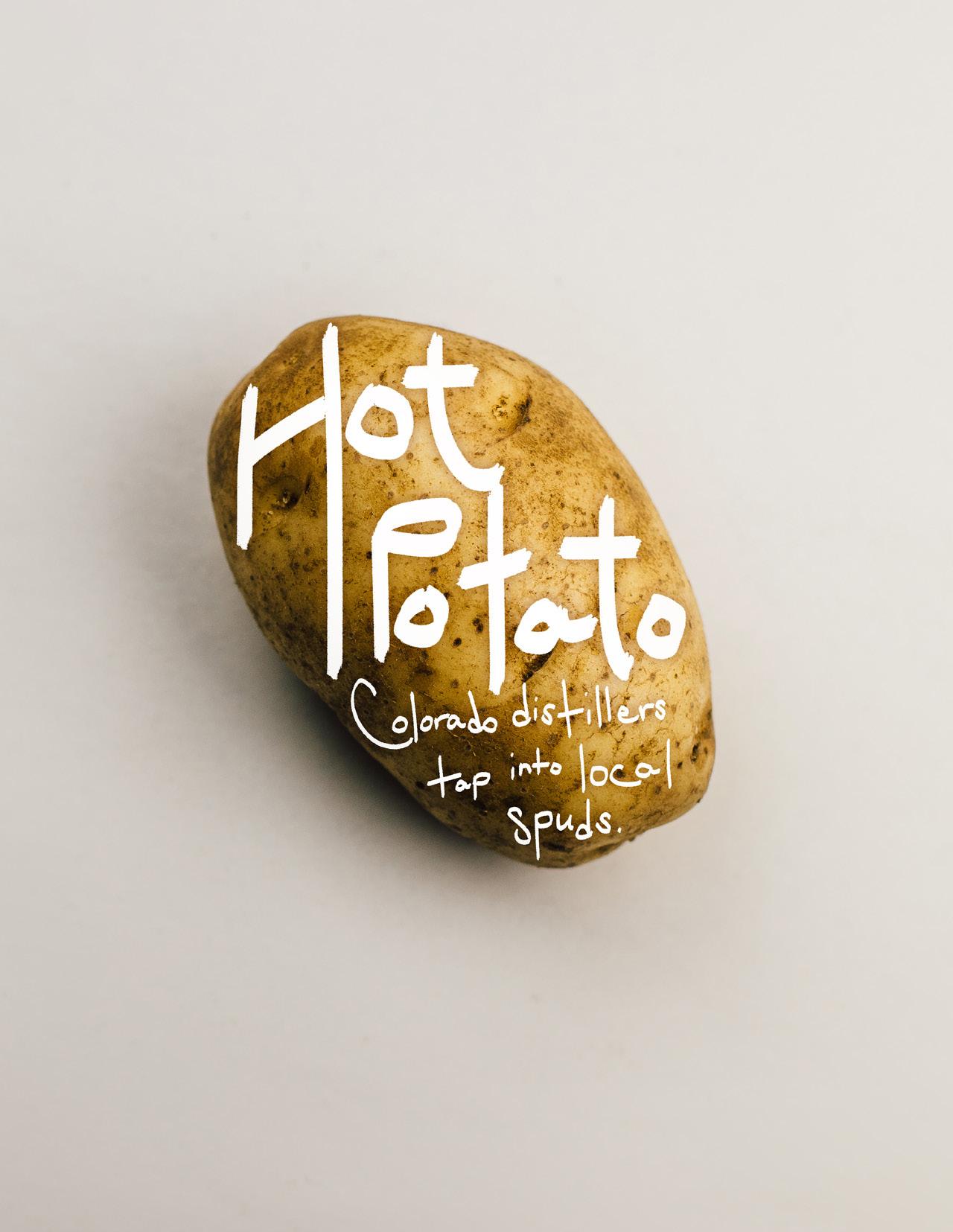
In the high country, Woody Creek Distillers has been making potato vodka for 10 years, tapping into the local agricultural history. Located at about 6,600 feet in elevation, a bit down from nearby Aspen, the distillery sources po tatoes from the sur rounding Roaring Fork Valley, where they’ve been grown for well over 100 years.
“Historically, they grew a lot of potatoes in the valley here,” David Matthews, master dis tiller and vice president of operations at Woody Creek Distillers, said. “Teddy Roosevelt specifically requested Roaring Fork pota toes for his inauguration dinner.”
Matthews pointed to the agronom ic history of the potato, going back sever al thousand years, to explain their suitability for the area. “Potatoes are originally from the mountains of Peru, the Andes,” he said. “They thrive up here; they grow great. In terms of soil and climate it’s ideal potato-growing land.” However, he added, “The fields, on the oth er hand, are small and irregular, and not very suited to modern agricultural machinery.”
He said the local potato market was close ly tied to the railway line that went up into Aspen to bring silver ore and coal out, al lowing the potatoes to also be loaded up and make their way to the wider world. One local town, Carbondale, still holds a fall festival called Potato Day that first began as a com munity harvest festival in 1909. However, the advent of modern farming equipment and the need for larger plots made potatoes an unprof itable venture in the Roaring Fork Valley.
“If you drive around the ranches and the backroads and know what you’re looking at, there’s potato cellars everywhere, discarded potato machinery still in people’s gardens,” Matthews said.
Though potato farming was long in de cline around them, two of the founders at Woody Creek, Mary and Pat Scanlan,
“Why don’t we grow our own potatoes and make our own vodka here in the valley’?” Matthews said. “It was chicken and egg. They [Scanlan’s] had the farm. They started grow ing potatoes as the distillery was coming online.”
However, it was a battle simply to transi tion the land at the Scanlan Family Ranch from grazing to farming. The challenges start ed with getting rocks out of the fields and continued with sourcing equipment suitable for planting and harvesting. They ended up having to use some antiquated equipment to make the farming operation work. “No one was growing on a commercial scale here when we started up, so we had to go from scratch,” he said.
He said he’s made other, non-potato vodkas in his time at Woody Creek, but he rec ognizes the difference in their core vodka. “The potatoes bring a slight creaminess, a viscosity to the vodka. It has dif ferent characteristics, it’s somehow smooth er and flavorful,” he said. “It’s not entire ly neutral, which is something we’re very proud of, but we do occasionally get some feedback on that.”
were consider ing potato vodka both as fans of the style and as ranch owners who could grow their own ingredients to supply the distillery.
PT Wood of Wood’s High Mountain Distillery, in Salida CO, said he would have farmers come in after he first opened to talk about using potatoes, and cus tomers would ask for vodka, but he would express his preference to make “whiskey and cool stuff like that.” However, he eventually
— DAVID MATTHEWS
“Potatoes are originally from the mountains of Peru, the Andes. They thrive up here; they grow great. In terms of soil and climate it’s ideal potato-growing land.”
Woody Creek Distillers
80 WWW. ARTISANSPIRITMAG .COM
relented and tackled the challenge of a potato vodka. “It turns out it’s actually really, really hard to do, and I like challenges,” he said. “If you wanted to make just a straight-up neu tral spirit, there’s a lot easier ways to get your starch.”
The potatoes lend an earthiness to the vodka and enhance the body, Wood said. “I converted into a guy who really likes our vodka,” he added. “It adds this beautiful thick mouthfeel and an earthy sweetness. It’s just so interesting.”
Todd Leopold of Leopold Brothers in Denver sources small amounts of flaked po tatoes, single digits in terms of grist percent age and only a few thousands pounds per year, from a processing facility in Center, Colorado. It’s a practice that goes back to the early days of the distillery in Ann Arbor, Michigan, where they bought commodity potato flakes that came from Idaho. Upon relocating to Denver, he found that “potatoes were everywhere in Colorado,” and made the easy decision to buy from within the state.
He’s not concerned about varietal, and is satisfied with the way that standard russets impact the body of his vodka. Wood sources from the same processing facility and likewise isn’t concerned about varietal.

“We messed with some other fancier ones, purple potatoes, some different Polish po tatoes, they grow a ton of different varieties down in the valley,” he said. “At the end of the day the product we were getting out of that standard russet is consistent and super nice, and a potato we can always get.”
Matthews said he mashed four different va rieties in their first year of operation, keeping them separated through distillation, and they all came out slightly different. He sources Rio Grande russets, a Colorado variety, for their flagship potato vodka, but they also release a reserve vodka made from Stobrawa pota toes, a flavorful, high-starch Polish heirloom variety.
Farmers in Colorado grow a wide variety of potatoes, but the staple potato in the valley is the russet Norkotah, which yields well and is disease resistant and familiar to local farmers, who have developed techniques to optimize their crop, according to Jim Ehrlich, executive
director at the Colorado Potato Administrative Council.
“Potato varieties are unique. They require some real specialized management,” he said. “Every variety is a little different in how you fertilize it; how you space the seed. You want to get a certain size profile from your crop.”
Breeders are constantly working to improve flavor, col or, or texture; increase disease resistance; or reduce the inputs required for a good crop. “From a sustainability angle, we want to be able to use less fertilizer, less water, have disease resistance so we don’t have to use fun gicides to control diseases,” he said. As a re sult, there are various strains of the Norkotah and other types of potatoes, not always evi dent to the consumer.
“They’re not the same as apples. You go into the store and you’ve got a dozen different kinds of apples you can choose from,” Ehrlich said. “With potatoes, you might have four or five different varieties in there and not know it.”
While Colorado doesn’t have a potato mar keting campaign like Idaho, it is consistently a top grower in the nation, usually ranking sixth or seventh in overall potato production, according to Ehrlich. The state is also the sec ond-largest shipper of fresh market potatoes in the country; by comparison, more than half of the storied Idaho crop and almost all of the Washington State potato crop goes to the processed market to become products like frozen French fries. Colorado is the op posite, with about 90 percent of the usable crop shipping out to be used fresh and the re mainder being sold into the processed market for products such as potato salad.
Colorado farmers grow about 20 million hundredweight of potatoes, or about two billion pounds. (A hundredweight, or 100 pounds, is the standard unit of measure for potatoes in the commodity market.) About three quarters of that goes out to the fresh market, with some not meeting grading
standards and getting diverted to cattle feed and a small per centage being dis posed of due to disease. The aver age market value of the Colorado potato crop is a little over $200 mil lion, dwarfing other crops and supplying states from Texas all the way to the Atlantic coast.
“Our growers, that’s their primary crop. Malt barley has been the standard rotational crop,” Ehrlich said. “Agriculture is the base of our economy here, and potatoes are the most profitable crop that a farmer can grow. We ship between 30,000 and 35,000 semi-loads out of here every year.”
While there are outliers further north, such
WWW. ARTISANSPIRITMAG .COM 81
as the Scanlans, the San Luis Valley in southern Colorado is the primary pota to-growing area in the state, containing 50,000 of the state’s 55,000 acres of pota toes. Farmers learned in the mid-1800s that the soil there is good for pota toes, as is the elevation of greater than 7,000 feet, which leads to daily high temperatures often in the 80s and a 40-degree swing from day to night. “The climate is just really suited for it, high altitude, cool sunshine,” Ehrlich said. “Our high temperatures don’t get ex tremely hot. If we get up to 90 degrees, that’s major hot here. The potatoes really thrive in that kind of a situation.”
The geographic factors also help: The valley remains fairly isolated from diseases and pests such as potato late blight and the Colorado potato beetle. “The fact that we’re surrounded by mountains here has some real advantages when it comes to diseases and pests,” Ehrlich said.
Because the potato sits at the center of many farmers’ planning, the impact of a longterm drought has led to changes in crop rota tions to accommodate and maximize potato production, even to the detriment of other crops. “Until recently, water has always been one of our advantages here, too, but we’ve been in this prolonged, twenty-plus-year drought now, and that’s become a challenge,” he said.
According to Ehrlich, the standard rotation in the valley is potatoes, barley, or alfalfa, and small amounts of vegetable crops as space or resources allow. However, farmers are mov ing fields that have traditionally rotated us ing alfalfa, which has a higher water demand, over to barley, and likewise transitioning barley fields to cover crops. “They’re using
their available water on the crop that is most profitable,” he said. “It’s changed the way they farm.”
Potatoes, as an ingredient, can be a challenge depending on their form. Dried, hammer-milled po tatoes can be incorporated into an existing grain-cooking system. Wood finds that us ing dehydrated, hammer-milled potatoes is easier than fresh potatoes. Dried, pulverized potato acts similarly to grain, though he uses a unique conversion regimen that includes steps around 130 degrees and 150 degrees us ing exogenous enzymes, a boil, and then the addition of malted barley on the cool-down to convert any residual starches.
“The starches are really hard to access,” he said. “We just experimented with all of that, and it seemed to work well. I don’t know if there’s any scientific basis for us doing it the way we’re doing it, but it has worked and produces a great product.” He uses one 2,000-pound super sack of dried potato for a 1,500-gallon batch of spirit.

Using fresh potatoes, on the other hand, is a different animal.Wood started off orig inally shredding raw potatoes, and it led to lower yield because he had trouble accessing all of the starch. The dried potato product is also more consistent because raw potatoes change during storage, impacting the compo sition of the potatoes and the way they can be processed.
“The whole raw potato has a lot of moisture right after harvest, and as it dries out some of those starches start to convert into sugars, so it gets a little bit sweeter but a lot drier later in the year. You get a different product,” he said.
Matthews uses fresh, raw potatoes, but be cause of the consistency issues, Woody Creek produces a year’s worth of vodka in the fall, starting early September and running for a few months. The first year, he said they cel lared some potatoes, and they dried out in storage and he had to bring a little extra water back in.
To process the potatoes at Woody Creek, he runs them, cleaned but uncooked, through a hammer mill to the consistency of wet rice. That material is moved using a screw pump and stator into the mash tank to be boiled, which helps with conversion. They use
enzymes on the heat-up (a high-temperature alpha amylase) and on the cool-down (a be ta-amylase) of the potato slurry. He doesn’t need to add any water to the fresh potatoes, because they’re already composed of about 90 percent water, which is unlocked during processing.“They’re pretty messy, particularly at the mashing stage,” he said. “You’re han dling the water as a solid, as opposed to just pumping it into the tank.”
Matthews said the yield on potatoes is a little lower than he would target on a grain mash, but a potato mash can still ferment out to seven or eight percent ABV. Because the potatoes are local, he’s also able to make up any increase in processing costs from a lower ABV with lower holding and transport costs.
Potato starch is composed primarily of amylopectin, a glucose polysaccharide with a high level of branching, and a lower pro portion of amylose, a more linear and easily broken down polymer of glucose. Possibly because of the amylopectin, which may con tinue being broken down during fermenta tion, or the presence of xylan and other hemi celluloses and celluloses, Matthews said the fermentation stage of a potato mash is very foamy and can require mitigation during the peak of fermentation.

Once fermentation is complete, Matthews strips the mash and runs it through a 42-plate batch-distillation column. He said the mas sive column, sourced from Germany, “might have been a bit of overkill,” but it was a re sponse by the still engineers who were unfa miliar with distillation at lower atmospheric pressure. “They were uncertain what the effect of the altitude would be here, so they recommended lots of plates. We wanted to be able to do it in a single distillation,” he said.
It’s not an easy product to make, he said, and it took a few years to fine-tune the meth ods. “The first couple of years were very chal lenging,” Matthews said. “The quality of the product has been very consistent, but dialing the process in was something of a challenge.” Similarly, Wood completes fermentation in four days, strips the mash, and then runs it twice through a 20-plate column. Because he’s using a stabilized potato product, he can produce vodka all year, running a batch every few months or a double batch when he needs to replenish his canned cocktails.“It’s been a
82 WWW. ARTISANSPIRITMAG .COM
little bit of a slow grind to get it out there. It’s a more expensive product, about thirty dollars a bottle retail, but we have an incredibly loyal customer base with it, and that’s just growing and growing,” he said.
Woody Creek is outgrowing its ability to source potatoes from the Scanlans, Matthews said, and is looking to bring on more growers in the area. They’re also looking at increasing fermentation space by 25 percent in the fall of 2022, with an eye on further expanding the building itself in the near future, to continue meeting demand in 25 states. He’s observed that the demand for their potato vodka has more to do with the fact that it’s a potato vod ka than a Colorado product.“We get phone calls from all over from people who visited the valley and want to know why they can’t
get it in Idaho or something,” he said. “It’s a very Colorado, local spirit. To some degree there’s some local loyalty, but for the most part it’s appreciated by people who aren’t drinking it in Bloody Marys. If you’re drink ing a martini or a neat vodka, you’ll notice a difference.”
The demand from Wood and Leopold, on the other hand, is a drop in the bucket for the booming southern Colorado potato market. Labeling rules in the industry that encourage potatoes to be treated as an interchangeable commodity product prohibit them from be ing marketed as from a certain place, with an exception for Idaho, but national grocery chains lean heavily on Colorado farmers to meet demand. Potatoes at retailers such as Walmart might have bags in several states
labeled as being packaged in Monte Vista or Center, Colorado.

Nonetheless, Ehrlich said, small distillers are still providing a valuable service to the small potato farmers in the area. “Anytime you can create a situation like with vodka, you’re adding value to that commodity crop. Especially if you can keep it local, I think that’s great,” he said.
Wood agreed that he’s “definitely not keep ing any farmers in business” with his potato vodka, but the farmers he’s spoken with ap preciated the opportunity to move an un glamorous, easily overlooked ingredient into the spotlight. “For them it’s a unique product that highlights what they do,” he said. “It’s a chance for them to be involved in something different.”
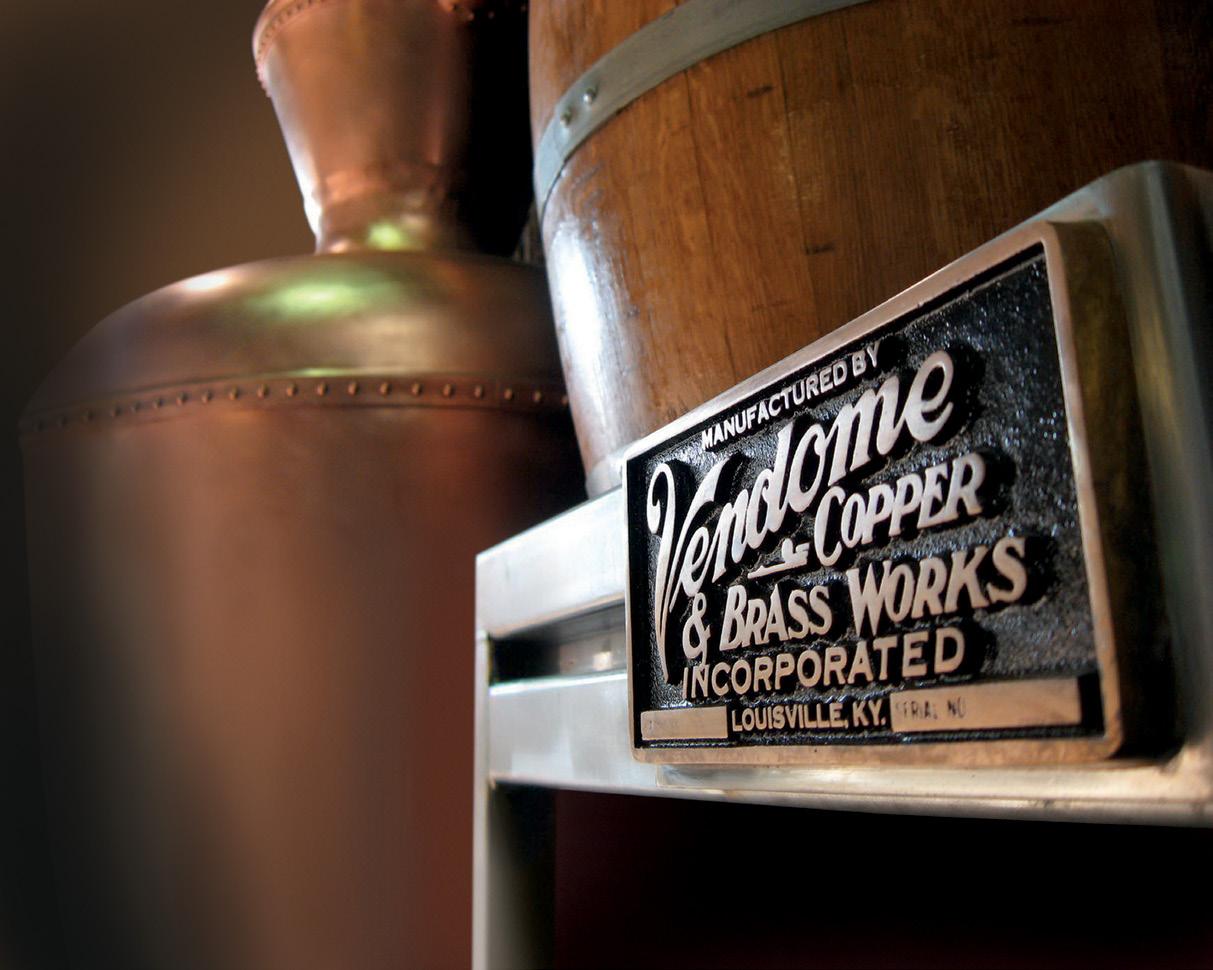 Gabe Toth, M.Sc. is lead distiller at The Family Jones’ production facility in Loveland, Colorado and an industry writer focusing on the beer and spirits worlds. With a background in journalism, he has written books on floor malting and fermented food, as well as numerous articles for Artisan Spirit, The New Brewer, Brewer and Distiller International, and several other publications. He holds brewing and distilling certificates from the IBD and a master’s from the Rochester Institute of
WWW. ARTISANSPIRITMAG .COM 83
A family business looks to rum’s future after a tumultuous decade.
THE GRASS IS GREENER FOR PUERTO RICO’S SAN JUAN ARTISAN DISTILLERS

You could say the father and son team who make rum at Puerto Rico’s San Juan Artisan Distillers are really in the grass-growing business. You can see it when visiting the distillery in Vega Alta, an agricultural area outside the capital of San Juan. The distillery, flanked on three sides by seven bucolic acres, grows bright green blades taller than people. In fact, the father, Pepe Alvarez, has been in the grass business for decades, starting his own sod company right out of col lege after working as a landscaper in his teens. He mainly grew sod for construction firms that need ed landscaping for the corporate buildings going up during Puerto Rico’s business boom in the 1990s and 2000s. Then an economic di saster sprouted weeds, so to speak.
As Pepe’s son and distillery Vice President Jose Alvarez explained, “[During] the Great Recession construction fell so the sod busi ness completely collapsed. [My father] wanted to reinvent himself so he started traveling … He start ed to learn about rhum agricole — the French-Caribbean style of rum made from sugar cane juice — by traveling to Martinique. He fell in love with the estate
Written and photographed by CARRIE DOW
84 WWW. ARTISANSPIRITMAG .COM
distillery model and saw poten tial in the Puerto Rico market.”
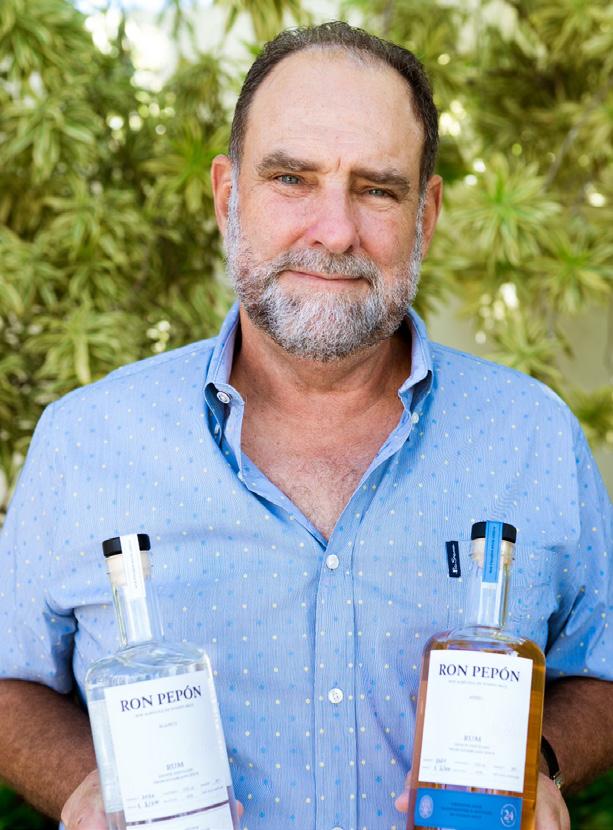
Combining his rum research with his agricultural expertise, Pepe built an estate rum distill ery growing his own sugar cane, a crop he knows well because sugar cane happens to be a spe cies of grass. It was also once the dominant cash crop on the island.
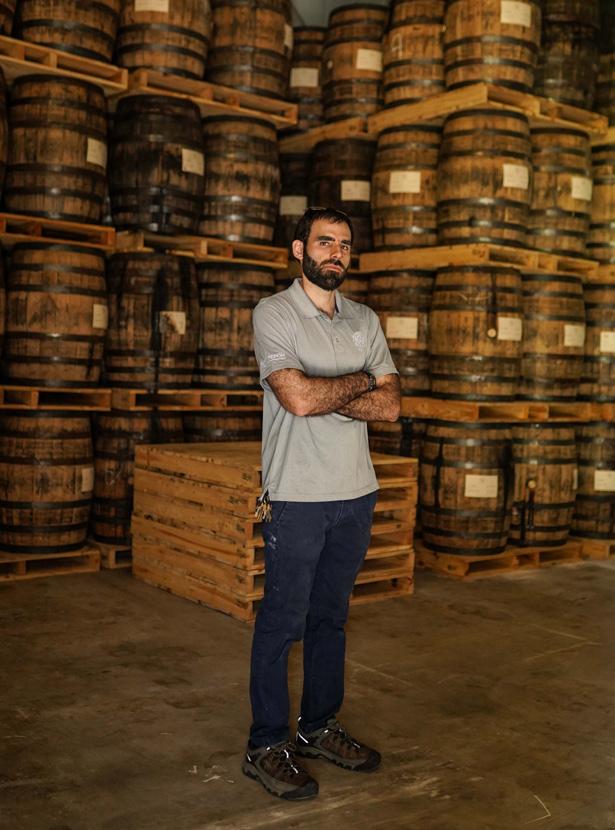
“Puerto Rico was one of the biggest sugar producers in the world,” said Jose. Like most Caribbean islands, Puerto Rico has a long history of sugar cane cultivation after the plant was brought there by the Spanish in the 1500s. According to the Puerto Rican Foundation for the Humanities, while cane pro duction declined throughout the Caribbean after the abolition of slavery, Puerto Rico main tained production well into the 20th century by opening highly mechanized mills to process the cane into sugar. By 1950, Puerto Rican sugar was considered the world’s finest, commanding high prices. By the end of the centu ry, the rest of the world caught up technologically and prices plummeted. The island’s last mill closed in 2000.
“A hundred years ago sug ar cane was everything,” Jose mused while strolling through the fields on an overcast day as a breeze rustled the thick stalks. “It was part of the culture. Seeing the earlier generations when they see our farms, they feel nostalgic about it.” The cane plants surrounding him came
from the University of Puerto Rico’s experimental agricultural program. Years ago, the island government’s Land Authority had the foresight to save Puerto Rico’s heirloom cane varietals and the university maintained them while looking for ways to restart Puerto Rico’s abandoned agricultural industry.
Even without a green thumb, Jose said sugar cane is relatively easy to grow, almost like a weed, but difficult to maintain and har vest. It grows fast, normally ma turing in roughly eight months, but depending on the season and moisture levels, can take as long as a year or as little as six months. They rotate crop sections so they can harvest monthly, however, year-round harvesting requires a vast knowledge of environ mental conditions to get the best yields. For example, cane stalks hold less juice during drier months — which makes it easier to extract — while holding more juice during wet months. Juicier cane means extra effort to har vest and mill, but more liquid for the stills. No matter the season, once cane is cut it must be pro cessed quickly. The facility has all the necessary equipment on site so they can pipe the freshly pressed cane juice straight into the tanks, but it’s a labor-inten sive process.
“If you don’t want to depend on chemicals,” explained Jose, “you need to have a good manual de-weeding program. You need to keep an eye on it.” But finding
Photos provided by San Juan Artisan Distillers
Jose Alvarez
Pepe Alvarez
WWW. ARTISANSPIRITMAG .COM 85
the workers they need is difficult.
Over the last 10 years, Puerto Rico has suffered a recession, two hurricanes, an earthquake, and a global pandemic, causing many people to permanently leave the island.
He said when his father start ed the company in 2011 he sought to create a “ron agríco la” specifically for Puerto Rico. Named RON PEPÓN after Jose’s grandfather, Pepe’s rum is a premium spirit bottled as both a blanco (white) and aged for two years in Jack Daniel’s bar rels. However, as they were pre paring the spirit’s first release in 2017, Mother Nature dropped two bombs in Hurricanes Irma and Maria, wiping out their cane fields. Along with the distillery’s farm, they own a 14-acre site in nearby Vega Baja and a 70-acre
farm on another part of the is land, but that farm has been out of commission since the hurri canes. Pepe then devised a cre ative way to bring in some green — as in dollar bills — while they replanted and repaired. They connected with cane juice producers in Dominica to cre ate TRESCLAVOS, fruit-in fused rums for the local cocktail
market. Using fresh native fruits like passionfruit, mango, and quenepa (Spanish lime), Jose said the new product has far ex ceeded expectations and they’ve already expanded into the U.S. Virgin Islands and Florida mar kets. It also does a brisk business at the San Juan airport’s du ty-free store where it is the only local craft spirit available.
After finally releasing RON PEPÓN in 2019, they have since also developed a blended rum made from both their cane juice and the Dominicans’ under the TRESCLAVOS brand called RONSANTO. Aged for three years, Jose says RONSANTO provides consumers a high-qual ity table rum at a moderate price as they continue to build RON PEPÓN’s reserves.
As the company’s outlook, like its pastures, turn greener, Jose and Pepe have turned their focus towards rum distilling’s fu ture. Jose mentioned that Puerto Rico’s rum market — and most of North America’s — is dom inated by molasses-based rums in the behemoths of Bacardi and Don Q. Nothing against molas ses rums, but Jose said that cane
“Sugar cane juice is the future of rum. It’s basically arguing that molasses rum producers are progressively going to have a difficult time because molasses is getting more difficult to buy”
— JOSE ALVAREZ Vice President, San Juan Artisan Distillers
86 WWW. ARTISANSPIRITMAG .COM
juice rum is greener, and not just financially. He mentions a dis tillery panel discussion he par ticipated in at the Chicago Rum Festival in April.
“Sugar cane juice is the future of rum,” he said. “It’s basically arguing that molasses rum pro ducers are progressively going to have a difficult time because molasses is getting more difficult to buy. In particular good quali ty molasses because what makes molasses good is the sugar con tent and how clean it is.” Jose said that as today’s food manufactur ers extract more and more sugar from the cane, often using chem icals, they leave behind inferior molasses.
“The molasses that’s left over for the rum producers either has

less sugar in it or it’s tainted with chemicals. That’s an issue.” He added that molasses poses an en vironmental problem.
“Once you distill with molas ses,” he continued, “you need to dispose of it. You need equip ment to neutralize and clean it up.” That’s because spent molas ses wash is highly acidic, need ing treatment before disposal or reuse. “Now with sugar cane, it’s a lot easier. It’s organic and the material is not difficult in an en vironmental sense.” He says they use the distillery’s spent wash as fertilizer and they also utilize the crushed stalks, called bagasse. Bagasse can also be used as fer tilizer or they sell it to local en ergy companies for biodigestion, places that buy food waste and
use microbes to convert the ma terial into biogas products.
“Distilleries able to make rum out of sugar cane juice have a
window of opportunity,” he not ed. Looks like the grass at San Juan Artisan Distillers is greener in more ways than one.
San Juan Artisan Distillers are located in Vega Alta, Puerto Rico. For more info visit www.sanjuanartisandistillers.com or call (787) 222-1633.
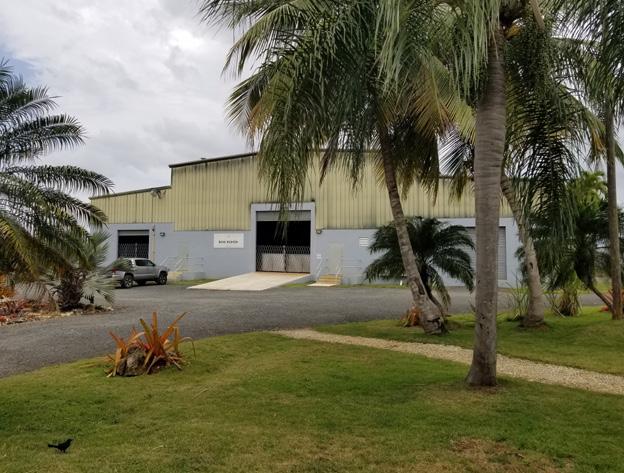
WWW. ARTISANSPIRITMAG .COM 87
DEFINING a DECADE
In this business we love a label, both the literal kind affixed to the bottles we make and the figurative application of a word to define an idea or category. We spend a lot of our time thinking about, reflecting on, or defending the words that we use to convey complex practices or traditions. In honor of Artisan Spirits’ 10 year anniversary, I posed a challenge to some friends in our industry who have been active since before that time and who are close to us here at Artisan Spirit: can you define a decade in just a word or two?
What’s in CRAFT
Jeff Wuslich, co-founder of Cardinal Spirits in Bloomington, Indiana and co-chair of the American Craft Spirits Association’s competition committee, feels that the shift in the concept of “craft” over the last 10 years has been pretty momentous. When he would introduce his distillery to new visitors in the past he would have to use craft brewing to contextualize its position in the market. “And now I just say we’re a craft distillery, and people are like, ‘Oh yeah, we’ve got one of those where we live,’” said Wuslich. Craft has shifted from the very edge of the public’s attention to front and center; for that reason Wuslich also considers “fringe” to be applicable for the oneword challenge.
He credits an unlikely recent event as partially responsible for cement ing the status of craft distillers in the minds of consumers: the production of hand sanitizer at the beginning of the Covid pandemic. “There’s so many people in our community that just thought that we were a bar and restaurant,” he said. Once they saw the scope of hand sanitizer that was being produced they realized just how much capacity this local distillery had.
Rob Masters, partner and head dis tiller at The Family Jones in Denver, Colorado, offered a few different definitions for the word craft, albeit not all his own. Masters was involved with the very first American Craft Spirits Association round table near ly 10 years ago; he shared his notes from that meeting, and top among the list of priorities was the question,
“What is craft?” One answer relayed by Masters is credited to the late Dave Pickerell: he said, ‘You know what they say about porn, you know it when you see it.’” Masters’ personal rule of thumb is whether or not he can see a still within two clicks on their website. If he can’t, he assumes a much higher likelihood that the site he’s viewing is one for a brand rather than a produc ing distillery.
ACSA has attempted to provide their own definition of the word “craft,” which can be found on the membership tab of their website. A craft distillery is independently li censed with a valid DSP that has no more than 50 percent of the DSP owned by “a producer of distilled spirits whose combined annual pro duction of distilled spirits from all sources exceeds 750,000 proof gallons removed from bond,” according to their website.
As for whether or not Wuslich has a definition of what qualifies as “craft,” he’s less decisive. While he once felt very strict about what, and who, would fall under the purview of this amorphous term, today he doesn’t feel quite the same. “However
Written by DEVON TREVATHAN
88 WWW. ARTISANSPIRITMAG .COM
you’re making your life work, go for it,” Wuslich said. “I feel like it’s been so hard, I’m just like, wow — anyone who’s tried it, do it, good on you.”
Steps to MATURITY
Corsair Distillery’s Tyler Crowell thinks that the last 10 years have been a period of maturity for many distill eries. “Back in 2012 everybody was kind of brand new, we were young, small businesses that were coming out of the gate with their business plan, their game plan, thinking they know what direction to go in,” he said. In the intervening years the market has become extremely competitive — a theme reiterated by many of the peo ple interviewed for this article. The dif ficulty of this business has forced just about everyone to refine their process and tighten up the gears that turn their machine, whether they had intended to or not. The players have matured. “In the early days we were just enjoy ing the experimentation of it all, laying down lots of different styles, trying a little bit of every thing,” said Crowell. “We’ve kind of grown up a little bit.”
Maturity works on more than one level here, since this last decade has also seen an explosion in the availability of and preference for aged distillate. Whiskeys sporting age state ments of six, eight, and ten years are not at all uncommon at craft spirits competitions,
as they once were, and now instead of a microdistilling boom we seem to be entering into the great age of contract whiskey. Motivated entrepreneurs can now purchase whiskeys more than two years old from MGP Ingredients or a different large output distillery, possibly within their same county. The ability to fulfill contract orders is being baked into business plans or added onto the operations of existing distilleries, such as in Corsair’s case. They are about to finalize the buildout of a new facility that was constructed to allow them to do bulk production for contracts.
Cash in, CASH OUT
Dan Farber, founder of Osocalis in Alameda, California, has been active in American craft distillation since its resurgence starting in the 1980s. When asked to define the last decade, Farber is one of few who can reach back four decades to lay out the con text for his answer. Back in the ten years between 1982 and 1992 there were some people getting into the dis tilling industry, but the total number was scant and those who did were primarily fueled by their own passion. “There wasn’t a market, there was nothing,” said Farber, though other coun tries had some suc cessful small produc tion distilleries. From 1992-2002 there was a shift; people were now trying to make a
business out of the small production of spirits. Those distilleries that were getting started — still very few relative to the number we have now — were run by people who wanted to make a sustainable company; the foundations for craft were being laid, but it was still very far from a mature industry. “I mean, that was naive, right? Everyone thought, ‘Oh I’ll just make a good product and it will sell,’” said Farber. But the decade between 2002-2012 was distinct in the sense that we all saw craft brands achieve real success. The potential that had laid dormant for nearly a hundred years — for pop ular and successful spirits coming out of independently owned distilleries — was finally being unearthed, and though they were far from perfect, craft distilleries were becoming local, regional, and national successes. The fringe, as Wuslich had said, was mov ing closer to the mainstream. Still, according to Farber this success was not necessarily related to the quality of the juice being made: “Many many brands that got in then were success ful in spite of themselves, not because of themselves,” he said. If you were operating in the right place between 2002-2012 you had a much greater chance at a positive outcome. Getting a distributor was easier, finding place ments was less taxing, and journalists still saw fresh angles in the story of two friends leaving their established careers to start a craft distillery.
Passionate dreamers and deep pock ets flooded into this business en masse following a period of prosperity; con sider that we have over 2,000 craft dis tilleries in America now. “Brands have sold, money’s changed hands, people have either made some money or are established, but the whole world of craft distillation really changed,” said
“
In the early days we were just enjoying the experimentation of it all, laying down lots of different styles, trying a little bit of everything. We’ve kind of grown up a little bit.”
— TYLER CROWELL Corsair Distillery
WWW. ARTISANSPIRITMAG .COM 89
Farber. In line with what both Crowell and Wuslich also said, the market for craft spirits is now incredibly challeng ing. Gaining traction, sales, and a slim slice of market share are difficult feats in a saturated industry, made even more so by the well-funded, wellthought out business plans that are emerging.
Farber sees two models working most successfully now: the one head ed by the well-funded entrepreneur who is bringing a business sense to what they’re doing and the bar/ restaurant that also makes its own booze. “You look around the state of California, it's like 99 percent of ev erybody, they don’t have distribution,” he said. “They just sell out their front door, it’s a tasting room.” But the at mosphere that we were all operating in for years has changed irrecoverably, in part because of COVID-19 and its broader impact, but even without it the direction was the same. Which is not to say that having an excess of resources is strictly necessary to make it, but well-funded businesses are at a distinct advantage.
The JOURNAL
A rare novelty of the last decade: the publication of the Journal of Distilling Science, a peer-reviewed journal related exclusively to distil lation, published in part by our edi tor-in-chief, Brian Christensen, and Gary Spedding, brewing and distilling chemist and biochemist. “I think lack of education and a missing journal would come to mind,” Spedding said when asked, and though he has been responsible for increasing access to
information for many new and exist ing producers in distillation, he still sees that education is a weak point.
“I think there has been, obviously, more education through ADI and the ACSA,” but it’s still far from perfect.
This, Spedding said, is particularly true in regards to sensory evaluation. “There is no methods manual for analysis of spirit beverages,” he said. He noted that sensory is definitely an area of weakness for our industry still — everyone gets excited about it yet few employers are able or willing to commit consistent resources to senso ry training and maintenance for their staff.
PROGRESSIVE
Tendencies
Leah Hutchinson, the midwest sales manager for Tapi USA and veter an of both ADI and ACSA, came up with a couple of words that she felt are particularly applicable, “progressive” being one of them. “Unprecedentedly progressive, as opposed to the 10 years preceding that,” she said, in par ticular our ability to create change in legislation. A decade ago there wasn’t any kind of machine to represent the interests of the craft distiller. Since that time, everything has changed. Case in point: making the federal excise tax relief permanent, which would not have been possible with out countless hours of work by dis tillers around the country, support from legislators, and organizational efforts from groups like the Good Guy Distillers, American Craft Spirits Association, DISCUS, the American Distilling Institute, and this magazine. “That was huge, now DtC and the fact
that DISCUS in this decade finally has embraced craft,” Hutchinson said. To that same end, Masters feels like “attention” could be a useful word — in this decade we finally began to command some. Masters has written or amended business plans for a num ber of years, through consulting and work on behalf of the Family Jones, and he is consistently struck by the amount of money being saved due to the reduction of federal excise tax for the first 100,000 gallons taken out of bond. Every month he still calculates what he would have paid at the pre vious rate of $13.50 per gallon versus the current rate at $2.70, “and it’s real fucking money, like crazy money, hun dreds of thousands of dollars.”
FRATERNITY, even FAMILY
It didn’t take long for Hutchinson to throw out some words that will likely resonate with anyone reading this magazine: fraternity and family. “The camaraderie, the brotherhood, the sisterhood, what we stand for, the closeness in our relationships,” she said. “I mean, we are a family — we’ve got each other’s back.” Hutchinson has witnessed how other industries operate; she organized conventions for years before coming to this busi ness. No other industry that she inter acted with has come close to craft dis tilling in the sense of brotherhood and sisterhood among its members. It’s a sense of kinship rarely found among competitors in the same market.
Artisan Spirit is an extension of that family. If you know Brian, Amanda, or Ashley you probably know them from a time when they came to your
90 WWW. ARTISANSPIRITMAG .COM
distillery, or perhaps your home, or when you connected at a convention. You almost certainly broke bread with them, or chatted over a bev erage. Maybe you heard one of the more memorable details of Brian and Amanda’s time working in the funeral business, such as the fact that at fu neral conventions caskets will be set up, lined with plastic, and filled with ice to serve as giant coolers for beers and other beverages. More than likely you were regaled with a story of Brian and Amanda’s three boys, Marshall, Grant, and Wilder. However you in teracted with them, you surely felt their warmth, generosity of time, and authentic curiosity for what you do and how you are carving your mark in this shared business of ours, regardless of your size or status.
Perhaps what you didn’t take stock of, however, is what they have done for 10 years now. Consistently, through the pages of this magazine, they have documented all our many efforts and actions, the wide reaching and cease less momentum of the members of an industry that genuinely does feel more like a family than it probably has any
right to. They, in collaboration with countless others, have created a record not only of our craft and the process behind it but the passion and spirit of our peers — a force so great it has literally changed laws and redirected countless lives — and they have done so with style, grace, and, most impor tantly, humanity. Never, not once, was humanity sacrificed in the pages of this publication. Not in Brian’s Letters from the Editor, which are always a treat to read, or in the gracious point of view through which Amanda finds her shots. Maintaining that humanity in a business often clouded by mar keting and minutiae is crucial; it’s a terrible shame that this is considered a trade publication — the consumer should know us in the way that we are reflected here. The humanity is what has kept this side of distilling feeling the way it does, like a community rather than a cutthroat competition.
Personally, I have traded on the goodwill created by Brian, Amanda, and Ashley for quite a while; it’s not
an exaggeration to say I introduced myself as a writer for Artisan Spirit to every person I met for the first sev en years I worked in this business. (I still do.) Those five words were like a magic key, opening doors and grant ing me time with folks who often had little time to give. It has been an honor for me to represent this magazine for as long as I have now, to simply play a part in this grand effort. Ten years, 39 issues, hundreds of miles traversed across this country, thousands of hours talking with distillers, suppli ers, marketers, farmers, scientists, consumers, and, most of all, friends. How do you define this past decade? I think your best bet is to look inside these pages; there you’ll find the clos est encapsulation. No single word or sentence could begin to communicate the depth of this thing that connects us all, this Artisan Spirit that we all share. Cheers to everyone who has made this possible, particularly Brian, Amanda, and Ashley; here’s to many years more.
Devon Trevathan is the co-founder and president of Liba Spirits. Visit www.libaspirits.com for more information.
CRAFT BEVERAGE INSURANCE FOR OVER 30 YEARS DISTILLERIES & BREWERIES property | general liability | liquor liability workers compensation | auto equipment breakdown Northampton MA 413.586.1000 distilleryinsurance.net WWW. ARTISANSPIRITMAG .COM 91
WHEN IT COMES TO SPIRITS AND COCKTAILS PRODUCTION, SHOULD YOU CAN IT?
WRITTEN BY GARY SPEDDING, PH.D.
Aluminum cans: steeling the way forward
It was suggested that the adoption of the all-aluminium (aluminum) can in 1964 by the Royal Crown Cola Company then led to rap id acceptance of this packaging concept across the beverages market (1). Now familiar to soft drinks consumers and major beer, cider, and now new seltzer producers, the craft beer and spirits move ment has only quite recent ly shifted big time to cans as a vehicle to carry their precious liquids. However, hold back the hoses and fill er heads as not-all liquids belong in the good old alu minum or even steel cans.
This present article will fo cus more on aluminum cans as spirits and cocktail bever age “carriers,” though some of the issues outlined here will also pertain to the use of steel cans for your wares.
Statistics now show us that 95 percent of all beer and soft drink cans in the United States are made of aluminum. Can makers here pro duce about 100 billion aluminum beverage cans a year. While almost all food cans are made of steel, aluminum's unique properties make it ideal for hold ing carbonated beverages. A typical alumi num can may weigh less than half an ounce,
however, the thin can walls may withstand more than 90 pounds of pressure per square inch (psi) exerted by the carbon dioxide in beer and soft drinks, and now carbonat ed gin and tonics and cocktails. For more on this topic of can design, and manu facture see: http://www.madehow.com/ Volume-2/Aluminum-Beverage-Can.html.
Even if well-constructed and well-sealed, as will be seen below, things can still go rad ically wrong with can-packaged beverages.
Two piece or three piece — which gives you the most peace? A bit of an historical note!
A typical beverage can consists of two parts: the can body and the can end. Can bodies are usually made from one piece of aluminum (or steel) drawn up into a cup, then punched and end-ironed into a basic can body shape. The body is then “necked” meaning that the top of the cup is crimped to a smaller diameter. For beverage cans the can ends are always made of aluminum and mostly pressed from a tougher and thicker blend of metal than the can body. Then the pull tabs are added in a separate operation. Today, two-piece cans will be used, but let us explore the issues. Three-piece cans, as the name indicates, consisted of two end lids (top, bottom) and a body; a flat metal sheet rolled with a longitudinal side, joined to form the cylindrical structure with an open top and bottom. Three-piece cans were easier to form in any combination of height and diameter, providing mixed spec ification cans with ease (2) and are mostly used for vegetables today.
92 WWW. ARTISANSPIRITMAG .COM
Two-piece cans, on the other hand, proved to be the major innovation in can making, consisting of one end (lid) and seamless body; a flat metal sheet stretched to form a cylindrical cup-type structure with closed bottom and without any joint. Two-piece cans, therefore, are economic to produce, hy gienic, and have a high printing area (as com pared to the three-piece cans) due to the ab sence of any side seam. Moreover, such cans are approximately 35 percent lighter and provide better integrity since the absence of a side seam requires no coatings or enamel usage. Though it will be seen that can lid seam failure is a not-infrequent problem for canned beverage producers (partly due to the use of poor grade can-end sealing units).
Two-piece cans alleviated a problem of fla vor deterioration related to iron pickup from side seams present in three-piece cans as the former lacks any side seams. The first threepiece beer can was introduced in 1935 (2). Until the 1950s, tin plate was used for beer cans, however, iron pickup from the seamed end led to objectionable metal-based turbid ity in the product. Aluminum cans with easy opening ends provided the best barrier prop erties to deteriorating factors of beer, such as oxygen and light, and it is this that then add ed to the monopoly of aluminum cans in the present market, as noted also for soda in the opening paragraph of this article. Aluminum cans were not accepted for wine packaging due to the development and presence of potent sulfury aromas (2), though the issue of sulfides and hydrogen sulfide (egg, rotten egg) aroma have proven common in certain wine spritzers and coolers in cans. This is of ten correlated with the pH of the solution and to copper ions. This latter system is a potential model for issues of spirits or spirit cocktails in the can!
The next topic we cover is the liner, a mi croscopically thin protective barrier that lines the cylindrical part of the can and that itself sits on another oxide later which can provide protection to can and to beverage unless it too is compromised (more on this later). Even with the liner we need to con sider some evils that are only just now going away and finding the veils that work much better in our favor.
So, will a can liner protect you?
Bare metal surfaces are not totally inert to environmental corrosion, and contact with food and beverage materials, especially high ly acidic products such as fruit juices are not without concern. Though a thin veil does form to afford some protection (again more on that later). The interior cylinder surface of cans is, therefore, protected by an ultra-micro scopically-thin epoxy resin coating (lacquers or enamels) — the liner. The can base and can lid, however, are not so protected (depending upon three-piece or two-piece can construc tion — though typically base and lid “tops” are not so much liner-protected). Consult with the can manufacturer of choice for the latest production technologies and can specs, and see: https://tandobeverage.com/bever age-can/. The can liners today are accepted as generally safe from a human consumption viewpoint by US, European and Chinese reg ulations. Recently a mandated change of liner components was implemented to remove a less desirable (potentially toxic) component of such liners known as bisphenol A (BPA). BPA (aka 2,2-(4,40-dihydroxydiphenyl) pro pane) is an organic compound widely used in the manufacture of polycarbonate plastics and epoxy resins. Moreover, this chemical can leach from food and beverage cans pre senting as a major xenoestrogen pollutant. (Xenoestrogens are “foreign” estrogens, sub stances that are close enough in molecular structure to estrogen that they can bind to estrogen receptor sites with potentially haz ardous outcomes). Sources of xenoestrogens include plastics, pesticides, chemicals, and water systems (see, https://en.wikipedia.org/ wiki/Xenoestrogen for more on this topic).
products (lagers and many other classic beers styles) that were filled into older composition liner cans have often not been tested rigor ously with new liners and, for such beverages, this is likely not a cause for concern. However, brewers moving to production of sour beers and other alternative or newer type beverages are seeing many can integrity, can-liner integ rity issues and detrimental color, flavor and aroma changes to their products including liner decay, sediments, hazes, colloidal matter and sometimes gushing issues.
Thus, certain products cause issues when packaged in cans lined with certain propri etary liners. Products may contain residual can liner components, polymeric or mono meric plastic and plasticizer components. It has been shown that many products filled into cans or bottles do contain plastic-related ma terials today based on many potential points of contact with such plastic-based materials. Can liner integrity can also be compromised, leading to clumps of “gelatinous” liner frag ments and skins floating in the soup … er … the cocktail or beer. Yummy!
Spirits and cocktails producers are catching the wave, with respect to a move away from glass to metal packaging but need to be aware of potential chemical composition issues of their liquids in contact with steel or aluminum cans. While research is needed and in-house forced testing of beverages is desirable, there is little published on the topic or methods to guide the brewer or distiller in implementing a quality assurance (QA) and associated qual ity control program (QC) to ensure a quality product remains stable in the package and to avoid severe damage to bottles and cans. Or such is not yet available to the smaller scale distiller.
California Proposition 65 requires busi nesses to provide warnings to Californians about the effects of significant exposure to certain chemicals. In 2015, bisphenol A (BPA) was added to the list of chemicals “known in the state of California to cause reproductive toxicity”. Now major beverage companies require their beverage cans to have a “BPA non-intent (BPANI) liner. Traditional
Some can manufacturers have evaluated new products for their clients to see if they will have a significant shelf-life and product/ flavor integrity. Flavor houses might do the same. However, craft spectrum brewers and distillers are often on their own to ensure their product will not cause decay of the liner and/ or corrosion of the underlying metal, causing severe damage to cans, or that their carefully crafted products will not suffer from malodor or detrimental flavor changes.
The US Food and Drug Administration
Ah, canny Californian issues yet again. Will they ban the can-can?
WWW. ARTISANSPIRITMAG .COM 93
FIGURE 1
Can and corrosion issues, scalping of flavors by can liners and packaging materials, plus leaching of metal ions into cans can be problems to be contended with. Microbial loads with nutrients for them to thrive on in the can, and the interactions of metal ions in foods and beverages may result in corrosion, pitting, perforation, loss of coating and product deterioration and discoloration. Flavor issues and malodors are also of note here and all these features are covered in the text in this and subsequent parts of the treatise in greater detail.
(FDA) regulates the safety of substanc es added to food. They also regulate how most food is processed, packaged, and labeled. https://www.fda.gov/food/ food-ingredients-packaging. Moreover, the FDA provide a database listing effective premarket notifications for food contact substances (coatings and liners) that have been demonstrated to be safe for their in tended use. The list includes the food con tact substance (FCS), the manufacturer of the FCS, the intended use, the limitations on the conditions of use for the FCS and its specifications, the effective date, and its environmental (impact) decision: https:// www.fda.gov/food/packaging-food-con tact-substances-fcs/inventory-effec tive-food-contact-substance-fcs-notifica tions.
While such documents should be con sulted by the brewer and distiller, and the specifications of can manufacturers for (currently) tested products obtained, the above-mentioned links, do not, however, cover issues with respect to interaction of food/beverage components that prove det rimental to can liner integrity, or to metal fatigue, deterioration/corrosion which can
lead to failure such as explod ing or imploding cans, failed seams, pin-prick leaks or to aroma and flavor and even, occasionally, severe color changes to the beverage contained within the can. Many newer beverages and formulations having never been produced or, therefore, evaluated before.
So, what are the culprits that should keep you shaking in your boots? What should you be aware of to prevent a leaky outcome or keep a can rocketing into space and potentially into someone’s eye?
The most common problem components or suspects and features that can cause dam age to can integrity, catastrophic can failure, corrosion, and/or to loss of visual, aroma and flavor appeal and integrity are outlined
in Figure 1. As this topic is vast, we will provide additional cov erage in multiple parts for future editions of Artisan Spirit Magazine. You can look forward to learning more about microbial problems, risk assessment, pH and acidity, more on corrosion factors, as well as quality control efforts
Gary Spedding, Ph.D. is a brewing, distilling, and sensory analytical chemist, and owner of Brewing and Distilling Analytical Services, LLC — with two facilities (Lexington, KY and Denver, CO).
REFERENCES
1. Lumley, R.N. Chapter 1: Introduction to alu minium metallurgy. In Fundamentals of aluminium metallurgy: Production, processing and applica tions. Edited by Roger Lumley. 2011. Woodhead Publishing Limited.
2. Deshwal, G. K.; Panjagari, N. R. Review on met al packaging: materials, forms, food applications, safety and recyclability. J Food Sci Technol 2020, 57 (7), 2377-2392. DOI: 10.1007/s13197-019-04172-z
Corrosion components and factors that lead to can damage and to product integrity.
COLORANTS Red #40 (Allura Red AC), Yellow #5 (tartrazine) ACID TYPE Citric, Malic TITRATABLE ACIDITY TA FAN SUGAR pH % ABV PRESERVATIVES Benzoates FRUIT JUICES % content Notable: lime, grapefruit CHLORIDES COPPER CO2 CONTENT Liner disintegration = Floating pieces Particulates, fruit pulp = Nucleation centers Over foaming, gushing MICROBIAL LOAD Saccharomyces cerevisiae Zygosaccharomyces spps. Low ABV, with sugars and FAN (nutrients) re-fermentation = more CO2! Explosions! 94 WWW. ARTISANSPIRITMAG .COM
THE AGE OF (DISTILLED SPIRITS) ENLIGHTENMENT

THE INEVITABILITY OF CHANGE
Written by LUIS AYALA
The Age of Enlightenment (AOE), also known simply as Enlightenment or the Age of Reason, was an intellectual and philosophical movement that started (and dominated Europe) in the 17th and 18th centuries. It had a global influence and it left behind long-lasting effects. The American Enlightenment emerged some 30 years after the European one1 and it influenced, for example, the U.S. Declaration of Independence, while the European one influenced the French Declaration of the Rights of Man and the
1 https://www.timetoast.com/timelines/the-great-awakening-and-the-enlightment
 Photo credit: National Museums in Berlin, National Gallery / Andres Kilge
Citizen. The AOE included a range of ideas centered on the value of hu man happiness, the pursuit of knowl edge obtained by means of reason and the evidence of the senses.
During the AOE, philosophers and scientists widely circulated their ideas through meetings at scientific academies, Masonic lodges, literary salons, and coffeehouses, as well as in printed books, journals, and pamphlets.2
Much of the knowledge that emerged from the AOE was first met with strong resistance. Many older scholars and religious and/or polit ical figures were dismissive of every thing that could question their grasp on power. They believed that heat, for example, was a strange invisible fluid and that light was a gift from heaven that ripened crops.
There are many glorified views about this age (see image on previ ous page), usually depicting images of groups of people eagerly absorb ing the new, revolutionary ideas. But revolutionary ideas are rarely wel comed with open arms and are often forced to take the road less traveled; the history of original thoughts is not always a kind reflection of the people encountered along this road.
Artisan Spirit Magazine has been, for the past 10 years, a coach wagon on this path. They have been helping craft distillers spread their new ideas and ideals, but the messages haven't always been received with open arms by members of the “old school.” As with the AOE, however, hard truths tend to endure, while flawed, opin ion-based thought seems to dissi pate with the passing of the years.
Join us as we explore the many ways the craft spirits industry is go ing through its own Age of Distilled Spirits Enlightenment!
2
THE CRAFT SPIRITS MOVEMENT EXPERIENCES ITS OWN AOE
The emergence of the craft spirits movement is akin to the emergence of the AOE, marking a shift from an alcohol industry dominated/supplied by a handful of large domestic or multinational distilleries with a near monopoly on alcohol con sumption, to one where even small, one pot still/ one shift operations can be profitable. Here too, several distinct lines of thought or approaches have emerged:
1) Some distillers who believe that raw mate rials should be grown, harvested, and pro cessed on-site or nearby the distillery, ideally by the same people;

2) Other distillers who believe that the raw ma terials and their provenance are not as im portant as how they are prepared, fermented, and distilled;
3) Then there are those who believe that alco hol can be sourced from third parties. The sourced alcohol can optionally be re-dis tilled, aged, blended, and bottled by them and, finally;
4) There are private label owners who believe that the key to success is in the marketing of the product, not in how the raw materials are sourced, processed, fermented, distilled, and aged (if applicable), leaving production decisions up to their suppliers/co-packers and starting their commercialization efforts upon delivery of the finished goods to them or their distributors.
Why do consumers show a preference for craft products over those produced by the large com panies? To answer this question, we could first try to define why some people choose a religion or a school of thought over another. In order to sur vive, religions need believers and followers who will support them and who will help them grow. What makes some beliefs more attractive than others is the subject of much debate among scien tists and researchers, but a popular explanation is the so-called Mickey Mouse Problem 3 According
3 https://journals.plos.org/plosone/arti cle?id=10.1371/journal.pone.0220886
to this explanation, natural selection favored hu man ancestors with certain mental capacities, in cluding our tendencies to seek patterns and think about other people’s thoughts (theory of mind). These cognitive adaptations, which helped our ancestors survive and reproduce, also made peo ple prone to supernatural beliefs. By the same to ken, some craft producers’ stories/approaches are more likely to resonate with some consumers than with others.
Each craft spirits brand acts much like its own house of gospel, defining what makes it unique and better from all the rest. As expected, each operation usually appoints a team in charge of spreading their “gospel” (a task carried out by mar keting/sales) and designates a person as their “cult leader,” usually bestowed with the title of “Master Distiller” or “Master Blender” or another similar moniker. Visitors to the tasting rooms, distilleries, or websites of the brands are presented with all the reasons why their distillate is purer, more authen tic, more natural, better for the environment, etc. We’ll explore many of these claims in more detail later in this article. If we apply the Mickey Mouse Problem to craft spirit brands and their marketing, we can deduce that they will succeed to the extent that their stories and rationale resonate with their potential consumers’ mindset and their need for logical patterns and facts.
KNOWLEDGE LIBERATES
... AND PROTECTS
Knowledge sharing is at the core of any attempt to enlighten and to ultimately attract like-mind ed individuals. Organized religions use printed materials designed to educate, attract, retain, and control their congregants. Large distillers or associations thereof, likewise, have spent a lot of time and effort implementing strategies aimed at protecting their revenue and interests. A common strategy is that of obtaining a Denomination of Origin (DOO) for their distilled spirits, a long, arduous, and expensive project, often beyond the reach of small operations. These DOOs have resulted, for example, in the protection of tequila as a distillate that must be produced in Mexico, cachaça as one that must be produced in Brazil, co gnac as one that must be produced in France, etc. While a geographical restriction does not seem
https://en.wikipedia.org/wiki/Sci ence_in_the_Age_of_Enlightenment
96 WWW. ARTISANSPIRITMAG .COM
to exclude competition from compatriots, the technical requirements often do so, as we can see in the example of the rhum agricole regu lations, which state that it must be distilled in Martinique and use only large continuous dis tillation columns, which exclude all craft distill ers who operate pot stills (English text below)4:
8. Distillation
The distillation takes place between January 2nd and September 5th of the same year.
The traditional principle is continuous multistage distillation with reflux (distillation by column including a depletion zone and a con centration zone in which plates are installed ensuring the contact between the liquid and gaseous flows which go through them against the current).
The main features of the instillations are:
• the heating of the fermented cane juice is carried out by direct injection of steam or by boiler in which, the steam heats the vi nasses via a tubular exchanger;
• the column is composed of:
• a depletion zone with at least 15 plates made of stainless steel or copper;
• an all-copper concentration zone with 5 to 9 plates;

• the diameters of the columns are between 0.7 and 2 meters in the zone of exhaustion;
• The demotion is performed by one or more preheaters or water condensers.
each craft distillery is forced to do something to stand out, to come across as being better, more enlightened, than its competitors. Strategies for differentiation and exaltation cover a wide range, but here are a few of the most common:
> “We are craft and craft means good.” While craft can mean many things, none of them are a guarantee that consumers will get more for their money. Quite the opposite: They often ship their goods less-than-load (LTL), instead of in full containers, resulting in higher per-unit freight costs. Consumers end up paying extra for these “inefficiencies” hoping that the extra money will be justified by the organoleptic experience of tasting the distillate, which is not always the case. Furthermore, as the number of craft distill eries continues to rise, being “craft” alone starts to have a diminishing value.
> “We are local and local means good.” Even if all the employees live in the same zip code as the distillery, many of the supplies needed to commercialize the finished product usually come from suppliers located far away, often in different countries. Glass bottle suppliers, grains, molasses, yeast, the stills, and barrels, all these are usually manufactured hundreds or thousands of miles away from the craft distilleries.
Most large alcohol producers operate con tinuous distillation columns, which means they use less energy to distill and to con densate their alcohol. Most of them also use large biodigesters, which produce methane that is employed as fuel for the boilers and for the electric generators, which oftentimes produce more electricity than the distilleries consume.
> “We use XYZ brand of pot still, and that’s the key to our uniqueness ” While it’s true that the shape/configuration of a still affects the amount of reflux and thus the concen tration of the alcohols one can send to the condenser, the same still can be purchased by a neighboring competitor, thus diluting the value of the argument as a differentiator. Furthermore, many of today’s still designs are based on previously engineered appara tuses that have endured the test of time.
In the U.S., there are almost as many craft distilleries as there are degree-granting, post secondary educational institutions.5 As such,
4 Translated from the French — Cahier des charges de l'appelation d'origine contrôlée “Rhum de la Marti nique” by Benoit Bail.
5 https://www.bestcolleges.com/blog/how-manycolleges-in-us/
> “We only use artesian water from a well on our property (or we only use grains/sugarcane harvested on our land). ” While I applaud the resourcefulness and commitment to the prin ciple, this only works for companies that are okay with having a defined market cap and who are not interested in an exit strategy as a goal for the operation. Large distributors, im porters, and investors all enjoy the notion of almost endless growth potential, something not guaranteed by resources that must come from a small geographical area and/or which are subject to changing weather conditions.
> “We are small, so we are good for the en vironment.” While craft distilleries do have a small carbon footprint when compared to that of the large distilleries, the amount of energy consumed by craft distilleries per gallon of alcohol produced is much higher.
> “Our Founder/Master Distiller is a scientist and understands the chemical changes that al cohol undergoes during aging. We’ve come up with a way to offer the same result but with out having to wait for aging to take place. ” While the chemical analysis of an “accelerat ed” product may look identical to a HPGC/ MS, most of the distilled spirits regulations around the world define a spirits age as the amount of time it spent inside a barrel, re gardless of its maturity level (which may be similar to a much older product).
Despite the arguments listed above against the new thoughts being pushed by craft dis tillers, their combined success is undeniable: In the U.S., the overall craft market is growing annually, often by double digits, while some of the larger alcohol producers are struggling to maintain their market share or are outright shrinking.
Recognizing the challenge, large compa nies are re-branding some of their products to appeal to craft spirits consumers, a prac tice that has become known as “craft wash ing.” This practice includes, among other things, releasing more cask strength, small batch, specialty barrel finished products, and mentioning more the provenance of their raw materials.
WHAT ARE SOME OF THE “NEW THOUGHTS” BEING PUSHED FORWARD BY CRAFT DISTILLERS?
WWW. ARTISANSPIRITMAG .COM 97
WHAT HAPPENED AFTER THE AOE?
Scholars disagree as to when exactly the AOE came to an end, but two leading theo ries suggest that it coincided with the death of François-Marie Arouet, better known as Voltaire6 (one of the key Enlightenment figures) or with the start of the French Revolution, which claimed the lives of many of the AOE’s leading writers.
Many historians used to believe that the AOE’s philosophes were the sole carriers of Enlightenment thought, but modern scholars now generally accept that they were mere ly the vocal tip of a much more widespread intellectual awakening among the middle and upper classes, turning them into a new social force. These were professionals such
6 https://www.britannica.com/biography/Voltaire
as lawyers and administrators, office holders, higher clergy, and landed aristocracy, and they were the ones who read the many vol umes of Enlightenment writing, including the Encyclopédie, and soaked up their think ing. Coincidentally, many of the founders of craft distilleries around the world are highly educated medical or legal professionals who are attracted by the distilling industry.
The AOE was followed by an Age of Reaction, which later became known as Age of Romanticism or simply as the Romantic Period, which was — ironically — a turn back to the emotional, instead of the rational. According to The Art Story:7
In part spurred by the idealism of the French Revolution, Romanticism em braced the struggles for freedom and
7 https://www.theartstory.org/movement/roman ticism/

equality and the promotion of justice.
Romanticism embraced individuality and subjectivity to counteract the excessive insistence on logical thought.
Romanticism was closely bound up with the emergence of newly found national ism that swept many countries after the American Revolution. Romantic painters combined the ideal with the particular, imbuing their paintings with a call to spir itual renewal that would usher in an age of freedom and liberties not yet seen.
The need for freedom, equality, national ism, and counteracting logical thought are all themes commonly found in today’s headlines and in protest marches. The frequency and intensity with which they occupy and control our daily lives will dictate if they become sus tained global movements.
98 WWW. ARTISANSPIRITMAG .COM
CONCLUSIONS
Will the rise in popularity of craft spir its (the Craft Spirits AOE) ever come to an end? If so, will the industry experience an Age of Distilled Spirits Romanticism af terward, with a return to the “mystic” and the “unknown” magic behind the creation of distilled spirits? I think it’s possible, but also unlikely. While there are many similarities between the AOE and the evolution of the craft spirits industry, the number of variables involved is extremely high. But the industry is also constantly changing, with new products and messag es being tested all the time.
Will “craft washing” continue to grow, blurring the definition of true craft until the average consumer is unable to tell the difference? It might, since large distilleries have the marketing budgets needed for the
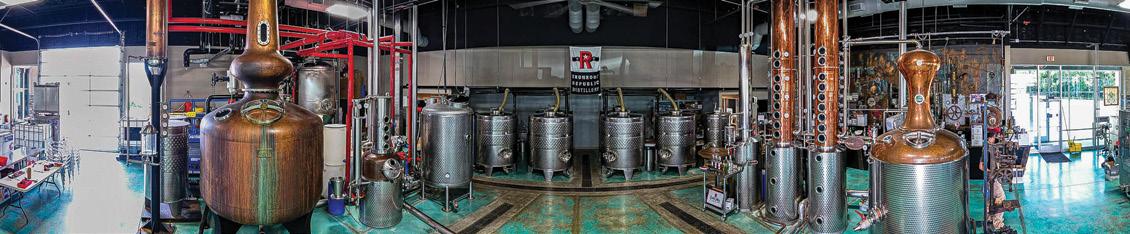
required campaigns. Large brands have also been investing in smaller, craft opera tions, becoming much-needed sources of funding for the small operators while also diversifying their own investments.
Change is inevitable, and we should not assume that a particular idea, distillation profile/equipment, or aging/blending
technique will reign supreme forever. In the meantime, I hope that Artisan Spirit magazine will continue to provide a voice to all those wishing to disseminate infor mation and opinions about the way they conduct their distilled spirits operations!

Luis Ayala is the publisher of “Got Rum?" magazine, founder of The Rum University. and Cellar Master at Rum Central (a Texas-based bulk supplier of specialty, aged rums). When he’s not tending to the barrels at Rum Central, he’s offering rum consulting and training services to his clients. Visit www.gotrum.com or www.rumcentral.com, or email him at luis@gotrum.com for more information.
Internationally renowned independent Master Blenders
Nancy Fraley and Julia Nourney will be co-teaching this master class on production of barrel aged spirits.
Secure your spot today with two of the best blenders in the industry at one of the best distilleries in the world.
Change is inevitable, and we should not assume that a particular idea, distillation profile/equipment, or aging/blending technique will reign supreme forever.
Blending, Maturation & Warehousing WORKSHOP Register at distilling.com/event Ironroot Distillery December 5-8, 2022 Ironroot Republic Distillery Dennison TX WWW. ARTISANSPIRITMAG .COM 99
Written by JOHN P. THOMAS
What a Difference a Decade Makes!
“There ain’t no laws when you’re drinking Claws.”
Did you recognize this phrase? This motto is just one of many that symbolizes a major shift in the alcohol industry. Social media helped spark the hard seltzer craze. It was not uncom mon to see younger consumers posting about their “White Claw summer” or with tags like the above motto “there ain’t no laws when you’re drinking Claws.” Viewed as a healthier beer alter native and lacking the “syrupy” taste that other malt beverages typically offered, the hard seltzer has become synonymous with a relaxing day.
THE SELTZER REVOLUTION
A decade ago, hard seltzers were at best a novelty concept. Mike’s Hard Lemonade and Not Your Father’s Root Beer were typical of what was then a nascent market for Flavored Malt Beverages (FMBs) that were created to offer consumers a beer that didn’t taste like beer.
An FMB is a brewed alcohol beverage made with an original base containing malt, however, in the brewing process, the malt character is extracted and replaced with other flavoring. FMBs, also referred to as flavored alcohol beverages or “malternatives,” (and derisively attacked by anti-alcohol advocates as “alcopops”) became popular among pro ducers in the 1990s and early 2000s because a malt-based flavored beverage was taxed at the same rate as beer, whereas spirit-based and wine-based flavored beverages (such as the popular wine-coolers of the 1980s) are taxed at significantly higher rates.
Changes for the better started to develop in the 2012-2014 time frame, as producers recognized a market ready for products with a level of quality and sophistication beyond al coholic soda pop. Initially, there were a mini mal number of brands from which to choose.
For example, Bon & Viv was introduced as one of the first “spiked seltzers” in 2012, offer ing consumers a go-to drink that tasted like a lightly flavored cocktail, but contained no dis tilled spirits, only had 90 calories per can, and 0 grams of sugar. Others quickly followed.
Boston Beer’s Truly and Mark Anthony’s White Claw were both first introduced in 2016.1, 2 Truly did not originally debut adver tising itself as a “hard seltzer.” Rather, it was “Truly Spiked and Sparkling” and instead of the sleek, slim cans that have become ubiq uitous in the hard seltzer category, it was presented in a glass bottle. While they expe rienced minor success for the first few years on the market, sales really began to accelerate for both brands and hard seltzers in general in 2018.
Between 2018 and 2019 sales for the prod ucts skyrocketed (White Claw’s sales more than quadrupled between the two years3) and the companies selling them invested heav ily in production. Globally, the revenue
1 https://www.brewbound.com/news/bostonbeer-announces-launch-truly-spiked-sparkling/
2 https://www.brewbound.com/news/mark-an thony-brands-introduce-white-claw-hard-seltzer/
3 https://www.statista.com/chart/19919/whiteclaw-sales-2019/
generated by hard seltzers more than doubled in this period, growing from about $2.3 bil lion to close to $5 billion.4
After witnessing the success of brands like Truly and White Claw, other companies be gan to enter the hard seltzer market as well. Starting in 2020, a tidal wave of products were introduced. Constellation brands began selling Corona Seltzer, AB Inbev introduced Bud Light Seltzer, and Molson Coors intro duced Coors Seltzer.5, 6, 7 Additionally, Natural Light Seltzer and PBR Seltzer were offered as more affordable options.8, 9 While not all of these products were as successful as the orig inal two brands, they have contributed to the significant amount of options in the market.
The onset of the global COVID-19 pan demic also helped to raise sales. Confined to their homes either due to lockdowns or self-imposed social distancing, consumers turned to ready-to-drink alternatives to enjoy in lieu of venturing to bars and restaurants. When combined with new brand offerings,
4 https://www.statista.com/outlook/cmo/alcohol ic-drinks/hard-seltzer/worldwide#revenue
5 https://www.cnbc.com/2020/01/08/coro na-maker-constellation-pumps-40-million-into-selt zer-launch.html
6 https://www.cnn.com/2019/11/06/business/ bud-light-seltzer-launch/index.html
7 https://www.cnn.com/2020/10/10/business/ coors-seltzer-launch/index.html
8 https://www.prnewswire.com/news-releases/ new-natural-light-seltzer-is-the-seltzer-you-neversaw-coming-300899990.html
9 https://www.simplemost.com/pbr-just-releaseda-new-hard-seltzer/
100 WWW. ARTISANSPIRITMAG .COM
Over the past 10 years, hard seltzers have transformed from a small, niche beverage, to a multi-billion segment that continues to show strong growth.
2020 was a banner year for hard selt zer sales with global sales reaching nearly $7.7 billion.10 That increased to $8.95 billion in 2021, and is expect ed to expand at a compound annual growth rate (CAGR) of 22.9 percent from 2022 to 2030.11
A decade after Bon & Vie, the mar ket is flooded with a wide range of op tions from industry players including Anheuser-Busch InBev, Boston Beer Company, The Coca-Cola Company, Constellation Brands, Inc., Diageo plc, Heineken N.V., Mark Anthony Brands International, and Molson Coors Beverage Company, as well as many small-batch and premium brands. The rise in popularity and availability of hard seltzers shows the flexibility and appetite of the alcohol beverage indus try to adapt to the changing drinking habits of the American population.
Over the past 10 years, hard seltzers have transformed from a small, niche beverage, to a multi-billion segment that continues to show strong growth. This growth, driven by a combination of social media hype, health conscious consumers, and the COVID-19 pan demic has led many major industry players to introduce their own hard seltzers. The rising adoption of low-al cohol beverages among millennials and the younger generation is driv ing the product demand. Moreover, consumers are trying to reduce their alcohol consumption or becoming ‘sober-curious,’ which has further led to an increase in the demand for
10 https://www.statista.com/outlook/ cmo/alcoholic-drinks/hard-seltzer/world wide#revenue
11 Market Analysis Report, “Hard Seltzer Market Size, Share & Trends Analysis Report
By ABV Content (1.0 To 4.9%, 5.0 To 6.9%),
By Distribution Channel (Off-trade, On-trade), By Region (Asia Pacific, North America), And Segment Forecasts, 2022 –2030,” Grand View Research
low-alcohol beverages. Today, drinks with natural ingredients and low-cal orie content appeal the most to consumers.
WITH NEW PRODUCTS COME NEW QUESTIONS
The success of hard seltzers is lead ing alcohol beverage producers and regulators into new and uncharted territory. Originally, hard seltzers were FMBs or brewed beverages made with malt substitutes (typically sugar based), but not spirits. Today, the American market is flooded with Ready-To-Drink (RTD) canned bev erages that contain less than eight per cent ABV, but also contain amounts of distilled spirits such as gin (Bacardi’s Bombay Gin & Tonic), whiskey (Brown Forman’s Jack Daniels & Cola) and tequila (Hornitos Tequila Seltzer).
As more and more options en ter the market, legitimate questions about how to classify and tax these beverages have arisen and state leg islators have had to adjust. In spite of increased competition both within the seltzer product segment and the industry overall, new versions of the product continue to be introduced and the beverages seem here to stay.
While hard seltzers market them selves generally as sparkling water, fruit flavoring, and some alcohol, the regulatory category they fall into depends on how they are made. Generally, a hard seltzer uses water, sugar, yeast, and flavoring. In the eyes of the federal government, this classi fies them as a beer. If malted barley and hops are added, the Internal Revenue Code classifies them as beer while the Federal Alcohol Administration act classifies them as a malt beverage.
If hops are not a part of the process, just sugar or malted barley, then the classification is only beer, not malted beverage.12
This distinction matters on sever al levels. For labeling, malt beverag es are subject to the US Alcohol and Tobacco Tax and Trade Bureau (TTB) requirements and must obtain a la bel approval (COLA) from the TTB. The label must comply with Federal Alcohol Administration Act require ments which include elements such as the brand name, class of the bev erage, name and address of the bot tler, net contents, alcohol content, declaration of certain ingredients like “yellow #5.” The label must also have the Government Health Warning Statement.13
Seltzers brewed with sugar, the grouping that includes beers but not malt beverages, have different labeling requirements with which they must comply. While they also have ele ments such as the name of the brewer, beverage kind, net contents, place of production, and Government Health Warning Statement, they are also sub ject to FDA labeling guidelines.14
One benefit to this classification is that under federal guidelines, hard seltzers are subject to lower taxation than spirits. Many consumers may be under the impression that hard seltzers are closer to a vodka soda in a can than they are to beer. However, because of the way they are produced and the way they are classified by the federal government, they are taxed at a significantly lower rate.15
12 https://www.ttb.gov/images/pdfs/pre sentations/cbc2021-hard-seltzers.pdf
13 Id.
14 Id.
15 https://www.ttb.gov/tax-audit/taxand-fee-rates#ds
WWW. ARTISANSPIRITMAG .COM 101
This classification has also had impacts on state level legislation. Given the differentia tion in state-level alcohol statutes, determin ing the class of alcoholic beverage that a hard seltzer falls into can sometimes be difficult. While in many states, a hard seltzer will be classified as a beer or malt beverage, there are others where it falls outside of this definition. The role these classifications can have on tax ation, distribution, and sales in a state have led some to adjust their definitions to proper ly regulate this market.
One example of where state laws have re cently impacted the sales of hard seltzers is Utah.16 Like in other states, hard seltzers were widely available in Utah grocery stores. A
16 https://www.axios.com/local/salt-lakecity/2022/06/07/utah-hard-seltzers-vanishing-al cohol-law

recently passed law has caused some of them to be removed as Utah updated its definition of a “beer” to exclude beverages with flavor ings containing alcohol. Brands like Truly have seen their products reclassified as “fla vored malt beverages” which are not covered under grocer’s beer retailer licenses.17


Regardless of the legal hurdles, the hard seltzer category has solidified itself as a household staple. Even indications of head winds for growth have not changed the ex pected increase of sales for 2022 which has been projected at more than 20 percent.18 In an earnings call in October of 2021, Boston
17 U.C.A. 1953 § 32B-1-102 (44).
18 https://www.grandviewresearch.com/indus try-analysis/hard-seltzer-market#:~:text=The%20 global%20hard%20seltzer%20market,is%20driv ing%20the%20product%20demand
Beer indicated that a category-wide slow down had left it with an overabundance of Truly inventory.19 There are plenty of po tential reasons for this slowdown, from an over-saturation of the product category to the proliferation of ready-to-drink cocktails to even competition from good-old-fashioned bars which have reopened as the COVID-19 pandemic restrictions eased.
Product dominance is expected to contin ue as owners of established brands seek to stay competitive by diversifying their port folios while maximizing the value of their established brands. In 2021, White Claw an nounced the addition of White Claw Surge, which upped the alcohol content from five
19 https://www.cnbc.com/2021/10/22/bostonbeer-tossed-millions-of-cases-of-excess-truly-hardseltzer-chairman-says.html
Lighthouse Insurance Services, LLC LighthouseInsuranceServicesisproudto offer the distillers of the Northwestaffordablehealthbenefitsolutions. Everyoneneeds effective andaffordablehealthinsurance. Letusdotheanalysistofigure out whatplanisthebestdealforyou. WeofferACAcomplianthealth benefitsthatboastflexibleplandesigns,alternativefundingstructures, andintegratedwellnessandemployeeincentiveprograms. Couple that withafullrangeofsupplementalbenefitstoroundoutyourcomplete benefitspackage. EmilyRimestad 509-322-7280 emily@lhisllc.com Jervante Wilson 206-850-3019 jervante@lhisllc.com Visitusonlinewww.lhisllc.com Let us guide you to better benefits! 102 WWW. ARTISANSPIRITMAG .COM
percent to eight percent ABV and is sold in a larger, sixteen ounce can.20 Bud Light Seltzer, ranked third by mar ket share, rolled out numerous new flavors including their self-described “Loud Flavors” in 2022.21 Truly intro duced Truly Margaritas in 2022, in cluding specialty flavors such as Classic Lime, Strawberry Hibiscus, Watermelon Cucumber, and Mango Chili 22
20 https://www.cnn.com/2021/04/13/ business/white-claw-surge/index.html
21 https://www.prnewswire.com/ news-releases/bud-light-seltzer-hard-soda-of ficially-declared-the-loudest-flavors-ever-byflavor-king-guy-fieri-in-new-super-bowl-lvicommercial-301472644.html
22 https://www.prnewswire.com/news-re leases/truly-introduces-new-margarita-in spired-flavors-301454557.html
WHAT’S NEXT?
What will the next decade bring? Look for more innovation and growth from the alcohol beverage industry. Diageo just announced a new venture with The Vita Coco Company to create an RTD marriage between Vita Coco Coconut Water and Captain Morgan Spiced Rum. The happy couple’s new progeny: Spiked Vita — a five percent ABV RTD sold in 12-ounce cans.
According to industry observers, the market is preparing itself for the advent of cannabis-in fused beverages as well. AgTech VI, LLC, is an affiliate of an Arizona agricultural technology and biosolids management company specializ ing in the beneficial reuse of biosolids for agri culture. The company plans to produce WYNC — a THC-based seltzer that, according to the producer, “actually helps people unwind, with out impacting how they feel the next day.” Given
that current federal law does not condone the use of THC in foods or beverages, the producers of WYNC are building plants in each state and as sembling an expert manufacturing team in each market to manufacture a product that meets state law requirements while tasting good and dosing accurately.
Without a doubt, the next decade is sure to take us all into a brave new world.
John P. Thomas II is an associate in GrayRobinson’s Tampa office and a member of the firm’s Nationwide Alcohol Beverage Law Group. His practice focuses on licensing and regulatory compliance relating to operations in the alcohol beverage industry. John has previous experience working at the U.S. District Court for the Middle District of Florida, and he serves as a Gubernatorial Fellow for the Florida Gubernatorial Fellows Program within the Department of Management Services.
RINSING | FILLING | CAPPING SORTING | SANITIZING
for the spirits industry
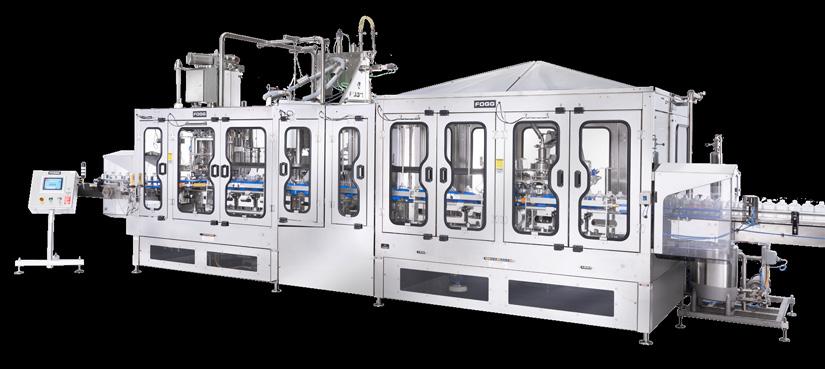
WWW.FOGGFILLER.COM // 616-786-3644 // FOGG@PROMACHBUILT.COM
Come see Fogg at ADI 2022 // Booth 338 // September 14-16
WWW. ARTISANSPIRITMAG .COM 103
BUILDING
TAKESTIME COMMUNITY BUILDING TAKES TIME
June 6, 2012. That was the day lawyers filed the paperwork that would create Black Button Distilling. Eighteen months later using every dollar I had — and plenty I borrowed — a 350-gallon hybrid pot still came to life on Railroad Street in Rochester, New York, mark ing the first time that hard liquor had been dis tilled in the city limits since before Prohibition. Well, legally anyway.
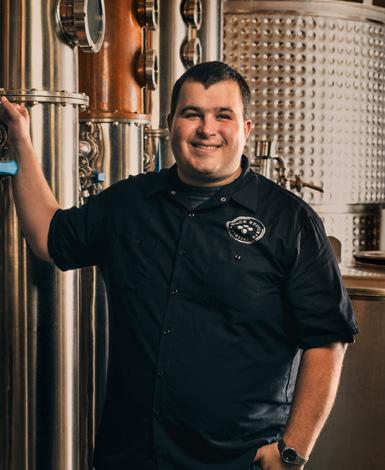
We opened the doors of the distillery and tasting room on December 21, 2013, to an anx ious public because quite a buzz had been built, thanks to social media. I was running on fumes both physically and financially. But we were embraced by our local community. More than 700 bottles were sold that first day to friends, family, and complete strangers.
I remember that day like it was yesterday. I remember locking the door as the sun went down and feeling like I had crossed the finish line. All those months of hard work were now behind me and I could rest a little easy. Looking back, a decade since we first began, I realize how wrong I was.
That first day was not the finish line. It was only the beginning of learning how to overcome the many hurdles we face as distillers in this industry, from hiring the right people to negotiating distri bution contracts. From contract work to shutting down the factory for COVID-19. From changing distilling laws and payroll laws, to employee benefits and raises, hiring folks out of state for the first time, and beginning distribution in Japan. The finish line contin ues moving ahead, forcing us to move ahead with it.
The challenges we face are relentless, but our team meets every challenge, each and ev ery time. I’d like to say that we do so with grace and ease, but we’ve fall en in the mud more than a few times. We’ve laughed and cried together. But every time we stand up and dust ourselves off. Maybe pour a dram or two and get ready to do battle again the next day because what else can you do?
Just think about the obstacles we face as craft distillers. We are in a highly regulated busi ness dominated by multina tional corporations with all the advantages and economies of scale. They can probably make a product cheaper than I can buy the packaging. They have decades-long relationships with distributors and retail chains. And yet, Black Button Distilling is still here. How have we sur vived when so many others have not?
Over the years we have fo cused on five things, listed in intentional order:

1. PEOPLE: I have the priv ilege of leading 86 of the most passionate, dedicated, caring, battle-hardened warriors I have ever met. We fight together, we fight for each other, and it’s the commitment we have to support each other that really drives Black Button Distilling. Our support for each other is the strength we draw from as we forge ahead. Building and nurturing relationships with great peo ple is what makes a company strong.
2. PROCESS IMPROVEMENT: As you grow, you have to be open to the idea that things will change. We started out filling 1,000 bottles per week. Now we can bottle 1,000 an hour. That requires the need to schedule things like labeling and bottling. We needed project management software. We needed a streamlined process, one that looks drastically different from when we started.
WRITTEN BY JASON BARRETT
JASON BARRETT REFLECTS ON BLACK BUTTON DISTILLING'S FIRST 10 YEARS. COMMUNITY
104 WWW. ARTISANSPIRITMAG .COM
3. PRODUCT QUALITY: You only get one chance to make a great first impression. We must put out a high-quality product that represents a good value for the consumer.

4. FINDING OUR NICHE: We’re good at making gin and whiskey, but we spent time chasing things that ultimately weren’t us. We’re a grain-based distiller. We don’t make rum; we don’t make brandy. We're not good at it and we’re probably not going to get good at it. Find what you’re good at and stick to it.
5. BREAKING THE MOLD: Once you find your niche, you have to do something different than everyone else. There are a lot of things that can make your product special: branding, con nections with celebrities, innovative processes to make it taste different. If you don’t do something different from your competi tors, it’s going to be hard to be successful.
Finally, when I first started Black Button Distilling, I didn’t give any thought to the fact that distilling is a long-term commitment. Ten years later I’m now thinking about the 20-, 30-, and 40-year anniversaries. That long-term view has changed how I see dayto-day problems. Now I ask: Is this going to matter in five or ten years? If not, is it really that big of a problem? And this long-term view has changed my perspective on relationship building. I now look at forging relationships with people that I want beside me for the long haul.
I’ve learned a lot in these first ten years and I know I’ll learn even more in the next ten. I have no doubt that there will be tough times, but with the support of my family and teammates, we will overcome any obstacle put in front of us. For at its core, that is the strength that is Black Button Distilling – the community of people who work here each and every day with a common goal to bring great spirits to life.
Jason Barrett is the Founder/Master Distiller of Black Button Distilling, the first craft distillery in Rochester, NY since Prohibition. This summer, Black Button Distilling is celebrating a decade of crafting grain-to-glass craft spirits. A New York State Farm Distillery, Black Button Distilling is the first distillery in New York to obtain the New York State Grown and Certified status for commitment to locally sourced ingredients and high standards of quality. Named New York Distillery of the Year (2016 & 2021) at The New York International Spirits Competition, Black Button Distilling has produced more than million bottles of spirits and has been named to the Inc. 5,000 list of fastest growing privately owned companies four times. To learn more about Black Button Distilling, visit www.blackbuttondistilling.com.
WWW. ARTISANSPIRITMAG .COM 105
Written by RICH MANNING
No Alcohol, No Problem.
Wilderton’s Non-Alcoholic Spirits Stand Out on Their Own
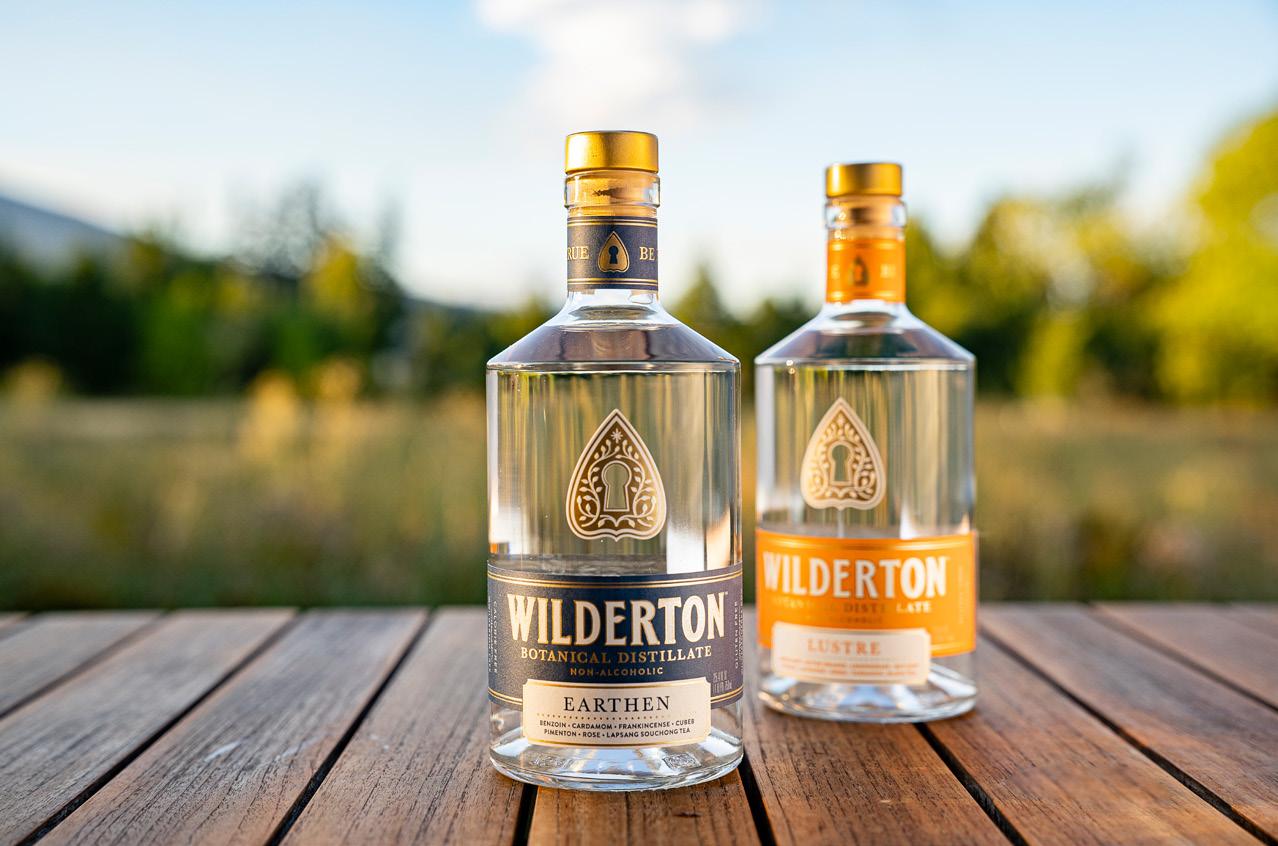
Non-alcoholic spirits are here to stay. At least, the data strongly suggests its permanence. The beverage-focused data analysis firm IWSR1 predicts the volume for no- and low-alcohol beverages like N/A spirits will have a compound annual growth rate (CAGR) of more than eight percent between 2021 and 2025, a number substantially higher than the more than 0.7 percent CAGR predicted for traditional alcohol in that time. This growth hints at an increasing influx of choice for the consumer in this unique category — one that’s already seen quite a bit of growth
1 www.theiwsr.com/no-and-low-alcohol-in-key-global-markets-reaches-almost-us10-billion-in-value/
Photos provided by WILDERTON
106 WWW. ARTISANSPIRITMAG .COM
since Seedlip debuted in 2015. For produc ers of N/A spirits, this explosion means that it’s no longer enough to merely create a product to gain attention. Like tradition al spirits, it’s important to build a narrative that explains why the sober-curious imbib er should care.
Wilderton’s narrative packs a punch. The message on the Portland, Oregonbased N/A botanical spirit’s website states “Wilderton is a new start, not a substitute,” instantly creating a story that announces their two varieties, Earthen and Lustre, aren’t meant to be replicas of familiar alco holic beverages. While it’s not necessarily a novel approach — there are other brands that stake a similar claim — it’s uncom mon for such a sentiment to be expressed so aggressively. According to Wilderton Cofounder and CEO Brad Whiting, the bold messaging is meant to set the brand’s tone.
“We’re not trying to replace gin or whis key,” he explained. “We’re just making a botanical spirit that happens to be non-al coholic. Presenting it like we do is a dou ble-edged sword. People may not be inter ested in trying a standalone N/A spirit, so it takes a tremendous amount of education to get them interested. At the same time, branding our bottles as a N/A alternative to gin gives consumers an expectation of what they should taste, which is not some thing we want to do.”
A Unique Approach to Distilling
Wilderton’s marketing strategy ties in rath er well with its origin story. The label stems from a collaborative effort between Whiting and distiller Seth O’Malley, hatched at a time when both were looking at creating an out side-the-box distillate.
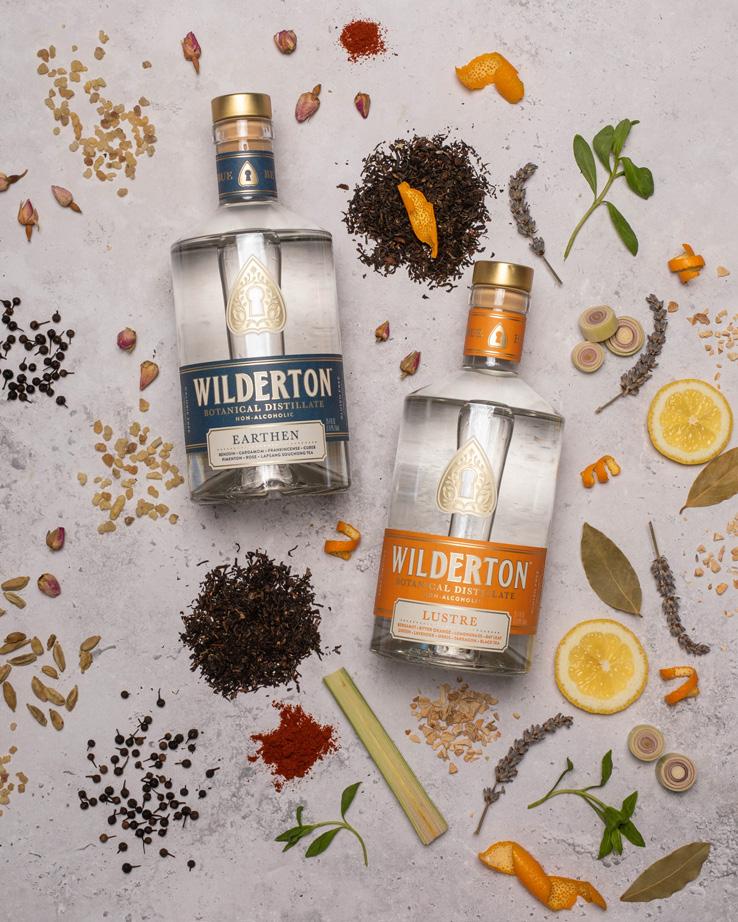
As an active outdoor enthusiast, Whiting wanted to create a complex spirits-like bever age that supported a healthy lifestyle. As a dis tilling industry veteran whose resume includ ed stints at Oregon’s Hood River Distillers and Clear Creek Distillery, he wasn’t about to meet this goal with shortcuts. O’Malley had made his bones at Townsend’s Distillery,
a now-shuttered distillery known for its teabased spirits. He wanted to further his exper imentation with botanicals but felt bound by traditional spirits’ expected flavor profiles. When the duo connected, their mutual in terest led them to conclude that producing a botanically driven N/A spirit was the most logical choice. “It was the natural place for the concept to go,” O’Malley explained. “It
allowed us the best opportunity to get away from the analogue approach to distilling and work from the bottom up to create something new.”
This initial decision led to two years’ worth of experimenting with different combina tions of botanicals until they were completely satisfied with the results. Part of this process involved looking outside of the distilling
“We’re not trying to replace gin or whiskey. We’re just making a botanical spirit that happens to be non-alcoholic.”
— BRAD WHITING, Wilderton Cofounder and CEO
WWW. ARTISANSPIRITMAG .COM 107
industry for inspiration. O’Malley leaned on the tea expertise he cultivated from his days at Townsend’s, selecting botanicals known for having bold flavors produced through water extraction. They also dis sected the structure of different perfumes to understand how to replicate its layers of aromatics. The approach was liberating because of the transparency they discovered through the process, particularly within the world of perfumeries. “Distilleries can be very secretive about the botanicals they use, which is frustrating at times,” O’Malley explained. “The perfume industry, on the other hand, are much more open with their composition. By using perfume concepts, we feel like we were able to hack the system a little.”
“The entire process took the handcuffs off,” Whiting adds. “Looking at the botanicals like a perfumery allows Seth to build a complex progression of flavors. This created N/A spir its that are truly the sum of their parts.”




This methodology yielded two brands under the Wilderton label, both of which are distilled at Townsend’s former facilities through their old equipment. Earthen’s use of pine-smoked tea, cardamom, and white peppercorn to create a spicy, punchy flavor profile, while Lustre’s base of bitter orange,
tarragon, and lavender carry a brighter ex pression of citrus and floral notes. The bo tanicals used to create the two expressions are sourced from 21 countries according to their website, so they’re not regional prod ucts. However, this doesn’t mean that region ality doesn’t play a key part into Wilderton’s existence. “There’s a unique culinary culture in the Pacific Northwest,” O’Malley said. “They tend to be more open and curious to new things. Even though the formula behind Earthen and Lustre aren’t representative of the Pacific Northwest’s terroir, I think it may have been more difficult to pull off what we’re doing in another part of the country.”
Industry Respect
Wilderton has taken a slow-growth ap proach to distribution since their 2020 launch, with the lion’s share of accounts con centrated in the Pacific Northwest. Their rep utation is a different story. They’ve received
some ringing endorsements in a short pe riod of time — WhistlePig is a fan, as is the group behind acclaimed bar Death & Co. Yet their biggest seal of approval comes from Jim Meehan, co-founder of New York’s seminal craft cocktail bar PDT, current Portland res ident, and N/A cocktail advocate. O’Malley introduced Meehan to Wilderton’s modest product line right around the time the lat ter was opening his latest Portland project, Tabiki. To say it left an impression would be an understatement: Meehan not only whipped up some Wilderton-based N/A drinks for his new spot, but he also ended up taking on an advisory role of sorts, helping Whiting and O’Malley build additional cock tails to feature on their website. It’s a partner ship that’s paid dividends for the brand. “Jim was already very intentional about wanting to elevate N/A spirits, so his appreciation for Wilderton couldn’t be a more powerful en dorsement for us,” Whiting said. “To be able to go into the marketplace or go to trade with his name associated with our labels is hugely affirming.”
Meehan’s recommendation and involve ment, along with the other love Wilderton has received in their brief time of existence, are key components of a brand narrative that thus far seems to be hitting all the right notes. It also demonstrates that their prod ucts are delicious enough to capture the attention of those considered tastemakers, which is rather important. If N/A spirits continue to grow at the rate the experts predict, this upstart label may be a main stay in the category for years to come.
Wilderton is located in Hood River, Oregon. Visit www.wildertonfree.com for more info.
“There’s a unique culinary culture in the Pacific Northwest. They tend to be more open and curious to new things.”
— SETH O’MALLEY, Wilderton Distiller
Brad Whiting
Seth O’Malley
108 WWW. ARTISANSPIRITMAG .COM
Written by JIM MCCOY
MORE ON THE NEW WORLD OF

In the Spring 2021 issue of Artisan Spirit, we discussed the impact of the The Taxpayer Certainty and Disaster Tax Act of 2020, signed on December 27, 2020. This historic act made excise tax rate reductions and other law chang es in the Craft Beverage Modernization Act (CBMA) a permanent part of the legal land scape in which distillers operate under federal law and regulations. Beginning in 2022, in ac cordance with the provisions of the 2020 law, some specific changes occurred that should be of interest to beverage spirits plant operators. Essentially, the Distilled Spirits Plant (DSP) operator removing spirits subject to tax, and ap plying the reduced rates to the spirits at remov al, must have “processed” the spirits to which the reduced rate is applied.
As noted in that earlier discussion, the tem porary reduced rate of tax ($2.70 per proof gal lon) on the first 100,000 proof gallons of spir its removed subject to excise tax during each calendar year has now been made permanent. An important aspect of the law was to restrict the benefit of the reduced tax rate to a DSP that “processes” distilled spirits, not simply anyone bottling distilled spirits products. Bottling is considered by definition a “processing opera tion” at a DSP, along with other “processing” ac tivities, such as blending, product formulation, etc. At that time, it was clear that TTB would need to issue guidance as to what “processing” would be before that provision of law went into effect January 1, 2022. Right on time, TTB is sued that guidance.
As stated in TTB’s FAQ TR-D12: “For dis tilled spirits removed after December 31, 2021, “[a] distilled spirit shall not be treated as pro cessed [for reduced rate purposes] unless a pro cess described in [26 U.S.C. 5002(a)(5)(A)] (other than bottling) is performed with respect to such distilled spirit. See 26 U.S.C. 5001(c) (5).” The advantage of using the reduced rates depends upon the activities conducted on the specific lot of distilled spirits and is not based on whether or not the DSP conducts eligible processing activities on some spirits it process es. In short, processing of a given lot of spirits by a DSP does not qualify that DSP to apply the reduced rates to other lots of ineligible “un-pro cessed” spirits.
FEDERAL EXCISE TAXES
Changes to the The Taxpayer Certainty and Disaster Tax Act of 2020... WWW. ARTISANSPIRITMAG .COM 109
Based upon TTB’s published guidance and the Frequently Asked Questions (FAQ) posted on their website, it ap pears that “filtering” a specific lot of spirits would be sufficient to make that product eligible for the reduced rate, their determination being that filtering is a processing activity within the mean ing of the CBMA, as amended effective January 1, 2022.
Note here also that the DSP which ships bulk distilled spirits in bond to another DSP is not responsible for en suring that the receiving DSP is eligible for the reduced rate of tax on spirits. The receiving DSP must ensure that their application of the reduced rates to spir its they remove subject to tax is correct, and it is critical that the spirits on which the DSP paid reduced tax are in fact el igible for that rate. We are also remind ed of the increased restrictions (see the 2021 article) on transfers-in-bond of bottled spirits effective January 2021.
A prudent reminder for everyone is that these reduced rates of tax are sub ject to controlled group restrictions, meaning that related companies may have only one reduced rate allocation spread across their organization, and the single taxpayer rule, which provides that all parties to a contractual produc tion agreement for a given brand may be treated as a single taxpayer for the pur poses of applying the reduced tax rates.
The best source to refer to is the TTB guidance which they post to their web site; just look for the header on the TTB. gov homepage, and click to access their FAQ, guidance documents, laws and regulations, and related details. Their contact information is also available on the website.

In closing, the distiller must pay at tention to ensuring their product batch es are documented as being “processed” — as defined by TTB in their guidance. Failure to prove reduced rate eligibility for each batch of product could be cost ly. I would expect that TTB audits will specifically look to establish how a DSP operator proves reduced rate eligibility in their records.
Congratulations are due to the pub lishers of Artisan Spirit — ten years of putting together a publication that pres ents the artisan distiller with useful facts, helpful guidance, and the occasional te dious (but necessary) regulations article that provides the distiller with needed information to operate their business successfully.
Jim McCoy operates J. McCoy Alcohol & Tobacco Compliance Consultants LLC, and since 2010 has assisted alcohol and tobacco businesses in their efforts to meet Federal regulatory and tax requirements. For more information email Jim at jmccoy@jmccoyconsultants.com.
Improve Distilling Process Efficiency
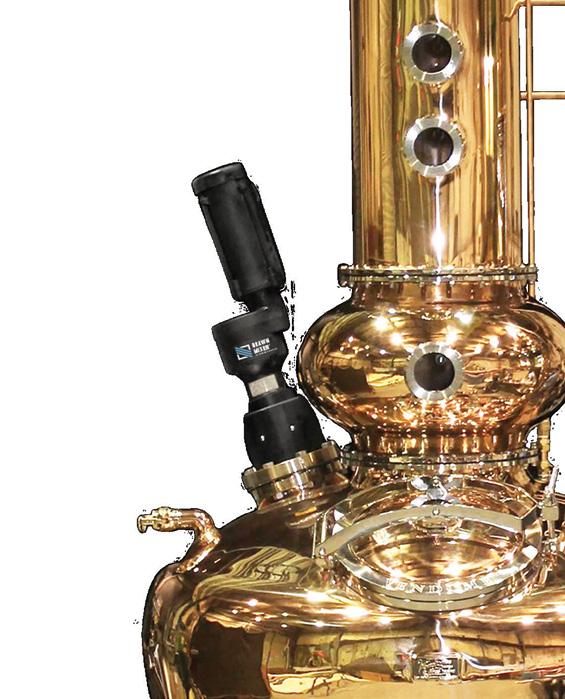
View product specs, request a quote, or request a rep visit.
To get started, visit: brawnmixer.com or, call: 616.312.2320
© 2022 NBE
ENGINEERED LIQUID MIXING SYSTEMS
Holdings Company
110 WWW. ARTISANSPIRITMAG .COM
DISCUS, EPA Partner to Release Energy Star Guide for Distilleries
Distillers of all shapes and sizes have a new tool to help them improve their sustainability and save money by reducing energy usage.
The Distilled Spirits Council of the United States (DISCUS) has partnered with the federal Energy Star program to compile a thorough (i.e. 171-page) look at ways to cut energy usage in distilleries. And while there are certain avenues that are more feasible for large distilleries that can leverage a greater economy of scale, DISCUS Chief of Strategic Initiatives Eric Reller, who worked with the EPA on developing the guide, said there are also a wide variety of opportunities open to craft producers.
“When we looked at the idea of helping to roll out this guide, one of the things that got us excited was that there are things that are applicable to distilleries of all sizes,” he said. The guide was developed with feedback from industry members to be representative of the real, boots-on-the-ground reality in dis tilleries, with opportunities that range from zero-cost cultural changes to more expensive
A new sustainability tool emerges.
infrastructure choices. As a result, Reller said the guide would be a valuable long-term re source for distillers.
“This is a working document. It’s not some thing you read once,” he said. “It’s something that, as you’re considering upgrades to the fa cility, you can pull it out, look at it, and see, ‘What have we not thought about?’ As distill eries go down this journey of looking at how they become more energy efficient, it might seem daunting at first. But this is a solid guide to help provide some sort of road map to get there.”
Danny Macri, the industrial sector man ager with the EPA’s Energy Star program, ex plained that the guide is part of the program’s two-pronged approach to energy savings. Most consumers are likely familiar with the Energy Star designation on home applianc es such as a refrigerator, oven, dishwasher, or water heater, indicating that the appliance will use less energy.
However, since the early 2000s the pro gram has also worked with manufacturers to help them operate in a more energy-efficient manner. They provide support for manufac turers of all sizes, but also will partner with specific sectors. Members of the Kentucky Sustainable Spirits Initiative reached out to the EPA a few years ago, laying the ground work for distilling to be the newest industry to receive support from Energy Star.
Macri said the guide contains about 180 recommendations for ways that distilleries can reduce energy usage, with most of them applicable to the full gamut of distilleries. “It’s very comprehensive with a lot of different ways for distilleries of all sizes to save energy and save money,” he said. “It really depends on how much the craft distiller wants to invest in energy management and the equipment.”
One of the key opportunities noted in the guide, and one that requires no capital outlay, is to simply track energy usage. Macri said a spreadsheet that records monthly energy us age can help to identify peaks or other indica tors that something might be amiss. He com pared it to an athlete working to improve their performance without recording any workout metrics. “If you’re not tracking it, you don’t know if you’re saving,” he said.
He also recommended conducting energy treasure hunts, allocating time for the staff to look for opportunities to save energy around
“ When we looked at the idea of helping to roll out this guide, one of the things that got us excited was that there are things that are applicable to distilleries of all sizes.”
ERIC RELLER, DISCUS Chief of Strategic Initiatives
Written by GABE TOTH
WWW. ARTISANSPIRITMAG .COM 111
the distillery.
“This seems like common sense, but the easiest way to identify energy-saving op portunities is first to look for things that shouldn’t be running, that shouldn’t be on, that may be broken,” he said. “You’d be sur prised at the end of a production day how many things are left on or not in an idle state. Looking for things like that is a first way to identify savings.”
Making energy consciousness a part of the company culture is also a crucial step identified in the guide, and requires getting all stakeholders on board. “The culture real ly starts at the top,” Macri said. “The senior management, of course they want to produce product, but if they want to do it sustainably that should permeate throughout the orga nization. That’s the key for improving over time. If there isn’t a culture of continuous
improvement, you’re going to become more inefficient very quickly.”
Part of embedding an energy-saving mind set into the broader company culture can in clude small triggers that come up while em ployees are going about their day. This can be signage, checklists, or campaigns that turn the effort into a game or competition.
“The guide talks about technical stuff, but we also have things about, How do you en courage your employees? How can you do a competition to save energy within your com pany?” Macri said. “Small things like that can make us more aware.”
Taking the next steps in improving ener gy conservation may require investments in equipment. When surveying industry mem bers about energy savings opportunities, he said the number one answer was to recover more wasted heat energy.
“The first thing to do is to make sure there’s proper insulation on the hot water and steam pipes. Insulation is usually going to have a payback of less than a year,” he said. “When you look at the energy footprint of a distill ery, it’s a lot of heating things up and cooling things down. Can you overlap those? Maybe you need to heat the process water, the mash water, maybe that can go through a heat ex changer from the condenser from the still.”
A case study in the guide, on One Eight Distilling in Washington, D.C., illustrates the potential savings. By using a heat exchang er on cooling water that will be used for the next mash, preheating the water by about 50 degrees F, they save more than 400 BTUs per gallon of water.
For those distilleries already using heat exchangers to reclaim waste heat, Macri said there’s still an opportunity to reclaim lowgrade waste heat through vapor recompres sion, or what he described as heat exchangers on steroids. “I’ve seen that in some bigger distilleries, but it’s a technology that could be applied at distilleries of any size,” he said. “I think a lot of distilleries are doing something, but they may not be capitalizing on it fully.”
Another low-hanging fruit is to make sure that steam and compressed air systems, which will develop leaks and fail over time, remain tight. “Literally, the money that you’re spend ing on the fuel is going down the drain in that case,” Macri said. “What we encourage people
to do is, it’s not just, ‘We’ll look at steam traps or compressed air when we get to it.’ Have a set schedule, integrate that into your preven tative maintenance routines, so that you make sure there’s dedicated time to look at that.”
He said they looked primarily at the actu al distillery rather than related supply chains in developing the guide, but noted the im portance of looking upstream to gain a more complete picture of the company’s environ mental impact.
“When you are looking at the carbon foot print of a distilled spirit or a beverage, a lot of it is going to come from the glass manufac turer, from the farm. If the distiller wants to go beyond their gate, they could be looking at their suppliers,” Macri said.
He also said that distillers must look be yond their processes to consider their by products, and that sending spent grain to a local farm helps to reduce the life-cycle footprint of the material. However, distillers who rely on a kiln to dry spent grain for better stability may find that their equipment can be very energy intensive; Macri said he was surprised to see that kiln-drying spent grain can be as energy intensive as the distillation itself, and recommends that distillers run wet grain through a high-efficiency centrifuge to remove moisture before finishing the drying operation in a kiln.
Each chapter begins with checklists that go through key components of the guide. Macri suggested that these checklists could easily be incorporated into any best-management prac tices a distillery has. He also echoed Reller’s hope that distillers would use the guide as a constant reference when thinking about how to improve energy efficiency, when reconsid ering processes, and especially when growing and looking at bringing in new equipment.
“We’re hoping it’s not something that peo ple look at once. They can look at it through the year,” he said. “If they’re in the capital in vestment planning process, look at the guide again. Is there anything you could be doing? If you’re expanding, look at the guide. If you’re bringing on new staff, whether they’re sus tainability or process engineering, part of the training could be to familiarize themself with the guide.”
He said the process of equipment sourc ing was a particularly important time for
“ The culture really starts at the top. The senior management, of course they want to produce product, but if they want to do it sustainably that should permeate throughout the organization. That’s the key for improving over time. If there isn’t a culture of continuous improvement, you’re going to become more inefficient very quickly.”
DANNY MACRI, EPA Energy Star Program Industrial Sector Manager
112 WWW. ARTISANSPIRITMAG .COM
thorough consideration of the guide and planning new acquisitions.
“While you can increase efficiency during operation, it’s a lot easier to do it if you’re designing it to be efficient,” Macri said. “As you’re expanding, work with the vendors to see if you are getting efficient equipment [and] what you should do to maintain efficiency. Sometimes you may add primary equipment, but you’re not upgrading ancillary equipment like motors or pumps, and if they are not right-sized you’re going to be wasting energy.”
For distillers looking for a way to be recognized by the EPA or have their efforts at lowering energy usage certified, Energy Star also has a program called the Challenge for Industry. To take part in the challenge, a business works to determine a meaningful baseline of energy usage, such as energy consumed per barrel of spirit produced or per unit of product sold, and reduce their relative energy usage by 10 percent within five years.
Macri said there is no penalty for businesses that are unsuccessful, but the EPA requires a licensed pro fessional engineer to review the data and certify the re sults. Energy Star also offers a plant certification that is reserved for the top 25 percent of performers in the in dustry based on a proprietary energy performance indi cator. Macri said the EPA is still working with distilleries of all sizes to set benchmarks and develop their model, but he hopes the process will be finalized in less than a year for distilleries to start becoming certified.

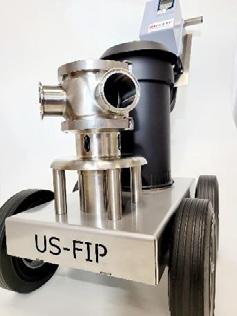
Read Energy Efficiency and Cost Saving Opportunities for Distilleries


The full guide
https://cmadmin.energystar.gov/sites/default/files/tools/





Gabe Toth, M.Sc. is lead distiller at The Family Jones’ production facility in Loveland, Colorado and an industry writer focusing on the beer and spirits worlds. With a back ground in journalism, he has written books on floor malting and fermented food, as well as numerous articles for Artisan Spirit, The New Brewer, Brewer and Distiller International, and several other publications. He holds brewing and distilling certificates from the IBD and a master’s from the Rochester Institute of Technology, where his graduate studies centered on supply chain localization and sustainability. When not distilling or writing, he can be found gardening, messing around in the kitchen, or relaxing in the mountains. He can be reached at gabetoth@hotmail.com.
 John McGinn
can be found at:
Distilleries_guide_final%2020220202_508.pdf Mash Made in Kenosha, WI Model Sizes 2” 3” 1 or 3 Phase Wireless Remote www.americanwinepump.com Pumps www.americanbeerpumps.com
(262) 909 7267 WWW.IRONHEARTCANNING.COM INFO@IRONHEARTCANNING.COM SCAN TO LEARN MORE! LAUNCH YOUR CANNED RTD COCKTAIL WITH CONTRACT PACKAGING WE ARE THE QUALITY LEADER IN CANNING OUR ROBUST NETWORK OF CO-PACKING FACILITIES CAN HANDLE ANY NEED. LET IHC GUIDE YOU THROUGH THE PROCESS. • Small to Large Scale Production • Any Can Size Need • •ImImmediate line time available • Any Craft Beverage Type • Materials Sourcing • Formulation & Product Stability Options PRODUCTION ABILITY THROUGHOUT OUR GEOGRAPHY!
WWW. ARTISANSPIRITMAG .COM 113
IT’S PARTY TIME
Introducing Higher Occupancies
Special events at your distillery are an exciting time and are integral for growing your business. Whether it’s for a grand opening, anniversary, or just to bring in more business, these special events are often intended to bring in more clientele for a few hours or an entire day. In order to accommodate so many people, careful con siderations need to be taken with regards to fire and life safety. Attendance for special events may lead to a higher number of occupants than anticipated and could lead to high risks during an emergency.
Your facility is specifically designed to accommodate a predetermined maximum occupancy within the entire building and within specific designated occupancy areas. During the design and permit process of a new facility, each area is assigned an occupancy classification in ac cordance with the local building code. If your distillery contains a production area, tasting room, and storage area, you will have multiple assigned occupancy classi fications such as Group F-1 (Production Area), Group A-2 (Tasting Room), and Group S-1 (Storage). Further occupancy classifications may be required depending on your layout, hazards, and which additional fire preven tion codes are adopted. Each of these occupancy classi fications have specific life safety requirements regarding egress, exiting components, aisle widths, and occupancy loads. Specific requirements such as travel distance to exits, common path of travel, and dead end corridors, vary based on the determined level of risk. Assembly occupancies typically have the most restrictive egress
requirement due to the calculated time to evacuate a building during an emergency. High hazard occupan cies, however, also introduce strict egress requirements as the risk for fire growth may be rapid and may reduce occupant tenability, thus reducing the amount of time to safely exit the building.
Local building codes will provide an occupant load factor for each type of occupancy classification. Some occupancy classifications will have multiple occupant load factors to adjust for various uses. Assembly occu pancies, for example, provide an occupant load factor as follows:
Concentrated (Chairs only) –7 net square feet/person
Standing Space – 5 net square feet/person
Unconcentrated (Tables and Chairs) –15 net square feet/person
If you have a restaurant or tasting room, the calculat ed occupancy load would most likely utilize the occu pant load factor of 15 net square feet/person as tables and chairs are standard in these types of establishments.
The resulting maximum occupant load will determine the number of exits required from the building and/ or space, along with other requirements including fire alarm systems. Many establishments are required to post a maximum occupant load sign, typically near the entrance.
FIRE AND LIFE SAFETY CORNER WRITTEN BY MICHAEL T. REARDON, P.E.
114 WWW. ARTISANSPIRITMAG .COM
Whether it’s for a grand opening, anniversary, or just to bring in more business, special events are often intended to bring in more clientele for a few hours or an entire day. In order to accommodate so many people, careful considerations need to be taken with regards to fire and life safety.
Holding a special event within these areas needs to be carefully thought out so that the occupant loads are not exceeded. Chairs and tables are often rearranged or even removed during special events, which allows for more patrons to enter the building. This may cause issues during an emergency, which often leads to delays in evacuation as exits (exit doors, ramps, stairway, etc.) have a maximum capacity on how many occupants can pass through within an acceptable time. Unfortunately, history has proven that fires occurring in buildings with excessive occupant loads often lead to tragedy.
A good solution for events with a high number of anticipated occu pants is to provide temporary tents outside your main distillery. Your local jurisdiction should be contacted prior to holding these events as many require special permits, which may require pre-approval and in spections. Open-air tents allow for a variety of seating and chair con figurations and are less restrictive as you are far less limited on exiting capacity. Your local building and fire codes, often the International Building Code, International Fire Code, NFPA 101 Life Safety Code, and NFPA 1 Fire Code, provide specific criteria for temporary struc tures. These codes discuss the minimum re quirements for construction, construction ma terials, wind loading, fire protection, etc.
ONLY
TABLES AND CHAIRS
BY ORDER OF THE FIRE MARSHAL

Tent materials are required to meet specif ic flame spread and smoke development rat ings and meet ASTM E84 or UL 723 testing standards. These strict requirements prevent the rapid spread of fire within the tent area and allow occupants to safely evacuate. Tent testing standards were established follow ing the tragic tent fire which occurred at the Ringling Bros. and Barnum & Bailey Circuit in Hartford, Connecticut, on July 6, 1944. Additional fire protection and fire safety requirements may be required such as ad ditional fire extinguishers, minimum dis tances of heating equipment from the tent, limits on electrical components, and crowd
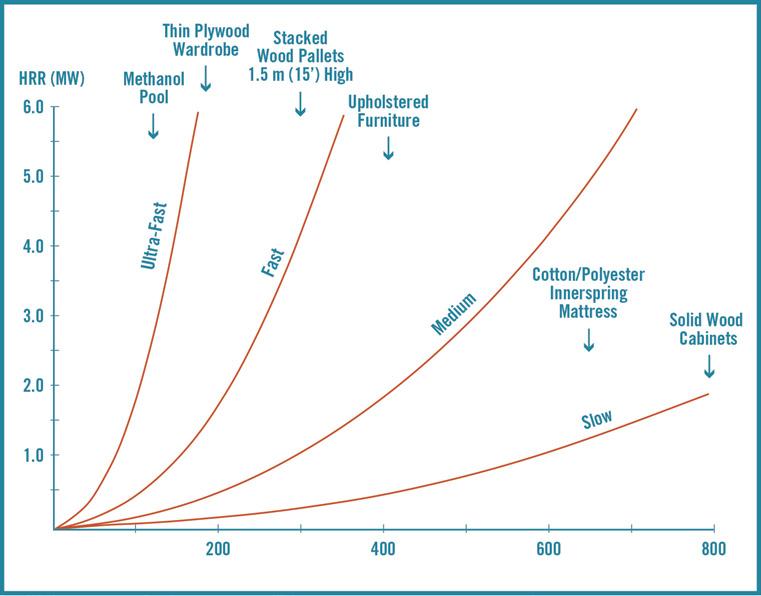
MAXIMUM OCCUPANCY STANDING MAXIMUM OCCUPANCY CHAIRS
MAXIMUM OCCUPANCY
WWW. ARTISANSPIRITMAG .COM 115
managers. Fire extinguishers must meet spe cific performance and size requirements and may be purchased at local stores. Some fire extinguisher servicing companies also allow fire extinguisher rentals. Crowd managers are often required as they provide the “eyes and ears” during an event and can properly respond to emergencies. Crowd managers must have training on how to extinguish fires, contact emergency personnel, and how to properly no tify occupants on when and where to evacuate.
Another consideration is where to locate the tents as their locations may be required to be documented with the local jurisdiction prior to the event. Fire department access will be required and will include fire apparatus posi tioning, access road widths, and travel distanc es for fire hoses. When occupants evacuate the tent areas they will be required to gather in designated areas. These designated areas need to be away from fire department access points as large groups may cause delays in fire depart ment response times. Security features such as fences and gates impede on occupant egress and need to be evaluated with regards to gate locations and sizes as they will be treated as exit doors.
Enjoying your distillery’s success and growth is amazing and you deserve to share it with your community. Proper planning prior to any big event will give you comfort know ing you have provided a high level of safety for your staff and patrons.


Michael T. Reardon, P.E. is a fire protection engineer and president of Reardon Fire Consulting, P.C. For more information visit www.RFCFireProtection.com.

Proper planning prior to any big event will give you comfort knowing you have provided a high level of safety for your staff and patrons.
At Prairie Malt, we love whiskey, bourbon and craft spirits. It’s our distinct honor to supply passionate distillers like you with the world’s finest malts so you can continue crafting perfection. Learn more at www.prairiemalt.com PRMALT062_ArtisanSpirit_3.687X4.687indd Our World Is Yours. www.rudolphresearch.com 973 584 1558 info@rudolphresearch.com 116 WWW. ARTISANSPIRITMAG .COM
the SOUL of SPIRITS
Bar Convent Brooklyn (BCB) doesn’t reference the distill ing industry in its name. It doesn’t have to. The importance of the industry is an acknowledgement that occurs without words. After all, without the creation of big spirits brands and small craft expressions, proper cocktail bars and the communi ty they can create wouldn’t have expanded to the same degree.
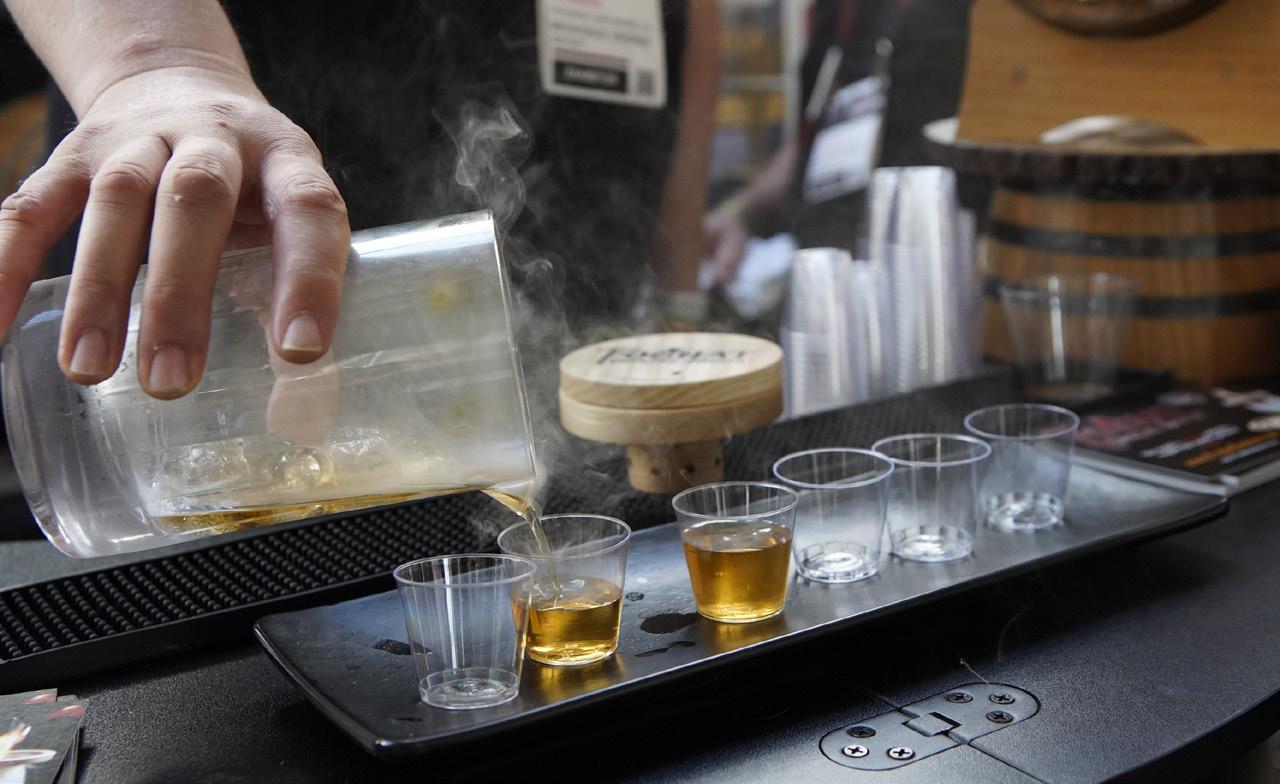
This sense of community flourished during the two-day fete, held June 14-15 in Brooklyn. Part of the reason for this was BCB’s location. For the first time, the gathering took place at Industry City, a waterfront cluster of long, narrow warehouse buildings converted to creative business and event spaces. Its design cajoled communal vibes; while two of the structures housed most of the convention’s trade show action, an artifi cial greenbelt flanked by its own mix of familiar and craft labels bound them together. This outdoor space quickly became the centralized spot for attendees to meet up, network, and hang out under bright blue Brooklyn skies, often with a straight pour or mixed drink of some sort in hand. The area did get packed at times, but it rarely felt like an immovable bottleneck.
In a sense, this outdoor space captured some of the vibes one may hope to get by visiting their favorite craft cocktail bar. There were good bottles of spirits on hand being utilized for delicious drinks whipped up by friendly faces, and each drink acted as a conduit for folks to come together, socialize, and generally be happy. Even when it was at its most crowded, it was tough to feel dour.
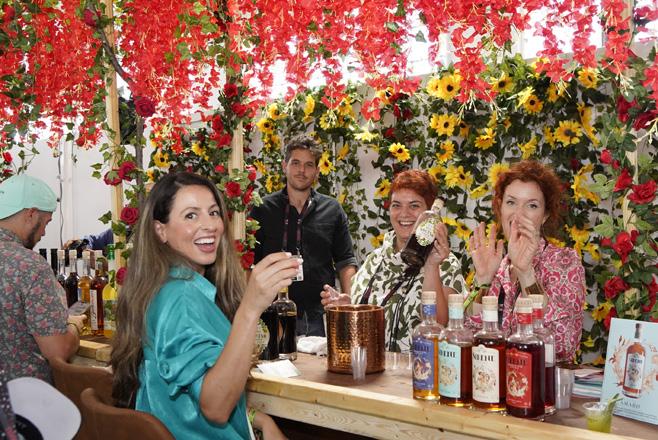 Written by RICH MANNING Photography by AYANO HISA
Bar Convent Brooklyn 2022 Highlights Why Distilling Matters
Written by RICH MANNING Photography by AYANO HISA
Bar Convent Brooklyn 2022 Highlights Why Distilling Matters
WWW. ARTISANSPIRITMAG .COM 117
HICCUPS AND RESOLUTIONS
However, holding the event at a new location meant the potential for unique issues to manifest. This isn’t unusual — it’s always wise to expect the unexpected in a new venue. For those who attend trade shows reg ularly, the hiccups, if they show up, aren’t necessarily the concern. It’s how they’re resolved that counts.
Indeed, day one of BCB delivered a smattering of navigational issues and other hiccups driven by issues that were out of the organizers’ hands — it’s fair to mark a malfunctioning air conditioning system on a hot and sticky June afternoon as the most unfortunate timing. Yet to BCB’s credit, the snags they had jurisdiction over were acknowledged and mitigated. Everything they could smooth over was handled by the start of day two, and the previous day’s problems were memories that grew distant with every sample sipped. The organizers weren’t the only ones who put out fires. The AC was back up and running on the second day.
A VIBRANT MARKETPLACE
Even day one’s indoor swelter couldn’t dampen the excitement effortlessly generated by the mélange of brands on hand. Displays ran the gamut from simple table setups to elaborate lounge areas and bar setups, complete with guest bartenders from award-winning venues like New York’s Bar Goto, Austin’s Nickel City, and San Francisco’s Pacific Cocktail Haven pulling shifts. Some of the more grandiose displays served as appetizers for the various post-conference activa tions and parties that were held from Williamsburg to Midtown Manhattan.

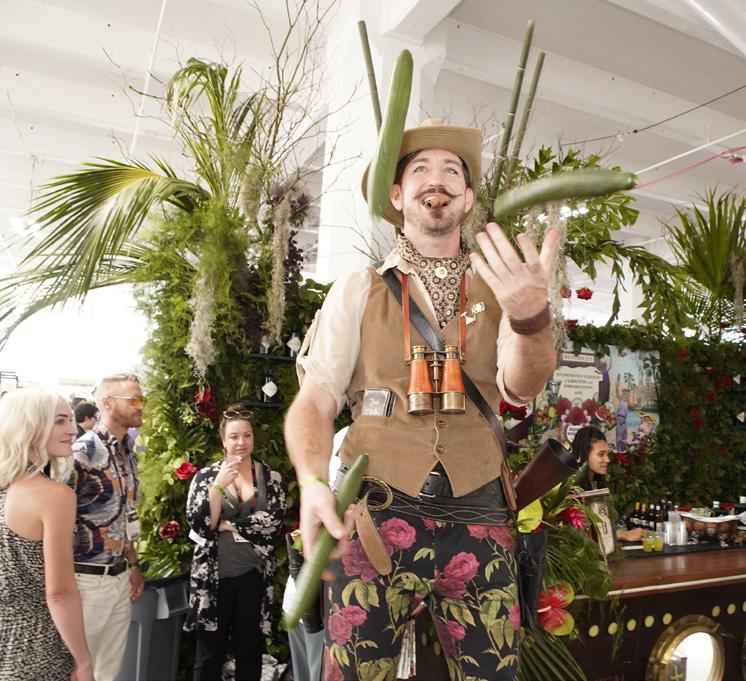
From a craft perspective, BCB’s most exciting kiosk was their emerging brands section; a massive, apoth ecary-like rectangle tightly packed with new and bur geoning small-batch brands and international labels looking to penetrate the American market. The fea tured spirits commonly garnered attention by being any combination of fun, intriguing, and innovative, like whey-based gin or amaro from Montana. At the same time, the kiosk’s plain white, relatively no-nonsense de sign ended up boosting their allure by drawing all the focus to the juice being shared. By doing so, it deftly replicated one of the true joys of visiting a bar — that is, bellying up, seeing a bottle you don’t recognize, and asking the bartender about its story. Overall, this type of ambience helped along by its aesthetic worked quite well in the distilleries’ favor.
LEARN, LAUGH, AND ENJOY
In addition to the bevy of booze on display, BCB assembled a rather solid itinerary of educational presentations throughout the conven tion. These included some serious discussions, such as exploring holis tic approaches to incorporating sustainability into distilling practices and why winning awards doesn’t always equate to robust sales for craft brands. There were plenty of lighthearted moments to be had there, too. California’s craft distilling pioneers St. George Spirits’ 40th anni versary retrospective was dubbed “We’d Drink the Shit Out of That.”
118 WWW. ARTISANSPIRITMAG .COM
A lecture connecting gin, jazz, and cocktails featured the legendary bartender and author Dale DeGroff occasion ally breaking into song. You can likely point to these two instances as proof that conventions built around alcohol are way better than the accounting conventions your CPA friend attends.
This unique mix of austerity and whimsy underscores the attitude that ultimately drove this year’s version of BCB to success. The convention functioned to highlight the business side of spirits through networking, pro motion, or simply letting people know a brand exists. However, it did so in a manner that never lost sight of the joy and good times that a well-made spirit can deliver, ei ther on its own or in the context of a killer drink. While spirits aren’t in Bar Convent Brooklyn’s name, there’s no denying that their soul is present.
OTHER VOICES
Bar Convent Brooklyn was a blast. It was great to see the bar and beverage community out in force after the past few years. This year's event offered visibility to an up-and-com ing whiskey brand like ours and a chance to make connec tions that we wouldn't otherwise have.
Mark Erickson, Brand Director, Laws Whiskey House
Bar Convent Brooklyn (BCB) 2022 had no shortage of like-minded brands and industry movers and shakers to share our story with. While mezcal isn’t new to the scene, it’s exciting to see the heightened attention it’s getting, including the rise of incredible brands that make up the category. Mezcal Campante is a brand that thrives at tast ings and we valued being able to connect with current and future partners in the industry by letting the liquid speak for itself.
Shirley Leigh Wood Oakes, Partner/CEO, Mezcal Campante
There is certainly a group of people that seek out emerging brands, and it was the space for us this year, but ultimately, it’s about the experience, right? While resources are limited for emerging brands, just having a presence at BCB is valu able. And it felt warm and fuzzy to be here! The industry is back in full force and getting to interact with people that I love and respect like this, reminds me why I got into this business in the first place!
Matthew Hart, Brand Ambassador, Brockmans Gin
https://barrelcharwood.com

Supplying different types of toasted and charred woods for unique flavors such as cherry, maple, birch and mulberry for aging and flavoring.

Contact us at (617) 237 2878 for details or email ken@barrelcharjar.com
For more information visit www.barconventbrooklyn.com.
WWW. ARTISANSPIRITMAG .COM 119
THE HISTORY OF PRE-MIXED DRINKS
The rise of the cocktail
Abrief consideration of how the var ious alcoholic beverage categories are used by the consumer leads to the no tion that beer, wine, and cider are often consumed as-is.1 Indeed the promotion of Magners Irish cider, served over ice in the UK and Europe from the late 1990’s, was considered revolutionary and led to a spike in sales. In contrast, distilled spirits can be legitimately consumed as is, as a mixed drink, or both. There are some exceptions. I’m not sure absinthe or gin is advisedly consumed neat, but the point is that most spirits can be modified to suit the require ments of the consumer, whilst other drinks categories are delivered with explicit or tacit temperature requirements and in some cas es, a need for carbonation. Here we explore the evolution of pre-mixed drinks from the original cocktail in the 19th century to to day’s pre-mixed and alcohol-free liquors.
The origin of the term cocktail is not clear, although there are several convoluted theories. In any case it seems that the first definition, published in the U.S. pamphlet
1 The drinks from these categories are, though, often blended as part of their production, either to reduce variability between batches or to create different drinks. Examples of the latter are lambic beers, porters, and even sherries.
“The Balance, and Columbian Repository” in 18062 was as follows:
“Cock-tail is a stimulating liquor, composed of spirits of any kind, sugar, water, and bitters — it is vulgarly called bittered sling, and is supposed to be an excellent elec tioneering potion, in as much as it renders the heart stout and bold, at the same time that it fuddles the head. It is said, also to be of great use to a democratic candidate: because a person, having swallowed a glass of it, is ready to swallow anything else.”
This definition of cocktail has since been expanded in many areas to include liqueurs, which, in themselves, tend to satisfy the cocktail definition. Today the definition of the cocktail does not necessarily make assumptions as to the political or physical state of the consumer!
The mysterious Jerry Thomas, consid ered the world’s first celebrity bartender, is credited with the publication of the first cocktail recipe book “How to Mix Drinks, or the Bon-Vivant’s Companion,” first pub lished in 1862 and since then it has been published in many updated and facsimile
2 Original scan of article can be found at https:// digitalcollections.nypl.org/.
Written by Paul Hughes, Ph.D.
versions. To put this into historical context, at the time of the first edition’s publication, the mechanical preparation of ice was still in the process of commercialization, so any ice required for drinks relied on the harvesting of natural ice, for instance from lakes, which came with a high price-tag, not least be cause of the cost of suitable storage and the need for efficient logistics.
Since then, cocktails have steadily devel oped, whether as a “necessity,” such as the use of gin to downplay the bitterness of quinine for the colonialists and sailors find ing themselves in the tropics3 or, as Jerry Thomas focused on, producing unique and stand-out drinks for an appreciative crowd. In a rough chronological parallel, Andrew Heublein migrated from Bavaria to Connecticut in 1856 and established a café, restaurant and elite hotel in Hartford, Connecticut. By 1892, Heublein4 launched
3 Quinine is credited as the first known use of a chemical compound to treat an infectious disease, in this case malaria.
4 For an entertaining read, check out “The Heublein Party Guide,” Charlotte Adams, 1968, Heublein Inc., a guidebook for a 1960’s home party. This seems to advocate a reversal of the convenience of pre-mixed cocktails in favor of custom-made drinks in the home.
120 WWW. ARTISANSPIRITMAG .COM
the first prepared cocktail with liquor al ready in the bottle and continued with the production of pre-prepared cocktails until their acquisition by RJ Reynolds Tobacco Company in 1982 and the alcohol division acquired by Grand Metropolitan in 1987. Ten years later, Grand Metropolitan would merge with Guinness to form Diageo.
During the US Prohibition (1920-1933), the cocktail format was energized not least because of the potential to mask any qual ity deficiencies found in spirits that were produced under clandestine situations. Fast-forward to the close of the second mil lennium and the pre-mixed drink industry was riding a wave of success on the tide of “alcopops,” stimulated in Europe by the Two Dogs brand launched in Australia in 1993. Within two years the company had been acquired by Pernod Ricard. In the UK, rights to Two Dogs were initially assigned to Merrydown (a purveyor of ciders) in 1995, before they were taken on by Scottish Courage in 1997. The original Two Dogs concept and direct descendants were based on lemon flavors, but by the close of the sec ond millennium, major brewers and distill ers were producing brands such as Hooper’s Hooch, Smirnoff Ice, WKD, and Bacardi Breezer. By the mid 1990’s, the alcopops label and flavors were increasingly seen as efforts by the alcohol industry to entice young and underage drinkers. Several large grocery chains withdrew them from the shelves and the British chancellor increased the excise by 40 percent.
The demise of this generation of the premixed sector was perhaps inevitable, but not just because of its tainted image. Today it is recognized that the proportion of the global population that consumes alcohol has been in steady decline for at least the past 20 years. The younger consumers (mil lennials and Gen Z) are consuming alcohol less frequently than baby boomers, with estimates that around 15 percent of Gen Z (born around 1997 – 2012) of drinking age
consume alcohol at least once a week, com pared with millennials (28 percent) and baby boomers (36 percent). No doubt this has stimulated the development of non-al coholic variants and indeed alcoholic and non-alcoholic premixed drinks are often shelved together. Alongside this develop ment, alcohol-free “spirits'' are gaining trac tion in the market, and interestingly attract premium prices relative to alcoholic equiva lents, even though they are excise-free.
Today a walk around the drinks aisles of grocery stores reveals a myriad of canned mixed drinks, both with alcohol and al cohol-free. In liquor control states such as Oregon and Pennsylvania, this is perhaps the only opportunity to market spirit brands outside of liquor stores, albeit as a mixed drink brand extension. But there is also a significant presence of pre-mixed drinks that do not necessarily rely on the branding provenance of the parent liquor. This can result in a bewildering array of options. For instance, the non-alcoholic margarita mix is now available in pre-mixed form, both as single-serve and in larger packs, the latter no doubt set up as a managed pour for sharing with friends.
It is worth taking a moment to highlight some possible quality and stability pitfalls of the pre-mixed and non-alcoholic categories.

The manufacture of pre-mixed drinks requires bringing together the specified ingredients, including an alcohol source, water, flavorings, colorings, and stabilizers. The alcohol source can be a neutral spir it or a known brand. The choices for both flavorings and colorings are vast. Perhaps the most common flavoring is a source of sweetness, which is often sugar-based. For typical pre-mixed drinks the alcohol con tent is sufficiently low to ensure both solu bility of sugars and to keep them in solution (a challenge for higher proof liqueurs; this is not a flavor issue but the visible precipi tation of sugar crystals may be perceived negatively by consumers). For a pre-mixed
drinks producer it is often prudent to eval uate various sugar formats (e.g. crystallized sugar, sugar syrup, invert sugar) to ensure that they deliver both on sweetness and stability.
The combination of ingredients that are not commonly associated can give rise to unexpected results, not least because premixed drinks are usually made-on-demand rather than stored until consumption. Ultimately it is advisable to carry out shelflife tests when bringing together ingredients not normally combined in alcoholic bever ages to help ensure that there are no unac ceptable color, flavor, or physical changes (e.g. clouding or precipitation) that might compromise product shelf-life and have a negative impact on the consumer experi ence. Similarly, for non-alcoholic variants of spirits it should be borne in mind that the microbiological stability of full-strength products cannot be assumed for low- and non-alcoholic products.
It seems to be clear that innovations in the alcohol industry are driven primari ly by the trends inherent in the younger demographic. As a former boss of mine at Heineken once said, he was less interested in what the consumer wanted today and was much more interested in what they wanted tomorrow. Departments such as market research, or perhaps more contemporane ously labeled consumer insight, attempt to pre-empt the future needs of the consumer.
Perhaps the way forward is to understand the choice criteria of the demographic that selects pre-mixed drinks over and above “traditional” products. The information de rived from any such study can be accepted or rejected but for a manufacturer if a prod uct does not sell it's not a winner. Over the past 10 years there has been a seismic shift in the pre-mixed drinks industry. Only time and more data will tell us how this continu ing evolution shakes out. Until then, I have a decent gin and some chilled tonic. I think that I’ll blend the two…
Paul Hughes, Ph.D. is assistant professor of food science and technology at Oregon State University in Corvallis, Oregon. For more information visit www.oregonstate.edu or call (541) 737-4595.
WWW. ARTISANSPIRITMAG .COM 121
Big Excitement in the Big Easy
The 2022 DISCUS Conference
Industry Is Stronger Together

New Orleans knows a thing or two about revelry, and its reputation made it the ideal host city for the 2022 DISCUS conference. The mood for celebration was set in place even before the conference kicked off in the labyrin thian Hyatt Regency New Orleans on June 8. The previ ous day, Vermont Governor Phill Scott signed an indus try-friendly bill that simultaneously reduced the tax rate for spirits-based RTDs and expanded where they could be sold. The good news added extra punch to an energetic keynote address, one that accentuated industry growth and fittingly ended with jazz music and bead tossing from
 Written by RICH MANNING
Photography provided by DISCUS
Written by RICH MANNING
Photography provided by DISCUS
Proves the
122 WWW. ARTISANSPIRITMAG .COM
an impromptu second line parade that weaved its way through the hotel’s massive main ballroom. These are the things that happen at a New Orleans-based conference.
The good news coming out of Vermont wasn’t an isolated in cident. It was the first in a series of high notes, packed within a compact two-day schedule. The positive vibes particularly stood out because they weren’t tamped down by pandemic chatter. The conference theme, Stronger Together, may have had a different connotation in the previous two years, when the industry was figuring out ways to merely survive in the face of lockdowns and archaic laws. Instead, the theme directly pointed to moving for ward in a post-pandemic landscape in a way that members of the distilling industry great and small can benefit.

A Visible Path Forward
If there was one binding agent to the bevy of presentations and lectures held during the DISCUS conference, it’s that there are many elements illuminating the distilling industry’s bright future. For instance, the understanding of the average consumer’s drink ing habits and how they’re evolving is remarkably clear, and what’s being observed is industry positive. Concepts like RTDs and non-alcoholic or low-ABV options may be fast-tracking a transi tion from trend to long-term market fixture, but they’re not threats to traditional liquors. Rather, their increased market prominence tie in to other positive elements of alcohol consumption that the industry publicly embraces, such as mindful consumption, premi umization, and an appreciation for craft. In other words, people that buy less tend to buy better and with purposes that have little to do with getting hammered. Considering DISCUS’ partnership with Responsibility.org and its long-standing commitment to mindful drinking, these behaviors are quite embraceable.
Several discussions also revolved around a commitment to achieving game-changing goals through actionable activities instead of mere verbal fluff. Presentations further explored the partnership between DISCUS and Pronghorn, launched in May, detailing how the strategies in place to reach the initiative’s crucial goal of providing qualified candidates in the Black community fair and equitable pathways to fill key positions within the distilling industry. A fireside chat with actor and Brother’s Bond Distilling Company’s co-founder Ian Somerhalder highlighted its use of re generative farming practices to demonstrate the differences dis tilleries can make by making a true commitment to sustainable methods.
The conference also served as backdrop to officially announce Destination Distillery, an ambitious online tool that aims to streamline connections between distilleries and consumers. The website, which launched a week after the conference, acts as a growing repository of distilleries and distillery tours around the country, with generous pops of educational opportunities tossed into the mix. The goal is to promote the industry from the heavy weights to small craft players, but also to drill down further into distillery tourism by encouraging spirits enthusiasts of all stripes to find new and exciting stops to add to their travel itinerary.
Highlighting Local, Highlighting Good
The conference also transformed an adjacent room into a robust trade show area anchored by a stage hosting additional presentations and live in teractive demos. The highlight of the trade show floor’s offerings was a corri dor highlighting Louisiana distilleries, all of which operate well outside New Orleans’ city limit. Their presence at DISCUS was a welcome sight — it’s always a treat to sample homegrown craft product. It also provided an or ganic reminder of the positive impact spirits can have for Louisiana. It’s an impact that can extend well beyond New Orleans’ cocktail-fueled legacy and its critically acclaimed on-premise accounts, which can sometimes be easy to forget.
On day two of the convention, DISCUS joined forces with Tales of the Cocktail Foundation to shine the spotlight on Turning Tables NOLA, a youth career development nonprofit devoted to providing mentorship and educational opportunities for Black men and women interested in joining the hospitality industry. The organization took over the trade show stage and led a select group of ticketed attendees through a special cocktail-making session, covering the history of select drinks and their connection to the Big Easy in the process. The opportunity to whip up a French 75 or a Pimm’s Cup provided major fun and a few minor messes (it’s more fun to drink champagne than it is to spill it on one’s pants). Of course, the goodness of the drinks created paled in comparison to the goodness Turning Tables does for the community.
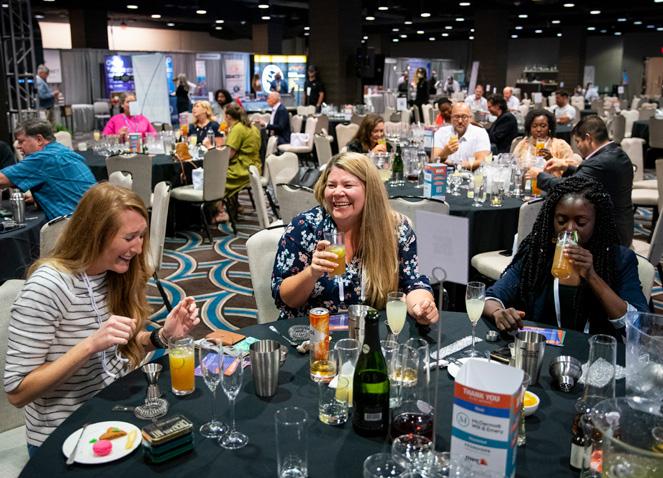
WWW. ARTISANSPIRITMAG .COM 123
Celebrating Pioneers
DISCUS also held their annual awards luncheon on day two of the convention. The ceremony itself almost felt like a Hall of Fame induction, with hardware going to notable figures like Catoctin Creek Distilling Co-Founders Becky and Scott Harris, George Dickel General Manager and Distiller Nicole Austin, Women of the Vine and Spirits’ Founder & CEO Deborah Brenner, and Appleton Estate’s legendary Master Blender Joy Spence. Calling someone legendary may sound like hyperbole, but it’s warranted in Spence’s case — when speaking to the other accomplished recipients after ward, they were still abuzz with excitement about sharing the stage with her.

DISCUS wrapped up the conference in the most New Orleans way possible, with a parade down Bourbon Street. It was a delight ful way to finish celebrating the current state of an industry pro pelled by an inspirational sense of post-pandemic resiliency. The trends facing the industry may look a little different the next time DISCUS convenes in Chicago next February, but there’s no doubt that its resolve will be as strong as ever.
Other Voices

“ In respect to the DISCUS conference, in short, I was impressed. The conference was very insightful and definitely worthwhile. I loved hearing the different positions in the panel discussion that either confirmed what I assumed to be likely true or gave me more insights into the ever-changing environment. As a craft distiller I felt welcomed, respected, and made some very good new contacts. Keep it up.”
— Ralf Loeffeholz, Owner/head distiller, Dampfwerk Distilling
“
To say this was my first time participating in DISCUS, I can’t even imagine how it can be better next year. I had the privilege to participate representing Three Roll Estate and Turning Tables NOLA. And each day I did participate, I saw different outlooks as a brand ambassador as well as a bartender for the event. I was overwhelmed, thinking about how it could have gone, however my anxiety calmed down when a sense of home settled in at the space.”
 — Ari Ballard, Tasting Room Manager, Three Roll Estate
Rich Manning is a freelance food and drink writer based in Fountain Valley, CA. He lives about 15 minutes south of Disneyland, but he hasn’t gone there in ages — he’d rather visit the nearby breweries and distilleries instead. You can check out some of his other written hackery by visiting richmanning. pressfolios.com. He can be reached at richmanning72@gmail.com.
124 WWW. ARTISANSPIRITMAG .COM
Written by DOUG HALL
EMERGING TREND: INCUBATOR BUSINESS MODEL

A New Business Model for Craft
It is my belief that the next 10 years of distilling will see the rise of the incubator business model for craft dis tilleries. It’s fun and far more profitable than the classic business models. Incubation involves the creation and marketplace validation of new brands that are sold to others. This is distinct from simply selling your craft distillery. With this model you sell the brand and continue with your distillery — sometimes as a con tract manufacturer, sometimes not.
The market opportunity for craft distilleries incu bating brands to be sold has never been greater. Large corporations inside and outside the industry are showing strong interest in finding great brands they can grow. Founders and investors in craft distilleries are seeking brands they can buy to accelerate their success by allowing them to focus on brand building instead of brand creation. The demand is driven by the simple fact that large companies are not very good at creating new brands. Rather, they are very skillful at taking a brand that has all the winning elements and scaling it into a major business.
Illustrations provided by WOODCRAFT BOURBON BLENDER
WWW. ARTISANSPIRITMAG .COM 125
Three research studies we did in house1 found that on average new brands lose about 50 percent of their potential value as they travel from idea to market at big companies. That’s because rather than the rapid cycles of learning and pivoting that are fundamental to a successful craft distillery, large corporations are slow and plodding. Rather than listening, learning, and changing like a craft distillery would, they simply work harder, spend more, and wait too long to change and improve.
3
INCUBATION MODELS
The three most popular incubation models include:
1) COLLABORATION: Here, the potential buyer commu nicates their strategic need. They classically define: a) the product category, b) which of the five price tiers they are seeking and c) their target customer. Then they work collaboratively with the incubation distillery to create multiple branding options that are tested via quantitative, statistically reliable consumer research, and qualita tively by placing in a few on- or off-premise accounts. The benefit of this model to the incubation distillery is positive cash flow. The big company often puts up the money for the spirit, packaging, etc., and pays a fee for the work and often a share of profits. The challenge with this model is the culture clash between corporate and entrepre neurs. Open and frequent communication is critical.
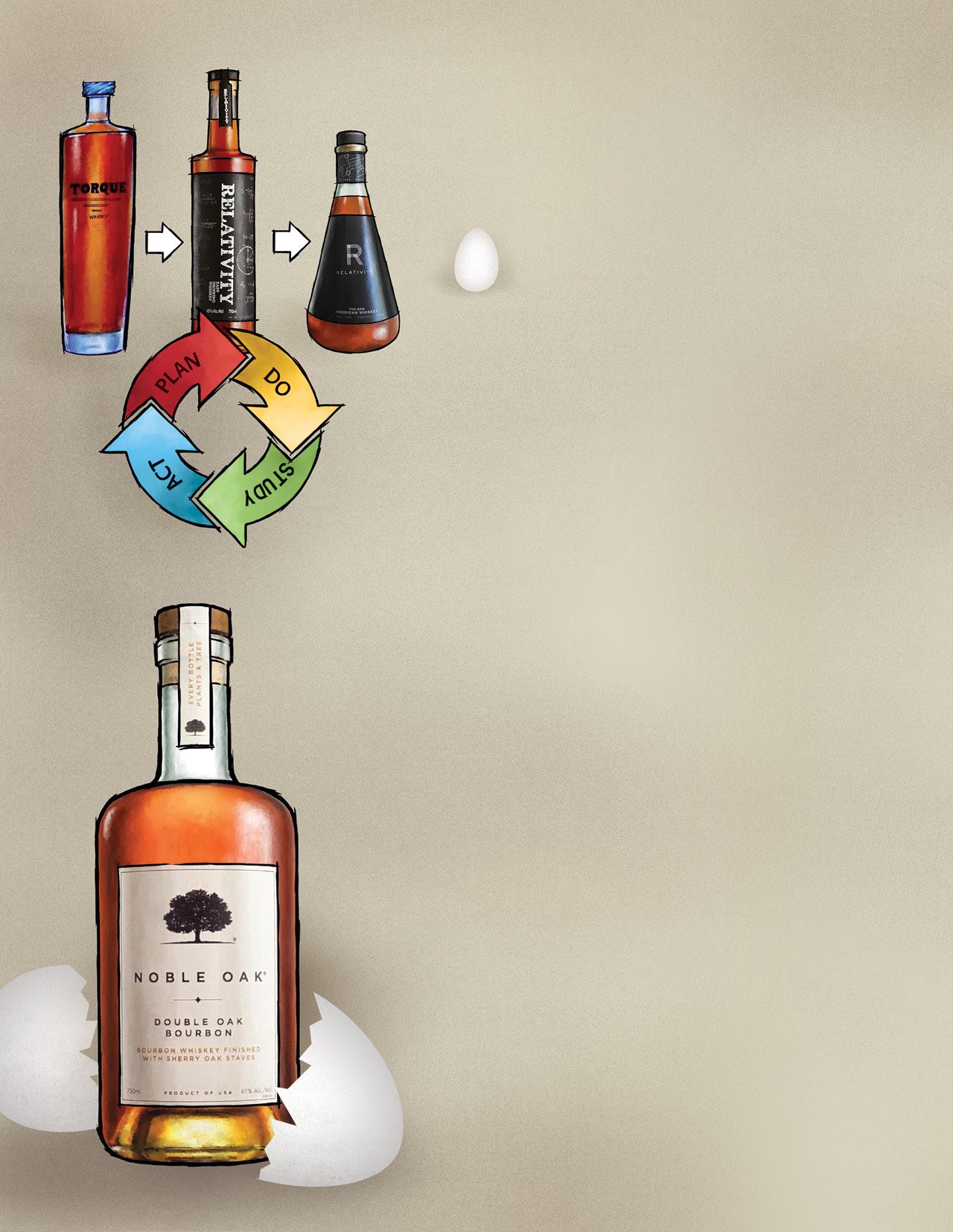
2) REQUEST FOR PROPOSAL: With this model, the buying company takes a more hands-off approach. They have detailed deliverables that the craft distiller is focused on. As with collaboration the company often puts up money for expenses as well as paying a fee. The lack of direct engagement by the buyer re quires the craft innovator to adopt a ‘cycles of improvement’ mind set, which leverages their ability to create, test, and learn. To bring discipline to the development process, the Deming Cycle of Plan, Do, Study, Act is used to drive alignment. The incubator distillery determines the goals for the process and implements changes, then the customer evaluates results and standardizes and stabilizes the change. The scope of these engagements varies from brand/product creation all the way to going to market for testing or even scaling up.
3) SPECULATIVE DEVELOPMENT: With this mod el, the incubation distillery creates and funds the incubation of one or more new brands. This model offers the greatest profit potential. It also offers more opportunities to be creative and, yes, even a bit daring. The risk with this model is if the brand doesn't sell. Our lead brand in this area is Dexter Three Wood — named by UltimateSpir its as one of the top 12 bourbons in the country. It’s broadly avail able in two states. Sales are beyond expectations with outstanding depletions (sellthrough). After just 12 months we are already getting “nibbles” from potential buyers. The key to making this model work is to not get greedy. If someone buys a brand after a year in just two states, the price paid will be a fraction of what it would be if you’d gone national. Then again your return on investment is good.
1 Hall, D.B., Driving Eureka! (Clerisy Press, 2019). 171-173, and APA Handbook of Consumer Psychology, (APA, 2022)
126 WWW. ARTISANSPIRITMAG .COM
INCUBATION SUCCESS FACTORS
In all three incubation models there are four core suc cess factors:
1) RICH BRAND NARRATIVE: You need a brand narrative, i.e. storyline, and pack aging with richness that comes from authenticity, originality, and creativity. At the same time it must be so simple it can be easily pitched to distributors, retailers, and social media influencers.
2) MEANINGFULLY UNIQUE

PRODUCT: The product must be excellent. It must be both great tasting and distinctive versus competition.
3) THIRD PARTY VALIDATION:
With large industry corporations this means gold/ double gold medals at the San Francisco World SpiritsCompetition and scores in the mid 90s at the Ultimate Spirits Challenge. In my experience these are the competitions that big corporations tend to trust the most. For some it is also valu able to have paired comparison 60/40 wins in blind testing of your product against appropriate competitors as well as top two percent concept test scores on your overall storyline and packaging concept.

4) NATIONAL SCALABILITY: With most incubation projects initial volumes will be small, however, with success, buyers are going to want to see a pathway to making the brand larger. If you are not set up to produce at national volume, then you will need to demonstrate to buyers how their internal resources or third party producers can scale the brand nationally. As a distillery that focuses on incubation — we’ve made investments in a much higher volume of production capacity than we have need for today — buyers tell us that they value this as a major benefit of working with us.
I encourage all craft distillers to consider blending an incubation model into their business portfolio. In our case we’ve gone all in; to support that we’ve assembled a team with never-ending curiosity and creativity. With the right mindset and team, incubation is a ton of fun!
Doug Hall is co-founder of WoodCraft Bourbon Blender and the Brain Brew Distillery with locations just outside Cincinnati and on Whiskey Row in Louisville. He is also founder and chairman of Eureka! Ranch International, an innovation training and invention firm.
4
WWW. ARTISANSPIRITMAG .COM 127
LETTER BAG
TEN YEARS AGO, I was a novice brewer at a craft brewery that was about to become regional, and recently removed from a newspaper career with no thoughts of writing another word. I was in a relatively small but booming industry with a strong sense of solidarity, working my ass off on my way up to head brewer, learning a lot, and drinking all the free beer I could. From day one, part of my duties over those five years were to run wash for a local distillery. (This is a literal “day one” — I was actual ly trained on the distiller’s malt whiskey mash so that I could figure out the system without messing up any beer.) Over the years, I became familiar with the staff and the processes and the distillery. When they eventually gave me a job there and sent me off to learn and meet people, to expose me to the broader industry, it was a dive into the deep end.
That was six years ago, my first distillers conference. That was where I drank the Kool Aid. I thought I knew what a small, close-knit industry looked like, but my experience with the very familiar craft beer industry was taken to a new level as a craft distiller — familiar became closer to family. Many of the distillers and other great folks I met at that first conference, including Artisan Spirit’s Brian and Amanda Christensen, became some of
my favorite people, the people whose dedication and generos ity continue to inspire me and refresh my desire to give back to the industry. Starting with the next issue after that conference, I dusted off my reporter’s note pad, did some research, and sent Brian an article about amaro and something called “Brewing for Distillers.” I was part of the family now, and I needed to contribute in a broader way than I had ever wanted to as a brewer.
There have been other profes sional highlights since then. Four-plus years ago I joined The Family Jones. In the last few years there have been a couple of books, professional certifica tions, and a master’s degree. I’ve learned a lot more about dis tilling, naturally, but also about the agricultural community and supply chains that underpin our industry. But so many of those things are a continuation of the journey that started the moment I accepted my first distilling job, and the rest were set in motion the fateful evening that Johnny Jeffrey and I walked up to a patio table at a conference center in San Diego. John McKee and another gentleman were sitting there, smoking cigars. McKee took a puff, looked at me, and said, “This is Brian Christensen. He publishes Artisan Spirit … ” The rest is history. Now, I look forward to helping write another ten years of it, both for the Christensens and for the indus try as a whole.
— GABE TOTH
COMMENTARY ON 10 YEARS OF ACHIEVEMENT BY DISTILLED SPIRITS COUNCIL PRESIDENT AND CEO CHRIS SWONGER
One of the greatest achieve ments for the spirits sector over the last decade has been the explosive growth of distilleries across the country, from less than 200 in 2010 to more than 2,300 distilleries today.
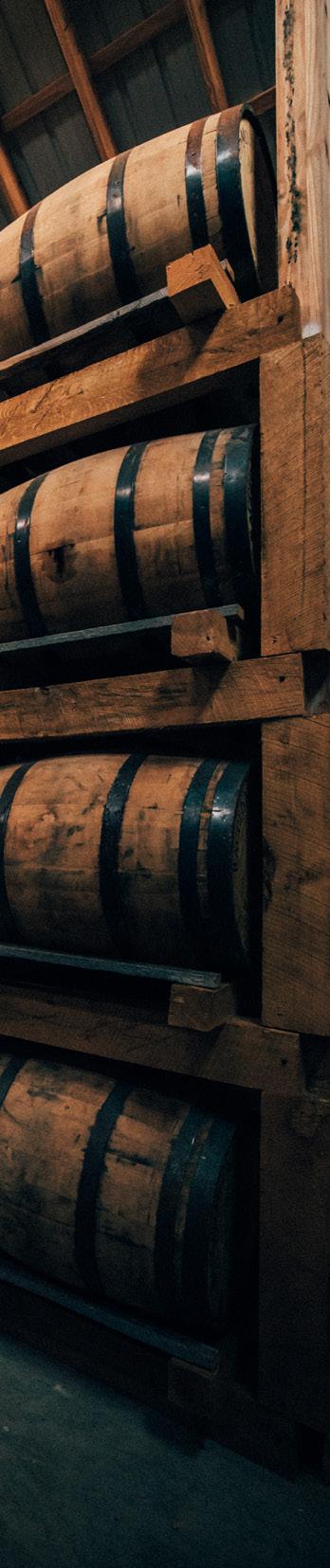
The phenomenal rise of craft distillers has had a positive impact on the entire spirits category by driving innovation, sustaining consumers’ fascina tion with spirits, and serving as the local face of the spirits industry in neighborhoods and state capitals across the country. This network of small distilleries has grown to be an important grassroots base for communi cating the positive role distillers play in their communities and in the wider hospitality industry.
Every day, distillers are serving as local advocates who can call attention to public policy issues affecting the industry at every level of government.
There have been great synergies between small craft distilleries, larger legacy distilleries and the Distilled Spirits Council. Together, we are making tre mendous progress.
Over the last 10 years, we have beaten back more than 150 state tax and fee threats, saving the spirits sector more than $8.5 billion in retail sales. And at the federal level, the historic
128 WWW. ARTISANSPIRITMAG .COM
passage of the Craft Beverage Modernization and Tax Reform
Act continues to serve as an economic lifeline for countless small distilleries struggling to get back on a path of stabili ty and growth following the pandemic.
Working alongside state guilds, we have also helped modern ize state laws to make it easier for craft distillers to produce, market and sell their spirits. We have achieved numerous market access victories in different states, including securing on and off premise distillery sales and tastings, lifting caps on distillery sales, liberalizing Sunday sales laws and expanding distillery delivery options.
These legislative and market place successes have greatly contributed to incredible market share gains for the spirits sector with supplier sales rising more than seven percentage points to 41.3 percent of the total U.S. alcohol beverage market in 2021 from 34.1 percent in 2011.
As an industry, we have much to be thankful for and much more work to do. Cheers to the next 10 years!
— CHRIS SWONGER
“Our initial focus was to make the best spirits we could, using Florida agriculture and warm climate”, said Diaz. “In a nut shell, we wanted to entertain, educate, and inspire.”
Since opening, the STAD team has:
> Opened two distilleries and created 75 jobs
> Distilled/aged/bottled Florida’s first bourbon
> Been voted the number one distillery tour in North America (2018, Drammies)
> Hosted over one million visitors and is Florida’s most celebrated and visited distillery
> Sponsored six Habitat for Humanity homes
> Supported the Lincolnville Museum and Cultural Center
> Become a proud spon sor of The St. Augustine Amphitheater, the number one outdoor venue in the USA
> In 2018, become a present ing sponsor for the Sing Out Loud Festival, high lighting emerging musical artists
illegal in Florida. It was horri ble,” McDaniel reflects. “We na ively assumed we could sell from our gift shop, just like wineries. Legislative engagement and spirits modernization became a priority.” STAD helped advocate and pass four legislative changes since 2011. The company has worked with DISCUS, ADI and ACSA to help modernize laws regulating beverage alcohol at both Federal and State levels.
Diaz added, “Our sales focus has shifted from scrambling to get menu placements in bars and restaurants to building strategic relationships with retailers that support our vision.” The team has also worked to advance its e-commerce and DTC business. “Retaining customers and grow ing retail partnerships are the company’s two primary areas of focus. Customer feedback has guided the company’s produc tion efforts more towards highend barrel-finished bourbons, rums and gins,” said Diaz. “We have never been more excited about the future.”
— MIKE DIAZ
mother, and one part-time em ployee. The article caught the at tention of an intrepid young en gineer living nearly 1,000 miles away in Nashville, Tennessee named Brett Steigerwaldt. He wrote to me right after the article was published expressing his desire to come work with us. Far from being ready to bring on a full-time assistant distiller, his enthusiasm won me over, and I figured out a way to make it happen.
ST. AUGUSTINE DISTILLERY: THE SPIRIT OF FLORIDA IS ALIVE AND WELL
In 2011, Mike Diaz and Philip McDaniel co-founded St. Augustine Distillery (STAD).
> In 2021, sponsored the Ft. Mose Blues Festival cele brating the City’s African American Heritage.
In addition, the duo blazed a trail for others in pursuit of their distilling dreams. “In 2013, any form of DTC commerce was
IN THE FALL OF 2015 Artisan Spirit ran a feature on my distillery, titled “Yo Ho Ho and a bottle of (Lyon’s) Rum” — as we approached our second anniversary of making rum in Maryland. At the time it was just myself and my original co-founder working non-stop, with the help of my sister,
Today, as we approach our 10th year, I’m proud to say we have accomplished everything we set forth in the article: increased efficiency, expanded produc tion, reduced impact, and much more, with a stellar team. My sister Jessi Windon Collins now runs our wholesale division — which she grew single-handedly — and Steigerwaldt is our head distiller, overseeing production, and has been an integral part of our success. People tend to fo cus on how distilleries get start ed and romanticize the founders story, but for me it’s the journey, the people who stick with it, the ones that help you along the way, and the partners that you were meant to have that matter most of all. I am eternally grate ful to Artisan Spirit for writing about us in the early days of our business, helping Brett to find us, and for fostering a true sense of community among the makers, and celebrators, of craft spirits! Cheers to many more years!
— JAIME WINDON
WWW. ARTISANSPIRITMAG .COM 129
A SPECIAL THANKS to the adventurous advertisers who have supported us, and this industry, from issue number one:
Cage & Sons Distilling Systems
Imperial Packaging
Phoenix Packaging
Thousand Oaks Barrel Co.
AGAVE RESOURCES
The Tierra Group 12
BARREL WAREHOUSING
White Dog Trading & Storage, LLC 57
BARREL RACKS
Western Square 98
BARRELS
Independent Stave Co. 5 & 7
BARWARE
Boelter 6
Thousand Oaks Barrel Co. 124
BOTTLE & GLASS DECORATING
Loggerhead Deco 91
BOTTLE MANUFACTURERS & SUPPLIERS
Brad-Pak Enterprises 23
Imperial Packaging 72
Phoenix Packaging 21
Saverglass 6 & 132
Vetroelite, Inc. 36
CANNING SERVICES
Iron Heart Canning Company 113
COMPLIANCE & BACK OFFICE MANAGEMENT
American Spirits Exchange Ltd. 6
CONTRACT DISTILLATION
Corsair Artisan Distillery 44
Southern Distilling Co. 8
ADVERTISER index
CORKS & CLOSURES
Supercap 47 Tapi USA 8 & 131
CREAM LIQUEURS
Creamy Creation 119
DESIGN, BRANDING, & MERCHANDISING
CF Napa Brand Design 2 & 7
Creature Theory 27
DISTILLERS
Jeptha Creed Distillery 4
DISTILLING EQUIPMENT
Bavarian Breweries & Distilleries 51
Brawn Mixer 110
Cage & Sons Distilling Systems 7 & 19
Headframe Spirits Manufacturing 43
Prospero Equipment Corp. 46 Rudolph Research Analytical 116 Specific Mechanical Systems 29 Vendome Copper & Brass Works 83
EDUCATION
American Distilling Institute 99 DISCUS Academy 105 Moonshine University 6 & 34
ENZYMES & YEAST
AB Biotek 32
Ferm Solutions 76 Fermentis 42 Lallemand 8 & 17
FILLING EQUIPMENT
Fogg Filler 103
XpressFill Systems, LLC 39
FLAVORING
Barrel Char Wood Products 119
Mother Murphy's 40
ARTISAN SPIRIT sponsors
GNS & BULK SPIRITS SUPPLIERS
Southern Distilling Co. 15
Strategic Sourcing Hub 127
UltraPure 25
INGREDIENTS
Briess Malt & Ingredients Co. 35
BSG Distilling 7 & 11
Prairie Malt 116
INSURANCE
Lighthouse Insurance Services, LLC 102 Whalen Insurance 91
LABELS
Multi-Color Corporation (MCC)
Premium Label Solutions 8 Niagara Label 124
PACKAGING
Liquor Bottle Packaging 79
POINT OF SALE
Arryved 6
PUBLICATIONS
Journal of Distilling Science 48
PUMPS
McFinn Technologies 113
REFRIGERATION & CHILLERS
G&D Chillers 31
RETAILERS
Total Wine & More 8
TOTES & TANKS
Spokane Stainless Technologies, Inc. 86
TRADE ORGANIZATIONS
American Distilling Institute 78
Distilled Spirits Council 7 & 87 Responsibility.org 9
Spirits United 127
▶
▶
▶
▶
130 WWW. ARTISANSPIRITMAG .COM
info@tapiusa.com Making innovative bottle closures for over 60 years. Beginning production in the USA in 2022. www.tapiusa.com (610) 222-9109 1020 E. Main St. Norristown, PA 19401
