Our grain neutral spirits offer a versatile, costefficient base that streamlines production and delivers consistent quality, batch after batch.
192-proof, carbon filtered or unfiltered. Packaging options include drum, tote, tanker, or rail. Contact us for a sample.


iSSUE 54 /// Spring 2026
pUBLiSHEr & EDiTOr Brian Christensen
CrEATiVE DirECTOr Amanda Joy Christensen
SEniOr WriTErS
Carrie Dow
Reade A. Huddleston, MSc.
Jeff Bach
Pete Barger
Jason Barrett
Caitlin Bartlemay
Amanda Berger, Ph.D.
Kris Bohm
Martin C. Duffy
Alan Green, Ph.D.
Doug Hall
Samantha Harpst
Kris Bohm
Amanda Joy Christensen
Brian Christensen
Qianlong Emperor
Pierre Thomas Le Clerc
Rich Manning Gabe Toth, MSc.
Harry Haller
Aaron Linden
Sean O'Leary
Kurt A. Rosentrater, Ph.D.
David Schuemann
Gary Spedding, Ph.D.
Molly Troupe Kyle Wortz
pHOTOgrApHErS
Carrie Dow Riley Thomas
Huang Xiangjian Huang Zongdao
SALES & MArKETing Ashley Monroe
ArTiSAn SpiriT is a quarterly publication by Artisan Spirit Media. www.artisanspiritmag.com facebook.com/ArtisanSpiritMagazine ArtisanSpiritM

General Inquiries (509) 944-5919 Advertising (509) 991-8112 PO Box 31494, Spokane, WA 99223
All contents ©2026. No portion of this magazine may be reproduced without the written consent of the publisher. Neither Artisan Spirit Media nor ArTiSAn SpiriT magazine assume responsibility for errors in content, photos, or advertisements.
While ArTiSAn SpiriT makes every effort to ensure accuracy in our content, the information is deemed reliable but not guaranteed. We urge our readers to consult with professional service providers to meet their unique needs.
At ArTiSAn SpiriT, we take the opportunity to enjoy many different craft spirits and adult beverages. However, it’s also our responsibility, and yours, to always drink responsibly. Know your limit, and never drink and drive.
ArTiSAn SpiriT’s number one goal is to share and celebrate the art and science of artisan craft distilling. But please remember to follow all the laws, regulations, and safety procedures. Be safe, be legal, and we can all be proud of the industry we love.


The American Spirits Exchange is a national importer and distributor serving the alcoholic beverage industry (spirits, wine, and beer). We provide domestic and international companies with access and support to the U.S. market. Regardless of your size — from micro, craft distiller to publicly traded multinational — our focus fuels your growth. Our flagship Foundations™ program provides companies with access to the U.S. market. We handle your business-to-business functions from start to finish: permitting, brand approvals, purchase order processing, invoicing, and compliance.
Every element of Cage and Sons equipment is designed and crafted to provide you with the very best distilling experience at an affordable rate because we know that bottom line matters, but so does function. At Cage and Sons, adequate is never an option, and we continue to develop and design new high functioning, cutting-edge distillation systems that enhance the distillation industry. Cage and Sons works every day to bring you the very best distillation systems for the very best value.

For nearly 50 years, CF Napa Brand Design has set the standard for alcohol beverage branding. Led by Owner & Creative Principal David Schuemann for the past 22 years, we focus on translating brand ethos visually, never using a one size fits all approach for projects. The result is a bespoke solution rooted in strategy and, most importantly, a design that sells.
CF Napa’s expertise lies in the intricacies of our process — from project conception to conclusion, our team brings a strategic yet thoughtful eye to every detail. We understand the market and target audiences on a global stage. We balance listening with leading to execute a design that the client loves, and the consumer buys again and again.
The Distilled Spirits Council of the United States (DISCUS) is the leading voice and advocate for distilled spirits in the United States. Representing producers and marketers of distilled spirits, DISCUS advocates on legislative, regulatory, and public affairs issues impacting the distilled spirits sector at the local, state, federal, and international levels; promotes the distilled spirits sector, raising awareness and opening markets in the United States and around the globe; and encourages responsible and moderate consumption of distilled spirits as part of a healthy adult lifestyle based on evidence-based research and policy. DISCUS also powers Spirits United, a grassroots platform for the distilled spirits industry. Spirits United is comprised of a community of advocates united with a common goal: to ensure adult consumers can enjoy distilled spirits where they want, how they want, and when they want. Learn more at distilledspirits.org and spiritsunited.org.

Haskell is a diversified Architecture, Engineering, and Construction (AEC) firm with the resources to serve our clients across more than a dozen unique markets. Our worldwide team offers an unmatched depth of expertise, leveraging 2,600 subject matter experts across more than 20 design disciplines. With a dedicated beer, wine, and spirits team, Haskell provides integrated solutions for clients, specializing in sustainable facility design and complex manufacturing systems. Our team brings years of industry experience to breweries, wineries, and distilleries of all sizes. Whether it’s a turn-key can line, engineering expertise for a winery, or the design of a distillery, our team will work alongside you to determine the right solution.
Learn more at www.Haskell.com.
Our mission at Artisan Spirit Magazine is to share and celebrate the art and science of artisan craft distilling. We are humbled by the support of our sponsors. With their help, we can further our common goals of supporting creativity, innovation, and integrity within the industry we all love so much.
We’ve been in this industry for over 100 years, during which time we’ve learned a thing or two about what makes a great barrel to age great spirits. Our R&D team and account managers have hundreds of barrels currently in experimentation. Partnering with distillers, we think outside the box to develop new products that push your vision forward. Our Mission: To craft world-class oak barrels and other cooperage products so our employees, customers, and communities flourish.

With an impressive legacy spanning over 30 years in the printing and label domain, Jack Vogel stands as a respected authority in the Spirits industry. For the past 23 years, he has been a steadfast and trusted advisor, contributing significantly to the evolution of label standards and practices. Jack's journey includes leadership roles at top label printers within the Spirits sector. Having transitioned into an independent consultant, he continues to channel his wealth of knowledge towards empowering brands to achieve excellence. As an original founding sponsor and advisor to organizations such as American Distilling Institute, American Craft Spirits Association, and Artisan Spirit, Jack has played a pivotal role in shaping industry standards. At the core of Jack's professional philosophy is the belief in industry education as a catalyst for stability and growth. By imparting knowledge and insights, he contributes to the overall advancement of the spirits label landscape.
Lallemand Biofuels & Distilled Spirits is the industry leader in supplying fermentation products and value-added services to the distilled spirits industry. We specialize in the research, development, production, and marketing of yeast and yeast nutrients as well as a solid belief in education of the distilled spirits industry.
A vital part of the alcohol production process, fermentation products from Lallemand Biofuels & Distilled Spirits have been designed and selected to create value by tailoring objective solutions to distillery needs.


Moonshine University is located in Louisville, Kentucky on the Beverage Campus with its sister company, Flavorman. Moonshine University offers a variety of classes for enthusiasts, entrepreneurs, industry professionals, and those seeking careers in the distilling industry. Our distillery was designed as part of our classroom, and all classes incorporate hands-on learning and sensory evaluation in order to provide a complete and comprehensive education. In addition to its knowledgeable instructors, Moonshine University hosts a range of renowned industry experts for specialized instruction and training.
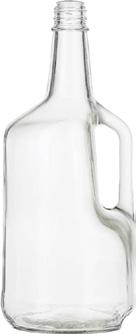
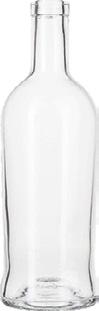
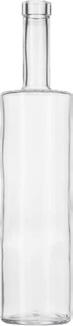
For more than 40 years, Phoenix Packaging has worked to realize each client’s unique vision to best represent their story through their unique branding imagery. We provide our clients with options from around the world in a variety of materials such as glass, ceramic, plastics, paper, aluminum, and more. We help to coordinate everything from bottle design, manufacturing, decoration, and logistics. Our goal is to produce your packaging vision to help you achieve success.


Responsibility.org is a national not-for-profit that aims to eliminate drunk driving and work with others to end all impaired driving, eliminate underage drinking, and empower adults to make a lifetime of responsible alcohol choices. Responsibility.org is funded by the following distillers: Bacardi USA, Inc.; Brown-Forman; Campari Group; Constellation Brands; DIAGEO; Edrington, Hotaling & Co.; MastJägermeister US, Inc.; Moët Hennessy USA; Ole Smoky, LLC; Pernod Ricard USA; Suntory Global Spirits; and William Grant & Sons. For more than 33 years, Responsibility.org has transformed countless lives through programs that bring individuals, families, and communities together to inspire a lifetime of responsible alcohol choices. To learn more, please visit www.Responsibility.org.
Since 2013, Statesville Contract Distilling has been producing award-winning, quality spirits at scale and doing it sustainably. Combining the artistry of distilling with cuttingedge technology and unparalleled customer service, we offer a diverse range of standard and custom new fill whiskeys, extensive aged barrel inventory, warehouse barrel storage, private label production, and co-packing for more than 150 brands globally. Partner with us to create spirits you can't get anywhere else, that you'll be proud to call your own. To learn more about our proven track record, visit statesvillecontractdistilling.com or call us at (704) 798-3447.

For over 60 years Tapi USA has produced cork stoppers and a wide variety of bottle closures. Familyowned and operated since its inception, our company continues to develop new products and enter new markets. Tapi USA is proud to support the growth of the artisan distillery industry and is honored to be the Bottle Closure Sponsor for Artisan Spirit Magazine.
Total Wine & More is the country’s largest independent retailer of fine wine, beer, and spirits. Our strength is our people. We have over 5,000 associates, who must demonstrate comprehensive beverage knowledge before they are invited to join our team. After coming on board, all of our team members undergo an extensive initial training program. We believe that an educated consumer is our best customer. We want to demystify the buying experience for our customers so they will feel confident in choosing the bottle that is perfect for them. Total Wine & More works closely with community and business leaders in each market it operates to support local causes and charitable efforts.

Nestled on the rolling hills of Southern Indiana, Starlight Distillery is a seventh-generation, family-owned distillery where family traditions and innovation meet in every bottle. Operated by the Huber family, whose farming roots date back to 1843 on the families estate, the distillery embodies a true farm-to-glass philosophy — growing, milling, fermenting, distilling, aging, and bottling its spirits on the family estate. With over 850 acres of farmland, Starlight crafts award-winning bourbon, rye, gin and brandy using estategrown grains and fruits with time-honored techniques refined throughout the seven generations. From heirloom grains to world-class maturation, every release reflects a commitment to authenticity, patience, and craftsmanship. At Starlight Distillery, tradition isn’t a trend — it’s a legacy poured into every glass.

I’m tired of hearing about the fire.
Not because it didn’t happen. It did. Closures, consolidation, flat sales, and the collapse of bulk spirits value. We’ve all felt it. If you’re reading this, you’ve either been burned or you’ve watched someone close to you get scorched.
But as my Still Talking podcast co-host, Jason Zeno, likes to say, “The industry burned. Fine. Now what?”
That’s the better question.
And if you look past the noise, there are signals worth noticing. The Dietary Guidelines debate didn’t become the catastrophe some feared. Advocacy efforts continue pushing on shipping reform and market access. Research institutions are doubling down on real science and education initiatives. New spirits brands are still launching, but smarter.
The gold rush is over. Good.
What’s left feels sharper. Less hype, more intention. It’s time to tighten systems, watch cash flow, refining products, and think long-term. The articles in this edition of Artisan Spirit Magazine reflect that shift.
In this issue, you'll find pieces on operational precision, barrel strategy, regulatory fault lines, and smarter market positioning. That’s the “now what.”
Through the magazine, the podcast, and new ventures like Cut Point Consulting, I’ve been spending more time with operators who are figuring it out together.
The industry burned. Now we build.
Hold fast, friends.

Brian Christensen
(509) 944-5919 /// brian@artisanspiritmag.com /// PO Box 31494, Spokane, WA 99223


I get it, you're not reading this to hear me pontificate (that word makes me sound smart) about what's happening in the state distilling guilds. You want to hear directly from the presidents and board members who are working their asses off to make sure their state industries succeed. So I’ll keep the summary brief; Florida, Missouri, New York, and Oklahoma, along with most other states not listed here, are all diving deep into 2026 legislative sessions. They are also doing what they can to help businesses who may be struggling with rising tariffs, taxes, and competition from other sectors like cannabis. It’s damn hard work, but we are lucky to have these volunteer guilds carrying the burden.
Brian Christensen Editor, Artisan Spirit Magazine

The craft spirits category is entering a new era, and in 2026 it’s clear that business as usual no longer applies. Alongside our ongoing advocacy efforts, the American Craft Spirits Association (ACSA) is sharpening its focus on practical guidance and purposeful programming that directly reflects the current needs of craft distillers, helping them reduce costs, maintain stability, and navigate today’s most pressing challenges.
That focus is evident in our work on Capitol Hill. At both the state and federal levels, ACSA continues to push for regulatory and statutory reform that protects small producers and strengthens the industry’s longterm outlook. In January, ACSA sent a letter urging Senate Majority Leader John Thune and Senate Minority Leader Chuck Schumer to advocate for the passage of H.R. 7006, legislation aimed at minimizing the impact of a government shutdown on small businesses, the Treasury Department, financial regulators, and the State Department. These efforts come at a critical time, as employment in the
U.S. craft spirits sector declined for the first time post-pandemic, falling to 28,628 full-time domestic employees in 2024, according to ACSA’s most recent Craft Spirits Data Project report.
Advocacy is only one part of the equation. At the same time, we’re bringing the craft spirits community together April 17 and 18 in Sacramento, California, for a reimagined ACSA Convention & Expo. Designed to meet the realities of a challenging market, this year’s event flips the script on traditional programming with an experience built specifically for navigating turbulent times.
Join distillers, suppliers, and industry partners for two days of meaningful conversations, hands-on experiences, and actionable insights that directly impact your bottom line.
Highlights include a panel discussion with influential off-premise retailers, a pre-convention distribution workshop, high-impact education sessions, and a reimagined expo floor featuring hands-on activations from both new and returning vendors.
In addition, ACSA began the election cycle for five open seats on the board of directors on January 16. Individual DSP members may self-nominate or be nominated by a member of the craft spirits community.
Members of the ACSA Board of Directors play a vital role in shaping the future of the craft spirits industry. Over a three-year term, board members work collectively to advance ACSA’s mission and advocate for the broader craft spirits community.
Submit nomination for ACSA's Board of Directors
If you have the time, energy, and passion to make a difference, we encourage you to apply or nominate a colleague by March 13. Candidates will be invited to address the community during a Meet the Candidates Breakfast on April 17 at the ACSA convention.
Jordan Cotton President, American Craft Spirits Association Co-Founder
& CEO of Cotton & Reed
Happy 2026 from the American Distilling Institute! We’re looking forward to a great year packed with exciting opportunities for networking and professional development, as well as ways to level up your distilling business. And we’re happy to share some exciting new changes to our membership structure.
Our staff is hard at work planning our 23nd annual conference, which will be held this year in beautiful Miami Beach, Florida. The 2026 ADI Craft Spirits Conference & Vendor Expo, presented by Clarendon Flavors, will take place Aug. 18-19 at the Miami Beach Convention Center. Workshops, tours, and Gin and Rum Summits will be held before and after the conference. ADI’s annual conference and expo is the oldest, largest, and most vital gathering of craft distillers and suppliers
in the world, and we can’t wait to see you there for a packed schedule of breakout sessions, seminars, panels, networking, and our annual awards gala recognizing excellence in craft distilling.
This year, we’re also expanding how we support the craft spirits industry with new membership opportunities that offer more access, more flexibility, and more ways to engage than ever before — including updating our membership structure for the first time in many years.
We’re thrilled to now be offering a free membership for distillers, spirits brands, and general members. Whether you’re an aspiring professional or just getting your new brand off the ground, it’s an easy way to get connected with ADI, unlock discounts on events, obtain
DISCUS 2026 Conference, Louisville, Kentucky
Join us March 3–5 in Louisville, Kentucky, for the DISCUS Annual Conference!
Now in its seventh year, the DISCUS Annual Conference will be held at the Omni Louisville Hotel and will feature dynamic programming designed to inform, connect, and inspire. Attendees will gain timely insights into mission-critical policy issues, engage with top spirits executives and supply chain partners at exclusive networking events, and learn from industry thought leaders shaping the future of the spirits sector.
We look forward to seeing you in Louisville!
On January 7, the U.S. Department of Health and Human Services and the U.S. Department of Agriculture released the Dietary Guidelines for Americans (DGAs), 2025–2030. The newly issued guidelines remain consistent with the prior 2020–2025 Dietary Guidelines for Americans, which emphasized that “drinking less is better for health than drinking more” and acknowledged that
“there are also some people who should not drink alcohol at all.” This continued alignment reflects an ongoing, evidence-based approach to public health recommendations related to alcohol consumption.
DISCUS has long supported the Dietary Guidelines for Americans and the preponderance of scientific evidence that informs them. The National Academy of Sciences, Engineering, and Medicine (NASEM) Report, which is the scientific underpinning for the updated alcohol guidelines and is part of the Scientific Foundation document accompanying the new guidelines, clearly defines moderate alcohol consumption as one drink per day for women and two drinks per day for men. The distilled spirits industry urges adults who choose to drink to do so responsibly and in moderation, consistent with the current and previous DGAs. Individuals who have questions regarding alcohol consumption should speak with their health providers, who can determine what is best for them based on personal risk factors, such as family history, genetics, and lifestyle.
new benefits, and access a vast educational library of content from the nation’s oldest craft distilling organization.
Premium members now get more for their dues, including credits towards ADI programming, four beautiful hardcopy issues of Distiller Magazine each year, access to supplier specials and premium webinars, and bigger discounts on essentials for running your business. We’ve also enhanced our supplier memberships and sponsorships. At every tier, there’s more access, more value, and more opportunity.
There’s never been a better time to become a member of ADI. Head to our website, distilling.com, for all the details and to find a membership that works for you.
See you in Miami,
Responsibility Starts with Understanding!
Most adults have ordered or mixed a cocktail without giving much thought to how much alcohol is actually in the glass. But understanding the measurements of what constitutes a standard serving is not just for bartenders. It’s about making informed and responsible choices that keep you and others safe, social, and responsible.
Earlier this year, the team at Responsibility. org was proud to launch an educational, interactive pouring exercise called "Understand the Standard," which helps you better understand the amount of alcohol in your beverage of choice. This tool also teaches you how to compute the size of a standard drink based on the alcohol-by-volume (ABV) and takes you through exercises that include examples for distilled spirits, beer, wine, and ready-todrink beverages.
Understanding what’s in your drink empowers you to make smart, responsible decisions regarding alcohol. Whether you are out with friends, relaxing at home, or celebrating a special occasion, knowing how much alcohol you are consuming helps you enjoy the moment responsibly. Using Understand the Standard in conjunction with Responsibility. org’s popular Virtual Bar app, you are able to better understand your limits and predict
how you may be feeling and acting. These tools can also help you make plans to get to and from your destinations safely — without making the dangerous choice to drive drunk.
I hope you take the time to check out Understand the Standard! You can find it online at www.UnderstandTheStandard.org.
Exploring Kentucky-Grown Rye
Rye is an important grain for whiskey production, whether it’s a flavorful contribution to bourbon or the majority component in rye whiskey. Yet for Kentucky distillers seeking to source local rye with known performance and flavor profiles, it remains a challenge. At the James B. Beam Institute, we’re working to close that gap. In collaboration with the University of Kentucky agronomy team and Walnut Grove Farms in South Logan County, Kentucky, we’ve selected two promising rye types: ND Dylan and KWS Tayo. Though not native to Kentucky, both varieties show strong agronomic performance and flavor potential in our soils.
To better understand their character, four batches per rye variety will be cooked, fermented, distilled, and aged in Cooper’s Select barrels (char three with heavy toast) from Independent Stave Company. Canadian rye serves as a control, allowing for direct comparison of Kentucky-grown rye against more commonly used commodity benchmarks. After six years of aging, these rye whiskeys will be available for sensory evaluation, offering distillers a unique opportunity to explore Kentucky rye flavor and to connect with local growers through the Small Grains Council of Kentucky.
We’re grateful for the support of the Small Grains Council of Kentucky, Dave Van Sanford, Chad Lee, Lauren Brzozowski, Independent Stave Company, and Brooks Grain. This project reflects our commitment to supporting our Kentucky farms, distilleries, and economic development in our state.
The Beam Institute is proud to celebrate our third and largest cohort of graduates from the Whiskey Specialist Registered Apprenticeship Program last fall. As part
of our partnership with Jim Beam Brands®, these trainees have spent more than a year immersed in hands-on learning, technical coursework, and mentorship from subject matter experts in fermentation, engineering, maturation, sensory, and more. The graduation of our third group of apprentices marks an important milestone for both the individuals and the institute. We’re excited to continue supporting the future of specialization in our craft with our fourth group of apprentices, who began their training this past July.
Beam Institute Industry Conference updates
Preparations are underway for the seventh annual Beam Institute Industry Conference, and we’re excited to welcome you back! Last year, almost 1,500 attendees representing more than 400 organizations hailing from 14 countries and 42 U.S. states and territories attended the three-day event. The event will once again take place at the University of Kentucky on March 16-18. Interest in this year’s conference is holding strong, with a record number of talk submissions from professionals across the spirits sector and supporting industries. The conference promises to be another exciting gathering with networking opportunities and a packed lineup of exciting talks, featuring cutting-edge technical research, the latest in business and hospitality best practices, and innovations in sustainability. From agricultural innovations to workforce development and scientific progress, these recent highlights showcase the resilience of spirits in an ever-evolving market. The conference will again feature an expo to help you connect with potential business partners or suppliers, from grains to barrels and everything in between.
We appreciate your participation with the Beam Institute’s conference to help us
Chris R. Swonger President & CEO, Distilled Spirits Council of the United States
continue to foster innovation, education, and partnership across the spirits industry landscape!
Kevin C. Baldridge, Ph.D. Education Coordinator
Kentucky has long been known for bourbon, but its relationship with barley is still young. Harmonie Bettenhausen at the University of Kentucky’s James B. Beam Institute is leading new research supported by the Estate Whiskey Alliance® to find out how Kentucky’s soils and climates shape the flavor and performance of barley for single malt whiskey. The project focuses on two winter barley varieties. Avalon is a proven workhorse in the mid-Atlantic and South with good winter hardiness and moderate enzyme activity, making it a reliable benchmark. Vivar is a newer GN0 variety, which means it does not produce glycosidic nitrile, a natural compound that can lead to ethyl carbamate formation during distilling. While GN0 barley helps reduce this risk, it does not fully solve the puzzle. Bettenhausen’s team is still seeing ethyl carbamate appear, which points to other pathways and a larger story to uncover.
The research will compare Avalon and Vivar grown at three very different Kentucky sites, ranging from silt loam soils near Lexington to limestone-rich ground in Loretto. Each harvest will be malted, distilled on a small scale, and analyzed both chemically and sensorially. By following the grain from field to glass, the team hopes to capture the unique stamp of Kentucky terroir and translate it into whiskey character. The long-term goals are straightforward: Help farmers choose the right varieties for their land, give distillers a sustainable and reliable supply of Kentucky-grown barley, and build a deeper story of place into every bottle of estate whiskey.
Harmonie Bettenhausen, Ph.D. Faculty Lecturer
It was a slow year for us with the Journal of Distilling Science in 2025. A couple of articles are under revision as we speak to bring them up to the standards of the journal metrics we believe in. However, the question for all journal teams these days is where will the next research submission come from?
Unfortunately, research at all levels is being downplayed in the US right now, and alcohol beverage related research projects have always been underfunded.
However, health-related issues are still receiving attention — at least in one dimension with works supporting a drive toward prohibition. This includes research promoted by the international temperance movement known as Movendi International. What does this, sometimes biased, research mean for the alcohol beverage industry?
In addition, the new US nutritional guidelines have come forth. Details will be needed by distillers as to what and how to evaluate for key analytes in their wares. This is where the JDS can serve a role. We still need more defined methods and details for distillers and the analytical testing facilities to understand and implement for testing purposes and the significance to both distillers and consumers
of the values in product labeling and marketing notices. The industry needs to evaluate a variety of issues like how to relate to younger consumers, declining sales for alcoholic beverages, and a trend toward lower alcohol or NA beverages that still provide a sensory delight to the “spirited consumer palate.”
While titled the Journal of Distilling Science, this does not exclude other technical articles and marketing aspects such as shelflife issues and modern packaging material concerns. Other hot topics include beverage taint issues related to algal blooms, the use of defined botanical mixtures, or adding hops into spirited formulations. There is also an ever-increasing concern over sediments, flocculation (chill hazes), and unsightly precipitates like calcium oxalates occurring in spirits of all types these days. These issues are well known and dealt with by winemakers (enologists) and brewers but not as well by distillers. Environmental issues and remediation of waste products also need valorization.
This journal was designed with an international reach in mind. Thus, even if U.S. research is under a precipitous drop right now, our open access, free-to-publish model is open to contributors from across the globe.
Last year was a defining year for Women of the Vine & Spirits (WOTVS), as we proudly marked 10 years as a global membership community. This milestone not only honored a decade of progress but also set the stage for continued innovation through the launch of new and expanded programming. Key highlights included the introduction of the WSET beer program and the debut of the 86 Harassment confidential chat feature, available in both English and Spanish. Throughout 2025, WOTVS deepened its impact through robust educational engagement grounded in industry analytics, including hosting 130 live chats addressing the beverage alcohol industry’s most pressing topics: business development and innovation, personal and professional growth, mentorship,
and leadership insights. The organization also hosted seven in-person regional events across the United States, bringing corporate members and guests together to learn, celebrate, and forge meaningful connections.
The Women of the Vine & Spirits Foundation, the charitable arm of the organization, closed out the year by announcing its Class of 2025 scholars and commemorating a significant milestone — more than $1 million in scholarships awarded since 2017. Made possible through our generous donors, the foundation continues to support women in the industry by expanding access to education and professional development opportunities. Applications for the 2026 scholarship cycle open May 1.
The year 2025 was defined by growth,
International topics of interest include spirit-in-wood maturation, the use of alternative woods, alternatives to barrels for the final stages of production of quality brown spirits, and alternatives to long-term resting or aging of spirits. For example, with so many cachaça producers using non-oak woods to convey a wide range of flavors, this would be an interesting spirit class subject. More modeling of the catalytic engine of maturation (a term coined by this editor) is underway; however, these insights have been presented on social media sites but would be better placed in our journal.
We encourage distillers to reach out to academic institutions to suggest desired research topics or tell them that publishing any distilling related studies in the JDS will reach the right audience. Our organization’s goal is to ensure success in the distilled spirits business and promote the knowledge needed to help distillers make decisions in their products for consumers to enjoy. Let these ideas reach out into the spirits world via our expert-based, peer reviewed, and publicly available online Journal of Distilling Science.
Gary Spedding Lead Editor, Journal of Distilling Science
connection, collaboration, and commitment, creating strong momentum heading into the year ahead.
Carrying this focus into 2026, WOTVS began the year with strong industry engagement. In Q1, the organization attended both Wine & Spirits Wholesalers of America (WSWA) Access Live and the Distilled Spirits Council of the United States’ Annual Conference, reconnecting with corporate members while also forging new relationships with industry leaders and partners.
In March, WOTVS further amplified its voice during Women’s History Month with a dedicated series of live chats spotlighting women across the industry. While
educational programming and advocacy remain central to the organization year-round, Women’s History Month serves as a meaningful opportunity to reflect on progress, elevate women’s voices, and inspire continued action across the beverage alcohol and hospitality sectors.
As WOTVS looks ahead, creating safer, more inclusive workplaces remains a cornerstone of its mission. Through 86 Harassment, the organization continues to provide free, confidential resources to the beverage alcohol and hospitality industries. Established as a standalone initiative, 86 Harassment unites the industry in its commitment to fostering respectful, harassment-free environments through industry specific cohesive training.
In 2026, 86 Harassment continued to
offer customized monthly training, including 90-minute sessions hosted by RAINN, the nation’s largest anti-sexual violence organization, on Creating a Safer Industry in the Beverage Alcohol and Hospitality Industries. These engaging sessions complement the 86 Harassment 24/7 confidential hotline and chat service, available in English and Spanish. A comprehensive resource hub featuring toolkits, guidelines, articles, and educational materials focused on prevention for both individuals and companies is also available. To view the training calendar, visit www.86harassment.com.
All 86 Harassment resources are provided free to the industry thanks to the generous support of Brown-Forman, Distilled Spirits Council of the United States, Pernod Ricard North America, Republic National Distributing Company, and Spirits Canada.
Continued Education
Education remains a key pillar of WOTVS’s ongoing impact. As an Approved Program Provider for the Wine & Spirit Education Trust® (WSET), WOTVS offers online courses and exams for WSET Levels 1–2 Awards in Beer, Spirits, and Wine.
Globally recognized as the international standard in wine, beer, and spirits education, WSET qualifications serve professionals at every stage — from those new to the industry to seasoned experts and passionate enthusiasts. Enrollment is open to women and men in the U.S., including both WOTVS members and non-members.
The Florida Craft Spirits Association (FCSA) has just completed a big update of the Florida Spirits Trail. You can download the trail app from any app store and earn prizes by visiting Florida Craft Distilleries. The update allows users to get points for more than one visit to a distillery and now users can
Missouri’s craft spirits sector has been steadily expanding both culturally and economically, weaving local agriculture into artisan beverages and sparking interest from producers and consumers alike. The state is home to around 70 active craft distilleries, with whiskey — especially corn-based whiskey — remaining a central product and point of pride for makers across Missouri.
also get points for attending FCSA events like happy hours and festivals. Creating a whole new way for users to interact and meet local distillers and keep up to date with exclusive tasting events around the state.
FCSA is also still fighting for direct-to-consumer rights that many other states have in place to promote sales of locally produced spirits. We’re working closely with Florida
agriculture groups, Florida tourism, hotel and restaurant associations to remind legislators that when visitors come to Florida, they want a taste of Florida shipped back home to share with friends and family.
The agricultural connection is particularly strong here. Many distillers source locally grown corn for their mash bills, partnering with farmers to highlight Missouri agriculture while adding value to the state’s corn crop. This “farm to still” approach not only benefits rural producers but also underlines a distinctly Missouri terroir in craft spirits.
Recognition on the national stage underscores quality as well as growth. For example, Wood Hat Spirits from New Florence recently earned top honors at the 2025 Heartland
Whiskey Competition, grabbing both the state’s best in show and best bourbon distinctions — signaling that Missouri’s small distillers can compete with craft producers nationwide. Other industry publications, podcasters and influencers are beginning to remark positively with the products coming out of the “Show-Me State.”
Industry support and advocacy have also grown. The Missouri Craft Distillers Guild, a nonprofit led by local distillery owners, actively promotes, educates, and advocates
for the craft spirit sector. Initiatives like the Missouri Spirits Expedition app and tasting series help distillers connect with customers and support tourism by encouraging visits to member distilleries.
On the policy front, distillers have been watching legislative changes closely. There have been efforts to allow direct-to-consumer shipping of distilled spirits — similar to existing wine laws — potentially opening new sales
The New York State Distillers Guild celebrated the start of 2026 with the welcome news that governor Kathy Hochul signed into law an important piece of legislation that will make it much easier for New York distillers to contract produce for New York brand owners. The law fixed an inexplicable non-recognition of the federal basic permit in the state’s alcoholic beverage control law. The guild thanks assemblywoman Donna Lupardo and senator James Skoufis for their leadership on this issue. They have been steadfast supporters of the New York distilling industry, especially in the enactment of direct-to-consumer shipping for distilleries in 2024.
The guild is pleased to partner with the New York International Spirits Competition (NYISC) in 2026. Adam Levy, competition founder and The Alcohol Professor has long
The Oklahoma Distillers Guild has been working diligently with the state senate and house to create a bill that does some
channels for small producers. Additionally, Missouri law has created special recognition for Missouri bourbon.
However, challenges persist. Smaller craft distillers face competitive pressures from consumer trends (like ready-to-drink options), THC beverages and ongoing regulatory complexities around licensing, taxation, and franchise laws. Added expenses from tariffs on glass, corks, or imported raw materials
is hurting most distiller’s pocket books as well with nine to 14 percent tariff fees being imposed on corks and glass. Despite these hurdles, the industry’s blend of heritage, agricultural ties, and community support suggests Missouri’s craft spirits landscape will continue evolving in the year ahead.
been a supporter of New York’s distillers and the guild sees this competition as a wonderful way to showcase our members’ diverse range of world class products.
The market expansion enabled by the brand owner bill and the new partnership with the NYISC to build on 2025 engagements with new partners, which helped distillers reach new consumers and participate in a wonderful celebration of New York State history.
Guild members participated in pop-up markets along the Erie Canal as part of the bicentennial voyage of the Erie Canal boat Seneca Chief. The replica of the first boat to traverse the Canal is an ambitious labor of love executed by the Buffalo Maritime Center. Buffalo Distilling Company spearheaded the partnership and produced a commemorative Whiskey Plank seven-grain American whiskey for the occasion. The “whiskey plank” is traditionally the last plank installed in a boat’s
wooden outer hull, a cause for celebration and a drink of whiskey all around.
Iconic Grand Central Terminal was the setting for a Sip & Shop kicking off the holiday shopping season and featuring several guild members and other artisans and makers. The guild produced the event in partnership with Trade & Prosper.
New York Bartender Week, organized by Hanna Lee Communications, helped connect guild members with bars and bartenders. The event highlights New York producers by requiring participating bars to feature cocktails using New York spirits.
The guild also continues to promote its New York Distillery Trails App (available at nydistilled.com), which consumers can use to plan visits, find products, and earn prizes as they visit distillery tasting rooms.
Teresa Casey Executive Director, New York State Distillers Guild
significant housekeeping to our current system.
A number of years ago, the beer and wine folks got a facelift by seeking change when our overall alcoholic beverage system was given a long-needed overhaul.
This current work seeks for Oklahoma distilleries to be included in much of the same fashion.
David Wood Woodworks Distilling Co. Guild
IS YOUR GUILD OR ASSOCIATION MISSING? Don’t miss out on this opportunity to reach a national audience of distillers and suppliers! Share your latest victories, recruit supporters, request suggestions to solve your latest challenges, and inspire fellow groups. Email brian@artisanspiritmag.com to get involved!

www.pinnacledistilling.com
distillersinfo@abbiotek.com

From the makers of iconic Fleischmann’s Yeast for baking and with a craft distilling heritage dating back to the 1850s, the new Pinnacle Distinction range of products is brought to you by AB Mauri and AB Biotek, leaders in yeast fermentation.
Pinnacle Distinction offers a portfolio of yeast offering unique, natural and rich flavors for today’s distillers who are looking to stay ahead of the pack with superior products to meet the demands of contemporary consumers.
Our global reach and technical expertise ensure high standards of quality, consistency and performance.
If you’re looking for ‘Yeast for Flavor’ and are ready to optimize your distilling processes, please get in touch with us today. Let’s take your finished products to the next level together with Pinnacle Distinction!
Anniversary 250TH
UNITED STATES OF AMERICA
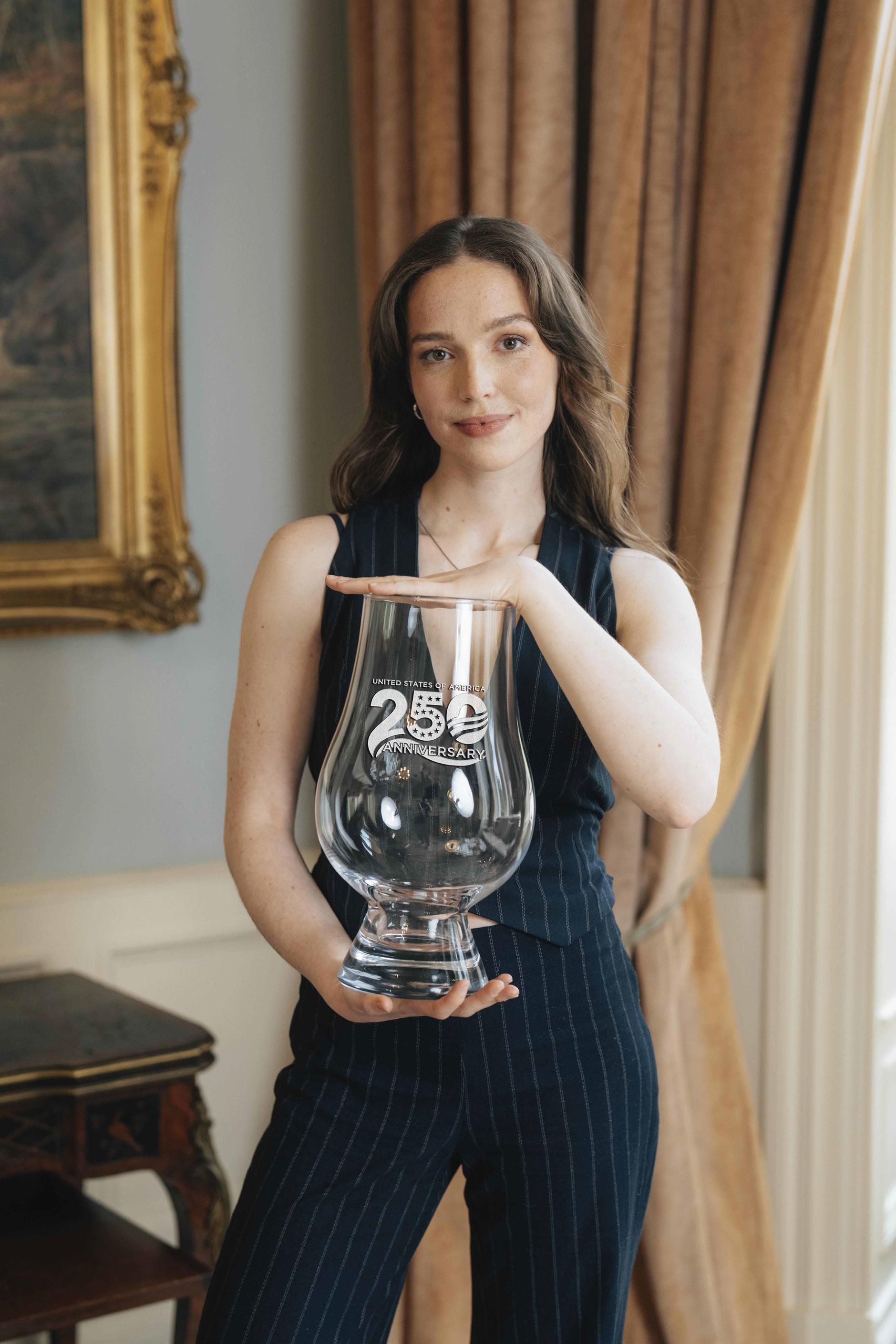
250yearsofAmericanspirit. One legendaryglass.
If you have spent some time in the craft beverage world over the last few years, you have likely felt a bit of a shift — a shift toward “California Sober” and a big move toward THC-infused beverages. THC beverages are everywhere (well, at least where they are legal). They are in tasting rooms, store shelves, distributor stock, and investor portfolios across the country. For many established breweries and distilleries, these products feel like a natural extension of existing operations: familiar equipment, familiar packaging, and a consumer base already comfortable with regulated intoxicants.
From an insurance standpoint, however, THC beverages are anything but familiar. A common and costly assumption that I have encountered nationwide is this: “If it’s legal in my state, my insurance will respond.” This assumption has resulted in denied claims, canceled policies, and unexpected nonrenewals for otherwise sophisticated manufacturers. The uncomfortable truth is that legality and insurability are not the
same thing. In the THC beverage space, they often move in opposite directions.
Let us delve into understanding where insurance coverage quietly disappears for THC and Delta-9 products and how intentional policy design can restore it.
THC beverages are currently legal, permitted, or tolerated in various forms across states including Arizona, Colorado, Illinois, Iowa, Kansas, Kentucky, Michigan, Minnesota, Missouri, Ohio, and Washington. Delta-9 THC beverages, often hemp-derived and marketed under farm bill interpretations, are commonly produced or sold in states such as Pennsylvania, Tennessee, and Utah.
From a compliance standpoint, many producers are doing everything right. They obtain licenses, follow COLA requirements, conduct lab testing, and sell through approved channels. Insurance contracts, however, do not operate on state statutes alone. They operate on underwriting intent, federal frameworks, and, most importantly, policy language.
Insurance carriers do not ask, “Is this legal?” They ask, “Did we agree to insure this?” Those are very different questions.
The Big Misconception: “My Insurance Knows What We’re Doing”
THC beverage producers are often surprised when I ask them one simple question: “Does your insurance carrier knowingly agree to insure your THC beverage production?” Cue crickets chirping sound effect here.
In many cases, THC operations are disclosed casually or indirectly, often described as “nonalcoholic beverages,” “RTDs,” or “adjacent product lines.” If THC exposure is not explicitly contemplated and underwritten, carriers may later argue material misrepresentation, even when the manufacturers acted in good faith.
The result can include claim denial related to THC products, policy rescission, or nonrenewal discovered only at audit or renewal, which could leave a manufacturer scrambling to replace coverage that likely will cost them two to three times more than what they were used to.
General Liability: Where Coverage Quietly Breaks
General liability (GL) policies form the foundation of most beverage insurance programs. They are designed to respond to bodily injury, property damage, and product liability claims. Unfortunately, standard GL forms are often structurally hostile to THC beverages.
The uncomfortable truth is that legality and insurability are not the same thing . In the THC beverage space, they often
move in opposite directions.
The primary issue is the psychoactive drug liability exclusion, either written or implied. Under standard liability forms, bodily injury or property damage arising from psychoactive drug impairment, furnishing psychoactive substances, or statutes regulating those substances are explicitly excluded. If that exclusion remains in place, THC beverage claims are effectively uninsured, regardless of state legality.
THC beverages introduce a claims profile that can differ greatly from alcohol. Delayed onset of impairment, individual metabolic variability, dosage confusion, and interactions with alcohol or medications all create various exposures. Examples of some claims after consumption that may come into play are claims involving motor vehicle accidents, medical complications, or alleged labeling failures, something that GL would exclude under the products liability portion if the psychoactive drug exclusion remains in place. No bueno.
Manufacturers may assume their product liability coverage will protect them, only to later discover these exclusions that are tied directly to psychoactive substances offer them no protection. No muy bueno!

Even when THC beverage operations are disclosed, property coverage presents a separate, and often overlooked, problem. Almost all property policies exclude coverage for “contraband or property in the course of illegal transportation or trade.” THC is still federally illegal, even though it has recently been reclassified. Therein lies the catch.
The result is a troubling scenario: A fire, water loss, or equipment failure involving THC ingredients or finished product may be denied, not because THC caused the loss, but because the property itself is deemed uninsurable under the policy’s contraband provision. Disclosure alone does not prevent this outcome. This is one of the primary reasons THC beverage producers are often pushed into surplus line markets for property coverage, even when liability coverage can be addressed on an admitted basis.
Liquor liability policies are designed to address alcohol-related impairment under dram shop statutes. THC beverages do not neatly fall under those statutes, and many liquor liability policies explicitly exclude psychoactive drug liability altogether. Some forms further aggregate all injuries arising from psychoactive substances into a single “common cause,” effectively broadening the exclusion.
In practical terms, liquor liability through an admitted carrier rarely provides meaningful protection for THC beverage claims.
Beverage manufacturers often ask whether THC beverage liability is ever truly insurable. The answer is yes, but only when coverage is engineered intentionally.
Most business liability policies exclude psychoactive drug liability by default, either written or implied (yeah, that phraseology again, I know, I have been in this realm for a long time, sorry). Some carriers, however, will affirmatively delete that exclusion by endorsement. When this occurs, the policy is no longer structurally barred from responding to qualifying THC-related bodily injury and product
liability claims. This removal functions as a coverage giveback. Disclosure alone does not create coverage, and acknowledgment alone does not create coverage. Coverage exists only when the exclusion itself is removed and shown as such on the policy forms.
Delta-9 beverages are sometimes thought of as safer for insurability. In reality, many carriers view Delta-9 exposure as a higher risk due to regulatory uncertainty, evolving enforcement, and labeling disputes. Coverage decisions frequently hinge on precise policy language rather than statutory interpretation.
From an insurance perspective, Delta-9 is not viewed any differently than THC; it is simply another version of psychoactive exposure that must be insured intentionally.
Proper insurance coverage for THC/Delta-9 beverages has to be structured. There is no “off the shelf” option. Well-insured manufacturers have fully disclosed their operations, obtained written carrier acknowledgment of THC activities, documented removal of the psychoactive drug liability exclusion, and coordinated GL, product liability, property, and liquor liability coverage to all work in unison. They also have a full working knowledge regarding admitted versus surplus markets. Keep in mind: This is not about searching for the lowest premium — it is entirely about ensuring the policy responds when something goes wrong.
THC beverages are not a side project from an insurance perspective. They are a fundamentally different risk class that must be insured intentionally. Manufacturers who assume coverage exists

simply because the law allows them to operate are taking a huge gamble with their balance sheet and their brand. These insurance blind spots can be addressed by using a carrier that is familiar with this type of coverage. You know what “they” say... It is best to make sure your coverage is correct before a loss happens. “They” also say you only have coverage when policy language is explicit in saying you do.
Legal does not mean covered
Until next time, dearest reader …
Stay Vigilant, Aaron Linden
a.k.a. Insurance Man
Aaron Linden is a professional purveyor of insurance policy products proposed to protect people proactively against perceived perilous perils and pitfalls, primarily. He has been in the insurance industry for 23 years, has specialized in craft spirits insurance for the last 15 years, and literally wrote the book (ok, the insurance forms) on spirits coverage for many insurance carriers.




WRITTEN BY DAVID SCHUEMANN
AI has quickly transformed from science fiction movies to technology that has been integrated into our daily lives.
in the short span of time that AI has been readily accessible, it has provided useful applications in nearly every industry. That includes branding and marketing for alcohol beverage brands. However, AI has limitations and poses concerns that can only be solved by a human brain. Being aware of these shortfalls is key to learning how to use AI effectively and ethically. We’ll take a look at ways AI can help with branding and marketing before examining some of the technology's pitfalls.
> ADMINISTRATIVE TASKS — One of the huge benefits of AI is utilizing programs that allow for automation of repetitive administrative tasks, freeing up more time in the day for creative and strategic thinking.
> IMAGE EDITING — It takes years to learn how to use the vast array of tools in image editing software such as Photoshop and even more time and skill to
AI has limitations and poses concerns that can only be solved by a human brain.
Being aware of these shortfalls is key to learning how to use AI effectively and ethically.

create realistic, high-quality images. However, the generative AI features that are now built into these programs create shortcuts that reduce the time needed to perfect an edited image.
> CREATIVE DIRECTION — AI’s ability to generate images based on input ideas is helpful in establishing a creative direction to guide designers in developing branding and packaging. It also can be used to quickly put together different concepts for non-marketing people in the organization so they can understand a vision before a designer spends time (and budget) on final concept development. See Downfalls
> COPYWRITING — AI tools can be useful for copywriting. You can utilize it to develop outlines, and once you have written an original piece of content, it can help smooth over verbiage. More sophisticated agents can learn your writing style through catalogues of your previous work. Once they have established your style, you can utilize these agents to develop new copy from scratch with a minimal investment in time and effort.
> INTELLECTUAL PROPERTY LAWS — The biggest downfall of AI is that it often does not create completely original content but rather scans the internet for pieces of information that are relevant to your prompt, combines them, and delivers a result that is an amalgamation of the data. If you are using AI to develop branding or packaging design, this means you have no idea if you are infringing on someone else’s copyright, making yourself vulnerable to lawsuits.
> NON-PRODUCTIVE OUTPUT — If you do use AI to develop branding or packaging design, the output is often just a flat image and not a format that can be easily reproduced or printed, and it will need to be recreated in a print-ready format by a designer and/or printer. Additionally, if you are using AI for package design, the artwork may not be compliant with TTB regulations or other mandates.
— Your AI output is limited by the prompts you enter and your knowledge. AI lacks the strategic thinking capabilities and real-life experiences of human branding experts. AI does not understand what creates pull with consumers or their buying patterns. This is something that only years of first-hand experience in the alcohol industry can provide. If you are utilizing AI to develop branding and packaging, you will create something that matches the instructions you gave, but at no point does this output run through any sort of filter that confirms that the design will connect with your customer and generate sales. Developing a brand based on a purely decorative design with no strategic backbone is a risk that most brands cannot afford to take.
Although AI is increasingly being used to seek information over traditional search engines like Google, there is one huge drawback: AI is not always correct. AI is trained to understand patterns, but it doesn’t have the real life experience of a human brain, meaning they sometimes misinterpret data and come to incorrect conclusions or fabricate missing information entirely. Repetition and patterns are the norm here vs. uniqueness of thought.
AI is trained to understand patterns, but it doesn’t have the real life experience of a human brain, meaning they sometimes misinterpret data and come to incorrect conclusions or fabricate missing information entirely.
AI’s capabilities will continue to grow and be utilized across many more media. Treating AI like a tool that can scope ideas will help streamline your workflow so you have more time to spend on creativity and strategy while avoiding the downfalls of using AI output as a final solution.
or call (707) 265-1891 for more info.

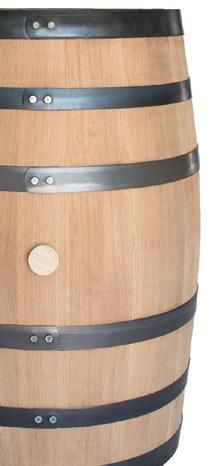
At Independent Stave Company, we’ve always believed that the best distillers deserve the best partners.
Since 1912, we’ve proudly partnered with the world’s finest distillers united by shared values of quality, consistency, and creativity. We’re committed to what matters most to you, and building strong partnerships is one of our greatest strengths.
Written by CAITLIN BARTLEMAY
Illustrations by PIERRE THOMAS LE CLERC
Have you ever lifted a dram to your nose and suddenly found yourself in the midst of a reverie? Of course you have. From a biological perspective, our sense of smell is processed in the same place as our memories, so there is no surprise that they are strongly linked. When developing your sensory skills to communicate something as subjective as aroma, what we all start with is a glass that smells like “whiskey” and a blank page in front of us — terrifying. Instead, let’s dive into the neurobiology of scent and turn those visceral memories into powerful tools to guide you on your sensory journey.
First, let’s talk about the neuroanatomy of odor-evoked memories. The information gleaned from the air through both our nose and mouth is processed through a subset of brain structures called “the limbic system.” The aroma or data winds through a pathway between three specific bricks — amygdala, hippocampus, and thalamus — that also process things like memory, emotional responses, navigation, and consciousness. These processes are so closely linked that we find the human response to odor evokes a more emotional response than other senses and are more likely to kick off autobiographical memory that is centered on a specific time and place.
As an interesting aside, another effect of processing our olfactory input through these various memory/emotional channels is that it can insulate them from access degradation. Put another way, the more times a memory is accessed, the more its detail and accuracy to the initial event degrades, but an olfactory memory is resistant to this degradation.1
1 Herz, Rachel S.; July, 2016; The Role of Odor-Evoked Memory in Psychological and Physiological Health; National Library of Medicine; PMC5039451

When developing your sensory skills to communicate something as subjective as aroma, what we all start with is a glass that smells like “whiskey” and a blank page in front of us — terrifying.
Building your sensory vocabulary is a lifelong journey, but it doesn’t have to be a struggle.
With reference points to the depth and tenacity of these autobiographical scent-provoked memories, let’s consider what they mean to the individual and their ability to communicate that sensory data. When it comes to interpreting information, we are each built entirely out of the sum of our sensory experiences: what we have seen, heard, smelled, touched or eaten. Some of these things are shared across growing rings of societal and cultural relationships, and others are deeply personal — the way buttered toast hits when you’re feeling poorly, a street market filled to the brim with local produce and snacks, or the smell of a salt breeze just off the ocean. It is these large-scale, unique experiences that our collective lexicon for describing flavor and aroma come from, and we can use them to translate new experiences through.
For those of you who are new, an aroma wheel is a tool used to help describe what we smell. It is a pie graph, filled to the flaky edges with common descriptors used within their realm of influence. For example, a whisky aroma wheel may have slices set aside for grain, fruit, floral, woody, and earthy sensory notes and within them their corresponding descriptors. At first glance they can seem daunting and hectic, and that’s before you find out that there is a preponderance of them available with the click of a mouse. As we delve into our autobiographical sense memories, we can use these tools to guide our process and create, through shared language, a way to describe our experience.
A scent memory of mine that often gets recalled comes from an old lumber mill in the small town from my youth. This particular mill was located in the high desert of Oregon, not far from a canal along a main highway. The proprietor, Jimmy, ran the mill alone and served his small community with joy in his heart. He always had a fresh dip of tobacco in his lip, clean but worn overalls on, and well-oiled work boots. Unless you lived in this part of Oregon, using “Jimmy’s sawmill” as an aroma descriptor may not be useful, but tucked into that memory are the words from an aroma wheel ready to be put into service. Taking a moment to dissect this memory, one might see how it could come up when nosing a good whiskey: wood-forward, specifically cedar and white oak, hints of leather and tobacco, pleasing fusel oil characteristics, with a touch of petrichor and roses (Jimmy’s wife liked roses, they were planted out front). By using our memories to break apart the scent, we can arrive at a whole host of ways to share a glass, or a small town sawmill, with our friends.
Building your sensory vocabulary is a lifelong journey, but it doesn’t have to be a struggle. Go on adventures, smell weird stuff, and make lasting memories with great people while drinking good spirits. Trust yourself when your brain tells you something
like “this smells like the atrium of a mid-tier chain hotel” or “this is exactly like that seaside candy shop I visited when I was small.” By digging into those memories and asking yourself questions about where the aromas from that memory came from, you can use words to take us along for the ride.
Caitlin Bartlemay is the master distiller at Clear Creek Distillery. Armed with 14 years of industry experience and a food science degree from Oregon State, she is devoted to educating the world on why the story and quality of the spirits in your glass are worth celebrating.

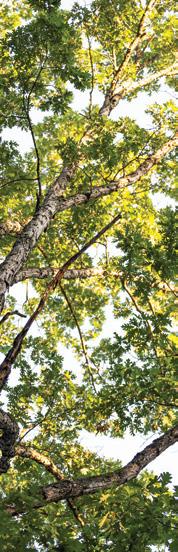
As a vertically integrated company using 100% of the log, we ensure traceability from forest to barrel. Our American and French oak barrels are crafted from sustainably managed forests through certified programs including SFI and PEFC. our commitment
At Independent Stave Company, sustainability is not just a priority, it’s a responsibility we proudly carry.
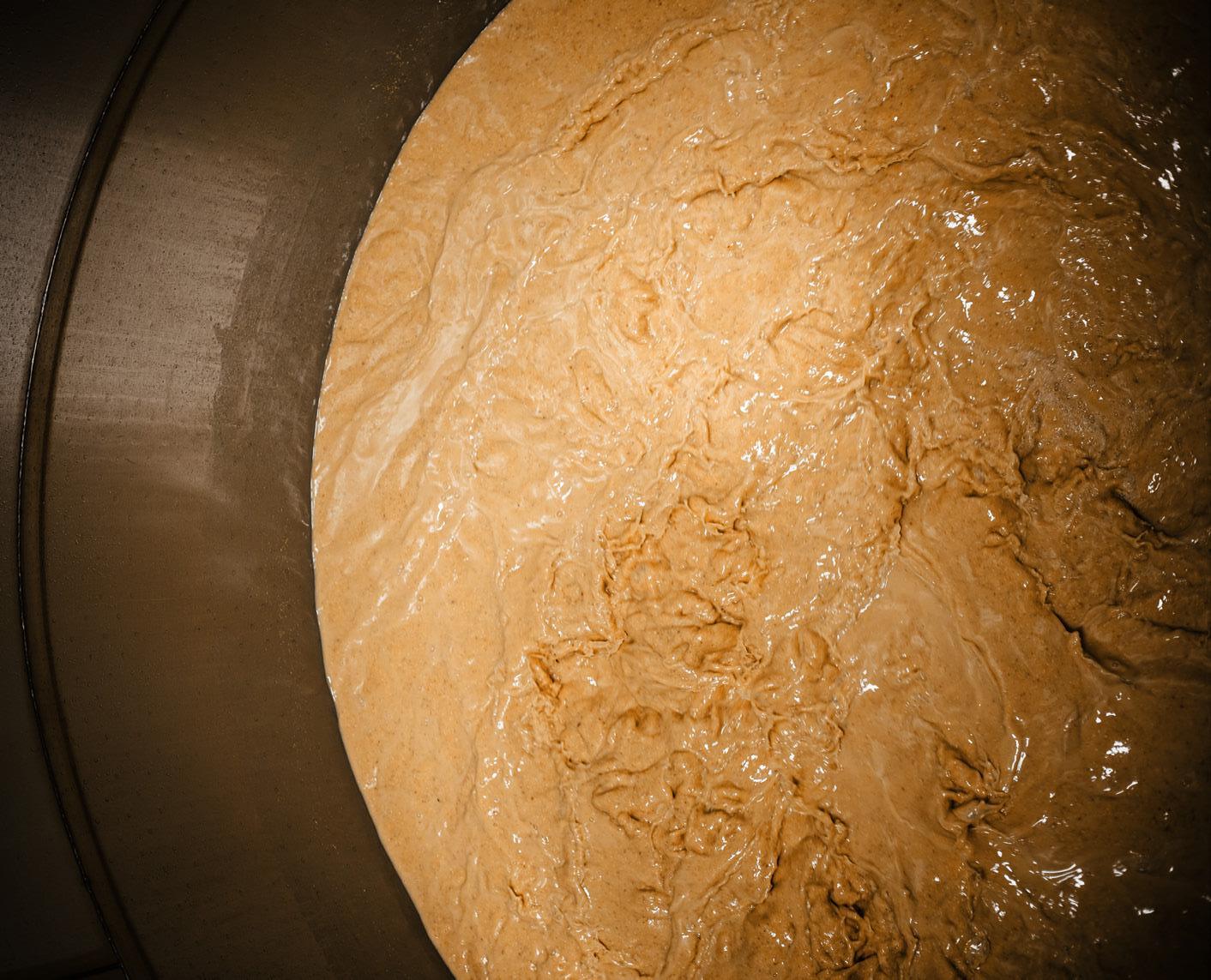
1 The best kind of correct…for some anyway.
2 Look it up. This article isn’t a dictionary entry.
3 I am sure you could argue semantics here, and there are other definitions that I found that are a little more tightly worded, but since most people use Webster’s, I am sticking with them.
the grain out of their wort and then boil said liquid along with hops and other fermentable additives to produce a bitter, microbiologically sterile environment that is ideal for the kind of slow, cool ferment that brewers prefer.
Distillers on the other hand have options. They can decide not to
filter out the grain or to filter out only some of it (cloudy wort). They can also decide whether they want to boil their wort or leave it microbiologically active, something that many brewers would frown upon.
Most importantly, though, is that distillers definitely don’t add hops or other fermentable additives before fermentation. This is the key difference that truly separates whiskey and beer production. You see, you wouldn’t use a brewer’s wort to produce a whiskey4 because of the hops, and you couldn’t use a whiskey wort to produce a beer because without hops it wouldn’t taste right (or legally be classified as beer). So why are we calling them the same thing? The whole thing just leaves a bad taste in my mouth.
Ok, so we’ve established that the definition of the word wort doesn’t really work anymore and we’ve also shown that different parts of the alcohol industry seem to have contrary ideas of what wort is. But do we need a new, distiller specific, word for wort?
My answer is “YES,” for two very important reasons.
First, distilling is all about specificity. We have specific names for just about everything in our industry. For example: The first cuts of a distillation are called the heads, the long metal pipe used to taste whiskey from a barrel is called a valinch, and the partial condenser at the top of a still is called a dephlegmator. I could go on, but I think you see my point.
The fact that there isn’t a specific word for distillers’ wort is a troubling oversight on the part of our distilling forebearers. It’s like they just got lazy and forgot.5 It would make more sense if distillers used some obscure Scots Gaelic word, like milis, which means sweet, to refer to wort. Milis is both long enough to be used as a Wordle and thematically appropriate, especially for those producing single malt. All in all, it’s a much better option than going Dutch on a word with the rest of the alcohol industry.
The second and more important reason we should consider adopting a new word for distillers’ wort is because it might actually help us in the future.
As brewers begin to diversify into distilling, and as the two industries continue to trade skilled individuals, there is a heightened need for clear communication and effective cross-training. If you are in a facility that produces both beer and whiskey, simply telling someone that you need a pump for wort doesn’t properly communicate what you are doing and your end goal. This can lead to problems, some of which can be considerable. Having a distinct word (or words) that communicates the different types of distillers’ worts from brewers’ wort will help improve communication and cross-industry collaboration, something that I think we can all agree is important for the industry right now.
Ok, it’s now time to address the elephant in the room
4 I know there are some out there that make “hopped” whiskies but that’s a different rant.
5 Or more likely, drunk.
6 I just came up with milis while writing this. Rather fitting, I think. Maybe if I keep saying it, it’ll eventually catch on.
— the one that has undoubtedly already caused a number of the more passionate distillers reading this article to throw down their magazines and raise their fists in exasperation. I am of course referring to whiskey distillers that choose to forgo a lautering step and ferment “grain-on.”
Obviously, these distillers have no real need for a new word to describe wort because they rarely even bother to use the word wort. Instead, they tend to just call everything mash, because, to quote Kevin from The Office, “Why waste time say lot word when few word do trick?” My response to this kind of logic, aside from the above comments, is, “I guess man, but nobody is going to want to sit next to you at a distillers conference, and you know why.”
In the end, is having a specific word for distillers’ wort, like milis,6 going to massively improve the industry? I doubt it. But this is my rant and as they say, we should all try to leave the world a little better than we found it. Therefore, I implore you, next time you use the word wort, or hear a distiller use it, ask yourself what does it really mean?
Reade A. Huddleston, MBA & MSc. in Brewing and Distilling, is the Director of Distillation and Spirits for Monster Brewing Company and an industry consultant based in Tampa, Florida. He is fascinated with all things drinkable and is always searching for strange and forgotten aspects of beverage production. If you would like to contact him about this, or anything else, please email him at ReadeHuddleston@gmail.com.
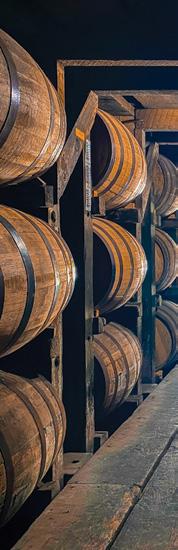
four U.S. modern cooperages and a company
To say that 2025 was a challenging year in the alcohol business is, for most of us, a massive understatement. At the same time, on a macro level the sky is not falling, despite what the mainstream media would like to convey. Industry veterans are not psychics, but those with a tenured long-term view of the industry know that on a worldwide level this is a much-overdue correction. The alcohol industry has often been one of boom and bust, especially in the whiskey segment where forecasts on inventory must be placed four, six, or even ten years in advance. The COVID super cycle and private equity players exacerbated the cycle this time. But make no mistake: We have done this before, and we will most likely do this again.
Even in the darkest days of 2025, some brands were still growing, and new players entered the industry. Heck, RTDs are expanding like crazy, partly because they meet the convenience and experimentation trends that consumers are asking for. But an already competitive industry is even more competitive in the down times, and each and every brand must fight for its right to exist. Brands must prove to the unforgiving capitalist forces why they should have the right to that shelf space, to that pull-through, to that consumer dollar. Behind us are the days of massive exits from shoestring local brands. The big players have not seen the ROI they need from their mergers and acquisitions and are hesitant to continue to complicate their operations for these kinds of returns. What most readers of this publication need to remember is
that we are first and foremost small businesses, where cash flow is king and the best way to compete with someone ten thousand times your size is to go after the parts of the market they cannot or are just not interested in.
So I ask, what makes you unique? What right do you have to earn your spot on the shelf? Why should a local liquor store carry your products? How about a local bar? They have thousands of options. Why should they pick yours? Remember, entrepreneurship is a full-contact sport. I'm not trying to be harsh, but you’re asking another small business or a consumer for their hard-earned dollars. You need to be super clear on what advantage you bring to the party or consumers will vote with their dollars. Many of craft distilling’s founders, myself included, started with what they wanted to make and then tried to find a market for it. But I learned along the way that finding what the market naturally wants and providing it for a fee is a much better business. Not as fun, but more lucrative. I also learned that if you try to do too many things at once you often lose them all.
My advice? Focus, focus, focus. And what to focus on? As unsexy as it sounds, that one thing needs to be positive cash flow. Positive cash flow is all that matters in a small business. It's your source of strength and the foundation you build your house on, not how many barrels you have in your warehouse, not how many awards you have won, and not how many states you sell in.
Each and every brand must fight for its right to exist.
“If the wind will not serve, take to the oars.”
Ask yourself: Can you sell a case and make the next one for less than what you are charging for it? If not, you're subsidizing every sale.
Ask yourself: Are you paying yourself a fair salary for your work? Or are you subsidizing every sale with your labor?
Ask yourself: Can you take two weeks away from the business and have operations continue on like normal, or does your team rely on you for everything? Do you have a company or do you have an independent job?
These questions and many more are normal questions that every entrepreneur has to wrestle with. Don’t be dismayed if you don’t know how to answer them or if you're feeling overwhelmed. Again, very common, but it is time to ask for help. You don’t have to do it all alone. But you alone have to lead your brand out of this darkness. For too long the craft spirits model has been to raise lots of money, deficit-fund sales across too many states, and shoot for a big exit to a big brand. Ten years ago, that made sense. For the next few years, not so much. And if you can't raise that next fund or hit the next growth target, your brand will be by the wayside all too fast. In fact, it's fine to stay small, stay local, and turn a profit. Have a little lifestyle business and enjoy your life.
Here are your options for meeting the moment:
1. Get your month-to-month cashflow positive.
2. If you own the ground under your feet, consider separating that into a real estate LLC or sell and lease back your building.
3. If you are not cashflow positive and your warehouse is overfilled beyond what your sales support, stop making whiskey and stop the bleeding. Not forever but until you can right the ship.
4. Focus on return on investment. Evaluate each business segment, each product, and each employee, and focus on what makes you money. Too many of us are spread too thin, doing too many things, and not excelling at enough of them.
5. Find ways to grow that are unique to you. What is something you can do that no one else can do as well as you? And does the market want that?
6. Figure out your exit strategy, be it selling to employees, selling to a local entrepreneur who will carry on, or selling it to a family member. Remember, all of these groups are going to want to see positive cash flow.
7. Ask for help. Don’t drown alone. Ask a friend, hire a consultant, or bring your team in to help. It’s time to make a choice because standing still is guaranteed to kill your business.
There are many paths forward out of the darkness. Sometimes it means giving up the ghost and doing something else with your life. Regardless of your situation, it’s a new year, so make a plan, build a team, and execute that vision. The wheels of time aren’t stopping, and every day you operate without a clear path to victory is just another day of wallowing in defeat.
I leave you with a Latin proverb that I now carry on a necklace around my neck: Destitutus ventis, remos adhibe — “If the wind will not serve, take to the oars.” I hope it inspires some of you the way it inspires me. We can't control the forces of nature that are bigger than us, but we can use our backs to get where we need to go regardless of what the wind and the waves of life toss at us!
Jason Barrett is a master distiller and CEO of CentrisUSA Consulting. He founded Black Button Distilling, a six-time Inc. 5000 award winner. Learn more at centrisusa.com.
our commitment
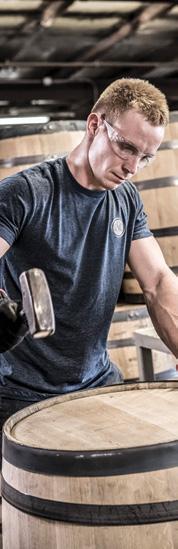
At Independent Stave Company, quality isn’t a checkpoint it’s a mindset.
From forest to barrel, we invest in craftsmanship at every stage, combining the expertise of our cooperage teams with industry leading quality systems, including ISO 9001, ISO 22000, and ISO 14001.
WRITTEN BY SEAN O'LEARY
With the book closed on 2025, we turn our gaze towards 2026. Although some major events occurred in 2025, such as legalizing California DTC shipping for craft distillers, 2026 is shaping up as a year in which the alcohol industry could radically change.
Prior to 2025, few people had heard of Patrick Briones or Jessica Goebel. In 2026 they may become a bit more well-known in the liquor industry. Patrik Briones, a wine buyer for Albertson’s, was charged in late September with commercial bribery and conspiracy to defraud the United States. The complaint alleged he received lavish gifts in exchange for favorable shelf space for wine wholesalers and suppliers.
On the other side rests Jessica Goebel, whom a federal complaint alleges used her third-party marketing company to funnel bribes from major wine producers and wholesalers to retail clients.
But the intrigue of this story rests not with the alleged names mentioned above, but with the broader questions it raises about oversight and compliance within the industry. What remains to be seen is what reforms, if any, emerge in 2026.

The 2018 Farm Bill loophole allowed hemp-derived products to escape strict regulation and to operate essentially in an unregulated environment. Escaping the common restraints imposed on the alcohol industry, these beverages were able to be shipped across the country direct-to-consumer (DTC) without restrictions on quantity limits and the state bans that alcohol producers and retailers often face. Furthermore, there were few restrictions on where the drinks could be sold and how they got to market.
All of that changed this fall when Congress passed a bill set to make the beverage’s current regulatory status unlawful as of Nov. 12, 2026. Essentially, the bill allows Congress and the industry most of 2026 to decide how to come to a compromise on these issues. Therefore, 2026 will determine the framework for selling hemp-derived beverages going forward.
Wine & Spirits Wholesalers of America appears as if it would like to manage the industry in the same way as the alcohol industry, where the three-tier system is mandated. States like Tennessee passed a law mandating the three-tier system for the intoxicating hemp beverage industry. As hemp is a competitor to alcohol, 2026 will go a long way in determining how the market will look for the newest kid on the block.
The liquor industry rarely changes quickly, but 2026 may prove to be an exception. Whether through court rulings or congressional action, the status quo is under pressure. For industry stakeholders, the message is clear: pay attention, stay engaged, and prepare for change.
Sean O’Leary, the Irish Liquor Lawyer and the founder and President of O’Leary Law and Policy Group, LLC, is a national thought leader in liquor legal matters. He has been cited over 20 times in leading publications including Wine Searcher, Forbes, Meininger, and Decanter and has become a regular speaker at national liquor industry conferences.
Mr. O’Leary attended the University of North Carolina at Chapel Hill (where he did not play on the basketball team). He received his law degree from Chicago-Kent College of Law. He lives in the Chicago suburbs with his beautiful wife, Crystal, and they are blessed to have an amazing baby boy named Brendan.
Although Granholm v. Heald should have settled this issue 20 years ago, there are still state laws that discriminate against out-of-state suppliers. Recently a federal district court held that a Maryland law that only allowed in-state breweries to ship to Maryland residents was ruled unconstitutional.
New York still maintains discriminatory laws against out-of-state distillers, and many states ban out-of-state suppliers from selling direct-to-retailer. These lawsuits may multiply in 2026.

We design and produce bespoke barrels, pushing the boundaries of tradition with our extensive oak expertise. Our R&D and sensory teams collaborate with distillers, offering tailored support and technical insights. In-house engineers bring these innovations to life, delivering custom solutions. our commitment


Inside the standards, science, and folklore of an unlikely spirit

eer blood wine sounds like a naughty rumor. The phrase itself — more folk tale than drinks list — summons images of taboos and totems. Yet in East Asia, ‘鹿血酒’ (lù xuè jiǔ) is not merely whispered about; it is codified, standardized, sometimes patented, and occasionally recalled. What looks like a myth at thirty paces resolves up close into a modern product that sits at the seam where pharmacopoeia meets marketing.
The old Chinese medical encyclopedias already knew the trick: mix animal with alcohol and you get a tonic, a solvent, and a story. Li Shizhen’s sixteenth-century Bencao Gangmu — the Compendium of Materia Medica — includes a brief, matter-of-fact aside: draw blood from the deer at the base of the antlers; “mix with wine for drinking is better.” It is not breathless, not mystical, just an instruction lodged among hundreds of others, insulating a practice with the authority of a reference.
If that reads like lore, the contemporary record is disarmingly prosaic. Provincial standards in China now spell out how “ginseng–deer-blood wine” is made: a grain spirit as base; specified amounts of cultivated ginseng and deer blood; soaking, filtration, blending, bottling. It is the language of spec sheets, not of camp-fire stories. You can even find a local standard code — the sort of string of letters and numbers that makes a tradition legible to inspectors: Q/JLTL 0004 S


A generation of patents sits atop that baseline, describing formulations that blend deer blood, antler, and herbs into a stable spirit and, crucially, how to judge whether the bottle stays clear during aging. One patent makes “clarity” the key quality metric, scores turbidity over a four-year storage test, and claims superiority over rival products in a table of numbers that would look at home in a lab notebook. Another walks you through the recipe — deer blood plus rice wine, then dates and goji berries steeped for weeks — as if the main problem were not courage but filtration and time. Even at the provincial level, you can see technocrats trying to tame the category: A Sichuan document specifies how “velvet antler blood” may be combined with twice-distilled sorghum spirit, under hygiene rules keyed to national food safety codes. The tone is antiseptic. The subject is not.
Deer blood wine rides a larger supply chain of farmed sika deer in the northeast. Jilin’s sika deer products — not only antler, but also deer blood as a raw material — carry geographical-indication protection, an administrative stamp that tells you this is an industry with lobbyists, standards committees, and a future at trade fairs. The codes are dry — DB22/T 1143-2009, revised 2020 — anchoring the practice in a place and a bureaucracy. The GI framework doesn’t consecrate the wine itself so much as the inputs; still, it’s hard to miss the way a tonic once trafficked in whispers now travels under the bright lights of public standards.
If the standard-setters offer a sober face, the market provides the swagger. Labels promise stamina, “male vitality,” replenished essence — the abstract nouns of modern wellness loosely translated from traditional medical theory. And when the promises fail to rouse, some producers have reached for chemistry. In 2015, Chinese authorities named and shamed 51 companies whose “health wines” and compound spirits illegally contained prescription erectile dysfunction drugs masquerading as herbal potency. The roll-call spanned provinces and animal ingredients, deer products among them, and the instructions were terse: stop production, seal stock, and recall everything. Beneath the lurid headlines was a simple story about demand and shortcuts—ancient tonics sold into modern anxieties, with enforcement catching up bottle by bottle.
The cultural logic behind deer blood wine isn’t hard to grasp. In the grammar of Chinese materia medica, deer parts sit squarely in the family of “warming” substances associated with vigor and yang, while alcohol is both solvent and vehicle — an amplifier. That older world-view persists not just in nostalgic copywriting but in the blunt reality that the practice is old. The Bencao Gangmu preserves a thread of anecdote: A hunter, lost and depleted, drinks fresh deer blood and recovers his strength; experts dispute the substitution of blood for antler; someone adds the practical note that taking it in wine is “even better.” Read today, it is less a prescription than a fossil of thinking about how bodies and animals exchange properties, how heat corrects cold, how a creature’s force can be borrowed, sip by scarlet sip.
What modernity adds is process and risk management, or at least risk discussion. Much of what’s sold as deer blood wine today is not raw blood but an ex tract or a small percentage of deer blood stabilized in high-proof spirit, sometimes preceded by ethanol extraction, sometimes spray-dried and re-dissolved, all in the name of shelf stability and palatability. Those patents and standards exist for a reason: blood is protein, protein precipitates, precipitate clouds the bottle. The chemistry may be tedious, but it is hygienic tedium, and it separates a regulated product from a rite performed over a steaming bowl.
Then there’s the part of the conversation that doesn’t wear a label well. Drinking raw blood — of any mammal — carries zoonotic risk. Deer are not special in this respect, but they are relevant. A 2019 case report describes toxoplasmosis in a 10-year-old who had been encouraged to ingest raw deer blood and meat. Other outbreaks and case clusters have traced acute toxoplasmosis to undercooked venison at hunting retreats in North America, and hepatitis E infections have been linked to raw or rare deer meat in Japan and elsewhere. None of this says a sealed, standardized deer blood wine equals undercooked venison, but it sketches the perimeter of caution around the romantic idea that “fresh is best.” The microbe does not care about folklore.
bottle surrounded by promises, some borrowed from classi cal theory, some smuggled in by chemistry. Above all, expect a drink that tells you more about the people who pour it than about deer. Somewhere between a hunter’s anecdote and a lab’s turbidity score is a thread of continuity that rivals taste itself. That, more than any lurid headline, is the real flavor.
And yet, it would be a mistake to reduce deer blood wine to either danger or flim-flam. There is a reason the category keeps resurfacing. Alcohol is a cultural technology as much as a biochemical one; it carries stories forward. Here, the story is a compact of masculinity, winter, and repair. The bottle promises to refill what work and age have emptied. It borrows the prestige of a classical encyclopedia and the legitimacy of a provincial standard. It becomes a gift, a boast, a private experiment — rarely a dinner wine, almost never a pub drink, but a ritual object that insists it is both medicine and merriment. In Jilin and Sichuan, you can see industry trying to sand down the edges; in enforcement bulletins, you can see what happens when hype outruns law; in clinical papers, you can see nature reminding everyone that bodies are porous.
So where does that leave a curious reader who has heard the phrase and wants to know whether the thing exists? It does, on the page and in the stream of commerce. You can trace it from Li Shizhen’s line about blood and wine to Q -codes and DB -codes and filings that govern how much ginseng goes in a liter and how clear the liquid must remain at month forty-eight. You can also trace it through a parallel literature of caution that has nothing to do with prudery and everything to do with parasites and hepatitis viruses. The paradox of deer blood wine, its pull, lies in that tension between the archaic and the administrative, the intimate and the inspected. It is a minor character in the grand novel of how old remedies become products, how products become brands, and how brands are made legible to the state. If deer blood wine feels like a secret, that is only because you haven’t yet looked for it where secrets go when they grow up: in standards databases, enforcement notices, and footnotes.
If you wanted a tasting note, you would find the public record silent. Patents talk of clarity and stability, not bouquet; standards weigh alcohol by volume, not metaphor. But the genres it belongs to
Harry Haller is a consultant for the food and beverage industry. His main focus is on innovative ways to produce and use alcohol and the development of high-end milk chocolate recipes.
our commitment

For 113 years the Boswell family has led Independent Stave Company with a steadfast commitment to the spirits industry.
As a family-owned business, we value long-term thinking, multi-generational relationships, and the trust we’ve earned from the world’s finest distillers. We’re not just a supplier we’re a partner committed to your success.
Brad Boswell CEO & 4th Generation Cooper
Tracking the growth of Colorado distilling through a professional’s viewpoint
Stephen Julander entered the Colorado distilling scene in 2012, joining the production team at Laws Whiskey House in Denver. Thirteen years later — September 2025, to be specific — Julander took on the role of Senior Operations Manager for Woody Creek Distilling in Basalt. A few things have happened in the state on his way from Point A to Point B.
“It’s wild to see where Colorado came from and what we’ve become,” explained Julander, who also serves as Woody Creek’s Master Distiller. “It’s been kind of a whirlwind.”
Julander’s journey provides a reflection point for Colorado’s growth in the industry. In 2026, Colorado stands out as a key player in the American distilling scene, if not an obvious one among whiskey enthusiasts. At the same time, 2026 is far removed from the initial spark of craft distilling’s boom. However, enough time has passed for origin stories to fade. The next generation of distillers jumping into the industry may view Colorado’s status as something downright normal. Julander’s career arc informs these newcomers that the state’s industry presence is actually somewhat radical.
When Julander recounts his early days at Laws, one thing he noticed is the lack of knowledge people had about whiskey production. It seems almost cartoonish compared to what we know now. “When I began, people didn’t even understand that bourbon could be made outside of Kentucky,” he said.
Granted, consumers could get a pass here since 2012 was right at the cusp when whiskey from nontraditional markets began carving serious pathways to on-premise backbars and off-premise retail shelves. Besides, consumer confusion is nothing compared to the bewilderment expressed by grain farmers who couldn’t wrap their heads around why people like Julander were suddenly inquiring about buying their rye.
“When we started sourcing rye from growers at Laws, some farmers genuinely asked us, ‘Are you sure?’” Julander said. “Back then, they would just grow rye for animal feed or for tilling it as a soil nutrient. They would basically grow it to kill it. They were baffled that anyone would want rye for anything else.”

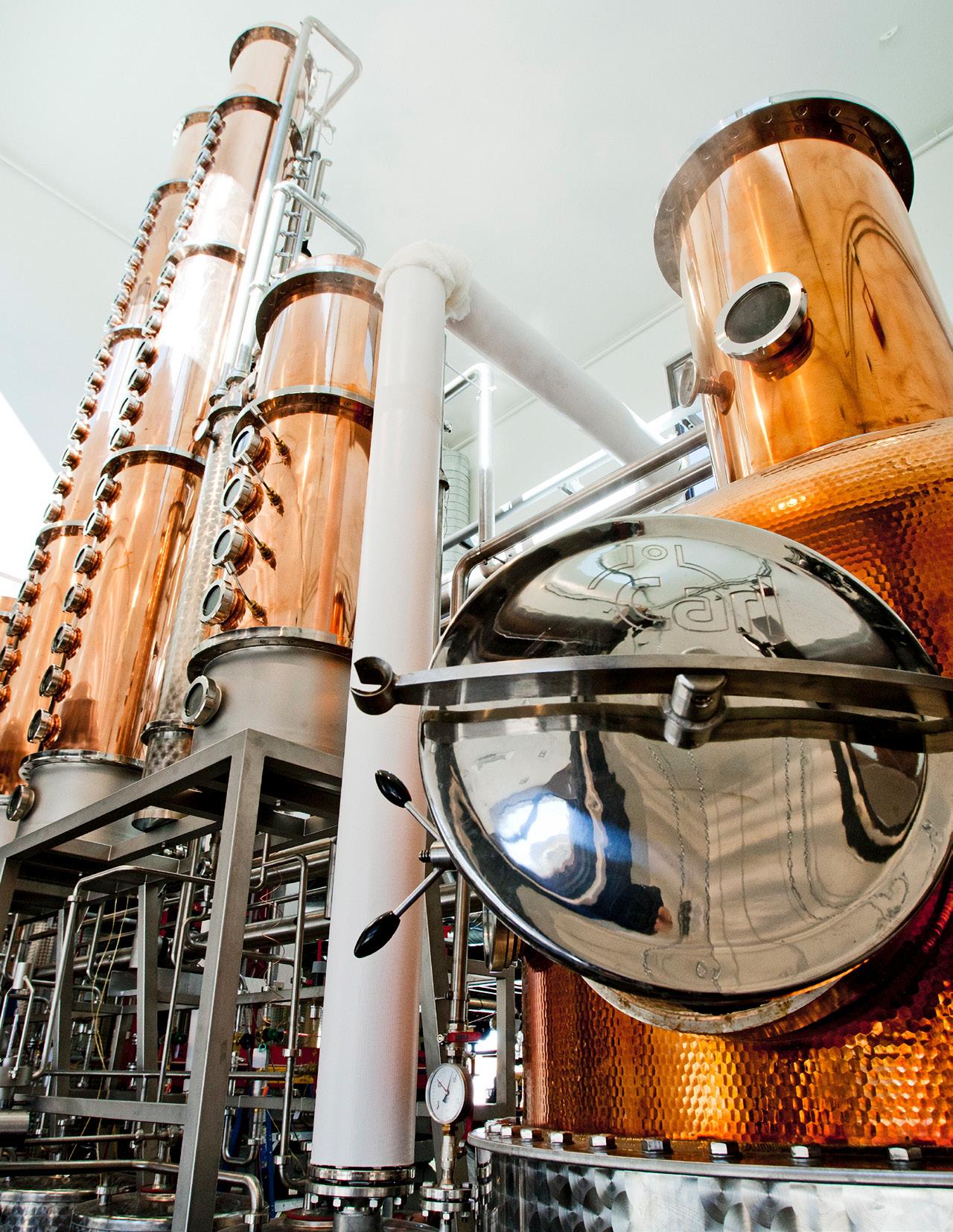
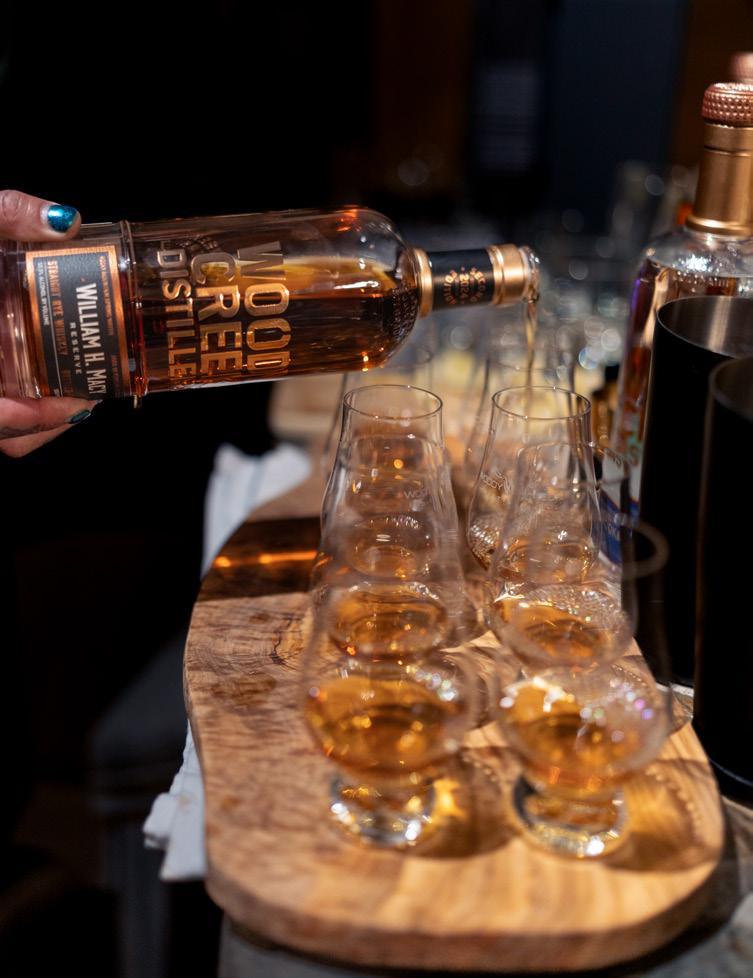
“Because the Colorado distilling scene has become larger, we now have higher sourcing standards and we’re all pulling higher quality grains.”
— STEPHEN JULANDER
Things have changed quite a bit since those early days. Anyone who picks up a bottle of whiskey on the regular knows bourbon can come from anywhere in the country. Colorado’s farming community has also figured things out, which has proven to be a more critical component for the scene’s explosion over the years. Yet perhaps the biggest change may be from the production side itself. Julander notes Colorado’s distilling scene has evolved its own narrative during his career. These changes created a more refined approach to distilling that naturally enhanced the product quality.
“Because the Colorado distilling scene has become larger, we now have higher sourcing standards and we’re all pulling higher quality grains,” Julander stated. “When I started out, some distilleries had grains impacted by weevils. That doesn’t happen anymore.”
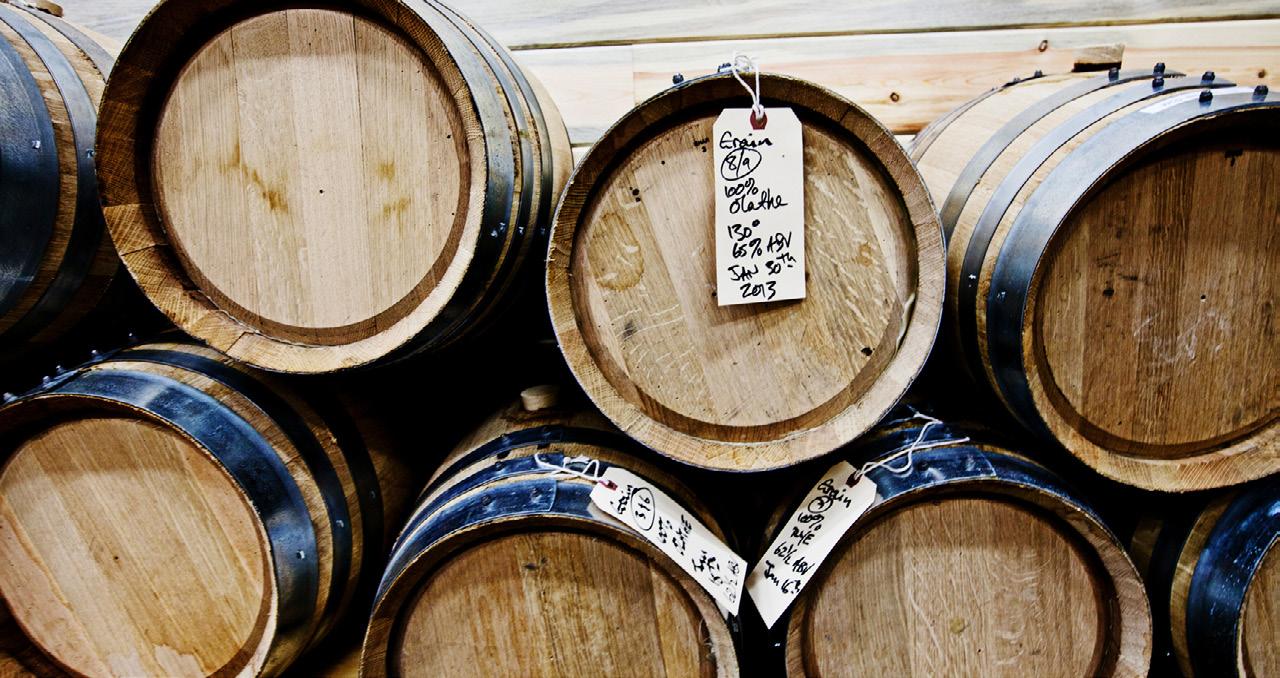
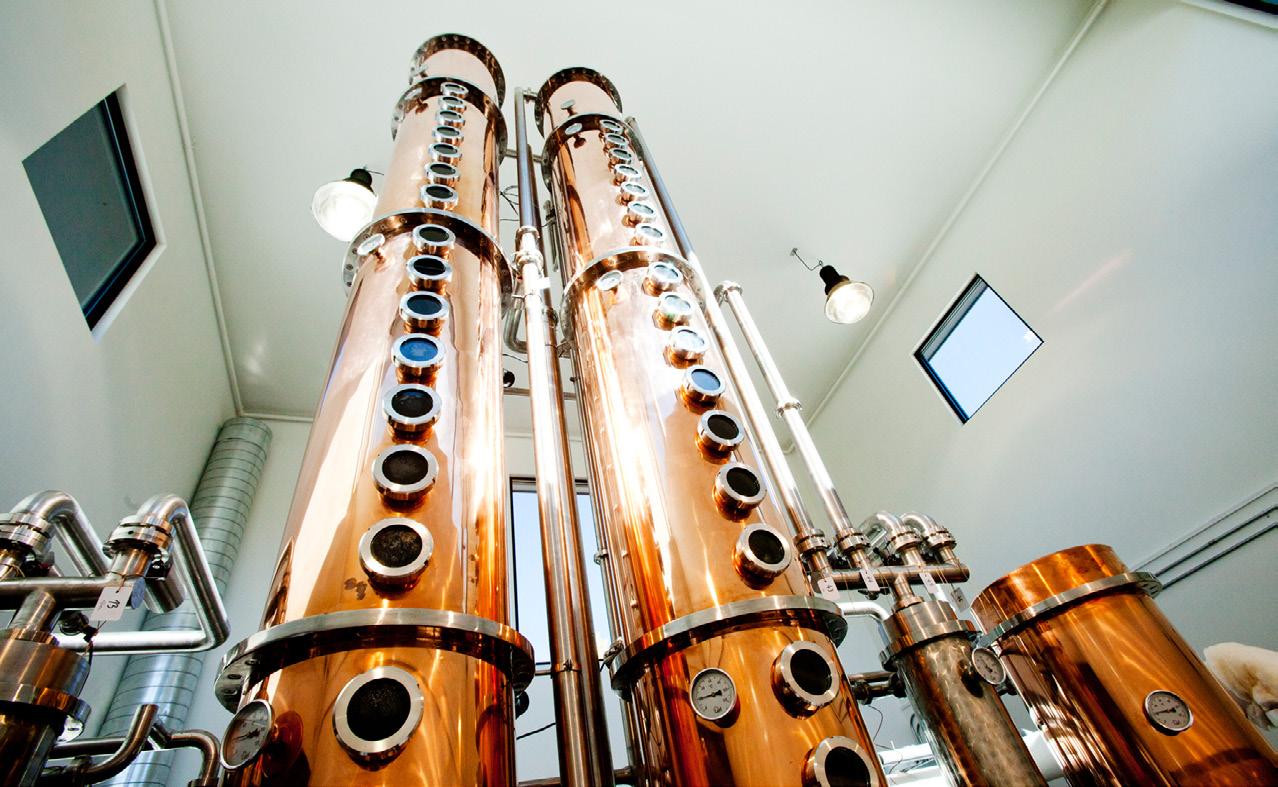
A huge part of this improvement is the distilleries’ general commitment to sourcing state-grown grains. According to Julander, the improvement of supply chain structure over time has made access to local grains more efficient, making it much easier to stay loyal to Colorado suppliers. This access can occasionally be direct; Woody Creek, for instance, makes their potato-based vodka from their own raw materials. This has naturally imbued the state’s distilling scene with a sense of pride in what the state produces, and it’s palpable enough to propel into other conversations about the state’s whiskey production. Knowing this makes it easy to understand why Colorado distillers carry such prominent voices in conversations concerning terroir in whiskey.
There’s no doubt Colorado distilling evolved significantly from Julander’s first role at Laws to his current job at Woody Creek. But what about Julander himself?
There was some wanderlust involved between his first job and current role. He worked at distilleries in Wyoming, California, and New Mexico after his four-year stint with Laws, picking up valuable industry lessons at each stop. This makes his new role at Woody Creek a homecoming of sorts. He always knew he’d eventually come back to Colorado, if only for environments like the one encompassing Woody Creek in the Aspen-adjacent town of Basalt. “Being in a landscape like the one surrounding Woody Creek has always been the goal,” he said. “It makes me have a different mindset for work. It helps keep me level and balanced and prevents me from developing tunnel vision.”
He still possesses the same curious streak that led him into taking a job at Laws back in 2012. This streak keeps him focused on what may be possible in the years to come. While Colorado distilling is in a place that few people could have predicted when he started, he feels there is still room for further growth and evolution. “” he said. “If we ever look away from change and innovation, it will ruin things.”
Having this outlook comes from the ability to compare Colorado distilling’s past and present firsthand, but it also stems from cultivating the perspective that can only come with years of industry experience. This becomes clear when asked if he would have
“Someone told me early in my career that you couldn’t go too far out of the box in distilling. They were wrong.”
— STEPHEN JULANDER
some advice to share with his younger self, at a time where Colorado whiskies were a weird concept and using rye to make them was somehow even weirder.
“Someone told me early in my career that you couldn’t go too far out of the box in distilling. They were wrong,” Julander said. “Instead, I’d tell him there is no ceiling when it comes to distilling, and it’s best to shoot for the moon. I eventually figured that out, and I’ve loved the progress that’s come from figuring it out.”
When comparing 2026 to 2012, it’s pretty clear that the Colorado distilling scene figured things out, too.
Woody Creek Distilling is located in Basalt, Colorado. For more information visit www.woodycreekdistillers.com or call (970) 279-5110.
In the year leading up to their release, the conversation around the new U.S. Dietary Guidelines became increasingly polarized. On one side was the long-standing body of scientific evidence on alcohol and health — evidence that has guided federal recommendations for decades. On the other side was a wave of anti-alcohol activism pushing hard to change the narrative around that science, often through alarming headlines based on ideology and cherry-picked data.
Ultimately, science prevailed. Now that the updated guidelines are out, one thing is clear: The preponderance of evidence continues to show that alcohol can be part of a balanced lifestyle for most adults when enjoyed responsibly. That’s not just reassuring — it’s a reminder of why evidence matters, especially in an environment where activism can sometimes overshadow science.
When the federal government released the new Dietary Guidelines for Americans, the guidance on alcohol didn’t come with any dramatic surprises. With the basic premise of moderation serving as the foundation, the guidelines communicated the message that drinking less is better for overall health than
than advocacy-driven narratives.
NASEM’s findings — including the reaffirmation of what constitutes moderate drinking and the definition of a standard drink — form the scientific backbone of the new guidelines. NASEM defines moderate consumption as up to one drink per day for women and up to two drinks per day for men. It also defines a standard drink as 12 ounces of
Throughout this process, the alcohol industry came together in a way that underscored a shared commitment to scientific integrity. Distillers, vintners, brewers, and other producers — often competitors in the marketplace — aligned around a clear priority: ensuring that the dietary guidelines remained grounded in the preponderance of scientific evidence. This wasn’t about influencing the outcome. It was about ensuring the integrity of the process.
Supporting that effort was the Science Over Bias Coalition — a broad alliance that included not only alcohol producers but also hospitality groups, agricultural partners and other stakeholders. The coalition played a key role in elevating the importance of rigorous,

SHOW THAT ALCOHOL CAN BE PART OF A BALANCED LIFESTYLE FOR MOST ADULTS WHEN ENJOYED RESPONSIBLY.
Unfortunately, not everyone shared that commitment to evidence-based guidance for Americans. The Interagency Coordinating Committee on the Prevention of Underage Drinking (ICCPUD) released a report that quickly became a flashpoint — not because it offered groundbreaking new research, but because it pushed a drastically different take on moderate alcohol consumption that didn’t reflect the broader scientific record, presented without real insight into how they came to their conclusions.
The ICCPUD report relied on a narrow set of studies (mostly published by members of the research team) that overstated risks and over-indexed outcomes that are not related to dietary guidance. It ignored well-established findings and framed moderate alcohol consumption as inherently harmful. Even more concerning, the report appeared to be shaped by anti-alcohol activists who have long pushed for a “no safe level” narrative — a neoprohibitionist position criticized by many scientists for misrepresenting the complex relationship between alcohol and health. The result was a report that painted a distorted picture of alco-
Importantly, these concerns weren’t just raised by the alcohol industry. Numerous health, diet and nutrition experts voiced similar concerns. And a congressional investigation reached many of the same conclusions. The House Oversight Committee examined the ICCPUD study, and their report identified the very issues that had alarmed so many: cherry-picked research inputs, black-box methodologies, unchecked bias and conflicts of interest, and concerted efforts to exclude stakeholders and operate without transparency or accountability. In other words, the Congressional committee validated what many had already observed: The ICCPUD report was not an objective scientific assessment, but a document shaped by evidence-distorting activism rather than credible science.
In the end, evidence won out over alarmism, and the final guidelines reflected that. One of the more refreshing moments during the rollout came from Dr. Mehmet Oz, who highlighted a point often overlooked in discussions about alcohol and health: the role of human connection. At the White House press conference announcing the guidelines, he noted
The release of the 2025-2030 Dietary Guidelines for Americans ultimately underscored what the evidence has shown all along:
• The overall body of science around moderate drinking is consistent and well-established.
• Attempts to distort that science can and should be challenged.
• When evidence leads, good policy follows.
This is also a reminder of our ongoing commitment to responsibility. The distilled spirits industry has long supported the Dietary Guidelines for Americans, and we continue to urge adults who choose to drink to do so responsibly and in moderation. Individuals with questions about alcohol and health should always consult their healthcare providers, who can help them make decisions based on their personal risk factors, family history, genetics and lifestyle.

PUBLIC HEALTH GUIDANCE SHOULD BE MEANINGFUL AND IMPLEMENTABLE; IT SHOULD REFLECT REAL - WORLD BEHAVIOR, NOT THEORETICAL EXTREMES.
At the end of the day, the dietary guidelines reaffirm something many Americans already know: Enjoying a drink can be part of an active and enjoyable lifestyle when done responsibly. And for those of us who work in this industry — who see firsthand how spirits bring people together, spark conversations, and create community — that’s worth raising a glass to … Responsibly, as always.
Dr. Amanda Berger is Senior Vice President of Science and Research at DISCUS, where she leads science- and health-focused initiatives for the organization. She joined DISCUS in 2020 after more than 15 years in public health research across academic, nonprofit, and private-sector roles, including serving as Vice President of Research at Porter Novelli in Washington, DC. Her work has supported health, science, and regulatory initiatives for organizations such as the CDC, FDA, CMS, and SAMHSA. Dr. Berger holds a Ph.D. from the University of Maryland, an M.A. from George Washington University, and a B.S. from Vanderbilt University.
Within the spirits manufacturing industry, production efficiencies are often classified by leaders as high priority initiatives, but all too often we find ourselves discussing efficiency as a vague concept. We refer to plant efficiency by measuring metrics such as yield, throughput, or cost per proof gallon. These metrics are the direct outputs of our process system but are described as efficiencies. This confusion often provides a misleading understanding of plant operations and business sustainability while obscuring true constraints and opportunities for improvement.
Efficiency is not how much of something we produce or the time needed to produce it; metrics like proof gallons per bushel or total cycle time are productivity metrics. Rather, efficiency focuses on how well we produced a product compared to how well we thought we could produce it.
Properly defined in terms of manufacturing, efficiency is the ratio of actual output to theoretical output within real-world constraints
Written by KYLE WORTZ
A process with high throughput but inconsistent results requiring rework is not more efficient. Instead, it is simply moving problems downstream more quickly. Uncontrolled variation from your theoretical process output is inefficiency. In distilled spirits, variability compounds at every step of the process, from raw material receipt through fermentation, distillation, maturation, blending and packaging. As leaders we must utilize efficiency as a management tool focused on building consistent and predictive outputs, not shortterm gains.
One of the most common failure points in efficiency initiatives is measuring whole-process outputs. Distilleries often track multiple data points and aggregate them into metrics like fermentation and distillation yield, and 9-liter cases packaged without breaking the process into meaningful subprocesses.
An effective efficiency program should instead reduce uncontrolled variation, build resilient teams, eliminate common cause errors, and reinforce business sustainability. Efficiency programs do this by analyzing value-added metrics, identifying losses, making process improvements, and investing in teams while protecting product quality. In a clearly mapped and defined brewhouse where operational constraints and limitations are known, actual yield in terms of PG/Bu compared to the theoretical PG/Bu is a leading efficiency. When you expand this to include other metrics like cycle time, labor demand, and quality analysis of actual versus theoretical output, you can begin to clearly define plant efficiency and identify high value opportunities for improvement.
Real world constraints include expected variability or known limitations within our existing process such as raw material quality, equipment capacity, available labor, TTB regulation, and product quality standards.
Building an effective efficiency program is not about maximizing labor inputs, cycle times, increasing yields, and reducing costs.
A new bourbon recipe, for example, calculates a yield of 6.0 PG/Bu at fermentation completion; the actual yield, however, is 5.7 PG/Bu, indicating a system that is 95 percent efficient to target. Since we’ve established the brewhouse efficiency is already accounted for, this indicates there is 5 percent uncontrolled variation within this new recipe. Isolating where that loss occurs is critical to the consistency of this recipe moving forward. This doesn't mean the loss has to be eliminated; if the product adheres to cycle time, costing, and quality standards, it can be acceptable. Documenting where that loss occurs and updating expected output guarantees consistency in future production.
Milling, mashing, fermentation, distillation, and maturation all represent unique opportunities for loss. When these output metrics change, there is no way to determine where the root cause originates since the subprocesses are not measured independently. The results generate false beliefs in production adherence and remedial actions that address symptoms rather than root cause. A common mistake is failing to differentiate between common cause and special cause variation. Common cause variation is naturally occurring or expected variation within a process. It is consistent variation within predictable limits that processes can plan for. For example, the malt from a specific supplier may vary from lot to lot, but it is consistently between 81.6 and 82.2 potential yield coarse grind, dry basis (CGDB). This is a
variation we can build our process to accommodate.
Special cause variation is unexpected and unpredictable variation with assignable sources. Following our malt example, your standard supplier is out of stock, but an alternate supplier is found offering malt with a 78.8 percent CGDB. The source of the variation is not predictable, but remedial action by modifying recipes temporarily can offset the impact on quality.
Common and special cause variation seem easy enough to differentiate, but that’s not always the case. Failing to correctly identify common cause variation and instead treating it as special cause is a mistake most distillers will make in their career. This often results in the stability of a system being compromised by tampering that alters established baselines.
As an agricultural product, fresh botanicals vary year by year and between vendors. For example, a quality team detects minor but noticeable differences in aroma and flavor of liqueur batches using fresh botanicals. All batches are within the target aroma and flavor profile for the product. The production process for each batch was to specification,

and there was no obvious special cause variation. However, the team attempts to eliminate all variation in sensory profile by modifying the established blending ratios of each botanical maceration in the final product. Once the new ratios are established, the total botanical load is recalculated for each botanical based on the new blending ratio. Follow-on macerations will match the calculated botanical load of the new blends.
This process repeats batch over batch without ever producing a product exactly the same as the previous and eventually strays outside of the target profile of the original product. The team misidentified the profile variation in the final product as special cause variation rather than common cause variation.
This misidentification created additional rework with inconsistent results, eventually resulting in significant product drift. The team and the effort was well intentioned but ultimately doomed to failure simply by treating common cause as special cause variation.
Not every corrective action works, and some will introduce concerns that require attention. Once implemented, solutions
must be measured to confirm effectiveness and establish new base line efficiencies. Knowing when to admit that a solution was ineffective and returning to troubleshooting is the sign of a mature efficiency program, not a sign of failure.
Effective efficiency management depends equally on the relevance of the metrics chosen to monitor as well as the quantity of data collected. Distillers have a strong temptation to measure everything, particularly in operations with limited historical data and known quality flaws. Excessive data measurement obscures data analysis with noise. Instead, efficiency metrics should be limited in number and specific to the efficiency being measured.
Bertram Gross coined the term “information overload” in his 1964 book The Managing of Organizations, explaining that “Information overload occurs when the amount of input to a system exceeds its processing capacity. Decision-makers have fairly limited cognitive processing capacity. Consequently, when information overload occurs, it is likely that a reduction in decision quality will occur.”
While we employ systems for data collection and processing


to help minimize noise, excessive data collection can still detract from an objective analysis. Excess data can work both ways by providing false confidence when excess data shows no concerns but critical metrics indicate warnings. Or, on the other hand, critical metrics may show no indication of an issue, but data noise can create doubt in the system.
The key to preventing information overload isn’t to limit the amount of data you collect. Instead, filtering to only include critical data sets specific to your goal is the best way to prevent information overload and data noise.
Each monitored metric should provide an answer to a defined question and inherently support a clear action for correction if necessary. If a metric cannot reasonably influence a decision, it does not belong in an efficiency system
Once subprocesses and their respective critical metrics have been identified, baseline efficiencies need to be established. These baseline efficiencies will verify if a process system is stable. Improving efficiency in an unstable system tends to be counterproductive

The NIST Statistical Methods Handbook defines stability in manufacturing: “A process is said to be stable when all of the response parameters that we use to measure the process have both constant means and constant variances over time, and also have a constant distribution.”
More simply put, a stable process is one that operates consistently and predictably over time with only common cause variations that are equally distributed across a data set.
Stable systems provide clarity for decision-making on where to best allocate resources for optimization. Unstable systems create uncertainty and guesswork solutions.
A stable system will be one that prioritizes precision rather than accuracy. A process that produces tightly grouped but off-target results can be adjusted. A process that produces wide variability cannot be reliably improved. This is where hyper-fixations on averages can derail efficiency programs. Imprecise data can be averaged to show adherence to target, but
the variability of individual data points exceeds acceptable limits.
Establishing baseline metrics should reflect normal operating conditions. Common mistakes include team members prestaging materials or servicing equipment outside of their regular schedule or routine. Another common misstep occurs when subject matter experts like first line supervisors operate equipment instead of their standard operators.
Focusing on specific sub-processes with a few defined metrics for several weeks will yield more reliable results than collecting 20 data points over a week of production. This strategy builds statistical confidence and shows the real scale of variability in your baseline efficiencies under standard operating conditions.
Efficiency programs should not focus on increasing yield or throughput directly. Instead, focusing on reducing variability will almost always deliver greater operational benefits while offering clarity on opportunities for meaningful capital expenditure.
In whiskey programs, variability in the brew- and stillhouse

compound over years during maturation. Variability here cre ates downstream costs in blend ing and packaging, leading to revenue disruptions as lots fail to meet specification and alternate lots have to backfill planned lot utilization.
Chasing yields and the number of barrels filled per year creates short-term gains followed by years of product uncertainty and revenue instability
New efficiency programs should focus on defining sub processes and minimizing common-cause variation. Once variability has been reduced and the process yields predictable results, the next sub-process can be examined. This approach can be tedious, but it generates valuable insight and opportunity. Over time, entire systems become predictable and in turn support growth initiatives and business resilience.
The final ingredient to an effective efficiency program is the production team. A program cannot succeed without the engagement and support of operators running the manufacturing process. Team members must
National Institute of Standards and Technology. (n.d.). Engineering statistics handbook: Process control and capability analysis. U.S. Department of Commerce. www.itl.nist.gov/div898/handbook/ppc/section4/ppc45.htm
Stanley, O. E. (2021). Information overload: Causes, symptoms, consequences and solutions. Asian Journal of Information Science and Technology, 11(2), 1–6. doi.org/10.51983/ajist-2021.11.2.2887
goals will be achieved.
Telling a distiller that you’re trying to increase yields without compromising quality will invite process drift. Small changes in cut points or still setpoints can increase yields slowly without raising alarm. Product drift can go unrecognized as the changes are subtle, but the deviation from target becomes clear in comparison.
Leaders need to mentor operators so they understand that adherence to established procedures is critical to the program’s success. An efficiency program will fail if the production team does not trust the process or leaders. Adherence to standard operating procedures and open communication amongst team members is the foundation that all efficiency programs should be built from.
Kyle Wortz, founder of Emerson Spirits, is a distiller and industry consultant. He specializes in improving spirit quality and process resiliency using Lean manufacturing and Six Sigma methodologies. He has 10 years of distilling operations experience and eight years in military engineering and aviation maintenance. Contact: kyle@emersonspirits.com.
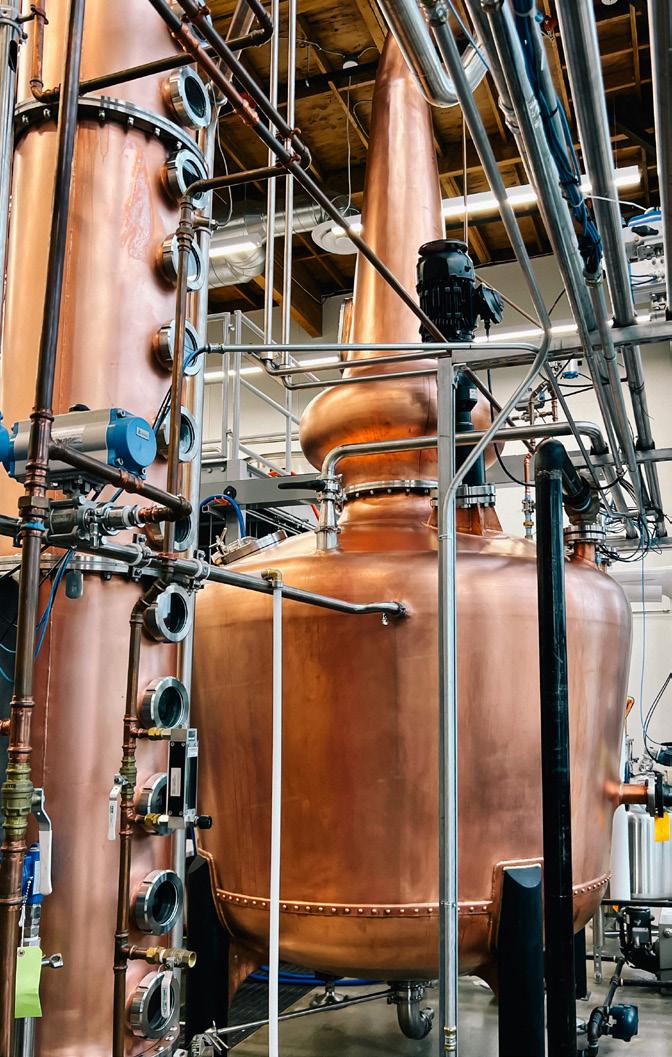
Written and photographed by Kris Bohm
In 2025, Hollywood Distillery opened to the public. The opening followed a multi-year development process shaped by planning complexities, construction challenges, and the regulatory demands of building a distillery in a dense urban environment. The goal from day one was to produce spirits with terroir that showcased the flavor and diversity of California agriculture. For transparency, this author served as a consultant on the project, assisting with distillery design, equipment assembly, and early production alongside the founding team.
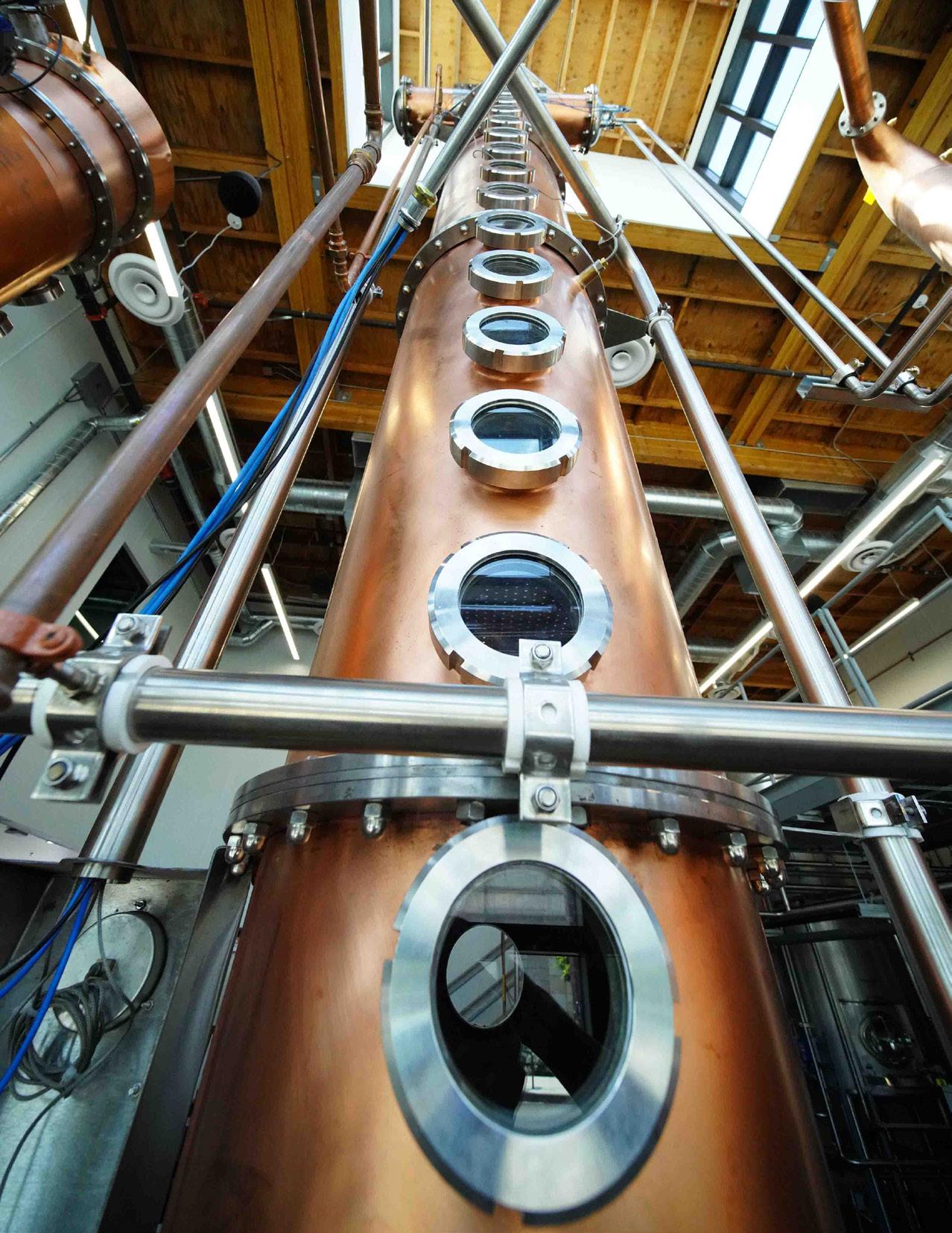
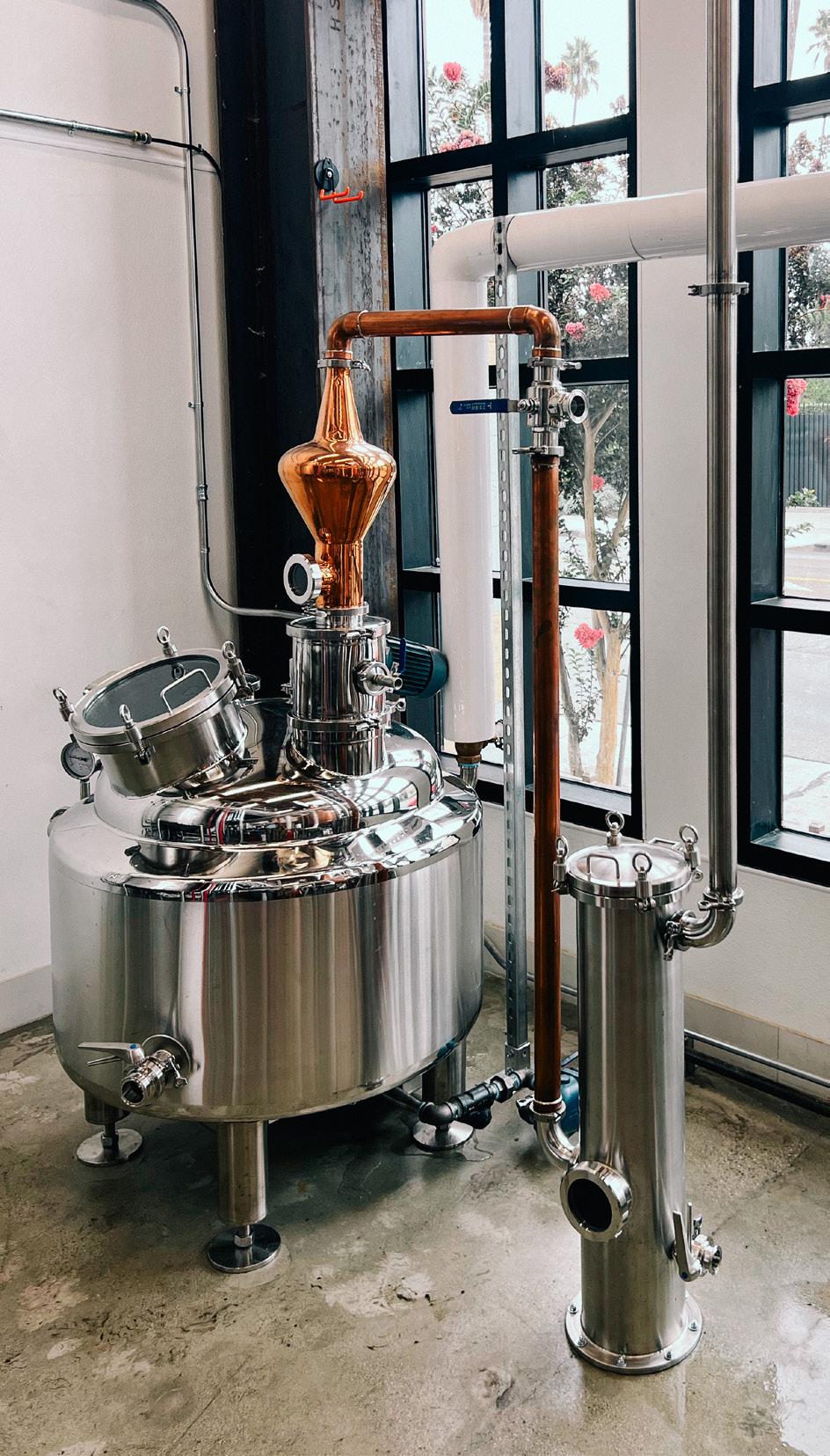
Hollywood Distillery began as an idea among three friends — Ferris Webhe, Larry Neuberg, and Jeff Zarrinnam — who were established business owners in Hollywood and regularly gathered to make cocktails and share their interest in spirits. From a shared enthusiasm for vodka and bourbon grew the idea of producing spirits of their own. Initial development work was carried out with a Southern California producer, allowing the partners to refine their vodka concept before committing to a standalone facility.
All three partners wanted to create a vodka that differed from the industrial neutral spirits dominating much of the liquor market. They collaborated with Oasis Date Farm in the Southern California desert to identify dates — specifically date syrup — as a fermentable base. This ingredient choice informed both the flavor profile and the eventual name of the vodka, Hollywood Oasis. Shortly after production began, the vodka earned a double gold medal at the San Francisco World Spirits Competition. Early recognition and market response helped solidify the decision to move forward with building an independent distillery in Hollywood.
The first major step in developing the business was securing a suitable location. Finding industrially zoned property in Hollywood proved difficult, but after an extended search the partners acquired a former mortuary on Santa Monica Boulevard, directly across from Hollywood Forever Cemetery. A team of architects, engineers, and designers reworked the aging structure, transforming it into a modern production space while incorporating large street-facing windows that provide visibility into the distillery’s equipment and operations. Scalability was a core consideration in the facility’s design. To support
future growth, the distillery installed a 1,000-gallon Vendome copper pot still with a vodka column and automation. The system allows for higher production volumes while reducing labor requirements. The still arrived in summer 2024 and was installed as the centerpiece of the production floor, visible from the street through the building’s front windows. Its prominent placement reflects both functional priorities and the partners’ emphasis on transparency in production.
Construction progressed under extensive oversight from the City of Los Angeles, with multiple inspections required throughout the build. Regulatory review extended the project timeline, but the distillery was ultimately completed in 2025. In addition to vodka, plans were
developed for a broader spirits portfolio, including gin made with locally sourced botanicals and bourbon whiskey produced from California-grown grains.
Local botanicals were harvested and distilled individually before being blended into the final formulation. Selected ingredients included fresh sage, citrus peel sourced from California orchards, wild-harvested prickly pear cactus, and dates. The resulting gin, named Nopalera, references the historical presence of prickly pear cactus in the Los Angeles region and presents a bright, citrus-forward American-style profile with herbal undertones.
in Los
To ensure the tasting room could offer a complete spirits lineup, the partners also chose to include aged spirits alongside their unaged releases. Bourbon and rye whiskey were sourced from another California distillery using locally grown grains, aligning with the operation’s emphasis on regional agricultural inputs while allowing visitors access to mature spirits during the distillery’s early years.
As California’s spirits industry continues to mature, projects like this illustrate how thoughtful design and local sourcing can shape a distillery’s identity from the ground up, even in the heart of a major city.
For more information visit www.hollywooddistillery.com or call (323) 282-5118.
Assessing the industry’s health through a trio of distilleries
Written by Rich Manning
If the beginning of 2026 is any indication, the distilling industry may be in for a wild ride this year. The new dietary guidelines dropped in January, and instead of delivering the message of teetotaling-tinged doom we’d spent years bracing to receive, we were told by Dr. Oz to try and refrain from drinking at breakfast instead. (We’re assuming brunch is spared from this recommendation. If not, it should be). This unexpected pop of good news provided a sliver of light at a time when we’re still dealing with tariffs, the economy, and other baggage dragged in from 2025.
The combination of surprising positivity and ongoing challenges makes 2026 look like a mixed bag at first glance. But how does it really look from the distilleries’ point of view? In this issue’s Three Trends piece, we’re diving deep into industry waters to try and gauge just how murky things may be going forward.
“ Frankly, not as many distilleries have closed as I thought, given the current drinks climate.”
— OLIVIA STEWART President and part-owner of Oxbow Distillery
Baton Rouge, Louisiana
The astonishingly lenient dietary guidelines made for attention-grabbing headlines. But it’s likely nothing more than that from a distillery perspective. At Oxbow Distillery, they’ve refrained from leaning into too much speculation. “I could see influencers running with this information, but that’s about all I got,” said Olivia Stewart, Oxbow’s President and Part-Owner. “The last time I tried to predict something about the industry, I was wrong. So, I don’t do predictions anymore.”
Instead, Stewart focuses her efforts on positivity and perseverance. While this led to success in 2025 — Oxbow experienced a 20

percent growth in Louisiana compared to 2024 — she views these gains as the fruits of new opportunities to simply endure. Struggling to persist in economic downturns is a shared theme amongst her and other distillers within the state. Some signs relating to these woes are obvious, like the seemingly perpetual collection of articles breathlessly reporting downturns in alcohol consumption. Others are a little more subtle. “There’s less contract distilling going on than there used to be,” Stewart notes. Still, Stewart acknowledges things could be worse. “Frankly, not as many distilleries have closed as I thought, given the current drinks climate,” she said.
Stewart also remains hopeful that the industry will be healthier on the other side of the current problems, from a leaner distilling scene not bogged down by oversaturation to healthier relationships between suppliers and distributors. She also remains confident that there will be a viable market for distilled spirits to find success, regardless of downturns in the economy, reported drinking habits, or the neo-Prohibitionist chatter that sparked fear over the dietary guidelines prior to their release. “I never thought there would be such a big anti-alcohol push,” she said. “Still, people into vices will still be into vices no matter what anyone says.”
Like Stewart, J. Rieger & Co.'s Co-Founder Ryan Maybee doesn’t see much of a correlation between the guidelines and consumer behavior. “Overall, there’s not much weight to it. Most people don’t make decisions based on government recommendations,” he said. “However, the new guidelines may align well with a greater focus on health and wellness.”
What Maybee does see is positive things for his distillery. J. Rieger’s recent launch of their Private Stock Society membership program, where people can gain access to perks like special bottles and all-inclusive private events upon joining, creates an opportunity to forge deeper communal connections while also showcasing the team’s skill set. They also remain fiercely committed to retaining value pricing on their core labels, providing consumers with a cost-effective way to get to know the brand and what they’re all about. According to Maybee, having this entry point is critical to forging the relationships needed to thrive.
“The era of people rolling the dice on a $50 to $60 bottle of whiskey they know nothing about is fading away,” he said. “Fewer people will reach for a new bottle at that price and not know what’s in the bottle.”
Maybee’s vibe about the industry in 2026 carries a slightly uneven wavelength. He’s pleased with the ASCA’s continued efforts toward making direct-to-consumer sales happen, and he envisions opportunities for some craft brands to ascend to big independent status within the next twelve months. He also expressed grave concerns over the lack of transparency within the industry. He views this deficit as a serious stumbling block toward gaining new customers and maintaining existing ones amid economic strife, especially since keeping things hidden can raise red flags amongst an increasingly smarter public.
“Consumers are being more discerning and are expecting more from craft brands. Unfortunately, there’s a lot of smoke and mirrors out there,” he said. “I want to see more craft brands not just telling consumers what it is in the bottle, but why it is in the bottle. The best way to do this is to be fully transparent.”
“ I want to see more craft brands not just telling consumers what it is in the bottle, but why it is in the bottle. The best way to do this is to be fully transparent.”
— RYAN MAYBEE Co-founder of J. Rieger & Co.

The future of craft distilling is uncharted territory, but K. Spoetzl may have a roadmap of sorts. The independent brewery and distillery behind Shiner beer and Shiner spirits is relatively new to the latter activity — their first two expressions, Shiner Vodka and Gin, hit the statewide Texas market in 2025. However, they’ve been producing their legendary Texas beer since 1909, technically making them an OG craft brewery. They’ve already dealt with some of the spirits industry’s current challenges from a brewer’s perspective. They have an idea of where the story goes.
“ The biggest challenge we’re seeing in both beer and spirits is overcoming some (hopefully) short-term societal challenges and giving people more reasons to celebrate and socialize.”
— NICK WEILAND
Brand Director of K. Spoetzl Brewery & Distillery
“Similar to craft beer, craft distilling has experienced a large growth spurt with many new entrants,” explains Nick Weiland, Shiner’s Brand Director. “Now, it is entering maturity and needs to act a bit differently. Simply positioning [yourself] as a craft distiller alone is not enough. In spirits, as in beer, there are two primary areas upon which any brand must deliver — taste and brand connection.”
Having this knowledge inspires K. Spoetzl’s to take a deliberate approach to their spirits strategy, including growing Shiner’s spirits distribution, expanding their line of flavored moonshines, and patiently stockpiling their bourbon supply as it ages. It also grants them unique authority to weigh in on the ongoing friction between the beer and spirits sectors. From their point of view, harmony


between the two industries is far more palatable than beef.
“There has been some consumer preference shifting between beer and spirits over the years, but we really don’t view it as a zero-sum game,” explained Weiland. “Rather, we view them as complementary — if one is growing, it is likely the other is as well. The biggest challenge we’re seeing in both beer and spirits is overcoming some (hopefully) short-term societal challenges and giving people more reasons to celebrate and socialize.”
Rich Manning is a freelance food and drink writer based in Fountain Valley, CA. He lives about 15 minutes south of Disneyland, but he hasn’t gone there in ages — he’d rather visit the nearby breweries and distilleries instead. You can check out some of his other written hackery by visiting richmanning.pressfolios.com. He can be reached at richmanning72@gmail.com.
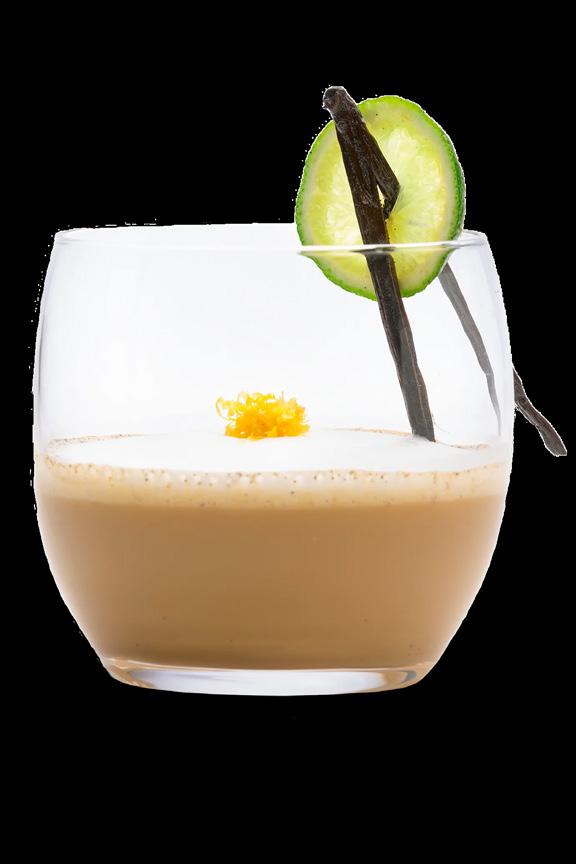
At this point we are all aware of the trials and tribulations out in the marketplace these days. Consumers are spending less, while having loads more options to choose from when it comes to recreational substances — NA spirits, cannabis (both liquid and herbal), and more. Many are choosing to consume less for health reasons. Younger people are not partying as much, and an aging population just can’t party like they used to.
WRITTEN BY MARTIN C. DUFFY

So, how is a small distillery to sell the spirits that they worked so hard to produce?
Perhaps your distillery should start thinking of itself less as a factory that makes alcoholic spirits and more of an establishment that welcomes people in and makes them feel at home. Think of your favorite bar or coffee shop. What is it that makes you revisit over and over?
People love a great experience, especially one that they can come away with knowing more than they did when they first journeyed out. This is where a distillery can stand out: Make it worthwhile for people to visit, keep them there for an afternoon, and make it enticing enough for them to come back another time.
Let’s examine the components of a great tasting room experience.
In my 12 years as a bartender, the one rule I was taught at each establishment was to treat each person who walks in your door as if they were a guest in your home. Make sure they are greeted within 30 seconds of entering the door or sitting at a table or at the bar. Studies have shown that people get very antsy if not acknowledged within half a minute of being in a public place. Even if you are in the weeds, it only takes a brief moment to drop a napkin or drink menu in front of them. This will also remind you that you greeted them.
If they order an alcoholic drink, always serve it with a glass of water. Do not wait for them to ask. Drinking water with a spirit or cocktail is beneficial because it keeps customers from over consuming and keeps them hydrated.
It helps to have a drink menu that is not only easy to read but has taste descriptors on it. Always assume the majority of the visitors have no idea about your spirits and maybe even spirits in general. The more information they have, the better and more informed choices they can make.
Make sure that whoever is waiting on tables or servicing the bar looks clean and professional. It’s important that staff are friendly, attentive, polite, and smiling. Since these are the individuals that your guests will be dealing with, they will be giving off the kind of feeling you want associated with your establishment. This may sound like common sense to most, but the level of customer service in this country has seen a serious decline in recent years, so the more you do to promote this, the more you stand out in your guests’ minds as well as from your competitors.
Perhaps your distillery should start thinking of itself LESS AS A FACTORY that makes alcoholic spirits and MORE OF AN ESTABLISHMENT THAT WELCOMES PEOPLE in and MAKES THEM FEEL AT HOME .
This can be as simple or elaborate as you want or as your facility’s space will allow. Music works great for creating atmosphere; however, you need not bring in a full-blown band. Playing a great selection of music will help to set the mood. I have visited distilleries around the world, and it is a little unsettling to walk into a tasting room where it is as quiet as a tomb. Just speaking in a normal voice feels like you are shouting or disturbing someone sleeping in the back. An option for live music is to invite local musicians to play for a small fee or just for tips. This could be one person with a guitar or a jazz trio. Both will fit into a small corner. Some distilleries with big properties can have success hosting outdoor concerts. Be sure to follow local municipality laws and noise ordinances, of course.
As anyone who has hosted a party before can tell you that you can generate the vibe you want by selecting the right music. Jazz and blues are always great choices, as is folk music. If it is a raucous Friday or Saturday night, classic rock might set it off. You might enjoy heavy metal or punk, but in my experience, milder music is best so that people can hold conversations. It also gives you the opportunity to talk with them and discuss your spirits and compare tasting notes.
TVs can be conversation killers, but if you want to have them for special occasions (The Oscars, sporting events, etc.) keep the volume down whenever possible. When not showing events, consider old movies, especially ones that may have a drinking theme like old W.C. Fields comedies, or The Thin Man Series. For younger folks, The Hangover films or Animal House are fun choices.
Entertainment can also come in the form of books available for folks to read, stored on a shelf. Books related to spirits, cocktails, and the drink industry as a whole would be nice, but you can also have some classics from Mark Twain, Hemingway, Fitzgerald, Dorthy Parker, Faulkner, or Hammett, all of whom enjoyed a tipple now and again. Board games work nicely as well. These keep people in their seats with time to enjoy more than one.
Hosting weekly or monthly trivia nights is always popular, and again, try to use a liquor theme to some extent.
What about the look of the place? Is it cold and lonely or bright and inviting? Seek out local artists to hang their works on the wall and even make arrangements to sell their work for incentive. Again, one back scratching another in a symbiotic relationship. If a local artist makes wind chimes, see if they couldn’t make them with a drink theme for showcasing on your entrance or outdoor patio.
Don’t forget the furniture. For those on a shoestring budget, rummage through thrift stores for old kitchen tables, chairs, tablecloths, curtains, coffee tables, and couches. You can also thrift vintage glassware, cocktail shakers, mixing glasses, cocktail spears, swizzle sticks, garnish trays, and more. Lighting is another way to provide atmosphere. My preference is to keep the lights lowered. Walking into a bright drinking establishment makes one feel like the place is closing, thus making the guest anxious. Dim lighting and candles can provide a warm feeling to the space. However, avoid scented candles or incense so as to not interfere in the nosing enjoyment of your fine spirits!

Keeping the public educated on spirits is a multi-level process. You not only want to take them on a tour of the distillery to show them how your particular spirits are produced but why you choose to produce them this particular way. Be sure that you have compared your spirit to others so that you can be ready to answer any questions consumers may have about the category. Also, never knock any other brands or bad-mouth them. Remember what your Mom always said — “If you don’t have anything good to say, don’t say anything.”
Be sure to educate your tasting room staff on all your products. Have them go through the distilling process and study the history of the spirits types your distillery makes. This kind of information is important because when a guest hears it, even if they don’t remember every detail, they remember how much you and your staff knew.
Another way to educate the guest is through tastings. Many times I have visited distilleries and been offered samples with little instruction on how to taste them. Provide visitors with a flight of three spirits (no more than a ½ ounce each), an eye dropper, and a small glass/jug of cold spring water, then walk them through the correct process of appreciating a spirit. Have them eye the spirit so as to check out the legs (body) and color/clarity of the spirit. Then swirl the liquid to release the aroma, and then nose it from different points of the glass. Now a small sip to savor (encourage them not to down it, which is often the case), noticing the flavors on the tip and sides of the tongue, taking note of the mouthfeel and then the back of the mouth, throat, and ultimately the finish. Now have them add a drop of water to the spirit and repeat the whole process again. Try to refrain from telling them what they should be tasting and instead ask them the question “What do YOU taste?”
Your bar staff should be trained for tastings. They are your gatekeepers for the brand, and guests will always look to them for instruction and information concerning your spirits.
Your distillery can be utilized for many purposes to support your brand and drive sales.
If you have unused space or even a very large production facility, consider renting it out for private events like parties and weddings. There are two distilleries I know of that have generated $40K-$60K for private events. Remember to keep your gift store open for bottle and merchandise sales during these events. If your distillery is located on a larger property, utilize that space. A small distillery I know has a section of trees where they hang lights for a beautiful canopy ideal for weddings and parties. It also works as a beer garden when not booked.
If your facility does not have a kitchen, this doesn’t mean you cannot offer food. Food trucks are always great options, with some venues choosing to feature different food on different nights of the week. It never hurts to offer snacks behind the bar, such as bags of popcorn or chips; however, you may want to avoid peanuts due to allergies. Bringing in local mixologists can generate business by attracting their followers to the tasting room to see what they can create using your spirits. You could also host a local cocktail competition drawing even more attention to your tasting room and, hopefully, Your BAR STAFF ARE
making more gatekeepers out of those competing in the contest. These folks can be very helpful in creating unique cocktails specific to your spirits, especially if you are limited in what outside spirits you can pour.
Other opportunities include offering cocktail classes or taste comparisons. If your specialty is whiskies, host a class that compares Kentucky bourbon to Scotch to Irish whiskeys, to Canadian to Japanese and so on.
Create reasons for people to want to come to your distillery. Offer things that may not be available elsewhere.
Finally, think of how you can offer items in your brand store so they can take memories home. Brand shirts, hoodies, glassware, flight trays, barrel heads, bar tools, and, of course, bottles of your fine libations are all natural choices. But also think of spirit-scented soaps, body washes, candles, skin oils and air fresheners, and other ways to get your name out there. Again, these can be produced by local artisans or by partnering with other manufacturers, sometimes incorporating your own spirits or inspired by them at least. One last note of your brand store — take a cue from amusement parks that make you walk through the merchandise after you get off the ride. I have seen tasting rooms that put their merch way off to the side to the point that I had to ask the staff if they had any to sell.
In a market where shelf space is crowded and consumer habits are shifting, the tasting room remains one of the few places where a distillery controls the narrative end to end. For small distilleries navigating an increasingly competitive landscape, a well-run visitor center is no longer an accessory to production; it is a core part of the business strategy.
Martin C. Duffy has nearly 40 years’ experience in the drink industry. Mr. Duffy was a bartender for 12 years, served as a Sr. Master of Whisky for DIAGEO for 14 years, and co-produced the Chicago Independent Spirits Expo for eight years. He has served as a tasting judge for ACSA, The Bartender Spirits Awards, The American Heritage Whiskey Awards, and The San Francisco International Spirits Competition and is a Keeper of the Quaich. For the past 12 years, he has represented Glencairn Crystal as their North American Brand Representative.

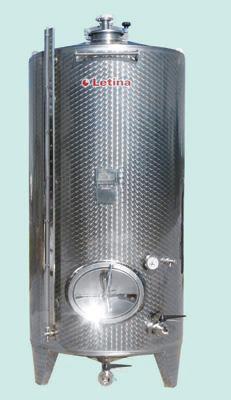



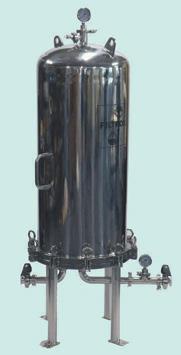


Bulgarian expats are making brandy in a state better known for whiskey using a ‘try it, you’ll like it’ approach. It’s catching on.
On a visit to Vetus Distillery in North Carolina, co-owner Kate Kercheva points out a small test still in the corner.
“My husband likes to run his experiments like watermelon brandy and mulberry brandy on that,” she said. “Somebody gave him a cantaloupe so he’s like, ‘I’ll try cantaloupe brandy.’ Imagine chopping a cantaloupe? That’s a lot of work!” she said laughing.
Kercheva is explaining how she and her husband Diyan Mitev make spirits at their distillery in Monroe, a small city southeast of Charlotte. She says they are always on the lookout for local produce. A European expat who’s lived in the American South for 20 years, you can still hear an accent as she speaks.
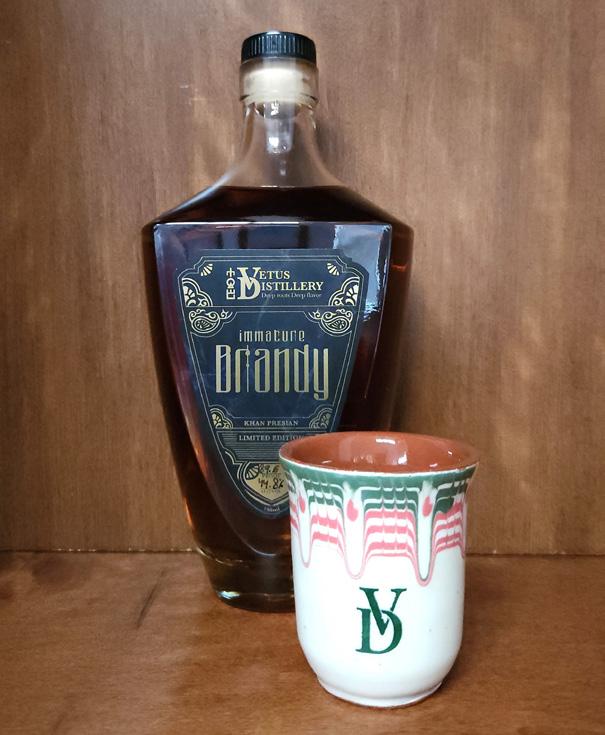
Opened two years ago, Vetus Distillery specializes in brandy, a spirit that was once quite popular in America — like 250 years ago. Back then George Washington’s distillery at Mount Vernon produced fruit brandies that were as popular as his rye whiskey and New Jersey’s Laird & Company has held America’s first distilling license for Applejack brandy since 1780. As farmers discovered it was easier and cheaper to grow grains, fruit orchards and the brandy made from them steadily fell by the wayside. Prohibition ended most of what was left.
However, brandy’s popularity never wavered in Europe. While many Americans are familiar with the pricey grape brandies of Cognac and Armagnac in France, almost every country in Europe has a specific type of fruit brandy they are known for. Kercheva and Mitev grew up in Bulgaria with a homemade brandy called rakia or rakija served at family gatherings. Head distiller Mitev grew up on a farm in Chintulovo, known as Bulgaria’s “Valley of Peaches,” where his father taught him how to both distill brandy and craft wooden furniture. Kercheva grew up in the coastal city of Varna on the Black Sea.
They came to the US separately for job opportunities in the mid2000s, Kercheva in business management and finance and Mitev in furniture production before apprenticing and then opening his own plumbing company. They met at the Bulgarian airport in Sophia while visiting their families in 2015. Kercheva says they would often commiserate about how they could never find the brandy flavors of their
homeland in the states, especially in North Carolina. Mitev suggested they open a distillery and make their own.
“We wanted to make fig brandy,” said Kercheva. “It’s so aromatic, so sweet.” She said they both grew up with all kinds of fruit brandies, but fig was their favorite. “We have 50 fig trees in our yard. We love anything fig.”
The couple actually live over a half hour away from the distillery in Harrisburg. However, after months of searching for a distilling space, they couldn’t find the right building there. Buildings were either too small or not zoned for distilling. They came across the Monroe building online.
“We really like it,” she said of the one-story metal building on the edge of downtown Monroe. She especially likes that the building is divided by a wall in the middle that allows them to have a tasting room and event space up front — along with a bottling station in the corner — and all the distilling and warehousing in the back.
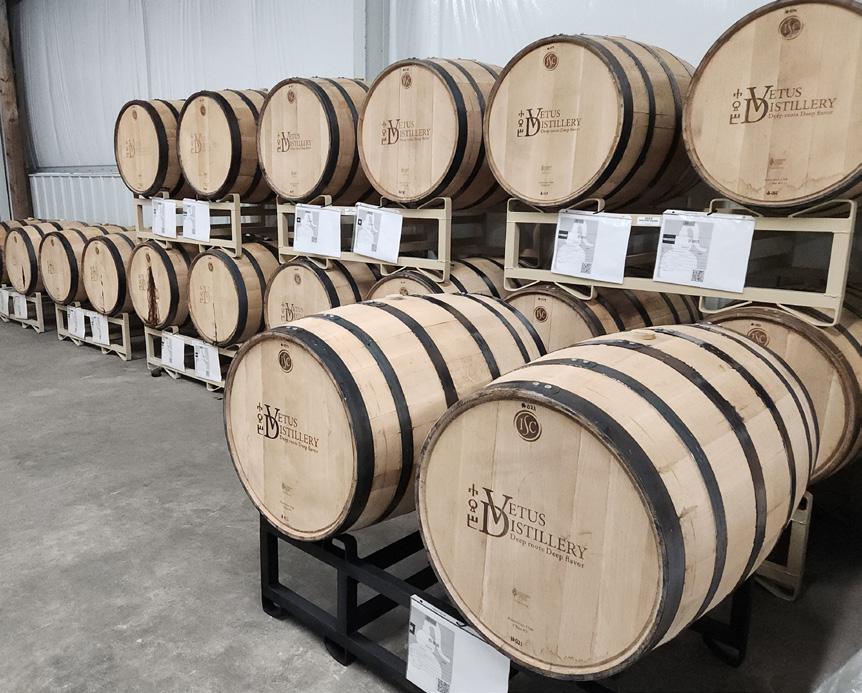
traditional handmade Bulgarian ceramics.
“People can come in and not see this,” she said gesturing toward a coiled-up hose and stacks of boxes.
Around the bar are subtle nods to Bulgaria. A wooden sign has an old Bulgarian toast carved into it that translates to “Pour a small rakia and take cheers with good friends.” The tasting glasses are not made of glass, but
“We’re very proud of our Bulgarian roots so I try to have something Bulgarian everywhere,” Kercheva said. Their spirits are named for various ancient Bulgarian rulers called khans. On their website is a brief history of each ruler and their role in the formation of the country. Vetus’ vodka is named 681 because it was in 681 AD that Khan Asparuh united the Bulgar tribes to form the country.
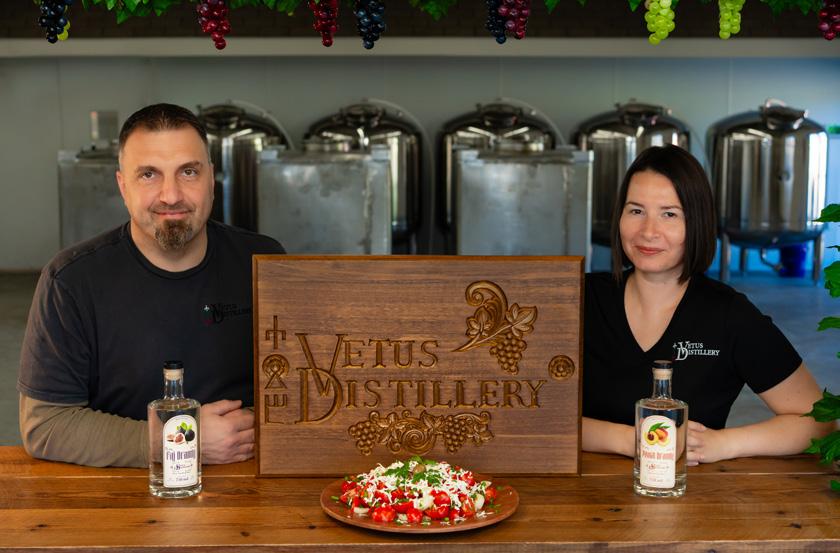
It was Kercheva who named the distillery Vetus. “It’s a Latin word that means ‘ancient.’ I wanted to use a word that represents the history and heritage of Bulgaria and everything we carry.”
Kercheva and Mitev make a variety of small batch brandies (200-300 bottles) along with vodka and rum for American palates. The brandies are fig, peach, plum, and two types of grapes, along with limited editions of muscat and fig brandies aged for several months in small French oak casks. The vodka is redistilled from the tails of the brandies, so nothing is wasted. All the fruits they use except for muscat grapes come from either North or South Carolina. Muscat doesn’t grow well in the South. The figs come from across the border because North Carolina doesn’t produce figs in large enough quantities and they need at least 750 pounds per batch.
They also make Scuppernong brandy from North Carolina’s native scuppernong grapes, a variety of muscadine. “We wanted to make something dedicated to North Carolina,” she explained. She says that while brandies are popular in Bulgaria, Carolinians are unfamiliar.
“People (here) are not crazy about brandy,” she noted. “They don’t know about it, or they’ve had a bad one. Cheap stuff. We’re trying to educate people. We want them to come and try because we know they will love it.”
The city of Monroe has embraced Vetus — its first official distillery — with local bars and restaurants using the brandies in specialty cocktails and a few Charlotte ABC stores have picked them up. However, after working with a distributor to open an online store last summer, the bulk of their sales are to other Bulgarian enclaves around the country. They ship to 45 states.
“We try to advertise online and on Facebook,” she said. “There’s over a half million Bulgarians in Chicago alone.” But Bulgarians aren’t the only ones who order. “It’s funny when we see an American name pop up,” she laughed.” We’re like, how do you know about us?”
No matter how people find Vetus, Kercheva believes that one sip will change people’s perceptions about brandy.
“We take such pride in doing it the right way, like back in the day,” she said, “using nothing artificial to make real, high-quality brandy. Try it, you’ll like it, and you’ll forget about the other things.”
Vetus Distillery is located in Monroe, North Carolina. For more information visit www.vetusdistillery.com or call (704) 218-2905.
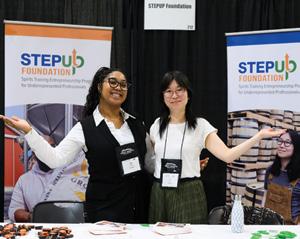
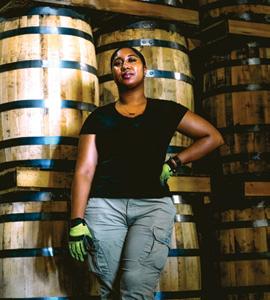
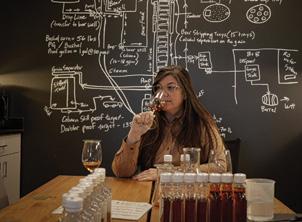
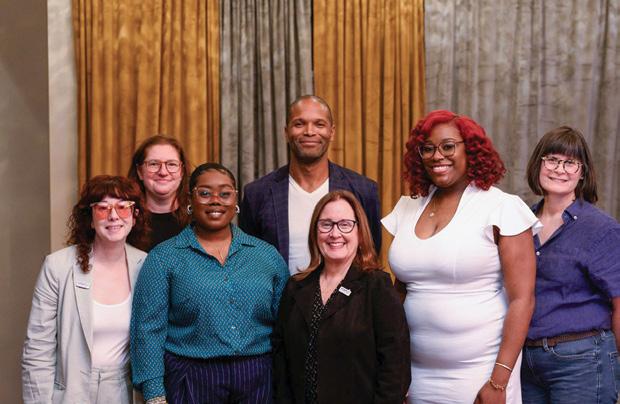
When Joshua Keithly went to check out Amorim Cork’s production headquarters in São Paio de Oleiros, Portugal, he arrived with low expectations. This ended up serving him well.
“I thought, ‘what the hell are we going to learn about cork that we didn’t already know?’” admitted Keithly, production manager for Cascade Beverage in Sisters, Oregon. “But I left blown away by how much information I picked up during the trip. I was enamored.”
Keithly was part of a small group of industry professionals Amorim Cork invited to their facility in November (Artisan Spirit’s publisher and editor Brian Christensen was also part of the entourage). His sentiment of surprise and delight was a shared feeling among attendees. Such positivity stemmed from a company willing to engage its guests on a level that went beyond their flagship product.
Cork anchored Amorim’s five-day trip. At the same time, the substance was a prism refracting a beam of light on Portugal and Portuguese culture, starting with the relationship between the two.
“The idea behind the trip is for people to learn about how cork is made, and also to provide them with the context on what cork means to Portugal,” explained Paulo Toledo, Amorim Cork’s director of sales of spirits. “Cork is immersed in Portuguese culture. Everyone either works in the cork industry or knows someone who does. So it’s important for our guests to understand cork’s cultural influence here.”
For Amorim, this exploration involves a bustling schedule packed with sightseeing and dining experiences, including strolling down nearby Porto’s waterfront and a dinner at the home of Amorim’s CEO. It also involved a trip to a nearby cork oak forest, where
Written by RICH MANNING
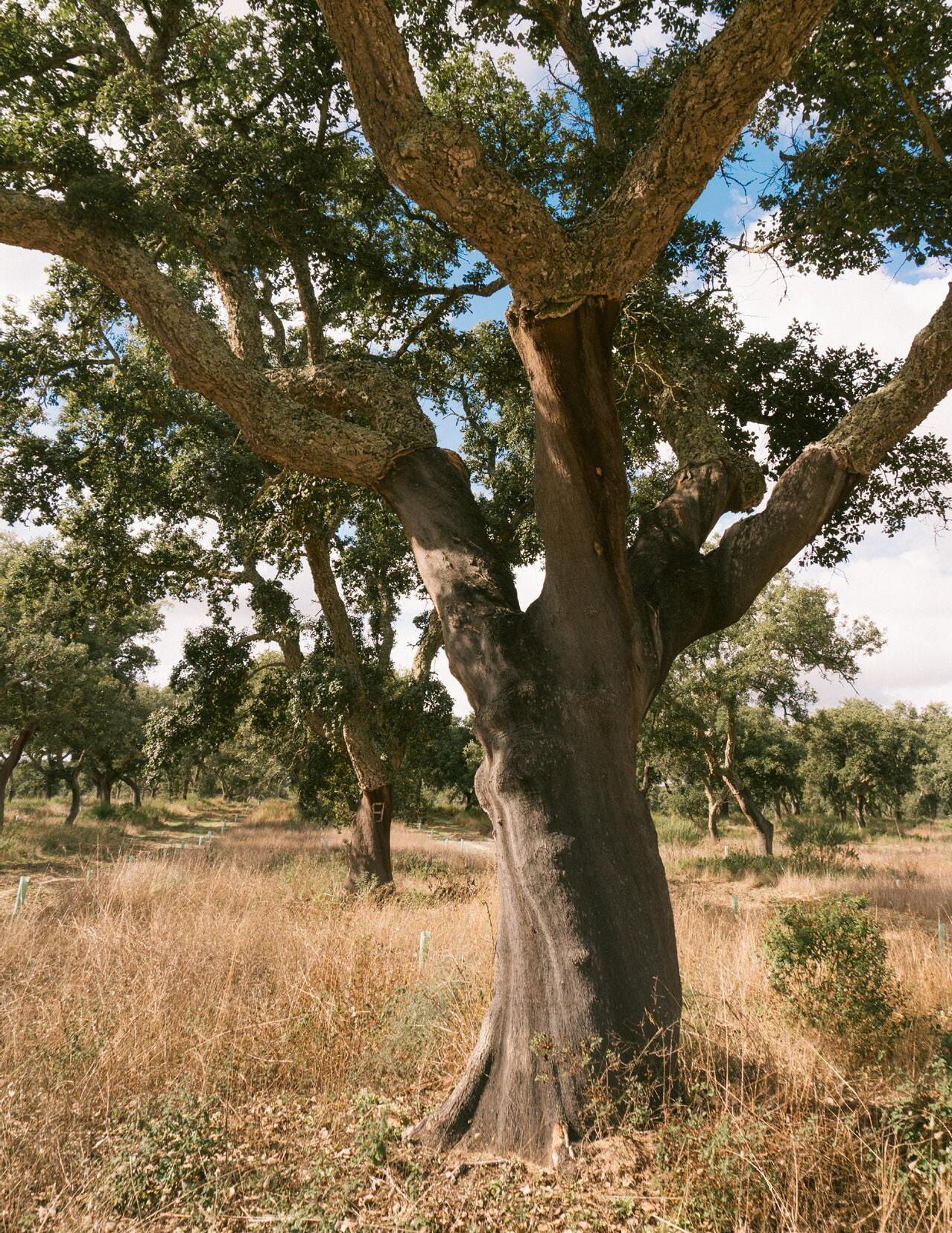
they harvest the raw material before dropping by different factories to see processes like cork stopper production and bar top application.
“I didn’t know what to expect, but the trip was much more comprehensive than how to make cork,” said trip attendee Amy Mesh, head of commercial operations for Middle West Spirits in Columbus, Ohio. “The trip introduced us to the culture of Portugal. I appreciated Amorim’s thoughtfulness.”

When it comes to trip planning, Amorim Cork is about as seasoned as some of the cork slabs inside their factory. They hold this multi-day excursion for American visitors twice a year — one time for the wine industry and the other time for distilled spirits. Regardless of what group arrives, Amorim Cork builds their experience around a few rules. These precepts can be effective guidelines for any distillery interested in hosting other industry professionals or media for a few days.
• Invite the right mix of people.
Because Amorim Cork’s trips cover multiple days, they conduct careful research into curating groups of people they think will fit together. “We try to select like-minded people,” Toledo said. “We spend a lot of time together on these trips, so we need to.”
While this principle makes perfect sense for a multi-day excursion, it also applies for quick trips lasting two days or even several hours. Poor interactions between individuals can erupt quickly and can derail the intended experience no matter its length.
• Do your research.
When assembling a group of industry professionals, do more than read their bio or look at the “About Us” page on their website. Dig a little deeper to look for information on current or future projects. Find out how they’re building community through their products. If you’re inviting
media members, take the time to read their work and be prepared to at least touch upon some of the topics they covered. These touches can make guests feel special, and it can lay the groundwork for building the type of rapport that could lead to solid long-term professional relationships.
“I was talking to one of the managers that took us on tour, and he started asking about the work we do with Jeni’s Ice Cream, a local ice cream maker,” said Mesh. “I wasn’t expecting that. It was clear they wanted to get to know us, and they did their homework to make sure we felt included.”
• Keep things interesting and transparent.
If you’re hosting fellow distillers, brand ambassadors, bartenders, or drinks media for a few days, you’re hosting a jaded bunch that’s been on several distillery tours and has at minimum a fundamental understanding of the distilling process. They’re
making the effort to be at your facility to learn, so it’s pointless to teach them basic stuff they already know. When the time comes to tour the facility, focus on the stuff that makes your facility unique. When you do, present it in the most transparent way possible. Anything less will likely be met with cynicism — again, industry types are a jaded bunch.
In Amorim Cork’s case, keeping their guests’ interest — especially American guests — isn’t too difficult since learning about the cork-making process, what cork can do, and cork’s connection to Portugal aren’t topics their American guests typically know much about. Still, those on the trip appreciated how forthright the company was with their information. “Everyone was pretty open and honest whenever we asked a question,” Keithly explained. “I’m sure you can BS your way through a subject like cork, but it never felt like there was any smoke and mirrors involved with anything they shared.”
• Adjust when necessary.
It doesn’t matter if your first couple cracks at hosting industry people look pristine. Things will never be perfect, and that’s fine as long as you identify and improve the imperfections. Sometimes, these can be minor tweaks, like spending less time guiding guests through a rickhouse or offering unique snacks during the obligatory tasting room part of the tour. Other times, they can be massive shifts that alter the vibe of the experience.
“In the past when we held these tours, we were more oriented in showing the capabilities of cork and cork education,” Toledo said. “However, we realized we needed to change this because we realized some of the guests we invited on these trips have never been to Portugal, and some have never even been to Europe. Now, our trips aren’t just about cork. They’re about dining, sightseeing, and sharing the history and culture through what we do.”
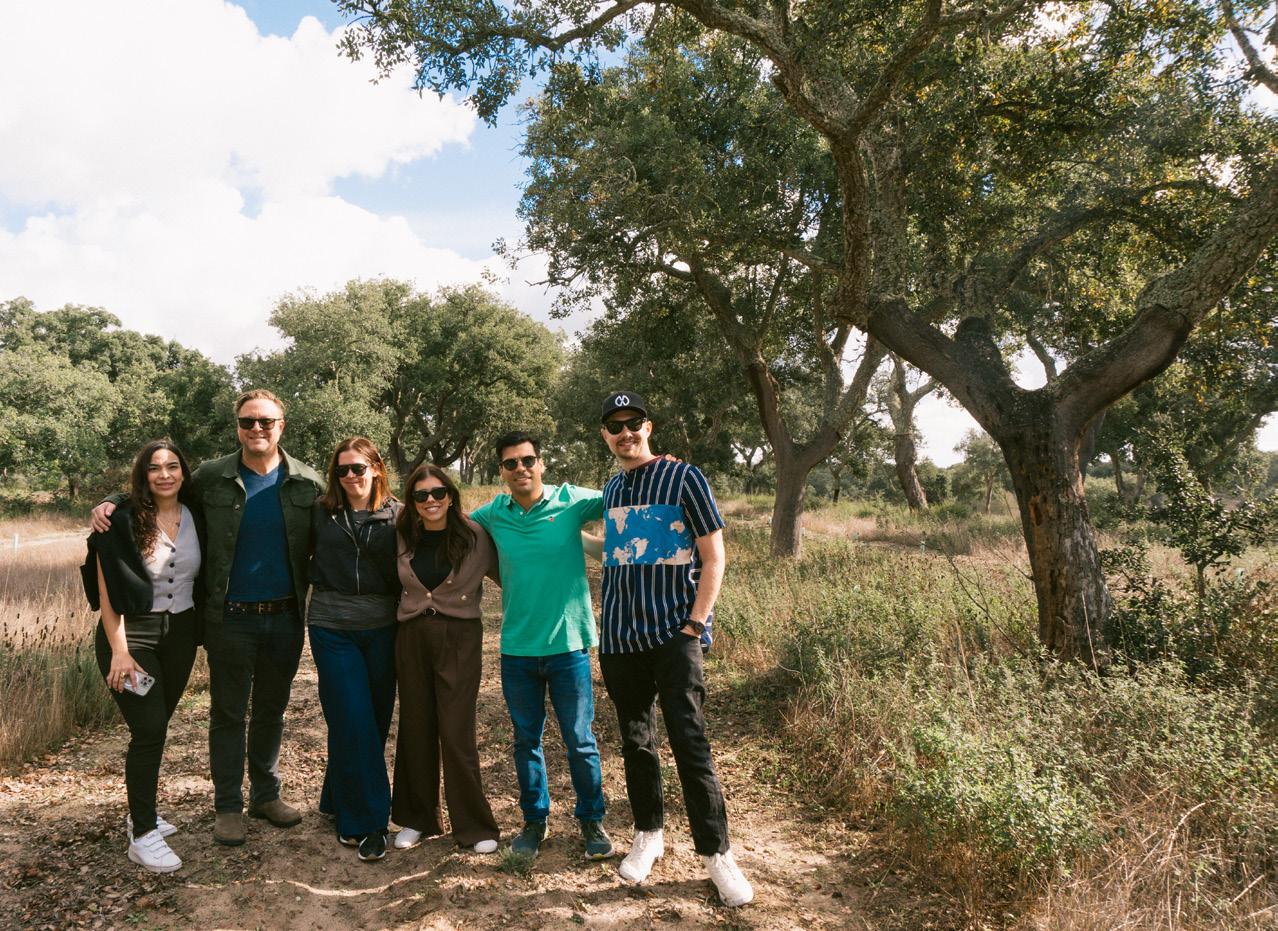
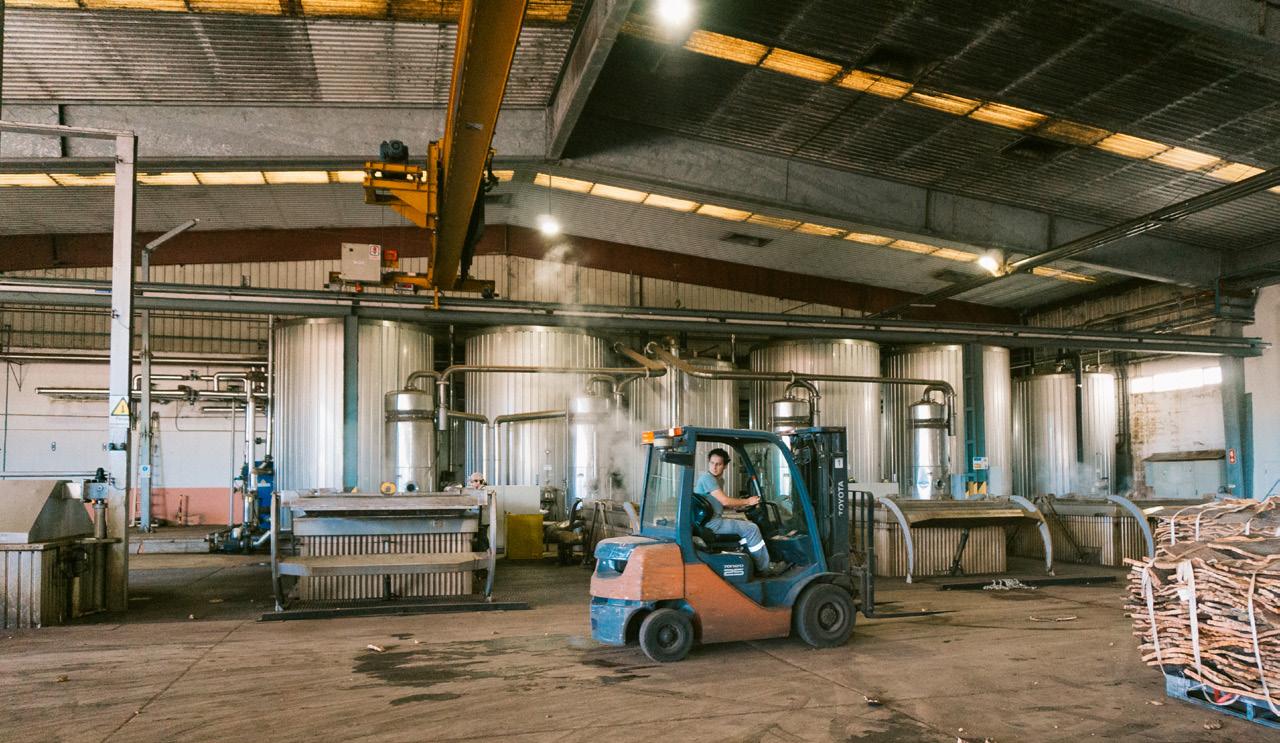
• Give breathers.
Hosted trips are fun, but they’re not vacations. Your industry guests will likely need time to catch up on emails, make important phone calls, or meet deadlines. As such, it’s imperative to carve out time in your itinerary to do so. This is arguably the trickiest element to incorporate in a trip, since adding these blocks may come at the expense of sharing an experience or two.
A possible workaround for this is to make activities not completely germane to the trip’s core focus optional, something Amorim Cork offers guests that may need respite from their packed schedule. “We know we put together a really tight trip,” Toledo said. “But we want to give our guests some freedom. If people want to skip out on an activity, they can.”
The Amorim Cork trip left a favorable impression on Mash — so much so that she has a rectangular, hole-riddled cork slab from the trip in her possession. “It was a piece of cork they cut stoppers from. I don’t even know how I wound up with it,” she said with a laugh. She keeps the slab in her office, and she said she’s excited to show it to anyone who may be interested. The trip made her a cork enthusiast. You don’t need to make a unique peripheral distilling product like cork to produce a similar reaction from your industry guests if you put together a hosted trip. All that’s needed is careful strategic planning, transparency, and a willingness to be flexible. Your guests will be grateful for your efforts.
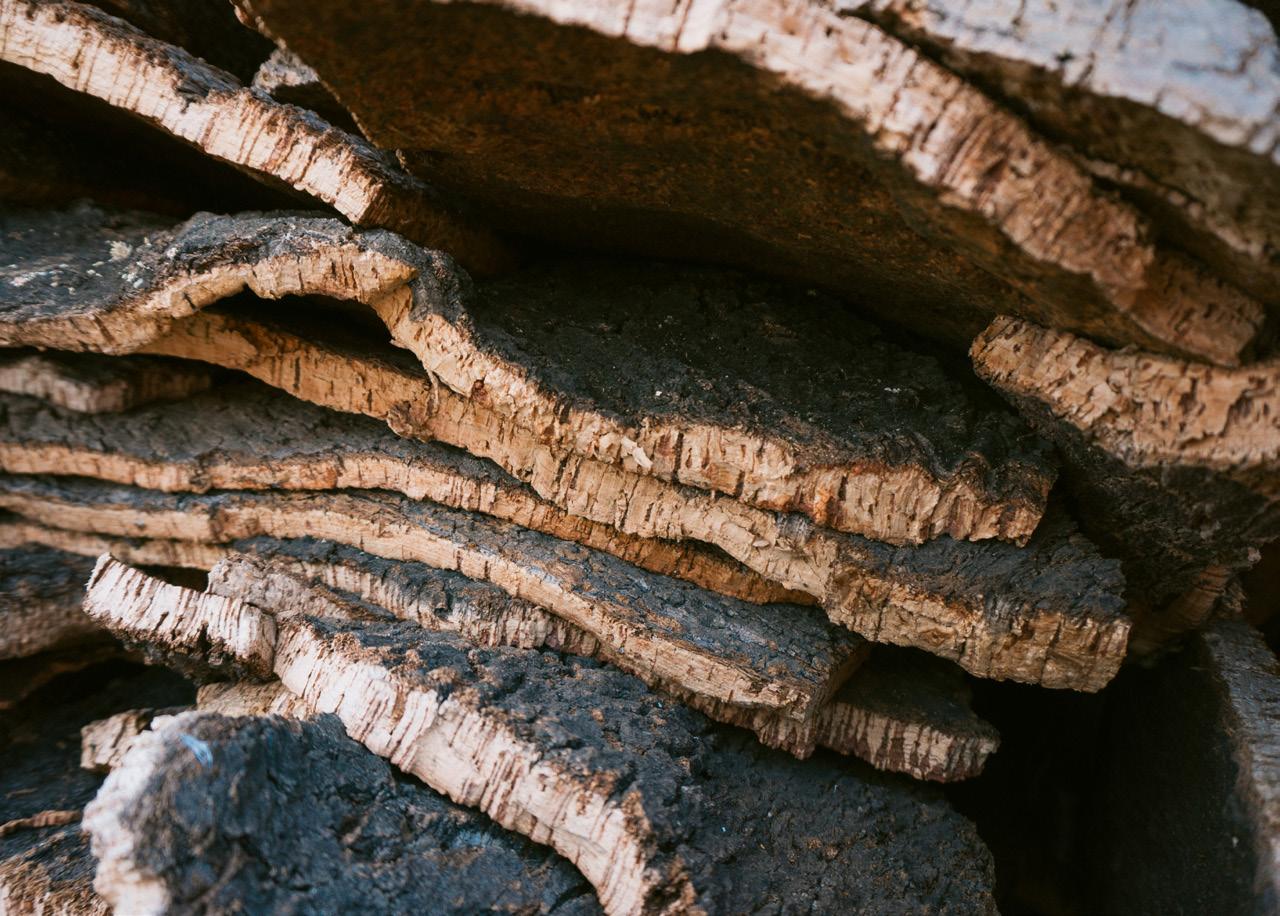
Rich Manning is a freelance food and drink writer based in Fountain Valley, CA. He lives about 15 minutes south of Disneyland, but he hasn’t gone there in ages — he’d rather visit the nearby breweries and distilleries instead. You can check out some of his other written hackery by visiting richmanning.pressfolios.com. He can be reached at richmanning72@gmail.com.
Written by Pete Barger and Samantha Harpst
While the foundational processes of the spirits industry are largely standardized, differentiation emerges through distillation methodology and subsequent barrel aging. Due to this differentiation, production outcomes are not uniform across facilities. Continuous column stills offer greater opportunities for process control and consistency compared to batch distillation systems. This article focuses on practical, achievable data collection methods that support consistency and quality in distillate produced on continuous stills.
A primary objective of data collection during distillation is the systematic recording of all column still operating parameters, including semi-hourly proof measurements and equipment adjustments. At Southern Distilling Company, a centralized Google Sheet is used to document proof readings for both low wines and high wines, ensuring all proofs are in alignment with established quality specifications. These data points are aggregated into a time-based “scorecard,” providing the production team with a concise overview of operational consistency and enabling comparison with other relevant process metrics.
Although modern production equipment incorporates advanced automation, feedback loops, and control systems, operator intervention
remains an inherent variable. When analyzed alongside collected proof data, these records serve as an indirect baseline for equipment performance. Comparison of these data points enables the team to distinguish between proof deviations driven by mechanical or process-related issues and those resulting from increased manual adjustments that disrupt system equilibrium. More specifically:
High wine proofs are plotted alongside the doubler’s temperature, as these two data points are directly related. This comparison can be seen in Figure 1, showing the relationship between the average high wine proof daily and its correlation to both the doubler temperature and the external temperature. The external temperature in Statesville, North Carolina, has a limited effect on the doubler’s temperature, as expected, but there is a distinct change in the maximum proof, which speaks to the relationship between the high wines condenser and the cooling capacity from the hybrid cooling system outside the plant. The team is fully equipped with the knowledge that during large temperature swings, the high wines proof may be more difficult to maintain, allowing preemptive actions to take place to keep a consistent proof.
The same information is plotted for the collected low wines proofs, but alongside the beer heater’s temperature. This graph can be seen in Figure 2, showing the relationship between the average low wine proof daily and its correlation to both the beer heater temperature and the external temperature. The external temperature in Statesville does not look to have any effect on the beer heater’s temperature, however this may need further investigation as both graphs are full of peaks and valleys. Rather than correlating process data solely with beer heater temperature, it may be more informative to compare beer well temperature against beer heater temperature. Although beer well temperature represents an indirect measure of the external heating conditions, this approach may reveal a clearer and more meaningful relationship with beer heater performance. On the other hand, there is a clear inverse relationship between the beer heater’s temperature and the maximum low wines proof. This correlation is because the higher the beer heater’s temperature, the more compounds that are entering the low wines, therefore diluting the proof of the distillate.
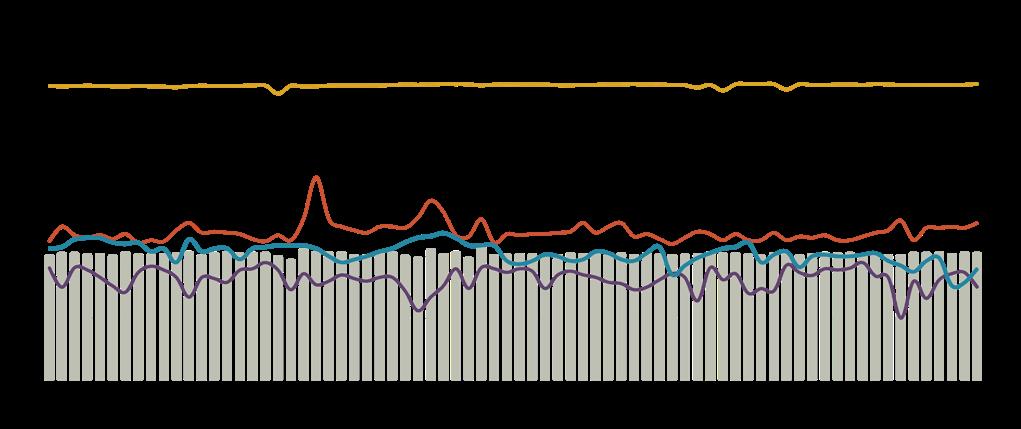
The quality assurance and control (QAC) team conducts on-floor sensory evaluations of both low wines and high wines at least twice a day. Any detected deviations are documented, and column operating parameters are reviewed to identify the root cause of the out-of-specification distillate. At this stage, the QAC team also examines historical fermentation data, including high-performance liquid chromatography results and grain delivery records, to further investigate the distillate in question. On the other hand, when an exceptional example of the target flavor profile is identified, four 750 mL bottles are retained as benchmark samples. One bottle of this “gold standard” distillate is distributed to the QAC laboratory, production supervisor, master blender, and archival storage to ensure shared reference points and accountability in maintaining consistency throughout distillation. It is important
to recognize that while distillation consistency is a critical contributor to overall product uniformity, its effects may ultimately be modified or obscured by downstream barrel aging processes.
It is often believed that the char layer of a barrel imparts flavor to the distillate. While char does play a role, it is the wood itself — rather than the char — that contributes the primary flavors to the spirit. The char in barrels functions primarily as a filtration medium, similar to activated charcoal used in medical or cosmetic applications. The staves of the barrel, historically American white oak, are the true source of flavor. White oak is favored when manufacturing barrels due to its porosity, cost-effectiveness, sealing properties, and desirable flavor profile. However, even within white oak, variations in grain, origin, and preparation mean that not all barrels are created equal, and the choice
S-20-01-10-0000
S-20-01-03-0002
1102; 1100; 793; 794; 841
3307; 3471; 3458; 007007; 007095
S-20-01-02-0003
of wood can significantly influence the final product.
The entry proof of distillate — the alcohol concentration at the time it enters the barrel — plays a critical role in flavor development. Lower entry proofs facilitate the extraction of hydrophilic compounds from the wood, including tannins, esters, and color components, whereas higher entry proofs optimize storage efficiency and increase bottles per barrel. In addition to entry proof, barrel char level (typically char one to four ) and toast intensity (light to heavy) significantly influence the final product. Higher char levels act to refine the distillate, mitigating production imperfections. Conversely, if the distillate quality is tightly controlled, a lower char may suffice. Toasting modifies the wood matrix by breaking down compounds within the staves, enhancing their integration with the distillate. The interplay of these factors — entry proof, char, toast, and cooperage — offers virtually limitless possibilities for shaping the flavor, color, and texture of the finished spirit.
Comprehensive data tracking during distillation ensures consistent adherence to the brand’s flavor profile.
While barrel characteristics are a major determinant of the final spirit, they represent only part of the equation. Environmental factors — many beyond the manufacturer’s control — also play a significant role in maturation. Modern rackhouses and facilities mitigate these variables through temperature-controlled storage and strategically managed airflow, yet variability is inevitable. It is in this context that systematic data collection becomes essential, providing the insights necessary to monitor, understand, and manage these external influences on the aging process.
Tracking each individual barrel is essential. Meticulous record-keeping ensures an organized library, as exemplified by the sample library and pull record shown in Figure 3
20E29A/20E29B; 20F01A/20F01B; 23F02A/20F02B; 23F02A/20F02B; 23F02A/20F02B
19F14; 19F14; 19D05; 19D05; 19D11
20F15A/20F15B; 20F24A/20F24B; 20F24A/20F24B; 20g01A/20g01B; 20g07A/20g07B
20A06; 20A06; 20A06; 20A07; 20A26
J003-2J-12-5; J003-2J-12-6; J003-2J-12-6; J002-F-6-3; J003-2J-6-7
J-1C-2-2; J-1C-2-2; J-9C-6-5; J-9C-6-6; 12C-5-1
J-0C-6-1 ; J-10C-7-6; J-10C-8-2; J-11C-8-2; J-14C-2-4
J-11C-5-2; J-11C-5-1; J-11C-5-3; J-11C-5-4; A-9-3-5
Systematic tracking of each barrel enables the creation of a “flavor map” of the warehouse, which supports both single-barrel selection and blend development. Blend creation is particularly critical, as this data allows for the production of spirits that consistently represent the characteristics of a given lot. At Southern Distilling Company, QAC policy mandates that only blended samples are distributed, since flavor profiles from individual barrels cannot be guaranteed to customers. Maintaining a blended inventory also establishes a baseline flavor profile, facilitating consistency assessments across lots and vintages. When constructing blends, an effective approach is to sample barrels from a vertical cross-section of the stack, ensuring representation from all tiers. Comprehensive data tracking during distillation ensures consistent adherence to the brand’s flavor profile. With production consistency established, maturation can be closely monitored — factoring in barrel characteristics, cooperage, and warehouse conditions — facilitating the creation of both consistent and intentionally unique products at any scale.
Pete Barger is the founder and CEO of Southern Distilling Company. A seasoned executive with a background in engineering, manufacturing, and business development, he brings decades of experience leading high-performing teams across startups and turnarounds.
Samantha Harpst is the project manager for contract distilling, barrel sourcing, and co-packaging sales at Southern Distilling Company. With a biochemistry degree from Clemson University, she blends scientific expertise with a passion for operational excellence and industry innovation.
Greenbar Distillery in Los Angeles has launched a unique, hard-to-define spirit aimed at easing the difficulty for consumers who want a nice cocktail at home. As a part of the release, they’ve moved from a “distilled spirits manufacturer” license to California’s “craft distiller” license, allowing them to use DTC sales as a market research tool and collect information that would otherwise be very expensive and difficult to gather.
The product, Staria, is described on the bottle as a “cocktailing liqueur” with instructions to mix it with a primary cocktail spirit or tonic and nothing else. It’s aimed at solving a problem they saw — a disconnect between consumers’ enjoyment of and desire for cocktails versus their inclination to shoulder the work involved in making cocktails.
“It just didn’t seem to click with most people. They found it too difficult, too expensive, too risky sometimes, almost intimidating in some ways,” Greenbar co-founder Melkon Khosrovian said.
About eight years ago, Greenbar introduced cocktail classes at the distillery, prepping tables of spirits, syrups, bitters, dry ingredients, and bartending tools. Khosrovian made an ill-fated bet with his tasting room manager at

the time, wagering that they would sell more bottles to cocktail class attendees compared to visitors for tours and tastings. They actually sold less than half as much product to the cocktail class contingent.
“Inadvertently we had shown them just how fun, but also how much work, cocktail making is. So, we had talked them out of it,” he said. “Yes, it was fun. Going to pottery class is fun, but you’re not about to start throwing your plates for (your) home.”
Khosrovian said they still wanted to capture the joy they saw when consumers succeeded at making a cocktail while removing the dread of having to prepare everything and then clean up, so they developed a series of RTDs to offer consumers the cocktail experience at home.
“That’s what Staria really is for us, this exhilaration and the ‘I did it myself’ outcome without the horror of having to cook your simple syrup, find and juice citrus, maybe crack an egg and make a sour with foam,” he said. “They want that fancy drink. They just don’t want to put all the fancy footwork into getting it.”
Staria is intended to take the place of the liqueur, bitters, and simple syrup, using a proprietary approach to add sourness that won’t go bad or destabilize the way that juice or pure acid extracts will over time. It’s made with about a dozen fruits, flowers, herbs, and other ingredients to create a citrus-forward profile, herbal complexity, and a balance of bitter and
Because Staria doesn’t fit into an existing spirit category, they needed to develop good data on things like... - who is the primary consumer? - what attracts them to Staria? - how do they consumed it? - will they purchase it again?
sweet. They’ve also formulated it with a vegan ingredient that offers the same foam experience that egg white offers.
“It doesn’t need refrigeration, it doesn’t go bad. You just mix it one-to-one with spirits. Shake it for 10 seconds and you have a silky, smooth, very complex, very beautiful sour drink. Or you can mix it with tonic and just use the two-to-one ratio of tonic to Staria and make yourself a beautiful, delicious spritz,” Khosrovian said.
Because Staria doesn’t fit into an existing spirit category, he said they needed to develop good data on things like who the primary consumer is, what attracts them to Staria, how they consumed it, and whether they would purchase it again.
Before being allowed to sell direct-to-consumer, Greenbar had to jettison a SKU, their tequila, to qualify for the craft distillers license, and then switch to a craft license. They set up a dedicated website, separate from their regular distillery site, and a storefront on Shopify, which has the ability to incorporate built-in surveys.
“It was very similar to buying anything else online, which has been perfected by everyone who came before us,” he said. “Everything we did was to make it simple, easy, and painless, and that seemed to be something people enjoyed.”
Sales were conducted exclusively through the online store so they could gather as much customer data as possible.
“If you just have people walking in the door, you don’t have demographic information on them,” Khosrovian said.
The process has required a good deal of investment, he added, and the DTC sales are generally unprofitable, but the goal was to collect data, not dollars.
“It makes no financial sense, but if you don’t treat it like ‘this is my sole way to make an income,’ it’s market research. It’s the damn best market research tool out there,” he said.

“ We’ve learned one thing that’s very, very important: which direction on the map to go in.”
“You have to spend millions to get the information you could theoretically get. You have complete access to the buyers. You know what they bought, when they bought, who they are. You can attempt to contact them and get some information, ask them some questions, and be able to launch a proper marketing campaign based on knowledge, not guesswork.”
After a few months of sales, they had 800 transactions from about 700 unique buyers who bought between 1,100 to 1,200 bottles. Those 700 buyers have completed roughly 450 surveys, either immediately after a purchase or four to six weeks later.
The surveys that they’ve collected offered some nuanced data, lessons that they were “just clueless about,” and, Khosrovian said, one big lesson that was a stunner.
“Before we launched, if you had asked me, ‘Who’s the customer for this product?’ I would’ve bet almost everything that it was going to be a woman,” he said.
He said 58 percent of buyers, and 71 percent of repeat buyers, were men. They’re older than Khosrovian expected, in their mid-40s to 70 years old. Some of them have bought four, five, and in one case seven times in the first four months. Ninety-eight percent of buyers found it easy to use to make good cocktails, which was their goal.
Seventy-eight percent of buyers found it either different but enjoyable or better than what they normally drink. When it came to changing how buyers drink, he said 45 percent of respondents said they made more cocktails — whether that was making them for themselves, friends, or partners; choosing cocktails over beer or wine; or something else.
Most respondents mixed Staria with the expected spirits: 28 percent with tequila, 18 percent with vodka, 17 percent with whiskey, 16 percent with gin, 13 percent with tonic or seltzer, and 6 percent rum, which was a little lower than expected.
When it came to the crucial question if they
would buy Staria again, 73 percent said “yes” and 18 percent said “maybe.” Respondents said their number-one reason for buying it again was how easy it was to make cocktails. Many in the group were experimentally minded drinkers, he noted, and a good number said it impressed their guests.
“It was easy, and it looks cool because of the foam. People love the foam,” Khosrovian said. “You made something with two (ingredients), and it looks like a mixologist made it. He said 10 percent of respondents said it’s become their go-to cocktail solution, and 6 percent said it made them a better host or partner. Other important stats included:
- Close to 40 percent said there was nothing to stop them from buying again.
- 18 percent had reservations about the value for the price.
- 16 percent said they didn’t like buying online.
- 11 percent were satisfied with their usual drinks.
- 9 percent didn’t drink enough cocktails.
The rest consisted of other answers, such as they don’t like the taste.
Finally, Khosrovian asked where people would want to buy it again, with most answers consisting of physical locations such as Trader Joe’s or Costco and other similar outlets. There was a lot of pushback to the online-only model, he said; buyers were ready to move on to a more convenient approach where they didn’t have to wait at home and sign for a package.
Khosrovian said they’re still administering the surveys, but the data that continues to come in isn’t radically changing the results, giving them continued confidence in the data.
The next steps are to bring that data to retailers and find a like-minded store or group of stores so that customers don’t have to order online any longer. Since Staria is a unique product on the retail shelf, they’re excited to be able to bring in real sales data, not just focus groups and surveys, showing that it was
—
Melkon Khosrovian, Greenbar co-founder
solving the problem that they had targeted and that consumers were embracing it.
“We have a new category, a new concept. Nobody’s ever heard of it,” Khosrovian said. “We’re hoping to have a little bit easier time justifying our existence on a shelf.”
After creating a data-driven foundation, they’re moving on to use that information to develop the messaging and the campaign around Staria, knowing that they’re marketing in the right way to the right people to meet a need that those people have identified.
“Now we have pure marketing problems,” he said. “We’ve learned one thing that’s very, very important: which direction on the map to go in. We’ll discover many challenges and obstacles along the way, but at least we know which way to go.”
It’s been such a valuable tool that Khosrovian said they might stick with the craft license for another experiment, looking at the customer base for a different product.
“This was such an eye-opening experience, and we loved it. We’re re-engaging our marketing contractor to help do the same thing for our Poppy Amaro,” he said. “We’ve never delved that deeply into who buys it, why, (or) how to market it.”
The ability to sell DTC has been extended for at least one more year in California, he said, but they might also find opportunities to explore other markets.
“Is California (like) New York? Not like New York? As we look to expand, we know California customers, but we don’t know how California customers compare with other states,” Khosrovian said. “So we’d like to figure that out before we expand distribution to other states and then figure out how to market to customers in those states. So we’d like to keep (DTC) because it seems like a shiny new toy that we don’t want to give up for now. And it’s potentially very helpful and useful because my God, we would’ve been spending money in all the wrong places without it.”
Greenbar Distillery is located in Los Angeles, California. Visit www.greenbardistillery.com or call (213) 375-3668 for more information.
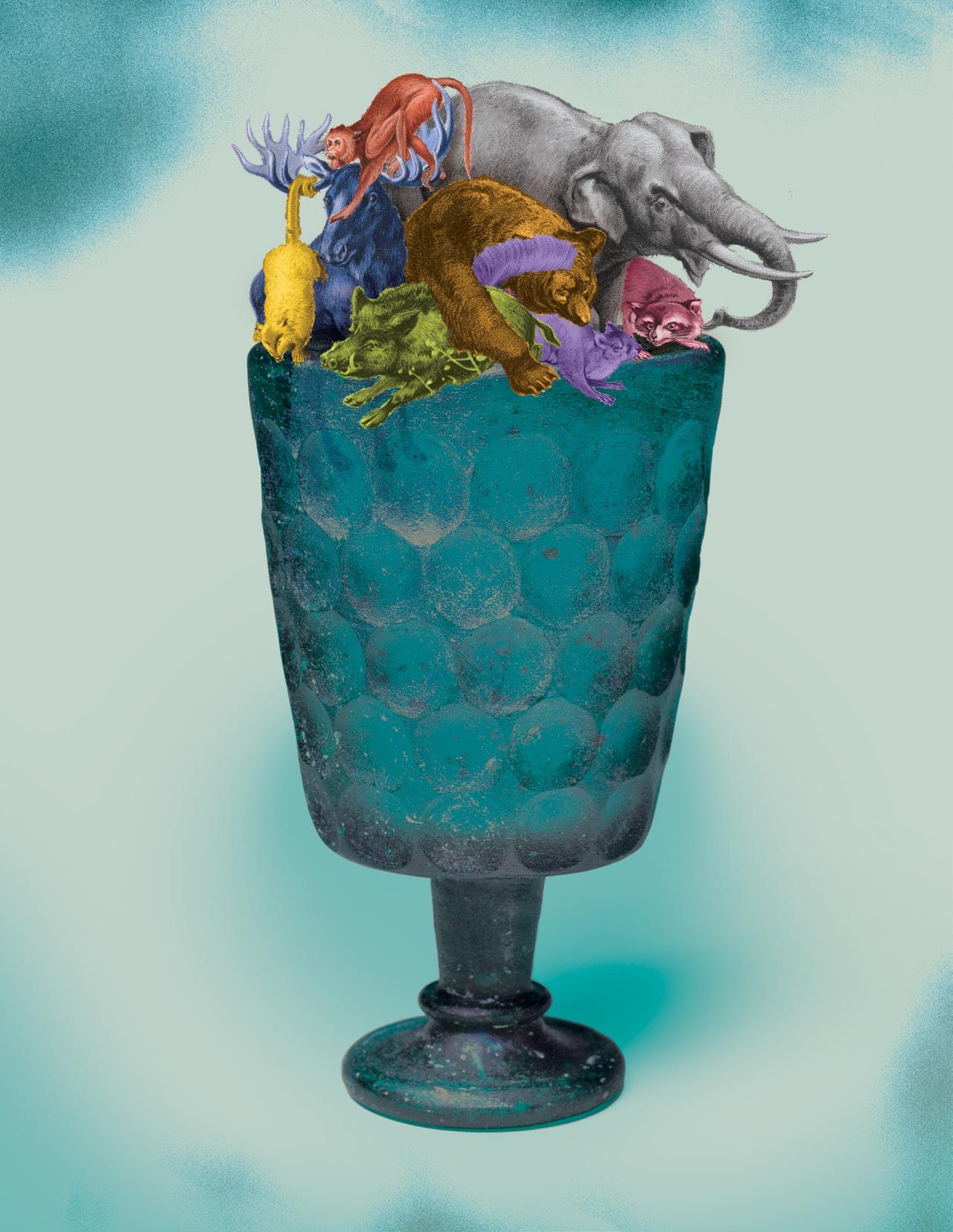
in our modern world, we often look at our drinking habits as something uniquely human — a pastime riddled with existential musings, youthful folly, and an alarming ability to ruin our lives with a bottle of something fermented. We raise our glasses, toast to a job well done (or to the fleeting distraction that alcohol provides), and continue to convince ourselves that our affinity for booze is part of what makes us “distinct.” We can laugh at the drunken shenanigans of our fellow humans: the wildeyed college kid doing shots in the corner of a nightclub, the overconfident businessman slurring his words in a cab. But what if we told you this drunken behavior isn’t just a peculiarity of our species? What if I told you that elephants, baboons, and even squirrels get in on the action too? Yes, you read that right, they get drunk too.
Fact is, animals also enjoy nature’s little accidents — sugars that forget their curfew, nectars that go off and get ideas about themselves. Consider the adorable pen-tailed treeshrews moving like punctuation marks under the Malaysian moonlight, returning each night to the palm’s fermented nectar bar. The scene is almost ceremonial: a quiet queue, a long sip, and a graceful exit with the flight path of a metronome. No melodrama, no shaky knees, no ill-advised karaoke. It’s a master class in restraint taught by a creature that could wear a thimble as a poncho. Elsewhere on the nocturnal shift, fruit bats browse orchards where ripeness has tipped into alchemy. They drink what the trees have brewed, yet their flight paths remain arrow-true, wings steady, sonar locked. Even with ethanol in their blood, they
stay in control, the very image of composure in motion. Birds too find the seasonal punchbowl — berries that have been kissed a bit too long by sun and frost — and many carry on with the balance of a tightrope walker. The planet is dotted with these modest tastings: nectar, sap, fallen fruit, a banquet of happy biochemical accidents, and a cast of drinkers who take their buzz like a secret.
Cute, right? Like when gramgram warms her sherry and the universe softens at the edges. But for every grandmother of moderation there’s also that cousin who announces he’s “fine to drive” while attempting to start the car with a peppermint. And so it goes with animals.
We peel the curtain back one notch to where mischief enters the chat. Long after closing time at a proper English gentlemen’s club, a hush of wood and brass — and a squirrel that has learned how to work the beer tap. It staggers across the billiards table like a furry Falstaff, leaving wet footprints and an invoice for damages. Consider also the opossum discovered dozing beside an empty bourbon bottle in a Florida store: a Prohibition-era cartoon made flesh, whiskers slack, the nation’s first marsupial to require black coffee and a stern lecture.

“Alcohol is the Esperanto of poor choices,” as a bar-napkin philosopher once said. “Only the fluent make the truly memorable mistakes.”
A little farther up the scale are the suburban sophisticates: raccoons who gorge on fermented crab-apples stagger along sidewalks like barflies at closing time — shoulders tilting, pace uneven, every step an argument with the pavement; gulls who discover a brewery’s discarded slurry and suddenly require a twelve-step program and a coastline. It’s slapstick with feathers and masks, pratfalls with plausible deniability.
Turning the funny up a notch are the hoofstock who join the fray with admirable seasonal commitment. In Nordic towns, elk and moose confront the cider-press implications of autumn. Fermented apples invite what you might call rustic problem-solving: legs tangled in swings, a regal head lodged in a tree, a perplexed ungulate convening a council with a hammock. “I blame physics,” one can imagine them saying. “And the orchard’s failure to regulate.”
Then the story tilts from impish to ambitious. A black bear in Washington once developed a palate and a brand preference, opening coolers like a sommelier with claws and puncturing can after can until 36 glistening Rainiers lay fallen like a microbrew Waterloo. Another bear in Florida, a three-legged folk hero nicknamed Tripod, raided a patio fridge for hard seltzers and conducted a one-mammal tasting flight on the lanai. “Pair the mango with a chaise lounge,” you can almost hear him advise, “and sleep wherever gravity suggests.”
Across an Australian rest area, a feral pig of some notoriety — let’s call him Swino — worked through 18 beers then squared up to a cow with the confidence of a barstool philosopher who’s just discovered bullfighting on YouTube. If you’re counting, that’s escalation: from tipsy birds to armed-and-hammed.
Now the primates arrive, and with them, motives. On Caribbean beaches, vervet monkeys practice a sort of cocktail-command economy. Beach bars are their supply chains; tourists’ cups, their logistics problem. A daiquiri, unattended for a heartbeat, becomes a redistribution of resources. The vervets take their prize and vanish in a blur of lime and ice, leaving humans blinking into the economics of scarcity. In Costa Rica, capuchins go one further — a black-gloved, white-faced heist crew casing hotel patios, rifling handbags, uncapping mini-bar diplomacy with the delicacy of a jewel thief. Somewhere a capuchin keeps a ledger: two rums, one gin, a grievance with room service.
“Hangovers,” says the tiny union of capuchin shop stewards in my head, “are simply future problems for better versions of ourselves.”
But street-level opportunism gave way to organized crime.
In Cape Town’s leafier neighborhoods,
Chacma baboons took primate larceny to a whole new level — where capuchins slipped in and slipped out, the baboons left a trail of destruction. Gangs broke into homes, raided kitchens and pantries, and dragged bottles of gin out of suburban inventories as though it was theirs by right. They were unembarrassed, ungoverned, and unimpressed by human concepts such as “private property” and “stop that.” And they went back — the same houses, the same cupboards, again and again. What began as break-ins and plunder started having the rhythm of a business plan.
And then — the curtain’s last tassel — we reach the pachyderm portion of our program. Gentle, wise, matriarchal elephants — except when they aren’t. In tribal India, the scent of fermenting mahua can pull a herd across the dark like a brass band. Sometimes they find rice-beer stores; sometimes they find the village; sometimes they uproot a power pole and the results are tragic, proof that electricity and intoxication have never been friends. There are tales of elephants dozing in convivial heaps after a pot-smashed binge; there are tales of elephants who raid, drink, and then deliver a civic lesson in the fragility of architecture.
If you were hoping for a fairytale ending here, I have only this: We’re not witnessing vice so much as chemistry. Sugar ferments; ethanol happens; noses find it. A creature the size of a cathedral has fewer “moderate” settings than you do. An elephant with a buzz is no less whimsical than a natural disaster with social skills.
What’s striking is not merely that they do it but how familiar the patterns look from across the species aisle. Modest, nightly nectar-sippers; casual thieves of opportunity; shameless kitchen invaders; heavyweight chaos artists. Swap paws for hands and you’d have every bar you’ve ever loved — and left — mapped to its clientele.
A Darwinian footnote for any of you pedants seated at the end of the bar: Some of us humans carry mutations that metabolize ethanol efficiently, a 10-million-year hack that helped our ancestors dine at the compost buffet without falling out of trees. Many mammals do as well. Many mammals do not. Translate that into bar math and it reads: the bigger the animal the bigger the tolerance is not necessarily true; the gene is the thing. Which partly explains why elephants can be legendary lightweights, while treeshrews can nurse beer strength nectar and still thread the ferns like a needle through cloth.
And yet, even knowing the enzymes, we return to metaphor, because science tells us the recipe but not the story. We recognize ourselves — that’s the story. The birds who wobble and then roost are our friends who know when to call a cab. The raccoon who overcommits to the crab-apple harvest is our sidewalk reveller after a mezcal night, weaving home like the city belongs to him, and maybe it does. The bear with brand loyalty is the uncle who insists he’ll drink all night, but only if it is his beer or nothing at all.
The moose are every romantic who said yes to one more cider under the fairy lights and woke up explaining themselves to a swing set. The monkeys? They’re our entrepreneurial class: nimble, amoral, excellent at recognizing under-attended drinks. The baboons are our populists: loud, organized, capable of mobilizing a family under a single platform, “We want what you have, and we want it now.” The elephants, finally, are our football fans. When they fail, they fail large. It is not an argument against elephants any more than a hangover is an argument against
birthdays; it is an argument for respecting scale.
Which brings us back to the mirror. Humans like to imagine our relationship with alcohol is about art, or sorrow, or celebration, or the ineffable human condition that requires something distilled to file the edges. But the bracing truth is that fermentation is older than language, and we are just another set of mouths in the long parade to the juice. We cultured grapes and grains; the trees and microbes were already running a side hustle. We invented toasts and stemware; the bats invented steady wings. We wrote laws and twelve steps; the treeshrews wrote a nightly commute.
Designing and crafting exceptional spirits from ground to glass
“Civilization,” to quote the cocktail napkin again, “is a very elaborate way to learn when to leave the party.” The animal kingdom, by contrast, conducts a series of unsupervised field tests. Sometimes the results are comedy; sometimes they are municipal. But the baseline remains: the world brews, and life shows up.
● Expertise in recipe development, distillation techniques, and sensory analysis
● Designing efficient, scalable production facilities tailored to your needs
● Implementing best practices in workflow optimization and safety
If there’s a moral, it’s less puritan than practical. Lock the cooler. Cover your drink. Don’t pour beer into the trunk of anything that could pick up your car. Plant your orchards with the understanding that gravity plus time equals rowdy citizens in fur. Accept that, on certain evenings, a bear is going to outshine any shenanigans you may have committed.
● Overseeing project timeline, budgets, and construction phases
And perhaps — here I channel every columnist who ever stared down a deadline and a bourbon — consider that the difference between our species and the rest is not that we drink but that we narrate. We add frame and flourish and call it culture. We package our binges as memoir, our moderation as wellness, our mishaps as “content.” The animals just do their thing and sleep it off.
● Barrel selection and maturation strategies for optimal flavor profiles
● Guidance on blending, finishing and quality control for premium products
Which is almost enviable. There’s a frankness to it, a refusal to pretend that ethanol is anything other than the world’s favorite solvent for pretence. The treeshrew does not posture. The capuchin does not submit a Notes app apology. The elephant does not tweet.
So, raise a glass to the grand, cross-species fellowship of fermentation. Not because havoc makes good copy (it does), but because recognizing our drinking kin makes our own rituals feel less like a private madness and more like biology with a sense of humor. We are not alone at the bar. We never were.

recognizing our drinking kin makes our own rituals feel less like a private madness and more like biology with a sense of humor.

Designing and crafting exceptional spirits from ground to glass

● Expertise in recipe development, distillation techniques, and sensory analysis
● Designing efficient, scalable production facilities tailored to your needs
● Implementing best practices in workflow optimization and safety
● Overseeing project timeline, budgets, and construction phases
● Barrel selection and maturation strategies for optimal flavor profiles
● Guidance on blending, finishing and quality control for premium products










Welcome to Part 2 of Gin Botanicals From Down Under, a review of key botanicals used in gins from Australia and New Zealand. Part one introduced the overall topic and covered 15 botanicals. Here, an additional 17 botanicals are detailed—plants including flowers, leaves, and seeds — that contribute widely recognized flavor descriptors while also offering uniquely expressive profiles. The 30 or so botanicals featured are as noted in a few cited references, along with notes from courses we have presented to distillers in the past few years (1-3). Web-based and scientific papers were also consulted for qualification of data, facts, and botanical names. Australian and New Zealand authorities and culinary experts provide a wealth of general and scientific information on all native foods and plant species and it is all available on line, so it’s very easy to find more information about each ingredient mentioned herein and other useful potential flavoring ingredients for your next gin adventure (examples,4-9). As in Part 1, general notes are provided on each botanical in a short “note-card” format, with a summary of flavor descriptors provided in a classic-style flavor wheel. See Figure 1 for a word cloud introduction to the common names of the botanicals presented herein and Figure 2 the flavor wheel diagram, for the flavor terms associated with them.
Bear in mind that several of these ingredients may be used together, alongside more familiar or traditional components — and, of course, never without juniper. Figure 3 provides a summary word cloud of the botanicals noted in both Parts 1 and 2. In a few instances in the individual botanical flavor notes, mention is made of gins from Down Under that make use of the ingredient. In other cases, information is sourced from the web and details found in the two noted references (1,10).

Kinmokusei — Osmanthus fragrans flowers — is part of the Osmanthus genus of about 30 species of flowering plants in the family Oleaceae. O. fragrans and Cantonese Yale variously known as sweet osmanthus, sweet olive, tea olive and fragrant olive, is a species native to Asia from the Himalayas through South China to Taiwan, southern Japan, and southeast Asia as far south as Cambodia and Thailand. Kinmokusei refers to the orange-flowering variety of the fragrant olive tree (O. fragrans), a Japanese tree celebrated for its intense, sweet, and peachy fragrance. The small, golden-orange flowers bloom in clusters, and their distinct scent is so potent it can be detected from a distance, making it a well-known symbol of the fall season in Japan. Aroma/flavor: Ripe apricot, juicy peach, tree sap, golden blossoms with a hint of citrus and deep resinous amber notes.
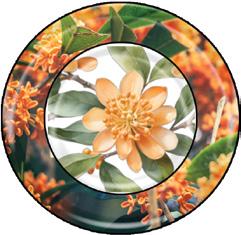
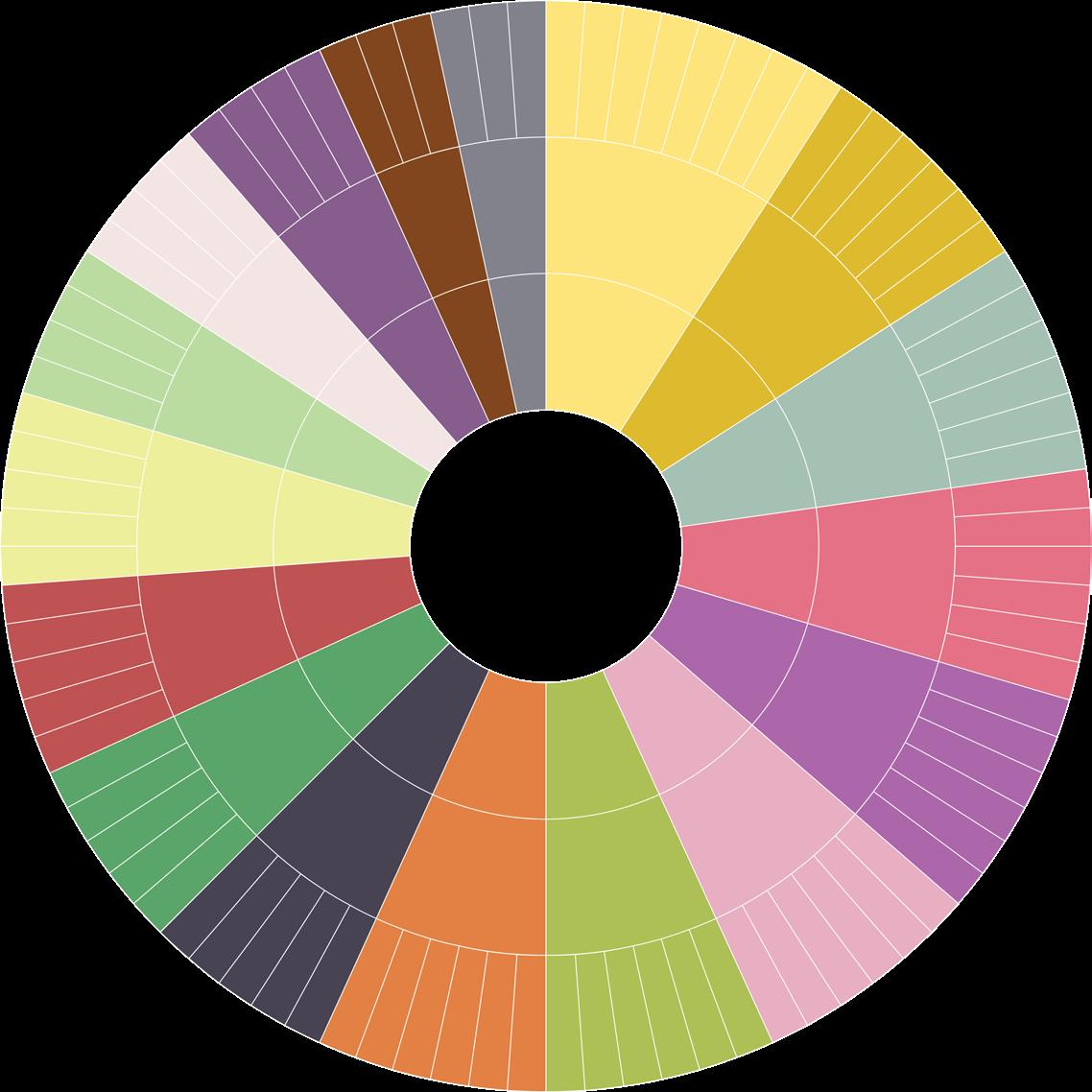
Lemon Aspen — Acronychia acidula
— is an Australian citrus with two varieties bearing the same name. The true variety, A. acidula supposedly with a more intense fresh citrus flavor than the more widely grown White Lemon Aspen (White or southern aspen Acronychia oblongifolia). In some areas it is known as pigeon berry. With glossy green leaves, when crushed they are said to have a slight mango skin aroma. Lemon aspen ear star-shaped/globular fruits, with small black seeds like apple seeds, with a fresh lemon sherbet flavor said to be quite intense, astringent and a tad bitter. Distillation allows complex flavor notes of eucalyptus resin, some tropical fruity accents, conifer, honey, myrrh, and green apples to come forth (1).
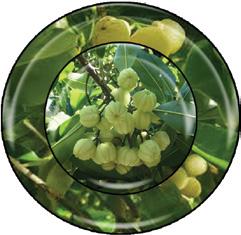
Lemon Myrtle — Backhousia citriodora — family Myrtaceae in the genus Backhousia. Widely used in Australian gins in place of lemons (1). Once called Lemon scented myrtle, it is also regarded in Australian circles as “Queen of Lemon Herbs.” With fresh lemon aromatics, the myrtle contains the highest quantity of citral (aromatic acyclic monoterpenoid — strong lemon scent, consisting of two isomers, gerani al and neral) of any natural plant. Citral is a main component of citrus peel aroma and flavor. Conveying bay leaf, rose, and geranium nuances, and an intense citrus aroma with a sweetish candied lemon taste.
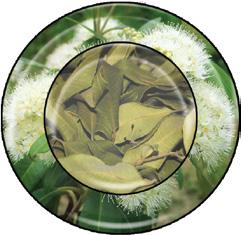

Syzygium smithii (formerly Acmena smithii) — Lilly Pilly is a summer flowering, winter fruiting evergreen tree within the myrtle family, Myrtaceae. It shares the common name “lilly pilly” with several other plants. In New Zealand, it is known as monkey apple. Rough, woody bark, cream and smooth green, waxy leaves with flushes of pink new growth. The edible berries are small fruits, averaging one to two centimeters in length, and have a round to oval shape with a broad middle tapering to curved ends. Some berries may have a shallow depression at the top, while others have remnants of the blossom at the non-stem end. The tiny berries grow in large clusters, and the skin is thin, firm, shiny, and taut, ranging in color from white, pink-red, violet, to magenta, depending on the variety. Berries are sweet-tart, musky and slightly metallic in taste with fruity, spice-filled notes reminding one of cloves, cinnamon, pears, cranberries, and apples. Noting again there are many different varieties of berries under the Lilly Pilly name and each variety will vary in flavor and texture. See also Riberry.


Mānuka — Leptospermum, scoparium — A prolific shrubtype tree. A flowering plant of the Myrtaceae (myrtle) family native to New Zealand (including the Chatham Islands) and south-east Australia and also known as the New Zealand Teatree. Other common names: Broom tea-tree, red mānuka, crimson tea bush, tea tree, kahikatoa (Maori), katoa (Maori), mānuka (Maori). Mānuka tea tree is commonly grouped under ‘tea trees,’ which also includes Camellia sinensis (tea plant, tea shrub, tea tree), Kunzea ericoides (kānuka or white teatree), Leptospermum petersonii (lemon-scented teatree), and Melaleuca alternifolia (aka. narrow-leaved paperbark, narrow-leaved tea tree, or tea tree). Mānuka oil is an essential oil with both the extracted oil and its individual components associated with various medicinal properties. The composition of Manuka essential oil varies by the plant's geographical location, with different chemotypes (chemical types) dominating different regions of New Zealand. Bees collect the nectar of its flowers and this produces the famous delicately aromatic Mānuka honey. Furthermore, the chemistry (including flavorful terpenes) of the Manuka plant differs significantly between its essential oil and its nectar, which is processed into the Mānuka honey. Four Pillars notes: “Our friends at Island Gin in New Zealand have taken their original Island Gin, distilled with wild Mānuka honey, and added fresh oranges, inspired by our signature botanical. The citrus adds a brightness and lift to the gin, while still allowing the honey to shine.” Several other distillers in New Zealand, including Carbon Six, are noted for using Mānuka. While some Manuka honey is sourced from Australia, New Zealand is more known for it, and some Australian distilleries are incorporating local Australian flora, to create unique gin flavors instead of relying on Mānuka.

Muntries — Kunzia pomifera. From a short, ground hugging tree, which fruits for a brief period February–March, comes forth small green berries that have a sharp crunchy texture like under-ripe pears. When ripe the berry skins may take on tinges of red or purple hues. Strong minced fruit flavor like that of stewed apples and with buttery accents. With distillation flavor notes of apple, light sweet juniper and mild bush honey arise. In Australia, “bush honey” is a general term for polyfloral honey harvested from the diverse, native flora of the Australian bush, such as eucalypts and other native trees and shrubs. The taste of Bush honey varies widely because it is a polyfloral honey, but generally it has a strong, robust, and earthy flavor with notes of eucalyptus, caramel, and molasses. Light-colored bush honeys are milder and sweeter, while darker ones have a more intense and complex taste, sometimes described as spicy or liquorice-like.
Native Thyme (aka. Cut-leaf Mint Bush) — Prostanthera incisa, also sometimes known as native sage is a type of native mint once used as a medicinal herb, but now more commonly features in cooking and herbal teas. So, though named Native thyme it is more closely related to mint than thyme. Though a member of the genus Prostanthera in the mint bush family. Leaves contain an abundance of essential oil, de livering a strong pungent aroma, especially when the oil glands on the leaves are bruised or disturbed. Distillation brings forth musky, mentholic and earthy notes. Used dried or fresh yielding woody notes, and a strong mint and citrus presence, as desired.

KINMOKUSEI FLOWERS
TASMANIAN PEPPERBERRY SALTBUSH RIBER RY
Quandong — Santalum acuminatum — the desert quandong, a native Australian fruit with tart, peachy, and woody flavors, is noted as one of Australia’s widest growing fruit trees, growing in all parts of the continent. Also nicknamed as native or wild peach, the tart quandong is a member of the sandalwood family, Santalaceae The generally bright red fruit, bearing a large stone, can vary in sweetness and astringency. A complex composition results in it having a “unique and difficult to define flavor” profile, though tropical stone fruit notes and fermented dry eucalypt aromas with hints of floral and green spice qualities are noted (1). Other sources suggest earthy, dry lentil or bean-like and fermented aromas, acidic and salty tastes, and subtle peach/apricot, strawberry, and rhubarb flavors. Quandong is is noted as being used in Australian gins to impart unique botanical characteristics. Distillers combine quandong with other botanicals like juniper and citrus to create spirits with distinctive fruity, spicy, and sometimes tart profiles. While quandong is not native to New Zealand, its use is an example of the growing trend of incorporating native Australian ingredients into premium spirits. BUNYA NUT POPPY SEED LEMON MYRTLE
GERALDTON WAX
Oilseed obtained from the opium poppy — Papaver somiferum L. is featured here. The tiny kidney-shaped seeds are harvested from the dried seed pods. Seeds are used whole or ground into a meal as an ingredient in many foods — especially in pastry and breads and are pressed to yield poppyseed oil. The odor is strong, balsamic, valerian oil-like. [Valerian oil has a strong, earthy, woody, and balsamic aroma, sometimes described as musky or having a pungent, sour-grape-like quality.] Grey poppy seed oil is characterized by fatty, nutty, and sweet odors, while in flavor delivering nutty, sweet notes and a peanut-aftertaste. White poppy seed oil emits walnut, hazelnut, peanut, and green odor qualities, accompanied by walnut and green flavors. More than 80 alkaloids are present in opium along with a noted 23 odor-active principles. Imagination gin from Imagination Distilling in New Zealand incorporated poppy seeds in a special edition release and other distilleries Down Under and in other countries make gins with poppy seed in the formula.


Riberry — Syzygium luehmannii — is one of more than 60 varieties of Lilly Pilly. An ornamental plant, riberry is favored over other varieties for its abundant small pink to reddish-purple skinned fruits with white flesh high in vitamins, antioxidants, and minerals. The small ovoid or pear-shaped fruit grows in clusters and conveys astringent cranberry-like flavor with noted hints of musky, floral conifer, and spiced tea attributes. Distillation brings forth more pronounced spice notes and less bitter acidity. As noted under the Lilly Pilly heading, clove, cinnamon, rich resinous bush honey, refreshing menthol and notes of conifer shine through. See also under Lilly Pilly.
River Mint — Mentha australis — aka native mint, native peppermint, wild mint, or Australian mint in the Lamiaceae (mint) family is a perennial, evergreen fast growing herb with green oval leaves and can grow quite tall and wide in berth. Flowering during the summer and autumn, the edible leaves are smaller than for common mint and have a more pungent flavor and aroma — a cross between peppermint and spearmint perhaps, with a hint of menthol in the finish. Complex sweet citrus and bright herbaceous notes are said to come through during dis tillation. Also said to “lift the overall flavor of a gin,” carrying through a burst of freshness not noted with other common mint varieties.
Rosella — Hibiscus sabdariffa — also known as roselle, native rosella, wild hibiscus or hibiscus flower from the Malvaceae (mallows) family is an introduced (and “adopted”) edible hibiscus, not a native Australian hibiscus. Though it is a wellknown and widely grown plant in the region, it has become a uniquely Australian symbol of the bush tucker. Australia also has a native species, Hibiscus heterophyllus, also known as a native rosella, which is a separate species from the common edible rosella. All parts of the plant are edible, however it is the red edible calyxes (cup-like area or structures) which protect the developing flower bud and support the large flower once it has bloomed, that are most valuable. The calyxes are carefully hand-harvested based on their most delicate nature and then stored quickly thereafter to preserve their flavors, conveying notable tart-sweet rhubarb, cranberry and hibiscus flavor notes, and a little tartness and bitterness if eaten fresh. When distilled or stewed, notes of strawberry, cardamom, gardenia, and floral anise qualities arise. (The leaves are said, like the sorrel plant (red sorrel) to have a lemony flavor.)


Old Man Saltbush, Atriplex nummularia, (family Amaranthacea) is an iconic, silver-foliaged shrub of arid and semi-arid regions of Australia. It is the largest species of Australian saltbush and in addition to its tolerance of hot temperatures and dry environments, is common on saline, alkaline and limestone soils. Saltbush is also known as Old Man Saltbush, Creeping Saltbush or Tjilyi-tjilyi by the Indigenous people of Australia and refers to the plants of the Atriplex genus. Saltbush is described as one of Australia’s most diverse plants with 52 Australian varieties known. The most used are also noted as Old Man and Bluegreen (1). Distinctly salty and shrub like. Leaves are the most used part in distillation. Strong grassy aromatics are conveyed, providing a umami expressiveness to flavor, though oaky root, rose-like and honeysuckle, with hints of lemon verbena are also ascribed to this plant’s flavor contributions.
Sea Parsley or Sea Celery — Apium prostratum, Apiaceae (carrot) family — is a small leafy plant growing widely along the southern coasts of Australia, with the variances in the specific coastal landscapes supposedly altering the appearance and taste of the different varieties. In general, it is closely related to European parsley, both in appearance and flavor, though it grows in a different manner under different terrain conditions than European parsley. Conveys distinctive fresh bitterness with a notes of oceanic saltiness/ seaweed and celery-parsley flavor. “Sea parsley is used as a botanical in some gins, providing a salty, peppery, and slightly celery-like flavor, particularly in Australian gins like those from Manly Spirits Co. and West Winds Gin.”
Tasmanian Mountain Pepperberry — Tasmannia lanceolata — is a most popular Australian gin botanical, “common in new wave gin.” Leaves and berries proved popular to British settlers for its replacing traditional pepper in food dishes. This is not an actual pepper; the small fleshy black or dark purple two-lobed berries and leaves provide oily camphoraceous notes — distinct eucalypt oily notes, with hints of candied fruit — and peppery-fruity notes. Used as an alternative to traditional peppery botanicals, the plant delivers sweet and warming spicy notes throughout distillation — ultimately providing a “bold and warming lift in a gin” (1).



Wattleseed — Acacia victoriae (“elegant wattle”) — A plant growing throughout most of Australia, especially in arid desert climes. Aboriginal names for wattle seed include ariepe (Indigenous group: Arrernte), ganabargu (Warlpiri) ngatunpa (Pitjatjantjara), and pulkuru (Pintupi). Seeds are roasted and ground to remove the hard shell. Different roasting degrees impact flavor and the intensity of nutty, almost hazelnut flavor. Location and climate — terroir — can impact the flavors of different seeds. Wattle seeds are noted as conveying strong bitter or toasted coffee, sweet spice, and raisin, plus chocolate flavors, assisting also in “drying out” a gin and providing for a nice mouthfeel sensation (1). A note is also made here of Golden Wattle (Acacia pycnantha) a common tree with golden flowers and long seed pods also conveying, when seeds are roasted, a rich nutty coffee taste and aroma.
Yuzu — Citrus junos (Citrus × junos — from Japanese) — is a citrus fruit and plant in the family Rutaceae of East Asian origin cultivated in New Zealand and Australia. This is a hybrid of a mandarin orange and the ichang papeda (Citrus cavaleriei, the Ichang papeda, a slow growing species of papeda that has a characteristic lemon-scented foliage and flowers. The fruit resembles a small grapefruit or a yellow clementine with uneven skin. It may be either yellow or green depending upon degree of ripeness. Yuzu fruits are very aromatic and citrusy. Presenting sweet and bitter notes with a hint of tartness. Overall, its sublime citrusy aroma is noted as quite subtle, fruity, delicate and meringue-like. The aroma of yuzu is considered by some to be a combination of grapefruit and lemon, and perhaps mandarin orange, though fresher, lighter and more complex. Several distilleries in Australia and New Zealand produce gins featuring yuzu, with Australian examples including Four Pillars Fresh Yuzu Gin and Settlers Yuzu Gin, and a New Zealand example being Yu Gin from Gindulgence in Auckland. Australian distilleries like Archie Rose have sourced the citrus for their yuzu-infused gins, while New Zealand's Yu Gin also highlights the fragrant Japanese citrus in its refreshing, exotic flavor profile.
Gary Spedding, Ph.D. is a brewing, distilling, and sensory analytical chemist, and owner of Brewing and Distilling Analytical Services, LLC in Lexington, KY.
(1) Grbich, G.; Fisher, M. The Guide to Australian Gin. Vol. 1. 2022. People Media Group, Auckland, New Zealand. ISBN 978-0-473-64665-3.
(2) von Wyss, M. Gin & Botanicals Map of Australia & New Zealand VWMAPS Gintonica. 2017. VW Maps Pty Ltd. Kew, Victoria, Australia. [Maps: von Wyss. Words by Box, D. 2017, Botanical Illustrations: Drulie, L. 2017]
(3) Mossati, C. Australian Native Edibles - Grow It Eat It Drink It - [Edition 1.1]. 2025. Grow It Eat It Drink It Books.
(4) https://uniquelyaustralianfoods.org/ See the Resources Page
(5) Smyth, H. Defining the Unique Flavours of Australian Native Foods. Pub No. 10/062. 2010. Rural Industries Research and Development Corporation. ISBN 978 1 74254 034 4. Available at: https:// agrifutures.com.au/product/defining-theunique-flavours-of-australian-native-foods/ [Accessed Sept. 30, 2025]
(6) Smyth, H.; Sultanbawa, Y. 20 Unique Flavours from Australian Native Plants. In, Australian Native Plants Cultivation and Uses in the Health and Food Industries. Sultanbawa, Y., Sultanbawa, F (Eds.) CRC Press. 2016; pp 265–274.DOI: 10.1201/ b20635-23.
(7) Richmond, R.; Bowyer, M.; Vuong, Q. Australian native fruits: Potential uses as functional food ingredients. Journal of Functional Foods 2019, 62, 103547. DOI: 10.1016/j.jff.2019.103547.
(8) Dissanayake, I. H.; Zak, V.; Kaur, K.; Jaye, K.; Ayati, Z.; Chang, D.; Li, C. G.; Bhuyan, D. J. Australian native fruits and vegetables: Chemical composition, nutritional profile, bioactivity and potential valorization by industries. Critical Reviews in Food Science and Nutrition 2023, 63 (27), 8511–8544. DOI: 10.1080/10408398.2022.2057913.
(9) Native Plants of New Zealand: https://www. doc.govt.nz/nature/native-plants/ -with Manuka as example subheading entry: https://www.doc.govt.nz/nature/native-plants/ manuka-kahikatoa-and-kanuka/
(10) Boadle, J. (Contributing Author) The Australian Book of Gin, Vol. 2: A Journey Around Australian Gin Distilleries. 2023 The Australian Gin Collective.
WRITTEN
BY ALAN GREEN, PH.D. /// PHOTOS BY AMANDA JOY
CHRISTENSEN
You can buy a pint of wine in a cup with a lid on the ferry across, which is not a normal way to describe the start of a work trip. Neither is an offer of a dog walk on the beach before work each morning. But then, a project visit to Nantucket Island is anything but ordinary.
I originally offered to complete the automation engineering work remotely for Triple Eight Distillery’s head distiller, Bryan
(VFD), and adding VFD control to a pump that didn’t have it. VFDs allow motors to be run at different speeds as opposed to full speed only. This would also be an ideal opportunity for them to get the controls back in shape. What follows is a journey that highlights the steps I took over the course of a week to restore and optimize the distillery’s still, demonstrating the value of leveraging engineering for control and process
NOTHING BEATS UNDERSTANDING THE PROCESS AND THE EQUIPMENT IN FRONT OF YOU.

IN AN ENVIRONMENT WHERE UPTIME, SAFETY, AND CONSISTENCY MATTER, THOUGHTFUL AUTOMATION PROVED TO BE AS VALUABLE AS ANY PHYSICAL UPGRADE.
by making sure I could connect online to the programmable logic controller (PLC), the human-machine interface (HMI) and take backups of the code. If we couldn’t connect, it would have been a pretty fruitless week (not counting time I spent walking dogs on the beach and eating lobster and scallops). After connecting, I spent some time familiarizing myself with the code layout and the still’s physical construction, including the new valves, pumps and instrumentation that had been added.
The electrician arrived on day three to finalize some of the wiring. As we worked, I added new code to the PLC for control of the pump via the new VFD and set up the drive parameters. A flow meter had been added upstream of this pump, so I added a safety inter lock that would shut the new steam valves if the flow rate dropped below a threshold. Eventually everything looked good from my side.
By Tuesday we were ready to test the changes and bring steam onto the system. This was where the real fun began. Not only can we see how the new feed and recirculating pumps per form, but we can see what other code may need to be adjusted and where improvements can be made. With the steam safety shut-off valves working and the still able to bring water successfully in and up to temperature, we were confident about bringing wash into the system to allow us to watch all the proportional, inte gral, and derivative (PID) controllers. PID controllers are an important part of the process automation toolkit because they allow valves and motors to respond
automatically to reach and maintain a desired process set point (e.g., temperature or speed) by reading that process variable and adjusting the valve position or motor speed accordingly. Adjusting the P, I and D variables can be a tricky and time-consuming process, however; there are tools that can help, such as a trend screen mapping the values, but nothing beats understanding the process and the equipment in front of you.
The next few days were spent running the still so we could tweak parameters until each part was working better and finding solutions to improve the pinch points. One example was the location of the new heat exchanger, which had been dictated by its size and how the piping was oriented to fit the old heat exchanger. One suggestion provided was to re-orient and re-pipe the output of the pump so there is a direct line to the inlet of the heat exchanger, which would greatly improve the flow rate and control of the pump.
This extra time also gave me the opportunity to see how Jennings interacted with the screens so I could
Dr. Alan Green is a subject matter expert in process automation at The Haskell Company with more than 22 years of experience in process automation and engineering, including over a decade working with world-renowned distilleries like Tullamore DEW and Glenfiddich. He holds a PhD in electrical and electronic engineering.

Written by Jeff Bach
So even if you have a superior product (and we’ll assume for the sake of this piece that you do), you’re competing against dozens of brands in the same space, some of which might have a head start on getting noticed. It’s up to the brewer or distiller to connect with consumers and build excitement about their product through social media platforms, tastings, and other kinds of promotions.
Enter the celebrity brand. Whether it’s an influencer, Oscar nominee, or well-known, er…drinker, the celebrity will get your brand launched within a few months, rather than the years it would take you to build an audience. Matthew McConaughey, known for his Texas roots, authenticity, and his love of tequila, owns his own brand, Pantalones — “the official tequila of getting out of line.” If it were your tequila he was endorsing, you’d have the powers of his 10 million followers on Facebook and on Instagram.
he short answer is yes. If you can find the right fit for your brew, spirits, or ready-to-drink product, celebrities are a time-proven way to get attention in a crowded marketplace.
And that’s the foundational challenge for any liquor brand: how to compete for
valuable shelf space in liquor stores and other outlets. Distributors take a percentage of your sales, but their entire function is to store and then deliver products to shelves. They don’t take an active part in your marketing and consumer outreach, which makes sense if they represent several competing brands.
You probably can’t grab Matthew McConaughey, but Good Boy ready-to-drink vodka products snagged John Daly’s endorsement and involvement. Daly, who is famous for enjoying a refreshing beverage, is a great fit for a product whose tagline is “Sip Like a Legend.” The mixes contain tea, fruit juice, and vodka, with zero sugar, zero carbs, and only 95 calories. Hence, the idea is that John Daly chooses these to drink like a “good boy.”
Daly has invested time and talent into promotion, including appearances on podcasts, interviews, and tastings. He’s also a great example of finding the right fit at the right
time; he appears in the recently released “Happy Gilmore 2,” which ranked first on Netflix's top 10 English-language movies list, drawing 46.7 million views in three days. That’s a lot of John Daly views.
Every celebrity deal is different, but most are structured around investing or becoming a guarantor for the liquor brand. In exchange for somewhere between two and ten percent of sales, profits, or equity in the company, a celebrity might agree to promote the product on podcasts, in appearances, or social media posts. The brand may not get John Daly at every tasting, but they may get a six-foottall cardboard version to draw attention to their booth or table.
Some brands have partnered with sports teams or venues to get the same benefits. The NBA has Hennessy as its official spirit. The NHL has J.P. Wiser's whisky as its official whisky in Canada and Jägermeister as its official shot in the US. The NFL's official spirits partner is Diageo, with brands like Smirnoff, Captain Morgan, and Crown Royal. The WNBA's official wine partner is La Crema.
Every celebrity deal is different, but most are structured around investing or becoming a guarantor for the liquor brand.

Of course, those brands have more buying power than small distilleries, but venues and events like concerts offer opportunities to get your product in front of a new crowd that is filled with energy.
So, back to the question: Does a celebrity add value to your brand? Yes, but with a caveat. The “celebrity deal” means little and doesn't add value; however, if the arrangement works, and you are moving more product, it certainly does.
Jeff Bach is a seasoned business broker with decades of experience closing transactions across a wide range of industries, with particular expertise in spirits, beer, and wine-related businesses. He brings a practical, people-first perspective to every deal, guiding buyers and sellers through both the financial and emotional complexities of the process.


Written by Molly Troupe
by Huang Xiangjian
As a distiller and blender, I’ve spent much of my career thinking about how liquid can carry narrative. That question sits at the heart of a project I became involved with through a shared love of whiskey, storytelling, and games that bring people together. The project was called Quest’s End, and wasn't built around a single distillery or traditional category play. Instead, it’s a brand world inspired by fantasy, community, and the idea that whiskey can be both a product and a participant in a larger experience.
Brand storytelling in craft spirits is often either underdeveloped or overextended. Some producers pour their passion into the liquid but never explain why it matters; others build elaborate narratives that the whiskey itself can’t support. Quest’s End set out to avoid both extremes, treating story and spirit as equal collaborators.
The project was a venture started by those with shared passions of whiskey, storytelling, and live action role play games — much like the kids in Stranger Things, minus the demogorgons. Dungeons & Dragons (D&D), is a game essentially about community. For the readers who have not watched Stranger Things, here is some insight on how the game
is played: Players gather, and the leader (dungeon master) narrates a story. Each player creates a character and how it interacts within this imagined world, then the dungeon master takes these characters and weaves a narrative, controlling the direction of the game. It is a much grander version of Mad Libs, where storytelling, dice rolls, game rules, the people who play, and the dungeon master determine the outcome. It is a game that can be played in person or even online, extending the community outreach into the world wide web.
D&D has a long list of fans, including both Matthew Lillard and Justin Ware. Matthew Lillard is an American actor best known for characters in Scream and Scooby Doo, while Justin Ware is a screenwriter and is best known for his work writing Bloodsucking Bastards and Cloud 9. Together, they launched Quest’s End Whiskey, a fantasy-and-gaming-inspired whiskey brand.
This luxury whiskey brand puts out limited-edition sets in a sneaker-drop style release. They are available for only a short time and are never to be re-released (with the exception of exclusive member-only, low-quantity vault sales). This style of operations is not without challenges, but the crew make it look good. Each release is in tribute to a different D&D class, or character type. The first release of 2025 was Quest’s End Druid. For this release, every component of the product (whiskey, packaging, book, etc) was custom-made for this class. The process to get from ideation to product is both passionate and lengthy.
First, the team brainstorms. What is a druid? Druids have magic sourced from nature, using the world around them to heal, transform into animals, and destroy, as needed. They perform rites that mark the passage of seasons along with other druids. They seek a balance between them and the world around them, guarding natural resources for the good of the world.
With this information, what has happened in previous chapters of the story and the experience that comes from playing the game,
the writer comes up with the first draft of the story for that release. With story in hand, the team comes up with a creative brief for liquid development of who this character is, what they believe, and how the juice should highlight the character. Once this brief is done, the details can be combed over. A focus for the druid character was actually a color: green, representing the world all around and the nature that the druid fiercely protects.
With this information and the creative brief in hand, the blender gets to work. Telling stories using whiskey as a medium is challenging but good fun. Imagine you are given the task of blending a whiskey based on a character represented by the color green and by nature. Where do you start?
You start by asking A LOT of questions. What does green mean for whiskey? What does nature taste like? My initial thought was rye whiskey. I had an initial thought in my head of the perfect rye whiskey, but exploration was needed first. I tasted countless samples of rye whiskey produced all around the country, from coast to coast.
Rye whiskies often have a mint, dill, or grassy aroma and flavor. They are less sweet than bourbon, with white pepper and clove to make for a dramatic whiskey. Some rye whiskies are greener than others, as no two rye whiskies are made exactly the same. Finding the perfect whiskey for this is about scouting samples that help paint the picture of this druid and the predominant environment of that chapter of the story. Green, keep it in mind. Generally speaking, the project could be as complicated as “find the perfect rye whiskey,” which, technically, is already complicated. But the brand is more than just that — it is also an opportunity to play and break categories.
Back to the sneaker-drop style whiskey release. Why is that so important? As it currently stands, this whiskey is never going to be on a liquor store shelf. It does not need to find a home next to Blanton’s on the shelf or forever be lost to the consumer. Our consumer finds
Some producers pour their passion into the liquid but never explain why it matters; others build elaborate narratives that the whiskey itself can’t support.
us online, one way or another, and makes their purchase with the click of a button, where their bottle is delivered to their door. I am not beholden to a whiskey category, and I don’t have to produce a rye whiskey. I can make whiskey that fits the character, not a character that fits the whiskey.
Rye whiskey still makes the most sense for Quest’s End Druid, but if partnered with a bourbon, could you make more green magic? Or maybe a single malt? And then, maybe barrel finish? Would that help complete the picture?
Second, you brainstorm suppliers. There are a plethora of great suppliers of whisk(e) y around the world, selling barrels of various ages, mashbills, and cooperage. Suppliers can be anything from big producers like MGP to small craft distilleries that only have a few barrels to spare. There’s a lot to choose from. You reach out to suppliers, some that you are fond of and familiar with, and some that you are tasting for the very first time. You taste sample after sample, looking for inspiration. Tasting the whiskey does exactly what it is supposed to do: give more direction to the project. I put whiskies into categories. There’s the “hard pass” category: a whiskey that doesn’t work for the project and I prefer to keep away from. The “not now” category: for whiskies that don’t work for Quest’s End Druid, but may work for another project. And a “let’s
experiment” category: for whiskies that I want to explore for the project and see how they can work together. The experiment category is by far the smallest, with a narrowed-down set of about six whiskies to analyze and blend. I like to re-taste individually and then start with a generic mock blend. The goal was to still be a rye whiskey, requiring at least 51 percent rye whiskey to be the base, and from there, other whiskies can be added.
Pipette by pipette, a blend is built. It is tested with small adjustments. What effect does this have? Is it positive or negative? Notes are taken, and another small adjustment is made. More notes until you finally get to a holding point. It’s there that I like to sit, wait, and see how the whiskey reveals itself. At this point, I bring in my panelist (aka my husband) for feedback.
It turns out that you fall in love with a rye whiskey from West Virginia that is the epitome of rye whiskey: bold and delicate, mint and sweet, with a dryness that makes you crave more. You also fall in love with a bourbon from Oregon with four grains, rye being one of them, and an appealing sweetness that helps add depth to this rye. Together, they are both bourbon and rye, sweet and spicy, with a wonderful green note that brings nature into your cup. You sit with these spirits, and while they are beautiful together, you decide that there is more to the story. Barrel finishing
Molly Troupe attended Southern Oregon University where she earned a bachelor’s degree in chemistry. After SOU, she continued her education by attending Heriot Watt University, where she earned a Master of Science degree in Brewing and Distilling. In 2017, she joined forces with Jill Kuehler as Freeland Spirit’s Master Distiller and Partner. In 2018, she was featured on Forbes 30 Under 30 for Food and Beverage and, at 27 was the youngest woman Master Distiller in the United States.
Purchasing and logistics are the less fun but equally important aspects to get a blend right.
adds the poetry needed to bring this project to life. Some whiskey finishes in rum barrels, and some whiskey in red vermouth barrels, adding extra sweetness to soften the rye and add balance and serenity.
Purchasing and logistics are the less fun but equally important aspects to get a blend right. All materials need to be delivered with plenty of time and in line with the sample standards. The timing of this must accommodate the extra resting in finishing barrels, with additional supplies on hand to accommodate last minute blending adjustments, as needed. Every label, box, and bottle is onsite before liquid Druid goes into the bottle, ready for its next journey. Now we have our whiskey, our story, and our custom package. This whiskey is ready to drop and find its home in the middle of a D&D campaign, adding liquid courage to the table just in time for the next player to step up to the dragon in front of them.


IMPROVING ENVIRONMENTAL AND ECONOMIC PERFORMANCE OF YOUR OPERATION
Written by Kurt A. Rosentrater, Ph.D.
There are many issues to worry about when operating a distillery or ethanol plant. One of these is the non-fermentable materials left behind after fermentation. For many distilleries, if the whole stillage, or subsequent products that are made from the stillage, cannot be removed from the facility in a timely fashion (this is known as “depletion” at some facilities), then processing operations may have to stop.
A rule of thumb commonly used in industry states that for every 1 kg of cereal grain used for fermentation, approximately 1/3 kg of each of the constituent product streams (alcohol, CO2 , non-fermentable residues) will be produced. On a more scientific basis, the rule of thirds arises due to the metabolism of the yeast while they consume the glucose in the grain’s starch:
½ C6H12O6 (Glucose) ⇨ C2H5OH (Ethanol) + CO2 (Carbon Dioxide)
Theoretically, one bushel of cereal grain can yield a maximum of about 2.97 gal/bu (0.44 L/kg). This is especially true for grain-in fermentations. Grain-out fermentations, however, will often have a much lower yield of alcohol, and thus higher residual starch and therefore a greater quantity of spent grain solids. Many distilleries will commonly see an alcohol yield between 2.50 to 2.74 gal/bu (0.37 to 0.41 L/kg), although some plants can achieve up to 2.80 gal/bu (0.42 L/kg). Thus, 25.4 kg of cereal grain will typically produce about 8 kg of alcohol, 8 kg of carbon dioxide, and 8 kg of spent grains (not counting the water). This equates to a cereal grain-to-distillers grains conversion of about 0.30 kg spent grain/1 kg cereal grain (with a range from 0.28 to 0.32 kg/1 kg cereal grain) — thus the rule of thirds.
Potential variations in cereal grain conversion and fermentation will substantially affect the quantity of coproducts that are generated during processing. Moreover, at individual distilleries, variations in raw material inputs, equipment used, and operational procedures will also result in conversion rates that will not match values found in literature, but instead vary over both time and location.
There is considerable economic value to be gained from dewatering the spent grains (i.e., separating the thin stillage, which contains water and dissolved solids) and selling the distillers wet grains (i.e., suspended solids) as livestock feed. Typical nutrient compositions for thin stillage and spent wet grains are provided in Tables 1 and 2.
Separation can be achieved with a variety of equipment, including centrifuges, screens, etc. Many distillers, especially small plants, do not yet do this though. If you are sending your liquid byproducts (i.e., whole stillage or thin stillage) to the city water treatment system, there are many issues that you need to consider.
Public wastewater treatment authorities have fee structures where commercial customers (e.g., distilleries) are charged according to the burden that they place on a wastewater treatment facility. One component of this fee is a surcharge based on the specific chemical characteristics of your wastewater. Municipal authorities periodically sample customers’ wastewater streams and analyze them for parameters such as biochemical oxygen demand (BOD), total suspended solids (TSS), ammonia (NH3), and other chemical/physical properties. The specific chemical characteristics monitored vary by authority, and these parameters, along with the volumetric output of wastewater, are used to compute each customer’s fee.
While every city in the U.S. is unique and each has its own rate structure, a large proportion of wastewater treatment authorities do not post their surcharge formulas online, so understanding how these fees are determined is not always clear. In a recent study (Garcia et al., 2016), data was gathered on the methods used to determine sewage surcharges for industrial customers including information on the pollution characteristics measured, rates, and methods of computation. Overall, information was collected for 71 wastewater authorities throughout the U.S.
Information about the chemical characteristics used to determine surcharges from these municipal authorities is summarized in Table 3 More than 90 percent of the municipalities surveyed included both TSS and BOD in determining sewage surcharges. Between 21 percent and 31 percent used FOG, TKN, and COD to determine fees. Less than 20 percent of the municipalities used other chemical factors. Table 4 provides definitions of these terms.
In the national dataset of municipalities, there were multiple ways to calculate sewage surcharges. For 60 of the 71 (84.5 percent), surcharge formulas were expressed with this type of formula:
Where:
• Si is the surcharge for a given wastewater characteristic i (US $) (See Table 3 for the typical characteristics)
• V is the total volume of wastewater discharged during the billing period (gallons)
• Bi is the measured concentration of the wastewater characteristic i in the discharged wastewater (mg/L)
• Ci is the allowable concentration of the wastewater characteristic i (mg/L)
• D is a unit conversion factor (typically 8.34 lb ∙ L/mg ∙ gal)
• Ei is a cost factor for the wastewater characteristic i (US $/lb)
Some of these properties are explained in Table 4
TABLE 4 GENERAL DEFINITIONS OF PARAMETERS WHICH ARE USED TO ASSESS THE PROPERTIES OF WASTEWATER EFFLUENTS in various municipalities in the U.S. (adapted from Garcia et al., 2016).
Biochemical oxygen demand (BOD 5 )
Chemical oxygen demand (COD)
Is the amount of dissolved oxygen needed (i.e., demanded) by aerobic biological organisms to break down organic material present in a given water sample at a certain temperature (20 degrees Celsius most often) over a specific time period (five days is common).
Is a measure of the amount of oxygen that can be consumed by reactions in a mea sured solution. It is commonly expressed in terms of mass of oxygen consumed per volume of solution, which in SI units is milligrams per liter (mg/L). A COD test can be used to quantify the amount of organics in water.
Total suspended solids (TSS)
Total phosphorus (TP)
Ammonia (NH 3 )
Total Kjeldahl nitrogen (TKN)
Is the dry-weight of suspended particles (not dissolved particles) in a sample of water that can be trapped by a filter and is analyzed using a filtration apparatus.
Phosphorus compounds originate from the cereal grains and are concentrated during fermentation.
Nitrogenous compounds originate from the cereal grains and are concentrated during fermentation.
Is the total nitrogen bound in organic sub stances, nitrogen in ammonia (NH 3-N), and in ammonium (NH 4+-N) in the chemical analysis of soil, water, or wastewater (e.g. distillery effluent). Nitrogenous compounds originate from the cereal grains and are concentrated during fermentation.
Fats, oil, and grease (FOG)
These are oils that accumulate in the still age and are concentrated during fermenta tion. They originate from the cereal grains that are used.
TABLE 5 WASTEWATER CHARACTERISTICS
If more than one wastewater characteristic is monitored by a municipality, then the total surcharge can be calculated using the following formula:
Total Surcharge ($) =Σ
Where:
• Si is the surcharge for a given wastewater characteristic i (US$) (See Table 3)
As shown in Table 5, stillage fractions (either whole stillage out of the fermentor, or thin stillage after centrifugation/screening) both have relatively high BOD and COD levels. To date, little has been published about the other wastewater characteristics of stillage, however. It is important for you to understand your wastewater characteristics, especially if you are planning on sending your byproducts to the city for treatment.
What do all of these things mean for distilleries? If you are not selling your spent grains for livestock feed and are instead sending your byproduct streams to the city for treatment, you are spending money — the level of which depends upon your specific wastewater characteristics as well as your municipality’s fee structure. You need to consider these costs as you weigh all of your potential options for coproduct separation, processing, and sales. The optimal choice for you also depends upon the size of your distillery, proximity to livestock farms, transportation costs, etc. There is no onesize-fits-all approach, but as the alcohol processing industry grows, these are some of the opportunities and challenges to understand.
It is important to consider the opportunity cost of flushing nutrients down the drain. It is not just a matter of expense for the distillery, but you are also losing potential revenues. For example, as of March, 2024, the average national sales price for distillers wet grains ranged from $49-75/wet ton. Furthermore, the average sales prices for dried distillers grains were approximately two to three times higher than wet products (USDA AMS, 2024).
Whole stillage may be approximately 10 percent solids (or more), so if you could successfully remove the solids, not only will you have the opportunity to sell these nutrients, but you can also reduce your wastewater volumes by up to 10 percent as well as substantially reduce the fines/fees that you pay based on the chemical composition of your discharges. It is all a matter of weighing the opportunity costs.
The most common way that distilleries and ethanol plants separate solids from water is via centrifugation.
When using a centrifugal system to separate particles from a liquid stream, the objective is to use rotational force to accelerate the solid particles and remove them from the liquid stream flow. This is often quantified using Stoke’s Law. This equation states that the particle velocity which can be achieved in a centrifuge is a function of the density difference between the solid phase and the liquid phase, proportional to the square of particle diameter and centrifugal acceleration, but inversely proportional to the viscosity of the stillage stream. This can be written as:

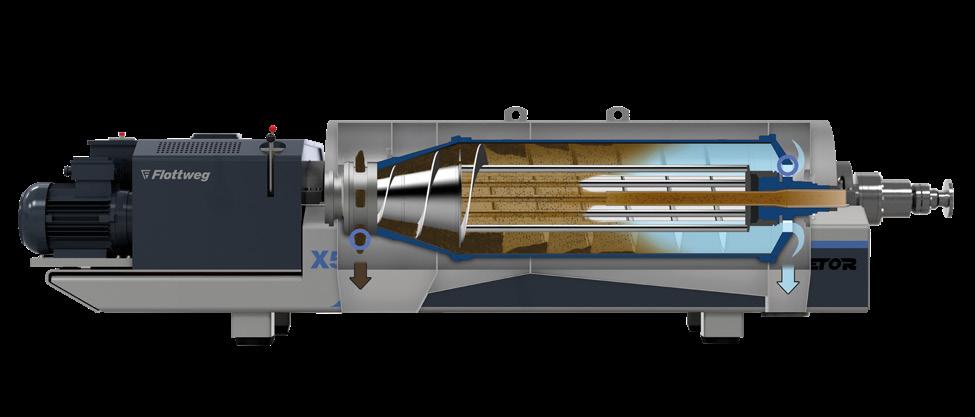
Where:
• V is particle settling velocity that can be achieved with the system (m/s)
• d = particle diameter (m)
• ρw = density of heavy phase (kg/m3)
• ρo = density of light phase (kg/m3)
• η = apparent viscosity (kg/m ∙ s)
• rω2 = centrifugal acceleration (m/s2)
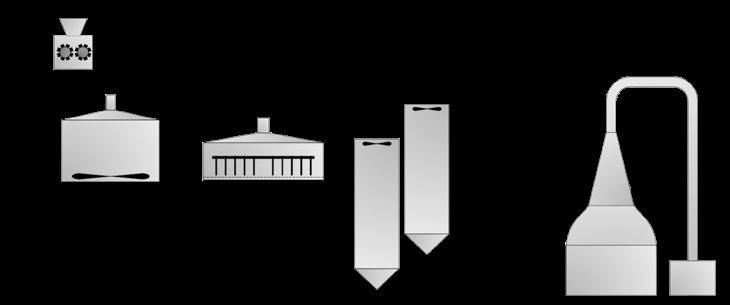

Note that the particle velocity which can be achieved will be a function of the geometry of the centrifuge, the speed at which the centrifuge operates, and the viscosity and density of the stillage. If your mash bill changes, the centrifuge operations need to be altered or else your separation efficiency will change.

DDG — distillers dried grains
DDGS — distillers dried grains with solubles


Figure 1 shows cutaway illustrations for two types of decanter centrifuges. There are, in fact, several styles and manufacturers available based on geometries, flowrates, and power consumption. The centrifuge appropriate for your specific application depends on your slurry’s physical characteristics, including density, viscosity, solids content, etc. Please consult with centrifuge manufacturers to help you determine which will be best for your operations, mash bills, and whole stillage flows.
DDGS — distillers dried grains with solubles 1. STAGE
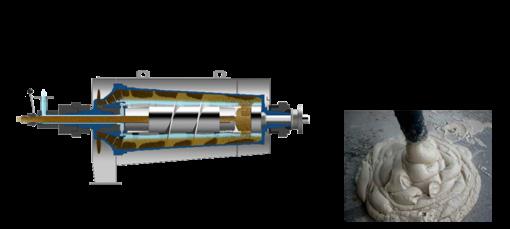
Garcia, R.A., Nieman, C.M., Haylock, R.A., Rosentrater, K.A., Piazza, G.J. 2016. The effect of chicken blood and its components on wastewater characteristics and sewage surcharges. Poultry Science. 95(8):1950-1956.
Rosentrater, K. A. and Liu, K. 2011. Distillers Grains: Production, Properties, and Utilization. Boca Raton, FL: CRC Press.
USDA AMS Livestock, Poultry & Grain Market News. 2024. Available online: https://mymarketnews.ams.usda.gov/viewReport/3618
ACKNOWLEDGMENTS
The author would like to thank Daniel Lakovic and team from Flottweg USA for conversations, data, figures, and tours of various distilleries during preparation of this article.
DDG — distillers dried grains
Figure 2 shows examples of integration of decanter centrifuges within the broader production process at a distillery or biofuels production plant. Note that suspended solids can either be sold as-is as distillers wet grains (DWG) (also known as wet cake), or they can be dried and sold as distillers dried grains (DDG). The dissolved solids are sent to multi-effect evaporators to produce condensed distillers solubles (CDS), which can be added to the wet cake and then dried down to produce distillers dried grains with solubles (DDGS).
Of course, each distillery and biofuels plant may have tweaks and variations of these general process flows and sell modified variants on these types of coproducts.
Hopefully this article has helped you gain some understanding about stillage, its characteristics, and the use of centrifugation to remove non-fermentable solids. Future articles will further explore this topic and will discuss issues such as capital and operational costs, efficiencies, coproduct processing options, as well as stories of success at various companies. Proper solids removal is critical to operational excellence at your processing plant.
Kurt A. Rosentrater, Ph.D. is with the Distillers Grains Technology Council in Ames, IA. For more info, email karosent@iastate.edu or call (515) 294-4019.
Written by Reade A. Huddleston
Avoiding Costly Mistakes When
Building and opening a new distillery is one of the most challenging — and rewarding — projects a distiller can take on. Beyond the obvious financial risks, the process is filled with technical decisions, regulatory hurdles, and sequencing challenges that are easy to underestimate until you are living through them.
Standing up a new facility is rarely just about installing equipment and getting licensed. Modern distilleries are expected to function as efficient production plants while also serving as public-facing spaces for tours, tastings, and events. Balancing those competing demands requires careful planning and a clear understanding of what the facility must ultimately deliver. A few hard-earned lessons from the planning and construction phases can go a long way toward preventing costly surprises and helping a new distillery open smoothly.
There is an old saying that an ounce of prevention is worth a pound of cure, and when planning a new facility nothing could be truer. There are many factors that distillers need to be aware of when planning a
facility, and a comprehensive list is beyond the scope of this article; nevertheless, all new facilities share the same basic planning elements, and during planning it is very easy for distillers to forget critical items that will have big consequences down the road.
The first thing that a distiller should do during the planning phase is sit down and ask themselves exactly what they want their new facility to be able to accomplish. At first glance, this may seem like a simplistic question that any distiller should be able to easily answer. Unfortunately, this is not always the case. Distilleries, especially craft distilleries, are often multipurpose facilities, and they are designed to be both places of production and customer-facing showpieces. A good facility needs to be able to thread the needle to meet the requirements of both form and function. To do this successfully, distillers need to have a clear vision of their requirements for each new facility. The best way to accomplish this is to create a document known as a facility scope. In this document, distillers list out the ideal and minimum expectations for all elements of their new facility in as much detail as possible. They should also list what elements they are willing to
There is an old saying that an ounce of prevention is worth a pound of cure, and when planning a new facility nothing could be truer.
Building a New Distillery

compromise on and what is absolutely required for the success of the facility. This will allow the distiller to fully flesh out their understanding of what they are looking for and, once completed, a facility scope can be used to help guide distillers’ decision making to guarantee that the new facility will meet all the needs of the distiller.
After a facility scope has been created and agreed upon, the next thing distillers should do is gather a facility design team. The actual make-up of the design team will vary greatly depending on the type and scale of the facility being planned, but, for production distilleries it is always recommended that they include an engineer or other technical individual familiar with the distilling process. This is important because commercial beverage distillation is both utility intensive and unique when compared to other types of manufacturing. Having an individual that understands the requirements of a distillery and can speak appropriately with the members of the design team will prevent issues that may not crop up until the facility becomes operational. This representative can also help to ensure that the facility is built in a way that will allow future expansion as well as easy maintenance of equipment. There is little worse than finding out that in order to replace a simple heat exchanger, every tank in a facility needs to be moved and the floor needs to be jackhammered open (the author speaks from experience in this case).
Finally, the last recommendation that

distillers should do during the planning phase is identify exactly what local, state, and federal agencies will have jurisdiction over their new facility. This is important because the agencies that have jurisdiction over a facility may have certain codes or requirements that will inform the design and form of the new facility, and it is often a good idea to involve them early so that major issues can be avoided. For a basic, production-focused distillery, the list of agencies that will have jurisdiction can be relatively short; however, if the distiller wants the facility to be open for tours or plans on having food available for purchase, the list will grow exponentially. Luckily for distillers, an experienced design team should already be able to pre-identify most jurisdictional agencies. If there are still questions, the best way to determine what agencies will have jurisdiction over the facility is to contact relevant local and state governments.
After the planning phase is complete the construction phase begins. Even if a distiller is buying a pre-existing building that has contained a distillery before, chances are they are going to have to do at least a little construction. For more DIY-inclined distillers, this means long days with construction tools in hand and a lot of heavy lifting. For most distillers, though, this probably means hiring someone. For large projects, a general contractor or GC is recommended as they can help manage and oversee the many specialized tradesmen that will be required to complete the project. For smaller construction projects this may not be necessary. Regardless of the size of the project though, it is important that the distiller still be able to exercise some amount of oversight.
The first way that distillers can maintain oversight during construction is to request contractors submit end-of-work pictures for key elements to help document their work. Although this may seem a bit over
the top and feel like micromanaging your contractors, it has a dual purpose. Aside from the obvious ability to track a project's progress, end of work pictures also records the locations and exact layouts of important piping and electrical elements that may need to be accessed during production operations. This is especially important as it is common for many of these items to be inaccessible or difficult to reach once a facility is completed. Indeed, end-of-work pictures are so valuable that they have become required for many large construction projects, and it is common for them to be part of the final hand-off document that construction companies give to clients after job completion.
Another way that distillers can help manage construction on a new facility is to require their contractors to submit as-built drawings after the completion of their work. These drawings, often simply referred to as as-builts, are final engineering drawings and documents that explain exactly what a contractor did, along with the technical specification of the parts used to complete the work. As-built drawings are common for piping manifolds and electrical systems, as well as many other construction elements. They are important because often during construction a contractor is unable to complete their work as originally designed. This may be due to an unexpected obstacle blocking a pipe’s path or the parts originally called for no longer being available. As-builts give a distiller the documentation to understand exactly how their new facility was assembled and why.
Finally, the last thing that distillers can do to ensure the quality and completeness of contractor’s work is to require that contractors be present at both inspection and start-up of all equipment that they worked on. This may seem somewhat obvious, but sometimes due to construction delays and other issues tests of vital pieces of equipment can happen months, or even years, after installation. In these cases, it is important that as part of the agreed-upon work, distillers include a clause that ensures contractors will stand by their work.
There are hundreds, if not thousands, of unmentioned large and small decisions that distillers must make for a new facility to be successful, and it can sometimes feel overwhelming.
Additionally, it is also important for distillers to keep detailed records of all contractors and subcontractors that worked on each aspect of a project. This will allow the distiller to look up and contact a contractor in the case that an issue does arise.
This article does not even begin to scratch the surface of the challenges and considerations distillers must face when standing up a new facility. There are hundreds, if not thousands, of unmentioned large and small decisions that distillers must make for a new facility to be successful, and it can sometimes feel overwhelming. Nevertheless, these are tasks that are not only doable but worthwhile. Proper planning and record keeping are absolutely essential to the successful standing up of a new facility. Distillers should consider creating a single, overarching, living document, sometimes known as a facility bible, that can be added to as the facility is built, operates, and grows. This document will record all the planning and actions that went into each part of the facility and is a valuable reference for distillers years or even decades later when trying to understand why a facility is set up the way it is.
Reade A. Huddleston, MBA & MSc. in Brewing and Distilling, is the Director of Distillation and Spirits for Monster Brewing Company and an industry consultant based in Tampa, Florida. He is fascinated with all things drinkable and is always searching for strange and forgotten aspects of beverage production. If you would like to contact him about this, or anything else, please email him at ReadeHuddleston@gmail.com.

This quote from Ernest Hemingway spoke to me today: “Live the full life of the mind, exhilarated by new ideas, intoxicated by the romance of the unusual.”
Having personally experienced nearly 50 years of work with companies and industries undergoing cycles of increase and decline, Hemingway’s advice is the only choice we have to revitalize our craft distillery industry.
In simple terms, working harder on the same strategies is not going to overcome the forces that are aligned against our growth as an industry. I’m sorry to say it, but the days when a craft distillery could thrive offering emotional benefits such as “we’re a craft company, not a conglomerate” or we are “grain to glass” are over.
In a recent interview Jim Koch, founder of Boston Beer Company said, “innovation is not a separate activity, it’s part of how we look at the world. It’s part of our fundamental motivations and is embedded in our culture.”
When asked about the alcohol industry slowdown he said, “We can’t just show up and assume people are going to drink our beer. They have lots of choices. …We have to be sound business people and be centered around serving our customers and innovating to create cool, new things.”
To win in today’s marketplace we need to rethink, rework, and revitalize what we do. If you’re not unique, you better be cheap. And as we all know, cheap does not generate economic sustainability. In my calls and visits with fellow craft distillers, I offer them four idea starters for transformation.
It is time for craft distilleries to form sales and marketing collaborations. When Macallan Scotch cost $35 a bottle — many years ago — the company was not big enough to have its own brand ambassadors. Instead they had collaborations in various countries with Jim Beam and with Remy. This allowed them to share the cost of brand ambassadors and management of their three-tier route-to-market selling system.
The “whiskey geeks” are not as powerful of a group as they used to be. Today’s reality is that most whiskey drinkers don’t care about mash bills, grain sources, distillation and maturation locations, barrel types, filtration methods, and age statements. What they seek is great value in taste for their money. With our bourbon we purposely price it below the quality of the product. In simple terms it’s an $80 bourbon for $49.95. Being known as a
great value for the money has enabled us to grow sales in a down market. It’s also helped us gain distribution and sales in new markets.
The fundamental economics of wood-aged spirits are flawed. Making sales forecasts four, six, or 12 years into the future only works when markets are continuously growing. Investing the capital required to lay down four, six, or 12 years of inventory is not a smart financial risk today. As an industry we need to continue to support alternative aging and finishing systems. In our case we’ve cut our working capital for barrels by 90 percent using our own finishing systems. The impact on our balance sheet is transformational.
To transform profitability we need to create wow products and experiences that no one else offers. As Jim Koch mentioned in his interview,we need to “create cool new things.” In our case we are doing that with custom bourbon blending machines for on-premise sales. It’s a modern twist on the way Johnnie Walker in Scotland and Edmund Dexter in Cincinnati customized barrel blends for consumers in the 1800s. Consumers simply answer questions on the app and voilà they get their bourbon their way. Bars can also offer “Double Craft Cocktails” as in — a craft cocktail PLUS a one-of-a-kind bourbon they’ve crafted for each cocktail. This innovation grows sales and profits for on trade, our distribution partners and our distillery.
I realize that some of these strategic directions are highly unusual. They also fly in the face of existing craft spirits belief systems. To those who resist the type of revolutionary change I’m suggesting, allow me to paraphrase quality management expert Dr. W. Edwards Deming, “It is not necessary (for craft distilleries) to change. Survival is not mandatory.” So what are you waiting for? Get up. Get out. Get going!
Doug Hall is the co-founder and CEO of Brain Brew Custom WHISKeY, WoodCraft Bourbon Blender Franchising and founder/chairman of the Eureka! Ranch. He has spent 40+ years creating and commercializing innovations for companies such as Nike, Walt Disney, Diageo and over the past 22 years The Macallan of Scotland.






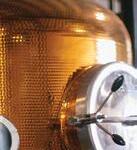















and available to the entire distilling community. Read all peer-reviewed articles online now.
SIGN UP TODAY for access to the digital version of the publication visit journaldistilling.com
Peer-reviewed, original scientific papers


• Reporting significant research
• Technical reports
• Applicable analytical techniques and methods
• Reviews
Scientific and technical disciplines applied to the distilling of high-quality, potable alcoholic beverages
• Biology/microbiology
• Chemistry/biochemistry
• Molecular biology
• Physics and engineering
International board members, contributors, and audience
• Universities and colleges
• Research institutes and industrial laboratories
• Distilleries

• Raw materials producers
• Allied industries supporting the testing and quality control functions of distilling operations
SPECIAL THANKS TO THE SPONSORS MAKING THIS POSSIBLE