
INTERNATIONAL UNION OF PURE AND APPLIED CHEMISTRY Responsible Research and Innovation AI & Chemistry The News Magazine of IUPAC International CHEMISTRY July-September 2023 Volume 45 No. 3
CHEMISTRY International
The News Magazine of the International Union of Pure and Applied Chemistry (IUPAC)
All information regarding notes for contributors, subscriptions, Access, back volumes and orders is available online at www.degruyter.com/ci
Managing Editor:
Fabienne Meyers
IUPAC, c/o Department of Chemistry
Boston University
Metcalf Center for Science and Engineering
590 Commonwealth Ave.
Boston, MA 02215, USA
E-mail: edit.ci@iupac.org
Phone: +1 617 358 0410
Design/Production: Stuart Wilson
Chemistry International
Chemistry International (ISSN 0193-6484) is published 4 times annually in January, April, July, and October by De Gruyter, Inc., 121 High St., 3rd Floor, Boston, MA 02110 on behalf of IUPAC. See https://iupac.org/what-we-do/journals/chemistry-international/ or https://www.degruyter.com/ci for more information.
ISSN 0193-6484, eISSN 1365-2192
© 2023 International Union of Pure and Applied Chemistry. This work is licensed under a Creative Commons Attribution-NonCommercial-NoDerivatives 4.0 International License.
Cover: DALL.E2 Kandinsky-inspired rendering of “Chemistry of the Future” (3 March 2023). This illustration was conceived to illustrate the report of an International Workshop on “Artificial Intelligence Assisted Chemistry” held at the headquarters of the Organisation for the Prohibition of Chemical Weapons (OPCW) in The Hague, The Netherlands on 16 and 17 June 2022. AI already plays an important role in the field of chemistry, and its adoption and role in the chemical sciences will only expand. Increased training and awareness of scientists to recognize potential for dual-use concerns of AI-assisted chemistry will be critical. Increased security around the software methods and tools that enable AI-assisted chemistry may be appropriate. See report p. 30.
Contents CHEMISTRY International July-September 2023 Volume 45 No. 3 Past President’s Column Reflections on the past and future by Christopher Brett 2 Features How Cool Are Chemists? ? by He Yue, Lidong Han, Donna J. Minton, 4 and Chunmei Deng Responsible Chemistry: Addressing Dual-Use Potentials in 12 Chemical Research and Innovation by Jan Mehlich Reconciling Science and Foreign Relations in 16 The Hague by Geert Somsen Separating Politics and Science after the Chemists’ War: Ernst 19 Cohen in the Land of Benjamin Franklin by Jorrit Smit IUPAC Wire Winners of the 2023 IUPAC-Solvay International Award 22 for Young Chemists 2023 Nominees for election of IUPAC Officers, Executive and 22 Science Boards IUPAC President Meets with the Japanese Chemistry Community 24 Janos Fischer made IUPAC Emeritus Fellow 25 Project Place FAIR datasets for acid dissociation constants 26 Making an imPACt Analytical chemistry of engineered nanomaterials: 27 Part 1. Scope, regulation, legislation, and metrology (IUPAC Technical Report) Properties and units in the clinical laboratory sciences. 27 Part XXVII: online dynamic NPU manual (IUPAC Technical Report) Up for Discussion How can IUPAC stay relevant and make more impact? 28 by Leiv K. Sydnes Conference Call Artificial Intelligence-Assisted Chemistry 30 Malta X, Women in Science 35 Teaching Chemistry for a Sustainable Future 37 Open Data Sesame! Key Takeaways from Chemistry Europe’s 40 First Data Day Chemistry’s in Sciences – IYBSSD celebration in Pakistan 44 Where 2B & Y IUPAC | CHAINS 2023: Topical, broad and varied 46 Mark Your Calendar 51
Past President’s Column Reflections on the past and future
by Christopher Brett
As I finish writing this column, the Covid-19 global health emergency has just been officially declared as over. The impact that it has had on us all, directly and indirectly, cannot be underestimated. There are many that would like our way of life to go back to how it was to before, remembering the good aspects but forgetting the others. We were already in a crisis situation with almost terrifying global warming scenarios, particularly with respect to carbon dioxide emissions. The “lockdown” in 2020 during which industry shut down showed the effects of pollution, or rather the lack of them. Then industry started once more and the carbon footprint began to rise again. Now, in 2023, much of this appears to have been forgotten owing to economic issues and inflation, partly linked to materials and energy, but the clock continues to tick. There are lessons and decisions for the future, many of which will not be easy. Here are some reflections on IUPAC in the recent past and looking forwards.
The evolution in IUPAC has, as would be expected for any global organisation, mirrored the evolution of the world. It was already clear when I became Vice President that we needed to make our method of functioning more efficient in order to ensure organisational sustainability whilst retaining our prestige and impact. All organisations have to do this periodically and we had last done so at the beginning of the 2000s. The clouds that had been on the horizon were closing in. In 2018 we, as the IUPAC organisation, knew what we wanted to do, what were our vision and mission, described in the strategic plan of development of a common language, free exchange of scientific information and fostering sustainable development. The question was how to continue to do it, ensure excellence, increase visibility, increase the number of member organisations to become more truly global. This was also embodied in the critical evaluation from the Evaluation Committee that I chaired and was presented to Council in 2019 in Paris. How we could become more agile to respond to new scientific challenges with celerity and respond
to those associated with financial sustainability; that is evolution as needed, after broad discussion.
The year 2019 was one of celebration: our centenary and the International Year of the Periodic Table of Chemical Elements, in which IUPAC was main partner. IYPT did show us some of the things we should concentrate on in the future. We saw many times all over the world how the public and particularly young children could be captivated and have enthusiasm for chemistry, exemplified by the beauty of the chemical elements and their compounds. It was easy to think that all this would carry on for another century without problems.
Thus, one of my thrusts to be achieved in my presidency was to harness this enthusiasm and make IUPAC more visible to the chemistry community and more widely appreciated; four visits to adhering organisations were planned in the first six months of 2020. Another was to examine the organisational structure and come up with proposals for changes, to be presented to Council in the 2021 General Assembly. A task group was set up and started with a survey of the IUPAC community in late 2019 (council members, committee members, volunteers). Much has been written elsewhere about the different steps in the preparation of the task group report with recommendations and that was submitted to the Executive Committee in November 2020. Of course, the way that this was done did not go according to the initial plan. In March 2020 most of us had entered confinement or “lockdown” and any possibility of face-to-face meetings, even at a local level, did not exist. It happened to us all. I recall, when we knew that Covid-19 was coming in early March giving a lecture in the late afternoon and discussing what should be done for preparing the next lecture the following morning. In mid-evening we all received a message from the university informing us that lectures were immediately suspended and that access on the next day was only to switch off instruments. The rest you know. We all became experts with videoconference tools very quickly, within days. As a former president said to me (maybe half joking), each president has to deal with something unexpected. This was certainly the case with the Covid-19 pandemic and which led to almost the whole presidency being held on-line. The situation really only began to improve after vaccination started at the beginning of 2021. That is was so quick was due to vaccine research, firmly rooted in chemistry, that had been going on behind the scenes for many years, predicting that there would be a pandemic at some time in the future.
Operational changes for the 2020-2021 biennium had already been made to save money so we could

2 Chemistry International July-September 2023
continue during lockdown. For example, Bureau meetings that were already on line in General Assembly years were planned to be so henceforth in the intervening years. Thus, we were able to hold the Bureau meeting in April 2020 without extra difficulties. The Divisions and Standing Committees’ meetings were also arranged to occur on-line. So, IUPAC was able to adapt rapidly to the new situation. We were then lucky, in 2020, that the Swiss law by which we are governed introduced some temporary dispositions including that of being able to alter statutes and bylaws to permit electronic voting. We took advantage of this to make the relevant alterations to our statutes and bylaws, which were approved by Council in 2021 and permitted us to continue with our business, particularly important for the General Assembly in virtual Montreal in August 2021.
The report from the task group was accepted by the Executive Committee in November 2020 and then went to Bureau for analysis, debate and suggestions. It involved a significant change to the organizational structure. The possibility that Bureau would recommend approval by Council of new statutes and bylaws according to the recommendations of the task group in time for the deadline of six months before the regular Council meeting in 2021 was quickly seen to be unrealizable. There were then Bureau group discussions, time-zoned when possible and with adhering organisations over the next few months. This was felt to be crucial since the proposed changes would be far reaching: giving the scientific aspects a greater voice in IUPAC, being able to respond to scientific challenges more quickly and ensuring financial sustainability. One of the main proposals to this end was the replacement of of the Executive Committee and Bureau by an Executive Board and by a Science Board with members from the Divisions and Standing Committees and from outside the IUPAC structure, including industry and other organisations. Understanding the implications needed much thought and continued during the Montreal virtual General Assembly. Bureau was authorised to continue the discussions and make a final proposal. Consensus was reached at the end
of November 2021 and a virtual Council Meeting was scheduled to be held as soon as possible which was the beginning of June 2022.
As Past President, I have seen these proposals approved by Council in an on-line meeting in June 2022. Nominations of candidates for the Science Board and Executive Board are complete, and elections will be held in the in-person Council meeting in The Hague in August 2023. Our scientific activities have continued, albeit some at a slower pace since the pandemic, and the rhythm is picking up again. There are key areas of chemistry that we already have and others that need development and where IUPAC can make an important contribution at the world level. The “what” and “how” is for the new Science Board to discuss and decide in the next biennium. The framework is set up but the challenges still continue.
If you are to ask at this point in time, six months before I step down as past president “Was it all worth it?” then my reply is definitely “yes”. But it would not be possible without the many, many volunteers throughout IUPAC, their willingness to contribute, sometimes in the middle of the night on videoconference calls. It is much appreciated although not said so often. I am confident that we have set the scene so as to be able to find find the best way to pursue our role in the chemical sciences and to be adaptable to new scientific challenges, in collaboration with other international and national organisations, with industry and with society. The vision of making the world better, and a better and inclusive place for all without exception may not seem closer at the moment, but it is never out of sight.
Christopher Brett <cbrett@iupac.org> is Past President of IUPAC, following his term as President in 2020-2021. He is a professor of chemistry in the Faculty of Sciences and Technology, University of Coimbra, Portugal, where he has been since 1981, lecturing mainly electrochemistry, physical chemistry, materials chemistry, and analytical chemistry, areas in which he also conducts research. He has been an elected member of the IUPAC Bureau since 2012 and a member of IUPAC since since 1994, having been president of Division I Physical and Biophysical Chemistry in 2006-7. He is vice-chair, 2021-2024, of the International Basic Sciences Programme scientific board of UNESCO.
3 Chemistry International July-September 2023
How Cool Are Chemists?
by He Yue, Lidong Han, Donna J. Minton, and Chunmei Deng

The United Nations declared 2022 as the International Year of Basic Sciences for Sustainable Development (IYBSSD 2022) [1]. Since 2022 was also the 90th Anniversary of the founding of the Chinese Chemical Society (CCS), CSS celebrated these two important events with a special outreach project aimed at bringing attention to chemists and the important work they do while also highlighting the creative and humanistic aspects of scientific research [2]. The “Chemist is Cool” (sic) Research Group Style and Creativity Competition was a great success, and CCS was honored to have it be selected as one of the featured activities of the IYBSSD 2022.
The Chinese Chemical Society is a scientific society focused on promoting and advancing the field of chemistry through public outreach and supporting chemists in China and around the world. Founded in 1932, CCS has become one of the largest international chemistry societies with more than 100,000 individual members and 175 organizational members. The society holds ~50 individual academic conferences every year, with the largest being the CCS Congress which had over 20,000 attendees this year [3]. CCS joined IUPAC as a National Adhering Organization (NAO) in 1979 and has been an active participant ever since.
Chemistry is often referred to as the “central science” and has made innumerable contributions to the progress and development of society in the past 200+ years. However, due to the field’s vastness and complexity, difficulty to learn and communicate, and the harm caused through accidental or intentional misapplication, the public can at times view chemistry and its practitioners with suspicion. Inadequate communication and misunderstanding can result in resistance to and mistrust of the rapidly advancing field of chemistry, as well as of the researchers themselves.
The hope of CCS was that the “Chemist is Cool” competition, instead of focusing on academic prowess, would introduce a fun and creative way for the public to see that chemistry researchers are not so different from them. The competition was meant to encourage members of research groups to leave behind the countless hours in the laboratory or on computers, intense concentration, and rigorous research, for a fresher and more lively perspective of their research. As a result, this more relaxed view of researchers would provide the public with a new image of chemists and of the
chemistry community that they don’t often see, helping them to understand what chemists do and showing how basic science can contribute to the sustainable development of our society.
The competition was open to chemistry research groups at colleges, universities, and research institutes in China, with each research group allowed to submit one entry. The event did not limit the number of group members participating or their region, gender, nationality, ethnicity, or research field. The submission requirements were a group photo and introduction to the research group. The photos were the key component of the submission and were based on the theme of daily teaching or scientific research of professors, students, and laboratories, with the members of the research group being at the core. The photos were to be original with no software modifications or additions, and the introduction was to include, but was not limited to, the research direction and interests of the research group, research progress, lab philosophy, motto, and stories of the research group and its members.
The competition lasted for six months, which included time for registration, collection of “sharing”
4 Chemistry International July-September 2023
Qing He’s research group from Hunan University.
and “likes” of all entries by the public, and an internal review. The competition received 108 entries from 78 universities and research institutes. Through the combination of public review, recorded number of “likes”, and expert review, CCS selected 10 photos that were awarded the highest prize of the competition—the “Gold Medal of the Coolest Research Group.” An additional 90 photos were awarded the “Silver Medal of the Coolest Research Group.”
The 100 award-winning photos showed the unique and creative approaches taken by the groups, including intricate designs of group members’ positions in the photos, dreamlike fluorescence experiments, challenges faced by scientific researchers, the spirit of having fun amidst hardships, young people’s enthusiasm for their research, and reflections on scientific research and online communication during the pandemic. All of the award-winning photos are on display on the CCS website [4].
The photos show an encouraging trend in China’s chemistry community. The number of women and young people devoting their lives to basic chemistry research is growing. In at least one of the entry photos, the majority of the group members were female researchers, showing the increasing presence of women in research. Another photo showed a row of young students with their backs to the camera while they gaze at their college’s motto, which encourages young people to seek the truth from facts, be down-to-Earth in their

studying and scientific research process, become pillars of talent that benefit society, and at the same time become virtuous people who contribute to society.
The “Chemist is Cool” competition was a huge success. Through it, the walls of academia were lowered giving the public a glimpse into the lives of chemistry researchers to see that they aren’t all simply boring and serious people in white lab coats. They are fun, creative, exciting, and enthusiastic people who just happen to love scientific learning and discovery. It is through the dedicated efforts of scientists—like those who participated in the “Chemist is Cool” competition— and their willingness to stay in touch with their humanity and society that chemistry will continue to make further advancements towards the sustainable development of society and a better life for all mankind.
References
1. General Assembly Adopts Consensus Resolution Spotlighting Unifying Power of Sport, as Delegates Note Complex Global Landscape Ahead of Beijing Winter Games. Delegates Also Adopt Resolution Proclaiming 2022 International Year of Basic Sciences for Sustainable Development, https://press.un.org/ en/2021/ga12391.doc.htm
2. Chemist is Cool, https://www.chemsoc.org.cn/90year/group/
3. Introduction to the Chinese Chemical Society, https://www. chinesechemsoc.org/about
4. Chinese Chemical Society Cloud Library, https://www. chemsoc.org.cn/library/
5 Chemistry International July-September 2023
Yanping Huo’s research group from Guangdong University of Technology.
How Cool Are Chemists?
Chunmei Deng, Ph.D. is the Deputy Office Director at CCS. She may be contacted at: cmdeng@iccas.ac.cn. He Yue, M.S. is the Director of Academic Awards at CCS. Lidong Han, M.S. is the Director of International Affairs at CCS. Donna J. Minton, Ph.D. is the Director of Publications at CCS.
“Chemistry is Cool”: The Interviews
We asked each group leader of the ten Gold Medal winners some questions about their inspirations, experiences, and advice. Below is a selection of responses we received.
Q1. Could you tell us a little about your chemistry background? What kind of chemistry do you find exciting? What attracted you to the study of chemistry and becoming a professor?
Wenjing Hong: Actually, my first degree wasn’t in chemistry, and I got a bachelor’s degree in chemical engineering, more specifically, artificial intelligence (AI) driven process control. Then I turned to electrochemistry under the supervision of Gaoquan Shi at Tsinghua University during my master’s study. After that, Prof. Wandlowski at the University of Bern, Switzerland, provided me with a Ph.D. position in molecular electronics. The idea is to create electronic devices and even integrated circuits using the knowledge of chemistry.
I enjoy the interdisciplinary study of chemistry. Actually, my research projects cover a wide range of chemistry, including synthetic chemistry, analytical chemistry, physical chemistry, and even theoretical chemistry. I am now serving as the senior editor of Langmuir, which is also a highly interdisciplinary journal.
I really get excited by the idea of using intelligent instruments and data analysis code to investigate the world of physical chemistry at the single-molecule level. And I have a dream of creating intelligence from molecules, which is the major driving force for me to become a professor.
Xu Wang: I am engaged in the research on the synthesis and processing of new green functional polymer materials, which is fascinating by the design of different monomers to form linear, star-shaped or dendritic polymers, and then to form products suitable for different occasions. This is what attracts me to research. Different monomers, initiators, chain extenders, and even small group changes will make the performance of the final product completely different. The wonderful and endless change brought about by this combination is the true meaning of chemistry that I am looking for.
Li Li: The love for chemistry began to germinate in my mind since high school. My headteacher was a respected and patient chemistry teacher, and I became greatly interested in chemistry under her influence. An important moment was when I got a high score in chemistry during College Entrance Examination and thus admitted to the Chemistry Department of Northeast Normal University. From then on, I felt chemistry had a magic charm for me. Therefore, I devoted myself to teaching and scientific research in basic chemistry at Qiqihar University for over 30 years, and at the same time continued to study and obtained master’s and doctoral degrees in Northeast Normal University. After being promoted as a professor in 2008, I gradually established my own group to engage in research on photocatalytic properties of composite materials.
Q2. How did you choose your photo style? What do you think the style says about your research group?
Qing He: The idea of our group photo originated from Avalokiteshvara, Thousand-hand Kuan-Yin, in Buddhism. We intended to use this photo to show a young, energetic, optimistic, enthusiastic and hard-working research group to the public. The He Research Group at Hunan University was established

6 Chemistry International July-September 2023
Wenjing Hong’s research group from Xiamen University.
How Cool Are Chemists?
in March 2019. I, as the group leader, am at the front of the line, leading the entire group to develop new functional macrocycles and cages, e.g. superphanes. All group members stand behind me, holding their own tools. Some students hold experimental tools while others show sports equipment, indicating that we work hard and stay healthy. We are working together, happily and freely explore our interests within the supramolecular world.
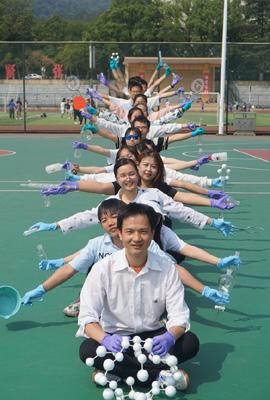
Wenjing Hong: Our group nickname is “π-lab” instead of Prof. Hong’s group. The symbol π means infinite possibilities, just like our scientific research. The lab always has a relaxed, energetic, and diversified style, and most group members join us to explore interesting ideas in science. Therefore, we want to take “Power of Youth and Diversity of Thinking” as the theme of the photo. Hence we chose a vast football field to be our shooting spot, and the drone captured the scene, representing the multiple elements we wanted to convey perfectly.
There are four main symbolic elements in this picture which include the hexagonal benzene ring, the gold electrodes, the fullerene, and the rocket. The hexagonal benzene ring is posed by our group members,
symbolizing the cohesive cooperation among everyone in the group. Meanwhile, the gold electrodes and fullerene between them represent our team’s research at the single-molecule scale. Finally, the rocket represents our ultimate goal which is the collaboration of chemistry and artificial intelligence. And the people on this rocket mean we all did our best to build this special “lab rocket” together.
Liangliang Zhu: Our photo is to show a pattern of light-emitting three primary colors (RGB) formed by the group members. This photo style is quite related to our research regarding organic/polymeric luminescent materials. In this photo, the outermost students are dressed in red, green, and blue, featuring the three RGB primary colors. The students standing in the intersection region are in purple, cyan, and yellow, reflecting the generated luminescent colors through each corresponding primary colors. The group leader and three postdocs standing in the middle wear white lab coats, corresponding to the meaning of white light generated by the three primary colors RGB together. This photo not only features our warm group family, but also represents the luminescent color combination and transformation ability of the materials we study.

7 Chemistry International July-September 2023
Weihong Tan’s research group from Hunan University and Institute of Basic Medicine and Cancer (IBMC), Chinese Academy of Sciences.
How Cool Are Chemists?

Q3. What do you think is the most important thing the general public should know about your research and research group?
Weihong Tan: I think it should be aptamers. Aptamers, known as chemical antibodies, are single-stranded nucleic acid oligonucleotides that can selectively bind to a specific type of target. Aptamers show great potential owing to their excellent properties compared to antibodies, such as feasible modification, high specificity, smaller physical size, and lower immunogenicity and toxicity. As we all know, antibodies have made great contributions to the development of life sciences and medicine. Therefore, I have a strong faith in aptamers. In 2006, my group developed a new aptamer selection technique which is called “cell-SELEX,” and we successfully obtained the first aptamer targeting leukemia cells. Instead of using a purified molecule as a target for the selection, we were using the complex living system as the target. Aptamers selected in this way will be directly used for the cancer cells. We have selected over 300 aptamers for more than 10 cancers including leukemia, lung cancer, pancreatic cancer, and so on. Using these aptamers, we identified cancer biomarkers for leukemia, esophageal cancer, lung cancer, breast cancer,
pancreatic cancer and liver cancer, which provide molecular fundamentals for cancer precise diagnosis and targeted therapy.
Xinhua Gao: Our group is interested in the utilization of carbon dioxide, but I want the public to know not only about our work, but also about the significance of our work. As we know, China has promised the world that its carbon dioxide emissions will peak in 2030 to prevent global warming and will strive to achieve carbon neutrality by 2060. The protection of the environment requires everyone efforts. The capture, utilization and storage of carbon dioxide has great potential for emission reduction and is an important means to achieve energy and environmental protection. Our job is to convert CO2 into high-value chemicals and fuels, which has a clear and direct CO2 reduction effect.
Q4. Since 2022 was the International Year of Basic Sciences for Sustainable Development, what do you think is the most important role chemists have in creating a sustainable future?
Liangliang Zhu: I think chemists can make a great contribution to a sustainable future. Any atom economic synthetic methods, any rapid and high-efficient catalysts, and any high-efficient emissive, energy, or
8 Chemistry International July-September 2023
Liangliang Zhu’s research group from Fudan University.
How Cool Are Chemists?

energy conversion materials, are making contributions to the sustainable future from the perspective of saving manpower and material costs. In addition, there are more and more chemical research topics involving interdisciplinary characteristics of environmental protection, which also indicates a good result.
Xinhua Gao: I believe that the role of chemists is not only to innovate and develop energy-saving and efficient green chemistry, but also to educate the public about environmental protection concepts. Sustainability and the protection of the environment are everyone’s responsibility, and chemists need to make their work known and supported by the public while doing their job. We hope that through the unremitting efforts of each and every one of us, we can truly achieve sustainable development in the future.
Li Li: Energy shortage has become one of the major issues affecting the sustainable development of human society. Chemists and chemical engineers should play a role in the following areas: efficiently utilizing solar energy, efficiently storing electricity, developing advanced nuclear energy systems, mastering the preparation and storage methods of hydrogen energy, and developing catalysts for energy applications.
Hydrogen, as a clean energy, is an ideal energy source for the future. In recent years, our research team has been devoting to carry out research on highly efficient photolysis of water to produce hydrogen
composite materials, hoping that we can contribute a little to the “sustainable development of human society”.
Q5. Can you briefly describe one fun or rewarding event that happened recently in your research group?
Weihong Tan: I think the event that makes me most proud is that I won the Shulan Medical Award in 2022. This award was set by the Academician Shusen Lanjuan Talent Foundation and received reputation of “China’s Nobel Prize in Medicine.” It has great influence in the fields of medicine and public health in China. The Shulan Medical Award is dedicated to rewarding the talents and developing education. Since I returned to China as a full-time professor in 2009, I have always been committed to finding new methods for disease early diagnosis and cancer therapy with my arsenal in molecular science, and to realize my dream of “molecular medicine to defeat cancer.” Over these years, my group has focused on the application of aptamers as the molecular probes. Combined with various technologies including bio-nanotechnology and molecular engineering technology, we have developed a series of aptamer-based diagnosis and treatment platforms. I feel honored to receive this important award, and I cherish it very much because it is like the biggest milestone in my research career so far. I will treat this event as a new starting point and continue my adventure on the road of molecular medicine.
9 Chemistry International July-September 2023
Yiwang Chen’s research group from Jiangxi Normal University.
How Cool Are Chemists?


Li Li: For a long time, I believe that creativity requires a relaxed environment and atmosphere. Communication should come into being normal and a team culture should be established. The casual communication within group is a very important process, and it should become an unconscious habit during cultivation process. Although serious and formal communications are essential, it is not easy to light up the flame of thinking in daily communication. Being too serious also hinders people’s imagination and creativity to a certain extent. In my opinion, science requires rigorous logic, as well as an open mind to demonstrate a process with bold imagination and careful verification. Therefore, I have been trying my best to create such a team atmosphere, such as taking photos of members on campus, to make everyone share their thoughts. This competition organized by Chinese Chemical Society was very good and gave us an opportunity to cultivate a relaxed and lively atmosphere for our team. Thanks very much to the CCS.
Xinhua Gao: I think the most meaningful thing that happened to our research group was during the photo shoot, when the epidemic was raging, everyone voluntarily isolated in the laboratory in order not to delay the progress of their experiments. In nearly two months of laboratory life, everyone’s daily life is experimentation. The inconvenience of accommodation and washing did not wear down the will of the students, everyone helped each other, gave encouragement to their peers, and strengthened their determination to do scientific research. Scientific research is hard, persistence is cool. This memorable time was truly meaningful and cool.
Q6. Do you have any advice for young students interested in a career in science?
Qing He: I always tell my students that “no matter where you want to go, you should begin from where you stand.” As young students, they should try their best to learn theoretical knowledge and establish their own experimental skills and techniques, in order to lay a solid foundation for their long-term scientific career. Then learn how to generate and validate new ideas, which allows young students to think and act independently. Effective communication with their supervisors is somewhat critical to how far and how fast they can push their science forward. Learn to work together, from which young students are able to find some of their solutions relatively easily. Whereas, that is not enough: like a mountaineer to get to the top of a mountain, a scientist, sometimes, has to learn to “walk alone”, especially when new and big science appears.
10 Chemistry International July-September 2023
Left: Xu Wang’s research group from Zhejiang University of Technology.
Left Bottom: Xinhua Gao’s research group from Ningxia University.
How Cool Are Chemists?

Liangliang Zhu: Do not try to set any specific goals about research achievements, because research is always slower than we expected. However, please believe in the brilliance that scientific research can finally bring to us.
Weihong Tan: The road of scientific research is bound to be an extraordinary journey. If you want to see different beautiful scenery during this journey, I hope you can insist on these following things: The first is improve efficiency in daily scientific research life, to establish your own scientific research system, and to make good use of scientific research tools, manage time carefully, think and learn more, and focus on research. The second is to have the will to stick to your scientific dream, to have the courage and tenacity to make self-breakthroughs, and to seek innovation from the interdisciplinary research. Failure experiences are often precious wealth. The third is to find the right direction and goals, to calmly examine the meaning of the work from time to time, and always ask yourself whether your research can solve major basic scientific problems and whether it can meet the major needs of the country. In the end, when you work together you are stronger.
Q7. What does it mean to you to be a “Cool” chemist?
Weihong Tan: Becoming a “cool” chemist means I must first insist on viewing the world, understanding biology, and doing medicine from a molecular perspective, and insist on not being bound by the invisible “boundary” of traditional disciplines. Make every choice and change closely related to the development of the era, and strive to make due contributions to the era. Secondly, arm yourself with “self-breakthrough” and fully explore your potential with the belief that “All things in their being are good for something”. To write a new chapter worthy of the value of life, to serve for scientific innovation, and for the well-being of the people. Finally, I will fulfill my duty of “teaching and educating people”, pass on knowledge to the next generation, and help more young scientists in chemistry to make breakthroughs and realize the value of life.
Xu Wang: I particularly like Mr. Jia Xi Lu’s definition of a chemist: the element composition of a chemist should be C3H3, that is, Clear Head + Clever Hands
Top: Zhouguang Lu’s research group from Southern University of Science and Technology
Bottom: Li Li’s research group from Qiqihar University.

+ Clean Habit . This sentence is also engraved on the cover of everyone’s data log book on our team.
Xinhua Gao: In my opinion, being a “cool” chemist means that the team is able to maintain unique creativity. Since you want to be cool, you have to be attractive enough. Cultivating talents can be tailored to their aptitude, and each member of the team has sufficient room for development, so as to attract talents. Getting along with students is also important, whether it is scientific research or life, it can help them. In the hands of “cool” chemists, scientific research that may be boring in the eyes of others can be made interesting and meaningful, and at the same time attract public attention, learn about their own research, and support it.
11 Chemistry International July-September 2023
Responsible Chemistry Addressing Dual-Use Potentials in Chemical Research and Innovation
by Jan Mehlich
Responsible Research and Innovation (RRI) is a concept that describes approaches and strategies to addressing and tackling risks and dual use potentials of research and development (R&D) activities that have significant societal and environmental impact [1]. Built on a scientifically rigorous foundation of RRI knowledge and expertise, the translation into applied and practical contexts such as chemical R&D is underway [2]. Here, a framework for integrating environmental and ecological ethics dimensions into chemists’ scientific integrity and good scientific practice guidelines is suggested under the umbrella of RRI.
The proposal is rooted in the following premises that are explained in the subsequent sections:
1. Normative (ethical, legal, social, environmental) implications of design decisions in research and innovation contexts are framed and assessed in discourses that take place between involved stakeholders such as researchers, designers, managers, entrepreneurs, regulators, and (sometimes) civil society.
2. There is no one right solution for ethical challenges and dilemmas, but the final judgments are the result of a deliberative discourse process.
3. Dual use potentials of chemical R&D are identified and, to certain degrees, controlled through well-conducted discourses.
4. The role of chemical experts in R&D is to inform these discourses with chemical knowledge while, at the same time, being receptive for the normative assessment of “what is at stake.”
5. Fulfilling this role is a skill that can and should be acquired during tertiary education.
In this feature, I illustrate how the interdisciplinary integration of normative discourse competence into chemical R&D processes at the academic and the corporate level greatly informs and improves the efforts to tackle dual use issues by empowering chemists to represent ethical, societal and environmental dimensions in their assessments. I show that the key to making good (ethical) choices in chemical R&D is not
theoretical knowledge of ethics but practical discourse skills that arise from RRI training.
Premise (1): Research and Innovation as a Discourse Arena
Chemists—here defined as practitioners and experts with a degree in chemistry or chemical engineering—work in interdisciplinary teams of people with diverse backgrounds and different views. In both academic science and corporate R&D, the daily activities of chemists include planning, designing, aligning, and communicating research as well as defining and negotiating research purposes, goals, and directions. While, certainly, being oriented towards the virtues of good scientific or engineering practice including objectivity, truthfulness, scepticism, and an immunity against other non-scientific interests such as fame, power, or money, the work that chemists do is inherently normative. That means that choices made in the research or innovation process, from major plans down to the level of distinct design choices, are embedded in and informed by a framework of societal, cultural, ethical, and legal norms and value propositions [3]. Why are we doing what we do? What is the envisioned innovation good for? Who benefits from it? What are the impacts and the risks? These questions cannot be answered solely on scientific-analytic grounds but are posed and answered in a research or innovation team. The diversity of such teams may, sometimes, make the process of finding answers more complicated and tedious since different team members have very different perspectives. Technical considerations may clash with economic interests; monetary margins may conflict with the material requirements for a suitable design; or the proposed solution may not be in line with the preferences and needs of users. Yet, it is the diversity that is required to elaborate the best outcome: While a team of scientists or engineers would quickly identify the best possible research plan, the other stakeholders contribute important information and views that allow constructive critique and refinement of these plans. Being challenged by critical scrutiny from non-scientific and non-technical actors involved in research and innovation is a key necessity for the success of a new technology, a new process, or a new material.
Discourse, here, means the process of communication and deliberation concerning issues related to a shared activity. It neither means quarrel or fight, nor flat information sharing. A discourse situation may occur formally in team meetings, in labs, at conferences or business consultations, or informally among team members during coffee breaks, at lunch, or on the corridor
12 Chemistry International July-September 2023
between labs and offices. Written correspondences, for example via email, may qualify as discourse, too. What makes a conversation a discourse is the seriousness and rationality with which viewpoints are verbalised, arguments are brought forward, feedback is received, others are listened to and taken seriously, and decisions and conclusions are actively sought for. Some discourses stay on a cognitive level: What is the problem at hand, what knowledge do we have about it, and which solution does this knowledge suggest? Other discourses revolve around norms and values: What shall we do? What is at stake? How do our choices affect a value X (with X = safety, justice, integrity, sustainability, etc.) [4]? It is important to note that the scientific-technical experts such as chemists are not only involved in the cognitive discourse part of R&D (figuring out the best pathways towards the research goal), but also in the evaluative and normative discourse elements. Choices can only be made properly when the facts are on the table: What are our options? What are we able to do? What are the risks? It is the linkage of these two discourse types that usually leads to the best decisions. Before going into further details on this, and to avoid misunderstandings, it is important to point out the role that ethics plays in the discourse process.
Premise (2): The Role of Ethics
The parlance of ethical implications or ethical dimensions of research and innovation, sometimes, evokes impressions of having to do with moral philosophy or theoretical principles. This worry can be dismissed here. While, admittedly, some conflicts and dilemmas related to scientific progress and technological innovation may be solved with the help of applied

ethics expertise, what is suggested here is a very pragmatic and practicable concept of normativity. It covers all aspects related to norms and values that go beyond ethics and morality. Law, culture, society with all their facets of the life world are pervaded by implicit and explicit norms.
Ethics, then, comes into play neither top-down from some moral gatekeeper (a philosophy, a religion, a tradition, or a political council, for example), nor bottom-up from an ever-repeating case-based exploration. What is ethical—that means what is the right or good thing to do—is the result of a deliberative discourse process in which the discourse participants represent their value commitments truthfully and find overlaps and mismatches. With facts and norms on the table, it is possible to employ principles of fairness, rationality, and inclusiveness in order to figure out what is right or good.
This process is often referred to as wide reflexive equilibrium [5]: In a well-conducted discourse, when the hierarchies are flat and the feedback loops are intact, when no voice is excluded and no argument is stronger merely out of power (of the speaker) or rhetoric lure, the result may qualify as an ethical maxim or judgment after it went through several cycles of scrutiny, feedback, and refinement. This constructivist approach to ethics stands in contrast to ethical realism (the view that ethical guidance comes from either the world as it naturally is, or from a transcendental entity such as a god), and to ethical non-cognitivism (the view that no rational process but only intuition, emotion, or an anything-goes attitude can yield ethical insights).
This approach to ethics has important consequences for the meaning of discourses on ethical and other normative dimensions of research and innovation. Participants
13 Chemistry International July-September 2023
Figure 1: (A) Ethics as a lens focussing on the one right solution. (B) Ethics as a refracting prism yielding a spectrum of viewpoints.
Responsible Chemistry
cannot rely on ready-at-hand orientations in the form of guidelines, codes, or even rules or commandments. At the same time, norms and values are not random or relative but are constituted by the social and cultural lifeworld in which the discourse is situated. With other words: Ethical orientation doesn’t require any form of ethics expertise (for example, a degree in philosophy) or specific knowledge (for example, on the definition of human dignity, or competing principles of justice). Being an aware and open-minded member of society is sufficient. It also means that the expected result of a normative discourse cannot be the one correct conclusion—as convenient and attractive that may appear—but the clarified spectrum of views within which the most plausible and convincing one must be identified (Figure 1).
Premise (3): At the Crossroads
Dual use means that besides intended gains and advantages, new technologies or processes may have adverse effects or are utilised for other than the intended purposes, sometimes anticipated, sometimes surprisingly, sometimes totally unforeseen. The question is, at what time in the development process did these pathways towards appreciated usefulness and unwanted risk open up, and whose decisions lead to that? The chemist knows many strategies and assessment methods to avoid negative impact of new materials, substances, and processes: risk assessment, life cycle assessment, toxicity analyses, environmental impact assessment, and others. Yet, these cover only a small fraction of the factors that play a role in dual use contexts [6].Textbook examples for dual use cases in chemistry are Frans van Anraat’s trade of thiodiglycol for the Iraqi regime in the 1980s, claiming that it was intended for the local textile industry while it was actually used as the precursor for the chemical weapons mustard gas and nerve gas [7], or Arthur Galston’s synthesis of 2,3,5-triiodobenzoic acid (TIBA) as a fertilizer that became famous as Agent Orange after its defoliation properties at higher concentration was exploited by the US military in Vietnam [8]. While van Anraat was convicted of complicity in war crime, ever since denying any responsibility for the creation and application of chemical warfare agents, Galston throughout his lifetime endorsed the duty of chemists to keep guard of the usage of their own findings. This, to many, seems like an unfulfillable demand. Too hidden and complex are the decision-making pathways that lead to misuse or dual use. The more basic the chemical research that leads to it is, the less responsibility the chemist has and the bigger the impact of other interests (meant are, supposedly, economic, political, or monetary interest) are, so the claim.
Certainly, the responsibilities for dual use risks are of the collective rather than the individual type. Yet, that doesn’t mean that individual actors such as the scientific-technical developers of innovative technologies can hide behind this concept and are ridded of all responsibility. Dual use potentials spring from the earliest stages of technoscientific development and, thus, can be comprehended and considered in prototype designs and even in research plans. While the space here is not sufficient for going into the details of a very complex endeavour (key words: value-sensitive design, open innovation, design thinking, ethical vision assessment, etc.), one central point shall be highlighted: The identification of dual use potentials cannot be done by scientific-technical staff alone, but is always a task for multi-stakeholder teams that deliberate on the purposes and implications of R&D projects from different perspectives. When knowledge of use cases, of environmental and societal impact, and of the normative stakes is at hand, R&D activities can be aligned and adapted so that an envisioned future becomes more and misuse or unintended side effects become less probable.
Premise (4): The Role of Chemists
As claimed above, chemists qua their expertise (as opposed to qua them being concerned citizen, which they are as well, of course) play an indispensable role in such discourses [9]. Premise (1) describes that good arguments consist of a factual element (knowing correctly what is) and a normative element (figuring out what ought and what value is at stake). One option would be that chemists can inform a discourse only on what is: Knowledge of chemicals and materials, of processes and their scalability, of toxicity and environmental impact, or of options for storing, transporting, using, recycling, or disposing chemicals. Yet, in practice, this can hardly be the case. This information is usually contextualised in an application that is more or less clearly pronounced. That means, purposes and expectations (what ought) are known. When being asked about the options, a chemist will usually align the information with the values that are believed to be tangent to the decision that is to be made. Now, there are two possibilities: Either the chemist promotes one value and suggests the best solution for it, or she enquires about the value proposition of other stakeholders and delivers the solution that fits best. The former is the case, for example, when sustainable or green chemistry approaches avoid toxic chemicals claiming that environmental safety is the relevant value. The latter is the case when chemists inform a public panel on CO2 sequestering about the economically most
14 Chemistry International July-September 2023
Responsible Chemistry
feasible solution in case the panel asks for profitability, and on the environmentally most sustainable solution when the panel asks for environmental integrity as the central value.
Pielke suggested another attitude, the honest broker, as the ideal communicator type among scientific and technical experts in multidisciplinary settings [10]. This type would try to stir a constructive discourse by setting the science or engineering possibilities and the value propositions into perspective. That requires to understand both and to see the connections between the two, for example, what the choice of material for an industry-scale production process has to do with world market, sustainability, social justice, or regulation (in case, say, a mineral has to be mined in a developing country). Laying out the possibilities and the consequences of choosing one or the other results in above-mentioned spectrum (see Figure 1). The chemist will seldom be the one deciding over the values that are prioritised or promoted. But the chemical expertise has the power to clarify how values are affected in practice. Thus, it may be claimed that it is part of chemists’ professional responsibility to share their insights with decision-makers in a way that empowers them to make a good decision.
Conclusion: Responsibility by Training
If we take the previous premises seriously, we wish to educate chemists skilled in multi- and interdisciplinary collaboration and communication. Responsible chemistry would not be reduced to meaning scientific integrity and good professional conduct in the sense of not cheating, not plagiarising, and not mixing scientific interests with other (potentially conflicting) interests. Most of all, it would be understood as the competence to represent societal interests and environmental needs in one’s daily practice. Chemists have a particular perspective upon what would count as good progress or a good innovation: One that works, that exhibits useful functionality and that exploits characteristics and properties of purposefully modified matter. Other stakeholders define good innovation and progress differently. The responsible chemist will listen to these perspectives and figure out how to preserve the value creation in terms of chemical functionality and, at the same time, create value in the societal, environmental, ethical, and economic sense.
We have seen that the key to these value co-creation processes is effective multi-stakeholder discourse. In most contemporary academic research and corporate innovation endeavours, the chemical competence is embedded into an infrastructure that provides such
discourse opportunities. What is needed is training [11]. Partly, discourse competence requires methodological and practical experiences. Partly, and perhaps more importantly, discourse performance depends on guts and courage. A course on Responsible Chemistry, thus, must be a practical course in which attendees are actively engaged in team work on ethical and societal challenges arising from chemical R&D work. Challenge-based learning approaches would be best suited to design proper syllabi. In this way, the future generation of chemical innovators forms the skills that are necessary for dealing with dual use potentials and figuring out the best option to proceed with.
References
1. von Schomberg, R.; Hankins, J. (eds.) (2019): International Handbook on Responsible Innovation. A Global Resource. Cheltenham: Edward Elgar Publ.
2. Gianni, R.; Pearson, J.; Reber, B. (eds.) (2018): Responsible Research and Innovation. From Concepts to Practices. Abingdon: Routledge.
3. Fisher, E.; Schuurbiers, D. (2013): Socio-technical integration research: collaborative inquiry at the midstream of research and development. In: Neelke Doorn, Daan Schuurbiers, Ibo van de Poel, Michael E. Gorman (eds.): Early engagement and new technologies. Opening up the laboratory. pp.97–110. Dordrecht: Springer.
4. Renn, O.; Graham, P. (2005): Risk Governance – Towards an Integrative Approach (White Paper No. 1). Geneva: International Risk Governance Council.
5. Daniels, N. (1996): Justice and Justification: Reflective Equilibrium in Theory and Practice. Cambridge University Press: Cambridge.
6. Rappert B.; Selgelid, M.J. (2013): On the Dual Uses of Science and Ethics. Principles, Practices, and Prospects. ANU E Press: Canberra.
7. van der Wilt, H. (2006): Genocide, Complicity in Genocide and International v. Domestic Jurisdiction: Reflections on the van Anraat Case. J. Int. Crim. Justice, 4, 239.
8. Jacob, C.; Walters, A. (2005): Risk and responsibility in chemical research: The case of agent orange. HYLE, 11, 147.
9. Mehlich, J. (2017): Is, Ought, Should - The Role of Scientists in the Discourse on Ethical and Social Implications of Science and Technology. Palgrave Communications 3(1), pp. 17006(1-6).
10. Pielke, Robert A. (2007): The Honest Broker: Making Sense of Science in Policy and Politics. Cambridge: Cambridge Univ. Press.
11. Mehlich, J. (2021): Good Chemistry. Methodological, Ethical, and Social Dimensions. London: Royal Chemical Society.
15 Chemistry International July-September 2023
Jan Mehlich <jmehlich@uni-bonn.de>, Center for Life Ethics, Rheinische Wilhelmsuniversität Bonn, Germany
Reconciling Science and Foreign Relations in The Hague
by Geert Somsen
From 18 to 25 August, IUPAC will convene in The Hague. This is not the first time. One of the earliest IUPAC conferences, in 1928, also took place in the Dutch city. This was a truly historic meeting, because it was there that decisive steps were taken toward the reintegration of German, Austrian, and Hungarian chemists who had been banned from international science since the First World War, as has earlier been described by Jorrit Smit and Danielle Fauque in this magazine. An informal gathering the following year, in The Hague’s beach resort Scheveningen, finalized the process [1]. The rifts of war had been repaired; internationalism revived.

Today The Hague and surroundings appear to be a natural place for such a reconciliatory project. As home to more than 200 international organizations, including world courts and war tribunals, The Hague likes to brand itself as “International city of peace and justice.” Indeed, in 1928, before their own reunion, the assembled chemists made sure to first visit the monumental Peace Palace as if to inaugurate their work of making amends [2]. They seemed to have come to the right place. Appearances, however, can deceive. When the IUPAC participants visited, so briefly after the wreckages of World War I, the Peace Palace looked rather like a monument to the failure of international mediation. It had not even come close to preventing the fighting, so gathering there may have bred cynicism as much as hope among the visitors. Besides, the Dutch may be proud of hosting international institutions
today, a century ago they were much more ambivalent. In fact, they had never even chosen this role—it had been forced upon them, strangely enough, by the Russian Czar, Nicolas II. It was he who had called for the first great Peace Congress in 1899 and who had picked the small capital (that was officially not even a capital) as a spot acceptable to the other great powers. But the young Dutch Queen Wilhelmina took Nicolas’ choice as an indication of the insignificance of her kingdom, and subsequently refused to open or even attend the meetings. When afterwards the American millionaire-philanthropist Andrew Carnegie offered to make the peace spot permanent by building it a Peace Palace, the Dutch government long tried to decline the offer. It preferred laying low in international affairs and to leave mediation to Switzerland or Belgium [3].
Still, by 1928 the Dutch had grown into the new role, and it certainly suited their IUPAC chairman, Utrechtbased physical chemist Ernst Cohen (a pupil of the first chemistry Nobel laureate, J.H. van ’t Hoff—see also Smit’s article on page 19). Cohen had a strong international orientation, spoke at least six languages, had worked in laboratories around the world, and kept a tight network of befriended chemists on both sides of the war—his own country having remained neutral. Dynamic and diplomatic, he tirelessly pushed for reunification. The same was true for Cohen’s right-hand man at the Congress (and in many other undertakings), his Utrecht colleague Hugo Kruyt. Kruyt led some of the meetings in The Hague, was elected IUPAC President a decade later, and ended up directing the International Council of Scientific Unions and UNESCO after the next world war. Both men strongly believed that science was by nature universal and should hence elevate scientists (and perhaps all people) above international conflict and strife [4]. For them, the sciences—as Gavin de Beer would later put it—were never at war [5].
While this attitude seems benign and idealistic, it is also somewhat problematic. Not only was there the uncomfortable fact that many chemists had actually helped to fight World War I, by developing poison gas and explosives. Cohen and Kruyt also had to accommodate remaining forms of scientific nationalism. In fact, it had been expressions of chauvinism, and especially defamations of enemy colleagues as unworthy scientists, that had created so much bad blood between the former warring chemists—more than their participating in weapons research. And hence Cohen and Kruyt’s task was chiefly to heal that pain and restore trust and wounded pride. For example, when French chemists were finally ready to sit down with their German colleagues again, the latter felt they were merely tolerated.
16 Chemistry International July-September 2023
Peace Palace in The Hague early 1900s
They wanted something more: an acknowledgement that they still counted, that German chemistry was important, and that German chemists would be treated with respect. For them—as for almost everyone around the table—international fora were like the Olympic Games: friendly competitions where excellence was recognized. Such was not the case, Fritz Haber told Cohen, when IUPAC’s invitation to chemical giant Germany was written in the same wording as their letter to Siam (the name for Thailand at the time) [6]. To him, such treatment was an insult that blocked reconciliation.

But, we might ask, what is wrong with the equal treatment of Germany and Thailand? In our times, such inclusivity is a virtue, not a vice. Haber frequently experienced racial discrimination himself—how could he be so haughty? What the episode reveals is a different conception of internationalism. Today, IUPAC sees the world as global and tries to move away from Western dominance. In the 1920s, the world was imperial, and IUPAC reflected this state of affairs. European colonies—and that was easily half of the world’s later countries —were not even included, or only with subordinate memberships. The Great Powers dominated, and this was seen as the natural consequence of their advanced level of civilization. The new League of Nations, whose rules IUPAC followed, had even institutionalized such levels by attributing to territories a civilization status, ranking A through C [7]. Seeing the world as a civilizational hierarchy was a matter of course for people like the assembled chemists in The
Hague, and they expected their organization to reproduce this order.
And still, they did not all do this in the same way. Internationalism is a deceptively simple term that in fact covers widely varying outlooks on the world. For most chemists in The Hague (as for most of us today) it referred to cooperation between autonomous nationstates, each country represented like in the Olympic Games or the United Nations. But for some, this should not be the ultimate goal. They felt that science did not just stimulate international cooperation, it would eventually erase the borders between nations. H.G. Wells, the famous science fiction author who was also a political publicist, often proclaimed this view. For him national borders stemmed from tribal sentiments— they had no rational basis. Hence, as science and civilization advanced, such irrational differences would be dissolved, and we would end up with one single, homogeneous World State—a vision he expressed in books like A Modern Utopia and The Shape of Things to Come [8]. Wells was no doubt a provocateur, but many scientists liked his ideas, and Kruyt was one of them. A few years after The Hague, he proposed that the International Council of Scientific Unions adopt an anti-nationalist resolution, followed by a more elaborate proposal in 1937, pitting science against chauvinism. Unlike Cohen, Kruyt was a man of the left, and his internationalism was clearly closer to that of socialists, with a stronger emphasis on international solidarity and less attention to national pride [9].
17 Chemistry International July-September 2023
Group picture at an intimate meeting in Cohen’s garden in 1921. (see ref. 4 for details) In the back row: Cohen and Kruyt (10th and 12th). Collection Universiteitsmuseum Utrecht, inv.nr. 0285-25631-13 and reprinted from ref. 4
Reconciling Science and Foreign Relations in The Hague
When the IUPAC chemists gathered in 1928 in The Hague, therefore, they not only needed to reconcile nations and national sentiments, they also had to align different forms of internationalism.


References
1. Cohen, E. (1933), ‘Hugo Rudolph Kruyt 1908—1933.’ Chemisch Weekblad 30 (24), 414–430: 126. On the entire process, see Fauque, D. (2019). ‘1919-1939: The First Life of the Union.’ Chemistry International, 41 (3), 2–8 and Smit, J.P. (2018). ‘The politics of interwar chemistry: Neutrality and nationalism in the rhetoric and actions of internationalist chemists’ in Cláudia Ninhos and Fernando Clara (eds), Closing the Door on Globalization: Internationalism, Nationalism, Culture and Science in the Nineteenth and Twentieth Centuries (London & New York: Routledge) 7–29.
2. Smit, J.P. (2019). ‘Ernst Cohen and the Challenge of a Truly International Union.’ Chemistry International, 41 (3), 9–10
3. Somsen, G. (2012). ‘“Holland’s Calling”: Dutch Scientists as International Mediators in the Interwar Period. In R. Lettevall, G. Somsen & S. Widmalm (eds.), Neutrality in TwentiethCentury Europe: Intersections of Science, Culture and Politics after the First World War (New York & London: Routledge) 45–64.
4. Smit, J.P. (2014). ‘Nuclei in a supersaturated solution. Utrecht chemists and the crystallization of international relations after the First World War.’ Studium, 7 (3), 190–208.
5. De Beer, G. (1960). The Sciences Were Never at War (London: Nelson).
6. Otterspeer, W., and Schuller tot Peursum-Meijer, J. (1997). Wetenschap en Wereldvrede (Amsterdam: KNAW), 146.
7. Mazower, M. (2012). Governing the World. The History of an Idea (New York: Penguin Press).
8. Wilde, R. de, and Somsen, G. (2016). ‘Government as Scientific Process in H.G. Wells’ World State’ in: G. Somsen & H. Kamminga (eds), Pursuing the Unity of Science: Ideology and Scientific Practice from the Great War to the Cold War (New York: Routledge), 109–127.
9. Somsen, G. (2016). ‘Scientists of the World Unite: Socialist Internationalism and the Unity of Science’ in: G. Somsen & H. Kamminga (eds), Pursuing the Unity of Science: Ideology and Scientific Practice from the Great War to the Cold War (New York: Routledge), 82–108.
Geert J. Somsen <g.somsen@maastrichtuniversity.nl> is professor at Maastricht University and Vrije Universiteit, Amsterdam, The Netherlands. He is director of studies for the master European Studies on Society, Science and Technology. ORCID.org/0000-0001-7146-5559
18 Chemistry International July-September 2023
Autographed postcard from attendees of the 1928 International Union of Pure and Applied Chemistry conference in The Hague and addressed to Georg Bredig.* Courtesy of Science History Institute; https://digital.sciencehistory.org/works/1g2aitb
Separating Politics and Science after the Chemists’ War
Ernst Cohen in the Land of Ben Franklin
by Jorrit Smit
“Ido not know enough about the American people to be criticizing their customs… there is but one thing that I know much about, and that is chemistry. Politics do not interest me.”
Ernst Cohen, Diary of USA Trip, 1921 (The Daily Iowan)
In October 1921, Dutch chemist Ernst Cohen strongly voiced his position on the separation between science and politics. In this specific case, it was just one reply to a curious reporter of a local Iowa City newspaper, who inquired what the learned man thought about the prohibition then current in the United States. But it is indicative of a deeper conviction on how science and society relate to each other. For Cohen, these ideas about the relation between chemistry and civilization were instructive for the way he approached his internationalist endeavors, already touched upon by Geert Somsen in this issue. (see page 16) In this piece, I will tease out a bit more how Cohen managed to keep politics and science neatly separated at a moment in time, in the wake of the First World War, that the horrifying images of chemical warfare were still on everyone’s mind.
The occasion for this text is, again, the upcoming IUPAC meeting in The Hague, which inspired us to revisit the previous time IUPAC met there. Elsewhere, I have described in detail the different initiatives of Cohen, the main organizer of the 1928 IUPAC conference in The Hague, and other “neutral” chemists in the 1920s to restore international scientific contact [1]. Somsen has described aptly how this fitted in various histories and interpretations of internationalism, now and at the time [2]. Central in Cohen’s internationalist efforts were two informal meetings in Utrecht in 1921 and 1922, what came to be known as the “international chemical reunion Utrecht” (ICRU) [3]. Here, however, I will follow Cohen on a visit to the US in-between these reunions to address the mixing of science and politics that, according to him, required separation.
The land of Benjamin Franklin
In the summer of 1921, Ernst Cohen traveled by boat from Rotterdam to New York for a five-month trip along the East Coast and through the Upper Midwest of the United States. From his travel diaries of that period speaks amazement with the speed, scale, and
automation of modern American society, typical of European visitors at the time. In a later report of a second, longer trip to the “land of Benjamin Franklin,” in the Dutch chemical weekly, he highlighted how the massive amount of cars seems to make everybody hasty and marveled the “ingenious division of labor” at the Ford Factory in Chicago [4]. In return, American reporters described him as a man with “unbound energy and enthusiasm” [5] and “one of the most famous men in science today” [6] —alongside which Cohen scribbled: “Echt Amerikaansch! Altijd the biggest, best, enz!” [7]. More generally, the pragmatism of American society appealed to him, as he himself fashioned a modern persona as “man of the deed.” Exemplary is how, also in 1921, he barged into a meeting of a coal trading company in Amsterdam to walk out with a fat cheque for the National Congress for Natural Science and Medicine, which he presided [8].
In the US, Cohen had been invited to lecture at various universities and local chemical societies but also at industrial associations, firms (General Motors), and for general audiences. “How democratic,” he remarked, that even “shop servants” showed up at these events. Cohen lectured, with the help of lantern slides, on a range of topics, from physical chemical lectures about diffusion or “tin pest” to more general talks on “women in science” and “caricatures in science.” The lecture tour raised considerable interest, as the many newspaper

19 Chemistry International July-September 2023
Downloaded from https://royalsocietypublishing.org/ on 03 January 2023
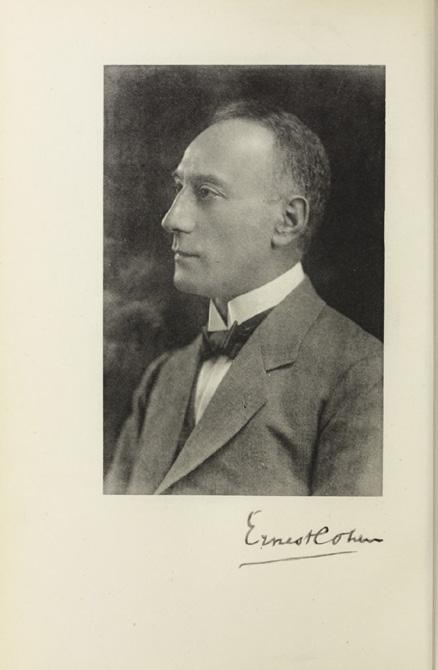
Photo & signature as printed in the orbituary published by the Royal Society in May 1948; https://doi.org/10.1098/ rsbm.1948.0005
Separating Politics and Science after the Chemists’ War
clippings show that Cohen collected in his diary. In one, the Dutch ambassador amazes a Chicago journalist by talking about Cohen’s discovery of “metal diseases.” [9].
Performing Internationalism
In the interviews that appeared with Cohen around these events, the reporters seldom failed to address the question of internationalism in science, and his role in it. Several newspapers characterized him as the “ex-Kaiser’s neighbor,” as the former German emperor now lived in a small town next to Utrecht. Cohen appreciated it as “a strong piece of journalism” but must have preferred how the Ohio State Journal characterized him: “Dutch chemist acts as clearing house between scientists whose relations were broken by war.” [10] At the first international reunion in 1921, Cohen had decided to start circulating chemical treatises from Utrecht, hoping that at some point former adversaries would “have the nerve” to write each other directly again, without his mediation.
For a big part, internationalism was the reason why he crossed the Atlantic in the first place. The first stop, namely, was the joint meeting of the American and British Chemical Societies in New York, where his internationalist reputation had preceded him. The organizer, Charles Baskerville from the College of the City of New York, invited him in advance to join a special “international meeting.” [11] The loaded atmosphere of the war aftermath was still tangible, wherefore Baskerville considered it “not easy” to select a suitable topic: “for while chemistry, as all science is essentially international in character, in view of all the temporary factors (primarily political) involved, formal discussion of such matters as commerce, economics, patents, nomenclature etc. were to be avoided.”
Basically, every part of chemistry that involved standardization for the purpose of international trade was deemed out-of-bounds as potentially too political. Cohen would follow a same line at the second international reunion in Utrecht, the year after, where only “scientific” papers were presented and he cut short any discussion that might touch upon nomenclature, for example [12]. And he defended this position already during his American road trip, when chemists like William A. Noyes asked him whether his international reunions were meant to compete with the IUPAC [13]. At the meeting in New York, Baskerville had decided to move full force ahead by selecting the theme “Chemistry and Civilization.” And, aware of performative effect, the organizers wanted to “allow the imagination full play” by creating a theatrical mise en scène with bright spotlights on the speaker against a dark background,
creating long dramatic shadows. In this way, the lectures in this plenary session could “inspire” the three thousand chemists or so that would attend to realize what “our science has done” and above all to stimulate them “to do something worthwhile in the world’s work and for real civilization.” [14]
Chemistry and Civilization
Cohen was the right person to address this request to, as one newspaper had identified him with the preachment: “Forget the War.” He told the reporter: “The sooner the scientists of the world forget the animosities engendered by the war, the better it will be for the progress of science.” [15] What is more, in the Netherlands the physical chemist had been engaging in public debates about the civilizing role of science. In a lecture series about the Future of Society, in Amsterdam, he reacted “astonished” to the suggestion that the World War had made people turn away from science towards mysticism. The “adepts of the goddess” (pure science) nor the “practitioners” had anything to do with the “feuds between inflamed nations.” Science was “prostituted” in the war by political forces for “disasters and destruction,” while in principle it served the happiness and prosperity of the people. [16]
The war had not tainted the purity of science, not for Cohen at least. Rather, more knowledge of the natural sciences was needed in all layers of society. In 1917, he went as far as claiming that compared to politicians, ignorant about the power of science, scientists would have been even better equipped morally to make wartime decisions [17]. And, at the earlier mentioned 1921 National Congress for Natural Sciences and Medicine, he described the moral superiority of the atheistic natural scientist who led his life by “Wahrhaftigkeit und Gewissenhaftigkeit” and excelled in perseverance, self-control, fairness, prudence, modesty and altruism [18].
In the wake of the war, other commentators in the Dutch public sphere challenged this position, claiming that one-sided scientific specialization precisely caused the “utilitarian prostitution” of science during war. But Cohen firmly held on to the civilizing value of science that trumped both the humanities, religion and politics. This optimistic and scientistic message turned out to be very welcome on national and international stages and formed the idealistic fundament for his practical internationalism.
Conclusion
In 1928, Ernst Cohen opened the IUPAC meeting in The Hague with a lecture titled “Prithee, more zeal” or “Surtout, plus de zèle.” As always, he was aware of
20 Chemistry International July-September 2023
Separating Politics and Science after the Chemists’ War
linguistic sensitivities, and delivered the lecture both in English and French. Also typical of his style, was his inversion of famous quotes from philosophers, poets and politicians. In this case, he bent the words of the famous French diplomat Talleyrand who, during the post-Revolutionary period, called for less zeal—a term then associated with the ceaseless passion and hyperactive (and often violent) statecraft of the Revolutionaries [19]. Although Cohen consistently sought to separate science and politics, he used the words of a politician to call for new ways of working within the international union of chemistry. At the time that the restoration of international relations in chemistry was nearing its conclusion—Germans were welcomed as visitors, and would re-enter the Union the next year [20]—Cohen seemed to use Talleyrand’s wrangled words to suggest that his own passioned but effective diplomacy style could inspire the work of the Union as a whole.
Ultimately, the separation of science and politics in public performances was central to Cohen’s diplomatic strategy as he traveled in the US and all over Europe to restore international relations. The question is, of course, what this means for the present work of international chemistry. Now, another war has obstructed partly international contacts in chemistry, as the conference in The Hague does not accept any ties with Russian organizations, but still welcomes Russian individuals [21]. Now, it is not so much chemical weapons, but the provision of energy that is simultaneously at stake. This points to the interrelated problem of the climate crisis, to which so many chemical industries have, in the end, been instrumental. Climate change is also a topic on which the science is clear and the lack of political action confusing, if not dangerous. These urgent issues raise the question, how should we think about the relation between science and politics today? Time to keep science and politics neatly separated is running out [22]. Rather, it might be time to be more zealous towards the values and interests that direct chemistry to reimagine and work towards a more just and ecologically healthy future.
1. Jorrit P. Smit, “The Politics of Interwar Chemistry: Neutrality and Nationalism in the Rhetoric and Actions of Internationalist Chemists,” in Closing the Door on Globalization: Internationalism, Nationalism, Culture and Science in the Nineteenth and Twentieth Centuries (Routledge, 2017), 17–39.
2. G. J. Somsen, “‘ Holland’s Calling’: Dutch Scientists’ SelfFashioning as International Mediators,” in Neutrality in Twentieth-Century Europe. Intersections of Science, Culture, and Politics after the First World War, 2012, 45–64; G.J.
Somsen, “A History of Universalism: Conceptions of the Internationality of Science from the Enlightenment to the Cold War,” Minerva 46, no. 3 (September 1, 2008): 361, https://doi. org/10.1007/s11024-008-9105-z.
3. J. P. Smit, “Nuclei in a Supersaturated Solution. Utrecht Chemists and the Crystallization of International Relations after the First World War,” Studium 7, no. 3 (November 26, 2014): 190–208, https://doi.org/10.18352/studium.9834.
4. Ernst Cohen, ‘Afdrukken en indrukken uit het land van Benjamin Franklin’, Chemisch Weekblad, 1927. In 1921, Cohen had refused to publish his American experiences, because he did not consider his first and singular impressions trustworthy enough – demonstrating that his stringent empiricism stretched beyond the laboratory. See: Cohen, E.J. Na Driekwart Eeuw. Levensherinneringen. Utrecht: Uitgeverij Matrijs, 2013, 194.
5. The Daily Iowan
6. The Michigan Daily
7. MC DB; ‘So American! Always the biggest, best, etc.’
8. Jorrit P. Smit, “Purity in an Impure World. Ernst Cohen’s ‘General Chemistry’ in Early-20th-Century Netherlands” (Utrecht, Utrecht University, 2015).
9. Chicago Evening Post. MC DB
10. Ohio State Journal. MC DB
11. Baskerville to Cohen, 28 June 1921 [Dagboeken/BH]
12. Smit, “Nuclei in a Supersaturated Solution.”
13. E.J. Cohen, Na Driekwart Eeuw. Levensherinneringen. (Utrecht: Uitgeverij Matrijs, 2013), 194.
14. Ibidem
15. Ohio State Journal, [MB/DBEC]
16. E. Cohen, “Quo Vadimus? (Een Blik Op de Toekomst Der Wetenschap).,” in De Toekomst Der Maatschappij: Negen Voordrachten Gehouden Voor de ‘Amsterdamsche Studenten Vereeniging Voor Sociale Lezingen (Amsterdam: De Maatschappij voor Goede en Goedkoope Lectuur, 1917), 299–325; Smit, “Purity in an Impure World. Ernst Cohen’s ‘General Chemistry’ in Early-20th-Century Netherlands.”
17. Cohen, “Quo Vadimus? (Een Blik Op de Toekomst Der Wetenschap).”
18. ‘Veracity and conscientiousness’ Cohen, E. (1921). Photographie of Karikatuur? Rede uitgesproken bij de opening van het 18e Nederlandsch Natuur- en Geneeskundig Congres te Utrecht
19. Benjamin Schwarz, ‘Charm Offensive’, The Atlantic, December 2007.
20. Smit, “The Politics of Interwar Chemistry.”
21. https://iupac2023.org/statement-russia/
22. “AR6 Synthesis Report: Climate Change 2023 — IPCC,” accessed March 31, 2023, https://www.ipcc.ch/report/sixthassessment-report-cycle/.
Jorrit Smit <j.p.smit@cwts.leidenuniv.nl> is a postdoctoral researcher at the Center for Science and Technology Studies (CWTS) of Leiden University, where he studies the involvement of chemists in the energy transition. ORCID.org/0000-0002-9023-9773
21 Chemistry International July-September 2023
IUPAC Wire
News and information on IUPAC, its fellows, and member organizations.
See also www.iupac.org/news
Winners of the 2023 IUPAC-Solvay International Award for Young Chemists
IUPAC and Solvay announce the winners of the 2023 IUPAC-Solvay International Award for Young Chemists, presented for the best Ph.D. theses in the chemical sciences, as described in 1000-word essays.
The five winners are:
• Eduard Bobylev (Ukraine, Netherlands), Ph.D., University of Amsterdam, Netherlands
• Craig Day (Canada, Spain), Ph.D., Rovira i Virgili University, Spain
• Nikita Hanikel (Germany, USA), Ph.D., University of California Berkeley, USA

• Apurva Panjla (India), Ph.D., Indian Institute of Technology, Kanpur, India
• Yu Zheng (China/Beijing/USA) Ph.D., Stanford University, USA
The winners will each receive a cash prize of USD 1000 and travel expenses to the 49th IUPAC World Chemistry Congress, 20-25 August 2023, in The Hague, The Netherlands. Each winner will be invited to present a poster at the IUPAC Congress describing their award-winning work and to submit a short critical review on aspects of his/her research topic, to be published in Pure and Applied Chemistry. The awards will be presented to the winners of the 2022 and 2023 competitions during the Opening Ceremony of the Congress.
The titles of the winners’ theses are:
• Eduard Bobylev: “Spherical coordination-based MnL2n assemblies: construction, confinement, catalysis and bio application”
• Craig Day: “Understanding Nickel Catalysis at the Molecular Level: Insights into C-O Functionalization and Electron Transfer Events”
• Nikita Hanikel: “Atmospheric Water Harvesting with Metal–Organic Organic Frameworks”
• Apurva Panjla: “Therapeutic Potential of Short Peptide Conjugates as Novel Antibiotics and
Osteoinductive Agents”
• Yu Zheng: “Molecular design of polymer semiconductors for skin-inspired electronics”
There were 58 applications from individuals receiving their Ph.D. degrees from institutions in 21 countries. The award selection committee, chaired by Christopher Brett, IUPAC Past President, comprised members of the IUPAC Bureau and a senior science advisor from Solvay, all of whom have a wide range of experience in chemistry. In view of the many high-quality applications, the Committee also decided to award four Honorable Mentions to:
• Yuanxin Deng (China/Beijing/Netherlands), Ph.D., University of Groningen, Netherlands
• Karthick Govindan (India, China/Taipei), Ph.D., Kaohsiung Medical University, China/Taipei
• Renyu Guo (China/Beijing, USA), Ph.D., Indiana University Bloomington, USA
• Aron Peter (Hungary, UK), Ph.D., University of Manchester, UK
The call for applications for the 2024 IUPAC-Solvay International Award for Young Chemists will open soon. Eligible candidates must have received a Ph.D. or equivalent degree in any of the countries that have National Adhering Organizations in IUPAC during the year 2023.
https://iupac.org/what-we-do/awards/iupac-solvay-international-award-for-young-chemists/
2023 Nominees for election of IUPAC Officers, Executive and Science Boards
During the 52nd IUPAC General Assembly to be held in The Hague in August 2023, the Council will be asked to elect a Vice President, a Secretary General, and members of the newly established Executive Board and Science Board. IUPAC National Adhering Organizations have been invited to submit nominations. (see
22 Chemistry International July-September 2023
Bobylev Zheng Panjila Hanikel Day
News posted 17 January December 2022, https:// iupac.org/iupac-elections-for-the-2024-2025-termcall-for-nominations/)
On 1 January 2024, Ehud Keinan (Israel), Vice President and President-Elect of IUPAC, will become President. Javier García-Martínez (Spain), current President, will become Past President and remain an officer and a member of the Executive Board for a period of two years, while Christopher Brett (Portugal), current Past President, will retire. Secretary General Richard Hartshorn (New Zealand) was elected by the Council in July 2019 for a second four-year term and will also retire at the end of 2023. Meanwhile Treasurer Wolfram Koch (Germany) was elected by Council in August 2021 for a four-year term and will continue.
Vice-President
The Vice-President to be elected at the 52nd Council will be President-Elect starting in January 2024, and will become President on 1 January 2026. The nominations received for Vice President are as follows:
• Lidia Armelao (Italy)
• Mary Garson (Australia)
• Zhigang Shuai (China/Beijing)
Secretary General
The nominations received for Secretary General for the term 2024-2027 are as follows:
• Christine Luscombe (Japan)
• Zoltan Mester (Canada)
Members of
Executive Board
Executive Board Member (6): The Executive Board shall consist of the President, as Chair, the Vice-President, the Secretary-General, the Treasurer, the Past-President, together with six other members elected by the Council who shall be known as Elected Members. The period of service of Elected Members of the Executive Board shall be two years. Elected Members are eligible for reelection to the same position for a second two-year term. The periods of service shall be arranged in such a way as to ensure continuity. A former Elected Member is not eligible to return to the Executive Board as an Elected Member until a period at least equal to the time they served as an Elected Member on the Executive Board has elapsed. No President of a Division may be simultaneously an Elected Member of the Executive Board. Unless exceptional circumstances are established and special permission of the Council is granted, no National Adhering Organization shall have more than
one Elected Member on the Executive Board, and the principle of fair geographical and gender representation of Members shall be taken into account.
The nominations received for Elected Members of the Executive Board are as follows:
• Hemda Garelick (UK)
• Richard Hartshorn (New Zealand)
• Bonnie Lawlor (USA)
• Christine Luscombe (Japan)
• Zoltan Mester (Canada)
• Bipul Saha (India)
• Zhigang Shuai (China/Beijing)
• Miroslav Štěpánek (Czech Republic)
• Pietro Tundo (Italy)
Members of Science Board
Science Board Member (5): The Science Board shall consist of the Vice-President, as Chair, the President and the Secretary-General ex officio, together with five members from the Division Presidents and Standing Committee Chairs, and elected by them, and up to five additional members, from the scientific community at large, elected by the Council. The period of service of the Elected Members shall be two years. These Elected Members are eligible for reelection to the same position for a second two-year term. The periods of service shall be arranged in such a way as to ensure continuity. The principle of fair geographical and gender representation of Members shall be taken into account.
An election was completed during the month of May to elect five members from the Division Presidents and Standing Committee Chairs; these are:
• Lidia Armelao (Italy)
• Derek Craston (UK)
• Igor Lacík (Slovakia)
• Michelle Rogers (USA)
• Frances Separovic (Australia)
The nominations received from the scientific community at large and for Elected Members of the Science Board are as follows:
• Eva Åkesson (Sweden)
• David Berkowitz (USA)
• Pierre Braunstein (France
• Amanda Forster (USA)
• Alejandra Palermo (UK)
• Peter Schreiner (Germany)
• Chi-Huey Wong (China/Taipei)
• Jihong Yu (China/Beijing)
https://iupac.org/event/council2023/
23 Chemistry International July-September 2023
IUPAC Wire
IUPAC President Meets with the Japanese Chemistry Community
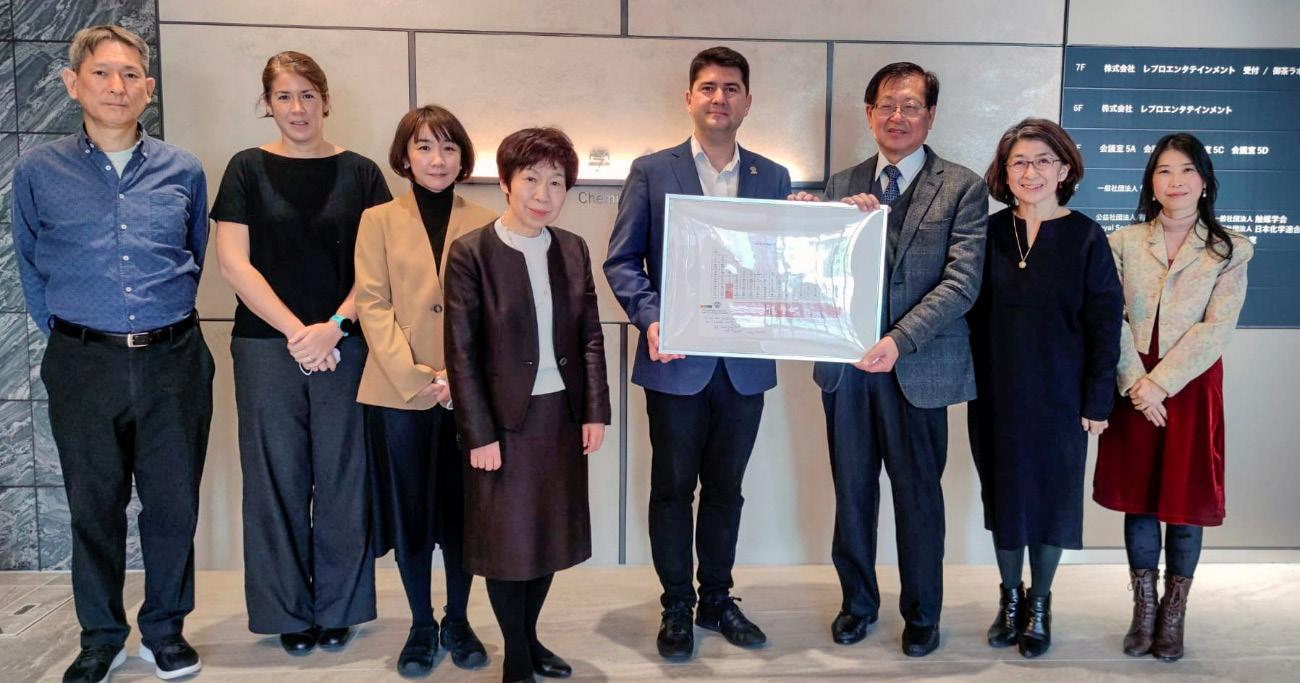
On a visit to Japan, Javier García-Martínez, President of IUPAC, met with representatives of the Chemical Society of Japan and the Science Council of Japan at the Chemical Society of Japan headquarters in Tokyo on February 15th, 2023. His visit provided a great opportunity for the chemical community to learn more about IUPAC´s ongoing work and to discuss potential areas of collaboration. The Chemical Society of Japan is one of the oldest and largest scientific societies in Japan, with a membership of over 30 000 researchers, engineers, and students who are actively engaged in various areas of chemistry.
The meeting started with the introduction of the participants which included Kazuyuki Tatsumi (former President of IUPAC, Professor Emeritus of Nagoya University), Kazue Kurihara (Tohoku University), Miki Hasegawa (Aoyama-Gakuin University), Christine Luscombe (Okinawa Institute of Science and Technology), Ken Sakai (Kyushu University), Hiroko Tokoro (University of Tsukuba), and Chiharu Tokoro (Waseda University).
The Chemical Society of Japan Executive Director,
Mitsuo Sawamoto, provided some background information and recent data on the Chemical Society of Japan and noted that Japan’s participation as an IUPAC NAO is financially supported through industry contributions. Then, IUPAC President, Javier García-Martínez gave a presentation outlining the main activities of IUPAC. He started by describing the rationale behind the recent changes in the organizational structure and the next steps involving the creation of the funding Executive and Science Boards. The presentation also covered several key areas of IUPAC’s work, including the organization’s efforts to promote scientific collaboration and communication across borders, the development of standards and best practices for chemical research and industry, and the advancement of education and training in the field of chemistry. Javier García-Martínez highlighted some of the recent initiatives undertaken by the Union, such as the Global Women’s Breakfast program, which was held the day before that meeting and aims to connect women in chemistry across the world and promote gender diversity in the field. He also discussed IUPAC’s role in addressing issues such as sustainability and climate change, including the development of guidelines for the use of renewable energy sources in chemical production. He also highlighted efforts led by the International Younger Chemists Network (IYCN), ChemVoices, as well as activities that were initiated
24 Chemistry International July-September 2023
From left, Ken Sakai (Elected member on IUPAC Bureau), Christine Luscombe (President of the IUPAC Polymer Division), Hiroko Tokoro (Associate member on the Physical and Biophysical Chemistry Division), Kazue Kurihara (Recipient of IUPAC 2013 Distinguished Women in Chemistry or Chemical Engineering), Javier Garcia Martinez (IUPAC President), Kazuyuki Tatsumi (former IUPAC President, in 2012-2013), Miki Hasegawa (National Representative on the Inorganic Chemistry Division), and Chiharu Tokoro (Organizer of GWB at Waseda University)
as part of IUPAC 100 including the Periodic Table Challenge and the Top 10 Emerging Technologies.
The meeting provided an opportunity for representatives from the Chemical Society of Japan and the Science Council of Japan to learn more about IUPAC’s work and to discuss potential areas of collaboration. Martínez expressed his appreciation for Japan’s contributions to the field of chemistry and emphasized the importance of international cooperation in addressing global challenges. He also mentioned the 26th International Congress of Pure and Applied Chemistry, which was held in Tokyo, Japan, from 4–10 September 1977, and shared some original memorabilia of that occasion, such as the greetings of the then IUPAC President, Georges Smets. The presentation was followed by a cordial and lively round of questions and answers related to the sustainable development of chemistry, the role that IUPAC should play, and some specific ideas on how to further strengthen the already excellent relationship between Japanese chemists and IUPAC.
Javier García-Martínez presented the representative of the Chemical Society of Japan with a signed copy of the latest version of the IUPAC periodic table and all the attendees enjoyed a wonderful lunch when they had the opportunity to continue the conversation.
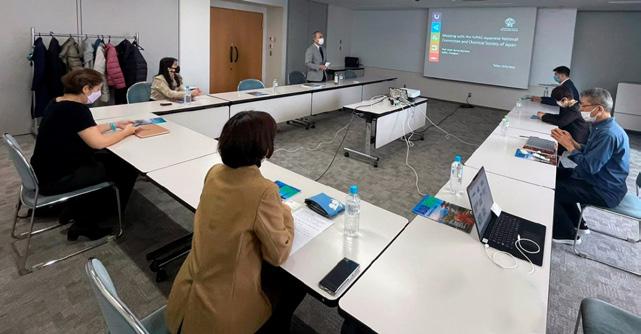
Janos Fischer made IUPAC Emeritus Fellow
Professor János Fischer has been awarded the status of Emeritus Fellow in the Chemistry and Human Health Division (Division VII). This 2023 appointment reflects his standing as a scientist and continuing service to the Division and to the Union.
János Fischer is a Senior Research Scientist at GEDEON RICHTER Plc, Budapest, Hungary. In 1964 he received a MSc degree in organic chemistry from the Eötvös University of Budapest.
János is author of some 100 patents and research articles. He received an honorary professorship at the Technical University of Budapest (BME).
János began his IUPAC activity as National Representative (NR) in 1998 based on the proposal of the Hungarian National Adhering Organization (NAO) under the chairmanship of Ernő Pungor. Soon afterwards he was invited by Professor Camille Georges Wermuth (France) to participate in the Medicinal Chemistry Section, followed by the Subcommittee on Drug Discovery and Development (SC-D3). The professional and inspiring atmosphere of this group is characterized by excellent experts and inventors. Their inspiration helped him to establish projects on analogue-based drug discovery (ABDD). These IUPAC projects resulted in three books published by WileyVCH between 2006-2013.
János also worked as elected member (Titular or Associate Member) in the Chemistry and Human Health Division (Division VII) and in the Committee on Chemistry and Industry (COCI). He initiated the IUPACRichter Prize in Medicinal Chemistry. He also initiated the IUPAC-ThalesNano Prize for Flow Chemistry during his COCI activity. Last but not least he chaired eight face-to-face SC-D3 meetings for four years between 2014-2017 including a summer school in Rio de Janeiro (2015). His editorial activity continues as series editor of a new collection entitled “Trends in Drug Discovery,” whose first volume is planned to appear in 2023.
https://iupac.org/who-we-are/emeritus-
25 Chemistry International July-September 2023 IUPAC Wire
Project Place
Information about new, current, and complete IUPAC projects and related initiatives. See also www.iupac.org/projects
FAIR datasets for acid dissociation constants
by Jonathan Zheng, Ye Li, and Leah McEwen
Acid dissociation constants (pKas), the physicochemical properties that govern how acidic a chemical is in a solution, are an important type of reference information for research in chemistry and related fields as they govern the behavior of pharmaceutical drugs in the human body, environmental impact of molecules, and manufacturability of chemical products. To enable the use of reliable pKa data in broad practical and theoretical applications, IUPAC compiles values published in the literature, critically evaluates these based on established methods of assessment and publishes these in printed reference works [1-6].
A digital pKa dataset based on high quality compilations from IUPAC that is FAIR (Findable, Accessible, Interoperable, and Reusable) can be a trustworthy reference for chemists to build machines learning models to predict pKas of any conceivable organic molecule. Other openly accessible online pKa data sources lack critical context and metadata regarding the measured properties, such as the temperature at which the pKa was determined, the experimental method or assumptions used, the estimated reliability of such data points, and so on.

With permission from IUPAC, an effort to digitize several printed IUPAC pKa collections was initiated as part of a PhD research project by Jonathan Zheng, a PhD candidate in the laboratory of Professor William H. Green at the Massachusetts Institute of Technology (MIT). Members of the Green Research Group, MIT Libraries, the IUPAC Committee on Publications and Cheminformatics Data Standards (CPCDS), IUPAC Division V (Analytical Chemistry) and the team at PubChem were consulted at various points throughout the project.
More than 20,000 pKa values were extracted from scanned text and compiled into a structured dataset. Entries were checked both manually and programmatically to review for accurate transcription and ensure all metadata and provenance were included. Machine readable chemical notations including InChI strings, InChIKeys, and SMILES strings were also incorporated
to enhance reusability and interoperability. Figure 1 illustrates the workflow for the digitization and curation process.
The resulting curated dataset includes 21,147 entries covering 8,843 unique molecules from three different volumes. Figure 2 illustrates the distribution of pKa values across the dataset. The data is available to the community under CC BY-NC 4.0 license from the IUPAC public GitHub repository and also from Zenodo [7], and includes further details on the digitization process and accompanying tables of the original literature references and evaluation methods. IUPAC groups will continue to work on curating the data scanned from the additional printed volumes, including disambiguation of less familiar chemical names and solution composition information. Additional data will become available as well from ongoing evaluation of acid pKa values in polar aprotic solvents (IUPAC project 2015-020-2-500).

This collection of IUPAC evaluated dissociation constants has now become more Findable from citations to the DOI, more Accessible through open repositories, more Interoperable across data analysis platforms in the open CSV format, and more Reusable through the open license and descriptive documentation. The international scientific community can apply this FAIR dataset to many areas of research. The Green Research group
continued on page 29
26 Chemistry International July-September 2023
Hed
Figure 1. Workflow of the digitization and curation process.
Figure 2. Distribution of pKa values in the curated dataset.
Making an imPACt
Analytical chemistry of engineered nanomaterials: Part 1. Scope, regulation, legislation, and metrology (IUPAC Technical Report)
Jan Labuda, Jiří Barek, Zuzana Gajdosechova, Heidi Goenaga-Infante, Linda J. Johnston, Zoltan Mester, Sergei Shtykov
Pure and Applied Chemistry, 2023 Vol. 95, no. 2, pp. 133-163
https://doi.org/10.1515/pac-2021-1001
Analytical chemistry is crucial for understanding the complex behavior observed for engineered nanomaterials (ENMs). A variety of analytical chemistry techniques and methodological approaches are used for isolation/purification and determination of the composition of pristine nanomaterials and for the detection, identification, and quantification of nanomaterials in nano-enabled consumer products and the complex matrices found in cosmetics, food, and environmental and biological samples. Adequate characterization of ENMs also requires physicochemical characterization of number of other properties, including size, shape, and structure. The requirement for assessment of a number of ENM properties frequently requires interdisciplinary approaches and multi-modal analysis methods. This technical report starts with an overview of ENMs definitions and classification, their properties, and analytical scenarios encountered with the analysis of both pristine nanomaterials and complex matrices containing different nanomaterials. An evaluation of the current status regarding nanomaterial identification and characterization for regulatory purposes and legislation, including emerging regulations and related scientific
Recent IUPAC technical reports and recommendations that affect the many fields of pure and applied chemistry.
See also www.iupac.org/what-we-do/journals/
opinions, is provided. The technical report also presents a large and critical overview of the metrology of nanomaterials, including available reference materials and the development and validation of standardized methods that are currently available to address characterization and analysis challenges. The report focuses mainly on chemical analysis techniques and thus it is complementary to previous IUPAC technical reports focused on characterizing the physical parameters of ENMs and on nanotoxicology.
https://iupac.org/project/2017-005-3-500
Properties and units in the clinical laboratory sciences. Part XXVII: online dynamic NPU manual (IUPAC Technical Report)
Young Bae Lee Hansen, Karin Toska, Alice Lund, Robert Flatman, Rebecca Ceder
Pure and Applied Chemistry, 2023
Vol. 95, no. 2, pp. 125-131
https://doi.org/10.1515/pac-2021-1109
The NPU terminology is an evolving international medical laboratory terminology that is used in health care systems. However, the literature of the terminology is assorted in at least 16 publications that are not updated. The objective is to establish an updated online manual of the NPU terminology, comprising the principles and special rules of the terminology. The manual is intended to provide easily searchable and updated information.
https://iupac.org/project/2016-044-2-700
DE GRUYTER AND IUPAC
De Gruyter is proud to partner with IUPAC to produce their flagship journal Pure and Applied Chemistry (PAC), Chemistry Teacher International (CTI), as well as the IUPAC Newsmagazine, Chemistry International (CI).
Read more at https://cloud.newsletter.degruyter.com/ degruyterandiupac

27 Chemistry International July-September 2023
Up for Discussion
How can IUPAC stay relevant and make more impact?
by Leiv K. Sydnes
The world is changing at a speed that many will say is unprecedented. Essential parts of our daily life that used to be solid and unchangeable, are now in play, and throughout the world, this has given citizens, organizations, institutions, and politicians many new challenges. A response to this trend seems to have become to redefine goals, revise strategies, and streamline activities to remain relevant. This has been the case within IUPAC as well and several measures to that effect have been implemented in recent years. For readers of this magazine, some notable developments have become apparent: more early-career chemists are engaged in union activities, an increasing number of projects and conferences focus on issues of societal importance, and new cutting-edge technologies that may enable chemistry to contribute better to solve major problems of global proportions, have been high-lighted.
But for someone, who is not engaged in IUPAC activities and has not even heard about Chemistry International (CI) (that is the case for most chemists), the situation is unfortunately very different. Even when I question chemists about IUPAC, the knowledge about the union appears to be very limited. Of course, everybody knows about IUPAC nomenclature and terminology and quite a few are familiar with its role in the naming of new elements. And among chemists involved in research, the conference program is, as expected, well known, but that is about it.
In my opinion, there are two main reasons for this situation. Most importantly, next to nothing is reported about IUPAC activities in chemical and technical magazines published in most of the member countries of the union. Thus, without any IUPAC enthusiasts in these countries, IUPAC remains essentially invisible in the chemical community. Secondly, among the relatively few that have visited iupac.org, the opinion is that the website is not very informative because it is difficult to use and, beyond nomenclature and terminology, contains little material relevant to the global problems we are facing today. Consequently, IUPAC leaves an introvert impression and remains uninteresting.
In my opinion, the key to improve the situation is to pay much more attention to the Union’s National Adhering Organizations (NAOs) and enable them to bridge the gap between IUPAC and their national
chemical community in ways that make an impact. In order to achieve this, four actions should be taken.
1) Let all NAOs have one National Representative (NR) in all divisions and most committees
This will right away establish an IUPAC-focused group of chemists in every member country. By sending relevant documents to them and allowing them to attend meetings in the relevant division or committee, they will become well informed, be able to contribute, and be noted as candidates for elected positions in the future. This will also give the NAOs the insight they need to communicate fruitfully with IUPAC about both organizational and scientific matters. And what a start for a new member of IUPAC to be asked right away to appoint a dozen or so chemists as NRs in the union!
2) Furnish a steady flow of news pieces that can be used more or less directly by the NAOs in the magazines they publish
It is true that this sort of material is already available in Chemistry International and the IUPAC newsletter, but it is also a fact that very little of their contents reach the chemical communities in the member countries. Also, for someone unfamiliar with the structure and operation of IUPAC, some CI news item would need an informative introduction before being published in national magazines. Thus, to make more impact, measures should be taken to facilitate reuse of CI material in national publications. In order to streamline the operation, the Union could establish contact with a media person in every NAO.
3)The quality of the homepage has to be improved to make it attractive for other than IUPAC insiders
The aim must be nothing less than to make iupac. org the preferred resource for chemical information for chemists, interest groups, journalists, politicians, and students. In order to achieve this, two requirements have to be met. Firstly, a much more powerful search engine has to be installed so that material can be found directly from the opening IUPAC web page even when imperfect search words are applied. Such a capability has been asked for since the turn of the millennium, but we are still far from there. Secondly, the contents must be expanded significantly both in scope and quantity. Nomenclature and terminology are two topics taken well care of, but the homepage is no resource when the aim is to find information about chemistry related to major global problems and challenges embedded in the Sustainable Development Goals. But IUPAC has the competence to change that! Whether the topic
28 Chemistry International July-September 2023
is water purification, pharmaceutical products in the environment, photochemical degradation of anthropogenic chemicals, plastic pollution, thorium chemistry …. whatever …, chemists should join forces and work out presentations topic by topic and add them to the new Resource section on the IUPAC website. When high-quality material is already available on the web, there is no reason to duplicate it; include it via link(s) (with comments if required) so that the presentations on iupac.org become excellent gates to high-quality, exhaustive coverage of relevant and urgent topics for people with a wide range of backgrounds and competences in chemistry. These presentations should for instance be perfect to use for educational purposes by teachers who will be able to make their own presentations adjusted to the students’ level of competence.
4) Make the NAO Forum a bottom-up meeting arena
This new contact point represents a step in the right direction, but the agenda for the meetings should not consist of items the President wants to discuss. A genuine problem in the relation between the IUPAC leadership
Project Place (cont. from p. 26)
at MIT are already utilizing this dataset alongside other openly available thermodynamic data in calculations to determine the energies of ions in water. The resulting set of calculated hydration energies for over 300 ionic solutes will enable further modeling of ions in solution across a range of settings.
Ensuring that scientific data is FAIR for the broadest possible use and benefit of the global society is a community endeavor that involves many stakeholders in the research data ecosystem—chemists measuring and publishing original research data; other chemists working on machine learning projects for compelling use cases; IUPAC expert volunteers evaluating and curating property data; chemical information professionals who can facilitate testing, documenting, depositing and sharing data. IUPAC has a critical role in coordinating with the broader community around FAIR chemical data, providing standards and expertise in robust chemical data reporting and enabling worldwide access and use across disciplines [8-9].
References
1. Ionisation Constants of Organic Acids in Aqueous Solution; E P Serjeant and Boyd Dempsey; Oxford/Pergamon (1979) (Oxford IUPAC chemical data series)
and the NAOs has always been the top-down nature of the communication between the parties. Unlike the larger countries in the Union, the NAOs in most of the smaller countries are operated by volunteers that rotate so often that IUPAC remains overwhelming even after years of engagement. A good indicator for the closeness of contact and the ease of communication is the lack of interventions from the members at the biannual Council Meeting; very few asks for the floor, and when important issues are given a time slot of only 5-10 min, even seasoned council-meeting attendees don’t feel invited to intervene.
In my opinion, implementation of these four action items will make IUPAC a more interesting organization to join, serve, and be associated with. Another likely consequence is that IUPAC will become better known outside the chemical circles and therefore better positioned to make an impact through the application of the chemical sciences to the betterment of humankind. That will indeed be needed in the years to come.
Leiv K. Sydnes is professor emeritus at Department of Chemistry, University of Bergen, Norway. He was president of IUPAC 2004-2005 and chaired the CHEMRAWN committee from 2008-2015.
2. Dissociation Constants of Organic Bases in Aqueous Solution; DD Perrin; Butterworths (1965)
3. Dissociation Constants of Organic Bases in Aqueous Solution, Supplement 1972; DD Perrin; Butterworths (1972)
4. Dissociation Constants of Organic Acids in Aqueous Solution; G Kortum, W Vogel and K Andrussow; Butterworths (1961)
5. Dissociation Constants of Inorganic Acids and Bases in Aqueous Solution; D D Perrin; Butterworths (1969)
6. Acid-Base Dissociation Constants in Dipolar Aprotic Solvents; Izutsu, K; Blackwell (1990)
7. Jonathan Zheng. (2022). IUPAC/Dissociation-Constants: v1.0 (v1-0_initial-release) [Data set]. Zenodo. https://doi. org/10.5281/zenodo.7236453
8. Bruno, I.; Coles, S.; Koch, W.; McEwen, L.; Meyers, F.; Stall, S. (2021) FAIR and Open Data in Science: The Opportunity for IUPAC. Chem Int, 43(3), 12-16. https://doi.org/10.1515/ ci-2021-0304
9. McEwen, L. and Mustafa, F. (2023). WorldFAIR Chemistry: Making IUPAC Assets FAIR. Chem Int, 45(1), 14-17. https:// doi.org/10.1515/ci-2023-0104
Jonathan Zheng is a PhD student in the Green Group at MIT; Ye Li is the Librarian for Chemistry, Chemical Engineering, Materials Science and Engineering at MIT and Chair of the Division of Chemical Information of the American Chemical Society; Leah McEwen is the Chemistry Librarian at Cornell University and Chair of the IUPAC Committee on Publications and Cheminformatics Data Standards.
29 Chemistry International July-September 2023
Conference Call
Artificial Intelligence-Assisted Chemistry
by Ahmed Saeed, Peter Hotchkiss, Jeremy Frey, Hemda Garelick, Vladimir Gubala, Bipul Saha, Russell Boyd, and Jonathan E Forman
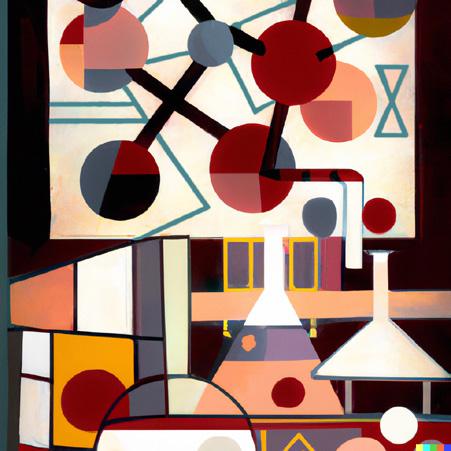
An International Workshop on “Artificial Intelligence Assisted Chemistry” was held at the headquarters of the Organisation for the Prohibition of Chemical Weapons (OPCW) in The Hague, The Netherlands on 16 and 17 June 2022. The program was jointly organized by the OPCW’s Scientific Advisory Board (SAB) and IUPAC, with representatives from the Committee on Chemistry and Industry (Bipul Saha), the Interdivisional Committee on Green Chemistry for Sustainable Development (Jonathan Forman), the Physical and Biophysical Chemistry Division (Jeremy Frey), Chemistry and the Environment Division (Hemda Garelick), and the Chemistry and Human Health Division (Vladimir Gubala). The objectives of the workshop were to (a) provide insight into current and future applications of Artificial Intelligence in Chemistry and (b) generate provocative discussions on the future of this emerging field and its potential impacts, both positive and negative, on the chemical sciences and society.
The SAB is tasked with monitoring the developments in science and technology of relevance to the Chemical Weapons Convention (CWC). The SAB’s guidance enables the OPCW Director-General to render science and technology advice relevant to the CWC, to the Conference of the States Parties, the Executive Council and States Parties. Every five years the OPCW holds a Special Session of the Conference of the States Parties to Review the Operation of the Chemical Weapons Convention, otherwise known as a Review Conference. These Review Conferences serve as fora for the assessment and evaluation of the CWC’s implementation and setting long-term views by providing strategic guidance to the OPCW. Particular focus is given to the verification regime, especially given the CWC’s guidance that the OPCW consider measures to make use of advances in science and technology in undertaking its verification activities (Article VIII, paragraph 6), the changing context within which the regime is implemented and scientific and technological advances in chemistry, engineering, and biotechnology. The Fifth Review Conference was scheduled for 15-19 May 2023.
To ensure that the OPCW Technical Secretariat and States Parties are apprised, the SAB prepares a report before each Review Conference which analyses
relevant developments in science and technology over the past five years and presents recommendations and observations that the SAB considers to be important for the review of the operation of the Convention and its future implementation.
IUPAC and OPCW have collaborated on various activities and workshops over the years [1-3] . The relationship was further strengthened in 2016 by the joint signing of a Memorandum of Understanding (MOU) officially establishing the relationship [4]. The MOU outlines the framework for cooperation between the two organisations with a view towards achieving common objectives and to providing benefits to their respective programmes and areas of work. These areas include, inter alia, science, education and outreach, ethics, and peaceful uses of chemistry. This workshop on AI-assisted chemistry is the latest example of this long-standing collaboration.
Summary of the Workshop
The workshop provided insight into current and future applications of AI in chemistry, with a focus on areas of chemistry of relevance to the OPCW. Topics such as synthetic design and retrosynthetic analysis, reaction conditions and optimisation, drug discovery, adoption and impact of AI in and on the chemical industry, and AI in agricultural chemistry were all considered via both presentations by world experts as well as during moderated discussions throughout the 1.5-day workshop. A brief overview of the presentations and discussions follows.
30 Chemistry International July-September 2023
See
www.iupac.org/events
Reports from recent conferences and symposia
also
“Chemistry of the Future” by DALL.E2 for IUPAC and OPCW (3 March 2023)
The workshop kicked off with an overview of the agenda and the impetus for convening on the AI theme. This was provided on behalf of the SAB by Board member Ahmed Saeed and Peter Hotchkiss of the OPCW. This opening presentation briefly touched on the various areas in which AI is impacting society before focusing on the many ways it is enabling the chemical sciences.
Artificial Intelligence in Drug Discovery
The first invited speaker was Sean Ekins of Collaborations Pharmaceuticals Inc, USA. Collaborations Pharmaceuticals uses AI to develop clinical candidates for rare, neglected, and unmet therapeutic needs. However, in a meeting with science, industry, and arms control communities, they started to consider how the technology they use may be misused in the development of chemical and biological weapons. His team and some colleagues from the Swiss Federal Institute for NBC-Protection (Spiez Laboratory) and Kings College London recently published the results of a thought experiment in which his team used a pre-existing machine learning model for bioactivity and rat acute LD50 (in order to identify toxic molecules) along with a generative algorithm trained on the ChEMBL database to develop molecules with the aim of assessing if the algorithm could generate molecules similar to nerver agent VX. In just 6 hours the generative algorithm produced 40,000 molecules including VX, related known analogues as well as thousands of other molecules that looked similar.
The work, published in March 2022 in Nature Machine Intelligence, garnered a lot of global and media attention allowing Ekins to both present the team’s work to various audiences, but also the story of the work and how they learned a lot about the potential for misuse that this technology allows [5]. Ekins mentioned that the number of companies using AI for drug discovery is growing and AI is used across many sectors such as consumer products (e.g., to identify for non-animal testing options for cosmetics) and animal health (e.g., to discover cost effective new treatments). He emphasized the importance of security and ethics to control misuse of AI.
Artificial, Augmented and Automated chemistry
Jeremy Frey of the University of Southampton, UK spoke about machine learning in chemistry and how it is useful for a host of applications to include drug design, materials design, complex mixture and formulation design, and device design. However, large amounts of quality data are required for machine learning to
be successful. Obtaining these data is a major driving force for the development of new synthetic and characterisation techniques. In posing the question of whether scientific discovery can be automated, Frey indicated that he thought so, but that automation is just one piece to the puzzle. Frey also highlighted that despite the opportunities and efficiencies that artificial, augmented, and automated chemistry may offer, that students should not forsake traditional chemistry. These computer-aided techniques and approaches are only tools, and the human mind will still be needed in these processes (i.e., keeping the human in the loop).
Use of neural networks and symbolic AI in chemical synthesis planning
Marwin Segler of Microsoft Corp explained how the AI/machine learning landscape has evolved in last few years through different stages, from automated synthesis planning and molecular design, to property prediction of new molecules, to readily available opensource code and cloud computing. He suggested that AI should be used for designing property profiles, not compounds per se. In reviewing the history of computer-aided synthesis planning, Segler noted that AI can serve as an idea generator for competent chemists and software is openly available [6]. Some limitations of current approaches were also highlighted, such as: the difficulties in predicting reaction conditions, experimental success and scale-up, and the subsequent limitations of reaction models. However, these will continue to improve with more data and combining this with automated approaches, such as robot-assisted synthesis/experimentation.
Segler believes that, in the next 5-10 years, we should expect to see:
• Synthesis planning, reaction optimization and new molecule generation using AI [7]
• An increased ability to identify new targets and binding sites
• More accurate atomistic simulations
• Algorithms better at extrapolation
He concluded by saying that chemistry expertise will still be needed in the future, but tools like AI will make some of these complex undertakings more accessible.
Application of Artificial Intelligence in Agricultural Chemistry and Agriculture
Bipul Saha of the Sagar Group of Institutions in India spoke about the application of AI in the discovery and synthesis of safe and highly effective crop protection chemicals, listing a number of recent use-cases such as
31 Chemistry International July-September 2023
the discovery of a new selective herbicide for sorghum (Benquitrione). AI can also be used in the prediction of risk of resistance and toxicity of new molecules, saving time and money when developing a new agricultural chemical. When it comes to formulation development, machine learning can be used for prediction of physical stability, dispersion rate and stability of emulsion, etc.
Saha noted that the population of the world is expected to grow to 9.7 billion by the year 2050. To feed this population, agricultural output must increase by at least 50%. At the same time, availability of agricultural land is decreasing due to urbanization and other factors. There is also the increased potential for substantial loss of crops due to pests, crop diseases and weeds.
AI can therefore play an important role in areas such as:
• Early diagnosis of disease and fungal growth in crops to reduce loss of yield
• Monitoring crop heath to diagnose nutrient deficiency, moisture content, and pest damage
• Advising farmers on the right time to sow fields for maximum yield
• Helping farmers in selective removal of weeds to reduce cost and environmental impact
• Reducing labor needs by incorporating autonomous robots in crop harvesting
• Predicting crop yields and forecasting prices to help empower farmers
One recent example of the impact of AI is in the collaboration in India between the International Crops Research Institute for the Semi-Arid Tropics (ICRISAT) and Microsoft Corp to generate sowing advice for farmers resulting in a 30% increase in yield. There are other companies and organisations in India looking to harness the power of AI to strengthen the agricultural industry.
Self-Optimising Reactors for Industry 4.0 Process Development
Richard Bourne of the University of Leeds spoke on self-optimising reactors. He indicated that, compared to conventional methods, self-optimizing reactors:
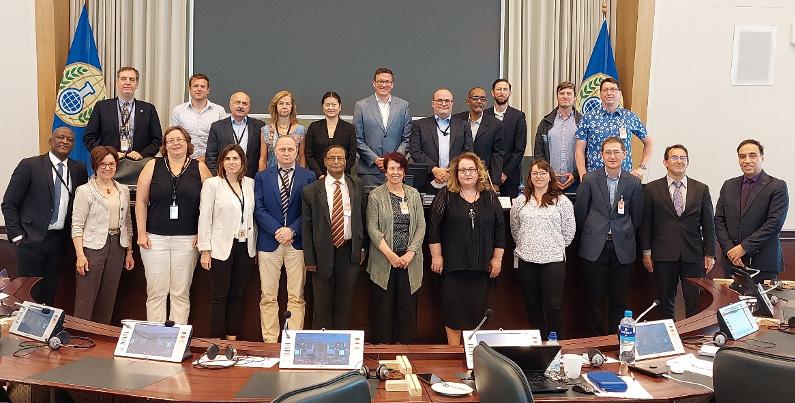
• Provide a cheaper, faster and greener route to reaction optimization
• Enhance researcher capabilities by removing the need for labour intensive experimentation
• Align with growing use of flow chemistry in the chemicals and pharmaceuticals industry
Bourne highlighted an example from his laboratory in which 46 experiments were conducted in 37 hours using only 200 mg of sample per experiment, allowing for the most efficient reaction conditions to be determined [8]. This experiment highlights the efficiency a self-optimising reactor can realise.
Bourne also identified some potential risks and opportunities for OPCW in automated DMTA (design,
32 Chemistry International July-September 2023 Conference Call
Participants in the International Workshop on “Artificial Intelligence Assisted Chemistry” held at OPCW in The Hague, The Netherlands on 16-17 June 2022. Facilitations for remote presentations and attendance were also provided.
Conference Call
make, test and analysis) cycles. It is clear that automated DMTA can positively impact the pharmaceutical industry, but could it also be used maliciously in CW research? It may also prove beneficial in developing automated processes to chemical destruction and remediation and could allow for more remote processes which tend to be inherently safer to human life.
Bourne in summary explained that automation of flow chemistry for process development will enable enhanced productivity, reproducibility, data analysis, and exploration of chemical space.
Sustainability Implications of AI in the Chemical Industry
Prof Yuan Yao of Yale University began by explaining how AI is helping society achieve the United Nations Sustainable Development Goals. There are also sustainability implications of AI in the chemical industry. Yao and her team have reviewed relevant literature and categorized their findings by applications, including AI applications to R&D, unit operations, chemical plants and supply chains. Most studies assessed the energy, economic, and safety implications of AI applications, while relatively few have looked at the environmental impacts of AI [9]. Previous studies also did not consider the impacts of AI systems themselves (e.g., AI infrastructure). As AI has received increasing interest in the chemical industry, it is important to evaluate the potential environmental, economic, and societal impacts of different AI applications.
Yao presented a conceptual framework to assess the sustainability impacts of AI, which includes approaches from industrial ecology, economics, and engineering. As an emerging tool, AI can also be used to support a better understanding of the sustainability of chemicals and materials. This was illustrated with a case study integrating machine learning and chemical process simulation for bio-based materials [10]. Similar applications were identified for bioenergy and other biobased chemicals [11].
Use of AI in molecular design, reaction planning and reaction execution
Connor Coley of the Massachusetts Institute of Technology gave the final invited talk of the workshop. The Coley Research group focuses on developing new computational strategies to accelerate molecular discovery, with particular emphasis on small molecule therapeutic discovery. Among the major themes of the group are computer-aided molecular design and data-driven predictive chemistry. He noted that most molecular discovery workflows proceed iteratively
Name Affiliation
Crister Åstot2 FOI, Sweden
Khaldoun Bachari2
Algerian Public Scientific and Technical Research Centre in The PhysicoChemical-CRAPC, Algeria
Renate Becker-Arnold2 BASF, Germany
Elma Biscotti2
Scientific and Technical Research Institute for Defense, Argentina
Anne Bossée2 DGA CBRN Defense, France
Richard Bourne* Leeds University, United Kingdom
Thomas Chamberlain Leeds University, UK
Connor Coley* Massachusetts Institute of Technology, USA
Stefano Costanzi American University, USA
Vladimir Dimitrov2 Bulgarian Academy of Sciences, Bulgaria
Sean Ekins* Collaborations Pharmaceuticals, Inc, USA
Raza Ellahi2 Defence Science & Technology Organization, Pakistan
Jonathan Forman1 Pacific Northwest National Laboratory, USA
Jeremy Frey*1 University of Southampton, UK
Hemda Garelick1 Middlesex University, UK
Vladimir Gubala1 University of Kent, UK
Matteo Guidotti1,2 National Research Council, Italy
Peter Hotchkiss Organisation for the Prohibition of Chemical Weapons
Wilford Jwalshik2 Institute of Chartered Chemists of Nigeria, Nigeria
Robert Kristovich2 United States Army DEVCOM Chemical Biological Center, USA
Andrea Leisewitz2 Universidad San Sebastián, Chile
Imee Martinez2
University of the Philippines-Diliman, Philippines
Pia Mueller Leeds University, UK
Elisa Souza Orth2 University of Paraná, Brazil
Günter Povoden2
European Union CBRN Risk Mitigation Centres of Excellence, Austria
Ines Primožič2 University of Zagreb, Croatia
Ahmed Saeed2 Sudan University of Science and Technology, Sudan
Bipul Behari Saha*1 Sagar Group of Institutions, India
Marwin Segler* Microsoft Corporation
Yuan Yao* Yale University, USA
Workshop participants (* indicates speaker, 1 indicates IUPAC representative, 2 indicates SAB member)
33 Chemistry International July-September 2023
Conference Call
through design-make-test-analyze cycles, exemplified by lead optimization in the pharmaceutical industry.
Coley noted that the canonical approach to computer-aided molecular design is virtual screening. In virtual screening, large pre-enumerated libraries of molecules are evaluated and the ones with the most favorable values are advanced to experimental testing. A second approach to computer-aided molecular design is generation. Generative models perform a computational optimization by proposing new molecules, estimating their performance (typically with a QSPR model) and revising the rules by which they generate molecules to bias generation towards higher-performing candidates.
For either approach, synthesis is an essential consideration. Virtual libraries are often “make-on-demand” libraries enumerated using chemical transformation rules we believe to be robust and generative models produce new compounds for which we must plan synthetic routes. He said that rational molecular design is an iterative, multi-objective optimization, and computation can accelerate discovery by making it easier to generate and test hypotheses. He further mentioned that although AI can help us to design molecules and develop retro-synthetic pathways, it can’t do everything and anything [12]. He raised the following questions:
• What catalysts, solvents, reagents, temperature do we use?
• What concentrations and reaction time do we use?
• What kind of flask/vessel do we use?
• What order do we add species in, and how quickly or slowly do we add?
• For multi-step sequences, what isolation steps are required?
In conclusion, Coley remarked that AI-assisted chemistry is changing how researchers approach the design and discovery of new functional molecules. The dual use concern is obvious but should not be overblown. Computational predictions of molecular properties are just that—predictions—and one should always consider what a model’s domain of applicability and uncertainty is, or whether biases during training are influencing its predictions. Computer-aided retrosynthesis to medchem-like compounds works well for data-driven programs; the distribution shift when working with small, highly-functionalized compounds presents a challenge (e.g., fentanyl is easy, nerve agents are hard).
Moderated Discussions
In addition to the invited speakers, there were
several moderated discussion sessions to probe particpants’ thoughts on where the use of AI in the sciences is headed and what opportunities and concerns these may present. Discussions were moderated by Hemda Garelick, Vladimir Gubala and Jonathan Forman. These discussions probed several areas of relevance to the work of the OPCW, including synthesis automation, AI in Chemical Safety and Security Management, AI and sustainable technologies and green chemistry, Life Cycle analysis, and AI ethics.
Conclusion and Next Steps
All participants appreciated the workshop program. AI already plays an important role in the field of chemistry, and its adoption and role in the chemical sciences will only expand. Noting this, we should focus on developing positive applications and aspects of AI.
While limitations remain, AI-based synthesis planning makes continued progress. The conversation should hasten with AI ethics institutes and other experts regarding guidance for ethical guidelines to prevent the misuse of AI in the sciences—the Hague Ethical Guidelines provides a framework from which to have these deliberations [13]. Increased training and awareness of scientists to recognize potential for dual-use concerns of AI-assisted chemistry will be critical. Increased security around the software methods and tools that enable AI-assisted chemistry may be appropriate.
Referencers
1. https://iupac.org/100/stories/a-partnership-of-science-anddiplomacy-to-eliminate-chemical-weapons/
2. Mark Cesa, et al. “OPCW-IUPAC Workshop on Innovative Technologies for Chemical Security” Pure Appl. Chem., vol. 90, no. 10, 2018, pp. 1501-1506. https://doi.org/10.1515/pac2018-0701
3. Building Broader and Deeper Links Between OPCW and IUPAC, poster (2019) https://www.opcw.org/sites/default/files/ documents/2019/07/OPCW-IUPAC%20Cooperation.pdf
4. https://www.opcw.org/sites/default/files/documents/Industry/ OPCW_IUPAC_Signed_MoU_01Dec2016.pdf or https://iupac. org/iupac-opcw-take-partnership-new-level/ (News 1 Dec 2016)
5. Urbina, F., Lentzos, F., Invernizzi, C. et al. A teachable moment for dual-use. Nat Mach Intell 4, 607 (2022). https:// doi.org/10.1038/s42256-022-00511-6
6. Segler, Preuss, Waller, Nature, 2018, (555), 604–610.
7. Strieth-Kalthoff, Sandfort, Segler, Glorius, Chem. Soc. Rev., 2020, 49, 6154-6168.
8. Andrew J. Parrott, Richard A. Bourne, Geoffrey R. Akien, Derek J. Irvine, Martyn Poliakoff, 2011, Angew. Chem. Int. Ed. 50(16), 3788-3792. https://doi.org/10.1002/anie.201100412
9. Liao, M., Lan, K and Y. Yao (2021). Sustainability implications
34 Chemistry International July-September 2023
Conference Call
of artificial intelligence in the chemical industry: A conceptual framework. Journal of Industry Ecology. 26: 164–182. https:// doi.org/10.1111/jiec.13214.
10. Liao, M.; Kelley, S.; Yao, Y. ACS Sustainable Chem. Eng. 2020, 8, 2, 1252-1261. https://pubs.acs.org/doi/full/10.1021/ acssuschemeng.9b06522.
11. Liao, M.; Yao, Y. GCB-Bioenergy. 2021, 13, 5, 774-802. https://onlinelibrary.wiley.com/doi/full/10.1111/gcbb.12816.
12. Coley, C. W. Trends in Chemistry. DOI: 10.1016/j. trechm.2020.11.004 (2020).
13. https://www.opcw.org/hague-ethical-guideli
Peter Hotchkiss <peter.hotchkiss@opcw.org> is the science policy adviser at the Organisation for the Prohibition of Chemical Weapons and secretary to the OPCW’s Scientific Advisor Board. ORCID 0000-0002-1229-1090.
Hemda Garelick, Prof of Environmental Science and Public Health Education at Middlesex University, London, UK. Past President of IUPAC Div VI ‘Chemistry and the Environment’. ORCID 0000-0003-4568-2300
Russell Boyd is the Alexander McLeod Professor Emeritus in computational chemistry at Dalhousie University. ORCID 0000-0001-6802-2976.
Jonathan Forman is a Science and Technology Advisor at Pacific Northwest National Laboratory in the USA. He formerly served as the OPCW Science Policy Adviser from 2013-2019. ORCID 0000-0002-5379-812X www.opcw.org/resources/science-and-technology
challenges and problems that women face during their careers?
The women’s stories were exciting and sometimes heart breaking. The discussions revealed that women still need to cope with discrimination, with an unconscious bias, as well as with family demands. Below you may find one of the most touching stories that one of the young chemistry researchers told:
I was born in the West Bank. My parents are not familiar with reading or writing. The main goal for daughters in our society is to raise and take care about the family.
Malta X, Women in Science
by Rachel Mamlok-Naaman
The Malta X conference, Frontiers of Science: Innovation, Research and Education in the Middle East—A Bridge to Peace, took place in November 2022 in Malta. The president of the Malta Conferences Foundation is Professor Zafra Lerman, who initiated the conferences. One of the goals of these conferences is to ensure inclusive and quality education for all (Zajdela and Lerman, 2021). An important activity in these conferences is establishing a women forum in science. Thus, during Malta X, a three-hour workshop on Women in Science was conducted. The coordinators and co-chairs of the workshop were Rachel MamlokNaaman, Rana Raddawi, and Noha Taymour. In addition, two posters on the topic of women education were presented in the poster session at that afternoon. The women who participated in the workshop came from different countries in the Middle East. They were asked to refer to three questions:
1. What kind of challenges did you face during your career?
2. How did you cope with the different challenges?
3. What are your recommendations for coping with
I am the first born to my family, and despite the atmosphere in our community, my mother encouraged me to study. My curiosity and interest in science stimulated me to study chemistry in the university. There was no person happier than my mother was when she attended the ceremony in which I received my PhD in chemistry. She said that I accomplished her dream, becoming a scholar and an independent woman. She did not care about getting married or having children, but rather prayed that I will get my PhD, and become a scientist. My mother’s attitude made me very happy! I started believing that there might be a change in the Palestinian society towards women’s role in society.
Their experiences in both educational and employment settings are consistently less positive than those
35 Chemistry International July-September 2023
Professor Zafra Lerman (right) and Dr. Rachel Mamlok-Naaman
that men experience, and in scientific fields they might encounter a “glass ceiling” in academia as well as in industry. Women with a PhD struggle in sharing their time between their family and a career (MamlokNaaman, 2021). Therefore, they often compromise their career, and they are not enough represented in the science, technology, engineering, and mathematics (STEM) disciplines in most countries around the world, despite their advancements in these areas. The same situation was reported in studies conducted all over the world, aimed at investigating gender gap in STEM disciplines from different angles, globally and across disciplines. The following will serve as an example (Messer Yaron, 2003).
A three-year global project (2017-2019) referring to the gender gap in Mathematical, Computing, and Natural Sciences “How to measure it? How to reduce it?” was funded by the International Science Council (ISC), and was co-led by the International Union of Pure and Applied Chemistry (IUPAC) and the International Mathematical Union (IMU, Guillopé & Roy, 2020). It involved eleven scientific partner organizations. It was disseminated among 32,000 scientists, of which 50% were male and 50% female. Its main goal was to investigate how gender affected the millions of scientific gaps in the Mathematical, Computing, and Natural Sciences at various levels (Chiu & Cesa, 2020). The project included women workshops in different places over the world.
The findings were presented at the final meeting in Trieste, Italy, and show, that despite marked advances towards gender equality and the empowerment of women, progress has been slow and disparities persist around the world. Fewer than 30% researchers from all over the world are women (UNESCO Institute for Statistics, 2016). They continue to represent only a small proportion of faculty members in science and technology fields, especially at more prestigious research institutions. The results confirm that science is not immune
to inequalities. The gender gap in science refers to all regions, disciplines, and development levels.
In summary, the findings led the researchers to declare that it is crucial to change this situation by acting at both the educational and the economic levels (Bystydzienski & Bird, 2006), as the gender gap is a problem of society as a whole (regarding both women and men), in developed as well as in developing countries. The recommendations refer to instructors and parents of girls in primary, secondary, and higher
https://gender-gap-in-science.org/2020/12/07/ virtual-coordination-meeting-on-october-28-2020/
36 Chemistry International July-September 2023
Conference Call
Women workshop at Malta X conference
Final global project meeting in Trieste
education, educational organizations, scientific unions, and other worldwide organizations:
• Actively promote gender balance at every level of any organization, including its leadership, its committees, and institutional events.
• Raise awareness about the gender gap and include specific actions that aim at reducing it, in all outreach and educational programs and products:
• To avoid books and social media that reinforce the gender gap in science;
• To encourage the reading of books about successful women during history (Mamlok-Naaman, Blonder, & Dori., 2011).
• To encourage the presence of women in editorial boards of journals in your discipline and publish reports on the proportion of papers published by women.
• Change the belief that having a family interferes with pursuing a career;
• Change the attitudes regarding the family members’ responsibility;
• Begin at an early age in order to encourage women who decide to combine family life and a scientific career;
• Introduce role models: Women who succeed in this process, and who receive support from their families, e.g., Charpentier and Doudna, Nobel prize 2020 (CRISPR/Cas9 genetic scissors);
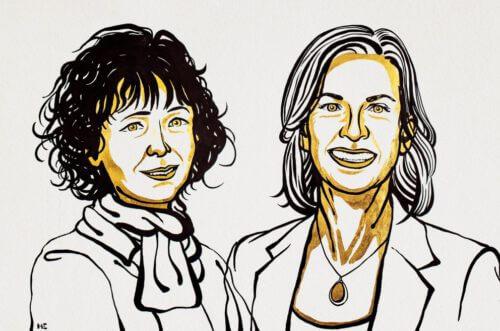
• Support young women scientists, both from men and women;
• Use examples of change, e.g., The Nordic countries serve as prime examples of family policy;They aim at a gender-equal division of economic responsibility, and focus on the fathers’ participation in childcare (Duvander, Lappegard & Johansson, 2020).
References
A Global Approach to the Gender Gap in Mathematical, Computing, and Natural Sciences: How to Measure It, How to Reduce It? IUPAC, 2020, https://gender-gap-in-science.org/ Bystydzienski, J. M., & Bird, S. R. (Eds.). (2006). Removing Barriers: Women in Academic Science, Technology, Engineering, and Mathematics. Indiana University Press, Bloomingdale.
Chiu, M. H., & Ceca, M. (2020). Chemistry International, 42, 16-21, https://doi.org/10.1515/ci-2020-0306
Duvander, A. Z., Lappegard, T., & Johansson, M. (2020). Popular Research Popular Review. 39, 1205.
Guillopé , C., & Roy, M. F. (2020). A Global Approach to the Gender Gap in Mathematical, Computing, and Natural Sciences: How to Measure It, How to Reduce It? International Mathematics Union, https://gender-gap-in-science.org/project-book-booklet/ Mamlok-Naaman, R.. Blonder, R., & Dori, Y. J. (2011). One hundred years of women in chemistry in the 20th century: Sociocultural developments of women’s status. In: M.H. Chiu, P. J. Gilmer, & D. F. Treagust (Eds.). Celebrating the 100th Anniversary of Madam Maria Sklodowska Curie’s Nobel Prize in Chemistry (119-139). The Netherlands: Sense Publishers.
Mamlok-Naaman, R. (2021). Socio-cultural developments of women in Science. Pure and Applied Chemistry. https://doi. org/10.1515/pac-2021-0104
Messer Yaron, H. (2003). Symposium on Women in Science, the Israeli Academy of Sciences and Humanities.
UNESCO, Paris (2016). The SAGA Science, Technology and Innovation Gender Objectives List (STI GOL), SAGA Working Paper 1. https://unesdoc.unesco.org/ark:/48223/ pf0000245006
Zajdela, E., & Lerman, Z. (2021). Malta X Anniversary and COVID19. Chemistry International https://doi.org/10.1515/ci-2021-0204
Rachel Mamlok-Naaman <Rachel.mamlok@weizmann.ac.il> Weizmann Institute of Science
Teaching Chemistry for a Sustainable Future
by Farouk Fahmy, Nadia Kandile, and Ghada Bassioni
The 5th African Conference on Research in Chemical Education (ACRICE-5) was held under the main theme Teaching Chemistry for a Sustainable Future, 7-9 Dec 2022. ACRICE-5 was hosted by Ain Shams University in Cairo, Egypt, and endorsed by Egyptian Academy of scientific Research and Technology (Egyptian Committee of pure and Applied Chemistry), the Federation of African Societies of Chemistry (FASC), and IUPAC. The four previous conferences were held in Ethiopia (Dec. 2013), South Africa (Nov. 2015), Algeria (Oct. 2017), and Nigeria (Sept. 2019).
37 Chemistry International July-September 2023
Conference Call
Charpentier and Doudna, Nobel prize 2020
Conference Call
The conference was intended to act as a platform for enhancing chemical education for the preparation of a new generation of African citizens who are able to deal with international global challenges like climate change. Educators and researchers at all levels are invited to share their vital knowledge about the 4th Industrial Revolution (4th IR) and its impact on the future labor market, chemical pollution and its impact on the climate changes. They also engaged in a recent innovative teaching and learning strategies like Systemic Approach in Teaching and Learning (SATL) and STEM education.
A diverse group of speakers (representing USA, Russia, Canada, Germany, Spain, Italy, Sweden, Turkey, Croatia, China, India, Taiwan, Oman, Malaysia, Bolivia, South Africa, Nigeria, Kenya, Benin, and Egypt) participated in 5th ACRICE. Plenary, keynote, and workshops presentations were given by eminent experts in the appropriate fields of research in the chemistry education.
In teaching process, it is important to promote learning and developing the various interpersonal skills for the student and promoting teaching methods and the widespread familiarity with the terms of teaching methods by using the accurate of the terms. The advancement in science and technology put the 21st century educational systems into a new era characterized by a lot of innovations that promote the reform of teaching and learning chemistry at all levels of education. Most educational policies are carefully planned and include essential features for diversity, digitalization, and sustainability.
Chemistry plays a critical role in solving problems affecting society and plays an essential role in helping society achieve the U.N. Sustainable Development Goals (SDGs).
Chemistry education has received a lot of attention in recent years, as well as the reconsolidation of chemistry education through innovative teaching strategies. The education for sustainable development is the goal of education which increasing importance as the recognition of the urgency for sustainable development. Now Chemistry curriculum learning contexts at all education levels are develop in accordance with SDGs.
Some challenges face chemistry educators in the global age; that they prepare their graduates in most of what they learn linearly and then asking them to think and act systemically also they prepare their graduates to face a global job market based on the 4th Industrial revolution including robotics, Internet connectivity Artificial intelligence, etc. and they assess their students linearly which enhances the surface learning and linear thinking. Also, they teach students environmental
sciences including environmental chemistry and the students polluted their environment and finally they prepare their students traditionally for sustainable future.
IUPAC endorsed the conference because chemistry education is an important subject to support as the conference discussed the innovation of teaching chemistry for a sustainable future, as the world is challenged with development chemistry education for sustainability.
The lectures and workshops at this conference added to chemistry education research the most important innovations about teaching and learning for sustainability.
Javier Martinez, the president of IUPAC, gave the plenary lecture: “Circular Chemistry: Reengineering our Relationship with the Planet at Molecular Scale.”
A panel discussion entitled: “How does systems thinking affect decision making” was aimed at increasing the degree of awareness of audience towards the use of chemistry education in enhancing systemic decision making and its objectives to understand a system’s dynamics—analysis & system’s hierarchy—synthesis to develop systemic solutions for global problems and raise the degree of awareness towards the role systems (systemic) thinking in sustainability.
The aim of the panel is to increase the degree of awareness of audience towards the use of chemistry education in enhancing systemic dissection making and its objectives to understand a system’s dynamics—analysis & a system’s hierarchy— synthesis to develop systemic solutions for global problems and raise the degree of awareness towards the role systems (systemic) thinking in sustainability. Attendees should understand the role of chemistry education in enhancing systems thinking and creativity. Recommendations of the panel discussion are that Chemistry Educators from around the world are invited to prepare their students to live and work in the global systemic age filled with global systemic problems via:
• Global collaboration to move urgently towards new educational systems that prepare new generations to be systems thinkers & systemic decision makers able to solve the global systemic problems and crises systemically and innovatively.
• Intensifying systems (systemic) thinking by redesigning chemistry curricula and course content beside assessment types on a system bases (systemic assessment).
The first workshop at the conference with the title: “Systems Thinking in Chemistry Education” (STICE) is a collaboration project in IUPAC between the 5th African Conference and the Committee on Chemistry Education (CCE). The aim of the workshop is to prepare students
38 Chemistry International July-September 2023
Conference Call
to know basic characteristics of Systems Thinking and to explain the relevance of Systems Thinking to chemistry education, particularly towards reaching the UN SDGs & IYBSSD and explain how Systemic Thinking complements green chemistry and chemistry for sustainability and finally to recognize the advantages and the challenges associated with introduction of STICE. Thus, students start planning and designing activities to introduce Systems Thinking to their students through chemistry education via:
• It is imperative for chemistry education to be oriented towards sustainability to equip graduates with knowledge and skills to address the challenges facing the world.
• Chemistry graduates using systems thinking skills to contribute meaningfully to sustainability.
• Systems thinking is essential not only for deep learning of chemistry but generally in the global future professions of the 4th Industrial Revolution.
The second workshop was “STEM Education and 4th Industrial Revolution.” In the global age, chemistry educators face the challenge of preparing students in a traditional, linear way to face global job markets based on the 4th Industrial revolution including robotics, Internet connectivity Artificial intelligence, etc. This workshop explores frameworks for integrated STEM and how to implement integrated STEM for workshop attendances by engaging in hands-on activities.
The integrated STEM Education is a global phenomenon with countries across the world engaged in efforts to engage students in interdisciplinary approaches to science learning. Characteristics of intelligent STEM includes: (a) instruction is guided by an engaging real-world context, (b) explicit connections between science, technology, engineering and mathematics; (c) an understanding of different STEM career pathways. (d) intentional development of 21st century competencies.
To prepare students for the global future through the development of 21st century skills in addition to learning contents. Students need to be able to apply knowledge to solve the global challenges facing humanity. These challenges are multidisciplinary and complex that requiring the implementation of new innovated approaches to teaching and learning via:
• Development of assessment strategies for interdisciplinary learning and 21st century skills (Capstone Projects).
• Workshops to support greenness and implementation of teaching that supports the developments of 21st century skills.
• Workshops to enable the STEM higher education community to connect with one another and to share best practices in teaching and pedagogy.
• Connecting teachers with STEM professionals who can provide equipment, materials, and/or ideas.
• Workshops to support teachers learning about interdisciplinary approaches
• Workshops to support awareness and implementation of teaching that support the development of 21st skills.
Conference Recommendations
Chemistry educators are invited to be engaged in the recent innovative teaching and learning strategies like project-based learning, inquiry-based learning, systemic based learning [STICE- SATL] and STEM education. Uses of concepts in the chemical education curriculum that can support sustainability. Systems thinking in chemistry education is relevant to sustainability. Uses of science education in general and chemistry education in specific to enhance systems thinking & systemic decision making.
• Development of teaching & assessment strategies for interdisciplinary learning and 21st century skills via designing workshops and sharing curriculum resources.
• Education must be able to connect technology advances, the industry, and learning in the classroom. These include advances in the fields of chemistry and chemical education to enable students to contribute in solving global problems and sustainable development in the future.
• Redesign and rebuild chemistry curricula to intensify systems (systemic) thinking for sustainability.
• Making the undergraduate chemistry laboratories greener and safer (e.g. using SATLC in the green chemistry experiments).
• Apply some innovative teaching & learning strategies to prepare graduates to live and work in the global systemic age full of global problems.
• Uses of deep chemistry learning in decision making of social problems related to chemistry.
• Systems should be presented in chemistry at various scales, which include microscopic, macroscopic and symbolic, with boundary conditions for certain systems defined by the observer.
• Uses of Systemic Assessment (SA) strategies to assess student’s achievements in systems thinking.
Farouk Fahmy is Chair of the Conference, Nadia Kandile is Chair of the Scientific Committee and Ghada Bassioni is Chair of the Organizing Committee.
39 Chemistry International July-September 2023
Conference Call
Open Data Sesame! Key Takeaways from Chemistry Europe’s First Data Day
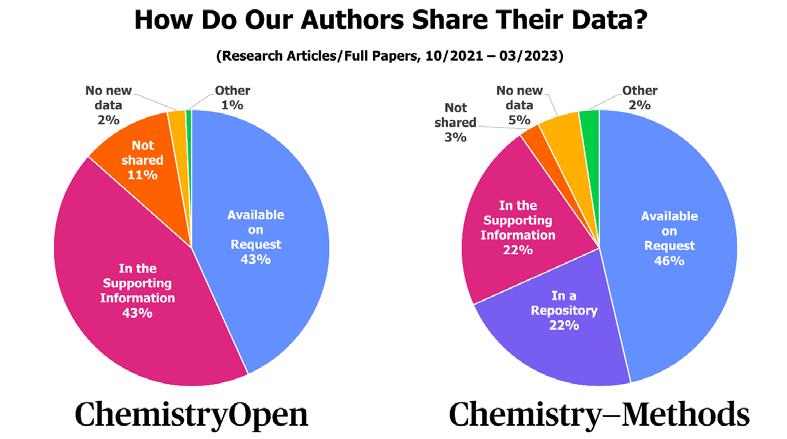 by Axel Straube and Francesca Rita Novara
Ensuring research data are made openly available and are useful to everyone is an increasingly important area of focus for science publishers. Chemistry Europe has invited experts to share their views and experience on this topic. Managing the heterogeneity of the field in terms of data and needs of researchers is difficult, but existing and currently developed solutions could bring about a brighter future for all.
Chemistry Europe’s central mission is to evaluate, publish, disseminate, and amplify the scientific excellence of chemistry researchers from around the globe (https://chemistry-europe.onlinelibrary.wiley.com/). As the publishing association of 16 European Chemical societies from 15 countries, Chemistry Europe publishes 20 international high-quality chemistry journals in close partnership with Wiley-VCH (a subsidiary of Wiley). In all its work, Chemistry Europe values integrity, openness, diversity, cooperation, and freedom of thought.
This openness includes a strong focus on Open Science and all the different aspects of this very broad movement. As such, Chemistry Europe encourages and supports authors to publish their articles using the Open Access model, so findings and conclusions are available for all to read and build upon. Closely connected to this key aspect of the transition to Open Science, is helping researchers to make their data
FAIR (Findable, Accessible, Interoperable, Reusable). Data reuse should be considered a central component of open science practices and should involve more than making data available for download [1]. While support for the idea of Open Data is, generally speaking, very big throughout the science community, the reality is more complicated [2,3,4]. While the importance of Open Data continues to grow in importance for scientific societies, the rate of growth has levelled off, according to results of a recent survey among the societies that partner with Wiley [5].
“Do I really have to do this? No one does it, why should I care?”
Making data open is a multi-party endeavor. There is a community movement of active researchers who see, feel and respond to this need. On the other side of the research process, an increasing number of funders mandate data management plans and data deposition [6,7,8]. Research institutions install their own platforms and infrastructures, with publishers simultaneously trying to ensure data are linked to articles and are made available wherever possible [9,10]. As a first step, most publishers now include data availability statements (DAS) in their published articles and strongly encourage data sharing. Chemistry Europe has included DAS in all published articles since late 2021. Research shows that this, however, might not be enough [11], and care needs to be taken in how data are linked and stored in terms of their longevity repositories and link persistence [12].
40 Chemistry International July-September 2023
Figure 1: Breakdown of how authors in ChemistryOpen and Chemistry–Methods indicate they share the research data associated with the respective article. For this analysis, all Full Papers and Research Articles, that is, articles reporting original research, published between 10/2021 and 03/2023 were considered.
Conference Call
And what do research professionals want?
According to the recent Wiley society survey, many are looking for greater transparency—including enhanced communication with the general public and open peer review practices—and increased accessibility. Clear guidelines and technical support are wishes that come up repeatedly, but despite all support for the idea of Open Data, mandated data sharing is something that only a minority of the survey respondents would look forward to [5].
This mirrors our experiences in the Chemistry Europe journals. Since the introduction of mandatory DAS for all articles published in the portfolio in late 2021, making data available “on request” was the most popular option according to an analysis of all Full Papers and Research Articles published in two of our Gold Open Access titles, ChemistryOpen and Chemistry–Methods, between October 2021 and March 2023 (Figure 1). For ChemistryOpen, this preference was evenly split with that for authors making data available in the Supporting Information (mostly in the form of one or more PDF files, even though some authors also shared videos or computational coordinates). In some of the few cases of authors electing to “not share” data, additional documentation and data were made available through the Supporting Information, highlighting that researchers have different views on what would constitute proper data sharing. We were pleased to see that 22 % of articles published in Chemistry–Methods were accompanied by links to external repositories, the majority of which related to code and data stored on GitHub (https://github.com/) or in institutional repositories. In their Author Guidelines, all Chemistry Europe journals list suitable, both subject-specificandnon-specific,repositories(https://chemistryeurope.onlinelibrary.wiley.com/hub/journal/21911363/ notice-to-authors#sectFDataDeposition).
in chemistry research, the experts have provided concrete examples of how the investigation and analysis of data can be used to reach strategic decisions in everyday chemistry research.
The event was moderated by Pedro Mendes, who has been recently nominated “Catalysis Ambassador” by the Research Data Alliance and the European Open Science Cloud [13]. The talks have generated a fruitful discussion on the numerous and complex aspects of the implementation of Open Science principles and a recording of the event is available (https://chemistry-europe.onlinelibrary.wiley.com/hub/ events#ce-data-2022).
“No matter how fast we start, we are already late. But we have to start now.”
The discussion touched upon the fact that, for chemistry in particular, open data enthusiasts are faced with the issue that the discipline in itself is very heterogeneous. Not only has the pace with which new data are generated picked up considerably with the availability of ever-more powerful methods and instruments, but data formats and file sizes have multiplied, too. Further complicating the matter, data are often not collected with sharing and storing them for future generations in mind, as noted by Haas and co-workers [14].
As part of Wiley’s own work towards Open Science and Open Data, Chemistry Europe has recently hosted its first “Data Day” on October 18, 2022, a virtual symposium to discuss Open Data matters with subject experts. All headlines of this article are quotes from the speakers (Figure 2).
The speakers Sonja Herres-Pawlis (RWTH Aachen, Germany, and NFDI4Chem) and Teodoro Laino (IBM Research Europe, Switzerland) have presented their work and their experience in using data in their everyday research in the lab. In addition to providing concrete guidelines about the storage and use of data
The Cambridge Structural Database (CSD) is a hallmark example of how data sharing in chemistry can be done well [15]. The community has agreed on a standardized format, the CIF [16] (a so-called “ontology,” that is, “an explicit, formal specifications of a shared conceptualization”; other examples would be the InChI molecular classifiers developed by IUPAC [17] or attempts to develop ontologies for even more complex use cases like describing chemical kinetics in machine-readable formats [18]), which ideally contains all the relevant data and metadata that allows people to meaningfully reuse this information. The data are findable for everyone through publications they are associated with and provide starting points for comparison or own further analyses.
Beyond a growing number of repositories tailored towards chemists, non-subject-specific, that is, general repositories exist. However, they do not necessarily make the most of the data they host and might also be unsustainable in the long run; data need to be curated and not just dropped somewhere to be useful.
Sonja Herres-Pawlis, as part of her work in the framework of the German NDFI4Chem initiative—itself part of the German Research Council-funded NFDI initiative (“Nationale Forschungsdateninfrastruktur” [19])—is involved in educating the chemistry community
41 Chemistry International July-September 2023
“Good data management makes us more productive.”
about and popularizing the use of electronic lab notebooks and repositories to store the associated data for later publication, such as Chemotion [20]. In addition, NFDI4Chem organize outreach and instruction sessions. Chemistry Europe and both NFDI4Chem and NFDI4Cat are in continuous contact, trying to learn from and support each other [21]. The Chemistry Europe journals, in close collaboration with Wiley-VCH’s Materials Sciences and Physics portfolio and active researchers in the field, have, for example, started providing subject-specific minimal data checklists to ensure articles on topics such as battery or solar cell research contain all the necessary data to be comparable and useful [22]. Similar approaches and initiatives are underway from the research community itself [23], sometimes paralleling other solutions [24], and it will be upon the community to decide what needs can be addressed in what most sustainable and useful way. This was very well put by Glenn Hampson, Mel DeSart, and Rob Johnson, involved with the UNESCO Open Science initiative: “We need to reverse our thinking so we better understand needs and evidence first, then proceed to build our open tools and solutions.” [25]
did not work at all—is crucial for preventing unnecessary duplication of work (and thus, wasting precious resources). Having negative and “mediocre” data at hand is also imperative for machine learning. As both Sonja and Pedro remarked, negative results in well-curated databases are necessary to effectively train models and enable them to make meaningful discoveries. This has already been demonstrated by several teams, who found that, with incomplete and skewed data sets, machine learning models fail to discover truly novel results [26,27].
Chemistry Europe takes this approach seriously, too. With ChemistrySelect and ChemistryOpen, we provide the chemistry community with sound science titles that aim at providing researchers with a forum to share more incremental and even negative results that have been obtained from stringent, well-designed and comprehensive experiments [28]. Ensuring that high-quality data is vetted, curated and disseminated is a shared responsibility between all stakeholders in chemical research. We are certain that continued efforts, openness, and collaboration will bring about a flourishing data ecosystem for all to benefit from in tackling the big questions of today.
References
Open Data approaches should also extend to reporting all results, not just the major breakthroughs. Reporting all data—including those of experiments that perhaps did not give the desired outcome or those that
1. Cousijn H, Habermann T, Krznarich E, Meadows A: Beyond data: Sharing related research outputs to make data reusable. Learn Publ 2022, 35:75. https://doi.org/10.1002/leap.1429
2. Watson C: Many researchers say they’ll share data—but
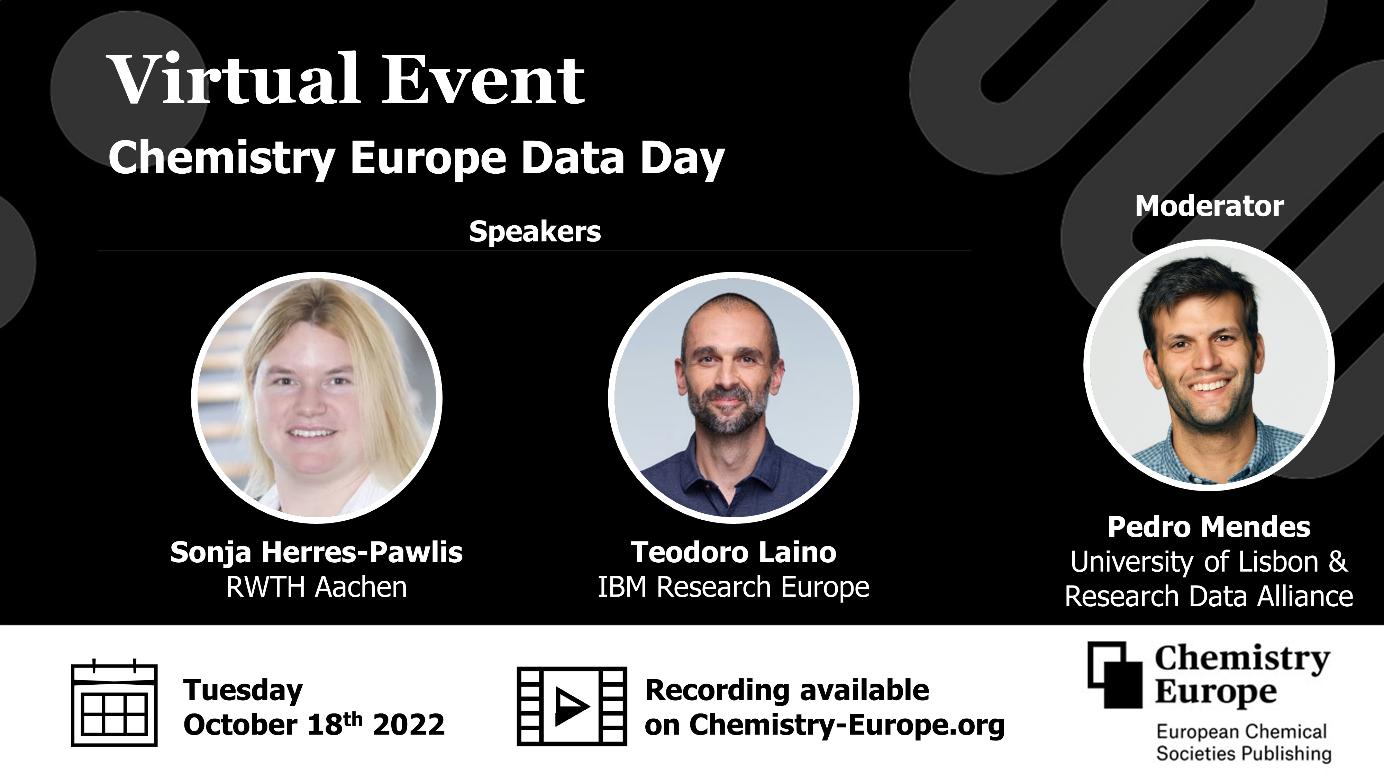
42 Chemistry International July-September 2023
“Negative results are useful to train the machine learning models.”
Figure 2: Speakers Sonja Herres-Pawlis (RWTH Aachen, Germany) and Teodoro Laino (IBM Research Europe, Zürich, Switzerland) and moderator Pedro Mendes (University of Lisbon) of Chemistry Europe’s first Data Day, a virtual event held in October 2022. A recording of the event is available.
Conference Call
don’t. Nature 2022, 606:853. https://doi.org/10.1038/d41586022-01692-1
3. Hutson M: Taking the pain out of data sharing. Nature 2022, 610:220. https://doi.org/10.1038/d41586-022-03133-5
4. Danchev V, Min Y, Borghi J, Baiocchi M, Ioannidis JPA: Evaluation of Data Sharing After Implementation of the International Committee of Medical Journal Editors Data Sharing Statement Requirement. JAMA Netw Open 2021, 4:e2033972. https://doi.org/10.1001/ jamanetworkopen.2020.33972
5. Roscoe J, Open Data is the Big Opportunity for Societies, Says Our Latest Practitioner Survey. 13 March 2023, https:// www.wiley.com/en-us/network/publishing/societies/memberengagement/open-data-is-the-big-opportunity-for-societiessays-our-latest-practitioner-survey
6. MacFarlane A: The importance of effective data sharing and reuse to funders and others supporting research. Learn Publ 2022, 35:71. https://doi.org/10.1002/leap.1443
7. Green C: A Big Win for Open Access: United States Mandates All Publicly Funded Research Be Freely Available with No Embargo. 22 August 2022, https://creativecommons. org/2022/08/26/a-big-win-for-open-access/
8. Anger M, Wendelborn C, Winkler EC, Schickhardt C: Neither carrots nor sticks? Challenges surrounding data sharing from the perspective of research funding agencies—A qualitative expert interview study. PLoS One 2022, 17:e0273259. https:// doi.org/10.1371/journal.pone.0273259
9. Dixon L, Bednarczyk-Drag A, Appelt K: Implementing Data Sharing Policies at De Gruyter. Chem Int 2022, 44:14. https:// doi.org/10.1515/ci-2022-0403
10. Wiley’s Data Sharing Policies can be accessed under https:// authorservices.wiley.com/author-resources/Journal-Authors/ open-access/data-sharing-citation/index.html
11. McGuinness LA, Sheppard AL: A descriptive analysis of the data availability statements accompanying medRxiv preprints and a comparison with their published counterparts. PLoS One 2021, 16:e0250887. https://doi.org/10.1371/journal. pone.0250887
12. Federer LM: Long-term availability of data associated with articles in PLoS One. PLoS One 2022 17:e0272845. https:// doi.org/10.1371/journal.pone.0272845
13. More information on the Research Data Alliance and Pedro Mendes’ role and activities can be found under https://www. rd-alliance.org/users/pedro-mendes
14. Haas CP, Lübbesmeyer M, Jin EH, McDonald MA, Koscher BA, Guimond N, Di Rocco L, Kayser H, Leweke S, Niedenführ S, Nicholls R, Greeves E, Barber DM, Hillenbrand J, Volpin G, Jensen KF: Open-Source Chromatographic Data Analysis for Reaction Optimization and Screening. ACS Cent Sci 2023 9:307. https://doi.org/10.1021/acscentsci.2c01042
15. Groom CR, Bruno IJ, Lightfoot MP, Ward SC: The Cambridge Structural Database. Acta Cryst 2016, B72:171. https://doi. org/10.1107/S2052520616003954. See also https://www.ccdc. cam.ac.uk/community/access-deposit-structures/deposit-astructure/benefits-of-data-sharing/
16. Hall SR, Allen FH, Brown ID: The crystallographic information file (CIF): a new standard archive file for crystallography.
Acta Crystallogr A 1991, 47:655. https://doi.org/10.1107/ S010876739101067X
17. Heller SR, McNaught A, Pletnev I, Stein S, Tchekhovskoi D.: InChI, the IUPAC International Chemical Identifier. J Cheminform 2015 7:23. https://doi.org/10.1186/s13321-0150068-4
18. Farazi F, Akroyd J, Mosbach S, Buerger P, Nurkowski D, Salamanca M, Kraft M: OntoKin: An Ontology for Chemical Kinetic Reaction Mechanisms. J Chem Inf Model 2020 60:108. https://doi.org/10.1021/acs.jcim.9b00960
19. Steinbeck C, Koepler O, Herres-Pawlis S, Bach F, Jung N, Razum M, Liermann JC, Neumann S: NFDI4Chem—A Research Data Network for International Chemistry. Chem Int 2023, 45:8. https://doi.org/10.1515/ci-2023-0103
20. Fink F, Hüppe HM, Jung N, Hoffmann A, Herres-Pawlis S: Sharing is Caring: Guidelines for Sharing in the Electronic Laboratory Notebook (ELN) Chemotion as applied by a Synthesis-oriented Working Group. Chem Methods 2022, 2:e202200026. https://doi.org/10.1002/cmtd.202200026
21. Wulf C, Beller M, Boenisch T, Deutschmann O, Hanf S, Kockmann N, Kraehnert R, Oezaslan M, Palkovits S, Schimmler S, Schunk SA, Wagemann K, Linke D: A Unified Research Data Infrastructure for Catalysis Research— Challenges and Concepts. ChemCatChem 2021, 13:3223. https://doi.org/10.1002/cctc.202001974
22. Lawrence K.: Open for All at ChemElectroChem. ChemElectroChem 2023, 10:e202201143. https://doi. org/10.1002/celc.202201143
23. Ziegenbalg D, Pannwitz A, Rau S, Dietzek-Ivanšić B, Streb C: Comparative Evaluation of Light-Driven Catalysis: A Framework for Standardized Reporting of Data. Angew Chem Int Ed 2022, 61:e202114106. https://doi.org/10.1002/ anie.202114106
24. Kearnes SM, Maser MR, Wleklinski M, Kast A, Doyle AG, Dreher SD, Hawkins JM, Jensen KF, Coley CW: The Open Reaction Database. J Am Chem Soc 2021 143:18820. https:// doi.org/10.1021/jacs.1c09820
25. Hampson G, DeSart M, Johnson R: A Unified, Common Ground Approach to Open. 13 April 2021, https:// scholarlykitchen.sspnet.org/2021/04/13/guest-post-a-unifiedcommon-ground-approach-to-open/
26. Fitzner M, Wuitschik G, Koller RJ, Adam JM, Schindler T, Reymond JL: What can reaction databases teach us about Buchwald–Hartwig cross-couplings? Chem Sci 2020,11:13085. https://doi.org/10.1039/D0SC04074F
27. Beker W, Roszak R, Wołos A, Angello NH, Rathore V, Burke MD, Grzybowski BA: Machine Learning May Sometimes Simply Capture Literature Popularity Trends: A Case Study of Heterocyclic Suzuki–Miyaura Coupling. J Am Chem Soc 2022 144:4819. https://doi.org/10.1021/jacs.1c12005
28. Deveson A: No Research Is an Island: ChemistrySelect and Sound Science. ChemistrySelect 2023, 8:e202204872. https:// doi.org/10.1002/slct.202204872
Axel Straube (ORCID 0000-0002-6037-0594) and Francesca Rita Novara (ORCID 0000-0002-3673-6226) are working as in-house editors for the Chemistry Europe journal portfolio published by Wiley-VCH.
43 Chemistry International July-September 2023
Conference Call
Chemistry’s in Sciences – IYBSSD celebration in Pakistan
by Rafia Azmat
The 3rd International Chemistry Conference and its Role in Sciences (ICCRS III) was held from 3-5 January 2023 at the University of Karachi in Pakistan under the auspices of the International Year of Basic Sciences for Sustainable Development (IYBSSD) and themed “Sustainability: Basic to Advance Sciences.”
The Vice Chancellor of the University of Karachi, Khalid Mahmood Iraqi, and Chief Guest, Special Assistance to Chief Minster Mr. Tariq Hasan, and the Dean of the Faculty of Science, Samina Bano; Chair, Rehana Saeed; Chief Organizer, Rafia Azmat and guests from National and International Universities, took part in the inauguration Ceremony of IYBSSD 2022. The Chair of the Conference, Rehena Saeed, welcomed the guests of honour and all participants. She discussed the ICCRS III in the context of Basic Science subjects, the role of the Department of Chemistry and highlighted the UNESCO endorsement and agenda for 2030.
Rafia Azmat, a chief organizer of ICCRS III, provided information about the past ICCRS events and the IYBSSD 2022. She thanked several renowned scientists from National and International Universities. Furthermore, she highlighted the engagement of the Pakistan Scientific community with event: 155 abstract submissions, of which 135 were selected, 250 attendees daily for each of the three days. Azmat also highlighted the well wishes of the IUPAC team for this event and their encouragement for closer collaboration of the Pakistan Scientific community within international community.
In his opening remarks, the Vice-Chancellor of the University of Karachi, Khalid Mahmood, welcomed the Chief Guest, Distinguished Delegates and the Participants. He shared his wisdom for uplifting the University of Karachi. He expressed his appreciation to the organizers of the Conference, i.e., the Department of Chemistry of the University, for celebrating the IYBSSD. He argued that the sustainability of the planet is strongly linked to a clean drinking water supply and therefore expressed his support for research on running stream safety, especially drinking water. He hoped that Universities contributing to the Conference achieved the agenda for 2030. In his address as Chief Guest, Mr. Tariq Hasan, a political leader, said that we will achieve the agenda of 2030 and pledged Government support for researchers to develop Basic Science subjects in their universities, colleges, and schools. Finally, he thanked the University of Karachi for providing the chance to learn and stand with IYBSSD 2022.
The ICCRS scientific program consisted of several sessions related to basic to advanced sciences, including four workshops:
1. Impact of fake news (related to fake research and news for sustainability).
2. Workshop on forestry, based on a green transformation, in which discussion on why forests and natural livestock are indispensable for human beings; and need for sustainable practices.
3. Chemical Education workshop, attended by school and college-level students from 9th to 12th grade (80 students) in which one participant from the USA (Sarah Usmani) was online. Ailiyan Saleem and Rafia Azmat explain different terms used in chemistry attractively and easily. In these units, the kinetic theory of gases and gas laws, solutions, number of moles, oxidation-reduction reactions and transition states were discussed and explained.
4. Patent, writing, filing, and commercialization was presented as an advanced part of this Conference.
Renowned scientists from national and international universities in person and online discussed their latest research and contributions to sustainability and development in different sessions. Some of these are highlighted below as a best part of the achievements in different Basic Science subject areas.
Azhar Mahmood (University of Science and Technology) presented the research work of his group on the development of waterproof and heat-resistant Montmorillonite clay-modified high-pressure plywood composite from renewable and inedible agricultural waste. Azhar et al. said their group’s research has good potential to develop marketable, improved-quality plywood products that can contribute to sustainability.
Fouzia Sadiq, National Lead in Familial Hypercholesterolemia (FH), in collaboration with the Shifa Tameer-e-Millat University (STMU), Islamabad, spoke about introducing Pakistan’s first-ever registry of FH patients at her university. She also discussed her recent launch of the first paediatrics lipid clinic in Pakistan at Shifa International Hospital, Islamabad, the teaching hospital of STMU. She said the clinic helps to identify FH patients during childhood, offering timely disease management. FH patients are also offered free genetic screening for susceptibility. In her online presentation, Sabina Jhaumeer-Laulloo, University of Mauritius, discussed surfactants. She discussed the manifold roles of surfactants, in which amino-acid-based surfactants attract much interest because of their biodegradability, low toxicity and favourable biological properties. Her
44 Chemistry International July-September 2023
Attendees listen to a lecture at The 3rd International Chemistry Conference and its Role in Sciences (ICCRS III) at the University of Karachi in Pakistan.

research group synthesizes and characterizes cationic and non-ionic aromatic amino acid-based surfactants from L-phenylalanine, L-tyrosine, and H-Tyr(3-OH)-OH, as well as their Gemini surfactant derivatives. These show good antibacterial activities, which are influenced by the length of the hydrophobic tail.
Waseem Ahmed (University of Haripur) discussed bio-drugs and their role in human life. He said that the world is dealing with many health-saving and curing medicines, but many lives are lost due to substantial infection resistance. Natural bioactive compounds like polyphenols, flavonoids, terpenoids, alkaloids, carotenoids, stilbenes, and anthocyanins from fruits, vegetables or medicinal herbal plants might replace synthetic drugs to avoid resistance to infections. The exploration, biosynthesis, and amplification of the potential biological activities of natural and non-natural molecules have remained among the most exciting trends in biotechnology products and future medicine concepts. Qaiser Jabeen exposed the analgesic, anti-inflammatory and anti-arthritic properties of Viola canescens (locally known as Banafsha), which is beneficial in the treatment of arthritis and prevents weight loss. Nidaa Haroon (University of Okara) reported on the highest bioactive compound in the methanolic extract of Casuarina equisetifoliaI. Some other scientists also highlighted the significance of natural bioactive compounds as a future natural medicine.
In the Nanotechnology session, several scientists from across Pakistan presented their research on the synthesis, characterization and application of nanoparticles (NPs). Their applications include controlling microbial activity, managing metal pollution, dye wastewater management, curing wrinkles on textile fabrics and cleaning action, drug discovery, use in LED
lights and green chemistry. Hajira Tahir, in her lecture, highlighted the latest research in nanotechnology that addresses pollution prevention using a green synthesis of nanomaterials and products. Zeshan Akhtar and his group presented their research using TiO2 and SiO2 for self-cleaning and antimicrobial activities on cotton fabrics individually and in combination to observe any synergy. Characterization revealed that the approach was successful as the treated fabric showed self-cleaning and antimicrobial features, but no synergy between the materials was observed. Shiza Tariq use Se NPs with growth-promoting rhizobacteria (PGPR) to control Cd metal accumulation in plants. Rehana Saeed discussed the application of Ag NPs on dye degradation. At the end of the session, a group of scientists (Rafia Azmat, Rehana Saeed, Hajira Tahir, Zeshan Akhtar and Fakher un Nisa) explored the activity of NPs. They concluded that nanoparticles show a similar distribution of energies as atoms and molecules, and therefore follow the Maxwell-Boltzmann distribution.
A new advanced oxidation process (AOP), namely a magneton reaction using KMnO4, urea, acid, base, and a neutral medium, was discussed by Rafia Azmat and her Ph.D. scholar Mohammad Hasan (University of Karachi). They reported an AOP where two oxidizing species, namely nascent oxygen [O] and Urea--hydrogen-peroxide complex [UHC], were established for the first time to restore dye wastewater at low pH with no sludge. Sludge was reported at neutral and basic pH. The pH of the filtrate was 7.6. They reported that the sludge and filtrate were both beneficial for the growth of the plants in the soil and aquatic life, respectively, and concluded that the magneton reaction has advantages over the existing oxidation process for soil and running streams. Rehana Saeed (University
45 Chemistry International July-September 2023
Conference Call
of Karachi) talked about restoring of dye wastewater through adsorption on ground fruits and nuts peels without degradation to control dye pollution for running stream safety. Iqleem Haider Taqvi highlighted the contamination associated with drinking groundwater which is the main source of water supply for many countries, including Pakistan. Iqleem et al. plan to investigate the degradation of groundwater due to interaction with rock and soil in the province of Sindh using spatial mapping of elements in the soil.
Ponnadurai Ramasami (University of Mauritius), a renowned scientist, discussed basic of computational chemistry and recent advances, while other participants also discussed the significance of computational modelling in the current era. Specifically Sobia Ahsan Halim et al. from the University of Nizwa, Oman in her online presentation, talked about her targeted studies on prolyl-specific oligopeptidase (POP) because of its interesting role in the progression of several neurodegenerative disorders. She said that the current inhibitors of POP suffer from poor selectivity for protease and less permeability to the blood-brain barrier (BBB). The predicted pharmacokinetic profile suggests that these molecules might function as effective inhibitors. Raheela Naz (University of Karachi) discussed her interest in the computational modelling of different oxidation states of Mn and Fe as important growth nutrients of plants on different bioactive compounds like chlorophyll and works on comparing plants’ growth under different oxidation states. Liang Cheng from the Chinese Academy of Science discussed the oxidation phenomenon involved in various biochemical pathways that play a crucial role in numerous pathological events and clinical situations. The precise oxidation states in biological nucleic acids accurately control cellular signalling pathways and have been recognized as a major target for potential pharmaceutical intervention.
Janusz Lipkowski from the Polish Academy of Science talked about hexagonal clathrate lattices, which are formed by Ni(NCS)-2-(4-methylpyridine)-4 (as host) with benzene derivatives (as guests). Two isomers of 1-bromo-4-nitrobenzene (bromonitrobenzene, ortho- and meta-) and 1,3-dinitrobenzene were used as the guest molecules for clathrate preparation. A significant influence of the type of guest on the observed phenomena was found. Clathrates, which are hexagonal at room temperature, undergo significant structural modifications at lower temperatures, which in turn is associated with ordering the guest molecules.
Syed Mohammad Nizami discuss climate change and its impact on the forest cover of the moist temperate forest, resulting in forest fragmentation. He highlighted
in his research that if scientific management is carried out properly, fragmentation will be stopped, and carbon stocks will be enhanced to cope with climate change effects in moist temperate forests.
Hussain Kara from Turkey discusses the design of a new hyphenated supercritical fluid system for extraction, determination, and separation of bioactive compounds from medicinal plants and their capsulation for commercial purposes. Khekashan Khan talked about food safety. She said that food safety had long been a matter of concern. The high consumption of processed and red meat is associated with increasing risk to health. N-Nitrosamines (NAs) are a class of carcinogenic compounds in food products. Higher NA content has been reported in protein-rich foods in contrast to vegetables, cereals, etc. These may be a part of raw materials or generated during food processing or storage. N,N-Dimethylnitrous amide (NDMA) is one such carcinogenic compound. It is a semi-volatile organic compound, formed during industrial and natural processes. NDMA exposure may also cause liver damage, fever, nausea, jaundice, vomiting, abdominal cramps, and dizziness. Moreover, aquatic-origin meat contains a higher amount of NDMA. However, antioxidant addition and limited nitrite and nitrate use decrease NA formation in processed meat. These toxins can also be reduced using lactic acid bacteria as a quality enhancer and flavouring agent for food products. Furthermore, ascorbic acid also inhibits the formation of N-nitrosamines. Hence, mitigation strategies should be further improved to reduce N-nitrosamines formation in food products.
Conclusion
The experience of the IYBSSD-2022 at the University of Karachi brings very strong coordination among the Scientific community of Pakistan with International Scientists. The participants from Pakistan and different countries reflected their gratitude that the Conference which was held under the auspices of the International Year of Basic Sciences for Sustainable Development (IYBSSD 2022). Almost all participants enjoyed Sessions and four workshops, especially Chemical Education and Patent filing, which was the first experience of those at any conference. Moreover, innovative outcomes of the Conference, including a conclusive statement regarding Nanoparticles activity that the size of NPs is significant where a large surface-to-volume ratio is involved in the activities of the NPs, two oxidizing species for restoration of dye wastewater, use of bioactive compounds as future medicines, capsulation of natural products and quality plywood products were highly appreciated.
46 Chemistry International July-September 2023
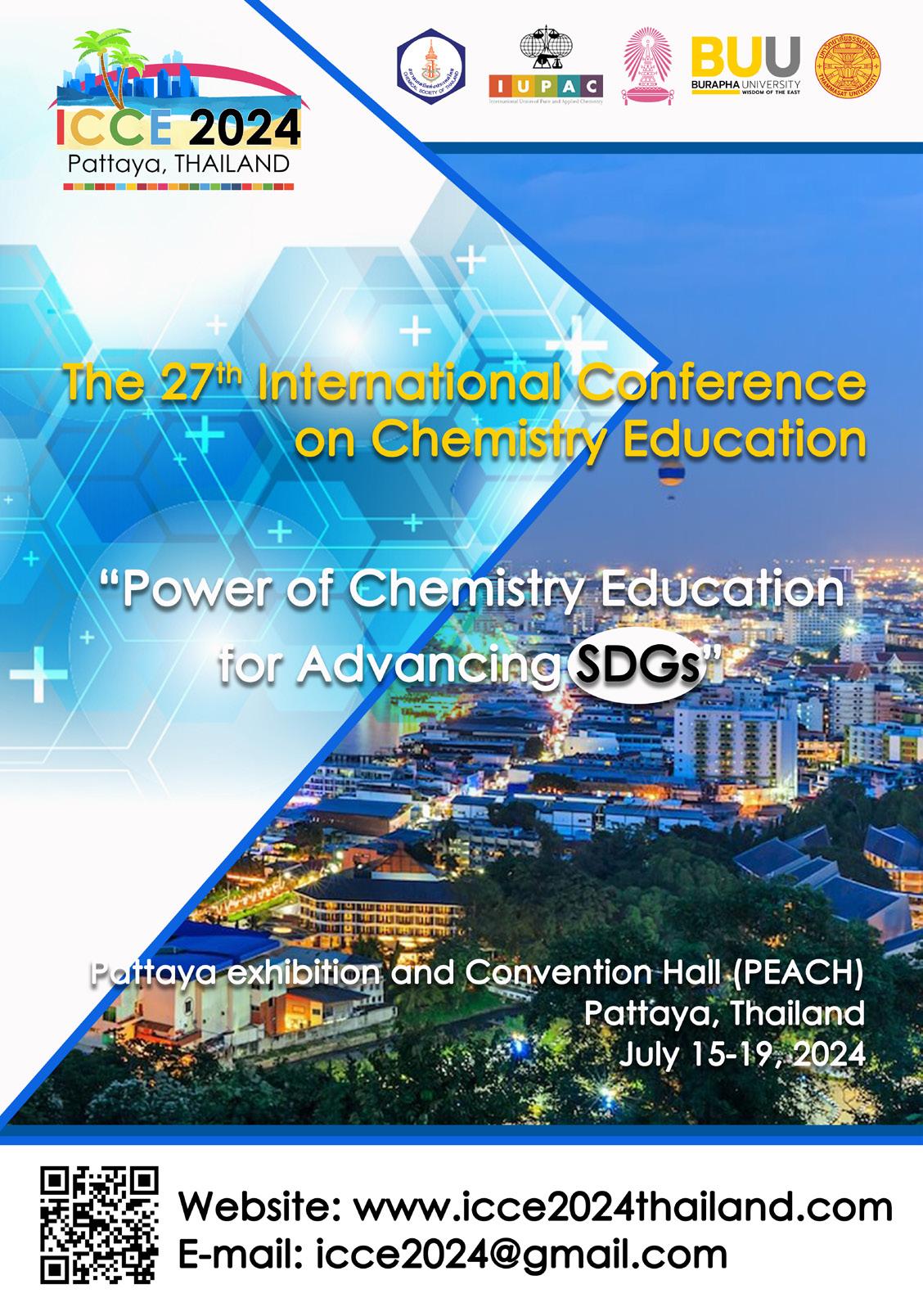
Where 2B & Y
IUPAC | CHAINS 2023
Topical, broad and varied
Busy times for the Scientific Program Committee of IUPAC | CHAINS 2023 as they are putting together an exciting program covering as many aspects of chemistry as possible. Co-chairs
Petra de Jongh and Hermen Overkleeft provide a first impression of what to expect.
With submissions closed for almost all elements of the program, the challenge of completing the huge puzzle that will result in a full conference program is underway. It is up to the Scientific Program Committee of IUPAC |CHAINS 2023, consisting of Dutch and international scientists to ensure that the public is presented with a varied program full of inspiring science. The program was be announced in the course of May, and C2W | Mens & Molecule was granted a preview by Petra de Jongh (Utrecht University) and Hermen Overkleeft (Leiden University), co-chairs of the Scientific Program Committee.
Is it difficult to put together a good program?
Petra-de-Jongh: “It is not really difficult, but it is definitely a challenge and above all a fantastic honor to organize this international conference. I am very happy that we have enthusiastic committees supporting, and that so many chemists have contributed ideas for the program by submitting abstracts and focus sessions. This allows us to cover many current, relevant topics.”Overkleeft: “I completely agree, the sheer number of submissions enable us to show the full spectrum of chemistry. And the topics are even broader compared to the annual CHAINS conference, as there will be even more social and societal issues being covered. I am also pleased that the young chemists are so actively involved with their own Young Program.”
Are you pleased with the program so far?
Overkleeft: “Definitely! For example, I am very happy with the plenary speakers, it is a nice international mix of top scientists covering the full breadth of chemistry. I am very curious to learn what they will tell us all.”De Jongh: “It is quite unique for the Netherlands to have such a varied group of top speakers together; you don’t meet these people every day. And it is nice that many speakers make the connection between fundamental research and application. Furthermore, I think it is very encouraging that the relevant, topical issues in society, such as the energy transition and the materials transition we are facing, are also reflected in the congress program. Chemistry is crucial, and this is increasingly being recognized.”
What were your priorities when putting together the program?
De Jongh: “Our main aim was to show the full breadth of chemistry, and we selected the themes accordingly. And we also wanted to give scientists in the field the opportunity to show what the important developments are and where their interest lies. We don’t control that top-down, but we do see certain topics coming back multiple times in the sessions and abstracts that are submitted.”Overkleeft: “What I noticed is that there are many topics that actually fit within different themes. We try to facilitate that exchange also from an organizational point of view, so that the different theme committees know how to find each other and the interdisciplinary nature of some topics becomes clearly visible.”
What are you personally looking forward to the most?
Overkleeft: ‘I would rather not mention any names, because everyone we invite has a valuable contribution to the conference. However, I am of course curious about the developments in my own field, and I also
48 Chemistry International July-September 2023
Announcements of conferences, symposia, workshops, meetings, and other upcoming activities
Hermen Overkleeft
Petra de Jongh
look forward to the poster sessions. Walking among the poster boards is a great way to meet interesting people. And I am also curious about the activities of the Young Program, who, for example, want to organize “Meet & Greet” opportunities with plenary speakers.”De Jongh: “I really hope we can put together an interesting program for all the young researchers who will have to make a difference on these topics in the future. I like the fact that we can bring them into contact with the top researchers in the various fields, and I hope they will be inspired by these meetings.”
CONNECTING CHEMICAL WORLDS
Monday evening, in the largest Irish Pub in The Hague: O’Caseys. You will be randomly assigned a team, and together you will try to solve the challenging questions that our hosts, professors Nathaniel Martin and Sander van Kasteren, throw your way!
Chemistry party
SAVE THE DATE
Curious about the program? Check out www. iupac2023.org/program for the latest updates!
18 – 25 August 2023, General Assembly
After a day of cutting-edge science, you might want to join the Chemistry Party at Bleyenberg to blow off some steam on Tuesday evening. Meet up with old or new friends, relax at the Rooftop Bar, dance the night away or—if enough people sign up—even enjoy some karaoke!
20 – 25 August 2023, World Chemistry Congress
Social Program
A lot to see at IUPAC|CHAINS and The Hague

“I look forward to welcoming you to the Netherlands in 2023!”
Technical Tours
World Forum The Hague, The Netherlands
Of course, the main focus of IUPAC|CHAINS 2023 is to present a solid base of inspiring scientific work by renowned chemists and young talent. But after a long day of parallel sessions, plenary speakers and focus sessions, we also offer you activities that give you the chance to have fun, broaden your horizon and get to know new people.
Stay informed
Please visit the website and leave your contact details for updates on IUPAC | CHAINS 2023
All the details of this extra program can be found on www.iupac2023.org/evening-program also sign up for the activities. Here we want to give you a quick insight in what you might expect.
Welcome reception
After the opening ceremony on Sunday evening, all attendees are invited to join the welcome reception at the World Forum to celebrate the start of the congress.
Chemistry Pubquiz
Do you think your knowledge about chemistry is up to scratch? Then sign up for the chemistry pubquiz on
On Wednesday afternoon you will get some free time to explore the city or the nearby beach, but there are also several Technical Tours which you can join. All these tours give you the chance to see more of the Netherlands but still learn something. You can for instance sign up to learn more about the restauration of the Night’s Watch (Nachtwacht), making cheese
www.iupac2023.org
Ben Feringa, Honorary Chair
49
INTERNATIONAL UNION OF I U P A C PURE AND APPLIED CHEMISTRY
Where 2B & Y
go explore The Hague on your own. And there is much to see! The Hague is home to several nice museums and also close to the beach and other big cities in the Netherlands. For tips on where to go, see www. iupac2023.org/what-to-do
Registration
Registration is still open!
Have you already registered for the World Chemistry Congress IUPAC|CHAINS 2023 from 20-25 August in The Hague, the Netherlands? Do so while you can still register for the regular fee. After August 4th, participants will have to pay the higher late fee, although discounts remain available for IUPAC Affiliate members, delegates or division or committee members.
Do you want to attend our international congress full of inspiring speakers, interesting discussions and network opportunities in the World Forum in The Hague? Register now at www.iupac2023.org/registration
Program is online
If you want to take a look at the program of the World Chemistry Congress before signing up, you can! The whole program is now online at www.iupac2023. org/program. So are you curious to see which subjects will be discussed during IUPAC|CHAINS 2023, when your favourite plenary speaker will take the stage or what sessions will be organized in your field? Go to the website and check out the program!
6th International Mass Spectrometry School—Fundamentals, advances, instrumentation, and applications
The 6th International Mass Spectrometry School (IMSS 2023), organized by the International Mass Spectrometry Foundation and by the Division of Mass Spectrometry of the Italian Chemical Society, will be held in Cagliari (Italy) on September 17-22, 2023.
IMSS 2023 is a six-day school aimed to give a formation in mass spectrometry, starting from fundamentals up to advances, instrumentation and applications, to graduate, PhD, post-doc students, and all those working in different areas of science, ranging from chemistry, biosciences, food, environment, physics to omics sciences, medicine, interested to improve their knowledge and education in mass spectrometry.
This edition returns to Italy, in the magnificent island of Sardinia, for celebrating its 10th anniversary.
The school joins together participants from academia, public and private research centers and industry, and it is an useful occasion for allowing meeting of students and tutors coming from different countries and for creating new links and networking.
Info at the website:
https://www.spettrometriadimassa.it/imss2023

50 Chemistry International July-September 2023
Feature Articles Wanted Contact the editor for more information at <edit.ci@iupac.org>.
Hed Mark Your Calendar
2023
2-7 Jul 2023 - Green Chemistry - Venice, Italy
XV Postgraduate Summer School on Green Chemistry
Chair: Pietro Tundo, Ca’ Foscari University of Venice, green.chemistry@unive.it https://www.greenchemistry.school/
3-7 Jul 2023 - Science, Technology, Society and WIKIPEDIA - Milano, Italy
See https://iupac.org/project/2018-038-1-400
5-7 July 2023 – Aerogels - Maribor, Slovenia
3rd International Conference on Aerogels for Biomedical and Environmental Applications
Chair: Zoran Novak, University of Maribor, zoran.novak@um.si
Conference secretariat: aerogels2023@um.si https://cost-aerogels.eu/activities/events/3rd-internationalconference-on-aerogels-for-biomedical-and-environmental-applications/
9-14 Jul 2023 - Solution Chemistry - Belgrade, Serbia
38th International Conference on Solution Chemistry
Co-Chairs: Marija Bešter-Rogač, University of Ljubljana, Slovenia and Slobodan Gadžurić University of Novi Sad, Serbia; icsc2023@dh.uns.ac.rs • https://icsc2023.pmf.uns.ac.rs/
23–28 July 2023 - Fluorine Chemistry - Québec City, Canada
23rd International Symposium on Fluorine Chemistry (23rd ISFC) and 9th International Symposium on Fluorous Technologies (ISoFT’23)
Chair: Jean-Francois Paquin, Laval University, Jean-francois.paquin@chm.ulaval.ca https://www.isfc2023.org/
28-30 Jul 2023 - Young Ambassadors for Chemistry - Kuching, Malaysia
https://iupac.org/project/2023-003-3-050/
30 Jul - 4 Aug 2023 - Chemical Thermodynamics - Osaka, Japan
The 26th International Conference on Chemical Thermodynamics (ICCT-2023)
Chair: Kazuya Saito, University of Tsukuba, Japan, kazuya@chem.tsukuba.ac.jp
https://www.chem.sci.osaka-u.ac.jp/lab/micro/ICCT2023
7-11 Aug 2023 - Chemistry and Interdisciplinary Research towards SDGs - Virtual The Virtual Conference on Chemistry and its Applications (VCCA-2023)
Chair: Ponnadurai Ramasami, vccamru@uom.ac.mu • https://sites.google.com/uom.ac.mu/vcca-2023
18-25 Aug 2023 - IUPAC General Assembly and World Chemistry Congress - The Hague, The Netherlands
IUPAC|CHAINS2023, themed ‘Connecting Chemical Worlds’
Chair: Floris Rutjes, Radboud University, Nijmegen; contact: info@IUPAC2023.org https://iupac2023.org/
23 Aug 2023 - WCLM 2023 – as part of IUPAC2023
World Chemistry Leadership Meeting on the theme of The Future of Chemistry: Catalyzing Innovation for Sustainable Development
https://iupac2023.org/wclm/
4-7 Sep 2023 - Polymer - Bratislava, Slovakia Polymer Meeting 15 in Bratislava (PM15)
Chair: Igor Lacík, Polymer Institute SAS, Bratislava, Slovakia, igor.lacik@savba.sk • https://pm15.sav.sk/
12-14 Sep - FAPS Polymer - Istanbul, Turkey
8th Federation Asian Polymer Societies (FAPS) Polymer Congress
Chair: Ayşe Zehra AROĞUZ, Istanbul University – Cerrahpaşa, aroguz@iuc.edu.tr or organization@faps2023.com
51 Chemistry International July-September 2023
Upcoming IUPAC-endorsed events See also www.iupac.org/events
Hed
17-22 Sep 2023 - Mass Spectrometry - Cagliari, Italy
6th International Mass Spectrometry School
Chair: Gianluca Giorgi, University of Siena, gianluca.giorgi@unisi.it https://www.spettrometriadimassa.it/imss2023/
15-19 Oct 2023 - Natural Products and Biodiversity - Naples, Italy
31st International Symposium on the Chemistry of Natural Products and 11th International Congress on Biodiversity (ISCNP31 & ICOB11)
Chair: Raffaele Riccio, Università degli Studi di Salerno, riccio@unisa.it; contact: info@iscnp31-icob11.org
https://www.iscnp31-icob11.org/
15-20 Oct 2023 - Organic Synthesis - Shanghai
International Conference on Organic Synthesis (23-ICOS)
Chair: Dawei Ma, Shanghai Institute of Organic Chemistry, CAS. Contact: Wenjun Tang, 23-icos@mail.sioc. ac.cn • https://23icos-sioc.casconf.cn/
18-20 Dec 2023 - Bioorganic Chemistry - Singapore
13th International Symposium on Bioorganic Chemistry (ISBOC-13)
Chair: Bengang XING, Chemical Engineering and Biotechnology (CCEB), Nanyang Technological University (NTU), Singapore, Bengang@ntu.edu.sg
2024
27 Feb 2024 – Catalyzing Diversity in Science – Virtual IUPAC Global Women Breakfast
https://iupac.org/gwb/
27-31 May 2024 - Polymers for our future - Madrid, Spain
POLY-CHAR 2024, Co-chairs: Araceli Flores and Peter Shuttleworth, poly-char2024@fgua.es
https://www.poly-char2024.org/ Co-chair: Aldrik Velders, Wageningen University; ecb@tfigroup.com
https://www.ecb2024.com/
30 Jun - 3 Jul 2024 - Biotechnology - Maastricht, The Netherlands
19th International Biotechnology Symposium - “Biotechnology for the Grand Challenges of our Society”, joint with the 19th European Congress on Biotechnology (ECB2024) and the Annual Dutch Biotechnology Meeting (NBC-24)
Co-chair: Aldrik Velders, Wageningen University; contact: ecb@tfigroup.com • https://www.ecb2024.com/
1-4 Jul 2024 - MACRO2024 - Coventry, UK
50th World Polymer Congress—Sustainability: improving lives whilst preserving our planet
Chair: Dave Haddleton, University of Warwick, Coventry, UK, d.m.haddleton@warwick.ac.uk
https://www.macro2024.org/
15-19 Jul 2024 - Chemistry Education - Pattaya, Thailand
27th IUPAC International Conference of Chemistry Education (ICCE2024) - The Power of Chemistry
Education for Advancing SDGs
Chair: Supawan Tantayanon, Faculty of Science, Chulalongkorn University, Supawan.T@chula.ac.th;
Contact: icce2024@gmail.com • https://www.icce2024thailand.com
52 Chemistry International July-September 2023
I U P A C
ADVANCING THE WORLDWIDE ROLE OF CHEMISTRY FOR THE BENEFIT OF MANKIND

The International Union of Pure and Applied Chemistry is the global organization that provides objective scientific expertise and develops the essential tools for the application and communication of chemical knowledge for the benefit of humankind and the world. IUPAC accomplishes its mission by fostering sustainable development, providing a common language for chemistry, and advocating the free exchange of scientific information. In fulfilling this mission, IUPAC effectively contributes to the worldwide understanding and application of the chemical sciences, to the betterment of humankind.
President Prof. Javier García-Martínez, Spain
Vice President
Prof. Ehud Keinan, Israel
Past President
Prof. Christopher Brett, Portugal
Secretary General
Prof. Richard Hartshorn, New Zealand
Treasurer Dr. Wolfram Koch, Germany
NATIONAL ADHERING ORGANIZATIONS

Australian Academy of Science (Australia)
Österreichische Akademie der Wissenschaften (Austria)
Bangladesh Chemical Society (Bangladesh)
The Royal Academies for the Sciences and Arts of Belgium (Belgium)
Bulgarian Academy of Sciences (Bulgaria)
National Research Council of Canada (Canada)

Sociedad Chilena de Química (Chile)
Chinese Chemical Society (China)
Chemical Society located in Taipei (China)
LANOTEC-CENAT, National Nanotechnology Laboratory (Costa Rica)
Croatian Chemical Society (Croatia)
Czech National Committee for Chemistry (Czech Republic)
Det Kongelige Danske Videnskabernes Selskab (Denmark)
Finnish Chemical Society (Finland)
Comité National Français de la Chimie (France)
Deutscher Zentralausschuss für Chemie (Germany)
Association of Greek Chemists (Greece)
Hungarian Academy of Sciences (Hungary)
Indian National Science Academy (India)
Royal Irish Academy (Ireland)
Israel Academy of Sciences and Humanities (Israel)
Consiglio Nazionale delle Ricerche (Italy)
Caribbean Academy of Sciences—Jamaica (Jamaica)
Science Council of Japan (Japan)
B.A. Beremzhanov Kazakhstan Chemical Society (Kazakhstan)
Korean Chemical Society (Korea)
Kuwait Chemical Society (Kuwait)
Institut Kimia Malaysia (Malaysia)
Nepal Polymer Institute (Nepal)
Koninklijke Nederlandse Chemische Vereniging (Netherlands)
Royal Society of New Zealand (New Zealand)
Chemical Society of Nigeria (Nigeria)
Norsk Kjemisk Selskap (Norway)
Polska Akademia Nauk (Poland)
Sociedade Portuguesa de Química (Portugal)
Colegio de Químicos de Puerto Rico (Puerto Rico)
Russian Academy of Sciences (Russia)
Comité Sénégalais pour la Chimie (Sénégal)
Serbian Chemical Society (Serbia)
Singapore National Institute of Chemistry (Singapore)
Slovak National Committee of Chemistry for IUPAC (Slovakia)
Slovenian Chemical Society (Slovenia)
National Research Foundation (South Africa)
Real Sociedad Española de Quimíca (Spain)
Institute of Chemistry, Ceylon (Sri Lanka)
Svenska Nationalkommittén för Kemi (Sweden)
Swiss Academy of Sciences (Switzerland)
Department of Science Service (Thailand)
Türkiye Kimya Dernegi (Turkey)
Royal Society of Chemistry (United Kingdom)
National Academy of Sciences (USA)
PEDECIBA Química (Uruguay)
Version last updated 15 June 2023
INTERNATIONAL UNION OF
PURE AND APPLIED CHEMISTRY

50th World Chemistry Congress (50WCC) 13 - 18th July 2025 53rd IUPAC General Assembly (53GA) 11 - 15th July 2025
