17 minute read
Lucinda Williams’ Good Souls Better Angels

Lucinda Williams’ Good Souls Better Angels Music
Live Sessions, Creative Inspiration at Ray Kennedy’s Room and Board Studio
By Barbara Schultz
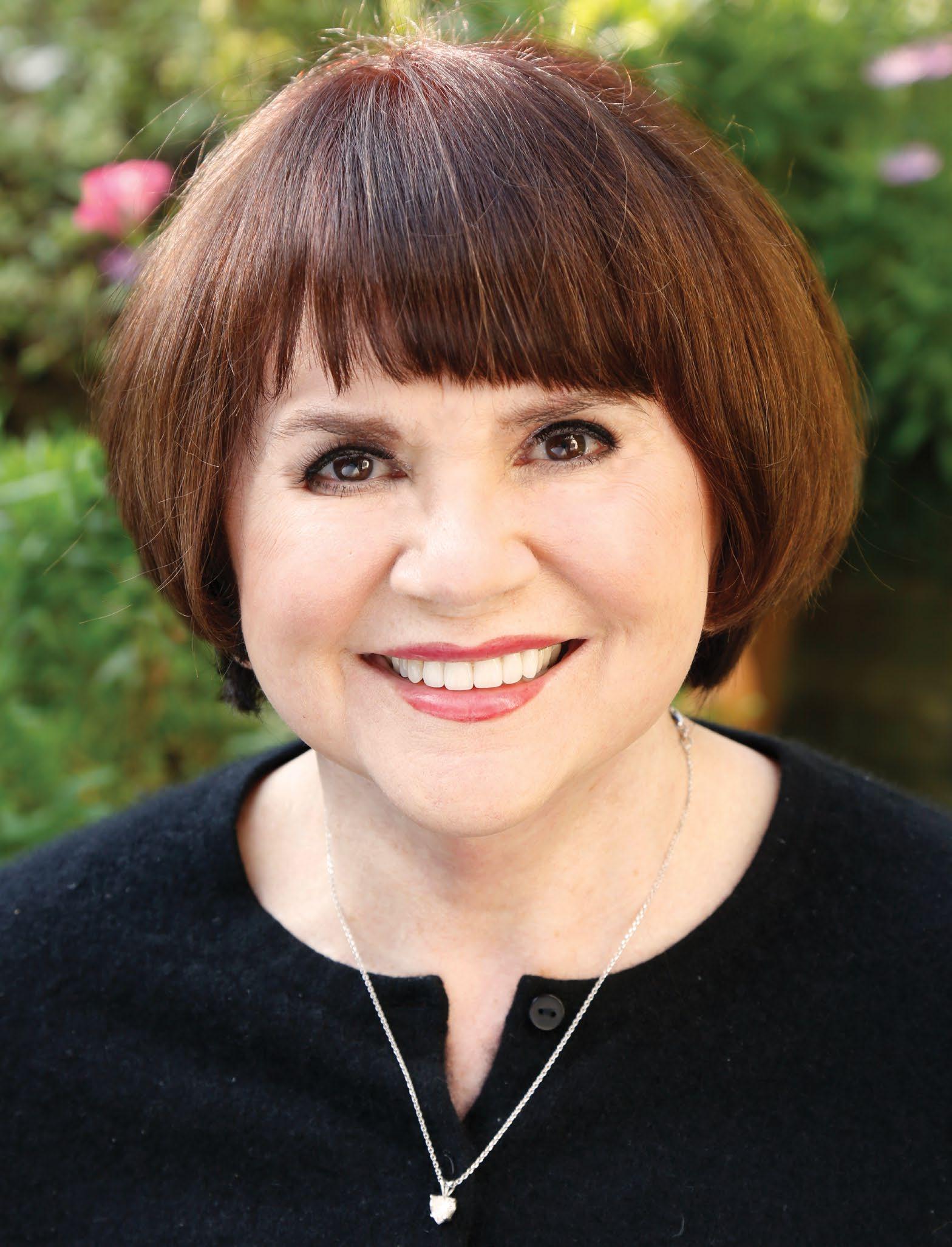
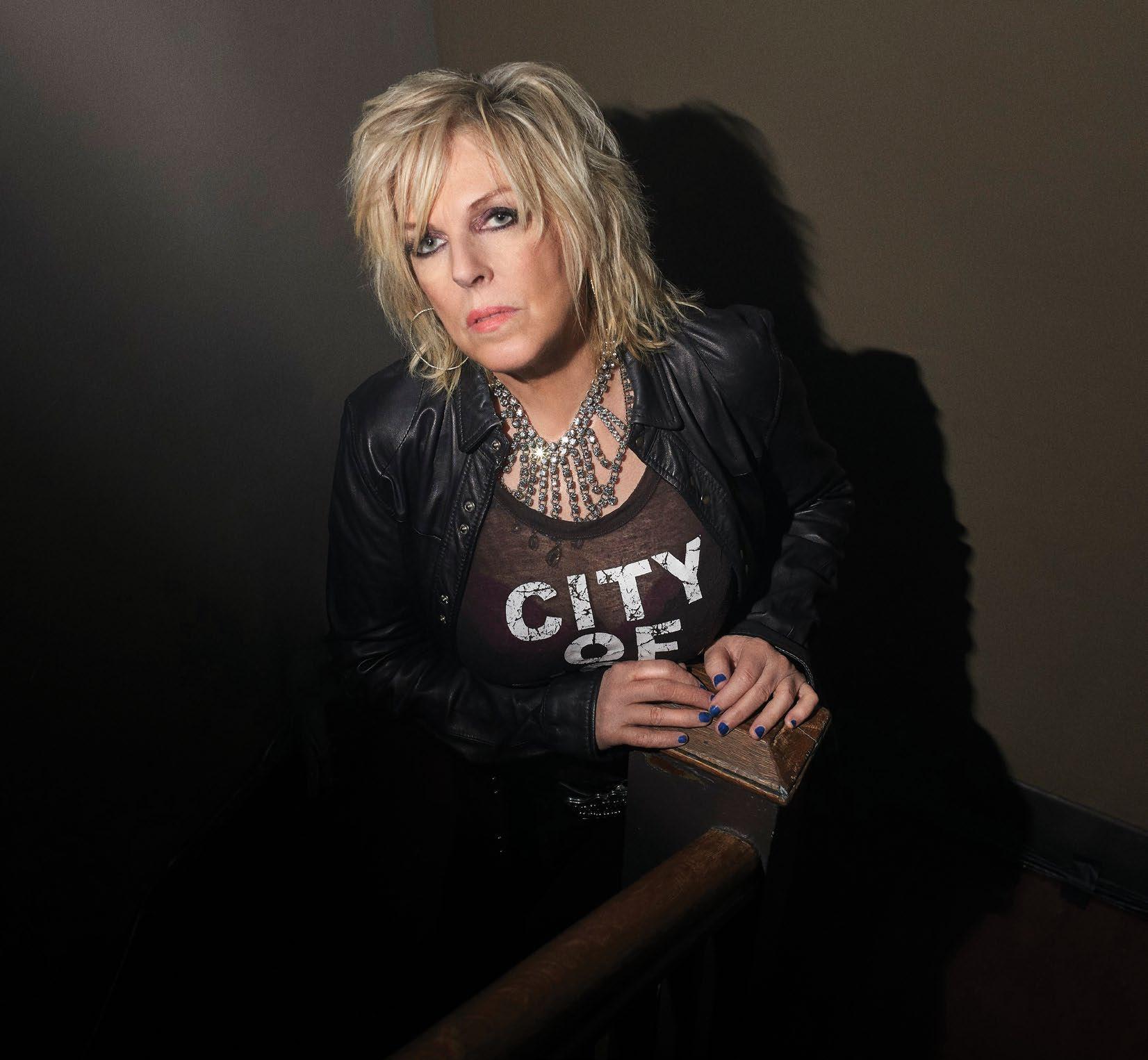
Mix last spoke with engineer/producer/ musician Ray Kennedy about his work with Lucinda Williams this past February for a “Classic Tracks” article on her 1998 masterpiece Car Wheels on a Gravel Road. Twenty-one years later, this musical friendship has produced a new project—Williams’ heavy, rocking new album, Good Souls Better Angels (Thirty Tigers, produced by Williams, Kennedy and Tom Overby)—that features a darker aspect of Williams’ singing and songwriting, with moody, distorted guitar parts and intense lyrics on songs like “Man Without a Soul.”
“Lu and Tom called to say they’d just gotten back from a tour,” Kennedy recalls. “They said, ‘We have three or four days. Can we come in and do some recording? How about tomorrow?’ We worked in four different batches of dates and songs, but it was a very focused record about this world we live in.”
Kennedy co-produced, recorded and mixed the album in his Room and Board Studio, Nashville, which has taken on different forms and locations over the years. Early in his production career, Kennedy had a studio on Music Row, and then he expanded to a residential facility 45 minutes outside of town. In 2008, he relocated again, to the Berry Hill neighborhood.
“I have to thank the Nashville flood [2010] for part of this studio,” Kennedy says. “When I got this place, it was with the idea of having two two-bedroom apartments on the third floor—to have a downtown residential studio. The studio was on the two lower floors.
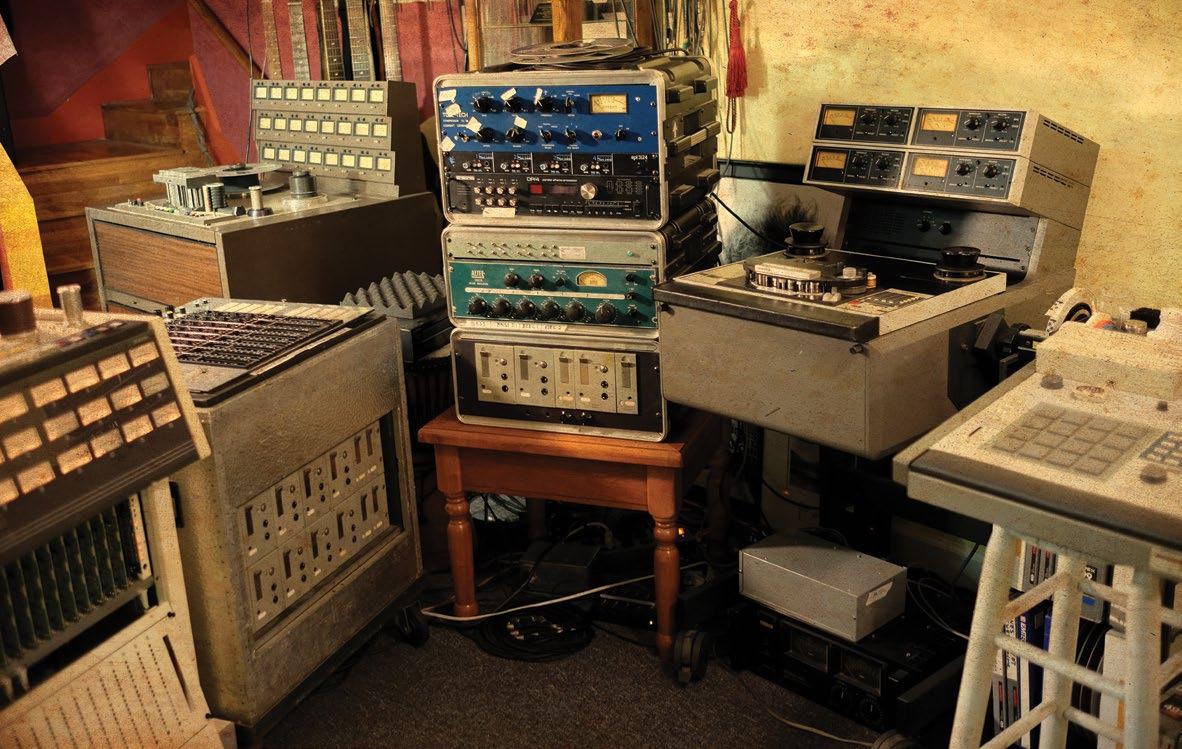
“When I got flooded, I had to evacuate for six months: tear the walls and floors out, and do mitigation with high-velocity fans and dehydrators,” he continues. “Much of my vintage gear was underwater, so I rented big metal storage containers and put all of my tape machines, guitar amps, consoles and other vintage stuff inside with dehydrators to let everything dry out; most all of that gear still works today because I was patient enough to dry everything out thoroughly. But all the newer electronic equipment, from computers to outboard processing, was destroyed.”
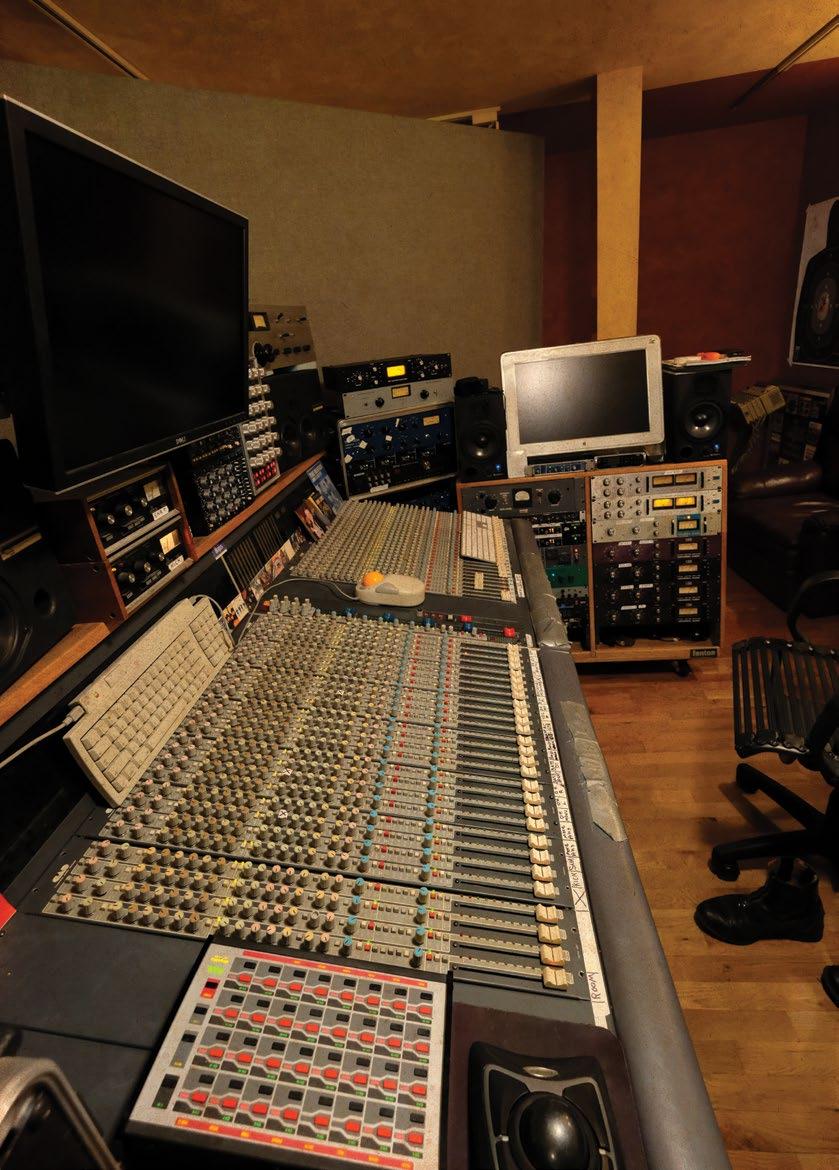
Necessity being the mother of invention, Kennedy then moved a lot of his rescued equipment into the upper floor of the studio while the ground floor was being restored. He installed his 1962 Telefunken recording console and his collection of vintage outboard gear in a loft space, then carried on mixing records. He also outfitted another upstairs room with instruments and recording gear so that he could do some tracking if needed.
Before long, he realized he had created a totally revised, Abbey Road 2-esque floor plan, with a control room and smaller recording space upstairs, and a large live space below. What started out as a makeshift solution became his preferred layout.
Kennedy’s classic Telefunken console now resides in an upstairs loft.
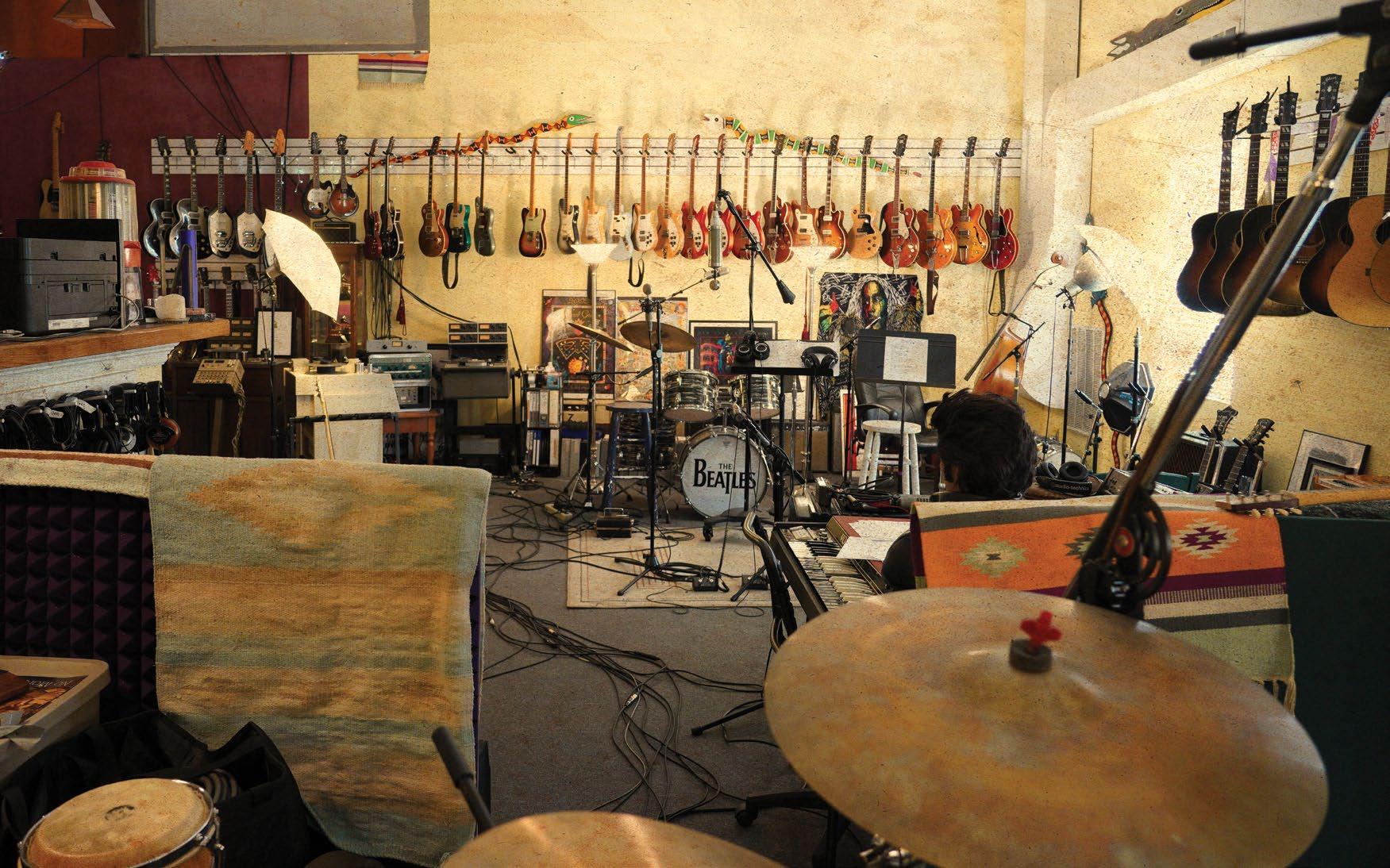
“The big room downstairs has 22-foot ceilings, and that’s where I keep close to 100 electric and acoustic guitars, mandolins, basses and other stringed instruments hanging on the walls, plus several drum kits, percussion instruments and classic keyboards,” Kennedy says. “That’s part of the sound of my room, with everything ringing off those instruments and bouncing back into the room.
“When Lucinda’s drummer, Butch Norton, asked, ‘Do I need to bring my whole kit?’ I said, ‘You should check out my Gretsch drums.’ Butch chose to bring his cymbals, a few snare drums, percussion and his stick bag. We relied on several of my vintage snare drums from the ’40s through the ’60s, especially a 1957 Ludwig Supraphonic.”
Guitars and other instruments line the walls of Room and Board’s A room.
Kennedy’s impressive collection of tube gear survived the Nashville flood of 2010.
Kennedy set up Norton, as well as guitarist Stuart Mathis and bass player David Sutton, in that large downstairs recording room (Studio A), while Williams sang and played guitar in an adjacent, custom-built, anechoic vocal booth.
“But after the first bit of recording, she said, ‘Ray I feel cramped in here,’ he explains. “I said, ‘I have another room upstairs where you’ll be really comfortable. It’s a big open space with nice acoustics.’ That’s how we made most of the record: Everything was recorded live, including Lu’s vocals. I’m upstairs in the control room with Tom, she’s in the room off the control room, the rest of the band is downstairs in one big room, and the amps were back in my piano room. I demonstrated to Stuart what my ’65 Fender Pro Reverb amp sounded like on hardwood floors, positioned to throw the sound under my 1928 Steinway piano to resonate the soundboard. Every other vibrating instrument in the room becomes part of your sound.”
Williams sang into a Neumann U67—the same mic Kennedy chose for her on their very first session, for a duet with Steve Earle in 1996— through an API 312 mic preamp, though they switched to a Telefunken V76 pre on songs that needed a smoother, more open top end.
Williams often played Kennedy’s ’69 Telecaster through his ’59 Tweed Gibson Ranger tube amp while she sang during live tracking. That sound was captured through an RCA 74B ribbon mic, as was Mathis’ Fender Pro Reverb amp—during live tracking and during the few overdubs where Mathis filled in unique, moody guitar lines and effects.
“When Lucinda played acoustic guitar, she used my 1950 Gibson J-45 or her own J-45 that she plays on live shows. I miked that with a Schoeps 1958 CM-65 or a Miktek C5 for a drier, tight sound,” says Kennedy.
On Sutton’s bass, Kennedy used a sort of secret weapon: “In 1996, I ran across this new direct box that Glen Pace was building in Texas,” the engineer/producer says. “It’s called Starplex and it’s based on a Class A all-discrete circuit, with custom-wound nickel transformers. I bought two of the prototypes. They never went into production to make them available commercially, so there were never more than 50 or so of these things, but I still have the two that I’ve been using on bass and electric keyboards ever since. That Starplex DI into my ’50s Altec tube preamp is my favorite bass sound.”
The beautiful record that Williams and band made with Kennedy makes a strong statement lyrically and sonically, and a couple of the musicians wanted to re-create those sounds on tour.
“Lucinda loved the sound of the electric guitar so much she wanted to get one of those Gibson Ranger tube amps to take on the road, so Stuart found one in great shape from the same year and they bought it off eBay, and she plays it on the road now,” Kennedy says. “David Sutton liked the sound of the Starplex so much, I found him one and he takes that on the road. Discoveries happen in the studio, and it’s great when musicians discover sounds that they want to take with them.” n
Music // news & notes
Replacing a ’70s Standard Mercer University and the Revival of Capricorn Studios
The visionaries of Mercer University, under the direction of president William Underwood and with the hands-on diligence of Larry Brumley, Mercer’s vice president, tackled an enormous undertaking to save and revitalize one of pop music’s most iconic recording studios.
Among many important decisions that had to be made was a replacement console to the original API console that lived in the studio since the ’70s and that recorded so many legendary records, including most of the Allman Brothers catalog, Marshall Tucker Band, Charlie Daniels band and so many others at the leading edge of the Southern Rock music scene.
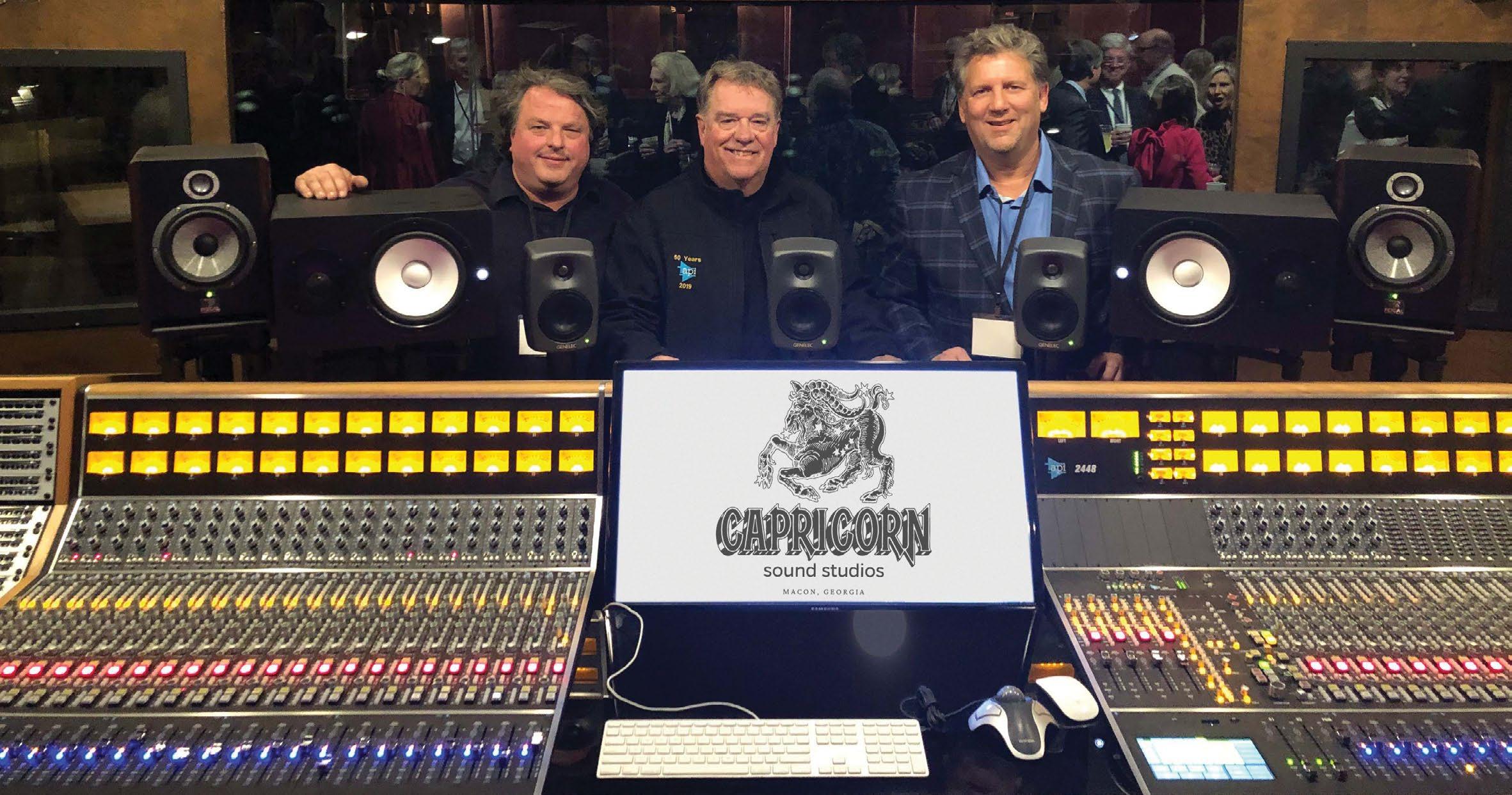
The decision was made to acquire a new API 2448 recording console. Capricorn selected the largest 2448 frame built to date—a fully featured 40-channel version. With 40 mic pres and 40 API equalizers, each channel features two inputs, both with faders. Combining the Main Fader, the 2nd Fader and the 4 stereo returns gives the system 88 channels feeding the mix buses.
Rounding out the system is API’s Final Touch motorized fader automation system, which is now compatible with Vision, Legacy AXS and 1608-II consoles, allowing projects to move seamlessly between facilities equipped with those API consoles.
Steve Ivey, a Mercer graduate and Grammy-award winning producer/ engineer based out of Nashville, was a key figure in the planning and
Left to right: Capricorn chief engineer Rob Evans, API director of sales Dan Zimbelman, and Steve Ivey, producer and Capricorn consultant.
revitalization of the studio. “For 50 years API consoles and Capricorn Studios together have made a worldwide, profound impact in music and recording,” says Ivey. “As a Mercer University music graduate who learned to record on an API console, under the direction of Capricorn producer Paul Hornsby, I am thrilled to be a part of the team taking Capricorn Studios and API into the next era of recording great music.”
Daily management and chief engineer roles are carried by Rob Evans, another Mercer graduate. Evans says that, “in 2016, when Gregg Allman was receiving an honorary degree, he told president Underwood, ‘The room is perfect. Don’t change a thing.’ He also said, ‘Get an analog console,’ so we’ve honored Gregg’s request.”
“We were honored to be a part of the Grand Opening festivities in December,” says Larry Droppa, president of API. “It is gratifying to see the original API console from the ’70s being replaced by a new API console, keeping the heritage and legend of this studio alive. We’re excited to have the opportunity to hear the new music that is going to come out of the facility. A huge thank you from the music community to Mercer University for having the vision to move forward and keep this dream alive.” n

Classic Tracks
Leo Sayer’s Number 1 Hit, With a Fresh Groove and Memorable Hook
By Robyn Flans
Leo Sayer’s “You Make Me Feel Like Dancing” began with a jam at Studio 55, which, pretty much, had everybody in the room dancing.
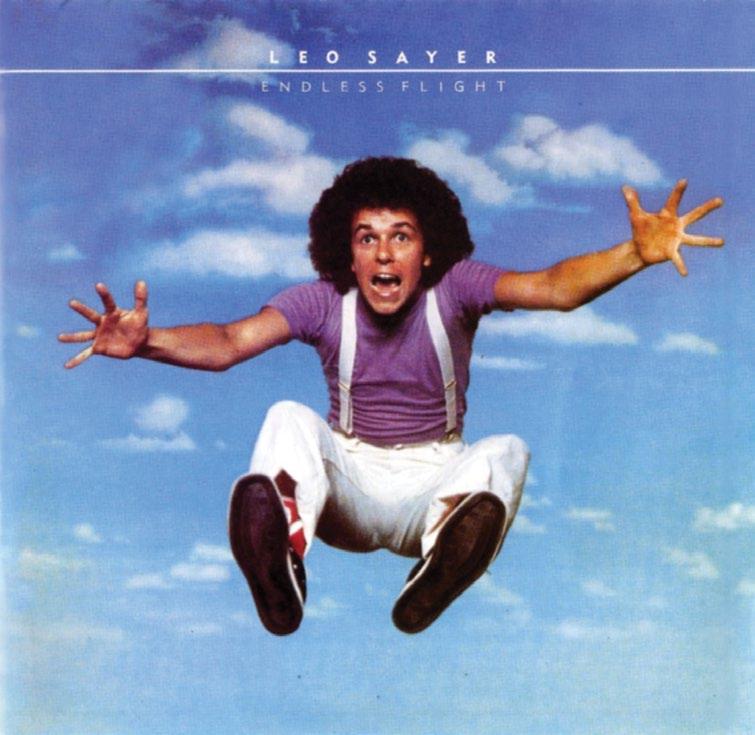
The genesis of the song arose out of a challenge Sayer and drummer Jeff Porcaro had driving into the L.A. studio each day. The two had hit it off from the moment they met on Sayer’s 1976 record project, Endless Flight, produced by Richard Perry and containing the hit single that’s the subject of this month’s Classic Tracks.
Sayer had been reticent about recording with Perry, as the famed producer hadn’t been very interested in Sayer’s compositions up until that point. But Perry had put a band together of some of the best L.A. session musicians, and Sayer was sold on the team when he walked into the studio on the first day. “You Make Me Feel Like Dancing,” Sayer says, came out of thin air.
“There were no mobile phones in those days, so Jeff and I couldn’t call each other [from the car],” Sayer told me via Skype from his home in Australia. “We would set a challenge, ‘Tell me what song you dig on the radio on the way in [to the studio].’ This one morning I came in and said, ‘Oh, man, I just heard this song from Shirley & Company.’” Then Sayer sang a few lines from “Shame Shame Shame.”
“Jeff said, ‘I heard that as well. What a groove! It goes like this.’ And he started drumming, and I started singing and pretty soon the whole studio was into it.” Sayer says that everybody—Porcaro, Ray Parker, Jr., Lee Ritenour, John Barnes and Willie Weeks—was jamming, and he started coming up with words spontaneously.
“Richard throws the reel, which was nearly finished, off the tape machine,” Sayer recalls. “He puts on a new reel and he’s shouting and barking at the guys, ‘Record now!’ And that’s how the jam got onto tape.”
They returned back to the business of the album, but about a month later, Sayer recalls, Perry called him up to his office.
“He said, ‘You need to listen to this, Lee...,’” Sayer says. “On came the jam session, and I had to admit, though rough, and even with the track stopping and starting, it had the makings of something great—something really fresh and groovy. As I reacted favorably, Richard just sat back in his chair with that big trademark Cheshire cat grin on his face, saying, ‘Now that is your hit.’”
Perry immediately sent Sayer into Studio 2 with songwriter Vini Poncia to finish the song and find the hook. There was a tape deck and baby grand piano, and the two hammered out some ideas.
“Vini mentioned that on the jam tape he heard me telling Ray [Parker, Jr.] that ‘he made me feel like dancing,’” Sayer recalls. “I didn’t remember that specifically, but hey, maybe that was it. I started to formulate the words into a pattern that might fit, to which Vini said, ‘Let’s
shift the key.’ So we did, and there it was, simple but sweet. Vini stopped, saying, ‘No more, I gotta get to the chiropractor.’ We both laughed ‘cause we knew we had it, and it had taken all of five minutes! Vini left, and I took the tape we made up to Richard, where the grin just got a whole lot wider.”
BILL SCHNEE FOR THREE HOURS Sayer thought the song had been forgotten until one day engineer Bill Schnee—who was in the middle of working on Steely Dan’s Aja with producer Gary Katz at Producers Workshop Studio—gave Perry a call.
Producers Workshop was Schnee’s favorite place to record because it had a custom console that “sounded amazing,” the engineer says. “All of my favorite consoles, including the one I built for my studio, were custom-made. It was very simple, with old-school technology in it, but very simple electronically, so it sounded incredible. They had a Stephens tape machine which, in my opinion and many others’, was the best-sounding multitrack ever built. There was nothing in it compared to every other tape machine. It almost amounted to a custom tape machine. John Stephens didn’t make a whole lot of those. That was really the heart and soul of why I loved the sound of that place.
“Gary told me when we started that there would be a revolving door of drummers,” Schnee continues. “Sure enough, Steve Gadd comes in for two days. I was familiar with Steve, and I knew Richard would be. When Steve came in we did the first track and I was just blown away with him. I think it was between the two Steely songs we did that day, but I called Richard and I said, ‘You know this Steve Gadd?’ He said, ‘Yeah.’ And I said, ‘I’m recording him right now.’ And Richard said, in typical fashion, ‘Do you think I could do a session with him?’ I said, ‘I don’t know, but you’d have to come over here to Producers because I’m not going to have to get the drum sound again. I’m very happy with the drum sound.’ I was going to record the song ‘Aja’ the next day.” Katz gave his approval to lend out Gadd with a three-hour cap.
Schnee remembers that Perry brought over the recording of the finished song. He also brought over Ray Parker, Jr. (guitar) to join in with Katz’s crew of Larry Carlton (guitar), Chuck Rainey (bass) and Gadd.
“Gadd did what Gadd does, and did an amazing job with his drag snare, which worked perfectly on the song, and it was wonderful,” Schnee states, adding that the recording was made simple— most likely there was a kick mic, snare mic, three tom mics, two overheads and a hi-hat mic. Schnee says he probably put LA2As on the guitars and an 1176 on Rainey’s bass. The session was cut live with Sayer singing a rough vocal.
Schnee says they got the basics down in two hours, and then Perry asked to do another track. Schnee told him he could do something else if he could get it done in an hour’s time because the rest of the guys would be back then. They managed to cut the basics to the album’s third single, “How Much Love,” in an hour, which was unheard of for Perry.
Schnee returned to his Steely Dan duties at Producers Workshop, and Perry went back to Studio 55 to complete Endless Flight. Sayer says he learned the art of comping from Perry on Endless Flight. It was take after take, which he believes was meant sometimes to improve the performance and sometimes just to give Perry endless options. And then a group of them would go over each word in an arduous process to choose which take to use.
“This group would most often be me, Richard, Howard (Steele, engineer) and Gabe (Veltri, assistant engineer)—but sometimes his secretary Robin Rinehart, or Kathy Carey, and maybe studio manager Larry Emerine would get called in there, too,” Sayer recalls.
“One night I remember producer Peter Asher was visiting and was called into the group,” Sayer continues. “And I loved him for suddenly standing up and stating, ‘Richard, you’re so f–ing pedantic!’ to which Richard replied, ‘Surely that’s a good thing, no?’’ So we’d sit there trying to stay awake while Richard would ask, ‘I like the way he sings the ‘when’ from take two, but then listen to what he does with it in take 19. Better, no?’ We’d demur to him, of course, and he’d go on to say, ‘Okay, next word.’”
Although Sayer couldn’t recall specific technical elements about “Dancing,” he did remember the overall experience about the making of the album:
“On one reel of 2-inch-wide, 2500-foot-long, 24-track multitrack tape, recording at 30 ips, we could get about 16 minutes of recording time, maybe enough to record three songs, or three takes of one song, so you can see that we went through an enormous amount of tapes. Copying this tape onto a sister machine, this running at a different speed of 15 ips, gave us twice the recording time.
“Therefore, we could fit about six or seven takes of a song on it, one after the other. I remember us recording up to 15 takes of some songs, something almost unheard of in other studios. These days, songs are nearly always recorded to a click track, and that makes overdubbing more parts onto it easier. But in those days that hadn’t yet been invented.”
Sayer mentioned in particular that drummer Jeff Porcaro, who, while he didn’t end up on “Dancing,” was on other cuts, including Sayer’s next hit off the album, “When I Need You,” was a human metronome. He says that when Perry cut from one take to another, the time was impeccable. Explaining the cutting process back then, Sayer describes: “To slice tape, you take a fine razor blade, cut diagonally and use special sticky tape to bind together the joins—this is the easy bit. Lining up those cuts, that’s where the fun comes in. You take a white wax pencil, shut the motors down, put the machine into free roll so that you now have manual control. Then you roll the spool across the open heads with the speakers turned up so you can listen to the throaty signal of the slowed down drum beat you’ve chosen to hack into as you manually roll it past the heads. Expertly choosing your cut points, you mark the tape with the wax marker, then graft the two different takes together with the sticky tape, resting the tape carefully onto a metal guide, respool it on to the reel and play it back. Imagine how long this could take to get Richard happy with each song, and you have the story of the making of Endless Flight.” Schnee says “You Make Me Feel Like Dancing” sounded like a smash to him right away. Between Sayer’s falsetto and the melody, he says, the song captivated him immediately.
“The opening line pulled you right in, and it had a great hook.”
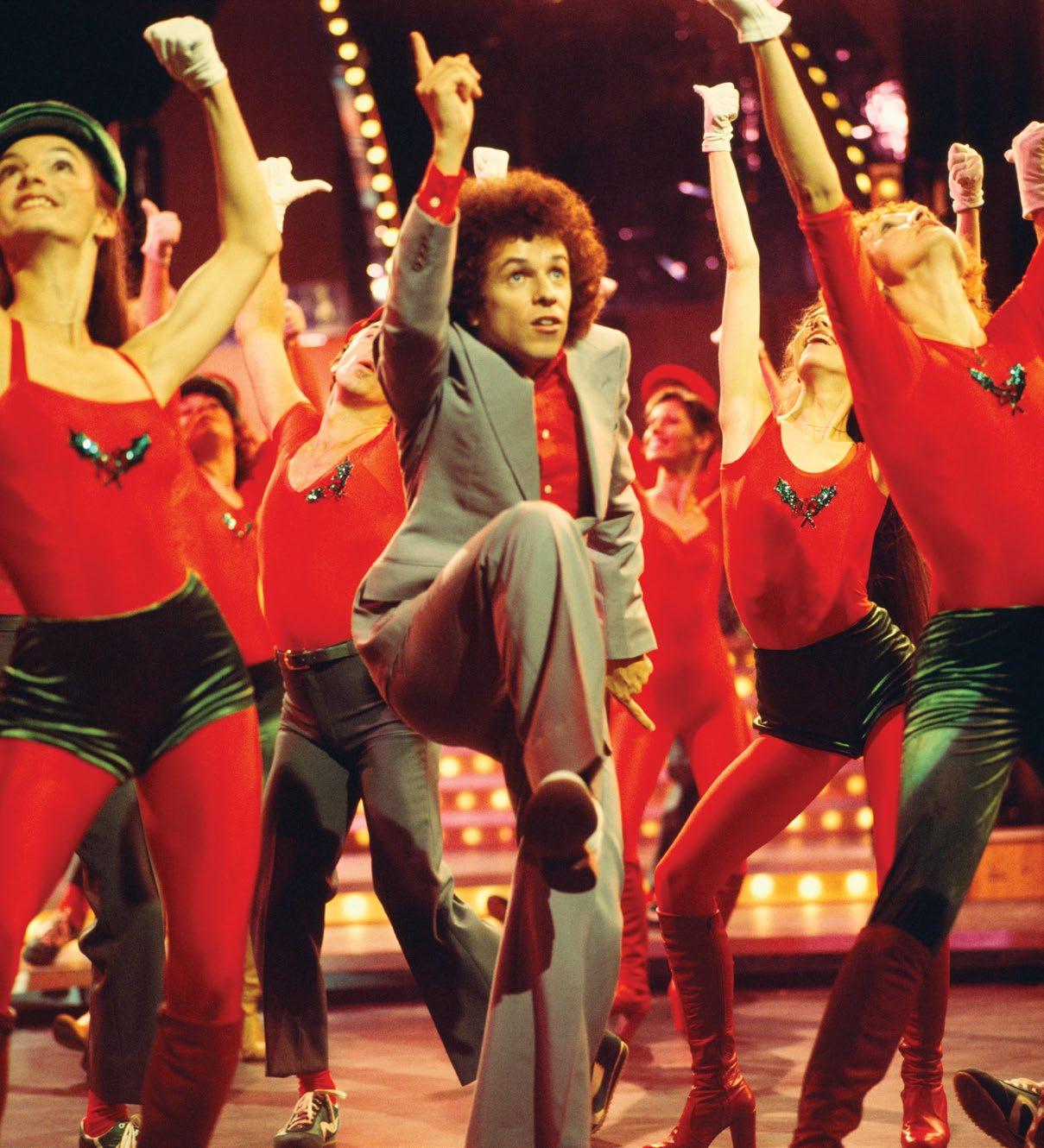
And he was right about its success. The song was Sayer’s first Number 1, hitting the top spot on the Billboard charts in January 1977. Sayer and Vini Poncia went on to win a Grammy Award in 1978 for Best R&B Song. n Leo Sayer performing on the Perry Como Christmas Special TV show in 1977 Photo by David Redfern/Redferns