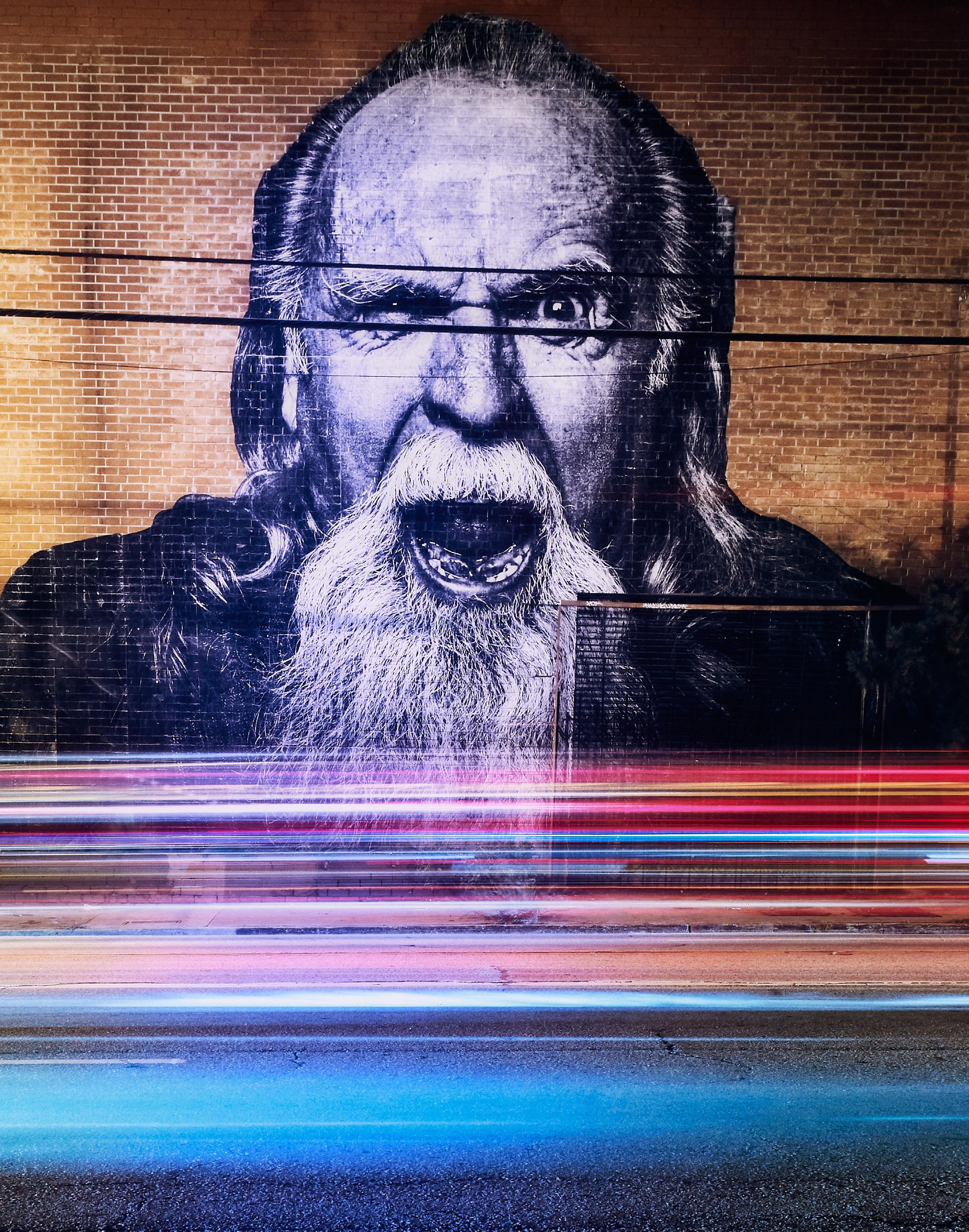
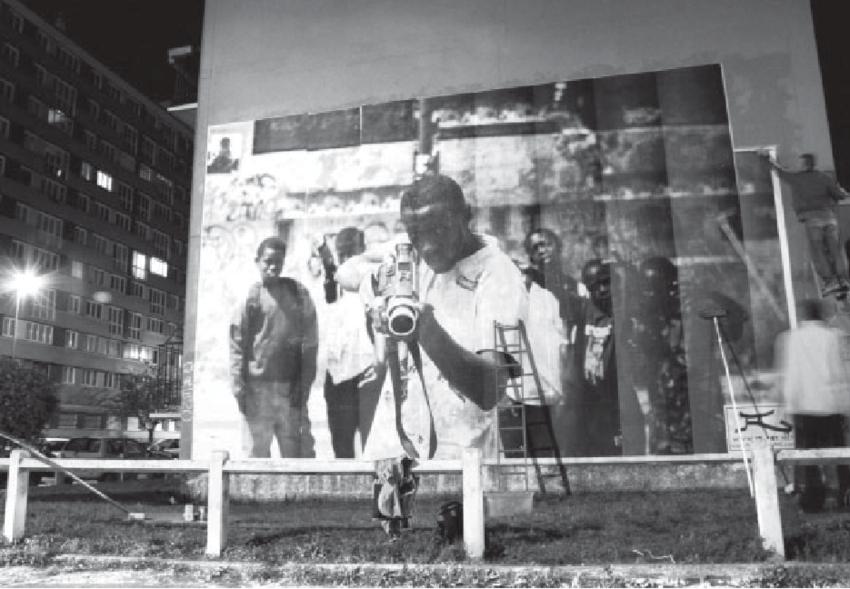
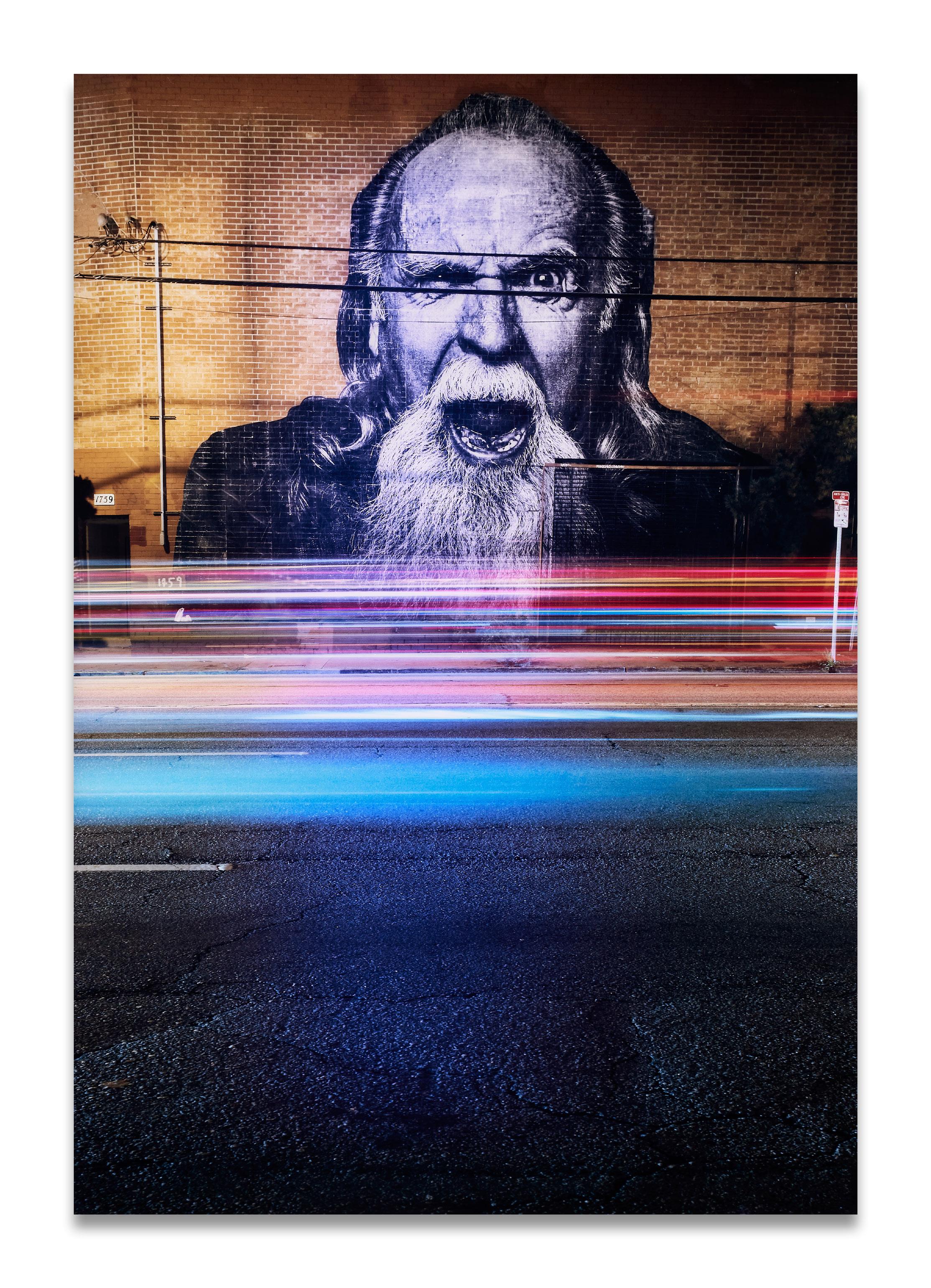
Lots 11, 15, 41 et 47 précédés du symbole m en provenance hors UE / en importation temporaire: L’adjudication est HT. La TVA au taux réduit de 5,5% s’applique sur l’adjudication et la commission de vente. Cette TVA est récupérable pour le professionnel français. Elle est remboursable pour un acheteur hors UE sur présentation des justificatifs d’exportation hors UE ou pour un adjudicataire professionnel justifiant d’un numéro de TVA intracommunautaire et d’un document prouvant la livraison dans l’Etat membre.
Lots 11, 15, 41 and 47 identified with the symbol m from outside the EU: The hammer price will be VAT excluded. 5.5% VAT will be added to the hammer price and buyer’s premium. Upon request, this VAT can be refunded to the purchaser on presentation of written proof of exportation outside the EU or to the EU purchaser who will submit his intracommunity VAT number and a proof of shipment of his purchase to his EU country home address.
Louise Eber
Tél. : +33 (0)1 42 99 20 48 leber@artcurial.com
Photographe Nohan Ferreira
Graphiste Ambre Quemin
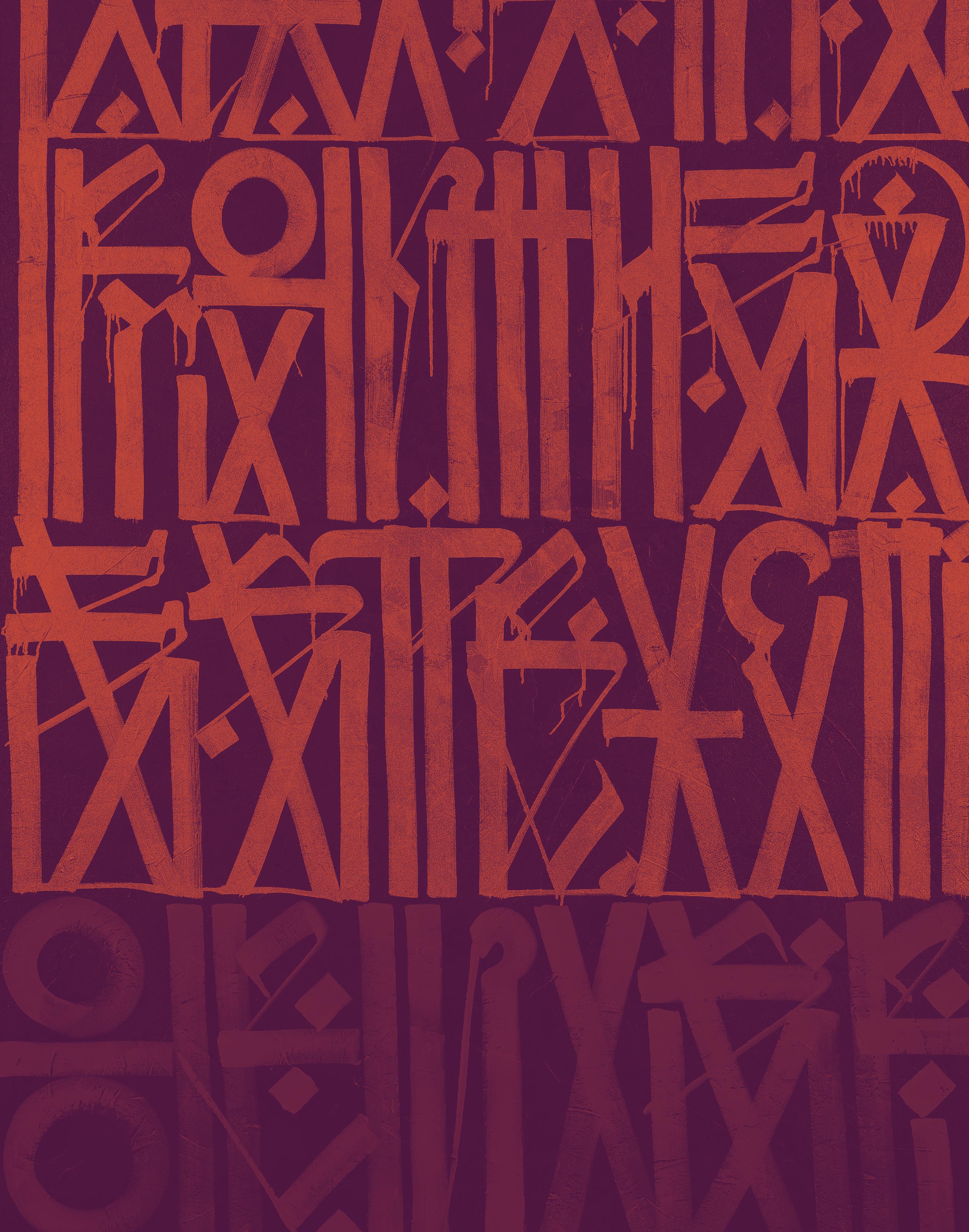
Couverture :
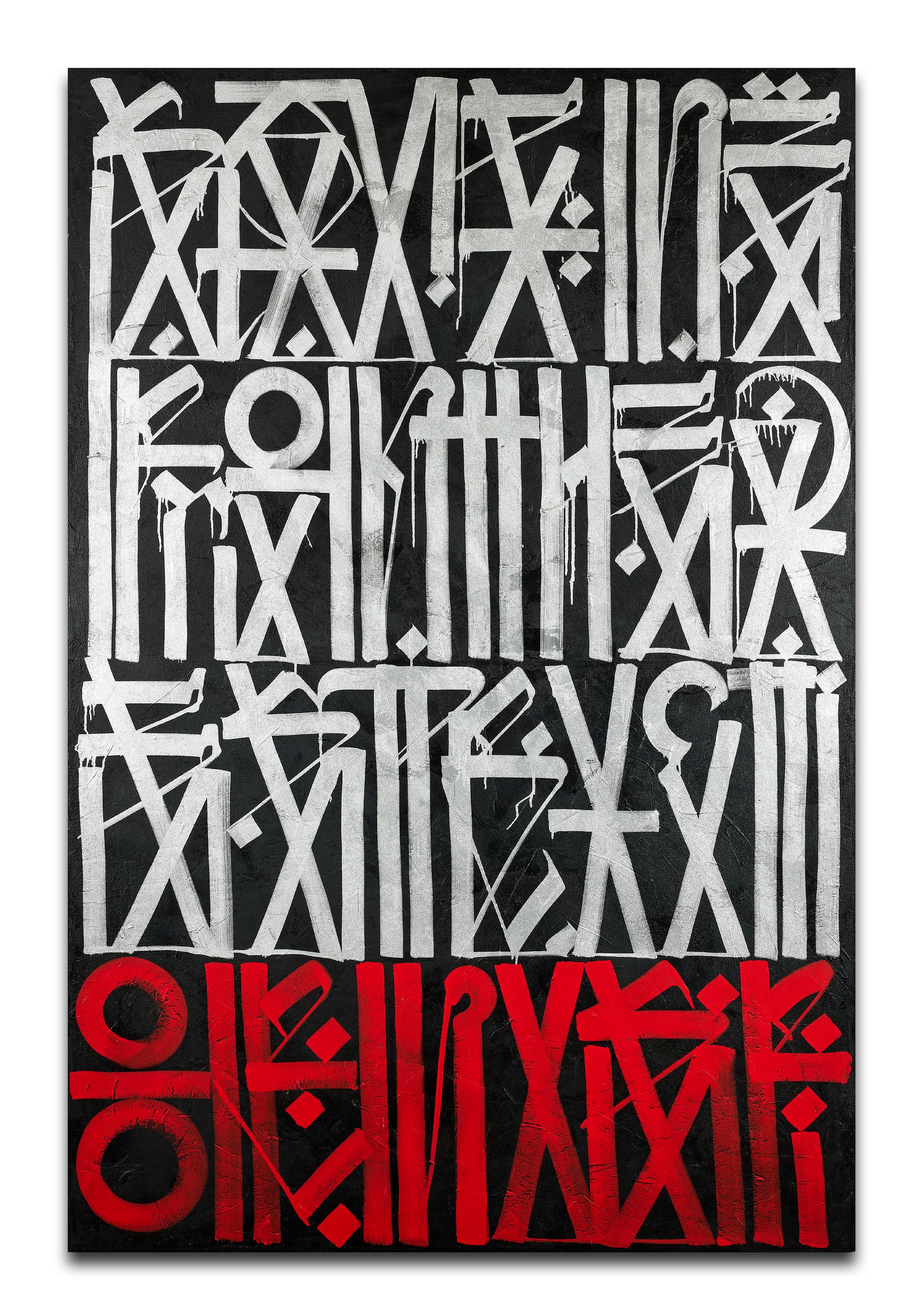
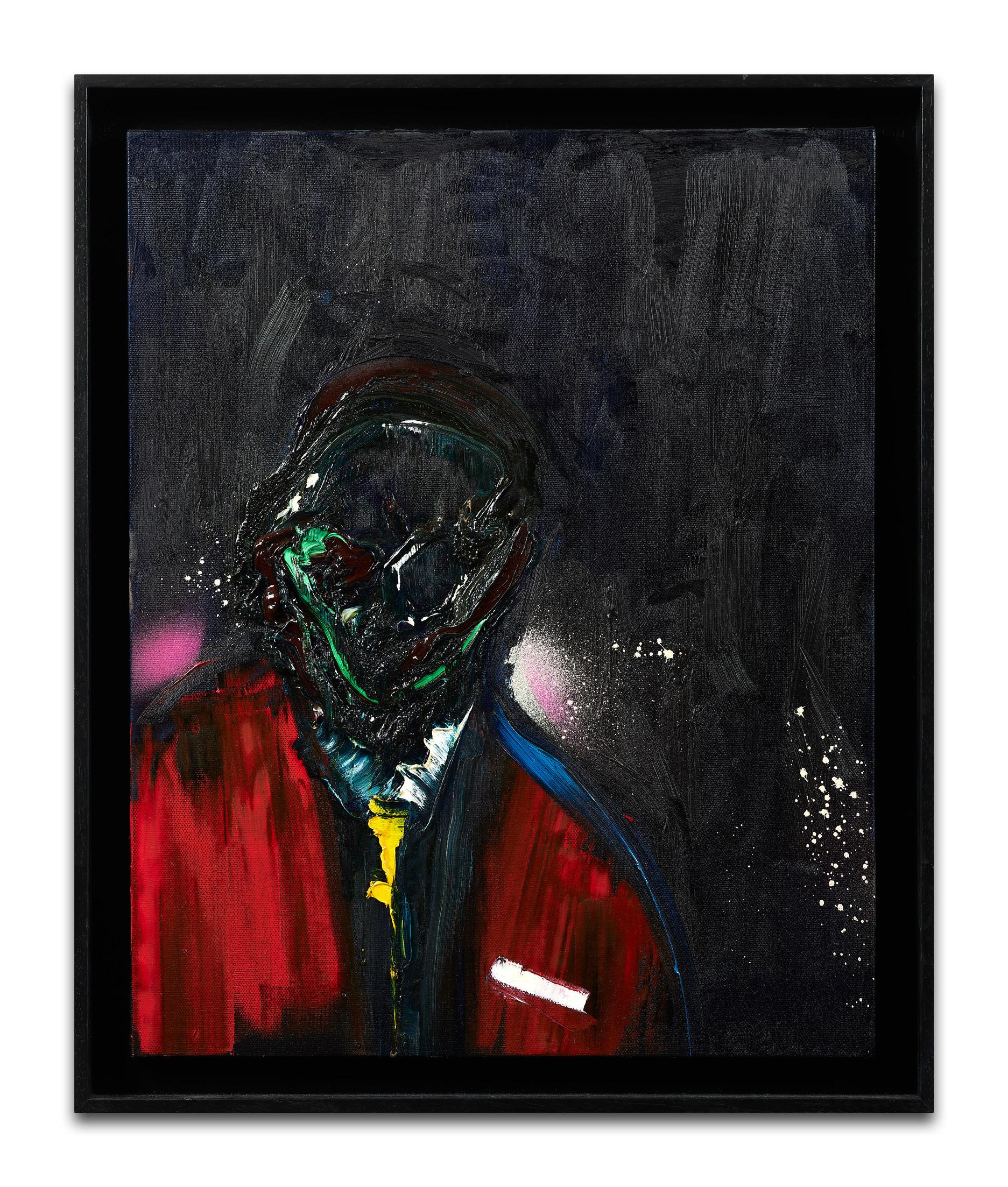
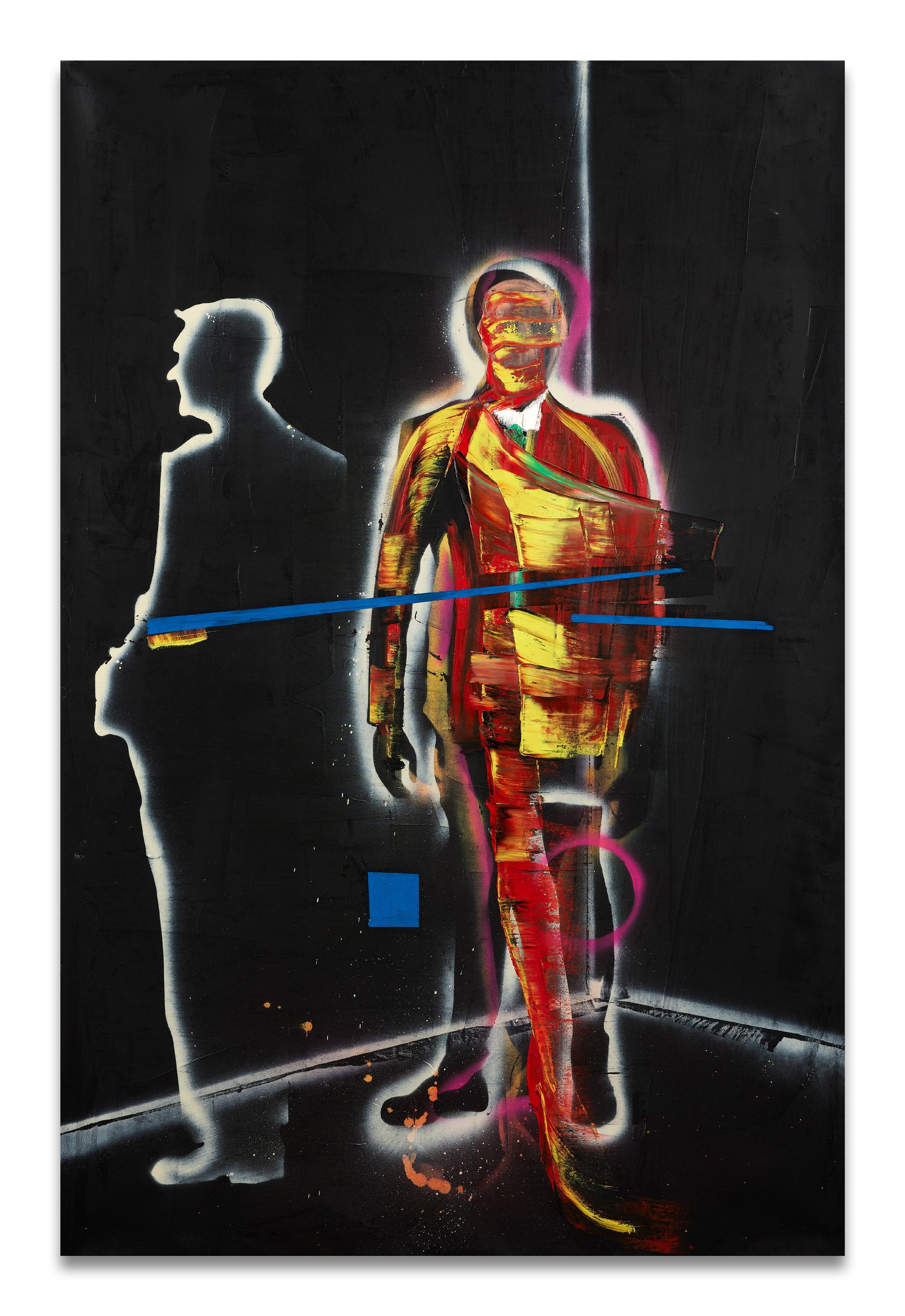
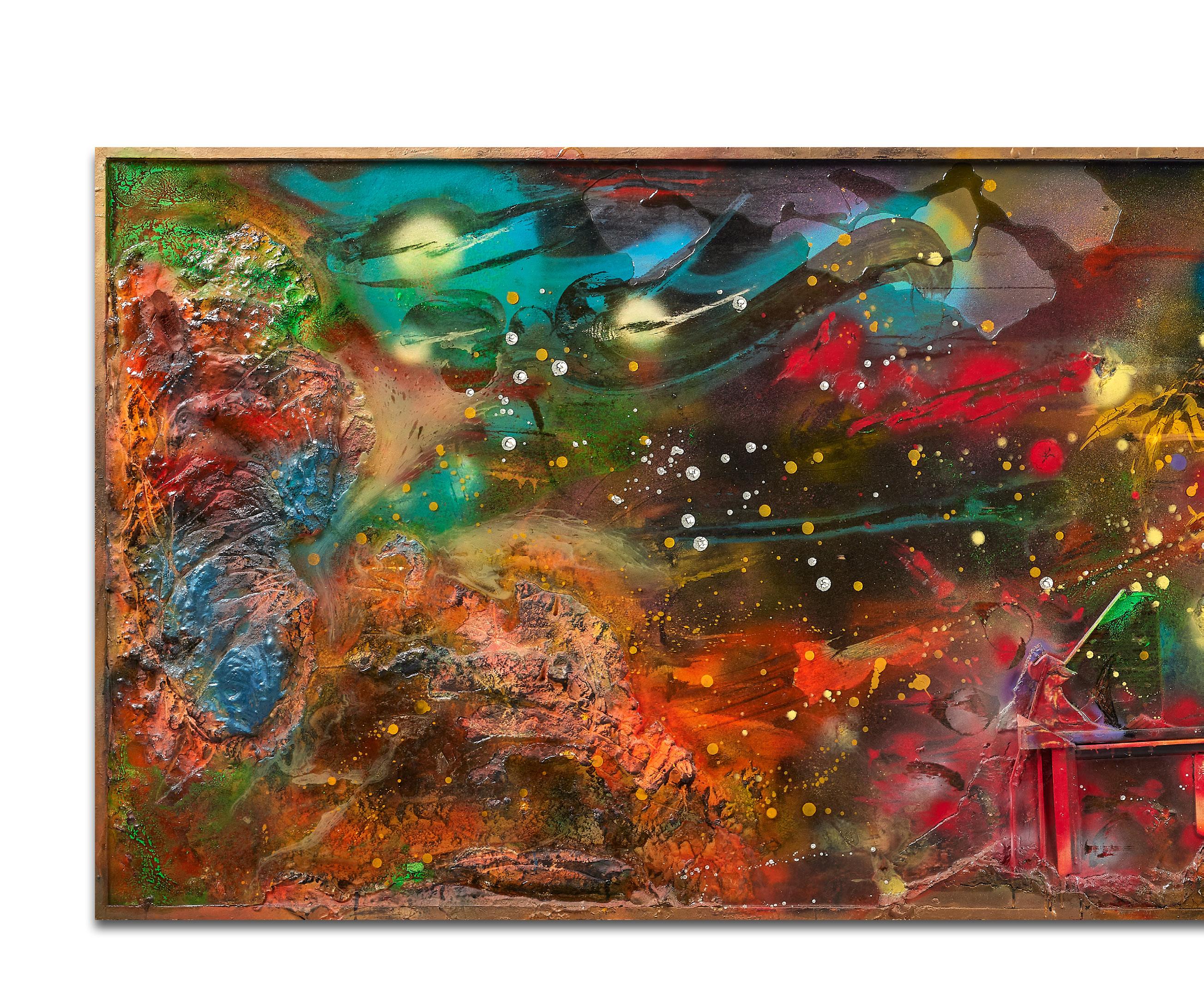
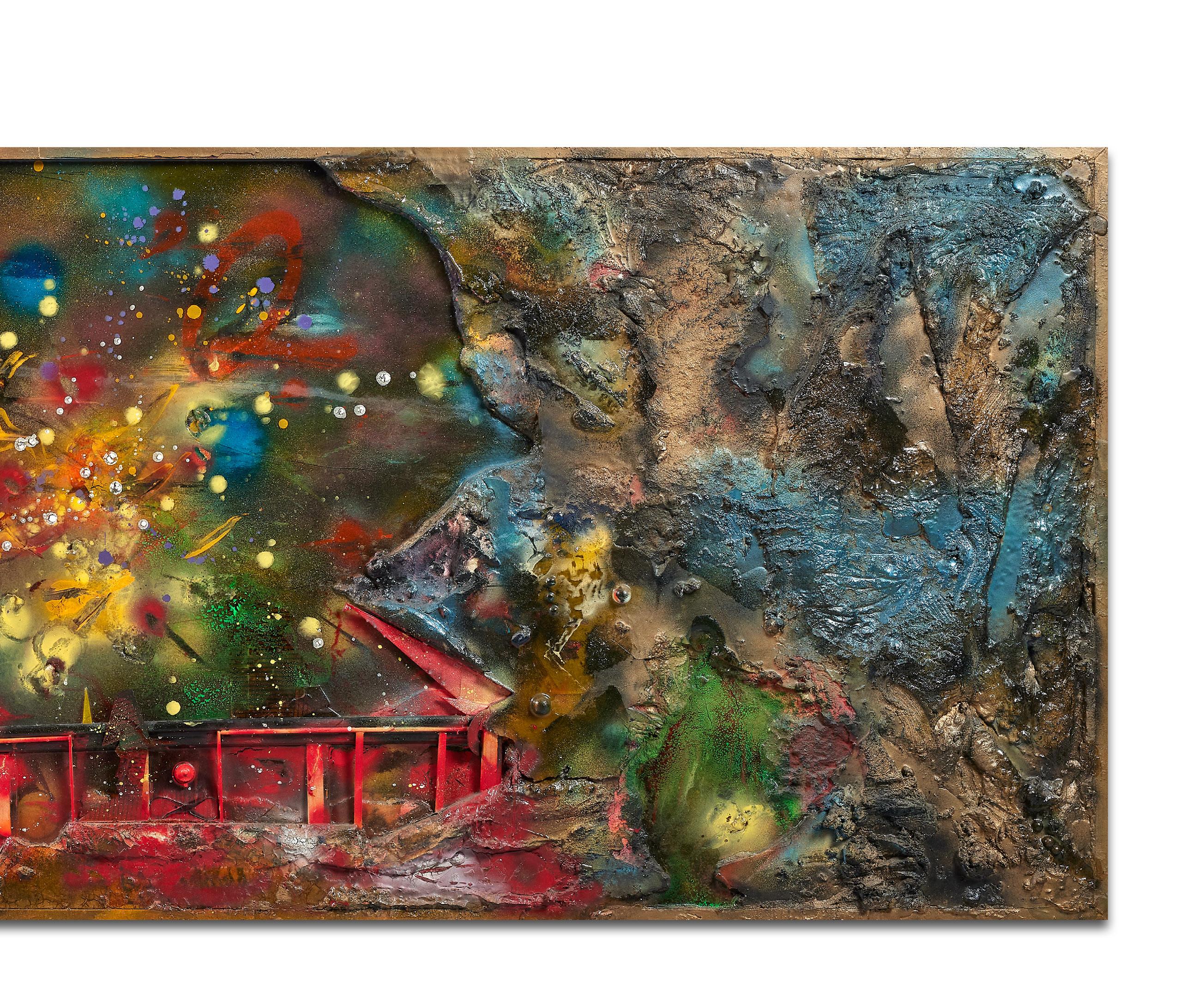
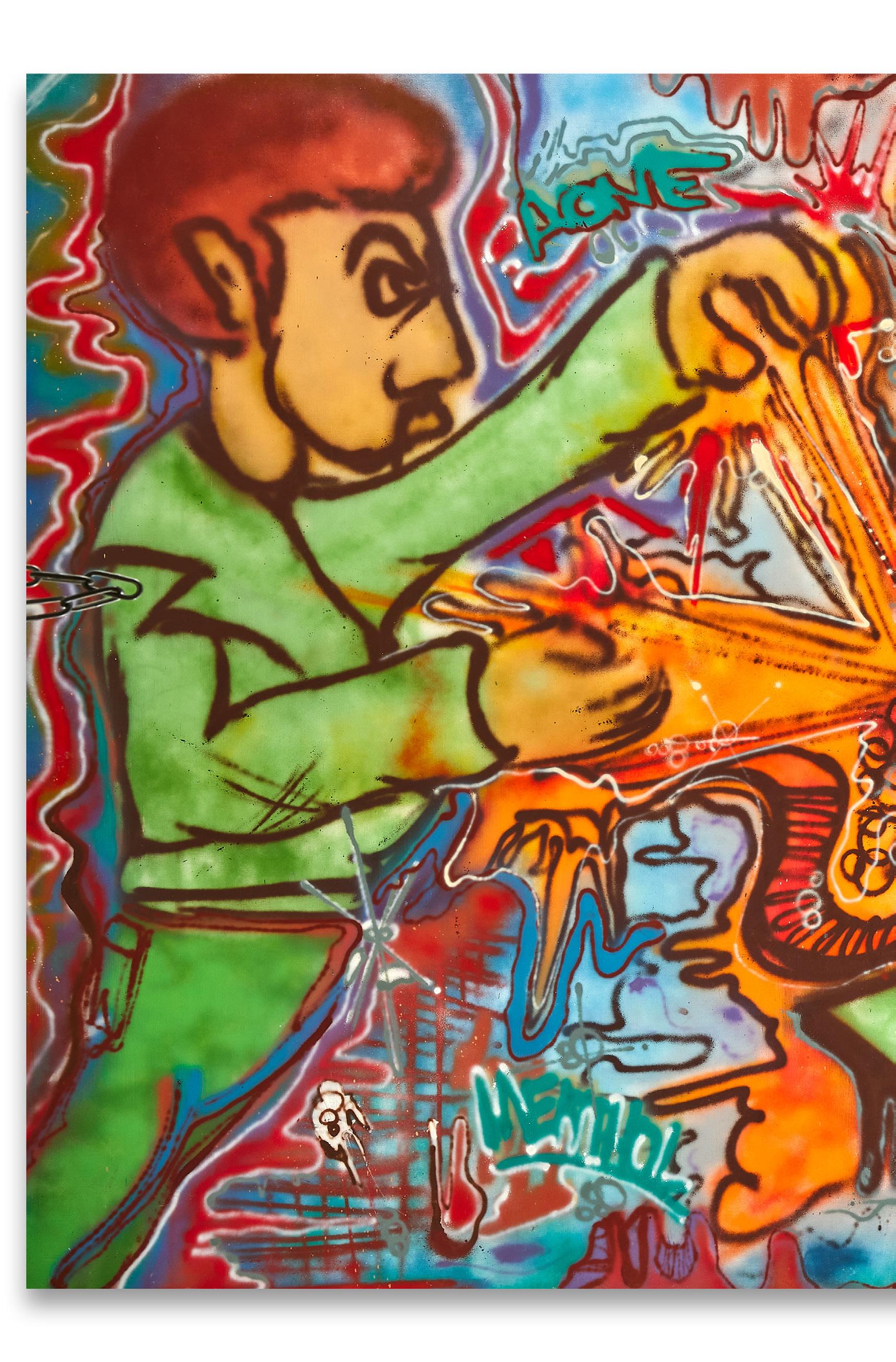
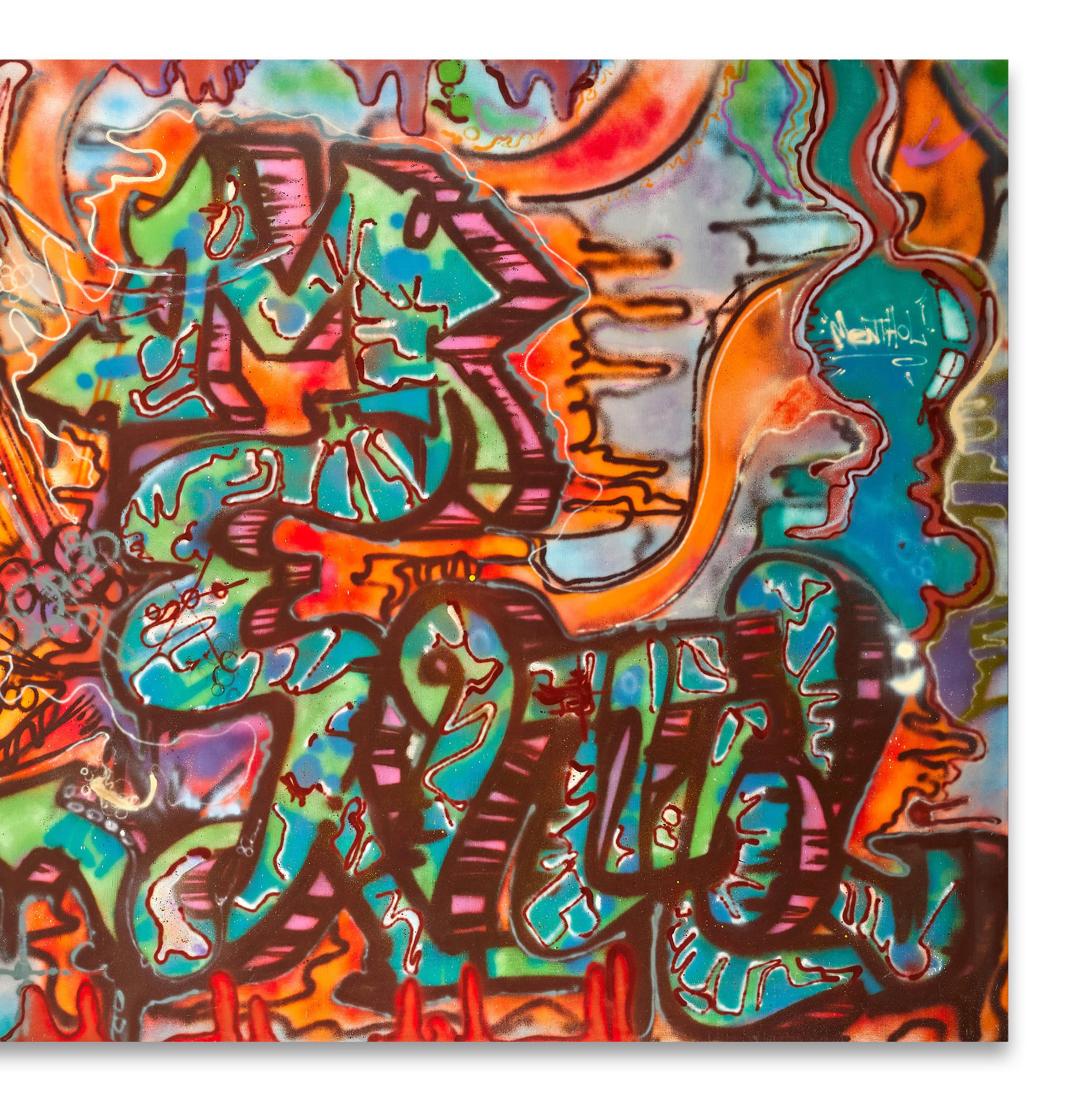
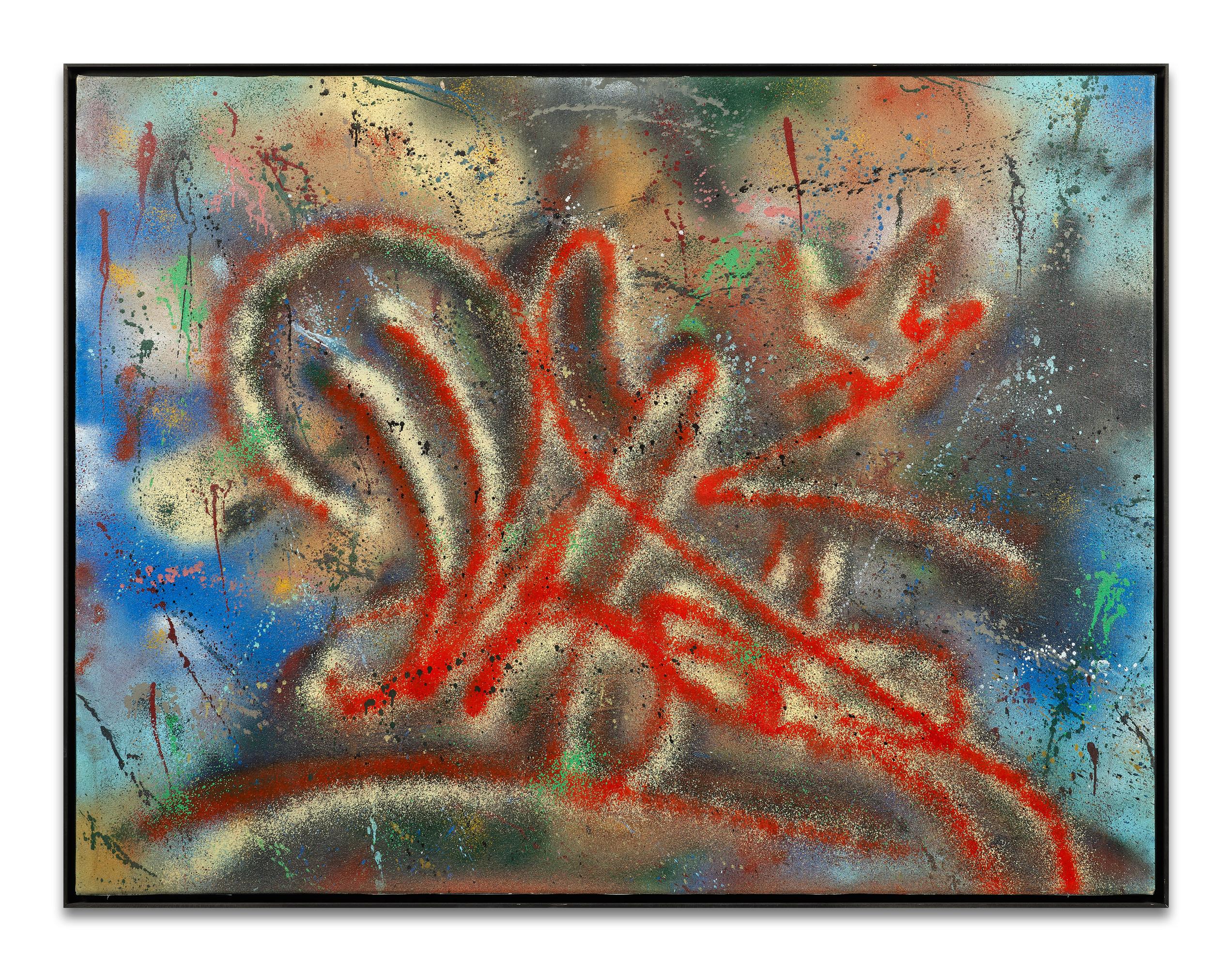
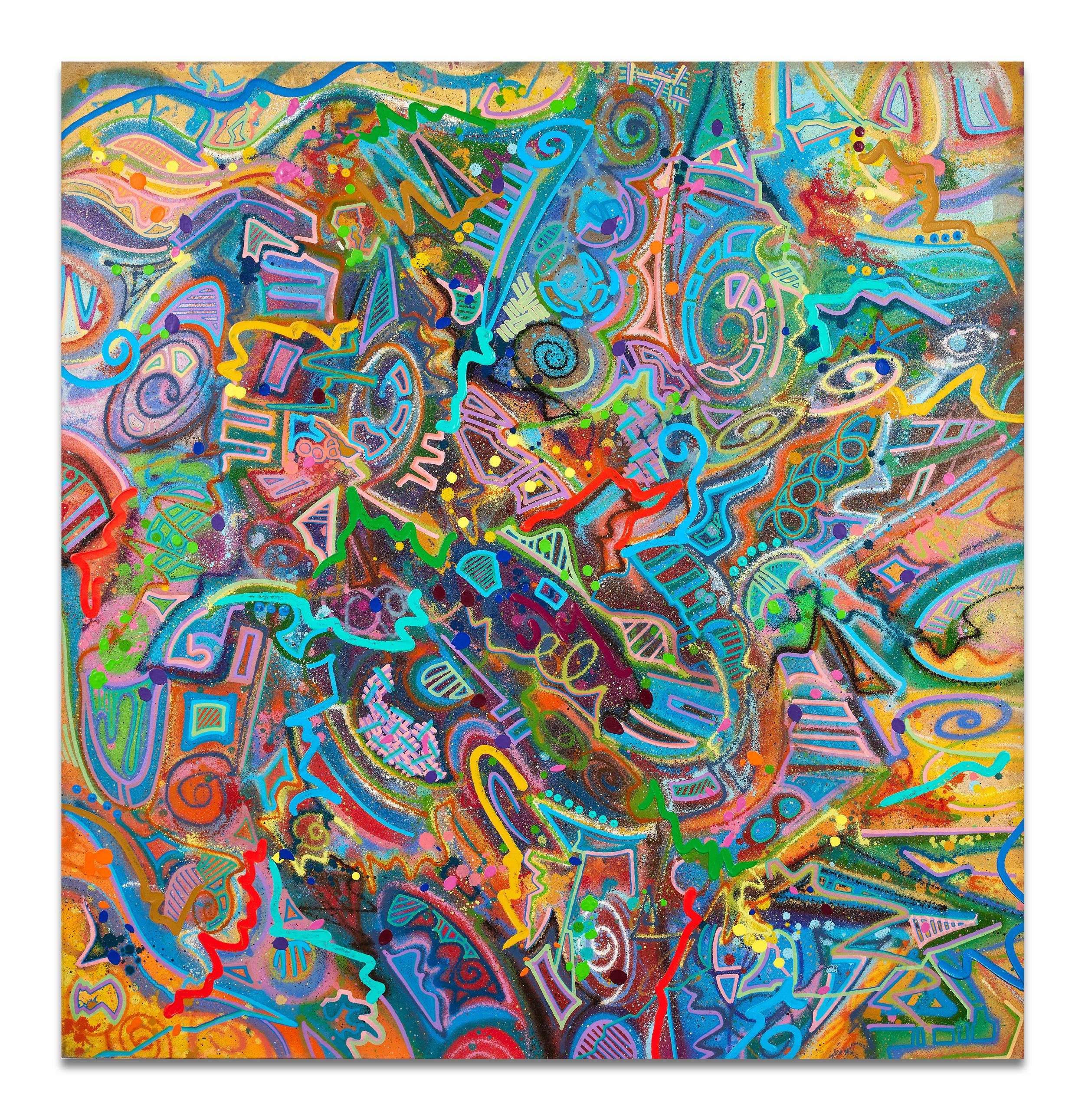
Lot n°13 - RETNA
Assistez en direct aux ventes aux enchères d’Artcurial et enchérissez comme si vous y étiez, c’est ce que vous offre le service Artcurial Live Bid.
Pour s’inscrire: www.artcurial.com
Vous avez également la possibilité d’enchérir en direct pendant la vente via les plateformes Drouot Live et Invaluable.
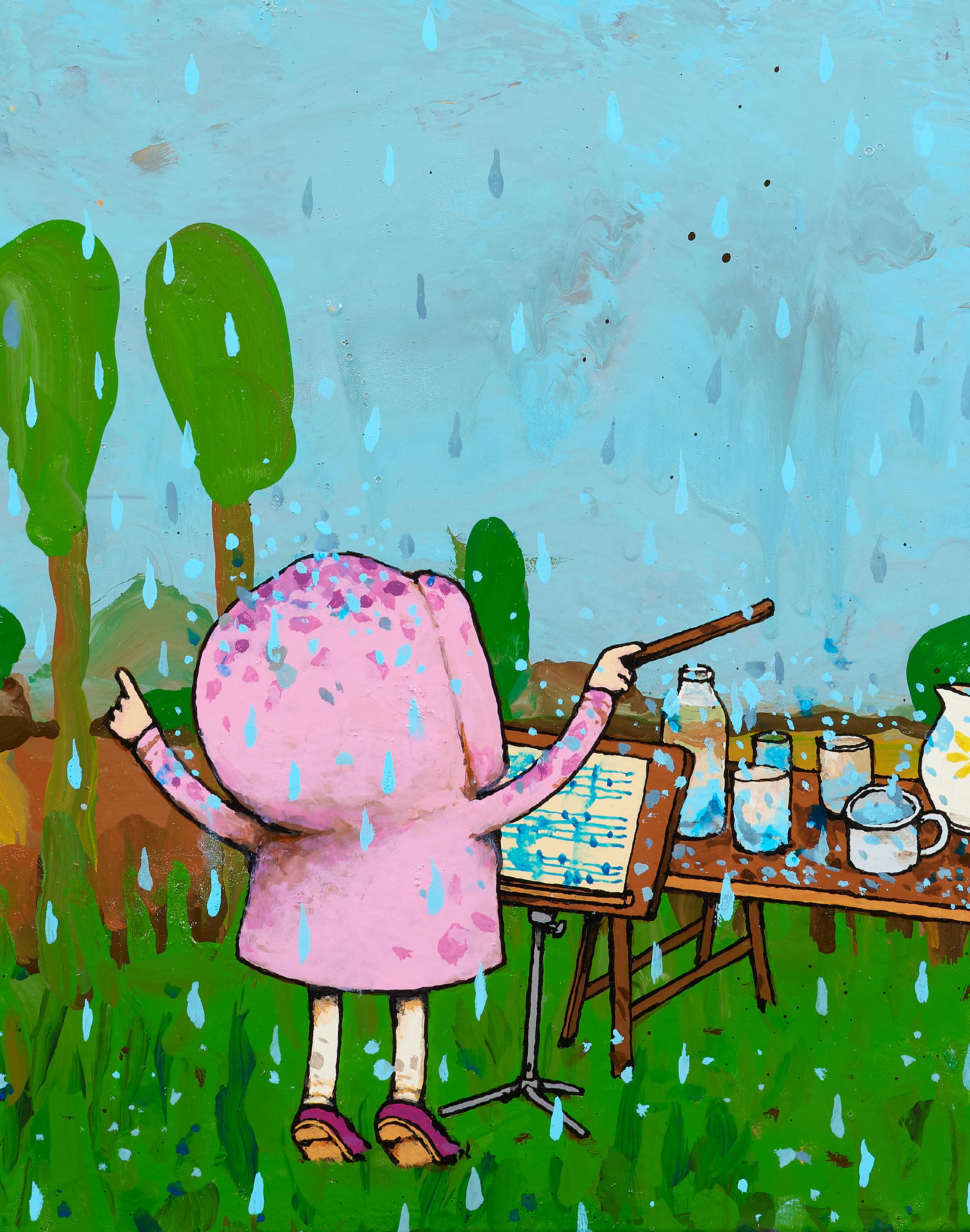
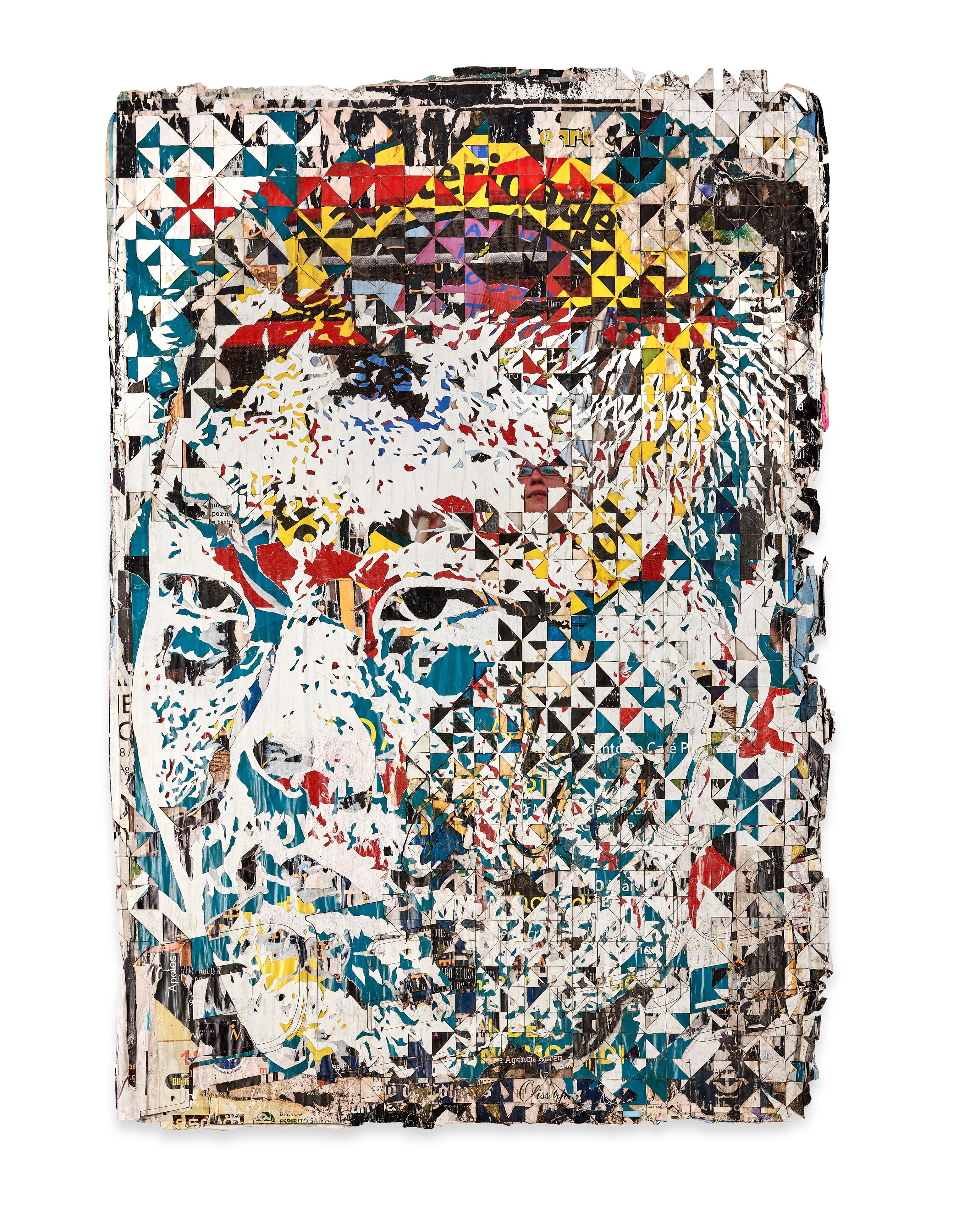
Lot 14, DRAN, Petite fille « plic plic » – 2024 (détail), pp.34-35
A-ONE – 61
ANDRÉ - 71
ARSHAM Daniel - 15
PEJAC – 18
PETERSON, Cleon – 46, 47, 48
PHASE 2 - 62
Bambi – 19
BLEK LE RAT - 67
RAMMELLZEE – 57
RETNA – 13
RERO – 17
ROA – 41,42
CHANEL × MEDICOM TOY - 70
D*FACE – 22, 23, 24
DOHERTY Pete – 36
DONDI WHITE - 63
DRAN – 14
FAIREY Shepard – 43, 44, 45
SEEN – 64
SONIC – 56
STIK - 21
SWOON - 10
THEODORE Bradley – 35
TOWNLEY Lincoln 37, 38, 39
TOXIC – 58, 59
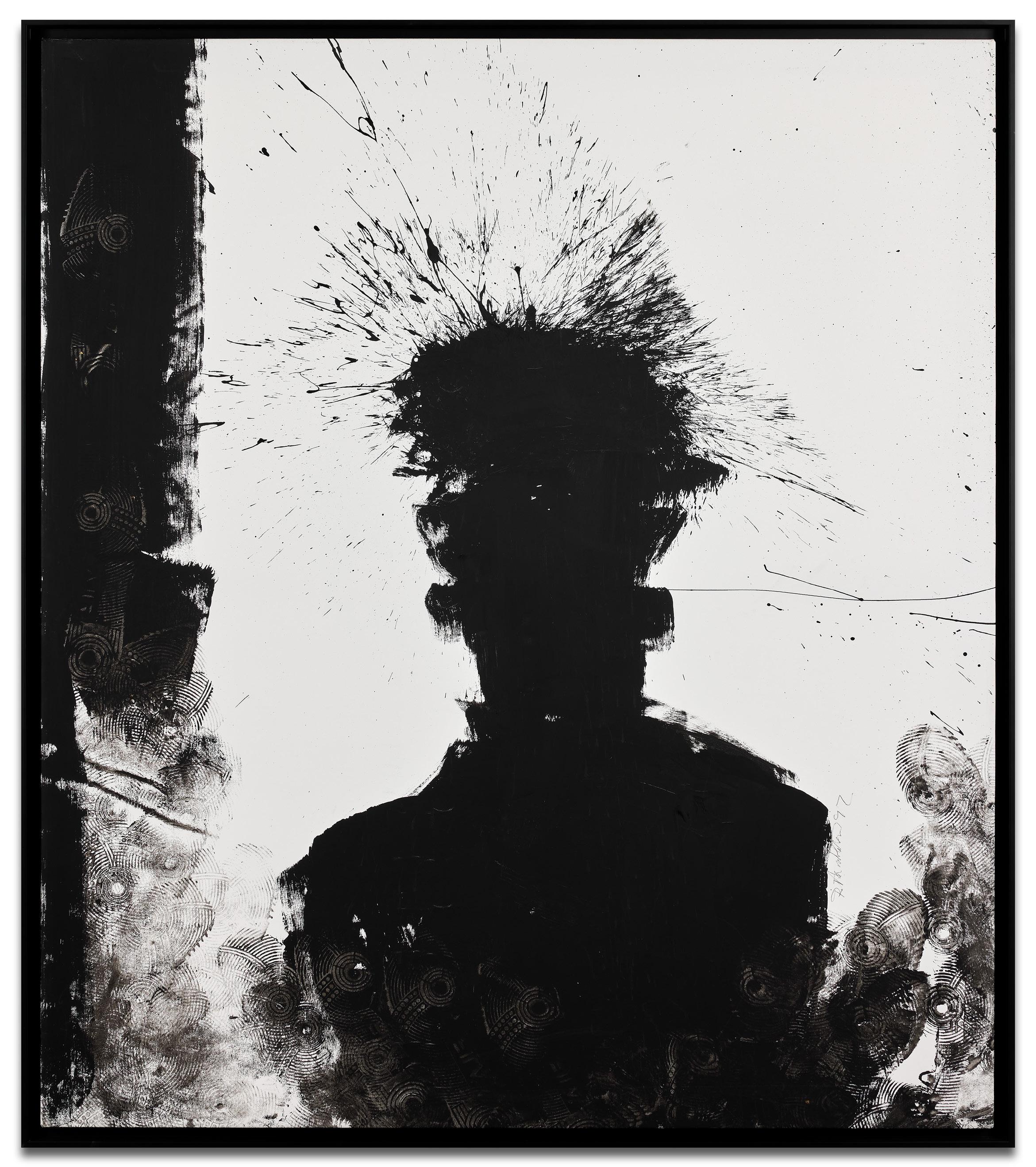
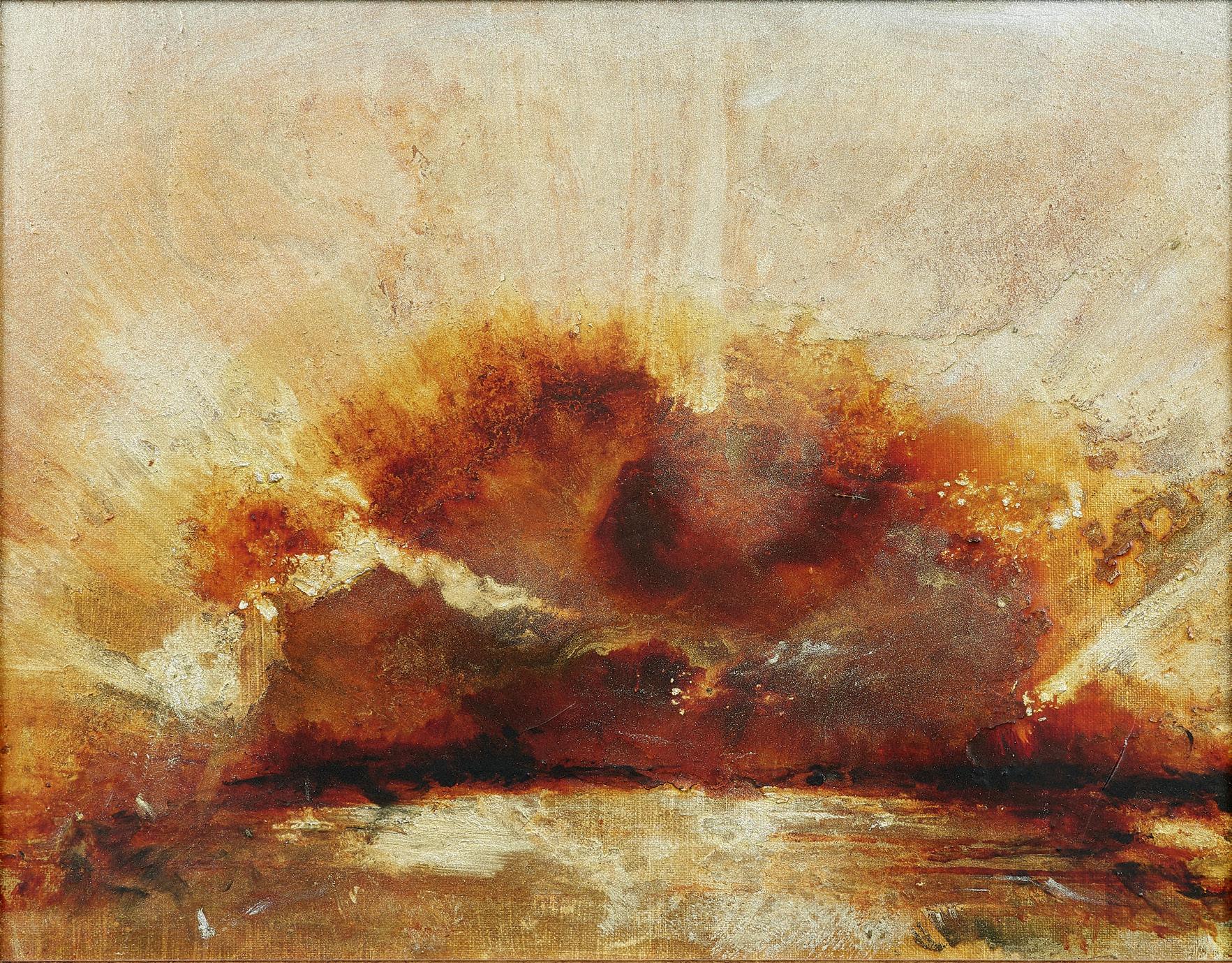
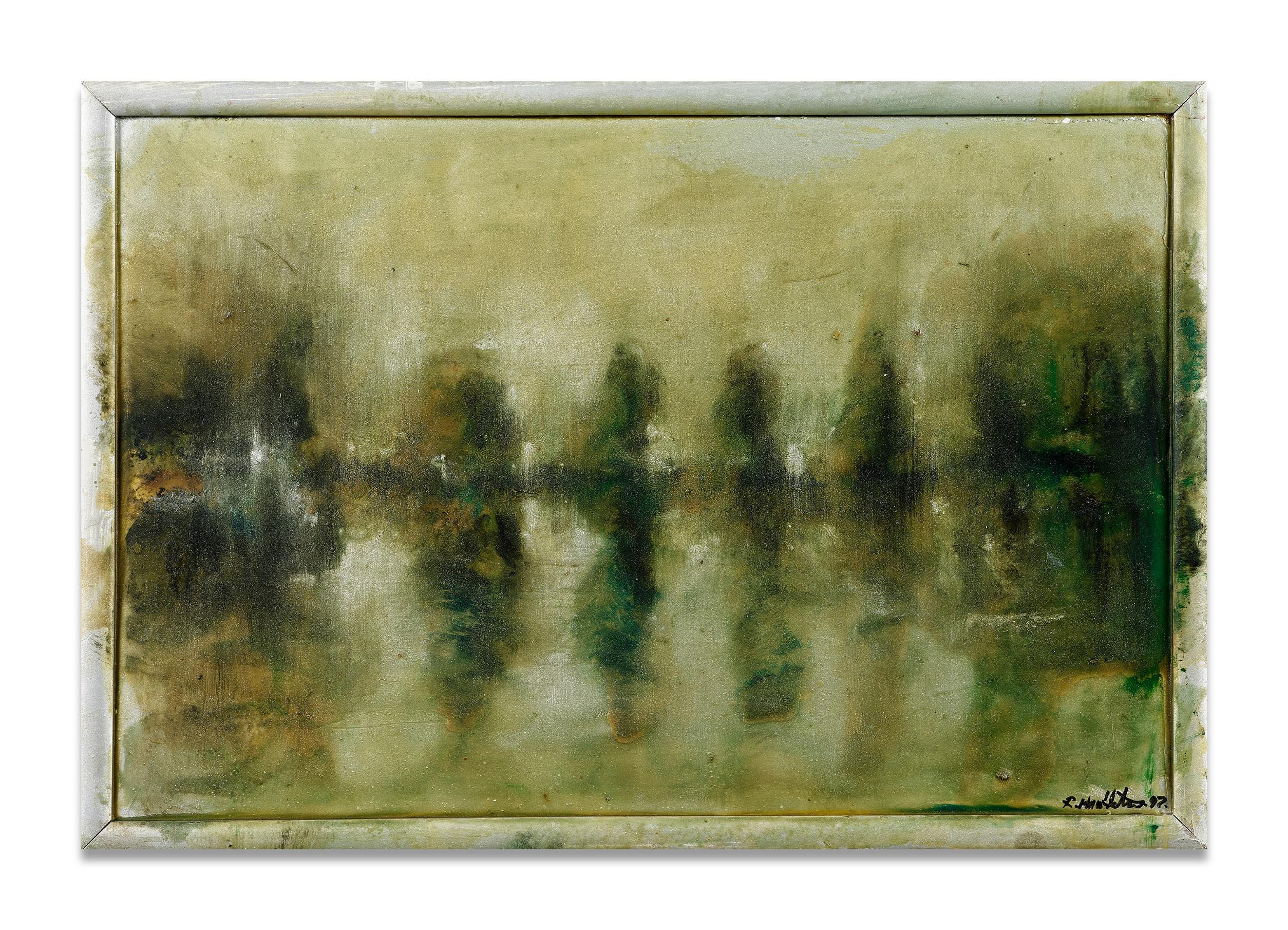
HAMBLETON, Richard – 52, 53, 54
HARING Keith – 50, 51
HARRINGTON Conor – 25 à 34
HOPARE - 65
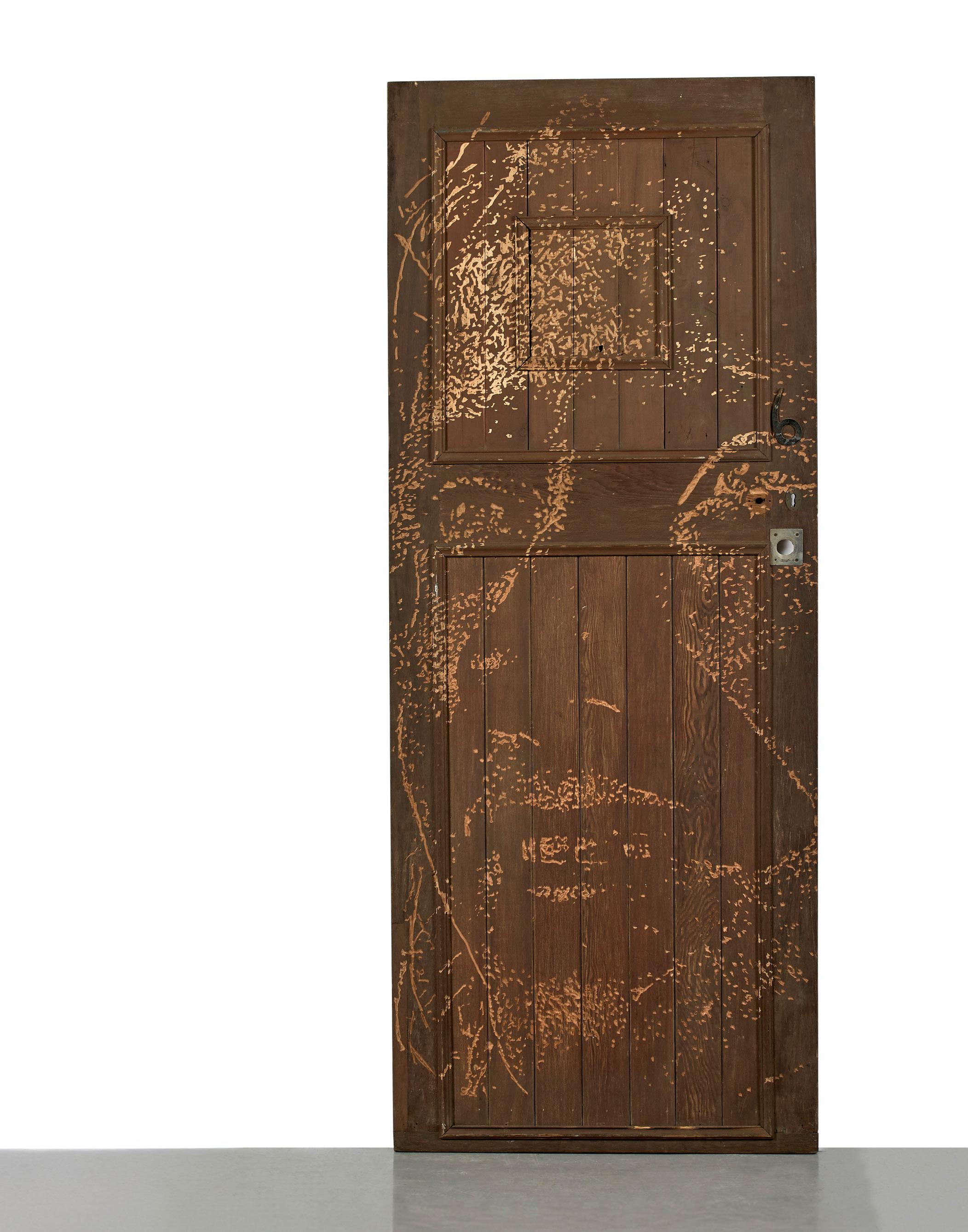
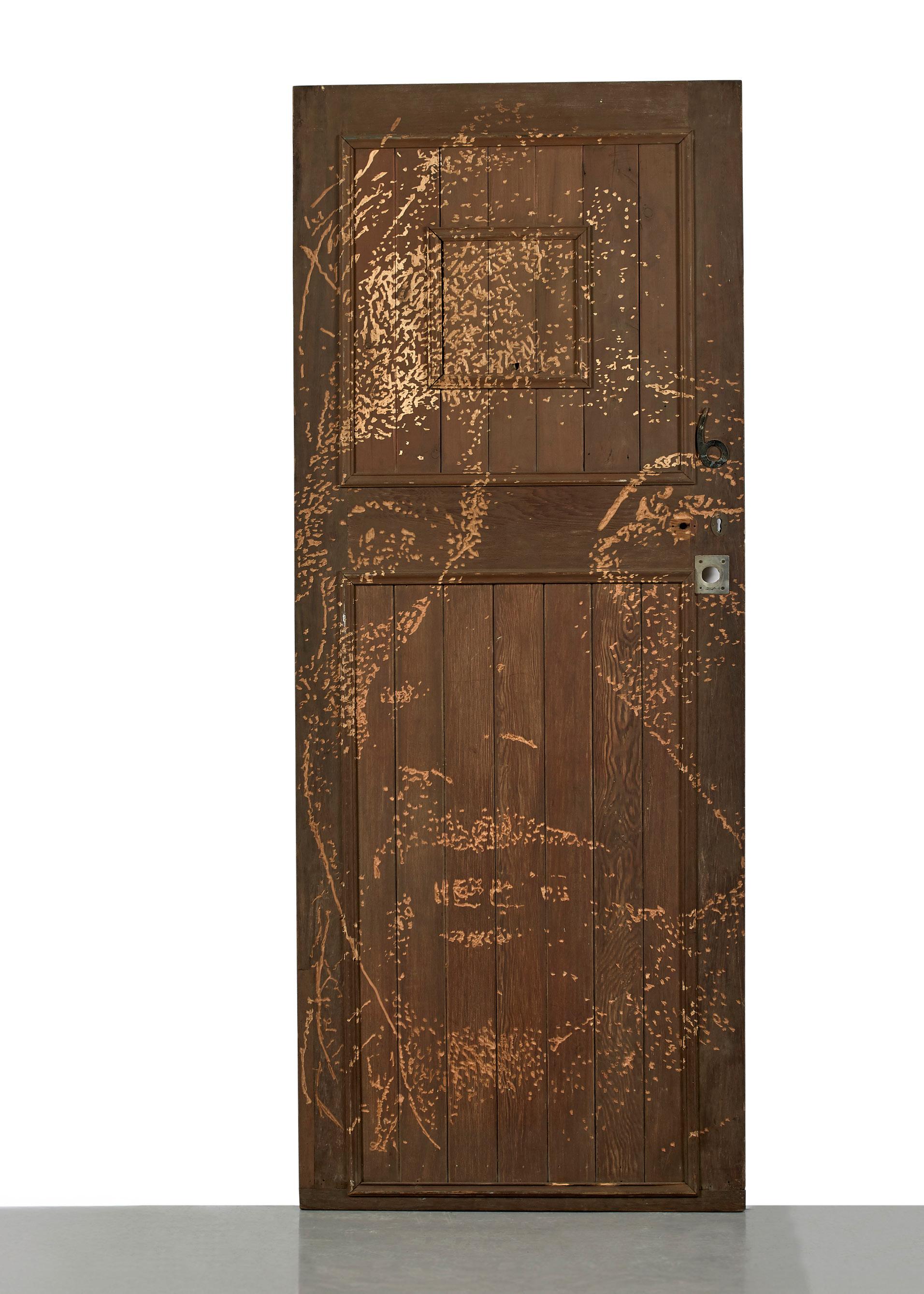
VHILS – 11, 12
INVADER - 1, 2, 3, 4, 5, 6
JONONE - 66
JR – 7, 8, 9
KAWS – 40, 49
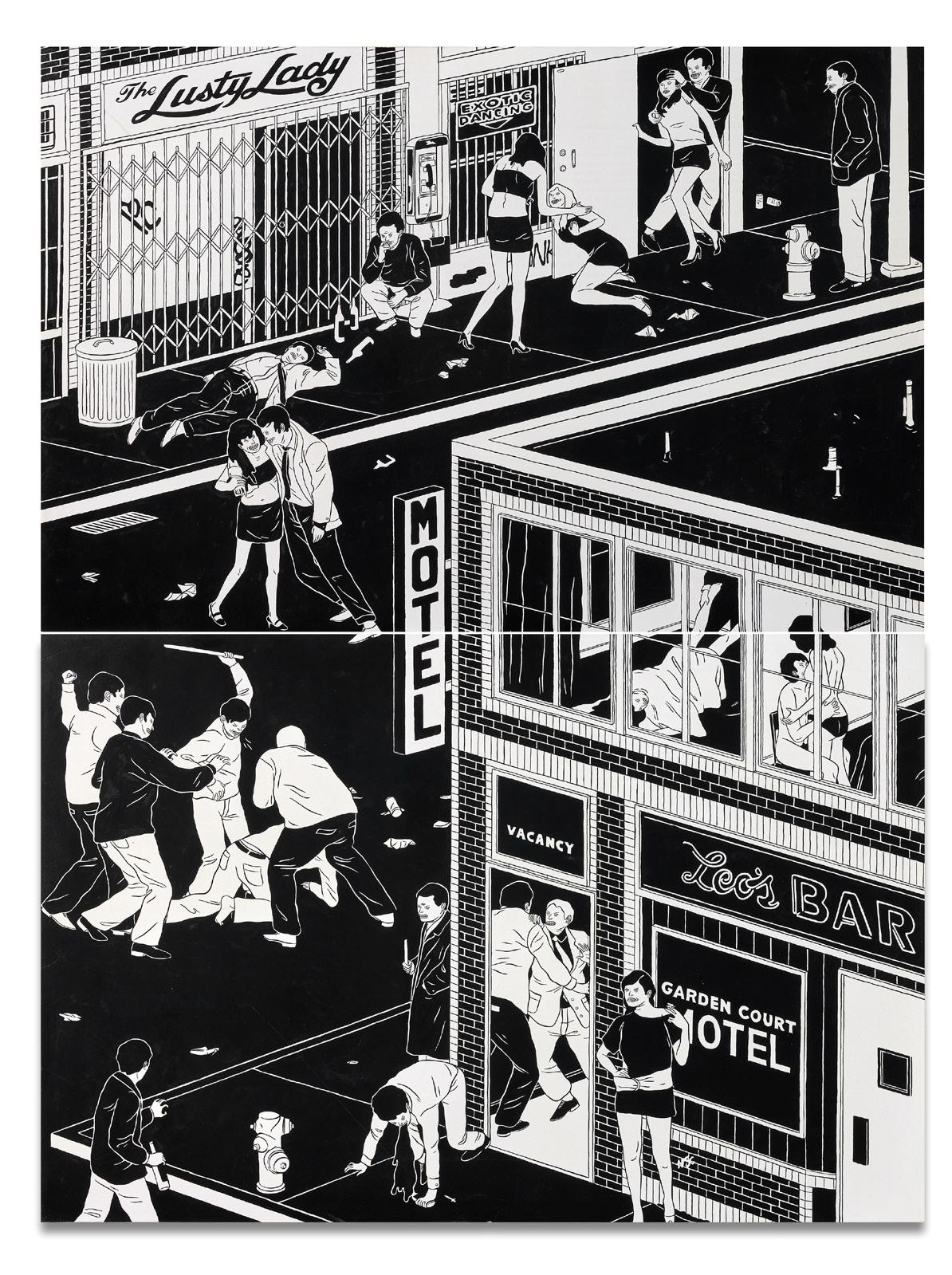
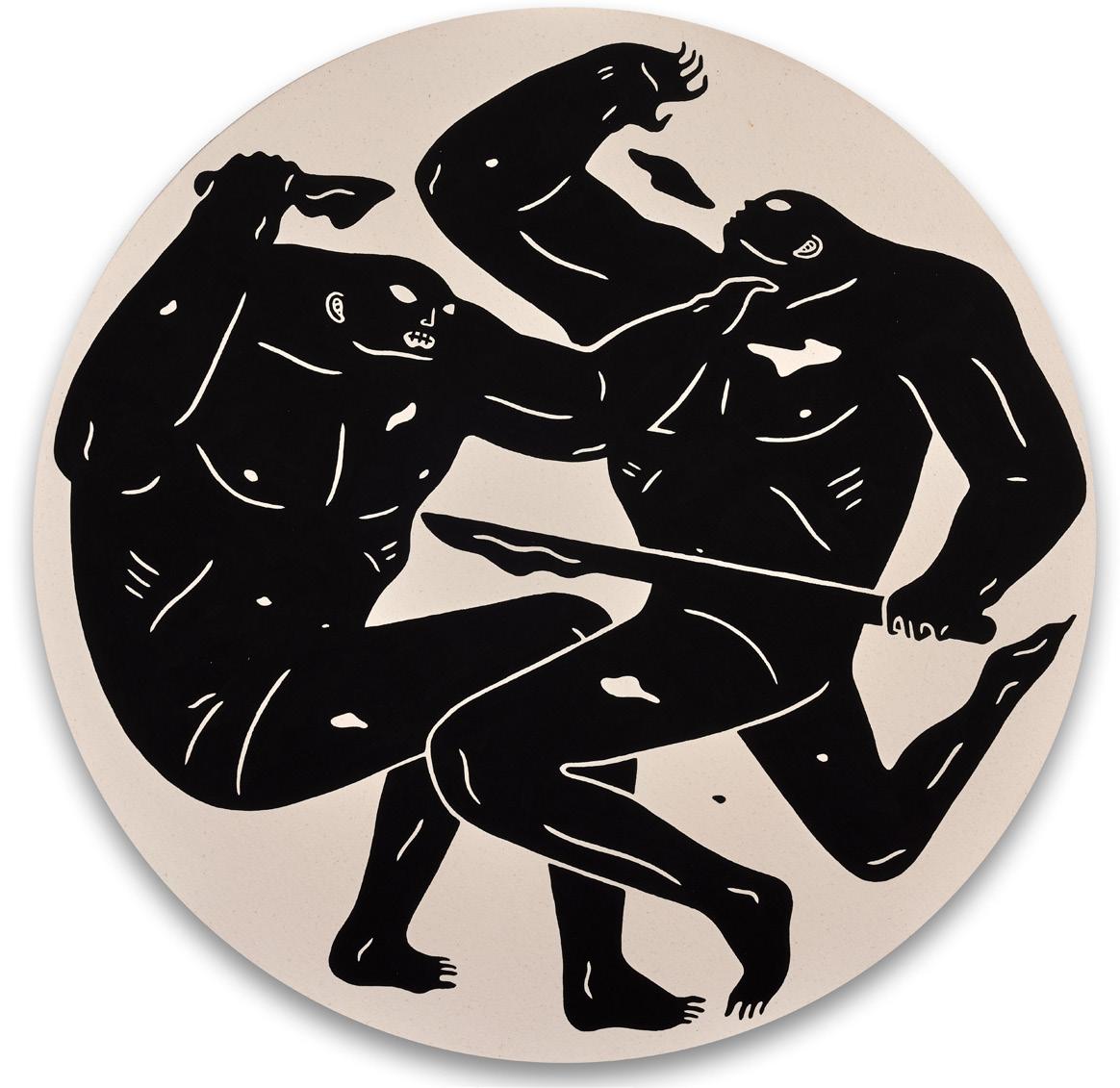
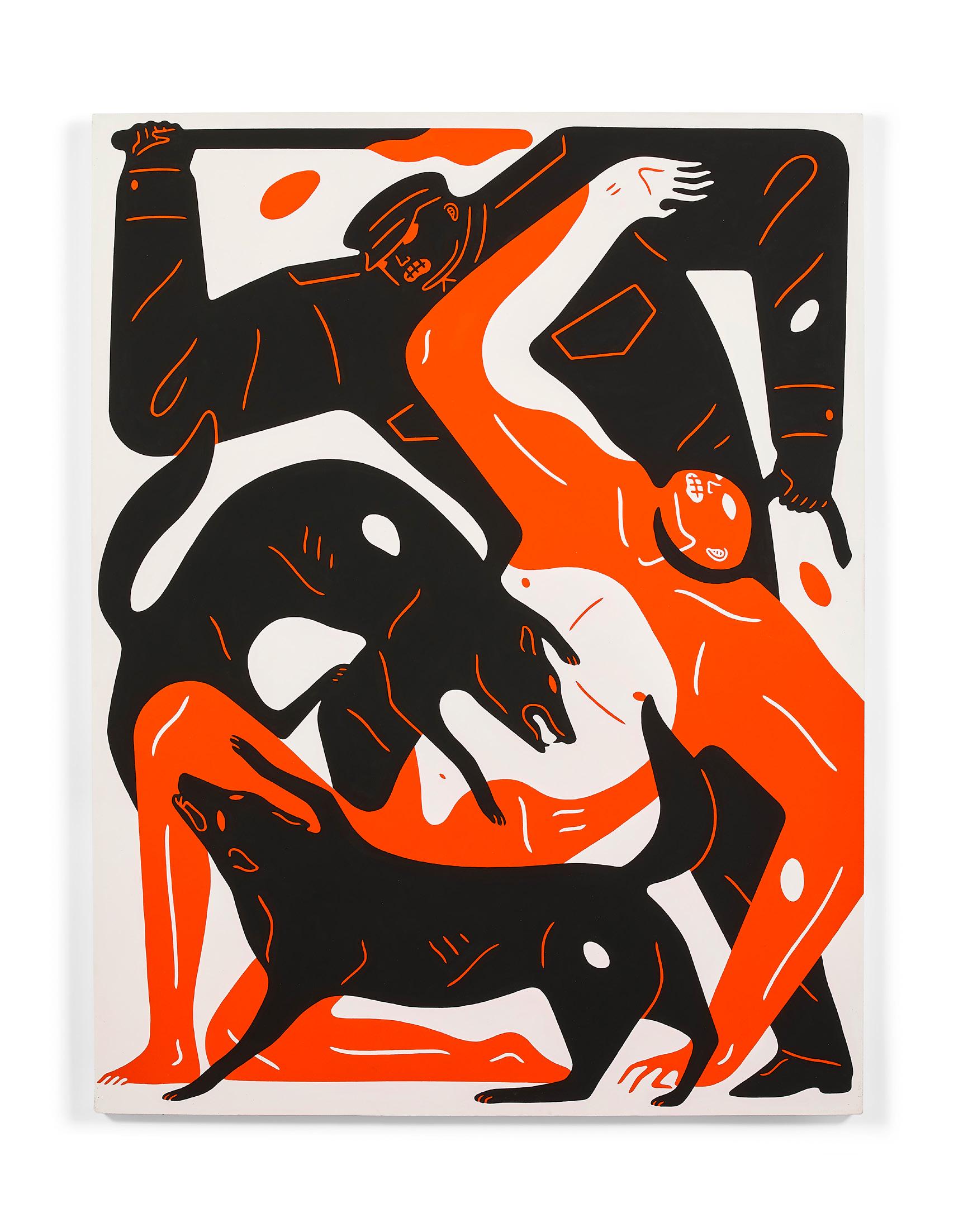
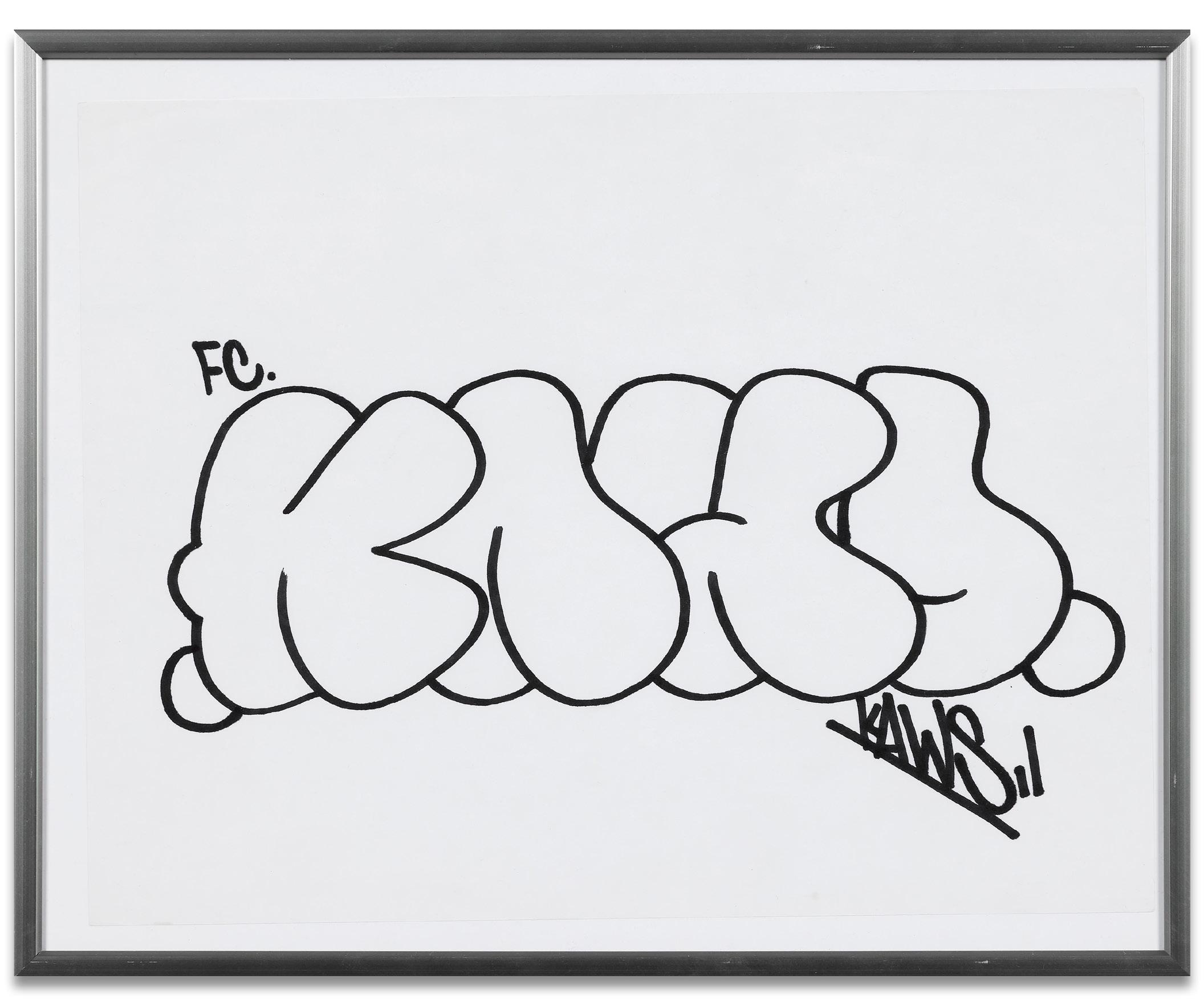
KOOL KOOR – 60
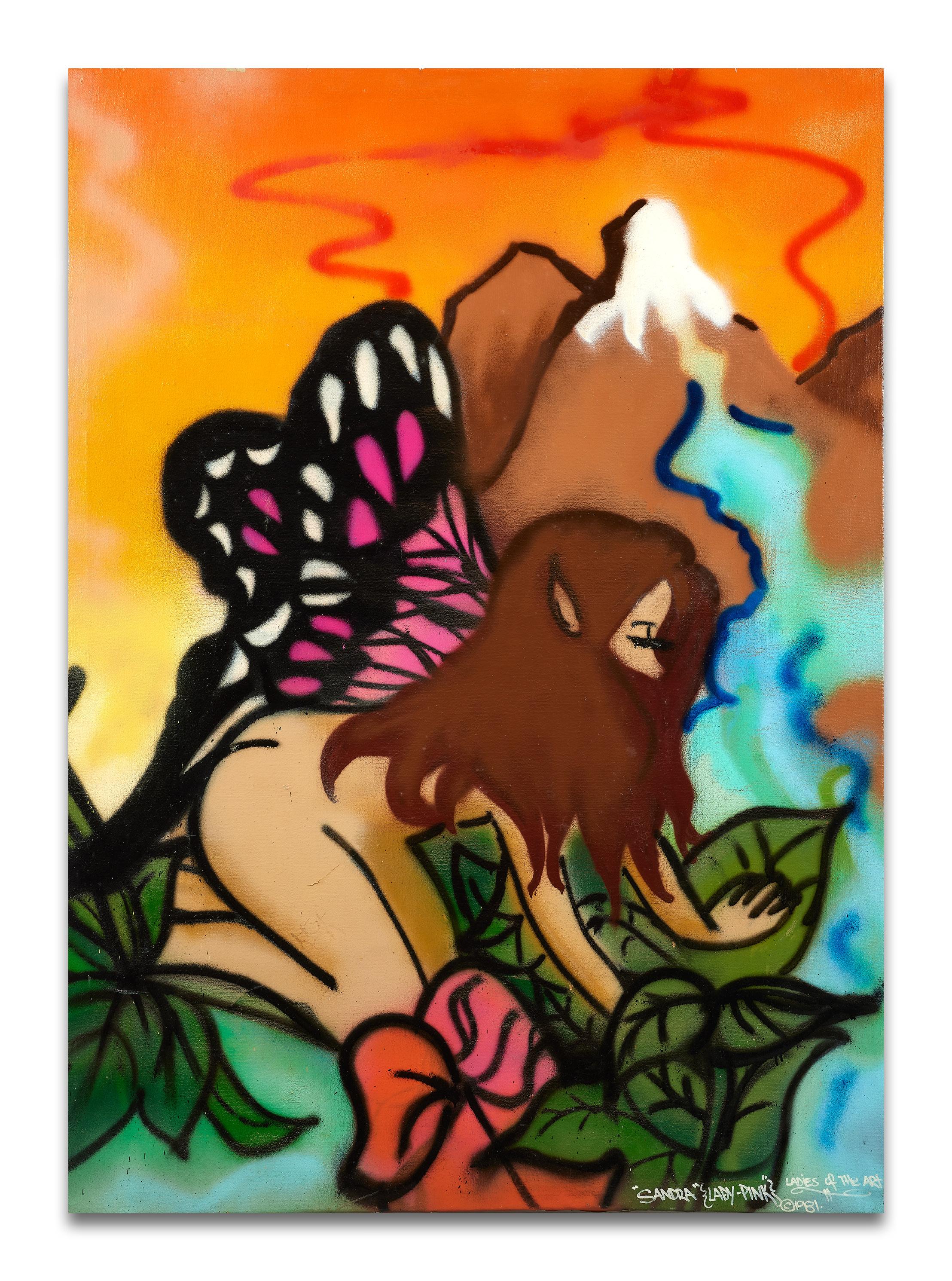
LADY PINK - 55
MADSAKI – 16
MISS.TIC – 68, 69
MR BRAINWASH - 20
ZLOTYKAMIEN, Gérard – 72
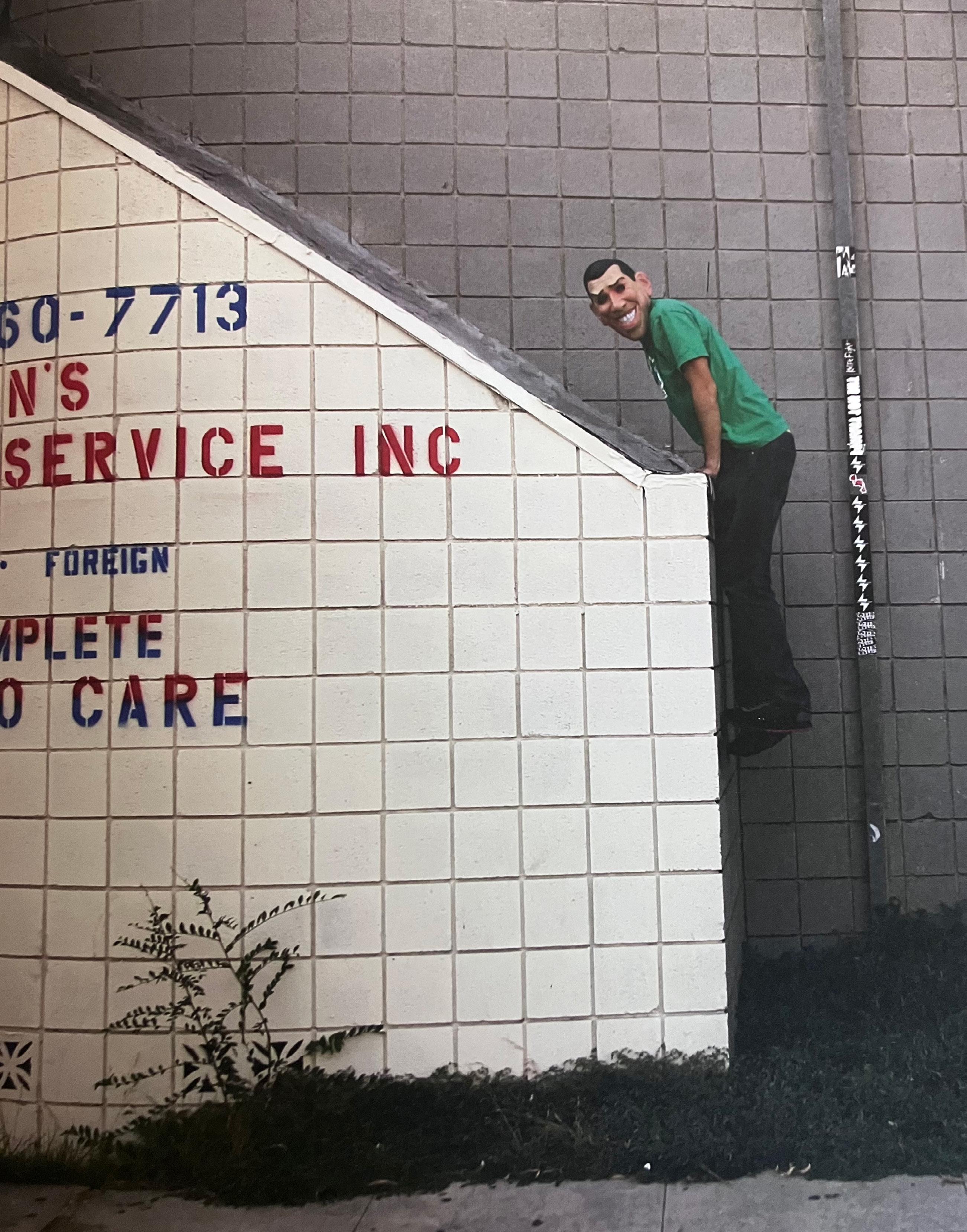
Visuel : Invader, Invasion
Los Angeles, installation de LA_108, 4 juin 2005
« J’ai toujours pensé que cette invasion artistique devrait prendre une dimension planétaire et dès mes débuts, j’ai voyagé pour l’étendre au monde entier. Chaque mosaïque installée est une pièce autonome et unique, en même temps que le maillon d’un méta-réseau. »
- Invader
Depuis 1998, Invader envahit nos espaces urbains mais aussi notre conscience collective à laquelle il préfère proposer son univers peuplé de Space Invader et d’icônes des cultures populaires (jeux vidéo, comics, séries télévisées…) plutôt que celui d’une publicité destinée aux consommateurs que nous sommes devenus.
Envahisseur infatigable, Invader dissémine ses œuvres autour du monde. Prenant comme point de départ le jeu d’arcade Space Invaders, il le porte dans la rue à une échelle humaine puis planétaire.
Son but : envahir. Il comptabilise d’ailleurs les invasions. Chaque mosaïque créée est unique, pensée pour un endroit précis :
« Il faut au moins deux semaines pour envahir une ville, je ne me contente pas d’en mettre un ou deux dans le centre puis de rentrer chez moi. Mon but est de couvrir la ville tout entière. »
Since 1998, Invader conquers our urban spaces but also our collective consciousness to which he offers his universe populated by Space Invaders and popular culture icons (video games, comics, television series...) as opposed to advertising aimed at the consumers which we have become.
A tireless assailant, Invader disseminates his work around the world. Using the arcade game Space Invaders as his focal point, he takes to the street on a human and a global scale. His goal: to invade. He also takes a tally of his invasions. Each mosaic is unique, specially created for that specific area:
“It takes at least two weeks to invade a town; I am not content to put one or two in the center and then go home. My goal is to cover the entire city.”
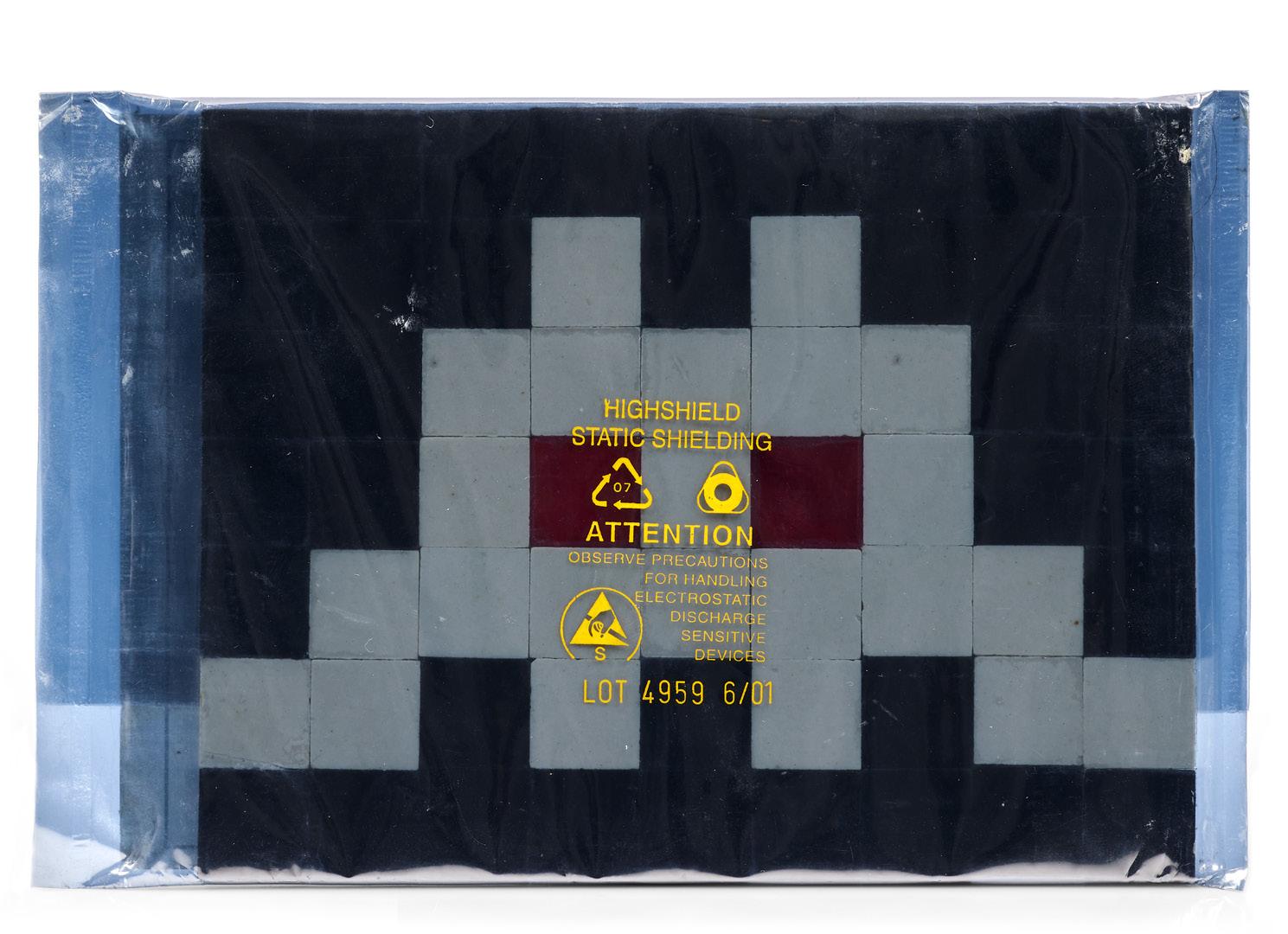
1
INVADER
(Français – Né en 1969)
Kit d’invasion #1 Albinos – 2000/2004
Carreaux de mosaïque dans son blister non ouvert
Signé et daté
Édition complète à 350 exemplaires
14 × 18 cm
Provenance : Space Shop
Acquis directement auprès de ce dernier par l’actuel propriétaire
Mosaic tiles in its unopened blister; signed and dated 5.51 × 7.08 in.
8 000 – 12 000 €
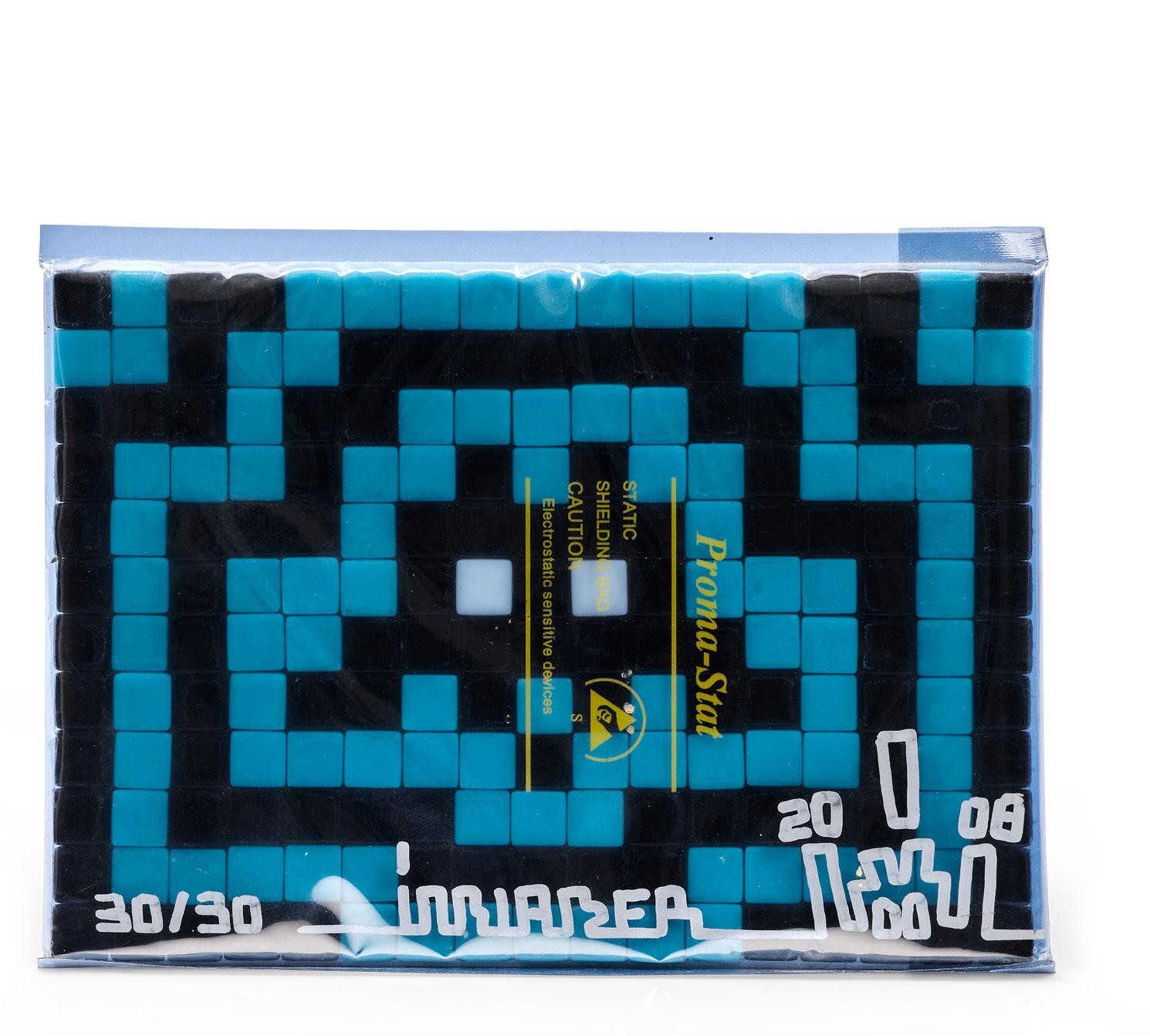
2
INVADER
(Français – Né en 1969)
Kit d’invasion #09 Hypnotic Vienna – 2008
Carreaux de micro céramique dans leur blister non ouvert
Signé, daté et numéroté « 30/30 » sur le blister
Édition de 30 exemplaires signés et numérotés et 150 exemplaires non signés et numérotés 12 × 17 cm
Provenance : Space shop
Acquis directement auprès de ce dernier par l’actuel propriétaire
Microceramic tiles in its unopened blister; signed, dated and numbered 4.72 × 6.69 in.
6 000 – 8 000 €
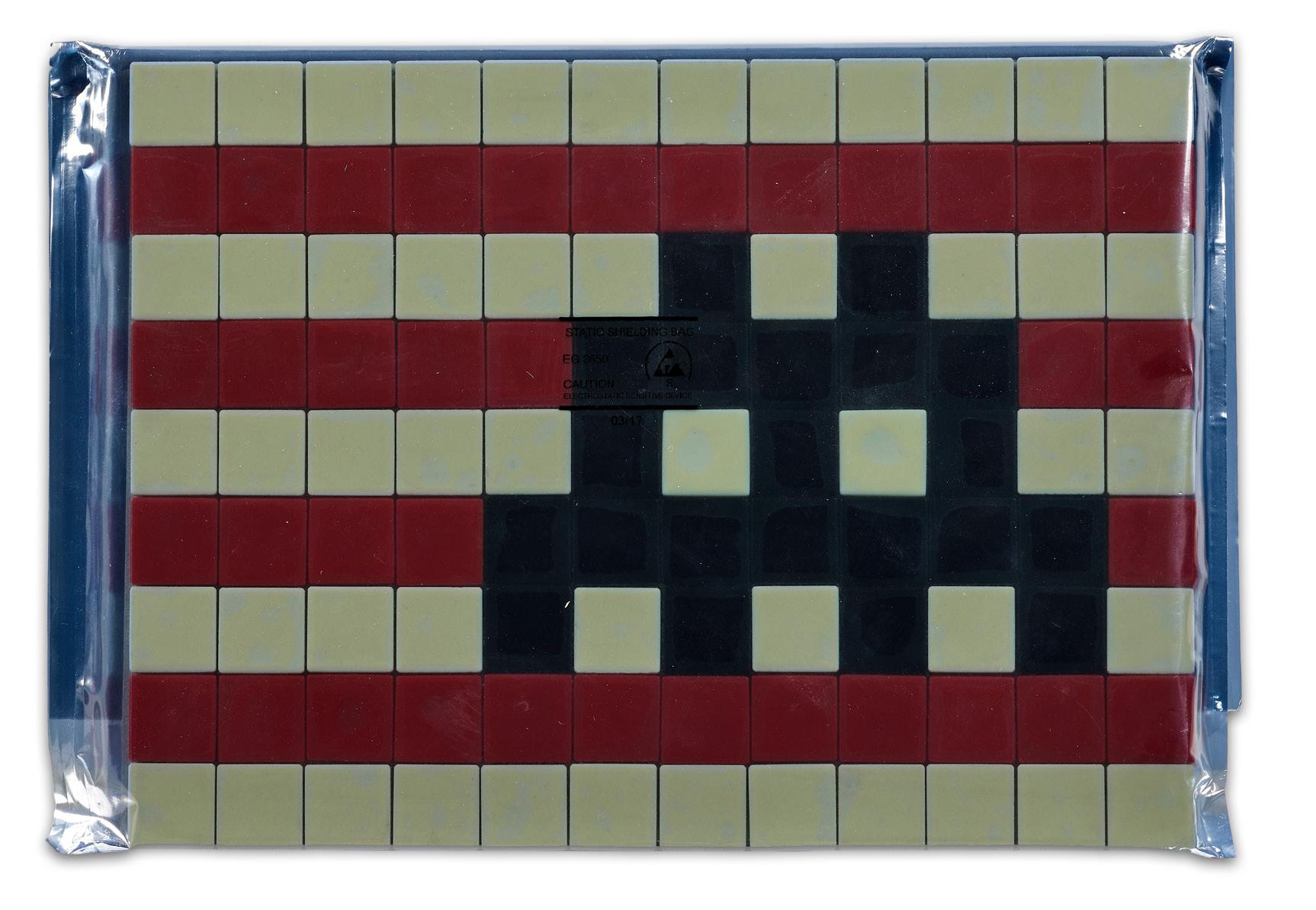
INVADER
(Français – Né en 1969)
Kit d’invasion #18
L.A. – 2018
Carreaux de mosaïque dans son blister non ouvert
Signé, daté et numéroté « 158/300 » sur le blister
20,7 × 28,3 cm
Provenance :
Vente Tajan, Paris, Urban Art, 6 novembre 2019, lot 42B
Acquis lors de cette dernière par l’actuel propriétaire
Mosaïc tiles in its unopened blister; signed, dated and numbered 6.29 × 7.08 in.
8 000 – 12 000 €
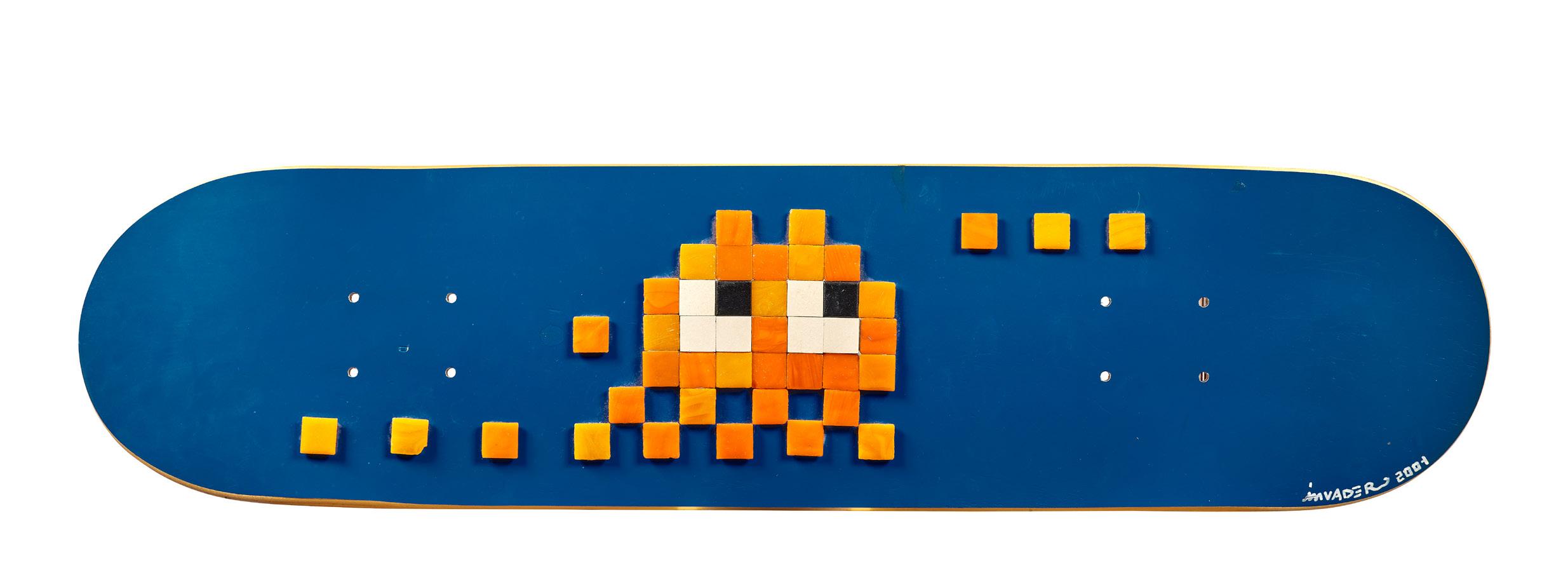
4
INVADER
(Français – Né en 1969)
TK-2001 – 2001
Carreaux de mosaïque sur planche de skate en bois peint à l’acrylique
Signé et daté ; contresigné, titré et daté au dos
19,5 × 79,5 cm
Provenance :
Vente Artcurial, Paris, Art Urbain
Contemporain, 15 février 2012, lot 195
Acquis lors de cette dernière par l’actuel propriétaire
Mosaïc tiles on painted skateboard; signed and dated; countersigned, titled and dated on the reverse 7.48 × 31.10 in.
10 000 – 15 000 €
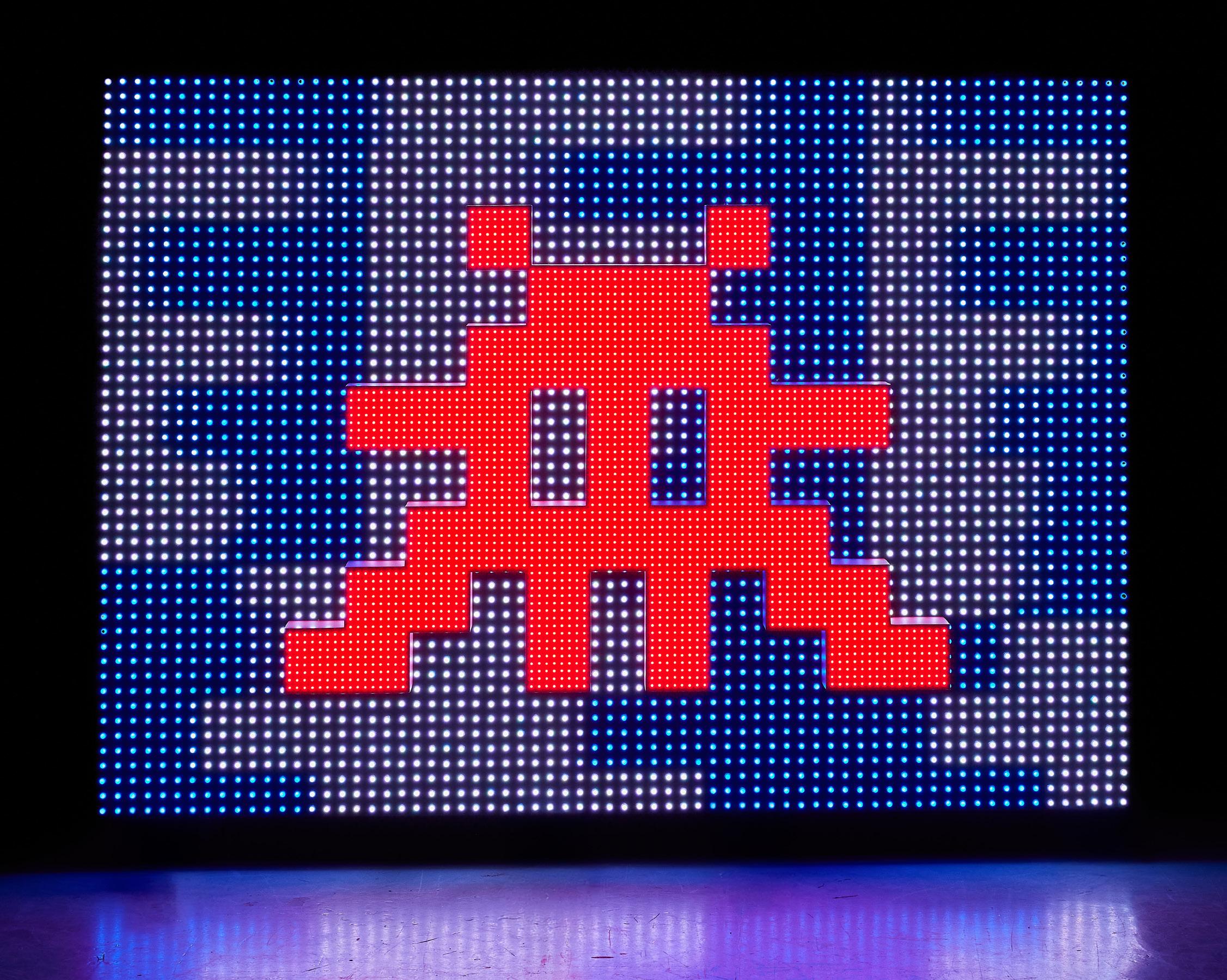
INVADER
(Français – Né en 1969)
Clouds – 2015
LED et acier thermolaqué
Signé, titré et daté sur la tranche
139 × 196,2 × 30 cm
Provenance : Over the Influence, Hong Kong Collection particulière, Europe
Exposition : Hong Kong, HOCA Foundation, Wipe out _ an explosition by Invader, 2 au 17 mai 2015
LED and powder-coated steel; signed, titled and dated on the edge 54.72 × 77.16 × 11.81 in.
70 000 – 90 000 €
« L’art consiste à repousser les limites, se renouveler, utiliser les outils qui sont accessibles à son époque. En ce qui me concerne, je suis au top de la science et des outils qui permettent de réaliser des choses qui n’ont jamais été faites auparavant. »
- Invader, entretien avec François Chevalier, Télérama, 12 mars 2015
(Français – Né en 1969)
Clouds – 2015
Après un premier pas dans l’espace en 2012 à Miami lorsqu’il avait envoyé à plus de 40 km du sol un Space Invader (Space 1) à l’aide d’un ballon météorologique, Invader réalise en 2014-2015 en collaboration avec l’ESA (Agence Spatiale Européenne) une invasion de l’espace à travers Space 2, mosaïque qu’il intègre dans l’environnement du module Colombus de l’ISS (Station Spatiale Internationale). Après plusieurs mois passés à flotter en apesanteur dans l’ISS (elle est partie en juillet 2014), c’est la spationaute italienne Samantha Cristoforetti qui pose un point de colle salvateur sur la mosaïque « Space2 » le jeudi 12 mars 2015. « J’adore l’idée de confrontation, de collaboration entre l’art et la science », nous dit Invader. « Je travaille sur terre, pas uniquement dans la rue. L’idée, c’est d’envahir la planète, qui ne manque pas de spots et de ressources. Je voulais faire une parenthèse, en repoussant mes limites. Et puis se fixer ce challenge d’être le premier artiste à s’élever aussi haut dans l’espace. Il faut trouver d’autres espaces à envahir, conquérir de nouveaux territoires, pour faire avancer l’histoire de l’art. Ça va être difficile d’aller encore plus loin et de réaliser des projets aussi inattendus. J’ai commencé dans la stratosphère, maintenant je suis dans l’ISS. La prochaine invasion se fera peut-être sur la lune. Qui sait ? »
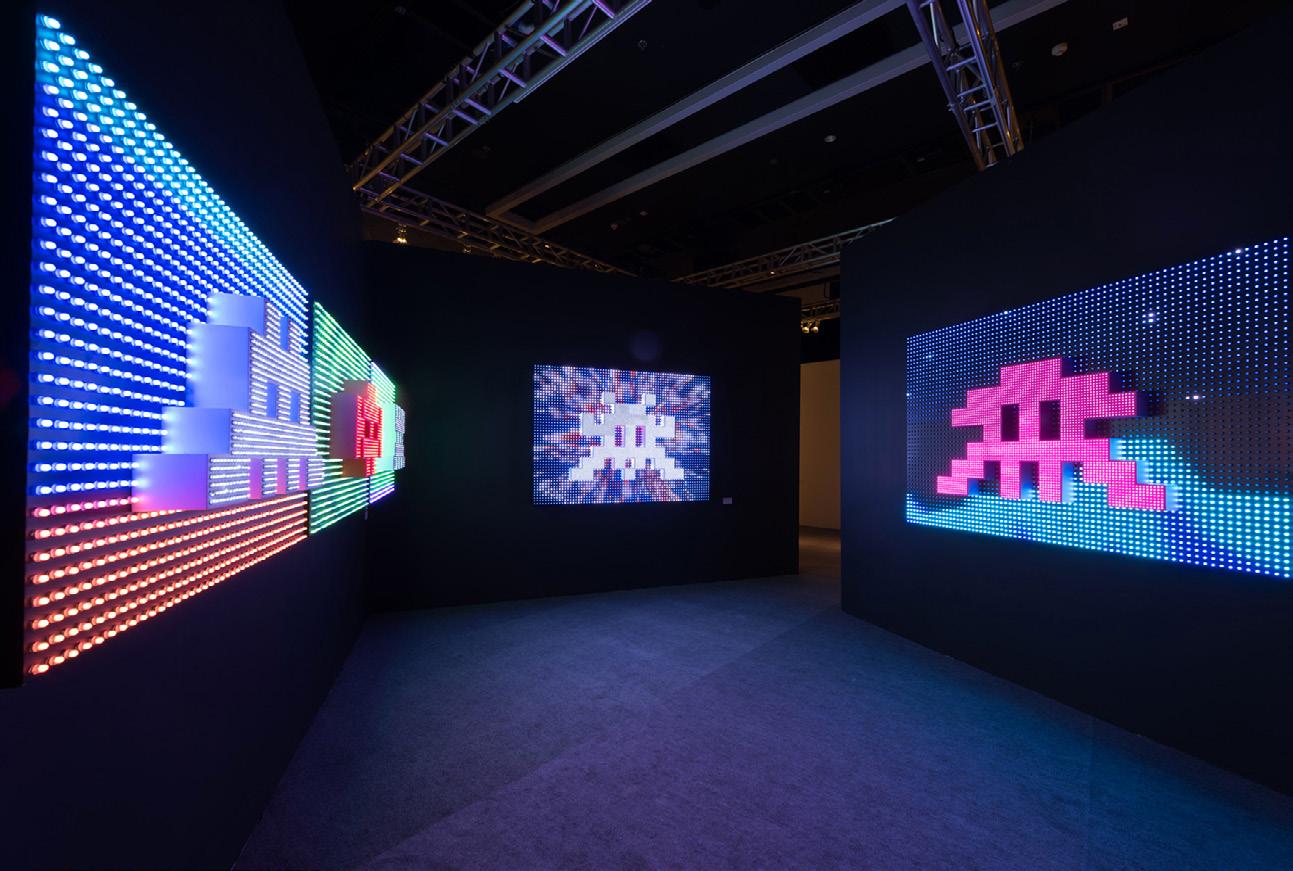
Suivant sa quatrième vague d’invasion de Hong Kong en 2014, Invader organise l’exposition Wipe Out, an explosition of Invader dans laquelle il présente notamment une série de caissons représentant des Space Invader réalisés en LED.
Les Space Invader clignotant dans des paysages spatiaux semblent quitter la Terre qui les a vu naître pour s’attaquer à d’autres territoires. Ils ont certes vocation à envahir la planète mais leur espace d’action n’est pas limité.
Invader est féru de technologies, de ce qu’elles apportent à notre société mais aussi la façon dont la société en devient victime, manipulées par le potentiel sans fin de ces technologies. Ainsi pour réaliser cette œuvre, Invader utilise un support qui évoque l’environnement publicitaire urbain contemporain des enseignes lumineuses qui envahissent notre paysage quotidien et mental.
After a first step into space in 2012 in Miami when it had sent more than 40 km from the ground a Space Invader (Space 1) using a weather balloon, Invader carried out in 2014-2015 in collaboration with ESA (European Space Agency) an invasion of space through Space 2, a mosaic that it integrates into the environment of the Columbus module of the ISS (International Space Station). After several months of floating weightless in the ISS (she left in July 2014), it is the Italian spacewoman Samantha Cristoforetti who poses a saving glue point on the mosaic “Space2” on Thursday 12 March 2015.
“I love the idea of confrontation, of collaboration between art and science,” Invader says. I work on land, not just on the streets. The idea is to invade the planet, which does not lack spots and resources. I wanted to make an aside, pushing my limits. And then fix this challenge to be the first artist to rise so high in space. We must find other spaces to invade, conquer new territories, to advance the history of art. It will be difficult to go even further and carry out such unexpected projects. I started in the stratosphere, now I’m in the ISS. The next invasion may be on the moon. Who knows?”
Following his fourth wave of invasion of Hong Kong in 2014, Invader organized the exhibition Wipe Out, an explosition of Invader, in which he presented a series of LED Space Invader boxes.
The Space Invaders, flashing in space landscapes, seem to be leaving the Earth where they were born to attack other territories. While their vocation is to invade the planet, there’s no limit to what they can do.
Invader is passionate about technologies, about what they bring to our society, but also about how society becomes a victim of them, manipulated by the endless potential of these technologies. Thus to realize this work, Invader uses a medium that evokes the contemporary urban advertising environment of luminous signs that invade our daily and mental landscape.
Visuel : Vue de l’exposition
Invader Wipe Out, an explosition of Invader, Hong Kong HOCA Foundation, 2015
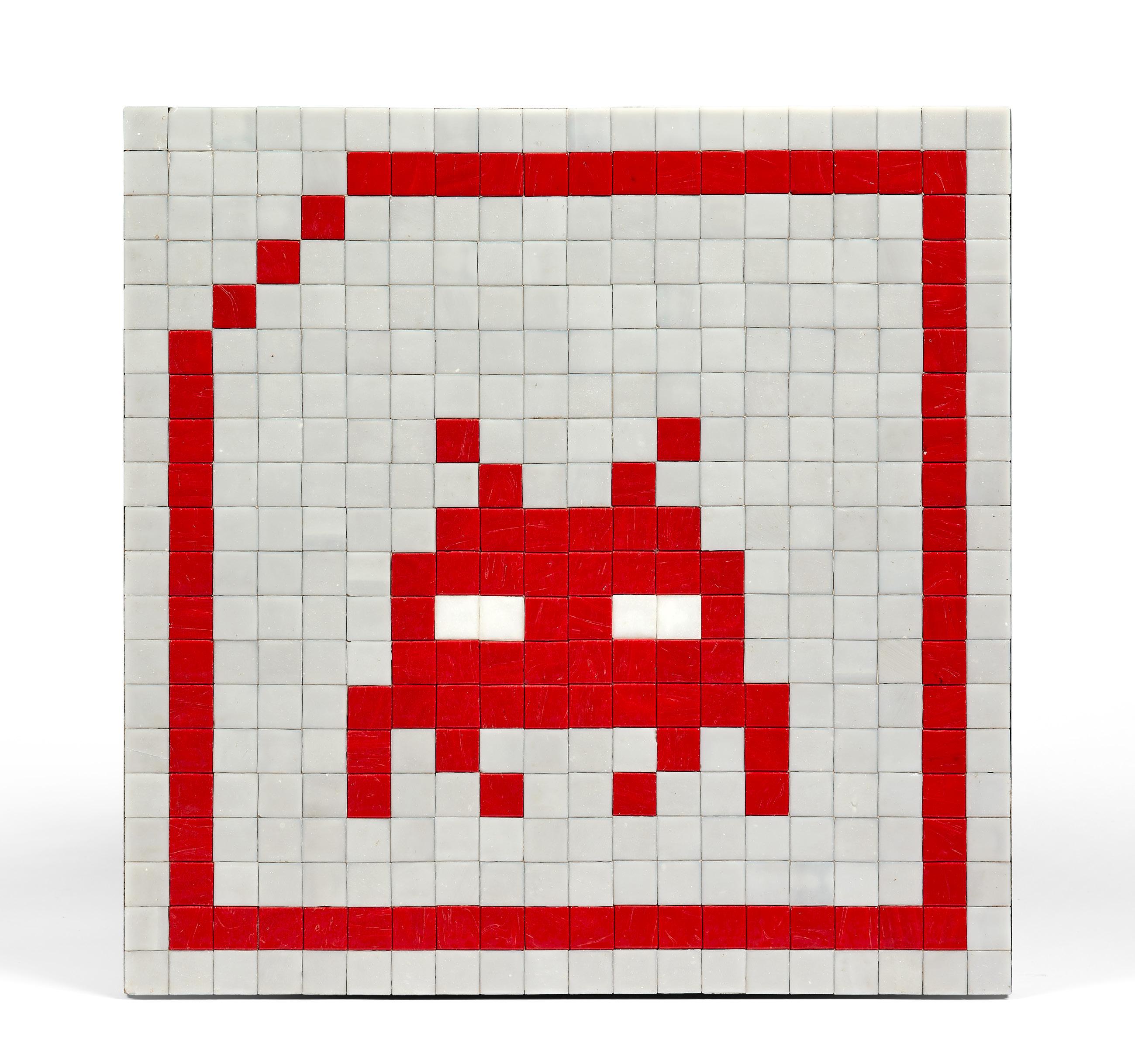
INVADER
(Français – Né en 1969)
Icône – 2004
Carreaux de mosaïque sur aggloméré
Signé, titré et daté au dos
39,7 × 39,7 cm
Provenance :
Galerie Brugier Rigail, Paris
Acquis directement auprès de cette dernière par l’actuel propriétaire
Un certificat sera remis à l’acquéreur
Mosaic tiles on agglomerate; signed, titled and dated on the reverse 15.35 × 15.35 in.
40 000 – 60 000 €
« S’il n’y avait pas d’artistes comme moi pour créer dans la rue, il n’y aurait que de la publicité partout. La pub, c’est comme Big Brother... Ça ne cherche ni à rendre heureux ni à montrer de belles images. C’est pour ça que je ne pense pas être un vandale. Ce que je fais est dans l’intérêt des gens. »
- Invader
Los Angeles est une ville nouvelle, la seconde plus importante des États-Unis. Pour donner une continuité aux projets espagnol et chinois, JR amène le projet The Wrinkles of the City à Los Angeles en 2011 mais cette fois le propos du projet n’est pas de rencontrer les témoignages de la mutation de la ville.
Los Angeles est le lieu de naissance du mythe hollywoodien. Le star system, le glamour et la beauté font partie de l’identité de la ville. Pour ce projet, JR souhaite opposer les rides des personnes âgées vivant à LA et les marques de leur passé avec l’image de perfection et de beauté éternelle idéalisée par nos sociétés contemporaines. Par exemple, dans le sud de la Californie, la chirurgie plastique n’est plus un luxe mais un style de vie, accepté socialement au-delà des clivages socio-culturels.
Avec cette approche, la partie la plus intéressante est de diffuser ces portraits dans toute la ville en utilisant les gigantesques mutations urbaines comme canevas. Contrairement au projet à Carthagène et à Shanghai, JR ne colle pas sur des ruines, des murs détruits. La ville est considérée par les urbanistes et géographes comme le modèle précurseur du développement urbain des métropoles américaines.
La cité des anges apparaît comme le « laboratoire urbain du postmodernisme » qui offre de larges murs en centre-ville et dans les banlieues alentour.
Los Angeles is quite a new city, the second largest in the United States. Following Cartagena and Shanghai, JR wants to bring his Wrinkles of the City project to Los Angeles in 2011. This time, the purpose of the project isn’t to meet witnesses of the changes that have occurred in the city or in their own lives.
Los Angeles is the place where the Hollywood myth was born, with its star system, the glamour and the beauty being part of the identity of the city. For this project, JR wishes to oppose the wrinkles of old people living in LA and the marks of their past with the image of perfection or regenerated beauty in the 21st century. For instance, in Southern California, plastic surgery is no longer a luxury but a lifestyle. It is now socially accepted, above all cultural and social barriers.
With this approach, the most interesting part is to spread these portraits throughout the city, using the gigantic urban mutations as a canvas. Unlike the project in Cartagena and Shanghai, JR does not paste on ruins, destroyed walls. The city is considered by urban planners and geographers to be the precursor model for the urban development of American metropolises.
The City of Angels appears to be the “urban laboratory of postmodernism”, with large walls in the city center and in the surrounding suburbs.
Visuel : JR, The Wrinkles of the City, Los Angeles, Carl à Silverlake, horizontal, 2011
(Français – Né en 1983)
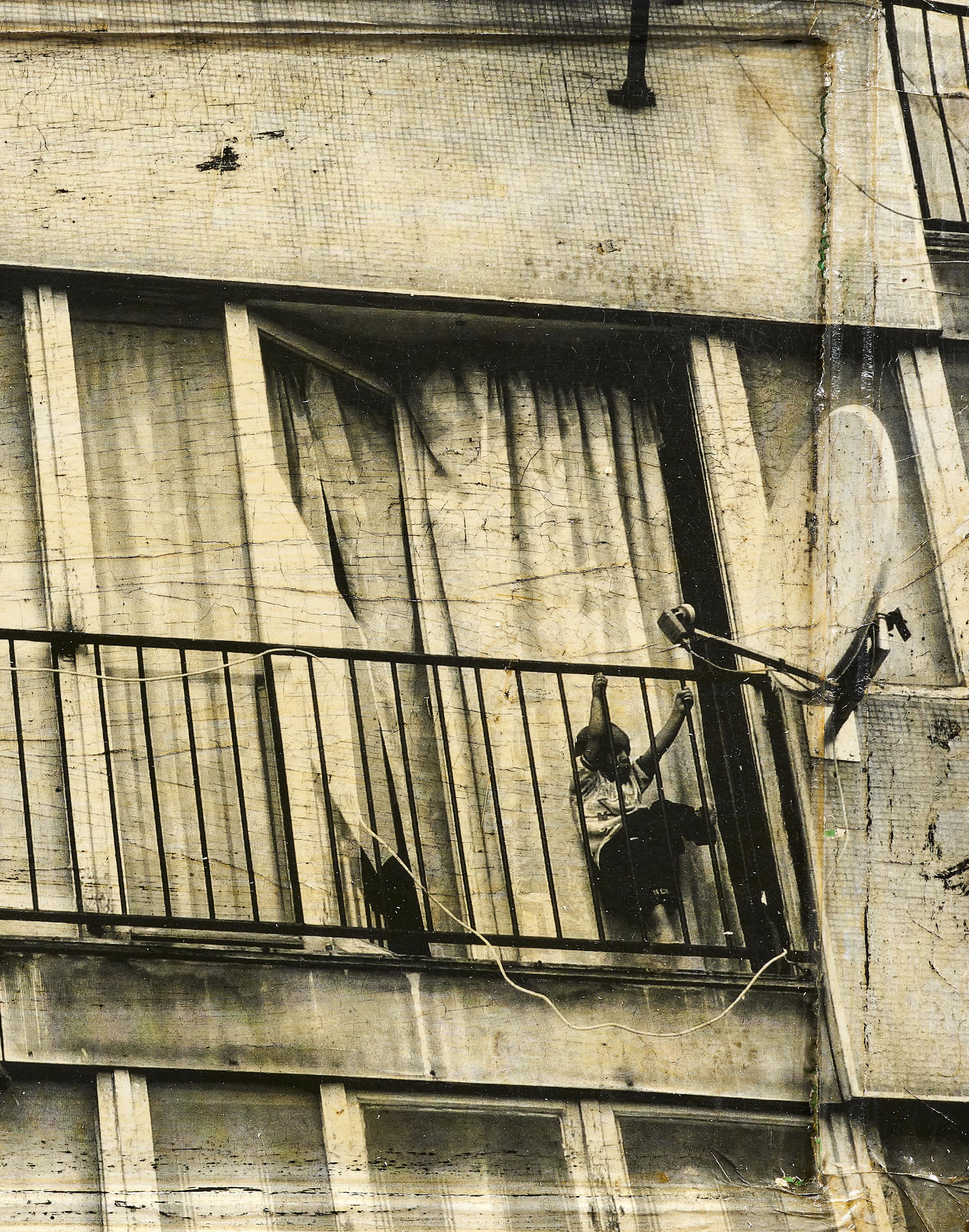
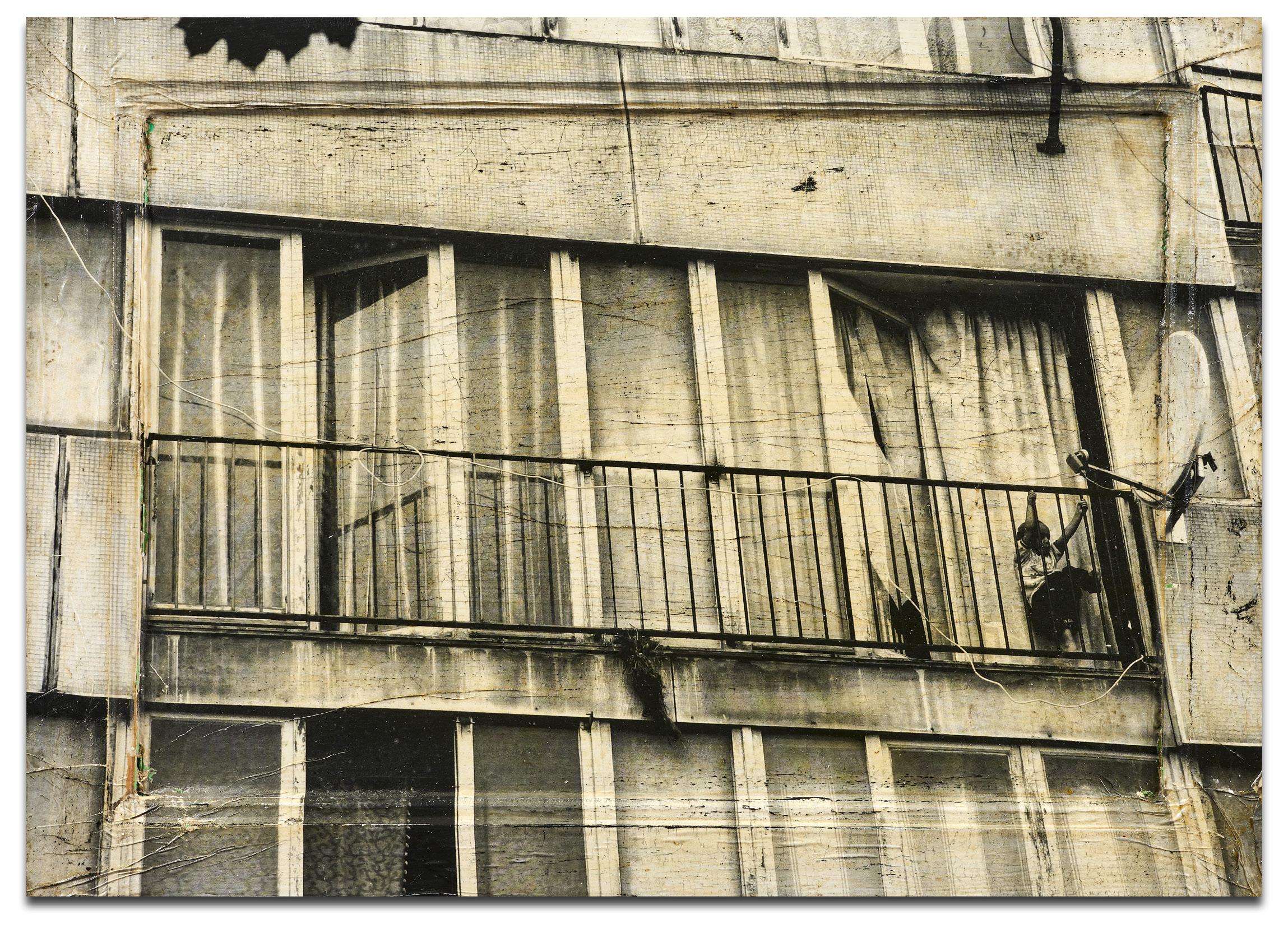
28 Millimètres, Portrait d’une Génération, Balcon 93370, 2004 – 2008
Impression photographique en noir et blanc sur papier collé sur bois de récupération, vernis mat Signé, titré, daté et annoté au dos sur l’étiquette de l’œuvre « œuvre unique sur matière » 52,6 × 73,8 × 3 cm
Provenance :
Acquis directement auprès de l’artiste par l’actuel propriétaire
Bibliographie:
Marco Berrebi, JR, JR 28 MM 2004 / 2010, Éditions Alternatives, Paris, 2011, ler visuel reproduit pp.52-53
Black and white print on paper, pasted on reclamed wood panel, matte varnish; signed, titled, dated, and annotated on the back on the artwork label
20.47 × 28.74 × 1.18 in.
15 000 – 20 000 €
En 2004, à la recherche de lieux où personne n’imaginerait voir un jour des œuvres d’art, JR organise sa première exposition, sur les murs de la cité des Bosquets, à Montfermeil (93370). Il photographie ses jeunes habitants et colle des photocopies en grand format de ces photos sur les murs.
En novembre 2005, au même endroit, dans un climat de révolte sociale provoquée par la mort de deux adolescents qui se sont retranchés dans l’enceinte d’un transformateur électrique pour échapper à la police, des émeutes éclatent et embrasent rapidement la ville. En un mois, plus de 10 000 voitures sont incendiées. Les émeutiers ne sèment pas uniquement le désordre dans d’autres banlieues, ils détruisent également leur propre quartier. Les médias montrent des jeunes gens lançant des cocktails Molotov, attaquant les policiers et les pompiers et pillant tout ce qu’ils peuvent.
En 2006, en réaction à la manière dont les médias traitent ceux qui sont devenus ses amis, JR retourne au cœur du quartier et, avec son ami Ladj Ly, un artiste local, il monte un projet avec des jeunes des Bosquets.
In 2004, searching for places where no one would ever imagine seeing works of art, JR organized his first exhibition on the walls of the Bosquets housing project in Montfermeil (93370). He photographed its young residents and pasted large-format photocopies of these photos on the walls.
In November 2005, in the same place, amid social unrest sparked by the death of two teenagers who had barricaded themselves inside an electrical transformer to escape the police, riots broke out and quickly engulfed the city. In one month, more than 10,000 cars were set on fire. The rioters not only wreaked havoc in other suburbs, they also destroyed their own neighborhood. The media showed young people throwing Molotov cocktails, attacking police officers and firefighters, and looting everything they could.
In 2006, in response to the way the media treated those who had become his friends, JR returned to the heart of the neighborhood and, with his friend Ladj Ly, a local artist, set up a project with young people from Les Bosquets.
(Français – Né en 1983)
The Wrinkles of the City, Los Angeles – Carl in Silverlake, Vertical – USA – 2011
Photographie en couleurs, plexiglas, aluminium, bois
Signée, titrée, datée et numérotée au dos « 3/3 + 2AP » 179 × 12 × 7 cm
Provenance : Galerie Perrotin, Paris Acquis directement auprès de cette dernière par l’actuel propriétaire
Exposition :
Paris, Galerie Perrotin, JR « Encrages », 19 novembre 2011 au 7 janvier 2012 (un exemplaire similaire exposé)
Bibliographie :
JR & Louise Berrebi, The Wrinkles of the City, Éditions Drago, Rome, 2012, visuel innsitu reproduit pp.56-57
JR, Artists Until I Find a Real Job, Éditions Unframed & Atelier JR, 2023, un exemplaire similaire reproduit p.941
Un certificat sera remis à l’acquéreur
Color print mounted on dibond, plexiglass, koto frame; signed, titled, dated and numbered on the reverse 70.47 × 48.42 × 2.75 in.
14 000 – 18 000 €
Je m’appelle Carl Virden. J’ai 63 ans, mais je me sens plus jeune. J’ai été charpentier pendant trente-deux ans, avec le syndicat des charpentiers, et j’ai travaillé sur plusieurs bâtiments à Los Angeles et dans les environs. Lorsque j’ai pris ma retraite, je me suis vite ennuyé. J’ai vu une annonce pour des rôles secondaires, j’ai donc répondu à l’annonce et je me suis inscrit à un service de casting. J’ai obtenu une audition en moins d’une semaine et j’ai reçu le premier rôle pour lequel j’avais auditionné.
Mes rides représentent le temps passé à travailler, mais surtout le temps passé à travailler pour ma famille. Elles représentent également le vieillissement ; je me souviens d’avoir regardé un jour mes propres mains ridées et m’être dit : « Ce sont les mains de mon père ! Je suis en train de devenir mon père ! »
My name is Carl Virden. I am 63 years old, but I feel younger. I was a carpenter for thirty-two years, with the Carpenters’ Union, and I worked on several buildings all over L.A. and around. When I retired, I got bored quickly. I saw an advertisement for background acting, so I answered the ad and joined a casting service. I got an audition within a week and received the first part I auditioned for.
My wrinkles represent time spent working, but more so time spent working for my family. They also represent aging; I remember looking down at my own wrinkled hands one day and thinking, “Those are my Dad’s hands! I’m becoming my Dad!”
(Français – Né en 1983)
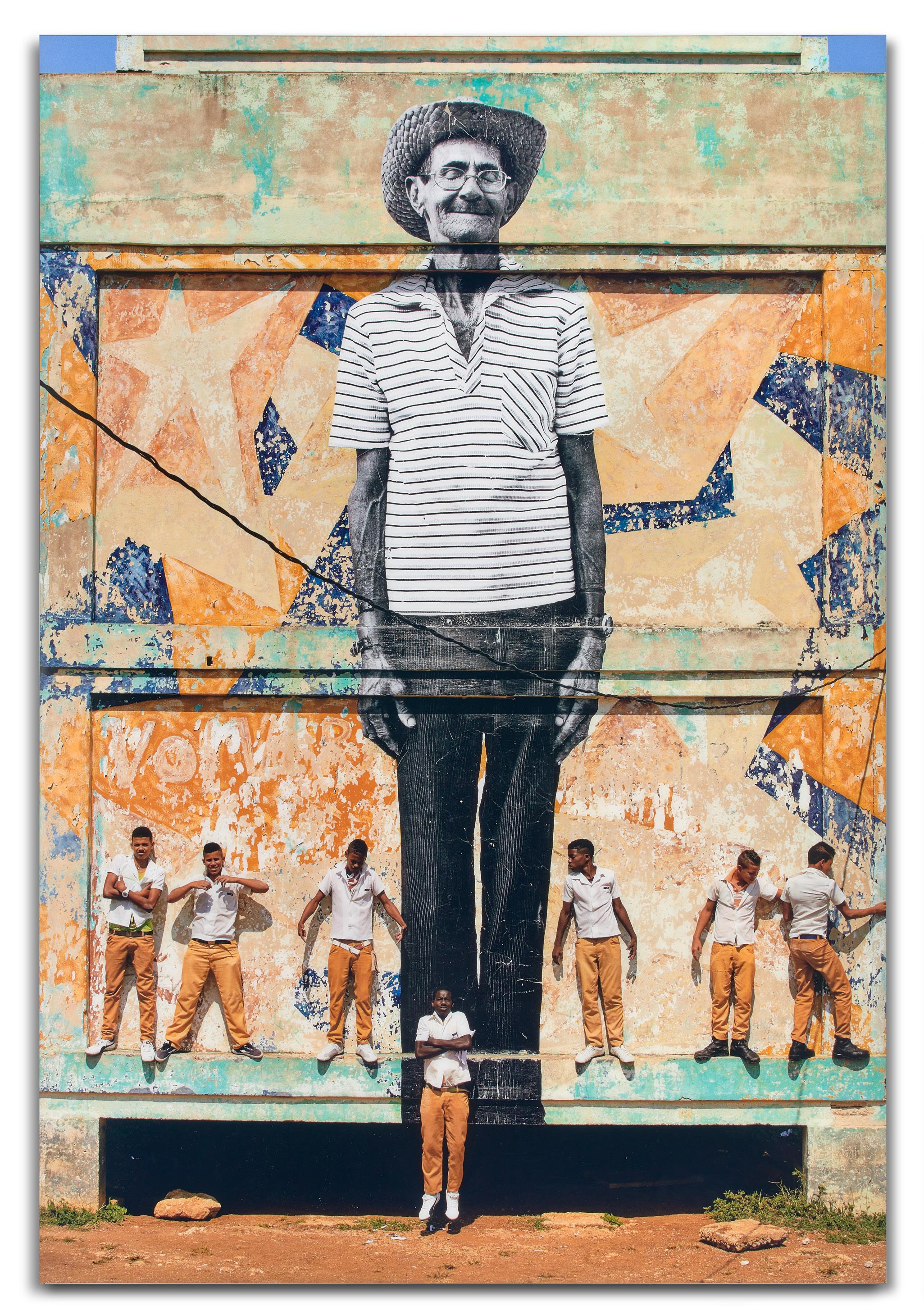
The Wrinkles of the City, La Havana - Antonio Cruz Gordillo (artwork by JR, project by JR and Jose Parla), Cuba – 2012 / 2021 Tirage photographique en couleurs monté sur dibond, plexiglas Signé, daté, titré et numéroté au dos « 1/3 » sur le châssis et sur une étiquette Édition à trois exemplaires + 2 EA La réalisation de la série est de 2012, l’œuvre a été tirée en 2021 267 × 180 cm
Provenance : Galerie Perrotin, Paris Acquis directement auprès de cette dernière par l’actuel propriétaire
Exposition :
La Havane, Biennale de la Havane, JR The Wrinkles of the city, 11 mai au 11 juin 2012
Bibliographie :
JR & Jose Parla: The Wrinkles of the City: Havana, Éditions Damiani & Standard Press, Bologne, New York, 2012, visuel in situ reproduit (non paginé) JR, Can art change the world?, Éditions Phaïdon, New York, 2015, visuel in situ reproduit p.163
Artist until I find a real job, Éditions Unframed, Genève, 2022, un exemplaire similaire reproduit p.1087
Color print, mounted on dibond, plexiglass; signed, dated, titled and numbered on the reverse; 105.12 × 70.87 in.
15 000 – 20 000 €
En mai 2012, JR collabore avec José Parlá, artiste américain d’origine cubaine, sur le projet Wrinkles of the City : de gigantesques installations à La Havane, dans le cadre de la Biennale de La Havane, pour lesquelles JR et Parlá ont photographié et enregistré 25 personnes âgées ayant vécu la révolution cubaine. JR a collé des portraits sur lesquels José Parlá a exprimé sa calligraphie palimpseste et ses peintures. L’écriture de Parlá fait écho aux murs endommagés sur lesquels il écrit, et offre un commentaire sur la vie des personnes âgées de Cuba ; ensemble, JR et José Parlá animent les murs d’une ville habitués à recevoir uniquement les portraits de ses dirigeants : « Mon nom est Antonio Cruz y Gordillo. Je suis né le 20 avril 1943. J’ai travaillé toute ma vie dans les champs… »
In JR & Jose Parla : The Wrinkles of the City : Havana, Éditions Damiani & Standard Press, Bologne, New York, 2012
In May 2012, JR collaborates with Cuban-American artist José Parlá on the latest iteration of The Wrinkles of the City: a huge mural installation in Havana, undertaken for the Havana Biennale, for which JR and Parlá photographed and recorded 25 senior citizens who had lived through the Cuban revolution, creating portraits which Parlá, who is of Cuban descent, interlaced with palimpsestic calligraphic writings and paintings. Parlá’s markings echo the distressed surfaces of the walls he inscribes and offer commentary on the lives of Cuba’s elders; together, JR and Parlá’s murals marvelously animate a city whose walls are otherwise adorned only by images of its leaders: “My name is Antonio Cruz y Gordillo. I was born on the 20th of April 1943. My whole life, I have worked in the fields…”
In JR & Jose Parla: The Wrinkles of the City: Havana, Éditions Damiani & Standard Press, Bologne, New York, 2012
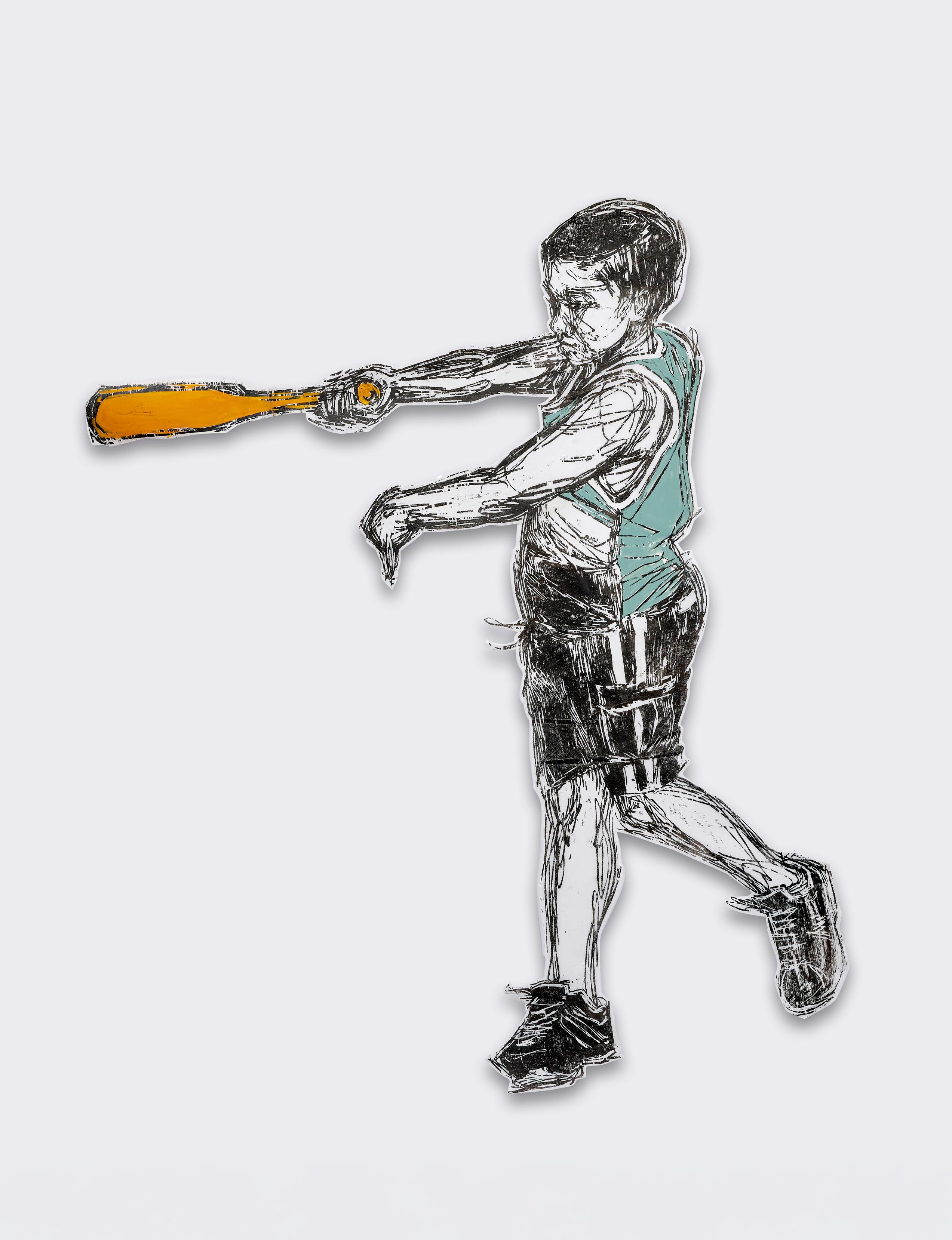
10
SWOON
(Américaine - Née en 1978)
Base-ball player – 2005
Gravure sur bois imprimée sur mylar rehaussé à l’acrylique
Signé et daté
163,5 × 124,5 cm
Provenance : Galerie LJ, Paris
Acquis directement auprès de cette dernière par l’actuel propriétaire
Exposition : Paris, Galerie LJ, Swoon - Mike Brodie - Chris Stain, 10 novembre au 12 décembre 2007
Woodcut printed on Mylar, enhanced with acrylic paint; signed and dated 64.37 × 49.01 in.
4 000 – 6 000 €
« Ces portraits sont des rayons X de ma ville, recollés à sa surface. J’essaie de recréer un ensemble d’événements qui ont ou auraient pu arriver ici, qui auraient pu arriver n’importe où. »
- Swoon
Swoon s’est fait connaître par sa technique de gravure. Inspirée par des signatures du street art comme Banksy ou Blek Le Rat, elle délaisse les galeries pour exposer son art dans les rues. Elle aime ce côté éphémère et immédiat du street art, cette fragilité de l’œuvre qui la rend si vulnérable. « J’ai toujours aimé l’idée de fabriquer quelque chose qui ne survit pas à sa propre nécessité, qui existe pour un temps puis disparaît. Je garde et je protège certaines œuvres, mais j’aime en donner d’autres au moment présent », avoue-t-elle. Au fil de ses voyages, elle prend en photo des hommes, des femmes et des enfants. Des personnalités qui lui transmettent une émotion et qu’elle refait vivre sous forme de dessin de papier collé sur les murs, en taille réelle. Pour elle, la personnalité, l’originalité et les expériences de chacun se traduisent sur les corps et les visages. Ses portraits de papiers témoignent ainsi d’un instant de vie.
En 2007, elle propose un projet all over sorte de projection du monde de la rue à la galerie LJ dans laquelle cette œuvre a été présentée.
Swoon became known for her engraving technique. Inspired by street art signatures such as Banksy and Blek Le Rat, she abandoned galleries to exhibit her art in the streets. She loves the ephemeral and immediate nature of street art, the fragility of the work that makes it so vulnerable. “I’ve always loved the idea of creating something that doesn’t outlive its own necessity, that exists for a time and then disappears. I keep and protect some of my works, but I like to give others away in the moment,” she admits. During her travels, she takes photos of men, women, and children. These are personalities who convey an emotion to her, and she brings them back to life in the form of life-size drawings on paper pasted on walls. For her, each person’s personality, originality, and experiences are reflected in their bodies and faces. Her paper portraits thus bear witness to a moment in life.
In 2007, she proposed a project called “All Over,” a projection of the world of the street, at the LJ Gallery, where this work was presented.
« J’aime utiliser des moyens destructifs pour créer des œuvres d’art qui sont significatives et poétiques, principalement des portraits qui peuvent humaniser l’espace public souvent oppressif que nous trouvons dans nos villes. »
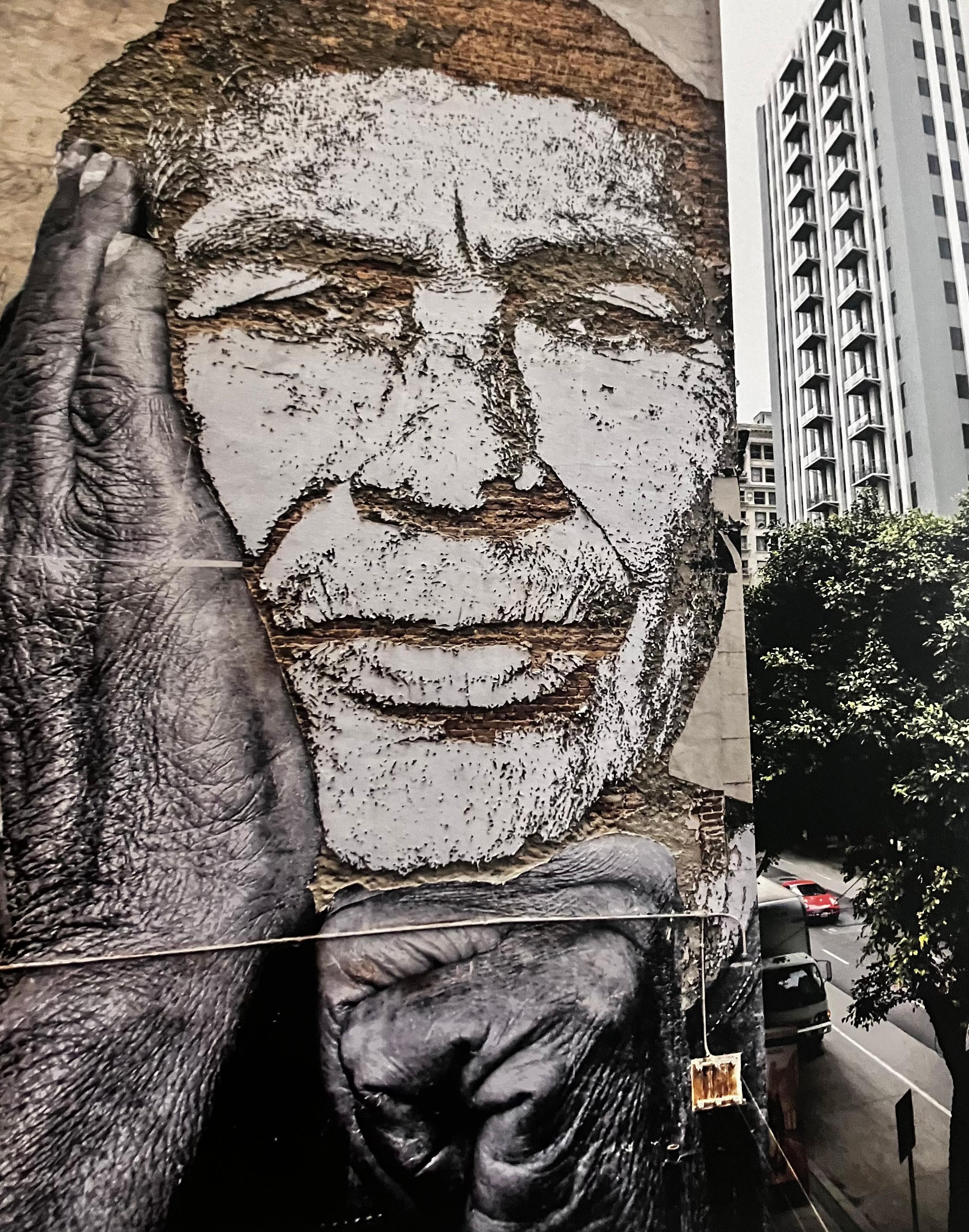
- Alexandre Farto alias Vhils
Vhils a commencé à travailler avec des panneaux d’affichage en 2005. Après avoir observé pendant des années les agglomérations épaisses qui se forment sur les murs et les panneaux d’affichage au Portugal, il a eu l’idée de les utiliser comme toile. En tant que graffeur, il a été formé à lire l’espace de la ville et ce qu’il offre, et comme la plupart de ces accumulations étaient en fait illégales, bien qu’ignorées par les autorités, il s’est senti libre de les utiliser sans craindre d’être verbalisé. Il est marqué par les vieilles fresques politico-utopiques de la fin des années 1970 et les affiches publicitaires trouvées sur les murs de Lisbonne. Il en fera ses outils. Contrairement à la plupart des artistes de l’urban qui posent, qui collent, Vhils enlève la matière pour faire apparaître ses sujets, il extrait, il déconstruit. Il creuse des visages dans les murs des villes. Ses affiches sont réalisées à la découpe mais aussi avec des outils inattendus, de l’acide, de l’eau de javel qui mangent le papier. Décomposition, destruction et déconstruction sont au cœur de son processus créatif. Briser les codes rigides de la ville et son rapport à la publicité est l’un des objectifs de Vhils.
Vhils began working with street billboards in 2005. After years of observing the thick agglomerations they form if allowed to accumulate on walls and billboards in Portugal, he had the idea of using them as a canvas. As a graffiti artist, he was trained to read the space of the city and what it offers, and as most of these accumulations were in fact illegal, although ignored by the authorities, he felt free to use them without fear of being verbalized. He was marked by the old po- litical-utopian frescoes of the late 1970s and the advertising posters found on the walls of Lisbon. He’ll make it his tools. Unlike most ur- ban artists who pose, who stick, Vhils removes the material to make his subjects appear, he extracts, he deconstructs. He digs faces in the walls of cities. His posters are made by cutting but also with unexpected tools, acid, bleach that eat paper. Decomposition, destruction and deconstruction are at the heart of his creative process. Breaking the rigid codes of the city, its relationship to advertising is one of the objectives of Vhils.
Visuel : Collaboration de Vhils et JR, Los Angeles, 2010
m 11
VHILS (Alexandre FARTO dit)
(Portugais - Né en 1987)
Sobreposição Series #07 – 2014
Affiches publicitaires collectées dans la rue et découpées à la main Signées au dos sur une étiquette
193 × 140 cm
Cette œuvre est référencées dans les Archives de l’artiste sous le n°0000-5088
Hand-cut billboards collected in the street; signed on the reverse on a label
75.98 × 55.11 in.
11 000 – 13 000 €
« Les affiches dans la rue sont comme des fossiles contemporains, leur accumulation reflète le passé récent tout en incarnant la propension à jeter propre à cette culture de la consommation effrénée. »
- Vhils in Entropie, Éditions Alternatives, 2014
12
VHILS (Alexandre FARTO dit)
(Portugais - Né en 1987)
Incise Series #01 – 2013
Anciennes portes en bois, sculptées à la main
204 × 81 × 3 cm
Nous remercions le studio de l’artiste pour les informations qu’il nous a aimablement communiquées
Old wooden doors, hand-carved 80.31 × 31.88 × 1.18 in.
12 000 – 15 000 €
« Les matériaux de rebut peuvent nous dire beaucoup d’une société. De nos jours, ils nous montrent comment les idéaux du bien commun ont été remplacés par la culture de l’individualisme et de l’obsolescence. »
- Vhils in Entropie, Éditions Alternatives, 2014
RETNA
(Américain - Né en 1979)
Untitled – 2010
Acrylique sur toile
Signée sur la tranche droite
243,5 × 162,3 cm
Provenance :
Ancienne Collection Andy Valmorbida
Collection particulière, Londres
Woodbury House, Londres
Acquis directement auprès de cette dernière par l’actuel propriétaire
Une lettre de provenance de Woodbury House sera remise à l’acquéreur
Acrylic on canvas; signed 95.66 × 63.77 in.
40 000 – 60 000 €
« L’art doit susciter la réflexion. S’il ne suscite pas la réflexion, alors ce n’est que de la décoration. »
- Retna
Né à Los Angeles, Marquis Lewis, plus connu sous le nom de Retna, est un artiste qui est passé du graffiti à la collaboration avec les clients les plus prestigieux de l’industrie du divertissement et de la mode. Lewis, qui a choisi son pseudonyme après avoir écouté les paroles du Wu Tang Clan parce qu’il les trouvait intemporelles et dynamiques, est surtout connu pour avoir créé et intégré une écriture distinctive dans ses œuvres d’art, qui sont un mélange de peinture en spray et de coups de pinceau.
Fortement influencé par les hiéroglyphes égyptiens, les lettres gothiques et les symboles traditionnels amérindiens, ainsi que par les styles de peinture inspirés du graffiti, Retna, autodidacte, a développé une écriture à la fois captivante et mystique. Bien qu’il s’inspire de nombreux styles de symboles et de lettres existants, il ne vise pas à transmettre un message lisible, mais est plutôt le fruit d’un processus très méditatif de dialogue avec lui-même. Pourtant, les structures poétiques qu’il peint sur les murs et les toiles sont destinées à être universelles et à permettre à tous les peuples et toutes les cultures d’y trouver des similitudes, qu’ils puissent les lire ou non.
Heavily influenced by Egyptian hieroglyphs, Black Letter and Native American traditional symbols as well as graffiti based styles of painting; self-taught Retna developed a script that is captivating and mystic at the same time. While it is based on many existing styles of symbols and letters, it is not meant to deliver a readable message; instead it is a product of a very meditative process of having a conversation with himself. Yet, the poem like structures, which he paints on walls and canvas, are meant to feel universal and for all people and cultures to find similarities in it, whether they can read it or not. 13
Los Angeles born Marquis Lewis, or better known as Retna, is an artist who transformed from graffiti writing into working for the most prestigious and high-end clients from the entertainment and fashion industry. Lewis, who picked his moniker after listening to Wu Tang Clan lyrics because he found them to be timeless and dynamic, is most renown for constructing and incorporated a distinctive script into his artworks which are a mix of spray paint and paintbrush strokes.
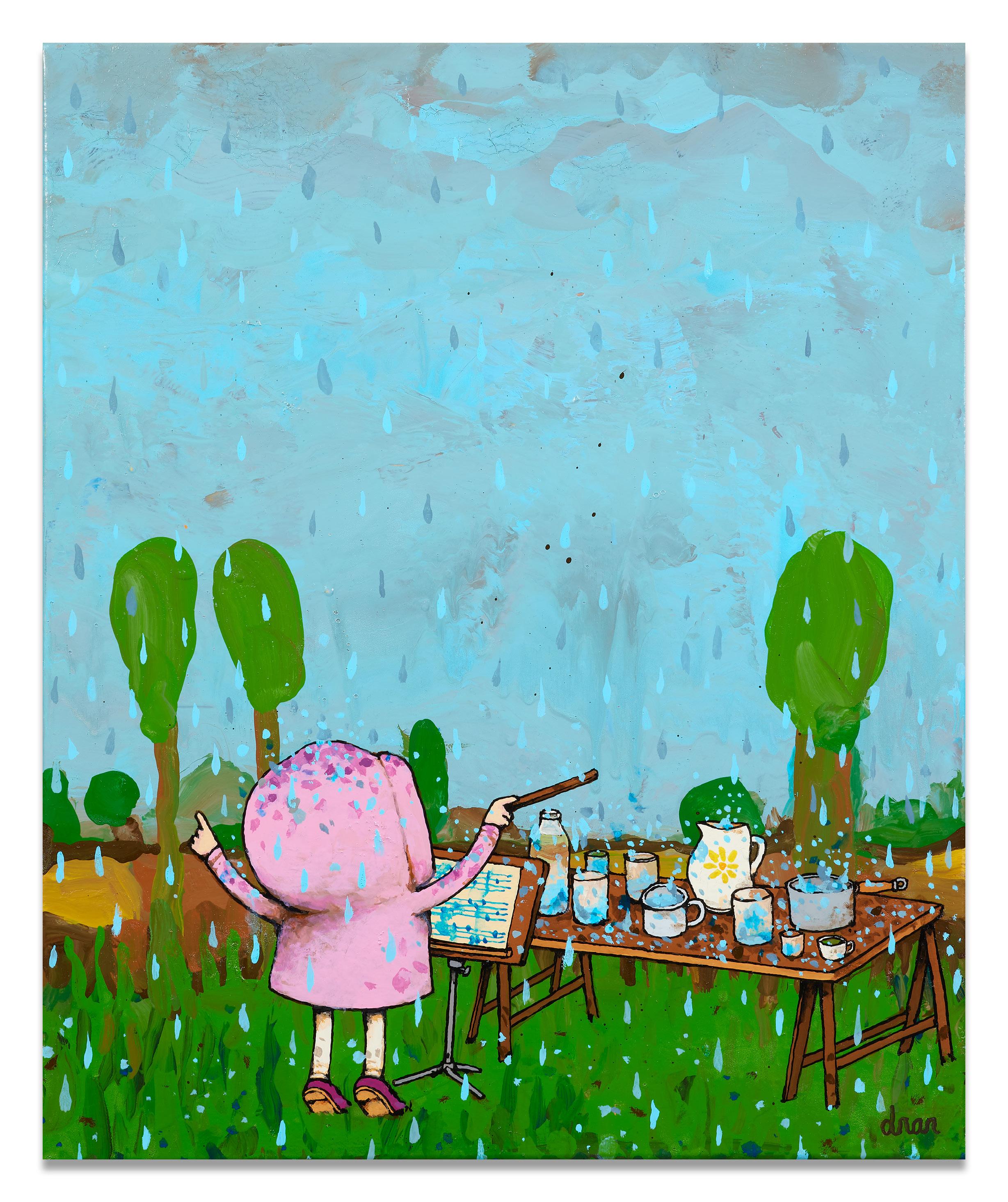
DRAN
(Français – Né en 1979)
Petite fille « plic plic » – 2024
Peinture aérosol et acrylique sur toile
Signée
46 × 38 cm
Un certificat de l’artiste sera remis à l’acquéreur
Spray paint and brush on canvas; signed 18.11 × 14.96 in.
8 000 – 12 000 €
« Les enfants de mes dessins, ils n’ont pas ma bouille, mais leur façon de jouer, de s’évader en rêvant, c’est moi tout craché. Ces enfants sont seuls, mais avec leur imagination, ils ne le sont plus. Le street art, ça perpétue ce côté polisson »
- DRAN, entretien avec Jean-Daniel Beauvallet, Les Inrocks, 8 mars 2011
Observateur critique et grinçant de la société, DRAN trace sur papier et toiles des visions acerbes et cyniques des rapports humains de la société contemporaine, celle que Guy Debord qualifiait de Société du Spectacle. Il en critique les travers, ses évolutions, ses approches politiques, économiques, religieuses mais aussi les faits divers qui jonchent les pages de l’actualité. Son intervention au cœur de l’exposition Inside au Palais de Tokyo a marqué les esprits. Ses œuvres sont des scénettes véhiculant un message corrosif. Les enfants grimaçants, rêveurs sont menacés par le monde qui les entoure. Entre rêve et cauchemar, entre la douceur et la provocation, entre la violence et l’humour, la société et ses violences s’imposent à eux.
Ses personnages font face à la dureté et à l’absurdité du monde qui les entoure. L’œil de DRAN examine et analyse la société contemporaine à travers une lentille critique.
Des thèmes récurrents comme l’environnement, la consommation, la politique ou la religion sont disséqués dans ses créations.
A critical and unforgiving observer of society, DRAN uses paper and canvas to draw acerbic and cynical visions of human relationships in contemporary society, the one that Guy Debord described as a Society of Spectacle. He criticizes its failings, its evolutions, its political economics and religions approaches, and various facts that litter the news pages. His intervention at the heart of the exhibition Inside the Palais de Tokyo made an impression. His works are scenes conveying a corrosive message. The grimacing and dreaming children are threatened by the world around them. Between dream and nightmare, between gentleness and provocation, between violence and humor, society and its violence impose themselves on them. His characters confront the harshness and absurdity of the world around them. DRAN’s eye examines and analyzes contemporary society through a critical lens. Recurring themes such as the environment, consumerism, politics and religion are dissected in his creations.
m 15
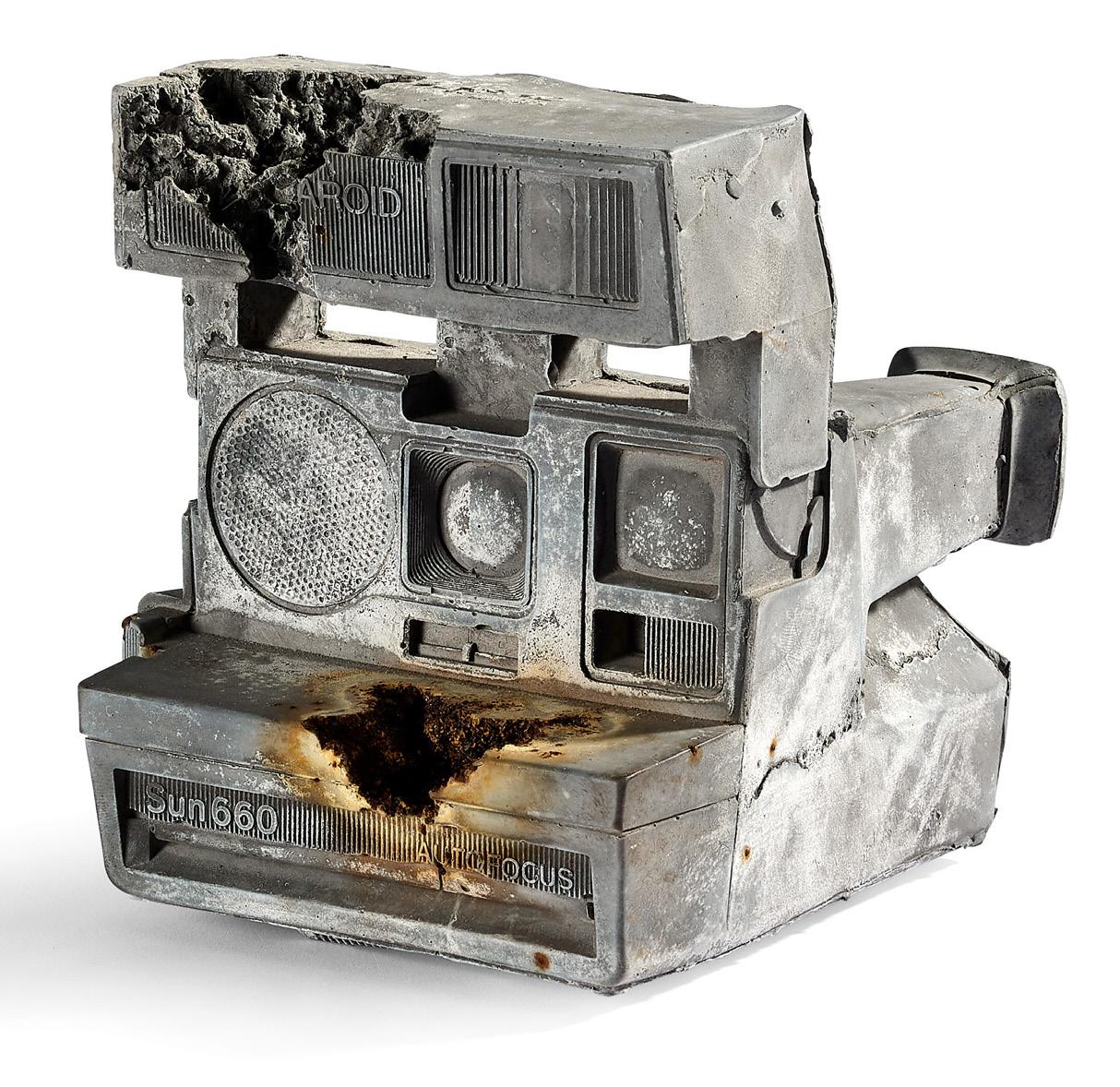
Daniel ARSHAM
(Américain - Né en 1980)
Steel Eroded Polaroïd – 2013
Fragments de métal, verre pilé et hydrostone
15,50 × 13,50 × 15,50 cm
Provenance :
Perrotin, Hong Kong
Acquis directement auprès de cette dernière par l’actuel propriétaire
Fragments of metal, ground glass and hydrostone
6.10 × 5.31 × 6.10 in.
8 000 – 12 000 €
16
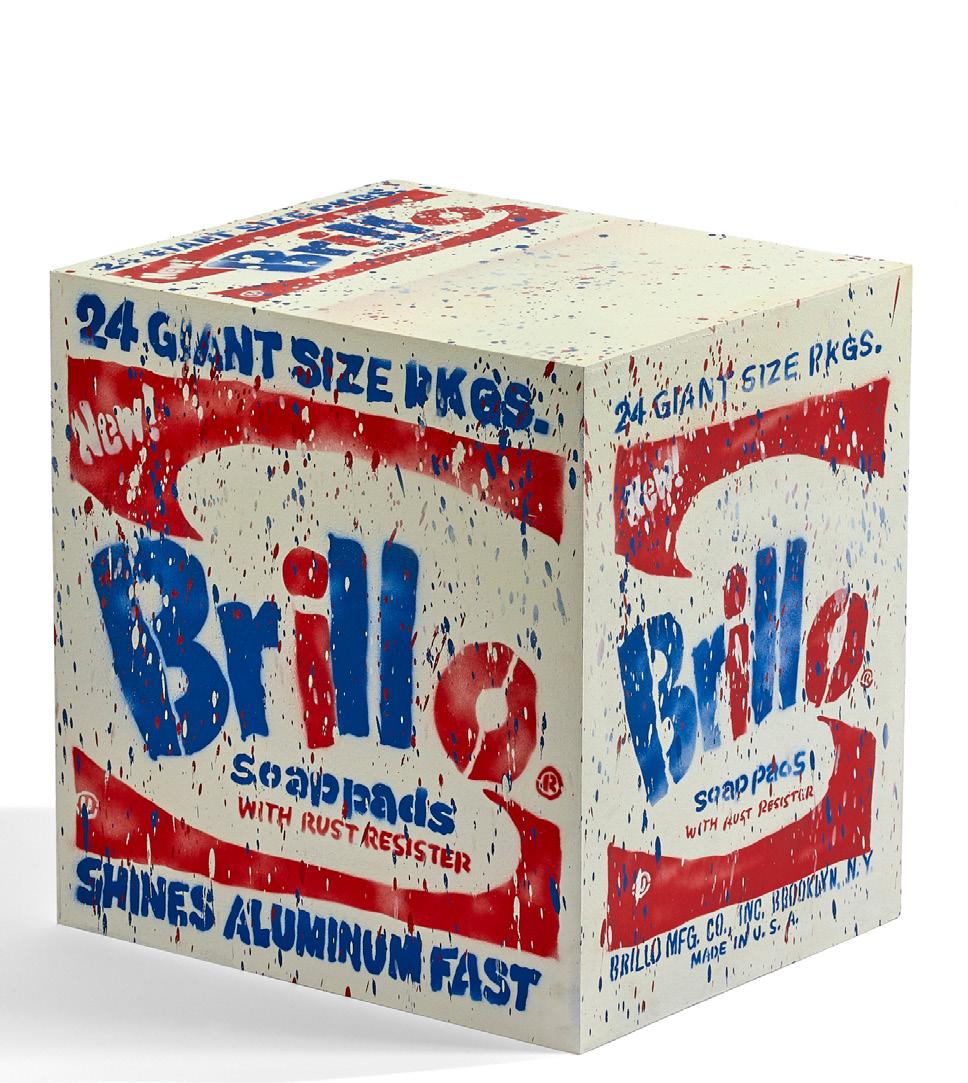
MADSAKI
(Japonais - Né en 1974)
Brillo 09 – 2019
Acrylique et peinture aérosol sur bois
Signé, daté et titré
44 × 35,7 × 43,2 cm
Provenance :
Perrotin Gallery, Hong Kong
Acquis directement auprès de cette dernière par l’actuel propriétaire
Exposition :
Hong Kong, Perrotin Gallery, Madsaki Solo Show - If I Had a Dream, 17 juillet au 7 septembre 2019
Acrylic and spray paint on wood; signed, dated and titled 17.32 × 13.77 × 17 in.
3 000 – 5 000 €
15
17
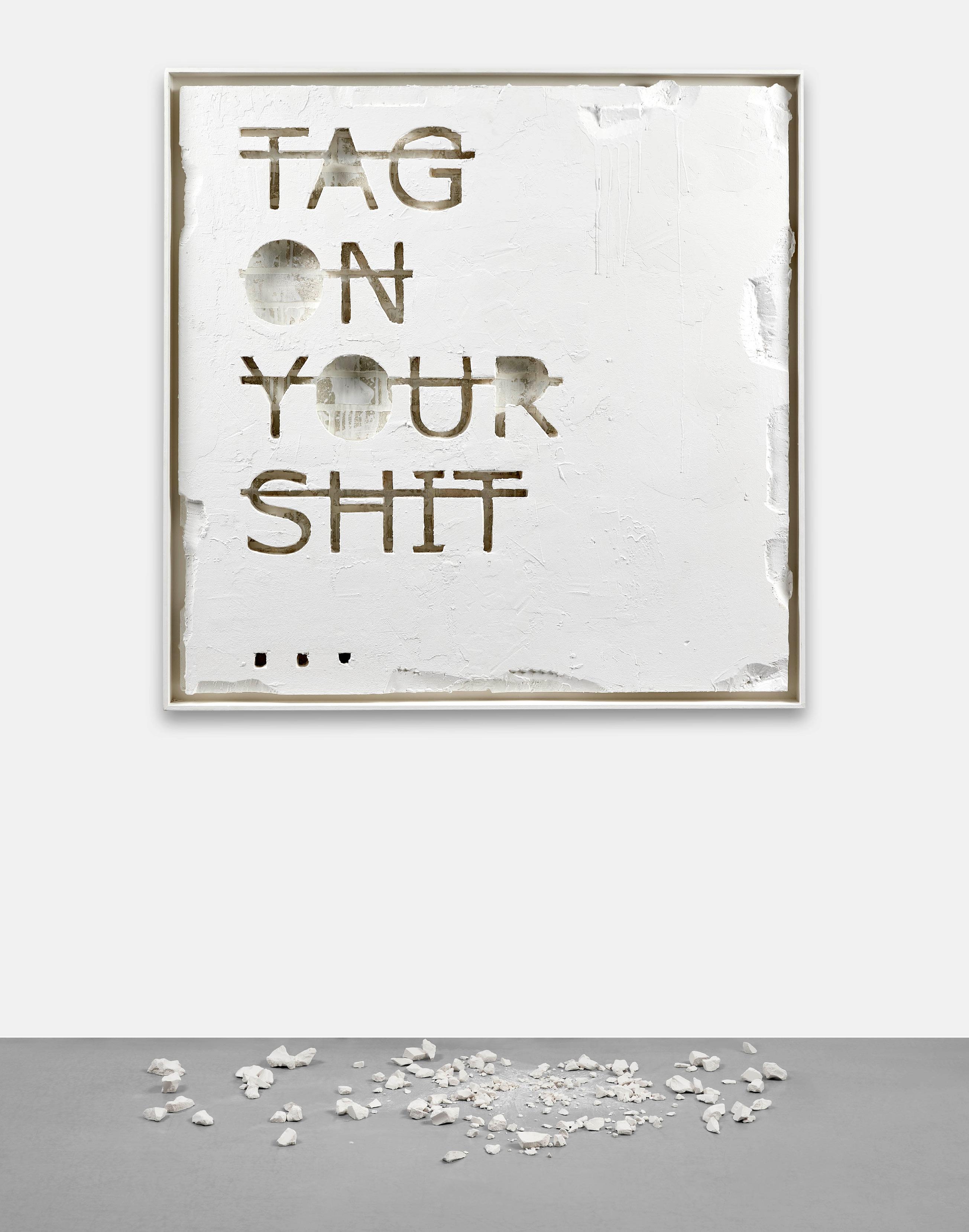
RERO
(Français – Né en 1983)
Sans titre (Tag on your shit) – 2011
Technique mixte sur bois et gravas en plâtre
Signé, titré et daté au dos 120 × 120 × 5,5 cm
Provenance : Backslash Gallery, Paris Acquis auprès de cette dernière par l’actuel propriétaire
Un certificat sera remis à l’acquéreur
Mixed media on wood and plaster rubble; signed, titled and dated on the reverse 47.24 × 47.24 × 1.96 in.
3 000 – 5 000 €
18
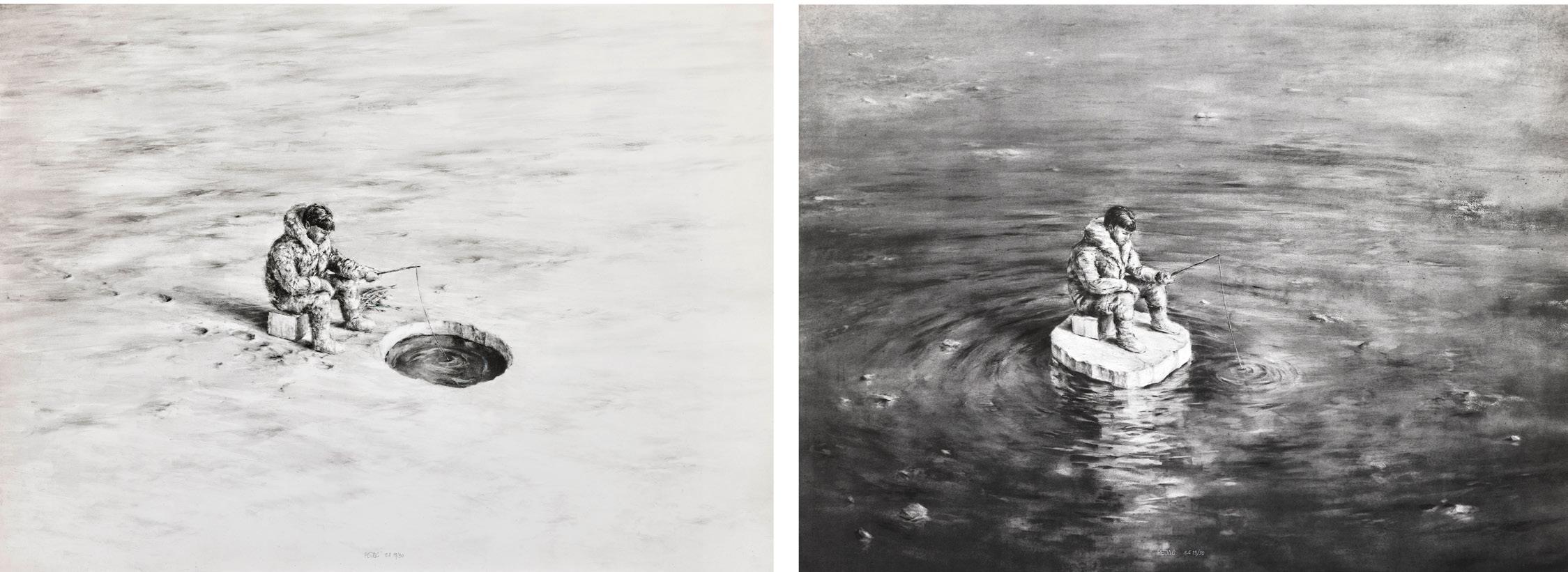
PEJAC
(Espagnol - Né en 1977)
Yin-Yang – 2019
Photopolymères tirés à la main sur papier Canson Blanco
Signés et numérotés « EE 19/30 » 71 × 97 cm – chaque
Édition spéciale rehaussée par l’artiste à 30 exemplaires suivant l’édition classique à 90 exemplaires
Un certificat de l’artiste sera remis à l’acquéreur
Hand pulled photopolymer on paper Canson Blanco; signed and numbered each 27.95 × 38.18 in.
8 000 – 12 000 €
19
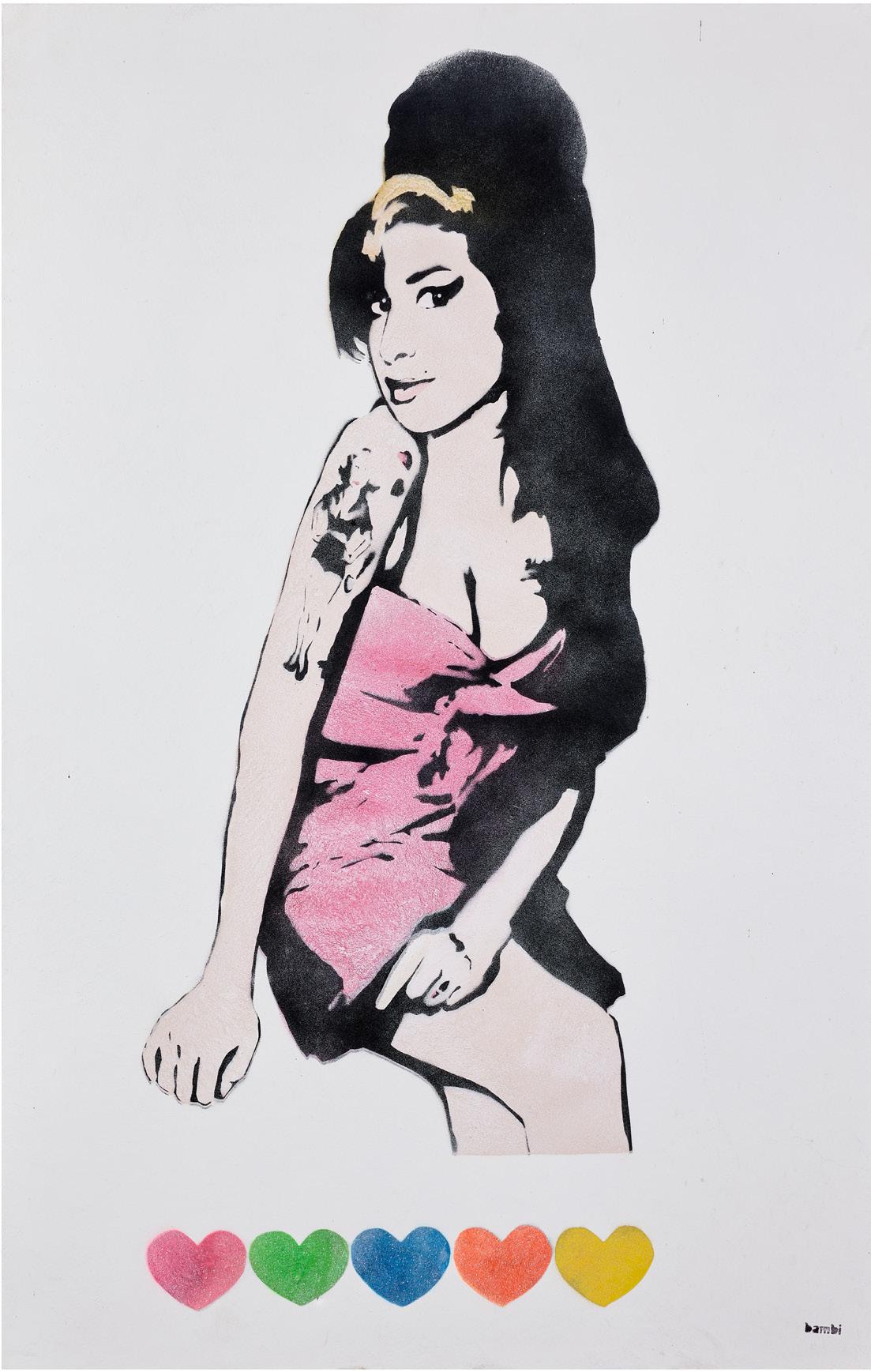
Bambi
(Anglaise - Née en 1982)
Amy Winehouse – circa 2020
Pochoir, peinture aérosol et acrylique sur toile
Signée ; contresignée et annotée au dos « 4548 » 113,5 × 76,4 cm
Provenance :
Acquis directement auprès de l’artiste par l’actuel propriétaire
Spray paint stencil and acrylic on canvas; signed; countersigned and annotated on the reverse 44.68 × 30.07 in.
18 19
4 000 – 6 000 €
20
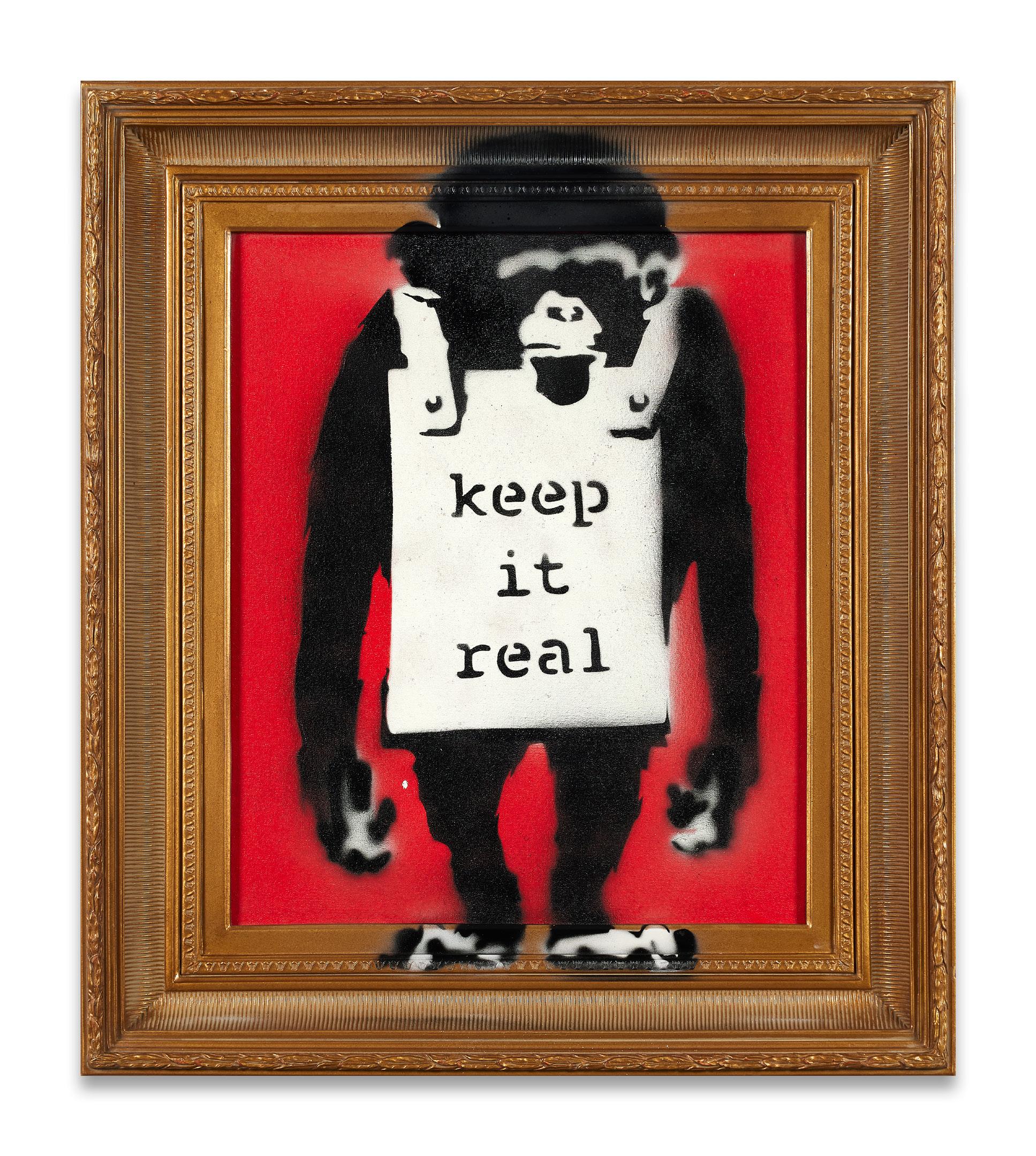
MR BRAINWASH
(Français – Né en 1966)
Keep It Real (Red) – 2020
Pochoir et peinture aérosol sur panneau de bois et cadre doré
Signé, daté et référencé au dos « N˚ A74462481A » 83,8 × 74,2 cm
Provenance : Christopher-Clark Fine Art, San Francisco
Acquis directement auprès de cette dernière par l’actuel propriétaire
Un certificat de l’artiste sera remis à l’acquéreur
Spray paint stencil on wood and frame; signed, dated and annotated on the reverse 32.67 × 29.13 in.
10 000 – 15 000 €
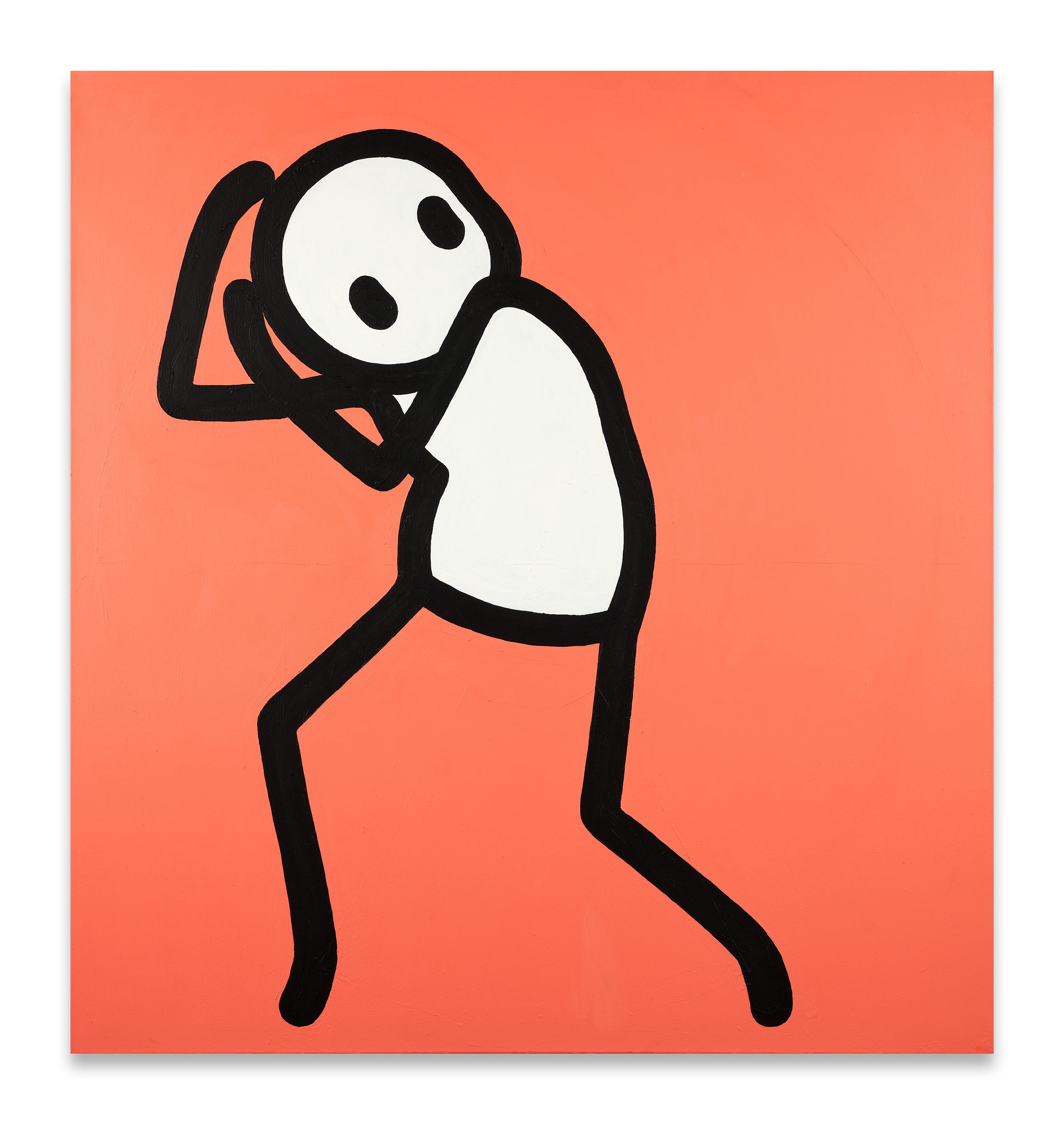
(Anglais – Né en 1979)
Atomic (Pink) – 2022
Acrylique sur toile
Signée, datée et annotée au dos sur le châssis « 0215 » 180 × 180 cm
Provenance :
Acquis directement auprès de l’artiste par l’actuel propriétaire
Acrylic on canvas; signed, dated and annotated on the reverse 70.86 × 70.86 in.
50 000 – 70 000 €
« Lorsque j’ai commencé à peindre dans la rue, j’ai vite découvert qu’utiliser seulement six lignes et deux points était le moyen le plus rapide de peindre une figure humaine sans me faire prendre. Les figures que je peignais étaient l’expression de ma lutte pour trouver un toit pour dormir dans la ville. »
- Stik
Artiste autodidacte britannique né à Londres au milieu des années 80, Stik tient son nom directement de son style. Il crée depuis 2002 une communauté d’hommes, de femmes et d’enfants, façons vignettes. « Des sticks », ou des personnages en forme de bâtons en anglais stik, nom que son public lui donne rapidement. Des têtes rondes, des points noirs pour les yeux, des corps en lignes et en courbes. Des personnages sans bouches, silencieux, qui observent le monde. Ces formes géométriques, des dessins simples qui font écho à l’univers enfantin, utilisent le langage du corps pour s’exprimer et interpeller le passant. Ils ornent les murs des paysages urbains de Londres.
Ayant vécu pendant des années dans des foyers pour sans-abri, Stik crée des personnages qui malgré leur simplicité véhiculent les positions de l’artiste sur les causes sociales auxquelles il croit et pour lesquelles il se bat : le sans-abrisme, la solidarité, les droits de la communauté LGBTQ+, la promotion de l’art et la destruction des logements sociaux.
A self-taught British artist born in London in the mid1980s, Stik takes his name directly from his style. Since 2002, he has been creating a community of men, women, and children in vignette form. “Sticks”, or stick-shaped characters in English (stik). The name his audience quickly gave him. Round heads, black dots for eyes, bodies made up of lines and curves. Mouthless, silent characters who observe the world. These geometric shapes, simple drawings that echo the world of childhood, use body language to express themselves and engage passersby. They adorn the walls of London’s urban landscapes.
Having lived for years in homeless shelters, Stik creates characters that, despite their simplicity, convey the artist’s views on the social causes he believes in and fights for: homelessness, solidarity, LGBTQ+ rights, the promotion of art, and the destruction of social housing.
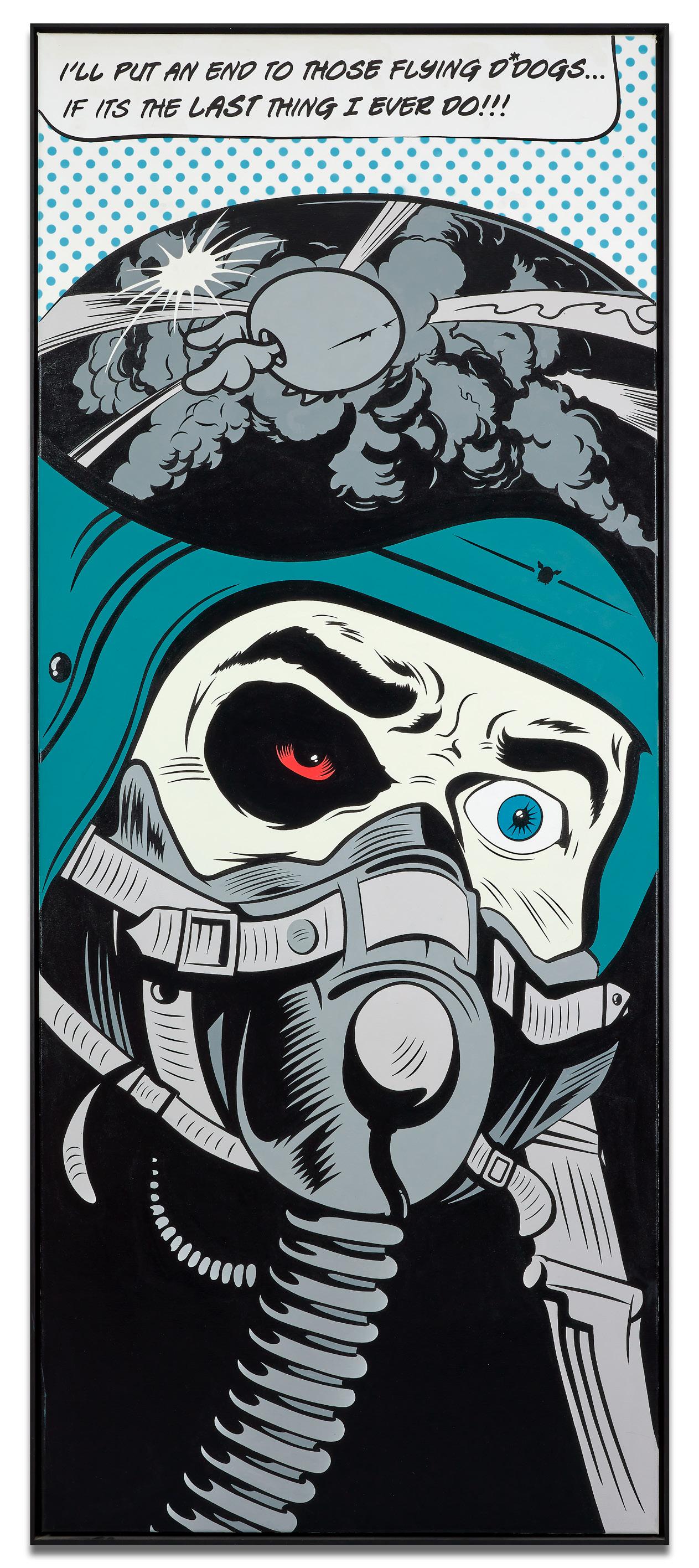
D*FACE (Dean Stockton dit)
(Anglais – Né en 1978)
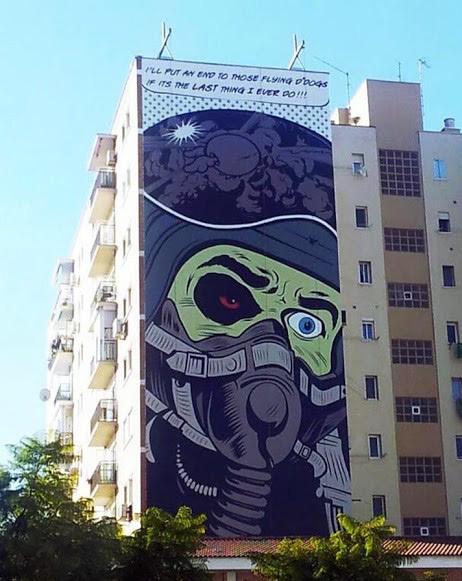
End To Those Flying Dogs – 2014
Acrylique sur toile
Signée et datée au dos sur la tranche
254,5 × 105 cm
Provenance : Stolen Space Gallery, Londres Collection particulière, Munich
Exposition :
Málaga, CAC Málaga, D*Face – Wasted Youth, 26 juin au 27 septembre 2015
Acrylic on canvas; signed and dated on the reverse
100.19 × 41.33 in.
18 000 – 25 000 €
Dès l’adolescence D*Face est fasciné par les États-Unis et l’American Dream. Déjà passionné de skateboard et de dessin, l’artiste découvre le Graffiti et le Street Art à 15 ans grâce aux revues spécialisées Subway Art et Spraycan Art.
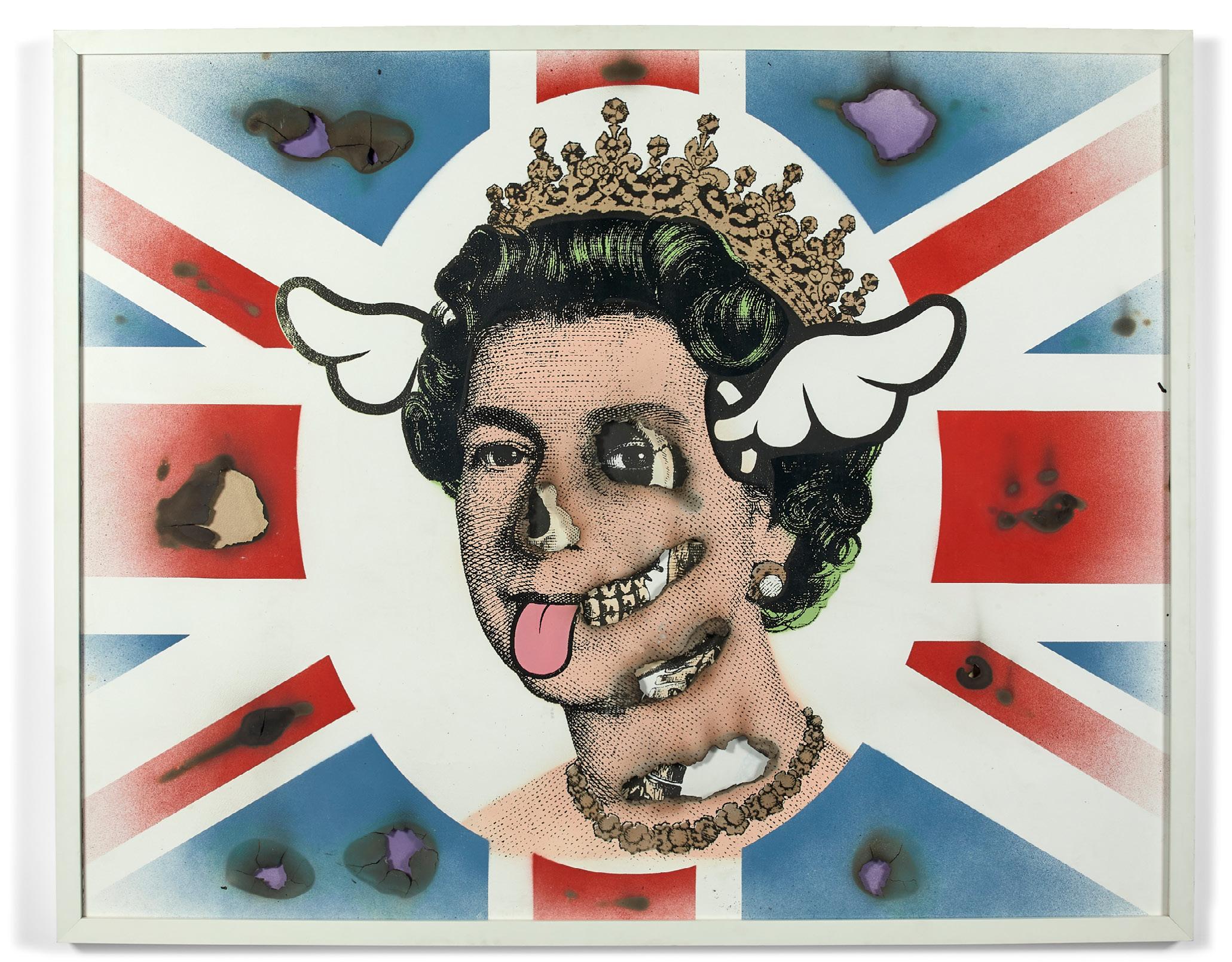
Après avoir fait des études de design, il se lance comme illustrateur freelance et développe en parallèle son activité dans la rue. Son travail puise dans les comics américains, notamment ceux de Matt Baker, Jack Kamen ou encore John Romita. Son style est reconnaissable par l’utilisation d’une imagerie pop art, rappelant Roy Lichtenstein ou même Andy Warhol, et comporte des images d’icônes de la pop culture comme Marylin Monroe ou la Reine d’Angleterre. Ses œuvres traitent de l’obsession de la société pour les célébrités et la surconsommation de manière sombre et satirique. L’objectif de son travail est « d’encourager les gens à ne pas seulement voir, mais aussi à regarder ce qui les entoure, repenser les stéréotypes de notre culture, ne pas rester passif devant le règne de la consommation ostentatoire ».
Ses fresques représentent des figures féminines ou masculines très expressives, souvent accompagnées d’un commentaire ou d’une pensée. Ils semblent extraits d’une page d’un comics américain.
From his teenage years, D*Face was fascinated by the United States and the American Dream. Already passionate about skateboarding and drawing, the artist discovered graffiti and street art at the age of 15 thanks to the specialist magazines Subway Art and Spraycan Art.
After studying design, he launched his career as a freelance illustrator and developed his street art activity in parallel. His work draws on American comics, notably those of Matt Baker, Jack Kamen, and John Romita. His style is recognizable by its use of pop art imagery, reminiscent of Roy Lichtenstein or even Andy Warhol, and features images of pop culture icons such as Marilyn Monroe and the Queen of England. His works deal with society’s obsession with celebrities and overconsumption in a dark and satirical way. The aim of his work is “to encourage people not only to see, but also to look at what surrounds them, to rethink the stereotypes of our culture, and not to remain passive in the face of the reign of conspicuous consumption.”
His murals depict highly expressive female or male figures, often accompanied by a comment or thought. They look like they’ve been taken from the pages of an American comic book.
Visuel : D*Face, Mur pour Maus Málaga, 2013
23
D*FACE (Dean Stockton dit)
(Anglais – Né en 1978)
Her Royal Hideousness – 2014
Peinture aérosol et encre sérigraphique sur deux feuilles de papier
Signé et daté au dos Édition à 7 exemplaires
122 × 152 cm
Provenance :
Above Second Gallery, Hong Kong Acquis directement auprès de cette dernière par l’actuel propriétaire
Exposition : Hong Kong, Above Second Gallery, D*Face Honestly Dishonest, 16 mai au 6 juillet 2014
Spray paint, oil based screen ink over two sheets; signed and dated on the reverse; 48.03 × 59.84 in.
4 000 – 6 000 €
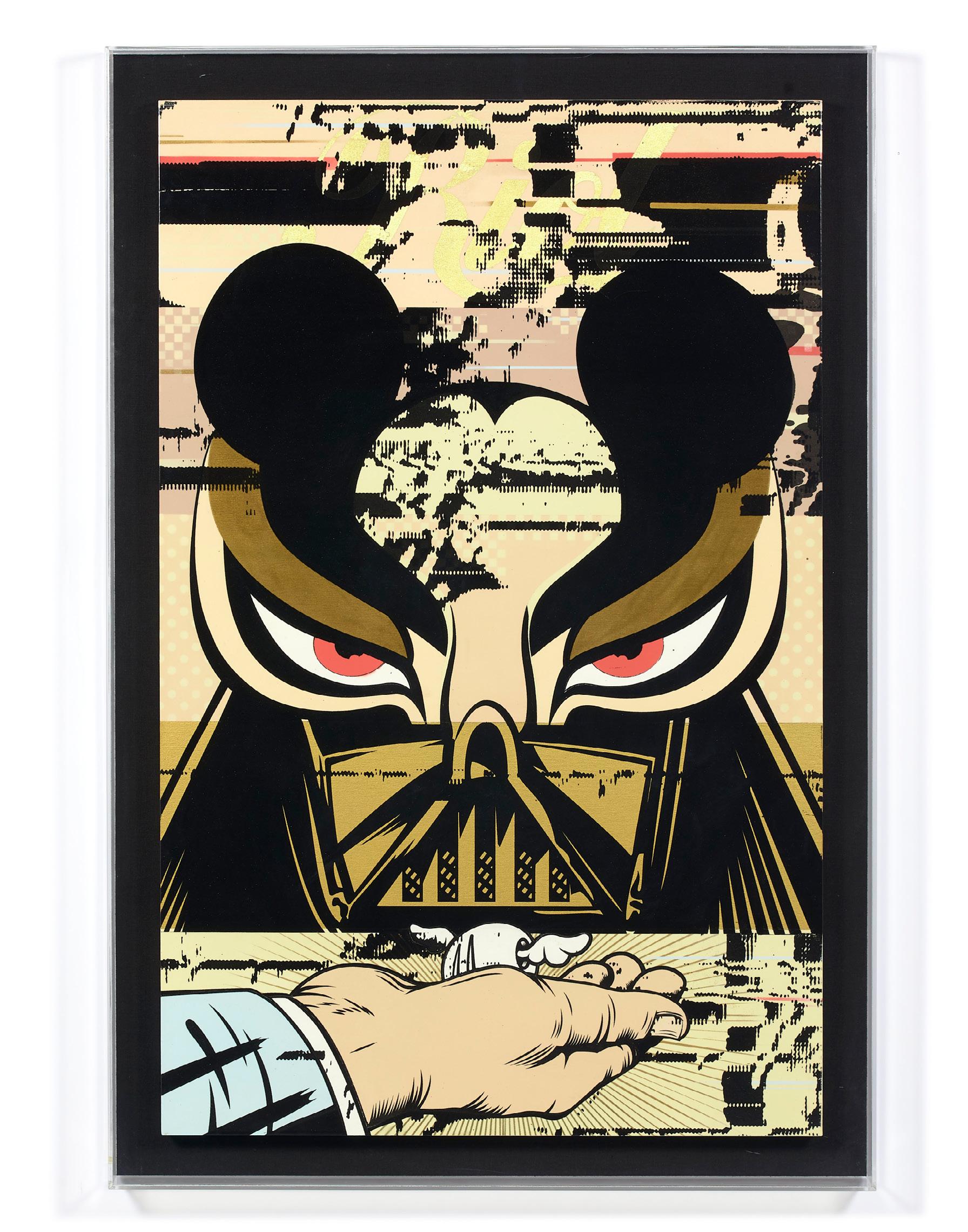
24
D*FACE (Dean Stockton dit) (Anglais – Né en 1978)
A Dark Offering – 2014
Émail et peinture aérosol sur panneau de bois 109 × 69 × 4 cm
Provenance : Above Second Gallery, Hong Kong Acquis auprès de cette dernière par l’actuel propriétaire
Exposition : Hong Kong, Above Second Gallery, D*Face Honestly Dishonest, 16 mai au 6 juillet 2014
Enamel and spray paint on wood panel. 42.91 × 27.17 × 1.57 in.
2 000 – 3 000 €
« Ce qui m’intéresse c’est la dynamique des éléments qui s’opposent. J’aime les contrastes, les oppositions, le brut et le raffiné. »
- Conor Harrington
Le style très particulier de Conor Harrington est une fusion entre la peinture réaliste classique, inspirée des peintres de la Renaissance, et les codes du Street Art. Il a étudié les BeauxArts à l’Art College durant 7 ans, et son style a progressé au fil des ans. Son travail trace une fine ligne entre Art Classique et Art Contemporain. L’artiste peint non seulement d’immenses peintures murales en extérieur, mais il démontre également constamment son talent artistique et inventif dans le cadre d’expositions en galerie.
Harrington a commencé sa carrière en tant que graffeur et reste profondément influencé par la culture hip-hop et l’énergie de la rue. Il a obtenu son baccalauréat en beaux-arts à la Limerick School of Art and Design et vit à Londres depuis deux décennies. Ses œuvres ont été exposées à l’échelle internationale, notamment à la Saatchi Gallery de Londres, au Museum of Urban and Contemporary Art de Munich et au Southampton Arts Centre de New York.
Conor Harrington’s unique style is a fusion of classical realistic painting, inspired by Renaissance painters, and the codes of street art. He studied fine arts at art college for seven years, and his style has evolved over the years. His work treads a fine line between classical and contemporary art. The artist not only paints huge outdoor murals, but also constantly demonstrates his artistic and inventive talent in gallery exhibitions.
Harrington began his career as a graffiti artist and remains deeply influenced by hip-hop culture and street energy. He earned his Bachelor of Fine Arts degree from the Limerick School of Art and Design and has lived in London for two decades. His work has been exhibited internationally, including at the Saatchi Gallery in London, the Museum of Urban and Contemporary Art in Munich, and the Southampton Arts Center in New York.
Visuel :
Lot 27, Conor Harrington, A Royal Surprise, 2016 (détail)
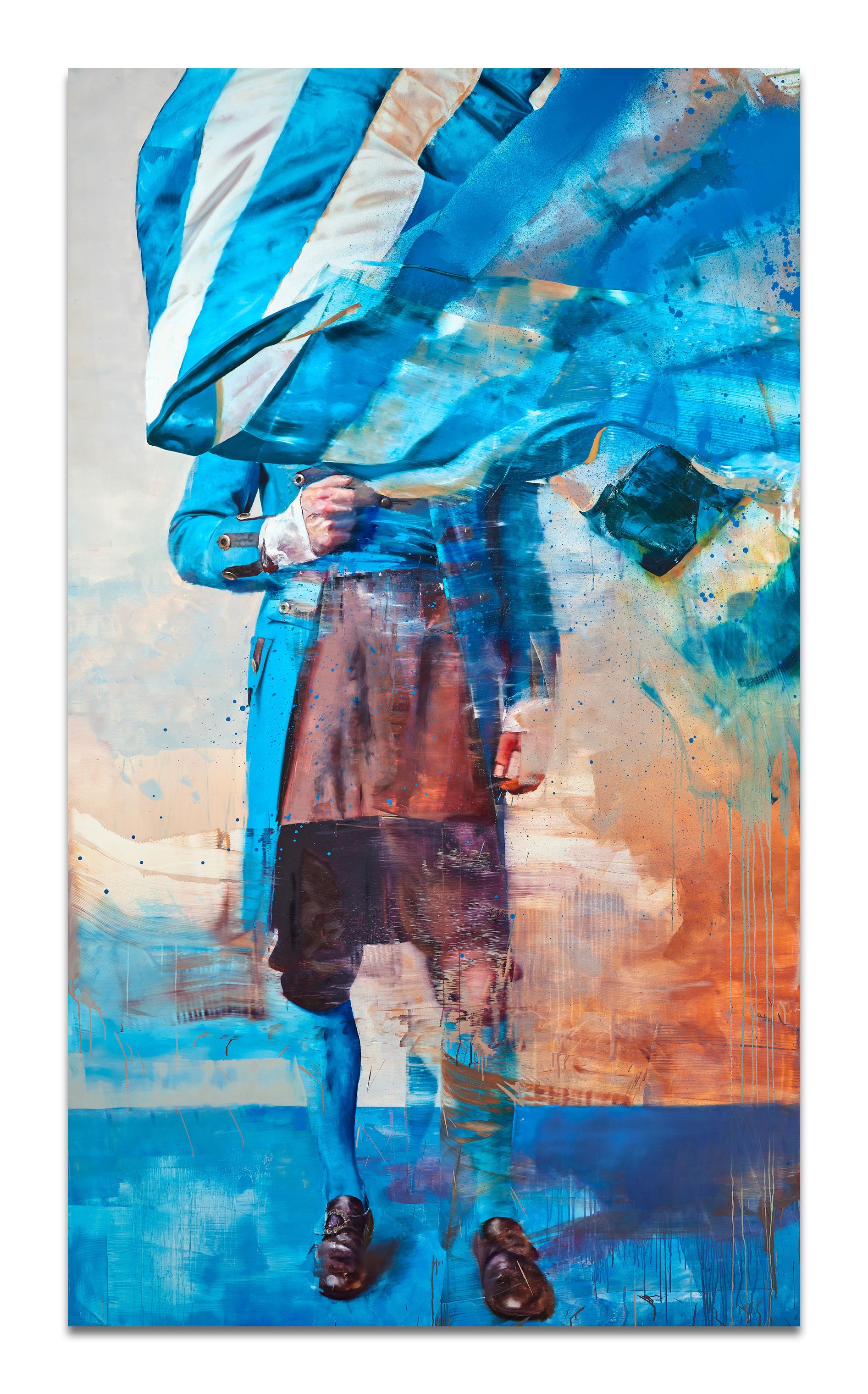
25
Conor HARRINGTON
(Irlandais – Né en 1980)
Blind Patriot blue – 2018
Huile et peinture aérosol sur toile
Signée et datée au dos
300 × 174,5 cm
Provenance : HENI Gallery, Londres
Acquis directement auprès de cette dernière par l’actuel propriétaire
Exposition : Londres, HENI Gallery, Conor Harrington - The Story of Us & Them, 14 septembre au 13 octobre 2018
Oil and spray paint on canvas; signed and dated on the reverse 118.11 × 68.70 in.
50 000 – 70 000 €
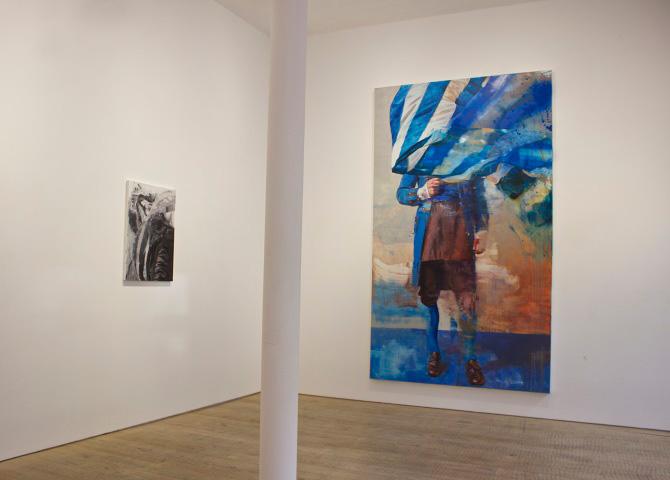
Visuel : Exposition
Conor HarringtonThe Story of Us & Them, HENI Gallery, Londres, 2018
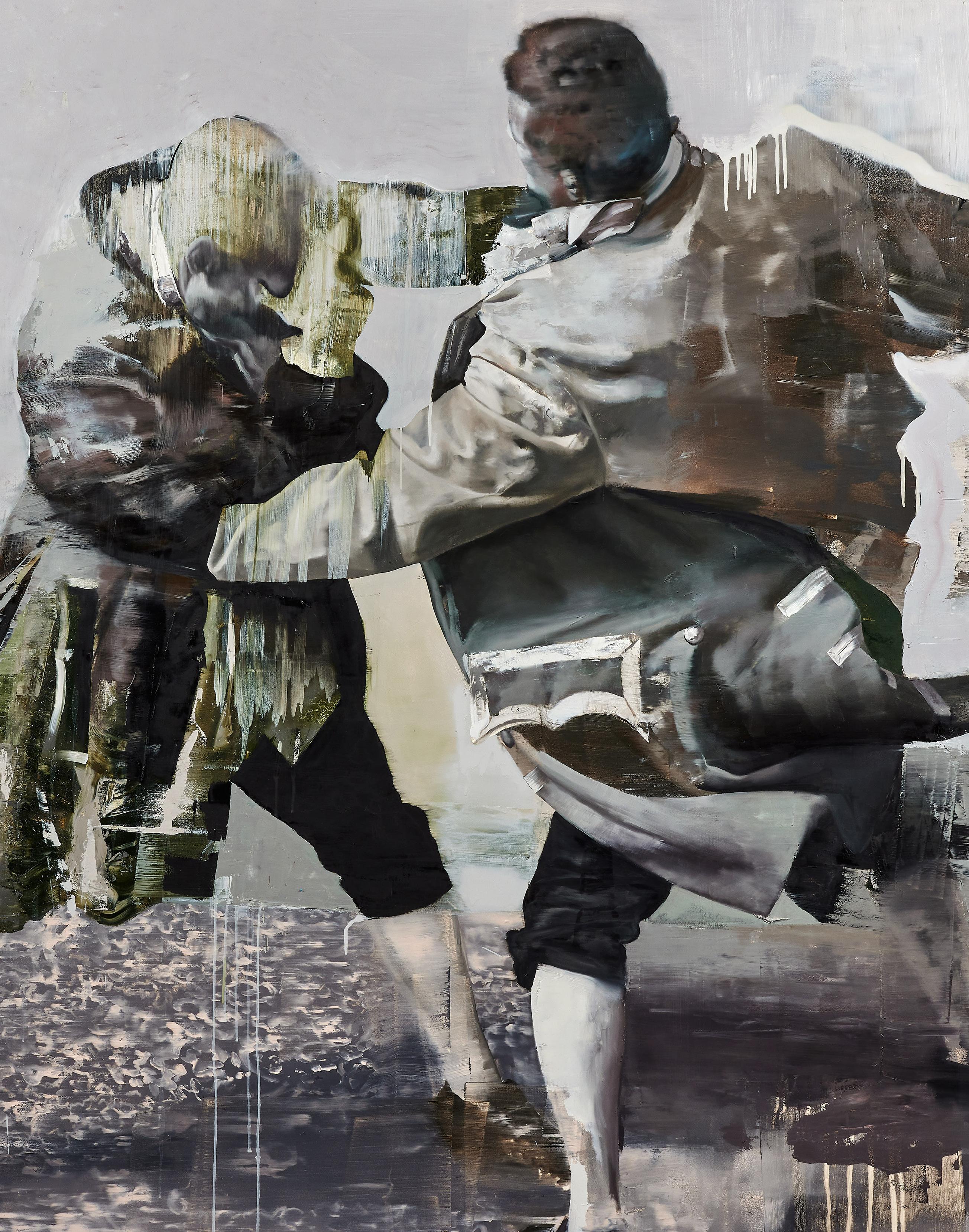
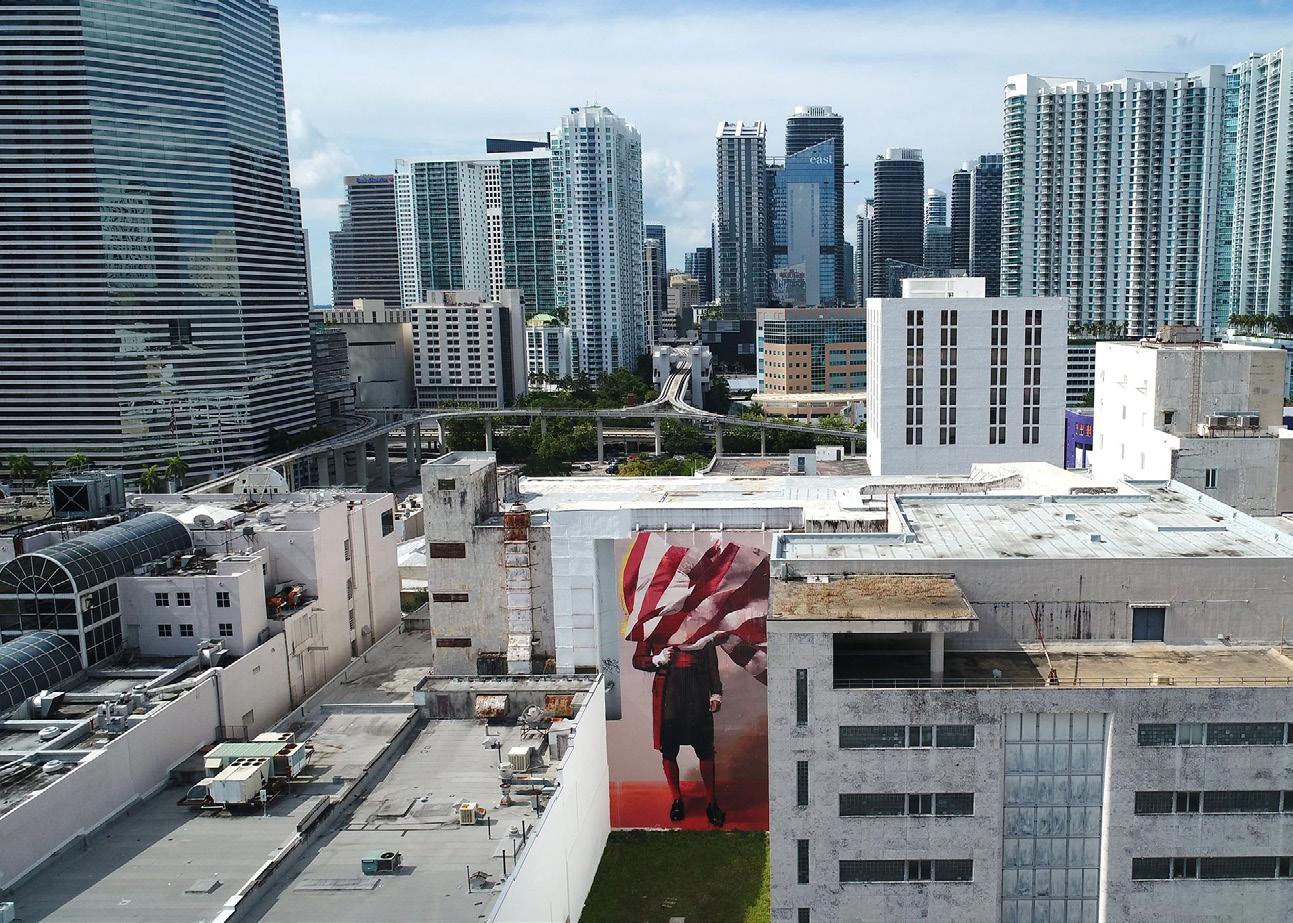
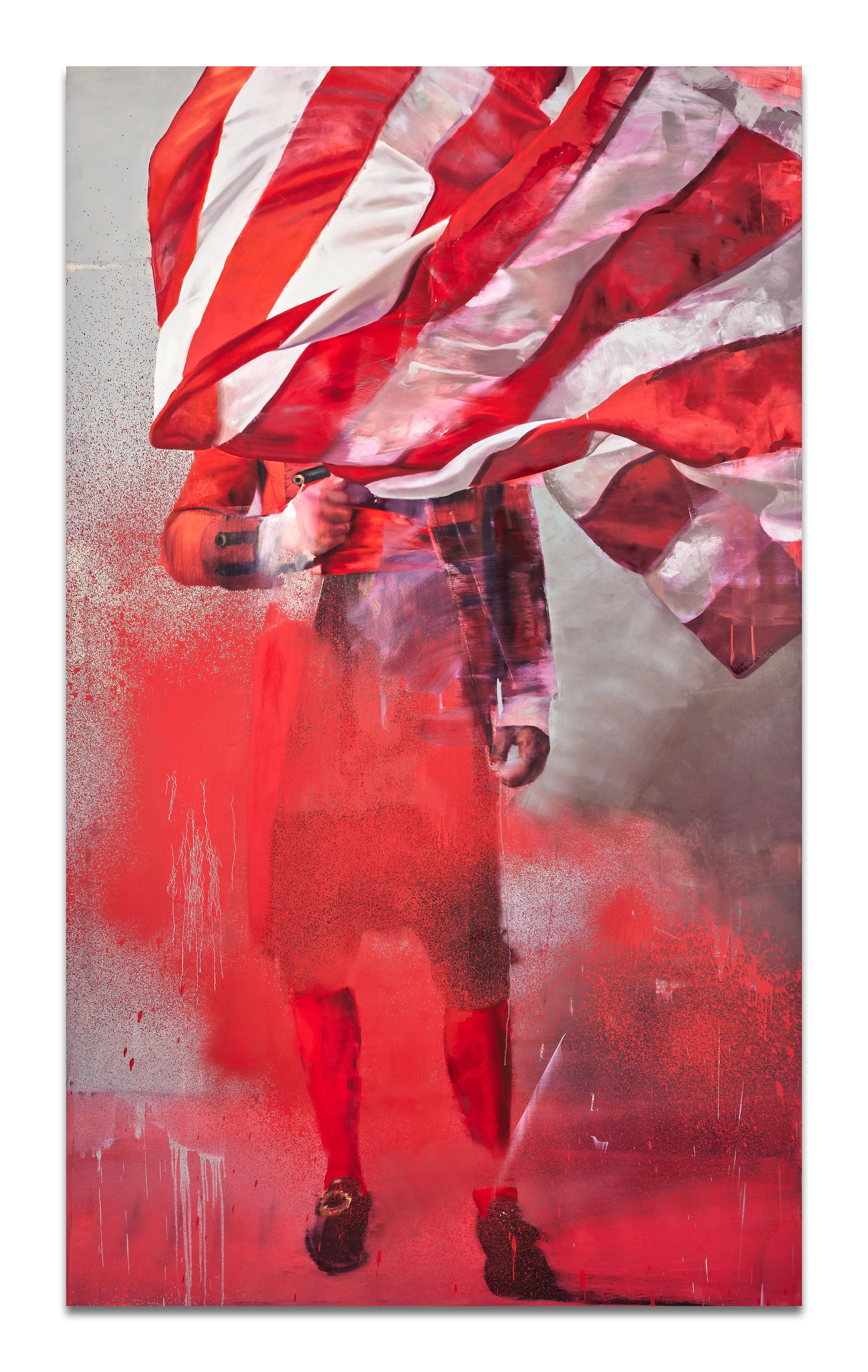
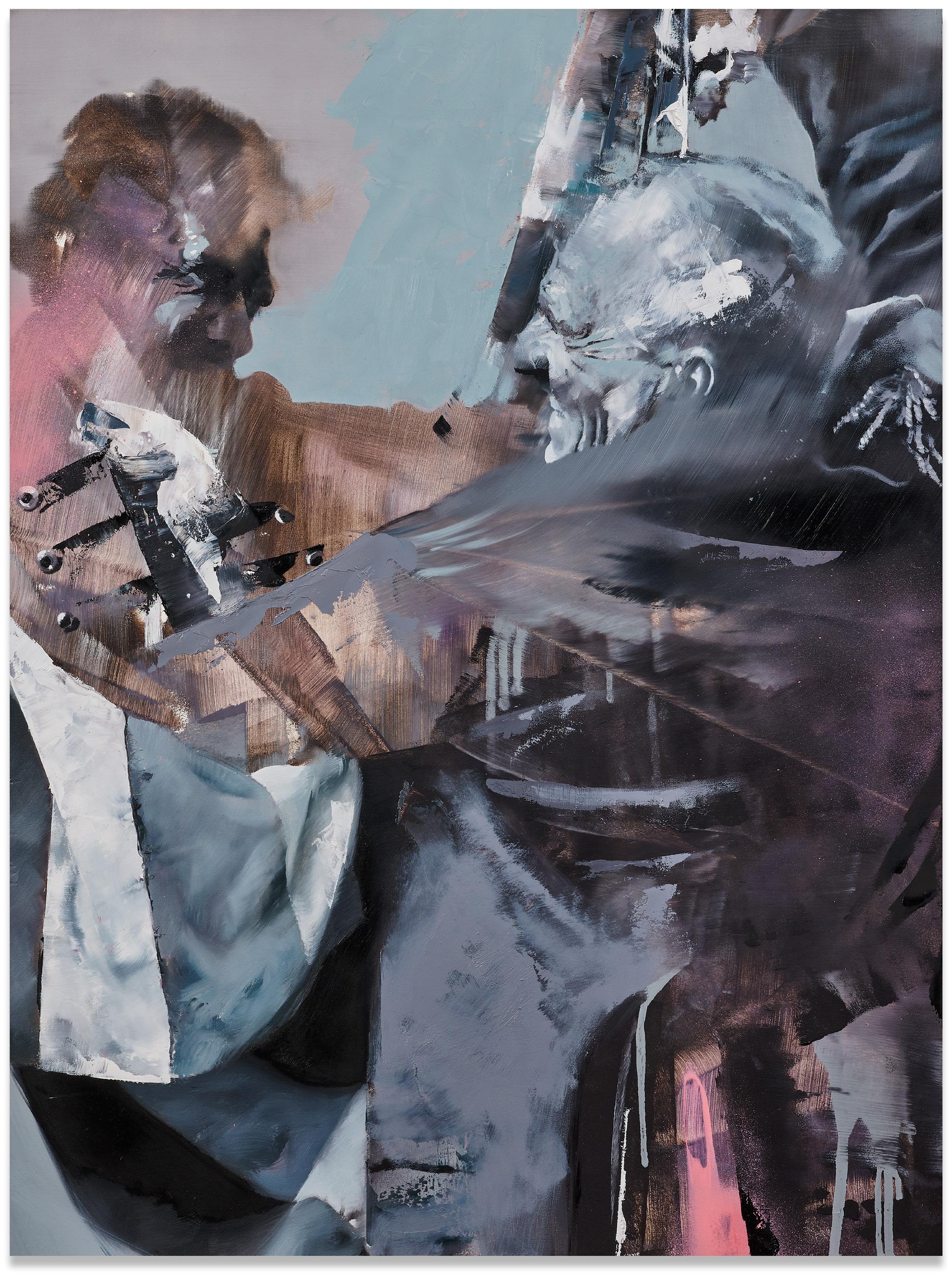
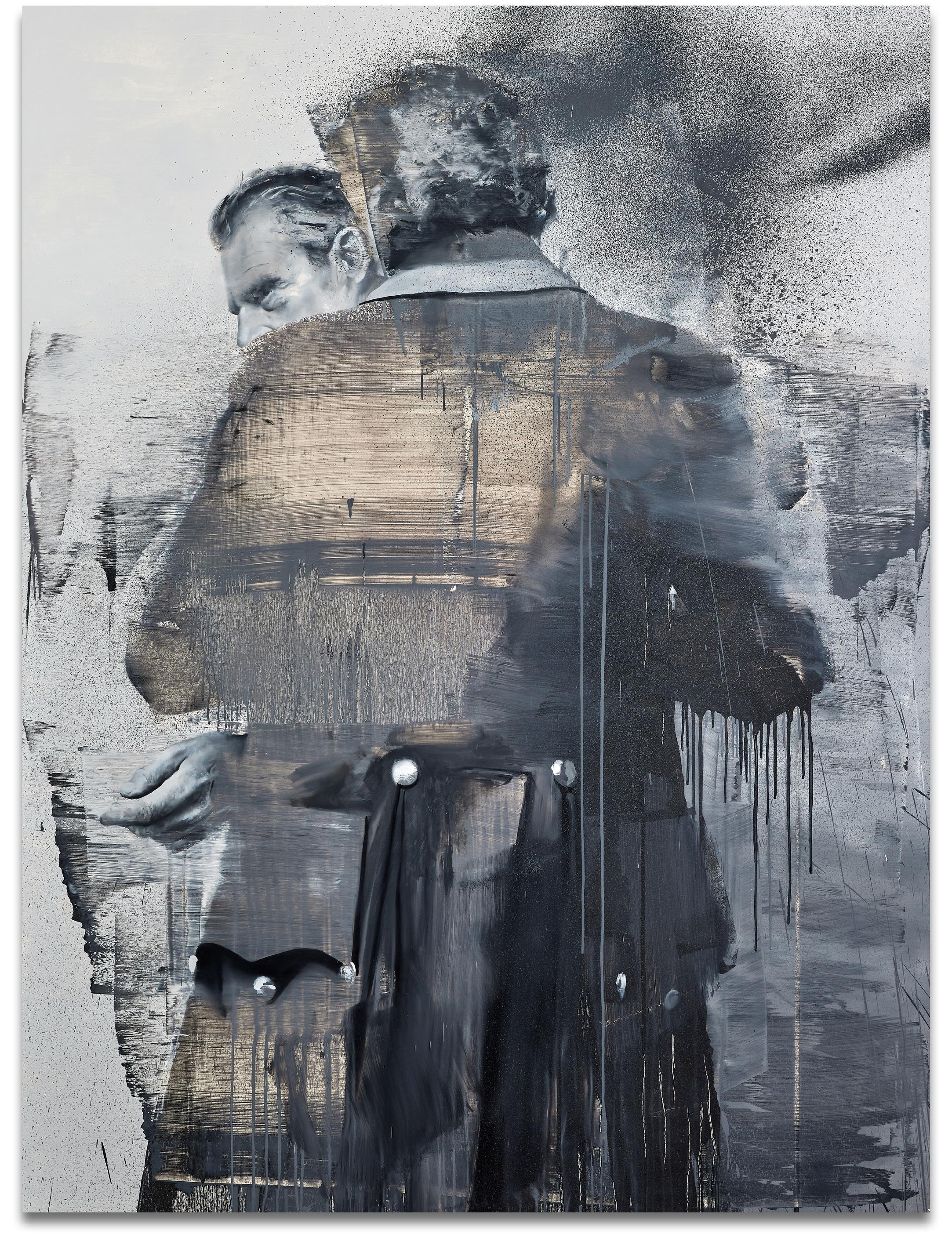
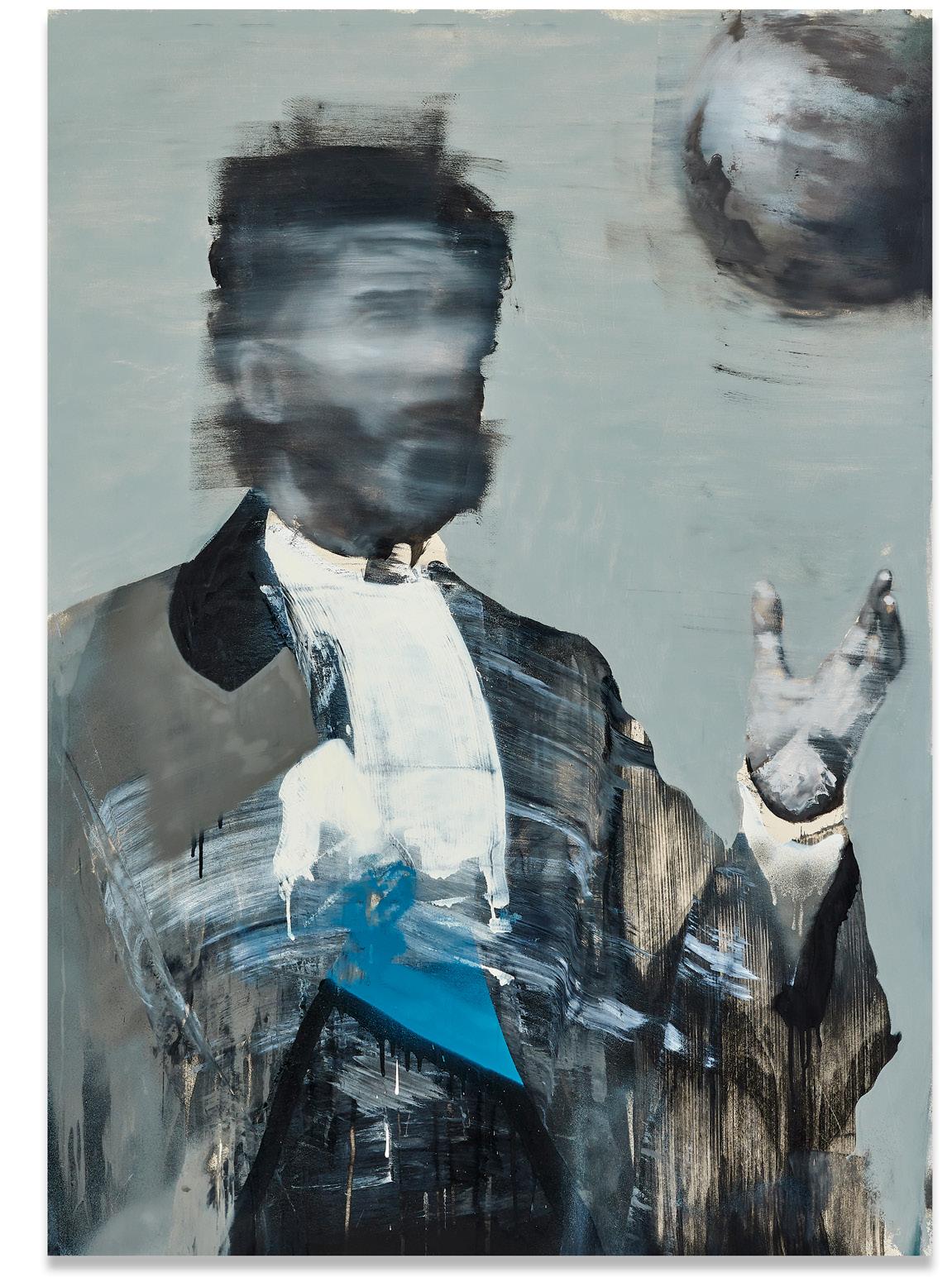
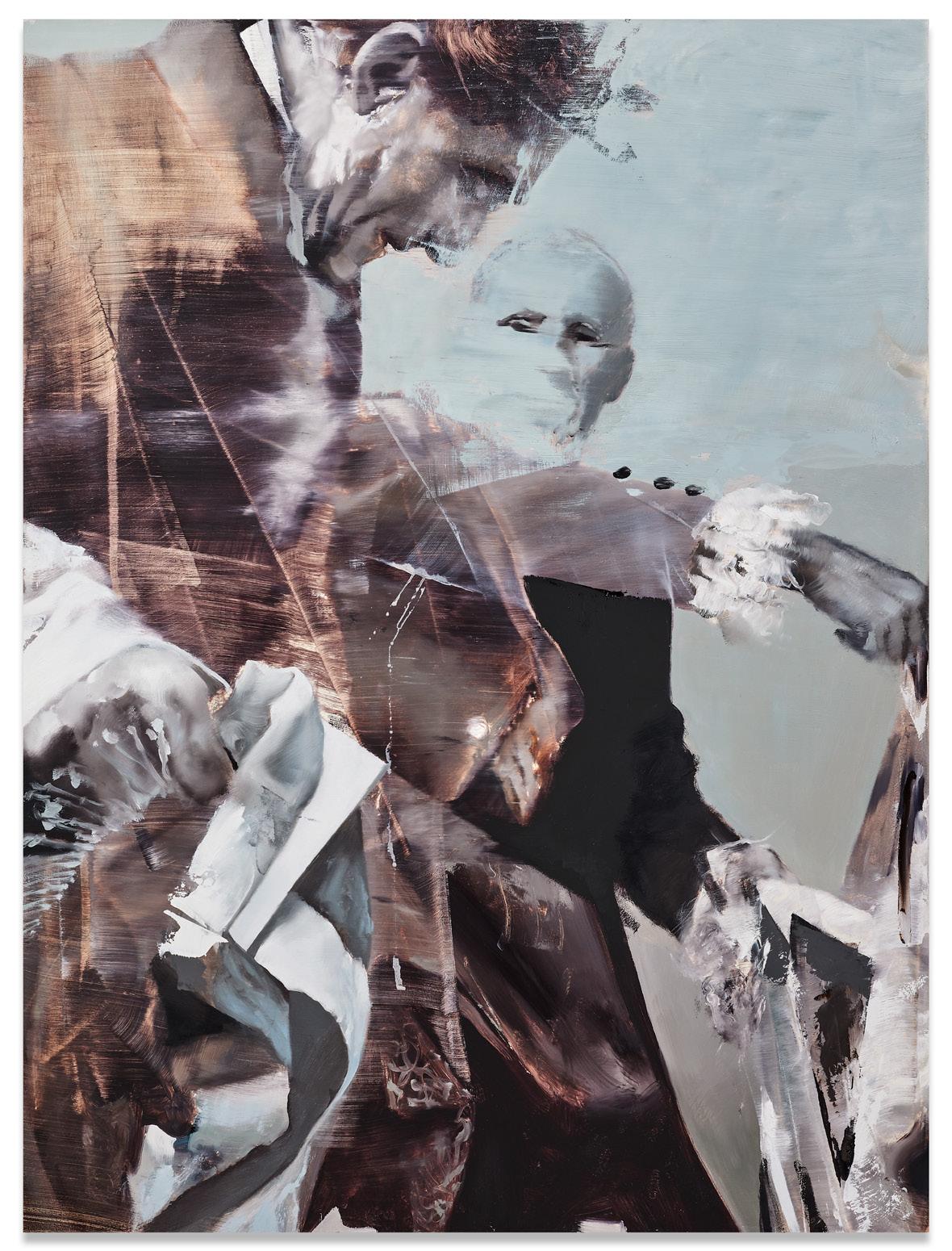
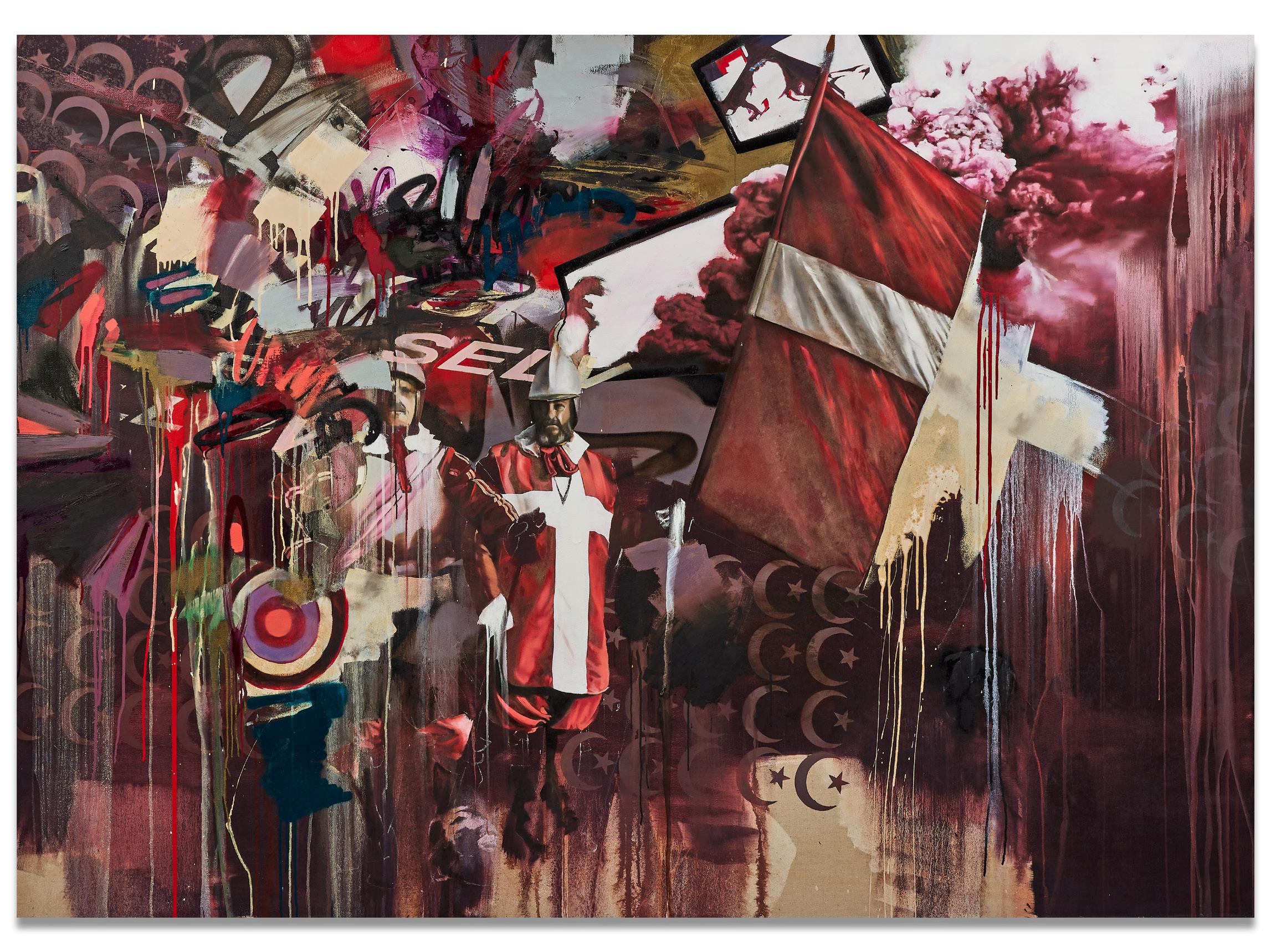
Les thématiques de Conor touchent au théâtre du pouvoir, à ses rituels, à ses ruines et aux manifestations fragiles de la masculinité qui le soutiennent. Travaillant à une échelle monumentale, il s’inspire de la gravité compositionnelle de la peinture classique, pour mieux la démêler. Ses toiles sont des collisions : un réalisme rigoureux se heurte à une abstraction gestuelle sauvage. Dans cette friction, Harrington interroge les mythes de l’empire et les illusions de permanence que l’histoire s’obstine à répéter.
Conor’s themes touch on the theatre of power – its rituals, its ruins, and the brittle performances of masculinity that prop it up. Working at monumental scale, he draws on the compositional gravitas of classical painting, only to unravel it. His canvases are collisions: tight realism jostling with wild, gestural abstraction. In this friction, Harrington interrogates the myths of empire and the illusions of permanence that history insists on repeating.
URBAN
Conor HARRINGTON
(Irlandais – Né en 1980)
Blind Patriot red – 2018
Huile et peinture aérosol sur toile
Signée et datée au dos
300 × 175,5 cm
Provenance : HENI Gallery, Londres
Acquis directement auprès de cette dernière par l’actuel propriétaire
Exposition : Londres, HENI Gallery, Conor Harrington - The Story of Us & Them, 14 septembre au 13 octobre 2018
Oil and spray paint on canvas; signed and dated on the reverse 118.11 × 69.09 in.
S’inspirant de ses origines irlandaises, Harrington confronte l’ombre persistante de l’empire et de l’Église catholique. Son travail emprunte les codes visuels de la cérémonie – uniformes militaires, vêtements ecclésiastiques, apparat d’État – non pas pour exalter, mais pour disséquer. Ses personnages, souvent des archétypes masculins blancs, incarnent les contradictions du pouvoir patriarca : performatifs, fragiles et souvent absurdes.
Drawing on his Irish background, Harrington confronts the lingering shadow of empire and the Catholic Church. His work borrows the visual codes of ceremony –military uniforms, ecclesiastical dress, state pageantry– not to exalt, but to dissect. His figures, often white male archetypes, embody the contradictions of patriarchal power: performative, brittle, and often absurd.
Conor HARRINGTON (Irlandais – Né
en 1980)
A Royal Surprise – 2016
Huile sur toile
Signée et datée au dos
199,5 × 249,6 cm
Provenance : Collection particulière européenne
Oil on canvas; signed and dated on the reverse
78.54 × 98.26 in.
35 000 – 45 000 €
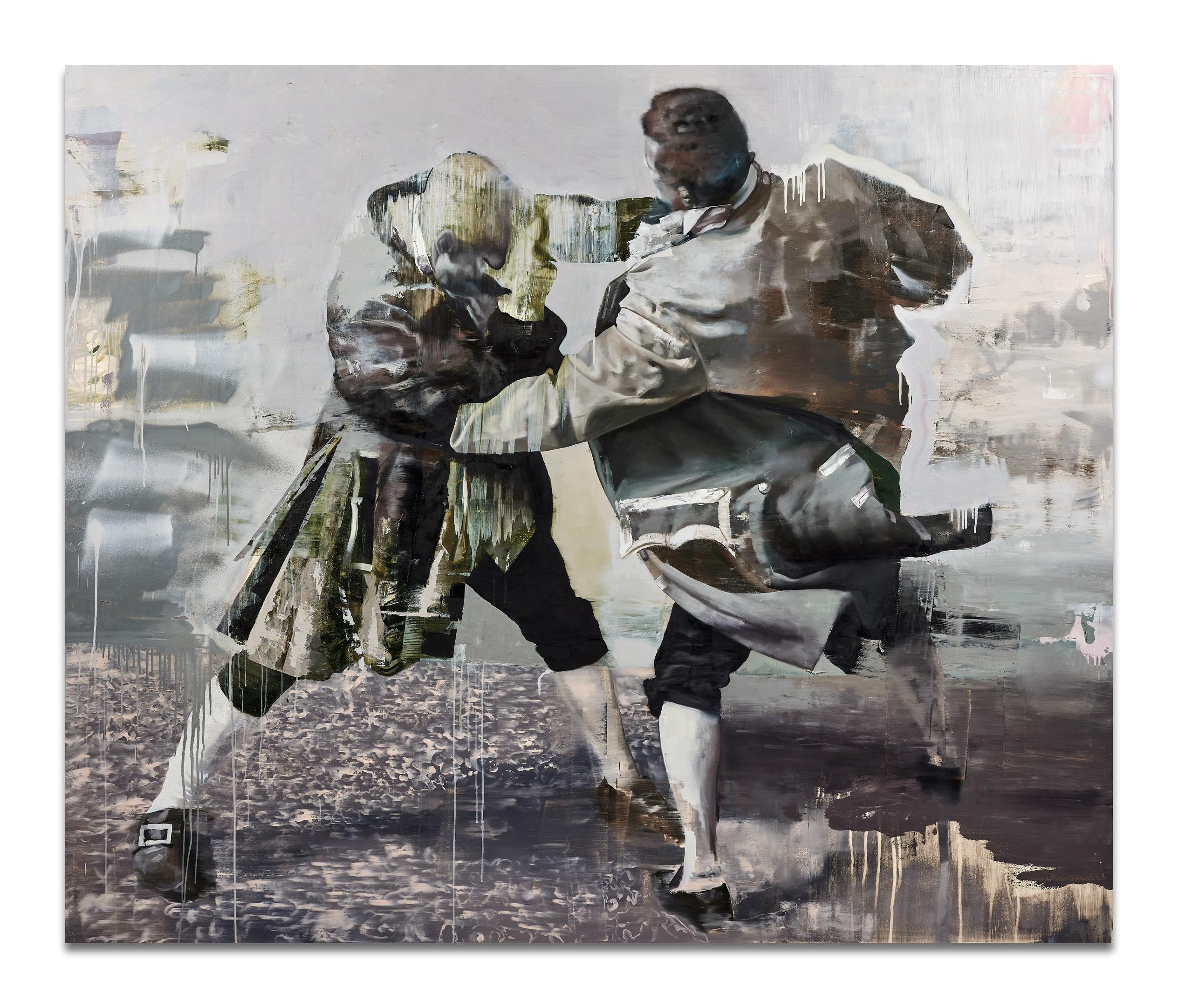
La masculinité, dans tout son charme et sa toxicité, est un courant sous-jacent persistant. Ces hommes, pris en plein défilé ou figés dans une confrontation, semblent moins héroïques que hantés – par l’histoire, par la performance, par eux-mêmes. L’effet est à la fois critique et compatissant, dévoilant le costume du pouvoir pour révéler le corps mou et instable qui se cache dessous.
Masculinity, in all its allure and toxicity, is a persistent undercurrent. These men, caught mid-parade or frozen in confrontation, appear less heroic than haunted – by history, by performance, by themselves. The effect is at once critical and compassionate, peeling back the costume of power to reveal the soft, unstable body beneath.
Conor HARRINGTON
(Irlandais – Né en 1980)
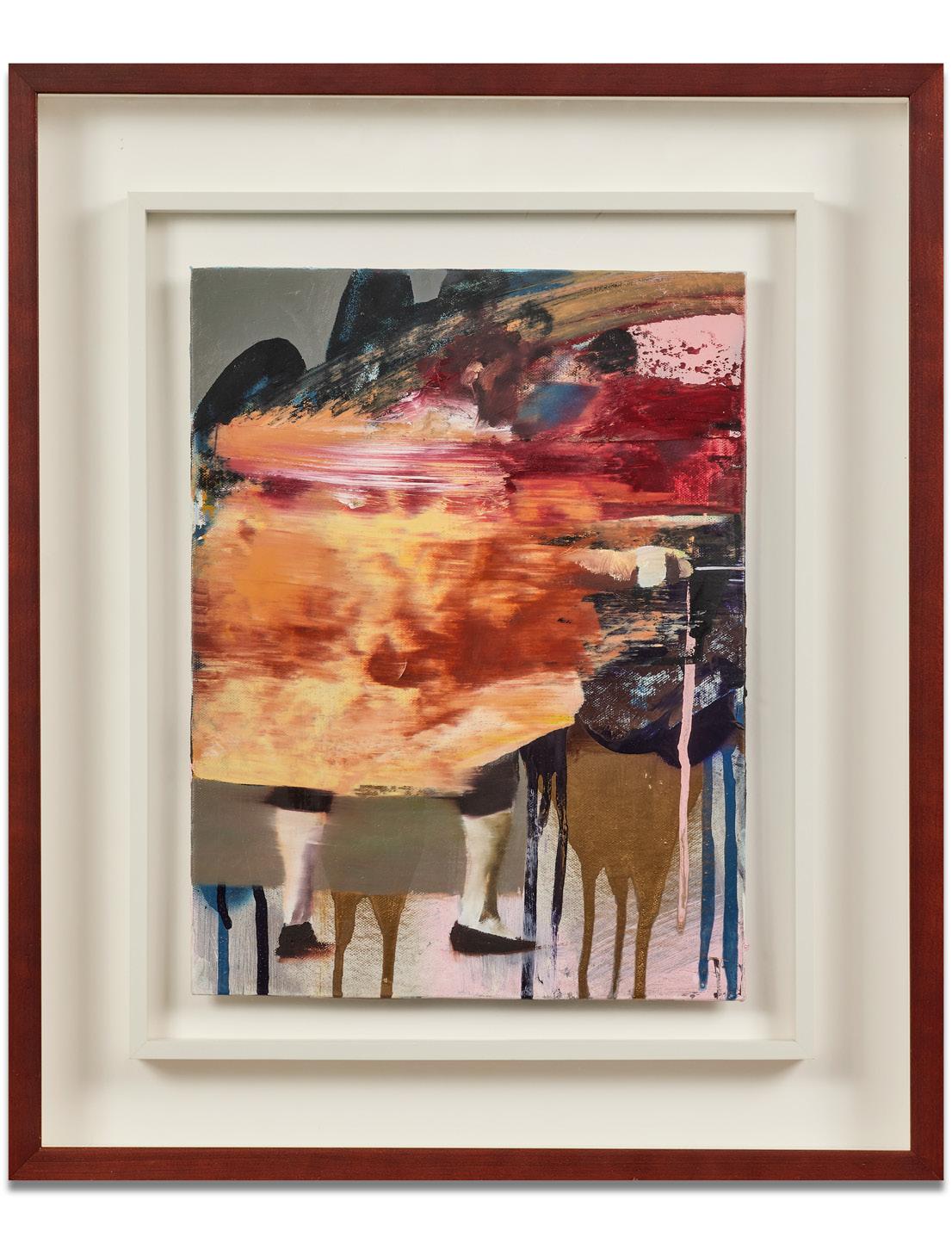
Thursday Morning Glory – 2011
Huile et peinture aérosol sur toile
Signée, titrée et datée au dos 40 × 30 cm
Provenance :
Lazaridès Gallery, London
Acquis directement auprès de cette dernière par l’actuel propriétaire
Exposition :
Londres, Lazaridès Gallery, Conor Harrington, Dead Meat, 2 mars au 12 avril 2012
Oil and spray paint on canvas; signed, titled and dated on the reverse 15.74 × 11.81 in.
5 000 – 7 000 €
30
Conor HARRINGTON (Irlandais – Né en 1980)
Blind Patriots black and white series, N°.8 – 2018
Huile et peinture aérosol sur bois
Signée, titrée et datée au dos 80 × 59,9 × 2,5 cm
Provenance : HENI Gallery, Londres
Acquis directement auprès de cette dernière par l’actuel propriétaire
Oil and spray paint on wood; signed, titled and dated on the reverse 31.49 × 23.22 × 0.78 in.
10 000 – 15 000 €
Conor HARRINGTON (Irlandais – Né en 1980)
Doubting Thomas and his Captive – 2017
Huile et peinture aérosol sur toile
Signée et datée au dos 200,5 × 150 cm
Provenance : Sotheby’s Londres
Acquis auprès de cette dernière par l’actuel propriétaire
Oil and spray paint on canvas; signed and dated on the reverse 78.74 × 59.05 in.
30 000 – 40 000 €
« Mon
processus consiste à peindre tout en effaçant, un peu comme une conversation entre un tag et le buff*. Mon récit trouve son origine dans l’ego masculin, et même s’il peut sembler plus historique ou politique, il est ancré dans le graffiti et le hip-hop. »
- Conor Harrington in Juxtapoz, 1er décembre 2016
*Note : Le buff est un moyen utilisé par les compagnies de transport pour retirer les graffitis des trains ou de tout autre surface
Conor HARRINGTON (Irlandais – Né en 1980)
Untitled – 2019
Huile et peinture aérosol sur papier contrecollé sur bois 183 × 122 cm
Provenance : HENI Gallery, Londres
Acquis directement auprès de cette dernière par l’actuel propriétaire
Oil and spray paint on paper laminated on wood 72.04 × 48.03 in.
15 000 – 20 000 €
33
Conor HARRINGTON (Irlandais – Né en 1980)
Blind Patriots black and white series, N°. 5 – 2018
Huile sur bois
Signée, titrée et datée au dos 80 × 60 × 2,5 cm
Provenance : HENI Gallery, Londres
Acquis directement auprès de cette dernière par l’actuel propriétaire
Oil on wood; signed, titled and dated on the reverse 31.49 × 23.62 × 0.78 in.
10 000 – 15 000 €
34
Conor HARRINGTON (Irlandais – Né en 1980)
The Holy Smoke Quintett N°.3 – 2010
Huile, peinture aérosol et marqueur sur toile
Signée, titrée et datée au dos 152 × 213,4 cm
Provenance : HENI Gallery, Londres
Acquis directement auprès de cette dernière par l’actuel propriétaire
Oil, spray paint and marker on canvas; signed, titled and dated on the reverse 59.84 × 84.01 in.
35 000 – 45 000 €
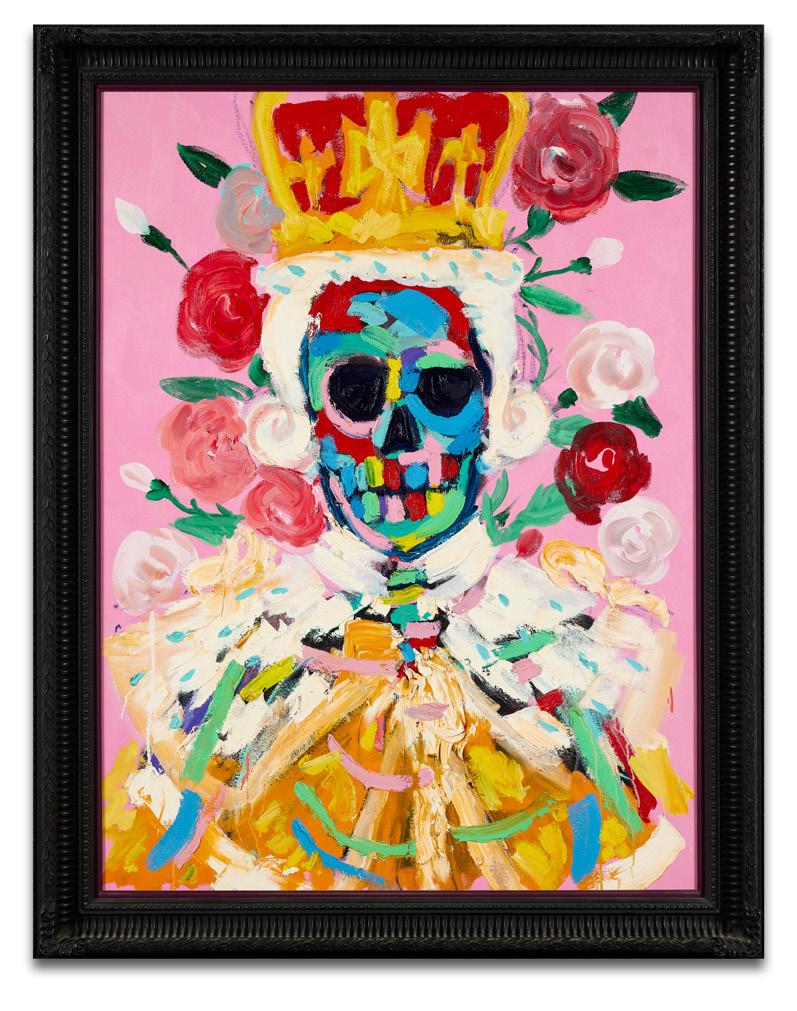
35
Bradley THEODORE
(Américain - Né en 1990)
King smiling in the rose garden – 2018
Huile sur toile
98 × 73 cm
Provenance : Maddox Gallery, Londres
Acquis directement auprès de cette dernière par l’actuel propriétaire
Un certificat de la Maddox Gallery sera remis à l’acquéreur
Oil on canvas
38.58 × 28.74 in.
8 000 – 12 000 €
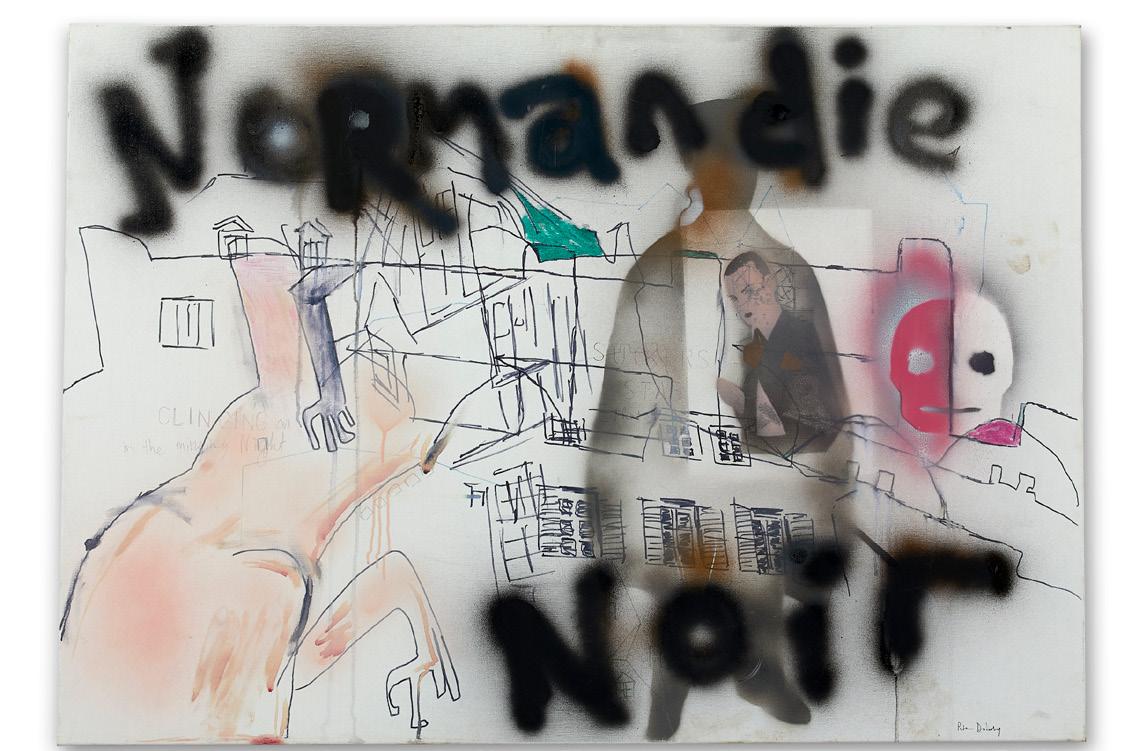
36
Pete DOHERTY
(Anglais - Né en 1979)
Normandie noire – 2021
Peinture aérosol, pochoir et feutres sur toile
Signée
81 × 116 cm
Provenance : Acquis directement auprès de l’artiste par l’actuel propriétaire
Spray paint, stencil and felts pens on canvas ; signed 31.88 × 45.66 in.
5 000 – 7 000 €
Pas de réserve
No reserve
37
Lincoln TOWNLEY
(Anglais - Né en 1972)
Sans titre
Huile sur toile
Signée au dos 99 × 99,4 cm
Oil on canvas; signed on the reverse 38.97 × 39.13 in.
10 000 – 15 000 €
38
Lincoln TOWNLEY
(Anglais - Né en 1972)
Money Money Money (serie The Banker Collection) – 2020
Huile sur toile
Signée et datée au dos 50,8 × 40,5 cm
Provenance : Acquis directement auprès de l’artiste par l’actuel propriétaire
Un certificat de l’artiste sera remis à l’acquéreur
Oil on canvas: signed and dated on the reverse 19.68 × 15.74 in.
8 000 – 12 000 €
Lincoln TOWNLEY
(Anglais - Né en 1972)
Bankers Partnership – 2021
Huile et peinture aérosol sur toile
Signée au dos
188,6 × 123,4 cm
Provenance :
Acquis directement auprès de l’artiste par l’actuel propriétaire
Un certificat du studio de l’artiste sera remis à l’acquéreur
Oil and spray paint on canvas; signed on the reverse 74.25 × 48.58 in.
15 000 – 20 000 €
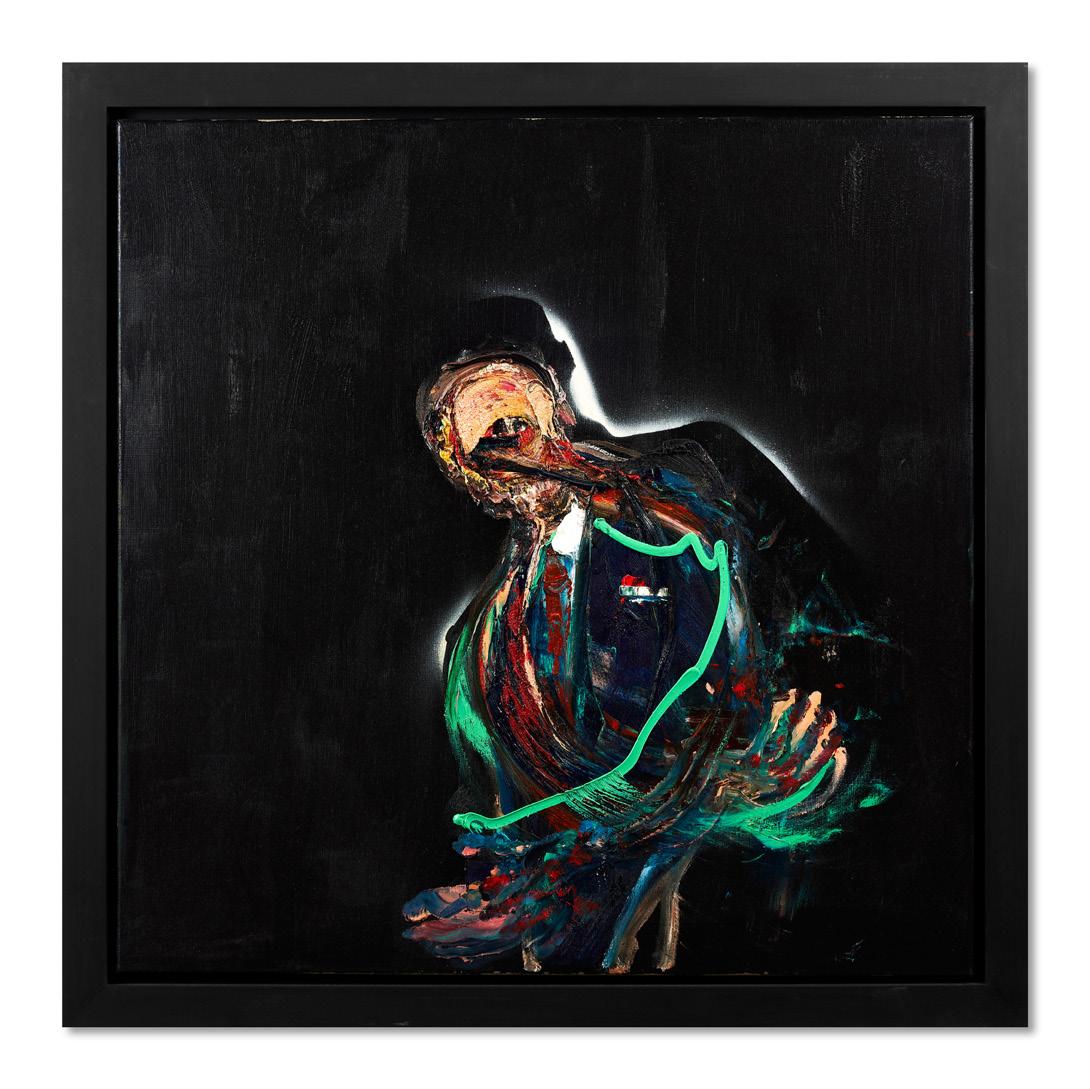
Lincoln Townley est un artiste contemporain britannique né à Londres en 1972. Après avoir travaillé dans les relations publiques et l’industrie des boîtes de nuit, il s’est tourné vers la peinture, après avoir surmonté ses problèmes de dépendance. Cette transformation a marqué le début de son parcours artistique, où il a développé un style distinctif caractérisé par des œuvres figuratives expressives et abstraites qui abordent les thèmes de l’ambition, de l’excès et des facettes les plus sombres de la nature humaine. L’art de Townley reflète souvent les complexités psychologiques de ses sujets, s’inspirant de ses propres expériences et de l’énergie chaotique de la vie urbaine.
Sa remarquable série « Banker » représente des figures déformées d’hommes d’affaires, symbolisant la cupidité et le monde tumultueux de la finance.
Lincoln Townley is a British contemporary artist born in London in 1972. After working in public relations and the nightclub industry, he turned to painting after overcoming his addiction issues. This transformation marked the beginning of his artistic journey, where he developed a distinctive style characterized by expressive and abstract figurative works that address themes of ambition, excess, and the darker facets of human nature. Townley’s art often reflects the psychological complexities of his subjects, drawing inspiration from his own experiences and the chaotic energy of urban life.
His remarkable “Banker” series depicts distorted figures of businessmen, symbolizing greed and the tumultuous world of finance.
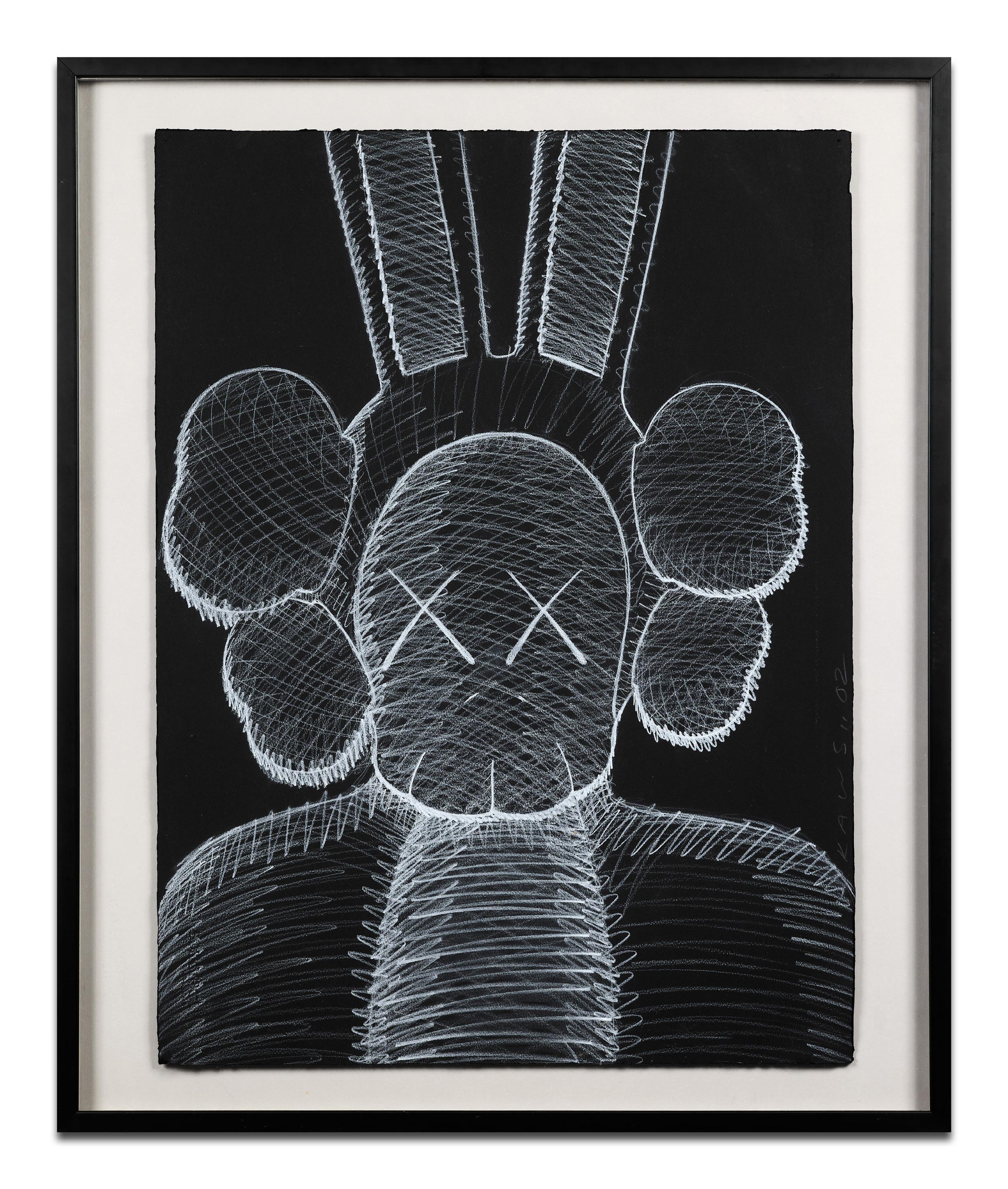
KAWS
(Américain - Né en 1974)
Accomplice – 2002
Pastel sur papier noir
Signé et daté
76 × 56 cm
Provenance :
Made Gallery, Vancouver
Acquis directement auprès de cette dernière par l’actuel propriétaire en 2002
Exposition : Vancouver, Made Gallery, KAWS.Crash, 24 août au 8 novembre 2002
Pastel on black paper; signed and dated 29.92 × 22.04 in.
25 000 – 35 000 €
Dans le bestiaire, ou plutôt la famille de personnages créés par KAWS, the Accomplice tient une place particulière. Ainsi qu’il l’expliquait dans le magazine ANP Quarterly, il s’est inscrit en réaction à la prétendue street credibility du milieu street art, celle des grapheurs qui se prennent pour des Bad Boys. KAWS a choisi de délibérément saper sa propre street credibility pour souligner les limites qu’un tel critère imposerait à l’art urbain. Il a donc créé le « personnage le plus doux, et le plus ridicule possible : en l’occurrence, le Companion semble s’être glissé dans un costume de lapin ».
Reprenant la démarche de Keith Haring, qui, sur les conseils de Warhol, ouvrait le Pop Shop pour diffuser son œuvre sur des objets grand public, KAWS a depuis décliné ce personnage en de multiples formats. L’artiste est devenu un phénomène global.
Présenté en 2002 lors de l’exposition KAWS/CRASH à la galerie MADE de Vancouver, ce portait impressionnant, mais légèrement inquiétant, est la première représentation graphique connue de The Accomplice. Outre ses multiples déclinaisons qui ont suivies, The Accomplice a été en 2023 le sujet de la plus grande sculpture in situ jamais conçue par KAWS. Œuvre de 48 mètres de long, Holiday Indonesia représente le personnage Accomplice méditant face aux temples de Pramaban, site classé au patrimoine mondial de l’UNESCO.
In the bestiary, or rather the family of characters created by KAWS, the Accom-plice holds a special place. As he explained in ANP Quarterly magazine, KAWS was created in response to the supposed street credibility of the street art scene, that of graffiti artists who think they are bad boys. KAWS deliberately chose to undermine his own street credibility to highlight the limitations that such a criterion would impose on urban art. He therefore created “the sweetest, most ridiculous character possible: in this case, the Companion seems to have slipped into a rabbit costume.”
Following in the footsteps of Keith Haring, who, on Warhol’s advice, opened the Pop Shop to distribute his work on consumer goods, KAWS has since developed this character in multiple formats. KAWS has become a global phenomenon.
Presented in 2002 at the KAWS/CRASH exhibition at the MADE Gallery in Vancouver, this impressive but slightly disturbing portrait is the first known graphic representation of The Accomplice. In addition to the many variations that followed, The Accomplice was the subject of the largest in situ sculpture ever designed by KAWS in 2023. Measuring 48 meters long, Holiday Indonesia depicts the Accomplice character meditating in front of the Pramaban temples, a UNESCO World Heritage Site.
« Ce n’était pas quelque chose de réfléchi, mais une évidence naturelle : il fallait que je peigne des animaux. C’est chez moi un besoin organique, un moteur inexplicable. »
-
ROA, entretien avec Olivier Granoux, Télérama, 14 janvier 2021
Fasciné par les animaux, ROA estime qu’ils « ont beaucoup plus à dire sur le monde que n’importe quelle autre créature ». À chacun de ses voyages aux quatre coins du monde et sur tous les continents, il peint à la bombe aérosol des animaux locaux. Il couvre d’abord d’une peinture blanche la surface à peindre puis finit au marqueur les détails de la bête. Endormie, vivante ou morte. Son but étant de faire réfléchir le spectateur. Qu’il se fasse sa propre interprétation. « Que cela lui inspire de la créativité, qu’il s’engage en faveur de l’environnement ou qu’il jette juste un œil à ma peinture et je suis heureux ». D’autant que la symbolique des animaux varie d’un pays et d’une culture à l’autre. ROA invite donc le spectateur à s’interroger sur la place de l’homme et des animaux dans le monde actuel.
Sur le mur d’un musée ou dans une usine désaffectée en banlieue, ROA aime que se noue une interaction entre l’humain et la nature. Peindre des animaux est pour lui une manière de faire que la nature réintègre les lieux bétonnés. D’ailleurs, il se plait aussi à faire vivre son art dans des lieux désertiques, comme en Gambie ou au Cambodge, dans un village abandonné. En Afrique, ce qui touche davantage ROA c’est l’implication des populations locales. « Peindre en Afrique est une expérience unique et spéciale », dit-il. « C’est un engagement avec la communauté locale et un procédé de création très intense. »
Violaine Pondard
Fascinated by animals, ROA believes that they “have much more to say about the world than any other creature.” On each of his trips around the world and across every continent, he paints local animals with spray paint. He first covers the surface to be painted with white paint and then finishes the details of the animal with a marker. Sleeping, alive, or dead. His goal is to make the viewer think. To come up with their own interpretation. “Whether it inspires them to be creative, get involved in environmental issues, or just take a look at my painting, I’m happy.” Especially since the symbolism of animals varies from one country and culture to another. ROA therefore invites viewers to question the place of humans and animals in today’s world.
Whether on the wall of a museum or in an abandoned factory in the suburbs, ROA likes to create an interaction between humans and nature. For him, painting animals is a way of bringing nature back into concrete environments. He also enjoys bringing his art to life in deserted places, such as in Gambia or Cambodia, in an abandoned village. In Africa, what touches ROA most is the involvement of the local people. “Painting in Africa is a unique and special experience,” he says. “It’s a commitment to the local community and a very intense creative process.”
Violaine Pondard
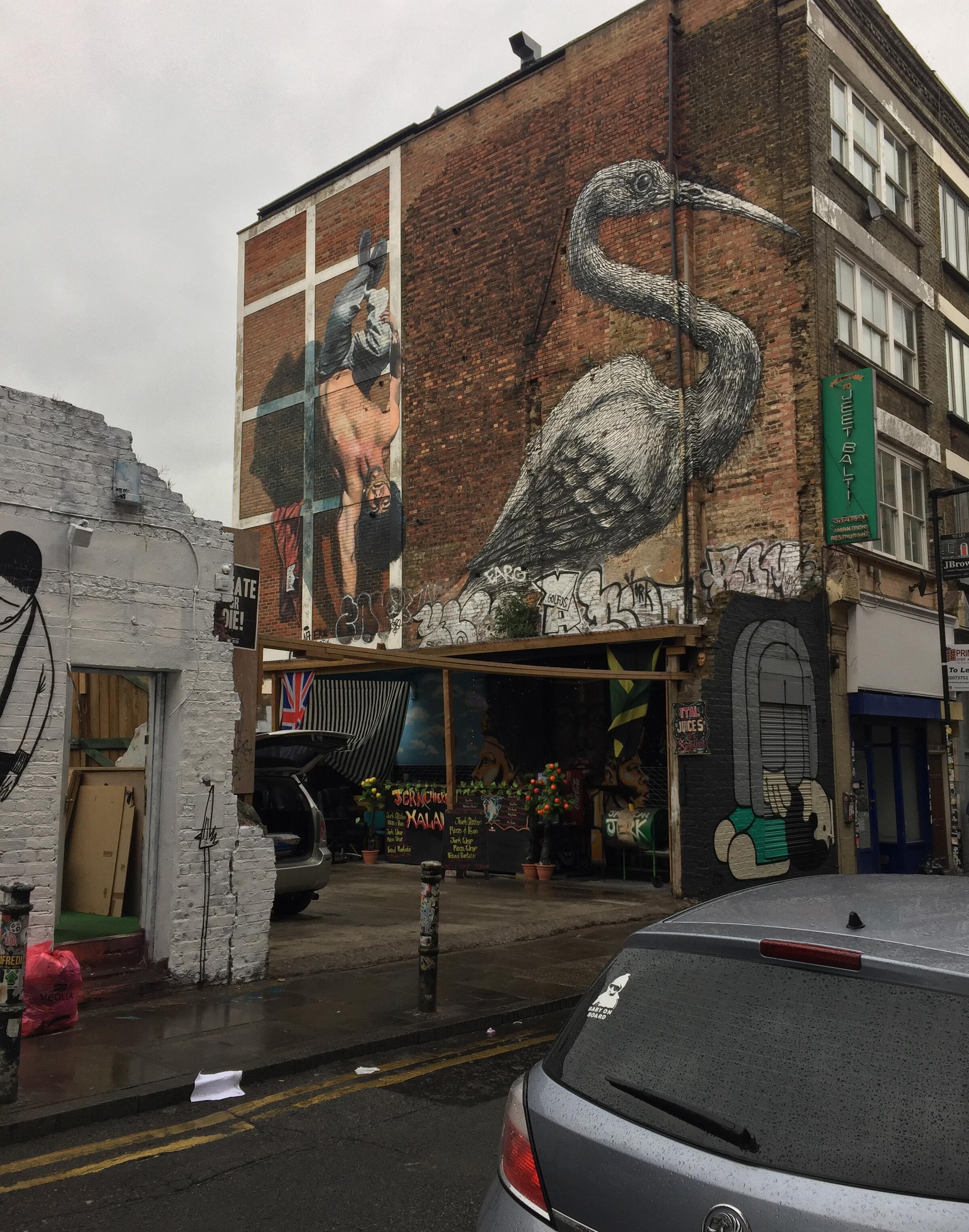
Visuel : ROA, Londres, Brick Lane, Grue, avril 2010
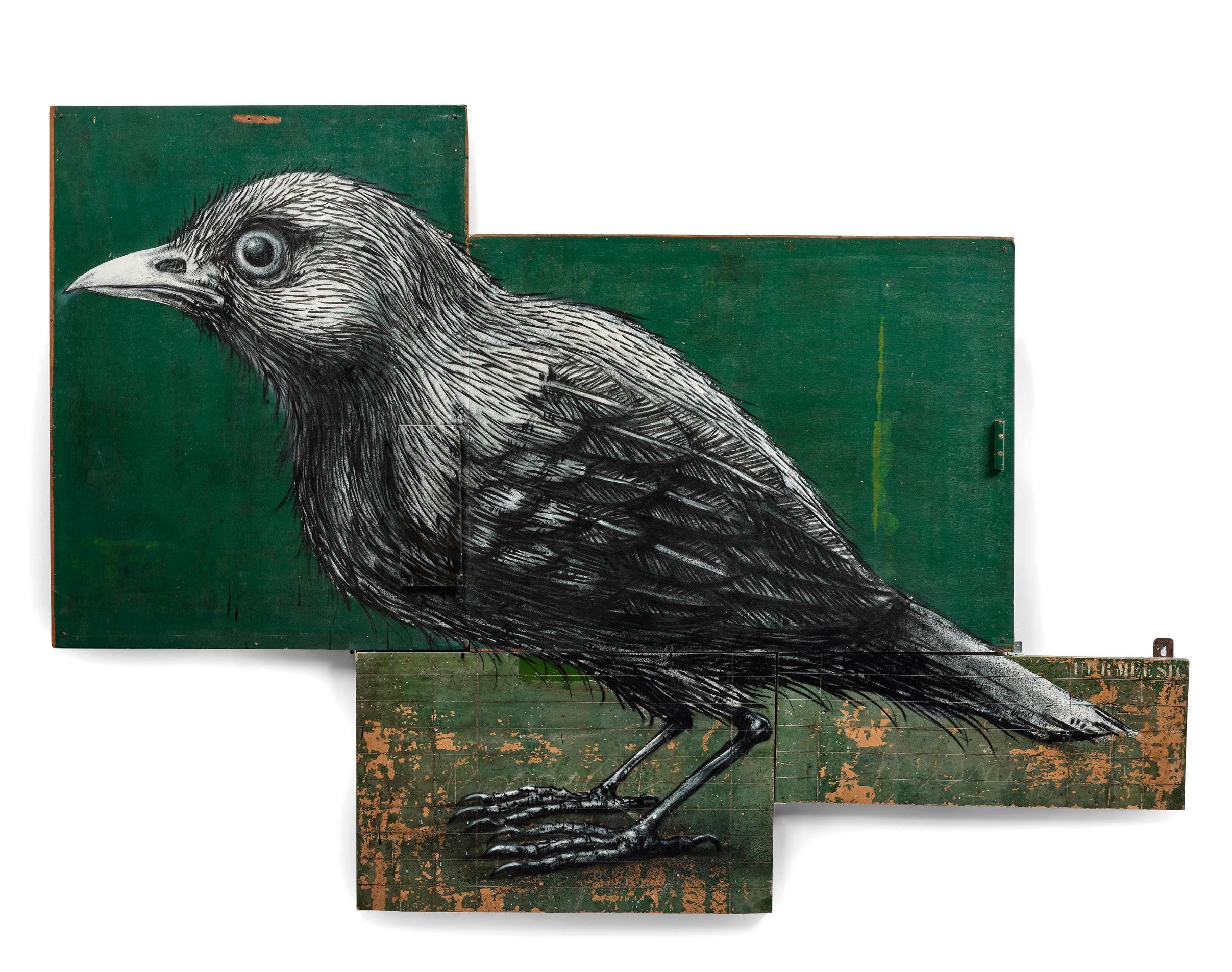
ROA
(Belge - Né en 1975)
Crow with Heart on Fence – 2010
Peinture aérosol et acrylique sur panneaux de bois de récupération (dyptique)
Signé au dos
130,5 × 219,5 cm
Provenance :
Pure Evil Gallery, Londres Acquis directement auprès de cette dernière par l’actuel propriétaire
Exposition :
Londres, Pure Evil Gallery, ROA, 8 avril au 2 mai 2010
Spray paint and acrylic on found wood (dyptic); signed 51.37 × 86.41 in.
8 000 – 12 000 €
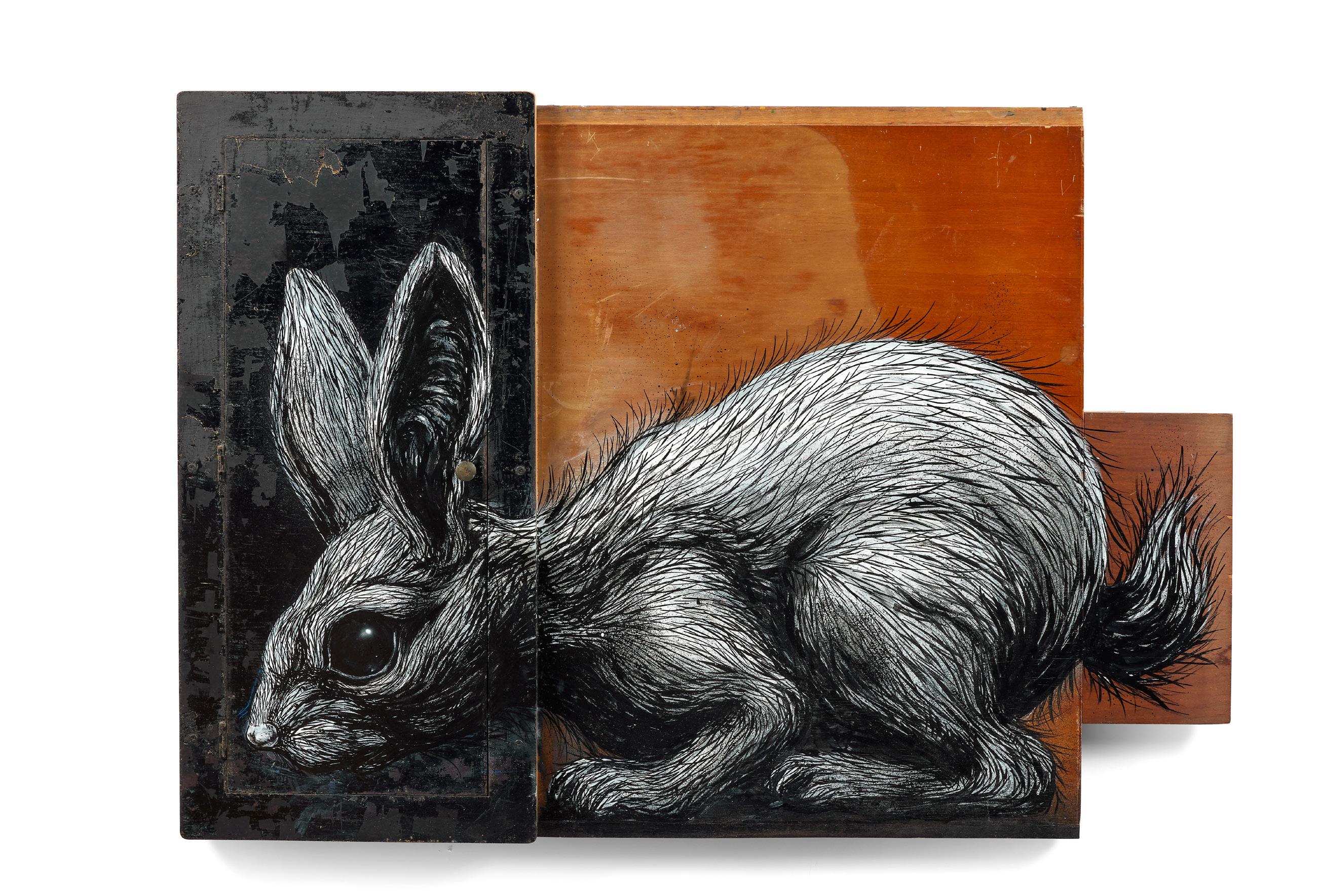
42
ROA
(Belge - Né en 1975)
Sylvilagus Audubonii – 2015
Peinture aérosol, peinture émaillée et acrylique sur objets de récupération en bois et métal
Signé au dos
80 × 137 × 6,5 cm (ouvert)
80 × 113 × 6,5 cm (fermé)
Provenance : Jonathan LeVine Gallery, New York Acquis directement auprès de cette dernière par l’actuel propriétaire
Exposition : New York, Jonathan LeVine Gallery, ROA, Metazoa, 4 avril au 2 mai 2015
Le carton de l’exposition signé par l’artiste sera remis à l’acquéreur
Spray paint, enamel and acrylic on found objects, wood and metal; signed on the reverse
31.49 × 53.93 × 2.55 in. (opened)
31.49 × 44.48 × 2.55 in. (closed)
8 000 – 12 000 €
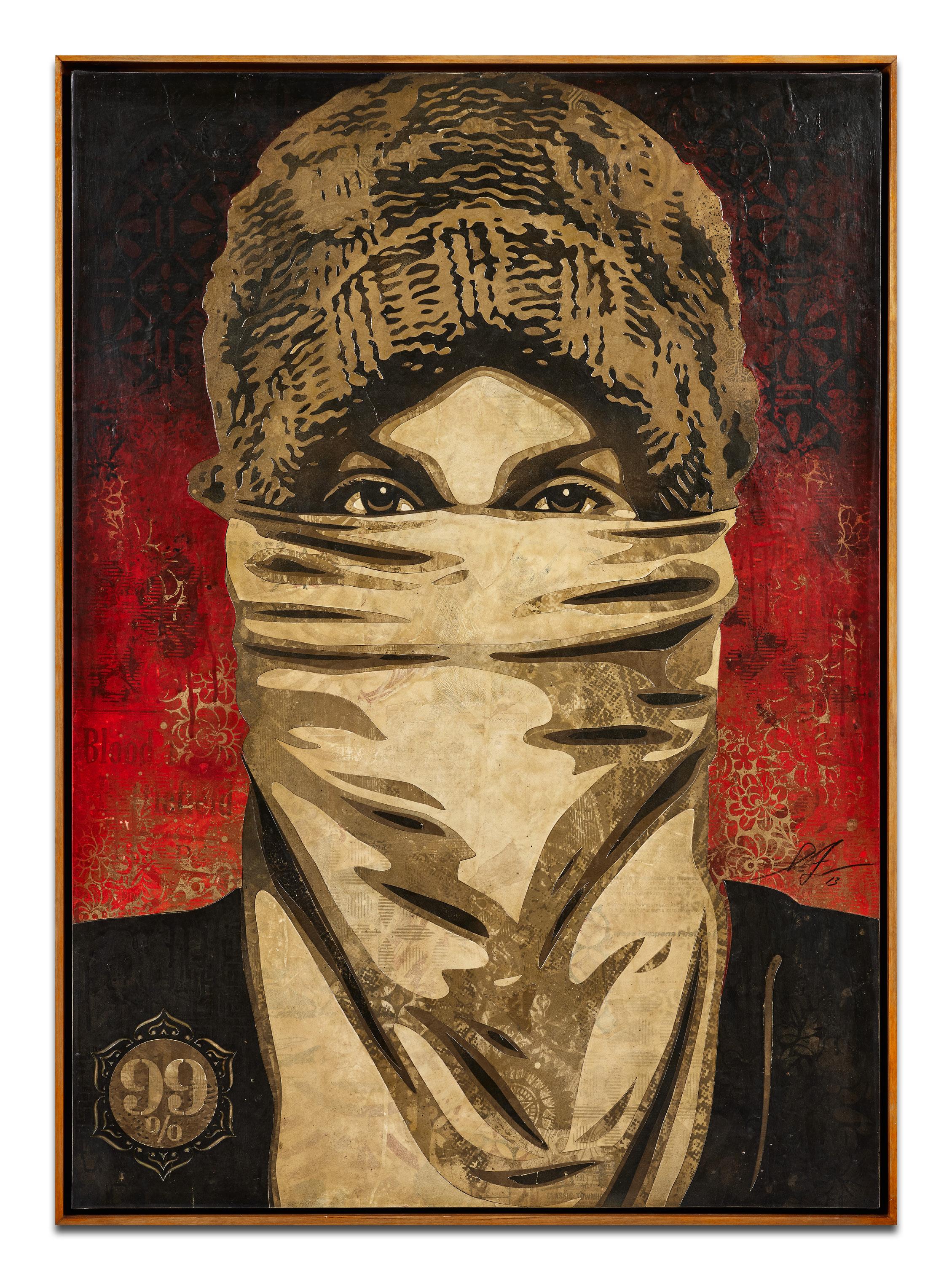
C’est à la fin des années 80 que le nom de Shepard Fairey commence à se faire connaître à travers la campagne d’affichage de stickers André the Giant Has a Posse. Issu de la scène underground skate, Shepard Fairey a compris le pouvoir des images dans la société, véhiculant l’information et manipulant les idées, les consciences et les pensées. Il reprend à son compte le précepte the Medium is the Message et fait dès la fin des années 90 du visage du catcheur français André le Géant le symbole de son travail, logotype récurrent qu’il accompagne du mot « OBEY » (obéir/obéis), message elliptique. Dès lors, son intérêt pour l’autoritarisme sera un des fils conducteurs de ses œuvres réalisées pour des expositions en galeries et en institutions. Shepard Fairey a compris l’évolution de la société contemporaine ; l’impact essentiel et fondamental de l’image. Reprenant l’esthétique des régimes totalitaires de l’URSS, Cuba ou de la Chine, il crée des œuvres à l’impact visuel saisissant se suffisant à elles-mêmes. Le sens est direct. Le logo « OBEY » se transforme en parallèle en un motif complexe en forme d’étoile.
In the late 80s, Shepard Fairey’s name began to be recognized through a stickers / poster campaign André the Giant Has a Posse. Native of the underground skate scene, Shepard Fairey understands the power of images in society, conveying information and manipulating ideas, minds and thoughts. He takes up the precept the Medium is the Message and creates the face of French wrestler Andre the Giant as a symbol of his work in the late 90s, a recurring logo that accompanies the word “OBEY” as a cryptic message. From then on, his interest in authoritarianism will be one of the driving forces of the works he produces for gallery exhibitions and institutions. Shepard Fairey understands the evolution of contemporary society, the essential and fundamental impact of images. Taking up the aesthetics of the USSR, Cuba or China’s totalitarian regimes, he creates pieces of striking visual impact, sufficient in themselves. The meaning is direct. In parallel, the “OBEY” logo turns into a complex star pattern.
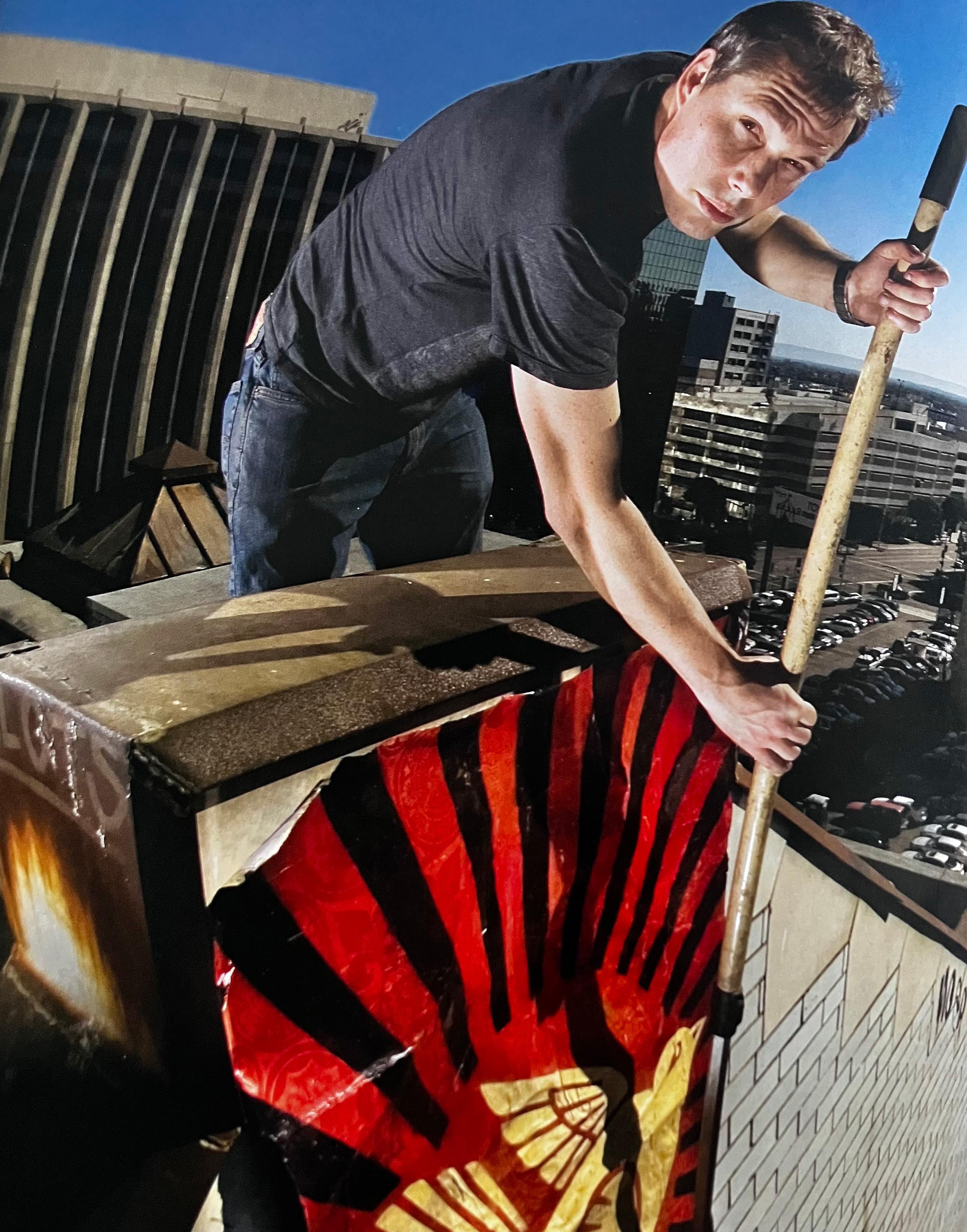
Visuel : Shepard Fairey à Los Angeles
Shepard FAIREY (OBEY GIANT)
(Américain - Né en 1970)
Occupy Protestor – 2013
Matrice de pochoir, peinture aérosol et collages de sérigraphies sur toile
Signée et datée
106,5 × 75,5 cm
Provenance :
Acquis directement auprès de l’artiste par l’actuel propriétaire
Bibliographie :
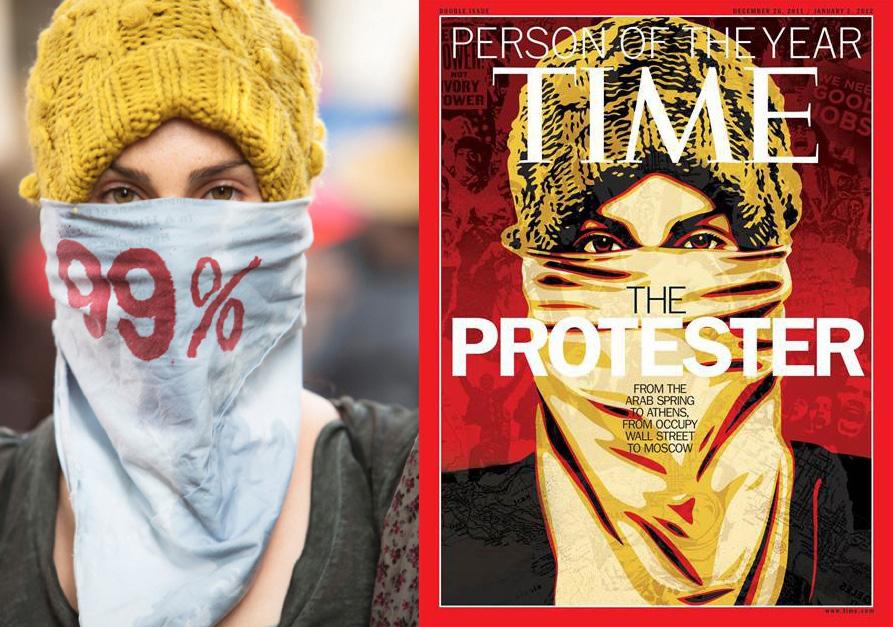
Le visuel de cette œuvre a fait l’objet de la couverture du Time Magazine du 15 décembre 2011
Stencil matrix, spray paint and screenprints collage on canvas; signed and dated 41.92 × 29.72 cm
30 000 – 50 000 €
Célèbre pour ses interventions dans l’espace urbain du monde entier, Shepard Fairey est aussi un immense portraitiste. À l’instar de Warhol, qui a immortalisé les célébrités des années 70 et 80, Fairey a su imposer un style immédiatement reconnaissable, mêlant esthétique propagandiste, stylisation des silhouettes et aplats de couleurs. Mais autant Warhol était un artiste mondain, symbolisait une génération d’argent, de flambe et d’excès, autant Fairey revendique un art engagé, reflet des doutes et les interrogations des générations X et Z.
The Protestor, œuvre sélectionnée par le magazine TIME pour la couverture de son édition « Person of the Year 2011 », résume l’art et l’engagement de Fairey. Le portrait de Sarah Mason, manifestante du mouvement Occupy Wall Street, acquiert ici une puissance universelle, symbolisant un appel à la prise de conscience et à la mobilisation face aux défis qui nous menace tous. Il est aussi un magnifique exemple de la maîtrise stylistique de Fairey : « J’ai senti qu’il y avait un contraste puissant entre l’intensité de son regard et son bonnet jaune en laine rassurant. Je voulais que la manifestante apparaisse comme sérieuse, mais pas effrayante. Dans mon art, j’essaie de mettre en valeur l’essence la plus puissante d’une image et d’éliminer tout ce qui est superflu. ». Ce portrait, d’une puissance exceptionnelle, concentre toute son intensité vers un regard qui suit le spectateur et l’interpelle.
L’œuvre de Fairey est enfin un questionnement sur notre rapport à l’image, à une époque où la publicité et les réseaux sociaux nous confrontent à un flux visuel ininterrompu.
Famous for his interventions in urban spaces around the world, Shepard Fairey is also a prolific portrait artist. Like Warhol, who immortalized celebrities of the 1970s and 1980s, Fairey has established an instantly recognizable style, combining propaganda aesthetics, stylized silhouettes, and flat colors. But while Warhol was a socialite artist, symbolizing a generation of money, extravagance, and excess, Fairey champions socially engaged art that reflects the doubts and questions of Generations × and Z.
The Protestor, selected by TIME magazine for the cover of its “Person of the Year 2011” issue, sums up Fairey’s art and commitment. The portrait of Sarah Mason, a protester from the Occupy Wall Street movement, takes on a universal power here, symbolizing a call for awareness and mobilization in the face of the challenges that threaten us all. It is also a magnificent example of Fairey’s stylistic mastery: “I felt there was a powerful contrast between the intensity of her gaze and her reassuring yellow wool hat. I wanted the protester to appear serious, but not scary. In my art, I try to highlight the most powerful essence of an image and eliminate anything superfluous.” This exceptionally powerful portrait focuses all its intensity on a gaze that follows the viewer and challenges them.
Fairey’s work ultimately questions our relationship with images at a time when advertising and social media bombard us with a constant stream of visual stimuli.
Visuel : Couverture du Time
illustrée par Shepard Fairey d’après le portrait de Sarah Mason
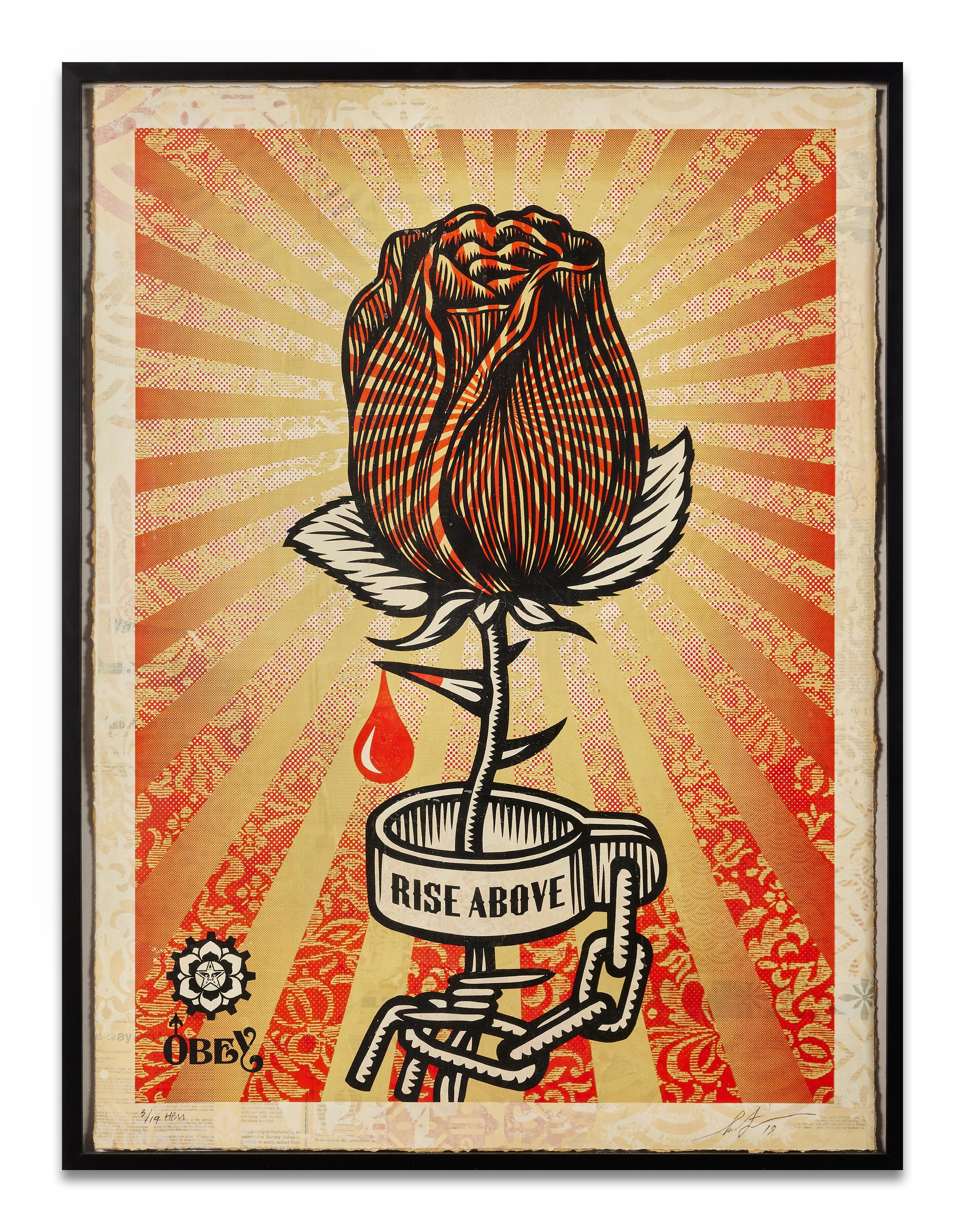
Shepard FAIREY (OBEY GIANT)
(Américain - Né en 1970)
Rose Shackle – 2019
Collage de sérigraphies (HPM) et technique mixte sur papier
Signé, daté et numéroté « 3/19 HPM » 104 × 76,2 cm
Provenance :
Spacejunk Art Centers, Grenoble Acquis directement auprès de cette dernière par l’actuel propriétaire
Une copie de certificat numérique de l’artiste sera remis à l’acquéreur
Hand-painted multiple (HPM) silkscreen and mixed media on paper; signed, dated and numbered 40.94 × 29.92 in.
8 000 – 12 000 €
Souvent utilisées dans les œuvres de Fairey, les roses représentent plus que de simples éléments décoratifs. Régulièrement au centre de l’action de la scène ou incluses comme éléments clés du design, les roses sont invoquées comme une espèce résiliente, représentant un sens organique de la beauté et de la force naturelle.
Agrandie et occupant toute la surface de l’impression, la rose rayonne d’énergie et se tient droite malgré le carcan et la chaîne qui entravent sa tige. L’artiste humanise le message de dépassement des circonstances oppressives en incluant une goutte de sang surdimensionnée qui pend mais ne tombe pas encore de l’épine saillante. Agissant comme une métaphore d’un individu ou de la société dans son ensemble, qui a enduré et préservé face à l’adversité, Fairey positionne la rose comme une représentation substitutive de l’esprit activiste qui guide sa carrière artistique.
Extrait d’un texte de Pedro Alonzo
Regularly central to the action of the scene or included as key design elements, the rose is invoked as a resilient species, representing an organic sense of beauty and natural strength.
Enlarged and consuming the full expanse of the print, the rose radiates energy from within and stands upright despite the shackle and chain that binds its stem. The artist humanizes the message of rising above oppressive circumstances by including an oversized drop of blood that hangs but does not yet fall, from the protruding thorn. Acting as a metaphor for an individual or society-at-large, who has endured and preserved in the face of adversity, Fairey positions the rose as a surrogate rendering of the activist spirit that guides his artistic career.
Excerpt from a text by Pedro Alonzo
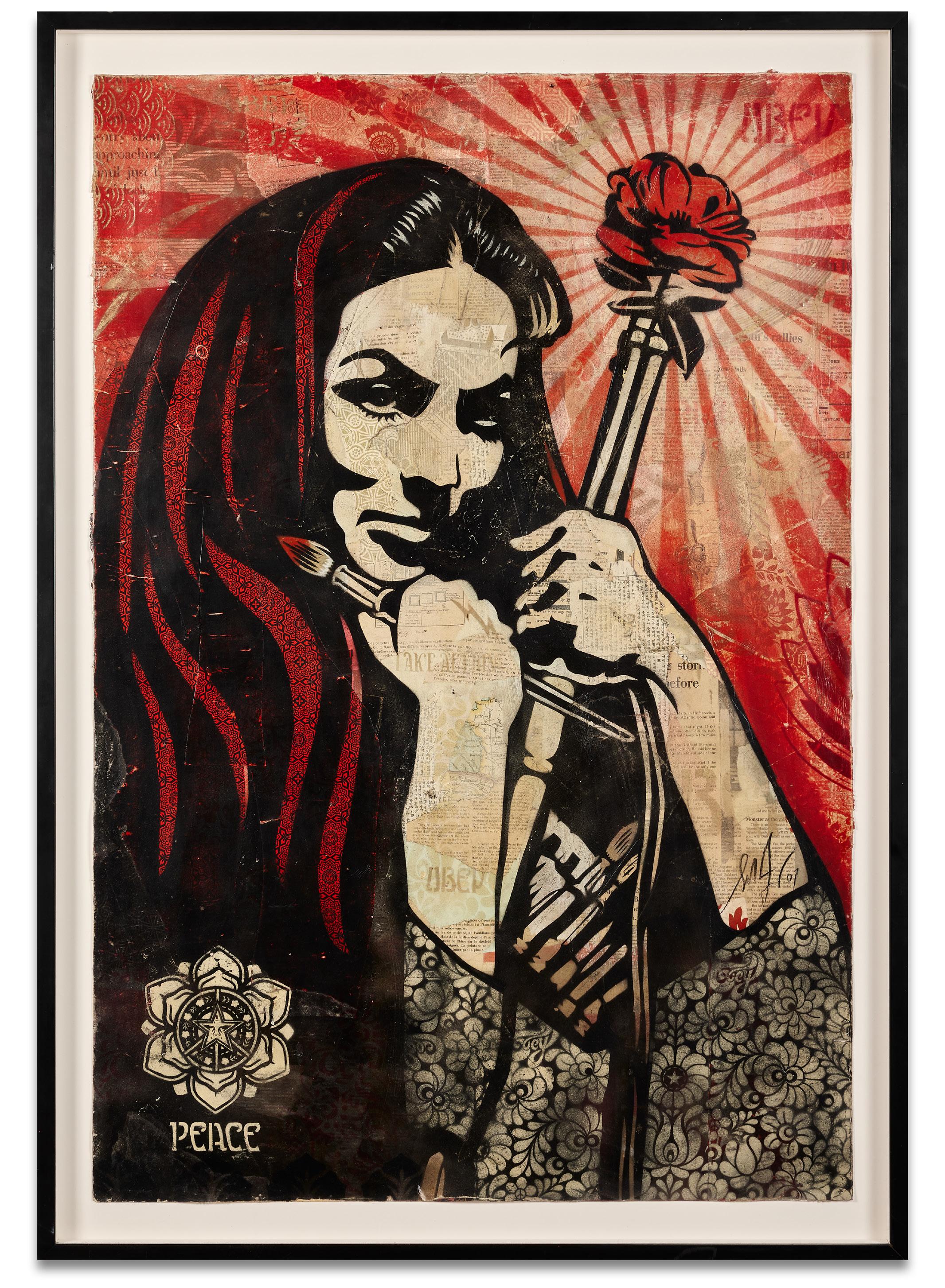
45
Shepard FAIREY (OBEY GIANT)
(Américain - Né en 1970)
Revolutionary Woman With Brush – 2007
Pochoir, peinture aérosol et collages sur papier
Signé et daté 112 × 75,5 cm
Provenance :
Collection particulière, Royaume Uni Collection particulière, Paris
Bibliographie :
Obey, E Pluribus Venom, Gingko Press Editions, Berkeley, 2008, le visuel reproduit p.90
Obey, Supply & Demand, The Art of Shepard Fairey, Gingko Press Editions, Berkeley, 2009, le visuel reproduit p.222
Stencil, spray paint and collages on paper; signed and dated 44.09 × 29.72 in.
40 000 – 50 000 €
« Je pense toujours à ce qui se passe à l’intérieur et à l’extérieur de notre pays, entre la race, le pouvoir et la religion. Je pense qu’il y a d’énormes problèmes dans le monde qui durent depuis toujours et que les gens ont de bonnes raisons d’être en colère et de chercher le changement. »
- Cleon Peterson
Le monde intérieur de Peterson est un monde de chaos total où la violence règne en maître et semble régir l’ensemble des relations individuelles et sociales. Décrit par le biais d’une palette chromatique réduite à quelques dominantes récurrentes (noir, rouge et blanc), ce monde de violence extrême vient en quelque sorte démentir la théorie hobbesienne selon laquelle « à l’état de nature l’homme est un loup pour l’homme, à l’état social l’homme est un dieu pour l’homme ». Car si l’homme tel que nous le décrit Peterson est bel est bien prédateur pour son alter ego, c’est pourtant bien de l’homme du XXe siècle dont il s’agit. L’homme moderne donc, voire post-moderne, et réputé hautement civilisé...
Visiblement sous-tendues par une philosophie résolument pessimiste, les scènes de violence extrême peintes par Peterson ont cette particularité de ne pas opposer victimes et bourreaux, innocents et coupables. Conçues de manière très narrative et contant toujours la même histoire – celle de la prédation universelle –, elles décrivent chaque protagoniste, de l’homme en uniforme à la femme aux vêtements arrachés, comme mû par une aversion sans limite envers son prochain, les traits figés dans un rictus de haine et de douleur commun à tous
Peterson’s inner world is one of total chaos, where violence reigns supreme and seems to govern all individual and social relationships. Depicted through a chromatic palette reduced to a few recurring dominants (black, red and white), this world of extreme violence belies the Hobbesian theory that “in the state of nature, man is a wolf to man; in the social state, man is a god to man”. For if man as Peterson describes him is indeed a predator for his alter ego, it’s the man of the 21st century we’re talking about. Modern man, even postmodern man, reputed to be highly civilized...
Clearly underpinned by a resolutely pessimistic philosophy, Peterson’s scenes of extreme violence have the distinctive feature of not opposing victims and executioners, innocent and guilty. Conceived in a highly narrative manner and always telling the same story –that of universal predation–they depict each protagonist, from the man in uniform to the woman with her clothes torn off, as driven by an unbounded aversion to his fellow man, his features frozen in a rictus of hatred and pain common to all.
Visuel : Cleon Peterson, Hong Kong, District, 2016
46
Cleon PETERSON
(Américain - Né en 1973)
Sans titre – 2009
Acrylique sur deux panneaux de bois (diptyque)
Signé et daté au dos d’un des panneaux 121,4 × 91,3 cm
Exposition : Bruxelles, A.L.I.C.E. Gallery, Cleon Peterson - The Unconsoled, 12 septembre au 17 octobre 2009
Acrylic on two wood panels (diptyk); signed and dated on the reverse 47.79 × 35.94 in.
3 000 – 5 000 €
47
Cleon PETERSON
(Américain - Né en 1973)
Poison in the Minds 3 – 2016
Acrylique sur toile
Signée et datée au dos 76 × 76 × 5 cm
Provenance :
Over The Influence, Los Angeles Acquis directement auprès de cette dernière par l’actuel propriétaire
Acrylic on canvas; signed and dated on the reverse 29.92 × 29.92 × 1.96 in.
5 000 – 7 000 €
Cleon PETERSON
(Américain - Né en 1973)
Savage Killing – 2018
Acrylique sur toile
Signée au dos
137,20 × 106 cm
Provenance : Acquis directement auprès de l’artiste par l’actuel propriétaire
Acrylic on canvas; signed on the reverse 53,93 × 41,73 in.
7 000 – 9 000 €
49 KAWS
(Américain - Né en 1974)
Untitled – circa 1995
Marqueur sur papier
Signé
21,5 × 27,5 cm
Provenance : Hobbs Gallery / Dirty Pilot Acquis directement auprès de cette dernière par l’actuel propriétaire
Marker on paper; signed 8.46 × 10.82 in.
2 000 – 3 000 €
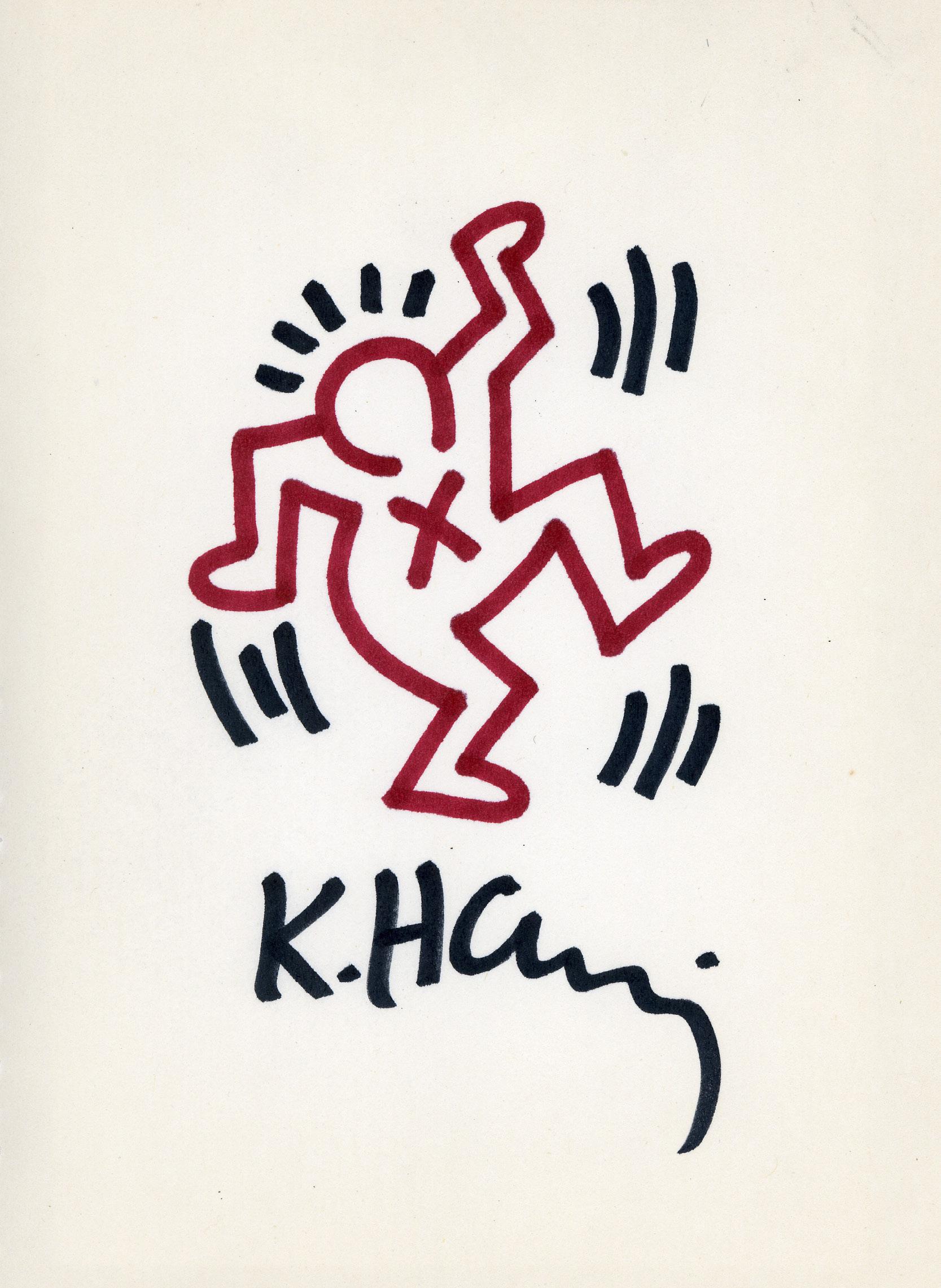
50 Keith HARING
(Américain - 1958-1990)
Untitled – 1984
Marqueur sur papier
Signé
20,3 × 15,2 cm
Un certificat du Keith Haring Studio sera remis à l’acquéreur
Marker on aper; signed
8.58 × 6.18 in.
7 000 – 9 000 €
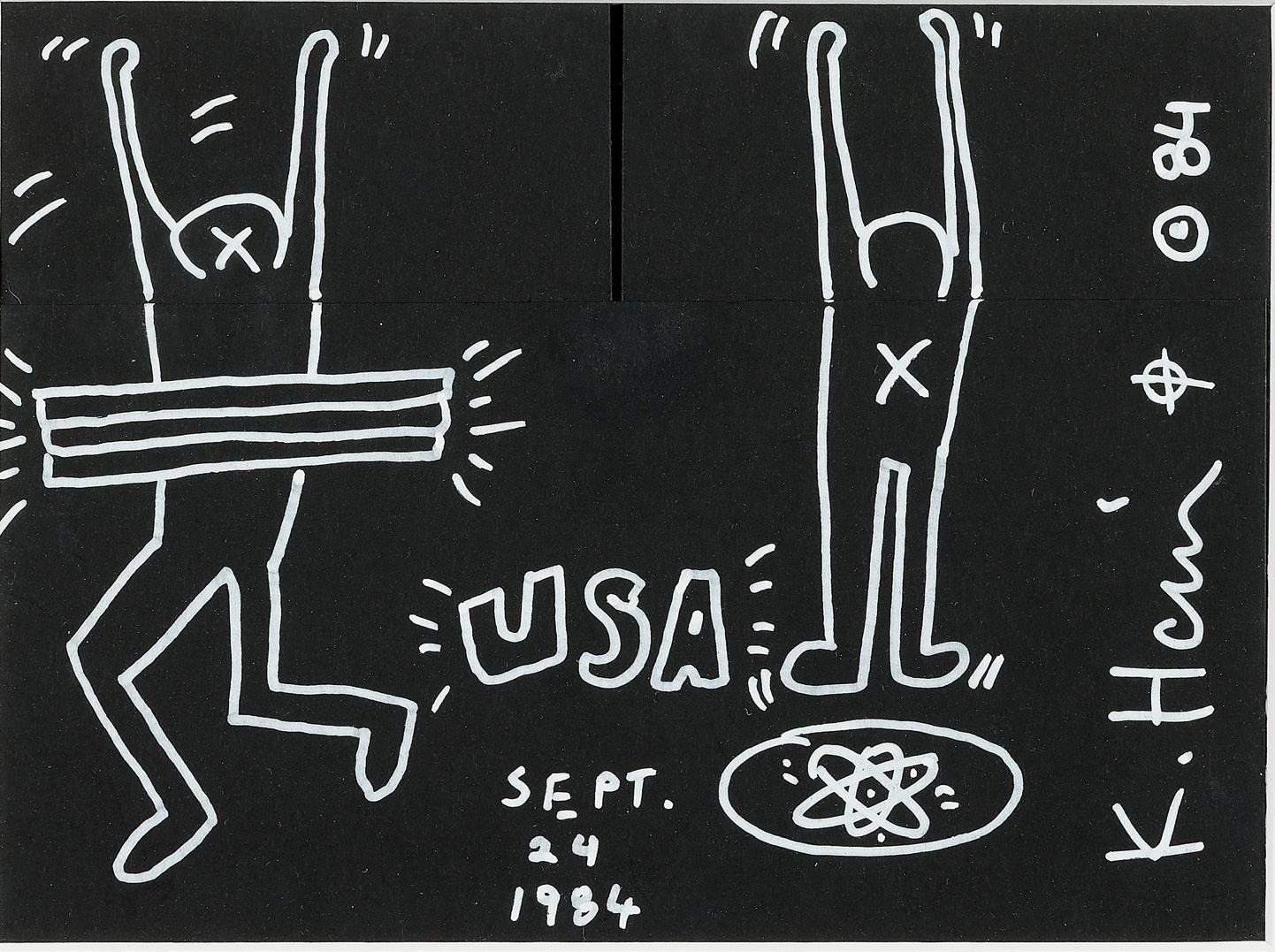
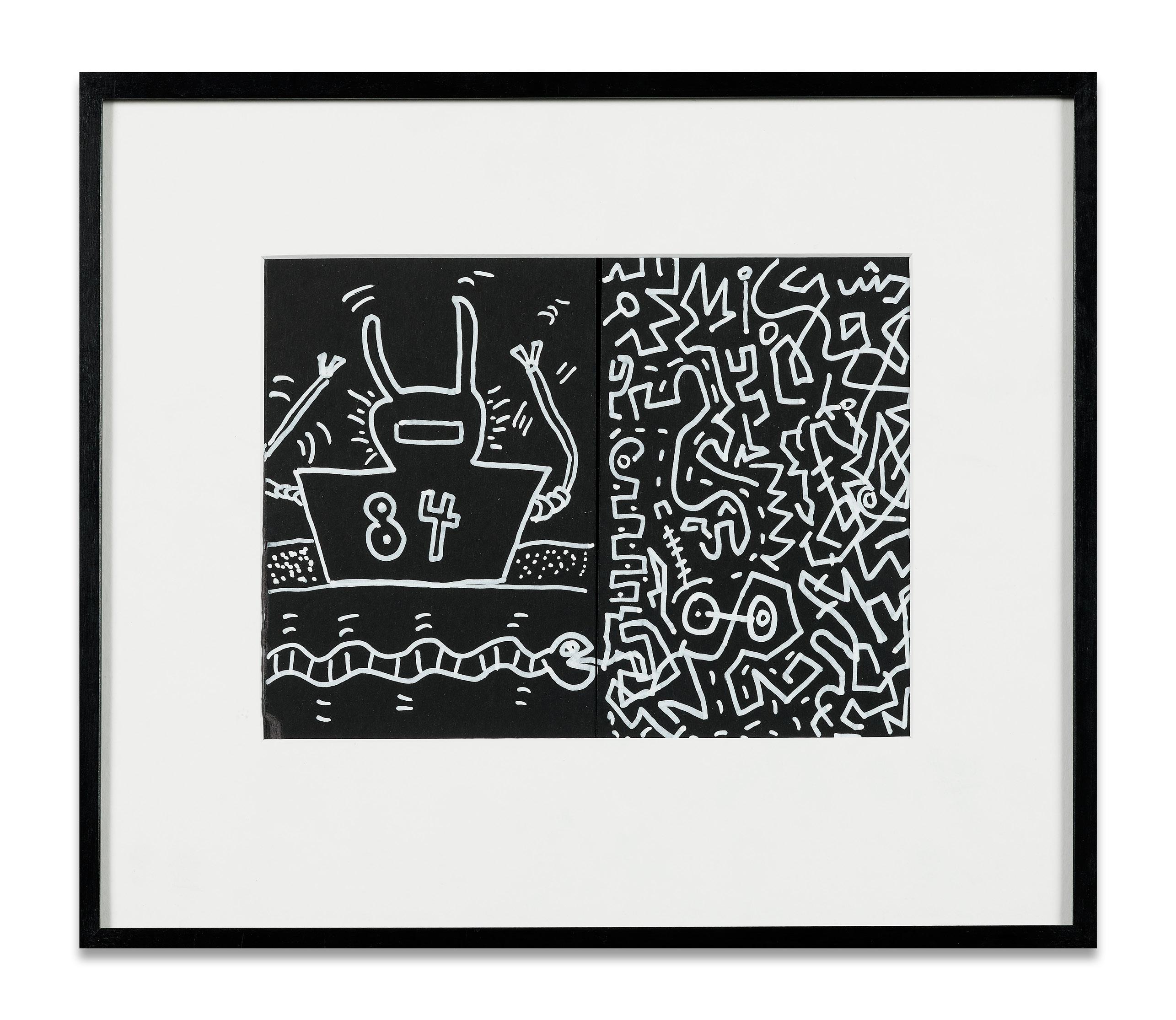
Keith HARING
(Américain - 1958-1990)
Untitled (Robot and Snake) – 1984
Marqueur blanc sur papier cartonné noir recto verso
Signé et daté au verso « SEPT 24 1984 » 16,3 × 21,8 cm (à vue)
Provenance :
Ancienne collection Urbano Quinto, Novara
Vente Julien’s auctions, Los Angeles, 14 novembre 2018, lot 99
Acquis directement lors de cette dernière par l’actuel propriétaire
White marker on black cardstock panels; signed and dated on the reverse 6.29 × 8.26 in.
8 000 – 12 000 €
Verso
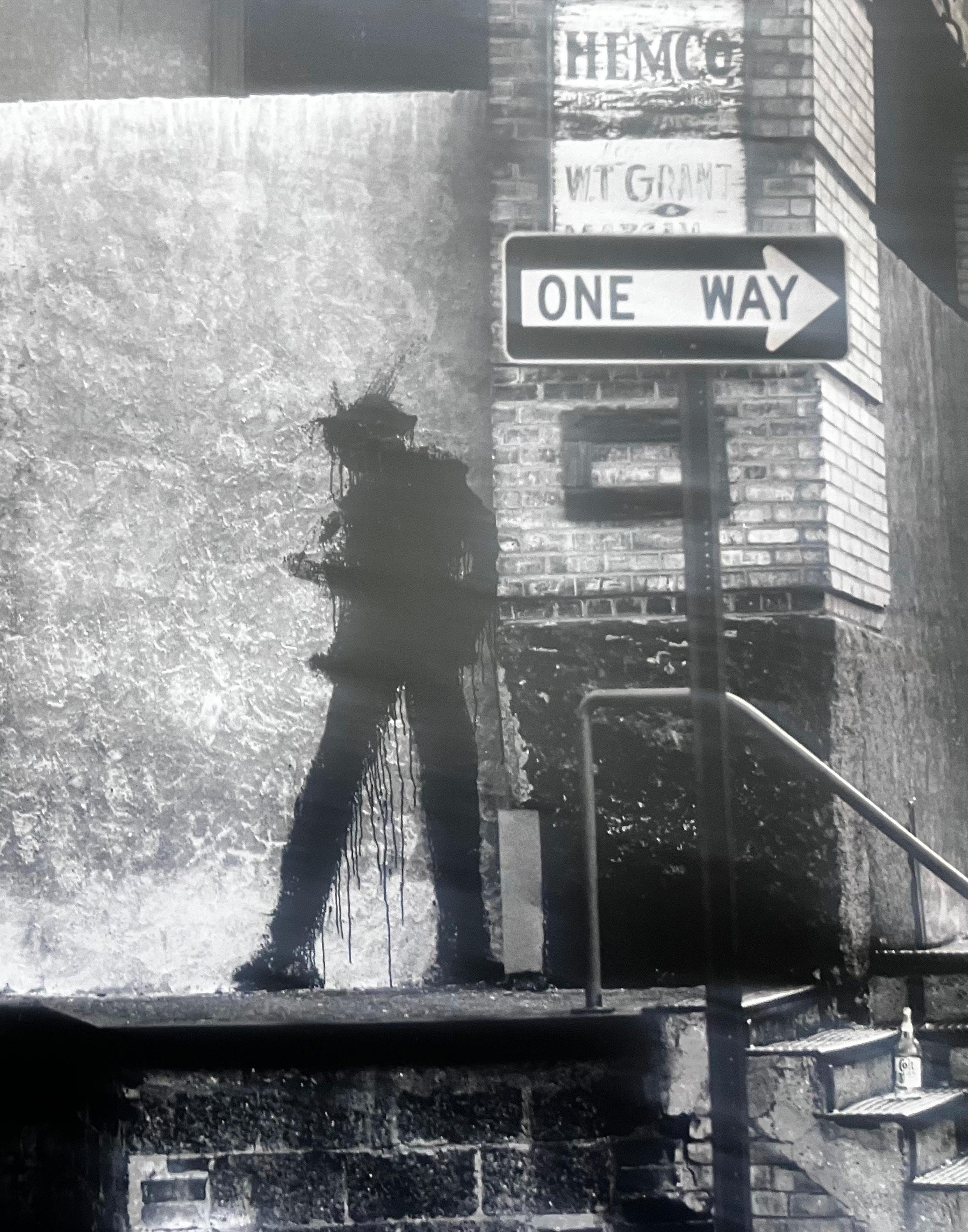
« J’ai peint la ville en noir. Ils (les Shadowmen) pourraient représenter les gardiens ou le danger ou les ombres d’un corps humain après un holocauste nucléaire ou même ma propre ombre. »
- Richard Hambleton in People magazine, 1984
Richard Hambleton est l’un des artistes de rue les plus en vue des années 80. Proche de Jean-Michel Basquiat et de Keith Haring, cet artiste canadien s’est fait connaître sous le nom de Shadowman après avoir peint des centaines de silhouettes dans les rues de New York. En 1979, Hambleton déménage définitivement dans le Lower East Side de New York. Alors que les writers défoncent le métro, Jean-Michel Basquiat, Keith Haring et Richard Hambleton peignent dans les rues éclatées de la Grosse Pomme. Il investit l’espace urbain dans 15 villes aux ÉtatsUnis et au Canada en peignant des silhouettes au sol, comme le fait alors la police pour délimiter les scènes de crime. Ses interventions sont considérées comme étant les premières émanations du Street Art. Dans les années 80, Richard Hambleton développe une passion pour les coins sombres de la ville de New York et s’emploie à les rendre encore plus fascinants en y ajoutant des grandes silhouettes noires et terrifiantes. Hambleton acquiert une notoriété avec ses Shadowman. Chaque peinture ressemble à une image grandeur nature d’une personne mystérieuse, une « silhouette d’ombre splashy ». Ces « peintures d’ombre » ont été éclaboussées et badigeonnées de peinture noire sur des centaines de bâtiments et d’autres structures à New York. Les emplacements étaient calculés pour avoir un impact maximal sur les piétons qui ne se doutaient de rien.
Richard Hambleton is one of the most prominent street artists of the 80s. Close to Jean-Michel Basquiat and Keith Haring, the Canadian artist became known as Shadowman after painting hundreds of silhouettes on the streets of New York. Hambleton moved permanently to the Lower East Side of New York in 1979. While the “writers” blasted their way into the subway, Jean-Michel Basquiat, Keith Haring and Richard Hambleton painted in the explosive streets of the Big Apple. His works appeared in the urban spaces of 15 cities in the United States and Canada, where he painted human shapes on the ground like police “chalk” outlines that delineate a crime scene. His works were considered the first examples of street art. In the 1980s, Richard Hambleton developed a passion for the dark corners of New York City and worked to make them even more fascinating by adding big black and terrifying silhouettes and acquired notoriety with his Shadowman paintings. Each painting resembles a life-sized silhouetted image of a mysterious person; a “splashy shadow figure”. These “shadow paintings” were splashed and brushed with black paint on hundreds of buildings and other structures in New York City. The locations of the works were calculated to have a maximum impact on unsuspecting pedestrians.
Visuel : Hank O’Neal, Richard Hambleton Shadowman, SoHo, New York, circa. 1984
52
Richard HAMBLETON
(Canadien - 1952-2017)
Shadow Head – 1992
Acrylique sur toile
Signée et datée
Référencée au dos « RHXX10130 » 120,5 × 105,5 cm
Provenance : Woodbury House, Londres (acquis auprès de l’artiste en 2010) Acquis directement auprès de cette dernière par l’actuel propriétaire
Une lettre de provenance de Woodbury House sera remise à l’acquéreur
Acrylic on canvas; signed and dated 48 × 48 in.
30 000 – 50 000 €
« D’autres artistes exposent leurs œuvres dans la ville, mais ce que je peins sur les murs n’est qu’une partie du tableau. La ville complète psychologiquement le reste. Les gens vivent mes peintures. Ils ne se contentent pas de les regarder. »
- Richard Hambleton
Richard HAMBLETON
(Canadien - 1952-2017)
Untitled (landscape) – 1997
Acrylique sur carton toilé
33,3 × 43,5 cm
Provenance :
Ancienne collection Robert Murphy, acquis auprès de l’artiste
Dirty Pilot
Galerie Laurent Dubois, Paris
Acquis directement auprès de cette dernière par l’actuel propriétaire
Une lettre de provenance de Robert Murhy sera remis à l’acquéreur
Un certificat de la galerie Laurent Dubois sera remis à l’acquéreur
Acrylic on canvas board
12.99 × 16.92 in
5 000 – 7 000 €
54
Richard HAMBLETON
(Canadien - 1952-2017)
Untitled (Landscape) – 1997
Acrylique sur panneau de bois et cadre
Signé et daté
39 × 57,1 cm
Provenance :
Ancienne collection Robert Murphy, acquis auprès de l’artiste
Dirty Pilot
Galerie Laurent Dubois, Paris
Acquis directement auprès de cette dernière par l’actuel propriétaire
Une lettre de provenance de Robert Murphy en date du 9 avril 2022 sera remis à l’acquéreur
Un certificat de la galerie Laurent Dubois sera remis à l’acquéreur
Acrylic on wood and frame; signed and dated 15.35 × 22.44 in
5 000 – 7 000 €
55
Lady
Pink
(Américaine - Née en 1964)
Ladies of the art – 1981
Peinture aérosol sur toile
Signée et datée
176,5 × 126,5 cm
Provenance : Collection particulière, France
Galerie Laurent Dubois, Paris
Acquis directement auprès de cette dernière par l’actuel propriétaire
Un certificat de la galerie Laurent Dubois sera remis à l’acquéreur
Spray paint on canvas; signed and dated
69.48 × 49.60 in.
15 000 – 20 000 €
Véritable pionnière de la 1ère génération d’artistes graffeurs de New York, LADY PINK est née en Équateur mais a grandi à New York. En 1979, elle a commencé à écrire des graffitis et s’est rapidement fait connaître comme la seule femme capable de rivaliser avec les garçons dans le milieu du Graffiti. Elle a peint des rames de métro entre 1979 et 1985, et en 1982, elle a joué un rôle principal dans le film « Wild Style ». Ce rôle et ses autres contributions significatives au Graffiti ont fait d’elle une figure culte de la sous-culture hip-hop :
Quand j’ai commencé à peindre, dans les années 70, les femmes essayaient toujours de prouver par elles-mêmes qu’elles pouvaient faire tout ce que les hommes faisaient. Le mouvement féministe était de plus en plus fort et, en tant qu’adolescente, je pense que ça m’a influencé. Sans m’en rendre compte j’ étais devenue une jeune féministe. Plus les mecs disaient « vous ne pouvez pas faire ça », plus je devais prouver qu’ils avaient tort. Je devais le faire pour toutes mes sœurs qui me regardaient…
A true pioneer of the 1st generation of New York graffiti artists, LADY PINK was born in Ecuador but grew up in New York. In 1979, she began writing graffiti and quickly made a name for herself as the only woman able to compete with the boys in the graffiti scene. She painted subway trains between 1979 and 1985, and in 1982 played a starring role in the film “Wild Style”. This role and her other significant contributions to Graffiti have made her a cult figure in the hip-hop subculture:
When I started painting in the 70s, women were still trying to prove for themselves that they could do everything men could. The feminist movement was growing stronger and stronger and, as a teenager, I think that influenced me. Without realizing it, I had become a young feminist. The more guys said, “you can’t do that”, the more I had to prove them wrong. I had to do it for all my sisters who were watching me...
Sonic
(Américain - Né en 1961)
Boys are down – 1981 / 1982
Peinture aérosol et marqueur sur toile
Signée et datée
195 × 104 cm
Spray paint and marker on canvas; signed and dated 76.77 × 40.94 in.
22 000 – 25 000 €
Jesse Rodriguez est né en 1961 à Brooklyn. Il a commencé à graffer, principalement sur les rames de métro new-yorkais en 1973. Un début de carrière pour le moins précoce, dans une époque moins ouverte qu’aujourd’hui. Avec Dondi et Rammellzee, il a ainsi réussi à immortaliser une scène de course-poursuite avec la police, image devenue célèbre. Pour autant, il ne faut surtout pas réduire à cette dimension historique le parcours de cet artiste –même si lui ne se revendique pas ainsi – qui a su imposer sa patte au fil des ans. Sonic fait partie des artistes urbains emblématiques d’une époque épique. Il figure ainsi dans de nombreux ouvrages, dont ceux de Martha Cooper, et plusieurs documentaires – Wild Style, Style Wars, Beat Street, Subway Art, Hip Hop Files
Jesse Rodriguez was born in Brooklyn in 1961. He began graffitiing, mainly on New York subway trains, in 1973. It was an early start to his career, to say the least, in an era that was less open than today. With Dondi and Rammellzee, he managed to immortalize a police chase scene, an image that has become famous. However, it would be wrong to reduce this artist’s career to this historical dimension alone—even if he himself does not claim it to be so—as he has made his mark over the years. Sonic is one of the iconic urban artists of an epic era. He appears in numerous books, including those by Martha Cooper, and several documentaries— Wild Style, Style Wars, Beat Street, Subway Art, Hip Hop Files, and more.
Visuel : Sonic devant l’œuvre Boys are Down en 1981
URBAN
« Les humains… Au XIVe siècle, les moines ont orné et ont illustré les manuscrits de lettres. Au XXIe et XXIIe siècle, les lettres de l’alphabet sont maintenant armées pour les courses de lettres et les batailles galactiques. Ceci a été rendu possible par une équation secrète connue sous le nom de RAMM: ELL: ZEE. »
- Rammellzee
Rammellzee est un des artistes pionniers du graffiti américain les plus inventifs et inspirés de sa génération. Il réalise ses premiers tags dans le métro new-yorkais en 1974 sur les lignes 2 et 5 en compagnie de Dondi White. Il refuse très vite l’étiquette de « writer » trop assimilée au vandalisme et se considère comme un artiste à part entière. Son style très personnel et atypique illustre la tendance conceptuelle et abstraite du graffiti à l’instar de celui de Koor et Futura. Il développe l’esthétique du Gothic Futurism, se voulant le successeur de l’œuvre commencée par les moines du Moyen-Âge lors de la période gothique sur le travail de la lettre stylisée. Tout comme elle est illisible chez les Gothiques, elle devient Wild Style dans le mouvement graffiti pour échapper à la MTA (Mass Transit Authority). Elle n’est plus déchiffrable que par les initiés. Dans ses théories, Rammellzee dénonce les perversions de l’alphabet. Vient ensuite l’Ikonoklast Panzerism, alphabet regroupant des lettres missiles dont le but est de détruire les symboles. La figuration y est absente. Rammellzee est aussi un musicien performeur apparaissant sur scène en tenue de camouflage rappelant un personnage évoluant entre samouraï et guerrier du Moyen-Âge. Rammellzee se construit un look et un personnage haut en couleur de sorcier vaudou du hip-hop, se couvrant le visage et le corps de masques et colifichets colorés en grand nombre. Là encore les conceptions de l’artiste transparaissent. Son album de 1982 Beat Bop, dont la pochette fut illustrée par Basquiat reste dans les annales du rap. Notons qu’avec Jean-Michel Basquiat et Toxic, il a formé le trio des Hollywood Africans qui donne son titre au tableau éponyme conservé au Whitney Museum.
Rammellzee is one of the most inventive and inspired pioneering American graffiti artists of his generation. He made his first tags on the New York subway in 1974 on lines 2 and 5 in the company of Dondi White. He quickly refutes the label of “writer”, too assimilated to vandalism, and considers himself a full-fledged artist. His very personal and atypical style illustrates the conceptual and abstract trend of graffiti, like Koor and Futura. He develops the aesthetics of Gothic Futurism, wanting to be the successor of the work started by the monks of the Middle Ages in the Gothic period on the work of the stylized letter. Just as it is illegible in Gothic, it becomes “Wild Style” in the graffiti movement to escape the MTA (Mass Transit Authority). It can only be decrypted by the initiated. In his theories, Rammellzee denounced the perversions of the alphabet. Then comes the Ikonoklast Panzerism, regrouping alphabet missile letters whose aim is to destroy symbols. Figuration is absent. Rammellzee is also a performing musician, appearing on stage in a camouflage reminiscent of a character somewhere between a samurai and a medieval warrior. Rammellzee builds up the colourful look and figure of a hip-hop voodoo sorcerer, covering his face and body with numerous colourful masks and trinkets. Here again, the artist’s designs are reflected. His 1982 album Beat Bop, whose cover was illustrated by Basquiat, remains in the annals of rap. It must be noted that along with Jean-Michel Basquiat and Toxic, he formed the Hollywood Africans trio which gave its title to the eponymous painting in the Whitney Museum.
Visuel : Portrait de Rammellzee
57
RAMMELLZEE
(Américain - 1960-2010)
The Coming of Zee – 1984
Gypse, résine, bois, peinture aérosol, pigments, billes et objets en plastique collés sur bois dans un cadre de l’artiste
Vente Sotheby’s, New York, Public Intervention : Art of the Street, 24 septembre au 1er octobre 2021, lot 408 Acquis directement lors de cette dernière par l’actuel propriétaire
Exposition : Groningue, Groninger Museum, en prêt à long terme de 1997 à 2017 New York, Red Bull Arts Center, RAMMELLZEE: Racing for Thunder, 4 mai au 26 août 2018
Bibliographie : Maxwell Wolf and Carlo McCormick, RAMM:ELL:ZEE (Racing For Thunder), Éditions Rizzoli Electa & New Canons, New York, 2024; reproduit pp.150 à 153
Gypsum, resin, wood, spray paint, pigments balls and collaged plastic objects on wood in artist’s frame 43.30 × 123.46 in.
200 000 – 250 000 €
RAMMELLZEE
(Américain - 1960-2010)
The Coming of Zee – 1984
Visuel : The Coming of Zee éclairée à la lumière noire
« Tout mon art et tous mes enseignements portent sur le futurisme gothique et la connaissance de la manière dont une lettre se transforme aérodynamiquement en char d’assaut… Notre situation actuelle consiste à enfoncer une porte de la connaissance cachée derrière la société… Nous parlons de l’origine du graffiti, là où la guerre acharnée a fait rage, avec des marqueurs contre des marqueurs et des lettres contre des lettres. On pense que la guerre consiste toujours à tirer et à tabasser tout le monde, mais non, nous avions les lettres qui se battaient pour nous. »
- Rammellzee
RAMMELLZEE
(Américain - 1960-2010)
The Coming of Zee – 1984
Au cœur de la carrière artistique de Rammellzee se trouve une mythologie personnelle élaborée et souvent complexe. Son nom, par exemple, écrit alternativement The RAMM:ELL:ZEE ou RAMMELLZEE, est dérivé d’une équation mathématique ésotérique. Lors de ses apparitions publiques, il incarnait souvent l’un des nombreux personnages d’un panthéon, chacun ayant sa propre histoire, sa propre personnalité et, surtout, un masque et un costume élaborés à partir d’objets trouvés et de détritus que l’artiste avait ramassés dans les rues de New York. Ces personnages habitaient le même monde fantastique, teinté de science-fiction, que leur créateur, dont le meilleur exemple est la Battle Station, le loft de Rammellzee à Tribeca, qui était à la fois sa maison et une installation sculpturale à part entière, indissociable de sa pratique artistique et de ses activités quotidiennes.
At the center of Rammellzee’s artistic career is an intricately crafted and often complex personal mythology. His name for instance, styled alternatively as The RAMM:ELL:ZEE or RAMMELLZEE, is derived from an esoteric mathematical equation. In his public appearances, he often embodied one of many characters from a pantheon of figures, each with its own history, persona, and most importantly a mask and costume elaborately constructed from found objects and detritus the artist collected from the streets of New York. These characters inhabited the same fantastical, science-fiction inflected world as their creator, one best exemplified in the Battle Station, Ramm’s Tribeca loft that was both his home and a full tilt sculptural installation inseparable from his studio practice and day to day activities.
Visuel : Vue de l’exposition
New York, Red Bull
Arts Center, RAMMELLZEE: Racing for Thunder, 4 mai
The Coming of Zee (1984) fait partie intégrante de l’univers dévorant de Rammellzee. Mesurant plus de trois mètres de large et composée de divers matériaux, notamment de la peinture, du plâtre, du bois et des objets en plastique incrustés dans des couches de résine époxy, cette œuvre monumentale brouille les frontières entre peinture, sculpture et installation. Le titre fait allusion à une histoire des origines, tandis que les couleurs néon vives et les formes tourbillonnantes évoquent un cosmos planétaire ou un paysage topographique, rempli d’un « big bang » d’étoiles ou d’éruptions volcaniques, ou peut-être de formes plus imaginaires connues uniquement de Rammellzee. Il s’agit d’une œuvre phare d’un artiste qui s’est consacré sans relâche à manifester le monde qu’il souhaitait voir.
The Coming of Zee (1984) is part and parcel of Rammellzee’s all-consuming universe. Over 10 feet wide and composed of various media including paint, gypsum, wood, and plastic objects embedded in layers of epoxy resin, this monumental work blurs the line between painting, sculpture, and installation. The title alludes to an origin story while bright neon colors and swirling forms resemble a planetary cosmos or topographical landscape, one filled with a “big bang” of stars or volcanic eruptions, or perhaps more imaginary forms known only to Ramm. It is a seminal work by an artist with an unflinching dedication to manifesting the world he wished to see.
TOXIC
(Américain - Né en 1965)
The Lord Tar – 1990
Peinture aérosol sur trois toiles assemblées dans un encadrement
Signées et datées au dos 194 × 243,3 cm
Provenance :
Galerie Laurent Dubois, Paris Acquis directement auprès de cette dernière par l’actuel propriétaire
Un certificat de la galerie Laurent Dubois sera remis à l’acquéreur
Spray paint on 3 canvases; signed and dated on the reverse 76.37 × 95.66 in.
20 000 – 30 000 €
Torrick Ablack est l’un des pionniers du mouvement Graffiti du début des années 80. Sous le nom de Toxic, il grandit dans le Bronx et commence à l’âge de 13 ans à faire ses armes sur les trains et les murs de New York, aux côtés de ses amis, Kool Koor et A-One. Ses rencontres avec Rammellzee et Jean-Michel Basquiat (avec lesquels il forma plus tard les Hollywood Africans, nom d’un célèbre tableau de Basquiat) au début des années 80 furent déterminantes. Toxic apparaitra dans plusieurs œuvres de Basquiat dont la plus connue est Toxic, réalisée en 1984. Les trois Hollywood Africans se présentent comme des commentateurs sociaux et politiques des stéréotypes afro-américains. Cette même année, il expose à la célèbre galerie Fashion Moda du Bronx et tout s’enchaine : Allemagne, Angleterre, France, Hollande, Danemark, Suisse, Italie, Israël… Depuis, son talent et son succès, auprès d’un public averti, ne se sont jamais démentis. En 2006 le Whitney Museum de Brooklyn rend hommage aux précurseurs du mouvement graffiti et le consacre comme artiste majeur aux côtés de légendes comme NOC 167, Bear 167 et Fab 5 Freddy. En 2024, il bénéficie d’une exposition à Londres à Woodbury House, All Imperfections Included. Il est à noter que ce tableau a la singularité d’avoir une approche figurative ce qui est très rare chez lui qui est un des représentants importants de l’abstraction et de l’explosion de couleurs propre au graffiti.
Torrick Ablack was one of the pioneers of the Graffiti movement in the early 80s. Under the name Toxic, he grew up in the Bronx and at the age of 13 began to make his mark on the trains and walls of New York, alongside his friends Kool Koor and A-One. His encounters with Rammellzee and JeanMichel Basquiat (with whom he later formed the Hollywood Africans, named after a famous Basquiat painting) in the early 80s were decisive. Toxic would appear in several of Basquiat’s works, the best known of which is Toxic, produced in 1984. The three Hollywood Africans are social and political commentaries on African-American stereotypes. That same year, he exhibited at the famous Fashion Moda gallery in the Bronx, and the show went on to Germany, England, France, Holland, Denmark, Switzerland, Italy, Israel... Since then, his talent and success with a discerning public have never wavered. In 2006, the Whitney Museum in Brooklyn paid homage to the precursors of the graffiti movement, consecrating him as a major artist alongside such legends as NOC 167, Bear 167 and Fab 5 Freddy. In 2024, All Imperfections Included was shown at Woodbury House in London. It’s worth noting that this painting has the singularity of having a figurative approach, which is very rare for him, who is one of the leading exponents of abstraction and the explosion of color characteristic of graffiti.
TOXIC
(Américain - Né en 1965)
Ransom note: Kill a pyramid 1983 / 84
Peinture aérosol et acrylique sur toile 132,5 × 147,5 cm
Provenance : Galerie Thomas, Munich Ghost Gallery, Paris Collection particulière, Europe
Exposition : Munich, Galerie Thomas, Classical American Graffiti Writers and High Graffiti Artists, 5 avril au 2 juin 1984 Paris, Ghost Gallery, Only spray tag in the past, décembre 2023 - mars 2024
Bibliographie : Catalogue exposition Classical American Graffiti Writers and High Graffiti Artists, Galerie Thomas, Munich, 1984, reproduit p.55
Spray paint and acrylic on canvas 52.16 × 58.07 in.
10 000 – 15 000 €
60
(Américain - Né en 1963)
The ZH Formula – 1990
Peinture aérosol sur toile
Signée, titrée et datée au dos
166,5 × 210 cm
Spray paint on canvas; signed, titled and dated on the reverse 65.35 × 82.67 in.
10 000 – 15 000 €
KOOL KOOR
A-One (Anthony Clark) est originaire de Manhattan, quartier dans lequel il va commencer à « writer » sur les murs. Il tague vers la 149e rue et le pont de Brooklyn. Membre des TDS TDT, de la Zulu Nation, il participe en 1982 à l’exposition South Bronx Show à la Fashion Moda Gallery puis il réalise avec Toxic et Koor une fresque Camouflage Panzerism. A-One est un pionnier de cette génération qui passe sur toile. Il développe un travail expressionniste aérosol faisant le lien entre la culture américaine et ses racines africaines, rasta. Il y mêle la mythologie de la rue. Proche de Basquiat qui l’aide dans ses relations avec le monde de l’art, il participe à la Biennale de Venise en 1984 et à plusieurs expositions aux États-Unis et en Europe (Maurice Keitelman à Bruxelles...). Il est considéré comme un artiste capital, très respecté et une icône.
A-One (Anthony Clark) is from Manhattan, the neighbourhood in which he will start to “write” on the walls. He tags from around 149th Street and the Brooklyn Bridge. Member TDS TDT and the Zulu Nation, in 1982 he participates in the South Bronx Show exhibition at Fashion Moda Gallery then, with Toxic and Koor, he creates a fresco called Camouflage Panzerism. A-One is a pioneer of this generation who graduates on to canvas. He develops an expressionist aerosol work linking American culture and his African Rasta roots. In it, he mixes the street mythology. Close to Basquiat who helps him in his relations with the art world, he participates in the Venice Biennale in 1984 and in several exhibitions in the United States and in Europe (Maurice Keitelman in Brussels...). He is considered a major artist, highly respected and an icon.
Acquis directement auprès de cette dernière par l’actuel propriétaire
Exposition :
Monaco, Grimaldi Forum, L’art du graffiti - 40 ans de pressionnisme 21 juillet au 19 août 2011
Bibliographie : L’art du graffiti - 40 ans de pressionnisme, Monaco, 2011, reproduit
Spray paint on canvas 55.90 × 72.83 in.
18 000 – 25 000 €
Phase 2 est l’un des graffeurs new-yorkais les plus influents, souvent considéré comme l’inventeur du graffiti en lettres à bulles, si communément utilisé aujourd’hui. Phase 2 a commencé à écrire des graffitis en 1971 en taguant son nom à travers la ville. Il ne lui a fallu qu’un an pour créer une première version de ses lettres bulles, qui ont été rapidement reprises et copiées par d’autres artistes de rue. Au fil des années, ce graffeur s’est éloigné des tags « simples » pour adopter un style plus complexe d’« abstraction calligraphique hiéroglyphique », et ses œuvres de ces années-là sont les plus importantes pour le développement du mouvement de l’art de la rue. Au milieu des années 1970, Phase 2 a rejoint le tout nouveau United Graffiti Artists, un collectif de graffeurs professionnels qui a rapidement attiré l’attention des médias et donné un coup d’accélérateur à sa carrière artistique.
Phase 2, is one of the most influential New York graffiti artists, often credited as the inventor of the bubble letter graffiti, so commonly used today. Phase 2 began writing graffiti in 1971 by tagging his name across the city. It took him only a year to create an early version of his signature bubble letters, which were quickly picked-up and copied by other street artists. Over the years, this graffiti artist moved away from ’simple’ tags and toward a more complex style of ’hieroglyphical calligraphic abstraction’, and his works from those years stand as the most important in the early development of the street art movement. In the mid-1970s, Phase 2 joined the newly created United Graffiti Artists, a professional graffiti collective which quickly attracted media attention and skyrocketed his artistic career.
63
DONDI
WHITE (Donald J. White dit) (Américain - 1961-1998)
Untitled – 1981
Peinture aérosol et acrylique sur panneau de bois
Signé et daté
43,6 × 42 cm
Provenance :
Ancienne collection Leonard McGurr (Futura), New York Collection particulière, New York Vente Sotheby’s, New York, Public Intervention : Art of the Street (Online Auction), 1er octobre 2021, lot 410 Acquis lors de cette dernière par l’actuel propriétaire
Spray paint and acrylic on wood: signed an dated 16.92 × 16.53 in.
15 000 – 20 000 €
64
SEEN (Richard Mirando dit)
(Américain - Né en 1961)
A touch of Class – 1983
Peinture aérosol sur toile Signée, datée et titrée 130 × 85,5 cm
Provenance : Henk Pijnenburg, Deurne
Acquis directement auprès de cette dernière par l’actuel propriétaire
Spray paint on canvas; signed, dated and titled 51.18 × 33.46 in.
6 000 – 8 000 €
HOPARE
(Français - Né en 1989)
Interversion – 2023
Huile et pastel sur toile
Signée et datée au dos
255 × 204,5 cm
Provenance :
Acquis directement auprès de l’artiste par l’actuel propriétaire
Oil and pastel on canvas; signed and dated on the reverse 100.39 × 80.31 in.
28 000 – 35 000 €
Hopare peut se définir comme un artiste figuratif contemporain pratiquant la figuration libre ; cependant son travail n’existerait pas sans l’abstraction. Le travail d’Alexandre Hopare Monteiro semble non se jouer des contraires mais vouloir les concilier en une Inédite et paradoxale unité. Sur le plan théorique, Hopare pratique une abstraction au sens étymologique du terme. Par une composition qui génère du sens sans se référer directement au concret tout d’abord. Ensuite, par une idéalisation des formes et des traits qui permettent la représentation d’un sujet. Par cela le sujet n’est plus un simple objet, y compris le personnage, mais une histoire, un discours pictural.
La peinture est pour lui un langage au sens strict, qui ne se contente pas de chercher la trace du monde tel qu’il s’offre à nos yeux candides. Alexandre s’inspire des photographies de rue c’est sa recréation comme il le dit. Il prend des fragments de la réalité pour construire son cosmos personnel.
Hopare can be defined as a contemporary figurative artist practicing free figurative work; however, his work would not exist without abstraction. The work of Alexandre Hopare Monteiro seems not to play with opposites, but to reconcile them in an unprecedented and paradoxical unity. On a theoretical level, Hopare practices abstraction in the etymological sense of the term using a composition that generates meaning without initially making a direct reference to the subject. Then, by an idealisation of forms and marks that enable the representation of a subject. The subject is therefore no longera mere object, including the character, but a story, a pictorial speech. For him, painting is a language in the strict sense, which is not content with seeking the trace of the world as it is offered up to our innocent eyes. Alexandre is inspiredby street photography, and he says this is his hobby. He takes fragments of reality to build his personal cosmos.
JONONE (John Andrew Perello dit)
(Américain - Né en 1963)
Ballads of Blood – 1992
Acrylique, marqueur et peinture aérosol sur toile
Signée, datée et titrée au dos 140 × 135 cm
Provenance : Collection particulière, Vienne À l’actuel propriétaire par descendance
Acrylic, marker and spray paint on canvas; signed, dated and titled on the reverse 55.11 × 53.14 in.
10 000 – 15 000 €
JonOne est originaire du quartier de Harlem à New York sur les murs duquel il a commencé à taguer. Pour lui, le métro était la seule chose vivante de New York. L’interdit, l’attirance pour ces supports à couleur roulants le poussent dans les tunnels. Pendant plusieurs années il appose son nom Jon156, JonOne et se fait un « nom ». Il se distingue par l’abstraction de ses réalisations qui tranchent avec le tag ou la représentation figurative d’autres. Ses influences : les grands maîtres, de Miró à Pollock en passant par de Kooning. Il y joint l’énergie et la force du terrain. Vers 1985, son maître A-One lui fait découvrir la toile. En 1987, il arrive à Paris invité par Bando, et se révèle sur la scène parisienne dont il est aujourd’hui un des acteurs majeurs. JonOne s’est fait connaître par ses toiles saturées de couleurs, énergie pour lui. Le vide n’existe pas, cette couleur est essentielle voire vitale. Jeux de nuances, palette riche et vive.
JonOne comes from Harlem in New York, where he started his tagging. For him, the subway was the only living thing in New York. The forbidden, the attraction to these mediums with rolling colours enticed him into the tunnels. For several years he signs his name Jon156, JonOne and makes a “name” for himself. He distinguishes himself by the abstraction of his realisations that contrast with the tag or other figurative representations. His influences: the great masters, Miró, Pollock through to Kooning. He joined both energy and strength to the terrain. Around 1985, his master, A-One introduces him to canvas. In 1987, he arrives in Paris, invited by Bando, and appears on the Parisian, becoming one of its major players. JonOne is known for his saturated colour paintings, representing pure energy for him. The vacuum does not exist, this colour is essential or rather, vital. Games of shades, a rich, vivid palette.
Janlou Albrespy
« La vie, ce n’est pas d’attendre que les orages passent, c’est d’apprendre à danser sous la pluie. »
- Auteur anonyme
Paris est aujourd’hui une des places importantes pour la reconnaissance du street art ce qu’on appelle l’urban art.
Si les cultures graffiti sont arrivées seulement au milieu des années 80, Paris a connu avant l’expansion d’expressions urbaines spécifiques sur les murs de la ville. À travers l’expression des Éphémères de Zlotykamien, les pochoirs de Blek le Rat ou Miss. Tic, un vent de liberté artistique s’est propagé dès les années 60 puis à la fin des années 70, héritières du regard porté sur les actions de l’Atelier Populaire des Beaux-Arts de Paris en 1968. Peindre dans la rue, pour le plus grand nombre offrait un nouveau terrain de jeu à des artistes.
Ces expressions ont ouvert la voie à l’explosion de ce que l’on connait aujourd’hui presque cinquante après.
Paris is now one of the most important places for the recognition of street art, also known as urban art.
Although graffiti culture only arrived in the mid-1980s, Paris had already seen the spread of specific urban expressions on the city’s walls. Through the expression of Zlotykamien’s Éphémères, the stencils of Blek le Rat and Miss.Tic, a wind of artistic freedom spread from the 1960s to the late 1970s, inheriting the vision of the Atelier Populaire des Beaux-Arts de Paris in 1968. Painting in the street, for the greatest number of people, offered a new playground for artists.
These expressions paved the way for the explosion of what we know today, almost fifty years later.
BLEK LE RAT
(Français – Né en 1951)
Awesome Art
Pochoir, peinture aérosol et acrylique sur toile
Signée
154 × 121,5 cm
Provenance :
Kapopoulos Gallery, Athènes
Acquis directement auprès de cette dernière par l’actuel propriétaire
Spray paint stencil on canvas; signed 60.62 × 47.63 in.
15 000 – 20 000 €
« À chaque fois que je peins quelque chose je découvre que Blek le Rat l’a déjà fait simplement 20 ans avant ! »
- Banksy
Véritable pionnier du pochoir, Blek débute sur les murs de Paris au début des années 80. De nombreux petits rats recouvrent alors les murs de la capitale. Il empruntera son pseudonyme en référence à un personnage de bande dessinée. Formé aux Beaux-Arts, il développe très vite des personnages grandeur nature, parfois inspirés par les œuvres classiques, l’Histoire de l’art, l’Antiquité, la Renaissance. Au début des années 90, victime de plusieurs interpellations, il abandonne le bombage direct sur le mur et lui substitue le collage d’affiches. Dès lors il réalise de très nombreuses interventions, ses sujets de prédilection étant le soldat russe, les danseurs et danseuses de tango mis en scène dans des décors, le Faune, mais aussi des personnalités.
Dans l’œuvre Awesome Art de 2017, il reprend une des Madones de Botticelli, la Vierge à la grenade datée vers 1487 conservée aux Offices à Florence.
A true pioneer of stencil art, Blek began painting on the walls of Paris in the early 1980s. Numerous little rats covered the walls of the capital. He borrowed his pseudonym from a comic book character. Trained in fine arts, he quickly developed life-size characters, sometimes inspired by classical works, art history, antiquity, and the Renaissance. In the early 1990s, after being arrested several times, he abandoned direct spray painting on walls and replaced it with poster collages. From then on, he produced a large number of works, his favorite subjects being Russian soldiers, tango dancers staged in settings, the Faun, and also famous people.
In his 2017 work Awesome Art, he revisits one of Botticelli’s Madonnas, the Madonna of the Pomegranate, dated around 1487 and housed in the Uffizi Gallery in Florence.
Visuel : Botticelli, Vierge à la grenade, vers 1487, Galerie des Offices, Florence
MISS.TIC
(Française - 1956-2022)
Femme de l’être avec les mots de l’âme
Pochoir et peinture aérosol sur affiches
Signées et titrées
87 × 99 cm
Spray paint stencil on posters; signed and titled 34.22 × 38.97 in.
4 000 – 6 000 €
69
MISS.TIC
(Française - 1956-2022)
Il y a de la rage dans l’ère – 2015
Pochoir et peinture aérosol sur tôle
Signée
65 × 92 cm
Provenance :
Vente Digard, Paris, Art Urbain
Contemporain, 12 décembre 2023, lot 20
Acquis directement lors de celle-ci par l’actuel propriétaire
Spray paint stencil on metal; signed 25.59 × 36.22 in.
7 000 – 9 000 €
70
CHANEL × MEDICOM TOY
Bearbrick Coco Chanel 1000%
2006
ABS
Numéroté au dos "532"
Hauteur : 70 cm
Édition Medicom Toy, Tokyo à 1000 exemplaires
Provenance : Acquis auprès de la maison Chanel par l’actuel propriétaire
ABS; numbered on the reverse Height: 27.6 in.
18 000 – 25 000 €
71
ANDRÉ (André Saraiva dit)
(Français - Né en 1971)
Mr. A. – 2004
Acrylique sur toile Signée et datée au dos Diamètre : 35 cm
Acrylic on canvas; signed and dated on the reverse Diameter: 13.77 in.
700 – 900 €
72
Gérard ZLOTYKAMIEN
(Français - Né en 1940)
Sans titre (Éphémère)
Circa 2010
Peinture aérosol sur toile à matelas
Signée des initiales
178 × 100 cm
Provenance:
Vente Artcurial, Paris, Art Urbain Contemporain, 22 janvier 2013, lot 294
Acquis directement lors de cette dernière par l’actuel propriétaire
Spray paint on canvas; signed with initials 70.07 × 39.37 in.
6 000 – 8 000 €
Gio PONTI (1891-1979)
Rare table basse - circa 1955
Un certificat des Archives Ponti sera remis à l’acquéreur.
Estimation : 60 000 - 80 000 €
Max INGRAND (1908-1969)
Lampadaire - circa 1960
Édition Fontana Arte
Estimation : 10 000 - 12 000 €
Vente Design Italien le 3 décembre 2025
DESIGN
Ventes aux enchères :
Design Scandinave
Mercredi 19 novembre 2025 - 17h
Art Déco/Design Mardi 2 décembre 2025 - 16h
Design Italien
Mercredi 3 décembre 2025 - 16h
Contact : Sabrina Dolla +33 (0)1 42 99 16 40
sdolla@artcurial.com
www.artcurial.com
BANKSY (Né en 1974)
Love Is In The Air AP - 2003
Sérigraphie en couleurs
Signée, datée et justifiée "AP/03"
Édition 3 / 27
50 × 70 cm
Un certificat du Pest Control sera remis à l’acquéreur
Estimation : 150 000 - 200 000 €
Vente aux enchères : Mercredi 3 décembre 2025 - 18h
7 rond-point des Champs-Élysées Marcel Dassault 75008 Paris
Contact : Karine Castagna
+33 (0)1 42 99 20 28 kcastagna@artcurial.com
www.artcurial.com
Max ERNST (1891-1976)
La coquille - 1956
Huile sur panneau
Signé et daté en bas à droite "max ernst 56" 37,50 × 46 cm
Estimation : 100 000 – 150 000 €
MODERNE
Ventes aux enchères : Mardi 9 décembre 2025 - 14h & 18h
7 rond-point des Champs-Élysées Marcel Dassault 75008 Paris
Offerte à Jean Alesi en 1992 par la Scuderia Exposée dans sa villa depuis plus de 30 ans Dans son état d’origine, complète avec ses composants mécaniques et électroniques d’époque
CONDITIONS GÉNÉRALES D’ACHAT AUX ENCHÈRES PUBLIQUES
ARTCURIAL SAS
Artcurial SAS est un opérateur de ventes volontaires de meubles aux enchères publiques régie par les articles L 321-4 et suivant du Code de commerce. En cette qualité Artcurial SAS agit comme mandataire du vendeur qui contracte avec l’acquéreur. Les rapports entre Artcurial SAS et l’acquéreur sont soumis aux présentes conditions générales d’achat qui pourront être amendées par des avis écrits ou oraux avant la vente et qui seront mentionnés au procès-verbal de vente.
En tant qu’opérateur de ventes volontaires, ARTCURIAL SAS est assujetti aux obligations listées aux articles L.561-2 14° et suivants du Code Monétaire et Financier relatifs à la lutte contre le blanchiment d’argent et le financement du terrorisme.
1 . LE BIEN MIS EN VENTE
a) Les acquéreurs potentiels sont invités à examiner les biens pouvant les intéresser avant la vente aux enchères, et notamment pendant les expositions. Artcurial SAS se tient à la disposition des acquéreurs potentiels pour leur fournir des rapports sur l’état des lots.
b) Les descriptions des lots résultant du catalogue, des rapports, des étiquettes et des indications ou annonces verbales ne sont que l’expression par Artcurial SAS de sa perception du lot, mais ne sauraient constituer la preuve d’un fait.
c) Les indications données par Artcurial SAS sur l’existence d’une restauration, d’un accident ou d’un incident affectant le lot, sont exprimées pour faciliter son inspection par l’acquéreur potentiel et restent soumises à son appréciation personnelle ou à celle de son expert.
L’absence d’indication d’une restauration d’un accident ou d’un incident dans le catalogue, les rapports, les étiquettes ou verbalement, n’implique nullement qu’un bien soit exempt de tout défaut présent, passé ou réparé. Inversement la mention de quelques défauts n’implique pas l’absence de tout autres défauts.
d) Les estimations sont fournies à titre purement indicatif et elles ne peuvent être considérées comme impliquant la certitude que le bien sera vendu au prix estimé ou même à l’intérieur de la fourchette d’estimations. Les estimations ne sauraient constituer une quelconque garantie.
Les estimations peuvent être fournies en plusieurs monnaies ; les conversions peuvent à cette occasion être arrondies différemment des arrondissements légaux.
e) Les biens d’occasion (tout ce qui n’est pas neuf) ne bénéficient pas de la garantie légale de conformité conformément à l’article L 217-2 du Code de la consommation.
2 . LA VENTE
a) En vue d’une bonne organisation des ventes, les acquéreurs potentiels sont invités à se faire connaître auprès d’Artcurial SAS, avant la vente, afin de permettre l’enregistrement de leurs données personnelles. Artcurial SAS se réserve le droit de demander à tout acquéreur potentiel de justifier de son identité ainsi que de ses références bancaires et d’effectuer un déposit. Artcurial SAS se réserve d’interdire l’accès à la salle de vente de tout acquéreur potentiel pour justes motifs. Une enchère est acceptée au regard des informations transmises par l'encherisseur avant la vente. En conséquence, aucune modification du nom de l'adjudicataire ne pourra intervenir après la vente.
b) Toute personne qui se porte enchérisseur s’engage à régler personnellement et immédiatement le prix d’adjudication augmenté des frais à la charge de l’acquéreur et de tous impôts ou taxes qui pourraient être exigibles.Tout enchérisseur est censé agir pour son propre compte sauf dénonciation préalable de sa qualité de mandataire pour le compte d’un tiers, acceptée par Artcurial SAS.
c) Le mode normal pour enchérir consiste à être présent dans la salle de vente. Toutefois Artcurial SAS pourra accepter gracieusement de recevoir des enchères par téléphone d’un acquéreur potentiel qui se sera manifesté avant la vente. Artcurial SAS ne pourra engager sa responsabilité notamment si la liaison téléphonique n’est pas établie, est établie tardivement, ou en cas d’erreur ou d’omissions relatives à la réception des enchères par téléphone. À toutes fins utiles, Artcurial SAS se réserve le droit d’enregistrer les communications téléphoniques durant la vente. Les enregistrements seront conservés jusqu’au règlement du prix, sauf contestation.
d) Artcurial SAS pourra accepter gracieusement d’exécuter des ordres d’enchérir qui lui auront été transmis avant la vente, pour lesquels elle se réserve le droit de demander un déposit de garantie et qu’elle aura acceptés. Si le lot n’est pas adjugé à cet enchérisseur, le déposit de garantie sera renvoyé sous 72h.
Si Artcurial SAS reçoit plusieurs ordres pour des montants d’enchères identiques, c’est l’ordre le plus ancien qui sera préféré. Artcurial SAS ne pourra engager sa responsabilité notamment en cas d’erreur ou d’omission d’exécution de l’ordre écrit.
e) Dans l’hypothèse où un prix de réserve aurait été stipulé par le vendeur, Artcurial SAS se réserve le droit de porter des enchères pour le compte du vendeur jusqu’à ce que le prix de réserve soit atteint.En revanche le vendeur n’est pas autorisé à porter lui-même des enchères directement ou par le biais d’un mandataire.Le prix de réserve ne pourra pas dépasser l’estimation basse figurant dans le catalogue ou modifié publiquement avant la vente.
f) Artcurial SAS dirigera la vente de façon discrétionnaire, en veillant à la liberté des enchères et à l’égalité entre l’ensemble des enchérisseurs, tout en respectant les usages établis.Artcurial SAS se réserve de refuser toute enchère, d’organiser les enchères de la façon la plus appropriée, de déplacer certains lots lors de la vente, de retirer tout lot de la vente, de réunir ou de séparer des lots.En cas de contestation Artcurial SAS se réserve de désigner l’adjudicataire, de poursuivre la vente ou de l’annuler, ou encore de remettre le lot en vente.
g) Sous réserve de la décision de la personne dirigeant la vente pour Artcurial SAS, l’adjudicataire sera la personne qui aura porté l’enchère la plus élevée pourvu qu’elle soit égale ou supérieure au prix de réserve, éventuellement stipulé.
Le coup de marteau matérialisera la fin des enchères et le prononcé du mot « adjugé » ou tout autre équivalent entraînera la formation du contrat de vente entre le vendeur et le dernier enchérisseur retenu. L’adjudicataire ne pourra obtenir la livraison du lot qu’après règlement de l’intégralité du prix. en cas de remise d’un chèque ordinaire, seul l’encaissement du chèque vaudra règlement. Artcurial SAS se réserve le droit de ne délivrer le lot qu’après encaissement du chèque. Le lot non adjugé pourra être vendu après la vente dans les conditions de la loi sous réserve que son prix soit d’au moins 1.500 euros.
h) Pour faciliter les calculs des acquéreurs potentiels, Artcurial SAS pourra être conduit à utiliser à titre indicatif un système de conversion de devises. Néanmoins les enchères ne pourront être portées en devises, et les erreurs de conversion ne pourront engager la responsabilité de Artcurial SAS.
3 . L’EXÉCUTION DE LA VENTE
a) En sus du prix de l’adjudication, l’adjudicataire (acheteur) devra acquitter par lot et par tranche dégressive les commissions et taxes suivantes:
1) Lots en provenance de l’UE:
• De 1 à 850 000 euros: 27 % + TVA au taux en vigueur.
• De 850 001 à 6 000 000 euros: 21 % + TVA au taux en vigueur.
• Au-delà de 6 000 001 euros: 14,5 % + TVA au taux en vigueur.
2) Lots en provenance hors UE : (indiqués par un m): Œuvres d’art, antiquités et biens de collection: L’adjudication sera portée hors taxe. A cette adjudication sera ajoutée une TVA au taux réduit de 5,5% qui pourra être rétrocédée à l’adjudicataire sur présentation d'un justificatif d’exportation hors UE ou à l’adjudicataire UE justifiant d’un numéro de TVA intracommunautaire et d’un document prouvant la livraison dans son état membre. Les commissions et taxes indiquées au paragraphe 1) ci-dessus demeurent identiques.
3) Lots en provenance hors UE (indiqués par un m) Bijoux et Montres, Vins et Spiritueux, Multiples: Aux commissions et taxes indiquées au paragraphe 1) ci-dessus, il conviendra d’ajouter des frais liés à l’importation correspondant à 20% du prix d’adjudication.
4) Des frais additionnels seront facturés aux adjudicataires ayant enchérit en ligne par le biais de plateformes Internet autres qu’ARTCURIAL LIVE.
5) La TVA sur commissions et les frais liés à l’importation pourront être rétrocédés à l’adjudicataire sur présentation des justificatifs d’exportation hors UE.L’adjudicataire UE justifiant d’un n° de TVA Intracommunautaire et d’un document prouvant la livraison dans son état membre pourra obtenir le remboursement de la TVA sur commissions.
Le paiement du lot aura lieu au comptant, pour l’intégralité du prix, des frais et taxes, même en cas de nécessité d’obtention d’une licence d’exportation. L’adjudicataire pourra s’acquitter par les moyens suivants :
- En espèces : jusqu’à 1 000 euros frais et taxes compris pour les ressortissants français et les personnes agissant pour le compte d’une entreprise, 15 000 euros frais et taxe compris pour les ressortissants étrangers sur présentation de leurs papiers d’identité ; - Par chèque bancaire tiré sur une banque française sur présentation d’une pièce d’identité et, pour toute personne morale, d’un extrait KBis daté de moins de 3 mois (les chèques tirés sur une banque étrangère ne sont pas acceptés);
- Par virement bancaire ;
- Par carte de crédit : VISA, MASTERCARD ou AMEX (en cas de règlement par carte American Express, une commission supplémentaire de 1,85 % correspondant aux frais d’encaissement sera perçue).
6) La répartition entre prix d’adjudication et commissions peut-être modifiée par convention particulière entre le vendeur et Artcurial sans conséquence pour l’adjudicataire.
b) Artcurial SAS sera autorisé à reproduire sur le procès-verbal de vente et sur le bordereau d’adjudication les renseignements qu’aura fournis l’adjudicataire avant la vente. Toute fausse indication engagera la responsabilité de l’adjudicataire. Dans l’hypothèse où l’adjudicataire ne se sera pas fait enregistrer avant la vente, il devra communiquer les renseignements nécessaires dès l’adjudication du lot prononcée. Toute personne s’étant fait enregistrer auprès de Artcurial SAS dispose d’un droit d’accès et de rectification aux données nominatives fournies à Artcurial SAS dans les conditions de la Loi du 6 juillet 1978.
c) Il appartiendra à l’adjudicataire de faire assurer le lot dès l’adjudication. Il ne pourra recourir contre Artcurial SAS, dans l’hypothèse où par suite du vol, de la perte ou de la dégradation de son lot, après l’adjudication, l’indemnisation qu’il recevra de l’assureur de Artcurial SAS serait avérée insuffisante.
d) Le lot ne sera délivré à l’acquéreur qu’après paiement intégral du prix, des frais et des taxes. En cas de règlement par chèque, le lot ne sera délivré qu’après encaissement définitif du chèque, soit 8 jours ouvrables à compter du dépôt du chèque. A compter du lundi suivant le 90e jour après la vente, le lot acheté réglé ou non réglé restant dans l’entrepôt, fera l’objet d’une facturation de 50€ HT par semaine et par lot, toute semaine commencée étant due dans son intégralité au titre des frais d’entreposage et d’assurance.À défaut de paiement par l’adjudicataire, après mise en demeure restée infructueuse, le bien est remis en vente à la demande du vendeur sur folle enchère de l’adjudicataire défaillant ; si le vendeur ne formule pas cette demande dans un délai de trois mois à compter de l’adjudication, la vente est résolue de plein droit, sans préjudice de dommages intérêts dus par l’adjudicataire défaillant. En outre, Artcurial SAS se réserve de réclamer à l’adjudicataire défaillant, à son choix : - Des intérêts au taux légal majoré de cinq points, - Le remboursement des coûts supplémentaires engendrés par sa défaillance, - Le paiement de la différence entre le prix d’adjudication initial et le prix d’adjudication sur folle enchère s’il est inférieur, ainsi que les coûts générés par les nouvelles enchères.
Artcurial SAS se réserve également de procéder à toute compensation avec des sommes dues à l’adjudicataire défaillant. Artcurial SAS se réserve d’exclure de ses ventes futures, tout adjudicataire qui aura été défaillant ou qui n’aura pas respecté les présentes conditions générales d’achat. e) Sous réserve de dispositions spécifiques à la présente vente, les achats qui n’auront pas été retirés dans les sept jours de la vente (samedi, dimanche et jours fériés compris), pourront être transportés dans un lieu de conservation aux frais de l’adjudicataire défaillant qui devra régler le coût correspondant pour pouvoir retirer le lot, en sus du prix, des frais et des taxes.
f) L’acquéreur pourra se faire délivrer à sa demande un certificat de vente qui lui sera facturé la somme de 60 euros TTC.
4 . LES INCIDENTS DE LA VENTE
En cas de contestation Artcurial SAS se réserve de désigner l’adjudicataire, de poursuivre la vente ou de l’annuler, ou encore de remettre le lot en vente.
a) Dans l’hypothèse où deux personnes auront porté des enchères identiques par la voix, le geste, ou par téléphone et réclament en même temps le bénéfice de l’adjudication après le coup de marteau, le bien sera immédiatement remis en vente au prix proposé par les derniers enchérisseurs, et tout le public présent pourra porter de nouvelles enchères.
b) Pour faciliter la présentation des biens lors de ventes, Artcurial SAS pourra utiliser des moyens vidéos. en cas d’erreur de manipulation pouvant conduire pendant la vente à présenter un bien différent de celui sur lequel les enchères sont portées, Artcurial SAS ne pourra engager sa responsabilité, et sera seul juge de la nécessité de recommencer les enchères.
5 . PRÉEMPTION DE L’ÉTAT FRANÇAIS
L’état français dispose d’un droit de préemption des œuvres vendues conformément aux textes en vigueur.
L’exercice de ce droit intervient immédiatement après le coup de marteau, le représentant de l’état manifestant alors la volonté de ce dernier de se substituer au dernier enchérisseur, et devant confirmer la préemption dans les 15 jours.
Artcurial SAS ne pourra être tenu pour responsable des conditions de la préemption par l’état français.
6 . PROPRIÉTÉ INTELLECTUELLE – REPRODUCTION DES ŒUVRES
Artcurial SAS est propriétaire du droit de reproduction de son catalogue. Toute reproduction de celui-ci est interdite et constitue une contrefaçon à son préjudice. En outre Artcurial SAS dispose d’une dérogation lui permettant de reproduire dans son catalogue les œuvres mises en vente, alors même que le droit de reproduction ne serait pas tombé dans le domaine public.
Toute reproduction du catalogue de Artcurial SAS peut donc constituer une reproduction illicite d’une œuvre exposant son auteur à des poursuites en contrefaçon par le titulaire des droits sur l’œuvre. La vente d’une œuvre n’emporte pas au profit de son propriétaire le droit de reproduction et de présentation de l’œuvre.
7. BIENS SOUMIS À UNE LÉGISLATION PARTICULIÈRE
La réglementation internationale du 3 mars 1973, dite Convention de Washington a pour effet la protection de specimens et d’espèces dits menacés d’extinction. Les termes de son application diffèrent d’un pays à l’autre. Il appartient à tout acheteur de vérifier, avant d’enchérir, la législation appliquée dans son pays à ce sujet. Tout lot contenant un élément en ivoire, en palissandre…quelle que soit sa date d’exécution ou son certificat d’origine, ne pourra être importé aux Etats-Unis, au regard de la législation qui y est appliquée. Il est indiqué par un (s).
8 . RETRAIT DES LOTS
L’acquéreur sera lui-même chargé de faire assurer ses acquisitions, et Artcurial SAS décline toute responsabilité quant aux dommages que l’objet pourrait encourir, et ceci dès l’adjudication prononcée. Toutes les formalités et transports restent à la charge exclusive de l’acquéreur.
9 . INDÉPENDANCE DES DISPOSITIONS
Les dispositions des présentes conditions générales d’achat sont indépendantes les unes des autres. La nullité de quelque disposition ne saurait entraîner l’inapplicabilité des autres.
10 . COMPÉTENCES LÉGISLATIVE ET JURIDICTIONNELLE
Conformément à la loi, il est précisé que toutes les actions en responsabilité civile engagées à l’occasion des prisées et des ventes volontaires et judiciaires de meuble aux enchères publiques se prescrivent par cinq ans à compter de l’adjudication ou de la prisée.La loi française seule régit les présentes conditions générales d’achat. Toute contestation relative à leur existence, leur validité, leur opposabilité à tout enchérisseur et acquéreur, et à leur exécution sera tranchée par le tribunal judiciaire compétent du ressort de Paris (France). Le Conseil des Ventes Volontaires, 19 avenue de l’Opéra – 75001 Paris peut recevoir des réclamations en ligne (www.conseildesventes.fr, rubrique « Réclamations en ligne »).
PROTECTION DES BIENS CULTURELS
Artcurial SAS participe à la protection des biens culturels et met tout en œuvre, dans la mesure de ses moyens, pour s’assurer de la provenance des lots mis en vente dans ce catalogue.
CONDITIONS OF PURCHASE IN VOLUNTARY AUCTION SALES
ARTCURIAL
Artcurial SAS is an operator of voluntary auction sales regulated by the law articles L321-4 and following of the Code de Commerce. In such capacity Artcurial SAS acts as the agent of the seller who contracts with the buyer. The relationships between Artcurial SAS and the buyer are subject to the present general conditions of purchase which can be modified by saleroom notices or oral indications before the sale, which will be recorded in the official sale record.
As a voluntary auction sales operator, ARTCURIAL SAS is subject to the obligations listed in articles L.561-2 14° and seq. of the French Monetary and Financial Code relating to the Anti Money Laundering regulation.
1. GOODS FOR AUCTION
a) The prospective buyers are invited to examine any goods in which they may be interested, before the auction takes place, and notably during the exhibitions. Artcurial SAS is at disposal of the prospective buyers to provide them with reports about the conditions of lots.
b) Description of the lots resulting from the catalogue, the reports, the labels and the verbal statements or announcements are only the expression by Artcurial SAS of their perception of the lot, but cannot constitute the proof of a fact.
c) The statements by made Artcurial SAS about any restoration, mishap or harm arisen concerning the lot are only made to facilitate the inspection thereof by the prospective buyer and remain subject to his own or to his expert’s appreciation. The absence of statements Artcurial SAS by relating to a restoration, mishap or harm, whether made in the catalogue, condition reports, on labels or orally, does not imply that the item is exempt from any current, past or repaired defect. Inversely, the indication of any defect whatsoever does not imply the absence of any other defects.
d) Estimates are provided for guidance only and cannot be considered as implying the certainty that the item will be sold for the estimated price or even within the bracket of estimates.
Estimates cannot constitute any warranty assurance whatsoever.
The estimations can be provided in several currencies ; the conversions may, in this case or, be rounded off differently than the legal rounding
e) Second-hand goods (anything that is not new) do not benefit from the legal guarantee of conformity in accordance with article L 217-2 of the Consumer Code.
2 . THE SALE
a) In order to assure the proper organisation of the sales, prospective buyers are invited to make themselves known to Artcurial SAS before the sale, so as to have their personal identity data recorded.
Artcurial SAS reserves the right to ask any prospective buyer to justify his identity as well as his bank references and to request a deposit.
Artcurial SAS reserves the right to refuse admission to the auction sales premises to any prospective buyer for legitimate reasons. A bid is accepted on the basis of the information provided by the bidder prior to the sale. Consequently, the name of the winning bidder cannot be changed after the sale.
b) Any person who is a bidder undertakes to pay personally and immediately the hammer price increased by the costs to be born by the buyer and any and all taxes or fees/expenses which could be due. Any bidder is deemed acting on his own behalf except when prior notification, accepted by Artcurial SAS, is given that he acts as an agent on behalf of a third party.
c) The usual way to bid consists in attending the sale on the premises. However, Artcurial SAS may graciously accept to receive some bids by telephone from a prospective buyer who has expressed such a request before the sale. Artcurial SAS will bear no liability / responsibility whatsoever, notably if the telephone contact is not made, or if it is made too late, or in case of mistakes or omissions relating to the reception of the telephone. For variety of purposes, Artcurial SAS reserves its right to record all the telephone communications during the auction. Such records shall be kept until the complete payment of the auction price, except claims.
d) Artcurial SAS may accept to execute orders to bid which will have been submitted before the sale and by Artcurial SAS which have been deemed acceptable. Artcurial SAS is entitled to request a deposit which will be refunded within 48hours after the sale if the lot id not sold to this buyer.
Should Artcurial SAS receive several instructions to bid for the same amounts, it is the instruction to bid first received which will be given preference. Artcurial SAS will bear no liability/responsibility in case of mistakes or omission of performance of the written order.
e) In the event where a reserve price has been stipulated by the seller, Artcurial SAS reserves the right to bid on behalf of the seller until the reserve price is reached. The seller will not be admitted to bid himself directly or through an agent. The reserve price may not be higher than the low estimate for the lot printed in or publicly modified before the sale.
f) Artcurial SAS will conduct auction sales at their discretion, ensuring freedom auction and equality among all bidders, in accordance with established practices.
Artcurial SAS reserves the right to refuse any bid, to organise the bidding in such manner as may be the most appropriate, to move some lots in the course of the sale, to withdraw any lot in the course of the sale, to combine or to divide some lots in the course of the sale. In case of challenge or dispute, Artcurial SAS reserves the right to designate the successful bidder, to continue the bidding or to cancel it, or to put the lot back up for bidding.
g) Subject to the decision of the person conducting the bidding for Artcurial SAS, the successful bidder will be the bidder would will have made the highest bid provided the final bid is equal to or higher than the reserve price if such a reserve price has been stipulated.
The hammer stroke will mark the acceptance of the highest bid and the pronouncing of the word “adjugé” or any equivalent will amount to the conclusion of the purchase contract between the seller and the last bidder taken in consideration.
No lot will be delivered to the buyer until full payment has been made.In case of payment by an ordinary draft/check, payment will be deemed made only when the check will have been cashed.
The lot not auctioned may be sold after the sale in accordance with the law, provided that its price is at least 1,500 euros.
h) So as to facilitate the price calculation for prospective buyers, a currency converter may be operated by Artcurial SAS as guidance. Nevertheless, the bidding cannot be made in foreign currency and Artcurial SAS will not be liable for errors of conversion.
3 . THE PERFORMANCE OF THE SALE
a) In addition of the lot’s hammer price, the buyer must pay the different stages of following costs and fees/taxes:
1) Lots from the EU:
• From 1 to 850,000 euros: 27 % + current VAT. From 850,001 to 6,000,000 euros: 21 % + current VAT.
Over 6,000,001 euros: 14,5 % + current VAT.
2) Lots from outside the EU : (identified by an m). Works of art, Antiques and Collectors’items
The hammer price will be VAT excluded to which should be added 5.5% VAT.
Upon request, this VAT will be refunded to the purchaser on presentation of written proof of exportation outside the EU or to the EU purchaser who will submit his intracommunity VAT number and a proof of shipment of his purchase to his EU country home address. Commissions and taxes indicated in section 3.1) remain the same.
3) Lots from outside the EU (identified by an m):
Jewelry and Watches, Wines and Spirits, Multiples
In addition to the commissions and taxes specified in paragraph 1) above, an additional import VAT will be charged (20% of the hammer price).
4) Additional fees will be charged to bidders who bid online via Internet platforms other than ARTCURIAL LIVE.
5) VAT on commissions and importation expenses can be retroceded to the purchaser on presentation of written proof of exportation outside the EU.
An EU purchaser who will submit their intracommunity VAT number and a proof of shipment of their purchase to their EU country home address will be refunded of VAT on buyer’s premium.The payment of the lot will be made cash, for the whole of the price, costs and taxes, even when an export licence is required. The purchaser will be authorized to pay by the following means :
- In cash : up to 1 000 euros, costs and taxes included, for French citizens and people acting on behalf of a company, up to 15 000 euros, costs and taxes included, for foreign citizens on presentation of their identity papers ;
- By cheque drawn on a French bank on presentation of identity papers and for any company, a KBis dated less than 3 months (cheques drawn on a foreign bank are not accepted);
- By bank transfer;
- By credit card : VISA, MASTERCARD or AMEX (in case of payment by AMEX, a 1,85 % additional commission corresponding to cashing costs will be collected).
6)The distribution between the lot's hammer price and cost and fees can be modified by particular agreement between the seller and Artcurial SAS without consequence for the buyer.
b) Artcurial SAS will be authorized to reproduce in the official sale record and on the bid summary the information that the buyer will have provided before the sale. The buyer will be responsible for any false information given. Should the buyer have neglected to give his personal information before the sale, he will have to give the necessary information as soon as the sale of the lot has taken place. Any person having been recorded by Artcurial SAS has a right of access and of rectification to the nominative data provided to Artcurial SAS pursuant to the provisions of Law of the 6 July 1978.
c) The lot must to be insured by the buyer immediately after the purchase. The buyer will have no recourse against Artcurial SAS, in the event where, due to a theft, a loss or a deterioration of his lot after the purchase, the compensation he will receive from the insurer of Artcurial SAS would prove insufficient.
d) The lot will be delivered to the buyer only after the entire payment of the price, costs and taxes. If payment is made by cheque, the lot will be delivered after cashing, eight working days after the cheque deposit. If the buyer has not settled his invoice yet or has not collected his purchase, a fee of 50€+VAT per lot, per week (each week is due in full) covering the costs of insurance and storage will be charged to the buyer, starting on the first Monday following the 90th day after the sale. Should the buyer fail to pay the amount due, and after notice to pay has been given by Artcurial SAS to the buyer without success, at the seller’s request, the lot is re-offered for sale, under the French procedure known as “procédure de folle enchère”. If the seller does not make this request within three months from the date of the sale, the sale will be automatically cancelled, without prejudice to any damages owed by the defaulting buyer. In addition, Artcurial SAS reserves the right to claim against the defaulting buyer, at their option :
- interest at the legal rate increased by five points,
- the reimbursement of additional costs generated by the buyer’s default,
- the payment of the difference between the initial hammer price and the price of sale after “procédure de folle enchère” if it is inferior as well as the costs generated by the new auction.
Artcurial SAS also reserves the right to set off any amount Artcurial SAS may owe the defaulting buyer with the amounts to be paid by the defaulting buyer.
Artcurial SAS reserves the right to exclude from any future auction, any bidder who has been a defaulting buyer or who has not fulfilled these general conditions of purchase.
e) With reservation regarding the specific provisions of this sale, for items purchased which are not collected within seven days from after the sale (Saturdays, Sundays and public holidays included), Artcurial SAS will be authorized to move them into a storage place at the defaulting buyer’s expense, and to release them to same after payment of corresponding costs, in addition to the price, costs and taxes.
f) The buyer can obtain upon request a certificate of sale which will be invoiced € 60.
4. THE INCIDENTS OF THE SALE
In case of dispute, Artcurial SAS reserves the right to designate the successful bidder, to continue the sale or to cancel it or to put the lot up for sale.
a) In case two bidders have bidden vocally, by mean of gesture or by telephone for the same amount and both claim title to the lot, after the bidding the lot, will immediately be offered again for sale at the previous last bid, and all those attending will be entitled to bid again.
b) So as to facilitate the presentation of the items during the sales, Artcurial SAS will be able to use video technology. Should any error occur in operation of such, which may lead to show an item during the bidding which is not the one on which the bids have been made, Artcurial SAS shall bear no liability/responsibility whatsoever, and will have sole discretion to decide whether or not the bidding will take place again.
5 . PRE-EMPTION OF THE FRENCH STATE
The French state in entitled to use a right of pre-emption on works of art, pursuant to the rules of law in force.
The use of this right comes immediately after the hammer stroke, the representative of the French state expressing then the intention of the State to substitute for the last bidder, provided he confirms the pre-emption decision within fifteen days.
Artcurial SAS will not bear any liability/ responsibility for the conditions of the pre-emption by the French State.
6 . INTELLECTUAL PROPERTY RIGHT - COPYRIGHT
The copyright in any and all parts of the catalogue is the property of Artcurial SAS. Any reproduction thereof is forbidden and will be considered as counterfeiting to their detriment.
Furthermore, Artcurial SAS benefits from a legal exception allowing them to reproduce the lots for auction sale in their catalogue, even though the copyright protection on an item has not lapsed.
Any reproduction of Artcurial SAS catalogue may therefore constitute an illegal reproduction of a work which may lead its perpetrator to be prosecuted for counterfeiting by the holder of copyright on the work.The sale of a work of art does not transfer to its buyer any reproduction or representation rights thereof.
7 . ITEMS FALLING WITHIN THE SCOPE OF SPECIFIC RULES
The International regulation dated March 3rd 1973, protects endangered species and specimen. Each country has its own lawmaking about it. Any potential buyer must check before bidding, if he is entitled to import this lot within his country of residence. Any lot which includes one element in ivory, rosewood…cannot be imported in the United States as its legislation bans its trade whatever its dating may be. It is indicated by a (s).
8. REMOVAL OF PURCHASES
The buyer has to insure its purchase, and Artcurial SAS assumes no liability for any damage items which may occur after the sale. All transportation arrangements are the sole responsibility of the buyer.
9. SEVERABILITY
The clauses of these general conditions of purchase are independant from each other. Should a clause whatsoever be found null and void, the others shall remain valid and applicable.
10. LAW AND JURISDICTION
In accordance with the law, it is added that all actions in public liability instituted on the occasion of valuation and of voluntary and court-ordered auction sales are barred at the end of five years from the hammer price or valuation.
These Conditions of purchase are governed by French law exclusively. Any dispute relating to their existence, their validity and their binding effect on any bidder or buyer shall be submitted to the exclusive jurisdiction of the Courts of France. The Conseil des Ventes Volontaires, 19 avenue de l’Opéra – 75001 Paris can receive online claims (www.conseildesventes.fr, section “Online claims”).
PROTECTION OF CULTURAL PROPERTY
Artcurial SAS applies a policy to prevent the sale of looted or stolen cultural property.
Tous les emails des collaborateurs d’Artcurial s’écrivent comme suit : initiale(s) du prénom et nom @artcurial.com, par exemple : Anne-Laure Guérin: alguerin@artcurial.com
Les numéros de téléphone des collaborateurs d’Artcurial se composent comme suit : +33 1 42 99 xx xx. Dans le cas contraire, les numéros sont mentionnés en entier.
INTERNATIONAL
International senior advisor : Martin Guesnet, 20 31
Chefs de projet : Domitilla Corti, 01 42 25 64 38 Ariane Gilain, 16 52
Daphné Perret, 16 23
Responsable Studio Graphique: Aline Meier, 20 88
Graphiste : Rose de La Chapelle, 20 10
Graphiste junior : Romane Marliot, 01 42 25 93 83
Responsable CRM : Alexandra Cosson
Chargée CRM : Géraldine de Mortemart, 20 43
Analyste CRM junior : Colombine Santarelli
Relations Extérieures
Directrice : Anne-Laure Guérin, 20 86
Attachée de presse : Deborah Bensaid, 20 76
Community Manager : Maria Franco Baqueiro, 20 82
Comptabilité générale
Responsable : Sandra Margueritat Lefevre
Comptables : Romane Herson
Jodie Hoang
Arméli Itoua
Aïcha Manet
Assistante de gestion : Solène Sapience
Responsable administrative des ressources humaines : Isabelle Chênais, 20 27
Assistante : Amandine Le Monnier 20 79
Bureau d’accueil
Responsable accueil, Clerc Live et PV : Denis Le Rue
Mizlie Bellevue
Théa Fayolle
Marie Peyroche
Services généraux
Responsable : Denis Le Rue
Service photographique des catalogues
Fanny Adler
Stéphanie Toussaint
Régisseur : Mehdi Bouchekout
ORDRE D’ACHAT ABSENTEE BID FORM
Urban Masterpieces Vente n°6349
Mercredi 26 Novembre 2025 - 18h
Paris — 7, rond-point des Champs-Élysées Marcel Dassault
Ordre d’achat / Absentee bid
Ligne téléphonique / Telephone
(Pour tout lot dont l’estimation est supérieure à 500 euros For lots estimated from € 500 onwards)
Téléphone pendant la vente / Phone at the time of the sale:
Nom / Name :
Prénom / First name :
Société / Compagny :
Adresse / Address :
Téléphone / Phone :
Fax :
Email :
Lot Description du lot / Lot description
Les ordres d'achat et les demandes d'enchères téléphoniques doivent impérativement nous parvenir au moins 24 heures avant la vente. Le service d'enchères téléphoniques est proposé pour les lots dont l’estimation basse est supérieure à 500€.
To allow time for processing, absentee bids and requests for telephone bidding should be received at least 24 hours before the sale begins. Telephone bidding is a service provided by Artcurial for lots with a low estimate above 500€.
À renvoyer / Please mail to :
Artcurial SAS 7 rond-point des Champs-Élysées Marcel Dassault - 75008 Paris Fax : +33 (0)1 42 99 20 60 bids@artcurial.com
Merci de bien vouloir joindre à ce formulaire une copie de votre pièce d’identité (passeport ou carte nationale d’identité), si vous enchérissez pour le compte d’une société, merci de joindre un extrait KBIS de moins de 3 mois. Could you please provide a copy of your id or passport?
If you bid on behalf of a company, could you please provide an act of incorporation?
Après avoir pris connaissance des conditions de vente décrites dans le catalogue, je déclare les accepter et vous prie d’acquérir pour mon compte personnel aux limites indiquées en euros, les lots que j’ai désignés ci-dessous. (les limites ne comprenant pas les frais légaux).
I have read the conditions of sale printed in this catalogue and agree to abide by them. I grant your permission to purchase on my behalf the following items within the limits indicated in euros. (These limits do not include buyer’s premium and taxes).
Limite en euros / Max. euros price
Date et signature obligatoire / Required dated signature
Lot 8 - JR, The Wrinkles of the City, Los Angeles – Carl in Silverlake, Vertical – USA – 2011 (détail), pp.20-21