52
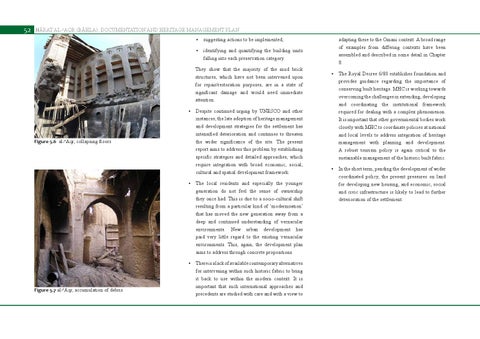
ДĀRAT AL-ΚAQR (Bāhla): DOCUMENTATION AND HERITAGE MANAGEMENT PLAN • suggesting actions to be implemented; • identifying and quantifying the building units falling into each preservation category. They show that the majority of the mud brick structures, which have not been intervened upon for repair/restoration purposes, are in a state of significant damage and would need immediate attention.
Figure 5.6 al-ΚAqr, collapsing floors
• Despite continued urging by UNESCO and other instances, the late adoption of heritage management and development strategies for the settlement has intensified deterioration and continues to threaten the wider significance of the site. The present report aims to address this problem by establishing specific strategies and detailed approaches, which require integration with broad economic, social, cultural and spatial development framework. • The local residents and especially the younger generation do not feel the sense of ownership they once had. This is due to a socio-cultural shift resulting from a particular kind of ‘modernisation’ that has moved the new generation away from a deep and continued understanding of vernacular environments. New urban development has paid very little regard to the existing vernacular environments. This, again, the development plan aims to address through concrete propositions.
Figure 5.7 al-ΚAqr, accumulation of debris
• There is a lack of available contemporary alternatives for intervening within such historic fabric to bring it back to use within the modern context. It is important that such international approaches and precedents are studied with care and with a view to
adapting these to the Omani context. A broad range of examples from differing contexts have been assembled and described in some detail in Chapter 8. • The Royal Decree 6/80 establishes foundation and provides guidance regarding the importance of conserving built heritage. MHC is working towards overcoming the challenges in extending, developing and coordinating the institutional framework required for dealing with a complex phenomenon. It is important that other governmental bodies work closely with MHC to coordinate policies at national and local levels to address integration of heritage management with planning and development. A robust tourism policy is again critical to the sustainable management of the historic built fabric. • In the short term, pending the development of wider coordinated policy, the present pressures on land for developing new housing, and economic, social and civic infrastructure is likely to lead to further deterioration of the settlement.