AL-ΚAQR: DOCUMENTATION & ANALYSIS often the case with many traditional buildings in Bāhla, the earlier traditional roofing system. A diminutive square room attached to the northern side (back) of the sablah hall, acted as the original coffee preparation room. An open staircase, positioned perpendicular to the sablah by the door, defined the western edge of the terrace; it led up to the roof, which was possibly used as an auxiliary gathering space.
Civic structures & Public Spaces Mosques
Bāhla counts with one of the most important mosques of the ad-Dākhilīyah region. The Jamma Mosque, situated on the summit of the hill around which al-ΚAqr grew, stands on the site of an important pre-Islamic sacred space. Human remains and artefacts unearthed there and dating to the Umm an-Nar period (3rd millennium BC) highlight the at times astounding degree of ritualistic continuity that one can still observe in Oman’s sacred places (Cleuziou & Tosi 2007; 122). The mosque’s richly decorated mihrab dates back to 917 AH/ 1511 AD, designed by one of the foremost exponents of this craft tradition in the 16th century, Abdullah b. Qasim b. Muhammad al-Humaimi of Manah (Baldissira 1994). The other unique feature of the mosque is its architectural organisation (Bandyopadhyay 2003), and the manner in which the spatial planning negotiates the topography; while the access to the mosque terrace will have altered with the changing nature of the harāt. Further excavation and research would, no doubt, establish the importance of this character zone of Bāhla in Omani history.
Sablahs
There were several structures within the settlement referred to as ‘sablah’ (pl. sbal) or the semi-public male reception halls (majalis Κamm), a term which Bonnenfant et al believes, is entirely unique to Oman (Bonnenfant et al 1977: 115). While in many settlements of ad-Dākhilīyah most sbal were designated for the use of a particular tribe - in Bāhla these appear to be more communal in nature. It is this semi-public nature which distinguished these from the more private reception rooms (majalis khass) of the dwellings of the more affluent. Many sbal had a slightly more extended function, serving as the official reception room and office for the wali (Sablat al-Wali), or acting as QurΜanic school
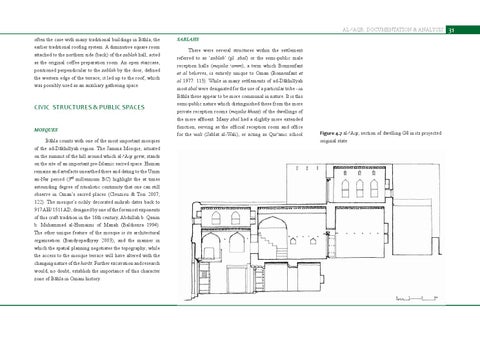
Figure 4.7 al-ΚAqr, section of dwelling G8 in its projected original state
31