FACILITIES MANAGER
Spring 2026

Spring 2026
BY LALIT AGARWAL
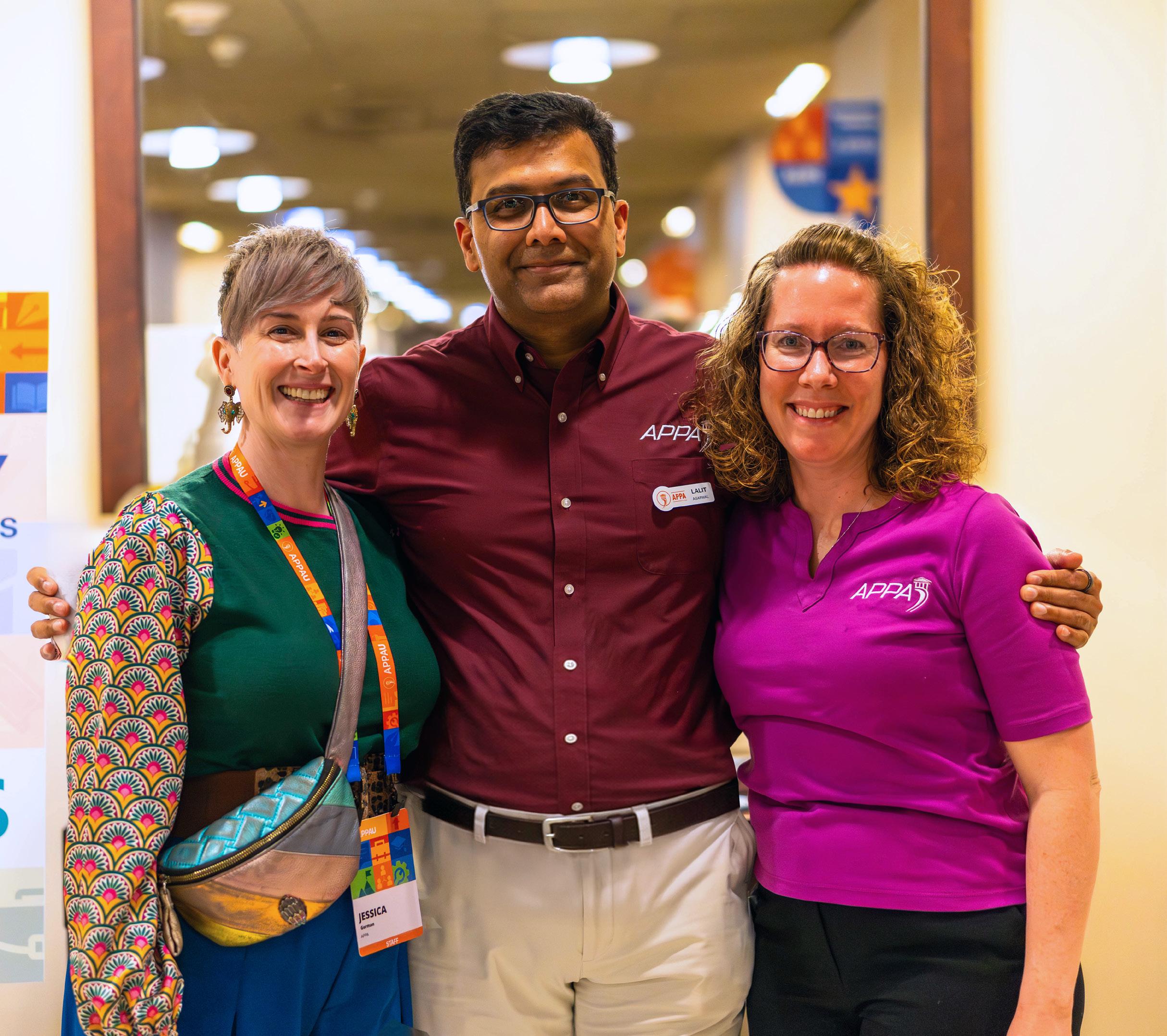
Something happens when 400 facilities professionals’ step away from the daily demands of keeping campuses running and choose to invest in themselves. You can feel it in the hallways, in the conversations over coffee, in the energy that builds across a week of learning together. That's exactly what we experienced the first week of February when APPAU landed in Phoenix, Arizona — and the warm desert sun didn't hurt either.
Our signature programs - Institute for Facilities Management and Leadership Academy - brought together professionals at every stage of their careers. Some getting their first comprehensive look at the full breadth of facilities operations, others sharpening the leadership skills that our institutions desperately need. The common thread was intent. These are people who showed up not because they had to, but because they understand that this profession demands continuous growth.
What I want to spend a moment on is our Targeted Titles and Topics (T3) program, which this time around tackled the hot topic of Artificial Intelligence (AI) in facilities management head-on. Sixty professionals. Nine case studies. Roundtable conversations that ranged from "where do I even start?" to "how do we build this into an organizational strategy?" That full spectrum is exactly where our profession is right now, and I don't think there's another place in higher education facilities where you can sit in a room and get that honest cross-section of experience.
Here's what struck me most: nobody was there to chase hype. These were practitioners trying to figure out how AI applies to their buildings, their teams, their budgets. The case studies
weren't theoretical — they were from peers doing real work on real campuses. That's the kind of professional development that moves the needle.
And we're not slowing down. The energy from T3 made one thing clear - there's a massive segment of this profession that is curious about AI but hasn't had a practical, no-nonsense way in. So, we built one.
On April 21, APPA launches AI in Facilities: 101, designed to take you from curious to confident. This isn't a lecture series. It's eight hours of hands-on content built around real facilities examples no slides, no talks. You'll walk away with the ability to improve your productivity immediately, not someday. The minimum requirement? A login to your favorite AI tool and a sense of curiosity. That's it. We want to prepare our members to understand how AI can truly augment their human abilities, not replace them.
The founding cohort sold out in three days. Let that sink in for a moment. Three days. That tells me something important about where this profession's head is at, people aren't waiting to be told AI matters. They already know. They just need the right on-ramp. We've opened a waiting list and are already working on future cohorts, so if you missed this round, get your name on that list.
This is what APPA exists to do - bring this community together, tackle what matters, and make sure no institution must figure it out alone. ■
ABOUT THE AUTHOR
Lalit Agarwal is president and CEO of APPA

BY LINDSAY WAGNER, PHD
Higher education facilities management (FM) is navigating a period of rapid technological change — one driven by artificial intelligence (AI), smart building systems, predictive analytics, and increasingly interconnected campus operations. Drawing on Thomas Friedman’s acceleration thesis in Thank You for Being Late and Abraham Maslow’s hierarchy of needs, this article asks a question that doesn’t have a clean answer: How do we build and maintain campuses that remain genuinely human places, even as the systems running them grow more automated by the year? The argument here is that AIdriven infrastructure can absolutely improve operational performance — but that the deeper success of any campus environment still rests on something harder to automate: human relationships, ethical governance, and design that makes people feel they belong. Facilities are not just physical assets. They carry meaning. And in this accelerated era, the facilities professionals who understand that will be the ones who lead.
Acceleration and the Campus Environment
Walk through the facilities management office of almost any research university today and you’ll find something that would have seemed like science fiction a decade ago: dashboards tracking real-time occupancy across dozens of buildings, algorithms flagging HVAC anomalies before anyone has filed a complaint, and digital twins of entire campus blocks that let planners simulate renovation scenarios without touching a single brick. AI-enabled building automation, predictive maintenance platforms, and integrated campus command centers are no longer experimental — they are becoming baseline expectations.
Friedman’s acceleration thesis argues that technological change is now outpacing the ability of institutions and individuals to adapt. In higher education, that’s not
an abstraction. It shows up as compressed capital planning cycles, workforce retraining demands that didn’t exist five years ago, cybersecurity vulnerabilities embedded in building infrastructure, and students who arrive expecting the same seamless digital experience they get everywhere else in their lives.
Facilities management sits at the center of these pressures. FM professionals are responsible for maintaining legacy infrastructure — buildings that in many cases predate the internet — while simultaneously onboarding systems that promise efficiency, resilience, and cost savings. It’s a difficult position to be in, and the teams doing it well deserve more credit than they typically receive.
But here’s the tension that doesn’t resolve neatly: Higher education facilities are not neutral technological platforms. They are environments built for teaching, learning, and community. And when we optimize them purely for operational efficiency, we risk losing something that doesn’t appear on any dashboard. The question worth sitting with is this: How do we harness what acceleration offers without undermining the human foundations that academic communities depend on?
Maslow’s Hierarchy as a Facilities Framework
Maslow’s hierarchical model of human motivation wasn’t written with campus facilities in mind, but it maps onto stewardship responsibilities in ways that feel almost uncomfortably precise. Starting from basic physiological needs and working up through safety, belonging, esteem, and selfactualization, the hierarchy offers a useful check against the tendency to treat buildings as engineering problems first and human environments second.
At the base of the hierarchy are physiological needs — and in campus facilities, these translate directly into the environmental conditions that determine whether a building is bearable or not. Indoor air quality, thermal comfort, lighting, clean water, sanitation: these are not amenities. They are the baseline conditions for learning to happen at all.
AI-driven building management systems have gotten genuinely good at monitoring these variables in real time — CO₂ levels, humidity, temperature, energy performance — and predictive maintenance has reduced the kind of HVAC failures that used to disrupt entire academic departments for days. That’s real progress.
But sensor optimization only tells part of the story. A space can meet every regulatory standard and still feel miserable to certain occupants. Neurodivergent students, people with disabilities, and those acclimating to a new climate can experience the same room very differently than the people who calibrated the system. I’ve spoken with FM directors who were genuinely surprised by qualitative feedback from occupants in spaces that, by every metric, were performing perfectly. The sensors were right. The people were also right. Both things can be true.
Quantitative data and qualitative feedback need each other. Neither is sufficient on its own. Facilities stewardship at this level communicates something to the people in the building: that their bodily comfort matters to the institution.
Safety and Psychological Security
Maslow’s second tier encompasses safety — and on a campus, that means more than secure access control and adequate exterior lighting, though it certainly includes those things. It means transparent, responsive work order systems. It means emergency preparedness infrastructure that people know exists and know how to use.
AI-enabled surveillance and smart security analytics can meaningfully enhance situational awareness. But this is an area where good intentions can go sideways quickly. Heightened surveillance technology can generate unintended psychological consequences, particularly for historically marginalized populations who have long had fraught relationships with institutional monitoring. A camera network that makes one student feel safer can make another feel watched. These are not hypothetical concerns — they come up consistently in DEI literature and in campus conversations across the country.
Safety infrastructure has to balance physical protection with emotional trust. That means facilities leaders need to be in ongoing conversation with diversity and equity offices, student groups, and faculty when making decisions about security technology — not just consulting them after the system is already installed. Ethical governance isn’t a final approval step. It’s a process.
Belonging is where facilities management gets genuinely complicated, and where I think the field is still figuring things out. Educational spaces shape belonging in ways that are often invisible until something goes wrong. Inclusive restroom design, identity-based cultural centers, accessible circulation paths, flexible commons that support informal gathering, furniture that accommodates a range of bodies — these details accumulate into an environment that either says “we were thinking about you” or, more subtly, “we weren’t.”

AI-based space utilization analytics are useful for capital optimization. They are not useful for measuring belonging. A student lounge might register as underutilized during certain hours and yet function as a sanctuary for first-generation students who don’t have a quiet place to work off-campus. A prayer or meditation room might never appear on a heat map of high-traffic spaces and yet serve needs that are critical to specific campus communities.
Belonging is not an algorithmic output. It’s a relational outcome, and it’s mediated through space in ways that require human judgment. Decisions about renovating, reallocating, or decommissioning spaces need to incorporate genuine stakeholder engagement and equity assessments — not just the data showing which rooms are full and which ones aren’t.
Esteem and Institutional Signaling
Facilities condition sends a message. Deferred maintenance in student-facing buildings, uneven capital investment across campus, a gleaming new research facility alongside classrooms with flickering lights — these disparities communicate institutional priorities whether we intend them to or not. Students notice. Faculty notice.
AI-supported capital planning tools offer valuable lifecycle forecasting and cost modeling, and they should absolutely be part of how institutions make these decisions. But the numbers need to be embedded in governance structures that take mission alignment seriously. Well-maintained classrooms, modernized labs, accessible restrooms, and thoughtfully designed gathering spaces reinforce a message: the people using these spaces are valued. Facilities stewardship, in this sense, carries symbolic weight that spreadsheets don’t fully capture.
At the apex of Maslow’s hierarchy is selfactualization — the pursuit of intellectual and creative fulfillment. Active learning classrooms, innovation labs, maker spaces, interdisciplinary collaboration environments, outdoor experiential learning spaces: these are the environments where transformational education becomes possible.
Technological acceleration has made some genuinely remarkable things possible here — immersive learning environments, adaptive systems that respond to different pedagogical needs, tools that would have been unthinkable in a traditional classroom. But the presence of advanced technology does not guarantee meaningful learning. Selfactualization requires mentorship, dialogue, experimentation, and psychological safety. Facilities provide the platform. Human relationships activate the potential. The best active learning classroom in the world is still just a room without an instructor who knows how to use it.
There’s a risk in accelerated environments that decision-making becomes overly datacentric — that the availability of real-time metrics leads institutions to treat quantifiable outputs as the primary measure of whether something is working. Facilities professionals often carry tacit institutional knowledge that doesn’t appear in any system: awareness of departmental cultures, the rhythm of academic cycles, the symbolic significance of particular spaces to particular communities. That knowledge matters, and it’s genuinely at risk of being undervalued as AI capabilities expand.
What actually works, in my experience, is a hybrid model. AI performs pattern recognition and anomaly detection. Facilities professionals contextualize the findings — they know why the third-floor chemistry labs run hot every spring, and it has nothing to do with the HVAC calibration. Institutional leaders then align decisions with the academic mission and with equity commitments that a dataset alone cannot articulate.
Workforce development is critical in this model. Facilities teams need digital literacy — the ability to work with and interrogate the systems they’re responsible for — while preserving the experiential knowledge accumulated over careers. The goal is augmentation, not displacement. Human infrastructure remains as vital as mechanical infrastructure. When we lose the institutional memory embedded in experienced FM professionals, we lose something that’s very hard to rebuild.
Friedman’s acceleration thesis emphasizes the need for what he calls “dynamic stability” — the capacity to create structures that allow human adaptation to keep pace with technological change rather than being overwhelmed by it. For higher education FM, that’s a useful frame. It suggests that the question isn’t whether to adopt new systems, but how to build the institutional conditions under which those systems actually serve the mission.
That means stakeholder consultation before AI deployment, not after. It means equity impact analyses for space allocation algorithms — because those algorithms encode assumptions that deserve scrutiny. It means transparent data governance policies and cross-functional oversight structures that give people outside the facilities office a meaningful voice in how campus data is used. And it means intentional workforce retraining programs that don’t treat FM staff as casualties of modernization.
Institutional pauses matter, too. Not every upgrade needs to happen on the fastest possible timeline. Moments of evaluation and recalibration — where teams ask whether the operational gains are actually serving the educational mission — are not a sign of institutional sluggishness. They’re a sign of good governance. Acceleration without reflection risks alienation. Reflection without innovation risks stagnation. The balance is difficult to hold, and I don’t think any institution has fully solved it.
Higher education facilities management is operating at an uncomfortable intersection: rapid technological advancement on one side, and enduring human need on the other. The tools available to FM professionals today are genuinely impressive, and the operational gains from AI and smart infrastructure are real. These aren’t things to be skeptical of for their own sake.
But through Friedman’s acceleration lens and Maslow’s framework, something becomes clear that doesn’t always surface in technology adoption conversations: campus environments serve purposes that no system can fully optimize for. They underpin physiological comfort, safety, belonging,
esteem, and ultimately the conditions in which self-actualization becomes possible. They shape the lived experience of students and faculty. They communicate — through their condition, their design, their accessibility — what an institution actually values.
In an era where technology evolves faster than institutions can comfortably adapt, the role of facilities professionals expands beyond operational management. It becomes something closer to relational stewardship — a responsibility to hold the human dimensions of campus life in view even when the data would suggest otherwise. Smart campuses are achievable. Humane campuses require something more: intentional governance, inclusive design, and the ongoing, unglamorous work of staying in relationship with the people these buildings are built to serve.
The future of higher education facilities management won’t be defined solely by how sophisticated the technology becomes. It will be defined by whether institutions use that technology in service of the humans inside the buildings — or instead let it become a substitute for the judgment and care that no algorithm can replace. ■
References
APPA – Leadership in Educational Facilities. (n.d.). APPA body of knowledge (BOK). https://www.appa.org Friedman, T. L. (2016). Thank you for being late: An optimist’s guide to thriving in the age of accelerations. Farrar, Straus and Giroux.
Maslow, A. H. (1943). A theory of human motivation. Psychological Review, 50(4), 370–396. https://doi. org/10.1037/h0054346
Maslow, A. H. (1954). Motivation and personality. Harper & Row.
Strayhorn, T. L. (2019). College students’ sense of belonging: A key to educational success for all students (2nd ed.). Routledge.
Lindsay Wagner, Ph.D serves as the VP of Strategic Programs for APPA, leading APPA Advisors, FPI, and managing content for key publications. Lindsay is a educator, consultant, and facilities management leader with over two decades of experience in higher-ed, strategic planning, sustainability, and organizational transformation. Prior to this role with APPA, Lindsay founded The Knowledge Collaborative.
HOW UW FACILITIES AND PROSPECT PARTNERS REPLACED A LEGACY SYSTEM — AND CHANGED THE CULTURE AROUND IT
BY JAY DAHLSTROM AND LAMONTE MCGRAW
Atthe University of Washington, space is more than buildings and square footage. It is where teaching, discovery, and collaboration come to life. Across three campuses and more than 33 million square feet of academic, clinical, and research facilities, UW’s physical footprint supports one of the world’s leading public research institutions.
Effective space management is essential to sustaining that mission. Every classroom, lab, and workspace must serve a purpose, support collaboration, and adapt as the university grows. When it came time to replace the aging space management system, the challenge was as much about people as it was about technology. With nearly a thousand users across colleges, hospitals, and departments, UW Facilities partnered with Prospect Partners to take on the change together. The result is a shared approach to managing space that strengthens operations, supports research, and reflects the university’s mission of innovation.
Leading Change Where It Matters: People, Places, and the Quiet Work of Progress
Change is not new to higher education. Budgets shift, expectations rise, technology evolves. But every so often, we face a moment when change is not just about a system upgrade. It becomes about how we work together, how we support our campuses, and how we honor the people who make our spaces function every day. This was one of those moments.
We set out to transition from one space management application to another, with new capabilities and workflows that would reach nearly 1,000 users across colleges, medical centers, and shared services. Some teams operated through standardized processes. Others were intentionally siloed, built that way for good historical reasons. And for the
first time, we brought together groups that had never collaborated and asked them to pursue a shared outcome, using a common language and a single definition of success.
“I have learned a few things about change over the years. You cannot force it. You cannot wish it into existence. You lead it steadily, with patience and persistence, and always with people at the center.”
– LaMonte McGraw, Prospect Partners
Start with the Why, and Say it Plainly
• From the beginning, we committed to communicating three things, consistently and clearly, in every setting:
• What is changing. One platform, one set of roles, one source of truth for space data.
• Why now. An aging, no-longer-supported tool, inconsistent data, and rising expectations from campus partners required a better way.
• What is in it for me. Faster answers, clearer accountability, less switching between systems, and better decisions for the departments we serve.
• It sounds simple. It is simple. And when people are busy, simple is a gift.
“Once I understood how my role would change, and why it mattered to the people I support, I got on board.”
— Building Coordinator, School of Medicine
Formal Roles And Shared Accountability
Change falters when roles are vague. We took the time to formalize roles across the enterprise so everyone understood their responsibilities and how they supported one another. Space Administrators, Department Administrators, Building Coordinators, and Space Data Analysts each had defined contributions, authorities, and partnership expectations. Clear roles built trust. Trust
made alignment possible. And alignment is how you move a thousand people in the same direction.
Good governance cannot live on a slide or inside a project binder. It must be seen in the way decisions are made, in the roadblocks cleared, and in the support people feel as they move through uncertainty. Our Steering Committee carried the vision across divisions and reinforced the importance of the change. The Core Project Team set expectations and delivered with steady hands. And the Extended Project Team became the heartbeat of the effort. These subject matter experts, embedded in colleges and hospitals, committed meaningful time each month to listen, guide, and support their colleagues. That is not ceremony. That is partnership. And partnership is how real change takes root.
“Being at the table meant we could raise realworld scenarios early. It saved rework and credibility.”
—Extended Project Team Member, UW Facilities
Trust is built through communication that is honest, consistent, and human. We did not rely on mass emails alone. We created an ongoing conversation: extended project team meetings, division town halls, department updates, and short messages that answered the questions people genuinely had. No jargon, no spin, just clear information, repeated often, with next steps and where to go for help.
Training was not about learning features. It was about equipping people to do their jobs in the new tool. We aligned the curriculum to roles and structured the work in a clear

progression: plan, build, validate training as part of User Acceptance Testing, and online user training. We developed concise, practical micro-learnings designed to be easy to use and directly applicable to real-world scenarios. When people feel competent, they participate. When they feel confident, they advocate for others, and momentum grows.
We approached User Acceptance Testing as a listening opportunity rather than a hurdle to clear. Members of the Extended Project Team tested real scenarios, identified issues, and surfaced confusion before go-live, not after. UAT became a pivotal stage for promoting shared accountability in delivering quality. The people who would live with the solution helped shape it, and because they shaped it, they supported it.
Too many projects celebrate on go-live day and disappear. We chose a different path. We staffed a helpdesk, activated the Extended Project Team network, and provided short, searchable resources including FAQs and a knowledge base. We tracked questions, not to defend the process,
but to understand where friction existed and remove it quickly.
“The first week was busy, but I never felt alone. Someone always picked up.”
—Department Administrator, College of Engineering
Change does not end when a system goes live. It matures through listening. We built feedback loops through surveys, open office hours, and a transition from project to operational system governance. This allowed the conversation to continue and helped ensure that improvements, ideas, and concerns could shape the future. That is how change stays healthy and how early participation becomes long-term ownership.
• Name the why in one breath. If you cannot say it simply, you cannot spread it.
• Formalize roles early. Clarity outperforms charisma.
• Invest in an Extended Team. They bring credibility and staying power.
• Communicate like humans. Short, specific, and
“I have learned a few things about change over
the years. You cannot force it. You cannot wish it into existence. You lead it steadily, with patience and persistence, and always with people at the center.” repeated.

• Train for the job, not the demo. Make it real, relevant, and easy to find.
• Make go-live humane. Provide real support, real people, and real data to guide fixes.
• Institutionalize listening. Turn the project structure into ongoing user governance.
• What Changed Beyond the Software
Yes, a legacy tool was replaced. But the deeper shift was cultural. Teams that once operated separately began to collaborate. Silos did not disappear, but they became more open, allowing information, decisions, and goodwill
to move more freely. In a world where space is finite and expectations continue to rise, that shift matters.
The best change is done with people, not to them. It respects their time, their knowledge, and their pride in serving students, faculty, clinicians, and staff. It remembers that our facilities are not just buildings. They are commitments to safety, to learning, and to care.
We did not get everything perfect. We rarely do. But we moved forward, together, in a direction that honors our mission. And that is
the quiet work of progress: many hands, and steady steps. ■
This article is a collaboration between UW Facilities and Prospect Partners, reflecting the shared leadership and partnership behind the Space Management transformation.
Jay Dahlstrom, Assistant Director for Business Innovation & Technology at UW Facilities, helped guide the Space Management transformation, advancing collaboration, operational excellence, and long-term sustainability of the university’s space management ecosystem.
LaMonte McGraw, Founder and CEO of Prospect Partners, partners with organizations to design and lead human-centered change that aligns people, process, and technology. He has more than 25 years of experience leading transformation across multiple industries, helping teams build alignment, clarity, and lasting impact.

BY BEN A. LYNCH
Withover three decades in Information Technology, the last ten years of my career have been dedicated to Middle Tennessee State University (MTSU), where I serve as a crucial link between our IT division and Facilities Services. This unique position places me at the intersection of Information Technology (IT) and Operational Technology (OT). My experience has made one thing clear: embedding IT professionals within Facilities Services is not just beneficial—it is essential for modern campus operations.
Understanding Operational Technology (OT) Operational Technology encompasses the systems and software that monitor and control the physical operations of buildings and campuses. In essence, OT connects digital tools to real-world infrastructure, ensuring facilities run smoothly and efficiently.
Examples of OT in Facilities Services include:
• Building Automation Systems (BAS/BMS)
• Security and Access Control
• Fire and Life Safety Systems
• IoT Sensors for environmental monitoring
• Smart infrastructure controls like elevators and automated shading
Historically, IT and Facilities operated independently—IT managed networks and servers, while Facilities handled HVAC, lighting, and infrastructure. As buildings become smarter and more interconnected, these two areas must collaborate closely.
Embedding IT staff within Facilities Services enables:
• Real-time collaboration between digital and physical system teams
• Enhanced cybersecurity for OT systems
• Faster troubleshooting and response
• More effective planning for upgrades and renovations
• Data-driven decision-making using insights from both IT and OT
At MTSU, this integration has led to streamlined operations, improved sustainability, and better service delivery across campus.
As OT systems evolve, data collection has become central to managing and improving facilities. Modern building systems generate extensive data—from energy usage and equipment performance to occupancy and environmental conditions. Analyzing this data allows facility managers to shift from reactive maintenance to proactive strategies.
MTSU leverages Microsoft Power BI to unify data from various facility service units into interactive dashboards. This platform supports:
• Real-time monitoring of building performance.
• Cross-system analysis of HVAC, lighting, and occupancy data.
• Predictive insights for identifying potential issues.
• Strategic planning for investments and sustainability.
This approach fosters a data-driven culture within Facilities Services, ensuring decisions are informed, timely, and impactful.
In addition to traditional data analytics, Facilities Services at MTSU is now leveraging artificial intelligence (AI) and Microsoft Copilot to further enhance decision-making. By integrating AI-powered tools, facility managers can quickly review large volumes of operational data, identify trends, and receive actionable recommendations in real time. Copilot assists staff by generating insights from complex datasets, automating routine analysis, and even drafting reports or summaries based on current facility performance. This use of AI not only streamlines workflows but also empowers Facilities Services to make more informed, proactive decisions—improving efficiency, sustainability, and responsiveness across campus.
To further safeguard sensitive campus data, close collaboration with traditional IT departments is essential. IT teams play a critical role in configuring and monitoring the Microsoft tenant to ensure that data used by AI tools, such as Copilot, remains secure
and is not inadvertently shared with large language models outside the organization. By implementing robust security policies and access controls, IT ensures that Facilities Services can leverage AI-driven insights and automation while keeping institutional data protected from general consumption. This partnership allows Facilities Services to confidently use AI and Copilot to review operational data and make informed decisions, knowing that privacy and compliance standards are upheld.
As educational institutions continue to modernize, the integration of IT and OT will become increasingly vital. Embedding IT professionals within Facilities Services is more than a staffing choice—it’s a strategic move that ensures campuses are secure, efficient, and future-ready. Breaking down silos and building bridges between departments is key to the future of educational facilities.
After submitting this article for a courtesy review to senior leadership, I received the remark, “Your role is extremely important— can you imagine me working directly with IT and navigating the tech?” This feedback highlights the unique value that embedded IT professionals bring to Facilities Services. By acting as translators and facilitators between technical teams and operational staff, we ensure that technology remains accessible, relevant, and aligned with the mission of Facilities Services. Our presence helps demystify IT processes, making advanced tools and data-driven strategies approachable for all stakeholders, regardless of their technical background.
It’s also important to recognize the outstanding colleagues I have on the IT side. Our achievements are truly a team effort, and I deeply appreciate the insight and support they provide. The collaboration between IT and OT is not only productive but also a genuinely rewarding working relationship.
My next article will focus on Artificial Intelligence and the ability to use AI as a facilities force multiplier. ■
ABOUT THE AUTHOR
Ben A. Lynch is the Engineering Tech Administrator at MTSU
BY VEENA VADGAMA AND ANDREW SAMA
Youhave an inventory. You have schedules. You probably even have a governance committee. But do you really know how your campus is being used?
That question drove the 2026 State of Space Management in Higher Education survey, a joint effort by CampusIQ and Huron. Thirtyone institutions across North America responded, and this was not a random crosssection of higher education. The respondents skew toward the sector's most operationally complex institutions: over 70 percent are doctoral universities with high or very high research activity, 74 percent manage more than five million gross square feet, and more than half operate multiple campuses.
Their practices offer a preview of where the broader sector is heading. And their candid responses reveal that even among leaders, significant gaps remain.
Here are five themes emerging from the data.
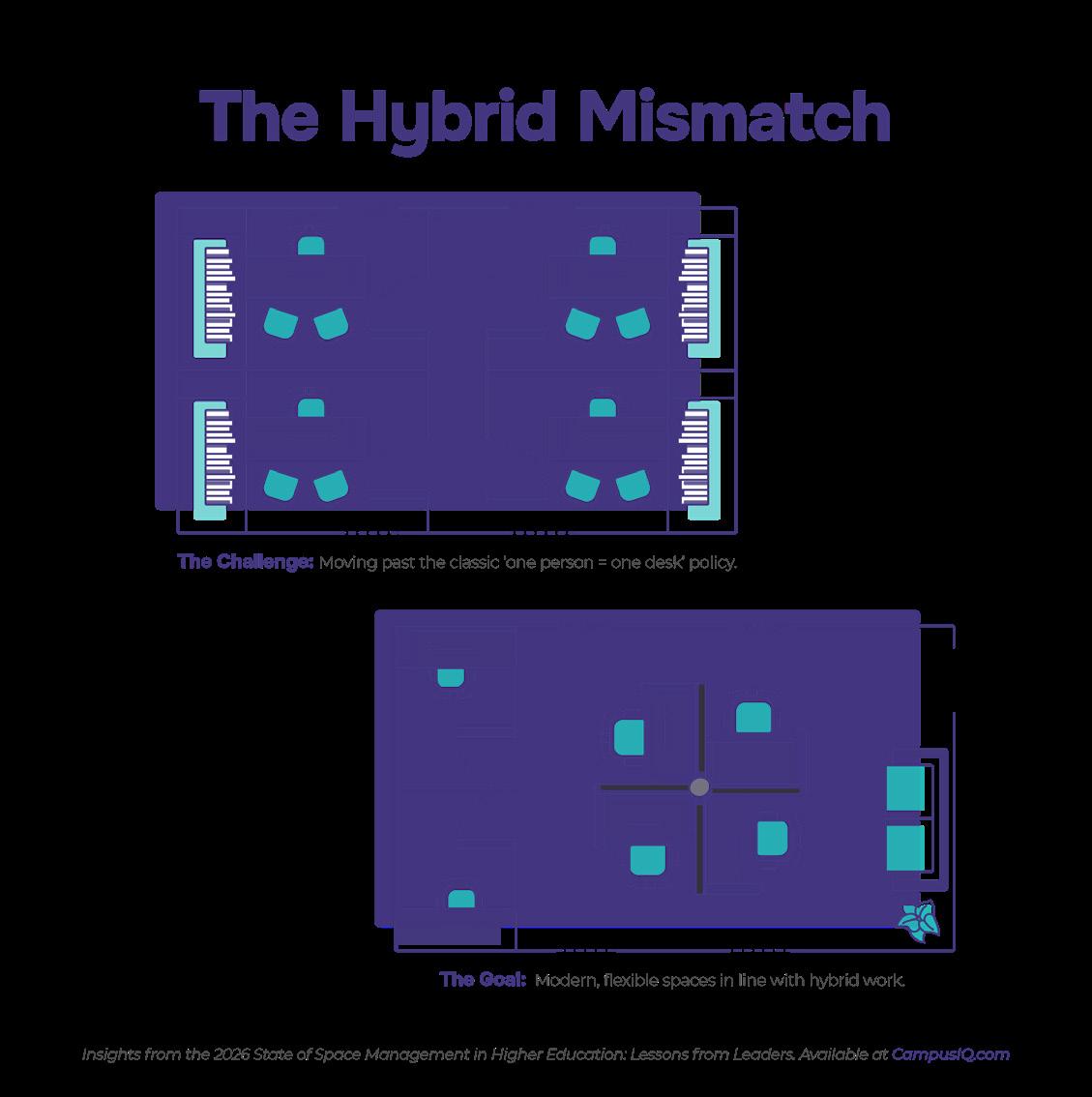
The Hybrid Mismatch
Flexible and remote work is no longer an experiment. Ninety percent of the institutions surveyed have a formal flexible or remote work policy in place. The shift happened. What has not caught up is the physical office allocation model.
Only 26 percent say their policy explicitly links days per week on campus to whether an employee receives a dedicated office or workspace. Nearly half have made no updates to their space allocation guidelines since 2021.
The disconnect is understandable. Updating a policy document is straightforward. Rightsizing hundreds of thousands of square feet of existing space is not. It demands multi-year transition plans, lease timeline coordination, renovation budgets, and the cultural work required to shift from "my office" to "our workspace."
"Hybrid work is now embedded, but
unfortunately alongside the dated 'one person, one desk' space utilization model."
—Private Research University
The takeaway for facilities leaders: work patterns have already changed. The institutions that close the gap between HR policy and physical space allocation first will free up significant square footage without building anything new.
Beyond the Inventory
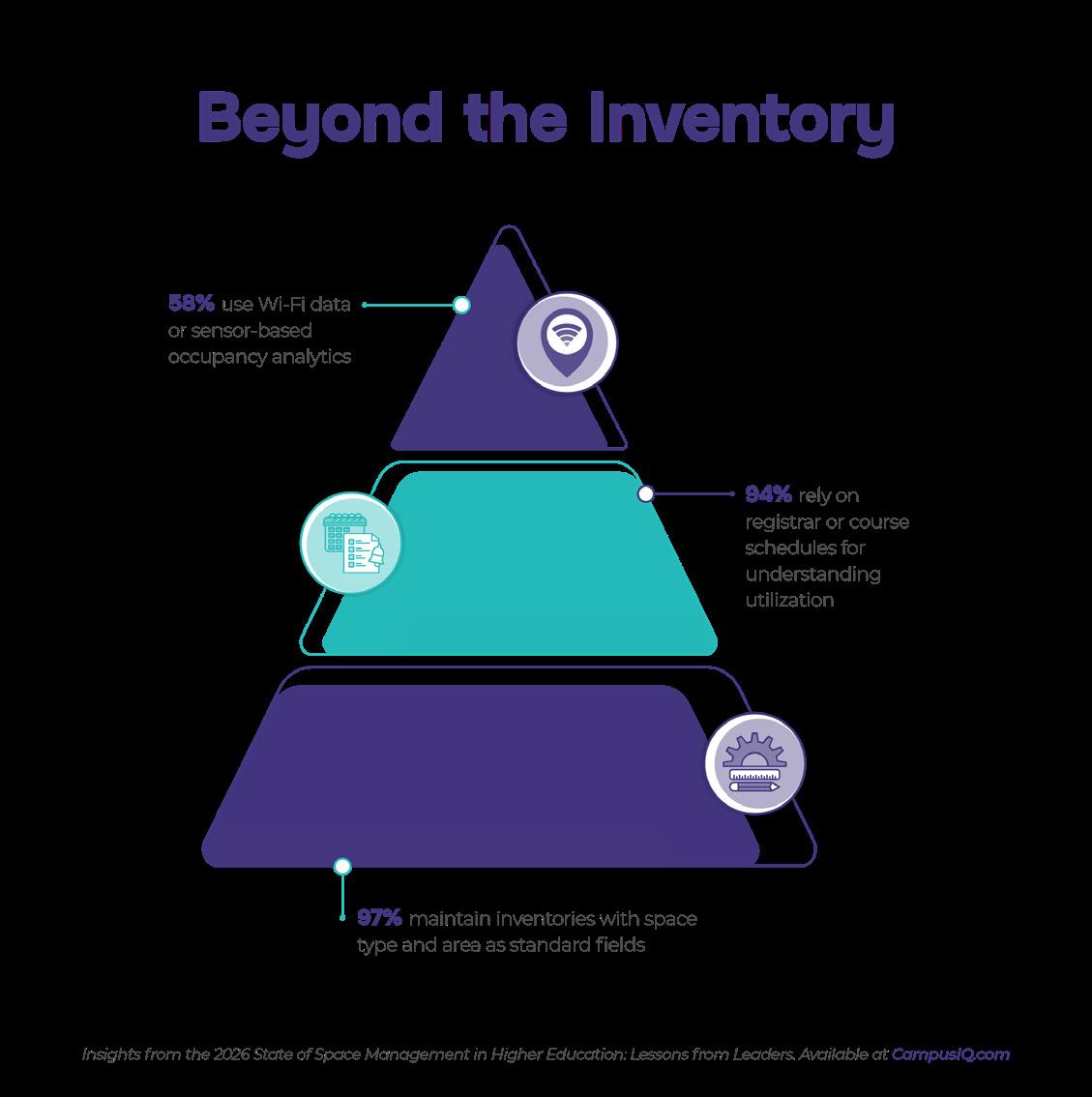
The inventory foundation across this cohort is strong. Ninety-seven percent maintain inventories with space type and area as standard fields. Seventy-seven percent also store capacity. For these institutions, the era of not knowing what you have is largely over.
The next question is harder: how is that space actually being used?
Ninety-four percent still rely on registrar or course schedules as their primary lens on utilization. Only 39 percent use Wi-Fi data to understand real occupancy patterns, and just 19 percent use sensor-based analytics.
The gap matters more than it might seem. Schedules tell you what was planned, not what actually happened. A classroom booked for 30 students three times a week may routinely hold 12. A research lab assigned to a principal investigator may sit empty most afternoons. Without live data, those patterns stay invisible, and decisions about capital projects, consolidation, and repurposing get made on incomplete information.
"I believe the greatest challenge in managing space is accurately tracking how it is used over time."
—Public Research University
The institutions pulling ahead are the ones layering real-time occupancy insights on top of their inventories, combining both scheduled and actual patterns of use to drive
“Space is expensive. The value of our facilities' gross square footage far exceeds our endowment and is central to the strength of our brand. Stewardship costs are rising disproportionately compared to all other expenses and are becoming increasingly difficult to control with traditional means and methods.”
better decisions.
For decades, growth was the default mode for campus physical plants. More students meant more buildings. More research meant more labs. That assumption is weakening.
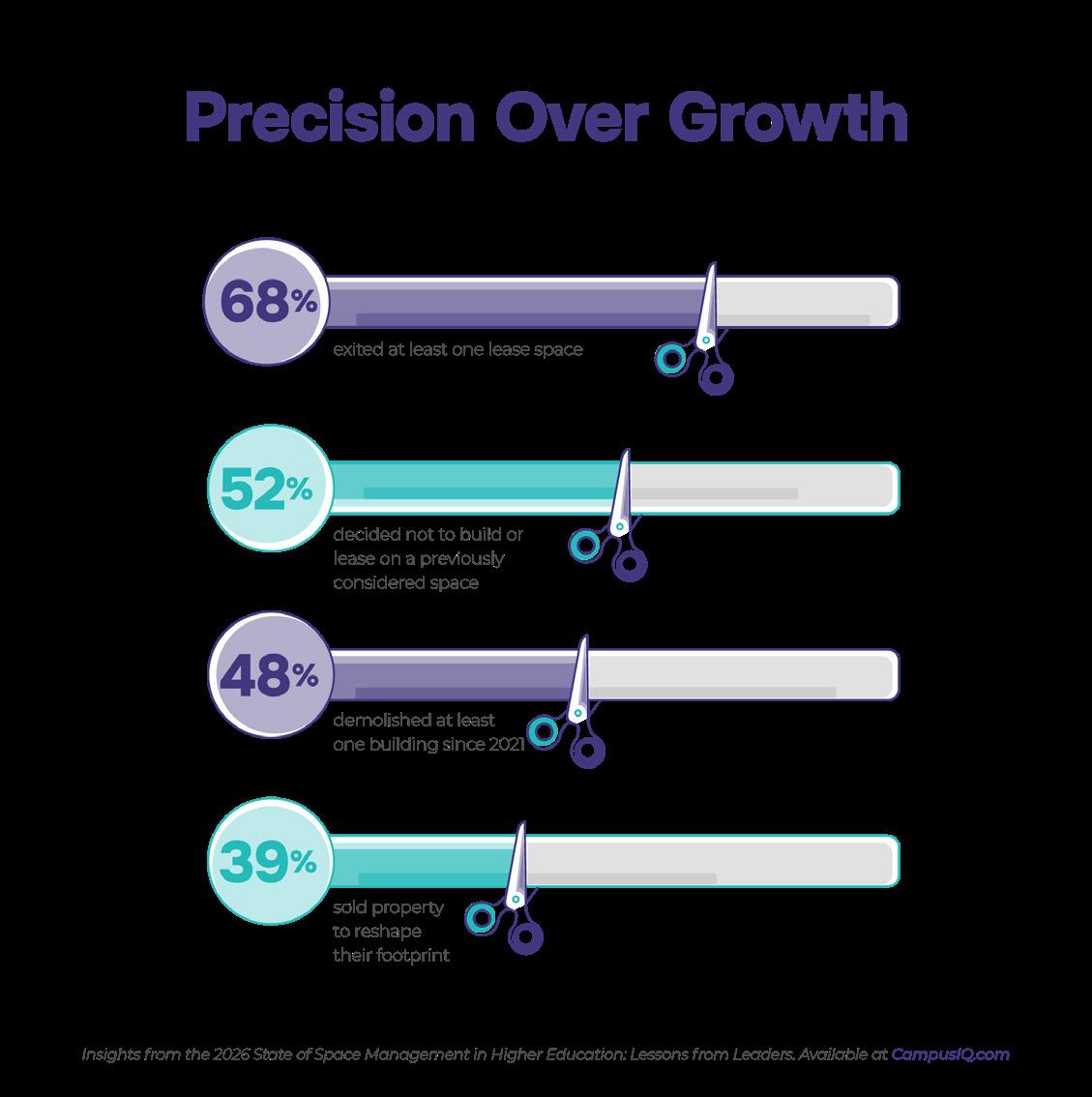
While 65 percent of respondents say their overall space inventory is still growing, a striking number are actively pruning what they already have:
• 68 percent have exited at least one lease since 2021 as a deliberate space management action.
• 52 percent have decided not to proceed with a previously considered build or lease.
• 48 percent have demolished at least one building.
• 39 percent have sold property to reshape their footprint.
The scale of these decisions can be dramatic. One respondent from a large public research university in the Midwest described it this way:
"In the past seven years, we have undertaken a strategic space reduction initiative in which we have divested or demolished 25 poor performing buildings amounting to a reduction of 751,000 gross square feet, a reduction of $154 million in backlogged maintenance, and an annual savings of nearly $6 million in operations costs."
—Large Public Research University
Growth is not over. But it is no longer automatic. Space is starting to be treated as a constrained, high-stakes resource rather than an unquestioned marker of prestige. The next era of campus planning will be defined less by how much new space is added and more by which space is repurposed, retired, or avoided altogether.
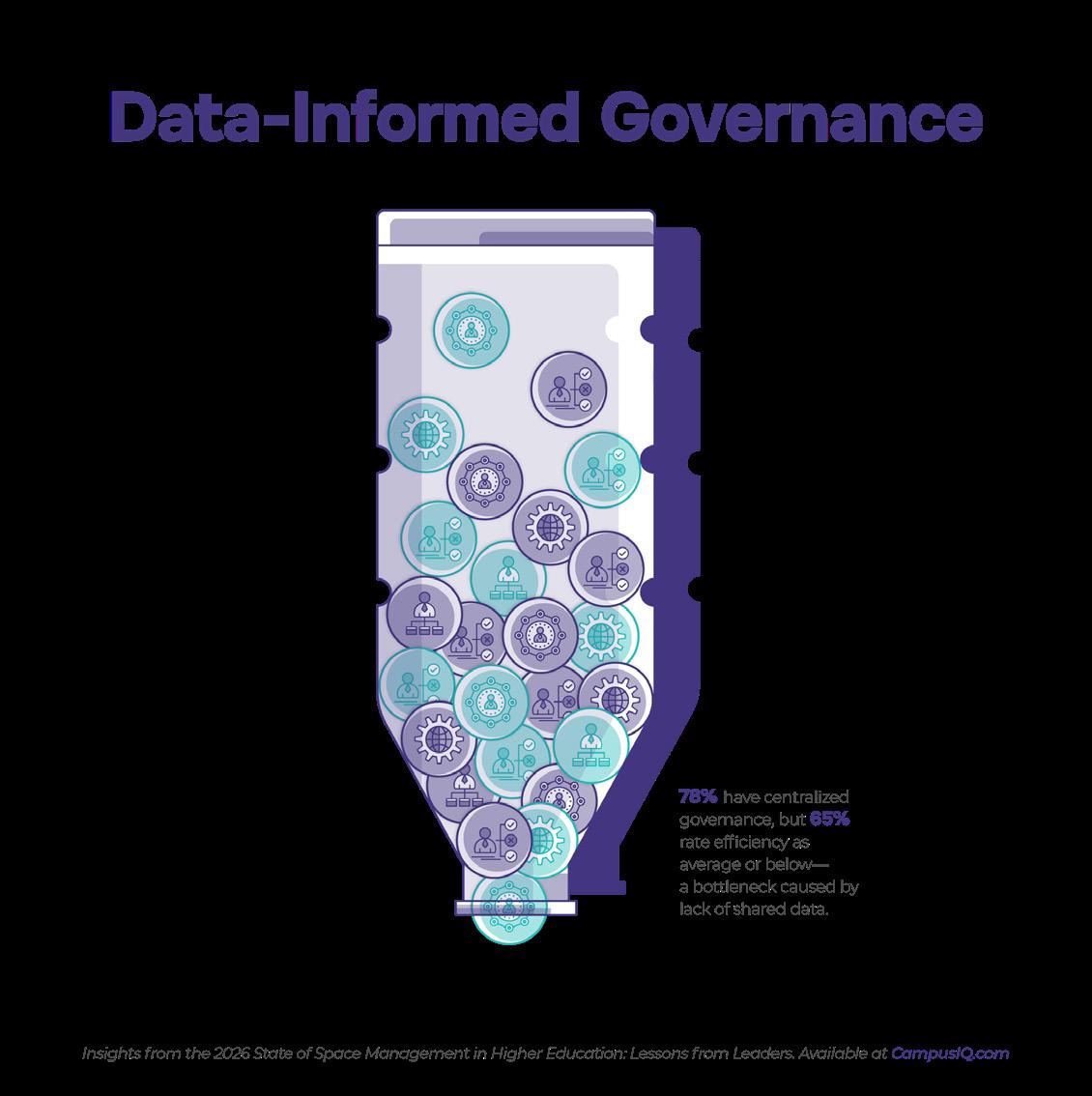
On paper, this cohort has done the governance homework. Seventy-eight percent describe their space governance as centralized. Ninety percent have a named person or unit responsible for space management. Seventyseven percent have at least one formal space governance committee.
But when leaders rate how well that machinery actually works, the picture gets more complicated. Sixty-five percent rate their governance model's efficiency at three or below on a five-point scale.
The candid feedback from respondents helps explain why.
"The current structure includes too many members, which often turns meetings into information-sharing and listening sessions rather than serving as a true governance body where strategic direction, planning, and effective space management can occur."
-- Large Public Research University
Another offered a blunter assessment: "Space is a deregulated commodity at our institution. It carries power and control. Rules, and ultimately enforcement, damage social capital."
And a third captured the operational reality: "I'm often tasked with figuring out the space solution for decisions that have already been made."
These are not institutions that lack governance structures. They are institutions where the challenge has shifted from "who owns space decisions?" to "how do we make those decisions feel fair, timely, and consistent?" Creating a committee is the starting point, not the finish line. The next wave of maturity will come from clarifying decision rights, standardizing criteria, and anchoring decisions in shared data.
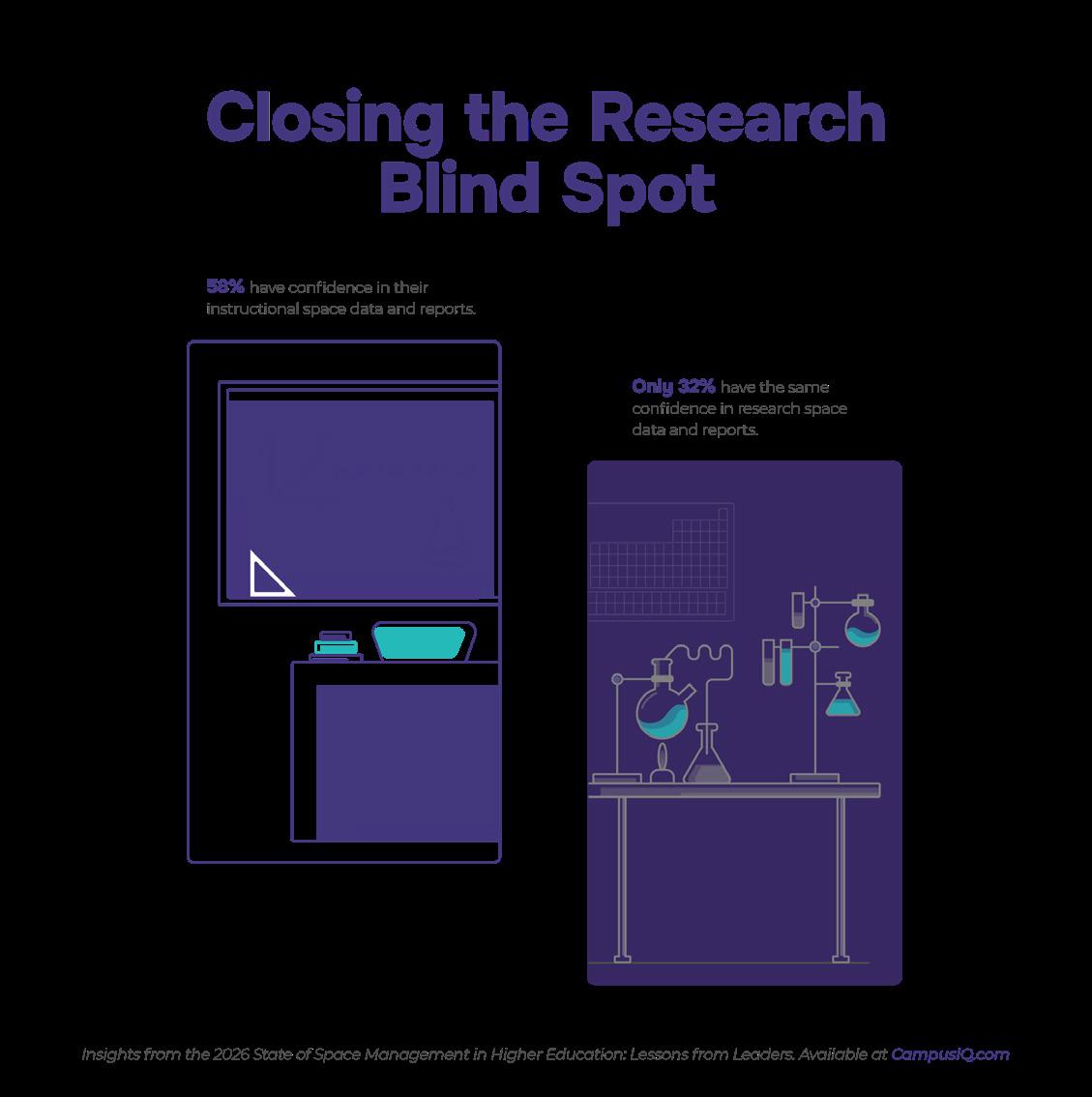
Here is a telling contrast. When asked whether they have the policies, reports, and data needed to manage space effectively: For instructional space, 58 percent agreed or strongly agreed. For research space, that number dropped to 32 percent. Twenty-nine percent actively disagreed.
The metrics gap is even sharper. Only 10 percent regularly calculate and report research dollar density, the ratio of research funding to research square footage. Twentysix percent do not calculate it at all. Thirty-two percent are unsure whether their institution does.
Research facilities represent some of the highest-stakes investments on any campus. They are expensive to build, expensive to maintain, and critical to an institution's competitive position. Yet leaders often lack the data infrastructure to manage them with the same rigor applied to classrooms.
"Instructional space is easiest to measure
given registrar data. Research labs and offices are notoriously harder to truly measure, though we are working to improve on both fronts."
The opportunity is clear: define productivity metrics for research space, embed them in regular reporting, and make lab utilization a visible part of governance conversations, just as classroom utilization already is.
The institutions in this survey have done much of the foundational work. They have formal hybrid policies, structured inventories, centralized governance, and a growing awareness that unchecked expansion is no longer sustainable.
At the same time, even these leaders are wrestling with misaligned office standards, schedule-only views of utilization, governance that looks good on paper but struggles in practice, and blind spots around research space.
For most institutions, the message from this data is not "you are behind" but rather "you are not alone."
The bar is shifting. It is moving from simply knowing how much space you have to understanding how that space is actually used, what it costs over its lifetime, and how it advances your institutional mission. One respondent captured the stakes well:
"Space is expensive. The value of our facilities' gross square footage far exceeds our endowment and is central to the strength of our brand. Stewardship costs are rising disproportionately compared to all other expenses and are becoming increasingly difficult to control with traditional means and methods. Effective utilization of every square foot is essential to academic success and to ensuring that we continue to provide adequate facilities."
The institutions best positioned to navigate what comes next will be those that pair solid inventories with richer utilization insights, align hybrid work policies with physical space allocation, treat governance as a strategic tool rather than an administrative exercise, and bring research environments up to the same standard of scrutiny as classrooms.
The data from these 31 leaders suggests that the tools and frameworks exist. The challenge now is execution. ■
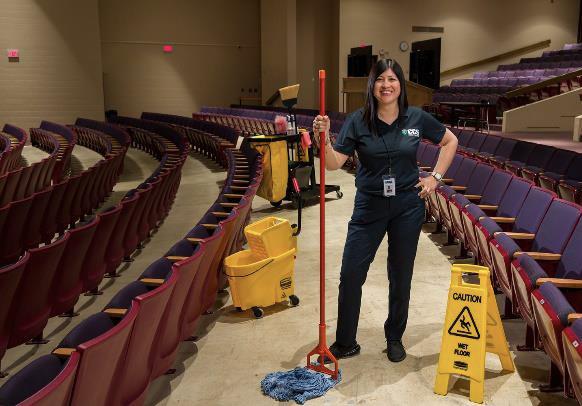
Safe, well-managed college and university campuses don’t happen by accident. They are the result of disciplined operations, clear accountability, and teams who understand that the condition of all campus spaces directly affects student safety, academic continuity, and institutional reputation. Custodial services are part of that equation. As colleges and universities increasingly rely on outsourced janitorial partners, success hinges on whether those partners are equipped to manage risk, respond to change, and consistently uphold cleanliness standards across campus.
A dedicated, embedded custodial team plays a critical role in creating clean, safe spaces across a higher education campus. Unlike rotating crews or transactional service models, vendors with embedded teams develop a working knowledge of campus
layouts, pedestrian traffic patterns, residence halls, academic buildings, and peak-use periods. That familiarity allows these teams to identify issues early and deliver dependable service for students, faculty, staff, and visitors. An embedded team also becomes woven into the fabric of campus life, recognized by staff and students—another important element in providing a safe environment.
A successful approach we’ve found is to have each campus supported by an on-site project manager responsible for day-to-day execution across shifts and oversight of day porters, general cleaners, and night managers as needed. This operational structure ensures clear lines of responsibility and real-time decision-making—particularly during hightraffic periods common to campus life. Through athletic events, commencements,
conferences, performances, and summer programs, janitorial teams must continuously clean and reset spaces. Custodial teams who are embedded in campus operations understand how to prepare, transition, and restore those spaces efficiently, supporting the student experience while reducing operational risk and protecting campus assets.
“From an operations standpoint, one of our biggest strengths is how our college and university teams from various campuses learn from each other,” said Alex Garcia, General Manager at CCS Facility Services. “We bring our campus project managers together to share challenges, talk through upcoming events, and exchange lessons learned. Those conversations translate directly into safer and more effective campus operations.” This shared knowledge allows teams to anticipate risks, apply proven strategies, and avoid reactive problem-solving.
Strong communication must underpin the relationship with campus operations, and effective custodial partners can’t just operate on the sidelines. The strategy of having a dedicated custodial project manager allows for daily check-ins with campus contacts to address issues in real time, participation in campus planning meetings, and attendance at event briefings. The project manager should come to know the campus as well as the school’s facilities team—and ideally demonstrate the same level of pride and ownership. This level of integration enables proactive planning, whether preparing for large student events, responding to weather impacts, or adjusting coverage to support evolving campus activity.
Another recommended element of the custodial vendor-campus partnership is conducting regular business reviews that include the project manager, campus leadership, and janitorial company leadership. These dedicated reviews allow stakeholders at multiple levels to understand the work that has been performed during the previous period, discuss upcoming changes to staff, plan for any forthcoming specialty work or events, discuss needs for the upcoming period, and— importantly— provide feedback to the vendor so they can further customize their service for
your campus.
When custodial teams are empowered and fully integrated into campus operations, they develop a strong sense of ownership over the environments they manage. That ownership translates into higher standards, faster response times, and the flexibility required to adapt to unexpected challenges without compromising quality, safety, or daily campus operations.
Ultimately, colleges and universities need more than outsourced labor; they need operational partners who understand how to create and manage safe, sparkling campus spaces every day. When janitorial teams are aligned with an institution’s mission, their work becomes an act of stewardship, shaping environments where learning, connection, and community can thrive. ■
Meghan Santella serves as Vice President, Education & Strategic Accounts at CCS Facility Services. As a proud former educator and Fulbright Scholar, she combines her passion for learning with hands-on leadership in operations and facility management. Before joining CCS, Meghan taught elementary, middle, and high school in Oklahoma and Denver, inspiring students in the classroom and on the soccer field as a coach. Her background in education fuels her approach to leadership: empathy, communication, and continual growth.
TED WEIDNER AND JONATHAN STANLEY
Facility managers in educational environments face a daunting challenge: balancing cost-effectiveness with maintaining a high-quality, safe, and healthy space for students and staff. Flooring, a seemingly mundane aspect of facilities, is often overlooked but plays a crucial role in both functionality and aesthetics. Total Cost of Ownership (TCO) provides an invaluable framework for making informed decisions about flooring. By understanding and applying TCO principles, facility managers can ensure smarter investments that support long-term value, reduce operational headaches, and improve their effectiveness in delivering superior facility outcomes.
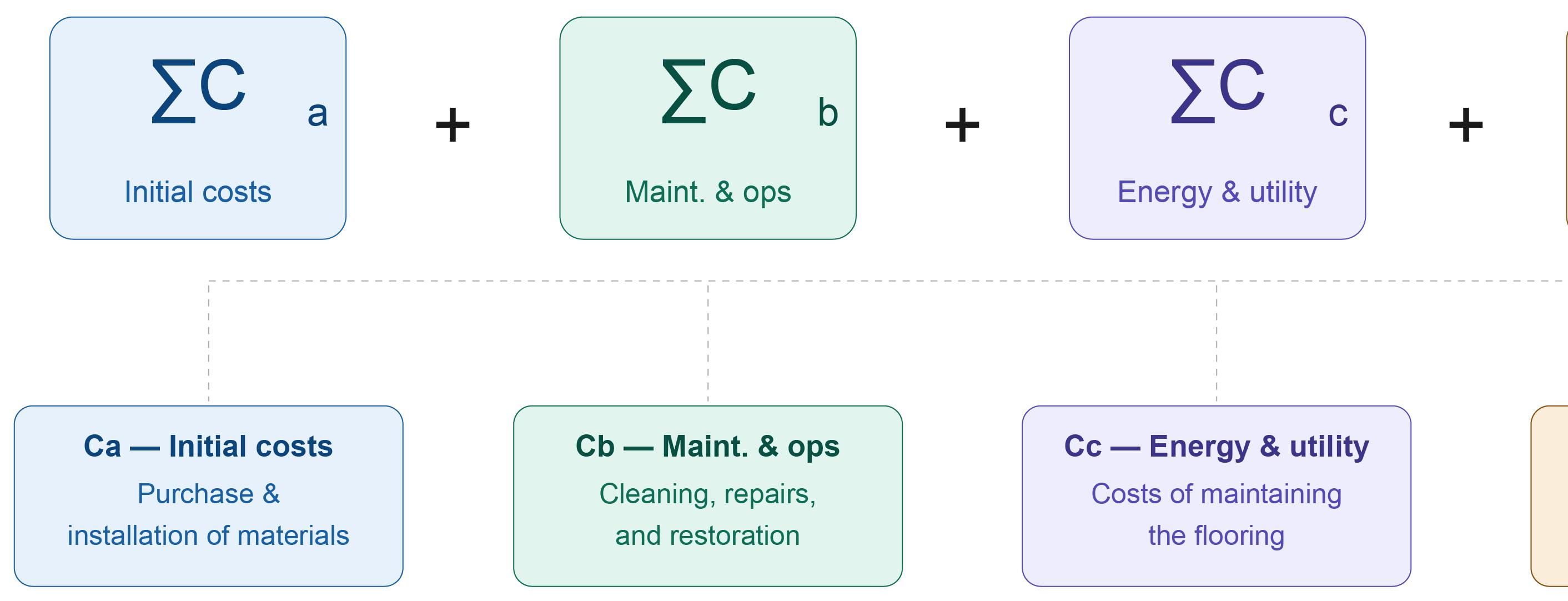
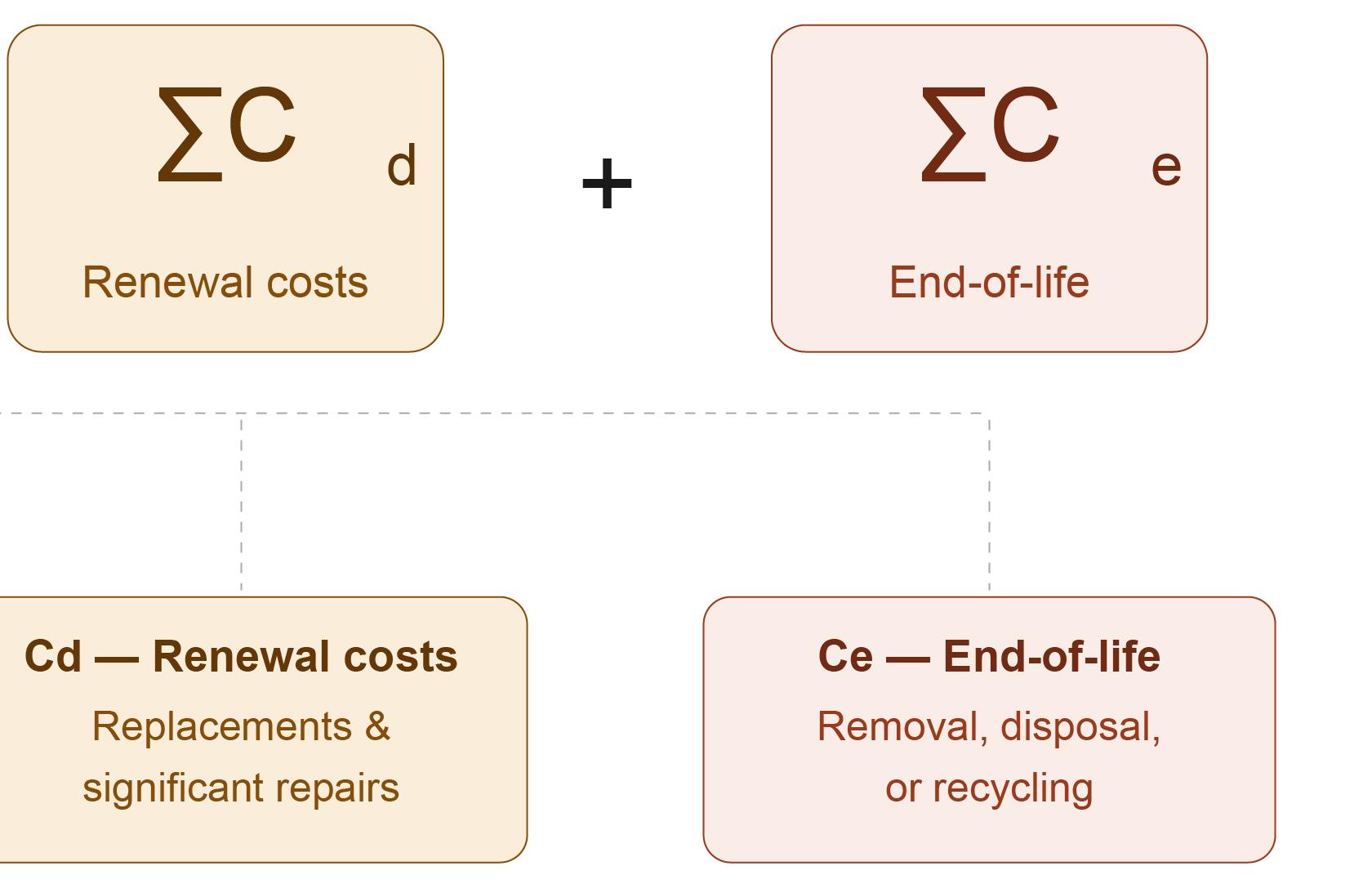
Understanding Total Cost of Ownership TCO is a holistic approach that evaluates the complete lifecycle costs of a facility component—from installation to end-of-life. For flooring, this includes:
• Initial Costs: Purchase and installation of materials.
• Maintenance and Operations: Routine cleaning, repairs, and restoration over time.
• Energy and Utility Costs: Related to maintaining the flooring.
• Renewal Costs: Periodic replacements or significant repairs.
• End-of-Life Costs: Removal, disposal, or recycling of materials.
These five factors are combined together using the TCO formula that is more fully described in APPA-1000.
Facility managers traditionally focus on initial costs, which represent only a fraction of a flooring system's lifecycle expenses. TCO emphasizes a broader perspective, capturing hidden costs that arise during all phases of a facility or component life. This shift enables facility managers to optimize budgets, enhance facility performance, and align decisions with long-term institutional goals.
Informed Decision Making
Facility managers are tasked with making high-stakes decisions with limited resources. TCO empowers managers with data-driven insights, allowing them to:
• Compare materials and maintenance plans objectively.
• Predict long-term expenses and allocate budgets more effectively.
• Justify investment in high-performance components with clear financial evidence.
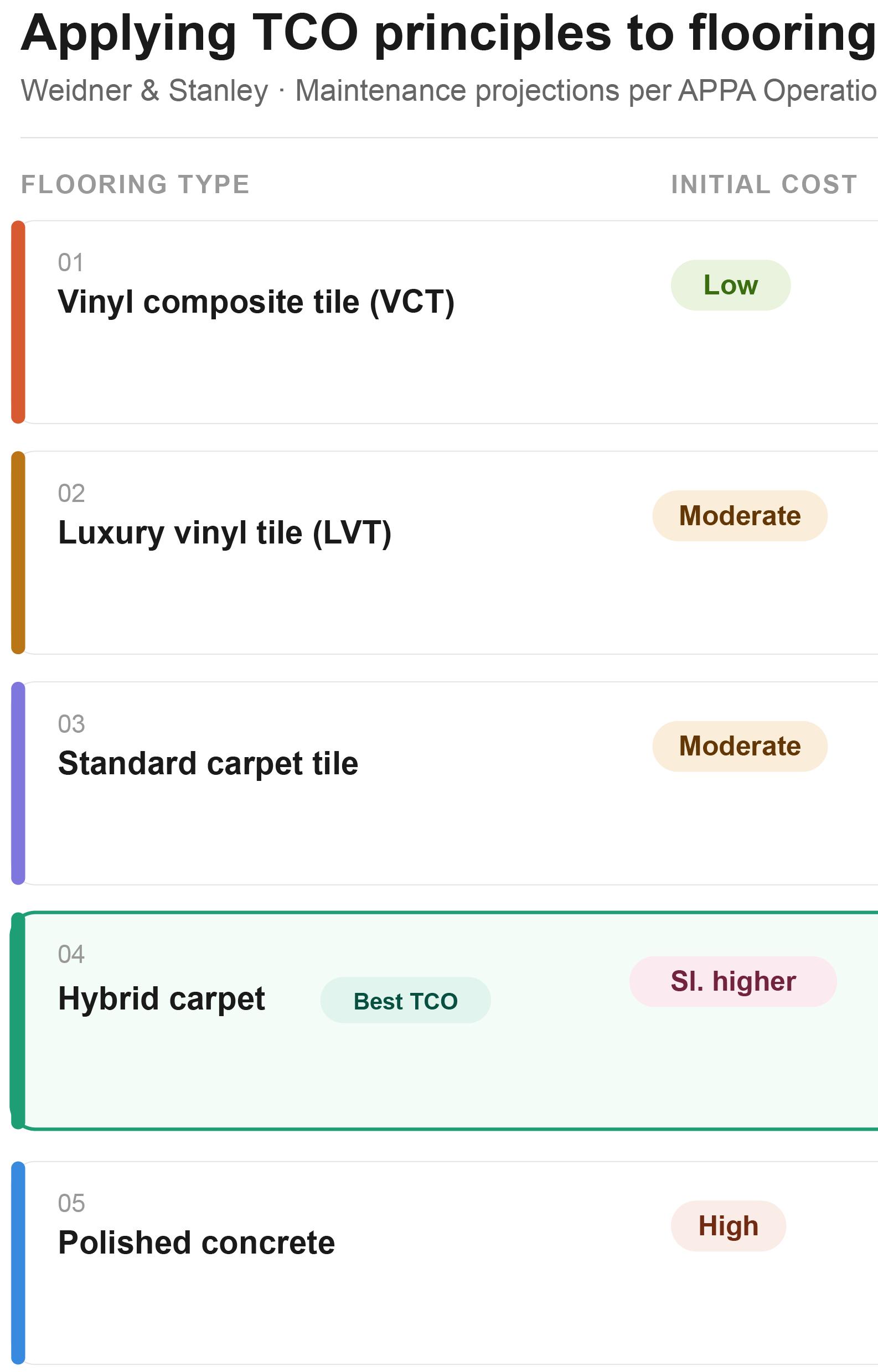
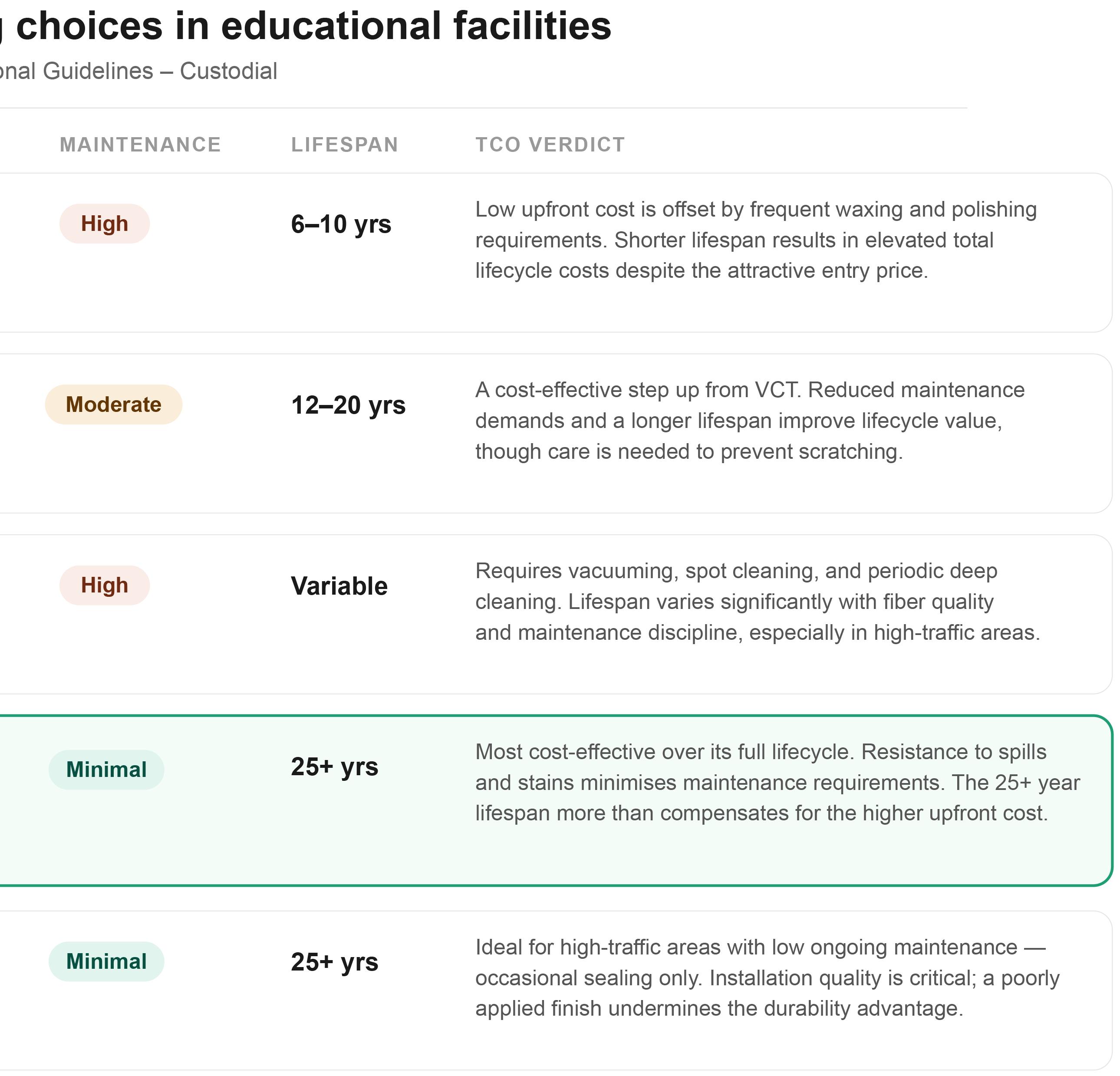
Looking at flooring, while Vinyl Composite Tile (VCT) may have a lower upfront cost than Luxury Vinyl Tile (LVT) or Hybrid Carpet, its higher maintenance demands lead to greater expenses over time. By applying TCO, a manager can confidently present the case for selecting LVT or Hybrid Carpet, demonstrating reduced lifecycle costs and improved occupant satisfaction.
Flooring maintenance is one of the most laborintensive activities in facility management. The APPA Operational Guidelines reveal that over 70% of custodial staff time in educational facilities is spent on flooring upkeep. By selecting materials with lower maintenance needs, managers can:
• Optimize staff productivity.
• Redirect resources to other critical areas of facility operations.
• Reduce disruptions caused by extensive maintenance activities.
• Maintain or increase occupant health and safety through appropriate maintenance
Hybrid Carpet, for instance, offers significant labor savings due to its durability and ease of cleaning. With TCO analysis, managers can identify such opportunities to streamline operations and improve service delivery.
Sustainability and Long-Term
Sustainability initiatives are increasingly central to educational institutions. There are goals to reduce energy consumption, use less water, and reduce or eliminate pollution. TCO aligns with these priorities by:
• Promoting durable materials with longer lifespans.
• Encouraging the use of low-VOC (volatile organic compound) products that enhance indoor air quality.
• Reducing waste through better maintenance and strategic replacements.
Facility managers who prioritize TCO contribute to their institution’s environmental goals while ensuring cost savings. For example, polished concrete’s longevity and minimal maintenance requirements make it a sustainable choice for high-traffic areas, despite its higher initial cost.
Well-maintained flooring directly impacts occupant health and safety. Poor maintenance can lead to:
• Slips, trips, and falls caused by damaged or uneven surfaces.
• Accumulation of allergens and contaminants, affecting indoor air quality.
TCO analysis helps managers plan for consistent maintenance, preserving flooring integrity and reducing health risks. Hybrid Carpet’s sealed seams and easy cleaning are particularly beneficial in minimizing allergen buildup and enhancing safety.
The study (see figure 2) conducted by Theodore J. Weidner and Jonathan Stanley evaluated five common flooring types in educational facilities, offering valuable insights into their TCO profiles:
TCO Conclusion: Ideal for high-traffic areas, offering durability and low maintenance, but installation quality is critical while application of sealant is necessary.
The study also utilized APPA Operational
Bringing it all together
Operating maintenance costs were based on Level 2 of the APPA Custodial Matrices for Public Circulation. This space type was selected for the analysis because traffic in corridors was assumed to require the most frequent service across all organizations. The maintenance time for each floor type is based on whether it was a hard (VCT, LVT, and Polished Concrete) or soft (Standard and Hybrid Carpet Tile) surfaces. Other factors are identified above with the individual flooring types. The costs of energy (utilities) consumption was ignored due to regional differences. The total cost of ownership for each floor material was calculated and available for decision makers to make a more informed decision.
Conduct Regular TCO Analyses: Integrate TCO evaluations into procurement and maintenance planning. Use standardized tools like the APPA-1000 guidelines to ensure consistent and accurate assessments. Collaborate Across Stakeholders: Work closely with architects, planners, and custodial teams to:
• Align flooring decisions with institutional goals.
• Ensure proper installation and maintenance practices.
• Foster partnerships with flooring manufacturers for ongoing support and training.
Leverage Data for Budget Advocacy: Use TCO insights to build compelling cases for budget approvals. Highlight how investments in durable, low-maintenance flooring reduce long-term costs and enhance facility performance.
Prioritize Preventive Maintenance: Proactive maintenance prolongs flooring lifespan and reduces renewal expenses. Set clear custodial standards and invest in staff training to uphold high service levels.
Adopting TCO principles transforms flooring decisions from short-term cost considerations to strategic investments in facility longevity and performance. For facility managers, this approach delivers tangible benefits:
• Enhanced decision-making confidence.
• Optimized operational efficiency.
• Alignment with sustainability and health priorities.
Flooring, as a critical component of educational environments, deserves deliberate attention. By leveraging TCO, facility managers can not only meet their current responsibilities but also position themselves as strategic leaders within their organizations. Investing in smarter flooring choices today ensures a safer, healthier, and more cost-effective future for educational facilities. ■
Ted was an FM professional at several universities over a 30-year career. Now he is a faculty member at Purdue University teaching students about facilities and construction.
Jonathan Stanley is the Director of Education and Government Segment Strategies for Tarkett North America, where he leads the company's innovation and marketing strategy for higher education, K–12, religious, and government institutions. With more than two decades of experience in the flooring industry, spanning installation, cleaning, and consultative expertise.
ABOVE
Figure 2: Applying TCO Principles to Flooring Choices. Initial cost reflects purchase and installation. Maintenance ratings reflect projected stafft time and materials across the full lifecycle.
BY APPA
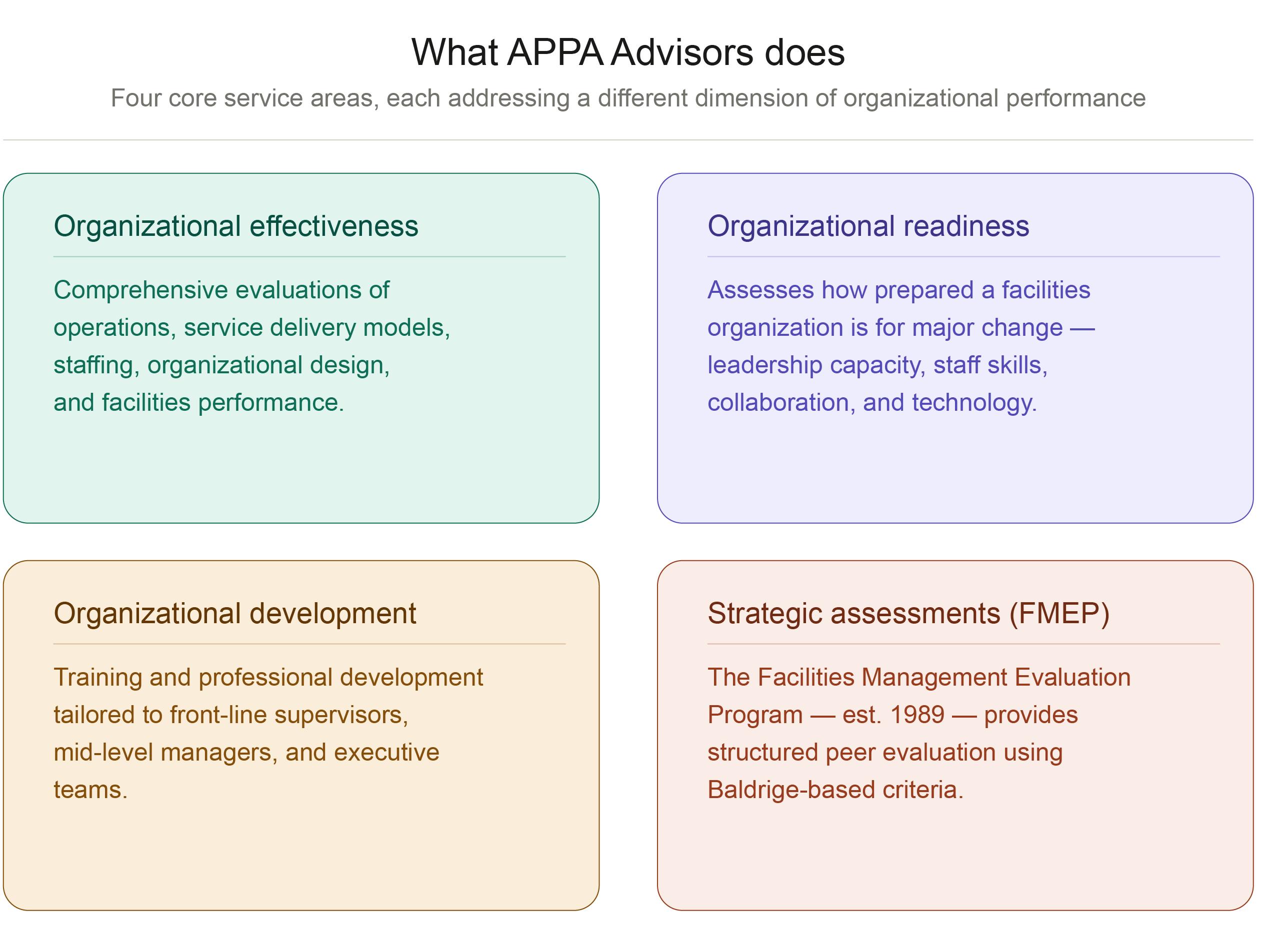
Every facilities leader faces a moment when the challenge in front of them is larger than the bandwidth of their team. A reorganization following a leadership transition. A longoverdue evaluation of service levels. A workforce that needs to build new skills faster than the schedule allows. These are not failures of leadership — they are the reality of operating complex facilities organizations in an era of relentless change.
APPA Advisors was created for exactly these moments. Established in 2021, the program brings the expertise of seasoned educational facilities professionals — current and former senior leaders from institutions across the country — directly to the institutions that need them most. The result is advisory support that is unlike anything available from a traditional firm: peer-driven, deeply familiar with the culture and financial structures of higher education, and backed by the full weight of APPA's knowledge base and professional network.
Now, with a newly redesigned Advisors page at appa.org, engaging with the program — whether as a prospective client or as a practitioner who wants to give back — has never been more straightforward.
Engagements are flexible by design — delivered by phone, video chat, or on-site — and scaled to the specific need, whether that's a focused consultation on a single issue or a comprehensive institution-wide evaluation.
What distinguishes APPA Advisors from conventional consulting is the quality and authenticity of its advisors. The program draws from a pool of Senior Advisors — retired or active executives with experience at the director, AVP, or VP level — and Advisors, accomplished professionals currently working in higher education who are recognized for their subject matter expertise and contributions to the field.
Each engagement is led by a Senior Advisor Team Leader who oversees the scope, process, and delivery of results. Teams are selected based on the institution's profile and subject to client approval, ensuring a genuine fit between the advisor's experience and the institution's context.
Advisors also draw on resources that no independent consultant can replicate: APPA's Body of Knowledge, its publications and contributors, its national network of regions and chapters, and its relationships with business partners and peer professional associations. The result is analysis grounded not just in individual experience, but in the collective institutional knowledge of the educational facilities profession.
APPA has recently updated the Advisors page at appa.org with two new features that make engagement more direct for both audiences the program serves.

For institutions considering an engagement, a new Evaluation Interest Form provides a streamlined way to describe your institution's needs and initiate a conversation with the APPA Advisors team. Rather than navigating through emails and phone calls to get started, facilities leaders can now provide the basic context of their challenge directly through the website. From there, APPA's Program Manager will reach out to begin a preliminary consultation, define scope, and identify the right advisor team for the work.
For experienced facilities professionals who want to contribute their expertise, a new Evaluator Interest Form offers a direct path to joining the program. APPA Advisors is always looking to expand its pool of senior practitioners — particularly those with experience that spans institution types, operational areas, or the particular challenges facing facilities organizations today. Serving as an Advisor is both a way to give back to the profession and to remain actively engaged with the broader APPA community.
Whether initiated through the new online form or through a direct conversation with the Program Manager, every APPA Advisors engagement follows a consistent process:
Consultation: A preliminary discussion with the APPA Advisors Program Manager to understand your institution's needs.
Scope Development: A structured interview that defines the specific work, deliverables, and areas of focus.
Team Selection: A Senior Advisor or team is identified based on your institution's profile — subject to your approval.
Proposal & Agreement: A clear outline of the process, timeline, deliverables, and cost before any work begins.
Institutions that complete an APPA Advisors engagement — or the formal FMEP evaluation — may also become eligible to apply for APPA's Award for Excellence in Facilities Management, the association's highest institutional honor. ■
Visit appa.org/advisors to explore the full range of services, submit a project request, or apply to join the advisor pool. For more information, contact APPA Advisors Program Manager Lindsay Wagner, PhD at lwagner@appa.org.
In a time of uncertainty and transformation, APPA Advisors is your strategic ally — delivering trusted peer insight, practical solutions, and measurable results to help your facilities organization evolve, lead, and thrive.
Your APPA Advisors engagement is designed to produce clear, usable outputs that support decision-making and accelerate improvement. Depending on the scope, deliverables can include:
• Custom-written reports and findings
• Oral briefings and executive presentations
• Actionable recommendations
• Post-review follow-up and implementation support
• Training programs aligned to institutional needs

Concise, high-impact evaluations of select and support for redesigning services, processes,
Executive Coaching
One-on-one mentoring for facilities leaders challenges, or building leadership capacity.
Talent Management
Assessments and strategies for workforce planning that ensure long-term readiness.
APPA’s Facilities Management Evaluation
In addition to APPA’s Advisors program, evaluate, strengthen, and support your
Self-evaluation by the institution’s facilities team using APPAestablished criteria
Oral report delivered onsite to summarize findings and gain clarification
select functions, including recommendations processes, and personnel.
leaders navigating change, addressing capacity.
workforce development, training, and succession readiness. Evaluation Program (FMEP) program, the FMEP assessment can your facilities’ operations.
The FMEP Helps Institutions:
• Benchmark performance against industry best practices
• Gain an unbiased assessment rooted in factual data
• Strengthen long-range strategic planning and operational effectiveness
• Improve customer satisfaction across faculty, staff, and students
• Build staff engagement and support for change
Key Areas of Evaluation
FMEP assessments are built around seven core criteria that together reflect the health and effectiveness of facilities organizations:
Leadership
Direction, vision, values, and ability to drive cultural change
Assessment & Information Analysis
Stages:
Onsite evaluation team organized by APPA meets with the facilities organization Final written report delivered to the institution after the onsite evaluation
Use of data and metrics to improve performance
Human Resources
Development & Management
Building talent, creativity, and capacity
Performance Results
Strategic & Operational Planning
Alignment with institutional goals and future needs
Customer Focus
Engagement with faculty, staff, students, and stakeholders
Process Management
Efficiency and effectiveness of operations and services
Outcomes in campus appearance, satisfaction, financial stewardship, and more
BY PAUL M. LEEF, AIA, NCARB, AUA, LEED AP
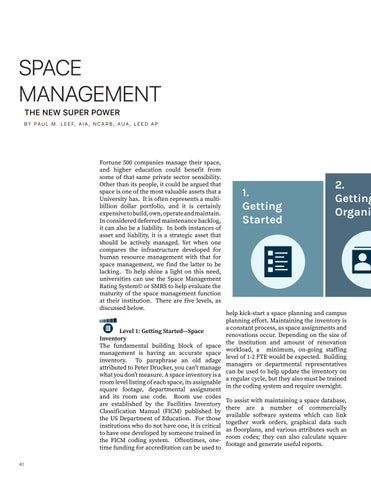
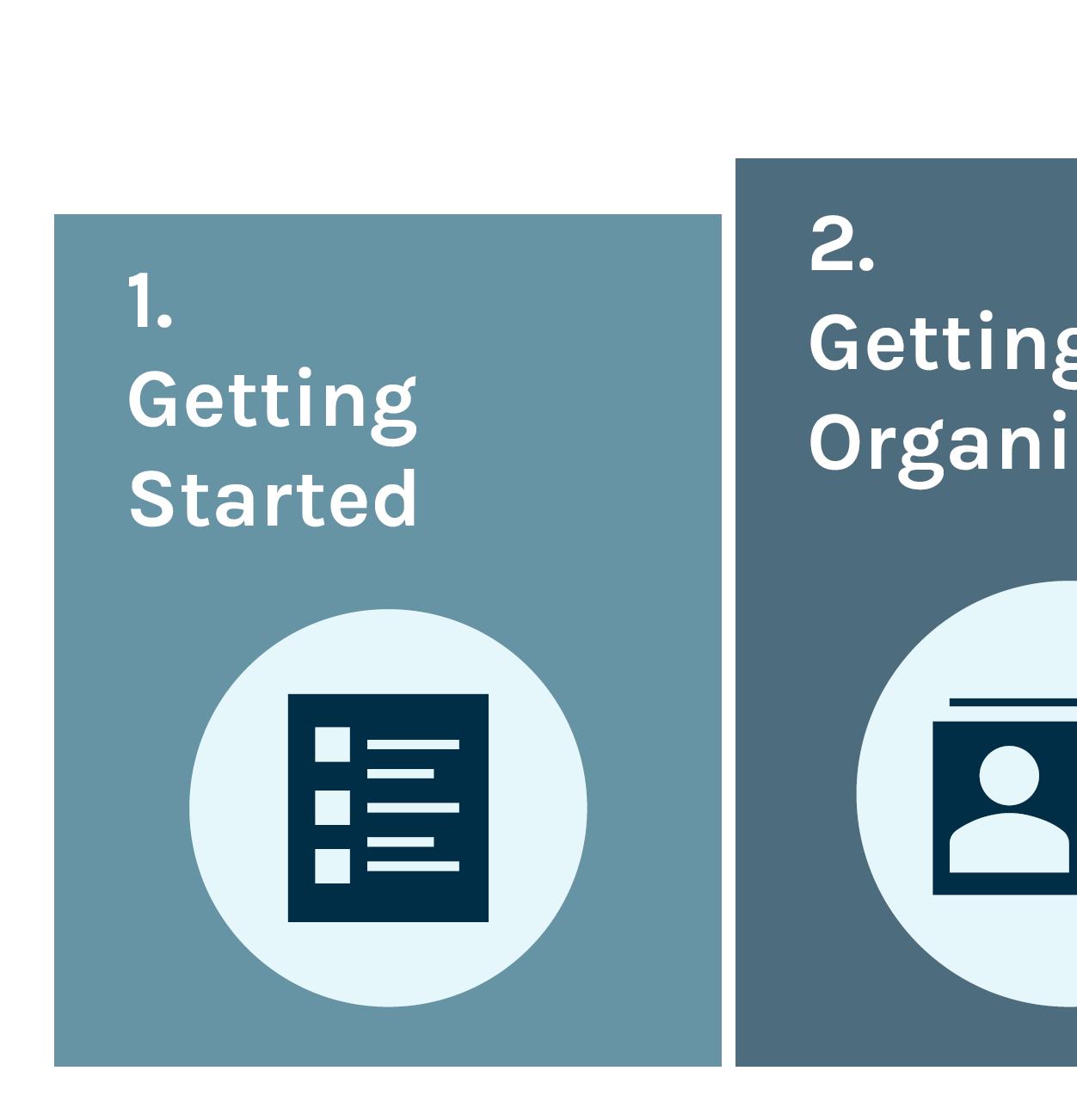
Fortune 500 companies manage their space, and higher education could benefit from some of that same private sector sensibility. Other than its people, it could be argued that space is one of the most valuable assets that a University has. It is often represents a multibillion dollar portfolio, and it is certainly expensive to build, own, operate and maintain. In considered deferred maintenance backlog, it can also be a liability. In both instances of asset and liability, it is a strategic asset that should be actively managed. Yet when one compares the infrastructure developed for human resource management with that for space management, we find the latter to be lacking. To help shine a light on this need, universities can use the Space Management Rating System© or SMRS to help evaluate the maturity of the space management function at their institution. There are five levels, as discussed below.
The fundamental building block of space management is having an accurate space inventory. To paraphrase an old adage attributed to Peter Drucker, you can’t manage what you don’t measure. A space inventory is a room level listing of each space, its assignable square footage, departmental assignment and its room use code. Room use codes are established by the Facilities Inventory Classification Manual (FICM) published by the US Department of Education. For those institutions who do not have one, it is critical to have one developed by someone trained in the FICM coding system. Oftentimes, onetime funding for accreditation can be used to
help kick-start a space planning and campus planning effort. Maintaining the inventory is a constant process, as space assignments and renovations occur. Depending on the size of the institution and amount of renovation workload, a minimum, on-going staffing level of 1-2 FTE would be expected. Building managers or departmental representatives can be used to help update the inventory on a regular cycle, but they also must be trained in the coding system and require oversight.
To assist with maintaining a space database, there are a number of commercially available software systems which can link together work orders, graphical data such as floorplans, and various attributes such as room codes; they can also calculate square footage and generate useful reports.
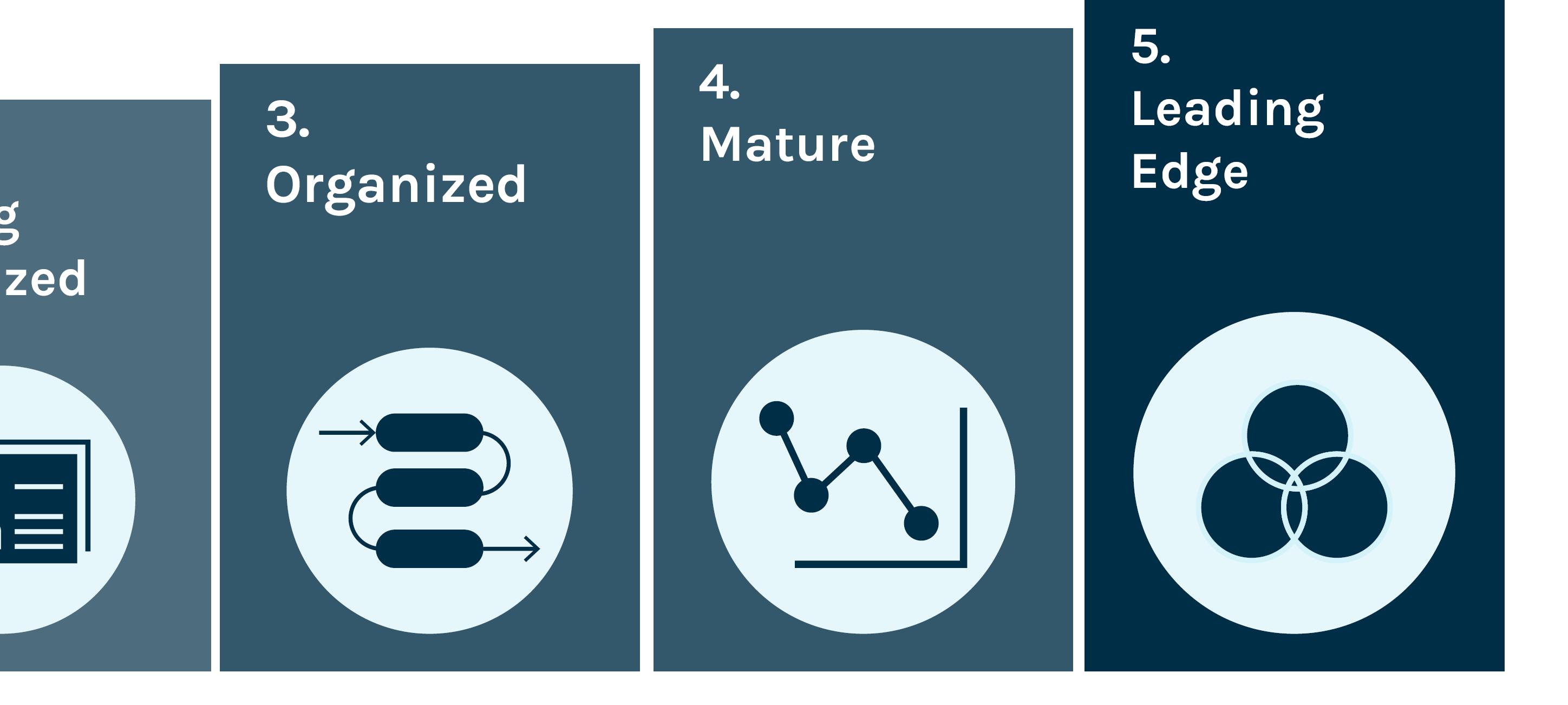

The second building block of space management process is simply to have a policy statement which clearly articulates that space is not owned by anyone individual but is owned by the institution’s board and essentially delegated to the campus leadership (chancellor, president, provost, etc.). This can be referenced in hiring contracts and other administrative policies, but it serves a critical purpose to get everyone on the same page and establish a culture of viewing space as an asset to be employed in support of the institution’s mission and strategic goals, not a perk of employment. Simple, right? It is surprising how many institutions do not have this, so it’s one of our first steps in building a space management infrastructure.
Once a space inventory is established, staffing has been allocated for maintaining it, and campus leadership has embraced the value of managing space as an asset, it is time to move from simply documenting space to actively managing space For this, a well defined process and additional resources are needed.
There are two basic models for a space process: centralized and decentralized. In the centralized model, there is often a campus wide space committee and/or space management office reporting to campus leadership; frequently a space committee is supported by a space manager for the campus. In a decentralized or distributed model, each college may have its own
committee or process for space evaluation and space allocation. In either case, it is important to have a well defined and transparent process for decision making. In addition to a process, the leadership should adopt guiding principles for space decisions and include them in a policy statement. These principles can prioritize such things as institutional strategic goals and optimization of existing space. These principles can also be incorporated into campus planning documents and reference the policy statement outlined in Level 2. These policies and procedures equip campus deans and administrative leaders with valuable tools to manage space wisely.
Other policies that can be adopted or promulgated by a space committee include those that include space considerations in planning and budgeting. For example, as a prerequisite for a faculty hire, a research grant proposal, or an equipment purchase, there needs to be a checkbox that appropriate space has been identified and signed off by facility managers. Being reactive to a faculty member who showed up needing a lab can lead to bad and costly decisions. Proper planning procedures can move toward a constructive, pro-active process that uses space for its highest and best use, not just the most expedient.
To further support the institutional goals, it is possible to customize the room coding so that meaningful data can be obtained about the
institution’s facility portfolio. For example, there is often a strategic goal for student success, so coding both classrooms and study spaces according to their size or pedagogical modality can be helpful in understanding learning environments on campus. For Carnegie R1 Research institutions, coding the type of research labs (e.g., wet, dry, damp) can also be helpful.
In Level 4, an institution is using metrics and analytics to assist with decision making. This is actively managing space in a proactive, efficient and effective manner. Some metrics can include:
Benchmarking: Although benchmarking is, to some extent, looking in the rear view mirror, it can provide context for an institution’s standing in relationship to its peers. It can also point toward areas of possible surpluses or deficiencies
Instructional Space Utilization: It is important to understand not only what space we have but how it is being used. Such an understanding can lead to strategies such as reconfiguring or re-furnishing learning environments to make them more effective in achieving positive student outcomes.
Occupancy Sensing: There are various technologies on the market that provide
relatively accurate accounting of occupancy at the room, floor and building level. However, it is important to define in advance the problem for which these tools are being used to solve. It is important to choose the right tool for the job and to be able to make this data meaningful.
Research productivity: There are many ways to define productivity, but one basic measure is expenditures per square foot or per principal investigator. Other factors such as bibliographic data (publications, citations) and team size can also be meaningful.
Best Practices: Another type of benchmarking is to look at best practices at other institutions; this could be in terms of operational procedures or facilities.
Since we are now actively managing space at this level, more staffing resources are clearly needed to help evaluate and plan optimal space use.
Level 5: Leading Edge—Integration Leaders in this area integrate data sources and processes. Recognizing that the metrics discussed in the previous section typically originate from various silos in the academy, it becomes important to unify and coordinate these data sets so that there are consistent data definitions and sources. Various data sets include data on space, staffing, course files, occupancy, building age, deferred maintenance, operating expenses, research
expenditures, to name a few. Furthermore, these datasets need to talk to each other with common, agreed upon metrics and there needs to be overall data governance to establish a single source of truth. Some universities are moving toward data platforms such as GIS-based platforms to help integrate these in one place. Integrating data can help inform decision making for policy making and planning at the highest level. A comprehensive understanding of the facility portfolio can aid in assessing how best to make multi-million dollar decisions about capital improvements. Again, this requires additional resources in terms of staffing and technical support.
In summary, space is one of the most valuable assets which an institution can deploy in support of its mission and strategic goals for the future. Understanding the maturity of the space management function can help campus leaders allocate the resources needed to effectively manage their assets. ■
Paul M. Leef, AIA, NCARB, AUA, LEED AP is a Vice President with SmithGroup, a national planning and design firm, and he is director of their Campus Strategy & Analytics team. His previous positions include University Architect where he directed Planning, Design & Construction at CU Boulder and Colorado School of Mines.


InsideAPPA is a monthly newsletter that covers regional and international APPA events, programs, publications, and facilities management industry updates. Get your business in front of the people shaping the future of educational facilities!

Business Partner Members receive up to 25% off.
Take the next step in your business partner membership journey by purchasing ad space in InsideAPPA. Scan the QR code to learn more!
Questions? Email marketing@appa.org
Visit https://www.appa.org/purchase/newsletter-advertising to purchase. APPA is ready to support you, your team, and your institution at every stage of the facilities management journey.


BY WINKEYSSA G. ROBERTSON "WINKIE"
Whenpeople think about higher education, they often picture classrooms, labs, and lecture halls filled with students and faculty. What they don’t always see is the quiet, steady work happening behind the scenes the custodial teams who make those spaces safe, welcoming, and ready for learning every single day.
As a manager at Louisiana State University, I have always taken pride in that responsibility. But it wasn’t until I attended APPA training in Fort Worth, Texas, in 2025 that I fully understood the deeper impact of our work, and my role as a leader within it.
Walking In as a Manager, Walking Out as a Leader
I arrived at APPA Training expecting practical tools: staffing models, cleaning standards, and efficient strategies. APPA delivered all of that, but what surprised me most was how deeply the training centered on people.
One session challenged us to see custodial work not as a list of tasks, but as a service with purpose. The instructor shared a statement that stayed with me:
“Facilities work isn’t invisible— it’s foundational.”
That single sentence reframed how I saw my team. We don’t just maintain buildings; we protect health, support student success, and shape first impressions of our university. That shift in perspective has stayed with me long after the training ended.
Back on campus at LSU, I began applying what I learned immediately. Communication became my first priority. APPA emphasized that clarity, consistency, and respect are essential to facilities leadership. I began holding more intentional check-ins with my team- not just to talk about assignments, but to listen. I asked questions like, “What’s making your job harder?” and “What do you need from me to succeed?”
The results were powerful. Morale has improved. Team members shared ideas to enhance workflows and safety. Ownership increased because people felt heard and valued.
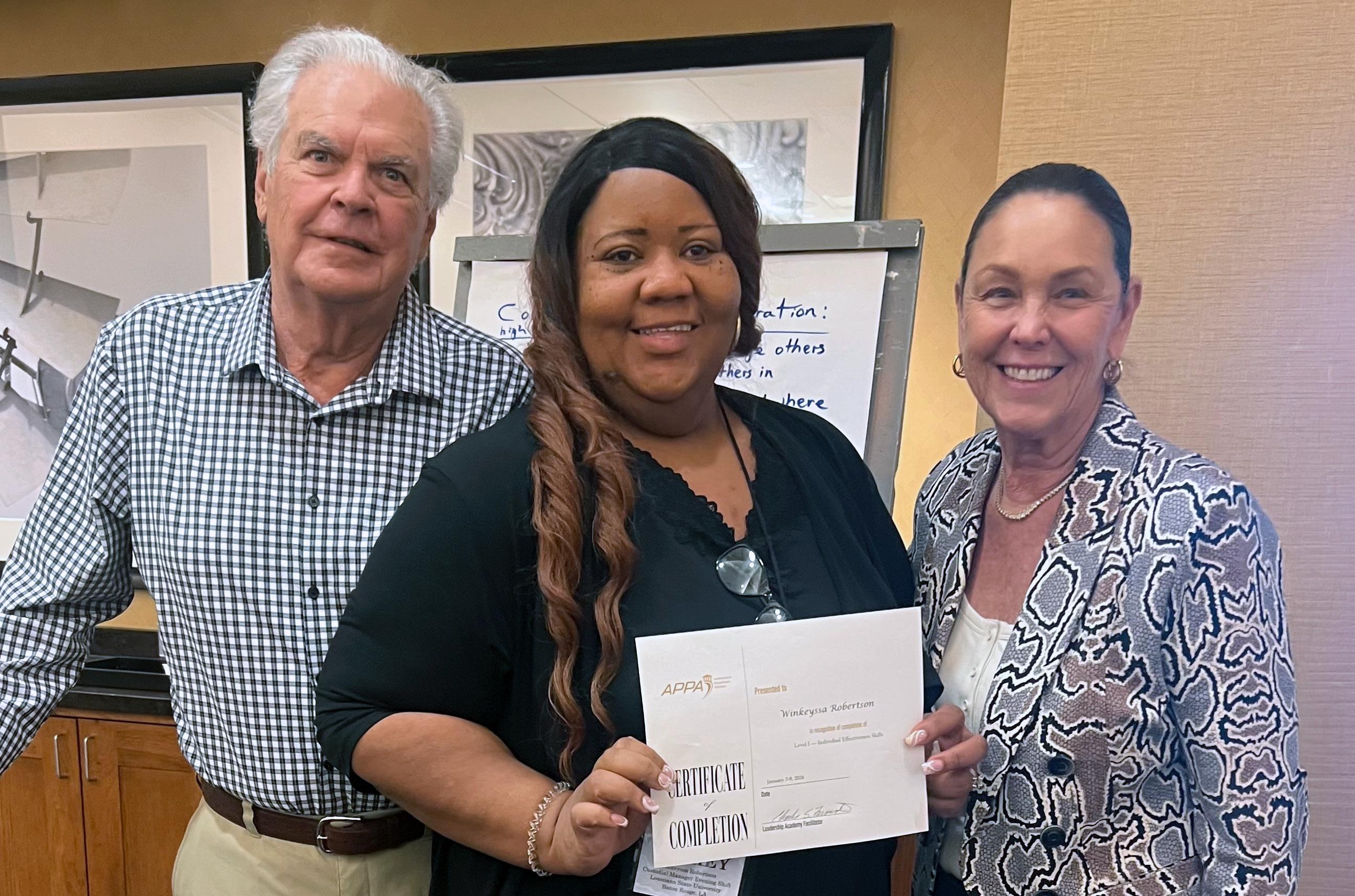
Training and development were another major takeaway. APPA reinforced that investing in custodial staff isn't optional it’s transformational. Inspired by APPA leaders, I began advocating for more structured onboarding, peer mentoring, and crosstraining opportunities. When custodians can see a future for themselves, their confidence and performance grow.
One of the most meaningful moments during the APPA training came during a group discussion with facilities professionals from across the country. Despite differences in campuses and job titles, we shared the same challenges and the same pride.
A colleague said “We don’t just clean buildings. We take care of people who may never know our names.” That resonated deeply with me.
At LSU, our custodial teams often work early in the morning, late at night, and on weekends. Students may never meet us, but they benefit from our care every day. APPA helped me understand that recognizing this quiet impact, both publicly and privately, is a critical part of leadership.
APPA training gave me more than skills; it gave me confidence. Confidence to lead with empathy. Confidence to advocate for my team. Confidence to see custodial work as a profession rooted in dignity and purpose.
Most importantly, it reminded me that facilities professionals are not alone. We are part of a national community committed to learning, sharing, and lifting one another up.
As I continue my journey at Louisiana State University, I carry APPA with me, not just the lessons, but the inspiration. Every day I strive to be the kind of leader APPA challenged me to become: present, prepared, and peoplefocused.
Because when we invest in those who care for our campuses, we strengthen the foundation of higher education itself. ■
BY DR. AYODELE AKINOLA AND CONTRIBUTOR RYAN DAUGHERTY
Facilities teams across higher education are well acquainted with a quiet but persistent challenge: cardboard. Shipping, receiving, dining, and campus operations generate thousands of pounds of corrugated cardboard each year. While baling remains standard practice, market volatility and recycler capacity often result in limited off-take, leaving institutions to manage excess material, storage constraints, and rising hauling costs. This was precisely the situation facing Truckee Meadows Community College (TMCC).
At TMCC Facilities, we chose a different path, one that reframed cardboard not as waste, but as a resource. The result was a paired sustainability initiative combining a JohnsonSu Bioreactor with an HSM ProfiPack C400 cardboard shredder, supported by a $2,671 TMCC Foundation grant. Together, these tools created a closed-loop, on-site solution that addressed operational constraints while delivering regenerative outcomes.
The Operational Challenge: When Recycling Markets Fall Short
TMCC's Facilities-Ground operations, like those of many campuses, historically relied on baling cardboard for off-site recycling. While effective in principle, this approach has become increasingly constrained by external factors including fluctuating commodity markets, transportation logistics, and recycler capacity. At times, only a portion of baled cardboard could be reliably removed, creating storage pressures and inefficiencies largely outside the control of facilities teams.
At the same time, TMCC's existing compost
operation faced a different but related limitation: carbon availability. The system relied primarily on fall leaves as its carbon source, effective, but both seasonal and finite. Reliance on leaves placed a hard ceiling on our ongoing compost production and limited the ability to expand soil-building efforts across campus.
Rather than expanding storage or increasing hauling frequency, both costly and reactive strategies, TMCC evaluated whether surplus cardboard could be managed on campus in a way that aligned with sustainability goals and operational resilience. Using cardboard as a compost feedstock offered the potential to address two challenges simultaneously: limited recycling off-take and constrained compost capacity.
As Ryan Daugherty, TMCC Grounds Maintenance Worker 3 and ISA Certified Arborist, noted, the combination of a JohnsonSu Bioreactor and an HSM ProfiPack C400 shredder allowed TMCC to convert cardboard from an internal waste stream into a reliable, year-round carbon source, effectively eliminating long-standing dependence on seasonal leaf inputs.
The Solution: Shredding + Biology
The college implemented a two-part system designed to function as an integrated whole. First, the HSM ProfiPack C400 converts corrugated cardboard into clean, fibrous material. From a facilities perspective, this preprocessing step delivers immediate operational benefits:
• Significant volume reduction without baling
• Elimination of wire, staging, and storage constraints
• On-demand processing at the point of generation
More importantly, shredded cardboard becomes a controlled, carbon-rich feedstock rather than a disposal problem. That material is then incorporated into a JohnsonSu Bioreactor, a static, low-disturbance composting system designed to cultivate biologically diverse, fungal-dominant compost. Unlike conventional composting methods that rely on frequent turning and rapid throughput, the Johnson-Su approach
be constructed from common materials, does not require turning, and contains feedstock within a stable vertical vessel that resists wind loss. An added benefit is biological. JohnsonSu systems tend to produce fungal-dominant compost, creating opportunities to introduce mycorrhizal biology into soils. Extensive research shows that arbuscular mycorrhizal fungi can improve drought tolerance, nutrient uptake, and water-use efficiency, especially in degraded or water-limited environments (Tang et al., 2022; Chandrasekaran, 2022; Zaman et al., 2024). For TMCC, located in the driest state in the country, with compacted, biologically sluggish soils, this represented a meaningful opportunity to explore soil health as infrastructure rather than ornament.
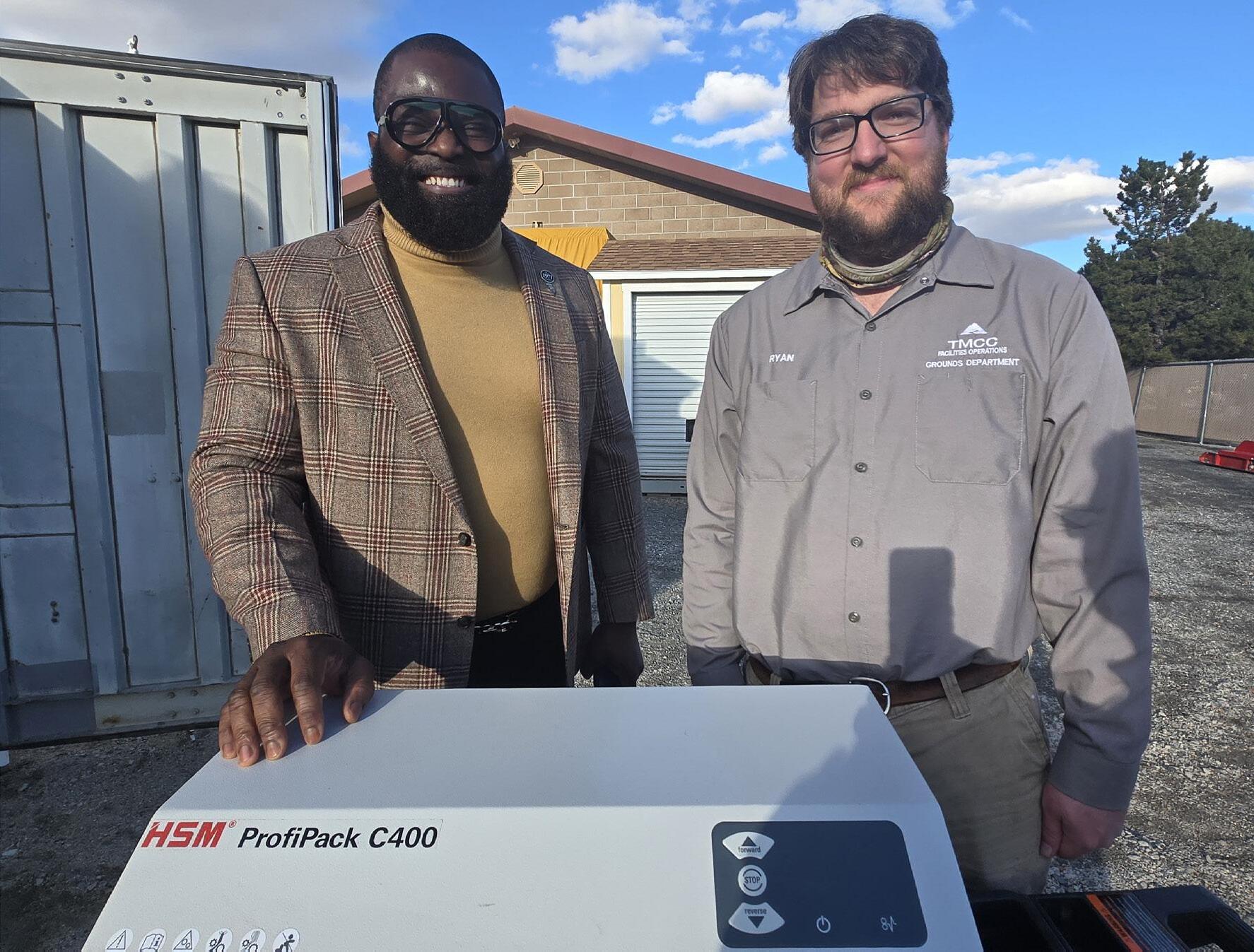
emphasizes aeration, long curing times, and minimal mechanical disturbance (Wolf & Tilley, 2022; Gankam, 2024). This design significantly reduces labor requirements while supporting microbial development.
Before implementation, system options were discussed extensively with grounds staff, with particular attention to labor demands, wind exposure, odor risk, cost, and time away from routine duties. The Johnson-Su system proved well-suited to these constraints: it can
Although cardboard has appeared in composting guidance and research for decades, cardboard-dominant systems often raise concerns about contamination, particularly from inks, coatings, and additives. Studies have shown that colorants and coatings in paper products can influence heavy metal content and introduce undesirable compounds into compost streams (MertogluElmas, 2017). To address these concerns directly, TMCC limited inputs exclusively to
clean, plain brown corrugated cardboard, free of tape, glue residue, colored printing, labels, or glossy coatings. This decision kept the system simple, defensible, and safe, while diplomatically addressing stakeholder concerns. Nitrogen inputs were similarly controlled. Both reactors received measured applications of 16-16-16 fertilizer to maintain predictability and minimize odor risk. A second reactor also incorporated feather meal to explore how a slower-release organic nitrogen source might influence biological activity.
Temperatures rose quickly in the first several days, peaking early, particularly in the reactor containing feather meal, before gradually declining. Biological activity persisted for months, stabilizing around 80–90°F. Fungal growth appeared within weeks and expanded steadily throughout the interior, breaking the cardboard down into a dense, clay-like compost. Insect communities developed without intentional inoculation, especially in the reactor containing organic nitrogen. Given the system's biological activity, red wiggler worms were intentionally not introduced.
Moisture management proved critical. While some Johnson-Su guidance recommends daily watering, sensory indicators, smell, texture, and structure, suggested that daily irrigation was excessive under TMCC conditions. Adjusting to every-other-day watering, and pausing during wet or cold periods, improved
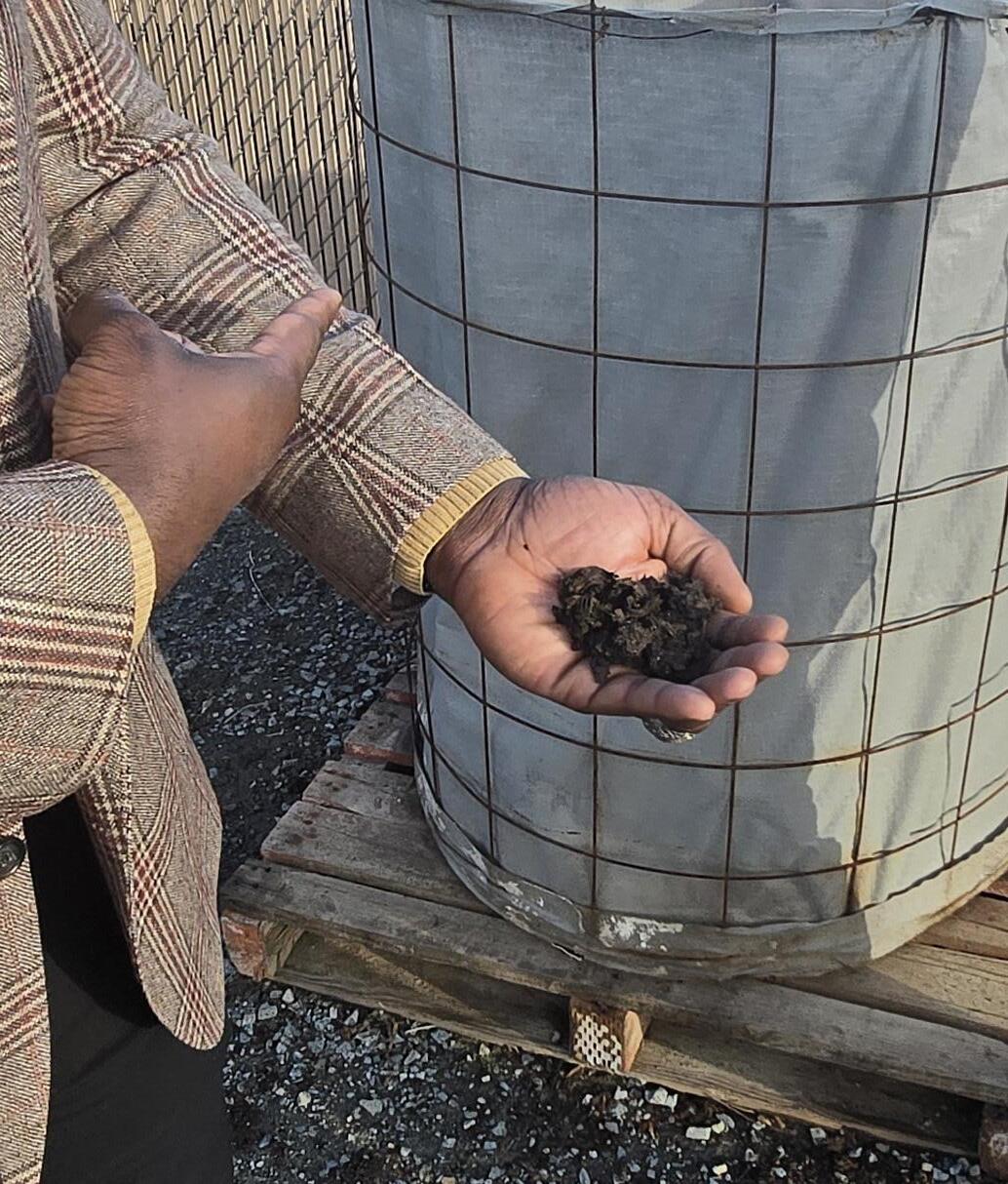
system stability and reduced odor risk. One unexpected outcome was the dramatic reduction in volume as the cardboard decomposed. Corrugated cardboard creates substantial initial bulk that collapses as the material breaks down. This observation may have broader relevance for using cardboard as a structural bulking agent in other composting systems.
For facilities professionals, the impact of this system extends beyond sustainability optics. They include:
1. Operational Resilienc: Reducing dependence on external recycling markets insulates TMCC from fluctuations in off-take availability. Cardboard that cannot be hauled immediately is no longer a liability, it is an input.
2. Cost and Logistics Efficiency: On-site processing reduces hauling frequency, minimizes storage needs, and simplifies material handling. Over time, this improves workflow predictability and reduces operational strain.
3. Landscape and Grounds Integration: Finished compost smells neutral, behaves almost like a concentrate, dissolves easily into water, and reintegrates smoothly with soil. Compost was applied to drought-stressed slopes planted with Oregon grape, where early observations suggest improved moisture retention. Compost amendments are well documented to improve soil structure, water-holding capacity, and plant performance in semi-arid and degraded soils (Hernández et al., 2015; Bondì et al., 2022; Stricker et al., 2025).
What distinguishes this initiative is that it is facilities-driven, not pilot-dependent or grantlimited. It scales to operational realities and is maintained within existing workflows. The project also serves as a living demonstration, allowing faculty, students, and visitors to observe how operational challenges can be addressed through systems thinking. TMCC produces approximately one bale of cardboard every one to two weeks. This pilot was intentionally small, composting eight 27-cubic-foot bags of shredded cardboard while material was added incrementally as the system settled. The broader value of the project lies not in immediate scale, but in
demonstrating that a material typically treated as a disposal problem can become biologically useful and ecologically beneficial.
TMCC's experience suggests several transferable lessons:
• Limited recycling off-take is not a failure, it is a signal to redesign systems.
• Pairing mechanical preprocessing with biological processes unlocks new value streams.
• Sustainability initiatives gain traction when they solve real operational pain points.
• Facilities departments are uniquely positioned to lead circular infrastructure solutions.
As institutions face growing pressure to reduce waste, improve resilience, and demonstrate measurable sustainability outcomes, TMCC's Johnson-Su Bioreactor initiative illustrates a replicable, facilities-centered approach. By leveraging existing material streams and proven biological systems, the college has created an infrastructure solution that is environmentally sound, operationally practical, and economically grounded.
What began as a cardboard off-take problem is now a model for how facilities teams can drive innovation, quietly, effectively, and with lasting impact. ■
LEFT
Resulting product BELOW
Authors poseing with product.
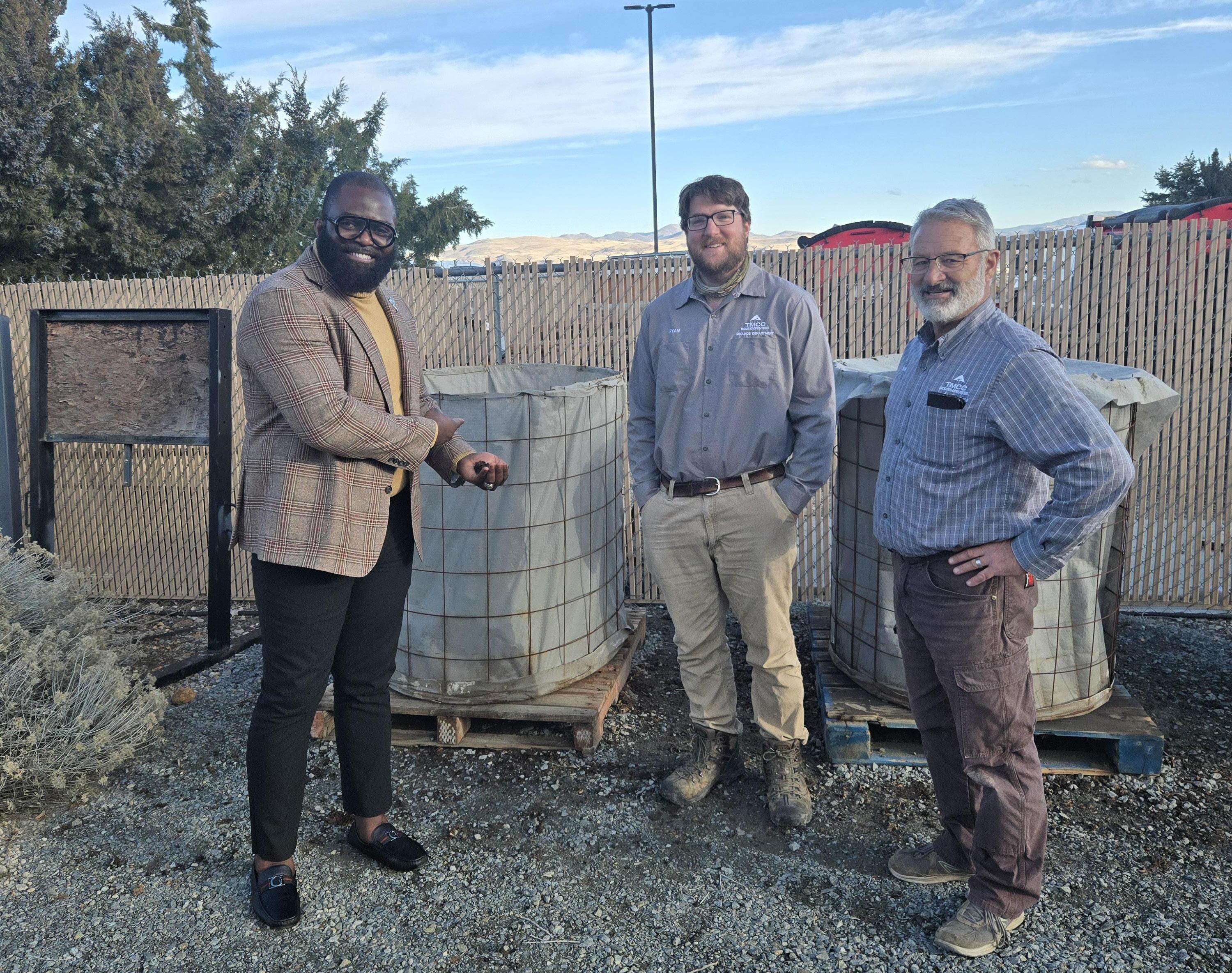

INSIDE THE PREMIER FACILITIES MANAGEMENT PROFESSIONAL DEVELOPMENT EVENT
ARTICLE BY AUDREY SORENSEN
EVENT PHOTOGRAPHY BY ANSALDO MEDIA

Facilities management professionals travel from across the United States and Canada each year to attend APPAU, and for most of them, the trip is not a small thing. It means time away from their institutions, from their teams, and from the daily demands of keeping campuses running. What draws them back year after year is the quality of what happens when they get there.
This February, that happened in Phoenix. Over the course of a week, hundreds of facilities professionals gathered to work through four days of programming and training, earn
professional development hours, advance toward certifications, and connect with peers from institutions and businesses they would never otherwise encounter. They came from large research universities and small community colleges, from K-12 systems and affiliated institutions, from across the country and across the border — all arriving with different roles, different backgrounds, and different reasons for making the trip. By Thursday evening, when the closing reception wrapped and the last graduates were recognized, the consensus was clear: Phoenix was a strong year.


APPAU is APPA's flagship professional development event, taking place twice each year, where multiple full-length training programs run simultaneously under one roof, drawing members from institutions across North America and giving attendees access to peer networks they could not build any other way. It is not a conference in the traditional sense. It is structured, immersive professional development, organized around programs that have been refined over decades and delivered by practitioners who work in the field.
"The venue and location in Phoenix was the best APPAU location, environment, and class organization I have attended" one attendee wrote in their post-event survey.
The APPAU experience drew consistent positive reviews. The layout was easy to navigate, the signage was clear, the branding was fresh and the conference app, updated this year, made it straightforward for attendees to track their schedules, access session materials, and find their way. "The app and wayfinding has been the best I've seen at APPAU to date," one veteran attendee noted. "I love the new app. It was easy to use and I really appreciate all the materials being digital. Wayfinding signage was wonderful — it was cool to see the hotel taken over by APPA branding."
Across multiple tracks, more than 88% of survey respondents gave the ease of locating sessions, meals, and receptions a five-star rating.
Food and hospitality were also highlights. Multiple attendees specifically noted the quality of the meals and the accommodation of dietary needs. "The food was amazing and

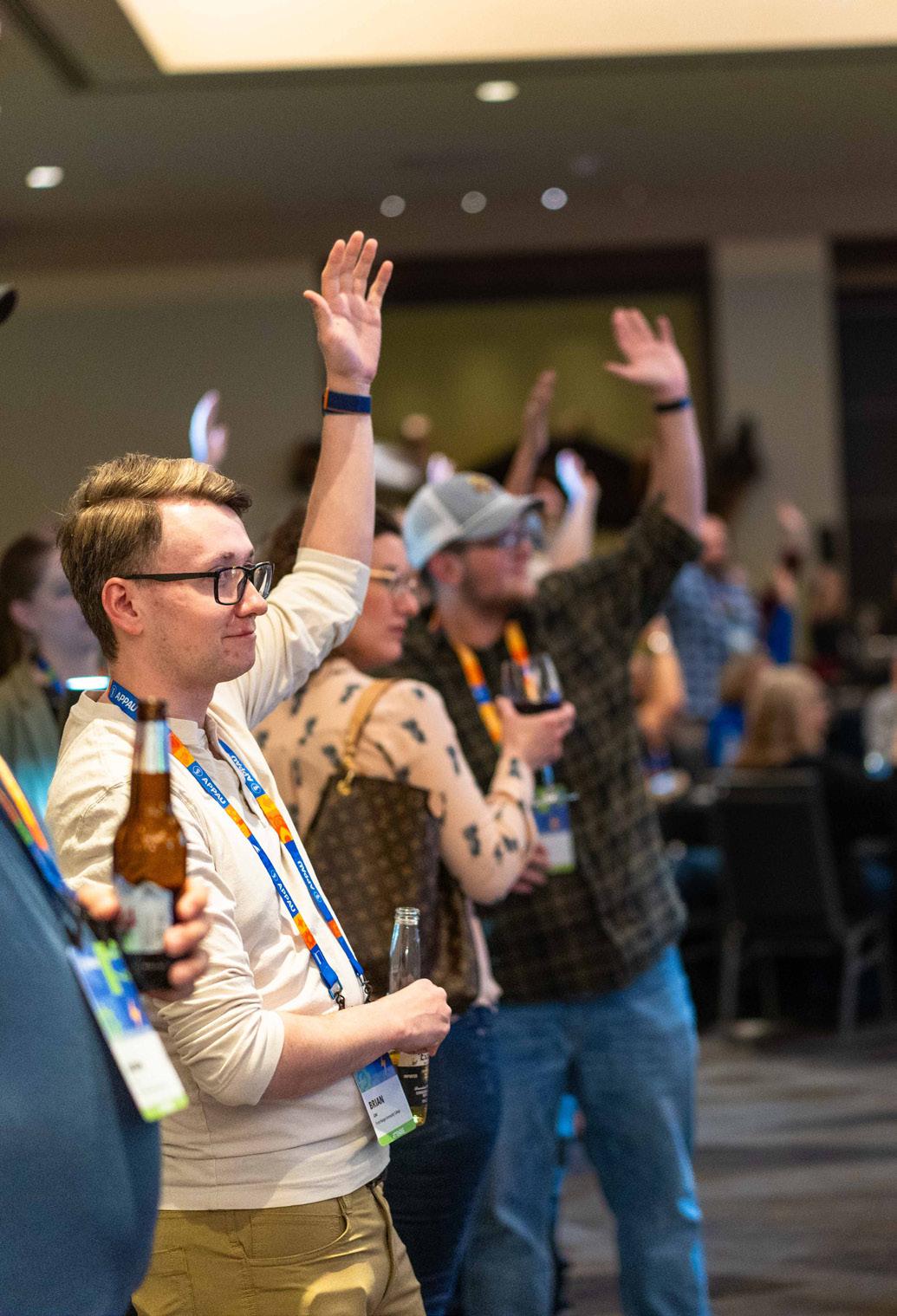

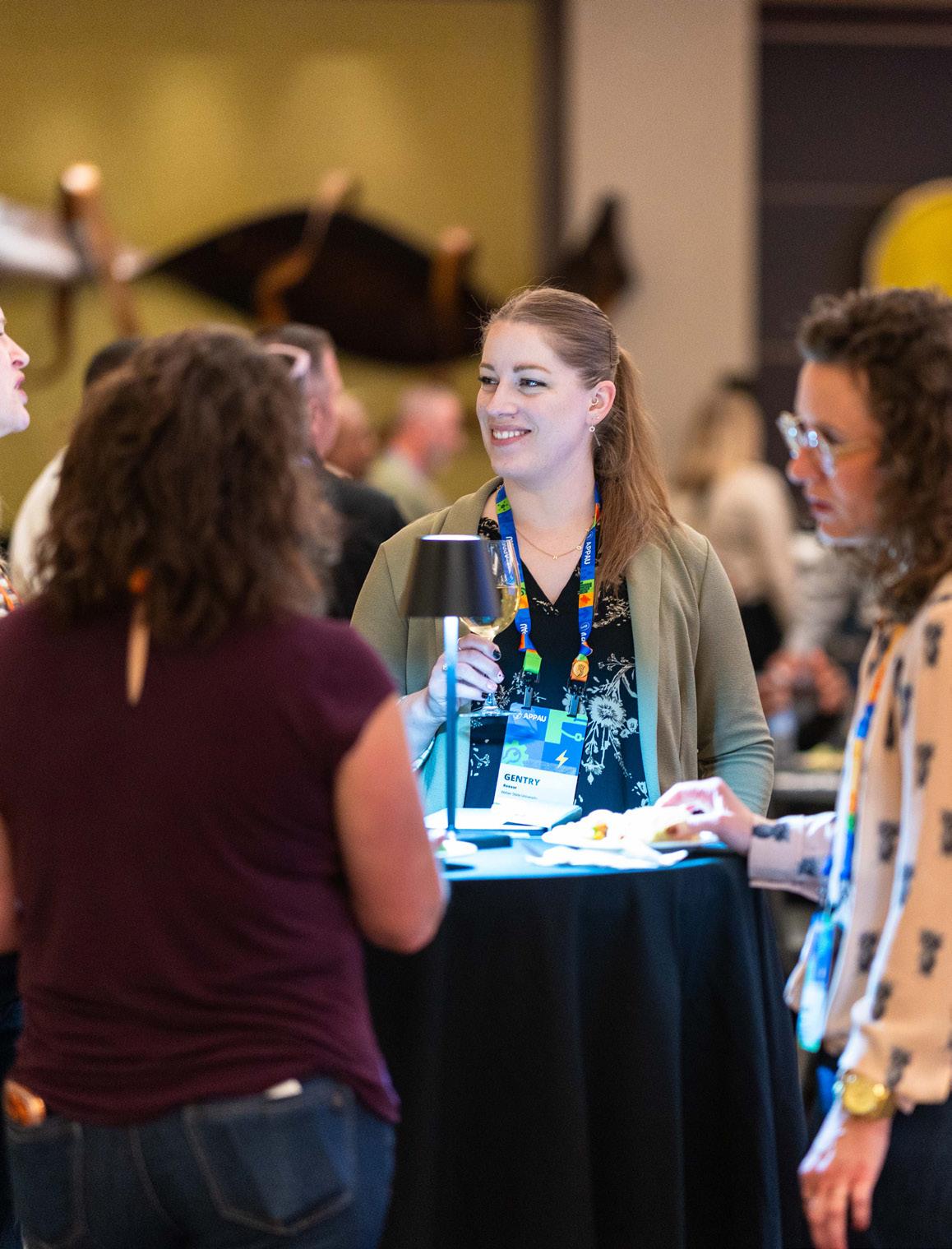
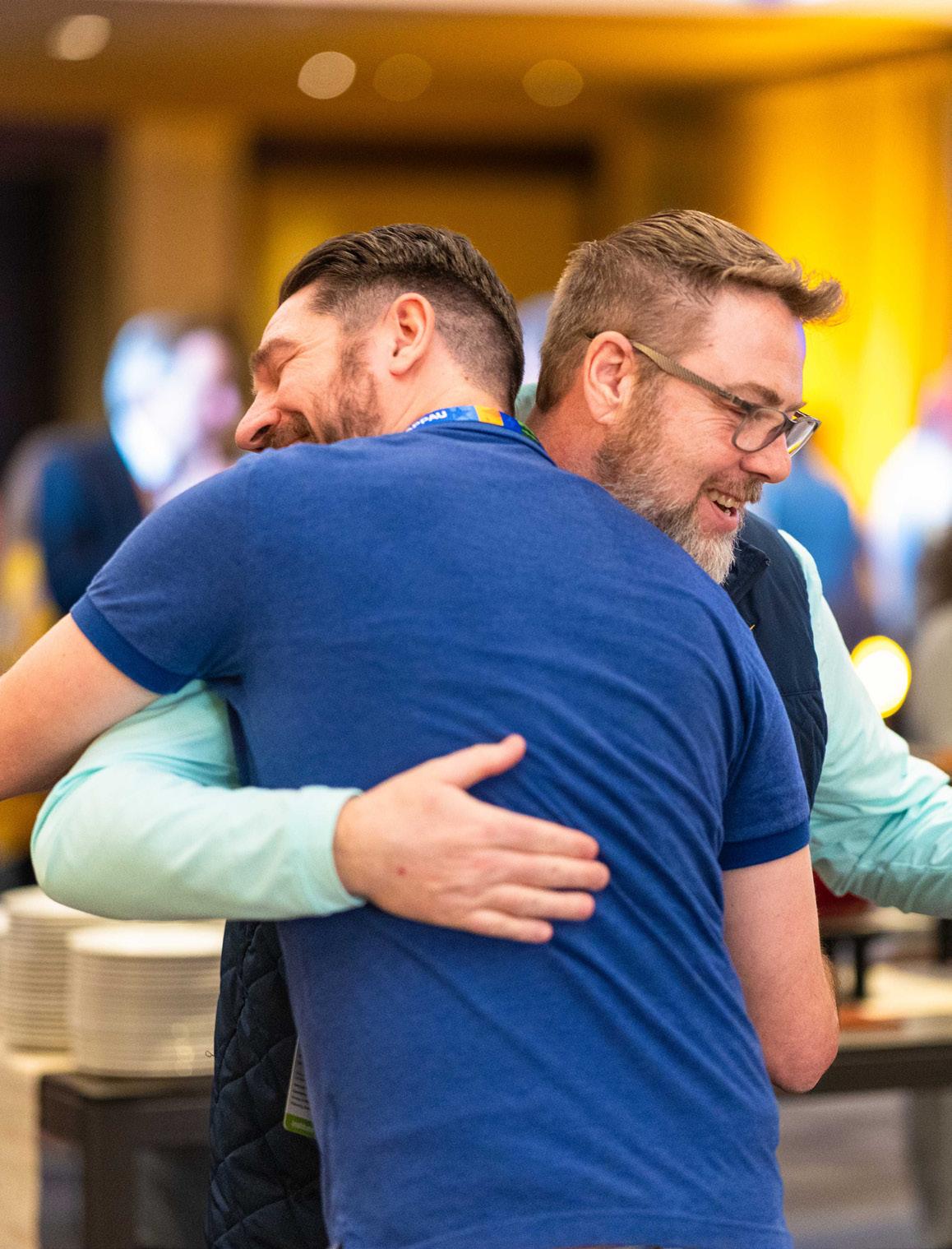
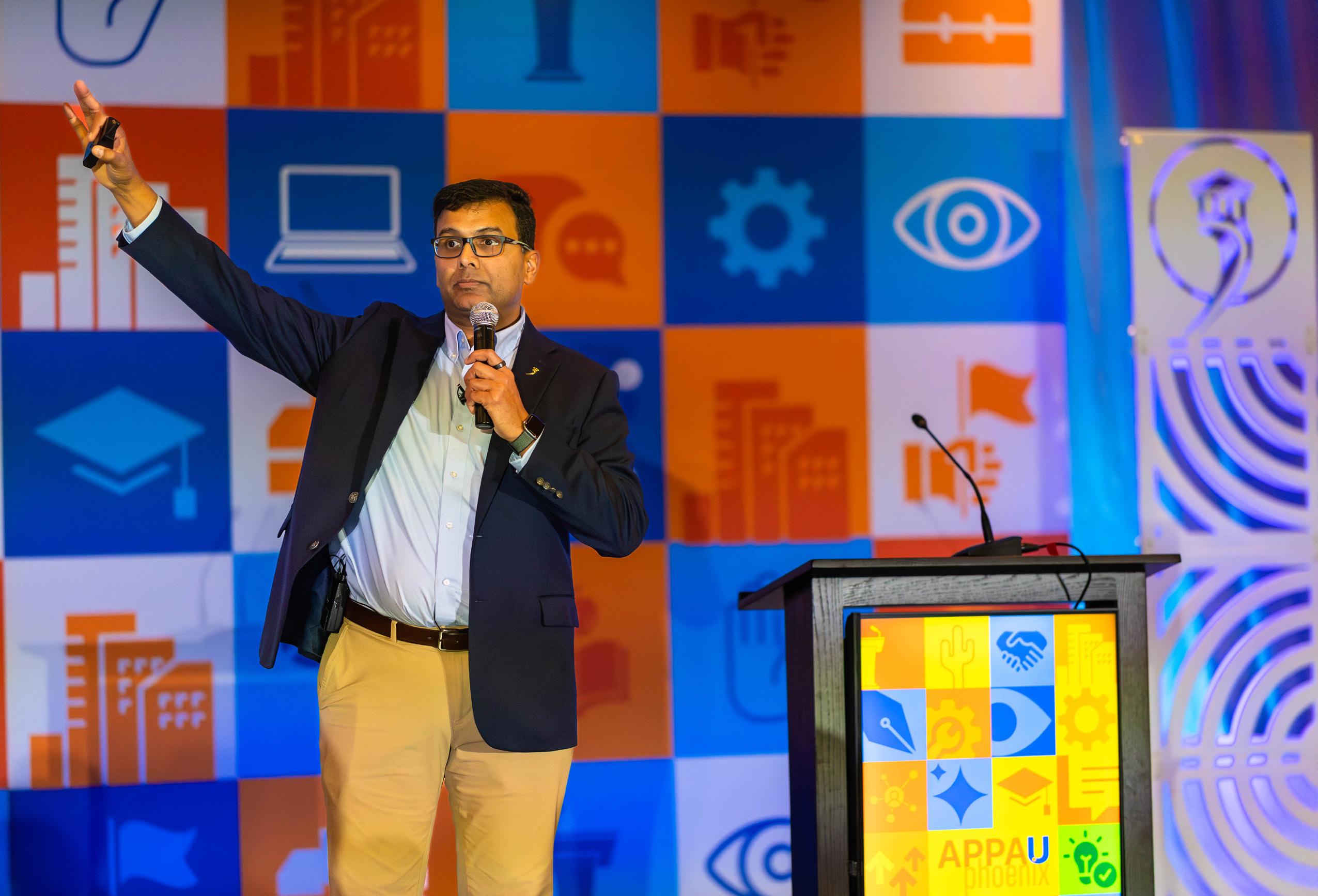
almost all of it was gluten free," one participant wrote. "I absolutely loved having the drinks available all day." The attention to detail around dietary restrictions — something that often goes unacknowledged at events of this scale — was mentioned in several surveys and reflected the overall care that went into the logistics.
The week opened Monday evening with a reception that gave attendees their first opportunity to connect before sessions began Tuesday morning. For many, those early conversations with people from institutions across the country and across very different operational contexts, set the tone for everything that followed. The informal exchange that happens at the start of a week like this is
its own kind of professional development, and Phoenix provided a setting that made it easy.
The Institute for Facilities Management is the largest and longest-running program at APPAU, and in Phoenix it covered all four of its core disciplines: General Administration, Operations and Maintenance, Energy and Utilities, and Planning, Design and Construction. Attendees select one track per event, working through an immersive multi-day curriculum built around case studies, collaborative workshops, and peer exchange. The design is intentional — rather than passive instruction, participants move through real-world scenarios alongside colleagues from other institutions, which means the
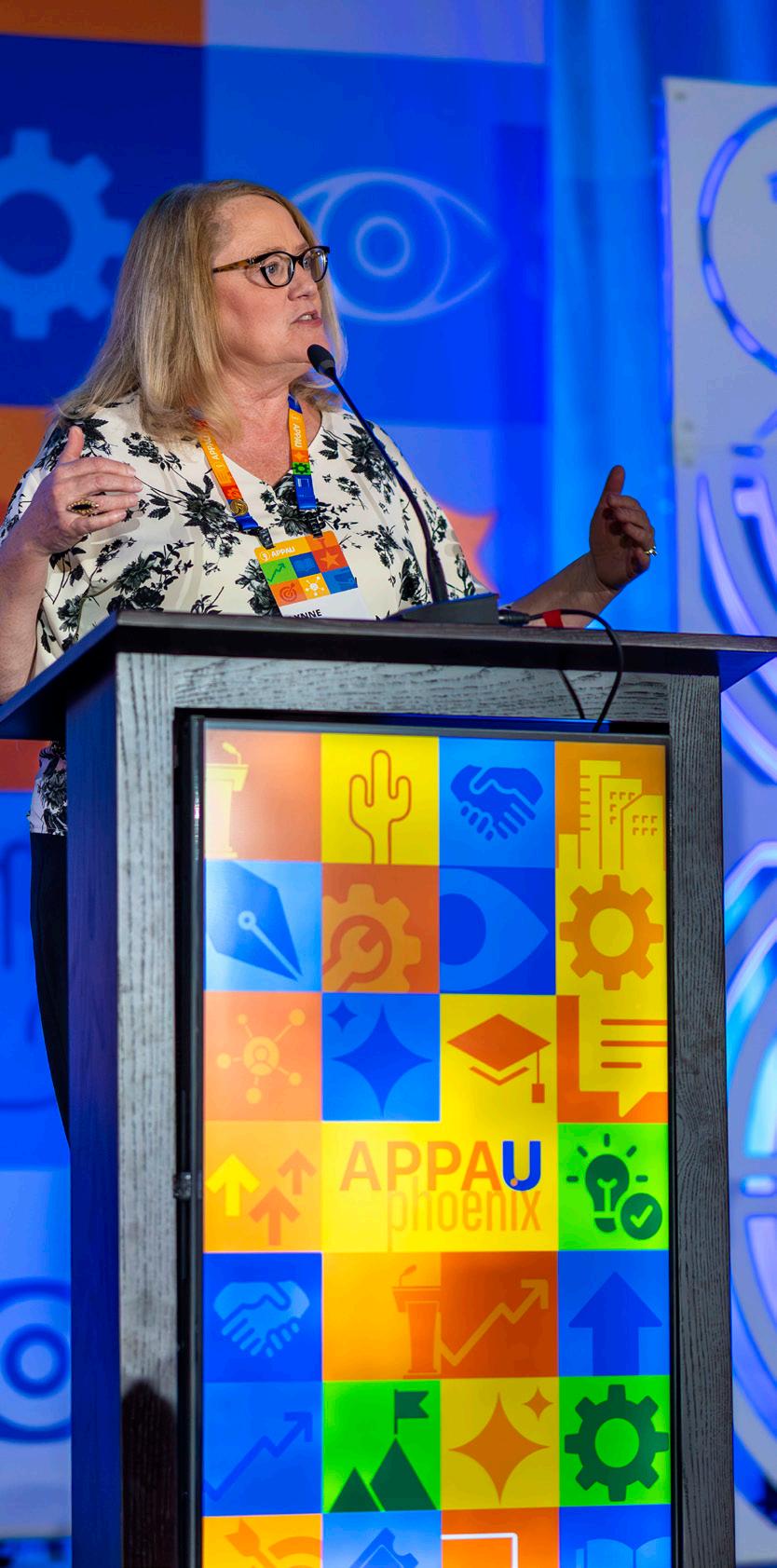
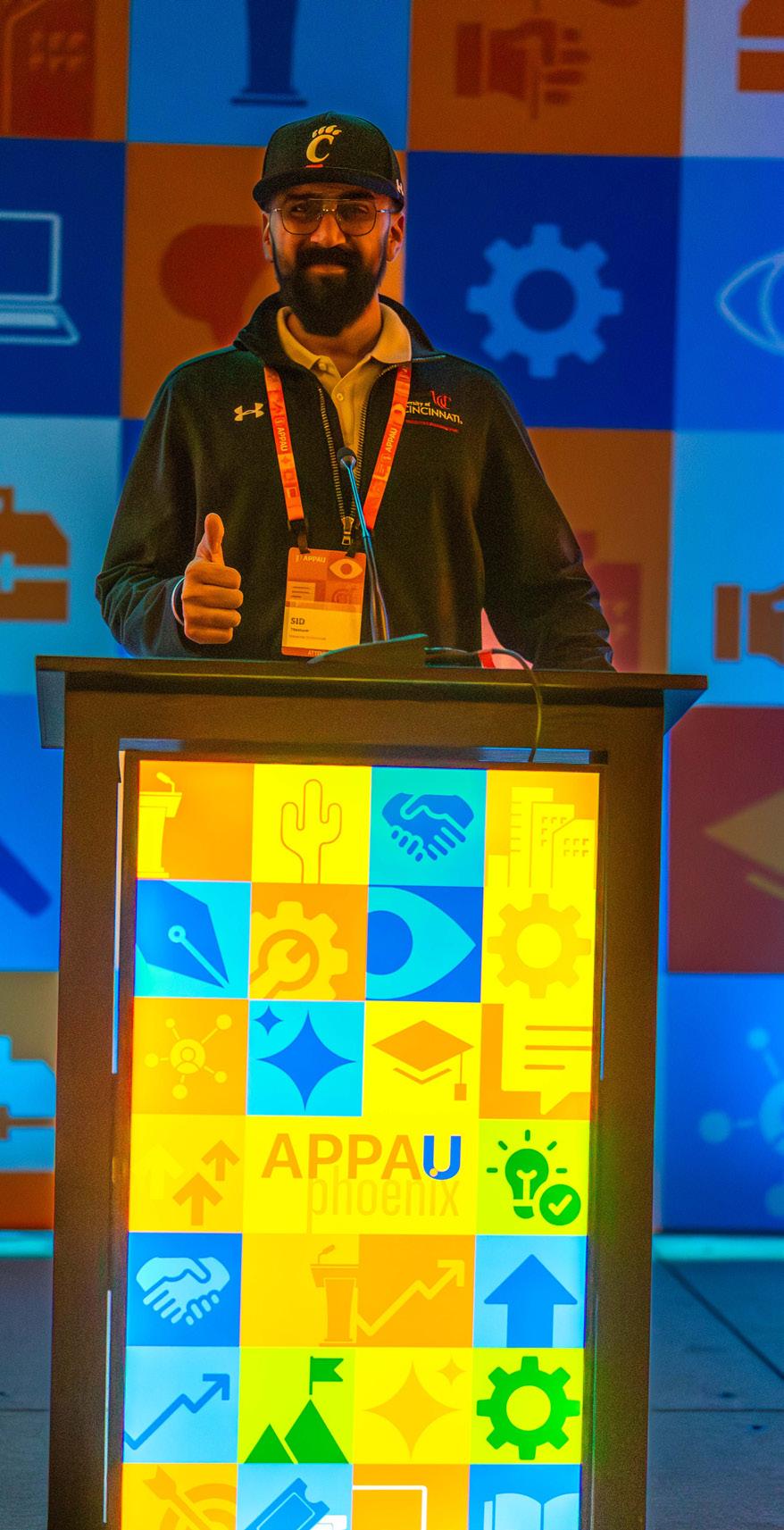
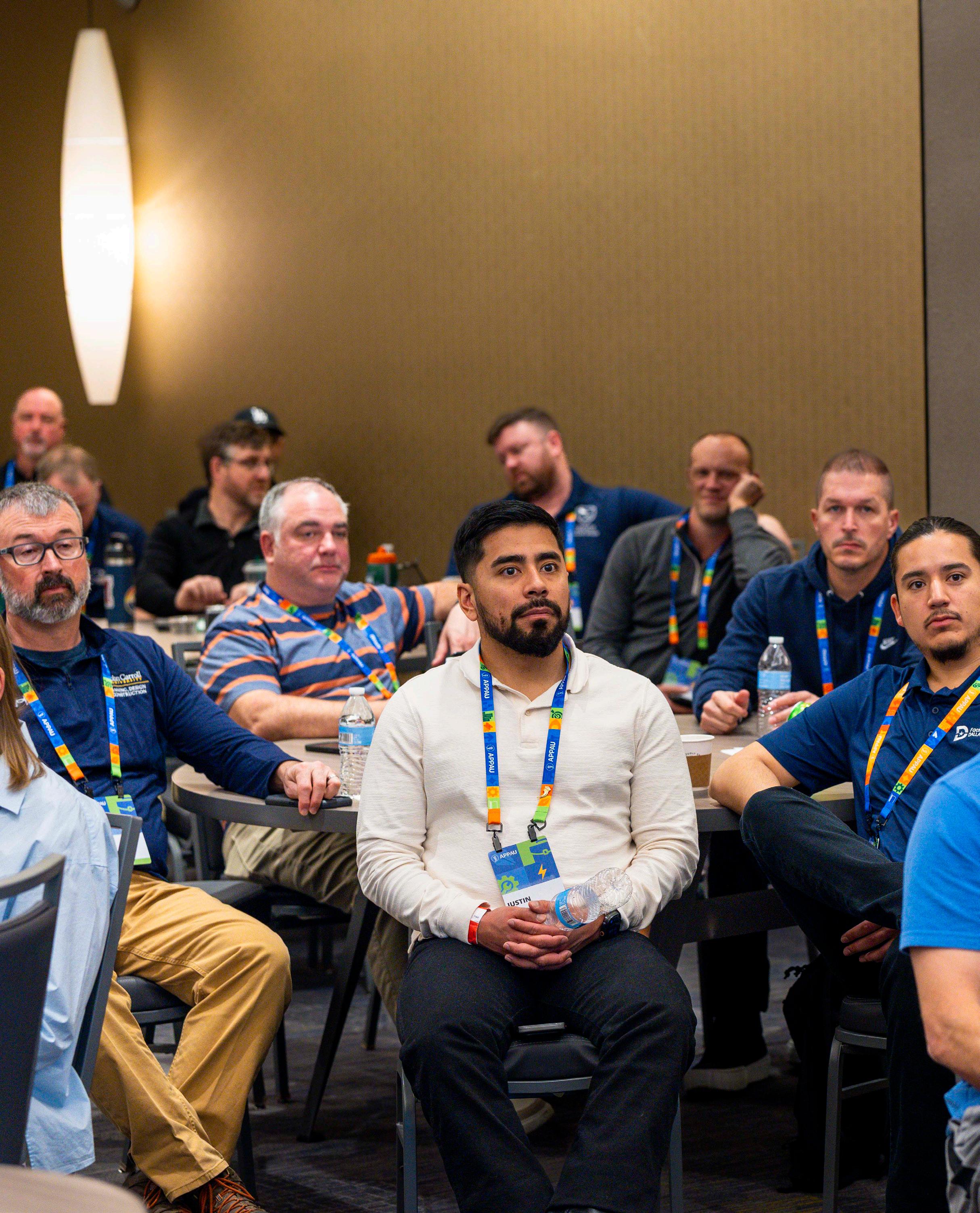
learning in the room draws as much from the people around the table as it does from the faculty at the front. Many return to APPAU over multiple years to complete all four tracks and earn their Institute Graduate certificate, a credential that marks sustained engagement with the full scope of facilities management practice.
The Energy and Utilities track generated some of the strongest feedback of the week. "Suzanne, Ben, and Brett were all amazing presenters," one attendee wrote.
"They kept it light but also gave a lot of important information. They all have amazing insight on Energy and Utilities. It was actually eye opening. Overall the conference and training was top notch." Another E&U participant offered a longer view: "Having completed O&M and General Administration, E&U was my most engaged discipline. I enjoyed the back and forth between the faculty. Keep up the good work."
General Administration was equally well received. "Jamie, Lindsay, Gabe, and Brian made what can be a dense, tough subject matter very digestible and interesting," one attendee wrote. Another admitted they had put off the track until last, and ended up surprised: "I was kind of dreading it, but it ended up being my favorite. I enjoyed every session and elective that I attended." That kind of turnaround is not unusual in this track; the material covers territory that can seem administrative on paper but lands differently when it is taught by practitioners who have navigated it in real institutions.
In person training in the Institute for Facilities Management.
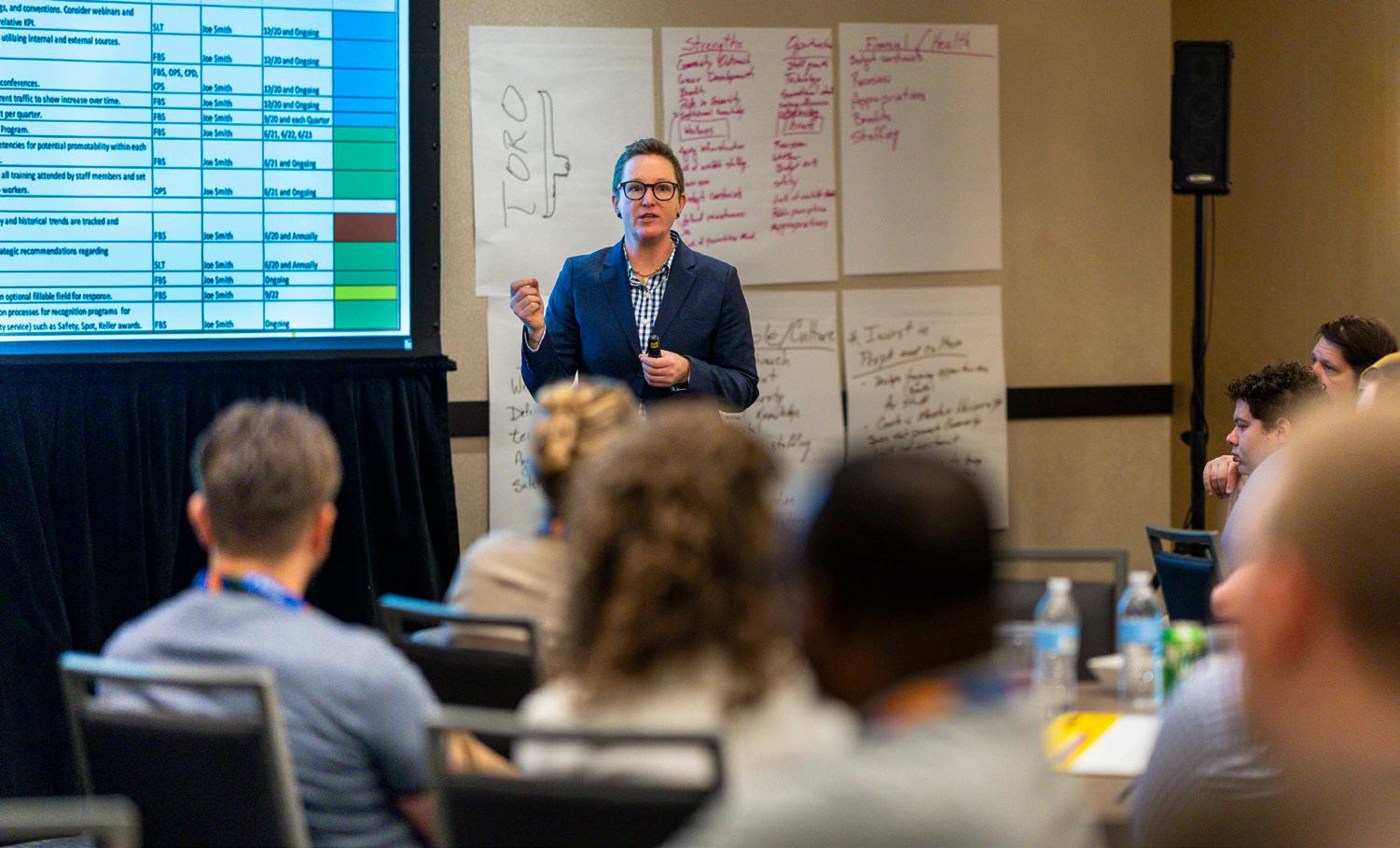
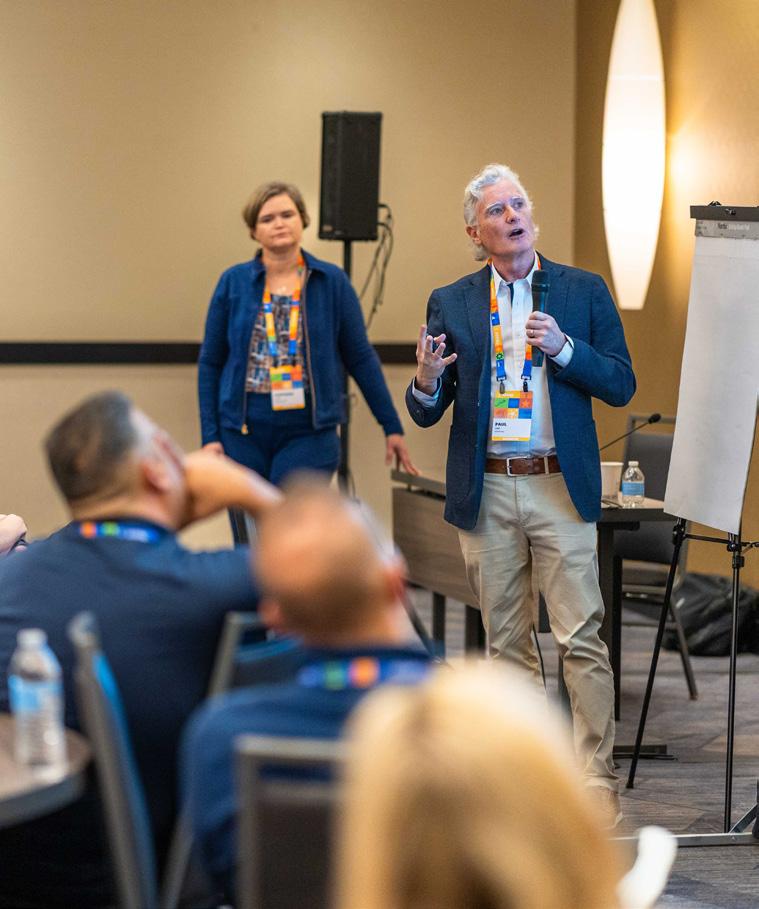
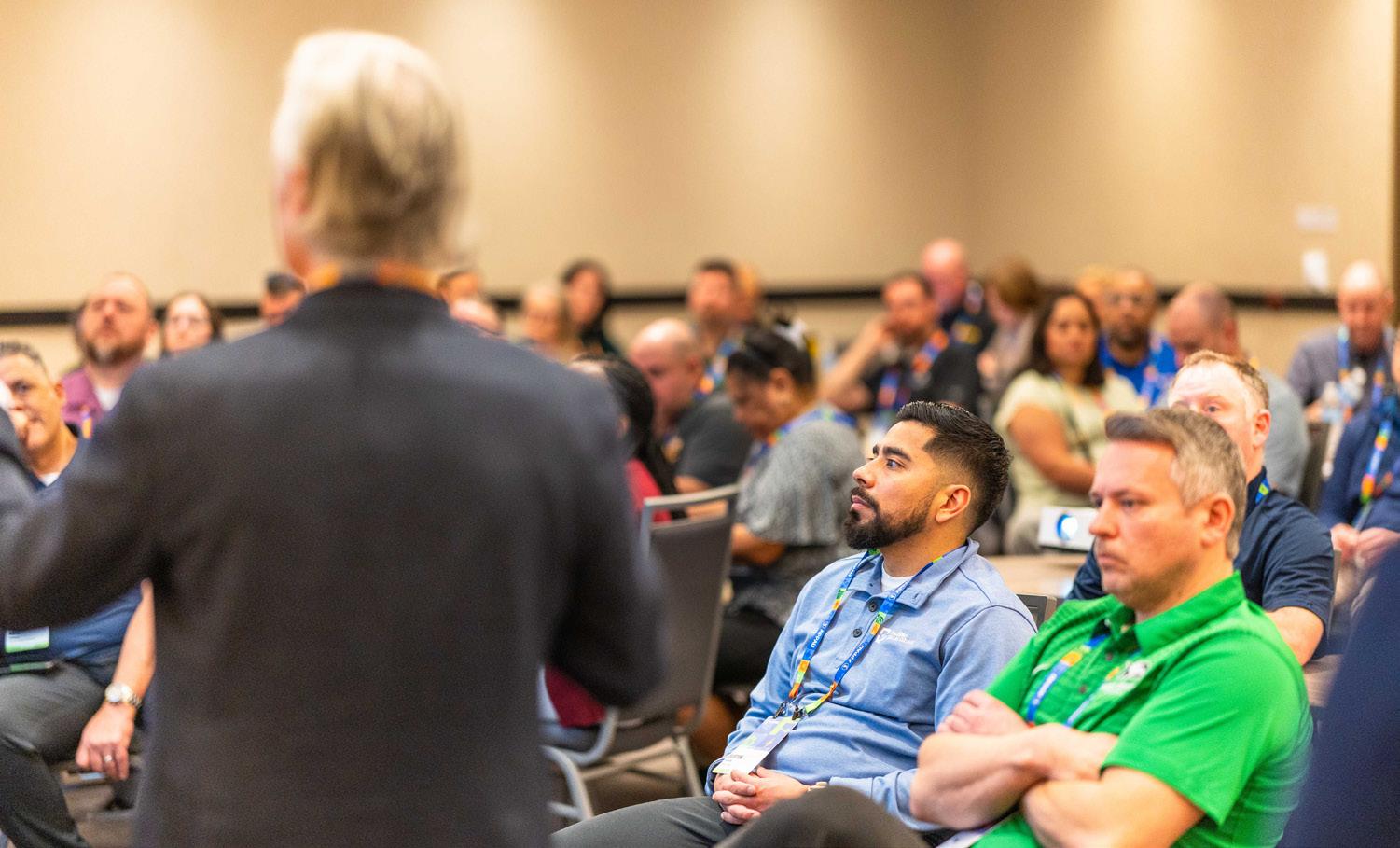
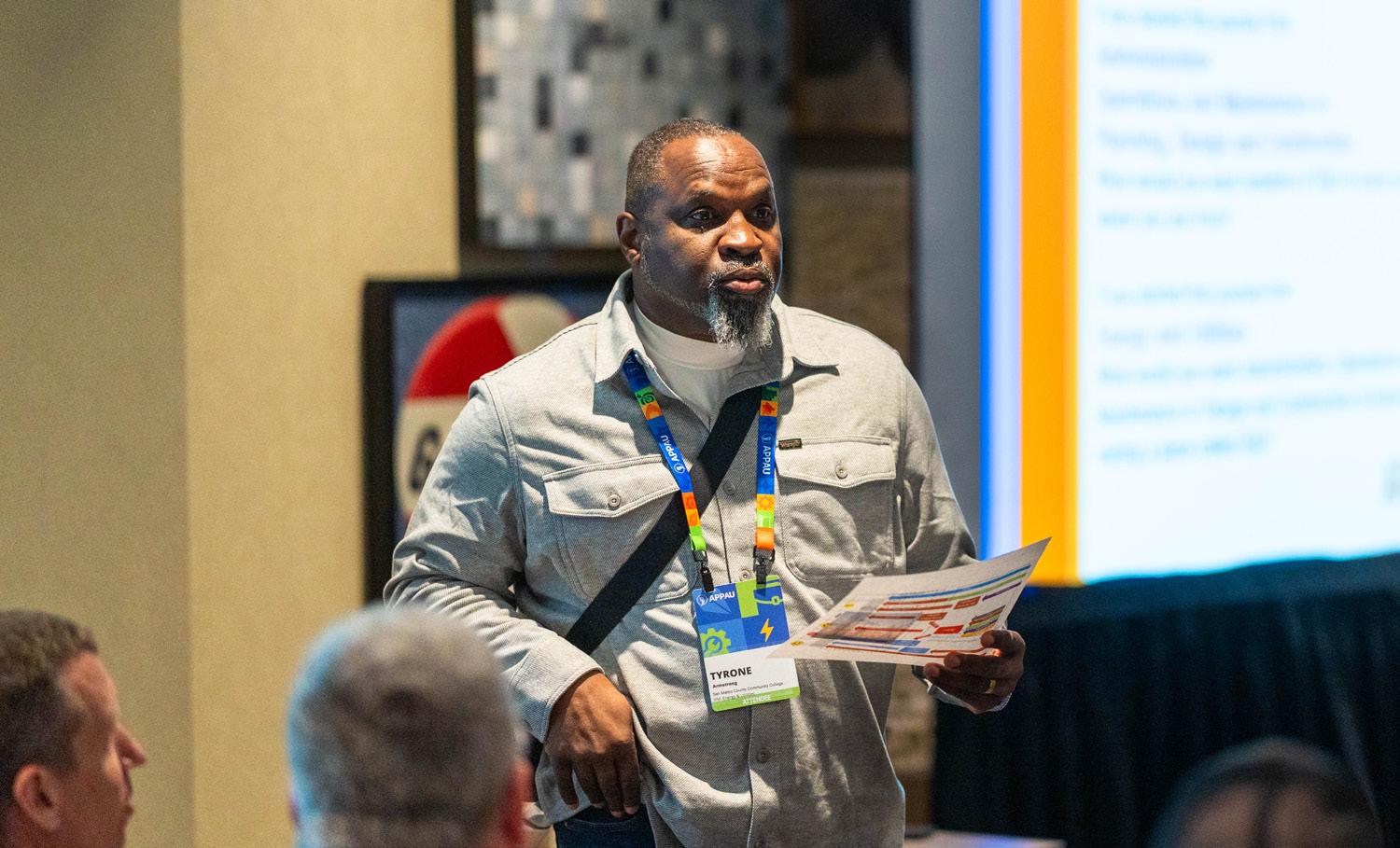
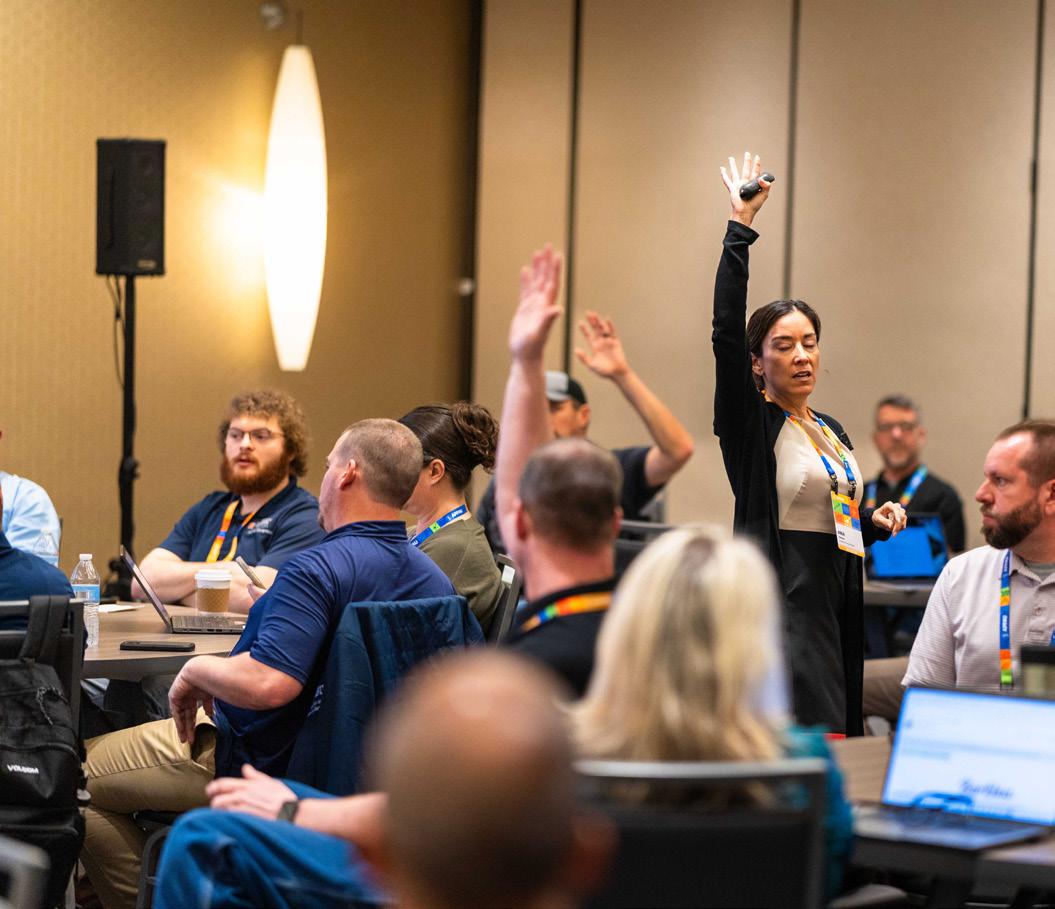
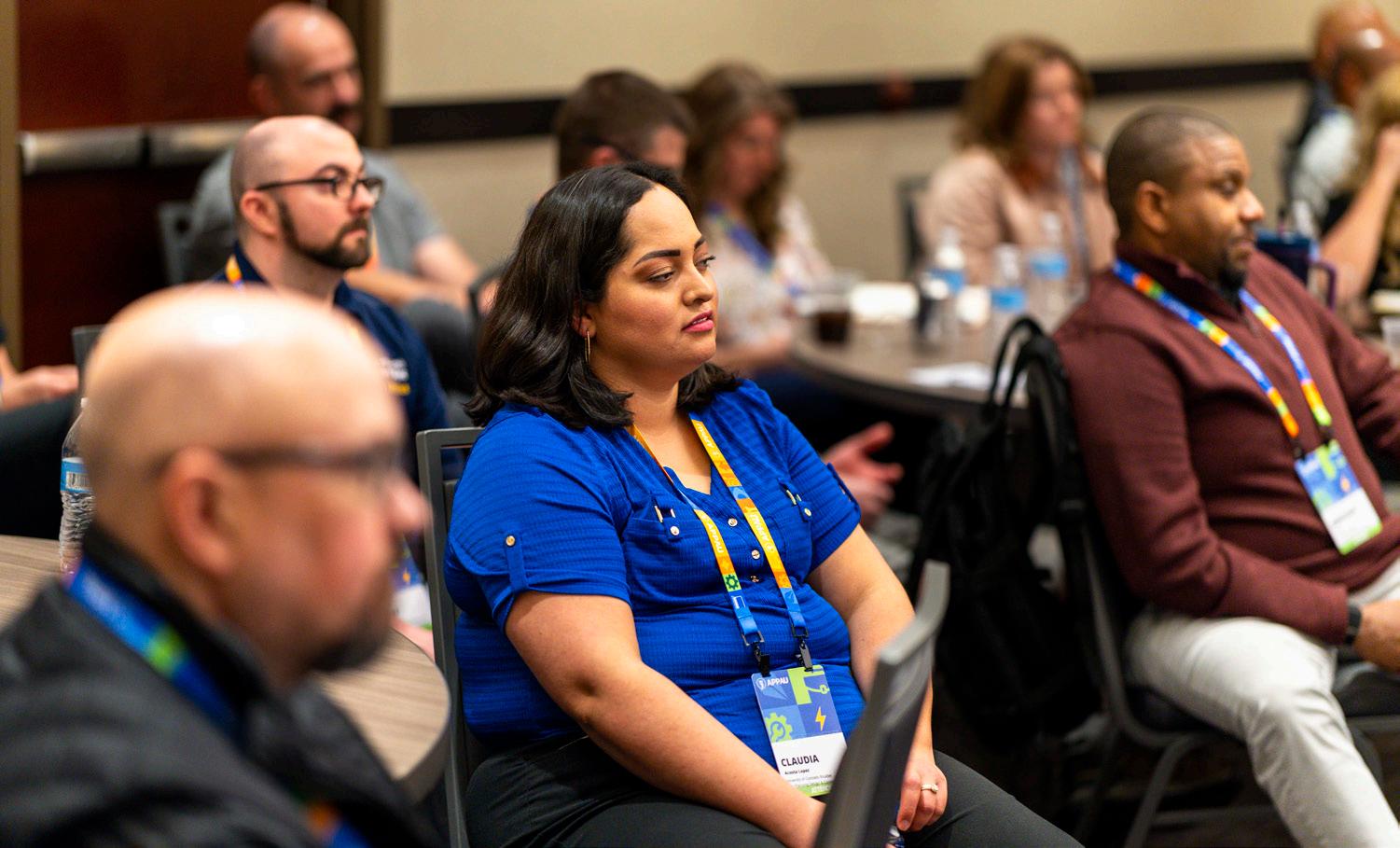
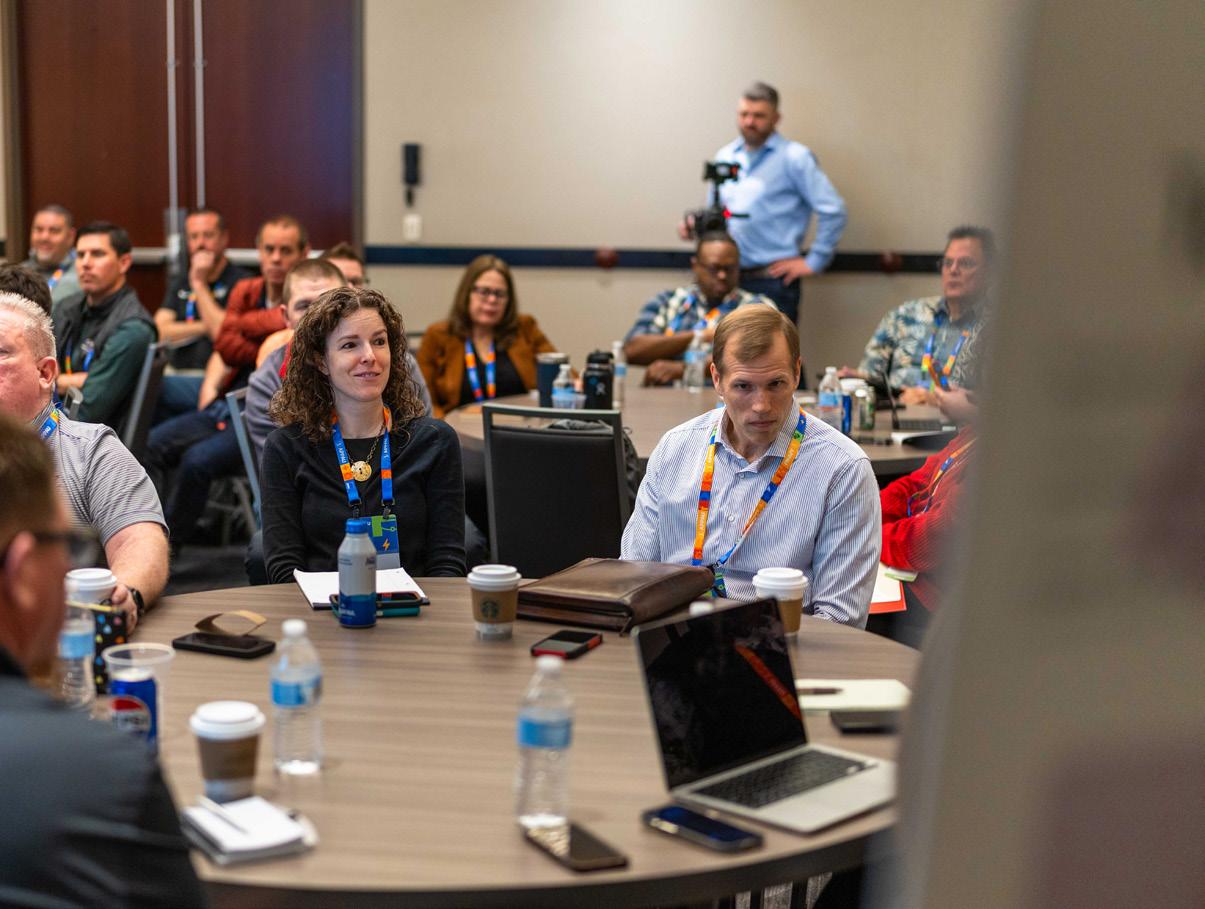
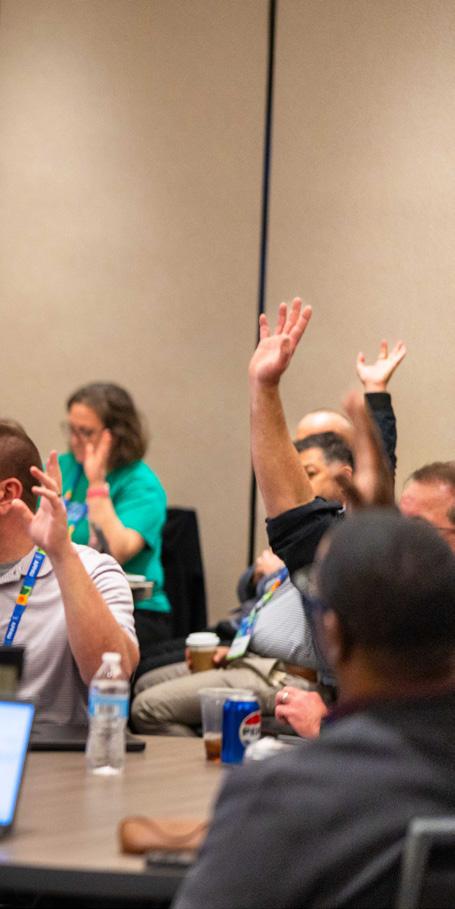
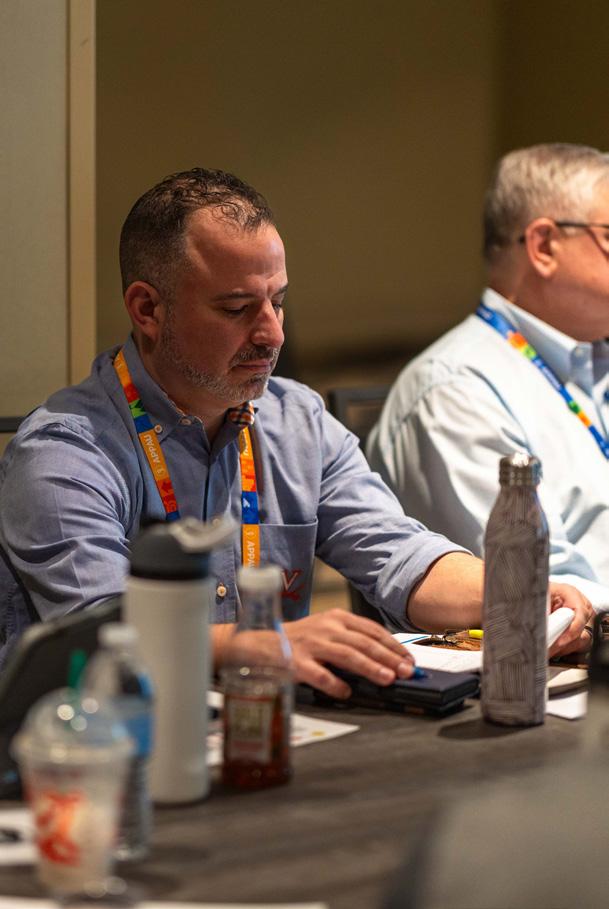
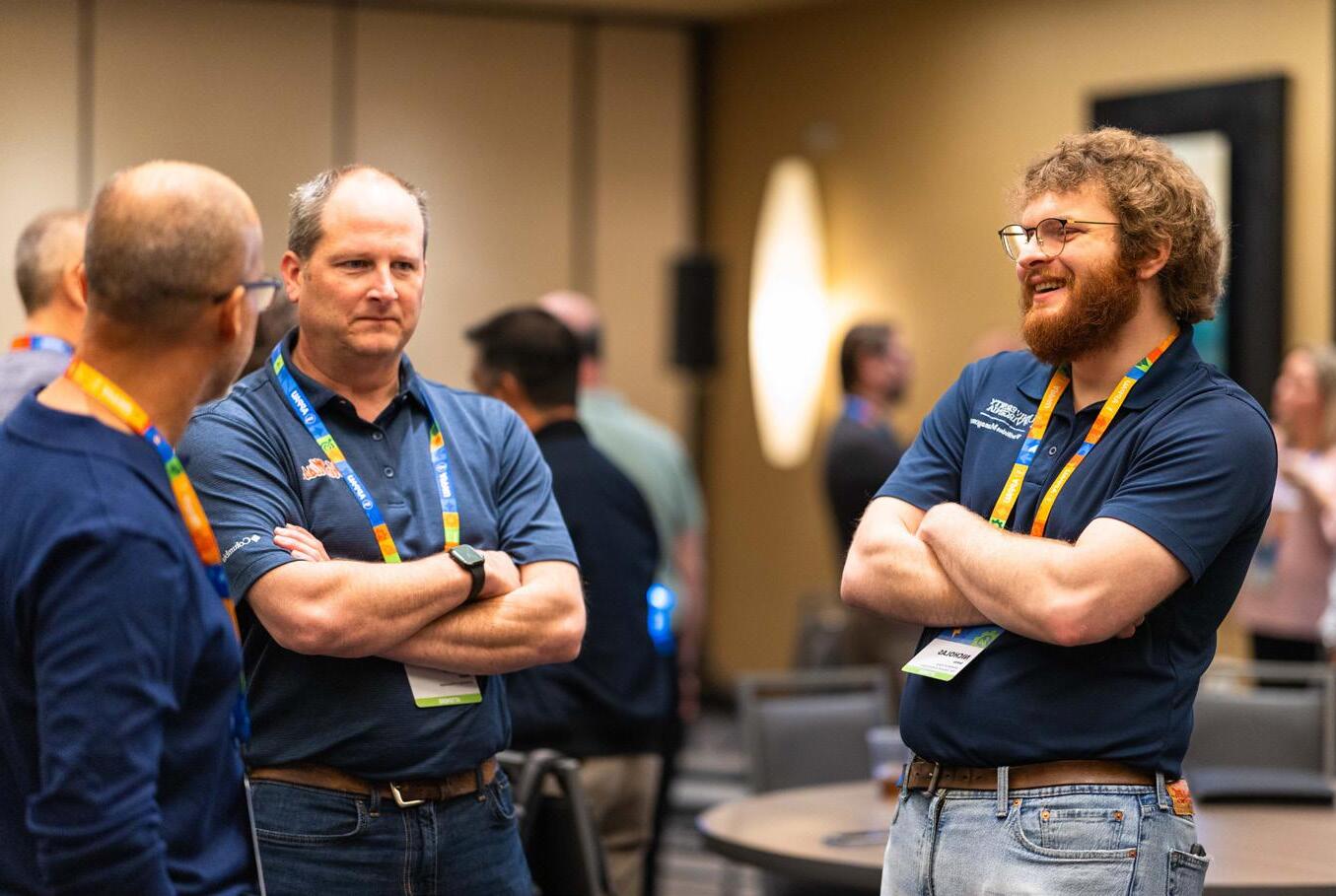
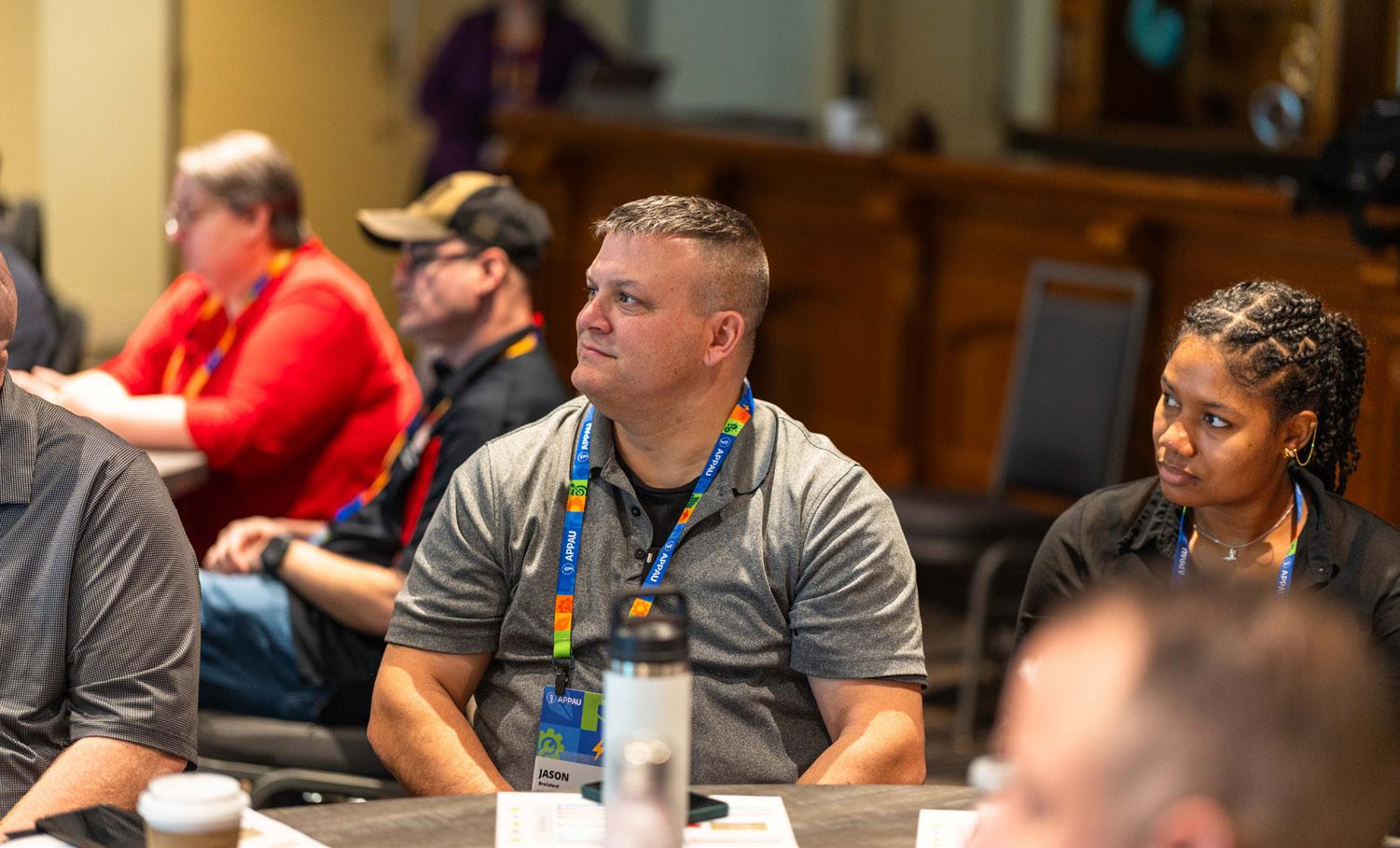
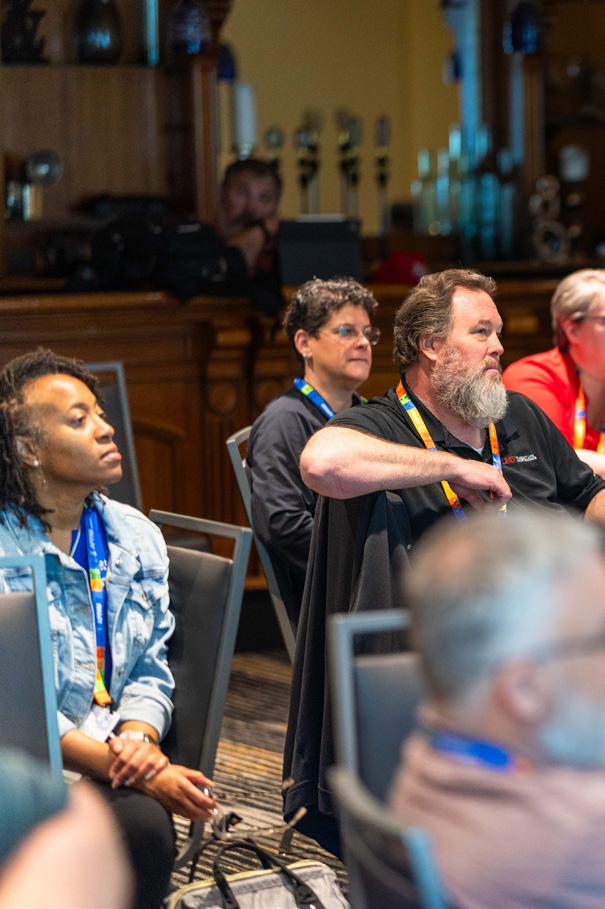
Across the Planning, Design & Construction track, participants appreciated the grounding in real-world application. "Fantastic sessions with extremely knowledgeable instructors," one wrote. "I appreciate the real life examples and discussion. Kudos to APPA for finding great expertise in their facilitators."
The final day of the PDC curriculum, which focused on construction with integrated case studies and quizzes, was specifically noted as a strong close to the week.
One of the less visible but consistently
valued parts of any APPAU week is what happens between the formal sessions. In the hallways outside the classrooms, over breakfast before the day started, and during breaks that never seemed quite long enough, attendees were doing something that no curriculum can fully replicate, talking to each other.
A facilities director from a large public research university comparing notes with a supervisor from a small private college. Someone three years into the profession asking questions of someone with thirty. An institution that had just completed a major energy retrofit sharing what they wished they had known at the start with a room full of people about to begin one.
These conversations are part of what makes APPAU different from a webinar or an online course. The programs bring together professionals from institutions that would never otherwise be in the same room, different sizes, different budgets, different regions, different operational realities, and then give them enough shared context, through the coursework and the case studies, to have genuinely useful exchanges. By midweek, the networking had stopped feeling like networking. It felt more like a working session with colleagues who happened to come from somewhere else.


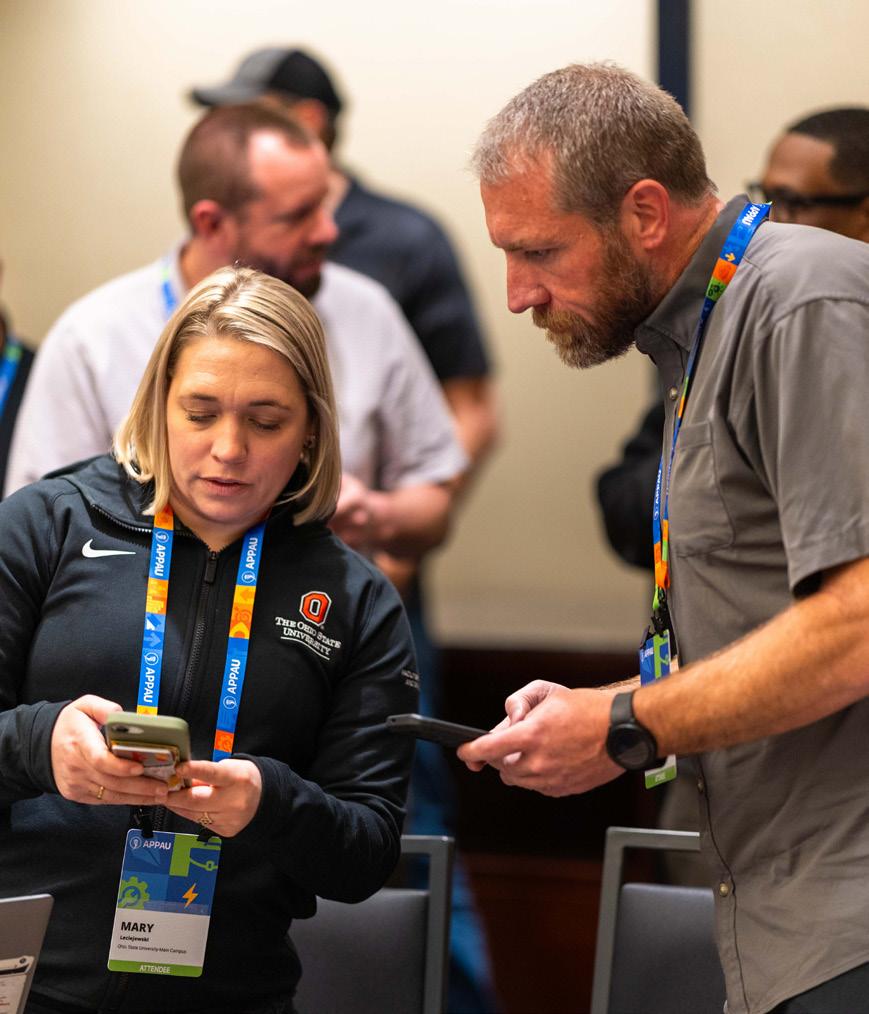

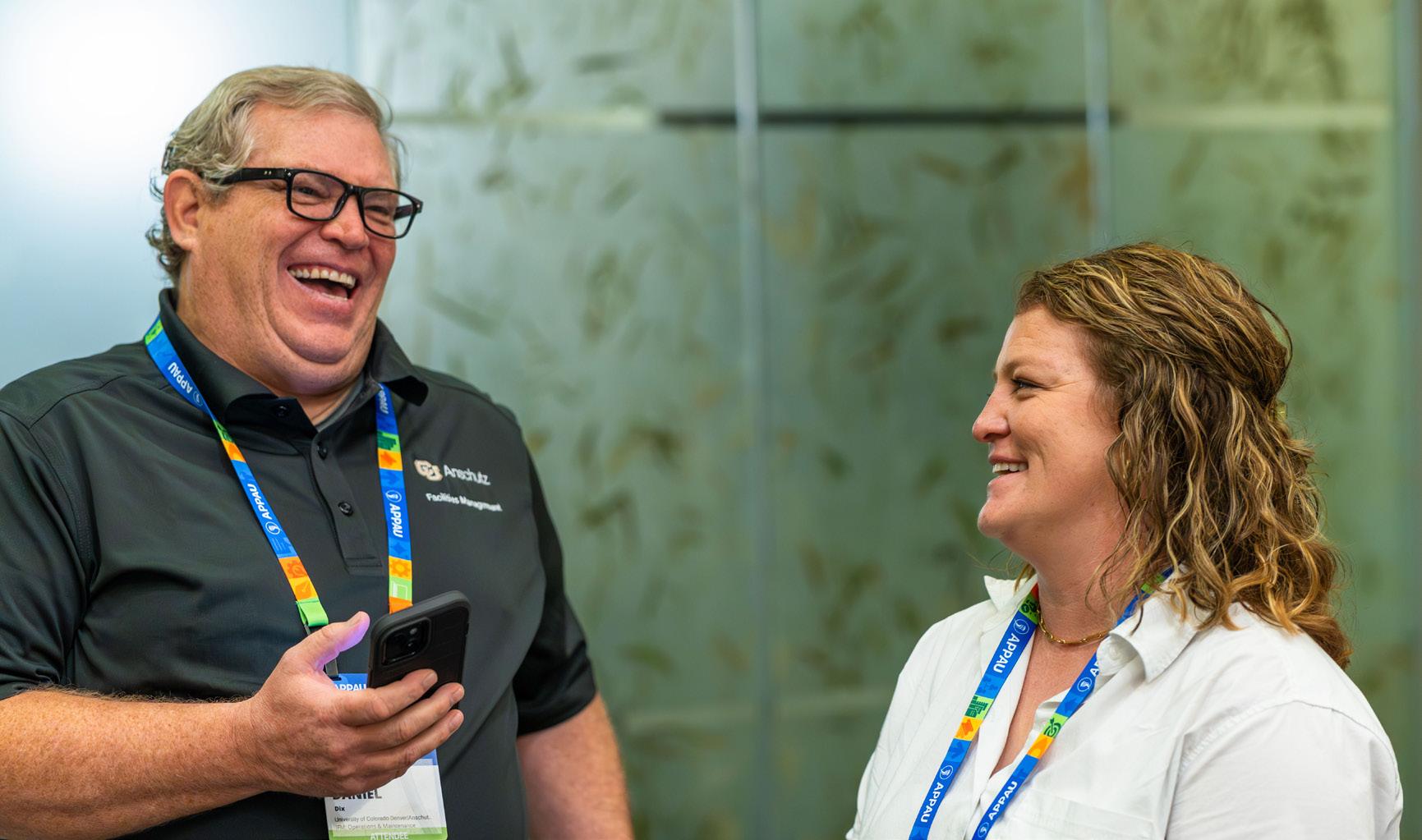
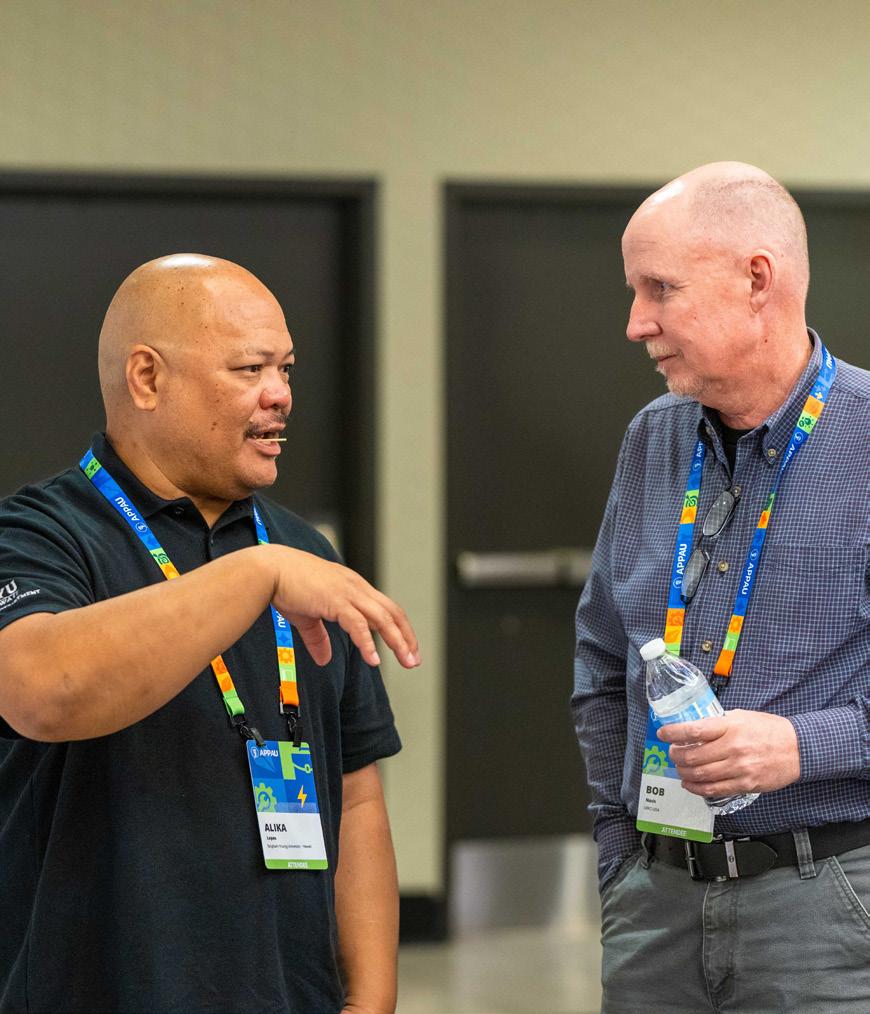
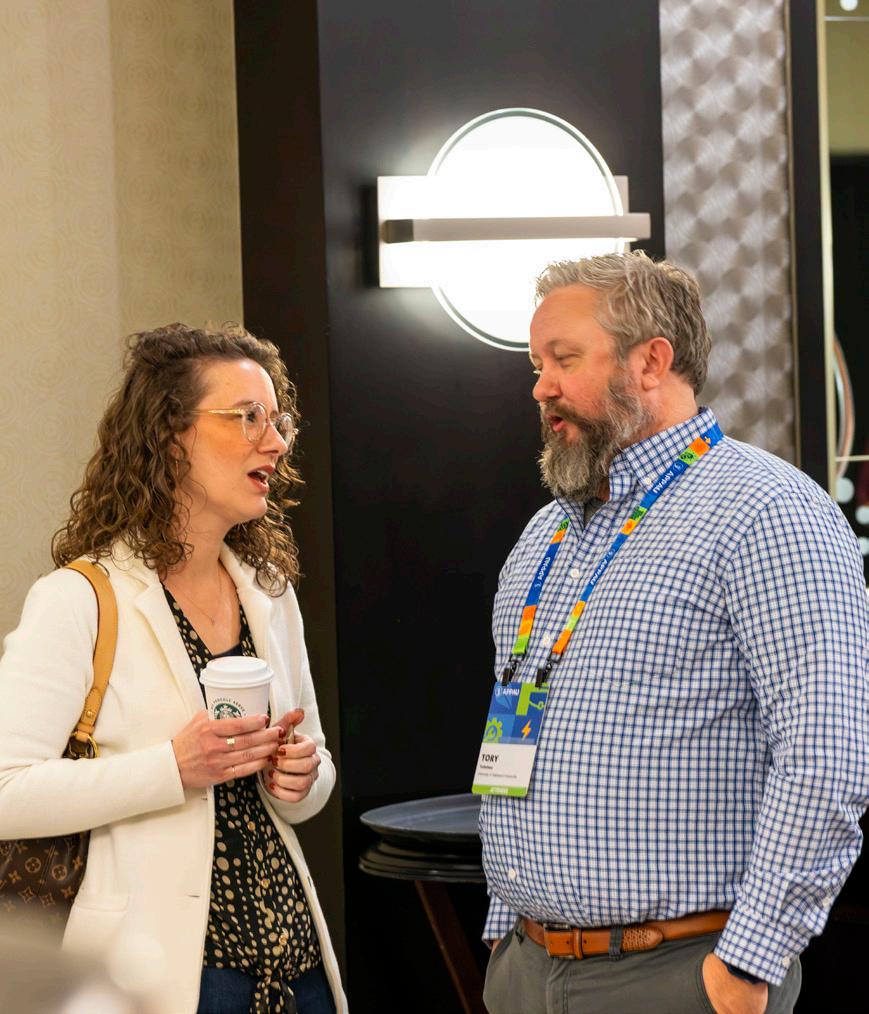
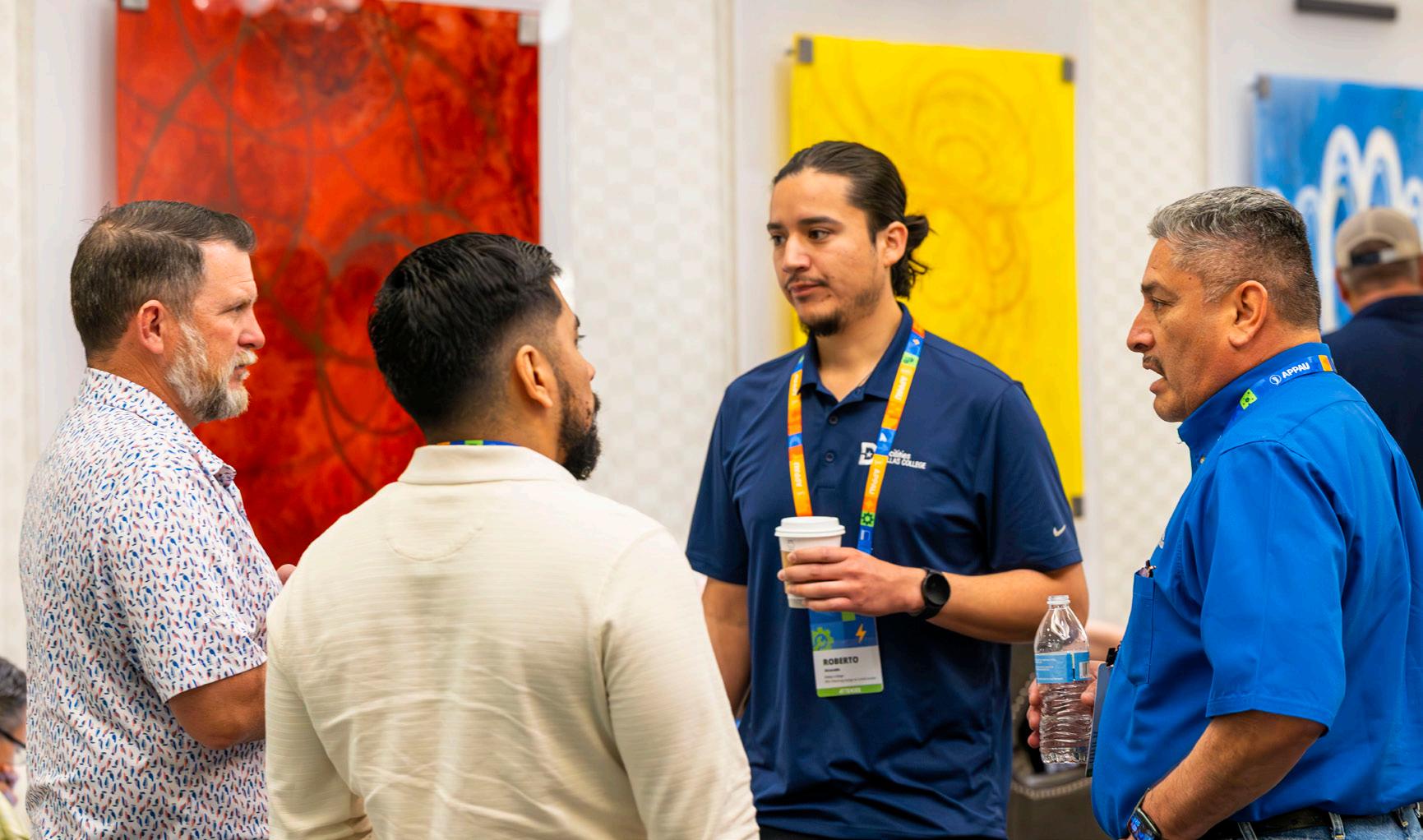
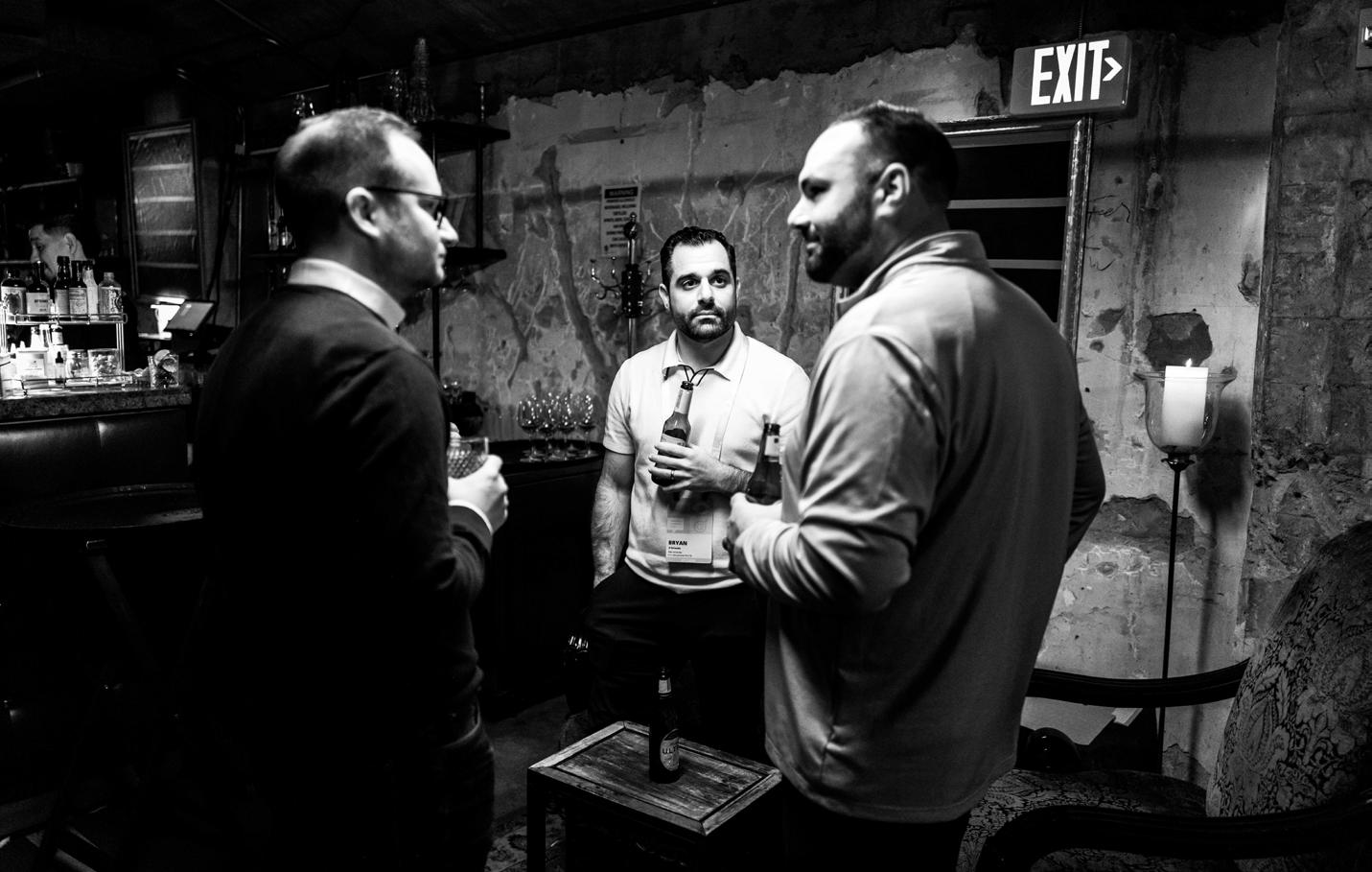


The Targeted Titles and Topics workshop ran alongside the Institute as a two-day program focused on a single subject: artificial intelligence in facilities management. T3 is structured differently from the Institute, it brings together case studies, expert presentations, and round table discussions around a topic that is actively reshaping how campuses operate. Each year the topic shifts to reflect what is most pressing in the field, and AI was a natural choice for 2025.
The session drew participants from institutions at very different stages of adoption, some already piloting AI tools in their operations, others still working through
what the technology means for their team, which made for rich, varied conversation throughout.
The format leaned into that diversity of experience deliberately. Rather than presenting AI as a solved problem, the programming created space for participants to work through real implementation challenges together, drawing on what was happening at institutions across the room.
The live demonstrations were a particular highlight. "Excellent job engaging with the attendees," one participant wrote. "The practical examples and live



demos were especially helpful." Another offered a more candid take: "Facilitators did a great job of herding all the cats in the session — me included. We love the live demos."
Pete and Sid, who led much of the programming, were consistently cited in the feedback. "The conversation was well paced, interesting, and informative," one attendee wrote. "The round table sessions provided great examples of the challenges in implementing AI and ways that AI has been used to solve problems." Another participant highlighted a specific moment: "Very informative sessions, especially ones with more interactive examples, Sid's recap on morning day two was a standout."
Survey data reflected the overall satisfaction. More than 80% of T3 participants gave the session a perfect five-star rating for likelihood to recommend it to a colleague, and
84% gave the overall event a five-star recommendation rating, with no respondents rating below four stars.
T3 participants had one addition to their week, the Speakeasy, an evening networking reception held exclusively for T3 attendees. After two full days of sessions on AI in facilities management, it gave participants a more relaxed setting to continue conversations that had started in the classroom. New connections formed across institutions and roles, and the discussions that had been happening around the round table carried on informally over drinks.
For a group spending two days grappling with one of the more complex and consequential shifts facing the profession, an evening to decompress and connect without an agenda was a well-placed addition to the experience.
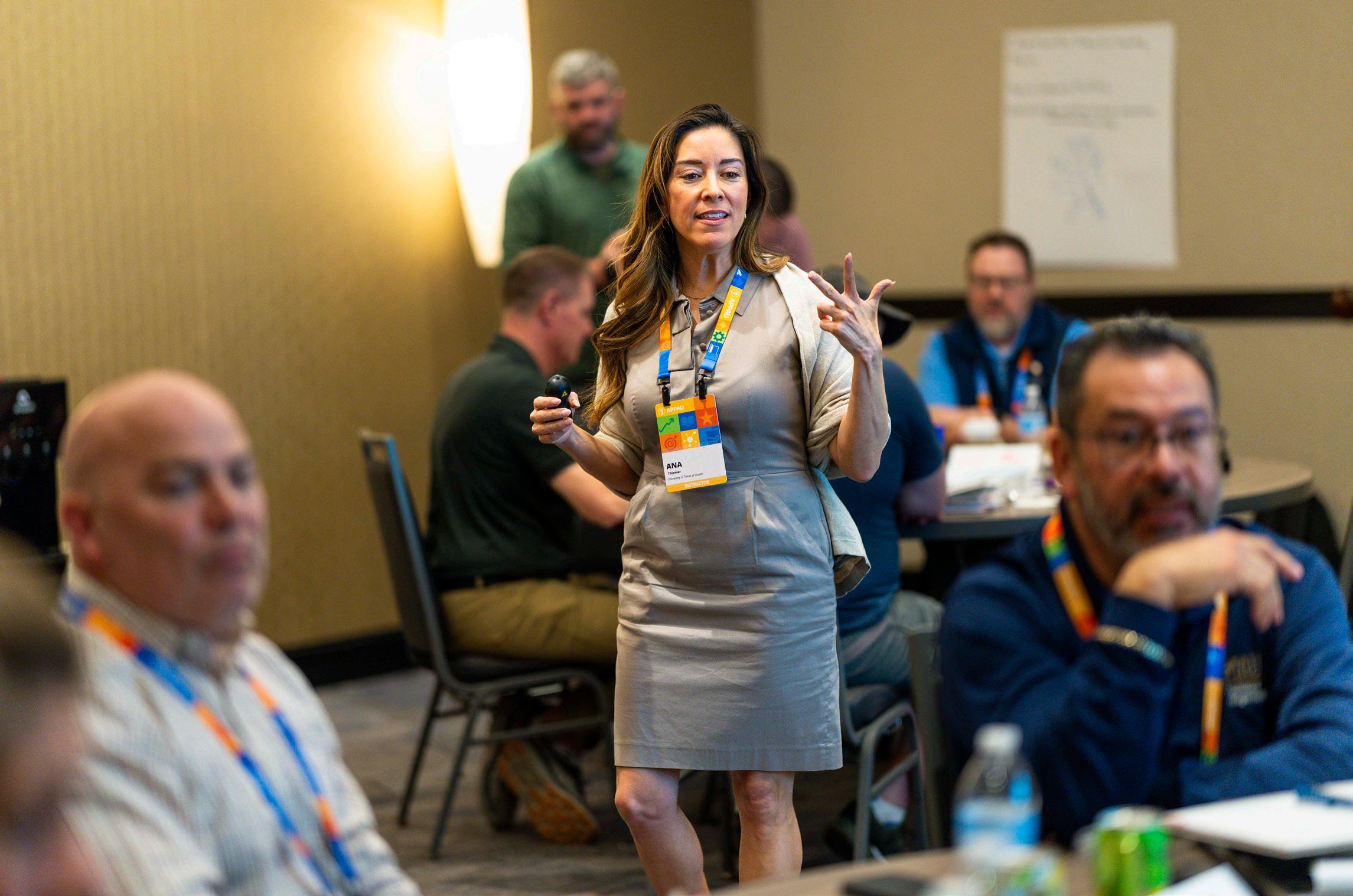
The Leadership Academy runs on a four-level progression, with participants completing one level per APPAU event. The levels move from individual effectiveness through interpersonal, managerial, and organizational leadership, each building deliberately on the last. Level I focuses on selfawareness and personal accountability. Level II develops communication and conflict resolution skills. Level III addresses decision-making and team
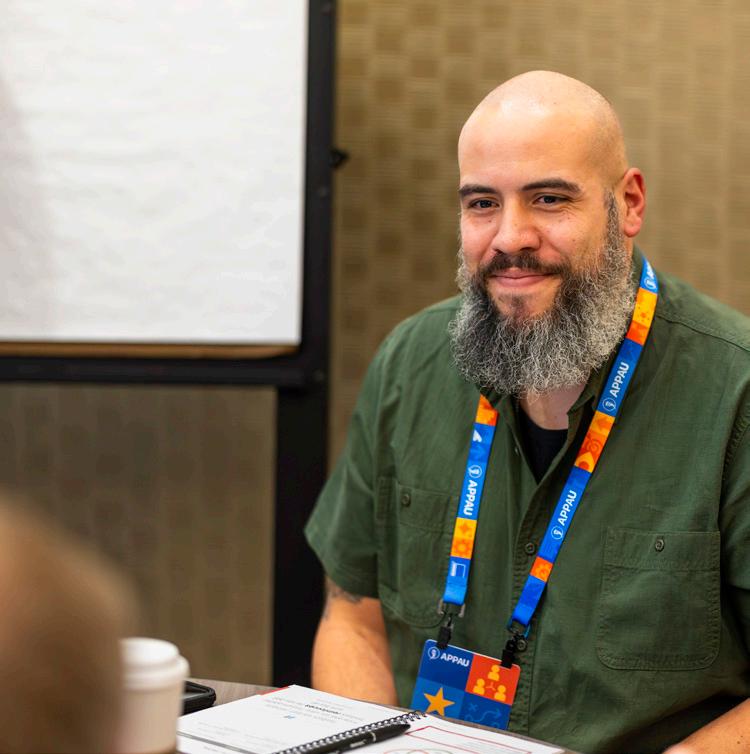
leadership at the managerial level. Level IV equips participants to think and act at an organizational scale, influencing institutional direction, shaping culture, and developing the kind of strategic perspective that goes beyond any single department or role. Like the Institute, many participants return annually until they have completed all four levels and earned their Leadership Academy Graduate designation.
In Phoenix, the Academy generated some of the most personal feedback of the week. Facilitators were mentioned by name consistently across multiple surveys — a sign that the relationships formed in the classroom extended beyond the material itself. Across all four levels, participants described instructors who were engaging, approachable, and genuinely skilled at drawing out the quieter voices in the room alongside the more vocal ones. "They made it fun," one attendee noted, "and had a way of getting even the more shy and introverted people to open up." Others praised the facilitators' ability to connect with attendees on a personal level and ground the curriculum in experiences that felt relevant rather than theoretical.
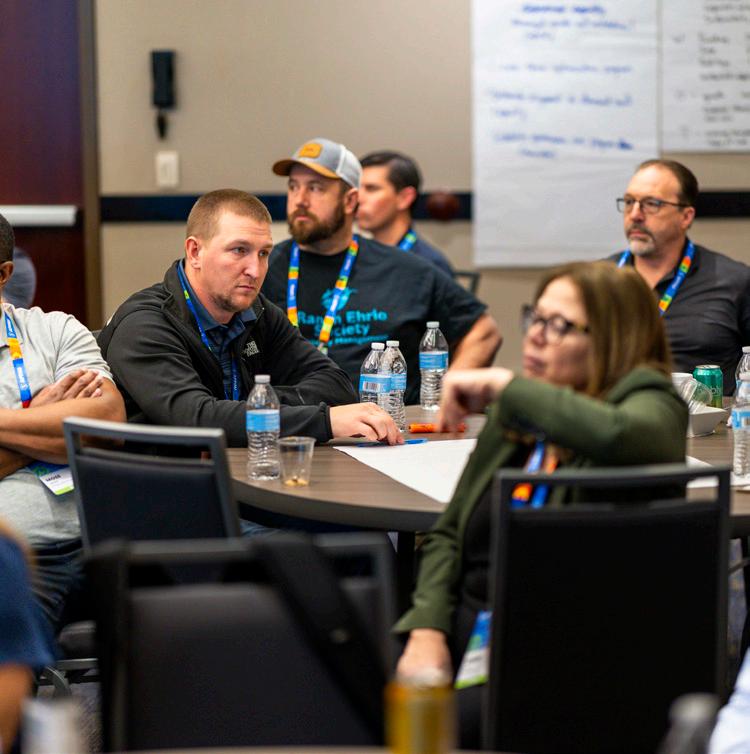
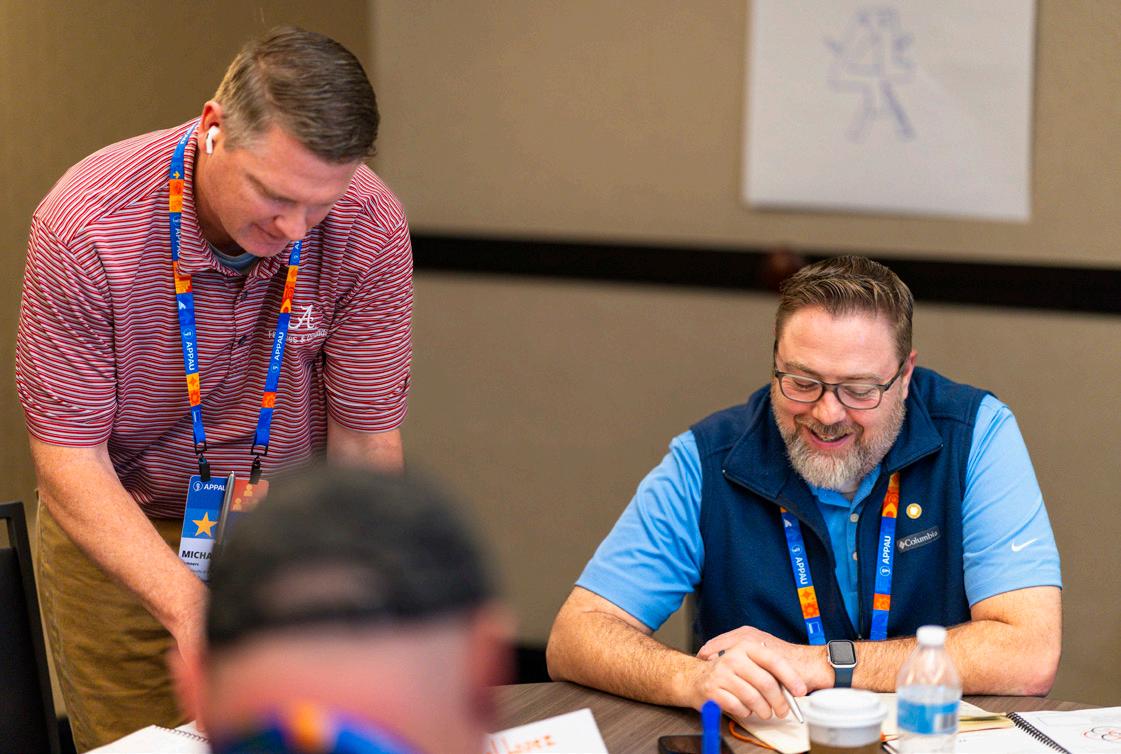
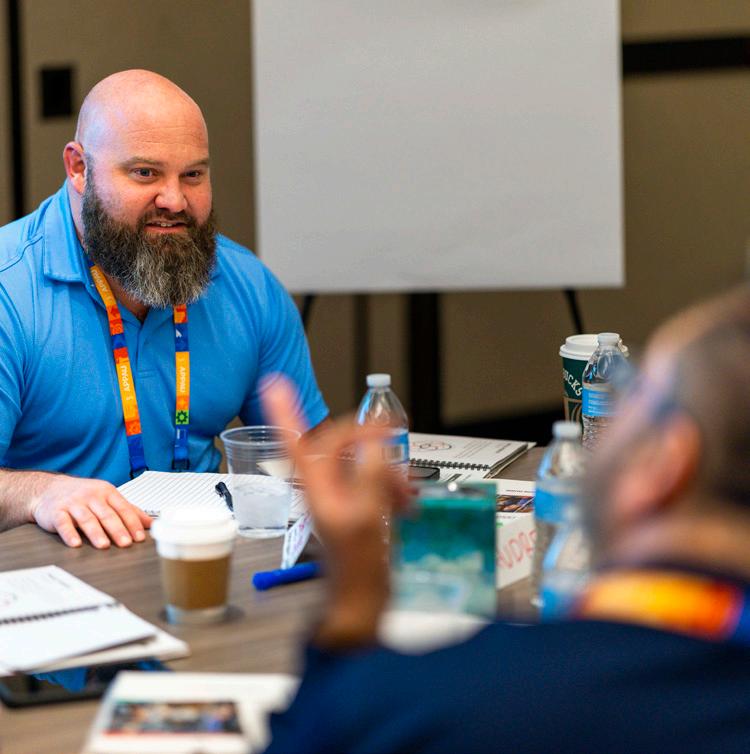
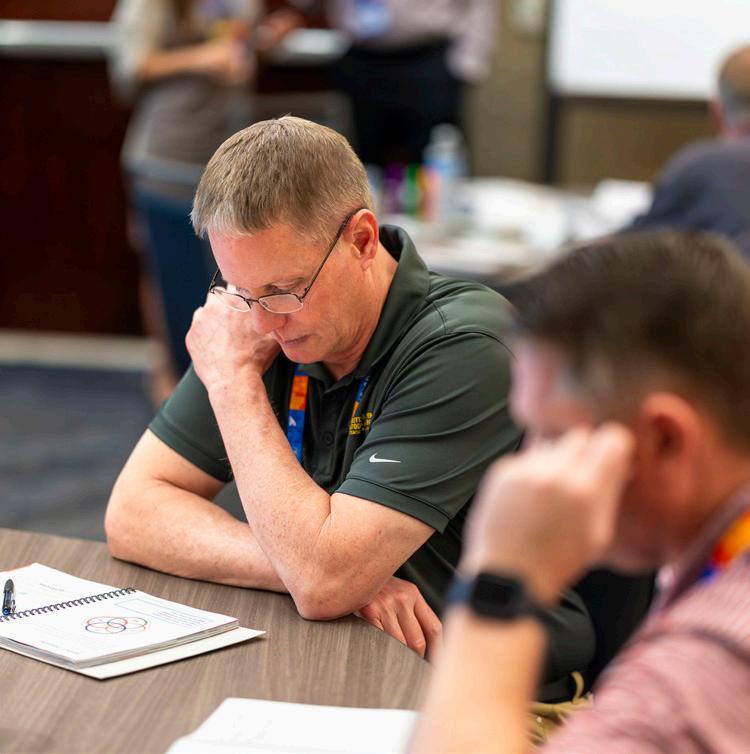
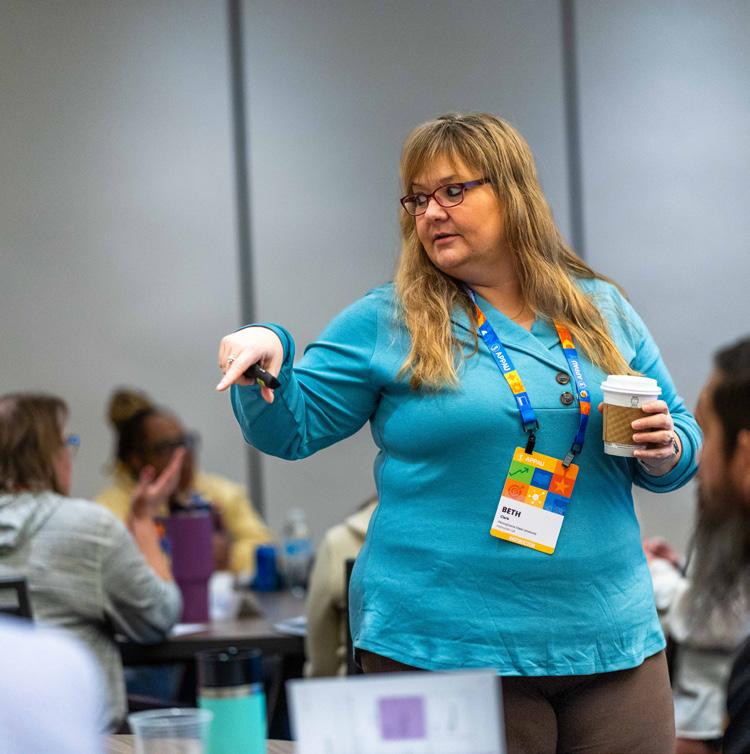
The Leadership Academy works in part because of who teaches it. The facilitators are not outside consultants delivering generic content — they are peers who have done the work, navigated the same institutional pressures, and built the skills the curriculum describes. That context comes through in how the material lands. "I genuinely feel like every time I attend this institute, I leave with new found knowledge of the field," one participant wrote. "The information shared is amazing and the facilitators are fantastic."
For professionals working toward the Certified Educational Facilities Professional credential, APPAU offered a three-day, instructor-led CEFP Exam Prep course running Tuesday through Thursday. The course covers all four core competency areas of APPA's Body of Knowledge — General Administration and Management, Operations and Maintenance, Energy and Utilities and Environmental Stewardship, and Planning, Design and Construction — and prepares participants for the credentialing exam through real-time instruction and collaborative discussion. Registration includes access to the CEFP learning platform and exam registration
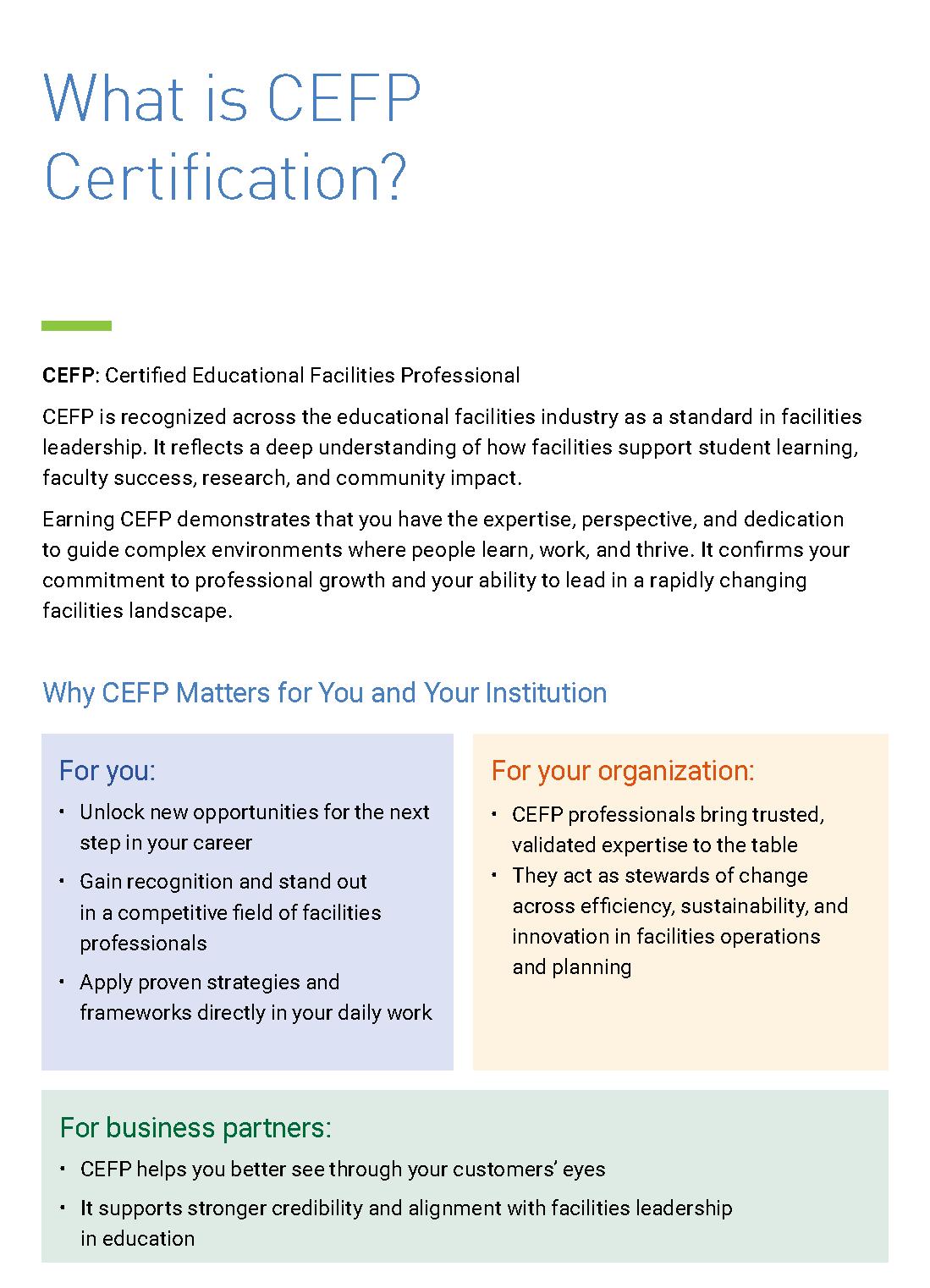
fees, making APPAU one of the more efficient paths to completing the preparation.
The CEFP is recognized across the educational facilities field as a meaningful standard of professional expertise. It is open to both APPA members and non-members, though members receive discounted pricing, and candidates must have a minimum of eight years of combined education and professional experience to sit for the exam. For those who meet that threshold and are ready to formalize their expertise, the credential carries weight — with hiring committees, with institutional leadership, and within the broader professional
community.
Completing the prep course at APPAU, surrounded by colleagues working toward the same goal and in a week of broader professional engagement, is a different experience than studying alone. The collaborative discussion that runs through the instructor-led format mirrors the kind of peer exchange that makes the Institute and Leadership Academy effective, and it reflects the same underlying philosophy that the knowledge in any room full of experienced facilities professionals is worth drawing out, not just delivering to.
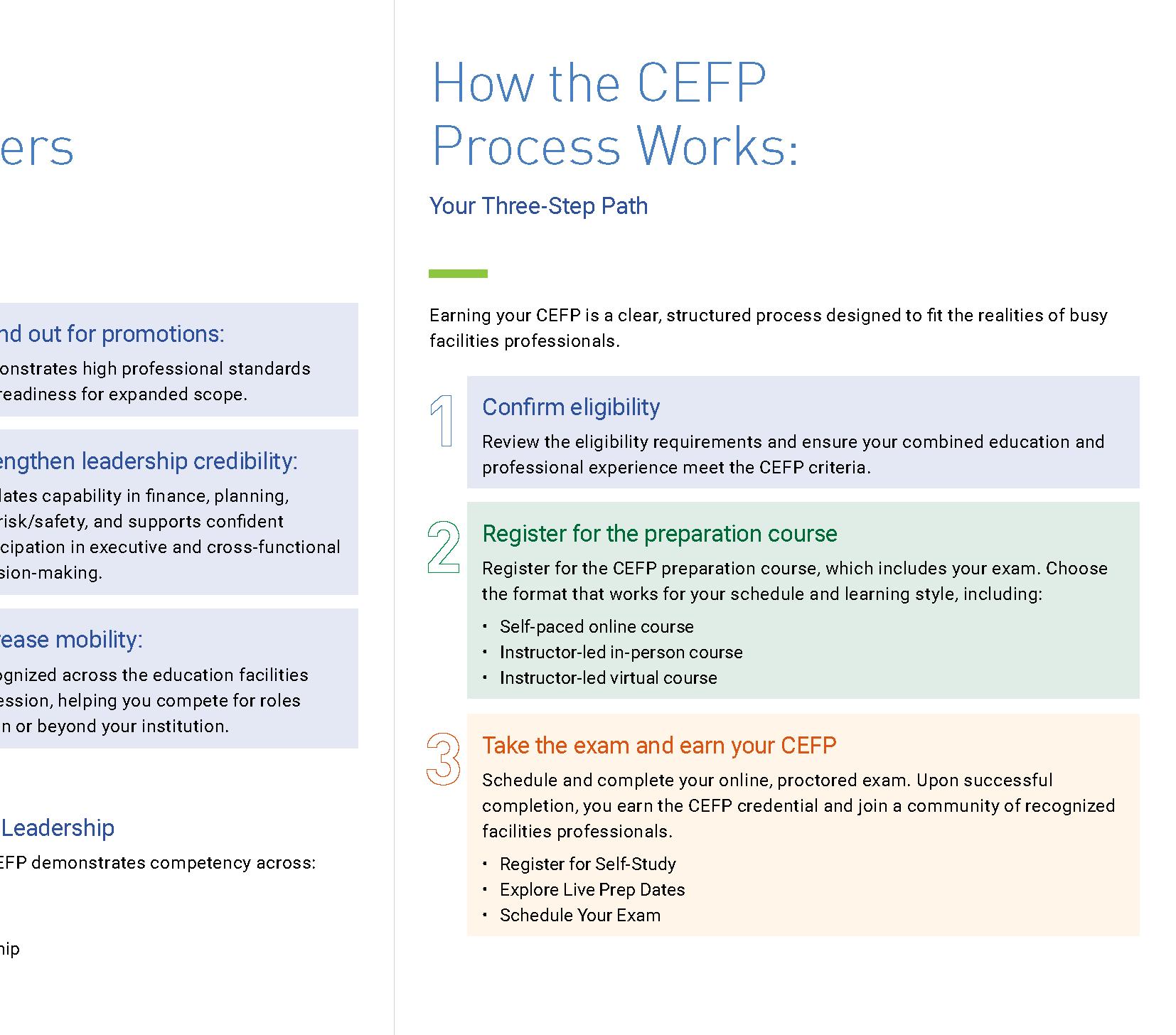
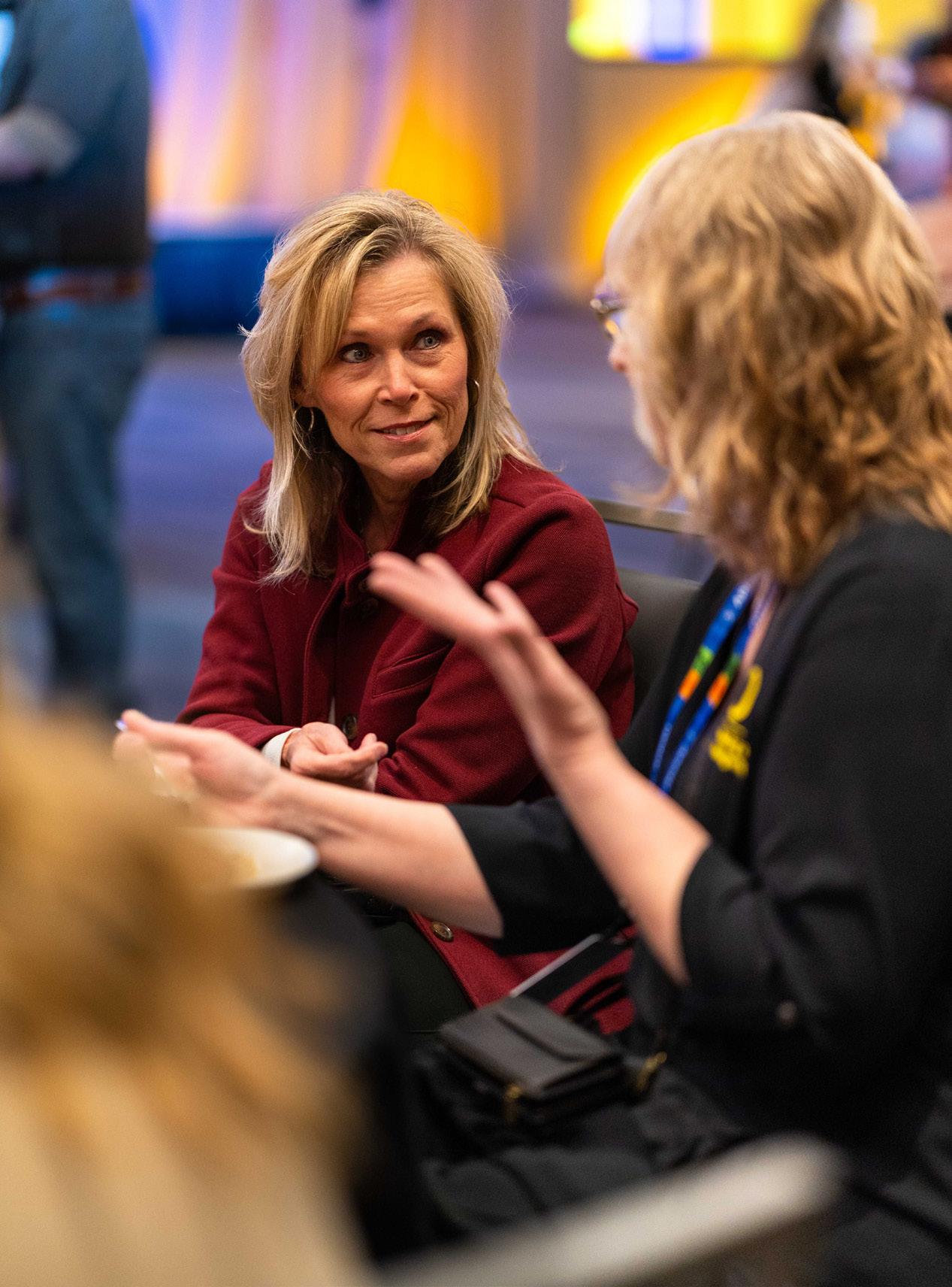
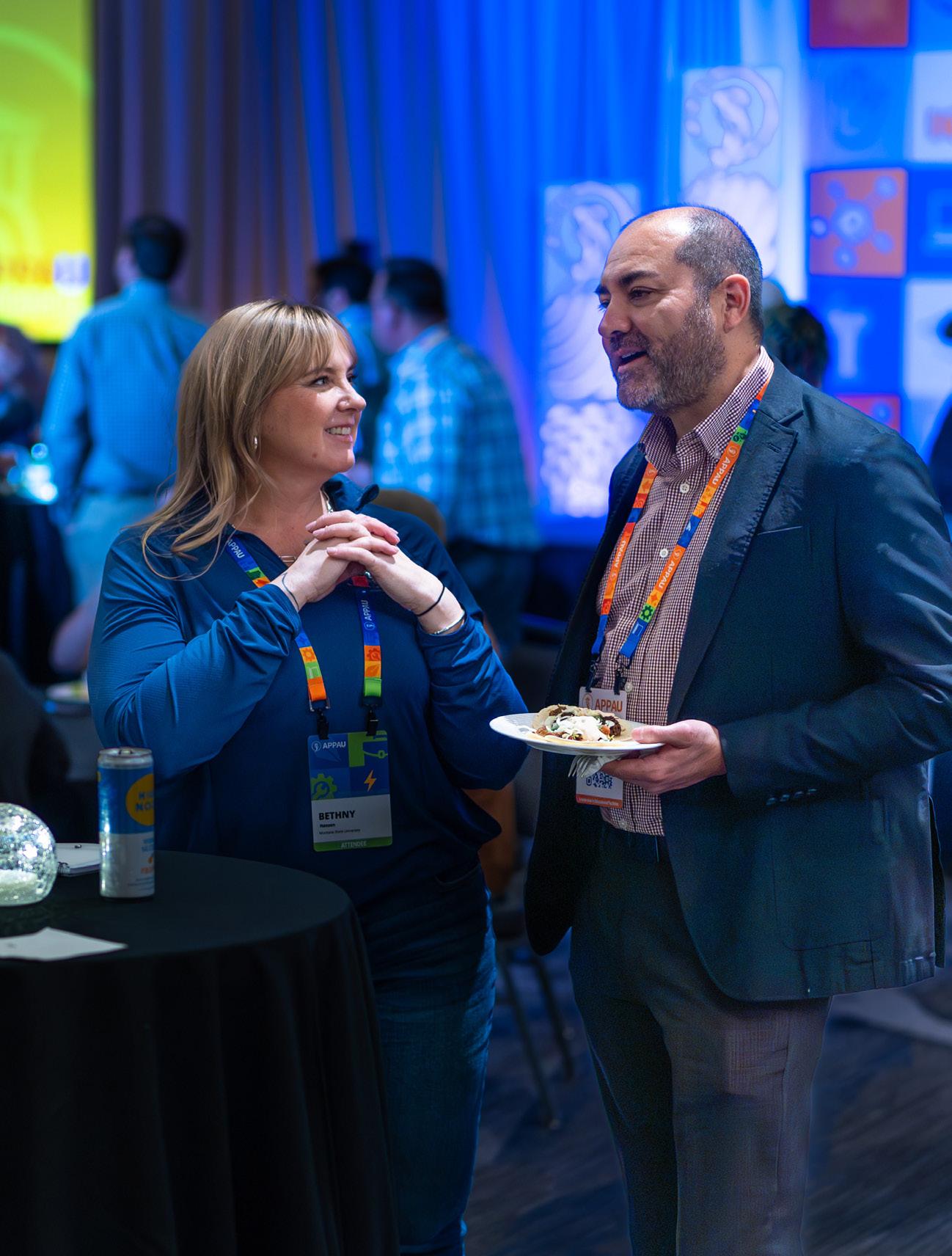
Across every track, attendees consistently noted how approachable and helpful the APPA staff were throughout the week. Survey data reflected this: in the Energy and Utilities track, 94.44% of respondents gave APPA staff a perfect five-star rating for being approachable and welcoming. In General Administration, that number reached 95.65%, with a perfect 5.0 average — the highest
score achievable. These are not numbers that happen by accident. They reflect a team that treats logistics and hospitality as part of the programming, not separate from it.
"The APPA staff was incredibly helpful, knowledgeable, and extremely kind," one attendee wrote. Individual
staff members were called out by name across multiple surveys, which is its own kind of indicator. "Love how the staff see potential in others and build others up to be better," wrote another participant. "APPA staff were great, extremely friendly and happy to answer questions," noted a third.
The broader community that APPAU assembles is itself part of what makes the event function the way it does. Attendees came from institutions across the United States and Canada, large research universities, small liberal
arts colleges, community colleges, K-12 systems, and everything in between. The exchange of perspectives across those differences is something a single-institution training program cannot replicate. A director from a major state university sitting across the table from a facilities supervisor at a small private college will hear things in a case study discussion that neither would encounter in their normal professional orbit. In the Grand Ballroom during the evening receptions, and in the hallways between sessions, those conversations happened consistently and often led somewhere useful.

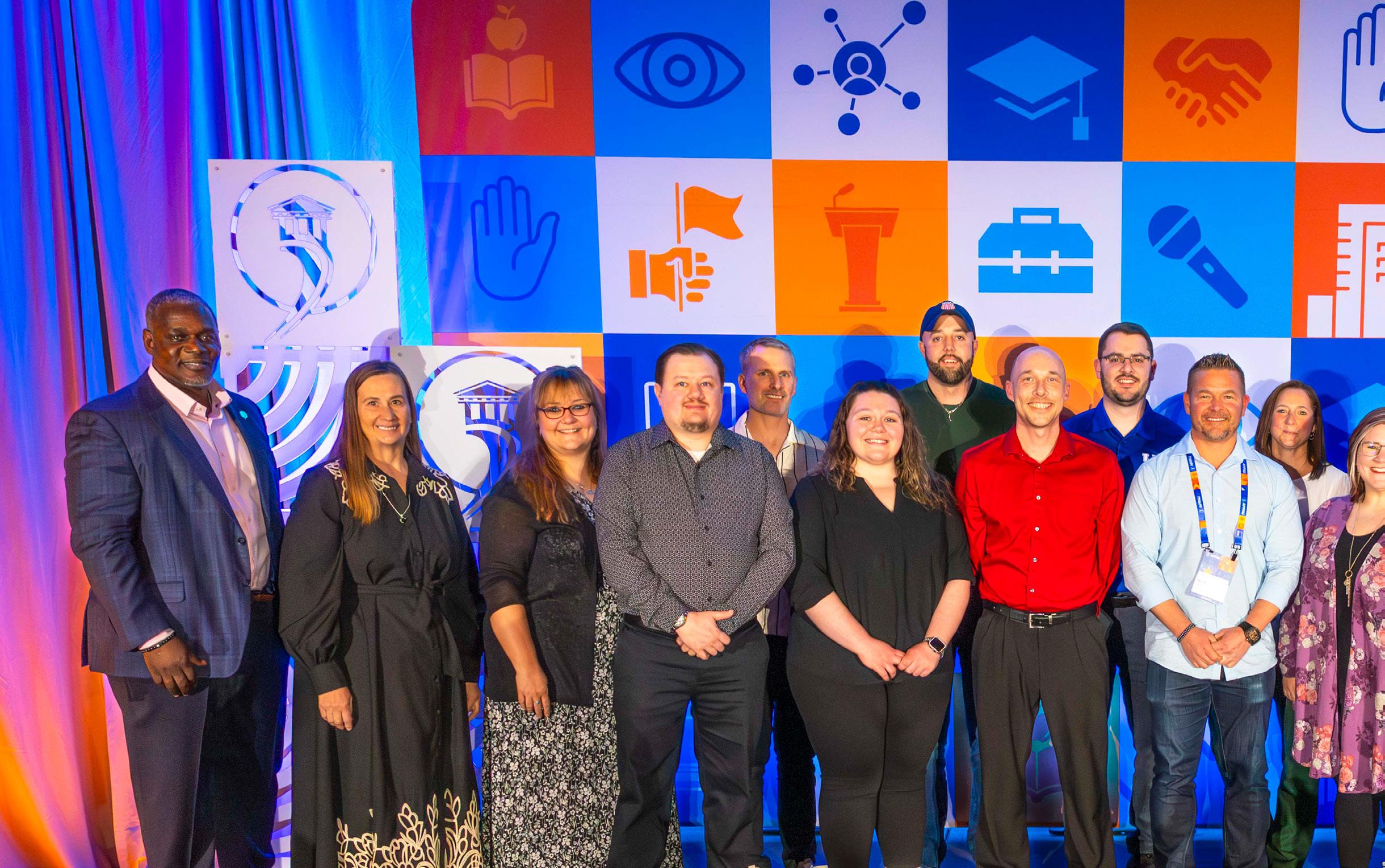
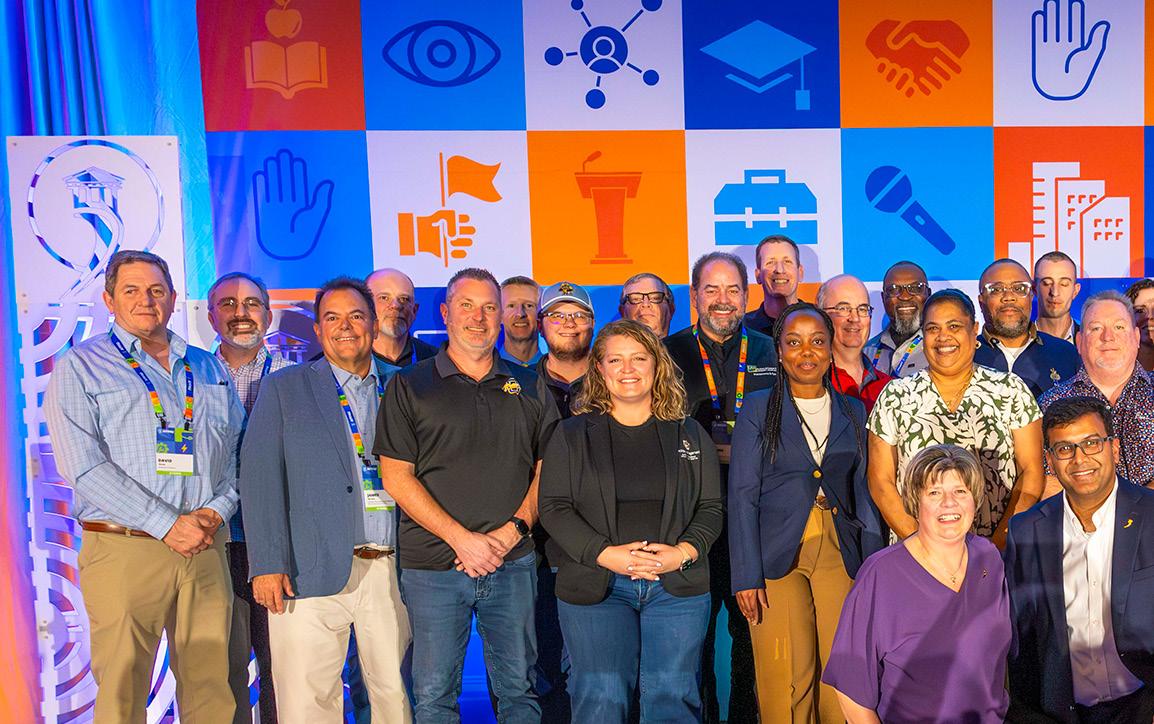

TOP
Graduates of the Leadership Academy.
Graduates of the Institute for Facilities Management.
The week closed Thursday evening with the graduation reception, where attendees who had completed all four cores of the Institute for Facilities Management or all four levels of the Leadership Academy were formally recognized. For most of them, reaching that point had taken years — multiple return trips to APPAU, continued engagement with the material between events, and a sustained commitment to professional development that went well beyond a single conference. Some had been working toward graduation for three years. Some for longer.
The ceremony was straightforward by design. Names were called, the room acknowledged the work, and the graduates stood in front of a community that understood what it had taken. There were no speeches about potential or exhortations about the future of the profession. There did not need to be. The people in that room already knew.
APPAU moves to St. Louis next. For those who attended Phoenix, registration opens soon. For those who have been considering their first APPAU — whether for the Institute, the Leadership Academy, T3, or the CEFP Prep course — St. Louis is the place to start. The programs run regardless of where you are in your career, and the community that shows up year after year makes room for newcomers the same way it does for returning graduates. ■
3-DAY COURSE OPTIONS: INSTITUTE, LEADERSHIP ACADEMY & CEFP
EXAM PREP
Spend 3-days attending one of APPA's signature training programs: Institute for Facilities Management or Leadership Academy — both are long-standing and highly successful programs that expand students' facilities management acumen and leadership skills. Both programs include full days of classes Tuesday through Thursday.
An in-person CEFP Exam Prep Course will be offered Tuesday through Thursday. Instructors will lead participants through the Certified Educational Facilities Professional (CEFP) exam content areas in preparation for taking the exam. Registration includes access to the CEFP learning platform and registration fees for the credentialing exam.
2-DAY OPTION: INVESTING IN THE FUTURE FACILITIES WORKFORCE
Join us for a Targeted Titles and Topics (T3) workshop on Investing in the Future Facilities Workforce. Facilities leaders across education are facing persistent workforce challenges, from unfilled skilled trades positions to rising turnover, retirements, and growing competition for talent. This T3 session spotlights realworld strategies institutions are using to strengthen their workforce pipeline and build teams that can sustain operations today and into the future. Learn more about this compelling session.
WHAT'S INCLUDED
APPAU kicks off with a Monday evening reception. Student meals are provided for breakfast, lunch, and breaks throughout the training days (Tues-Thur). APPA also provides a closing reception on Thursday where we celebrate graduates who have completed all four cores of our Institute for Facilities Management or all four levels of our Leadership Academy programs.
LOCATION
Hilton St. Louis at the Ballpark 1 South Broadway St. Louis, MO 63102
APPA has a room block available with negotiated rates. Book your room now before rooms fill up!


Strengthen Your Knowledge. Deepen Your Expertise.
APPA’s Institute for Facilities Management is the premier learning journey designed exclusively for facilities professionals shaping the future of educational environments.
Sign up if you’re: Emerging facilities professionals.

Building strategic leaders to drive institutional success
Advance your career, elevate your team, and drive innovation. APPA’s Leadership Academy is the flagship professional development experience for senior professionals who want to lead with purpose, inspire highperforming teams, and shape the future of educational facilities.
Sign up if you’re: Facilities professionals who want to lead with purpose, inspire high-performing teams, and shape the future of educational facilities.
Immerse yourself in the innovation that’s driving the future of educational facilities. APPA’s Targeted Titles and Topics (T3) delivers focused, actionable learning on pressing issues and emerging trends facing today’s senior educational facilities leaders.
Sign up if you’re: Senior educational facilities leaders.
Gain the tools, language, and mindset to guide teams more effectively and support institutional excellence. The Supervisor’s Toolkit is purpose-built for those taking their first step into a supervisory role or for middle managers looking to enhance their management experience.
Sign up if you’re: Those taking their first step into a supervisory role or for middle managers looking to enhance their management experience.
Unlock your potential with APPA’s Invest in Success. This signature program is the jumping off point for frontline staff looking to upskill and move their careers forward.
Sign up if you’re: Frontline staff looking to be valuable contributors to their teams and organization.
BY APPA
For nearly two decades, APPA’s Facilities Performance Indicators program has been the most trusted benchmarking tool in educational facilities management. Since 2005, institutions across North America have used the FPI to compare performance across 16 operational areas — from custodial costs and maintenance staffing to energy efficiency and capital reinvestment — and to make the case for resources with campus leadership.
Now, APPA is rebuilding the FPI from the ground up. And before the new platform goes live for members, we want to make sure it’s built around the people who use it.
A rebuilt platform is only as good as its alignment with the practitioners who depend on it. APPA is forming an advisory committee to provide input on FPI 3.0 as it develops — helping ensure the new system reflects the real workflows, reporting needs, and data challenges of facilities professionals across institution types.
This isn’t a technical role. We’re not looking for software developers or data engineers. We’re looking for people who know what it’s like to prepare a budget justification with limited data, build a peer comparison for a president who wants a two-page summary, or try to make sense of benchmarks that weren’t designed with your institution’s size or structure in mind.
We are especially seeking committee members from institutions that are often underrepresented in benchmarking conversations:
Small colleges and universities — institutions where
one person may wear many hats and the FPI needs to be useful without requiring a dedicated analyst to interpret it
Community colleges — two-year institutions with distinct facilities profiles, funding structures, and operational realities that don’t always map cleanly onto four-year university benchmarks
K-12 schools and districts — an important and sometimes overlooked segment of the APPA community, with unique space utilization, deferred maintenance, and staffing challenges
If you have participated in the FPI survey in the past — or stopped participating because the program wasn’t meeting your needs — we want to hear from you. Both perspectives are valuable.
Committee members will be asked to participate in periodic virtual meetings and provide feedback on specific questions as the platform develops. Participation is flexible and designed to fit around the demands of a working facilities professional. This is a meaningful opportunity to directly influence a program that serves thousands of institutions, without a burdensome time commitment.
If you’re interested in serving on the FPI 3.0 Advisory Committee, or would like more information before committing, please reach out to APPA at lwagner@appa.org. We’ll be in touch with details on meeting cadence, timeline, and how your input will be used.
The FPI has always been built on the belief that shared data makes all of us better. FPI 3.0 is a chance to make sure that’s true for every corner of the APPA community — not just the flagship research universities.

Facilities Performance Indicators (FPI) Program
Analyze • Compare • Improve
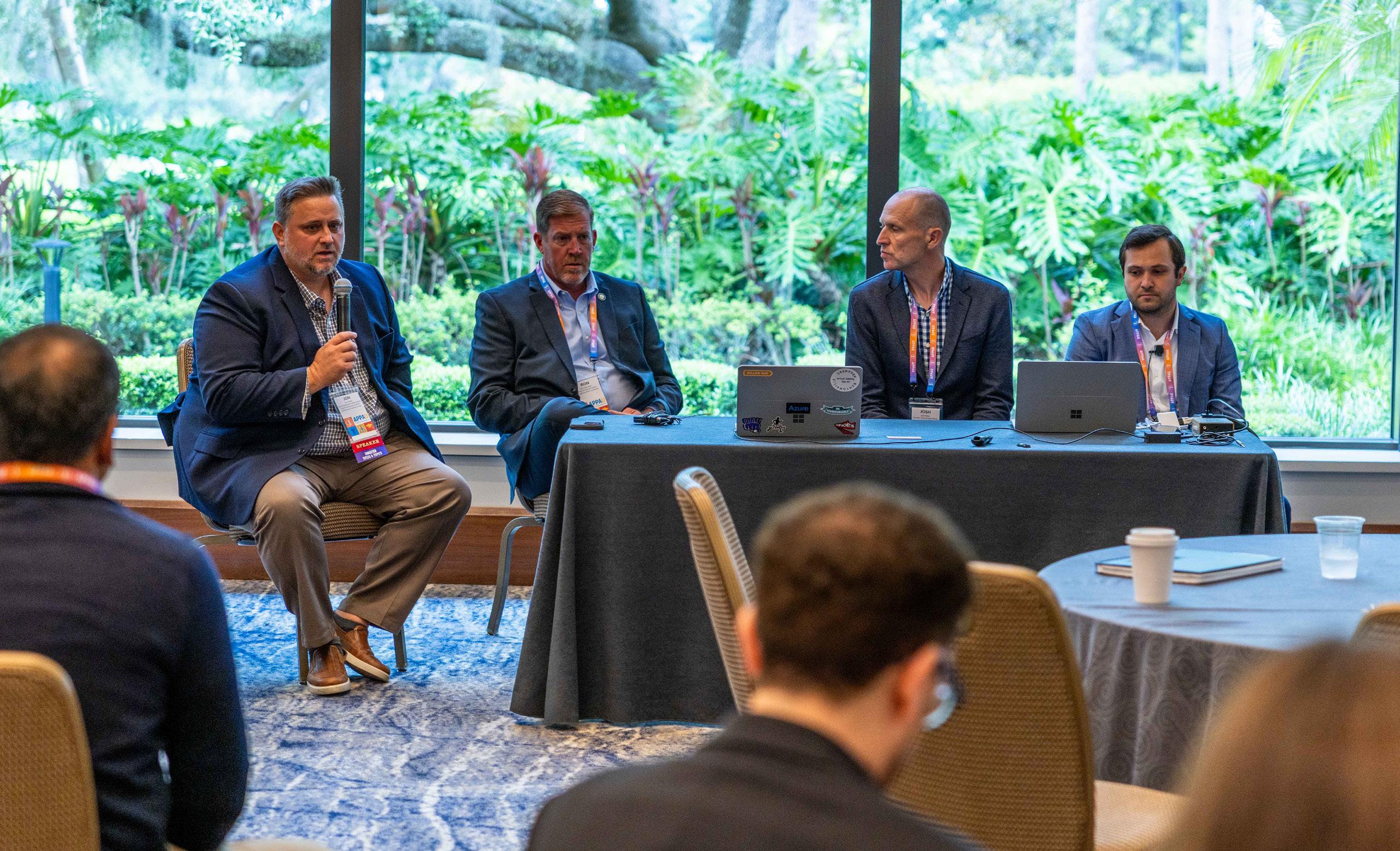
Benchmark your facilities data, performance, and spending across peer institutions. Scan the QR code to learn more! Get started Visit https://www.appa.org/fpi or reach out to analytics@appa.org.