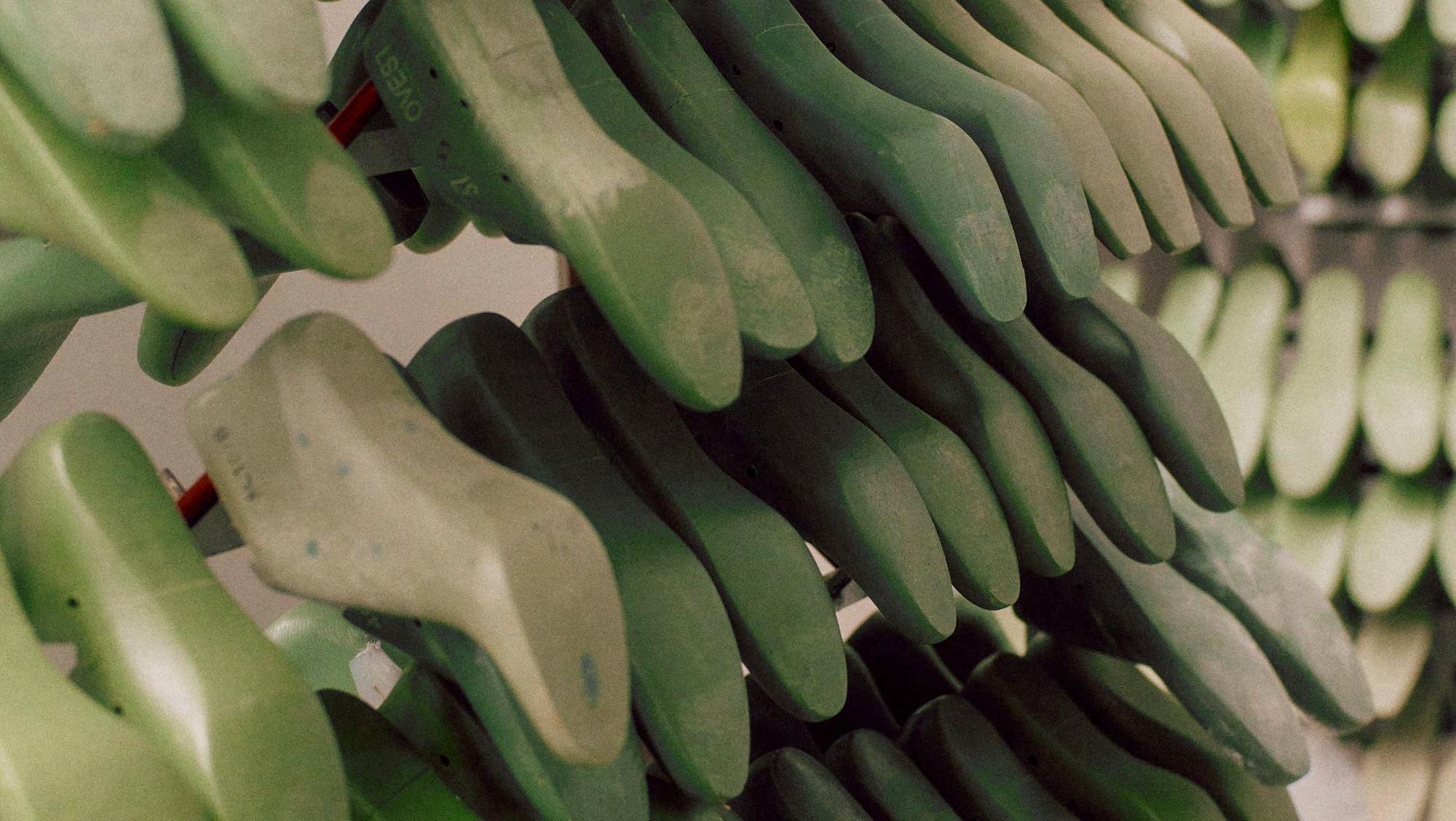
We Care
partnership with The Footprint Firm
This report is based on analysis, data and counselling from ANGULUS’ collaboration with The Footprint Firm (TFF). We have chosen to collaborate with TFF because they – in our opinion – represent some of the most ambitious, competent and demanding sustainability consultants in the field. We made this choice not to take the easy route. We chose TFF to ensure that our sustainability efforts build on ambitious and solid analysis and universally recognized methods as well as an authentic dedication to create change.
“With their own production facility ANGULUS has a unique insight into their chain of production as well as a high degree of control and opportunity to leverage impact in their value chain. Working with them on their Scope 1-3 GHG baseline and ESG strategy has been very rewarding and given us new insights on sustainability challenges and opportunities in the industry.”
Mikkel Skytte Hejbøl, director, Footprint Firm
ANGULUS
Introducing ANGULUS´ very first Sustainability Report
We want more people to buy fewer shoes.
This might sound a bit contradictory when you’re in the business of making and selling shoes as we are. But yes, we want people to buy less shoes, but BETTER shoes.
By better shoes, we mean shoes designed to stand the test of time.
By better shoes, we mean comfortable, handcrafted and made from natural materials.
By better shoes, we mean ANGULUS.
We have been in the business of making shoes for 120 years and we hope to make it to another 120.
But we acknowledge that the fashion industry in general and shoe production in particular is fundamentally unsustainable and that our planet is in urgent need of care and a different way of doing business.
We want to do our part. We want and need to improve.
So, at ANGULUS we have taken a good, hard look at ourselves and asked the necessary questions about how we as a brand can maximize our positive impact and minimize our negative impact. And how we might be a catalyst for positive change in the industry which we are part of.
In this first ANGULUS sustainability report we describe where we stand, how we work to improve and what you can expect from us in the coming years. We have as owners and directors written it ourselves. Because sustainability is at the very top of our strategic agenda.
We hope that you will find it interesting and read it as a testament to our commitment to improve and develop ANGULUS for the generations to come.
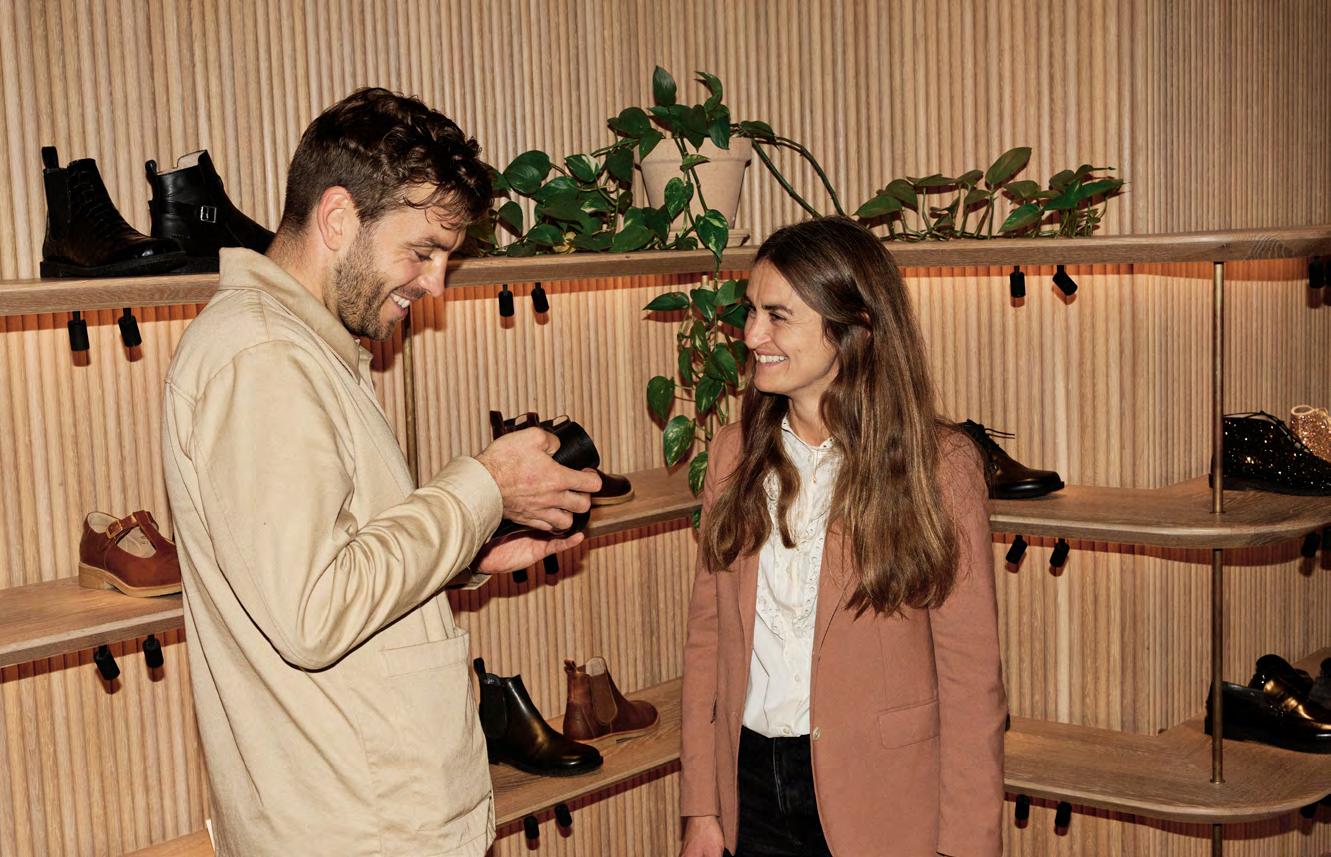
Sebastian Dawe, CEO Clara Dawe, Chair of the Board
With their own production facility ANGULUS has a unique insight into their chain of production as well as a high degree of control and opportunity to leverage impact in their value chain. Working with them on their Scope 1-3 GHG baseline and ESG strategy has been very rewarding and given us new insights on sustainability challenges and opportunities in the industry.
Mikkel Skytte Hejbøl, director, Footprint Firm
ANGULUS at a glance
At ANGULUS we design, produce and sell shoes. Our chain of production is a system of people, machines and technology that enable the transformation of designs and materials into shoes for distribution throughout the world.
The main concept is this:
Shoes are designed by our designers in Denmark and produced at our own factory in Portugal, with natural materials sourced as locally as possible. 97 % of our material suppliers are based in Portugal, Spain and Italy. For us, closer is better.
Raw Material Supliers
Production, Product development, Quality assurance Logistics, Design/Product Development, Management, Sales, Quality assurance Wholesale partners
ANGULUS value chain
ATC PORTUGAL Lda.
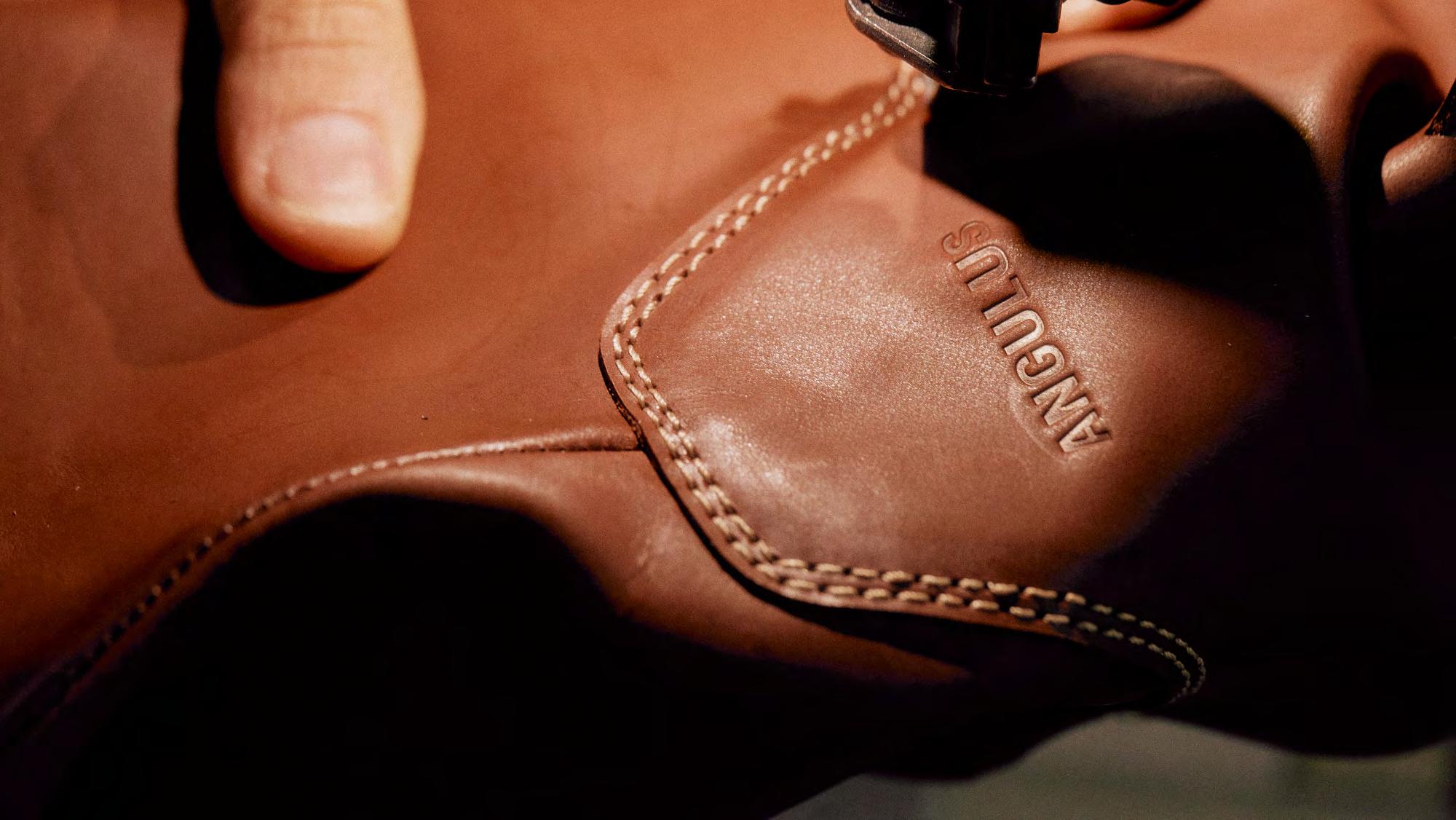
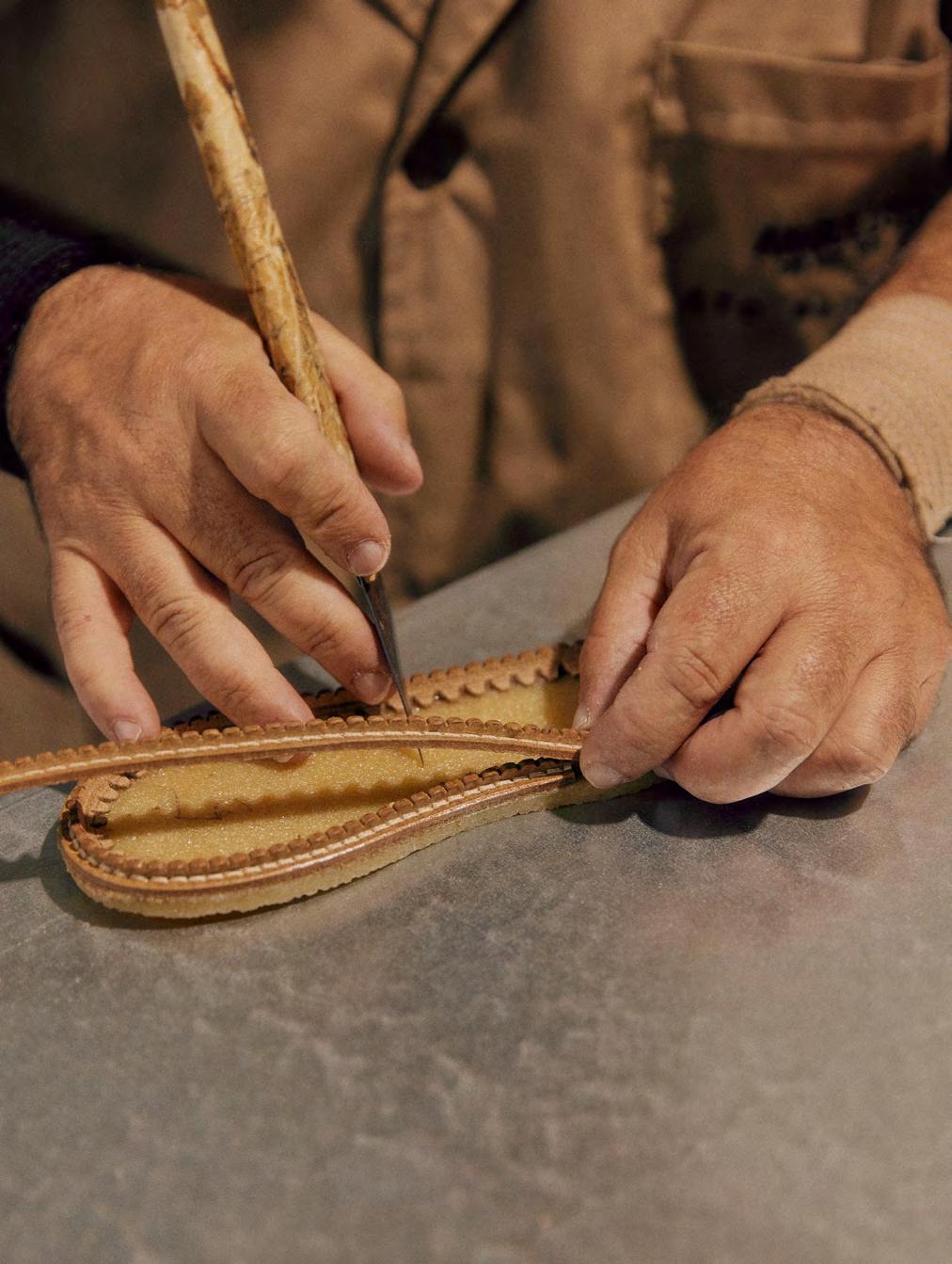
At ANGULUS, we have one thing in our value chain that makes us stand out from 99% of our industry. Even though we are a small business, we own and manage our own factory in Portugal. ANGULUS shoes are made in one place, by skilled shoecrafters who are proud to work for ANGULUS with working conditions that we are proud of. No sweatshops, only fair and proper treatment of our valued colleagues that we are proud to pay a fair salary every month.
ATC FOOTWEAR A/S
Our operations in Denmark where all products are designed and developed all the way from ideas to shoes. This is also where we service all of our customers and consumers around the world through our logistics and costumers service operations, making sure that all shoes we produce reach their final destination, either in the warehouse of a retailer or at the front door of the final user. Located in Herlev, outside of Copenhagen, Denmark our HQ is where all back-office tasks are taken care of. Logistics, IT-services, finance, management and much more all take place here.
Production of rubber boots, thermo boots and wool slippers
Our skilled shoecrafters at our facility in Portugal are experts on crafting leather shoes. But we know that our customers want to put ANGULUS rubber- and thermoboots on their feet for a rainy day. In 2023 we have collaborated with the Danish company Trademark on selecting the best production facilities for this type of shoes as well as our wool-slippers. From 2024 we have a new partner: the Danish company LUXKIDS. The production of these products will take place in China. LUXKIDS are committed to transparency, fair working conditions and human rights in their supply chain and report on this in their yearly CSR report.
ESG strategy
In this section we present our ESG strategy. Our overall strategic ambition is to get more people to buy less, but better shoes. And we genuinely believe that ANGULUS is better. But we also believe that we need to raise the bar and continuously work to make ANGULUS even better.
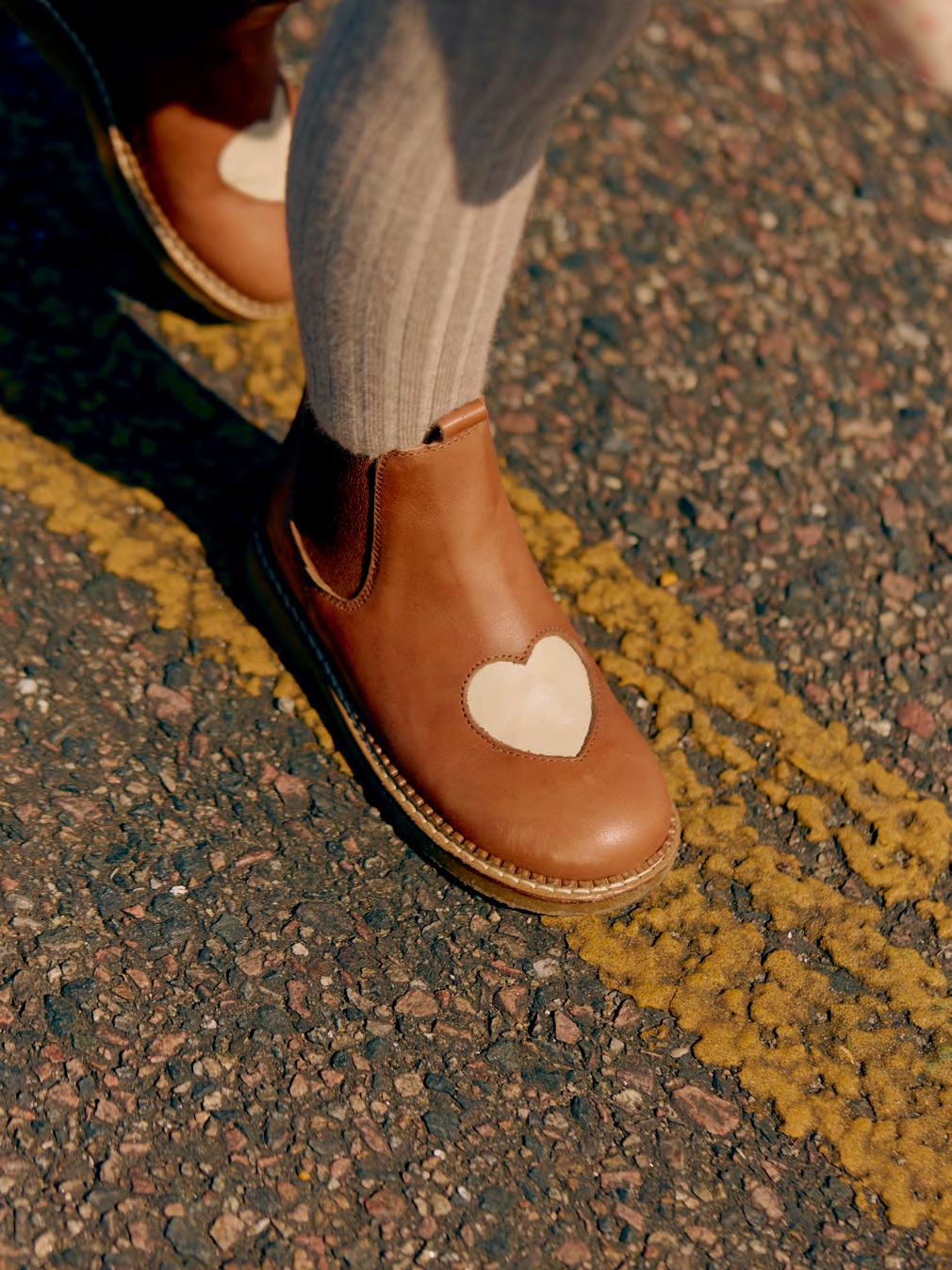
We aspire to contribute to the movement towards more circular shoe production by creating high-quality, long-lasting, repairable shoes – handcrafted with love, care and the finest materials.
But, how do we go from strategic ambition to actionable initiatives and efforts? What is important and what is not? How do we distinguish between what sounds right and what is right?
To help us answer these questions, we have gone through the rigorous process of a double materiality assessment1, together with TFF.
So, what is important for ANGULUS?
The following illustration show how, out of 21 potential topics, 15 have been assessed to be material, meaning that they are of central importance to our overall sustainability work.
These 15 topics form the basis for ANGULUS ESG strategy.
What is a double materiality assessment – and why do we need it?
The double materiality analysis is the best tool for us to inform and prioritize our sustainability efforts. It helps us to focus our investments, where it matters.
That something is ‘material’ basically means that it is relevant for us to address. A topic that meets the criteria of double materiality means that it is important for us from an impact perspective and/or a financial perspective.
The method to identify and prioritize Angulus’ material topics is based on assessment and consolidation across 4 sources:
• ESRS disclosure topics from CSRD
• Frameworks and standards (e.g. SASB) to identify industry trends
• Competitor analysis
• Internal company information
Conducting a double materiality assessment is part of upcoming European ESG regulation (CSRD).
From materiality assesment to strategy
E1: Climate change adaptation (i.e., extreme weather)
E2: Climate change mitigation & GHG emissions
E3: Energy management
E4: Pollution to air, water & soil
E5: Water consumption & wastewater management
E6: Waste incl. hazardous substances
E7: Circular economy
E8: Resource use & material choice (incl. chemical free)
E9: Biodiversity
S1: Employee health & safety
S2: Employee diversity, equity & inclusion
S3: Employee engagement & development
S4: Workers in the value chain (incl. human rights)
S5: Local/affected communities
S6: Product quality & safety
G1: Certifications & transparency
G2: Animal welfare
G3: Responsible supply chain & production
G4: Business ethics & corporate governance
G5: Anti-corruption & fair competition
G6: Risk management
Our strategy in short
Material strategy
We make choices about what materials to use in our production based on a material hierarchy that balances upfront environmental impacts with the quality and longevity of the materials. We are transparent about the materials we use and the impact of those materials. See more on page 15.
Circularity
We work to extend the lifetime of our products through our principle of constant care. This applies in all stages of a shoe lifecycle: design, material choices, construction and assembly methods as well as promoting a culture of care, reuse and repair among our customers. See more on page 21.
Social Responsibility
Our social responsibility covers all parts of Angulus’ value chain. We ensure a safe and fair working environment in both Denmark and Portugal. We prioritize upskilling and training and health insurance for all our employees. And we engage with our customers to support them on their journey towards becoming more responsible consumers. See more on page 25.
Green production/ Green transport
Greening operations and transport has been key priorities in 2023 with installation of solar panels at our production site as well as new company policies on electric vehicles. Read more on page 24.
Transparency/ ESG reporting
Increasing transparency throughout our value chain has been a key priority in 2023 and will be in the coming years. We are committed to report on our progress yearly and will focus on improving data for our GHG baseline and set meaningful reduction targets.
3
Environmental impact
GHG BASELINE
We are proud to present our Scope 1-3 CO2 baseline conducted in accordance with The Greenhouse Gas (GHG) Protocol - the world’s most widely used greenhouse gas accounting standard.
Our ambition has been not to cut corners but to dig deep into our value chain and create a baseline that tells us where we can actually make a difference in the choices we make. In our opinion this requires a baseline that covers scope 1-3, calculated based on activities, where possible.
Methodology GHG Baseline
ANGULUS CO2 baseline is based on The Greenhouse Gas (GHG) Protocol - the world’s most widely used greenhouse gas accounting standard. Specifically, our baseline follows “The GHG Protocol Corporate Accounting and Reporting Standard” and “The Corporate Value Chain (Scope 3) Accounting and Reporting Standard”.
A combination of spend-based and activity-based approach has been used to calculate GHG-emissions in scope 1,2 and 3. Specifically, a great accuracy was paid to the raw materials used for the shoe production at our factory in Portugal. For these raw materials granular data was collected and combined with best available GHG-emission factors from various databases (such as DEFRA3) and specific Life-Cycle-Assessments (on e.g., leather types). This gave clear insights into emission drivers, as well as potential reduction levers to be further assessed.
Baseline results 2023
ANGULUS baseline results 2023
Scope 1
21 tonnes CO2e (0,3%)
Total baseline
6.965 tonnes CO2e (100%)
Scope 2
32 tonnes CO2e (0,5%)
Scope 3
6.911 tonnes CO2e (99,2%)
ANGULUS’ intensity KPI’s 2023
tCO2e / mio DKK= tCO2e pr. Mio DDK revenue for ANGULUS only.
TCO2e/FTE: tCO2e pr. Full-time employee.
95,6
/ mio DKK
Intensity-KPI’s are important as these can be used over time to isolate your performance to decarbonization from business fluctuations
60,6
/ FTE
Emmissions in scope 3
Upstream transportation
175 tonnes CO2e (3%)
Tonnes CO2e (% of scope 3)
Employee commuting 42 tonnes CO2e (1%)
End-of-life treatment 41 tonnes CO2e (1%)
Purchased goods and services
6.597 Tonnes CO2e (95%)
Emmissions from different material types
CO2e from material use, per. material type Total emissions from materials Chrome-tanned leather
Vegetable/Chrome-free leather
Key take-aways from the GHG baseline
• The vast majority of our emissions come from the materials we use for making shoes – mainly leather.
• Emission factors for leather vary significantly with tanning methods and specific tanneries
• Transport accounts for a low percentage of our emissions – both relatively and absolute. This is mainly due to the fact that we produce close to our customers and the fact that we use no air transport for our products.
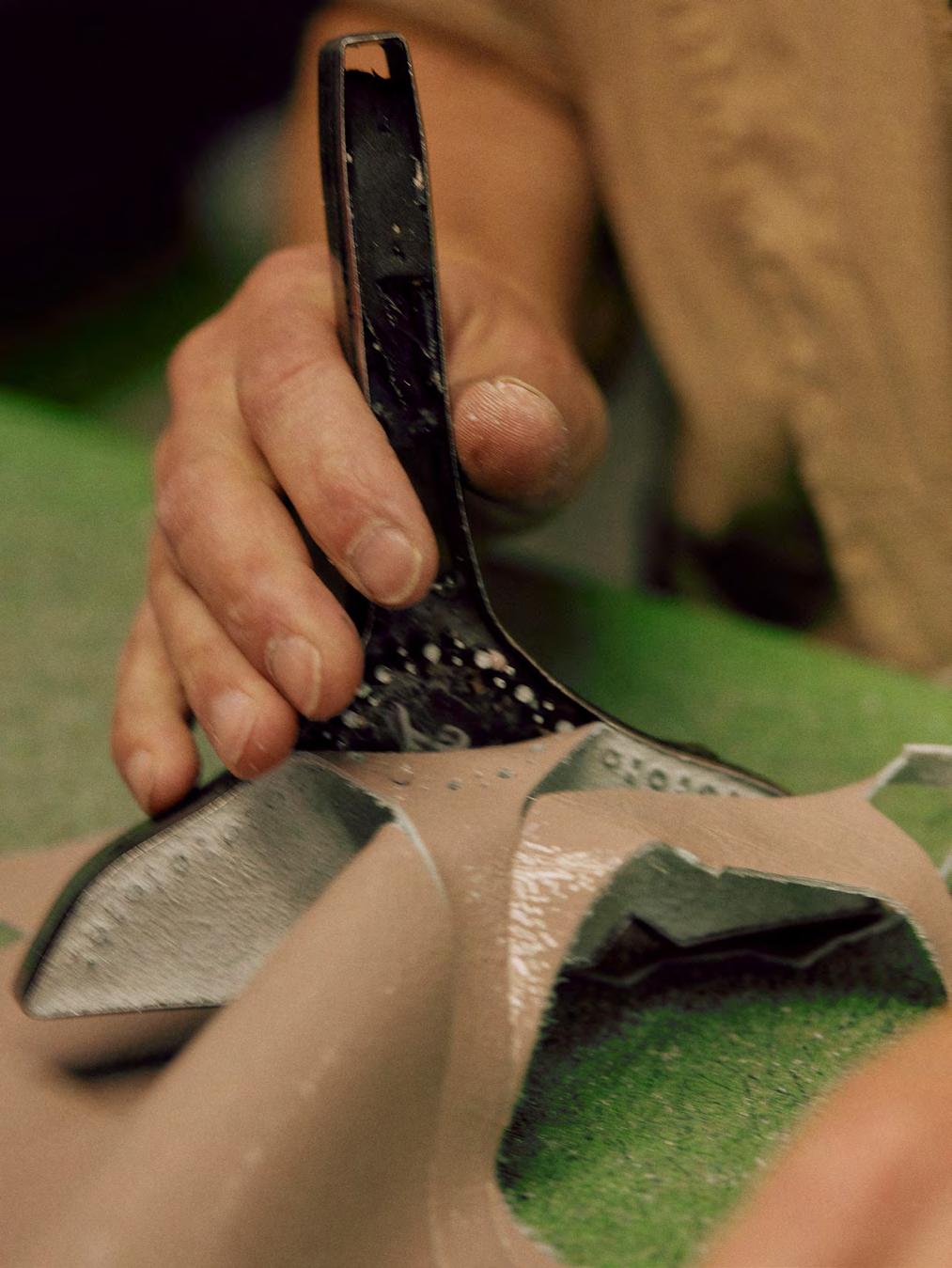
• ANGULUS production is fully electrified with all production machinery running on electricity. To further minimize the impact of our energy consumption, we invested in and installed solar panels in September 2023. Until May 2024, 35% of our energy consumption for production was generated from our own solar panels. We expect that in a full year of production, 40% of the energy consumed will be generated from our solar panels.
Material strategy
Our big job, when it comes to reducing environmental impact and emissions, is to find materials which meet our quality standards and have the lowest emissions possible. This balance is the core of our material strategy.
This is a process where our designers, shoe-crafters and suppliers work together to make the right material choices and continuously aspire to improve.
When it comes to robustness and durability, our assessment is that there is no real alternative to natural leather at the moment. But C02 emissions and other environmental impact from leather vary with different tanning methods and the specific procedures at different tanneries. It is key for ANGULUS to strengthen our dialogues with our main leather suppliers to better understand their tanning processes and to contribute to creating both transparency and improvement in methods. And as innovation and new possibilities for using recycled materials evolve, we will adopt these in our material choices.
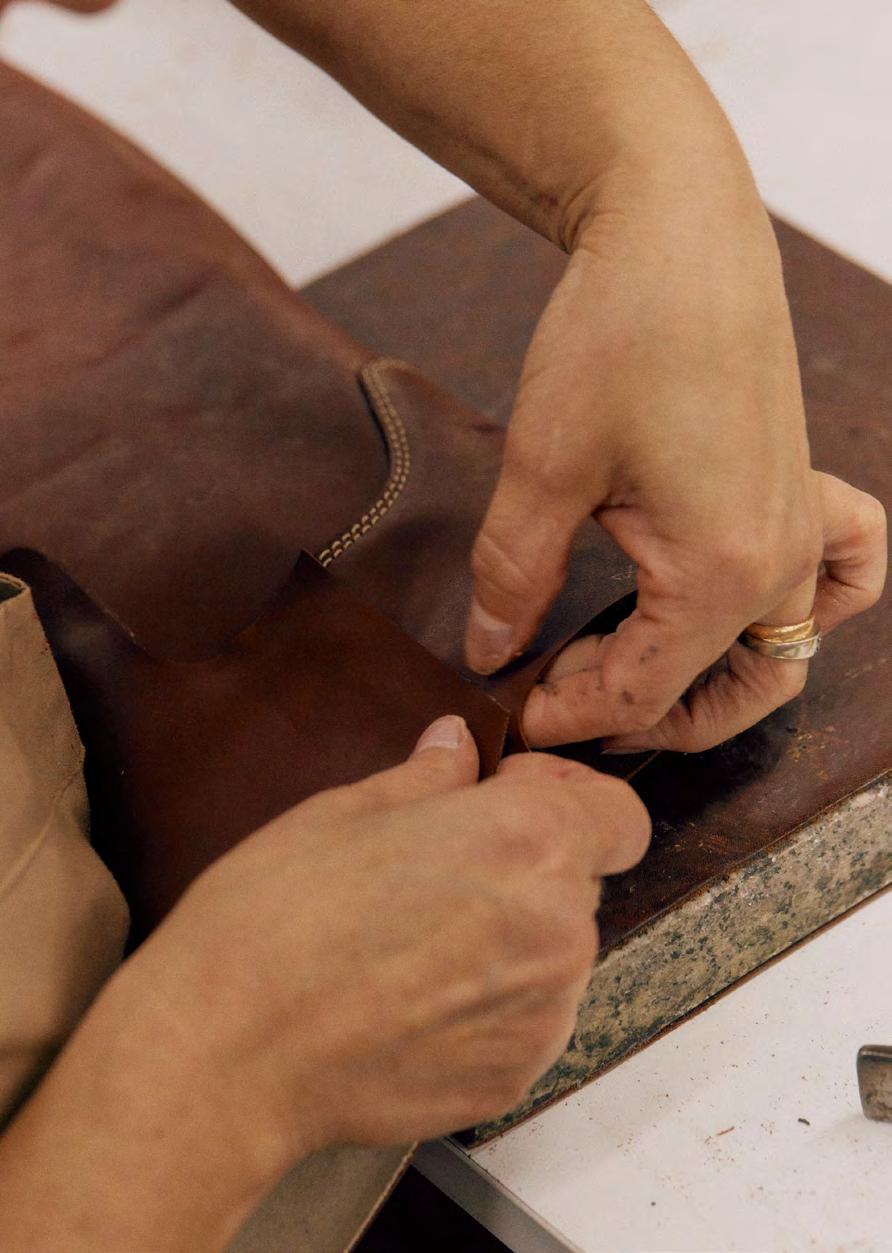
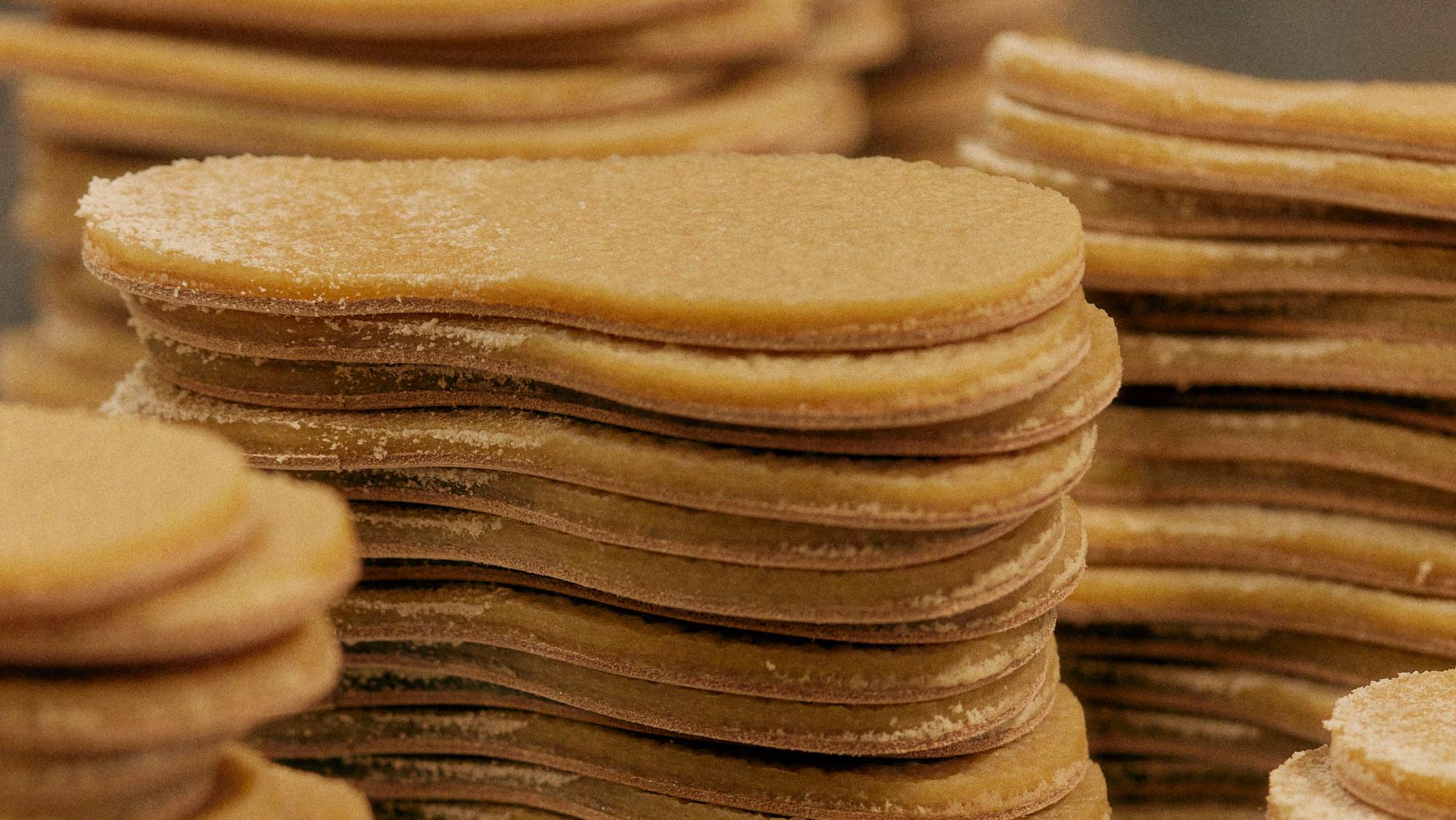
Our big job, when it comes to reducing environmental impact and emissions, is to find materials which meet our quality standards and have the lowest emissions possible. This balance is the core of our material strategy.
Why leather is the right choice for shoes, if you do it right
At ANGULUS, we firmly believe that leather is a superior material for crafting responsible footwear. We acknowledge that natural leather production has a higher initial CO2 emission compared to synthetic alternatives. But for us, the most critical perspective is the lifetime impact of our products. With thoughtful design focused on durability and proper care and repair opportunities, leather shoes have a significantly lower CO2 impact over their lifespan. Studies show, that a leather-shoe lasts 4 years, whereas a synthetic shoe lasts 1 year. These numbers are average and should be understood as such2.
This extended durability not only provides better value for our customers but also ensures that the initial higher emissions associated with leather are more than compensated for by its longer life.
We are diligent in selecting the right type of leather for each application, as environmental impact varies with different leather types.
It’s essential to note that the longevity of our leather shoes, like all shoes, requires care from the user. Leather shoes offer a much higher potential for care and maintenance, and it is our dream at ANGULUS that our shoes last decades, not just years. This vision drives our commitment to quality and sustainability, aiming to create footwear that stands the test of time both in style and in function. While we take pride in the durability and longevity of our footwear, we recognize specific considerations with children’s shoes. Children often outgrow their shoes before they are worn out, which suggests the potential for reuse. This poses a specific challenge that you can read more about on page 21.
2: Ralf Aschemann, 2022: The Carbon Footprint of Shoes: Assessing the Need to include the Durability of Materials in LCA link: 8285979 (uni-graz.at) and FTT analysis.
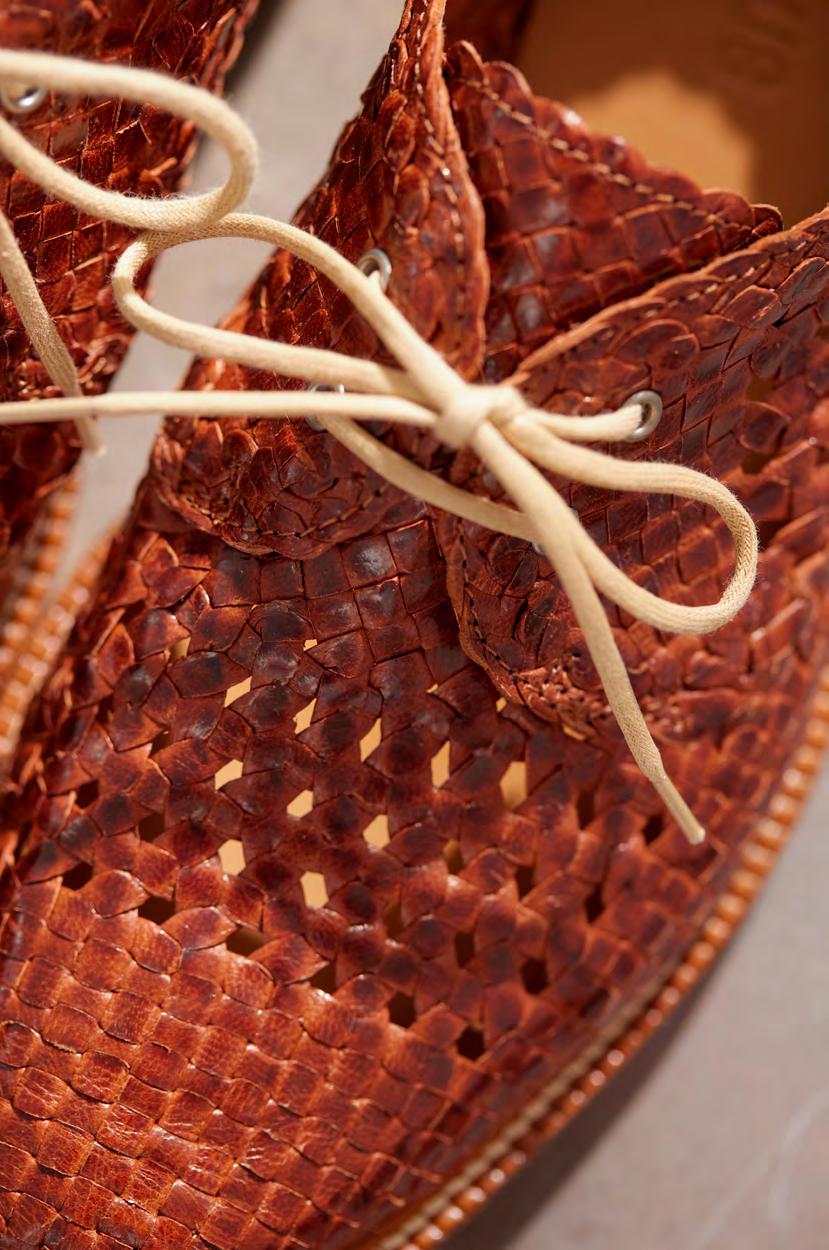
Quality materials can offset upfront emissions through longer lifetime
Lifetime product impact
Cumulative kg CO2e over 20 y period (Comparing a user of leather vs. synthetic shoes)
Material strategy
Key-initiatives
1. Innovating towards responsible leather linings
As part of our efforts to minimize our environmental impact, we have decided to eliminate the use of chrome-tanned leather in all our shoe linings. This initiative extends our earlier policy of removing chrome-tanned linings from children’s footwear due to allergenic concerns. In-depth evaluations of our manufacturing processes highlighted the significant potential for reducing emissions in outfacing chrome tanned leather from linings, without compromising quality or comfort.
The transition away from non-chrome-tanned leather for linings in all our footwear lines will reduce our environmental footprint and ensure safer products for our customers.
2. Traceable leather: collaboration with Spoor
In 2023, we started a collaboration with the last Danish leather tannery, Scan-Hide, leveraging their SPOOR technology.
The goal of this collaboration is to implement fully traceable hides as the base for the leather used in our shoes. For the year 2023, we managed to transform one of our most popular series of leathers, so the base hides used for these leathers are fully traceable with the SPOOR technology. This means that 7,4% of all ANGULUS shoes sold in 2023 were made from traceable leather originating from Denmark, Sweden, Germany and The Netherlands.
So, why is this important:
Only by having full traceability is it possible to document the journey from farm to finished leather. And once using SPOOR leather, it is possible to tell
the unique story of each single piece of leather used for ANGULUS’ shoes. Spoor hides are sourced directly from Nordic abattoirs and no middlemen are in between. The leather is pre-tanned at Scan-Hide and finish-tanned at our Portuguese partner Topfinish Lda. in Portugal. The traceability ensures that it is possible to keep track of the raw material throughout the processing of the leather. Traceability is not in itself sustainable. However, sustainability without traceability is very challenging to document. Because only through traceability, we are able to connect documentation to all the steps in creating high quality leather and shoes.
For customers buying a pair of ANGULUS shoes made in SPOOR leather – they will have the guarantee that the shoes are made of Northern European, premium, traceable rawmaterial, pre-tanned in Denmark (LWG gold certified tannery) and finish-tanned in Portugal.
4. FSC™-Certified Natural Rubber
In our ongoing efforts to promote environmental sustainability and ethical sourcing, we have committed to exclusively using FSC™-certified natural rubber for all our crepe soles. The Forest Stewardship Council (FSC™) certification ensures that the rubber is harvested in a manner that is environmentally responsible, socially beneficial and economically viable. Natural rubber, as a renewable resource, offers considerable environmental advantages over synthetic or oil-based alternatives, including lower carbon emissions and reduced reliance on fossil fuels. By choosing FSC™-certified sources, we not only support sustainable agriculture and forest management but also contribute to protecting biodiversity and the rights of workers and local communities in our value chain.
Material strategy
Key-initiatives
5. Working with tanneries to improve methods and transparency Working with certified tanneries is an important tool for us to secure transparency and the best possible tanning procedures. 35 % of the leather we used in 2023 came from certified tanneries - most commonly silver or bronze status certification by the Leather Working Group, meaning that they have high standards on a broad range of criteria covering energy consumption, water usage, air-emmissions, chemical management and health & safety preparedness.
We will continue to use certification as one of the parameters that we evaluate our suppliers through. However, we don’t believe that strictly excluding non-certified tanneries from our supplychain is the right approach at the moment, because this would mean excluding some of the local small businesses that rely on us for their business. We believe in impacting our supplychain by collaboration, dialogue and involvement.
Circularity
The circular economy is a system where materials never become waste and nature is regenerated. We aspire to contribute to the movement towards more circular shoe production by creating high-quality, long-lasting, repairable shoes.
We base our circularity efforts on the ‘REUSE, REPAIR & RECYCLE’-principles, defined by the Ellen MacArthur Foundation and supported by existing and upcoming EU-regulation. This applies to our entire value-chain, where we aim to create as little waste as possible, to extend the lifetime of our products through design, material and construction choices and by actively supporting a care and repair culture and praxis among our customers. We will and can incorporate more recycled materials in our production as soon as they live up to our quality and durability standards.
Reuse – should used shoes be passed on?
In our opinion; some should, some should not.
From a perspective of circularity, reuse is always the preferred option. Passing on products that you are done with and that are still good to use, either by selling or giving, holds great potential for extending the lifetime of products. However, when it comes to shoes, there is a tradeoff between extending the lifetime of products and potential health-related issues from wearing pre-used shoes.
Shoes are shaped after the feet that wear them. In particular if they are made from natural materials. Walking in shoes that have been shaped after someone else is not good for your feet. Moreso, it can also damage knees, hips and back if you wear shoes that have been worn by another person with a different use pattern. This is especially important with children, whose feet and bodies are soft and growing, and therefore in high risk of the health-related consequences of wearing shoes that prohibit natural development and movement of their feet. Also, children will not always be able to express that a shoe doesn’t feel right4.
There are no official recommendations on this issue at the moment. At ANGULUS we take the stand that children’s shoes should only be passed on to someone else if they haven’t been shaped by the former user. In effect this means that children’s shoes that have been used on a daily basis should not be passed on. And we always recommend that you let your child try on the shoe before buying.
When it comes to adults, we recommend reuse, but encourage you to examine and try the shoe first and make sure that it fits in both size and shape and that soles (both inner and outer) aren’t crooked.
We acknowledge the inherent dilemma that we face between extended lifetime of our products and costumer safety, and we are committed to exploring how reuse of children’s shoes can be done in a safe way. We don’t have the answers yet, but in the coming years we will invest in gaining more knowledge and experience in this field.
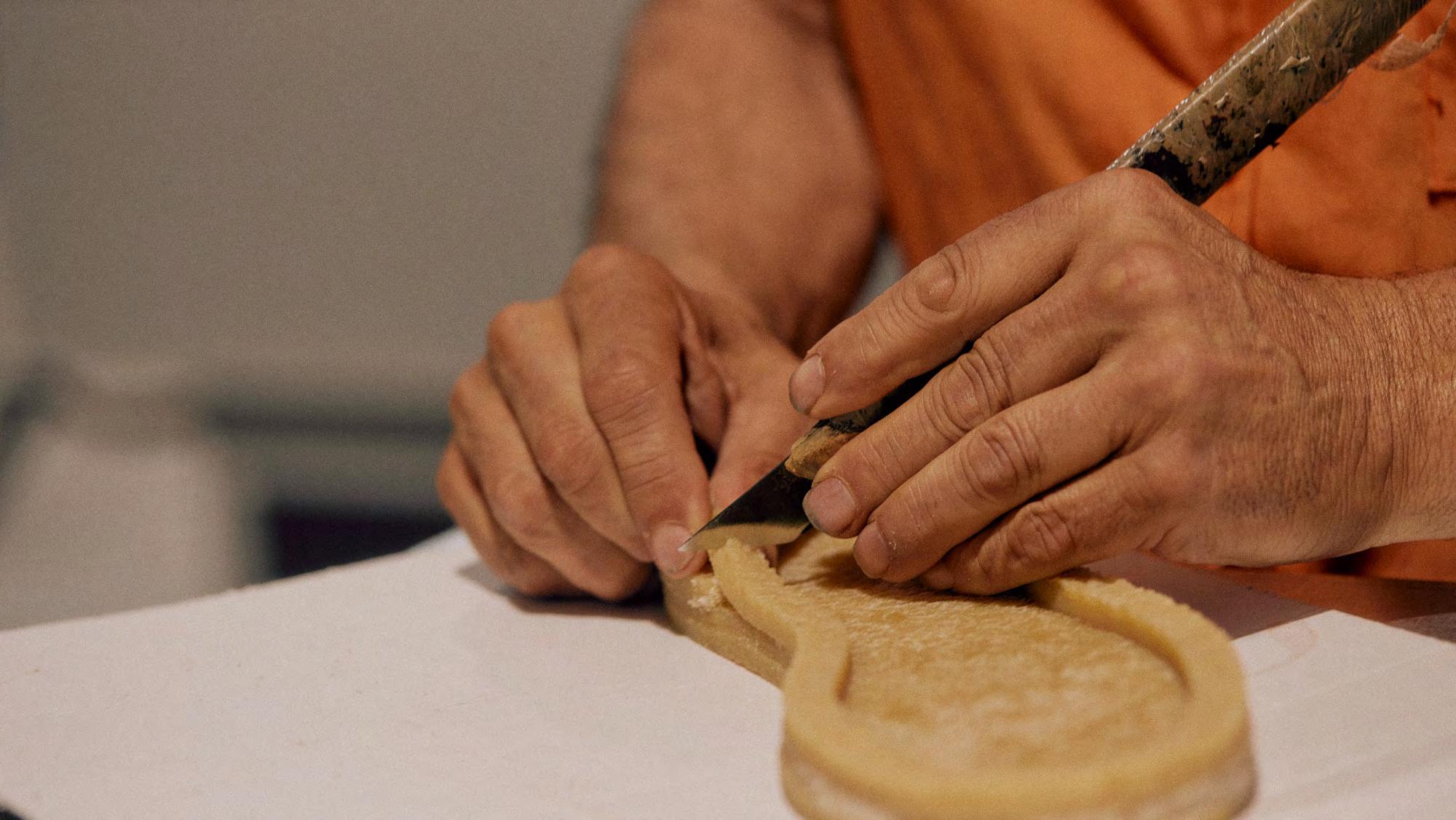
We aspire to contribute to the movement towards more circular shoe production by creating high-quality, long-lasting repairable shoes.
Circularity
Key-initiatives
1. Design for robustness
We have a 120-year long history of making quality products that last. This is what our customers expect from us and the core of our product DNA. We have internal procedures that ensures this: our designers work closely together will technical product developers, we continuously incorporate costumer-feedback in design– and production processes and we have a high capability for quality assurance through our proximity to both production and material suppliers.
This has always made sense for us from a business perspective. And it continues to be top of mind in our efforts to ensure maximum lifetime of our products.
2. Promote care and repair culture and infrastructure
To ensure maximum lifetime of our products we depend on our customers to take good care of their shoes and to have them repaired when needed. We guide our customers on shoe care, supply protective cream/spray and facilitate repair of shoes with our vetted repair partners.
We want to further enhance our efforts in this field to make it easier and more accessible to take good care of your shoes. We will strengthen our collaboration with shoemakers, initially in Denmark, and supply them with materials and knowhow on repair of ANGULUS products. And we will intensify our work on nudging and helping our customers to care for their shoes through our direct B2C communication and dialogue with wholesalers.
3. Repurposing rubber waste
In 2023, we embraced a practical approach to waste reduction by implementing a circular economy strategy with our natural rubber waste. Throughout the year, we redirected approximately 7,300 kilograms of excess material from our sole production. The material was sold to our glue producer, who repurposed it into a key component of the adhesive products used in our shoes.
GREEN OPERATIONS
In September 2023, we made a significant investment in renewable energy at our production facility, by installing a comprehensive array of solar panels. These panels are projected to generate more than 40% of the electricity required for our manufacturing processes. As of March 2024, we are on track with this projection, effectively enhancing our energy efficiency and significantly reducing our reliance on non-renewable energy. We are excited to evaluate the effects that this investment will have on our future emissions.
GREENING TRANSPORT
In 2023, we introduced a company policy requiring that all newly purchased company cars must be electric or hybrid vehicles. As part of our ongoing efforts to improve, we recognize the need to eventually transition away from hybrid vehicles to a fully electric fleet. Currently, our company operates 4 electric cars, 3 hybrids, and 3 petrol/diesel cars, with plans to phase out all non-electric vehicles.
Social Responsibility
Our social responsibility covers all parts of ANGULUS’ value chain.
We ensure a safe, attractive and fair working environment for our colleagues in both Denmark and Portugal. We prioritize upskilling and health insurance for all our employees. And we play a positive part in our local community in Portugal by collaborating with the local school of shoecraft and the local employment agency.
Costumer safety is in our DNA at ANGULUS. Shoes are not just a question of fashion and function. It’s ultimately a question of health and giving people the best conditions to move around freely. Especially when it comes to children, we have a big responsibility to make footwear that gives small feet the best conditions to grow and move freely and supported.
At ANGULUS we take this responsibility very seriously – and we aspire to be a credible partner for our customers in making the right footwear choices.
We make shoes in different fits – because feet are different. We use natural materials that create the best conditions for free movement and a healthy foot climate. And we advise our customers on how to make the right shoe choices.
We want to enhance these efforts and increase transparency about our products and support our customers in taking good care of their shoes, so they last as long as possible.
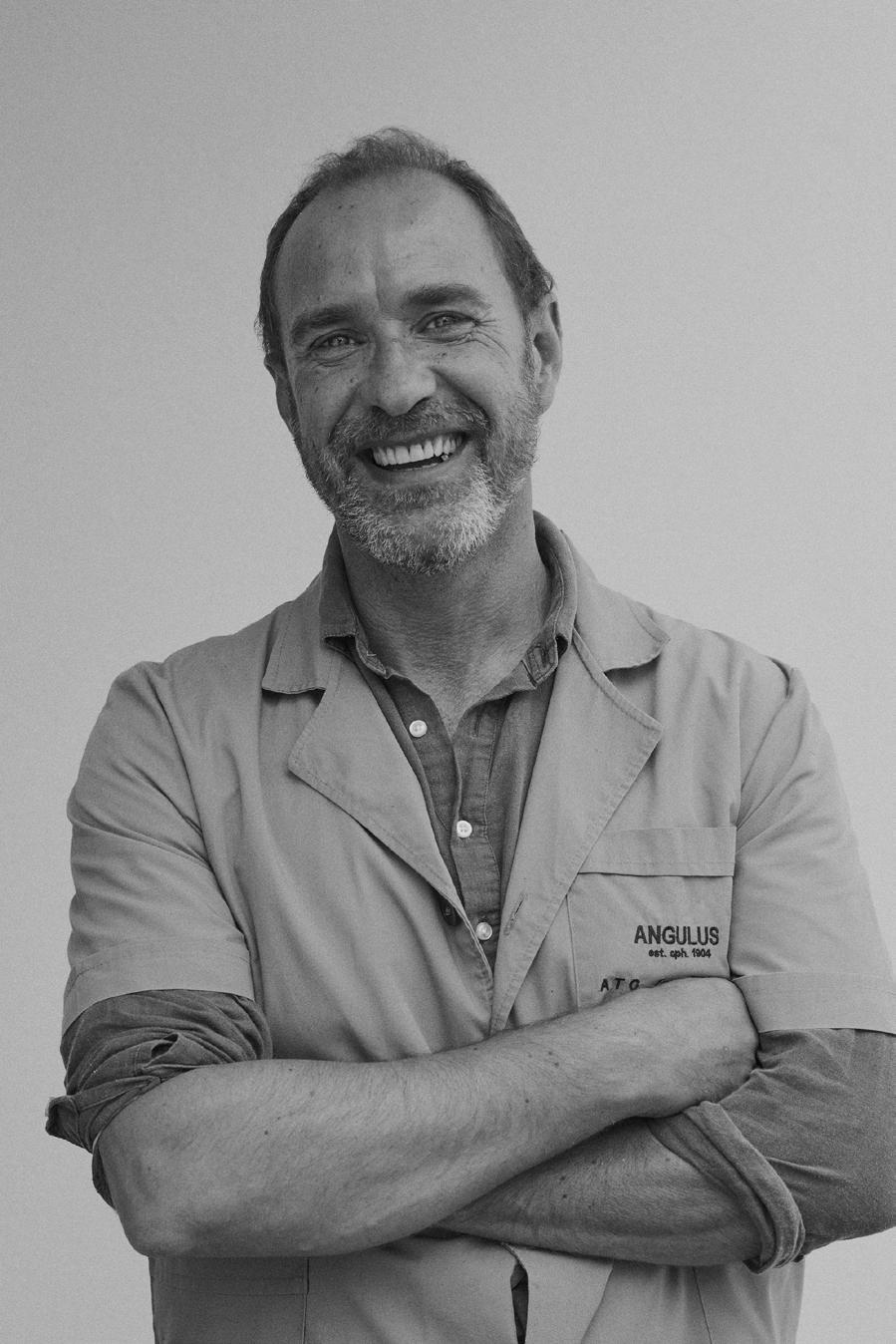
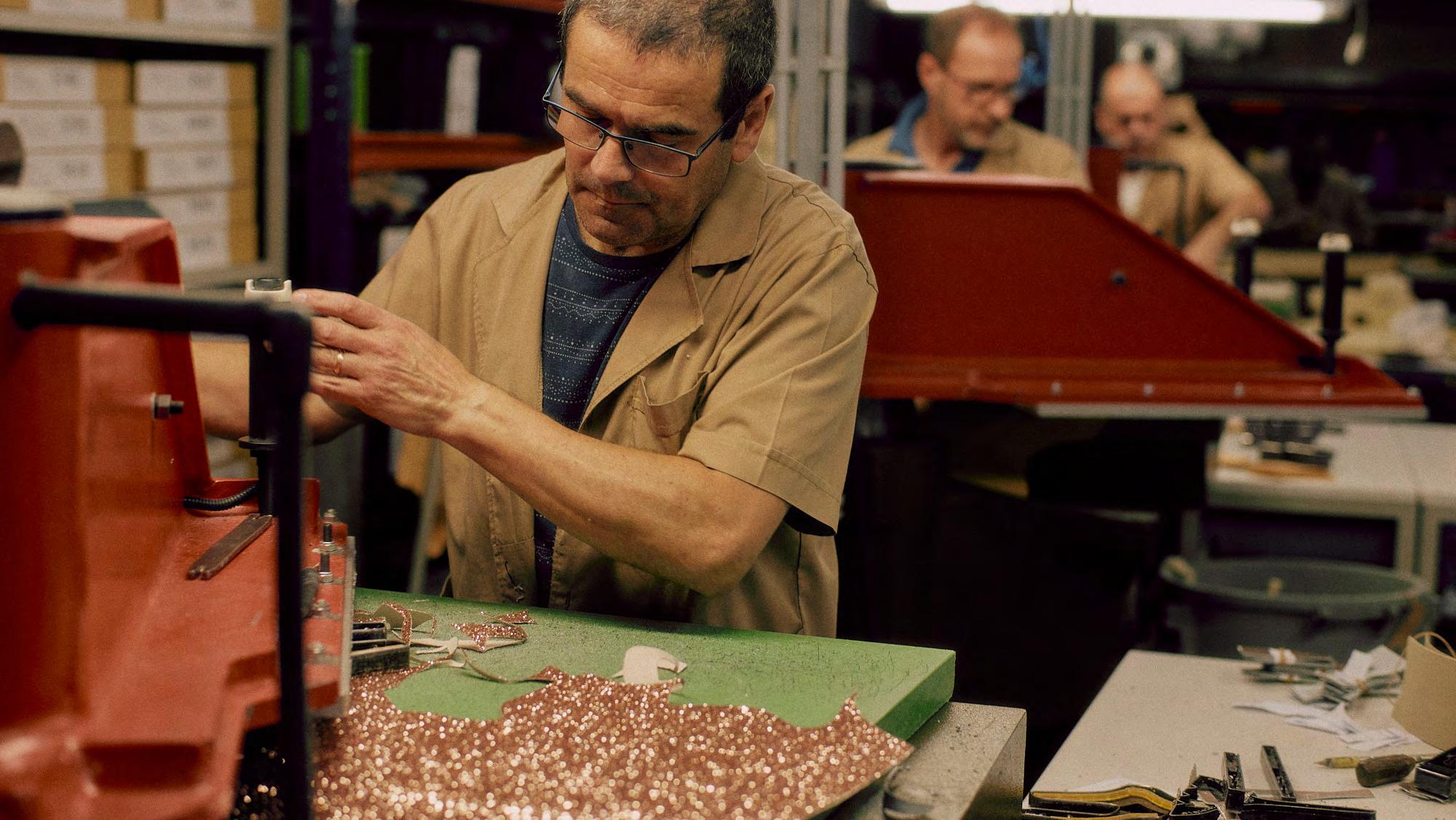
We ensure a safe, attractive and fair working environment for our colleagues in both Denmark and Portugal
Social Responsibility
Key-initiatives
1. Health insurance for all factory workers
In 2023, we invested in full health insurance for all our employees at our production facility covering a wide range of medical, surgical, and hospital expenses. The benefits include access to preventative care and timely medical services, giving access to healthcare that otherwise would be off limits for many employees. We see this initiative as a testament to the respect and integrity we try to implement across all our activity, something that is so central in our efforts to ensure a dedicated and capable workforce for the future.
2.
Training and up-skilling
We recognize the value of having a skilled workforce with possibilities for our employees to learn and grow as part of their job. We believe in continual learning and development opportunities for our team.
By investing in the growth of our employees, we aim to keep our operations innovative and competitive. An illustration of this initiative is our employee Fábio Costa, who is part of the product development team in our factory. Over the past year, Fabio has expanded his expertise through specialized training in shoe modelling at the local shoecraft school. This development of his skills allows him to collaborate effectively with our Danish product designers, turning conceptual designs into detailed 3D models ready for production at scale. Fabio spent many dedicated hours in training and made big steps forward in his capabilities and we are proud and happy to see him work and learn for many years to come.
3. Local ownership in Portugal
We believe in the importance of local leadership to effectively align our operations with community needs. In 2023, in recognition of their substantial contributions and deep understanding of the local environment, we extended a 5% ownership stake to each of the two Portuguese directors at our factory. This decision reflects a practical approach to integrating local expertise into our decision-making processes, ensuring that our strategies are informed by those most familiar with the context in which we operate.
4. Product material labeling
Understanding the composition of the products you choose is essential. That’s why we are committed to improving transparency by labelling all our products with detailed material information. This initiative, starting in 2024, will ensure that every shoe we sell clearly lists the materials used in its manufacture. We believe that informed consumers make better decisions, and our straightforward labeling will help customers to know exactly what they are buying, enhancing trust and satisfaction with every purchase.

Fabio Costa is part of our product development team in Portugal
Good Governance
ANGULUS has been in the shoe making business for 120 years and has been a family-owned business for over five generations – the past three generations in the Dawe Family.
Being a family-owned business comes with both privilege and responsibility. A privilege to invest in the things that are important to us. And a responsibility to take care of the heritage that we have been entrusted with. Long term, cross-generational thinking is in our DNA. In our products and in the way we do business.
We are committed to fostering a culture of responsibility, transparency and ethical practices throughout the organization. This strategic direction not only aligns with contemporary consumer values but also stems from a steadfast belief that taking care of people and planet is a moral obligation and fundamental for the business’ license to operate.
We believe that externally validated company certification is the best way to ensure transparency and clear communication about the way we do business. Our goal is to become B-corp certified, and in the coming year we will start this process.
The
history of ANGULUS
The history of ANGULUS starts in 1904 with a small cobblers shop on Nørrebrogade in Copenhagen owned by Johannes Madsen. His son, Willy Madsen, was a schoolteacher and concerned with the pointy children’s shoes at the time, that hindered movement and the natural development of growing feet. In 1928 Willy Madsen turned the Danish footwear industry upside down with his new foot-formed shoes developed in collaboration with doctors and physiotherapists. The new type of shoes quickly gained popularity and soon the ANGULUS factory in Nørrebro became the largest shoe factory in Denmark.
From 1949 and onwards ANGULUS has been owned and led by the Dawe Family. Starting with Roland Dawe who was initially employed as a leather buyer at the ANGULUS Factory, who lead the company until the early 1990, where his son Christian Dawe took over. After a successful generational change in the leadership, ANGULUS is currently managed by Clara Dawe (Chairwoman) and Sebastian Dawe (CEO).
Good Governance
Key-initiatives
1. Transparency and certification
Increasing transparency throughout our value chain has been a key priority in 2023 and will be in the coming years. It is an ongoing process to have the necessary knowledge and data about our operations and to communicate this knowledge in a meaningful and clear way to our customers and stakeholders, so they can make informed decisions.
Increasing our use of certified materials and suppliers is a central tool in this endeavor, as well as strengthening our communication to customers about our products, production processes and the company and the people behind.
We believe that externally validated company certification is the best way to ensure transparency and clear communication about the way we do business. Our goal is to become B-corp certified, and in the coming year we will start this process.
2. Improve our yearly ESG reporting
We are committed to report on our progress and shortcomings in a yearly ESG report. The one you are reading now is our first go at it, and there will definitely be room for improvement in the coming years. There are improvements to be made in our GHG baseline, where we will work to get more accurate data, eg. in the data we have from our suppliers on their specific tanning methods. Based on insights from this first GHG-baseline we will also continue our focus on identifying ways to reduce emissions and set meaningful medium- and long-term reduction targets.
Take care
Thank you for reading our 2023 Sustainability Report!
We hope that you found the report informative, useful –and maybe even inspiring?
We are committed to continuing our sustainability efforts and look forward to collaborating with suppliers, customers and other stakeholders on our mission to make more people buy fewer, but better shoes.
If you have any questions, please feel free to reach out to us:
info@angulus.dk
Love what you buy –take care of what you have.