

On the Cover


4 tfe October 2023 Featured Content Departments 12 100 Years of Hasbro Hasbro - Tim Kilpin 22 All in the Family People of Play - Mary Couzin 24 Brand Profile TOMY 26 Women Innovators of Play Tanya ompson 28 The Art of Humble Bragging Women in Toys - Natasha Tous 30 Q&A with PLAY USA Stephanie Gaspari 32 Toy Fair in Autumn Air Nick Truss 40 New Product Preview 6Observations and Opinions 8 What’s Trending 10 Industry News 14 Industry Forum Toy Association - Ed Desmond 16 Industry Forum Design Edge - Matt Nuccio 18 Industry Forum ASTRA - Sue War eld 20 Industry Forum TTPM - Jack Placidi 82 You’re Hired! Vol. 18 · No. 3
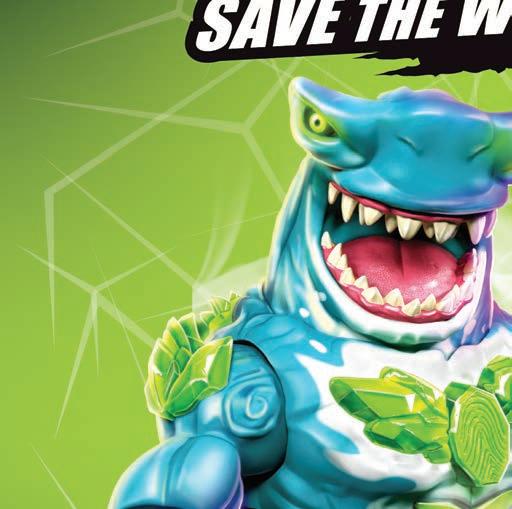
Happy 100th Anniversary, Hasbro! See their new products on pg. 52.
this Page 1. Purple Furby (2023) by Hasbro 2. Bluey’s Keytar by VTech 3. Rainbow High Color & Create Fashion Dolls by MGA 1 2 3 Contents · October 2023
On


Observations & Opinions Anticipation
BY BOB GLASER
We nally made it to a fullblown, live in-person, Toy Fair put on by the Toy Association (TA). Many in the industry have been waiting for this since February of 2020, the last time the industry gathered for a TA Toy Fair.
October 2023 · Volume 18, No. 3
Publisher Bob Glaser Bob@TTPM.com
Vice President, Advertising & Sales

Donna Moore
Donna@TTPM.com
Controller
BOB GLASER, PUBLISHER
I, for one, am very excited about this particular Toy Fair for a number of reasons. ere has been so much discussion, frustration, rumor sharing, and anxiety about this show, especially since the LA previews have been growing in terms of manufacturers showing product, and retail buyers visiting many of said manufacturers. Having the LA previews several weeks before Toy Fair, and lasting for several weeks therea er, will surely have an impact on manufacturer and buyer attendance in New York. Who will exhibit, who will attend, where/when will next year happen? Hopefully by the time you are reading this, the last question will be answered. It will be very interesting to see how the rst two questions are answered.
Toy Fair, for me, has always had a Christmas morning-like feel to it, thanks to the excitement and anticipation of the build up to the event. e weeks, and in this case, the years of waiting are nally over. We all now have the opportunity to “open” all the new products, pick them up, touch them, feel them and play with them in person, instead of looking at a slide show on zoom or watching someone else manipulate them on a screen. Unlike Christmas morning, the fun and excitement will last for several days. Like Christmas, where the anticipation and excitement builds and builds, just like the children who receive the gi s, we’ll be able to play with these new toys for the coming months. Side note, be sure to send in your new products to TTPM for a FREE review!
No matter where or when the toy industry meets en masse, just like Santa Claus does every Christmas, manufacturers and retailers will continue to bring new and exciting toys for the next generation of children to play and create lifelong memories with.
Have a great show!
Eileen Palermo
Eileen@TTPM.com
Editor in Chief Jim Silver Jim@TTPM.com

Editorial Manager Nick Truss Nick@TTPM.com
Contributors
Mary Couzin, Ed Desmond, Stephanie Gaspari, Tim Kilpin, Matt Nuccio, Jack Placidi, Tanya ompson, Natasha Tous, Sue War eld
Interested in a subscription? Contact Bob Glaser at Bob@TTPM.com.
aNb Media, Inc.
999 South Oyster Bay Road, Suite 105A
Bethpage, NY, 11714
Phone: (646) 763-8710 · Fax: (646) 763-8727
Toys & Family Entertainment (TFE) is published three times per year by aNb Media. Copyright 2023 aNb Media. All rights reserved. No part of this publication may be reproduced or transmitted in any form, or by any means, electronic or mechanical, including photography, recording, or any information storage and retrieval system, without written permission from the publisher. Printed in the U.S.A., TFE, TFE Licensing, and Specialty Emporium are registered trademarks of aNb Media. Opinions and comments expressed in this publication by edtiors, contributing writers, or solicited or unsolicited documents are not necessarily those of management

6 tfe October 2023
tfe
aNbMedia.com




















What’s Trending?
These trending lists are based on aNb Media’s consumer website, TTPM.com, and related YouTube channels. TTPM’s Top Trending Lists are generated by the number of views for that item across toy, baby, and pet categories. Here are the lists of top trenders as of September 15th, 2023.
Top 10 Trending Toys
Star Wars Ahsoka Chatter Back Chopper

Hasbro
DC Comics Batman Adventures 12″
Action Figure
Spin Master
Lite-Brite Touch and Lite-Brite
Super Bright HD Disney 100 Edition
Basic Fun!
Squishmallows Damien the Dino and Pikachu
Jazwares
Furby (2023)
Hasbro
Disney Doorables Academy Crew Figure Pack & Multi Peek Series 10 Just Play
NERF Elite 2.0 Double Punch
Hasbro
Monopoly: Barbie Edition
Hasbro
Bum Bumz Breakfast Bumz
Jazwares
Style Bae Dolls Just Play
Top 5 Trending Baby
MyFit ClearTex Harness & Booster Car Seat

Chicco
Willow Brook Travel System
Britax
Sweetli Calm Bassinet
TruBliss
Baby GUND My Little Food Truck
Spin Master
Invidyo Baby Monitor
Invidyo
Top 5 Trending Pet
Benebone Tripe Bone
Benebone
Playology Dog Toys
Playology
Foobler Dog Toy

L'Chic
Scratch N’ Spin Cat Toy
SmartyKat
Slow Treater XL
AquaPaw
8 tfe October 2023




TTPM Kicks off the Holiday Season with the 2023 Most Wanted List


TTPM, the leading video product reviewer for toys, baby gear & pet gear, unveiled their Most Wanted List of the hottest toys for the 2023 holiday season at their annual TTPM 2023 Holiday Showcase event, held in New York City. “We put this list together as we do every year, testing and playing with hundreds of toys to determine which ones deserve a spot on our Most Wanted list,” said Jim Silver, CEO of TTPM. “ is year’s list highlights toys based on entertainment properties and those that encourage both learning and active play and role play and imaginative play. We’ve also expanded our list, identifying ten toys that are specialty trailblazers that consumers may not be aware of. Our goal is to help parents nd the right toy for their child and this year’s list is a perfect place to start.” For more information and to view details on the 2023 Holiday Most Wanted List, visit TTPM.com.

Barbie Announces the 2023 Career of the Year Doll - Women in Sports
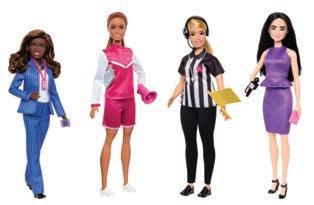
Since 1959, the Barbie brand’s purpose has been to inspire the limitless potential in every girl and with 250+ careers and counting. From princess to president, astronaut to zoologist, Barbie reminds girls they can be anything – and that message has never been more relevant than it is today as it announces its 2023 Career of the Year Collection: Women in Sports, highlighting four careers in the sports industry including a General Manager, Coach, Referee and Sports Reporter. Timed to the start of the NFL season – a sport traditionally thought of as male-dominated – the Women in Sports set was designed to underscore all the possibilities sports unlock for the next generation of women. is collection will help pave the way for a future where women’s voices and talent are acknowledged and commemorated in the realm of sports and beyond.
The LEGO Group Pledges to Achieve Net-zero Emissions by 2050

e LEGO Group has pledged to achieve net-zero greenhouse gas emissions by 2050 as part of its continued e orts to reduce environmental impact. Niels B Christiansen, CEO, the LEGO Group said: “Our immediate priority is to meet our 2032 carbon reduction targets and we’re making progress across a range of initiatives. is new, long-term goal will ensure that the decisions we make today will reduce our carbon footprint over the coming decades. It will also encourage future generations of LEGO employees, partners and suppliers to continue working with a sense of urgency to reduce the environmental impact of our business. We know that children are looking to us to do what’s right. Caring for the environment is one of their top concerns and we receive hundreds of letters a year with great ideas from kids on how we can make a di erence.”
Licensing Street to Represent MOLANG in the United States
Molang – the Ambassador of Kindness – has been picked up in the US by Licensing Street, topping o a busy year of live events, new capsule collections, record plush sales, and a new gig as a YouTube in uencer! is June Molang made history by being one of the rst animated characters from an animated family series to successfully break into the world of in uencing with its own YouTube channel. Brand new weekly content has Molang and sidekick Piu Piu interacting directly with fans in video concepts normally produced with people –gaming, ASMR, reactions - propelling the brand into a whole new dimension of social media. Especially exciting are the cross-promotion projects the iconic character can take on with partners and brands that share Molang’s core message of kindness.

10 tfe October 2023
Women in Toys, Licensing & Entertainment Mourns the Loss of Beloved Past President Joan Packard Luks


It is with heavy hearts that Women in Toys, Licensing & Entertainment announces the passing of their beloved past president, Joan Packard Luks. Joan was a revered licensing executive, mentor to many, and an industry luminary. Her radiant spirit and warm demeanor made everyone who knew her feel like family. Joan passed away on Tuesday, September 5, 2023, leaving behind a profound legacy in the world of toys and licensing. roughout her impressive career, Joan dedicated herself to the world of licensing, becoming a longstanding member of Licensing International. In the 1990s, she made an indelible mark as the Director of Licensing at GUND, a plush company. During her tenure at GUND, Joan forged groundbreaking partnerships with industry giants such as Disney, Nickelodeon, Sesame Workshop, Warner Bros., and many others. Her strategic vision and commitment to excellence helped elevate GUND into a signi cant player in the industry, with a remarkable portfolio that included iconic properties like Winnie the Pooh, Sesame Street, Dragon Tales, Dora the Explorer, Beatrix Potter, Barney, Curious George, Pat the Bunny, Scooby Doo, Harry Potter, Olivia, and countless others. “Joan’s vibrancy, positivity, and warmth brightened the lives of everyone fortunate enough to know her,” said WiT President, Janice Ross. “Her contributions to our industry were matched only by her genuine kindness and unwavering dedication to upli ing others. Joan will be deeply missed but will remain forever in our hearts as a beacon of inspiration and a beloved friend.”
FEATURED CONTENT
100 Years of Hasbro!
Tim Kilpin, President of Toys, Licensing & Entertainment at Hasbro, ta es us on a ourne t rou t e com an s rst 1 ears
Interviewee: Tim Kilpin |
Interviewer: Nick Truss
Where was the company founded, and by whom?
Hasbro has been creating memories for generations of children and their families through the wonder of storytelling and imaginative play since it was founded in 1923 by the Hassenfeld brothers, Henry and Hillel. e business continued to be run by another set of brothers, Stephen and Alan, along with their father, Merrillvisionaries who believed in doing good things and making the world a better place. From Mr. Potato Head and My Little Pony, to Monopoly and Play-Doh, Hasbro and its iconic brands have brought joy to countless fans, families, and children around the world.
Was Hasbro always in the business of toys? What were some of their rst products?
Hasbro had humble beginnings, having rst started by selling textile remnants, then later expanding to manufacture pencil boxes and school supplies. In 1928, Hasbro’s product o erings broadened to include paint sets and wax crayons. It wasn’t until the 1940s when Hasbro launched its rst toys, nurse and doctor kits. en in 1952, Mr. Potato Head was created, and from there, the iconic character revolutionized the toy industry for decades to come. Shortly a er Mr. Potato Head’s launch, Hasbro introduced the rst action gure nearly 60 years ago with G.I. Joe, which became the “American icon.”
Several of Hasbro’s iconic brands have not only persisted, but thrived in media and pop culture, and are celebrating milestone anniversaries next year, including Candy Land and Clue’s 75th, NERF’s 55th, Connect Four and Dungeons & Dragons’ 50th, Guess Who and Trivial Pursuit’s 45th, Transformers’ 40th, Peppa Pig’s 20th and others! e company is also home to My Little Pony, which is currently celebrating 40 years of friendship this year, and touting o erings for fans and families across nearly all consumer touchpoints including toys & games, entertainment, location based entertainment (LBE), fashion, home goods, digital gaming, books and so much more.
When did Hasbro begin looking to partner with and license other toy talent?
In 1954, Hasbro hit it big by signing a major licensing agreement with Disney to develop toys based on the company’s beloved characters and storylines. In 1977, Hasbro was tasked with developing toys for Star Wars, in line with the franchise’s rst movie. en, in 2006, the company was brought on by Marvel to create products based on the captivating superhero universe.

Today, Hasbro licenses e Walt Disney Company’s most treasured franchises: Star Wars, Marvel and Indiana Jones. From action gures to roleplay toys, collectibles and more, these action brands leap o the screen and into the hands of consumers to further brand connection through the magic of Hasbro and its special gi developing expansive product lines.
When did Stephen and Alan really get involved with the company?
Together, Stephen and Alan Hassenfeld stepped up to take the reins of the family business in the 1970s and helped transform Hasbro into the largest toy manufacturer in the world. During this time, with Stephen serving as chief executive o cer and Alan as president, the siblings turned Hasbro into a billiondollar company and the global powerhouse that it is today.
What were some of the most important and formative milestones for Hasbro over this past century?
In addition to introducing some of the world’s most iconic brands with Transformers, My Little Pony, G.I. Joe, Monopoly, NERF and many more, Hasbro’s strategic acquisitions and additions of IP like Magic: the Gathering, Dungeons & Dragons and Peppa Pig has bolstered the company’s portfolio. Today, many of these franchises are bucketed under Hasbro’s “Fewer, Bigger” strategy of investing in successful properties.
12 tfe October 2023
Beyond Hasbro’s bread and butter in the creation of innovative toys and games, the company’s licensing business signi cantly furthers these brands’ reach through wide-ranging categories across LBE, publishing, promotions, and so much more. With theme parks, live shows, comic books, podcasts, apparel, accessories and boundless other formats, Hasbro has the capabilities of reaching fans of all ages, all around the globe, in thrilling news ways.
With several anniversaries next year, Hasbro is going all out to honor the history and debut newness for its priority brands.


Tell us about some of Hasbro’s proudest moments.
With 100 years of history, there’s a lot to be proud of. One feat that has been especially gratifying has been to see the global success and demand for our brands in entertainment, namely Transformers. e franchise has transcended initial expectations as a toy brand to become the Hollywood juggernaut it is recognized as today, igniting passionate fan bases of all ages across the globe through lms, TV series and streaming content.
e success of Transformers in entertainment and our ability to reimagine storylines and attract allnew audiences have also allowed the brand to bolt o the screen and into endless other formats, like LBE, publishing, fashion, digital gaming and so much more. From the live action Michael Bay-helmed lms to the rst Bumblebee-led movie and this year’s Transformers: Rise of the Beasts spectacle, the saga has a strong content pipeline to continue delivering action and entertainment to fans for the next 40 years and beyond. Looking ahead to 2024, we’ll be dropping a second season of the beloved kids’ series Transformers: Earthspark and releasing the franchise’s origin story and rst-ever CG-animated lm, Transformers One
Beyond the “more than meets the eye” content we’ve delivered all these years, we’ve stayed true to our roots in bringing fans the best play experiences with innovative toy lines, such as our Transformers: Rise of the Beasts line with the Command & Convert Animatronic Optimus Primal,
Beast-Mode Bumblebee and 2-in-1 Mask Assortment, along with the Transformers: Earthspark collection with the 1-Step Flip Changer and Tacticon Action Figures, plus so much more. Additionally, we continue to collaborate with industry leaders to expand the Transformers product portfolio, such as with Robosen Robotics which o ers state-of-the-art robots and Segway-Ninebot through advanced short-distance vehicles.
Bringing Transformers to life through immersive inperson experiences has also been a means of connecting with consumers on a more engaging level. Coming to China later this year is Shanghai’s co-branded Transformers & My Little Pony Playlodge, which features branded hotel rooms, play activities, dining and more. Also in the region is the recently launched Transformers: e Ark restaurant in Hong Kong, which o ers an elevated dining experience within a beautifully designed space. For fans in LATAM, the Hasbro City o ers action-packed attractions and immersive play themed to Hasbro’s iconic brands, including Transformers VR and Energon Climb experiences and Optimus Prime Tower and Transformers: Energy Surge rides.
e trajectory of Transformers heading into its 40th anniversary shows no signs of slowing down, as we aim to continue enchanting multi-generational audiences with even more entertainment, toys, in-person experiences and more so they can create memories that will last a lifetime.
What does the next 100 years look like for Hasbro?


Hasbro is home to the world’s most valuable vault of toy IPs, and it is our intent to continue bringing to life the brands and characters that our fans love in new, engaging and, most importantly, fun ways. To make good on this promise, we put our fans at the center of everything we do. With newness landing on shelves, across screens and in-person, we’re delivering the products, entertainment and experiences that matter most to our multigenerational and global fanbase.
As we continue to strengthen our o erings with all-new products, such as the NERF Pro and NERF Elite Jr. lines, and relaunches of beloved brands like Furby and Twister, we’re innovating for not only the consumer of today, but the fans of tomorrow. at’s why we’re committed to growing our current brands while developing and launching exciting new global franchises that will bring Hasbro to new heights.

Simply, our mission is to entertain and connect generations of fans through the wonder of storytelling and exhilaration of play. For the next century and beyond, we plan to do just that.

13 tfe October 2023
INDUSTRY FORUM TOY ASSOCIATION
Toy Association’s Annual Seminar Provides Crucial Updates on Toy Safety & Regulation
By Ed Desmond
Behind every beloved toy lies a complex web of safety considerations and regulatory compliance to navigate — and that’s where e Toy Association comes in to help. Our global government and regulatory a airs department works year-round to ensure playtime is fun and safe – and to educate our members on the ever-changing toy safety laws, standards, and regulations in place to protect kids and families at play.
As part of our unwavering dedication to safety education, the Association will host the annual “Legislation, Safety, & Compliance Update” during Toy Fair. e toy safety seminar will take place on Monday, October 2 from 9:30 a.m. to 12:30 p.m. in Hall 1E at the Javits Center in New York City.
is informative session has become a cornerstone event for industry professionals, o ering insights into the latest developments shaping toy safety requirements, as well as the industry’s top state, federal, and international legislative and regulatory priorities. It will also provide an overview of the Association’s e orts to prevent passage of any harmful legislation or regulation. All industry stakeholders are encouraged to attend this free seminar, speci cally quality assurance, product integrity, product safety, and regulatory a airs professionals, as well as toy inventors and designers, compliance o cers, and legal team members.
Diverse topics are on the agenda for this year’s session, encompassing a wide spectrum of industry concerns, including state chemical laws, the global supply chain, children’s online safety, and several key international updates. A preview of some key topics to be discussed are as follows:
CPSC Keynote
Alexander Hoehn-Saric, chair of the U.S. Consumer Product Safety Commission (CPSC), will take the stage as the keynote speaker at the toy safety seminar to address critical topics relevant to the toy industry. With a wealth of experience in both government
and private sectors, including positions at the Department of Commerce and consumer protection committees in Congress, Chair Hoehn-Saric’s expertise and insights will provide valuable perspective on CPSC agency priorities and the direction of the agency under his leadership. e presentation will be followed by an interactive Q&A session with the audience.
Update to ASTM F963
e Toy Association’s Joan Lawrence, senior vice president of standards & regulatory a airs, and Jos Huxley, senior vice president of technical a airs, will brief the audience on upcoming revisions to ASTM F963 – Standard Consumer Safety Speci cation for Toy Safety, the mandatory toy safety rules required by federal law. It is anticipated that the revised standard will be published by ASTM International ahead of Toy Fair (and noti ed to CPSC as required under CPSIA1), so this session will provide an important overview of the expected changes and a look ahead for toy safety.
Safety Education Program Relaunch
We’re excited to announce that we will introduce a refreshed Safety Education Program, which is free for all Toy Association members. e program is designed to provide participants with everything they need to know about staying compliant with their products, even as regulations and standards change, in an easy-toaccess online and on-demand format. More information will be announced at the toy safety seminar.
e “Legislation, Safety, & Compliance Update” is open to all Toy Fair participants and will take place Monday, October 2 from 9:30 a.m. to 12:30 p.m. in Hall 1E at the Javits Center. e seminar is sponsored by SGS North America, Bureau Veritas, Intertek, TUV Rheinland, and Unitec Laboratory Services. e presentation will be available on e Toy Association’s website in the coming days.
Ed Desmond is Executive Vice President of External A airs at the Toy Association. He can be reached at edesmond@toyassociation.org.

14 tfe October 2023

For licensing opportunities, please contact: Jennifer Coleman • cj.52363@konamicrossmedia.com konamicrossmediany.com GET IN THE GAME! ©Konami Digital Entertainment
INDUSTRY FORUM DESIGN EDGE
It’s what’s inside that counts. But when it comes to toys, the outside matters quite a bit too, says Matt Nuccio.
e i ni cance o o Packaging Design
by Matthew Nuccio
Toy packaging is the bridge between the product and the consumer. It’s the rst interaction a potential buyer has with a toy, and as the saying goes, “You never get a second chance to make a rst impression.” An e ective toy package has the power to:
1. Create Anticipation: Engaging packaging triggers a sense of curiosity and excitement, making children eager to unwrap and explore the toy.
2. Convey Brand Identity: Packaging is an extension of a brand’s personality. Consistent design elements help establish brand recognition and trust.
3. Highlight Features: Well-designed packaging showcases the toy’s features, helping consumers understand what makes it special.
4. Provide Information: Parents rely on packaging to learn about age-appropriateness, safety, and educational value.
5. Enhance Shelf Appeal: In a competitive retail environment, striking packaging can stand out and increase the likelihood of purchase.
Key Elements of Toy Packaging Design
1. Visual Appeal: Bold colors, playful typography, and vibrant graphics are essential to catch a child’s eye. A harmonious blend of visuals creates an emotional connection.
2. Imaginative Artwork: Toy packaging should transport children to a world of imagination. Illustrations and characters should resonate with the toy’s theme.
3. Clear Messaging: Both children and parents should easily understand the toy’s purpose, bene ts, and features. Concise yet compelling copy is crucial.
4. Functionality: Easy-to-open packaging is appreciated by parents. Consider elements like resealable packaging for playsets with small parts.
5. Sustainability: As environmental concerns grow, eco-friendly packaging solutions are gaining traction. Designers are exploring materials that reduce waste and the carbon footprint.
Trends in Toy Packaging Design
1. Interactive Packaging: Packaging that doubles as part of the play experience is gaining popularity. It can be transformed into a backdrop for play or serve as a storage solution.
2. Personalization: Customizable packaging allows children to put their creative touch on the box, enhancing the sense of ownership.
3. Minimalist Design: A clean and minimalist approach can stand out amidst cluttered shelves, conveying sophistication and modernity.
4. Nostalgia: Nostalgic packaging designs evoke memories for parents, encouraging them to share beloved toys with their children.
5. Augmented Reality (AR): AR-enhanced packaging brings toys to life on digital devices, o ering an immersive experience that extends beyond the physical package.
Toy packaging design is an art that combines creativity, psychology, and marketing strategy. It has the power to capture the essence of a toy and create an emotional bond with consumers. From captivating visuals to sustainable solutions, toy packaging design continues to evolve, re ecting changing consumer preferences and technological advancements. As children’s tastes and expectations shi , so too does the canvas upon which designers create magic, ensuring that the journey from shelf to playroom is an unforgettable one.
Matt Nuccio is president of Design Edge, a New York-based toy and game development company. For more information, he can be reached at matt@designedge.com

16 tfe October 2023
THE DESIGNER’S PERSPECTIVE

INDUSTRY FORUM

ASTRA e arfield Pre den
Pa Pre en and re ere no and n ll a
It has been an amazing year, and we have more to come that will lead us right into 2024 without missing a beat! Here’s a glimpse into 2023 and what’s coming in 2024 and 2025.
· We started o January 2023 with sta representing ASTRA at the Dallas, Atlanta, and Las Vegas gi shows. A major initiative of ours is to continue forward meeting our members, not only at our show, but out where they are as well. is included the Spielwarenmesse show in Nuremberg, Germany which was not only attended by our president, myself, but also by many of our retail, manufacturer, sales rep, and a liate members. e great team from Spielwarenmesse treated ASTRA members to a fantastic, German meal that allowed our members to network with one another over food and drink. We shared with each other products that caught our eye at the show, as well as discussed the most industry pressing issues. Everyone lingered long past mealtime. We will be doing this again in 2024!
· In February, we attended the NY Now show. Our newest event, ASTRA’s Toy Boat Experience, launched on February 20, 2023 for four days to the Caribbean and back. It was something entirely new to all, and while many were a bit skeptical, we not only pulled it o , those that attended were treated to something amazing. e opportunity to see the newest and best of the vendors’ products in a more relaxed environment, attend educational o erings, take time with family, and participate in social events and networking spots throughout the cruise ship were the things that everyone loved. is set the Toy Boat apart from any trade show. Will we do it again? You bet! Watch for details coming soon on Toy Boat 2025, due to set sail on March 17, 2025.
· March was ToyFest – We love and will continue to attend Toy Fest every year. Once again, it is a great gathering of our specialty toy family.
· e ASTRA Play Awards – is was the rst year of our former “Best Toys for Kids” Awards becoming the ASTRA Play Awards. Our amazing committee of retailers that works on these awards realized that kids aren’t the only ones that need to play. In addition, our stores sell products for all ages, beyond toys. us we now have the ASTRA Play Awards!
· is leads us to our biggest initiative for the next 18 months – getting as many of our members through our ASTRA Certi ed Play Expert course. is is what sets ASTRA retailers apart – being “experts” not only in the features and bene ts of individual toys, but even more critically, on the science of play and how playing (at all ages) develops parts of the brain that nothing else can. Cognitive and physical development, mental, social, emotional health are all covered in the course. Classes in 2023 have been held in the Boston area, in the Chicago area, and we have a full class in the San Francisco area coming up in October. Check out the online course on our website and watch for more in-person classes coming in 2024!

· Marketplace & Academy 2023 – Columbus, Ohio! Our signature event brought a record crowd of 1452 attendees, representing 432 retail organizations. With sales reps, a liates and inventors, our total individual attendees numbered 1452 with another 1187 exhibitor personnel. It was a fantastic showing of toy industry professionals!
· 2024 Marketplace & Academy is in St. Louis, MO, June 2-5. We’ve taken all our survey results into account as we work to make 2024 even better!
· Zoom meetings! We’ve heard how much our members like to get together and simply share ideas, brainstorm, and get to know one other. We now have monthly zoom gatherings for our members to attend and will continue this practice into 2024!
· Neighborhood Toy Store Month – 2022 was our rst year that we expanded from Neighborhood Toy Store Day to a full month. Why? So our stores could have the entire month to do events around their schedules, and not have to t everything into one day. Independent toy stores have this month to shine a light on all they have to o er – expert sta , personalized services, special events, new items that haven’t hit the mainstream big box stores and so much more!
In 2024 we will continue to listen to what our members want most. We will provide resources and support, and continue our mission to elevate, engage, and promote the success of our membership and to be the guiding star of the play industry! anks to all who bring play into our lives!
18 tfe October 2023











www.mwwholesale.biz info@mwwholesale.biz 800.296.9485 2140 West County Rd C Roseville, MN 55113 BOOTH 2517 2023 See a preview of what’s NEW for 2024! Come play GAMES with us!
Blockbuster Bonanza! Big Moves for Movie Toys!
By Jack Placidi
Since the moment the rst licensed toy was concieved, toys and movies have gone together like peanut butter and jelly. We’ve seen plenty of instances where dolls and action gures act as a marketing tool to drive sales of the movies they’re inspired by, and vice versa. Ever since the massive success that Kenner found through its line of Star Wars toys back in the ‘70s, toy companies have always been on the lookout for the next big IP from which to create toys.
e lm industry has always been one of the riskiest businesses, where success can be le to just a roll of the dice. at same risk can also be applied to creating brand-new toys in the industry. When you’re creating a toy from scratch, there’s always a possibility that it might not take o . With movie-based toys, however, you’ll usually be able to gauge the success of the product from the success of the lm through early reviews and screenings. O en, these numbers go hand in hand and can o er a safer bet for companies looking to create some hit toys.
You can’t really talk about movie-based toys without mentioning Hasbro. ey have acquired a vast amount of licenses over the years and have been making toys and action gures for fans young and old all the while. Every year brings a new round of Star Wars toys without fail, from recreations of classic Kenner gures, to interactive electronic toys and life-size collectible lightsabers. Star Wars will always be a cash cow when it comes to toys, but Hasbro tapped into other properties this year with the release of Guardians of the Galaxy Vol. 3, Indiana Jones and the Dial of Destiny, and Transformers: Rise of the Beasts. Each movie had varying degrees of success at the box o ce, with Guardians of the Galaxy Vol. 3 becoming one of the top 100 highest-grossing movies of all time as of the writing of this article (source: Box O ce Mojo) to Indiana Jones and the Dial of Destiny underperforming at the box o ce. While this created a mixed bag of sales for Hasbro, it has been a duller pro t margin in 2023 overall so far.
However, enter e Super Mario Bros. Movie and Barbie, both of which crossed the $1 billion gross pro ts worldwide…each!
Jakks Paci c is currently one of the primary license holders of the Super Mario brand, and the toy sales from e Super Mario Bros. Movie alone helped it dig out of a steep 24.3 percent Q2 sales decline and an increase in action gure sales by 41 percent according to Kidscreen.com. e tremendous success of e Super Mario Bros. Movie also helped Mattel in its Hot Wheels line of
movie-inspired cars and racetracks, but Mattel’s true crowning achievement came from the sales generated by the Barbie movie.
According to Nasdaq, Mattel garnered huge pro ts this year, and a stock value increase of 20 percent! While e Super Mario Bros. Movie license wasn’t exclusive to Mattel, they were the only toy licensors for the Barbie movie-inspired dolls. e movie’s popularity exploded in the box o ce and across toy aisles in store and online. Many Barbie dolls and playsets continue to sell out, and Ken dolls have gotten more love than ever before, with those in particular being hard to nd, combined with massive preorders happening for the release of another movie variation of Ken next year. Time will tell just how long the hype train keeps rolling for the Barbie movie line of dolls, but given this movie’s blockbuster status and potential formation of a cult following, there’s going to be plenty of other dolls along the horizon. Still waiting on a new Allan doll, Mattel!
Given the success of the Barbie movie, Mattel is moving full speed ahead and creating other lms based o its current IPs, including American Girl, Masters of the Universe, Hot Wheels, and one of the oddest picks of the bunch, Magic 8 Ball. Marvel opened the gates to creating an expansive cinematic universe, and I’m curious to see how a “Mattelverse” will do both in the quality of the movies and the toy sales gures.
With the year coming to an end soon and the holiday season approaching, 2023 can certainly be considered the “Year of the Movie Toys” given the sheer amount of licensed product we’ve seen come through our o ce, as well as the success that came from the movies they were inspired by. It will be interesting to track how the sales of these movie-based toys continue to trend as these blockbusters exit theaters and go to streaming services, and as children and kidults write their holiday wish lists. Will 2024 and beyond bring more successful toy-to-movie-based franchises? I’ll have to ask my soon-to-be on the silver screen Magic 8 Ball.
Jack Placidi is the Creative Director at aNb Media, whose expertise includes years of video content creations and promotions for various toy companies and influencers. He can be reached at jack@ttpm.com

INDUSTRY FORUM ANB MEDIA 20 tfe October 2023
is piece represents the views and opinions of the author, and not necesarilly those of aNb Media / TTPM







Q&A with the Provda Family
by Mary Couzin and Alex Provda
a major stroke that le him with aphasia. With nowhere else to turn but to family, Mr. Asher Provda, the CEO of e Pencil Grip, Inc. and Mr. Alex Provda the President of the company, moved home from the schools they were attending and started to work at the ages of 22 & 19, respectively. In those early years, Asher did much of the heavy li ing to keep the operational side of the business moving forward and growing. Alex took up the mantle as Sales Leader. Together, we found a way to make it work. At the time, like many entrepreneurial success stories, we worked out of the garage.
 Asher and Alex Provda
Can you tell us the origin story of your family business? What inspired its inception?
e origins of e Pencil Grip, Inc., is attributed to the age-old premise that necessity is the mother of all invention. e roots of what we strive to do as a company (to make products that help people solve a common problem) can be traced to our origin. Dr. Lois Provda, the mother of Asher & Alex Provda, who are the current owners of the family company, was the creator of e Pencil Grip, and worked as an Educational erapist who helped children with reading and writing di culties. In her years of practice helping hundreds of children, she identi ed a need for a new and modern version of e Pencil Grip. Millions of units sold, and over 30 years later, it looks like she hit the nail right on the head.
In doing so, she created one of the most enduring products for Activities of Daily Living, or “ADL” products known to the world. Our Father, Mr. Paul Provda along with our mom, founded the company in 1994. Together, they brought their one sole product to a booth at the NSSEA show to introduce it to the world. e rest is history, and we nd ourselves now with hundreds of products and customers around the world. e company has products that span many categories, with our largest brand expressions being e Pencil Grip, e Classic’s, & Kwik Stix amongst others.
e company changed drastically one day soon a er inception. A few months a er the founding of the company, our father su ered
Our origin and continued inspiration is directly traced to helping people achieve. Our roots are rmly planted on the basis that our products are steeped in “Universal Design Principles”. e premise we follow is “If something is designed & made properly, it will work functionally for most everyone”. is is true of most every product we have created, developed, and brought to market. We want every product that carries our name to be seen as the highest quality product in whatever category it inhabits. As our grandfather said, and our father instilled, “It takes a lifetime to build a reputation and a second to lose one”. We value our reputation and work hard to be the best company we possibly can be.
What unique bene ts do you believe a family-owned business brings to customers and employees?
We are built on principles, values, integrity, and hard work. is is best re ected in our amazing team of people. It is what gives us the ability to be unique and di erentiate ourselves in the marketplace. We have an incredible team of empowered professionals who have been with the company for many years.
We make sure everyone we work with on our team follows what we call the “TPG Basic 8” which is adapted from the work of Colonel Jimmy Blackmon, who is an amazing author, speaker, and leader.
ese 8 primary attributes we work as a team to uphold are: 1. Be on Time, 2. Be Prepared, 3. Be Engaged and Pay Attention, 4. Be Willing to Learn and be Coachable, 5. Do Your Best, 6. Help Others and be a Team Player, 7. Maintain a Good Work Ethic, and 8. Maintain a Positive Attitude. Basic 8 is a philosophy that extends through what we do as a team and bene ts everyone in our supply chain, from our suppliers and factories, to our customers, and their customers. We are a cog in the wheel, and we focus on doing things the right way.
Working with family has the potential to bring families and generations closer together. When Asher and I had to change the course of our lives to keep the company growing, it gave us a
TOY FAMILY SERIES 22 tfe October 2023
unique opportunity to forge our careers working with one another. It has not always been easy, but a major bene t is knowing the work you put in is going toward helping the people you love most. It also o ers the opportunity to build a team that re ects the core values of the family. We have built an incredible team of tremendous professionals who treat the decisions they make as if the business were their own. We are blessed to have several employees who have been with us for well over a decade. is investment in people who show personal pride in the work they do is our biggest advantage and most unique bene t.
3. How has your business evolved over generations and what changes have been most signi cant?
When we rst took over, it was out of necessity, but it has since evolved into a labor of love. e act of bringing amazing products to life, despite the hard work, headwinds, and unforced errors, has led to our growth and evolution from a company with a single item into a multi-product company. We are so lucky to to be able to invent, improve, manufacture, distribute, and market products of our own conception. We are the product of hard work and determination, and we always keep an eye on improving the process. We evolve through better understanding of what our customers ask from us. We evolve our products and packaging to stay current with our product expressions, all the while innovating and improving products that world has either never seen, or never seen done right. We love seeing a useful product and enhancing a primary feature to better address consumer needs. A notable example of this would be our Magic Stix Markers, where we heard from parents and teachers about the pain point of having a marker dry out if a cap were misplaced. at is why we developed a marker that gives you at least a week of opportunity to nd a missing cap before the marker dries out.
4. What are some challenges you have faced in running a family business and how have you overcome them?
Communication and the division of labor have always been issues we have had to overcome. is was a particularly thorny issue when we were younger, and the company was smaller. ere were too many chefs in a small kitchen. We needed to gure out how to put the right person in the right chair. We wrangled and managed our way to creating our own niches in the company, with a few areas of overlap where we worked collaboratively. Once again, all credit goes to out team who take challenges head-on in helping improve communications and the processes we use.
5. Can you share a memorable family moment or anecdote that happened within the business?
One indelible memory is when our mom threw us out of the house. We had started to spread out of the Garage, into the Den and Dining Room, and Mom wanted her house back. It was at this point, we took our rst o ce in a tiny 1100 square foot location in Santa Monica, CA. At the time, this seemed like a huge leap! Looking back, it was the start of making an actual company out of an idea. is little space gave us the opportunity to add more products. ings were much simpler back then. Trade show booths were certainly easier to set up.
6. How do you cultivate a culture of innovation and growth within your family business?
One of the main ways we foster a culture of continued innovation and growth is to understand that you never stop learning. Several members of our leadership team are members of Business Coaching and peer to peer groups like Vistage or Compel.
We have now been through several business cycles and have helped millions of people with our products. As an example, during Covid, we were able to quickly manufacture and proliferate our “Personal Space” Desk Dividers”. We looked at the educational marketplace and asked ourselves how we could use our skills to help the most people. We were the rst company shipping “Dividers for School Desks” to help with the mandated requirement to get kids back to in-person learning. We used the lessons learned through the years to do what we could to help. In this area, we knew we could come through for others.
7. What are your family business’s values and how do they in uence your strategy and operations?
We have a long-term vision that is not just focused on quarterly earnings or short-term gains. Instead, we think about the business’s health and survival for future generations. We also feel a keen sense of responsibility to our employees and their community. We work as stewards, responsible for the well-being of the company, its employees, and the surrounding community. Loyalty is a key value in our business. is refers to loyalty among family members, loyalty to employees (who o en become like extended family), and loyalty from customers who appreciate the individualized touch of a family-run rm. We pride ourselves on o ering personalized, high-quality service. We o en know our customers by name and work hard to build and support these relationships. We place a high value on honesty and trust. ey are re ected in the way we do business, our relationships with customers, suppliers, and employees, and in our commitment to quality and service.
23 tfe October 2023
Founded in Japan – 1924 | TOMY International U.S. Toy Headquarters: Oakbrook, IL


Purpose
TOMY’s mission is to make the world smile. ey o er a wide range of innovative, high-quality toys and nursery products that kids love and parents ask for by name. TOMY never takes for granted the role their products play in the lives of children and families and aims to earn parents trust and loyalty by manufacturing high quality products that deliver safety, value, and a little TOMY magic. e company culture? ey wake up asking, “What can we do to make you smile?”
TOMY International celebrates...

Play that encourages representation, inclusion, and con dence building
Inclusion and representation are front and center in their new YumiAmi collection, a sweet pairing of book and doll creates a culturally diverse world where girls learn about their friends’ unique backgrounds.

Bebé Fuerte™ brings a colorful LatinX palette and bilingual can-do play motivation to infant developmental play. Designed with global wellness icon and bestselling children’s book author, Robin Arzón, the collection inspires a love of movement.
STEM with stick-to-it-ness
· Build-A-Buddy™, which launched with a single John Deere Tractor over 6 years ago, has beenexpanded in 2023 to include ve items in the line from multiple licenses including, John Deere, Batman and Transformers. Nearly all items have received STEAM Accreditation by the Toy Association, in conjunction with Dr. Gummer’s Good Play Guide in theTechnology and Engineering categories.


Epic diecast creation
In 2023, TOMY’s Prestige Select crowd-funded projects brought a highly detailed 1/350 scale premium NCC-1701 U.S.S. Enterprise to life. Based on the 11-foot TV series NCC-1701 Star Trek Enterprise on exhibit at the Smithsonian Institute, the ship is over 32” long and weighs nearly 20 lbs. A Back to the Future Time Machine vehicle was recently funded as well, with more projects to come.

Pop culture plush
e super so , huggable plush is fantastic as kids’ room décor and a unique gi for avid fans of pop culture. Club Mocchi-Mocchi-, Suya Suya, Nuiguru and Warhammer plushies feature fan-favorite characters.

Gametime gold for families
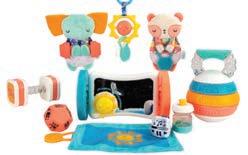
e popular Pop Up Pirate gets a fresh new look this year. Pop Up Pirate Gold brings all the surprise glitter to game time, good time family night. e popular Screwball Scramble platform goes vertical with a new addition called Screwball Scramble Level Up and soon to be released Game of Saying Huh? puts a new spin on social party games.
BRAND PROFILE 24 tfe October 2023
Great partnerships with Paramount, Universal, Nintendo, John Deere, Hasbro, Lamaze and more, combined with development of original IP, set TOMY on a course for another 100 years of smile-making!


RegistRation Is open! secure your spot today at astratoy.org! June 2-5, 2024 st. Louis, Mo Toy Fair 2023 Visit astra at booth #6547!
Women Innovators of Play

Just recently, on September 12th, Hasbro held their rst Women Innovators of Play virtual global event, which saw talks from key industry players like Kim Boyd, head of toy at Hasbro, Azhele Wade, founder of e Toy Coach, Cynthia Williams, president of Wizards of the Coast and Hasbro Gaming, game designer Elizabeth Hargrave, actor, director and entrepreneur Aisha Tyler, and many more! e night also kicked o the Women Innovators of Play Challenge, which is still open for submissions until October 12th, 2023. If you are an inventor or team leader in the toy industry who identi es as a woman, you have the opportunity to win $10,000, an all expenses paid trip to Hasbro HQ in Rhode Island, and a mentorship session with one of Hasbro’s top women leaders, so don’t miss the submission deadline! Find out all the details at:
spark.hasbro.com/womeninnovators
is event was the brainchild of Tanya ompson, Senior Director of Inventor Relations and Innovation at Hasbro Gaming. She has been at Hasbro since 2017, and in that time, she has cemented herself as an invaluable member of the community, not only within Hasbro, but in the industry at large. We sat down with Tanya ompson to ask her about how the Women Innovators of Play event came to be, and to try and get to know her, the mind behind it all. What are her favorite games? What makes an idea for a game truly stand out? nd out all of this and more in this exclusive interview!

26 tfe October 2023
FEATURED CONTENT
Featuring Tanya Thompson, Senior Director of Inventor Relations and Innovation at Hasbro Gaming
1. How long has Hasbro Women Innovators of Play been in the works? Please tell us about the journey from inception to greenlight and planning.
We’ve always been interested in supporting the community of women innovators in the toy and game industry. Last year Kim Boyd, Head of Toy at Hasbro, asked me if given the chance, what else would we do. So I pitched the Women Innovators of Play initiative and it was green lit this spring. I’m very thankful to Kim for her support. en in the spring, the real work began and we haven’t looked back. ere is a core committee of about 15 people who are making this happen from across multiple functions at Hasbro. I’m thankful that when we needed something done, people have been very supportive and generously volunteered their time to bring this to fruition.
What does this event mean to you personally, and why are events that elevate and award women in the industry so critical, even now?
As a minority woman myself, I know what it means to get support along your journey from others and how pivotal it can be. I’ll never forget when I rst arrived at Hasbro, I met one of the top woman executives and she said to me, “My door is always open if you want to connect.” So I took her up on that. It always meant a lot to me that she took valuable time out of her very busy day to support me. So now, six and a half years later, it is our hope that the Women Innovators of Play event and Challenge will help other women. It’s important now because there is a lack of women innovators in the industry, and I’m thrilled that Hasbro wants to do something about that.
You were named Inventor Relations Executive of the Year in 2022 by Mojo Nation, huge congrats! What aspects of how you do business naturally distinguished you for this honor?

ank you! I was extremely honored to be given that award. I’ll never forget when they called my name amongst my peers and how everyone cheered. It really meant a lot to me. I’m not sure why exactly Mojo distinguished me with this honor, but I can tell you that I really care about how I do business and that I am always striving to do the best I can for both Hasbro and for our inventors. It’s a ne line we walk in Inventor Relations, because we work for our company but we also hold our relationships with our inventors in the highest regard. So I’m always working at being a good advocate and to do the right and fair thing.
What are the most important factors you look for to determine when an idea is truly special?
For the Women Innovators of Play Challenge, the criteria is based on several factors: innovation, fun factor & playability, design & aesthetics, mass marketability, and manufacturability.
What are some of your all-time personal favorite board games?
I get asked this question a lot. My answer is always that it depends on who else is playing. If I’m playing against just one other person and they want a skill and action game, I love to play Foosketball. If I’m playing with a group of people who want to work together to escape and solve a mystery, I love to play one of the Clue Escape games. If I’m playing with a group of friends, I love Sun Moon Rising, which is a party game where you see if your astrological sign knows you better than your friends do. I could go on and on. I love to play games a lot!
Tell us about some new and exciting Hasbro Gaming o erings that you want to boost!
We’re really excited about Twister Air, which we just launched. In this game, you take the moves from the classic Twister mat to the screen! It’s an appenabled Twister game where, as the music plays, players move their body to match the bands on their wrists and ankles to the colored spots on the screen. Another one is Risk Strike. It’s a card game version of classic Risk, which only takes about 15 minutes to play.
27 tfe October 2023
Kim Boyd - Head of Toy, Hasbro
The Art of Humble Bragging: Self-Promotion for the Modern Manager
By Natasha Tous
In the bustling hallways of corporate, self-promotion o en takes a backseat, generally stigmatized by societal norms that equate it to arrogance. is leaves many of us hesitant to highlight our own accomplishments. However, the art of ‘humble bragging’—strategically showcasing your value while maintaining humility—is a skill that modern managers can’t a ord to overlook, especially as performance reviews loom on the horizon.
Why Self-Promotion is Necessary and How to Balance It?
Your work won’t always speak for itself. In today’s high-speed corporate environment, silence about your achievements can mean missed opportunities. Selfpromotion isn’t about ego; it’s a crucial way to communicate your value to those who need to know. Striking a balance is key: you’ll want to detail your contributions while connecting them to the larger goals of your team or organization. is way, you frame your achievements as part of collective success, maintaining both visibility and humility.
Strategies for E ective Self-Promotion
· e E.A.R Method: Examples, Achievements, Results: Don’t just state your achievements—show them. Be prepared with speci c examples, discuss the milestones reached, and always corroborate your statements with data or measurable outcomes.
· e Value-Add Approach: Establish yourself as a problem solver. Discover gaps and ine ciencies, then take steps to correct them. Make it a point to communicate how these initiatives positively a ect the organization.
· e Humble Brag: Networking and Personal Triumphs: In professional settings, nesse the ‘humble brag’ to subtly showcase your achievements, while aligning them with





the team’s collective success. However, don’t hold back in personal settings—own your accomplishments with pride and say, “Yes, I did this and I’m proud of it!”

ree Actionable Tips for E ective Self-Promotion
You’ve heard this one before: make sure you are documenting your successes and accomplishments and also hold regular check-ins with your manager. But here are three tips that are going to elevate your self-promotion game:
· Leverage Linkedin: share your milestones regularly and en·gage in meaningful industry discussions to subtly showcase your expertise.
· Master the Elevator Pitch: prepare a concise, 30-second spiel that encapsulates your value and recent successes.


· Seek Testimonials: solicit endorsements from colleagues and supervisors to bolster your claims in performance reviews or on professional platforms.

As you approach the year-end evaluations, embrace the art of humble bragging. Done right, it not only elevates your professional standing but also fosters a more collaborative and transparent workplace. So, shine your own light— because if you don’t, who will?
Natasha Tous, Founder and CEO of Luminaria (weareluminaria), develops rising leaders who want to grow their leadership skills to break into executive leadership positions. She also serves on the Board of Women In Toys, Licensing & Entertainment. Connect with Natasha on Linkedin: @natashatous

INDUSTRY 28 tfe October 2023 FORUM





Your go-to partner for premium collectibles and merchandise TM & © 2023 CBS Studios Inc. All Rights Reserved. WIZARDING WORLD and all related trademarks, characters, names, and indicia are © & ™ Warner Bros. Entertainment Inc. Publishing Rights © JKR. (s23) © UCS LLC and Amblin © 2023 MOJANG AB. ALL RIGHTS RESERVED.
Q&A withPLAY USA
Interviewee: Stephanie Gaspari | Interviewer: Nick Truss


Trade Shows are a boon to everyone involved. Business owners can exhibit their wares in a highly curated and exclusive environment, the host city receives a surge of business from traveling attendees, and buyers can be treated to a smorgasbord of the trendiest goods all in one place. Most importantly, the diamonds in the rough have a chance to make their splendid debut, get a big break, and the recognition they deserve.
Enter NY NOW, the place to be for exhibitors and buyers alike, and one of the largest trade shows around. Hosted in New York City’s prestigious Javits Center (home of Book Con, NY Comic Con, and much more), NY NOW has the space and reach to regularly pull over 1,000 exhibitors and over 10,000 attendees total! is biannual event saw success for a wide range of goods, but particularly for toys. Year a er year, toys demonstrated their telltale allure to attendees. at’s when Stephanie Gaspari, Senior Sales Manager at Emerald (the facilitators of NY NOW) had the idea to dedicate an entire portion of the show to these products. us, PLAY USA was born! With two PLAY USA’s under her belt, we sat down with Ms. Gaspari to discuss the beginnings of PLAY USA, the results of its maiden voyage, the successes and learned lessons, and what makes PLAY USA a must-attend event that the industry should keep their eye on. We are extremely grateful for her time, especially considering that this conversation took place not long a er the wrapping of NY NOW’s Summer Trade Show and the second-ever PLAY USA!


30 tfe October 2023
FEATURED CONTENT
- How did the idea for PLAY USA come about?
As we know, the initial quarter is signi cant for any brand intending to introduce its products, as retailers are looking to refresh their stores postholiday. With the absence of a platform for this group, NY NOW identi ed a chance to cater to manufacturers in the toy, game, and trend sectors. For almost a century, we’ve witnessed the success of toys at NY NOW and given the industry’s expansion and a surging demand for toys, we decided to launch a segment of the show devoted exclusively to these items.
- Tell us about the successes of the very rst PLAY USA in February 2023.
We have had an overwhelmingly positive response regarding the launch of PLAY USA from retailers, brands, and press. We ended with about 90 brands exhibiting with us, including Ty Inc., Fat Brain Toy Co, Schylling, Super Impulse Ltd., Manhattan Toy Company, Playmobil, Tonies, and many more. Prior to NY NOW’s February 2023 market, it had been three years since the toy industry had a live event platform to conduct business, therefore, both brands and retailers were grateful to be able to do so.
- Armed with the experience of two under your belt, are there any plans to adjust elements of future PLAY USA iterations?
We have made quite a few improvements to NY NOW as a whole over the past year. We have simpli ed our supply strategy to three core categories to represent the full breadth of products showcased – Gi & Lifestyle, Home, and Jewelry & Accessories. PLAY USA will now fall under Gi & Lifestyle as a curated neighborhood to deliver a streamlined discovery experience for attendees.
is past August we launched the integration of Bulletin’s technology into NY NOW. is provides a 365-hybrid experience for both brands and buyersexposing brands to an additional 26,000+ quali ed retailers who can place orders directly via their brand page.
With that, we aim to continue to increase the number of toy and game manufacturers exhibiting and provide them with the opportunity to connect with quali ed retailers and press both in-person and online.
- Do you have any feedback you can share from buyers about the Play USA section of NY NOW?
Both new and seasoned buyers were thrilled to see the assortment of brands and products PLAY USA had to o er. While NY NOW has always featured toy brands, this launch brought a whole new element to the show, giving retailers more variety of toys and games to sell within their stores. Many of these buyers don’t typically attend other markets solely focused on toys, so it was exciting for them to see more variety and new products.
- How does the autumn timing of Toy Fair a ect NY Now’s Winter Marketplace and PLAY USA?
NY NOW’s Winter Market is traditionally the most signi cant period of the year for discovering new and exciting product launches, as well as bestselling items. e timing of our show provides an essential resource for buyers in search of fresh merchandise to stock their stores a er the holiday season has concluded so we do not believe it will have much of an impact.
- Tell us what is unique and special about Play USA that makes it worthwhile to attend, even with the close Toy Fair timing.
Exhibiting at NY NOW allows brands to reach retailers that may not typically attend toy-speci c markets. 51% of our buyers only attend NY NOW which means brands new to the show are guaranteed the opportunity to network with retailers, open new accounts, and potentially expand their business. Cassidy Smith, owner of Uniche Collective stated “What we need is the variety of buyers – the specialty toy boutiques, the museum buyer, and the gi shops – and the beauty of NY NOW is getting to connect with all three in the same place!”
31 tfe October 2023
Toy Fair in the Autumn Air
by Nick Truss
If you’re reading this in print form, then you’re most likely in attendance at the rst-ever September Toy Fair, taking place in 2023. Congrats on being a part of history! Many in the toy sphere welcomed the move from winter to fall, since New York City in the winter presented some challenges to travellers, more o en than not caused by a certain frigid white blight that falls from the sky. Others had a more cautious and skeptical reaction, asking how the move would a ect the established retail cycle for buyers and manufacturers. No matter how you slice it, this new fall timeline is an upheaval of the status quo, and Toy Fair 2023 marks the rst iteration of this new experiment. We reached out to toy industry executives to ask about their thoughts on the new Toy Fair schedule, expectations and hopes looking forward to 2024, and a few other timely topics.
Jeremy Padawer, Chief Brand O cer at Jazwares, takes a wholistic look at the industry, and how each sector was a ected in its own way.

“Historically, Toy Fair in New York City has served three purposes: 1.) Buyer’s nalizing planograms and canvassing companies one more time to best prepare their space for the upcoming fall reset; 2.) Media reviewing great toy releases, prompting the upcoming season for fandom young and old; and 3.) Analyst conversations, and reviews of toy lines for the bene t of investor insights. e impact of moving New York Toy Fair from February to October impacted all 3 communities in di erent ways. Buyers aren’t nalizing their planograms. Instead, they are still early in the decisionmaking process. e media is no longer doing long lead stories on product o ered for the upcoming fall season. e focus becomes what’s on the shelf right now that will be be hot for a holiday season 2 months later. For investors, the insights become more immediate in that the questions turn to weekly actual POS in lieu of future projections.
Ironically, product development is relatively una ected by the shi from February to October - buyers shi ed their schedule earlier many years ago!”
Companies that have separate focuses in mass market and specialty were uniquely a ected. Roger Dreyer of Fantasma Toys remarks, “Our product development strategy has always been based on o ering one product line to mass retailers, and one product line to the specialty store market, with respect to their di erent review schedules. e majors require products to be reviewed as early as August, but typically by October. If a product SKU is selected, we usually have an idea by February. is gives us time to adapt our Fantasma product speci cations and features to ensure orderly marketing and to continue to serve both marketplaces properly.”
President and CEO of Basic Fun
Jay Foreman is thankful for his company’s adapability in the face of the change. “It really hasn’t had much e ect on Basic Fun. Major retailers are doing previews in August and September, and they expect to see working models, exact speci cations and tight pricing when they meet with us. erefore, we’ve got to be ready prior to NY Toy Fair. Getting done ahead of time also allows us to be ready for turnover for tooling and production earlier to accommodate earlier set dates when they apply, or early to market opportunities. e reality is at least 80% of product shown to retailers are carry forward or updated lines, so most should be able to work to an early schedule. New product is a bit more of a challenge to bring to market early before we all know what is working in the current year, but that’s the business we’ve chosen!”
Aaron Muderick, Founder and “Head Guy” at Crazy Aaron’s, found that the change did not disrupt the ow of his company’s operations in any meaningful way.

32 tfe October 2023 FEATURED CONTENT















FEATURED CONTENT
“We’ve already had product releases in Q1 and Q3, so it hasn’t had too much impact on our development schedule. Attendees at Toy Fair will see a mix of brand-new products that are just starting to ship as well as product previews for Q1 2024.”
Moose Toys’ Chief Marketing O cer Belinda Gruebner had similar remarks on Moose’s status. “As our development timeline was still geared toward customer previews in August, there was no major impact on our product development. We’re very much looking forward to seeing all of our industry friends and colleagues back in person at Toy Fair this year!”
Tim Kilpin, President of Toys, Licensing & Entertainment at Hasbro took the change in stride, considering the rough tides of the 2020s thus far. “As most everyone in the toy industry knows, the last few years have been anything but ordinary, so we are continually prepared for any shi s. e change in Toy Fair timing was no di erent and luckily did not a ect our product development. We’ve continued to launch and push our innovation development, providing customers with new play experiences. We’re just excited to be back in person at Toy Fair with everyone in New York.”
Isaac Larian, CEO of MGA Entertainment, o ered more critical feedback of the big change in timing, and insight into why MGA has less of a presence at this year’s Toy Fair. “Because the Toy Association moved New York Toy Fair to September, all the big toy companies are now, in August and September, doing Fall/Holiday 2024 previews in Los Angeles. is is the earliest I have seen this happen in 44 years, and frankly it’s too early to show. is means toy buyers must travel again to New York in a few weeks and see most of the same people and same products they just saw. We made the decision not to show at Toy Fair in September as it just didn’t make sense. With this change in timing, I believe the Nuremberg Toy Fair becomes the most important toy show of the year. at’s where toy companies
will show some of the most innovative toys in time for them to be fresh in the buyers’ minds when they make decisions in March and April. MGA will be showing at Nuremberg, and we will have several new innovations and surprises for the buyers. We look forward to seeing them there.”
What’s in Store for 2024?
e more distance we put between us and 2020, the more the world resembles what we remember from 2019 prior. With this comes a greater con dence in forcasting to the year ahead. We asked each of our participants what they expect to see sales-wise in 2024.
Mr. Foreman concurs, saying, “I fully expect 2024 to be the rst ‘normal’ year in the US since 2019. Despite noise in the press, the US economy is strong, Canada and Mexico seem solid as well, and I expect most larger international markets outside Russia to also bounce back.”

Jazwares’ Mr. Padawer remarked, “On a macro level, we believe the inventory challenges that impacted the toy industry due to the shi from robust COVID-era demand to lowered industry demand in the post-COVID era will be mostly resolved as we enter 2024. On a company speci c level, we’re very proud of the decisions that we’ve made in the last few years – and that extends to pricing, product mix, licensing partnerships, our own brands, and people… and with that mix, our growth is scalable!”
Ms. Gruebner has a great deal of con dence in the strength of Moose’s upcoming product lines for 2024, and thus, a very healthy optimism. “Moose’s performance so far is closely aligned to that of the overall industry, and we’re expecting a big second half of 2023. We’re super excited about our fall 2023 line, including the recently launched Beast Lab, which is our #1 big bet this year and gamechanger in the action gure aisle. We also have some incredible launches in the works for next year that we can’t wait to share with everyone in the coming months.”

34 tfe October 2023
York-Jersey Underwriters


has been in business since 1926 and has 40 years experience with the Toy Industry. We are licensed in all 50 states and represent many leading insurers as an independent agency. We are successful insurance program managers for speci c industries and are pleased to o er our Liability Insurance Program for the Toy, Hobby & Juvenile Industries.


Jason Welch x318 jawelch@york-jersey.com
Robert Witkin x331 bobwitkin@york-jersey.com

Program Highlights


• A++ rated insurer, $20 Billion in assets.

• Exceeds WalMart and other leading retailers insurance requirements.
• Variable rates based on sales projections.
• Foreign & Domestic liability coverage.

• Blanket additional insured vendors.

• Employee bene ts liability.
• All certi cates and claims handled in house.
• Quick quotation turnaround.
• Product recall expense at no cost from $50,000 to $250,000.
Additional
• Umbrella up to $50,000,000.
• Ocean Cargo & Property.

• Workers Compensation.
• Commercial Auto.
• Intellectual properties (copyrights, trademarks & patents). • Cyber, D&O, E&O and


• US Customs Bond Insurance.


Newman
Tinton
(800) 392-6958 www.toy-insurance.com
Insurance Life is unpredictable...are you PROTECTED? Over 90 years protecting people and businesses from the unexpected. JPMA Juvenile Products MANUFACTURERS ASSOCIATION
185
Springs Road
Falls, NJ 07724
Toy
Available to meet you at the show!
Coverage
EPLI
Your Insurance
Serving All
Needs Since 1926
FEATURED CONTENT
She continues, “Moose is known for our innovation, and we still have plenty of magic and more up our sleeves. All of this to say that we will be perfectly poised for a bumper 2024.”
is optimism appears to be contagious, if Mr. Larian’s response is any indication. On MGA’s 2024, he says, “We expect a high double-digit growth in 2024 fueled by all-new breakthrough innovations and brands. We are continuing to add features and new, fun play patterns to all our products and if Fall ‘23 is any indication, with many of our products selling out as they hit shelves, 2024 will be a great year for MGA.”


Mr. Dreyer and Fantasma Toys have strong expectations thanks to their high pro le licensed goods.
“Fantasma is fortunate to have obtained a Disney/Marvel license for our magic, novelty, activity, and proprietary JigPetto Action puzzles. Given the intensive Disney lm marketing support and evergreen popularity of the Marvel characters, Spider-Man, Captain America, and Venom, magic, novelty, and JigPetto action puzzles are hot properties. We expect Fantasma’s growth in 2024 sales to be at least 18 to 22%.”
It takes a strong will and a shrewd mind to make it in the toy business. Come what may, Mr. Muderick’s resolve to develop unique and interesting products for Crazy Aaron’s consumer base keeps him focused on success. “When building a sales forecast, my external optimism drives me to ignore external forces and allows me to focus on making better products, more in-tune with our customers, and expand our retail presence into new untapped channels. at said, I expect the toy industry as a whole to grow by single digits in North America in 2024 compared with the 5-year rolling average. Expansion of “kidult” sales combined with kids balancing their digital selves against the love and desire of physical goods will drive that growth. Just look at vinyl album sales for the past ten years!”
Ship Shape Shopping
A er coming out in force post 2022, customer shopping habits have now settled back to prepandemic levels. On the subject of how MGA handled this, Mr. Larian reveals that the company pivoted from satisfying the glut of demand to instead developing particularly novel and unique products. “As the pandemic shopping patterns began to slow in 2022 and excess inventory was damaging retailers and toy companies, including MGA, we decided to double our R&D budgets and create new and highly innovative products instead of retreating as many others did. Today, that investment is paying o with new and existing brands. We continue to be the most innovative toy company in the market, bringing new brands, new play patterns, and new line extensions consumers love.”
Casting a wide net for a multitude of customer needs is the approach Hasbro has adopted, so says Mr. Kilpin. “We know consumers are willing to spend on gi s and do what they can to create memorable experiences for their kids, family, and friends. Our goal is to ensure we have the right toys and games at every price point. e good news is that shoppers should expect to receive their hot toys for the holidays!”
ankfully, distribution has become less of an issue for manufacturers, but smart stocking for stores is still a big concern. Basic Fun’s Mr. Foreman explains, “We’ve been using our ability to ship both free on board (FOB) China and FOB our local distribution locations to support the surge in POS we are seeing and expect in the last three months of the year. Clearly most retailers are still smarting from the inventory overload from 2022 and would rather work tight and sell out than risk carrying forward goods a er the holiday. So, those that can move quickly can take advantage of the demand that is likely to come during the peak of the holiday shopping season.”
36 tfe October 2023


FEATURED CONTENT

Jazwares’ Mr. Padawer recalls the convictions of the company’s leadership in the worst of times, and how those key decisions ended up paying o and making the company’s operations easier now, on the other side. “MidCOVID, we made two distinct decisions as a company: not to chase demand, and not to overprice. As a leadership team, we tend to speak openly about di cult things during good times. Laura Zebersky was a strong proponent to live with one foot in the future when it came to line pricing. We’re grateful for that. We put out great, high-quality products, at the right price, and didn’t over-ship (a way to negatively impact kid and collector lines alike) and we continue to make decisions with an eye on economic indicators. So, we’re as focused on where we believe things will be in 12–24 months as we are on the realities of this very moment in time.”
Mr. Muderick is simply thankful for the return of in-store shopping, trusting that hands-on time with their products will continue to charm customers into the future.
“We are so pleased that customers are back in stores nding Crazy Aaron’s products. We are also pleased to see the return of in-store demos! Customers can touch our inking Putty, Land of Dough, and Slime Charmers and experience the amazing feel, quality, and texture rsthand. We’ve seen this most prominently with our new Crazy Creator experience at FAO Schwarz in Rockefeller Center. We are also glad to see customers embrace discovery shopping post pandemic. Online sales are driven by advertising and direct product/category searches. Where is the wonder? Wandering stores allows you to experience products you didn’t even know you needed! at’s the kind of magic Crazy Aaron’s embraces.”
Lucrative Licensing
Now that movie theaters are lling seats once more, and with the recent success of the Barbie movie and all its licensing tie-ins, we asked our participants what licensing plans they have in the pipeline, or barring that, what
products they are excited about in the future. Ms. Gruebner shared on the status of Moose, “We have an incredible line launching in October for the upcoming DreamWorks Trolls Band Together, the third movie in the super fun Trolls franchise. We’ve also recently announced that Moose is the master toy licensee for Illumination’s Despicable Me and Minions, and have had a great time injecting our signature Moose magic into this line. e toys are coming in spring 2024 ahead of the release of Despicable Me 4 in the summer, and they are getting plenty of attention – and lots of laughs – when we show them to retail buyers.” She also added, “Beast Lab is certainly our #1 big bet this year and we feel it will ll a white space in the action gure aisle, plus the feedback so far has been out of this world.”
Fantasma Toy’s Mr. Dreyer remarks, “We believe in evergreen properties and have worked with Disney since 1990. We will continue to explore Disney licensing opportunities as they are the leader in matching retailer needs with their licensees. ey are the very best in the business. Fantasma’s new license with Marvel for Multiverse of Magic Sets are popular, as it is packaged inside an oversized comic storage book. is is a rst in comic super hero licensing.”
MGA’s Mr. Larian o ers, “MGA has a very strong licensing business, featuring our most popular brands like Bratz, L.O.L Surprise!, Rainbow High, and Little Tikes, producing products in categories including video games, apparel, home goods, stationary and more. We have plans to expand into our other brands in the portfolio, like MGA’s Miniverse and Flu e Stu ez, to continue to grow this strong business. And you never know, we might license one of our properties for a feature lm at some point in the future.” For MGA highlights, Mr. Larian singled out the recently launched Flu e Stu ez ASMR, unboxing, and dget plush, Miniverse, the Bratz x Kylie Jenner collaboration dolls, and the Little Tikes Dream Machine.
Mr. Foreman had this to say on Basic Fun, “While we don’t typically handle master toy rights for lmed entertainment, we do have ancillary rights in a variety of categories, so we are able to take advantage of the halo e ect from movies
38 tfe October 2023
like Barbie, TMNT, Disney’s Wish, and others this year and into next year. It’s great to see Hollywood back in business this year, but clearly the labor con icts will potentially derail e orts in 2024. Time will tell.” He adds, “We are extremely excited about our licensed collaborations around Lite-Brite for Barbie, Pokémon and Hello Kitty, as well as the debut at NY Toy Fair of our Coca-Cola plush program.”
On Jazwares’ plans to license, Mr. Padawer remarks, “Absolutely. We’ve always been at the forefront. Not just because we wanted to be, but because any smaller company that has the ambition to be in the top 5, must think di erently. We had to work harder, to look in more places for opportunities, and to take measured risks where others were not yet looking. As content has become more fragmented, we’ve been eager to understand a complicated universe of opportunities. Eager because we love it – the hunt for fun ways to inspire imagination through play and toys!”
Hasbro’s Mr Kilpin shares, “We recently launched Hasbro Entertainment, a division dedicated to leveraging
our most valuable brands to develop, produce, and nance premium content across platforms and unifying Hasbro’s lm, television, animation, and digital media under one umbrella. We are focused on some of our core brands including Dungeons & Dragons, Transformers, G.I. Joe, NERF, Play-Doh, Magic: the Gathering, Peppa Pig, My Little Pony, and Monopoly, but are eyeing potential licensed properties to expand upon.” Mr. Kilpin also highlighted the exciting return of Furby for its 25th anniversary, Monopoly Chance, and e Lord of the Rings: Tales of Middle Earth.
Mr. Muderick remarks that Crazy Aaron’s strength lies not in licensing, but instead in their core brand. Looking to future product, he added, “We are super psyched to o er our new Slime Charmers! We have fused trending play patterns into something totally new that still feels familiar. I’ve been watching hundreds of hours of kid-generated toy compound content on social media for months to get inside their heads and try to create an honest-to-goodness fun product that will o er a lot of satisfaction. We can’t wait for kids to nally be able to try it this fall!
•
Say hello: Josslynne Welch jwelc h@ litzkypr.com



BIGTHIN KE RS. Li tzk y Pu bli c Re la ti on s , I nc Celebrating 35 years of working with kid and family brands, sharing your stories and driving your business. WOMEN OWNED SMALL BUSINESS BOLDDOERS. • Integrated Campaigns • Product Launches • Events & Activations • Strategic Partnerships • Influencer Marketing
Thought Leadership
Media & Trade Relations
Affiliate PR
•
•
•
Celebrity Engagement LitzkyPR. com
NEW PRODUCT PREVIEWS








Abacus


Professor Maxwell’s VR Atlas 2.0 is an updated version of the beloved original, packed with nine new countries added and 200+ virtual reality experiences to explore! Kids become globe-trotters throughout the 144-page book as they discover famous landmarks, points of interest, man-made and natural wonders, cultures, languages and even food from around the world! With15 tangible projects and activities included in the kit, the 100+ piece will inspire kids to learn about their world through images that move right on the page in augmented reality, and 360 views in virtual reality. Ages 8+, Available Fall 2023.
Penn & Teller Magic Lab is the ultimate MESH learning kit, featuring lessons on magic, creativity and gaining confidence from the experts themselves! Discover magic like never before, with over 46 pages of interactive content that not only inspires magic enthusiasts, but also enables kids to gain confidence, learn how to perform and present, and get creative through magic. Learn from the best with step-by-step instructions from Penn & Teller themselves! This deluxe gift set includes a 46-page interactive book, 28 pieces to learn how to successfully pull off 28 magic tricks along with interactive instructions and a pair of VR goggles. Ages 8+, Available now.

Adventure Force

Brave the Upside Down with this one-of-a-kind Netflix Stranger Things Demogorgon foam dart blaster from Adventure Force! This spring-powered dart blaster features a Demogorgon mouth that opens to launch exclusive foam darts. Activate the blaster, open the mouth, and reveal a 3-dart barrel ready to fire. To load the blaster, simply add the darts to the barrel, pull the back lever, press the trigger, and fire darts up to 80 feet! The unique packaging comes with two Demogorgon cutouts to use for target practice. Ages 8+, Available Fall 2023.

The soft-shell bat body and flexible nails means a fantastic replica of Steve’s famous Babysitter Bat all while keeping safe play top of mind. Simply load the foam dart into the top of the bat, pull the handle back to load, and press the trigger to launch the dart up to 80 feet! Ages 8+, Available Fall 2023.


Ageless Innovation
Scrabble Bingo features two entirely new games, easy-to-read text, and innovative new tiles and racks that are easier to pick up and handle. Scrabble Bingo combines classic Scrabble with the speed, unpredictability, and fun of Bingo in an innovative twist that blends the best of both. Scrabble Pass is a quick game where players pass trays of letters and compete to make words simultaneously. Once the cards are filled, scores are tallied, and the highest score wins. Available now.

Game of Life Generations - Each generation insists it’s better than all the rest, but who’s really the greatest? Joy for All’s newly imagined version features the Greatest Generation, Baby Boomers, Generation X, Millennials, and Generation Z. Players travel a life path infused with humorous cultural and lifestyle references and experiences unique to each generation. Each player will pick their own generation. How you handle Life’s major events depends on when you were born and the paths you choose. It’s time to find out! Also look out for Trivial Pursuit Generations! Available now.


40 tfe October 2023





NEW PRODUCT PREVIEWS








All Things Equal

Loaded Questions Greatest Hits celebrates the 6th anniversary of the beloved family and party game! The game has an equal mix of new questions and the best questions from previous editions. The game is excellent for families or parties, with the age range being 0-adult. The game is best played for 4-6 players. layers should prepare for laughter-infused rounds that set free comical conversations with the help of thought-provoking questions designed to entertain and engage. Available now.

Bababoo & Friends
Bababoo Best Friend Plush Characters - Hello, I am your Best Friend Bababoo! The plush lion is so soft and co y that you just have to love him. Double layered fabrics, made of high quality materials, fun textures and vibrant colors to stimulate the senses and further engage imaginations, fun tactile experience, embroidered eyes ensure the utmost quality standards, D premium plush for a loveable and squee able feel. Includes an activity picture book made of fabric so kids can roleplay and share aloud fun adventures of Bababoo and his friends. Look out for Lolo and Pippa too! Ages 0+, Available Fall 0 3.


Tree House Play World - Bababoo and friends is more than a beautifully crafted wooden toy line from urope, it opens the door to an entirely new play concept merging the power of storytelling with traditional playtime! ith the new Bababoo and friends Tree House lay orld, both children and adults can let their imaginations take over as they bring to life new adventures right in their own living room. Also look out for the nchanted ainbow roleplay stacking toy! Ages +, Available now.
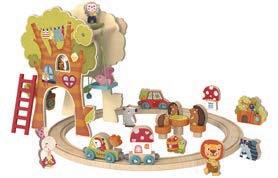
Bandai


Hello Kitty “Sanrio”, Nanoblock Character Collection Series - Hello Kitty from Nanoblock’s Character Collection Series stands approximately 2.08” tall and has 140 pieces. Sanrio fans can now build and collect their favorite Sanrio characters in nanoblock form! The difficulty level is . This kit features all the cute details one would expect. Ages +, Available ovember 0 3.

Woodstyle Pokemon Pikachu Found “Pokemon” (Box/6), Ensky Paper Theater - nsky aper Theater is a great way to see your favorite scenes come to life. This oodstyle aper Theater uses unique wood like pieces to give a whole new feeling to the final outcome. This features the beloved ikachu front and center. ach layer has precise laser-cut pieces that come together to create a complex and beautiful scene. Assembly and glue are required. Ages +, Available anuary 0 4.

Pikachu “Pokemon” Ensky Kumu-kumu Puzzle - This kumu-kumu pu le is a in - a pu le and a figure! hallenge yourself and combine these soft 3D pu le pieces together to create a ikachu figure that holds itself together and stands on its own once completed. ompleted pu le stands at 4.3 tall. ade of . Ages +, Available anuary 0 4.


Don’t let this Blue Totoro get away! The Blue Medium Totoro from y eighbor Totoro will run straight into your heart as this soft plush doll. It holds its precious bag of acorns on its shoulder as it makes its escape. This plush is approximately .8 big. Ages +, Available now.

42 tfe October 2023

NEW PRODUCT PREVIEWS


Basic Fun

Experience light art like never before with the all-new Lite-Brite Touch Press the color-changing buttons on the board and watch as they light up. Keep pressing to change colors as you create new pictures! Use the included, easy-to-follow instructions to create dazzling works of art. Or have fun and design your own masterpiece! This exciting new Lite-Brite toy also comes with fun and addicting games to play. Ages 6+, Available Fall 2023.

The happiest Care Bear around is ready to dazzle the world like never before with the new limited edition Care Bears Cheer Bear sequin medium plush Featuring a glittery rainbow belly badge and vibrant rainbow sequins that sparkle and shine, this exclusive plush is a collector’s dream. Ages 4+, Available Fall 2023.


is ttens Series - Inspired by the ifitsisits memes and social media trend, isfittens is a funny group of cats with a passion for tiny spaces! No space is too small for these funny felines - or so they think. And now isfittens is back with all-new ild ats in eries 3! These rockin’ cats come in fun new styles and colors that everyone will love - and they have extra fluffy two-toned tails! ill your new cat have a stylish guitar r maybe funky glasses Ages 4+, Available Fall 0 3.


eet Tonka Chuck the only Tonka truck that really talks! This smiling, friendly truck will delight kids for hours with his exciting new phrases and sounds. Activate his sensors and watch as he comes to life with animated motors in his mouth and dump bed. Load up your haul, then press his helmet to see Tonka huck roll across the floor to transport his cargo. This truck is packed with surprises - and he can’t wait to play! Ages 3+, Available Fall 2023.

Get ready for the ultimate building set for aspiring engineers and thrill-seekers: the K’NEX Marble Coaster Run with Motor! This innovative new set allows you to flex your creative muscles and build a fully-functional marble coaster from the ground up. ith over 00 pieces and multiple template builds, this model kit is perfect for all skill levels from beginner to pro. Ages 8+, Available Fall 2023.

Cloud B


Cloud Box is a unique storyteller and nightlight which can be enjoyed by children from ages 0-8. Discover a magical, immersive experience by listening to 36 original stories with music, sounds and light effects! You can select stories in English or French with synchronized light projections, white noises, and soothing melodies, make custom recordings, and even enjoy an illustrated storybook! Ages 0-8, Available October 2023.
Experience the calming ambiance of the Tranquil Whale Family - Blue. This charming pretty whale diffuses a soft light and projects on the ceiling of the room the waves of the ocean in movement thanks to a unique and patented mechanism. marine melody and the sound of the waves (white noise) will soothe the little ones to take them on the way to sleep. Also look out for Tranquil Turtle Ages 0+, Available now.


44 tfe October 2023
Cra-Z-Art





The Original Snoopy Sno-Cone Machine by Cra-Z-Art includes everything you need to make some fun, tasty, sweet treats! Turn your molded ice cubes into cool and refreshing sno-cones with this nostalgic toy! Simply add ice, crank the handle to make shaved ice, and then top your sno-cone or shaved ice with included flavor or add any juice for other fun flavors. Fun asy to Use! Ages 6+, Available Fall 0 3.

Beauty on the go with the new Shimmer ‘n Sparkle Glam and Go Beauty Caddy loss and glam and look pretty and polished. verything you need is housed in a beautiful travel case. The unit includes separate palette compacts of trendy lip color, eye color, lip gloss and cheek color as well as nail polish and accessories. o fun and easy to use! Ages 8+, Available Fall 0 3.

Creativity meets nostalgia with Cra-Z-Art’s Retro Magna Doodle The ultimate retro magnetic drawing toy for creating fun artwork that erases like magic! The classic Magna Doodle, featured on the popular show Friends , can be used to play games, draw pictures, write messages secret erasable messages too! , and so much more. ecommended for ages 3 to , perfect for any child. Available Fall 0 3.

Create your own ghoulish glam style and design hundreds of spooky nails with the Monster High Ghoulish Glam Nail Salon. Also features a cool magic mist that changes 6 colors. Decorate and show off your nails. Includes 6 special nail polishes, nail adhesive stickers and more! o fun to use and experience! Ages 8+, Available Fall 0 3.


Make your own delicious looking Barbie Cupcakes and treats out of Softee Dough! ipe oftee Dough icing onto your cupcakes using the push extruder, and create your own decorations with the included press molds. Display all your decorated treats on the super cute cupcake stand! Ages 3+, Available Fall 0 3.


xperience the Cra-Z-Slimy World of Mini Mania. hether it’s an Acai bowl, boba tea, cereal, smoothies, cupcakes, etc., use the included ingredients to create a mini limy version of your favorite, delicious treat not for consumption . omes with all you need including ingredient packets, bowls and utensils. ollect all of the different versions, sold separately. o fun to create and use! Ages 8+, Available Fall 0 3.


Crazy Aaron’s
Lost Treasure Guardian Minis - These have both putty and a charm! The charm is rubber and includes a hole so you could make it into a keychain, or a ipper. ach collectible mini tin includes Thinking utty and a guardian charm with their own unique persona. apture rare finds like Buried Treasure including real gold, and eteorite Falls which contains actual meteorite. eel to reveal Thinking utty includes a unique putty and a charm. harm can be added to zippers on backpacks or keychains with the included hole in the top of the rubber charm. ollect all 0 Lost Treasure uardians! Ages 3+, Available now.


Kawaii Cute Thinking Putty is so adorable, it can instantly turn your frown upside down! This dreamy putty is full of lovable characters. ou’ll be all smiles as you fidget to find their tiny little faces! Ages 3+, Available Fall 0 3.


45 tfe October 2023
NEW PRODUCT PREVIEWS


Creative Kids

With more than six vibrant colors and skin shades, Play-Doh Air Clay allows kids (and adults!) to safely transform ideas into compound reality as they imagine, sculpt, and let dry spectacular creations. From a favorite dinosaur turned backpack keychain to a make-believe best friend turned pencil topper, with Play-Doh Air Clay the possibilities to create a fabulous keepsake are endless. a Parlor, Play-Doh Air Clay Ice Cream Creations, Play-Doh Air Clay Accessory Studio (Ages 4+), Play-Doh Air Clay Super Creation Studio, Play-Doh Air Clay Deluxe Value 80Pack (Ages 3+), and more!

New toy line: Sense & Grow - Helping Reach Your Child’s Goals: Introduce your kids to the magnificent textures and colors all around them. Sense Grow’s safe and risk-free products are especially made to help kids explore, play, and reach their developmental goals. Look out for the Sensory Tissue Box, Sense & Grow Rock & Play Shape Sorter ( Ages 5 Months +), Sense & Grow Textured Bean Bags (Ages 2+), Sensory Farm Life Sand Tray (Ages 3+) and more across multiple age groups! Available now.


Cuddle Barn
Kids love this sweet lullaby elephant! Twinkling Starlight cuddles kids to sleep by playing up to minutes of five lullaby melodies, featuring classic songs like Twinkle Twinkle Little Star, Rock-A-Bye Baby, Brahm’s Lullaby, Hush Little Baby, and You Are My Sunshine. Twinkling Starlight features volume control high, low, and mute. Watch this elephant’s belly and star trunk softly glow in the dark in nightlight mode! Ages 2+, Available now.

Cuddle Barn’s adventurous Wawa the Froggie is onto new fun adventures! In this new collection, Wawa has discovered some of his favorite foods and turned into mini versions of them! These 4” Wawa Plush Keychains come in Pineapple, Riceball, Strawberry, Watermelon, and a teeny Cherry duo. They’re perfect for backpacks, collectibles, and more! Ages 0+, Available now.

Cuddle Barn’s popular Toadstool Wawa is now at a loveable 15” hug-sized plush! This adventurous froggie was wandering through the forest one day when he saw the cutest little mushroom that he thought would look great as a hat! Cuddle Barn has other fun, new styles, and sizes coming out in their Wawa the Froggie plush collection. Ages 0+, Available Fall 2023.

46 tfe October 2023
Cuddle Barn cont.
PlushGoals Planet - Discover a cuddly world of cuteness by getting to know the characters of #PlushGoals Planet! Meet each quirky plush and get to know their backstory. This collection features Camden the Capybara, Roxy the Raccoonicorn, Kai the Kirin, Lottie the Lovely Axolotol, Dorain the Dragonfuit Dragon, and Moocha the Coffee Cow. Ages 0+, Available Now.


7” Scented Mooshakes - Our Mooshakes just got sweeter! These new pint-sized Mooshakes are now in a cute fun si e and are scented. hoose from classic flavors like int hip, otton andy, trawberry, and itchy Brew. mell their cream to smell their flavor. Don’t be shocked to see they’re yummy enough to eat! Ages 0+, Available Fall 0 3. Ages 0+, Available Fall 2023.

Discovery Kids





Explore the wonders of the universe from the comfort of your own living room, bedroom, or classroom with the incredible Discovery Mindblown 2-IN-1 reversible Planetarium Projector Experience two incredible modes: stationary and moving. The moving side boasts mesmerizing rotating translucent domes that project moving stars onto any surface, immersing you in a captivating cosmic journey! For the ultimate viewing experience, step into a dark room and let the magic unfold! Features 24 mesmerizing slides spread across discs, each holding 8 unique images. Ages 6+. Available now.
Ignite your child’s imagination with the Discovery Mindblown Model Motor Engine Kit This fun and educational kit will spark creativity, logical thinking, and motor skill development all at once! Watch as your child brings this comprehensive model engine toy to life! With cranks, pulleys, belts, and exhaust valves to tinker with, they’ll have a blast constructing and activating this exciting little gadget before their very eyes. It’s a journey of excitement from start to finish, making science, mechanical engineering, and technology come alive in the most thrilling way! Ages 8+. Available now.


Inspire young minds with the Discovery Mindblown DIY Prize-Pod Robot a 52-piece retro vending machine build kit that promotes STEM education, creativity, and innovation. Construct a unique retro robot vending machine that not only highlights a cool design, but also dispenses 12 prize-packed capsules for endless entertainment. ach capsule contains pieces that can be assembled into a separate toy robot, encouraging problem-solving abilities and fine motor skill development. Ages 8+. Available now.


47 tfe October 2023
NEW PRODUCT PREVIEWS


The Dr. Lisa Company (formerly World of EPI)


The Fresh Beats Collection - These gorgeous high-fashion Fresh Beats dolls have custom-blended skin tones, premium rooted hair with authentic textures including patent pending locs that embrace diverse personalities with their stage-ready fashions, reflecting each doll’s unique sense of style. The different dolls in Fresh Beats collection for Fall 2023 are Loxx, Beigne au Lei and Bao BBY with more beauties to follow in the months to come! Musical genres represent rock, hip-hop, and pop. Ages 4+, Available now.

Positively Perfect Toddler Dolls - nesies lets children see their beauty and friends reflected through their dolls. These soft huggable 4-inch dolls featured in their new cuddly and adorable pajama fashions are one-of-a-kind pieces of art with custom blended skin tones, authentic facial features of beautiful full lips, noses, and gorgeous eyes, and bodies more representative with fuller hips and thighs. These sweet toddler dolls encourage little girls and boys to identify, embrace their individuality and love who they are! Ages 3+, Available Fall 0 3.

Fresh Squad Platinum Collection - This line of handsome dolls includes a diverse crew of African American, Afro-Latino, and Hispanic dolls featuring one-of-a-kind sculpts, custom blended skin tones, authentic facial features, a variety of natural hair textures including patent pending locs, and realistic bodies. Functional fashions including faux leather, working ippers, and drawstring hoodies. ollection characters include Amari, iles and Ian with 3 points of articulation that foster imagination during positive play. Fresh quad trendy interchangeable fashion clothes and accessories are sold separately. Ages 6+, Available now.


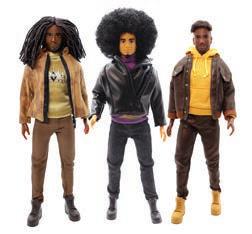
Rock the Bells Fresh Dolls collection is the newest partnership between orld of I and ock the Bells, a Hip-Hop lifestyle platform founded by the legendary LL ool . elebrate Hip-Hop’s 0th anniversary through a product line that reflects its culture and authenticity. hildren can embrace their love of Hip-Hop through an assortment of iconic collectable Hip-Hop dolls, role-play products, children’s costumes, fashion accessories and coloring books. Ages 3+, Available now. Also look out for the Fresh Inspirations coloring books for ages 8+, available Holiday 0 3.
Fresh Cuddles created by The orld of I, are made to encourage imaginative play. These plush friends are ethnically inclusive characters that feature authentic locs, braids and bantu knots. pecifically made for little arms to squee e tightly, they are created with magical technology that hugs you back! Ages 0+, Available Holiday 0 3.

Eyeconnect Crafts


Building your very own 3D Tunnel Book with movable animals! Dive into your own underwater adventure with our Ocean Life 3D Tunnel Book craft kit This mesmerizing craft kit takes you to an underwater world of wonder and imagination. In the box, you’ll find everything you need to create your very own 3D Tunnel Book. High-quality pre-cut cardstock pages come to life as you assemble them. olorful non-toxic watercolor paints and markers add color and detail to your creations. And easy-to-follow step-by-step instructions make making your book fun and easy. Also look out for the Space theme and Pond theme! Ages 0+, Available ctober 0 3.
48 tfe October 2023
FanRoll






Blacklight Trays - The glory days of D&D were built around black light rock bands and 70’s basements. The new Shadowlight Black Light folding dice tray brings the best elements of the 1970’s into the 2020’s with a black light dice tray designed to protect your gaming surface while making your dice glow!! ur high-quality, velvet dice trays fold flat to fit into your folder or backpack, and easily snap into place when you’re ready to game. Now with a black light built in to give your game a cool new glow and make your dice react just like a 1970’s rock metal poster. Ages 3+, Available Fall 2023.

FAO Schwarz
Ultimate Makeup Kit - Ultimate kit features over 30 pieces, ranging from eye makeup to lipstick to tools. Array of colors, shades, and styles for a wide range of skin tones. Makeup is safe and easy-to-use with tools like brushes, applicators, and a mirror. Try different looks using the included instructions for fun tips and tricks. Ages 6+, Available now.

Fabulous Family Mansion Luxury Dollhouse - Features 360-degree play with Los Angeles luxury-themed rooms and one outdoor space fit for the ultimate pool party. ealistic doorbell sounds, fun light-up features including a fireplace and three separate music modes to keep the F.A. family entertained for every occasion. tands over 30-inches tall and includes family of four. Ages 3+, Available now.

Sketch & Glow Easel 3-in-1 Art Studio - Features three distinct art surfaces to create each masterpiece: neon LED glow board, chalkboard and white craft paper. Includes 1 battery-operated easel, washable markers, pieces of chalk, 2 different erasers and 1 paper roll. Legs are removable for the easel to convert to tabletop use. Ages 3+, Available October 2023.


Fireside Games


Bears! Dice Game - Got 20 uninterrupted minutes? Then take friends or family on a virtual camping trip where bears attack the campsite! Quick, everyone roll your dice and start making pairs! No time for turns in a bear attack! In this fast-playing, competitive game, you score points by pairing dice to shoot bears, run and hide, or take a risk and score big by sleeping through the attack. Bears! is a frantically risky dice-pairing frenzy. Ages 7+.

Castle Panic Second Edition - Good Housekeeping editors and everyone else enjoy playing this best-selling cooperative tower-defense game with a brand-new look boasting new art, a custom die, and heavier cardstock. Created for 1 to players, the co-op element makes Castle Panic a great family game and the perfect kick-off for weekly game night. Slay all 49 monsters and have at least one of the six Castle Towers standing to declare victory. Ages 8+.

Here, Kitty, Kitty - Meow! In the crazy cat-collecting game, your neighborhood has a cat problem. The problem is that the cats don’t all belong to you! Everyone in the neighborhood wants to claim those adorable kitties for themselves. utwit your fellow feline fiends as you lure cats onto your property, move cats into your house, and steal cats from your neighbors. All’s fair in love and catcollecting! Use your catlike reflexes and avoid stray dogs and hairballs. ou might just land on your feet! For to players. Ages 10+.

49 tfe October 2023
NEW PRODUCT PREVIEWS


Future Fans
Future Fans Football is a storybook-led experience where adults and children read as the campers of amp allyhoo learn football in unexpected ways like playing a ring toss game, doing a scavenger hunt, and even eating cookies! The product includes a storybook, activity book, and games and toys, all delivered via 6 unboxing experiences that keep the child engaged throughout the experience. There are surprises at the end of chapters like learning to dance the cratchy Bottom Hop, unboxing a toy, or playing a game just like the characters in the book. Ages 4 - 0, Available now.

Goki America





Touch Ring Elastic Rattle Rainbow is the prettiest way to trigger the grasp reflex and promote the development process to targeted grabbing. The soft colors will appeal to baby’s curiosity and first lesson about oy . Biv an acronym for the sequence of hues commonly described as making up a rainbow! goki evolution is ideally suited for free play. The educational toy gets its character from the individual wooden structure and the bright gla e. Interacting with Wooden Dwarf Cottage offers a world full of possibilities for little adventurers maybe friends will come to visit in a boat and together you take a trip to the end of the rainbow! ach goki nature wooden toy showcases warm brown tones that are cleverly achieved using a special thermal treatment. Hammer Bench is a sensory delight to see, touch and hear as tots get to pound away! Available now.


Goliath
The Lunar Dial - ather around the stars in this wickedly-cool, out-of-this-world strategy game brought to you by The orbid etwork! Based on the top True rime podcast, orbid, this easy-to-learn, lightweight strategy game is perfect for anyone fascinated by the stars, astrology, and the mystical arts. lear a realm and unlock the power of the odiac with beautifully-illustrated, tarot-si ed cards. Ages 4+, Available now.


Froot Loops Frenzy - et ready for dance-filled fun with Toucan am in this fast-paced skill and action game for to 4 players, Froot Loops Fren y! ync your moves with dancing Toucan am as you carefully pull Froot Loops off his spoon. hile the music plays, collect the colorful loops as di y am dances and spins to send his loops flying! Be the first to collect all six colors to win! Ages 6+, Available ctober 0 3.


The Floor Is Lava: Hot Zone - et up and get moving because the floor is LA AAA! This classic kids’ game just got a lot hotter! Lay the foam stones on the floor in a cleared area and try not to fall in the lava! omplete silly challenges designed to tip you over. Includes original gameplay and the exclusive Hot one game, apture the Flag! an you be the last player standing in this fun-filled, lava-rock-hopping good time Ages 4+, Available now.


50 tfe October 2023
Goliath cont.
Wahu Aqua Pals are innovative aquatic plushies designed for creative, active play all summer long. Aqua Pals are the perfect best friend for indoor and outdoor fun! Designed with a breathable mesh fabric, Aqua Pals dry using AquaDry technology, making them great for play at the pool, beach, backyard or bath time! Not only are they lightweight and buoyant for easy play in the water, but they’re also UV and fade resistant. Aqua Pals are also machine washable, so they can enjoy a day outdoors and then be ready for snuggles at bedtime! Available in kids’ most favorite licensed characters like Ariel, Spider-Man, Mickey Mouse, Minnie Mouse, Elsa, Bumblebee and Peppa Pig Aqua Pals are sure to capture the hearts of young adventurers. Ages 2+, Available now.
Go To Toys and Games


In a cozy, comfy dreamland, Snoozimals from Go To Toys and Games spend their days sleeping on soft clouds dreaming of warm hugs and snuggles with the moon as their nightlight. Snoozimals make the perfect companion for bedtime or an afternoon nap. So soft, you can’t put them down! It’s been said that hugging a Snoozimals is magic. There are nearly 20 in the collection, and they’re about 20-inches long, which means a kid can give them a really big hug. Snoozimals are so soothing to the touch, they also fall into MESH (Mental, Emotional, Social Health) because when things can get to be a little much for us all, at every age, who doesn’t love a little hug? Ages 3+, Available now.

Haba
Gather your mateys for a seaworthy adventure with Capt’n Pepe: Treasure Ahoy! that will get everyone saying “aye aye, Capt’n (Pepe)!” This interactive and cooperative game immerses players ages six and up in a fascinating pirate story to open treasure chests and unlock challenges, mark a treasure map with stickers and chart a course to save the world from the evil Madame Goldtooth. Whether you’re following along in the epic 25-chapter Adventure Book or letting Captain Pepe guide you across the pirate-y seas with the game’s companion audiobook and sea shanty timer, you’ll be transported to a world of pirate excitement! Ages 6+, Available now.

Hape





Little ones can play “kitchen” anywhere with the portable Sizzling Griddle & Grill BBQ Kids experience ultimate food-play as they turn the dials to light up the “hot coals” and listen to the sizzling sounds emitting from the grill! This beautiful and portable wood-based BBQ set has everything little ones need to role-play as the grill master of their house and cook up delicious meals including cooking utensils, ketchup, mustard, hotdogs, steak, veggies, and more! Use the grill to sear and fry the sweetly painted accouterments or remove the griddle and grill grates and spin the kabobs for a BBQ feast! Ages 2+, Available Spring 2024.

The Dino Railway Adventure Set takes little ones on a Jurassic adventure that glows in the dark! Little ones can travel through a Jurassic world and encounter dinosaurs as the wooden train passes through dinosaur bones, volcanoes, and waterways! As the engineer of the prehistoric expedition, kids will build and navigate their locomotive to open the dinosaurs’ skull and pass through the wild world! Brave the elements and turn off the lights to watch the set come to life with glow in the dark features and listen to the train and dino sounds! Ages 3+, Available Spring 2024

51 tfe October 2023
NEW PRODUCT PREVIEWS


Hasbro


Because that is what makes them—and the world—a little more special. Furby is an incredibly interactive toy friend that’s available in two colors - Purple or Coral - and features voice activated modes and over 600 phrases, jokes, songs, and so much more to discover. Furby also responds to hugs, pats on the head, shaking, and feeding its pretend pi a charm or your finger - yum . The more they play, the more fun they can unlock! Care for Furby by feeding them and combing their hair. Dress them up with the clip-on beads and make fashion accessories that kids can wear, too. Ages 6+, Available now.

Double your dart blasting fun with the NERF Elite 2.0 Double Punch motorized blaster that has double barrels and double clips! The Double unch blaster features rapid alternating barrels that move back and forth as you blast darts. It includes x 0-dart clips so you can unleash 0 darts in a row. This F blaster comes with 0 F lite .0 foam darts in different colors, giving you enough darts to load both 0-dart clips and additional darts to keep nearby in the blaster’s 0-dart onboard dart storage. Ages 8+, Available now.

Play-Doh Busy Chef’s Restaurant Playset - Kids can use the stampers to make pretend pizza, burgers, pasta, or chicken and press the lever to stamp pretend foods at a time! Then, watch as the griddle slides over to the prep station as they release the lever! Create make-believe burger toppings, fantastical fries, crazy cookies, and more pretend foods using the half-molds on both sides of this kids playset. Ages 3+, Available now.

Get ready to roll out with the new Transformers: Rise of the Beasts Bumblebee 2-in-1 Mask. Bumblebee’s mask can convert from robot to mask mode in steps so kids can easily roleplay as they imagine being a part of the action. This -in- mask can convert from robot action figure to mask mode that allows kids to imagine being part of the action. Includes -inch mask, an elastic strap and nose padding for an adjustable fit while in mask mode. Ages 6+, Available now.

Introducing the NERF Pro Stryfe X blaster, the first high-performance half-dart blaster from F! Designed for ages 4 and up, this upgraded version of the fan-favorite tryfe blaster celebrates a decade of F battles. The tryfe blaster is built for F athletes, featuring a premium design and performance for pro level competitive play. It comes with 30 F Accustrike Half-Length Darts, which take the iconic Accustrike F darts to the next level for older consumers. ngineered for extreme distance, accuracy, and velocity, thanks to their stable trajectory and Accustrike tip. Ages 4+, Available Fall 0 3.
o mat That’s right! Take moves from the mat to the screen with the Twister Air game! In this app-enabled, augmented reality spin on the Twister game, the party extends onto a player’s smart device. layers reach, clap, swipe, and strike crazy poses to music beats as they scramble to match their wrist and ankle bands to the colored spots on screen. arn points for every spot hit while you twist in the air like you just don’t care! This fun party game includes 8 colorful Twister Air bands and a device stand that works for any smartphone or tablet. To get started, download the Twister Air app free to download data rates and in-app purchase may apply and set a smart device in the included stand. Then players put the bands on their wrists and ankles, and they’re ready for action! Ages 8+, Available now.

52 tfe October 2023
Hey Buddy Hey Pal
Peeps EggMazing Egg Decorator - For aster 0 4, eeps and gg a ing have come together to create the new eeps gg a ing gg Decorator! ust like other gg a ings, this whimsical eeps bunny-shaped decorator holds and spins hard-boiled eggs. Using the included Peeps vibrantly colored, non-toxic markers, kids create custom aster eggs with multi-colored stripes, lines, and other fun designs! It’s all the fun without the mess! Available in eeps Bunny ink and eeps Bunny ellow. ach decorator comes with six non-toxic markers. Ages 3+, Available aster 0 4.

Horizon Group

Bluey Magnetic Wooden Playset - Prepare for imaginative fun with your favorite Heeler family with the Bluey Magnetic Wooden Playset! This 18-piece playset has a magnetic wooden Bluey and Bingo, 12 magnetic accessories, a sheet of repositionable stickers, and a reusable playhouse board with 2 double-sided whimsical play scenes! Create your own adventures with Bluey and Bingo as you mix match accessories like sweet treats, awesome toys, and fun outfits ready, set, oanna! Ages 3+, Available Fall 0 3


ST T D n nit e elr - Connect and create everlasting friendship jewelry with the T T D.I. . Infinity ewelry set! omplete with premium infinity charms, waterproof chains, a protective cover, and a pair of multifunctional pliers, this kit has all the essentials you need to create 0 custom-fit forever bracelets no extra special tools required! What is a forever bracelet? These special pieces don’t have clasps but are built directly on your wrist by connecting tarnish-free chains to infinity bracelet charms. rotect your wrists with the soft swatch, then let a friend connect to the chain to your wrist as a symbol of your unbreakable bond. No soldering, welding, heating, or ironing! ecommended for best friends everywhere, ages 8 up. Available Fall 0 3.


Story Magic Farm-to-Table Cutting Food Playset - Preparing a well-balanced meal is child’s play with The tory agic ooden Farm-to-Table utting Food lay et! This -piece set includes solid wooden foods from all food groups, a wooden cutting board, a kid-safe wooden knife, and a reusable fabric tote for easy clean-up and storage. It’s great for inspiring healthy pretend play and teaching concepts like part, whole, and even fractions! Ages 4+, Available now.


Prepare for an exhilarating journey into the world of manga art and create 2 of your own comic books with the Made By Me Manga Artist Set It features an interactive drawing guide that covers all the basics and even more advanced techniques no drawing experience needed! ith dual-ended markers featuring a thin side for precise lines and a thick side for bold details, as well as a set of vibrant colored pencils and a ruler, this DIY comic book set is armed with all the essentials to create the fiercest anime adventure including stickers that make your art even more thrilling. Keep everything organized in the travel-friendly storage case to bring the manga fun anywhere and everywhere. Ages 6+, Available now.

S aci c


This ltra umbo Daniel Tiger plush is made with soft lycra velboa for super soft and squishable hugs! This 0-inch extra large and super cuddly Daniel Tiger is the ultimate gift for Daniel Tiger’s eighborhood super fans! He comes with all of the iconic Daniel Tiger details red hoodie, watch, and sneakers. Ages 3+, Available ctober 0 3.

Good Night Daniel Tiger - Now children can join Daniel Tiger as he prepares for bed, modeling his tigertastic bedtime routine bath time, s, brush teeth, story and song, then off to bed! This bedtime toy set includes a 7-inch Daniel Tiger with moveable arms and legs is dressed in his classic red hoodie and sneakers along with his blue trolley printed pajama set and snuggly tiger-printed blue blanket. Ages 3+, Available ctober 0 3.

53 tfe October 2023
NEW PRODUCT PREVIEWS


IMC toys


Introducing the all new Cry Babies Newborn baby doll. Watch as children become parents to their doll, and learn how to care for, and nurture their newborn with the included surprises and accessories. Children can wear the interactive bracelet and the doll will recognize the child as their parent, which calms her down when she’s crying, and makes her laugh and blush. They cry real tears and will also calm down when given their pacifier. hen it’s time for bed, lay her down and watch as her rock-a-bye eyes close and she falls asleep! Ages 18 months Available now.

Cry Babies are now on the move with the new Cry Babies Crawling Jenna and Miley atch as enna and iley crawl across the floor and giggle when you press the cloud button on their back. he can make up to 3 realistic baby sounds, cries real tears and calms down when given her paci. When sitting, she will babble, move her arms to shake the rattle. If you pretend to tickle her while she’s lying on her back, she’ll move her arms and legs just like a real baby. Ages 18 months Available now.
It’s time to blast off to a new world, with the Cry Babies Magic Tears Stars, Talent Babies. There are 8 dolls to collect - each with a new and improved appearance that includes: a more articulated body, cheerful expressions, and of course they cry real tears! With the all new transparent packaging, children can now pick their favorite characters and complete their collections. Each doll comes with 6+ surprises and accessories and dressed in an interchangeable silicone outfit that represents their own unique talent. Ages 3+, Available Fall 0 3.
Jada Toys


Pink Slips is a new die-cast vehicle line that mirrors a disruptive trend in car culture. Masculine aggressive styles are giving way to bold bright colors and chic yet assertive looks. Cars are becoming a fashion statement with looks so unique and iconic that you feel proud to own your style. These hand-picked luxury cars will be available in 64, 3 , and 4 scale, featuring a variety of gorgeous styles, colors, paints, finishes, and designs as well as sleek, eye-catching packaging. The 4 scale cars have opening doors, hood, and trunk plus premium rubber tires. Ages 8+, Available Fall 0 3.


Jada Toys Disney Princess Remote Control Carriage - Bippity, Boppity, Boo... this Princess Carriage is for you! Place your favorite Disney Princess doll in the regal coach and off you go. Beautifully designed with swirls and scrolls, the carriage travels forward, backward and even in graceful circles. asy to operate and perfect for indoor and outdoor fun and equipped with magical lights and sounds! et your friends ready for the ultimate adventure. Approximately long, and holds two . dolls. Ages 3+, Available Fall 0 3.
et ready for the ultimate showdown in a world where street fighting is the main event. Dive into the world of nostalgia and action with your favorite characters from the Street Fighter II video game, now as scale action figures by ada Toys Known to be the strongest woman in the world, Chun-Li is ready to kick her way into action. he comes equipped with alternate hands, head, her ountless icks effect accessory, and stand. he is displayed in arcade style packaging with features inspired from the game. This legend won’t go down without a fight. Also look out for the martial arts master and movie star Fei Long and martial arts master Ryu! Ages 8+, Available pring 0 3.

54 tfe October 2023
Jazwares





It’s time for the ultimate dance party with CoComelon’s Dancing JJ Doll Press one of the three buttons on JJ’s right foot to activate three interactive play modes: Learn to Dance, Fast Slow, and Freeze Dance. In Learn to Dance mode, JJ teaches your little one how to dance as he moves his arms up and down, slides from side to side, and bops along to the beat! Can you keep up with JJ? In Fast Slow mode, JJ starts slow and then dances faster and faster to the tune of “Heads, Shoulders, Knees, and Toes”. Ages 2+, Available Fall 2023.

Since Squishmallows debuted in 2017, each plush has featured its own lovable personality and have become known for their ultra-soft feel and whimsical design that have captivated fans of all ages, both online and in person. More than 2,500 Squishmallows ranging from two to 4-inches in si e have gained the attention of bona fide quishmallows fans in more than countries. uch strong brand retention has resulted in multiple line extensions, including HugMees, Squish Doos, Stackables, Flip-A-Mallows, and Squishville. Ages 3+, Available now.


Bond over berries with the Pokémon Train and Play Deluxe Pikachu. Featuring over 50 unique reactions, this battery-operated 4. -inch figure includes numerous sounds, light-up cheeks, and movement in its arms, ears, and tail. It comes packed with two interactive berries that trigger specific reactions when held to its nose and you can touch its head or speak to it directly for more conversation. It includes three AAA batteries that are secured by a screw-on panel on Pikachu’s back and offers three modes: ON, OFF, and TRY ME. Ages 4+, Available Fall 2023.

Play out in the open with the Jailbreak: Hiding in Plain Sight Multipack by DevSeries


Featuring six . -inch articulated action figures and six unique accessories, this multipack is fully equipped with everything you need to make a great escape. Go for broke with Granny Inmate, Clown Inmate, Ice Cream Worker Inmate, Incognito Inmate, Baby Inmate, and hillie uit Inmate. ach figure has ix and atch capability so make sure to create your own unique skins for more madcap chaos. Packs also include an Exclusive Virtual Item Code that unlocks unique in-game content in Jailbreak. Collect the Jailbreak: Hiding in Plain Sight Multipack by DevSeries and get off scot-free. Ages 6+, Available Fall 2023.
Jilly Bing
Jilly Bing is a brand-new 14-inch vinyl doll that celebrates diversity and is proud of her Asian American heritage. Jilly represents who we want to teach our Asian American children to be. She is not a stereotype, she is strong, confident, and bold. illy Bing was created by founder and , lenor ak, when she noticed a gap in the doll market for the Asian American community. She assembled a talented team of designers, storytellers, and parents, who spent months researching and designing dolls that resemble real Asian American children. Each Jilly Bing doll will have a favorite food that is associated with a particular Asian ethnicity (Jilly loves egg tarts!). This aspect of each doll’s backstory allows the company to celebrate the depth and breadth of each heritage nestled under the broad “Asian” umbrella. These dolls have been lovingly designed with innovation in every decision, from the gorgeous, sustainable packaging to accessories like a hat that flips into a cuddly friend. Ages 3+, Available now.


55 tfe October 2023
NEW PRODUCT PREVIEWS


Just Play
It’s time to do the Elmo Slide! With the Sesame Street Elmo Slide interactive plush toy, little ones can dance, sing, and play along with their fun-loving pal, Elmo, in English or Spanish. The music and motion start with a squeeze of Elmo’s left hand. This 4-inch lmo plushie sings, sways, flaps his arms, and glides from side to side to the super catchy lmo Slide” song. It’s so much fun, that kids—and grownups—won’t be able to sit still when Elmo prompts them to dance with him. Fun for the whole family! Ages 2+, Available now.

Style BAE dolls and accessory sets offer a unique, fresh play experience simply peel, stick, and style! Each Style BA comes with a closet full of super-trendy outfits that couldn’t be easier to change, especially for young fashionistas! Sized at 10 inches tall, each doll features a 3D sculpted head with rooted hair and a clever 2D body. Mix and match tops, bottoms, and shoes made from reusable cling stickers to create over 850 looks. To build your closet, collect all four Bae dolls url Dylan, - op rincess iki, op unk tar en ie, and treetwear ueen Harper. Ages 4+, Available now.

Behind every door, a surprise is in store with Disne Doorables ulti ee Series collectible gures Series 10 celebrates the 100th Anniversary of the Walt Disney Company, and includes 80 characters from a century of epic storytelling. Find never-before-featured Doorables from the stories of Disney’s The Emperor’s New roove, Atlantis The Lost mpire, obin Hood, ocahontas, Disney and ixar’s The ood Dinosaur, and more. Look for special metallic figures from Disney and ixar’s all- , littery rincess Ballerinas, and flocked animal friends from Disney’s Oliver and Company. Ages 5+, Available now.

Disney Junior Minnie Mouse fans are in for a bow-fabulous treat with the dancing, twirling Butterfl Ballerina innie ouse Plush doll. Inspired by the Disney Junior Minnie’s Bow-Toons series, this interactive, lights-and-sounds Minnie Mouse soft doll sparkles and shines in a beautiful, butterfly-themed ballet outfit. ress the light-up butterfly on her chest to activate flashing lights, motion, innie ouse phrases, and the song, ust Like a Butterfly. Her ombre tutu lights up and spins, and her bow lights up, too! innie twirls and sings, and encourages kids to join in. Hidden wheels allow innie ouse to spin on smooth surfaces. Ages 3+, Available now.

et ready for roarin’ fun adventures with the Disney Junior Mickey Mouse Funhouse Roarin’ Safari Dino toy and gures set. Inspired by the Disney unior ickey ouse Funhouse Dino afari special, this ama ing, interactive toy dinosaur features ground-shaking sound effects. It measures a whopping 6 inches long and inches tall! ress the lever on its back to open and close its jaws, hear it roar, and activate exciting ickey ouse phrases, like Look out, pal! rab the dino by its tail and stomp its feet or push it along to hear stomping sound effects. For more dinosaurthemed toy figures and playsets, look for the Disney Junior Mickey Mouse Funhouse Dino Safari Pals and the Dino Safari Rover toy vehicle and figures set, each sold separately. Ages 3+, Available now.

KidKraft





Ultimate Helicopter - This amazing, immersive experience simulates all aspects of a real helicopter to make kids feel like they’re really flying. tart up the ignition and choose takeoff mode. The control panel comes to life with lights. atch the propellers light up, then spin and make noises. ock from side to side to active more lights and hear more sounds. xperience the feeling of twisting and turning in air. ids have control of imagination at their fingertips with tactile knobs, buttons and switches built in for extended hands-on play. Ages 3-5, Available October 2023.
56 tfe October 2023
id raft’s Beat Board Balance Game is a fast-on-your-feet balance challenge for the whole family. Innovative wooden electronic balance board tests your physical and mental skills through interactive game play. Press the four colorful corners to select games, then stand on the board and get moving! The rocking, twisting motion of your body triggers lights, sounds and non-stop fun! Listen for the voice commands to stay in the game and come out on top. Up to four players can compete against each other, each taking turns on the board. Ages +, Available Fall 0 3.

Blue rint Build or bench - The id raft Blueprint Build orkbench has over 40 pieces for kids to explore constructing projects and building memories. The sturdy wooden workbench features pre-drilled holes in the surface and wall so boys and girls can practice their hammering and drilling skills using the child-friendly screws and nails. Mom and dad will appreciate all the storage it has so kids will learn to clean up after they’re done. There’s even a wood toolbox for carrying their supplies. Ages 3- , Available eptember 0 3.


ids will feel right at home in id raft’s alle ie Lodge la house. This outdoor wooden playhouse offers features to encourage imaginative role playing—right in your own backyard. Ring the working doorbell to enter the spacious interior highlighted by a kitchenette and hanging utensils. xit out the flap door to circle around the front and enjoy a rest at the built-in table and bench. hanging bird feeder completes the homey aesthetics. Plenty of open windows let the breeze through for a comfortable outside experience, even in summer. Ages 3- , Available ovember 0 3.

ham ion orse Barn Dollhouse - tanding at feet tall, the id raft hampion Horse Barn Dollhouse features a 4-story mansion with expansive rooms, walk-through doors and see-through windows plus a connected two-story barn, complete with horses among 43 total accessories. Ages 3+, Available eptember 0 3.

Kids for Culture






Positive Pals Blanket Dolls with Crinkle and Teether - Babies will be engaged with the soft blanket body accented with satin, knotted corners, crinkle sound and textured teether. The 10” snuggle toy is designed to promote self-esteem, empowerment, diversity and inclusion through play. Choose among the three gender-neutral dolls with different skin tones, a friendly face and soft body with an embroidered I am Loved affirmation on it. The doll has embroidered facial features and sewn in hair making it safe and suitable for all ages.


f rmation ctivit Blan et - This playful blanket is printed with explore-and-learn designs and positive affirmations. ids For ulture designed it to engage and teach babies through interactive features including a teething ring, textured fabric, fabric tabs, satin ribbons, and fun shapes with squeaker, rattle, and crinkle. The travel clip allows the blanket to be attached to bags, strollers, carriers and more. Ages 0+


f rmation Sha es Sensor anel Boo - This 5-page book has colorful patterns, shapes, and words on both sides. The interactive features include a mirror and crinkle pages for visual and sound stimulation. The accordion-style book closes with Velcro and is suitable for children of all ages. Measuring just 4.5 inches, each activity page offers visual and sound stimulation. Some parents adore it as a great milestone accessory for a photo prop! Ages 0+
57 tfe October 2023
id raft cont
NEW PRODUCT PREVIEWS


Kids Preferred


Kids Preferred, in partnership with Warner Bros. Discovery Global Consumer Products, is rolling out an infant and toddler collection to gently introduce the magic of the DC Universe and Harry Potter to Generation Alpha. Zoomers to Boomers will be in awe of the cuddly and adorable plush, blankets, teethers and activity toys including y First omic Book with a removable Batman and The oker, peek-a-boo flaps and tactile ribbons. Kids can cuddle with 15” Harley Quinn plush or swaddle the red cape of 10” Superman. Kids Preferred adds little details like Superman’s black lock of hair over his forehead or Harry’s barely-there lightning bolt scar.


The brightly colored Tether Strap Stretchi from OgoBolli is super soft and pliable. The stretchy, squishy, soft silicone soothes tender gums. Alternatively, attach it to the highchair as a toy holder. Kids Preferred introduces a basket full of clever OgoBolli baby essentials this autumn season. Look out for OgoBolli teethers, rattles and toys!


LeapFrog
Discover things that are out of this world with the Magic Adventures Telescope. Young astronomers can focus on the moon at night or nature during the day. They’ll be amazed at what they can see with up to 110x zoom on this real telescope. Activate 100+ amazing videos and images, courtesy of NASA and the European Space Agency that deepen space knowledge by exploring the solar system, the Moon, star life cycles, constellations, space discoveries and more. Looking at something amazing? Capture and save pictures of what you see. Time to game! Hop in a spacecraft and travel to different locations in the solar system to power on satellites and reboot robots. Twenty Cosmic Cards with a storage box are included and feature detailed images of objects in space on one side and exciting space facts on the back. Ages 5+, Available now.
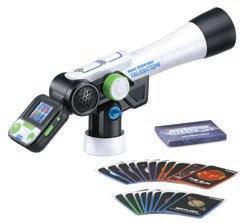
Set up shop and start selling slices with the Build-a-Slice Pizza Cart! This food cart has everything needed to run a small pretend pizza business including six toppings, a pizza cutter, plate, cheese shaker and more. Ding! Ring the bell to hear a customer’s order and explore colors, shapes and food names. They may ask for a slice of pizza with crunchy onion, cheese triangles or red pepperoni. Scoop up the pizza with the magic spatula and it will let you know if you got the order right. You can mix and match toppings to create your own pizza too. Put it in the oven, set the temperature and the oven will say words in Italian, cooking phrases and play music while you wait. Don’t cook the pi a too long or it’ll burn. op the finished pi a in the box and complete the order. Collect and count the play money. Nice cookin’, chef! Add music to the dining experience by spinning the pizza turntable for learning songs and melodies. Ages 3+, Available now.

Little Big Friends
Mom looking to up your baby room decor game? Little Big Friends are multi-sensory animal-themed toys designed to not only become a child’s favorite companion, but a parent’s favorite nursery decor as well! That means they are the perfect item for moms that take pride in their aesthetic and design! The wide collection includes over 27 wildly different animals! Ages 0+, Available now.

58 tfe October 2023
ombining flying disc play with football scoring, Touchdown Toss is bound to be your new favorite backyard mashup. et up the targets feet apart and take turns throwing the flying disc back and forth to score. Hit the post, that’s a banger for one point. ake it through the center mesh net, that’s a field goal for three points. et the disc through the skinny slot that’s a touchdown for six points. Don’t forget about defense. ach team or player gets one blit per game, use it wisely! Available now.
Hoops Anywhere is the original indoor, outdoor, set-it-up-virtuallyanywhere hoop featuring a unique apid- atchet’ attachment system that lets you attach your hoop to any vertical or hori ontal pole or structure. imply strap it, ratchet it and attach it. The built-in secure attachment indicator switches from red to green to show you when you’re ready to get your game on! Hoops Anywhere is designed for real play with a rubber real-feel mini basketball, authentic steel frame, shatter-resistant backboard, and spring-loaded rim. ant to play indoors ust pivot the over-the-door hooks out and you’re ready to go. Available now.


e’re all in for Ballz’n! It’s an all-in ball-bouncing race to the highest score loaded with offense, defense, and trickshot moves. Bounce your balls in the top two bowls to score the most points, and collect your opponents’ balls as they miss, so you can bounce them in the bottom bowl and take their points away. ractice your trick shots and try to get your ball in the top tube for an instant win. Ages 8+, Available now.


The Loyal Subjects

TMNT Krang XL + Comic Book - Introducing B T A L! Designed for those larger than life characters from the T T lore to scale up so you can re-enact your favorite T T story elements with your th scale T T B T A collection! rang is 8 tall, and is packed with features a snap and release cockpit accessed through the waist. rang’s robot features 3 pts of articulation including butterfly joints in the shoulder, and double joints in both elbows, and knees for maximum poseability! ackaged in a unique collector’s box with a garage-door flap secured by elcro locks and includes a 00 age Best of rang ID omic! Ages 8+, Available Fall 0 3.


TMNT BST AXN Comic Heroes 5” Figures - ID omic Inspired Teenage utant inja Turtles Heroes are here! Inspired by the masterful artwork from comic legend ateus antoloucco and fan favorite comic book publisher ID , TL has spared no detail with this masterful B T A ID omic inspired action figure set! ach turtle sold separately features 3 pts of articulation, multiple hand grips, signature weapons, multiple head portraits, a collector card, and packaging artwork provided exclusively by ateus antoloucco for The Loyal ubjects! Also look out for the BST AXN 4PK TMNT Comic Heroes Black & White 4-pack! Ages 8+, Available Fall 0 3.

eeping the 80’s and 0’s flame lit, The Loyal ubjects presents the dynamic antagonist duo of Tokka and Rahzar each sold separately ! Together, Tokka and ah ar form a fearsome duo, wreaking havoc and posing a significant threat to the turtles and their allies. ackaged in a unique collector’s box with a dioramic insert. risp paint, and clean sculpt details. aximum poseability. Includes a beautifully designed signature TL collectors card. Ages 8+, Available Fall 0 3.
These 3” Rainbow Brite Collectible Figures are a must-have for fans of the beloved ainbow Brite franchise. These collectibles come with a full range of everyone’s favorite ainbow Brite characters to choose from. ach one includes rare chase figures, and collectible cards! Available this Fall 0 3 at Five Below. Also look out for 3” Strawberry Shortca e collectible gurines and 14-inch rag doll style soft plush Strawberry Shortcake doll. Ages 4+.


59 tfe October 2023
Little Kids Inc.
NEW PRODUCT PREVIEWS


Luki Lab


Snack, Snack, Giraffe - Can your kid get all the snacks in Giselle the Giraffe’s belly?! Snack, Snack Giraffe is the fun new game that encourages kids to eat their fruits and veggies, while teaching them about healthy eating! Giselle the Giraffe stands over feet tall and comes with double-sided tokens and flash cards featuring 4 fruits and vegetables for kids to sort, match and feed Giselle with. Perfect for independent or family play, kids will have fun trying to get all their snack tokens in Giselle’s belly without them falling out! Ages 3+, Available Fall 2023.


Ready, set, launch! Flast2Fast Card Racers transform from cards to superfast racing cars with the press of a button! o pull back needed. And, Flat Fast are portable and fit perfectly in a pocket or backpack for on-the-go play! Ages 5+, Available Fall 2023.

Pixies Unicorn Creation Studio - From the enchanting world of Pinxies is the new Unicorn Creation Studio STEM-authenticated building set. Little girls will love this new set as it captures the wonder and magic that have made unicorns a long standing favorite. It comes with 80 pieces including colorful plastic building links, detailed graphic paperboard panels, and gem stickers to create and decorate 10 uniquely adorable unicorns. Ages 6+, Available Fall 2023.
IXI KIX - Shoot your shot with the ultimate trick shot game that’s easy to play, yet hard to master! IXI KIX is an action-packed challenge game that tests your skills as you launch the ixi pieces into the targets. Choose your own style and compete against others to score points. Whoever scores the most points wins! Ages 8+, Available Fall 2023.

Lumistella


Extraordinary Noorah: Santa’s Magical Arctic Fox book - Noorah feels quite ordinary until she discovers she can spark the Northern Lights and pause time with a swish of her tail. This special gift helps her shield Santa’s sleigh so he can travel the whole world in one night. Learn the extraordinary legend behind one of Santa’s oldest friends. Includes: Beautifully illustrated 32-page storybook. Also look out for the Noorah Plush and Noorah Action Figure Set. Ages 3+, Available Fall 2023.

In Case of Elftastrophe book - Oh, no! Someone touched the Scout Elf! Everyone knows that Christmas magic is fragile and when a Scout Elf is touched by a human, that magic gets zapped! It’s an elftastrophe! In this hilarious picture book, narrated by one of Santa’s clever Scout Elves, discover the secrets to use when mishaps, misfortunes, and mistakes threaten your Scout Elf. Includes: 32-page illustrated picture book. Ages 3+, Available Fall 2023.

Elf Pets Crate & Carry with Bogie - lf ets are ready to tote along inside this official, co y carrier for safe travels! For trips short and long, they will ride in style. Oh! And who’s that special stowaway? Meet Bogie a brand new friend from the North Pole. Get ready for big adventures! Includes: Clear plastic carrier with a flexible handle, hinged door, and an opening on the side for Bogie, A soft and playable plush Bogie. Also look out for the Elf Pets Cheer Checkup Set! Ages 3+, Available Fall 2023.

60 tfe October 2023
Lumistella cont.





Sweet Spinners Advent Calendar - The race is on! Count down to Christmas with the sugar-spun fun of an Advent calendar filled with The lf on the helf and lf ets playable mini figures and sweet rides straight from anta’s orth ole. Includes 6 sweet-themed cars and vehicles, cout lf and lf ets mini figures, colorful trees, plastic traffic cones, eady, et, o sign, winner’s trophy. Ages 3+, Available Fall 0 3.
Magformers


Magformers Mystery Spin Set 40 Pc - Turn your agformers creations into moving and mobile wonders with the agformers ystery pin et ! The agformers ystery pin et comes with 8 Triangles, 4 quares, tripe squares, Inner circle squares, ectangle, uper rectangle, 4 Isosceles Triangles, quare with chair, pin square, imple wheels, imple cap, iren, Figure, and pin connector. Use the clear spinner as a fun fidget spinner by itself or attach it to the spin connector to add movement to any build! Ages 3+, Available fall 0 3.

Stick-O Peekaboo Cat and Dog 27 Pc - The tick- eekaboo at and Dog c set is great for toddlers to explore tactile learning and hands-on magnetic play. ach tick- piece uses magnets that rotate so your creations always stick together, making for a frustration-free play experience. Build a cat, dog, elephant and much more! tick- offers a fun and safe way to teach toddlers basic T education principles. All tick- sets are compatible with each other. Ages 8 months +, Available spring 0 3.
Melissa & Doug


Grand Canyon National Park Hiking Gear Play Set - lay hiking essentials including a working flashlight for night hikes store on a sturdy, adjustable belt, si ed to fit kids three to six. otate four photo disks in the play binoculars to see canyon scenes and native animals and plants five beautiful color photos per disk bring the park to life right before kids’ eyes! lide ID cards into the wooden play tracker to identify in nglish and panish the native plants and animals you see! The gear belt holds everything, including a double-sided map and field guide, play first aid supplies, a wooden energy bar, and safety whistle. Ages 3+, Available now.
Yellowstone National Park Grizzly Bear Games - retend to be a hungry bear and play bear food catching, racing, and search-and-find games with this playful introduction to ellowstone ational ark. lush versions of some of gri ly bears’ favorite snacks stick to self-stick hook-and-loop tabs on bear paw gloves and the snout of strap-on bear heads. Ages 3+, Available now.

Jet Pilot Interactive Dashboard - eady to let imaginations take flight oger that! The et ilot Interactive Dashboard features lights, buttons, switches, and sounds to keep kids engaged and immersed in exciting pretend-play adventures across the globe. Ages 3+, Available now.

Barber Shop Play Set - ut, trim, shave, and style with pretend play shaving essentials for a trip to the barber! tyle and pretend to trim a soft, wearable beard with adjustable straps. Includes vibrating trimmer, shaving cream can, play rolling ra or, scissors, brush, comb, textured play pomade, wash cloth, adjustable mirror, reusable double-sided activity card all supplies store in a ippered shaving kit. Ages 4+, Available now.
Spanish See & Spell Learning Toy - omplete a pu le to spell a word in panish! This wonderfully illustrated wooden pu le set is great for native panish-speakers and for kids learning another language. lace the wooden lowercase letters into the double-sided pu le boards to spell words in panish that match the illustrations. The 64 colorful wooden letters fit into the eight two-sided cutout boards to spell three- and four-letter words, such as gato, casa, and sol. Ages 4+, Available now.
61 tfe October 2023
NEW PRODUCT PREVIEWS





MGA
Introducing our all-new L L Sur rise fl ing dolls Taking L.O.L. Surprise! to new heights, these collectibles burst out of their agic Flyers packaging and take flight. Doll that flies out of packaging! modes of play- unboxing and quick open. To keep the fairy suspended, hold hand under her legs she magically moves up. U B charger is included in the bottle. 0 min charge for 4 min fly. echargeable and repeatable unboxing experience. Ages 6+, Available ctober 0 3.

torytime comes to life with the easy-to-use Little Ti es Stor Dream achine. Children can watch, listen, and read along to their favorite stories. This unique, fun experience develops beginning reading skills and word recognition. olorful lights and sound effects help each story magically unfold. Includes 3 stories from classic story books and a character that creates more light effects. For bedtime, it doubles as a white noise nightlight to help kids fall asleep. Ages 3+, Available now.

G ’s iniverse a e t ini Lifest le is the only mini lifestyle collectible that you can make and display. From mini aquariums with mini fish, to a mini cactus with mini bags of soil, there are over 00+ unique ake It ini lifestyle materials, packages, and accessories to collect and create your mini lifestyle and home items. Ball shaped capsule. nly brand where activity meets collectability. Build your own lifestyle d cor with the different pieces in each pack. nce you have built your item, cure the resin in any U light the sun or U flashlight until resin has hardened. Also look out for a e it ini iniverse ood af and Diner. Ages 8+, Available now.
ainbo igh olor reate - The rainbow has infinite color possibilities and now it’s your turn to create your own ainbow High doll, over and over and over again with ainbow High’s olor reate Fashion Dolls! Introducing the first do-it-yourself DI washable ainbow High Fashion Dolls. ach doll is dressed from head to toe in all white fashions and white hair. ust grab the 6 ainbow High washable markers in the classic rainbow colors, and start designing. ecreate one of your favorite ainbow High dolls, or make your own. Then just wash the hair and clothes, let it dry and then start all over again. Available now. Also look out for the ainbo igh Dream Design ashion Studio la set. Ages 4+, Available ctober 0 3.

luf e Stuf e Large and Small in ollectible lush combine the joys of Unboxing, ollectability, A , and Fidget. atented fur provides a fun and soothing tactile experience as you remove the outer layer of fur to discover what is hiding underneath. quishy pouch packaging doubles as storage for your fluff and becomes a second friend. Ages 4+, Available now.

62 tfe October 2023
Mindware


Shake Up the Conversation Friends Edition - hake up some fun while making it easy to build new friendships! hock full of thought-provoking questions, these icebreakers help kick-start exciting conversations with friends old and new. imply shake the container until a question slides out. Then take turns answering it. Discover common interests and get to know each other better than ever before. Includes 0 question sticks. Also look out for Shake Up the Conversation Family Edition! Ages +.


Miniland
Miniland Dolls Colorful Edition - At Miniland, the difference lies in their unwavering acceptance that all children are unique. This new doll collection was created with extra care and attention to detail! Dressed in beautifully made fashions with gentle colors and fabrics, perfect for promoting tolerance, diversity and empathy. Ages 3+, Available Fall 2023.


Feel to Learn Translucent Colorful Lizard - toy lizard that invites children to discover the world through colors and their combinations by fitting and experimenting with pieces. It contains 0 translucent pieces with the main colors of each color . Two pieces can be fitted into each slot on the li ard’s body, creating color mixtures. The base of the lizard can be placed upright, allowing it to be used as colored glasses to see the world. The system for fitting and removing the pieces is very simple and intuitive, making it easy for even the youngest children to use. Ages - 4 onths, Available Fall 0 3.

Feel to Learn Sorting Tree Trunks - fun game of manual dexterity and precision, this set also allows younger children to practice finger pinching, an important skill for learning handwriting. The goal of the game is to place the colored fruits inside the corresponding colored trunks using the provided tongs and stacking them all into a single tower. The tongs are especially designed for young children, these tongs are manageable, comfortable, and safe. Made in Spain, this set is 00 recyclable. The plastic material is made from recycled materials and plant-based materials. Ages 4-36 Months, Available Fall 2023.




Mobo Cruisers
The Mobo Spin Drifter three-wheeled cruiser tricycle brings the adventure outdoors for kids and up with its spinning action and cool slick design. Its innovative and patented mechanism combines exciting spins with controlled steering for a fun and safe ride. This trike features reverse riding capability and aids in developing hand-eye coordination and muscle strength. The sturdy adjustable frame grows with your child and lasts for years. Let your child have a blast on the obo pin Drifter today! Ages +, Available pring 0 4.

Moonlite


oonlite transforms together time into a special experience for parents, caregivers and kids. The just-released ollections, available on the oonlite website, use ambient music, playful sounds, and big, bright storybook images to delight a child’s senses. very story contains a picture disc and activation code that downloads the content onto a smart device. With themes ranging from Winnie The Pooh and Goldilocks to Elsa and a Hungry Caterpillar it might be a challenge to pick just one of the 4 tory ollection with rojector packs. The four ollections include four story picture discs, a projector, and an activation code that allows the user to download the content onto a smartphone. Available now
63 tfe October 2023
NEW PRODUCT PREVIEWS


Moose Toys
Two action-packed edo Beast ltra Beast gures have been released, each with a duo of new attack methods. Prepare to battle with Battle Rex Tailwhip, who whips its mighty tail and strikes with its powerful jaws, and Ripclaw Alphawolf, who can counter strike with its powerful tail and use its claws to tear into its opponent. ach Akedo Ultra Beast figure sits atop a new 360-degree spin controller for the most tail whippingest, jaws and claws action ever seen in an Akedo arena. Ages 6+, Available pring 0 4.

Prepare to unleash a beast with Beast Lab an interactive, experiment-based playset that empowers kids to create an epic electronic action figure. Add the ingredients one by one and crank up the pressure to be ama ed by the reactions from the beast within, including crackling sounds and epic roars, to flashing lights and fi ing bubbles, all while Bio ist flows from the chamber. hen the alarms sound, pull the emergency lever to drain the ingredients, then open the chamber to release the Bio ist and unleash the beast! Loaded with action-packed battle fun, repeat the experiment again and again, and the fully articulated beast will evolve every time it is activated with new sounds, colors and ways to play. Ages +, Available now.

Better than sliced bread, it’s Cookeez Makery Toasty Treatz Toasters. ith this toaster-themed playset kids drop a breakfast treat card into the toaster slot, slide the handle down, then back up again and ! up comes the most deliciously scented snuggly Toasty Treatz plush. There are six soft and squishy breakfast treat-shaped plush for kids to find and collect in ommon, are and Ultra are varieties. There’s trudel oodle, nutty am Tiger, an itty, anda Au hocolat, Unicorn Tart and more, including the Ultra are Bluebunny affle. ids will delight in popping in their Toasty plush and watching it pop-up over and over. Ages +, Available ctober 0 3.

S uish Sta uft arshmallo an the hyper-recognizable paranormal monster from Ghostbusters, is squishier and stretchier than ever now that he’s been brought to life as a eroes of Goo it u action gure. True to his iconic form, quishy tay uft looks just like his movie-inspired character and feels like a marshmallow inside and out soft on the outside, and ooey gooey and super stretchy on the inside. tay uft with its bulky body and oversized feet and hands can stretch up to three times its original size of just over four inches, and once all the pulling and stretching is done, he goes right back to his para normal shape and si e. Ages 4+,Available pring 0 4.

Everything about Treasure ega lien Dissection is out-of-this-world and mega, from the -inch ega Alien essel to the 3 surprises that combine to reveal all the alien secrets and organs and oo e that lie within. Inside the Alien essel are four mix match alien figures to discover and create. Dissect the ooey gooey compounds Foamy Alien uts, Alien Brain o e, Alien yeball Foam Alive and Alien Heart lime. Ages +, Available pring 0 4.

64 tfe October 2023
If you asked a kid to snuggle a pineapple or a cactus, would they do it Absolutely, both retailers and parents agree if they are Moosh-Moosh Series 5 pillow-y pals. The yellow pineapple with the green leafy top named Ana and the soft and friendly cactus with pretty red flowers named aya are two of the do en soft and squishy pillow plush toys from oosh- oosh.The eries ollection features a do en cuddly characters, each with an endearing facial expression and bright colors. oosh- oosh strives to provide consumers with the highest quality plush pals at the best possible prices. ven better, these plushies are machine washable when spills happen! Available now.

My Gnome on the Roam- nome in His Her Home it includes gnome, award winning book which can also be colored, journal and twig pen or colored pencils ournal about your adventures promotes writing and creates memories hare your adventures with other Adventurers around the world using our social media community. Look out for the Artist’s Adventure Books, Adventure and Creativity Kit, Adventure Cards, and Free App. Available now.


OOLY


Turn a ho-hum afternoon into a good time with OOLY Shrink-Its! DIY Shrink Art Kit! It includes 20 quirky charms, three differently colored cords, and five differently colored ball chains. ou simply provide the markers or colored pencils and the oven! ade from lightweight plastic, these charms are perfect for hanging on a backpack or keychain! Themes ute rew, Fun Friends. Ages 6+, Available Fall 0 3.

OOLY Vivid Pop! Water Based Paint Markers - xpand your artistic creativity by showing off your visual art skills on things like rocks, stone, cardboard, and wood! L ivid op! ater Based aint arkers set includes eight, water-based acrylic paint markers in a rainbow of bright colors. Designed to work and dry quickly on porous surfaces, these multi surface markers open the door to decorating so much more than paper though they can do that too! . Ages 8+, Available now. Also look out for OOLY Color Layers Double Ended Layering Markers for ages 6+.


OOLY Scenic Hues DIY Watercolor Art Kit - This kit includes everything you need to create eight stunning watercolors. very outlined card awaits your creative interpretation! And if you need a little assistance, the included color guide can be a handy helper. There’s also a paint brush and 8 palettes from which to create your work of art! Themes Flowers and ardens, Desert etaway, cean aradise, Forest Adventure. Ages 8+, Available now.


OOLY Tiny Tadas! Note Cards and Sticker Set - ids love to personali e things for their friends, which is why this inviting set of note cards is sure to wow them! ach greeting card opens out to reveal your child’s message - whether it’s a thank you note, a birthday greeting, or a little message just because. L Tiny Tadas! ote ards and ticker et includes six expandable note cards, six coordinating envelopes, and four sheets of super fun stickers. Ages 6+, Available now.
65 tfe October 2023
Moosh Moosh
NEW PRODUCT PREVIEWS


Pix Brix


The 5th addition to Pix Brix Art Series is the Girl With A Pearl Earring by Dutch Golden Age painter Johannes Vermeer dated c. 1665. The Pix Brix Girl With Pearl Earring is an interlocking pixel puzzle that does not require a baseplate for building. Simply slide the pieces together to create the beautiful masterpiece. Each kit comes with 6,400pcs of Pix Brix, Color Coded Template, PB Tool and new wall mounting pieces. Also look out for the Mona Lisa by Leonardo da Vinci Set Ages 9+, Available Q4 2023.

Come ride and build with us with the Pix Brix Star Stable’s 2 in 1 Starshine Kit! Build your favorite horse Starshine from the popular online game in 2d or 3d form. Slide the interlocking puzzle bricks together to create a large hangable pixel portrait version of Starshine or Stack the puzzle bricks to create a 3d model of Starshine to proudly display in your room. Each kit comes with 3,405pcs, instruction booklet, PB Tool, new wall mounting pieces, plus promo code for free Star Stables merchandise! Ages 9+, Available Q4 2023.

PlayMonster


Okay, Genius - Show off your “correct” opinions on ridiculous topics and prove you’re the true Genius! When faced with a question like “How many spoons make a respectable spoon collection?”, the only answer that matters is Genius. All the other players try and guess what the current Genius would answer. The closest guess to theirs wins the point! Don’t worry— everyone gets a chance to be the Genius! In this game where your answer is ‘the’ answer, it’s all about what you have in mind! For or more players, ages 14 and up. Available now.

5 Second Rule Relay - The Second Rule just got even more spontaneous and unpredictable with the all-new Relay baton! It should be easy to name pizza toppings— but can you do it under the pressure of seconds counting down, after another player puts you on the spot? List one thing in your category, then hand off the electronic baton to any other player—you decide who has to answer next! Time’s not on your side, so just say what comes to mind and risk ridiculous answers slipping out! For 2 or more players, ages 8 and up. Available Summer 2023.
Jump for joy with Pigs on Trampolines! Use the trampolines to bounce your pigs into the pig pen and try to land in the mud puddle! Every pig you land in the puddle earns you a mud pie. Keep on bouncing your pigs until all the mud pies are gone—the muddiest piggy wins! Comes with rubber pigs, trampolines, mud pies, pig pen (some assembly required), and instructions. For 2 to players, ages and up! Available now.

Spiro Doodle Pad - Create endless Spirograph designs on the LCD screen using wheels! Draw easily on the go or at home, then save and display your colorful artwork. Reset your screen with the push of a button to keep on creating new designs! No paper, no markers, no mess! Ages 5+, Available now.

66 tfe October 2023
PlayMonster cont.





It’s a bird, it’s a plane it’s Koosh Comet! Take the classic oosh ball to new heights thanks to the omet’s tail over two feet long! wing the oosh ball by the tail and send it soaring through the sky! ee how far you can throw it or catch it by different areas of the tail to earn points head-to-head. Ages 3+, Available now.

Plus Plus


Hexel (3 colorways - Spectrum, Waterfall, & Bubblegum) - Hexel is an engaging and vibrant fidget toy that consists of six lus- lus BI pieces connected by an elastic cord. ith Hexel, you can unleash your creativity by constructing a wide array of structures and combinations using these six pieces. For even more excitement and color, you can easily incorporate additional Hexel sets and connect them to each other. ackaged in a plastic- free open window box, made in Denmark in our own 00 wind-powered factory. Ages 3+, Available inter 0 4.


The Learn to build Robot set comes with 0 lus- lus pieces and a variety of accessories to create colorful robots. Follow the included instructions or rebuild the robots to create your own range of funny characters. Ages 3+, Available inter 0 4.

Advent Calendar - ountdown to hristmas with the lus- lus Advent alendar! reate your way through the holidays with over unique builds culminating in a festive scene made from 600 pieces. Ages +, Available now.

The Wizard Tubes - 0 piece - Abracadabra! reate magic with our new 70 piece Wizard tube. ith his enchanted staff, this mystical mage can create almost anything and so can you with lus- lus! Follow the instructions to learn to craft your own i ard. This one simple shape is the key to unlocking endless creativity. Discover how to create flat mosaics and 3D builds. It’s the perfect, relaxing T toy to encourage fine motor skills, focus, and innovation. Also look out for the 70 piece Ninja Tube! Ages +, Available now.

Petit Collage
Wooden 5-in-1 Elephant Music Toy - Introduce your little one to rhythm and sound with this all-in-one musical toy center. This versatile wooden elephant includes five different ways to play. lack the elephant’s ears to start your beat, then use its tail to play the xylophone, bang the drum, tap the cymbal, and sweep along the three guiros to hear the unique noises each of them makes. Ages 8 months +, Available Fall 0 3.


Dogscapades - Test your dog knowledge and act out all things dog related as you move your canine character around the board. an you bark like a happy dog an you chase your tail like a puppy Be the first to reach the finish line to win the game! erfect for families, friends, and dog lovers, it’s suitable, 4 players, has an average minute gameplay, and includes nglish French panish instructions and game cards. Ages 4+, Available Fall 0 3.

Bees, Trees, Seas and Me - This cooperative game about our changing world encourages players to work together to create healthy habitats. pin the spinner to draw a card and return the animals to their happy homes. But watch out for that thermometer, because if it gets too hot, you’ll have to begin again! As you play, you’ll learn about some of the environmental dangers our planet faces and what you can do to make a difference. hen all the habitats are restored and full of life, everyone wins! Ages 4-8, Available Fall 0 3.

67 tfe October 2023
NEW PRODUCT PREVIEWS


The Pokémon Company





Pokémon TCG My First Battle - It’s never too early to become a Pokémon Trainer! The all-new My First Battle offers young Trainers the ok mon Trading ard ame experience through fast and fun decks, plus simplified rules specially designed for beginners, giving the entire family a chance to get in on the fun. From learning the difference between active and benched Pokémon, how to attack and deal damage, how to knock out your opponent’s Pokémon, how to evolve, and more, My First Battle is the perfect introduction for Trainers eager to get in on the Pokémon Trading Card Game fun. Ages 6+, Available now.

Piece together fun this season with the all-new Pokémon 2023 Puzzle Collection Featuring beautifully designed artwork and fan-favorite Pokémon, Trainers will love these bright and colorful puzzles. With exclusive Pokémon artwork and designs, these one-of-a-kind puzzles make an excellent gift for all Trainers. Ages 10+, Available now.


Rest your very best with the adorable Pokémon Dreams Plush! The new collection of cuddly Pokémon pals features ultra-soft material, making each plush ideal for playing, napping, or snuggling! Inspired by the all-new Pokémon Sleep app, Trainers can enjoy a restful night’s sleep cuddled up with their favorite Pokémon while discovering Pokémon with rare sleep styles in-game. The Pokémon Dreams Plush collection features fanfavorite Pokémon Pikachu, Slowpoke, Cubone, and Chikorita. Ages 4+, Available October 2023.

Purpose Toys

Latinistas made history as the world’s first all-Latina fashion doll line carried across major retail. Una elebraci n de la ultura Latina! Latinistas are a celebration of Latina culture! Latinistas feature bright vivid fashions, varying skin tones, hair textures and diversity in heritage, as well as cultural nuanced storytelling that inspires education, friendship, family and fun! Latinistas reflect the beauty and the diversity of the Latino community and inspire kids to appreciate differences and take pride in who they are. ach . -inch doll features points of articulation for lots of imaginative poses. utfits are interchangeable with most . -inch dolls, as well as themed fashion packs in the Latinistas Collection. Ages 3+, Available Fall 2023.

An extension of the viral and award-winning Naturalistas fashion doll line, Littlelistas are an adorable rown-Bearing line of 4-inch atural Hair Baby Dolls that aim to Inspire a Lifelong Love of atural oils, urls, and rowns. Lily features 3 textured hair, a beautiful deep brown complexion, and comes with a pretty pink dress with a metallic gold crown print. Lena features 4A textured hair, a medium brown skin, and comes dressed in a pretty ruffled white top and denim overalls with adorable ruffle details. Ages 3+, Available Fall 2023.

68 tfe October 2023
Purpose Toys cont.




eet aturalistas first character from their exciting new “Fade Collection” line, Greg. Fade ollection is the first line of cultural action figures and fashion dolls from aturalistas offered as a celebration of Black Barber culture. reg is an L.A. native and former hair academy classmate to aturalistas Dayna. nown for his legendary line-ups, reg is the owner of the Fade ollective Barbershop, where ut , ommunity and ulture collide. reg features points of articulation for lots of cool poses, medium brown skin tone, flocked hair and our signature textured-gradiated hair deco, offering the toy industry’s first and most realistic presentation of Black male hair. Ages 3+, Available ctober 0 3.

hare the agic of Historically Black olleges and Universities and show your HB U pride with the all new HBCYOU Majorette Doll, Autumn. As the world’s first and only HB U inspired ajorette Doll carried across major retail, Autumn comes dressed to put on a show! Autumn features points of articulation for lots of high-energy poses. he comes wearing a removable school-inspired sparkling silver ajorette uniform with fuchsia detail and white fringe , white HB U branded boots, and cute silver baton accessory. Ages 3+, Available Fall 0 3.


Razor ra art Shuffle - This year marks the 0-year anniversary of the original ra y art’s launch and a or is now expanding the line to introduce the first non-motori ed model, the ra y art huffle. This kid-powered, self-propelled, noiseless vehicle enables kids to spin on a dime, drift effortlessly, or even travel backwards. ids simply move their feet to start gliding, and the adjustable frame allows for the product to grow alongside them. The maintenance-free design allows for more play time for kids there’s no need to stop the fun to recharge a battery! Ages 4+, Available now.

The Rambler 20 pairs a retro-inspired mint and chocolate-colored frame with oversi ed balloon tires and a padded bench seat, to deliver a comfortable commute around town, across campus, or along the coast. The low-maintenance 00-watt hub motor generates speeds of up to . mph 3 km h and offers five levels of electric pedal assist in addition to a full electric power mode. It also features hand-operated front and rear disc brakes for superior braking, L D headlight and taillight which increase rider visibility, and a dashboard display that shows speed, battery life, and power level. Ages 8+, Available now.
The Ground Force Elite combines shifter kart-styling, unibody construction with great maneuverability and enhanced steering. It is a or’s first 36-volt electric go-kart that includes a forward reverse drive switch which allows for greater control and maneuverability in tight spaces. ngineered for performance, the round Force lite is the crown jewel in a or’s round Force line of go-karts for at-home use. Ages 3+, Available now.


Ground Force Rad Rod, the latest product in a or’s round Force line, is an electric-powered go-kart for younger riders ages 6 and up. Tailored to individual riders’ abilities and comfort level, the top speed limiter switch allows the parents to choose the right maximum speed for their child 0 mph 6 km h in the HI H setting or mph .3 km h in the L setting. Ages 6+, Available now.

69 tfe October 2023
NEW PRODUCT PREVIEWS


Ridley’s Games


It’s time for an adventure with Roarsome! from Ridley’s Games. In this easy-to-learn card game, your aim is to create as many three-in-a-row matches as possible to collect oarsome points. The first player to collect 10 Roarsome points wins! The person who last saw a dinosaur (whether a fossil, cartoon, or walking down the street goes first. layers take turns drawing cards and playing them onto the shared grid to create columns or rows of three matching cards. very time there is a match, the double-sided cards get flipped over to create new chances. h, and watch out for the dino poop! erfect for friends, families, and dinosaur fanatics, it’s suitable for 2-6 players and has an average 15-minute gameplay, and includes English/French/ Italian/German/Spanish instructions. The novelty dinosaur egg-shaped case is made using corn starch, and the content is printed with soy inks on FSC paper. Ages 6+, Available Fall 2023.

Timescape: Cleopatra’s Curse, An Escape Room Game - Embark on a thrilling journey through Ancient Egypt in this captivating escape-room experience. Solve challenging puzzles, break centuries-old curses, and discover hidden treasures as you delve into the mysteries of Cleopatra’s tomb. Use your powers of logic, cunning, and courage to solve the pu les and save the future. The fate of time itself rests in your hands. erfect for friends, families, puzzle solvers, and Escape Room fanatics, it’s suitable for ages 12+, 1 or more players, and has an average 0-minute gameplay. lus, unlike most escape pu le games, Timescape leopatra’s urse is entirely reusable and re-giftable as the content is not damaged during play if erasable pencil is used for note-taking. Also look out for Timescape: Saving Shakespeare Ages 12+, Available Fall 2023.

Scentco


Introducing Lexi, the heart soul of the Bedtime Defenderz team! The Bedtime Defenderz are on a mission to protect kids from the bad guys when it’s time to turn in for the night. Each of the heroes is 10 inches tall and made with high quality plush material. They’re soft and tough (and also surface washable). Each Defender comes with a comic book to read at bedtime, along with a power band (slap bracelet) your youngster can use for role-play communicating with their Defender. Each one’s belt buckle also glows in the dark to ward off the bad guys so your little one can get to sleep easier. The Bedtime Defender are fighting at night, so you can sleep tight! Ages 3+, Available now.

Xtreme Flip - High- erformance emote ontrol ehicle. -in- Dual drive, flip to drive either side. asily perform spins, flips, and donuts. Durable all-terrain rubber tires. LED lights for daytime or nighttime play. Beginner friendly with easy to maneuver controls. ne button stunts and flips. High action fun and up to 30 minutes of play time. Ages 8+, Available now.

Xtreme Airwave - High- erformance emote ontrol Drone. erform impressive aerial acrobatics. elf-leveling barometer and auto-orientation flight control for steady flying. Flip, barrel roll, spin, and orbit capabilities. Beginner-friendly quadcopter features easy one-button take-off and landing, and assisted orientation flight. Built-in L D lights for fun night-time flying. speed modes for both beginner and expert pilots. .4 H frequency for long-range flights and a U B- rechargeable battery. Ages 8+, Available now.

70 tfe October 2023
The Sharper Image
The Sharper Image cont.


Sharper Image Giant Crusher - Tackle any off-road challenge with massive wheels, powerful 4x4 RC truck system, and oversized shocks for superior handling and control. LED headlights designed for nighttime driving and off-road adventure. Conquer any terrain with advanced long-travel suspension, impressive all-terrain grip, and speeds up to H plus, personali e your truck’s flag with the included sheet of stickers. ontrol it from up to 00 ft. away with the reliable and interference-free 2.4 GHz wireless remote control. Ages 5+, Available now.

Sharper Image Bumper Rivals - Play head-to-head. Choose your character and let the fun begin. Characters eject from cars when bumped. Fun sound effects when character is ejected. Smooth driving and easy controls. Omni-directional steering for easy navigation. Ages 6+, Available now.
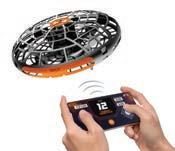


Sky Castle

Sky Castle Toys introduces GooGames a tactile, sensory take on the original Tomy Waterful games but totally squishy and visually mesmerizing! GooGames are hand-held, sensory water games that you can squish and squeeze to play! Sized just like a large smartphone, these pocket-friendly water games allow you control of the water flow, shimmering with an added touch of pearlescent powder to enrich the visual adventure. Featuring a soft, flexible material that’s squishy and tactile, oo ames enhances playtime by allowing kids to track the hypnotic water dynamics inside. Ages 3+, Available ctober 0 3.
Skyrocket Toys




Sky Viper Vector Performance Stunt Plane - elebrate 0 years of ky iper and experience fly-by-the-seatof-your-pants excitement that you just can’t get flying a drone. trap two powerful prop motors to a lightweight 6th generation fighter body, and you’ve got a recipe for no-holds-barred thrills and performance. Advanced auto flight stabili ation makes flying a bree e by automatically compensating for environmental changes like shifting winds. erform ama ing loop and barrel roll stunts with a single press of a button. The ector et flies up to 3 mph with a 600 feet range. Ages +, Available now.


My Fuzzy Friends: Magic Whispers Kitty - Everyone can hear Magic Whispers Kitty meow and purr...but press Kitty’s glowing crystal heart against your forehead and you’ll magically hear her secret inner voice. Only you will know what she’s really saying it’s magical! Special sound conducting technology allows you to hear what no one else can, but only when you press your head to hers. Three ways to play! Hear a special message just for you in Secret Cat Chat. Ask a yes or no question in Fortune Teller and she’ll magically predict the answer. She’ll even share her favorite cat jokes in Witty Kitty mode. Ages 4+, Available now.

The Faction Gel Blaster System brings the excitement of a first person-shooter video game into the real world! Faction features high performance Gel Blasters that use Bluetooth, GPS, and Cloud Server technology to create an interactive arena in a park or your neighborhood! Faction Blasters connect through your smartphone to the Faction app to bring structure to your battle. Choose a game mode, pick teams, keep score, track your stats, and stay informed with audio and screen updates. Blaster models include the more compact Faction Spectre Gel Bead Blaster and the larger Havoc Gel Bead Blaster. Ages 4+, Available now. Also look out for the action S re Tactical Target Drone for ages 8+.


71 tfe October 2023
NEW PRODUCT PREVIEWS





Smart Zone


Mighty Man 12” Action Figure - Kids will have hours of fun playing and reenacting the adventures of ighty an! The highly poseable figure with five joint positions stands tall, features a removable power hammer and emits 3 phrases. rab this figure ahead of ighty an’s eason debut! Ages 3+, Available Holiday 0 3.


Mighty Wheels 7” Mighty Man Construction Vehicles - ighty an’s heroic construction vehicle team, consisting of Throttle (dump truck), Gauge (front loader) Crank crane and Tater cement mixer are mart one’s new ighty heels vehicles as seen in the ighty an animated series. ach has differently colored flashing wheels and three character phrases in addition to physical play features like a liftable floor bed, moveable scoop and arms, rotating drum, and working crane. Ages 3+, Available Holiday 2023.


Spin Master
PAW Patrol: The Mighty Movie Aircraft Carrier HQ - Introducing the Aircraft Carrier HQ, where every mission starts. A must have toy to play out all the mighty missions from the film the ighty arine H features a preschool friendly transformation, dual vehicle launchers and two projectiles on each side. Featuring lights, sounds, music and pup phrases, the H also comes with a hase vehicle and pup figure. Ages 3+, Available now.

Rubble and Crew Bark Yard Playset - Get busy building with the all-new Bark Yard Playset. Based on the construction yard and home base for the pups in the all-new series, this playset stands over 2 feet tall, providing hours of preschool-friendly building play. The playset comes with 12 ounces of all new Kinetic Build-It Sand, four molds, interchangeable tools and a Rubble vehicle and pup, encouraging open-ended sensory play for preschoolers. Featuring lights, sounds, music and phrases from the series. Ages 3+, Available now.
Batman Gotham Guardian Playset - Standing at over two-and-a-half feet tall, The Batman Gotham City Guardian Playset is a showstopping addition to the playroom. In its huge main form, it resembles an impressive Batman figure that then transforms into three vehicles and a Bat omputer, everything needed to help Batman fight crime. Including lights, sounds, and even an exclusive four-inch figure this transforming vehicle playset is a must-have item for any Batman fan. Ages 4+, Available now.

GUND’s Food Truck Playset is a fun and modern five-piece playset that contains four different sensory-stimulating plush toys that are designed with special features to keep baby engaged through sensory play. This playset includes an adorable chef bear, taco, hamburger, drink, and truck plush. This soft set encourage young children to explore while helping develop their dexterity and hand-eye coordination. Ages 0+, Available now.

72 tfe October 2023
Spin Master cont.


Bakugan Special Attack - ith the all-new customi able pecial Attack Bakugan, you can combine your Bakugan and spin them like never before. Utili ing the rip cord to spin on the metal ate ard, watch as your customi ed Bakugan transform with the iconic pop open reveal. Ages 6+, Available now.


Squaregles





et Lost in lay with quaregles, the magnetic construction world that incorporates building, art, storytelling and action in every connection! There’s more ways to play with the Oggs Mega Set. This 03-piece set includes all the magnetic frames and 3D panels needed for kids to create different structures and stories every time they play. lus, two playful ggs characters for adventures and paperboard panels for doodling. xperience more action with the thrilling tracks, jumps and cars! o go on, build and play!
Take magnetic building and storytelling to the next level with the Squaregles Erggs’ Crash Arena! ace, launch and crash! Imagination is endless with this fun and engaging buildable crash arena! The rggs’ rash Arena et includes 4 pieces- 8 square frames, 4 edge frames, 4 double ended edge clips, bridge clips, 8 stacking blocks, cannon launcher, hairpin turn, merge one, straight tracks and more! The rggs’ have challenged the ggs to a race with knock down blocks at the finish line. ill o’s speed grant her the trophy or does Amethyst have some tricks up her sleeve Ages 4+, Available August 0 3.

The Yeti Yikes! Ski Mountain Set includes 37 building pieces- 4 edge frames, double ended edge clips, bridge clips, a ski chalet roof, mega slope, mountain top, luge, and moguls. Learn more about the mysterious eti in the included comic book that tells you all about Fluke’s mountaintop summit! Does Fluke really encounter a eti r is someone else playing some disguised tricks ! Ages 4+, Available August 0 3.
Steiff


Disney Mini Winnie the Pooh - The teiff Disney iniature ooh Bear is made of blond mohair and is five-way jointed. He wears the trademark red shirt populari ed in the Disney films and television programs. This modern interpretation of the character beloved by all no ooh, teiff, or Disney collection is complete without it! Ages 8+, Available Fall 0 3.

Steiff Soft Cuddly Friends Jimmy Teddy Bear Christmas - ou’ve just found the perfect holiday gift! eet our new hristmas version of immy, one of the most popular Teddy bears in our oft uddly Friends range. He’s dressed for the season in a festive anta hat and wears a red, green, and gold bow around his neck. immy is made of exceptionally soft plush and is weighted with bean bags in his bottom and paws. This adds stability when he’s sitting, and a pleasant amount of weight when immy’s being hugged. He’s the cuddliest hristmas present imaginable for anyone who has a special place in your heart. Ages +, Available Holiday 0 3.

73 tfe October 2023
NEW PRODUCT PREVIEWS


Storypod
Storypod Starter Kit - Includes the player, an interchangeable and machine-washable teal sleeve, a lanyard for little hands to carry the torypod around, and a tory ticker to record the first 60 min of family stories memories. Using the Storypod App, you and loved ones can record stories, songs, memories, more. Ages 0-6. Available now.

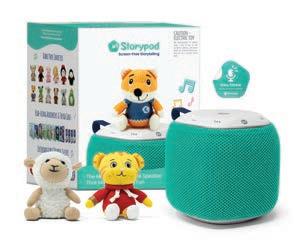
Already got a Storypod? Then you must get your hands-on Story Stickers With the Storypod App, a parent and anyone he/she invites can record stories, songs, memories, meditations, jokes or anything you want onto special stickers that can easily place on things like books, photo albums, and birthday cards! Kids then tap the sticker atop their Storypod to hear familiar voices and tales they will cherish now and forever. Ages 0-6. Available now.
Super Impulse


The iconic line of World’s Smallest Toys keeps growing and kidults keep coming back for more! World’s Smallest includes the best and most classic toys we all know and love, made as fully functional versions in the smallest sizes ever created! There are hundreds of toys to collect! New for 2023 is Nerf Elite, My Little Pony In Motion, 4” Rollerblade Barbie, 4” Western Barbie, Town Country Wagon from Radio Flyer, Care Bears Series 4, Tech Deck Series 2, Wooly Willy, Trouble Game, Hot Wheel Series 8, Waterfuls, Needoh, Big Wheel The Original, and more! What a perfect stocking stuffer for all ages! Ages 6+, Available Fall 2023. Also look out for 3.75” Figures featuring Yu-Gi-Oh, Beavis and Buthead, South Park and more! Ages 8+, Available Fall 2023.
Poptaters Series 3 - Super Impulse partners with Hasbro and a variety of pop-culture IPs to bring exciting mashups to a new generation of Potato Head fans and collectors. Poptaters puts a fun twist and mashup on two iconic classics and adds a touch of playfulness in any space! New for Fall 2023, collect Teenage Mutant Ninja Turtles, Star Trek Spock, Hatsune Miku, Sesame Street Bert and Ernie, and Silent Bob!


Minis-in-Minis Sugar Buzz Hershey’s is an innovative toy line of miniature collectibles with a sweet twist. Each mini collectible has tiny minis inside! It’s sure to give mini collectors a kick, bring back sweet memories, and make you feel like a kid in a candy store! The most unique miniature collectibles anywhere - collect miniature candy replicas that open up and contain 2, 3, or 4 of the teeniest, tiniest confections ever! Discover Hershey’s favorites like Twizzlers, Bubble Yum, Reese’s Pieces, Hershey’s Miniatures, Jolly Rancher, Milk Duds, and so much more! What a perfect stocking stuffer for all ages! Ages 8+, Available Fall 2023.


74 tfe October 2023
Super Impulse cont.





World’s Smallest Micro Figures - Super Impulse puts its iconic twist on miniatures with Micro Figures - your favorite characters at a fraction of the size! easuring up to . inches tall, each highly detailed and articulated micro figure comes with a mini collector case for display and storage, and stand. ew for 2023, collect Monster High, Dungeons Dragons Series 2, Sonic the Hedgehog, and Fall Guys! What a perfect stocking stuffer for all ages! Ages 6+, Available Fall 2023
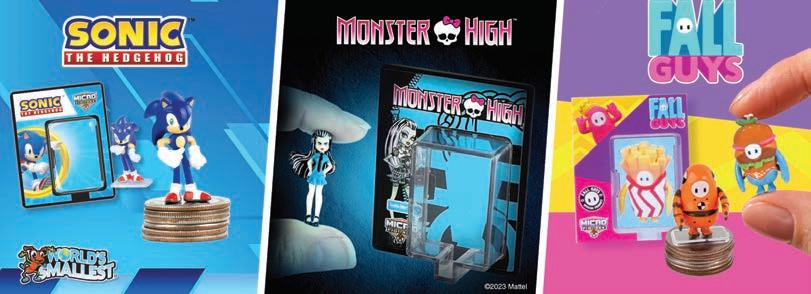
Tangle


The new Furry Tangles are cute, cozy and spark creativity! Soft and highly tactile, the bendable and adorable assortment of Furry Tangles are hard to resist and put down. Available in assorted colors and patterns, the Furry Tangle sparks creativity as kids (and adults) work through each bend and movement, just like a classic Tangle! Ages 3+, Available now.


The classic Tangle play pattern meets plush! Furry Friend Tangle is a new must-have companion and friend to help spark creativity and joy! Soft, bendable, and highly tactile, this adorable assortment of wearable, poseable friends are sure to be a comforting hit. Available in two sizes, this new furry companion is the perfect fidget toy to help spark creativity through movement by bending and twisting its Tangle body. Available in assorted colors, patterns and adorable eye colors, the Furry Tangle comes in various animal themes including Monkey, Bird, Unicorn and more. Ages 3+, Available now.
Play longer, later with the NightBall Pickleball Set NightBall Light-Up Pickleball takes the competition to a whole new level, enabling players for clear vision on a dimmed court with the motion-activated LED paddles and ball. The colorful neon-colored set includes two motion-activated (USB-rechargeable) light-up paddles and three light-up pickleballs. Ages 6+, Available now.




75 tfe October 2023
NEW PRODUCT PREVIEWS








Thames & Kosmos

The Thames & Kosmos Science Advent Calendar - ‘Tis the season for science! Christmas time is experimentation time. Discover something new and amazing every day leading up to the holiday. With this advent calendar, children open a new box each day to find new equipment or materials and the instructions for a science experiment. ach of the 4 beautifully designed boxes includes unique experiment materials and expertly written and illustrated instructions. Ages 8-12+, Available now. Also look out for Exit: Advent Calendar – The Silent Storm. Ages 10+, Available now.


Dragonkeepers - ven dragons start small! Before they can fly and breathe fire, they need to be well protected. As experienced dragonkeepers, this is exactly your task. To do this, you use the “magic book.” The two open pages show you which dragons, and how many, you can take under your protection. It goes without saying you have a few clever tricks up your sleeve in order to manipulate the book in your favor. The best dragonkeeper wins this fantastic contest! Ages 8+, Available October 2023.


The Lord of the Rings: Adventure to Mount Doom - In this cooperative fantasy board game, players experience the Hobbit Frodo’s perilous journey to destroy the ne ing in the fires of ount Doom! ith a clever choice of dice, players move figures from the iconic series across the gameboard to help Frodo and the Fellowship achieve victory. Ages 0+, Available now.


TOMY


TOMY Games Pop Up Pirate Gold - The surprise family game that is a real barrel of fun. Take turns sliding the colorful swords into the barrel. Beware - if the pirate pops up on your turn, you are out. ids love the popping action of the pirate flying out of the barrel. This new version features a gold barrel and the pirate includes gold accents. Ages 4+, Available now.

The John Deere Build-A-Buddy Green Dump Truck features two great ways to play! This 13-piece construction toy includes a screwdriver and ratchet that lets kids take it apart and put it back together again which is great for encouraging problem solving skills. ade of chunky parts, it’s easy for little hands to assemble and maneuver into place. But the fun doesn’t stop there! ut together, this dump truck is a great push-along toy for lots of on-the-floor fun. It also features a working dump bed that lets kids haul around all of their favorite treasures.

Bebé Fuerte A new infant toy line, co-designed by T and obin Ar n, ice resident of Fitness rogramming and Head Instructor at eloton, brings a fresh, colorful palette of Latin culture to seven products that will feature panish words and phrases parents can share as they play with baby. otivational messages like i e uede and amos A overnos can be found throughout the inclusive collection. Ages 0+, Available now.

Behold! The ultimate life form in huggable plush Shadow the Hedgehog from Club Mocchi- Mocchi-! Designed in Japan, occhi- occhi- are super soft and huggable pillow toys! Unlike other ordinary plush toys, these high quality collectible plush pillows have a unique squishy texture and are super soft to touch. The onic the Hedgehog plush series features fan-favorite characters and items from the beloved video games and movies. ages 3+, Available now.

Bring one of the most iconic intendo video games of all time home with Mario Kart Pull Back Racers! ull back on the racer and watch it go. ho will cross the finish line first The racers come with a signature sticker that you get to place on the front of the racer. ach surprise capsule includes one of eight different racers. Inside you’ll find ario, Luigi, ario, Donkey ong, rincess each, oshi, Toad, or a racing Bowser! Ages +, Available now.

76 tfe October 2023
Theodora S.T.E.A.M. Girls

The line of Theodora S.T.E.A.M. Girls consist of powerful and inspirational diverse dolls that will inspire young girls to be empowered, motivated, and achieve goals. The high-quality luxurious dolls are made with care and love and are meant to be role models for young girls’ power to change negative thinking patterns and replace them with positive thinking patterns. The collection includes Silla The Scientist, Tyriqa The Techie, Elaine The Engineer, Antonia The Artist, and Maalika the Mathematician. Each doll has a unique superpower that helps them in their adventures and includes an 8-page sticker activity book that encourages children to learn about and interact with S.T.E.A.M activities. Ages 3+, Available Fall 2023.
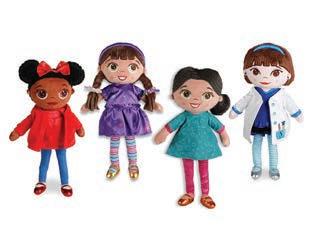
ToyMonster


Introducing a new generation of roar-tastic family fun with the all-new Jurassic World Ravenous Raptors game! These hangry Raptors need to be fed and it’s your job to make sure each of them eats as many snack balls as possible! Get ready to chomp, romp and roar your way to the highest score! Each Game contains: Jurassic Enclosure, 4 Ravenous Raptors, 20 snacks balls marked Carnivore or Herbivore, Instruction game guide. Ages 3+, Available now.

Discover a new generation of dinosaur species with all-new Jurassic World CAPTIVZ Hatchlings. These pintsized buildable dinosaurs are newly-hatched, bright eyed and ready to explore the world. Featuring 14 species to collect including RARE mini Velociraptors. Just crack your egg, ooze through the stretchy paleo slime to reveal your collectible species, then build to BATTLE! Collect them all! Each Hatchling Slime Egg contains: Build N Battle Dinosaur with epic paint detail, Paleo slime, Collector guide, Exclusive Collector Card. Ages 3+, Available now.


Toyish Labs





The Mars Rover Clixo Pack is a glow-in-the-dark flexible magnetic building experience designed for imaginative minds. With allterrain wheels, fire blasters, and custom pieces, you can build countless rovers, motorcycles, and space drones to explore the most challenging Martian landscapes. Get your spacesuit ready to unleash STEAM skills and creativity. Also look out for The Ocean Creatures Clixo Pack which brings underwater wonders to life! Take your imagination to new depths with specially designed glow-in-the-dark pieces, fins, and tentacles. The packs are currently available for pre-order here and will start shipping in mid-October.
Ultra Pro Connecto - Connecto is based on the concept of connect-the-dots: connect the dots and guess what you are drawing. Each round, a card with several items is revealed. Simultaneously, players connect these items on their board to draw a shape. The first player who guesses what they are drawing even if the shape is incomplete writes it down on their board and starts the countdown for the other players. Once the time is up, players win points if they guessed right. Ages 8+, Available now.


Fairy Prank - mischievous fairy has taken some objects from your desk while you were sleeping! In order to get them back, you must correctly guess which missing items are inside the fairy’s treasure box! In Fairy Prank, one player takes the role of the fairy by removing items from a treasure box, while the remaining players will try to guess what’s missing by shaking it and listening to the sounds. The player who correctly guesses the same item three times, or identifies six different items at least once is the winner. Ages 8+, Available now.


77 tfe October 2023
NEW PRODUCT PREVIEWS



University Games
Irritable Vowels - The word game full of vowel movements. Irritable Vowels is the jumpy bumpy word game where the vowels have a mind of their own! Race your fellow players to create words using your letter cards and the ever-changing vowel! When the Vowel Device settles on a vowel, all players race to create a word. Can you create a word before the vowels go crazy again? Be the player with the most cards at the end of the game to win! Ages 8+, Available now.
Rocky Horror Game - Celebrate the 50th anniversary of the ground-breaking Rocky Horror Show with this raucous party game. Players rock to song lines, laugh with charades and do the Time Warp Again with dancing! Build alliances, navigate the lab and escape the castle or to Transylvania as your favorite character from the show. The winner will be the first player to make it to the wedding on time! Ages 12+, Available Holiday 2023.

Faeries & Magical Creatures - Faeries Magical Creatures is a new strategy game where players collect faeries, plant gardens, build fairy homes, and be the first mortal to join the fairy realm. The magical part of this game is the engaging theme for all levels and demographics of players. From gamers and hobbyists to novice and casual mainstream folks, the elegant art from Annie Stegg-Gerard, high end detail, engaging setting and game play strategy actions, that immediately appeals to a very popular fanbase for games, as well as and fans of mythology, fantasy and folklore. Ages 10+, Available Q1 2024.

Dog Man: 20,000 Fleas Under the Sea Game - Twenty Thousand Fleas Under the Sea is Dav Pilkey’s 11th book in the super popular, cult classic following of Dog Man. This new game follows Dog Man and the Supa Buddies in a board game version that has players helping the crew in their latest adventure to save the world. Ages 6+, Available Q1 2024.

Relist It! - It’s a race to rearrange in the game all about putting things back in their correct order! Players have two minutes to bring order to chaos from either a group of topics or anagrams. Earn points for each correct answer and additional points for a fully ordered Card. Be the player with the highest score at the end of the game and win! ages 8+, Available Q4 2023.


Vango


You’re Getting Stupid - Have you ever asked the person cutting your hair what they do for a living? Have you drop-kicked your phone across the room in an attempt to catch its fall? You’re Getting Stupid, the latest party game from Vango, will have you reliving your biggest face-palm moments as you complete to which of your friends is stupidest. Players move mini-Brain playing pieces forward and backwards along their “Path to Getting Stupid” card based on their answer to the “Stupid” prompt and their ability to answer simple trivia questions. The trivia prompt asks simple questions like: How many planets are there? Know the answer? If so, then maybe you’re not so stupid after all. First player to reach the last space on their “Path to Getting Stupid” card loses the game and is crowned king of the dummies. Also look out for You’re Getting Saucy Ages 14+, Available December 2023.

78 tfe October 2023
Vango



BIZYBOO Hide ’N’ Seek Busy Bags Easter Series - Each of the 4 soft and charming characters houses 30 hidden Easter-themed objects waiting to be found. Using both written and visual prompts found on an attached card, children will have a blast prodding and shifting the beads around, seeking out the Easter-themed objects. Not only do they keep your little ones engaged, but these bags also promote object recognition, motor skills development, and improves attention. This aster, fill your children’s Easter basket with the BIZYBOO Hide ’N’ Seek Busy Bags Easter Series. Ages 2+, Available March 2024.

VTech


Smart Wheels Spiral Construction Tower - Spin down the spiral tower, then cruise through the construction site. Build first words and motor skills with a talking dump truck and track set that drive development and imagination with mart oint tech. Roll through the switch gate, over the drawbridge and down the ramp to hear phrases about feelings, construction and cleaning up as kids drive the truck over seven interactive mart oint areas. xplore five play pieces and eleven movable parts to fuel imagination and strengthen fine motor skills. ollect more o! o! mart heels mart oint cars and track sets to explore unique responses on each mart oint sold separately . Ages . +, Available now.
Transform playtime adventures with the Switch & Go 2-in-1 Spino Speedster! asily combine the fiery-eyed, lightup pinosaurus with the terodactyl into a fireball-launching mega car. Fuel-injected trouble is on the way! Launch two fireballs from the back of the mega car. neak attack! ow switch things up and press the power boost button to launch the pinosaurus and instantly transform the speedster mega car into two dinos. There’s no stopping this spiny stomper! heck out its fiery light-up eyes. Then pick up the terodactyl to take imagination on the fly. oar, soar and launch! Ages 4+, Available now.
reate your own musical masterpieces with Bluey’s Keytar and pretend to play at a fancy restaurant just like in the show! omance music is in the air as you use your imagination to make music using the keyboard or play along with 0 built-in melodies including the Bluey theme song. ake more than piano sounds, too! Transform the keyboard notes to sound like a guitar, hattermax, Bluey’s sister Bingo and more by choosing from 0 instruments and sound effects. Ages 3-6, Available now.
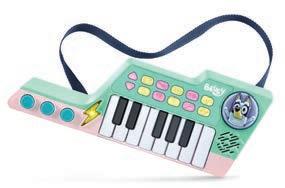
Watchitude
Remarkable Tag’d Trackable is a digital watch that fits a hidden Apple AirTag. ids will just think it tells time as they choose among ten stylish designs, including sharks, gummies, rainbow tie-dye, sprinkles, unicorns, and more. The bright white large digital watch display makes it easy for youngsters to read the time at a glance. Available now.

laying hoops has never been like this with atchitude’s indoor Basketball Set providing endless entertainment and skill-building opportunities. reated for pint si e players, this set boasts a . backboard, that’s incredibly easy to install, ensuring hassle-free setup in no time. ids can quickly start shooting hoops and having a blast. A ball pump and pin are included with the red, white, and blue hoop net. Also look out for the ids Indoor utdoor ickleball et! Available now.

For those kids that like to score with their feet, atchitude’s MOVE Soccer Goal provides young players with an immersive soccer experience that can be enjoyed both indoors and out. ith an understanding for easy storage and quick setup, this soccer goal is a pop-up design that’s collapsible. The included 6 carry bag lets kids take their soccer adventures wherever they go, from the backyard to the park and beyond. arents and retailers will be pleased to discover the combination of sturdy nylon and polyester materials ensure a long-lasting use even during intense play.

79 tfe October 2023
cont.
NEW PRODUCT PREVIEWS




Wild Republic
Green Guardians - These wonderfully fun play sets are also eco friendly. Each themed set comes with a vehicle, a human guardian of the planet, and an animal for hours of fun. At the end of life of this toy, simply dispose of it and the pieces will begin to biodegrade within a year. Ages 3+, Available Fall 2023.


Wishbone


Special Crazy Ice Bubbles solution for giant bubbles, they freeze in the air depending on the temperature and fly super far. This solution is developed for the winter. This set contains 6o bag with ra y Ice Bubbles olution for iant Bubbles, iant Bubbles and and one Tray. For kids +, Available Holiday 0 3.

LED Snow Candles Kit is a great outdoor activity for kid and kids at heart. ou can easily make as many candles as you want and decorate your entire back yard. This kit contains one now andle mold, one space maker, one L D color changing andle light with water resistant battery compartment, and one star stamper. For kids +, Available Holiday 0 3.

WowWee





Unleash nonstop soaking action with the NERF Super Soaker Hydroburst Hose Blaster powered by your garden hose. This water blaster, officially licensed by Hasbro and produced by ow ee, levels up backyard battles with two et odes to soak the competition apid Blast and et tream. imply connect to your garden hose and get ready to blast with a soaking range of up to feet .6m . Ages 6+, Available pring 0 4.

o bananas and reveal friendship at your fingertips with all-new Fingerlings Lulu the interactive baby unicorn! he’s a bubbly, magical unicorn with 0+ sounds and reactions. Fingerlings now have fu y fur on their heads, a new look and new voices and personalities. Fingerlings really know when they’re on your finger just watch their heart glow and personality change! Fingerlings respond to your touch, so you can feed them, kiss them, pet them and more! Their poseable tails flip up, so they can sit. Ages +. Available Fall 0 3.

80 tfe October 2023
Exhibitors
Global Media
Speakers
#TOYFAIRLIFE
Sponsors Students
Buyers
Entertainment Executives






and
reuniting and reimagining
Toy Fair experience in person in NYC and on LinkedIn. Join us!
The entire toy
play community is
their
You’re Hired!
Moose Toys: Ronnie Frankowski, Global President

is newly created position will focus on driving innovation, e ciencies, and ROI and has been developed to fast-track Moose’s journey to become the most innovative toy company in the world. “I’ve always felt truly lucky to be a part of the Moose family and, consequently, I’m honored and excited to take on this new responsibility.” Said Frankowski. “We have immensely talented and passionate people, an incredibly special culture and a clear and ambitious strategic plan. e future is very, very bright at Moose and we’ll continue to aggressively push the boundaries of creativity and innovation as our guiding light.”
Falcon’s Beyond: Toni Caracciolo, Executive VP of Marketing and Branding
In this newly created position, Caracciolo will advance the strong momentum Falcon’s has established over the past year as the company launched multiple projects, initiatives, and experiences across its three core business units: Falcon’s Creative Group, Falcon’s Beyond Destinations and Falcons Beyond Brands. Her deep travel experience is particularly relevant to the planned future growth of Falcon’s Beyond Destinations. rough this division, earlier this year, Falcon’s opened both Falcon’s Resort by Meliá | All Suites Punta Cana and the adjacent Katmandu Park | Punta Cana, the rst theme park of its kind in the Caribbean, together o ering a unique “resortainment” hospitality experience.


Schleich: Stefan De Loecker, CEO


Schleich, the German manufacturer of gurines and playsets, has announced a new change to their executive team, appointing Stefan De Loecker as the new CEO e ective January 1, 2024. Before joining Schleich, Stefan De Loecker was CEO of Beiersdorf and previously President of its emerging markets and has had a broad and long-standing career in FMCG, namely with Nestlé.
Mattel: Robbie Brenner, President of Mattel Films
Mattel, Inc has announced the promotion of Robbie Brenner to President of Mattel Films. She was previously Executive Producer of Mattel Films since 2018. Brenner produced for Mattel the multiple record-breaking Barbie movie, released worldwide on July 21, 2023, by Warner Bros. Pictures. e highest grossing lm of the year, Barbie is directed by Greta Gerwig, stars Margot Robbie and Ryan Gosling, and is produced in partnership with Margot Robbie and Tom Ackerley of LuckyChap and Academy Award-nominee David Heyman. Prior to joining Mattel, as an independent producer, Brenner earned a 2013 Academy Award nomination for “Dallas Buyers Club,” which won three Academy Awards.
Invisible Universe: Jonathan Schneider Studios President
Based in Los Angeles, Schneider will oversee the company’s continued optimization of its animation studio, while exploring other revenue-driving operations for the fast-growing media company. Schneider is a seasoned executive, having held senior positions for powerhouse companies such as Disney and Skydance. He brings not only deep animation industry expertise to Invisible Universe but also more than two decades of proven experience growing and leading teams. In his new role, Schneider will lead the company in its adoption of new technologies, including those associated with AI, motion capture, and real-time rendering, while building new business verticals for the company.
University Games: Margie Benford, GM, Puzzles and Mystery Games Division
Margie Benford will lead the design, development and marketing for University Games’ award-winning BePuzzled and Murder Mystery Party Divisions, which includes University Games’ highly anticipated e Night Hunter game, as well as the vast collection of 3D Crystal Puzzles and popular Hanayama Cast Puzzles. Benford’s experience also provides University Games with seasoned executive leadership for their existing and future licensed property puzzle lines.

82 tfe October 2023


For licensing opportunities, please contact: Jennifer Coleman • cj.52363@konamicrossmedia.com konamicrossmediany.com • yugioh.com
Get on board for the multi-year celebration! JOIN THE DUEL!
©2020 Studio Dice/SHUEISHA, TV TOKYO, KONAMI
