




Here’s The Story of a Lovely Potato … of a Lovely Potato … 2 1 Surprise Part Included! Interchangeable Parts! © Universal City Studios LLC. All Rights Reserved. Licensed By: Hasbro and its logo, MR. POTATO HEAD and MRS. POTATO HEAD are trademarks of Hasbro and are used with permission. ©2023 Hasbro.All Rights Reserved. Licensed by Hasbro Squid Game TM/© Net ix. Used with permission. TM & © 2023 CBS Studios Inc. STAR TREK and all related marks and logos are trademarks of CBS Studios Inc. All Rights Reserved. © 2023 Viacom International Inc. All Rights Reserved. Nickelodeon, Teenage Mutant Ninja Turtles, and all related titles, logos and characters are trademarks of Viacom International Inc. The JAY & SILENT BOB, Kevin Smith, Jason Mewes, Buddy Christ & Mooby’s elements contained herein are protected under the copyright and trademark laws of the United States and other Countries. Sesame Street® and associated characters, trademarks and design elements are owned and licensed by Sesame Workshop. ©2023 Sesame Workshop. All rights Reserved. Super Impulse USA, llc, 10 Canal Street, Suite 330 Bristol, PA 19007 USA +1 267 878 0466 @SuperImpulse toys@superimpulse.com www.superimpulse.com HATSUNE MIKU
On this Page


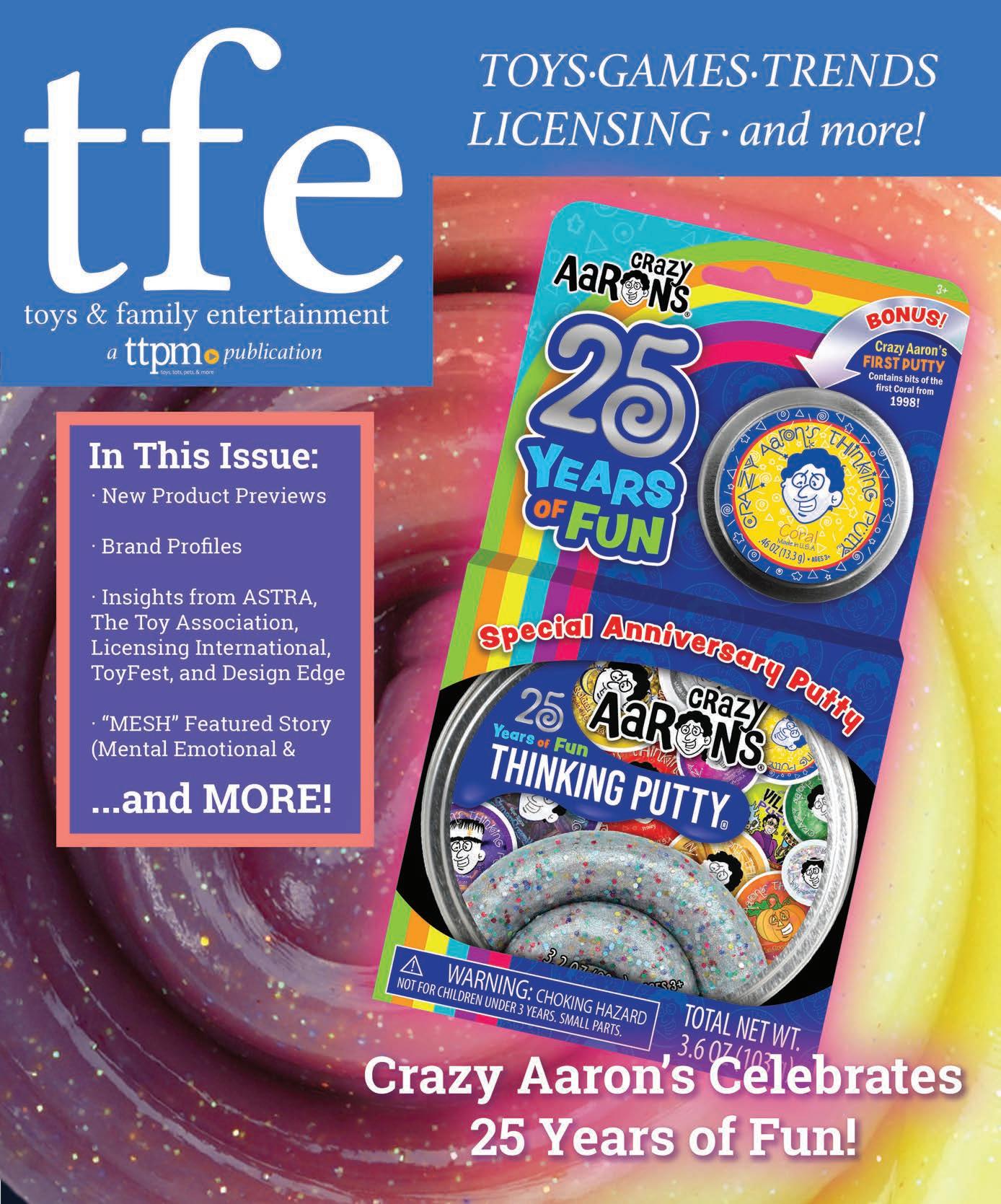
On the Cover


Featured Content Departments 14 All in the Family Mary Couzin 18 The Serious Side of Fun Ava Diamond 22 r d Profile Ultra PRO 24 Licensing International Elizabeth Foster 26 The Business of Bluey Andrew Carley 28 The Importance of MESH Rachele Harmuth, Dr. Deborah Gilboa Rick Derr & Nick Truss 36 New Product Preview 4Observations and Opinions 6 What’s Trending 8 Industry News 10 Industry Forum Toy Association - Maddie Michalik 12 Industry Forum Design Edge - Matthew Nuccio 16 Industry Forum ASTRA - Sue War eld 20 Industry Forum ToyFest - Carrie Scanlan 74 You’re Hired! Contents · June 2023 Vol. 18 · No. 2
25th Anniversary inking Putty Pack by Crazy Aaron’s See page 42 for details
1. Torched Rainbow Metal D20 Spinner by FanRoll
2. Piñata Smashlings Yum Yum Playset by PMI
1 2 3 3 tfe June 2023
3. Disney “D100” Mickey Mouse with Mini Teddy Bear by Stei
Observations & Opinions Back to Normal
BY BOB GLASER
Here we are more than 3 years later from the onset of the COVID pandemic, and it seems like business is nally getting back to pre-pandemic ways of operating. Yes, there have been in-person trade shows over the last few years, but as we get further and further away from the pandemic, we return to the “way things used to be”. Many of us will be gathering in Columbus, OH for the annual ASTRA convention (my favorite trade show every year) or in Las Vegas for the annual Licensing Show. Movies with toy licensing are spread throughout the 2023 release schedule. Earlier this year, Guardians of the Galaxy ruled the box o ce for several weeks. Disney’s e Little Mermaid opened at the end of May. ere is nally another Indiana Jones movie scheduled for release this summer. Spider-Man, Transformers, and Barbie all have movies debuting this year as well (by the way, how about that industry shaking news of Mattel and Hasbro working together on a few licensing deals? Exciting!) What all this means for the toy industry is more opportunities to sell more products. As we get back to the “way things used to be”, hopefully consumers embrace the opportunity to feel comfortable once again going to a movie theater to be one of the rst to see the new blockbuster. is can then translate into consumers, particularly children, wanting to play with the characters and toys they saw in said blockbuster.
June 2023 · Volume 18, No. 2
Publisher Bob Glaser Bob@TTPM.com
Vice President, Advertising & Sales

Donna Moore
Donna@TTPM.com
Controller
BOB GLASER, PUBLISHER
Eileen Palermo
Eileen@TTPM.com
Editor in Chief
Jim Silver Jim@TTPM.com

Editorial Manager Nick Truss Nick@TTPM.com
Contributors
Andrew Carley, Mary Couzin, Richard Derr, Ava Diamond, Elizabeth Foster, Dr. Deborah Gilboa, Rachele Harmuth, Maddie Michalik, Matthew Nuccio, Carrie Scanlan, Susan War eld
Interested in a subscription? Contact Bob Glaser at Bob@TTPM.com.
Another indication of how things are getting back to the “way things used to be” are with our TTPM events. Live events obviously took a hit during the pandemic, but we here at TTPM are seeing a renewed interest in companies wanting to show their products to the media, and in uencers, at our events. Our next event is scheduled for September 13th here in New York City. I look forward to talking with many of you at the trade shows this month about exhibiting at our upcoming TTPM Holiday Showcase. Your only chance to see some of the Fam uence Talent Management in uencers will be at our event. Don’t miss out on this opportunity to meet with and discuss opportunities to work with these in uencers who are the new gatekeepers when it comes to promoting toys and moving the needle regarding sales.
aNb Media, Inc. 149, W. 36th St., 10th Floor, New York, NY, 10018 · Phone: (646) 763-8710 · Fax: (646) 763-8727
Toys & Family Entertainment (TFE) is published three times per year by aNb Media. Copyright 2023 aNb Media. All rights reserved. No part of this publication may be reproduced or transmitted in any form, or by any means, electronic or mechanical, including photography, recording, or any information storage and retrieval system, without written permission from the publisher. Printed in the U.S.A., TFE, TFE Licensing, and Specialty Emporium are registered trademarks of aNb Media. Opinions and comments expressed in this publication by edtiors, contributing writers, or solicited or unsolicited documents are not necessarily those of management

4 tfe June 2023
tfe
aNbMedia.com


What’s Trending?

These trending lists are based on aNb Media’s consumer website, TTPM.com, and related YouTube channels. TTPM’s Top Trending Lists are generated by the number of views for that item across toy, baby, and pet categories. Here are the lists of top trenders as of May 20th, 2023.
Top 10 Trending Toys
Care Bears Surprise Figures Peel N’ Reveal Assortment


Basic Fun!
Monster High Draculaura
Gore-ganizer Playset
Mattel
Dog Man Flip-O-Rama Game
University Games
Jurassic World Dino Trackers
Track ‘N Attack Indoraptor
Mattel
Castle Panic and My First Castle Panic
Fireside Games
Disney Princess Core Dolls
Mattel
New 2023 Rainbow High Dolls
MGA
Airport Play Mat Set
Madzee Toys
Mini Mix or Match Dinosaurs and Micro Mix or Match Vehicles
Popular Playthings
Learn ‘N Balance Set
Little Partners
Top 5 Trending Baby

i Ba y Bottle
Mochi Teething Toys

Toys by People
ECO Big Sensory Ball

Miniland
Take Me With You Zebra
VTech Baby
Playskool Little Wonders Shelby
Snail and Otto Owl
PlayMonster
Top 5 Trending Pet
Slow Treater XL
AquaPaw
Level 2 Dog Puzzle
Potaroma
4-in-1 Feline Fun Cat Toy

L'Chic
Gator Scratch Mat For Cats

Hartz
Gone Fishin’ Cat Toy
Hartz
i
6 tfe June 2023



Dallas Total Home & Gift Market Preview: First Show of the Summer Presents InDemand Products, Unique Finds, and Engaging Events to Empower Retail

e Dallas Total Home & Gi Market taking place June 21-27 will be the rst trade event of the summer season and will welcome retail decision makers from around the world, Dallas Market Center has announced. e show will feature important new brands and collections, artisan items, inspiring special exhibits, and exciting events. “ e rst show of the summer means the rst opportunity for retailers and designers to discover new products and place orders,” said Cindy Morris, president and CEO of Dallas Market Center. “It’s critically important for buyers to be here rst for the new collections, one-of-a-kind pieces, and top sellers. We also know that retailers are seeking a single location for inspiration and ordering across many di erent product categories, which is why we are anticipating a strong show.” Pre-registration, which is the exclusive method to receive a FastPass for quicker entry, is now available at dallasmarketcenter.com
KessCo Announces Licensing Partnership with SEGA of America and Sonic the Hedgehog


KessCo, a third-generation toy and game company, announced a licensing partnership with SEGA of America, Inc and the Sonic the Hedgehog franchise, marking Kess’ rst national licensing agreement with SEGA of America. e partnership will o er Kess the opportunity to feature the iconic Blue Blur and the beloved franchise across a variety of tabletop games, card games, and outdoor play items in 2024. “As an avid Sonic fan myself, I am extremely excited and proud to announce our newest licensing agreement with SEGA of America,” said Alex Kessler, CEO of Kess. “Licensing has become an important part of our growth strategy, and our customers have been asking for Sonic-branded products from us for years. We look forward to continuing to grow our games category through this recent license acquisition, while introducing licensing to our popular outdoor range for the rst time.”
Mediawan Kids & Family Partners
with Licensing Works! to Launch Merchandising Program for ‘The Little Prince and Friends’ Preschool Series
Mediawan Kids & Family , in collaboration with La Succession Saint Exupery-d’Agay, has selected Licensing Works! to manage the merchandise licensing for its new animated television series, e Little Prince and Friends. is groundbreaking preschool series featuring all-new adventures based on the beloved characters from the timeless masterpiece and best-selling novel ever published is produced by Method Animation in coproduction with Bidibul Productions and LPPTV, with the participation of France Televisions, WDR, TVGlobo and RAI Kids.
Jazwares Named Master Toy Licensee for Sanrio Global Sensation Hello Kitty and Friends in NA

Jazwares, a leading global toy company, announced that it has entered into a multiyear North America master toy licensing agreement with Sanrio to create a toy line inspired by Hello Kitty and Friends. One of the world’s most famous icons, Hello Kitty debuted nearly 50 years ago and remains a pop culture mainstay beloved by fans across generations. Capturing the brand’s core values of friendship, kindness, and inclusivity, Jazwares’ Hello Kitty and Friends toy line will embrace Sanrio’s signature kawaii style and the playful, colorful nature in a wide range of toy products across multiple categories. is agreement also includes Net ix sensations Aggretsuko and Gudetama brands as well as hundreds of beloved Sanrio characters. Ami Amis Wave 2 is launching in April at major retailers and online.

8 tfe June 2023
Mattel and Hasbro Enter into Mutual Licensing Agreements

















Hasbro, Inc and Mattel, Inc have announced that they have entered into multi-year licensing agreements to create co-branded toys and games from some of their most popular brands. Hasbro will create Barbie branded Monopoly games launching in fall 2023. Mattel will produce Transformers branded UNO games, slated for release later this year, and Transformers branded Hot Wheels vehicles, set to debut in early 2024. Hasbro and Mattel are launching this collaboration against the backdrop of two major theatrical releases this summer, with Hasbro’s Transformers: Rise of the Beasts from Paramount on June 9, 2023, and Mattel’s Barbie from Warner Bros. on July 21, 2023.
Disguise Announces Worldwide Multi-Year Licensing Agreement with MGA Entertainment





Disguise, Inc, world leader in costume design and manufacturing, has announced a new multiyear contract with MGA Entertainment (MGA), one of the largest and fastest growing toy and entertainment companies in the world, to design, manufacture, and distribute costumes and dress up accessories across the globe for MGA’s hottest brands, including L.O.L. Surprise!, Rainbow High, Little Tikes, and Bratz. Disguise’s exceptional attention to detail and unwavering commitment to quality make them the top choice to elevate these brands to the next level in costumes and dress-up. ese innovative designs are certain to delight both kids and collectors alike, providing them with the opportunity to dress up as their favorite characters from two of MGA’s globally popular brands.











9 tfe May/June 2022
866. 5 78.2 8 45 │ OR DE R S@C RAZY AA R ONS.CO M WWW.CRAZYAARONS.COM
INDUSTRY FORUM TOY ASSOCIATION
Toy Fair 2023 Highlights the Power of Licensing in the Toy Industry
By Maddie Michalik
Toys and licensing are like peanut butter and jelly, Batman and Robin, or Woody and Buzz; they just go together. e collaboration between the toy and licensing industries has resulted in some of the most beloved and iconic products in history, from Kenner’s Star Wars action gures to Playskool’s Tickle Me Elmo. is winning combination has proven to be a recipe for success, producing billions of dollars in revenue (representing 30 percent of total global toy sales in 2022, according to Circana) and captivating the hearts and imaginations of generations of consumers.
At the heart of both industries is a shared goal: to create products that resonate with consumers, which can be a win-win for everyone involved. By partnering with an established brand or character, toy manufacturers can tap into an existing fanbase and bene t from the marketing and advertising e orts of the licensor. is strategy can help to increase sales and brand recognition, particularly for new or niche toy companies that might not have the resources to build their own brands from scratch.
From the licensor’s perspective, licensing agreements provide a way to generate revenue from their intellectual property (IP). is is particularly important for companies that produce content like movies and TV shows, for which the initial box o ce or advertising revenue may not be enough to recuperate the cost of production. Licensing deals can provide a longterm revenue stream, even a er the initial release of the content, increasing the lifespan of the brand or characters, as well as renewed interest in the original content.
e Licensing Community at Toy Fair

e intersection of toys and licensing will be evident this fall at e Toy Association’s Toy Fair, taking place from September 30 to October 3 at the Javits Center in New York City. e largest toy trade show in the Western Hemisphere attracts tens of thousands of attendees from around the world — including buyers, manufacturers and distributors, the media, licensing and entertainment executives, and other industry professionals — making it one of the most in uential events for networking and making business connections.
“At Toy Fair, attendees can expect to see a wide range of the latest and greatest licensed products on display, but it’s also where the entire play ecosystem strengthens relationships, exchanges ideas, and inks new deals,” said Kimberly Carcone, executive vice president of global market events at e Toy Association. “ e licensing and entertainment communities can share their new properties to potential partners and get a sense of the latest trends in the toy industry. Toy companies, meanwhile, can explore new licensing opportunities and build relationships with licensors that can lead to longterm partnerships and revenue streams.”
is year’s Toy Fair will also host the most comprehensive lineup of educational programming in the show’s history. Toy Fair University will take place throughout all four days of the show, featuring a number of seminars and workshops that cover a wide range of topics, including licensing and IP. All sessions are led by experts in their respective elds and provide valuable insights into the latest trends and best practices, equipping attendees with the tools and strategies they need to gain a competitive edge.
10 tfe June 2023


new ways to to place an order: contact your sales rep or tomy sales at 563-875-5600 or inside.sales@tomy.com TM
INDUSTRY FORUM DESIGN EDGE
DESIGNER’S PERSPECTIVE
Matt Nuccio presents a call to action, urging for legislative change to protect small inventors and preserve healthy competition.
Support ‘The Innovation Restoration Act of 2023’
by Matthew Nuccio and Judge Susan G. Braden (Ret.)
On April 18, 2023, Senator Chris Coons (D-Del), Chairman of the Senate Intellectual Property Subcommittee and Senator Tom Tillis (R-N.C.) convened a substantive bi-partisan hearing to discuss how to address “Foreign Competitive reats to American Innovation and Economic Leadership.” Signi cantly, Chairman Coons asked Mark Cohen, Director and Distinguished Senior Fellow at the Berkley Center for Law & Technology about the impact of the Supreme Court’s decision on eBay, Inc. v. MercExchange, L.L.C., 547 U.S. 388 (2006). Chairman Coons observed that the ruling, “...made it di cult to get injunction relief in terms of strengthening the fundamental rights of patent holders.”
Director Cohen, who previously worked for over 15 years both at the USPTO and State Department in China on IP issues, responded that Chinese courts “automatically” grant injunction at an astounding 95% rate, which puts U.S. companies at a “comparative disadvantage” in the global marketplace since injunctions are “extremely valuable “to global resolution” of patent infringement disputes. Chairman Coons pressed Director Cohen further: “Would having a restored right to an injunction or an assumption to injunctive relief in the United States help balance that out?” Mr. Cohen replied with enthusiasm: “ e availability of a preliminary injunction could certainly help in that regard.” We agree!
Preliminary Injunctions Enabled U.S. Inventors To Protect eir Inventions Until e 2006 eBay Decision
Intel was founded in 1968, Microso in 1975, Apple in 1976, Oracle in 1977, Cisco and Dell in 1984, Qualcomm in 1985, and Google in 1998. Each is now a world class technology company that bene ted from the critical “growing space” essential to develop its products and build a customer base. ey did so with the bene t of their rivals knowing that if they dared engage in patent infringement, federal courts could be relied upon to enter preliminary injunctions to protect the status quo. As former Chief Judge of the U.S. Court of Appeals for the Federal Circuit Paul Michel has reported at
numerous IP Watchdog Conferences, prior to the eBay decision, a er a preliminary injunction was entered by district court, the underlying dispute almost always was settled by a commercial license agreement, avoiding the signi cant nancial cost and business disruption of years of litigation. As a result of this predictable and reliable legal environment, innovative companies had the opportunity to scale, build, and network from mutually bene cial business relationships, eventually accessing public markets to obtain the vast amount of capital needed to expand internationally, and weather inevitable economic downturns.
e eBay Decision Has Harmed U.S. Innovators and Innovation
In the wake of the eBay decision, however, independent inventors have not been able to depend on the federal courts to issue preliminary injunctions to stop what economists have identi ed as “e cient infringement” i.e., where a dominant rm deliberately elects to infringe a patent knowing the owner cannot a ord to litigate and, even if the patent owner is successful, any damages likely will be no more than a “reasonable royalty.” As a business strategy, “e cient infringement” is rational. However, it is an unintended and unjust result of the Supreme Court’s failure to appreciate both the time and cost of patent litigation. At its core, the majority opinion holds that a federal court considering whether to issue an injunction in a patent infringement case must apply the four-factor test, “traditionally employed by courts of equity.” Id. at 390. Subsequently, however, the lower courts have bypassed balancing these factors and instead have concluded that the “public interest factor” cannot be satis ed, citing Justice Kennedy’s concurring view that “legal damages may well be su cient to compensate for infringement.” Id. at 396-97. is self-described “observation,” without any record evidence, unfortunately has become the raison d’etre for denying independent inventors speedy justice, and the public the bene ts of innovation. Moreover, many of the multi-billion-dollar technology rms that argued as amici in eBay about the evils of “sophisticated professional patent litigants” ironically have assumed that role themselves.

12 tfe June 2023
THE
President Biden And Key Republican Congressional Leaders Have Touted e Importance Of Incumbent Innovators
A January 12, 2023, Wall Street Journal op-ed titled Unite Against Big Tech Abuses observed:
“ e next generation of great American companies shouldn’t be smothered by the dominant incumbents before they have a chance to get o the ground.” e author of this article is the President of the United States, Joe Biden. Many prominent Republicans, including Senators Charles Grassley (R-IA), John Cornyn (R-TX), Tom Cotton (R-AR), and Marsha Blackburn (R-TN), have emphasized the importance of small business innovation in the continued success of our economy and its competitive nature. Congressman Jim Jordan (R-OH), the new Chair of the House Judiciary Committee, is certainly no fan of “Big Tech” and several of his Committee members have small business backgrounds, including Congressman Tom Massie (R-KY), an independent inventor and owner of numerous patents.
A Simple, Bipartisan Fix Is At Hand
A bipartisan one sentence bill should be introduced in the House and Senate Judiciary Committees that states: “Where any person or entity induces infringement of a U.S. patent owned, irreparable harm will be presumed to support issuance of a preliminary injunction where the plainti can establish: (1) it will su er irreparable harm, in the absence of such relief; (2) the balance of hardships favors such relief; and (3) the public interest will be harmed if injunctive relief is not granted.” e title would be “ e Innovation Restoration Act of 2023.”
is is simply a restatement of the “traditional “equitable factor test, and retains the burden of proof on the patent owner seeking a preliminary injunction. It also implicitly recognizes the reality that obtaining damages is a very remote, if not illusory, remedy for patent infringement. But what about the so-called “trolls” or opportunistic foreign litigants? A district court has ample authority to ascertain whether the plainti satis es that “public interest” requirement, relevant to which is whether the patent holder is a U.S. citizen or entity, and the likelihood that the patent is or can be readily reduced to practice.


As Chief Justice Roberts’ concurring opinion in eBay recognized, “protecting a right to exclude through monetary remedies that allow an infringer to use an invention against the patentee’s wishes” is “di cult.” Id. at 395 (emphasis in original). With bipartisan support

and presidential backing, the authority of district court judges to exercise their traditional equitable functions to protect inventors from predatory infringement should be restored.
Matt Nuccio is Executive Board Member of United Inventors (UIA). Founded in 1969, UIA is a nonpro t organization providing educational resources and opportunities for the independent inventing community, including women and minority-owned rms. UIA is the largest inventor membership organization in the United States with over 27,000 members-in almost every congressional district. Mr. Nuccio is also the U.S. Representative to the International Federation of Inventors’ Associations, Founder and Chairman of Toy Hub, and President of Design Edge Inc.
Judge Susan G. Braden (Ret.) is the Jurist-In-Residence at the Center for Intellectual Property X Innovation Policy, Antonin Scalia Law School, George Mason University. She serves on UIA’s Board of Directors. In addition, Judge Braden is serving her third year as an appointed member of the USPTO’s Private Patent Advisory Committee. She also is a member of the Board of Directors of several private and non-pro t organizations, including the Bayh-Dole Coalition, and is private arbitrator and mediator for both AAA and FEDARB.
e views of both authors re ect their personal opinions.
13 tfe June 2023
Q&A with the Gygax Family
by Mary Couzin
Germany and Austria, and now have an o ce in Nuremberg. In addition to the distribution business with Carletto, we founded a game publisher named Game Factory. We also insourced logistics for the Swiss market, which has become a real advantage in recent years.


Do you think the next generation will get involved?
Our children were always involved at a young age, as they were the best advisors for new products. However, we never asked or pushed them towards this industry, and each of them pursued completely di erent pathways. Nevertheless, two of our three children joined us last year.
How has the business changed over the years?
I rst met Peter at an ASTRA Marketplace & Academy in 2015. Later that year, he traveled from his homebase in Switzerland to our November Inventor Pitch and Conference events. Since that time, we’ve met up at our events and others around the world. Peter clearly loves our industry and always has a big smile when you see him. I was excited to nd out he was the second of three generations in our industry – and they were all within and passionate about the game industry. I’m sure you will enjoy reading their story as much as I did!
How did you and your family rst enter the toy industry?
My father has been in the toy business for over 20 years. It was always his dream to have his own company. Once he retired, he took the chance and founded Carletto in 1986, and I joined him six months later. e rst game we distributed in Switzerland was “Uno”. I was on the road as a sales agent, my father in the o ce, and my mother packed the parcels.

How did the company evolve?
Working from home soon became di cult, and we moved into a small o ce and hired our rst employees. Years were full of ups and downs, and alongside this, I was learning everything on how to run a business. In 2000, I took over as CEO, but my father and mother were actively involved in the company until 2005. Even a er this, they were always curious to hear and see what the company and the team were doing.
We also expanded the company to other German markets, namely
In a way, everything and nothing has changed: If you look at the way we work, there is a considerable di erence. Everything is digitalized nowadays; we communicate faster and more e ciently with all stakeholders. However, this is applicable to nearly every industry. In the 90s, all companies started manufacturing in China and Asia in general. A er several years of supply chain issues, many try to return to Europe or the US – and we observe their challenges in implementing new production sites.
What de nitely remained, and even increased, is the desire of parents to have only the best for their children – and this is something we’ve considered from the beginning.
What advice do you have for others thinking of joining the family business?
I joined the business when I was 21 and thought of it as a shortterm project with my father. I didn’t know what I had signed up for. Looking back, I believe it is important to be on good terms with the family and to have clear positions and tasks – no matter how big or small the company might be. Also, keep on learning something new every day!
Never stop playing!
TOY FAMILY SERIES 14 tfe June 2023
From le to right: Le to right: Peter W. Gygax - CEO, Lilly Gygax - Marketing, Charly Gygax - Logistics

STR s Toy Boat 2023 resoun ing success
e Toy Boat was something totally new for ASTRA, and with new things always comes a bit of skepticism and questioning. Despite all that, we forged ahead and it was amazing. Vendor table tops, a ernoon education sessions, game and kit nights, toy sync and general connecting with colleagues in a relaxed environment set this apart as not only a new experience, but something that participants are eager to do again. While many of these photos speak for themselves, here are a few of the comments from those on board when asked, “ I loved the ASTRA Toy Boat because”….
“It was an AWESOME chance to connect and celebrate with fun toy people, forge strong relationships and rad memories”. - Manufacturer
“Networking! Sales! And the opportunity to spend time – quality, relaxed time – with retailers and other manufacturers was awesome. Great events, seminars and the scenery was great!” - Manufacturer
“It was a toy industry experience like no other”. - Manufacturer


“We were able to build community with our toy people. We were able to form new relationships and brainstorm solutions for industry issues. New lines stood out and orders were easy to write”. - Retailer
“ e ability to connect with our industry was an incredible experience. Meaningful conversations, laughter and LOTS of business made the cruise the best week ever. I le the cruise with many new friends and lots of new products”. - Retailer


“I could give my family a glimpse into the toy industry and strengthen realationships with friends. I feel reenergized and ready to take this year on.” - Retailer
“It was a life changing event! I loved making new connections and strengthening long term ones”. - Retailer
16 tfe June 2023 INDUSTRY FORUM ASTRA
y Sue ar el STR resi ent
“ e ASTRA Toy Boat exceeded my expectations in every way – thank you to all involved. I’m on board for the next Toy Boat!” - A liate
“I got to meet folks I hadn’t met yet, and deepen the relationship much better than casual aquaintances. It was so relaxing and fun”. - A liate
And facebook posts a er our Toy Boat docked and people were heading home:

“So much fun seeing a toy show through my kids eyes, and I think they’ve worked harder than me this week! Educational sessions and game nights were incredible, and you never know when you’ll cross paths with someone on the boat somewhere!”

“I was hopeful about the kind of intimate connections and think-tank type vibe that Toy Boat could create, but it was even better than I could have imagined. I saw everyone breaking out of the rut of talking only to the people they already knew. ere were new members, and not a single glazed over “show face”.
“ ank you for the fabulous week of buying, learning, and networking! Looking forward to our next adventure!”
….and so many more! ank you for all that decided this fun new idea was worth a try and help make it the success it was.
Will we do it again? We are currently in the process of reviewing options for 2025. With the great response we received, we know we want to create this type of experience again, as it was unlike any other. Our plan is to go every other year and create the same community and relationship building opportunity. Sign up to stay in touch if you are not a member on our website. Sign-up is at the bottom of our home page, at https://www. astratoy.org.
17 tfe June 2022
The Serious Side of Fun: Managing Childhood Stress Through Play
by Ava Diamond
If you’re in the toy industry, you know that play is essential to how a child develops physical and social skills right from the start. In fact, play is actually a biological drive in all mammals, including humans (Brown & Vaughan, 2010; Libby, 2014). Extensive research over decades has shown that in the absence of actual toys, children will create toys from whatever they have in their environment. In fact, even with actual toys, we know the big cardboard box, pots & pans, and couch cushions can be some of the most entertaining toys for children. e need to play comes from the natural developmental drive to learn through experience. It also is an adaptive tool that children use well to mitigate stress.
e “serious side of fun” is the responsibility that toy makers, buyers, and sellers have to own their impact on young, developing minds.
While many child-wise people are at the helm of these organizations, it’s not easy to keep a nger on the pulse of research ndings and current issues facing children. e most informative study on toys was performed by the National Association of the Education of Young Children (NAEYC) over a ten year period of time…but even that was completed prepandemic. Pandemic and post-pandemic years have shi ed awareness and understanding of children’s needs and shown that childhood stress is exponentially more challenging than ever before.
According to the Child Mind Institute’s 2021 Mental Health Report, 30-40% of children are struggling with anxiety or depression since the onset of the Pandemic. Children every where in the World have experienced a disruption to life as they knew it ranging from challenging to traumatizing. ere are multiple factors contributing to this increase so we can’t blame it all on the Pandemic. e numbers were rising for a decade prior to 2019. Social media consumption, screen time, less quality time with family, and the over-scheduled, high-demand activities that have kept children busy are all elements causing the increased stress. e toy industry has an opportunity and a responsibility to help with this very serious concern.
Chronic stress is the #1 cause for more injuries and illnesses than any other condition that exists. Research shows the alarming increase in children living with symptoms of chronic stress: anxiety, depression, digestive issues, somatic complaints, suicidal thoughts.
In 2023, we now have well-documented ndings on brain
development and brain health. Why do we need to know more about why and how to care for our brain at any age?
Play is one of the most e ective ways to lower cortisol (stress chemical) levels in both children and adults. e key to stress-reducing play is in the immersive nature of the game or activity. Typically, this kind of play is non-competitive, has guidelines for use that aren’t prescriptive or heavily rule-regulated, and/or fosters a childrens’ ability to express themselves. How can you do your part to mitigate stress in a child’s life with the toys you make or sell? You can start by using these three questions to evaluate products:
1. Does this toy help to develop problem-solving, social, and/or physical skills?
2. Does this toy provide an open-ended opportunity for children to innovate, explore, develop their own ideas?
3. Does this toy encourage active engagement (mind & body) to make the play experience happen?
Meaningful, mindful play is the way children prepare for their future. ere is so much research on child development and much less on how they play with toys. e toy industry is at the front line of being able to remediate children’s stress and foster healthier growth. Seeking consultation from child development experts or taking the time to read current psychology trends and ndings is a great way to elevate quality control practices.
Ava Diamond, LCSW, Creator of Brain & Body Optimization coaching, served as the Clinical Director of a Yale Child Study program, developed curriculum on social-emotional learning for top educational programs, and has been a child, adolescent, and family therapist since 1991. Ms. Diamond has her expertise in child development and brain health. She brings her Brain & Body Optimization program to top global law rms and Fortune 100 companies. For the past few years, Ms. Diamond has also served as the child-development advisor for Fantasma Toys, a global toy manufacturing company and provided consultation for numerous smaller companies, individual toy inventors, and toy store owners. She is available to answer any of your questions by email or to formally consult with your team via her website.
FEATURED CONTENT 18 tfe June 2023
Jim Pressman (middle) with his wife Donna (right) and daughter Kate (le ).





Your go-to partner for premium collectibles and merchandise TM & © 2023 CBS Studios Inc. All Rights Reserved. WIZARDING WORLD and all related trademarks, characters, names, and indicia are © & ™ Warner Bros. Entertainment Inc. Publishing Rights © JKR. (s23) © UCS LLC and Amblin © 2023 MOJANG AB. ALL RIGHTS RESERVED.
INDUSTRY FORUM TOY ASSOCIATION
Reflecting on a Successful ToyFest 2023
By Carrie Scanlan

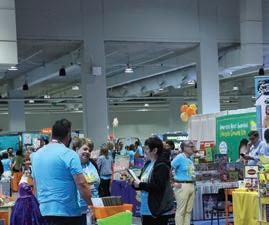
ToyFest concluded its 10th tradeshow in Las Vegas, held at the World Market Center. Toy & Gi Stores from across the US attended the Las Vegas Show including stores from 48 states, Bermuda, Brazil, Canada, Cayman Islands, Guam, Korea, Mexico, Micronesia, Panama, Philippines, South America, the UK, and Venezuela. “ToyFest 2023 was lled with buyers from all over the country. e show had great energy and excitement, allowing everyone to enjoy all ToyFest had to o er. Resorts World was the perfect host hotel. Can’t wait for 2024, as we grow and continue to make ToyFest the best it can be for all.” said Sandy Lepire, ToyFest President.
As the specialty market evolves, ToyFest will continue to make this tradeshow relevant, a ordable, fresh, and appealing to the specialty retailer. Bill St. John, Chairman of the Board commented at the General Meeting on ursday night, “Our focus is to make 2024 a better show than it was this year. ere were a few growing pains, but I believe the overall mood is that the buyers were happy, and most of the vendors were happy as well.” ToyFest experienced almost double the number of manufacturers and retailers in attendance this year. Both Morning Masterpieces and Game Night were sold out, the Gala hit capacity, and both seminars were full of people. ToyFest received positive feedback from the exhibitors who attended the show, with many who have said they will be returning next year. e buyers that participated in Morning Masterpieces, the ToyFest Gala, Game Night, and the seminars felt value in attending these special events.
Morning Masterpieces was a breakfast and kit session to kick o the show. Buyers had the
opportunity to see and learn in a hands-on fashion the newest and most creative kits and cra s on the market from a sold-out room with een vendors including Abacus Brands, Anker Play Products, Bright Stripes, Connetix, Crestrar, DJECO, Mindware, OOLY, Outset Media, Plus-Plus, Ravensburger, e Pencil Group, U.S. Toy, Wikki Stix, and Wrebbit Puzzles. ToyFest gave out extra drink tickets for the ToyFest Gala to those that stopped by each vendor table.
e ToyFest Gala was held at Zouk Nightclub at Resorts World where DJ Flight had the people out of their seats dancing. More than 550 guests were in attendance, and unfortunately some 100-150 were turned away because the venue reached capacity. is will be recti ed in 2024. Sandy Lepire and Bill St. John kicked o the awards portion of the Gala with the introduction of the volunteer Board of Directors and Slate of O cers. As always, individuals from the toy industry were inducted into the Western Toy & Hobby Hall of Fame. is year, Piccolo Mondo in Portland, OR took home Retailer of the Year. Michelle Smith accepted the award from Lepire. Lorraine Bozeman of Bozeman and Associates, Carol Knight who owned e Toy Store in Idaho, and Mark Parsons from Winning Moves were honored and inducted for 2023. Sandy thanked everyone for attending and revealed CA Game Day will be August 28, 2023, in Berkeley, CA. e NW Game Day will be Aug 23 in Portland, OR and for the rst time a second NW Game Day will be held in Seattle, WA on Aug 24. e Gala was exciting, visually stunning, the food was delicious, and the toy industry enjoyed socializing with friends and collogues, creating a captivating evening.
20 tfe June 2023
ere were two seminars at ToyFest. One focused on inventory management by Dan Jablons at Retail Smart Guys. e second seminar was a panel focusing on Industry trends that had both manufactures and retailers in attendance. e panel was moderated by Brian Miller. Betsy Malito, Gi s & Dec; Donna Moore, TTPM; Lizzy Newsome, Kappa Toys; and Tom Rushton, Revenew Sales brought their A-game with intriguing and insightful information.
ToyFest Game Night was a fast and furious evening with nearly 100 attendees and a sold-out room with een Game Sponsors including AMIGO Games, Blue Orange Games, eeBoo Corp., and Epoch Everlasting Play, Family Games America, Goliath, Gray Matters, Haba, Hey Buddy Hey Pal, Imagination Gaming, M & J Games, R & R Games, Smart Toys & Games, Spin Master, and e Good Game Company. ToyFest ra ed $400 in cash and games to lucky buyers as an extra perk for attending. e night was packed full of fun with new games learned by all.
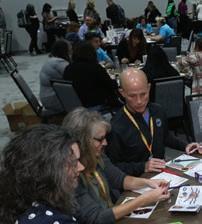
Best of ToyFest was full of great ideas and opinions from retailers on ursday morning. e sit-down round table breakfast produced the following


manufactures to take home the Best in ToyFest in each of the categories below:

• Arts & Cra s: Bright Stripes
• Building & Construction: Underdog Educational
• Dolls / Action Figures: Squishable
• Games & Puzzles: Goliath
• Infant: Kids Hits Intl. tied with Melissa & Doug



• Novelty: Fun In Motion tied with Marmals
• Outdoor: National Sporting Goods

• Pre-School: Fat Brain
• Science, Stem/Steam: Abacus Brands
ToyFest ra ed o nearly $2400 of products to buyers over three days in the ToyFest Daily Ra e. For every order, written buyers received a ra e ticket to win.
ToyFest appreciates the continued enthusiasm from its retailers and looks forward to seeing everyone in Las Vegas for the 2024 show happening at World Market Center Las Vegas sometime during the week of February 26 – March 1. Final dates will be announced a er the annual WTHRA & ToyFest meeting on May 10, 2023.


21 tfe June 2023
Ultra PRO is the leading brand of memorabilia collecting and tabletop gaming accessories, and photo and scrapbooking albums and pages. We have been designing and manufacturing top quality products since 1952, and our brands are recognized for their high quality standards and design innovations. Over the past decade, we have grown and diversi ed into a variety of related opportunities. Our Entertainment division publishes and distributes a variety of family-friendly board games and electronic toys, while our TableTopics division o ers a broad line of TableTopics Conversation Starter sets to spark great conversations at social gatherings. Our SP Images division distributes collectible trading cards and other memorabilia to retail outlets across the United States. In addition to our headquarters in Commerce, California, we are supported by our satellite facilities in Ohio, Massachusetts, Minnesota, and Belgium.


Deck Protector Sleeves(R) - We were the first to protect your deck! - picturedupperleft


Entering the trading card game craze in the 90’s with Magic: e Gathering and Pokemon, Ultra PRO had the exciting opportunity to up our game by not only providing safe card storage solutions, but also playable card protection. It was at a gaming convention where our sta cut up our trusted 9-pocket pages to form individual card sleeves to hand out to collectors who were opening prospectively high-valued cards on site. We took the idea immediately back to the development team and got to work on individual card protections–thus the deck protector sleeve was born.
Vivid - picturedupperright


e Vivid collection of gaming accessories lives up to its colorful name, with bright, bold shades and premium materials. is vibrant array of deck boxes, binders, and dice sets has everything you need to show o your true colors! Available in a wide range of fun new colors, you can store and organize your cards, take your decks on the go, or play RPGs all night long with friends, all while showing o your unique sense of style.

Pokemon Alcove Clicks
Collect, store, and personalize with the Alcove Click for Pokémon! e Alcove Click comes with four themed badges featuring Charmander, Bulbasaur, Squirtle, and Pikachu. is Deck Box holds up to 100 standard size trading cards double-sleeved in Ultra PRO Deck Protector sleeves, features a strong magnetic closure, and has dual thumb notches for easy access to your deck. Personalize your Alcove Click by popping on your favorite magnetic badges and replacing them with other badges. badges have a 1.5 in. diameter.

D&D Dice Scroll

e D&D Dice Scroll Map o ers premium dice storage and functions as a dice rolling mat. is Sword Coast Map, illustrated by Deven Rue, is made with a durable Burgundy Red leatherette exterior and a cream-colored backing for the map on the rolling surface with D&D ampersands on each end. is so roll-out mat will safely store your dice and protect your table. e zippered compartment holds 20+ dice. e rolling mat rolls around the zippered compartment and is secured shut with a single tie to look like an ancient leather-bound scroll. (Dice not included)

UPE games - Pokemon Electronic Games


Pokémon electronic games allow Pokémon fans to test their Pokémon knowledge. Parents love the screen-free play as well as the endless replayability, while kids-at-heart love the nostalgia and collectible aspect. All ve Pokémon Trainer Guess games, including the 25th Anniversary Legacy Edition, Kanto Edition, Ash’s Adventures Edition, Sinnoh Edition, and the newest Champions Edition are designed for fans ages 6 and up, and a full gameplay round can be completed in just 15 minutes.

BRAND PROFILE 22 tfe June 2023
Licensing International: The Fight Against Counterfeiting
by Elizabeth Foster
Some of the most innovative work being done by the licensing industry in the past year has actually been focused on preventing sales. at may seem counterintuitive, but it’s crucial for the continued success of the global brand licensing business as part of the ongoing ght against counterfeiting.
In 2022, the Organisation for Economic Co-Operation and Development estimated the total cost of counterfeit and pirated goods would hit $3 trillion globally.
U.S. Customs and Border Protection and U.S. Immigration and Customs Enforcement-Homeland Security Protection seized 20,812 shipments containing goods that violated intellectual property rights last year alone. at accounts for nearly 25 million counterfeit goods with an estimated retail price of more than $2.98 billion. As the tools being used by bad actors to sell counterfeit products continue to evolve, the strategies used by brand owners, manufacturers, and retailers must also constantly advance. In recent months, innovations in anti-counterfeiting have focused on fake reviews, arti cial intelligence, and new legal strategies.
Five (Fake) Stars
Fake reviews have been particularly frustrating for IP owners. Fraudulent review groups on social media platforms bring in thousands of people to post fake write-ups in exchange for product and small amounts of cash. ese reviews are used to legitimize counterfeit items and take advantage of online retailers’ algorithms.
In late 2022, the Federal Trade Commission (FTC) announced it was weighing changes to its Endorsement Guidelines— rst adopted in 1980 and amended in 2009—to crack down on fake positive reviews. e FTC also sent letters to more than 700 companies warning it would ne those using fake online reviews or other deceptive endorsements to deceive consumers. Amazon sued an organization it alleged brokered fake reviews. e suit covered around 10,000 Facebook groups,
including one named “Amazon Product Review” that had more than 43,000 members.
Beyond the groups for fake reviews, social media platforms are also being used to host secret links to counterfeit products Private groups provide links to seemingly innocuous items on an eCommerce platform—a phone case listed for $15, for example—and then provide group members with a code that lets the seller know the consumer actually wants to purchase a counterfeit item. On the surface, the items for sale look legitimate and completely unrelated to a speci c brand, making it harder for IP owners to identify and track the sales of these knocko s.
e Future of Counterfeiting
In addition to making use of social media platforms, counterfeiters are also working to use arti cial intelligence (AI) and machine learning to create and sell their products.
AI—which involves the development of computer systems able to perform tasks that normally require human intelligence, such as visual perception, speech recognition, decisionmaking, and translation between languages—is being used by counterfeiters to manufacture better fakes. Machine learning is also being used by bad actors to circumvent the programs designed to detect counterfeits.
Beyond intentional use by counterfeiters, there are also complications around consumer use of AI. When AI is used to make a purchase for a consumer, for example, who is liable if that purchase involves trademark infringement? It will likely take several court challenges to more narrowly de ne AI’s impact on trademarks.
However, AI also has the potential to serve as a meaningful tool to provide attorneys, judges, and businesses with better insight into trademarks. AI could play a key role in de ning the “average consumer” at the heart of trademark infringement
FEATURED CONTENT 24 tfe June 2023
Jim Pressman (middle) with his wife Donna (right) and daughter Kate (le ).
proceedings and liability issues, for example, and it is also being used to power programs that search for and identify counterfeit items on a global scale.
Taking Counterfeiters to Court
On the legal front, the licensing industry is using a number of di erent strategies in the ght against counterfeiting.

For example, many U.S. rms are ling a single Schedule A (Lanham Act) IP complaint against hundreds of online merchants of counterfeit goods. ese Schedule A suits start with a complaint and a motion for a Temporary Restraining Order (TRO) and are typically led under a seal, which means the defendants are not publicly identi ed or served with a complaint. is is a common process in the U.S. to prevent defendants from moving assets or further evading the law.
e judge may also direct that defendants’ websites selling counterfeit goods be temporarily shut down and assets at payment processors like Alipay and PayPal be frozen.
Amazon, meanwhile, led three lawsuits against bad actors that pretended to be legitimate copyright owners in an attempt to remove licensed products from the Amazon Store. Amazon’s Counterfeit Crimes Unit discovered that these counterfeiters had submitted thousands of false copyright infringement claims against the retailer’s legitimate selling partners in an e ort to reduce customer choice and clear the way for their counterfeit goods.
Anti-Piracy Hires
Beyond launching legal action, many companies are creating entire departments or forming partnerships to focus exclusively on anti-counterfeiting e orts.
In 2021, ZAG announced it was opening an anti-piracy division to safeguard the intellectual property rights of its brands, content, and consumer products. Members of this division search online marketplaces and analyze social media worldwide to identify and eliminate counterfeit content and merchandise as well as spearhead legal investigations. One year a er its launch, ZAG announced its new division had prevented counterfeit products valued at more than $113 million from entering the global marketplace.
JPatton and kathy ireland Worldwide recently formed an exclusive partnership focused on brand authentication. e partnership will see JPatton’s security label, factory disclosure, and tracking programs provide counterfeit prevention tools, supply chain analysis systems, and marketplace insights to the kathy ireland team.
Collaboration is Key
It’s clear that the global brand licensing industry is at the forefront of the ght against counterfeiting. e innovation being displayed across multiple fronts—including legal e orts and technological advances—will be key to moving beyond the game of Whac-A-Mole and making signi cant inroads in the battle to stop knocko s.
To make genuine progress, however, it’s crucial that IP owners, their licensing partners, and retailers continue to not only collaborate, but also share information and insights.
In order to e ectively ght against counterfeiters, all parties involved need to be fully informed about each other’s struggles as well as their successes. By understanding what is e ective and what needs to be improved, the industry can strengthen its anti-counterfeiting e orts across every category, platform, and territory.
Elizabeth Foster is Director of Content and Communications for Licensing International. She leads editorial planning and development for the organization along with media relations and social media strategy. Based in Toronto, she has more than a decade of experience in journalism, starting her career in newspapers before making the move to magazines.
25 tfe June 2023
The Business of Bluey: Licensing the Famous Blue Heeler Pup
a Q & A with Andrew Carley Director of Global Licensing at BBC Studios

Q. What are some of the most successful Bluey collaborations thus far?
Jim Pressman (middle) with his wife Donna (right) and daughter Kate (le ).
A. For me, it has to be Bluey’s debut in the Macy’s anksgiving Day Parade last year! To see the giant balloon oating through the streets of New York, and to be part of something that has the reach and coverage of the parade was hugely signi cant. It presented Bluey as a property that is truly resonating with it’s audience and turning heads. To top it o , the voice talent from the series were invited on e Tonight Show Starring Jimmy Fallon, which just shows how Bluey has crossed over into the cultural mainstream in the U.S.
Another moment like that was the Airbnb partnership that ran in Australia for February 2022, where they created a real-life version of the home from the show. Imagine the excitement for a Bluey fan to be able to stay in the Heeler Home. e attention to detail in the conversion of family house to the Heeler Home was incredible. Social media was talking about it for months, and it’s still cropping up now online!
Q. What was your strategy to license Bluey as it was rst starting out? What is the licensing strategy moving forward?
A. e strategy at launch and the strategy now remains pretty much the same. We’re building awareness, exceeding expectations, and appointing licensees that we know have the creativity to capture the DNA of the show. Finding the right partners and markets takes time and careful planning. We are happy to hold back and wait for the right moment to launch and build whether that’s a new category, or a program in a new market. A er that, it’s about joining all the touch points, which includes all the work that BBC Studios does behind the scenes on driving the other channels – notably YouTube channels, Instagram, TikTok, etc. – to ensure the program is fully supported in the market and that fans are able to engage with the show on many di erent levels and platforms.
Q. Bluey is now known and beloved all over the world. Which licensing agreements really helped put Bluey on the map, outside of Australia?
A. Our global master partnerships with Moose Toys and Penguin Random House for publishing were very much part of the original launch in Australia and have been integral to the global roll out, totally putting us on the map. e products and the partnerships themselves reinforce exactly what we desire from a licensee. e translation of product and storytelling from on-screen to o -screen is perfect. ey help fans recreate what they see in the show and bridge that gap between Bluey’s worlds and our own, extending the opportunities to learn through play. ey’re fantastic partners, and the way we work with them became the basis for how we work with other licensees and what we look for in potential new partners.
Q. Any plans for a theatrical release?
A. It’s always an ambition! We’ve said before that given the right script, fans would love a Bluey lm. ere’s de nitely an appetite for it.
Q. Bluey seems to work on multiple levels with viewers. Children love it, and adults do as well. Why do you think that is?

A. As with any successful content, be it adult or children’s, on-screen or o -screen, it’s all about the writing. e storytelling captures the very essence of growing up for both a child and an adult in a manner that everyone can relate. It’s truthful, it’s relatable, it doesn’t condescend, it’s very funny, and it’s beautifully written. at transcends age groups, genders, and continents. It de nitely hits that sweet spot with audiences where adults and children can watch it together and appreciate it at the same time, which is rare when so many families can enjoy di erent content on their own devices. is show brings people together.
e world is so richly imagined too, and there’s so much wonderful cra that goes into it, from the animation to the score. Surprisingly, we’re now seeing that people who don’t have kids are getting into the show too, as it’s so gentle and o ers an escape. We’re hearing from university students who love the program!
FEATURED CONTENT 26 tfe June 2023














www.mwwholesale.biz info@mwwholesale.biz 800.296.9485 2140 West County Rd C Roseville, MN 55113 Play Award Product Finalists! Jump Jump Joey & Dig It Up! Bubbling Ice Age Discovery booth 1512! $350/FFA • $750/5%/FFA/NET 60 $1,250/10%/FFA/NET 90 • Must ship by 10/15/2023. ASTRA Show Special:
The Importance of MESH
 by Rachele Harmuth, Dr. Deborah Gilboa and Richard Derr. Interviewed by Nick Truss

STEM and STEAM are household acronyms for toy industry and children’s health professionals, and have been for years.Entering broader vernacular in the early naughts, STEM found a very comfortable place in toys as a handy way to distiguish educational math, science, and engineering toys from the crowd, o ering them a special category they greatly deserved.
Less recognizable, perhaps, is the term MESH. Unlike STEM, MESH was born from within the toy industry, taking shape quite recently. MESH emerged when new issues were discovered with kids and parents, in large part from the tumult and distress of the past few years. To provide a brief history and valuable insight into this burgeoning toy term, we reached out to three individuals who are pioneering research into MESH and raising awareness: Rachele Harmuth, Head of inkFun (a division of Ravensburger), Dr. Deborah Gilboa, resilience expert, family physician, and proli c consultant, and Rick Derr, President of KidsPoint, Inc. dba/Learning Express Toys.
How did the MESH idea get started?
Rachele: “ e development of MESH started about eight months ago. I had just joined inkFun as their new head and was really excited about our brand and understanding

how we were relevant to the marketplace. inkFun has had such a strong STEM o ering, so we assumed that was what we would be discussing. However, in talking with retailers, we learned that STEM was less and less what people were looking for, and was not the main focus of conversations they were currently having with consumers. at made us take a big step back and say, ‘Wow, we need to really understand what is happening for parents and kids right now.’ So we put the conversations about our brand aside for a while and just dug into understanding what was happening for families. It was clear that children’s mental health was the top concern.”
“We started researching and found staggering statistics on the increase in mental health issues for all ages of children. It was to a level that in October of 2021 the American Academy of Pediatrics and the American Academy of Child and Adolescent Psychiatry declared a national state of emergency in children’s mental health. In these organizations’ combined 125 years of existence, this has never happened before.”

“As we understood the breadth and depth of this issue, we knew that we needed to bring in an expert who could help us understand it. We reached out to one of the top experts in children’s resilience in the country, Deborah Gilboa, MD (Dr. G). With Dr. G, we dug into three questions:”

28 tfe June 2023
FEATURED CONTENT
Clockwise from bottom le : Dr. Deborah Gilboa, Rachele Harmuth, Rick Derr


It’s serious stuff. info@asweeets.com wonderandwise.com ASTRA BOOTH 1840 TO VIEW OUR FULL CATALOG
Play.
1. What is actually happening right now with children’s mental health?
Dr. Gilboa: “Although the issue of mental health in kids was not new, the trends have been changing in startling and dire ways. Parents and educators are more worried about children’s mental well being than ever before, and they are right to be so concerned. Suicidality [risk of suicide] is sharply rising, with a shocking 40% of teen girls telling the CDC that they’ve felt hopeless several days in the past two weeks for the Youth Risk Behavior Survey, just as an example. By every metric we have, kids are getting more anxious, more sad, and less mentally well.”
“ e good news is, actually, to be found in fact that parents and educators are so worried. For the rst time, parents are more concerned about their child’s mental health than they are even about academic success. Educators, adults at home, and even policy makers are putting children’s mental health at the forefront. e many conversations happening give us an entryway for introducing new solutions to receptive people.”
2. What are the skills kids need to grow and improve their resiliency and mental health?
Dr. G identi ed 8 skills that research shows are essential in the development of higher resilience. ese are problem solving, perseverance, adaptation, con ict resolution, selfregulation, self-advocacy, communication strategies and cognitive skills.
Dr. Gilboa: “ ere are aspects of resilience that are built on traits (these don’t change much over time) and past experience, but the best news is that most of resilience can be intentionally developed in children. Resilience is the ability to navigate change and move through it towards a positive goal. When we give children the opportunity and guidance to build those skills – when they’re struggling and when they’re not – they end up less likely to engage in self-harm behaviors and far more willing to notice when they’re struggling, speak up, problem solve, and ask their grownups for help.”
3. How can we build those skills through play?
Rachele: “By focusing on the 8 identi ed skills, we reviewed games and toys that intentionally built these skills. We found 4 main types of products that build these skills through play. ey are products that focus on the following:”
· Problem-solving
Problem-solving requires practice. erefore it is essential that kids experience solving problems for themselves. Using play improves kids’ problem-solving ability and their con dence in themselves as problem-solvers will make them safer and stronger as they grow. Toys and games that help players build this skill:
· O er challenges.
· Give opportunities to think about di erent solutions.
· Allow those attempts to impact the course of play.
· Storytelling
Storytelling play strengthens insight into how a character is feeling or reacting, which builds empathy for oneself and other people. is, in turn, helps someone understand how to e ectively communicate their own experiences. Chances to explain to others what stories they have created or recreated in play o ers practice that they can rely on later in more di cult communication circumstances. Storytelling play leads to strong self-advocacy, which has been proven to be a life-saving skill when mental health issues arise.
·Increasing challenge over the duration of play
Toys and games that get harder as you go serve several key functions. Firstly, they teach the value of perseverance. ese opportunities show that succeeding the rst time isn’t a reasonable expectation, but that repetition and learning increases chances of success.
ey also build tolerance for frustration. It is easier to give up than to keep going in most situations. Toys and games that use fun as a motivator can help players nd the path forward even without a guarantee of success.
30 tfe June 2023
FEATURED CONTENT


www.encourage-kids.org Contact Us at Info@encourage-kids.org Humanizing Healthcare for Children in Hospitals
FEATURED CONTENT
Lastly, they create the expectation of challenge. When there is no quick or easy “ nish line,” then players learn that success means earning the chance to try something newer and harder, rather than simply being done.
·Bringing Children and eir Adults Together
Play is an early experience kids have with their adults that build their mental, emotional and social health. O ering experiences that build relationships between kids and their older adults will help develop open, safe dialogue for a lifetime. Toys and games do this through:
· Showcasing the di erent abilities and interests of children and adults.
· Practicing communication towards a common goal.
· Encouraging collaboration.
· Building shared memories and positive patterns of interaction.
e Future of MESH
Rachele: “Our hope is that MESH gives the industry a new vocabulary through which to look at product and a new way of looking at how play patterns develop skills beyond ones we traditionally review. While inkFun was the founder of this concept, we think it would be far more powerful as a multi-stakeholder movement, including all di erent companies, retailers, inventors, and youth development professionals across our industry and beyond.”
“ erefore, MESHhelps.org will become a separate non-pro t in 2024 that works to help manufacturers create toys that intentionally build mesh skills, help retailers communicate to their consumers about how play can build resiliency, and help consumers and the wider audience of adults who work with youth understand the bene ts that play can have on MESH skill development.”
A diverse coalition of sorts has already formed for MESH in the industry. On this, Rachele remarks, “Pretty early on in the process of the research we knew we were hitting
on something that was far bigger than just inkfun. We realized that this message and movement would be much stronger and much more impactful, if it was a platform that could be embraced across the industry. So we decided to launch the concept of MESH into the industry and start talking about it early in the development process. We invited anyone who wanted to participate to join us in a task force, focused on the development of this idea, and the development of how we as an industry could use it to bene t children. is is bigger than any one company, or any one retailer, and we knew from the beginning that we wanted to grow it together, right now, as an industry. We currently have a multi-stakeholder advisory board who is helping us get the word out about MESH and form into the entity that will launch as a 501c3 in 2024.”
On the intersectionality between STEM, STEAM and MESH, Rachele had this to say:
Rachele: “ is is a really important question for us. We think STEM and STEAM toys are amazing (and essential.) Mesh is not a replacement of STEM. In the way STEM gave us a platform to look at products that build a speci c set of skills, MESH gives us a platform to look at a di erent set of skills. It gives us a di erent way to understand the power of play with a speci c focus on building skills that develop resiliency in mental, emotional, and social health.”
“Our hope is that MESH is additive to the industry. It’s a new lens, a new vocabulary, a new way to understand the impact that our products can have on kids.”
eory and Practice
Rick Derr was a name that took very little time to surface in our reaserch, much like Rachele and Dr. Gilboa. Rick is the President of KidsPoint Inc. dba/Learning Express toys. Rick is not only a key player in the current MESH discourse, but he has retail know-how through opperations with his business. rough this lens, Rick o ered some valuable words on MESH toys, the needs of customers, and more.
On the role of retailers, he remarks:
32 tfe June 2023










































FEATURED CONTENT
Rick: “I don’t just think of Learning Express like a retailer, but rather as an important business in my community, a safe place to visit, and a place where kids want to come. e MESH movement plays right into our everyday fabric and goal to be the leading certi ed play experts in our space. We not only want to nd the right gi or toy for a child, but take that another step forward by understanding what skills the child (or parent) is looking to build over time. Where is that child’s mental framework today and where do you want it in the future? We can start the conversation together, and build our children for a stronger tomorrow. Many times all a child will need is a basic pick me up joy item, another time, perhaps interactive play, and in the future, problem solving abilities. MESH will help us become more in tune with todays parents and kids.”
Rick had key thoughts on the brick and mortar shopping experience for customers and retail workers alike. “ ousands of toys are MESH-like products, so to say we will ‘sell’ MESH toys is not accurate. We sell the skills and joy a toy will bring them, or the comfort a toy can exude. Since COVID, we have seen a 30-40% increase in tra c versus pre covid levels. 2021 sales were our best year in history (27 years) followed by 2022 as our 3rd strongest year. Kids want to come in our store to see ‘their’ items, touch them, pick them out themselves and explore options. Gi Card sales are also up as parents and Grandparents now see this as a good option because the child likes to go shopping! It builds con dence and skills like choices, money skills, and independence.”
“Parents want to buy great toys regardless of a logo on the box. ey do not buy a toy because it is STEM approved. It can’t hurt, but I have found my customer would rather pick the toy or item based on where their child is today -meaning mentally, physically, is it fun? Is the interest level high? What are the skill building possibilities? I see toys having these built in properties already, but we all need to match what is needed with the right toy. For instance, perhaps a child has trouble connecting with others, so a cooperative game that allows for interactive play with family and friends in a fun setting (non verbal perhaps) can begin to develop these skills for the child.”
e experts seem to agree on fundamental qualities or “draws” for customers when it comes to MESH toys. Rick states, “ is is as varied as there are children, but what I see the most that is needed are; human interaction skills (Pokémon can help!), increasing challenges that teach kids how to handle frustration and focus skills, and con ict resolution abilities (dealing with an issue, not avoidance). e game category will remain strong, as will LEGO building (construction toys). Cooperative activities (games, outdoor fun, shared cra s) all will see growth as well.
Placing pressure on the issue, Rick reminds us why MESH emerged in the rst place, a reaction to the needs of children and parents. “Parents are scared, confused and unsure of the future. Just turn on the news. Kids are distressed, and this is a key reason why the plush and dget categories have exploded the last 3 years. ey are looking for comfort. MESH hopes to bring knowledge, recognition, and a way to build skills in our children so they are prepared for the future. We cannot predict exactly what this future looks like, but we can prepare them with the key skills to cope with this disturbing and concerning landscape.”
Closing Remarks
In her closing remarks, Rachele encourages anyone interested in further educating themselves on MESH to visit www.MESHhelps.org, created to be, in her words, “the hub of information on MESH.” She remarks, “ is is the best place to learn more and explore all of the videos and downloads that we have currently available.”
Rick caps o his thoughts by recentering attention in the toy sphere where it matters most: children. “27 years experience and still learning. I don’t like labels, but I do like the mission of building skills for tomorrow, and toys do this - play does this. e toy industry must galvanize itself to carry out this mission for our approximately 75 million children. What’s good for our kids will also be good for business.”
34 tfe June 2023

NEW PRODUCT PREVIEWS





Abacus




Virtual Reality Animals - Discover the animal kingdom like never before with this deluxe gift set, featuring a 96 page DK book from Penguin Random House, featuring hundreds of animals, from monkeys and bears to lions and hyenas! Use the included VR goggles to activate over 40 virtual reality experiences. Discover habitats, eating and mating behaviors, hunting strategies, and even the conservation and rescue efforts that protect these lovable creatures! This virtual reality book and gift set also includes a set of scratch art, including tools to create your very own works of art! Ages 8+, Available now.

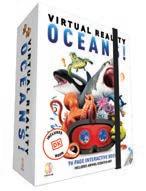
Virtual Reality Oceans - Take a deep dive into the world’s waters in unprecedented detail and in stunning virtual reality with VR ceans! Includes a 6 page K book filled with whales, sharks and more with over 30 immersive e periences. VR goggles and scratch art kit included. Ages 8-12 years old, Available now.
Basic Fun


Watch your favorite Disney and Pixar characters come to “light” with the all-new Lite-Brite Super Bright HD Disney 100 & Pixar edition - the brightest Literite yet! With a stunning high-definition display and the latest E technology, this ite- rite is the perfect canvas for your favorite movie art. Assemble your art using the provided design templates, including Disney and Pixar characters like Mickey Mouse, Lightning McQueen, Nemo, and more! And with a simple touch of a button, you can switch between different light modes for a dazzling display of your masterpiece. This set comes with 900 colorful mini-pegs in multiple colors for endless artistic possibilities! There are 12 HD Disney and Pixar templates included, featuring Mickey Mouse, Minnie Mouse, Goofy, Donald Duck, Pluto, Nemo, Toy Story’s Woody, Lightning McQueen, Monsters Inc, Up, Luxo, and the classic VHS Disney logo. Also look out for the Lite-Brite Super Bright HD Disney 100 edition. Ages 6+, Available Fall 2023


Lincoln Logs 2-Tiered Tree House - Your favorite Lincoln Logs, now with a timeless Tree House theme! erfect for today’s young builders and club house crew. Kids can enjoy hours of creative play building 1 of 3 different tree houses or design their own build. Featuring over 75 pieces, this set includes real wood Lincoln ogs and specially designed pieces like a tire swing, ladder and tree canopy! Ages 5+, Available fall 2023.


36 tfe June 2023

That'sourstory. CONNECTION, OPPORTUNITY &GROWTH. Everyonehasastory. WHAT'SYOURS? GETSOCIAL@WOMENINTOYS WOMENINTOYS.COM
NEW PRODUCT PREVIEWS





Bababoo & Friends
Lolo’s Autoboat - Elephant Lolo is on the way with his boat. But suddenly, as the dock approaches, it becomes dangerous. Fortunately, his boat has several great functions. If it is turned upside down, it serves as a push car, so Lolo can happily visit his friends on land. The 2-in-1 funny autoboat stacking game promotes fine motor skills in children aged 12 months and over. The fabric ag crackles cheerfully in the wind, and play figure olo can be removed. The sturdy play bo serves as a lovingly designed “Autoboat Garage” which, together with a coloring sleeve, offers additional play fun. Who might already be waiting for Lolo on the shore? Ages 12 months +, Available June 2023.
Enchanted Rainbow - Lion Bababoo is daydreaming when he discovers a rainbow. Fairy bunny Pippa has conjured him. There is a whole lot to discover in this wonderfully designed stacking toy: a high-quality five-piece rainbow, two play figures, a bush that rattles, a rattling house, a small car, and a banderole with play street to color. The roleplay stacking toy supports the motor development of little adventurers from 24 months in many ways: stacking, building, learning colors and sorting. Ages 24 months +, Available June 2023.

Bandai


Anime Heroes is the brand for all the best anime action figures, with true to show details, 20 points of articulation, and manga inspired packaging that stands out on a shelf. From the most beloved shows to the new ones on the rise, Anime Heroes has all the characters you love, perfect to display or play with! Ages: Naruto’s Kakashi Hatake “Fourth Great Ninja War”, and Bleach’s Ichigo Kurosaki available now, One Piece’s Brooks and Jujutsu Kaisen’s Satoru available fall 2023.


Dragon Ball Super Dragon Stars - Fans, collectors and kids of all ages will be thrilled as two new 6.5-inch figures join the ragon all Super ragon Stars line up - Super Yi-Shinron (aka Omega Shenron) and Son Gohan Beast. Each authentically and realistically detailed figure comes with an additional two sets of switchable hands and character-specific accessories so you can recreate the epic battles and favorite moments from the anime series. These figures are perfect for both display and play. Ages 4+, fall 2023.

38 tfe June 2023


The most iconic trade show in the industry is evolving. Strengthen your business, deepen your current relationships, develop new ones, and discover products, brands and entertainment experiences all under one roof in the most vibrant city in the world. Featuring thousands of new and unique toys, games, edutainment, entertainment-driven experiences, and more, Toy Fair offers attendees a competitive edge no other trade event can match. Registerat ToyFairNY.com Whatever your place in the business of PLAY... Toy Fair is for YOU! Get First Looks For 2024 Stay Up To Date on Trends Discover the Top New Playthings Make Deals in Person TM
NEW PRODUCT PREVIEWS


Bandai cont.


Ultimate Legends Demon Slayer - The Ultimate Legends line up is expanding with three new fan-favorite characters from the popular anime series, Demon Slayer: Kimetsu no Yaiba. Tanjiro Kamado, Zenitsu Agatsuma and Inosuke Hashibira each stand at 5” tall with 27 points of articulation, allowing for a multitude of posing and display options. The figures were created with exceptional detail and are presented in a collectible package with a beautiful art reveal inside the cover. Ages 4+, Available now. Great Posing Figure blind packs expands its lineup to introduce Demon Slayer: Kimetsu no Yaiba, with 6 fan-favorite characters in approximately 3” scale. Each blind foil pack contains a mini masterpiece, capturing true-to-anime details, all the way down to the sword design and intense battle expression! Series 1 includes: Tanjiro Kamado, Nezuko Kamado, Zenitsu Agatsuma, Inosuke Hashibira, Kyojuro Rengoku, and Tengen Uzui. Ages 15+, Available now.

Tamagotchi Nano brings the time-tested fun of raising and nurturing a virtual pet to new worlds by allowing fans to interact with some of their favorite pop culture characters in an entirely new way! The play pattern fans know and love continues to evolve with new and exciting collaborations from anime to beloved blockbusters. Ages 8+, Available now.


Blip Toys


Ninja Kidz TV Giant Mystery Ninja Ball – Series 3 Purple - Become a stealthy ninja, kids can be ninjas too with the “as Seen on YouTube”, Ninja Kidz TV action figures and wearable battle gear! Winner of the Nickelodeon Kids’ Choice Awards 2023 “Social Media Family of the Year”! Series 3 includes 25+ surprises, including 5 Ninja Kidz Action Figures with articulation, 1 ninja mask and belt, 2 pieces ninja battle gear, 6 ninja throwing stars, 2 sticky stars with 6 sticky star targets, 2 mission cards, 1 sticker sheet and 1 collector card. This action-packed ninja toy container doubles as an easy-to-carry storage container, and includes a detachable shield for ultimate ninja play! Ages 3+, Available now.

Ninja Kidz TV Mini Mystery Ninja Ball Series 3 Purple - Now kids can be ninjas too with As Seen on YouTube, Ninja Kidz TV action figures and mission cards! Winner of the Nickelodeon Kids’ Choice Awards 2023 “Social Media Family of the Year”! Reveal 3 surprises inside! Includes 2 Ninja Kidz Action Figures and 1 Mission Card. Each pack includes 1 Ninja Head that doubles as a storage container. There are 6 unique packs to collect, 13 possible action figures, and 12 possible Mission Cards. It’s a mystery! All contents are blind. Ages 3+, Available now.

40 tfe June 2023
Connetix




Introducing Connetix Rectangle Packs! Featuring long and short rectangles, these packs encourage children to explore STEAM learning concepts such as symmetry and patterns whilst extending their design and engineering skills. Available in our three unique color ranges, including vibrant Rainbow, earthy Pastel and dazzling Clear, these brand-new magnetic tile shapes will assist children to build bigger, more sturdy designs and are perfect for engineering and supporting ball runs! Connetix Rectangle Packs can be used as a standalone starter pack to create simple 2D 3D designs such as car parks, long roads, mazes and board games. This exciting assortment of rectangles also offers great value for educational activities, including exploring number value, graphing, ten frames, numerical computation, recording CVC words, crosswords, plus so much more! The fun and learning doesn’t end there! Connetix Rectangle Packs can also be used in conjunction with our existing packs to spark imaginations and bring to life bigger, sturdier Connetix masterpieces. From castles and rockets to complex ball runs – if you can dream it, you can create it with Connetix! As a high-quality, open-ended toy, Connetix will grow with your child as they learn, and their play becomes more complex. Look out for the 12 Piece Clear Pack, 18 Piece Rainbow Pack, and 24 Piece Pastel Pack. Ages 3+, Available July 2023.


Cra-Z-Art





The Little Mermaid Color By Number - Perfect for the young budding artist and ‘The Little Mermaid’ Fan! This artistic set carries forward the nostalgia of paint by numbers with a slight twist, using markers instead, for a neater, cleaner experience. Easy for the young child to follow, simply use the coloring key to determine what marker to use. Great for home, school or travel. Comes with 12 bright markers and 3 detailed, themed posters to color. So much fun to color your favorite characters and scenes! Also look out for Barbie Crayon By Number! Ages 4+, Available July 2023.

Sqand The Little Mermaid Castle Playset - This outrageous underwater sculpting sand is magic! With Sqand, form any shape underwater with the moldable compound, using the included squeeze bottle. However, when taken out of the water the compound turns into dry sand - truly amazing! Comes with everything you need to create the magic and underwater landscape including tank, squeeze bottle, Sqand compound, Ariel figurine and more. So cool to experience! Ages 6+, Available July 2023.

41 tfe June 2023
Create A Castle
NEW PRODUCT PREVIEWS


Crazy Aaron’s 25th Anniversary Thinking Putty Pack - “It’s our 25th year of Thinking Putty! I’m thrilled to share this limited-edition pack, featuring a mini tin containing genuine pieces of the very first putty I crafted back in 1 . My journey started as a software engineer, with just a simple lump of putty on my desk. That humble beginning has since sparked inspiration and stress relief for countless people around the world. Here’s to celebrating boundless creativity and never-ending play!”Crazy Aaron. Ages 3+, Available summer 2023.


Goodnight Cactus Thinking Putty - Mimicking a magnificent desert sunset, oodnight Cactus Thinking utty changes color with the heat of your hands. This triple change Hypercolor captures the peaceful purple, luminous orange, and radiant yellow sundown of the night sky. Ages 3+, Available summer 2023.

The fun of building sand castles has now been brought indoors on a year-round basis with the introduction of Create A Castle Buildmaster Indoor Mystery Bag. Features include a proprietary sand compound to build detailed castles quickly, plus one mystery part of the castle in the resealable bag. No mess and doesn’t dry out with the included storage bag. Ages 6+, Available now.

FanRoll


Metal D20 Spinner - A fun and innovative alternative to traditional dice, replace your rolls with spins! ust spin it, and where the arrow lands is the number you rolled. Available in both Antique Copper Rainbow. Ages 5+ Available May 2023


Misfit Dice - This pack takes samples of some of our best sellers and mi es them up in a mystery bag where you get to reveal your own dice. ur full size Mystery Misfits offer a full assorted set of high quality dice in every bag! Available with all resin dice or all mini polyhedral dice. Ages 5+, Available now.

42 tfe June 2023
Funny Mat



Funny Mat Washable Puzzle - The 12-piece washable reusable Funny Mat Puzzle is made of soft material easy to assemble. Water-based markers are recommended to color Funny Mat puzzles as the ink can easily be wiped off with a wet cloth or washed off with water. Washable Puzzle is offered individually in a reusable recyclable pouch that can be carried from one place to another, or as a set with 6 water-based markers. Funny Mat Washable Puzzle can be colored again and again for continuous fun and is available in 4 different prints! Ages 3 - 6, Available July 2023.


Engino


Engino Inventor Motorized Race Car - The new Inventor Mechanics series has a thematic approach with multi model capabilities, featuring an impressive main model. A new library of patent-pending components has been added to the Engino system which enhances both aesthetics and technical features. These parts include high-precision wheels, mechanisms and snap-fit curved surfaces. The smaller sets in the series are suitable for 7-year-olds, while older children are challenged with the bigger sets which also include a geared motor. The top of range steps-up the complexity with Robotics technology, Bluetooth connectivity and software control. Available June 2023.


QBOIDZ “Alligator” is a new style building block system which allows you to build an alligator model with primary-colored blocks, as well as 5 bonus models, and anything you can imagine. With its bright colors and easy-to-use blocks, this set provides a fun and engaging way for kids to experience construction building and creativity. The new boidz system combines the award-winning snap-fit connectivity of Engino system with the effortless building feature of stackable blocks! The system encourages preschool children to develop their cognitive, social and motor skills through fun and creative play. The Qboidz development is based on the latest pedagogical principles of STEM, aiming to provide both children with the necessary experience, skills and knowledge to cope with the technological advancements of the future. The parts are suitable for children aged 2 - 5+. Available June 2023.

Engino Newton’s Law - Learn all about Newton’s laws of motion which are the basis of classical mechanics that still describe most everyday life situations. Experiment with kinetic and potential energy in order to discover the properties of energy and how it is transformed from one form to the other. Build 8 working models such as a ballistic catapult, a gravity fan, a collision car, a moving cabin, a balloon powered plane and a dragster. Easy-to-follow building instructions are included for every model either online or in the booklet. The booklet provides detailed e planations of the different scientific principles applied and incorporates innovative experimental activities for hands-on learning. A quiz section is also available to challenge your newly acquired knowledge! Available June 2023.


43 tfe June 2023
NEW PRODUCT PREVIEWS


Haba





Clippity-Clop! - The horses have spent a lovely day in the field and now they must trot quickly back to the horse farm. ut they need to gather things on their way like a bundle of carrots or a sack of oats. In this adorable travelsized Clippity-Clop game, horse enthusiasts and animal lovers will delight in helping the horses gather what they need and racing to the stall. With easy to follow images on the dice, this fast-paced and fun collecting and early competition game has three fun variations. Ages 3-12. Also look out for Wiggle Waggle Geese Cooperative Game for ages 3-6 and My Very First Games – The Duck Game for ages 2+.


Little Friends Brown Bear - This adorable bear will not be hibernating any time soon because they are having the best time e ploring the forest with their ittle Friends! A perfect addition for play set ups and animal scenes, this cheerful bear will encourage storytelling and dramatic role playing. Made of safe and smooth solid plastic, this bear feels good in little hands and makes a great companion to the other ittle Friends forest animals. Also look out for Little Friends Brown Bear Cub, Little Friends Fox and Little Friends Raccoon


Maxime Baby Doll - Meet Ma ime, our newest bundle of joy who makes doll play a whole lot sweeter and more interactive. This lovingly crafted soft doll has life-like details, including a tiny belly button! Ma ime comes with everything that kid moms and dads need to report for baby duty. Ma ime’s gender neutral accessories make roleplaying come to life, and include a magnetic pacifier with attached ribbon, a reversible cap, a reversible diaper with tabs for easy diaper changes, a bib with gingham piping border, removable socks, as well as an easy to snap on and off reversible onesie. Made to last with incredible attention to detail and a sweet embroidered face, Ma ime will snuggle right into your child’s heart and be a lasting friend for years of nurturing play. Ages 1 months +.


Capt’n Pepe Treasure Ahoy! - Take the rudder in your hand and create new adventures! The brave Captaiun epe sails across the world’s oceans with his wild crew. Accompany him on every sea mile, go on adventures, open treasure chests, create your treasure book, and defeat Madame oldtooth. Can you find the “Seven Treasures” before the evil pirate plunges the world into dark times
Farmhouse Sorting Box - All hands are needed on the farm to find the right spot for all the farm animals in the barn! Young farm hands can e periment with animal shapes and sizes while pushing the wooden figures through the matching spots in the walls of this adorable farmhouse sorting bo . nce all the animals are tucked into the farmhouse, the double doors can be opened and the animals can be shooed outside so kids can start the process all over again! Ages 12 months +.


Forest Friends Stacking Toy - Imagine the stacking possibilities with this sweet and silly forest friends stacking toy! This brightly colored set features bears with lots of personality and cheeky owls who want to fit in everywhere. The goal is to carefully stack the owls, bears and trees as high as you can. Kids can either try to copy the templates that feature different levels of difficulty or create an arrangement all their own. Set includes stacking blocks and 10 double-sided template cards. esigned for 2 year olds and up to have fun working on balance while developing fine motor skills, problem solving, and spatial awareness.


44 tfe June 2023
Hape





My First Baking Oven - The beautifully painted confection set is a great way to introduce little ones to cooking and baking, and comes with one large baking oven, one tray and six deliciously decorated cookies. Simply arrange the cookies on the cookie tray, pop into the oven and watch as the magic purple “baking” light turns the cookies to a richer dark color! Once the timer goes off, the cookies are ready to serve up to the hungriest of guests! The light comes on when the door is opened and timer starts when the door is closed with a “ding” when done. Ages 4+, Available now.



Green Planet Explorers Pandas’ Bamboo House - Hape’s Green Planet Explorers introduces sustainability to families in accessible, childfriendly and fun ways! This line teaches children how to care about the environment through play as they learn to look after our planet. The Panda’s Bamboo House is a three-story bamboo playhouse that comes complete with four poseable pandas (also made of bamboo!) bustling about the busy playhouse that “generates electricity through solar power!” Explore each unique level of the house and enjoy eco-friendly living with accessories like a suspension bridge, slide, rope ladder, hammocks, a bed and dressing table, sofa, sun umbrella, fireplace, kitchen accessories and more! The beautifully painted open- oor-plan house and panda figures are made from wood and eco-friendly, renewable materials including reen E made from sugar cane plant , FSC certified wood and bamboo, one of the fastest growing plants on earth. Ages 3+, Available now.

Little ones can explore the wonders of nature right from their windows with the Window Bird Feeder! Made from eco-friendly bamboo and plantbased plastic, this Audubon-friendly feeder is the perfect way to introduce little ones to nature as they explore close-up interactions with birds from the window! The eco-friendly bird feeder attaches securely to the outside of the window using three suction cups and comes equipped with a notebook to document what kids see! The unique shape of the feeder provides drainage gutters so water will ow safely away from the feeder while small birds are happily perched to feed. The Window Bird Feeder is great for encouraging a love of birds and the natural world! Ages 4+, Available now.

45 tfe June 2023
NEW PRODUCT PREVIEWS


Hasbro

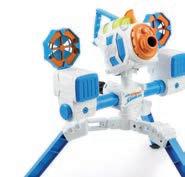
Experience light art like never before with the new Lite-Brite Mini-X Connect! Inspired by the classic 1980’s Lite-Brite toy, the Mini-X Connect comes with a 4x4” grid that connects to other Mini-X Connects for bigger and more innovative designs! Start by assembling your light art using the 170 colorful mini-pegs and one of 8 design templates. Light up your art or connect to another Mini Connect (sold separately). All sides of the grid are connectable to allow for maximum artistic e ibility. Will you connect two, four, or more Mini- Connects as you design your masterpiece And when you’re ready to see your art glow, just tap the pegs to light them up! Ages 4+, Available now.

An interactive target that strikes back, the Nerf Super Soaker RoboBlaster was designed to pour it on! Aim and knock down targets to disable it or you’ll find yourself drenched in water! Multiple ways to play including, Robot vs Humans ominate the Nerf Super Soaker Robo laster by teaming up to knock down the targets. Team vs Team Compete against each other! oth teams pick a Nerf Super Soaker Robo laster target first one to knock theirs down wins! And more! Equipped with a powerful water blast, 60-degree rotating head, and an on/off water control valve, this blaster can drench your friends from 30 ft away. The adjustable base with two-position front leg lets you customize for any terrain or battle scenes. ick up the Nerf Super Soaker Robo laster to control it manually. Soak em while they try to knock down the targets! The perfect addition to any backyard for fast-paced, splashtastic battles! Ages 5-12, Available now.
Bring home the most expressive creature in the galaxy with Mixin’ Moods Grogu! Inspired by the beloved character, this interactive Star Wars toy features design and deco from The Mandalorian’ live-action series on isney+. A little troublemaker with big feelings, this 5-inch-tall rogu action figure features soft moldable skin so kids ages and up can change his e pressions. Move his ears, mouth, eyelids, neck and arms to recreate your favorite rogu moments from Star Wars. Mi in’ Moods rogu can make more than 20 different e pressions by mi ing up his facial features. Ages +, Available summer 2023.

Marvel Legends Miles Morales - Miles Morales faces a new villain with abilities that will take more than one Spider-Man to defeat. This quality 6-inch scale Miles Morales figure features deco and design inspired by his appearance in the film SpiderMan Across the Spider-Verse’! Includes figure and 3 entertainment-inspired accessories. Ages +, Available spring 2023.

Beyblade Burst Quadstrike Light Ignite Battle Set - Watch your battle come to life with a chaos of colors in the ight Ignite attle Set! low Tech changes the color appearance of tops as they battle in the main Energize attle one of the ight Ignite eystadium! This new battle set comes with a ight Ignite eystadium featuring low Tech, 2 right left-spin launchers, and 2 e tra Armor Tips stamina and defense types . It also includes 2 right-spin uadstrike tops featuring low Tech estined Evo- elfyre attack stamina type and Ruin andemonium balance attack type . Remove Armor Tips to change the top type. ther uadstrike tops in the line also feature low Tech, so launch them in the ight Ignite stadium to find out if you’ve got one! Scan the code on uadstrike tops to take the battle to the ne t level and compete in the eyblade urst app to unleash your top in a virtual battle with other laders worldwide! Ages +, Available fall 2023.


46 tfe June 2023
Hog Wild
The new Quick-Switch Power Bow from Hog Wild Toys’ debuts a never-before-seen interchangeable bungee system that delivers hours of endless fun for all levels of play. Now you can “fire” up to a mindblowing 250 feet! Thanks to two different gauges of bungee strength, players can switch-up their “fire” power for ultimate performance. evel 1 Rapid Fire - lighter gauge bungee - 150 feet! evel 2 ltimate ower - heavier gauge bungee - 250 feet! Includes three safe, soft foam-tipped arrows that are specifically designed to only be used with Hog Wild Toys’ uickswitch ower ow! lay alone or create an awesome friends and family activity: See who can shoot the bows the farthest! Or hit a bullseye! The options are endless. Ages 1 +, Available now.

s cific


Ariel’s Found Treasures Set - Recreate Ariel’s adventures from Disney’s The Little Mermaid with Ariel’s Found Treasures Set! This set is inspired by Ariel’s signature accessories from the film, and includes everything you need to find hidden treasures of your own! Ariel’s bag is inspired by the film and comes with a detachable key ring and charms. retend to e plore under the sea just like Ariel with the e panding spy glass, spinning compass, and her signature “dinglehopper” fork! With Ariel’s found treasures set, you’ll have everything you need to find and collect mysterious objects from above the waves just like your favorite mermaid friend! Also look for Ariel’s Under the Sea Fashion! Sold Separately. Includes 1 ag, 1 Spyglass, 1 inglehopper, 1 Compass Necklace, 1 Key Ring, 1 Key, Charms, 5 ump Rings Ages 3+.


Singing Seashell Necklace - Recreate your favorite movie moment from Disney’s The Little Mermaid! Play out the unforgettable scene where rsula captures Ariel’s beautiful voice with this Singing Seashell Necklace! This necklace is a stunning shimmery gold color, and is inspired by the one that rsula wears in the movie! ress the button on the beautiful golden shell to make the necklace light up and hear Ariel sing. Fasten the necklace around your neck with the snap enclosure and wear it wherever you go! Ages 3+.

Under the Sea Exploring Ariel Celebrate isney’s The ittle Mermaid with this stunning nder the Sea E ploring Ariel doll! Go on an underwater adventure and discover hidden treasures with your favorite mermaid friend! Place treasures in her hand or take Ariel with you into the water to hear her talk and sing! Ariel sings her unforgettable song, “ art of Your World”, while her beautiful tail illuminates! This doll features a gorgeous hairstyle that can be styled and accessorized with the included seashell hair charms!

The Super Mario Bros. Movie 7” “Fire Breathing” Bowser Figure - Bring The Super Mario ros. Movie 7” owser figure to life with his fire breathing effect! Illuminated “fire breathing” effect. 15 points of articulation. remium window bo . Requires water and 3 AAA batteries not included . Ages 3+, Available now.

The Super Mario Bros. Movie Mushroom Kingdom playset it M i e c fi es - Inspired by Princess each’s Mushroom Kingdom castle from the movie. Castle interior opens to nearly 22” wide and recreates the training ground moment from the movie including blocks, piranha plant, ullet ill, fire stick, and more. Includes 1.25” mini scale Mario and each figures.


47 tfe June 2023
NEW PRODUCT PREVIEWS


Jazwares






Star Wars Micro Galaxy Squadron AT-AT Walker - Featuring incredible details and authentic scaling, this 10-inch vehicle is based on the Imperial walkers that annihilated the Rebel rearguard at the Battle of Hoth. Includes a light-up laser cannons front viewport, articulated legs and head, opening cockpit, and an opening side panel with four unique play areas: light-up command center, troop bay, speeder storage bay and troop deployment crane with retractable rope! Vehicle also includes articulated 1-inch micro figure accessories of AT-AT ilot, eneral Veers, two Snowtroopers and uke Skywalker Hoth that are compatible with any Star Wars Micro ala y Squadron craft, along with a Hoth Speeder ike. Ages +, Available Fall 2023.

Light up the night with the Adopt Me! Neon Unicorn Feature Plush! Now you can add the legendary Neon nicorn to your Adopt Me collection! This 12” soft plush features three different light-modes that bring the magic of the in-game Neon nicorn to life! ress the ear to activate the light-up features in the horn, mane, tail, and hooves! As a bonus an e clusive virtual item code is included! Collect all the Adopt Me! plush, figures, and collectibles. Ages 6+, Available now at Walmart.

Strike from the shadows with the Ninja Legends Collector Bundle by evSeries. Featuring three E clusive Virtual Item Codes and three physical toys, this special bundle will help you hit hard and fade away. First, equip yourself three E clusive Virtual Item Codes that unlock unique accessories for your avatar, only available through evSeries. Ne t, conscript an -inch physical plush of reen Ninja to join your clan. Then, train with a 2.25-inch Squooshems of Sensei to display on your desk or gaming rig and a 3-inch Hanger of Skyraider to clip onto your ninja gear. rab the Ninja egends Collector undle and other toys from your favorite developers by evSeries. fficially licensed Ninja egends product from azwares. Ages + Available Spring 2023.

The Wham-O Frisbee Whizzbee is the high- ying, whistling, oatable disc dog toy that every owner enjoys, and every dog begs for! The riginal Fetch Flyer was made with your four-legged friend in mind. With the curved edge and the soft, durable rubber, the Frisbee Whizzbee is easy to throw and gentle for your dog to catch. laytime will become engaging for your pets as you throw the ying disc and they hear the whistle. The specially designed whistle chambers create a whistling sound as the wind passes through when thrown. Take your Frisbee Whizzbee anywhere you take your pet and enjoy interactive playtime together. Available Spring 2023.

48 tfe June 2023
iPlay iLearn


Hide and Seek Stuffed Animal - This 12” soft animal is just the perfect size for hugging. The cute design and soft touch will make it good company for your child. The concept of disappearing and appearing again from behind your hands can be very interesting and important learning for the baby. Playing a hide-and-seek game with the baby can exercise your baby’s cognitive ability. The line consists of a Chick, Dinosaur, Monkey and Bunny. Images attached of the Monkey and Dinosaur. Ages 0-12, Available now.


Jada Toys
Donkey Hodie 12” Donkey Plush - Introducing the adorable Donkey Hodie plush, the perfect companion for any child. Made from soft and high-quality materials, this plush toy is designed to withstand all the cuddles and playtime. Donkey is a character from the popular show Donkey Hodie, and your child will love reenacting their favorite scenes with their new cuddly friend by their side. Standing at about 12” tall, Donkey Hodie is the perfect size for hugs. Also look out for the 16” Purple Panda Plush. With its vibrant purple fur and friendly smile, Purple Panda is ready to come home with you today. Ages 0+, Available Summer 2023.

Punch Buggy 1:64 Scale Assortment - Take a trip down memory lane with the iconic and loveable VW’s, also known as punch buggy. These authentically licensed Volkswagen Beetles and Buses are captured in 1:64 scale, with unique, premium deco and beautiful sculpt details with opening doors. Made with 100% Die-Cast metal and premium rubber tires - these stellar beauties instantly take us back to the glory days of sitting in the backseat waiting to see one and scream “ unch uggy” or “Slug ug” first! Also look out for the unch uggy 1 32 Scale Assortment and 1:24 Scale Assortment. Ages 8+, Availability Summer 2023.

Fast and Furious Gold Chrome Lamborghini - Help Dom and his crew as they continue their global e ploits in the unstoppable franchise built on speed! Featuring styling cues directly from the movies, these die-cast vehicles are sure to live up to the standards of fans and collectors alike. From Fast , the Gold Chrome Lamborghini Gallardo features an opening hood, doors, and a premium deco. Collect them all to assemble your own fast team and save the day! imited Edition, ,300 units available worldwide. Collector ackaging, each package individually numbered. Authentically licensed product from the Fast Furious Saga. As seen in Fast , the old Chrome amborghini allardo has been taken directly from the big screen and brought to you in a 1:24 scale die - cast model. Crafted from durable materials such as 100% die - cast metal and premium rubber tires. Our high end casting method allows for feature rich details, such as an opening hood, doors, detailed interior, and trunk. This premium die-cast model is a must have for any Fast Furious collection. Ages +, Available Spring 2023.

49 tfe June 2023
NEW PRODUCT PREVIEWS


Just Play
Behind Disney’s studio door, a momentous surprise is in store with the Disney Doorables Disney100 Celebration of Wonder Set. This once-in-a-lifetime collector’s set commemorates the 100th Anniversary of the Walt isney Company and a century of isney magic. Inside, find 20 characters 15 e clusive and 5 mystery figures all beautifully coated with a platinum-hued finish. Characters include isney’s first princess Snow White and span all the way to present day classics. Each kid’s toy figure stands appro imately 1.5 inches tall and features stylized detailing with sparkly glitter eyes. A shimmery metallic mouse-ear display will surely become the focal point of any fan’s collection. isney100 Years of Wonder celebrates the moments that create lifetime memories, and is only available throughout the isney100 celebration. It makes a timely gift for fans of isney toys and collectors ages 5 years and up. Available Fall 2023.

Behind every door a lighter-than-air surprise is in store with the Disney Doorables Up Collection Peek. iscover a charming collection of e clusive kids’ toy figures inspired by the story of isney and i ar’s classic film, p. Each figure stands appro imately 1.5 inches tall and is intricately styled with oorables’ signature glittery eyes. This eek gives fans the ultimate unbo ing e perience with a fresh package featuring peel-and-reveal secrets. Characters include Carl Fredricksen, young Carl, Russel, young Ellie Fredricksen, Charles Muntz, ug, eta, and amma. Ideal for collecting and trading, fans of isney toys will love to display and share these stunning characters. isney oorables make perfect holiday, birthday, or “just because” surprises for fans of isney toys ages 5 years and up. Also look out for the Goofy Movie Collector Set, featuring oofy, Ma oof, ete, Ro anne, Stacey, obby immeruski, igfoot, , and owerline, plus the Hercules Collection Peek, with Hercules, Terpischore, Calliope, Clio, Melpomene, Thalia, eus, Nessus, and Nera. Ages 5+, Available Fall 2023.


The Loyal Subjects


The oyal Subjects has big plans for licensed toys from a beloved I Strawberry Shortcake! et ready for a sweet-smelling playtime adventure with the 5.5-inch articulated Strawberry Shortcake fashion dolls, each including “secret blind” accessories. With plenty of hair play, fashion play, imaginative doll play, and of course the amazing scented hair the Strawberry Shortcake fashion dolls are sure to bring joy, positivity, and love for all! Featuring fantastic threaded and scented hairstyles, and wonderfully cute fashions! Also in the pipeline are the Strawberry Shortcake Berry Bake Shoppe Playset, Fourteen Inch Strawberry Shortcake Ragdoll, and Stawberry Shortcake Three Inch Collectibles

50 tfe June 2023
The Loyal Subjects cont.

Hot of the shells from a bananas year, a T S TMNT Fans love affair, selling a million units of the fan favorite and retail hit TMNT ST A N1 15th scale action figure line, The oyalSubjects launches into 202 full steam ahead with TMNT x BST AXN Wave 4! acked with fan favorite characters to round out the current lineup introducing April O’Neill, Slash, 80’sRocksteady/Street Thug, “Urban Legends” Casey Jones, and a beautiful grape soda metallicfi is e it t e i c !This ne t wave packs a three-finger Turtle poweredpunch! E clusive variants will be available this Spring, including a beautiful metallic foil collector card with each figure! Wave ST A N TMNT will launch at other fine retailers this Spring! Walk, don’t run, TMNT ST A N Wave is on its way to a retailer near you!


Slash, Casey ones and April feature 31 points of articulation, icluding a double joint at the knee, butter y joints at the shoulders, a thigh swivel, a rotating ball joint at the ankle, a swivel at the wrist up, and down, and side to side , elbow joints, ball joint at the neck, and upper thigh stretch. Walker and Krang will have points of articulation. Interchangeable tentacles, an articulated walker with a glass like acrylic cockpit which opens and closes and a three-pronged stool. all figures come with a wealth of character-specific accessories to recreate the best action possible!
Little Kids Inc.


Expect to hear the word Balloobles this season as kids delight in in ating a balloon-like bubble machine that blows continuous streams of bubbles featuring favorite friends like Bluey, Minnie, Paw Patrol or SpiderMan! This huge in atable can be played two ways handheld, using the bubble tube handle or tabletop, for the perfect centerpiece at your ne t party using the Amazon-e clusive bubble base. Whether you choose Spider-Man, Minnie, luey or aw atrol, every allooble in ates to over 15” tall. Available Summer 2023.

Bluey Dance Mode Bubble Mic - “It’s time to boogie with luey and the luey ance Mode ubble Mic!” is how the editors at TT M introduced this new toy. “This battery-operated bubble blower starts blowing bubbles when you sing into the microphone. It comes with a four-ounce bottle of Fubbles bubble solution. our some solution into the dip tray, and then dip the microphone’s bubble wand into the solution. Now start singing into the top of the bubble microphone to activate the fan and blow a stream of bubbles. The microphone lights up, too! Two AA batteries are required and not included,” concluded TT M’s glowing review. Ages 3+.

51 tfe June 2023
NEW PRODUCT PREVIEWS




Magformers



The original and authentic Magformers. Perfect for brain development, critical thinking and STEM education. Each geometric shape contains magnets that never reject, so you’ll always hear the Magformers click. When playtime is over, use the magnetic power to simply stack and store.


Mystery Spin Set - Turn your Magformers creations into moving and mobile wonders with the Magformers
Mystery Spin Set ! The Magformers Mystery Spin Set comes with 8 Triangles, 14 Squares, 2 Stripe squares, 2 Inner circle squares, 1 Rectangle, 1 Super rectangle, 4 Isosceles Triangles, 1 Square with chair, 1 Spin square, 2 Simple wheels, 1 Simple cap, 1 Siren, 1 Figure, and 1 Spin connector. Use the clear spinner as a fun fidget spinner by itself or attach it to the Spin Connector to add movement to any build! The perfect addition to any Magformers collection! Each geometric shape contains magnets that never reject, so you’ll always hear the Magformers click. When playtime is over, use the magnetic power to simply stack and store.
Basic 42 Piece Set - Build all your favorite creations with Magformers Rainbow shapes in the new Basic 42 Pc Set. Arriving with 12 Triangles, 18 Squares, 2 Rectangles, 4 Isosceles Triangles, 2 Trapezoids, 2 Half Arches, and 2 Circles, the asic 2 c Set takes play time to the ne t level! E pand your Magformers collection and form unique and e citing models like a ukulele, a dinosaur and more with curved magnetic pieces like the half arch and circle!

Manhattan Toy
Enchanted Forest Stacking Blocks - Enjoy so much more than stacking with this one-of-a-kind block set. This 12-piece set includes 6 wood blocks, each with a colored acrylic panel and 6 coordinating wood shapes (star, circle, triangle, square, heart, and oval). There are many ways to play - stack, sort, and practice color, number, shape, and animal recognition! Each block has a unique feature or illustration on every side - a drawn number, an animal or plant pattern representing a numbered quantity, a woodland scene, a shaped cut-out, and a transparent colored acrylic window. Blocks nest inside one another for compact storage. This multifunctional block set encourages motor skills, cause-and-effect learning, problemsolving, cognitive, and language development.

Baby Stella and Wee Baby Stella soft dolls - We are e cited to announce the release of eight new dolls in our award-winning Baby Stella and Wee Baby Stella collections. Among the dolls, we are introducing a new light beige skin tone, eye shape, and te tured wavy hair. All include the same wonderful soft fabrics, embroidered features, removable clothing, and magnetic pacifier you’ve come to love.

The farmers market is open for business! Enjoy portable play-fill fun with the Market Day wood playset. This 12-piece set includes: 1 carry-along market, 1 truck with rolling wheels, 1 market umbrella, 2 fences, 1 market easel sign, 1 produce crate, 2 trees, and 3 animals. lay pieces fit inside the market when closed for easy storage. The rope handle allows for easy carrying and transport. Encourages imaginative role play, social learning and motor skill development.

52 tfe June 2023
M tt c t


i e es - Ferociously fun for everyone! The tiger-themed musical activity board features 5 instruments: 8-key xylophone, drum, cymbal, mushroom clacker, and washboard sound maker. Enjoy music-filled play without worrying about losing the mallet - stays tethered to the board. Musical exploration encourages cause-and-effect learning and motor skill development. This beautifully illustrated busy board can be enjoyed on the oor or mounted to the wall - mounting hardware included.

Velveteens (Frog, Whale, Manatee, & Sea Turtle) - Named for their velvety softness, the newest additions to the Velveteen collection include Fidgety Frog, Whistful Whale, Mopey Manatee, and Salty Sea Turtle. Their irresistible feel, comforting weight and satisfyingly squishy design have all the right stuff for a snuggle session.


i ies Whale, Siamese Cat, Elephant, ear ittle Friends at, unny, anda - In partnership with NY Times best-selling author Emily Winfield Martin, Manhattan Toy presents the ittle Friends and Imaginaries plush collections. Each features a variety of luxurious fabrics and textures, along with sweet and soulful embroidered expressions. Some even include whimsical sewn on accessories. An imaginative bunch of characters to enjoy from playtime to bedtime.
Mattel
Disney Princess Core Fashion Dolls Assortment - This assortment of core fashion dolls features everyone’s favorite Disney princesses, including Ariel, Rapunzel, and Aurora. Each fully articulated doll has rooted hair, a glitter molded top and removable sparkling skirt with a unique storytelling print. Ages 3+, Available now.

t i e s fi es inspired by Star Wars allow fans to get up close and huggable with their favorite characters from across the galaxies, including R2D2, Wookiee, Jabba the Hut, and more! Designed with a rounded form and tactile fabrics, the soft toys are extra squishy and fun to play with. Each stands 5 inches tall with iconic elements for easy recognizability. Ages 3+, Available now.

MEGA Pokémon Motion Charizard - Feel the heat with this highly detailed and poseable Motion Charizard—our most epic building set to date! Build the 1663-piece model and turn the crank to watch Charizard move back-and-forth as its wings ap and the lava moves. The Charizard’s wings, legs, arms, tail, and head are all poseable and the detailed base includes interchangeable name plates in different languages for varied display options. fficially licensed by The Pokémon Company International. Ages 12+, Available June 2023.

e ic i ts ess i ts i s se te - This express train takes off from Platform 9¾™ with spellbinding scenes and tasty treats for a fantastical journey to Hogwarts. The authentic Hogwarts Express train car has functional lights and plays train sound effects and music. The interior features blue woven seats that fold down to a bed, a gold storage rack, blue fabric curtains, and a red dining table that folds down when it’s time for bed. Two reversible day-and-night window scenes of Hogwarts Castle create iconic story moments for play, and a removable exterior train panel that transforms into a vertical Platform 9¾ scene. Ages 8+, Available June 2023.

Capture the excitement of Mi ec t e e s and devour the verworld with these huge Minecraft action figures from Mattel Inc. The Devourer toy is equipped with a slime-spewing vomit attack. There’s also a 3.25 in-scale heroic Ranger figure. They’re both ready to fight and defend! These figures are authentic to their Minecraft egends video-game counterparts. Attach the mushroom spore to the Devourer, load in the slime, and get ready to puke. Next, squeeze the mushroom spore to vomit all over the included Ranger in this set of Minecraft action figures. Ages 6+, available une 2023.


53 tfe June 2023
NEW PRODUCT PREVIEWS





MGA
L.O.L Surprise! partners with national cereal brands to bring you Mini Bites Series 1! Each doll comes with accessories inspired by iconic licenses of beloved cereal brands! Perfect for kidults! 12 General Mills cereals tots: Trix Girl, Trix Boy, Cinnamon Toast Crunch Girl, Cinnamon Toast Crunch Twins (2 lils in same ball), Wheaties Boy, Wheaties Girl, Lucky Charms, Honey Nut Cheerios, Cocoa Puffs, Franken Berry, Count Chocula, and Boo-Berry. Ages 4+, Available now.


Rainbow High: Runway Rush is a puzzle adventure game. Fans will put together their first creative assignment with the theme Everything is Art.’ Fans can play as one of the six original Rainbow High characters – Ruby, Poppy, Sunny, Jade, Skyler, or Violet and utilize their different creative skills as they play including Sunny’s illustrations and Skyler’s Fashion design to complete puzzles and help their classmates. Working together they must show their artistic air to create a standout idea. The team with the best idea will be awarded a chance to plan a major project for the Creative Spring Challenge.

et your little fashionistas the high- ying comfort of the Crocs Rainbow High Classic Cutie High Clog! Flaunting the well-known Classic Clog upper and a heightened atform, these clogs will have your little kids standing tall in no time. Boasting 360-degree Iconic Crocs Comfort, these clogs are designed to equip your active kiddies with a lightweight and e ible feel with every step. The Jibbitz charms allow your kiddos to add their own touch to the upper and backstrap of these silhouettes, ensuring that they’ll never be a clog in the crowd. Available now.
Welcome to this new exciting kids game! Your favorite dolls are waiting for you in the L.O.L. Surprise Club House game. This amazing game for smartphones will get you to the bright world of small princesses and their cool hobbies. This game shows various interesting hobbies and ways of entertainment which all girls like. Small players can show their skills in different workshops. Every workshop can help to reveal their hidden talents with various games. This app will help kids to understand what different hobbies look like. et’s start our funny adventure with . . . dolls! Visit all workshops, complete all tasks, and get all awards! Play mini games, dress up, dance and much, much more! Ages 3+, Launching June 2023.

54 tfe June 2023
Mighty Jaxx
There’s more than meets the eye when it comes to Mighty Jaxx’s new XXRAY+
Brown & Sally collectible

At first glance, rown seems stoic and solemn, but the signature dissected style of ason Freeny reveals that beneath the surface, this e pressionless bear is actually filled with emotions. ut rownis not alone his mischievous, little best friend Sally perches perfectly on his head, though we wonder if rown is aware. Take her off and sit her by rown’s side or get them to lean on each other back-to-back the choice is yours! Every purchase comes with an e clusive lenticular poster featuring this unique RAY style, which will have you seeing double the fun! Size 7.5” Vinyl Art, Art Toy

Avatar: The Last Airbender Kwistal Fwenz Series 01 Collection - Water. Earth. Fire. Air. ong ago, the Four Nations lived together in harmony. Then, everything changed when the Fire Nation attacked and so will your toy collection with this new launch from Mighty a . oin the epic adventures of the aang Aang and fwenz and ncle Iroh as they set out to restore balance to the world in this Fun o series. From the mighty Toph, to the Avatar himself, this collection of seven Avatar characters features their signature fighting styles and their four elements that mimic the look of precious gems. For those looking for fan-favorite characters Appa and Momo, you could get your hands on their ultra-rare figurine, as they oat the skies ready to transport Team Avatar and bring balance to the four nations! Size 3.5” VC Vinyl Art Toy
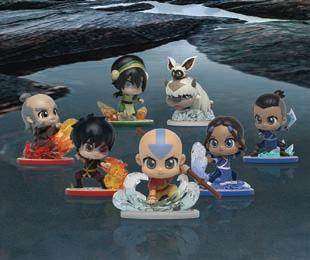
Mindware

Doggy Showdown - In this fun-filled logic game, slide the dogs into the winning line-up to match the puzzle card challenges. The dogs are secured to the game board, so there is no setup or lost pieces. nleash hours of accidental learning fun! Age 3+, Release Summer 2023


Tightrope - layers build a suspended web of stretchy bands, then take turns balancing their marbles on it. Marbles may roll or fall onto the board below, and players must take them back to their hands to play again. First person out of marbles wins! No two games are alike since the web of bands is reconfigured each time you play. Age 6+, Release Summer 2023

Skor - Conquer sales with this family strategy game! layers match colors to collect three shields in a row, armed with some light strategy as they stack shields, block opponents or double their turn to keep everyone on their toes. Victory goes to the player who collects the most shields earns the most points! Age 6+, Release Summer 2023


Finger Food Frenzy - on’t wait to get your hands on this family game of quick thinking! layers use tiny hands to fill their plates with the tastiest finger foods. Saucy meatballs, spicy tacos and shrimp sushi are just a few that are up for grabs. However you slice it, this fast-paced game is sure to become a family favorite hands down! Age 6+, Release Summer 2023
Bird Bash - Folks will ock to this fun addition to your game options! Each player tries to throw the best bird bash by serving up tasty treats that attract birds to their feeder. Collect birds and points by playing wild and action cards to gather their favorite foods. The player with the most points wins in this game that rules the roost! Age +, Release Summer 2023

55 tfe June 2023
NEW PRODUCT PREVIEWS





Mobo Cruisers

The Mobo Wobo helps children reach their 3 milestones: rock, walk, and ride. The rocking teaches your child coordination between hands, arms, legs, and feet. Your child will build strength, balance and confidence. As your child grows, the Mobo Wobo grows with them! With its innovative base, the Mobo Wobo can quickly convert back and forth between a rocking toy and riding toy! The riding trike teaches your child how to walk and ride. An adjustable cushioned seat and handlebar allow your child to keep the fun going as they grow. A sturdy metal frame, high quality bearings, rubber light up wheels and multiple safety pads ensure a smooth and safe ride. When attached, the carefully designed rocking base allows an e citing rocking motion while maintaining stability. Ages 1-3, Available now.
Moose Toys
The first licensed segment for the action-packed Akedo brand is Nickelodeon’s Teenage Mutant Ninja Turtles, featuring the popular characters from the animated series and upcoming film premiering Aug. , 2023. The crime-fighting, pizza-loving Teenage Mutant Ninja Turtles are a natural fit with Akedo’s fast-fighting action and humor infused play. Akedo’s Teenage Mutant Ninja Turtles Arena provides the perfect venue for an epic matchup between the two included e clusive characters eonardo with an e clusive fighting style and the evil Shredder. More than 35 e clusive Teenage Mutant Ninja Turtles sound effects enhance the action between these two longtime enemies, giving players a front-row experience to the sights and sounds of this awesome match up.
Akedo Teenage Mutant Ninja Turtles Versus Packs include everything needed to battle right out of the bo . Each of the four versus packs includes one Ninja Turtle equipped with his ninja-style weapon, one evil mutant villain and two Teenage Mutant Ninja Turtles styled battle controllers to activate the dynamic battle action. Ages 6+ years old, Availability uly 2023.


Bluey Hammerbarn Shopping Playset - luey and ingo are ready to shop at Hammerbarn, their local home improvement store featured in the “Hammerbarn” episode of the popular animated series. The Hammerbarn Shopping layset towers at nearly two feet tall with four stories, eight play areas and 12 play pieces. lus, an elevator to give shoppers a “lift” to each level, including a garden center with interactive gnomes a “lighting department” that lights up and plays more than 50 familiar phrases and a rooftop caf . When shopping is complete, place the cart on the return pole and watch it spin down to the ground oor. Ages 3+, Available uly 2023.

Bluey’s Tree Playset - Kids can climb into luey’s world with this imagination-inspiring tree playset that stands an impressive 11 inches tall. The irresistible rope ladder invites luey and her friends to climb up the treehouse then slide back down from the other side. At the base of the tree is a seating area, a swing that fits luey and other character figures from the popular series, as well as a hammock to rela . Ages 3+, Available now.

56 tfe June 2023
Moose Toys cont.

The Bluey Beach Cabin is the perfect seaside getaway for the loveable blue heeler pup and her family. Bluey fans will fall in love with furnishings throughout the space, including bunk beds, kitchen cabinets, couch, shower and toilet. Outside the cabin is a patio area complete with a grill and private beach. Also look out for the Bluey Escape Convertible and the Bluey Escape Helicopter. Ages 3+, Available July 2023.
Collect all six Real Littles Disney Journals, each complete with matching, themed accessories and a bookmark that magically opens a secret compartment. Bespoke, colorful and fully functional mini journals evoke Disney favorites including Beauty and the Beast, Minnie Mouse, The Little Mermaid, Encanto, Tangled and Frozen 2. Ages 6-8, Available July 2023.


National Sporting Goods


LED Light Up Archery Set - No lights, no problem! This Archery Set with BOTH a LED Light Up Bow and LED Light Up Target can be played anytime, anywhere. The included suction cup hanger makes the target easy to hang up just about anywhere. The 10 arrows have strong suction cup tips that easy stick to the LED Light Up Target. The LED Light Up Bow has an adjustable bow string making it perfect for all ages and skill levels. The Durable quiver with adjustable strap allows the child to easily access their next arrow while carrying them on his/her back. Ages 4+.

No lights, no problem! This LED Light Up Basketball hoop set can be played anytime, anywhere. The included over the door hook and suction cup hanger make it easy to set up, no assembly required! Hours of indoor and outdoor fun day or night! Play in the dark or with the lights on! Flexible rim allows for slam dunks! Rim also folds up for compact storage and travel. Includes: LED Light Up Basketball, LED Light Up Hoop, Flexible Rim with Net, Batteries for ball and hoop. Ages 4+.

The 2 Player Pump Rocket Launcher Battle Set allows kids to “battle” with each other head-tohead or compete to see who can launch the rockets the highest or the farthest. Pull the tube back and push it forward sending forced air to lightweight soft foam rockets sending them soaring into the air, up to 100+ Feet! The Rockets are made of soft lightweight foam and have safe rounded foam tips. Great for indoor or outdoor use. Ages 3+.

Party Games Playset - Fun games for any occasion for kids of all ages… Potato Sack Race, 3-legged race, Egg and Spoon Race, Balloon Toss and Medals for the Winners! Strong cloth bags with thick bottoms, hold up well even after many races. Featuring bright color kids will love. 3-Legged Race Bands made of high quality nylon with a Velcro closure are easy to take on and off and smooth to not cause friction. Build strong to last and will not break during the race. The Egg and Spoon Race Game are made of high-quality plastics that are safe from BPA, Lead and Phthalates. This is a great fun game that everyone can get involved with from the racers on the field to the spectators cheering on from the side. These traditional carnival-like games are great for picnics, barbeques, birthday parties, family reunions or field day events.

Tumbling Tower - It’s Ok for your tower to lean, just don’t be the one that make it fall. This Giant Tumbling Tower is a new take on the traditional Tumbling Games! Roll the Dice to see what color column you need to pull from the tower. Pull that column out without making the tower fall. Stands 38” tall when fully assembled.

57 tfe June 2023
NEW PRODUCT PREVIEWS


Petit Collage
tte e e - Shake, shake, shake with this bright and colorful utter y Wooden Shaker rattle toy! esigned to encourage little ones to e plore and strengthen their fine motor skills, this beautiful wooden shaker rattle toy with a butter y theme is made from responsibly-sourced FSC wood and packaged using 75 recycled materials, made with the health of children and the planet in mind. A treasured first toy for baby. Ages 0+.


M i st e cti it - ittle ones months and up will love to twist the gears, slide the beads, and sort the blocks. Tummy time friendly, the My First Wooden Activity Toy’s sturdy construction and bright colors offers little ones multiple ways to play. evelop your baby’s fine motor skills, hand-eye coordination, shape recognition, and cause-and-effect reasoning. Constructed from responsibly-sourced FSC wood and packaged using 75 recycled materials, made with the health of your child and the planet in mind. Ages months +.


tes




Mi c s t i e M ie D s - Miraculous adybug makes her feature film debut in an enchanting animated and musical tale. The movie takes you on a journey of discovery in this beautiful origin story of how two teens embarked on their superhero destinies! The 10.5” Movie adybug comes with a delu e foil print fashion and her movie specific yoyo and the 11” Movie Cat Noir comes with his upgraded shiny black outfit and his signature staff accessory. Each has 15 points of articulation! Ages +, Available Fall 2023.

Introducing Mi c s i is! A whole new parallel world, full of surprises to discover! These all new mini scale playsets, inspired by viral phenomenon Miraculous Chibi Shorts on Youtube, are stylized fantastical “surprise” environments that come with 2 Miraculous Chibi figures. ook out for the Miraculous Chibi oulangerie Cakes a Crush, and Miraculous Chibi Amusement ark Rides a Rescue sets. Ages +, Available Fall 2023.
ee e M t t i t es M t t M e cti i e ss t e t - each standing between and 5 inches tall, featuring fully articulated, poseable heroes and villains with their iconic weapons and accessories.
ee e M t t i t es M t t M e De e i ts cti i es - 5-1 2-inch-tall versions of our heroes with spring-loaded arms and legs and featuring electronic phrases voiced by the movie talent “Cowabunga!” with a special word stretching feature that accentuates the battle cries and battle sound effects.
ee e M t t i t es M t t M e i t i es - 12-inch versions of our heroes, fully articulated, poseable and each comes with their iconic weapons.


58 tfe June 2023
Playmates cont.

Teenage Mutant Ninja Turtles Mutant Mayhem Pizza Fire Van - authentically detailed and decorated as seen in the movie fits all Turtles and Splinter inside and electronically fires up to pizza pies with its built-in pizza launcher, taking out all the baddies!

Playmobil


Wiltopia Tropical Jungle Playground - iscover Wiltopia, laymobil’s first eco-friendly product line consisting of, on average, more than 80% sustainable materials. There’s plenty of action for young explorers at the jungle playground. The fruits of the trees can be harvested and rolled down the ball track. Includes viewing platform, children’s swing, climbing net, target for archery and cave with hiding place. With extensive accessories and animal knowledge card ‘sloth’ with exciting audio content. Get the extra portion of knowledge the Wiltopia web app offers additional audio and video content and takes children right into the animals’ habitat. Simply scan the QR code on the animal knowledge card and the detailed animal and plant world comes to your home. That’s entertaining knowledge transfer with fun and learning effect. Ages 4-10, Available now.
Water Wheel with Baby Shark - Ready for some splashing good times? With the Water Wheel with Baby Shark, bathtime fun reaches a whole new level. Simply attach the water wheel to the wall or side of the tub using the suction cup. Then, place the figure inside and close the fish door. Now the real action begins! Fill the cup with water and pour it over the wheel to make it spin. The colorful playsets from Playmobil 1.2.3 Aqua each playfully promote important developmental skills. Ages 18 months+, Available now. This Stage 3 Little E pert set will help your toddler develop cognitive and fine motor skills, all while having a great water play e perience! layset includes one figure, oating shark, water wheel, and a cup for pouring. Recommended for ages 18 months to four years.

Playper


Playper’s Curious Kingdom is a playset for kids 3-6 that combines hands-on building with lovable characters, funny stories and creative play. The castle playset, made of a highly durable material called PlayperBoard, features a working drawbridge, secret trap door, multiple levels and lots of opportunity for play with the characters and accessories! Playper makes premium toys that are plastic-free, 100% recyclable and with soy-based ink. Ages 3+, Available now.
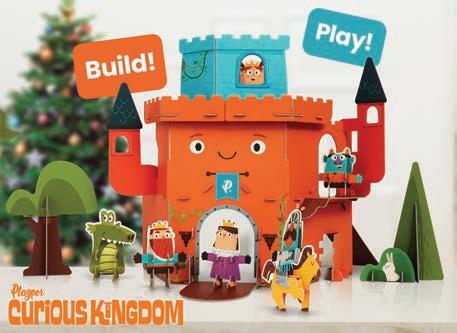
59 tfe June 2023
NEW PRODUCT PREVIEWS


Plus Plus


Puzzle by Number USA - uild your way across the country with the uzzle y Number Map of the nited States! Follow the enclosed pattern by placing each color on its matching number to create all 50 states. Flip the poster over to discover over 700 interesting state facts ags, mottos, state capitals, and more. Then, display your map on the wall at home or in the classroom - no glue or ironing required! Ages 5+, Available Summer 2023.

Learn to Build BIG Activity Set - lus- lus’s newest ig Activity Set helps little ones discover patterns, colors, counting, and shapes while having a blast making funny faces and planting a lus- lus garden. This set includes 10 cards and over 100 pieces and is packed full of full games like dominoes, bowling, and tic tac toe. Ages 5+, Available Summer 2023.

Axolotl Tube - It’s not an alien it’s an A olotl! These adorable but rare creatures only live in two lakes in Me ico, but now you can create an A olotl of your own with lus- lus’s latest tube. Follow the enclosed instructions to build your creature out of lus- lus, then turn the lights out to watch it glow in the dark! Ages 5+, Available Summer 2023.





Gnome Tube - An adorable nome has stepped right out of a fairy tale and into the newest lus- lus tube! He may be small, but this charming creature is filled with mythical whimsy and creative fun. Each tube includes three skin colors to add even more building possibilities. Follow the instructions to discover how to create this charming nome and his two tiny mushrooms. Ages 5+, Available Summer 2023.

PMI


Pudgy Penguins Figure - Adopt your new Pudgy Penguins forever friend, and redeem a unique digital e perience! Each udgy enguins figure comes complete with two interchangeable accessories, and an immersive digital customization e perience. nlock a multi-generational, innovative connection between the digital physical worlds! Also look out for udgy enguins Collectible figure in an Igloo. Available now.

Sonic Prime Articulated Action Figure in Capsule - nlock a Shatterverse of articulated action figures from the world of Sonic rime! Each Sonic rime Capsule contains 1 of articulated collectible figures and a collector’s lea et, all wrapped up with Sonic rime branded innovative packagings. Reenact your favorite scenes from oscage Mase and New York City, and look out for the 2 rare figures! Available Fall 2023.

Sonic Prime Paradox Prism - Sonic Prime Paradox Prism - Each Paradox Prism Capsule contains 1 of 16 collectible figures with its corresponding rism shard, based on the Net i original series. This product’s innovative packaging is based on the arado rism, a crucial element in the original show that unlocks different universes and versions of Sonic and his friends when it’s shattered. ook out for all rare figures! Also look out for the Sonic rime Collectible Figures pack delu e. Available Fall 2023.


60 tfe June 2023
Piñata Smashlings Pinata Box - E plore the i ataverse with these collectible, articulated pi atas! With pi atas, each comes complete with its corresponding pi ata stick, a redeemable R code that enables e clusive C content in-game, and 2 epic Smashlings one of them is hidden inside the i ata itself! Also look out for Piñata Smashlings Blind Box Plush. E plore the i ataverse and unbo one of 6 surprise Smashling plushies! Standing at 12 inches tall, and made of the squishiest, softest materials, each plushie comes with a unique R code, enabling you to unlock e clusive in-game content. Collect them all and become the ultimate i ataverse champion! Available September 2023.
Piñata Smashlings vs. Bashlings 8 pack Deluxe box - et the best Smashling win with the Smashlings vs. ashlings -pack of collectible figures! With over 0 different figures to collect, this -pack comes complete with a redeemable R code that enables e clusive C content in-game, one hidden Smashling and one hidden ashling, both classified as rare or epic. Also look for the i t s i s fi es c De e with a redeemable R code that enables e clusive C content in-game, and different hidden Smashlings, 2 of which are rare, one legendary, and one bubblegum pink Smashling! Available September 2023.


Piñata Smashlings Yum Yum Playset - ine at the Smashlings Yum Yum layset! This hunger-inducing playset comes complete with 3 foodie accessories 2 condiment bottles, a drink, and a side of French fries. ut who will eat all this food The Smashlings inside of course! 2 of them are classified as rare and epic, and 2 bubblegum pink. Each playset comes complete with a redeemable R code that enables e clusive C content in-game! et your food truck going! Also look out for the Party Bus Playset and Rainbow Whale Playset

Rainbow Loom


Cylinder Surprise Kit is a bracelet craft kit that features Loomi-Pals charms from Rainbow Loom. Each cylinder contains a mystery assortment of 30 collectible charms and everything you’ll need to make bracelets. With over 160 different oomis- als characters, who will you find Ages 7+.


Introducing Loomies! A new collection of adorable IY Characters from Rainbow oom. With just a frame, rubber bands, and easy to use tools, you can create your own collectible oomies figurine. Each oomies figurine comes with interchangeable themed accessories allowing you to make a variety of characters. reat for any age, just create, play, and display! Keep your eyes open for oomies Fairy 2 and pk IY Characters, and oomies Food 2 and pk IY Characters.
Beadmoji are Rainbow Loom’s unique beads that feature fun messaging and icons that allow you to tell your story with a wide variety of trendy themes. Create fun and original accessories for you and your friends. Carry all of your components and creations in a handy organizer case. eadmoji features our new speed loom and dual hook allowing you to create bracelets twice as fast. Create your own style! ook out for the elu e Kit, Trendy Kit, ood Vibes Kit, esties Kit, and Combo Kit. Also keep your eyes out for eadmoji Alpha eads, which allow you to tell your own story. Create fun and original messages for you and your friends. Create your own style! Ages 7+.

61 tfe June 2023
PMI cont.
NEW PRODUCT PREVIEWS


Ridley’s Games
Flora & Fauna - In this immersive solo card game set in the Amazon rainforest, your goal is to help the rainforest ourish by arranging the plant and animal life in healthy ecosystems within the forest canopy. Earn points by creating as many Canopy Structures as possible and collecting the right Species and Food cards before they run out. Canopy Structure cards are like a blueprint for each “ecosystem.” Your aim is to use your actions to collect the Species cards shown in the Canopy Structure and make the rainforest thrive. Ages +.

e e - Stack delicious waf es and topping pieces onto the fork without toppling the stack! Each player takes a turn to roll the die and then attempts to add the shown waf e or topping piece to the stack of waf es to try to win points. Steady hands are essential as the more pieces you knock over, the more pieces your opponents add to their piles and the more points they accumulate. The player with the most points wins! Ages 6+.
Schleich


se s te - oad up the horses...it’s time to travel to the big horse show! room your toy horses at the built-in grooming station or practice the equestrian obstacle course in the modular paddock. Rela in the rooftop pool or gather around the barbecue after a long day of training. The Horse Transporter is the perfect portable toy for on-the-go fun -- a must-have addition to your schleich Horse Club collection. Ages 5-12 years, Available uly 2023.
e it i s ccess ies - Every day brings new e citement and lots of farm chores at the big red barn! Cows, pigs, cats and doves all need fresh feed. Can you help the farmer fetch hay from the hayloft ust like a real farm, the red barn playset teaches little ones about farm life while they play. More than 50 accessories! Ages 3- years, Available uly 2023.
t Disc e et - Three friendly A olotl characters in one package! These glittering A olotl toy figures are like little water dragons and they look just like A olotls in the wild! Ages 5+, Available now.

62 tfe June 2023
Schylling





The 14.5” Lava Lamp Erupting Crater provides a vibrant and magnificent sight that makes you feel as if you were looking into an active volcano. Illuminate your mood as the wa blobs split, collide and ooze their way up and down the trademark-shaped globe for a calming, groovy, ow state of mind. With so many to choose from, it is no wonder ava amp has captivated for nearly 60 years. There is a style to fit every room, mood and personality. ava amp produces a soft warm light and mesmerizing visuals of ever-changing, moving wa , gently rising up and down. Ages +, Available now.
NeeDoh Gumdrop - The groovy gratifying super soft, super stretchy dough like glob Nee oh is now available in a tasty-looking gumdrop shape! Nee oh umdrop still has all the irresistible power to find your best mellow and chill and always returns to its original shape, but now it has a groovy goo filling. This jelly-filled squish sensation is completely contained and mess free. ne sweet squeeze turns into many for a soothing sensory sensation in the office, classroom, car, at home or anywhere at any time. Available in four assorted bright colors. Ages 3+, Available August 2023.


NeeDoh Marbleez - The groovy gratifying super soft, super stretchy dough like glob Nee oh is now available in beautiful swirling marble! Nee oh Marbleez still has all the irresistible power to find your best mellow and chill and always returns to its original shape, but these water-filled, oversized marbles have all the sophistication of traditional glass marbles but with soft, squeezy satisfaction. ne squeeze turns into many in the office, classroom, car, at home or anywhere at any time. Available in five color swirl variations. Ages 3+, Available August 2023.


Super NeeDoh Ripples - The groovy gratifying super soft, super stretchy dough like glob Nee oh is now available with even more tantalizing tactile delight with the Super Nee oh Ripples! Ripples still has all the irresistible power to find your best mellow and chill and always returns to its original super size shape. ne squeeze turns into many for a soothing sensory sensation in the office, classroom, car, at home or anywhere at any time. Available in four assorted bright colors and two assorted te tures. Ages 3+, Available August 2023.


Big Wheel Big Spin 16” Deluxe - ig Wheel offers big kid adventure for the little ones to help them develop riding confidence and a growing sense of independence. ig Wheel 16” ig Spin elu e is a preschooler’s first ride offering the security of low steady wheels that grip the sidewalk with the thrill of signature spin outs and fast-action pedal power. lus, there is a storage compartment for all their treasures, a hand-brake for easy 1 0 degree spinout action and an adjustable seat for those growing legs! A family must-have for everyone who wishes their child to e perience neighborhood adventures on their own ig Wheel. Also look out for the Big Wheel Speedster 16” riginal and Big Wheel Dazzler 16”. Ages 3-7, Available August 2023.


Lava Labs Color-Ruption - AVA abs takes the wonder and captivation of AVA lamp to new levels with science-based, do-it-yourself activities. AVA abs Color-Ruption lets you e periment with your choice of colors to e plore and create a bubbling, mi ing eruption of fun! lus the detailed volcano chamber is a great display piece when not in use. Ages +, Available now.


63 tfe June 2023
NEW PRODUCT PREVIEWS




Spin Master


Introducing the Dumb Ways to Die Card Game by Spin Master Games! In this adult board game, you will win or die trying! To play this family board game for ages 12 and up, you will need 2-5 players. You can even play as a card game for couples. Welcome to Dumbville! While you’re here, your only goal is to make sure that your Beans don’t die. Fair warning, these bumbling Beans will always find dumb ways to die. Their survival depends on a deck of cards that might help (but mostly won’t). So, in the face of almost certain death, you better hope you’re lucky, or at the very least, that everyone else dies first. Ages 6+, Available uly 2023.

Interactive Dobby - Explore the Wizarding World with the interactive Magical Dobby! Young witches, wizards, and Muggles can relive the charm of Harry Potter with their favorite house-elf, Dobby. This enchanting 8.5-inch interactive obby figure comes to life with over 30 sounds and phrases and animated movement of his eyes, ears, head, and arms! Magical Dobby responds to touch with his sounds and movements. Squeeze his hand to hear phrases from the movies and as he interacts with you, he’ll move his ears, blink and move his eyes, lift his arms, and move his head! By placing the included sock in his hand, unlock even more exciting sounds and phrases. Magical obby comes with AAA batteries and speaks English or French. E pand your Wizarding World collection with interactive Magical obby! Ages 6+, Available August 2023.
Batwing Battle Set - With the new Flash movie just over the horizon, take to the sky with The Flash Ultimate Batwing Set – featuring 4-inch The Flash, Michael Keaton Batman, Batwing Vehicle! The Flash movie action figures are highly detailed with 11 points of articulation for dynamic battle stances. Open the cockpit and place The Flash and Batman into the epic Batwing vehicle. Pull up the landing gear and defend the world against chaos! With a detailed sculpt and awesome moviestyling, your figures will come to life! Ages +, Available now.

Rubble & Crew Core Vehicles - Introducing the first of Spin Master’s Rubble Crew toys, a true to show vehicle and character assortment. Preschoolers can get to work recreating construction projects and repair jobs, using vehicles and tools including Rubble and his ulldozer, Mi and her Mi ing Truck, Charger and his Crane rabber and Wheeler and his ump Truck. Ages 3+, Available now.
Disney Junior Firebuds Core Vehicles - Recreate isney unior’s Firebuds rescues with the core vehicles and figures of dynamic duos o Flash, ayden iston, and Violet A l. Each pair features Vroom- ink innovation, allowing the figures and vehicles to interact. When the character is placed into the vehicle cockpit, it comes to life with eye movements as they roll out for their next adventure. On top of all that fun, Firebuds toys all come in 100 plastic free packaging. Ages 3+, Available now.


64 tfe June 2023
Squaregles



Squaregles Starter Set - The Starter Set includes 105- magnetic building pieces which are interchangeable, colorful magnetic frames and 3D panels needed for kids to create different structures and stories every time they play. The robust set includes square and triangle magnetic frames, paperboard panels for drawing, jumps, tracks and tubes to watch your ggs race through! In addition, the set comes complete with blue and red ggs heads that function as “marbles” to roll down ramps and attach to the two included bodies, cars and accessories for endless ways to play! In addition, kids can draw and color on paperboard panels that fit inside the magnetic square frames and their own building features from their imagination. Compatible with other magnetic building sets, Squaregles is STEAM approved by the ood lay uide and The Toy Associationkids will be inspired with new ideas and creativity in each expansion set! Ages 4+, Available now.


Oggs Character Pack - Included in the bo are ggs character figurines with 2 wizard hats, 1 unicorn helmet, 1 dragon helmet and 2 pairs of bunny slippers so fun that are compatible with your Squaregles playsets. Test out your track and slides in a new way with 2 turtle discs that fit your ggs or Erggs not included miniature characters (spin ‘em, roll ‘em). Host bigger races around your toy castle and get speed down your slides with the red car included in this accessory pack. 1 character card tells you about each Squaregles character and their super special powers. 2 new comic cards tell stories of the ggs discovering new Totems. Ages +, Available now.
Steiff
Disney “D100” Platinum Mickey Mouse - Platinum, the world’s most precious metal, was the inspiration for our newest, most precious Disney collectible yet. In celebration of 100 years of magic, Steiff is honored to present a version of Mickey Mouse unlike any we’ve ever done before. It’s a modern masterpiece that perfectly illustrates the luxurious platinum theme. This monochromatic Mickey is artistically handmade from various shades of grey cotton velvet, and wears a pair of glittery fabric trousers. He features expressive, embroidered eyes and other detailed, stitched embellishments. This collectible treasure proudly wears a “D100” stainless steel necklace, signifying his status as part of Disney’s centennial celebration collection. He’s a Mickey like no other — one that every collector will want to own. Ages 18+, intended for adult collectors only! Available summer 2023.
Disney “D100” Mickey Mouse with Mini Teddy Bear - In honor of the partnership that began in 1931, Steiff and isney are pleased to present their two most iconic figures in one irresistible set. Introducing Mickey Mouse holding his very own Steiff Teddy bear. More than 90 years ago, Walt Disney himself chose Steiff to make the world’s first commercially licensed versions of Mickey Mouse toys. ur new, very special limited edition is a perfect representation of the long-term friendship between these two legendary companies. Mickey is sewn from fine wool felt, while his tiny Teddy is crafted from genuine mohair. oth pieces are fiveway jointed. Mickey has wired legs for added support, and to make him even more posable. He also proudly wears the “D100” stainless steel chest tag, signifying his status as part of Disney’s centennial celebration collection. Ages 18+, intended for adult collectors only! Available summer 2023.


Meet Oswald the Lucky Rabbit! This iconic piece is a tribute to isney’s first character, and thus to the beginning of the Disney Company. Looking at his shiny, smiling face, you will recognize a similarity to another famous isney character. n the occasion of the 100th anniversary of isney, swald is now back in the spotlight and we are delighted to present you a treasure of film history with this unique masterpiece, bearing a shiny special chest tag. Ages 18+, intended for adult collectors only! Available summer 2023.

65 tfe June 2023
NEW PRODUCT PREVIEWS


Super Impulse


Poptaters Series 2 - Super Impulse partners with Hasbro and a variety of pop-culture IPs to bring exciting mashups to a new generation of Potato Head fans and collectors. Poptaters puts a fun twist and mashup on two iconic classics and adds a touch of playfulness in any space! These humorous and cool Spud Mashups have 4-inches bodies that nearly double in size with accessories, and are sold in a transparent, stackable, collector display packaging. In classic Potato Head fashion, each figure comes dressed in a removable outfit and features interchangeable parts including one surprise Potato Head original piece. Available in May, look out for Series 2 featuring Sonic The Hedgehog, e fice D i t e i e s i e D e c and c s! For those wanting to showcase their fandom on-the-go, you can also grab select Poptaters mashups in t e i c e c i s. Ages 8+, Available spring 2023.


The incredibly popular line of World’s Smallest Games features classic games enjoyed by generations of kids and adults in a size that will fit in the palm of your hand! New in 2023, The World’s Smallest Sorry!, Mousetrap, Battleship, Beer Pong, Trouble, Trivial Pursuit, Playing Cards, and the fastest growing game in America, Pickleball! Each game plays just like the original, full-sized version and offers hours of fun. All pieces fit inside, making it ideal for easy storage and travel! Collect them all! Ages +, Available spring 2023.


The iconic line of s est s keeps growing and kidults keep coming back for more! World’s Smallest includes the best and most classic toys we all know and love, made as fully functional versions in the smallest sizes ever created! There are hundreds of toys to collect! New this season is arbie Cowgirl, arbie Rollerblade, Town Country Wagon by Radio Flyer, Spirograph, Waterfuls, Wooly Willy, ig Wheel and Nee oh! Ages 6+, Available spring 2023.

World’s Smallest Micro Figures - Super Impulse puts its iconic twist on miniatures with Micro Figures - your favorite characters at a fraction of the size! Measuring up to 1.25 inches tall, each highly detailed and articulated micro figure comes with a mini collector case for display and storage, and stand. NEW for Spring 2023, collect Monster High, ungeons ragons Series 2, Sonic the Hedgehog, and Fall uys! Ages 6+, Available spring 2023.

66 tfe June 2023
Thames and Kosmos





Tasty Labs: Wizard Potion Science Kit - Brew up a cauldron of sweet, magical potions that you can actually drink. Follow the illustrated story of two young wizards-in-training, Randolph and Zelinda, as they mix up a series of magic potions and discover real scientific phenomena in the process! A fun, mystical chemistry kit in disguise! Follow an illustrated story to conduct a series of potable potion-making e periments. Includes instructions to make five different “magical” potions that you can safely drink. Concoctions include a fizzing citrus eli ir, strawberry “frog’s eggs,” a color-changing “transmogrification” potion, a slimy chia seed drink, and an “anti-gravity” tonic. Ages +, Available June 2023.


The Thames & Kosmos Planetarium Projector - Turn your bedroom into your very own planetarium theater! Illuminate a darkened room by casting projections of the stars in the night sky and space-themed images across the ceiling and walls. This home planetarium is actually two projectors in one. The first is a rotating star map dome that projects astronomically accurate maps of the stars; star maps for both the northern and southern hemispheres are included. The second projects space-related images, including all eight planets, eight human-made space objects like rockets and satellites, and eight extragalactic phenomena like nebula and gala ies. se night light mode to automatically shut off the projector after 15, 30, or 60 minutes. Ages +, Available une 2023.


t e tifici te i e ce t - E plore the future of advanced computing technology with KAI, short for Kosmos Artificial Intelligence! uild and program an intelligent, app-enabled robot that uses machine learning to react to the gestures and sounds that you make. Machine learning is the process by which computers use data to recognize patterns, learn, and make predictions, and it is a key aspect of artificial intelligence. Mechanically, KAI is a fascinating robot that can walk on si legs and rotate its upper body around 360 degrees, allowing it to turn toward any direction on the spot. Composed of 25 red LEDs, its face display can be programmed via the app to show different e pressions and scrolling messages. Ages 10+ with help 12+ “I got this! Available uly 2023.


ic i ts - Packed with the excitement of a boxing match and the fun of constructing incredible mechanical models, this kit allows you to build two boxing robots and challenge a friend to a match. With complex shoulder gestures, two boxing punches (jab and uppercut), three waist postures, and interchangeable heads, these robots are designed to oat like butter ies and sting like bees. se the handheld hydraulic controls to fight like a champ. Knock your opponent robot’s head backward and score a point on the included scoreboard. Learn about how these amazing machines and hydraulic systems work. Ages 10+ with help 12+ “I got this! Available August 2023.
Inside Job - You are a group of secret agents and must work together to complete your missions. ut beware! An insider is hiding amongst you, sabotaging you at every turn and collecting secret information along the way. In this (mostly) cooperative trick-taking card game, you slip into undercover roles. Who is acting suspiciously? Who can you trust Complete a mission with each trick and find out who is the insider. Ages 10+, Available now.


i c e - High Score is a competitive dice game that marries the luck of the dice with strategic gameplay and ever-changing rules. Each round players are presented with a new challenge card that dictates different dice-rolling rules for that round. Players take turns rolling dice, deciding if they want to re-roll dice, and trying to get the most points possible as determined by the current challenge card: Do only the odd dice count? What value is the vorte die in this round Which dice count towards your final score The player with the most points by the end of seven rounds wins! Ages +, Available now.



67 tfe June 2023
NEW PRODUCT PREVIEWS



TOMY

Build-A-Buddy John Deere Dump Truck - The John Deere Build-A-Buddy Yellow Dump Truck features two great ways to play! This construction toy comes with a drill and one bit that lets kids take it apart and put it back together again. It also features a working dump bed to haul around all their favorite treasures. The dump truck toy comes complete with 2 AA batteries pre-installed so that the fun can start right away! Also keep your eyes open for the Build-A-Buddy Transformers Optimus Prime and Build-A Buddy Batmobile! Ages 18 months+, Available fall 2023.

The Club Mocchi- Mocchi- mega plush line of favorite characters from popular video games are soft and huggable pillow toys with a squishy texture and sturdy construction. Whether gifting a travel pal, room decor, or surprising your favorite gamer, there’s a Mocchi- Mocchi- sure to please. New plush this year include The Legend of Zelda (Spring), Cuphead (Spring), Super Mario (Spring Fall), Kirby (Fall), Suya Suya (Fall), Halo (Fall) and YuGiOh (Fall) Ages 3+, Available spring and fall 2023

YumiAmi, developed in-house by the US brand design team, brings more diversity into the TOMY toy line. The five soft and sweet dolls, who come from varied cultural backgrounds, are designed for children three to five years old and will come packaged with a book and sold as a gift set. Each book will be paired with their respective doll and promote learning about and embracing each other’s cultures. Ages 3+, Available fall 2023.


Peeky Pops - Upping the cool factor for not yet tween kids is TOMY’s new, clip-on Peeky Pops line. Plush fun combined with fidget play are sure to be the new collection craze Fidget play and collectability align in this fun face array of 12 characters (launching with four). Fab and fun Peeky Pops hits shelves at price point of Ages 5+, Available fall 2023.


Bebé Fuerte - The line launches with eight seven signature products co-designed by Robin Arz n, Vice resident of Fitness rogramming and Head Instructor at eloton. The fresh, colorful palette brings Robin’s Cuban-Puerto Rican roots and the rich heritage of LatinX culture to the products, which encourage parents and baby to move together. The line that will feature Spanish words and phrases parents can share as they play with baby, and the The product will come in bilingual packaging. Ages 0, 3 months+, and 6 months+ based on individual products. Available fall 2023.
A Little Spot of Emotion - ased off of the best-selling book series by iane Alber, A ittle Spot of Emotion, the brand focuses on social-emotional learning. aunching with 5 items from fidget poppers to Mi Match items, was designed to helping children to acknowledge and learn about how to deal with their emotions in a fun way. Ages 3+, Available fall 2023.
68 tfe June 2023
University Games

Shoe Shoo Pigeons - Can you send your shoes soaring without disturbing the pigeons? In Shoe Shoo Pigeons, all of your pairs of sneakers are hanging from the (elastic) telephone wires. Players are challenged to use a stick to hook the right part of the wire with just enough force to ick only the right color shoes off the line and not upset the pigeons on their perches. Try to be the first to collect all of your color shoes in this high- ying, completely original new game designed by students from The Otis College of Art and Design. For 2-4 players. Ages 6+, Available July 2023

ete t e t e ific c e - Food themes are hot and the coolest cat ever, Pete the Cat, is featured in this spicy new game from the Briarpatch division of University Games! In this game, young players practice counting and use visual discrimination skills to help ete the Cat collect silly taco toppings to complete terrific taco recipes. The first player to fill three orders cards wins this fantastic foodies’ game. The newest ete the Cat ame joins the company’s other popular titles in the series including ete the Cat izza ie ame, The Missing Cupcakes Game, Wheels on the Bus Game, and Groovy Buttons Game. For 2-4 players. Ages 3+, Available June 2023

Murder Mystery Party: The Night Hunter Game - The latest and greatest Murder Mystery arty case file from the original leaders in mystery games, University Games, stalks store shelves this Fall. The Night Hunter is a chilling four-chapter compelling investigation. As the story goes, 25 years after Bill Mendax, The Night Hunter, was sentenced to life in prison for confessing to a series of disturbing murders, a new crime with eerily similar patterns occurs. Is it a copycat? Or is the wrong man behind bars? The game includes over 100 unique components, and players are immersed in true crime forensics never before witnessed in any other games. Ages 14+, Available Fall 2023

Happy Hour Hustle is the newest addition to niversity ames’ line of hydration games. This minute-to-swig-it, teambased challenge game will test your wits, strength, showmanship, and agility. In Happy Hour Hustle, players break into teams in a race to complete one challenge in each of the five unique categories. For a hint about the types of challenges, just look at the game contents which includes two Happy Hour Hustle plastic party cups, ping pong balls, a kazoo, and coaster-sized challenge cards. For 2 or more players. Ages 21+, Available une 2023.

i e ic



M ste ies t tis te c s - Wild Republic’s new Mysteries of Atlantis line consists of Mermaids and Plush that serve as companions to one another. The plush animals are made from original watercolor art hand painted by Wild Republic’s designers that was then photographed and printed on the plush patterns. These plushies bring arts to the forefront in a time when art has been unfunded across the country – WR is reminding all of the beauty of free hand art. They are also made 100% from recycled materials. Ages 0+, Available now.
tist ecti s - Enjoy this amazing selection of Artist Collection 15” plush with superior realistic designs created by using a combination of excellent fabrications and sublimation printing which allow for the greatest of detail. These plush animals are sure to please true animal lovers who will appreciate the level of detail as well as plush collectors looking for their next snuggle buddy. Ages 0+, Available now.


Foilkins Snakesss & Seahorses - Foilkins plush animals are made with super fun fabrics and sparkly accents that will bring fun and delight to kids of all ages. This line of plush is not only beautiful to look at but why are all oh so soft to cuddle with. Ages 0+, Available summer 2023.


69 tfe June 2023
NEW PRODUCT PREVIEWS




Winning Moves Games
With Boggle Jr. your preschooler will transform letters into words! Two different matching games encourage various skills and levels with fun, colorful pictures. Two-sided cards have 3-letter words on one side and 4-letter words on the other. In “Match It/Spell” It children look at the picture and word, then they find the matching letters, using the oggle r. letter cubes, to spell out the word. In “Cover It” children use the word shield to cover the word and then spell from memory without seeing the letters. Contains - 1 oggle r. lastic nit, versized etter Cubes, 30 icture Word Cards 60 Words , and Illustrated Instructions. For 1 or more players. Ages 3+, Available une 2023.


Monopoly Scrabble - E perience the totally unique gameplay of Monopoly Scrabble, the innovative game that combines the best elements of the Monopoly game with the crossword-building play of Scrabble. In place of rolling dice to move around the board, players build words and move ahead by their score. uild a word on a premium space and claim a Monopoly property. Clever gameplay twists, along with custom Community Chest and Chance cards, keep things moving at a fast pace. The winner is the player with the highest total of cash and property value when the last letter tile is played. Contains - 1 uad-Fold ameboard, 5 Wooden Scrabble Tile Racks, 1 ag of 100 Wooden Scrabble etter Tiles, Tile Storage ag, Silver-Toned Monopoly Tokens, eck of 2 Community Chest Cards, eck of 2 Chance Cards, 10 Title eed Cards, Monopoly Money ad Si ty 100 bills and Si ty 500 bills , and Illustrated Rules. For 2 to players. Ages +, Available une 2023.

Risk The 1980’s Edition - This faithful reproduction features the original 1 0’s artwork and components. Can you acquire the most armies, play them most effectively and conquer the most territories It’s worth the Risk to try! Contains uad-fold ameboard, eck of Cards, 6 Sets of 70 lastic Roman Numeral Armies lue, reen, Red, lack, Yellow rown , 3 Translucent Red ice, 2 White ice, and 12-page Instruction ooklet. For 2 to 6 players. Ages +, Available une 2023.

70 tfe June 2023
The Woobles
The Woobles is the first learn-to-crochet company to leverage emerging ed-tech tools to successfully teach the art of crocheting to complete beginners. Since its launch in 2020, it has helped over 250,000 people learn the lifelong skill of crocheting through a growing assortment of all-inclusive crochet kits. In 2023, The Woobles introduced its much-anticipated licensing program, which has seen popular licenses, such as AC-MAN, sell-out to enthused customers in minutes. The Woobles plans to further e pand its licensing portfolio to include new entertainment, music, and gaming properties, to name a few.

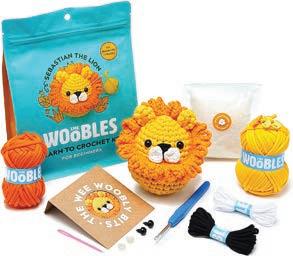
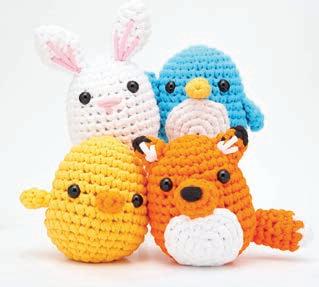
WowWee





All-new Fingerlings by WowWeewill bring a heart-to-heart connection to interactive toy play. These adorable baby monkeys know when they’re on your finger, their glowing hearts beat just for you! ff your finger they love to monkey around, and their new posable tails allow them to sit for more ways to play and display. Each of the new characters now has soft, ocked hair, a unique personality, and 70+ sounds and reactions that bring them to life. These monkeys introduce e citing new features, while staying true to the “Friendship Your Fingertips” promise of the original hit toy that won the 201 Collectible Toy of the Year and overall Toy of the Year T TY awards. Available summer 2023. Stay tuned for announcements on Fingerlings Fridays this Summer, including e clusive and new surprise characters... o ananas!

71 tfe June 2023
NEW PRODUCT PREVIEWS





ZAG

ZAG Heroez Miraculous Build A Bear Product Range – Just like Marinette harnesses the power of creation, children will have the power to create and personalize their own Miraculous Ladybug Bear. Featuring soft grey fur, blue eyes, and ladybug paw pads, the first-ever Miraculous adybug ear is all set to save aris from evil. The bear can be personalized with costumes, outfits, and accessories to make an epic gift for any Miraculous - Tales of adybug and Cat Noir fan. The Miraculous adybug Costume features adybug’s signature red and black jumpsuit and matching eye mask the perfect costume for heroic adventures. And the Cat Noir Costume, including a bodysuit, eye mask, and ears headband, transforms the furry bear into Cat Noir! Ages 2+, Available now.

ZAG Heroez Miraculous Dog Toys from Zippy Paws The new toy range includes Miraculous Cheeky Chums lush of both adybug and Cat Noir, cuddly crimefighters that take on boredom one squeak at a time a Miraculous Kwami lush 2- ack featuring Tikki and lagg Miraculous Rope liderz for both superheroes, lightweight yers for heroic tossing and tugging fun the Miraculous Squeakie attiez Miracle o , a soft stuffing-filled toy that features corduroy te tured sides and two round squeakers, featuring the printed logos of the magical Miraculouses and a Miraculous atterned one inspired by the ucky Charms that appear in the show. All ages, Available now.


ZAG Heroez Miraculous Decals from RoomMates Décor (York Wall Coverings) ecorating with RoomMates Wall ecals is the easiest, fastest, and most affordable way to transform a boring wall in minutes! These officiallylicensed tales of adybug and Cat Noir eel and Stick wall decals really pack a punch. rinted on clear, renterfriendly and repositionable substrate, this decal set features the whole Miraculous crew. Installing this powerful team of superheroes is as easy as eel, Stick, one! All ages, Available now.
ZAG Heroez Miraculous Manga from Kodansha Miraculous Tales of adybug and Cat Noir, by Koma Warita and Riku Tsuchida, is a apanese-produced manga based on the animated TV series. The manga version is notable not only because it’s based on a popular property but also because it’s rated for ages and up, making it one of the few kid-friendly manga. Ages +, Available August 2023.

ZAG Heroez Miraculous Rugs from Well Woven - The courageous teen superheroes from the global hit TV show Miraculous - Tales of adybug and Cat Noir are coming to decorate homes in a new collection of bright rugs from home decor brand Well Woven in collaboration with A . The rug collection features patterns inspired by the day-to-day teen lives of Marinette and Adrien in the city of aris and their secret identities as superheroes Miraculous adybug and Cat Noir. Vibrant, beautiful artwork on each rug evokes the empowering spirit and magical strengths of the characters. All ages, Available now.

72 tfe June 2023
Zing



Keep calm and click away with the Klixx Creaturez. A creepy crawly twist on classic fidget toys. These critters are sure to scare your stress away. Interlocking leg or body pieces snap into place with a satisfying click sound. With fully over 200 articulating joints, you can create your own stop-motion animations with the ing Studio app available on oogle lay and App Store . se your imagination to create adventure films starring the Kli Creaturez! Ages +, Available now.


The new Zing Shot with 3 printed graphics, now launches long range whistling arrows over 50 feet! The easy to load hook and loop technology allows you to quickly load your safe foam rockets, pull back, and let em y! The ing Shot foam arrows are compatible with all zing bows, and sky rippers, as well as being able to use those items arrows and rockets as well. A truly interchangeable toy, you can partner with your other great ing bows! Ages 1 +, Available uly 2023.
Welcome To ingtannica Home of the Stikbot Legendz!! Home to a unique population of Stik ots living in prosperity, ingtannica is a diverse megalopolis powered by stop motion energy is divided into si distinct districts, each with a different biome and function that is vital to the realm and home to various egendz both hero and villain .The Story of ingtannica, is the ne t step in the e pansion of the Stik ot universe. It’s a collection of 6,660 unique, randomly generated Stik ot avatars, each from one of the si districts. They each showcase the individual style and culture of their district. Now that we have fully entered the ever-evolving digital space, our mission focuses on integrating new technologies and providing more tools, guides, assets, as well as a safe platform for the community of fanbots to continue cultivating their creativity and skills to achieve higher levels of creativity. Ages +, Available now.
73 tfe June 2023
You’re Hired!
People of Play: Jenna Stirling, Executive Director

With her background, Jenna brings a unique perspective and deep industry knowledge to People of Play. As Executive Director, Jenna will lead the team in developing innovative initiatives, such as regular retailer sales calls, “About the Inventor” shelf talkers, consumer toy and game guides, engaging networking events, and in uencer-attracting play activations. People of Play is excited to have Jenna on board and looks forward to the positive impact she will make, as she continues to champion the importance of play and foster connections within the industry and beyond.
WildBrain: Josh Scherba, President, CEO
Scherba is a deeply experienced executive drawing on over 20 years in the global industry, who has been with WildBrain since its founding in 2006. Well known in the entertainment industry as the primary face of business for WildBrain, Scherba has built strong, long-term relationships with numerous major partners, including Apple TV+, Net ix, Amazon, SEGA, YouTube, the BBC, LEGO, Mattel and many others. Most recently, Scherba was the driving force behind WildBrain’s agreement to acquire House of Cool, to signi cantly expand the Company’s capabilities for premium series, specials and features.
University Games: Daniel Fox, Division Manager, Briarpatch

In his new role, Daniel Fox will be responsible for the management of the current University Games’ Briarpatch catalog of games and puzzles for children and preschoolers, as well as continued product development for the company’s successful I SPY, Pete the Cat, e World of Eric Carle, and Richard Scarry lines. Fox is the former Executive Creative Director, Game Design for Andrews McMeel Universal, where he spent four years developing game titles, including the the ENNIE award-winning Zweihander RPG.
Hasbro: Gina Goetter, CFO

Tim Kilpin, President, Toy Licensing & Entertainment
Gina Goetter brings over 25 years of experience across nance and accounting, with a demonstrated track record in driving strong nancial and operational results. She joins Hasbro from Harley-Davidson, where she has served as chief nancial o cer since 2020. Prior to that, Gina has held senior roles at Tyson Foods and General Mills.
Tim Kilpin brings extensive experience in the consumer products industry and is uniquely positioned to oversee Hasbro’s multi-billion-dollar toy business.Tim joins Hasbro from PlayMonster, where he most recently served as executive chairman since January 2023 and as CEO from January 2022.

Perfetti Van Melle: Marta Ballesteros Global Licensing Manager

Marta brings a wealth of knowledge, strong international sales experience of over 22 years in licensing, and solid management skills that will be a tremendous asset to lead the unstoppable growth of Perfetti’s global licensing program with its brands Mentos, Chupa Chups, Airheads, Frisk, Brooklyn, Smint, Fruit-tella, Alpenliebe and Big Babol. Marta comments: “Taking on global responsibilities is not just an appointment - it’s a true honor and opportunity to lead and collaborate with talented individuals. When I look back at the impressive evolution of Perfetti brands in licensing, I feel incredibly proud. But what excites me even more is the future.”
Toikido USA: Darryl Lai, Managing Director for the Americas
A respected business leader with an illustrious career in global licensing and operations, Lai previously served as Senior Vice President (Americas) at global licensing and product solutions agency, Maxx Marketing, where he led global development and the retail product division for toys & collectibles.

During his tenure at the company, he led high-performing teams across various continents and worked with the biggest brands and companies in entertainment, including e Walt Disney Company, Net ix, Marvel, Paramount, WB, and Crunchyroll.

74 tfe June 2023

Celebrating 125 Years of Big Bear Hugs




© 2023 Gund.


