Chapter 5 — Hydraulic Pumps 121
Positive-Displacement Pumps
5- 5
HYDRAULIC PRODUCTION PRESS HYDRAULIC CYLINDER
HYDRAULIC CYLINDER POSITIVE-DISPLACEMENT PUMP
RELIEF VALVE PRIME MOVER (ELECTRIC MOTOR)
ELECTRIC MOTOR M
POSITIVEDISPLACEMENT PUMP
STRAINER RESERVOIR
EQUIPMENT
RESERVOIR
SCHEMATIC DIAGRAM SYMBOLS
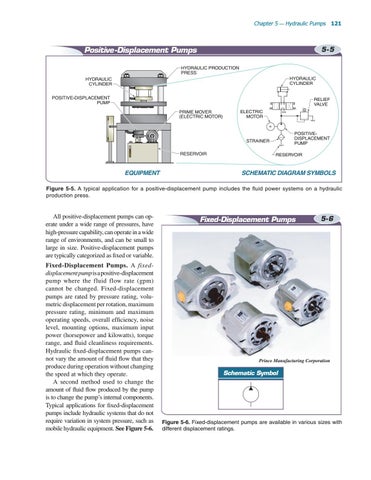
Figure 5-5. A typical application for a positive-displacement pump includes the fluid power systems on a hydraulic production press.
All positive-displacement pumps can operate under a wide range of pressures, have high-pressure capability, can operate in a wide range of environments, and can be small to large in size. Positive-displacement pumps are typically categorized as fixed or variable. Fixed-Displacement Pumps. A fixeddisplacement pump is a positive-displacement pump where the fluid flow rate (gpm) cannot be changed. Fixed-displacement pumps are rated by pressure rating, volumetric displacement per rotation, maximum pressure rating, minimum and maximum operating speeds, overall efficiency, noise level, mounting options, maximum input power (horsepower and kilowatts), torque range, and fluid cleanliness requirements. Hydraulic fixed-displacement pumps cannot vary the amount of fluid flow that they produce during operation without changing the speed at which they operate. A second method used to change the amount of fluid flow produced by the pump is to change the pump’s internal components. Typical applications for fixed-displacement pumps include hydraulic systems that do not require variation in system pressure, such as mobile hydraulic equipment. See Figure 5-6.
Fixed-Displacement Pumps
5- 6
Prince Manufacturing Corporation
Schematic Symbol
Figure 5-6. Fixed-displacement pumps are available in various sizes with different displacement ratings.