CURRENTS
Building Arts Audiences Cultivating new audiences and deepening connections with current concertgoers are top priorities at orchestras. A new guide from the Wallace Foundation, based on the experience of several arts organizations, shows how audience research can help.
A
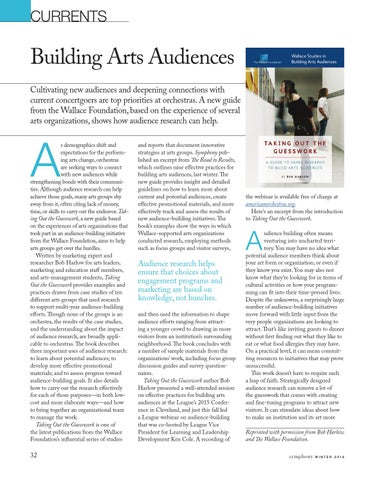
s demographics shift and expectations for the performing arts change, orchestras are seeking ways to connect with new audiences while strengthening bonds with their communities. Although audience research can help achieve those goals, many arts groups shy away from it, often citing lack of money, time, or skills to carry out the endeavor. Taking Out the Guesswork, a new guide based on the experiences of arts organizations that took part in an audience-building initiative from the Wallace Foundation, aims to help arts groups get over the hurdles. Written by marketing expert and researcher Bob Harlow for arts leaders, marketing and education staff members, and arts-management students, Taking Out the Guesswork provides examples and practices drawn from case studies of ten different arts groups that used research to support multi-year audience-building efforts. Though none of the groups is an orchestra, the results of the case studies, and the understanding about the impact of audience research, are broadly applicable to orchestras. The book describes three important uses of audience research: to learn about potential audiences; to develop more effective promotional materials; and to assess progress toward audience-building goals. It also details how to carry out the research effectively for each of those purposes—in both lowcost and more elaborate ways—and how to bring together an organizational team to manage the work. Taking Out the Guesswork is one of the latest publications from the Wallace Foundation’s influential series of studies
32
and reports that document innovative strategies at arts groups. Symphony published an excerpt from The Road to Results, which outlines nine effective practices for building arts audiences, last winter. The new guide provides insight and detailed guidelines on how to learn more about current and potential audiences, create effective promotional materials, and more effectively track and assess the results of new audience-building initiatives. The book’s examples show the ways in which Wallace-supported arts organizations conducted research, employing methods such as focus groups and visitor surveys,
Audience research helps ensure that choices about engagement programs and marketing are based on knowledge, not hunches. and then used the information to shape audience efforts ranging from attracting a younger crowd to drawing in more visitors from an institution’s surrounding neighborhood. The book concludes with a number of sample materials from the organizations’ work, including focus group discussion guides and survey questionnaires. Taking Out the Guesswork author Bob Harlow presented a well-attended session on effective practices for building arts audiences at the League’s 2015 Conference in Cleveland, and just this fall led a League webinar on audience-building that was co-hosted by League Vice President for Learning and Leadership Development Ken Cole. A recording of
the webinar is available free of charge at americanorchestras.org. Here’s an excerpt from the introduction to Taking Out the Guesswork.
A
udience building often means venturing into uncharted territory. You may have no idea what potential audience members think about your art form or organization, or even if they know you exist. You may also not know what they’re looking for in terms of cultural activities or how your programming can fit into their time-pressed lives. Despite the unknowns, a surprisingly large number of audience-building initiatives move forward with little input from the very people organizations are looking to attract. That’s like inviting guests to dinner without first finding out what they like to eat or what food allergies they may have. On a practical level, it can mean committing resources to initiatives that may prove unsuccessful. This work doesn’t have to require such a leap of faith. Strategically designed audience research can remove a lot of the guesswork that comes with creating and fine-tuning programs to attract new visitors. It can stimulate ideas about how to make an institution and its art more Reprinted with permission from Bob Harlow and The Wallace Foundation. symphony
WINTER 2016