The Magazine for the Orthotics & Prosthetics Profession
M AR C H 2021
O&P Businesses Feel the Impact of Competitive Bidding P.14
Healthcare Disparities and O&P Patients P.30
Examining the Benefits of Running-Specific Prostheses
MINDING
THE GAP
O&P STAKEHOLDERS STEP UP EFFORTS TO FOSTER MORE DIVERSE WORKPLACES AND PROVIDE MORE EQUITABLE CARE P.20
P.34
Quiz Me!
EARN 2 BU SI NE SS CE CREDITS
WWW.AOPANET.ORG
P.16
This Just In: AOPA Intervention Spurs Dismissal of Brand Name Requirement for Prior Authorization P.18
YOUR CONNECTION TO
EVERYTHING O&P
Educate lawmakers on key issues important to YOU and your PATIENTS
N E P O N O I T A R T S
REGI
APRIL 20-22
APRIL 27-29
SCHEDULE The 2021 Virtual Policy Forum
April 20:
Lobbying 101 (10am – 1pm ET) and Senate Meetings
April 21:
Senate Meetings
April 22:
Senate Meetings and Wrap-Up Session/ Virtual Happy Hour (4 – 5pm ET)
April 27:
Legislative Updates (10am – noon ET) and House Meetings
opportunity to educate members
April 28:
House Meetings
of Congress on the needs of the
April 29:
House Meetings and Wrap-Up Session (4 – 5pm ET)
is your opportunity to learn about the latest legislative and regulatory issues and how they will affect you, your business, and your patients. It is also your
O&P profession.
NOTE: Participants will only need to be available for one Lobbying 101, their Senate and House Meetings, and Wrap-Up Sessions – you do not need to be available all six days
Our voices are louder together, ATTEND the 2021 Virtual Policy Forum! Register online at www.AOPAnet.org.
FOLLOW US @AmericanOandP
www.AOPAnet.org
MARCH 2021 | VOL. 70, NO. 3
contents
COVER STORY
FEATURES 20 | Minding the Gap Several companies, universities, and organizations have launched initiatives aimed at diversity, inclusion, and equity in the O&P community. These entities are working to shrink the representation gap and build an O&P workforce that more closely mirrors the orthotic and prosthetic patient base, recognizing that diverse viewpoints and inclusive attitudes foster innovation, collaboration, and more informed decision-making. By Christine Umbrell
18 | This Just In
DEPARTMENTS | COLUMNS Views From AOPA Leadership......... 4 Hill and hometown advocacy
AOPA Contacts............................................6 How to reach staff
Numbers........................................................ 8
At-a-glance statistics and data
Happenings............................................... 10
Research, updates, and industry news
People & Places........................................ 13
Transitions in the profession
Reimbursement Page.......................... 14
How Will Competitive Bidding Impact Your Business?
Repercussions from the January 1 implementation Opportunity to earn up to two CE credits by taking the online quiz.
Quick Fix
When the DME MACs implemented prior authorization of six lower-limb prosthetic codes, they were not issuing preliminary affirmation without component brand names included in documentation. After AOPA intervened, the DME MAC medical directors announced they will be removing the brand name requirement.
Member Spotlight................................. 38 n
30 | Unequal Treatment More needs to be done to overcome the disparities in treatment of individuals of different racial and ethnic backgrounds who may require O&P intervention. Examining the limited data available on this topic serves as a good starting point. By Michael Coleman
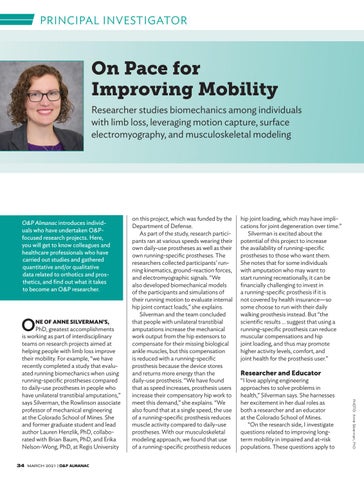
PRINCIPAL INVESTIGATOR Anne Silverman, PhD.................................................... 34 Meet an associate professor at the Colorado School of Mines who leverages motion capture, surface electromyography, and musculoskeletal modeling in her research studies, including investigations into the value of running-specific prostheses. 2
MARCH 2021 | O&P ALMANAC
n
Streamline Orthotics & Prosthetics Bulldog Tools
AOPA News................................................42
AOPA announcements, member benefits, and more
New Members..........................................42 Marketplace.............................................. 45 Ad Index....................................................... 47 Careers........................................................ 48
Professional opportunities
Calendar..................................................... 50
Upcoming meetings and events
State By State........................................... 52
California, Iowa, Mississippi, and New York
hydraulic knee The new Capital knee from College Park is a hydraulic, single-axis joint that is easy to use for both patients and clinicians. It uses smooth and responsive hydraulics to accommodate variable gait and activity levels. Durable, lightweight, and fresh water friendly, the Capital is available in four stylish colors.
Easy Mode Selection
The Capital features a convenient switch on the back of the knee, allowing the user to quickly toggle between locked, normal, and free swing modes.
Simple Adjustments
The Capital’s flexion and extension settings can be adjusted using a 4mm hex wrench.
NOW AVAILABLE! FOUR COLORS AND TWO DISTAL OPTIONS 800.728.7950 | 586.294.7950 | www.college-park.com
www.college-park.com/capital
VIEWS FROM AOPA LEADERSHIP
Specialists in delivering superior treatments and outcomes to patients with limb loss and limb impairment.
Hill and Hometown Advocacy
A
DVOCACY. THE WORD FEELS … BIG.
It conjures images of thousands of people and millions of dollars competing to be heard. Pages of documents and legislation. Years of work. Many heads hitting the same proverbial wall. Sometimes that’s what advocacy looks like. In your day-to-day, though, it probably looks a lot more like building relationships, getting to know leaders in your community, and sharing information. As we approach this year’s Virtual Policy Forum to inform elected officials about needs in our profession, I hope you will consider ways you can have influence in your city or state. I’m offering a few ideas that correlate with AOPA’s efforts on the Hill. At the Policy Forum, we will push to see the Medicare Orthotics and Prosthetics Patient-Centered Care Act become law. We also will detail ways Congress can mitigate disparities occurring in the O&P field that negatively impact our patients and will make the case for veterans to be able to select their O&P providers. In your hometown, you may take a nod from this effort and resolve to get to know more about local teams for your representatives and senators. And get to know the person at Medicaid. Also, get to know your local legislators and their staffs. Best to know them now, so that when you need them later you already have a rapport established. Locally, think of ways to amplify your patients’ voices. Invite them to attend the online event. Consider ways to get their input and share how we’re working on their behalf, perhaps through a regular cadence of focus groups or phone calls. Put them on your calendar today! Finally, as we come together during this big, online event, I’d encourage each of you to involve your staff and colleagues. Clinician or billing coordinator, technician, or marketing professional—our membership benefits extend to the whole “office.” And to have the furthest reach, we want each person to be equipped with the tools they need to represent our work and patients. It will take all our unique ideas, backgrounds, and skills to make a difference, whether we are in D.C. or working from home, making calls. We all have diverse perspectives to offer, and the opportunity to advance the O&P profession. Traci Dralle, CFm, is president of AOPA.
4
MARCH 2021 | O&P ALMANAC
Board of Directors OFFICERS President Traci Dralle, CFm Fillauer Companies, Chattanooga, TN President-Elect Dave McGill Össur Americas, Foothill Ranch, CA Vice President Teri Kuffel, JD Arise Orthotics & Prosthetics, Spring Lake Park, MN Immediate Past President Jeffrey Lutz, CPO Hanger Clinic, Lafayette, LA Treasurer Rick Riley O&P Boost, Bakersfield, CA Executive Director/Secretary (Nonvoting) Eve Lee, MBA, CAE AOPA, Alexandria, VA DIRECTORS Jeffrey M. Brandt, CPO Ability Prosthetics & Orthotics Inc., Exton, PA Mitchell Dobson, CPO, FAAOP Hanger, Austin, TX Elizabeth Ginzel, MHA, CPO Baker O&P, Fort Worth, TX Kimberly Hanson, CPRH Ottobock, Austin, TX John “Mo” Kenney, CPO, LPO, FAAOP Kenney Orthopedics, Lexington, KY Linda Wise WillowWood, Mount Sterling, OH James O. Young Jr., LP, CP, FAAOP Amputee Prosthetic Clinic, Tifton, GA Shane Wurdeman, MSPO, PhD, CP, FAAOP(D) Research Chair Hanger Clinic, Houston Medical Center, Houston, TX
ON
NIGHT MODE
OU R FU L L LINE O F VA LV ES . N OW AVAILABLE IN MIDNIGHT BL ACK.
wearesp.com
AOPA CONTACTS
American Orthotic & Prosthetic Association (AOPA) 330 John Carlyle St., Ste. 200, Alexandria, VA 22314 AOPA Main Number: 571/431-0876 AOPA Fax: 571/431-0899 www.AOPAnet.org
Publisher Eve Lee, MBA, CAE Editorial Management Content Communicators LLC Advertising Sales RH Media LLC
Our Mission Statement Through advocacy, research, and education, AOPA improves patient access to quality orthotic and prosthetic care.
Our Core Objectives AOPA has three core objectives—Protect, Promote, and Provide. These core objectives establish the foundation of the strategic business plan. AOPA encourages members to participate with our efforts to ensure these objectives are met. EXECUTIVE OFFICES
REIMBURSEMENT SERVICES
Eve Lee, MBA, CAE, executive director, 571/431-0807, elee@AOPAnet.org
Joe McTernan, director of coding and reimbursement services, education, and programming, 571/431-0811, jmcternan@AOPAnet.org
Tina Carlson, CMP, senior director, membership, education, and meetings, 571/431-0808, tcarlson@AOPAnet.org Akilah Williams, MBA, SHRM-CP, senior manager for finance, operations, and HR, 571/431-0819, awilliams@AOPAnet.org GOVERNMENT AFFAIRS Justin Beland, director of government affairs, 571/ 431-0814, jbeland@AOPAnet.org COMMUNICATIONS, MEMBERSHIP & MEETINGS Joy Burwell, director of communications and membership, 571/431-0817, jburwell@AOPAnet.org Betty Leppin, senior manager of member services, 571/431-0810, bleppin@AOPAnet.org Kelly O’Neill, CEM, manager of membership and meetings, 571/431-0852, kelly.oneill@AOPAnet.org Ryan Gleeson, CMP, assistant manager of meetings, 571/431-0836, rgleeson@AOPAnet.org Kristen Bean, membership and meetings coordinator, 571/431-0876, kbean@AOPAnet.org AOPA Bookstore: 571/431-0876
6
MARCH 2021 | O&P ALMANAC
Devon Bernard, assistant director of coding and reimbursement services, education, and programming, 571/431-0854, dbernard@AOPAnet.org Reimbursement/Coding: 571/431-0833, www.LCodeSearch.com
STRATEGIC ALLIANCES Ashlie White, MA, director of strategic alliances, 571/431-0812, awhite@AOPAnet.org O&P ALMANAC Eve Lee, MBA, CAE, executive director/publisher, 571/431-0807, elee@AOPAnet.org
Design & Production Marinoff Design LLC Printing Sheridan SUBSCRIBE O&P Almanac (ISSN: 1061-4621) is published 10 times per year by the American Orthotic & Prosthetic Association, 330 John Carlyle St., Ste. 200, Alexandria, VA 22314. To subscribe, contact 571/4310876, fax 571/431-0899, or email info@aopanet.org. Yearly subscription rates: $59 domestic, $99 foreign. All foreign subscriptions must be prepaid in U.S. currency, and payment should come from a U.S. affiliate bank. A $35 processing fee must be added for non-affiliate bank checks. O&P Almanac does not issue refunds. Periodical postage paid at Alexandria, VA, and additional mailing offices. ADDRESS CHANGES POSTMASTER: Send address changes to: O&P Almanac, 330 John Carlyle St., Ste. 200, Alexandria, VA 22314. Copyright © 2021 American Orthotic and Prosthetic Association. All rights reserved. This publication may not be copied in part or in whole without written permission from the publisher. The opinions expressed by authors do not necessarily reflect the official views of AOPA, nor does the association necessarily endorse products shown in the O&P Almanac. The O&P Almanac is not responsible for returning any unsolicited materials. All letters, press releases, announcements, and articles submitted to the O&P Almanac may be edited for space and content. The magazine is meant to provide accurate, authoritative information about the subject matter covered. It is provided and disseminated with the understanding that the publisher is not engaged in rendering legal or other professional services. If legal advice and/or expert assistance is required, a competent professional should be consulted.
Josephine Rossi, editor, 703/662-5828, jrossi@contentcommunicators.com Catherine Marinoff, art director, 786/252-1667, catherine@marinoffdesign.com Bob Heiman, director of sales, 856/673-4000, bob.rhmedia@comcast.net Christine Umbrell, editorial/production associate and contributing writer, 703/6625828, cumbrell@contentcommunicators.com
Advertise With Us! Reach out to AOPA’s membership and more than 11,400 subscribers. Engage the profession today. Contact Bob Heiman at 856/673-4000 or email bob.rhmedia@comcast.net. Visit bit.ly/AOPAMedia2021 for advertising options!
NEW METALLIC COATINGS FOR ALL DEVICES
Introducing Rose Gold and Midnight Moss coatings for the PIPDriver, MCPDriver, ThumbDriver, and GripLock Finger.
PIPDriver
™
Custom device driven by an intact PIP joint with enough residuum to engage the ring.
ThumbDriver
™
Custom device driven by intact MCP and CMC joints in the thumb. However, patients with more proximal amputations may still benefit from the device as long as their residuum can engage the ring.
For more information:
(888) 977-6693 | (360) 915-9724 | fax (360) 918-8619
© 2021 Naked Prosthetics. All rights reserved.
MCPDriver
™
Custom device driven by an intact MCP joint with enough residuum to engage the ring.
GripLock Finger
™
Elegant solution for amputations proximal to the MCP joint. Positioned using a surface or their opposing hand, and then return to full extension by releasing the dorsal pawl or moving to the full flexion release point.
info@npdevices.com or visit npdevices.com
NUMBERS
Diversity in O&P Schools NCOPE data provides snapshot of the percentages of students from diverse racial and ethnic backgrounds pursuing careers in O&P
The National Commission on Orthotic and Prosthetic Education (NCOPE) has compiled data on the race/ethnicity of students who are enrolled in O&P technician and practitioner schools. This data, shared by NCOPE Clinical Resource Director Chris Robinson, MS, MBA, CPO, ATC, FAAOP(D), and Executive Director Robin Seabrook, presents a snapshot from the 2019-2020 academic schoolyear. The information, provided by CAAHEP-accredited O&P education programs via their annual reports, offers some insights into the number of minorities slated to enter the O&P profession.
RACE/ETHNICITY FOR ALL STUDENTS/PROGRAMS, 2019-2020 6.6%
RACE/ETHNICITY FOR ALL PRACTITIONER-LEVEL PROGRAMS, 2019-2020 0.4%
5.9% 0.8%
5.6%
6.3%
0.8%
1.0%
1.0% 5.2%
0.2%
0.5%
4.2%
11.5%
2.5% 3.1%
3.0% 2.8%
RACE/ETHNICITY FOR ALL TECHNICIAN-LEVEL PROGRAMS, 2019-2020
2.1%
80.4%
81.5%
White American Indian/Alaskan Native Asian Black Hispanic/Latino Native Hawaiian/Pacific Islander Two or more races Unknown
“The 2019-2020 data is consistent with previous academic years, and changes year-over-year do not demonstrate a significant increase or decrease in any one ethnicity or race enrolling in O&P schools. The NCOPE board of directors has defined a clear goal hoping to ‘attract a more racially and ethnically diverse cohort of students to choose O&P as a career so the future workforce better reflects the population it serves.’” —NCOPE Clinical Resource Director Chris Robinson, MS, MBA, CPO, ATC, FAAOP(D)
8
MARCH 2021 | O&P ALMANAC
75.0%
White American Indian/Alaskan Native Asian Black Hispanic/Latino Native Hawaiian/Pacific Islander Two or more races
SOURCE: National Commission on Orthotic and Prosthetic Education
White American Indian/Alaskan Native Asian Black Hispanic/Latino Two or more races Unknown
Move with confidence. The Aeris Performance LP is a lightweight, low-profile walking foot that feels smoother on the ground and has better energy off the toe than other feet in its class.
Dual Pylon Design The dual pylon design allows for a smoother rollover with a longer stance phase (effective foot length) without sacrificing the energy return expected of a dynamic response foot.
Split Keel & Pylon Excellent frontal plane movement from full length split pylon and anterior keel.
Longer, Smoother Stance Phase Excellent sagittal plane movement with minimal energy loss thanks to the dual pylon design.
Foot Weight
16.0 oz. 450 g
Maximum Patient Weight
275 lbs. 125 kg
Build Height
5.3 in. 13.4 cm
Activity Level
K3
© 2021 Fillauer LLC
Happenings RESEARCH ROUNDUP
Prosthesis Abandonment Tied to Dissatisfaction, Use Time In a new longitudinal study of prosthesis use in veterans with upper-limb amputation, a team of researchers examined rates of receipt of new prostheses and compared prosthesis satisfaction among respondents who received a new prosthesis to those who continued use of the same prosthesis. Led by Linda Resnik, PT, PhD, FAPTA, a research career scientist at the Providence VA Medical Center, the research team conducted structured telephone interviews with nearly 600 veterans with upper-limb loss who had participated in a baseline interview one year earlier; 562 had unilateral amputations and 23 had bilateral amputations. One quarter of participants (24 percent) reported using a different primary terminal device at follow-up than at baseline. Rates of prosthetic training were higher among veterans who received a different prosthesis type.
New prosthesis recipients reported higher satisfactions scores compared with continued users. Those individuals who reported discontinuing use of a prosthesis also reported less frequent and intense prosthesis use at baseline. The researchers concluded that prosthesis abandonment “appears to be predicated on dissatisfaction with the device, as well as less frequent/intense prosthesis use.” These findings can be used to identify individuals at risk for prosthesis abandonment and to help improve the prosthesis experience. The full results were published online in Prosthetics and Orthotics International. In a study published six months earlier, Resnik’s team found that most
veterans with unilateral upper-limb loss rank satisfaction with their prosthesis at just shy of “satisfied,” regardless of the type of device. They found “no differences in satisfaction by prosthesis type or terminal device.” They also identified lower satisfaction scores among individuals with more proximal amputation levels, younger users, and AfricanAmerican users, regardless of device type.
Study Demonstrates Physical, Psychological Benefits of Adaptive Rock Climbing Indoor rock climbing offers physical, social, and psychological benefits for individuals who have disabilities, including amputation, according to a new study led by Elissa Zakrasek, MD, a physical medicine and rehabilitation specialist at the VA Palo Alto Health Care System in California. Zakrasek and her team surveyed 17 veterans and nonveterans with disabilities (primarily amputation) who participated in either indoor top rope climbing or rope ascension climbing over a 10-week period. All participants reported “minimally to significant” improvements in their happiness and self-esteem, and 10
MARCH 2021 | O&P ALMANAC
most reported that climbing encourages friendships. Most also reported moderate improvement in strength and flexibility. These findings warrant further study of the benefits of adaptive rock climbing for individuals with limb loss, according to Zakrasek. She hopes to investigate some of the physical risks—including skin and musculoskeletal injuries—to disabled people who engage in these types of activities. “If someone with a disability could potentially benefit from being out in the community and interacting with other people,” Zakrasek says, “or if they could improve their strength or cardiovascular fitness through climbing, we should know this.”
HAPPENINGS
UK Researchers Survey Orthotists Regarding Outcome Measures Researchers in the United Kingdom have published a qualitative study aimed to explore orthotists’ opinions and personal experiences regrading the influences of outcomes, including how appropriate and relevant outcomes can be measured. The researchers conducted a focus group of orthotists in the United Kingdom, where less than 30 percent of orthotists are collecting outcomes data for orthotic interventions despite a National Health Service mandate requiring hospitals to publish health outcomes data. Some of the barriers to collecting outcome measures include inadequate technology to manage the data, lack of time to complete outcome measures testing, lack of training
in the various outcome measures, and difficulties in selecting appropriate measures for patients with complex problems. Researchers identified several factors that could help inform and improve outcomes measurement among orthotists, including setting realistic goals, managing expectations, and educating patients about the outcome measurement process. “This study has revealed that measuring outcomes is considered to be an important activity,” reported the authors. “To achieve good outcomes, it is important to address patient expectations,
discuss and establish joint goals for care at the outset, and inform and include patients in the decision-making process.” The study was published in Journal of Foot and Ankle Research.
REQUEST FOR VOLUNTEERS
Help Researchers Recruit Lower-Limb Orthosis Users for Study Participants are needed to volunteer for a University of Washington research study, funded by AOPA and the U.S. Department of Defense, that aims to develop a new self-report survey instrument to measure mobility of lower-limb orthosis users. Brian Hafner, PhD, and his research team are seeking volunteers for the study. Interested individuals will be asked to complete an online or paper survey that includes questions about the individual, their health, and their orthosis use. The survey takes between 30 and 60 minutes to complete, and eligible participants will receive a $50 check by mail. A person is eligible to participate if they meet the criteria below: • 18 years of age or older • Ability to read, write, and understand English
• Ability to transfer, stand, or walk without the help of another person • Use of an ankle-foot orthosis, knee-ankle-foot orthosis, hipknee-ankle-foot orthosis, or functional electrical stimulation device for one or both legs • Use of a lower-limb orthosis for six months or longer. By producing a new assessment tool that can provide clinicians with meaningful information to guide patient
care, this research has the potential to have a positive impact on the field of orthotics. However, the success of this project depends upon assistance from O&P professionals to identify potential participants. Please consider helping in one or more of the following ways: • Reach out to patients—in-person, by phone, and by email. • Post informational materials, such as posters, flyers, and pamphlets, in waiting areas and patient rooms. • Share information about the study through social media and newsletters. Feel free to invite co-workers and office staff to mention this study to individuals who may be interested in participating. Direct interested patients to visit mobilitysurvey.org to learn more about the study and to take the survey. To receive free informational materials by mail, contact a research staff member at uwcorr@uw.edu or 800/504-0564. O&P ALMANAC | MARCH 2021
11
HAPPENINGS
PARALYMPICS PREVIEW
New ‘Playbooks’ Provide Safety Framework for Paralympic Games To help keep competitors and officials safe during the Summer Games, the International Olympic Committee, the International Paralympic Committee (IPC), and the Tokyo Organizing Committee have published the Playbooks, a resource outlining personal responsibilities the key stakeholders must take to ensure safe and successful Olympic and Paralympic Games. The series of Playbooks establishes a framework of basic principles required to be followed by each key stakeholder group before, during, and after their travel to the Games. These resources are based on the work of the All Partners Task Force, the World Health Federation, the government of Japan, and Tokyo Metropolitan government, and independent experts.
One of the publications—the Athletes and Team Officials Playbook—offers information about competitors’ experiences in the Olympic and Paralympic villages. Athletes will be subject to strict control measures, including limited stays in the Village, restrictions on socializing outside the Village, use of smartphone apps to support contact tracing, and measures to quarantine and isolate individuals who may test positive for COVID-19. “To ensure safe and successful Games this summer, every single stakeholder involved in, or attending, the Games has a key role to play,” said Craig Spence, chief brand and communications officer for the IPC. “Central to this are the Playbooks that form an integral part of a new and robust masterplan developed
Your guide to a safe and successful Games
February 2021
over the last 12 months to protect every Games stakeholder and, importantly, the people of Japan during Tokyo 2020. “Since March 2020’s postponement, we know much more about COVID-19, while the thousands of international sports events that have taken place safely over the last year have given us valuable learning experiences,” he added. “Combining this new knowledge with existing know-how has enabled us to develop these Playbooks, which will be updated with greater detail ahead of the Games.”
MEETING MASHUP
Hanger Hosts Virtual Education Conference
12
MARCH 2021 | O&P ALMANAC
Participants selected from nearly 100 clinical and business education courses, including programming centered on telehealth, unconscious bias training, clinical research, and new technologies, as well as a presentation on fearlessness by Molly Fletcher, a former sports agent and motivational speaker. “In 2020, we remained committed to our purpose of empowering human potential together, while leading the O&P and healthcare industries in addressing important issues, from helping foster diversity and inclusion, to the need for critical outcomes research,” said Asar.
PHOTOS: Hanger
More than 4,500 Hanger employees convened virtually February 4-5 to take part in Hanger LIVE, the company’s annual education conference. The event, themed “Powered by Purpose,” featured an opening ceremony spotlighting patients and their care teams, keynote sessions led by former PepsiCo Chairman and CEO Indra Nooyi and Hanger President and CEO Vinit Asar, and continuing education sessions. In addition, Hanger celebrated nine exceptional employees during a presentation of the Hanger Impact Awards. The company recognized the following supplier partners via the Hanger Partner Awards: • Proteor for “Rising Star” • Bulldog Tools for “Collaboration” • WillowWood for “Innovation” • Thuasne for “Operational Performance” • Blatchford for “Clinician’s Choice.”
PEOPLE & PLACES BUSINESSES ANNOUNCEMENTS AND TRANSITIONS
Hanger Inc. has been named one of America’s Best Midsized Employers by Forbes. The company, which has approximately 4,900 employees, was selected through an independent nationwide survey of more than 50,000 U.S. employees working for midsize companies. Respondents ranked their willingness to recommend current employers to friends and family. “We are grateful for this honor, and proud that we were selected due to positive feedback from our own valued team members, who are powered by our purpose of empowering human potential together,” said Hanger President and CEO Vinit Asar. “In addition to our resolve to be the provider of choice for our patients, we also strive to be the employer of choice within the profession.” Össur has announced that its practice management software, Empower, has been upgraded for compliance with CMS’s new competitive bidding mandates for back and knee braces, which went into effect January 1. “CMS’s new competitive bidding practice mandates for spine and knee bracing adds yet another level of complexity and demands on clinicians’ time, and simple errors can have serious consequences on a practice’s bottom line,” said Mark Tymchenko, Össur’s vice president, Americas bracing and supports. “This is why we prioritized upgrading Empower, to help our customers minimize the challenges of meeting these new requirements.” VGM & Associates has released “VGM Playbook: Forecasting 2021.” This comprehensive resource outlines issues, trends, and opportunities facing the O&P and durable medical equipment community in 2021, including mega trends, data and security, remote workforce, compliance and risk, and healthcare at home. As 2020 provided a level of uncertainty to all healthcare providers, this playbook provides healthcare leaders with key indicators on relevant issues. “VGM is here to be the source for industry updates, education, and solutions to strengthen our members’ businesses for 2021 and beyond,” said Clint Geffert, president of VGM & Associates. Members can download their copy at vgm.com/ playbook or by logging in to the VGM members-only portal and downloading it from the Playbook tab.
www.bocusa.org
Start earning your credits today!
TOP QUALITY
orthotic, prosthetic and pedorthic education and CE credits from the organization that knows O&P. Visit www.MyAOPAConnection.org.
THE LIGHTER SIDE
O&P ALMANAC | MARCH 2021
13
REIMBURSEMENT PAGE
By JOSEPH MCTERNAN
How Will Competitive Bidding Impact Your Business? Whether or not your facility competed for a contract, your business faces repercussions
E! QU IZ M EARN
2
BUSINESS CE
CREDITS P.16
Editor’s Note—Readers of Reimbursement Page are eligible to earn two CE credits. After reading this column, simply scan the QR code or use the link on page 16 to take the Reimbursement Page quiz. Receive a score of at least 80 percent, and AOPA will transmit the information to the certifying boards.
T
HE JANUARY 2021 Reimbursement
Page provided a general overview of the Medicare competitive bidding program and its expansion into O&P through the inclusion of 23 off-the-shelf (OTS) spinal and knee orthoses. The article focused on the history of the Medicare competitive bidding program, the bidding process, the publication of single pricing amounts (SPAs) in October 2020, the announcement of winning bidders, and implementation of the program effective for claims with dates of service on or after Jan. 1, 2021. This month’s Reimbursement Page takes a deeper dive into how the Medicare competitive bidding program for OTS orthoses may impact your O&P business—both directly and indirectly.
Immediate Impact
As of Jan. 1, 2021, your business was impacted in some way by Medicare competitive bidding. If your company provides Medicarecovered services to patients who reside in one of the 130 competitive bidding areas (CBAs) and you either did not compete for or were not awarded a contract through the Medicare competitive bidding program, you may no longer provide any OTS spinal or knee orthoses described by the 23 OTS orthosis codes included in the program to Medicare beneficiaries. The only exception to this rule is if you notify the patient, in advance, that you are not a Medicare competitive bid contracted supplier and the patient agrees to be financially liable for paying your full usual 14
MARCH 2021 | O&P ALMANAC
and customary charge for the service. To remain compliant with Medicare policy requirements, the patient must complete and sign a Medicareapproved advanced beneficiary notice (ABN). Any claims submitted to Medicare in this circumstance must include a GA modifier indicating that a properly executed ABN is on file. If you were awarded a Medicare competitive bid contract, you may continue to provide products described by the 23 OTS orthosis code to Medicare beneficiaries but must accept assignment on all of the claims. You will not be paid the historical Medicare fee schedule amount for these claims. Instead, contracted providers will be paid 80 percent of the reduced SPA for the ZIP code of the patient’s residence and may collect the remaining 20 percent as a copayment from the patient. The SPAs for the 23 OTS spinal and knee orthosis codes were announced by CMS in October 2020 and are available on the competitive bidding implementation contractor website at www.dmecompetitivebid.com/ cbic/cbicr2021.nsf/DID/84U18RR1ER. The 130 CBAs cover much of the United States, but some areas fall outside of the Medicare CBAs and therefore are not included in the Medicare competitive bidding program. While this means that Medicare beneficiaries may seek treatment from any provider enrolled in the Medicare program, it does not mean that those providers will not have their Medicare reimbursement rates for the 23 OTS spinal and knee orthosis codes affected by the competitive bidding
REIMBURSEMENT PAGE
program. Section 1834(a)(1)(F)(ii) of the Social Security Act “requires that the payment determined under the competitive bidding program be used to adjust the fee schedule amounts that would otherwise be used in making payment for durable medical equipment, prosthetics, orthotics, and supplies (DMEPOS) furnished outside of the CBAs for these items.” This is a statutory requirement and has been implemented in all previous rounds of Medicare competitive bidding. While fee schedule adjustments based on previous rounds of competitive bidding typically did not occur for 12 to 18 months after implementation, it appears that CMS has already adjusted the Medicare fee schedule for the 23 OTS spinal and knee orthoses effective for dates of service on or after Jan. 1, 2021. The adjusted rates for non-CBAs are calculated using a fairly complex formula that takes into account an average of the SPAs established within multiple CBAs and whether the service was provided in a rural or nonrural area. As part of the 2020 Coronavirus Aid, Relief, and Economic Security Act, additional adjustments were made that allow for a “blended rate” calculation methodology, resulting in a temporary increase in adjusted fee schedule amounts for nonrural areas. The blended rate calculation has been extended until April 20, 2021, or the end of the public health emergency, whichever comes later. The ultimate result of competitive bidding for OTS orthoses has been a reduction in Medicare reimbursement for the 23 OTS codes, averaging approximately 35 to 40 percent. As a result of the competitive bidding SPAs and the related Medicare fee schedule adjustments, all providers that bill OTS orthoses to Medicare will have their business impacted.
Indirect Impact
With the new competitive bidding program, there also is the potential for significant indirect impact on reimbursement outside of the Medicare program. Many contracts with private payors, non-Medicare government payors, and
facility-based payors use the current or prevailing Medicare fee schedule as a basis for negotiated rates with providers. Any contracts that you have negotiated based on prevailing Medicare rates will now include the reduced Medicare fee schedule for the 23 OTS spinal and knee orthosis codes as the basis for any contractually agreed-upon reimbursement. As most O&P companies have a larger percentage of their overall business allocated to non-Medicare sources, the impact of Medicare competitive bidding on their private-sector business may far exceed the impact on their Medicare-based business. This may be compounded by volume-based discounts that were negotiated based on significantly higher Medicare fee schedules than currently exist for the 23 OTS spinal and knee orthosis codes.
Considerations for Your Facility Medicare competitive bidding is not a new concept, nor is it one that was not expected to affect O&P at some point. Now that O&P is feeling the impact, your facility should consider several business-related factors to help craft a response that is best suited to your company’s unique perspective and individual needs. The decisions go beyond a simple “yes” or “no” when considering whether to participate in current or future Medicare competitive bidding programs, as the impact of these programs will not be limited to providers who are awarded contracts but will extend
beyond Medicare into your contractual relationships with other payors. While you must ultimately make decisions that are in the best interest of your company, below are a few questions to consider. Are you truly providing an OTS orthosis? AOPA has long supported the concept that provision of OTS orthoses is not within the scope of the training and education of a certified O&P professional. To be classified as OTS, the orthosis must be able to be provided to the patient with little to no customization, modification, or adjustment beyond those made by the patient to improve comfort or fit. While CMS continues to expand the definition of OTS to include adjustments made by the provider of the device, it is important to remember that the statute only allows Medicare to include OTS orthoses in competitive bidding. Custom-fabricated or custom-fitted orthoses, including those that require the expertise of a properly educated and certified and/or licensed individual to function properly, are not part of competitive bidding. Medicare policy states that the need to permanently customize the fit of an orthosis to meet the individual needs of a patient is the determining factor when deciding to bill an orthosis as OTS or custom-fitted. O&P companies should develop internal policies and procedures that will guide their decision-making process regarding how to properly bill an orthosis provided by a certified and/or licensed O&P professional. O&P ALMANAC | MARCH 2021
15
REIMBURSEMENT PAGE
Have you reviewed your contracts? It may be in your company’s best interest to review existing contracts with private payors and develop policies and procedures for new contractual negotiations that may reduce the impact of Medicare fee schedule adjustments based on competitive bidding. While prevailing Medicare rates have often been considered the standard for negotiated contracts, it may be worth pursuing a different basis as a starting
point for negotiations. There may be opportunities for both providers and payors in considering an alternate basis for contractually negotiated rates. Should your facility reconsider Medicare participation status? While providers that accept a competitive bidding contract from Medicare must accept assignment on all claims that include competitive bidding codes, nonparticipating providers reserve the
AOPA SUPPLIER PLUS MEMBERS
THANK YOU
to our 2021 AOPA Supplier Plus Members for their continued support of the association. AOPA 2021 SUPPLIER PLUS MEMBERS
right to make the assignment decision on a claim-by-claim basis. This means that nonparticipating providers that deliver an OTS spinal or knee orthosis to a Medicare beneficiary who resides in a non-CBA ZIP code may elect to not accept assignment on the claim and charge the patient their full usual and customary charge. They remain obligated to submit the claim on the patient’s behalf, and the patient will receive 80 percent of the adjusted Medicare fee schedule amount directly from Medicare. How can you continue to be an advocate for your patients and profession? CMS believes that competitive bidding has been a very successful program that has saved billions of dollars over the past 10 years. It is not a secret that CMS intends to expand the program into other product categories and services in the future. While the program has been financially successful, it is important to remember that it cannot be successful at the cost of medically necessary, clinically appropriate care. O&P professionals must continue to support the provision of custom-fitted and custom-fabricated O&P care by appropriately educated and certified/licensed professionals. AOPA continues to support these efforts through its legislative, regulatory, and policy efforts and remains committed to advocate for its members so they can focus on the delivery of highly effective O&P care. Joseph McTernan is director of reimbursement services at AOPA. Reach him at jmcternan@AOPAnet.org.
SUPPLIER PARTNER
For more information, contact Kelly O’Neill at 571/431-0852 or kelly.oneill@AOPAnet.org. FOLLOW US @AmericanOandP
16
MARCH 2021 | O&P ALMANAC
www.AOPAnet.org
Take advantage of the opportunity to earn two CE credits today! Take the quiz by scanning the QR code or visit bit.ly/OPalmanacQuiz. Earn CE credits accepted by certifying boards: www.bocusa.org
This Just In
Quick Fix After feedback from AOPA, DME MACs no longer require brand name product selection for prior authorization
I
N DECEMBER 2020, the durable
medical equipment Medicare administrative contractors (DME MACs) implemented Medicare prior authorization as a condition of claim payment for six lower-limb prosthesis Healthcare Common Procedure Coding System (HCPCS) codes: L5856, L5857, L5858, L5973, L5980, and L5987. In addition to requiring prior authorization, effective for claims with dates of service on or after Jan. 1, 2021, products described by the six codes must be verified for correct coding by the Pricing, Data Analysis, and Coding (PDAC) contractor. So far, the Medicare prior authorization program has proven to be effective, efficient, and reasonable, with an average processing time of four business days for initial submissions, and a preliminary affirmation rate of higher than 50 percent for initial submissions and higher than 90 percent for resubmissions. One issue that created concern among AOPA members was the inclusion of PDAC product verification as part of the Medicare prior authorization review process. The DME MACs were not issuing preliminary affirmation decisions without providers indicating the specific brand of prosthetic foot or knee they would deliver to the Medicare beneficiary.
18
MARCH 2021 | O&P ALMANAC
AOPA engaged the DME MAC medical directors in very constructive and positive dialogue regarding the need for flexibility in product selection to best meet patients’ clinical needs. AOPA explained that while classification of a patient’s appropriate functional level often occurs during the early stages of clinical evaluation, the decision regarding the specific prosthetic components that best meet the patient’s clinical needs within their assigned functional level is often made toward the end of the treatment
process. While AOPA did not challenge the concept of Medicare prior authorization, AOPA respectfully requested that the DME MACs reconsider the decision to require product selection as part of the process. Late last month, AOPA received a letter from the DME MAC medical directors in response to these concerns that, in part, stated the following: “The DMDs [DME MAC medical directors] understand that many variables can impact the selection of a specific brand-name product prior to delivery of the final prosthesis to a beneficiary. We do not prohibit substitution of another more suitable product, within the same HCPCS code that received provisional approval, at the time of delivery.” As a result of AOPA’s outreach, the DME MACs have indicated that, after consultation with CMS, they will be removing the requirement for inclusion of product selection information in prior authorization submissions. AOPA is pleased by this development, which will ensure continued flexibility for product selection within the Medicare prior authorization program, and is encouraged by the willingness of the DME MACs to engage in constructive and effective communication with AOPA on important issues.
MAKE US YOUR #1 CHOICE
for Central Fabrication Supplies & Accessories!
COVER STORY
Minding
the Gap STAKEHOLDERS STEP UP EFFORTS TO FOSTER MORE DIVERSE WORKPLACES AND PROVIDE MORE EQUITABLE CARE By CHRISTINE UMBRELL
20
MARCH 2021 | O&P ALMANAC
COVER STORY
NEED TO KNOW • Several O&P organizations, educational institutions, and patient-care and manufacturing companies have announced initiatives aimed at increasing diversity, equity, and inclusion. • O&P stakeholders recognize that the O&P workforce is not currently representative of the U.S. population at large and are responding with official statements, roundtables and councils, and hiring initiatives and scholarships. • Those leading these initiatives hope to create a more inclusive profession, rectify points of inequality and discrimination, and attract more employees from diverse backgrounds. • Some organizations also are tailoring more specific initiatives to reduce sexual harassment and to be more welcoming of LGBTQ staff and patients.
A
CROSS THE NATION, businesses
are shining a light on diversity, equity, and inclusion concerns—and O&P companies are no exception. Stakeholders in the profession are thoughtfully exploring issues of more balanced workplaces and unconscious biases—studying hiring trends, committing to more diverse workforces, and investigating how healthcare disparities impact the O&P patient population. The question is long-term sustainability: Is this a movement—or just a moment? “My hope is that through diversity education, we can create a more inclusive and nonhostile environment for clinicians of different backgrounds and identify ways to attract future clinicians with diverse backgrounds to the field of O&P,” says Amandi Rhett, MS, CPO, LPO, an assistant professor at Baylor College of Medicine’s (BCM) Orthotics and Prosthetics Program. Throughout
the O&P profession, stakeholders at schools, companies, and organizations are ramping up efforts to focus on diversity, equity, and inclusion. From official statements, to roundtables and councils, to hiring initiatives and scholarships, O&P professionals are devoting time and resources toward building a more inclusive O&P workforce to meet the needs of a diverse patient base. “I’m absolutely thrilled that these issues are being brought to the forefront,” says Alpha I. Sanusi, BOCPO, president of the International African American Prosthetics & Orthotics Coalition (IAAPOC) and an owner and clinician at Alcam Medical O&P in California. “But it should have happened earlier. I’m hoping this is a long-lasting, sustainable initiative” that will lead to Black Americans and other minority groups being included in major decision-making within the profession. O&P ALMANAC | MARCH 2021
21
COVER STORY
IAAPOC Treasurer Tony Thaxton Jr., CPO, LPO, agrees that the profession “is taking the right steps” in focusing on diversity, equity, and inclusion initiatives right now. Thaxton, a clinician at Hanger Clinic, similarly hopes that the current focus is not just a passing fad. “It’s a popular thing to do right now,” he says. “But will we sustain the movement?”
Alpha I. Sanusi, BOCPO
Encouraging Diversity in O&P Facilities
Stakeholders agree that the O&P workforce is not currently representative of the U.S. population at large, or the O&P patient population more specifically. The latest data from the American Board for Certification in Orthotics, Prosthetics, and Pedorthics (ABC) indicates that 73 percent of ABC-certified clinicians are male, and 27 percent are female. Data on racial and ethnic minorities is unavailable, but the consensus among stakeholders is that they are underrepresented. (See Numbers on page 8 for details on racial/ ethnic populations in the O&P schools.) Building a clinician workforce that more closely mirrors the O&P patient base could help some patients feel more comfortable during appointments—particularly because many practices see a disproportionate number of people of color, according to Thaxton. “Diabetes is prevalent in African American communities, and a lot of the construction accidents happen to Hispanic patients,” he notes. (See “Unequal Treatment” on page 30.) A more diverse staff, Thaxton explains, offers another level of customer service. Just as some individuals with amputation appreciate seeing clinicians with limb loss and some women with above-knee amputations prefer female clinicians, some 22
MARCH 2021 | O&P ALMANAC
patients may feel more comfortable with a same-race clinician because that person understands certain cultural differences. Although he would not assign a case to a specific clinician because of race or gender, he notes that patients may be heartened to find “different races and genders represented within a facility.”
Lisa Lodyga-Uhl
“Cultivating a care team that mirrors the diversity of the patients they serve helps build more immediate trust and comfort between patients and their clinicians, administrators, and other staff,” says Lisa Lodyga-Uhl, director, talent management, inclusion, and engagement, at Hanger. “Likewise, when individual employees are part of diverse teams that help them feel valued and respected for who they are, they are more motivated and have a support structure in place that allows them to provide the best possible care to our patients.”
Many O&P professionals believe that reducing the representation gap at O&P facilities will result in better patient care. “Diverse viewpoints and inclusive attitudes in the workplace foster more creativity, innovation, collaboration, and informed decision-making, all of which helps both the patient and the organization,” says Lodyga-Uhl. “You can’t just listen to people with similar experiences when you’re looking for the voice of the customer. You need diversity,” agrees Joyce Perrone, director of business development for Union O&P/De La Torre O&P. “The more a blend of people are involved in conversations—which could even involve bringing in patients in diversified focus groups—the better.” Sanusi believes the O&P community should seek a greater understanding of the challenges faced by Black Americans, and he encourages O&P stakeholders to include Black Americans in policymaking. For example, he points to the decision to update the O&P educational requirements to mandate that a master’s degree in O&P would be the minimum educational standard to become a certified practitioner, a requirement that was implemented in 2013.
ALPS FLEX SLEEVE
Maximum Comfort ALPS Flex Sleeve (SFX) is a prosthetic suspension sleeve made with a seamless knitted construction in High Density Gel to provide maximum comfort. The SFX has a 30° pre-flexion which allows for ease of bending and reduces bunching behind the knee.
Key Features Available in 3mm uniform thickness Available in one length that accommodates most users The SFX is available in a beige and gray
#makinglivesbetter | www.easyliner.com
2895 42nd Avenue North St. Petersburg, Florida 33714 T: 727.528.8566 | 800.574.5426
F: 727.528.8862
alps@easyliner.com
COVER STORY
AOPA’s Diversity, Equity, and Inclusion Initiative Last September, AOPA announced the launch of its Defining Diversity, Equity, and Inclusion Initiative. AOPA kicked off the initiative by stating the following: “AOPA represents a vast majority of the orthotics and prosthetics profession who aim to better the lives of individuals with limb loss and difference and those whose lives are improved by orthotic devices. As such, AOPA affirms that discrimination in all forms is unacceptable and will not be tolerated. This includes racism, sexism, ageism, ableism, and all other forms of discrimination and unequal treatment. “Given that Black Americans lose limbs at higher rates than non-Hispanic white Americans, it is only right and appropriate that our profession ensures safe, fair, and equal treatment for these individuals. It also is right and appropriate that these and all individuals are fairly represented within our profession, ensuring patients see themselves reflected in those who care for them. “[In 2021], AOPA will launch our Defining Diversity, Equity, and Inclusion Initiative, taking genuine, meaningful action to look inward and identify, define, and rectify points of inequality and discrimination and resolve to address racism and increase diversity in the profession.” On February 22, AOPA hosted the first of a series of Diversity, Equity, and Inclusion Roundtables. These sessions are designed “to create a safe space for members, both to learn from one another and to discuss increasing the diversity, equity, and inclusion within the O&P profession,” says Eve Lee, MBA, CAE, executive director of AOPA. Participants in the February roundtable formed breakout groups to discuss three key areas: workforce, health disparities, and resources. “The thoughtful feedback, guidance, and insights from participants provided a lot of great ideas,” says Lee. “These roundtables provide the perfect opportunity to look both personally, and as a profession, inward, and identify, define, and rectify points of inequality and discrimination, as well as to increase the diversity in O&P.” Next steps will involve a deeper dive into comments shared during the first roundtable. “AOPA staff is in the process of reviewing notes, out of which next steps will be developed,” says Lee. “AOPA is committed to this work and sees it as a long-term initiative that is part of our mission to be addressed in all our pillars: advocacy, ADVOCACY | RESEARCH | EDUCATION research, and education.”
We ARE AOPA
24
MARCH 2021 | O&P ALMANAC
Because lower percentages of Black Americans typically pursue graduate degrees, that decision may have had an impact on the ability to recruit Black students into the profession, according to Sanusi. Before these types of decisions are made, “I would like for others to ask how those changes would impact minorities and minority participation,” he says. Recognizing the need to diversify the profession, AOPA and the O&P organizations have launched diversity, equity, and inclusion initiatives aimed at boosting diversity, reducing discrimination, and providing more welcoming environments at O&P facilities (see “AOPA’s Diversity, Equity, and Inclusion Initiative” sidebar). Some patient-care facilities have set their own goals and are reexamining their hiring practices.
Vinit Asar
For example, last fall Hanger published a Diversity and Inclusion Pledge and established a strategic plan to boost diversity. Since then, the company has taken several steps toward becoming more inclusive, according to President and Chief Executive Officer Vinit Asar. The company launched the Hanger Diversity and Inclusion Council, assembled a Diversity and Inclusion Ambassador Group to support the council, introduced a Hanger Foundation Scholarship for students of color, established affinity groups for Hanger employees, and prepared three new unconscious bias training modules for 2021, says Asar. Hanger’s Diversity and Inclusion Council, chaired by Asar, serves in an advisory role to the senior leadership team to ensure the company progresses on its pledge commitments and keeps Hanger focused on the future so those commitments stay relevant, according to Lodyga-Uhl.
COVER STORY
Council members represent all of Hanger’s business units and bring with them a wealth of diversity with respect to backgrounds, experiences, and perspectives. “The council has already influenced the company’s adoption of Martin Luther King Jr. Day as a corporate holiday,” she says. The Hanger affinity groups are created around different identities—for example, individuals with disabilities, women, LGBTQ, people of color, and veterans. The goal for each group, says Lodyga-Uhl, is to “build a sense of community, belonging, and understanding among members by providing opportunities to share experiences, have conversations, and collaborate.”
Recruiting Future Clinicians
Most O&P stakeholders are finding new ways to promote the profession to students in high schools and community colleges, to ensure that more diverse groups consider careers in O&P. Sanusi says that IAAPOC seeks to educate minority communities about the profession, and he suggests that others consider focusing on educational institutions with underrepresented populations.
Ashley Mullen, MSAT, CPO, LPO
according to Program Director Ashley Mullen, MSAT, CPO, LPO: integrate a focus on diversity into their efforts at applications and recruitment, offer support to current minority students, and provide ongoing mentorship for program graduates. In addition, professors invite discussions of diversity within the core curricula. “We bring in literature presenting disparities in provision of services, surgical decision-making, and health inequities in our regular core courses to raise awareness,” says Mullen.
Amandi Rhett, MS, CPO, LPO
Rhett encourages clinicians of color to share personal stories when educating or recruiting young people. She often shares her own story: As a student athlete and an engineering major at Georgia Institute of Technology, she discovered O&P was the perfect combination of healthcare and engineering. She graduated from the O&P master’s program at BCM in 2016 and is proud to have blazed a trail to become the first Black assistant professor at an O&P master’s program. Leveraging her role as a university
researcher, Rhett plans to help shine a light on the need for more equitable O&P care. She will investigate some of the negative impacts caused when there is a lack of diversity in O&P caregiving. “Research shows bias affects care on the medical side. I want to see how bias affects our O&P patient care, on the outcomes of device delivery,” she says. This research is necessary because “the African American population is high in amputations, but how many get prostheses? Do some individuals get lost in the shuffle in getting the devices they need” due to cost or insurance limitations? Rhett plans to pursue answers to some of these questions.
Promoting Underrepresented Employees
Recruiting young people of various backgrounds and identities into the O&P profession should yield a more diverse young clinician pool—but retaining and promoting these individuals is equally important. “We want not only to get people interested in the field, but also to keep them in the field,” explains Thaxton. While he praises the increase in women and Asian clinicians since he entered the profession nearly four decades ago, he would like to see more clinicians of color advance in their careers.
When he has the opportunity to speak at career fairs and other events, Sanusi communicates two messages: that O&P can be a great career path, and that Black communities are heavily affected by diabetes and other conditions that can lead to amputation—so pursuing a career in O&P will equip students to provide valuable services to their communities. Several O&P schools are already actively recruiting underrepresented populations. At BCM, O&P program leaders take the following threepronged approach to promoting diversity, equity, and inclusion, O&P ALMANAC | MARCH 2021
25
COVER STORY
Welcoming LGBTQ+ Staff and Patients Promoting a more diverse and inclusive workforce extends beyond race and ethnicities to include lesbian, gay, bisexual, transgender, queer or questioning, and other (LGBTQ+) Nicole Walker, individuals. “As part of the MS, CPO healthcare continuum, O&P needs to recognize sexual orientation and gender minorities, and to be aware and conscious in making an effort to welcome and celebrate diversity,” says Nicole Walker, MS, CPO, a research prosthetist/ orthotist in the Minneapolis Adaptive Design & Engineering program at the Minneapolis VA Health Care System and a doctoral student in rehabilitation science at the University of Minnesota. Walker recently wrote, “Affirming LGBTQ+ Identities in Orthotics Education, Practice, and Research,” published in Prosthetics and Orthotics International. “The O&P workforce is becoming more diverse— and that includes sexual orientation and gender minorities,” Walker says. “It’s imperative that intentional efforts are made to ensure the O&P environment is welcoming for clinicians, patients, and others in the O&P environment.” That begins with awareness that people who identify as sexual orientation and gender minorities experience healthcare disparities at a greater rate than straight-identifying people, including higher rates of obesity, smoking, risks for cardiovascular disease, and mental health disorders, according to Walker. So, clinicians should “be aware of the disparities and how that affects a person’s desire to seek healthcare when they need it and to disclose personal information,” she says.
26
MARCH 2021 | O&P ALMANAC
Walker shares several suggestions for how O&P care providers and clinical staff can encourage inclusivity and prevent discrimination of LBGTQ+-identifying patients when they visit a facility, including the following: • Offer continuing education to staff, including tips on improving care of LBGTQ+identifying patients. • Decorate office space with a rainbow flag or signage indicating the facility is a “Safe Space,” so patients feel free to discuss elements of sexual orientation and gender identity without judgment. • Update documentation and intake forms to offer more identity options, such as checkboxes for “they/them” or “zie/zim” in addition to “he/him” and “she/her.” • Provide a gender-neutral bathroom, if possible. When working with patients and at her facility, Walker wears a lanyard that says, “Please use she/her pronouns.” This small but important gesture lets others know she’s aware that some people use different personal pronouns and helps others feel welcomed. “Sharing and recognizing personal pronouns becomes normalized when you see it every day.”
COVER STORY
“It is critically important to have diversity in the upper levels of the organization,” says Hanger’s Lodyga-Uhl, “because when we don’t see people that look like us—that hold the same identities or backgrounds as we do—it makes it hard for us to believe that we belong there. It limits confidence and aspirations,” she says. Hanger has instituted a “diversity lens” within its talent management practices to ensure the company is creating opportunities for employees of color to advance.
Joyce Perrone
Perrone encourages O&P facilities to “consider your pathway” to help employees move up the ranks and to proactively mentor young staff members. “Not everyone is demonstrative or vocal about moving up to leadership,” she explains, suggesting that management seeks out employees with potential. Perrone encourages O&P professionals at higher levels to mentor junior employees—even if it means working extra hours—to help them develop leadership skills. “Just like you give them tools to become prosthetists, you have to give them tools to become leaders,” she says, “and help them develop that skill set.”
Tony Thaxton Jr., CPO, LPO Along with advancement opportunities should come equitable compensation, adds Sanusi. To ensure that all practitioners are earning equal pay for equal work, he recommends O&P companies and stakeholders should take a closer look at pay equity.
Expanding Efforts
Large O&P companies and organizations are getting noticed for their diversity, equity, and inclusion initiatives, but smaller companies can play important roles as well. Thaxton suggests that small facilities draw from a wide candidate pool when hiring and mentoring young clinicians. Beyond hiring clinicians of color, small-staff O&P companies should consider contracting with minorityowned businesses, suggests Perrone. “You can also hold focus groups and include minority patients to make sure their voices are being heard.” And if you’re thinking about opening new locations, “consider looking at underserved communities,” she says. “And then hire staff from the community.” For Matt Perkins, president and chief executive officer of Coyote Prosthetics and Orthotics, headquartered in Boise, Idaho, having a 30-person staff composed of approximately 40 percent minorities came naturally. Perkins started the company with just one staff member—himself—and gradually added employees over the years. He has been hiring individuals of all races,
sexual orientation, and abilities. He says hiring across a spectrum is a business strategy he practices based on experience: “As an amputee myself, I’ve seen the other side of discrimination,” he says. “So that’s not something I want to be part of.”
Naomi Werner
Some O&P suppliers are focusing on diversity, equity, and inclusion as well. Össur, headquartered in Iceland, has launched a multipronged effort, for example. On a global scale, Össur signed on to the United Nations Global Compact 10 years ago, committing to “good health and well-being” to improve access to healthcare for all amputees, according to Naomi Werner, vice president of human resources for the Americas. The company also strives for an even gender split in its workforce and is committed to increasing management positions held by women, according to Werner. O&P ALMANAC | MARCH 2021
27
COVER STORY
O&P Alliance Subcommittee Targets Prevention of Sexual Harassment Preventing sexual harassment and promoting more welcoming O&P workplaces is the goal of a subcommittee of the O&P Alliance, an industry organization that features representation from AOPA, the Academy, NAAOP, ABC, and BOC. The O&P Alliance Subcommittee on Sexual Harassment has accomplished several goals since its inception more than two years ago, according to Maggie Baumer, JD, chair of the subcommittee and clinic manager, Hanger Clinic—Springfield. The group’s first mission was to publish “An Open Letter to the O&P Maggie Baumer, JD Field on Sexual Misconduct, Harassment, and Discrimination in the Workplace,” to encourage O&P clinics, businesses, and academic/research programs to proactively address these important issues. Next, the group created a presentation explaining how to create a more respectful and inclusive O&P work environment; this presentation was shared with O&P professionals during the 2020 AOPA Virtual National Assembly and at other industry meetings. The group also has created an “O&P Alliance Sexual Misconduct, Harassment, and Discrimination Resource Guide,” available on AOPA’s website at www.aopanet.org/ op-alliance-sexual-misconduct-harassment-anddiscrimination-resource-guide-2. This resource links to articles, PowerPoint presentations, podcasts, codes of conduct, webinars, and websites that feature tools to aid O&P managers and stakeholders in preventing harassment and discrimination. Most recently, the subcommittee sent out a survey to O&P professionals to collect feedback on the group’s sexual harassment presentations and “Resource Guide.” “We asked what people thought of the materials, and what they would like to see in the future,” explains Baumer. After reviewing survey responses, the subcommittee will plan additional content to share with the industry. When studying the topic of sexual harassment in O&P, “the things that stand out sometimes are the really egregious episodes,” says Baumer. “But we also want to focus on promoting positive, everyday behaviors and building a workforce where everyone wants to go to work.”
This year, Össur will release a global diversity statement, to appear in the company’s upcoming “Corporate Social Responsibility Progress Report,” which focuses on inclusion, says Werner. And the company is updating its annual employee survey to include “diversity- and inclusion-related questions, so we can hold ourselves accountable, and benchmark ourselves against other companies,” says Werner. In the United States specifically, Össur seeks “a diverse employee population that mirrors the communities we serve.”
Playing the Long Game
Because diversity, equity, and inclusion movements are garnering attention and prompting necessary conversations, now is the time for O&P businesses—large and small—to reflect on their hiring practices, construct a more diverse and equal workforce, and foster inclusive workplaces. “From a policy and procedure standpoint,” says Mullens, “the environment is supportive of missions in this area right now.” To effect real change, however, it will take a collaborative effort. All O&P stakeholders—schools, businesses, and organizations—need to commit to creating a diverse O&P community that is welcoming and supportive. “All of these programs will help,” says Rhett. Ultimately, patients have the most to gain from O&P stakeholders’ diversity, equity, and inclusion efforts. They appreciate a more diverse pool of clinicians, says Perkins. “For a patient to feel comfortable and feel a connection to their clinician,” he says, “you want to have clinicians who are more representative of our country’s population.” Christine Umbrell is a contributing writer to O&P Almanac. Reach her at cumbrell@contentcommunicators.com.
28
MARCH 2021 | O&P ALMANAC
Think outside the shoe® A game changer solution for foot drop The XTERN is the only dynamic AFO for foot drop totally affixed outside the shoe to maximize comfort, prevent skin breakdown and rubbing injuries to the foot. Its flexibility helps keep maximal ankle range of motion and calf muscle strength.
Amazing energy return
No skin contact
Adaptable
Versatile
Lightweight, sleek design
Symmetrical design
Virtual training sessions available during Winter 2021!
Contact training.turbomed@gmail.com for Level 1 and Level 2 availabilities.
PDAC Validated (L1951) USA turbomedusa.com
By MICHAEL COLEMAN
L A U Q E UN Treatment
O&P professionals should be aware of disparities in healthcare for minority patients
W
HEN IT COMES to healthcare
in America, all things are not equal—including the amount of research conducted on various illnesses and medical conditions. For stakeholders focusing on issues of diversity, inclusion, and equity, understanding where the inequities in preventative and general healthcare lie will be key to ensuring patients of diverse backgrounds receive appropriate care. For O&P professionals, that means examining research—where available— highlighting problems with healthcare parity in treatment of diabetes, peripheral artery disease, amputation, and related conditions. Studies consistently reveal that, while healthcare overall has improved in the United States, access to and quality of care varies widely, often depending on a person’s income, race, ethnicity, sex, and other factors. For example, in 2018, the Kaiser Family Foundation found that Latinos were 2.5 times less likely to have health insurance than white people.
30
MARCH 2021 | O&P ALMANAC
The same study found that infant mortality rates among Black individuals and American Indians were higher than those of white Americans, and poor people of all races suffered worse health than higher income individuals. Studies from the American Medical Association (AMA) also demonstrate that racial and ethnic minorities are less likely to receive regular medical care, and they face higher rates of morbidity and mortality than their white counterparts. These disparities can be attributed to income, lifestyle, access to recreational opportunities and nutritious foods, and other factors. But studies also show that bias, stereotyping, prejudice, and clinical uncertainty on the part of healthcare providers may contribute to racial and ethnic disparities in healthcare.
Understanding Amputation Rates
While data on healthcare disparities directly related to orthotic and prosthetic intervention is scarce, several research teams have examined amputation data and found that Black and other nonwhite Americans are more likely to lose a limb to amputation than white Americans, which means they also are more likely to require an O&P practitioner’s expertise. In fact, Black Americans are four times more likely to undergo an amputation and 2.5 times as likely to have a second lower-limb amputation than non-Hispanic white Americans, even when controlling for age, sex, and diabetes severity, according to a 2015 study published in the American Congress of Rehabilitation Medicine’s Archives of Physical Medicine and Rehabilitation. Similarly, Hispanics are 1.5 times as likely to suffer an amputation as white Americans. Among Medicare beneficiaries, the disparity is smaller but still significant. If patients have Medicare coverage, adjusting for socioeconomic factors and preexisting medical comorbidities, Black and Native Americans experienced slightly less than twice (1.8 to 1.9 times) the risk
of major amputation for diabetic foot ulcerations (DFUs) or diabetic foot infections than did white Medicare beneficiaries, according to a study in BMJ Open Diabetes Research & Care, which is published in partnership with the American Diabetes Association. Inequities persist among individuals even after they lose a limb. During postamputation rehabilitation, those living at or near the poverty line are
determined based on the patient’s rehabilitation potential as determined by a prosthetist and the ordering physician. Some states have enacted laws that create parity and equal access to prosthetic devices for individuals who have lost a limb. But receiving approval for a second device for specific activities, such as work or recreation, can be difficult, requiring extended processes of verification and justification.
Black Americans are four times more likely to undergo an amputation and 2.5 times as likely to have a second lower-limb amputation than non-Hispanic white Americans, even when controlling for age, sex, and diabetes severity, according to a 2015 study published in the American Congress of Rehabilitation Medicine’s Archives of Physical Medicine and Rehabilitation.
2.5 to 3 times as likely as their more economically stable peers to perceive barriers in their access to work or community life, according to a June 2015 literature review in the AMA Journal of Ethics, wherein researchers surveyed data from 51 studies. Fewer women than men with limb loss keep their jobs following an amputation. The authors also estimate the direct and indirect health cost of an amputation to be more than $1 million, per individual. That estimate does not include lost wages due to the inability to work. While most Americans who undergo amputation need at least one prosthesis, not everyone receives the most advanced—or beneficial—device, according to the Journal of Ethics article. Insurance type typically dictates access to componentry and services. Medicare/Medicaid will usually pay for a prosthesis needed to replace a body part or function when a participating physician enrolled in the program orders a device. But distribution is
Disparities in Diabetic Treatments
Troubling disparities in diabetes treatments and outcomes have been brought to light in recent studies. In February, the American Diabetes Association announced a three-year, $2 million grant from the Baxter International Foundation that will be used to focus on ways nutrition and technology can help eliminate barriers to diabetes care and enhance prevention of the disease. “Health inequity is real, and it contributes to worse outcomes and higher risk for people with diabetes, a reality that has been exacerbated by the COVID-19 epidemic,” said Tracey D. Brown, chief executive officer of the American Diabetes Association, in a press release. “By tearing down systemic barriers to basic, critical resources—like technology and healthy foods—we can empower people of color who live with diabetes to take control of their health and live better, fuller lives.” O&P ALMANAC | MARCH 2021
31
Dean Schillinger, a medical professor at the University of California-San Francisco, told CNN Health that among health issues affecting Americans, amputations are a “mega-disparity.” Black and Latino Americans are not only more likely than white Americans to get diabetes in the first place, but they also frequently reside in areas with fewer choices for healthy eating and are more likely to be diagnosed after complications have already occurred. A 2014 study by medical academics on behalf of The People-to-People Health Foundation Inc. and published in Health Affairs assessed geographic patterns that link household incomes to major preventable complications of chronic diseases. Using statewide data culled from the 2009 discharge data of California health facilities, the researchers identified almost 8,000 lower-extremity amputations in 6,800 adults with diabetes. Mapping amputations based on residential ZIP codes and using data from the U.S. Census Bureau to produce corresponding maps of poverty rates showed amputation “hot spots” in lower-income urban and rural regions of the state. Furthermore, prevalence-adjusted amputation rates varied 10-fold between high-income and low-income regions. 32
MARCH 2021 | O&P ALMANAC
In 2005, there were 1.6 million amputees in the United States, or roughly one of every 190 people, according to the National Institutes of Health. The Amputee Coalition of America estimates that there are 185,000 new amputations each year within the United States and now an estimated population of 2 million American amputees. Seventyfive percent of upper-extremity amputations are related to trauma. By 2050, the number of amputees is projected to increase to more than 3.6 million. Individuals with diabetes comprise a significant percentage of the patient base at O&P facilities, given that 60 percent of all amputations in America stem from diabetes. Other common factors leading to amputation and related to O&P care include trauma, congenital or genetic conditions, neuromuscular conditions, cancer, and strokes. According to Stanford Health Care, 82 percent of amputations in the U.S. are due to vascular disease caused by ailments such as diabetes, 22 percent to trauma, 4 percent are congenital, and 4 percent are due to tumors.
JAMA Surgery in 2013. White patients tend to have more access to hospitals with deep experience in complicated revascularization procedures, the researchers found. The study analyzed 350,992 patients with critical lowerlimb ischemia in the Nationwide Inpatient Sample who underwent either amputation (37 percent) or surgical revascularization (63 percent) between 2002 and 2008. Black patients were more likely to receive amputation than were white patients or, to a lesser degree, Latino patients.
A 2002-2011 longitudinal study of CLI disparities concluded “women maintained a higher ratio of above-knee amputations to belowknee amputations when compared with men.”
Delving Into Other Disorders
While diabetes is the leading cause of amputations, other disorders that lead to vascular problems also can result in the loss of a limb. Critical limb ischemia (CLI)—extreme blockage in the arteries of the lower extremities—greatly reduces blood flow. The chronic condition causes intense pain in the feet or toes, even while a person is resting, and can lead to sores and wounds that won’t heal in the legs and feet. If untreated, amputation can become a necessity. Black patients with critical limb ischemia are more likely than white patients to lose a limb from the condition, whereas white patients tend to undergo revascularization procedures, according to a study published in
Sex also plays a role in CLI disparities, according to a 2017 article published by the American Academy of Cardiology (AAC). The author cites a 2002-2011 longitudinal study of CLI disparities that concluded “women maintained a higher ratio of above-knee amputations to below-knee amputations when compared with men.” The findings were corroborated in previous study from 1998 to 2002 “showing that women with limb ischemia were found to be more likely to undergo a major amputation when compared with men.” The AAC author points out that other
studies have refuted the findings and calls for “higher quality, prospective studies” to explore factors related to sex-related disparities. Americans who have peripheral artery disease (PAD) comprise another category of individuals at risk for amputation. Cardiologist Foluso A. Fakorede, MD, who practices in the Mississippi Delta, wrote about the dangers of untreated PAD and amputation risk in The American Journal of Managed Care. Black people are at the highest risk for developing this disease at every age group. A 2018 study published in the Journal of the American Heart Association found that while Black individuals are more likely than white individuals to develop PAD and have higher risk factors for amputation, “race has been argued to be a marker for socioeconomic status rather than true disparity.” The study looked at patients with incident PAD identified in the national Veterans Affairs Corporate Data Warehouse from 2003 to 2014. Black patients had a higher amputation risk in each socioeconomic stratum compared with white patients.
Early Intervention
One of the roles O&P clinicians can play in creating a more equitable healthcare system is aiding in prevention and early intervention initiatives. For example, educating patients who present with DFUs and similar symptoms about the importance of nutrition and adherence to prescribed medical protocols can help prevent the need for amputation and other complications from diabetes. Unfortunately, after a decadelong dip, the number of diabetes-related amputations is rising again as the high cost of insulin forces lower-income diabetes patients to ration and skip their doses, putting their long-term health at risk, according to the Kaiser Family Foundation. Researchers found that for every 1,000 adults under 45 with diabetes, the number of amputations fell from 2.9 to 2.1 from 2000 to 2009, then soared to 4.2 in 2015. O&P
amputation,” said Tze-Woei Tan, MBBS, MPH, FACS, assistant professor of surgery at the University of Arizona.
Increasing Diversity Among Healthcare Providers
practitioners who discuss with their patients the importance of adhering to prescriptions—and help point patients with financial struggles to resources that can provide relief—could aid in preventing complications. Research demonstrates that education and increased access to healthcare can help reduce the severity of diabetes complications among nonwhite Americans. A 2020 study by the American Diabetes Association examined the impact of the Affordable Care Act on lower-extremity amputations among minorities. The research found a 17 percent drop in the risk of amputation among patients in states that expanded their Medicaid programs. “These results might suggest patients with DFUs living in states that chose to expand Medicaid coverage might be seeking care earlier and were able to prevent major leg
Given the evidence from studies like these—and more—demonstrating disparities in healthcare experiences among individuals of different backgrounds, experts in the medical field increasingly suggest that a more diverse healthcare profession could help improve outcomes for minority populations. The 2019 National Healthcare Quality and Disparities Report commissioned by the U.S. Department of Health and Human Services found that “a racially and ethnically diverse health workforce has been shown to promote better access and healthcare for underserved populations as well as to better meet the health needs of an increasingly diverse population.” The agency’s research also determined gender diversity is important in helping both men and women attain more and better healthcare. As stakeholders throughout the O&P profession embark on diversity, equity, and inclusion initiatives (see “Minding the Gap” on page 20), it will be important to hire and promote more nonwhite O&P professionals—and to follow the science—to ensure patients receive equitable care. Michael Coleman is a contributing writer to O&P Almanac.
Share Relevant Research O&P Almanac and AOPA are seeking more examples of research specific to healthcare disparities among individuals requiring O&P intervention, or individuals at risk of requiring O&P intervention. In order to better understand the need for more equitable healthcare and in seeking a greater understanding of healthcare complications and outcomes related to individuals from diverse backgrounds, we invite you to share published or in-progress work on these topics. Email jrossi@contentcommunicators.com.
O&P ALMANAC | MARCH 2021
33
PRINCIPAL INVESTIGATOR
On Pace for Improving Mobility Researcher studies biomechanics among individuals with limb loss, leveraging motion capture, surface electromyography, and musculoskeletal modeling
O&P Almanac introduces individuals who have undertaken O&Pfocused research projects. Here, you will get to know colleagues and healthcare professionals who have carried out studies and gathered quantitative and/or qualitative data related to orthotics and prosthetics, and find out what it takes to become an O&P researcher.
O
NE OF ANNE SILVERMAN’S,
34
MARCH 2021 | O&P ALMANAC
hip joint loading, which may have implications for joint degeneration over time.” Silverman is excited about the potential of this project to increase the availability of running-specific prostheses to those who want them. She notes that for some individuals with amputation who may want to start running recreationally, it can be financially challenging to invest in a running-specific prosthesis if it is not covered by health insurance—so some choose to run with their daily walking prosthesis instead. But “the scientific results … suggest that using a running-specific prosthesis can reduce muscular compensations and hip joint loading, and thus may promote higher activity levels, comfort, and joint health for the prosthesis user.”
Researcher and Educator
“I love applying engineering approaches to solve problems in health,” Silverman says. She harnesses her excitement in her dual roles as both a researcher and an educator at the Colorado School of Mines. “On the research side, I investigate questions related to improving longterm mobility in impaired and at-risk populations. These questions apply to
PHOTO: Anne Silverman, PhD
PhD, greatest accomplishments is working as part of interdisciplinary teams on research projects aimed at helping people with limb loss improve their mobility. For example, “we have recently completed a study that evaluated running biomechanics when using running-specific prostheses compared to daily-use prostheses in people who have unilateral transtibial amputations,” says Silverman, the Rowlinson associate professor of mechanical engineering at the Colorado School of Mines. She and former graduate student and lead author Lauren Henzlik, PhD, collaborated with Brian Baum, PhD, and Erika Nelson-Wong, PhD, at Regis University
on this project, which was funded by the Department of Defense. As part of the study, research participants ran at various speeds wearing their own daily-use prostheses as well as their own running-specific prostheses. The researchers collected participants’ running kinematics, ground-reaction forces, and electromyographic signals. “We also developed biomechanical models of the participants and simulations of their running motion to evaluate internal hip joint contact loads,” she explains. Silverman and the team concluded that people with unilateral transtibial amputations increase the mechanical work output from the hip extensors to compensate for their missing biological ankle muscles, but this compensation is reduced with a running-specific prosthesis because the device stores and returns more energy than the daily-use prosthesis. “We have found that as speed increases, prosthesis users increase their compensatory hip work to meet this demand,” she explains. “We also found that at a single speed, the use of a running-specific prosthesis reduces muscle activity compared to daily-use prostheses. With our musculoskeletal modeling approach, we found that use of a running-specific prosthesis reduces
PRINCIPAL INVESTIGATOR
Expanding Her Scope
Anne Silverman, PhD, works with a study participant in the biomechanics lab.
PHOTO: Anne Silverman, PhD
those who use prosthetic and orthotic devices, as well as other populations, such as military service members who have high risk of developing an overuse injury or populations with impaired balance control,” Silverman explains. To answer these research questions, Silverman leverages noninvasive experimental measures of human movement, such as motion capture and surface electromyography. “We also develop computer models and simulations of human movement to estimate biomechanical measures that are challenging to measure directly, such as internal loading in the joints,” she says. As a professor in mechanical engineering, Silverman delivers undergraduate and graduate-level courses in biomechanics and dynamics to students pursuing a range of fields—the medical device industry, research and development in engineering and science, and postgraduate and professional programs in engineering, science, and clinical practice. In addition, she feels rewarded by her work supervising graduate students to develop their research skills and reach their career goals. While pursuing her own education—a bachelor’s degree at Arizona State University and master’s and doctoral
degrees at the University of Texas at Austin (UT-Austin)—Silverman was drawn to engineering because of the systematic approach to solving problems. She also discovered she wanted to help others as part of her career. “Investigating problems in biomechanics, and in O&P specifically, joins together analytical approaches with improving health outcomes, which I find to be very motivating,” she says. Silverman’s first exposure to O&P occurred when she was a graduate research assistant at UT-Austin, where she joined a project studying walking mechanics in people with transtibial amputation. “It was remarkable to see how individuals move with their devices—and also what the human body is capable of,” she says. “I developed an appreciation for the idea that success of a device intervention is dependent on both the device itself as well as the human, and that understanding both sides is a critical part of developing effective assistive technology.” She believes that, through O&P research, “we can understand the mechanisms behind control of movement and assistive device function, which can then translate to clinical guidelines for devices, prescription, and rehabilitation.”
Given her interest in movement biomechanics, Silverman—who loves baking, reading, and watching musicals in her free time—has branched out into several areas of research related to how interventions maximize mobility and reduce pain. She is currently involved in an ongoing study evaluating the effect of prosthetic alignment on the biomechanics of activities of daily living, in collaboration with Deanna Gates, PhD, at the University of Michigan. “We have shown that when rising from a chair, people with a unilateral transtibial amputation experience higher loads in their lumbar spine, which is related to asymmetric trunk motion and weight bearing,” she says. These higher loads have the potential to cause low back pain—a common condition in prosthesis users. “Further, we have shown that alignment shifts of pylon medially can increase knee extensor activity, and shifts of the pylon laterally can reduce hip abductor activity during sit-to-stand, which we believe is related to how posture is controlled during this activity and suggests that lateral alignments may help with stability and reduce muscle activity during transfers.” Most of her studies rely on experimental movement analysis and computational whole-body modeling techniques. “We seek to analyze movement to understand adaptations to devices and tasks,” she explains. “We measure the motion of the skeleton, reaction forces with the environment, and muscle activity directly from individuals.” Her team studies these measurements to quantify deviations from baseline conditions and to compute net joint moments, which reflect biomechanical demands in the lower body and back. “We also use these data to both drive and validate musculoskeletal models and movement simulations,” she explains. “In a computational environment, we can estimate internal quantities that we can’t measure easily, as well as investigate how variations in devices and anatomy may affect muscle and joint function.” O&P ALMANAC | MARCH 2021
35
PRINCIPAL INVESTIGATOR PRINCIPAL INVESTIGATOR
Looking to the future, Silverman hopes to expand her investigations to a larger population. “Our work has been largely related to people with unilateral, transtibial amputations who are highly mobile,” she says. She plans to extend this work to include people with a range of traumatic injuries and at different functional mobility levels. She also hopes to help develop more customized O&P components. “One of the constant and challenging issues with orthotic and prosthetic devices is that it would be ideal if devices were as adaptable and specialized as the human body,” she says. “It is challenging to design devices that do everything the human body does in every context—run, jump, stand, dance, feel. Further, it is important that the integration with a device and a person promotes mobility.” Understanding how the human body adapts to different device characteristics “has potential to ensure that assistive devices are well-tuned to each individual and enable them to move safely and comfortably in a variety of contexts.”
Notable Works
Anne Silverman, PhD, is the author or co-author of dozens of peer-reviewed articles and conference presentations. Some of her most impactful contributions include the following: • Silverman, A.K., Fey, N.P., Portillo, A., Walden, J.G., Bosker, G., Neptune, R.R. “Compensatory Mechanisms in Below-Knee Amputee Gait in Response to Increasing Steady-State Walking Speeds.” Gait & Posture, 2008, 28(4): 602-609. http://dx.doi.org/10.1016/j.gaitpost.2008.04.005 • Silverman, A.K., Neptune, R.R. “Muscle and Prosthesis Contributions to Amputee Walking Mechanics: A Modeling Study.” Journal of Biomechanics, 2012, 45(13): 2271-2278. http://dx.doi.org/10.1016/j.jbiomech.2012.06.008 • Pickle, N.T., Wilken, J.M., Aldridge Whitehead, J.M., Silverman, A.K. “Whole-Body Angular Momentum During Sloped Walking Using Passive and Powered Lower-Limb Prostheses.” Journal of Biomechanics, 2016, 49(14): 3397-3406. http://dx.doi.org/10.1016/j.jbiomech.2016.09.010 • Hegarty, A.K., Petrella, A.J., Kurz, M.J., Silverman, A.K. “Evaluating the Effects of Ankle-Foot Orthosis Mechanical Property Assumptions on Gait Simulation Muscle Force Results.” ASME. Journal of Biomechanical Engineering, 2017, 139(3): 1-8. http://dx.doi.org/10.1115/1.4035472
Solutions Head-to-Toe
» Custom HEKO
Surestep offers a full range of custom fabricated orthotic solutions for your pediatric patients. For over 20 years, we have been providing superior quality and innovative products. Let us help you deliver stability and smiles!
» TLSO
» Indy 2 Stage
36
MARCH 2021 | O&P ALMANAC
» Big Shot AFO
To learn more visit surestep.net or call 877.462.0711
3D-Printed Custom Insoles have arrived!
Amfit has added 3D -Printing technology to our central fabrication services, using the highest quality of SLS printing materials!
These are the first custom printed F/O’s that meets Amfit’s expectations for function and durability.
Call today for information on how you can provide your customers with the finest 3D-printed functional orthotics on the market!
800-356-3668
Powerful Foot Orthotic Systems | Designed for Professionals orders@amfit.com · AMFIT.COM · @AmfitInc
MEMBER SPOTLIGHT
Streamline Orthotics & Prosthetics
Collaborative Bracing Missouri orthotics facility partners with therapists for optimal patient care
A
FTER STARTING HIS CAREER
38
MARCH 2021 | O&P ALMANAC
Streamline Orthotics & Prosthetics facility in St. Louis, Missouri
FACILITY: Streamline Orthotics & Prosthetics OWNERS: Tim Vogl, PT, CO, and Kelly Vogl, OTR/L LOCATION: St. Louis, Missouri HISTORY: 13 years
Tim Vogl, PT, CO, and Kelly Vogl, OTR/L
Washington University School of Medicine within the BJC Healthcare system, which comprises several hospitals in the area—including a level 1 trauma center. As a result, Streamline orthotists and the company’s fabrication manager, Ted Perry, CPOA, field urgent and sometimes unusual requests. “Our devices are usually custom-made and they are always custom-fit,” says Kelly, “and we are able to offer quick turnaround, thanks to our in-house fabrication lab.” Tim’s background as a physical therapist has been a real asset to the facility. His contacts with other PTs and physicians from his years of hospital work have translated to a steady stream of business. The facility sees a significant pediatric orthotic population—a result of word-of-mouth referrals, with most referrals coming from First Steps, Missouri’s early intervention program that aids families with young children who have disabilities or developmental delays. Tim appreciates the collaboration between orthotists and therapists and says he sees the majority of pediatric patients in joint appointments with their therapists. The Vogls haven’t had much time or need to engage in
aggressive marketing efforts. “I refer to us as a small, boutique orthotic facility,” says Tim. “We don’t bite off more than we can chew. We can respond immediately to urgent cases, and we are always accessible to our patients, whether through phone calls, texts, or email.” Still, says Kelly, they would like to improve their website and expand their internet presence on social media, where many prospective patients look for providers. The COVID-19 pandemic has brought challenges and a few opportunities to Streamline. At the beginning, nontrauma referrals slowed considerably, so the Vogls took that opportunity to transition to an O&P-focused electronic medical records system. “We hired a CPO consultant to tailor the system to our needs, and now we have everything in one place,” says Kelly. “And if we can’t get in to the office, we still have access to patient records and we can manage care remotely.” The system also includes a voice-overinternet protocol for telephone calls, which now ring both in the office and on cell phones. Tim would like to expand the business, but only if he can maintain the level of service that Streamline patients and referral sources have come to expect. “We’d love to find a young, hungry CPO to increase our coverage,” he says. Other goals include more work with computer-aided design and manufacturing and scanning technology. “I used to be very resistant toward it, but I feel it’s the future of the industry and you have to change,” Tim says. “We have to keep finding ways of doing things that are more efficient, easier for the patient, and cost effective.” Deborah Conn is a contributing writer to O&P Almanac. Reach her at deborahconn@verizon.net.
PHOTOS: Streamline Orthotics & Prosthetics
as a physical therapist, Tim Vogl, PT, CO, earned his orthotic certification from the American Board for Certification in Orthotics, Prosthetics, and Pedorthics. He worked in a hospital setting for several years before teaming up with his wife, Kelly Vogl, OTR/L—a licensed occupational therapist—to open Streamline Orthotics & Prosthetics in St. Louis in 2008. “Working within a teaching hospital inspired Tim to open his own business,” explains Kelly. “We wanted the feel of an academic culture, where we would find gratification in being challenged and motivated to do more challenging and better work with patients.” The couple’s interest in education led Streamline to pursue recognition by the National Commission on Orthotic and Prosthetic Education as a residency site; several budding clinicians have completed their residencies at the facility. For now, Streamline O&P is primarily an orthotic company, with three certified orthotists and a certified prosthetic/orthotic assistant on staff; the facility refers prosthetic cases to an outside clinician. The Vogls are in the market for a certified prosthetist to expand their offerings to include onsite prosthetic services. The company occupies a building that once held an architectural design firm. “We integrated their features into an ‘urban contemporary’ medical facility of about 5,000 square feet,” says Tim. The space includes a gait room, a pediatric room, two additional clinical rooms, and a fabrication lab. Clinicians work closely with the
By DEBORAH CONN
Air-Lock Airtight Dual Suspension & Water Resistant
Available in 3 Sizes Phone (208) 429-0026
|
www.coyote.us
MEMBER SPOTLIGHT
Bulldog Tools
By DEBORAH CONN
Multigenerational Manufacturing
Ohio company offers O&P components and tools—as well as forging products
D
ENNIS MEYER AND HIS
40
MARCH 2021 | O&P ALMANAC
The Bulldog Tools facility in Lewisburg, Ohio
COMPANY: Bulldog Tools OWNERS: The Meyer Family LOCATION: Lewisburg, Ohio HISTORY: 24 years
Dennis and Pat Meyer
participation in trade shows as well as personal training and in-service sessions on new materials. These days, Bulldog has begun participating in virtual trade shows—including the AOPA National Assembly, state shows, and Hanger LIVE—and hosts frequent meetings with customers through Zoom. Meyer says the company had previous experience with online business relationships, particularly in light of its international market. “Before the pandemic, we frequently used Skype to work with customers when it was hard to mesh schedules or get together geographically,” he says. “Online meetings can save time and allow us to accomplish more, but I’m looking forward to getting back to shaking hands in person.” The company is expanding its online presence, including on social media sites, and produces a monthly email newsletter for customers. The pandemic also led Bulldog staff to boost production of instructional and how-to videos for its website, says Meyer. These include a video on thermoforming
Deborah Conn is a contributing writer to O&P Almanac. Reach her at deborahconn@verizon.net.
PHOTOS: Bulldog Tools
wife, Pat, who ran a successful farm, started a manufacturing company in 1977 that produced a mix of products. As the company grew through the years, the Meyers added plastic processing to the company’s list of capabilities—as well as a variety of O&P products. Eventually, the Meyers launched Bulldog Tools to serve both the forging industry and the O&P community with a variety of innovations. Bulldog Tools continues to make such forging products as air hammers, tools, and accessories for many sectors, but O&P products comprise an important part of its offerings. Bulldog offers a full line of componentry, high-quality suspension methods, materials, and supplies for orthotists and prosthetists. Since its start, Bulldog Tools has been a family affair: Dennis Meyer is president, and Dennis and Pat’s sons, Bob and Bill, are vice presidents. Other family members have been involved in the business through the years, including Bob’s wife, Michelle, who runs the office; Bill’s wife, Jamie; and Dennis and Pat’s grandchildren, who represent the third generation of Meyers at Bulldog. The company occupies a 75,000-square-foot facility in Lewisburg, a community outside Dayton, Ohio. The building houses workers in manufacturing, assembly, distribution, sales, research and development, and warehousing, as well as administration. Before the pandemic, Bulldog’s marketing strategies included
plastic using the Ringmaster Crystal Clear, a patented product developed by Bulldog. Unlike thermoplastic pulled through a square frame, the Ringmaster has a round metal frame built into the plastic, creating a uniform pull and removing the need for cutting and clamping during check socket fabrication. Bulldog also developed an innovation on a shuttle lock to help prevent amputees from inadvertently releasing the socket. “We devised a way to rotate the release button so it can’t be pushed accidentally but can continue to engage in the lock,” he explains. Amputees who play hockey, ride horses, or ride motorcycles benefit from the device, he notes. Customers frequently reach out to Bulldog staff to request they develop special products, a practice that Meyer enjoys complying with. “We want to accommodate our customers, and their requests help us develop innovations that have a broader appeal, like the Ringmaster,” he says. In February, Bulldog Tools was honored with a Collaboration Award at the virtual Hanger Partner Awards ceremony during Hanger LIVE. The company was recognized for its commitment to quality and customer satisfaction. Meyer would like to add to Bulldog’s product lines, including some components that might compete with items already on the market. “We will continue to make genuine USA products that are number one above all else, with long-lasting quality. People know time after time they will get something that works as they expect,” he says. “And we will continue to provide value to our customers worldwide.”
Introducing the NEW PROTEOR USA!
+
+
Trusted Brands. Extensive Portfolio. Expanded Services. Your partner for innovative solutions. 19 FEET
2 ANKLES
9 KNEES
6 BAR HYDRAULIC KNEE
Investing in the U.S.A. Innovation Centers IRVINE, CA · R&D · Marketing · Clinical Services · Manufacturing & Shipping
GUNNISON, UT · R&D · Manufacturing & Shipping
Expanded Sales & Support Teams: · US Sales · Customer Service · Clinical Services & Technical Support · New Clinical Research Group
TEMPE, AZ · Executive Offices · Finance · HR · Manufacturing & Shipping
Continued Product Innovation: · Expanded R&D Capabilities · Robust Pipeline
· 3 Innovation Centers VERTICAL LOADING SHOCK ABSORPTION AND +/- 8° OF TORSION!
1236 West Southern Avenue #101, Tempe, AZ 85282 • 855.450.7300
shop.proteorusa.com
! $ * '
#HumanFirst
AOPA NEWS
Webinars Sign up now for expert guidance on hot topics—and start earning CE credits
J
OIN AOPA EXPERTS FOR the most up-to-date information on specific topics
during these one-hour webinars, held the second Wednesday of each month at 1 p.m. ET. One registration is all it takes to provide the most reliable business information and CE credits for your staff at a single office location. Visit www.AOPAnet.org/ education/monthly-webinars for details and registration information.
WEDNESDAY
APR. 14
Pedorthic Clinician Corner: Understanding and Treating Charcot Foot
Join AOPA for the first 2021 installment of “Clinician’s Corner.” Learn about the newest techniques in pedorthic care and how to best treat your patients— and earn some scientific credits! Clinician’s Corner will be presented by one of AOPA’s many honored National Assembly presenters.
UPCOMING WEBINAR
WEDNESDAY
JUNE 9
Documentation: Working With Your Referral Source
Documentation is key to reimbursement, and missing documentation from your referral sources is often the primary reason for denial. Learn some tips and strategies to ensure you are getting the documentation you require from your referral sources—in a timely manner.
UPCOMING WEBINAR 42
MARCH 2021 | O&P ALMANAC
WEDNESDAY
MAY 10
Policy Updates & Changes: What Are You Missing?
Medicare updates the Local Coverage Determinations (LCDs) and Policy Articles on a regular basis. Are you aware of the most recent changes, and do you know how they may impact your billing and coding? Review the latest updates to the LCDs and Policy Articles, and learn how to locate and identify the changes.
UPCOMING WEBINAR
WEDNESDAY
JULY 14
Prior Authorizations: What We Have Learned, and What You Need To Know
Why are prior authorization requests being denied? Learn the steps you can take to avoid common errors. Access the latest details released by CMS and the durable medical equipment Medicare administrative contractors about the prior authorization process.
UPCOMING WEBINAR
Welcome New AOPA Members
T
HE OFFICERS AND DIRECTORS of the
American Orthotic & Prosthetic Association (AOPA) are pleased to present these applicants for membership. Each company will become an official member of AOPA if, within 30 days of publication, no objections are made regarding the company’s ability to meet the qualifications and requirements of membership. POMAC 365 New Albany Road Moorestown, NJ 08057 856/273-9636 Jon Shreter Supplier, Level 1 Prosthetic & Orthotic Designs 110 Crystal Run Road, Ste. 109 Middletown, NY 10941 845/703-8134 Jonathan Hess, CPO Patient-Care Facility VQ Orthocare 18011 Mitchell S., Ste. A Irvine, CA 92614 800/266-6969 Supplier, Level 1
AOPA Member Benefit
AOPA’s Co-OP is
THE Compendium of O&P A confluence of coding, billing, and policy information, the AOPA Co-OP provides a cooperative space for collaboration among O&P colleagues. This easily accessible, online resource enables your organization to be successful in today’s everchanging healthcare environment.
Tutorial Webinars Co-OP Live on Friday at Noon ET April 2
June 4
May 14
July 2
Resources include: State-specific insurance policy updates L Code search capability Data and evidence resources, and so much more!
DOWNLOAD THE APP!
After creating your Co-OP account, Download to your mobile device at aopanet.atlassian.net.
FOLLOW US @AmericanOandP
We ARE AOPA
ADVOCACY | RESEARCH | EDUCATION
Learn more and sign up at www.AOPAnet.org/co-op.
www.AOPAnet.org
AOPA NEWS
Co-OP
Don’t Sleep on the Latest AOPA Member Resource
A
RE YOU UTILIZING YOUR AOPA MEMBERSHIP?
Attend the upcoming live tutorial to learn about one of the best resources available for O&P practices, the AOPA Co-OP. A Wikipedia for all things O&P, the Co-OP is a one-stop resource for information about reimbursement, coding, and policy. This searchable database provides up-to-date information on developments in Medicare policy, statespecific legislation, private-payor updates, and more. Members can access detailed information on everything from modifiers to product-specific L codes and associated policies. Register for the next Co-OP Live Tutorial hosted by AOPA Director of Strategic Initiatives Ashlie White, who
will demonstrate how to use the Co-OP and answer all of your questions. Any employee of an AOPA member firm is welcome to join this free tutorial. Learn more at www.AOPAnet.org/resources/co-op.
Tutorial Webinars Co-OP Live on Friday at Noon ET • April 2
• June 4
• May 14
• July 2
Welcome to AOPA Connection, the one-stop-shop for all things AOPA. Logging into AOPA Connection you will instantly have access to all your AOPA benefits, including: • AOPAversity • Your Membership Record • Your Individual Profile • Event Calendar • Bookstore • Co-OP But, it doesn’t stop there! We are pleased to introduce a new benefit accessible through AOPA Connection, My O&P Community. In this online community of your O&P colleagues you can get guidance, share advice, have one-on-one and group conversations, and access resources.
FOLLOW US @AmericanOandP
44
MARCH 2021 | O&P ALMANAC
MyAOPAConnection.org
Feature your product or service in Marketplace. Contact Bob Heiman at 856/673-4000 or email bob.rhmedia@comcast.net. Visit bit.ly/AOPAMedia2021 for advertising options.
Smart Orthotic Treatment (SOT) Resting Hand Orthosis
MARKETPLACE
Save BIG by Using Coyote Composite
• Costs less than carbon fiber • Little to no itch • Tougher than carbon fiber. Many complications can cause reduced mobility in the hand, which can result in contractures if left untreated. Starting hand therapy at an early stage, before spasticity is established, may help to maintain or increase mobility of the hand. Smooth and lightweight, the SOT Resting Orthosis has an aluminum core that allows adjustment to the desired resting position. A good biomechanical position may reduce the risk of flexor shortening in the wrist and fingers. The soft, elastic cover eliminates pressure points from bulky straps. Sizes: XXS - XL For more information, contact customer service at 888/678-6548 or email info@allardusa.com. Support for Better Life
The ALPS Superior Performance (SP) Prosthetic Gel Liner The ALPS Superior Performance (SP) prosthetic gel liner is ideal for active amputees. The SP liner features a new black fabric that allows for comfort and stability. We make this liner with High Performance Fabric, for less vertical stretch and increased control of the prosthesis. We offer our SP liner with high-density (HD) or grip gel. The HD-gel version is ideal for active amputees and patients transitioning from a silicone liner to a gel liner. This liner is notable with its high, circumferential stretch to assist with form fitting. Call us or visit www.easyliner.com for more information.
Becker GEO™ (Gait Evaluation Orthosis) The Becker GEO™ is a prefabricated, carbon composite evaluation orthosis used to assess the benefit of an ankle-foot orthosis on ankle and knee stability. Please contact our customer service department today for more information. Visit BeckerOrthopedic.com.
Coyote Composite is a natural fiber made of Basalt Braid (lava rock). A nontoxic and noncarcinogenic alternative to carbon fiber. For information, contact Coyote at 208/429-0026 or visit www.coyote.us.
The Original Preflexed Suspension Sleeve ESP created the Flexi family of suspension sleeves as a comfortable, durable, and cost-effective alternative to traditional suspension sleeves. Preflexed at 43 degrees for maximum comfort and natural unrestricted movement. For more information, call ESP LLC at 888/932-7377 or visit www.wearesp.com.
Fillauer Motion Control—Exclusive Distributor of TASKATM Hand in U.S. and Canada TASKA, the world’s only heavy-duty, waterproof, multiarticulating prosthetic hand is available from Fillauer Motion Control, a leader in myoelectric upperextremity prosthetics. The rugged, waterproof TASKA Hand features 23 grip patterns with flexible compliant fingers, breakaway and user resettable knuckles, high-speed thumb rotation, grip cycle buttons, and an integrated flexion wrist. TASKA is available in large and medium sizes, and black, sand, and white colors. Fillauer Motion Control provides sales and service for TASKA Hands in the U.S. and Canada. For information, contact Fillauer Motion Control at 801/3263434, email MotionInfo@fillauer.com, or visit www.fillauer.com. O&P ALMANAC | MARCH 2021
45
MARKETPLACE LEAP Balance Brace Hersco’s Lower-Extremity Ankle Protection (LEAP) brace is designed to aid stability and proprioception for patients at risk for trips and falls. The LEAP is a short, semirigid ankle-foot orthosis that is functionally balanced to support the foot and ankle complex. It is fully lined with a lightweight and cushioning Velcloth interface, and is easily secured and removed with two Velcro straps and a padded tongue. For more information, call 800/301-8275 or visit www.hersco.com.
Naked Prosthetics Naked Prosthetics designs and manufactures high-quality prosthetic devices specifically for finger loss. Our mission is to assist people with digit amputation(s) and positively impact their lives with fully articulating, custom finger prostheses. Our product aims to restore the ability to perform most tasks, supporting job retention and an active lifestyle. Our customers have lost fingers to power tools, equipment malfunctions, injury in the line of military service, random accidents, and infections; in some cases, multiple digits have been lost. NP provides a viable functional prosthesis, as opposed to a passive cosmetic solution. Our design mimics finger motion and utilizes the remainder of an amputee’s digit to power the device. For more information, visit www.npdevices.com.
CCAFO From Ottobock Ottobock’s expertise in custom orthotic fabrication and carbon composites come together to produce custom AFOs. Crafted from carbon prepreg, this lightweight and low-profile AFO provides a solution for individuals with plantarflexion weakness and those needing triplanar support for the foot and ankle. The design stores and returns energy for propulsion while providing function of the soleus muscle and third rocker mechanics. This CCAFO is custommade for your patient’s specific height, weight, and activity level. Benefits: • Lightweight, low-profile design • Energy dynamics of carbon prepreg for improved gait and energy return • Custom design for greater stability and the ability to control deformities. To learn more, contact your sales representative or visit professionals.ottobockus.com.
The Harmony Vacuum: A Strong Connection As an active vacuum volume management solution for transtibial prostheses, the Harmony P4 pump creates vacuum between the liner and socket resulting in an unprecedented socket fit. Compared to a valve or pin system, benefits include: • Reduced volume fluctuations • Improved suspension • Reduced forces within the socket • Improved proprioception • Promotes residual limb blood circulation. New modular versions for easy retrofit to older vacuum pump sockets are now available. To learn more, contact your sales representative or visit professionals.ottobockus.com.
46
MARCH 2021 | O&P ALMANAC
MARKETPLACE RUSH ROGUE® The PDAC-approved RUSH ROGUE® provides the most realistic and dynamic foot and ankle motion available. The Vertical Loading Pylon (VLP) provides vertical shock relief while offering +/- 8 degrees of torsion, allowing the user to push the foot and themselves to the limits. The RUSH ROGUE is made of our advanced fiberglass composite, which is three times more flexible than conventional prosthetic feet. The roll-through characteristics of the foot provide exceptional energy return with no “dead spot.” The RUSH ROGUE is also available in the EVAQ8 elevated vacuum and H2O models. #goROGUE
The Xtern Foot Drop AFO by Turbomed Orthotics Think outside the shoe! This one-of-akind orthosis (AFO) is a game changer for foot drop patients: The Xtern is totally affixed outside the shoe to maximize comfort, and prevent skin breakdown and rubbing injuries. Its flexibility promotes maximal ankle range of motion and calf muscle strength. The Xtern allows running, walking, and even mountain hiking as long and as far as you want without any restrictions, and moves from sandals to boots flawlessly. Turbomed’s innovative products are designed in Quebec, Canada, sold in over 26 countries, and distributed by Cascade in the United States. Visit turbomedusa.com to get your life back!
AD INDEX
Advertisers Index Company
Page Phone
Website
Allard USA
19
866/678-6548
www.allardusa.com
ALPS South LLC
23
800/574-5426
www.easyliner.com
Amfit
37 800/356-3668
www.amfit.com
Becker Orthopedic
17
800/521-2192
www.beckerorthopedic.com
College Park Industries
3
800/728-7950
www.college-park.com
Coyote
39 800/819-5980
www.coyotedesign.com
ESP LLC
5
www.wearesp.com
Fillauer
9 800/251-6398
www.fillauer.com
Hersco
1 800/301-8275
www.hersco.com
Naked Prosthetics
7
www.npdevices.com
888/WEAR-ESP
888/977-6693
Ottobock
C4 800/328-4058
www.professionals.ottobockus.com
PROTEOR USA
41 855/450-7300
www.proteorusa.com
Surestep
36 877/462-0711
www.surestep.net
TurboMed Orthotics
29
www.turbomedorthotics.com
888/778-8726
O&P ALMANAC | MARCH 2021
47
AOPA NEWS
CAREERS
Opportunities for O&P Professionals
WANTED! A few good businesses for sale.
Job Location Key: - Northeast
Lloyds Capital Inc. has sold over 150 practices in the last 26 years.
- Mid-Atlantic - Southeast - North Central
If you want to sell your business or just need to know its worth, please contact me in confidence.
- Inter-Mountain - Pacific
Hire employees and promote services by placing your classified ad in the O&P Almanac. Include your company logo with your listing free of charge.
Barry Smith Telephone: (O) 323/722-4880 • (C) 213/379-2397 Email: loyds@ix.netcom.com
Refer to www.AOPAnet.org for content deadlines. Ads can be posted and updated any time online on the O&P Job Board at jobs.AOPAnet.org. No orders or cancellations are taken by phone. Send classified ad and payment to: O&P Almanac, Calendar, P.O. Box 34711, Alexandria, VA 22334-0711 or email jburwell@AOPAnet.org along with VISA or MasterCard number, cardholder name, and expiration date. Make checks payable in U.S. currency to AOPA. Note: AOPA reserves the right to edit calendar listings for space and style considerations. O&P Almanac Careers Rates Color Ad Special 1/4 Page ad 1/2 Page ad
Member $482 $634
Nonmember $678 $830
Listing Word Count 50 or less 51-75 76-120 121+
Member $140 $190 $260 $2.25 per word
Nonmember $280 $380 $520 $5 per word
ONLINE: O&P Job Board Rates Visit the only online job board in the industry at jobs.AOPAnet.org. Job Board 50 or less
Member $85
A large number of O&P Almanac readers view the digital issue— If you’re missing out, visit issuu.com/americanoandp to view your trusted source of everything O&P.
Connecting highly qualified O&P talent with career opportunities EMPLOYEE
• Research who is hiring • Apply online for job openings • Free résumé review
Nonmember $280
For more opportunities, visit: http://jobs.AOPAnet.org. SUBSCRIBE
AOPA’s O&P Career Center
EMPLOYER
• Post your job in front of the most qualified group of O&P professionals • Search anonymous résumé database to find qualified candidates • Manage your posted jobs and applicant activity easily on this user-friendly site.
LOG ON TODAY! https://jobs.AOPAnet.org 48
MARCH 2021 | O&P ALMANAC
CALENDAR
April 14
Pedorthic Clinician Corner: Understanding and Treating Charcot Foot. 1 PM ET. For more information, visit www.AOPAnet.org. WEBINAR
April 20–22, April 27–29
AOPA Virtual Policy Forum. For more information, visit www.AOPAnet.org.
May 1
ABC: Practitioner Residency Completion Deadline for June Written & Simulation Exams. All practitioner candidates have an additional 30 days after the application deadline to complete their residency. Contact 703/836-7114, email certification@ABCop.org, or visit ABCop.org/individual-certification.
2021
May 4–7
March 29
ISPO 18th World Congress Deadline for Free Papers. For more information, contact the ISPO World Congress team at info@ispo-congress.com or call +49/341-678-8237.
April 1
ABC: Application Deadline for June Certification Exams. Applications must be received by April 1 for individuals seeking to take the June Written and Simulation certification exams. Contact 703/836-7114, email certification@ ABCop.org, or visit ABCop.org/individual-certification.
April 1
ABC: Practitioner Residency Completion Deadline for Spring CPM Exams. All practitioner candidates have an additional 30 days after the application deadline to complete their residency. Contact 703/836-7114, email certification@ABCop.org, or visit ABCop.org/individual-certification.
47th Academy Annual Meeting & Scientific Symposium. Virtual. For more information, visit www.oandp.org/ page/annual_meeting.
May 12
Policy Updates & Changes: What Are You Missing? 1 PM ET. For more information, visit www.AOPAnet.org. WEBINAR
May 14 WEBINAR
May 20–22
ABC: Orthotic Clinical Patient Management (CPM) Exam. ABC Testing Center, Tampa, FL. Contact 703/836-7114, email certification@ABCop.org, or visit ABCop.org/individual-certification.
June 4 WEBINAR
April 2 WEBINAR
Co-OP Tutorial. Noon ET. For more information, visit www.AOPAnet.org.
Co-OP Tutorial. Noon ET. For more information, visit www.AOPAnet.org.
Co-OP Tutorial. Noon ET. For more information, visit www.AOPAnet.org.
June 9
Documentation: Working With Your Referral Source. 1 PM ET. For more information, visit www.AOPAnet.org. WEBINAR
April 12–17
ABC: Written and Simulation Certification Exams. ABC certification exams will be administered for orthotists, prosthetists, pedorthists, orthotic fitters, mastectomy fitters, therapeutic shoe fitters, orthotic and prosthetic assistants, and technicians in 300 locations nationwide. Contact 703/836-7114, email certification@ABCop.org, or visit ABCop.org/individual-certification.
50
MARCH 2021 | O&P ALMANAC
June 25–26
PrimeFare East. Nashville Renaissance Hotel and Conference Center. In-Person Meeting. For more information, contact Cathie Pruitt at 901/359-3936 or email pruittprimecare@gmail.com, or Jane Edwards at 888/388-5243 or email jledwards88@att.net. Visit www.primecareop.com.
CALENDAR
December 8 AOPA Monthly Webinar. 1 PM ET. For more information, visit www.AOPAnet.org.
July 2 WEBINAR
Co-OP Tutorial. Noon ET. For more information, visit www.AOPAnet.org.
WEBINAR
July 14
Prior Authorizations: What have We Learned and What You Need to Know. 1 PM ET. For more information, visit www.AOPAnet.org.
2022
WEBINAR
August 11 WEBINAR
January 9–11
Prosthetics Clinicians Corner. 1 PM ET. For more information, visit www.AOPAnet.org.
U.S. ISPO Pacific Rim Conference. Waikoloa, Hawaii (Big Island). For more information, visit www.usispo.org.
August 13–14
PrimeFare Central. Tulsa Renaissance Hotel and Convention Center. In-Person Meeting. For information, contact Cathie Pruitt at 901/359-3936 or email pruittprimecare@gmail.com, or Jane Edwards at 888/388-5243 or email jledwards88@att.net. Visit www.primecareop.com.
January 30–February 3
Hanger Live. Dallas, TX.
March 2–5
AAOP. Atlanta, GA. For more information, visit www.oandp.org/events/event_list.asp?DGPCrSrt=&DGPCrPg=2.
September TBD WEBINAR
AOPA Monthly Webinar. 1 PM ET. For more information, visit www.AOPAnet.org.
September 9–12
AOPA National Assembly. Boston. For more information, visit www.AOPAnet.org.
New York State Chapter of American Academy of Orthotists and Prosthetists (NYSAAOP) Meeting. Rivers Casino & Resort. Schenectady, NY. For more information, visit nysaaop.org/meeting.
May 20–21
October 13 WEBINAR
May 18–20
AOPA Monthly Webinar. 1 PM ET. For more information, visit www.AOPAnet.org.
Orthotic & Prosthetic Innovate Technologies Conference. Minneapolis, MN. For more information, go to http://cecpo.com/documents/OrthoAndProstheticTech_2022_1up.pdf.
November 1–4
September 29–October 1
ISPO 18th World Congress. Now virtual. For more information, contact the ISPO World Congress team at info@ispo-congress.com or call +49/341-678-8237.
AOPA National Assembly. San Antonio, TX. For more information, visit www.AOPAnet.org.
November 10 WEBINAR
AOPA Monthly Webinar. 1 PM ET. For more information, visit www.AOPAnet.org.
Calendar Rates
Let us share your next event!
Phone numbers, email addresses, and websites are counted as single words. Refer to www.AOPAnet.org for content deadlines. Send announcement and payment to: O&P Almanac, Calendar, P.O. Box 34711, Alexandria, VA 22334-0711 or email jburwell@ AOPAnet.org along with VISA or MasterCard number, cardholder name, and expiration date. Make checks payable in U.S. currency to AOPA. Note: AOPA reserves the right to edit calendar listings for space and style considerations.
Words/Rate 25 or less 26-50 51+
Member Nonmember $40 $50 $50 $60 $2.25/word $5.00/word
Color Ad Special 1/4 page Ad 1/2 page Ad
$482 $634
$678 $830
For information on continuing education credits, contact the sponsor. Questions? Email info@AOPAnet.org.
O&P ALMANAC | MARCH 2021
51
STATE BY STATE
Effecting Change O&P professionals push advocacy efforts in California, Iowa, Mississippi, and New York
Each month, State by State features news from O&P professionals about the most important state and local issues affecting their businesses and the patients they serve. This section includes information about medical policy updates, fee schedule adjustments, state association announcements, and more. These reports are accurate at press time, but constantly evolve. For up-to-date information about what is happening in your state, visit the Co-OP at www.AOPAnet.org/ resources/co-op.
NEW MEMBER RESOURCE ALERT
AOPA has invested in a new resource that allows us to track legislative and regulatory activity related to O&P in every state. We will be updating the state pages on the AOPA Co-OP with alerts as they arise.
52
MARCH 2021 | O&P ALMANAC
California
California has delayed suspension of Medi-Cal optional benefits, including O&P benefits, by 12 months to Dec. 31, 2022. Now that the O&P benefit is secure, the California Orthotic and Prosthetic Association is focused on efforts to “right-size” the Medi-Cal O&P fee schedule with targeted one-time and/or potential ongoing increases to Medi-Cal rates. Visit www.californiaoandp.com for additional information and to learn how you can get involved.
Iowa
AOPA members in Iowa are working on changing language in the Iowa Code, Chapters 85-87, which states worker’s compensation, through an employer, is only obligated to provide one prosthesis per amputated limb.
Mississippi
Legislation recently introduced in Mississippi, HB 1032, would exempt durable medical equipment, prosthetics, orthotics, and supplies from the 5 percent rate reduction for Mississippi Medicaid. AOPA is reviewing the language and has reached out to key members in the state.
Become an AOPA State Rep.
If you are interested in participating in the AOPA State Reps network, email awhite@AOPAnet.org.
Please email Jbeland@aopanet.org if you have additional information or questions about the bill.
New York
New York State Assembly woman Aileen Gunther (D, District 100) has penned a sign-on letter in support of a Medicaid fee schedule increase for O&P. Your voice is needed to encourage New York State Assembly members to sign the letter in support of improving access to O&P care for Medicaid patients across New York. It only takes two minutes to advocate for this much-needed change. Please act now by logging on to the AOPA Co-OP. State Sen. Robert G. Ortt (R) has introduced a new insurance fairness bill, S 3649. This legislation requires mandatory health insurance coverage for prosthetic devices. Visit the AOPA Co-OP to learn how you can help bring attention to this important legislation. Submit Your State News To submit an update for publication in the State by State department of O&P Almanac, email awhite@AOPAnet.org.
THE PREMIER MEETING FOR ORTHOTIC, PROSTHE TIC, AND PEDO RTHIC PRO FESSI O NAL S.
CALL FOR PAPERS Contribute to high-value clinical and scientific offerings and share your expertise with over 2,000 orthotic, prosthetic, and pedorthic professionals.
We are looking for:
Submit your proposal for the American Orthotic and
• Business Education Program The top papers will be considered for the prestigious Sam E. Hamontree, CP (E), Business Education Award.
Prosthetic Association’s 2021 National Assembly, September 9-12, 2021, in Boston, MA.
Abstracts will be considered for both podium and poster presentations and must be submitted electronically; email or fax submissions will not be accepted. Each submission will be graded by the review committee via a blind review process, based on the following criteria.
• Clinical Free Papers The top scoring papers will compete for the prestigious Thranhardt Award. • Technician Program • Symposia
• Relevance, level of interest in categories • Quality of scientific content • Quality of clinical content • Quality of technical content
What are you waiting for? Advance your career! Gain recognition!
Submit your abstract by April 2, 2021, at bit.ly/AOPA21Paper.
EXCELLENCE in EDUCATION Prosthetic
We ARE AOPA
ADVOCACY | RESEARCH | EDUCATION
#AOPA2021
FOLLOW US @AmericanOandP
Orthotic
Pedorthic
Technical
Business
Mark your calendars for September 9-12, 2021, for an ideal combination of top-notch education and entertainment at the 2021 National Assembly in Boston, MA. Questions about the submission process or the National Assembly? Contact AOPA at 571/431-0876.
www.AOPAnet.org
Quality for life
It’s more than a promise, it’s a commitment. At Ottobock, we are guided by this commitment to develop innovative products and to improve access to the advanced technology that enhances the lives of individuals with mobility challenges. Driven by purpose, in 2020, Ottobock invested in twenty nonprofit organizations throughout North America whose goals align to our mission.
2/21 ©2021 Ottobock HealthCare, LP, All rights reserved.
Because, to us, quality for life means quality for all.
professionals.ottobockus.com Learn more about our corporate responsibility initiatives.