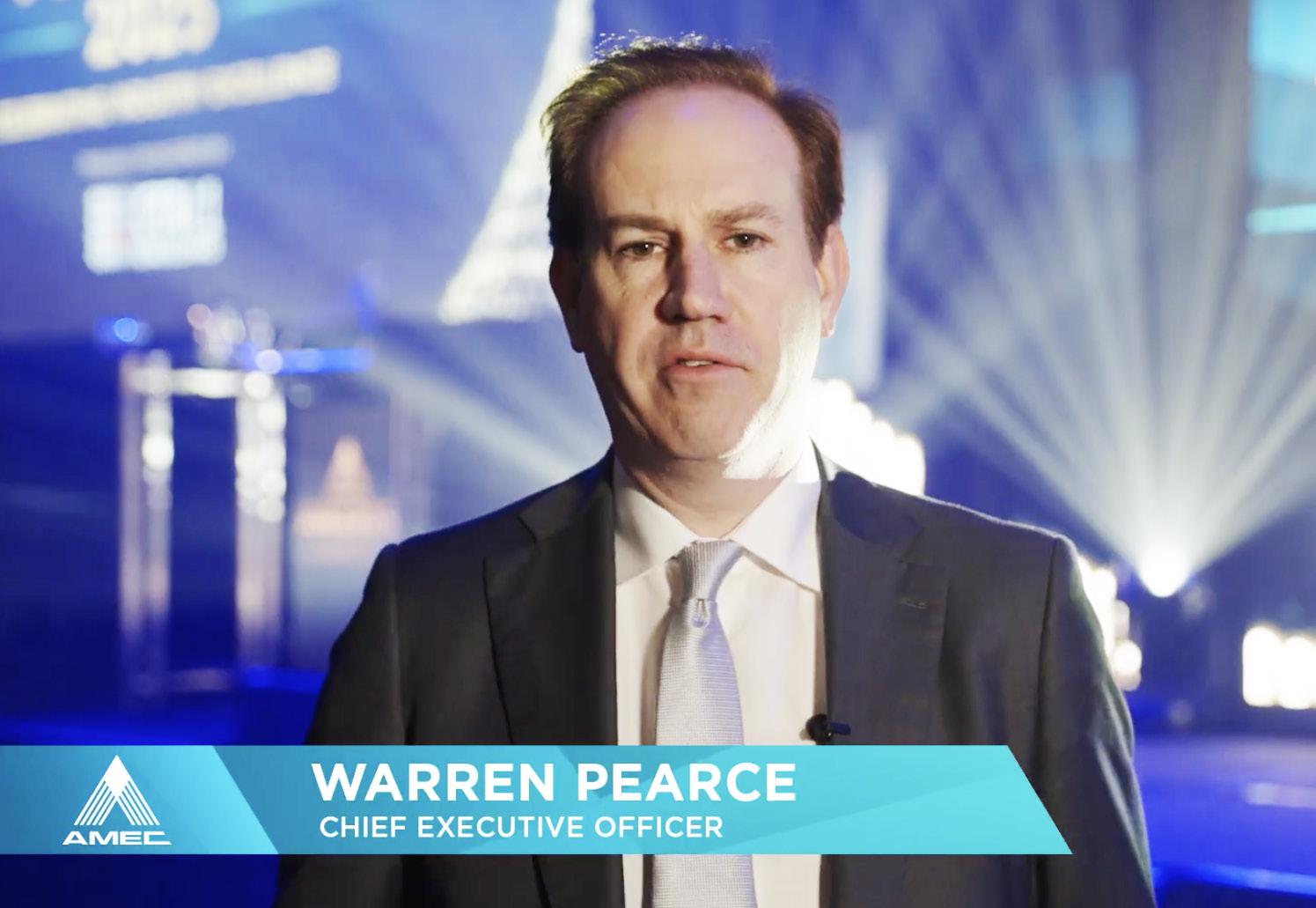
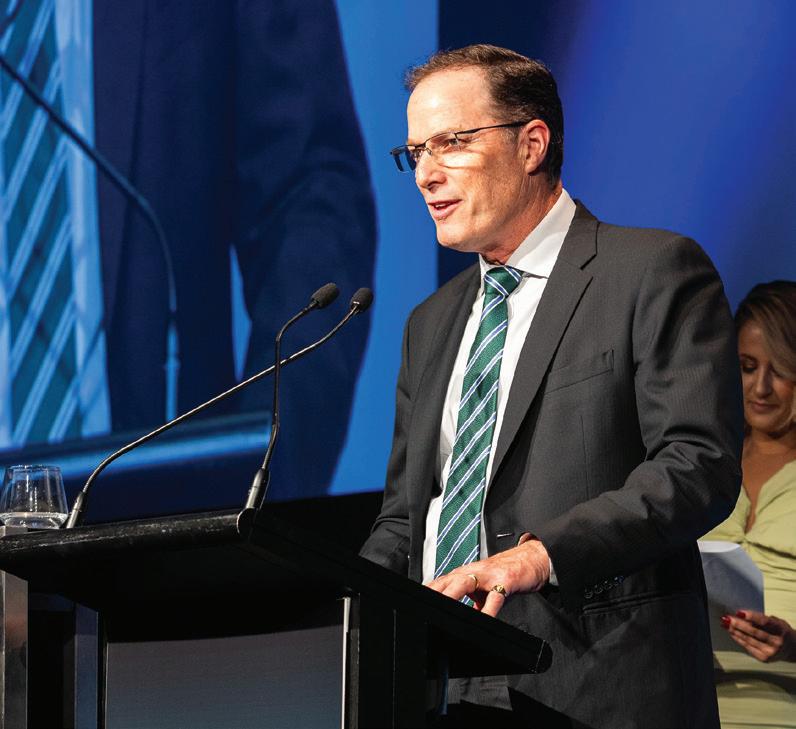
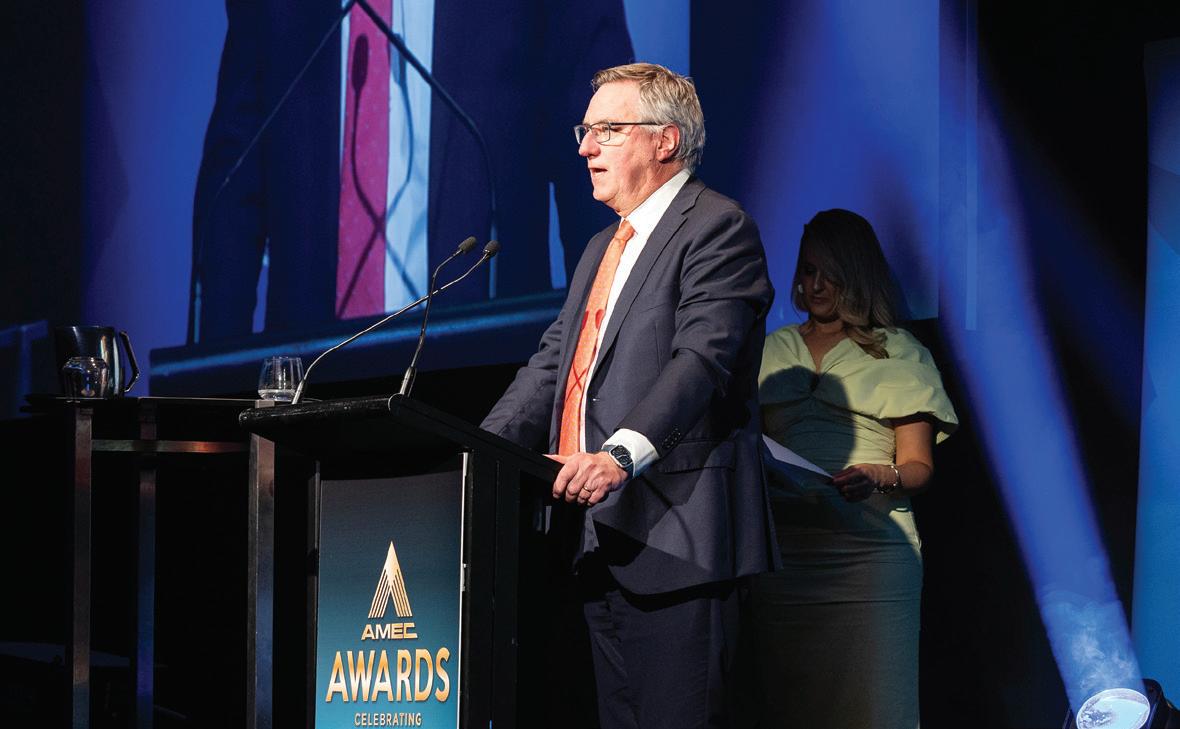
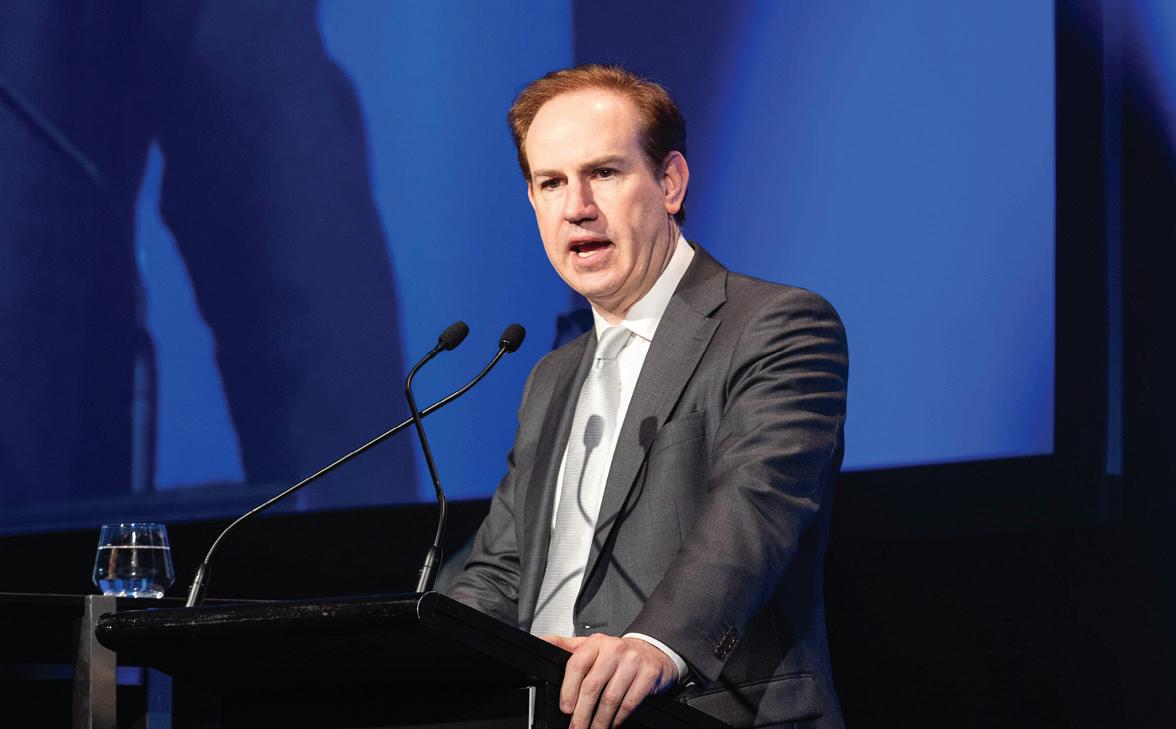
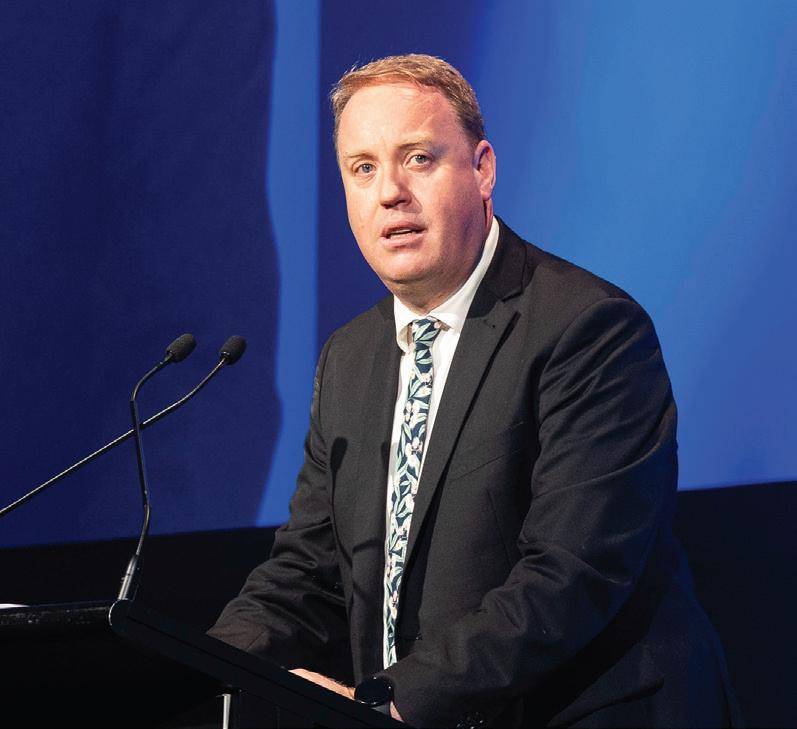
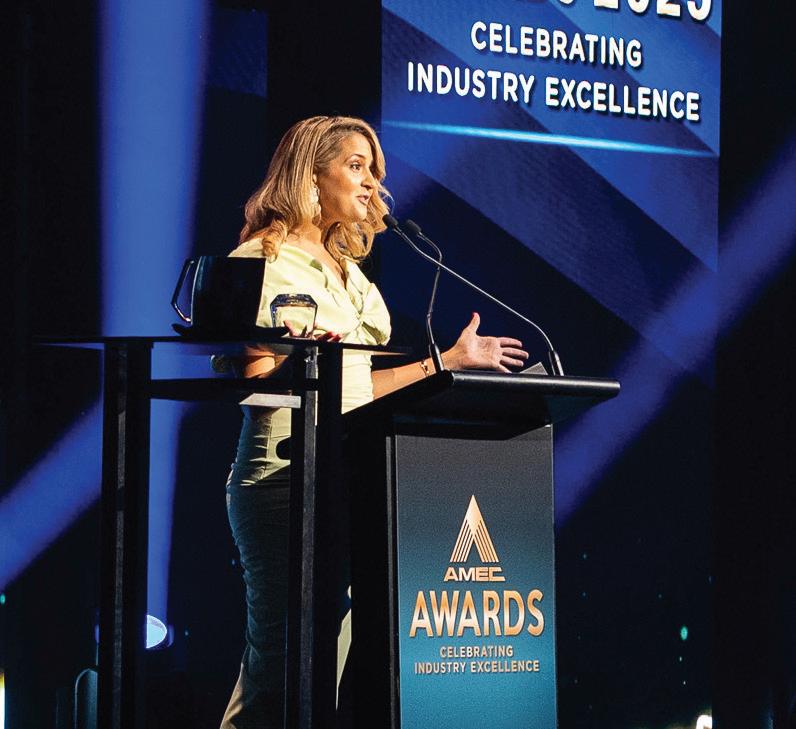
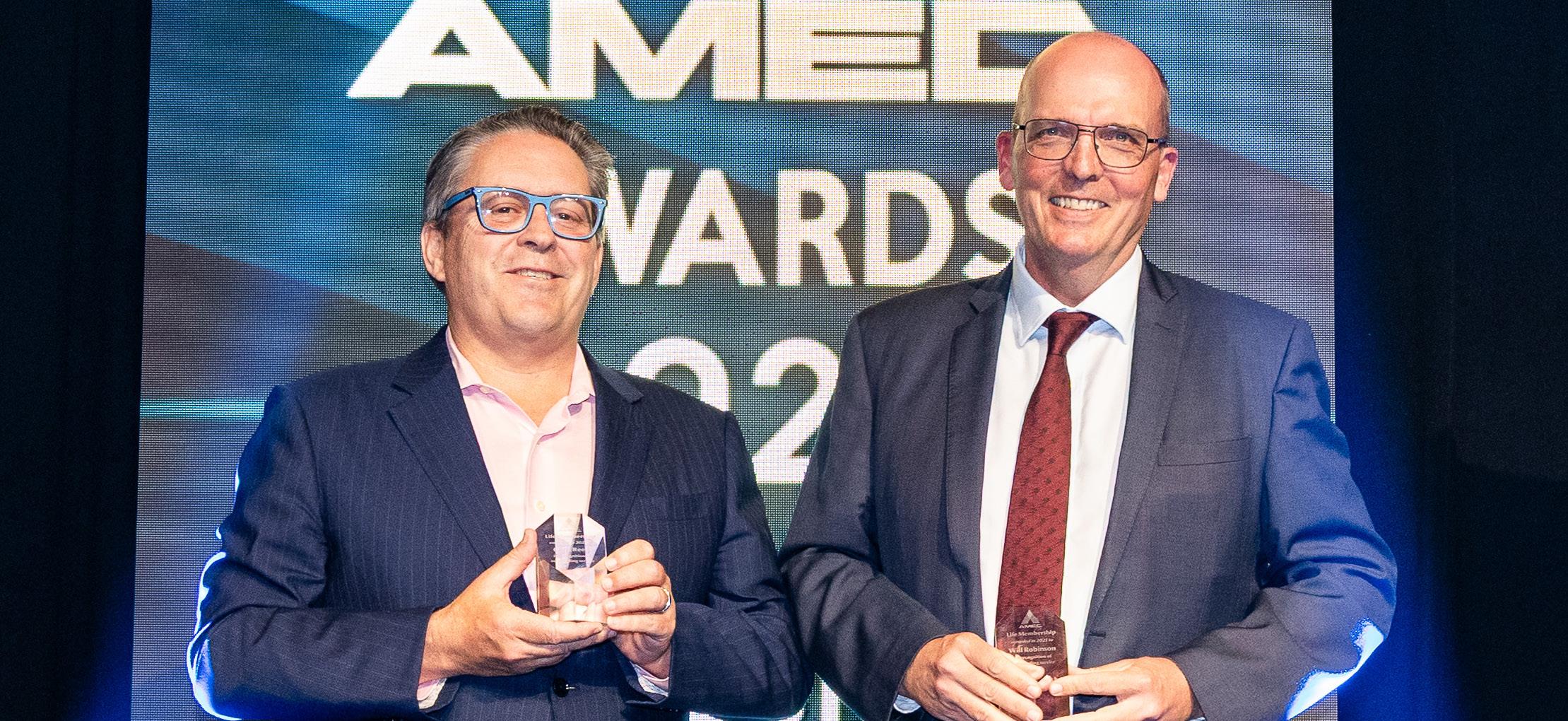
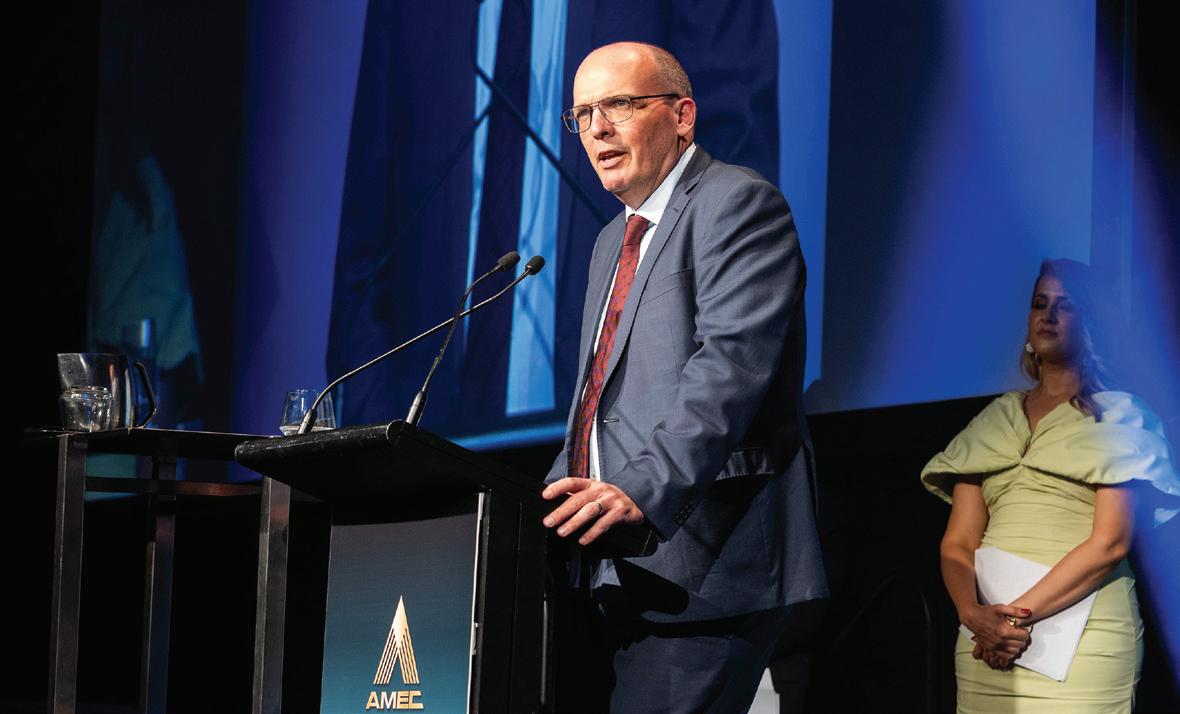
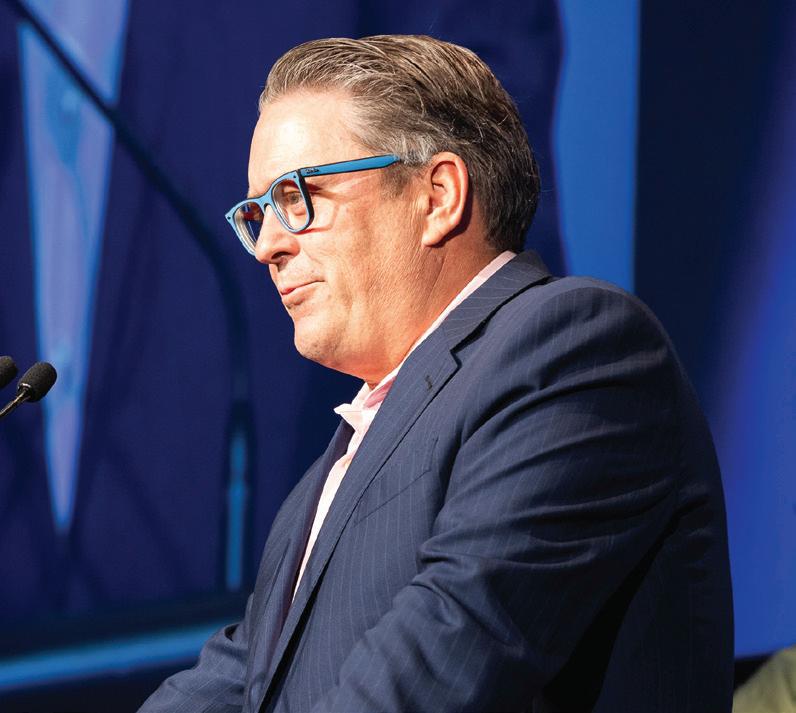
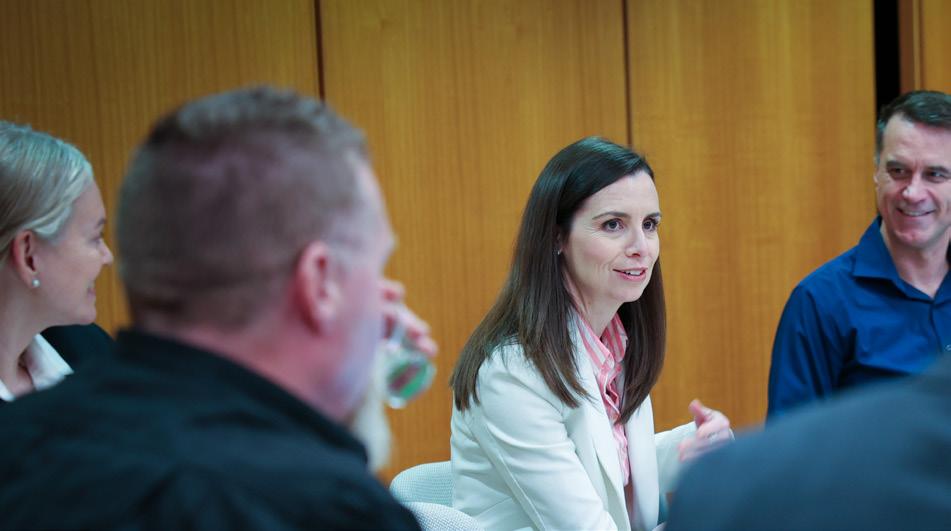
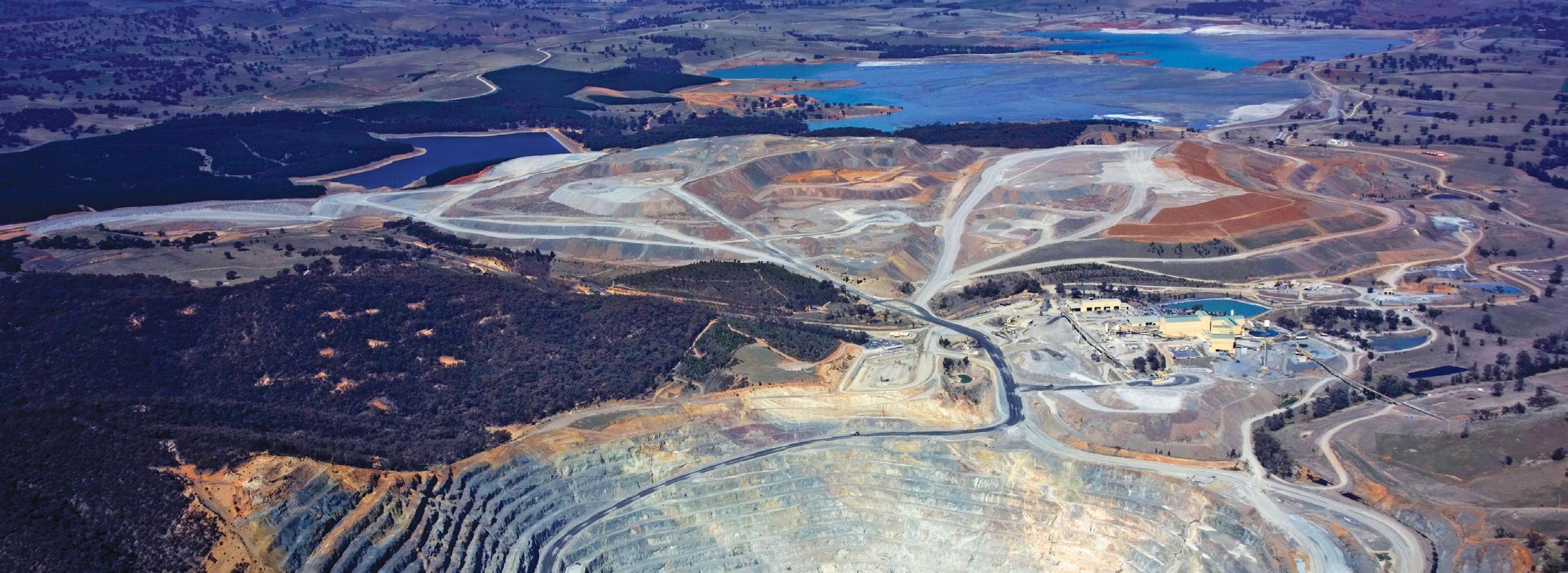
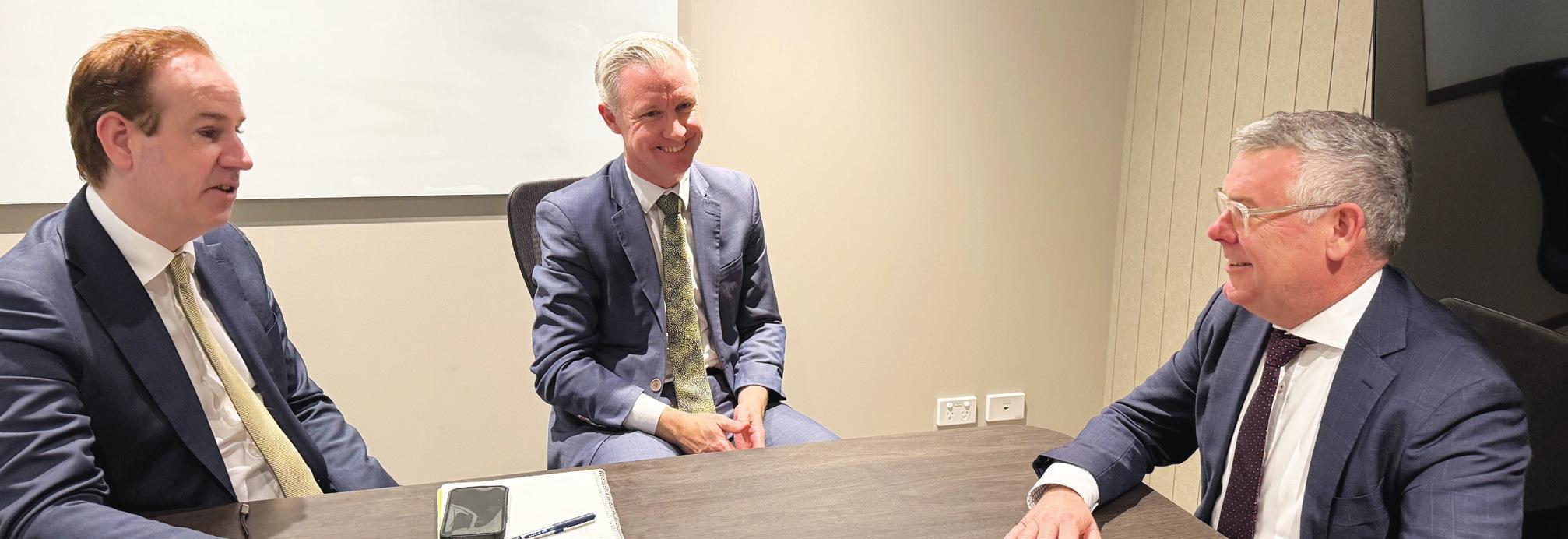
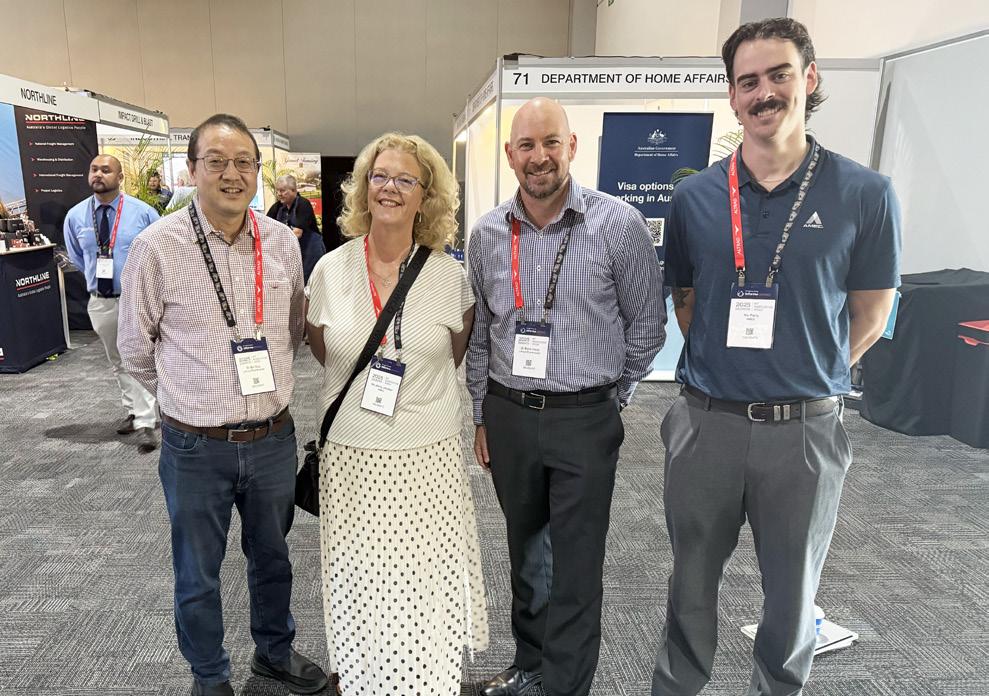
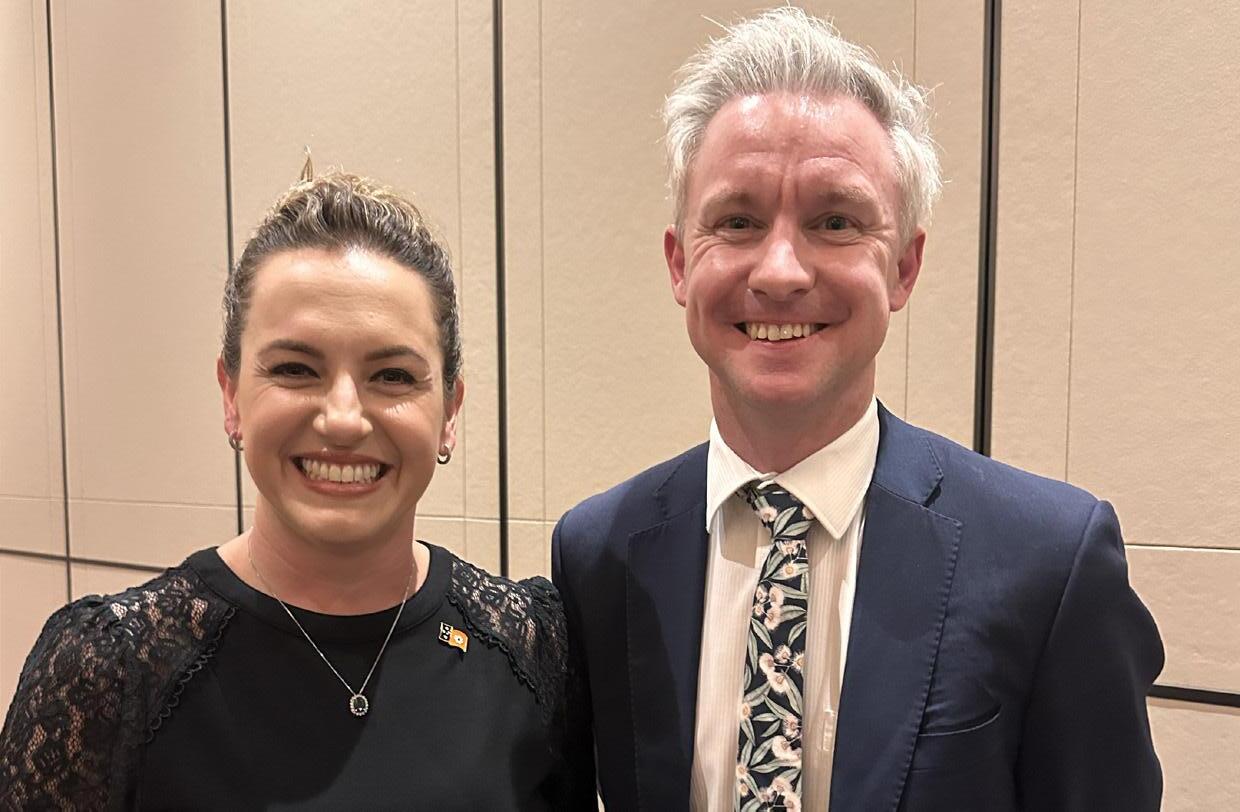
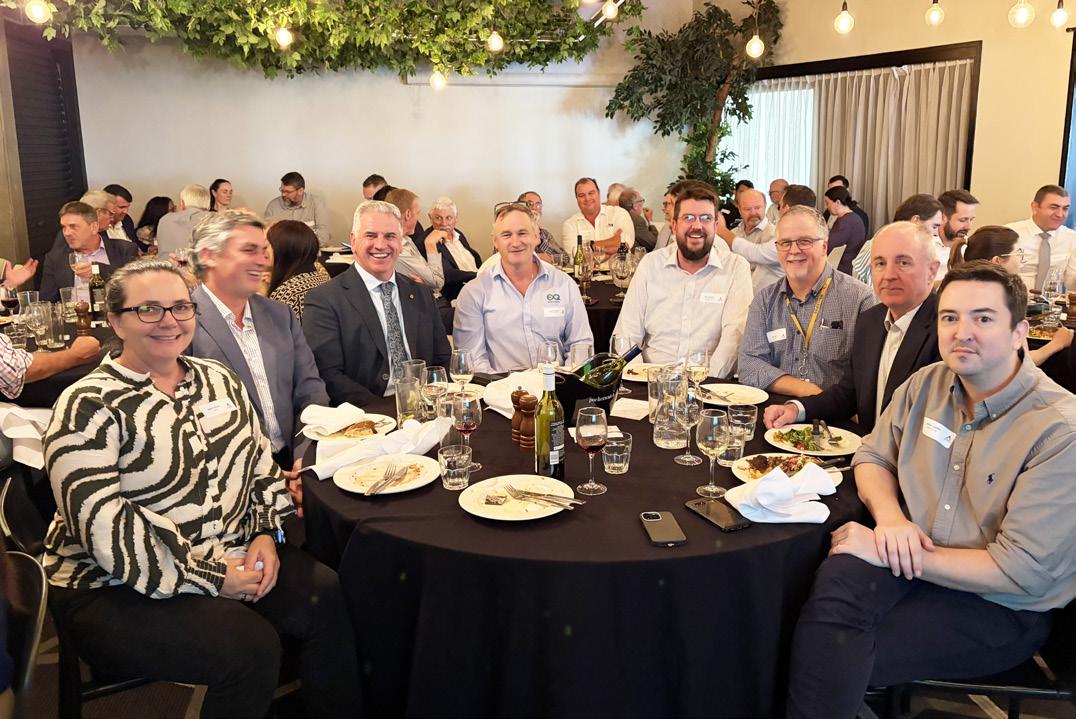
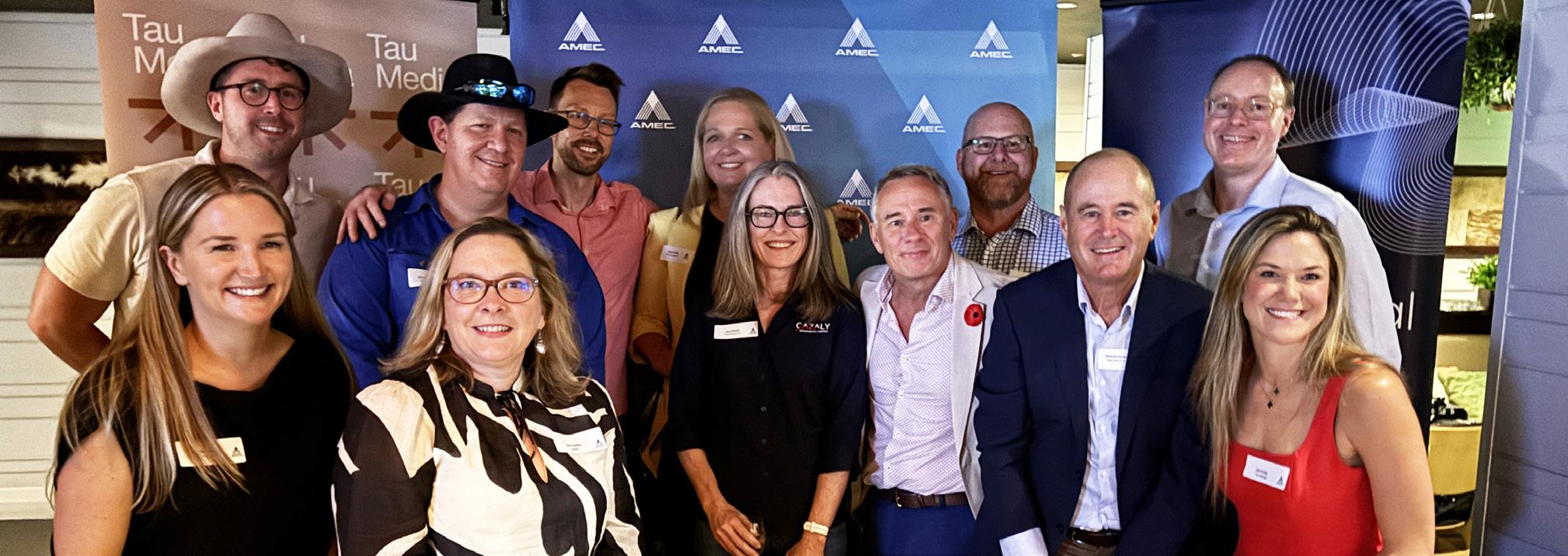
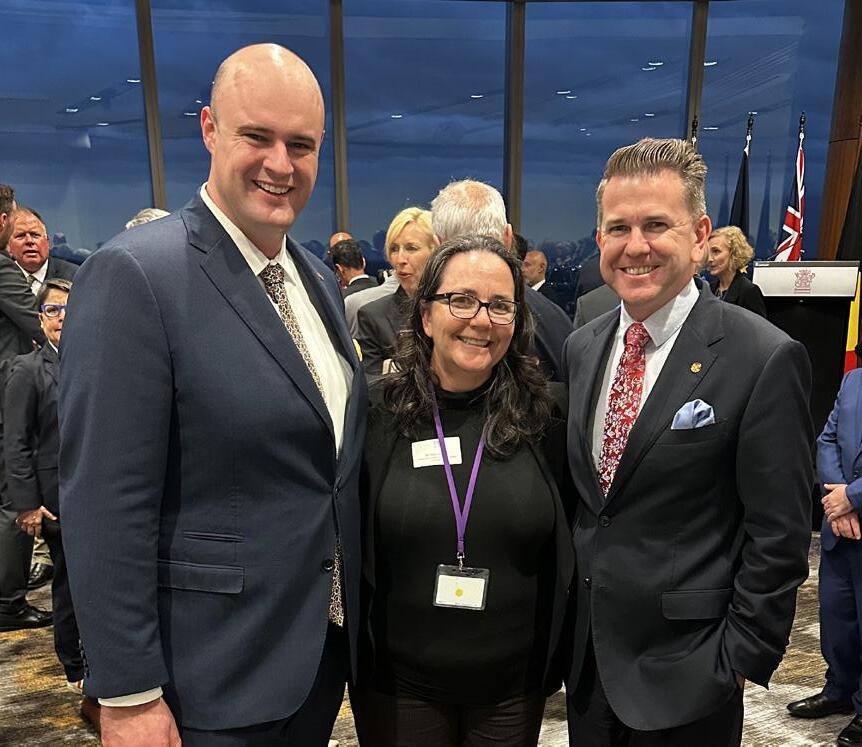
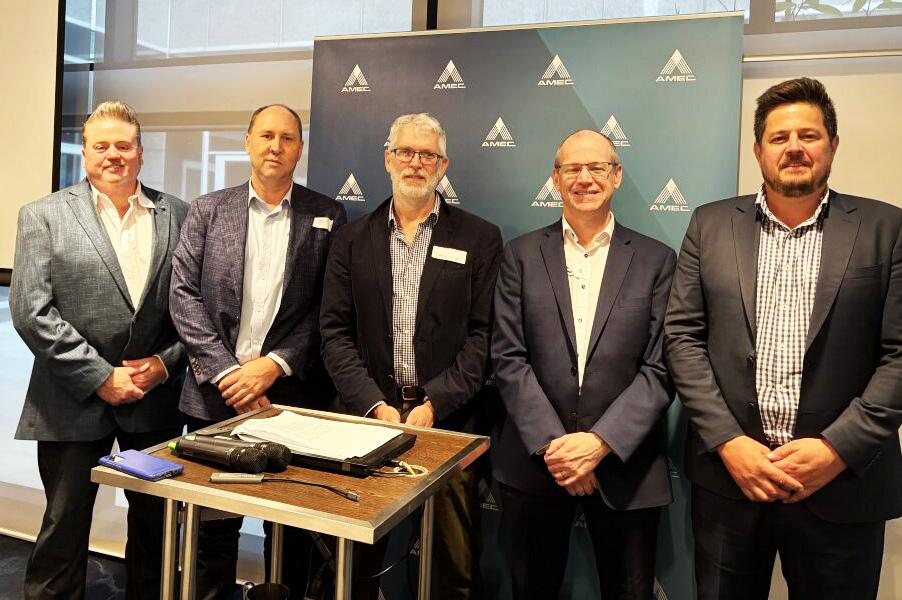
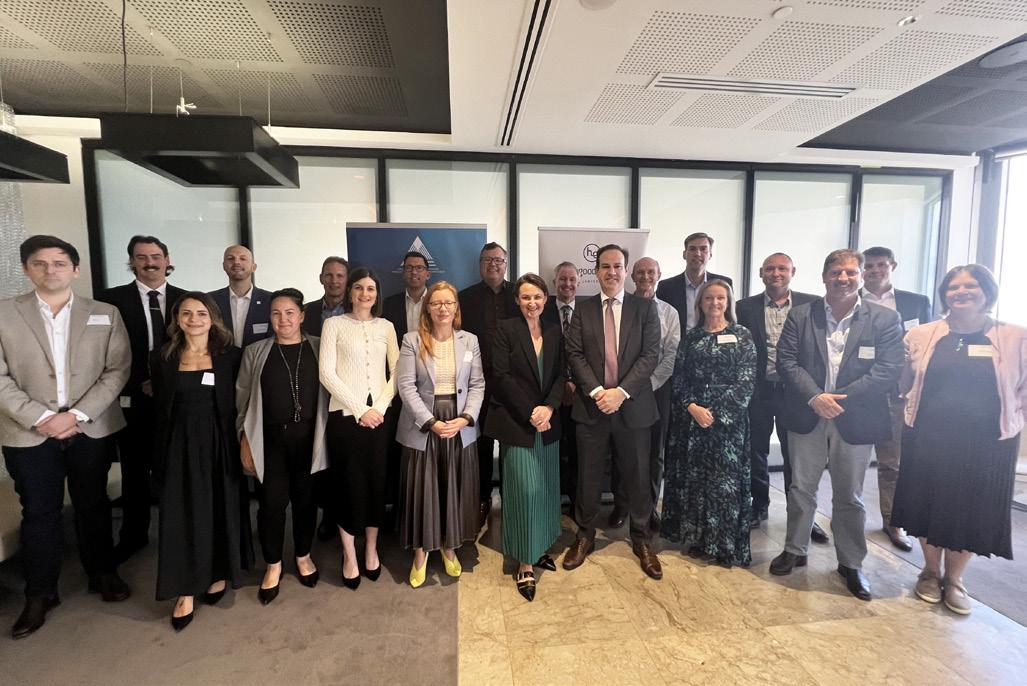
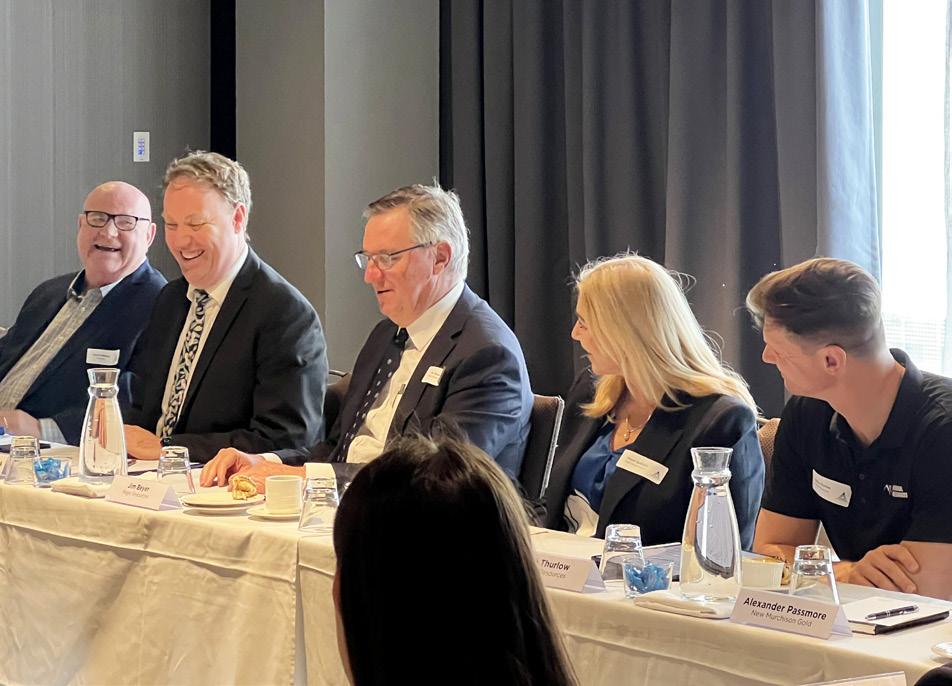
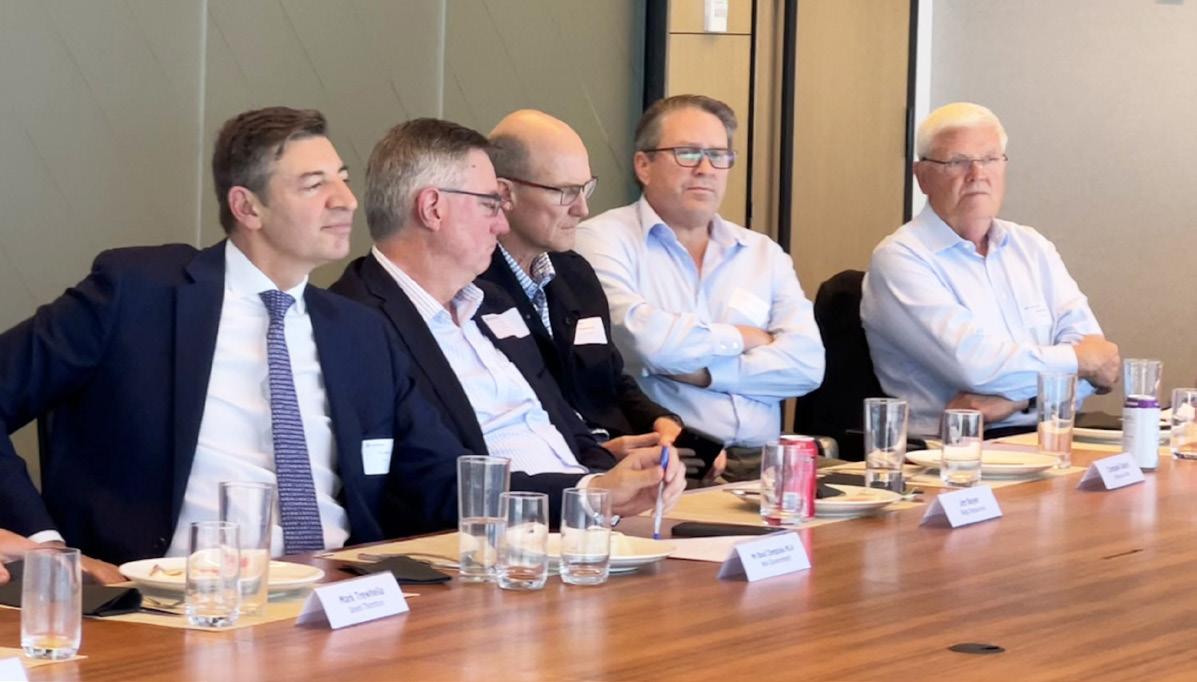
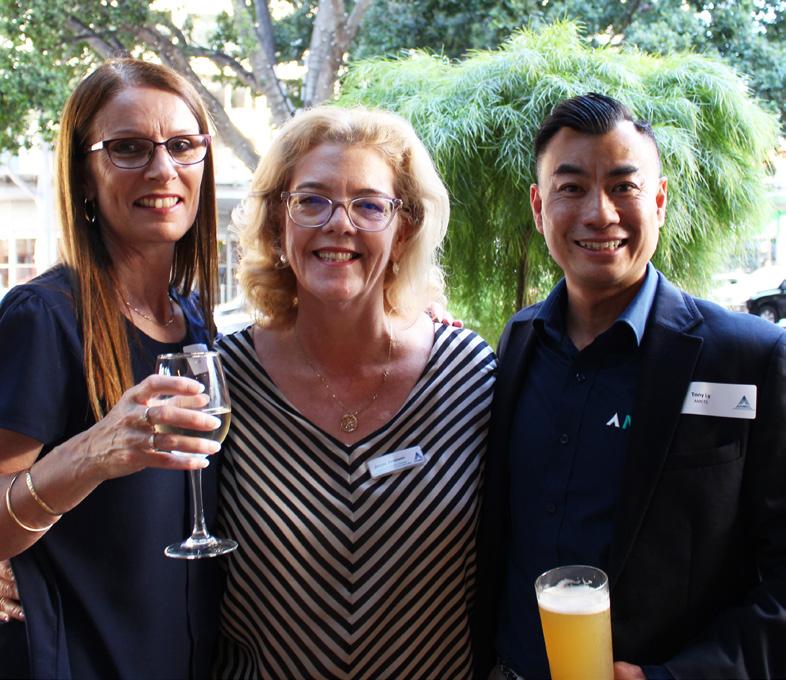
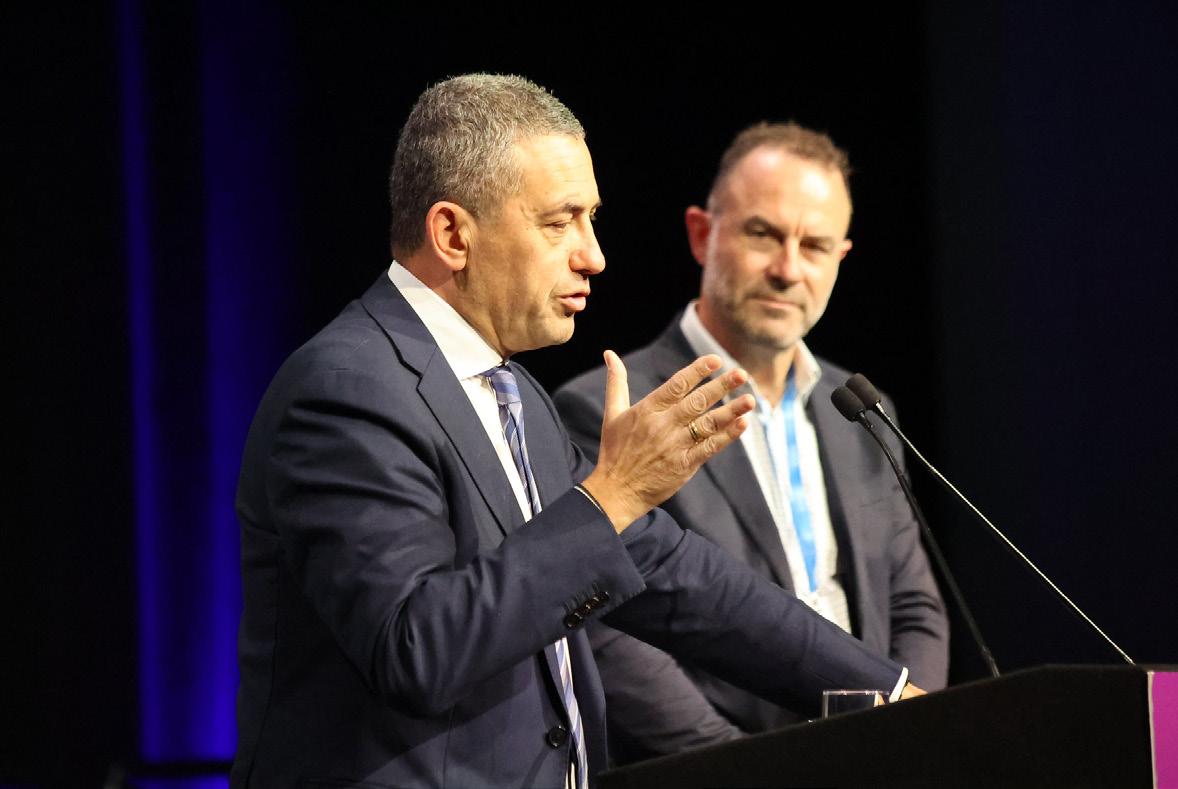
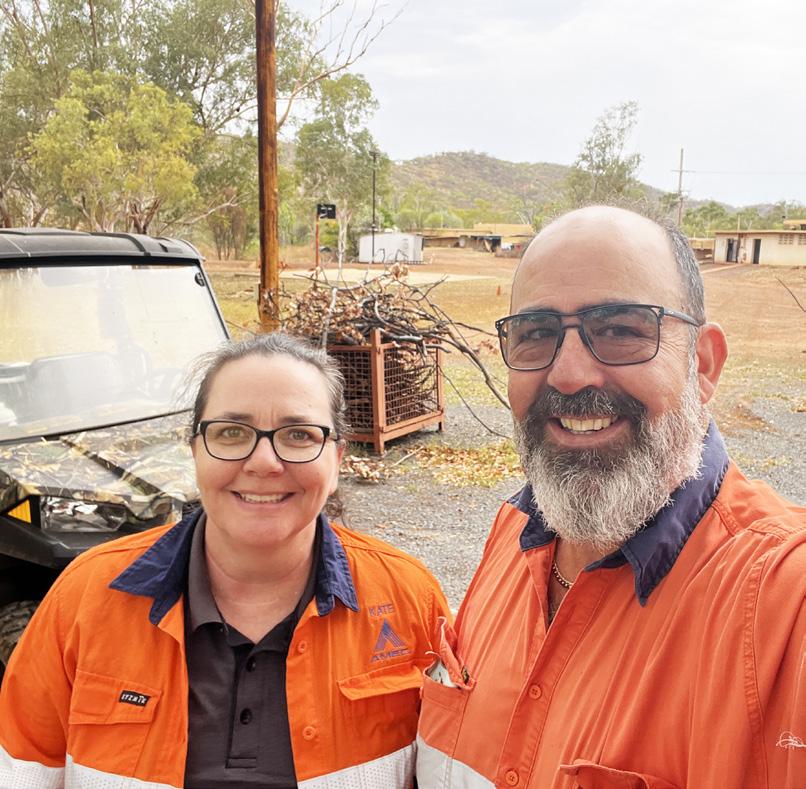
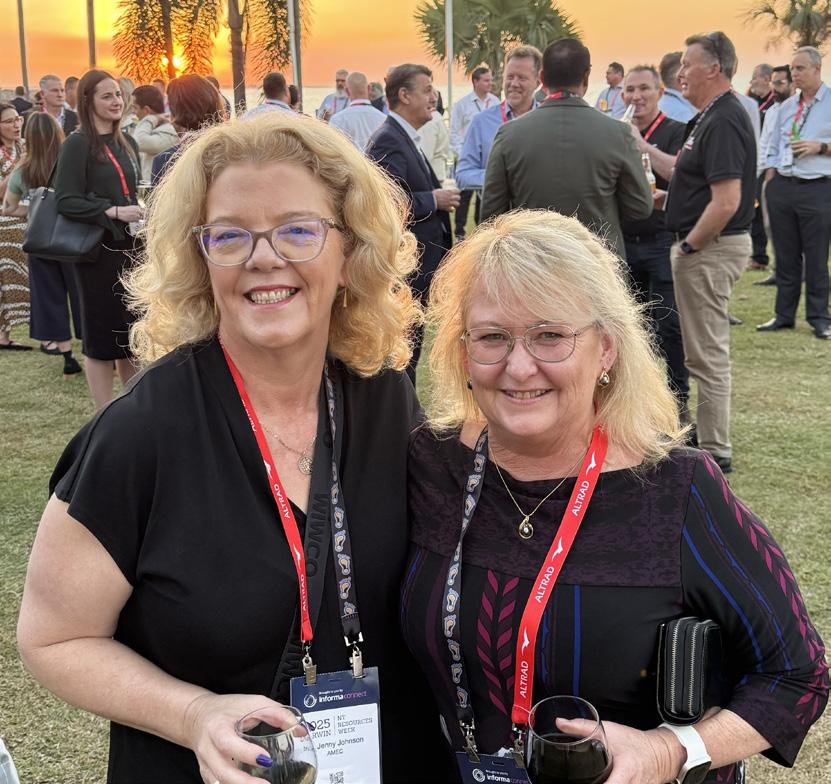
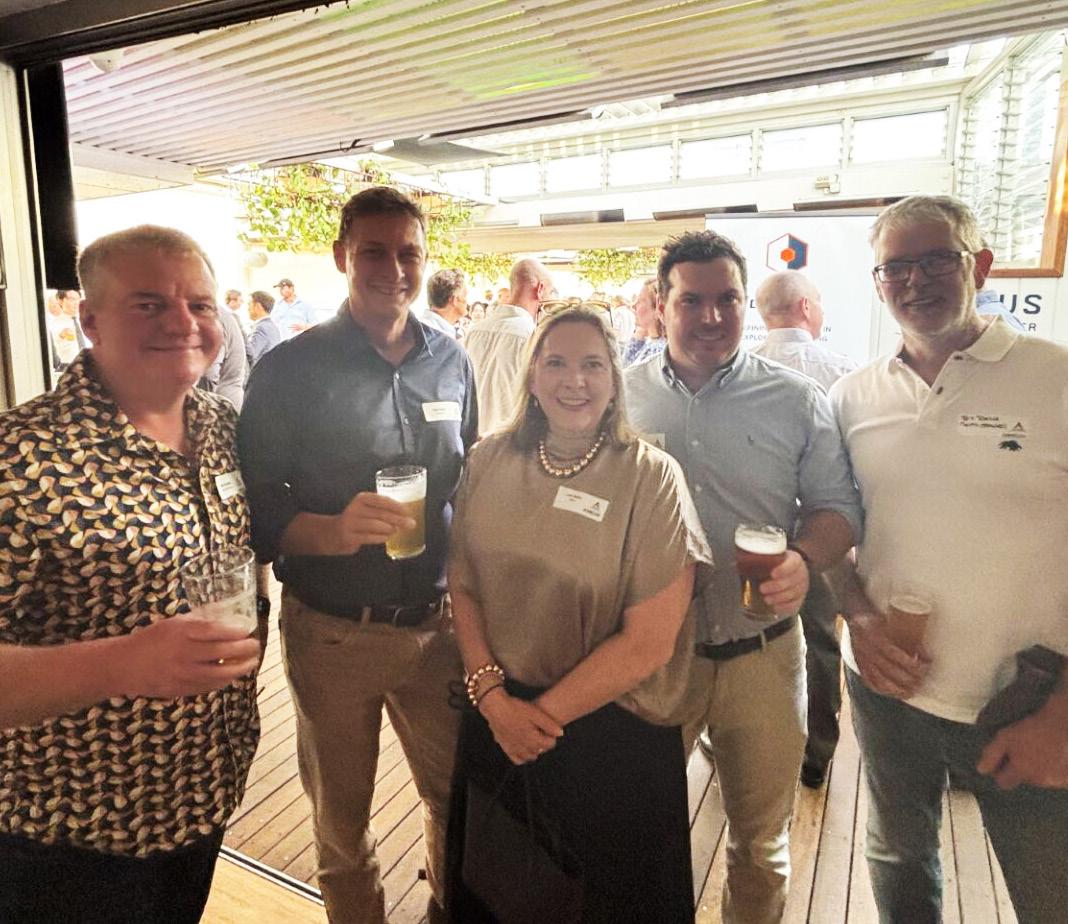
The glitz and glamour from the 2025 AMEC Awards, including all the winners and two Life Membership inductees
GUEST CONTRIBUTOR
With global demand for our minerals surging, the Minister for Trade writes about the opportunity across Australia’s full value chain
MEMBER FOCUS
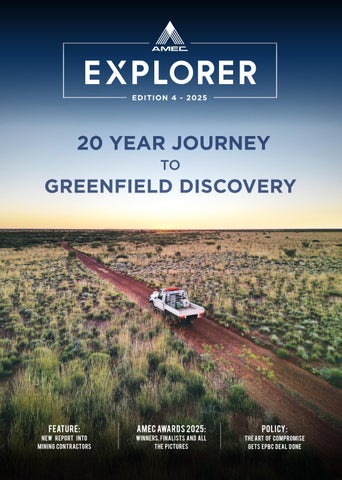
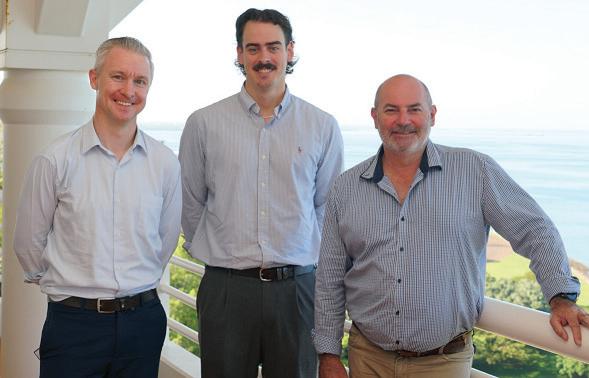
Learn how over 20 years of optimism and perseverance led to a discovery in the middle of nowhere
FEATURE STORY
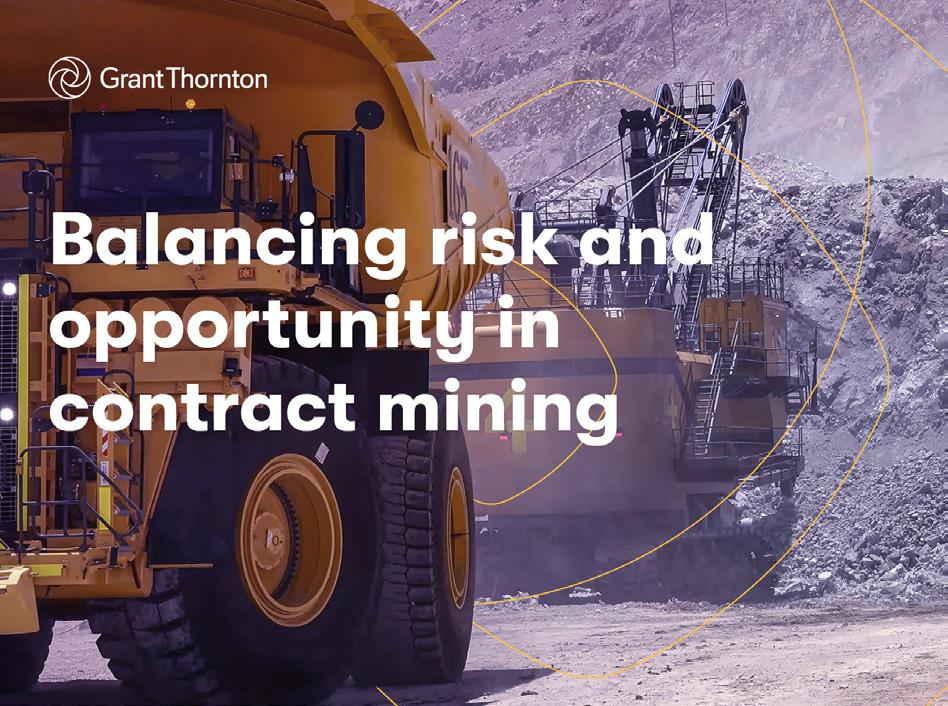
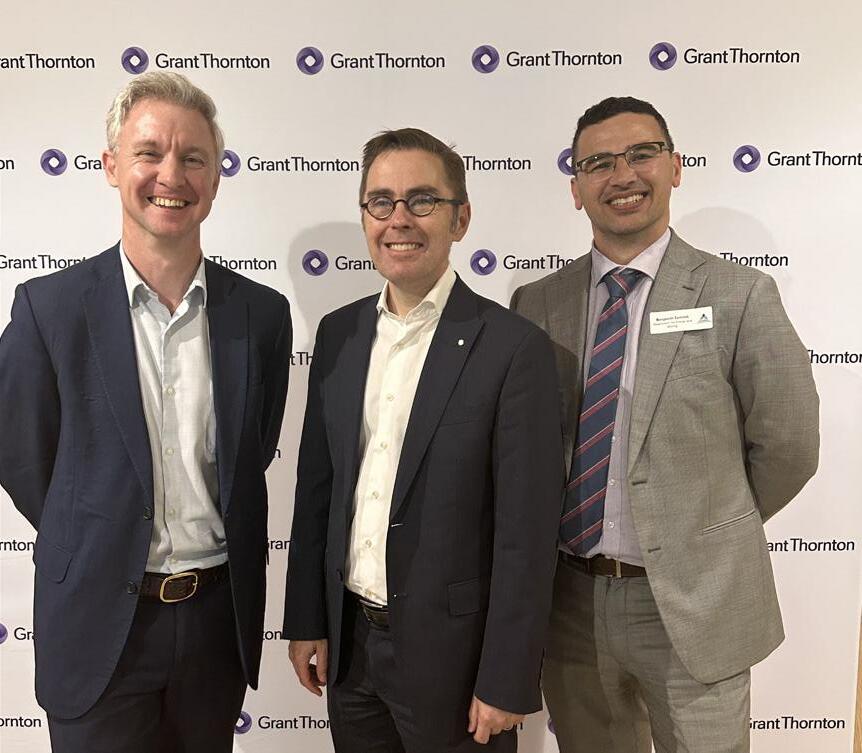
The Grant Thornton team releases their report into balancing risk and opportunity in contract mining
OPINION PIECE
Why the art of the compromise was so important to the Federal Government reaching agreement on EPBC reforms
editor & advertising
Ryan Rampling: P: 1300 738 184
E: ryan.rampling@amec.org.au
DESIGN & PRODUCTION
Gabrielle Lebeck
E: gabby.lebeck@amec.org.au
AMEC CEO
WARREN PEARC E Chief Executive Officer
As we close out 2025, it’s worth taking a moment to recognise just how significant this year has been for our industry. After more than a decade of attempts, Parliament has finally passed long-awaited reforms to the EPBC Act.
It’s a milestone that couldn’t have been reached without genuine compromise across the political spectrum, and one that will give projects clearer pathways, stronger certainty, and a modernised framework that balances protection and progress. It’s a win for common sense, and for the thousands of people whose work depends on efficient, confident environmental decision-making.
A powerful reminder of the commitment and community leadership that makes our industry so special
You can read more about how the reforms came to be and the compromise required from all angles, in my opinion piece from page 28 of Explorer.
We’ve also seen encouraging momentum around Australia’s evolving critical minerals landscape. AMEC is currently working with members and industry to progress the framework for a new Critical Minerals Strategic Reserve. This is not only a reflection of global demand, but Australia’s growing opportunity to help strengthen and secure our supply chains.
AMEC has been deeply involved in shaping this conversation, ensuring the Reserve supports investment, enhances our competitiveness, and recognises the contribution of the exploration and mining industry who are at the centre of the expansion of these minerals.
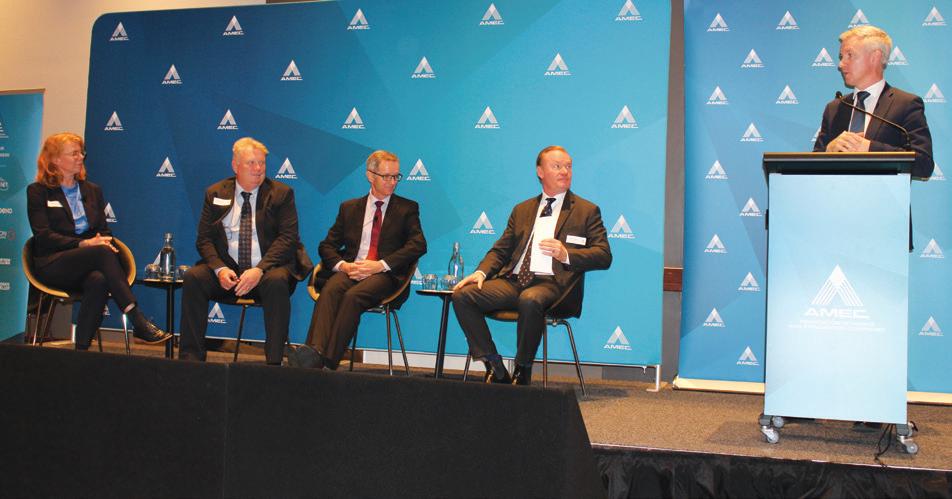
Closer to home, the AMEC Awards 2025 were a tremendous success. It was a full room at Crown Perth, a fantastic atmosphere, and a powerful reminder of the commitment and the community leadership that makes our industry so special.
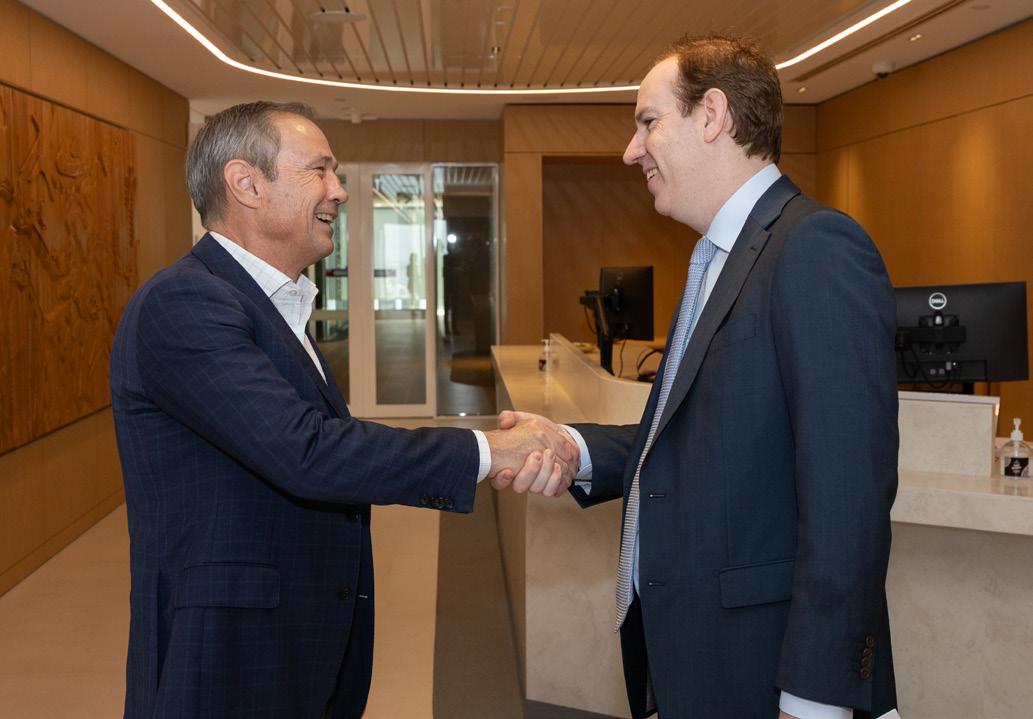
I’d also like to thank WA Mines Minister the Hon David Michael and Opposition Leader Basil Zempilas MLA, along with the various Departmental leaders for their attendance on the evening.
My congratulations to all our finalists and winners, your achievements reflect the very best of our industry. You can read more about each of the category finalists and winners on pages 14 to 17 of Explorer.
As we head into the new year, a quick reminder that membership renewals are now out, with discounts for full members if re-signed by 15 January 2026. Details were included in your renewal letters, along with the attached invoice.
Your support allows AMEC to continue delivering the strong, practical advocacy that has defined this past year. We hope you’ve found real value in your membership, and we look forward to working alongside you again in 2026.
Lastly, I would like to acknowledge all the hard work of the AMEC team and our Council and on behalf of them, thank you for your commitment to our industry.
Wishing you and your families a very Merry Christmas and a safe, enjoyable New Year. Enjoy reading through Explorer #4 and before long I’ll be seeing you in 2026.
Warren Pearce E: warren.pearce@amec.org.au
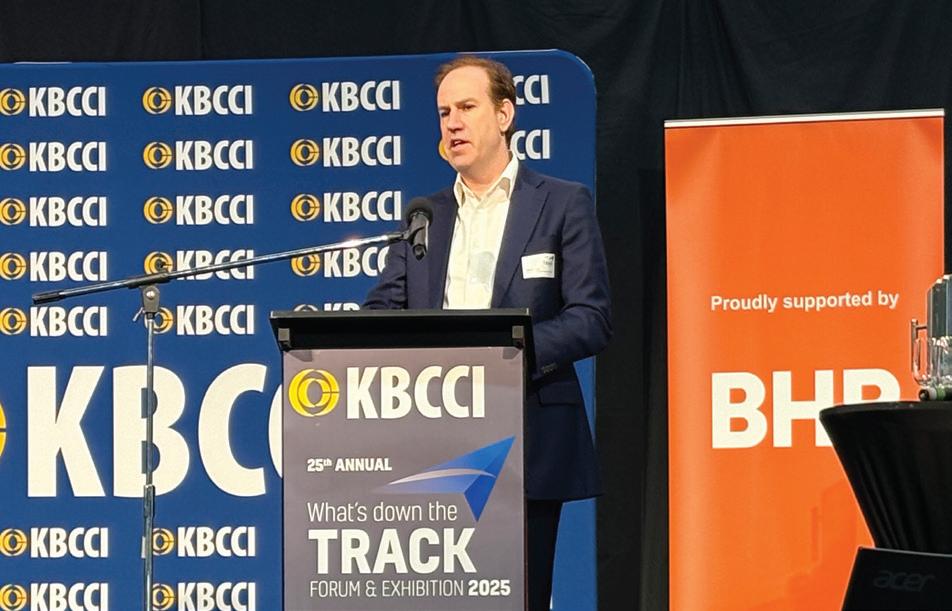
Warren Pearce presenting at the Kalgoorlie Chamber of Commerce and Industry
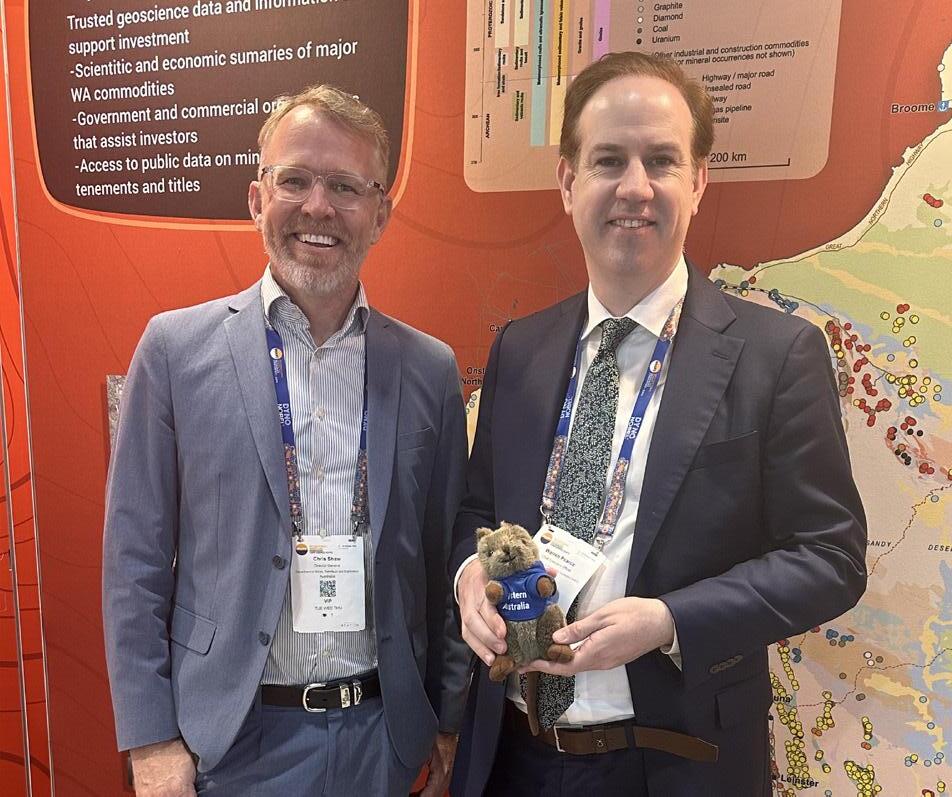
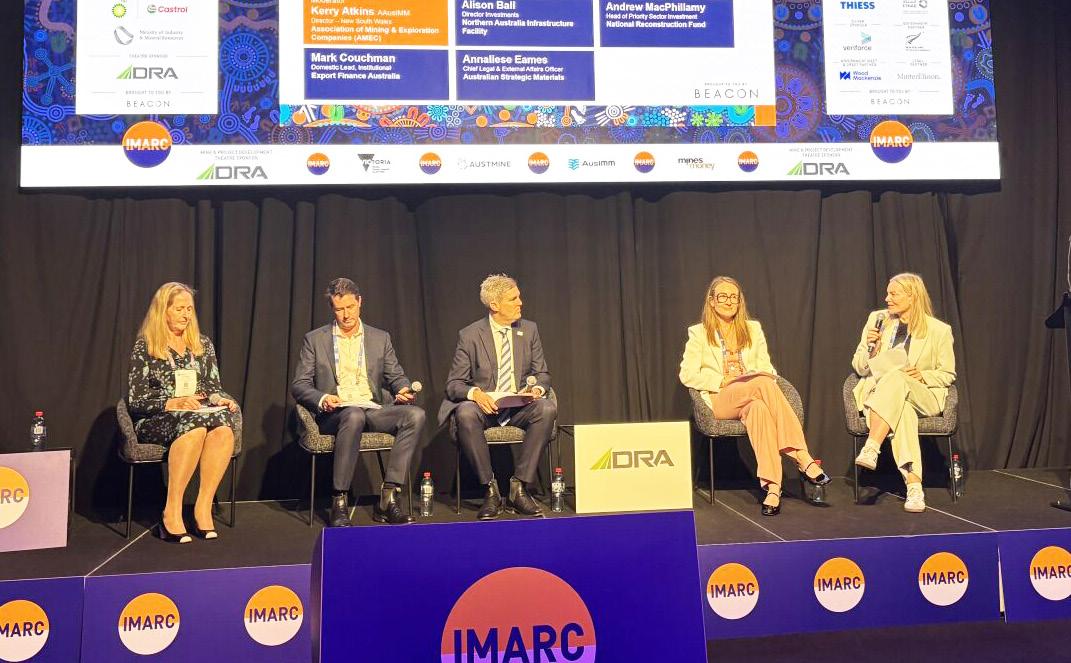
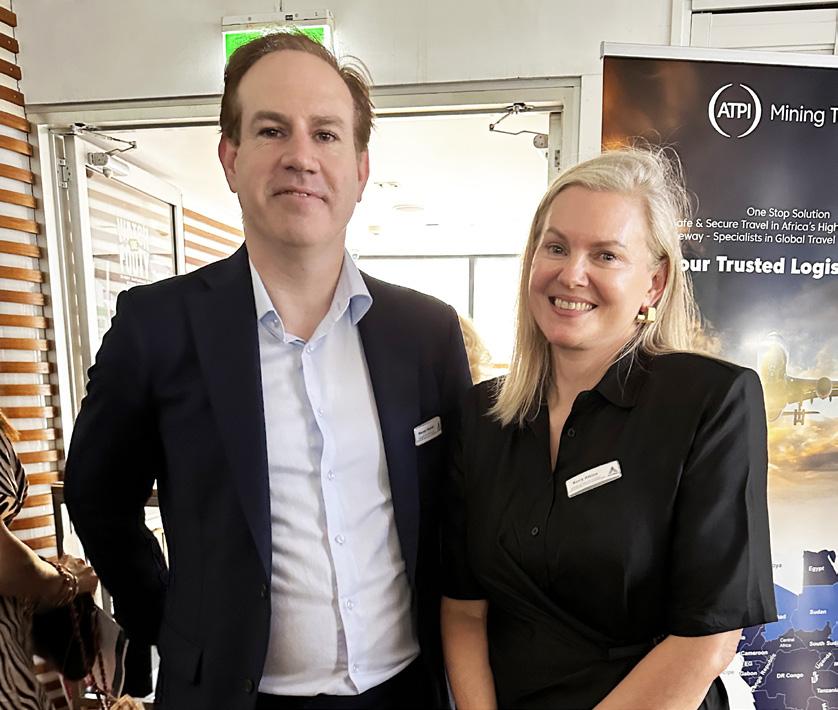
Warren Pearce with Chris Shaw (Director General) at IMARC NSW
Commonwealth news
'
Sash PaviC
Director - Commonwealth
2025 has been an eventful year for the minerals industry – this includes in Federal Parliament where our sector has been a major focus of the government’s agenda.
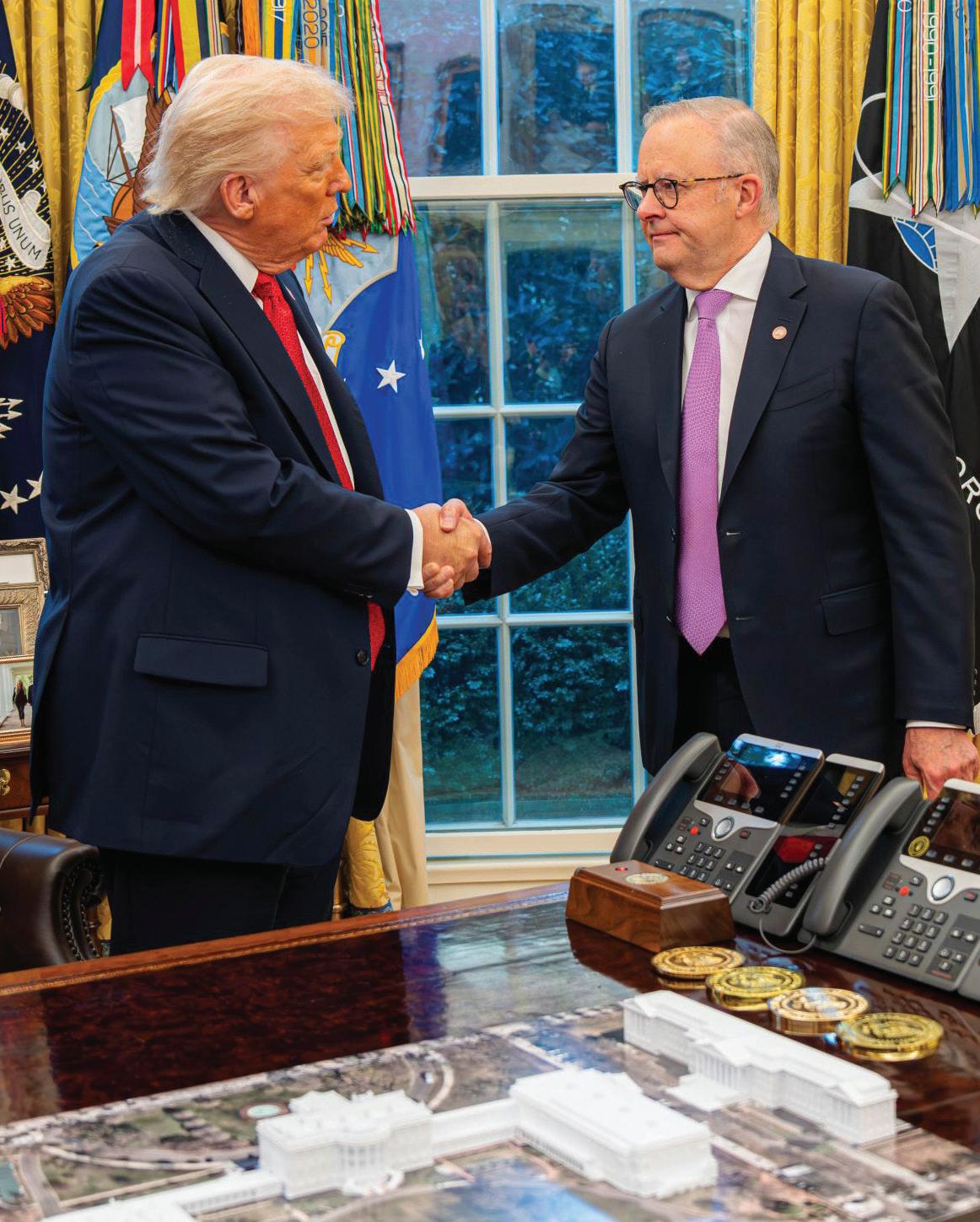
In April this year, the government announced its intention to establish a Critical Minerals Strategic Reserve with a targeted commencement date in the latter part of 2026. This was followed by the announcement of the United States–Australia Critical Minerals and Rare Earths Framework during the Prime Minister’s meeting with President Trump in Washington DC.
By year’s end, the government was also successful in passing important reforms to the EPBC Act, a lever that has impacted our industry for many years and which should deliver much needed change for project proponents.
In 2026 – AMEC will continue working with the government on these matters and more as we look to ensure government’s trust in AMEC is able to positively benefit our membership.
Last month the Government secured a deal with the Australian Greens to pass reforms to Australia’s environment laws.
2025 has been an eventful year for the minerals industry – this includes in Federal Parliament where our sector has been a major focus of the government’s agenda
The Bill passed both houses of Parliament and has now received Royal Assent (sign off by the Governor General). This is the first time Australia’s environment laws have been reformed since they were created in 1999.
The reforms include significant gains for the minerals industry when compared to the status quo. In particular, the reforms better define “unacceptable impact criteria”, essentially lifting the threshold and enabling projects more flexibility to advance.
Likewise, there has been a commitment to establish bilateral agreements between the federal government and state and territories which removes duplication by requiring projects to go through one assessment process only.
This is where the biggest cost and time savings will be for our sector – in some cases, projects could save up to a year and a half off their environmental assessment timeframe.
While the laws provide a better framework for environmental reform, the main driver of ensuring fit-for-purpose changes will be in the drafting of the regulations and of the national standards. This is where AMEC’s focus will be in 2026, in addition to seeking the timely delivery of bilateral agreements.
Commonwealth news
FEDERAL SUBMISSIONS
Environment Protection Reform Bill 2025 and related bills
Draft EPBC Act extracts and reform
Submission to Treasury on CMPTI regulations
C ritical Minerals Strategi c Reserve
Earlier this year, the Government announced its intention to establish a Critical Minerals Strategic Reserve. AMEC has drawn together the Australian rare earths industry to commission Mandala Partners to develop a proposal to the Commonwealth Government on potential financial mechanisms for the Reserve.
The proposal will develop an industry consensus position on price support options that has extensive industry backing and will be presented to Government in the new year.
The Report focuses on rare earths as this was directly referenced in the government’s election commitment.
Junior Minerals Exp loration Incentive (JMEI)
AMEC drove the continuation of the JMEI in 2020 to ensure the incentivisation of mineral exploration. AMEC commissioned BDO to model the JMEI and found, for every $1 of JMEI credits allocated an additional $6.38 was estimated to be invested into the exploration industry.
This stimulated $2.41 of exploration activity. A total of $1.163 billion in additional capital raising was estimated to occur, stimulating $404 million of additional exploration activity (present value terms), that would not otherwise have occurred.
AMEC continues to lobby Government to have the program extended and will make this a focus for the 2026-27 Federal Budget.
Sash Pavić
E: sash.pavic@amec.org.au
M: 0400 108 518
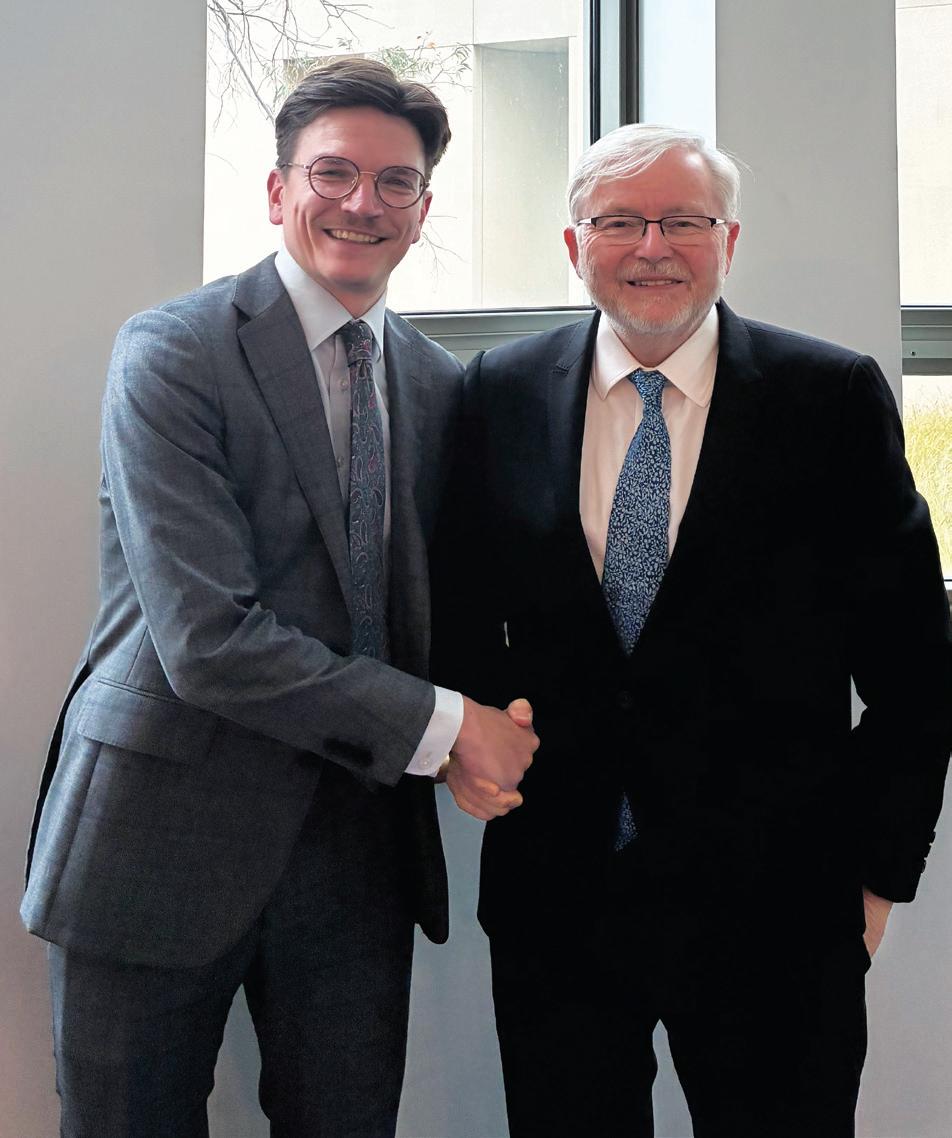
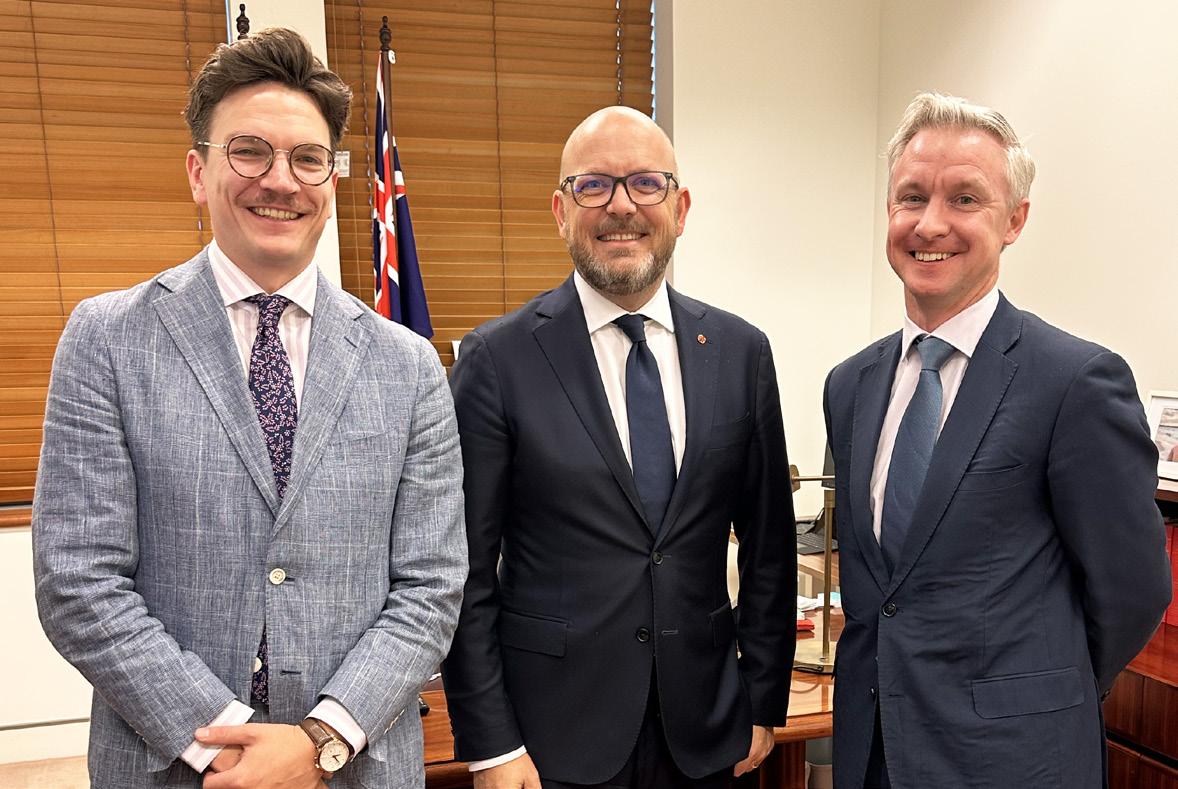
Sash Pavić meeting Ambassador Kevin Rudd at Parliament House Canberra
Commonwealth news
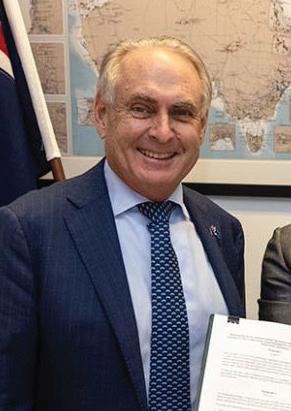
Senator the Hon Don Farrell
Special Minister of State, Minister for Trade and Tourism, Deputy Leader of the Government in the Senate
AS GLOBAL DEMAND RISES IT IS ESSENTIAL THAT AUSTRALIA LEADS THE CHARGE
The Australian Government is working to make Australia a world-leading producer of raw and processed critical minerals. These minerals are the future of industry, vital to everything from energy, to medicine, and advanced computing technologies.
As global demand rises it is essential that Australia leads the charge, not just as a raw materials supplier, but across the full value chain.
As a country we are uniquely positioned when it comes to critical minerals and rare earths –we are lucky enough to have almost every element on the periodic table and to have the technology and world-leading expertise to extract them.
The government’s focus is on securing investment in Australia’s critical minerals sector to deliver a resilient, sustainable and transparent supply chain. In October we took a landmark step in that direction by signing the United States – Australia Framework for Securing of Supply in the Mining and Processing of Critical Minerals and Rare Earths.
This agreement will see a pipeline of investment in Australia’s critical minerals sector, by providing an architecture for
Australian producers to access US financing and vice versa.
The Framework also lays out a plan to work with the US to streamline permitting processes, address unfair trade practices, and enhance the capabilities of mining and processing sectors in both countries.
Historic critical minerals framework signed by President Trump and Prime Minister Albanese
Commonwealth news
The benefits to industry are clear: access to new investment opportunities, reduced red tape, and improved investor confidence driven by a more transparent and open market.
Financing is available now for projects that will accelerate the security of Australia’s critical minerals and rare earths supply chains.
I’m confident that this Framework will serve to provide you with the long-term sustainability you need to succeed in a rapidly evolving global market. To AMEC members, I encourage you to seize this opportunity. Together, we can build a diverse, resilient and sustainable critical minerals supply chain for Australia.
The Australian Government is working to make Australia a world-leading producer of raw and processed critical minerals
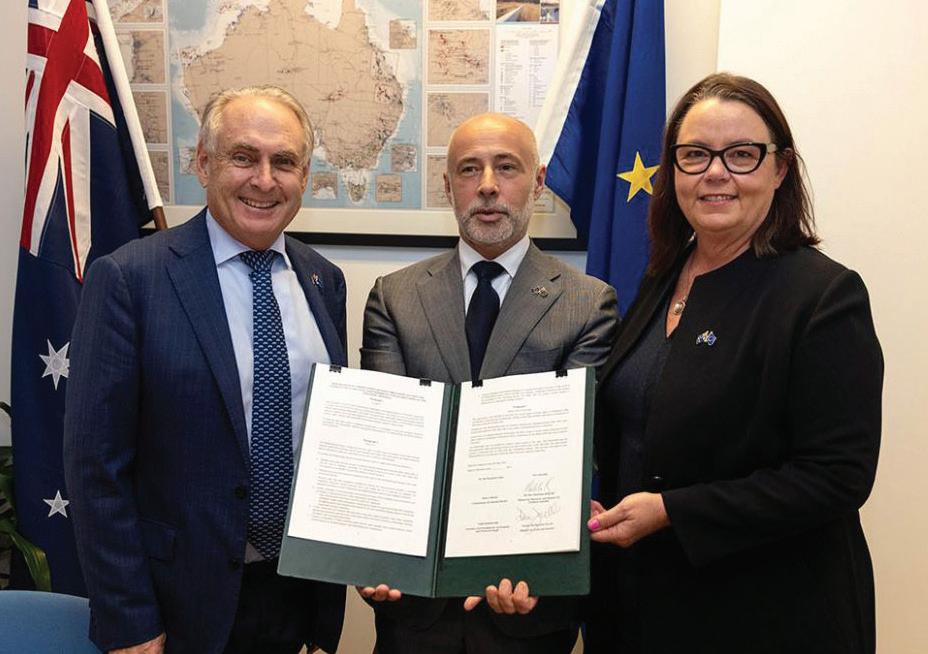
The Hon Minister Madeleine King, The Hon Minister Don Farrell, & EU Ambassador to Australia, Gabriele Visentin
WA news
NEIL VAN DRUNEN Head of National Policy
As we race to the close of the year, the passage of the Local Government Amendment (Rating of Certain Mining Licences) Bill 2025 underscored that mining and mineral exploration enjoy cross the aisle support.
The important legislation passed the Legislative Assembly with Labor, Liberal and National Party’s unifying in some preChristmas harmony to ensure our industry remains competitive.
The legislation brought certainty that land held under miscellaneous licences cannot be subject to local government rates.
The new bill restores regulatory certainty, safeguards the competitiveness of WA resources sector and removes the prospect of double-rating of lands that carry infrastructure.
Conservatively this would have stung the sector over $50 million per annum. So, the Parliament’s clarity on the future possibilities of rating on Miscellaneous Licences is welcome.
The parliament was very busy. The Mining Amendment Bill 2025 was read into the Legislative Council on 11 September 2025. This legislation, called for by AMEC, cleans up the ramifications of the Blue Ribbon and True Fella Warden Court cases.
The number one issue for members in 2025 has been escalating Aboriginal Cultural Heritage Survey costs. AMEC called for their review as a priority at the March election.
Conservatively this would have stung the sector over $50 million per annum
The Government answered, engaging Glen Kelly, a Member of the National Native Title Tribunal, to seek improvements of Native Title and cultural heritage processes in the sector.
AMEC held three workshops with members, and continues to meet with Government as the year closes out to ensure outcomes are achieved.
Tenement holders can now have same day approvals for certain minimal disturbance exploration in areas that are nonenvironmentally sensitive areas. AMEC has called for these Eligible Mining Activity reforms for over 15 years, and it is a great end to 2025 to see a risk based approach being applied. Stay safe everyone.
Neil van Drunen
E: Neil.vandrunen@amec.org.au
M: 0407 057 443
WA SUBMISSIONS
WA Offsets Review
Draft Guideline for Cumulative Impact Assessment (CIA)
Amendments to the Local Government Act
WA Director Neil van Drunen hosting a panel at AMEC’s Nature Positive Forum
WA news
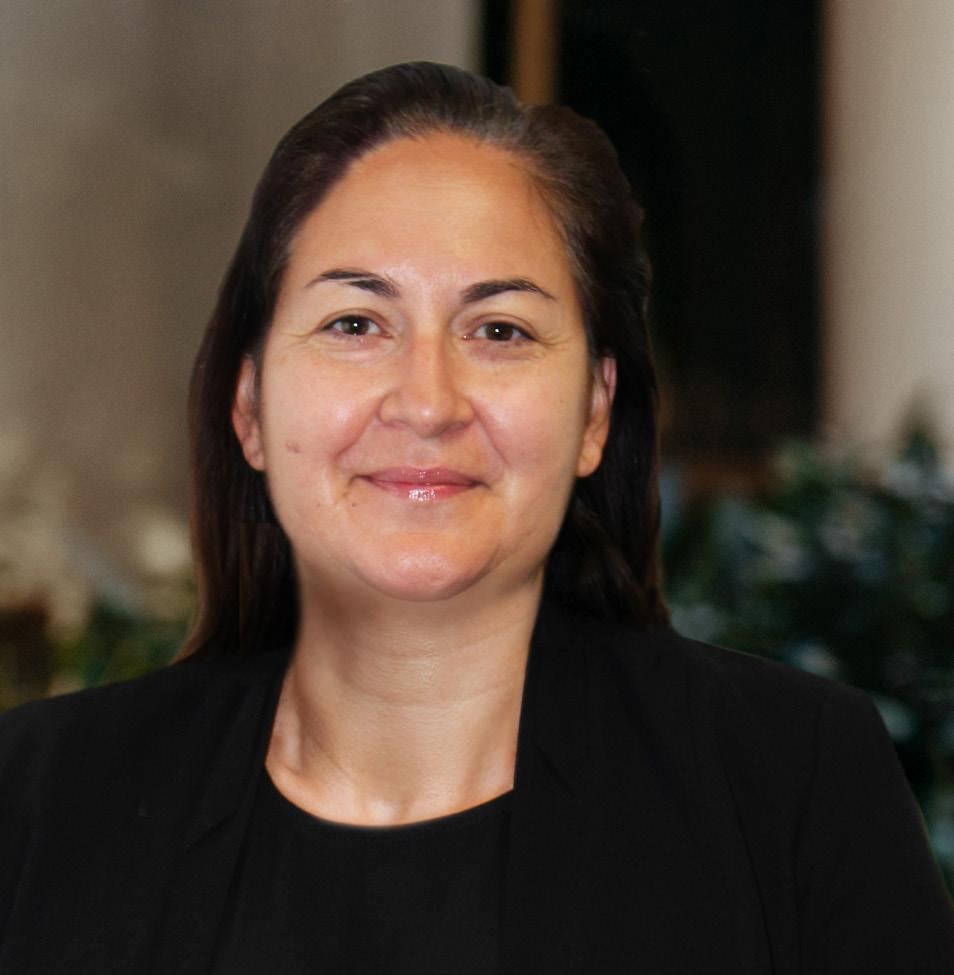
Chris Shaw Director General: Department of Mines, Petroleum & Exploration (DMPE)
As Director General of the newly formed Department of Mines, Petroleum and Exploration (DMPE), my focus is on shaping a dynamic and sustainable future for Western Australia’s resources sector.
WA has long been at the forefront of global mining and exploration, setting benchmarks in both scale and innovation. This leadership is built on a strong foundation of continuous improvement which sees WA exporting mining know-how and technology to the world.
That doesn’t mean we can sit back and assume success will automatically continue. Challenges such as increasing competition for key areas, market volatility, decarbonising operations and changing public expectations are real and DMPE needs to be resolutely focussed on addressing them.
Central to future success is supporting mineral exploration across the State, which is one of DMPE’s core functions. Programs like our Exploration Incentive Scheme and Accelerated Geoscience Program, delivered through the Geological Survey of Western Australia, play a key role in unlocking new opportunities and driving exploration in underexplored regions.
Building on this work, our WA Array project, the world’s largest passive seismic survey,
By improving processes and cutting timeframes, we aim to give industry greater certainty and the confidence to plan ahead
is driving a digital transformation that will improve how we discover resources and shape the industry’s future.
We also know that an effective regulatory framework is critical to attracting investment and are prioritising the further streamlining of mining approvals. By improving processes and cutting timeframes, we aim to give industry greater certainty and the confidence to plan ahead.
Our Fast-Tracking Mining Approvals Strategy supports this work through targeted initiatives. We’ve already delivered the updated Resources Online platform, the Eligible Mining Activity (EMA) framework and the Mining Development and Closure Proposal which launched in early September.
The EMA framework standardises environmental requirements and can reduce timeframes for approval from 15 days to zero. But there’s more to do, and we’re focussed on transparent performance reporting and further initiatives to improve timeliness of our regulatory processes so stay tuned for more on that.
By working closely with AMEC and our partners across government, industry and regional communities, DMPE aims to create the conditions for sustainable growth and longterm success. I look forward to continuing this important work together.
QLD news
KATE DICKSON Head of National Operations
The end of the year in Queensland has focused on environmental legislation, the RSHQ safety review, and the impending structural change.
After months of consultation in 2025, the Environmental Protection (Efficiency and Streamlining) and Other Legislation Amendment 2025 (EP(ES)OLA) Bill was introduced to the Queensland Parliament on 20 November 2025 by the Hon Andrew Powell MP, Minister for the Environment and Tourism and Minister for Science and Innovation (DETSI).
The DETSI Policy team actively engaged with AMEC and our members throughout the consultation process. From the initial consultation paper to the exposure draft, the team incorporated significant feedback from AMEC and adjusted elements to help resolve member issues. Submissions on the Bill close on 17th December, with stakeholder and public briefings completed.
There will be a public hearing in midJanuary, with the final report from the Health, Environment and Innovation Committee due at the end of January. Some notable improvements include enhancements to the PRCP framework to benefit mineral mines and the introduction of ERA codes to reduce the regulatory burden for low-risk activities, such as exploration drilling. More detail on the committee process can be found here.
In June this year, a review into the structure and effectiveness of RSHQ was launched.
The review was led by University of Queensland Professor Susan Johnston. The
From the initial consultation paper to the exposure draft, the team incorporated significant feedback from AMEC
review examined the role of the regulator, and whether any modifications to the existing model, or any alternative model, would be more effective in ensuring and improving resource safety and health outcomes. On 19 November, the report was tabled to Parliament with some significant recommendations. These include:
• Establishing a new independent Governing Board to strengthen oversight, streamline advisory structures, and remove duplication.
• The role of the Resources Safety and Health Commissioner will be discontinued, with its oversight and advisory functions transferred to the new Board to provide clearer lines of responsibility and stronger accountability.
It is business as usual until new legislation is passed, but we will see these changes reflected in legislation in the new year. The report can be found here.
Kate Dickson
E: kate.dickson@amec.org.au
M: 0407 004 885
QLD SUBMISSIONS
Consultation feedback on exposure draft for a proposed Environmental Protection (Efficiency and Stream)
Discussion Paper on Bioregional Plans
Greenhouse Gas Storage Amendment Bill 2025
2025 Land Release Review
QLD news
For mineral explorers and developers operating in Queensland, this shift represents a significant opportunity
As Queensland’s resources landscape evolves, so too does the need for strong, productive relationships between landholders, regional communities, and industry.
Formerly the GasFields Commission Queensland – expanded its remit last year beyond coal seam gas to now include the broader resources and energy sectors, including minerals.
For mineral explorers and developers operating in Queensland, this shift represents a significant opportunity. Earlier this year, EY listed social licence as a top five issue for the global mining industry.
The failure to establish and maintain social licence can lead to significantly increased project costs and delays, and in extreme cases, the failure of individual projects and industries.
That’s where we come in – delivering practical tools and programs to strengthen social licence, improve negotiation outcomes, and ultimately help facilitate responsible development.
Providing independent, locally-informed advice to landholders, industry, government, and communities, helping all parties navigate land access and development with transparency, fairness and respect. There is an opportunity to expand this service to inform landholders and communities about the minerals exploration phase – input from peak bodies will be important to ensure a comprehensive guide that addresses landholder queries.
As part of strengthening its focus on the minerals sector, we recently welcomed former AMEC Queensland Director, Sarah Gooley, to our Board. Her appointment reinforces the organisation’s commitment to supporting the minerals industry through practical, on-theground guidance.
With over 20 years in government across agriculture, land access, mining, energy, and regional development, my leadership is grounded in deep regional knowledge and a collaborative approach to policy and program delivery.
At Coexistence Queensland, we pride ourselves on leading, by bringing everyone in the same room to collaboratively resolve issues and achieve balanced economic, environmental, and socially responsible outcomes.
It’s about listening to locals, engaging with a broad range of stakeholders, and really understanding their priorities.
Learn more and connect with us via: cqld.org.au & enquiries@cqld.org.au
Ryan Rampling
National Manager – Media & Communications
Celebrating Excellence at the 2025 AMEC Awards
This year’s national awards gala brought together the people and organisations who continue to define the future of Australia’s exploration and mining industry. Held in Perth, the event once again highlighted the leadership, innovation, community spirit and technical excellence that continue to define the sector.
Across six categories, the finalists showcased the incredible work being carried out across the country. From environmental innovation and diversity initiatives to community partnerships and powerful storytelling. As Chief Executive Warren Pearce observed on the night, the nominations reflect “an industry that is constantly lifting standards, investing in people, and demonstrating its commitment to positive outcomes for communities and the environment.”
A highlight each year is the presentation of the Prospector of the Year Award, one of the most respected honours in Australia’s resources calendar. For more than three decades, it has recognised the geologists and exploration teams whose discoveries shape the nation’s future project pipeline.
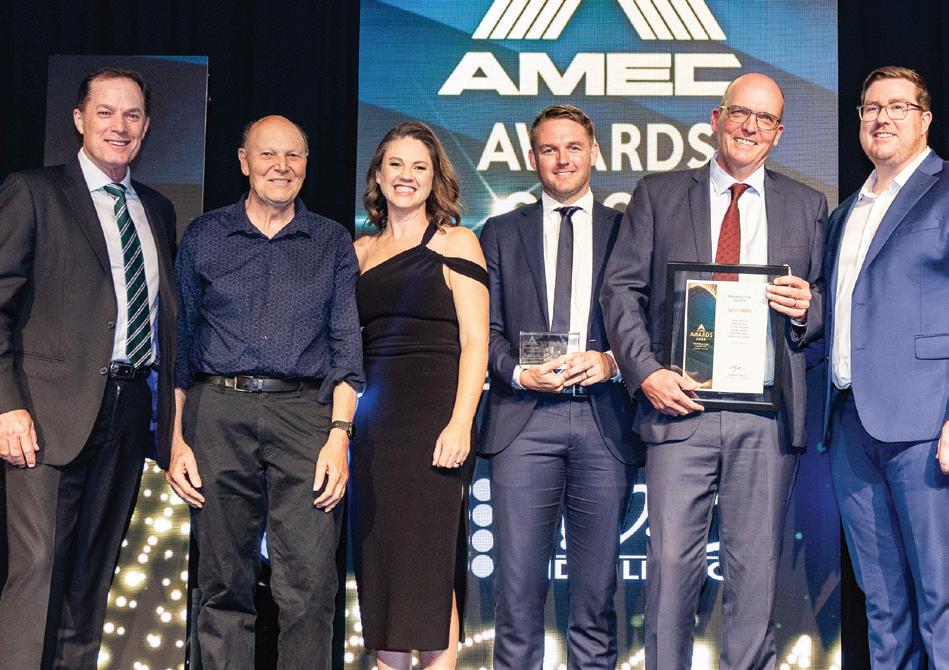
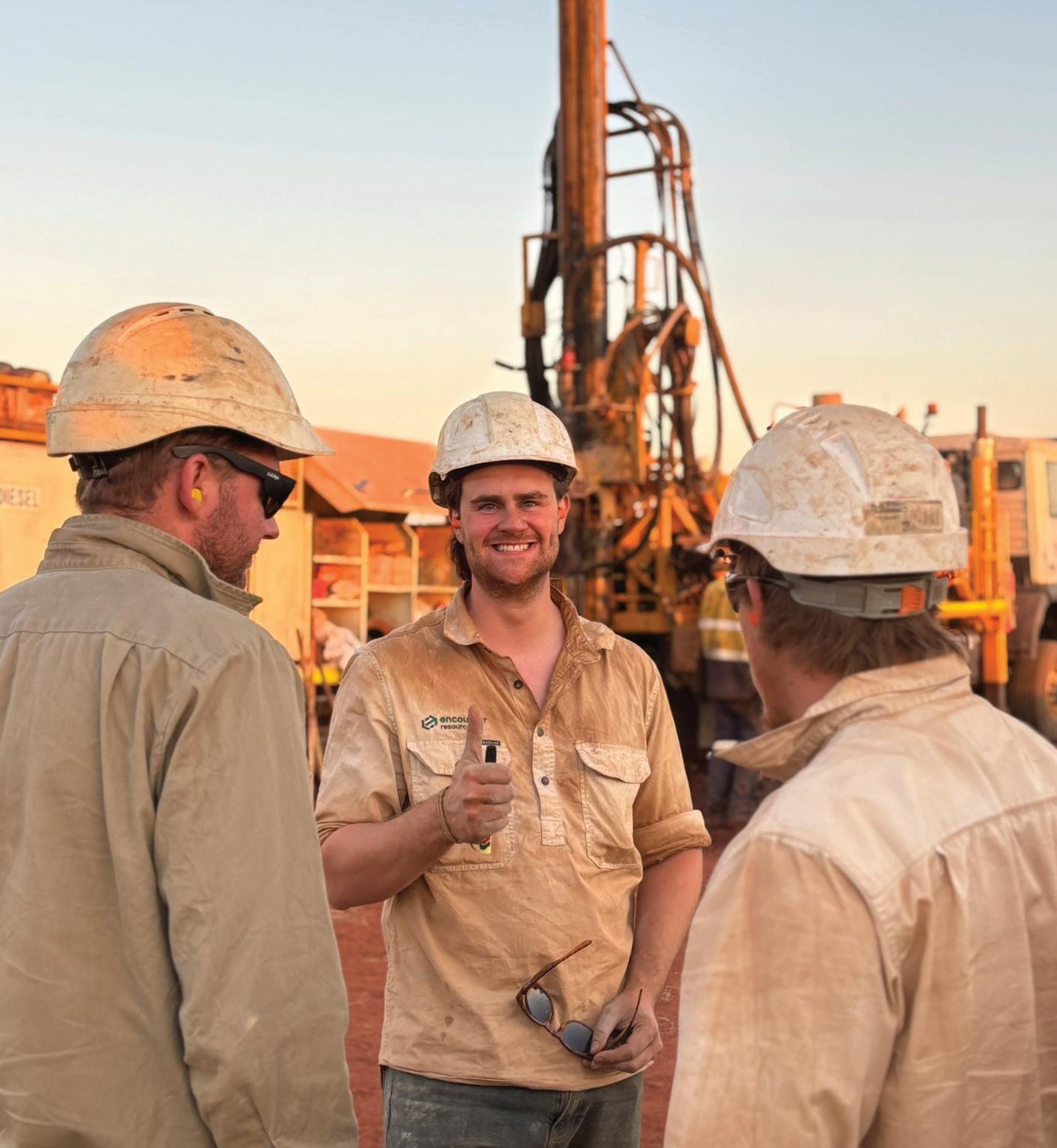
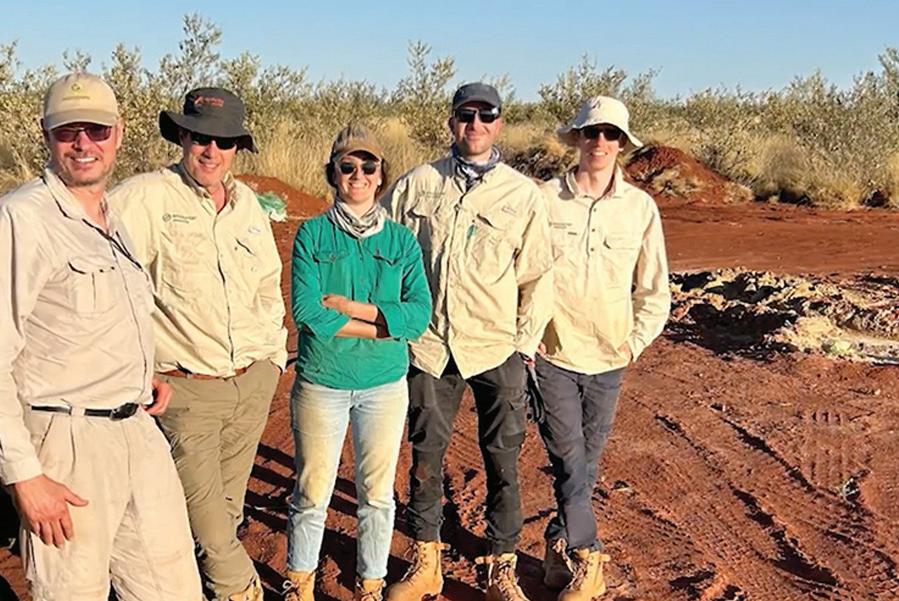
This year’s award went to the exploration team behind the Aileron Discovery in Western Australia’s West Arunta region: Peter Bewick, Mark Brodie, Dr Jon Hronsky, Sarah James, Will Robinson, and Kate Vinnicombe.
Their work has revealed extensive carbonatite structures and high-grade niobium mineralisation, reinforcing the province’s potential as one of the country’s most significant emerging mineral frontiers. Find out more about their 20-plus year journey in a video featuring Executive Chairman, Will Robinson, in our Member Focus section of Explorer on page 32.
Mr Pearce said the achievement reflects the long-term vision that defines the exploration sector. “Stories like this remind us of the ingenuity of our explorers and the perseverance required to make discoveries that deliver impact nationwide”
“Our industry’s prosperity is built on this kind of dedication, but it’s also shaped by the actions people take every day within their communities and workplaces.”
Each year, the AMEC Awards is recognised as one of the most respected awards on the exploration and mining industry calendar. 2025 was no exception.
As the sector looks ahead to new discoveries, new technologies and new challenges, the award winners, finalists and nominees serve as a reminder of the talent and commitment driving the industry forward.
In the words of Mr Pearce, “It’s a privilege to recognise the people whose work strengthens our nation’s future.”
Jim Beyer
AMEC President
LIFE MEMBERSHIP INDUCTEES - Chris Reed and Will Robinson
Chris was elected to the AMEC Council in 2005, and Will was elected in 2007. Both were part of what might be described as a ‘wave of generational change’ at AMEC, that sought to energise the Association.
Chris would become AMEC Vice President in 2007, and Will ascended to the AMEC Presidency in 2009. They would be joined by Simon Benison who was appointed as CEO in 2008, and together they formed a strong leadership team, that would guide the Association for the next 10 years.
In 2010, major crisis confronted the Association and the industry – and AMEC found a call to action that would galvanise the exploration and mining industry.
The Federal Government announced and attempted to implement a Resource Super Profits Tax (RSPT) which would have major implications for the Mining Industry. After a deal was struck with the Major mining companies, to drop the RSPT and implement a revised proposal. AMEC found itself and our members right in the firing line of the new Minerals Resource Rent Tax (MRRT) – and so began the effort to “Axe the Tax”.
The AMEC leadership team met regularly, early mornings and on weekends, to assess and steer the campaign, and as explorers and miners saw AMEC taking up the fight, the Association suddenly took on a national flavour, with companies around the country joining up.
In 2010, with the election of the Abbott Government, the Minerals Resource Rent Tax was abolished, and a hard fought victory was won.
Will, a committed greenfields mineral explorer continued to look for ways for AMEC to assist the exploration effort, especially concerned by a declining discovery rate across the country. Will’s determination, as well as the strong relationships forged during the MRRT campaign, helped AMEC to drive a range of new Federal Government initiatives, all of which targeted support for investment into greenfields exploration.
In 2018, Will was appointed as one of 7 industry leaders to the Federal Government’s 2030 Resources Taskforce. His influence can clearly be seen in the report’s recommendations, with much of it focused on actions to improve investment into exploration, and to improve our rates of discovery.
Chris was headed in a slightly different direction and would become a leading advocate of the critical minerals opportunity in Australia, and pushed AMEC to take a leadership role in this space.
Chris personally underwrote the financing of AMEC’s first Critical Minerals Report in 2017, which the Association’s used to educate Australian Governments to the opportunity, showing how Australia could leverage its dominant position as a raw material supplier, into value adding. This report became one of the key drivers behind Western Australia becoming the first State to develop a Critical Minerals Strategy and led to many other States and the Commonwealth following suit.
He was also instrumental in assisting AMEC to design a workable royalty framework for Lithium Hydroxide. At the time AMEC had the entire global hard-rock lithium industry in one room, working together with Government to get the investment settings right – and ensuring that WA would capitalise on the opportunity.
Together they helped lead AMEC from a small WA focused association, to a truly national organisation, with a reputation as a strong and proven advocate for our industry.
For those of us, who had the privilege to work with them, and to know them in these roles, we will remember their contribution, not just for their love and passion for the mining and exploration industry, but for the way they approached their leadership roles, always with a sense of humour and a deep sense of humility.
In acknowledging our 2025 AMEC Award winners, we would also like to show our appreciation for the finalists of each category.
Judging panels spent considerable time evaluating the worthiest contributors in each category. We thank them for volunteering their time and expertise to ensure the people and companies of these amazing projects are recognised. The following should be proud of their accomplishments and be celebrated in their own right:
Environment: Leichhardt Industrials` innovative and science led flora identification breakthroughs and Vertex Minerals`s low-impact responsible gold mining.
Aboriginal & Torres Strait Islander Empowerment: Blackrock Industries for ‘Second Chance for Change’.
Community Contribution: Fortescue’s ‘Mentored Road Train Traineeship’, Heritage Minerals` abandoned mine recommissioning at Mount Morgan, Larvotto Resources` Hillgrove community engagement.
Diversity: AMETS` ‘Accelerated Women’s Leadership and Equity Program’, Ausenco’s ‘Employee Resource Groups’, PLS` ‘Women of Pilbara’.
Media: Stories from top industry journalists, Josh Chiat - Stockhead, Michael Cameron - Paydirt and Tom Zaunmayr - Business News
Prospector Award
Peter Bewick, Mark Brodie, Dr Jon Hronsky, Sarah James, Will Robinson & Kate Vinnicombe.
The exploration team at Encounter Resources won this prestigious award for the Aileron Discovery.
SPONSORED BY
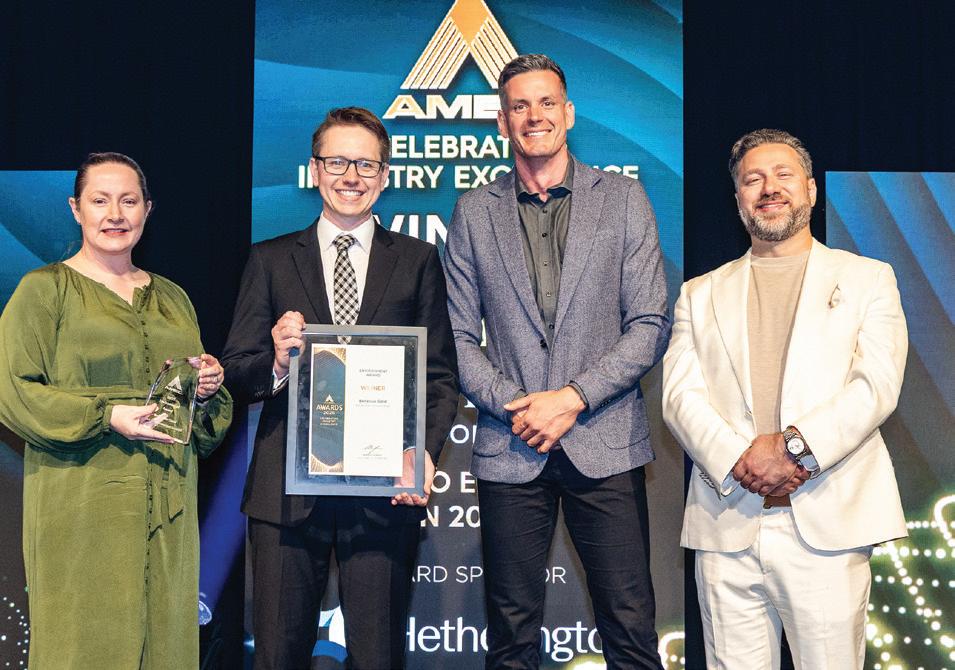
Environment Award
Bellevue Gold
For achieving net zero emissions in 2025 and becoming Australia’s most renewably powered mining operation.
SPONSORED BY
SA news
PETa
ABBO T
Director - South Australia
Industry’s hopes for the Statutes Amendment (Energy and Mining Reforms) Bill 2025 to be passed this year were derailed by last minute amendments introduced by the Liberals.
This includes the time critical amendment for a “Special Circumstances Extension” to exploration licences that would have provided the option for five year extensions beyond the 18 year fixed limit. Regulations for payment into the Mining Rehabilitation Fund as a potential alternative or adjunct to bonds was also supported by industry and is part of the Bill.
The Bill passed the lower house on 11 November following Independent MP Fraser Ellis’ failed attempt to include amendments limiting extensions to one term of two years.
The Bill was introduced to the Upper House on 25 November, where the Liberals reintroduced the two year limited extension. They also included requirements for the Minister to consider an additional agricultural impact statement on the licence and surrounding areas and consultation with affected landowners.
The Bill passed with these amendments. AMEC provided advice to the Treasurer, Minister Koutsantonis, that industry would not accept these amendments. As parliament prorgue’s, this Bill will be introduced next year.
The passage of this legislation is AMEC’s number one priority for the 2026 State Election and we are meeting with all political parties to ensure they understand why this is important.
The passage of this legislation is AMEC’s number one priority for the 2026 State Election
Election Policy Platform 2026
Ahead of the 26 March election, here is AMEC’S Election Policy Platform.
Top 5 Recommendations:
1 Mining Act amendments within 90 days, including special-circumstances extensions for 18-year ELs and the option to pay into the Mining Rehabilitation Fund
2 Native Title agreement-making from Part 9B to a Right to Negotiate process
3 Aboriginal heritage surveys to be completed within practical, commercially viable timeframes and costs
4 Establish a co-funded Minerals Discovery Program to drive new exploration
5 Prioritise development of essential infrastructure needed for sector growth
Peta Abbot
E: peta.abbot@amec.org.au
M: 0475 834 554
SA SUBMISSIONS
Tarcoola to Darwin Railway: 5-year Review of Revenues 2018-19 to 2022-23
EPA 30 year strategy
Eyre Peninsula Regional Landscape Plan 2026-2031
Statutes Amendment (Energy and Mining Reforms) Bill 2025
South Australia’s Land-based Protected and Conserved Area Strategy
Legislative reform proposed in 2026 will recalibrate minerals regulation by improving tenure flexibility for exploration
Paul De Ionno Executive Director: Regulation and Compliance, Department for Energy and Mining
South Australia is entering a new era of regulatory clarity and accountability. As the newly appointed Executive Director of Regulation and Compliance, I’m proud to be part of this transformation.
We’re preparing for important legislative reforms and embedding our Regulatory Practice Statement, a milestone that brings together our diverse regulatory responsibilities under one transparent framework.
At the Department for Energy and Mining, our Regulation and Compliance Division is at the heart of this effort. We work to safeguard the integrity of the state’s energy and mining sectors while enabling industry growth that is safe, responsible, and trusted by the community.
My regulatory portfolio spans minerals, energy and renewable resources, emerging fuels, and the electrical, gas, plumbing and water sectors –covering the administration of 13 Acts.
At its core, the Regulatory Practice Statement is our public commitment to a fair, consistent and outcomes-focused approach that sets clear expectations and holds us accountable. This commitment is built on best practice, independent peer review and broad consultation.
Legislative reform proposed in 2026 will recalibrate minerals regulation by improving tenure flexibility for exploration licences, encouraging ground turnover, and strengthening compliance and environmental safeguards.
These reforms if passed, will reflect a balanced approach to regulation, supporting responsible development while safeguarding the public interest.
We continue to invest in digital transformation to make regulation smarter and more efficient. The team is driving the evolution of the recently launched Mining Exploration and Regulation System (MERS), expanding its capabilities to work across the department’s broader regulation and compliance responsibilities.
This ongoing transformation will enhance data transparency, streamline reporting and equip regulators to make faster, better-informed decisions. MERS is more than a system – it’s a strategic investment in the future of South Australia’s resource governance.
As we move forward, we are committed to working collaboratively with our industry partners to ensure these reforms deliver real benefits for South Australia’s energy and mining sectors.
We invite AMEC members to share their insights and feedback as we continue to strengthen our regulatory framework.
NSW news
Kerry Atkin s Director - New South Wales
Over the past quarter, my focus has been on advancing key reforms that strengthen the operating environment for exploration and mining in New South Wales. A major milestone has been securing the NSW Government’s agreement to reform the land access process.
After sustained AMEC advocacy, the Minister has committed to streamlining negotiations, reducing delays, and providing greater certainty for explorers and landholders, with legislation now being drafted for early 2026. We have not seen the final result; however, this has been a very positive step.
We have also worked closely with members throughout the review of the NSW planning system to ensure industry priorities were clearly represented.
This collaboration helped shape the proposed Environmental Planning and Assessment Amendment (Planning System Reforms) Bill 2025, which aims to deliver clearer, more efficient, and more transparent approvals.
This quarter also saw progress on the new Exploration Code of Conduct and Community Consultation Guideline, which was published in November 2025.
We have worked to ensure the expectations for explorers remain clear, practical, and workable, while supporting respectful engagement and strong community relationships.
A highlight of the quarter was visiting Broken Hill to meet with members, host a networking event, and hear firsthand the opportunities
The Minister has committed to streamlining negotiations, reducing delays, and providing greater certainty for explorers
and challenges facing explorers and operators in the Far West.
These regional insights continue to shape AMEC’s advocacy and priorities in NSW, and we look forward to continuing them in 2026.
Another significant achievement was the reinstatement of the Co-Funded Drilling Program, this program provides essential support for greenfield exploration and helps build the state’s future pipeline of discoveries.
The establishment of the Critical Minerals Ministerial Advisory Committee, now meeting regularly, is providing a direct forum to raise issues and progress solutions with the NSW Resources Minister.
Kerry Atkins
E: kerry.atkins@amec.org.au
M: 0403 468 994
NSW SUBMISSIONS
Consultation on the NSW Land Access Framework
Koala National Park
Great
The Hon Courtney Houssos, MLC at Critical Minerals Ministerial Advisory Committee
NSW news
Ismet Canbulat Professor: Executive Director, Mineral and Energy Resources Engineering, UNSW
Australia’s mining and resources sector continues to anchor the national economy, generating 60–70 per cent of export revenue and contributing almost $60 billion annually in taxes and royalties.
Beyond its economic weight, mining is now central to the global energy transition, supplying the critical minerals and enabling technologies that underpin electrification and decarbonisation.
Meeting these challenges requires a new generation of engineers and professionals equipped not only with technical capability but with the digital, environmental, and ethical skills needed to lead a rapidly changing industry.
For more than 70 years, UNSW Sydney’s School of Minerals and Energy Resources Engineering has been internationally recognised for excellence in mining education and research.
Developing graduates who can solve real-world problems with confidence and creativity
Ranked second in the world for Mining and Minerals Engineering (QS 2025), the School blends deep technical foundations with a strong focus on automation, digital systems, and sustainability.
Students complete at least 60 days of industry training, and UNSW’s flagship Mining Engineering degree and world-first Geoenergy and Geostorage Engineering program are fully accredited and globally recognised.
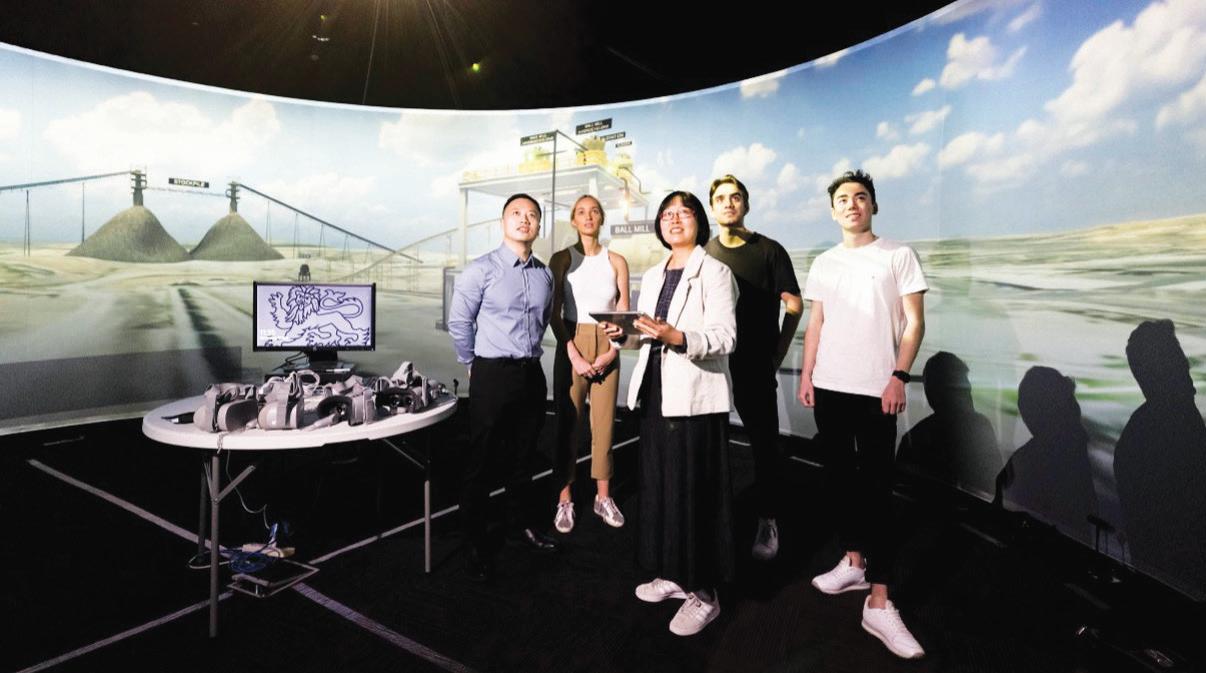
UNSW offers immersive, industry-connected learning through advanced virtual reality facilities, mine IoT laboratories, and state-ofthe-art geomechanics and ventilation labs. These environments mirror the complexity of modern mining, developing graduates who can solve real-world problems with confidence and creativity.
Research at UNSW spans the full resources value chain, with leadership in geoenergy and geostorage, critical minerals, and transformative mining technologies. The A$28 million ARC NextGenMIN™ Research Hub exemplifies UNSW’s ambition: driving “3-Zero Mining”—zero emissions, zero waste, and zero human entry.
As mining advances into a digital, lowemission future, UNSW continues to shape the engineers who will lead Australia’s next chapter.
OPINION
WARREN PEARC E Chief Executive Officer
A BREAK THROUGH AT LAST EPBC REFORM FINALLY BREAKS THE DEADLOCK
Doyou ever wonder why meaningful policy change takes decades in Australia? Why issues like tax reform, energy policy, and environmental regulation seem permanently stuck in neutral?
It’s rarely because politicians alone can’t agree. More often, it’s because key stakeholders refuse to compromise – leaving the Parliament without the consensus needed to act.
For years, that was the fate of the reform of Australia’s Federal Environment Protection and Biodiversity Conservation Act. Multiple governments tried, failed, or walked away empty-handed. Industry wanted certainty and efficiency.
Conservation groups wanted stronger protections. And neither side was prepared to shift far enough for anything to stick.
This history is well worn. The Samuel Review in 2021 recommended stronger national environmental standards paired with streamlined, accredited State assessments. The Morrison Government responded but fell at the final Senate hurdle, as the conservation movement cried foul.
The Albanese Government initially started again, aiming for stronger protections through a “Nature Positive” framework – but without many positives for industry. This time, industry pushed back and saw the legislation slated.
It wasn’t until Minister Murray Watt took carriage of the reforms after the May election that a genuine middle path began to emerge. He picked up the Samuel Report, not as scripture, but as a foundation.
His Department launched an intense period of consultation and drafted a 1,500-page amendment Bill in about four months, that quite remarkably, struck a workable balance: stronger environmental protections paired with clearer, faster pathways for assessment and approval.
And this time, both industry and conservation groups were broadly aligned.
But of course both had caveats. Both wanted tweaks. But both accepted that the package was a substantial improvement on the status quo.
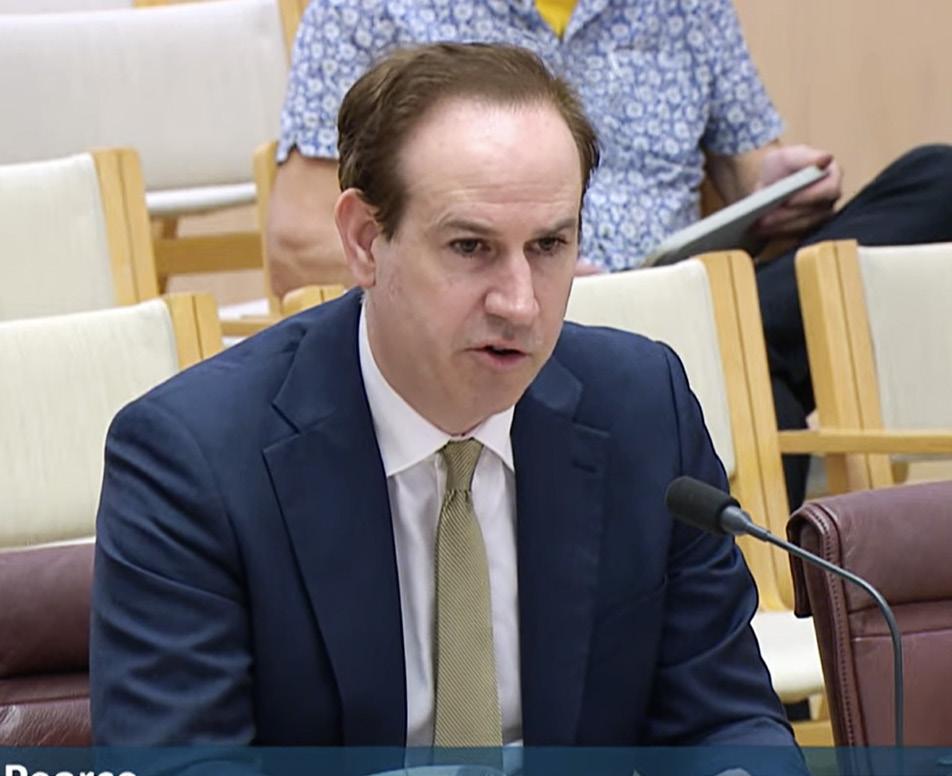
Warren Pearce at the EPBC Senate Inquiry
The question was whether key stakeholders could compromise and work together, and whether the Parliament would be able to get the job done.
In the final sitting week of 2025, it did.
The reforms passed through the Federal Parliament after the Australian Labor Party struck a deal with the Greens, ending more than a decade of deadlock. It wasn’t perfect –no compromise ever is – but it delivered something far more valuable: progress.
Industry would certainly have preferred a deal with Coalition, but regrettably that seemed impossible. The consequence of this, was that in making a deal with the Greens, concessions made by Government, have meant that many of the benefits that will be seen by the minerals industry will not apply to the coal and gas industries. This is a disappointing outcome.
Central to that compromise was clarifying the “unacceptable impacts” framework.
What mattered was ensuring that “unacceptable” is the exception, not the default – and that assessments recognise
It wasn’t perfect – no compromise ever is – but it delivered something far more valuable: progress
where impacts can be effectively and appropriately managed.
For industry these reforms offer significant time and cost savings, by removing duplication between the State and Commonwealth processes.
Principally, this will be achieved through bilateral agreements that will see the States and Territories take on the assessment responsibilities for the Commonwealth, as well as new streamlining pathways.
Could the final package have been better? Of course. Both industry and conservation organisations will continue to push for refinements in future rounds. But for the first time in a generation, Australia has a modernised federal environmental framework that protects nature while supporting responsible development.
That is something worth acknowledging. And it is proof of something even more important: when everyone gives a little, the country can move forward.
Because this time, we didn’t miss the moment.
Warren Pearce, Neil van Drunen with Environment Minister Murray Watt meeting in Perth
NEIL VAN
Head of National Policy
As the Northern Territory moves into its wet season, characterised by heavy rains and humidity, the policy agenda remains firmly on course. Despite seasonal disruptions, the Territory’s Government and Departments continue to push forward with legislative reforms that will benefit the mining and exploration sectors.
Risk Criteria and Standard Conditions, Mineral Titles Act reforms, and ‘No Access, No Rent’ continue to advance in the Top End, with 2026 expected to be the “Year of Economic Development”. It’s vital that AMEC and its members take the opportunity to advocate for increased industry support and to make doing business in the Territory easier.
Risk Criteria and Standard Conditions
The revised Risk Criteria and Standard Conditions for exploration have been approved by the Minister and took effect on October 7 2025, with a range of positive changes advocated for by AMEC.
These changes should hopefully improve the overall process and bring it back into line with the framework originally proposed to AMEC. Seeing a risk-based approach applied to environmental (mining) licences and seeing the resources applied where they are most needed.
It’s vital that AMEC and its members take the opportunity to advocate for increased industry support
Final Darwin Trip of 2025
During a recent trip to Darwin, AMEC made the rounds, meeting with representatives from the Department of Lands, Planning and Environment, the Department of Mining and Energy, Ministerial advisors, and valued AMEC members.
AMEC looks forward to getting back to the Top End early in 2026, prior to the main event on the Northern Territory calendar, AGES.
We look forward to seeing many of you there.
E: Neil.vandrunen@amec.org.au
M: 0407 057 443
NT SUBMISSIONS
Risk Criteria and Standard Conditions for Exploration
Neil van Drunen
DRUNEN
Neil van Drunen, Nic Parry with The Hon Minister Yan
My goal is clear: to make the Territory the most attractive jurisdiction in Australia for mining and exploration investment
The Hon Gerard Maley MLA
Northern Territory
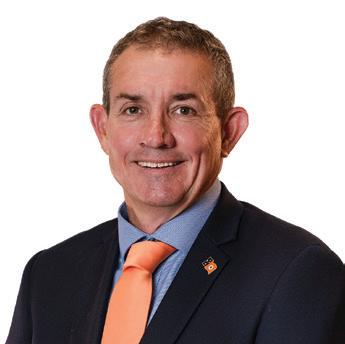
Deputy Chief Minister & Minister for Mining & Energy
The resources sector is central to rebuilding and growing the Northern Territory economy, and as Minister for Mining and Energy, I am proud to be part of a government committed to driving that growth responsibly and sustainably.
Mining contributes around 25 per cent of our Gross State Product, which is double the national average, and is one of the largest employers in regional and remote communities.
It drives economic growth, supports local business, and creates jobs across the NT.
My goal is clear: to make the Territory the most attractive jurisdiction in Australia for mining and exploration investment.
Our geological potential is world-class, with a wealth of critical minerals such as lithium and rare earth elements including neodymium and praseodymium, which will be mined at Arafura Rare Earths’ Nolans Project near Alice Springs.
However, even the best resources need the right investment and regulatory environment to reach their potential.
That’s why our government is focused on providing confidence to miners, explorers and investors through a streamlined, transparent and efficient approvals system.
We’ve reduced approval timeframes by refining risk criteria and standard conditions for environmental regulation, and next year we’ll introduce further improvements to mineral tenure arrangements, providing greater certainty and driving future development across the Territory.
We’ve also strengthened support for exploration by increasing the Geophysics and Drilling Collaborations (GDC) grants program to $4 million annually, helping industry test new ideas and accelerate resource development.
I look forward to joining industry leaders at the Annual Geoscience Exploration Seminar (AGES) in Alice Springs on 14–15 April 2026, where we’ll showcase the Territory’s exceptional geological potential and emerging opportunities in mining and exploration.
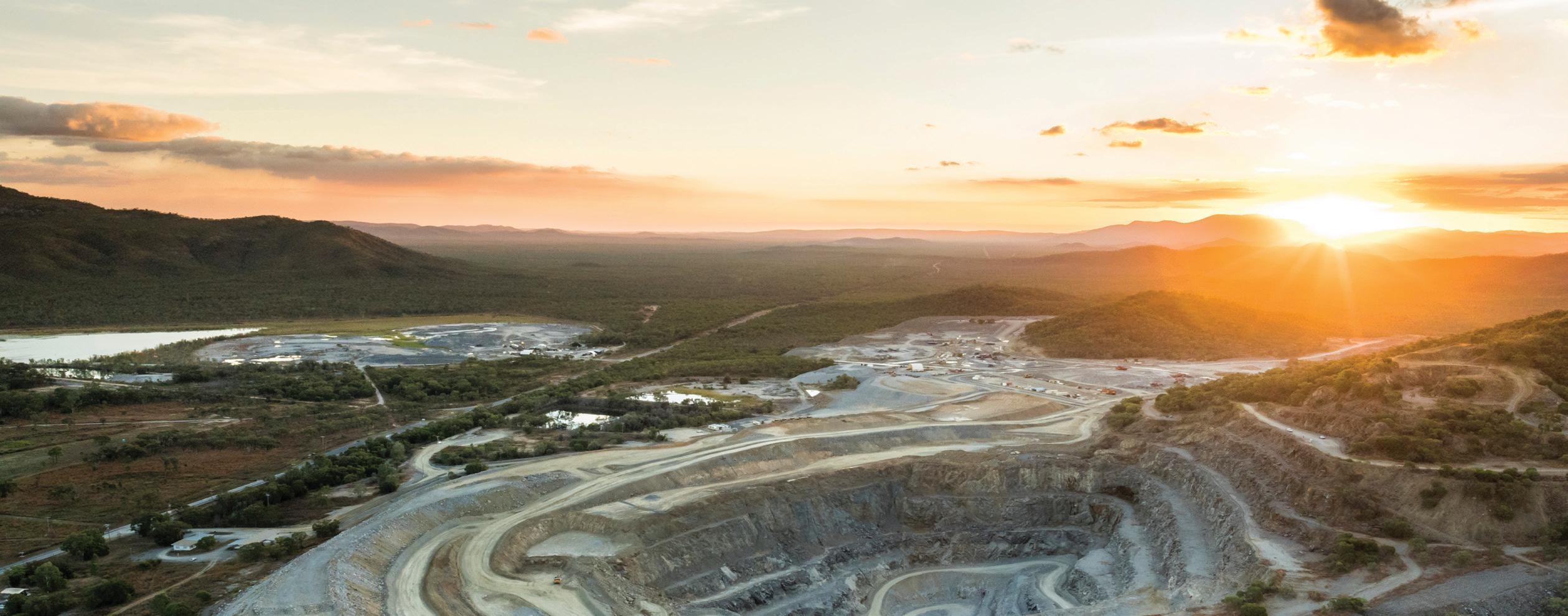
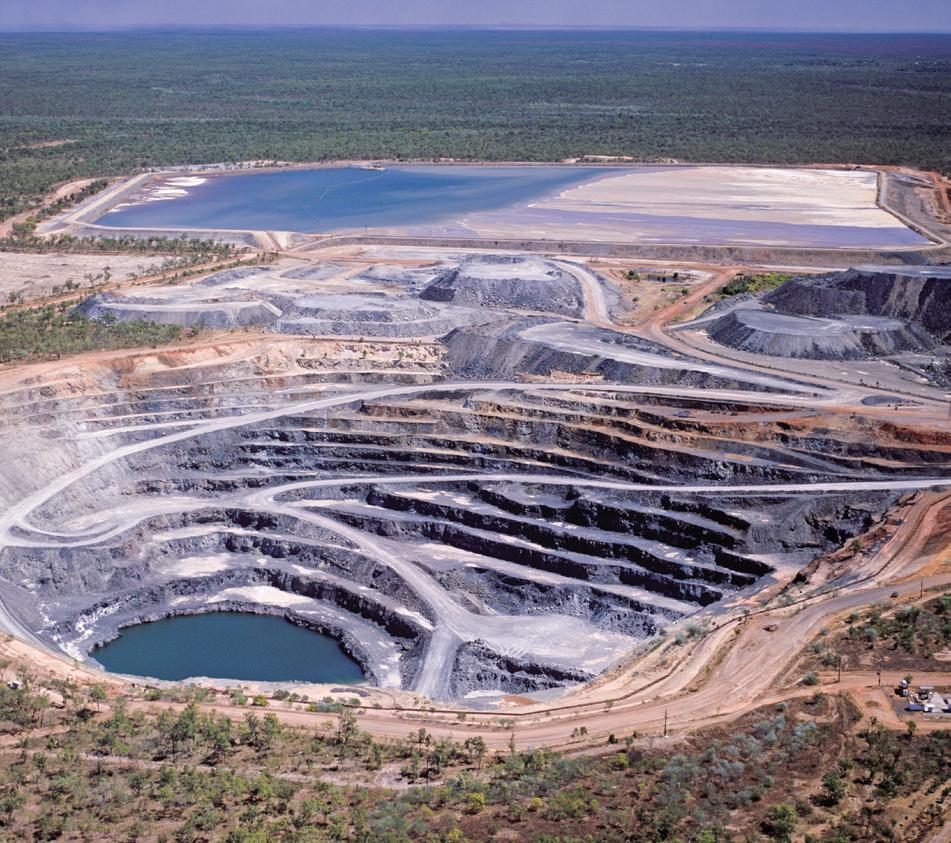
Ranger Uranium mine in the Northern Territory
VIC & TAS news
Stuart
Glazebroo k
Director - Victoria & Tasmania
v ictoria & TASMANIA
As part of its push for more effective legislation and regulatory outcomes, AMEC continues to engage frequently and collaboratively with government and Resources Victoria, participating in ongoing consultations on a number of official Regulatory Impact Statements (RIS), policy initiatives and proposals.
Including new operational guidelines around Competing Exploration Licence Applications, MRSDA reforms and standards (both administrative and operational), codes of compliance and the continued development of the State’s Critical Minerals Roadmap.
AMEC has been encouraged by the granting of approvals to key critical minerals projects in the State’s north west and the recent green light given to the use of exploration declines as a means to improve geological knowledge and minimise broader scale surface ground disturbance.
Through previous consultations, AMEC has also welcomed a number of new initiatives from RV including the “integrated permissions pilot” that uplifts responsiveness in the statutory authorisations space and the “use it or lose it” licensing provisions designed to discourage land banking and generate more effective exploration activity.
In his second term as Tasmanian Resources
AMEC has been encouraged by the granting of approvals to key critical minerals projects in the State’s north west
Minister, Felix Ellis has advanced the State’s critical minerals potential by releasing the landmark Critical Minerals Prospectus, showcasing minerals on the Federal Government’s official list.
AMEC continues its strong support of Mineral Resources Tasmania’s efforts to identify prospects through pre-competitive data capture, including the EDGI, and commends the government’s strategic approach to developing its critical minerals endowment and export opportunities.
The State also signed a Federal Funding Agreement for a feasibility study into a Common User Processing Facility in the North West, using tin and tungsten as examples, with findings due in 2026. Recently, AMEC has engaged with the Minister, departmental leaders, and industry stakeholders to explore broader mineral development opportunities through legislative reform.
These discussions aim to improve efficiency and approvals timelines while balancing environmental outcomes and community expectations, including incorporating AMEC’s seminal Co-Existence work.
Stuart Glazebrook E: stuart.glazebrook@amec.org.au M: 0402 216 835
VIC & TAS news
Success depends on regional communities, Traditional Owners and industry moving forward together
Jacqueline Leahy Director: Critical Minerals, Resources Victoria. Department of Energy, Environment and Climate Action
Victoria’s Critical Minerals Roadmap (2024) lays the foundations for a new era of responsible development in Victoria’s proud mining story.
The Roadmap focuses on four themes: mapping opportunities, modernising regulation, enabling production and processing, and sharing the benefits.
It aims to accelerate Victoria’s critical minerals sector, providing certainty for investors, communities and Traditional Owners while supporting sustainable growth and global competitiveness.
Success depends on regional communities, Traditional Owners and industry moving forward together.
This effort is led by Resources Victoria, backed by a whole-of-government Critical Minerals agenda. Our mission is simple: build a sector that is transparent, ethical, sustainable and genuinely beneficial for regional Victoria (and all Victorians more broadly).
The appointment of the Principal Community Engagement Advisor, Northwest Communities, in mid-2025 has transformed how we connect with and support landholders, local councils and community.
In the last quarter alone, there has been 169 engagements locally.
The conversations are honest, early and ongoing that allow creating space for questions, concerns and local insights to shape sector growth.
Local communities need to be thought of first in terms of Victoria’s emerging critical minerals sector, not be an afterthought. That’s why the Victorian Government is progressing on benefit-sharing models to ensure projects deliver real local impact.
Alongside this, frameworks for regional jobs, local procurement and community investment are being developed. At the same time, regulatory reforms and streamlined approvals are creating clarity and certainty for all stakeholders.
This is just the beginning. With strong policy settings now in place, the next phase will support early projects, advance downstream processing opportunities, and deliver real social and economic outcomes for regional Victoria.
Victoria has a rare opportunity to lead – not just in critical minerals, but in how a modern minerals industry listens, partners and shares success.
MEMBER ARTICLE - Grant Thornton Australia
Will Kendall
Corporate Development Advisor
Mining Financial Advisory
Tom Williams Partner – Financial Advisory & National Head of Energy & Resources
BALANCING RISK AND OPPORTUNITY IN CONTRACT MINING
Mining contractors are excellent partners for mining and exploration companies. For mining companies, they provide labour, equipment, and technical expertise required to develop and operate both open-cut and underground mines. For exploration companies they can provide the technical expertise, including mine planning and cost estimates for project feasibility studies.
Contract mining in Australia remains heavily concentrated in coal, iron ore, and gold, while copper and lithium represent smaller but steadily growing segments.
Nickel, once a prominent source of contract work up to the early 2020s, has seen a sharp decline due to the rise of lower-cost nickel laterite production in Indonesia, which has significantly disrupted the Australian nickel industry and, with it, contractor nickel activity.
Grant Thornton Australia’s latest report provides an overview of mining contractor performance, market trends, and emerging opportunities, offering actionable insights for mining and exploration companies and their investors.
Here’s a financial snapshot and key insights from the report, highlighting trends, risks, and opportunities shaping contract mining.
Financial snapshot
• Profitability: EBITDA margins slipped slightly in 2025, reflecting sensitivity to operational pressures, contract structures, and market volatility.
• Capital efficiency: Fixed Asset Turnover ratio has trended upwards since 2020, reflecting better fleet utilisation and growth of less capitalintensive revenue streams.
• Leverage: Net Debt/EBITDA ratios have declined since 2022 as surplus cashflow was applied to reduced debt, providing flexibility to invest and navigate cyclical pressures.
• Return on Equity (ROE): ROE has improved, demonstrating disciplined capital management and effective conversion of operational improvements into shareholder value.
Key insights
Rising gold prices have encouraged private mining contractors, particularly in Western Australia, to adopt profit-sharing and joint venture-style contractor models.
Moving away from traditional margin-based contracting models, these contractors now contribute capital to mine development in return for a share of profits.
This approach aligns their interests with those of the mining company, creating a partnership rather than a transactional relationship. Compared to equity, this capital is often less expensive and more flexible than debt, which is critical when navigating the uncertainties of mine commissioning and operations.
When challenges arise the profit sharing contracting model incentivises the contractor to work hand in hand with the mine owner to solve the problem and optimise the common outcome.
There is increasing activity from international contractor players in Australia providing more choice for mining and exploration companies.
Some examples include North American Construction Group Ltd which entered the market via the Mackellar Mining Pty Ltd (Mackellar) acquisition in 2023, Buma Australia Pty Ltd acquired Downer Group’s Mining East Division in 2021, and Terra Mining Pty Ltd now operates with backing from Chinese group JCHX Mining Management Co. Ltd.
Find out more
Whether you’re a mine owner seeking capitalaligned contracting partners, or an investor assessing contractor performance and risk, download the full report or get in touch to explore how these insights can help you position your business for sustainable growth.
Rising gold prices have encouraged private mining contractors, particularly in Western Australia, to adopt profitsharing and joint venture-style contractor models
Download report here.
For more information, reach out to:
Will Kendall Corporate Development Advisor Mining Financial Advisory Grant Thornton Australia
E: Will.Kendall@au.gt.com
T: +61 7 3222 0342
Read bio
Tom Williams Partner – Financial Advisory & National Head of Energy & Resources Grant Thornton Australia
E: Tom.Williams@au.gt.com
T: +61 2 8297 2682
Read bio
MEMBER FOCUS
Encounter Resources
THE LONG GAME OF DISCOVERY
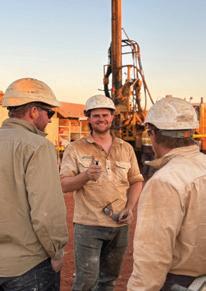
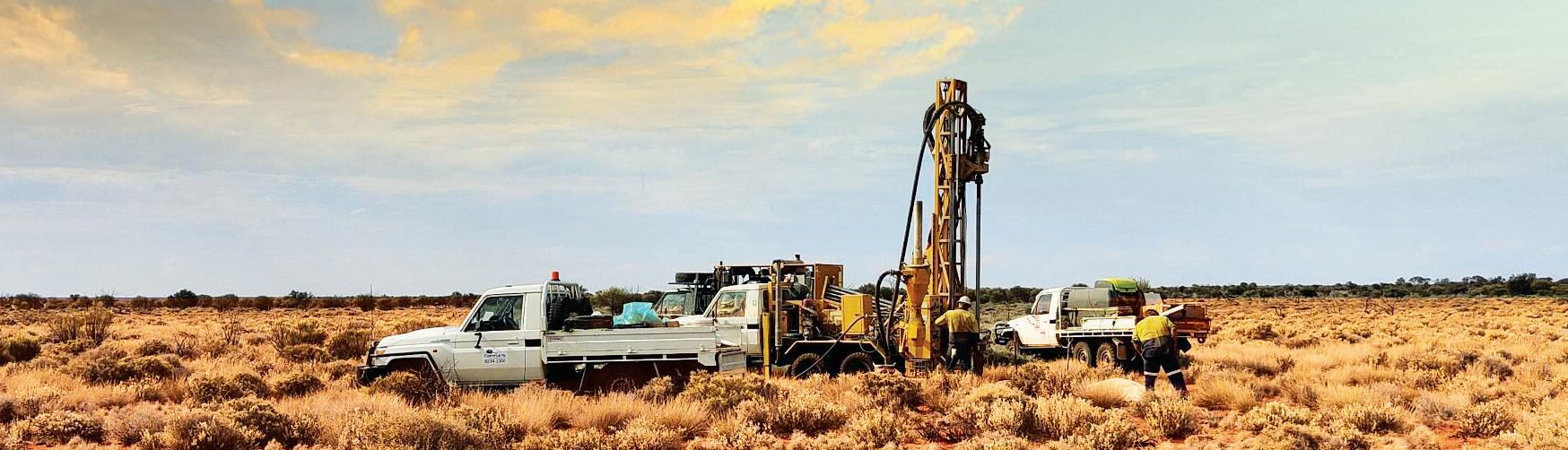
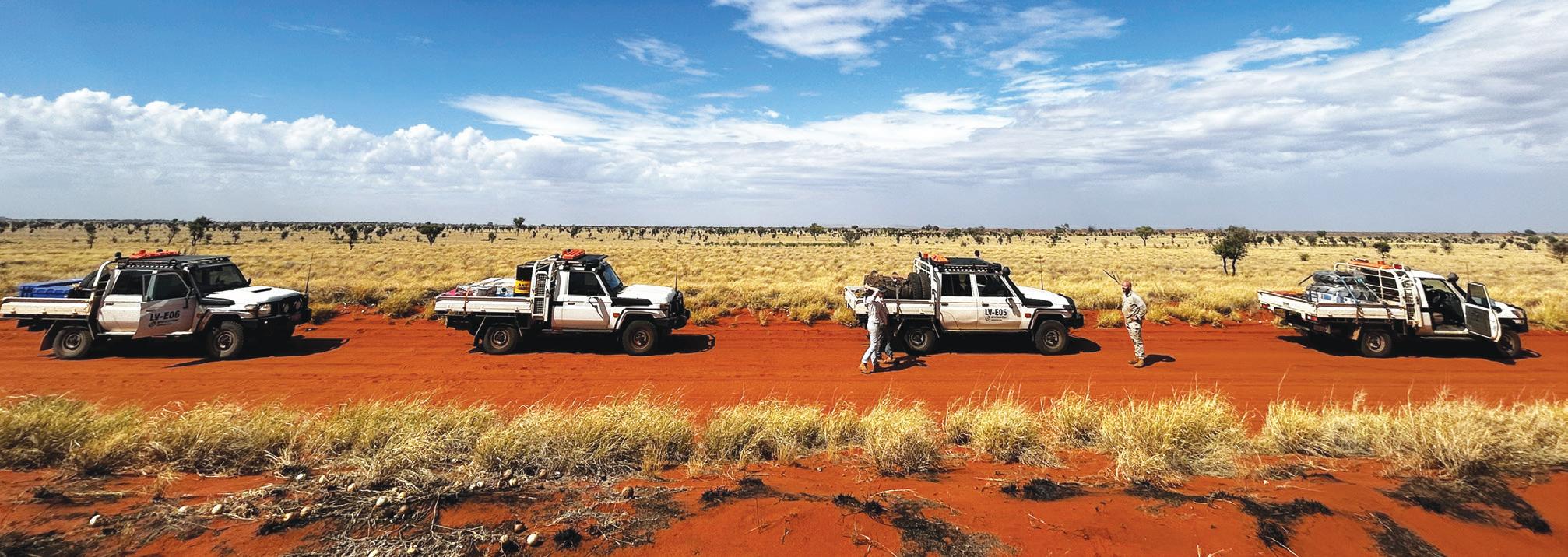
For more than two decades, the team behind Encounter Resources has quietly been doing what great explorers do best: backing their geological instincts and testing the edges of Australia’s frontier terrains for the next discovery.
Cue the Aileron discovery in WA’s West Arunta, the latest chapter in a story built on patience, technical excellence and a genuine belief in the potential of the region.
What began as a remote, under-explored corner of WA has grown into one of the nation’s most watched critical minerals prospects.
The journey has involved years of mapping data, drilling, re-thinking and persevering. As Executive Chairman Will Robinson explains, “The great thing about hanging around with geologists is they’ve got that optimistic view of the world.”
In this Member Focus video, we sit down with Will to revisit the breakthroughs, some of the challenges and what could be in store next for the Aileron story.
It also serves as a reminder that the mineral exploration industry is the lifeblood of the mining sector, and it’s up to explorers like Encounter to find the next wave of discoveries.
Watch to get an inside perspective of 20 plus years searching for the next big discovery.
AMEC events
Gary Lo w National Events Manager
2025 was a landmark year for AMEC and the resources sector. Amid the golden bull run and the global race for critical minerals to meet ambitious renewable energy targets, our industry faced unique pressures — but also immense opportunity. With strong advocacy from our CEO and State Policy Directors, AMEC secured policy wins that reinforced our position as the organisation that truly speaks for the sector.
That momentum carried through to our events program, where energy and engagement reached new heights. The 21 networking drinks around the nation all drew record attendance, while three policy forums in Perth and one in Dubbo helped members stay ahead of regulatory expectations.
The eight Austex Lunches with Rob Murdoch in Brisbane continued their sell-out streak, as did Pitch N Pizza investor events; one in Sydney and two in Noosa.
Our Meet the Explorers/Developers/ Producers series provided direct insight into projects across the value chain, and new investor briefings in Adelaide and Melbourne broadened members’ access to capital networks.
We delivered 26 Boardroom lunches with Ministers and Director-Generals offering members rare opportunities to share the realities of progressing exploration and mining projects.
Our Awards Dinner — our best yet — celebrated excellence across the industry. In total, AMEC delivered 77 member events nationwide.
That momentum carried through to our events program, where energy and engagement reached new heights
2026 is shaping up to be a year of acceleration.
Opportunity is rising, and those who strengthen their visibility and positioning will be best placed to benefit.
Explore our 2026 event calendar to see what’s ahead, and visit our sponsorship page to learn how you can amplify your impact through tailored sponsorships and bespoke activations.
AMEC will continue to deliver the events members value most, while creating powerful platforms to connect with key decision-makers
Gary Low
E: gary.low@amec.org.au
M: 0403 044 303
team amec
AMEC is delighted to have welcomed two new staff to the team, already making a strong impact for their respective jurisdictions: Sash Pavic and Tarnya Widdicombe.
Sash joins as Commonwealth Director, spending the last decade working in the Federal Government. Most recently he served as Senior Adviser to the Minister for Resources and brings an extensive policy background and understanding of government processes.
Read some of the work Sash is involved with in the Commonwealth section on pages 6-7.
Meanwhile, Tarnya joins as the Western Australian Policy Manager, bringing a considerable experience from almost a decade in the Western Australian State Government, most recently as Chief of Staff in the Department of Premier and Cabinet.
Sash and Tarnya are supporting Head of National Policy + WA/NT Director Neil van Drunen.
These appointments build on the experience and knowledge of our team, and we are already seeing how their skills and networks are strengthening AMEC’s advocacy on behalf of our members.
Sash Pavić | Director, Commonwealth
Tarnya Widdicombe | Policy Manager - WA
Tracking explora on to opera on and everything in between
Resource Intelligence for Explorers, Miners & Specialists
-Early-stage visibility: from explora on to feasibility
-Know the players: owners, consultants, drilling contractors
-Built on 25+ years of project intelligence
Discover smarter tracking. Book a demo today:
Nick Sta ord Head of Sales – Western Region
Email: n.sta ord@bcicentral.com
UPDATED WA GUIDELINES
staff author's
The Mineral Exploration Information Group
UPDATED GUIDELINES FOR MINERAL EXPLORATION REPORTS
TThe Western Australian Department of Mines, Petroleum and Exploration (DMPE) recently released updated Guidelines for Mineral Exploration Reports on Mining Tenements following the Mines and Petroleum Regulations Amendment (Geocentric Datum) Regulations 2025 coming into effect, and the recent change to the Department’s name. It’s recommended all submitters of reports to the Department make themselves familiar with the updated Guidelines as there are some amendments which may require changes to procedures.
Regulation Change to GDA2020
All DMPE data sets have undergone a migration to the Geocentric Datum of Australia 2020 (GDA2020). The adoption of GDA2020 has resulted in a shift of about 1.8 metres.
While the physical area and boundaries of existing tenements will not change, all descriptions or co-ordinates in DMPE’s geospatial systems have been converted to GDA2020, and new applications must be submitted using GDA2020 coordinates.
For more information check the Mines and Petroleum Regulations Amendment.
R eport Content Changes
In addition to making the required changes to the geodetic datum, several improvements have been made to the guidelines to support better quality data and more efficient reporting. Some of these updates are:
• Clarification of what is required in surrender reports.
• Requirements to ensure that reports have internal consistency, such as checking that statistics provided (e.g. number of holes drilled) match the data in the accompanying digital data files.
• Requirement to report all discoveries of minerals of economic significance to the Minister. A Guidance Note on Reporting Mineral Discoveries with more details is available on the DMPE website.
• Reference to newly developed smart templates.
• Data housekeeping recommendations, such as data alignment checks and unique sample identifiers.
• More clarity on the requirements for submission of geophysical activities that are becoming more commonly used by industry, such as magnetotelluric surveys.
These additions to the Guidelines reflect common issues with submitted reports and were added with the intent of streamlining both the submission and report vetting process.
Data Submission Template Upgrade
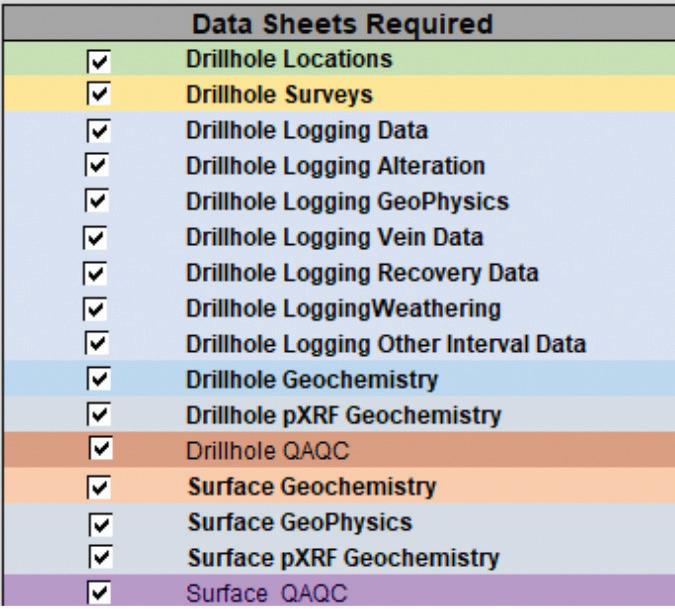
DMPE has also developed new, macrobased ‘smart’ templates that provide a more streamlined process for compiling exploration datasets for submission.
These templates were derived from originals produced by the NSW Government, with their permission. As part of the process of honing these templates for the DMPE systems, trial versions were reviewed by some regular report submitters. We thank them for their time and appreciate the feedback we received.
The smart template suite can be accessed via DMPE’sonlineDataandSoftwareCentreunder Map Services and Resources > Resources > Mineral Exploration Reporting MRT Templates (MRT) > New Smart Templates.
The templates’ functionality includes highlighting missing or incorrect data, and completing validation checks to ensure the data sets meet reporting requirements.
It is hoped that these new templates will provide an easier method for submitters to provide data in optimal condition.
For all enquiries and assistance please contact wamex.enquiries@dmpe.wa.gov.au
MEMBERship & SPONSORSHIP
Manager – Membership & Sponsorship
Western Australia, South Australia & Northern Territory
E: jenny.johnson@amec.org.au
M: 0426 970 904
Huge Year for AMEC members
As 2025 draws to a close, we invite you to continue your journey with AMEC into 2026.
Membership renewal letters are with you and your team, we reflect on some of the major national reforms and big wins on the ground for explorers and producers, with AMEC and our members in the middle of the action.
This year saw everything from long-awaited EPBC reforms passing through Parliament to fresh momentum and federal policy towards critical minerals.
And while the headlines tell one story, the behind-the-scenes advocacy tells another. Whether it was heading off costly local government rate changes in WA or working with government to streamline approvals, AMEC has and will always keep members’ interests front and centre.
Manager – Membership & Sponsorship
Queensland, New South Wales and Victoria E: jane.noble@amec.org.au
M: 0429 231 117
But it’s the collective weight of our members that makes these wins possible. Your support helps AMEC grow our national footprint and influence across the sector.
See more of our achievements across the country this year:
ADVOCACY & ACHIEVEMENTS HERE >
Now is the perfect time to lock in your membership renewal and for those looking to raise their profile even further, explore AMEC’s growing suite of sponsorship and partnership opportunities.
We do not take your support for granted and we look forward to continuing to work with you in 2026.
JENNY JOHNSON
JANE NOBLE
NEW FULL MEMBERS
A huge welcome to all our new Full Members. AMEC looks forward to working with your team on the many issues, policy proposals, and legislative and regulatory changes that impact you directly and our industry as a whole. With each new member we become stronger as an association, with a louder voice to represent the concerns of the mining and exploration sector. See the full list here.
BASIN ENERGY
Basin explores uranium and rare earths in NW Queensland, Canada’s Athabasca Basin, and emerging energy metal hubs in Europe.
basinenergy.com.au
GORILLA GOLD MINES LTD
Gorilla Gold explores under-explored Western Australian gold projects, leveraging a 953koz resource, strong infrastructure, capital, and exploration expertise.
gorillagold8.com
NEWPEAK METALS LIMITED
An ASX-listed explorer targeting gold deposits in Argentina and Australia. It intends to drill its two owned projects, Las Opeñas in San Juan Province, Argentina and Tansey in Queensland.
newpeak.com.au
SPONSORSHIP OPPORTUNITIES
EMERALD RESOURCES (WA) PTY LTD
Gold producer with highly profitable Cambodian operation, funding two new developments (North Laverton and Cambodia), on a path to +300koz p.a.
basinenergy.com.au
NEW DAWNING, GANARALA CIVIL & MINING PTY LTD
New Dawning empowers Indigenous Australians by creating sustainable, long-term opportunities through a joint venture with Banjima, PKKP Elders and Destec Contracting.
destec.net.au
ZEOTECH LTD
Zeotech uses high-grade kaolin to develop materials like HRM that support greenhouse gas reduction and low-carbon concrete production.
zeotech.com.au
Sponsorship opportunities are available at AMEC events to help businesses boost visibility and reach a targeted, relevant audience. Contact our Sponsorship Team by email: jenny.johnson@amec.org.au or jane.noble@amec.org.au
NEW ASSOCIATE MEMBERS
A huge welcome to all our new Associate Members. AMEC looks forward to working with your team to highlight the important services and products you provide to the mining and exploration industry. With each new member the Association grows its support base and gains a louder voice, which results in greater representation for the essential work of the resources industry. See the full list here.
AXIOM PROJECT SERVICES
Your progressive partner in projects and technical excellence. We inspire, develop and deliver exceptional solutions for projects of all sizes.
axiomprojectservices.com.au
CAREY MINING
Carey, a top First Nation enterprise in Australia, excels in mining, civil, and training projects with 30+ years’ experience.
careygroupholdings.com.au
COMPLIANCE ESG
Offering ESG compliance solutions aligned with UN SDGs, helping businesses meet rising demands for efficiency, responsibility, and sustainability.
complianceesg.com
DAISHSAT
Daishsat, an Australian family business, provides innovative geodetic and geophysical surveying for mineral and petroleum exploration across South and Western Australia.
daishsat.com
BWE DRILLING
BWE Drilling, based in Osborne Park, offers drilling, blasting, waterwell, and exploration services with 50+ rigs across Australia.
bwedrilling.com.au
CLOCO INC.
Cloco, a Japanese tech provider, delivers ERP and AI solutions to boost mining industry efficiency and drive digital transformation.
cloco.co.jp/en
COOPER PARTNERS PTY LTD
Cooper Partners offers tailored, solutionfocused taxation and business advisory services, positioning itself as a leader in specialist tax expertise.
cooperpartners.com.au
DRYFLOW MAGNETICS
Dry Magnetic Separation Specialists focus on advanced mineral separation techniques using magnetic fields, enhancing efficiency in mining and resource recovery.
dryflowmag.com
FLOUT SOFTWARE PTY LTD
At Flout, they are making software for the mining and resources industry but better because it’s designed by the people who use it!
floutsoftware.com
LANTEGY LEGAL PTY LTD
Lantegy Legal offers strategic legal advice on environmental, land access, native title, and heritage matters for complex project lifecycles and stakeholders.
lantegy.com.au
MINERVUE
MinerVue delivers ASX mining data, enabling company grouping, valuation insights, and geological analysis for informed, customizable decision-making.
minervue.com
TERRASYNX
Energy and mining unite to share tech, reduce costs and carbon, accelerate innovation through strategy, visualization, and asset acquisition.
terrasynx.com.au
WESTERN TIGER CORPORATE ADVISERS
Corporate and commercial advisory delivering strategic execution, risk management, and value optimisation across projects, acquisitions, and divestments.
westerntiger.com.au
INVESTORHUB
InvestorHub helps public companies easily connect with individual investors, streamlining communication and strengthening investor relationships through smart technology.
investorhub.com
MINERAL INTELLIGENCE
Mineral Intelligence connects investors and mining companies through an online platform for project listings, investment opportunities, and acquisitions.
mineralintelligence.com
MINVAL
MinVal provides independent, compliant mineral asset valuations and reporting for prospectuses, expert reports, assessments, negotiations, and analysis.
minval.com.au
VERTERRA
Verterra pioneers ecological engineering in Australia, offering research, consulting, and operations in vegetation, land, and water management.
verterra.com.au
WULGURU TECHNICAL SERVICES
Full-service environmental consultancy leveraging advanced tech and legislation expertise to ensure projects exceed compliance and industry standards.
wulgurutechservices.com.au
How to recognise opportunity where others see risk
Discover the strategies shaping the future of mining and metals. Our latest report reveals the top 10 business risks and opportunities for 2026. Scan the QR code to read the report.