8 minute read
To teach online or not to

To teach online or not to teach online? That is the question!
Richard Brennan offers reflections
Advertisement
Touch comes before sight, before speech. It is the first language and the last, and it always tells the truth. Margaret Atwood
Iam well aware that I may be walking into a minefield by writing this article, but I feel it is a too-important issue to stay quiet about, which may well dictate the future of Alexander’s work. I am well aware that some teachers think teaching online Alexander lessons is a wonderful idea while others think it is not possible or even worse… a very dangerous idea. I am sure that this article will not sway either one, because whatever we think we automatically assume that it is 100% correct and I include myself! In other words to quote Alexander: “Everyone wants to be right, but no one stops to consider if their idea of right is right.”1 Hopefully this article may help those who have yet to form a solid opinion about online Alexander Technique teaching. While I am writing I am also mindful of the quote by Lao Tzu when he said: “He who knows does not speak. He who speaks does not know.” But here goes anyway!
I also know there are quite a few Alexander teachers already teaching online and who are very in favour of it, and some who do not and are very opposed to it. I am not trying to make anyone wrong or right by expressing my view, but perhaps to offer some food for thought, or perhaps even help some people to stop and re-consider their opinion about the subject.
During a recent ISATT (Irish Society of Alexander Technique Teachers) meeting someone said that teaching online was a “real opportunity”…. but an opportunity for who I thought? For the pupil? For the teacher? To further our business? To make money? To spread the word about the Alexander Technique? To enrol pupils from other counties, countries or even from another continent?
I think it is essential to answer this question before we decide whether to teach the Technique online or not. So in this article I will try to explore the question “Why teach online?” And also: “Who is really benefitting?” To be absolutely clear I am not talking about teachers who are giving Zoom lessons to other Alexander teachers, to students on a training course or even someone who has already had a lot of Alexander hands-on experience. I am asking whether or not it is a good idea to teach a new pupil who has had little or no hands-on lessons or not.
First of all I would agree online lessons provide an opportunity to discuss the principles and procedures that underlie the work, but without the experience our hands can impart, is there very much point, except with people who have already had the experience of a one-to-one hands-on lesson already? And of course it is a real opportunity to reach more people and even give group lessons to many people at one time, and even to promote the work or to promote ourselves, but is it a good means whereby that I can give a person a pure and definite Alexander experience?
In my first year of teaching I asked one of my pupils on their fourth lesson what they would like from their lesson. She said immediately: “I would like the champagne feeling.” I asked her what she meant by that. She replied: “Well I always feel so light and bubbly after each lesson, so I call it ‘the champagne feeling!’” I thought this was well described and knew that feeling well; in fact it was that similar feeling of ease, lightness and aliveness that got me interested in the Technique in the first place. We are not teaching a technique like playing the piano or golf, we are helping a person have a new experience of what it feels like when they stop trying and tensing and when they use themselves with poise and ease; but at the same time the Alexander technique does involve learning a practical skill that you acquire in a similar way as learning to drive a car or fly a plane. Would you book an online driving lesson or an online flying lesson? My guess is: “Probably not!” There are many add-ons to the Alexander Technique like the Conable body mapping, or learning to sit using better Mandle-type furniture, or even some extra breathing techniques other than the ‘whispered ah’ - any of which may be helpful additions to teaching the technique. Some of these can easily be taught online, but they are not the essence of the work and if taught online as such could easily give someone the wrong impression or confusion in relation to what the Technique is really about. Perhaps it is useful to go back to why Alexander used his hands in the first place. It was purely because people were misinterpreting his verbal instruction; in fact, they were often doing exactly the opposite. Due to the fact he was in the same room and could see what they were doing in three dimensions he could see how mistaken they were when relying on their kinaesthetic and proprioception senses. In Zoom lessons it is only possible to see people in two dimensions so when teaching online we are immediately at a disadvantage. Also in my experience someone may not look tense, but it is only when you put hands on that you can really know what a person is really doing to themselves. Perhaps some experienced teachers may be able to teach effectively about the principles or the procedures of the technique, but what about a new teacher with only a few years of teaching and whose majority of training has been hands-on? I personally think it will be detrimental to our work if online teaching starts to replace the traditional hands-on lesson and I say this from practical experience. I have given a few Zoom talks to new people and trainees of other training courses, but only to encourage them to explore the hands on work further.
“Would you book an online flying lesson or driving lesson? My guess is: ‘Probably not!’
«continued from previous page I even gave a one to one [online] lesson to a new person and afterwards, even though she said she had gained a lot and her back pain was less, I could tell it was far inferior to a hands-on lesson. After that lesson I am more convinced that with our trained hands we can impart an experience that a hands-off session can never approach - and I also speak from experience as a pupil! Learning online in some ways could be compared to learning the Technique from a book; in other words learning in both cases comes from the written or spoken word. Reading about Alexander’s work may be useful to further our knowledge but as Alexander said: “Be careful of the printed matter: you may not read it as it is written down.”2 So perhaps that quote could be truer for the spoken word. A good example of this was experienced by Hugh Massey who wrote An African Odyssey - the story of a man who cured himself of severe tuberculosis in the 1940s just by reading and applying the words from Alexander’s books. Alexander apparently was delighted when he heard this and wanted to meet Massey in person, but after meeting him and assessing how far he had understood his work, Alexander exclaimed “No, no, no. You haven’t understood at all what I am getting at.”3 I would like to finish with a quote from Alexander himself when talking about the ‘head forward and up’ direction.
“This is one of the most inadequate and often confusing phrases used as a means of conveying our ideas in words, and it is a dangerous instruction to give any pupil, unless the teacher first demonstrates his meaning by giving to the pupil, by means of manipulation, the exact experience involved.”4 (Alexander’s italics not mine)
I just don’t see how you can “give your pupil, by means of manipulation, the exact experience involved” during an online lesson. I am not saying online sessions have no place, or there is no value in an Alexander book, but it is far inferior to a hands-on lesson. So as long as the pupil, and more importantly the Alexander teacher, realises that the online lesson is vastly inferior to a hands-on session, then perhaps online lessons have a place in the future work of the Alexander Technique. I also realise that I may well be becoming old–fashioned and stuck in my ways with age so perhaps it is better to follow the advice of Lao Tzu and say as little as possible.
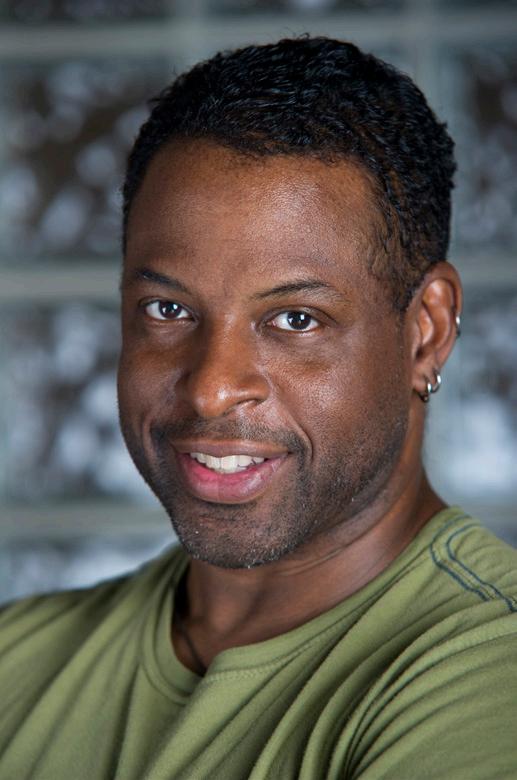
Endnotes 1 F. Matthias Alexander, Aphorisms, Mouritz 2000 2 F. Matthias Alexander, Aphorisms, Mouritz 20003 3 Hugh Massey, An African Odyssey: Evolution, Posture and the Work of FM Alexander: A Journey of Discovery. Herbert Adler Publishing, 2001 4 F.Matthias Alexander, CCCI. Mouritz 2004 About Richard Richard Brennan has studied the Alexander Technique since 1983. He travels internationally giving talks and courses on the Technique. He has taught the Technique at many educational centres including the universities of Acadia, Temple (Philadelphia), Galway and Limerick, as well as DIT Conservatory of Music and Drama (Dublin), Ireland Dartington College of Arts, and Middlesex University UK. He was a director of the 2015 Alexander Congress in Limerick and is the organiser of the 2013 and 2017 Alexander Teacher’s Conventions in Dublin He has written eight books on the Alexander Technique, which are translated into 22 languages and are on sale world-wide. Richard has been the Director of the only STAT-approved Alexander Teacher Training College in Ireland for the last 22 years, and was the co-founder of the Irish Society of Alexander Technique Teachers (ISSAT).
Advertisement