7 minute read
Report on the AT Racial

Report and reflections on the AT Racial Diversity course
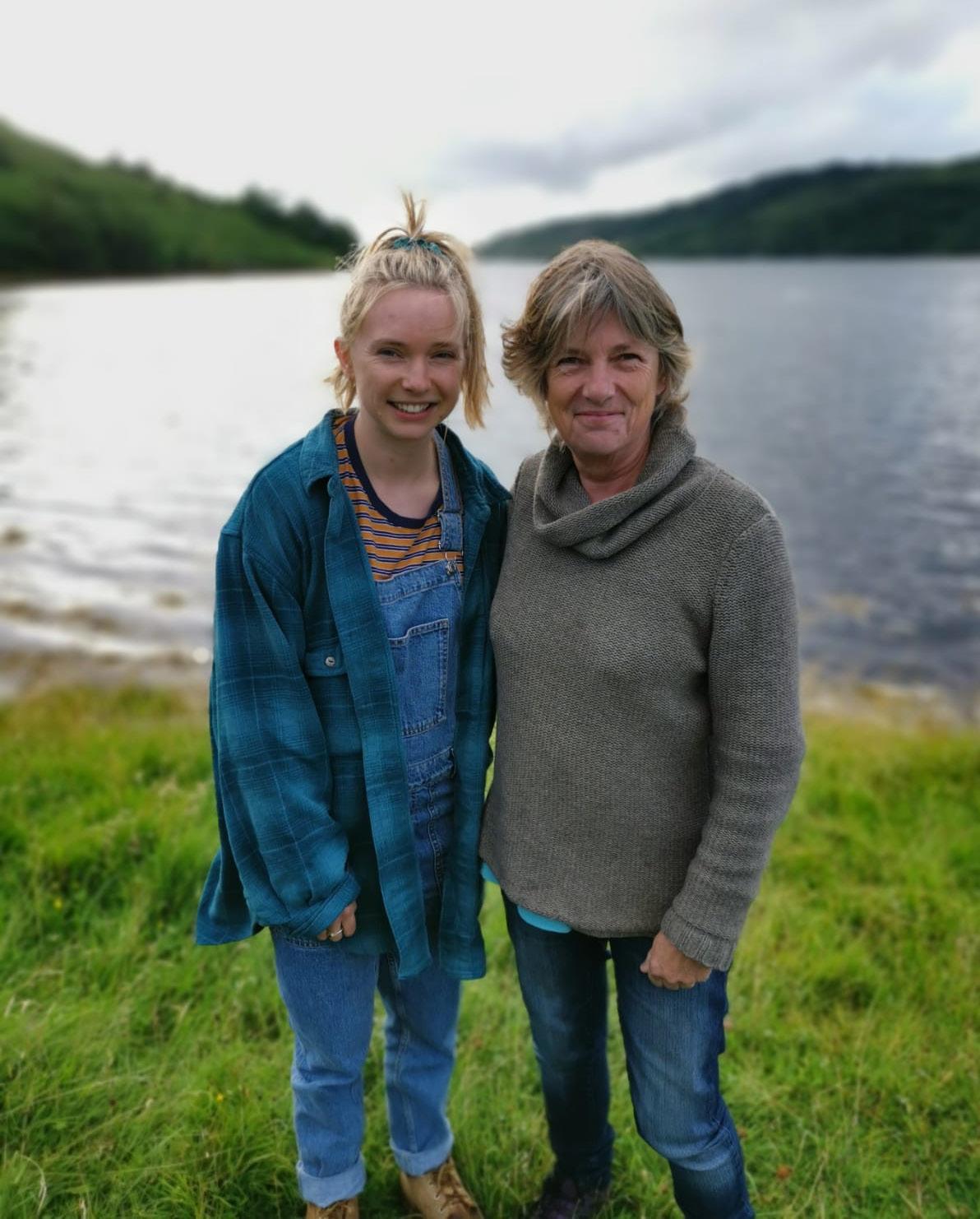
By Korina Biggs, Joanna Britton and Sue Fleming
Advertisement
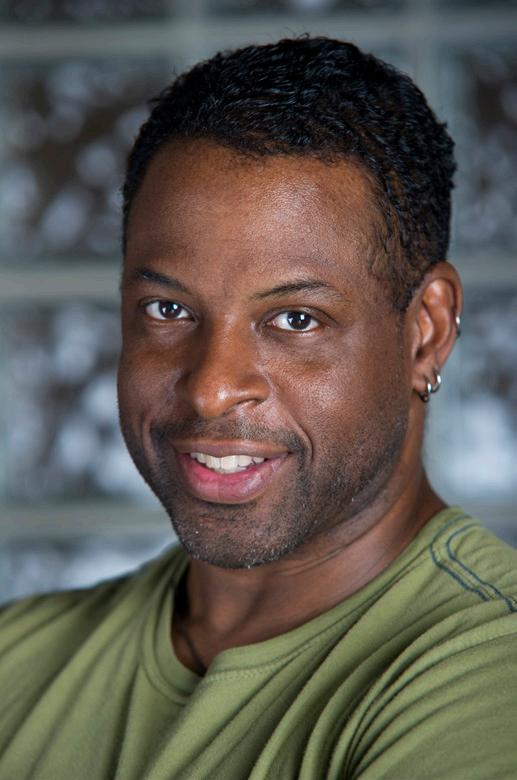
This autumn, a number of AT teachers from Europe and the US were lucky enough to participate in an online course of five sessions run by the US-based organisation Ambient Noise, aimed at “practitioners and teachers of the Alexander Technique interested in making authentic change around diversity and inclusion in your organization, practice and relationships with your students”. The work was led by Darryl Aiken-Afam, a Leadership Psychology specialist, who is also a practitioner of Taoist and Zen-based meditation, yoga, martial arts practices and a shiatsu practitioner. He had previously run a course for Alexander teachers in the US and a workshop at the Chicago Congress. He co-led the course with Milta Vega-Cardona, a consultant on the conversations of Institutional Race/ Racism and its effects on the individual and the institutional.
In this article, we would like to share a summary of the work, followed by some initial reflections on our personal experiences. We look forward to hearing what you think and continuing this conversation.
Summary of the course (Korina) I experienced it as a three-fold approach. Firstly educational. The trainers made sure that we were on the same page with understanding the historical and socially constructed concept of race. That we accepted how, as human beings, we have been socialised into the dominant ideology of white superiority and so are riddled with unconscious ways of thinking and behaving. We are subject to internalised racial oppression which inevitably wounds white people too. They suggested various lenses through which we might view how BIPOC (Black, Indigenous, and People Of Colour) are portrayed and treated and the sessions were backed up with links to articles and research. Secondly, the approach emphasised practice. This approach draws on mindfulness and it was assumed as AT practitioners that we are well practised in tracking our thoughts, feelings, and physiological reactions. We were encouraged to engage our AT practice as a way of being able to change our habits - this time with the focus on habits of racism. Thirdly, the approach urged transformation. Our trainers used the West African image of the Sankofa which is a mythical bird with a seed or egg in her mouth with her head turned back meaning that it’s important to remember the past in order to go forward. The idea is that everyone has a form of “Sankofa”; for the AT community, this can be found in F.M. Alexander’s writings. Such a legacy is not just historical: we heard of some black people who had been about to start AT classes and after finding out about Alexander’s writings understandably withdrew. My personal experience of training was that the racism in the writings was skipped over. I remember being rather shocked when I did start reading MSI and was keen to dismiss and overlook the various passages and the thrust of Alexander’s theory. This is not enough. Darryl asked us - and I quote from the last session - “How do you as AT people reconcile F.M. Alexander’s writings and racism in the present as you plug in to clients, patients, organisations where you are teaching, especially when you are working with BIPOC? How do you reconcile that past and interface with them now, today? This is part of the transformative work that you must do if you are going to be anti-racist. If you’re going to meet any BIPOC people today with integrity you have to acknowledge that. Not try and hide it - that is a part of the healing.”
Darryl Aiken-Afam, course trainer, Ambient Noise
Milta Vega-Cardona, course trainer, Wisdom Strategy Innovation
Reflections
Real change vs cosmetic
change (Joanna) I was lucky enough to attend Darryl’s workshop at the 2019 Amsat conference. What struck me then, and what strikes me now, is that like the Alexander Technique, the process developed by Darryl and his colleagues invites deep, fundamental change of the self and, by consequence, of our relations with others. It’s not about posture, or appearances. It’s not about cosmetic change or using the ‘right’ words, or even developing knowledge of the history or mechanisms of racism – although these are welcome and necessary steps. To use the phrasing from our course, it’s a kind of “calling in to oneness”. Making the difficult journey that our trainer, Milta, often talked about: from the head to the heart to the gut. For me, this is the natural extension of our work in AT to become ‘one’ and ‘whole’ individuals. I really feel that oneness is also the starting point for the AT community as we search to unpack our history, most obviously in how we use, or not, Alexander’s writing...
Come to quiet observation (Joanna) Our trainers kept reminding us that a powerful key to undoing racism is “open monitoring”, or an applied mindfulness practice whereby you monitor thoughts, emotional, physiological or biological responses, behavioural impulses amongst others. It seems obvious to me that our experience and skills from AT should make this process more accessible, if we so choose.
Working on habits of racism (Korina) - Personal examples include noticing:
«continued from previous page • irritation (with accompanying tightening) that a student hasn’t come for their lesson and observing thoughts of why I think they haven’t. In the case of a black student I assumed that the reason was their involvement with anti-racist actions which bruised my AT ego. The process then of releasing the tightening helps me get a wider perspective on the many possible reasons why the student may not have shown up and see what is actually important; • pulling down with shame when I’ve made an assumption based on prejudice. Undoing the pulling down then gives me more capacity to see why I made that assumption and to let go of it; • the tension that comes about when someone says something that I perceive to be racist. Taking the moment to work on myself enables me to have more of a voice, have more curiosity and be less likely to either attack or evade the issue; • that I have an expanded sense of not-knowing the lived experience of a client or student which feeds into a more open listening response in my self including my hands.
False sensory perception (Joanna): For me, whiteness is perhaps the most all-encompassing false sensory perception I experience. More and more, I see how, as white people, we are raised to believe our quality and supposed ease is inherent. Realising that this privilege is arbitrary and structural, rather than something we have earned or deserved, will be a life-long process of re-education and recalibration.
Mapping whiteness (Sue): The course reminded me to know and understand our history; that the superiority inherent in the exploitative colonial process translates down the years. From our explorations, I realised how easy it is for me to assume the range of advantages and rights I have as a white person. My skin colour gives out a clear signal which affects my use and experience, both smoothing my path in the world and preventing me from being a full and complete person. As AT teachers, we know it is hard work to change our habits and perceptions, to be humble and human, and I notice my own resistance against knowing unpalatable truths.
Racism in freedom and support (Sue): Further reflections on what racism means for Alexander Technique work: Freedom and support are key concepts I use in my AT teaching. Support from the floor, from what we touch, from the environment around us, and from within. Directions ask for freedom of movement. We know that freedom and support are multidimensional, physical, psychological, social, economic and political. Constraints and threats to freedom and support come from all quarters and from different fears - of disease, of scarcity, of violence. For me as an AT teacher, the course made it clear that freedom and support are racialised, and it is vital for me to remember this as it impacts the choices that are open to each of us and how and where we teach the Technique. Ongoing journeys (Korina) In the welcome email we were warned that the course would be “sometimes enlightening and uplifting, and other times uncomfortable and emotional”. This it certainly was and we experienced many reactions that we can now identify as manifestations of our “white fragility” (a term coined by Robin DiAngelo describing the inability to tolerate any kind of challenge to our racial reality, a feeling that gets in the way of deeper reflection or dialogue). However, as with the process of change that we recognise accompanies learning the AT, it feels like there is no going back; this is an uncomfortable but necessary liberating process. As the welcome email went on to say, “the key is that we stay in there and do this together as human beings in support of each other moving towards the same healing goals.” korinabiggs@gmail.com joannabritton@gmail.com sue@alexanderteaching.co.uk
‘From the head to the heart to the gut’: The brain, in right profile with the glossopharyngeal and vagus nerves. Photolithograph, 1940, after a woodcut, 1543. Credit: Wellcome Collection. Attribution 4.0 International (CC BY 4.0)