JULY/AUGUST2023 ISSUE130 INTERNATIONAL ACCOUNTANT The Professional Journal of The Association of International Accountants Broadening horizons for smaller practices Business promotion: growing a business in 2023 ThenewISSBStandards:sustainabilitymilestones


The AIA has partnered with Net Zero Nowa climate action platform for accountants. Allowing your practice to calculate its carbon emissions, get bespoke reductions advice and get certified Net Zero. simple | credible | affordable | Use code: AIA25 NEW partnership announcement netzeronow.org/accountants To find out more visit: Exclusive to AIA members |
8
Monica Foerster (IFAC Small and Medium Practices Advisory Group) examines the ever broadening horizons for the accountancy profession and how they can build a thriving future.
Antimoneylaundering
Client onboarding
18
Preparing for your Financial Reporting exams


In your Financial Reporting exams, you have three papers which increase in technical complexity as you progress. Here are some top tips for how you should prepare for the Foundation Paper and Professional Papers 1 and 2.

Professionalmoneylaunderers

The clean fight
14
Professional money launderers are people who, for a fee, provide services to organised crime groups by laundering the proceeds of their crimes. HMRC discusses actions taken to tackle the threat to the accountancy sector from professional money launderers and how they impact the accountancy sector.

Complying with the AML regulations is a vital part of your responsibility to maintain the integrity and trustworthiness of the accounting profession. Onboarding is the start of your business relationship with your client. It is essential to take anti money laundering regulations into consideration from the outset, as Richard Simms (FA Simms & Partners) explains.
ISSBStandards
New sustainability milestones
21
The new sustainability standards mark a significant milestone in how the world responds to sustainability issues that will eventually affect us all. Dr Peter Ellington (Triple Bottom Line Accounting) explains how the new ISSB Standards IFRS S1 and S2 will take effect.
Security
Ransomware attacks
24
Smallandmediumpractices
New horizons for a thriving future

10
Organisations of all sizes today find themselves in a fast-paced and rapidly changing world. Small firms can usually make faster changes in strategic direction to take advantage of new opportunities and significantly benefit from being more agile and adaptable.
Businesspromotion
Growing a practice in 2023
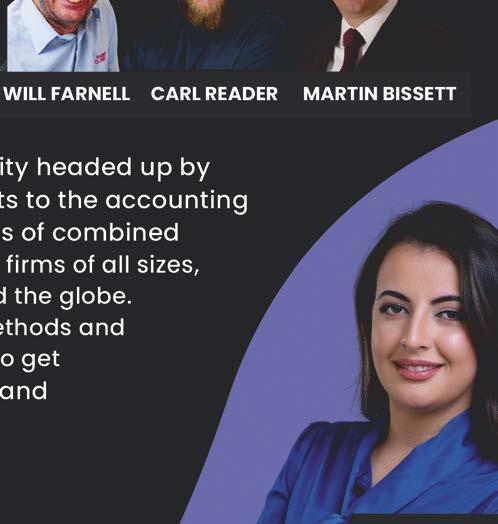
Think about how you can find and meet your target clients that doesn’t rely upon a generic mass-mailed direct message, or using a tactic that every other firm is using. Carl Reader shares his experiences of how you can grow you practice and find unique ways to promote your firm.
16
Ransomware is a type of malware that encrypts a company’s data and demands a ransom, usually in cryptocurrency, in exchange for the decryption key needed to restore access to the files. Aivaras Vencevicius (NordLocker) sets out the dangers posed and what you can do to protect your financial data.
CONTENTS 1 AIAWORLDWIDE.COM | ISSUE130 EditorialInformation InternationalAccountant,thebimonthly publicationoftheAssociationof InternationalAccountants(AIA). InternationalAccountant Staithes3,TheWatermark, MetroRiverside,NewcastleUponTyne NE119SNUnitedKingdom +44(0)1914930277 www.aiaworldwide.com Editor AngelaPartington E:angela.partington@lexisnexis.co.uk T:+44(0)2084011810 Advertising Foradvertisingopportunities advertisingsales@lexisnexis.co.uk Subscribeto InternationalAccountant subscriptions@aiaworldwide.com Designandproduction LexisNexis, QuadrantHouse, TheQuadrant, Sutton,SurreySM25AS www.lexisnexis.co.uk PrintedbyTheMansonGroupLtd, StAlbans,Herts,AL36PZ Thisproductcomesfromsustainble forestsources. AIAdoesnotguaranteetheaccuracy ofstatementsmadebycontributorsor advertisersoracceptresponsibilityforany viewswhichtheyexpressinthispublication. ISSN:1465-5144 ©CopyrightAssociationofInternational Accountants
issue Contributors 2 Meet the team Newsandviews 3 HMRC consults on changes to international corporation tax rule AIAnews 4 AIA Council members nominated for Accounting Excellence Awards Students
In this
Datesforyourdiary 26 Upcoming events Technical 29 Global updates 8 10 14 16 18
As I reflected on the honour of being asked to be Guest Editor this month, I took a moment to think about what the best advice that I can give any firm owner is. Is it a new piece of tech? A new sales technique, or a pricing model? Perhaps it’s a marketing hack or an operational efficiency.

Actually, it’s none of the above. It’s really simple. Keep it simple.
For far too long we’ve been bombarded with what we should do. But actually, many of us have forgotten along the way what the most important part of our role is as a practising accountant.
Commercially, we have two jobs: to get clients; and to keep clients. That’s it.
From an empathetic perspective, we have one job: to remember that the business owner, not an anonymous business with numbers on the screen, is our client. We must remember that the pounds, shillings and pence are real money with real implications. And that the thoughts and fears of our clients around money are probably far worse than our own, as it can be an alien world to them.
And from a client want and need perspective, we have three jobs: to help our clients sleep at night; to keep them out of jail; and (hopefully) to help them afford their holidays and retirement.
We don’t need to be distracted by the latest gizmos and gadgets. Clients don’t
Contributors to this issue
Monica Foerster is chair of the IFAC Small and Medium Practices Advisory Group (SMPAG) with 30 years’ experience in accountancy. She is also a member of the Board of Directors of Ibracon Brazil
 DRPETERELLINGTON
care how artfully we craft their financial statements, or how much love we put into typing up their tax return. And they certainly don’t care about the nuances of our tax system – in fact, tax rates likely mean as much to them as the oil viscosity levels mean to my mechanic – I trust them to service my car and keep me on the road.
Instead, they want to know that someone has their back. That they have a helping hand, a supportive adviser. Someone who can help them in the good times and the bad times.
How often do you check in with yourself to make sure that you’re meeting these needs? All too often, we can slip into a routine of doing the day job. Ticking and bashing, forgetting the people. Today, take a step back, pick up the phone (yes, that thing you check social media with that actually can make calls!) and give a client an unprompted call. Ask them how they are. And let the conversation flow.
Try to resist the urge to talk about tax deadlines and missing information, and instead ask questions. Where are they going on holiday? How is life treating them? Are they sleeping at night?
When the conversations go beyond the numbers, that’s when great client relationships are built.
Peter Ellington is CEO and Founder of Triple Bottom Line Accounting, a UK based digital practice providing a range of services to SMEs. He also teaches in the Norwich Business School on the MBA programme, Entrepreneurship and Taxation.


Richard Simms, MD of FA Simms and AMLCC, is a licensed insolvency practitioner, chartered accountant and a leading authority on anti-money laundering. He is a sought-after guest at Accountancy conferences worldwide.

Aivaras Vencevicius is head of product for NordLocker where he specialises in cybersecurity-focused digital product management and development. His team provides an encrypted cloud solution for secure data storage.
Carl Reader is an author, international keynote speaker, regular media commentator and multiple business owner. His latest book is ‘Boss it: control your time, your income and your life’.

2 ISSUE130 | AIAWORLDWIDE.COM
My best piece of advice: keep it simple
Carl Reader, Guest Editor
MONICAFOERSTER
RICHARDSIMMS
AIVARASVENCEVICIUS
CARLREADER
HMRC consults on changes to international corporation tax rule

said: ‘Effective implementation of the directive will limit the race to the bottom in corporate tax rates.
‘The profit of the large multinational and domestic groups or companies with a combined annual turnover of at least €750 million will be taxed at a minimum rate of 15%. The new rules will reduce the risk of tax base erosion and profit shifting and ensure that the largest multinational groups pay the agreed global minimum rate of corporate tax.’
with the upcoming change. We’ve set up a new Pillar 2 Compliance team. The team will work with the adviser community, to help us understand any problems groups may have, and what action we can take to overcome them.’ The Pillar 2 Compliance team can be contacted at: pillar2mailbox@hmrc.gov.uk
HMRC has launched a consultation on the national implementation of Pillar 2 of the OECD’s international corporate tax framework.
EU member states reached agreement in principle to implement at EU level the minimum taxation component, known as Pillar 2, in 2022. At the time, the OECD
HMRC said it has contacted groups with a UK presence that may be in scope of Pillar 2. It said: ‘We have provided key information about the new international tax framework and where they can find further guidance.
‘We’ll be providing regular updates on Pillar 2 developments to support business
Global trade set to slow in second half of year

The UN Conference on Trade and Development (UNCTAD) has posted a pessimistic outlook for global trade in 2023, despite a return to growth following a downturn in the second half of 2022.
Over the first three months of 2023, trade in goods went up by 1.9% from the last quarter of 2022, adding about $100 billion (£79 billion) in value. Global services trade also increased by 2.8%, worth an additional $50 billion.
However, UNCTAD’s latest Global Trade Update predicts a slowdown in global trade growth due to persistent inflation, ongoing vulnerabilities in financial markets, the war in Ukraine and wider geopolitical tensions.
Its report said merchandise trade growth has been mixed among the
major economies during the last four quarters with Brazil, India, the US and the EU witnessing significant increases in both imports and exports.
All regions saw international trade grow, except for Russia and central Asian economies.
Global trade trends were influenced by the energy sector, where rising prices resulted in higher trade values until an 11% quarterly drop between January and March 2023. Other sectors that experienced trade increases were agri-food products, apparel, chemicals and road vehicles.
The report points out that ‘friendshoring’ has been on the rise since late 2022 – that is countries prioritising trade with others that share similar political values.
The tax authority added: ‘We also published draft technical guidance on multinational top-up tax and domestic top-up tax, following their introduction in the Finance Bill 2022/23. This guidance provides additional information on which groups will be in scope, and how the taxes will be administered and charged. We are encouraging stakeholders to share their comments on the draft manual and any additional material that the manual should cover, for example, specific parts of the legislation that where further guidance would be beneficial.’
Stakeholders can provide comments by emailing pillar2.consultation@hmrc.gov.uk and including ‘HMRC guidance manual’ in the subject line. The consultation closes on 12 September 2023.
It also notes ‘a decline in diversification of trade partners, implying that global trade has become more concentrated among major trade relationships’.
In the past 18 months, the decoupling of US-China trade interdependence has seen the US become less significant as an export market for China.
UNCTAD’s latest report is slightly at odds with its predictions in March when it said it expected trade to stagnate to about 1% in the first quarter before rallying later in the year.
3 AIAWORLDWIDE.COM | ISSUE130 NEWS INTERNATIONAL
TAXES
GLOBALTRADE
©Getty images/iStockphoto
©Getty images/iStockphoto
AIAupdatesSanctionsHandbook
AIA operates a range of sanctions that can be imposed on members depending on the seriousness of the situation, the level and history of the member’s noncompliance, and the risk posed to the interests of the public and the integrity of AIA’s reputation and the reputation of the profession as a whole.
Amendments to AIA’s Sanctions Handbook will affect all members and firms to increase the effectiveness, efficiency and deterrence of AIA’s enforcement action. The main changes relate to the introduction of a ‘fixed penalty approach’ to non-compliance identified during Quality Assurance and AML Monitoring Reviews.
The process applies to areas of non-compliance and referrals which the AIA Disciplinary Committee determines suitable, with an increasing monetary penalty. More serious incidents following AIA’s intervention will result in referral to the Practice Compliance Committee. For example, a supervised firm failing to produce evidence of its firm-wide risk assessment during a monitoring review and subsequently as part of an agreed Action Plan would receive a fixed penalty and a deadline for submission of evidence. Failure to do so would result in a referral to the Practice Compliance Committee.
The updated framework became effective on 27 June 2023 following ratification by AIA’s Council and applies to all future compliance referrals and disciplinary cases. Ongoing compliance cases will continue to be covered by the previous Sanctions Handbook (as introduced on 19 July 2019).
AIA NEWS
AWARDS
AIA council members nominated for Accounting Excellence Awards
We are pleased to announce that Association of International Accountants Council members Linda Richards , Peter Ellington and Gloria Murray have all received nominations for the Accounting Excellence Awards

AIA Vice President Linda has been shortlisted for Finance Director of the Year at Wildstar Films , Peter’s company Triple Bottom Line is in the running for Small Firm of the Year (Midlands, Wales and East of England) and Gloria’s Xeinadin Murray Associates is nominated for the Client Transformation Award.


We would also like to give a massive well done to AIA member firm Euro Accounting Ltd for their International Firm nomination also.
AIA Vice President, Linda Richards, said: ‘I am incredibly honoured and grateful to be nominated for the Accounting Excellence Finance Director of the Year. This recognition is a testament to the hard work, dedication and collaboration of the entire finance team at Wildstar Films.
‘I would like to express my sincere appreciation to the esteemed panel of judges who have recognised our efforts and deemed us worthy of this nomination. It is truly humbling to be acknowledged among such distinguished professionals in the field of finance.’
4 ISSUE130 | AIAWORLDWIDE.COM AIA NEWS
HANDBOOK
Linda Richards
Peter Ellington
Gloria Murray
AIA Annual General Meeting 2023
The AIA held its 91st Annual General Meeting on 27 June 2023 in London. The AGM was attended by AIA President Shahram Moallemi, alongside AIA Vice Presidents Phillip Ford and Linda Richards.
All resolutions of the AGM were passed, and the following members were newly elected to Council: Ranjana Bell, Peter Ellington, John Froggett, Rebecca Hossain, Sharon Jandu, Kim Robinson, and Dee Shah. AIA President Shahram Moallemi, Leslie Bradley and Michael Chow were also re-elected to Council. The Council represents members of the Association and is responsible for setting AIA’s strategic direction and priorities.
AIA would also like to express sincere gratitude to Andrew Lamb and Twaraq
Oozeerally, who leave the Council under Article 14.1 following many years of dedicated service.
AIA President Shahram Moallemi said: ‘My presidency of AIA has witnessed some of the most turbulent economic times in recent history, but I have relished the challenges this has created. Due to my heritage and unique background, I feel I bring a wealth of experience to the role. I am focused on adding value and imparting my business knowledge as we seek further accreditation and recognition for AIA members across the world.
‘Diversity and inclusion are topics close to my heart, and I am proud to be part of such an experienced board, reflecting the members we represent.
SMPs must diversify to unlock growth


We value the benefits that different opinions, life experiences and cultures bring to our decision making. Our aim is to further strengthen our diversity and work towards achieving gender equality in line with AIA’s long-term strategy.
‘I am sure that the pace of change and uncertainty we are currently living with will bring more trials in the future, but we as a resilient organisation I am confident AIA will overcome any challenges with the innovative and positive outlook we have demonstrated to date.’
discussing how digitisation provides SMPs with an opportunity to transform their business model and improve the way they operate on a day-to-day basis, attracting talent and retaining them. The panel concluded that SMPs which fail to improve environmental policies will struggle to engage younger talent.
advisory services. SMPs are also under significant pressure due to regulatory burden and automation threatening more traditional accounting roles, meaning that upskilling existing accountants and attracting new talent are key to the future growth and prosperity of the profession.
George Josephakis, a member of EFAA’s Digital Working Group, said, ‘Only by fully integrating digital tools and technologies into practices can SMPs unlock the benefits that will enable them to thrive in the digital age.’
The Annual International Conference of the European Federation of Accountants and Auditors for SMEs (EFAA) held on 25 May 2023 in Lisbon, Portugal, brought EFAA members, policymakers and practising accountants together to discuss The Future Of Small Practice.

Attracting, retaining and upskilling talent are key strategies for SMPs across Europe as they navigate difficult economic times and react to the increased use of AI and technology in accountancy and

The conference heard from a broad range of expert speakers and panels who concluded that SMPs must diversify their skills, familiarise themselves with digital technologies and provide non-traditional services such as sustainability advising, reporting and assurance to continue to provide vital services to their clients and the SME market across Europe.
AIA Council Member George Josephakis spoke as part of a panel discussion, together with Monica Foerster (IFAC SMP Advisory Group Chair), Marcus Tuschen (Tuschen und Partner) and Aleksander Stefanac (Facta d.o.o.),
AIA Chief Executive Philip Turnbull said: ‘The key point and central theme of this conference was how SMPs can attract new talent, retain it and also ensure the upskills needed to keep up with the ever changing accounting world are in place. As a member organisation, we encourage our members to take action to ensure their employees have the skills and resources needed to thrive.’
As an EFAA member AIA recognises the key role that our SMPs play in national and international economies as they continue to provide accountancy and advisory services to their clients and we strongly endorse guidance produced by EFAA for members in practice. AIA offers extensive support to help small and medium sized practices work and grow.
5 AIAWORLDWIDE.COM | ISSUE130 AIA NEWS AGM
Phillip Ford, Shahram Moallemi and Linda Richards
AIA council member George Josephakis in EFAA panel discussion on digitisation
Shahram Moallemi takes part in EFAA discussion
SCHOLARSHIPS
AIA awards four Commonwealth Scholarships
AIA is proud to announce that four students from the Commonwealth have been awarded 2023 AIA Scholarships, funded by The AIA Educational & Benevolent Trust.
The scholarships programme aims to support students with strong career aspirations in accountancy or audit to obtain the AIA professional qualification with full financial assistance. The scholarship programme represents one of the steps AIA is taking to develop financial education and provide students with a real chance to fulfil their potential, by utilising the Trust Fund available.
The AIA Scholarships successful applicants – Bahlakoana Ramashamole from Lesotho, Bertrand Benjamin Etouka Magnack from Cameroon, John Idowu Odumeso-Jimoh from Nigeria and Kule Geofrey from Uganda – showed the passion, drive and willingness to learn in order to develop their future career and make a difference within the
accountancy profession.
Bertrand Etouka said of the opportunity: ‘As a developing country, Cameroon does not have access to high quality education and I face difficulties in funding my studies. I have always dreamt of holding a professional accounting qualification and an AIA Commonwealth Scholarship will help me realise my goals.
‘I am very grateful to AIA for this opportunity and look forward to the high-quality training I will receive. It’s just amazing.”
Carl Jepson, Director of Sales and Marketing, said: ‘AIA is keen to contribute to long-lasting change in the global accountancy profession, and our scholarship programme represents one of the steps we are taking to develop financial education and provide students with a real chance to fulfil their potential. AIA would like to congratulate the four successful students and wish them every success on their accountancy journey.’
AIA named on UK government’s Regulated Professions Register

The Department for Business and Trade has launched a new digital service, the Regulated Professions Register (RPR)
The RPR provides information about 200 regulated professions in the UK in one place on GOV.UK.
The service provides information on professions that are regulated by law (for example, doctors), and some that are covered by accreditation schemes overseen by professional bodies (for example, engineers).
The RPR provides a one stop shop for professionals and businesses interested in knowing more about working in regulated professions in the UK. The service signposts individuals to their chosen profession, offers them information about how the profession is regulated and by whom, and provides contact details for the relevant regulator. Having this information in one easily accessible place will make it easier for qualified professionals to navigate
the UK labour market. It will also be a useful tool to understand more about the UK’s regulatory landscape and the various legislation governing regulated professions.
Minister for Enterprise, Markets and Small Business Kevin Hollinrake MP said: ‘The RPR will help increase transparency between regulators and professionals by ensuring a lack of information is not a barrier to entry to the UK labour market. Businesses and professionals in the UK and overseas will have certainty about
AIA SCHOLARSHIPS
The AIA Scholarship Programme offers awards to students from the UK and the Commonwealth.
The UK Scholarship is available through the AIA Accountancy Scholarship UK , two of which are given with priority to applicants from lower socio-economic backgrounds to support the AIA’s commitment to Access Accountancy. All course and exam fees for the AIA professional qualification on either the accountancy or audit route are covered by AIA Achieve Academy.
The AIA Commonwealth Scholarship is part of the AIA’s aim as a Commonwealth Accredited Organisation, to support education and economy through financial education and professional skills. This award also covers all course and exam fees for the AIA professional qualification on either the accountancy or audit route.
The AIA Scholarship Programme provides a great opportunity for fully funded learning and we encourage applications from a diverse range of candidates.
2024 Scholarship Application
The AIA Scholarship programme will be open to applicants, both in the UK and Commonwealth, on an annual basis. Applications for the 2024 programme will be opening in the coming months.
which professions are regulated and by whom, and will understand how they can get recognised to practise the profession in the UK.
‘The UK is world leading in this space – international businesses and professionals value having information about the UK occupational regulatory regime in one place, and this central repository of data is crucial for beneficial trade in professional business services.’
AIA Director of Operations, David Potts, said: ‘The new Regulated Professions Register is an invaluable source of information for professionals and businesses in the UK and overseas and AIA was pleased to work with the Department for Business and Trade to deliver this useful resource.’
6 ISSUE130 | AIAWORLDWIDE.COM AIA NEWS
REGISTER
Kevin Hollinrake MP


Preparing for your Financial Reporting exams
Here are some top tips for how you should prepare for the Foundation Paper and Professional Papers 1 and 2.
In this article, we will be giving you some advice on how to be successful in your Financial Reporting exams. You have three papers which increase in technical complexity as you progress. It is also expected that by the time you are ready to sit the final paper, you will have a critical understanding of all the accounting standards within the syllabus and of contemporary issues that the accounting profession is facing.
In my experience, students find Professional Paper 2 particularly challenging. I will be discussing all the papers in this article, but particular focus will be given to how to prepare for professional papers.

FoundationPaper
As you might expect, the Foundation Paper provides you with the foundational knowledge to build from in professional levels 1 and 2.
The examination consists of 25 multiple choice questions. This means that at this stage you don’t have to worry about your presentation for the exam itself (students find this challenging even at professional levels). However, it does not mean that there is no need to practise preparing
accounts and systematically working your way through questions.
The downside of multiple-choice exams is that you do not get marks for workings. You are either right or wrong. You therefore still need to learn the steps involved for a particular adjustment. This systematic approach will prepare you for the professional levels, as well as preparing you for the Foundation Paper.
ProfessionalPapers1and2
You will have heard many times that you cannot read yourself to success; instead, you have to
8 ISSUE130 | AIAWORLDWIDE.COM STUDENTS
practise under timed conditions. When you initially start practising, you may have notes as a guide. You need to plan your revision so that you will have completed multiple papers under timed exam conditions before you take the real exams.
You need to be ruthless with your time allocation in the exams, and when your allocated time for a particular question has run out you must move on. These are really important points, so please do not ignore this advice.
For Professional Papers 1 and 2, we have some additional advice that relates to preparing for the technical elements (i.e. relating to numbers) and more discursive elements of the paper.
Preparingfortechnicalquestions
Moving away from the multiple choice format of exams means that you will be able to get marks for method. This is good news. Realistically, most students will not get questions 100% right but you can still achieve a very high mark. You will not fail for incorrectly answering a question; instead, you will fail if the marker cannot follow your answer and give you method marks.
Top tips include the following:
● Develop a systematic approach to particular question types and practice.
● Learn the proformas given in your study text, for example:
a. consolidation steps;
b. how to deal with the acquisition or disposal of a subsidiary; and
c. reconciliation of pension scheme assets and liabilities.
When sitting the exam, you will inevitably feel nervous. However, knowing that you have completed many practice questions under exam conditions will hopefully help you with your nerves as you will have been in this position many times before.
Inevitably, the questions set will be new to you. Therefore, having a systematic and well-rehearsed approach to a particular type of question will help to calm your nerves and also give you the best chance of obtaining the maximum marks.
Preparingformorediscursivequestions
As you progress to Professional Paper 2, you will be required to critically evaluate proposed accounting treatments and have a critical understanding of contemporary issues faced by the profession.
Students generally tend to find it difficult to structure their answers to these questions – as well as, more specifically, knowing where to start. I would advise the following steps when a question requires you to critically evaluate any proposed accounting treatments:
● explain what the issues relate to;
● explain what the relevant accounting standard expects preparers to do; and
● apply the standard to the particular scenario in the question.
Remember that the treatment that is proposed in the question will rarely be correct. If you find yourself agreeing with what is presented in the question, it is likely that you will have not fully answered the question. Also, be mindful of the marks available for the question. Make sure that you are making enough meaningful points for the marks available. You need to practise written questions as often as the more technical questions.
Criticalevaluationofaparticularstandardor approach
In Professional Paper 2, you are expected to demonstrate a critical understanding of all the standards in the syllabus. In my experience, students again struggle to know where to start and how to structure their answers.
Here the conceptual framework can really help you by providing you with a reference point against which standards can be evaluated. No standard is perfect – there will always be a trade-off, with some elements of the conceptual framework gaining more primacy than others.
Start your answer by considering the extent to which the standard achieves the two primary qualitative characteristics: faithful representation and relevance. Then, consider the four supporting characteristics.
To prepare for your professional papers, make sure that for all the standards in the syllabus you have prepared a summary of how these characteristics are achieved and where there may be compromises. This is as important as practising technical questions.
Finally, good luck with the exams! ●
9 AIAWORLDWIDE.COM | ISSUE130 STUDENTS
© Getty images/iStockphoto
Planyourrevisionsothatyouwill havecompletedmultiplepapers undertimedexamconditions beforeyoutaketherealexams.
New horizons for a thriving future
Monica Foerster examines the ever broadening horizons for the accountancy profession and how they can build a base for a thriving future.
Chair,IFACSmalland MediumPractices AdvisoryGroup
Organisations of all sizes today find themselves in a fastpaced, uncertain, complex and rapidly changing world. This undoubtedly creates challenges, but such challenges may lead to opportunities for professional accountants and accounting practices of all sizes if they can harness the knowledge and skills needed to help support organisations and clients as they navigate unprecedented environments.
TheinteractionofSMEsandSMPs
The role of the professional accountant not only remains relevant in such environments, but actually takes on added significance. Examples from the world of small and medium sized entities (SMEs) make this clear. Research by the International Federation of Accountants (IFAC) has found that, irrespective of jurisdiction, accountants – especially small and medium practices (SMPs) – remain the preferred advisors to SMEs.
The professional business advice which accountants provide to SMEs is associated with better performance, as demonstrated by improved rates of survival, growth, improved decision making procedures and superior financial performance.
Taking this into consideration, it is unsurprising that the remit of SMPs continues to grow. SMPs have crafted a role as trusted advisers and are being encouraged to stretch into less traditional areas, such as business development, training, employment regulation and strategic support. At the same time, the provision of core financial services remains strong, as do relationships and the eagerness for SMPs to help more and more to unlock value in SMEs.
Whilst this demonstrates that accountants hold an esteemed role for clients, and are highly respected, it is essential for the profession not to get complacent. Resting on past successes is no recipe for a thriving future; accountants must continue to make the best advantage of the unique relationships they can forge within organisations and for clients. SMPs must leverage the established trust with their clients to promote new ways they can be relevant.
Small firms can usually make faster changes in strategic direction to take advantage of new opportunities and significantly benefit from being more agile and adaptable. With the growth in digitisation and use of technology, it is clear this is something professional accountants need to

10 ISSUE130 | AIAWORLDWIDE.COM
AND MEDIUM PRACTICES
SMALL
MonicaFoerster
SMALL AND MEDIUM PRACTICES
keep on top of if they want to keep providing their organisations or clients optimal service.
Leveragingtechnologytoimproveyour practice
When thinking about the increasing use of technology and the opportunities this may bring for SMEs, it is important for us to remember that the application of new technology is essential within accounting practices too. This not only improves efficiency and effectiveness within SMPs, but also creates the conditions for an appreciation of technology that will let people thrive and unlock their potential and aptitude.
The 2018 IFAC Global SMP Survey, which received over 6,200 responses, found that 38% of respondents view technological developments as a significant challenge (see tinyurl.com/ 3emahs8p). Technological developments significantly impact how SMPs manage their practices, as well as how they service their clients. Cloud technology has become a key part of the accounting industry with over a third of practices introducing or planning to introduce cloud options to their clients’ interface and servicing.
With cloud technology, practitioners are able to serve clients from anywhere (including other countries). There are examples of SMPs providing virtual chief financial officer (CFO) services to SMEs through the cloud, avoiding the fixed cost of a permanent finance director.
IFAC recently updated the Guide to Practice Management for SMPs, which includes a new module on Leveraging Technology. This module covers developing a technology strategy, hardware and software options, technology risks, new and emerging technologies and leveraging technology for practice innovation.

‘Inafast-pacedandever-changingworld,our organisationsfacechallengesthatwecanturn intoopportunitiesifwetakethetimetolook.
Professionalaccountantsandaccountingpracticesofall sizeshavethepotentialtosupportandnavigateunique environmentsthroughourwork,unlockinggreatvalueforclients.
‘Smallandmediumpractices(SMPs)haveproventhemselvesto betrustedadvisors.Wecanprovideessentialbusinessadvicethat leadstoimprovedperformance.However,complacencyisnotan option.Asaccountants,wemustbewillingtoembracetechnology, leverageestablishedtrust,andforgeexceptionalrelationshipsto thriveinthefuture.’
 Gloria Murray AIA Council Member

11 AIAWORLDWIDE.COM | ISSUE130
©Getty images/iStockphoto
Technology for technology’s sake is not going to improve the practice. New technologies need to be part of both change management and larger strategic initiative in client engagement and relationship building. Transformation comes from more than just technology. It involves new business models, strategies, tools and training. It requires strong firm leadership as, for example, different key performance indicators (KPIs) are required as the business model needs to change.
Embeddingtechnology
I have outlined the following five steps to help you embed technology in your practice.
1.Thelongtermbusinessstrategy
The first step is to address the long term business strategy – and to look outwards and not inwards.
First, think about what’s happening in the world and how it will affect the practice. There’s a wide range of environmental issues to consider when positioning your firm for the future, and technology underpins many of these issues. Think about how technology can help you to save time, lower costs, attract staff and maintain and add new clients.
Second, ensure that your technology plan is aligned with the firm’s overall strategic plan, such as growth targets and service offerings. The firm may seek to harness technology developments in order to improve efficiency, client service or profitability. This could include remote access, document management and scanning, multi-screens or website improvements.
2.Environmentalscanoftechnology
Do an environmental scan of the technology you currently have and the technology you want.
Once you have determined your strategy, take the time to go to vendor events to educate yourself about the new technologies available and identify which technology is best for your strategy. Issues to consider when choosing a supplier include:
● the quality of its executives;
● its track record;
● profitability;
● investment in research and development; and
● engagement with its customers.
Your technology supplier should be considered a long term relationship investment.
3.Formulatearealisticimplementation plan
Develop a bite-sized plan so that you can manage the process while savouring your small successes along the way.
It is important to review the training, support options, costs and contract conditions as part of the decision making process.
4.Identifyandsupportyourinternal technologychampion
Identify and position a passionate team member to take the reins in implementing the new initiative. Empower them to think through the process change and internal training that is required. They will need the support and guidance from the firm’s leadership to proceed with change.
5.Involveyourclients
Clients want to hear about developments that can save time and money. Involving clients in your new technologies and upgrades through video conferences and client portals will build confidence and trust throughout the journey. This approach creates transparency and highlights a long-term vision for all involved.
Technologyintalentmanagement
Technology can play a key part in a broader solution for the attraction and retention of talent. Staff are the most valuable asset of any professional services firm. Yet globally, the results of the IFAC Global SMP Survey and much other work show that SMPs have difficulty in attracting next generation talent.
In my view, communication and soft skills are becoming more important than pure technical skills to the success of small firms. Staff interaction with clients, including face-to-face meetings, are critical to success. However, technological developments will also have an increasingly important role in impacting how firms recruit and retain talent. Practices need to think about how they re-tool their staff and train the accountants for the future through the development of new competencies for the digital economy.
Here are five technology-related initiatives for SMPs to consider:
1. Provide more opportunities for learning and continuous development: This includes offering scholarships to cover the cost of education, paid study time and prizes for students who excel in exams, as well as regular training opportunities and empowering experienced staff to train and mentor new employees. Training on increasingly important areas in the digital economy – such as data collection, interrogation and presentation –must not be overlooked as part of the package of essential learning.
2. Provide entrepreneurship opportunities to the next generation: This will allow them to make a difference more quickly. Show them that their opinion matters. ‘Rising stars’ can be offered extra responsibilities, such as leading on specific technology projects.
3. Publicise the firm’s investment in staff training and personal development: This can
12 ISSUE130 | AIAWORLDWIDE.COM
SMALL AND MEDIUM PRACTICES
send a powerful message to the marketplace and garner the interest of young job seekers, especially if the approach includes the use of social media.
4. Invest in technology and gadgets: This can create an efficient and enjoyable environment for staff to work in. New technology also facilitates a focus on higher value-added activities.
5. Offer challenging assignments to new employees: Clearly explain that there is a work plan for them when they join so they can see their potential career progression. The next generation is focused on developing their careers and attaining new capabilities. Transparency around career paths is important, as is generating a view that the development of work will keep pace with changes in the external technological environment. This will make people secure that their role is future fit.
Newserviceofferingsanddigitalisation
The current climate encourages innovation in many SMPs. Businesses are struggling financially in the global high inflation, and due to the high interest rate environments we see SMPs are actively seeking ways to operate more efficiently. Accounting and advisory expertise is needed more than ever. They are raising questions about government stimulus packages and adjusting their business models, as well as needing general insights on financial health and resilience. Accountants are helping current and new clients to navigate these challenges.
Since the pandemic, the global health and financial challenges have propelled many professionals and firms further into advisory services, and this need will continue – offering a great opportunity for the industry. During a crisis, SMEs need the counsel of trusted accountants who can help to challenge and advise for the future.
Technology can be a great supporting factor in such endeavours, as technological tools enable an opportunity to provide information to clients in real-time, improving efficiencies, quality and productivity. They can help to shift the focus from hindsight to foresight using data-drive insights. For example, advice could be provided on different sensitivity scenarios and best and worst case options explored for the operation and financial position in the next three, six or 12 months.
It is clear that, if it is used well, technology can support better decision making. The IFAC Global SMP Survey identifies that there are also opportunities for SMPs to offer their insights on technology in managing risk. Technology services, such as managing cyber security and IT risk, appear to be notable global trends.

SMPs need to embrace technology to better serve clients and attract and retain top talent. An IFAC survey of over 3,300 Gen Z’ers across G20 countries examined this generation’s views on public policy and the workplace (see tinyurl.com/ 4xr6h7d2). It showed that Gen Z expects that digitalisation and emerging technology will be a double-edged sword – both bringing new ways of doing things (and meaning new and more interesting jobs) but also driving the decline of traditional job roles and responsibilities. According to industry data, SMPs that embark on diversification (before digitalisation) tend to have lower productivity.
I believe that technology provides a significant opportunity for introducing added-value services to clients. Practitioners can be valued business partners for their expertise and insights from translating data into wisdom. Going forward, the higher value work will be future focused based on analysis, interpretation and insights, compared to lower value historical tasks such as inputting data, verification and conventional reporting.
Technology tools provide an opportunity to provide information to clients in real-time. For instance, visual dashboard reports can be easily and quickly generated to enable a meaningful discussion with clients on a monthly basis with current figures.
Conclusion
Now is the time for practitioners to adapt, embrace innovation and become part of the solution for their clients, and for their own future, as we enter a whole new world. I strongly believe that the unstable environments we find ourselves in mean that professional accountants must gain additional skills and deepen their knowledge of technological developments.
See the IFAC Global Knowledge Gateway (www.ifac.org/gateway) for articles, videos and resources impacting the global profession. IFAC has also developed a Practice Transformation Action Plan that focuses on how SMPs can embrace change, leverage technology and manage talent (see tinyurl.com/5n99ru8r). ●
13 AIAWORLDWIDE.COM | ISSUE130 SMALL AND MEDIUM PRACTICES
MonicaFoersterischair oftheIFACSmalland MediumPracticesAdvisory Group(SMPAG)with30 years’experienceinthe accountancyprofession.
Newtechnologiesneedtobe partofbothchangemanagement andlargerstrategicinitiatives inclientengagementand relationshipbuilding.
The clean fight
HMRC discusses actions taken to tackle the threat to the accountancy sector from professional money launderers and how they impact the accountancy sector.
When we talk about crime, and the harm it causes to communities and individuals, money laundering is rarely more than an afterthought. It shouldn’t be; money laundering is key to organised crime. Without the ability to wash dirty money, criminals would struggle to further their operations and hide their assets. Money laundering underpins and enables organised crime.

Whatareprofessionalmoneylaunderers?
Professional money launderers – or PMLs –are people who, for a fee, provide services to organised crime groups by laundering the proceeds of their crimes. They launder for
multiple organised crime group and don’t concern themselves with how the proceeds were generated. In other words, they will just as happily launder for drug traffickers or human traffickers as they will for tax fraudsters.
Professional money launderers operate globally. They facilitate the movement of dirty money through multiple jurisdictions and are often based in countries where they (wrongly) think that they are out of reach of UK law enforcement. We also know they use multiple methods and schemes to hide the true source of funds. This includes using the expertise, skills, influence or access of others.
Theimpactontheaccountancysector
People working in regulated sectors, such as accountants, are of great interest to professional money launderers. By exploiting regulated and professional businesses or individuals, they can increase the veneer of legitimacy for their laundering techniques. They try to hide in plain sight and hope the system isn’t dynamic enough to catch them.
Through HMRC’s criminal investigations, we have identified several ways in which accountancy professionals can be used in money laundering schemes. For example, professional money
14 ISSUE130 | AIAWORLDWIDE.COM PROFESSIONAL MONEY LAUNDERERS
launderers might utilise trust and company formation services to conceal the ownership of criminal assets and/or facilitate the movement of illicit funds through secrecy jurisdictions.
They may use criminally complicit professionals to falsify accounting through false bookkeeping or to create false documents in order to facilitate trade-based money laundering. For those individuals, in addition to using all the tools HMRC has to disrupt their activities, we are working with supervisors to share insight, intelligence and leverage other capabilities to make professional life for these complicit individuals extremely difficult.
However, we suspect that many accountancy professionals used by professional money launderers will likely be unaware of their role in facilitating multimillion pound money laundering schemes. In such circumstances, we don’t try to make life difficult for them. Instead, we want to focus on education, building understanding and helping professionals to spot professional money laundering exploitation and take the necessary next steps.
Howtohelpthefightagainstmoney laundering
The more we know about professional money launderers, the better the accountancy sector can respond. The submission of Suspicious Activity Reports (SARs) is key to this. These reports are of significant value to HMRC,
including in ways that are not immediately apparent. For example, we use all non-sensitive SARs as part of our routine risking processes, including our ongoing intelligence development against identified professional money launderers.
We are reaching out right across the regulated sector to reinforce the value of SAR reporting to help us build our understanding of professional money laundering networks. For more information about SARs and how to submit a high-quality SAR, visit the National Crime Agency’s SAR webpage at tinyurl.com/5639b6jc.
But we also want to listen to the experiences of the accountancy sector more generally and hear the thoughts and views of accountancy professionals themselves. Apart from SARs, are there other opportunities for the public and private sector to work together to tackle professional money launderers? Is there an opportunity to better use technology? Where should we focus our educational efforts, and can we do so jointly? We’d be really interested to hear your thoughts. ●
SuspiciousActivityReports
Suspicious Activity Reports (SARs) alert law enforcement to potential instances of money laundering or terrorist financing. SARs are made by financial institutions and other professionals such as solicitors, accountants and estate agents and are a vital source of intelligence not only on economic crime but on a wide range of criminal activity. They provide information and intelligence from the private sector that would otherwise not be visible to law enforcement. SARs can also be submitted by private individuals where they have suspicion or knowledge of money laundering or terrorist financing.
WhocanmakeaSAR?
Persons working in the regulated sector are required under Part 7 of the Proceeds of Crime Act 2002 (POCA) and the Terrorism Act 2000 to submit a SAR in respect of information that comes to them in the course of their business if they know, or suspect or have reasonable grounds for knowing or suspecting, that a person is engaged in, or attempting, money laundering or terrorist financing.
However, even if you are not in the regulated sector, you may have an obligation to submit a SAR. You may commit an offence if you have ‘knowledge’ or ‘suspicion’ of money laundering activity or criminal property, do something to assist another in dealing with it, and fail to make a SAR.
If you’re unsure if your firm is in the regulated sector consult your regulator, professional body or trade association, or seek independent legal advice.

Submitting a SAR protects you, your organisation and UK financial institutions from the risk of laundering the proceeds of crime.

MakeaSAR
The easiest way to submit a SAR is with the secure SAR Online system (see tinyurl.com/2j67j5nx). SAR Online is free, negates the need for paper-based reporting, provides an instant acknowledgement and reference number (reports submitted manually do not receive an acknowledgement) and reports can be made 24/7. Online reports will also be processed more quickly, particularly if a defence against money laundering is sought.
15 AIAWORLDWIDE.COM | ISSUE130
PROFESSIONAL MONEY LAUNDERERS
© Getty images/iStockphoto
Growing a practice in 2023
CarlReader
Author,keynotespeakerandsmallbusinessesadviser
Aquick look online might show you the current trends in how firms put themselves out there – talking to each other on social media, putting down ‘bad’ accountants, and apparently ‘smashing it’. But is this a playbook that you should copy?
For those who don’t know me, I have grown a small local firm from a regional client base to the point of being a leading firm in two sectors. I have tried and tested most marketing methods, and was a pioneer in the profession for both personal branding and niche marketing.
Here are some of the things I’ve learned along the way.
Becrystalclearaboutyouridealclient
I know that ‘niching’ is controversial to some. I have heard practice owners worry that it limits their total market or alienates other kinds of businesses. Whilst there might be some truth in these fears, the practical reality is that a general practitioner who aims to please everyone can easily become an accountant who pleases no one.
While we often refer to niching as the laser focus on a particular industry – such as the franchising and kids activity sectors that my firm focuses on – what I’d actually like you to do is to think about your ideal client avatar:
● How old are they?
● What gender and age are they?
● What kind of hobbies and holidays do they enjoy?
● What stage of life are they at?
These might seem far away from the typical questions that you would ask about clients if you view the question from a transactional perspective. Instead, though, we are talking about relationships. Which kind of clients naturally gravitate towards you? Who do you and your team (if you have one) enjoy working with?
Once you narrow this down, you will then become a lot clearer about the kinds of businesses that they run, and the mindset that they have. Plus, there will also likely be a need for certain services, or a bias towards certain sectors.
Adaptyourofferingtosuityouridealclient
Again, this might not seem like a direct marketing tip – those come later – but this is the one thing that will help you stand out in a sea of the same.

Often, identifying your ideal client – whether they are a member of a niche industry or the user

16 ISSUE130 | AIAWORLDWIDE.COM BUSINESS PROMOTION
Carl Reader shares his experiences of how you can grow your practice and find unique ways to promote your firm.
of a specialist service – is considered to be solely for marketing. I have even heard it referred to as a ‘marketing niche’! The thing is, both you and your clients deserve a bit more work going into it before you promote yourself to them.
Yes, you’ll be able to ‘speak their language’. Yes, you’ll be able to market your service ‘where they hang out’. But so can thousands of other firms. The magic comes when you can tweak what you do so that they can see a real benefit in using you.
You will be able to go deep into your understanding of the service that you will offer. You can show you are an expert in their sector and a ‘go to’ person by truly getting under the skin of your market. If you are able to present yourself as a specialist, you will find that clients are not just willing to refer you, but delighted to do so.
Also, you will be able to look in the mirror knowing you are providing a service that no other firm can in that world.
You will still get the messaging benefits of your specialism – just with the satisfaction that it’s not just words on a website that is masking a general practice.
Buildyourpersonalbrand:onlineandoffline

If you have spent any time in Accountancy LinkedIn, Twitter and so on, you’ll see that there are a number of characters who have put themselves out there. Some are extremely well established, and have been ‘on the scene’ for decades; others are relatively new to the profession having just started their practice.
I’d like to share a little about my own personal branding journey, some of the things that have worked, and some that I wish I’d done better.
Back in January 2016, I decided that I was going to grow my ‘personal brand’. In fact, that wasn’t really a term that was used at the time, and the decision came largely from the fact that my firm had become dehumanised. We’d obsessed over following ‘The E-Myth Revisited’ playbook of ‘extraordinary systems’, not realising that this was a very low barrier to entry for competitors.
Within a month, I had five pieces of coverage in the national press; and soon afterwards I had a team helping to manage this – columns in the most well-known newspapers, appearances on TV, and so on. I was fortunate to be offered book deals and international keynotes, and I built a social following of around 170,000.

I share this not to impress you, but to help you understand the backdrop for my advice.
Themarketingweb
Perhaps the most useful tip I’d heard was to treat personal branding as part of the marketing web.
Being a Kim Kardashian on one social media platform is all well and good, but ultimately you need your efforts to result in a strengthening of your overall brand. By diversifying your efforts across traditional and social media, you create the spider’s web that catches your market.
Rememberthereason
Next up, remember the reason. Ultimately, the aim of building a personal brand is to make it easier to open doors and win clients – but it is a very fine balance between that and confusing yourself with a Love Island contestant.
Make sure your web is in the right places and catching the right people. Take as much care at an industry networking event where your ideal clients are as you would on a curated social media feed.
Workoutthemeasures
Finally, work out how you will measure your success. For me, in the early days, I focused solely on follower numbers. Many focus on ‘likes’ or ‘connections’ – but the reality is that a true personal brand comes from a combination of reach, relevance and resonance; online and offline. Unfortunately, the stats from an individual post will likely bear little relation to your pipeline, conversion rates and pounds in the bank – the most important metrics in this whole process.
Don’tfollowthecrowd
I’ve saved the best until last. This one has likely won us well over £10 million in accounting fees for the cost of a few hundred pounds, and has served us well throughout.
Don’t follow the crowd. Marketing costs and efforts are generally subject to the supply and demand rules. As soon as something works, others follow and the benefits are diluted. I have seen this with email marketing, pay-per-click marketing, search engine optimisation and social media – and I’m sure I’ll see it over and over again.
Instead, think about how you can promote yourself in less crowded areas. Think about the impact that a direct mail campaign must have had, when it was deeply unfashionable in the mid-2000s compared to email marketing. Our prospects must have been delighted to receive something in their uncluttered mailboxes!
Think about how you can find and meet your target clients that doesn’t rely upon a generic mass-mailed direct message, or using a tactic that every other firm is using. And finally, think very carefully before copying that accountant who always crops up on your social media feeds. Are you their ideal client? ●
17 AIAWORLDWIDE.COM | ISSUE130 BUSINESS PROMOTION
Author bio CarlReaderisanauthor, internationalkeynote speaker,regularmedia commentatorand multiplebusinessowner.
© Getty images/iStockphoto
Client onboarding
Onboarding is the start of your business relationship with your client. It is essential to take anti money laundering regulations into consideration from the outset, as Richard Simms explains.
When you onboard a client, do you take anti money laundering (AML) into consideration? Many accountants I speak to have used the same onboarding process for years. They collect some information about their client, take a passport copy… and that’s it. Many are unaware that this does not constitute sufficient checks and, in fact, means they are non-compliant with AML regulations. So what should you be doing and why should you follow the regulations to the letter?
Complying with the AML regulations is a vital part of your responsibility to maintain the integrity and trustworthiness of the accounting profession. In view of this, the regulations set out specific guidelines to be adhered to by accountants and other regulated professionals. Failure to comply can also lead to severe penalties, including fines, disciplinary action and even imprisonment.
The fundamental purpose of a comprehensive onboarding process and client due diligence is to make sure you know and verify a client’s identity, their business activities (including in many cases the source of funds) and the nature and purpose of the
RichardSimms Managingdirector, AMLCC
relationship. This is so you can properly manage any money laundering, terrorist financing or proliferation financing risks.
Wheredoyoustart?

Onboarding is the start of your business relationship with your client. You’re keen to get going. But before you do, you need to know that this new client doesn’t pose you any risk – for your own sake, as well as for the safety of the wider economy. There are three key steps to how you determine that risk.

1. Identification: This is the first stage of gathering information about the identity of the client, the purpose and nature of the intended business relationship and the source of funds. In the case of companies and other organisations, you must establish the identity of who ultimately owns or controls the client (the ultimate beneficial owner).
2. Risk assessment: Next, carry out an initial risk assessment based on the information gathered. This involves evaluating the potential risks and vulnerabilities that a client may pose in terms of money laundering, terrorist financing and proliferation financing. You should consider a
18 ISSUE130 | AIAWORLDWIDE.COM ANTI MONEY LAUNDERING
© Getty images/iStockphoto
number of factors such as: the client’s business activities and industry; the geographic location of the client; the complexity of the client’s ownership structure; and the client’s potential exposure to high-risk jurisdictions, industries or individuals.
The outcome of this risk assessment may prompt you to gather additional information to complete stage one (identification) and will help you to adopt the risk based approach to determine the appropriate levels of client due diligence, ongoing monitoring and other steps required to mitigate any potential risks.
Once you have completed stage three (verification), you may need to update your risk assessment so please bear that in mind.
3. Verification: Evidence from an independent and authoritative source is required to verify the identity information gathered in the first stage. You need to be able to demonstrate that what you have been told is true. Knowing who the client is and demonstrating that they are who they claim to be is fundamental to AML. You must give the correct information to the National Crime Agency if the client raises suspicion or you obtain knowledge of money laundering.
Levelofclientduediligence
The level of client due diligence required depends on the assessed risk level of the client (the risk based approach). I would recommend that you adopt a set approach to your initial client due diligence and ensure that all staff are aware of exactly what process to follow (according to your AML policies, controls and procedures).
Where required, enhanced due diligence (for high-risk clients) should include gathering additional information and, as far as reasonably possible, examining the background and purpose of the engagement, and increasing the degree and nature of monitoring of the business amongst other measures.
The regulations discuss the option of carrying out simplified due diligence for certain very low risk clients. However, there is no explanation or definition of this process other than: ‘[T]he extent and timing may be adjusted to reflect the assessment of low risk; for example, in determining what constitutes reasonable verification measures. Ongoing monitoring for unusual or suspicious transactions is still required.’ This lack of clarity is one of the reasons I recommend a set approach for your firm’s circumstances, other than when enhanced due diligence is required in a high-risk situation.
In addition, if you have adopted simplified due diligence and then the risk status increases, full client due diligence and possibly enhanced due diligence will be required. Documenting this process in detail could be difficult. Also, it may be difficult to set out policies, controls and procedures that specify exactly when standard due diligence is required, which may lead to confusion and potential errors.
Note: You must make sure you carry out sanctions checks, as well as your other checks, against the UK’s Sanctions lists to make sure that your client isn’t subject to any economic restrictions imposed by national or international authorities.
Discrepancyreporting
The Economic Crime (Transparency and Enforcement) Act 2022 introduced changes to the regulations, particularly in the area of discrepancy reporting. Accountants are now required to report material discrepancies between the information on the Companies House register and the information they hold on their clients if they suspect that they conceal details or are linked to money laundering or terrorist financing.
A material discrepancy can include differences in information about:
● people with significant control (PSC) of a company;
● PSCs of a limited liability partnership (LLP);
● PSCs of an eligible Scottish partnership; and

● the registrable beneficial owner of an overseas entity (from 1 April 2023).
Lookout!
Accountants play a crucial role in detecting and preventing economic crime. So you must be vigilant in identifying potential concerns during the onboarding process. Unusual transactions, complex ownership structures, transactions or relationships involving highrisk jurisdictions or industries, and attempts to obscure the source or destination of funds are all examples.
By law, your firm’s policies, controls and procedures must set out what to do when a potential money laundering situation is identified or suspected. For example, you have a legal obligation to make an internal Suspicious Activity Report to your Money Laundering Reporting Officer (MLRO). The MLRO will have the expertise to assess the matter and ensure that any suspicious activities are reported to the National Crime Agency as required by the regulations.
You should exercise caution and avoid tipping off the client about a potential investigation. This can lead to serious criminal consequences for you.
HowAMLCCcanhelp
The regulations have placed significant responsibilities on the accountancy sector. As the MLRO of my own firm, I’ve seen at first hand the challenge of getting it right – which is why I created AMLCC back in 2008. My aim is to make AML compliance, risk management and education easier for regulated professionals. AMLCC contains all the tools your firm needs to conduct each step of your onboarding – and assess and manage your firm’s risk when changes occur.
To date, we have more than 15,000 users in the accountancy sector and have helped thousands of firms to pass their supervisory visits. To see how we can keep your firm compliant, visit AMLCC.com ●
Author bio RichardSimms,MDof FASimmsandAMLCC, isalicensedinsolvency practitioner,chartered accountantandaleading authorityonanti-money laundering.
19 AIAWORLDWIDE.COM | ISSUE130 ANTI MONEY LAUNDERING


This advertisement is produced and presented by HMCA/S PLC (trading as Hospital Medical Care Association, HMCA and HMCA Members) which is authorised and regulated by the Financial Conduct Authority (FRN:307587). HMCA/S PLC is a company registered in England, company number: 01362094, registered o ce: Beech Hall, Knaresborough, North Yorkshire, HG5 0EA. s98v2©2023. 280350. Rated ‘Excellent’ by our customers on Call today for a no obligation quote on or enquire online at www.hmca.co.uk/aia 01423 799949 OVER 45 YEARS PROVIDING SERVICES TO MEMBERSHIP GROUPS Private Medical Cover Your choice of hospital & specialist NHS queues avoided No age limit Tax free NHS cash benefit Claims settled promptly Making a claim will not a ect your subscription Excellent UK based service Transfer & Save or Start Today *Based on data provided by members who joined HMCA between 1st May 2022 and 30th April 2023. †Exclusive o er available to selected membership groups. for members of EXCLUSIVE OFFER† Association of International Accountants 92% SAVED MONEY transferring to HMCA*
New sustainability milestones
Dr Peter Ellington explains how the new ISSB Standards IFRS S1 and S2 will take effect.
DrPeterEllington CEOandFounder,Triple BottomLineAccounting
The new sustainability standards released by the International Sustainability Standards Board (ISSB) mark a significant milestone in how the world responds to sustainability issues that will eventually affect us all.
WheretheISSBstandardsfit
The world is grappling with complex sustainability challenges such as climate change, biodiversity loss, ecosystems collapse and human rights. The accounting community across the world must take action. When asked about the importance of the new sustainability reporting standards by the ISSB, Jessica Fries,
Executive Chair at A4S (Accountants for Sustainability), explained that:
‘Without the right information along the full value chain, neither businesses nor investors will be able to invest in a sustainable future. This is an issue A4S Finance Leaders’ Sustainability Barometer highlighted, with the lack of reliable data cited as the biggest barrier to action. Adoption of a common set of global sustainability standards is key to resolving this issue, standards that the ISSB is well positioned to provide.’
Setting standards at a global level shapes how businesses respond to sustainability

21 AIAWORLDWIDE.COM | ISSUE130 ISSB STANDARDS
© Getty images/iStockphoto
Institutionalresponse:alayeredapproach
crisis. This level includes initiatives like the United Nations Sustainable Development Goals (UN SDGs), the Task Force on Climate-related Financial Disclosures (TCFD), the Global Reporting Initiative (GRI) and the Task Force on Naturerelated Disclosures (TNFD).
● The UN SDGs: These consist of 17 Sustainable Development Goals addressing challenges like poverty, inequality, climate change and environmental degradation.
● The TCFD: This organisation develops consistent climate-related financial risk disclosures for companies. Since 1 January 2021, all premium listed companies have been mandated by the UK government to report on their climate risk exposure in line with the TCFD recommendations. Mandatory TCFD reporting will roll out to all UK companies by 2025. Other countries, including Canada, the US, France, Germany, Italy and Japan, are introducing similar timelines.
● The GRI: As an independent international organisation, it assists businesses and governments in understanding and communicating sustainability impacts and issues.
The new sustainability reporting standards issued by the ISSB provide some much-needed clarity; however we must ensure the regulatory burden on SMPs does not become prohibitive to useful reporting. As a professional accountancy organisation, AIA will continue to provide guidance and support to members implementing new requirements and highlight to standard-setters the importance of SMEs and SMPs.
David
Potts, Director of Operations, AIA

challenges. The standards cascade through our institutional framework through laws, rules and guidance. The structure of the institutional response mirrors the multi-layered construct of an onion. Each layer, from supranational entities to individual organisations, is critical in shaping global sustainability actions and standards.
Alayeredframework
This article contextualises the recently introduced sustainability reporting standards within a layered framework. It explores how these standards integrate with the broader global response to sustainability and how they influence and are influenced by actions at various levels – from the broad strokes of supranational initiatives down to the granular strategies of large businesses and SMEs. The layers of the institutional response are:
● supranational;
● government
● professional bodies; and
● organisations.
Supranational
The outermost layer of our onion represents the supranational response to the sustainability
● The TNFD: This focuses on how businesses respond to the loss of nature.
The ISSB Sustainability Standards operate at this supranational level. The IFRS S1 establishes a global baseline for finance, requiring companies to disclose significant sustainability-related risks and opportunities, thus providing investors with essential data for informed decision making.
Material issues must now be classified into short, medium and long-term financial outcomes. It binds financial statements (IFRS Accounting Standards) and sustainability reports, ensuring holistic reporting. Further, it offers detailed implementation guidance on an industry-by-industry basis. It focuses on information requirements that are material, proportionate and decision-useful. By providing standards at an international level, it avoids duplicate reporting for companies subject to multiple jurisdictional conditions.
IFRS S2 complements S1 by mandating specific climate-related disclosures. Focusing on climate-related issues provides a starting point for companies that can then phase into broader sustainability issues as new sustainability standards are set. The requirement to report on scope 3 supply chain emissions is significant, as all businesses within a supply chain are included in calculating emissions. Carbon reporting will filter down from larger to smaller enterprises as carbon accounting matures.
Government
The next layer of the onion symbolises the response from governments and sectors/
22 ISSUE130 | AIAWORLDWIDE.COM ISSB STANDARDS
Supranational Government
Professional accounting bodies Business
regulators. The ISSB standards significantly influence this level, especially for governments which are yet to embed sustainability into their laws and institutions.
In the UK, the government has committed to net zero by 2050 and has embedded this in law (The Climate Change Act 2008 (2050 Target Amendment) Order 2019. It is implementing change through bodies such as the Financial Conduct Authority (FCA), The Pensions Regulator (TPR), the Prudential Regulation Authority (PRA) and the Financial Reporting Council (FRC), which have the remit to ensure that risks and opportunities associated with climate change and sustainability matters are addressed by banks, pension funds, investors and accountancy bodies.
The government and these regulatory bodies transpose supranational standards, such as the ISSB standards, into laws and regulations, binding them at the national and sector levels. The FRC, for example, oversees accounting, auditing and reporting standards, embedding sustainability into these areas. The ISSB standards provide consistency in language and policy to these bodies and endorse their work, giving leverage, consistency of language, policy actions and deadlines that bring change at the national level.
Professionalbodies
Professional bodies, including the IFAC International Federation of Accountants, are putting climate change and sustainability issues at the forefront of their work. They educate, guide and influence their members to prioritise sustainability and climate action in their professional practice. The IFAC globally and the FCA and FRC in the UK put pressure on accountancy bodies to place sustainability and climate change high on their agenda and promote their members’ responses to fulfil their potential for tackling these issues.
The ISSB standards assert the position of the accountancy bodies to ensure that financial reporting remains relevant to the opportunities and risks that businesses face. Ensuring that their members keep up with sustainability is a significant challenge; however, embedding rules for reporting sustainability issues into standards is a methodology that the membership respects.
Organisations
The innermost layer of the onion represents individual organisations, including large businesses and SMEs. Laws and regulations, sector-specific guidelines and professional bodies directly influence them. They adapt their strategies and practices to comply with established sustainability standards and contribute directly to solving the sustainability crisis.
PreparingfortheISSBstandards
The issues will become tomorrow’s day-to-day issues. We can prepare by being aware of the ISSB standards.
Nick Hajdu from AIA partner Net Zero Now explains:


‘We’re seeing a convergence between financial accounting and sustainability accounting. Historically, they’ve been two separate things; however, in the future, they’ll likely become a combined report – which makes sense given the financial implications of corporate sustainability commitments.
‘So far, it’s only the largest of businesses in the UK that are under a legal obligation to report on sustainability initiatives and their progress towards the government’s 2050 target, but we can be sure, as the years pass, that this requirement will soon be mandatory for businesses of all sizes. As de facto guardians of a business’s financial transactions, accountants find themselves increasingly central to any organisation’s challenge to satisfy the complex nature of sustainability reporting requirements.
‘The opportunity is clear for accountants and accountancy practices to become the go-to experts in the sustainability reporting space. Frankly, it’s a simple case that those that don’t will get left behind.’
At this level, businesses struggle with the day-to-day pressures of surviving in a challenging business environment. The work of the ISSB might seem a different story to the daily issues they face. However, the standards tickle down into rules, incentives, grants, tax breaks, consumer behaviour, employee preferences and, more generally, how society reacts to the crisis.
ISSBstandardsmattertoSMEs
The sustainability and climate change issues are complex, and the world’s response is slow and complicated. The onion-like structure explained in this article, encompassing supranational bodies, governments, regulators, professional organisations and individual businesses, facilitates a coordinated, overall approach to sustainability. Sustainability standards at the highest levels seep down to influence actions across all levels. For example, FRSC S2 requires large organisations to measure the scope 3 emissions carbon emissions in their purchasing activity. This will lead to all businesses eventually having to report their carbon emissions to meet the purchasing requirements of their customers.
The sustainability director at Triple Bottom Line Accounting, Fran Ellington, has been helping small businesses in the UK supplying services to local government and large pension funds. She says they have been required to provide their net zero or sustainability strategy to retain their contracts: ‘This starts with greenhouse gas emissions measurements that will inform the net zero strategy and the accompanying sustainability policies required by such customers.’
While the standards may be set at highlevel, they bring us closer to a future where sustainability is an integral part of our societies, economies and what we must account for. ●
23 AIAWORLDWIDE.COM | ISSUE130 ISSB STANDARDS
Author bio
DrPeterEllingtonisCEO andFounderofTriple BottomLineAccounting,a UKbaseddigitalpractice providingarangeof servicestoSMEs,and AssociateProfessoratthe UniversityofEastAnglia..
Ransomware attacks
in 2022. Therefore, it is crucial that businesses take proactive measures to protect themselves against these threats, such as implementing strong cybersecurity protocols and training employees to identify and avoid potential threats.

The prevalence of ransomware attacks is on the rise, and major companies like Reddit, SpiceJet, Ferrari, Acer and Kia Motors have fallen victim to these attacks. Even Royal Mail suffered a crippling ransomware attack earlier this year. It is often assumed that only large, highly profitable companies or public institutions are targets of these types of threats, but this is a misconception. The truth is that small and medium-sized businesses are equally at risk, as demonstrated by a recent NordLocker study, which found that companies with 11-50 employees and those with 51-200 employees were the most commonly impacted by ransomware in the 2020 to 2022 period.
Ransomwareandconsequences
Ransomware is a type of malware that encrypts a company’s data and demands a ransom, usually in cryptocurrency, in exchange for the decryption key needed to restore access to the files. Cybercriminals have become increasingly sophisticated in their tactics, often using social engineering techniques to trick victims into opening infected files or clicking on malicious links. They may also use advanced hacking techniques to gain access to an entire network, infecting multiple systems at once. Once the ransomware has infiltrated a system, it begins encrypting files, rendering them inaccessible to users.
It is important to understand that all businesses, regardless of size, industry, location, number of employees or income, are at risk of ransomware attacks. An encryption company’s NordLocker study found that financial companies became the second most affected industry by ransomware attacks
‘It would be a mistake to think that hackers put a lot of effort into finding a catch. It is important to realise that we are all just a string of numbers on the internet, and that is how actors see us, by our IP address. Whether a company has billions in profits or is just a one-employee, small company, everyone is vulnerable to ransomware attacks,’ says Aivaras Vencevicius, head of product for NordLocker.
The consequences of a ransomware attack can be severe, including reputational damage, financial losses and the exposure of sensitive data. While paying the ransom may seem like a quick solution, it only encourages further attacks. However, many companies opt to pay the ransom after assessing the potential damage to their business.
Ransomwareinthefinancesector
Research by NordLocker has revealed that the financial sector experienced a significant increase in ransomware attacks last year. With 120 incidents in total, the sector was ranked as the second most targeted industry worldwide in 2022. This represents a considerable rise from 2021 when only 4.8% of all ransomware attacks were directed at the financial sector. In 2022, the financial industry’s vulnerability increased by 0.8%, with these organisations being targeted in 5.6% of all recorded ransomware attacks.
While the manufacturing, construction and transportation sectors have traditionally been the most frequently targeted industries for ransomware attacks, last year saw a shift in focus toward the financial sector. This change highlights how cybercriminals are adapting their tactics and emphasise the critical role of implementing robust cybersecurity strategies to address emerging threats in the finance sector.
‘This change may suggest that threat actors concentrate their efforts on specific regions or

24 ISSUE130 | AIAWORLDWIDE.COM SECURITY
AivarasVencevicius Headofproduct, NordLocker
Aivaras Vencevicius sets out the dangers posed by ransomware attacks and what you can do to protect your financial data.
©Getty images/iStockphoto
industries. We’ve noticed that finance companies have become increasingly worried about their cybersecurity. Companies are noticing an increase in cyberattacks in this sector,’ says Aivaras Vencevičius, head of product for NordLocker.
Whatshouldyoudoifyou’reavictimofa ransomwareattack?
In the event of a ransomware attack, it’s likely that the damage has already been inflicted and your data compromised. However, there are still crucial steps to follow.
Initially, it’s vital to document key information about the incident. Nevertheless, it’s equally important to seek advice from an expert to understand what factors need consideration.
Following this, it’s urgent to deactivate all devices immediately. Ransomware can proliferate through networks, so it’s advisable to disconnect any other devices on the same network, prioritising those that are most critical to you. These often include network-attached storage (NAS) devices, servers, computers, phones, tablets and any other devices housing valuable data.
Lastly, but certainly not least, update your passwords – particularly for crucial accounts such as cloud storage, email, banking and business accounts.
However, keep in mind that once a ransomware attack has taken place, it’s typically too late to safeguard your data. Thus, the most significant action is to anticipate such events and begin fortifying your company’s cyber security today.
Howcanyouensuresafety?
Global experts agree that ransomware attacks are likely to escalate and become more intricate. However, the silver lining is that defenses against such threats are also advancing. Despite the daunting nature of these threats, it’s crucial for financial institutions, accounting firms and all businesses to understand that they have a plethora of solutions available to help safeguard their company and customer data.
With the appropriate cybersecurity tools, businesses can securely store, share and manage even the most sensitive information without requiring specialised knowledge in this area. The threats may evolve to be more complex, but the security tools will also advance accordingly.
The key point here is that every financial institution – regardless of its size, location, client base or volume of daily document processing –needs to take action now and start enhancing its data security before it’s too late and company data becomes exposed. The success of a company’s business operations hinges on this.
The best actions to start with when implementing practices to protect businesses from ransomware are as follows:
Statistics
● Over the last two years, the infamous LockBit ransomware gang, linked to Russia, was responsible for the majority of attacks against the financial sector.
● In 2022, US-based companies suffered the most attacks, with 58 incidents reported. The UK followed with seven attacks, followed by Canada and Germany with four.
● April 2022 saw the highest number of attacks on financial companies, with 19 incidents reported.
● Ransomware groups do not differentiate by company size or profit. Over the last two years, the targets have been companies with 11-50 employees (66 attacks), companies with 51-200 employees (47 attacks) and companies with less than ten employees (26 attacks).
● Cybercriminals have also targeted companies with profits of $10-25 million (28 attacks), $1-5 million (11 attacks) and less than $1 million (8 attacks).
The data illustrates that the scale of a company or its earnings are inconsequential when it comes to ransomware attacks, and even the nation doesn’t play a significant role. Last year saw ransomware attacks impacting 91 countries globally, with the UK being responsible for 6% of the total global onslaught. This represents a substantial surge of 2% in comparison to 2021. Given the thousands of businesses impacted by such attacks, the UK is at the forefront.
● Encourage employees to practise proper file hygiene, encryption and backups: File hygiene and backups can’t stop cyberattacks, but they give the company leverage. Even if a company becomes a target of ransomware, the ability to restore data immediately will guarantee business continuity. If the company keeps files encrypted, the information will be unreadable to hackers.
● Encourage cybersecurity training: Investing in your employees’ knowledge is the most costeffective way to protect your organisation from ransomware because 82% of cyberattacks happen due to human error. Training should be organised regularly and include every employee.
● Keep software up to date: Most cyberattacks either use social engineering to exploit the flaws in human nature or malware utilising outdated software. Ensure that everyone understands the importance of keeping software up to date.
● Adopt zero-trust network access: This means that every access request to digital resources by a staff member should be granted only after their identity has been appropriately verified.
Businesses globally have begun prioritising their cybersecurity – a move that proves to be costeffective and efficient. This is particularly critical for financial companies, which stand to lose more than just money. They risk losing data, productivity and, most importantly, their reputation. Thankfully, managing cybersecurity has become more straightforward than ever before. ●
For further information, see ‘A quick guide to data security’ at tinyurl.com/45hjbhas

25 AIAWORLDWIDE.COM | ISSUE130 SECURITY
Author bio AivarasVenceviciusishead ofproductforNordLocker. Hisexpertiseliesin cybersecurity-focused digitalproductmanagement anddevelopment.
Globalexperts agreethat ransomeware attacksare likelytoescalate andbecome moreintricate.
EVENTS
FEATUREEVENT
Dublin Tax Conference
Date: 28 September 2023 | Time: 10.00 – 16.40
Venue: Sandymount Hotel, Dublin
Join AIA and leading tax experts for our Dublin Conference on 28 September. The conference will provide an opportunity to network with fellow accounting and finance professionals.
Attendance at the event will provide you with 7 CPD units.
Session 1: Corporation Tax
Ann Marie Haughey, Grant Thornton


The presentation will provide an overview of areas that all practitioners should be aware of when completing corporation tax returns (CT1s), focusing on:
● preparation of the actual CT1 and areas, which are prone to error;
● recent corporation tax return updates;
● relevant corporation tax filing dates;
● R&D tax credits: completing the CT1 and a high-level overview of revised rules; and
● an overview of the tax relief for new start-up companies in Ireland (‘Section 486C’ relief).

Session 2: Taxation for Non-Resident Companies
Jayne Peacock, Grant Thornton
This presentation will provide an overview of the current Irish taxation regime for landlords resident in a foreign jurisdiction letting Irish property. Over recent months, there have been a number of legislative and administrative changes which directly impact all stakeholders to such an arrangement; namely, the landlords, tenants and collection agents.
The aim of this presentation is to make participants aware of these new key administrative changes and potential pitfalls to avoid.
Session
3: Revenue Interaction – Tax
Gary O’Mahony, O’Hara Dolan & Co.
This session will provide a comprehensive overview of what is ‘hot’ at the moment in Revenue audits and interventions. It will include detailed and practical suggestions on how to approach a Revenue ‘intervention’ based on the Level 1/2/3 approach currently (i.e. following changes to the Code in May 2022) being followed by Revenue, as well as guidance on how to either settle with Revenue or challenge their position.
This includes settlement options under the Code plus what is likely to happen if a decision is taken to appeal Revenue assessments and proceed to a Tax Appeal hearing.
Also being covered in this session:
● areas the Revenue is currently focused on
● what trends are emerging from Tax Appeals;
● overall observations/suggestions for improvement; and
● Q&A.
Session 4: Income Tax/Capital Gains Tax
David Clancy, Clancy & Associates
Content to be confirmed.
To reserve your place at this exclusive event go to: www.aiaworldwide.com/cpd/events/dublin-tax-conference
OTHEREVENTS
The Age of AI: How to Prepare Your Business and People
Date: 09 August 2023
Time: 11.30 – 12.30
Speaker: Daniel Dronsfield

‘Artificial intelligence (AI) refers to the simulation or approximation of human intelligence in machines. The goals of artificial intelligence include computerenhanced learning, reasoning and perception.’
During this session, we will explore AI, what it is and what it means to accountants now and in the future. In this session Daniel will cover:
● what is Artificial Intelligence and the various different types of AI that exist;
● what has happened within this space in recent times and where you can see AI in use now;
● the benefits and downsides to AI;
● what it means in practical terms;
● what to consider when thinking about bringing AI into your work and how to being your people or colleagues and clients on that journey with you;
● actionable take aways to use now;
● elements to consider when using AI and what it currently doesn’t do; and
● what is possible in the future and what companies like Microsoft are doing to bring AI into your day to day work experience.
Where is My Life Going? Are You in Control?
Date: 17 August 2023
Time: 11.30 – 12.30
Speaker: Rachel Shackleton
Do you ever get ill right at the beginning of your holiday? Ever wonder why when you have worked so hard to earn this time off and now your body is giving up on you just when it’s time to relax and enjoy yourself?
This webinar addresses how ‘pushing the boundaries’ and overriding the system over long periods of time leads to feelings of overwhelm and stress for both mind and body.
Firstly, by recognising what the physical reaction to stressful situations – deadlines, an overloaded ‘to do’ list, conflict, physical and mental fatigue –
26 ISSUE130 | AIAWORLDWIDE.COM
does in the body; and secondly, through how it affects other aspects of your life, giving you a feeling of being out of control and questioning whether there is more to life.
When spending too much time in our work lives, other aspects of our lives suffer – home and family life, social life, ‘me’ time to pursue sport or some other passion, and ultimately personal performance. What are some of the changes you can make to the way you manage your time that are beneficial for all aspects of your life,
CPD Focus
CPD helps to augment and enhance your abilities in the workplace, making learning a conscious and proactive activity. There are a variety of different methodologies involved, such as workshops, conferences, online courses and e-learning. It offers you the opportunity for upskilling regardless of where you are in your career, your age or even your level of education.
Howdoesitbenefitme?
It could help keep your skills and knowledge up to date; prepare you for greater responsibilities; boost your confidence; help you become more creative in tackling new challenges; enable you to make better decisions; and help you to take your career further. In an ever-changing world, it enables you to adapt to changes in the work environment too and you can quickly and easily build the skill sets required by your organisation. Since 2020, when working from home became the norm, the use of technology has had to be embraced and keeping up to date with these changes is vital to keep ahead.
Keepyourinterestinyour profession
Everyone has ‘one of those days’ when they feel that they are ready to throw in the towel. However, CPD can open you to new skill areas and refresh your knowledge, encouraging you to stay engage and remember
thus creating a more balanced work-life integration?
We will look at some of the reasons that life can get out of balance, including because it generates money to pay the bills. We examine what can be done to reclaim the balance and integration to benefit us and our lifestyle, as well as other interested parties.
This presentation will also provide some tips to regain work-life integration that is beneficial for all –your work performance, your family and home life, your social life and your
personal down time.
Main goals of the presentation:
● understanding how long periods of overwhelm and stress can affect both mind and body;
● knowing why you get sick at the start of your holiday;
● recognising when you are ‘pushing through’ and putting things in place that enables you to take the foot of the peddle; and
● understanding the reasons for lack of work-life integration and how to reverse the trend.
why you chose the profession you did. This will in turn help you to become more effective and engaged.
How should I approach it?
It is your responsibility to look after your career development and to use your judgement to make decisions on the relevance of your CPD activities. There are three important points to consider when planning CPD:
● What do you want to achieve?
● What do you need to learn?
● How will you learn it?
You may already be working through your development needs on a regular basis. You may have a plan in place at the start and tweak these goals as the year progresses to cover new topics relevant to your role or of interest to you. The following tools may assist you to identify learning and development needs and how to address those needs:
Personal Development Plan: You should formulate a Personal Development Plan (PDP) to help plan your CPD and select activities which are relevant to your role and responsibilities. When compiling this, you are encouraged to review your current skills and competencies, so you can then source relevant learning activities to help develop these. For more information about a PDP, please refer to the AIA CPD Guidelines at: tinyurl.com/332rp2nz
Competency Map: A competency map can assist in identifying training and development needs before identifying learning activities. A list of the competencies you need are essential to perform your role and responsibilities effectively. There are three types of competencies; namely, knowledge, skills and attributes. Finally, your competency map should include ratings of the relevant importance of each competency and an indication of whether each is mandatory, essential or desirable.
Learning CPD: There is much competition in the CPD market and, as outlined above, the type of learning can vary, so you will need to consider what will help you achieve your goals for the year. You should set a timeframe in line with your AIA subscription period – i.e. 1 October to 30 September – and set realistic targets for each month. Try to schedule these around your work commitments and keep an eye on your progress. You certainly do not want to leave all your CPD until the last couple of months.
Take time to reflect on what you have learnt and how you are using this within your role, but also identify any further development requirements. And finally… do not see CPD as a ‘tick-box’ exercise but as something of value.
27 AIAWORLDWIDE.COM | ISSUE130 EVENTS


IBA and IFAC announce Memorandum of Understanding between global bodies for the legal and accounting professions
TheInternationalBarAssociation (IBA)andtheInternational FederationofAccountants(IFAC) haveannouncedaMemorandumof Understanding(MoU)thatformalises anddemonstratesacommitment tocloserco-operationbetweenthe twoorganisationsandthelegaland accountancyprofessionsasawhole.
ThisMoUprovidesaframeworkfor expandingthecooperationbetween theIBAandIFAC,withaparticular focusonanti-corruptionandhow theprofessionscanworkmore closelytogetherinthefightagainst money-launderingandeconomic crime,withkeystakeholderssuch astheUnitedNationsandFinancial ActionTaskForce.Otherareasof co-operationincludemaintaining thereputationsandintegrityofthe accountancyandlegalprofessions;
INTERNATIONAL
IFACapplaudsthereleaseofISSB’s firsttwoSustainabilityStandards
IFAC has long supported the establishment of the International Sustainability Standards Board (ISSB) to develop a comprehensive global baseline of sustainability disclosures, endorsed by IOSCO, and used around the world. The goal is a global system for consistent, comparable, reliable and assurable sustainability information that can be complemented by local standards or broader public policy needs.
With the release of its first two standards, the ISSB has answered stakeholders’ calls to move with pace, to focus on the needs of investors and capital markets, and to build upon existing and respected frameworks and standards.
IFAC CEO Kevin Dancey said, ‘In one sense, the finalisation of S1 and S2 by the ISSB marks the beginning of the work to be done by the accountancy profession. All professional accountants
ensuringthatinitiativestoregulate bothprofessionsareproportionate andfit-for-purpose;andenhancing thestrengthoftheIBAandIFAC’s collectivevoiceonglobalpolicyissues sothatthelegalandaccountancy professionsareinthebestpositionto servethepublicinterest.
DrMarkEllis,IBAExecutive Director,commented:‘Asthe globalvoicesforourrespective professions,theIBAandIFACare uniquelyplacedtocontributeto globalpolicymakinginthepublic interest.ThisMoUmarksanatural progressionofthecollaborative worktheIBAandIFAChavebeen undertakingforseveralyears.There isstrengthinourcollectivevoice asweaimtobringaboutpositive, meaningfulchangeintheanticorruptionsector.Welookforward
– whether working in business, as preparers or auditors, or serving as leaders of professional accountancy organisations – must now advocate for and implement these standards so that high-quality corporate reporting of sustainability-related information becomes a reality. The ongoing work of the IAASB and IESBA will bring trust and confidence through high-quality – and hopefully mandatory – assurance.’
‘To that end, IFAC calls on the global accountancy profession to work with local regulators and stakeholders to support the adoption of ISSB standards, to help build capacity for their implementation alongside any local complementary reporting requirements, and to continue to contribute our expertise and feedback to the ISSB as its important standard setting work continues.’
IFACadmittedasaffiliatemember oftheInternationalOrganisationof SecuritiesCommissions
IFAC has been accepted as an Affiliate Member of the International Organisation
toimplementingtheframework setoutinthisMemorandumand furtheringourcollaborativeefforts withIFAC.’
KevinDancey,IFACChief ExecutiveOfficer,remarked:‘Ihope thatourrelationship,attheglobal level,inspiresandencourages professionalaccountancy organisationsandbarassociations todevelopstrongerbilateral relationshipsintheirjurisdictionsto increasetheirimpactinthepublic interestandachievesharedgoals.’
Co-operationbetweentheIBA andIFAChasincreasedinrecent yearsinthecontextofTheIBAand IFACAnti-CorruptionMandate(July 2018)andcloseengagementon therolesofthetwoprofessionsin combatingcorruptionandfinancial crime.
of Securities Commissions (IOSCO). This marks a significant step in IFAC’s ability to work with other international organisations for the public interest, and to elevate the voice of the global accountancy profession with key global stakeholders. IFAC is the sole representative of the accountancy profession within the IOSCO membership.
IOSCO is the international body that brings together the world’s securities regulators and is recognised as the global standard setter for the securities sector. IOSCO develops, implements and promotes adherence to internationally recognised standards for securities regulation. IOSCO was established in 1983 and has 238 members.
IOSCO’s Ordinary members include securities regulators in over 130 jurisdictions. The Affiliate Membership category includes self-regulatory organisations (SROs), securities exchanges and markets infrastructure, and other international bodies with a direct interest in securities regulation. Affiliate Member status enables IFAC to participate in the IOSCO Affiliate
29 AIAWORLDWIDE.COM | ISSUE130 TECHNICAL
INTERNATIONAL
Members Consultative Committee (AMCC), which is a platform for Affiliate members to provide important perspective into IOSCO’s regulatory policy work, as well as to share experiences and enhance co-operation amongst Affiliate members. IFAC can also participate as an observer at the IOSCO Presidents Committee meeting.
‘IOSCO is a global leader on key IFAC priorities like investor protection, corporate reporting, audit quality, sustainability and financial literacy,’ said Kevin Dancey, Chief Executive Officer at IFAC. ‘By joining IOSCO as an Affiliate member, IFAC looks to strengthening the accountancy profession’s engagement on these and other key topics at both the global and jurisdictional levels.’
IASBseeksinputforreviewof AccountingStandardonrevenue
The International Accounting Standards Board (IASB) calls for stakeholder feedback to inform its review of the IFRS Accounting Standard for revenue from contracts with customers, IFRS 15.
The Accounting Standard was developed jointly with the US Financial Accounting Standards Board and came into effect in 2018. It was created to improve the quality and comparability of revenue information provided to investors globally.
IFRS 15 introduced a comprehensive and robust framework for the recognition, measurement and disclosure of revenue that applies to a wide range of transactions and industries. The Standard sets out a single coherent approach to recognising and measuring revenue that provides useful information to investors about the nature, amount, timing and uncertainty of revenue and cash flows arising from a company’s contracts with customers.
As part of the IASB’s usual postimplementation review (PIR) process for Accounting Standards, it will assess whether the requirements are working as intended. A PIR of an Accounting Standard does not automatically lead to standard-setting. After reviewing stakeholder feedback and evidence from outreach and research activities, the IASB will determine whether and when to undertake standard setting.
The Request for Information Postimplementation Review of IFRS 15 Revenue from Contracts with Customers is open for comment until 27 October 2023.
UKANDIRELAND
FRCpublishesnewtechnical actuarialguidanceonmodels
Ahead of version 2.0 of Technical Actuarial Standard 100 (TAS 100) coming into effect on 1 July 2023, the Financial Reporting Council (FRC) published guidance to help actuaries to comply with TAS 100 modelling requirements. This follows on from the publication by the FRC of the new TAS 100 and associated guidance on 3 March 2023 (version 2.0 of TAS 100 and guidance).
The purpose of FRC technical actuarial guidance is to improve the quality of technical actuarial work by assisting actuaries in the interpretation of, and use of judgement in applying, principles-based technical actuarial standards. Compliance with the guidance is not compulsory.
Model risk is a significant risk for entities and TAS 100 requires actuaries to ensure that the models they use in their technical actuarial work are fit for purpose and subject to sufficient controls and testing. The guidance assists actuaries in determining the scope of their responsibilities in this regard and an appropriate level of model governance for their models. It also includes a series of illustrative examples.
The guidance will be of particular use for actuaries but will also have wider interest for users of actuarial information and those interested in actuarial quality, such as audit committee members and pension scheme trustees and sponsors.
KPMG, Mazars and PwC). Overall, 77% of audits inspected were deemed good or required limited improvement. This percentage reflects a year-on-year improvement spanning four years, with a 10% increase compared to the 67% recorded in 2020.
Five of the largest firms had no audits requiring significant improvements and the overall number of such audits has reduced from 7% in 2021/22 to 3% of audits inspected this year.
It is encouraging to see Mazars and BDO both showing signs of improvement following initiatives and actions put in place to raise their audit quality. BDO’s audit inspections revealed that 69% of audits were considered good or requiring only limited improvement, a notable increase from the previous year’s 58%.
Similarly, Mazars saw an improvement, with 56% of their audits meeting the desired standards, up from 50% previously. However, the FRC is disappointed with the overall results and lack of progress in some areas. There remains work to be done as they continue to fall below the standard of their peers.
The report also highlights how management and audit committees play an integral role in the audit ecosystem and sets out examples of steps that audit committees can take to drive responsive and high-quality audits.
The FRC’s deputy Chief Executive, Sarah Rapson said: ‘It is encouraging to see the ongoing and consistent improvement in audit quality at the largest audit firms. It is also encouraging to see progress at both Mazars and BDO. It is, however, disappointing that there are still significant areas of their work that need to be addressed and the FRC will continue its increased level of supervision, requiring them to take further action to raise the quality of their audits in certain areas.
FRCinspectionsshowcontinued improvementatlargestauditfirms
The Financial Reporting Council (FRC) has published its annual inspection and supervision results of the largest audit firms (BDO, Deloitte, EY, Grant Thornton,
‘Improving audit quality is at the heart of our purpose to promote integrity and choice in the audit market, which plays a vital role in ensuring confidence in the UK economy. By embracing our role as an improvement regulator which acts in a fair and proportionate way, we are committed to creating a more resilient audit market with the capability and
30 ISSUE130 | AIAWORLDWIDE.COM
TECHNICAL
capacity to continue to work effectively in the public interest.’
EUROPE
ESMAandNCAstoassess disclosuresandsustainabilityrisks intheinvestmentfundsector
The European Securities and Markets Authority (ESMA), the EU’s financial markets regulator and supervisor, is launching a Common Supervisory Action (CSA) with National Competent Authorities (NCAs) on sustainabilityrelated disclosures and the integration of sustainability risks.
The goal is to assess the compliance of supervised asset managers with the relevant provisions in the Sustainable Finance Disclosure Regulation (SFDR), the Taxonomy Regulation and relevant implementing measures, including the relevant provision in the UCITS and AIFMD implementing acts on the integration of sustainability risks.
Using a common methodology developed by ESMA, NCAs will share knowledge and experiences on how to foster convergence in how they supervise sustainability related disclosure. Among the main objectives are to:
● assess whether market participants adhere to applicable rules and standards in practice;
● gather further information on greenwashing risks in the investment management sector; and
● identify further relevant supervisory and regulatory intervention to address the issue.
Ensuring greater convergence in the supervision of risks stemming from incorrect and misleading disclosures is central to the effort to foster transparency and is identified as one of the Union Strategic Supervisory Priorities for NCAs. The CSA will promote this goal by improving the comprehensibility of ESG disclosures by asset managers across key segments of the sustainable finance value chain. In addition, the preliminary findings on the identification of greenwashing risks at entity and product level will provide input to ESMA’s Final Report on greenwashing.
EIOPApublisheschangestothe minimumamountofprofessional indemnityinsurancecoverand financialcapacityintermediaries needunderthe
Insurance DistributionDirective
The European Insurance and Occupational Pensions Authority (EIOPA) has published its draft Regulatory Technical Standards (RTS) adapting the base euro amounts for the professional indemnity insurance (PII) cover and financial capacity of intermediaries under the Insurance Distribution Directive (IDD).
The IDD prescribes that changes to the minimum amounts shall be based on the rate of inflation. As the Harmonised Index of Consumer Prices (HICP) rose by 20.32% between 1 January 2018 and 31 December 2022, the new base amounts would be as follows:
● The base PII amount applying to each claim is to increase from €1,300,380 to €1,564,610 [+ €264,230].
● The base aggregate PII amount per year is to increase from €1,924,560 to €2,315,610 [+ €391,050].
● The base financial capacity amount is to increase from €19,510 to €23,480 [+ €3,970].
EIOPA is required under Article 10(7) of the IDD to review the minimum amounts for PII and financial capacity every five years. Following the first review in 2018, EIOPA carried out this exercise for the second time and submitted the new set of draft RTS to the Commission on 30 June 2023.
EIOPA ran a public consultation from 9 February 2023 to 6 May 2023 on its proposed draft RTS. While most stakeholders expressed their support, some raised concerns about the methodology used in the IDD for adjusting the minimum amounts and underlined the need to have sufficient time to adjust a large number of PII contracts to ensure that the required insurance cover will be available in time. These are issues which would need to be addressed either in the future review of the IDD or as part of the European Commission’s development of the implementing legislation.
Professional indemnity insurance is a form of liability insurance that helps
insurance intermediaries to cover the cost of compensating policyholders for claims, legal fees or legal remedies arising from the professional negligence of insurance intermediaries. PII strengthens the protection of consumers by increasing the funds available to insurance intermediaries to meet customer claims.
TheEBApublishesthefinal amending
ImplementingTechnical Standardsonsupervisory disclosureunderCRD
The European Banking Authority (EBA) has published its final draft amending Implementing Technical Standards (ITS) on supervisory disclosures, which specify the format, structure, contents list and annual publication date of the supervisory information to be disclosed by competent authorities.
The amended draft ITS incorporate the changes to the EU legal framework, in particular the changes related to supervisory reporting and investment firms.
The rationale for amending the ITS was to consider changes to the EU legal framework, in particular the changes related to supervisory reporting and investment firms. The amendments reflect changes resulting from the legislation adopting the banking package under Directive (EU) 2019/878 amending Directive 2013/36/EU (CRD V) and Regulation (EU) 2019/876 amending Regulation (EU) No 575/2013 (CRR2).
In addition, these amended ITS aim at enhancing the quality and comparability of the reported data by supervisors and provide the market with more information, enhancing transparency in this regard.
The ITS on supervisory disclosure have been developed in accordance with Article 143 of the CRD, which mandates the EBA to specify the format, structure, contents list and annual publication date of the information competent authorities shall publish on rules and guidance, options and discretions, general criteria and methodologies for the SREP and aggregate statistical data on key aspects of the implementation of the prudential framework.
31 AIAWORLDWIDE.COM | ISSUE130 TECHNICAL
UNITEDSTATES
FASBseekspubliccomment onproposaltoimprovethe accountingforpurchased financialassets
The Financial Accounting Standards Board ( FASB ) has published a proposed Accounting Standards Update (ASU) intended to improve the accounting for purchased financial assets. Stakeholders are encouraged to review and provide input on the proposed ASU by 28 August 2023.
Since the issuance of the credit losses standard in 2016 , the FASB has monitored and assisted stakeholders with implementation through the post-implementation review (PIR) process. Through that process, the FASB heard feedback, particularly from investors, regarding the accounting for financial assets acquired in a business combination or asset acquisition; namely, that the FASB should reconsider the accounting for purchased financial assets.
Under current GAAP, if a purchased financial asset has experienced a more -than-insignificant deterioration in credit quality since origination, it is accounted for under the purchased credit deteriorated (PCD) model (referred to as the gross-up approach) with no credit loss recorded on acquisition. If instead the purchased financial asset has not experienced a more-than-insignificant credit deterioration since origination, it is accounted for in a manner consistent with an originated financial asset (referred to as non-PCD accounting). Under non-PCD accounting a day one credit loss is recorded in addition to any credit discount reflected in the fair value of the acquired assets.
Investors and preparers provided feedback that having two accounting models for purchased financial assets is unnecessarily complex and they would prefer to apply a single accounting model to recognise credit losses for all purchased financial assets. These stakeholders noted that assessing whether credit has deteriorated since origination is subjective and inconsistently applied, which creates
comparability issues and diminishes the decision usefulness of financial information. In addition, they were particularly concerned with the non-PCD accounting model and the requirement to record a day one allowance in addition to any credit discount reflected in the initial fair value.
The proposed ASU would address these concerns by requiring that all acquired financial assets, with certain limited exceptions, would follow the existing gross-up approach.
ASIAPACIFIC Singapore’sSustainability ReportingAdvisoryCommittee recommendsmandatoryclimate reportingforlistedandlarge non-listedcompanies
The Accounting and Corporate Regulatory Authority (ACRA) and Singapore Exchange Regulation (SGX RegCo) have launched a public consultation on the recommendations by the Sustainability Reporting Advisory Committee (SRAC) to advance climate reporting in Singapore. The recommendations require listed issuers to lead the way and report International Sustainability Standards Board (ISSB)-aligned climate-related disclosures (CRDs) starting from financial year 2025. Large non-listed companies with annual revenue of at least $1 billion will follow suit in 2027. The public consultation will run from 6 July 2023 to 30 September 2023.
The SRAC is an industry-led committee set up by ACRA and SGX RegCo to advise on the roadmap for advancing sustainability reporting by companies in Singapore.
Currently, only listed issuers in five prioritised industries are required to provide full Task Force on Climaterelated Financial Disclosures (TCFD)aligned CRDs progressively from FY2023. All other listed issuers are required to apply TCFD on a ‘complyor-explain’ basis.
The SRAC, having consulted over 90 participants, has made the following key recommendations:
● Mandatory climate reporting from FY2025 for all listed issuers: Listed issuers, including those incorporated overseas, business trusts and real estate investment trusts, should report CRDs from FY2025. This will build on their momentum and progress in climate reporting.
● Mandatory climate reporting from FY2027 for large non-listed companies: Non-listed companies with annual revenue of at least $1 billion should make CRDs from FY2027. A review will be conducted in 2027 with the view to mandate climate reporting on large nonlisted companies with revenue of at least $100 million, by around FY2030. The review will consider factors such as international developments, industry capacity and the implementation experience of large non-listed companies.
● Prescribed standards aligned with the ISSB requirements for climate reporting: Both listed issuers and large non-listed companies should report CRDs using the local prescribed standards that mirror the ISSB standards. To allow more time to prepare, these companies could opt to make certain complex CRDs such as Greenhouse gas Scope 3 emissions1 one or two years after reporting requirements kick in.
● External assurance requirements: Companies subjected to mandatory climate reporting should obtain external assurance on Greenhouse gas Scope 1 and Scope 2 emissions1 from FY2027 for all listed issuers, and FY2029 for large non-listed companies. The assurance can be provided by ACRA-registered audit firms and Testing, Inspection, Certification firms accredited by the Singapore Accreditation Council2.
● Reporting and filing timelines: CRDs should have the same reporting and filing timelines as financial statements to facilitate timely communication to shareholders and other stakeholders. Legal responsibilities should also be imposed on the company, its directors, and/or officers to ensure accountability for CRDs.
32 ISSUE130 | AIAWORLDWIDE.COM
TECHNICAL