The Journey To reTiremenT

• Supply Discount — Register to order online and receive your membership discount on over 50,000 products.
• Exclusive Access — DHP negotiates exclusive offers for AGD members only. Don’t miss an opportunity to save!
• FREE Shipping — Enjoy free shipping and a discounted shipping and handling fee of $2.95 per originating order.
• Handpiece Repair — Members receive a 15% discount on handpieces repaired at DHP’s Handpiece Repair Center.
• Support — Our dedicated account managers review every order for accuracy and apply qualifying manufacturer discounts and deals.







By John W. Portwood Jr., DDS, MS, MSF, CFP, ChFC, CLU, MAGD
Preparing for retirement is one of the most daunting tasks that young dentists face when they first start practicing. By taking appropriate steps at each stage of their careers, dentists will be able to track their retirement strategy throughout the years and ensure a financially independent lifestyle when they decide to stop working.

By Dan Kolen
Various internet articles and pop psychology pieces use generational labels to attribute certain general characteristics to entire generations, but how true are these assumptions? Can dentists rely on any of these stereotypes when they evaluate potential job candidates, especially those from Generation Z? If not, what information should they base decisions on?

What’s the most beautiful part of your life? What are you most thankful for? Those who give, care and conduct themselves in a positive way inspire those around them to be better individuals. Nothing should be taken for granted, and, when you give from your heart — without any pretense of reward or recognition — gifts are presented that affect your persona and quality of life.
Several years ago, a street singer who also performed in a Detroit speakeasy required significant dental work. Carl is amazingly talented, but he did not have the resources to seek help. A phone call from a friend put Carl in touch with me and changed all our lives. We examined him at the office, and, eventually, his smile was totally reconstructed with the help of my team and our dental lab.
back to our community should be part of our professional lives. I challenge all our AGD members — especially our Fellows, Masters, and Lifelong Learning and Service recipients — to dedicate at least one case per year to helping someone in your community who could benefit from your talents. We are capable of changing lives, improving employment, rebuilding family dynamics and making better futures for many individuals. We truly have the ability to make a difference in this complicated world.
Recently, my friend saw Carl sing again. This was the first time she saw him with his new smile. “What a night,” she said. “It was absolutely magical to see Carl beam and belt it out like never before — new teeth, new tunes and a new chapter in life. He sang with freedom that only comes when someone smiles without hesitation.”
Her comments warmed my heart and made for a really nice start to my day. “You didn’t just give him a new smile,” she continued. “You gave him back a part of himself, and last night that gift was on full display.” She said that my dental efforts hit the right note, literally and figuratively, with the message of generosity. “You made your music so Carl could go off and make his,” she said. That story inspires me to do even more within my community. It’s a pretty good feeling knowing that a life was transformed. Using our talents to help someone in need and who deserves care can make a difference. Giving
However, the people who benefit most are we dentists. Providing a service and changing someone’s life is the true benefit. Providing assistance promotes a sense of purpose and elevates self-esteem. A common interview question for dental school is: “Why do you want to become a dentist?” A common answer is: “I want to help people.” It is imperative that we don’t forget that thought process. The benefits are immense. Interaction with many types of people that sit in our dental chairs provides many different perspectives. These social/professional interactions are as important as clinical results. Even the smallest gesture can make a monumental change. Even though it had been years since I treated Carl, the fact that my friend remembered it and took the time to acknowledge it was heartwarming. That’s what’s in it for me — the feeling of joy about a job well done.

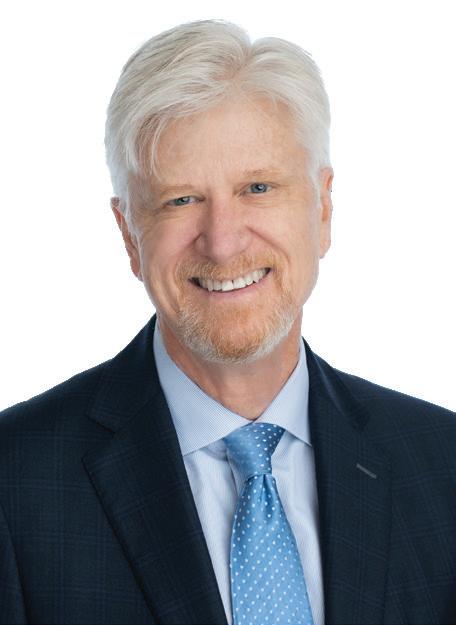
Timothy F. Kosinski, DDS, MAGD Editor
DISCLAIMER: The Academy of General Dentistry does not necessarily endorse opinions or statements contained in essays or editorials published in AGD Impact. The publication of advertisements in AGD Impact does not indicate endorsement for products and services. AGD approval for continuing education courses or course sponsors will be clearly stated. AGD Impact (ISSN 0194-729X) is published monthly by the Academy of General Dentistry, 560 W. Lake St., Sixth Floor, Chicago, IL 60661-6600. Canadian Mailing Information: IPM Agreement number 40047941. Change of address or undeliverable copies should be sent to: Station A, P.O. Box 54, Windsor, Ontario, N9A 6J5, Canada. Email: impact@agd.org. Periodical postage paid at Chicago, IL and additional mailing office.
AGD members receive AGD Impact as part of membership; annual subscription rates for nonmembers are $80 for individuals and $120 for institutions. Online-only subscriptions are $85 for individuals and $110 for institutions. All orders must be prepaid in U.S. dollars. Single copies are available upon request. Please contact our Membership Services Center at 888.243.3368 for more information.
POSTMASTER: Send address changes to AGD Impact 560 W. Lake St., Sixth Floor, Chicago, IL 60661-6600. No portion of AGD Impact may be reproduced in any form without prior written permission from the AGD. Photocopying Information: The Item-Fee Code for this publication indicates that authorization to photocopy items for internal or personal use is granted by the copyright holder for libraries and other users registered with the Copyright Clearance Center (CCC). The appropriate remittance of $3 per article/10¢ per page is paid directly to the CCC, Inc., 222 Rosewood Drive, Danvers, MA 01923, USA. The copyright owner’s consent does not extend to copying for general distribution, for promotion, for creating new works, or for re-sale. Specific written permission must be obtained from the publisher for such copying. The Item-Fee Code for this publication is 0194-729X. Printed in U.S.A. © Copyright 2025, Academy of General Dentistry, Chicago, IL.
AGD Corporate Sponsors

By Jeanie Kennedy, AGD manager, Regulatory Affairs & Policy
On May 25, 2025, AGD submitted a response to a request for information (RFI) on deregulation within the federal government. AGD addressed both the deregulation and regulation of certain federal rules and laws. The RFI was promoted by the Small Business Administration. AGD stated the following:
• Noncompete rule: AGD reiterated that the Federal Trade Commission should withdraw its noncompete rule. While AGD members have different viewpoints — sometimes dependent on the evolution of their careers — noncompete arrangements have traditionally been under the jurisdiction of the individual states.
• Affordable Care Act (ACA) translation services: AGD believes that reasonable accommodations are necessary for patients with limited English language proficiency; however, the language assistance provisions in Section 1557 of the ACA are excessive and should be repealed. (Section 1557 requires healthcare providers to deliver mandatory language translation services and post notices of consumer rights in the 15 languages most commonly spoken in the state.)
• Medicaid: Many dentists find the paperwork and administrative burdens associated with Medicaid participation to be excessive. Additionally, some dentists hesitate to accept Medicaid due to low reimbursement rates, which can result in significantly less access to care for vulnerable populations.
• Health Professional Shortage Areas (HPSAs): AGD requests that the HPSA program be reexamined and that it provide assurances to the public that up-to-date data is being used.
AGD encourages the promulgation of regulations or guidance for the following:
• Competitive Health Insurance Reform Act of 2020 (CHIRA): For several years, AGD advocated for changes to the McCarranFerguson Act. On Jan. 13, 2021, President Trump signed CHIRA, which repeals certain portions of the McCarran-Ferguson Act that had previously protected dental and health insurers from antitrust liability. In the four subsequent years, the Department of Justice has not issued guidance or regulations to clarify the constraints and ramifications of the new law. As a result, insurance companies have not changed their payment practices.
• Fair Insurance reforms for noncovered services in the Dental and Optometric Care (DOC) Access Act:
• Prevent insurers from classifying noncovered services as covered by providing nominal payment;
• Allowing contract extensions beyond two years if the provider agrees; and
• Prohibit insurers from requiring a specific dental lab or equipment supplier.
To access the letter, visit agd.org/advocacy/agd-priorities/ advocacy-center.
By Jennifer Clemmons, AGD manager, Dental Practice
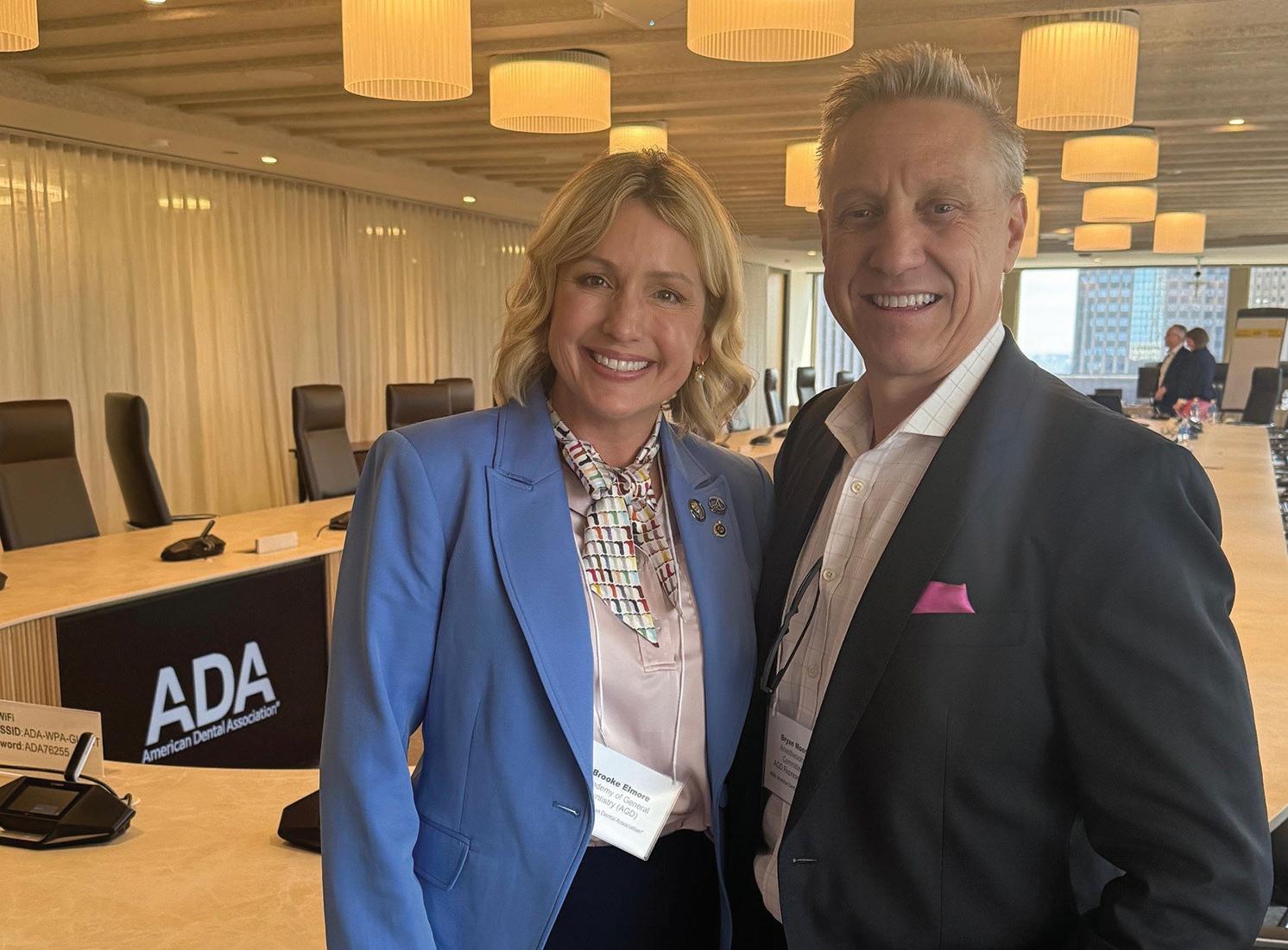
On May 8, 2025, Brooke Elmore, DDS, MAGD, vice chair of the AGD Dental Practice Council (DPC), and Bryan T. Moore, DDS, FAAHD, DPC consultant, represented AGD at the Anesthesia Dental Provider Summit hosted by the American Dental Association (ADA). During the summit, AGD reaffirmed its support for the current Use Guidelines, which allows general dentists to provide safe, effective and predictable anesthesia services within their practices.
While several organizations advocated for the inclusion of their respective model legislations, AGD maintained its position to exclude references to external organizations’ model legislations. After much discussion, the group reached a general consensus to request the removal of the existing references to any organizations outside of the ADA, including but not limited to the American Academy of Pediatric Dentistry (AAPD) pediatric guidelines. There was a strong consensus among the group on the need for the ADA to develop its own Pediatric Use Guidelines. Until such guidelines are established, the existing AAPD guidelines should remain in the Use Guidelines.
Another topic of discussion was the appropriate age for transitioning to adult anesthesia protocols. The AGD reaffirmed its policy recognizing age 13 as the threshold, aligning with the majority of current state regulations. The group ultimately agreed to reference the ADA’s Pediatric Teaching Guidelines, which recommends a range of ages 10–13 when considering sedation. There was also agreement to include language acknowledging the role of qualified nondentist anesthesia providers, emphasizing consistent application of guidelines for all providers.
The summit was both productive and collaborative, with Elmore and Moore actively advocating for and enabling AGD to play a meaningful role in shaping the evolving landscape of dental anesthesia guidelines. The outcomes of the summit will be considered by the ADA’s Council on Dental Education and Licensure, which will then make further recommendations for consideration by the ADA’s House of Delegates regarding future change.
By Jennifer Clemmons, AGD manager, Dental Practice
AGD Editor Timothy F. Kosinski, DDS, MAGD, presented his course, “Implant Communication, Treatment and Complications,” at the American Association of Dental Consultants (AADC) Annual Conference. The course emphasized the importance of patient education and communication, moving away from a “hard sell” approach. It explored strategies for effective diagnosis and treatment planning, as well as the integration of technology as an educational tool in implant dentistry.
Kosinski also addressed common complications associated with dental implant procedures and strategies for managing them. The session featured interactive discussions on how to communicate treatment options, address budget concerns, and support patient acceptance within the dental practice.
Mahtab Sadrameli, DMD, MAGD, a member of AGD’s Dental Practice Council, also attended the conference on behalf of AGD. Read her summary below.
By Mahtab Sadrameli, DMD, MAGD, Dental Practice Council member
As I type these thoughts on the plane ride home from the American Association of Dental Consultants (AADC) annual conference in Bonita Springs, Florida, I find myself with mixed emotions. On the one hand, I’m grateful that AGD sponsored the meeting, allowing me to attend and gain a better understanding of dental consultants and their thought processes. On the other hand, as a wet-fingered dentist actively practicing clinical dentistry, I was puzzled by some of the discussion surrounding claim reviews. Many of the reviews felt uncomfortably familiar, as though my own claims were under scrutiny.
Over two-and-a-half days of lectures, the overarching takeaway was not that neither dentists nor dental consultants are inherently wrong in their decisions. Rather, each party is navigating the system from a different angle. Dentists aim to follow the principles taught in dental school to provide the best possible care for their patients; dental consultants, in contrast, evaluate claims based on the specific guidelines outlined in insurance plans. Before reacting emotionally to a denied claim, it’s important to consult the fine print of the contract or the eligibility fax-back. Unfortunately, not all policies are fully transparent, and guidelines are often incomplete or unavailable. As we heard repeatedly, if every claim were to be approved, actuaries would recommend raising premiums to unsustainable levels.
The meeting featured a diverse range of speakers, including claim reviewers, policymakers, lobbyists and educators. Among them was AGD Editor Timothy F. Kosinski, DDS, MAGD, who strongly advocated for general dentists placing implants and highlighted the importance of understanding the final restorative outcome when planning implant placement.
Here are some notable points from the conference:
1. Artificial Intelligence (AI) in Dentistry: While still evolving, AI has the potential to significantly improve efficiency in comprehensive and periodic exams, reducing the time spent with patients. However, there was no discussion on whether improved AI capabilities might lead to reduced reimbursement rates in the future.
2. Scaling and Root Planing (SRP) Criteria: Regardless of whether an exam is performed by AI or a clinician, a minimum of 2 millimeters of bone loss is required for SRP claims to be approved.
3. Coverage Limitations: Most insurance policies do not provide benefits for attrition, erosion or abfraction-related procedures.
4. Federal Budget and Legislative Landscape: The federal government aims to cut $880 billion in spending over the next decade, with possible impacts on healthcare and dental programs. Several pieces of dental-related legislation are currently under consideration:
• DOC Access Act (S. 1424): Prohibits in-network discounts when insurance does not contribute payment.
• Increasing Access to Dental Insurance Act (H.R. 1397): Allows consumers to purchase standalone dental plans via healthcare.gov
• Ensuring Lasting Smiles Act (H.R. 3277): Requires medical plans to cover treatment for congenital dental and craniofacial conditions.
5. Water Fluoridation Policies: Decisions on fluoride levels in public water are typically made at the municipal or county level where states mandate and fund fluoridation programs. This underscores the importance of engaging in local governance when addressing public health concerns.
Coming from a family of dentists, I am fully aware that dentists can have varied opinions about the treatments they offer patients. It was enlightening — and sometimes frustrating — to witness the same practice among dental consultants and how differently some interpreted the same guidelines when reviewing claims.
As with everything in life, the only two certainties remain: death and taxes. For many colleagues, getting claims approved continues to be a persistent challenge. So, it is important to know the insurance guidelines, document thoroughly, and support your claims with intraoral photos and radiographs taken from multiple angles. Providing comprehensive clinical evidence can significantly improve the chances of claim approval.
In a move to boost member value, two standout additions have been made to your AGD Exclusive Benefits lineup. The AGD Business Credit Card delivers up to 5% cash back on DHP purchases, up to 3% cash back on AGD-related expenses and up to 2% cash back on all other purchases with no annual fee. Also new to AGD is AHI Travel. As a small group tour operator, AHI Travel offers expert-led journeys to destinations around the world, with AGD members receiving a $250 discount per person. These new benefits offer both practical savings and enriching experiences. Visit agd.org/exclusive-benefits to learn more.
AGD is proud to share this year’s Student Chapter of the Year and Faculty Advisor of the Year award winners.
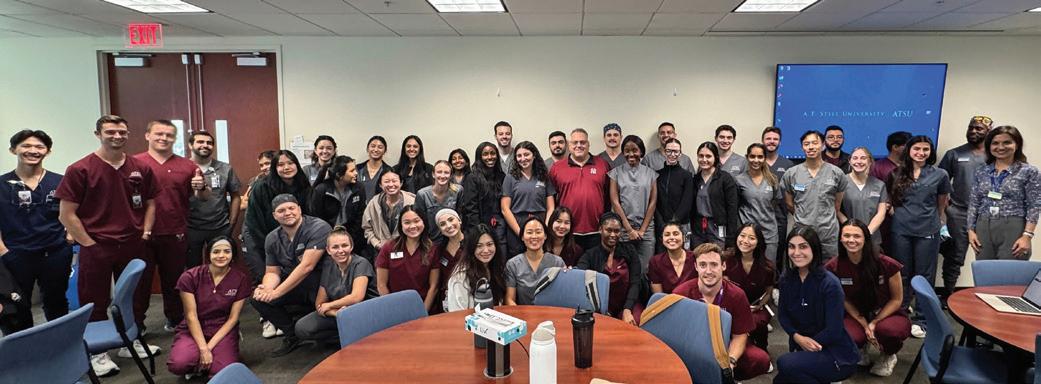
The Student Chapter of the Year Award honors one AGD student chapter that provides its student membership with the best overall set of programs and activities. This year’s winner is A.T. Still University’s Arizona School of Dentistry & Oral Health (ASDOH). This student chapter experienced membership growth by recruiting 95 new student members from all dental classes. Throughout the school year, the student chapter hosted 19 continuing education (CE) sessions covering topics such as Botox®, implants, residency pathways and more. To raise money for the year, the chapter organized a successful fundraiser featuring custom dental-themed hair ties and bags, which quickly sold out thanks to creative marketing and strong interest from students and faculty. Their commitment to service was equally impressive, with members participating in a local Oral Cancer Walk and volunteering at Special Smiles Day.
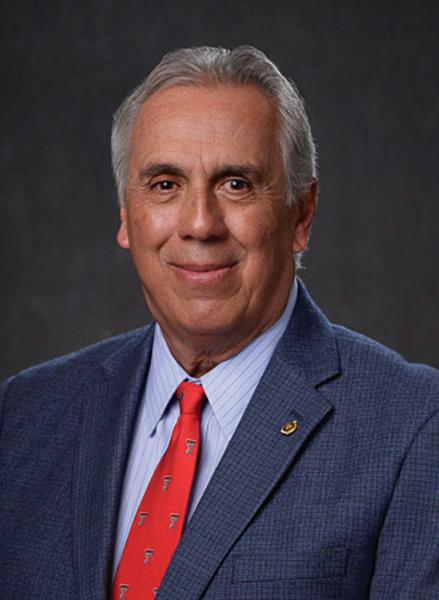
The Faculty Advisor of the Year Award honors one AGD student chapter faculty advisor who provides their AGD student chapter with the best overall support and guidance. This year’s recipient is Alejandro Gonzalez, DDS, MAGD, of Texas Tech University Health Sciences Center El Paso Woody L. Hunt School of Dental Medicine. One of his students shared: “Since our chapter’s inception, Dr. Gonzalez has been our strongest advocate, consistently going above and beyond to ensure our success. He selflessly dedicates his time to recruiting new students and inspiring them to become involved. Dr. Gonzalez attends every chapter meeting, offering invaluable guidance as we brainstorm ideas and coordinate with dentists and companies to provide enriching lectures for our members. As a passionate lifelong learner and a true dental enthusiast, Dr. Gonzalez encourages students to continually seek growth and development. He motivates students to pursue more than the minimum CE requirements and to work toward their Fellowship while still in school. No faculty member exemplifies a greater commitment to fostering a culture of education and personal development than Dr. Gonzalez.”
For more information on AGD student chapter awards, contact students@agd.org
By the UWSOD AGD Student Chapter
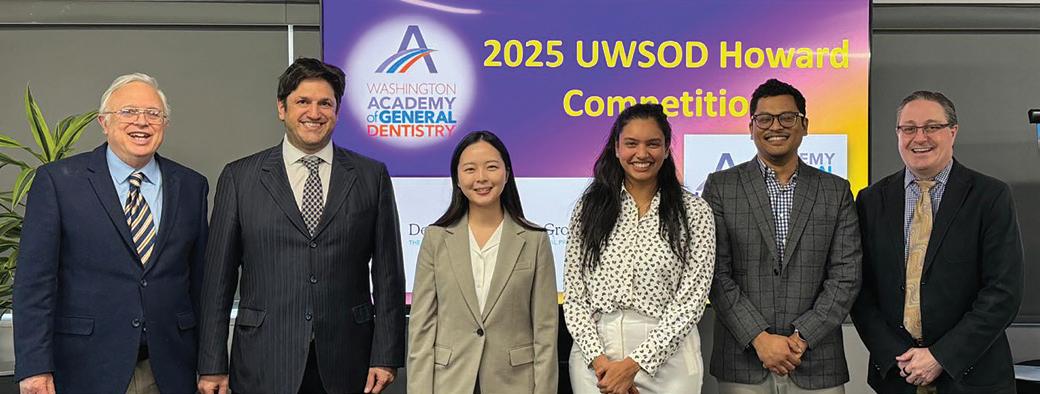
The William Howard Memorial Competition reflects AGD’s core mission: to promote lifelong learning from dental school through decades of clinical practice. Established in honor of William W. Howard, DMD, MAGD, a beloved general dentist, longtime AGD editor, humanitarian and champion of continuing education (CE), the competition challenges students to elevate their documentation, clinical analysis and presentation skills in a professional peer-reviewed forum.
On April 26, 2025, Washington AGD, in partnership with the University of Washington School of Dentistry (UWSOD) AGD Student Chapter, proudly hosted the annual William Howard Competition. Judging was conducted by participants in the 2024–2025 Washington AGD MasterTrack program, which continues to offer a comprehensive CE pathway to AGD Mastership with more than 96 hours of CE over four weekend sessions annually. For more information, visit washingtonagd.org
This year’s presentations were among the strongest in recent memory, showcasing thoughtful case planning, scientific rigor and professional growth. The following students were recognized for their outstanding contributions:
Research
First Place: Megha Rao; Second Place: Rebecca Lee
Clinical Category
First Place: Satish Shrestha; Second Place: Jacob Kennedy
Additional Presenters
Abbi Weiss and Olga Smelik
Acknowledgments
The UWSOD AGD Student Chapter extends its sincere gratitude to the Dental Accounting Group for its financial sponsorship of the 2025 competition. Special thanks are also due to James E. Newman Jr., DDS, MAGD, ABGD; Alireza Sadr, DDS, PhD; Timothy A. Hess, DDS, MAGD; and other faculty for their ongoing mentorship, case support and organizational leadership.
The William Howard Memorial Competition remains a formative and inspiring experience, reinforcing each participant’s responsibility to care for patients with competence, ethics and compassion — hallmarks of the AGD mission and of Howard’s enduring legacy.
Glidewell Signs Multiyear Sponsorship Agreement with AGD
AGD is proud to announce a new corporate sponsorship agreement with Glidewell, one of the world’s largest producers of custom dental solutions. The partnership — which will provide support to AGD through 2028 — aims to offer valuable educational and engagement opportunities for AGD members.
As part of the multiyear agreement, Glidewell kicked off its sponsorship by serving as an exhibitor at AGD’s annual scientific session, AGD2025, which brings together general dentists from across North America for hands-on learning, peer networking and access to leading dental innovations.
In addition to its presence at AGD2025, Glidewell will sponsor continuing education (CE) programming and digital advertising campaigns tailored to support the professional growth of general dentists. These initiatives are designed to enhance AGD’s educational offerings and ensure members remain at the forefront of clinical excellence and practice innovation.
Further solidifying its commitment to AGD’s mission, Glidewell has also pledged meeting space and audiovisual support to host the AGD Fall Fellowship Review Course and Exam in 2027 and 2028.
“We are excited to welcome Glidewell as a long-term corporate sponsor,” said Chethan Chetty, DDS, MAGD, AGD president. “Its commitment to high-quality dental education aligns with AGD’s goals for our members and will help advance our mission to promote lifelong learning and elevate the practice of general dentistry.”
Glidewell founder and president Jim Glidewell, CDT, added, “CE has long been a cornerstone of Glidewell’s mission to improve the quality, efficiency and affordability of dentistry. AGD is an acknowledged leader in this pursuit, and it’s an honor to support its ongoing effort to maximize clinical success for dentists and their patients.”
Look for the following articles in the July/August issue of AGD’s peer-reviewed journal, General Dentistry.
• Treatment of tooth wear using a digital workflow and occlusal veneers: a case report
• Glass fiber post removal using cone beam computed tomography combined with guided endodontics: a case report
• Osteoporotic bone marrow defect mimicking odontogenic cysts: report of 2 cases

Read these articles and more at agd.org/generaldentistry
By Clayton Sorrells, DDS
One of my favorite parts of writing these columns is being able to look back on my journey from student dentist to new practice owner. A year ago, I wrote about the lessons I learned during my rookie year of practice ownership. Now, I’d like to write about the progress I’ve made in year two, the challenges that came with it and the things I still need to work on.
To be honest, my second year sometimes felt more overwhelming than the first. The excitement of new ownership had worn off. Most of the big updates were already in place. The team was in place. So, now it felt like everything was on me. The pressure shifted from “Can I do this?” to “I should know what I’m doing by now.” That mindset brought a different kind of anxiety. It wasn’t just about being a dentist anymore. It was about being a leader, a decision-maker and the person who sets the tone for the entire practice. That weight is hard to describe until you feel it. For new dentists stepping into ownership, be ready for that shift. Sometimes the anxiety doesn’t end — it just changes shape.
Despite that pressure, Glenwood Family Dentistry had a strong second year. The team really came together and worked hard. We treated more patients than ever before, helped a lot of people and created some great moments along the way. Of course, there were hiccups. But, overall, I’m proud of what we accomplished.
One of my biggest personal challenges this year was figuring out how to be a more effective leader. In my first year, I didn’t do much managing. I was focused on keeping my head above water, learning how to run a business and adapting to everything at once. I leaned on a pretty relaxed hands-off approach. But, over time, I realized that too much freedom can lead to inconsistency. When things started to get too relaxed, it became clear I needed to step in.
This year I had to have conversations I didn’t enjoy — namely about attendance, punctuality and professionalism. They weren’t easy, but they were necessary. My office manager and I ended up creating and implementing policies to address these areas, and those policies have helped a lot. I’ve never liked being micromanaged, and I don’t want to be that kind of boss. But I’ve also learned that some structure is necessary. If expectations aren’t clear, it’s not fair to anyone. New dentists might hesitate to set rules early on, especially when team members are older or have been with the practice longer, but I’ve learned that structure brings clarity and helps everyone work more confidently and cohesively.
One of the most rewarding parts of year two was how much more efficient we became. With the physical updates out of the way, I had more time to focus on improving systems. I worked on scheduling, speed and treatment-planning. Those changes led to real
growth in production, collections and new patient numbers. My favorite moment this year was when my office manager, Shannon, said, “Dr. Sorrells, I’m not going to lie — I cannot believe how many new patients we’ve gotten over the last year.” That meant a lot coming from someone who’s seen everything in this office for over 20 years. And when Dr. Plyler, the former owner, stops by now, he’ll usually say something like, “I don’t even recognize this place or the patients anymore.” That’s been fun to hear. Still, what I’m most proud of is that we’ve been able to retain so many of his longtime patients. That kind of trust doesn’t come easy.
If you’re stepping into an established practice, earn trust by showing up consistently and taking the time to understand and value the relationships your team and patients had before you arrived. Ask questions, listen more than you talk, and avoid making sweeping changes before you’ve earned their confidence.
There were also some really great moments that reminded me just how far my team and I have come. It’s amazing how much communication improves when a team works together long enough. I can now make a hand motion, and the right instrument will be in my hand instantly. A patient will walk in the front door,
and Shannon can just give me a look, and I’ll know exactly who it is. Those small things mean a lot. They’re a sign that we’re in sync, and that kind of rhythm only comes with time and effort.
Managing people is never easy. Everyone has strengths and weaknesses, me included. There’s always something to improve. I still get the “Sunday scaries” — that creeping anxiety as the weekend winds down and Monday’s responsibilities loom. I still dread hearing my phone buzz early in the morning because it usually means someone’s sick or can’t make it in. But this year, I was lucky to bring on Morgan, our treatment coordinator, who has been a huge help at the front desk and can assist chairside when needed. That kind of flexibility makes a big difference. I’ve learned that redundancy is key to reducing stress. Whether that’s having two assistants, two autoclaves or a front office that’s cross-trained, having a backup plan in place gives me peace of mind.
One thing I’ve realized is how much easier it is to focus on patient care when the business side is running more smoothly. I’ve had to grow a lot in that area. I’ve had to tackle financial decisions, hiring decisions and long-term planning. And, while I wouldn’t say I have it all figured out, I’m starting to feel more confident. I’ve had
to learn to trust my gut more. I’ve also learned when to slow down and ask for help.
There’s still so much I want to improve. I want to be a better communicator. I want to be more consistent with feedback and recognition. I want to set clearer goals and help everyone stay aligned. But I also want to enjoy the journey a little more. There are a lot of great things happening here, and sometimes I forget to stop and take it all in.
Two years in, I’ve realized that practice ownership isn’t about having all the answers. It’s about staying engaged, being willing to adjust and learning how to communicate clearly. This past year taught me how valuable it is to provide structure without being controlling and to build systems that support both consistency and growth. A cross-trained, adaptable team has made all the difference, and celebrating small wins along the way has helped us stay grounded. Looking back, I would absolutely call it a sophomore surge. There will always be more challenges ahead, but the foundation we’ve built is solid, and I’m thankful for the people who’ve helped shape it. ♦
Clayton Sorrells, DDS, is a new dentist and previous AGD chapter president at Louisiana State University School of Dentistry. To comment on this article, email impact@agd.org

By Roger P. Levin, DDS
Many dentists fixate on their practice overhead. They view it almost as an enemy to their income. And, in cases where overhead is too high, it is an enemy. However, in my experience reviewing hundreds of practice financial reports, overhead is typically not the main factor why doctor income is not higher. In an era where dentists have accumulated student loan debt, incurred the cost of opening or purchasing a practice, and are working longer hours, controlling overhead will not be the driving force for generating a desirable income for a modern lifestyle and long-term savings. What will be? Let’s first start by understanding overhead. Every business has overhead, and overhead is an essential part of doing business. You can’t operate a business without expenses. Large industries have generally accepted standards regarding expense levels. Dentistry, with few national comparisons that tell us exactly what practice overhead should be, relies on anecdotal evidence from surveys, consulting firms, accountants and expense analyses by companies that perform practice valuations and other legal transactions. This provides general guidelines for dental overhead expenses, which vary by specialty. We know, for example, that staffing costs are now running at about 28% and that lab fees in a general practice should be about 7%.
Reducing overhead is generally a worthwhile effort. For example, a practice that can reduce expenses in any category by 1% will increase profit (i.e., doctor income) by $1,000 on every $100,000 of collections. So, if the practice has collections of $1 million and is able to reduce overhead by 4%, doctor income will increase by $40,000. This is significant and should not be ignored. However, there is a finite limit on expense reduction. If a practice is relatively in line with the available anecdotal overhead information, then the practice does not have an overhead problem. Perhaps a few more dollars could be squeezed out of certain expenses, but, in most cases, overhead reduction strategies yield limited results.
Dentists often talk about overhead as a percentage. For example, 65% overhead for a general practice is not unusual. In this case, the practice may be able to reduce overhead by a few percentage points, but, overall, the real opportunity to change the overhead percentage is by increasing practice production. A practice that is able to increase production by $100,000 while holding down expenses will lower the overhead percentage. The opportunity to increase practice production is the best opportunity to decrease the overhead percentage.
To be clear: When production goes up, some expenses also rise. However, in my experience, the first 30% increase in production in most practices will not require new fixed expenses. That level typically does not require expenses such as hiring a new staff member, paying for more continuing education or investing in technology. Therefore, fewer expenses are needed to generate a 30% increase in production because you are only adding variable expenses like lab

fees and supplies. Your core fixed expenses stay the same. Sturdy production growth allows the overhead percentage to decline even when you can’t reduce costs one penny more. This is not to say that you shouldn’t pay attention to opportunities to reduce overhead, but increasing production will have a much more dramatic effect on practice income — funding your lifestyle and long-term retirement savings — than spending time trying to find more costs to cut.
There are many ways to increase practice production, and I encourage each practice to create a list of opportunities. It could be adding a service, expanding hours, adding an associate paid on commission, increasing the internal marketing program, heightening the team’s case presentation skills or building a higher level of customer service to attract more new patients. These are just a few of the many opportunities to increase practice production that significantly outweigh the number of opportunities to reduce practice overhead.
Focus on these three things first:
1. A proven way to increase practice production fast is to attract more new patients. Rather than adding to overhead with expensive advertising, the best avenue is internal marketing. Examples of effective internal marketing strategies include:
• Offering every new patient a free exam for every member of their family as part of a new patient-family program.
• Asking patients to refer friends.
• Doctors personally calling every patient who refers a new patient to thank them.
• Developing a short monthly email newsletter that always includes gently encouraging more referrals.
A strong internal referral marketing program should include at least six to eight strategies in order to have enough momentum to bring the brand and referral marketing message to patients.
2. Schedule all active patients. In my observation, up to 50% of patients do not have their next appointment scheduled, which means the practice is losing revenue and/or possibly losing patients and families. A daily task of reaching out to patients who have not scheduled and encouraging them to make appointments is a critical part of the front desk scheduling system. The goal is to have 95% of your patients scheduled at all times. This will increase chair time, increase dental treatment and even improve referrals because patients who aren’t remembering to come in are not going to refer others.
3. Improve case presentation skills. Case presentation is a system just like any other. It should be outlined step by step and carefully scripted for every member of the team. Every presentation should conclude with “the magic question.” Every time a case is presented, look at the patient and ask, “Mrs. Jones, would you like to have this done?” That is not being pushy. You are actually helping your patients make a decision. And make sure your team is following up on all unaccepted treatment. The hygiene appointment is the perfect opportunity to remind patients of treatment they have declined in the past. Remember, if you are able to schedule 95% of your active patients at all times, then you will have more people with whom you will be able to discuss potential treatment that has not been completed.
Regardless of the title I chose for this column, I don’t think dentists should completely ignore their overhead. I’m in favor of it, but I recognize the limitations of cutting costs when it comes to improving doctor income. The real opportunity is to increase practice production. And, given that the first 30% of practice production increase does not necessitate higher fixed expenses, all doctors can quickly improve their income by putting these strategies in place. ♦
Roger P. Levin, DDS, is the founder and CEO of Levin Group, a dental management consulting firm. To receive his Practice Production Tip of the Day, visit levingroup.com. To comment on this article, email impact@agd.org.
Now is the time to take advantage of AGD’s SelfInstruction program that includes exercises based on AGD Impact articles. These exercises contain 10 questions and are worth 1 CE credit. It’s the perfect complement to General Dentistry
AGD Impact
1 exercise = $15
2 exercises = $25 (save $5)
4 exercises = $50 (save $10)
General Dentistry
1 exercise = $30
3 exercises = $70 (save $20)
6 exercises = $120 (save $60)
12 exercises = $180 (save $180)
LEARN MORE agd.org/self-instruction

By Maggie Augustyn, DDS, FAGD
I’ve always looked up to my next-door neighbor, Fran. He seems to have lived his life right. He’s a talented clinician, a surgeon, a practice owner like many of us and a podiatrist. A little over a decade my senior and with a loving wife, three kids and now grandkids in the picture, he was ready for life’s most cherished and awaited moments — the golden years. The kids have grown up, the debts have been cleared, and countless lives have been changed for the better due to his care. It was a time for him and his wife, Connie, to explore, breathe, and savor a slower and shared rhythm.
Except his time was interrupted abruptly — Fran was diagnosed with terminal glioblastoma of the brain.
As my heart aches for a man I adore and his wife, children and grandchildren, I recognize the lessons his life imparts. We live pushing one difficult moment to the next, often without pause. We imagine and convince ourselves that there will come a time for a break and celebration in the future. But what if that time never comes? Have we, in our relentless striving to help patients, unknowingly forfeited life’s most valuable rewards?
There is both hope and arrogance in the sense that either a bright or peaceful future awaits us. Despite the stories we hear of colleagues or neighbors whose lives have been cut short, we continue to believe that an abrupt end won’t become our reality. And I am not here to convince you otherwise. However, if we do not accept that possibility, we might push ourselves harder than what might be acceptable. When we do that, we can blow past moments of peace, love and celebration.
Many of us assume these cherished moments will be in the distant future — during retirement. We continue to convince ourselves that if we just push harder today, when that golden chapter arrives, it will all be worth it. We go on, broken but hopeful, clinging to the belief that at the age of 65 or so, we will heal.
Over the years, I watched Fran take many pauses. He focused much of his life on his kids. He loved nature and spent time gardening and growing vegetables. I have no doubt that he’s lived his life in celebration, but I believe him to be an exception. For most of us, driving toward that time of savored rest, we seldom take a break or find peace. Our days seem to always be about amassing, counting and achieving more. Yes, we slow down enough to go on a vacation or two. But we really don’t look for magic in everyday life. We believe that to be too distracting, and, quite frankly, pointless. There would be no return on investment in finding joy in a cup of coffee if you could be holding a handpiece instead.
But, as I’ve grown older and contemplated Fran’s life, I’ve come to recognize this mindset for what it is — one of the most profound and enduring fallacies shaping our existence. Too often we simply do not celebrate the simple moments in life. We easily dismiss the chirping of birds on a Saturday morning, the Tuesday nights on the couch cuddled with the dog or the backseat conver-

“There is both hope and arrogance in the sense that either a bright or peaceful future awaits us.”
sations with the kids on the way to school. We ignore the laughter of parents when they are still with us. We don’t anchor ourselves in those joys because they seem fleeting and irrelevant. We don’t perceive them to have a return on investment in our lives.
But these moments, however small, define our lives. It’s counting these experiences, as opposed to the crown preps and days of production, that ensures we won’t look back with regret if our days are cut short. Perhaps more profoundly, anchoring ourselves to these quiet moments of celebration has the power to transform the lens through which we see life itself. They gently steer us away from the relentless pursuit of “what’s next” and invite us into a space of stillness, of pause. They allow us to step back, to acknowledge the quiet triumphs overshadowed by our striving, and, in doing so, they bestow a rare and sacred gift — a moment of peace.
Often, in the quiet moments before sleep, we replay the day’s scenes in our minds. We recount our endeavors, our conversations and the countless efforts we expended, only to feel a nagging void
where joy ought to be. We perceive happiness in others, a brightness in their interactions, and wonder why it feels so distant from us. We wonder, how is this possible?
Perhaps it is not what we’ve done but what we’ve neglected. To heal this emptiness, we must recalibrate — not in grand gestures, but in gentle practices. Celebrate the smiles shared, the quiet victories, the warmth of voices that lift our spirits. Choose to gather those moments, however fleeting, and hold them close. In honoring these small joys we start to heal and cherish life again.
I am beginning to live my life this way. And it’s not easy. My brain has been programmed to the contrary for years. Shifting this mindset takes intention, practice and effort. But here’s what I’ve discovered along the way: This recalibration of perspective is making me happier — truly, deeply happier. And with that happiness comes fewer regrets. I no longer find myself endlessly yearning for the “next big thing” — the vacation, the promotion,
the distant someday of retirement. Instead, I’ve started to live in the here and now. It’s in these micromoments — as I type this, it’s a Saturday morning, and birds are chirping — that I feel the richness of life. These small, precious moments fill me, renew me and make my heart come alive.
And in them, I find gratitude — for the simple beauty of being here.
If there is anything that Fran’s life and its abrupt shift teaches us, it is this: There is no guarantee of “someday.” The magic we seek is not confined to some distant future; it is here, waiting for us to notice it. Waiting for us to pause, to breathe and to anchor ourselves to the beauty in our everyday. ♦
Maggie Augustyn, DDS, FAGD, is a practicing general dentist, owner of Happy Tooth, faculty member at Productive Dentist Academy, author and inspirational speaker. To comment on this article, email impact@agd.org
AGD’s Marketplace & Career Center allows you to search for candidates and post open positions. Find the Perfect Fit for Your Office Today marketplace.agd.org/employers

By John W. Portwood Jr., DDS, MS, MSF, CFP, ChFC, CLU, MAGD
“The key To success is sTarTing early and sTaying consisTenT.”
Preparing for retirement is one of the most daunting tasks that young dentists face when they first start practicing. In contrast to the immediate challenges of paying off school debt and the normal expenses of day-to-day living, retirement seems like a vague, misty mirage that needs to be worried about later. Add to that the transition to private practice and the funds required to eventually purchase a practice, and now it seems like retirement can never be accomplished. It is true that approximately half of all Americans have no retirement savings1 and about two-thirds are woefully underprepared,2 but, as dentists, you have the opportunity to achieve a comfortable retirement with proper planning and some work.
Fears about being able to retire are valid and should not be discounted, for they are very real and must be addressed. Without formulating a plan of action in the beginning of your career, you may face a financial disaster in your later years. Without planning for your retirement, you will get exactly what you planned for — nothing.
First, you need a number. That number is how much money you need to retire.
Assistance will probably be needed from a retirement specialist to not only find that number, but also to find a plan that can deliver it to you. However, I will go through some of the math to give you an idea of the process. You want a comfortable retirement, so let us say for this example that you want $135,000 a year to retire on (remember, you will hopefully have some income resources, such as rental properties, investment income and part-time jobs, other than your retirement plan). If you discount the Social Security payments you will receive (let’s estimate them at $55,000 for you and your spouse), then you need the retirement plan to deliver $80,000 a year in today’s dollars. Next, you have to realize that with 3% inflation per year (a good long-term rate to hang your hat on), your money is halved in buying power every 24 years. If you are about 28 years old and plan on retiring when you are 65 years old, then your $80,000 will need to be approximately $240,000 annually to be able to have the same lifestyle that $80,000 today provides. Now, calculate what pile of money is needed to take out $240,000 a year
without depleting the pile before you die. Numerous researchers have calculated the amount that can safely be withdrawn each year, and that percentage varies between 3%–5% annually, allowing the recipient to adjust each year for inflation.3 Some of that percentage depends on how old you are when you retire, some on prevailing markets. In our example, we will assume that you are 65 years old. I have found 3.8% to be my favorite number, but, for illustration purposes, we will use financial adviser William Bengen’s 4% number. Multiply your $240,000 by 25 (to account for the 4% withdrawal), and you will need $6 million total to have your goal of $240,000 ($80,000 in today’s dollars) to withdraw per year.
Yes, that daunting number may seem unachievable, but the key to success is starting early and staying consistent. Compounding interest is your friend, and every year that you delay contributing makes the goal that much harder to achieve. Remember, you don’t have to maximize contributions during the early struggles in your career. In fact, most older dentists started by contributing to an individual retirement account (IRA) and
“your reTiremenT Plan is only one ParT of The income PicTure.”
still have those same IRAs once they retire. Again, the key is to start early and consistently contribute. You can contribute more as time goes on and your finances improve. It is extremely hard to not contribute and then catch up later. Every year is precious and critical to success.
Now, let’s look at the average retirement age. The average American retires at 62 years old.4 For the average dentist, it is 69 years old.5 The fact that most dentists retiring work for themselves and have great incomes contributes to this later retirement. Factors that lead to early retirement include declining health, longing to enjoy family and travel, and the desire to do something else.
I recommend that you pick a retirement date as your target date. It doesn’t mean you have to quit on that day, but what it does mean is that you are now secure and can retire if you choose. It is an amazing feeling to know that you are financially secure. It changes your whole practice outlook. You are now working because you choose to and not because you have to. Remember that we used 65 years old in our example above. However, the age
you are using as your target is important from the standpoint that it helps determine how much annually you have to invest to achieve your overall financial goal.
There are many plans available, from the lowliest IRA to complex defined benefit and defined contribution plans. Each of them serves a goal and a purpose, with concomitant obligations in some of these plans to include staff. The annual amount needed to fund the plan goes a long way in deciding which plan to pick. I can’t emphasize enough that you should get help from a retirement specialist to figure out how to achieve the goal. You don’t need any help to open an IRA, but understand it will not ultimately get you to your goal. It is a great place to start when you are beginning, but you will need something stronger to reach the finish line.
(As an aside, if you are going to use an IRA, then go with the Roth option. If your timeframe is greater than 18 years, you will be better served with paying taxes up front and letting the balance grow tax-free. Even if you have less than 18 years to invest, I still recommend a Roth IRA for its estateplanning advantages.)
Be sure your retirement specialist sets benchmarks to help ensure you are on pace to achieve your goals. Investments grow logarithmically because of the effects of compounding, and it can be difficult to know whether or not you are on pace to achieve your goal. Usually, you feel as if you are constantly behind, yet you are still on track. I would recommend benchmarks at intervals of five years. That usually lets you weather both rising and declining markets and gives a more precise estimation of your trajectory.
Your retirement plan is only one part of the income picture. You also have Social Security and investments, as well as any work you might do in retirement. I know that many are concerned that Social Security will not be available in the future for fear the program will run out of money. However, it would be politically damaging for any party to do that, so I see a “fix” coming at some point soon. There are many options to fix the problem, and we will have to let the politicians find the right answer. I would still include Social Security in the planning equation.
“iT is ofTen TemPTing To sPend your reTiremenT conTriBuTion on someThing oTher Than The goal you seT forTh.”
Continuing your journey toward retirement, it is important to make sure that you are hitting all of your benchmarks. Remember that these are guideposts, not absolutes, but they let you know if you are staying the course or falling behind in reaching your goal by the date you have chosen. Sometimes life throws curveballs and creates conflicts that pull you away from contributing to your retirement.
It is often tempting to spend your retirement contribution on something other than the goal you set forth. It can be on equipment for the practice, such as a new dental suite, or something for your personal and family life, such as a long-deserved family vacation or a new car. Remember, there is always somewhere else to spend the money that is more fun than putting it aside for something in the future. But you also need to realize that the future is coming, and you must be prepared.
Unanticipated crises may arise that demand your finances and waylay you from your retirement-saving. This is another reason for the benchmarks. You may actually have to contribute more to play catch-up for a previous diminution
in payments. Working with your adviser to make adjustments to the plan may be necessary. It is critical that you communicate with your retirement specialist to stay on course. They understand that things happen, and adjustments must be made on the journey, and they have the expertise to help you right your ship’s course.
As you get older and acquire more disposable income, you may now have money to invest outside of your retirement plan. You always want to achieve your retirement plan goal, but you don’t necessarily want all of your money inside the retirement vehicle if it can be helped. While a pension plan does receive tax-deferred or tax-exempt status on the earnings of the plan (depending on the plan chosen), these plans are subject to the vagaries of the tax laws and rules of distribution, which can be adjusted by the administration in charge. This can materially affect the outcome you desire. By having other investments outside of the plan, you pay your taxes on the growth, and then the money is outside of government control. I recommend that your goal should try to be a 50/50
mix of retirement plan assets to personal investments by the time you retire. This may not be attainable, but it should at least be a goal. These investments can be in stocks, bonds or real estate.
Another event that can occur during this time is an inheritance — received by either yourself or your spouse. This is money that can go a long way toward creating a great retirement. Many times, I see this money used for personal things that may be necessary for the individual or the family, but I also find that in many cases it is used on somewhat frivolous items. I think the important lesson here is to separate needs versus wants. This money can be used to fund your investments outside of the retirement plan, creating a tidy nest egg.
Another issue requiring discussion is your estate plan and how you wish to manage your funds after you have left the world behind. Minimally, you should have a will in place to fulfill your final wishes. This is especially important when minor children are involved.
Your financial assets are generally governed by contract law and not probate,
“as you Begin To aPProach reTiremenT, you need To evaluaTe The risk on your PorTfolios.”
meaning you can get past probate by designating beneficiaries in your investment and IRA accounts, allowing the money to go directly to those you choose to have it.
As you begin to approach retirement, you need to evaluate the risk on your portfolios. While it is usually necessary to keep stocks in your portfolio in order to make retirement funds last throughout your life, sometimes it is prudent to pare back on the speculative securities and to place money in more secure investments. This is where an adviser can be of great help in deciding which securities to replace and which to lessen in position.
You should also be planning out what you will be doing in retirement with your time and money. This can be very challenging for dentists, as they have been married to their practices as professionals for the last 25–40 years. The big question becomes, “What am I going to do now, and am I prepared for this?” These are very important questions as you are going into a period of your life that lasts 10–25 years. It is a time to explore outside activities and hobbies, but you can only fish and play golf so much. There needs to be something to do that is meaningful.
“There will Be an iniTial sense of loss when you reTire, and you musT figure ouT how To fill This void.”
It could be challenging yourself to a new hobby or field that you have always wanted to try. It could be volunteering with groups or agencies that need help. It could be traveling or spending time with family and grandchildren. The important thing is that there will be an initial sense of loss when you retire, and you must figure out how to fill this void. The important lesson — and I can’t stress this enough — is to not retire until you figure this out. It is hard to bring the ship back out of mothballs once it is in dry dock. If your one great enjoyment is to do dentistry and see your patients, then it is perfectly fine to continue doing that. We must also acknowledge that dentistry as a profession takes a physical toll on our bodies over the course of our careers, and there may come a time when that toll is too great and we are no longer able to practice at the high level to which we aim. It is important to prepare for retirement both financially and emotionally, so that if this time comes, you are prepared to face it.
The only problem with retiring later is that your practice will probably lose value the longer you delay retirement. Transitioning out of practice is important
financially. For most dentists, their practices begin to decline after the age of 55 for many reasons — they begin cutting back hours, don’t invest in technology or marketing, etc. While the income is great and to be able to see your patients and staff every day is fulfilling, you will need to recognize that you will lose much of your practice value as you age in place. A successful transition takes several years to plan and enact and should not be waited upon until the last minute to implement.
It is difficult as a dentist to walk away from your practice for a month, but, if you can make it work, I would recommend you take a test drive to see what retirement is like. Take a month off work and spend the time focusing on the kinds of things you intend to do during retirement: travel, take a new hobby class, spend time with friends and family, etc.
After this experience, you will be able to make a more informed decision. The worst-case scenario? You had a great vacation and realize you are not ready for retirement.
“as you reach your desired reTiremenT age, you musT make decisions aBouT how To enJoy whaT is yeT To come.”
As you wind down your journey to retirement, hopefully all of your planning and hard work has come to fruition and you successfully attained your goals. I am sure there has been turbulence during the journey, as that is the norm and not the exception. Emotionally, it is very difficult to retire. Your relationships with your staff and patients wind down and, in many cases, completely disappear. As professionals, dentistry is more than a job — it is your passion. It is important that you recognize there will be a feeling of loss, and that is normal. Hopefully, you will replace it with new joys and excitement.
As you reach your desired retirement age, you must make decisions about how to enjoy what is yet to come. Each of you has chosen a retirement age that is ideal for you. For example, I will pick the age of 64. Your first decision is what you will do for healthcare. This is an important decision, as you will not qualify for Medicare until the age of 65. If you are fully retired, then you will have to find a private insurance policy that will cover you until the age of 65. This can be not only problematic, but also expensive, as
you are no longer in a group policy. For some, it may be difficult to afford a new policy if you have preexisting conditions, and this may affect your decision to wait until 65 to retire.
The next decision is what to do if you did not accomplish the retirement number that you have been working toward. Perhaps you delayed saving later than you should have, or perhaps you didn’t maximize your plan contribution each year. Maybe the market was unkind or your adviser didn’t perform well. Whatever the reason, there is a likelihood — and I speak from experience in working with dentists — that you are short of your desired goal. You are now faced with a dilemma. Do you accept a lower retirement plan amount, which is acceptable if all of your other retirement income goals are good, or do you work longer to save more? Working longer is definitely acceptable, as your desired retirement age was a benchmark and not an absolute. If working a few more years will help you reach the goal you desire, it is not the end of the world. It is only difficult if your health is poor.
One should eliminate as many loans and debts as possible before entering retirement.
Your goal is to try and reduce as much drag on resources as possible. In the personal world as well as the business world, debt is a large anvil weighing down performance and preventing one from reaching goals. Interest payments reduce income needed to live on and the ability to reach your savings goals. Social Security is another issue. If your normal retirement age is 67 (as defined by the Social Security Administration), and you take your Social Security at 64, then you will receive a reduced amount from your normal retirement amount. This reduced amount will last for the rest of your life. This is not a problem if it is accounted for and the reduction in income is acceptable. I am often asked at what age someone should take Social Security. My answer is that you take it when you need it — not before. The longer you wait before taking it provides you with a higher monthly income. The only absolute reason to take it early is that it is a necessity to exist or your health is poor. The great thing about Social Security is that it is your only income source in retirement that is indexed for inflation. All of your other sources have to be adjusted manually.
“one should eliminaTe as many loans and deBTs as PossiBle Before enTering reTiremenT.”
“look aT The sale of your PracTice as anoTher Piece of The Pie ThaT will ulTimaTely geT you To your goal.”
If you own your practice, you have hopefully chosen a transition path and are now homing in on the final transition into retirement: selling your practice. While this will provide extra funds from which to live on in retirement, it is never as much as you think it will be or as much as you think it should be. It is hard to quantify — and accept — an amount for a lifetime of hard work. After taxes, it may be several hundred thousand dollars, which will help toward retirement, but it will not set you up for a life of luxury. Again, look at the sale of your practice as another piece of the pie that will ultimately get you to your goal.
Housing may be an issue in that you no longer need that large house. Securing a smaller home may or may not be financially helpful to your retirement plan. This of course depends on how old your house is and the cost of the new house you are looking at. While you might not make a large profit, it may be more beneficial from a maintenance perspective to sell an old house and incur fewer repair costs in the future, when your income will be fixed. Healthcare costs rise as you get older, and, even though Medicare will help cover
most of these costs, there are some costs that will have to be accounted for outside of Medicare. Insurance to cover long-term care is practically a requirement, given the likelihood of its necessity and cost. As you wind down practice-related insurances and eliminate disability insurance once you have achieved financial independence, I would recommend purchasing a good long-term care policy for both you and your spouse. This policy covers many of the costs that Medicare doesn’t cover or has limits on, such as nursing homes or skilled nursing care. These costs can be substantial and deplete retirement resources quickly at a time when they are needed most. The ideal time to purchase these policies is around the age of 55 but can adequately be purchased up until about the age of 64–65. Happiness in retirement is a rather vague target. What makes us happy differs between individuals, making it difficult to quantify. I do know that having adequate resources to do the things you have planned is extremely important and the reason I wrote this article. I hope each of you finds joy and happiness in life and that retirement is all you expected. ♦
XJohn W. Portwood, Jr., DDS, MS, MSF, CFP, ChFC, CLU, MAGD, is a retired family dentist, certified financial planner and nationally recognized financial lecturer. He has furthered his financial background by receiving a master’s degree in personal financial planning and finance specializing in wealth management. To comment on this article, email impact@agd.org
References
1. USAFacts Team. “Nearly Half of American Households Have No Retirement Savings.” USAFacts, 9 Nov. 2023, usafacts.org/dataprojects/retirement-savings. Accessed 5 May 2025.
2. Dhue, Stephanie. “55-Year-Old Americans Are ‘Critically Underprepared’ for Retirement, Survey Finds.” CNBC, 26 June 2024, cnbc. com/2024/06/26/55-year-old-americans-criticallyunderprepared-for-retirement-survey-.html.
3. Bengen, William P. “Determining Withdrawal Rates Using Historical Data.” Journal of Financial Planning, Oct. 1994, pp. 171-180.
4. Hartman, Rachel. “What Is the Average Retirement Age in the U.S.?” U.S. News and World Report, 19 March 2025, money.usnews.com/money/retirement/aging/articles/what-is-theaverage-retirement-age.
5. “U.S. Dentist Retirement and Career Span Trends.” Health Policy Institute, ADA, ada.org/resources/research/health-policy-institute/ dentist-workforce/dentist-retirement-trends. Accessed 5 June 2025.

By Dan Kolen
"What we find is that the macroeconomic environment is a much bigger factor than the generation, and another big factor is life stage."
— Jennifer Deals, USC Center for Effective Organizations
In 2024, in a partnership with Pollfish, Resume Genius conducted a survey with 625 hiring managers. It found that 45% of those surveyed described Generation Z as the most challenging to work with, compared with 26% for millennials, 13% for Generation X, and 9% for baby boomers. While the survey did not include the number of Gen Z hiring managers polled, even 45% of Gen Z hiring managers said that their own generation was the most difficult to work with.1
Gen Z — categorized as those born between 1997 and 2012, according to the Pew Research Center — are generally new college graduates and the youngest hires at dental offices today. Along with Gen Z, baby boomers, Gen X and millennials generally comprise the workforce today. Baby boomers are the only generation that were officially designated by the U.S. Census Bureau and were born between 1946 and 1964. They received their name because of the steep increase in birth rates at the conclusion of WWII and the precipitous fall after 1964. Gen X (1965–1980) grew up during major advancements in computers,
while millennials (1981–1996) came of age during the ubiquity of the internet.2
Various internet articles and pop psychology pieces use these generational labels to attribute certain general characteristics to entire generations — baby boomers are loyal and don’t like change; millennials like constructive feedback; Gen Z are self-centered — but how true are these assumptions? Can dentists rely on any of these stereotypes when they evaluate potential job candidates, especially those from Gen Z? If not, what information should they base decisions on?
While people who grew up with smartphones listening to One Direction had a much different childhood than those raised with typewriters listening to The Beatles, using generational labels has been fraught with controversy when it comes to actual research. Generalizing based on age groups can push stereotypes rather than reporting on data that has been collected over time about specific age cohorts, according to Pew.3
“The field [of studying generations] has been flooded with content that’s often sold as research but is more like clickbait or marketing mythology,” wrote Kim Parker, director of social trends research at Pew. “By choosing not to use the standard generational labels when they’re not appropriate, we can avoid reinforcing harmful stereotypes or oversimplifying people’s complex lived experiences.” 3
This online sensationalism in the field has caused Pew to take a step back and reassess how it conducts research. It will now look at age groupings according to major events like the Great Recession, the COVID-19 pandemic and the invention of the iPhone, rather than using a generational label that spans 15–18 years, according to Parker. “Period effects” — major events that affect the attitudes of all age groups and changing demographics — make certain issues more related to demographic shifts and not generational ones. Others researching this topic have found that similar nuance is needed when looking into the topic of generations.
"Bottom line: I think the most important thing in hiring anyone is viewing the personal characteristics of the individual. That matters much more than a generational label."
— Aaron Glick, DDS, FAGD
Experts further warn against using generational labels in the workplace. “What we find is that the macroeconomic environment is a much bigger factor than the generation, and another big factor is life stage,” said Jennifer Deals, senior research scientist at the Center for Effective Organizations at the University of Southern California’s Marshall School of Business.
Deals said that factors such as if someone entered the workforce during a recession or if an employee had young children at home would have much bigger implications on these employees’ day-today lives and career trajectories than the so-called generation when they were born. Deals said, “Label is fundamentally immaterial. What is material are the details of the person sitting in front of you.”
Dan Ninan, DDS, FAGD, has been practicing dentistry for more than 15 years and is based in Arizona. He recently collaborated with a number of professionals who are a part of Gen Z, and he has been impressed by their capacity to integrate technology.
He’s also seen some areas for improvement in his youngest collaborators. “I have observed a number of Gen Z team members struggling with developing professional habits, such as consistent follow-through and punctuality,” Ninan said. “I see this less as a generational trait and more as a reflection of the early stage
of their career. With appropriate mentorship and clear expectations, I expect that these individuals will improve and adapt.”
Various researchers have observed similar phenomena among recent graduates, no matter the generation. The transition from school to work has an enormous impact on the way people view their roles in the world and themselves. In one 14-year longitudinal study, self-esteem scores of newly minted graduates slowly rose within a three-year window after graduating and entering the workforce. While many factors were at play, including if they had gone from high school to either work or college, across the board it took a series of years for the new hires to grow in confidence in their capacity as professionals. With self-esteem comes both success at work and well-being, according to the researchers, and self-esteem growth is a predictor of positive outcomes.4
There is also a period of lag time when newly graduated hires begin working in which they initially feel lost in their new work environments. In one 2012 study, researchers polled companies where 89% reported that their newly hired and newly graduated employees experienced a “lost in transition” phase that lasted six months to a year as new workers adjusted to their jobs and workplaces.5
In a theoretical framework, researchers report there’s a complex dynamic in which newly graduated employees are forming a professional identity. This is comprised of
“self-realization, development, inner integrity, personality determination, adequacy and stability of its self-concept regardless of situation changes, [and] identity with the profession and the professional community.” Entering the workforce is a major life change that affects a whole host of aspects of the new employee as a person.6
Aaron Glick, DDS, FAGD, made one new Gen Z hire a patient coordinator in his office in Texas. He has been thrilled with the results.
“I’ve found that my new employee from Gen Z is more comfortable with social technologies. This has been helpful to the practice, specifically in marketing and communicating with others in a similar age range. Now, we’re integrating social technologies in a way that has made our community as a whole more aware of our office,” Glick said.
“Bottom line: I think the most important thing in hiring anyone is viewing the personal characteristics of the individual. That matters much more than a generational label. In an effort to improve staff retention, it’s important to remember the general principles of team management and understand the personal motivations of our new hires.”
There has been an observed rise worldwide in mental health problems in the younger age demographics that corresponds with when smartphones became ubiquitous,
according to Deals. She said, “The smartphone enables endless connectivity, which isn’t healthy. It isn’t good for us. When you see the adoption rates of smartphones go up, you see a slight delay [in the anxiety and depression rate] and then an increase in anxiety and depression in young people. And this is global.”
Some studies have reported startling trends in mental health problems, including a 2013 study that found in Ontario, Canada, 24% of teens reporting “moderate to severe mental distress.” In 2015, that number rose to 34%, and, by 2017, 39% of teens reported this level of distress. In the United States between 2008 and 2015, children and adolescent hospital admissions for suicide ideation and/or attempts nearly doubled, with the highest percentage being among girls. In a similar period of time, cell phone ownership and persistent use of social media more than doubled.7
“Although most existing data are observational, making causality difficult to establish, findings from a few longitudinal, randomized and controlled studies suggest that social media and smartphone use may be contributing to the rising burden of mental distress among youth,” reported Abi-Jaoude et al. in their 2020 article in the Canadian Medical Association Journal.7
The rise in mental health problems of people raised in a world with widely adopted smartphone use is having a significant impact on the workforce, according to Deals.
“There has been a massive increase in anxiety and depression in the younger age cohort, which has been affecting people’s work, because when you have anxiety and depression, you have an increase in absenteeism. You have an increase in the use of medical care,” Deals said. “If you’re dealing with a small office and someone frequently has to take time off work to deal with a real medical condition, that affects everybody else in the small office because the work still has to get done.”
Mental health problems in childhood and adolescence have been observed to have serious effects on people once they begin their professional lives. One 18-year study that tracked more than 1,000 adolescents found that mental health problems at a
young age had a cumulative snowball effect when people entered the workforce. First, it impacted how people performed in school, which affected what job opportunities they were able to obtain, and, finally, it diminished their job performance once they entered the workforce. By age 29, they were experiencing “lower work functioning” across the board.8 Combining data on the increased rate of mental health issues among young people and the previously studied impact of adolescent mental health problems on work performance, the impact on the professional space could be significant. Further, a Gallup survey from 2022 found that 68% of workers born in 1989 or later were experiencing workplace stress, and 34% felt burned out. Millennials born before 1989 were at a 63% stress rate and 34% burnout rate. This is compared with 40% of baby boomers feeling stressed and 18% burned out. Burnout is linked to jobhopping, poor physical health and strained relationships. Burnout and stress also affect work performance and long-term career progress. In this survey, younger millennials and those from Gen Z were experiencing the most burnout and workplace stress, with younger millennials being defined as those born after 1989.9
Another major issue affecting many in Gen Z while they were coming of age was the COVID-19 pandemic and the impact of remote school. While some in the generation were 23 and had already begun their professional lives, others were first graders and are now entering sixth grade. Pew (which decided against using generational labels in many of its studies) conducted a study in 2024 on the effect of the pandemic. In its analysis, the youngest age cohort polled were those between 18 and 29. This would include the older end of Gen Z and younger millennials. It found those between 18 and 29 were the most likely age group to report a “major toll” from the pandemic at 35%, compared with 16% of those 65 and older.10
Hiring and Working with Gen Z
“I started working in this field when Gen Xers [those born 1965–1980] were the horrible young people that everybody hated. It’s cyclical. Humans are humans. Fundamentally,
younger humans are irritating to older humans, and older humans are irritating to younger humans. This happens in fairly consistent patterns over time,” Deals said. Ninan said in his collaborations with younger professionals, using a generational label will only hamper their work together. What will help everyone is seeing the person for their strengths and what they are bringing to their work. Ninan said, “In professional and medical environments, relying too heavily on generational labels risks overlooking critical differences like a huge range of life circumstances. This can lead to incorrect assumptions, misunderstanding and ineffective communication.” ♦
Dan Kolen is a freelance writer and media producer based in Chicago. To comment on this article, email impact@agd.org.
1. Chan, Eva. “2024 Hiring Trends Survey: What Makes a Great Job Candidate?” Resume Genius, 13 June 2024, resumegenius.com/ blog/job-hunting/hiring-trends-survey.
2. Dimock, Michael. “Defining Generations: Where Millennials End and Generation Z Begins.” Pew Research Center, 17 Jan. 2019, pewresearch.org/short-reads/2019/01/17/where-millennials-endand-generation-z-begins/.
3. Parker, Kim. “How Pew Research Center Will Report on Generations Moving Forward.” Pew Research Center, 22 May 2023, pewresearch.org/short-reads/2023/05/22/how-pew-researchcenter-will-report-on-generations-moving-forward/.
4. Filosa, Lorenzo et al. “Self-Esteem Development During the Transition to Work: A 14-Year Longitudinal Study from Adolescence to Young Adulthood.” Journal of Personality, vol. 90, no. 6, Dec 2022, pp. 1,039-1,056.
5. Webb, Jonathan, and Shwery, Brett. Collegiate Design: The New Driver for Workplace Design. KI and Furnishing Knowledge, 2017, p.widencdn.net/r29wel/Collegiate-Design-White-Paper.
6. Kriukova, O. V., and Reva, M. V. “The Development of Professional Identity and Professional Mentality in Youth.” Journal of History Culture and Art Research, vol 9, no 4, 2020, pp. 87-97.
7. Abi-Jaoude, Elia, et al. “Smartphones, Social Media Use and Youth Mental Health.” Canadian Medical Journal, vol. 192, no. 6, 10 Feb. 2020, pp 136-141.
8. de Groot, Samira, et al. “Work Functioning Among Young Adults: The Role of Mental Health Problems from Childhood to Young Adulthood.” Occupational and Environmental Medicine, vol. 79, no. 4, 2021, pp. 217-223.
9. Pendell, Ryan, and Sara Vander Helm. “Generation Disconnected: Data on Gen Z in the Workplace.” Gallup Workplace, 11 Nov. 2022, gallup.com/workplace/404693/generation-disconnected-datagen-workplace.aspx.
10. Tyson, Alec, et al. “5 Years Later: America Looks Back at the Impact of COVID-19.” Pew Research Center, 12 Feb. 2025, pewresearch. org/politics/2025/02/12/5-years-later-america-looks-back-atthe-impact-of-covid-19/.
AGD Referral Rewards Program
Refer your colleagues to join AGD now, and they’ll get 50% off AGD’s 2025 dues.*
You’ll both also earn $50 in Referral Rewards once they join!
Learn More agd.org/refer
“AGD has been pivotal in shaping my career through its quality education and relationships among the members. I wouldn’t be where I am today without AGD!”
Amanda Sonntag, DDS, MAGD
Wyomissing, PA Member since 2014
*Half-year rate does not apply towards constituent and component portion of dues. Half-year rate does not apply for memberships that expired on Dec. 31, 2024, residents or new dentists who graduated in 2024 or 2025. Members who pay half year dues may record CE starting on July 1, 2025.