JOHN NEYL AN
Back through the
I
archives
was recently researching information on the salinity tolerance of creeping bentgrass and came across some information on Seaside bentgrass which was the first bentgrass that I studied as a turfgrass agronomist. I was surprised to note that Seaside bentgrass was selected over 95 years ago and has been the source of parent material for some of the improved cultivars that many golf course greenkeepers would be familiar with. It got me thinking about the progression and advancements in the turf industry over my nearly 40 years working in turf and more importantly what were the origins of the many things that are now taken for granted. Whether it has been the development of new turfgrass cultivars or better understanding of turfgrass diseases, profile construction and plant protection chemicals, as I get older I believe even more fervently in understanding the history of the industry. This affords a better understanding of where the industry is currently and, more importantly, to avoid the problems of the past. 44
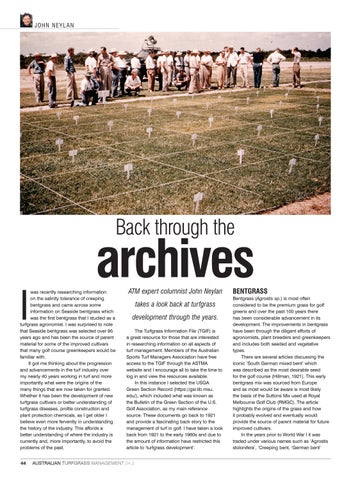
ATM expert columnist John Neylan takes a look back at turfgrass development through the years.
The Turfgrass Information File (TGIF) is a great resource for those that are interested in researching information on all aspects of turf management. Members of the Australian Sports Turf Managers Association have free access to the TGIF through the ASTMA website and I encourage all to take the time to log in and view the resources available. In this instance I selected the USGA Green Section Record (https://gsr.lib.msu. edu/), which included what was known as the Bulletin of the Green Section of the U.S. Golf Association, as my main reference source. These documents go back to 1921 and provide a fascinating back story to the management of turf in golf. I have taken a look back from 1921 to the early 1960s and due to the amount of information have restricted this article to ‘turfgrass development’.
AUSTRALIAN TURFGRASS MANAGEMENT 24.2
BENTGRASS Bentgrass (Agrostis sp.) is most often considered to be the premium grass for golf greens and over the past 100 years there has been considerable advancement in its development. The improvements in bentgrass have been through the diligent efforts of agronomists, plant breeders and greenkeepers and includes both seeded and vegetative types. There are several articles discussing the iconic ‘South German mixed bent’ which was described as the most desirable seed for the golf course (Hillman, 1921). This early bentgrass mix was sourced from Europe and as most would be aware is most likely the basis of the Suttons Mix used at Royal Melbourne Golf Club (RMGC). The article highlights the origins of the grass and how it probably evolved and eventually would provide the source of parent material for future improved cultivars. In the years prior to World War I it was traded under various names such as ‘Agrostis stolonifera’, ‘Creeping bent, ‘German bent’