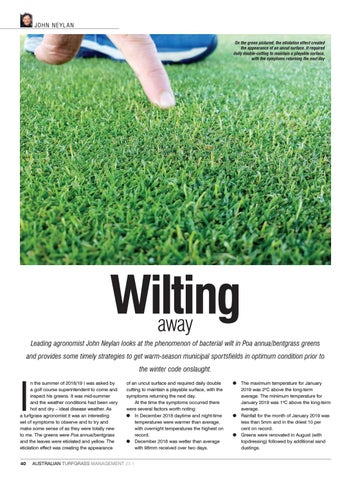
JOHN NEYL AN On the green pictured, the etiolation effect created the appearance of an uncut surface. It required daily double-cutting to maintain a playable surface, with the symptoms returning the next day
Wilting away Leading agronomist John Neylan looks at the phenomenon of bacterial wilt in Poa annua/bentgrass greens and provides some timely strategies to get warm-season municipal sportsfields in optimum condition prior to
I
the winter code onslaught.
n the summer of 2018/19 I was asked by a golf course superintendent to come and inspect his greens. It was mid-summer and the weather conditions had been very hot and dry – ideal disease weather. As a turfgrass agronomist it was an interesting set of symptoms to observe and to try and make some sense of as they were totally new to me. The greens were Poa annua/bentgrass and the leaves were etiolated and yellow. The etiolation effect was creating the appearance 40
of an uncut surface and required daily double cutting to maintain a playable surface, with the symptoms returning the next day. At the time the symptoms occurred there were several factors worth noting: l In December 2018 daytime and night-time temperatures were warmer than average, with overnight temperatures the highest on record. l December 2018 was wetter than average with 98mm received over two days.
AUSTRALIAN TURFGRASS MANAGEMENT 23.1
The maximum temperature for January 2019 was 2oC above the long-term average. The minimum temperature for January 2019 was 1oC above the long-term average. l Rainfall for the month of January 2019 was less than 5mm and in the driest 10 per cent on record. l Greens were renovated in August (with topdressing) followed by additional sand dustings. l