SPATIAL
COLLECTIVE REFLECTION
BEYOND STORYTELLING
DESIGN AS EXPERIENCE
Issue 109 October / November 2022 THE ART & CULTURE MAGAZINE www.aestheticamagazine.comAesthetica UK £6.95 Europe €12.95 USA $16.49
Interactive installations transform spaces and stimulate the senses
Surreal fashion offers narratives saturated by colour and emotion
Mirrors act as portals to explore the complexity of Afrodiasporic identity
INVESTIGATION Protecting human rights through the work of Forensic Architecture
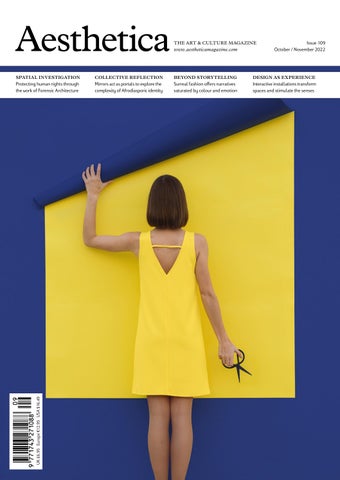
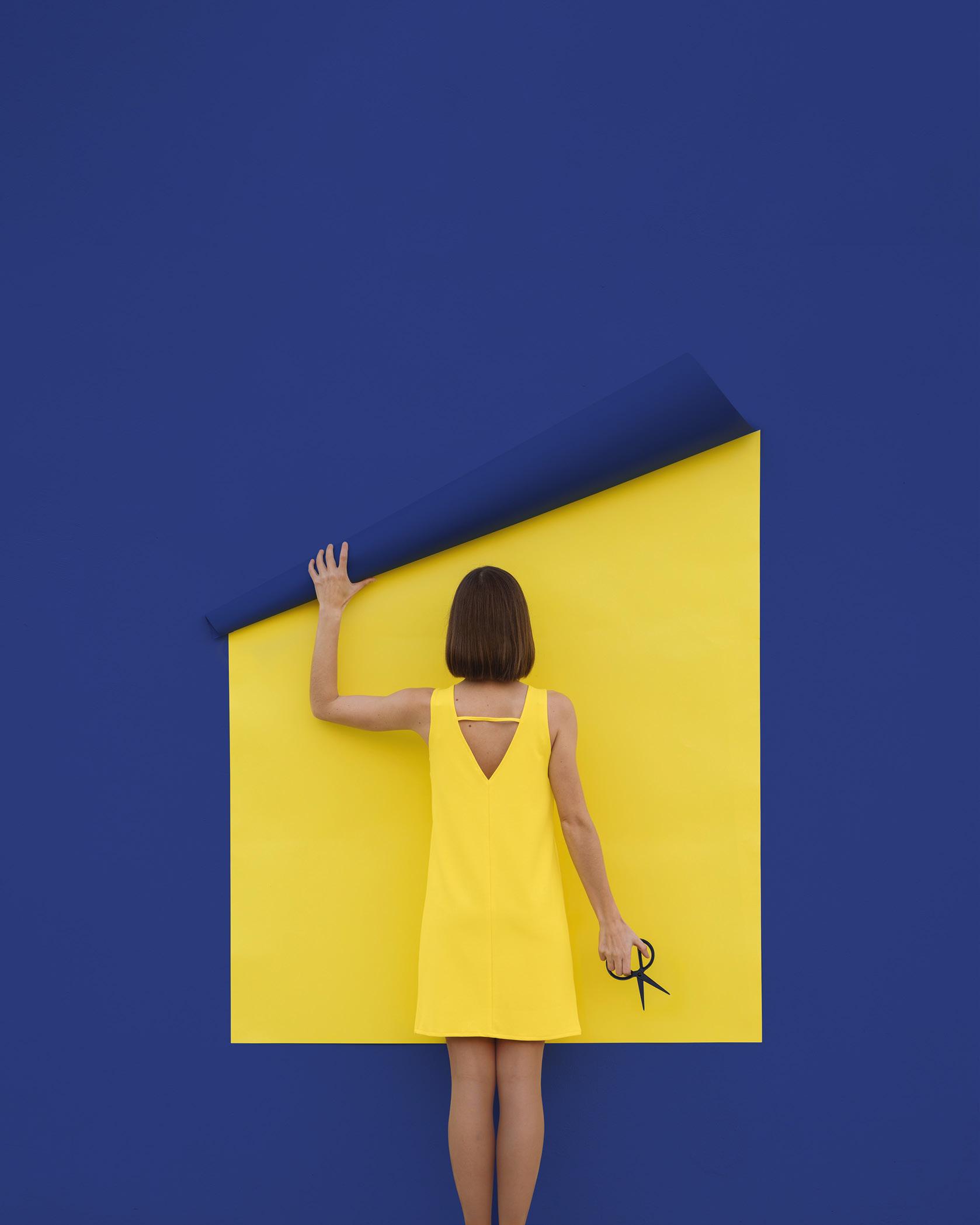
On the Cover
Spanish photographers Anna Devís and Daniel Rueda are inspired by buildings. They use the urban landscape as a back drop for playful and creative compositions. Figures perform in front of minimal façades – bending, stretching and jumping amongst abstract cut outs, spots and grids. (p. 98)
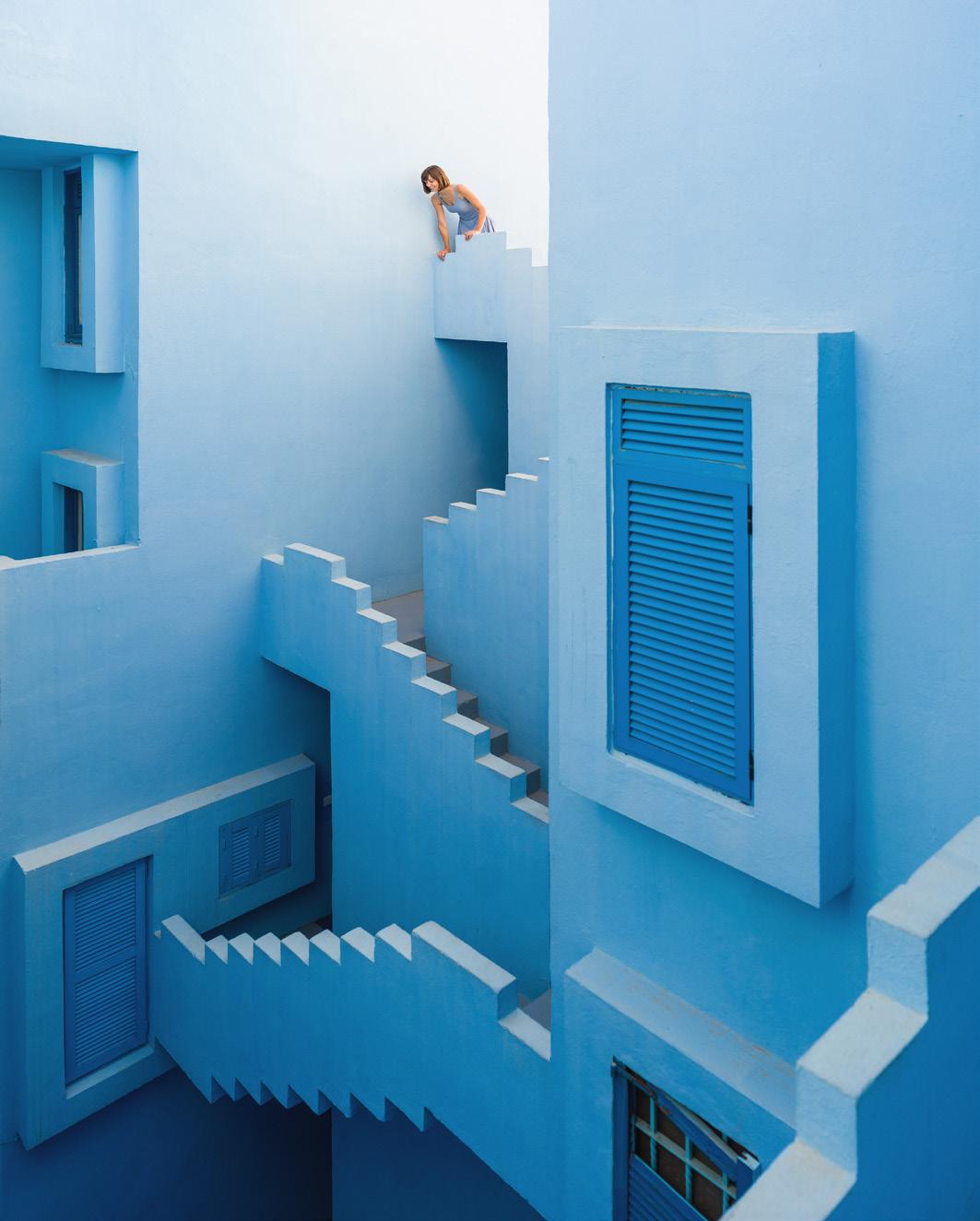
Cover Image: Anna Devís and Daniel Rueda, Valencia, Spain (2022).
annual Aesthetica Film Festival. I am continuously inspired and invigorated by all the talented people that come our way, from the Aesthetica Art Prize and Film Festival to the Creative Writing Award and this publication. I am so grateful
I have to ask: where do ideas come from? How is that sometimes we have that eureka moment, when the stars align, and we think about something in a completely new way. I don’t know how we can utilise this, but the best way to spark ideas is to immerse yourself in as many varied things as possible. I always talk about stepping outside of my comfort zone. How can we encourage ourselves to do that more?
Inside this issue we foreground the Turner Prize-winning Forensic Architecture, who harness design to investigate human rights violations, from terror attacks to ecocide. Meanwhile, we speak with Jason Bruges Studio about the rise of experiential art, interactivity and interdisciplinarity. Mónica de Miranda opens a new show at Autograph ABP, London, which looks at the complexity of the Afrodiasporic experi ence. The Island, a 37-minute film, addresses concepts of race, representation, social justice and human rights. It’s a powerful piece that questions the construction of identity through a post-colonial lens.
In photography, we welcome Omar Torres, Andoni Beristain, Anastasia Samoylova, Reuben Wu and Neal Grundy, who each play with landscapes in new and innovative ways: from illuminating remote locations with drone lighting to creating paper tableaux that mimic the ways we experience nature online. Our innovative cover photographers are Anna Devís and Daniel Rueda, who play with form and design, redefining the conventions of structural photography by using the city as a performative canvas. The Last Words go to MoMA’s Roxana Marcoci, who highlights a seminal Wolfgang Tillmans exhibition.
Cherie Federico
Aesthetica 17
18 Aesthetica 86 34 40 112 48 80 68 106 98 62
Art
20 News
This season's photographers Hannah Starkey and Cig Harvey come to the fore, alongside The New Black Vanguard and an eco-show at BALTIC.
40 Curious Arrangement
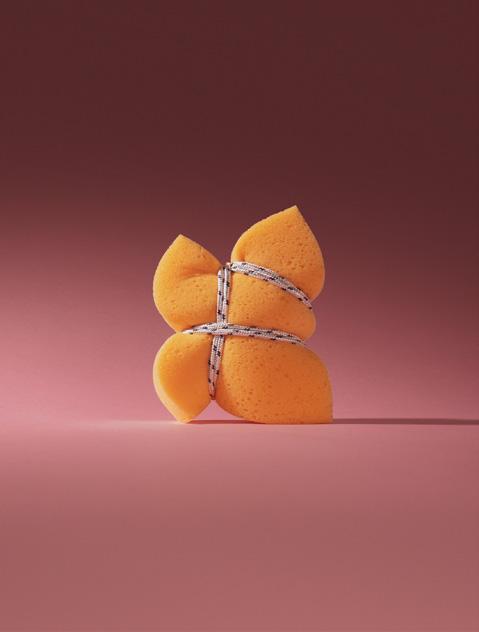
Andoni Beristain's bold still lifes inject a sense of narrative into the everyday, finding moments of comedy, satire and beauty within familiar items.
68 Ethereal Illumination
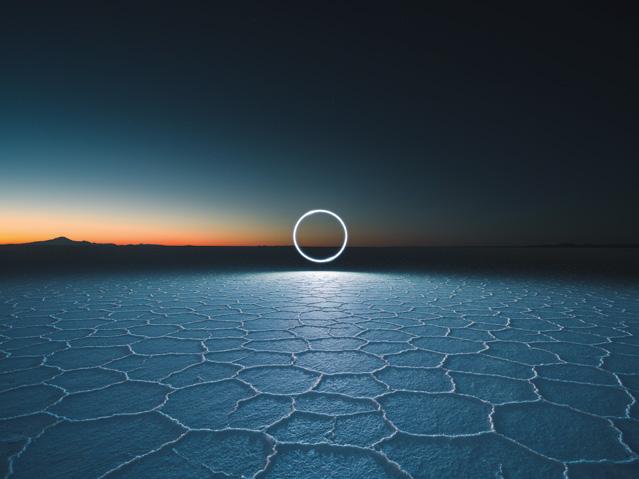
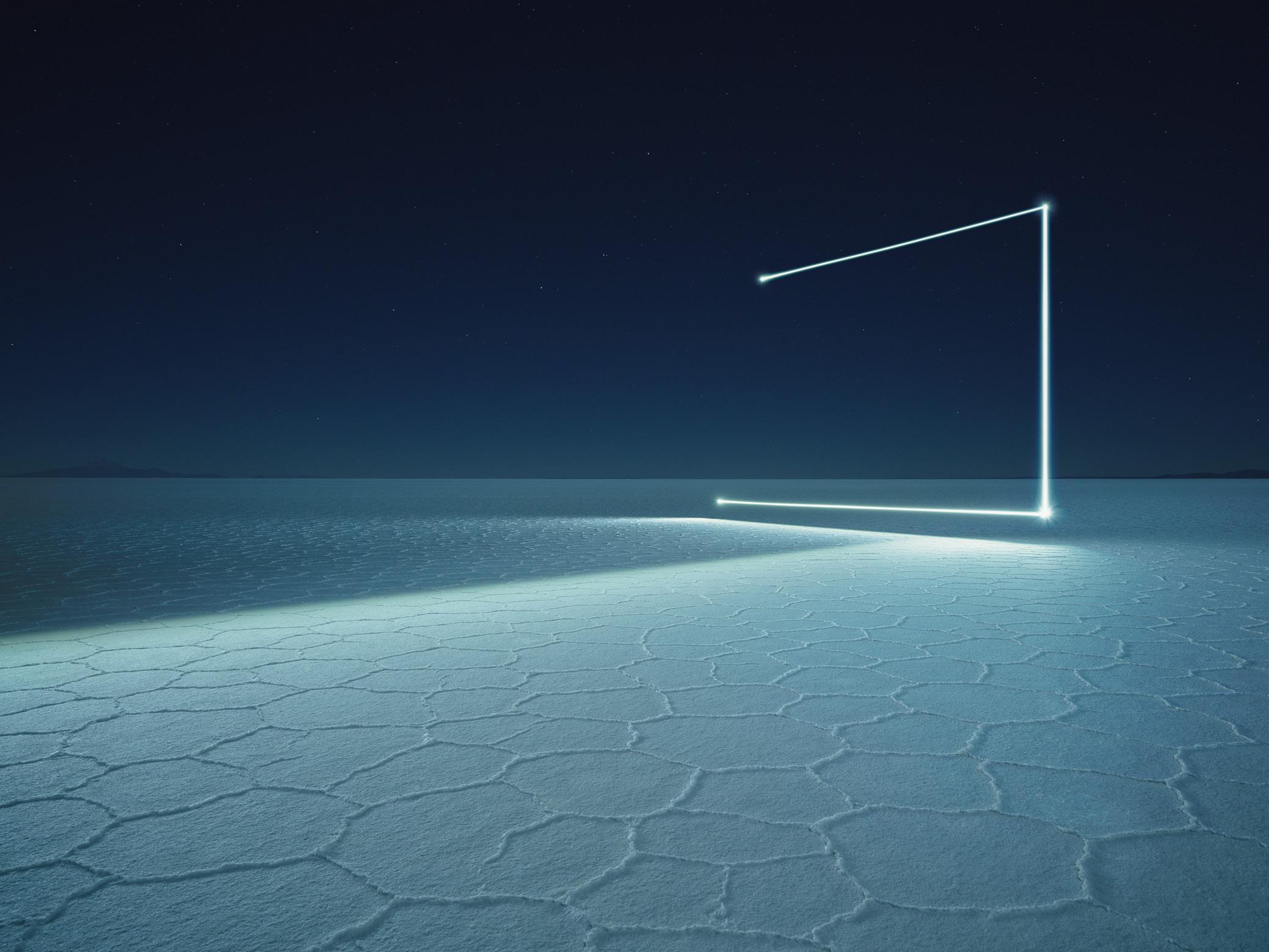
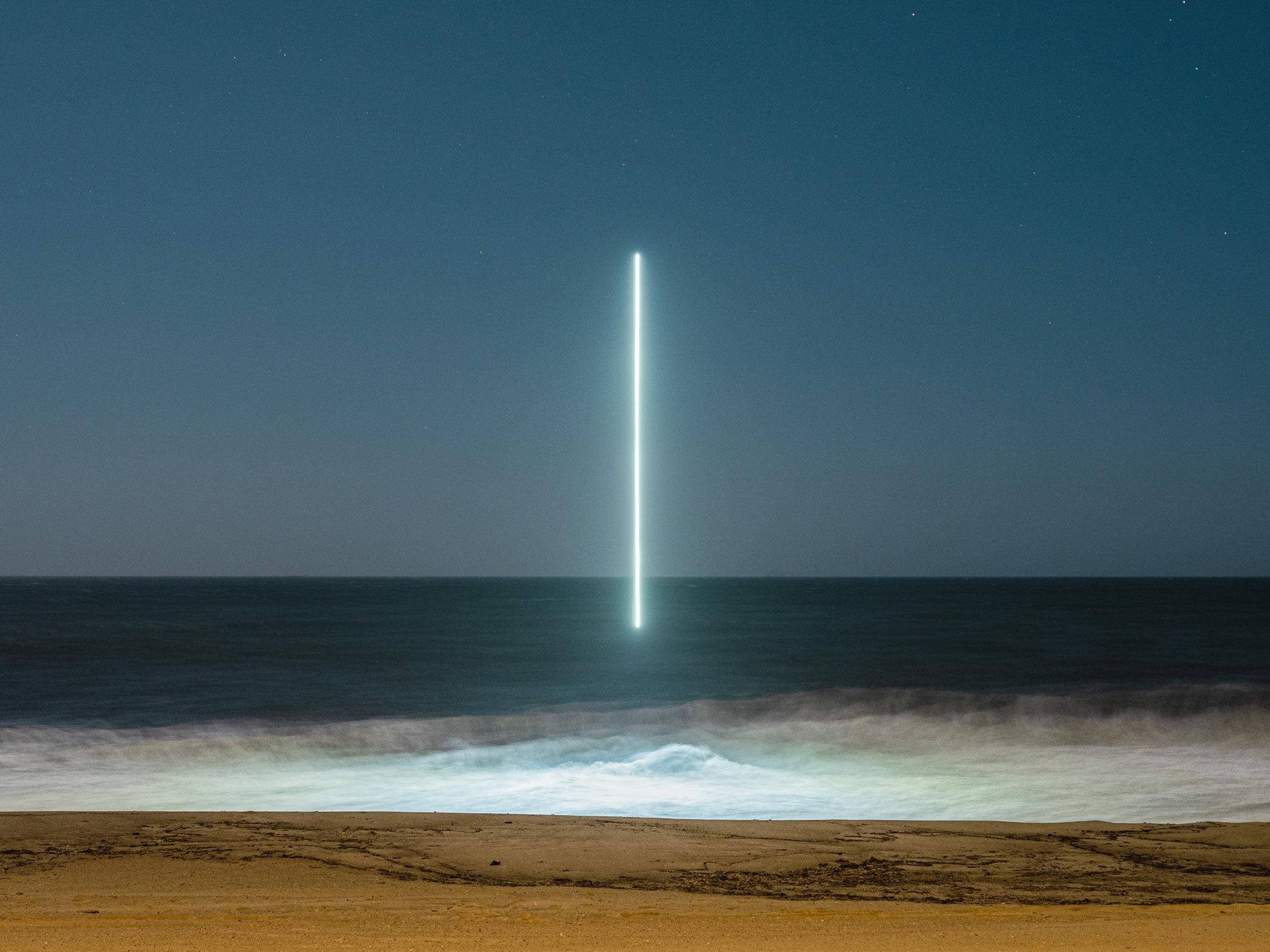
Reuben Wu produces temporary geometries, or “aeroglyphs”, in remote locations. Glowing halos and lines are created with light-carrying drones.
98 Urban Backdrops
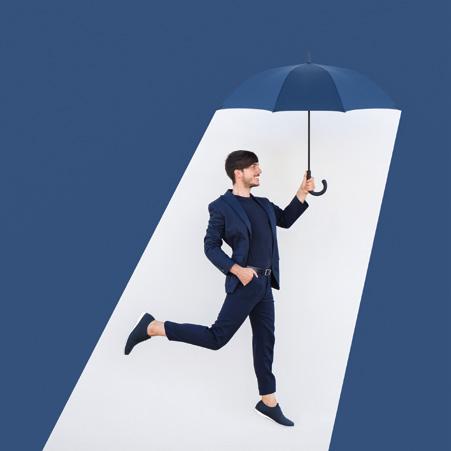
Anna Devís and Daniel Rueda's images redefine the conventions of structural photography whilst tapping into the pillars of architectural tourism.
Reviews
124 Exhibitions
In this edition, we review Contemporary Chinese Artists on Classical Forms alongside an exhibition exploring the global impact of African fashion.
30 10 to See
The V&A hosts a major exhibition on the Korean Wave. Meanwhile, Museum Europäischer Kulturen shares personal records from the Ukraine War.
48 Visual Composite
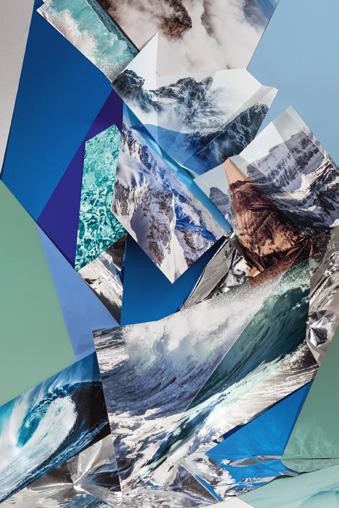
Anastasia Samoylova's 3D tableaux recall the aesthetics of Tumblr and Flickr, questioning how we understand nature through the internet realm.
80 Design as Experience
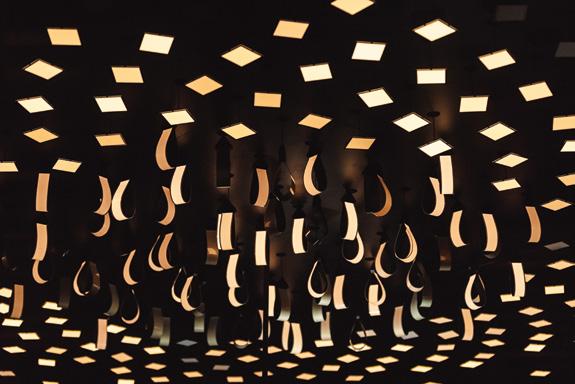
Jason Bruges Studio has become pioneering in the field of interactive art, paving the way for a new genre of interdisciplinarity and collaboration.
106 Collective Reflections
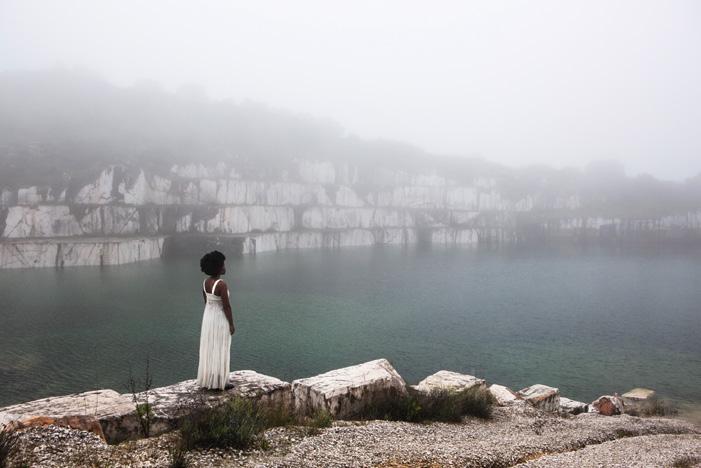
Mónica de Miranda explores the island as a visual metaphor for the wider Afrodiasporic experience alongside Europe's complex colonialist histories.
34 Beyond Storytelling
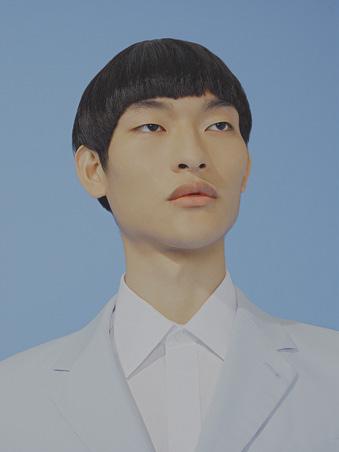
Nhu Xuan Hua's images move beyond fashion editorials, transforming the body into something less individualistic – and much more sculptural.
62 Spatial Investigation
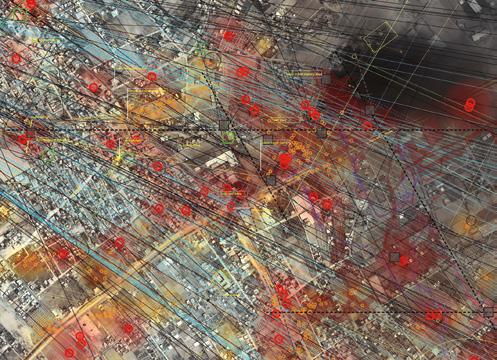
Forensic Architecture comprises artists, lawyers, journalists, filmmakers and coders, harnessing design to uncover global human rights violations.
86 Playing with Tension
Omar Torres' images symbolise an attempt to reach equilibrium. Everyday objects are arranged in balancing acts, held on the brink of collapse.
112 Fleeting Moments
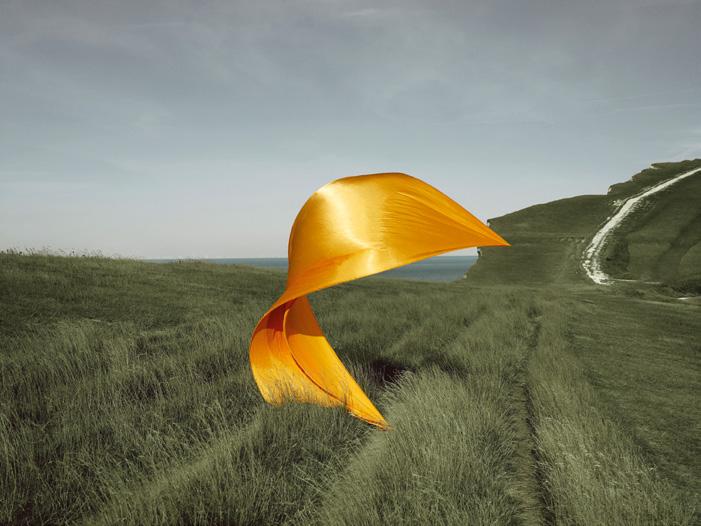
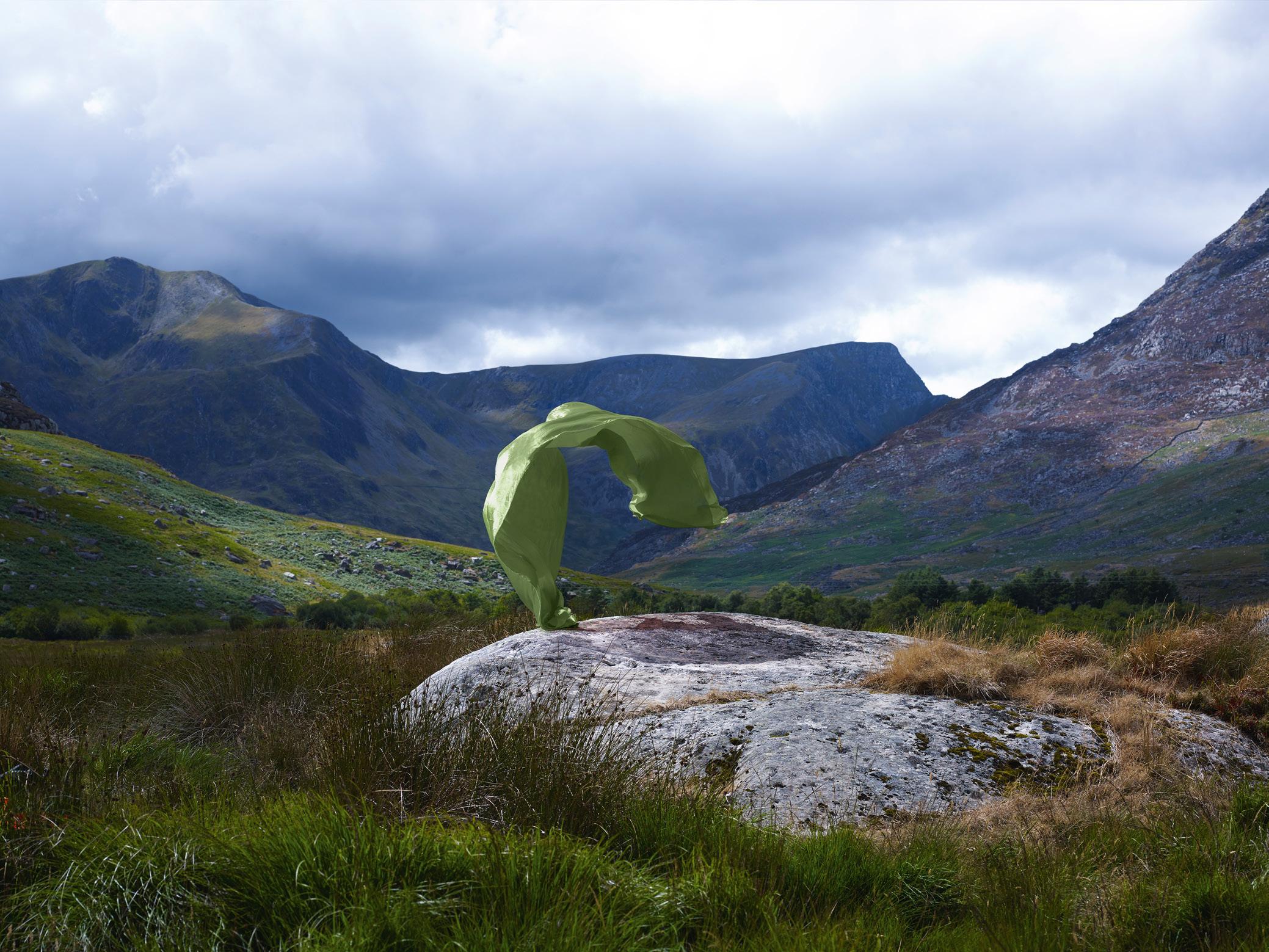
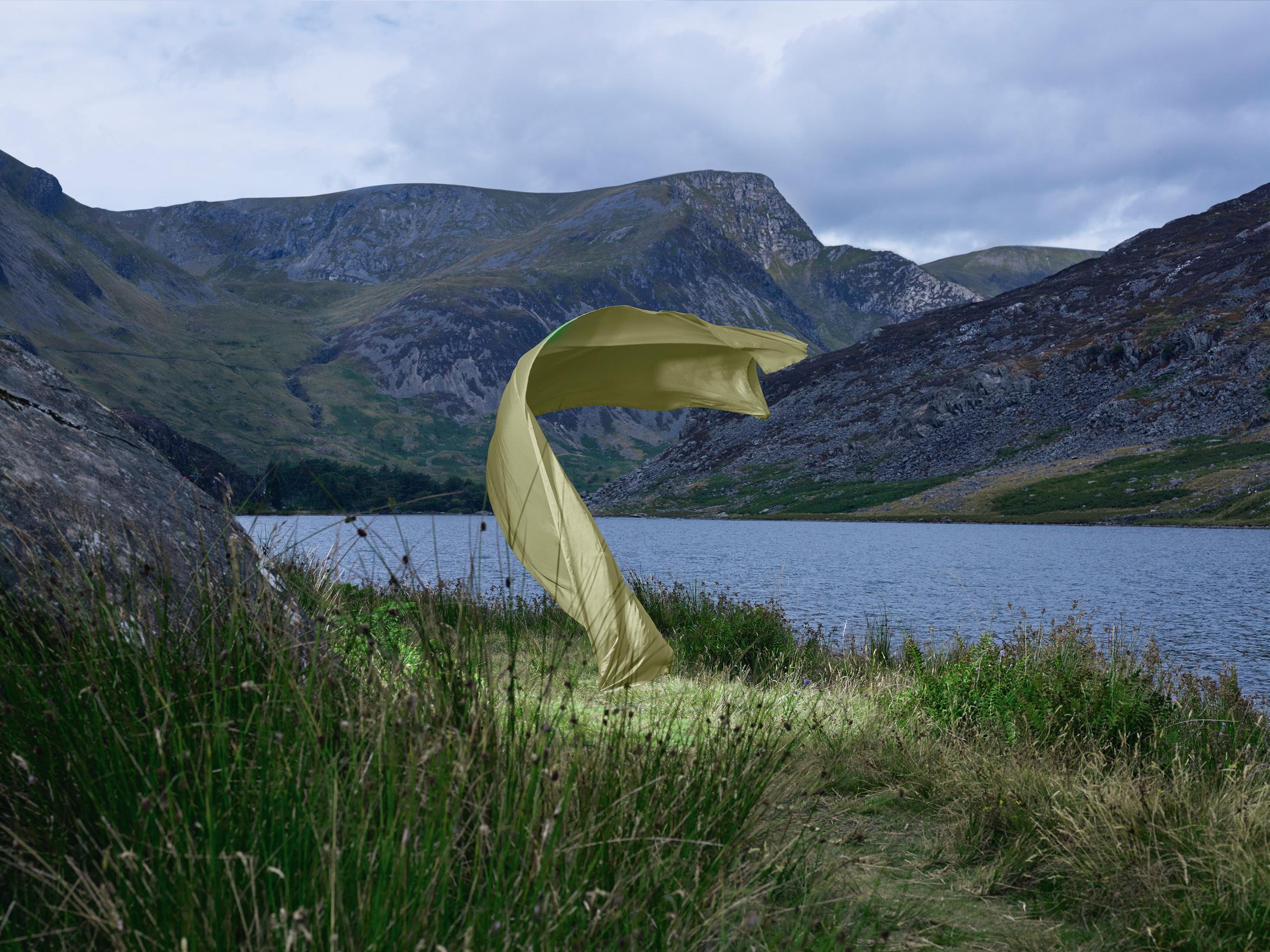
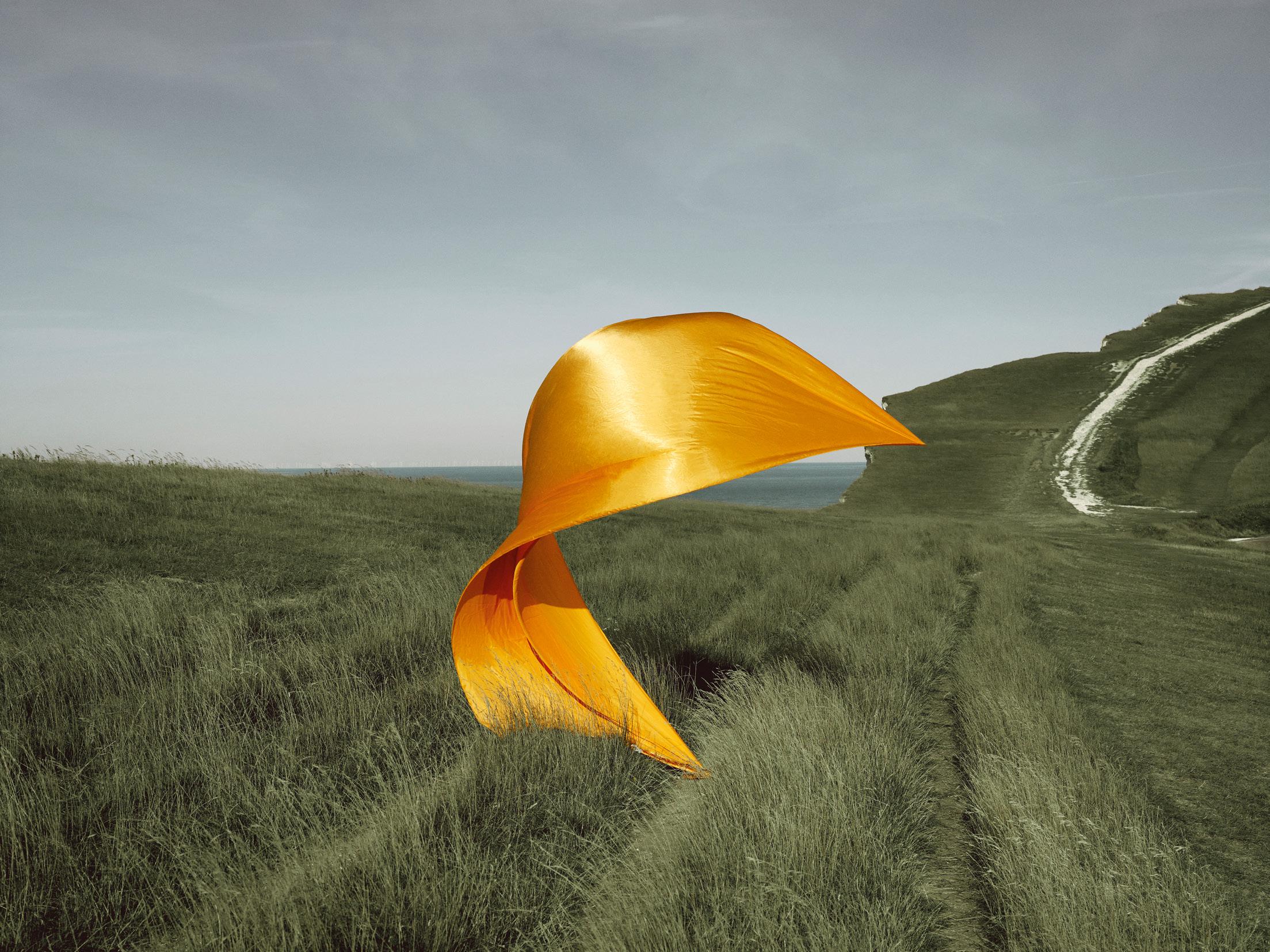
Neal Grundy’s Transient Sculptures series focuses on the concept of impermanence, depicting the beauty of fabric forms billowing in “mid-flight.”
Books
133 This Latest Publications

Phaidon releases an innovative text looking at the depths of the ocean. Monacelli covers the life and career of landmark artist Nancy Holt.
129 Film
Futura is a reportage seen through the eyes of Italian teenagers. Trans activist Donna Personna shares her story in a 75-minute documentary.
Artists’ Directory
138 This Issue's Practitioners
Our featured artists for this edition find innovative methods to play with form and subject matter in ways that redefine our relationship with material.
131 Music
Chicago-based Dendrons returns with a second album, 5-3-8. Praises releases a second studio record of dynamic, ardently honest songwriting.
Aesthetica Magazine is trade marked worldwide.
© Aesthetica Magazine Ltd 2022.
ISSN 1743-2715.
All work is copyrighted to the author or artist. All rights reserved. No part of this magazine may be used or reproduced without permission from the publisher.
Published by Cherie Federico and Dale Donley.
Aesthetica Magazine
21 New Street York, YO1 8RA, UK
Newstrade Distribution:
Warners Group Publications plc.
Gallery & Specialist Distribution: Central Books.
Printed by Warners Midlands plc.
The Aesthetica Team:
Editor: Cherie Federico
Creative Producer: Eleanor Sutherland
Content Editor: Saffron Ward
Editorial Assistant: Megan Jones
Advertising Coordinator: Megan Hobson Artists’ Directory Coordinator: Katherine Smira
Production Director: Dale Donley Operations Manager: Helen Osbond Designer: Matt Glasby
Technical Coordinator: Matthew Millard
Contributors:
Harriet Thorpe
Rachel Segal Hamilton Kate Simpson
Reviewers:
Kyle Bryony, Marthe Lisson, Matt Swain, James Mottram, Chris Webb, Leyla Sanai, Iman Sultan, Katie Tobin, Adam Heardman, Harriet Thorpe, Eleanor Sutherland, Osman Can Yerebakan, Shyama Laxman.
Last Words
146 Roxana Marcoci
MoMA's David Dechman Senior Curator of Photography highlights key themes and images from Wolfgang Tillmans: To look without fear.
Advertisement Enquiries: Megan Hobson (0044) (0)844 568 2001 advertising@aestheticamagazine.com
Artists’ Directory Enquiries: Katherine Smira directory@aestheticamagazine.com
Subscriptions: subscriptions@aestheticamagazine.com
General Enquiries: info@aestheticamagazine.com
Press Releases: pr@aestheticamagazine.com
Follow us: aestheticamagazine.com facebook.com/aestheticamagazine twitter.com/AestheticaMag pinterest.com/AestheticaMag instagram.com/AestheticaMag
Aesthetica 19 contents
20 Aesthetica news
Image as Power
Hepworth, Wakefield | 20 October - 30 April hepworthwakefield.org
“One is not born, but rather becomes a woman,” wrote Simone de Beauvoir (1908-1986) in The Second Sex, putting forward the notion that femininity isn’t a biological essence. Instead, it’s a social process that shapes women throughout their lives, influ enced by a vision of the self seen through a patriarchal gaze.
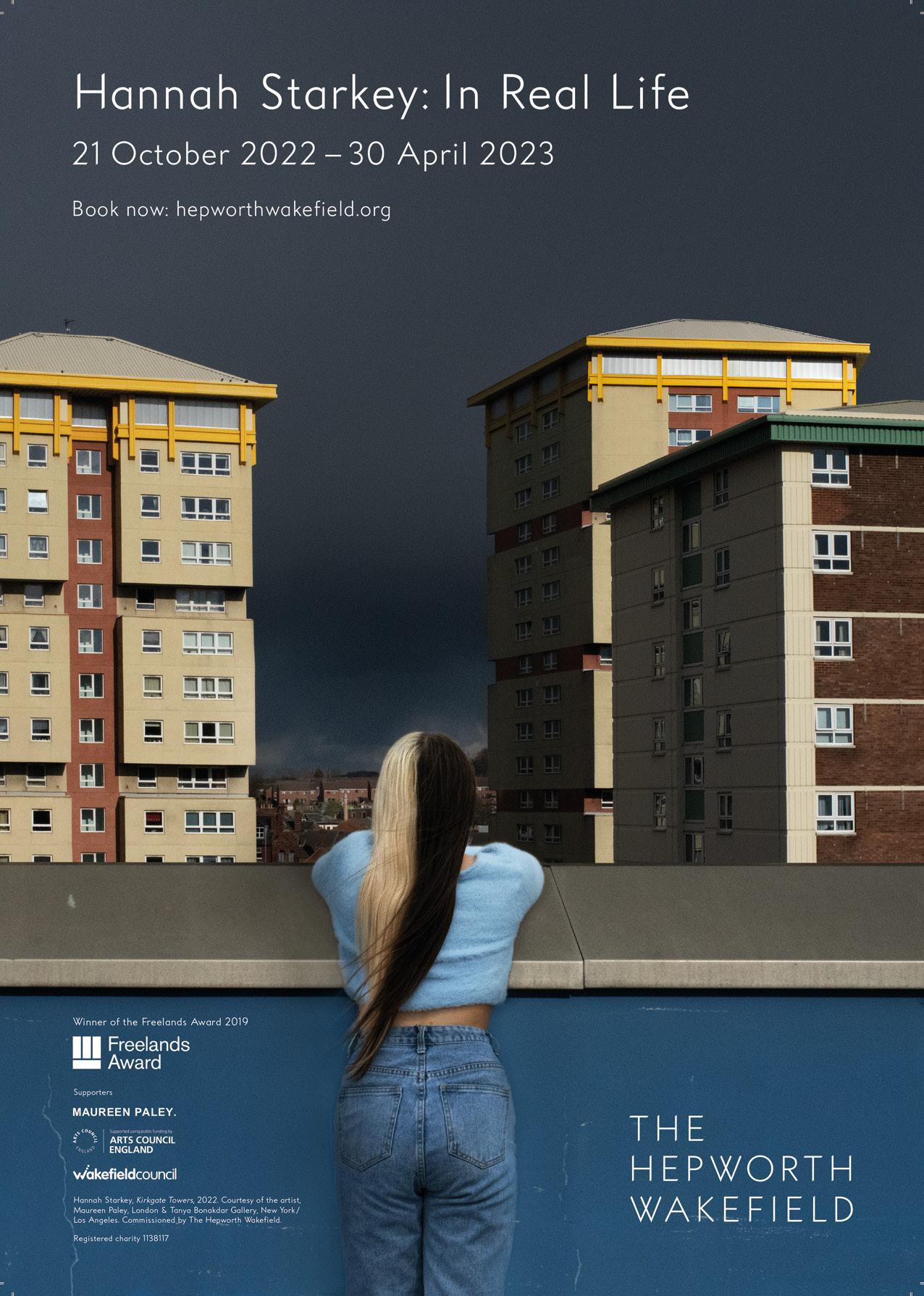
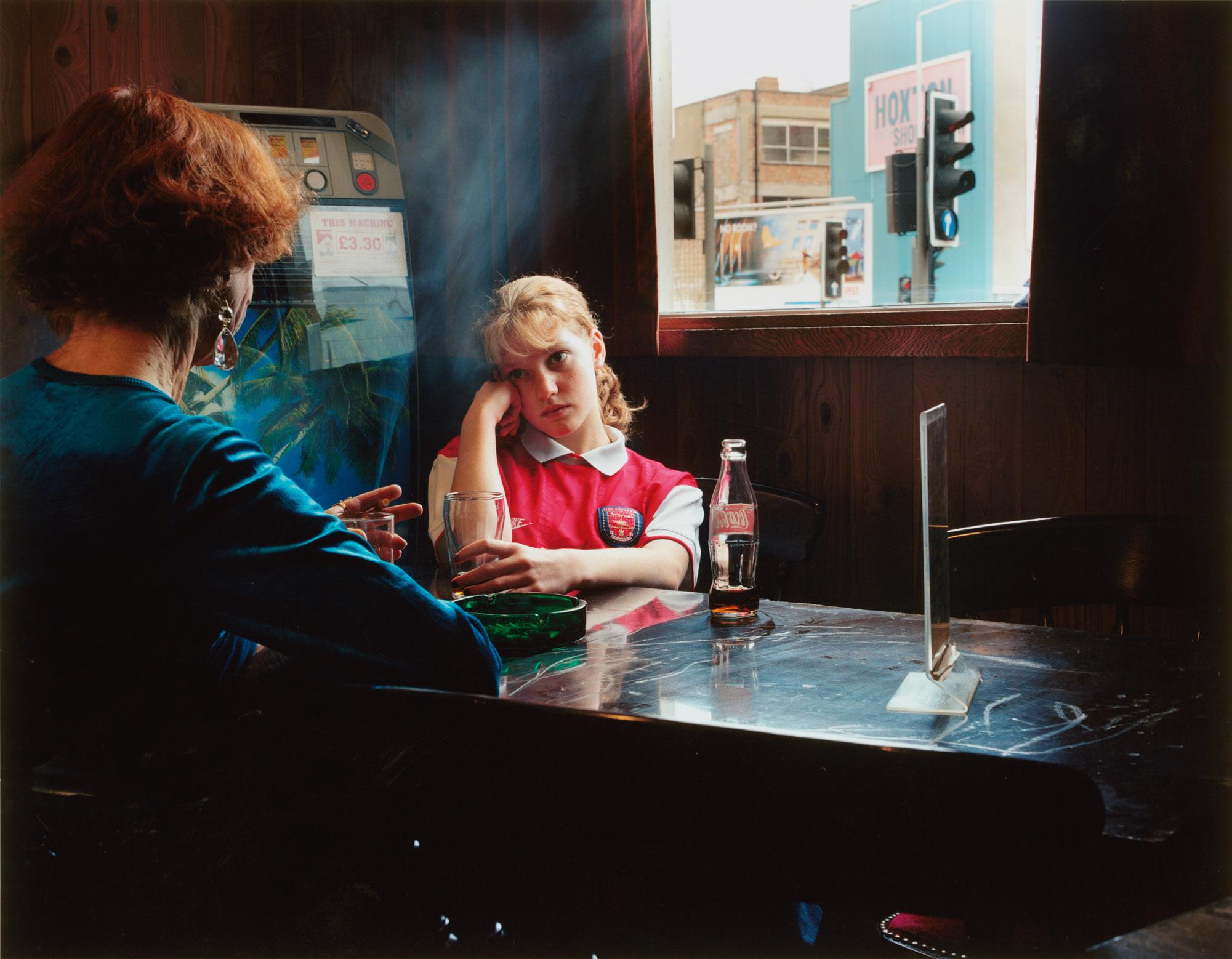
Since the late-1990s, Hannah Starkey (b. 1971) has been ded icated to photographing women, exploring the ways they are, and have been depicted, whilst taking cues from visual culture. She is known for her cinematic mise-en-scènes, which appear as “fleeting” moments. In the quotidian locations of cafes, on public transport, domestic interiors or streets, scenes unfold like a dream. Starkey constructs portraits of women across a range of generations, often situated in everyday urban contexts. She notes: “This is one of the most significant times in the history of photography, as well as in the timeline of fighting for equal rights. All of this goes back to who gets to tell the story, and what stories get to be told. Narrative is a driving force in the evolution of civilisations; the stories we tell are, inherently, important. We are subverting and changing the history of the male, or rather, the patriarchal gaze that set the standards for all of us.”
Following a major monograph, Hannah Starkey, Photographs 1997-2017, published by MACK in 2019, this is the first sig nificant UK retrospective of the artist's images over the past 25 years, dating from her degree show in 1997 up to works com missioned this year for The Hepworth, Wakefield, co-created with young women and non-binary photographers born in Yorkshire.
Aesthetica 21
HANNAH STARKEY
Botany and Intimacy
Bildhalle Zurich | Until 22 October bildhalle.ch
Like the portrait, the floral still life has roots that reach right back into art history. Bouquets appear in ancient Egyptian tombs, Roman mosaics, Medieval tapestries and Renaissance oil paint ings. The legacy of botanical imagery continues in contempo rary photography, particularly in the eco-conscious age, exem plified by many major exhibitions and monographs, including Thames & Hudson's latest release, Flora Photographica (2022).
The 2020 Dulwich Picture Gallery group show, Unearthed: Pho tography's Roots, traced the history of plant photography back to early pioneers of the medium such as Anna Atkins.
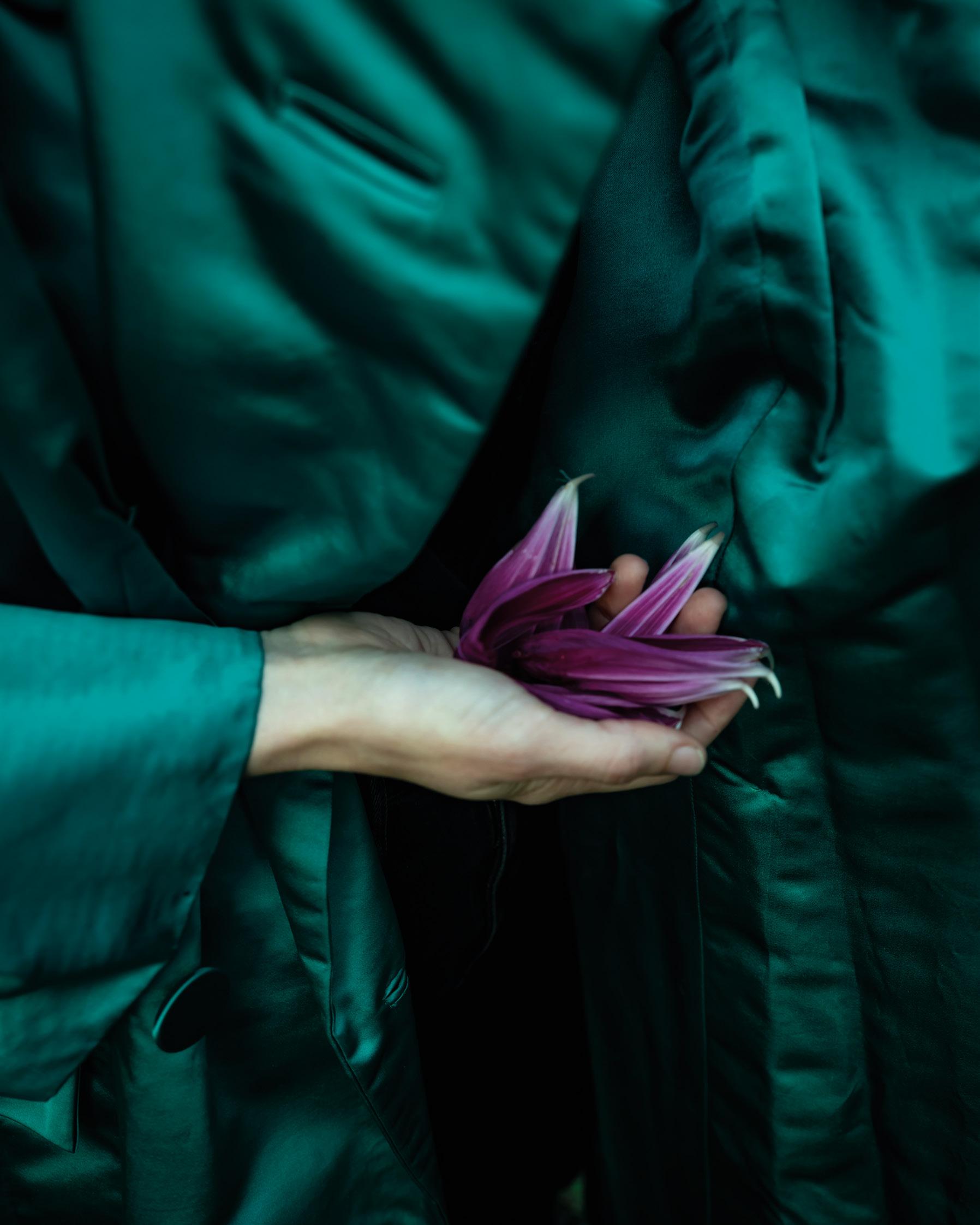
Between these two milestones, Cig Harvey’s (b. 1973) sold out monograph, Blue Violet, came out in 2021. Now an exhibition of the same name is on display at the Bildhalle Zurich. The British artist, now based in America, offers sumptuous images bathed in intensely saturated blues, reds and pinks. Blooms are seen grow ing wild, embellishing clothing, shrouding figures and floating in water. Figures blend into shrubbery; petals fall to the floor like bread crumbs in a fairytale; hands reach out from the darkness.
There is a pure sense of pleasure that comes from looking at Harvey’s work – a kind of mindful transcendence. “Harvey pre sents a question we’ve neglected as we ponder art in this period of extreme distance and uncertainty,” suggests writer Jacoba Urist, in a text that accompanies the show. “Could the mere pres ence of beauty, simply by existing, unite us? Standing before Harvey’s flowers, can we conjure a connection through it, to one another – however fleeting – across this cavernous, dark divide?”
22 Aesthetica news
CIG HARVEY: EAT FLOWERS
Aesthetica 23
Emerald Coat (with dahlia petals), Union, Maine , 2019, ©Cig Harvey, Courtesy of Bildhalle.j
24 Aesthetica
Intimacy of Distance
Marshall Gallery, Santa Monica | Until 19 November marshallgallery.art
The desire to capture aspects of existence – to record glimpses of collective humanity – can be traced back over 45,000 years. The earliest examples of representational art are etched onto cave walls. Philosopher Alain de Botton stated in The Art of Travel that images “represent a choice as to which features of reality should be given prominence.” In The Intimacy of Distance, 17 artists with diverse backgrounds and practices illustrate the central relationship between the human subject and the land.
Curators Lawrence Gipe and Douglas Marshall have collated a body of work that interrogates the "myriad psychological ef fects" produced by these interactions, from self-portraits to vast landscapes where humanity's presence permeates in cityscapes and modern technologies. The relationships range from symbi otic to exploitative: shadowed figures fade into monochromatic backdrops and bright anthropomorphic forms contrast against natural scenes. Liz Miller-Kovacs uses full-body neon stockings to illuminate the human silhouette against a salt evaporation canal, portraying society’s responsibility for ecological damage.
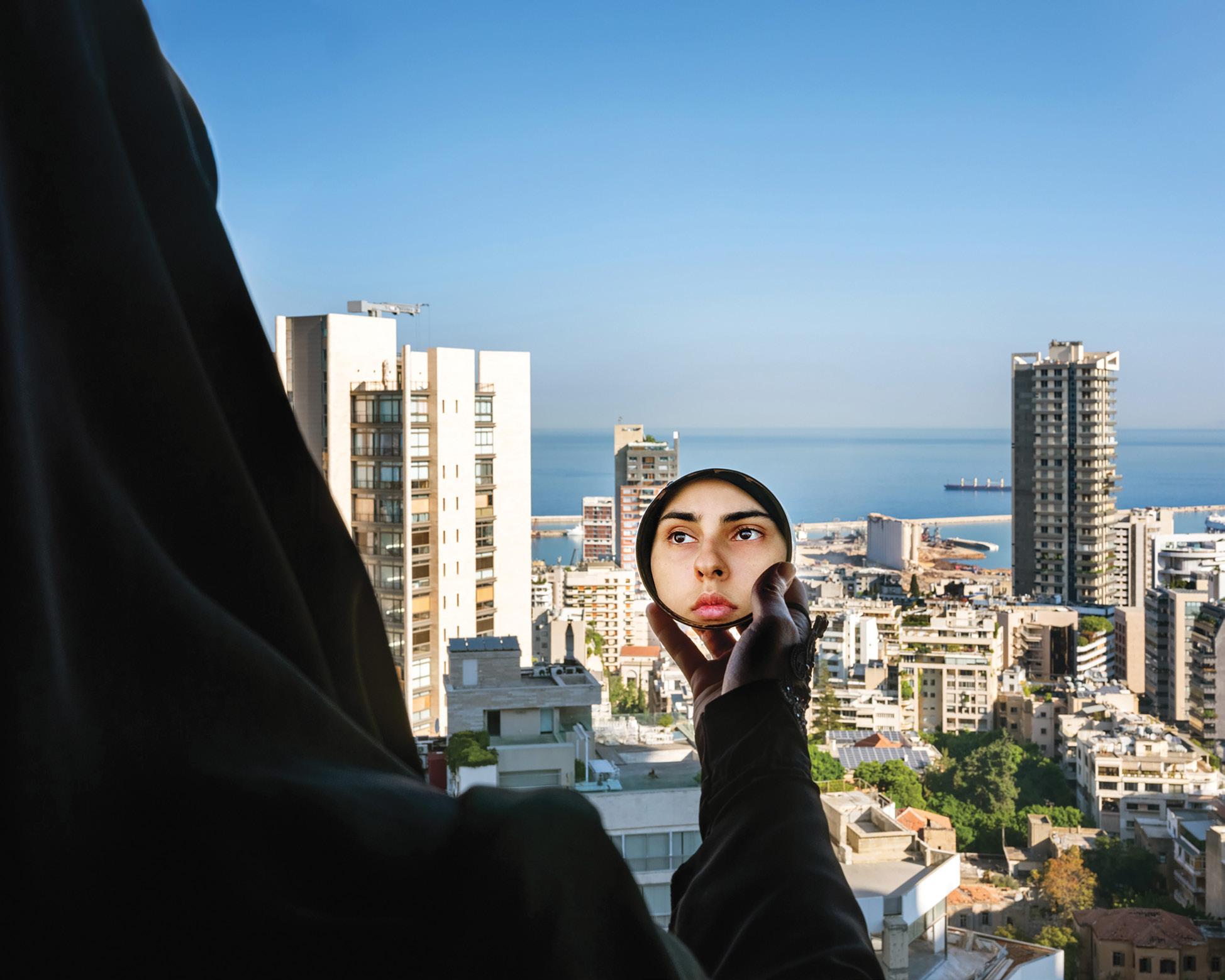
Alongside conceptual issues of environmentalism and coloni alism, the exhibition surveys how composition can distort the dy namic between the body and its landscape. Johnnie Chatman (b. 1990) becomes a mimicry of his view, standing resolute amongst vast, towering peaks. Rania Matar (b. 1964) highlights a face in reflection, concealing Beirut's destruction. This asks the ques tion: can photographers ever capture the whole? The Intimacy of Distance proposes answers in its interpretation of the everyday.
Aesthetica 25
EXPLORATIONS OF THE FIGURE
Worlds Beyond View
BALTIC, Gateshead | Opens 22 October baltic.art
The Great Wall of China, the Pyramids of Egypt, the Taj Mahal, the Colosseum in Rome, the soil beneath our feet … The last of this list sits strangely with the other great achievements of humankind. However, according to writer and environmental ac tivist George Monbiot, it has just as much right to be claimed as a Wonder of the World, if not more, as “an ecosystem so astonish ing that it tests the limits of our imagination.” Soil provides 99% of our food and yet we see it as mysterious – unknown to us.
Society has never been less connected with land than we are today. We log onto websites, choose food on screens, and have it delivered to us as if by magic, wrapped in plastic. There is no longer a need to understand and properly identify crops, weath er patterns or species. But, disillusioned by the spoils of capital ism, many artists are seeking to reach out through creativity.
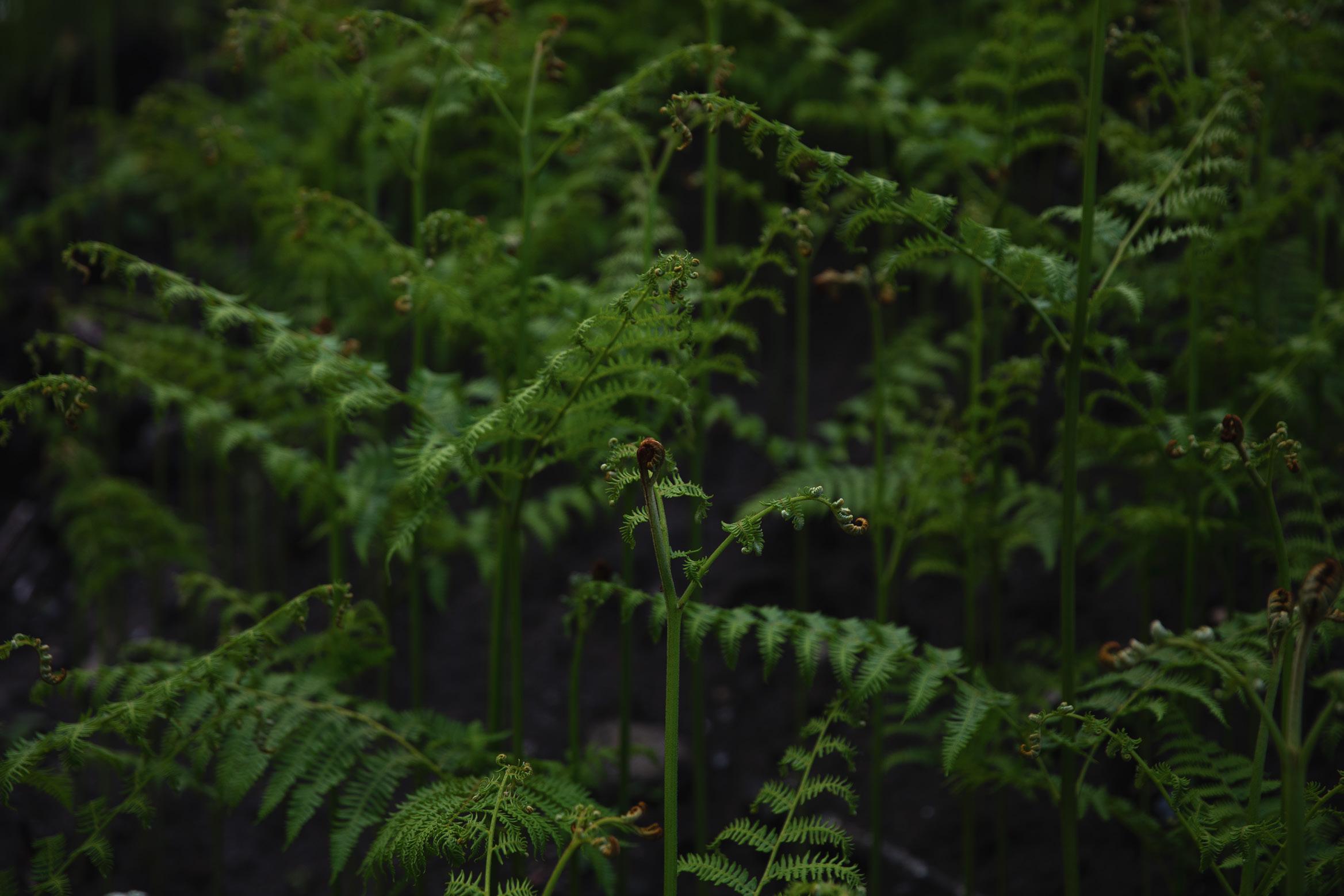
The idea of hinterlands – the land away from the coast or the banks of a river – is at the core of BALTIC's new show, which explores what lies beyond the visible or known, attempting to use art to bring us closer to nature. The exhibition, which centres the North East of England as its starting point, considers place as a complex layering of relationships. A range of artistic ap proaches is taken, from an opera inspired by the River Tyne, to a photographic sculpture meditating on the “more than human” and large-scale textiles that consider the intersection of spiritual traditions, storytelling and rituals rooted in landscape. Else where, Dawn Felicia Knox considers the removal of toxic residues through remediation – installing live ferns within the gallery.
26 Aesthetica news
HINTERLANDS
Aesthetica 27
Dawn Felicia Knox, Felling, Ferns 2022 Film still. Courtesy the artist.
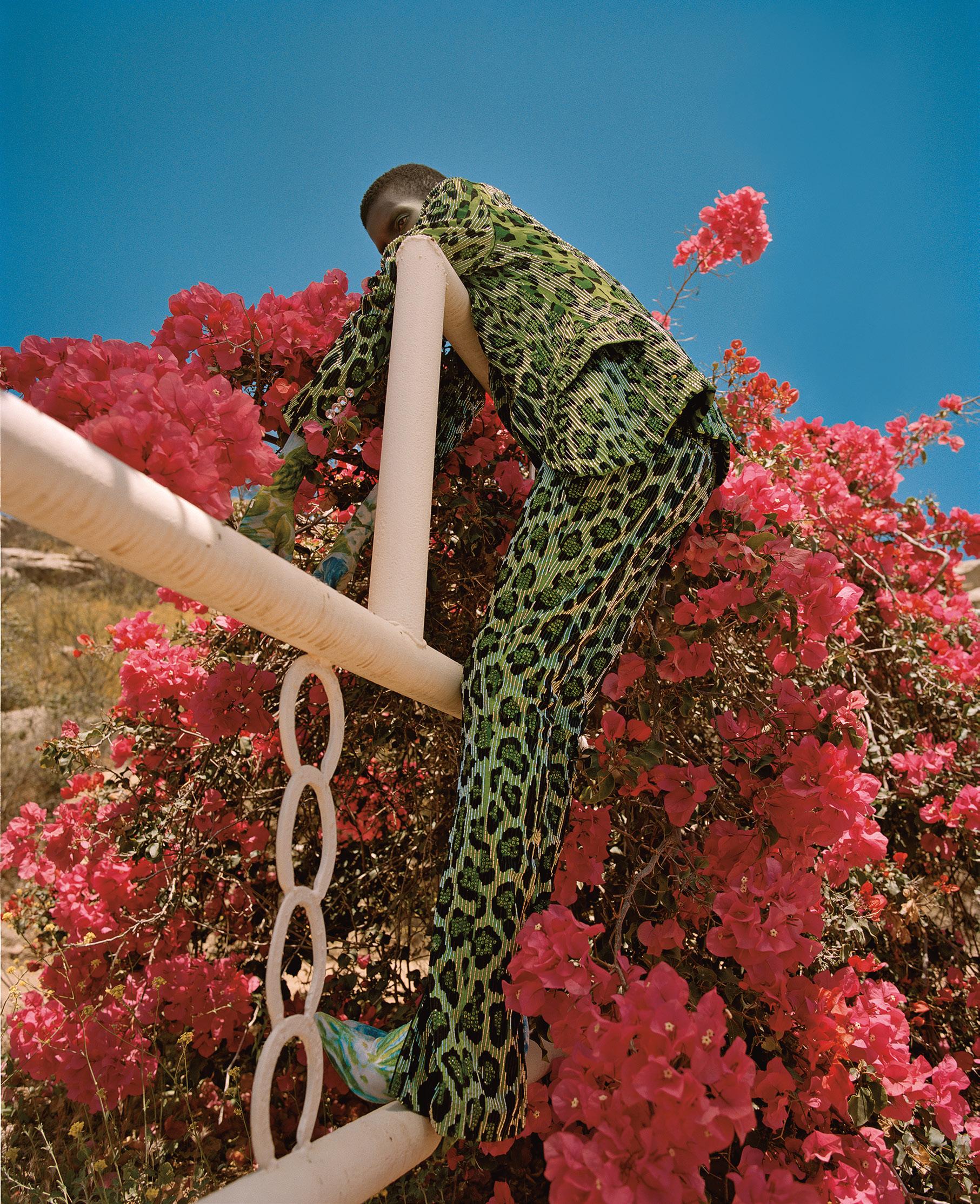
28 Aesthetica Nadine Ijewere, Untitled, 2018, from The New Black Vanguard (Aperture, 2019).
The Self Refashioned
Fotografiska Stockholm | Until 2 October fotografiska.com
“Fashion has always been a barometer for measuring privilege, power, class and freedom,” says photographer Campbell Addy (b. 1993). Whilst commercially, fashion can be exclusive, crea tively, style is a hotbed for self-expression, which lends itself to endless reinvention, of pushing back. He continues: “To play with fashion is to play with one’s representation in the world.”
Addy is part of a generation of young Black imagemakers whose work first emerged in the pages of magazines, editorial spreads or commercial shoots for brands – but the photogra phy has had an impact far beyond in the art world. Their genrestraddling, conceptually-driven portraiture appears in the latest iteration of The New Black Vanguard, which has previously been shown in the likes of New York, Cleveland, Qatar and Arles, and was published as a momentous photobook by Aperture in 2019. The brainchild of writer and curator Antwaun Sargent (b. 1983), The New Black Vanguard brings together 15 artists, including Nadine Ijewere (b. 1992), Tyler Mitchell (b. 1995) and Stephen Tayo. (b. 1994). These practitioners are, collectively, reinvigor ating photography with varied and nuanced representations of Black experience, which have been largely overlooked by main stream media. Mutually inspired by, and often made in collabo ration with Black stylists, these photographs are, in turn, bold, joyful, gentle and euphoric. They shatter stereotypes, breaking down gender norms, opening up visual culture to previously marginalised perspectives and always underscoring Tyler Mitch ell’s assertion that: “to convey Black beauty is an act of justice.”
Aesthetica 29
THE NEW BLACK VANGUARD
10 to See
Our must-see shows for October and November cover a broad spectrum of genres, media and themes, from experimental video artworks to portraits that consider the role of advertising, and documentary photographs that shed light on the first month of the Ukraine War.
1B eing Human Human Being
Soho Photography Quarter, London | Until 30 November thephotographersgallery.org.uk
A new outdoor exhibition space opened next to The Photographers' Gallery, London, earlier this year. Its inaugural show features work by Australian Aboriginal artist Christian Thompson
AO (b. 1978). Being Human Human Being presents work from the series King Billy (2010) and Flower Walls (2018-ongoing), both of which reflect on indigenous and diverse representation.
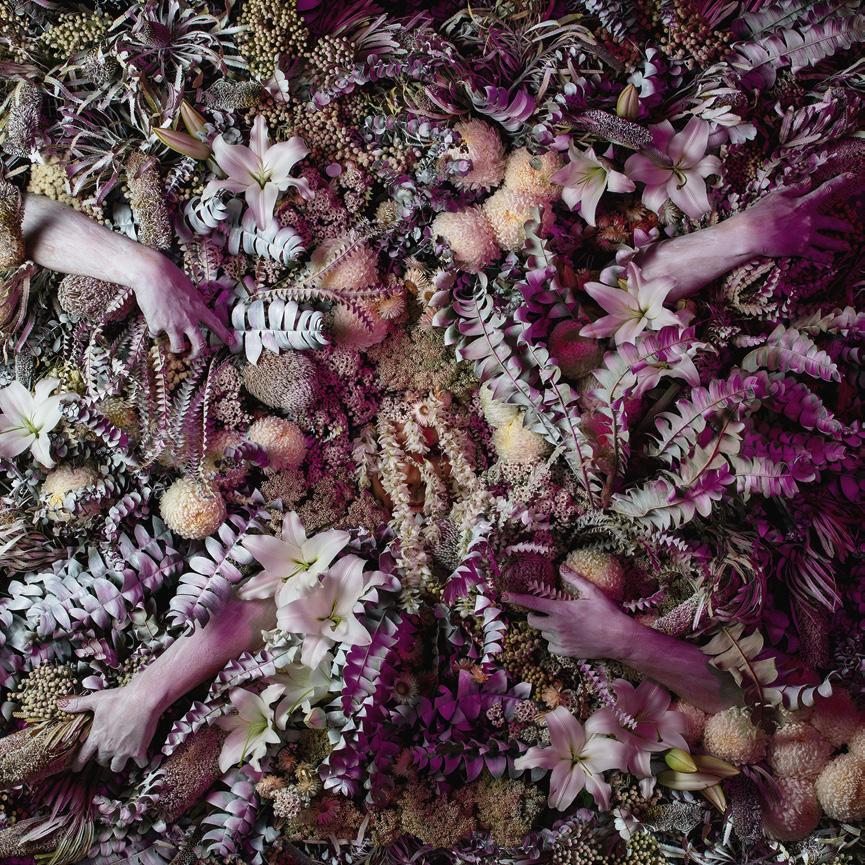
The artist notes: “I think of my works as conceptual anti-portraits. My physical head and shoulders simply provide a template – something that I'm just constantly building on top of.”
2H allyu! The Korean Wave V&A, London | Until 25 June vam.ac.uk
Ten years ago, a South Korean rapper by the name of PSY released a song referencing the hipster habits of residents in Seoul’s Gangnam District. Gangnam Style went viral and today remains the most downloaded track on iTunes. But Hallyu, or “the Korean Wave,” began two decades earlier, and has been gathering pace ever since. Following on from Epic Iran, and running concurrently with Africa Fashion, V&A, London, charts the global influence of South Korean creativity across pop music, film, games, TV and fashion, from BTS to Squid Game.
3Just Above Midtown: 1974 to the Present
MoMA, New York | 9 October - 18 February moma.org
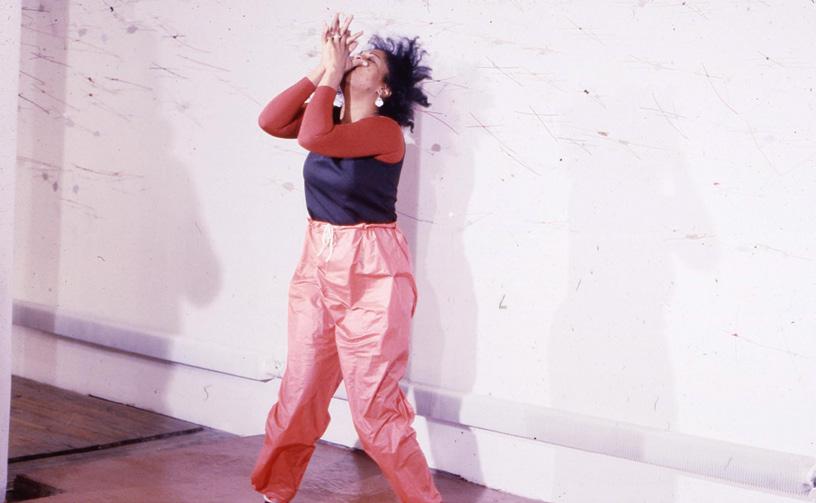
“I don’t show in white galleries,” American artist David Hammons once told curator Linda Goode Bryant, who had moved to New York from Ohio in 1972 to pursue an art career. Bryant, then 23, decided to open her own gallery in response to this, and just like that: Just Above Midtown or JAM was born. This exhibition showcases the role of JAM in supporting the experimental practices and careers of artists of colour, such as Senga Nengudi and Butch Morris, who “were given carte blanche” within the space, whilst critiquing the commercialisation of the art world.
4
Unseen Places
Kunst Haus Wien, Vienna | Until 19 February kunsthauswien.com
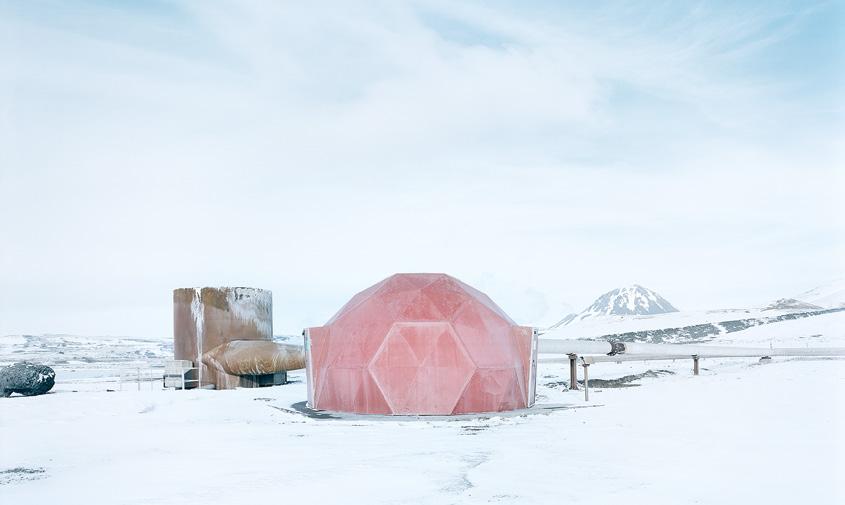
Austrian-born Gregor Sailer (b. 1980) focuses on the inhospitable – capturing surreal archi tecture that takes him to the borders of civilisation. Kunst Haus Wien presents several years’ work in this large-scale exhibition, where buildings are revealed as mere façades and stark open landscapes contrast against sculpture-like architecture. His practice centres around ex posure, artifice and illusion, as well as the limits of photographic authenticity. As such, the photographs create a detachment from reality: a space where humanity seems out of reach.
5Paradise Camp
Artiglierie, Venice | Until 27 November Labiennale.org
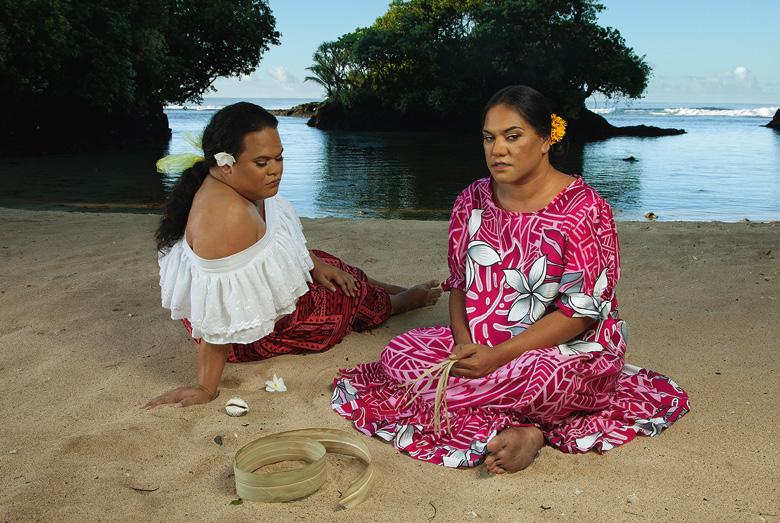
In her New Zealand pavilion exhibition at the 59th Venice Biennale, artist Yuki Kihara (b. 1975), who is of Sāmoan and Japanese heritage, restages the paintings of French Post-Impressionist Paul Gauguin with individuals who are Sāmoan Fa'afafine (Sāmoa’s third gender). The 12 tableaux blend performance with photography to consider the ongoing injustices of colonialism and a cultural reclamation that rejects years of depreciatory western eroticised fantasies about the Pacific. Kihara punctures and exposes reductive dominant queer narratives.
30 Aesthetica art
RECOMMENDED EXHIBITIONS THIS SEASON
1 2
Aesthetica 31 3
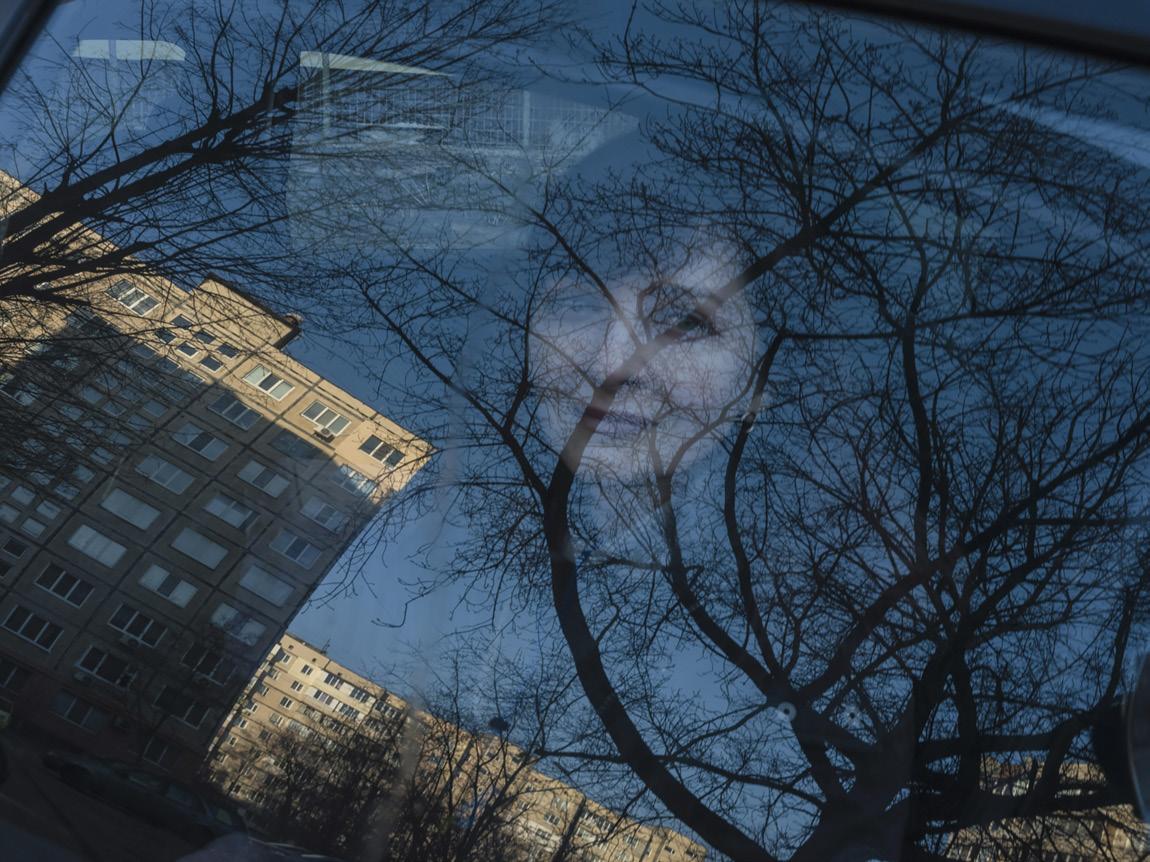
32 Aesthetica 6 7 10 9 8
6
Fragments of Life: A Ukrainian Diary Museum Europäischer Kulturen, Berlin | Until 15 January smb.museum
There has been an influx of images arriving from Ukraine since the Russian invasion on 24 February 2022. Predominantly, however, these images are part of press coverage, giving a particular visual slant – they show soldiers, displaced families or destroyed cities. Just after the war began, Mila Teshaieva (b.1974), who now lives in Berlin, went back to her home city of Kyiv where she stayed until April. The images displayed here, first published on dekoder. org, are a poignant document of that time. This is a vital show during the ongoing conflict.
7
Bruce Nauman: Neons Corridors Rooms
Pirelli HangarBicocca, Milan | Until 26 February pirellihangarbicocca.org
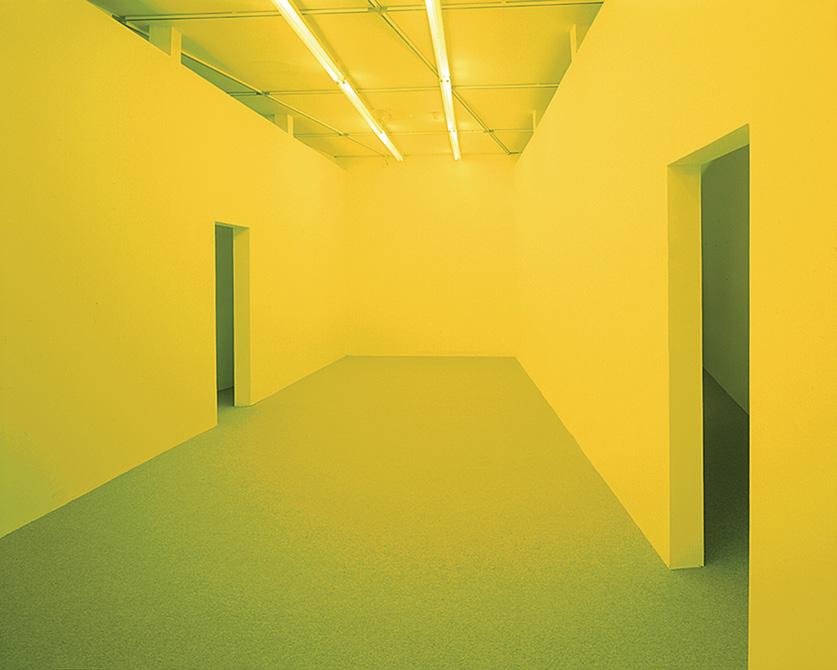
“Whatever I was doing in the studio must be art,” Bruce Nauman (b. 1941) told the Financial Times in an interview last year. Indeed, the acclaimed New Mexico-based artist has never been confined by medium, developing a practice that spans sculpture, video, performance and prints. This show – a collaboration between Tate Modern and Stedelijk Museum – hones in on his known spatial works, which use corridors, rooms and neon lighting to probe the depths of human experience – that which is front of us, behind us, and within our wider imagination.
8
D iane Severin Nguyen
Huis Marseille, Amsterdam | Until 4 December huismarseille.nl
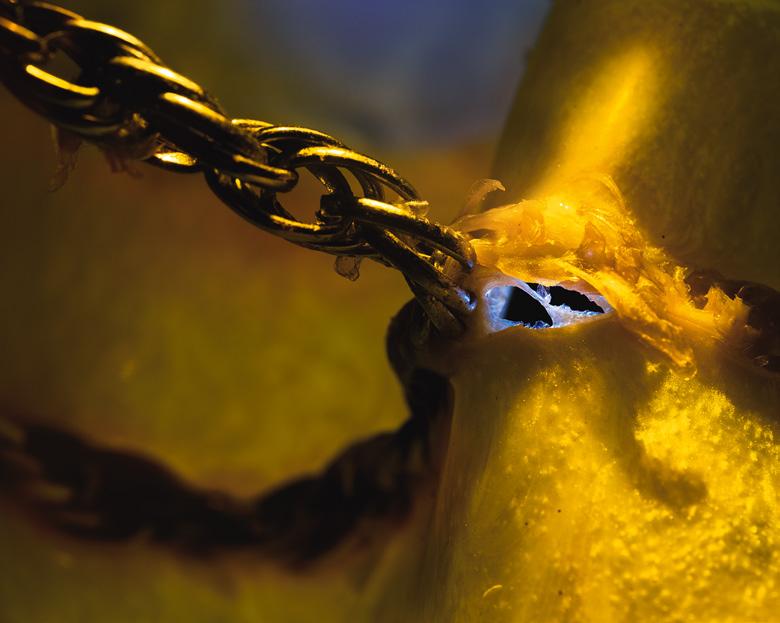
Earlier this year, Diane Severin Nguyen (b.1990) had her first major solo show, IF REVOLUTION IS A SICKNESS, at the Sculpture Centre New York, where she presented a 19-minute video work and a series of accompanying still photographs. Shot in Warsaw and inspired by influences from K-pop choreography to the writing of German philosopher Hannah Arendt, the film questions the role of the individual and the collective, image production and identity. This show is a chance to see the LA and New York-based artist’s fascinating work in the Netherlands.
9
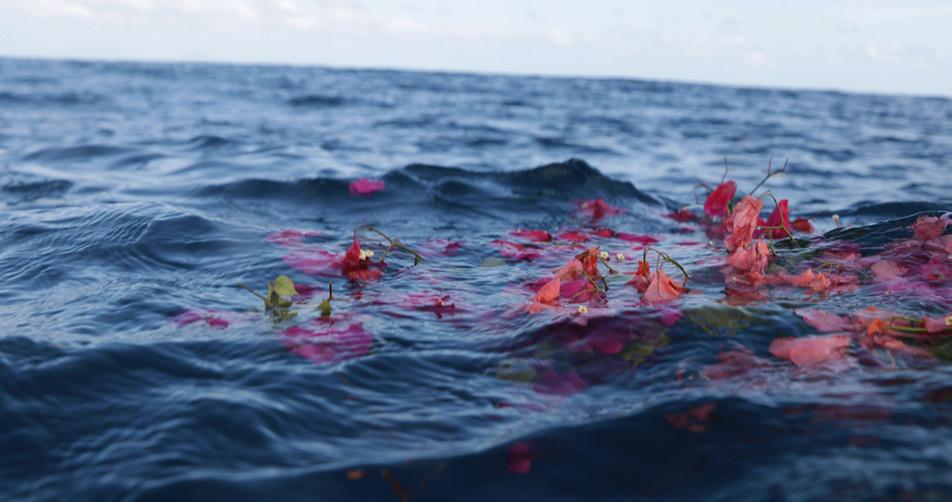
The Soul Expanding Ocean #3
Chiesa di San Lorenzo, Venice| Until 2 October ocean-space.org
The ocean is a site of contradiction. It is beautiful and it is terrifying. It contains and it sepa rates. It is under threat and it is unforgiving. A two-year programme at Ocean Space in Venice showcases new projects about the seas by contemporary artists. Dineo Seshee Bopape’s (b. 1981) AR video commission, made in the Solomon Islands, Jamaica and her homeland of South Africa, navigates themes of colonial history, spirituality and environmentalism. Bo pape’s approach merges magical enquiry, historical curiosity, traditional wisdom and illusion.
10Blessings from Mousganistan
Foam Amsterdam | Until 16 October foam.org
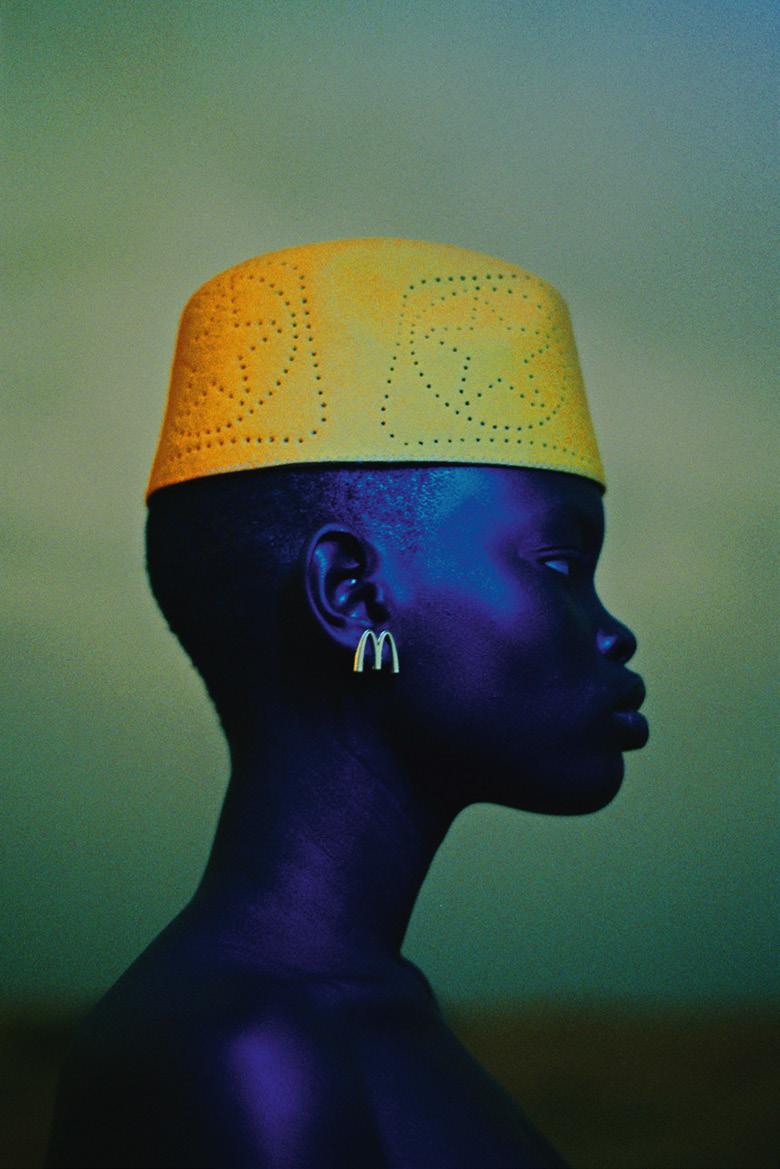
Mous Lamrabat's (b. 1983) training in architecture carries through into his images. His bold colours and pleasingly graphic compositions reveal a designer’s eye, paired with a pop artist’s tendency for appropriation. In the work of this self-taught photographer, born in northern Morocco and raised in Belgium, the logos of Nike, BMW or McDonalds appear emblazoned on traditional garments or as henna tattoos, playfully shaking up narratives, using beauty and humour to create powerful new conversations related to race, religion and women’s rights.
Aesthetica 33
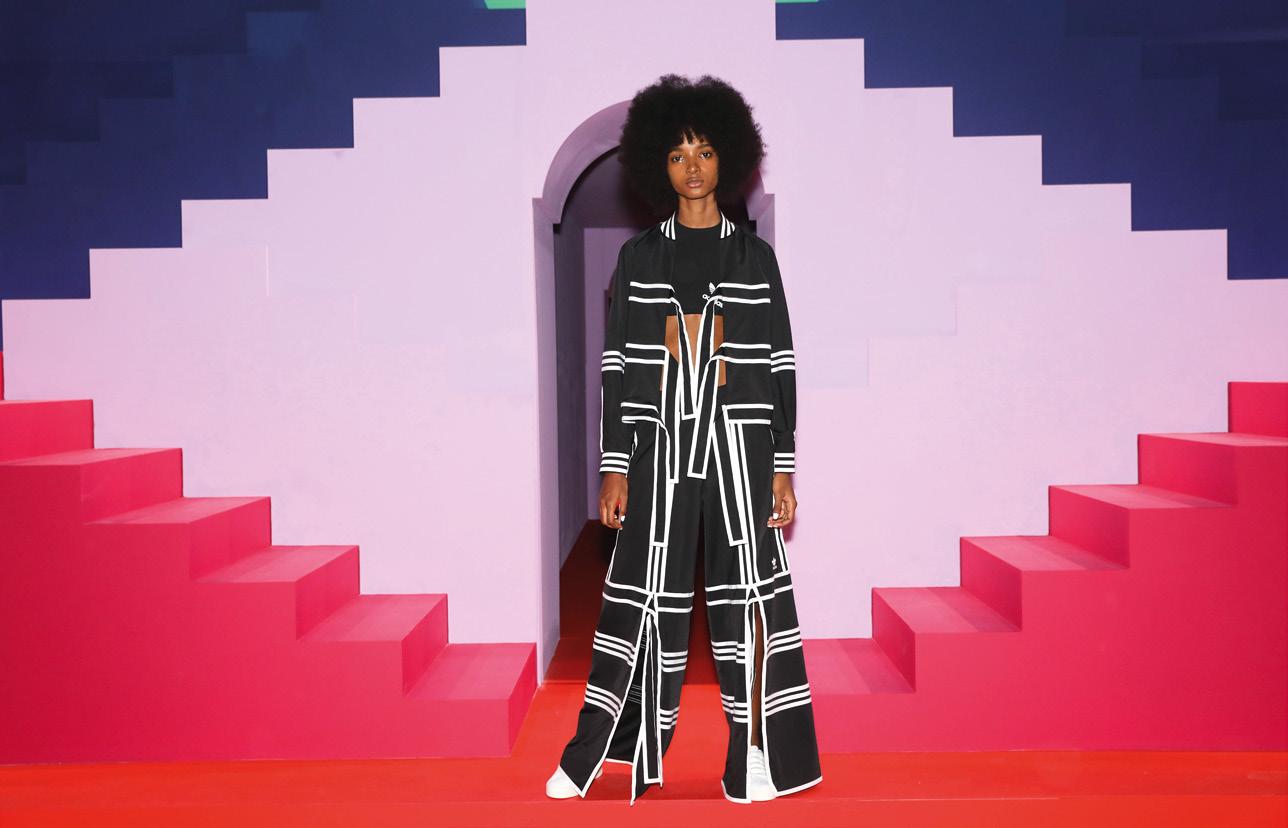
1. Christian Thompson, Being Human Human Being 2022. Commissioned by Photo Australia for PHOTO 2022 International Festival of Photography. Courtesy the artist and Sarah Scout Presents, Melbourne. 2 Ji Won Choi x Adidas. Photo Francesca Allen, courtesy Adidas. 3. Senga Nengudi performing Air Propo at JAM, 1981. Courtesy Senga Nengudi and Lévy Gorvy. 4. Krafla Geothermal Power Station VII, Iceland, 2021; From the series: The Polar Silk Road © Gregor Sailer. 5. Yuki Kihara, Two Fa‘afafine on the beach (After Gauguin), 2020. Hahnemühle fine art paper mounted on aluminium. 69 × 91 cm . 6. Kyjiw, 20. März 2022 © Mila Teshaieva. 7. Bruce Nauman Left or Standing, Standing or Left Standing, 1971/1999. Monitors, DVD players, video laser discs (color, silent), transferred to DVDs, fluorescent lights, text on video, wallboard 365,8 x 1463 x 1219,2 cm. Collection of Dia Art Foundation, Partial gift, Lannan Foundation, 2013. © 2021 Bruce Nauman / SIAE. Courtesy Sperone Westwater, New York . 8. Diane Severin Nguyen, Daily Affirmations 2021. 50,8 x 63,5 cm. Collection Huis Marseille. 9. Dineo Seshee Bopape: Film still, 2021 - 2022. “The Soul Expanding Ocean #3: Dineo Seshee Bopape” is commissioned and produced by TBA21–Academy. 10. Mashallah with extra cheese, 2021 © Mous Lamrabat / Loft Art Gallery.
Beyond Storytelling
Nhu Xuan Hua
PHOTOGRAPHS CONTAIN BOTH PERSONAL AND UNIVERSAL STORIES. NHU XUAN HUA OFFERS SURREAL WORLDS FILLED WITH COLOUR, MEMORY, TRADITION AND NARRATIVE.
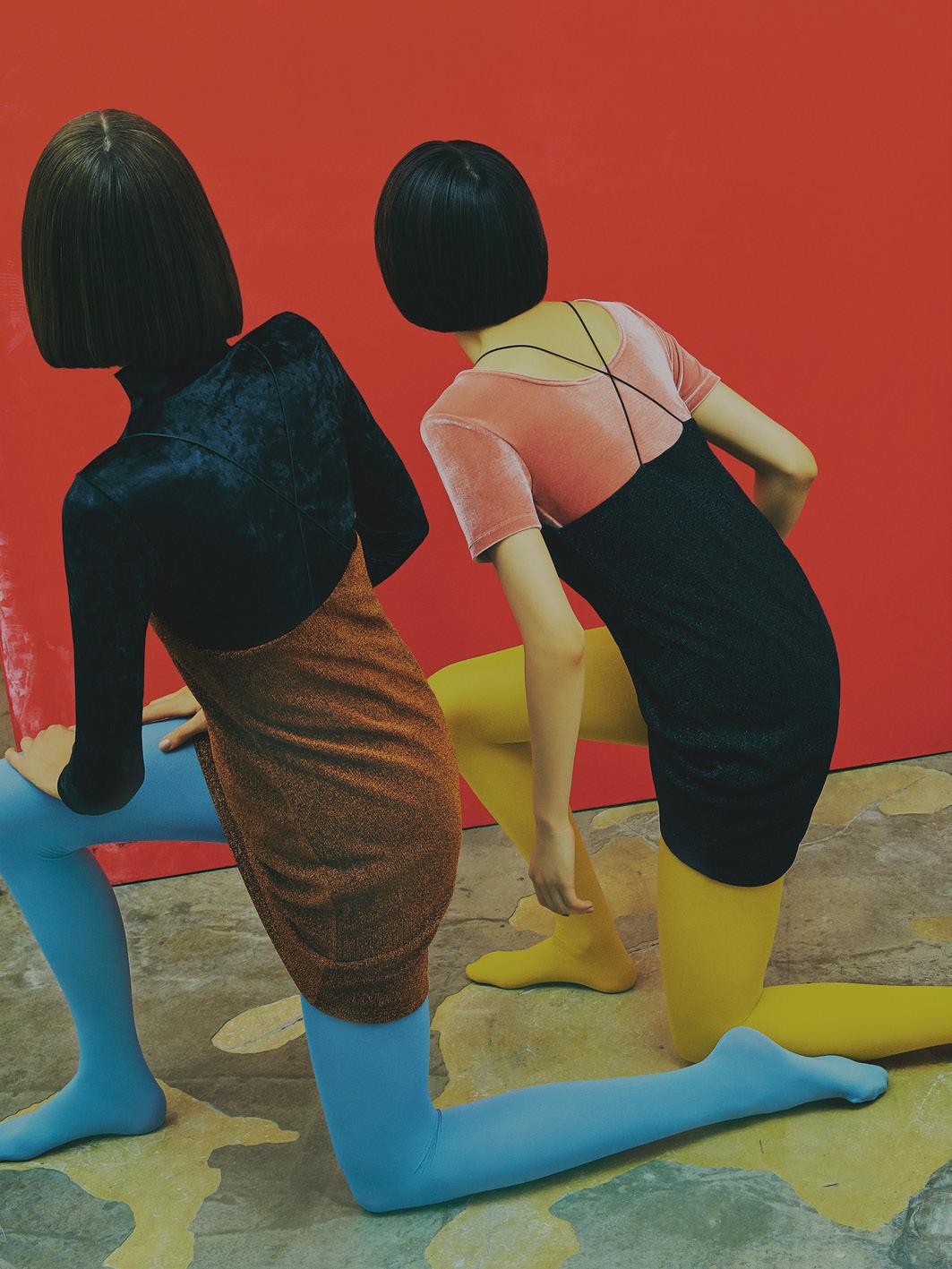
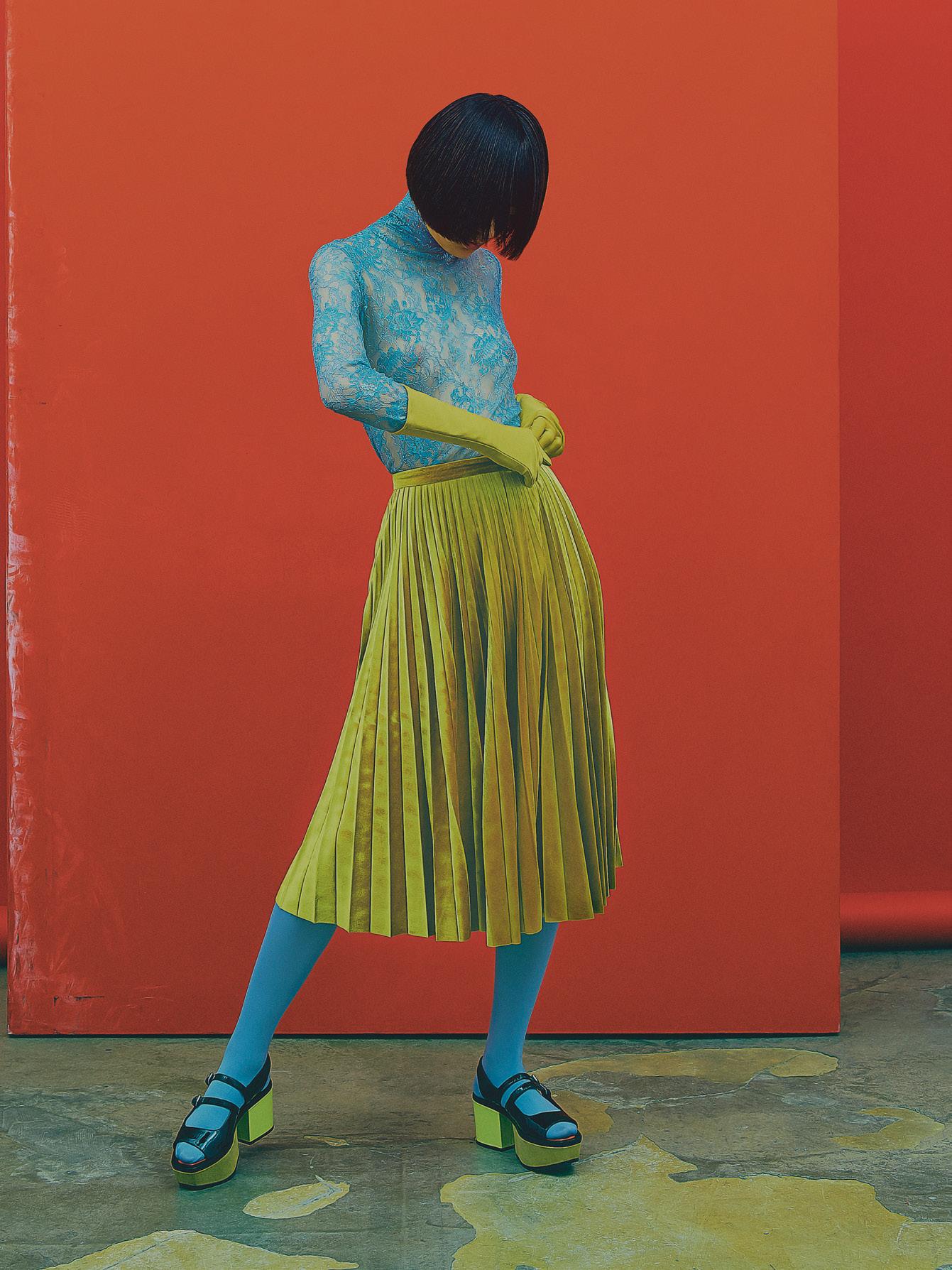
Nhu Xuan Hua is a Parisian photographer based in London. She has worked with big brands – from Dior and Kenzo to Universal Music and Warp – but often draws from her Viet namese heritage to produce subtly layered narratives. This autumn, Huis Marseille, Amsterdam, hosts a solo exhibition of works that reflect on colour, composition, tradition and identity, where bodies and objects become vessels for stories.
A: Tell us about your earliest experiences with art?
NXH: It started in a house in the suburbs of Paris: the one that saw me draw stories in my father’s painting studio. It was cold and humid in winter, and unbearably hot in the first days of June. It was also the garage for the car. In fact, it was the garage full stop. But my father turned it into a temple of art and other curiosities. One of the metal shelves carried all sorts of books and pots with brushes, which looked like jewels to my eyes. One of them was a tiny homemade photo frame, the size of my palm. It was a cut-out of a picture he took showing two flies mating. I got my first digital camera when I was 15: a small Konica Minolta with black-and-white, sepia and fuchsia options. I liked the distortion of reality those options allowed through colours. Then a classmate was intrigued by Photoshop in high school, and I remember being amazed when she would turn her arm into a snake.
A: You’ve been defined as a fashion photographer – is this how you see yourself? What visual language, or aes thetic identity, are you trying to create in your work?
NXH: I have always tried to set myself free from any sort
of labels. As a child, whilst living in a traditional household, I was constantly reminded of my condition as a girl, being told what a girl should or shouldn’t do (and be). This puzzled me in many ways, as I have always wanted so much from life. I’m a bad decision-maker when I have to choose between two colours. I think that labels limit people from exploring their greater self and remaining under a sort of control. To be out of reach is the fear of any great authority; therefore, labels help to organise a system where people don’t try to move outside of that box. I still think the pursuit of one goal is equally respectable and honourable. I was brought up in a place where discipline and excellence were key, so having to set a strict agenda for my early 20s was a normal thing to do. I guess, I just had to make a decision for myself after my studies, and fashion photography came to me as the closest way to translate my stories whilst making a living out of it. I feel like my work, whether it’s fashion or not, is inhabited by many emotional layers and the narratives are inherently connected to my past and present. I see them as a conversa tion between two opposite sides trying to understand each other. I enjoy bringing poetry into a confrontational space.
A: Your wider artistic influences have included the likes of Max Ernst, Francis Bacon, Alberto Giacometti and Hans Bellmer. How do you bring these historical references into your images, balancing past and present?
NXH: Composition is key – I’m seeking visual balance. When you enter a Buddhist temple, there’s a perfect symmetry to the way the central shrines are displayed, with ornaments,
34 Aesthetica art
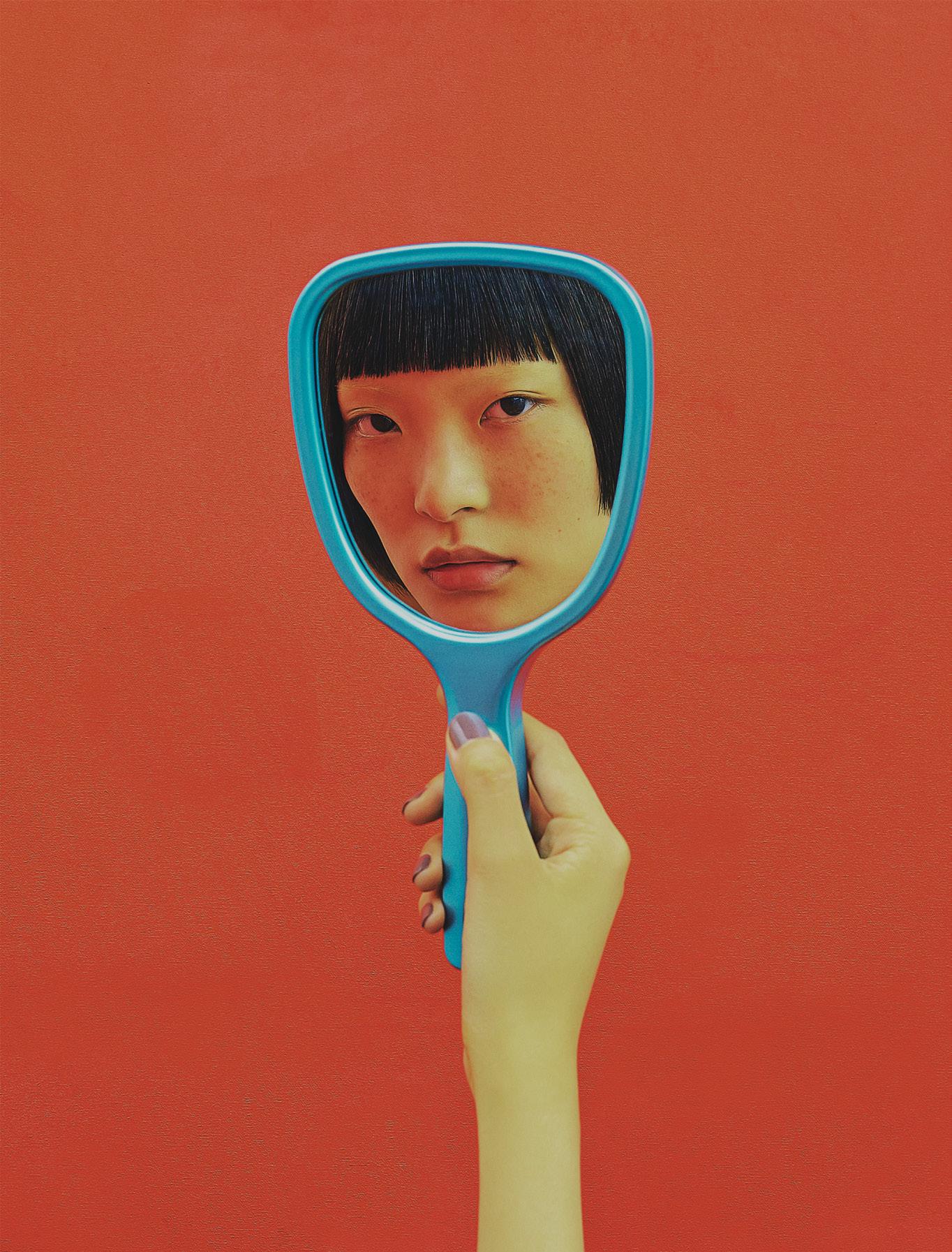
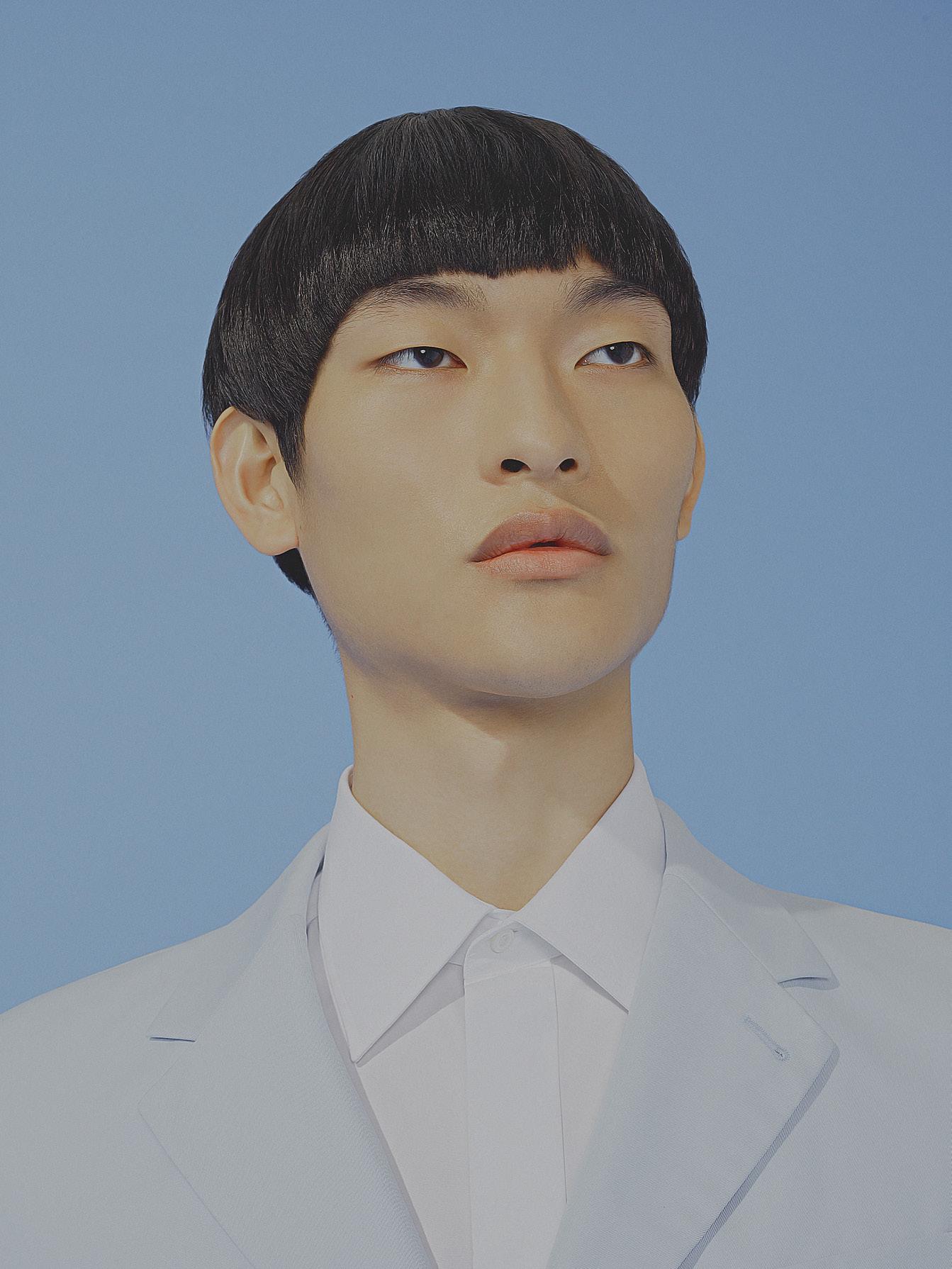
“Colours are statements of sorts. They weigh as much language, we can all
Previous Page:
Nhu Xuan Hua, from the series
of the
Left: Nhu Xuan Hua A Sort of Certitude (2018).
of the artist.
into something less individualistic. In what ways are you trying to expand on the ways figures are represented?
NXH: A body is nothing without its story. One doesn’t carry the other, but both can glow because the other exists. I have been diving into my family history for some years now; the people that I get to photograph reflect my observations of my relatives' features, even when I don’t purposely want to do this – somehow it finds a way to manifest. This can be through a hairstyle, a black kohl eyebrow drawn with care, legs positioned in a certain way or a hand gesture that says a lot about how the person feels. Your mind and soul are incredible vessels for transporting stories, whether these are ever told or if they're kept inside. Examining the past means exploring relationships, whether physical or psychological.
Our bodies are engines fuelled with care and love, but they are also fed with pain, which is equally important to portray.
A: Dalí once stated that "Surrealism is destructive, but it destroys only what it considers to be shackles limiting
I like to see humans as creatures with supernatural powers, but these are being pulled back so the pyramid of obedience can be maintained. I’m a partisan of defiance –holding a motive driven by both love and anger. Surrealism is a playground where things can embody these notions. I say “things” not because I’m lacking words but because it really encompasses everything, from the most ordinary
late the presence of love and relationships through many
ments of the house like curtains or glasses of water. During the first lockdown, I took the time to paint again – I realised how much the topic of love / couples / relationships were a fuel to my imagination. And I started seeing couples every where: through a pair of gloves, or two trees standing alone in a valley. Pairing is a game to me; I notice that a lot of things come in pairs, and I like the idea that one thing cannot exist without another. And again, it works for everything: ob jects, emotions, people. I am a big believer of incarnations and soul travel. Maybe it is this that I am trying to translate.
A: You often work with recurring colour palettes – what do these shades signify, beyond their aesthetic appeal?
NXH: Colours are statements of sorts. They weigh as much as words translating a specific feeling. In a common univer sal language, we can all appreciate a bright blue sky for the sense of joy it conveys, as much as everyone knows that a
Aesthetica 37
Velvet (2016). Courtesy
artist.
Courtesy
Nhu Xuan Hua, from the series Velvet (2016).
Courtesy
of
the
artist.
heritage and upbringing. The series you and me, the fish and the moon, for example, is a clear tribute to Vietnamese dance and opera, seen through the eyes of a person who’s discovering a culture and language. vows, oysters and tan gerines and sharp tongue, round fingers provide more subtle references to childhood memories spent in France. I also think that sound holds an important place in the process.
Heritage and traditions are passed on through storytelling most of the time, and they don't necessarily have physical forms. Stories can take the form of a song or conversation.
A: Do you believe artists can create in a way that doesn’t speak of their socio-geographic-political position?
NXH: Our environment is hostile, yet filled with so much beauty. I want to believe that we must forgive humans for just being humans sometimes. Some days I can and some days I can’t. We live in a political environment, so our ac tions have an impact on others whether we want it or not. It's
A: What narratives are you crafting through this work?
NXH: The invitation to put a show together at Huis Marseille came when I needed to close a chapter in my own life. Hug of a Swan is the title of the exhibition; it is an imaginative tale where photographs are elevated into a dreamlike sanc tuary across four rooms of the gallery. Overall, it is a tribute to both past and present worlds, as well as a last embrace before letting memories go. It’s a swan song for a departure with no return – a kiss on the forehead to past experiences, tales, lies and re-invented realities puzzled by life itself.
A: How do you see the future of fashion photography? What practices should we take into consideration?
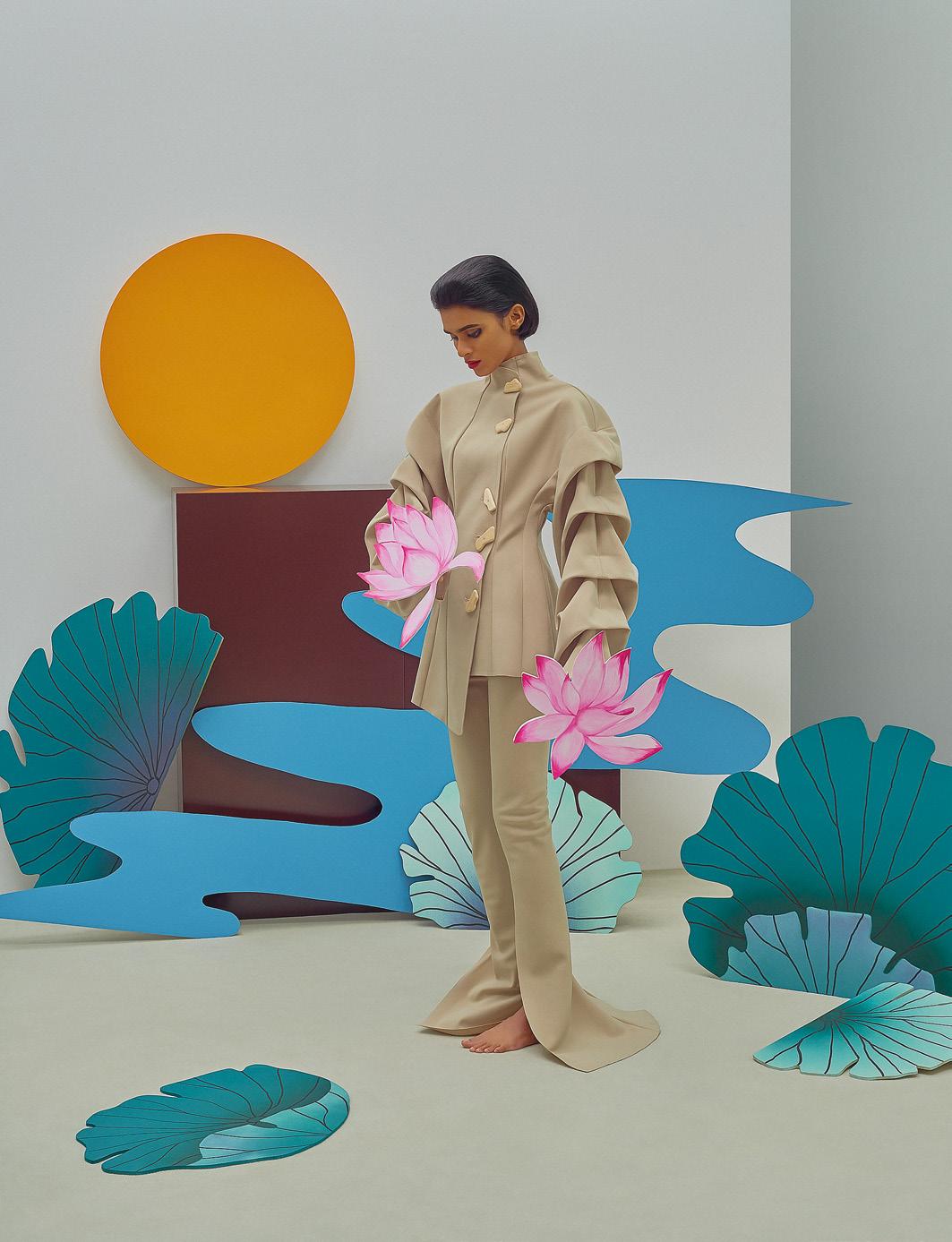
NXH: People should accept the idea of being governed by slowness. Coming to terms with that idea would do everyone a lot of good, I think. The common ingredient to all practices – whether it's photography, sculpture or painting – is time. It's all about how generous you can be with it along the way.
Huis Marseille, Amsterdam
Until 4 December
huismarseille.nl
38 Aesthetica
Nhu Xuan Hua, You, Me, the Fish and the Moon (2017). Courtesy of the artist.
Words Kate Simpson
Nhu Xuan Hua Hug of a Swan
Curious Arrangement
Andoni Beristain
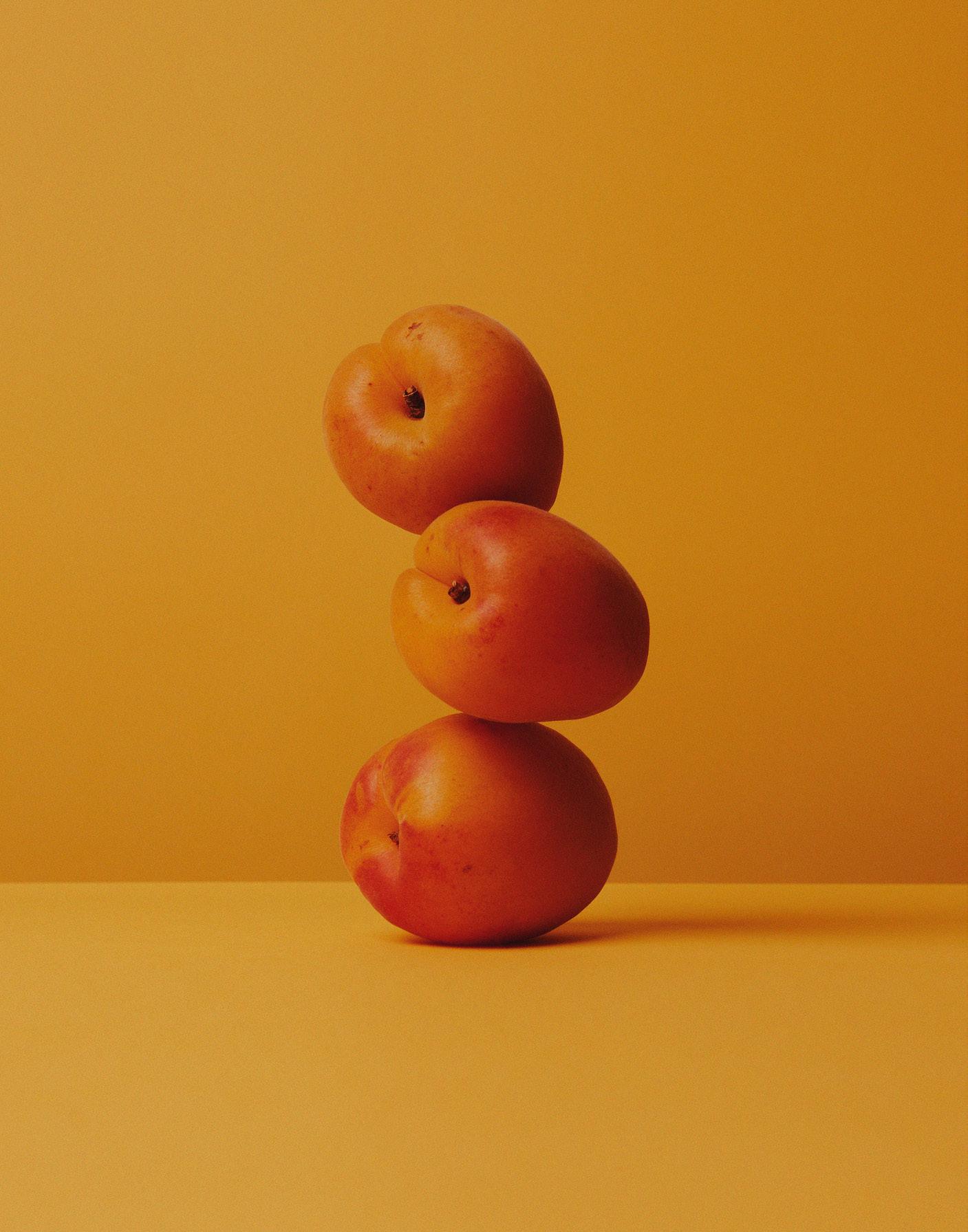
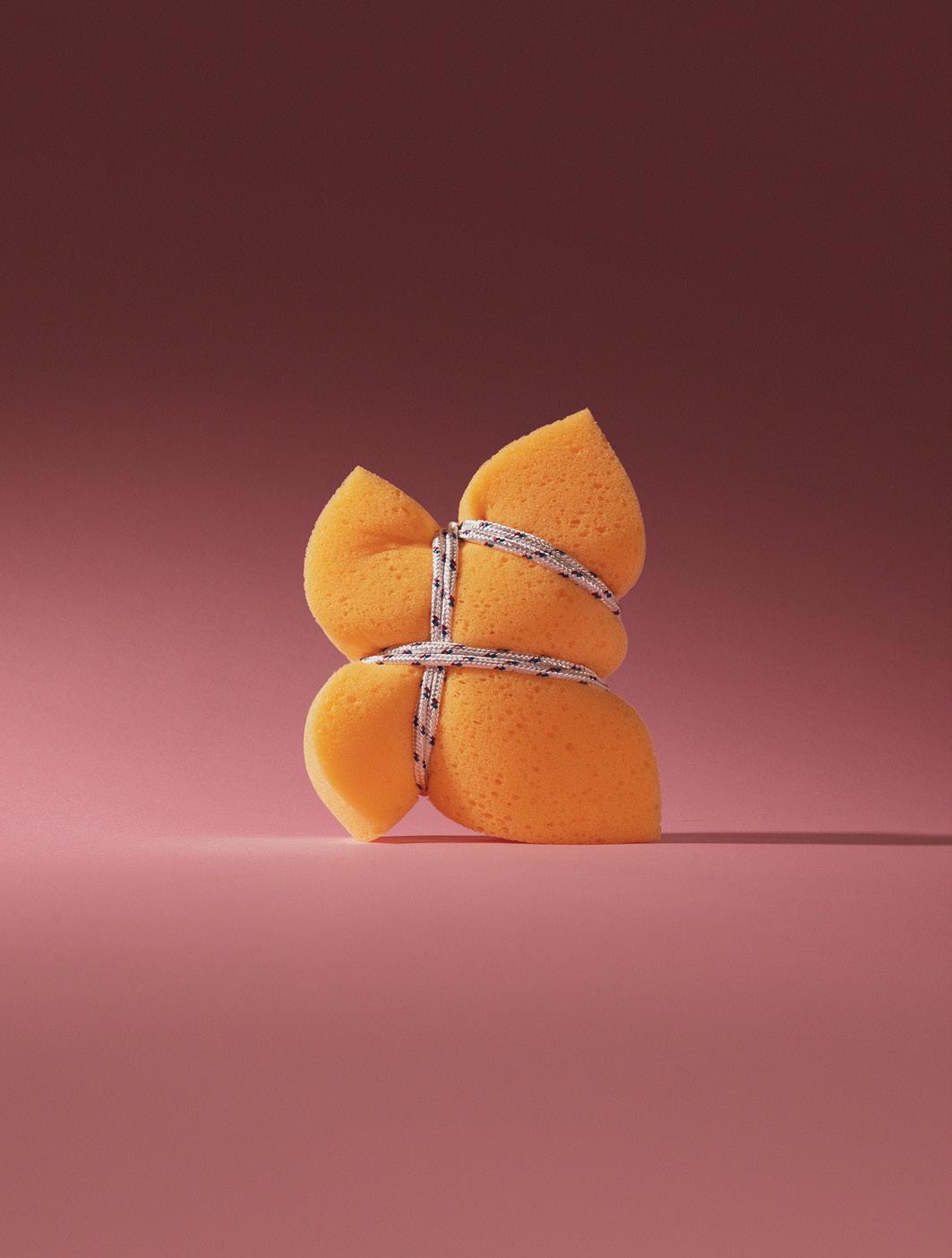
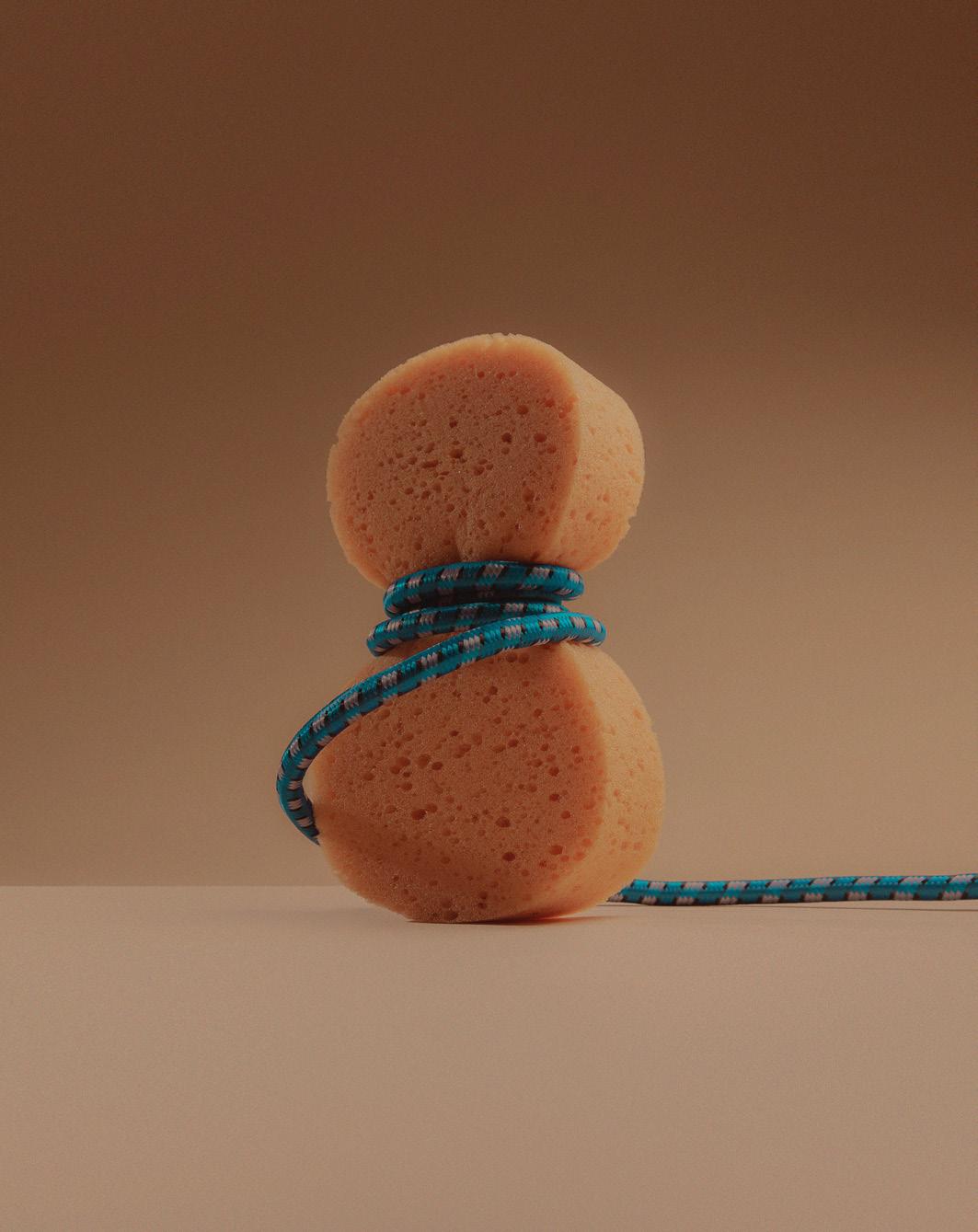
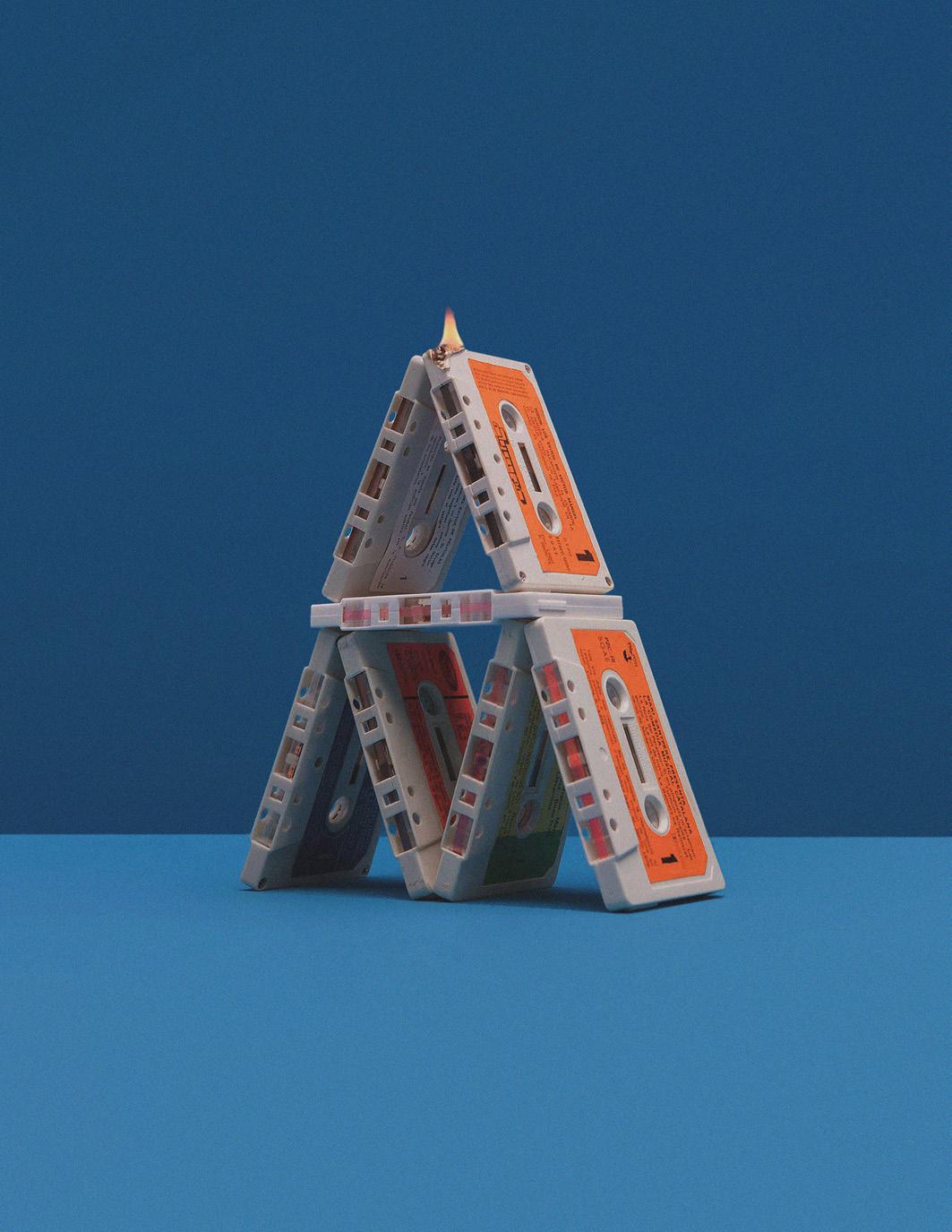
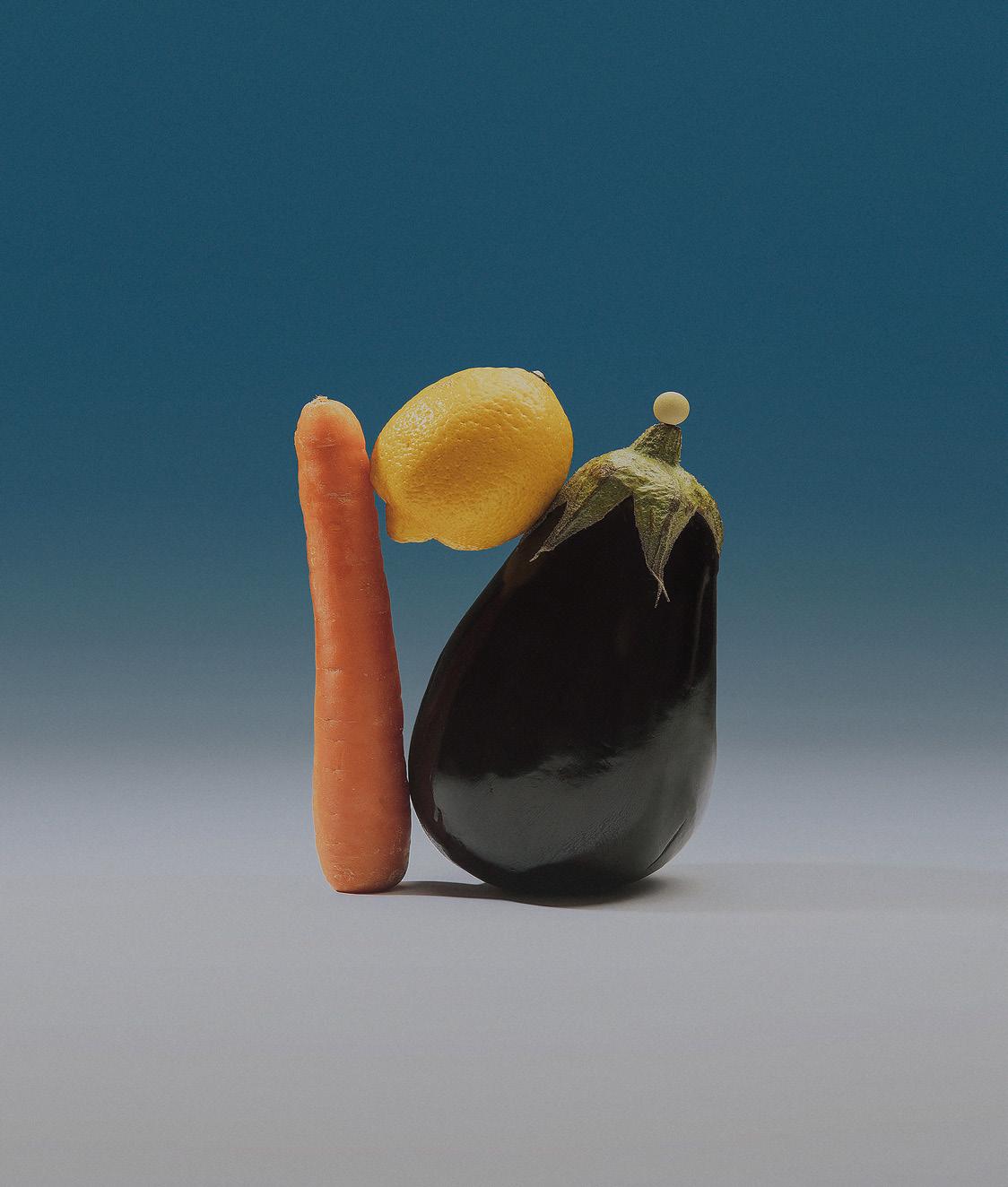
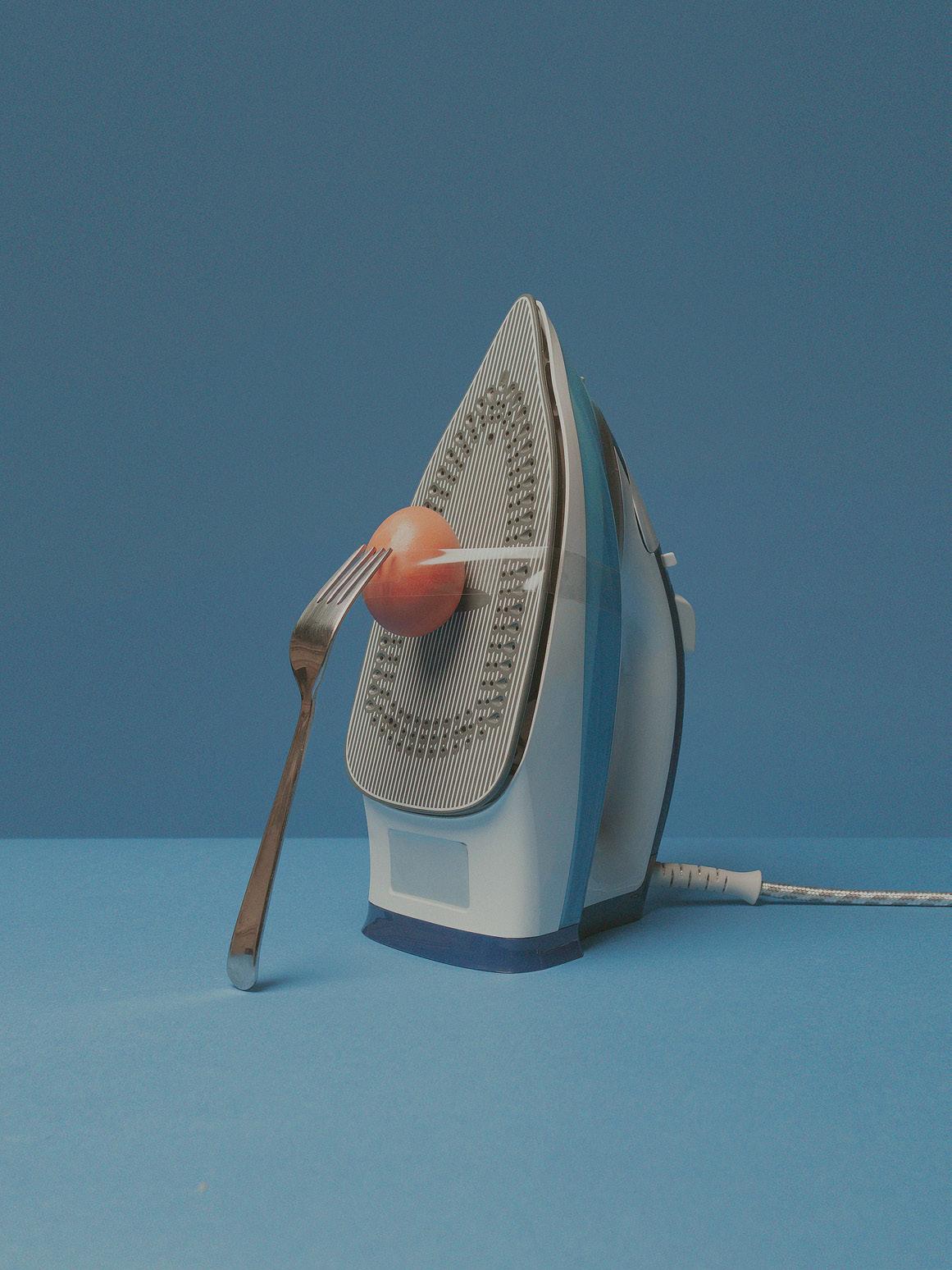
Andoni Beristain (b. 1989) is a Basque photographer and art director, who, since childhood, has been fascinated with shapes, forms and colours – the ways we tell sto ries through visual aesthetics. His intriguing and observed studio work injects a sense of narrative into objects, finding moments of comedy, satire and beauty amongst the items that are most familiar to us. Here, a sponge is tied up tightly with cord – its shape constricted and restrained – communicating the universal feeling of anxiety. Eggs are sellotaped to irons in ways that feel both comical and curious, placing everyday com modities in unexpected scenarios. Vintage cassette tapes are stacked into a house of cards and set alight at the precipice, as if erasing the past. Whilst these compositions might look simplistic, they contain a multitude of emotions – whether pleasant or uncomfort able – that challenge us to reconsider the context of our world. andoniberistain.com.
40 Aesthetica art
Andoni
Beristain, Fruit Tower, (2021). Courtesy of the artist.
42 Aesthetica
Andoni Beristain, Anxiety, (2021). Courtesy of the artist.
Aesthetica 43
Andoni Beristain,
90 x 60 x 90, (2021). Courtesy of the
artist.
44 Aesthetica
Andoni Beristain, Vintage, (2021). Courtesy of the artist.
Aesthetica 45
Andoni Beristain, Dieta Mediterranea (2020). Courtesy of the artist.
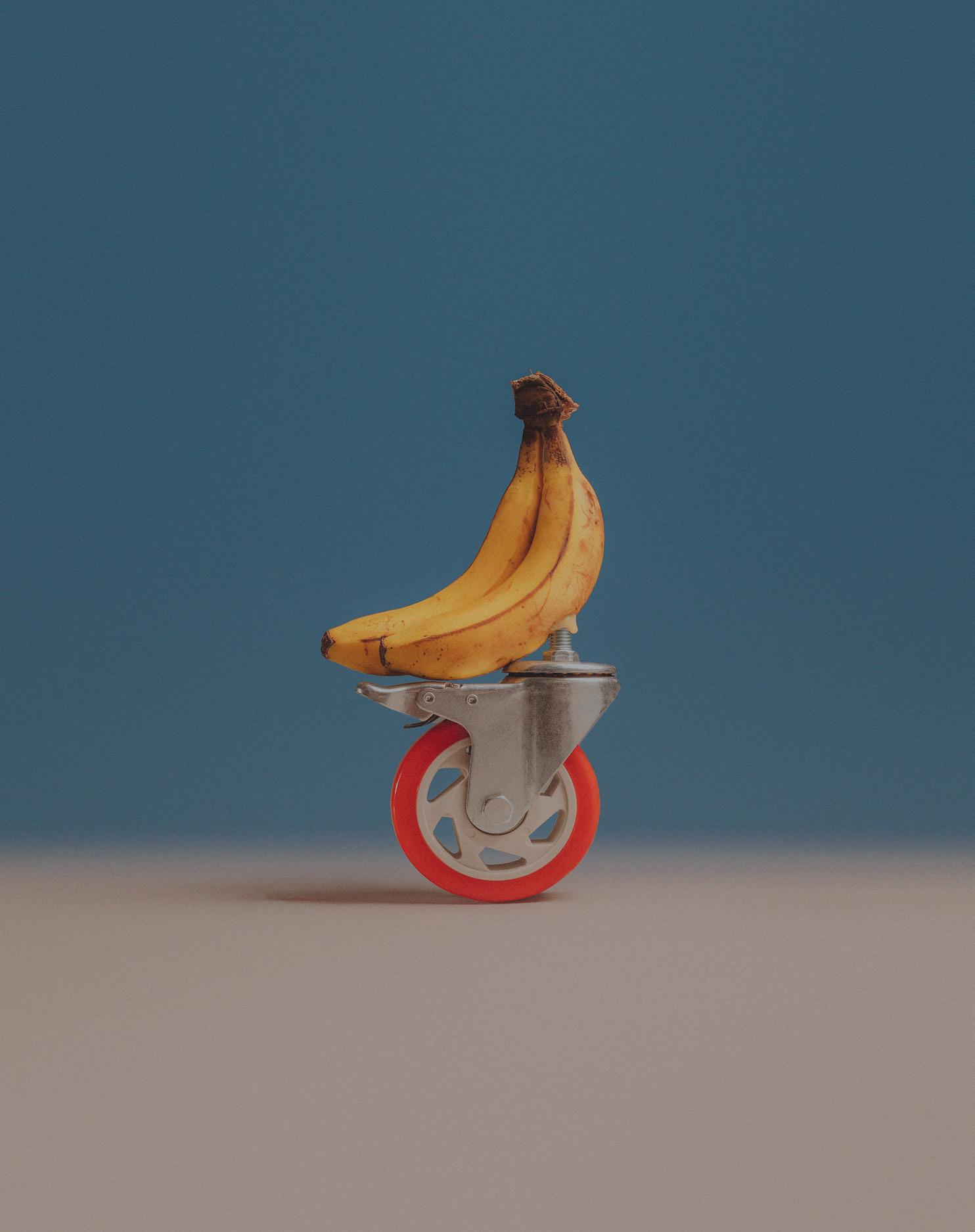 Andoni Beristain, Banana Móvil , (2021). Courtesy of the artist.
Aesthetica 47
Andoni Beristain, Fried Egg , (2021). Courtesy of the artist.
Visual Composite
Anastasia Samoylova
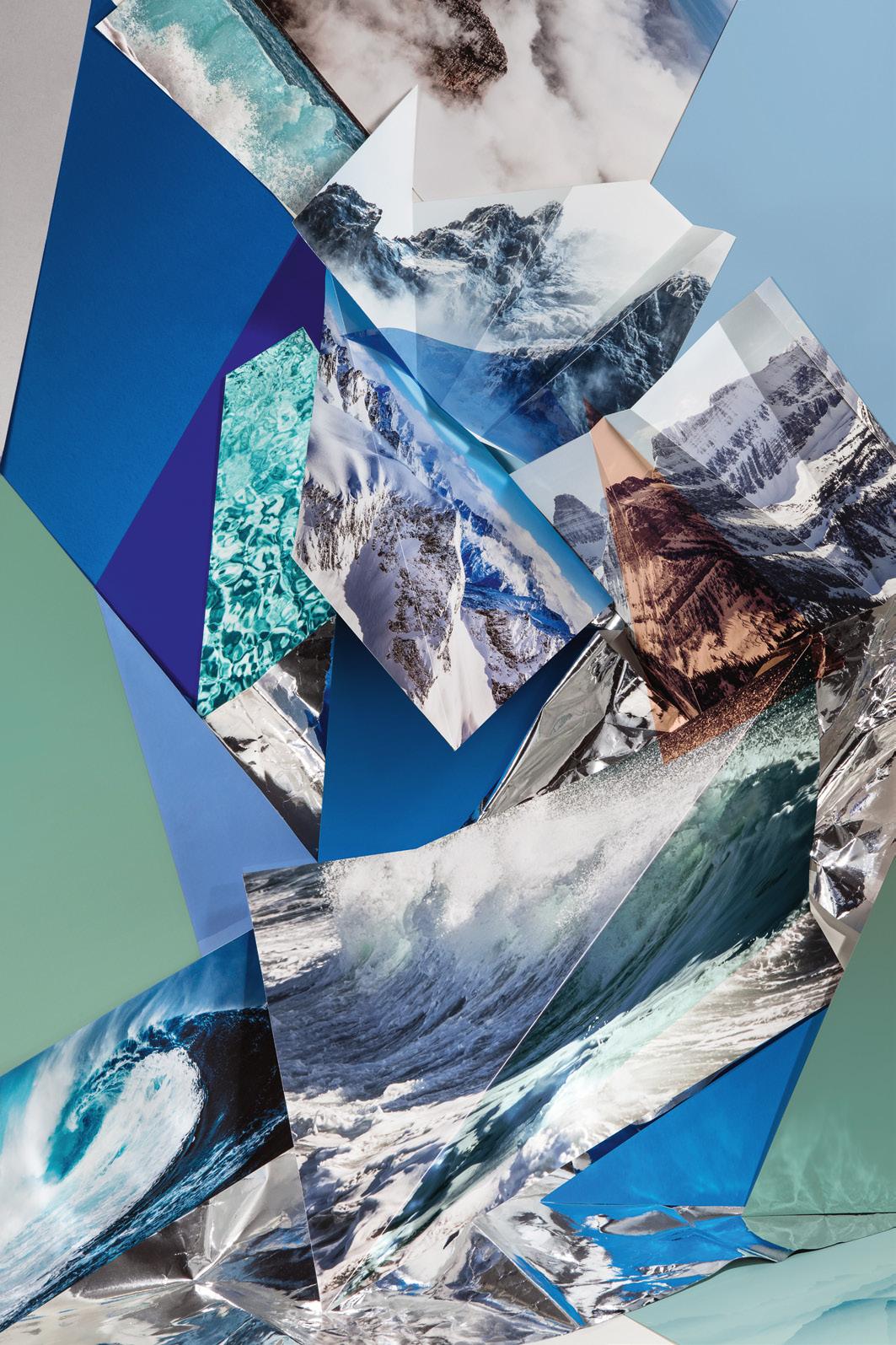
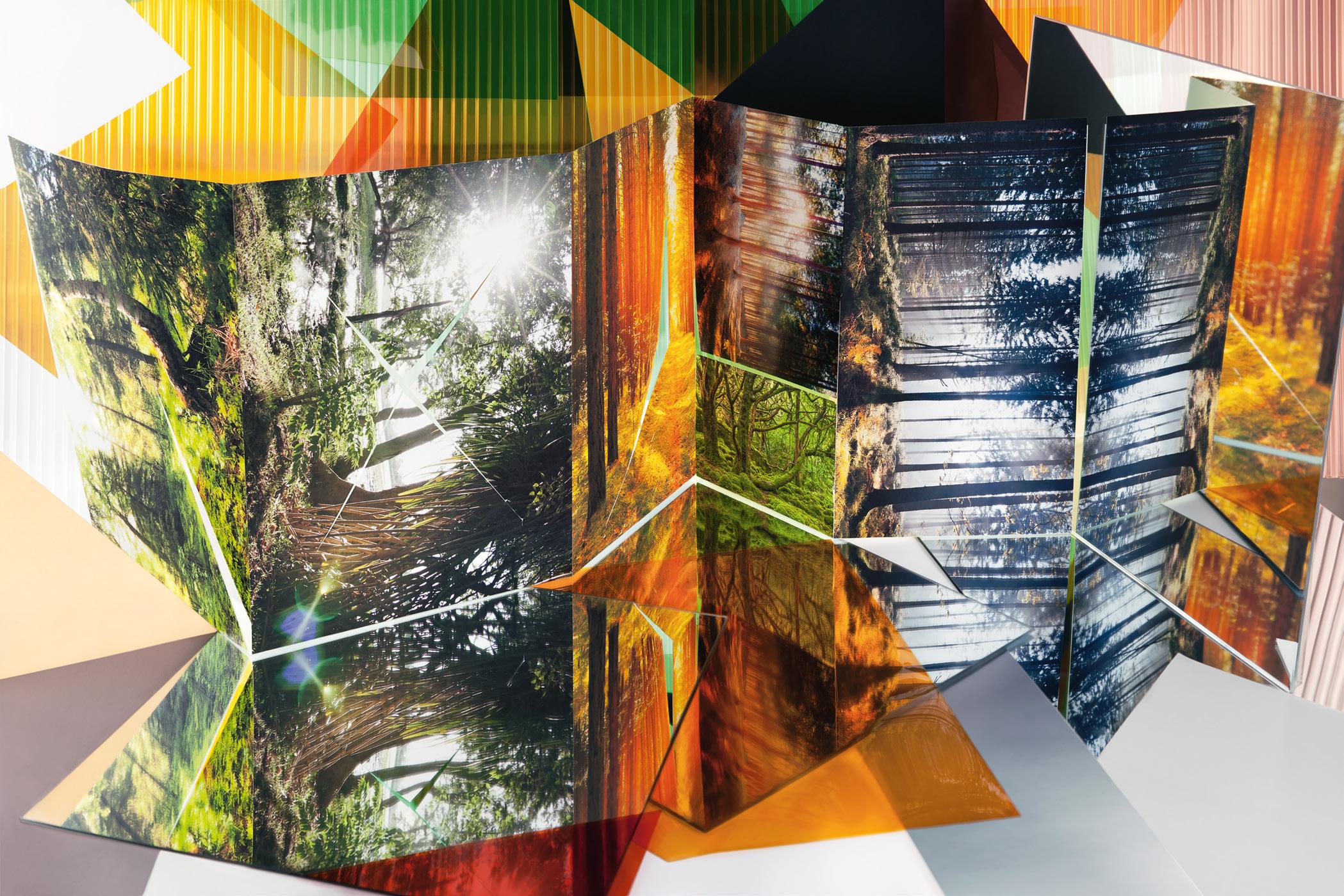
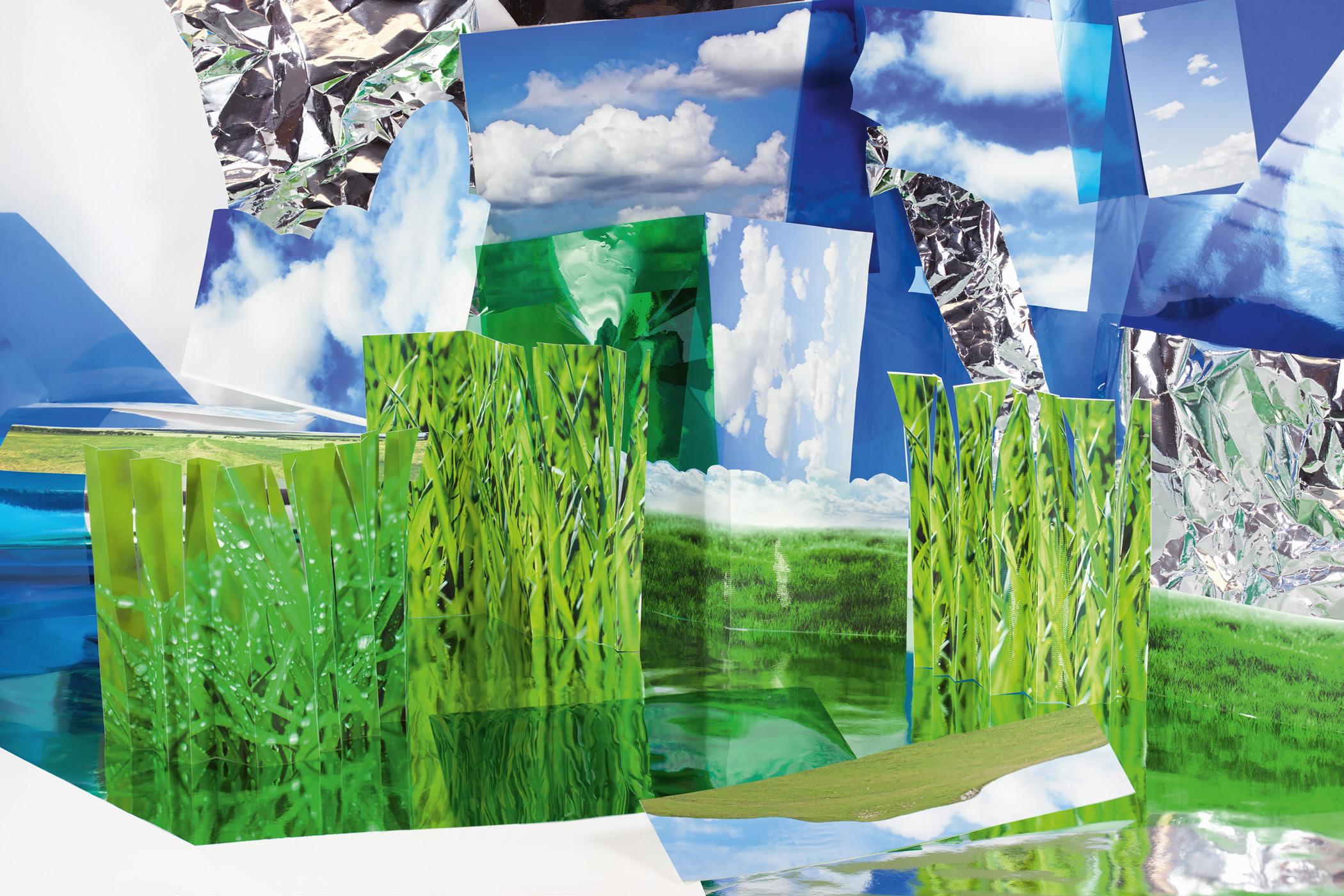
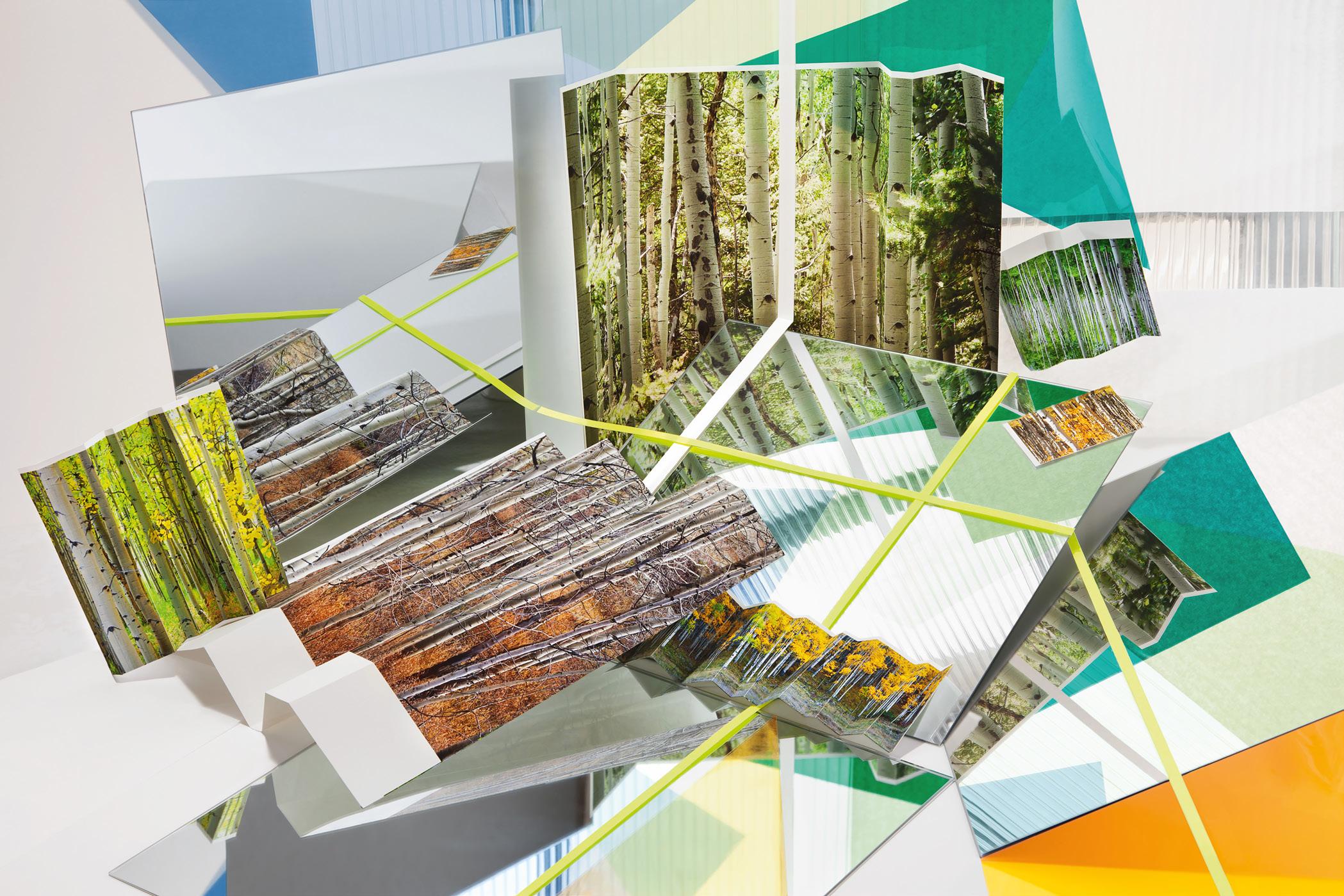
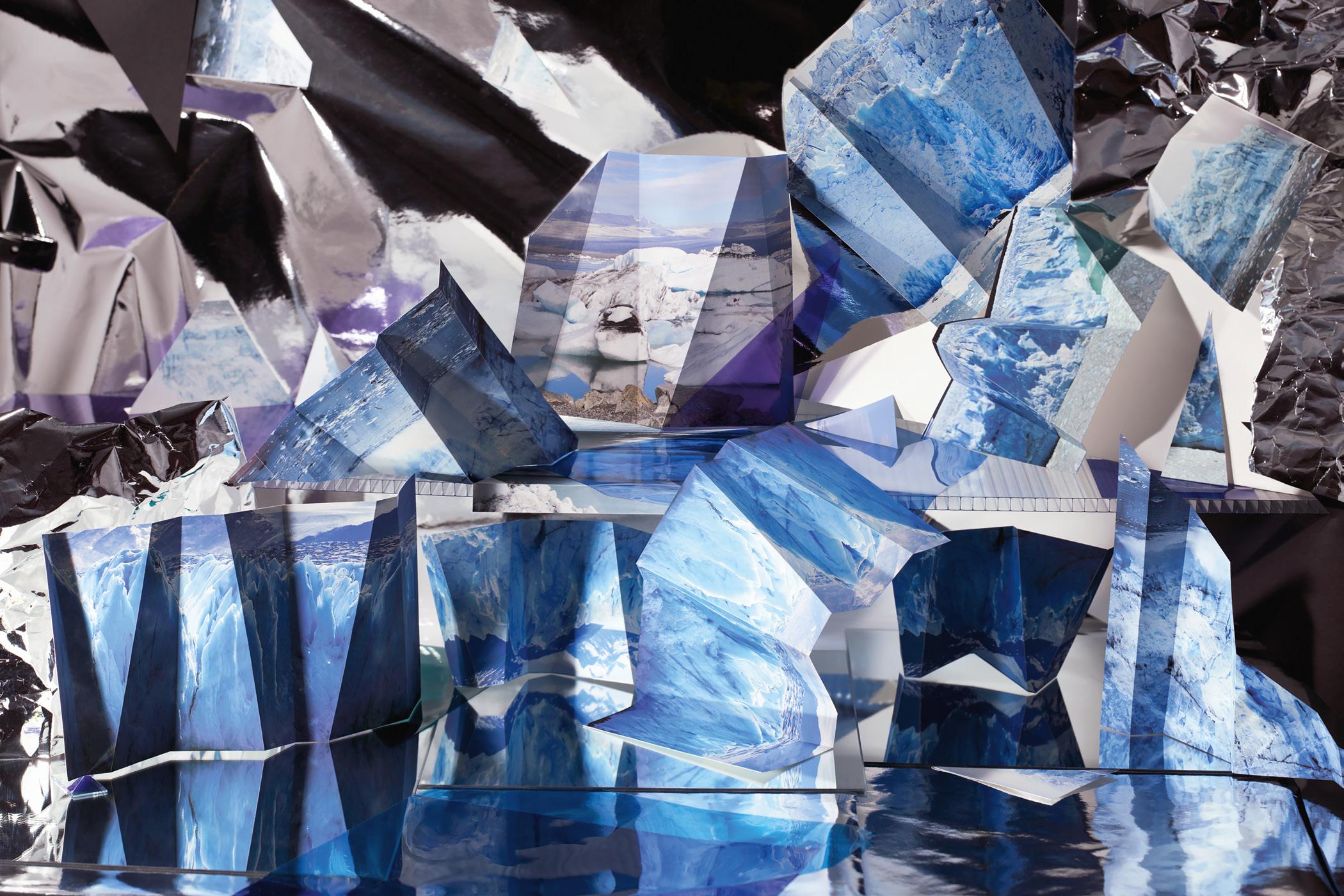
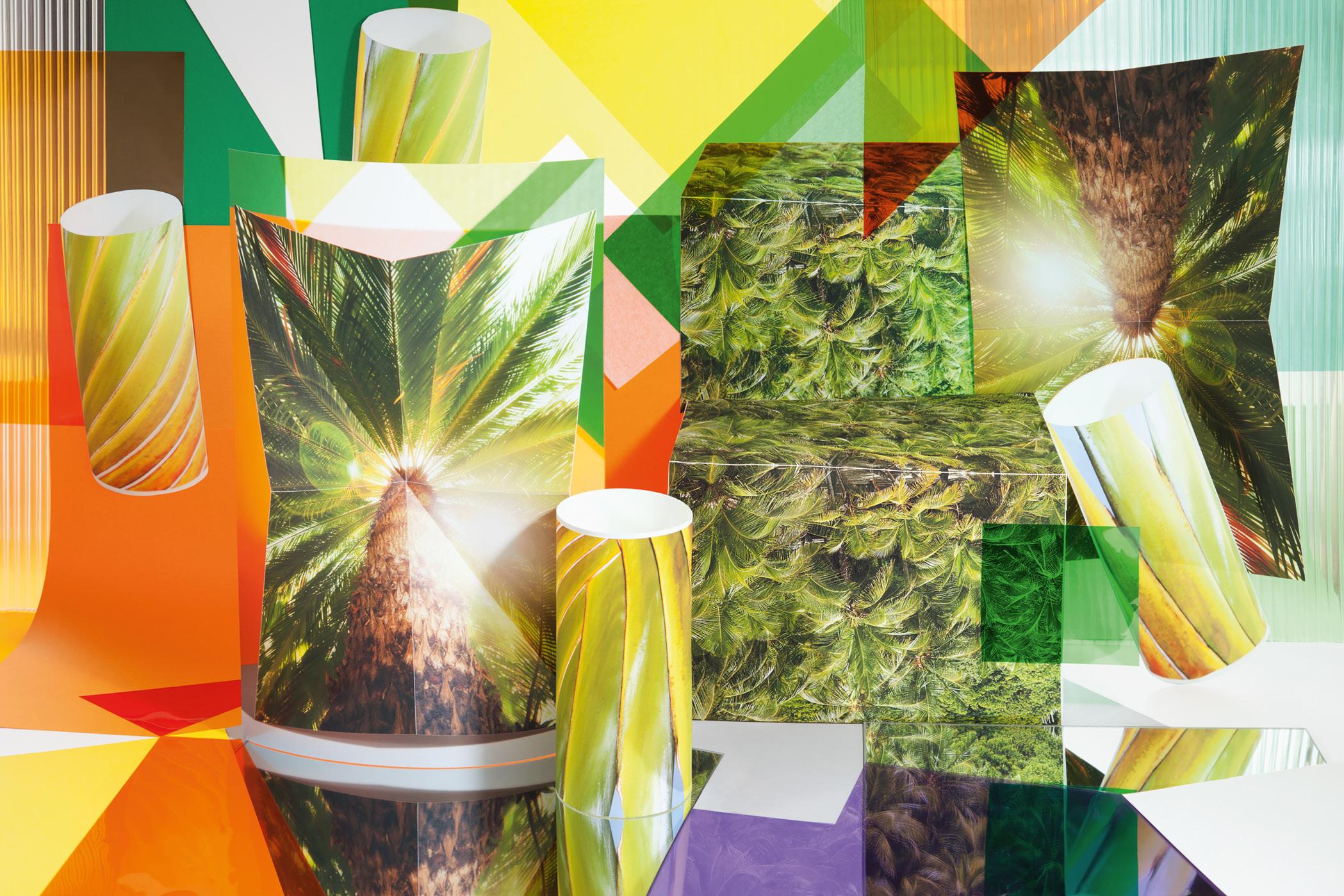
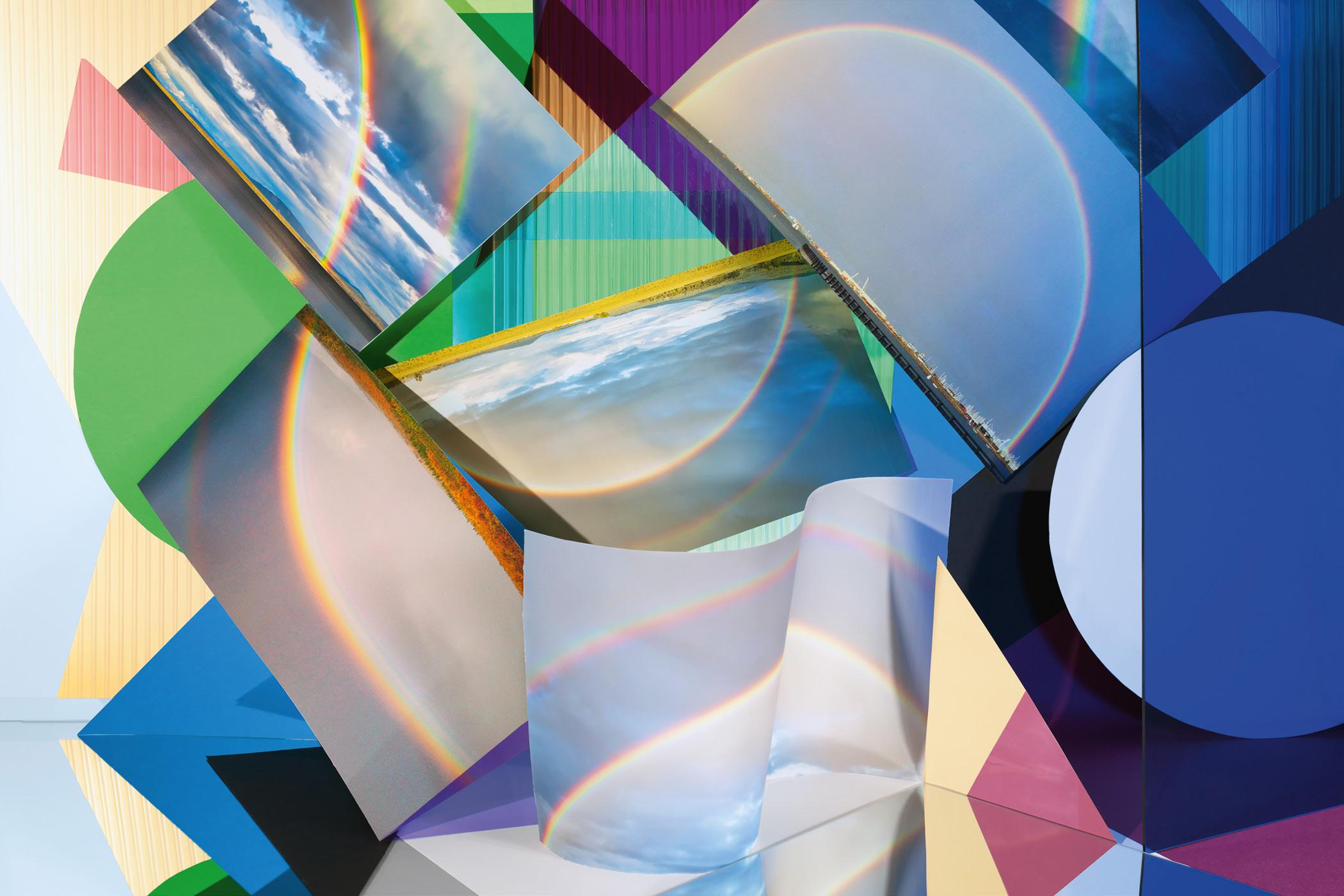
“When was the last time you did a Google image search for ‘landscape’? The results will contain glorifying pictures that beg to be paired with inspirational quotes. Conformist and conventional, such depictions are less about real landscapes than the feelings they are meant to evoke. The algorithms of popular taste and fantasy mirror the notions of the sublime that took hold in western art in the 18th century. When you take a picture, you shrink the subject down into something flat and small. I’m trying to bring it back to life.” For the Landscape Sublime series, Anastasia Samoylova (b. 1984) searched through online image libraries with various buzz words: desert, glacier, tropic, storm, forest, waterfall, mountain. She then collated the results: turning copyright-free images into collages. These constructivist images mimic the aesthetics of Tumblr and Flickr pages, questioning how we form an understanding of natural phenomena through the digital age. anasamoylova.com.
48 Aesthetica
Anastasia Samoylova, Cliffs (2018). Courtesy of the artist. art
Aesthetica 49
50 Aesthetica
Aesthetica 51
Anastasia Samoylova, Forests (2014). Courtesy of the artist.
52 Aesthetica
Anastasia Samoylova, Greener Grass (2014). Courtesy of the artist.
Aesthetica 53
54 Aesthetica
Aesthetica 55
Anastasia Samoylova, Aspens (2013). Courtesy of the artist.
56 Aesthetica
Anastasia Samoylova, Glaciers (2015). Courtesy of the artist.
Aesthetica 57
58 Aesthetica
Aesthetica 59
Anastasia Samoylova, Tropics (2014). Courtesy of the artist.
60 Aesthetica
Anastasia Samoylova, Rainbows (2014). Courtesy of the artist.
Aesthetica 61
Spatial Investigation
Forensic Architecture
THE GOLDSMITHS COLLECTIVE COMBINES ARTISTS, LAWYERS, JOURNALISTS, CODERS AND FILMMAKERS, PUSHING THE BOUNDARIES OF DESIGN TO PROTECT HUMAN RIGHTS.
The digital age has accelerated humanity’s awareness and connectivity like never before. We move from the micro to the macro – from fly-on-the wall TikToks to satellite images of the Earth – in a single scroll, with each image providing its own viewpoint, from the personal to the global. This pow erful experience has opened up new ways of thinking, from open-source resource sharing to citizen journalism. Though, equally, the constant flood of information and opinions can feel overwhelming, leaving us feeling totally powerless.
Forensic Architecture (FA) captures both the tension and promise of the digital age in the context of social justice.
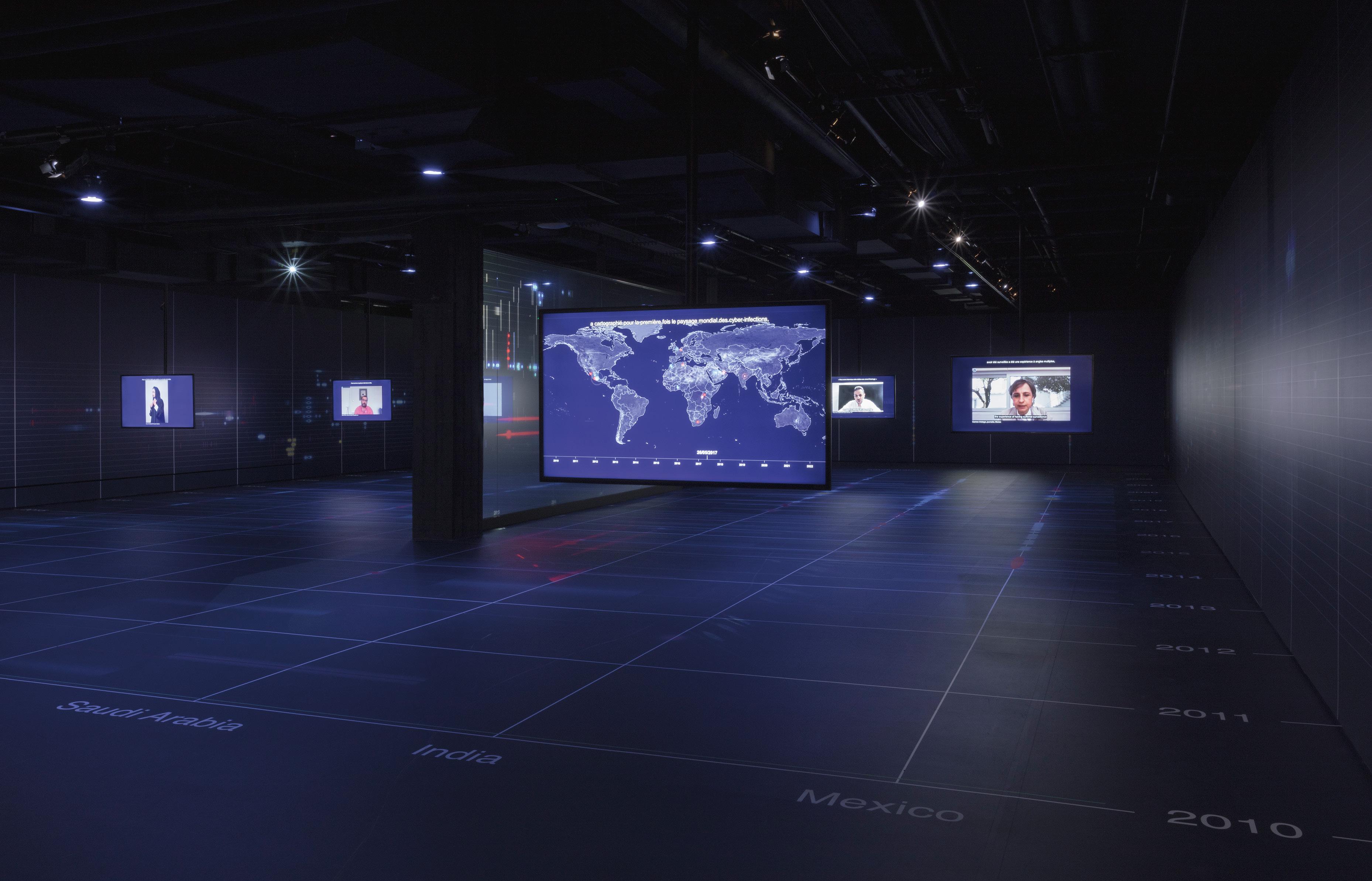
Founded in 2010 by Eyal Weizman, the research agency is based at Goldsmiths University in London and has set the discipline of architecture on a whole new trajectory – con cerned with “cases” instead of buildings, exploring the in tersection of design, law, journalism, human rights and the environment. The group combines architectural skills with digital tools and data, aesthetics and academia, to investi gate human and environmental rights abuses, from air strikes and terror attacks to ecocide and acts of chemical warfare.
In fact, it was Weizman’s personal experiences that led him to establish the group in the first place, having grown up in Haifa, Israel, where he witnessed remnants of Palestinian communities. From an early age, he started to understand how the politics of war were inscribed in the urban environ ment. He went on the study architecture at the Architectural Association in London, going nearly five years without de signing a building, but working on developing ideas instead. Upon graduation in 1992, he took an internship in Ramallah
at the Palestinian Ministry of Planning, where he grasped, on a much deeper, visceral and powerful level, how architecture could service a colonial regime, and how mapping that ar chitecture could be a form of activism rooted in intelligence.
Some 30 years later, Weizman and his team are building on these early lessons in spatial mapping to shed light on human rights abuses, many times in unresolved police inves tigations. In 2006, for example, Halit Yozgat was murdered at his family-run internet café in Kassel, Germany. Weizman and his team remade the 77 square metre cafe at a scale of 1:1, reconstructing a leaked nine-and-a-half minute police re-enactment of a suspect, Andreas Temme, who had claimed to have not seen, heard or smelt any evidence of the murder whilst being in the building. FA’s in-depth study concluded that the witness testimony was very likely to be untruthful. Furthermore, the results uncovered larger questions about how Germany’s security services monitor and embed them selves within the country’s resurgent neo-Nazi underground.
This layered, counter-forensic process is like a contem porary archaeology. Images, videos, sounds and pieces of information are mined, unravelled and mapped into “hyperpoly-perspectival” reality. In this state, an incident can be understood from hundreds of perspectives, augmenting a crime scene far beyond the human capacity for interpreta tion. To achieve this, FA stay abreast of new technological developments. When they started out about a decade ago, each investigation would have a few pieces of related video evidence. Today, they often have hundreds of thousands of clips. “We had to start employing machine learning in order
62 Aesthetica art
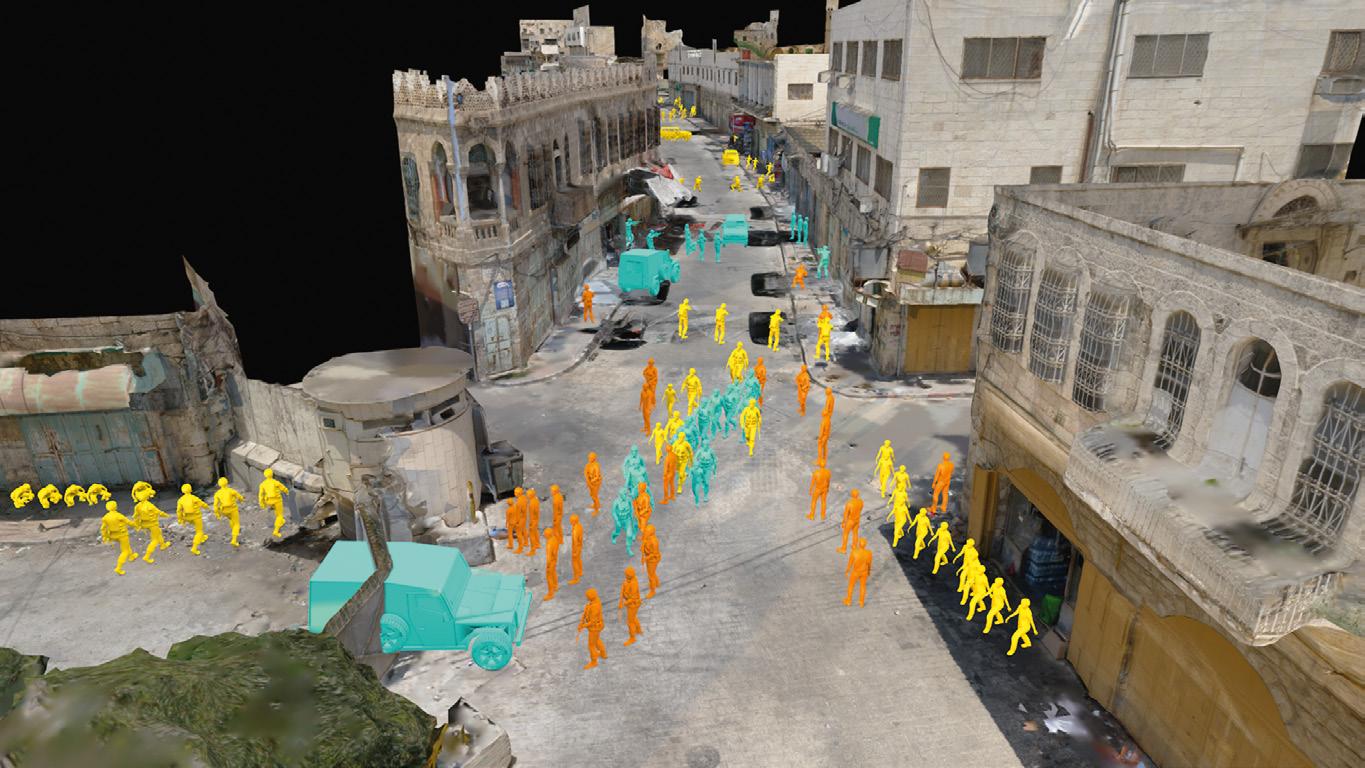
ridors that are short become long; places that are rectangular become circular; the number of people and sounds gets am plified. These memory errors are very interesting for us. They are more informationally rich than a correct, cartesian de scription of space, because the error contains both the space where things happen, and one’s own subjectivity of trauma.”
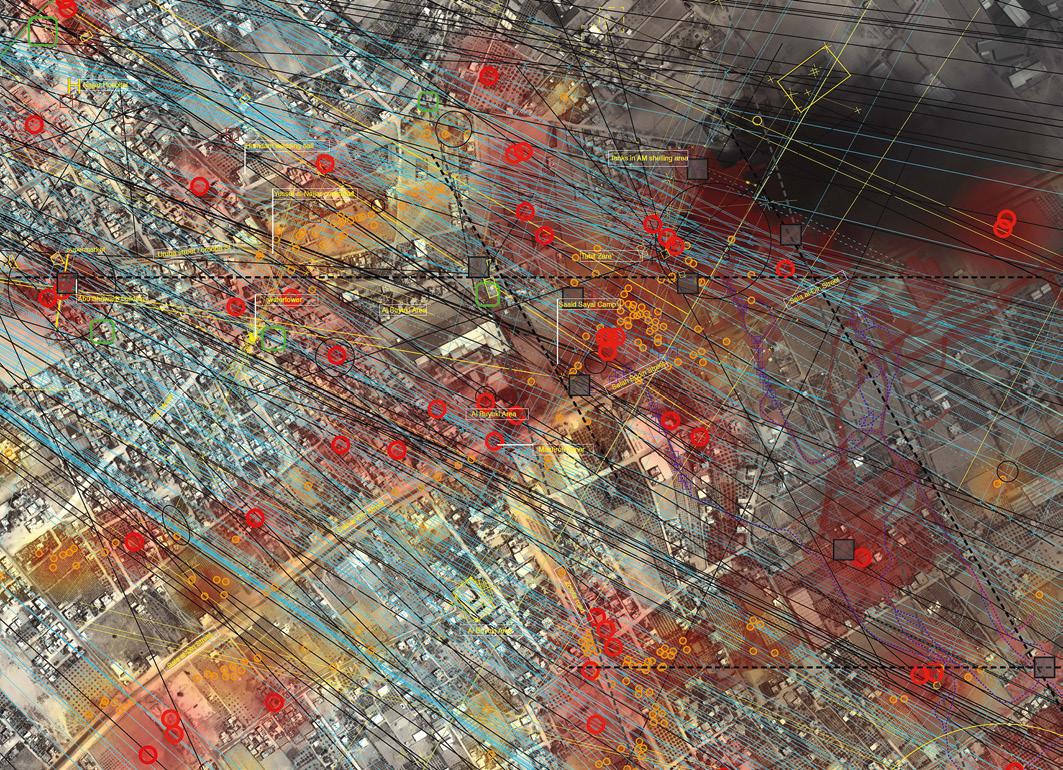
“Socialising” space with these enriched experiences results in what FA calls “situated testimony” – beyond a physical reconstruction of space, the multi-sensory “genius loci” of an event is reconstructed. This scientific process that accounts for both evidence and empathy is another one of FA’s tools.
“Importantly, we are not like a normal human rights group,” says Weizman. “We are based in a university, so our mandate is the development of new ideas. We take cases because we care and want to contribute to particular struggles, but also because they allow us to develop our technique further.”
Today, FA receives many requests, and specifically chooses cases that could spark wider political change – performing a type of geopolitical acupuncture. Take the case of Halit Yozgat: one of 10 murders committed across Germany be tween 2000 and 2007 by a neo-Nazi group known as the National Socialist Underground. Or in the case of Sednaya Prison where, since 2011, thousands have died in detention facilities operated by the Syrian government, and even more have been tortured and ill-treated in violation of interna tional law. In both, FA’s work helped to expose deep-rooted structural crimes of official police and government systems.
This has extended to the horrors of the Ukraine War, specifi cally investigating the missile strike on the Kyiv TV tower on 1 March 2022. Weizman notes: “The missiles landed on the ter ritory known as Babyn Yar, the site of one of the worst mas
Aesthetica 65
sacres of the Holocaust. Historical references, particularly ones related to WWII and the Holocaust, have been continu ously weaponised as part of Russia’s propaganda machine. Given their claims about the ‘de-Nazification’ of Ukraine, the destruction of one of the Holocaust’s most significant sym bolic sites is particularly ironic. Our investigation sought to examine the confluence of past and present in this fraught landscape, drawing together a detailed analysis of the recent strike on the TV tower and a spatial reconstruction of the Babyn Yar site – a complex ravine system that used to run through this part of Kyiv. By excavating the historical layers of the Babyn Yar site, we have been able to locate massacres and the multiple attempts made to silence their memory.”
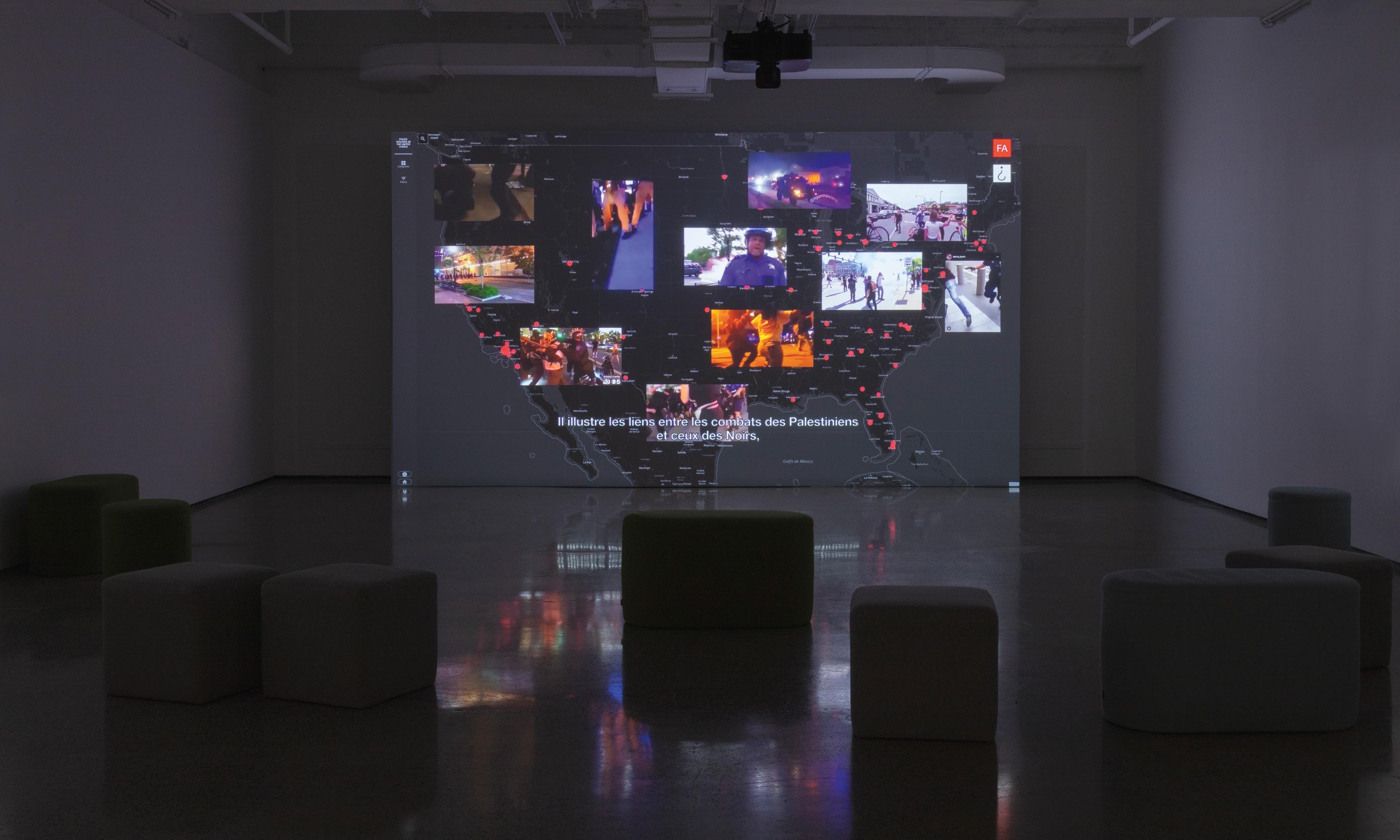
For this project, FA collaborated with the Centre for Spa tial Technology, based in Ukraine, to investigate the history of several sites of Russian bombardment. “Our attempt was to follow the bombs into the ground they are blasting, but follow them not only in space but also in time. Every ruin used to be a building, and it exists within a social and urban context that is rich and densely detailed, and can tell us about what Ukraine was.” Using historical and cultural intel ligence as a form of activism aligns well with the ambitions of many art institutions. The investigation into the Russian strike on the Kyiv TV Tower is on view for the first time at the Louisiana Museum of Modern Art, Humlebaek, as part of the groundbreaking programming series The Architect’s Studio.
Importantly, FA shows how architects can use their skills in alternative ways, and this is recognised by Louisiana. “The environment is suffering from the building industry, which has the biggest carbon footprint. Should architects be build ing more? Perhaps they can work with old structures and
landscapes instead, but we also have to work to expand the field of architecture, as well as asking what are the bounda ries of this field?” says Mette Marie Kallehauge, Curator.
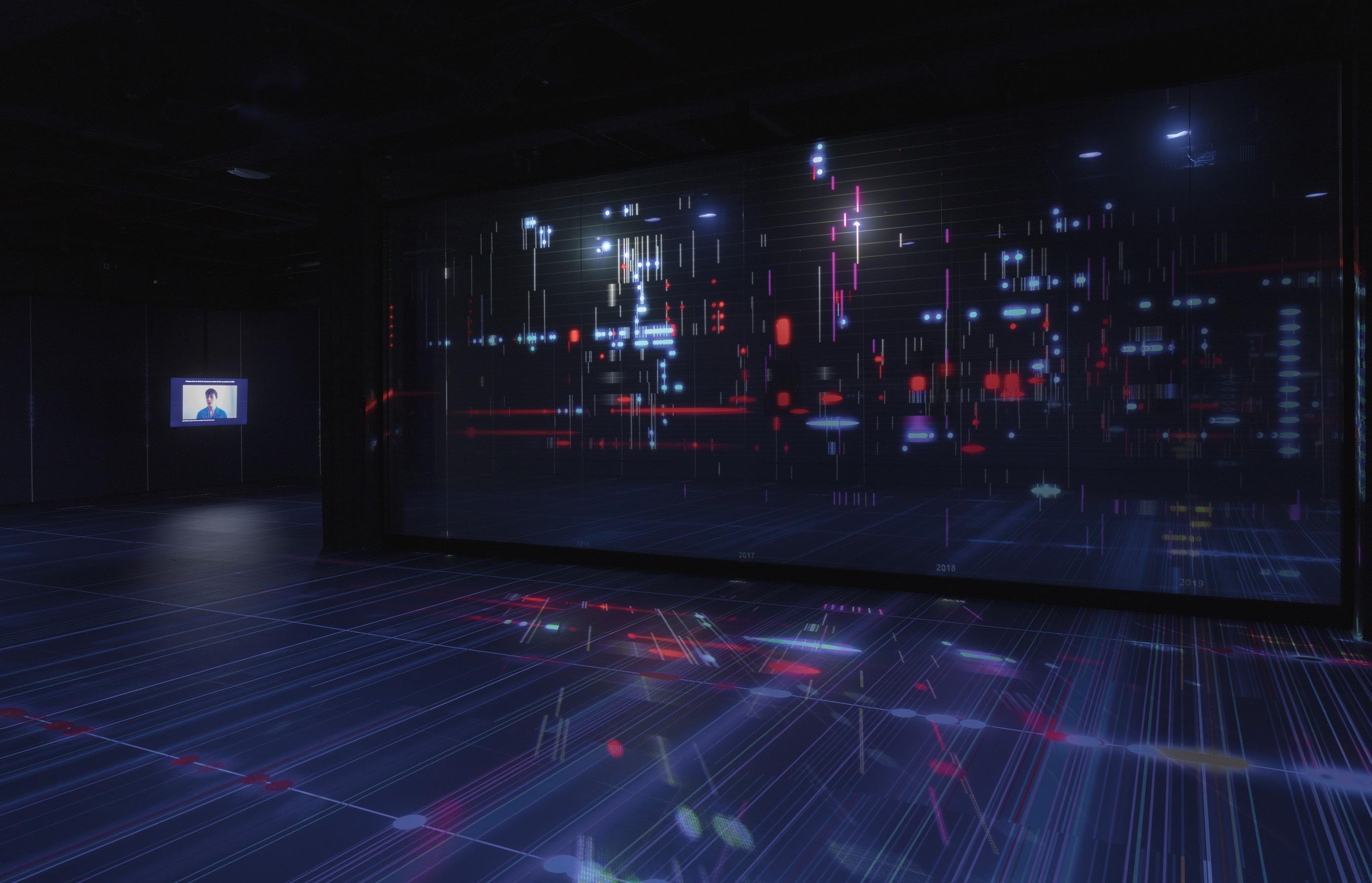
The exhibition, in turn, gave FA the opportunity to further reflect on the relationship between evidence and testimony, and to examine the human and material witnesses at the core of their work. Eighteen key projects show how both the physi cal and meta-physical can be constructed in space. Specially built for the exhibition are two 1:1 models of crime scenes that can be explored by visitors; the case of Halit Yozgat, and the case of a drone strike in Miranshah, Pakistan, which killed several people. Weizman sees the exhibition format as anoth er tool available to him, presenting a case in a new way. “In each forum there are things that you can say, and things that fall out – whether it is The New York Times, a courtroom, in academia and likewise in an art space. It’s important to take a single piece of evidence through as many fora as possible, because in each one you would see other aspects,” he notes.
In the digital age, it is easy to fall into binary traps where images and videos can be presented as evidence, contexts lose dimensions of understanding, and witnesses are exam ined without compassion for the human experience. In every aspect, FA disperses these binaries with its multi-disciplinary nature, critical questioning and interest in subjectivity – im portant skills that are only becoming more necessary to living today. Weizman continues: “Forensic Architecture has been a part of an opening of a new field within architecture and aesthetic practices. I see the techniques we have devel oped being used now not only in journalism, but also by human rights groups. FA has given architects the potential to intervene in issues in a way that other disciplines cannot.”
Until 23 October louisiana.dk
66 Aesthetica
Right: Exhibition view(s) of Terror Contagion Forensic Architecture presented at Musée d’art contemporain de Montréal, 1 December 2021 - 18 April 2022. Photo: Richard-Max Tremblay.
Words Harriet Thorpe
The Architect’s Studio: Forensic Architecture Louisiana Museum of Modern Art, Humlebaek
Still from The Beating of Faisal al-Natsheh, 2020. Superimposition of the models from the three witnesses Forensic Architecture interviewed as they describe a convoy of soldiers escorting arrested Palestinian civilians to a militarised checkpoint in Hebron. (Forensic Architecture/Breaking the Silence, 2020).
Ethereal Illumination
Reuben Wu
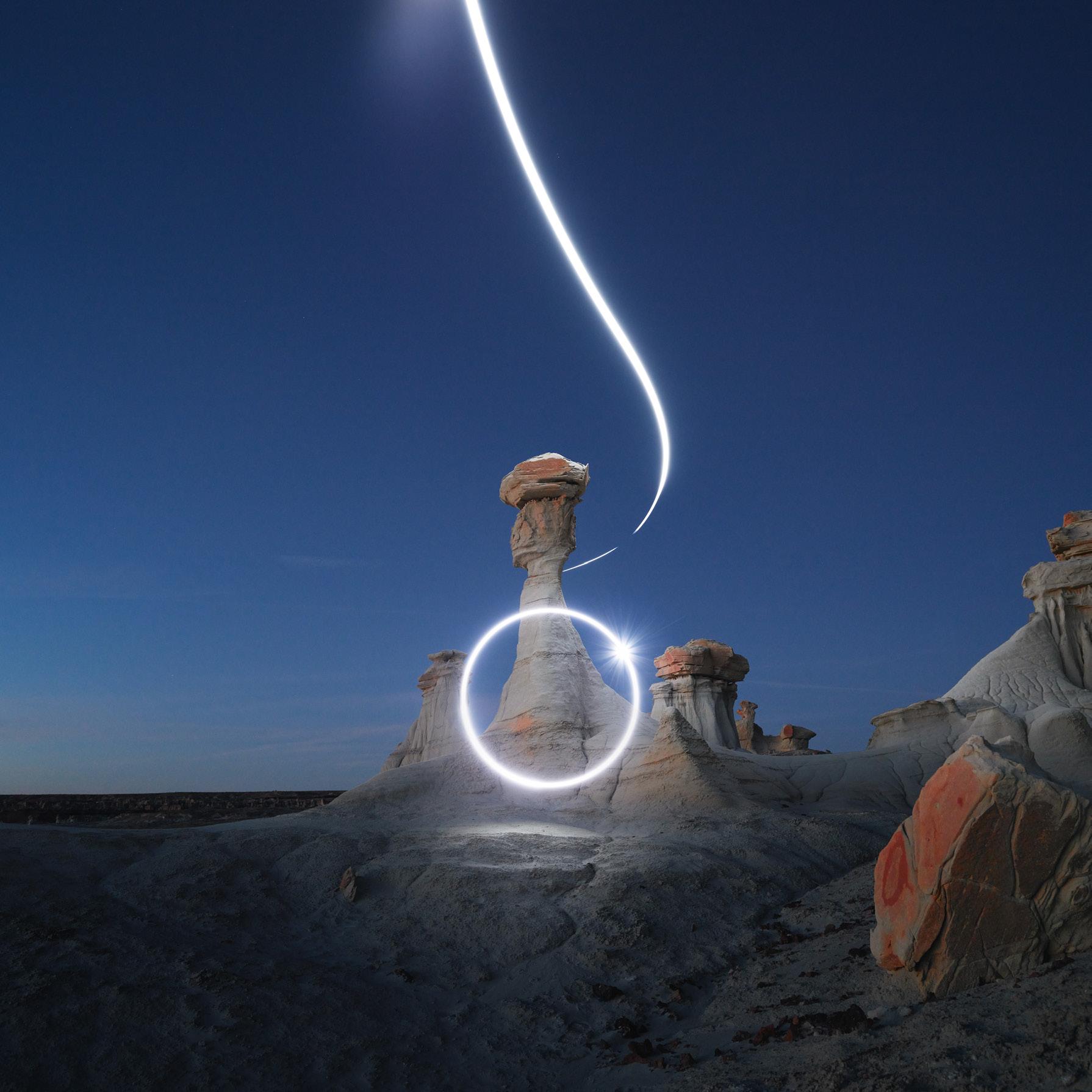
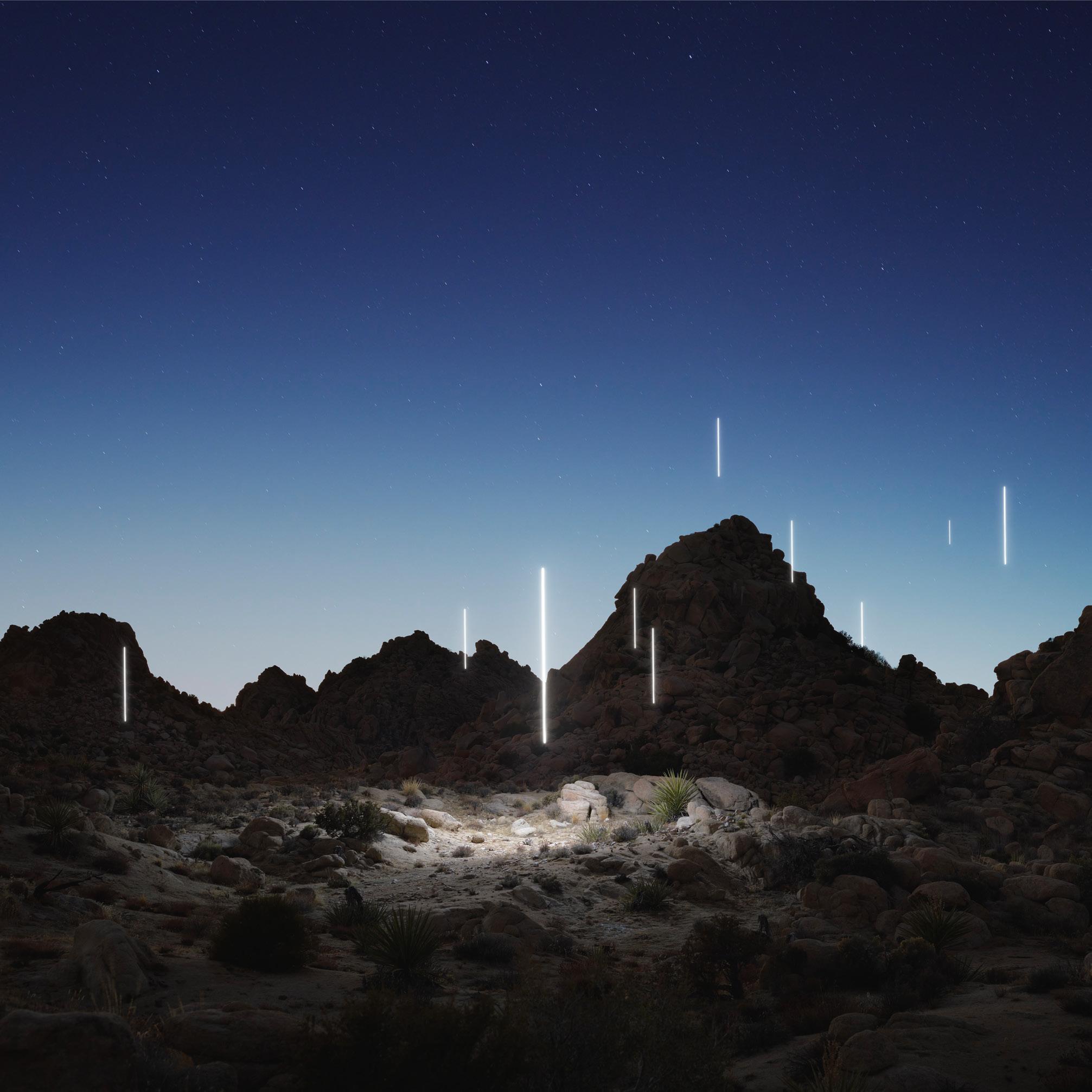
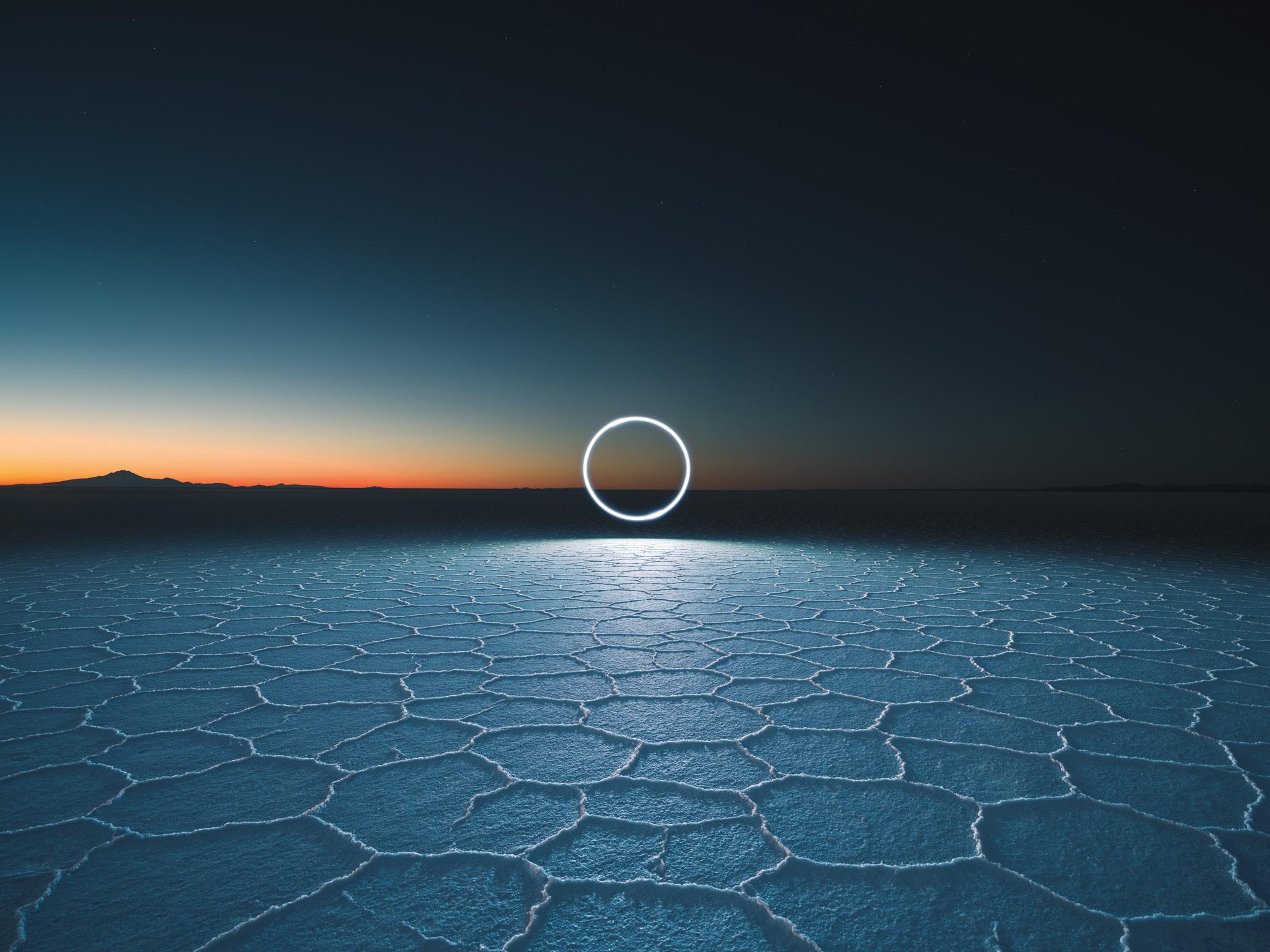
Reuben Wu (b. 1975) is a photographer, filmmaker and music producer whose visual work is driven by the urge to discover and illuminate remote geographies. His fantasti cal images occupy ethereal planes, from the salt flats of Bolivia to the Andes in northern Peru, and seem to exist in an infinite, timeless realm. His award-winning Lux Noctis series was influenced by the ideas of planetary exploration, 19th century sublime Romantic paintings and science fiction, casting halos of light against pillars of rock. The works transformed undiscovered environments, renewing our perceptions of the world. His later series, also featured here, continue with this idea, producing large temporary ge ometries – or “aeroglyphs”, created through light-carrying drones. These shapes – ap pearing as glowing lines and circles – float on the horizon like doorways, portals or pathfinders, introducing us to the sublimity of faraway locations. reubenwu.com.
68 Aesthetica art
Reuben Wu, Aeroglyph Variations #04 . (2019) Courtesy of the artist.
Aesthetica 71
Reuben Wu, Rufus Du Sol (2020),
“Live at Joshua Tree” Artwork
72 Aesthetica
Reuben Wu, XT1876, (2019), from Field of Infinity.
Aesthetica 73
74 Aesthetica
Aesthetica 75
Reuben Wu, (2019), Field of Infinity.

76 Aesthetica
Reuben Wu,
LN1975 , (2019), from Lux Noctis.
Aesthetica 77
78 Aesthetica
Aesthetica 79
Reuben Wu, AE4982 (2018). From Aeroglyph.
Design as Experience
Jason Bruges Studio
IN THE EXPANDING FIELD OF EXPERIENTIAL ART, THIS PIONEERING STUDIO IS PAVING THE WAY FOR A NEW GENRE OF INTERDISCIPLINARITY AND INTERACTIVITY.
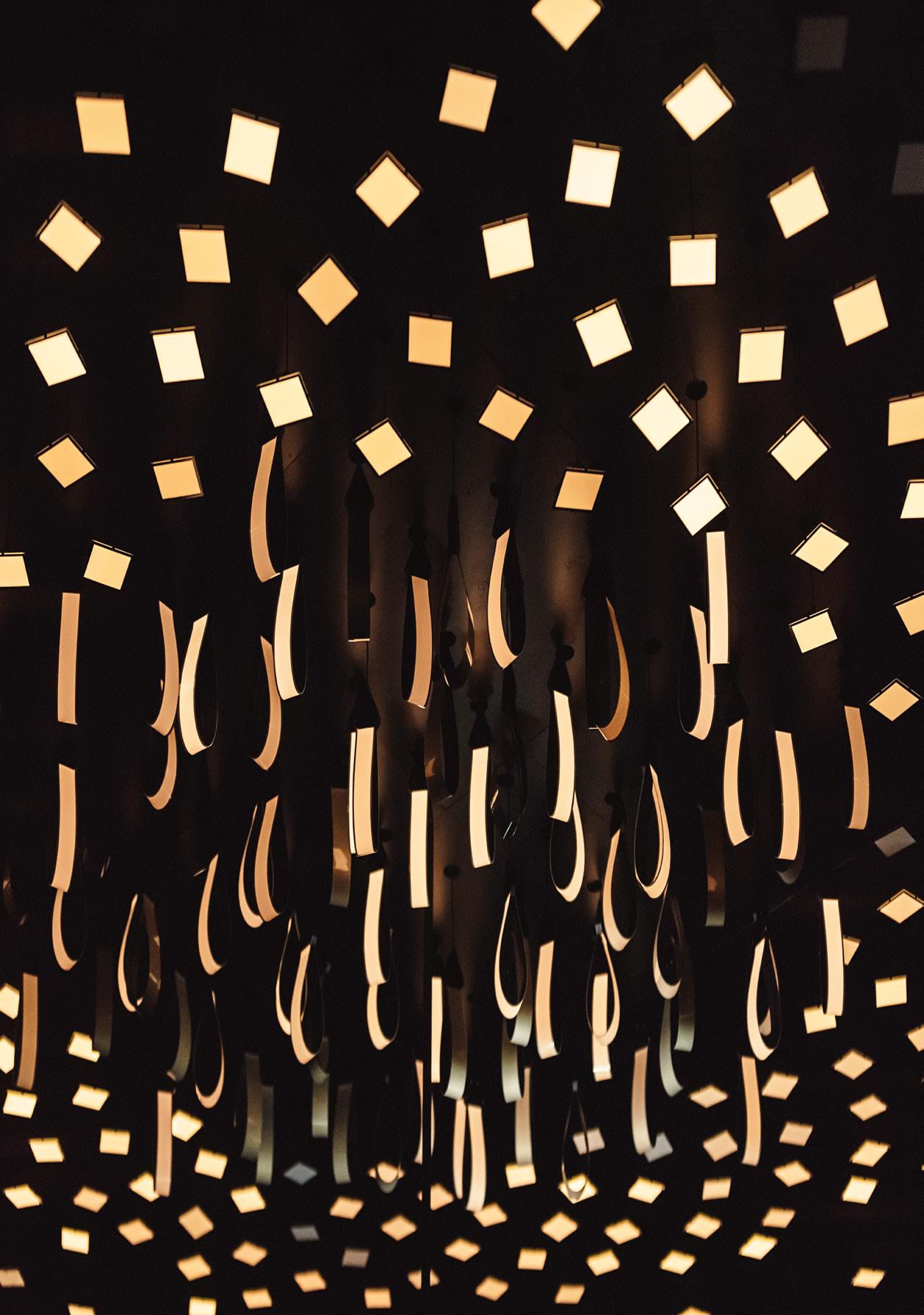
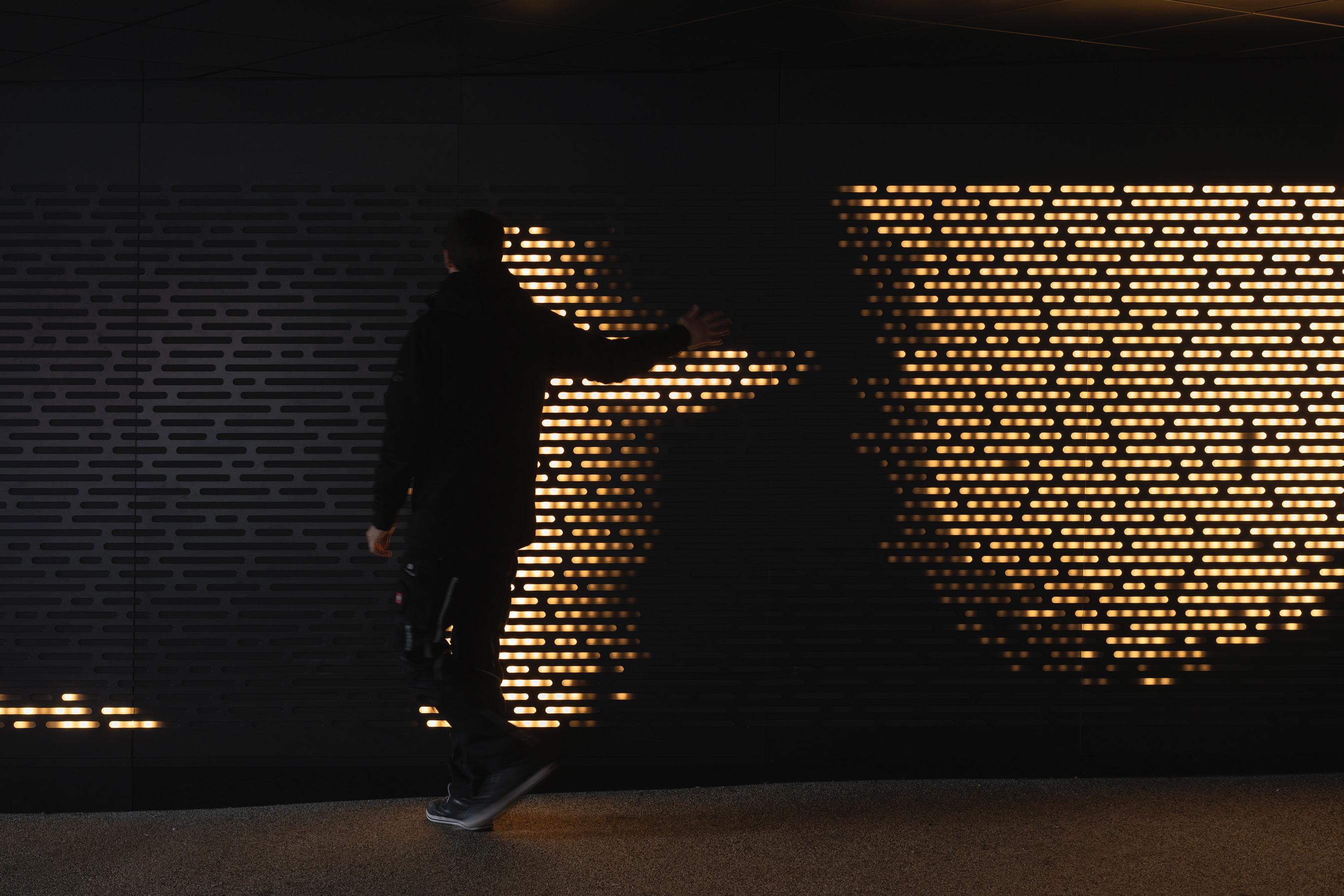
“Experiential Art” is increasingly appearing in public spaces. From architectural-scale interventions to dynamic installa tions, these artworks offer new modes of storytelling across wide-ranging settings such as hotels, universities, hospitals, parks and museums. Audiences are, more frequently, being encouraged to activate, be part of spaces and become in volved in participatory exhibitions or events, reflecting on increased modes of interactivity within the digital age. Jason Bruges Studio constructs time-based pieces and luminous environments that alter our perception of contemporary landscapes, sitting between art, architecture and technol ogy. His artworks have been installed at the Olympics, Tate Modern, the V&A, as well as the Museum of the Future, Dubai.
A: What inspired your involvement in the design world?
JB: I grew up surrounded by art and technology at home. My mother trained as an artist and my father worked as a software engineer. Design was most accessible at school, and I remember immersing myself in workshops, utilising wood, metal, plastics and starting to apply electronics learnt in physics classes to my early design experiments. I enjoyed building interventions to monitor my room, and I would rou tinely be building complex and layered worlds made of Lego.
A: How do you define the interdisciplinarity of your work?
JB: As a studio, we intervene in the urban environment, blending architecture with interaction design, using a hightech, mixed-media palette to weave a sense of magic into the fabric of the city. The Studio needs a broad range of creative
skills to realise these interventions, to innovate and invent amongst so many factors. As such, we exist as a dynamic and agile multidisciplinary team consisting of architects, engi neers, software programmers, creative technologists, visual isers, product designers and artists, amongst others. We often draw upon lost history and ritual to reimagine and reconnect sites to a wider sense of place. Our work also asks questions around the continuity of urban settings and inhabitant en gagement in developing spaces. For example, exploring the differences between types of city dweller, fleeting tourists, passers-by, neighbours, commuters and lingering onlookers.
A: You’ve noted that your works act as “sculptural barom eters” – tapping into the emotional tapestry of a community or place. In what ways, however, do your works take the temperature in a much wider sense: speaking to the age in which we live, and the increasing expectations to blur the lines between the organic and digital, and for the individual to be placed centre stage in environments?
JB: I have always created work that blends both physical and digital realms. When I started out, this was relatively new. Art ists working with technology were on the fringes and con sidered quite niche. This practice is still incredibly specialist, but it is arguably becoming more mainstream. Of course, as technology becomes omnipresent, this isn’t at all surprising. In this sense, the artwork is a barometer of the times, but I am not necessarily interested in reflecting the status quo. I want to create work that interjects – that demands something of the audience and poses questions about the future. It’s fasci
80 Aesthetica art
“Using movement to trigger different pat terns and behaviours adds an element of unpredictability. The artwork isn't complete once it is designed and installed. It keeps evolving and takes on a life of its own.”
nating that you talk about the individual being centre stage. For me, I’ve always used technology to connect people –it’s much more about facilitating a collective experience and bringing people together in new and visceral ways.
A: What is it about viewer participation that inspires you?
JB: I am particularly interested in the plethora of emotions an interactive piece can evoke, and simultaneously how the presence of a crowd can affect the work. Using movement to trigger different patterns and behaviours adds an ele ment of unpredictability. The artwork isn’t complete once it is designed and installed. It keeps evolving and takes on a life of its own. For example, Life Cycles – four installa tions that mimic natural elemental changes from sunrise to nightfall – explores these interrelationships using sculptur al artworks to emulate experiencing different times of day. The colours, light nodes and bespoke mirrored reflectors create contrasting sensations as visitors are guided from morning dew and thawing ice towards evening moonlight.
A: Why is this type of experiential artwork gaining pop ularity – how does this tap into our evolving curiosity and the hyper-interactive nature of the digital age?
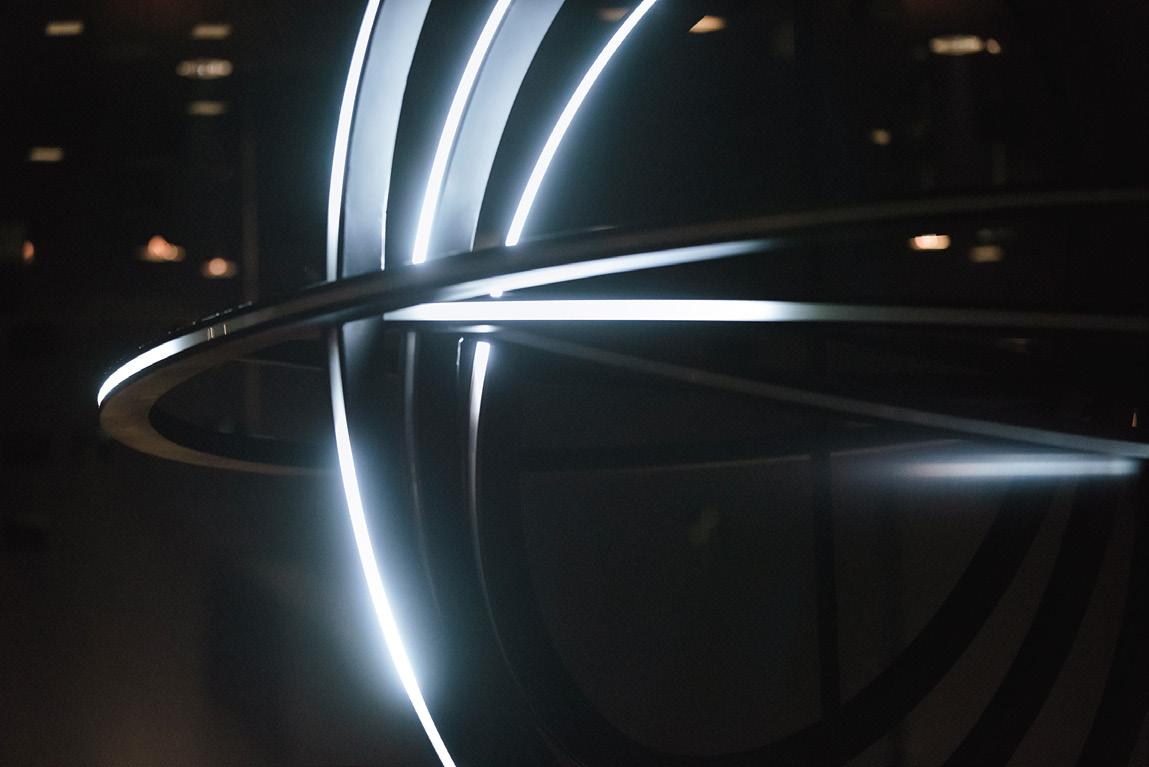
JB: It’s interesting that this explosion in popularity is hap pening post-Covid. I think it was coming anyway, but per haps the pandemic accelerated our need for escapism and opportunities to share experiences. I also think the inter activity breaks down the formality many audiences expect in gallery spaces where traditionally there is a boundary between object and spectator. The work is fun – more ac cessible – and therefore has a wider reach. I also believe it
has a lot to do with the different opportunities new technol ogies provide and our inner curiosity to learn more about the possibilities of the digital world. Generations brought up with social media frequently use technology as a tool for interaction, but they don’t necessarily want this to be limited to online spaces. Experiential art is demonstrating how this interactivity can blend into our physical reality.
A: Many of your works utilise technology to expand, or augment, our experience with the natural world. Digital Ornithology, for example, charts the migratory patterns of 12 million birds, bringing together 562 liquid crystal display screens, projection mapping live footage. The experience allows the viewers to ascend into an ephem eral experience with the birds. What did you hope audi ences might take away from this piece?
JB: This work started as a conversation with the exhibition designer, JAC studios, into how best to describe the won derful ecosystem of the Wadden Sea National Park, a world UNESCO Heritage site in Denmark. I was immediately fas cinated by the thousands of migratory sea birds that visit the site each year. The murmurations of these birds is so famous locally, it is known in Danish as “sort sol” (“black sun”) – describing how, due to the sheer volume of birds, they seem to physically block out the light. To represent this, we had the idea of using liquid crystal shutters that change opacity. These are arranged in a voxel sculpture and are programmed to imitate the flocking of the birds within the ecosystem of the Wadden Sea. It was important to give visitors the feeling of being up close, being amongst the birds – a proximity they can’t experience in real life.
Aesthetica 83
Pixel Constellation (2016). Photo: Michal Sulima courtesy of Jason Bruges Studio.
Previous Page: Pixel Constellation (2016). Photo: Michal Sulima courtesy of Jason Bruges Studio. Left: Shadow Wall (2019). Photo: James Medcraft courtesy of Jason Bruges Studio.
A:
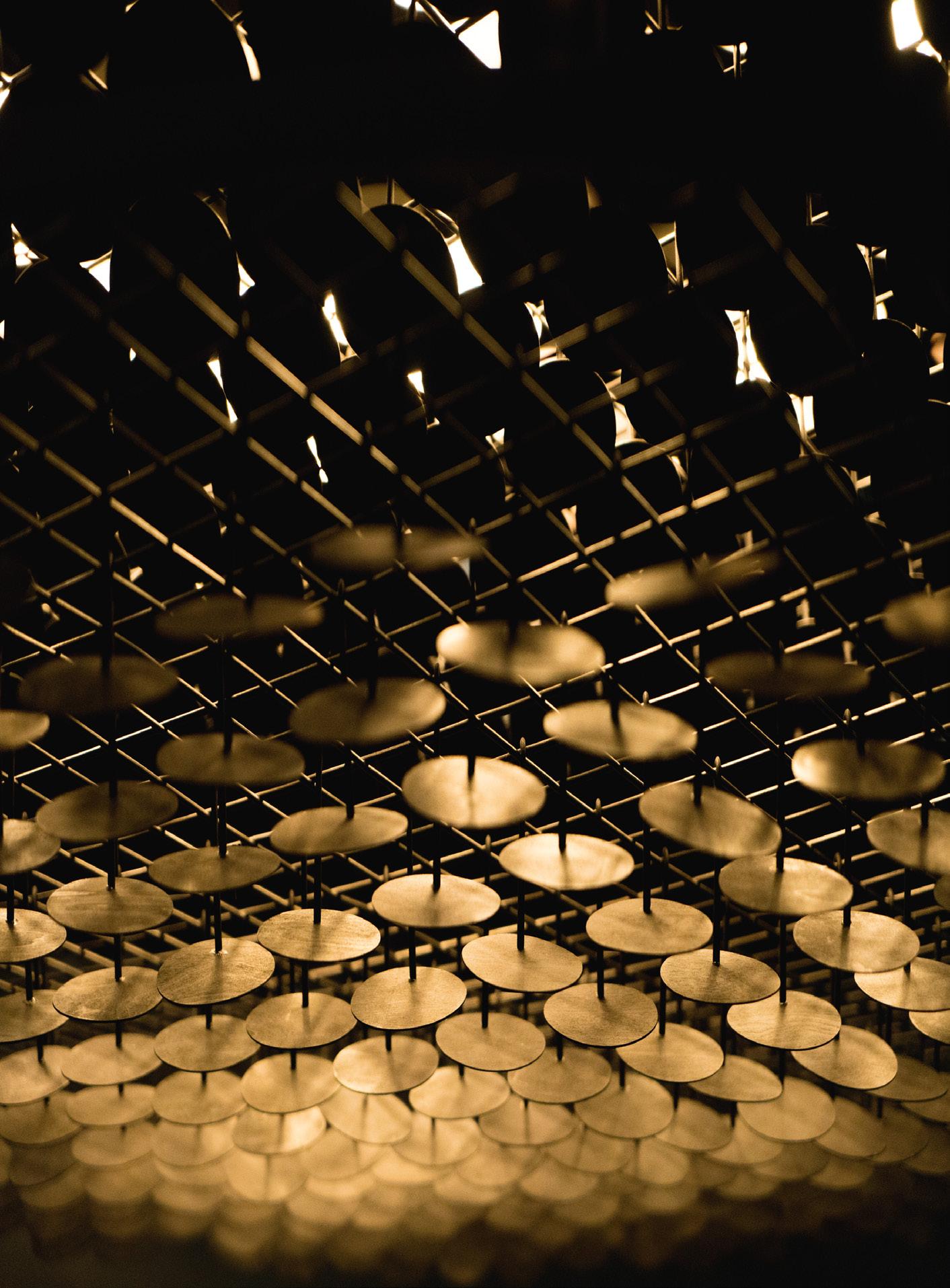
creates a kind of awning, which taps into humanity’s fascination with “Komorebi” – the Japanese term for light filtering through trees. What value is there in bio mimicry? What are we attempting to replicate, and why?
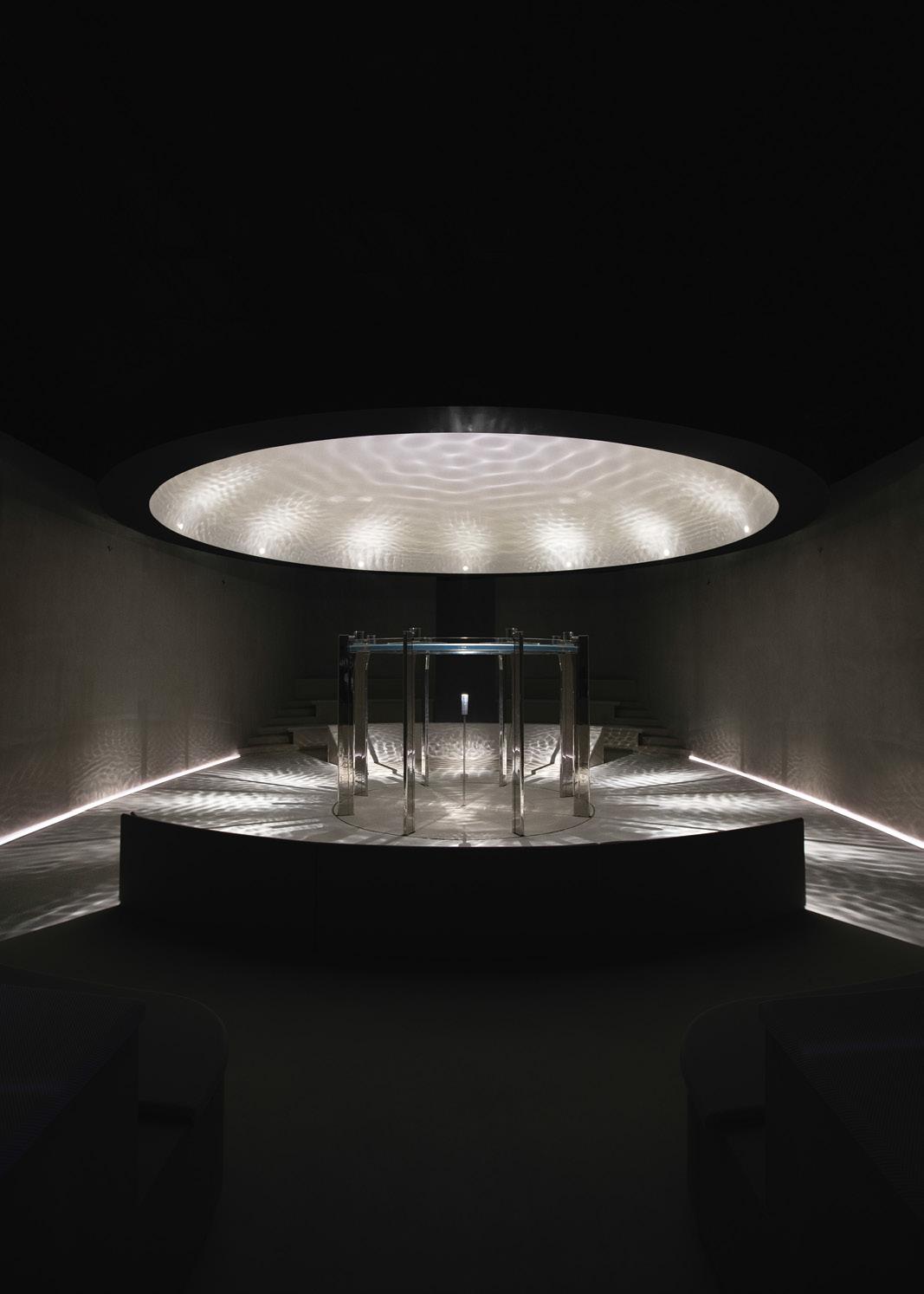
JB:
we feel, and many health benefits have been attributed to spending time in nature. In urban environments, where it isn’t always possible to introduce green space, technology can provide an alternative means of escapism. In the city, people are often going about their days at such speed that they fail to pay attention to what’s around them. I like to think our artworks wake people up, invite them to breathe in their environment and commune with their senses. I’m also using biomimicry to transport people somewhere un expected. Through technology, we can take people to the edge of the ocean or the foot of a waterfall. We can bring them an experience that might be otherwise out of reach.
A: Technology, however, does have a huge carbon foot print, especially with large-scale installations that re quire masses of data processing capacity and a consistent power source. How do you account for this?
JB: I feel a great sense of responsibility. The most impor tant thing for me is creating artworks that are built to last. There’s a huge appetite for temporary, pop-up installations at the moment, which breeds throwaway culture. I’m most interested in producing permanent, site-specific pieces that are relevant for the spaces in which they are situated, and that provide a vital function within that environment –whether it be bringing light to a dark, anti-social underpass
Luckily, there’s a vast market for second-hand robots as people are finding creative uses for them. Of course, we’re constantly reviewing our processes to identify areas for improvement. We’re currently looking at how to replace the use of finite materials and create projects where mate rial usage is more circular. Many existing projects actually use very little power. Digital Fountain uses only 60 watts (similar to the amount of energy used to power a laptop).
A: Looking to the future, what new technologies, mate rials or processes are you excited to work with?
JB: Bringing living elements into our material palette. Var iegation Index (shortlisted for the Aesthetica Art Prize 2022), was our first real adventure into this territory, where we’re using custom cameras to measure and relay real-time pho tosynthesis data. Our next iteration is for the SPUR campus at Colorado State University. This piece will create a con nection with growth chambers, greenhouses and green roofs. Recently, we launched The Centre for the Museum of the Future in Dubai, an inhabitable media artwork that uses water, light, vibration and sound to reawaken the senses.
84 Aesthetica
The Centre (2022). Photo: Sandra Ciampone courtesy of Jason Bruges Studio.
Words
Kate Simpson
jasonbruges.com
Playing with Tension
Omar Torres
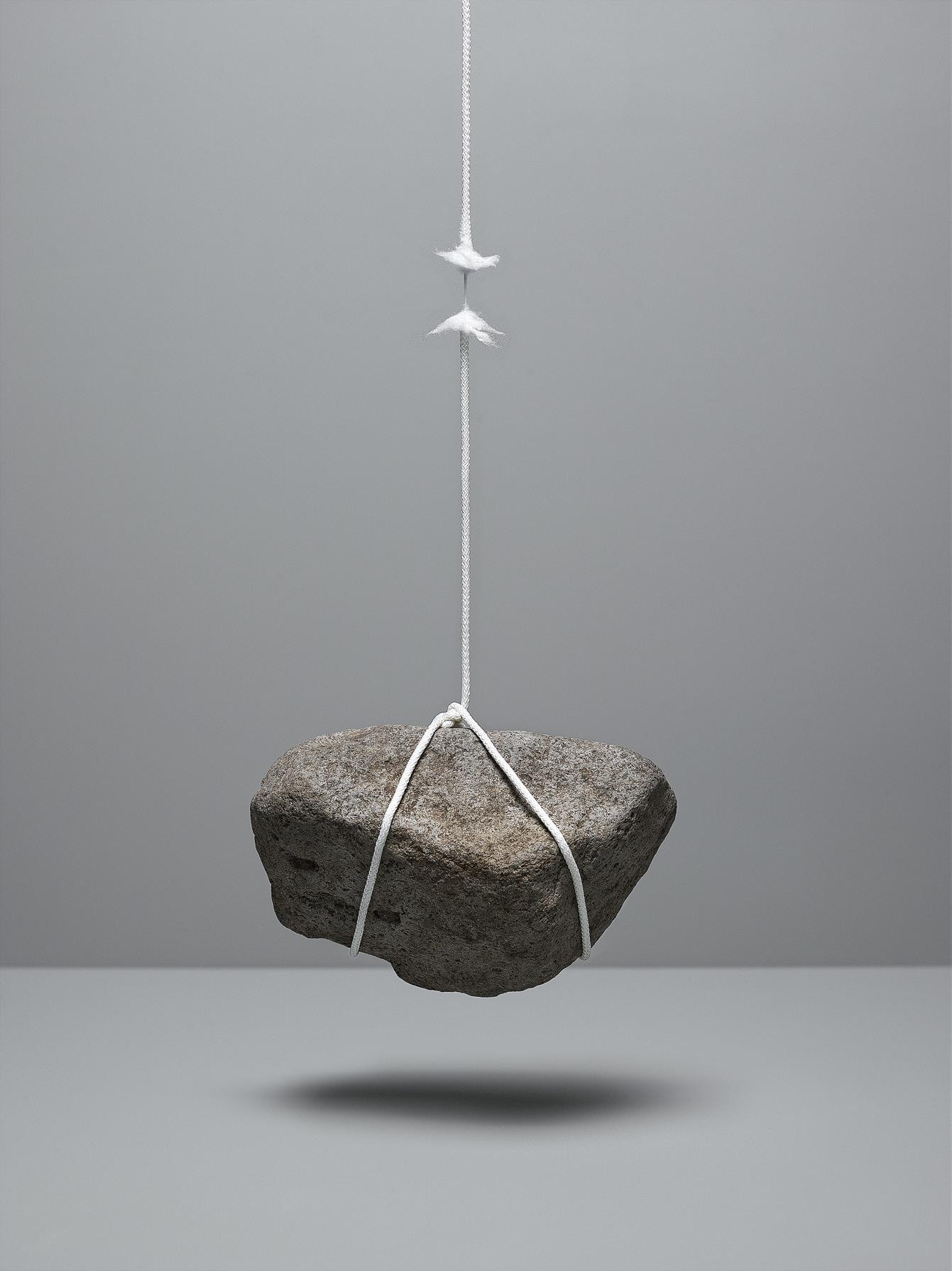
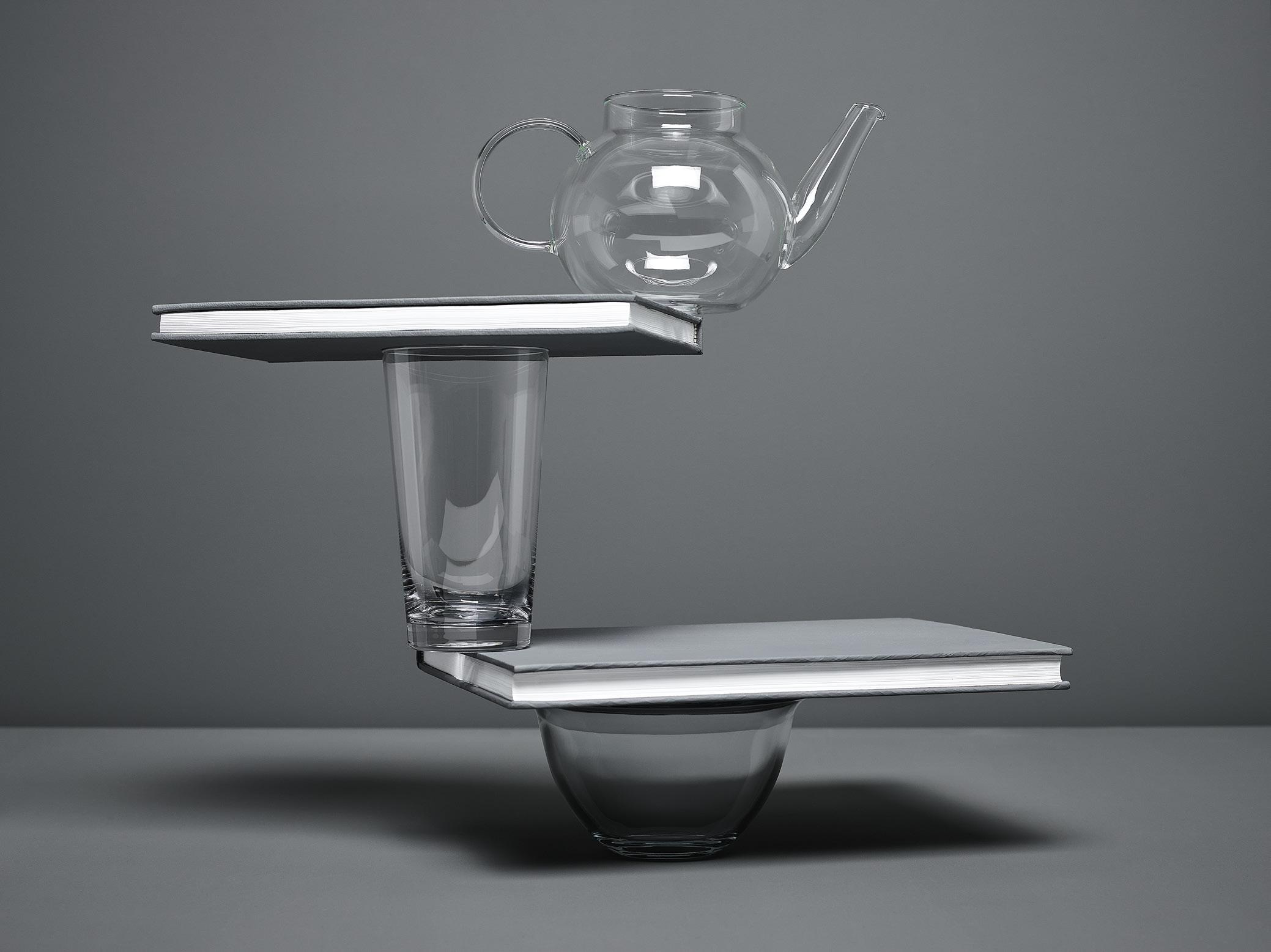
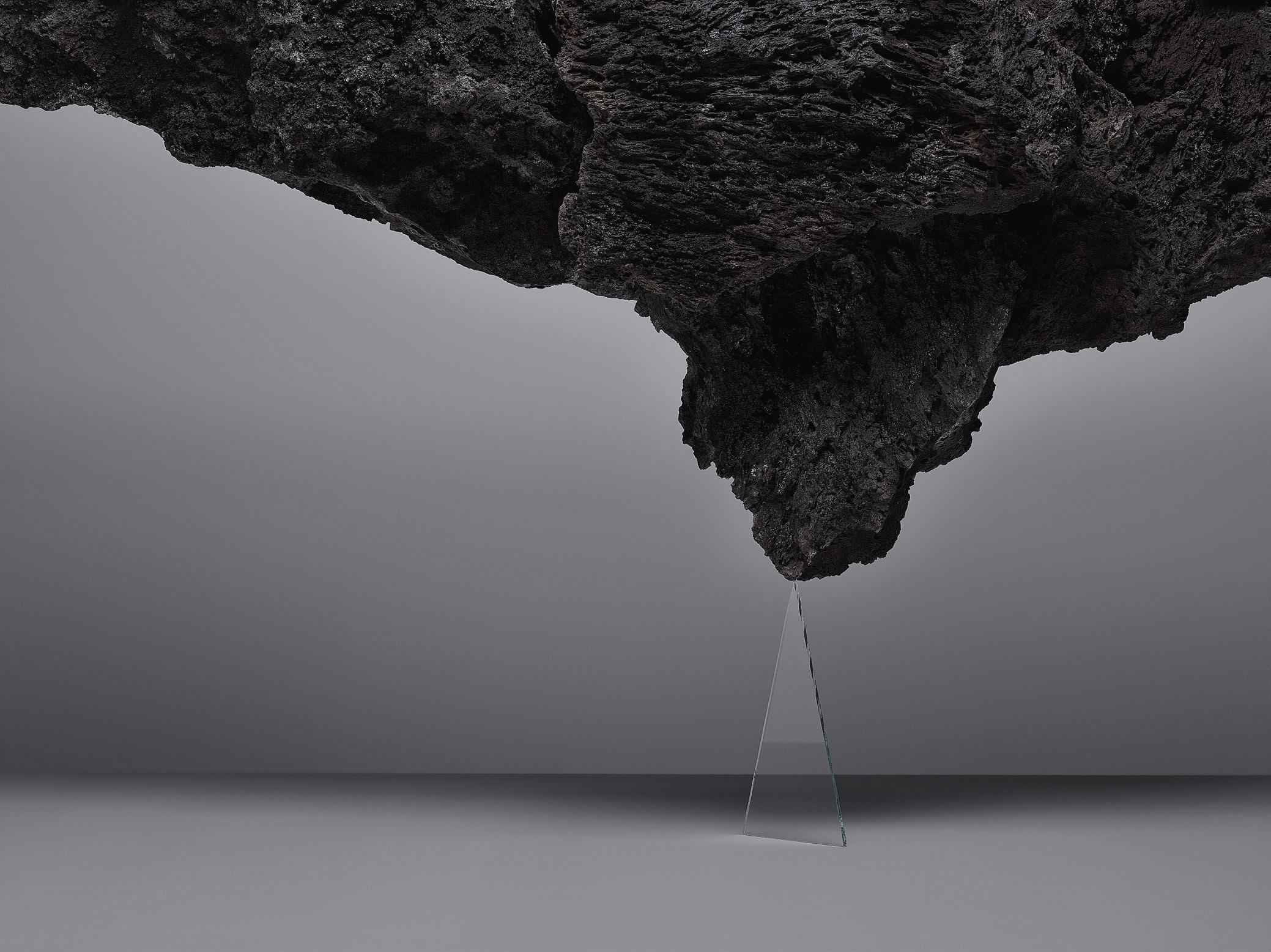
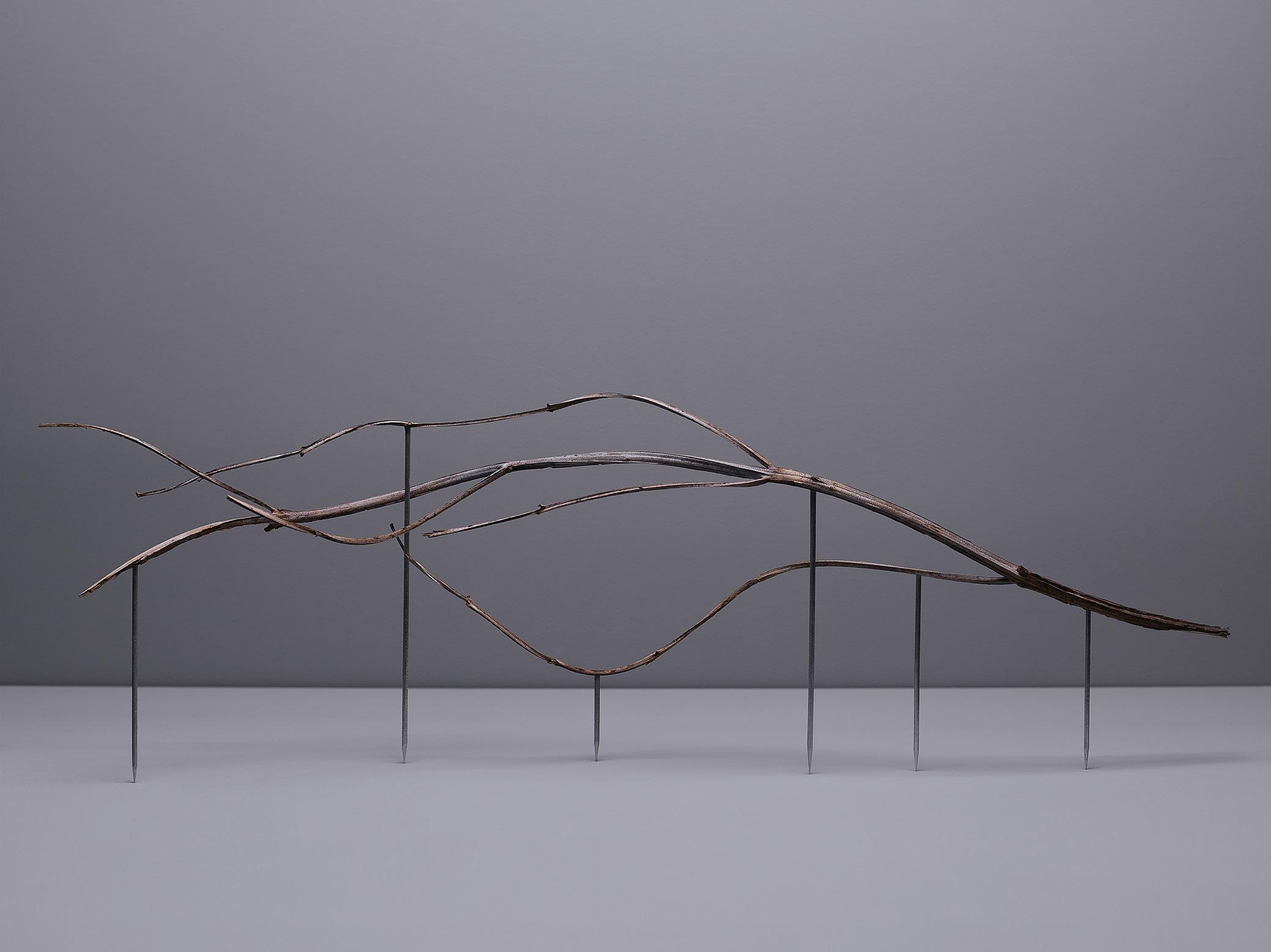
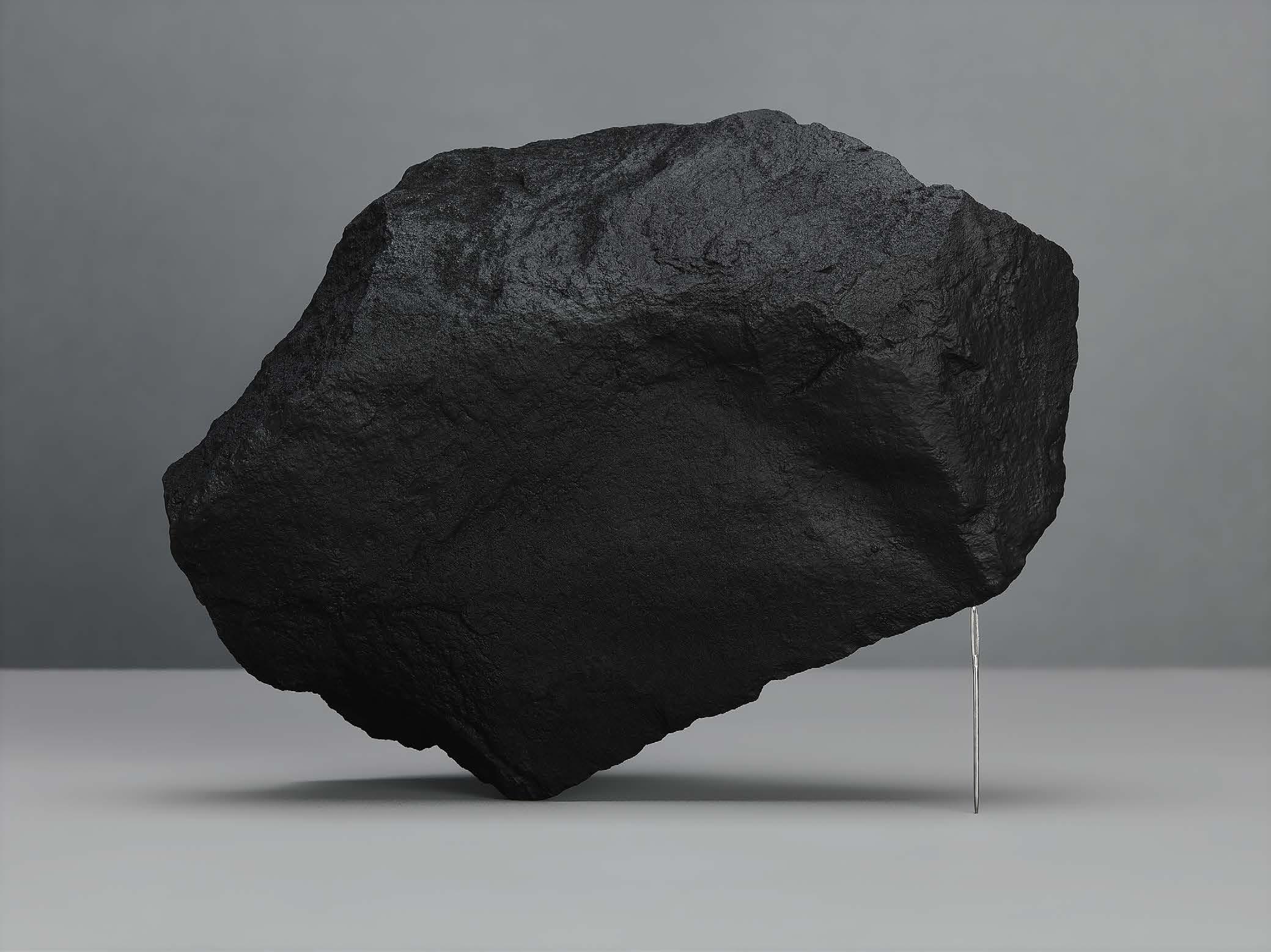
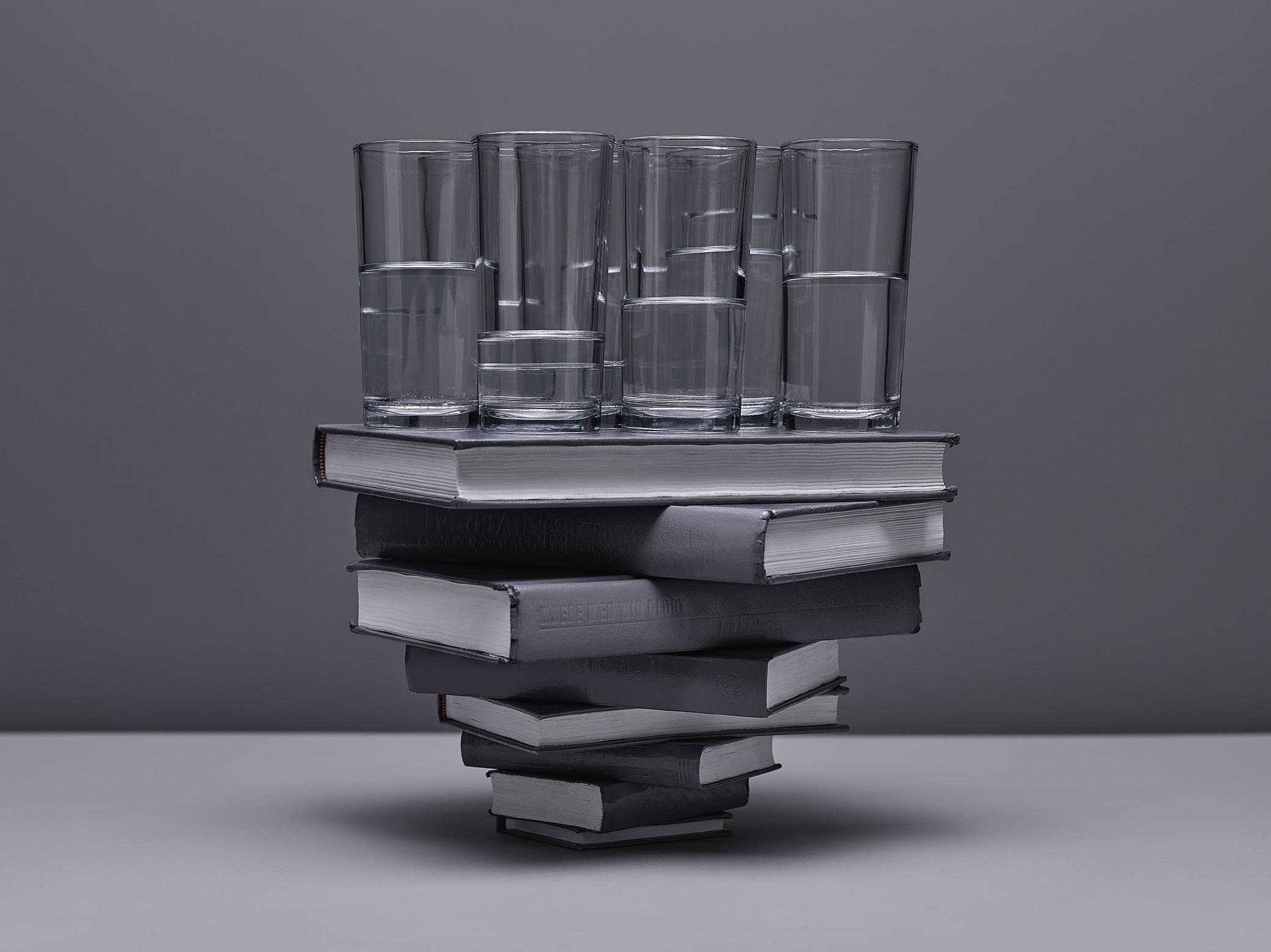
Equilibrium is defined as a state of total control, where opposing forces work in har mony to create a period of total calm. In a world of social media and constant con nectivity, emotional balance can often feel just out of reach. Omar Torres’ (b. 1977) photographic series Ensayos del Colapso builds on humanity’s tireless attempts to switch off and embrace peace. Everyday objects and natural elements are depicted in tense balancing acts, caught on the brink of collapse. Fraying ropes hold up heavy black boulders; teapots teeter on the edge of stacked books; tomes of grey novels sup port half-filled glasses of water. Each object depends on one another to coexist in this taut relationship, speaking to the ways we rely upon each other, and indeed, ourselves. Torres’ minimal compositions move beyond intense feelings of anxiety and resistance to uncover an optimal state: as beautiful as it is impertinent. omartorreswork.com.
86 Aesthetica art
Omar
Torres, Strain, (2019), from Essays on Collapse
88 Aesthetica
Aesthetica 89
Omar Torres, Bodies, (2019), from Essays on Collapse
90 Aesthetica
Omar Torres, Reflection on Weight, (2019), from Essays on Collapse
Aesthetica 91
92 Aesthetica
Aesthetica 93
Omar Torres, Balance, (2019), from Essays on Collapse
94 Aesthetica
Omar Torres, Essay #5, (2019), from Essays on Collapse
Aesthetica 95
96 Aesthetica
Aesthetica 97
Omar Torres, Compensation System, (2019), from Essays on Collapse
Urban Backdrops
Anna Dev ís and Daniel Rueda
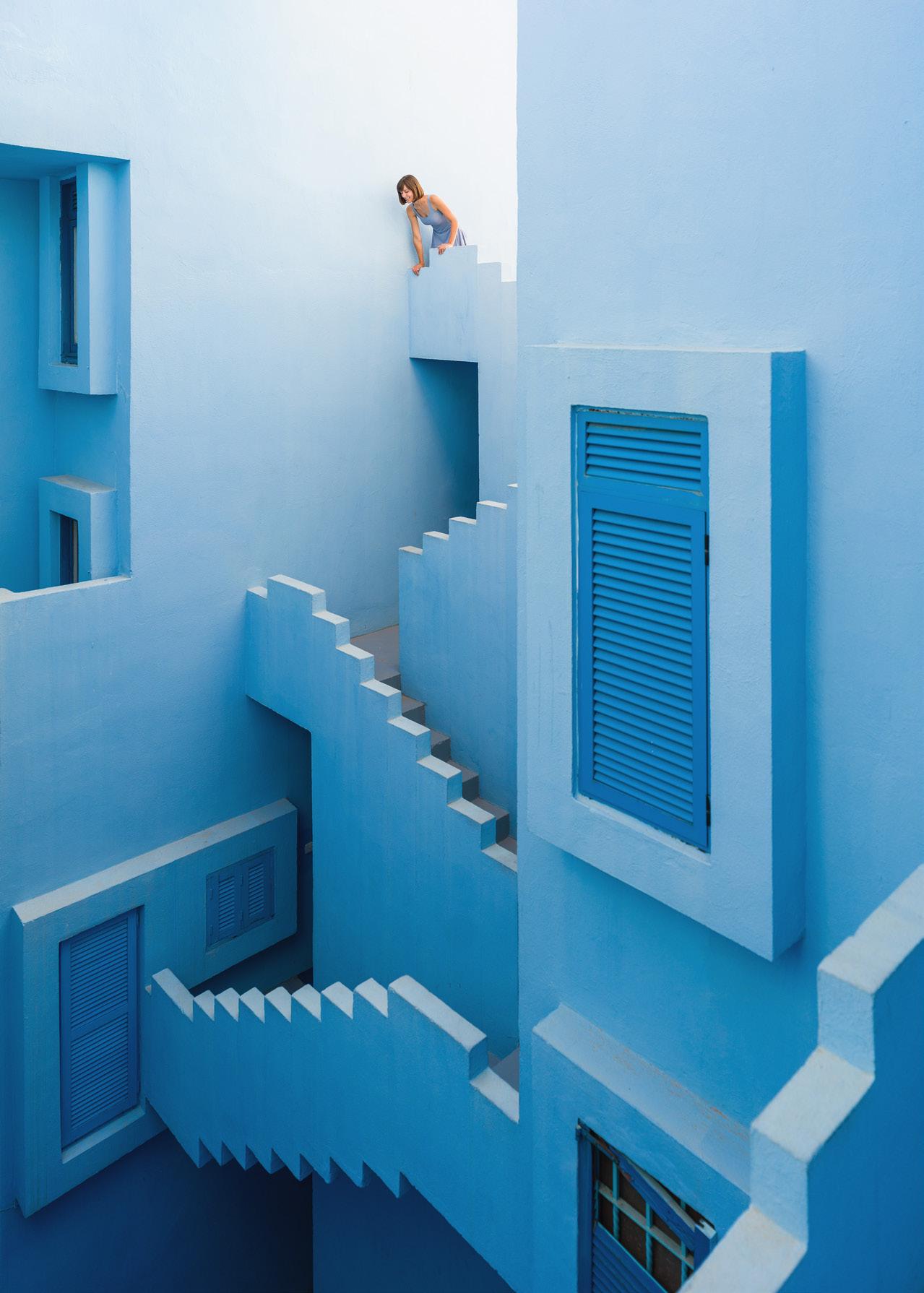
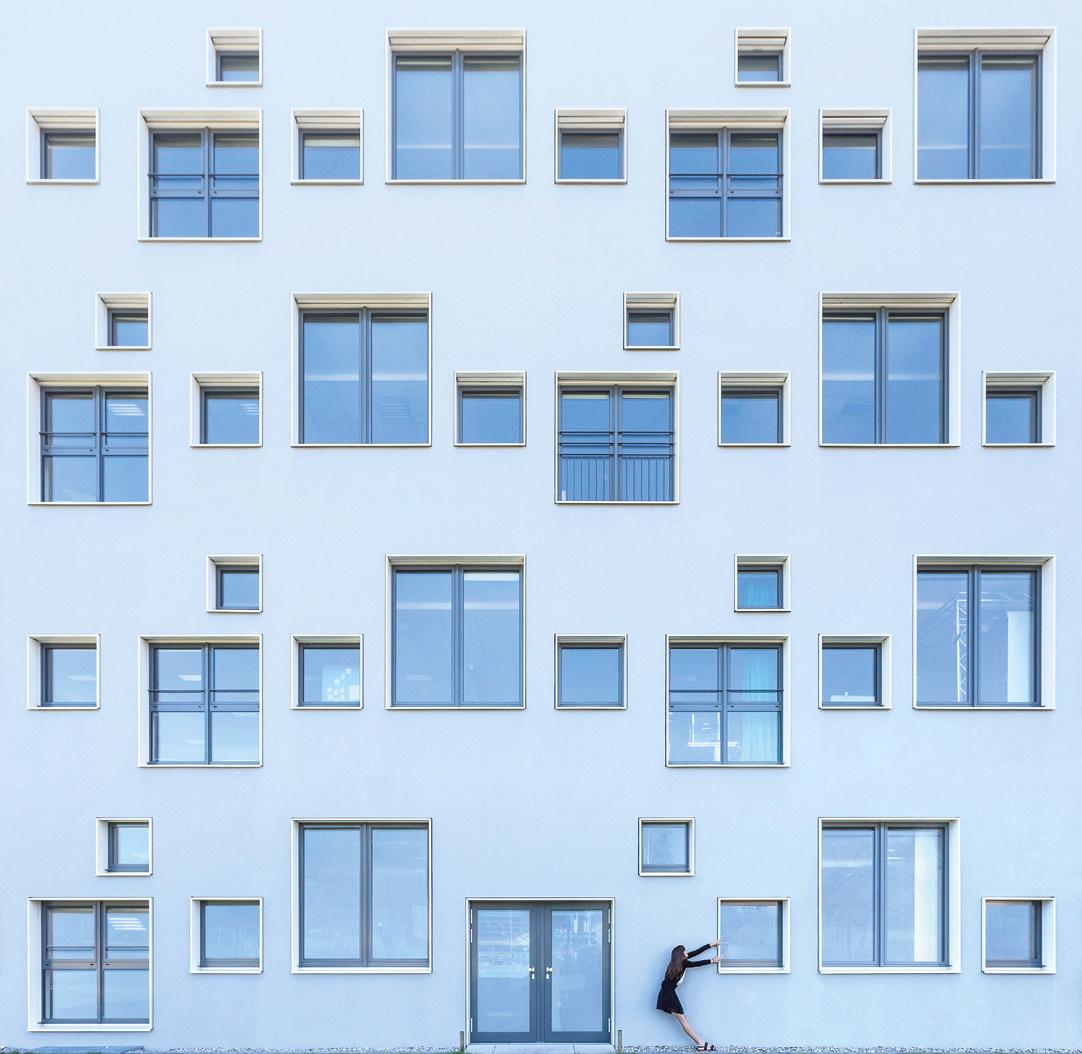
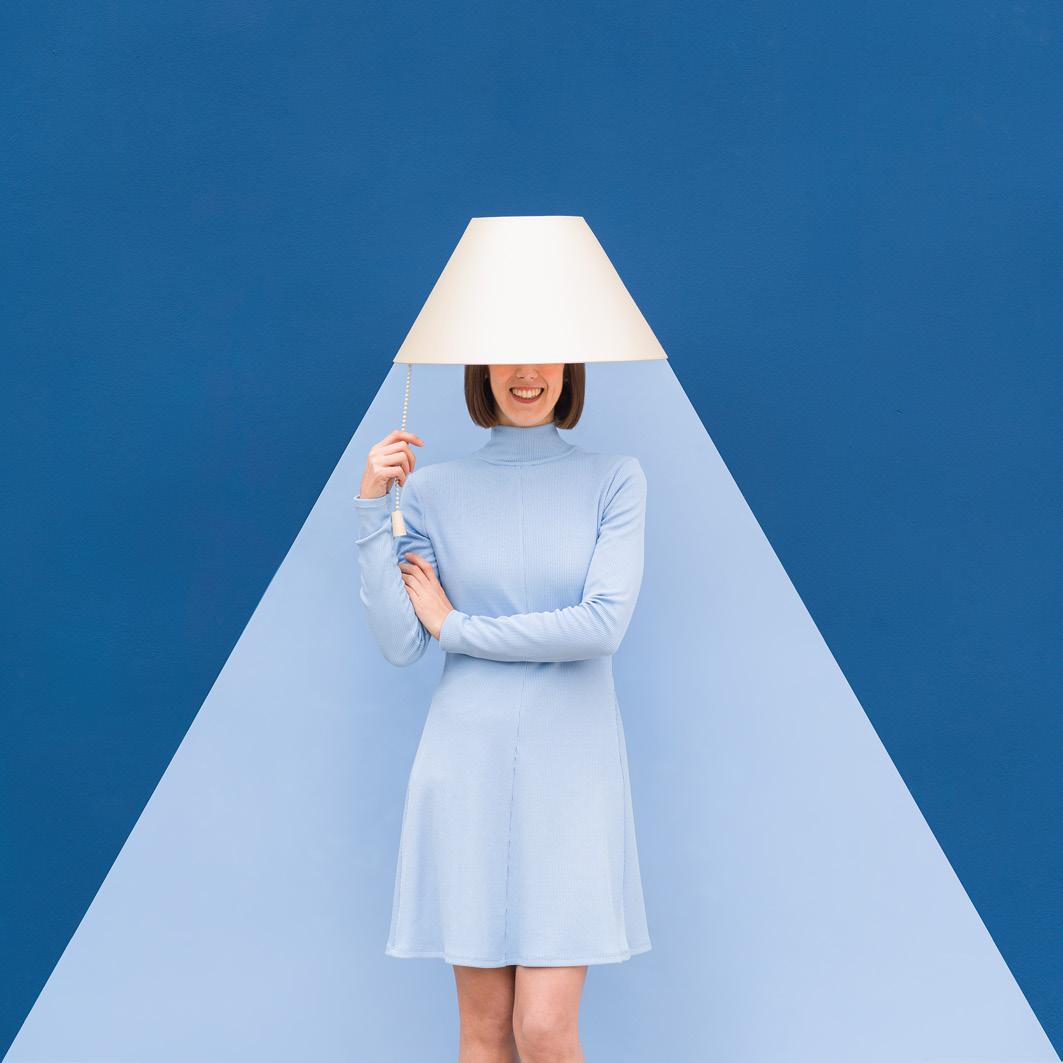
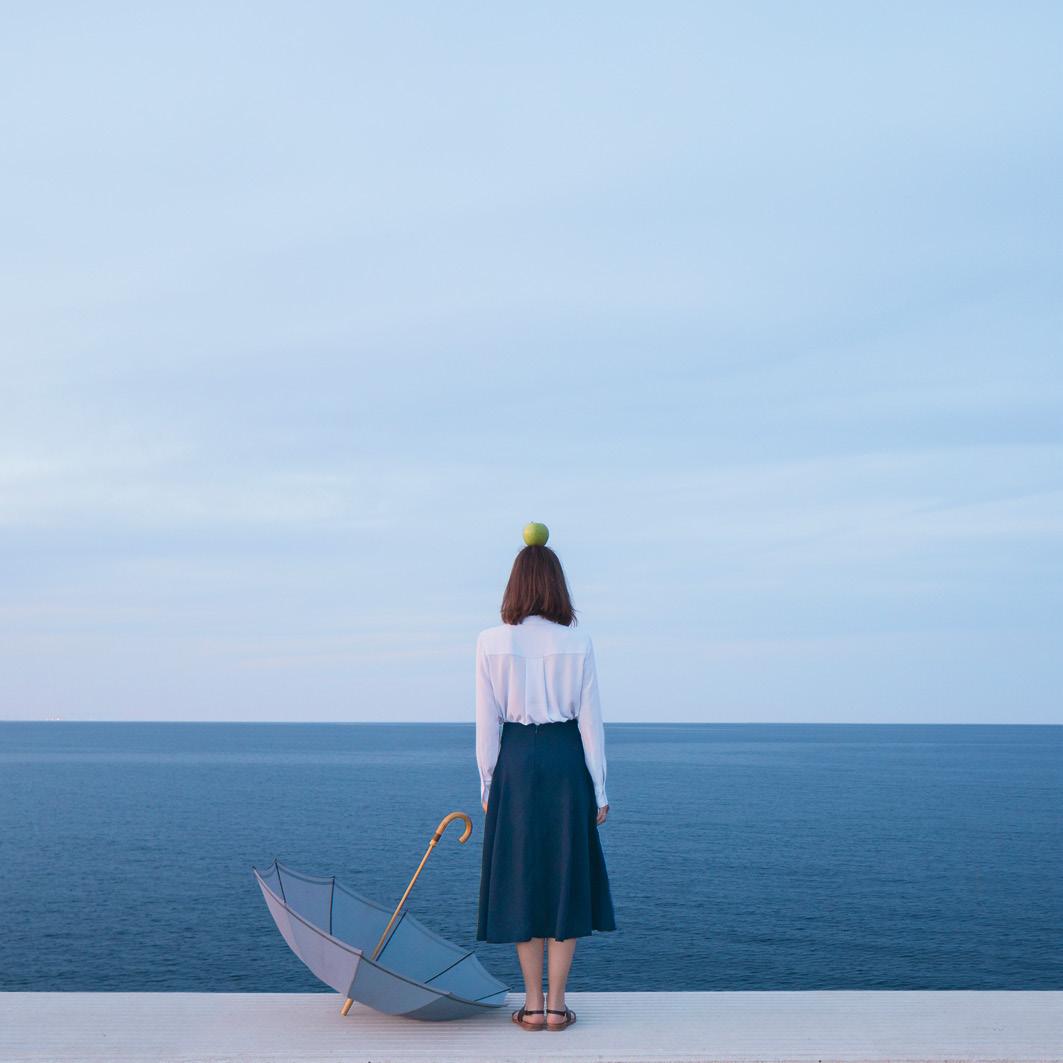
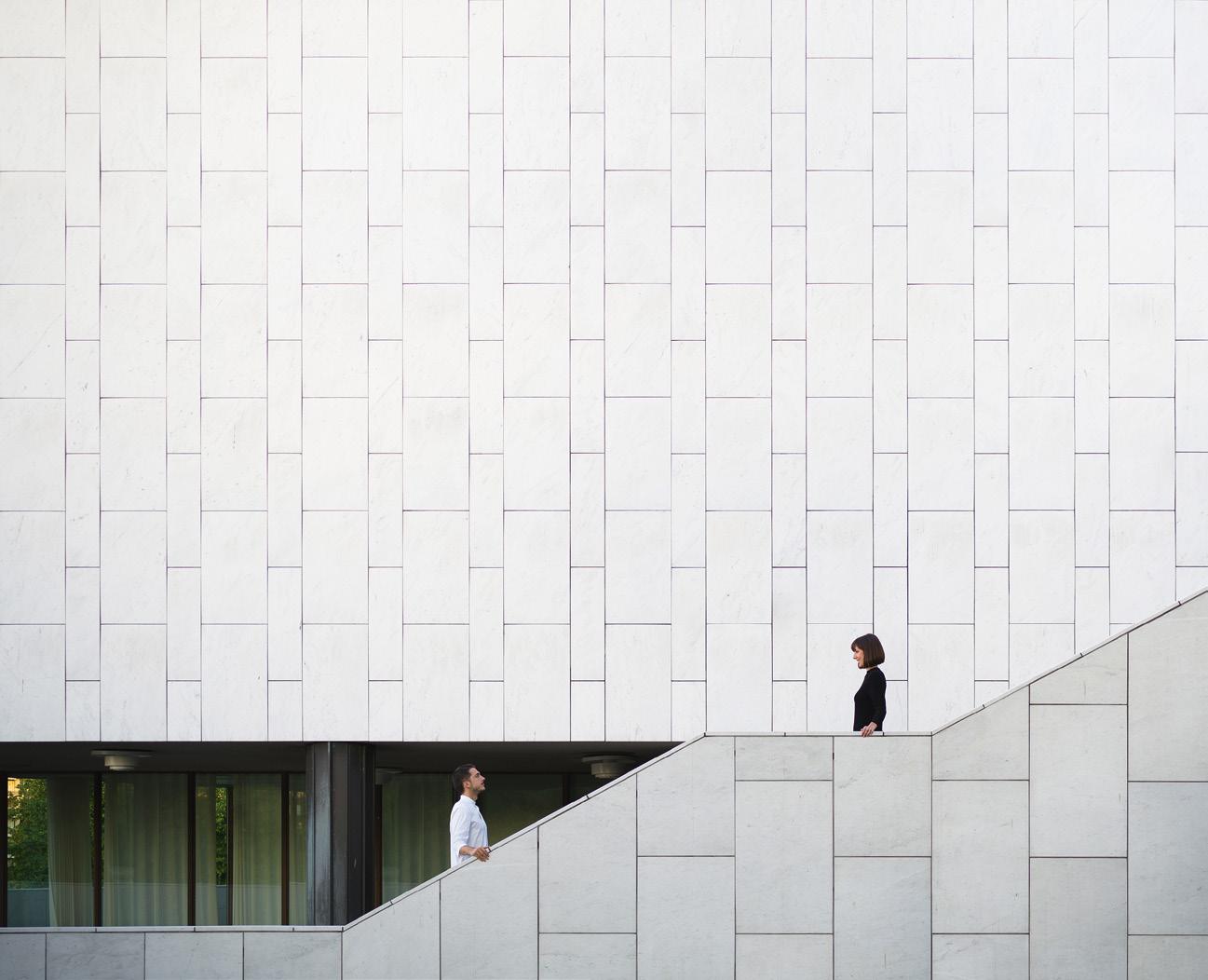
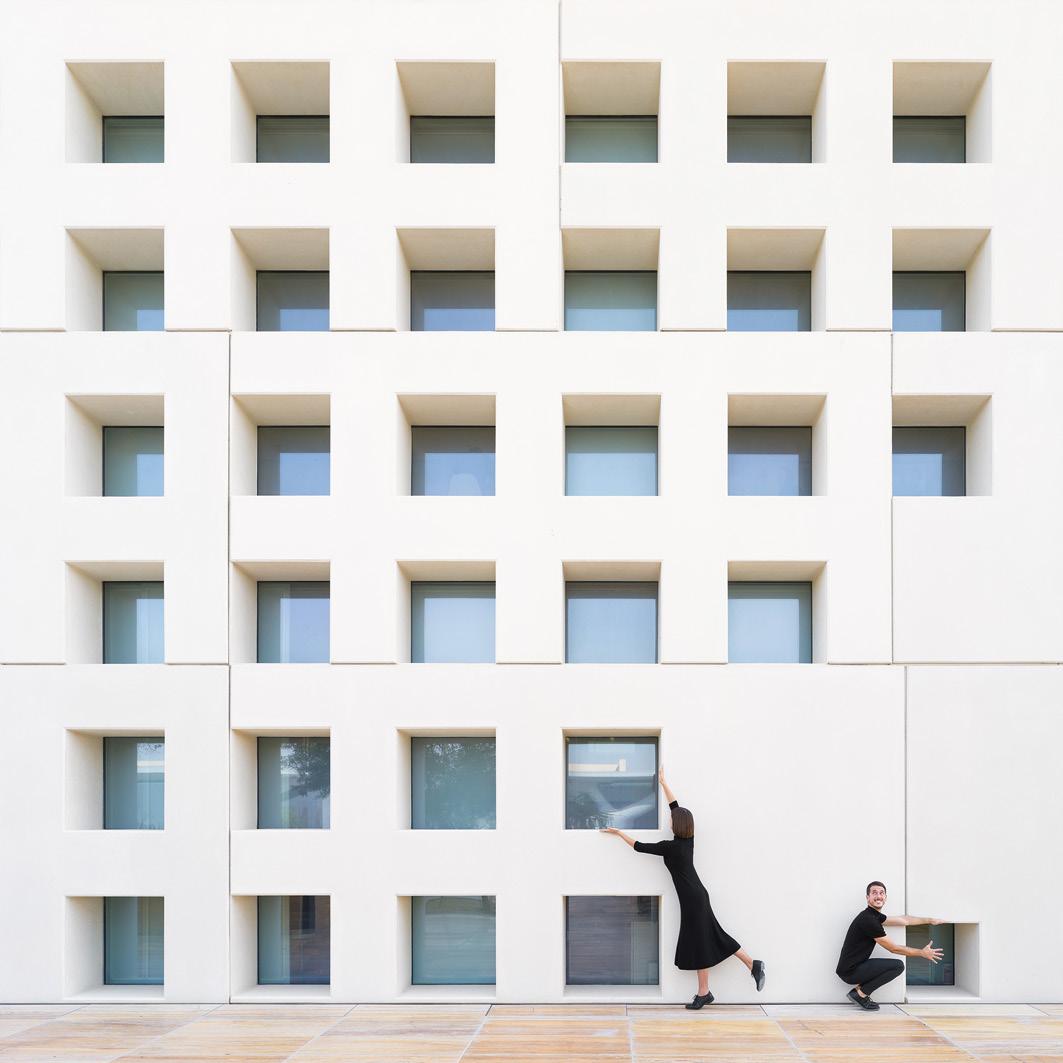
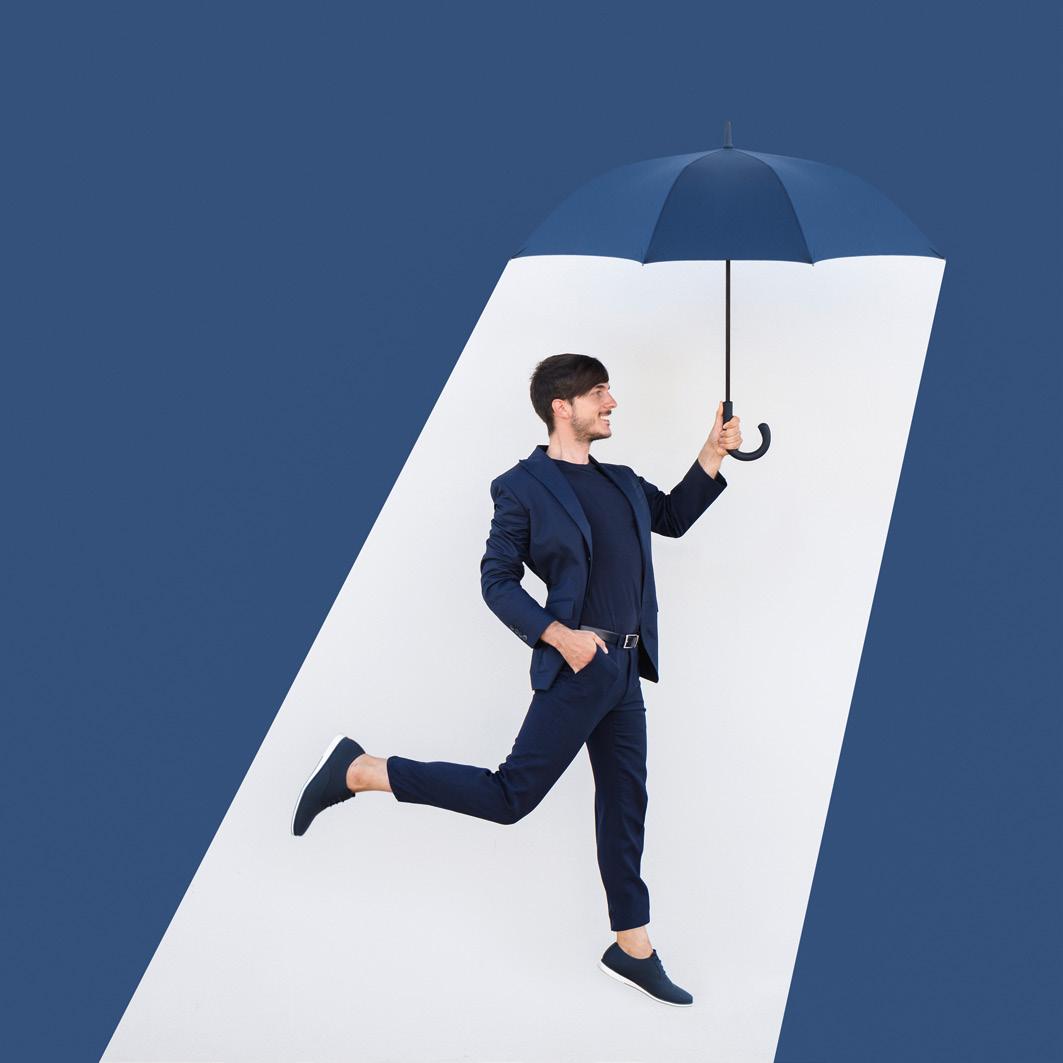
The term “Grand Tour” dates back to 1670, first appearing in Richard Lassels’ influential book The Voyage of Italy. It described the act of travelling abroad to learn about art, architecture and antiquity. One of the most desired destinations was Rome, popular for its awe-inspiring classical structures. Today, architectural tourism remains a common pursuit. Phaidon’s contemporary travel guide Destination Architecture, for example, has 1,000 entries, spanning 70 countries and 135 cities. Spanish photographers Anna Devís and Daniel Rueda also find inspiration in buildings. They use the urban landscape as a backdrop for playful and creative compositions. Figures perform in front of minimal façades – bending, stretching and jumping amongst abstract cut outs, spots and grids. The duo formulates these images without photo editing software. Instead, Devís and Rueda set the scene in real life, using props, unexpected locations and natural light. annandaniel.com | @drcuerda | @anniset.
98 Aesthetica art
Anna Devís and Daniel Rueda Alicante, Spain (2019).
100 Aesthetica
Anna
Devís and
Daniel
Rueda, Munich, Germany (2016).
Aesthetica 101
Anna Devís and Daniel Rueda, Valencia, Spain
(2021).
102 Aesthetica
Anna Devís and Daniel Rueda, Valencia, Spain (2017).
Aesthetica 103
Anna Devís and Daniel Rueda, Helsinki, Finland (2019).
104 Aesthetica
Anna
Devís and Daniel Rueda, Doha, Qatar (2019).
Aesthetica 105
Anna Devís and Daniel Rueda, Valencia, Spain (2017).
Collective Reflections
Mónica de Miranda
AUTOGRAPH ABP, LONDON, PRESENTS A GROUNDBREAKING SHOW THAT CONSIDERS THE COMPLEX EXPERIENCES OF AFRODIASPORIC LIVES AND EUROPE’S COLONIAL PAST.
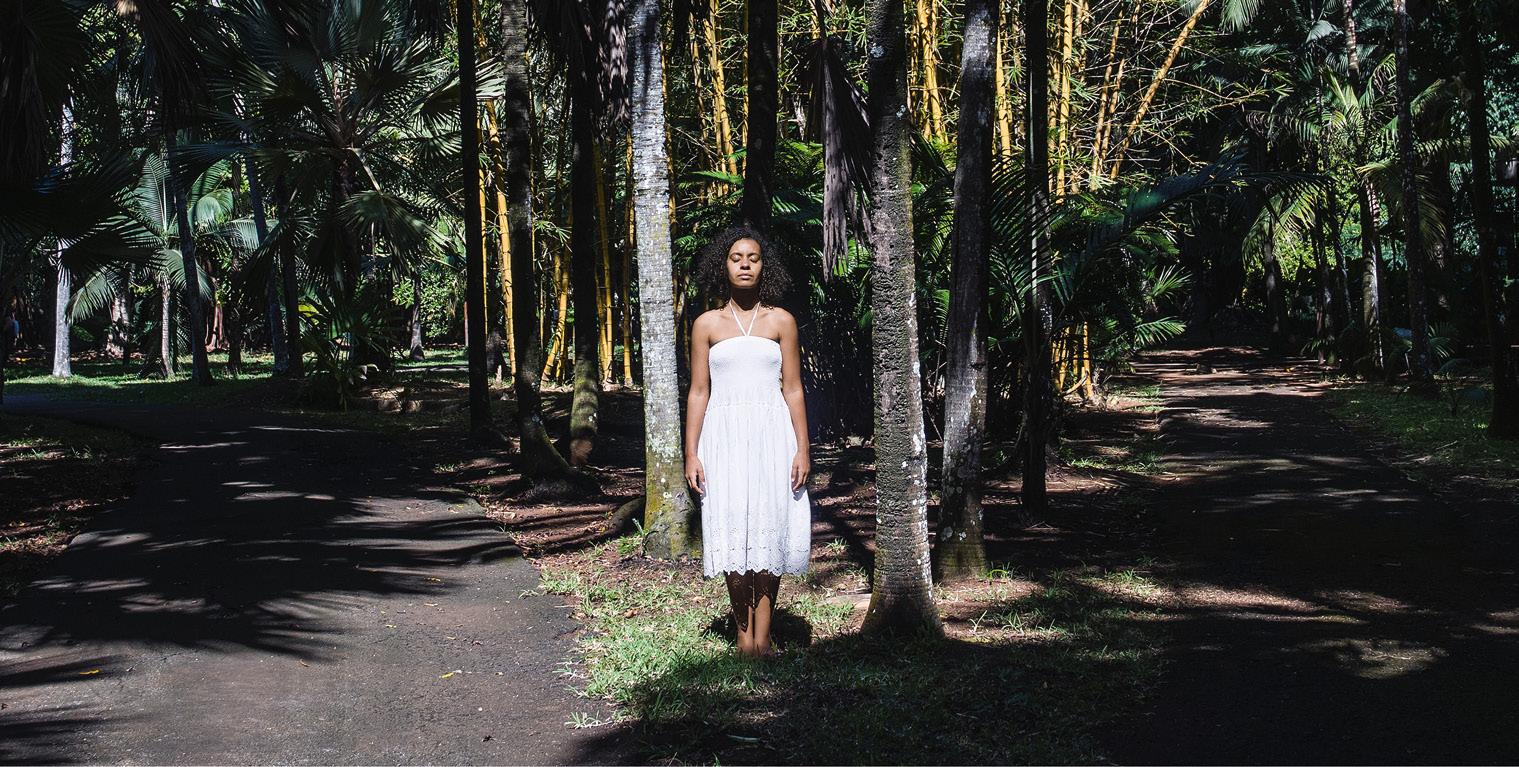
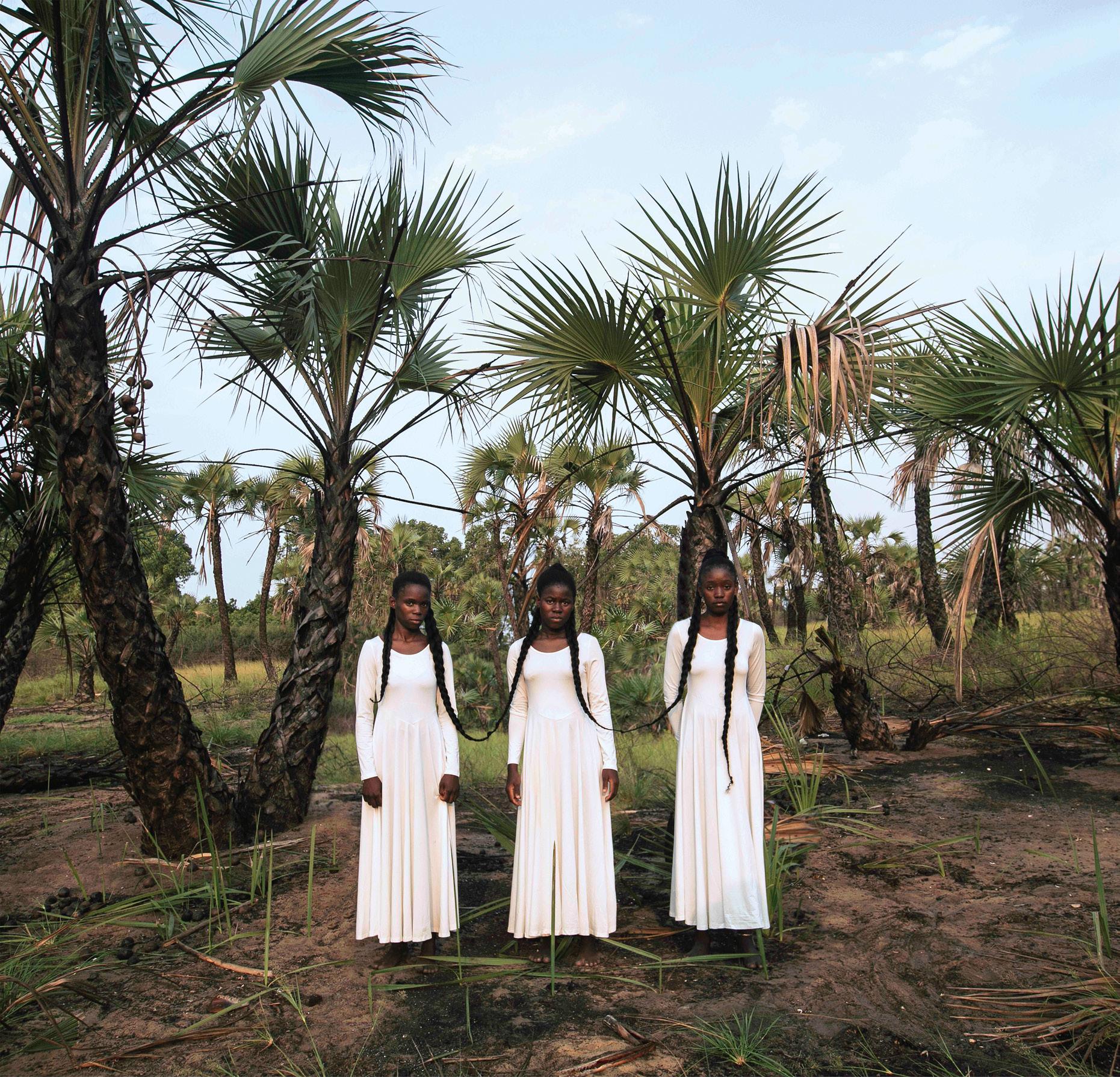
In fairytales, the mirror is a recurring trope – the most ob vious example being Snow White (originally published as part of Grimm’s Fairy Tales in 1812). For the protagonist of Mónica de Miranda’s (b. 1976) film The Island, currently on display at Autograph ABP, London, the mirror alludes to the image preserved in western folklore that serves to identify the “fairest” maiden in the land. “It’s about beauty and being allowed to be beautiful,” says the Portuguese-Angolan artist. Here, more than a tool for observation, the mirror is construc tive – a portal to a post-colonial self-realisation. “The charac ter goes through a journey of transformation, reclaiming her space as a female body within the landscape and in public.”
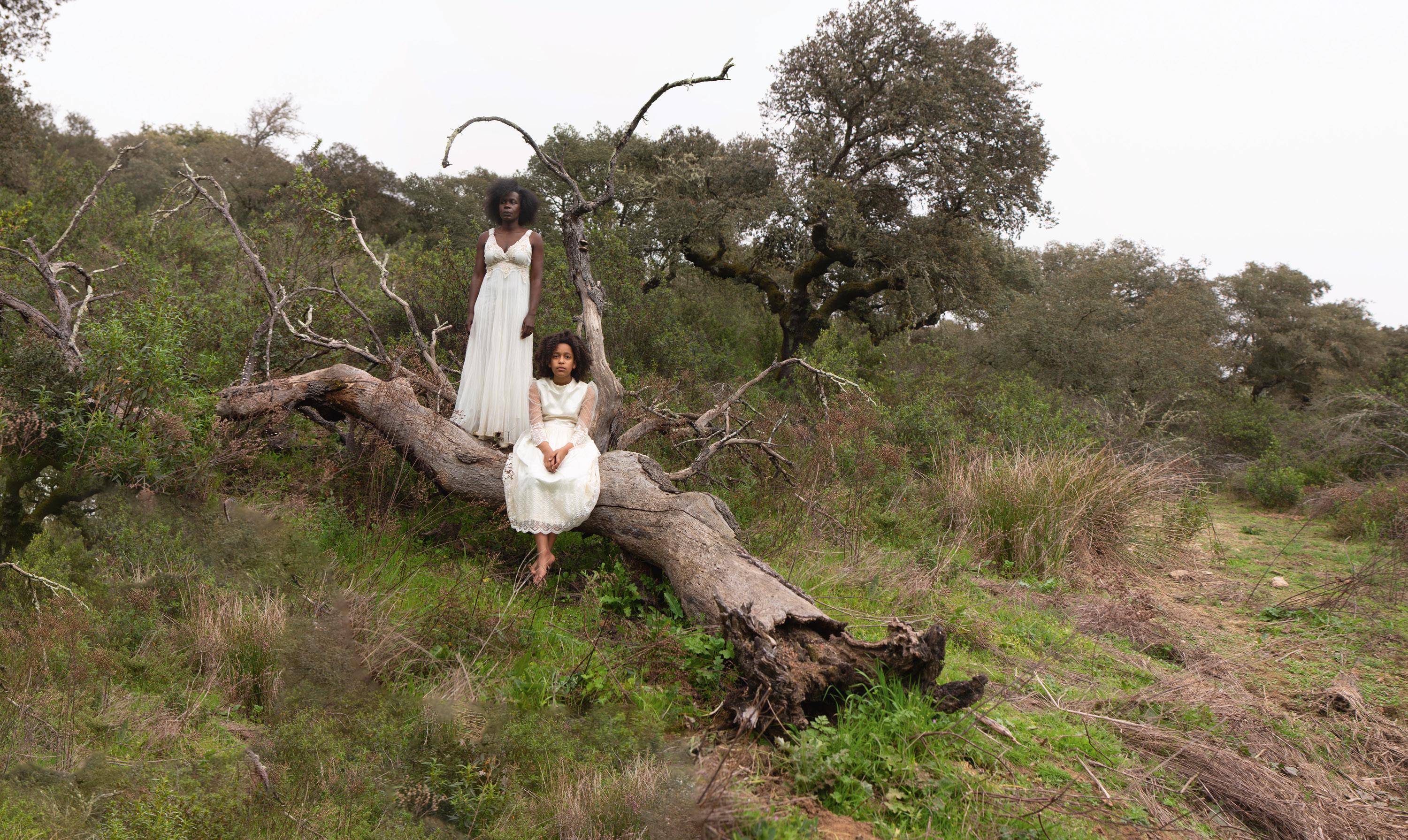
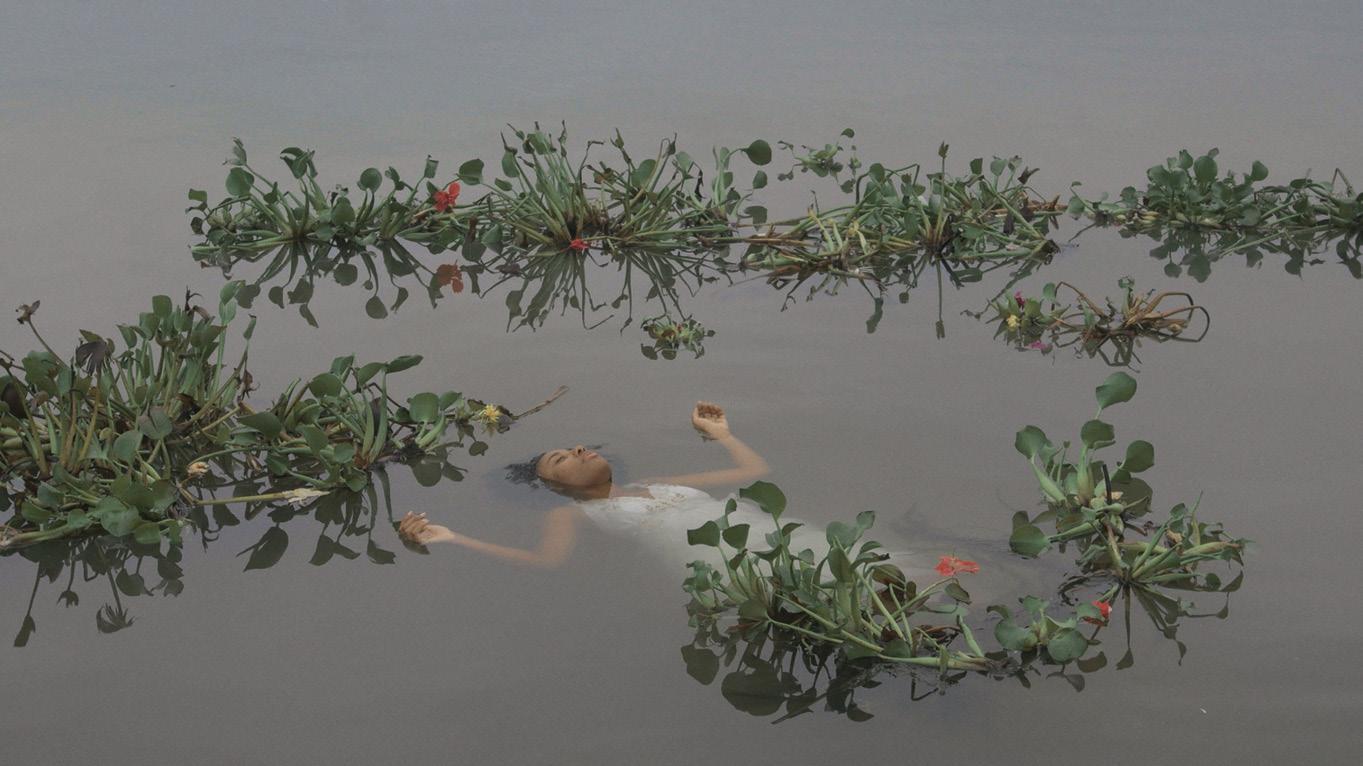
Non-linear in narrative, The Island features a series of scenes over the course of 37 minutes, in which we see an array of characters – mostly female – engage in poetic con versations, wander across the island, or undertake symbolic acts using props or costume – setting fire to a pile of period frocks, for example, as though to turn the past to embers and, phoenix-like, begin anew. “The characters connect to different memories and moments, but also to archetypes in our mind,” de Miranda explains. Past, present and future collide in changing configurations, which consider different relationships or aspects of Portuguese Afrodiasporic iden tity through dialogue: a couple, a mother and daughter, two young women dressed in the berets and combat trousers of 1960s African liberation revolutionaries. The heroine crosses the screen astride a horse, dressed in men’s riding attire, re channelling the power of male figures seen in western ca nonical literature and painting. As the title suggests, the film
is set on an island, but this does not align with a fixed geo graphical location; it is a separate, metaphorical space which is recognised for “refuge and escape”, where historical narra tives can be worked through, and new possibilities envisioned.
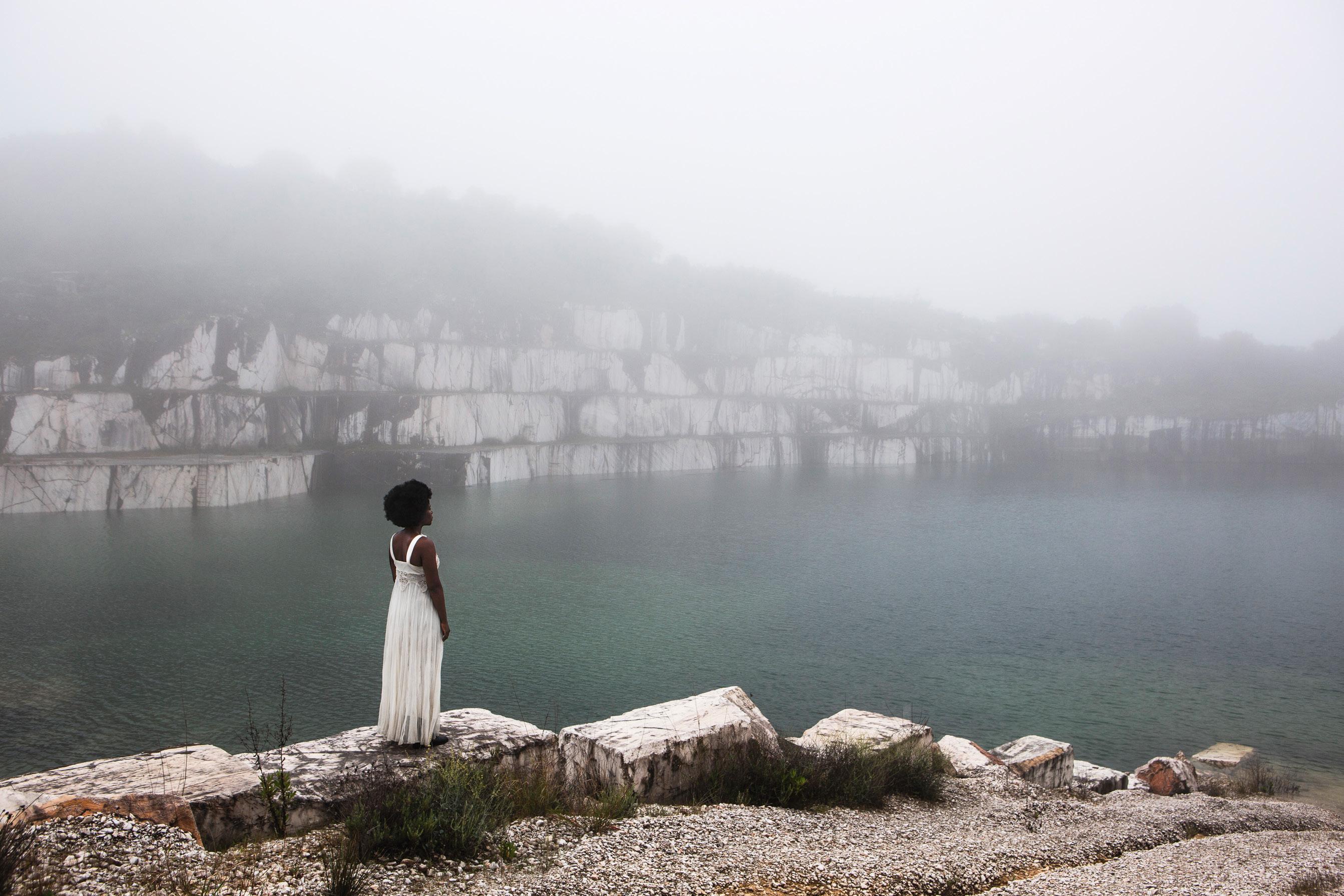
The isolation of the setting is also indicative of societal cir cumstances at the time of its making – Portugal, and much of the world, was in lockdown. “Coming from the diaspora, I have all these memories passed down from my mother and grandmother about the curfews they experienced during the Portuguese Colonial War in Angola (1961-1974),” says de Miranda. “For the first time, I was experiencing what it felt like to lose my freedom, but that seemed somehow connected to another place and to a completely different story. These biographical elements came into my imagination, together with my research practice.” Combining film, photography and sound, de Miranda’s work is informed by eco-feminism, taking inspiration from the environmentalist Dr. Vandana Shiva (b.1952), who argues that a revolution in farming, grounded in biodiversity, holds the key to emancipation for women and food security for all. “Agricultural systems which are women-centred and Earth-centred are also more produc tive,” Shiva wrote in her 2004 essay, Empowering Women. The artist was commissioned by Autograph to make the film, which is shown in the form of an installation, along side still photography – fragmented landscapes from pre vious bodies of work, in addition to beautifully composed, formal portraits made during the course of production. One stand-out picture shows a woman in a white dress, gazing out across a former quarry that has been redeveloped as a
106 Aesthetica art
Autograph has always been evolving. In addition to stag ing exhibitions and events, the organisation runs research projects, an education programme, holds a collection and commissions new work – as in the case of The Island. Sealy is currently collaborating with London College of Communica tion, University of the Arts, helping them develop strategies for greater cultural inclusion by establishing bursaries or re vising the curriculum to ensure it has balance and includes material that feels relevant to all students. It’s also important, he stresses, that there are commissions for graduates to pro vide a much-needed industry leg up when they leave college or university. Audience development is another important strand of Autograph’s work. “There are a lot of people who, when they cross the threshold of somewhere like this, they think, wow, I didn’t realise I could have this kind of conversa tion. There’s a sense, especially with younger audiences, that once they’re there, you can really engage them.”
In its immediacy, photography, Sealy believes, is a par ticularly resonant medium for conveying the rich diversity of perspectives that make up societies today. “Photography can close gaps, bringing people closer together. You can see yourself in images, identify with the stories.” This is as im portant in today’s world, riven with fault lines, as it has ever been. “We live in such complicated times. If there's one thing the last few years have taught us, it’s that human rights and racial politics are precarious entities. Rights are often thought of as being on the margins – refugee rights, workers’ rights, Black subjects’ rights, queer subjects’ rights, women’s rights … When a society sees itself as getting progressively wealthy, they become less amplified. However, it’s important to keep pushing for human rights and social justice – it’s not a quick
fix, it’s about the state taking responsibility for its subjects.”
Accelerated by the Black Lives Matter movement, muse ums and galleries seem to be restructuring their mission statement to something more like Autograph ABP's ethos –taking steps towards addressing inclusivity within their staff employment and output. There have been a number of major group shows programmed recently, for example, that focus on artists from the African continent and diaspora such as Ekow Eshun’s In the Black Fantastic, at Hayward Gallery, Southbank Centre, Sealy’s own African Cosmologies: Pho tography, Time and The Other at FotoFest 2020 or Antwaun Sargent’s The New Black Vanguard: Photography Between and Fashion at Aperture Foundation in 2019 to name a few.
“A window has opened, for sure,” says Sealy. “I think social media has had a big impact. There’s a sense that certain art ists have been overlooked and institutions are responding. But we don’t just need appointments of gallery directors or new acquisitions, we need real pathways for people who are graduating to come through. Let’s hope it becomes part of the everyday.” Art is how we imagine other ways of being. An industry that reflects society isn’t only an ethical imperative, it gives rise to better art, more ways to think about the future.
As Mónica de Miranda notes, the histories exposed in The Island have legacies that continue to permeate within today's world – and with catastrophic implications for the human and non-human. She expands: “One of the fundamental problems in our ecological crisis is that we're still tied to a colonial way of acting in how we exploit nature, and this has brought us to a place where we are all losing our freedom.”
What we need are mirrors that reflect collectively the myriad of stories and experiences from individuals across the world.
Autograph APB, London
Until 22 October autograph.org.uk
110 Aesthetica
Words Rachel Segal Hamilton Mónica de Miranda: The Island
Right: Mónica de Miranda, Three Sisters from Path to the Stars series (2022). Courtesy of the artist.
Fleeting Moments
Neal Grundy
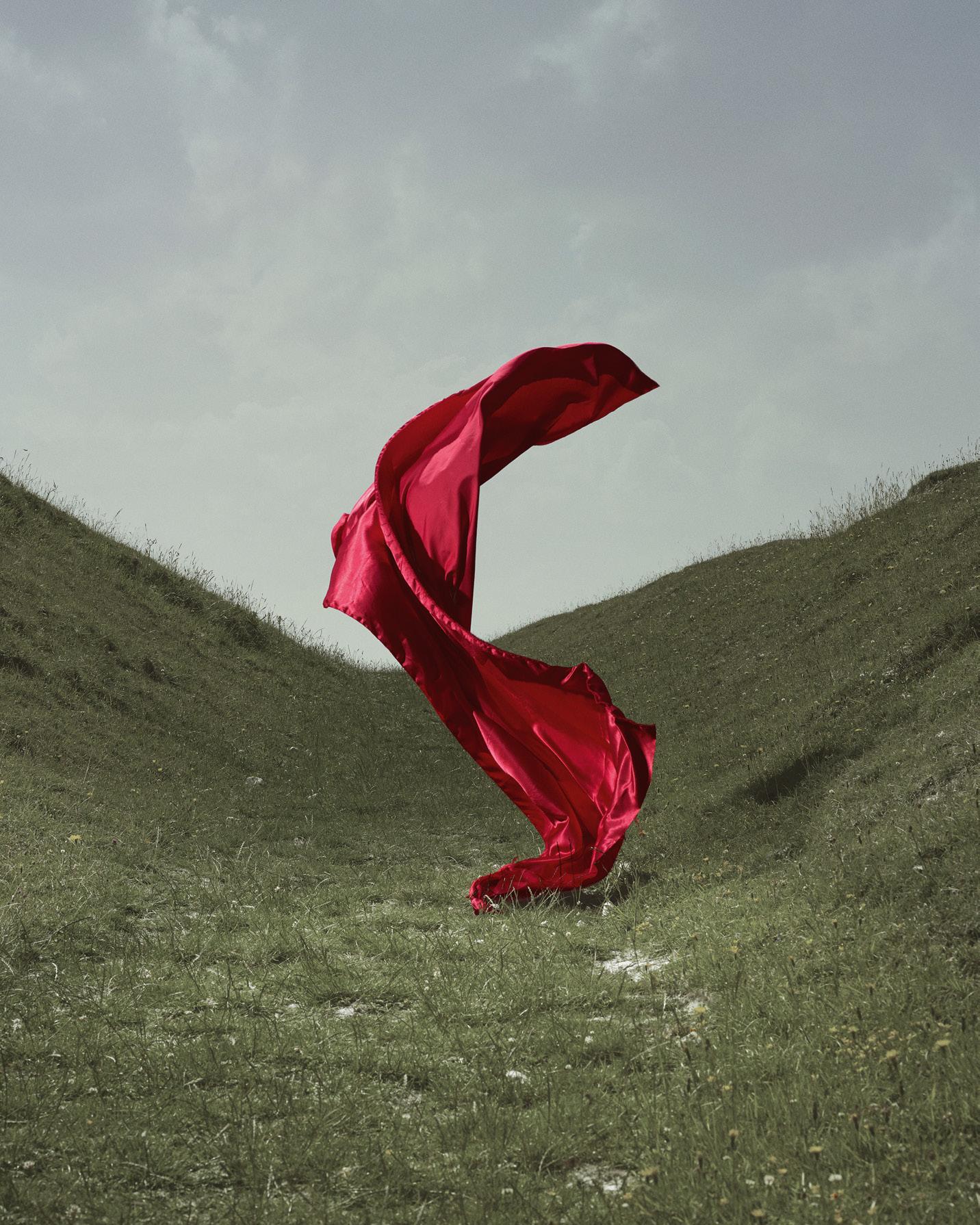
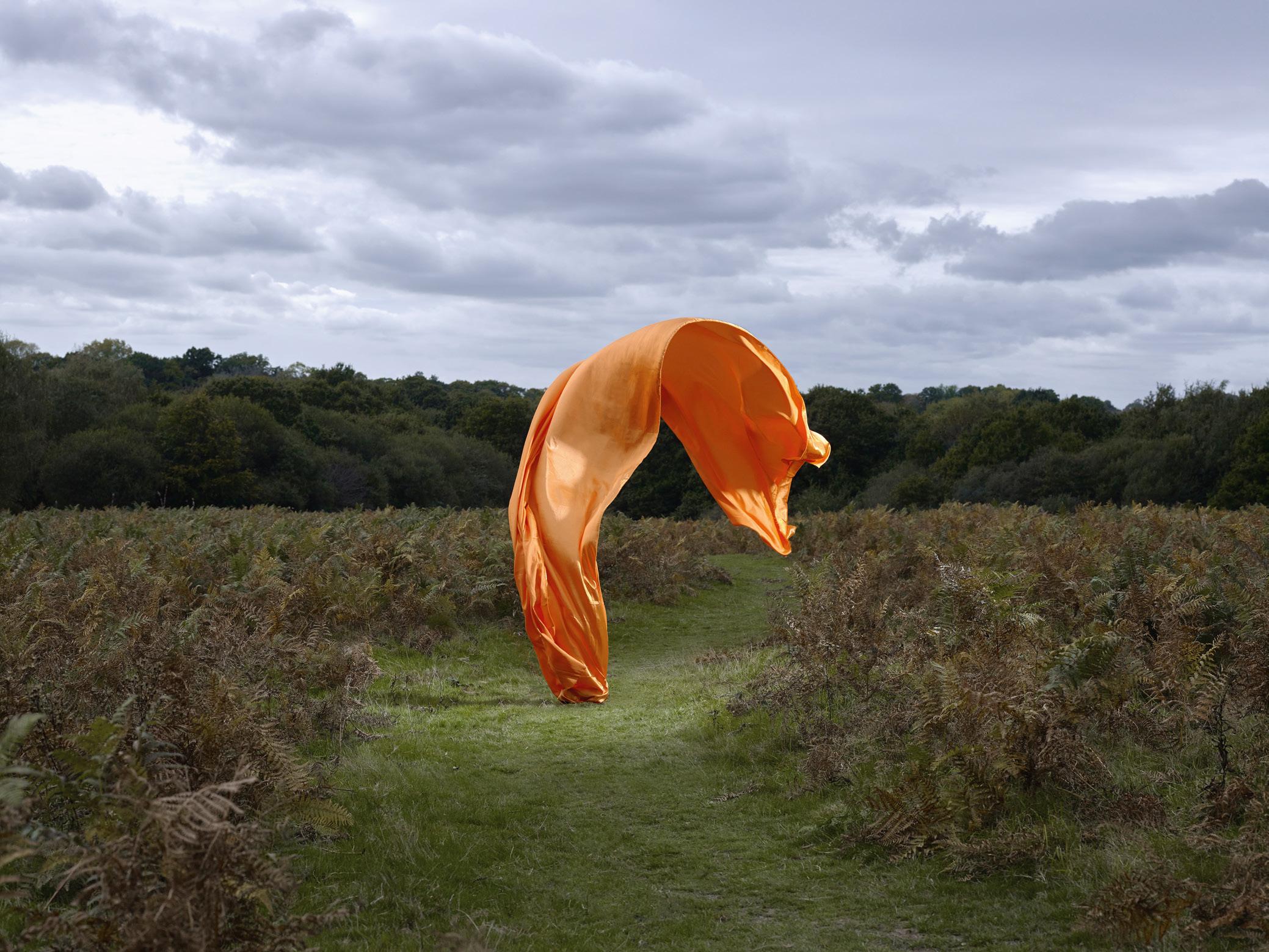
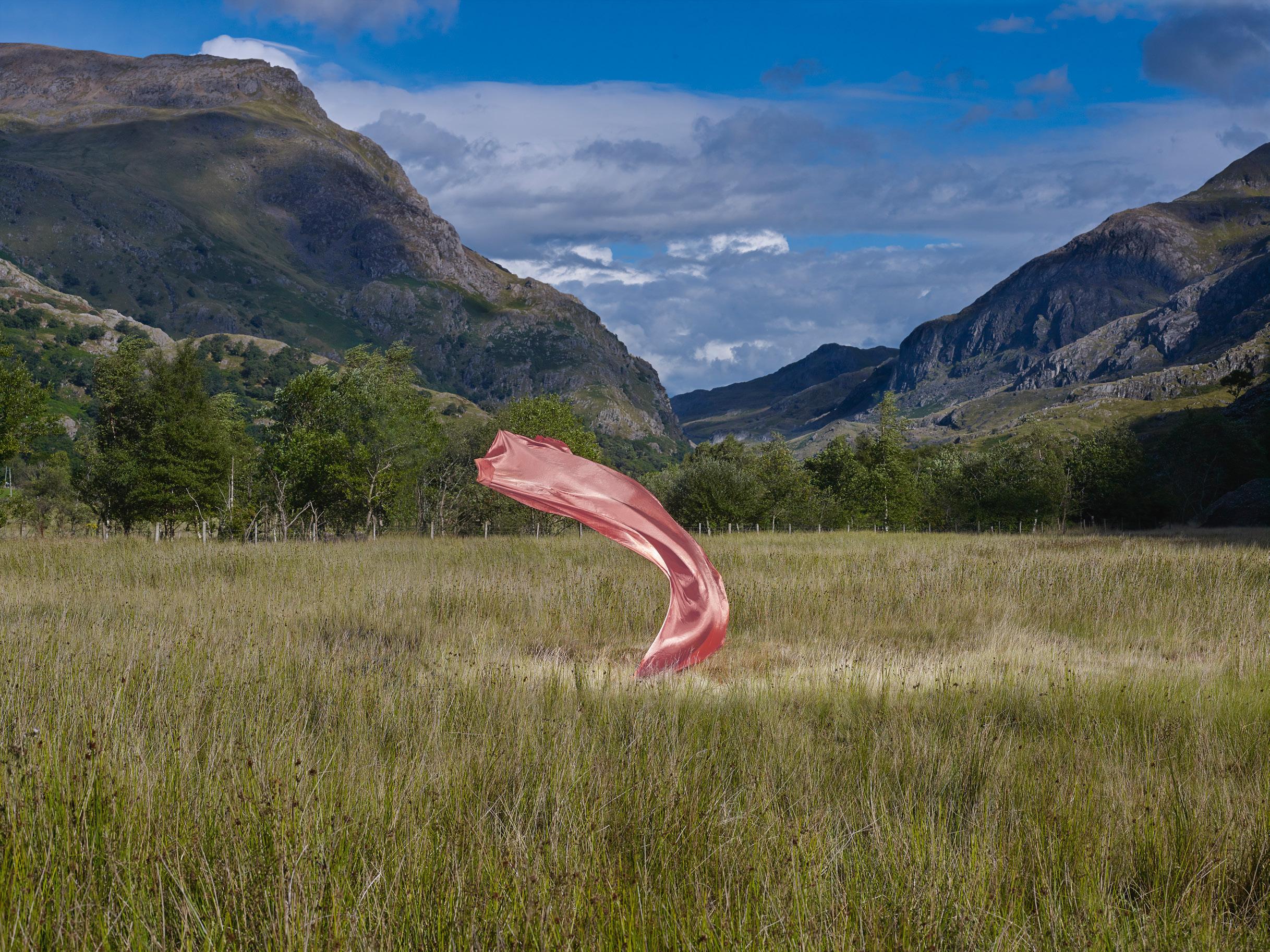
As human beings, we have always had to grapple with the transience of our world, and this is increasingly evident as everything speeds up. The Japanese concept “Mono no aware” – literally translated as “the pathos of things” – recognises impermanence: the gentle sadness that comes with seeing the world around us move on. The Sanskrit term “Anitya” describes the ways in which each of us are alterable – both as physical matter and conceptual beings. Neal Grundy’s Transient Sculptures series focuses on the overrid ing concepts of change and motion, capturing fabric forms in “mid-flight.” He notes: “At first glance, the viewer may believe they are seeing a solid sculpture in the landscape. The sculpture exists for a split second in time; once photographed, it is otherwise lost for ever, never to be re-created.” Designed to mesmerise the viewer, these images capture a world passing by, and find a sense of beauty in ephemeral moments. nealgrundy.co.uk.
112 Aesthetica art
Neal
Grundy, Firle Beacon, England, from Transient Sculptures (2020).
114 Aesthetica
Aesthetica 115
Neal Grundy, Ditchling, England, from Transient Sculptures (2020).
116 Aesthetica
Neal Grundy, Snowdonia, Wales, from Transient Sculptures (2020).
118 Aesthetica
Aesthetica 119
Neal Grundy, Snowdonia, Wales, from Transient Sculptures (2020).
120 Aesthetica
Neal Grundy, Snowdonia, Wales, from Transient Sculptures (2020).
122 Aesthetica
Aesthetica 123
Neal Grundy, Beachy Head, England, from Transient Sculptures (2020).
Exhibition Reviews
1Grown Up in Britain
Nirvana’s Smells Like Teen Spirit was released on 10 Septem ber 1991. It was the lead single to Nevermind, an album which sold over 30 million copies. Songs about adolescence have dominated the charts time and again: Katy Perry’s Teenage Dream, or Teenage Dirtbag by Wheatus. But what exactly is “teen spirit”? More broadly, what does it mean to be young?
During lockdown, London’s Museum of Youth Culture en couraged the public to delve through old shoeboxes, look in attics and flick through picture albums. It was the ultimate exercise in nostalgia, driven by a goal to diversify the mu seum’s collections and “bring everyone’s story of growing up into the fray.” 6,000 photographs and objects were amassed. The result is Grown Up in Britain: 100 Years of Teenage Kicks, a celebration of adolescent life from the 1920s until today. The show is dedicated to real stories, chronicling a kalei
2Where Ideas are Born
PRESENTED BY MAGNUM PHOTOS
A certain enigma surrounds the artist’s studio. Like the writer’s routine, we somehow feel it holds a key that will unlock the creative process. That if we, too, surround ourselves with white walls or rise at 5am and scribble 1000 words before escaping for a walk, we’ll produce the next great masterpiece. Whilst this clearly isn’t the case, that curiosity remains. In this group exhibition of vintage prints by Magnum photog raphers such as Martin Parr and Eve Arnold, audiences are invited to peer into the studios of 20th century giants.
Amongst the 60 works on show is Alex Majoli’s beautifully lit portrait of Yayoi Kusama quietly absorbed in painting in her Tokyo studio, and Francis Bacon, photographed in London by Ian Berry surrounded by chaos and clutter – the tools of his trade, such as brushes and canvases spilling over every available surface. Several of the artists featured, Roy
3Beyond the Mountain
In 1995, Shanghai-based performance artist Zhang Huan and nine of his collaborators climbed up Beijing’s Miaofeng Mountain. Their goal was to challenge the mountain’s mam moth altitude by adding a pile of flesh to its peak. The result ing photographic work, To Add One Meter to an Anonymous Mountain, shows 10 stacked bodies reaching one metre high.
Zhang’s humorous take on our relationship with nature is now on display as part of Beyond the Mountain, organised by Seattle Asian Art Museum's curator Foong Ping. “The bodies might make the mountain higher for a minute, but what comes then?” asks Foong. A nod to classical forms is a run ning thread throughout the works on show, realised through both traditional and contemporary materials and media.
The iconography of landscapes is key in Foong’s program ming. Both poetic accents and metaphorical embodiments
doscope of subcultures, sounds and styles, with a mission of “going beyond the headlines.” Personal snapshots are displayed alongside well-known artists such as Ken Russell, Normski, Anita Corbin, Gavin Watson and Lucy McCarthy. The nation’s family albums are crammed with memories, from summer holidays and weekend hangouts to first loves and Saturday jobs. Friends gather in large crowds: enjoying club nights, concerts and music festivals. There’s a sense of freedom and abandon, with couples sharing kisses outdoors or relaxing on summer breaks. In one image, three people pose with a road sign on the M40. Elsewhere, individuals lounge in poster-plastered rooms, surrounded by pop-cul ture icons and shrines to music and film. There is a notable quantity of protest photography: positioning young voices as agents of change and taking justice into their own hands.
Words Eleanor Sutherland
Herbert Art Gallery & Museum, Coventry 1 July - 22 February
theherbert.org
Lichtenstein and Keith Haring, for example, appear in multi ple portraits by different photographers at different locations and points in time, encouraging the visitor to muse on how each particular meeting produced its own magnetic result –a fusion of creative practices resulting in one still image.
Andy Warhol’s New York-based Factory famously buzzed with energy, renowned for its wild parties and open-door policy, provided you were hip enough. Pablo Picasso, mean while, saw his studio as a sacred space, comparing it to a mosque, saying that when he entered, he left his body at the door: “I only allow my spirit to go in there and paint.”
If it doesn't pass on the creative spark by some kind of visual osmosis, this collection of fascinating portraits certain ly sates our appetite for voyeurism: we are allowed behind the scenes to look at how artists lived, worked and imagined.
Words Rachel Segal Hamilton
Compton Verney 2 June - 16 October comptonverney.org.uk
of what lies ahead, geographies appear majestically in Yang Yongliang’s two 4K videos, The Return and The Departure Here, the artist marries images of cities with organic mate rial to create a kind of dystopia. “Besides Yang’s reference to Song Dynasty-era ink paintings, the images speak of Seattle, where new skyscrapers mushroom everyday,” Foong notes. Chen Shaoxiong also revisits tradition, with rice paper draw ings of contemporary protests, including those in Egypt and Hong Kong. Paying homage to an ancient drawing technique, the images are immediately relevant for the contemporary viewer. In contrast to Chen’s directness, Ai Weiwei purses a subtler commentary on our obsession with objects. A group of ceramic vessels, whose origins are unknown, are dyed with industrial paint. Speculative and provoking, the work places a question mark on cultural value and collective histories.
Words Osman Can Yerebakan
Seattle Asian Art Museum 22 July - 30 June 2023 seattleartmuseum.org
124 Aesthetica
100 YEARS OF TEENAGE KICKS
CONTEMPORARY CHINESE ARTISTS
reviews
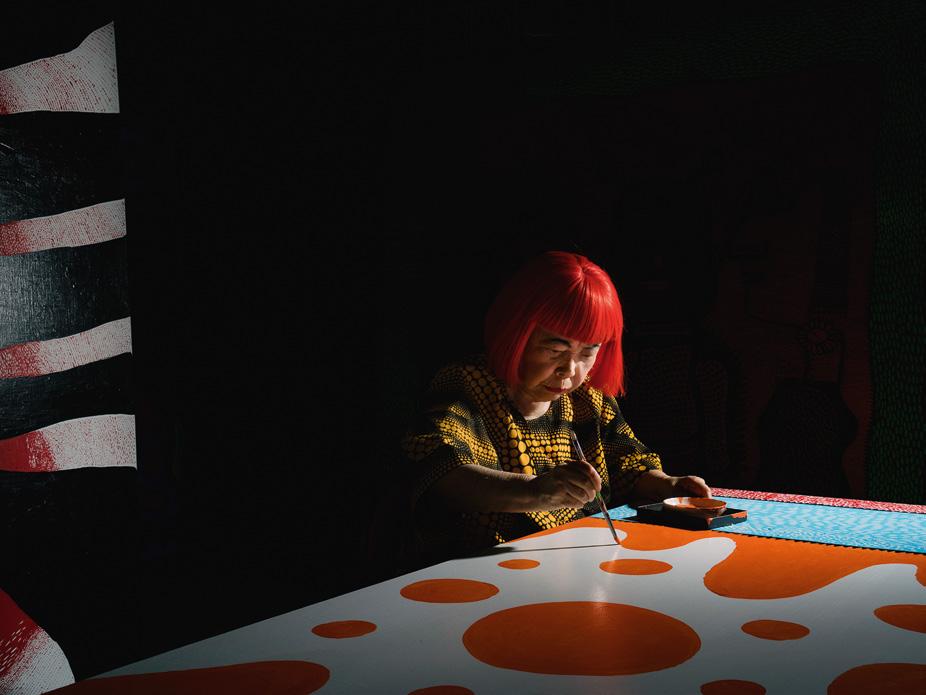
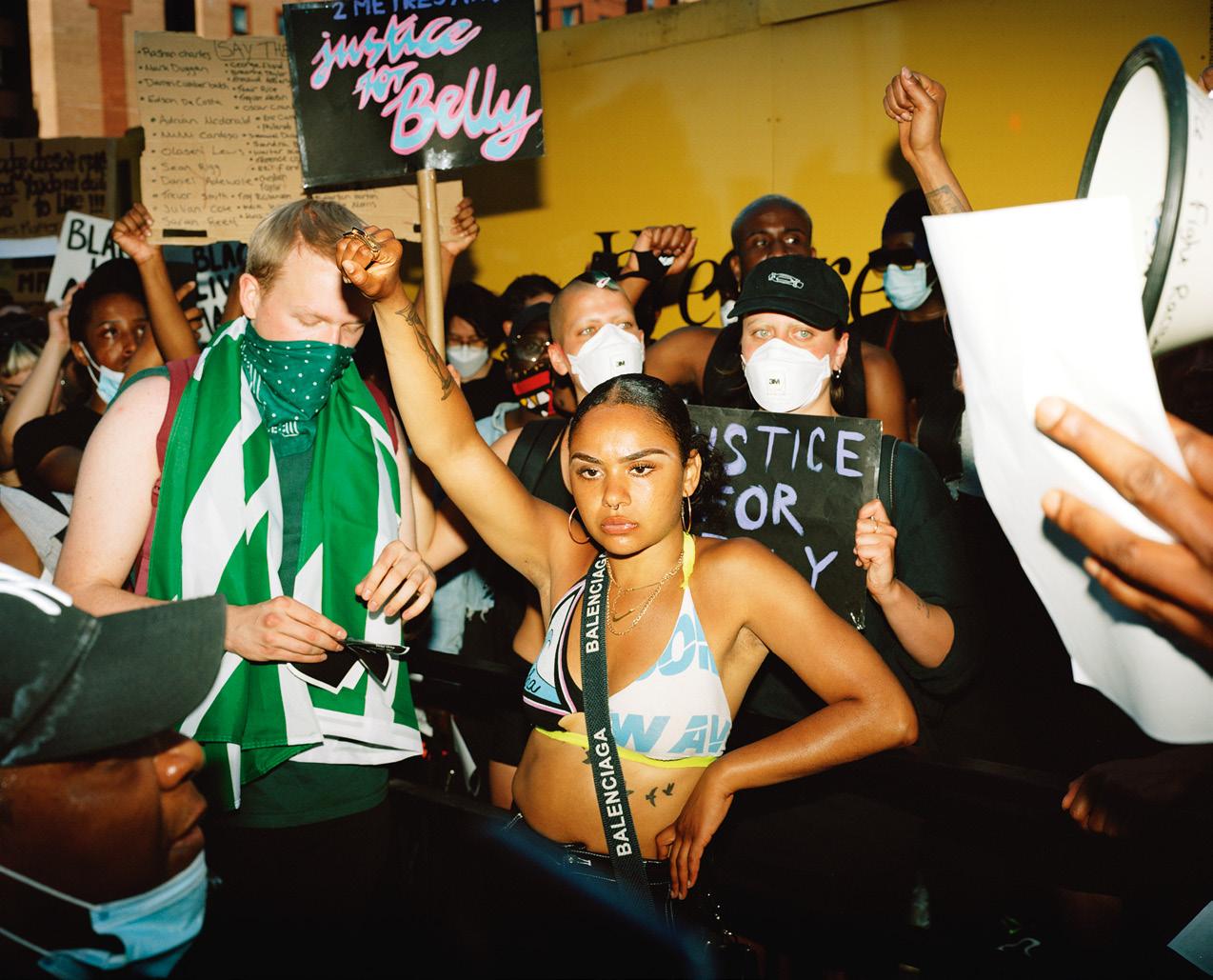
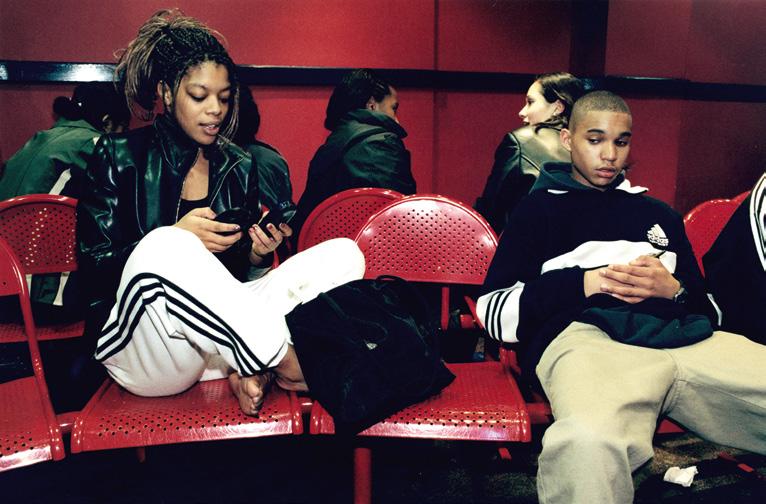
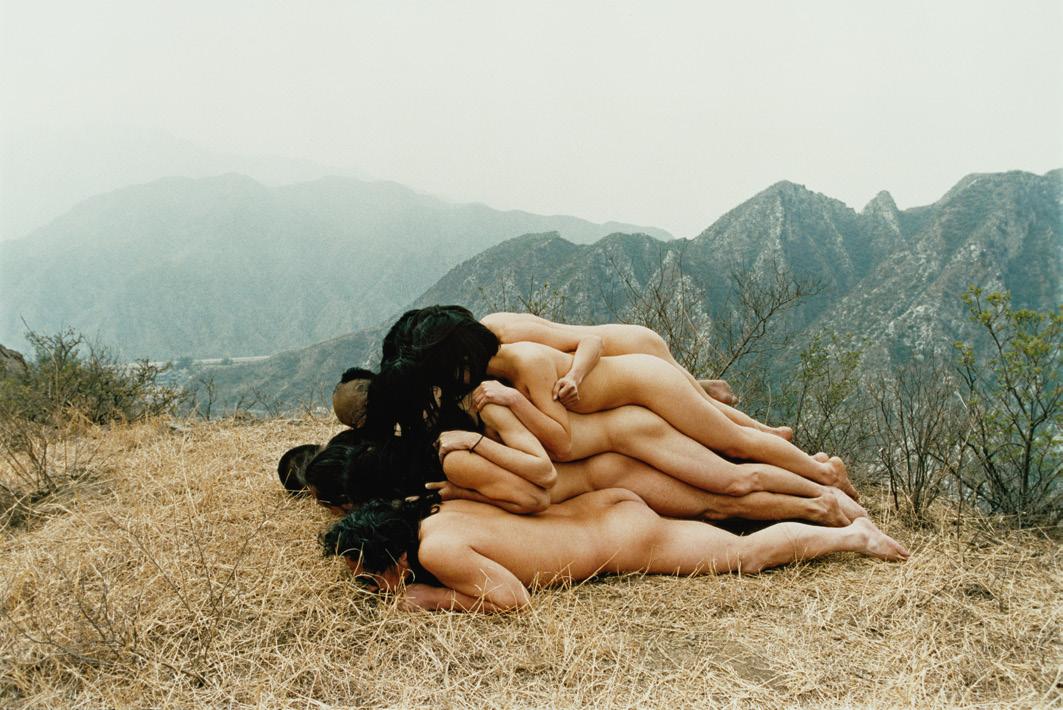
Aesthetica 125 1a. Teenagers exchange numbers at the roller rink, London, 2001.Rebecca Lewis. 1b Protester with her fist raised at the Black Lives Matter rally in Central London, summer 2020.Tommy Sussex 2. Artist and writer Yayoi Kusama in her Shinjuku studio, Tokyo, 2016 (c) Alex Majoli, Magnum Photos 3. To Add One Meter to an Anonymous Mountain, 1995, Zhang Huan, chromogenic print on Fuji archival paper, 50 7/8 x 71 in. Gift of the Contemporary Art Project, Seattle, 2002.23 © Zhang Huan. 1b 1a 3 2
126 Aesthetica 4a.
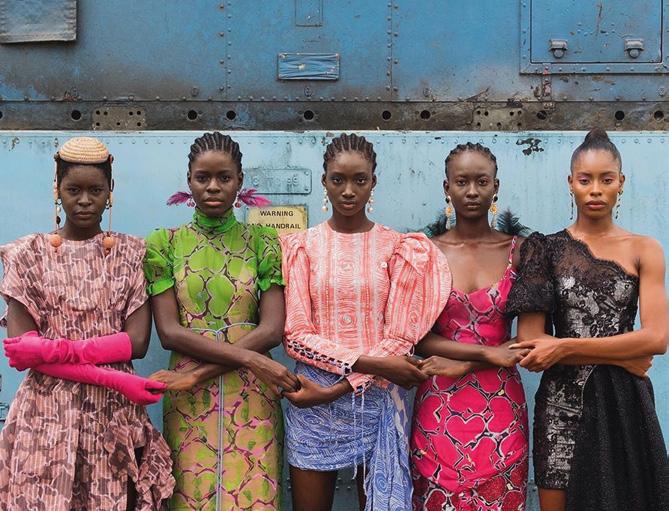
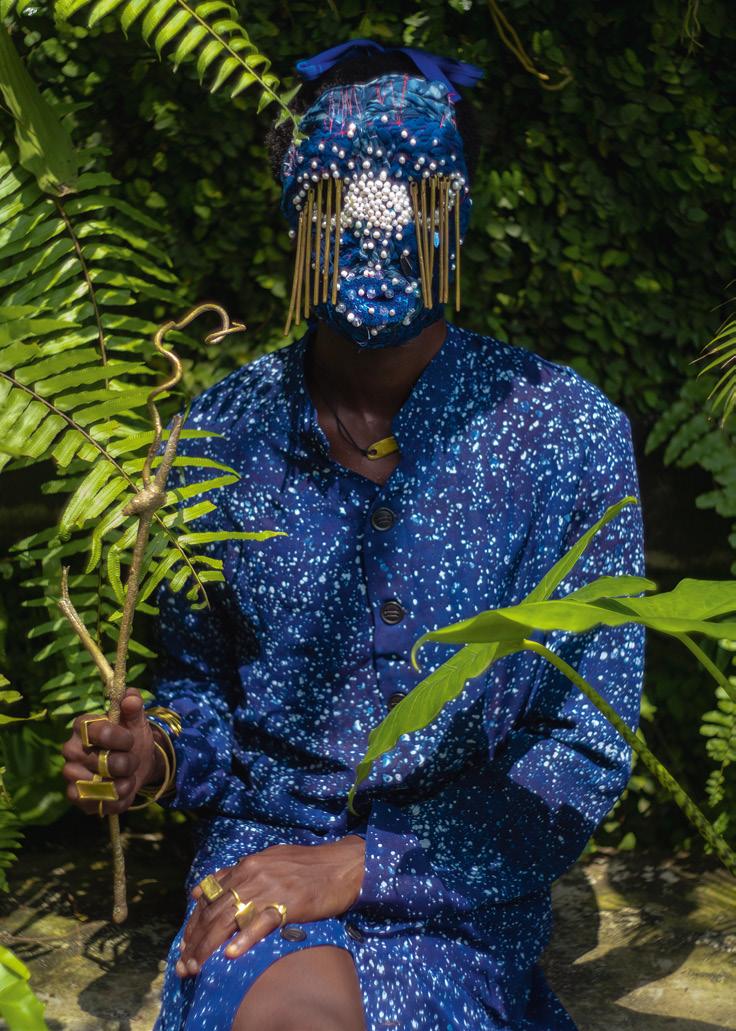
Models holding hands, Lagos, Nigeria, 2019 by Stephen Tayo. Courtesy Lagos Fashion Week. 4b Aso Lànkí, Kí Ató Ki Ènìyàn
(‘We
greet dress before we greet its wearer’) collection, Lagos, Nigeria, 2021. Lagos Space Programme.
Photo: ©
Kadara Enyeasi
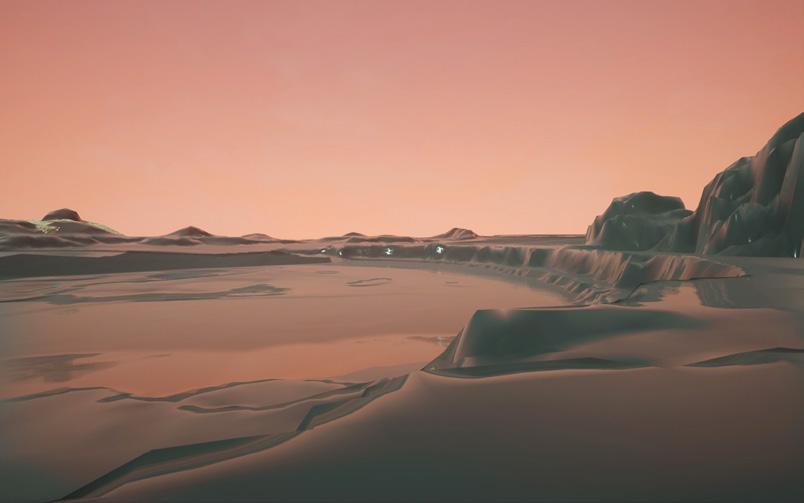
5 Cleries Helle,
Gloria López Cleries and Sive Hamilton Helle
The
Unreal
2019–© Gloria
López Cleries and Sive Hamilton Helle
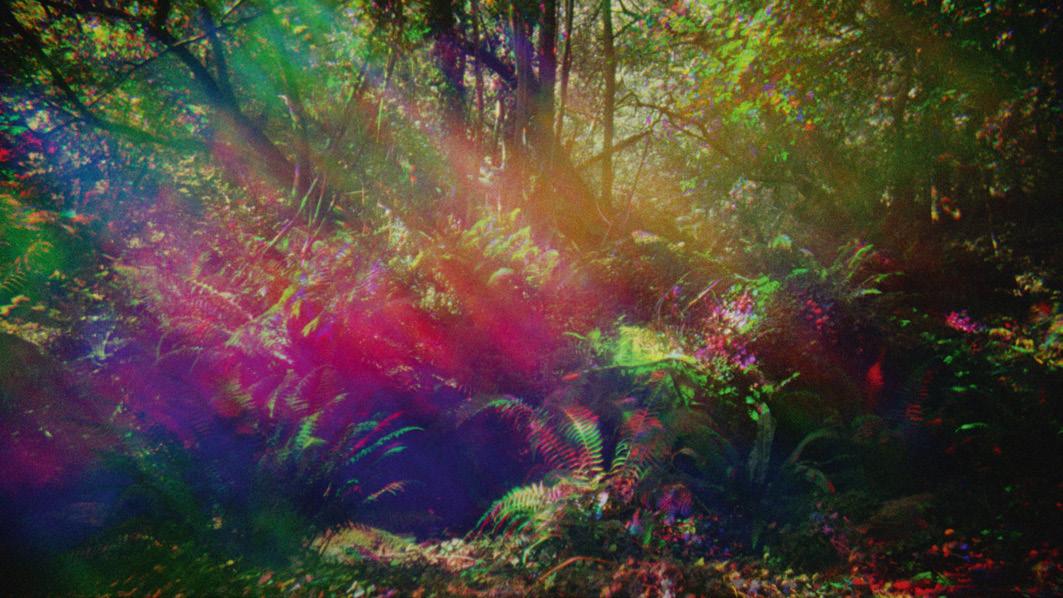
6 . L ook Then Below
Ben Rivers,
2019, still
from
super 16mm
film.
4b 5 4a 6
4Africa
“To showcase all fashions across such a vast region would be to attempt the impossible,” says Dr Christine Checinska, Senior Curator of African and African Diaspora Fashion at the V&A. The museum has launched a landmark exhibition surveying the “creativity, ingenuity and unstoppable global impact” of design from the continent. It features 45 design ers from 20 countries, positioning the 20th century vanguard – Shade Thomas-Fahm (b. 1933), Chris Seydou (1949-1994), Kofi Ansah (1951-2014), Alphadi (b. 1957), Naima Bennis (1940-2008) – alongside today’s trailblazing creatives.
One such name is Lagos Space Programme, a Nigerian label recognised for genderless luxury collections and a dedication to slow fashion. Aso Lànkí, Kí Ató Ki Ènìyàn, ("We greet dress before we greet its wearer") mixes graphic pat terns with knitted textures and sequins. Adeju Thompson, the brand's designer, told SHOWStudio: “I'm breaking down the
misconception that queerness is a western construct.”
Uniting contemporary creators is the desire to commu nicate ideas and aesthetics on their own terms. “Now more than ever, African designers are taking charge of their own narrative and telling people authentic stories, not the imag ined utopias,” says Thebe Magugu, whose Alchemy collec tion centres spirituality and ancestral memory. Connections between past, present and future play an important role; the show features sections Capturing Change and African Cultur al Renaissance – focusing on decolonisation and independ ence – and Afrotopia, dedicated to the tenets of Afrofuturism.
"African fashion has existed forever, it has always been a part of us," says Omoyemi Akerele, founder and director of Lagos Fashion Week and Style House Files. "African fashion is the future. For the first time, fashion from the continent will be viewed from a diverse perspective that spans centuries."
Words Eleanor Sutherland
V&A, London 2 July - 16 April 2023 vam.ac.uk
5How to Win at Photography
The new multimedia show from The Photographers’ Gallery compares photography to a game – with both rules and ex pected outcomes. Featuring works by over 30 artists from the 20th century to the present-day, from Claude Cahun and Cindy Sherman to Max Pinckers, this exhibition combines still images, video, sound and installation. It looks at the photo-realistic evolution of video games and the “gamifica tion” of contemporary photography as evidenced in social media where “likes” and “shares” determine an image’s value. Divided into five components – Game Travel, Gameplay, Replay, Camera Play and Role Play – the exhibition questions themes including recontextualising the image as a political act, the relationship between the artist and the camera, and identity construction. Game Travel enables us to enter the world of video games as a tourist, interested in the material aspect of digital landscapes, rather than on the concept of “winning.” Justin Berry’s series Road Trips (2018), for example,
6Forest
In a video from 1992, Brazilian musician Caetano Veloso sings a Prayer to Time to a gameleira tree whilst introducing his infant son, Zeca, to the thick cords of its trunk: “tempo, tempo, tempo, tempo.” In his native Bahia, Brazil, these trees are a symbol of longevity, a defence against time’s vicis situdes. The softly repeated tempo of Veloso’s prayer also, however, feels like a lament for things that are lost. It appears as a metronome of sorts, whilst the seconds tick away.
Thirty years later, in 2022, iron casts of uprooted trees, similar to those from the Bahian rainforest, are on display at Arnolfini, Bristol. Ai Weiwei's Palace (2019) and Roots (2019) are equal parts spiritual and memorial, appearing in vast but deteriorating monuments to endangered organisms. Forest: Wake This Ground brings together the work of artists, com posers and writers to root around the forest floor in hopes of finding regeneration amidst the decay. In the case of Alma Heikkilä’s Flashing Decaying Wood (2018), this kind of ex
comprises large-scale prints of serene, expansive landscapes he encountered whilst playing Call of Duty: Black Ops, a video game known for its inherently violent nature. Meanwhile, Gameplay examines how we define a “success ful image” and how, in the world of social media, certain metrics dictate how an image is presented to us and why, favouring “marketability” over originality. In Trophy Camera (2017), Dries Depoorter and Max Pinckers examine the hier archy between the photographer and their apparatus. In this work, powered by artificial intelligence, a camera has been programmed to take “winning photos” based on algorithms. Although massive in scale, How to Win at Photography asks a simple question: what is the meaning and purpose of photography today? As we are now equipped with an imagemaking device and the agency to share within our backpockets, this exhibition is an excellent place to start critiquing our own intentions: behind the images we create and recreate.
Words Shyama Laxman
The Photographers' Gallery, London 22 June - 25 September
thephotographers gallery.org.uk
amination takes a literal form, as fungi and bacteria decom pose a wooden sculpture on the gallery floor. Many of the works occupy a similar position at the boundary between human craft and natural processes, offering a collaboration with nature. Eva Jospin presents a towering cardboard forest; John Newling offers charcoal books; Rodrigo Arteaga creates outlines of leaves; Zakiya Mackenzie’s poems in forests out line words which are written down into the dirt and soil.
Importantly, the exhibition’s branches reach beyond the white walls of the gallery space, into a programme of com munity activity and a broad commitment to sustainable prac tice by the Arnolfini at large. Wake This Ground asks us to appreciate the slow rhythms and epochal narratives of forest time, whilst also spurring quicker activity to combat climate change. Like Veloso’s prayer, the show is both a lullaby and a wake-up call, a hymn to what we’ve already lost and a ral lying cry to try and salvage what we can in the coming years.
Words Adam Heardman
Arnolfini, Bristol 9 July - 2 October arnolfini.org.uk
Aesthetica 127
Fashion A VITAL SURVEY FROM MID-2OTH CENTURY TO NOW
A VITAL SURVEY FROM MID-2OTH CENTURY TO NOW
WAKE THIS GROUND

1Futura
 PIETRO MARCELLO, FRANCESCO MUNZI, ALICE ROHRWACHER
“There is no future in Italy,” remarks an interviewee in this revealing state-of-the-nation documentary. Directed by Pietro Marcello (Martin Eden), Francesco Munzi (Black Souls) and Alice Rohrwacher (The Wonders), this “collec tive film” speaks to Italian youngsters about their hopes and dreams. From trainee beauticians and chefs to aspir ing boxers and equestrian lovers, occupations and inter ests are varied, but, as the above quote hints, the shared feeling is one of concern. Italy, we hear, is a country that's forgotten its youth, with a government more interested in taxes, pensions and immigration than investing in futures.
The fact that this project began just before the pan demic (we see masks and social distancing deployed at points) adds to the feeling of isolation, of wasted years. “There’s nothing to distract us from what’s happening,” says one individual, as the film becomes the diary of a
2Akilla's Escape
C HARLES OFFICER
Actor-rapper-poet Saul Williams has enjoyed a varied career in film, most notably in the 1998 Sundance-win ning Slam. More recently, he co-directed the acclaimed Afrofuturist musical Neptune Frost. Here, he returns to the screen as Akilla, who works in the Toronto marijuana trade. He sees little point in continuing – with weed now legalised in Canada – but fate has different ideas. When a three-man crew from the ruthless Area 6 Generals gang intercept a routine hand-over, stealing money and drugs, Akilla must find out where the stash has been taken.
His only chance is extracting information from Shep pard (Thamela Mpumlwana), the A6G member who got left behind during the raid. Clearly, he sees something of himself in this teenager, given the frequent flashbacks to his youth in 1990s Brooklyn, with a violent gangland father who, as his mother reminds him, “is a product of a
3Donna
JAY BEDWANI
Directed by Welsh filmmaker Jay Bedwani (My Mother, Rose and Rosie: Overshare) and funded by Ffilm Cymru Wales, Donna is a portrait of the trans activist, artist and performer Donna Personna (b. 1947). Bedwani’s latest documentary builds on the previous short film, My Mother (which also captures the later life of Personna) and follows her journey as she tries to reconnect with her family after a period of estrangement and abandonment.
Personna first hit the stage with The Cockettes, a pio neering avant-garde theatre company that gained un derground cult status in California during the 1970s. Yet, ecstatic lip-synching in San Francisco’s downtown bars was a far cry from Donna’s Christian upbringing in San Jose; now in her seventies, she resolves to return to the place of her childhood and confront her past whilst con tinuing to fight as an activist on the west coast of America.
“plagued mood.” A teacher from Venice is seen asking his pupils how they feel now the tourists have deserted the city; there’s no snide reply but a recognition that many rely on tourism for business. Many of the interviewees are switched-on and shoulder the worries of the world.
As the film bounces from Rome to Milan, Palermo, to Verona, Genova, Tuscany and more, it offers a fascinating insight into contemporary youth. Some hold traditional values – that a man providing for the family is the ideal to strive for. Others reject the idea of love in favour of success. Many of the boys show dreams of being foot ball stars, a way of escaping poverty. Social media is ingrained in their lives too, much like concerns about the environment ("Eco Not Ego" reads one bold placard). Fear has turned to anxiety – and these kids, and many others, are left to tread water in unprecedented times.
Words James Mottram
Modern Films modernfilms.com
people torn apart – by poverty, greed and political vio lence.” Director Charles Officer, co-writing the script with Wendy Motion Brathwaite, seeks historical context, but often the film falls back on gangster movie cliché.
Yet Williams is the film’s secret weapon, his lined, mid dle-aged face with its greying beard adding consider able gravitas to an otherwise thinly-etched role. The feature's best scenes come between him and the promis ing Mpumlwana, whose young troublemaker has slipped into the thug life all too easily. As if Williams’ on-screen contribution wasn’t enough, he also worked on the film’s music with 3D – aka former Massive Attack maestro Robert Del Naja – adding distinctive tones to the elec tronic-driven score. Sadly, the film’s structure, yo-yo-ing between the 1990s and 2020, does the film minimal fa vours as it struggles to find a satisfying narrative rhythm.
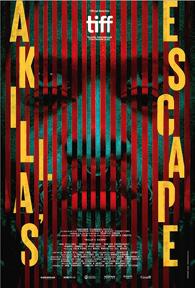 Words James Mottram
Studio Soho Distribution studiosohodistribution.com
One of the most important events to occur throughout the whole of the film is when Donna is offered a chance to co-write a play. The subject matter of the piece is an overlooked episode in queer history that anticipated the more famous Stonewall Riots: the Compton’s Cafeteria Riot (August 1966, in the Tenderloin district of San Fran cisco). Following the production of the play, we witness her being praised for her writing and emboldened by her new friends and acquaintances, receiving the courage to head out of the city and reunite with her sister Gloria. Ultimately, Bedwani’s film manages to recover an im portant and historical moment of resistance in trans US history, which is recalled to the screen by Donna, in her own voice. This is a film about discoveries both old and new, and it is a testament to the strength of community in the face of police brutality and purposeful ostracisation.
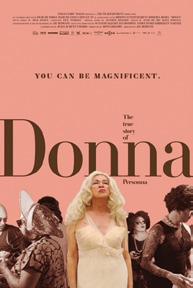 Words Chris Webb Bohemia Media bohemiamedia.co.uk
Aesthetica 129
film reviews
Chicago-based Dendrons returns with second album 5-3-8, mixing together post-punk, avant-garde composi tion, outsider pop and Krautrock, a sound that evolved on the debut album Dendrons in 2020. This record is forged from a bank of almost 40 song ideas; the band went through these until they reached a set of songs that weaved into one another intricately, with lyrical and mu sical motifs dancing around swirling rock arrangements.
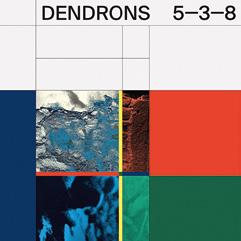
For the lyrics, they adopted a cut-up method, taking phrases from news channels and assembling them through collage. When it came to recording 5-3-8 – the title referencing the refrain that appears at a few points of “Fifths, thirds, octaves only” – Dendrons decamped to Texas and Arizona, producing the album with Tony Brant and Sonny DiPerri (Animal Collective; Dirty Projectors).
Opener Double Ending, with charismatic chord changes
and chiming guitar, is a high-point. In both mood and melody, it sounds like the band has found a time ma chine and momentarily stepped back to 1981. The eso teric Octaves Only is another standout track dominated by powerful vocals and guitar. Vain Repeating and Oc taves Only tap into the manic energy of bands like Wire and Stereo Lab, but in the context of the album’s full vision, they come together to paint an album informed by a desire for defiant optimism in the face of isolation. Elsewhere, the energy is not always so prominent, and there are some less impactful moments. Overall, how ever, the album rings with authenticity and a real sense of ambition. There is a lot on 5-3-8 to suggest that the next Dendrons album may be its best yet, reflecting the band's belief that every record is a conversation with the last, existing for the specific time in which it was created.
2Let’s Turn It Into Sound
K AITLYN AURELIA SMITH
Composer and producer Kaitlyn Aurelia Smith (KAS) describes her album as a puzzle. Indeed, many songs on Let's Turn It Into Sound feel multitudinous, like pieces of a puzzle that do not match: there are breaks; rhythms change abruptly; tracks morph into something differ ent altogether. It is difficult to describe, let alone define Smith's sound: experimental electronic, avant-garde pop with elements of neoclassical and cinema? It's no surprise KAS has composed for seven films, including Google Arts & Culture's The Hidden Worlds of the Nation al Parks – an innovative 360 feature touring the globe.
For KAS, however, her album / puzzle is a “symbol of receiving a compound of a ton of feelings from going out into a situation, and the song titles are instructions to breaking apart the feelings and understanding them.” Unbraid the Merge is a danceable track and the closest
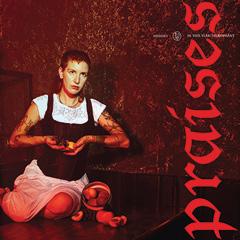
3I n This Year: Hierophant PRAISES
Armed with a full band, Jesse Crowe (under their nomde-plume Praises) returns for a second studio album of dynamic and very honest songwriting. Musically, it is brilliant and rich. The opening umami warmth of My Condolences – featuring thick, well mixed flutes and siren wails – lead us in to a lull. Each song has all the etchings of mystery brought by a Portishead record, and creeps slinkily in the shadows, somehow making you walk a little slower. The discordant, encapsulating wails of Beth Gibbons are clearly a big influence here for Crowe, par ticularly on the magnificent Peace of Mind, where their lyrics are artfully delicate and yet painful in delivery.
In the wake of the #MeToo movement, Crowe crafted the deeply intricate ode to feeling consistently let down by male mentors showing their true colours and being exposed as abusers. On Our Father, this on-edge, cyni
Smith gets to a pop song. Despite its sacred-sounding beginning and synth-brass instances, it feels as though it could come straight out of a film score by the Eng lish composer Michael Nyman, with instrumentation that makes a surprise return at the end of There is Something.
The first four tracks on the album, including Have You Felt Lately? Let it Fall and Locate, are full-on, chaotic, seeming, at times, like they have lost all sense of con trol. They are followed by minutes of serenity and calm with Check Your Translation and Pivotal Sound, a playful five-minute instrumental composition (most songs on the album come without lyrics, instead taking the route of harmonising highly auto-tuned vocals) with Terry Ri ley-synth-orchestra arrangements. KAS' compositional training is obvious, not only in moments like these, but throughout the full album, which is structured perfectly.
Words Matt Swain
Innovative Leisure innovativeleisure.net
cal and distrusting anger is a brightly-lit in the form of a letter to their own male mentors, warning them to tread lightly in their treatment of and relations with women.
The rain-soaked, painful guitars of I Get Lost are as dramatic as is needed for Crowe’s reverbed vocals, really letting their soft tone and poignant words shine, rather than being lost under over-production. Whilst there is an element of consistency across the nine songs that could be conveyed as monotonous in its morose gloominess, Crowe skirts around this problem, mostly due to the pro duction. The cohesion is enchanting. The tempo change of March is a truly welcome addition, and whilst feeling rough around the edges, the songwriting process – of building jaggedly from demos – gives this a raw appeal that is quite unique. Each song feels quietly punk, whilst also swimming away in a stream of wavey consciousness.
Ghostly International ghostly.com
Aesthetica 131
Words Corin Douieb
Hand Drawn Dracula handdrawndracula.com
Words Marthe Lisson
music reviews 15-3-8DENDRONS

132 Aesthetica
1Free as They Want to Be
C HERYL FINLEY & DEBORAH WILLIS
In the 19th century, James Presley Ball (1825-1904), a Black American pioneer of image-making, established a Cincinnati studio that shot portraits of Black women, men and children, lending his subjects a vulnerable and honest dignity in a time when portraiture was a luxury.
A century later, Sadie Barnette (b. 1984) revisits these works, juxtaposing two portraits of her father: in the first image, he stands in a buttoned officer’s uniform, and in the next, he wears a gleaming leather jacket and a black beret, the uniform of a Black Panther. The stirring con trast between these portraits reveals the power of selfrepresentation and reclamation, offering vivid yet unset tling parallels between past and present presentations. Abolitionism and the struggle for freedom provide a narrative and aesthetic thread throughout Free as They Want to Be, a publication and concurrent exhibition at Fo
toFocus 2022 that recognises the strength, beauty and courage of enslaved people in rejecting dehumanisation. The abolitionist, orator, writer and statesman Frederick Douglass materialises in Bisa Butler’s collage of silk, kente cloth, vibrant African textiles and formal Dutch wax cloth, reflecting the layers and contradictions of the Afri can diasporic experience. Similarly, Daesha Devón Harris’ images of bodies treading water symbolise the journey to freedom – whether it be a spiritual or physical one. Here, the past is a wellspring of deep, spiritual power.
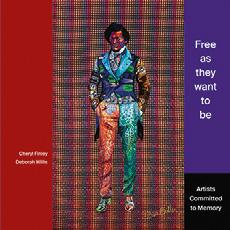
Omar Victor Diop embodies a series of historic figures by turning himself into a “medium”, and Yelaine Rodri guez marks a site in Ghana that once contained a human auction block with graceful remembrance. These 20 practitioners create healing visual narratives, whilst work ing towards the promise of liberation and empowerment.
Words Iman Sultan
Damiani damianieditore.com
2Inside / Outside NANCY HOLT
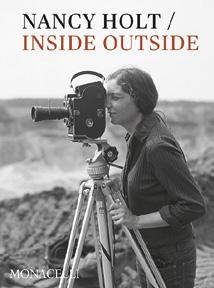
In a desolate canyon in the Utah desert, amidst tufts of dry scrub, four huge cylinders are laid out in a cross. They might look like an ancient site of worship were it not for the fact that they are made of cement. Look closely and you'll see a scattering of holes in the top. These aren't random: they mimic four constellations: Draco, Perseus, Columba and Capricorn. The cylinders are aligned to capture the sun's summer and winter solstices.
This striking monument captures many of the artis tic concerns of their creator, Nancy Holt (1938-2014): space, time and systems that surround our lives, such as the cyclical movements of the planets. Time is being marked out as you stand in the eight-foot diameter of the tube and watch the shadows change; yet the landscape is both timeless and almost untouched by humans since Freemont Man first inhabited this area 60,000 years ago.
3Ocean
Approximately 80 per cent of the ocean has never been mapped, explored, or even seen by humankind. Our long-standing love affair with water is, then, unsurprising. Between its array of mesmerising aquatic life and the un knowable depths, the ocean offers unending inspiration. Its enduring presence in art can be traced throughout history; the siren vases of Ancient Greece, Hokusai’s The Great Wave off Kanagawa, many of Turner’s works and, of course, Botticelli’s The Birth of Venus. But in 2022, the sea takes on a new dimension: it is now a fragile ecosystem threatened by the spectre of major ecological collapse. Ocean: Exploring the Marine World is a meticulous com pilation of oceanic imagery and art throughout time. The volume has no qualms about its rich and extensive source material, which includes NASA imagery, stills from My Octopus Teacher, Disney’s The Little Mermaid,
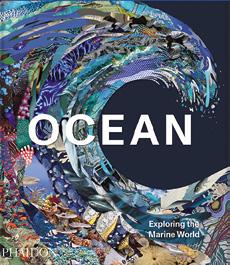
Holt completed Sun Tunnels in 1976, and back then she was frustrated by the reticence of museums to house her phrenological works. The art world has changed: a major exhibition of Holt’s work opens this autumn at Bildmuseet, Umeå. It will include the structural creation Ventilation System (1985-1992), in which ventilators pump air, and pipes are usually hidden in plain view. In this latter aspect, although not mentioned here, it’s clear that Holt was influenced by the architecture of Renzo Piano and Richard Rogers’ Pompidou Centre, where the inside and outside are transposed, visible from the street.
Personal taste will dictate your favourite pieces. Photos of graves, especially that of children, seem a little ex ploitative, but Holt's constructions are, ultimately, deeply considered. There’s something for everyone, including poems, spoken-word video, films and conceptual work.
Words Leyla Sanai
Monacelli monacellipress.com
and even the Jaws movie poster. Some artists – such as Igor Siwanowicz and Justin Hofman – offer close photo graphic dissections of aquatic life, showcasing the breath taking quality of these oceanic beings by capturing their psychedelic colours. For others, like Mandy Barker and Tan Zi Xi, the grandeur of their spectacle arises from their innate ability to capture our own smallness and the sheer size of the ecological crisis we are facing. Objects that had a minute lifespan on Earth are now sentenced to near eternity under the surface, suspended in the water. This publication testifies the need for intervention as the world edges closer to irreversible change. If not for our environment and its biodiversity, but for its sheer beauty. In doing so, the book captures the sea's trans mutability as “a symbol of infinity, beauty, solitude, iso lation, danger, happiness, weightlessness and longing.”
Words Katie Tobin
Phaidon phaidon.com
Aesthetica 133
A NNE-MARIE MELSTER
book reviews
134 Aesthetica
Aesthetica 135
136 Aesthetica

Aesthetica 137
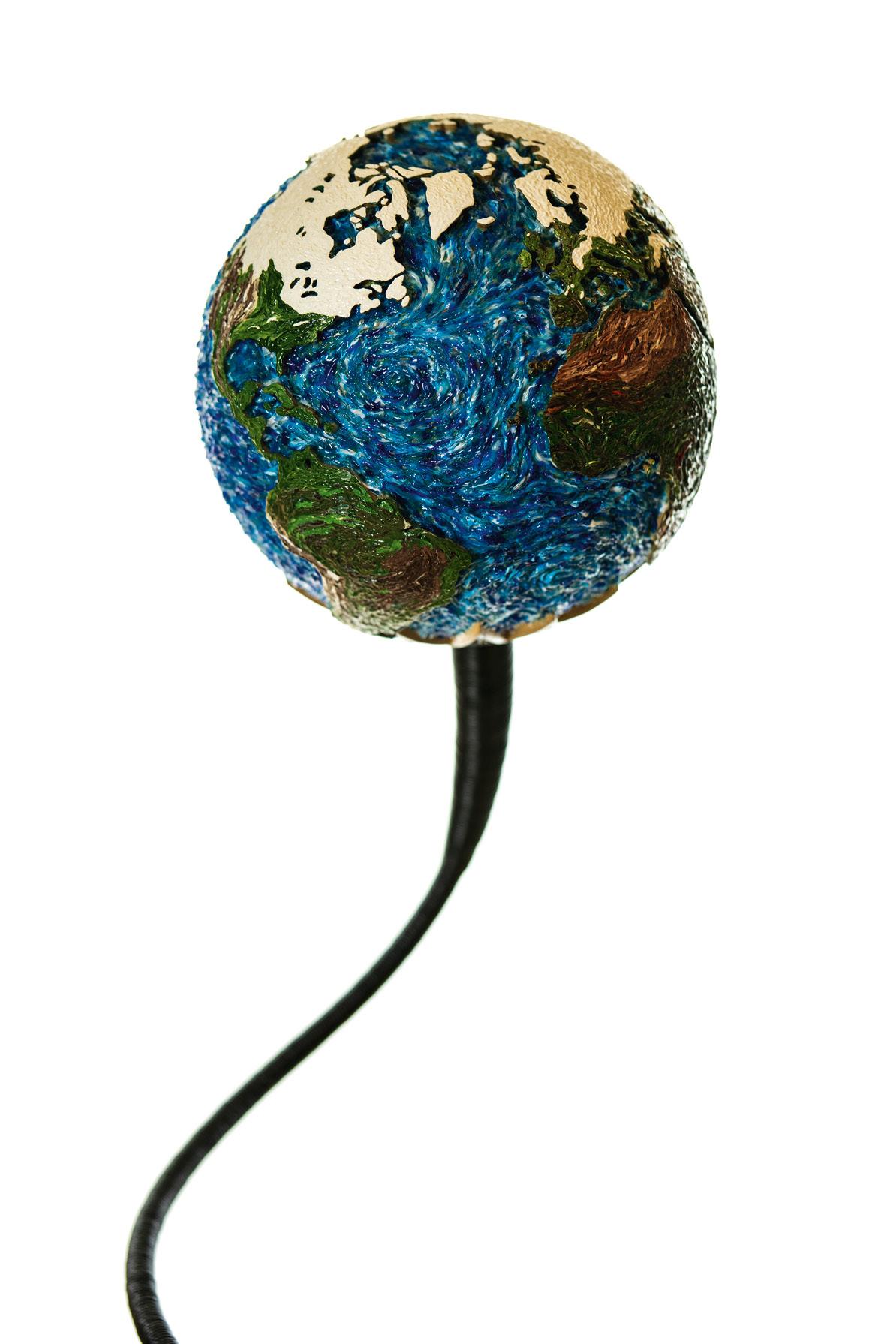
Erleuchten Lamps was founded in 2016 by Matthew Johnson, a fine artist based in Oregon. Inspired by forms and textures found in the natural world, he uses materials such as hard wood gourds and maple burl to create a variety of lighting art. He notes: “I see Earth as a masterwork of art while also being a canvas. I see abundant beauty where mundane items expose their vicissitude quality and transform into classic, functional fine art.” Johnson creates bespoke pieces for HNW and UHNW clients, and his work is held in numerous private collections around the world. www.erleuchten.com MATTHEW JOHNSON artists’ directory
BMJ
BMJ is a Seattle-based visual artist specialising in abstract photography. His compositions are often assumed to be the work of a painter; however, those enquiring are often surprised to discover the camera is his brush, the screens his canvas and anything visible through the camera’s lens akin to paint.
Moreover, BMJ does not use digital brushes, textures, blurs or distortions in his creations – he first combines slow shutter speeds with intentional camera movement. He then applies photo editing and colour explorations unique to each image.
All compositions thus far have been created using an Apple iPhone, and the artist refers to his specific genre of art as Abstract iPhoneography.
Most of the work within BMJ’s practice does not reference recognisable forms; as such the results are deconstructed to the point where meaning shifts and interpretations take hold.
The creation of abstract views of concrete objects allows the artist to morph reality – producing powerful images that become personal and allow each viewer to experience a unique perspective on the world in which we live.
CEVIGA
Korean artist Ceviga takes a unique and highly intimate approach to visualising perception, consciousness and spirit.
The works created in her decades-long practice – a continual development of painting and installation-making – have been showcased in exhibitions throughout the world, including the Palazzo Mora during the 59th Venice Biennale and the Saatchi Gallery as part of the StART art fair (2020, 2021).
Ceviga’s pigment-and-acrylic series Pregnant Tree reveals a deeply introspective and monochromatic response to a postpandemic re-emergence. The blood-red intensity and the fluidity of form symbolise rebirth and the flourishing of life.
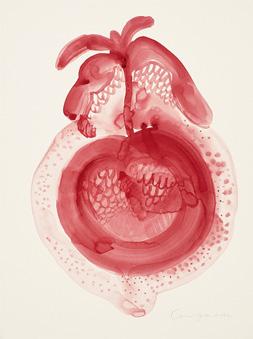
She notes: “In the universe, there is no beginning and no end. Everything is infinite, timeless. But if there were a beginning, it would be a dot: a tiny speck of dust. In the womb of the universe, we are that dot. When I face the canvas, my conscious awareness disappears. At that moment, I meet the unconscious. The dots on the canvas and my subconscious mind meet in the public realm. Countless objects found in the unconscious go through their respective births, then finally come to an end.”
Ceviga’s art studios are based in London and Seoul.
@ceviga_studio
Aesthetica 139For submission enquiries regarding the Artists’ Directory, contact Katherine Smira on directory@aestheticamagazine.com
www.bmj.art
www.ceviga.com I Instagram:
BAI LIU
Bai Liu is an artist, designer, illustrator and writer based in China whose multidisciplinary work is shown throughout the world. 馍 / Mo was showcased at the London Design Festival in September. Why Do We Love Cats? launched on the VRChat platform in August. It is a unique collaboration with Jiaxun Cao, Qingyang He, Zhuo Wang et al. and is led by Professor Xin Tong of the Duke Kunshan University Human-Computer Interaction Lab and Professor Ray LC of the City University of Hong Kong.
www.behance.net/boyceliuart I Twitter: @boyceliuart
EMMA KALFF
Emma Kalff is an American visual artist based in Colorado. A classically trained oil painter, she layers multiple scenes to create surreal collages. A road trip across the USA inspired a series of works that resulted in her first solo exhibition. Additional recognition followed, and in 2022 the artist’s work was featured in Southwest Art magazine’s 21 Under 31. Kalff studied at the New Orleans Academy of Fine Arts. Her paintings are available through
LISE JOHANSSON
“Why do we feel that we belong in some places and not in others?” asks Lise Johansson, an award-winning photographer based in Copenhagen. The artist is interested in our relationship with spaces: how do they shape our identities? What influence do they have on politics, culture and social life? www.lisejohansson.com I Instagram: @lise_johansson
between abstract impressionism and Baroque minimalism, has been informed by an ode to patience and the concept of mono no aware – a sensitivity to ephemera, and a wider sense of awareness to transience and impermanence. www.stephaniepoppe.com I Instagram: @stephanie.poppe
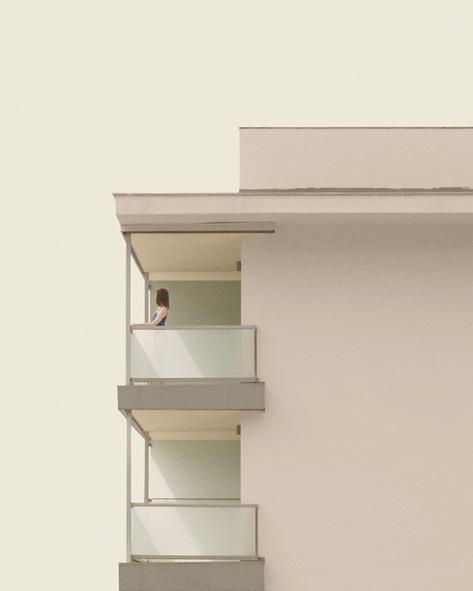
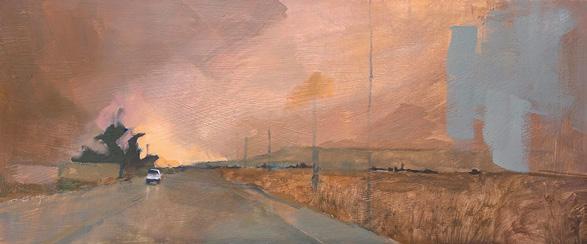
140 Aesthetica artists’ directory
carlos abraham
Carlos Abraham is based in Mexico, where he studied architecture and photography. His current focus is to highlight the beauty of the human body through black and white as well as colour photographs. Abraham's work has been published in numerous magazines and he has exhibited work in Central and South America. His images are part of the permanent collection in the Mediateca INAH, Mexico City. fotocarlos.com.mx
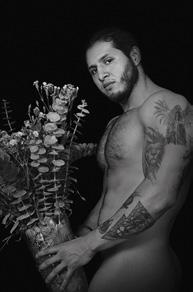
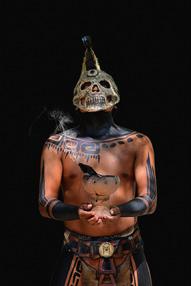
claudia pombo
Brazilian-Dutch painter Claudia Pombo is based in Amsterdam. She offers an adapted view of nature and human situations; her practice includes illustrations of Amazonian mythology and metaphysical art, as well as landscapes and urban scenes. Shown here is A Walk to be Completed – it has been created to look purposely unfinished, as it depicts people on an unknown path, united in a struggle for survival. clpombo.wordpress.com
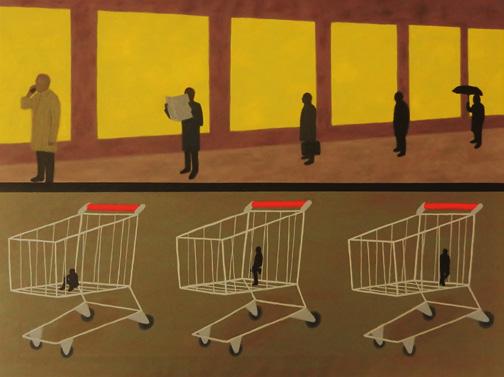
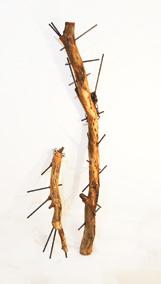
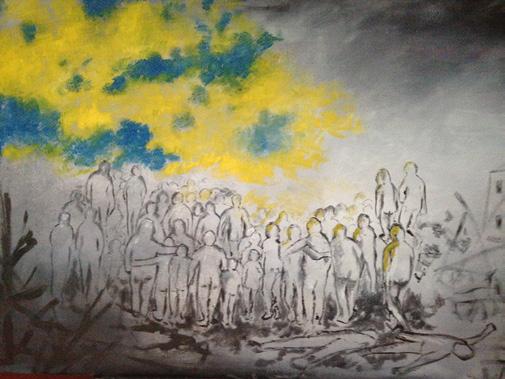
Emilie Möri
Photographer Emilie Möri reimagines a world in which perfect proportions – employing chromatic colours and stark shadows – brings her subjects' environments to life. A focus on architectural themes and abstraction allows the images to embody feelings of solitude and isolation. Möri's Paris-based practice also includes numerous commercial collaborations. emiliemori.com | Instagram: @emiliemori
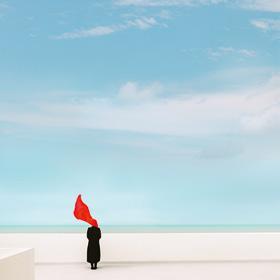
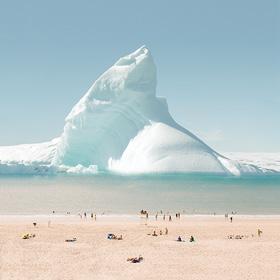
eric wiles
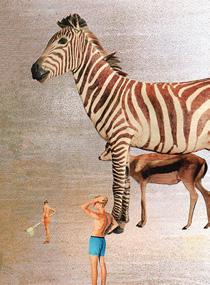
California-based Eric Wiles' fine art and landscape photography reveals dynamic images of natural beauty. His goal is to bring awareness to the variety of wondrous places in the world, in the hope that we will be inspired to contribute to global conservation efforts. He emphasises: "In showing the magnificence of our home, we can recognise that every day is Earth day." ew-photo.com I eric-wiles.pixels.com I IG: @eric.wiles.photo
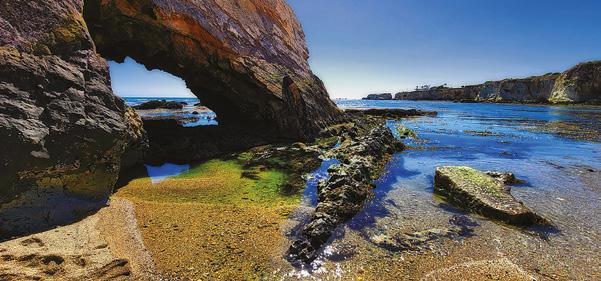
hans andre
Stockholm-based Hans Andre received a grant from the Royal Swedish Academy of Fine Arts to create graphic art and photography; he has since expanded his practice to include painting and has shown work throughout Europe. Andre notes: "Art should give new thoughts, associations and aspects. What I see may not be what you see. Art is in the eye of the beholder. It's just a matter of taking the time." hansandre.com
luigi FiloGrano
Luigi FiloGrano is an Italian multidisciplinary artist based in Puglia. His research-based practice explores global contemporary issues, with a current focus on climate change. A variety of traditional and digital techniques are harnessed to create drawings and mixed media pieces as well as three-dimensional works. FiloGrano has exhibited throughout the world, including the Venice Biennale. luigifilograno.it I IG: @luigifilograno
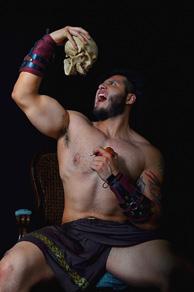
Aesthetica 141For submission enquiries regarding the Artists’ Directory, contact Katherine Smira on directory@aestheticamagazine.com
Manuel Ursprung
Germany-born, London-based artist Manuel Ursprung specialises in limited-edition, three-dimensional reliefs in plaster of Paris. Materials such as wood or plastic are used to create a unique mould for each sculpture. The austere yet highly detailed and textured works are inspired by people as well as urban and natural landscapes. manuelursprung.com I Instagram: @manuel_o_urs
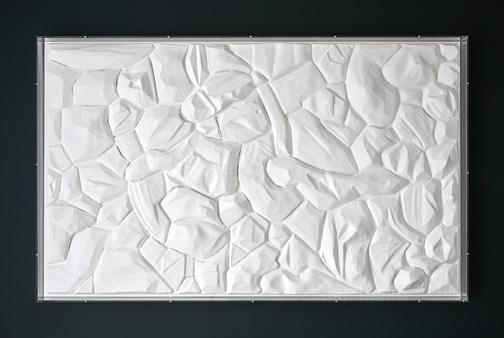
Melanie Schoeniger
Melanie Schoeniger is a photo-based artist from Germany. Inspired by the world's rainforests and coral reefs, she aims to shine a light on the wonder of life: "I want to evoke a deep connection with nature and have a wish to protect and preserve it for future generations." A Photolucida Critical Mass 2022 finalist, Schoeniger's award-winning work will be exhibited at FotoNostrum, Barcelona from 13-30 October. ma-vida.com
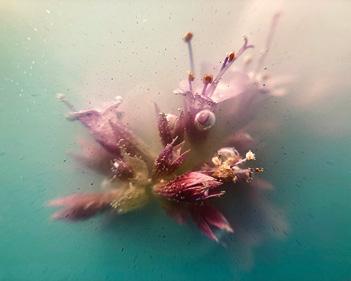
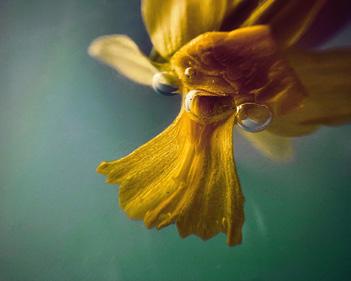
Mimi Cullen, N.i Studios
N.I STUDIOS is an art shop and studio in York, founded by artist, curator and designer Mimi Cullen in 2020. She specialises in painting, drawings and photography, in primarily black and white or purposeful colours; of particular interest is the representation of the self and others through portraiture. Cullen has participated in numerous art events as well as solo and group exhibitions throughout the UK. nistudios.co.uk
paul martin
Paul Martin is based in Dublin, where he has worked as one of the city’s top fashion photographers for over two decades. His book of fashion portraiture, First Face, is "a beautiful record of neophyte preternatural models striding through the margins of a 90s dystopian city backdrop like Pippi Longstocking on crack – making you nostalgic for a world that never really existed." Instagram: @paulmartinfashionphotography
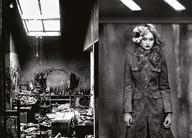
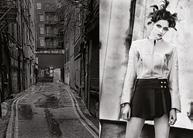
sixue yang
Sixue Yang is an experimental ink painter based in China and the USA. Her art practice explores personal and collective issues surrounding the pace of urban and technological progress, and its impact on nature and human behaviour. Yang's work also considers societal shifts and how they affect our connections with the natural world and those around us. Instagram: @sixue.y_art
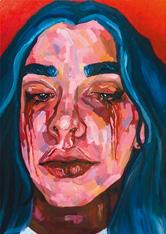
yeonseo hong
For Seoul-based artist Yeonseo Hong, home stands at the intersection of light, water, place and time, where there is no need for the notions of "inside" and "outside." As such, she believes that we instinctively look for a primal feeling of home. Hong paints simple, universal shapes inspired by her grandmother's patchwork quilts to explore and express personal emotions of home. yourjuliana.com
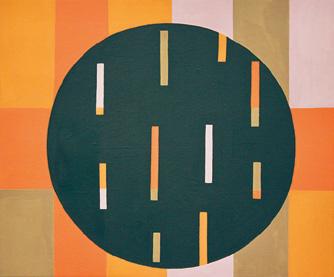
142 Aesthetica artists’ directory
Hanne Margaretha Biedilæ
Hanne Margaretha Biedilæ is a Norwegian ceramic and visual artist. Her practice includes a wide range of figurative and abstract sculptures, objects, installations and paintings. The complex relationship between humans and the world around us drives the artist's inner voice as she uses art to examine femininity: its varied definitions, expectations and implications within societies. studiohmb.no Instagram: @studiohmb
anna demel
Anna Demel is a Vienna-based fine artist. After two decades of painting abstract art on cardboard, she developed a particular technique to make the artwork three-dimensional.
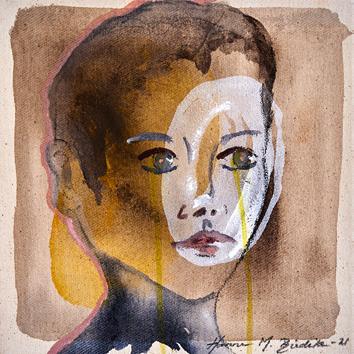
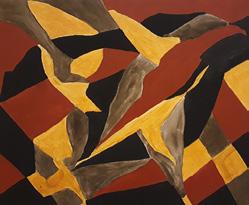
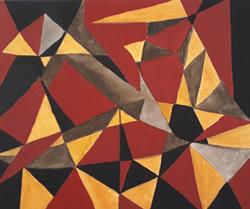
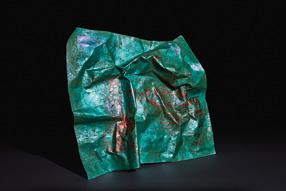
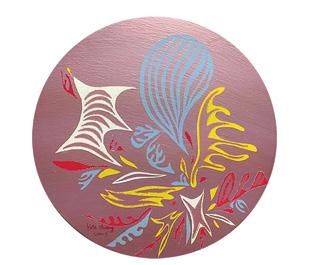
For the ongoing sculptural painting series Cnouchis, each new piece seems to be alive – embodying movement and wisdom: "They are like creatures silently sitting on the wall, watching us." annademel.com
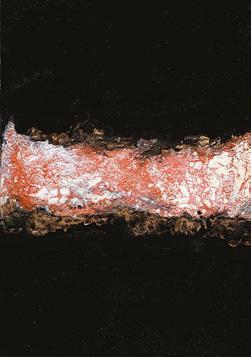
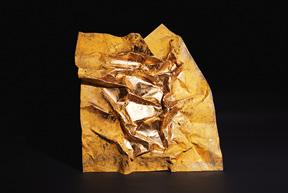
Instagram: @annademel_com
Kate Huang
Kate Huang is based in Taiwan, where she focuses on graphic design, painting and photography; human relationships are explored by combining abstract concepts with external scenes. Regarding the piece shown here, Wake Up, Huang notes: "On the long, rainy road, I finally saw my heartbreak in the heavy rain, and finally saw me leaving along the light."
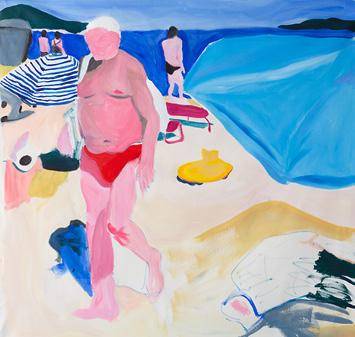
Facebook: HuangPinHsuanArtworks Instagram: @huangpinhsuan3
gunilla daga
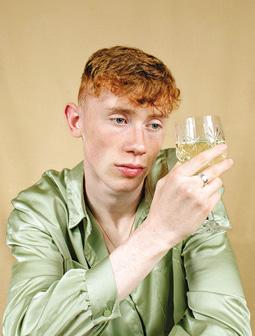
Gunilla Daga is a Stockholm-based painter whose work is drawn out of private emotions of universal experiences. Rich, earthy tones in both oils and acrylics are often mixed with dry, raw pigments before application to canvas. The resulting works show unique and striking textures within geometric forms. Daga has exhibited paintings throughout Europe and the USA. gunilladaga.se
Instagram: @gunilladaga
marie murphy
Marie Murphy explores hidden and unnoticed spaces and buildings within urban landscapes; the use of layering creates definition whilst subtle shading adds a sense of ephemerality. Flat blocks of colour mixed with ethereal lightness and striking angles portray a sense of modern serenity in which the viewer can imagine their own version of contemporary reality. mariemurphystudio.co.uk
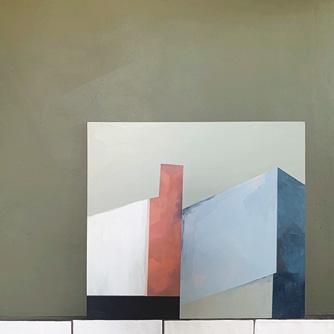
Instagram: @mariemurphystudio
katie lavinia
Katie Lavinia is inspired by personal experiences and queries, employing portraiture as a form of retaliation. Her photographs often evoke more questions than they answer whilst infringing upon conventional representation. The artist aims to communicate ideas that induce reflections of the self and identity. Lavinia won the 2022 Aesthetica York St John Degree Show Award. katielaviniaphotography.com
IG: @katielavinia.photography
Miguel Thomé
Miguel Thomé is an artist and film director based in São Paulo. His paintings are inspired by travel photographs and observational sketches showing bodies, objects and landscapes whilst his film projects inhabit an intimate universe and explore the body as an instrument to tell stories. Thomé's works have been featured in publications, platforms, festivals and museums around the world.
Instagram: @migthome
Kyriacos Georghiou
Kyriacos Georghiou is a Greek Cypriot artist based in London, where he is studying fine art at Central Saint Martins. Inspired by darkness and self-loathing, he creates experimental artworks with notes to abstraction, surrealism and symbolism. Unconventional paints, pastes and oils are harnessed in works that reflect the subconscious. Georghiou elaborates: “Hell is on Earth, and I am painting it”.
Instagram: @kyridg
Aesthetica 143For submission enquiries regarding the Artists’ Directory, contact Katherine Smira on directory@aestheticamagazine.com
ophelia wang
Taiwan-based Ophelia Wang utilises alcohol ink to express the poetry of Chinese brush painting. Inspired by the richness and depth of colours found in the natural world, she works with the flow of the ink as it moves across and through paper. The resulting effect is similar to the ethereal artistic conception of rendering – the highly-intentional application of ink into a blank space to create a Chinese painting.
Instagram: @ophelia_w.m.y
Randa saab
Randa Saab is a British-Lebanese artist based in Rochester, and holds an MBA as well as a BA in Fine Arts. She believes in practicing art for the sake of art and that it can be used as a tool for exploring the inner self. Experiments with forms, textures, colours, mediums and ideas express a rich variety of symbolism within each painting. Saab has participated in group exhibitions in the UK and Lebanon, as well as a solo show in the UK. Instagram: @randasaabart
vera
Saint Kitts-based visual artist Vera specialises in hyperrealism, using confident brushstrokes to bring the minutest details to life on canvas. She values artistic skill, imagination, refinement of touch and an eye for nuance; she also believes that art is a means of communication through which we can express ideas, thoughts and emotions more intimately than through language alone. verafineartgallery.com Instagram: @vera.fineart
Italy-based multidisciplinary artist
Simone Del Sere has a background in publishing and graphic design, which he uses as a foundation for the creation of abstract, figurative and sacred Christian art whilst embracing new materials and the possibilities of digital technology. Del Sere's colourful and textural compositions speak to wider societal as well as Christian themes.
SENEM PEACE
Istanbul-born Senem Peace is a artist and photographer based in the UK. Her paintings consist of overlapping bold colours and textures executed with dynamism and movement. A multicultural background influences the artworks, which often include mythical and ancient features. Peace's aim is to share a message of contemporary mysticism, hope, power and ecstasy. senempeace.com/peace-creative Instagram: @senempeace
Peep Ainsoo
Peep Ainsoo is an Estonia-based artist and designer. Nature is the inspiration for his current series of digital graphic artworks, which embrace strong narratives using bold shapes and lines. Balance and harmony are explored through the use of symmetry and patternmaking, creating abstract new worlds. Ainsoo has participated in shows throughout Europe and North America. ainsoo.voog.com
Instagram: @ainsoo_artw
Tushita Singh
Tushita Singh celebrates the art of hand embroidery in her New Delhi studio, where she works with an artisan to ensure that the skills of this craft are upheld in a changing world. She is inspired by a bird's eye view of Earth – one in which humans and nature are observed as colourful and ephemeral patterns. Singh has also worked as a designer for brands such as Massimo Dutti, Zara and Anthropologie.
Instagram: @bluerabbithole
Yuna Ichimura
Japan-based artist Yuna Ichimura specialises in three-dimensional installations which are often an ironic commentary on modern life. Her current project shows the destruction of 1,000 illustrated self-portraits. A paper shredder ensures the disposed images are scattered like rain; the viewer is encouraged to observe the steady movement of paper and consider the ephemeral nature of life.
ichimura-yuna.com
144 Aesthetica artists’ directory
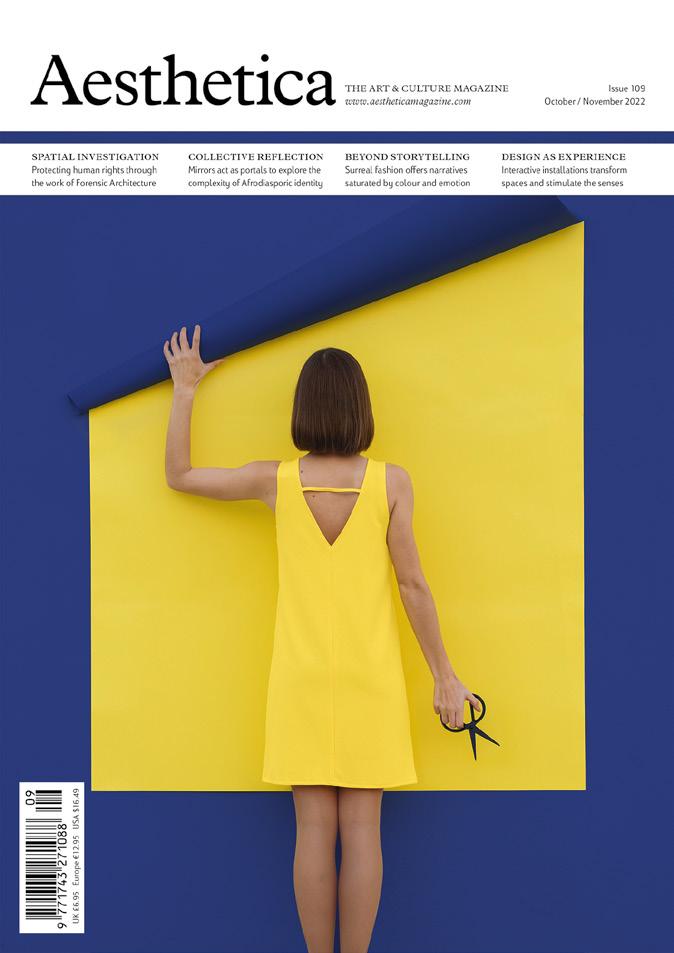
Aesthetica 145 12 months from £24.95 + p&p. Available in both print and digital formats. www.aestheticamagazine.com/subscribe Subscribe & Save 40% The Destination for Art & Culture
Roxana Marcoci
The David Dechman Senior Curator of Photography, MoMA
“Wolfgang Tillmans considers the role of the artist to be that of 'an amplifier' of poetic possibilities and social causes. A pioneer of the photographic exhi bition as spatial medium, he has fostered an interest in technology that can be traced back to his childhood passion for astronomy. His earliest photo graphs, taken at the age of 10, were of celestial bodies captured by holding a camera to the eyepiece of a telescope. Through these incipient trials with the telescope, and later the photocopier and video camera, he settled on pho tography. His route included diverse modes of expression, from song lyrics to scientific studies. This show is animated by the artist’s intensive observation of reality, and his concern with the possibilities of togetherness.” Wolfgang Tillmans: To look without fear, MoMA, New York, until 1 January. moma.org.
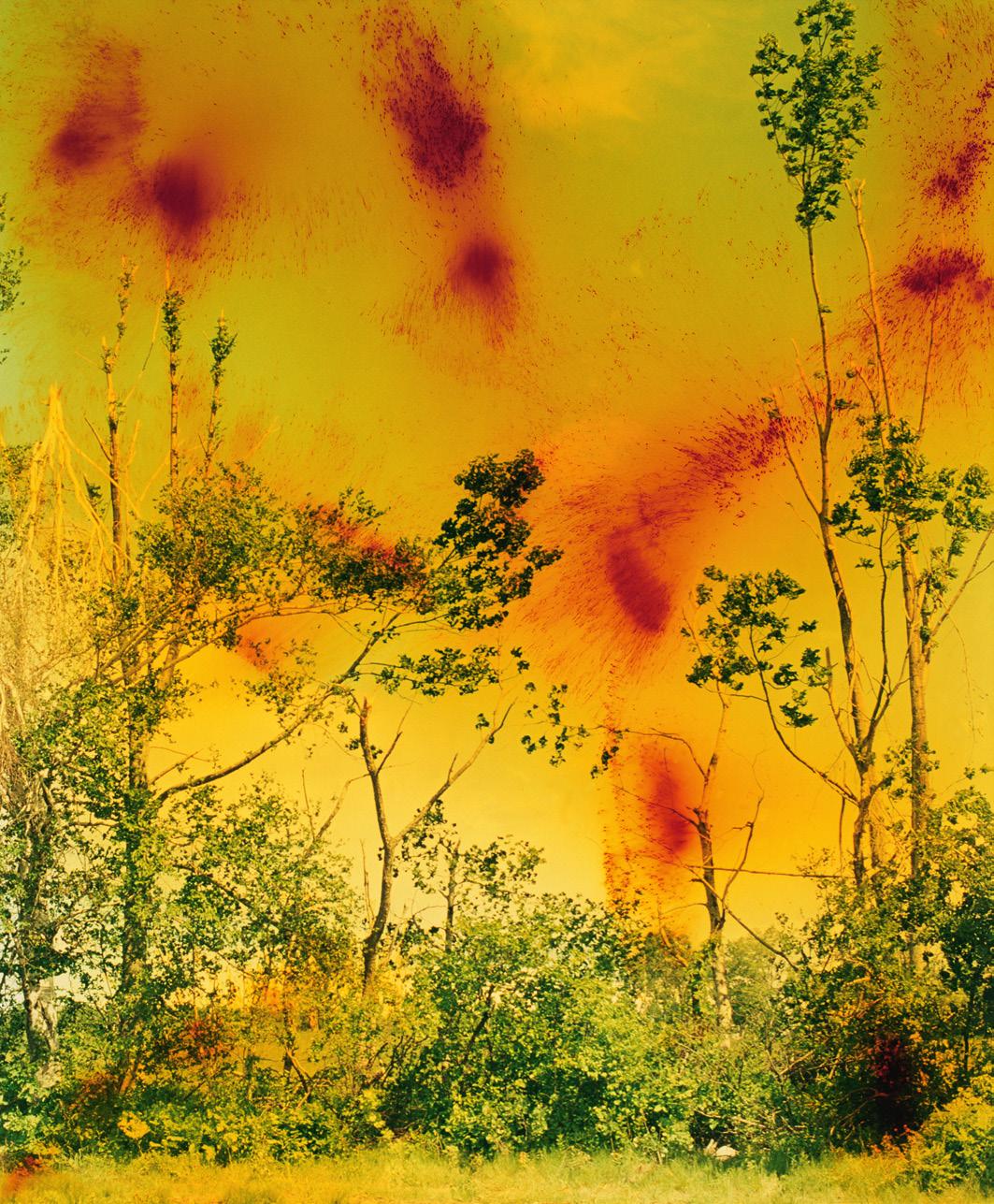
146 Aesthetica last words
Wolfgang Tillmans, Icestorm (2001). All images courtesy the artist, David Zwirner, New York / Hong Kong, Galerie Buchholz, Berlin / Cologne, Maureen Paley, London.