

How Military Skills Give Veterans A Winning Edge In Today's Workforce What Veterans Teach Us About Civic Health The Power of Unity:
Military-Veterans Veteran Organizations
36 Years in Uniform: A Master Chief’s Journey to Civilian Life Veteran Job Insecurity Amid Federal Cuts State and Community Partners Are Essential to Successful Military Transitions
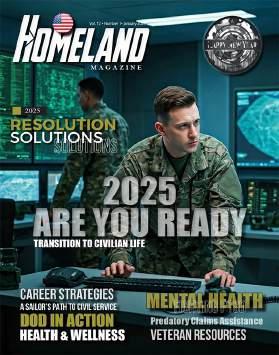
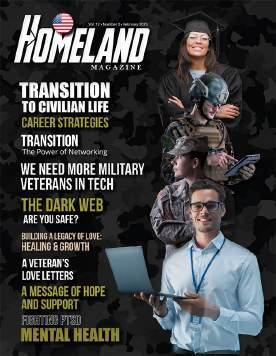
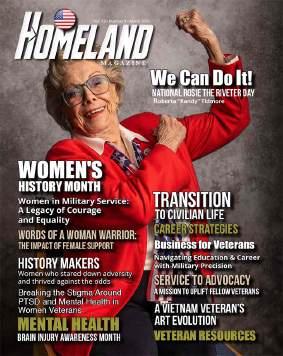
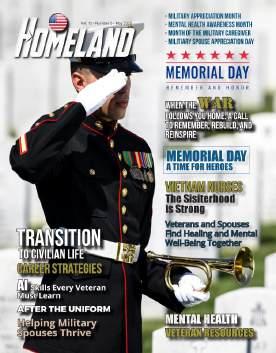
A Caregiver’s Guide to Navigating the Holiday Season WE’VE GOT YOU COVERED The Covers of 2025 A Deep Dive Into Prepping
A Soldier’s Christmas NORAD TRACKS SANTA HEALTH & WELLNESS Resources & Support
MENTAL HEALTH
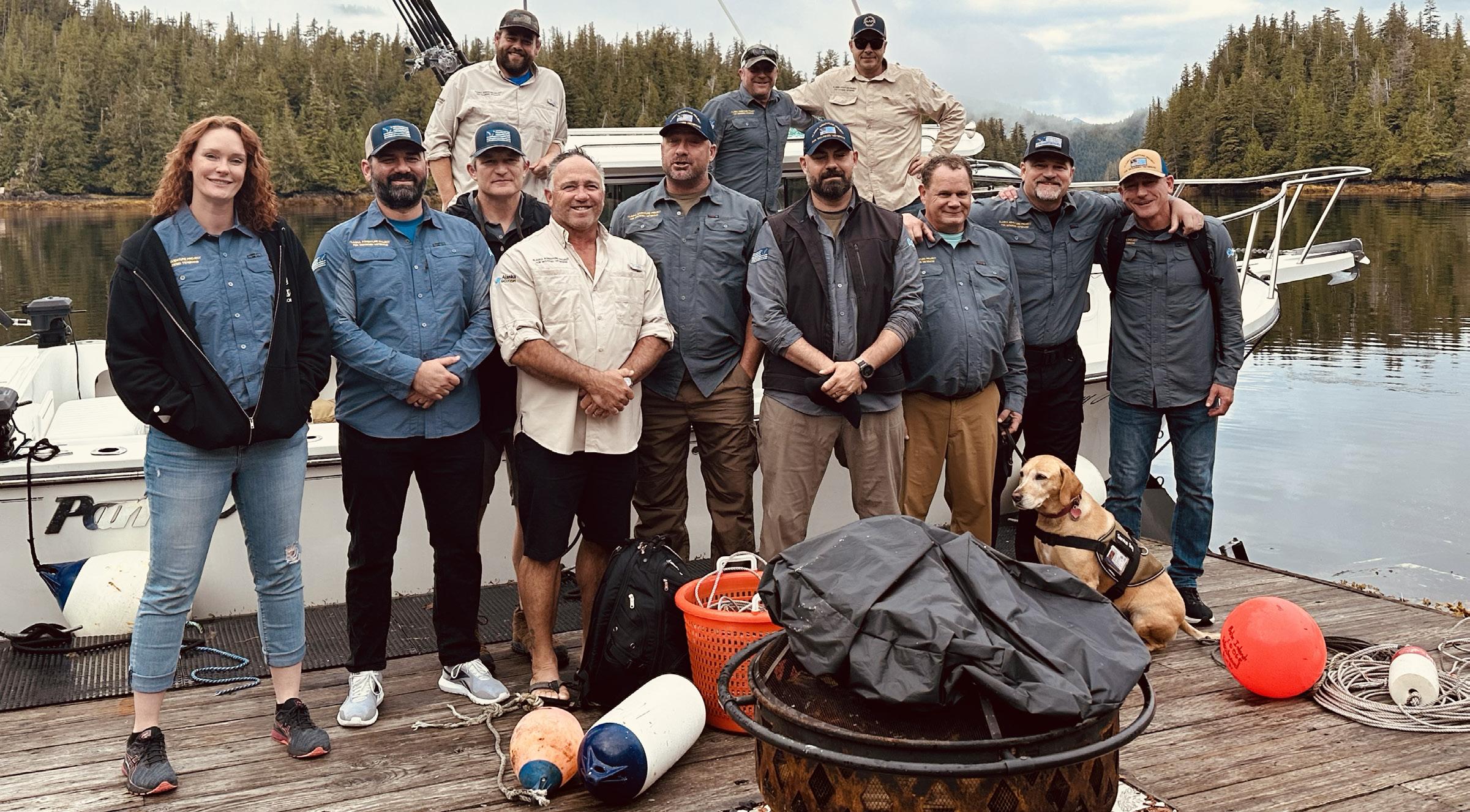

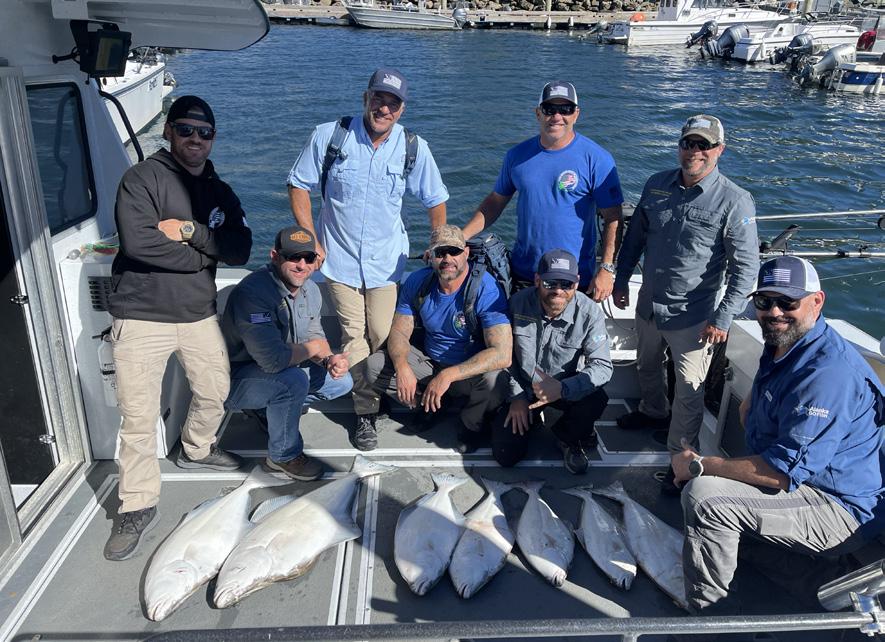
Be a part of a Hero’s Journey! We provide therapeutic support to veterans and their families through outdoor adventures in the rugged beauty of Alaska.
About Alaska Adventure Project:
Founded in 2017 by U.S. Marine Combat Veteran and Native Alaskan William Boulton. Alaska Adventure Project (AAP) is a 501c3 non-profit dedicated to supporting military veterans and their families.
Our Adventure program entails:
• Therapeutic support for veterans and their families suffering with PTSD and TBI.
• Veterans helping veterans through shared experiences.
• Outdoor activities provide atmosphere’s of reflection, discovery, meaning of service, camaraderie,
• New network of resources, a new extended family, connecting veterans with veterans, establish lifelong bonds, and promote healing.








Publisher
Editor-In-Chief
Mike Miller
Monthly Columns
What’s Next Transition
Eve Nasby
Human Resources
Paul Falcone
Franchise Dreams
Doug Dwyer
Successful Transitioning Stories
Homeland is a veteran-focused magazine throughout the country. It serves to assist all veterans, active military as well as their spouses and families.
It’s the leading veterans magazine emphasizing resources, support and focusing on topics and issues facing today’s veteran community. Homeland focuses on resources, support, community, transition, mental health and inspiration for our veterans, & military personnel.
The content is the driving force behind our magazine and the connection it makes with our veterans, service members, military families, and civilians.
The magazine is supported by a distinguishing list of veteran organizations & members, resource centers, coalitions, veteran advocates, and more.
We are honored to share the work of so many committed and thoughtful people.
Despite all the challenges, our team has upheld their focus and let not one opportunity go to provide resources and support to our veterans & military personnel.
On behalf of our team, we wanted to take this moment to say THANK YOU to the readers and the military and veteran community for supporting our magazine. With that support we aim to make a difference and continuing to make a profound impact on the quality of life for our veterans, military personnel and their families.
If you want to catch up on the current and all past issues please visit: www.homelandmagazine.com/archives
Mike Miller
Editor-In-Chief
mikemiller@homelandmagazine.com www.homelandmagazine.com
Dr. Julie Ducharme
Veterans in Business
Barbara Eldridge
Risky Business
Hadley Wood
Real Talk: Mental Health
Hope Phifer
PTSD: Reclaiming Control
Robert ‘Bob’ Cuyler, PhD
Legal Eagle
Kelly Bagla, Esq.
Veterans Chamber Commerce
Joe Molina
Contributing Writers
Wounded Warrior Project
Disabled American Veterans
(In-House) Correspondents
Holly Shaffner
CJ Machado
Lori Noonan
Homeland Magazine 9528 Miramar Road, #41 San Diego, CA 92126 (858) 275-4281
mikemiller@homelandmagazine.com
Homeland





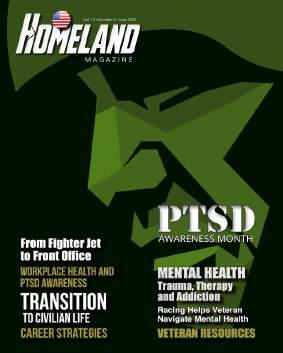

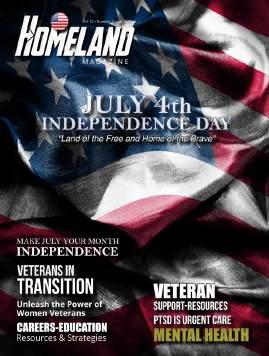
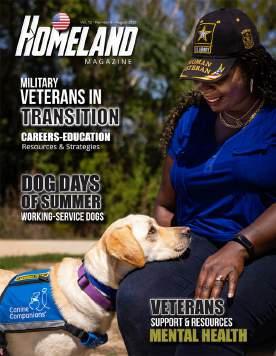
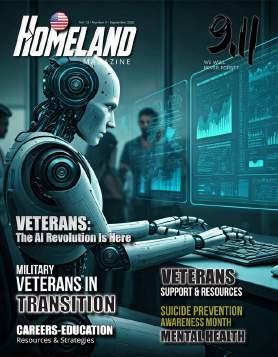


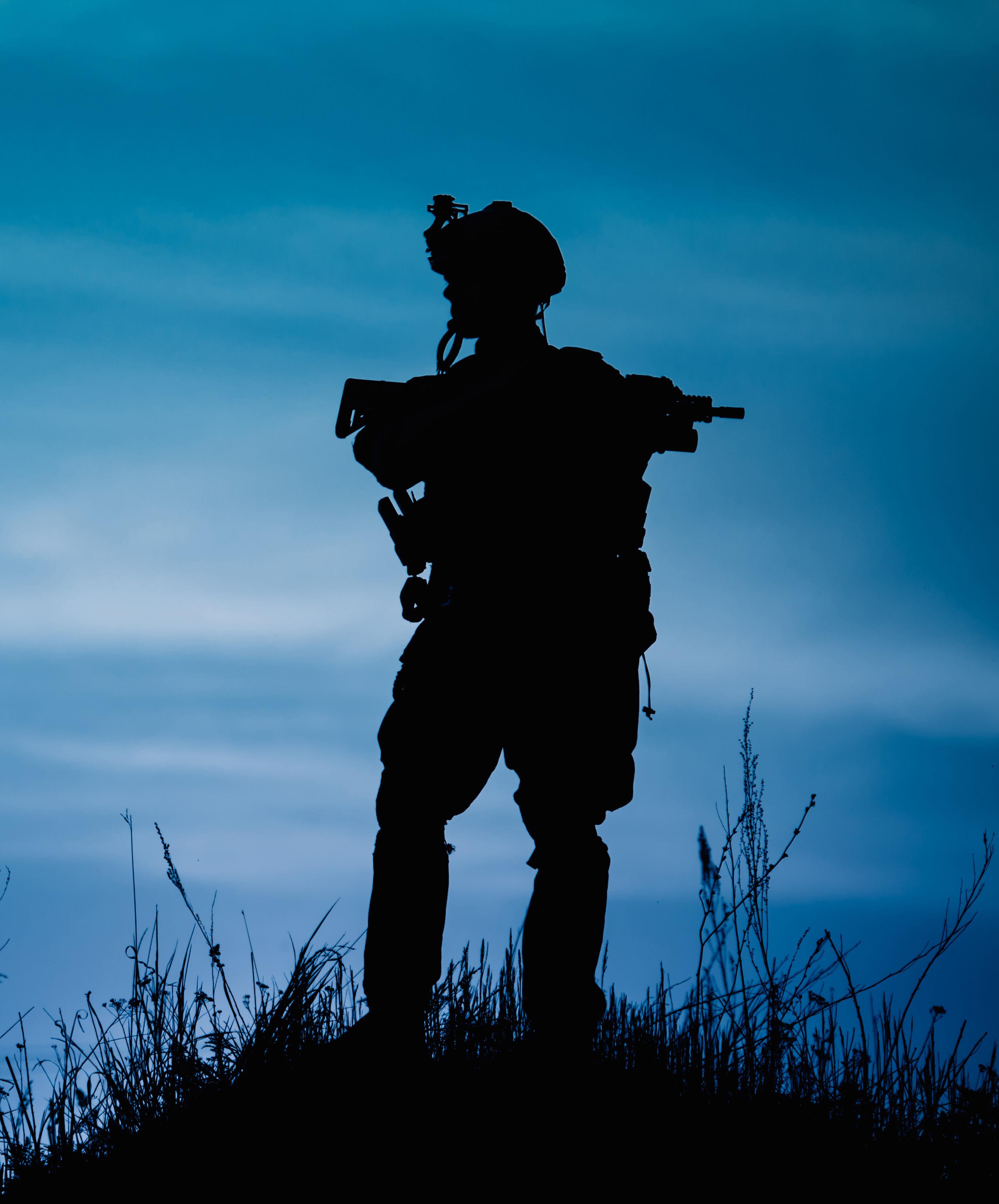
T’was the night before Christmas, he lived all alone in a one bedroom house, made of plaster and stone.
I had come down the chimney with presents to give, and to see just who in this home did live.
I looked all about, a strange sight I did see: no tinsel, no presents, not even a tree.
No stocking by the mantle, just boots filled with sand; on the wall hung pictures of far distant lands.
With medals and badges, awards of all kinds, a sober thought came through my mind.
For this house was different, it was dark and dreary. I found the home of a soldier, at once I could see clearly.
The soldier lay sleeping; silent, alone, curled up on the floor, in this one bedroom home.
Not how I pictured a U.S. soldier.
Was this the hero of whom I’d just read, curled up on a poncho, the floor for a bed?
I realized the families that I saw this night, owed their lives to these soldiers who were willing to fight.
Soon ‘round the world, the children would play and grown ups would celebrate a bright Christmas Day.

They all enjoyed freedom, each month of the year, because of the soldiers like the one lying here.
I couldn’t help wonder how many lay alone on a cold Christmas Eve in a land far from home.
The very thought brought a tear to my eye; I dropped to my knees and started to cry.
The soldier awakened and I heard a rough voice, “Santa, don’t cry. This life is my choice.
I fight for freedom, I don’t ask for more; my life is my God, my country, my corps.”
The soldier rolled over and drifted to sleep; I couldn’t control it, I continued to weep.
I kept watch for hours, so silent and still, and we both shivered from the cold night’s chill.
I didn’t want to leave on that cold, dark night, this guardian of honor, so willing to fight.
Then the soldier rolled over, with a voice soft and pure, whispered, “Carry on Santa, it’s Christmas Day, all is secure.”
One look at my watch and I knew he was right, “Merry Christmas my friend, and to all a good night.”
By Jennifer Jenkins, Wounded Warrior Project®
Many describe the holidays as “the most wonderful time of the year.” But let’s be honest, they can also be the most overwhelming. For military and veteran caregivers, the season brings an added layer of stress, as we balance caregiving duties, family expectations, and the pressure to make everything appear picture-perfect.
As a caregiver, I’ve been there, exhausted, stretched too thin, and trying to hold it all together with a smile. Over the years, I’ve learned that surviving, and even enjoying, the holidays is possible when we shift our expectations, honor our boundaries, and sprinkle in a little self-compassion.
How can you make space for your own peace and comfort amid the hustle and bustle of the holidays?
The art of saying “no” gracefully
Saying no without guilt can be one of the hardest things for caregivers to do. But it is one of the most powerful forms of self-care. Every “no” you give is also a “yes” to your own well-being.
Try thoughtful phrases like:
• “I appreciate the invitation, but my schedule is full this week.”
• Thank you for thinking of me. I need to focus on my family right now.”
• “That sounds wonderful, but I have to pass this time.”
If it feels right, you can also offer an alternative like:
• “We can’t attend this year, but I’d love to connect after the holidays.”
• “I can’t cook a side dish, but I can bring paper plates.”
Protecting your energy is not selfish, it is essential.
You cannot, and should not, try to do it all. Decide what truly matters to you this season, not what tradition or social media tells you should matter.
Maybe it is attending one special event instead of trying to participate in four. Perhaps it is skipping a big dinner and instead, enjoying a quiet evening at home.
Use these simple affirmations to stay grounded when the holidays start to feel overwhelming:
• “My peace matters as much as anyone else’s.”
• “It is okay if my holiday looks different this year.”
• “Happiness does not have to be shared to be real.”
Set expectations early and kindly. Let family and friends know what you can realistically do this year. Leaving early or changing plans is not rude; it’s a healthy way to set boundaries.
Caregiving changes everything, including how we celebrate. When we shift our focus to traditions that fit our caregiving life, we can find more peace and less pressure during the holiday season.
Make new memories that reflect where you are now, not where you used to be. For instance, if a calm drive with your loved one to look at holiday lights will be more relaxing than a crowded party, do that instead.
Reach out to organizations like Wounded Warrior Project to learn about holiday events or connection activities that can add joy without requiring you to handle the planning.
Traditions may change, but what the season means to you is always worth honoring.
Simplify wherever you can
Perfection is overrated. Each time I simplified the holidays, I found a little more meaning in them. Consider your time and talents in relation to your caregiving responsibilities and adjust.
Consider these swaps:
• Send e-cards instead of handwritten ones.
• Choose a potluck instead of cooking an entire meal yourself.
• Focus on thoughtfulness and budget-friendly gift exchanges: Set a dollar limit or keep it to handmade tokens of appreciation.
When you simplify, you create space for connection, which is the real gift of the season.
Be mindful of your own triggers – and your needs
Caregivers are experts at anticipating others’ needs and triggers, but we rarely do that for ourselves.
Pay attention to your own warning signs of stress, such as irritability, fatigue, or that “edgy” feeling that tells you burnout is near. When you notice them, pause, take a few breaths, and take time for yourself. Step outside, get fresh air, call a friend, or take a short walk. Also, pay attention to ensure you are eating and hydrating.
Your strength and compassion carry others every day, but you deserve care too. Setting boundaries and protecting your peace is an act of love, for yourself and for those who depend on you.
Here’s to a season filled with grace, gratitude, and moments of rest that remind you how deeply valued you are.
If you feel overwhelmed, remember, you are not alone. Wounded Warrior Project is here to support veterans –and their loved ones and caregivers.
Wounded Warrior Project® Resource Center: 888.WWP.ALUM (997.2586) or 904.405.1213 VA Caregiver Support Line: 1.855.260.3274
To learn more, visit woundedwarriorproject.org
By Peter Rantins and Jill Neufeld, Clinical Interns
The Steven A. Cohen Military Family Clinic at VVSD, San Diego www.cohenveteransnetwork.org


The holiday season is right around the corner—a time for giving thanks, spreading cheer, and connecting with family and friends. For many college students, this is a joyful time. But for military-connected students, often referred to as military transitional youth, the holidays can bring unique stressors that are easy to overlook.
College students may be juggling an overwhelming number of assignments, essays, and finals at the same time that family gatherings and holiday traditions are taking place. These overlapping pressures can exacerbate mental health challenges, including anxiety, depression, and adjustment issues. For some students who have parents connected to the military, the simple question, “Are you going home for the holidays?” can be emotionally loaded, triggering feelings of isolation or stress.
Barriers to Connection
Several factors make the holiday season particularly challenging for military-connected students:
• Frequent Moves: Growing up in military families often means moving every few years. This can make it difficult to establish and maintain long-term friendships or support networks. Some students may even avoid forming close relationships to protect themselves from future loss.
• Balancing Responsibilities: Military students frequently manage multiple commitments, including school, work, and maintaining friendships, all while navigating family expectations. This can feel overwhelming, particularly during the holidays.
• Financial Challenges: Tuition, housing, food, and other bills may make it difficult for students to travel home, leaving them unable to participate in traditional family celebrations.
• Family Stressors: Parental deployment, secondary trauma, or other military-related family stressors can heighten emotional strain during the holidays.
• Independence and Self-Reliance: Many militaryconnected students develop strong independence skills, which, while valuable, may make it harder for them to ask for or accept support.
• Cultural Differences: Students who grew up in military communities may struggle to fit in with civilian peers, increasing feelings of isolation. Returning home after a semester away can also trigger stress, as college life may introduce new perspectives, routines, and expectations that differ from their family environment.

Despite these challenges, there are concrete ways for campuses, peers, and families to support military students during the holiday season:
1. Host Holiday Events on Campus: For students who cannot travel home, organizing inclusive campus events can provide a sense of community and belonging. Activities such as holiday meals, game nights, or cultural celebrations help students connect with others in similar situations.
2. Encourage Peer Support Groups: Joining or creating military student organizations or support groups gives students a space to share experiences, seek guidance, and build relationships with others who understand the unique challenges of military life.
3. Utilize Technology: Video calls, texting, and online games can help students maintain connections with family and friends, even if they cannot be physically present. Encouraging students to use these tools can ease feelings of distance and promote emotional well-being.
4. Free Resources: Cohen Veterans Network’s Tools for Stress and Worry is a free, online course that provides research-based strategies, tools and techniques to help manage stress and worry. It was designed by mental health experts with input from military family members themselves. To access this resource, visit cohenveteransnetwork.org/tools-for-stress-and-worry
5. Professional Support: The Steven A. Cohen Military Family Clinics at VVSD are available for support through high-quality accessible mental health care and local resource connection. Learn more by visiting vvsd.net/cohenclinics and cohenveteransnetwork.org
Military-connected students navigate complex transitions, and the holiday season can intensify both stress and feelings of disconnection. By recognizing these challenges and providing intentional support, campuses, families, and peers can help students feel seen, valued, and connected—even when they are far from home.
By: Robert ‘Bob’ Cuyler, PhD Psychologist and Trauma Expert


The symptoms of PTSD are wide-ranging, including intrusive memories, emotional numbing, irritability, flashbacks, nightmares, and avoidance of triggering situations. One other particularly common and frustrating symptom category, hyper-alertness/hypervigilance, can be pervasive and destructive to quality of life and social relationships while also intensifying many of the other symptoms of post-traumatic stress.
So first, let’s define hyper-vigilance. At its core, this state involves an automatic and pervasive scanning of the world for potential dangers, particularly reminders or associations that trigger memories of a traumatizing event. This is the ‘outward-looking’ manifestation.
Separately, hyper-arousal we think of as the bodily counterpart. In this mode of being, one cannot let down one’s guard or relax. Those experiencing this feel constantly on edge, easily startled, and ready to respond to perceived danger. Moreover, sleep may not only be interrupted by nightmares, but the very act of losing consciousness in sleep introduces a loss of awareness that seems risky to someone who is alert to threats at all times. As a result, light sleeping, waking up to otherwise benign noises, and startle reactions may be disruptive to restful sleep. It is no wonder so many with PTSD are edgy and exhausted.
Some PTSD specialists have theorized that the problem of hyper-vigilance is ‘trained in’ throughout military life as a key survival skill. If you are not vigilant to danger, not scanning the environment for threats, and ready to react, your survival is at risk. Add exposure to trauma, and this skill can often contort to become a negative, where the mind and body are now continually on alert to dangers that are no longer there. In the longer run, these reactions become ‘wired in’, adding to the sense that key aspects of life are out of control.
If you’ve followed these columns over the months, I’ve described multiple approaches to healing in PTSD. As I’ve worked over the past decade in newer approaches to treatment of PTSD, I have also learned about the limitations of talk therapies (despite having specialized in talk therapy for more than forty years).

In particular, as I worked on research about what changes and what doesn’t in PTSD treatment, I learned that these hyper-vigilance/hyper-arousal symptoms are the most resistant to change in otherwise successful treatments with evidence-based talk therapies. It’s no surprise that many alternative approaches, including yoga and mindfulness meditation, are now commonly incorporated into treatment plans to fill some of the gaps that psychotherapy does not reach.
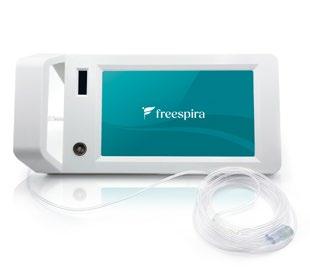
Another example would be found in looking at results from more than 150 veterans who were treated with the Freespira breathing-oriented medical device. Researchers found that the benefit for the hyper-arousal group of symptoms were significant and as strong as any of the other symptom types such as intrusive thoughts, avoidance, numbing, etc.
The take-away—PTSD is a mind-body condition that may be best approached with a flexible, individualized approach that incorporates both mind and body interventions. If you are interested in learning more, here is a link to our recent paper: https://www.mdpi.com/2227-9032/13/4/390
Dr. Cuyler is chief clinical officer of Freespira, an FDA-cleared non-medication treatment that helps people with panic and PTSD manage their symptoms by learning how to regulate their breathing. www.freespira.com
“I am shocked and surprised that this treatment worked. When I think about PTSD, I think about the brain and this being a brain problem… There is no denying the calming effect this treatment had on me. This has made a significant difference in my personal life. This treatment is remarkably effective.”
—
Kevin, US veteran whose symptoms included social anxiety and monthly panic attacks before he found Freespira

They’re signs of impact. At Freespira,



Do you find yourself worrying about everything that is going on around you?
It can be very tiring and depressing to constantly worry about your family, your job, your health, and everything else that is happening. Having things out of your control is very scary.
As a result, here are 7 tips on how to overcome the cycle of worry and fear in your life.
1. Focus on the facts of your situation; not your thoughts: When people are stressed out, they rely on their fearful and depressing thoughts. Your fearful thoughts are exaggerated and are not based on reality. When you are anxious, focus on the facts of your current situation and not on what you think.
2. You can’t predict the future: Remember that no one can predict the future with one hundred percent certainty. Even if the thing that you are afraid of does happen, there are circumstances and factors that you can’t predict which can be used to your advantage. For example, you miss the deadline for a project you have been working on. Everything you feared is coming true. Suddenly, your boss tells you that the deadline is extended and that he forgot to tell you the day before. This unknown factor changes everything.
3. Take a break: Take a deep breath and try to find something to do to get your mind off of your anxieties and stresses. A person could take a walk, listen to some music, read the newspaper, watch TV, play on the computer, or do an activity that will give them a fresh perspective on things. This will distract you from your current worries.
4. Take it one day at a time: Instead of worrying about how you will get through the rest of the week or month, focus on today. Each day can provide us with different opportunities to learn new things and that includes learning how to deal with your problems.
5. Learn how to manage your thoughts: Challenge your negative thinking with positive statements and realistic thinking. When encountering thoughts that make you fearful, challenge those thoughts by asking yourself questions that will maintain objectivity and common sense.
6. Things change over time: Regardless of your circumstances, your current situation will not stay the same. Everything changes over time. Knowing that your situation will improve will help give you the confidence that things will get better.
7. Get some help: Sometimes, it helps to be able to talk to someone about your stressful situations. Talking to a trusted friend, counselor, or clergyman can give you additional advice and insights on how to deal with the fear of the unknown. Remember that there is nothing wrong in asking for assistance.

Your calm mind is the ultimate weapon against your challenges. So relax.
- Bryant McGill
About the Author Stan Popovich
Stan is the author of "A Layman's Guide to Managing Fear" which covers a variety of techniques that can drastically improve your mental health. For more information, please visit Stan's website at www.managingfear.com

By Elizabeth DePompei
J
ust a few days after her 50th birthday, Army veteran
Lucy Del Gaudio woke up in a full sweat—the start of a serious health struggle that took her by surprise.
“Welcome to the menopause club,” her friend told her the next day.
Soon after entering a club she wanted no part of, Del Gaudio experienced bloating, weight gain and dizziness. A marathon runner, she stopped training after a dizzy spell knocked her off her feet, resulting in a broken shoulder. On top of that, she was hit hard by depression.
“The low was really low,” Del Gaudio said.
Usually beginning in women’s mid-40s, the transition into and throughout menopause brings fluctuations in hormone production and is often accompanied by physical
symptoms, including hot flashes and night sweats; sleep disruption; body aches; weight gain; incontinence; memory problems; and changes in bone, heart and sexual health.
This period has been shown to double the risk of depression and corresponds to the highest rates of suicide among U.S. women. For women who served in uniform, the experience of menopause can be even more challenging when factoring in post-traumatic stress disorder (PTSD).
Of the roughly 600,000 women who use Department of Veterans Affairs health care, nearly half are between 45 and 64 years old, spanning the typical life cycle of menopause. Even for younger veterans, there are indications that some may be at higher risk for early menopause.
Yet a recent DAV report showed that the impact of menopause on veterans is undefined and understudied, particularly when it comes to mental health and suicide risk. And while the VA has invested significantly in women’s health, including menopause, a recent review suggests room for improvement.
“Given the growing population of women who served and the age range of women using the VA, it is critical that we ensure the VA and Congress are appropriately investing
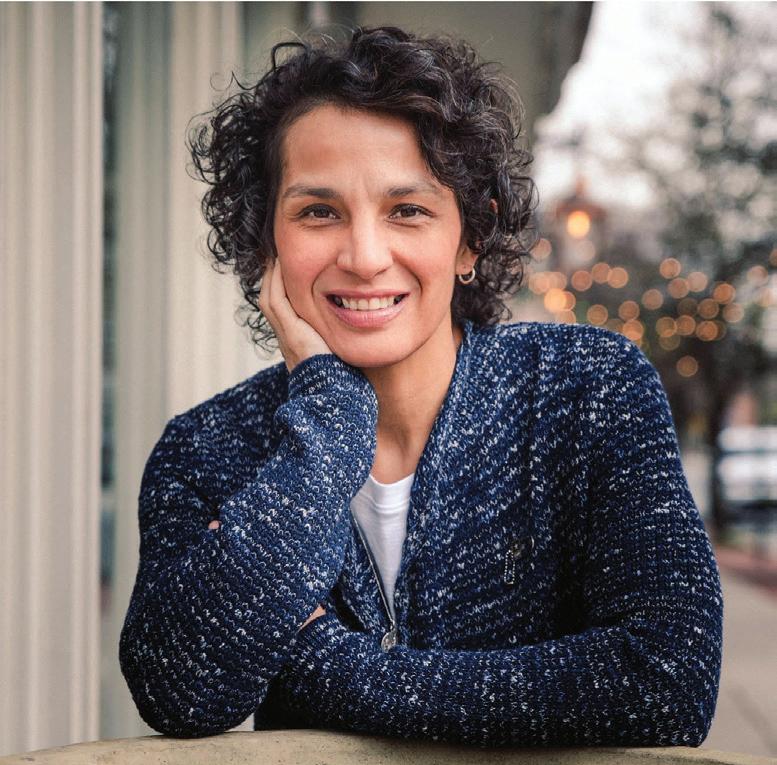
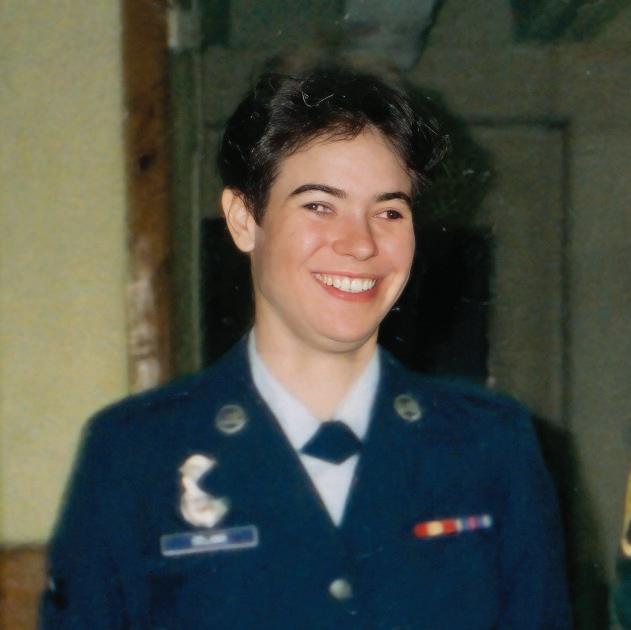
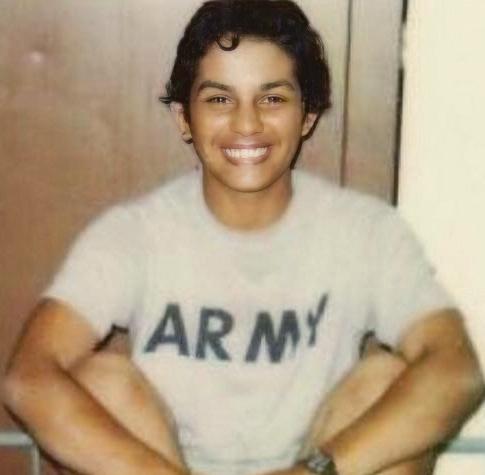
Shannon Sander, an Air Force veteran of the Gulf War, was thrown into early menopause at age 26. Now 52, she’s at higher risk of fracturing a bone due to menopause-related osteoporosis.
treatments through the Department of Veterans Affairs.
in menopause-related research, education, outreach and care,” said DAV National Legislative Director Joy Ilem.
“The stakes are high, and our women veterans—many of whom sacrificed their health in service to the nation— deserve nothing less.”
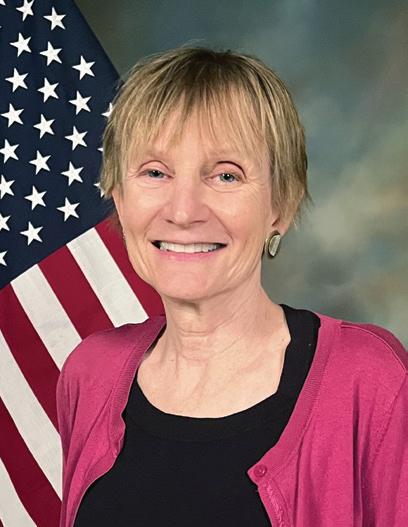
Del Gaudio’s menopause symptoms may have been heightened due to the military sexual trauma (MST) she said she survived while on active duty. According to the VA, 1 in 3 women report having experienced MST.
That trauma can have far-reaching effects, including in menopause. One study of midlife women enrolled in VA health care in California showed that exposure to MST was associated with “clinically significant menopause and mental health symptoms.”
“Women veterans having a higher prevalence of mental health conditions, as well as having experiences including trauma and environmental exposures, that can all sort of exacerbate symptoms that are associated with menopause,” said Dr. Sally Haskell, deputy chief officer for the VA Office of Women’s Health.
According to a VA study of nearly 700 Gulf War-era women:
Those with PTSD had a nearly 2.5X higher risk of early menopause, while those with toxic exposures had 83% higher odds.
When Shannon Sander was thrown into early menopause at 26 as part of treatment for endometriosis, a potentially painful and debilitating condition affecting the uterus, she started “sweating through sheets two to three times a night” and was always on edge. She also had to reckon with not being able to give birth to children as planned.
“I was 100% a bomb waiting to explode every day,” she said. “It was miserable.”
Sander served in the Air Force during the Gulf War in areas with known toxic exposures. She also has PTSD related to MST. Both experiences may have worsened
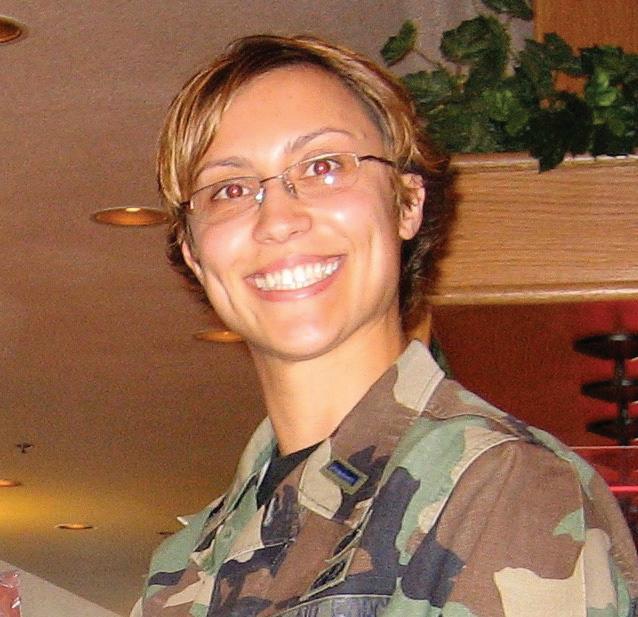
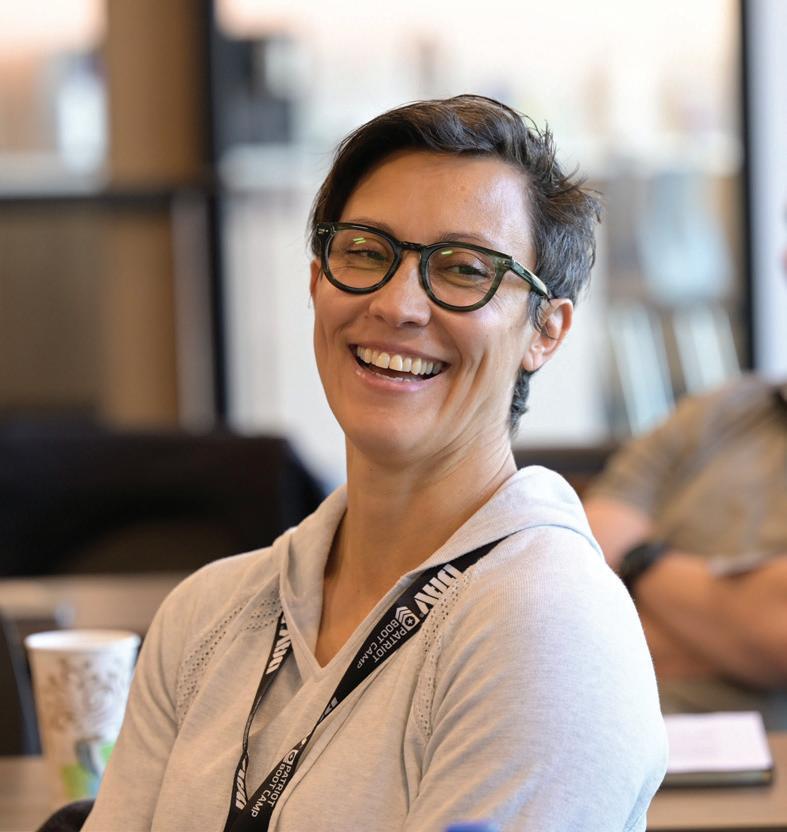
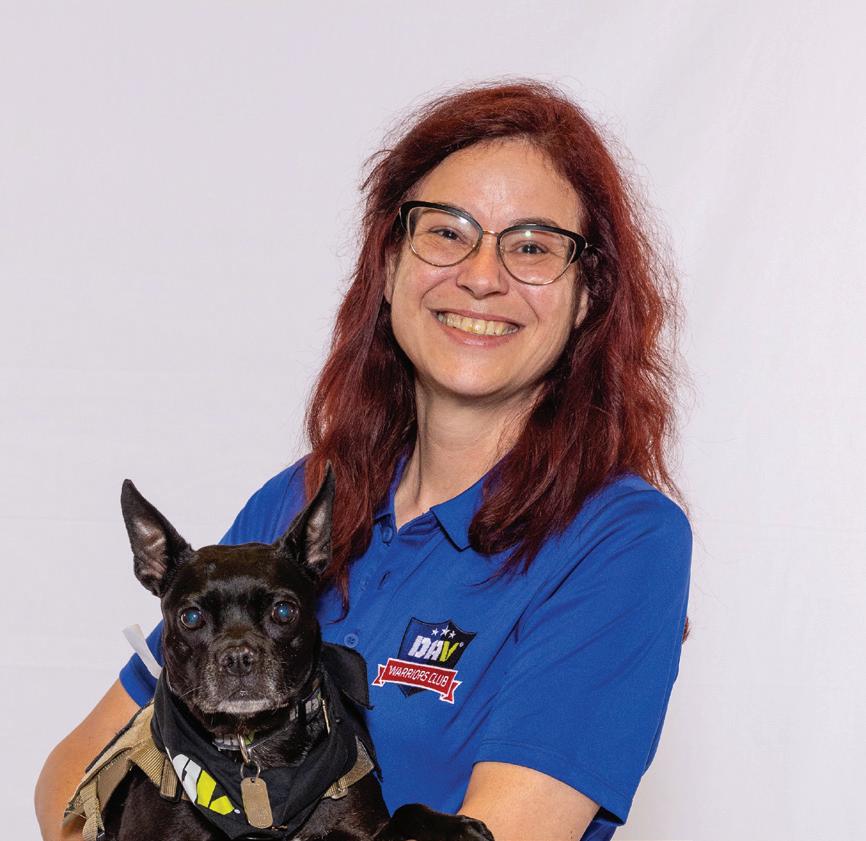
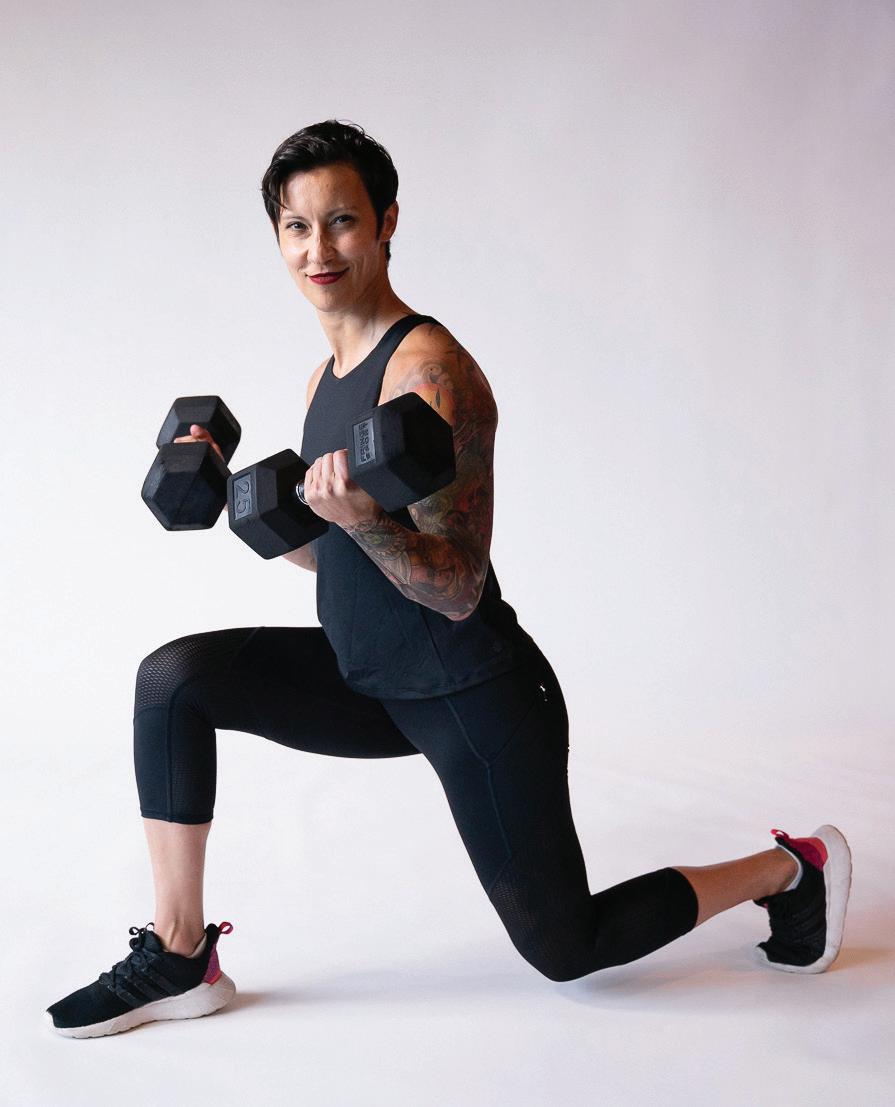
Air Force veteran Maria Luque is the founder of Fitness in Menopause, a supportive online community and fitness coaching service for women in menopause. Luque is also a menopause coach for Respin, a company founded by Academy Award-winning actor and advocate Halle Berry.
her menopause symptoms, and she’s not alone in being a Gulf War veteran who experienced early menopause.
According to a VA study of nearly 700 Gulf War-era women, those with PTSD had a nearly 2½ times higher risk of early menopause while those with toxic exposures had 83% higher odds.
Haskell said the research on early menopause among women veterans is one of the areas where “a lot more work has to be done to understand” the implications.
Now, at age 52, Sander said she has a 10% higher risk of fracturing a bone due to menopause-related osteoporosis. She’s also one of countless veterans living with chronic pain, something research shows may also be exacerbated by menopause.
Hormone replacement therapy, or HRT, has become an increasingly popular treatment option in which hormones like estrogen and progesterone are administered to replace or supplement hormones that the body has stopped producing in sufficient quantities.
Initially hesitant, Del Gaudio took estrogen for her menopause symptoms after working closely with a VA gynecologist. Within 30 days, her symptoms had lessened.
“I feel like my life is much, much better,” she said.
Dr. Susan Diem, staff physician at the Minneapolis VA women’s clinic, has witnessed the pendulum swing on HRT use—from providers giving everyone HRT to backing off after research indicated an increased risk for breast cancer and cardiovascular events. Those risks were later found to be particular to women in their 60s. Diem said providers can now feel comfortable prescribing HRT to younger women, depending on their unique health histories.
“There still is uncertainty about long-term use, and so it’s still the case that the goal is to limit its use,” Diem said. “I think the trick is for us not to swing too far back again and to find the happy middle.”
In addition to HRT, Haskell said the VA takes a wholehealth, multidisciplinary approach to menopause that includes mental health and interdisciplinary therapies like yoga, along with specialists for things like gynecology, cardiology and musculoskeletal health.
Air Force veteran Maria Luque has studied menopause for roughly 15 years. As a fitness coach with a doctorate in health sciences, she’s a strong proponent of using movement to navigate menopause and improve overall health.
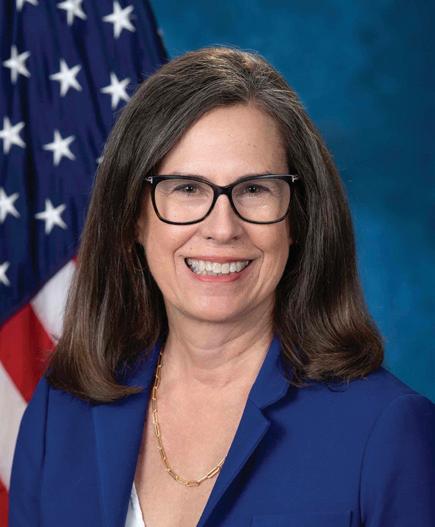
“When we’re looking at the quality-of-life loss that a lot of women experience during menopause for different symptoms, adding physical activity or changing how you exercise or move can be very positive on how you experience menopause and even influence some symptoms,” Luque said.
But Luque warned there’s no one-size-fits-all magic pill for menopause—an important reminder at a time when menopause is dominating mainstream conversations and people are profiting off “snake oil” solutions.
“If it’s too good to be true, or someone preys on your fear or your pain points, they are generally not to be trusted,” Luque said.
In June, the VA released findings from a review of menopause support needs. Diem, the lead author, said the review found a need for more primary care provider training, more availability of menopause-informed specialists and more patient education. Haskell said all women’s health primary care providers are trained on menopause, but there’s a need to ensure the entire primary care workforce is sufficiently trained.
Haskell also confirmed that the VA and Department of Defense are working on clinical practice guidelines for menopause care, and the Government Accountability Office is working on an extensive review of menopause care at the VA.
The June review also found an interest in menopause support groups, the kind of thing Luque said can be crucial in life transitions.
“Women are realizing that they’re not alone in this space,” Luque said. “And knowing that is truly magical when women realize that there’s a community.”
“Women veterans having a higher prevalence of mental health conditions, as well as having experiences including trauma and environmental exposures, that can all sort of exacerbate symptoms that are associated with menopause.”
—Dr.
Sally
Haskell, Deputy Chief Officer, VA Office of Women’s Health
It’s one reason she became a head menopause coach at Respin, a company founded by Academy Awardwinning actor Halle Berry. The website, re-spin.com, offers science-backed, expert health coaching and a community of support, and Berry regularly advocates for legislation filling some of the resource gaps, including for women veterans.
“Our American veterans have served and sacrificed so much for this country, and of the many challenges they face upon reentering civilian life, accessing health care shouldn’t be one of them,” Berry told DAV.
“At Respin, we are fighting not only to create innovative health care solutions to meet the needs of women in midlife but are also advocating for policy change to close the gaps in research and care access— bills like the Servicewomen and Veterans Menopause Research Act and the Advancing Menopause Care and Mid-Life Women’s Health Act are essential!”
As women’s health care continues to evolve at the VA, one hurdle will be making sure women know what care is available to them and rebuilding trust with those who have had negative experiences, like Sander.
Sander ultimately left the VA for a few years and sought women’s health care elsewhere. She said that left gaps in her medical record, making it difficult to seek service connection for certain conditions.
When Luque and Del Gaudio had negative experiences, they reported it up the chain. Today, they’re both satisfied with their women’s health care at the VA.
“I want to just encourage everyone to give the VA another try and to demand that they’re being seen and treated for whatever their symptoms are,” Luque said. “Because each woman who [comes back] makes a difference … [and] that correlates to more resources.” n
Homeland Magazine sat down with LT NC USN (Ret)
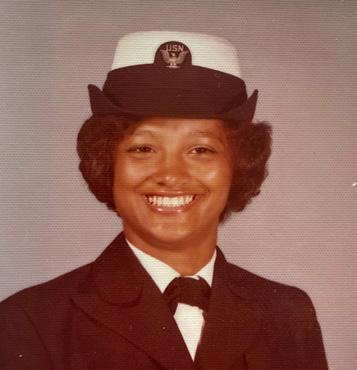
Sandra Watt and LCDR (Ret), Vice President Research and Development for Medtronic Pelvic Health Matthew Stonehouse to discuss urge urinary incontinence (UUI), a condition affecting 16 million Americans and disproportionately impacting veterans. UUI affects one in three younger women veterans, and in VA urology clinics, overactive bladder symptoms appear in up to 75% of male veterans. After 23 years in the Navy, serving as both an enlisted sailor and later a commissioned officer, Sandra spent years managing symptoms before recently undergoing a newly approved procedure.
HLM: How did bladder control symptoms affect your daily routines or activities?
Sandra: As I aged, the urgency and frequency of my symptoms increased. My daily routines or activities often revolved around the location of the nearest bathroom. For example, during long walks on the trail I frequently visited, I instinctively knew where I could duck behind the brush if needed. Before leaving the house, visiting the bathroom was always my last stop. Whether on a plane, out shopping, or at the hospital, etc., it was crucial to locate a restroom beforehand. Essentially, life outside the home depended on knowing where the nearest bathroom was.
HLM: Why do you think service members hesitate to discuss bladder control symptoms? What was your experience seeking help?
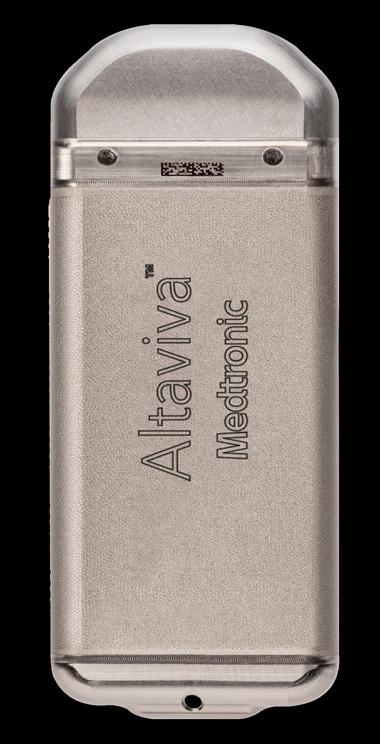
Sandra: Bladder control symptoms are a personal and private matter. Whether male or female, bathroom habits aren’t typically subjects of open discussion, as they involve intimate details that many prefer to keep private. Service members often want to present themselves as “in control.” It’s essential for their image—disclosing frequent bathroom trips might undermine this sense of control and weaken the integrity of their authority and command. Looking back, my initial help from a urologist was in the form of medication. Back in 1998, there were no Women’s Health Centers. Years later, I underwent two unsuccessful surgeries and found myself back at square one. However, at a current Women’s Health Center, I started fresh, determined not to undergo a third surgery. There, I received a wealth of information and became involved in pelvic therapy and Percutaneous Tibial Nerve Stimulation (PTNS). Shortly after, I was introduced to a new device called Altaviva™.
HLM: How has this device changed your day-to-day life?
Sandra: My day-to-day life has changed dramatically and significantly. Instead of constantly focusing on where the nearest restroom is, I can now engage fully in whatever activity I’m doing without being distracted by my bladder symptoms. This shift has required a relearning of new habits, essentially involving personal behavior modification. It’s still a work in progress, but I’m learning to avoid using the bathroom just because it’s available!
HLM: What experiences in the Navy have helped your civilian career at Medtronic?
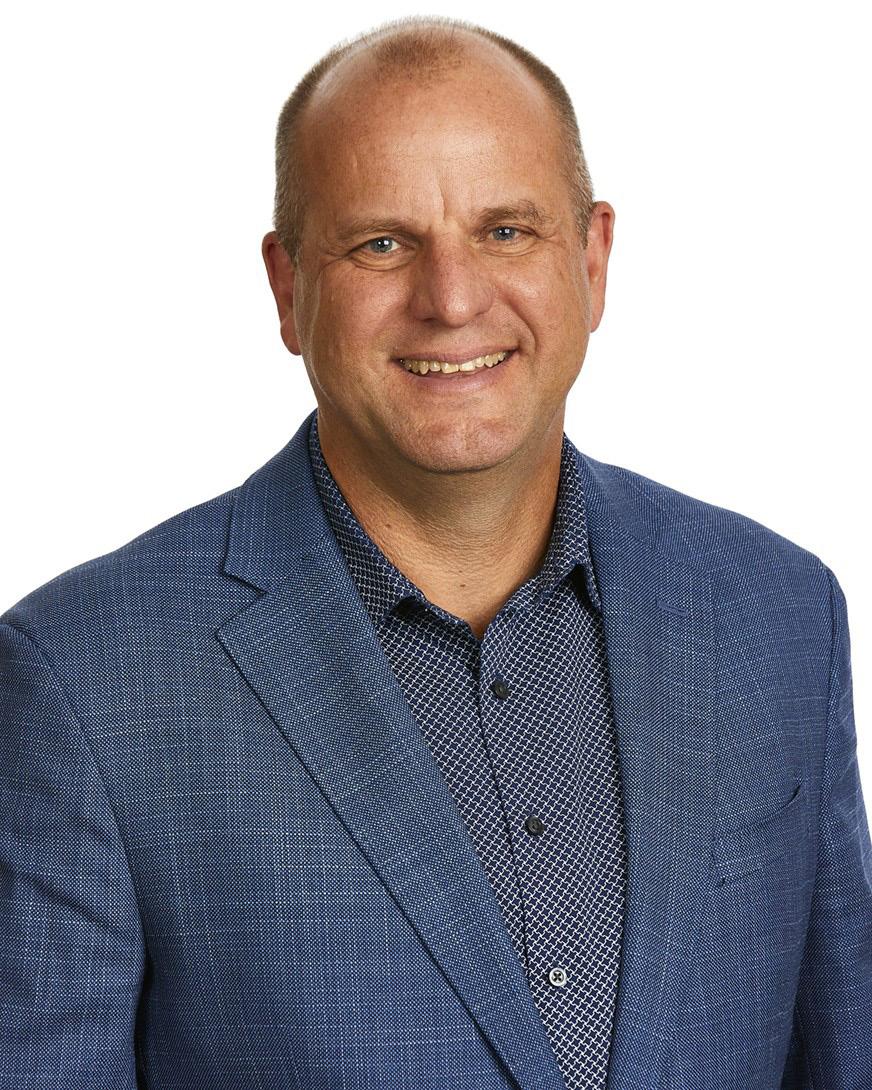
Matt: I learned that mission success depends on developing people. Leading Navy teams taught me to elevate others’ strengths, mentor intentionally, and build high-trust environments. This discipline shaped my ability to delegate effectively, make data-informed decisions, and build a cohesive culture.
HLM: What is the device that Sandra received? What is it designed and approved to do?
Matt: Sandra received the Altaviva device for urge urinary incontinence, a symptom of overactive bladder that affects nearly 16 million adults in the United States. The Altaviva device is about half the length of a stick of chewing gum and is placed under the skin near the ankle. It sends pulses that help to restore the communication pathway between the brain and bladder to help manage sudden urges to urinate, which are often followed by involuntary leaks before reaching the bathroom. This treatment is called tibial neuromodulation, a proven therapy for reducing bladder control symptoms.
HLM: Why is it important for service people and veterans to know about the product? TM
Matt: Highlighting the Altaviva device isn’t just about promoting a technology—it’s about addressing a cultural reality. By speaking openly about urge urinary incontinence and its treatments, we give service members and veterans permission to take care of themselves with the same seriousness they’ve always applied to taking care of the mission. Reducing stigma requires normalizing the condition as a legitimate medical issue and showing that simple, discreet, longterm solutions exist.
HLM: What would you tell veterans with similar symptoms?
Sandra: To veterans with similar symptoms—particularly female veterans—I would advise finding a Women’s Health Center that offers a range of treatments and modalities. Avoid opting for surgery as a first-line treatment unless it’s absolutely necessary.
After receiving the implant, I concluded a month-long trip to Morocco, Senegal, and Paris. The Altaviva device has opened new doors for an active and fulfilling lifestyle.

Our online training programs are approved for military education funding—all designed to help military members and their spouses build skills and thrive in careers that are portable, in-demand, and rewarding.
Start training today so you can be prepared for meaningful work tomorrow.
www.careerstep.com/military www.careerstep.com/military
Led by a passionate, mission-driven team, The Harmonetiks Project exists to support those who give so much of themselves — veterans, first responders, and medical professionals. Blending healing arts, modern technology, and lived experience in military and service communities, the Project’s leadership creates a powerful synergy of purpose and compassion.
• Dr. Jeffrey Zimmerman O.M.D (Founder & Chairman)
Founder of the Harmonetiks methodology and Director of Community Outreach, Dr. Zimmerman is a pioneer in acupuncture, energy medicine, and martial-arts healing. With decades of experience designing integrative wellness systems, his vision is simple yet profound: “Heal yourself, heal our world.”
• Jay Van Shelt (Executive Director)
A lifelong advocate of personal transformation, Jay brings over 30 years of experience leading health and wellness programs and martial-arts academies. His blend of operational expertise and deep understanding of human potential drives the Project forward every day.
• Paul Liebmann (Chief Operating Officer)
A graduate of the Texas Military Institute and a dedicated veterans’ advocate, Paulensures that Harmonetiks runs smoothly and that its programs reach the communities that need them most.
• Mike Williams (Chief Technology Officer)
A former Special Operations Combat Medic turned IT professional, Mike combines real-world service experience with digital innovation—expanding the Project’s reach through modern technology..
The Harmonetiks Project is a 501(c)(3) nonprofit organization dedicated to helping people reclaim calm, balance, and resilience. Its mission: to provide tools for self-care and nervous-system regulation— especially for those who live and work under high stress, like veterans, first responders, and healthcare professionals.
Key Program: The Easy Breath Initiative
This flagship course combines movement, breathwork, and nervous-system regulation to:
• Reduce anxiety
• Lower perceived pain
• Boost emotional resilience
And the data speaks for itself:
• 64% of participants reported reduced anxiety.
• 53% experienced less pain.
Beyond numbers, Harmonetiks offers live and online classes, guides certification programs, and community outreach that extends to underserved populations.
Developed by Dr. Zimmerman, the Harmonetiks system is more than a wellness technique—it’s a holistic self-care framework that harmonizes movement, breath, and the nervous system. It draws on neuroscience, martial arts, ancient medicine, Daoist yoga, and music to create an elegant, accessible path to inner balance.
Some of its key features include:
• Movement & Breath Integration — The “Easy Breath” technique and “Earth Surge” foundation teach participants to align body and mind through four core movements.
• Energy Medicine & Qi Gong Principles — Subtle energy dynamics promote healing, performance, and emotional stability.
• Focus on Service Populations — Special attention is given to veterans, first responders, and healthcare providers—those who carry others’ burdens daily.
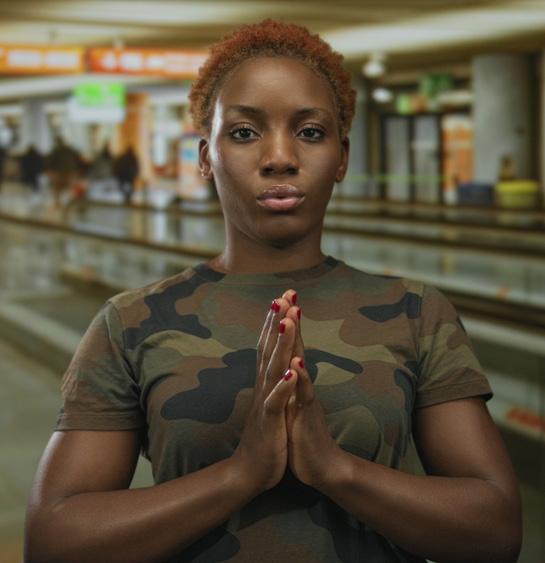
• “My friend Dr. Jeff Zimmerman and his Harmonetiks methods help veterans, first responders ... to practice very beneficial breathing and movement techniques that help calm the mind and improve mental health.” ~ Veteran participant
• Dr. James S. Gordon states of the system: “Jeff’s technique is extraordinary. It offers a simple but highly elegant opportunity to create healthy alignment of our bodies, minds, and spirits. I could feel, at once, more grounded, more at ease, and more fluid in the way that I moved and breathed.”
In an age where stress, trauma, and burnout are at alltime highs—especially among service professionals—the Harmonetiks Project offers something both timeless and urgently needed: a science-informed, heart-centered approach to resilience.

Rather than relying solely on medication or external treatment, Harmonetiks empowers people to heal themselves—one breath, one movement at a time.
Explore for yourself
Curious to see what it’s about?
● Try a free introductory “Easy Breath” course online.
● Invite the Project to partner with your organization— veterans’ groups, first responder units, and wellness programs welcome.


● Or simply take a moment today to notice your breath, your body, your balance—because healing often begins with awareness.
By Lori Noonan, CEO of Capacity Builders
Standards for Excellence Licensed Consultant | Board and Governance Certified Consultant
In the military, unity isn’t a concept — it’s a way of life. We look out for each other, hold each other accountable, and move forward as a team. That same spirit of connection is exactly what our nation needs right now.
The newly released 2025 Veterans Civic Health Index, (https://ncoc.org/2025-veterans-civic-health-index/) produced by the National Conference on Citizenship (NCoC) and Points of Light, reveals something powerful: veterans continue to lead the nation in civic engagement, volunteerism, and community trust — even as many communities struggle to reconnect in a divided, postpandemic world.
According to the report, veterans are more likely than non-veterans to:
• Volunteer and serve their communities regularly.
• Engage with neighbors and local networks to solve problems.
• Vote and participate in civic life at higher rates.
• Trust local institutions and work collaboratively to strengthen them.
These findings confirm what many of us already know — service doesn’t end when the uniform comes off. Veterans continue to answer the call, showing up where leadership and unity are needed most.
But the data also carries a warning. Civic trust is declining nationwide, and social isolation is increasing — including within the veteran community. Economic strain, stress, and divided public discourse make connection harder at a time when we need it most.
Civic health isn’t just about voting or volunteering; it’s about how we show up for each other. It’s the same principle we learned from day one in boot camp:
no one succeeds alone. We adapted, relied on one another, and pushed through hardship as a team — even whenit was uncomfortable.
That lesson applies equally to our communities today. A healthy society, like a healthy unit, is built on participation, accountability, and empathy.
So, what can each of us do right now?
• Reconnect. Reach out to a veteran, a neighbor, or a local family. Connection builds trust.
• Serve. Volunteer your skills with an organization supporting veterans, families, youth, or local needs.
.• Support civic spaces. Libraries, schools, community centers, and nonprofits are where unity grows.
• Invest locally. Whether through time, resources, or advocacy, local support strengthens the entire community.
The 2025 Veterans Civic Health Index doesn’t simply measure engagement; it reminds us who we are. Veterans have always been the connective tissue of civic life — bridging divides, stepping up when it counts, and modeling what community looks like.
And in today’s climate, that leadership matters more than ever.
When we look out for each other the way we were taught — in formation, on watch, or in the toughest moments — we rebuild what’s been lost. Unity isn’t something we hope for; it’s something we build, one deliberate act at a time.
Lori Noonan is the CEO of Capacity Builders, a consulting firm that helps veteran-serving and community nonprofits strengthen leadership, governance, fundraising, and long-term sustainability. A Standards for Excellence Licensed Consultant and Board and Governance Certified Consultant, Lori is also an in-house contributor for Homeland Magazine and San Diego Veterans Magazine. Learn more at www.capacitybuilders.org

Homeland Magazine recently spoke with U.S. Air Force Veteran Sean Gold to talk about prepping, how to start prepping, and how he became an expert.

Homeland Magazine: What is prepping?
Gold: Prepping is getting ready for emergencies, disasters, and survival situations. There is still a misconception that ‘prepping’ is reserved for doomsday scenarios, but most preppers prepare for the gamut ranging from house fires and hurricanes to civil unrest and nuclear events.
HLM: How did you become interested in prepping?
Gold: When I was growing up in North Carolina, we had our fair share of hurricanes. My dad (an Air Force veteran), was prepared enough for the power outages, flooding, and supply chain disruptions that he was able to help out neighbors and the community. That left an impression at a young age.
HLM: What made you an expert?
Gold: I wouldn’t call myself an expert, but I have plenty of experience starting in the military. When I joined the Air Force in 2007, I selected the 3E9 Emergency Management AFSC. We did a lot of interesting things including plotting nuclear fallout maps, HAZMAT response, and teaching the transition to the JSGPM M-50 mask.
Using base resources, I got my associate’s degree in Emergency Management. After I left the military, I finished a BS in engineering and an MBA using the GI Bill. Then I started the website, which helps me learn something new every day about prepping.
HLM: Why should we prepare?
Gold: I tell people that no matter where they are coming from, preparing makes sense. The CDC, FEMA, states, counties - all of these agencies tell you to be prepared. These are the same agencies you might hope to rely on, but they don’t have the resources for everyone. If you aren’t big on listening to government agencies then you need to be self-reliant.
Most people are convinced that they need to prepare. FEMA has an annual survey that shows close to 40% of the US population wants to be prepared, but just hasn’t yet.
HLM: How do you start prepping?
Gold: Plenty of people get paralyzed by the scope. There is so much that can go wrong, both personally in our lives and on a macro level, that people don’t know where to start. The first step isn’t the beans, bullets, bandagesit’s just a basic emergency plan. Filling out an emergency plan template will help you identify threats, whether they are local, regional, or global. This gets you started with a basic plan and helps set a road map, since you can be more efficient with your budget by focusing on essentials related to the risks you’ve identified.
HLM: I have seen a few apocalyptic movies, is that a good representation of how preppers can survive catastrophic or challenging world events?

Gold: Movies can be a starting point - some show off survival skills or highlight a menacing prepper in a bunker, but they are ultimately made to entertain us.
Because of the Hollywood element, they usually miss the mundane areas you’ll need to consider: sanitation, the logistics of tracking your supplies, and how to stay entertained.
In real-world events there can be plenty of downtime and isolation while you just stay put. You’ll want to use that time to keep everyone’s anxiety in check with music, board games, and hardcopy books. Don’t underestimate the importance of being able to pass the time.
HLM: What is a preparedness journey?
Gold: Everyone has a starting point after they develop their basic plan. It could be as simple as putting some extra canned food in the pantry, storing jugs of water, and buying that fire extinguisher they forgot to have on hand. But a lot of people choose to move beyond the basics by learning new skills or acquiring more resources. Doing these takes some continuous effort, whether it’s revisiting your plan twice a year or building your preparedness level every day.
Prepping looks different for each person. As long as you have your priorities straight, there’s no wrong way to approach it.

HLM: How does your TruePrepper website help people with their journey?
Gold: I’ve tried to streamline the process as much as possible: we have the basic plan template, a “how-to” for conducting a risk assessment, PDF resources, and over a dozen survival kit checklists, all free on the website. We also review gear and supplies to help people stretch their budget and avoid the junk out there.
I feel blessed that my military experience and upbringing helped shape my project into a successful site that helps thousands get a little more prepared every day.
TruePrepper
https://trueprepper.com


Post Traumatic Stress Disorder does not always allow the affected to seek help. Lend a hand and provide them with methods of help, listen and be a friend.
Homeland Magazine works with nonprofit veteran organizations that help more than one million veterans in life-changing ways each year.
At Homeland Magazine you can visit our website for all current and past articles relating to PTSD, symptoms, and resources.
& Articles available at:
Essential Partners for Military Transitions
A Master Chief's Journey to Civilian Life
Veteran Job Insecurity Amid Federal Cuts
Transition and Careers in Cybersecurity
The AI Advantage: A New Kind of Warrior
Seeds of Success: Think Big
College Credit for Starting a Business
Risky Business: Annual Business Review
10 Common mistakes in Employee Handbooks
A Legacy of Service After the Uniform
For editorial & monthly columns regarding transition, career advice, tips, workshops, transition to education, entrepreneurship, straight-forward legal tips for military and veteran business owners and more, visit Veterans In Transition.

www.homelandmagazine.com/category/veterans-in-transition




Earn Your Degree Anytime, Anywhere. Flexible, Affordable, and 100% Online!*
Military life comes with constant changes—deployments, PCS moves, and unpredictable schedules. But your education doesn’t have to wait. At Los Angeles Pacific University, we understand the unique challenges military members, spouses, veterans, and dependents face. That’s why our fully online programs offer the flexibility you need to study at your own pace, no matter where life takes you. Whether you’re on base, deployed overseas, or at home, your degree moves with you!
• 100% Online & Flexible: Learn from anywhere, on a schedule that fits your life.
• Maximize Your Benefits: Use GI Bill®, tuition assistance, and spousal benefits.
• Earn Credit for Your Experience: Take advantage of CLEP, DSST (DANTES), and AARTS/JST to turn your military training and knowledge into college credit.
• Fully Accredited: LAPU offers fully accredited associate, bachelor’s, and master’s degrees through the WASC Senior College and University Commission (WSCUC).
• Faith-Based & Supportive: Dedicated military-friendly success coaches who care about your journey.
Your Future Starts Today! Take the Next Step
*At this time, LAPU is unable to offer distance programs or courses to students residing in the following states and districts: Alabama, Arkansas, Connecticut, the District of Columbia, Indiana, Kansas, Maryland, Minnesota, New Mexico, New York, North Carolina, Oregon, Wisconsin, and Wyoming.

Military Friendly School & Spouse School

By Dr. George Ann Rice Patriots to Education

Each year, thousands of active-duty service members, Veterans, National Guard members,Reservists, and military spouses navigate the complex transition from military service to civilian employment. While federal transition programs remain vital, some of the most transformative support comes from state and community partners—local school districts, nonprofits, state workforce boards and apprenticeship programs, state veterans’ agencies, colleges’ veteran service offices, National Guard employment teams, the Military Affairs Committees of local Chambers of Commerce, and city and county veterans service offices, as well as local chapters of the Defense Communities Association. These organizations understand local needs in real time and play an indispensable role in helping militaryconnected individuals secure meaningful second careers, particularly in public education.
Community partners possess on-the-ground insight into workforce demands that national programs cannot always match. Public schools across the country face urgent staffing shortages in teaching, transportation, classroom support, information technology, skilled trades, custodial work, and campus security, to name a few. Many of these roles align naturally with military training, leadership experience, and values. Local partners help translate existing military strengths into civilian opportunities, ensuring veterans and spouses connect directly with the school districts that need their talent most.
Equally important, community partners serve as cultural interpreters. Many HR professionals in public education do not fully understand the breadth of military experience, and transitioning service members may be unfamiliar with hiring practices, credentialing requirements, or professional pathways within school systems. Local organizations help bridge this divide by providing skill-translation tools, guidance on certification, resume support, and introductions to key district leaders. This targeted assistance helps qualified candidates present their experiences clearly and compellingly to education employers.
Community partners also excel at offering comprehensive wrap around support that extends beyond employment. Transition affects entire families, and spouses often face their own career disruptions. Local organizations can provide job placement assistance, childcare resources, housing information, transportation connections, and guidance on educational programs. This holistic, familycentered approach reduces stress, accelerates community integration, and lays the foundation for long-term stability.
For many transitioning service members, community partners also help restore a sense of mission and belonging. Leaving the military means stepping away from a strong team culture and a unified purpose. Through mentorship, volunteer opportunities, and meaningful career pathways—especially in public education—local partners help veterans and spouses reconnect with work that matters. School communities benefit from the leadership, resilience, and service-oriented mindset that military-connected individuals bring.
Ultimately, the work of community partners strengthens not only individuals but the broader region. When veterans and spouses build fulfilling careers in public education, schools become more resilient, families thrive, and communities grow stronger. These partnerships ensure that military transition is not just successful, but sustainable, producing long-term benefits for those who have served, students, families, andlocal economies.
Community partners are indispensable to the nation’s ability to support those who have served. Their insight, accessibility, and commitment make the difference between a difficult transition and a flourishing second career—one that continues the spirit of service while meeting urgent local needs.
To learn more, visit our website www.patriotstoeducation.org Follow us on Instagram@patriotstoeducation


By Eve Nasby eve@infused.work

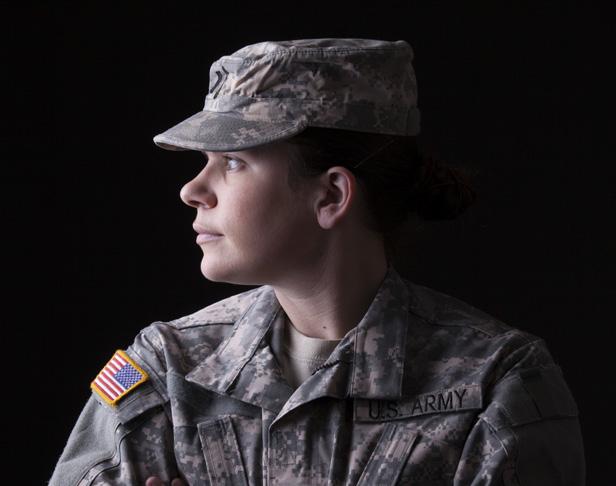
The hardest day of his military career wasn't under threat of rocket fire in Bahrain, nor his first terrifying night aboard an aircraft carrier. It wasn’t even the physical toll of decades at sea that left him with injuries and enough titanium in his body to set off metal detectors.
The hardest day came 48 hours after he retired.
"You spend your entire adult life moving forward," he says, staring into his coffee. "Then suddenly there's time to look back. And that is a lot to process."
This is the part of military transition nobody talks about—not the recruiters, not the retirement ceremonies, not even the transition programs that hand you a resume template and wish you luck.
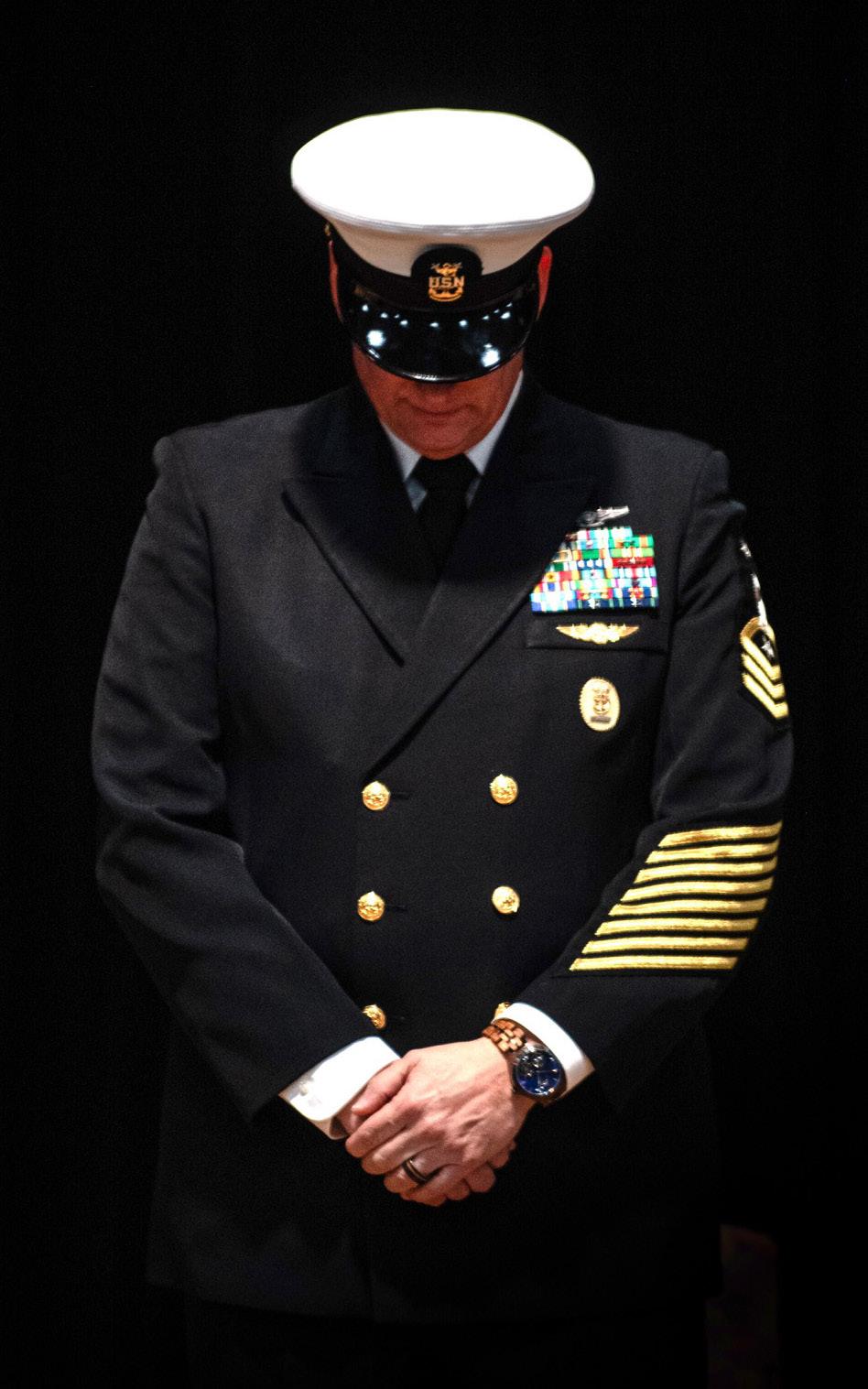
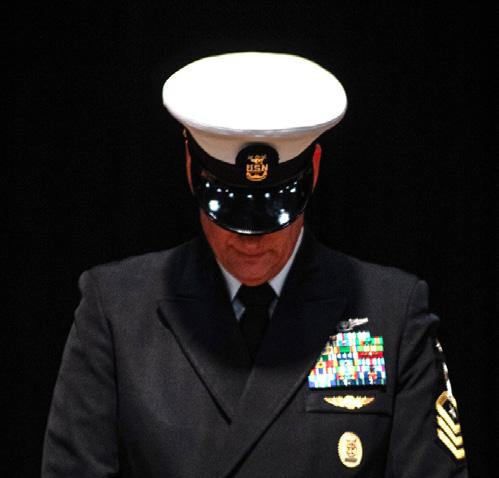
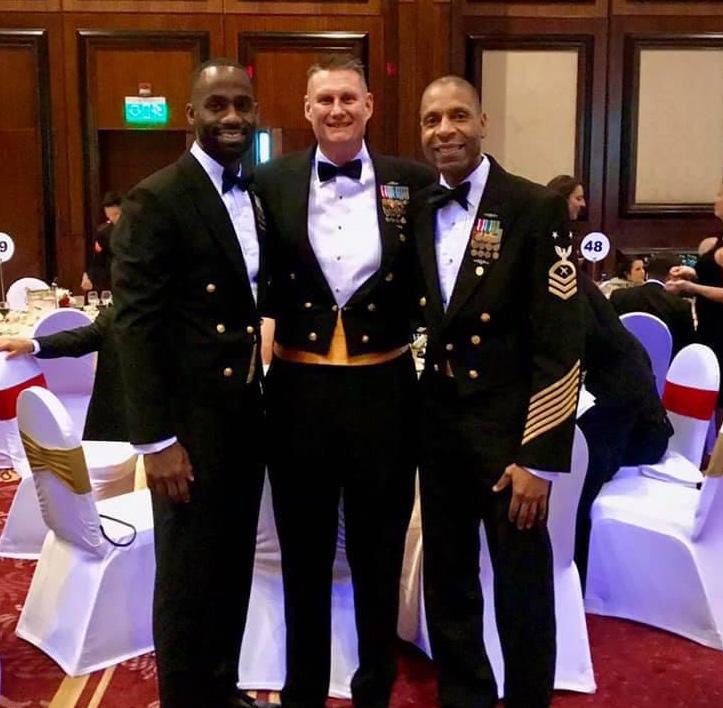
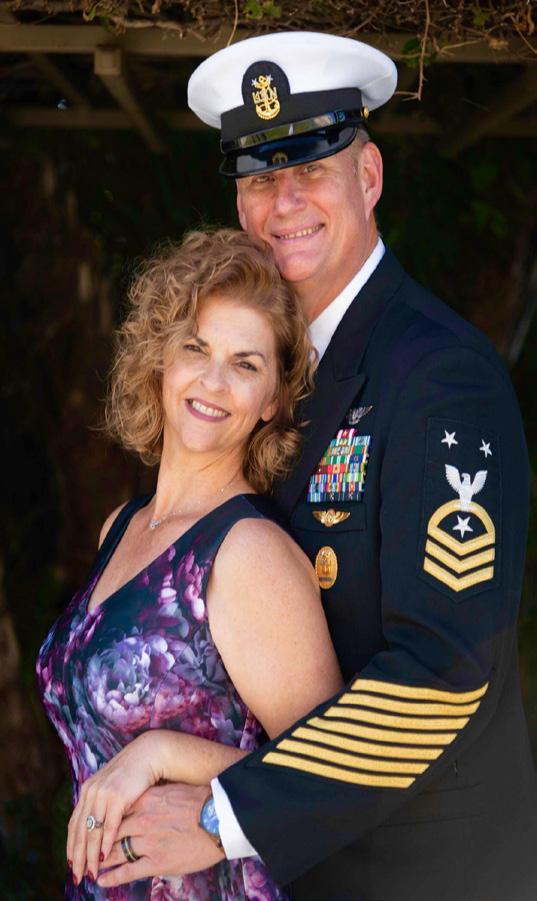
This is what happens when a Command Master Chief with 36 years of service, multiple overseas commands, and thousands of sailors under his leadership tries to figure out who he is when no one is calling him “Master Chief” anymore.
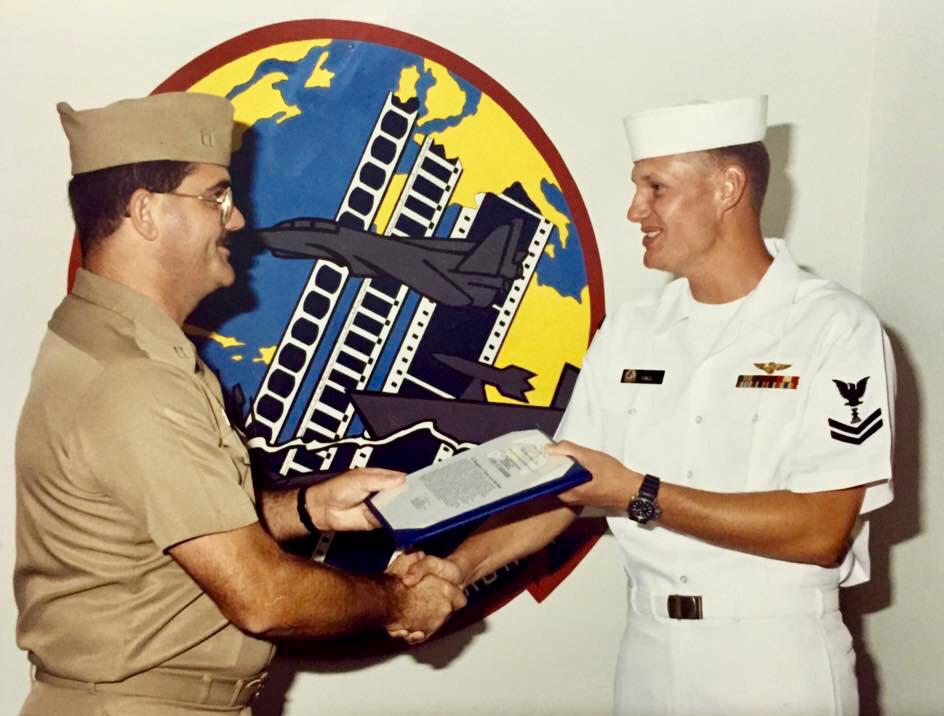
In 1987, a restless college kid from Haverhill, Massachusetts walked away from good grades and a comfortable life to enlist in the Navy. He didn’t know then that nearly every man in his family had served before him— Seabees, divers, quiet uncles who never talked about their wars but carried the pride in silence.
He just knew he was coasting. And something in him said: There’s more. A recruiter named Petty Officer Judy Homer
told him the truth—no sugarcoating, no sales pitch. When the detailers pushed him toward jobs he didn’t want, he stood firm. “I want to work on the flight deck of an aircraft carrier. Period.”
A chief countered with something unexpected: “Ever thought about being a photographer?” He knew nothing about photography, but he said yes. That yes led to 36 years almost entirely at sea—carrier deployments, expeditionary commands, Combat Camera, tours in Spain, Japan, and Bahrain as the 5th Fleet Command Master Chief.
Transition Tip #1: Say yes to opportunities that stretch you. Just like in the Navy, stay open to new beginnings in civilian life.
Amid the chaos and long deployments, something deeper began to take root. Early in his career, during one long stretch aboard ship, he found himself wrestling with questions of purpose that no promotion could answer. One night, somewhere in the Pacific, he chose to become a Christian. That decision changed everything.
Faith became his compass in combat zones, his calm during sleepless nights, and his foundation as a leader. Over the next three decades, that faith would guide every decision—how he led, how he treated others, and how he prepared to let go of the uniform that had defined him.
But his first night aboard ship almost ended before it began. A delayed flight turned into a nightmare of missed connections. By the time he landed in San Diego, he was catastrophically late for his first day aboard an aircraft carrier. His crisp dress uniform, packed perfectly in his luggage, was destroyed in the chaos of travel. He stood in the airport bathroom, uniform wrinkled, confidence gone, and broke down crying.
"I thought my career was over before it started,” he remembers. “I was convinced they were going to throw me off the ship.”
Transition Tip #2: Your first days in civilian life may feel like that. You’ll feel unprepared, behind, unsure. Remember—you’ve been here before. You’ll get through it.
The Identity Crisis Nobody Warns You About For three decades, his identity was defined by rank, command, and mission. Every introduction began with “Command Master Chief.” Every day held purpose, structure, and a clear chain of command.
Then it stops.
Transition Tip #3: You’re not just changing jobs; you’re changing identities. The military doesn’t simply employ you—it shapes you. When that ends, rebuild who you are from the ground up.
Transition Tip #4: Create space to grieve. You’re leaving more than a career. You’re leaving a brotherhood, a mission, a way of life. The sadness and confusion are normal. Talk about it. Don’t rush past it.
What Actually Helps
Looking back, he wishes someone had told him: Tip #5: Your military skills are valuable, but your mindset may need adjustment. Decisiveness can seem rigid in corporate settings. The direct communication that worked in uniform may sound harsh to civilians. You’ll need to translate your experience.
Tip #6: Build your network before you need it. Connect with veterans who’ve made the transition. Find mentors, join veteran-focused organizations, and attend networking events. The best jobs rarely come through online applications.
Tip #7: Give yourself permission to start over. You spent decades mastering your craft—you might need to be a beginner again. That’s not failure; it’s courage.
Tip #8: Your transition is not a solo mission. Lean on your family, mentors, and fellow veterans. Use your benefits—they’re earned, not given.
A New Kind of Mission
The hardest day of his career wasn’t under fire, or the one leading thousands of sailors—it was the one when he was learning to slow down.
To reflect. To rebuild. To rediscover that the mission wasn’t over—it had simply changed form. Faith, first found at sea, remains his anchor. Because in a life defined by constant motion, it taught him the one truth that endures after 36 years in uniform: You can move forward without always moving fast.
www.linkedin.com/in/eve-nasby-given-hiring-expert
By Paul Falcone PaulFalconeHR.com


As much as I normally write on “happier” topics and strategic career moves from the military to the private sector, it’s important to end the year on a more “realistic” note so that you can launch into 2026 with your eyes wide open. The veteran-transition space is hurting right now because veterans who left active duty and went into federal jobs are now facing layoffs or uncertainty. Further, because of the loose labor market, many veterans are underemployed, working in roles that don’t fully use their training or leadership capacity. December is a strategic time to focus on career reflection, year-end planning, and new year resolutions. It’s important to look back on what’s been working well in the hiring and retention space so you can set goals for yourself around job search, career transition, and career management overall.

As of March 2025, there were 8.3 million veterans in the U.S. civilian labor force, making up roughly 5.2% of our workforce. Per the Department of Labor, 66% of veterans in the labor force are 45 or older. The seasonally adjusted unemployment rate for the U.S. in August 2025 was 4.3%. In comparison, the veteran unemployment rate for that same time period was 3.1%. However, underemployment remains a major issue: Data show that a large share of veterans report not fully using their skills in civilian jobs after leaving the service. For more information, see the U.S. Census Bureau’s Veteran Employment Outcomes (VEO) article at https://tinyurl.com/mr2duhbj
As a result, while veteran unemployment is relatively low, underutilization (underemployment) is a persistent challenge. This gap suggests many veterans are not landing high-leverage roles that match their military experience, which has both financial and identity/cultural
implications for their transition. Further, the VA is reducing staff by nearly 30,000 employees by the end of FY 2025 through attrition, early retirements, and a hiring freeze. While this is not a company, it's deeply relevant: many veterans transitioning to or from federal service may face instability, and these reductions may feed into the “transition to private sector” challenge.
1. First, you have to be relentless in your job search efforts. Network. Accept invitations to do “exploratory interviews,” even if no formal opening exists that you’re aware of. (Hint: Employers often conduct exploratory interviews when they’re aware of a possible opening in the near future that hasn’t necessarily been posted yet.) Read that: your career ambition matters most in tough markets.
2. The fact that many veterans who have traditionally moved into federal civilian roles now face reductions in force (layoffs) or instability is a rite of passage these days—not something to simply chalk up to “poor timing.” Your next role may be in the private sector, or you may have to relocate to find a similar position in state or local government. This is a mindset change that’s critical for everyone in corporate America today: very few exceptions exist to the massive changes the job market is experiencing in light of downsizing, mergers and integrations, and AI and robotic process automation.
3. Research companies that advertise themselves as “veteran friendly” employers. You can find out more here: MilitaryFriendly.com, Statista and Forbes’ “America’s Best Employers for Veterans 2025” lists.
4. Look to the Bureau of Labor Statistics’ “Occupational Outlook Handbook” (www.bls.gov/ooh) for featured occupations, median pay, education and work experience requirements, and especially the “2024 – 2034 Job Outlook” to see how large the demand will be for positions in your area of interest over the next decade.
5. Think always, “Upskilling and Certification” as your winning formula, especially in the AI space or areas that are new to the economy overall. Google’s AI training (open to everyone) and Microsoft’s MSSA training (open only to military service members and veterans), for example, lead to high-value civilian jobs.
6. Focus on translating your military experience into civilian roles using “skills translation” websites that help civilian hiring managers better understand and relate to your military experience (e.g., Military.com Military Skills Translator, O*NET Military Crosswalk, and CareerOneStop Military-Terms Translator).
7. Customize and upgrade your job search by incorporating AI and algorithmic hiring into your career transition plan to ensure your resume contains the appropriate key words to stand out. (For more information, see SkillSyncer, CareerPilot.ai, or the TalentAlly Blog.)
Flexibility, agility, and change readiness are your keys to successful transition into the private sector, just as they’ve always been in the military.

2026 is your opportunity to reinvent yourself and meet the needs of America’s changing workforce.
You can connect with Paul on LinkedIn at www.linkedin.com/in/paulfalcone1
Paul Falcone (www.PaulFalconeHR.com) is a management trainer, executive coach, and bestselling author on hiring, performance management, and leadership development. www.HarperCollinsLeadership.com
Homeland Magazine sat down with Chris Simpson, the Director of National University’s Center for Cybersecurity. Chris is a recognized leader in cyber defense education and cyber workforce development.
Homeland: During your time in the U.S. Navy, what were your main roles and responsibilities?
Chris: My most significant responsibility in the Navy was serving as an Air Intercept Control Instructor at TOPGUN, the Navy Fighter Weapons School. In this role, I taught the fleet's top controllers advanced tactics, techniques, and procedures for translating complex sensor data and engagement geometry into the splitsecond decisions that guide pilots through combat engagements. This role represented the pinnacle of my 20+ year Navy career, which began as a deck seaman and culminated in my retirement as a Lieutenant Commander.
The early part of my career focused on operational planning, data links, and air intercept control. After getting commissioned as a limited duty officer and completing a bachelor's degree in Computer and Information Science, I became interested in information assurance and transitioned to the Navy Information Professional community. After this transition, I held various assignments as Information Assurance Manager, Information Systems Security Manager, and C5I Officer for an Expeditionary Strike Group.
Homeland: How did you arm yourself with information and find the support you needed when transitioning from military service to civilian life — especially when it came to going back to school or figuring out where to turn for guidance?
Chris: My path was a bit different from many veterans. I finished my associate's degree while stationed at TOPGUN, earned my bachelor's degree in Computer and Information Science after my first tour as an officer, completed my master's degree in Information Security and Assurance from George Mason University during a shore duty tour, and I'm currently pursuing my doctorate at National University.
Balancing family life, work, and education was challenging but incredibly rewarding. Now, as an educator who works with students in similar situations, it helps me understand where they come from. I can design content that supports their learning and helps
them accomplish their goals. When planning my college career, I took advantage of Navy career counseling and education services. I highly recommend these resources to all service members.
Homeland: Did you experience any pitfalls coming out of the service?
Chris: I was fortunate to have a great transition from military to civilian life. My first post-Navy job was teaching knowledge management for the Navy, which provided good continuity. Moving into academia required some adjustment. While you do have compliance rules and regulations to follow, there's much more decision-making by committee. There's also greater flexibility through academic freedom, which allows you to approach problems and course design in ways that aren't always possible in a more structured military environment.
Homeland: What inspired you to pursue a career in cybersecurity education?
Chris: Throughout my Navy career, I spent years training and teaching, instructing elite air intercept controllers at TOPGUN and mentoring junior officers in tactical operations. When I discovered cybersecurity through Clifford Stoll's The Cuckoo's Egg and the NSA's Rainbow Series (particularly the Orange and Red Books), I recognized the same pattern-recognition and rapid decision-making skills I'd taught in air warfare: processing data streams, tracking multiple threats, identifying anomalies. Cybersecurity education became the natural intersection of my passion for teaching and this fascinating new field.
Homeland: Why did you choose to work for National University?
Chris: I've always enjoyed teaching and training, with various Navy assignments including TOPGUN. A couple of things brought me to National University. First is the awesome full-time and part-time faculty team. They're hardworking, dedicated people who are genuinely invested in helping students succeed. Additionally, I love working with working adults and helping veterans start new careers in the exciting field of cybersecurity. Seeing someone transition from military service into a thriving cybersecurity career is incredibly rewarding. The university's mission aligns perfectly with what I'm passionate about.
Homeland: Why are military veterans uniquely suited for careers in cybersecurity?
Chris: Veterans are uniquely suited for careers in cybersecurity. They're detail-oriented, a critical skill when the smallest mistake can allow an attacker into a system. They're equipped to handle intense, highstakes situations. Most military jobs involve operating complex equipment or information systems, and veterans have gained valuable leadership and project management skills.
Veterans typically have strong technical aptitude because they've worked with complex technology throughout their service. Whether they were operating vehicles, flying aircraft, maintaining equipment, or using sophisticated communication systems, they've gained hands-on experience that translates directly to cybersecurity. Even if they don't come from what the military classified as a technical specialty, those foundational skills transfer incredibly well.
Homeland: What advice would you give to transitioning veterans who are looking to pursue education or translate their military skills into cyber careers?
Chris: Education is a journey. As you begin your cybersecurity education, relate hands-on and apply learning to theoretical knowledge. Many of the applied tools and equipment will change, but the fundamentals will not change.
Remember that education is more than just completing assignments. It's about gaining a deep understanding of specific subjects and topics in your field. In today's fast-paced world, many forget the importance of deep reading.
Finally, one of the best things about going to a university is the great faculty you get to work with. They're a great resource for learning and career advice. Take advantage of your time in university to build hose relationships and learn from their expertise.
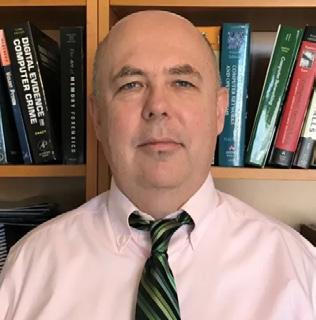
Chris Simpson, Director of National University’s Center for Cybersecurity. For more information on National University and cybersecurity, vist www.nu.edu

Finding a job in the civilian workplace may seem easy at first. After all, you have learned skills, practiced leadership and demonstrated initiative that will make you successful wherever you go.
The reality, though, is that it can be difficult. In fact, it can be downright depressing demotivating and you may feel totally disillusioned. We can help.
In our Veterans In Transition archives you will find helpful and informative articles about what’s next in transition, veterans in business, career, advice, tips, workshops, transition to education, entrepreneurship, veteran franchises, legal tips & resources for veteran businesses and much more...
For assistance in your journey please visit: HomelandMagazine-Veterans-In-Transition homelandmagazine.com/category/veterans-in-transition
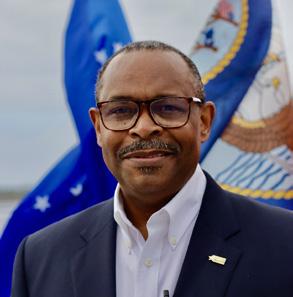
By Maurice D. Wilson, MCPO USN (Ret), President/Executive Director, NVTSI.org
Artificial Intelligence is transforming every industry—defense, logistics, healthcare, transportation, business services, and nonprofit work. While millions of civilians are scrambling to keep up, veterans have an unexpected edge: the AI revolution rewards the exact strengths the military builds every day. Veterans are not behind. Veterans are built for this moment.
But to take full advantage of it, you need to know where you fit in the AI economy. That’s why VeteranMatch helps you understand your Career DNA, clarify your strengths, and connect to roles where AI amplifies—not replaces— your abilities.
Find out where you fit in the AI revolution. Take the VeteranMatch Career Assessment: https://www.tfaforms.com/5179742
1. Veterans Thrive in High-Speed, High-Change Environments
Civilians often describe today’s workplace as chaotic— constant updates, shifting priorities, new tools, new expectations.
Veterans call that standard operating procedure
The AI era looks a lot like a modern mission environment:
• fast-moving
• ambiguous
• data-driven
• constantly evolving
• high-stakes
Veterans excel in exactly this kind of landscape. AI tools update weekly. Industries pivot overnight. Job roles evolve every six months. Where many civilians feel overwhelmed, veterans feel at home.
Veterans
AI Runs on Systems
AI is simply “systems thinking at scale.” It evaluates workflows, improves processes, identifies gaps, and optimizes results. Veterans already think this way:
• What’s the mission? • What are the inputs?
• How do we reduce friction?
• How do we execute more efficiently?
• Where are the bottlenecks?
Anyone who has coordinated operations, managed a shop, run maintenance programs, supervised teams, or executed logistics already speaks the natural language of AI-driven work. The challenge isn’t learning AI from scratch—it’s applying it to what you’ve done all along.
3. AI Can Do a Lot—But It Can’t Replace Veterans
AI is powerful, but it cannot replicate the human strengths the military instills:
Leadership
AI can’t build trust or inspire teams.
Ethical Judgment
AI can’t understand consequences or moral responsibility.
Adaptability
AI can’t improvise when the unexpected hits.
Communication & Team Dynamics
AI can’t mentor, mediate conflict, or uphold a standard. These human qualities are becoming more valuable, not less, in the age of automation. Employers want people who can pair AI capability with human judgment—and veterans are uniquely equipped for that blend.
4. Veterans Have Always Been Early Tech
Service members routinely work with technologies the civilian world only sees years later:
• autonomous systems
• predictive maintenance
• advanced communications
• cybersecurity platforms
• simulation-based training
• intelligence analytics
AI is simply the next step in that progression. Veterans don’t fear new tech—they understand it as a mission enhancer. The key is translating that experience in a way civilian employers immediately recognize.
5. AI Is a Force Multiplier—Not a Job Destroyer
Most people think AI will take their jobs.
Veterans see tools differently:
AI removes low-value tasks so you can focus on highvalue leadership.
It can:
• automate paperwork
• streamline planning
• enhance decision-making
• reduce admin burden
• improve communication
• strengthen training and readiness
AI is the modern equivalent of adding another highly skilled teammate—one who increases your efficiency while you lead, decide, and adapt.
Veterans who embrace AI become more competitive, more promotable, and more effective.
6. The One Shift Every Veteran Needs to Make
AI is not optional. It is the new literacy. But here’s the good news:
Veterans don’t start behind—they start ahead. You just need clarity on where your strengths fit into the AI-powered workforce.
That’s exactly what the VeteranMatch Career Assessment provides. It identifies:
• your Career DNA
• your strongest transferable skills
• your best-fit industries

• roles where AI amplifies your talents
• paths to upskill and grow with confidence
Whether you're entering a new industry, leveling up your career, or figuring out yournext mission, understanding your AI alignment is a strategic advantage.
Find out where you fit in the AI revolution.
Take the VeteranMatch Career Assessment: https://www.tfaforms.com/5179742
Conclusion: Veterans Were Built for the AI Era
The future of work rewards adaptability, systems thinking, teamwork, leadership, integrity, and mission focus. Those aren’t soft skills—they’re military skills.
AI will reshape the workforce, but veterans are not being left behind.
Veterans are positioned to lead it.
Your next mission is simple:
Understand where you fit. Then step into the opportunities waiting for you.
Begin here: https://www.tfaforms.com/5179742
National Veterans Transition Services, Inc. (NVTSI) is a San Diego-based nonprofit dedicated to helping service members, veterans, and spouses successfully transition from military to civilian life.
Learn more at www.nvtsi.org
Jason Williamson
In our Veterans In Transition archives you will find helpful and informative articles about what’s next in transition, veterans in business, career, advice, tips, workshops, transition to education, entrepreneurship, veteran franchises, legal tips & resources for veteran businesses and more...
For assistance in your journey please visit: Homeland-Veterans-In-Transition homelandmagazine.com/category/veterans-in-transition/

By Barbara Eldridge President/ Founder of Mind Masters www.mindmasters.com
As you look to what’s ahead for you for 2026, you must positively expect good things to happen. Your belief and attitude about business, money, relationships, education, IQ, the government, what you're capable of, how deserving you are and more will be the seeds that determine your success.
Your beliefs or what I call the 900 Pound Gorilla—are what hold you back. What it will take to set your plans in action is learning how to install new beliefs, and attitudes.
Research has proven over and over that the more you consciously acknowledge your achievements, accomplishments, victories and completions, the more of a foundation you have for ongoing success. Too often we go straight from the finish line to the starting line without pausing to acknowledge what actually happened and what we learned from it.
Yes it is a busy time, working to finish the year on top of the goals you set, while enjoying all the holiday celebrations. This is your time to stop and reflect because it is so easy to under appreciate the things that have been accomplished. Yet many can only recall all the mistakes and failures that occurred.
If you only remember those mistakes and failures, you will not be ready to take the risks that will lead to ongoing success. Begin looking at your achievements, experiences, relationships and rewards so you can begin the year with an anticipation of growth and success. These help you to build your self-esteem because they are based on all the ways you succeeded.
At Mind Masters we begin each meeting sharing our achievements and accomplishments. Yet over the years it has amazed me how many struggle with this. Just last week one of our members was sharing the fact that she was behind on her annual production goal. She was reminded that she had taken a big leap in her career by studying for the next level of her professional industry.

It took time away from production but has now positioned her for greater success.
Remember it is not just the big things that help you grow, write down all your successes. When you face a new challenge or set your 2026 goals, review your list, it will begin to tell your brain that you are an ACHIEVER –that you can do anything.
What you put your attention on grows in you! Emerson said “Thoughts rule the world”. They are the basis of all action. Action is the basis of achievement. Your success achievement is based on the power of your mind, those beliefs and attitudes. So surround yourself with things that symbolize and reinforce those achievements and successes.
Eldridge President/ Founder of
where business owners tap the synergy of energy, commitment and excitement for each other to raise the bar for each other’s goals, brainstorm ideas, create solutions, and offer mutual support. Checkout how a Group help you create personal, professional and financial growth. www.mindmasters.com

By Joseph Molina veteransccsd@gmail.com



There’s a great program where veterans attending college gain Academic credit for starting a business. Veterans enrolled in college or university can enroll in a program that may award them up to 12 units of college credit.
Veterans attending college and enrolled in a business program are usually interested in starting a business. Whether that business is a freelance, a parttime business, a coffee shop, a construction company, the program welcomes every type of business venture.
The reasoning behind it: Entrepreneurs love to start new ventures and create new concepts that positively impact our everyday lives. These new ventures need a “test drive”, and it is through the colleges and universities that students learn the business process and acquire the knowledge needed to understand how the world of business works. To help students accomplish this, the “Faculty Mentorship / Business Coaching” program provides the guidance and the support a student Veteran needs, while at the same time enabling students earn college credit. This is a great partnership between the National Veterans Chamber of Commerce and local institutions of higher learning.
This program was created to fill-in the gaps between classroom knowledge and real-life business application, allowing for students to safely and with Faculty guidance, implement their business ideas. Mr. Molina stated that; “For students to gain true knowledge about starting a business, they need to start a business. Students need the opportunity to use classroom knowledge and implement it in real-life situations”.
Students receive guidance from a Faculty Mentor that works with the student in creating goals and achievable outcomes during the semester.
Community colleges and universities value entrepreneurship and small business ownership as they are aware of the impact small businesses have in the community. According to the SBA, over 95% of all businesses in our communities are small businesses.
The State of California has funded a program that facilitates “extra income earners”, or a gig economy, by funding the existence of incubators and accelerators across the state. This proves that entrepreneurship is being recognized as a way of supplementing our income.
“The beauty of this program is that students who start a business and implement the concepts learned in class are also awarded college credit,” said Mr. Molina.
This program is a perfect example of collaboration between the Veteran Centers located in community colleges and universities and the National Veterans Chamber.
For more information about National Veterans Chamber visit www.vccsd.org
By Hadley Wood www.hlinwood-insurance.com

It’s hard to believe that 2025 is coming to a close and 2026 fast approaching!
With cooler weather, shorter days and sometimes a slowdown of business due to pre and post-holiday sluggishness, December is often the perfect time to reflect and celebrate the past years’ successes and evaluate the challenges and missed opportunities in your business.
Here are a few Risk Management suggestions to get you started:
• Take an open and honest look at your business and identify the top 3 successes in the last year. What was it that made those happen. Was it marketing? The right employees? A great new contract? Use this information to leverage more success in the next year.
• Now, identify 3 failures or missed opportunities over the year. Why did this happen. What was lacking? Not enough customer service? Competition encroaching into your client base? Need additional capitalization? Make changes to your 2026 plan so the same mistakes are not repeated.
• Identify the key risks in your business. What issues keep you up at night? Issues with employees? Distribution channels or supply chain? Rising operating costs threatening your bottom line? Technology challenges? If you can identify the big risks, you can create a plan to be prepared for them.
Michael Kidd
• Make sure your website is up to date on compliance law. Websites have certain regulations, and some components have to be imbedded for them to be compliant. If you are not sure, you can go to www.hhs.gov/web/index.html to learn more about this.
• Confirm that any pictures or copy is either created by you directly or legitimately licensed to you to be used for your website, social media accounts and any advertising or marketing purposes. There are attorneys standing by to send you costly claim letters - so beware!

• Back up all your 2025 work to an external hard drive, USB or cloud service and label it 2025. I cannot stress this enough. Companies crumble if key data is forever lost.
• Do a workplace walk through (even if your workplace is your own home) and make sure smoke alarms are working and updated; fire extinguishers are accessible; alarm systems are working; security lights and cameras are functioning, and emergency kits are available in case of accidents.
• Make sure staff knows what to do in case of workplace injury and have Claim Forms readily available.
• Review anyb new employee compliance and min wage requirements at www.dir.ca.gov
• Update Employee handbooks to include employment agreements and any new company procedures and protocols.
• Sit down with key employees and get their honest feedback on what is working at the company and what changes could be made to improve morale, customer service and workplace efficiency.
• Discuss your concerns about your high risks. Many risks can be covered by a type of insurance product but not all of them. Make sure you understand what you are covered for and what your policy excludes. Ask specific questions – “Am I covered for ____?” and “What happens if ___ happens?”. Most business owners do not read their policies and have little knowledge of the actual coverages or exclusions.
Your Agent/Broker relationship should be honest and transparent.
Wishing everyone a happy Holiday season and positive start to the new year!

If you have any Business Insurance questions, please reach out to me. www.hlinwood-insurance.com
Straight-forward legal tips for Military and Veteran Business Owners
By Kelly Bagla, Esq. www.BaglaLaw.com


Your employee handbook can be the foundation of employee performance and a shield against lawsuits, or it can be a ticking time bomb that confuses employees and strips away your legal defences. A well-written employee handbook can make the difference between these two outcomes.
Here are ten common mistakes you should avoid:
1. Adopting a “Boilerplate” Handbook
Avoid using a cookie-cutter template. It can be helpful to review a template or the handbooks of similar companies when drafting your own. But, in the end, your company is unique, and your handbook should be specifically tailored to your organization’s policies and actual practices.
2. Not including All Policies in the Handbook
Employers often draft new policies as laws change and new situations arise in the workplace. Include all important new policies in the employee handbook. Employees should not have to review the bulletin board in the break room, and other miscellaneous policy announcements in addition to the employee handbook to learn the company’s policies.
3. Omitting Disclaimers
All employee handbooks must include a disclaimer that nothing in the handbook creates a contract for employment or alters the employee’s at-will employment relationship. Remove any 90-day probationary period language if your employees are at will. Also include a disclaimer that the handbook cannot address every possible situation that could arise in the workplace.
4. Not Having an Effective Anti-Harassment Policy
The employee handbook should let employees know what harassment is and what they must do about it if it happens to them in the workplace. The handbook should describe the procedure employees need to follow to report an incident of harassment, including

the specific person to whom an employee should report the harassment, and an alternate person if the person designated under the policy, is the alleged harasser. The handbook also may include a form for employees to report workplace harassment, although employers must promptly investigate any complaint, even if the employee does not submit it in writing.
Too
A blanket prohibition against employee speech that could reflect negatively on the company may violate the employee’s rights under Section 7 of the National Labor Relations Act. In addition, employees have the right to discuss wages and other work issues with fellow employees without reprisal. But the handbook may clearly state what is not allowed, including slanderous, discriminatory or harassing posts. The handbook should prohibit the disclosure of proprietary or confidential company information as well. You may also suggest that employees make it clear when a post is their opinion and not necessarily a stance of the company.
Employee handbook policies should list the type of conduct that may result in employee discipline, up to and including termination of employment. However, you should not delineate a rigid step-by-step disciplinary system from which the company cannot deviate. Disciplinary policies should always include the disclaimer that the company reserves the right to skip one or more steps as necessary depending on the severity of the infraction.
Enforce the policies in your handbook the same way with everyone, every time. Inconsistent enforcement can have a negative effect on company morale. Even worse, it can subject the company to claims of discrimination if the company disciplines employees differently for the same infraction.
Make sure managers and supervisors receive regular training on employee handbook policies so that they are implemented correctly and effectively. Once trained, management and supervisors should periodically review the employee handbook policies to assess whether they are being applied consistently throughout the company.
Keep your employee handbook concise, avoid legalese, and make sentences clear and direct to eliminate potential ambiguity. You cannot include every possible situation that may arise, and you should avoid going into extensive detail on every management policy.
Laws and regulations can change, so have your employment legal counsel review the employee handbook on a periodic basis to keep it up to date. Be sure to alert employees to any updates and have them sign an acknowledgement that they received an updated copy of the employee handbook.
There is a lot to consider when planning and implementing an employee handbook. When you do it the right way, it will be a valuable tool for everyone at your company for years to come.
If you need help determining if your employee handbook meets the latest legal standards, we can help. Please visit my website at www.BaglaLaw.com

Disclaimer: This information is made available by Bagla Law Firm, APC for educational purposes only as well as to give you general information and a general understanding of the law, and not to provide specific legal advice. This information should not be used as a substitute for competent legal advice from a licensed professional attorney in your state.
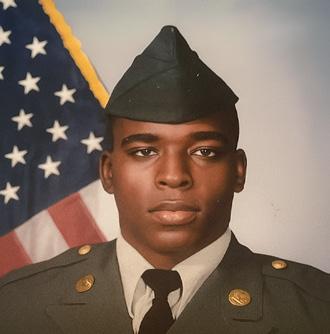
Homeland Magazine sat down with Bobby Moore, an Atlanta-based veteran, to chat about his journey from military to franchise ownership. After serving four years in the military and two decades in law enforcement, Bobby could have retired. Instead, he started a second chapter, this time as a business owner and mentor.
Homeland: What led you to join the military?
Bobby: I always knew I’d join the military when I became of age. For me, it wasn’t just about serving; it was part of my family’s legacy. My father served, and so did my older brother. Growing up, I was surrounded by examples of dedication, patriotism, and a strong work ethic. Watching my brother leave home to serve made a huge impression on me. The values I saw in the men around me showed me early on that service isn’t just an option, it’s a calling. Joining the military wasn’t just about following in their footsteps, it was about living up to a standard and doing my part.
Homeland: What inspired you to pursue entrepreneurship instead of traditional retirement after serving in the military and law enforcement?
Bobby: My years in uniform, both in the military and in law enforcement, shaped my outlook on life. The military taught me discipline, respect for structure, and how to be a part of something bigger than myself. Law enforcement pushed me into leadership, decision-making, and service at a local level. By the time I reached a point where I could have retired, I realized I wasn’t done serving - I just needed a new mission. Entrepreneurship gave me the opportunity to take everything I learned, combine it, and create something that mattered. It’s allowed me to empower others, create jobs, and serve my community in a new way.
Homeland: What attracted you to the Smoothie King brand specifically?
Bobby: I’ve always been interested in healthy eating and living a balanced lifestyle. When I came across Smoothie King, I immediately saw a brand that aligned with my values. Their focus on wellness, their mission to help people live active and purpose-driven lives struck a chord. I knew I’d be excited to share
that with others. It’s not just about selling smoothies, it’s about promoting a healthier lifestyle, and I wanted to be part of that change.
Homeland: What skills from your time in the military and law enforcement have been most valuable in business ownership?
Bobby: Almost everything I lean on as a business owner today can be traced back to my time in service. The military and law enforcement both taught me discipline - showing up on time, staying committed, and doing the hard work even when no one’s watching. They also taught me the importance of teamwork and perseverance. That mindset has shaped every chapter of my life and continues to guide how I lead my team. Every win we’ve had as a Smoothie King owner has come through working hard, staying consistent, and applying the same leadership I relied on during my service years.
Homeland: What advice would you give to other veterans who may be considering starting a second chapter after serving their country?
Bobby: My advice is simple: you already have what it takes. The skills you developed in the militaryresilience, discipline, adaptability - are the same skills that build successful businesses. They don’t disappear when you take off the uniform. Start small if you need to. Stay consistent. Keep learning. And most importantly, lead with a purpose. You’ve already proven you can overcome challenges. Business ownership is just the next mission.
The vet mindset is a powerful foundation, you just have to apply it in a new way. For more information about Smoothie King and franchise opportunities, visit www.smoothiekingfranchise.com
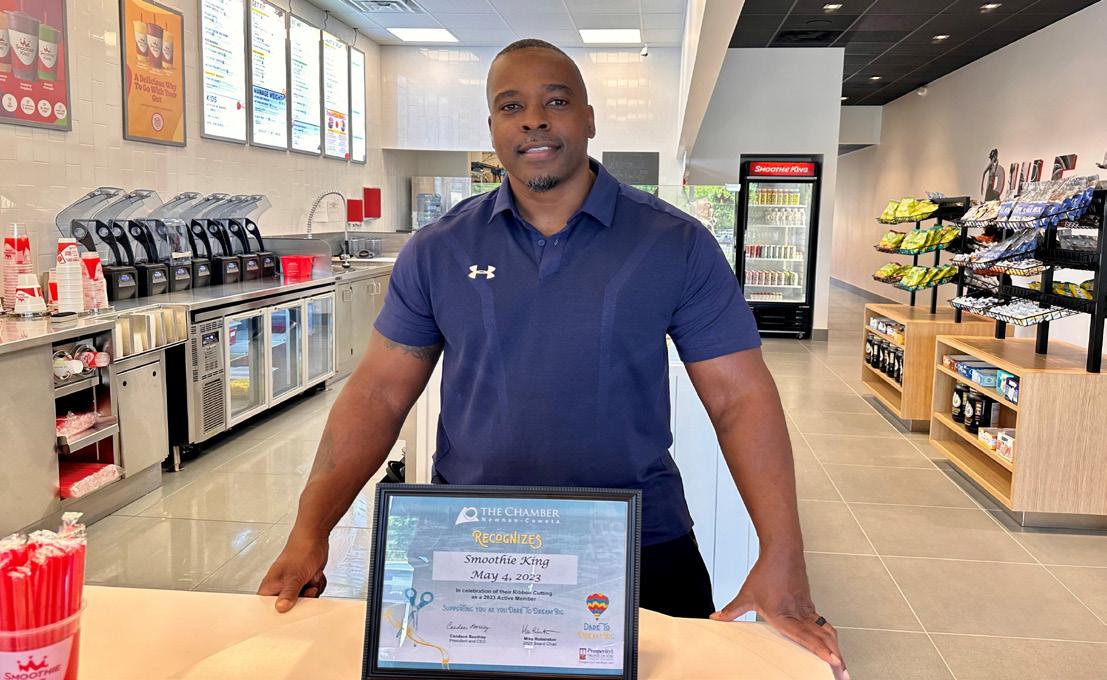
Franchise Wealth Consultants is dedicated to helping you achieve your entrepreneurial dreams and secure your financial future through business ownership.
Our Ideal Franchise Candidates Include:
• Aspiring entrepreneurs eager to control their future.
• Professionals aiming to transition from the corporate world.
• Investors seeking semi-absentee or passive income opportunities.
• Experienced operators looking to expand their portfolios.
• Veterans, public service professionals nearing retirement, and former corporate management professionals represent the largest segment of our franchisee base.
• Franchising offers a proven business model and brand recognition
• FWC helps you successfully navigate the world of franchising, which can be overwhelming if you are not familiar with the process.
• We have access to the largest inventory of top-performing franchises through the IFPG network, the largest franchise network available.
Our Consultations & Services
Why is it free? Our consultation comes at no cost to you because we’re compensated by the franchise companies—not by our clients. This means you get unbiased guidance and support, with your best interests as our top priority. So, there is not only no fee, but no obligation on your part.
• Always personalized recommendations and expert guidance
• We’ll help you find the perfect franchise that aligns with your lifestyle, personality, goals, and budget - at no cost to you
• Clear, honest answers to your questions
• Need to explore financing options for your franchise? We can connect you with trusted partners.
We’re more than just consultants. We are your strategic partner. Franchise







Homeland Magazine sat down with Clayton LiaBraaten, Senior Executive Industry Expert at Truecaller. Clayton is a USAF Airborne Reconnaissance veteran. He now has over two decades of experience in scam and fraud prevention. He provides insights on how veterans can protect themselves and their families against a new wave of digital and over-thephone threats.
Homeland Magazine: Clayton, why are veterans such a persistent target for scammers?
Clayton LiaBraaten: It comes down to two main factors: predictable income and our nature as service members. Scammers know that veterans often receive guaranteed government benefits, disability compensation, or pension payments on a reliable schedule.
But more insidiously, they exploit the “bond of service.” Veterans are trained to trust their leadership and their unit. We answer the call, literally. These social engineers weaponize that trust. They know if they sound authoritative or claim to be from the VA, a veteran will listen and comply to resolve the issue. It’s a psychological flank attack.
HLM: There’s a recent report on a surge in “VA Overpayment Scams.” What is happening there, and why is it so effective?
CL: This is a particularly cruel tactic because it attacks a veteran’s financial stability. The scammer contacts the veteran often via a spoofed number that displays “Department of Veterans Affairs” on caller ID and claims the veteran has been overpaid benefits. They insist that if the money isn’t refunded immediately, the veteran will lose their benefits or face legal action.
They use fear and urgency, which are classic indicators of a scam. They might claim a “clerical error” caused the overpayment and demand a wire transfer or, even more ridiculously, payment via gift cards or cryptocurrency to “balance the books.” It creates panic, and in that panic, people make mistakes.
HLM: What are the “red flags” that a veteran should look for to identify this scam?
CL: First, the VA will never demand you wire money, pay with Bitcoin, or send Apple gift cards. That is not how the U.S. government operates. If someone asks for that, it is 100% a scam. Hang up.
Second, real VA debt management is a slow, bureaucratic process. You would receive official mail, you would have rights to appeal, and you would have time. If someone on the phone is pressuring you to pay right now to avoid arrest or a benefits freeze, that is a hostile actor.
HLM: You’re a Senior Executive at Truecaller. How does the app fit into a veteran’s personal security detail?
CL: Think of Truecaller as your digital perimeter defense. In the military, we rely on intelligence to know understand the presence of enemy threats. Truecaller does the same for your phone. We have a community of over 450 million users acting as a global neighborhood watch, reporting bad actors in real-time.
When your phone rings, our AI identifies if the caller is legitimate or a potential threat. We can flag “likely spam” or “fraud” before you even pick up. We also have features like an AI Assistant that can screen calls for you, asking the caller to state their name and purpose while you read a live transcript. It allows you to verify the threat without exposing yourself to the social engineering on the other end of the line. It gives you the intel you need to decide whether to engage.
HLM: What is your final piece of advice for our veteran readers to keep their families safe?
CL: Trust, but verify. If you get a text or call claiming to be the VA, do not engage with that specific communication. Hang up. Go to the official VA.gov site, find the legitimate Debt Management Center number (1-800-827-0648), and call them yourself on a secure line.
For more information and how to safeguard against the new wave of threats visit Truecaller at www.truecaller.com

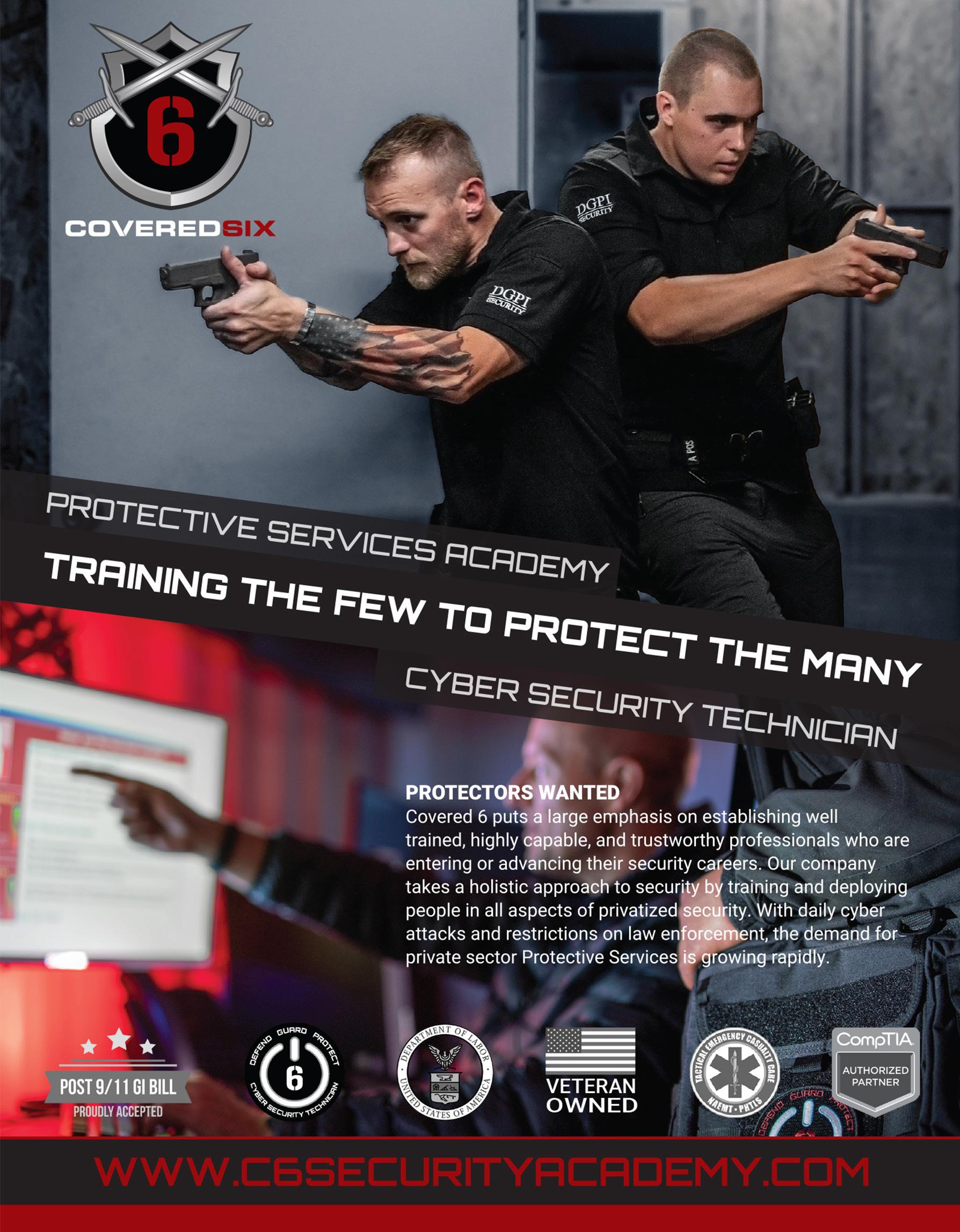
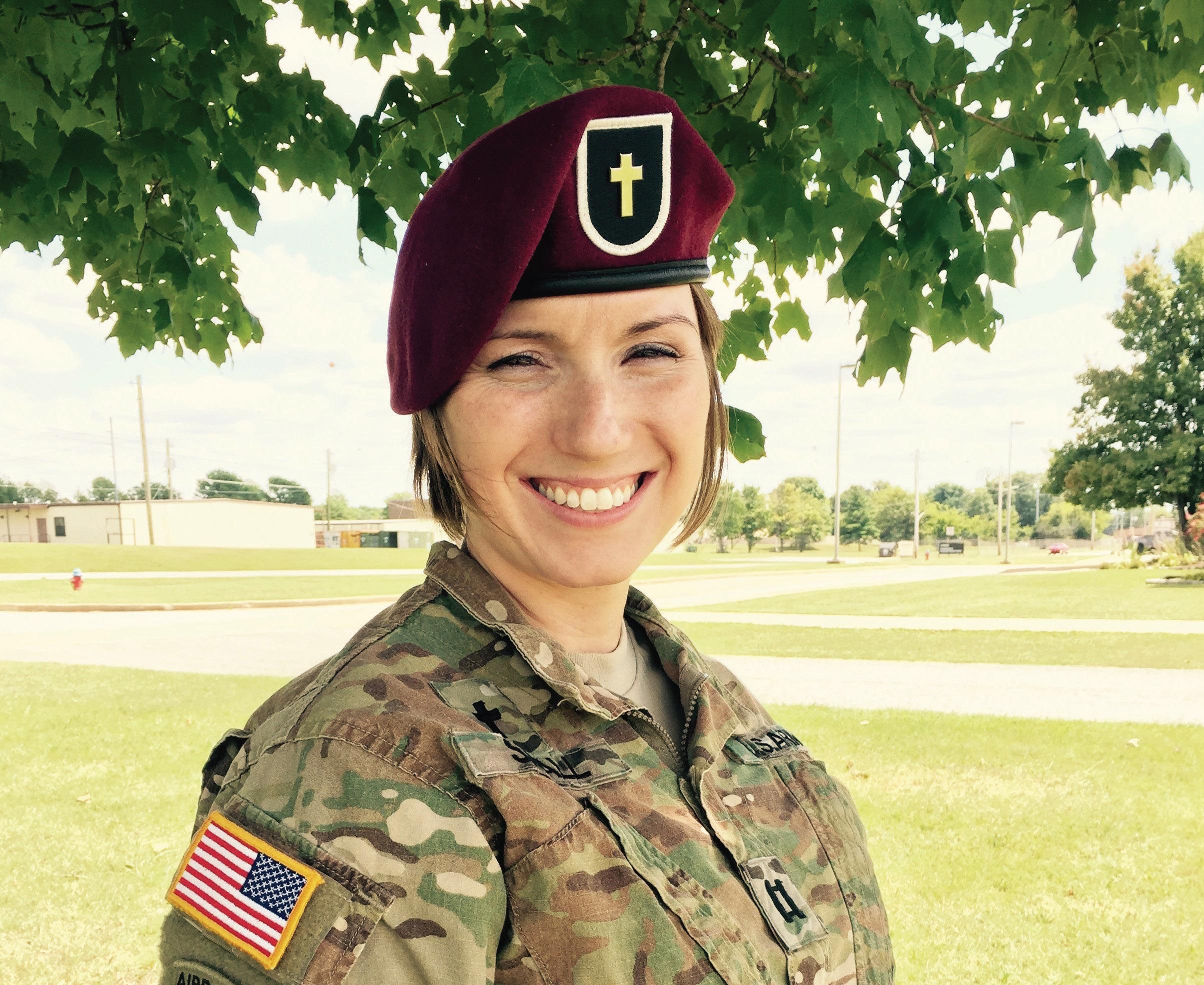







By Scott Hermann, CEO of IdentityIQ®
The holiday season is often a time of giving, especially for veterans and their families, who support causes close to their hearts. Sadly, scammers create fake charities to exploit this generosity. Holiday charity scams can feel particularly personal for military families, as fraudsters often prey on individuals’ goodwill toward service members and veterans. Here’s how to spot fake holiday charity scams.

Recognizing the warning signs of charity scams can help you avoid falling victim to fraud. Here are red flags to look out for:
1. High-Pressure Tactics to Donate: Real charities likely won't try to pressure you into donating immediately. If a representative insists you donate on the spot or says the need is “urgent,” it could be a scam. Scammers use this tactic to prevent you from having time to think, research, or seek advice.
2. Unfamiliar Charity Names: Many fraudulent charities use names similar to those of established organizations to trick donors. Before donating, do a quick online search to verify its legitimacy.
3. Lack of Transparency: Reputable charities are clear about their mission, finances, and how donations are spent. Fake charities, on the other hand, tend to be vague. If they avoid discussing details or providing proof of how donations are used, that’s a red flag.
4. Requests for Unusual Payment Methods: Scammers favor payment methods that are difficult to trace. Be cautious if a charity asks for gift cards, cryptocurrency, or direct wire transfers as donation methods.
Scammers often create websites or social media pages that look almost identical to those of real charities. Always ensure URLs begin with “https://” and look for a lock icon next to the URL to indicate the site is secure.
Taking a few precautions can help you steer clear of these scams:
• Research the Charity: Refer to reputable resources like the Better Business Bureau or other charity review websites before donating.
• Contact the Organization Directly: Avoid donating through third-party links and contact the organization yourself through a trusted email or phone number.
• Be Cautious of Payment Methods: Stick to secure, traceable payment options that offer protection against fraud, like credit cards.
• Look for Red Flags: A reputable charity won't shy away from answering questions or providing detailed information about their cause.
If you suspect you’ve been scammed, take steps to protect yourself. Report the incident to the Federal Trade Commission. Also, make sure you are protected with identity theft protection and credit monitoring services (www.identityiq.com/how-we-protect-you) to help you detect unusual activity, so you can take quick action to minimize losses.
Military members, veterans, and their families can begin protecting themselves now with IdentityIQ identity theft protection services. These services include identity and credit monitoring, real-time fraud alerts, device privacy and security, and $1 million in identity theft insurance, underwritten by AIG.

In appreciation of your service, IdentityIQ offers a 25% military discount to military members, veterans, and their families. For more information, visit www.identityiq.com/veterans

By Katie Lange ,
Every December, millions of families around the world track Santa’s Yuletide journey through the North American Aerospace Defense Command’s Santa Tracker. “NORAD Tracks Santa” is a holiday tradition that started from humble origins — and as a fluke — but has now grown into a massive volunteer operation.
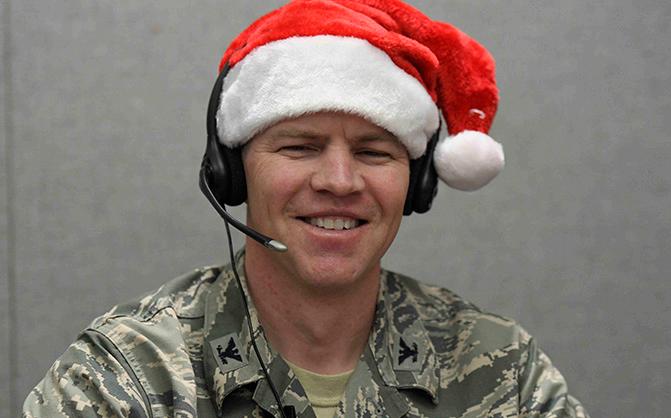
Air Force Col. Harry Shoup, the operations officer at North American Aerospace Defense Command’s precursor organization, answered a wrong-number call on Dec. 24, 1955, and began the tradition of NORAD tracking Santa.
(Photo By: DOD)
Kids across the U.S. have grown accustomed to following Santa’s journey by tracking his flight path online or by making a good, ol’-fashioned phone call to find out where he is. They’re also able to play games and watch videos of his progress through the mobile “NORAD Tracks Santa” app.
They can do all this thanks to the hard-working folks at NORAD, who start the task of tracking Santa each November when www.NORADSanta.org starts getting inquiries from families.

About 70 contributors help set up the site, apps and phone lines, while more than 500 uniformed personnel, Defense Department civilians, their families and supporters volunteer time on Christmas Eve to answer children’s questions on Santa’s whereabouts. While COVID-19 has reduced volunteers at traditional call centers, virtual call center capabilities will be able to pick up any slack.
Since NORAD is the protector of the skies over North America during the rest of the year, it’s specially equipped for this mission.
“Twenty-four hours a day, 365 days a year, NORAD defends North America by tracking airplanes, missiles, space launches and anything else that flies in or around the North American continent,” said Air Force Gen. Glen D. VanHerck, NORAD’s commander. “As we have since 1955, this Dec. 24th we are once again ready for our nofail mission of tracking Santa.”

NORAD’s powerful radar system, called the North Warning System, has 47 installations across Alaska and northern Canada. As soon as that radar system picks up on Santa departing from the North Pole, NORAD tracks him via globally-integrated satellites using their infrared sensors. Normally, those sensors allow NORAD to see heat from launched rockets or missiles. As Santa flies around the world, satellites track his position by detecting Rudolph’s nose, which gives off an infrared signature similar to that of a missile.
NORAD also tracks Santa using U.S. Air Force F-15, F-16, F-22 and Canadian Air Force CF-18 fighter jets. On Christmas Eve, fighter pilots rendezvous with Santa off the coast of Newfoundland to welcome him to North America. They escort him safely through North American airspace until he returns to the North Pole.
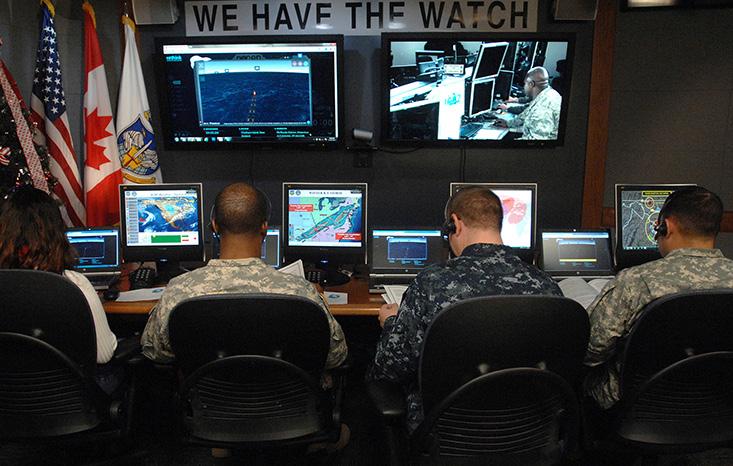
monitor phones and computers

The operation has become a well-oiled machine over the years, but it wasn’t always easy. In fact, the whole thing started by accident.
Back in 1955, the folks at the previously named Continental Air Defense Command Operations Center in Colorado were working a typical night shift when Air Force Col. Harry Shoup got a phone call from a child in Colorado Springs, Colorado. The boy had followed the directions in a department store’s newspaper advertisement that told children how to call Santa — except the number had been printed incorrectly and instead called the operations center.
Shoup could have been a Scrooge about the whole thing, but he wasn’t. He entertained the boy’s call as well as the rest of the calls that came through due to the misprinted number. Throughout the night, Shoup and his operators answered calls, kicking off a new tradition.
Air Force Col. Harry Shoup, the operations officer at North American Aerospace Defense Command’s precursor organization, answered a wrong-number call on Dec. 24, 1955, and began the tradition of NORAD tracking Santa. (Photo By: DOD)
The role of tracking the big guy rolled over to NORAD when it was formed in 1958, and it’s been getting more popular and more technologically-savvy ever since. Aside from calling in to talk, kids can now use social media and a mobile app to follow St. Nick. Virtual assistant Amazon Alexa and vehicle navigation service OnStar are also helping to track him, and the website NORADSanta.org offers a countdown clock, games and videos that are available in several languages.
The tracking of Santa is a holiday tradition around the world. In 2020, www.NORADSanta.org received more than 11 million visitors from 200+ countries and territories; call center volunteers answered more than 20,000 calls; Amazon Alexa was accessed more than 12.3 million times; and OnStar received about 12,400 requests to locate Santa. The @noradsanta Facebook page currently has 1.89 million followers, more than 206,000 follow along at @noradsanta on Twitter, and about 14,400 people follow @NoradTracksSanta_Official on Instagram.
Happy Tracking, Everyone!

NORAD Tracks Santa at Buckley Air Force Base, Colo. 2018. (Photo By: DOD)
The call center opens at 6 a.m. EST on Dec. 24. Kids can call 1-877-Hi-NORAD (446-6723) to find out where Santa is or use the above website, mobile app or social media. But officials warned that Santa only comes if children are asleep, so make sure they get into bed early so he doesn’t miss delivering to their house.