The Fast Track Fall 2016 Issue
WELCOME TO MED SCHOOL…
NOW WHAT? WILDERNESS
MEDICINE PRIMER
THE VERTICAL CUT:
PERIMORTEM C-SECTION
FIGHTING BACK AGAINST THE
OPIOID EPIDEMIC
An Emergency Medicine Publication
The Fast Track
Letter from the Editor
Contents
EDITORS-IN-CHIEF
Dear Fast Track Readers,
Presidential Messages....................................................................................................................................04
Dhimitri Nikolla, DO Tanner Gronowski, DO Veronica Coppersmith, DO Jacob Current, OMS-IV Christina Hornack, OMS-III
Welcome to the new year! Whether you are a brand new intern trying to just keep your head above water or you are a seasoned senior in the midst of trying to find your way into the job market for the first time, get ready for an exciting time! Myself? I am going into my senior year. It’s an amazing the last few months of residency.
Gabi Crowley Erin Sernoffsky
Before I go, I would like to bestow upon you one little bit of advice that I
John Downing, DO, President Drew Kalnow, DO, Vice President Tanner Gronowski, DO, Secretary Kaitlin Fries, DO, Treasurer Andy Little, DO, Immediate Past President Dhimitri Nikolla, DO Veronica Coppersmith, DO Cydney Godman, DO Daniel Engelberg, DO Moises Moreno, DO Adam Sadowski Chance Sims, DO James Bronson, DO SC BOARD MEMBERS
Tim Bikman, President Chris Falslev, Vice President James Mason, Secretary Andy Leubitz, Treasurer Cameron Meyer, Immediate Past President Taylor Webb Jarryd Reed Kevin McLendon Christina Hornack Jacob Current Katherine Haddad Ashley Griswold
Another Opioid Case?....................................................................................................................................07
and scary feeling all at once, but I am trying to embrace everything I can in
EDITORS
RC BOARD MEMBERS
AOBEM Open Letter.........................................................................................................................................06
feel applies to everyone in training. Regardless of whether you are finishing
Fighting Back Against the Opioid Epidemic...........................................................................................10 Improving the Quality of Pediatric CPR......................................................................................................14
up and can see the light at the end of the tunnel or you are just starting upon your journey and really have no idea what you are getting yourself into, please remember to find that one thing that makes you…. You. In the past few years you may have heard a lot about wellness and life balance. Some of you may have not heard a word about it because you were elbows deep in residency or studying in medical school. Either way, I want you to take a second and pause to think on this concept. What makes you happy? What makes you an individual? Whatever that is, make time for that event or exercise or person. In the midst of your darkest moments of medical school and residency, there may be times that the only thing that will keep you afloat will be that one thing. Over the course
The Verticial Cut.......................................................................................................................................................16 Welcome to Medical School. Now What?.................................................................................................19 Wilderness Medicine Primer..............................................................................................................................20 Medicine Abroad.....................................................................................................................................................22 Isolated Bandemia:What Should We Do with It?..................................................................................24
of residency, I have seen many different people have to deal with difficult and trying situations. I absolutely guarantee that the ones who handled
Medical Students Choose to Save a Community...and a Life.........................................................25
things the best were the ones who made time for themselves throughout the process. Whether you need to go on a long run five times a week or spend time making a home cooked meal every other day, find that one thing you can hang your hat on. Find that one thing that when you go home, hang up your stethoscope, take off your scrubs and are down to the
Are You Ready to be Pimped in the ER? Brain Injury Q&A’s...........................................................26 Chief Complaint: Chest Pain..............................................................................................................................33
bare bones of yourself you can latch onto and at the very least smile. If you do this, even when you are spread thin and struggling to stay afloat, you will have the ability to forge through and stay true to yourself. Over the course of the next year, really focus on this one thing. I promise it will reward you handsomely.
Cheers, Tanner Gronowski, DO Doctors Hospital Columbus, OH Editor-in-Chief
The Fast Track
PRINTING OF THIS ISSUE SPONSORED BY:
INTERESTED IN CONTRIBUTING? Let us know: FastTrack@ACOEP.org
10
FIGHTING OPIOID EPIDEMIC
20
WILDERNESS MEDICINE PRIMER
22
MEDICINE ABROAD
The Fast Track
The Fast Track
PRESIDENTIAL MESSAGE
Resident Chapter
Student Chapter
Greetings EM Residents,
Dear ACOEP Student Chapter,
Fall 2016
Fall 2016
PRESIDENTIAL MESSAGE
As the summer months fade away and we move into fall and winter, I hope your year is off to a great start! Every shift in the department I’m reminded of how lucky I am to be in this incredible field. I also feel that
I wanted to wish the best of luck to everyone as we begin another challenging, yet exciting, year as medical
every shift shows me a new disease or a new presentation of an old disease that reminds me of how much
students. To the first years, congratulations on taking such an important step towards becoming a physician.
there is still to learn.
To the second years, study hard and make the most of this time to develop a solid knowledge base of medicine. To the third years, prepare early for fourth year: begin writing your personal statement, submit
I’d like to share with you some of the major news within the ACOEP-RC.
applications for auditions/sub-internships early, take your board exams early, and be adaptable when your plans change. Finally, to the fourth years out on the interview trail, have confidence in the hard work you’ve
You will find in this issue an open letter to the AOBEM regarding the changes made earlier this year. We have
put in over the past three years and be safe in your travels.
heard from many of you loudly and clearly regarding these changes and will continue to advocate for you in any way possible. We strive to create an open line of communication between the resident stakeholders
What an amazing time to be a DO! Every day people are paving the way for us. More residency programs
and the AOBEM. We will keep you updated on future changes to the testing process as we are made aware
than ever are seeing the value in accepting DO students, the single accreditation is breaking down the
of them.
walls that hindered many of our predecessors from continuing on to fellowship training, and the number of osteopathic graduates is growing. I am proud and grateful to become a DO.
•
There are some exciting changes in the works within the Student and Resident Chapters. If you will be present at the Scientific Assembly, please join us on Wednesday, November 2nd for more information.
The single accreditation pathway has created many opportunities and challenges for us as osteopathic
Full details will be released after this meeting.
medical students. Along with your student board we have worked very hard this year, in conjunction with the Resident Chapter, to adapt to these issues. Come and join us the first week of November in wonderful
•
Our events at ACOEP’s Scientific Assembly take place on November 2nd and 3rd, with main ACOEP events
San Francisco, CA to see the exciting changes that we have made. We believe these changes will provide a
taking place from November 2-5th. Kevin Klauer, DO, EJD will be our keynote speaker on Wednesday
more beneficial experience for everyone involved and allow greater ability to adapt to whatever challenges
November 2nd. A co-sponsored EMRA Quiz Show as well as Airway Competition are just two of the other
lie ahead.
many exciting events. Please visit www.acoep.org/scientific for the full calendar of events. This year’s Scientific Assembly in San Francisco has the best line up of programing and opportunities ever •
My program, like many, are currently going through their ACGME applications. We recognize there may
seen for the student members. We have great speakers, an airway lab, a leadership academy hosted by Vital
be questions that you have as a resident member, and we hope to be an additional resource for you. We
Smarts, and one of the largest residency expos we have ever seen. Finally, for all those interested in running
have resident leadership whose programs have achieved their accreditation status and graduated their
for a national student board position, please join us for elections on Thursday November 3rd after the
first classes through the SAS. If there are any questions or concerns you have, please reach out to me or
Residency Expo.
any of our board members and we can point you in the right direction to get the answers you need. If you have any questions or concerns, please feel free to reach out to me personally. Please join us on our social media pages to stay up to date! We are active on Facebook and Twitter staying on top of the current literature and FOAMed activity. Follow us on Twitter @ACOEPRC.
“Success is the sum of small efforts repeated day in and day out” –Robert Collier
John Downing, DO
Sincerely,
ACOEP National Resident Chapter President
Timothy Bikman, OMS-IV
ACOEP Board of Directors
ACOEP National Student Chapter President
Midwestern University
WVSOM, Lewisburg, WV
Emergency Medicine
timbikman@gmail.com
@johntdowning
4
5
The Fast Track
The Fast Track
Alan Janssen, DO Chair, Board of Directors American Osteopathic Board of Emergency Medicine 142 E. Ontario, Chicago, IL 60611 Dr. Janssen,
ANOTHER OPIOID
CASE?
Fall 2016
Fall 2016
AN OPEN LETTER TO AOBEM FROM THE ACOEP RESIDENT CHAPTER
A 3rd Year Perspective on Addiction Medicine Today. The Economics, Legality, and Practical Rules as we Fight the Opioid Epidemic Andy Leubitz, MBA, OMS III
On behalf of the American College of Osteopathic Emergency Physicians Resident Chapter (ACOEP-RC) and all its members, we would like to discuss the decision to move Part 1 of the Board Examination from March to November. In the opinion of our resident members, this has been considered a significant impediment to obtaining emergency medicine board certification in a timely and reasonable manner. As you are aware, residents typically build their schedule a year in advance and moving this exam without appropriate notification is unacceptable. We have heard an outcry from our members, osteopathic emergency medicine residents, asking why this change was made and demanding a return to the previous schedule that AOBEM has historically used. Outlined in this letter is our opposition to this change. There is overwhelming frustration, both by the ACOEP-Resident Chapter Board and our membership, that we, the very constituents this change affects, were not consulted regarding the change in testing dates. Additionally, there has been no significant attempt by the AOBEM to explain or justify this major change. The timing of this change was incredibly unfortunate and in many cases disruptive for senior Osteopathic Emergency Medicine Resident Physicians. Many residents schedule time during their 4th year (Spring 2017) to prepare for and take the AOBEM Part I exam. The change of exam dates has created a significant scheduling disruption, and in most situations a financial burden as well. In some situations, this date change has cost residents the ability to have the expense of the Part I exam reimbursed by their training institution. Graduating osteopathic emergency medicine residents, having already completed their written boards, are further along in the certification process. Additionally, successful completion of the written boards can make a candidate more desirable to hire than those who have not progressed as far in their certification process. We would also be remiss in not addressing the larger concern of maintaining the identity of osteopathic emergency physicians with this change. With all traditional osteopathic emergency medicine programs moving towards ACGME accreditation, graduating residents will have the ability to choose which specialty certification they will pursue, either AOBEM or ABEM. With the change in Part I exam schedule, the AOBEM dates now mirror those of ABEM, and no longer provide a benefit to the osteopathic graduate for taking the Part I test. As such, we highly suspect the majority of graduating Emergency Medicine Residents will choose to participate in the ABEM board certification process once their programs have achieved ACGME accreditation. On behalf of the ACOEP-RC and its membership, we would like to engage in a productive conversation to address these concerns and look to restore the previous ABOEM Part I examination schedule. Sincerely, John Downing, DO
6
Andrew Kalnow, DO EMT-P
ACOEP-RC President ACOEP-RC Vice President
First Day
The Heroin Epidemic
My first day of my family medicine rotation was different than I expected. I walked into the private practice and immediately saw 40 patients in the waiting room. They had been there since 6:30 or 7 that morning and the clinic opened at 9 am. This was a walk-in clinic in downtown Columbus, OH with a large volume of patients, most with chronic conditions—the usual hypertension, diabetes, COPD, etc—but the striking thing was the amount of addiction medicine complaints. It felt like every other patient was a workman’s comp or ‘suboxone’ patient, the most common drug used to treat their addiction. I met the staff and since it was my first day, my preceptor was kind enough to take me out to lunch at a fast food joint next to the clinic. As we walked through the parking lot, he whispered that last month they had a break-in where the computers were stolen. A few months prior, there was a drive-by shooting,
If you have listened to the news at all in the past few years, you are or should be acutely aware that the United States is in ”an opioid epidemic.” We are seeing record numbers of patients using, and subsequently overdosing on opioids. The primary ones causing overdoses are stronger opioids like heroin and fentanyl3. This clinic’s providers, in addition to being a general family practice, also treat addicts who are trying to improve their lives with treatment—which consisted of counseling, drug screenings, social services, and medical treatment which usually include an opioid receptor agonist or partial agonist like buprenorphine and methadone.
Background and Easy Access to Pills The opioid story has deep roots in American medical history, but our story will focus on the 1995 introduction of OxyContin by Purdue Pharma. In the breakroom of the clinic during lunch my second week, the staff vividly remembers when the drug reps were in the office, showing off their dazzling new drugs. They pitched a pain pill with ”less than one percent” risk of addiction. Those studies showing <1% risk were looking at acute pain/use not chronic or prolonged use6. In 2007, four different companies pled guilty to criminal charges of misleading the public on their products’ addictive potential and were charged $624 million in fines6. Unfortunately, that was years later and the damage had already been done. Millions of patients were
THEY PITCHED A PAIN PILL WITH ”LESS THAN ONE PERCENT” RISK OF ADDICTION. but thankfully the staff was able to stabilize the patient as EMS was called. We carefully walked amongst the broken glass in the ally next to the restaurant. This was one of many practices working with the medically underserved. Like many places across the country, the office was taking care of some of the most vulnerable and most desperate patients with only a small group of providers.
7
The Fast Track
The Fast Track
Unfortunately, false advertising was just one of the many catalysts that created the opioid problem we see today. Though, of course it was not the only cause. In an effort to correct the problem, the government and medical community tried to dramatically restrict the amount of pain medications prescribed to patients, and that method became more popular as a weapon in the war on drugs in the early 2000’s. Sadly, this was too little too late. People were already hooked both mentally and physically. They were used to an easy fix for their pain, when really treatments like physical therapy, shorter durations of opioids, OMM4, or less addictive options like NSAIDs were more appropriate.4 Unknowingly, taking away that quick opioid fix was unintentionally setting them up for disaster. Patients who could not find relief anymore without their pills turned to another source. Doctor shopping became popular along with buying the pills illegally off the street. When those sources ran out, they turned to drugs like heroin which had become cheap and readily available on almost every street corner in America.
Why Heroin? Answer: Regulation and Capitalism During my personal experience working with addiction medicine, I learned the lesson that addiction crosses all socioeconomic and geographic lines. We had every subset of the general population: black and white, rich and poor,
SO, LIKE ANY OPEN MARKET, A DIFFERENT PLAYER ARRIVES TO GET MORE CUSTOMERS.
educated and not, able-bodies and handicapped, old and young, and everyone in-between. However, as pills like oxycodone and Percocet were becoming prescribed in lower amounts and less liberally, they became more expensive. The patient who was on ten 30 mg Percocets a day for pain, now was getting prescribed only three or four pills. So, if they could afford it, they bought from friends, doctor shopped, or bought on the street. The rough estimate of a drug’s value on the street is 1 mg = 1 dollar, and you can even use websites like www.StreetRx.com or www. streetdrugs.org for real time data on the street value of drugs. So, like any open market, a different player arrives to get more customers. In business this is known as ‘stealing share’, which means to find a collection or share of customers using one product and then try to get them to buy and use your own product. Heroin is cheap, easy to find, and highly addictive. A bag (usually two or three hits) costs about $5, according to many patient interviews. Note: the price of a pack of cigarettes is upwards of $7 in many states. So many of the patients we saw went through the same pathway: MVA or accident at work > Pain medication from a doctor > Addicted to pain meds > Dose is reduced or stopped > Tried to get more pills > Either couldn’t afford pills or tolerance to pills was too high > Used Heroin > Addiction to heroin.
Addiction and Treatment So how do people become addicts? This a topic that could go on and on and could include the pathophysiology, the positive and negative reward pathways, the mesolimibic dopamine system, and so on. In reviewing my patient population, about 60% of patients were in some type of accident usually MVA or work injury, and started on the pathway. About 30% of patients started using pills recreationally. And the other 10% of patients had other addictions previously, and then used pharmaceuticals and/ or heroin to fill the addiction. Patients entered this eye-opening practice from a clinic that treated addicted pregnant women, a detox program, or referred by a family member. Treatment consisted of urine drug screens, counseling, meetings (Alcoholics Anonymous or Narcotics Anonymous), and medication support. After getting clean and on treatment for a few months, almost 100% of patients said, ”this medicine buprenorphine saved my life,” ”I do not know how I got here,” or ”I could hardly recognize myself while I was using.” They all wished they never started using and they were so thankful to have a second chance at life.
8
The idea of a second chance at life is important here because we see the deadly side of drug overdoses far too often. Sadly, we are not able to see everyone in time. In the United States today, someone dies every 19 minutes from a drug overdose. Even with all of the attention addiction, heroin, and pain medication have been given over the past couple of years, people that are still using and in record numbers. One of the ways we have tried to combat the overdose death toll from rising is actually prescribing Narcan to police and to family members of users5. Narcan is essentially an opioid reversal agent that prevents the narcotics from slowing the respiratory drive and ensuing
increase with different exemptions and rules. In an effort to help combat the deficit in providers capable of treating opioid addiction, the Obama administration increased the limit of patients per provider to 200 and expanded insurance coverage, increasing addiction treatment coverage by $1.1 billion2 in June of 2016. Today, there are only approximately 30,000 doctors in the United States licensed to administer methadone or Suboxone. It is easy to see that we are still going to have a much smaller provider supply than the large demand needs.
Fall 2016
Fall 2016
taking the drugs and were now subsequently addicted.
Patients from the clinic told stories about other treatment
AS ONE PATIENT PUT IT, ”YOUR FIRST TIME THROUGH TREATMENT, YOUR FAMILY AND MOST OF YOUR FRIENDS ARE THERE FOR YOU. ONE RELAPSE LATER, AND MAYBE SOME OF YOUR FAMILY STAYS AROUND, IF YOU’RE LUCKY. AFTER THAT? NOBODY CARES, THEY THINK YOU’RE A FAILURE AND THAT IS EXACTLY HOW YOU FEEL.” potential fatal complications.
Economics, Legality, and Mortality of Addiction Treatment This is the part of the story that really got my attention, something I had never thought about before my time at the clinic. We know that there are millions of patients who need addiction counseling and treatment. We know all patients are different. Guidelines dictate that most patients should try to be weaned off treatment medication after 2 years, however this is not easy in a majority of patients. They are mentally and physically scared of going off treatment, because they know what happens if they relapse. As one patient put it, ”Your first time through treatment, your family and most of your friends are there for you. One relapse later, and maybe some of your family stays around, if you’re lucky. After that? Nobody cares, they think you’re a failure and that is exactly how you feel.” But seeking treatment is not that easy. The first barrier is finding a treatment center and transportation to that center on a monthly basis. According to one of the more popular companies that creates buprenorphine, there are only 173 providers that are able to prescribe the drug within a 100 mile radius of Columbus1. The way the laws are written and explained to me was that each doctor could only treat up to 100 patients at a time initially, and that number could only
facilities prior to coming to our program. They were being charged in excess of $200 per monthly visit, and that visit might be a group visit of up to 12 people for only a 10-minute session. Obviously this is not a best practice scenario. On further investigation, I found out that that particular clinic was investigated and shut down. But this happens all of the time. If there is a limited supply, people are willing to pay. Fortunately, there are programs designed for the underserved communities. The clinic I was working at accepted Medicare and Medicaid to help facilitate treatment of people with insurance.
Conclusion Addiction needs to be seen by doctors and health care providers as a disease. It is important for us, especially those still in training, to understand the history, background, and other mitigating factors behind addiction. If providers can see that treatment can work, they can take that experience and transfer it onto other providers and addicts and help them to know that there is a solution to this tragic epidemic.
Acknowledgements I want to thank everyone at the Ohio Family Practice Center for allowing me to work with them and share in their experience.
9
The Fast Track
The Fast Track
Fall 2016
Fall 2016
FIGHTING BACK AGAINST THE
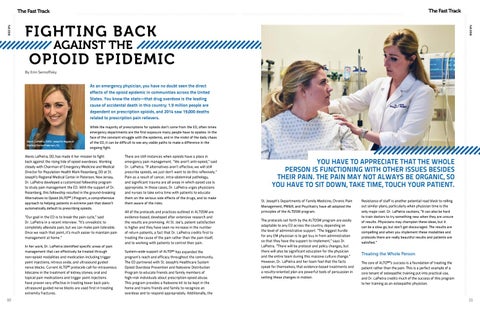
OPIOID EPIDEMIC By Erin Sernoffsky
As an emergency physician, you have no doubt seen the direct effects of the opioid epidemic in communities across the United States. You know the stats—that drug overdose is the leading cause of accidental death in this country; 1.9 million people are dependent on prescription opioids, and 2014 saw 19,000 deaths related to prescription pain relievers.
Alexis LaPietra, DOSt. Joseph's Regional Medical CenterPaterson, NJ
While the majority of prescriptions for opioids don’t come from the ED, often times emergency departments are the first exposure many people have to opiates. In the face of the constant struggle with the epidemic, and in the midst of the daily chaos of the ED, it can be difficult to see any viable paths to make a difference in the ongoing fight.
Alexis LaPietra, DO, has made it her mission to fight back against the rising tide of opioid overdoses. Working closely with Chairman of Emergency Medicine and Medical Director for Population Health Mark Rosenberg, DO at St. Joseph’s Regional Medical Center in Paterson, New Jersey, Dr. LaPietra developed a customized fellowship program to study pain management the ED. With the support of Dr. Rosenberg, this fellowship resulted in the ground-breaking Alternatives to Opioid (ALTOSM ) Program, a comprehensive approach to helping patients in extreme pain that doesn’t automatically default to prescribing opioids. ”Our goal in the ED is to break the pain cycle,” said Dr. LaPietra in a recent interview. ”It’s unrealistic to completely alleviate pain, but we can make pain tolerable. Once we reach that point, it’s much easier to maintain pain management at home.” In her work, Dr. LaPietra identified specific areas of pain management that can effectively be treated through non-opioid modalities and medication including trigger point injections, nitrous oxide, and ultrasound guided nerve blocks. Current ALTOSM protocols call for intravenous lidocaine in the treatment of kidney stones; oral and topical pain medications and trigger point injections have proven very effective in treating lower back pain; ultrasound guided nerve blocks are used first in treating extremity fractures.
10
There are still instances when opioids have a place in emergency pain management. ”We aren’t anti-opioid,” said Dr. LaPietra. ”If alternatives aren’t effective, we will still prescribe opioids, we just don’t want to do this reflexively.” Pain as a result of cancer, intra-abdominal pathology, and significant trauma are all areas in which opioid use is appropriate. In these cases, Dr. LaPietra urges physicians and nurses to take extra time with patients to educate them on the serious side effects of the drugs, and to make them aware of the risks. All of the protocols and practices outlined in ALTOSM are evidence-based, developed after extensive research and the results are promising. At St. Joe’s, patient satisfaction is higher and they have seen no increase in the number of return patients, a fact that Dr. LaPietra credits first to treating the cause of the pain rather than the pain itself, and to working with patients to control their pain. System-wide support of ALTOSM has expanded the program’s reach and efficacy throughout the community. The ED partnered with St. Joseph's Healthcare System Opioid Overdose Prevention and Naloxone Distribution Program to educate friends and family members of high-risk individuals about prescription opioid abuse. This program provides a Naloxone kit to be kept in the home and trains friends and family to recognize an overdose and to respond appropriately. Additionally, the
YOU HAVE TO APPRECIATE THAT THE WHOLE PERSON IS FUNCTIONING WITH OTHER ISSUES BESIDES THEIR PAIN. THE PAIN MAY NOT ALWAYS BE ORGANIC, SO YOU HAVE TO SIT DOWN, TAKE TIME, TOUCH YOUR PATIENT. St. Joseph’s Departments of Family Medicine, Chronic Pain Management, PM&R, and Psychiatry have all adopted the principles of the ALTOSM program. The protocols set forth by the ALTOSM program are easily adaptable to any ED across the country, depending on the level of administrative support. ”The biggest hurdle for any EM physician is to get buy in from administration so that they have the support to implement,” says Dr. LaPietra. ”There will be protocol and policy changes, but there will also be significant education for the physician and the entire team during this massive culture change.” However, Dr. LaPietra and her team feel that the facts speak for themselves, that evidence-based treatments and a results-oriented plan are powerful tools of persuasion in setting these changes in motion.
Resistance of staff is another potential road block to rolling out similar plans, particularly when physician time is the only major cost. Dr. LaPietra cautions, ”It can also be hard to train doctors to try something new when they are unsure of results. Physicians may champion these ideas, but it can be a slow go, but don’t get discouraged. The results are compelling and when you implement these modalities and protocols there are really beautiful results and patients are satisfied.”
Treating the Whole Person The core of ALTOSM’s success is a foundation of treating the patient rather than the pain. This is a perfect example of a core tenant of osteopathic training put into practical use, and Dr. LaPietra credits much of the success of this program to her training as an osteopathic physician.
11
Treating the whole person goes beyond treatment modalities, and while prevention is of upmost importance, it is also critical to offer support services to patients who are already struggling with addiction. A key pillar of ALTOSM is an emphasis on mental health and addiction support. One such successful partnership is with Eva’s Village, a local community group that offers outpatient addiction treatment and recovery services. Every patient who is treated for an overdose also meets with a peer counselor from Eva’s Village, this is a person who has experienced addiction and worked through rehab. The goal is to encourage patients to go directly from discharge to Eva’s Village to enroll in a treatment program. These peer counselors have a significantly higher capture rate than physician, social workers, nurses or other medical professionals presenting the same information.
12
Dr. LaPietra is adamant that working collaboratively with these patients is as important as any treatment they receive. ”It can be very frightening, and it’s important for us to be sympathetic and gentle as we work with people who are already stigmatized and marginalized. Addiction is a disease. These people are in the shadows and are pushed to the side of society and they don’t have much. For a white coat to walk in the room and lecture to them isn’t effective, but to have someone come in and be on their level allows for a significant amount of comfort. We need to embrace them and treat them like human beings who have a disease.” The opioid epidemic has devastated families and communities across the country, and a multifaceted attack is necessary in fighting back. The ALTOSM Program is striking a blow at the epidemic, focusing on prevention through alternative and often times more effective pain management treatments; access to recovery services; and a major cultural shift in our relationship to opioids.
CLINICAL APPLICATIONS OF THE ALTOSM PROGRAM Headache/ • Metoclopramide, Ketorolac, IV fluids, Migraine Sumatriptan If <50% relief then, • Magnesium, Valproic Acid, Dexamethasone If <50% relief then, • Haldol If <50% relief then, • OBSERVATION with neuro consult Extremity Fracture or Dislocation
• Nitrous oxide + Intranasal Ketamine Set- up for block • Ultrasound Guided Regional Anesthesia
Musculoskeletal Pain
• Ibuprofen + Acetaminophen • Lidocaine or Diclofenac Patches • Cyclobenzaprine or Valium • Trigger Point or other soft tissue injection
Fall 2016
Fall 2016
”Going through the osteopathic curriculum there was always a focus on the person and appreciating intervention and how that may affect the person as a whole,” she says. ”You have to appreciate that the whole person is functioning with other issues besides their pain. The pain may not always be organic, so you have to sit down, take time, touch your patient. I really appreciate the osteopathic principle of touching the patient, sympathize, empathize, sit eye-level. I advocate for a full exam of the back, palpating and mapping out pain, if you can identify trigger points we have an intervention that works wonders.”
OUR PHYSICIANS LOVE WORKING IN TEXARKANA!
The Fast Track
The Fast Track
CHRISTUS St. Michael Health System • 60,000 annual ED volume • Award-winning hospital in a beautiful setting with excellent specialty backup • Challenging mix of trauma, critical care, pediatrics, and general medicine • Scribes and NP/PA support • Physician-owned group offering great benefits • Tort reform and no state income tax!
Lumbar • Ibuprofen + Acetaminophen Radiculopathy • Cyclobenzaprine or Diazepam • Gabapentin • Lidocaine patch • Ketamine Renal Colic
• Toradol + Tylenol + IVF • Cardiac Lidocaine 1.5 mg/kg IV, max 200 mg
(512) 610-0315 lisa@eddocs.com
13
The Fast Track
The Fast Track
Dhimitri Nikolla, DO, AHN Saint Vincent Hospital, Erie, PA
INTRODUCTION: Pediatric cardiopulmonary arrest (PCA) is a rare event; it occurs out-of-hospital in about 8.04 per 100,000 personyears compared to 126.52 per 100,000 person-years in adults1. As expected, the mortality is high; one study found one month survival of pediatric out-of-hospital cardiac arrest (OHCA) to be 10.5%, while another study found survival to discharge of pediatric in-hospital cardiac arrest (IHCA) to be 31.3%2,3. Achieving higher rates of survival is dependent on many factors in the chain of survival, but the performance of good quality cardiopulmonary resuscitation (CPR) has been shown to be directly associated with survival. In this article, we will define quality CPR in the pediatric patient, review some studies linking certain aspects of CPR with survival in PCA, and review some adjuncts to improve CPR performance.
QUALITY: When a PCA occurs, we often dedicate a tremendous amount of time and resources to give that child the best chance at survival. Despite this, the quality of CPR delivered in PCA is frequently poor even at a major pediatric hospital4,5. As seen in Tables 1 and 2, ”Excellent CPR” for the pediatric patient is defined as CPR that meets the recommended targets for all the following variables: compression rate, depth, fraction, and residual leaning force5. Despite professional training and the addition of real-time audiovisual feedback, ”excellent CPR” occurs as little as 8% of the time5. Recent changes in the American Heart Association (AHA) guidelines for pediatric CPR reflects the recent literature on these CPR performance variables and will hopefully translate into improved PCA outcomes.
COMPRESSION RATE AND DEPTH: The AHA has recently placed an upper limit on their recommended chest compression rate for pediatric CPR; the new recommendation is a rate of 100-120/min6. Like many therapies in pediatric medicine, this recommendation was extrapolated from the adult literature. Idris, et al. found in
14
Table 1 Definitions of Pediatric CPR Performance Variables5
Hellevuo, et al. found in 170 adult patients who experienced IHCA that compression depths >6cm were associated with increased frequency of iatrogenic injuries. Injuries found included rib fractures, sternal fractures, hematoma or rupture of the myocardium, splenic injury, stomach injury, mediastinal bleeding, and pneumothorax10. Although this study was conducted in adults, it is reasonable to assume that children would be at the same or greater risk of iatrogenic injury with these excessive depths. Therefore, the AHA placed an upper limit on their recommended chest compression depth for pediatric CPR. The new recommendations are depths of 4cm in infants, 5cm in children, and at least 5cm in adolescents but no greater than 6cm6.
PERFORMANCE VARIABLE
COMPRESSION-ONLY VS CONVENTIONAL:
their prospective, observational trial of 6,399 adults in OHCA that a compression rate of 100-120/min was associated with the highest survival to discharge. Surprisingly, higher rates were associated with worse survival to discharge, and about 25% of arrests had average compression rates ≥120/min. A possible explanation for this was that excessive compression rates were associated with reduced compression depths. In the compression rate category of 120-139/min, half of patients had depths <38mm7.
DEFINITION
Compression Rate Number of compressions per minute Compression Depth
Depth of each compression
Compression Fraction
Percent of time during the resuscitation that compressions are taking place without interruption
Residual Leaning Force
Percent of compressions with more than 2.5kg of residual weight from leaning on the chest between compressions
Table 2 Definition of ”Excellent CPR” for the Pediatric Patient5
PERFORMANCE VARIABLE TARGET Compression Rate
100-120/min
Compression Depth
≥50mm
Compression Fraction
>80%
Residual Leaning Force
<20%
Although compression-only CPR has been recommended for lay rescuers resuscitating adults, the AHA continues to recommend conventional CPR with compressions and ventilations for PCA6,11. Goto, et al. found in their observational study of 5009 pediatric OHCA a significantly greater one-month survival in pediatric patients who received conventional CPR compared to compression-only12. Although the literature on this topic is limited to observational trials with many limitations and confounding variables, the findings are largely consistent across studies2,12. In addition, the majority of PCAs have a non-cardiac, likely pulmonary, etiology, compared to adults making conventional CPR with ventilations theoretically superior2,6,12.
Fall 2016
Fall 2016
Improving the Quality of Pediatric CPR
Although the Idris, et al. study did not include children, a recent observational trial of 89 PCAs by Sutton, et al. found that average chest compression depths of ≥ 51mm were associated with improved 24-hour survival compared to depths <51mm8. Since compression rates in simulated pediatric CPR can be too high up to 39% of the time, it is reasonable to place an upper limit on compression rates to preserve adequate compression depths since depth is associated with survival in PCA9. However, compression depths that are too deep can also be harmful.
percentage of compressions with an adequate rate without a change in depth. This was primarily due to a reduction in the percentage of compressions that were too fast: 39% without the metronome to 21% with the metronome9. Similarly, Sutton, et al. found a significant improvement in the percent of chest compressions at the target rate and the percent of time ”excellent CPR” was delivered when a feedback device was used during eight pediatric IHCA5.
THE QUALITY OF CPR DELIVERED IN PCA IS FREQUENTLY POOR EVEN AT A MAJOR PEDIATRIC HOSPITAL.
METRONOME AND FEEDBACK DEVICES: While metronomes deliver signals to guide chest compressions and ventilations, feedback devices measure variables such as compression rate and depth, and simultaneously provide real-time feedback to the providers. Data on the use of metronomes and CPR feedback devices in PCA is limited. Adult studies have found improved quality of chest compressions, but no association with patient outcomes13,14. Zimmerman, et al., in their simulated pediatric CPR manikin study, found a significant improvement in the
Although these devices improved pediatric CPR performance variables, the quality of CPR is often still imperfect. It is unclear why, but several factors may impede metronome and feedback device efficacy including provider fatigue, distractions, and lack of training or familiarity with the devices9,15. Despite these limitations the AHA does recommend use of feedback devices in pediatric CPR when available6.
CONCLUSION: Good quality CPR is essential to improve survival in PCA; however, the delivery of pediatric CPR is often poor quality. Recent literature associating new compression rate and depth targets with survival has prompted new AHA recommendations. Although studies are limited in PCA, metronomes and feedback devices are reasonable adjuncts to improve pediatric CPR quality, but their efficacy has limitations as well.
15
The Fast Track
The Fast Track
David L. Wolf, DO Clinical Professor Michigan State University College of Osteopathic Medicine
”Rescue 33 calling Henry Ford Wyandotte requesting physician control” ”Go ahead EMS-1” ”Rescue 33 to Henry Ford Wyandotte, be advised we are currently en route, ETA four minutes. We have a 26-year-old pregnant female in cardiac arrest. Cardiopulmonary Resuscitation currently underway” What if you are the only physician that stands between saving an unborn baby and its mother? One in 30,000 ongoing pregnancies may end up in a similar situation. (Morris S, Stacey M. Resuscitation in pregnancy. BMJ 2003; 327: 12779.) Would you find yourself hesitating or, promptly proceeding with the decision in making the vertical cut, to deliver a baby? Could you compose yourself enough as a physician during these critical moments? Perimortem cesarean sections have the potential of being a lifesaving tool that has the potential of restoring life in a mother at the brink of death and rescue her unborn baby. Difficulty arises with confidence in making the life-saving incision due to the extreme rarity of this event. What is a perimortem cesarean section? When is this procedure indicated? What is the basic protocol as discussed by Dr. David Wolf, obstetrician/gynecologist. A perimortem cesarean section, is an emergency surgical procedure performed on a pregnant woman who has had cardiopulmonary arrest where there is a possibility of unsuccessful cardiopulmonary resuscitation. This emergent procedure is conducted in hopes to save the life of the unborn child, and its mother.
16
During the April 30, 2016 ACOEP Student Symposium, Dr. Wolf presented a recent case study of a young pregnant woman who was discovered by her husband in cardiac arrest at their home. He discussed this case, in hopes of bringing a greater awareness to a life-saving procedure within a medical community of rising physicians and helping to break down the barrier that anxiety causes in this situation. Dr. Wolf passionately described the events that took place while weaving in suggestions that could have increased the likelihood of survival of the mother and baby. A perimortem cesearen should be advised as soon as cardiopulmonary arrest has been diagnosed. The young woman was transported to the ED where a trauma team awaited her, most of whom had never had the opportunity to perform a perimortem c-section. She was whisked into the emergency room with chest compressions in progress. The trauma team found themselves propelled into a situation unfamiliar to them. Chaos and anxiety clouded the room. Critical moments were lost when a decision was made to conduct a bedside ultrasound to determine gestational age and viability of the unborn child. A simple physical exam to assess the fundal height of the uterus should have
A perimortem cesarean section is an emergency surgery that is performed when the pregnant mother is near death or already clinically pronounced dead. Perimortem cesarean sections are usually performed as a result of maternal cardiac arrest resulting from both obstetric and non-obstetric causes. The patient needs to be 24 weeks gestation or more, and the surgery should be performed within four to five minutes to ensure the possibility of survival for both mother and child.
Establishment of Protocol for a Perimortem Cesarean Section Once a diagnosis has been established that a gravid woman is in cardiac arrest, efforts should quickly move towards the direction of performing an emergency perimortem cesarean section. Without further delay, cardiopulmonary resuscitation should be executed in hopes to restore circulation. Simultaneously while conducting cardiopulmonary resuscitation, the mother should be tilted 30 degrees on her left lateral side to displace the gravid uterus off of the inferior vena cava. The pregnant uterus consumes an abundance of maternal blood and therefore in obstetric emergencies, anoxia is of great concern in the pregnant woman. If circulation has been established, then the mother should be transported to ICU and stabilized. If efforts have failed to restore circulation, the decision to perform perimortem
cesarean delivery should be contemplated to increase chances of survival of the baby. In the attempt to save time, the gestational age of the baby is determined by measuring in centimeters from the pubic symphysis to the fundus of the uterus. Twenty-four weeks is the minimal gestational age that the fetus can survive outside of the uterus.
Fall 2016
Fall 2016
Theresa M. Sitto OMS-I, MS Michigan State University College of Osteopathic Medicine - Macomb University Campus;
been performed rather than a bedside ultrasound. Time was also expended while desperately searching for the appropriate surgical supplies. Furthermore, additional time was lost when the decision to perform a transverse cut was made instead of a critical emergent vertical abdominal cut. This incision is a vertical midline incision of the linea alba, which allows for accelerated access into the peritoneal cavity. This decision left the baby without oxygen for a longer period of time which may have contributed to a declined neurologic status. In the end the mother did not recover and was pronounced dead; the baby was born alive, yet was in critical condition and later died in the hospital due to complications from the situation.
Making the Vertical Cut First Rule: Place your fear and anxiety aside. Take hold of your shaky hands and make the vertical cut. ”The hardest part is not getting the supplies ready; the hardest part is making the call and making the vertical cut,” stated Dr. Wolf. To perform a perimortem c-section he suggested that an obstetrical kit needs to be available. See Perimortem Cesarean Section Kit.
Perimortem Cesarean Section Kit OB Kit Gauze sponges Toothed Forceps #10 Scalpel Cord Clamps Bulb Syringe Hemostats Retractors (If possible) 2 umbilical clamps Suction Suture Towels Large Scissors (bandage scissors preferred) OB attending / residents Neonatology Suction device with suction catheter Packing gauze Foley Catheter (to drain bladder) Antiseptic Solution Most importantly - the decision to make a vertical incision is paramount. The incision is made with a #10 blade from the umbilicus to the pubic symphysis. Scissors need to be large and with a blunt end to minimize any damage that may occur to the baby. Simultaneously, while removing the baby, CPR is continued to increase the cardiac output to the mother and to increase the survival rates of both the mother and the baby. Once the baby has been delivered hopefully the obstetrical team would have arrived to the ED to close the abdomen and the neonatal team would have been present
REHEARSE AND REHEARSE A PERIMORTEM CESAREAN DELIVERY FREQUENTLY, JUST LIKE HOW A PILOT IS CONSTANTLY REHEARSING A CRASH LANDING. 17
The Fast Track
The Fast Track
Time is of the essence, the longer the fetus remains in utero the greater the neurological deficit, due to a greatly decreased oxygen consumption.
How to Prepare Be confident, stay calm and simulate the scenario often. This situation has to be one of the most frightening and anxiety provoking scenario that a physician may come in contact with. Despite its rarity, the likelihood of a positive outcome for both the mother and baby is to continually rehearse the sequence of events of a perimortem cesarean delivery. Dr. Wolf ended his engaging presentation by leaving the audience with an invaluable pearl, ”Rehearse and rehearse a perimortem cesarean delivery frequently, just like how a pilot is constantly rehearsing a crash landing. Finally, I want to end with this quote from William Shakespeare, ‘All things are ready, if our mind be so.’”
Welcome to Medical School.
NOW WHAT? Kortnee Koziara, OMS3
National Medical Education Representative, Council of Osteopathic Student Government Presidents Edward Via College of Osteopathic Medicine, Virginia Campus
”Congratulations, you’ve just been accepted to ____ College of Osteopathic Medicine!” are words every aspiring
Fall 2016
Fall 2016
to care for the baby.
physician desires to hear. An onslaught of emotions follow soon after realizing the huge endeavor you are about to embark on. Having gone through this process myself, I can assure you that every recently accepted medical student feels similarly. Initially, you are astounded that all those late night study sessions, all those community service hours, and all those extracurricular activities in undergraduate have finally paid off. After the astonishment wanes, you start to become nervous. You ask yourself, 'How will I study?” ”Will I have enough time for everything?” ”What if I don’t do well?” Then it is time to start and that is where the impending doom sets in. At the conclusion of the first week, you start to wonder, ”What have I gotten myself into?” ”There is no possible way that I will become a DOCTOR.” Interestingly enough, most of us who start this incredibly demanding journey will finish successfully, despite having doubted ourselves from the very beginning. To combat the new stresses, I’d like to share a few helpful tips on how to better focus your efforts:
1 2 3
Continue to do what brings you joy. Too many times, students become overwhelmed with their coursework and start to solely focus on academics. Remember, if you cannot take care of yourself, how will you effectively take care of your patients? Don’t compare yourself to classmates. This is easier said than done. In fact, now as a third year student I realize that it took me the better part of our classroom years to accept this. Everybody is different. Every single one of us has unique strengths and weaknesses that will contribute to our futures, and each of us have different goals. Remember you were accepted for a reason. It is easy to get caught up in the daily stressors, the exams or lectures, and forget why you are becoming a doctor. We all have our own innate driving force pushing us to pursue medicine, it is crucial to remind yourself of this fundamental passion frequently to keep sane amidst the grueling schedule.
4
Don’t feel pressured to get involved all at once. We all know that getting into medical school was challenging, but we are slowly finding out that getting out of medical school may be just as tough! With all of the checkboxes ahead of us, it can be tempting to try and tackle these as soon as possible but don’t! Check out a few clubs on campus, go to a few meetings, but try to focus on getting your feet wet and adjusting to your new role as a medical student before you sign up for too much responsibility. After all, you have four years to do it all.
All in all, medical school is mentally, physically, and emotionally challenging. The process should not be taken lightly, yet it is no competition for those of us with dreams of becoming physicians.
18
19
The Fast Track
The Fast Track
Fall 2016
Fall 2016
WILDERNESS MEDICINE
PRIMER Jacob Current OMS IV Fellowship in the Academy of Wilderness Medicine Candidate Ohio University Heritage College of Osteopathic Medicine
First, if you are reading this as a new medical student I have to congratulate you! You have overcome one of the biggest hurdles in your medical career and joined an increasingly select group of individuals. Welcome to the wild and wonderful world of medicine. Also, I must further applaud you for finding this publication and for your interest in emergency medicine. We EM-bound students and residents are surely biased, but this is one of the most exciting, cutting-edge, and overwhelmingly awesome fields of medicine. Even further down the rabbit hole, for those of you that have any interest in wilderness medicine, saludos mis amigos! Now I must admit that wild med is my ultimate passion, and I wanted to compile a short list for you all to share a few opportunities and resources to make the most of your medical school experience. If you are newer to the field or simply looking for more information, I would encourage you to check out the page of our MD colleagues of the Emergency Medicine Resident Association (EMRA) and its respective Wilderness Medicine Division at www.emra.org/committees-divisions/ Wilderness-Division. You can find a whole stockpile of information describing what wilderness medicine is, elective opportunities, continued training, and even some advice on how to incorporate this skill set and knowledge base into your future career. Another great place to explore is http://wms.org. The Wilderness Medical Society (WMS) is the founding and governing body of wilderness medicine. Looking through their site you will find a myriad of opportunities including student electives, exotic conferences, and further education and certifications available in wilderness medicine like the Fellowship in the Academy of Wilderness Medicine (FAWM) and the Diploma in Mountain Medicine (DiMM). Next, I would recommend joining your school’s emergency and wilderness medicine clubs/chapters. If your club has a
20
wilderness medicine group that’s great! Tag along on any and all adventures that you can pack into your schedule. If a club or chapter is not available at your school, don’t fret! You can take the initiative to start your own group or pair your fledgling club with some of the other established ones at your institution. The beauty of wilderness medicine is that its basic principles of adaptability and everyday applicability mean that anyone can start learning basic splints, survival techniques, or the nuances of the common emergencies of limited-resource medicine. Wilderness medicine does not require any ACLS, PALS, ATLS, emergency medicine boards, or other official certifications to get started. The principles of basic medical management, awareness, and improvisation are as applicable to the accomplished mountaineer ED doc at Everest base camp as they are to the lay hiker that enjoys strolls through the metro parks.
wilderness medical scenarios with mountain biking, trail running, canoeing, orienteering, and all sorts of other awesome outdoor activities. The events are made to test both your medical skill set as well as your fitness and outdoor recreational skills. To say these are events are fun would be an understatement. Check out www.medwar.org/index.htm for more info, and sign you and your friends up for one of these eye-opening adventures. Wilderness medicine is an awesome field and one that will surely broaden your horizons in medicine. Further, it will add an interesting note to your future applications and selfbranding in the ever increasingly competitive world of emergency medicine. Good luck on your journey through medical school. It will be tough, but just like time spent in the mountains, the hard climb only makes the view from the top that much sweeter.
Also, no medical school wilderness medicine to-do list would be complete without mentioning MedWARs. The Medical Wilderness Adventure Race or MedWAR events are a series of adventure races across the country that combine live
21
The Fast Track
The Fast Track
Fall 2016
Fall 2016
MEDICINE ABROAD Cameron Meyer, DO Doctors Hospital, Columbus, OH
Like any normal American I constantly complain about the cost of healthcare, having to wait a month to get in to see a specialist, and how my feelings are hurt when an ER doc won’t give a Percocet script for my stubbed toe. And like any normal American, I take for granted the fact that my kids get regular well-child checkups and that my mother takes a pill every day to keep her blood pressure under control. The reality is that it is a luxury to have the access to the healthcare that we complain so much about.
The World Health Organization estimates a shortage of 4.3 million physicians, nurses and health care workers worldwide. They also estimate that just to barely cover the basic needs of a certain population, there needs to be a ratio of at least 1 physician for every 1,000 people. The reality is that many countries do not even come close to this ratio. Also, that number assumes that the people have the means to physically get to a physician. In many countries, this is not the case. The Philippines is one of these countries that struggles greatly to meet the needs of its people. Most Filipino physicians that opt to remain in their country practice in large cities. Unfortunately, the majority of the Filipino population does not reside in large cities, and many people are forced to travel by boat to get to a physician. To try to help encourage physicians to practice in underserved area of the Philippines, the government tries to help supplement the income of these physicians. The few physicians that do practice in underserved areas typically are only able to do so periodically because of financial difficulties. One such underserved area is the island of Guimaras. Guimaras is a small island that is only accessible
22
by boat. Last year as a fourth year medical student I was asked to help organize the first medical mission trip to this area. With the help of the local government and a few local contacts, we were able to secure a small hospital (at least that is what they called it) to run our clinic. The OR doubled as a dining hall and commons area for the staff, the OB/ GYN room was used for storage, and the emergency ”room” had a chair and a bed with no other equipment. The pharmacy had two shelves of medications, and there were three patient rooms. There was no A/C in the building, no running water, and half the time the building didn’t have power. Our medical team consisted mainly of ACOEP members. We had an attending, a resident, four medical students, a nurse, and a few untrained volunteers. For 10 days this last February our grossly undertrained team in less than ideal conditions was able to make a huge difference in this community. Each day we would arrive to our hospital with a large gathering of Filipinos waiting to see us. Most of them had smiles on their faces, excited to have a once in a lifetime opportunity to see a physician. On average our team saw 150 people a day. While many of the complaints we saw were caused from dehydration or viral infections, we were able to help people who really needed medical attention. We were able to drain abscesses, treat serious skin infections, and perform minor procedures. We were able to diagnose, start treatment, and arrange for surgeries for things such as thyroid cancer, breast
cancer, and hydrocephalus among others. We were able to distribute much needed antibiotics, prenatal vitamins, and children’s vitamins, and we were also able to provide diabetes and hypertension screening and education. Thanks to gracious donors such as The Foundation for Osteopathic Emergency Medicine, members of the ACOEP Board of Directors, and a few US hospitals, we were able to secure medications and supplies for our trip. We were also able to provide much needed equipment to the island’s main clinic such as infant and adult scales, wheelchairs, air conditioning units, a Doppler ultrasound machine, suture material, IVs, bandages, and gloves. If it weren’t for these individuals and groups our trip would not have been possible. We would not have been able to serve this people in the way they needed. Even though we were able to make at least a small difference in the lives of the people of Guimaras, those of us on the medical team felt as though the Filipino people changed our lives more than we changed theirs. The people we saw in our clinic told us stories of their life trials that helped us gain perspective in our own. Our free time was spent getting to know the locals. Our lunch breaks were spent playing games with the locals in the shack across the street or playing basketball on the court next door. Each night we would invite locals to our hotel to eat with us and sing karaoke. We were able to get to know not just their medical problems, but we were able to get to know the
type of people they are. The Filipino people helped us see that love and compassion leads to happiness. They gave a better perspective on the things that matter most in life. As physicians and student physicians we are blessed with unique gifts. As we use these gifts to serve underserved areas of the world we not only bless the lives of others, but we will also receive blessings in return by interacting with truly humble people. Each member of our team was able to make strong friendships with the people of Guimaras, and all of us will undoubtedly be a part of mission trips there and to other underserved places in the future.
23
The Fast Track
The Fast Track
Fall 2016
Fall 2016
ISOLATED BANDEMIA:
What Should We Do with It?
Christine DeFranco DO and Terrance McGovern DO MPH St. Joseph’s Regional Medical Center, Paterson, NJ
Almost immediately, emergency physicians know what to do with most abnormal lab results. If a patient’s hemoglobin is 4.5 g/dL, they need a transfusion. If their troponin is 12.3 ng/ml, they are having cardiac infarction. If their lactic acid is 7.5 mmol/L, something terrible is going on. What if the only abnormality they have on their blood work is bandemia? Does it matter if their bands are 6%, 15%, or 32%? Or, are they all treated equally? We recently had a case that challenged us. The patient was a 48-year-old male discharged from a nearby hospital two days prior for pancreatitis. After experiencing continuous pain, the patient decided to come to the emergency department (ED) for evaluation. The patient’s physical exam was not very impressive with only mild epigastric abdominal tenderness. He was afebrile, normotensive, and not tachycardic. His blood work revealed only elevated bands of 24% with a normal WBC at 9.8K/mm3, normal complete metabolic profile, and a steadily decreasing lipase now at 102 U/L. After receiving intravenous fluids and toradol for pain, the patient was feeling well and eager to be discharged. At this juncture, we were presented with the question: do we admit the patient or discharge him with close outpatient follow-up? We decided to discharge the patient. In the past, there was a notion that band counts were not very useful in identifying infections.1 Bands are not the most specific indicator for infection because they can be elevated for many different reasons: seizures, toxic ingestions, metabolic abnormalities, inflammatory processes, and tissue damage.2 Drees et al. sought to determine the utility of bandemia in patients with normal white blood cell counts in a retrospective cohort study in 2012. They separated their sample of patients who were admitted with normal white blood cell counts (3,80010,800 per mm3) into either normal (≤10%), moderate (11%-19%) or high (≥20%) bands.2 After adjusting for age and vital signs, they found a significant association of increased bands with the rate of positive blood cultures and in-hospital death when compared to patients with normal band counts, (Table 1).
24
Identifying and treating sepsis early in its course is essential for decreasing its morbidity and mortality.3 There is a desire to determine an early marker that we could use to identify
septic patients as early as possible, hopefully even in the ED setting. Could this marker be bandemia? In a post hoc analysis of previously collected data on 289 patients that presented to the ED that had positive blood cultures, 80% of the patients had bandemia with a normal temperature and 79% had bandemia with a normal WBC.4 They suggest that bandemia (>5%) may be an early indicator of patients with an occult infection.4 While identifying patients that may end up having positive blood cultures is important, arguably more important are the patient related outcomes associated with bandemia. In 2015, Shi et al looked at patients who were discharged from the ED that had bandemia (>10%).5 They evaluated whether the patients that were discharged from the ED had any negative clinical outcomes, defined as a return to the ED within seven days or death within 30 days. For patients that had band counts >30% there was a five-fold increase in the rate of death at 30 days but no significant change in revisits to the ED within seven days when compared to patients that had band counts ≤ 30%.5 In retrospect, our disposition of the patient should have been admission. The patient returned to the ED less than 12 hours later with hemorrhagic pancreatitis and was intubated during his inpatient stay. Fortunately, the patient had a good prognosis. This is an example of only one case, but it highlights the importance of bandemia, whether it is the only abnormality or not. Having bands >10% should make all Emergency Physicians hesitant to discharge these patients, despite their clinical appearance, and lean towards an inpatient admission with early initiation of empiric antibiotics.
ADJUSTED OR (95% CONFIDENCE INTERVAL)
Positive blood culture Moderate bands (11-19%) 3.8 (2.0-7.2) High bands (≥20%) 6.2 (3.2-11.8) In-hospital death Moderate bands (11-19%) 3.2 (1.7-6.1) High bands (≥20%) 4.7 (2.4-9.0) Table 1. Adjusted odds ratio (OR) for bandemia and positive blood cultures and in-hospital death2
Brandon Wilkinson OMSII, Patrick Herling OMSII Katherine Haddad, OMSIII, and Juan Querubin, OMSIII
On March 13, 2012, Tennessee enacted the ”Carmen
Burnette Act of 2012.” Carmen Burnette worked as an emergency medical technician, paramedic, field training officer, and EMS Cardiopulmonary Resuscitation (CPR) Coordinator in Putnam County, TN. To honor Carmen Burnette for her dedication to CPR training, Tennessee Governor Bill Haslam signed into law a mandate requiring Tennessee High School students to receive ”hands on” CPR training in addition to cognitive skills. Tennessee’s unfunded mandate makes it one of 34 states requiring every high school student to have CPR training prior to graduation. Support for the mandate arises from the tremendous survival benefit that bystander CPR provides to cardiac arrest victims. According to the American Heart Association, if CPR is initiated within a few minutes of cardiac arrest, the skill can double or triple a person’s chance of survival. In contrast, a patient’s chance of survival decreases by 10% for every minute CPR is not performed. Since 70% of out-ofhospital cardiac arrests happen at home, and 46% of people do not receive immediate help until professionals arise, these mandates provide the perfect community assistance for emergency resuscitation1 (AHA 2016). A key issue is that these mandates are unfunded in Tennessee and many other states across the country. CPR instructors are not free and the Heartsaver cards alone cost approximately $3 each before the institutional fee. Add that for every high school student, and this mandate becomes out of reach for even the wealthier counties in every state. Witnessing an opportunity, third year medical student Juan Querubin personally donated teaching materials and established a free community CPR bystander education initiative, with faculty support from Howard Teitelbaum, Rick Slaven, and Johnathan Greene, at Lincoln Memorial University-Debusk College of Osteopathic Medicine (LMUDCOM) in rural Appalachia. The program trained LMUDCOM’s own medical students as Basic Life Support (BLS) instructors to decrease the cost and increase the CPR
training in the community. In its first year, the LMU-DCOM CPR Initiative trained 38 medical students, requiring each instructor to teach high school students in Claiborne County, Tennessee. Ultimately, LMU-DCOM students educated over 500 area high school students and 15 educators within the first six months, and provided a community benefit valued above $20,000 to the school district. As news spread about the program, counties surrounding LMU-DCOM requested aid to ensure that the Carmen Burnett Act of 2012 in Tennessee, and SB33 in Kentucky mandates are fulfilled. Expectations for this upcoming year are to certify at least 50 LMU-DCOM students as BLS instructors to teach in six counties in Tennessee, Virginia, and Kentucky reaching approximately 3,000 high school students. Research shows that newly trained bystanders retain CPR fundamentals just as well as those with prior CPR training, therefore increasing the available pool of competent CPR bystanders, and supporting medical students’ role as viable community CPR educators2. As this initiative moves forward, local EMS reports examining the instances of bystander CPR, as well as research data within counties, will determine the success of this program and measure community impact as well as out of hospital cardiac event survivability in the rural community. In rural areas, emergency providers can take up to 40 minutes until first contact with a patient. Increasing the chance of survival shouldn’t be only placed in professional hands. As medical students and current co-directors of the LMU-DCOM CPR Initiative, we believe that every bystander witnessing a cardiac arrest should have the knowledge and awareness to take action. Our hope is the LMU-DCOM CPR Initiative sparks other medical schools and emergency organizations to join in the fight to save a life.
25
The Fast Track
The Fast Track
PIMPED
Brain Injury Q&A’s
Ashley Griswold, OMS-III, MS, NREMT-P
”Pimping” (to be ”Put In My Place”) is a long-term tradition in academic medicine. Whether you are used to the grilling or possibly nursing an old, post-traumatic wound from getting schooled by your attending, here are some questions and their answers to better prepare you. Scenario #1: A 7-year-old male presents to your emergency department (ED) with a closed head injury. The patient’s mother says that he was in gym class playing volleyball when he was ”close-lined” by the net causing him to strike his head against the floor. In the ED, he complains of 9/10 headache and nausea. On physical exam, the patient appears somnolent and your HEENT exam reveals PERRL, + nystagmus, +hemotympanum.
A 42-year-old male presents to the ED after a motor vehicle collision where he was unrestrained with ejection. Upon arrival by EMS, the patient had a GCS of 12, was attempting to ambulate, and was confused. En route to the ED, the patient’s mental status improved. But upon arrival, the patient now has a GCS of 7 and is only arousable to pain with a dilated right pupil that sluggishly reacts to light. Q: ”If I were to tell you that the patient has a brain bleed, which bleed is most likely and why?” A: The patient most likely has an epidural hematoma. He experienced a lucid interval, which was followed by a sudden decompensation.
Q: ”What do you expect the head CT to show?” A: Considering the hemotympanum, there could be an ipsilateral basilar skull fracture.
Q: ”Which vessel is most likely involved with an epidural hematoma?” A: Middle Meningeal Artery
The CT brain you ordered reveals a depressed basilar skull fracture with pneumocephalus with no overlying hematoma. The patient was admitted overnight for observation.
Q: ”What do you expect to see on the CT brain?” A: A hyperdense collection in a lens shape.
volume ultimately decreasing intracranial pressure. This relationship between intracranial pressure, cerebral perfusion pressure, blood, volume of CSF, and brain tissue is also known as the Monro-Kellie Doctrine. The ideal PCO2 level to reach is 26-30mmHg.
Fall 2016
Fall 2016
ARE YOU READY TO BE IN THE ER?
Scenario #2:
Q: ”What is the ideal intracranial pressure?” A: Target intracranial pressure is under 20mmHg.
Scenario #3: A 65-year-old man presents to the ED after a ground level fall with altered level of consciousness. His wife tells you that he fell in the bathroom last night and insisted he was fine, but then he started acting sluggish and is ”just not himself.” In the ED, the patient appears confused and slow to respond. On physical exam, an expanding left-sided scalp hematoma is noted. Q: ”What kind of brain bleed do you expect this patient to have?” A: Subdural hemorrhage because of the slow onset of symptoms.
Q: ”What do you recommend we do next?” A: CT brain.
Q: ”Where does the blood collect in a subdural hemorrhage?” A: The potential space between the dura and the arachnoid mater.
Q: ”Aren’t you worried about radiating such a young child?” A: Yes, however, the PECARN pediatric head injury/trauma algorithm suggests that we should CT his brain.
Q: ”What is the source of the bleeding?” A: Most often, a subdural bleed stems from breaking of the cortical bridging veins. Q: ”What risk factors would predispose someone to a subdural hemorrhage?” A: Any anti-coagulant medications, chronic alcohol abuse, repeated head trauma, repeated falls, brain atrophy, and hemophilia. Q: ”What are some of the medications we look for?” A: Anti-platelet agents: aspirin and clopidogrel. (Reversal Agent: Desmopressin or dDAVP) Vitamin K antagonist: warfarin. (Antidote: Vitamin K) Gunner content: • Mount Fuji sign – the presence of air between the tips of the frontal lobes suggestive of tension pneumocephalus. • Battle’s Sign – bruising over the mastoid process of the temporal bone. This occurs 24 hours or more following a basilar skull fracture.
Q: ”What should we do next?” A: Rapid Sequence Intubation (RSI) to manage airway & breathing. Raise the head of the bed to 30 degrees. Consider hyperventilation as well as an osmotic diuretic such as mannitol or hypertonic saline to decrease any increased intracranial pressure. Order a CT brain and page neurosurgery.1 Q: ”What is the mechanism of hyperventilation?” A: Hyperventilation reduces PaCO2, which creates cerebral vasoconstriction resulting in a decrease of cerebral blood
26
Direct thrombin inhibitor: Dabigatran. (Antidote: Idarucizumab) Direct factor Xa inhibitor: rivaroxaban, apixaban, edoxaban. (Antidote: none available yet) Q: ”When is a transfusion indicated?” A: Platelet transfusions are indicated in the actively bleeding patient, or a patient requiring an invasive procedure (LP, -centesis, etc) with platelet count of 50,000/microL. Transfusion is indicated if the platelet count is less than 100,000/microL in patients with disseminated intravascular
27
Save the Date!
The Fast Track
The Fast Track
Fall 2016
Fall 2016
November 3, 2016, 7:00pm • San Francisco, California
coagulation, central nervous system bleeds, or patients requiring neurosurgery or other major surgeries. Platelet count <10,000/microL is indication for transfusion in a stable patient without active bleeding. Blood transfusion is indicated if the hemoglobin is 7 g/dL or lower. The latest literature suggests that when performing a massive blood transfusion that the patient receive a 1:1:1 ratio of fresh frozen plasma to platelets to packed red blood cells.2 Q: ”What electrolyte abnormality should we monitor in patients who require transfusions?” A: Calcium. There is a large amount of citrate in the transfused blood that will bind plasma free ionized calcium in the recipient creating hypocalcemia. Hypocalcemia can be corrected by either calcium chloride or calcium gluconate.
Presented By Adapted from: D. L. Kasper, A. S. Fauci, S. L. Hauser, D. L. Longo, J. L. Jameson, J. Loscalzo: Harrison’s Principles of Internal Medicine, 19th Edition.
FURTHER RECOMMENDED READING:
Friends 28
P
• GFAP detected in blood identifies TBI
• PECARN head injury/trauma algorithm
• http://onlinelibrary.wiley.com/doi/10.1111/acem.12795/full
• NIH Stroke Scale
• Glascow Coma Scale (GCS)
• Modified Rankin Scale
• IMPACT outcome calculator: http://www.tbi-impact. org/?p=impact/calc
29
The Fast Track
The Fast Track
Fall 2016
Fall 2016
Assistant/Associate Residency Program Director
The Emergency Medicine Department at Penn State Milton S. Hershey Medical Center seeks energetic, highly motivated and talented physicians to join our Penn State Hershey family. Opportunities exist in both teaching and community hospital sites. This is an excellent opportunity from both an academic and a clinical perspective.
Emergency Medicine Core Faculty
As one of Pennsylvania’s busiest Emergency Departments with 26+ physicians treating over 70,000 patients annually, Penn State Hershey is a Magnet® healthcare organization and the only Level 1 Adult and Level 1 Pediatric Trauma Center in PA with state-of-the-art resuscitation/trauma bays, incorporated Pediatric Emergency Department and Observation Unit, along with our Life Lion Flight Critical Care and Ground EMS Division.
Pediatric Emergency Medicine Faculty
For additional information, please contact: Susan B. Promes, Professor and Chair, Department of Emergency Medicine, c/o Heather Peffley, Physician Recruiter, Penn State Hershey Medical Center, Mail Code A590, P.O. Box 850, 90 Hope Drive, Hershey PA 17033-0850, Email: hpeffley@hmc.psu.edu
30
We offer salaries commensurate with qualifications, relocation assistance, physician incentive program and a CME allowance. Our comprehensive benefit package includes health insurance, education assistance, retirement options, on-campus fitness center, day care, credit union and so much more! For your health, Hershey Medical Center is a smoke-free campus. Applicants must have graduated from an accredited Emergency Medicine Residency Program and be board eligible or board certified by ABEM or AOBEM. We seek candidates with strong interpersonal skills and the ability to work collaboratively within diverse academic and clinical environments.
The Penn State Milton S. Hershey Medical Center is committed to affirmative action, equal opportunity and the diversity of its workforce. Equal Opportunity Employer – Minorities/Women/Protected Veterans/Disabled.
31
The Fast Track
The Fast Track
Fall 2016
Fall 2016
Chief Complaint:
Chest pain Kaila Pomeranz, OMSIV Midwestern University AZCOM
Visit Us at
TABLE 18
Come See Us and Experience New Opportunities to Connect with Leaders in Emergency Medicine! EXPAND, ENHANCE AND GROW WITH EMA!
What are the ”killers?”
What is the HEART score?
• ACS or MI
• Risk of Major Adverse Cardiac
What can cause an elevated troponin?
• Pulmonary Embolism
Events within 6 weeks
• Non-ACS cardiac events
• Esophageal Rupture
• Risk stratification
causing heart damage: Acute
• Cardiac Tamponade
• History, EKG, Age, Risk factors,
PE, Pericarditis, Myocarditis,
• Tension Pneumothorax
Troponin
Heart failure
• Aortic Dissection
• +2/1/0 points for each
• Renal Failure
category, totaling 10 points
• Sepsis
maximum
• Rhabdomyolysis
What do we do first? • IV, O2, Monitor
What does the HEART score mean? What do we want to order?
• Nobody is ”zero” risk
• EKG
• 0-3 Points: .9-1.7% risk of adverse
• CXR
cardiac event within 6 weeks
• Troponin
• 4-6 Points: 12-16.6%
• What brings it on? • Does it radiate? • Is it gradual or sudden in onset?
What is a low risk cause of chest pain?
Shortness of breath, diaphoresis,
• CT chest • Angiography
• Musculoskeletal
• CXR
32
• Where is it?
• 7-10 Points: 50-65%
What are our options for imaging?
EMA, headquartered in Manhattan Beach, CA, is a premier provider of physician and practice management services for 20+ Emergency Departments that treat over 700,000 patients each year. For more information, please visit us at: www.ema.us
What do we want to know about your patient’s chest pain?
• Associated symptoms – nausea?
• Bedside ultrasound
33
The Fast Track
The Fast Track
Fall 2016
Fall 2016
References 1. Indivior. Find a doctor and see if SUBOXONE Film is an option for
6. Atkins DL, Berger S, Duff JP, et al. Part 11: Pediatric Basic Life Support and Cardiopulmonary Resuscitation Quality: 2015 American Heart Association Guidelines Update for Cardiopulmonary Resuscitation and Emergency Cardiovascular Care. Circulation
you. https://www.suboxone.com/treatment-plan/find-a-doctor/
2015;132(18 Suppl 2):S519-25.
2. Kounang, N. (2016, June 2). Obama announces new moves to fight
7. Idris AH, Guffey D, Pepe PE, et al. Chest Compression Rates and Survival Following Out-of-Hospital Cardiac Arrest. Crit Care Med. 2015;43:840-848.
REFERENCES FROM PG 7: ANOTHER OPIOID CASE?
drug abuse. http://www.cnn.com/2016/03/29/health/obamawar-on-drug-abuse/ 3. Kounang, N. (2016, August 25). Surge in fentanyl cases fuels opioid epidemic. Retrieved September 01, 2016, from http://www. cnn.com/2016/08/25/health/dea-fentanyl-increase-cdc/ 4. McGerald, G., DO, Dvorkin, R., MD, Levy, D., DO, Bair, J., DO, Fil, L., DO, Segerivas, D., DO, . . . Yens, D., PhD. (n.d.). Will the Use of
Osteopathic Manipulative Treatments on Patients with Headache in the Emergency Department Result in Decreased Pain? Lecture presented at FOEM Oral Abstract, Accessed via http://www.foem. org/files/Oral_abstract.pdf. 5. U.S. Food and Drug Administration. (2015, November 18). Retrieved September 01, 2016, from http://www.fda.gov/ NewsEvents/Newsroom/PressAnnouncements/ucm473505.htm 6. Zee, A. V. (2009). The Promotion and Marketing of OxyContin: Commercial Triumph, Public Health Tragedy. http://www.ncbi.nlm. nih.gov/pmc/articles/PMC2622774/
REFERENCES FROM PG 14: IMPROVING THE QUALITY OF PEDIATRIC CPR 1. Atkins DL, Everson-Stewart S, Sears GK, et al. Epidemiology and outcomes from out-of-hospital cardiac arrest in children: the Resuscitation Outcomes Consortium Epistry-Cardiac Arrest. Circulation 2009;119(11):1484-91. 2. Goto Y, Maeda T, Goto Y. Impact of dispatcher-assisted bystander cardiopulmonary resuscitation on neurological outcomes in children with out-of-hospital cardiac arrests: a prospective, nationwide, population-based cohort study. J Am Heart Assoc 2014;3(3):e000499. 3. Andersen LW, Berg KM, Saindon BZ, et al. Time to Epinephrine and Survival After Pediatric In-Hospital Cardiac Arrest. JAMA 2015;314(8):802-10. 4. Sutton RM, Niles D, Nysaether J, et al. Quantitative analysis of CPR quality during in-hospital resuscitation of older children and adolescents. Pediatrics 2009;124(2):494-9.
8. Sutton RM, French B, Niles DE, et al. 2010 American Heart Association recommended compression depths during pediatric inhospital resuscitations are associated with survival. Resuscitation 2014;85(9):1179-84. 9. Zimmerman E, Cohen N, Maniaci V, et al. Use of a Metronome in Cardiopulmonary Resuscitation: A Simulation Study. Pediatrics 2015;136(5):905-11. 10. Hellevuo H, Sainio M, Nevalainen R, et al. Deeper chest compression - more complications for cardiac arrest patients? Resuscitation 2013;84(6):760-5.
REFERENCES FROM PG 16: THE VERTICAL CUT
REFERENCES FROM PG 25: MEDICAL STUDENTS CHOOSE TO SAVE A COMMUNITY
1. Dr. David Wolf, DO - ACOEP Student Symposium
1. American Heart Association ® (AHA). 2016. http://cpr.heart.org/ AHAECC/CPRAndECC/AboutCPRFirstAid/UCM_473210_About-CPRFirstAid.jsp.
2. Emergency Medical Services: Clinical practice systems oversight (2nd edition) - volume 1: Clinical aspects of EMS; David C. Cone; Janice J. Brice, Theodore R. Delbridge, J. Brent Myers - Wiley Publishers, 2015) 3. ”Perimortem Cesaren section for maternal and fetal salvage: concise review and protocol” Lior Drukker, Yael Hants, Einav Sharon, Hen Y. Sela and Sorina Grisaru-Granovsky 4. BJOG - An International Journal of Obstetrics and Gynecology ”Cardiac Arrest in pregnancy: Increasing use of perimortem caesarean section due to emergency skills training” A. Dikman, CMA Huisman, M. Smit, JM Schute, JJ Zwart, JJcan Rosmalen, D. Oepkes published January 12, 2010 Perimortem Flow Chart Protocol Reference: ”periortem cesaren
11. Kleinman ME, Brennan EE, Goldberger ZD, et al. Part 5: Adult Basic Life Support and Cardiopulmonary Resuscitation Quality: 2015 American Heart Association Guidelines Update for Cardiopulmonary Resuscitation and Emergency Cardiovascular Care. Circulation. 2015;132:S414-S435.
section for maternal and fetal salvage: concise review and protocol”
12. Kitamura T, Iwami T, Kawamura T, et al. Conventional and chest-compression-only cardiopulmonary resuscitation by bystanders for children who have out-of-hospital cardiac arrests: a prospective, nationwide, population-based cohort study. Lancet 2010;375(9723):1347-54.
REFERENCES FROM PG 24: ISOLATED BANDEMIA
13. Kirkbright S, Finn J, Tohira H, et al. Audiovisual feedback device use by health care professionals during CPR: a systematic review and meta-analysis of randomised and non-randomised trials. Resuscitation 2014;85(4):460-71. 14. Bohn A, Weber TP, Wecker S, et al. The addition of voice prompts to audiovisual feedback and debriefing does not modify CPR quality or outcomes in out of hospital cardiac arrest--a prospective, randomized trial. Resuscitation 2011;82(3):257-62. 15. Abella BS, Edelson DP, Kim S, Retzer E, Myklebust H, Barry AM, O'Hearn N, Hoek TL, and Becker LB. CPR quality improvement during in-hospital cardiac arrest using a real-time audiovisual feedback system. Resuscitation. 2007;73:54-61.
Lior Drukker, Yael Hants, Einav Sharon, Hen Y. Sela and Sorina Grisaru-Granovsky
2. Juan Querubin; Stephanie Wick, MS; Eden Hamayoun, MS; Matthew Robinson, MS; Jeanna Ashman; Gregory W. Cox, MS; Mitchell Hunter; Katherine Haddad; Stephanie Taing, MS; Johnathan Greene, BSN, MBA; Rick Slaven, MSP, NREMT; Howard Teitelbaum, DO, PhD, MPH. Cardiopulmonary Resuscitation (CPR) Instruction by Osteopathic Medical Students to Laypersons, Middle School, and High School Students in a Rural and Underserved Community - A Preliminary Report. 74th Annual Association of Prevention Teaching and Research Conference. Albuquerque, NM. March 13, 2016.
REFERENCES FROM PG 26: ARE YOU READY TO BE PIMPED IN THE ER? 1. Hemphill, JC & Phan, N. Management of acute severe traumatic brain injury. In: UpToDate, Post TW (Ed), UpToDate, Waltham, MA. (Accessed on May 31, 2016.) 2. Hess, JR. Massive blood transfusion. In: UpToDate, Post TW (Ed), UpToDate, Waltham, MA. (Accessed on May 31, 2016.)
1. Andron MJ, et al. Band neutrophil counts are unnecessary for the diagnosis of infection in patients with normal total leukocyte counts. Am J Clin Path. 1994;102:646-649. 2. Drees M, et al. Bandemia with normal white blood cell counts associated with infection. The American Journal of Medicine. 2012;125:1124.e15-114.e15 3. Gaieski DF, et al. Impact of time to antibiotics on survival in patients with severe sepsis or septic shock in whom early goaldirected therapy was initiated in the emergency department. Crit Care Med. 2010 Apr;38(4):1045-53. 4. Seigel T, et al. Inadequacy of temperature and white blood cell count in predicting bacteremia in patients with suspected infection. The Journal of Emergency Medicine. 2012;42(3):254-259.
REFERENCES FROM PG 33: CHIEF COMPLAINT: CHEST PAIN Backus BE, Six AJ, Doevendans PA. Kelder JC, Steyerberg EW, Vergouwe Y. Prognostic Factors in Chest Pain Patients. Critical Pathways in
Cardiology. 2016;15(2):50-55. doi:10.1097/hpc.0000000000000075. Kontos MC, Diercks DB, Kirk JD. Emergency Department and Office-Based Evaluation of Patients With Chest Pain. Mayo Clinic
Proceedings. 2010;85(3):284-299. doi:10.4065/mcp.2009.0560. Korff S, Katus HA, Giannitsis E. Differential diagnosis of elevated troponins. Heart. 2006;92(7):987-993. doi:10.1136/hrt.2005.071282. Tintinalli JE, Cline D. Tintinalli's Emergency Medicine Manual. New York: McGraw-Hill Medical: 2012.
5. Shi E, et al. Clinical outcomes in ED patients with bandemia. American Journal of Emergency Medicine. 2015;33: 876-881.
5. Sutton RM, Niles D, French B, et al. First quantitative analysis of cardiopulmonary resuscitation quality during in-hospital cardiac arrests of young children. Resuscitation 2014;85(1):70-4.
34
35
Ownership matters.
Never back down when it comes to ownership. At US Acute Care Solutions, we whole-heartedly believe that physician ownership empowers us to deliver the best patient care and the best solutions for our hospital partners. Every USACS physician becomes an owner in our group, no buy-in. To secure a future where patient care is always first, we’ve aligned with partners who share our vision and passion, becoming one of the largest, fastest growing, physician-owned and led groups in the country. Secure your future and the future of patient care. Ownership matters, join USACS.
Own your future now. Visit usacs.com or call Darrin Grella at 800-828-0898. dgrella@usacs.com
Founded by APEX, TBEP, MEP, EPPH and EMP