
ALSO INSIDE British
• Book offers • Best puzzles ANTIQUE COLLECTING VOL 57 N0.8 FEBRUARY 2023 Toy Story A lifetime collection of automata goes under the hammer WRITE MOVE FEBRUARY 2023 IN THE FRAME THE ARTIST AT THE HEART OF A 500-YEAROLD MYSTERY To the Manor Born Behind the scenes at the contents sale of a Northumberland country house Why love letters are making collectors swoon MUST-VISIT SPRING FAIRS WOMEN ABSTRACT EXPRESSIONISTS SALE RESULTS
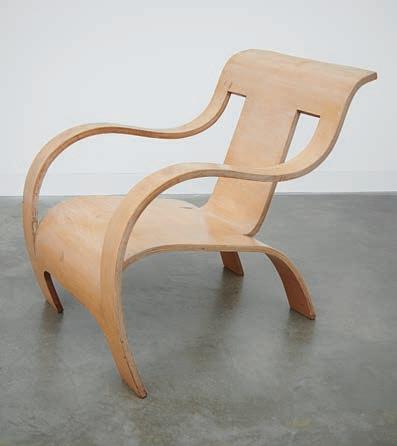
designer Gerald Summers
Suffolk:19CharlesIndustrialEstate,Stowmarket,Suffolk,IP145AH enquiries@bm-auctions.co.uk01449673088


Norfolk:12ManorFarm,Glandford,nrHolt,Norfolk,NR257JP norfolk.enquiries@bm-auctions.co.uk01263687342

www.bishopandmillerauctions.co.uk Invitationtoconsigntoour FineJewelleryauction auctionclosingforentries1March
Welcome
In my thirties I had a side hustle as a novelist. Alongside the (many) solitary book signings, I well remember a marketing meeting with my publisher where we discussed the bene ts of me taking on the nom de plume of a man.
In the end the literary sex change didn’t take place, and no one thought any more about it (other than my friends who started calling me ‘Bernard’). Men didn’t buy books written by women and that was that. Today of course the idea would, quite rightly, shake my #MeToo sisters to their yoga-tough core.
So it was with a wry smile I learnt about the female abstract expressionists in 1950s America who tried hard to keep their sex a secret. Lee Krasner – not a prototype Marlborough man – was in fact the hugely talented wife of Jackson Pollock. While he sploshed out his trademark canvases in the family’s airy Hamptons barn, she was given a small table in her bedroom to explore her creativity.
is month sees 150 works by 80 little-known female abstract expressionists from around the world go on show at the Whitechapel Gallery in London. As every reader knows, phrases such as “overlooked” and “out of favour” are catnip to collectors. Many of the artists in question are still a ordable and make a superb theme on which to build a collection. Take a look on page 44.
Of course in the pantheon of art and design, it is not just women who have been overlooked. e little-known mid-century British furniture designer Gerald Summers is nally getting his time in the sun, with a recent sale rmly establishing him on global collectors’ wish lists. Have a look at his exceptional pieces on page 30.
It being February, love is in the air and on page 38 we put the romantic letters of some of history’s greatest pairings in the spotlight, from John Keats and Fanny Brawne, to Sylvia Plath and Ted Hughes. As well as a poignant idea for a collection, they o er a touching insight into a couple’s most intimate moments.
An insight of a very di erent nature is provided on page 18 when we go behind the scenes of possibly the world’s best collection of coins from the East India Company. Collected over half a century by Robert Puddester and his wife Norma, the collection, on sale this month, is a marvellous archive charting one of the world’s most proli c trading companies. Enjoy the issue.
Georgina Wroe, Editor

KEEP IN TOUCH
Write to us at Antique Collecting, Sandy Lane, Old Martlesham, Woodbridge, Suffolk, IP12 4SD, or email magazine@accartbooks.com. Visit the website at www.antique-collecting.co.uk and follow us on Twitter and Instagram @AntiqueMag
ISSN: 0003-584X
IN THIS ISSUE
IAIN BRUNT
Behind the scenes with the online marketplace founder, page 8
DAVID HARVEY

Gives the time of day to a bonheur-du-jour, page 16
CHARLES HANSON


Discovers a collector’s delight inside a 16th-century cottage, page 28
OTTO BILLSTROM

lifts the lid on one of the most unusual sales you will see this year, page 42
THE TEAM
Editor: Georgina Wroe, georgina. wroe@accartbooks.com
Online Editor: Richard Ginger, richard.ginger@accartbooks.com Design: Philp Design, james@philpdesign.co.uk
Advertising and subscriptions: Charlotte Kettell 01394 389969, charlotte.kettell @accartbooks.com
ANTIQUE COLLECTING 3
Antique Collecting subscription £38 for 10 issues annually, no refund is available.
FIRST WORD
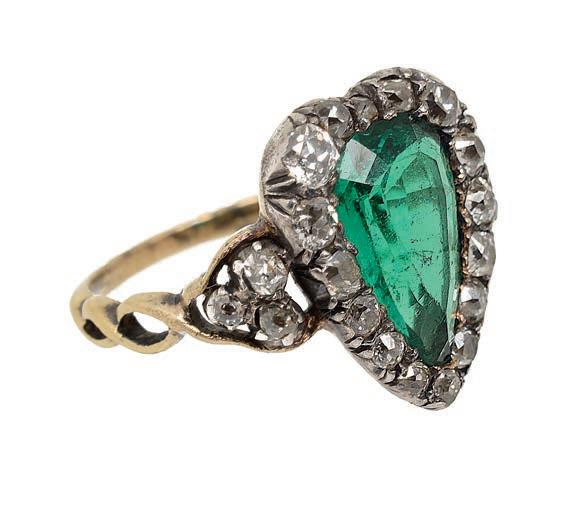
We love!
this Georgian emerald and diamond heartshaped ring which has an estimate of £4,000-£6,000 at Catherine Southon’s sale on February 8.


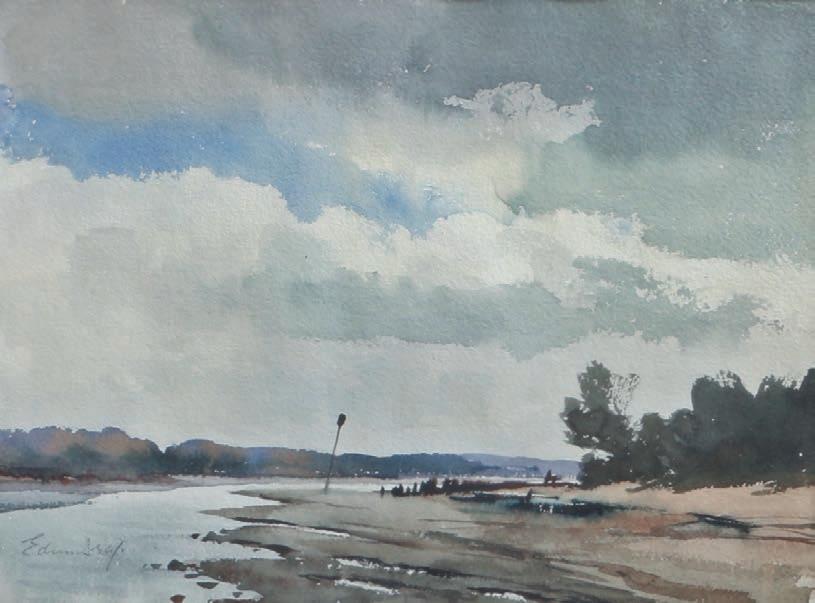
www.bishopandmillerauctions.co.uk TheEastAnglian takingplaceatourGlandfordAuctionGalleryon Tuesday28February2023startingat10am viewing: youcanviewthisauctionatourGlandfordAuctionGalleryonSaturday25February
onthemorningoftheauctionfrom9am.Fullauctiondetailswillbeavailableonourwebsite. alreadyconsignedtothisauctionisthisEdwardBrianSeagoRBA,ARWS,RWS (British,1910-1974),'LowTide,Orwell'signed(lowerleft),watercolour. Provenance:RichardGreen,147NewBondStreet,LondonW1S2TS. estimate:£5,000-£6,000
12ManorFarm,Glandford,nrHolt,Norfolk,NR257JP norfolk.enquiries@bm-auctions.co.uk01263687342
2023between9amand12noon,Monday27February2023between9.30amand4.30pmand
COVER

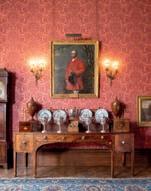
The dining room at Meldon Park in Northumberland the contents of which goes under the hammer his month in Edinburgh, image courtesy of Bonhams, see the feature on page 34
REGULARS
3 Editor’s Welcome: Georgina Wroe introduces the February issue with an inevitable touch of romance in the air
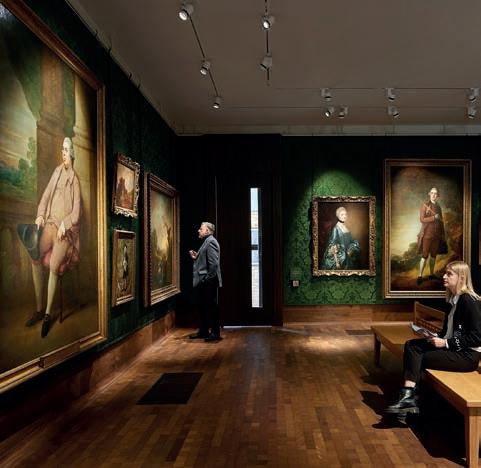
6 Antique News: A round-up of events to pique collectors’ interest, from three must-see exhibitions to the latest from the newly-opened Gainsborough’s House in Su olk
10 Your Letters: is month’s mailbag includes thoughts on a popular TV show and a request for information on a ea market nd
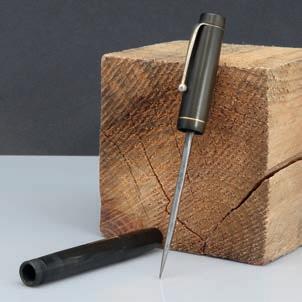
12 Around the Houses: A Dunhill ‘aquarium’ lighter sets a new record in London, while detectorists in Somerset unearth some treasure
16 Waxing Lyrical: David Harvey gives the time of day to a charming George III bonheur-du-jour
28 An Auctioneer’s Lot: Columnist Charles Hanson steps back in time to a 16th-century cottage where he uncovers some collectors’ delights
Saleroom Spotlight: Behind the scenes at Sworders’ annual ‘Out of the Ordinary’ sale which promises a treasure trove of eclectic curiosities
Subscription O er: Take out an annual subscription to Antique Collecting and save 50 per cent, plus receive a book worth £75 free of charge

Puzzle Pages: Pit your wits against our cunning quiz maestro Pete Wade-Wright
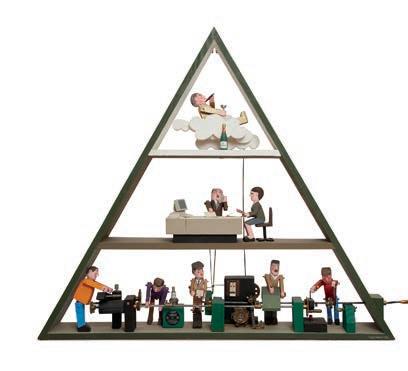
54 Top of the Lots: We preview a collection of mechanical toys going under the hammer in London, as well as a cache of horsehair jewellery sure to get buyers’ pulses racing in Salisbury
56 Book O ers: Save more than a third on the latest titles from our sister publisher ACC Art Books

58 Fair News: Planning a buying trip in February? Make sure you check out the latest fair news before you go
59 Fairs Calendar: All the latest bargainfull events near you and around the rest of the UK
and comprehensive guide to the sales taking place this month
66 Marc My Words: Antiques Roadshow’s Marc Allum urges us all to get ahead for Christmas 2023
FEATURES
18 Company Man: Coins from the East India Company from the collection of Robert Puddester are expected to make £2m in London this month. Antique Collecting lifts the lid
24 Court Drama: An exhibition in Warwickshire shines a light on the court painters of Elizabeth I and hopes to unravel one of the period’s most intriguing unanswered questions
30 Summers’ Time: After years in the doldrums, furniture by the midcentury British designer Gerald Summers is nally being appreciated, as a recent sale attests
34 Park Life: e contents of Meldon Park, a country mansion in Northumberland, goes under the hammer this month in Edinburgh. Antique Collecting goes behind the scenes what’s on offer
38 Write from the Heart: Ahead of Valentine’s Day, letters penned by some of history’s greatest lovers make the basis for a great collection
44 Action Women: Long overlooked in favour of their male counterparts, female abstract expressionists are put in focus at a new exhibition opening this month
ANTIQUE COLLECTING 5 THIS MONTH Contents
VOL 57 NO 8 FEBRUARY 2023 ALSO INSIDE British designer Gerald Summers Book offers Best puzzles Toy Story A lifetime collection of automata goes under the hammer WRITE MOVE FEBRUARY 2023 IN THE FRAME HEART OF 500-YEAROLD MYSTERY To the Manor Born Behind the scenes at the contents sale of a Northumberland country house Why love letters are making collectors swoon
TO SUBSCRIBE TODAY VISIT WWW.ANTIQUE-COLLECTING.CO.UK/SUBSCRIBE WEEKDAYS
TO
6
FROM 9.30AM
1PM,
12 42 54 58 30
WHAT’S GOING ON IN FEBRUARY
A NTIQUE news
Above Gainsborough’s House in Sudbury, Su olk © Hufton + Crow
Right Handel’s London home is reopening as a museum, image redit Handel & Hendrix in London
Getting a Handel
Tickets go on sale next month to visit the London home of George Frideric Handel (1685-1759) 300 years after he moved into it.
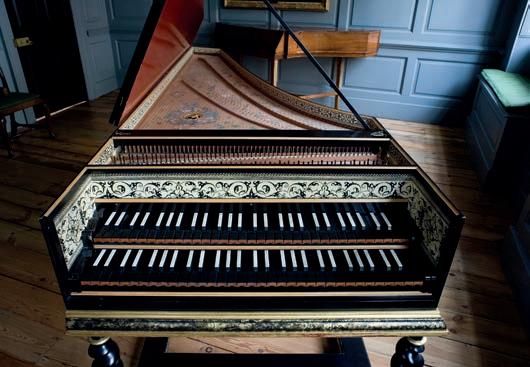
The house, on 25 Brook Street, is reopening as a museum in association with that of its equally iconic musical resident Jimi Hendrix (1942-1970) who moved into the same Mayfair property 200 years later.
The home for both was significant: Hendrix called Brook Street the only place he felt truly at home, while Handel composed Messiah in the same location.
The £3m project Handel & Hendrix in London has seen Handel’s house restored to how it would have looked in the 1740s; while Hendrix’s flat has been open to the public since 2016.
Lasting legacy
omas Gainsborough (1727-1788) and the legacy of landscape has been revealed as one of the themes of a 2023 exhibition at the recently-reopened museum dedicated to the artist.
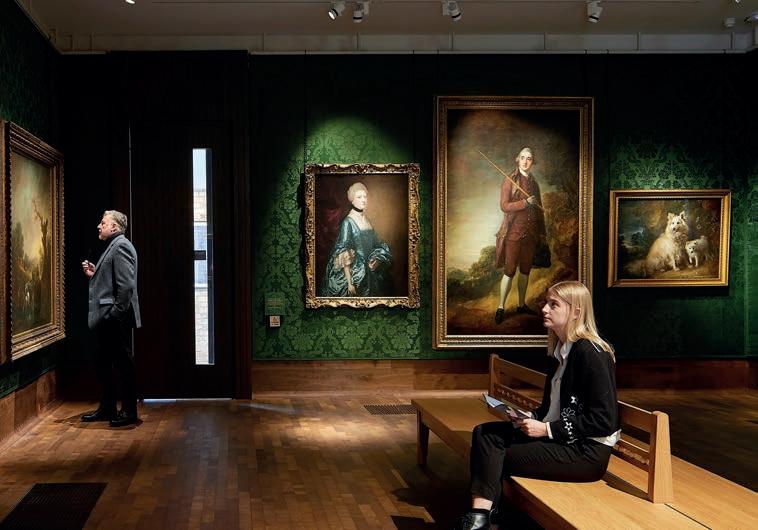
Last year Gainsborough’s House in Su olk opened its doors after a three-year £10m revamp, doubling the size of the museum based in omas Gainsborough’s childhood home. Funded by a £5.2m grant from the National Lottery and private funding, renovations to the Grade I listed building in the town of Sudbury now see four galleries, as well as a studio space. e centre now also boasts a signi cant collection by Cedric Morris (1889-1982).
PEAK PERFORMANCE
70 years after Sir Edmund Hillary and Norgay Tenzing’s 1953 ascent of Everest, memorabilia belonging to Tom Stobart, the o cial photographer on the trip, is to go on show in an Italian museum.
e cache, which includes a food packet used by the adventurers and snaps of the epic trip, was bought at auction for £12,000 by the Italian mountaineer, explorer, and author Reinhold Messner. Messner, who made the rst solo ascent of Mount Everest in 1980, will showcase the memorabilia at his own museum in Corones in the South Tyrol.
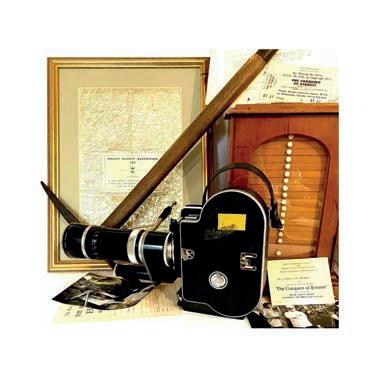
e collection was o ered for sale by Stobart’s son Patrick who hoped the memorabilia would go to a museum.
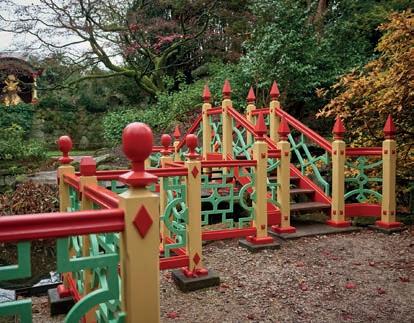
Below right e newly installed Chinese bridge at Biddulph Grange Garden in Sta ordshire, National Trust Images, Trevor Ray Hart
Below e collection will go on show in Italy, image credit Hansons
BUILDING BRIDGES
A newly revamped Chinese bridge, inspired by the famous willow pattern, has returned to a Victorian garden in Staffordshire.
The ornate footbridge, at Biddulph Grange Garden, was modelled on the famous ceramics pattern and built in the mid 19th-century before being replaced in the late 1980s.
The repaired bridge is made up of 50 sections jigsawed together and took the National Trust’s heritage craft skills team 14 weeks to complete.
NEWS All the latest
2023 is shaping up to be a bumper year for art and antiques lovers
6 ANTIQUE COLLECTING
1Renaissance man
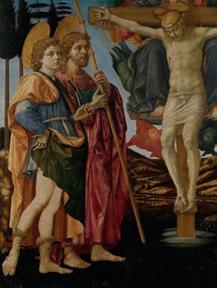
e rst ever exhibition dedicated to the littleknown Renaissance painter Francesco Pesellino (c.14221457) continues at the National Gallery until March 10. Pesellino’s early death aged 35 cut short a promising career in which he received many commissions from Florence’s ruling Medici family. e centrepiece of the exhibition titled Pesellino: A Renaissance Master Revealed, is made up of two of his best-known works: Stories of David, c. 1445-1455, and his Pistoia Trinity altarpiece, 1455-1460, which was left un nished at his death and completed by the betterknown Renaissance artist Filippo Lippi (1406-1469).
3Rebel rebels
A Bath gallery is showcasing work by members of the New English Art Club almost 100 years after it was formed.

Capturing Life: A Century of the New English Art Club, at the Victoria Art Gallery from January 21 to April 11, features work by members of the controversial group of rebellious young artists known for protesting their repeated rejection by the Royal Academy, including Gwen John, Winifred Nicholson, John Singer Sargent, Stanley Spencer, Walter Sickert, Augustus John, Dod Procter and Paul Nash.
e exhibition also features more than 40 works by current club members, all of which will be for sale in the exhibition.
Left Francesco Pesellino, Filippo Lippi and workshop, Angel (Left Hand), 1455-1460
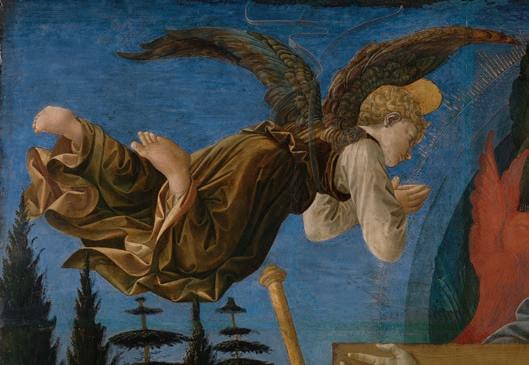
© e National Gallery, London
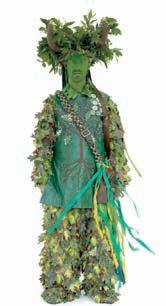
Right A costume from the Jack in the Green festival in Hastings, image © Henry Bourne
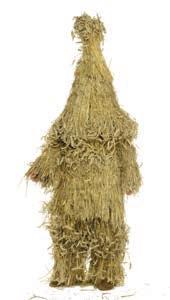
Below right e Straw Bear from the Whittlesea Straw Bear Festival, image © Henry Bourne
Far left Francesco Pesellino, Filippo Lipp and workshop Saints Zeno and Jerome, 14551460 © e National Gallery, London

to see in February 3

Above left Francesco Pesellino, Filippo Lippi and workshop, Saints Mamas and James, 14551460. On loan from His Majesty e King Royal Collection Trust / © His Majesty King Charles III 2022
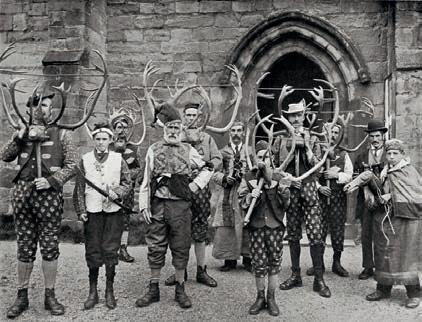
Above right e players in the Abbots Bromley horn dance, c. 1900, a tradition which dates back to 1226
Far right George Percy Jacomb-Hood (1857–1929), Mother and Child © Victoria Art Gallery, Bath / Bridgeman Images

Right Henry Herbert La Thangue (1859–1929), Th e Watersplash, 1900 © Victoria Art Gallery, Bath/ Bridgeman Images
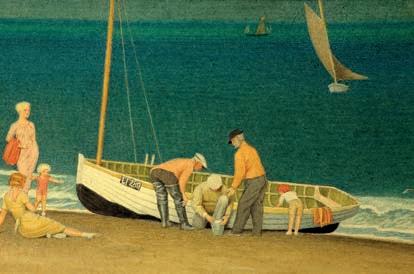
Below right Joseph Edward Southall (1861–1944), The Return of the Fishermen, 1938 © Victoria Art Gallery, Bath/ Bridgeman Images
2 Nowt as strange as folk
A Warwickshire gallery and museum
this month unveils the UK’s rst exhibition dedicated to British folk costume and customs.
Making Mischief, at Compton Verney from February 11 to June 11, presents more than 40 out ts, often handed down the generations, from the Notting Hill Carnival to the Festival of the Horse in Orkney where girls dress as highly-decorated horses.
Curator Oli McCall said: “ is unique and ambitious exhibition promises to be a vibrant demonstration of the sheer variety of local and seasonal folk customs practised in Britain today, some of which have roots stretching back centuries.”
ANTIQUE COLLECTING 7
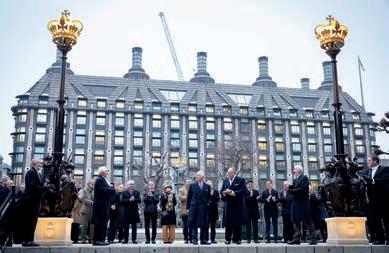
Lighting up time
in part, by the West Sussex heritage lighting specialist William Sugg & Co.
e 1.1m crowns topping the lights were handmade in Sugg’s Horsham workshop and took several months to complete.
e pair was commissioned by the Houses of Parliament as a gift for the late Elizabeth II to celebrate last year’s Platinum Jubilee.
William Sugg has supplied lighting to the royal household for more than 150 years, rst installing ‘globe’ gas lamps on the main gates of the Houses of Parliament and around Parliament Square in 1870.
Bard Times
Negotiations are underway for the sale of the only signed and dated image of William Shakespeare painted during his lifetime, with a price tag around £15m.
Dated 1608, the portrait is by Robert Peake the Elder (15511619), court painter to James I, who received numerous commissions from the Office of Revels, a body in charge of theatrical and musical performances at court.
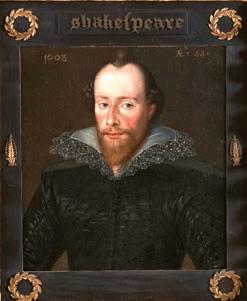
The age of the sitter is recorded on the portrait as 44 –Shakespeare’s age in 1608. There have been only two representations of the Bard’s physical appearance: a bust at his funeral monument and a 1623 engraving on the title page of the First Folio.
SAY A PRAYER
is month prayer books belonging to two of Henry VIII’s wives will be reunited for the rst time in a new exhibition at Hever Castle near Edenbridge in Kent.

From February 8, a 1527 prayer book belonging to Catherine of Aragon, on loan from the Pierpont Morgan Library in New York, will be on show alongside a Book of Hours, which belonged to Anne Boleyn – already on display at the castle.
e reuniting is at the heart of Catherine and Anne: Queens, Rivals, Mothers – the second in a series of exhibitions about Anne Boleyn, second wife of Henry VIII and mother of Elizabeth I, at her childhood home.
Dating back to the 13th century, the exterior of the castle recently appeared in the three-part docu-series about the Tudors, Blood, Sex and Royalty on Net ix.
30 seconds with...

Iain Bruntowner of the website www.antiques.co.uk
How did you start in the business?
Living in Notting Hill gate I was fascinated to visit the Portobello market. A friend asked me to join her on her stand and after selling Victorian watercolours of interiors, I opened my own Pimlico Road shop called Pairs, specialising only in pairs of antiques.
Do you collect? If so, what?
Left e lights were a gift to the late Queen ©UK Parliament/ Roger Harris

Dress for success
Ahead of the V&A’s landmark autumn exhibition on the French designer Gabrielle ‘Coco’ Chanel, the National Museum of Scotland is putting her iconic “little black dress” in the spotlight.
Beyond the Little Black Dress, from July 1 to October 29, brings together more than 60 in-vogue looks from collections and designers around the world.
Considered radically modern, the little black dress, designed in 1926, disregarded convention in both its stark design and sombre shade – black traditionally being associated with mourning.
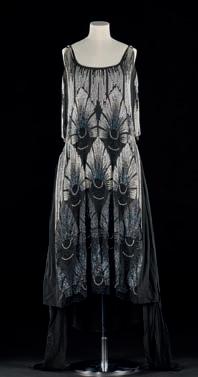
At the time of its creation it was hailed by US Vogue as “the frock that all the world will wear”. The ‘little black dress’ became a wardrobe staple, a symbol of femininity and a byword for chic, with each new silhouette capturing the spirit of its time.
c.
I still have some pairs which I would never sell but now I collect sculpture of all different periods. My favorite being my Meiji bronze octopi.
Have you got the ultimate ‘fi nd’?
I once found a small Canaletto oil painting in a terraced house in Yorkshire. Once we proved it was correct the owner was as delighted as I was.
What do antiques offer the buyer?
For me the attraction is uniqueness and style. Antiques give the most fabulous
selections of all styles and designs. When I sold the salon chair of Sir Hardy Amies (Queen Elizabeth’s dress designer) the new owner told me it wasn’t about the chair but who had sat on it. Every antique has a story, who used them, saw them, made them.
What plans have you got for 2023?
2023 sees my first appearance on TV researching valuing and selling paintings. It will also see the launch of our new online valuation service where our experts give information about a collection in hours.
For more details go to www.antiques.co.uk
8 ANTIQUE COLLECTING NEWS All the latest
King Charles has unveiled a pair of bronze beacons outside the Houses of Parliament made,
Above Woman’s evening dress. French,
1929. Image © National Museums Scotland
Above Is this the only signed and dated image of William Shakespeare?
Below Hever Castle’s assistant curator Kate McCa rey
Time for tea
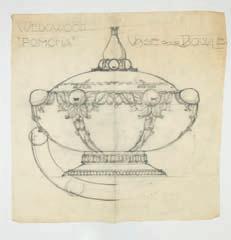
An art deco tea set by the French designer Paul Follot (1877-1941) for Wedgwood, once owned by Karl Lagerfeld, has gone on display at the Barlaston, Stoke-on-Trent.
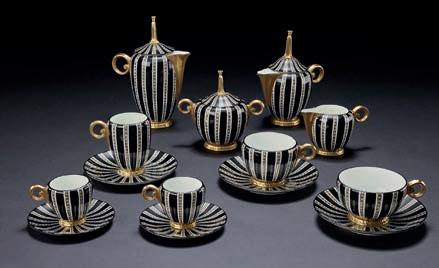
e Campanula service and design drawings were acquired for the V&A Wedgwood Collection from the estate of the German fashion designer who died in 2018. No other examples of the pattern or even the shape are known to exist.
PAPER THIN
The award-winning crime writer Val McDermid is leading the charge to help save Scotland’s newspaper archive, some of which dates back to 1641.
Funding is being sought by the National Library of Scotland in Edinburgh to preserve the archive of which 65 per cent is in danger of being lost due to wear and tear.
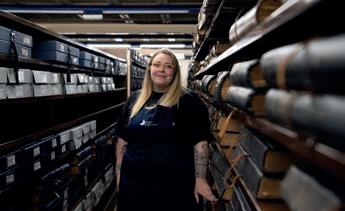
McDermid regularly uses the library’s collections for research. She said: “The seventh Karen Pirie novel starts with an eagle-eyed librarian spotting something very odd in an archive bequeathed by a recently deceased author. It leads to a major cold case investigation…”
Conservator Claire Hutchison,
Fine aesthetic
A painting dubbed “an icon of the late 19th-century’s aesthetic movement” will go
After WWI Follot became a director of the Pomona Studios for the fashionable Paris department store Le Bon Marché and later, with Serge Chermaye , the co-director of Waring & Gillow’s French furniture department.
V&A Wedgwood Collection curator, Catrin Jones, said: “Lagerfeld was known for his love of monochrome as well as his interest in ceramics.” e set joins Josiah Wedgwood I’s Portland vase and designs by Keith Murray, Eric Ravilious and Daisy Makeig-Jones, all on display at the World of Wedgwood.
Above left e service is on display at the World of Wedgwood in Barlaston, Stoke-on-Trent
Above Design drawing for ‘Pomona’ centrepiece, by Paul Follot for Josiah Wedgwood and sons, c. 1920 © Victoria and Albert Museum, London
Breakfast serial
The subject for the second in the National Gallery’s series of Discover exhibitions has been revealed as the portrayal of an 18th-century breakfast scene by the Swiss artist Jean-Etienne Liotard ‘s (1702-1789).
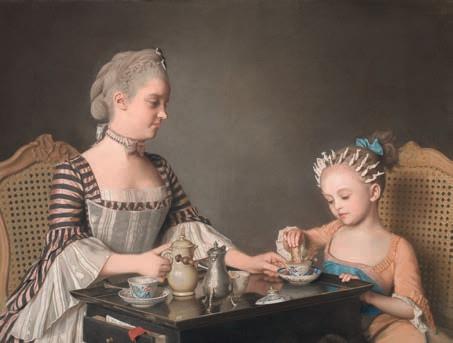
Executed across more than nine sheets of paper, The Lavergne Family Breakfast, depicts a breakfast table with an elegantly dressed woman and a young girl with her hair in paper curlers.
The surface of the silver chocolate pot and Chinese porcelain are reflected in the lacquer tray. The depiction of both hints at wealth and taste – coffee and chocolate being exclusive and costly beverages in the 18th century.
MAPPED OUT
said: “Our newspaper collections are incredibly fragile and very brittle. We’re fighting a losing battle to carry out preservation work.”
To donate to the appeal, visit nls.uk/ support-nls/newspapers
Above Conservator Claire Hutchison is one of the sta behind the campaign
on public display having been saved for the nation. Jacques Joseph Tissot’s (1836–1902) Portrait of Algernon Moses Marsden will go on show at the National Gallery – becoming the rst work by the French artist to do so.

Marsden’s family rose from poverty in London’s East End to make a fortune in the clothing business. Rather than join them, Marsden established himself as an art dealer in London in the early 1870s becoming a friend of Tissot after the artist ed France following the Paris Commune. e portrait is on show in the gallery’s room 44.
Left James Tissot (1836–1902) Portrait of Algernon Moses Marsden, 1877 © e National Gallery, London
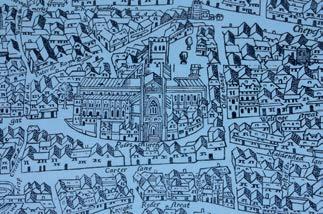
ere’s an opportunity for cartophiles to see the Civitas Londinum, 1561, the first surviving map of the city, wh goes on display at London Metropolitan Archives for the first time .
The Clerkenwell-based archive will open its doors on February 11 only for its Magnificent Maps of London exhibition.
Attributed to Ralph Agas, the Civitas Londinium was surveyed between 1570 and 1605 and measures 6ft by 2ft 4in.
The
Above Old St. Paul’s as shown on the Agas map of 1561, credit Wikicommons media
ANTIQUE COLLECTING 9
exhibition will also include work by other early European cartographers including Georg Braun and Frans Hogenberg, John Rocque, John Ogilby and William Morgan, Richard Horwood and Christopher and John Greenwood.
Above Jean-Etienne Liotard (1702-1789) e Lavergne Family Breakfast, 1754 © e National Gallery
Your Let ters
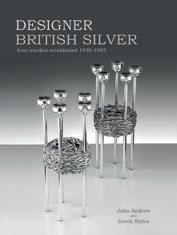
Our star letter receives a copy of British Designer Silver by John Andrew and Derek Styles worth £75. Write to us at Antique Collecting, Sandy Lane, Old Martlesham, Woodbridge, Suffolk, IP12 4SD or email magazine@ accartbooks.com
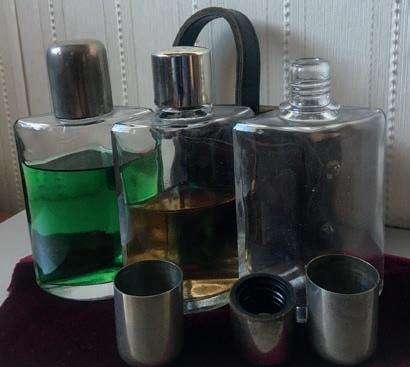
About 30 years ago I bought this
Just as I was trying to revive the post-Christmas family purse by looking down the back of the sofa for stray coins left by visiting relatives, I was amazed to read in the paper that “experts” believe the average UK attic hides valuables totalling some £1,922.
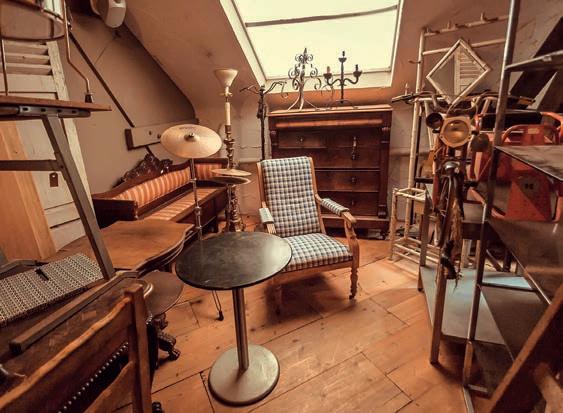
All in all this amounts to a UK total of some £33bn worth of collectables lurking in cupboards and drawers. Come on Britain! Never mind all these gloomy strikes and trips to the food bank, let’s “antique” our way out of the cost of living crisis. ere really is cash in the attic.
Lance Blighton, by email
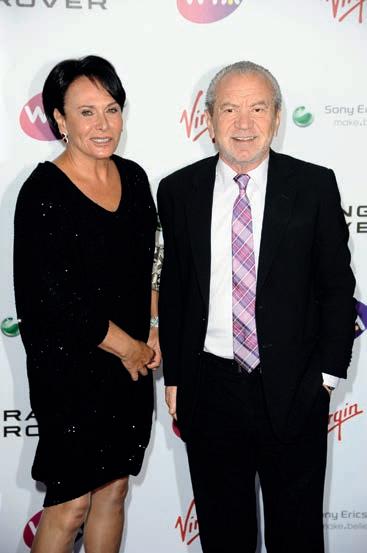
Another year and another self-promoting parade of wannabes taking part in BBCs’ Same old same old, or so I thought until we came across Gregory Ebbs a Shropshirebased self-confessed ‘military history bu ’ and antiques entrepreneur who shares his nds on YouTube.
We’re yet to see how far up the greasy pole he gets (his promising debut suggests it may be some way) but nice to see a young dealer promoting the trade. If he comes a cropper I am sure he will nd a place on one of the many afternoon antiques programmes on the box.
Mrs M. Marshall, Loughborough, by email
Left Could attic treasures lead us out of the cost of living crisis?
Above right Vladimir is after insights into a bottle set
Below left Will antiques entrepreneur Gregory Ebbs take Lord Sugar’s £250,000 prize?
Turin. Each triangular bottle is made of thick glass and is 13cm tall holding 100 ml. of liquid. No doubt the upper metal lid is used as a shot. ere are no maker’s marks, either on the glass or on the case. e only marks are on the inner side of two buttons reading Z, D, a ve-pointed star, P and another star. To my understanding this practical travelling kit was made in the rst decade of the previous century. I would be grateful if some of your readers could share their opinions.
Vladimir Nazarov, by email
The
answers to the quiz on page 52
Q1 (b) The court cupboard has an open space below, when enclosed with doors it is called a press cupboard. Q2 (c) Due to small-scale imperfections in the material itself. Starting with a fine network of surface cracks the glass is eventually destroyed.
Q3 (d) An open-flame oil lamp, known as a ‘crusie ‘in Scotland and, sometimes a ‘collie’ in Shetland. Q4 (a) Founding the world’s longest, continuously trading firm of exponents of the horological art. Q5 (c) An 18th/19th-century table on which to play a game resembling bagatelle. Q6 (b). Q7 (b). Q8 (d) Two books: Happy England (1903) and The Cottage Homes of England (1909) established her reputation.
Q9 All four. It was a response to the 1970s fuel crisis, hence its low weight. It was a four-seater, unfortunately taking a corner at speed could tip it over. The TV association is with the Trotters in Only Fools and Horses, although the series didn’t hit our screens until the 1980s and the van was a Reliant Regal, rather than a Reliant Robin. Q10 (b) The hereditary device of the Valois family.
Entice creep can be rearranged to make the word centrepiece; lag nannie can be rearranged to make the word annealing; emit logarithms can be rearranged to make the words eight immortals and bawdier mut can be rearranged to make the word dumb waiter.
leather-bound three-bottle set at the famous Balon ea market in
Have
LETTERS
your say
10 ANTIQUE COLLECTING
Star letter
is month’s mailbag has a suggestion to turn the UK economy around and a plea for information on a awed market nd

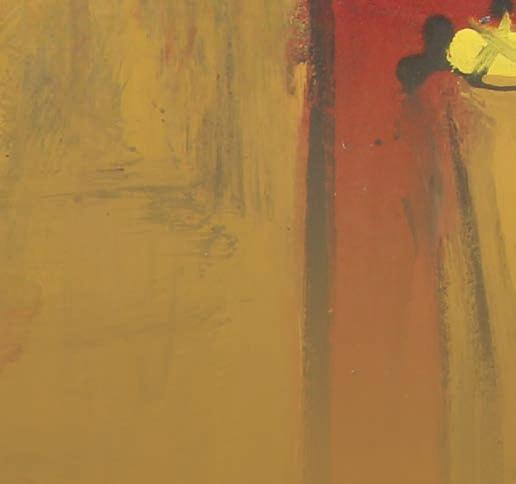



Entries Invited by 3 March 2023 pictures@sworder.co.uk | 01279 817778 Alan Davie
Bird Cage No.1, 1956, oil on board 122 x 152cm, £20,000-30,000
RA (1920-2014)
A ROUND the HOUSES
Chiswick Auctions, London
An Alfred Dunhill ‘aquarium’ lighter, featuring a trio of birds, set a new auction record at the west London auction house when it red past its pre-sale estimate of £2,000-£3,000 to make £16,250.
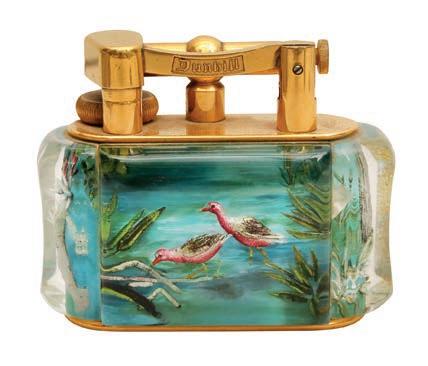
Dunhill ‘aquarium’ lighters are so called because their chunky Perspex and electroplated lighters resemble miniature sh tanks. While most depict aquatic subjects, it is the ‘non-aquatic aquariums’ featuring subjects other than sh that bring the highest prices.
At a previous sale, one of the rarest and most coveted Hermès handbags set another auction house record, this time for a designer handbag, when an ultra-rare Diamond Birkin fetched £75,400.

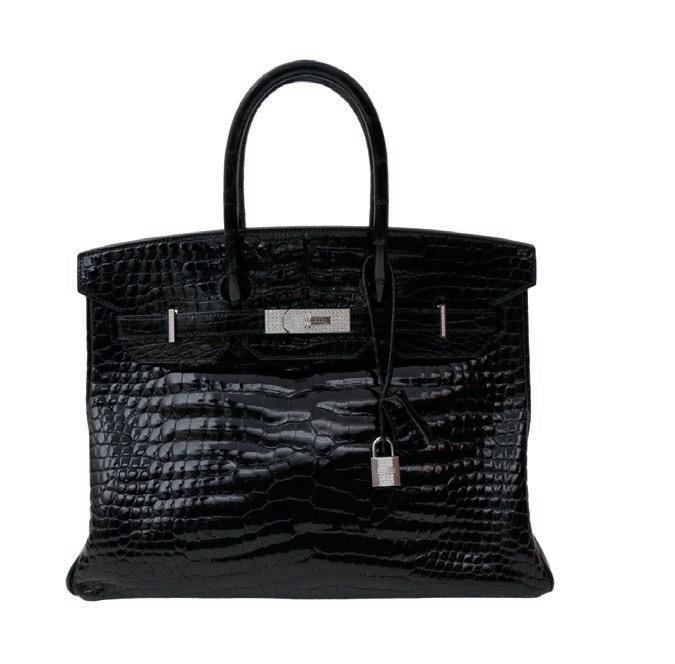
Known as the sister bag to the Hermès Himalaya (the world’s most expensive handbag) the bag was made from farmed saltwater
Duke’s, Dorchester
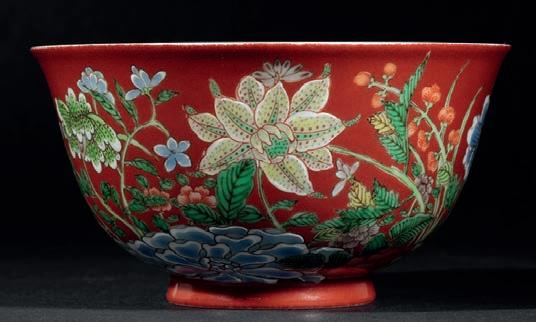
A coral ground bowl, 11cm in diameter and painted with owers in famille verte enamels, hammered at £170,000 at the Dorset auction house’s recent Asian art sale, having been expected to make £6,000-£8,000. e bowl had an underglaze blue Kangxi (1662-1722) yuzhi mark. Its four-characters suggests the bowl may have been enamelled in the imperial workshops in the Forbidden City of Beijing making them highly sought after by collectors. is example, which was acquired by the grandparents of the present owner had a fragmentary paper label for “L Wannieck Paris, 158”. Léon Wannieck was a Parisian Asian dealer in the rst half of the 20th century.
Lawrences, Crewkerne
ree gold coins, dating to the Wars of the Roses, part of a hoard unearthed by a metal detectorist, each de ed their pre-sale estimates when they sold in Somerset.
One of the gold ryalls, from the rst reign of Edward IV, sold for £2,600, against an estimate of £800-£1,500; another fetched £5,400, against an estimate of £2,000-£2,500; and the third made £5,000, against an estimate of £3,000-£4,000.
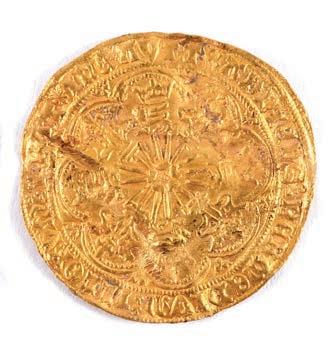
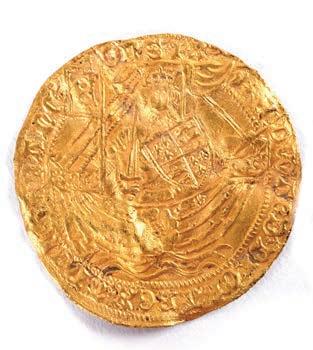
e coroner’s report on the coins read: “ ey are a highly selected group of good condition, high value coins and do not simply re ect the general coinage in circulation at the time … a closure date for the hoard of 1468 or 1469 might be expected.”
Lawrences’ coin specialist, Matthew Denney, said: “Little in the coin world excites as much as a newly discovered hoard. e mystery, antiquity, and sheer romance of unearthing a group of coins that have remained in the earth, undisturbed for so many years, cannot be rivalled.”
AUCTION Sales round up
From a designer handbag to a medieval ring, the UK’s salerooms got o to a ying start in 2023
The rare Dunhill ‘aquarium’ lighter set a new record in west London
The Diamond Birkin is one of the rarest designer bags in the world
The mark suggests the bowl may have been intended for the imperial household
One of the Edward IV gold ryalls, part of a detectorist’s haul, sold for £2,600
Gildings, Market
Harborough
A silver-cased, open-faced pocket watch smashed its pre-sale guide price of £80£120 when it sold for £1,300 at the Leicestershire saleroom.
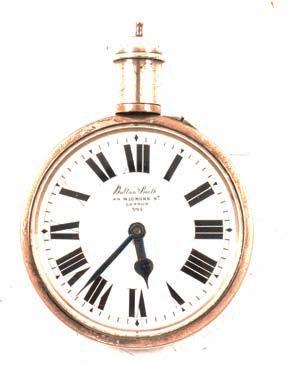
It came from a single-owner collection of thousands of watches, clocks and parts, which made a total of £88,000. It had been amassed over a lifetime by Kettering-based enthusiast Ronald J. Pace and largely consisted of watches and clocks that were no longer in working order. e sale attracted bidders from Germany, France, Eastern Europe, New Zealand and the USA.
Marked Birmingham, 1901, the unusual dustproof watch may have belonged to a miner. Mark Gilding said: “ e high bids achieved show the value collectors place on rare items, whether to restore and sell on, or to add to their own collection.”
Tennants, Leyburn
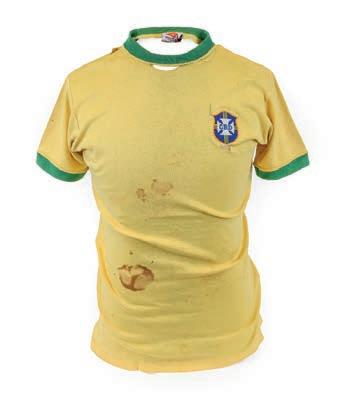
e Brazil shirt worn by the footballing legend Pelé, who died on December 29, outran its pre-sale estimate of £2,500 -£3,500 when it sold for £33,000 at the North Yorkshire auction house’s recent sale.
e star wore the no. 10 jersey in the rst half of the famous Brazil v England match in the 1970 Mexico World Cup –best remembered for England goalkeeper Gordon Banks making one of the most memorable saves in footballing history.
Legend still surrounds Banks’ “save of the century” when he managed to repel a crushing header from Pelé. Brazil went on to win the game 1-0 with a second half goal from Jairzinho.
The no.10 shirt was worn by Pelé in the famous Brazil v England game in 1970
Elstob & Elstob, Ripon
A rare Bulova Snorkel ‘J’ divers watch sold for £850 at the Yorkshire auction house’s recent jewellery, watches and silver sale. Known as the ‘Devil Diver’, the highly collectable timepiece was produced by the American luxury watch company for only a year in 1967 and was ground breaking in its ability to withstand depths of up to 666ft.
The watch, known as a ‘Devil Diver’ was only produced in small numbers in 1967
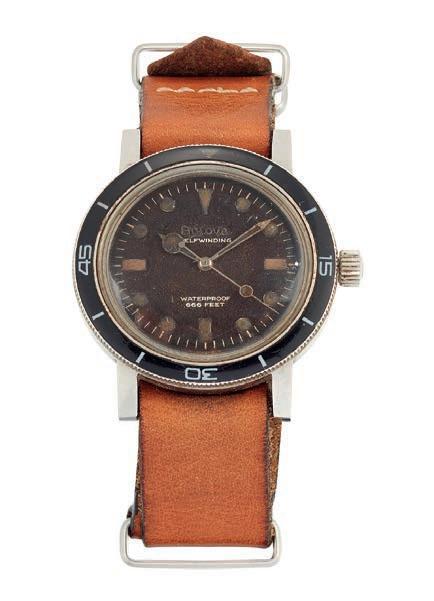
It was also made in very small numbers, making it particularly di cult to obtain in today’s market. Key selling points included a rotating bezel, luminous hands and being fully waterproof.
Charterhouse Auctions, Sherborne
A watercolour painting of children walking in late summer brightened up the Dorset saleroom in January when it sold for a cheery £240.
e charming work, painted by Benjamin David Sigmund (1857-1947), depicts two young girls walking home, with one carrying a wooden hay rake, while a young boy, probably their brother, stops to pick some berries.
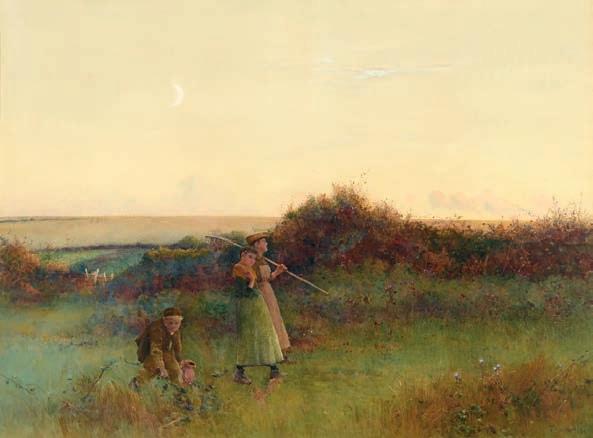
Charterhouse’s Richard Bromell said: “Having been so cold recently I found myself almost trans xed on this picture with its late summer warm evening.”
Cotswold Auction Company, Cirencester
A collection of vintage Punch and Judy puppets and associated memorabilia, expected to make £150-£300, sold for £4,600 at the Gloucestershire saleroom’s recent sale.
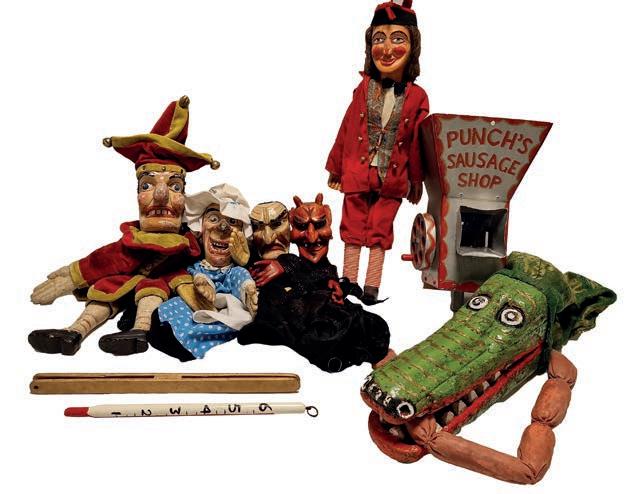
Leading the auction were seven painted and carved wooden puppets thought to have been made by ‘professor’ Albert Rose, a scenery painter for the English National Opera based in Great Yarmouth around 1890.
When not at the ENO the professor spent weekends putting on Punch and Judy shows at Gorleston-on-Sea and other beaches along the Norfolk coast. e collection also included a sausage machine and a crocodile – essential parts of the popular beach entertainment which boomed in the 19th century as railways delivered the holidaying masses to the coast.
ANTIQUE COLLECTING 13
That’s the way to do it! The collection sold for £4,600
While few watches in the collection were in working order, the sale attracted bidders from around the world
The watercolour of a summer scene warmed hearts in Dorset
Mallams, Oxford
ere was a surprise result in the auction house’s recent sale when an oil on canvas entitled Nude and Jug by Elizabeth ‘Cissie’ Kean (1871-1961) sold for £7,600 against a pre-sale estimate of just £100-£200.
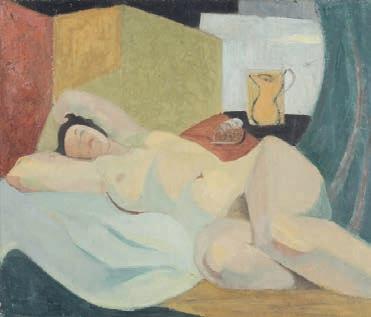
Mallam’s Jayne Robb said: “ e painting clearly captured the imagination of bidders who became embroiled in a erce battle to secure it. It took a high price from a private UK buyer for the other bidders to concede defeat.”
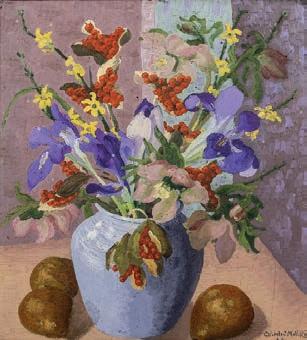
At the same sale an oil painting by Cedric Morris (1889-1982) entitled Flowers and Pears, which had been given to the vendor by the East Anglian School artist as a wedding present, sold for £36,000 against a guide price of £20,000-£30,000.
Kinghams, Moreton-on-Marsh
A rare antique Chinese lacquer charger achieved more than 100 times its low estimate when it sold for £210,500 at the Cotswold auctioneer’s recent sale –setting a house record for Asian art.
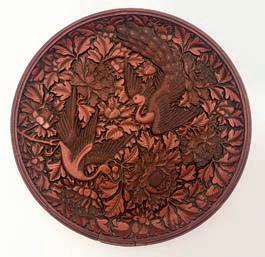
e 14th-century design depicts two red-crowned cranes among peonies: a blessing for a long and wealthy life. Expected to make £2,000£3,000 it sold to a London dealer against a phone bidder from mainland China.
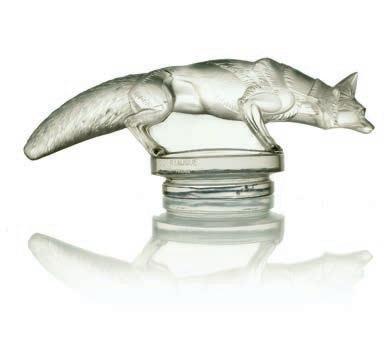
e charger is one of a distinct group of carved lacquer pieces known as ‘two-bird’ dishes. At another sale, an 8cm-high glass mascot of a fox by René Lalique, c. 1930, sold for £110,000. e frosted glass bonnet ornament, known as “renard” in French, is one of the rarest mascots produced by the French maker.
omas Del Mar, Olympia Auctions
A rare 16th or 17th-century south Indian mail and plate helmet sold for £25,000, some ve times its pre-sale estimate at the London auctioneer’s recent sale.
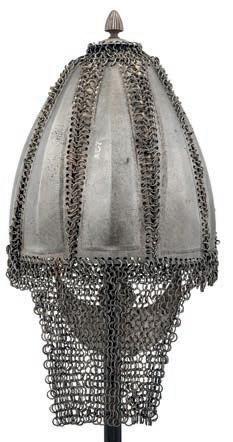
Bought by a member of the trade, it was one of 87 lots from the collection of Indian arms and armour amassed by Birmingham collector Roy Elvis (1944-2022) an expert in Hindu arms and armour. From the same collection a rare late 15th-century South Indian sword fetched £21,250 – more than 26 times its pre-sale estimate, going to a collector.
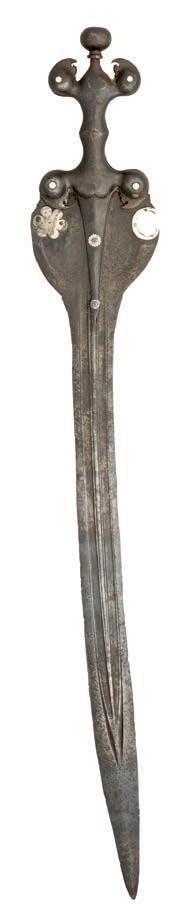
omas Del Mar said: “ e sale included a number of rare and distinguished pieces and consequently attracted considerable attention. Quality, rarity and condition continues to drive prices high, with the top 10 lots seeing much attention from physical, absentee, telephone and online bidders.”
Noonans, London
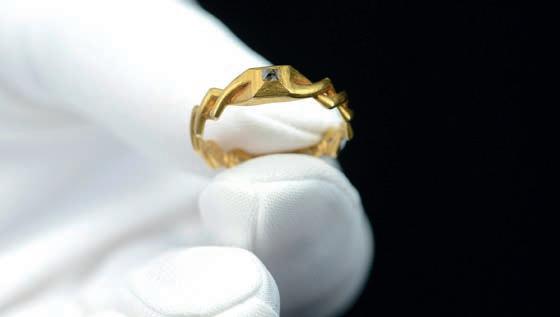
A 14th-century gold and diamond ring discovered by a metal detectorist in Dorset, who initially thought he’d unearthed a sweet paper, sold for £38,000 at the Mayfair auction house ought to be the wedding ring given by Sir omas Brook (c.1355-1418) tohis wife Lady Joan Brook, it was discovered by a former tanker driver David Board, 69, who watched the auction in the pub.
e ring’s hoop is composed of two neatly entwined bands with an inscriptionin French ieo vos tien foi tenes le moy, which translates as I hold your faith, hold mine
When nds liaison o cer Lucy Shipley took the ring, now known as the Lady Brook medieval diamond ring, to the British Museum its experts con rmed the ring’s date and rarity.
The medieval ring sold within its pre-sale guide price of £30,000£40,000
AUCTION Sales round up
14 ANTIQUE COLLECTING
The south Indian mail and plate helmet sold for £25,000
The 15th-century sword fetched £21,250 – more than 26 times its pre-sale estimate
Carved lacquer dishes in the ‘two bird’ design are highly sought after by collectors
The fox, or “renard”, is among the rarest of Lalique’s glass mascots
The oil on canvas of a nude was by the little-known artist Cissie Kean
Cedric Morris gave the still life to the vendor as a wedding present

Waxing lyrical
A lady’s writing desk, breakfast table, toiletry stand – or all three?

David lifts the lid on a charming bonheur-du-jour

Some 41 years ago my father bought this beautiful George III satinwood bonheur-du-jour. In the catalogue of the day it was accompanied by a matchbox-sized, black-and-white image and was described as being “a raised superstructure with four open compartments crossbanded with rosewood, the base with striped tambour shutter enclosing a leather lined writing surface, pigeon holes and drawers, the frieze with a drawer on square tapering legs.”

While catalogues may have come on since then, what hasn't changed is the piece itself, which I was delighted to re-acquire recently. Seeing it afresh presented me with a good chance to review and re-appraise its charm.
Above right e magni cent inlaid spandrels depict either a conch shell or starburst

Right e slide is composed of alternating pieces of satinwood and purple-heart (amaranth)
Daytime delight
e bonheur-du-jour (in French it means "daytime delight") is a type of lady's writing desk. It was introduced to Paris around 1760 by one of the city's marchandsmerciers, purveyors of desirable interior designs. It quickly became intensely fashionable and an essential piece of furniture for the well to do. By the mid-1770s, the bonheur-du-jour was being made in London, where it was simply called a "lady's writing-desk".
e desk was often kept in the lady's bedroom where it would serve as a breakfast table in the morning and a desk during the day, letter writing being a favourite pastime for ladies of high birth.
In this instance the quality of the piece (it is inlaid with ne-quality marquetry panels of a conch shell, or sunburst) suggest it would have been destined for the drawing room rather than the bedroom. Like other examples it has a shelf for placing small ornaments.
Rolling stock
e rolling part of the desk is a tambour: a exible sliding shutter. e tambour, French for "drum", was favoured by the Sheraton and Hepplewhite schools of the late 1700s. It is made of a series of closely set wooden ribs glued to a backing of strong cloth which move in guiding grooves.
Crossbanding around the tambour, rather than rosewood, is, in fact, tulipwood. e striping composed of alternating pieces of satinwood and purple-heart (amaranth) backed onto canvas, which continues as banding around the drawer.

16 ANTIQUE COLLECTING EXPERT COMMENT David Harvey
e George III satinwood bonheur-du-jour was recently acquired by David
Writing section
Rolled back, the tambour reveals the inside of a desk with seven pigeonholes and two small drawers at the rear of the leather-lined writing surface.


If the tambour were a roll top, or cylinder, the whole piece would need to be much deeper to accommodate the cylinder when opened. But as the tambour is exible it opens above the pigeonholes, exing to drop down vertically within the grooves at the back of the piece behind the small drawers and the full width drawer.
Early examples were raised on slender cabriole legs; under the in uence of neoclassicism, examples made after about 1775 often had straight, tapering legs.
Lady’s toilet
Sadly, we have not been able to establish for whom this bonheur-du-jour was made, which might indicate where it stood in the home. e shaping of the top has a space for books, reading being a very popular leisure pursuit for wealthy ladies of the period.
But the intricacy of the wide drawer, with its multiplelidded compartments, sections on the left side and two, lidded, removable boxes, does not con rm whether it was designed to house the paraphernalia of a lady’s “toilet”, stationery items, or maybe both.
Having castors suggests the piece would have been intended to be moved around the room. Whatever its use, I could hardly contain the sheer delight of meeting up with a dear old friend again.
David Harvey is the owner of Witney-based W R Harvey & Co. (Antiques) Ltd. For more details go to the website www.wrharvey.com
desk
often kept in
Above e tambour opens to reveal a number of pigeonholes and two drawers
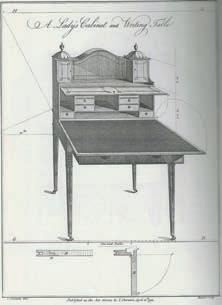
Above right e design for a "lady’s cabinet and writing table” from Sheraton’s e CabinetMaker and Upholsterer’s Drawing-Book
Below right e opened desk. Could it double as a breakfast table and writing desk?
Who made it?
The bonheur-du-jour's design is derived from the work of the celebrated designer Thomas Sheraton (1751-1806) and, like so many other pieces, it is an interpretation of his work rather than an exact copy.
The essence of the piece is based on plate 50 of Sheraton's 1792 work, The Cabinet-Maker and Upholsterer’s Drawing-Book.
After establishing the bonheur-du-jour is George III in age and based on a design by Thomas Sheraton, it leaves the question of who might have made it?
Time and again one name crops up as the maker of a range of similar pieces: George Simson. Simson established a business at 19 St Paul's Churchyard in 1787 from which location he continued to trade until 1839.
He is also listed in Geoffrey Beard and Christopher Gilbert's1986 book Dictionary of English Furniture Makers, 1660-1840
While we know Simson subscribed to Sheraton's Drawing-Book in 1793, less is known about his clients, although payments were made to him by the 2nd Viscount Palmerston, possibly in connection with his home in Hampshire.
lady's bedroom
it would serve for breakfast as well as for writing letters during the day. Letter writing was one of the favourite pastimes of ladies of high birth’
ANTIQUE COLLECTING 17
‘The
was
the
where
Company Man
is month a single-owner collection of coins of the East India Company is estimated to make £2m when it goes under the hammer. Antique Collecting reveals one of numismatics most exciting – and rewarding – elds
It was in 1977 that the Canadian Robert P. Puddester decided to start a coin collection. It wasn’t long before he found a theme: the East India Company. He said: “At its peak, the EIC was the greatest company the world had ever seen and from my perspective had the most varied coinage imaginable; multiple languages on its coins, innumerable designs, worthy of much study and within my price range, including a multitude of beautiful proofs and patterns as well as currency coins from numerous mints in India and England.”
In other words, a cornucopia of coins that were undercollected, undervalued and available.
Over the next 45 years, including a stint living and working in India, Puddester and his wife Norma put together the greatest collection of EIC coins ever amassed. is month sees the rst in a series of nine sales which will have 1,246 coins sold in 907 lots. Described as a “once in a lifetime opportunity”, it is expected to fetch in the

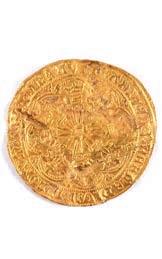
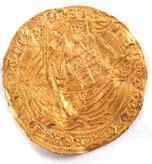
Above ree coins from the Puddester collection of coins from the East India Company. All images, unless otherwise stated, courtesy of Noonans
Right e centrepiece of the sale is the celebrated 1765 Bombay gold mohur of 15 rupees which measures 24mm and is expected to fetch £100,000-£150,000

region of £2m at the London auction house Noonans. Praising its breadth and scope, Noonans’ coin specialist, Peter Preston-Morley, said: “ is is undoubtedly the nest and most complete group of coins of the English East India Company, and British India, ever assembled.”

18 ANTIQUE COLLECTING
COLLECTING GUIDE Coins from the East India Company
Building the collection
It wasn’t long after starting his collection in the early ‘80s that Puddester’s job took him to India – a move which proved a signi cant boost to his collection. His wife, and fellow collector Norma, recalled: “We made a point of visiting our favourite dealer every Saturday morning in old Delhi. Robert would usually bring home a big bag of rupees destined for the melting pot to search for dates and marks during the week and then return them to the dealer the next Saturday.
“One Saturday I saw these attractive coins with a leaf on them and was intrigued, so the dealer gave me a bag of several hundred pieces to bring home and have a look at.”
Robert said: “India was a gold mine for sourcing EIC locally-struck currency coinage, the very parts of my collection – and of most Western collections in those days – that were weakest. My work took me all over India and I had soon established contacts with numismatic societies and dealers in every part of the country.”
e heart of the collection
East India Company coins have long been known in the precious metal trade. It was, and still is, the only company
Above East India Company Ships at Deptford. e large Indiaman being tted out in the dock belongs to omas Grantham (1641-1718), launched in February 1683, credit Wikicommons
Above right Portcullis issues Elizabeth I, testern, 1600-1601, London, has an estimate of £12,000–£15,000
Below Madras presidency, a Urangzer Al Amgir mohur, 17031704, Chinapatan, has an estimate of £10,000–£15,000
THE PORTCULLIS COINAGE

A royal charter on December 31, 1600, allowed the export of £30,000 in foreign coin, or bullion, per voyage, as long as at least £6,000 be first coined at the Mint. The silver to be exported was to be shipped only at the ports of London, Dartmouth and Plymouth.
The coin plate or bullion of the company was to have the portcullis on one side and the arms of England on the other. The money itself was to consist of testerns of eight, four, two and single pieces, at 109 testerns to the pound weight. By January 24, 1601, some £6,000 had been coined.

While intended for use in Achin, Priaman and Bantam the merchants soon encountered hostility to Elizabeth’s Portcullis pieces.
Gerald Malynes, writing from the Indies in 1620, explained the problem. The coins “were not such as the people of these parts were acquainted with; but stamped with an image strange and unknown to them.”
The subsequent fate for most of coinage would appear to have been the melting pot – perhaps via the factory at Bantam – although a few worn specimens have survived to the present day.

in history to mint its own trading currency and grew to become one of the largest bullion traders of its time.
Despite the fact the EIC was a non-government entity, after it consolidated India’s existing mints it became the sole issuer and controller of India’s circulating money until 1858. e designs on the coins often featured the company’s crest, as well as inscriptions in English, Persian, and other local languages.

To understand EIC’s coinage we need to delve into the trading history of Britain.
Founding an empire
‘The initial meeting was called to raise funds for a “voiage to the Easte Indias” and there was no shortage of subscribers to what became known as the Company of Merchant Venturers. In all, 101 men put their names, and the sums they would venture, on to the subscription list’
By the late 1590s Dutch merchants had broken the Portuguese trade dominance of East Indies. Very soon eets were returning to Amsterdam laden with pepper, cloves, nutmeg and mace with investors seeing their total outlays quadrupled.
Booming pro ts ew in the face of English failure. At the end of the century its only established trading link with the East was through the Levant Company, a consortium of English merchants who had arranged to have silk, indigo and spices carried overland from India and Persia through Turkey to the eastern Mediterranean ports. Rumours that the Dutch were even planning to buy ships

ANTIQUE COLLECTING 19
Sale highlights
The centrepiece of the sale is the celebrated 1765 Bombay gold mohur of 15 rupees which measures just 24mm and is expected to fetch £100,000-£150,000.
Authorised in the wake of a shortage of silver coins, it is one of three – or possibly four –specimens of gold coinage first authenticated for the Bombay presidency.


Some 4,000 mohurs, including their fractions, were struck and, by a public notice of January 8, 1766, the coins entered circulation.
Another high value coin is an exceptionally rare Bombay gold 15 rupees, dated 1770, which measures 24mm and is also estimated at £100,000-£150,000 one of only three examples known. After the 1765 gold coin met with local resistance, because they carried the company’s arms, the governor proposed a new coin, the Bombay, with Persian legends on the obverse.

Specialist, Preston-Morley, said: “These legends copied those on the contemporary rupees, naming the deceased emperor ‘Alamgir II, rather than the name and titles of Shah ‘Alam, which was perhaps indicative of the company’s preference to follow a directive made to the Surat Council in February 1760.”

Also of note and from the Bengal presidency is the highly important and unique C-marked Mohur from Calcutta’s second gold coinage, dating from 1766-8, which measures 24mm and carries an estimate of £30,000-£40,000.


Above left Bombay presidency, half mohur, 1765, Mumbai, has an estimate of £100,000–£150,000
Above Benjamin West (1738–1820).
e Mughal emperor Shah Alam II (17281806) hands a scroll to Robert Clive, the governor of Bengal, which transferred tax collecting rights in Bengal, Bihar and Orissa to the East India Company. Benjamin West (1738–1820)/ British Library

Right Bombay presidency, anglina, type II, 1674, Mumbai. It has an estimate of £70,000–£90,000
Below left Bombay presidency, 15 rupees, 1770, Mumbai, it is expected to make £100,000–£150,000
VoiagetotheEasteIndias
On September 22, 1599, a meeting was held at the city mansion of Sir omas Smythe (1558-1625), in Philpot Lane, London with Lord Mayor, Sir Stephen Soame (15441619) and a number of merchants, all of whom wanted a slice of the action.
e initial meeting was called to raise funds for a “voiage to the Easte Indias” and there was no shortage of subscribers to what became known as the Company of Merchant Venturers. In all, 101 men put their names, and the sums they would venture, on to the subscription list. Ironmongers, grocers, clothworkers, drapers, vintners and leather sellers were among those who subscribed an average of between £200 and £300 each, the majority paying their fees in the form of cobs and other Spanish money. e total subscription raised was £30,133 6s 8d, a
20 ANTIQUE COLLECTING GUIDE Coins from the East India Company
in English ports to supplement their East India eets proved to be the last straw.
‘The new company’s directors soon began working out the complicated financial arrangements for the voyage. They knew English merchandise, mainly manufactured woollens, iron, tin and lead would not attract a sufficient market to fill four ships by barter alone’
very considerable sum for the time.
While Elizabeth I was in favour of the venture, she was anxious not to hinder peace talks with Spain and Portugal. It wasn’t until December 31, 1600, that she signed the charter of the Governor and Company of Merchants of London Trading into the East Indies, granting the company a monopoly of trade for 15 years.
Elizabeth I
e new company’s directors soon began working out the complicated nancial arrangements for the voyage. ey knew English merchandise, mainly manufactured woollens, iron, tin and lead, would not attract a su cient market in the East to ll four ships by barter alone. ere was an immediate requirement to acquire the only currency known to be accepted in the Orient – Spanish eight-réale pieces.
A Committee for Rials was established and 24,000 coins were acquired by the servant of omas Alabaster,

Above Madras presidency, Alamgir II mohur, 1759, Arkat, has an estimate of £10,000–£15,000
Above right Wrecks of the Admiral Gardner and the Britannia on the Goodwin Sands in 1809, credit Wikicommons
Below Madras presidency, mint specimen set, 1808, Madras. It has an estimate of £15,000–£20,000
Below right Bengal presidency, Shah Alam II, C-marked mohur, 1766-1767, Kalkata. It has an estimate of £30,000–£40,000

e Admiral Gardner
British ships bound for India, called East Indiamen, could expect a journey that lasted six months: south down the coasts of Europe and Africa, around the Cape of Good Hope and north through the Indian Ocean. The route became strewn with EIC wrecks carrying valuable cargo, including the Admiral Gardner.
The 813-ton ship was on her sixth voyage when she was wrecked off the south foreland of the Goodwin Sands, a notorious stretch of the Thames Estuary, on January 25, 1809. Her cargo included 46 tons of cash coins newly struck by Matthew Boulton of Birmingham’s Soho Mint and worth a reported £21,579, packed in wax.

In 1976, EIC coins appeared in sand dredged up by Dover Harbour Board thought to be from the Admiral Gardner or her sister ship Britannia, which sank on the same night.
the company’s rst accountant.
Although Elizabeth had originally refused the idea that foreign coin be struck at her Mint – even if it were only intended to use in the Indies – she changed her mind. e voyage could take place as long as a percentage of the foreign coin being exported had been recoined into an English trading equivalent of the Spanish piece of eight.

On November 11, 1600, a warrant was issued for the providing and coining of £5,000 in the Tower mint, and for providing bullion for the same and the Portcullis coinage was born.
EIC foothold
Gradually the EIC gained a trade monopoly in India. By the middle of the 17th century, the company’s trade increasingly depended on the export of bullion from Britain to serve its needs. In 1677, it had become so in uential that Charles II granted the EIC the right to mint its own currencies in the territory of Bombay, which it administered through an earlier grant of charter.
Coins issued by the EIC were produced by mints across India and at the Soho Mint near Birmingham. is mint was established by Matthew Boulton (business partner of James Watt), who obtained the rst patent for a steam coin press and provided equipment for mints in India.
e Indian territories governed by the EIC, namely
ANTIQUE COLLECTING 21
the Madras presidency, Bombay presidency and Bengal presidency all struck their own coin.
But the 1835 Coinage Act decreed that there should be a universal coinage for all the British Colonies and after the Indian Rebellion of 1857–1858, the administration of British India was transferred from the East India Company to the British Crown. From 1862 until Indian independence in 1947, circulation coins were minted under the direct authority of the Crown.

Part 1 of the Puddester Collection takes place at Noonans, Mayfair, London, W1J 8BQ, on February 8 (lots 1-457) and February 9 (lots 458-907). Viewing is on February 6-7 from 10-4pm. For more details go to www.noonans.co.uk
Left A silver doublerupee in the name of Alamgir II, exceptionally rare, believed only three specimens known, one of which is in the British Museum. It has an estimate of £10,000£15,000


Below left European minting, 1803-1808, Soho, gilt-copper proof 20 cash, 1803. It has an estimate of £700-£900
Bottom left e National Museum in Delhi houses a large collection of East India Company coins, image Shutterstock
Bottom right One of the most spectacular Indian silver coins ever struck: Prinsep’s pattern double-rupee, 1784
IN MY OPINION...
We asked Noonans’ coin expert Peter Preston-Morley for his sale highlights
Have you got a favourite coin from the collection?
Yes, the double-rupee (below) dated 1784 is one of the most spectacular Indian silver coins ever struck. It is believed to be one of only three other known specimens. The coin was struck by John Prinsep in an attempt to convince the Calcutta Board to let him produce a new silver and gold coinage for Bengal. It was made using equipment that was far superior to anything in India at that time and which even allowed an edge inscription to be put on the coin. It has an estimate of £30,000–£50,000 at this month’s sale.
How has the market changed since Puddester started collecting?
There are far less coins available to buy today than then, so prices have obviously risen. Many coins have disappeared into collections in India as Indians have become noticeably more interested in their own coinages and their history.
Are there any undervalued areas still to explore?

The British Museum has a large collection of East India Company coins, including a number of rare and unusual examples as well as a number of medals and tokens that were issued by the company.
The National Museum in New Delhi, India, also has a collection, including a number of rare and valuable examples. The museum’s collection also includes coins that were minted in India and other parts of Asia, as well as medals and tokens issued by the company.

Other institutions with good collections include the American Numismatic Society, the National Numismatic Collection at the Smithsonian Institution, and the Royal Canadian Mint.
There is a lot of variety to be sure. Copper coins pre-1800 can be elusive but are probably still undervalued. Trying to collect some of the rupees by date, for instance, is very challenging. Post-1800 coins are generally more available. The Dutch and French East India Companies both had their own coin series which have their devotees but neither is as extensive for the collector as the British series.
Any tips on starting a coin collection?
I would look at coins either of one’s own country, or perhaps go for a theme which appeals, such as bridges or animals. Buy the best you can afford as condition is paramount. Historical medals offer a similar perspective and can be much cheaper than coins of the same period.
22 ANTIQUE COLLECTING COLLECTING GUIDE Coins from the East
Company
India

the Master of the Countess of Warwick
Strong, coined the name the ‘Master of the Countess of Warwick’ for the mystery artist. His book e English Icon also went on to identify eight other works by the hand of the enigmatic portraitist – all of them nely-dressed women in ornately embroidered attire turned to the left with clasped hands.
Strong linked the works by their con dent draftsmanship, the careful paint layering on the face and close attention to the details of clothing and jewellery.
Since Strong’s book, the number of works by Master of the Countess of Warwick has grown to almost 50 works of varying size and complexity.
is month’s exhibition, at Compton Verney, features eight such works, including a portrait of Sir omas Knyvett (c. 1539-1617) in its own collection, and makes the claim for a lesser-known Belgian-born painter to assume the title.
But in order to suggest a name for the unknown artist it is important to consider portraiture of the day and the artists at the heart of it.
Court painters
England under the volatile Tudor dynasty was a thriving home for the arts. An international community of artists and merchants, many of them religious refugees from across Europe, navigated the high-stakes demands of royal patrons against the backdrop of shifting political relationships with mainland Europe.

Tudor courts were packed with Florentine sculptors, German painters, Flemish weavers, and Europe’s best armorers, goldsmiths, and printers, while also contributing to the emergence of a distinctly English style.
e Tudors devoted vast resources to crafting a public image as divinely ordained sovereigns, shoring up their tenuous claim to the throne.
After the Reformation, commissions for religious art
COURT DRAMA
An exhibition in Warwickshire hopes to answer one of the art world’s greatest mysteries – who was the court painter responsible for one of the Elizabethan era’s most iconic portraits?
For centuries mystery has surrounded the artist behind a portrait of the Countess of Warwick, Anne Russell, (1548-1604) a lady-in-waiting and close friend of Elizabeth I. e confusion is understandable. In the febrile environment of the 16th-century royal court, there was a number of artists jockeying for favour with the monarch, any of which could be in the frame. e riddle is made more problematical still by the fact the artist in question did not sign his work.
In the 1960s, the renowned art historian, Sir Roy
Above Master of the Countess of Warwick (active 1560s), Anne Russell, Countess of Warwick, c. 1569, from the Woburn Abbey Collection
Right Elizabeth I, private collection, © Philip Mould & Company

24 ANTIQUE COLLECTING
COLLECTOR
THE EXPERT
decreased and commissions for portraits increased in great numbers.
e upwardly mobile used portraiture to signal their social ascent recording status, lineage, piety, and political a liation, as well as physical appearance. Portraits allowed distant relatives to keep in touch, or royals to gauge the attractiveness and health of potential future spouses.
e emergence of the portrait miniature, intended to be held in the hand or worn on the body, heightened the association between portraiture and intimacy and portraiture’s role in bridging geographic separation. In the same way, generations later, families showed their important heritage by displaying portraits of their eminent ancestors.
Right Attributed to the Master of the Countess of Warwick, the portrait sold for £25,000 last year, image courtesy of Chorley’s
Below left After Holbein, King Henry VIII © Compton Verney

Below right Master of the Countess of Warwick (active 1560s), Sir omas Knyvett c. 1565 © Compton Verney


THE MASTER AT AUCTION
Last year a portrait of a Tudor lady thought to be by the Master of the Countess of Warwick sold for £25,000 at the Gloucestershire auctioneers Chorley’s.
Catalogued as “attributed to the Master of the Countess of Warwick”, it was pitched at £20,000£30,000 – a level possibly derived from the £20,000 hammer price for a similar portrait of a different lady also attributed to the artist that had sold at Christie’s in July 2012.
In common with his other works, the female sitter is turned to the left with clasped hands with great attention given to her ornate clothing, jewellery and elegant ruff.
Elizabeth ascended the throne, left a void for a reliable portrait painter. His passing once more left a position for a talented and reliable artist worthy of patronage within the upper tiers of English society.
A short time into her accession Elizabeth’s trusted advisor William Cecil (afterwards Lord Burghley) launched a search for a “cunning painter” capable of depicting the Queen and cementing her image as a powerful monarch.
Hans Holbein
e most well known court painter of the Tudor age was Hans Holbein the Younger (c. 1497–1543) the German Swiss artist whose portrait of Henry VIII, painted in 1537, projects a powerful image of the monarch.
After Holbein’s death in 1543, a number of artists emerged as his successor. One such was John Bettes the Elder (1527-1563) a contemporary of Holbein whose work shows the in uence of his accomplished predecessor. Bettes produced a number of portraits during his career, including a portrait of Edward VI now held in the collection of the National Portrait Gallery in London.
His death in 1563, ve years after Henry VIII’s daughter
‘The upwardly mobile used portraiture to signal their social ascent recording status, lineage, piety, and political affiliation, as well as physical appearance. They allowed for physically distant relatives to keep in touch, or for royals to gauge the attractiveness and health of potential future spouses’
ANTIQUE COLLECTING 25
Arnold Derickson
Enter Arnold Derickson, a native of Mechelen, who was not only Bettes’ son-in-law, he was also recorded in London in 1549 as the “servant” (more likely apprentice) of the Flemish artist Hans Eworth (c.1520-1574). Eworth was another prominent portrait painter active in London in the 1550s. Despite his considerable output little else is known about Eworth’s personal life or the details of his career.
Derickson’s determination to take over from Bettes is con rmed by records from June 1558 when, aged around 30, he married a woman called Elizabeth Bettes at St Martin-in-the-Fields, likely the artist’s daughter.
At this point, he seems to have taken over Bettes’ workshop in St Martin-in-the-Fields, which he ran, with success, until at least the end of the decade and possibly longer.
In 1568, the Returns of Aliens recorded Derickson and his servant Christopher Sowlofe (presumably a Dutchman) as residents of Westminster, a location well placed to catch trade from those attending the Inns of Court or visiting the numerous courtly residences that lined the Strand between Westminster and the City.
Master revealed
According to Dr Edward Town, one of the curator’s of this month’s exhibition, it is likely Derickson was the ‘Arnold’ who received the substantial sum of £4 6s 10d for “my lords pycture” from Sir Henry Sidney’s paymaster in 1565–1566, and he may also have been ‘Arnold the paynter’ paid
Top Master of the Countess of Warwick (active 1560s), William Brooke, 10th Lord Cobham and his Family, 1567, reproduced by kind permission of the Marquess of Bath, Longleat


Above Hans Eworth (c. 1520-1574) Margaret Audley, from a private collection, on loan to English Heritage, on view at Audley End. Photo courtesy of Mark Asher


30 shillings for a picture of Andromeda made for the O ce of Revels Christmas performances in 1572–1573.
Like his nom de plume, e Master of the Countess of Warwick, Derickson, was active in the years 1567-1569, and his work – a fusion of Flemish and Holbein-inspired elements –shows the in uence of both Bettes and Eworth.
Dr Town said: “While the identi cation of Arnold Derickson as the Master of the Countess of Warwick cannot be proved, it can be said that he ts the pro le of this artist more comfortably than any other painter of the period. At the midpoint of the decade, there were only a handful of skilled foreign artists in London. Only Derickson seems to have held a commanding position, placed as he was at the doorstep of the courtier homes along the Strand.”
Tudor Mystery: A Master Painter Revealed, in association with Philip Mould, is on at Compton Verney in Warwickshire from Feb 4 to May 7. Alongside eight works attributed to the Master of the Countess of Warwick there will also be a programme of talks from curator Dr Amy Orrock and Dr Edward Town FRSA (Assistant Curator for Early Modern Art at the Yale Center for British Art). For more details got to www.comptonverney.org.uk
26 ANTIQUE COLLECTING THE EXPERT COLLECTOR
the Master of the Countess of Warwick
Below Master of the Countess of Warwick (active 1560s), A Group of Four Children Making Music, private collection, photo courtesy of the Weiss Gallery
Above Master of the Countess of Warwick (active 1560s) Susan Bertie, Countess of Kent © Canterbury Museums and Galleries
In the frame
Restoration to a 16th-century small panel portrait revealed the unmistakable hand of the Master of the Countess of Warwick, writes gallery owner Philip Mould
When this portrait emerged from a private collection in 2012 it was evident that it had been subjected to unnecessary restoration in the last century. While the body and arms appeared to be in an excellent state of preservation, it was clear that the face had been overpainted in an attempt to cosmeticise the sitter’s delicate features.

A face quite at odds with other surviving examples of English portraits from this date was the result. ese amendments were easily reversed with the removal of the overpaint to reveal a pristine surface beneath, and an a ecting Tudor characterisation.
It also highlighted several interesting quirks associated with the Master of the Countess of Warwick, such as decisively drawn eyes and tiny, wispy eyelashes. e overpaint had also concealed the small veins on the sitter’s temple, a clever visual illusion intended to emphasise physical presence and remind the viewer that they were looking at the likeness of a living human being.
e inscription, which retains its original layer of shell gold, identi es the sitter as Mary Tichborne of Edenbridge, the 22-year-old wife of omas Potter.
His master’s hand
As more works by the Master of the Countess of Warwick come to light we can better understand the artist’s style and working methods. He appears to have favoured the half-length format with the sitter turned right with their hands clasped. is mode of depiction appears to have been in uenced by the work of Hans Eworth, a prominent portrait painter active in London in the 1550s, and to whom the present work was attributed when sold at auction in 1935. e artist’s treatment of his subjects’ faces is also quite distinctive, with a delicate ush of colour in the cheeks, boldly painted eyes and sharply drawn mouths. ere is also a tendency to emphasise the head in proportion to the body.
Fine costume
e costume and jewellery in the present painting are among the best preserved of all the ‘the Masters’ works and show the extent to which its black pigments (always the most vulnerable to overcleaning) have remained intact over the centuries.
e contrast of black and white seen in the sitter’s costume is typical of the Elizabethan period. Black and
Above right of the Countess of Warwick (active 1560s) Portrait of Mary Tichborne (b.1541), 1565, oil on panel © Philip Mould & Company

were intended to display a sitter’s wealth and ne taste. e black gown is accessorised with a black hood that covers most of the hair – a signi er of modesty –and under her gown she wears a linen smock that is gathered into a ru e at her neck.
e neck and sleeve ru s are edged with gold to emphasise the sitter’s status and the linen smock is embellished with ‘spanishework’ or blackwork embroidery in small stylised oral designs. Such ne stitching was highly skilled and time-consuming work, and therefore costly. e central jewel, intricately painted with gold and madder, and perhaps containing a miniature, is also well preserved, as are the elegantly modelled hands.
ANTIQUE COLLECTING 27
‘The artist’s treatment of his subjects’ faces is also quite distinctive, with a delicate flush of colour in the cheeks, boldly painted eyes and sharply drawn mouths. There is also a tendency to emphasise the head in proportion to the body’
Count Dracula
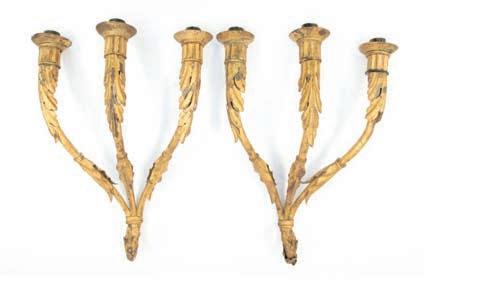
I particularly admired a ne pair of 250-yearold Italian gilded sconce candelabra, c. 17701790, which had been acquired from the estate of English actor the late Sir Christopher Lee (1922-2015), best known for his role as Count Dracula in Hammer Horror lms.
When rst introduced in France towards the end of the 17th century the torchière, a tall stand for a candlestick, mounted only one candle. When the number was doubled or tripled the improvement was regarded almost as a revolution in the illumination of large rooms. ree-sconce candelabra were part of this design innovation and this pair may be Venetian.
William of Orange
An Auctioneer’s Lot
Sometimes you walk into a home and immediately feel mesmerised – such is the feast of antiques and curios on display.
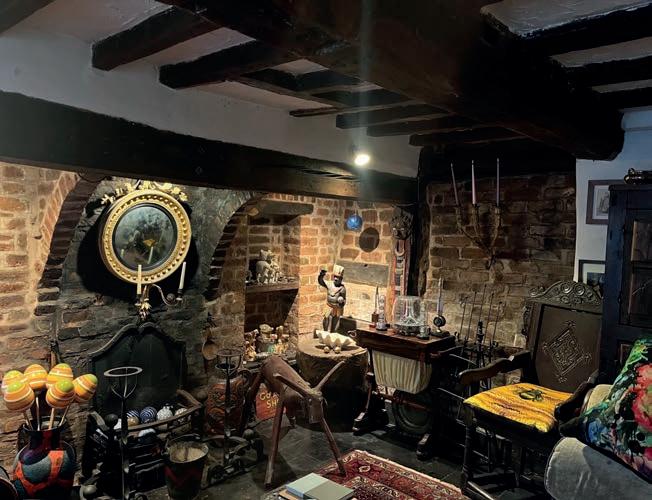
Your eyes it from one object to another as you try to take it all in. Such was the case when I strolled into a Cheshire country cottage packed to its beamed ceilings with wonders galore, both modernist and antique.
A lifetime of treasures lled every nook and cranny, all accumulated with the same collector’s passion and evident good eye.
ere was too much to take in at rst glance –ornaments, vases, plaques, paintings, statues, furniture and gurines assailed my eyes. It reminded me why so many people love to collect – including me. It is a very British hobby.
Above e 16th-century cottage was packed to the rafters with collectables
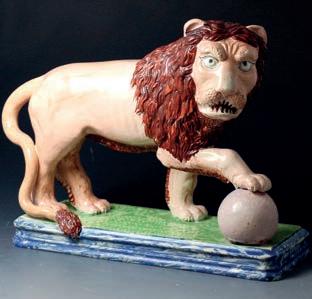
Above right e Sta ordshire lion went into the sale with a guide price of £1,500-£2,000
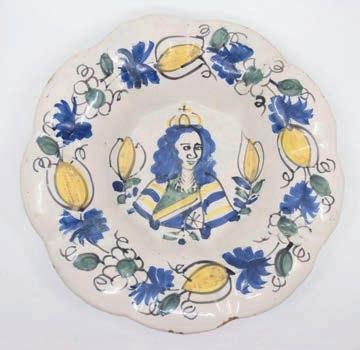
Left e Delft charger featured William of Orange was expected to make £400-£600
Below right e pair of sconce candelabra was expected to make £300£500 in the same sale
Another ceramic gem which soon caught my eye was a delft King William of Orange dish. Delftware, or Delft pottery, is a term used for Dutch tin-glazed earthenware, a form of faïence. Most of it is blue and white pottery, and the city of Delft in the Netherlands was the major centre of production. However, the term covers wares with other colours made elsewhere and is also used for similar pottery, English delftware.
e style originated around 1600, with the most highly-regarded period of production dating from 1640–1740. In the 17th and 18th centuries delftware was a major industry, with products exported all over Europe.
Angry lion
Further into the cottage I came across a fearsome Sta ordshire pearlware lion, c. 1815, with one paw resting on a ball-like object. e design was based on the Medici lions – a pair of Roman marble sculptures, dating to the 2nd century AD, of two standing male lions with a sphere or ball under one paw, looking to the side.
Such gures were very popular in England in the late 18th and early 19th century capturing the burgeoning patriotism associated with victory over the French and the growth of imperial strength. While intended to be fearsome there’s no doubt the big cat’s expression has a rather comical look.
If you have anything similar to consign drop me an email at Charles@hansonsauctoneers.co.uk
28 ANTIQUE COLLECTING
EXPERT COMMENT Charles Hanson
Charles is bowled over when he steps into a collector’s paradise hidden inside a 16th-century Cheshire cottage
‘Further into the cottage I came across a fearsome ‘angry’ Staffordshire pearlware lion, c. 1815, with one paw resting on a ball-like object’






















ANTIQUE COLLECTING 29 Treasures like yours belong on eBay List your art & antiques in our new collectables category. For more information, scan the QR code Amy Kent Senior Category Manager, Art & Antiques UKCollectables@ebay.com fineart-restoration.co.uk ati n i e e ti n an e i er er i e erien e n er at r , in u in a re ite nta t u f r ur free n iti n a rai a n er ati n f fine art, furniture an e rati e e t
Summers’ time
For a decade, until the rm’s closing in 1940, Simple Furniture produced more than 200 designs, including chairs, chests, cupboards, desks, sideboards, tables, and wardrobes. Conceived, in Gerald’s words, as “furniture for the concrete age,” these pieces helped shape the notion of the modern interior in Britain.
Forgotten genius
Gerald’s work was largely forgotten until the 1970s, when historians of British design began to reassess the interwar years. Scholars focused on the remarkable bent plywood armchair. Its uid organic form and one-piece moulded plywood construction rivaled the contemporaneous work of the great Finnish designer Alvar Aalto and presaged the revolutionary molded plywood chairs of the mid-century American designers Charles and Ray Eames
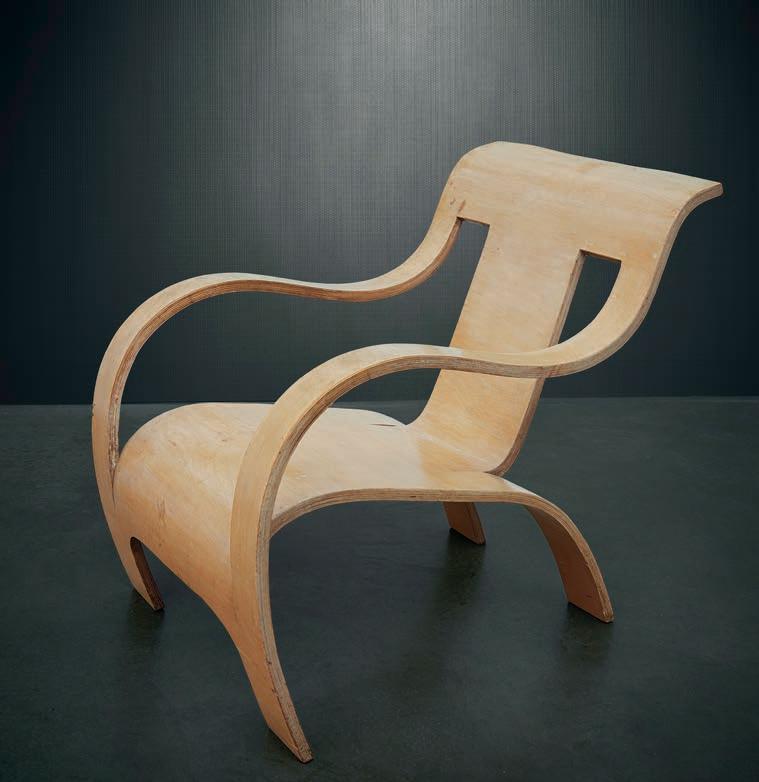
Engineering mindset
Although Gerald is now known for other pieces, such as the elegant high back chair and serpentine trolley, the extent of his contribution to 20th-century design has received scant attention, and he has been perceived, wrongly, as an outlier.
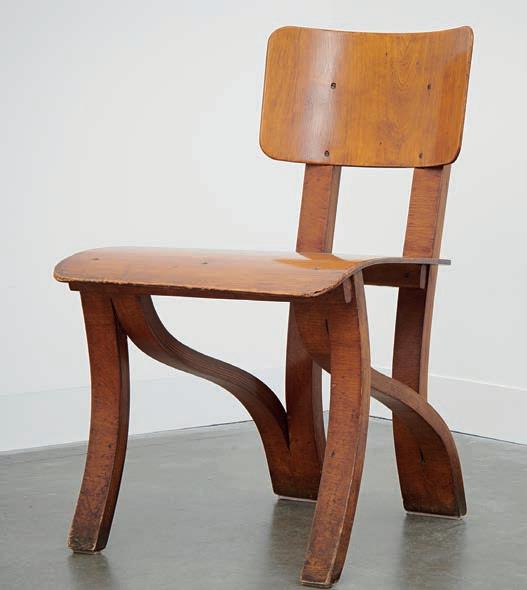
He was, in fact, tailor-made to be a modernist. His engineering mindset, which regarded purpose as the prime determinant of form, perfectly aligned him with Britain’s progressive designers, who rallied under the banner of “ tness for purpose.” What set Gerald apart was the rigour with which he applied this philosophy to his furniture.
“A thing had to do a job,” Marjorie said, “and so he designed it to do the job it was meant to do.”
Gerald held his counterparts to the same standards and often found their work to be wanting. In his published reviews of British furniture, he chastised designers who paid lip service to the modernist credo while designing for appearance rather than functionality.
More than 90 years have passed since the British designer Gerald Summers — creator of the iconic bent plywood armchair — and his partner, Marjorie Butcher, opened their London shop, Makers of Simple Furniture, in 1931. e rm’s earnest proprietors saw themselves as outsiders, but their mission to create simple, functional furniture responsive to the requirements of the modern home placed them squarely in the vanguard.
European modernism
While Britain’s modernists debated how to translate “the house-is-a-machine-for-living-in” ethos of European modernism into a style suited to the British temperament, Gerald and Marjorie forged ahead. In doing so, they trusted in his rational approach to design—the emphasis on function, materials, and methods of manufacture— that he had absorbed as a young engineer’s apprentice during WWI.
Above Gerald Summers (1899-1967) for Makers of Simple Furniture, a plywood armchair, c. 1933-1934, estimated to make £7,000-£9,000, sold for £25,500 in 2022. All images courtesy of Lyon & Turnbull
Right Gerald Summers (1899-1967) for Makers of Simple Furniture, a “Type P” chair, estimated to make £12,000-£18,000 it sold for £22,680. In its heydey it was advertised as “Suitable for occasional or dining use. Constructed of birch and nished in clear polish.”
30 ANTIQUE COLLECTING
Compared to his fellow modernists, the name of British designer Gerald Summers is known to few. But a recent sale and upcoming book is set to change all that
COLLECTING GUIDE Gerald Summers
audience among forward-thinking members of the British public. Department stores and furnishing shops in London, such as Heal’s, carried many of the rm’s stock designs. e furniture appeared frequently in magazines and newspapers ranging from the Architectural Review to the Daily Mail
Examples were displayed in popular design exhibitions. e furniture even starred in a newsreel shown in cinemas throughout Britain. Despite the quality and ubiquity of his furniture, Gerald did not receive the same level of critical acclaim in his day as established designers.
is was due, in part, to his distaste for selfpromotion. It was the satisfaction of a design problem deftly resolved—an elegantly proportioned sideboard, an e ervescent barstool—that interested him, not the accolades. What he cared about most was the satisfaction that his furniture brought to the rm’s clients.
Today, as more and more of his designs come to light, we, too, can experience rsthand the rare combination of simplicity, utility, and beauty that distinguishes Gerald’s work in its entirety and makes his furniture as compelling to us in the 21st century as it was to the avant-garde in the 1930s.
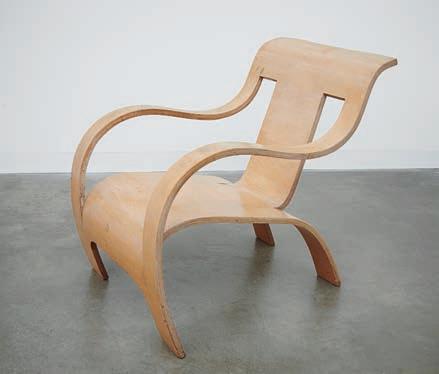
ple Furniture, a D-end desk, 1934, retailed by Heal’s, estimated to make £1,500-£2,000 it sold for £3,780
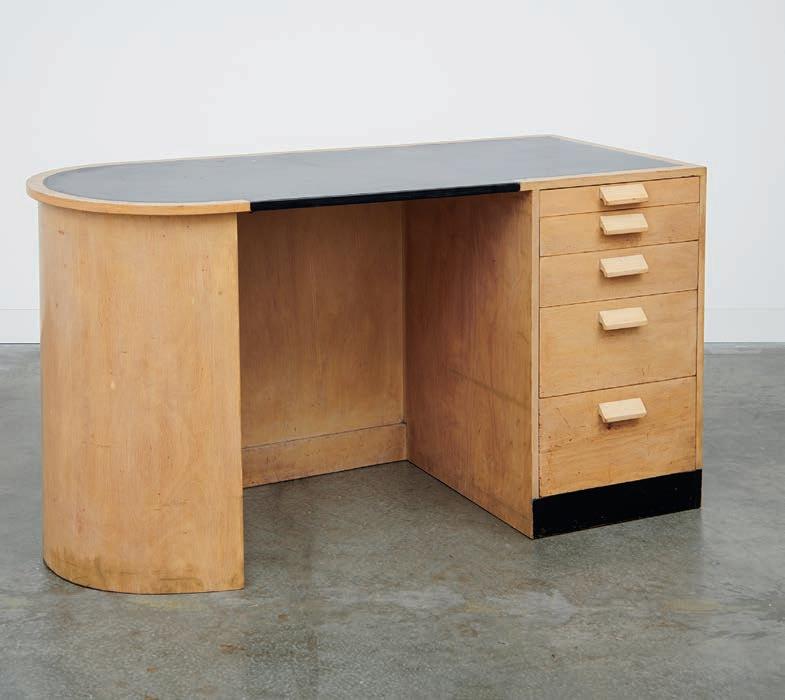
Above right e armchair isdesigned by Gerald Summers (18991967) one of Britain’s greatest but most overlooked odernists
Below right Gerald Summers (1899-1967) for Makers of Simple Furniture, c. 1934, a high-back chair in blackstained birch plywood, estimated to make £4,000-£6,000 it sold for £10,710
ICONIC DESIGN
The recent sale included a fine example of Summers’ bestknown design, his armchair c.19331934 made form a single sheet of birch plywood.
Summers wanted to construct a chair that would require no joins and create very little waste, relying instead on simple incisions and mould bending.
Carrying a pre-sale estimate of £7,000-£9,000, the chair sold for £25,500. According to workshop documents, the chair was made from seven sheets of flexible birch plywood that were stacked and cut on a table saw.
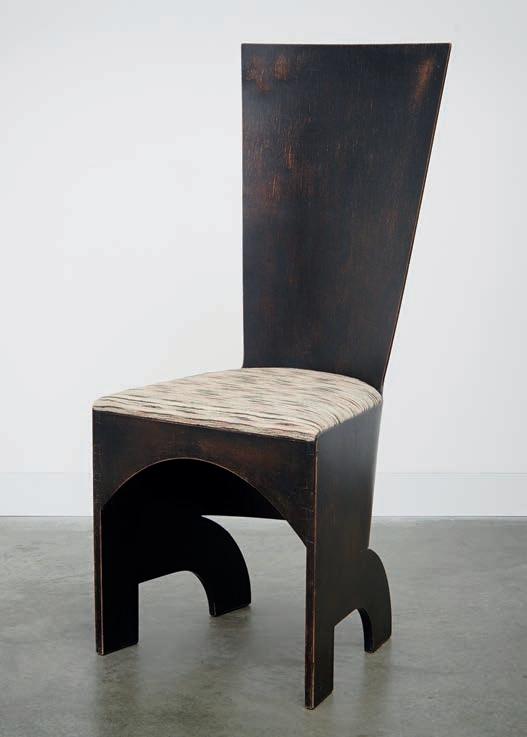
While the glue between the plys was still wet, the sheet was then pressed in a wooden mould for eight hours.
The mould articulated the curve of the chair’s legs and arms, leaving only the front legs to be cut out after the moulding process was finished.
With its smooth surface and absence of metal, it was originally designed for use in the tropics to withstand high humidity.
‘Despite the quality and ubiquity of his furniture, Gerald did not receive the same level of critical acclaim in his day as established designers. This was due, in part, to his distaste for self-promotion. It was the satisfaction of a design problem deftly resolved—an elegantly proportioned sideboard, an effervescent barstool—that interested him, not the accolades’
ANTIQUE COLLECTING 31
Landmark sale
At a recent sale at Edinburgh auctioneers Lyon & Turnbull’s London saleroom one of Summers’ bent plywood armchairs more than quadrupled its low pre-sale guide price of £7,000 to sell for £25,500.
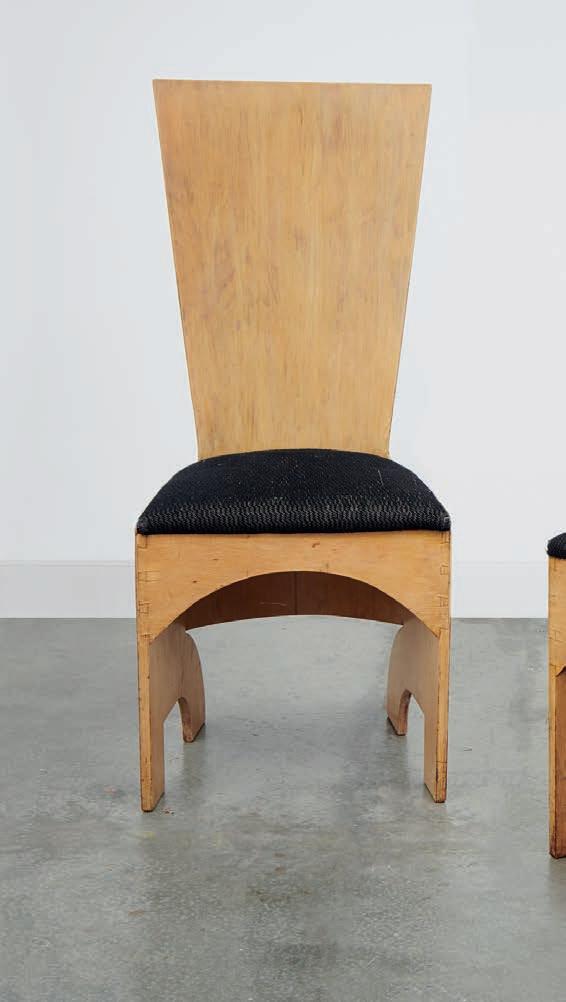
In total, 23 pieces by Summers from a single owner collection made more than £205,000, with eager bidders from the UK, America and China. Enough of a buzz to make the design cognoscenti sit up and take note.
e vendor said: “I have for many years sung the praises of this great British designer. is body of work on sale, while including only a fraction of his 200 designs, has given a voice to Gerald Summers and hope that it will encourage debate and much deserved greater inclusion in the history of the modernist movement.”
Lyon & Turnbull’s senior specialist in design. Joy McCall, said: “With his bent plywood armchair, Summers had the ingenious vision to try and construct a chair that
Above Gerald Summers (1899-1967) for Makers of Simple Furniture, a cocktail stool, 1930s, in black-stained birch plywood, estimated to make £8,000-£12,000, it sold for £10,080, with a high-back chair in black-stained birch plywood
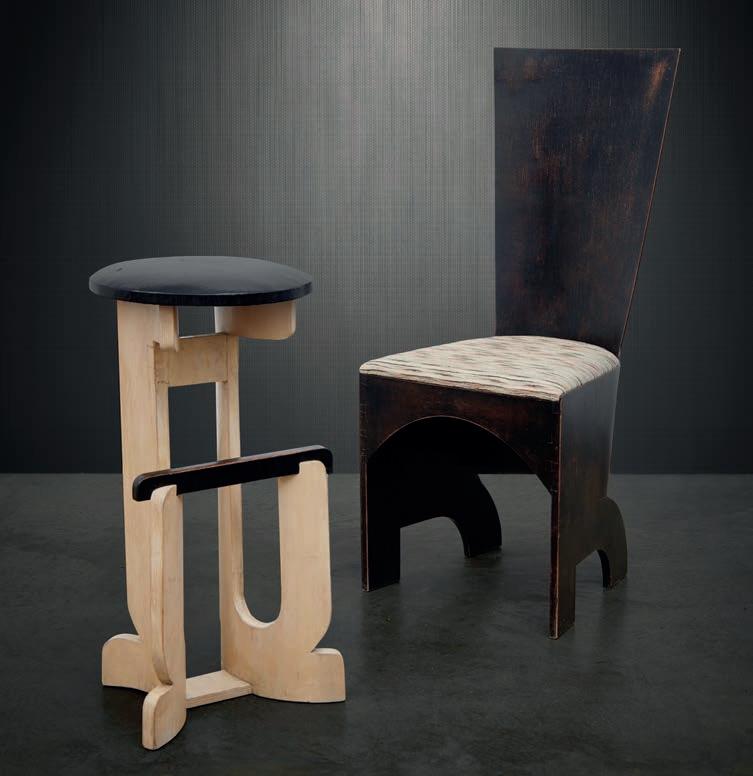
Right Gerald Summers (1899-1967) for Makers of Simple Furniture, two high-back chairs, c. 1936, each stamped to the upper surface of seat ‘158’, ‘159’, birch plywood, estimated to make £5,000-£7,000, the pair sold for £13,860
would require no joins and create very little waste, relying instead on simple incisions and mould bending. e example which sold for £25,000 had been purchased new by the Oxford artist Juliette May Lucille Edwards (19092011) and acquired by the vendor from her estate.
Equally innovative was his “Type P” chair which had been expected to make £12,000 but sold for £22,680.
With its legs formed from single strips of bent plywood to form the back supports, the technique which Summers pioneered was used by the Italian architect and designer Carlo Mollino (1905-1973) two decades later when he created a pair of plywood chairs for the Casa Cattaneo.
Joy McCall continued: “ e chair is believed to be the only example of this chair to exist, though it is known that two were originally produced.
“Increasingly today Summers is seen as a pioneer and his works the precursor to the ubiquitous moulded plywood chairs made later in the century by Charles and Ray Eames.”
32 ANTIQUE COLLECTING COLLECTING GUIDE Gerald Summers
‘The armchair’s fluid organic form and onepiece moulded plywood construction rivalled the contemporaneous work of the great Finnish designer Alvar Aalto and pre-dated the revolutionary moulded plywood chairs of the mid-century American designers Charles and Ray Eames’
Above Gerald Summers (British 1899-1967) for Makers of Simple Furniture Tables, a nest of tables, c. 1935, birch plywood, estimated to make £1,500-£2,000 it sold for £6,930
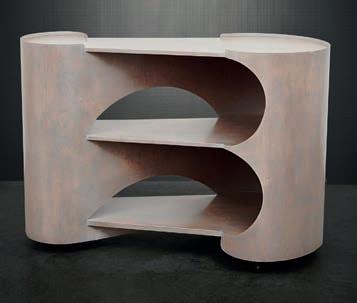
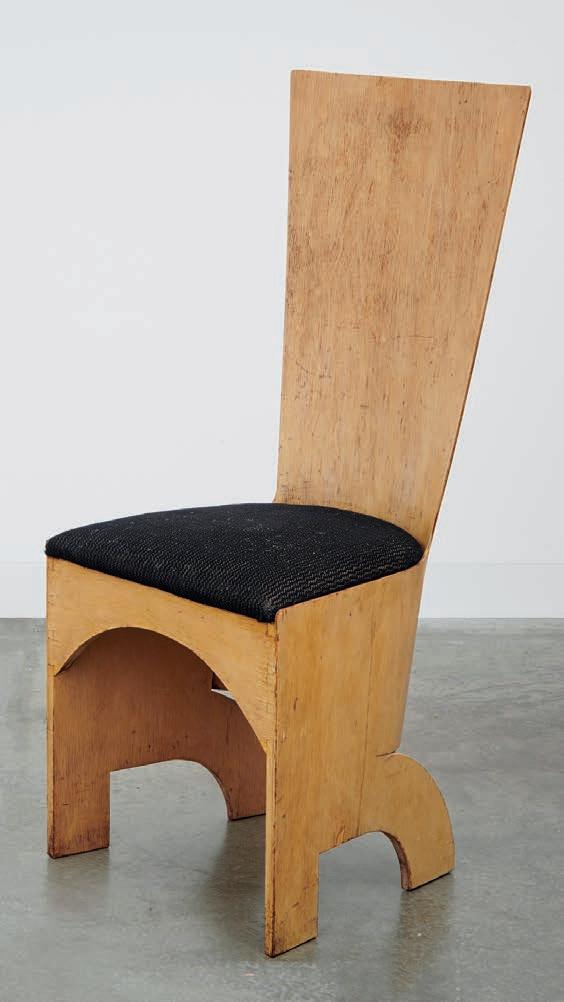
Above right Summers’ innovative trolley solved the problem of disappearing household sta
Below right Flat 6 of Lawn Road Flats (or Isokon building) in Hampstead, image courtesy of the Isokon Gallery Trust, Pritchard Papers / University of East Anglia
Simple Furniture and Isokon
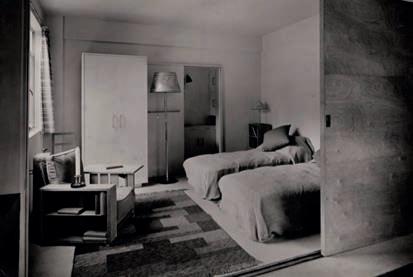
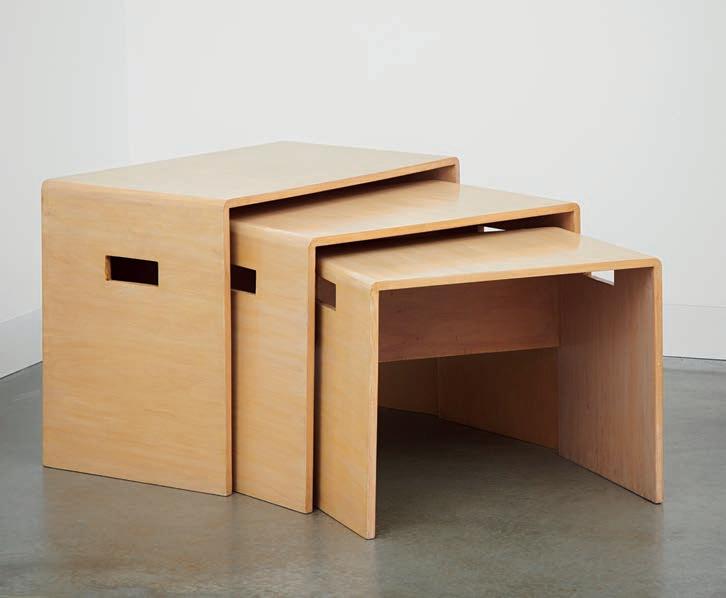
A stained ash plywood and brass trolley c.1936, was Summers’ only documented design for Isokon, the British manufacturer of wooden furniture founded by Jack Pritchard and Welles Coates.
The three-tier trolley sold for £35,200 at the recent sale. Its high price no doubt reflecting the fact only 20 or so of the original trolleys were made before plywood became difficult to source with the onset of WWII.
Alongside Summers, Pritchard also employed emigrés such as Marcel Breuer and Alvar Aalto to design furniture for Isokon. Their designs, as well as Summers’ trolley, were incorporated in the most iconic Modernist building in London, the Lawn Road Flats (also known as the Isokon building) in Hampstead. Designed for minimalist, stylish city living, the flats – packed with the latest space-saving designs – were each 24m² in size, with a restaurant and bar, the Isobar, providing a social hub for artists and intellectuals.
Butler problem
The trolley which found a place in the new flats was the latest post-WWI development in domestic furniture. The household staff upon whom the upper classes had relied for generations were, following WWI, no longer available and adaptations were required to maintain standards of service to guests. Lightweight plywood bar carts, tea trolleys or ‘dinner wagons’ were the ideal solution to assist the host lacking a butler.
Famous residents
Isokon residents from this period included: Walter Gropius, founder of the Bauhaus; Marcel Breuer, designer of modernist furniture; and László MaholyNagy, head teacher of art at the Bauhaus school. Between 1941 and 1947 the building was the home of the crime writer Agatha Christie. It was a productive period of her life when she wrote several novels, plays and her autobiography.
ANTIQUE COLLECTING 33
UNDER THE HAMMER Country house antiques
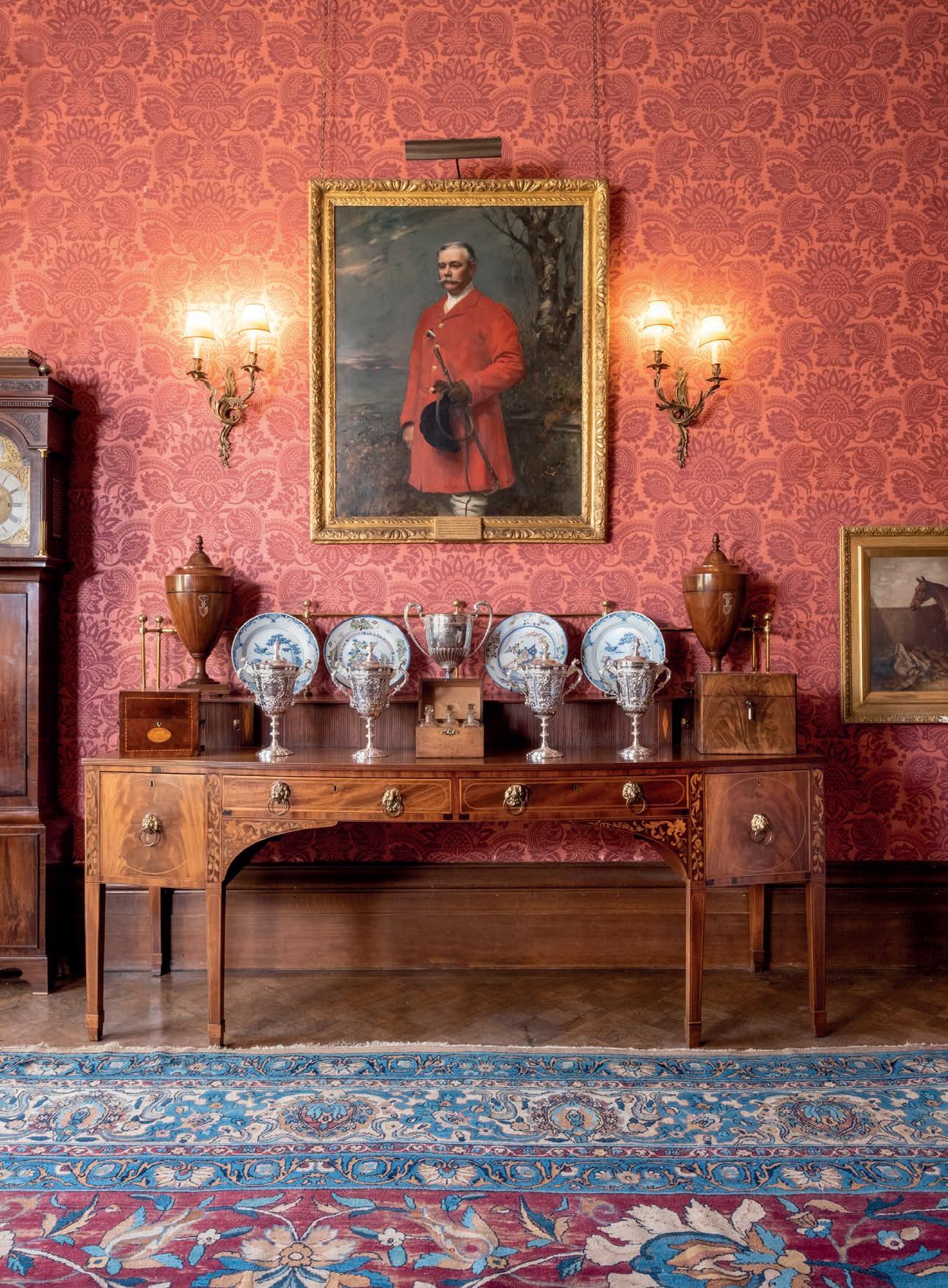
34 ANTIQUE COLLECTING
PARK LIFE
The English country house has chameleonlike qualities. It can change and adapt its colouration through successive generations of owners, shifts of taste and government, and uctuations of income. Some houses hit the bu ers, to be reincarnated as hotels, boarding schools and borstals. Many more were demolished during the last century. But those that have retained the layers and richness of their inheritance are ingrained with a special character, miraculously preserved as if in aspic.
Such is the story of Meldon Park, described by one country-house writer as being one of the “illustrious obscure”. It is a handsome, four-square pile in golden brown sandstone, standing on a 3,800-acre estate in Northumberland, with an austere neoclassical façade that is much admired by architectural historians.
Meldon is not just grand architecture. Its objects –some of great beauty and preciousness, some prosaic, poignant and practical – show us the generosity of a way of country-house living, revealing the interests and past times of a more leisured, almost prelapsarian age.
Glass works
Meldon was built for Isaac Cookson in 1832 by John Dobson, a successful local architect. Dobson was a close friend of Robert Smirke and his eponymous son, the
Opposite page e dining room at Meldon Park
Above right Jacob George Strutt (British, 1790-1864) e Arch of Constantine, Rome, has an estimate of £10,000£15,000
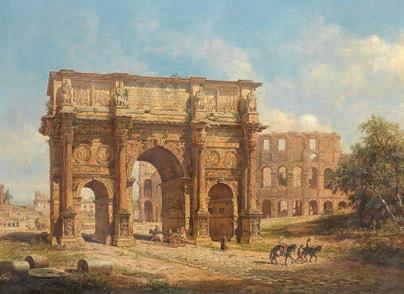
Below left A pair of Russian-style mahogany and gilt metal commodes, 18th century and later, has an estimate of £6,000-£8,000
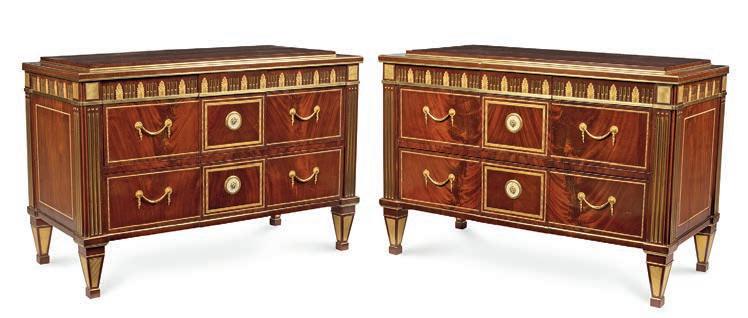
Below right Attributed to Giuseppe Bonito (Italian 1707-1789 s) A seated man holding a lute, has an estimate of £7,000£10,000
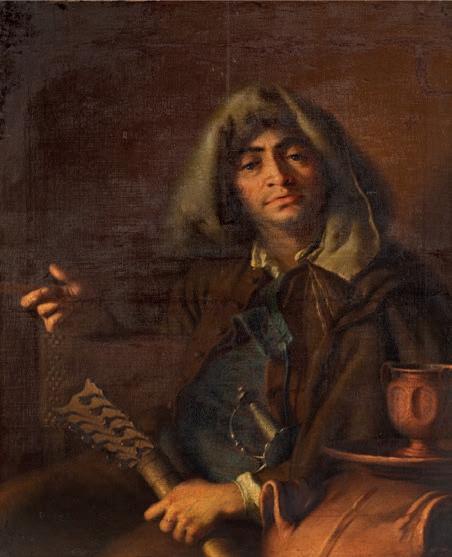
GRAND TOUR
The historical pastimes of country-house life are recorded everywhere here in the rooms and their contents. A fanciful reconstruction of the Roman Forum after Giovanni Paolo Panini hanging in the staircase hall, a handsome mid 19th-century pair of Roman views taken by Jacob George Strutt, and a tabletop pair of marble lions after Antonio Canova evince British tastes for shopping and travelling on the Continent again after the upheavals of the Napoleonic Wars, for example.
builder of the British Museum, and his rigorous approach to mass and scale re ects similar taste. His clients, the Cookson family, were wealthy merchants who prospered from establishing a local glass and chemical works. As a result, Isaac Cookson could glaze his new house with the huge windows that grace the main rooms on the south and east sides. Mark Girouard described Meldon’s large, bright, airy rooms as representing “the last owering of the Georgian country-house tradition”, before the Victorians turned instead to crepuscular gloom and shade.
‘Meldon is not just grand architecture. Its objects – some of great beauty and preciousness, some prosaic, poignant and practical – show us the generosity of a way of countr y-house living, revealing the interests and past times of a more leisured, almost prelapsian age’
Much imitated but rarely achieved, country house style is evident in abundance at a Northumberland estate, the contents of which go under the hammer this month. Dr Ruth Guilding reports
ANTIQUE COLLECTING 35
Orangery, another feat of glazing from the Cookson’s glassworks. Its contents, to be o ered at Bonhams Edinburgh sale this month with some estimates starting as low as £200, are a delicious and archetypal set of country-house furnishings of the best periods, re ecting the house’s long tenure by a single family. e Cooksons held on for seven generations, making way only for an evacuated children’s orthopaedic hospital during WWII and, in the 1960s, selling some of its collection of Old Master paintings.
e chattels and furnishings that Meldon contains were made, bought or commissioned for the house. ey include a superb dusky pink Ushak carpet that lls the preposterously grand entrance hall, patterned with geometric medallions in a trellis of lozenges. Above it rises a central staircase of imperial proportions, an astonishing coup d’oeil, the sibling of those in Pall Mall gentlemen’s clubs and, indeed, the British Museum. Its wrought-iron balustrades were later exchanged for mahogany by Edwin Lutyens, who also added plaster medallions to soften Dobson’s more austere style.
Alarming wife
e 17th-century oak refectory table that stands against a wall here, loaded with a cargo of Chinese porcelain, may well have come from the earlier great house at Meldon, during its occupancy by Sir William Fenwick and his alarming wife Meg of Meldon, a notorious local witch. Her ghost was said to run, as a small black dog, along
Top left A George III mahogany six pedestal dining table has an estimate of £7,000£10,000
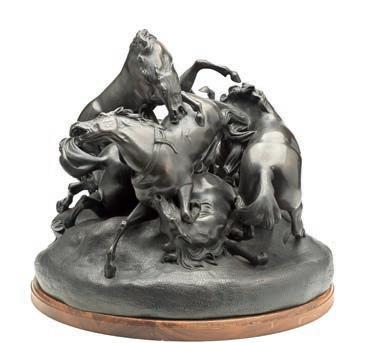
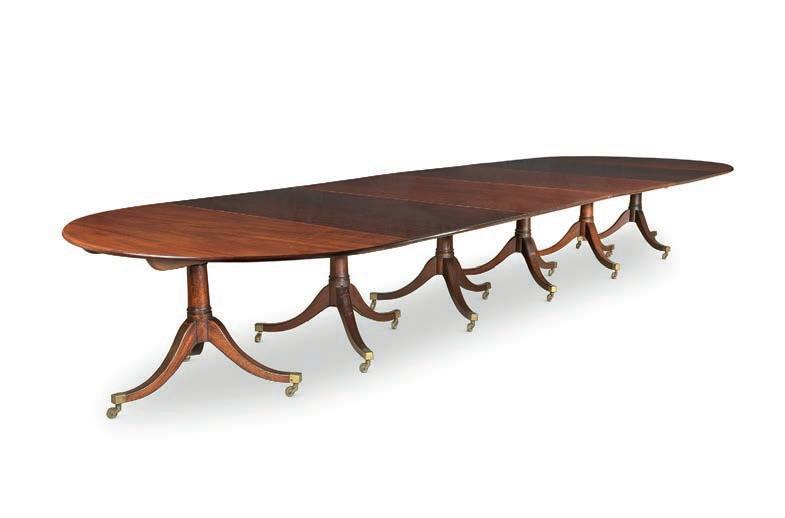
Above John Graham Lough (British 17891876) Duncan’s Horses, has an estimate of £7,000- £10,000
Below left A Kerman Laver hunting carpet, measuring (25ft 9in x 16ft 6in, has an estimate of £5,000-£7,000
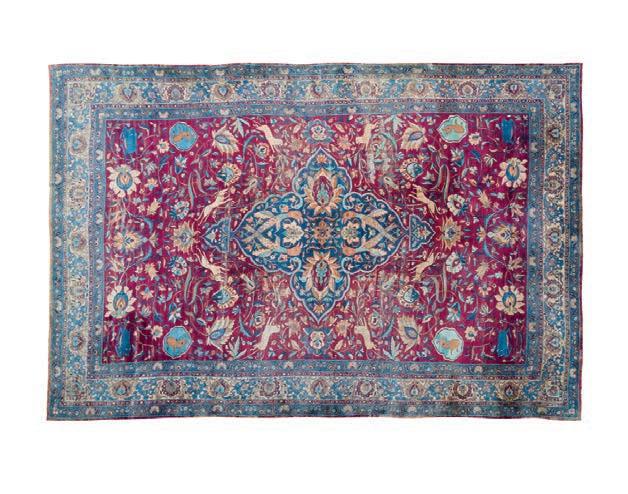
Right Attributed to Pieter ys (Antwerp 1624-1677) An elderly man and a young boy warming themselves on a brazier, an allegory of winter, has an estimate of £7,000-£10,000
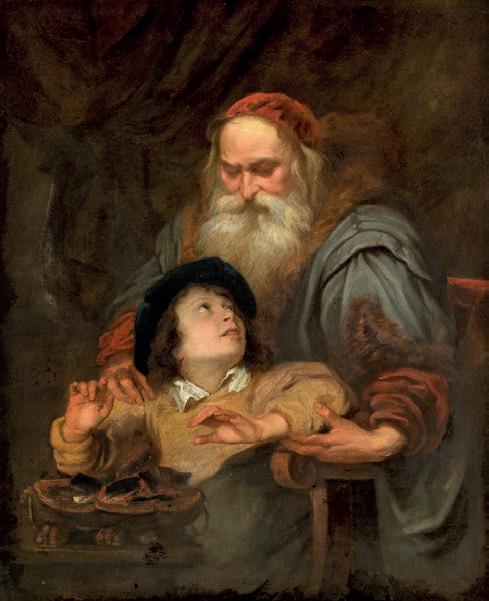
the present house. She appeared so frequently that local people became quite blasé about her hauntings. e pair of 18th-century needlework banners worked with the royal coat of arms may well have done earlier service in a side aisle of the local church, where Sir William Fenwick’s e gy lies slumbering by the font.
e drawing and dining rooms of country houses like this one were poles around which the social functions of the household revolved. Music and entertaining, tea and co ee rituals took place in one, and formal meals and strong potations were taken in the other.
Howard & Sons
Drawing rooms traditionally received the best of the ne art and ornaments: Meldon’s drawing room walls are hung with some of the best pictures remaining from an Old Master collection that has been here for almost 200 years.
Either side of the chimneypiece hang an almostmatching pair of limpid landscapes, a Mediterranean harbour view after Claude Lorrain and its partner, Dido and Alexandra, painted by the British artist John Wilson Ewbank at the start of the 19th century. ey are typical of that century’s love a air with classical Italy and its mythologies. A three-seater mahogany framed Knole-type sofa by Howard & Sons Ltd – much the most comfortablelooking piece of seat furniture in the room – is modestly estimated at £1,000-1,500. e chimney garniture consists of a mantel clock, by the Parisian maker Rennison, set o by a sparkling pair of Victorian glass lustre vases.
Male domain
e dining room was traditionally a male domain, since ladies withdrew to the drawing room as soon as dinner was consumed, leaving the men to their port. Here the décor was often red in tone, a mellow post-prandial space for the “enjoyment of the bottle”. In accord with this is the cerise-
pink Laver Kerman hunting carpet woven with owers and animals in Meldon’s dining room. It is a massive 25 by 16ft. e pair of Sheraton-style mahogany knife-boxes, shaped like urns with acorn nials, that stand on the bu et have the superb patina that only age and careful use can produce.
Natural world
Other things here belong to a particular kind of outdoor lifestyle, of dogs and horses and the natural world. ese, the miscellaneous contents of cupboards, attics and below-stairs spaces, can be the most revealing of all. A whiskery bust of John Cookson of Meldon Park scowls incongruously among terracotta pots in the Orangery.
ere are pious needlework samplers stitched by the daughters of the house and a magic lantern with its boxes of glass slides for educational family entertainments. A many-drawered butter y and moth cabinet provides evidence of our Victorian forebears’ obsessive fascination with cataloguing the natural world and zealously trapping, stalking, stu ng and pressing its specimens into folios.
Sporting life
A love of bloodstock and the sporting life is represented by ten pairs of leather hunting boots, softened by much use and polishing, and the silver trophies won by those of the family who were gentleman jockeys at local race meetings and point to points. Mr Isaac Cookson rode his own bay mare Tweedside to victory over two-and-a-quarter miles of the Newcastle course, beating four others and carrying 13 stone, a feat engraved onto his George III two-handled Presentation Cup assayed in Newcastle in 1804. Later generations brought home four more silver-gilt trophy
Above left Meldon was built for Isaac Cookson in 1832 by John Dobson, a successful local architect
Above right e large hallway boasts an elegant double staircase Right Arthur John Strutt (British, 1819-1888) e Campo Vaccino, Rome has an estimate of £8,000-£12,000
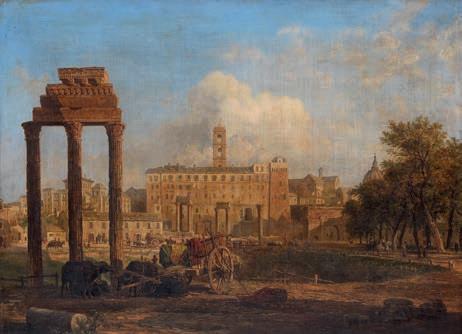
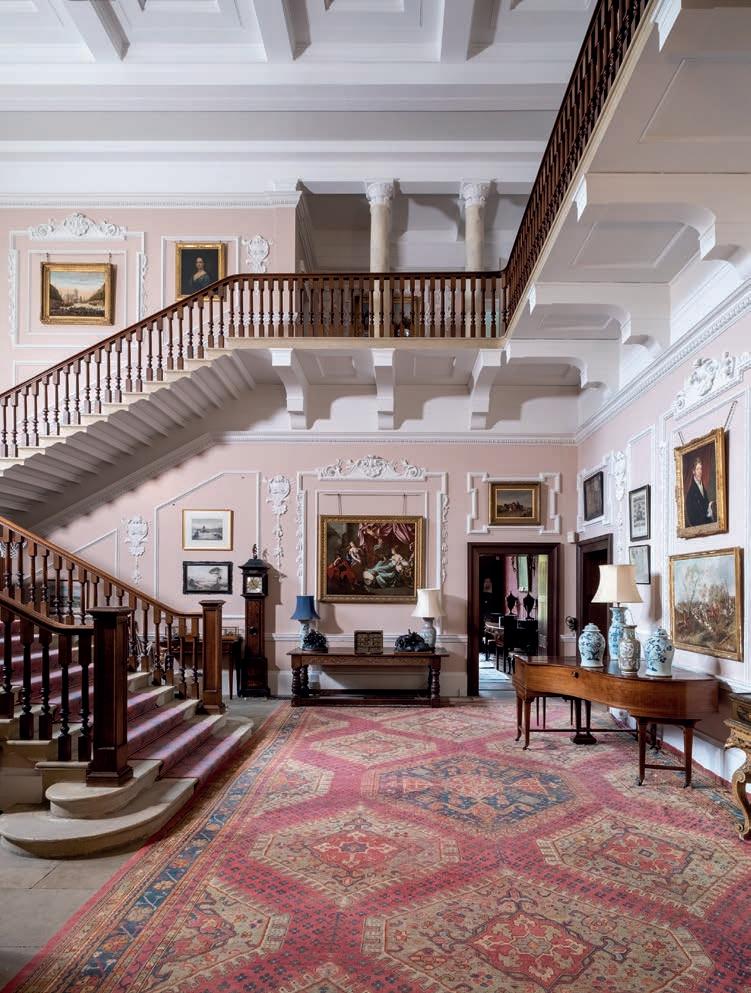
cups in 1877, 1878 and 1879. And nally there is the port, two dozen bottles laid down in the cellars of Meldon Park by Michael John Blemcowe Cookson OBE, Hon. Colonel of the Northumberland Hussars, a decade after the birth of his son and heir, in expectation that he would drink it in his own maturity.
Dr Ruth Guilding writes for e World of Interiors and Country Life. e contents of Meldon Park are part of the collections sale at Bonhams Edinburgh on February 2. is article previously appeared in Bonhams Magazine
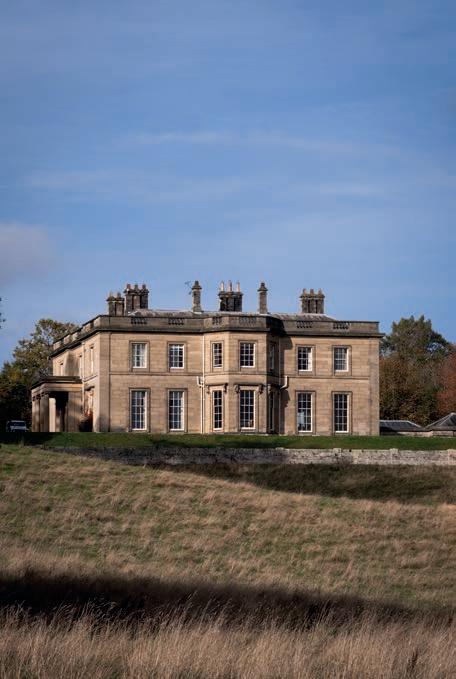
ANTIQUE COLLECTING 37
WRITE from the HEART
signi cant events or periods in history, such as wars or natural disasters, may also be collectable because of the context in which they were written. Love letters that are well-written, emotionally powerful, and representative of an important relationship or moment in time continue to be highly desirable.

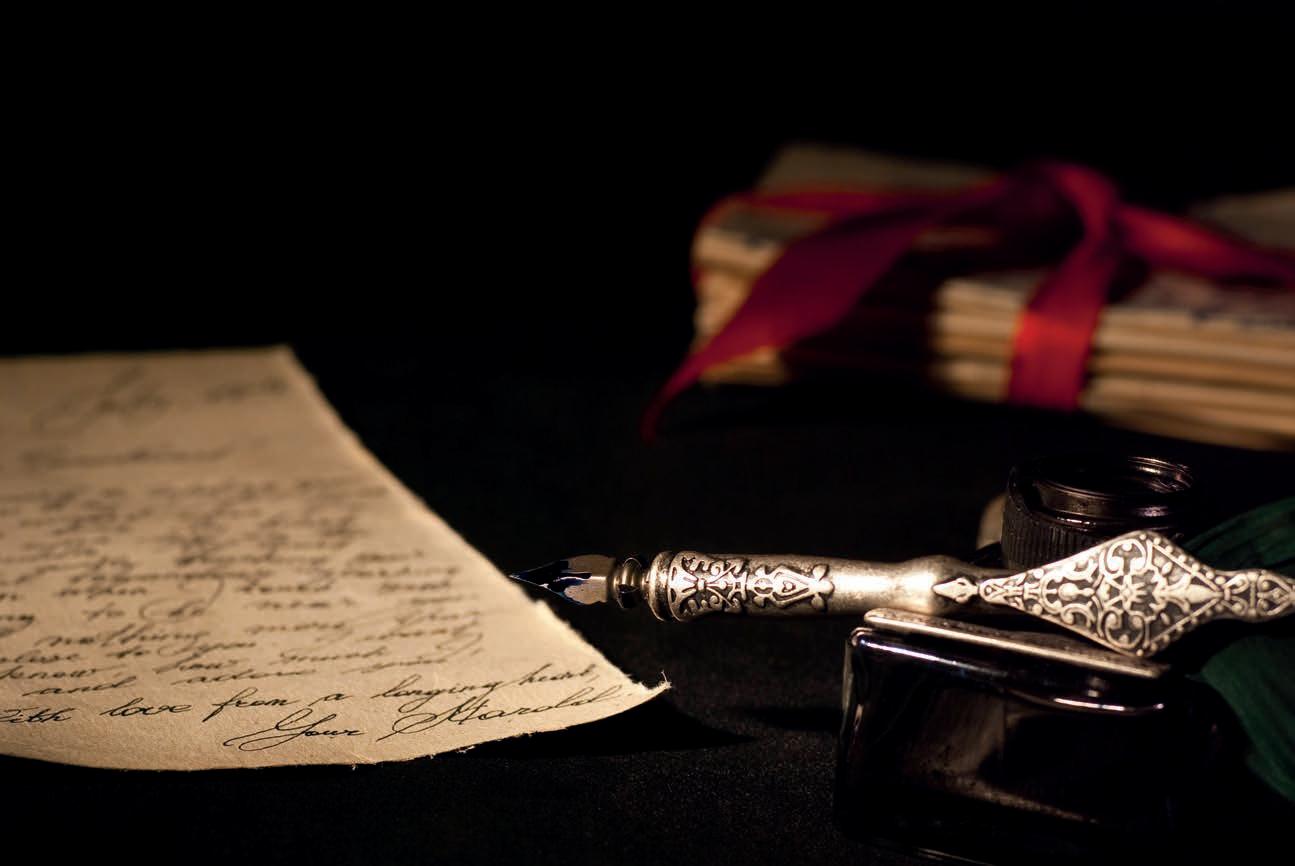
Passionate and poignant
As a tangible record of tenderness shared, letters between lovers hold a special place in the canon of literary ephemera. As the practice of writing them fades into oblivion, their lyricism and ability to convey emotion across the centuries provides an irresistible lure to collectors.
Whether describing elation, the pre-occupation and longing of early courtship, the doubt, despair and desperation of separation, or long-term devotion and comfortable domestic intimacies – such letters are endlessly fascinating.
eir collecting pull largely depends on their circumstances and the people who wrote them. Letters written by famous historical gures, or celebrities, tend to be the most highly sought after by collectors because of their documentary or cultural signi cance.
However, love letters written by ordinary people during
Above Love letters lend a touching insight into their authors and their relationships, as well as a glimpse of history, image Shutterstock
Right William Hilton (1786–1839) Portrait of John Keats (1795-1821), c. 1822, oil on canvas

Take those between the English poet John Keats (17951821) and his ancée and muse Fanny Brawne (18001865). When they met in the spring of 1819, Keats was a struggling poet, barely able to make a living, while Brawne was a fashionable young woman from a wealthy and in uential family. Keats had been diagnosed with tuberculosis, and he knew that his time was running out.
Brawne, meanwhile, was torn between her love for Keats and her duty to her family, who did not approve of their relationship. Despite these obstacles, the two maintained a deep and passionate connection through correspondence.
eir letters shine with the depth and intensity of their love. In one letter, Keats writes: “My love has made me sel sh. I
38 ANTIQUE COLLECTING
With Valentine’s Day on every suitor’s calendar this month Sammy Jay considers how love letters continue to capture collectors’ hearts
COLLECTING GUIDES Love letters
cannot exist without you—I am forgetful of every thing but seeing you again—my Life seems to stop there—I see no further. You have absorb’d me.” Brawne, in turn, wrote: “You are always in my thoughts—I am always thinking of you—I wake with you—I sleep with you—you are always present to my mind.”
What was claimed to be the last Keats’ letter to Fanny Brawne remaining in private hands – a 170-word note written in 1820 a year before his death – sold at auction at
FAMOUS LOVERS
Other famous lovers whose letters continue to excite collectors include Napoleon Bonaparte and his wife Josephine; Horatio Nelson and Emma Hamilton; and Frida Kahlo and Diego Rivera.
Jack Kerouac and Norma Blickfelt
e Beats Allen Ginsberg, Jack Kerouac and William S. Burroughs and the like occupy a unique space in American mythology. Emerging out of the nation’s postwar boom, they blazed a trail for counterculture.
For book collectors, they occupy the same space as gures like e Beatles, Bob Dylan and Jimi Hendrix –three of the most sought-after gures for collectors of music memorabilia.
Kerouac’s On the Road, famously written on a 120foot scroll over three weeks in April 1951, became the text for a generation. e original scroll sold for $2.1m in 2001.
Some 15 years before he wrote his best-known work, aged 20, he wrote a long letter, full of the passion and wanderlust of youth, to 16-year-old Norma Blickfelt who he had met in Manhattan when he was 18 and had dated brie y in April 1940.
Among other yearnings, Kerouac lls 12 pages with his desire to shrug o “dull, prosaic living” and go to sea.
Besides the exceptional length of this letter, its early date, and its revealing content, the most fascinating detail is that Kerouac never sent it – perhaps he never meant to.
He has annotated the rst page in a di erent, later ink, “Love Letter to Norma Blickfelt”, identifying it not as a functional letter, but a self-consciously literary vessel for experimenting with his own character and emotions.
Top right Sonnets From the Portuguese, Elizabeth Barrett Browning, 1886. Illustration by Ludvig Sandöe Ipsen
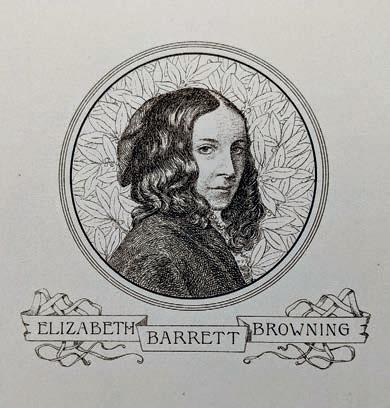
Above far left e 12-page letter by the young Kerouac was never sent to his former girlfriend. e letter is priced £37,500 on sale from Peter Harrington
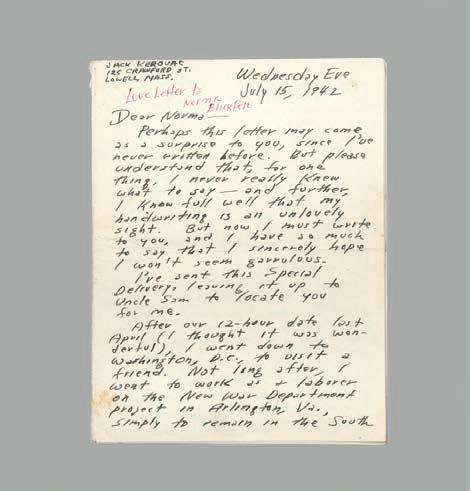
Above middle Kerouac has long cast a near mythical spell over America
Above left Kerouac signs the letter “auf wiedersehen, Jack”
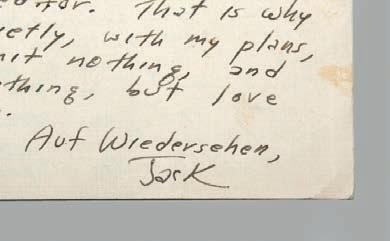
Right Leonard Cohen’s holographic manuscript for his poem You Do Not Have to Love Me, c.1968. For sale from Peter Harrington for £25,000
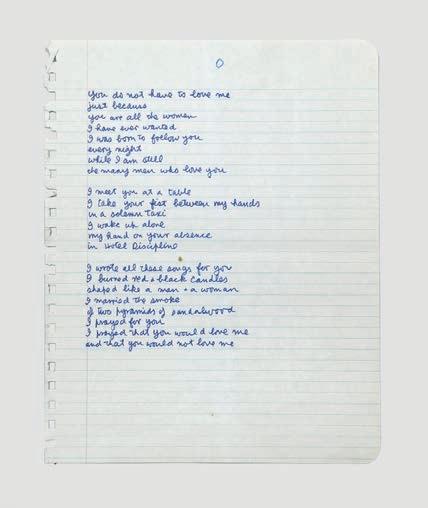
WELL VERSED
Skilful writers sometimes use their love letters as the basis for published verse. Sonnets from the Portuguese, a series of 44 love sonnets written by Elizabeth Barrett Browning (1806-1861) in the mid-19th century being one example. The sonnets were written during the courtship and engagement of Elizabeth to her husband, Robert Browning, and are considered some of the most beautiful and romantic poems ever written. Letters between the two poets are now unobtainable, but an autograph letter jointly signed with her initials and Robert Browning (‘RB & EBB’) to John Ruskin, Florence, June 3, 1859, made £8,400 at Christie’s in 2007.
Leonard Cohen and Nico
In 2019, Christie’s sold more than 50 letters from Canadian singersongwriter, poet and novelist Leonard Cohen (1934-2016) to his muse and lover Marianne Ihlen (of So Long, Marianne fame) for $876,000, with many letters exceeding their pre-sale estimates.
‘What was claimed to be the last Keats’ letter to Fanny Brawne remaining in private hands –a 170-word note written in 1820 a year before his death – was sold at auction at Sotheby’s in 2011 fetching £96,000’
Another of Cohen’s more famous muses was the German singersongwriter Nico (1938-1988).
ey rst met in 1966 in New York before Cohen was famous. Nico had just left e Velvet Underground and Cohen called her “ e most beautiful woman I’d ever seen.” e infatuation was unrequited and Nico became the object of this holographic manuscript for Cohen’s poem You Do Not Have to Love Me.
ANTIQUE COLLECTING 39
COLLECTING GUIDES Love letters
Original manuscript material of this calibre from Cohen is rare, as the penurious poet realised at an early date that he could raise money selling his drafts to the Fisher Library in Toronto.
Sylvia Plath and Ted Hughes
Sylvia Plath (1932-1963) inspires real devotion among her readers. e most celebrated text in her canon is e Bell Jar – her only novel, published under a psuedonym a year before her suicide.
During the rst months of her marriage to Ted Hughes (1930-1998), the newly-wed wrote a series of seven love letters to her new husband.
Tear-stained in places, they were written in1956 with one dating from Plath’s third week back at Cambridge University, facing an unbearable separation fromHughes who was with his parents in Yorkshire.
Right Richard Rothwell (1800–1868) portrait of Mary Shelley (17971851)
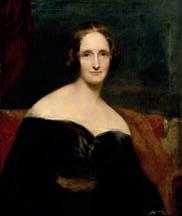
Below right A letter from Mary Shelley to her stepsister Clare Clairmont, with a clipped signature of Percy Bysshe Shelley is for sale from Peter Harrington priced £22,500
Love triangle
Not all collectable letters are between lovers. The 1837 letter below from Frankenstein author Mary Shelley to her stepsister Claire Clairmont, crackles with tension between the two, both of whom had loved the poet Percy Bysshe Shelley.
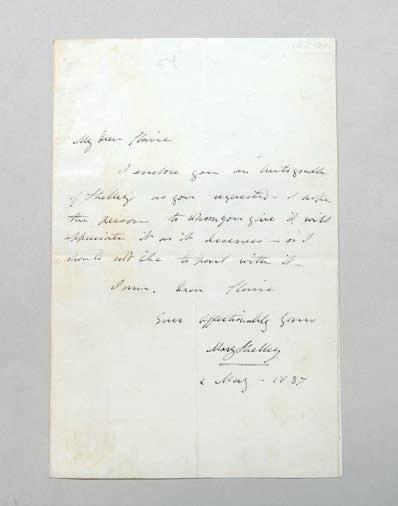
At the time of writing, thepoet had been dead 15 years but Clairmont, who was working in Paris as a governess, had asked her stepsister to clip Shelley’s signature from one of his letters.
Her response is understandably terse (many believed Clairmont’s aff air with her husband resulted in a baby daughter w infant to a Naples convent).
as

e American-born poet had been su ering from growing bouts of depression and a crisis of identity. Being apart from Hughes had been a ecting her work, creative and academic, as well as her mental state, which is characterised here as a “constant, deep sense of terror”.
Despite her distress, the letters represent the early, happier days of the Plath-Hughes marriage which ended in

Above In 2018, Plath’s daughter Frieda Hughes consigned the green Hermes Model 3000 typewriter she used to write the book in a sale at Bonhams, where it realised £32,500
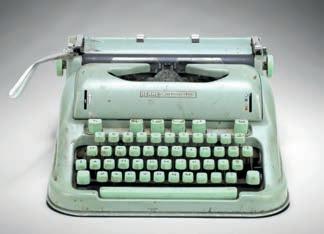
Autograph letter signed, to Ted Hughes by Sylvia Plath (1956). For sale from Peter Harrington for £60,000
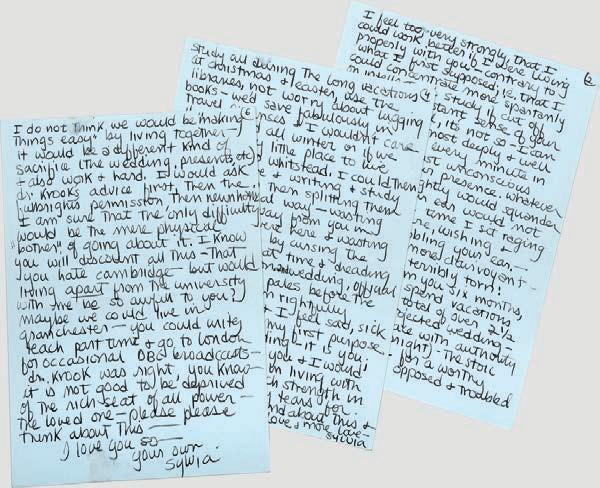
Below left Plath and Hughes married on June 16, 1956, just four months after they rst met. eir wedding rings sold for £27,700 in 2021, image courtesy of Sothebys
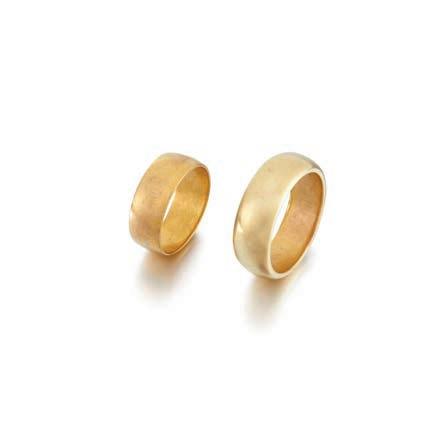
J.D. Salinger to former lover Olga Pastuchiv Clow
Pastuchiv rst wrote to Salinger (1919-2010) in early 1976, having been given a copy of his 1951 best-seller Catcher in the Rye by a friend to read as a distraction while she was ill with u. She immediately wrote the author a seven-page fan letter and they went on to correspond. ey met up at the author’s home in New Hampshire and in Boston and Cambridge for lunch and expeditions to bookshops. ey remained friends after Pastuchiv’s marriage when the couple lived in Windsor, Vermont, close to Salinger’s house in Cornish.
Right Salinger’s letter of condolence to his former lover on the death of her husband, signed “Jerry”, is priced £12,500 from Peter Harrington
Mary Shelley writes “I hope the person to whom you give it will appreciate it as it deserves – or I should not like to part with it”.
with it”.
Shelley signatures are rare and its enclosure in Mary’s letter gives a satisfying assurance of its authenticity, as well as an insight into a fascinating love triangle between an unconventional group.
Private correspondence signed by Salinger is rare. He resented the fact certain friends had pro ted from his letters or inscribed books, which meant the few who received copies either did not sell, or sold them quietly.
Sammy Jay is a literature specialist at Peter Harrington. For more information on any of the love letters described go to www.peterharrington.co.uk
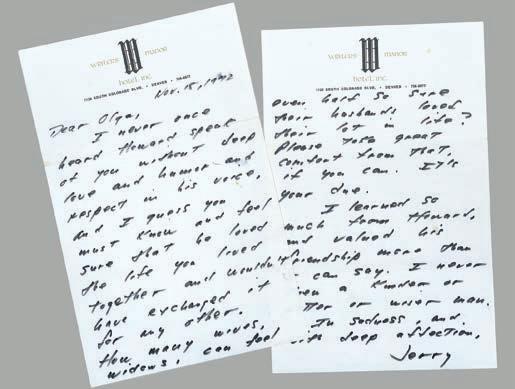
40 ANTIQUE COLLECTING
BETWEEN the COVERS
e war poet and author Siegfried Sassoon (1886-1967) signed a rst edition of his Memoirs of a Fox-Hunting Man to his great love the socialite Stephen Tennant, who he met in the summer of 1927, while he was working on the book, with the words, “To Stephen with love from the author”.
Following the rst weekend of their a air, the poet called his new love “the most enchanting creature I have ever met”. e following year he would add that “I ask nothing but to be near him always”, and that with Tennant he knew “perfect happiness”.
e romance lasted from 1926 to 1932. A year later, Sassoon married his wife Hester. Tennant was a glamorous gure, photographed by Cecil Beaton and used as the model for the amboyant Cedric Hampton by Nancy Mitford in her novel Love in a Cold Climate
Top right Eugène Giraud (1806–1881) Portrait of Gustave Flaubert, 1856
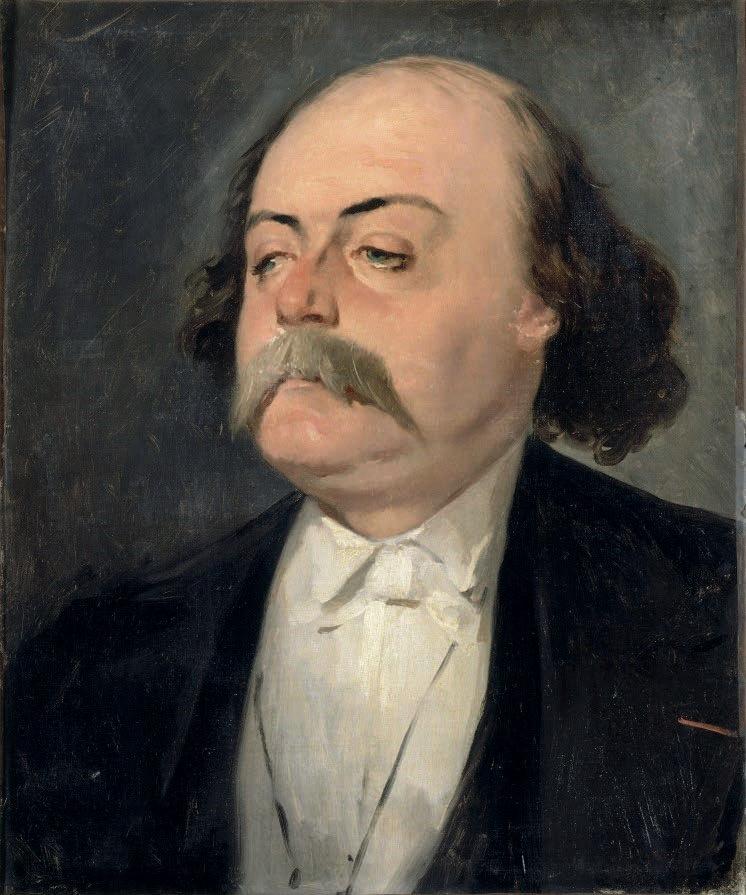
Above right e inscription in a presentation copy of Madame Bovary may be the only one of romantic intent by the French author Gustave Flaubert
Left e 1928 book, inscribed to Sassoon’s great love, Stephen Tennant, sold for £9,500, image courtesy of Peter Harrington
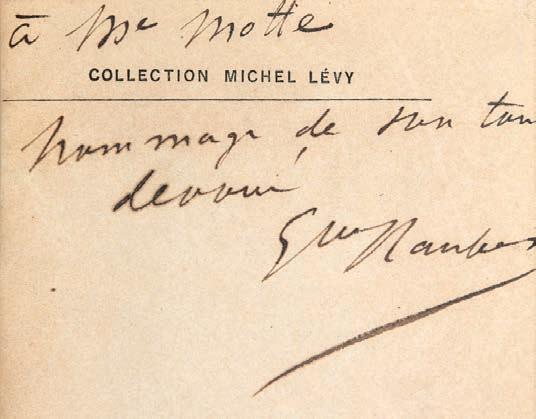
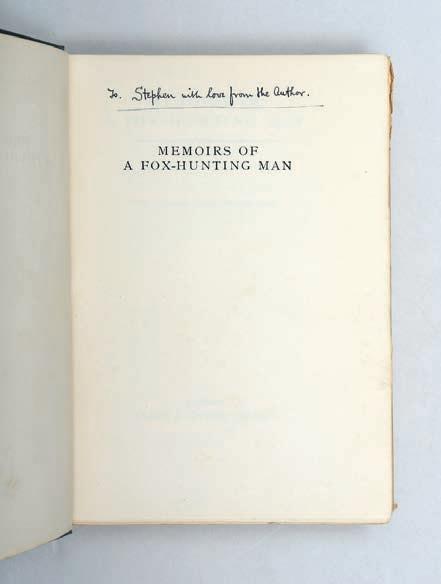

French fancy
A rst edition of Madame Bovary with a rare inscription from its author Gustave Flaubert (18211880) to Aglaé Motte – the daughter of a Rouen neighbour and 18 years his senior – was sold for £17,500 by Peter Harrington.
e author, who signed the book “à Madame Motte Hommage de son tout dévoué Gustave Flaubert”, had a childhood crush on its recipient, Aglaé, which lasted for decades.
Even after Aglaé married a doctor and Flaubert moved to Paris to study law it appears his passion for his former neighbour did not diminish.
Copies of Madame Bovary inscribed by Flaubert to women are very rare, with only two appearing at auction. e present copy is the only inscribed copy known with a romantic association. Although he never married, Flaubert had a relationship with the poet Louise Colet from 1846 to 1854.
ANTIQUE COLLECTING 41
Inscribed copies of famous works presented by their authors to lovers and muses are also highly collectable
‘Following the first weekend of their affair, the poet called his new love “the most enchanting creature I have ever met”. The following year he added “I ask nothing but to be with him always,” with Tennant he knew “perfect happiness”
A 19th-century automaton modelled as a girl with a porcelain head and glass eyes in a giltwood chair, French. It is attributed to the French maker Roullet & Decamps. 43cm high, it has an estimate of £1,000-£1,500
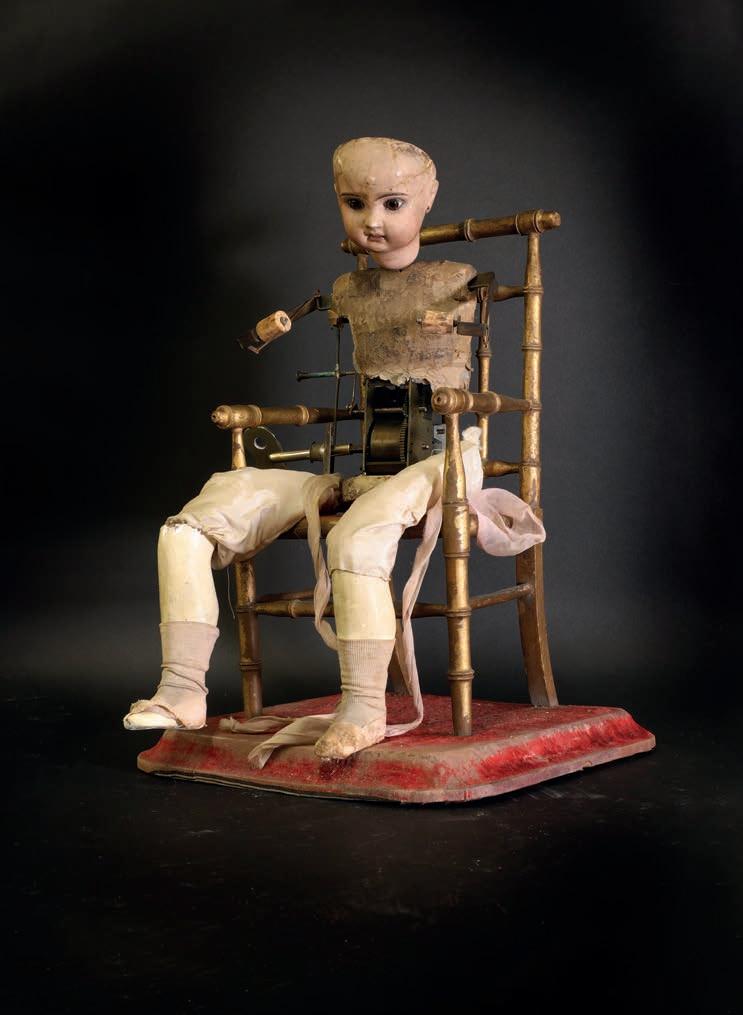
SALEROOM SPOTLIGHT
Nosooner has the gavel fallen on the last Sworders’ Out of the Ordinary auction than head of sale Mark Wilkinson starts hunting for treasures for the next. Described as “an eclectic mix of art, antiques, design and collectables with a wow factor”, recent sales have ranged from a stu ed polar bear (£20,000) to a stage out t worn by Michael Jackson on his 1992 ‘Dangerous’ tour (£16,000).
is month’s sale on February 7 promises the same “talking-point” lots, including court transcripts from the trial of Ronnie and Reggie Kray once owned by Leonard “Nipper” Read (1925-2020), the police o cer who put the East End gangsters behind bars.
e archive includes the machine-typed transcript of the pair’s 39-day trial for the murder of Jack ‘the Hat’ McVitie that had been in Mr Read’s possession until his death in 2020.
Top right A rare handwritten carrier pigeon message tape c. 1900, from the Boer War written in code, 25cm unrolled. It has an estimate of £150-£250
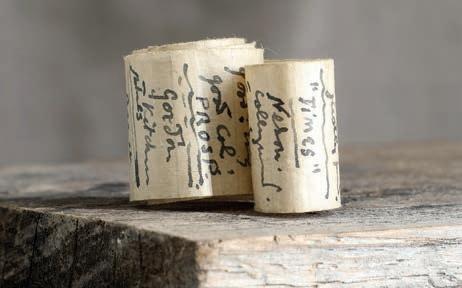
Above right A .32 calibre ‘Protector’ palm pistol, c. 1910, manufactured by the Chicago Firearms Company, designed to be concealed in the palm of the hand, 13cm long. It has an estimate of £500-£800
Right A WWII assassination pen, comprising a blade concealed in a Stephens Lever l 106 fountain pen, 13cm long. It has an estimate of £700-£900
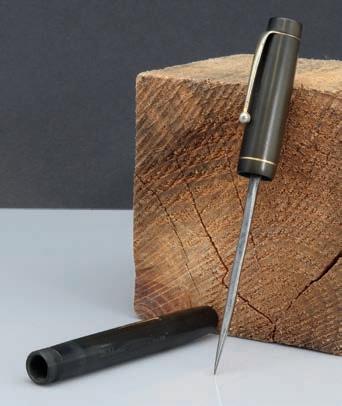
Four other folders contain Read’s copies of additional reports, statements, forms and additional evidence. ey will be o ered as a single lot with a guide of £500-£800.
Another folder of courtroom documents (estimated to make £200-£400) refers to a 1965 case in which the notorious twins were acquitted on a menace charge regarding protection at a Soho club. 5ft 8in Read, who earned his nickname as an amateur boxer, joined the Met after failing his native Nottinghamshire’s force height requirement of 6ft.
Also included inthe sale is aLonsdale boxing glove signed by Muhammad Ali inscribed To ReadMuhammad Ali King of the Boxing World, Dec 7 1974’ Estimated at £300-500, it comes with a photograph showing Ali and Read together taken shortly after the iconic ‘Rumble in the Jungle’ bout of October 1974.
Concealed weapons
Another highlight is a .32 calibre ‘Protector’ palm pistol, c. 1910, manufactured by the Chicago Firearms Company, designed speci cally to be concealed in the palm of the hand. At 13cm in length, the protector was the size of a pocketwatch andunique in being red, notby a trigger, but by a squeezing motion whenheld in the hand.
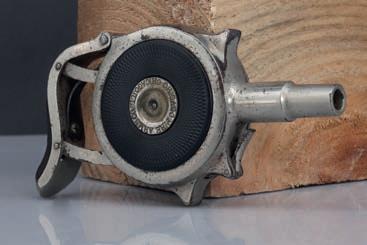
While unlikely to kill, the palm protector was enough to stun and were popular sidearms among early 20th-century American gamblers.Most notably, they were favoured by the riverboat gambling fraternities ofthe Mississippi River.
Equally intriguing, though probably more deadly, is a 13cm-long, WWII Special Operations Executiveissue (SOE) assassination fountain conceals a our-sided blade. During the war SOE was tasked by Winston Churchill to “s ablaze” by dropping agents be to carry out espionage coordinating resistance moveme didn’t go unarmed.
anks to Charles Fraser-Smith (19041992) who was Ian Fleming’s inspiration for the character Q, SOE agents were equipped with gadgets to help them in their clandestine work, including this fountain pen.
42 ANTIQUE COLLECTING
UNDER THE HAMMER
ANTIQUES
in February
Fast carving a name for itself as one of the auction calendar highlights of the year, an eclectic array of pieces appear in a sale in Essex this month
AUCTION fact file
WHAT: Out of the Ordinary sale WHEN: February 7 at 10am
WHERE: Sworders, Cambridge Road, Stansted Mountfitchet, Essex, CM24 8GE
VIEWING: February 3 and 6, 10-5pm; February 4 and 5, 10-1pm and on the day of the sale. The catalogue can also be viewed online at www.sworder.co.uk
IN MY OPINION...
We asked Sworders’ 20th-century design specialist Otto Billstrom for his sale highlights

Do you have a favourite lot?
One piece I particularly like is the pair of early 20th-century Inuit walrus tusk figurines. When I first laid eyes on them I’d never seen anything quite like them and was immediately smitten by both the look and feel of them.
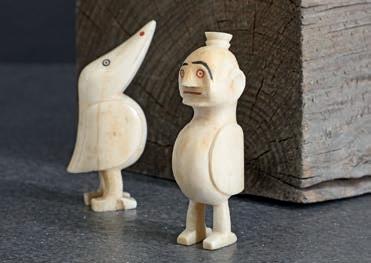
Measuring 7cm tall, they were possibly used as float plugs or even amulets and have an estimate of £250-£350 at this month’s sale.
Where are you expecting interest to come from?
Cabinet of curiosities
A number of lots come from the wide-ranging Wunderkammer collection of the Hertfordshire-born toy inventor and author Gary Pyper.
Highlights from his collection, which Pyper has decided to “free from the solitude of the attic”, include a carrier pigeon message written in code during the Boer War (which has a sale guide of £150-£250) and a pair of leather miner’s helmets (expected to make £300-£500).
He said: “The more unexpected the discovery, the more rewarding they are. Many of the objects in the collection were found by scouring local flea markets by torchlight.” It was in this way he came across a 5,000-year-old ‘eye’ idol from the ancient Syrian city of Tell Brak (expected to make £400£600) in this month’s sale.
Little is known about the small figurines which were discovered fixed into the mortar of the temple during archaeological excavations in 1937, later given the name “Eye”temple. Shaped like a weight surmounted by two eyes, they were likely placed as a votive deposit.
Top left A transcript from the Kray’s murder trial together with four other folders containing additional reports, statements, forms and additional evidence. e archive has an estimate of £500-£800
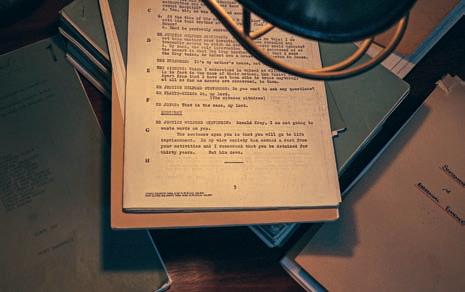
Above left A pair of leather mining helmets has an estimate of £300£500
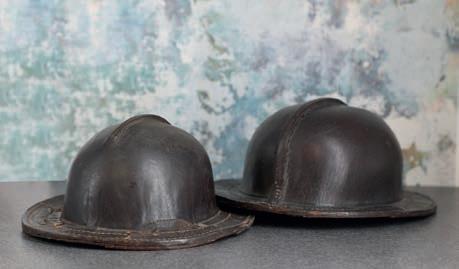
Left Late Uruk period, c. 3,300-3,000 BCE, Near East, modern Syria, a Tell Brak idol, of abstract shape with perforated eye holes and amber ecks, 9cm high. It has an estimate of £400-£600
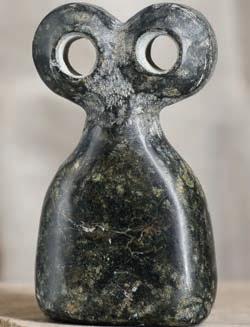
Right e ivory carvings have an estimate of £250-£350 at this month’s sale
As the sale establishes itself on the auction calendar we are attracting more interest from buyers across the field, from stag parties after an unusual prop, to a coven of witches, interested in occult pieces.
The sale is always of interest to collectors after that special something, or dedicated cabinet of curiosity collectors. It is also well attended by interiors specialists after one-off statement pieces.
We are seeing a growing number of private collectors approach us with their collections which, in turn, has opened our eyes to some truly extraordinary objects.
So I’m pleased to say 2023 is shaping up really well.
Within the category which are the most popular elements?
We always have several strong recurring areas of interest, such as folk art, ethnographica, curiosities and the occult, which makes for an eclectic mix.
The sale always presents us with an interesting challenge. We never know what it will look like when we start and, in that regard, it is a much more loosely defined event than, say, the design or picture sale.
riverboat gambling fraternities of the Mississippi River’
ANTIQUE COLLECTING 43
‘While unlikely to kill, the palm protector pistol was enough to stun and were popular sidearms among early 20th-century American gamblers. Most notably, they were favoured by the
Action WOMEN
Long synonymous with hard-living, American male artists, women also played a key role in abstract expressionism as a new exhibition reveals. Antique Collecting considers seven of the best
Abstract expressionism might be best remembered for the hard-drinking, very masculine men at the heart of it – most notably Depression era-born Jackson Pollock
Above Elaine de Kooning (1918–1989) e Bull, 1959, 76.2 x 88.9cm, acrylic and collage on Masonite. Courtesy e Levett Collection © EdeK Trust

and Dutch-born painter Willem de Kooning. But working alongside this very male clique was a group of women artists who helped develop the style both in America and globally. An exhibition opening at the Whitechapel Gallery in London this month sees 80 female abstract expressionists, from Mexico to Iran, nally get their due.
Incorporating work from both the rst and second generation of the movement, the exhibition shines a light on the pioneering early female proponents of the genre, who were generally seen as students, disciples, or wives of their more-famous male counterparts.
While the poster boy of abstract expressionism Pollock was creating his ground-breaking monumental canvases in a large, barn studio, his wife Lee Krasner (the choice of an androgenous rst name was deliberate) was doing the same – only on a much smaller scale in her bedroom.
New York scene
Unsurprisingly, the art scene in 1950s New York presented a somewhat uneven playing eld for women and male painters. e famous Cedar Tavern in Greenwich Village was the drinking den for some of the most well-known
44 ANTIQUE COLLECTING
THE EXPERT COLLECTOR Women abstract
expressionists
artists of the period, as well as Beat writers and poets. e macho, hard-drinking culture it engendered extended to the e (Artists’) Club, an organisation founded in 1948that served as aninformal meeting place for members. Women were generally not invited. Most of the artists (including Krasner) had already forged friendships in the 1930s when they were thrown together as part of the Federal Art Project, the US government programme to give work to unemployed artists during the Depression of the 1930s and early‘40s.
In New York they came together in studios and galleries dotted around lower Manhattan notably around Eighth Street, or in the atelier of the influential German abstract painter Hans Ho man who ran a teaching studio on the same street.
Women gallerists
Whi e women artists may have felt excluded by their sex (Lee Krasner was not alone in taking on a non gender speci c title. Michael West was the name of the abstract expressionist Corinne Michelle) they were not rejected by two prominent galleriests and leading proponents of abstract expressionism in New York at the time, both of whom were women.
The artist and gallerist Betty Parsons opened her New York gallery in 1946, while collector and gallerist Peggy Guggenheim, who arrived in New York in 1941, opened The Art of This Century gallery in 1942
Both Parsons and Guggenheim consistently supported the work of many women artists in both America and further afield, including the Japanese painters Yuki Katsura (1913-1991) who arrived in New York in 1958 (following time spent in Africa and Europe), and Toko Shinoda (1913-2021), who travelled to New York in the late 1950s and early ’60s and was regularly exhibited by Betty Parsons.
Below left Lee Krasner (1908-1984) Bald Eagle, 1955, oil, paper, and canvas collage on linen 195.6 x 130.8cm.
Courtesy of ASOM Collection © 2022 Pollock-Krasner Foundation / Artists Rights Society (ARS), New York
Below right Jackson Pollock and Lee Krasner in front of his work, c. 1950, image courtesy of the Archives of American Art
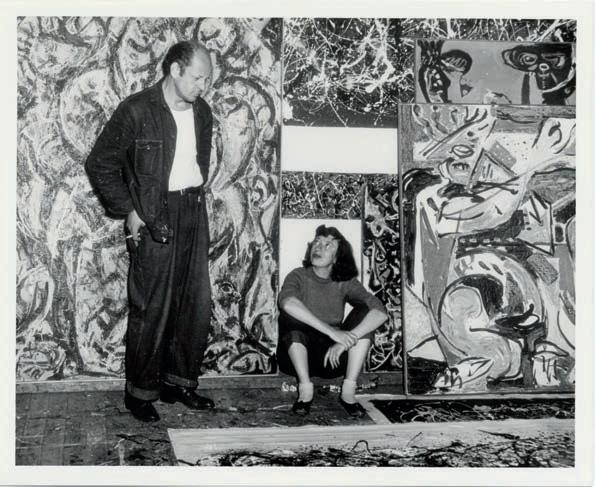
WHAT IS ABSTRACT EXPRESSIONISM?
Coined by the American critic Harold Rosenberg in 1952, it is the name given to the type of abstract art developed in the 1940s and ‘50s. Mostly based in New York City, it also became known as the New York School.


Artists, seeking a new form of expression after the horrors of WWII, were inspired by the surrealist idea that art should come from the unconscious mind. It was often characterised by gestural brush-strokes or mark-making, and the impression of spontaneity. Abstract expressionism includes action painters, who attacked their canvases with expressive brush strokes and the colour field painters who filled their canvases with large areas of a single colour.
Lee Krasner (1908-1984)
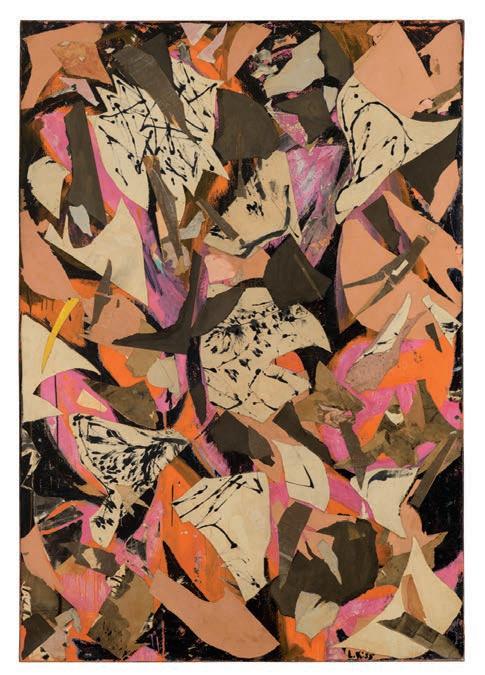
Lee Krasner’s huge contribution to abstract expressionism was overshadowed for years by the work of her husband, Jackson Pollock. Already well established on the New York art scene in the 1930s in her own right it was Krasner who introduced Pollock to the artist Willem de Kooning another of the founding pillars of the movement.
Born in Brooklyn to a Russian Orthodox Jewish family, Krasner pursued formal art training at several New York City institutions. She also studied under Hans Hofmann who praised one of her works “So good you would not believe it was done by a woman.”
After marriage to Pollock in 1945 she was both an energetic promoter of her husband’s work and also
‘While Jackson Pollock was creating his ground-breaking monumental canvases in a large, barn studio, his wife Lee Krasner was doing the same – only on a much smaller scale in her bedroom’
ANTIQUE COLLECTING 45
embarked on attempts to sober him up (Pollock had been a serious drinker from the age of 15). It was Krasner who persuaded his gallerist, Peggy Guggenheim, to lend them $2,000 as a down payment on a house out of the city to help him dry out. While Pollock commandeered a barn on the property for his studio, she made do with a bedroom.
e sobriety experiment failed and after Pollock died in a car crash aged 44 in 1956 while driving under the in uence – his mistress survived – Krasner claimed the barn studio for her own practice. She devoted the rest of her life to promoting Pollock’s art and ensuring his legacy, while also continuing her own exploration of abstraction. In 1978, Krasner was nally accorded her rightful place alongside Pollock and others in the exhibition Abstract Expressionism: e Formative Years at the Whitney Museum of American Art.
Elaine de Kooning (1918–1989)
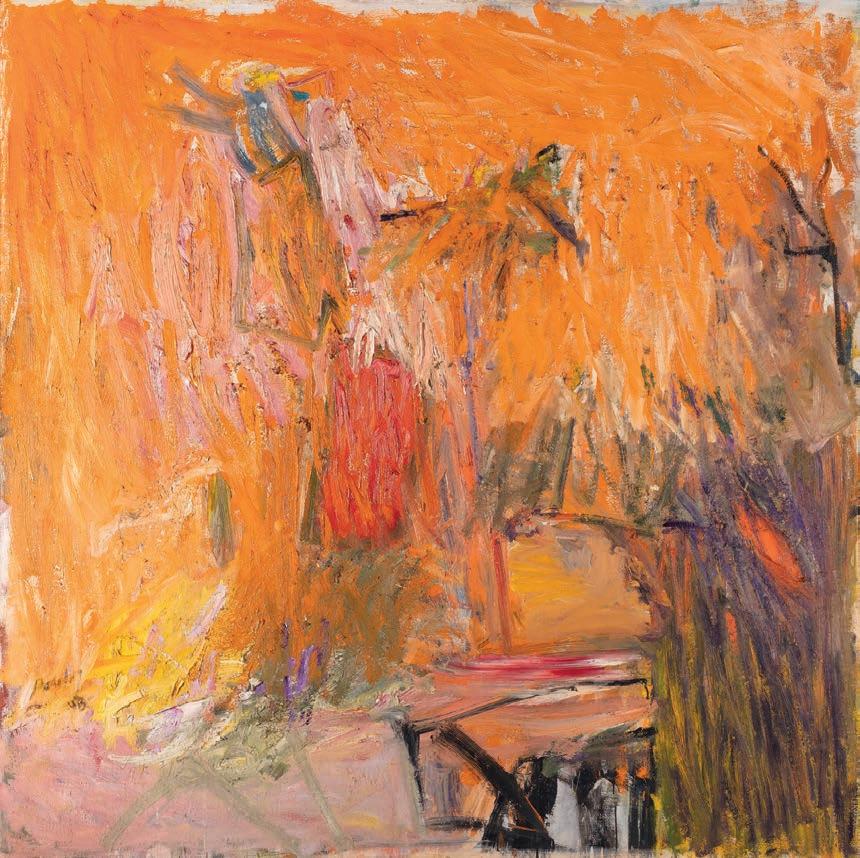
e future Mrs Willem de Kooning was born in Brooklyn, Elaine Fried – the daughter of an Irish Catholic mother and a Protestant father. Introduced to museums at an early age, by ve she was decorating her bedroom with reproductions of paintings by Rembrandt and Élizabeth Vigée Le Brunat. Becoming an artist was her early goal, quiting college to enrol at the Leonardo da Vinci Art School while earning extra money as an artists’ model.
In 1938, a friend introduced her to Willem De Kooning, the Dutch painter who had arrived in New York as a stowaway in 1926. Apparently, it was love at rst sight. ey married ve years later and while much of her time was taken up promoting the career of her husband, she continued to paint. In the 1950s she started exploring the dramatic theme of bulls in con ict in numerous gestural composition which she worked on for years on wider
Above Pat Passlof (1928–2011) Promenade for a Bachelor, 1958, 172.72 x 172.72cm, oil on linen. Courtesy e Levett Collection
Below Helen Frankenthaler (1928-2011) April Mood, 1974, acrylic on canvas 152 x 434cm. Courtesy of ASOM Collection © Helen Frankenthaler Foundation, Inc. / ARS, NY and DACS, London 2022

Helen Frankenthaler (1928-2011)
While Frankenthaler has long been acknowledged as one of the leading female abstract expressionists to achieve international recognition during her lifetime, she also struggled to shake o her moniker as the wife of the artist Robert Motherwell.
Frankenthaler was born into a wealthy Manhattan family, the daughter of a New York State Supreme Court justice. Frequent childhood holidays allowed her to develop a fondness for nature and a love of the ocean. Known as a ‘second generation’ abstract expressionist she solidi ed her style on October 26, 1952, when from a “combination of impatience, laziness, and innovation,” as she later recalled, she decided to thin her paints with turpentine and let them soak into a large, empty canvas – a pioneering technique known as “soak-staining”. In 1958, she met and married Robert Motherwell, 13 years her senior and considered one of the founding fathers of abstract expressionism. From the 1960s her works became increasingly monumental. Her acrylic on canvas April Mood (in this month’s exhibition) re ects the joyous mood of spring.
THE EXPERT COLLECTOR Women
abstract expressionists
46 ANTIQUE COLLECTING
Pat Passlof (1928–2011)
Passlof was born in the southeastern state of Georgia in 1928 and grew up in New York City, attending Queens College. After seeing an exhibition of de Kooning’s work at Charles Egan Gallery, she sought out his tutelage and in the summer of 1948, she studied painting with him at Black Mountain College near Asheville, North Carolina. She continued to study with him privately after they returned to New York.
In 1949, Passlof helped renovate the Eighth Street loft, which was the rst location of e Club. But with women largely frozen out of its artistic circle, she organised an alternative Wednesday Night Club, which was frowned on by the mainly male older guard, especially when its popularity grew.
In the late ‘40s, Willem de Kooning introduced her to the abstract expressionist Milton Resnick. ey moved in together the mid-1950s and married in 1962. For the greater part of their 44-year long marriage, they lived apart but nearby each other.
Passlof had strong feelings for animals and a fascination with the American Indian, on which she had amassed a small library, boasting books going back to the 1840s.
Lilly Fenichel (1927–2016)
Not all the artists associated with the movement were active in New York.
Born into a Jewish family in Vienna, Lilly Fenichel ed to California with her family at the outset of WWII just as its burgeoning art scene emerged. Her father was a doctor, her mother a fashion designer and her uncle was the psychoanalyst Otto Fenichel.
She attended the Chouinard Art Institute, in Los Angeles in the late ‘40s before the California School of Fine Arts (now the San Francisco Art Institute), from 1950-1952. Her paintings from this period, combining strong graphic elements and geometric structure, re ected the gestural expressionism associated with a younger generation of the Bay Area School.
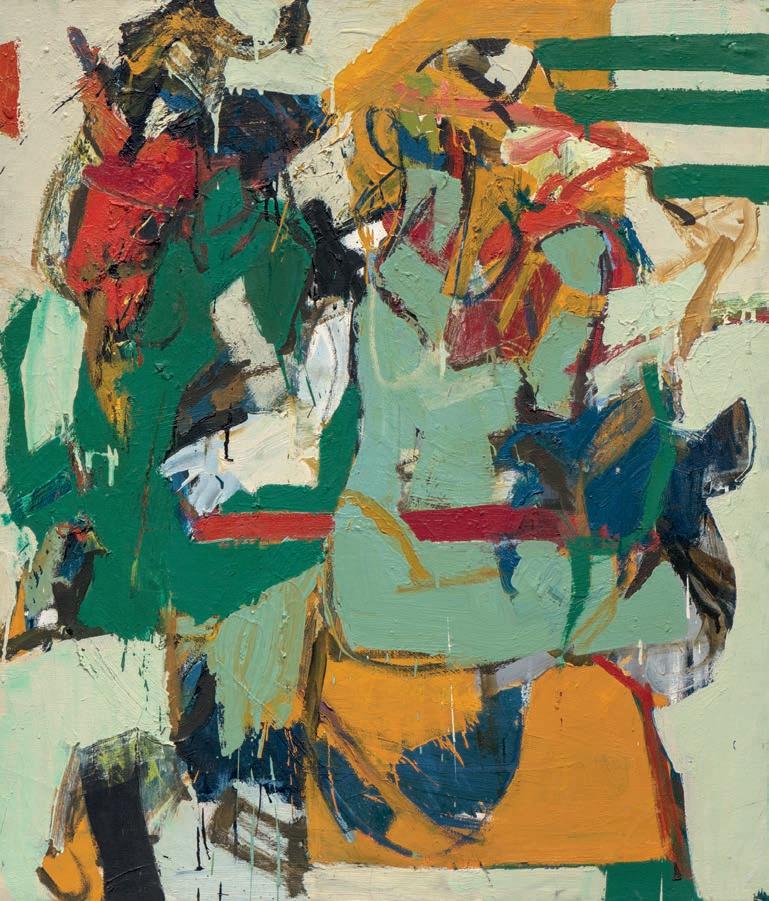
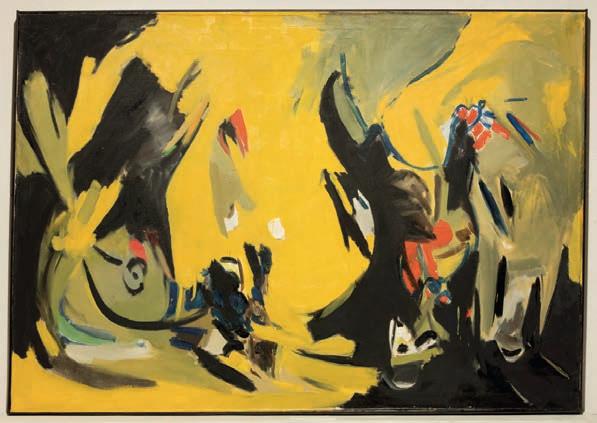
Stylistically, her work shows the in uence of both West Coast abstract expressionism and the New York School. Of her own work from this period, Fenichel called it abstract expressionism “with a lot of drawing in it.”
Above Wook-Kyung Choi (b. 1940) Untitled, 1960s, acrylic on canvas, 101 x 86 cm © Wook-kyung Choi Estate and courtesy of Arte Collectum
Below Lilly Fenichel (1927-2016), Untitled, 1950, oil on canvas, 109. 2 x 159.7cm. Courtesy of the Lilly Fenichel Estate
Wook-Kyung Choi (b. 1940)
South Korean Choi graduated from the College of Fine Arts at Seoul National University in 1963. Shortly after, she moved to the United States to expand her education and career, studying at the Cranbrook Academy of Art and receiving her MA in Fine Arts from the Brooklyn Museum School of Art.
Her vibrant ‘60s canvases reveal both the in uence of Korean Informel art – characterised by non-geometrical abstraction and expressive gestures – combined with American abstract expressionism, in particular Pollock and de Kooning. She said: “My paintings are collaged bits of time from my past and present experiences. Each work has its own life as the forms grow.”
ANTIQUE COLLECTING 47
‘With women largely frozen out of The Club, Passlof organised an alternative Wednesday Night Club which was frowned on by the mainly male older guard, especially when its popularity grew’
Fanny Sanín (b. 1939)
Colombian artist Fanny Sanín (b. 1939) became a pioneer of the geometric abstraction movement and a key gure in Latin American art. Her symmetrical design motifs are characterised by blocky, simpli ed shapes consisting of two to ve colours.
Between 1966 and 1968, Sanín studied in London at the Chelsea School of Art and the Central School of Art. During her time there, she visited several galleries and museums across Europe, which caused her to transform her approach to abstraction.
Her work in the late ‘60s occasionally incorporated added texture through the presence of cigarette ash in the paint. She moved to New York City in 1971 where she continues to live and work. She said: “My professional career has been very rewarding throughout its six decades. ere have been many highlights that I remember dearly, and, of course, some downs. Moments that stand out include my rst exhibition in Bogotá in 1965 at the Museum of Modern Art; struggling in New York in the early 1970s in the presence of discrimination against women artists.”
Action, Gesture, Paint: Women Artists and Global Abstraction 1940-1970 is on at the Whitechapel Gallery, London from February 9 to May 7. For more details go to www.whitechapelgallery.org
abstract expressionists
Right Gillian Ayres (19302018) Untitled, 119.3 x 80cm, sold for £4,462 in 2021, image courtesy of Bonhams, New Bond Street
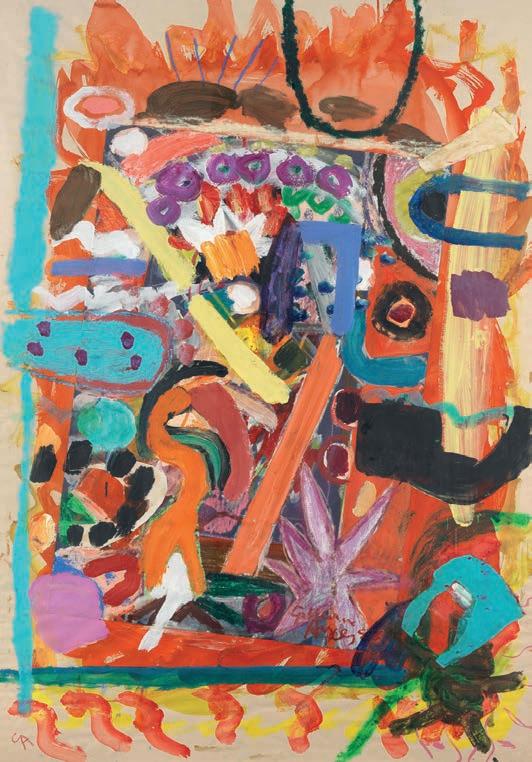
Below Fanny Sanín (b. 1939) Oil No. 4, 1968, oil on canvas, 157 x 150 cm, Courtesy of Elisa Yu Collection © Fanny Sanín
‘Known for her vast and vibrant colours, Gillian Ayres (1925-2006) was one of the leading British abstract painters of the 20th century. Her unconventional approach saw her use household enamel applied with rags’
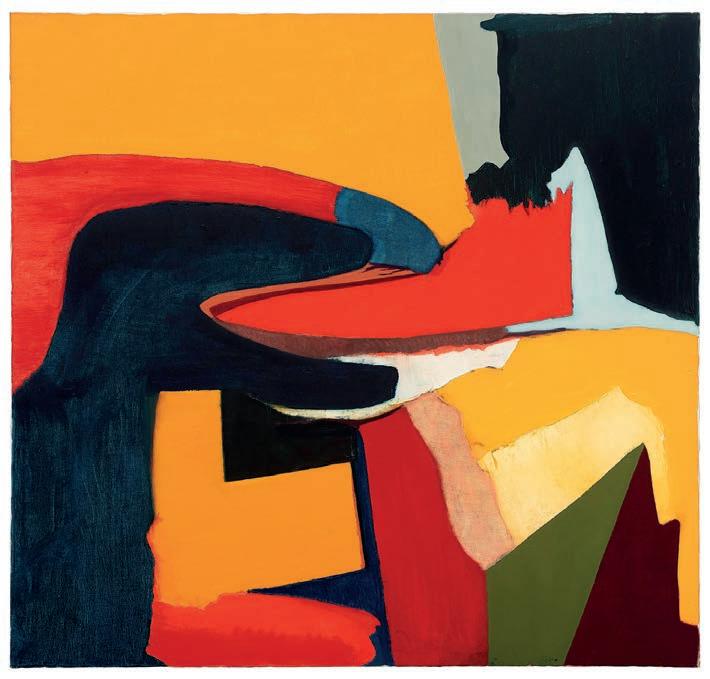
Women abstract expressionists in the UK
While abstract painting in Britain after WWII is often associated with the group of artists who formed a loose association in the 1950s known as the St Ives School, numerous other artists also pursued various abstract modes. By the time a major exhibition of The New American Painting was presented at the Tate in 1959, gestural abstraction was already well established in the British context.
Sandra Blow (1925-2006) is credited with introducing a new, expressive informality to abstract painting in Britain through her use of materials and her emphasis on tactile surfaces.
Known for her vast and vibrant canvases brimming with colour, Gillian Ayres (1930-2018) was one of the leading abstract painters of the 20th century. Her unconventional approach to materials and paint saw her use household enamel and artist’s oil paint applied with rags and brushes.
To Ayres, her paintings were “about painting, about shape and colour, not telling stories”.
While her work is free from politics, including gender politics, and social causes, in 1978 she became the first woman to run a fine art department in a British art school when appointed head of painting at Winchester in 1978.
48 ANTIQUE COLLECTING
EXPERT COLLECTOR Women
THE


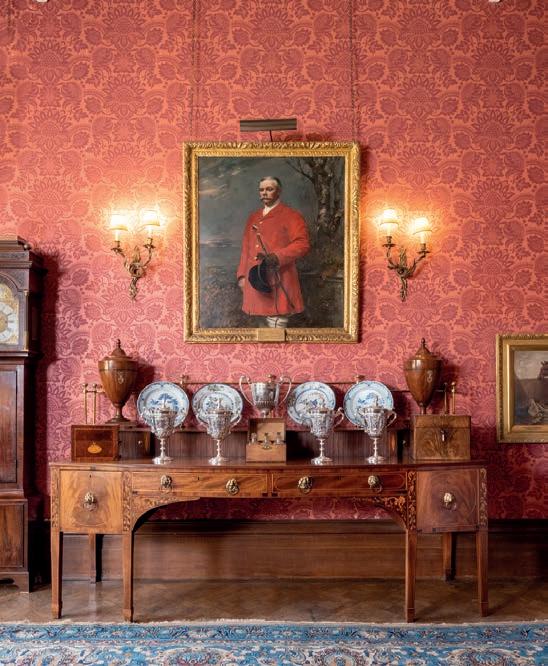

SUBSCRIBE TODAY • SUBSCRIBE TODAY • SUBSCRIBE TODAY • SUBSCRIBE TODAY • SUBSCRIBE TODAY • SUBSCRIBE SUBSCRIBE TODAY • SUBSCRIBE TODAY • SUBSCRIBE TODAY • SUBSCRIBE TODAY • SUBSCRIBE TODAY • SUBSCRIBE ALSO INSIDE British designer Gerald Summers • Book offers • Best puzzles ANTIQUE COLLECTING VOL 57 N0.8 FEBRUARY 2023 Toy Story A lifetime collection of automata goes under the hammer WRITE MOVE FEBRUARY 2023 IN THE FRAME THE ARTIST AT THE HEART OF A 500-YEAROLD MYSTERY To the Manor Born Behind the scenes at the contents sale of a Northumberland country house Why love letters are making collectors swoon MUST-VISIT SPRING FAIRS WOMEN ABSTRACT EXPRESSIONISTS SALE RESULTS SAVE 33 PER CENT AND GET 10 ISSUES A YEAR FOR JUST £25* PLUS a FREE BOOK when you subscribe to Antique Collecting SUBSCRIBE www.antique-collecting.co.uk/subscribe and enter code: ACFEB23 Subscribe today and pay JUST £25 for your rst 10 issues rather than £38. Plus receive a FREE copy of Oak Furniture e British Tradition by Victor Chinnery, worth £75* Each copy is packed with collecting guides and specialist advice. Don’t delay, this o er ends on February 28. e o er applies to new subscribers and new gift subscriptions only. * O er applies to new UK subscribers only 50 ANTIQUE COLLECTING Only £2.50 per issue! THEPERFECT GIFTIDEA Subscribe Now! ANTIQUE COLLECTING MAGAZINE •Give the gift that lasts all year and save 33 per cent on an annual subscription •Plus receive a free copy of Oak Furniture e British Tradition worth £75, for you, or a friend
AUCTION
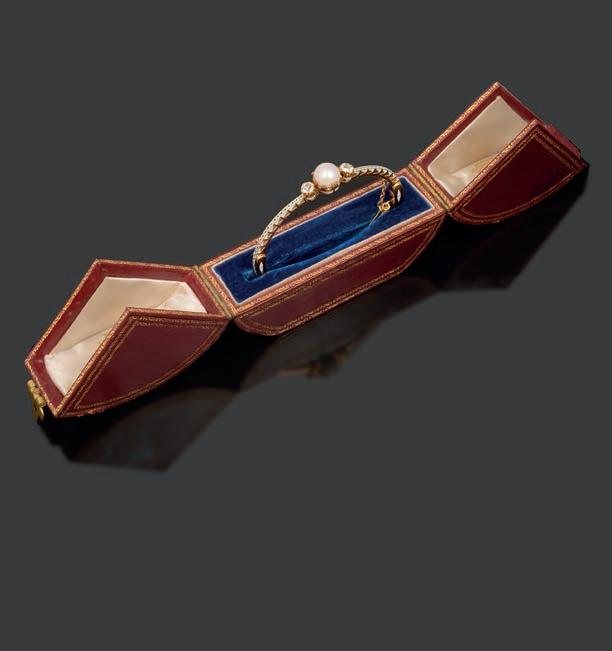


ANTIQUE COLLECTING 51
starting at
A cased Carlo Giuliano enamel, diamond and pearl
dated
Estimate:
OF ANTIQUES & COLLECTABLES Wednesday February 8th
10am. To be held at Farleigh Golf Club, Warlingham, CR6 9PE
bangle,
1895
£4000 - £6000
Send your answers to Crossword, Antique Collecting magazine, Sandy Lane, Woodbridge, Su olk, IP12 4SD, UK.
Photocopies are also acceptable, or email your answer to: magazine@ accartbooks.com. e rst three opened by February 10 will win a copy of Jackson’s Hallmarks, Pocket Edition: English, Scottish, Irish Silver & Gold Marks From 1300 to the Present Day, worth £6.95
FEBRUARY QUIZ
Q1 When does a court cupboard become a press cupboard? (a) when it is made narrower to allow more room to pass by, (b) when it is given doors, (c) when the owner marries…at last, (d) when they were adopted by ‘Grub’ Street editors as o ce furniture.

Q2 What is criselling? (a) Defecting brushstrokes used by portrait painters to depict age and/or a poor character, (b) the inclusion in art of an image of Christ, (c) progressive degeneration of old glass, (d) lace-edge decoration.
Q3 What is a chill? (a) part of an apothecary’s equipment, (b) a gemstone of exceptional clarity, (c) a Victorian pierced-metal ‘fridge’, (d) a Cornish name for a hanging lamp.
Q4 For what is Charles Frodsham (1810-1871) justly remembered? (a) horology, (b) literature, (c) natural history, (d) microscopes and telescopes.
Q5 What is a troumadam? (a) a seat-side table with recesses to hold drinks, (b) a purse, (c) a gaming table with raised sides, (d) a Victorian Scottish kilt and trouser-press.
Q6 In 1931 the Chicago Tribune launched the comic strip Dick Tracy. What had its creator, Chester Gould, originally called his detective? (a) Trenchcoat Tracy, (b) Plainclothes Tracy, (c) Dead-eye Dick, (d) Tracy, e Criminal’s Terror.
Q7 What is a jorum? (a) a bound copy of journal issues, (b) a large drinking-bowl, (c) transcript of court-proceedings, (d) a Victorian penny-sheet of a popular song of the time.
Q8 e artist Helen Allingham (1848-1926) is considered to have been the most accomplished early 20th-century painter of what? (a) domestic pets, (b) female socialites, (c) London street scenes, (d) country cottages.
SOLUTION TO LAST MONTH’S CROSSWORD:


The letters in the highlighted squares are A, N, L, E, P, B, R, U, I, S and E which could be rearranged to spell the world Persian blue. The three winners who will each received a book are Jess Blakeson, by email; Dave Millson, Weston Super Mare, K. Faure, by email.
Q9 e 1973, three-wheeled quirky car, the Reliant Robin, is prized by many. What made it special? (More than one answer.) (a) a certain TV association, (b) its plastic body, (c) it only required the driver to have a motorbike licence, (d) low petrol consumption.
Q10 In numismatics the gold ‘écus au porc epic’ of Louis XII are rare and highly valued. To what did the name refer? (a) the hedgehog, (b) the porcupine, (c) the wild boar, (d) the newly-discovered aardvark (earth-pig). Finally, here are four anagrams entice creep, lag nannie, emit logarithms and bawdier mut. Rearrange them to form, in order, (a) a major table decoration, (b) the process of heating and long cooling applied to metal and glass, (c) the number and name of Chinese individuals often found depicted on ceramics (5, 9), (d) furniture with a central shaft and circular trays used in dining. (4, 6).

52 ANTIQUE COLLECTING
TEST YOUR KNOWLEDGE
Puzzle TIME
Stuck for a Valentine’s date? Put your feet up with two pages of posers from out puzzles editor Peter Wade-Wright
Q1 What is the di erence between a press cupboard and a court cupboard?
Q6 Morgan Conway plays the detective in Dick Tracy vs Cueball in 1945, but what was the hero’s original name? 1 2 3 12
Q9 What made the Reliant Robin such a popular car in the 1970s? 5 11 13
4 6 7 9 10 19
17
14 16 15
8 18 20 21
C R OR S SEA R T APHA N K A RIN DL AIF R OCCADE GU G
C
IG U IO T
AR INFL U
C AE N GE P O
IS T E RU S TT R
L BY E A S TNECS
HA L T A S S
CLUE
Across
1 With 3-across, make and model of the car once owned by Diana, Princess of Wales. It made £650,000 at auction last year. (4, 6)
3 See 1-across.
6 Invertebrate… often used as a jewellery motif. (6)
ACROSS CLUE
An example of this coin, dating from Edward III
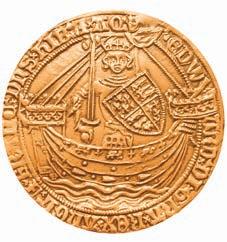
Down
Tin-glazed ceramics. (7)
8 Point of a pen or a bird’s bill. (3)
9 Feel the weight of something. (4)
11 Obsolete gold coin (from 14th century) once worth about 33 modern pence. (5)
12 One of the orders of classical architecture. (5)
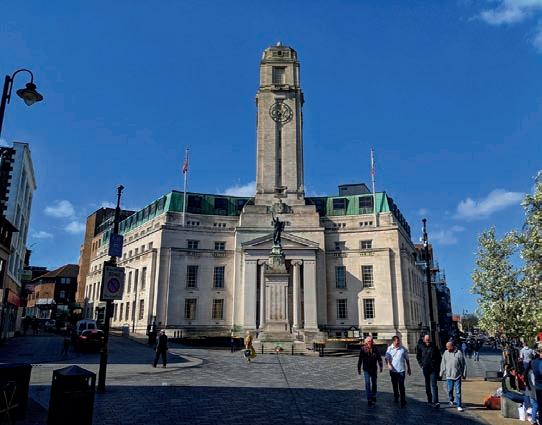
15 ‘La ____ en Rose’ Edith Piaf signature song. (3)
16 Large, heavy and mostly sea-going duck. Its down was highly prized, and the bird shamelessly exploited. Common model for collectable decoys. (5)

19 Bedfordshire town, 30 miles north of London that dominated the British hat industry from the 17th century. (5)
20 Fairly unreactive metal with a low melting point once often used extensively for garden pots, ornaments etc. (4)
22 A best friend or a ‘____-kennel dresser’ one in which cabinets flank a central open space. (3)
23 Maurits Cornelis ____ (1898-1972). Dutch graphic artist who produced mathematically inspired works. (6)
24 Usually a large gun mounted on wheels. The first English ones (1521) were made in Uckfield, Sussex. (6)
25 Image of a god, or object of worship (religious or secular). (4)
CLUE
Furled floral motif, and the dying word of the title character in the film Citizen Kane. (7)
Pseudonym of Romain de Tirtoff (1892-1990) the Russian-born French artist and designer. (4)
A division of a long poem. (5)
Jewish religious leader. (5)
_____ de Coromandel, for example. Highly prized resilient leather from goat skin. (6)
Areas of collecting interest (pl.) or as Gracie _____ (1898-1979) an outstandingly successful English stage and film performer. (6)
Having V-shaped indentations for counting or decoration. (7)
_____-bars. Governing rods to which puppet strings are attached and managed. (7)


South Asian country, source of many ‘treasures’ including Regency-period teapoys and gemstones. (5) 18 Manufacturer of dolls’ house accessories from the 1920s (…but mostly associated with marbles?) (5) 21. A vast division of geological time (and, in ancient Greek, the personification of an age). (4)
Finally, rearrange the letters in the highlighted squares to form the term given to an incised design (as opposed to a design in relief).
ANTIQUE COLLECTING 53
1 2 3 12 5 11 13 4 7 6 9 10 19 17 22 23 14 16 24 25 15 8 18 20 21 11
1
2
3
4
5
7
10
13
14
17
16 ACROSS
19 ACROSS
What is the name of this Bedfordshire town famous for its hats? is duck’s rich plumage was its downfall
ANTIQUES UNDER THE HAMMER Lots in February
TOP of the LOTS
A set of seven Victorian propelling pencils, each stamped ‘S. Mordan & Co.’ has an estimate of £200-£300 at Catherine Southon’s sale at Farleigh Court Golf Club in Surrey on February 8.
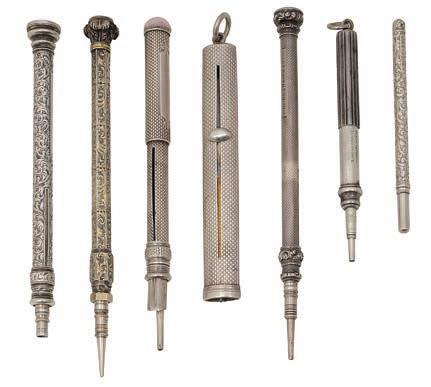
Sampson Mordan was born in 1770, starting his career as an apprentice to John Bramah inventor of the ‘unpickable’ lock. He went on to co-invent the first patented mechanical pencil, called an “everpointed” pencil, with John Isaac Hawkins in 1822. The set is one of a number of pens from a single-owner collection up for sale.

Below Each of the propelling pencils is stamped ‘S. Mordan & Co.’
A collection of 19th-century horsehair jewellery has an estimate of £2,000£3,000 at Woolly and Wallis’s sale in Salisbury on February 1.
The group includes an elaborate necklace of woven quatrefoils on a woven oval-link chain made from dyed red horsehair, with two similar dyed red horsehair bracelets.
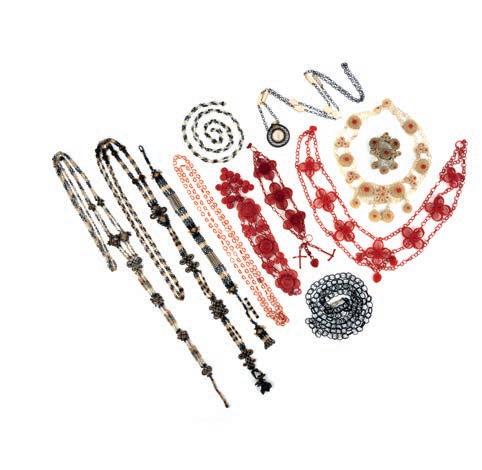
Horsehair jewellery was popular among the well-off in the first half of the 19th century after Wellington’s celebrated charger Copenhagen was robbed of its tail hairs for a bracelet. In the early 1820s the fashion was extended to small girls whose outfits were embellished with dyed red horsehair bracelets called dandies.
Above Horsehair jewellery was all the rage in the early 19th century
A 1952 Nobel Prize medal awarded to the British biochemist Archer Martin (1910- 2002) has an estimate of £100,000-£150,000 at the London auctioneers Noonans’ sale on February 2.
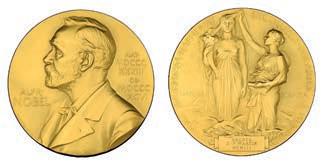
The prestigious award – only 189 individuals have received the science’s highest accolade – is being sold by the scientist’s family.
Martin shared the celebrated prize for his work in partition chromatography with his colleague Richard Synge. The term refers to the technique of separating and isolating the fundamental chemicals in complex solutions.
The Nobel Prize in Chemistry has been awarded 114 times to 191 Nobel Prize laureates between 1901 and 2022 with Frederick Sanger and Barry Sharpless both having been awarded it twice.
Above Martin’s Nobel prize is expected to fetch up to £150,000
The trunks worn by Muhammad Ali in his last ever match – the 1981 ‘drama in Bahama’ – have an estimate of £15,000£20,000 at Chiswick Auction’s sale on February 14. At the time of the bout against the Jamaican Trevor Berbick, Ali was 39, overweight and already suffering brain damage from having absorbed too many blows.
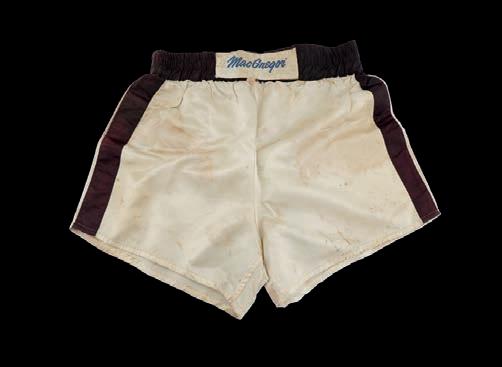
The 10-round contest, which failed to sell out, went the distance with Berbick winning by a unanimous points decision. Ali retired after the fight, finishing his illustrious career with an overall record of 56-5.
The shorts (the only time Ali wore MacGregor trunks rather than Everlast) were given by Ali’s trainer Angelo Dundee to the German sports reporter Hartmut Scherzer who visited the dressing room after the fight.
e legendary boxer wore the shorts in his last ever match in Nassau
A silver pincushion in the shape of a frog has an estimate of £100-£150 at Charterhouse Auction’s sale in Sherborne, Dorset on February 2.
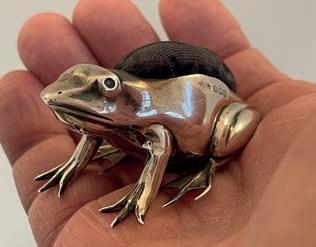
Auctioneer Richard Bromell said: “At 96 years old, the frog might not have been kissed by a princess, but it has certainly been well loved over the years.”
With a blue velvet pad for pins, the frog is part of a single-owner collection amassed by a collector in Norfolk, other pieces include silver tea caddies, goblets, christening mugs and cutlery.
Above e frog comes from a larger single-owner collection



54 ANTIQUE COLLECTING
From a life-time collection of mechanical toys, to the trunks worn by Muhammad Ali in his last ght, there is much to intrigue collectors this month
A staggering collection of mechanical toys amassed over half a century by Sir Nicholas Goodison (1934-2021) goes under the hammer at the London auctioneers Roseberys on February 21.
Sir Nicholas was a prolific polymath and, in many ways, the ingenious designs reflect the numerous aspects of his own career, which ranged from chairman of the Stock Exchange to chairman of the Crafts Council.
The sale includes hundreds of traditional mechanical and hand-operated toys collected by Sir Nicholas over a 50-year period, many acquired during a considerable number of visits to countries including Germany, China and Japan.
In scope they range from commercial toys dating from the 1950s, to major contemporary pieces by leading 20th and 21st-century British makers.
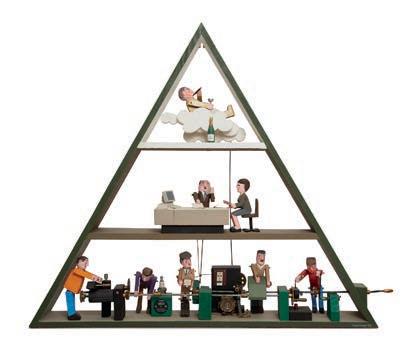
Collecting criteria
In 2014, ahead of an exhibition of his collection at Horace Walpole’s Strawberry Hill, Sir Nicholas said: “I had some rules. The toys had to be brand new. They didn’t have to be mechanical. Hand-held toys were fine. But they had to do something – although in due course I also allowed toys to which you could do something transformational such as Russian dolls, glove and cone puppets and kaleidoscopes. For many years I had a price limit but it went away as I became intrigued by hand-crafted automata.”
It was a mechanical violinist Sir Nicholas spotted while serving in the army in northern Germany after the war that sparked his life-long obsession.
He said: “I never meant to collect toys. It just came about. I was in the army in 1953-1955, at Oldenburg in northern Germany. It was there I met a Schuco fiddler. I liked his action, with a sweep of the bow every few notes, and thought its designer deserved a medal.”
Leading the collection are more than 50 pieces by key figures central to the renaissance of automata design in the UK, including Peter Markey (1930-2016) who was fascinated by trying to produce wave-like motions from wood and Keith Newstead (1956-2020) considered one of the UK’s most preeminent makers of automata.
The Sir Nicholas Goodison collection of automata is part of Roseberys’ fine and decorative sale on February 21, for more details go to www.roseberys.co.uk
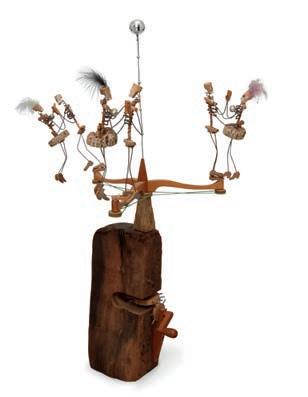
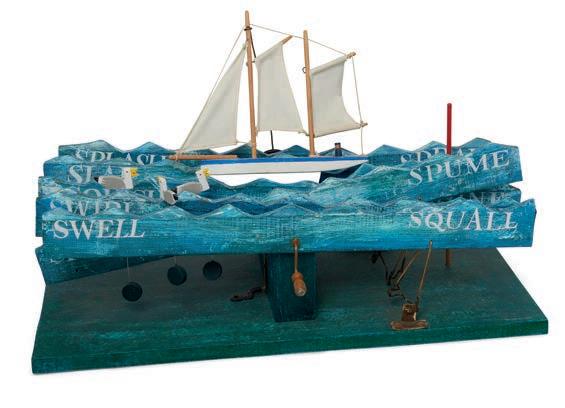
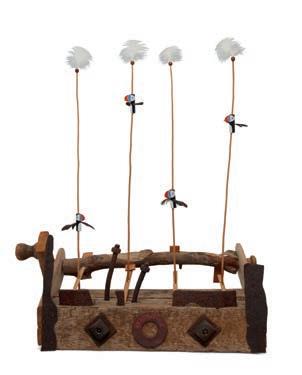
‘Leading the collection are more than 50 pieces by key figures central to the renaissance of automata design in the UK, including Peter Markey (19302016) who was fascinated by trying to produce wave-like motions from wood and Keith Newstead (1956-2020) considered one of the UK’s most pre-eminent makers of automata’
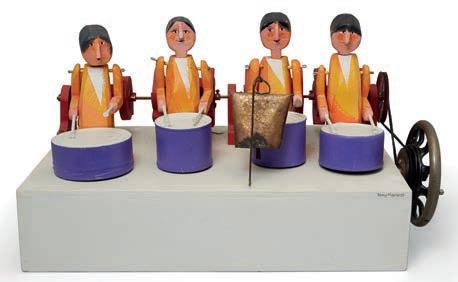
1 A hand-operated automaton, Running Wild Pigs by Lucy Casson (b. 1960) has an estimate of £300-£500 at this month’s sale 2 A hand-operated automaton, Danse Macabre, by Robert Race (b. 1943) has an estimate of £200-£300 3 A hand-operated automaton, Spring Time, by Robert Race (b. 1943) has an estimate of £300-£500 4 A hand-operated automaton, Wooden Waves with White Words, by Tony Mann (1927-2013) has an estimate of £300-500 5 A hand-operated automaton, Pyramid of Power, by Tony Mann (1927-2013) has an estimate of £400-£600 6 A hand-operated automaton, Four Drummers Drumming, by Tony Mann (1927-2013) has an estimate of £300-£500
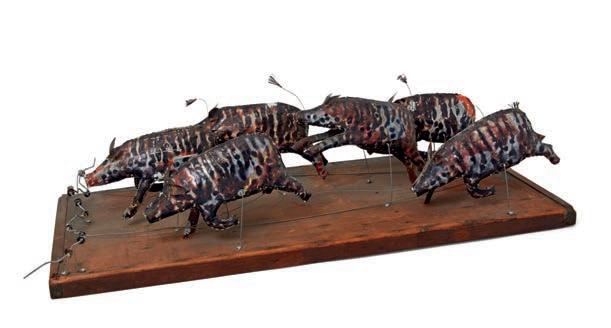
ANTIQUE COLLECTING 55
1 3 2
MUSEUM SECRETS - HIDDEN STORIES FROM THE ASHMOLEAN
BY LUCIE DAWKINS
ISBN 9781910807569
RRP £15.00
OFFER PRICE £9.75
Back in the depths of Covid, the Ashmolean had to change tack. If they couldn’t get people into the building, they decided to try to get the stories out - calling around curators, asking for their most uplifting tales in the collections. From bedrooms and garden sheds and kitchen tables, the Ashmolean team started recording themselves. The result was a podcast, Museum Secrets, which you can find on the Ashmolean’s website. This book contains the highlights. These are stories you won’t find on the labels. These are stories of the human experiences hidden in the Museum’s cases and frames. They are stories that cheered us up when we needed it most and continue to do so.
PULL OF THE THREAD - TEXTILE TRAVELS OF A GENERATION

BY SHEILA FRUMAN
ISBN 9781898113874
RRP £35.00
OFFER PRICE £22.75
The stories of intrepid adventurers who have combed the streets and bazaars of Central and South Asia finding, researching, collecting and selling antique Kashmir shawls, embroidered Uzbek textiles and robes, Anatolian kilims, Turkmen carpets and many other textile treasures to interested Westerners. With over 200 colour illustrations, the book shows how these indigenous designs and motifs were popularised in the US and Europe by these textile travellers who embraced the free, but fleeting, spirit of the post-World War II era.
BY
ISBN 9780789214270
£9.99
PRICE £6.49 Between 1886 and 1942, the U.S. Department of Agriculture’s Pomology Division commissioned an illustrated register of fruits. These watercolour illustrations were invaluable to growers, who used them as records of prized varieties that were in danger of being stolen or counterfeited by competitors.
by competitors.
56 ANTIQUE COLLECTING
UP TO 35% DISCOUNT SUBSCRIBER EXCLUSIVE ORDER NOW! Email lauren.kerr@accartbooks.com, or call 01394 389988. Postage to
addresses is £6, call for overseas rates. FRUIT - SELECTIONS FROM THE USDA POMOLOGICAL WATERCOLOR COLLECTION (TINY FOLIO EDITION)
COLLECTION
Secrets from the Ashmolean Museum and central Asian textiles are all waiting to be explored this month in the latest titles from our sister publisher ACC Art Books BOOK OFFERS
UK
EDITED
ABBEVILLE PRESS
RRP
OFFER
FAITHFUL FRIENDS - NORMAN ROCKWELL AND HIS DOGS
BY MARGARET
ROCKWELL
ISBN 9780789214416

RRP £12.99
OFFER PRICE £8.44
From the very beginning of Norman Rockwell’s career, dogs were integral to his art. Often they convey the emotion of a scene, as when a family pet bounds forward to greet a soldier returning from war, or sadly nuzzles a young man departing for college.
Faithful Friends reproduces 50 of Rockwell’s finest paintings with canine characters, along with his drawings and reference photos of dogs, and rarely seen Rockwell family photos.

THE BORDEAUX CLUB - THE CONVIVIAL ADVENTURES OF 12 FRIENDS AND THE WORLD’S FINEST WINE
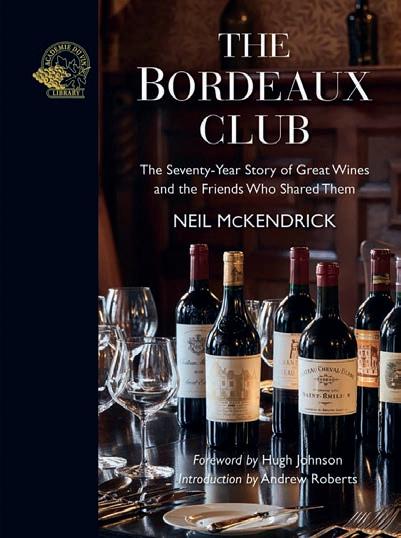 BY NEIL MCKENDRICK
ISBN 9781913141349

RRP £35.00
OFFER PRICE £22.75
The story of 12 friends who gathered to share and celebrate the extraordinary wines of Bordeaux. Like-minded in their love of wine, they differed wildly (often alarmingly!) in their personal wealth, life and circumstances – their opinions, always voiced, had the power to ignite anger and divide friendships just as easily as they bound them together. Neil McKendrick, member and minute-taker for 57 of the Club’s 70 extraordinary years, weaves the tale of this convivial group. Alongside the likes of Hugh Johnson, Steven Spurrier and Michael Broadbent, he celebrates the beauty of top-class Bordeaux and the splendour of each setting – from glorious country park to rickety Dickensian boardroom – in which these men were lucky enough to dine, serving up memories of vintages the like of which we will never see again.
150 VINEYARDS YOU NEED TO VISIT BEFORE YOU DIE
BY SHANA CLARK
ISBN 9789401485463
RRP £30.00
OFFER PRICE £19.50
For wine lovers, both professionals and hobbyists, vineyards are must-see places. They are found in the most scenic regions in the world where you can wander for hours, or unexpectedly, right in the middle of the city. This beautifully illustrated book, presents a carefully curated selection of the world’s most exceptional vineyards, from Japan to Argentina and South Africa to France. In this guide you’ll discover tips on how to visit the vineyards, along with interesting stories about each place, and – of course – where to taste wine.

ANTIQUE COLLECTING 57
FAIR NEWS

Love is in the air

One of stalwarts of the northwest fairs calendar returns this month with prices for pieces on offer ranging from £20 to £50,000.
The Chester Decorative Antiques and Art Fair takes place at the grandstand pavilion at Chester Racecourse from February 10-12.


Organiser Sue Ede, from Cooper Events, said: “We’re always just in time for Valentine’s Day and you can be sure of finding a very special gift from our specialist dealers offering everything from traditional art and antiques to interior design pieces, jewellery, collector’s items and so much more.”
Booming market

February 19 is the date for the return of a new Suffolk fair in the attractive market town of Woodbridge, which launched last year.
A stone’s throw from the banks of the River Deben the Woodbridge Antiques, Vintage and Collectors Fair is at the heart of the one of the county’s most sought-after locations.
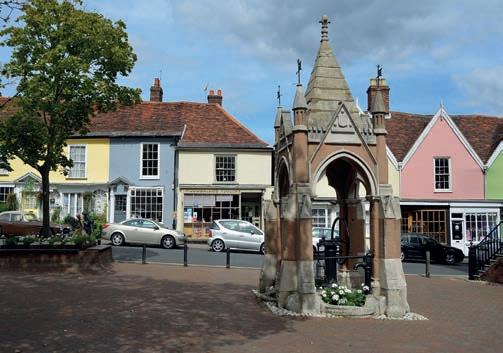
Gary Sheridan, from organiser GNB Fairs, said: “The venue is a short distance from the A12 and close to the A14 making it easily accessible to a wide area. There will be tables crammed full of interesting items with dealers and collectors from Suffolk and surrounding areas. So far it has been a great success, with an exhibitor at the first fair having sold most of his stock by early afternoon.”
Above e market town of Woodbridge is the location for a newly-launched fair
Above A set of four silver goblets by the Australian-born gold and silversmith Stuart Devlin (1931-2018) will be on o er from London-based dealer Stephen Kalms Antiques

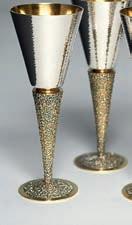
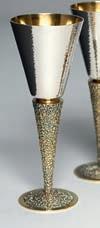
Above right An art deco bronze gure of a seated nude by the Italian sculptor Amadee Gennarelli (1881-1943) called Messenger of Love from Solo Antiques will be on o er at the fair priced £3,995
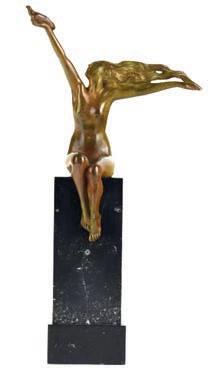
Race for a bargain
Collectors will be dashing for a bargain on February 19 when they head for the Sandown Antiques Home and Interiors Fair at Sandown Park Races.
With up to 250 pitches to choose from, located in the Surrey Hall Grandstand and the outdoor hard-standing area, bargains a plenty are promised from retro and vintage to antique jewellery. The popular Sunday event is close to the bustling Surrey town of Esher close to Hampton Court Palace and Windsor Castle.
Above e fair at Sandown Park Races boasts up to 250 indoor and outdoor pitches
Capital a air
Ideal for the early riser, the Bermondsey Antiques Fair – one of the oldest antiques markets in London – continues its Friday slot this year.
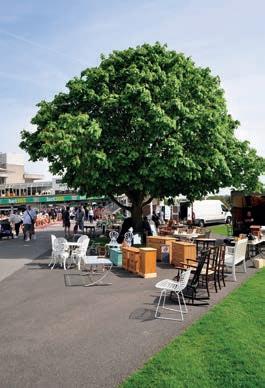
Bermondsey fair boasts a wide range of antiques, collectables and vintage pieces, with dealers offering everything from from cutlery to furniture.
Bargain hunters are advised to set their alarms as trading starts at 6am. The market is based in a square at the junction of Long Lane and Tower Bridge Road, near Borough Market, making it perfect for lovers of both antiques and fine food.
Above Cutlery and silverware are among the specialities of one of London’s oldest antiques markets
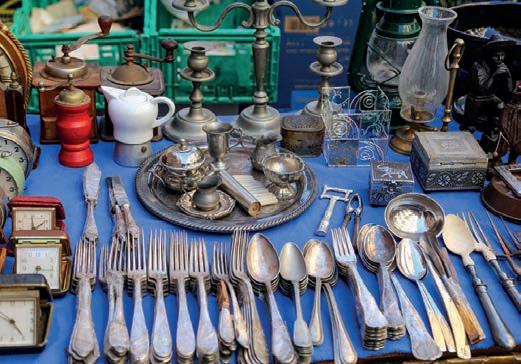
58 ANTIQUE COLLECTING
OUT AND ABOUT February
Buy your loved one a really unique gift for Valentine’s Day this year from one of the UK’s leading antique fairs
FAIRS Calendar
Because this list is compiled in advance, alterations or cancellations to the fairs listed can occur and it is not possible to notify readers of the changes. We strongly advise anyone wishing to attend a fair especially if they have to travel any distance, to telephone the organiser to confirm the details given.
LONDON: Inc. Greater London
Adams Antiques Fairs 020 7254 4054 www.adamsantiquesfairs.com Adams Antiques Fair, The Royal Horticultural Halls, Elverton Street, SW1P 2QW, Feb 26
Coin and Medal Fairs Ltd. 01694 731781 www.coinfairs.co.uk London Coin Fair, Holiday Inn Bloomsbury, Coram Street, WC1N 1HT, Feb 4
Etc Fairs 01707 872 140 www.bloomsburybookfair.com Turner Suite at Holiday Inn, Coram Street, London, WC1N 1HT, Bloomsbury Book Fair, Booker & Feb 12 Bloomsbury Ephemera Fair Feb 26
Sunbury Antiques 01932 230946 www.sunburyantiques.com Kempton Antiques Market, Kempton Park Race Course, Staines Road East, Sunbury-on-Thames, Middlesex TW16 5AQ, Feb 8, 22
SOUTH EAST & EAST ANGLIA: including Beds, Cambs, Essex, Hertfordshire, Kent, Norfolk, Suffolk, Surrey, Sussex.
Arun Fairs 07563 589725 Rustington Antiques & Collectables Fair, The Woodland Centre, Woodlands Avenue, Rustington West Sussex, BN16 3HB, Feb 5
Continiuity Fairs 01584 873634 www.continuityfairs.co.uk Antique Fair, Epsom Downs Racecourse, Tattenham Corner Rd, Epsom, KT18 5LQ, Feb 21
Dovehouse Fine Antiques Fair 07952689717
dovehousefineantiquesfairs.com
Dorking Halls, Reigate Road, Dorking, Surrey, RH4 1SG, Feb 26
Grandmas Attic Antique and Collectors Fairs www.grandmasatticfairs.co.uk
The Grange Centre, Bepton Road, Midhurst, GU29 9HD, Feb 5 Woking Leisure Centre, Kingfield Road, Woking, GU22 9BA, Feb 19
Marcel Fairs 07887648255 www.marcelfairs.co.uk Antique and Collectors Fair, Sarratt Village Hall, The Green, Rickmansworth, Herts WD3 6AS, Feb 12
Antique and Vintage Fair –Eagle Farm Road, Biggleswade, Bedfordshire, SG18 8JH, Feb 19
St Ives Antiques Fair
The Burgess Hall (One Leisure), Westwood Road, St Ives, Cambs, PE27 6WU, Feb 18-19
Sunbury Antiques 01932 230946 www.sunburyantiques.com Sandown Park Racecourse Portsmouth Rd, Esher, KT10 9AJ Sandown Antiques Home & Interiors Fair, Feb 19
SOUTH WEST including Berkshire, Buckinghamshire, Cornwall, Devon, Dorset, Gloucestershire, Hampshire, Isle of Wight, Oxfordshire, Somerset, Wiltshire.
AFC Fairs 07887 753956 www.antiquefairscornwall.co.uk
Lostwithiel Antique & Collectors Fair, Lostwithiel Community Centre, Pleyber Christ Way, Lostwithiel, Cornwall, PL22 0HE, Feb 12
Pensilva Antiques Fair, Millennium House, Princess Road, Liskeard, Cornwall, PL14 5NF, Feb 26
Arun Fairs 07563 589725
Emsworth Antiques and Collectors Fair, Emsworth Community Centre., North Street, Emsworth, Hampshire, PO10 7DD, Feb 12
Continiuity Fairs 01584 873634 www.continuityfairs.co.uk
The International Westpoint Antique Home and Vintage Fair, Westpoint Arena, Clyst St Mary, Exeter EX5 1DJ, Feb 11-12
Grandmas Attic Antique and Collectors Fairs
www.grandmasatticfairs.co.uk
The Pavilion, Westover Road, Bournmouth, BH1 2BU, Feb 25-26
Gloucestershire Antiques & Collectables Market 01264 393225
The Corn Hall, 26 Market Place, Cirencester, Gloucestershire, GL7 2NW, Feb 3, 10, 17, 24
Jay Fairs 01235 815633 Benson Antiques and Collectors Fair, Benson Parish Hall, Sunnyside, Benson, Nr. Wallingford, Oxfordshire, OX10 6LZ, Feb 19
Wilton Vintage Fair, 07740 957730
Michael Herbert Hall, South Street, Wilton, Wiltshire, SP2 0JS, Feb 25
EAST MIDLANDS including Derbyshire, Leicestershire, Lincolnshire, Northamptonshire, Nottinghamshire, Rutland.
IACF, 01636 702326. www.iacf.co.uk. Newark & Nottinghamshire Showground, Nottinghamshire, NG24 2NY
Newark International Antiques & Collectors Fair, Feb 9-10 Runway Newark Feb 20
Navenby Antiques and Collectors Fair at The Venue, 07522 679 630 Venue at Navenby, Grantham Road, Navenby Lincolnshire, LN5 0JJ, Feb 5
Antiques & Vintage Fair, Brockington Campus, Enderby Leicestershire, LE19 4AQ, Feb 26
WEST MIDLANDS
including Birmingham, Coventry, Herefordshire, Shropshire, Staffordshire, Warwickshire, Worcestershire
B2B Events
07774 147197 or 07771 725302 www.b2bevents.info Malvern Flea & Collectors Fair Three Counties Showground, Malvern, Worcestershire, WR13 6NW, Feb 12
Midland Vintage and Antique Fair
0121 784 1581
Antique and Vintage Fair, Fentham Hall, Marsh Lane, Hampton-in-Arden, West Midlands, B92 0AH, check
Nuneaton Antiques and Flea Market 01827 895899
U.R.C Hall, Chapel Street (off Coventry St.), Nuneaton, Warwickshire, CV11 5QH Feb 11
NORTH including Cheshire, Cumbria, Lancashire, Northumberland, Tyne and Wear, Yorkshire.
Cooper Events, 01278 784912 www.cooperevents.com
The Chester Decorative, Antiques & Art Fair, The County Grandstand Chester Racecourse, Chester, Cheshire, CH1 2LY Feb 10-12
SCOTLAND
Glasgow, Antique, Vintage & Collectors Fair
SPECIALIST GLASS
07960 198409
31 Bellahouston Drive, Glasgow, G52 1HH, check
IRELAND
Spalding Springfields Antique and Collectors fair, Springfields Events Centre, Camel Gate, Spalding, Lincolnshire, PE12 6ET, Feb 5
Stags Head Events 07583 410862 www.stagsheadevents.co.uk Antiques & Vintage Fair, Hodson Hall, Endowed Campus, Off A6, Loughborough, LE11 2DU Feb 12
Dun Laoghaire Antiques & Collectors Fair
00353 85 862 9007
Royal Marine Hotel, Marine Road, Dun Laoghaire, Ireland, Feb 5
Portlaoise Antiques & Vintage Fair 00353 (0)85 8629007
Killeshin Hotel, Portlaoise, Laoise, Ireland, R32TYW7, Feb 19
ANTIQUE COLLECTING 59

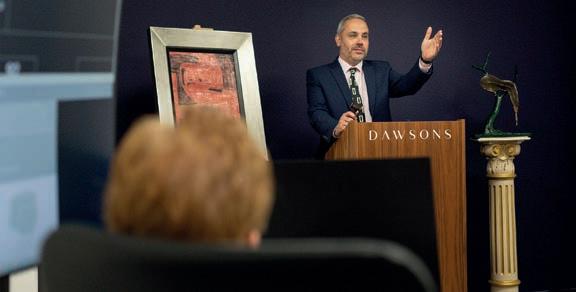







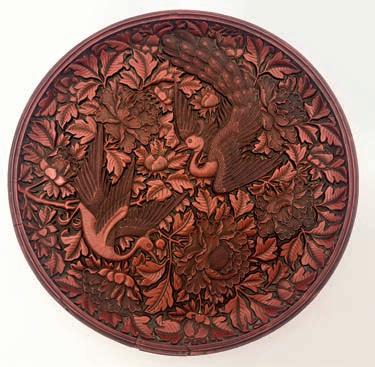
TIME TO SELL? Connect with a global audience of buyers when you sell with Dawsons A 16TH CENTURY OLD MASTERS PAINTING SOLD FOR £255,000 A 1982 ROLEX EXPLORER II SOLD FOR £25,000 A VICTORIAN DIAMOND & EMERALD BANGLE SOLD FOR £19,000 Contact us today dawsonsauctions.co.uk info@dawsonsauctions.co.uk 0207 431 9445 LOWESTOFT PORCELAIN AUCTION ZOË SPRAKE Wednesday 25th October 2023, 7pm Entries are invited for this sale Hotel Victoria, Lowestoft, NR33 0BZ Guest auctioneer: Elizabeth Talbot of TW Gaze Website: www.lowestoftchina.co.uk Email: lowestoftchina@gmail.com Telephone: 01986 892736 / 07885 773795 Sold October 2022 £1,645 Sold October 2022 £6,700 60 ANTIQUE COLLECTING 10-12 Cotswold Business Village, London Road, Moreton-in-Marsh, GL56 0JQ 01608 695695 adrian@kinghamsauctioneers.com www.kinghamsauctioneers.com COTSWOLD AUCTIONEERS & VALUERS SPECIALISTS IN SINGLE-OWNER COLLECTIONS NATIONWIDE VALUATIONS & ADVICE Jewellery | Watches | Silver | Ceramics | Glass | Decorative Arts Paintings | Furniture | Clocks | Design | Books | Designer Goods A Chinese cinnabar lacquer charger, Yuan Dynasty Sold for £210,000
AUCTION Calendar
Because this list is compiled in advance, alterations or cancellations to the auctions listed can occur and it is not possible to notify readers of the changes. We strongly advise anyone wishing to attend an auction especially if they have to travel any distance, to telephone the organiser to confirm the details given.
LONDON: Inc. Greater London
Bonhams
101 New Bond St, London W1S 1SR, 020 7447 7447 www.bonhams.com Art from Georgia & Armenia (Online), Feb 6-16 Fine & Rare Wines, Feb 14-22 Modern and Contemporary South Asian Art Online, Feb 20-28
Bonhams
Montpelier St, Knightsbridge, London, SW7 1HH, 020 7393 3900 www.bonhams.com
Vintage Posters (online), ends Feb 2
The Connoisseur’s Library, Feb 7-8 Knightsbridge Jewels, Feb 15 Watches and Wristwatches, Feb 22
Chiswick Auctions
1 Colville Rd, Chiswick, London, W3 8BL, 020 8992 4442 www.chiswickauctions.co.uk Asian Art, Feb 1 Autographs and Memorabilia, Feb 14 Photographica including Part 2 of the John Foster Olympus Collection, Feb 21 Modern and Contemporary Prints and Multiples, Feb 22 Interiors Homes and Antiques Feb 23
Christie’s 8 King St, St. James’s, SW1Y 6QT, 020 7839 9060 www.christies.com
Contemporary Editions (Online, Feb 28 to Mar 14
An Opulent Aesthetic: An Important Private Collection from an English Country House, Feb 9 20th/ 21st Century Art Evening Sale, Feb 28
The Art of The Surreal, Feb 28 Contemporary Edition: London (Online), From Feb 28
Elmwood’s 101 Talbot Road London, W11 2AT 0207 096 8933 www.elmwoods.co.uk Check website for details
Forum Auctions
220 Queenstown Road, London SW8 4LP, 020 7871 2640 www.forumauctions.co.uk
The Culinary Arts - A Private Library (Online), Feb 9 Modern Literature (Online), Feb 16
Books and Works on Paper (Online), Feb 23
Hansons Auctioneers
The Normansfield Theatre, 2A Langdon Park, Teddington TW11 9PS, 0207 018 9300 www.hansonsauctioneers.com
February Fine Art & Collectables Auction, Feb 25
Lyon & Turnbull
Mall Galleries, The Mall, St. James’s, London SW1Y 5AS, 0207 930 9115 www.lyonandturnbull.com Lalique in Colour: A Private Collection (Live Online), Feb 2
Noonans Mayfair
16 Bolton St, Mayfair, W1J 8BQ, 020 7016 1700 www.noonans.co.uk Coins and Historical Medals, Feb 1-2
The Puddester Collection (Pt. 1), Feb 8-9 Orders, Decorations, Medals and Militaria, Feb 15
Phillips 30 Berkeley Square, London, W1J 6EX, 020 7318 4010 www.phillips.com None listed in February
Roseberys Knights Hill, Norwood, London, SE27 0JD 020 8761 2522 www.roseberys.co.uk
Traditional and Modern Home (Live Online), Feb 1 Fine and Decorative, Feb 21
Sotheby’s New Bond St., W1A 2AA 020 7293 5000 www.sothebys.com
Fine Watches, ends Feb8 Fine Jewels, Feb 9
Original Film Posters, ends Feb 10
TimeLine Auctions
23-24 Berkeley Square London W1J 6HE www.timelineauctions.co.uk
020 7129 1494
Ancient Art, Antiquities, Natural History and Coins, Feb 21-25
SOUTH EAST AND EAST ANGLIA: Inc. Bedfordshire, Cambridgeshire, Essex, Hertfordshire, Kent, Norfolk, Suffolk, Surrey, Sussex
Bishop and Miller
19 Charles Industrial Estate, Stowmarket, Suffolk, IP14 5AH, 01449 673088 bishopandmillerauctions.co.uk The Oak Interior, Feb 23
Bishop and Miller Unit 12 Manor Farm, Glandford, Holt, Norfolk, NR25 7JP bishopandmillerauctions.co.uk Modern and Contemporary, Feb 8 East Anglian Feb 28
Bellmans Newpound, Wisborough Green, West Sussex, RH14 0AZ, 01403 700858 www.bellmans.co.uk Wines and Spirits, Feb 13 Asian, Watches Jewellery and Interiors, Feb 21-23 The Friday 500, Feb 24
Burstow & Hewett The Auction Gallery, Lower Lake, Battle, East Sussex,TN33 0AT, 01424 772 374 www.burstowandhewett.co.uk Watches and Clocks, Jewellery and Silver, Feb 3
The Canterbury Auction Galleries 40 Station Road West, Canterbury, Kent, CT2 8AN, 01227 763337 canterburyauctiongalleries.com Antiques and Fine Art, Feb 4-5
Catherine Southon Auctioneers
Farleigh Court Golf Club, Old Farleigh Road, Selsdon Surrey CR6 9PE, 0208 468 1010 www.catherinesouthon.co.uk General Sale, Feb 8
Cheffins Clifton House, Clifton Road, Cambridge, CB1 7EA 01223 213343, www.cheffins.co.uk
The Interiors Sale, Feb 9 The Art and Design Sale, Feb 23
Durrants Auctions
The Old School House, Peddars Lane, Beccles, Suffolk, NR34 9UE, 01502 713490 www.durrantsauctions.com
None listedin February
Ewbank’s
London Rd, Send, Woking, Surrey, 01483 223 101 www.ewbankauctions.co.uk Pre-loved, Vintage and Antique, Feb 1
The Restorer’s Sale, Feb 2
Vintage Posters - Signature Live Auction, Feb 3
Trading Cards, Feb 15
Retro Video Games and Consoles, Feb 17
Toys and Models, Feb 22
Entertainment and Memorabilia (Timed), Feb 23
Entertainment and Memorabilia Premier, Feb 24
Excalibur Auctions Limited
Unit 16 Abbots Business Park
Primrose Hill Kings Langley, Hertfordshire, WD4 8FR 020 3633 0913
www.excaliburauctions.com Marvel, DC & Independent Comic Books, Feb 4
Gorringes
15 North Street, Lewes, East Sussex, BN7 2PE, 01273 472503 www.gorringes.co.uk
None listed in February
Horners the Auctioneers
Old Norwich Road, Acle, Norwich, NR13 3BY 01493 750225 www.horners.co.uk
None listed in February
John Nicholson’s
Longfield, Midhurst Road, Fernhurst, Haslemere, Surrey, GU27 3HA, 01428 653727 www.johnnicholsons.com None listed
Lacy Scott & Knight 10 Risbygate St, Bury St Edmunds, Suffolk, IP33 3AA, 01284 748 623 www.lskauctioncentre.co.uk Homes and Interiors, Feb 11 Toys and Collectors, Feb 17
ANTIQUE COLLECTING 61
AUCTION Calendar
Because this list is compiled in advance, alterations or cancellations to the auctions listed can occur and it is not possible to notify readers of the changes. We strongly advise anyone wishing to attend an auction especially if they have to travel any distance, to telephone the organiser to confirm the details given.
Lockdales Auctioneers
52 Barrack Square, Martlesham Heath, Ipswich, Suffolk, IP5 3RF 01473 627110 www.lockdales.com
The Fine Sale, Feb 1-2 The Banknote Sale, Feb 15-16
Parker Fine Art Auctions
Hawthorn House, East Street, Farnham, Surrey, GU9 7SX, 01252 203020 www.parkerfineartauctions.com None listed in February
Reeman Dansie
8 Wyncolls Road, Severalls Business Park, Colchester, Essex, CO4 9HU, 01206 754754 www.reemandansie.com
Train Set & Tracks - (Online Sale), ends Feb 5 Fine Art & Antiques, Feb 14-15 Fine & Affordable Art - (Online) Starts Feb 24
Summers Place, The Walled Garden, Billingshurst, West Sussex, RH14 9AB, 01403 331331 www.summersplaceauctions.com None listed in February
Sworders Fine Art Auctioneers
Cambridge Road, Stansted Mountfitchet, Essex, CM24 8GE 01279 817778 www.sworder.co.uk Paint. Print. Sculpt. (Timed) ends Feb 5
Out of the Ordinary, Feb 7 Homes and Interiors (Online), Feb 14 Jewellery, Feb 22
Toovey’s Antique & Fine Art Auctioneers
Spring Gardens, Washington, West Sussex, RH20 3BS, 01903 891955
www.tooveys.com Stamps, Postcards, Cigarette and Trade Cards, Photographs, Autographs and Ephemera, Feb 1 Fine Art, Silver and Plate and Jewellery, Feb 15 Furniture, Collectors’ Items, Works of Art and Light Fittings, Rugs and Carpets, Feb 16
T.W. Gaze
Diss Auction Rooms, Roydon Road, Diss, Norfolk, IP22 4LN, 01379 650306. www.twgaze.com Antiques and Interiors, Feb 3, 10, 17, 24
Blyth Barn Furniture Auction, Feb 7, 14, 21, 28 Jewellery, Feb 9
SOUTH WEST: Inc. Berkshire, Buckinghamshire, Cornwall, Devon, Dorset, Gloucestershire, Hampshire, Isle of Wight, Oxfordshire, Somerset, Wiltshire
Bearnes Hampton & Littlewood
St. Edmund’s Court, Okehampton Street, Exeter EX4 1DU O1392 41310 www.bhandl.co.uk Jewellery Sale, Feb 7-8 20th-Century Sale, Feb 28
British Bespoke Auctions
The Old Boys School, Gretton Rd, Winchcombe, Cheltenham, GL54 5EE 01242 603005 www.bespokeauctions.co.uk Antiques and Collectables (Timed)Feb 17-26
Chippenham Auction Rooms
Unit H, The Old Laundry. Ivy Road, Chippenham, Wiltshire. SN15 1SB, 01249 444544 chippenhamauctionrooms.co.uk None listed in February
Chorley’s
Prinknash Abbey Park, Near Cranham, Gloucestershire, GL4 8EU, 01452 344499 www.chorleys.com Fine Art and Antiques, Feb 14
David Lay Auctions
Penzance Auction House , Alverton, Penzance, Cornwall 01736 361414, TR18 4RE www.davidlay.co.uk Rare Books and Works on Paper, Feb 2
Jewellery, Luxury Fashion and Accessories, Feb 9 Antiques and Interiors, Feb 16 Coins and Collectables, Feb 23
Dawsons Unit 8 Cordwallis Business Park, Clivemont Rd, Berkshire, SL6 4DP, 01628 944100 www.dawsonsauctions.co.uk The February Jewellery, Watches and Silver Auction, Feb 16 The February Fine Art and Antiques Auction, Feb 23
Dominic Winter Mallard House, Broadway Lane, South Cerney, Cirencester, Gloucestershire, GL7 5UQ, 01285 860006 www.dominicwinter.co.uk Printed Books, Maps and Documents, Feb 15
Dore & Rees Auction Salerooms, Vicarage Street, Frome, Somerset BA11 1PU, 01373 462 257 www.doreandrees.com None listed in February
Dreweatts Donnington Priory Newbury, Berkshire RG14 2JE 01635 553 553 www.dreweatts.com Interiors Day 1, Feb 21 Interiors Day 2, Feb 22 Fine and Rare Wine and Spirits, Feb 23
Duke’s Brewery Square, Dorchester, Dorset, DT1 1GA, 01305 265080 www.dukes-auctions.com Sporting and Natural History, Feb 15 Christopher Hodsoll - Unreserved, Feb 16
East Bristol Auctions
Unit 1, Hanham Business Park, Memorial Road, Hanham, BS15 3JE, 0117 967 1000 www.eastbristol.co.uk Jewellery, Feb 1 Ceramics & Collectables, Feb 7 Furniture & Interiors, Feb 8 Fine Art & Antiques, Feb 17
Gardiner Houlgate
9 Leafield Way, Corsham, Wiltshire, SN13 9SW, 01225 812912 www.gardinerhoulgate.co.uk The Watch Sale, Feb 22 Fine Clocks, Feb 23 Watches, Accessories and Watchmaker’s Workshop, Feb 23 Miscellaneous Clocks and Horology, Feb 24
Greenslade Taylor Hunt
The Octagon Salerooms, 113a East Reach, Taunton, Somerset TA1 3HL 01823 332525 www.gth.net Antique Sale, Feb 2, General Sale, Feb 16
Hansons Auctioneers
49 Parsons Street, Banbury, Oxford, OX16 5NB, 01295 817777 www.hansonsauctioneers.co.uk February Fine Art, Antiques & Collectors Auction, Feb 4
Kinghams 10-12 Cotswold Business Village, London Road, Moreton-in-Marsh, Gloucester, GL56 0JQ, 01608 695695 www.kinghamsauctioneers.com Jewellery, Watches and Designer Goods, Feb 24
Lawrences Auctioneers Ltd. Crewkerne, Somerset, TA18 8AB, 01460 703041 www.lawrences.co.uk
None listedin February
Mallams Oxford
Bocardo House, St Michael’s St, Oxford, OX1 2EB 01865 241358 www.mallams.co.uk
The Oxford Library Sale, Feb 8 Affordable Art (Timed Online), Feb 8-19
Mallams Cheltenham
26 Grosvenor St, Cheltenham. Gloucestershire, GL52 2SG 01242 235 712 www.mallams.co.uk
Country House Sale, Feb 22
Mallams Abingdon
Dunmore Court, Wootten Road, Abingdon, OX13 6BH, 01235 462840 www.mallams.co.uk
The Interiors Sale, Feb 20
Michael J Bowman
Chudleigh Town Hall, Chudleigh, Newton Abbot, Devon, TQ13 0HL, 01626 295107
www.michaeljbowman.co.uk None listed in February
62 ANTIQUE COLLECTING
Moore Allen & Innocent
Burford Road Cirencester, Gloucestershire GL7 5RH, 01285 646050 www.mooreallen.co.uk Antiques and General Sale, Feb 8-9
Philip Serrell Barnards Green Rd, Malvern, Worcestershire. WR14 3LW, 01684 892314 www.serrell.com Interiors, Feb 2, 23
Stroud Auctions Bath Rd, Trading Est, Bath Rd, Stroud, Gloucestershire, GL5 3QF 01453 873 800 www.stroudauctions.co.uk Guns, Bladed Weapons, Medals & Militaria, Taxidermy & Sporting, Cameras, Scientific Instruments, Ceramics and Glass, Feb 8-9
Special Auction Services
Plenty Close, Newbury, Berkshire, RG14 5RL 01635 580 595 wwwspecialauctionservices. Antiques and Collectables Auction, Feb 7 Militaria and Collectbles, Feb 14-15 Photographica and Cameras, Feb 21 Toys for the Collector, Feb 28
The Cotswold Auction Company
Bankside saleroom Love Lane, Cirencester, Gloucestershire, GL7 1YG, 01285 642420 www.cotswoldauction.co.uk Toys, Dolls, Models, Antiques & Interiors, Feb 28-Mar 1
The Cotswold Auction Company
Chapel Walk saleroom, Chapel Walk Cheltenham, Gloucesterhire, GL50 3DS, 01242 256363 www.cotswoldauction.co.uk Books, Medals, Militaria & Collectables, Feb 7
The Pedestal The Dairy, Stonor Park, Henley-on-Thames, Oxfordshire RG9 6HF, 01491 522733 www.thepedestal.com None listed in February
Wessex Auction Rooms
Westbrook Far, Draycot Cerne Chippenham, Wiltshire, SN15 5LH, 01249 720888 www.wessexauctionrooms.co.uk Antiques, Collectables and Furniture, Feb 4, 18 Toys, Feb 9-10
Vinyl Records & Music Memorabilia, Feb 23-24
Woolley & Wallis, 51-61 Castle Street, Salisbury, Wiltshire, SP1 3SU, 01722 424500 www.woolleyandwallis.co.uk Fine Jewellery, Feb 1-2 Fine Pottery & Porcelain, Feb 21 Arts of Africa, Oceania and the Americas, Feb 22
Wotton Auction Rooms
Tabernacle Road Wotton-under-Edge, Gloucestershire, GL12 7EB, 01453 708260 www.wottonauctionrooms.co.uk Antiques and General Sale, Feb 6-8
EAST MIDLANDS: Inc.
Derbyshire, Leicestershire, Lincolnshire, Northamptonshire, Nottinghamshire, Sheffield
Bamfords The Derby Auction House, Chequers Road, Derby, DE21 6EN, 01332 210 000 www.bamfords-auctions.co.uk Antiques, Interiors, Estates and Collectables Auction, Feb1, 15 The Toy, Juvenalia, Advertising and Collectors Auction including Comic Books and Sporting Memorabilia, Feb 28
Batemans
Ryhall Rd, Stamford, Lincolnshire, PE9 1XF, 01780 766 466 www.batemans.com Jewellery & Watches, Silver & Gold, Coins & Banknotes, Feb 17
Gildings Auctioneers
The Mill, Great Bowden Road, Market Harborough, LE16 7DE 01858 410414
Toys, Die-cast Models and Juvenilia, Feb 21
Golding Young & Mawer
The Bourne Auction Rooms, Spalding Road, Bourne, Lincolnshire PE10 9LE 01778 422686
www.goldingyoung.com Bourne Collective Sale, Feb 8-9
Golding Young & Mawer
The Grantham Auction Rooms, Old Wharf Road, Grantham, Lincolnshire NG31 7AA, 01476 565118 www.goldingyoung.com Grantham Collective Sale, Feb 1-2 Grantham Fine Ceramics and Asian Art, Feb 22
Golding Young & Mawer
The Lincoln Auction Rooms, Thos Mawer House, Station Road North Hykeham, Lincoln LN6 3QY, 01522 524984 www.goldingyoung.com Lincoln Collective Sale, Feb 15-16 Lincoln Fine Art, Feb 22
Hansons Heage Lane, Etwall, Derbyshire, DE65 6LS 01283 733988 www.hansonsauctioneers.co.uk
February Medals & Militaria Auction, Feb 14 February Football in Focus & Sporting Memorabilia Auction, Feb 15
February Antique & Collectors Auction, Feb 16 February Philatelic Auction, Feb 21
WEST MIDLANDS: Inc. Birmingham, Coventry, Herefordshire, Shropshire, Staffordshire, Warwickshire
Cuttlestones LtdWolverhampton Auction Rooms, No 1 Clarence Street, Wolverhampton, West Midlands, WV1 4JL, 01902 421985 www.cuttlestones.co.uk Antiques and Interiors, Feb 16
Cuttlestones Ltd Pinfold Lane, Penkridge Staffordshire ST19 5AP, 01785 714905 www.cuttlestones.co.uk Antiques and Interiors, Feb 9, 23 Stamp Sale, Feb 28
Fellows Augusta House, 19 Augusta Street, Hockley, Birmingham, B18 6JA 0121 212 2131 www.fellows.co.uk Jewellery and Costume Jewellery, Day 2, Feb 1 Pawnbrokers, Jewellery and Watches, Feb 2 Bags of Costume Jewellery,Feb 2 Fine Jewellery, Feb 9 Jewellery Day 1, Feb 14, 21 Jewellery Day 2, Feb 15, 22 Watches and Watch Accessories, Feb 16 Pawnbrokers, Jewellery and Watches, Feb 16 The Designer Collection, Feb 23
Fieldings Mill Race Lane, Stourbridge, DY8 1JN 01384 444140
www.fieldingsauctioneers.co.uk Back To The Future 1960s - Modern Day Cool and Retro, Feb 16-17
Halls Bowmen Way, Battlefield, Shrewsbury, Shropshire, SY4 3DR 01743 450700
www.hallsgb.com/fine-art.com None Listed in February
Hansons Auctioneers
Bishton Hall, Wolseley Bridge, Stafford, ST18 0XN, 0208 9797954
www.hansonsauctioneers.co.uk February Country House Attic & Interiors Auction, Feb 11
Potteries Auctions Unit 4A, Aspect Court, Silverdale Enterprise Park, Newcastle under Lyme, Staffordshire, ST5 6SS, 01782 638100 www.potteriesauctions.com Antiques and General Sale, Feb 10-11
Potteries Auctions The Cobridge Saleroom, 271 Waterloo Road, Cobridge, Stoke-on-Trent, Staffordshire, ST6 3HR, 01782 212489 www.potteriesauctions.com Antiques and General Sale, Feb 26
Trevanion The Joyce Building, Station Rd, Whitchurch, Shropshire, SY13 1RD, 01928 800 202 www.trevanion.com Fine Art and Antiques, Feb 15
NORTH: Inc. Cheshire, Co. Durham, Cumbria, Humberside, Lancashire, Greater Manchester, Northumberland, Tyne & Wear, Sheffield, Yorkshire
Adam Partridge Withyfold Drive, Macclesfield, Cheshire, SK10 2BD 01625 431 788 www.adampartridge.co.uk None listed in February
Adam Partridge The Liverpool Saleroom, 18 Jordan Street, Liverpool, L1 OBP 01625 431 788 www.adampartridge.co.uk Asian Art with Antiques & Collectors’ Items, Feb 1-2
Anderson and Garland Crispin Court, Newbiggin Lane, Westerhope, Newcastle upon Tyne, NE5 1BF, 0191 432 1911 www.andersonandgarland.com
The Music Auction, Feb 1
The Modern Art and Design Auction, Feb 2
Homes and Interiors, Feb 7, 21
The Collectors Auction, Feb 15-16 The Pictures Auction, Feb 23
ANTIQUE COLLECTING 63
AUCTION Calendar
Because this list is compiled in advance, alterations or cancellations to the auctions listed can occur and it is not possible to notify readers of the changes. We strongly advise anyone wishing to attend an auction especially if they have to travel any distance, to telephone the organiser to confirm the details given.
Capes Dunn The Auction Galleries, 40 Station Road, Heaton Mersey, SK4 3QT. 0161 273 1911 www.capesdunn.com Interiors, Vintage & Modern Furniture, Feb 7
European & Oriental Ceramics and Glass Contemporary Art, Feb 8
David Duggleby Auctioneers
The Gallery Saleroom, Scarborough, North Yorkshire, YO11 1XN, 01723 507 111 www.davidduggleby.com Wine, Whiskey ad Advertising, Feb 8
Coins and Banknotes, Feb 9 Jewellery and Watches, Feb 9 The Silver Sale, Feb 9 Militaria, Antique Weapons and Sporting Guns, Feb 17
Duggleby Stephenson
The Saleroom, York Auction Centre, Murton, York YO19 5GF,01904 393 300 www.dugglebystephenson.com
The Silver Sale, Feb 9 Jewellery and Watches, Feb 9 Decorative Antiques and Collectors, Feb 10
Collectors and Clearance, Feb 10 Affordable Art, Feb 11 Militaria, Antique Weapons and Sporting Guns, Feb 17 Furniture, Interiors and Clocks, Feb 21
Ellis Willis & Beckett Arundel
Coach House, 203 Arundel Street Sheffield, South, Yorkshire, S1 4RE www.ewbauctions.com
None listed in February
Elstob & Elstob Ripon Business
Park, Charter Road, Ripon, North Yorkshire HG4 1AJ, 01677 333003 www.elstobandelstob.co.uk
None Listed in February
F Turner & Sons 28/36 Roscoe Street, Liverpool, L1 9DW, 0151 709 4005, Antiques and General, Feb 9, 23
Morley Auctioneers & Valuers
Unit 1, Alexandra Mills Baker Street, Leeds LS27 0QH. 0113 3454038 www. morleyauctioneersand valuers.co.uk
None listed in February
Omega Auctions Ltd
Sankey Valley Industrial Estate, Newton-Le-Willows, Merseyside WA12 8DN, 01925 873040 www.omegaauctions.co.uk Music Memorabilia, Feb 7
Rare & Collectable Vinyl Records Feb 8
Sheffield Auction Gallery
Windsor Road, Heeley, Sheffield, S8 8UB, 0114 281 6161 www.sheffieldauctiongallery.com
The Star Wars Collection - May Antiques and Collectables, Feb 3, 17
Specialist Collectable Stamps, Feb 16 Silver, Jewellery and Watches, Feb 16
Shelby’s Auctioneers Ltd
Unit 1B Westfield House, Leeds LS13 3HA. 0113 250 2626 shelbysauctioneers.net Antiques and General Sale, Feb 7, 21
Tennants Auctioneers
The Auction Centre, Harmby Road, Leyburn, North Yorkshire DL8 5SG. 01969 623780 www.tennants.co.uk Scientific and Musical Instruments, Cameras and Tools, Feb 1 Antiques and Interiors, Feb 11, 24 Costume, Accessories and Textiles, Feb 11
Coins and Banknotes, Feb 15
Thomson Roddick
The Auction Centre, Marconi Road, Burgh Road Industrial Estate, Carlisle, Cumbria, CA2 7NA, 01228 535 288 www.thomsonroddick.com
Home Furnishings and Interiors
Auction Including Jewellery, Silver, Paintings, Porcelain, Collectables, Furniture etc., Feb 14, 28 Antiquarian and Collectable Books and Related Items, Feb 16
Vectis Auctions Ltd Fleck Way, Thornaby, Stockton on Tees, TS17 9JZ, 01642 750616 www.vectis.co.uk
Doll and Teddy Bear Sale, Feb 2 Dye Cast Sale, Feb 8, 22 Matchbox Sale, Feb 16 Trains Sale, Feb 17
Antiques and General Sale, Feb 23
Military Sale, Feb 27 TV and Film, Feb 28
Warren and Wignall The Mill, Earnshaw Bridge, Leyland Lane, Leyland, Lancashire, PR26 8PH 01772 369884 www.warrenandwignall.co.uk Fine Sale, Mid 20th Century, Urban Art, Jewellery & Watches, Feb 8
Wilkinson’s Auctioneers
The Old Salesroom, 28 Netherhall Road, Doncaster, South Yorkshire, DN1 2PW, 01302 814 884 wilkinsons-auctioneers.co.uk Period Oak Sale, Feb 26
Wilson55 Victoria Gallery, Market St, Nantwich, Cheshire CW5 5DG 01270 623 878 www.wilson55.com Firearms, Shotguns, Airguns, Arms and Militaria, Feb 8 SCOTLAND
Bonhams 22 Queen St, Edinburgh, EH2 1JX 0131 225 2266 www.bonhams.com Collections, Including the Selected Contents of Meldon Park, Feb 2
Lyon & Turnbull 33 Broughton Place, Edinburgh. EH1 3RR, 0131 557 8844 www.lyonandturnbull.com Rare Books, Manuscripts, Maps & Photographs, Feb 8 Five Centuries, Feb 22-23
McTears Auctioneers
31 Meiklewood Road, Glasgow, G51 4GB, 0141 810 2880 www.mctears.co.uk
Militaria, Maps and Ethnographica, Feb 1 British and International Pictures, Feb 1 Clocks and Instruments, Feb 2 Fine Furniture and Works of Art, Feb 2
Toys, Models and Pop Culture, Feb 2 Jewellery, Feb 3, 23 Sporting Medals and Trophies, Feb 3
Antiques and Interiors, Feb 10, 24
A Cabinet of Curiosites, Feb 22 Coins and Banknotes, Feb 23 Watches, Feb 23
Thomson Roddick The Auction Centre, 118 Carnethie Street, Edinburgh, EH24 9AL 0131 440 2448 www.thompsonroddick.com Collectors Sale, Feb 16
WALES
Anthemion Auctions, 15 Norwich Road, Cardiff, CF23 9AB. 029 2047 2444 www.anthemionauction.com Fine Art Sale, Feb 22
Jones & Llewelyn Unit B, Beechwood Trading, Estate, Llandeilo, Carmarthenshire, SA19 7HR, 01558 823 430 www.jonesandllewelyn.com General Sale, Feb 11
Rogers Jones & Co
17 Llandough Trading Estate, Penarth, Cardiff, CF11 8RR, 02920 708125 www.rogersjones.co.uk Jewellery & Collectables, Feb 3 Fine Art & Interiors, Feb24
Rogers Jones & Co Colwyn Bay Saleroom, 33 Abergele Road, Colwyn Bay, Conwy, North Wales LL29 7RU, 01492 532176 www.rogersjones.co.uk None listed in February
IRELAND
Adam’s 26, Stephens Green, Dublin 2, D02 X665, Ireland 00 353 1 6760261 www.adams.ie At Home, Feb 14
Fonsie Mealy’s Chatsworth Auction Rooms, Chatsworth St., Castlecomer, Co. Kilkenny, Ireland. 00 353 56 4441229 www.fonsiemealy.ie None listed in February
Whyte’s 38 Molesworth St. Dublin D02 KF80 Ireland 00 353 1 676 2888 www.whytes.ie None listed in February
64 ANTIQUE COLLECTING
VINTAGE WRISTWATCHES

Omega Seamasters and pre-1980s Omegas in general.
IWC and Jaeger LeCoultres, all styles. Looking for Reversos. American market filled and 14k pieces possibly, at the right price.
Breitling Top Times, Datoras and 806 Navitimers. Pre-1960s Rolex models, with a focus in pre-war tanks, tonneaus etc. Gold or silver/steel. Also World War I Rolex 13 lignes etc. Princes.
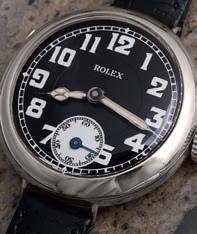
Signed
For East Yorkshire town house renovation.

Labelled/ stamped branded furniture from Georgian to Victorian, eg Thomas Butler, Morgan & Sanders, J Alderman, Ross of Dublin (pictured), Gregory Kane, Wilkinson of Ludgate Hill, Robert James of Bristol, James Winter, W Priest, Samuel Pratt and many others. Tables all types, chairs, bookcases, , Davenport. mirrors etc. Campaign shower.
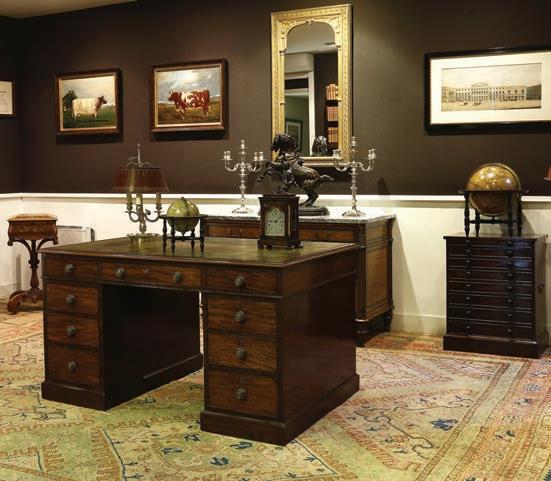
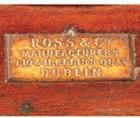
Georgian chamber horse exercise chair (pictured)
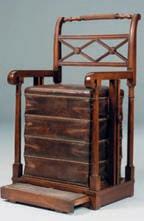
J Alderman. Daws and George Minter reclining chairs. Shoolbred/ Hamptons /
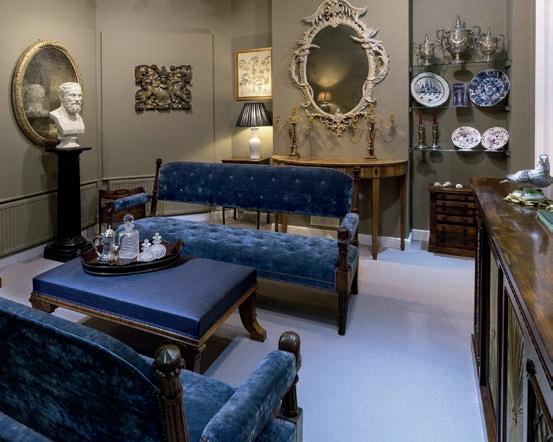
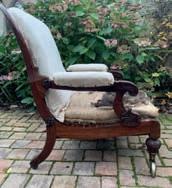
Unusual Georgian to William IV architectural features eg doors, door frames, over door pediments. 18th century staircase spindles and handrail needed. Anything Georgian or Regency with lots of character considered.
Rectangular Georgian fanlight.
Four identical reclaimed Georgian wooden sash windows with boxes, approx 60 high x 37 wide.
Marble fire surrounds from 1750 to 1850ish. White or coloured. Bullseyes, William IV styles etc. Brass Regency reeded fire insert and Victorian griffin grate (pictured)
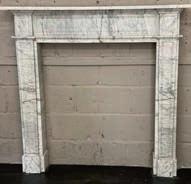
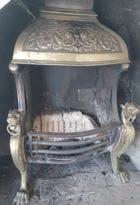
Human skull, stuffed crocodile/ alligator. Grand tour souvenirs.
Longines, Tudors and Zeniths, pre-1970. Even basic steel models in nice condition.
All the quirky oddities like Harwoods, Autorists, Wig Wag, Rolls etc, and World War I hunter and semi-hunter wristwatches.
Early, pre-war ladies’ watches also wanted by Rolex, Jaeger LeCoultre etc. Prefer 1920s/30s deco styles, but early doughnuts also considered.
but often in London and can easily collect nationwide.
Yorkshire based, but often in London and can easily collect nationwide.


vintagejewellery@yahoo.co.uk or tel 07958 333442


•WANTED•
~ WANTED ~
333442 Europe’s largest choice of antiques & collectables www.hemswell-antiques.com The centres are open 7 days a week 10am - 5pm ANTIQUE COLLECTING 65 ANTIQUE COLLECTING 65 LENNOX CATO ANTIQUES & WORKS OF ART EST: 1978 1 The Square, Church Street, Edenbridge, Kent TN8 5BD 01732 865 988 or 07836233473 cato@lennoxcato.com www.lennoxcato.com •WANTED• VINTAGE WRISTWATCHES vintagejewellery@yahoo.co.uk or tel 07958 333442 Omega Seamasters and pre-1980s Omegas in general. IWC and Jaeger LeCoultres, all styles. Looking for Reversos. American market filled and 14k pieces possibly, at the right price. Breitling Top Times, Datoras and 806 Navitimers. Pre-1960s Rolex models, with a focus in pre-war tanks, tonneaus etc. Gold or silver/steel. Also World War I Rolex 13 lignes etc. Princes. Longines, Tudors and Zeniths, pre-1970. Even basic steel models in nice condition. All the quirky oddities like Harwoods, Autorists, Wig Wag, Rolls etc, and World War I hunter and semi-hunter wristwatches. Early, pre-war ladies’ watches also wanted by Rolex, Jaeger LeCoultre etc. Prefer 1920s/30s deco styles, but early doughnuts also considered. Yorkshire based,
•WANTED• for epic East Yorkshire Georgian townhouse restoration. vintagejewellery@yahoo.co.uk or tel 07958 333442
vintagejewellery@yahoo.co.uk or tel 07958
and unusual furniture. Georgian, Regency, William IV. Sofa / Pembroke / side tables, library furniture / bookcases. Also Victorian campaign chests, armchairs etc. Ross of Dublin, Morgan & Sanders, Williams & Gibton, James Winter, Hill & Millard and many others.
Cornelius Smith Victorian armchairs. Marble fire surrounds. Georgian / Regency/ William IV. Bullseyes etc. Exceptional Georgian / Regency fire grates Sash windows x 4 identical. Georgian reclaimed. Approx 58” high x 36” wide. Wide reclaimed floorboards. Approx 100 m2. Early decorative oil / gas / electric light fittings. Ceiling, wall or table. Early gasoliers. Colza lamps. Gimble lamp. Roland Ward, Van Ingen taxidermy. Human skull. Hippopotamus skull. Stuffed crocodile / alligator. Quirky architectural features. Regency columns, corbels, marble and stone pieces, over door pediments, folding/rolling multi part Georgian room dividing doors. Victorian canopy shower bath. Decorated toilets etc Unitas, Simplicitas, Deluge etc. Decorated basins x 3. PM Antiques & Collectables are a modern and innovative antiques retailer based in Surrey. Specialising in a wide array of collector’s items, including contemporary art, entertainment and memorabilia, vintage toys, decorative ceramics, watches and automobilia. We Buy & Sell pm-antiques.co.uk Contact us: phil@pm-antiques.co.uk 01932 640113 PMAntiques2015 PM_Antiques Tel: 01636 676531 • www.b2bevents.info Malvern Flea & Collectors Fair Three Counties Showground, Worcestershire, WR13 6NW Up to 400 inside & outside exhibitors. Entrance: 7.30am-3.30pm - £5 Sunday 12th February Please check www.b2bevents.info in case dates have changed or been cancelled
Marc My Words
With Christmas already a distant memory, the recent annual present-buying autopsy has delivered a very favourable report, with my e orts to provide original and sustainable gifts meeting with a fair degree of appreciation. I have a bit of thing about present buying, which I suppose is just a little bit sel sh. I tend to only buy people gifts that I’d like to receive myself. is often results in me aimlessly wandering around shopping centres moaning about the
Below Marc’s daughter was delighted to receive a Han dynasty tomb gure for Christmas
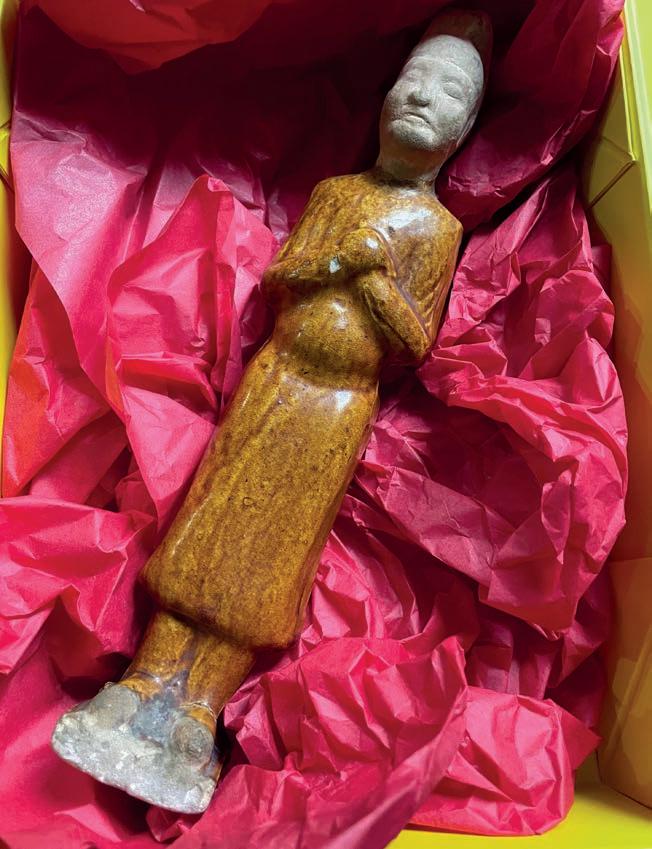
endless piles of samey, cheap and depressing gift sets. Occasionally, the irony of a ‘Motörhead road crew Pale Ale’ presentation set isn’t lost on my brotherbut, on the whole, I want my gifts to be ‘keepers.’
To be honest, when I look at the cost of things I’m always amazed people don’t use a little more imagination. Popping into a local antiques centre can deliver some great results and, if you think you’ll be met by apre-Christmas buying frenzy, think again. Why is itwe don’t buy more antiques? Is itsomething to do with things being construed as second hand? As a nation addicted to TV ‘antiques’ shows, buying in this way is still a minority pursuit.
Funerary gift
I remember, as a sixth former, my extraordinarily boring economics tutor explaining how he bought his children Georgian chairs for Christmas on the basis they would be a good investment.
Even at the time, despite my love ofall things old, I couldn’t help thinking what a miserable Christmas those poor children must have had. ( e chairs almost certainly didn’t turn out to be good investments, either).
So, buying my 23-year-old daughter a Han dynasty tomb gure might seem like the sort of idea that would ll most youngsters with horror. But, as a recent MA graduate in ceramics she seemed pretty delighted with the idea of a 1,500-year-old gurine streaked with interesting coloured glazes. Let’s hope it serves as an inspirational incentive, which pushes her desire to experiment in a whole new direction! So, sel shness aside, I think it’s important to tailor your own preferences to the recipient’s interests.
Her indoors
As for my wife Lisa he Ming narcissus bowl was met with a similar sense of delight, only to befollowed by “I’m not sure where we’re going to put it” . I cheerily assured her I was sure we’d nd the room, knowing full well that the place is already heaving. It’s still sitting by the sofa in its large wooden case.
Neither of these were spur of themoment purchases. ey were bought way ahead of the present-buying season and hidden all around the house, even spilling into the boot of my vintage Citroën.
With the ongoing cost of living crisis next Christmas will almost certainly be tough for the trade as elsewhere. So think ahead and lessen the blow. A little bit of forethought, it will reduce the bills next Christmas and your friends and relatives will be pleased at the extra thought that you put into securing something original and interesting.
Marc Allum isan author, lecturer and specialist on the BBC’s Antiques Roadshow. For more details go to www.marcallum.co.uk

66 ANTIQUE COLLECTING LAST WORD Marc Allum
‘But these were not spur of the moment purchases. They were bought way ahead of the presentbuying season and hidden all around the house, even spilling into the boot of my vintage Citroën’
Why give your loved ones jewellery and chocolate? What every woman really wants is a Chinese gure from a 1,500-year-old tomb, writes Marc Allum
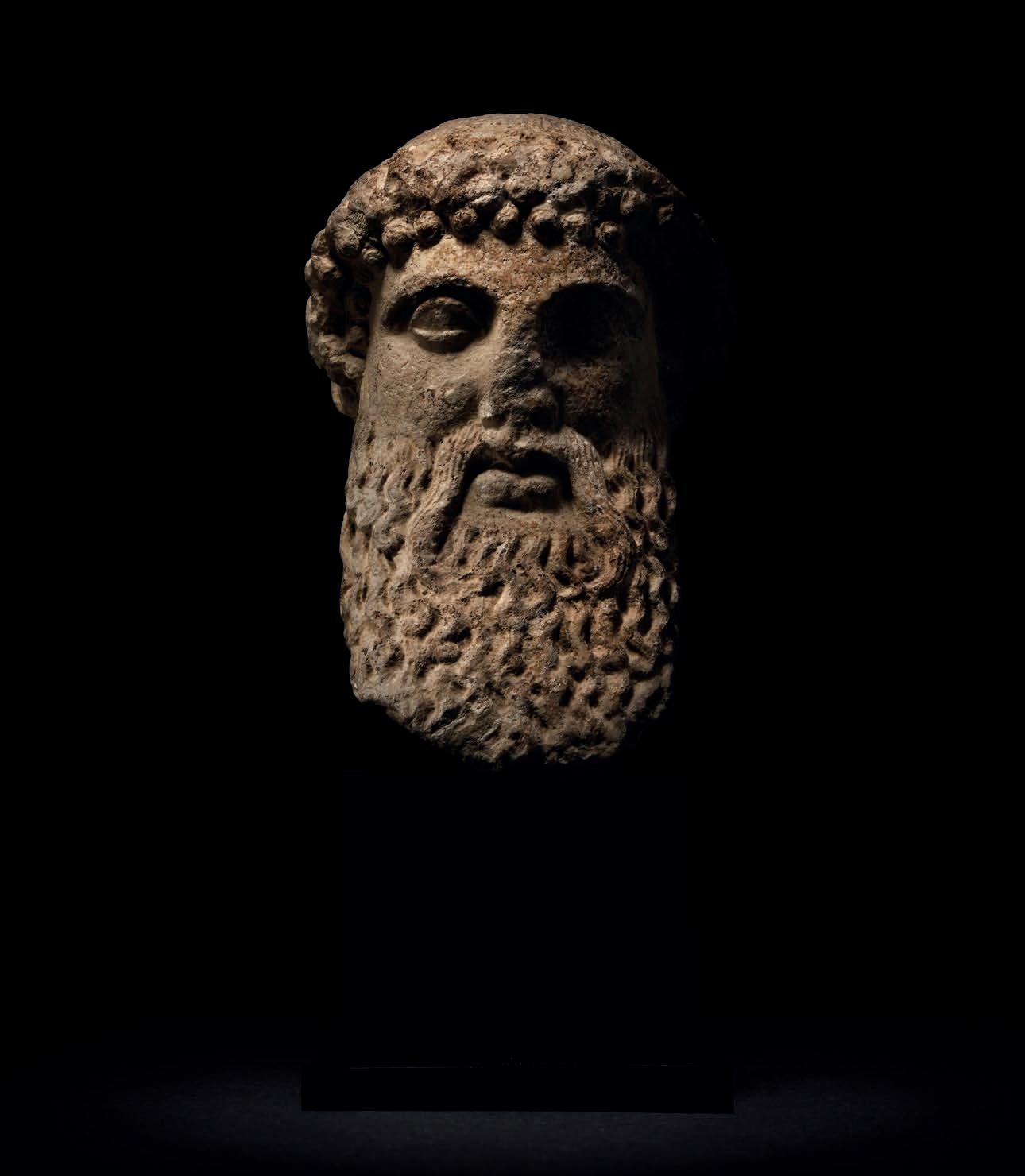

21 - 25 February 2023 Ancient Art, Antiquities & Coins www.timelineauctions.com GREEK HERMES PROPYLAIOS HEAD 1ST -2ND CENTURY A.D.

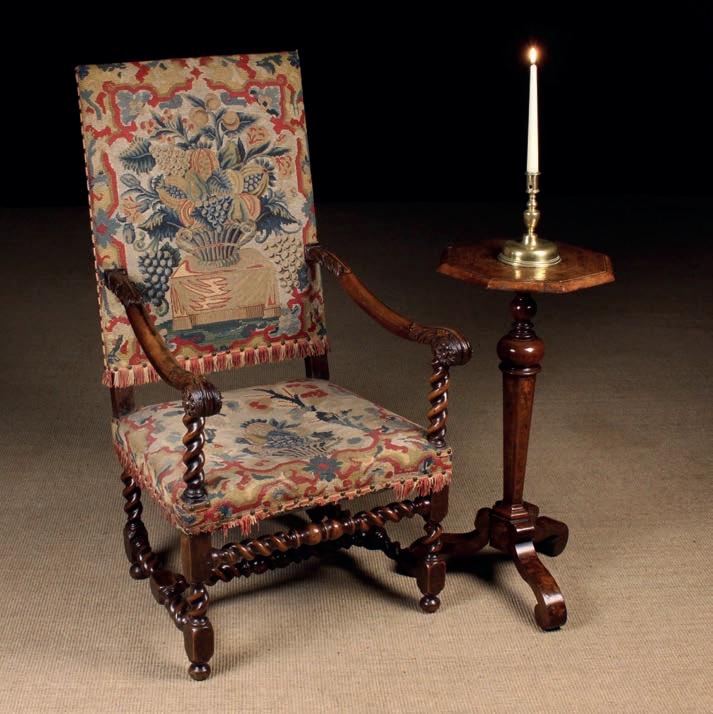
Period Oak, Country Furniture Effects VIEWING DATES Wilkinsons Auctioneers Ltd The Old Saleroom, 28 Netherhall Road, Doncaster, South Yorkshire, DN1 2PW Telephone: 01302 814884
