
ALAMEDA-CONTRA COSTA MEDICAL ASSOCIATION
BULLETIN
Serving East Bay physicians since 1860

HIGHLIGHTS FROM THIS ISSUE:
• Priority bills for 2023
• ACCMA meets with new county supervisors
March/April 2023
• Inaugural event empowers physicians to influence policy
• Celebrating women in medicine
• What is leadership?


ANNUAL MEETING 155th
Friday, November 3, 2023 Claremont Club & Spa, Berkeley, CA Join us for an evening to celebrate the East Bay physician community!
ACCMA's
ACCMA EXECUTIVE COMMITTEE
Edmon Soliman, MD, President
Albert Brooks, MD, President Elect
Irene Lo, MD, Secretary-Treasurer
Robert Edelman, Immediate Past President
COUNCILORS
Lisa Asta, MD
Eric Cain, MD
Eric Chen, MD
Rollington Ferguson, MD
Harshkumar Gohil, MD
James Hanson, MD
Terry Hill, MD
Shakir Hyder, MD
Alexander Kao, MD
Irina Kolomey, MD
Steve Lee, MD
Terence Lin, MD
Kristin Lum, MD
Nimisha Mishra-Shukla, MD
Aileen Murphy, DO
Kiran Narsinh, MD
Ross Pirkle, MD
Stephen Post, MD
Jeffrey Poage, MD
Thomas Powers, MD
Richard Rabens, MD
Steven Rosenthal, MD
Suresh Sachdeva, MD
Jonathan Savell, MD
Sonia Sutherland, MD
Clifford Wong, MD
Sijie Zheng, MD
CMA & AMA REPRESENTATIVES
Patricia L. Austin, MD, AMA Delegate
Mark Kogan, MD, CMA Trustee, AMA Alternate-Delegate
Suparna Dutta, MD, CMA Trustee
Katrina Peters, MD, CMA Trustee
ACCMA STAFF
Joseph Greaves, Executive Director
Griffin Rogers, Director, Napa Solano Medical Society
David Lopez, Director of Advocacy and Governance
Meghan Arthurs, Director of Community Health
Jennifer Mullins, Assoc. Director of Education & Events
Alejandra Hinojosa, Marketing & Communications Manager
Christine Maki, Administrative Assistant
MEDICAL ASSOCIATION
IN YOUR PRACTICE 8 X-Waiver Updates 16 Summer Conference: Taking Back Control 17 What is Leadership? By Hilary Worthen, MD 18 New Members 19 In Memoriam 20 Council Report ALAMEDA-CONTRA COSTA MEDICAL ASSOCIATION 6230 Claremont Avenue, Oakland, CA 94618 Tel: 510/654-5383 Fax: 510/654-8959 www.accma.org 4 News & Comments 5 Recent Activities & Upcoming Events 13 Women in Medicine –National Women Physicians Day 15 Physicians Reading for Growth & Connection 21 Scott Coffin, CEO Alameda Alliance, to Retire YOUR ADVOCACY 7 PRESIDENT’S PAGE Advocating for Healthy Physician Practices By Edmon Soliman, MD, FACP, ACCMA President 9 Join the ACCMA Leadership 11 Your Newly Elected County Supervisors 12 Influencing Policy Through Effective Advocacy EMALA D A –CONTRA COSTA MEDICAL AS S O C I NOITA INCORPORATED JAN 1871 1 8 6 0
REDUCE – REUSE – RECYCLE Printed in the U.S.A. with soy inks on paper stock certified by the Forest Stewardship Council. EMALA D A –CONTRA COSTA MEDICAL AS S O C I NOITA INCORPORATED JAN 1871 1 8 6 0
BULLETIN Serving East Bay physicians since 1860 March/April 2023 | Vol. LXXIX, No. 2 ACCMA BULLETIN | MARCH/APRIL 2023 3
ALAMEDA-CONTRA COSTA
THANK YOU
National Doctors’ Day is celebrated on March 30. The ACCMA would like to thank you on behalf of our community for your dedication to medicine and to serving your patients, day in and day out. The sacrifices you have made and continue to make, your commitment to service, and your passion for improving the lives of your patients and the health of our community is truly inspiring. It is a privilege to support you in the work that you do. We are here for you, your practice, and your patients and we look forward to continue being of service to you in any way we can.
2023 PRIORITY BILLS
CMA announced its priority bill package for 2023 which includes legislation that would reform prior authorization, expand cultural and linguistic competency, streamline provider credentialing, protect physicians providing reproductive health care and more. Visit bit.ly/3TEsrUv to read more about these bills.
NEW NP CLASSIFICATIONS
AB 890 took effect January 1, creating two new classifications of Nurse Practitioners, 103 and 104 NPs. CMA published a guide to help physicians understand the new law and the minimum “transition to practice” standard for NPs seeking to apply for licensure under these classifications. Find the guide at bit.ly/3ZBAvYt.
X-WAIVER ELIMINATED
In a national effort to facilitate the treatment of Opioid Use Disorder (OUD), practitioners no longer need to apply for an x-waiver. All practitioners who have a current DEA registration that includes Schedule III authority may now prescribe buprenorphine for OUD. There will be added training for new DEA applications and renewals which is still to be decided. Visit ACCMA.org/News to learn more.
EXTENDED DURATION PAS FOR MAINTENANCE MEDS
On March 24, Medi-Cal Rx initiated a series of transition policy lifts for beneficiaries 22 years of age and older. To reduce administrative burden while ensuring continued medication safety for beneficiaries, DHCS has enabled extended duration/multi-year prior authorizations (PAs) for up to 5 years for certain maintenance medications used for chronic conditions. Qualified prescriptions have been automatically extended. Visit medi-calrx.dhcs.ca.gov/provider/pharmacy-news/ for more info and updates from Medi-Cal Rx.
CIGNA TO RE-RELEASE BURDENSOME MODIFIER 25 POLICY
Cigna is re-releasing its policy to require the submission of medical records with all Evaluation and Management (E/M) claims with CPT 99212-99215 and modifier 25 when a minor
procedure is billed. Last year, as a result of CMA advocacy, Cigna announced it was pausing implementation to reevaluate the policy. Unfortunately, Cigna recently announced it will be moving forward with, essentially, the same policy effective May 25, 2023. The policy continues to pose a significant and unnecessary burden on physician practices and may be inconsistent with California law.
COVID-19 TREATMENT
Please continue to treat your high-risk patients and stay updated on changes in COVID-19 treatment. Call the CDPH Warmline at 1-866-268-4322 (866-COVID-CA) for free and confidential consultation on COVID testing and treatment.
DATA EXCHANGE CHANGES COMING
Over the next three years, the Data Exchange Framework will require all physician practices in this state to exchange data with other practices, health plans, hospitals and others. To help physicians prepare for this change, the CMA has partnered with CalHHS to develop the CMA Data Exchange Explainer Series. This series of webinars will walk practices through the various considerations in implementing robust data exchange. Watch the live and on demand webinars at cmadocs.org/ digital-health/dxf/webinars.
COVID-19 PHE ENDING
The public health emergency due to COVID-19 is coming to an end soon. CMA create a guide to help you understand how changes to waivers and telehealth impact your practice. The guide also highlights CDPH’s updated guidance on masking, vaccination for health care workers, and isolation after infection. Find the guide at bit.ly/3LKunsI.
SAVE MONEY WITH SMALL CHANGES
My Green Doctor (MGD) is a money-saving membership benefit that helps you implement environmentally sustainable changes to your practice. Members have access to free materials and guidance at MyGreenDoctor.org. This month, MGD presents a webinar from the AMA on improving environmental stability in your practice. Visit bit.ly/3TAiZBK to watch the 45-minute webinar.
NO ON AB 1751
A new bill, sponsored by the California Chiropractic Association, is being represented as an attempt to reduce opioid prescription rates. AB 1751 would require physicians to share information on non-pharmacological options, offer referrals, and confirm with the patient’s signature that this was done, creating unnecessary administrative burden and undermining the judgment and expertise of physicians. This bill also establishes referral requirements without proposed coverage expansions – Medi-Cal is not required to cover all non-pharmacological treatments. AB 1751 is scheduled to be heard in the Assembly Health Committee on April 11.
4 ALAMEDA-CONTRA COSTA MEDICAL ASSOCIATION BULLETIN NEWS & COMMENTS
ACCMA Recent Activities
TheACCMA Community Health Committee joined Alameda County’s Mental Health Services Act Listening Session on January 19 to get a better understanding of the mental health needs of Alameda County communities.
The ACCMA Finance Committee met on January 26 to review the ACCMA Investment Portfolio. Additionally, the committee reviewed the financials and bank statements for ACCMA and all its subsidiaries.
The ACCMA Legislative Committee met on February 22 to welcome the two newly elected Supervisors in our local community and discuss ACCMA’s health care priorities. The committee met with Contra Costa County District 4 Supervisor Ken Carlson and Alameda County District 3 Supervisor Lena Tam and had the opportunity to hear what the Supervisors health care priorities will be. Read more on page 11.
The ACCMA Health Equity Committee met on February 22 where they discussed the Health Equity Project and reviewed potential speakers, developed educational activities, and decided to hire an intern who will focus on health equity work. Additionally, they discussed the past and future of East Bay placebased health equity and how local physicians can help.
The East Bay Safe Prescribing Coalition met on February 28 and received a presentation by Ms. Holly Sisneros, Public Health Views Consultant, who shared information about the current state of Medication Assisted Treatment (MAT) and other opioid related data. The committee also discussed the future of the coalition and the necessary next steps to wrap-up the work of the coalition.
The ACCMA Medical Services, Technology, and Quality of Care Committee met on March 2 where they received a presentation from the Contra Costa Health Plan and Alameda
SAVE THE DATE
ACCMA 155TH ANNUAL MEETING
Friday, November 3rd, 2023
Alliance for Health. The focus of the presentation was to get a better understanding of the single plan model, Cal-AIM, and the public health emergency wind-down.
ACCMA Committees meet several times a year to discuss issues impacting physicians and the patient experience. If you would like to join an upcoming meeting, please contact us at accma@accma.org or call (510) 654-5383.
UPCOMING MEETINGS & EVENTS
CMA LEGISLATIVE ADVOCACY DAY
Wednesday, April 19 | Sacramento
JOINT MEETING OF THE ACCMA FINANCE COMMITTEE & COMMUNITY HEALTH FOUNDATION BOARD
Tuesday, April 25 | 6:00 to 8:00 pm
ACCMA COUNCIL MEETING
Thursday, May 11 | 6:30 to 8:00 pm
ACCMA MEMBERSHIP & ENGAGEMENT COMMITTEE MEETING
Tuesday, May 16 | 6:00 to 7:30 pm
ACCMA COMMUNITY HEALTH COMMITTEE MEETING
Thursday, May 18 | 6:30 to 8:00 pm
ACCMA ADVISORY COMMITTEE ON PHYSICIAN WELLBEING
Thursday, June 1 | 6:00 to 7:30 pm
EAST BAY SAFE PRESCRIBING COALITION STEERING COMMITTEE MEETING
Tuesday, June 6 | 6:00 to 7:30 pm
LEADERSHIP READING & DISCUSSION GROUP
Wednesday, June 7 | 6:00 to 7:30 pm
DISTRICT IX DELEGATION MEETING
Thursday, June 8 | 6:30 to 8:00 pm
ACCMA BULLETIN | MARCH/APRIL 2023 5 COMMITTEES & EVENTS
pathlms.com/medical-society for all the latest educational CME opportunities from ACCMA
Visit


COMMITTEES & EVENTS At the Cooperative of American Physicians (CAP), we celebrate you—the independent and solo practitioner who keeps healthcare personal. We are here to support you with exceptional medical malpractice coverage supplemented by a host of outstanding risk management and practice management services, so you can stay focused on what’s important—patient care. For over 40 years, CAP has delivered financially secure medical malpractice coverage options and practice solutions to help California physicians realize professional and personal success. Find out what makes CAP different. CAPphysicians.com 800-356-5672 MD@CAPphysicians.com Medical professional liability coverage is provided to CAP members through the Mutual Protection Trust (MPT), an unincorporated interindemnity arrangement organized under Section 1280.7 of the California Insurance Code. Scan the QR code to see how much you can save on your medical malpractice coverage More than 12,500 California physicians rely on CAP to protect their practices every day. Celebrating Independent Physicians
Advocating for Healthy Physician Practices
By Edmon Soliman, MD, FACP, ACCMA President
TheAlameda-Contra Costa Medical Association (ACCMA)
in partnership with the California Medical Association (CMA) empowers and organizes physicians to lead and improve the practice of medicine in order to better patients’ lives and the community’s health. One of the main ways we do this is by engaging in effective advocacy to support healthy physician practices.
At its core, advocacy means fighting for the issues that impact our profession and our patients, and there is no shortage of important issues that CMA will be fighting for this year. In fact, CMA’s Council on Legislation recently met in Sacramento and reviewed nearly 200 current bills that CMA will focus on.
Three of our highest priority bills this year will address some of the administrative burdens which are driving physicians to close practices, pursue nonclinical pathways, or retire early. Addressing these administrative burdens is a critical strategy to retain and sustain our physician workforce:
• SB 598: Prior Authorization, authored by local Senator Nancy Skinner from Berkeley, will require health plans to create exemption programs that allow physicians who are practicing within the plan's utilization criteria 90% of the time to receive a one-year exemption from the plan's prior authorization requirements. Additionally, the legislation will give a treating physician the right to have an appeal of a prior authorization denial conducted by a physician peer of the same or similar specialty.
• AB 815: Streamlining Physician Credentialing will streamline the credentialing process by requiring the creation of a panel to approve independent entities to credential physicians for health plan contracts. If a physician chooses to be credentialed by an approved entity, a health plan would be required to accept the physician’s credential. This would allow physicians to complete one credentialing application with a designated entity that would be uniformly accepted by all plans.
• SB 582: EHR Vendor Regulation will require the state body regulating physician compliance with data exchange regulations to also regulate EHR vendors, including incorporating into state law the federal standards for the reasonableness of vendor fees. These changes will allow regulators to
crackdown on exorbitant pricing schemes and guarantee that physicians are not hampered by vendor practices.
A pair of bills are aimed at protecting physicians who provide reproductive health services and gender-affirming care. AB 571 will ensure that licensed medical providers have access to professional liability insurance coverage without discrimination for providing abortion care, contraception, and gender affirming care. SB 487 will protect California health care providers from automatic suspension from the Medi-Cal program if they are suspended from a Medicaid program in another state as a result of providing health care services that are legal in California. It will also prohibit health insurers from discriminating against or refusing to contract with a health care provider who may have been sanctioned in another state for providing health care services that are prohibited or restricted in that state but are legal in California. Furthermore, SB 487 strengthens civil protections and provides additional safeguards for California abortion providers and other entities and individuals that serve and support abortion patients that reside in states with hostile abortion laws.
AB 765 is another important bill which will ensure health care consumers receive more accurate and clearer information about the education and training of their providers by preventing non-physician health care providers from using terms like “-ologist", "surgeon", “medical doctor”, or other similar combination of “physician-equivalent” titles. Cited as the California Patient Protection, Safety, Disclosure, and Transparency Act, it would restrict the adoption of the above terms and titles, reserving them only for those authorized and licensed to practice medicine as a physician or surgeon.
My physician colleagues, your membership supports our ability to fight for you and your patients on these important issues. Members can also get more directly involved in our advocacy efforts by occasionally calling or emailing your legislators, attending local ACCMA meetings with legislators, or by attending CMA Legislative Day on April 19th. During this annual event, dozens of ACCMA members caravan to Sacramento to meet with our East Bay representatives in the California Legislature. This is a great continued on page 9
ACCMA BULLETIN | MARCH/APRIL 2023 7 PRESIDENT'S PAGE
X-Waiver No Longer Required to Prescribe Buprenorphine What You Need to Know
In a national effort to facilitate the treatment of Opioid Use Disorder (OUD), physicians no longer need to obtain an x-waiver to prescribe buprenorphine.

All practitioners who have a current DEA registration that includes Schedule III authority may now prescribe buprenorphine for OUD. Please note: There will be added training requirements for all DEA applications and renewals, but the details of this requirement have not been decided.
Previous standards limiting the number of OUD patients that physicians could treat with buprenorphine have been removed There are no longer any patient caps for treating OUD with buprenorphine.
If your local pharmacy is unwilling to fill a prescription for buprenorphine for OUD, please share the letter from the DEA. If the pharmacy continues to refuse to fill buprenorphine prescriptions, you can file a formal complaint with the CA Board of Pharmacy.
8 ALAMEDA-CONTRA COSTA MEDICAL ASSOCIATION BULLETIN NEWS & COMMENTS (continued from page 21)
T H E A C C M A W I L L C O N T I N U E T O F O L L O W T H E S E O N G O I N G C H A N G E S A N D P R O V I D E U P D A T E S A S M O R E I N F O R M A T I O N B E C O M E S A V A I L A B L E . V I S I T A C C M A . O R G / N E W S T O F I N D T H E D E A L E T T E R , A B U P R E N O R P H I N E 1 0 1 T R A I N I N G C O U R S E , A N D F U R T H E R C O V E R A G E O F T H I S U P D A T E .
Join the ACCMA Leadership
Through
ACCMA, physicians lead and improve the practice of medicine to better patients’ lives and the community’s health. We invite you to join the ACCMA Council and District IX Delegation to bring your perspectives forward and join the discussion on major issues impacting physicians locally and statewide.
NEW ACCMA COUNCILORS
Welcome to the following new members to the ACCMA Council:
• District 3 (Southwest Contra Costa) Alternate Councilor –Deepika Bindal, MD, MPH
• District 3 (Southwest Contra Costa) Alternate Councilor –Brenda Oiyemhonlan, MD
• District 8 (City of Alameda) Alternate Councilor – Eugene Lowry, MD
• District 9 (San Ramon/Danville) Alternate Councilor –Chris Chen, MD
• District 10 (Oakland) Alternate Councilor – Kathleen Doo, MD
• District 10 (Oakland) Alternate Councilor – Ingrid Roseborough, MD
Are you interested in serving on the Council? Fill one of the following vacant seats:
• District 1 (West Contra Costa) Councilor
• District 1 (West Contra Costa) Alternate Councilor
• District 1 (West Contra Costa) Alternate Councilor
• District 3 (Southwest Contra Costa) Alternate Councilor
JOIN THE ACCMA DISTRICT IX DELEGATION
The ACCMA District IX Delegation is seeking members who are interested in local and state issues related to the practice of medicine, are looking for opportunities to network with other physicians throughout the state, and/or have an interest in exploring a leadership position within your Medical Association or the CMA.
The District IX Delegation represents ACCMA at the CMA House of Delegates (HOD). This year’s HOD is scheduled for October 21-22, 2023, at the Marriott LA Live in Los Angeles, California. The HOD convenes annually to debate and act on resolutions and reports dealing with myriad medical practice, public health, and CMA governance issues. Policies adopted by the House are implemented by the CMA Board of Trustees, which also deals with the many interim policy issues that arise between annual sessions.
The House of Delegates consists of more than 400 delegates elected by members of component medical societies, specialty societies, CMA sections (Organized Medical Staff Section, Young Physicians Section, Ethnic Medical Organization Section, Medical Student Section, the Resident and Fellows Section) and CMA mode of practice forums.
If you are interested in serving on the ACCMA Council or joining the ACCMA District IX Delegation, please contact Mr. David Lopez, ACCMA Director of Advocacy and Governance, at dlopez@accma.org or by phone at 510-654-5383.
PRESIDENT'S PAGE (continued from page7)
way to gain exposure to the advocacy process and the role you can play in advocating for our patients and profession. Contact the ACCMA at 510-654-5383 or accma@accma.org to RSVP.
ACCMA BULLETIN | MARCH/APRIL 2023 9 ACCMA COUNCIL & DELEGATION
Explore more ACCMA Leadership opportunities at ACCMA.org/GetInvolved.
Shape Local Health Policy
by Supporting ACCPAC
Your support is needed to ensure that the Alameda-Contra Costa Medical Association (ACCMA) continues to be an effective advocate on your behalf on local and state health care issues.

Through the ACCMA’s political action committee – ACCPAC – the ACCMA is able to support candidates for local office who are responsive to our concerns about health care issues in the East Ba y. Often the impact of this support goes far beyond our local community as these candidates move on to higher office in Sacramento. ACCPAC-supported candidates look to ACCMA for input on vitally important local health care issues. ACCPAC’s success is dependent on your support.
Please support ACCPAC by making a contribution using the form below.
Name (please print):
Credit Card Billing Information:
Address: City: State: Zip:
Phone: E-Mail (optional):
Amount of Contribution (circle one): $50$100$200$500Other Amount:
Please make check payment to Alameda-Contra Costa Physicians Committee
Credit Card (circle one): MasterCard / Visa / American Express
Card #: Exp. Date: Security Code:
Name of Employer or Business if Self-Employed:
Signature:
Please return to Alameda-Contra Costa Physicians Committee at 6230 Claremont Ave, 3rd Floor, Oakland, CA 94618, or if sending payment by credit card, fax completed form to (510) 654-8959
Donate Today!
Contribution Form
ACCPAC is a voluntary political organization which contributes to candidates for local office. Political law and ACCPAC policy determines how your contribution to ACCPAC
allocated. A decision not to contribute to ACCPAC
not affect your membership status with the ACCMA. ACCPAC is sponsored
the Alameda-Contra
Medical Association.
income
is
will
by
Costa
Contributions are not deductible for
tax purposes.
Your Newly Elected County Supervisors
ACCMA members met with the newly elected County Supervisors on Wednesday, February 22nd to discuss ACCMA’s health care priorities for 2023 and hear about the priorities of each supervisor. The ACCMA takes a strong interest in many issues affecting public health, access to care, and the ability of physicians to provide high quality medical care. Our new Supervisors will be placing focus on public health concerns, behavioral health care concerns, emergency medical services, Medi-Cal managed care, and the coordination of care between community physicians and the County.
housing crisis, making public safety a priority, and promoting a more sustainable county. Supervisor Carlson was also appointed as Chair of the Contra Costa County Legislation Committee and is willing to work with ACCMA on any health-related issues.
MEET SUPERVISOR KEN CARLSON –DISTRICT 4
ACCMA met with Contra Costa County Supervisor Ken Carlson. Supervisor Carlson represents District 4, which encompasses Clayton, Pleasant Hill, Walnut Creek, Concord, and the unincorporated Contra Costa Centre and Morgan Territory.


In December 1988, Supervisor Carlson graduated from the Los Medanos College Law Enforcement Academy and began his career as a Concord Police Officer where he served for 29 years. Before joining the Board of Supervisors, Supervisor Carlson served on the Pleasant Hill City Council from December 2012 to December 2022 and as Mayor in 2015 and 2019.
As the first LGBTQIA+ Councilmember and Mayor, Supervisor Carlson established June as LGBTQIA+ Pride Month in Pleasant Hill. He also authored the Inclusive City Resolution, which states that Pleasant Hill is a welcoming community for all residents and promotes the protection of human rights, social justice, equality, diversity, and social well-being.
Supervisor Carlson calls Pleasant Hill home along with his husband, Jeremy, of 16 years, and their two dogs.
Some of Supervisor Carlson’s priorities including fixing the
MEET SUPERVISOR LENA TAM – DISTRICT 3
Later that day, the ACCMA met with Alameda County Supervisor Lena Tam. Supervisor Tam represents District 3, which encompasses Alameda, San Leandro, a portion of Oakland, including Chinatown, Jack London, Fruitvale, and San Antonio neighborhoods. District 3 also includes the unincorporated communities of San Lorenzo and Hayward Acres.
Supervisor Tam is a longstanding community leader and public servant. Supervisor Tam has served as Vice Mayor of the City of Alameda, President of the City of Alameda Health Care Board, and Chair of the Alameda County Planning Board. In her professional career, she was the Manager of the Water Planning Department at the East Bay Municipal Utility District, where she worked for more than 30 years. She understands the complexities of how local and county governments interface with regional service providers.
Supervisor Tam is the child of two first-generation immigrants and was raised in the City of Alameda. She graduated from Alameda High School before pursuing degrees from UC Berkeley and the University of San Francisco. She has been a resident of District 3 for more than 50 years.
Some of Supervisor Tam’s mental health and health care priorities include enhancing the county’s safety net services for everyone, expanding the capacity of existing facilities in order to serve more residents – especially for mental health conditions –and lastly, supporting community health clinics to increase and improve resources to better serve residents.
ACCMA BULLETIN | MARCH/APRIL 2023 11 MEET YOUR SUPERVISORS
Physicians Influencing Policy Through Effective Advocacy

Thisspring, the ACCMA expanded the Physician Leadership curriculum to include an additional program aimed at empowering physician leaders to use their voice to effectively influence policy. The inaugural “Leadership in Action: Influencing Policy Through Effective Advocacy” brought members together in person and online to learn the importance of physician advocacy.
Facilitated by ACCMA’s past president and leading physician advocate, Doctor Thomas Sugarman, the training included sessions on understanding the legislative process and relationship building, how to conduct a meeting with legislators, and an opportunity to practice in a mock legislative meeting. Participants received insight on what a legislative meeting with a physician looks like from the perspective of a legislator, aided by former State Senator Richard Pan, MD; former Congressional candidate
Kermit Jones, MD; Shawn Kumagai, a former candidate for State Assembly and the district director for Assemblymember Rebecca Bauer-Kahan; Stuart Thompson, Senior Vice President of Government Relations for the CMA; and CMA lobbyist Alexis Rodriguez.


Event attendees were invited to join us at CMA Legislative Advocacy Day on Wednesday, April 19 to lobby local legislators on the biggest issues in health care this year. For information on Legislative Day and opportunities to get involved, visit the ACCMA.org/GetInvolved or contact David Lopez, ACCMA Director of Advocacy and Governance, at dlopez@accma. org.

12 ALAMEDA-CONTRA COSTA MEDICAL ASSOCIATION BULLETIN INFLUENCING POLICY
Women in Medicine – Celebrating National Women Physicians Day
Inhonor of National Women Physicians Day on February 3rd and Women’s History Month, the ACCMA invited female physician members to share their experiences in their personal journeys through medicine, as well as the impact of the transition to a field that supports women physicians and women in leadership. We were joined by Doctors Aileen Murphy, a general bariatric surgeon; Irene Lo, a general surgeon; and Elaine Lee, a fellowshiptrained breast surgical oncologist.
IMPORTANCE OF EARLY EXPERIENCES
Pursuing a career in medicine is challenging for people of all backgrounds, but it goes without saying that those raised in a supportive environment are most likely to succeed. All three interviewees shared a commonality in their childhoods and young adulthoods: being raised by supportive parents who instilled in them that the sky was the limit and that their identity as a woman should not be a limitation to the success they would find.
Dr. Murphy was raised by a father who advised her to pursue medicine because she would have more success in medicine breaking down stereotypes as compared to engineering, which was her field of interest in undergrad. Eventually, after her father passed away, she ended up choosing medicine over engineering. Dr. Lo shared, “I call my mother my ‘Shero’”, because she never let her gender hold her back. Her mother was the first female director of Environmental Health in Alameda County. Her husband is a supportive stay-at-home dog dad and these non-traditional gender roles have allowed her to find success. Dr. Lee mentioned not realizing the challenges she may face in medicine as a woman, she stated “It didn’t hit me until my boyfriend’s family told me ‘You shouldn’t be a surgeon, you should be a stay-at-home mom. Why are you putting yourself through medical school?’”. At that point she realized the stigma many women face around pursuing medicine.
In residency, the interviewees shared a similar experience in which their respective class consisted of majority women and overall residency programs had more women than ever before. They often heard sentiments of how impressive it was that there was an increase in women in the field, which put it into perspective how much times were changing. In one case, Dr. Lo shared, “the chief residents didn’t know what to do with us. They were worried we would all be emotional and not able to cut it”. Supportive
mentors aided them in succeeding despite the barriers and helped shape them into the physicians they are today.
MOTHERHOOD AS A PHYSICIAN
Becoming a mother can create a significant amount of stress as female physicians navigate caring for their child and their patients simultaneously. To meet the demands of working in medicine, many female physicians delay pregnancy until after residency and fellowship, leaving them needing to explore options such as surrogacy or IVF to be able to have the family they want and deserve. Additionally, there is a lot of female guilt around having to take maternity leave. It’s no surprise that maternity leave puts stress on a program, but a supportive one will know that this is just a part of life and prepare for those changes, not only maternity leave but making time for mothers needing to breastfeed and pump.
Dr. Murphy shared her experience as a mother, being pregnant with her first daughter during residency and having to go straight from rounding to the delivery room. She had preeclampsia and was told to be on bed rest, but she refused in order to keep up with the demands as a resident. With maternity leave, she worried that she wouldn’t graduate from the program if she didn’t plan ahead of time and pull in more cases. No matter what, she felt guilty leaving the program for maternity leave. Coming back to practice presented its own challenges to accommodate and plan for the needs of a child. She stated, “When I look back on it, I had to have been delirious to go through something like that. It was very stressful”.
FROM INEQUITY TO EQUITY
In the East Bay, advancing equity in healthcare has been at the forefront of the conversation for some time. Of course, equity for female physicians is not the same in every city, state, or country. Looking at Epic Care and local hospitals, the interviewees shared that their male counterparts do not get paid more for the same work, but they are generally able to work more than their female counterparts who may have to tend to children or other responsibilities, and therefore are able to generate higher income. This is where salary inequities come from. Moreover, more women are being advanced into positions of leadership, one interviewee noting that the CEO at Epic Care is a female physician. As more continued on page 14
ACCMA BULLETIN | MARCH/APRIL 2023 13 WOMEN IN MEDICINE
practices become forward-thinking, women will be given greater opportunities to advance into leadership positions and contribute the female voice to the conversation.

STRENGTHS OF FEMALE PHYSICIANS
As we see an increase in the number of women in medicine, it is vital that we notice the positive impact being treated by a female physician may have on patients. Just as patients may feel more comfortable being treated by a physician of the same race, many female patients feel more comfortable being treated by a female physician.
Interestingly, one interviewee shared several studies exhibiting that in some cases female physicians spend more time with their patients per visit than their male counterparts1, patients have better post-operative outcomes when treated by female surgeons2, and patients treated by female physicians had lower mortality and readmission rates3. Another interview shared a story of a friend – a surgeon on a team of two females and four males – treating a patient with diabetic foot. The friend stated that she and her female counterpart spent significant time thinking of ways to salvage the foot, whereas all four male surgeons suggested amputation as the primary solution. As the practice of medicine becomes more diverse, one of the greatest benefits is using the diversity of backgrounds, knowledge, and experiences to care for patients.
WHAT NEEDS TO CHANGE?
As the population in the U.S. grows more diverse, medicine must adjust to consider outcomes for patients of different backgrounds. One change that needs to come is physician education to provide better care for female patients of color. The mortality rate for Black women in pregnancy is much higher than any other race or ethnicity. From an oncological standpoint, Dr. Lee has noticed that Black women get mammograms later in their disease state. One primary solution is to educate physicians about screening for breast cancer and genetic testing earlier to prevent disease progression.
Overall progress is being made and we must continue to have these conversations, being transparent so that patients feel comfortable and trust their physicians. The interviewees shared that young millennial physicians have a different approach to providing care and within 20-30 years, medicine will change. They are excited and interested to see how future female physicians change the practice of medicine.
NOTE
14 ALAMEDA-CONTRA COSTA MEDICAL ASSOCIATION BULLETIN WOMEN IN MEDICINE (continued from page 13)
1 Ishani Ganguli, M.D., M.P.H., Bethany Sheridan, Ph.D., Joshua Gray, M.B.A., Michael Chernew, Ph.D., Meredith B. Rosenthal, Ph.D., and Hannah Neprash, Ph.D. N Engl J Med. 2020; 383:1349-1357. DOI: 10.1056/NEJMsa2013804
2 Slomski A. Female Patients Fare Worse With Male Surgeons. JAMA 2022;32 7(5):416. doi:10.1001/jama.2022.0147
3 Tsugawa Y, Jena AB, Figueroa JF, Orav EJ, Blumenthal DM, Jha AK. Comparison of Hospital Mortality and Readmission Rates for Medicare Patients Treated by Male vs Female Physicians. JAMA Intern Med. 2017;177(2):206–213. doi:10.1001/jamainternmed.2016.7875
East Bay physicians gather to celebrate Women Physicians Day on February 3rd
Physicians Reading for Growth and Connection
For the past two years, a group of curious physicians has gathered virtually to share reflections on books relevant to leadership and engage in fruitful discussion. This month the Bay Area Leadership Reading and Discussion Group read “The Fearless Organization: Creating Psychological Safety in the Workplace for Learning, Innovation, and Growth” by Amy Edmondson, a professor at Harvard Business School. She has been studying psychological safety for over 25 years and has a lot to say about what it is, its impact, how to build it and how to destroy it. Much of her research has been done in hospitals and clinics, making this potentially more relevant to physicians than most books from business school presses.
Each meeting the group collectively selects a book for the next discussion, often seeking out interesting reads that tie together leadership concepts, medicine, and the healthcare system. In July 2022, the group read and discussed “Healing: Our Path from Mental Illness to Mental Health” by Thomas Insel, MD. Dr. Insel was the director of the National Institute of Mental Health for about a decade. His dedication to solving the mental health crisis shows in his work alongside tech companies to develop artificial intelligence approaches to serious mental illness. Most recently, Dr. Insel has been Governor Newsom’s point person on mental health issues. The group highly recommends this read for those interested in gaining a hard and well-informed overview of the state of care for people with mental illness.
In September of last year, the group read and discussed “An
SPONSOREDPSYCHOTHERAPY FOR ACCMA MEMBERS
The ACCMA Physician Wellness Program sponsors individual psychotherapy sessions for our members. Physicians can meet one-on-one with therapists for up to four sessions at no charge. Both physicians and medical residents can take advantage of this ongoing program. Call or email us to get started or visit ACCMA.org/ Issues/Physician-Wellness to learn more.
American Sickness: How Healthcare Became Big Business and How You Can Take It Back” by Elisabeth Rosenthal, MD. This book by the editor of Kaiser Health News describes how the flawed system of self-interested players from health insurance to pharma to hospitals has failed patients in the US and proposes solutions for far-reaching reform.
The very first session of the Leadership Reading and Discussion Group took place in May of 2021 where the group analyzed a short chapter of “The Leadership Moment” by Michael Useem, in which he describes the tragic Mann Gulch fire that killed 17 young firefighters in 1949. This story has many leadership lessons buried in it. This was later followed by “The Premonition”, Michael Lewis’s gripping story of the early phases of the COVID-19 pandemic highlighting the disastrous responses by the federal government and the intriguing actions of a group of public health visionaries. It was interesting to find that the Mann Gulch fire was a major metaphor used by these people to describe the pandemic.
These are just some of the eye-opening reads that the group has had the opportunity to discuss. The Leadership Reading and Discission Group is open to all Bay Area physicians and although reading the book is recommended, it is not required. If you’re looking to expand your knowledge without taking the time to read a book, you might consider incorporating audiobooks into your daily routine. Visit bit.ly/3Yz3HOD to join the next meeting of the Bay Area Leadership Reading and Discussion Group.
Concierge Practice for Sale - Revenue: $650,000: A very successful Internal Medicine Concierge practice, founded in 2011. With a patient roster of 50, this practice has a waiting list, and is primed for growth at practitioner’s motivation. Streamlined practice optimizing quality time spent in direct care of patients and minimizing administrative and billing burdens resulted in a consistently high net income, and low practice expenses and patient visits. The patients and physician report high levels of satisfaction. Located in an upscale community in the beautiful Napa Valley, this offers an attractive lifestyle, good schools and the internationally acclaimed wine industry that draws high income families and retirees who value and seek out a quality Concierge Medicine practice. The work hours make an enjoyable life balance with family and a medical practice. Please contact norman@medicalpracticesusa.com or (415) 516-9009.
ACCMA BULLETIN | MARCH/APRIL 2023 15 LEADERSHIP READING GROUP
TAKING BACK CONTROL
Practical Strategies to Reduce the Administrative Hassles of Daily Medical Practice


Friday, June 16th | 9:00 am to 3:00 pm
In-person Event | Lafayette Library, Don Tatzin Room

3491 Mount Diablo Blvd, Lafayette, CA 94549 | Free On-site Parking
Register at bit.ly/3LOjkit
Free for members of the Bay Area Medical Societies For Physicians of All Specialties, Modes of Practice, and Career Stages


Join physician colleagues from across the Bay Area for a robust day of thought leadership and information sharing through interactive workshops and panel discussions focused on tackling the daily pain points of medical practice. This conference will equip you with practical tools and skills that you can apply immediately to your medical practice. You should leave feeling empowered with new ideas to minimize administrative burdens and restore joy to the practice of medicine.
Event Topics include:
Interactive Workshop: Managing your Inbox, Medication Management, and Other Pain Points of Practice

Expert Update: Current Advocacy Efforts to Reduce Administrative Burdens
Panel Discussion: Practical Solutions to Alleviate Daily Administrative Challenges
Paul DeChant, MD

Event Chair & Keynote Speaker,
Presenting: Healthy Workplaces Equal Healthy Physicians - Making Healthy Places for Physicians to Practice
Continental breakfast and catered lunch will be served.
Stay after the event for a summer wine and beer reception!
Limited capacity (no-shows will be invoiced $200 post-event)
Presented in
with:
PHYSICIAN LEADERS
collaboration
What is Leadership?
By Hilary Worthen, MD, Course Director of the Physician Leadership Program
Takea moment to consider what leadership is and where those ideas came from. Have you personally encountered people whom you would identify as leaders – good or bad? Did some stand out as powerful and effective? Did they make you want (or not want) to follow them? Did some of them help engage you in changing things – either in your environment or within yourself – and what was that experience like? What were the circumstances in which you were inspired by their leadership?
Let’s start by thinking about leadership with your own examples of what you see as leadership. One way to do this is to think of people who have inspired you to participate and commit to a goal, pick one or two of those people, and consider how you would characterize them and their actions. List the words that come into your head and jot them down. Then think about what they made you think or feel such that you would join the mission that they represented. Were the circumstances ones of stability and comfort, or uncertainty and risk? Finally, what did they do to keep you engaged, inspired, committed, and working hard through the inevitable tough times that face any worthwhile goal?
When we do this in a group, typically there are between 20and 40-words people come up with to characterize the leaders they are thinking of and their actions. Most of these words have something to do with at least one of three categories: first, vision – characteristics and activities that help you see a clear picture of a desirable and achievable future state; second, task – being effective at getting stuff done; and third, relationship – connecting with people, motivating them, making them feel included, valued, and understood. This combination, or recipe – vision, task, and relationship – has been abbreviated into a kind of formula L=V+T+R, or “Leadership consists of Vision plus Task plus Relationship”1.
This is helpful because we all have a tendency to focus on, prefer, or be better in one or two of these areas – rarely all three –and it is easy to let one category slip. The things that make leaders effective and powerful can largely be placed in these three buckets, and the art of balancing them is fundamental to leadership.
Failures of leadership can also be sorted into these 3 buckets. Think back about the leaders you thought of just now. Did any of them have moments of failure, and if so, can you say what
the principal cause was? In many cases, when we look back at moments of ineffective leadership, we see that the leader failed to balance – to honor if you will – all three of these clusters of activities. They didn’t have a clear vision, or it wasn’t developed with wide participation, or it was under-communicated. Or they failed at key tasks, such as supporting a change effort through careful budgeting and resource deployment. Or they did not develop and nurture key relationships in a way that kept people engaged –people from customers to front line workers to executive sponsors to boards to community members to colleagues.
Let’s take a moment and look at it from the other direction - what was it the leader you are thinking about made you think and feel such that you signed up and committed to follow their lead? Being led by a leader, or following, is a complicated set of activities as well. The first step is often feeling some sort of connection. Were there personal qualities that you admired, and if so, what were they? Did her ideas connect with yours? Did her commitment to a goal you share shine through and make you want to work shoulder to shoulder? Did his expertise convince you that this person could accomplish something that otherwise felt overwhelming? Did she convince you that the goal she was asking you to commit to would reflect values that you honor and hold deeply? Did your trustworthiness sensors give you the green light that this was someone you could rely on to be honest, consistent, and act with integrity? And did you feel seen and heard in your interactions with this person? Did you have a disagreement with them, and if so, how was it settled? Finally, did you sign up to follow simply because you were coerced, pressured, or had no choice, or did you feel inspired and eager to commit?
The Bay Area Physician Leadership Program explores a number of questions about followership, such as which came first, leading or following, the experiences that convince people to follow leaders, what being a good (or bad) follower means and what the capabilities, responsibilities and activities of a good follower are. Finally, despite hierarchies and titles, leading and following are not fixed roles, and often switch back and forth.
Join us in the next cohort of the Bay Area Physician Leadership continued on page 22
ACCMA BULLETIN | MARCH/APRIL 2023 17 PLP HIGHLIGHTS
Abinav Baweja, MD Hospitalist, John Muir Health Cancer Med Grp
Arnold Blustein, MD Pediatrics
Jennifer Casey, DO Internal Medicine, Sutter East Bay Med Grp
Anthony Chan, MD General Surgery, Sutter Health
Phassarin Chansakul, MD
Pediatrics, Sutter East Bay Med Grp
Jacqueline Dela Merced, MD Obstetrics and Gynecology, Sutter East Bay Med Grp
Pravin Goud, MD
Obstetrics and Gynecology, Laurel Fertility Care
Sara Jaka, MD Internal Medicine, Springhill Med Grp
Zachary Landman, MD
Urgent Care, Sutter East Bay Med Grp
Jasmine Lee, MD Family Medicine, Sutter East Bay Med Grp
Jonathan Lee, MD Internal Medicine, Sutter East Bay Med Grp
Obinna Oko, MD
Obstetrics and Gynecology, Sutter East Bay Med Grp
Tania Serna, MD
Obstetrics and Gynecology, Planned Parenthood Northern CA
Saket Shah, DO, MPH Family Medicine
Arseen Soliman, MD Internal Medicine, John Muir Med Grp
Manijeh Varnamkhasti, MD Family Medicine, Sutter East Bay Med Grp
PAFMG Dublin
Sandeep Deol, MD Family Medicine
Molly Kane, MD Pediatrics
Geri Landman, MD Pediatrics
Ronald Matuszak, MD Hospitalist
Dai Park, MD Allergy
PAFMG Fremont
Thomas Efird, MD Radiology
Julian Nguyen, DO Family Medicine
Bryant Priromprintr, MD Pediatric Cardiology
Jessica Shu, MD Endocrinology, Diabetes and Metabolism
TPMG Antioch
Joseph Buck, MD Orthopedic Surgery
Anamika Neralla, MD Internal Medicine
Jagrati Mathur, MD Internal Medicine
Deepika Parmar, MD Pediatrics
TPMG Berkeley
Suvarna Deshmukh-Rane, MD Cytopathology
Brian Desmond, MD Family Medicine
Andrea Luethy, MD Internal Medicine
Natasha Miller, MD Family Medicine
Yash Rusconi-Rodrigues, MD Internal Medicine
TPMG Fremont
Priya Asthana, DO Psychiatry
Herschel Angela Espiritu, DO Family Medicine
Scott Greenberg, MD Urology
Vaishnavi Purusothaman, MD Obstetrics and Gynecology
Prashant Upadhyaya, MD Internal Medicine
Pengcheng Wang, MD Orthopedic Surgery
TPMG Livermore
Komalpreet Kaur, MD Family Medicine
TPMG Martinez
Mona Ahmad, MD Physical Medicine and Rehabilitation
Joseph Chun, DO Physical Medicine and Rehabilitation
TPMG Oakland
Awista Ayuby, MD Internal Medicine
Elliott Callahan, MD Anesthesiology
Emily Chang, MD Ophthalmology
Catherine Chiu, MD Anesthesiology
Julee Dalton, MD Anesthesiology
Andrew Golz, MD Orthopedic Surgery
Sarah Jarjour, MD Anesthesiology
Melissa Neuwelt, MD Ophthalmology
Elizabeth Ozery, MD Anesthesiology
Neal Patel, MD Family Medicine
Kai Qiu, MD Anesthesiology
Carl Swanson, MD Internal Medicine
Abebe Teklu, MD Pathology
Johnathan Tran, MD Anesthesiology
David Wu, MD Internal Medicine
Stephanie Yan, MD Internal Medicine
Chi Chien Yau, DO Internal Medicine
TPMG Pleasanton
Archana Nair, MD Internal Medicine
Valerie Camille Roque, MD Obstetrics and Gynecology
TPMG Richmond
Melissa Mueller, MD Plastic Surgery
Sindhya Rajeev, MD Emergency Medicine
Juwono Sutedjo, MD Internal Medicine
Kadia Wormley, MD Emergency Medicine
TPMG San Leandro Simran Behniwal, DO Pediatrics
Christine Lee, MD Plastic Surgery
Somia Mohanty, MD Family Medicine
TPMG San Ramon
Rhea Chattopadhyay, MD
Obstetrics and Gynecology
Tiffany Gee, MD Obstetrics and Gynecology
TPMG Union City
Abigail Justiss, MD Obstetrics and Gynecology
continued on page 22
18 ALAMEDA-CONTRA COSTA MEDICAL ASSOCIATION BULLETIN NEW MEMBERS
ASSOCIATION
MD, MPH – A LEGACY OF INSPIRATION AND ACHIEVEMENT (1954-2023)
Doctor Barbara Staggers, formerly a member of the ACCMA Council, ACCMA member for 27 years, and the beloved sister of Doctor Frank Staggers Jr. (ACCMA Past President, 2015) and daughter of Doctor Frank Staggers Sr. (ACCMA Past President, 1995), passed away peacefully on February 19th, 2023.
On paper, one could marvel at her resume: academic excellence; creation of a national model for school-based clinics starting in Oakland High Schools; creation of programs that inspire disadvantaged youth to achieve personal success; leadership as Director of Adolescent Health at Children’s Medical Center in Oakland; consultant to public health departments and agencies; and recognition as a national authority on adolescents at risk, urban youth, youth of color, violence, and health care issues of multicultural societies.
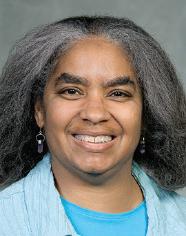
But all those accomplishments on paper pale in comparison to the tribute given to Doctor Staggers on Saturday, March 11th at McClymonds High
School. There, where much of her trailblazing started, Doctor Staggers’ family and over 100 people came together to honor her and be comforted by sharing stories with each other about how she had touched and inspired them. The diversity in the room – physical, social, spiritual—demonstrated the width and breadth of Doctor Staggers’ impact. The stories said it all: a teacher in the Richmond School District shared how in his troubled youth Doctor Staggers’ personal outreach inspired him to leave a life of street fighting to become a high school health educator; a high school girl with drug problems inspired to pursue higher learning and become a health care administrator; a physician who answered her call to do more for the community beyond her day to day medical practice; a high school mental health therapist who had run out of options for helping a troubled student on a late night until he reached Doctor Staggers.
Doctor Staggers: she inspired and energized people to be better for themselves and do more for others and their community. And for that, the world is a better a place. Thank you, Doctor Staggers.
Practice & Liability CONSULTANTS
Health Care Practice Management

In a special arrangement with Practice & Liability Consultants, ACCMA members may purchase the following practice management kit at a reduced price:
• Office Staff Personnel Policies and Procedures Manual
New 2022 updates including COVID-19 policies
Practice consulting services available.
Debra Phairas 952 School Street, #226 Napa, CA 94559
(415) 764-4800 Fax (415) 764-4802
www.practiceconsultants.net
ACCMA BULLETIN | MARCH/APRIL 2023 19 IN MEMORIAM PHONE : 800-919-9141 OR 805-641-9141 FAX: 805-641-9143 EMAIL: JNGUYEN@TRACYZWEIG.COM TRACYZWEIG.COM PHYSICIANS NURSE PRACTITIONERS PHYSICIAN ASSISTANTS LOCUM TENENS PERMANENT PLACEMENT BARBARA
STAGGERS,
JANUARY 12, 2023
Following an orientation for the ACCMA Council and District IX Delegation, which included presentations by Tanya Spirtos, MD, CMA President-Elect, and Joseph Greaves, ACCMA Executive Director, the Council meeting was called to order by Doctor Edmon Soliman, President.
Doctor Soliman announced that nominations are open for ACCMA Councilor-at-Large. Councilor-at-Large serves as the Council’s representative on the ACCMA Executive Committee.
The Council appointed Eugene Lowry, MD, for District 8 (City of Alameda) as Alternate Councilor and Kathleen Doo, MD, for District 10 (Oakland) as Alternate Councilor-D to fill the vacant positions on the Council. Vacancies remain and Dr. Soliman requested that members of the Council contact Mr. Greaves with nominations.
The Council discussed the Executive Committee’s recommendation to amend the ACCMA COVID-19 Facility Policy, which governs all in-person meetings in ACCMA facilities. The changes propose strongly encouraging the use of face coverings, while preserving flexibility to mandate the use of
face coverings in accordance with public health guidelines; and, requiring COVID vaccination, but removing the requirement that ACCMA staff verify COVID vaccination status prior to entry. The Council discussed whether the revised policy necessitates a more formal attestation process to document compliance or and/or a disciplinary process in the event the policy is violated. After discussion, the Council approved the recommended policy as presented.
The Council received information about recent reimbursement cuts in the Medicare program. Copies of ACCMA’s advocacy efforts to oppose the cuts, including letters to members of Congress, were provided for information.
The Council received information about the conversion of patients who are dually eligible for Medicare and Medi-Cal from Medi-Cal fee-for-service to Medi-Cal Managed Care, including information about a recently recorded webinar that ACCMA produced with experts from the Department of Health Care Services.
There being no further business the meeting was adjourned.
ROBERT NOLAN, MD (1926-2022) After a lifetime of public service, Dr. Robert Lincoln Nolan passed away peacefully at his home on December 30, 2022, at the age of 96. Dr. Nolan earned his M.D. from Yale School of Medicine in 1953, followed by a residency in Pediatrics at NY Hospital-Cornell Medical School. Dr. Nolan moved his family to Oakland, joining TPMG, where he served as Assistant Chief of Pediatrics at Kaiser Hospital, Oakland. Recognizing inequities in health care, in 1967 Dr. Nolan published “Social class differences in utilization of pediatric services in a prepaid medical care program,” in the American Journal of Public Health (57(1), 34-37). To become more effective in his advocacy, Dr. Nolan became the first part time student at the UC Berkeley, School of Law, earning his J.D. in 1967. In 1972, Dr. Nolan became Chief of Staff of the Veterans Administration Hospital, Martinez, and then Director of their Oakland Outpatient Clinic. From 1978-1992, Dr. Nolan held medical director positions with the California Department of Health Services in several cities, including Chief, California Children Services (CCS), San Francisco Regional Office, and finally Medical Director of Contra Costa County’s CCS Program
in Martinez, where he retired in 1992. In 1991, Dr. Nolan became a Full Clinical Professor of Pediatrics-Volunteer at UCSF. Dr. Nolan loved spending time with his six children and their families, teaching the 10 grandchildren about history and advocacy. He enjoyed traveling all over the world with his wife, Janiece. He was a member of the ACCMA for 37 years. Read his full obituary at legcy.co/3J49zJV.
HORACIO ERAUSQUIN, MD (1930-2023) Doctor Erausquin was an ACCMA member for 44 years.
HAYMAN GONG, MD (1936-2023) Doctor Gong was an ACCMA member for 47 years.
EDMUND LEVIN, MD (1931-2023) Doctor Levin was an ACCMA member for 25 years.
JOHN OSMER, MD (1933-2023) Doctor Osmer was an ACCMA member for 44 years.
20 ALAMEDA-CONTRA COSTA MEDICAL ASSOCIATION BULLETIN COUNCIL REPORT
Explore ACCMA Volunteer Opportunities! Visit ACCMA.org/Volunteer, or call ACCMA at (510) 654-5383 to find out more.
IN MEMORIAM
Scott Coffin, CEO Alameda Alliance, to Retire
 Alameda Alliance
Alameda Alliance for Health (the Alliance) is proud to serve over 350,000 children and adults in Alameda County. The Alliance’s Senior Leadership Team wanted to share their reflections on our Chief Executive Officer and leader, Mr. Scott Coffin who will be retiring this Spring. We hope that you enjoy reading about his many contributions to the Alliance, the local safety net system, and the entire Alameda County community.
Since the announcement was made that our steadfast leader and Alliance Chief Executive Officer, Scott Coffin, will be retiring at the end of May, our Senior Leadership Team and staff at the Alliance have been reflecting on Scott’s service to the organization and the entire Alameda County safety net community during the last decade. When Scott first started at the Alliance in 2015, the organization was under state conservatorship due to financial solvency issues and had been dealing with significant claims payment issues that were affecting our provider community. At the time, the Alliance served 200,000 Alameda County residents and Scott’s priority was to lead the organization out of state conservatorship while ensuring that members had the best care possible. Under his leadership, Scott rapidly transformed the operations of the Alliance and led us out of state conservatorship – a full six months early. Today, the Alliance employs over 430 individuals and reports $1.5 billion in revenues annually while serving over 350,000 members. Matt Woodruff, our Chief Operations Officer, recalls, “When Scott arrived at the Alliance in 2015, the company had been through a number of difficult years. Scott provided a steady influence with open and honest communication that the company and our County needed. In the 8 years since, that communication has transformed the Alliance into a well-respected managed care plan with high quality scores. Scott will be missed as a leader and a friend.”
Under Scott’s leadership, the Alliance has been recognized by the state and federal government for the organization’s efficient operations and the huge strides taken by the Plan in improving the quality of care that Alliance members receive. In 2015, the Alliance had the third lowest quality scores of all Medi-Cal managed care health plans in California, and in just a few years,

thanks to strong partnerships with our community physicians, the organization now has the fourth highest quality scores in the state. Richard Golfin III, our Chief Compliance and Privacy Officer shared, “Scott’s dedication to improving our community safety net has been unmatched. Over the years, Scott has built an organization on service excellence that is patient-centered and has become a top-rated California Health Plan. Scott’s commitment to the Alameda County community remains a critical factor in the success the Alliance has had in providing safety net services.”
During Scott’s tenure at the Alliance, the organization has developed and implemented a series of primary care incentive programs and pilots for complex case management, where over $84 million dollars have been allocated to local providers to improve the quality of care received by children and families served through our Medi-Cal program. Gil Riojas, Alliance Chief Financial Officer, shared “Scott has been a trusted leader in the healthcare arena in Alameda County for many years. I am grateful for his dedication to serve our community.” Scott’s ability to forge new relationships and innovative collaborations with the Alameda County Board of Supervisors, Alameda County Agency leaders, and with leaders of communitybased organizations has helped expand access to health services for older adults, children, and families. Dr. Steve O’Brien, Alliance Chief Medical Officer, reflected that he “effectively guided the member-centric rebuilding of the Alliance’s core functions after conservatorship into a competent, compliant managed care plan. By partnering with safety-net medical providers, Alameda County and community partners, Scott created a safety net coalition that has elevated the state of community health in Alameda County.”
Over his time at the Alliance, Scott has been committed to addressing health disparities and social drivers of health for Alameda County’s most marginalized people and with community partners, has driven the Alliance to innovate population health programs. Thanks to Scott’s leadership, the Alliance successfully implemented a series of major phases as part of MediCal’s CalAIM program, including enhanced care management, continued on page 22
ACCMA BULLETIN | MARCH/APRIL 2023 21 ALAMEDA ALLIANCE
community supports, and major organ transplants. As the Alliance continues to implement key components of the CalAIM program over the next few years, we are grateful for the roadmap that he has built that will inevitably improve health equity and quality of care for our members.
We are forever thankful for his strong leadership at the Alliance and want to acknowledge him as a mentor and friend to many at the organization. Sasi Karaiyan, Chief Information and Information Security Officer, expressed his gratitude to Scott for believing in him and for providing opportunities for his team. Sasi reflects that “he has been an excellent coach, leader, teacher, mentor, and a great inspiration. Scott inspired me to pursue my goals with trust, hard work and dedication. During his time at the Alliance, he made it a safer and better place to work for all.” Scott touched the lives of many throughout his time at the Alliance. Ruth Watson, Alliance Chief of Integrated Planning, reflects on all that she has learned from Scott, particularly about the importance of building relationships with staff and the Alameda County community. Ruth shared, “Scott exemplifies our TRACK values; supporting the team at all levels showing that every voice matters. He holds himself and his team accountable by working tirelessly on behalf of the Alameda County community. His commitment and
WHAT
IS LEADERSHIP?
(continued from page 17)
Program starting in January 2024. Look for registration opening summer of 2023. For questions, contact Jenn Mullins, ACCMA, Associate Director of Education and Events at jmullins@accma. org.
compassion are evident as he continuously challenges all of us to stay informed, keep learning, and innovate whenever possible to get to that next level of performance. Scott’s leadership has been transformational for the Alliance, and he will be missed.”
On behalf of the Senior Leadership Team and all Alliance employees, we want to express our gratitude to Mr. Scott Coffin for all he has done for so many people. And while we will miss him at the Alliance, we are certain that he has plans to do even more great work in the years to come!
ABOUT ALAMEDA ALLIANCE FOR HEALTH
Alameda Alliance for Health (Alliance) is a local, public, not-forprofit managed care health plan committed to making high-quality health care services accessible and affordable to Alameda County residents. Established in 1996, the Alliance was created by and for Alameda County residents. The Alliance Board of Governors, leadership, staff, and provider network reflect the county’s cultural and linguistic diversity. The Alliance provides health care coverage to over 350,000 low-income children and adults through National Committee for Quality Assurance (NCQA) accredited Medi-Cal and Alliance Group Care products.
NOTE
Often attributed to John Kotter of Harvard Business School, this formula has been widely used, for example by the Institute for Physician Leadership at UCSF’s Center for Health Professions.
NEW MEMBERS (continued from page 18)
Steven Lee, DO Internal Medicine
Tannaz Shoja, MD Internal Medicine
Priscilla Vu, MD Ophthalmology
Abby Wang, MD Family Medicine
TPMG Walnut Creek
Alexandra Arenson, DO Psychiatry
Colleen Landry, MD Internal Medicine
Shani Lerner, MD
Obstetrics and Gynecology
Jennifer Matsuda, MD Family Medicine
Ahdy Messiha, MD Radiology
Oluwadamilola Oshinuga, MD Pediatrics
Kelly Park, DO
Obstetrics and Gynecology
Poysophon Poysophon, MD Internal Medicine
Manish Shaha, MD Otolaryngology
David Shapiro, MD Emergency Medicine
Lauren Sobel, DO Obstetrics and Gynecology
22 ALAMEDA-CONTRA COSTA MEDICAL ASSOCIATION BULLETIN ALAMEDA ALLIANCE HEALTH (continued from page 21) ASSOCIATION BULLETIN

ACCMA BULLETIN | MARCH/APRIL 2023 23 COUNCIL REPORTS we are still in this together and We Are Here for You Serving our Community Since 1996 www.alamedaalliance.org Vaccines + Well-Child Visits + Health Screenings for ALL = More Celebrations, Smiles, and Health and Well-Being Across the Lifespan.
Insurance by physicians, for physicians.™ miec.com | 800.227.4527 Get a quote today. As a reciprocal exchange, MIEC is entirely owned by the policyholders we protect. Our mission to protect physicians and the practice of medicine has guided us over the past 47 years. Our Patient Safety and Risk Management team continues to provide policyholders timely resources and expert advice to improve patient safety and reduce risk. To learn more about the benefits of being an MIEC policyholder, or to apply, visit miec.com or call 800.227.4527 Medical Malpractice coverage for individuals, groups and facilities. Acupuncture, Psychiatry, and other specialty coverages available. Ever y physician deserves to be insured by a company like MIEC. Alameda-Contra Costa Medical Association 6230 Claremont Avenue P.O. Box 22895 Oakland, California 94609-5895 ADDRESS SERVICE REQUESTED PRSRT STD US POSTAGE PAID 85719 PERMIT NO 271