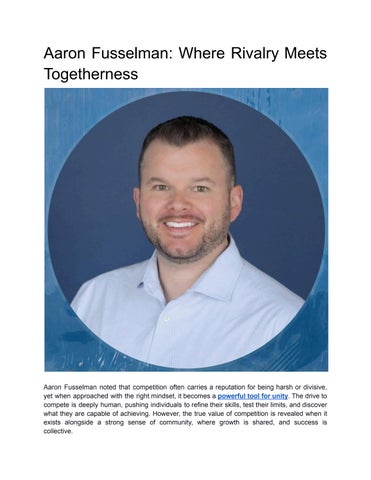
Aaron Fusselman: Where Rivalry Meets Togetherness
Aaron Fusselman noted that competition often carries a reputation for being harsh or divisive, yet when approached with the right mindset, it becomes a powerful tool for unity. The drive to compete is deeply human, pushing individuals to refine their skills, test their limits, and discover what they are capable of achieving. However, the true value of competition is revealed when it exists alongside a strong sense of community, where growth is shared, and success is collective.
Healthy competition encourages accountability and motivation. It gives people a clear reason to show up prepared, stay committed, and continuously improve. The presence of others striving toward similar goals raises standards and sharpens focus. At the same time, it teaches patience and humility, reminding participants that progress is not linear and that perseverance matters more than perfection. These lessons extend far beyond the competitive moment and into everyday life. Community is what gives competition meaning. When individuals feel connected to those around them, rivalry becomes respectful rather than hostile. People begin to recognize that their competitors are also collaborators in a shared experience. They exchange advice, learn from one another’s strengths, and offer support during setbacks. This dynamic builds trust and transforms competition into a space where everyone benefits, regardless of the outcome. In community-centered competition, success is not measured solely by winning. It is found in personal growth, mutual encouragement, and the collective energy created when people strive together. Spectators, mentors, and supporters all play a role, reinforcing the idea that achievement is rarely the result of isolated effort. Each contribution, no matter how small, adds to the momentum of the whole. When rivalry and togetherness coexist, they create environments that are both challenging and welcoming. Individuals feel inspired to aim higher while knowing they are supported along the way. This balance nurtures confidence, resilience, and respect, strengthening the bonds that hold communities together. In the end, competition guided by community does more than produce results—it creates shared pride, lasting connections, and a culture where everyone is encouraged to become their best.