Aaron Fusselman: How Smart
Government Technology Is Driving Digital Transformation

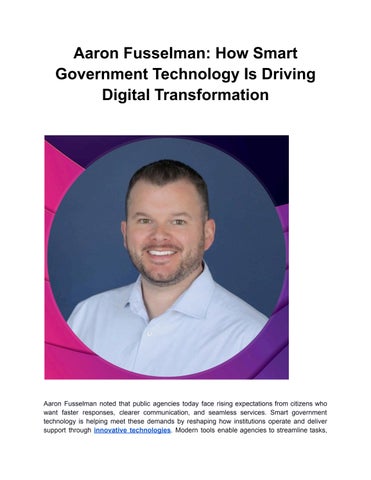
Aaron Fusselman noted that public agencies today face rising expectations from citizens who want faster responses, clearer communication, and seamless services Smart government technology is helping meet these demands by reshaping how institutions operate and deliver support through innovative technologies Modern tools enable agencies to streamline tasks,
reduce manual work, and gather insights that inform better decisions As systems become more connected, governments can respond more quickly and accurately, thereby building trust and improving the public experience
Digital platforms now simplify processes that once required long lines, repeated paperwork, or multiple visits to different offices Online portals, automated workflows, and secure digital identity systems allow people to complete tasks from anywhere. This shift not only saves time but also helps agencies manage resources more efficiently Staff members can focus on meaningful responsibilities because digital solutions handle routine operations The result is smoother service and less frustration for the people who rely on government support. Smart technology also strengthens transparency, which is essential for accountability Data-driven dashboards, real-time reporting, and open data initiatives make it easier for citizens to understand how decisions are made. When information is accessible, trust grows. Agencies can share updates quickly and show measurable progress on projects that matter to communities. This level of visibility encourages collaboration between governments and the people they serve
Another benefit comes from improved communication. Digital tools help agencies reach citizens through channels they already use, such as mobile apps, chat-based support, and online notification systems These tools ensure important information reaches people quickly, whether it concerns public safety alerts, policy updates, or community programs. Better communication helps people stay informed and enables governments to respond more effectively in urgent situations
Smart systems also enhance internal operations Predictive analytics help leaders identify patterns, plan budgets, and allocate resources with greater accuracy. Advanced technologies help detect fraud, reduce errors, and forecast future needs These capabilities support long-term planning and allow governments to deliver services that match the realities of rapidly changing communities. Digital transformation grows stronger when people and technology work together, especially as governments invest in training and change management that help employees adapt to new tools and artificial intelligence with confidence
When teams understand the value of modernization, they become active participants in improving service. This alignment encourages advanced innovation, supports consistent progress, and helps agencies meet rising expectations. Smart government technology is reshaping public service by making it faster, clearer, and more responsive As digital transformation continues, communities benefit from systems designed to support them with reliability and purpose