
TM

TM
Officers
President
Robert Frolichstein, MD FAAEM
President-Elect
Vicki Norton, MD FAAEM
Secretary-Treasurer
Phillip A. Dixon, MD MBA MPH FAAEM CHCQMPHYADV
Immediate Past President
Jonathan S. Jones, MD FAAEM
Past Presidents Council Representative
Tom Scaletta, MD MAAEM FAAEM
Board of Directors
Heidi Best, MD FAAEM
Laura J. Bontempo, MD MEd FAAEM
Kimberly M. Brown, MD MPH FAAEM
Frank L. Christopher, MD FAAEM
Fred E. Kency, Jr., MD FAAEM
Robert P. Lam, MD FAAEM
Bruce Lo, MD MBA RDMS FAAEM
Kevin C. Reed, MD FAAEM
Kraftin Schreyer, MD MBA FAAEM
YPS Director
Haig Aintablian, MD FAAEM
AAEM/RSA President
Mary Unanyan, DO
CEO, AAEM-PG
Ex-Officio Board Member
Mark Reiter, MD MBA MAAEM FAAEM
Editor, JEM
Ex-Officio Board Member
Stephen R. Hayden, MD FAAEM
Editor, Common Sense
Ex-Officio Board Member
Edwin Leap II, MD FAAEM
Executive Director
Missy Zagroba, CAE
Executive Director Emeritus
Kay Whalen, MBA CAE
Common Sense Editors
Mel Ebeling, MS3, Resident Editor
Stephanie Burmeister, MLIS, Managing Editor
Articles appearing in Common Sense are intended for the individual use of AAEM members. Opinions expressed are those of the authors and do not necessarily represent the official views of AAEM or AAEM/RSA. Articles may not be duplicated or distributed without the explicit permission of AAEM. Permission is granted in some instances in the interest of public education. Requests for reprints should be directed to AAEM, 555 East Wells Street, Suite 1100, Milwaukee, WI 53202, Tel: (800) 884-2236, Fax: (414) 276-3349, Email: info@aaem.org
As part of AAEM's antitrust compliance plan, we invite all readers of Common Sense to report any AAEM publication or activity which
Mission Statement
The American Academy of Emergency Medicine (AAEM) is the specialty society of emergency medicine. AAEM is a democratic organization committed to the following principles:
1. Every individual, regardless of race, ethnicity, sexual identity or orientation, religion, age, socioeconomic or immigration status, physical or mental disability must have unencumbered access to quality emergency care.
2. The practice of emergency medicine is best conducted by a physician who is board certified or eligible by either the American Board of Emergency Medicine (ABEM) or the American Osteopathic Board of Emergency Medicine (AOBEM).
3. The Academy is committed to the personal and professional well-being of every emergency physician which must include fair and equitable practice environments and due process.
4. The Academy supports residency programs and graduate medical education free of harassment or discrimination, which are essential to the continued enrichment of emergency medicine, and to ensure a high quality of care for the patient.
5. The Academy is committed to providing affordable high quality continuing medical education in emergency medicine for its members.
6. The Academy supports the establishment and recognition of emergency medicine internationally as an independent specialty and is committed to its role in the advancement of emergency medicine worldwide.
Membership Information
Fellow and Full Voting Member (FAAEM): $525* (Must be ABEM or AOBEM certified, or have recertified for 25 years or more in EM or Pediatric EM)
Associate: $150 (Limited to graduates of an ACGME or AOA approved emergency medicine program within their first year out of residency) or $250 (Limited to graduates of an ACGME or AOA approved emergency medicine program more than one year out of residency)
Fellow-in-Training Member: $75 (Must be graduates of an ACGME or AOA approved emergency medicine program and be enrolled in a fellowship)
Emeritus Member: $250 (Please visit www.aaem.org for special eligibility criteria)
International Member: $150 (Non-voting status)
Resident Member: $60 (voting in AAEM/RSA elections only)
Transitional Member: $60 (voting in AAEM/RSA elections only)
International Resident Member: $30 (voting in AAEM/RSA elections only)
Student Member: $40 (voting in AAEM/RSA elections only) International Student Member: $30 (voting in AAEM/RSA elections only) Pay dues online at www.aaem.org or send check or money
2
President’s Message: A Look Back at 2024

As we draw towards the end of 2024 and anticipate 2025, AAEM President, Dr. Frolichstein, looks back and reviews what AAEM has done the past year. From the conclusion of the lawsuit against Envision to being active on the advocacy front, from the many events hosted by AAEM chapters, sections, and committees to the flurry of activity on social media, 2024 has been a busy year! But even though this year is drawing to a close, the AAEM mission continues.
6
Editor’s Message: Listening Skills

“You’re the first doctor who has actually listened to me.” If you take the time to listen to your patients, you’ll hear more than just the medical reason the patient is there for. In fact, what they’ll tell you is that the system is not doing its best for them. It is important for us, as an organization and as a profession, to listen to our patients to be able to make the arguments about the changes needed to make medicine better for everyone.
The Whole Physician: Unsure Where To Go From Here? Escape the Vortex of Indecision
Indecision can plague anyone at any time and decisions like should I stay at my current job, start a side hustle, or which Netflix series should I binge next plague our daily lives. Informed decisions may require a bit of time and research, but after that, failing to commit to a choice is a default decision to remain in the status quo physically while mentally being elsewhere. The Whole Physician doctors want to encourage you—if you’ve gotten this far, remember the majority of your decisions have turned out well. Trust your instincts. There is only winning or learning.
16
Academic Affairs Committee: Disaster and Mass Casualty Response: Working a Shift in the Emergency Department
Disaster education is an important part of emergency medicine resident education. Although, we might think of the skills we learn from disaster education as only being applicable to mass casualty events, they are also directly applicable to everyday work in the emergency department. In this article, Drs. Illu, Masiewicz, and Mugele argue that in many ways, working a shift in the emergency department is a microcosm of a widespread disaster and the skills we learn in our day jobs are skills that translate if we’re ever needed to respond to a mass casualty event.
Section: Artificial Intelligence and Emergency Medicine: Current Applications and Beyond

The concept of AI has become ubiquitous in nearly every industry, including healthcare. Emergency medicine, uniquely positioned at the crossroads of healthcare, is already experiencing many of the impacts of AI on clinical operations and patient care. In this article, Dr. Dym stresses that as the function and role of AI continues to evolve, it is crucial for emergency medicine physicians to remain informed about the current applications and implications of AI, as well as potential future developments which will directly impact clinical practice and patient care.
27
Emergency Medical Services
Section: Prehospital
Termination of Resuscitation: When Should We Call It?
The decision to cease resuscitative efforts is both clinically complex and ethically challenging, requiring a balance between evidence-based guidelines, clinical judgment, and respect for the patient’s dignity and wishes. Termination of resuscitation (TOR) in prehospital nontraumatic arrest refers to the decision made by EMS personnel to stop resuscitative efforts in the field. In this article, Dr. Marrero Borrero discusses the impact field TOR protocols have on EMS teams and how you as an EM physician should be aware of prehospital decisions that might affect patient transport to your ED.

Robert Frolichstein, MD FAAEM

As we draw towards the end of 2024 and anticipate 2025, it seems appropriate to look back and review what the American Academy of Emergency Medicine (AAEM) has done to support our specialty and our members.
Perhaps the biggest event of 2024 was the conclusion of the lawsuit against Envision HealthCare and Envision Physician Services. While we had no intention of ending this case with a settlement and expected the courts to rule that their practice was illegal, they left the state of California!
The AAEM Physician Group (AAEM-PG) insisted that the physicians impacted would have their non-complete clauses revoked and that they would have tail insurance coverage. Additionally, we were able to recoup partial attorney fees to allow the AAEM Foundation to continue to fight against the corporate practice of medicine (CPOM).
AAEM has been active on the advocacy front and for many years we have pushed hard for a legislative or regulatory solution to the problem of emergency physicians being forced to waive their due process rights as members of the medical staff of the hospital in which they work. The Physician and

Patient Safety Act (Due Process Bill), S. 4278/ HR 8325, introduced in both the House and Senate, has bipartisan support. It appears likely that it will finally gain the momentum to become law, although this will probably not happen until the next legislative session, when it will be reintroduced.
AAEM had several conversations with the Federal Trade Commission (FTC) prior to them issuing their rule to ban





non-compete agreements in August 2024. As expected, it was challenged in court and AAEM submitted two amicus briefs, one in Pennsylvania and one in Texas in support of the FTC. The Texas court issued the first summary judgement decision on the merits, applying a nationwide effect to stop the FTC. However, the FTC will almost certainly appeal the decision to the Fifth Circuit Court of Appeals, and it will likely be further appealed to





the Supreme Court. It has been encouraging to see and hear the conversation occurring in Washington, D.C. about the effect of private equity and corporate influence on the practice of medicine. The Academy has become a “goto” source of information for several Senate offices, committees, and regulatory agencies. We participated in several requests for information (RFIs) in 2024 and had speakers at a few hearings and town hall events.
On August 1, AAEM sent a letter to Congress in response to a RFI on the 21st Century Cures Act (the Cures Act). This act is the reason physicians and hospitals must make results available to patients immediately. AAEM noted the emergency department (ED) is a unique setting, and AAEM believes the best practice in the ED involves providing the opportunity for a discussion between the patient and/or family and an ED team member before revealing the results to the patient. AAEM asks that the next iteration of the Cures Act and/or future regulations

create a narrow ED exception or other process, potentially time-limited up to 24 hours, that allows ED physicians adequate time to discuss any test results with the patient or their families after the results are obtained.
We have all experienced workplace violence, and the Academy continues to support the Workplace Violence Prevention for Health Care and Social Service Workers Act, S. 663/H.R. 2663.
AAEM has also been active at the state level. We led a California grassroots campaign urging a ‘Do Pass’ recommendation for AB 3129, which would have required the Attorney General to review mergers and acquisitions involving private equity. Unfortunately, the Governor of California vetoed this bill. We sent letters of support regarding Minnesota bills SF 4392 and HF 4206, and Oregon HB 4130, which prohibit CPOM.







AAEM developed a grassroots campaign opposing SB 25, which would give nurse practitioners (NPs) the ability to treat patients independently without physician supervision.
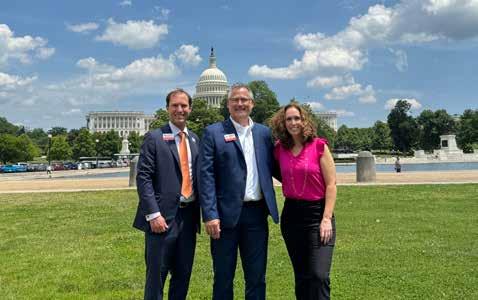
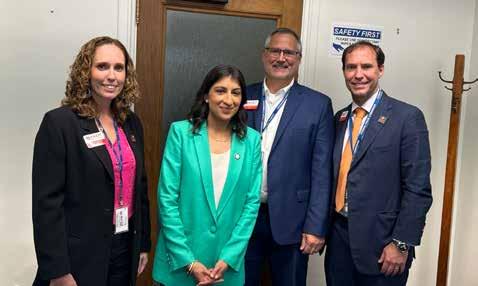
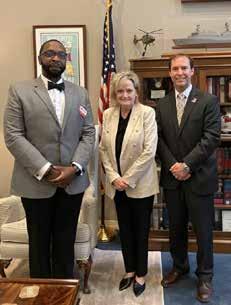
AAEM HPEM and Hill Visits occurred on June 4-5, 2024, and 15 in-person meetings were held with various members of the Senate and House.
AAEM leaders met with the Homeland Security and Government Affairs Committee regarding the effects of private equity (PE) and corporatization on the nation’s EDs.
We have established a great relationship with the FTC and had meetings with Commissioners Slaughter and Bedoya. At the request of Chairwoman Khan of the FTC, Dr. Jonathan S. Jones participated in a Special Open Commission Meeting on the Rule to Ban Non-Competes, held on April 23. Again, at the invitation of Chairwoman Khan, AAEM member Dr. Shenequa Mcleod participated in a





town hall on September 13 that solicited stories about the harm of PE. Both Chairwoman Khan and Representative Ocasio-Cortez were present as Dr. Mcleod shared her personal experiences. She crushed it!
AAEM leadership prepared testimony for the record for the Senate Committee on Health, Education, Labor, and Pensions hearing on private equity and health care.
The Academy is joining forces with other organizations that share our values and desire to remove corporatization and PE influence on the patient-physician relationship. We have attended monthly virtual coalition meetings and several Hill and administrative meetings for the Coalition for Patient Centered Care. We have joined the Lorna Breen Coalition and the Observation Status Coalition.
AAEM has been active in spreading its mission through:
y Twelve official position statements
y Forty-seven media interviews/articles
y Six issues of Common Sense

y Fifty-two weekly e-newsletters (Insights)
y Twelve issues of The Journal of Emergency Medicine
y Eighteen podcasts
y Six letters to Congress
Our sections and committees are joining in with statements of their own and have provided the following:
y Women in Emergency Medicine Section: Eight statements
y Social EM & Population Health Committee: Six statements
y Justice, Equity, Diversity, and Inclusion Section: Two statements
y Emergency Ultrasound Section: One statement
y Education Committee: One statement
Education remains a core tenet of AAEM’s mission, and we held the 30th Annual Scientific Assembly from April 27 to May 1, 2024 in Austin, TX. Some highlights:
y Registration Numbers: 1,200
y Abstract Submissions: 391

y Speaker Proposal Submissions: 459
We continue to provide the highly regarded Oral Board Review Course, comprised of a total of nine sessions over three courses:
y Participants: 264
y Examiners: 292 (28 on call examiners)
Our ED Operations Certificate Course provides valuable, longitudinal education for current and future department medical directors, with 22 participants enrolled in 2024.
We offer robust virtual learning opportunity through AAEM CME Online, which has gained significant attention, with 684 members accessing the platform and exploring the 204 sessions available for CME.
Our sections and chapters are actively engaged in education as well. Our sections developed 11 education webinars, and our chapters have sponsored three annual conferences.
AAEM membership saw a very slight decrease of one to two percent during a time when membership in professional societies has often declined dramatically by as much as 10 to 15 percent. Our members are active, with 261 members participating on AAEM committees.
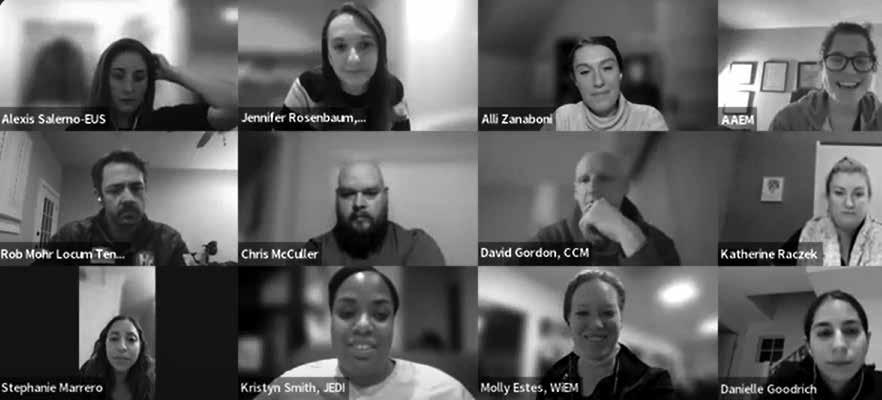
Social media is a tool to demonstrate the work the Academy is doing and we are being noticed. The total number of followers across all platforms and channels:
y 2023 Followers Count: 40,707
y 2024 Followers Count: 42,205
y YoY Growth: 3.68%


The total number of posts across all platforms and channels:
y 2023 Total Posts: 1,279
y 2024 Total Posts: 1,622
y YoY Growth: 26.81%
The total number of engagements (i.e., likes, comments, shares, link clicks, etc.) across all platforms and channels:
y 2023 Total Engagements: 12,592
y 2024 Total Engagements: 28,870
y YoY Growth: 129.27%
The measure of audience interaction with content across all platforms and channels (= (Total Engagements/Total Impressions) X 100). It is a measure of how effectively content resonates with an audience.
y 2023 Engagement Rate: 3.57%
y 2024 Engagement Rate: 4.47%
y YoY Growth: 25.21%
It is important to note that the average engagement rate on social media for a non-profit is between one to two percent. AAEM is doing relatively well.
AAEM remains prepared and welcoming when consulted by individual members, many of whom have expressed concerns about CPOM related to their personal situation. AAEM leadership has been able to listen, advise, and provide support.
The Academy desires to grow leaders and has a very active and expertly assembled Leadership Academy, with 30 members participating in the yearlong longitudinal program in 2024.
We have onboarded a diverse group of high-caliber board members with relevant expertise. The AAEM staff facilitated a strategic planning process, resulting in a clear vision and
roadmap for the organization’s future. Stay tuned for a glimpse of that in a future issue of Common Sense.
Our dedicated AAEM staff, provided by our contract with Executive Director, Inc., continues to show their expertise and we have cultivated a strong culture of collaboration and accountability within the leadership and staff teams.
I hope you have seen that the Academy has been hard at work. I purposely included all of 2024, four months of which were under the leadership of Dr. Jones. I point this out because AAEM is about you, not the President or the Board. Ideally, the leaders of the Academy lead the work, not do the work. We need your help to do the work and guide us on what needs attention. Don’t be shy. Reach out today and share your thoughts on AAEM’s efforts.


EDITOR’S MESSAGE

Edwin Leap II, MD FAAEM

There are things we do as physicians that make us really proud. In break rooms, at conferences, and in our online specialty forums we commonly learn about people sick and dying with horrible conditions and the way one of our colleagues snatched their lives from the edge of the abyss. We shudder at tales of the nightmare airways, the breach deliveries, the impossible vascular access, all overcome by the amazing physicians we call friends.
Well, I’ve been working quite a lot lately. And I had two patients that made me very proud. No bleeding, no sepsis, no arrhythmia. What happened was that both of them said, “You’re the first doctor who has actually listened to me.”
Now, I like to talk to people. This is true in general. As the saying goes, it seems as if I’ve “never met a stranger.” I have always been this way. When Mrs. Leap and I are at parties I am the small-talk guy. So the way I interact with patients is a natural extension of this tendency to talk with just about everyone.
It puts patients at ease. It demonstrates to them that I really want to understand what’s going on with their complaint. It builds trust. And as anyone who has practiced medicine long enough knows, a vast amount of exam can be gleaned from simply watching and listening; you don’t even need an ultrasound probe to do it! Furthermore, as the venerable saint of medicine Sir William Osler said, “Listen to your patient, he is telling you the diagnosis.”
If this sounds like braggadocio on my part, please accept my apology. I don’t mean it that way. I actually have a larger point. The thing is, when we listen to our patients they’ll tell us more than just the “medical” reason they were willing to sit in a waiting room chair for seven hours, or endure the discomfort and cost of EMS transport.
What they’ll say is that they can’t afford their prescriptions. They’re afraid that they need the latest, greatest, crazy expensive drug advertised online. They can’t find a primary care physician. They can’t find a physician at all. They have no money for gas to go to their follow-up
appointment. Their health insurance was cancelled. They want to stop using fentanyl and meth, but they can’t find anywhere to go for rehab. They’re alone and can’t walk, but don’t have access to home health. Their caregiver swindled them out of money. They don’t mean to be a problem and sign out AMA, but there isn’t anyone else at home to take care of their spouse with dementia. Their primary care office terrified them with the fact that their blood pressure was “stroke level” and sent them urgently to the ED, so now they’re fearful and crying.
What the patients will tell you, tell me, tell us is that the system is not doing its best for them. Carefully listen and you’ll find that access to medications and physicians, access to reasonable thoughts on care, are all getting worse. (And this despite rising costs.) Pay attention and you’ll find frustration and no small amount of slowly brewing despair.
This is relevant to our august organization because it’s one thing to advocate for our colleagues and specialty, but at the bottom of all of that is the reality that our patients are our “raison d’etre.” We exist as a profession because of the people who need us and our skills. Because of this, advocacy for the sick and injured who come to us has to be part and parcel of any work we do for our profession.
The thing is, when we listen to our patients they’ll tell us more than just the ‘medical’ reason they were willing to sit in a waiting room chair for seven hours.”
We
exist as a profession because of the people who need us and our skills.”
It’s essential as we move forward, as an organization and as a profession, that we explain how the sick, injured, and dying will actually benefit from our struggles against private equity, big pharma, the NP diploma mills, and all the rest who make medical care more expensive and less effective.
If we can’t demonstrate that connection then we’re really no better than the companies and professional groups that make all of our lives harder.
Without attention to our patients, without listening and working for them, physicians become just another group of people who make much more money than the average citizen and still manage to complain about how we need to make more money. Who doesn’t want to make more? But it’s a hard sell if we aren’t adding value to the lives of the people who pay the bills.
Going forward I’d urge everyone to keep a small notebook, or perhaps a computer file, and write down the things patients say. Record their stories and archive their frustrations so that we can use that information, individually or collectively, to make cogent, compassionate arguments about the things we need to do to make medicine better for everyone; starting with our patients.
We have so much knowledge and so many skills at our disposal. But we must never forget that the most important skills are watching and listening to the vulnerable human beings who trust us every day.











Penn State Health is a multi-hospital health system serving patients and communities across central Pennsylvania. We are the only medical facility in Pennsylvania to be accredited as a Level I pediatric trauma center and Level I adult trauma center. The system includes Penn State Health Milton S. Hershey Medical Center, Penn State Health Children’s Hospital and Penn State Cancer Institute based in Hershey, Pa.; Penn State Health Hampden Medical Center in Enola, Pa.; Penn State Health Holy Spirit Medical Center in Camp Hill, Pa.; Penn State Health Lancaster Medical Center in Lancaster, Pa.; Penn State Health St. Joseph Medical Center in Reading, Pa.; Pennsylvania Psychiatric Institute, a specialty provider of inpatient and outpatient behavioral health services, in Harrisburg, Pa.; and 2,450+ physicians and direct care providers at 225 outpatient practices. Additionally, the system jointly operates various healthcare providers, including Penn State Health Rehabilitation Hospital, Hershey Outpatient Surgery Center and Hershey Endoscopy Center.
We foster a collaborative environment rich with diversity, share a passion for patient care, and have a space for those who share our spark of innovative research interests. Our health system is expanding and we have opportunities in both academic hospital as well community hospital settings. Benefit highlights include:

• Competitive salary with sign-on bonus
• Comprehensive benefits and retirement package
• Relocation assistance & CME allowance
• Attractive neighborhoods in scenic central Pa.

AAEM established its Foundation for the purposes of (1) studying and providing education relating to the access and availability of emergency medical care and (2) defending the rights of patients to receive such care and emergency physicians to provide such care. The latter purpose may include providing financial support for litigation to further these objectives. The Foundation will limit financial support to cases involving physician practice rights and cases involving a broad public interest. Contributions to the Foundation are tax deductible.
Levels of recognition to those who donate to the AAEM Foundation have been established. The information below includes a list of the different levels of contributions. The Foundation would like to thank the individuals below who contributed from 1/1/2024 to 11/1/2024.
Contributions $1000 and up
Bruce M. Lo, MD MBA RDMS FAAEM
Fred Earl Kency, Jr., MD FAAEM FACEP
Jonathan S. Jones, MD FAAEM
Kimberly M. Brown, MD MPH FAAEM
Kraftin E. Schreyer, MD MBA FAAEM
Peter G. Anderson, MD FAAEM
Tom Scaletta, MD MAAEM FAAEM
Contributions $500-$999
Daniel F. Danzl, MD MAAEM
David W. Lawhorn, MD MAAEM
Jane D. Scott, Former NHLBI
Lillian Oshva, MD FAAEM
Nate T. Rudman, MD FAAEM
William E. Franklin, DO MBA FAAEM
Contributions $250-$499
Benjamin D. Walrath, MD MPH FAAEM FAEMS
Bruce E. Lohman, MD FAAEM
Catherine V. Perry, MD FAAEM
Charles Chris Mickelson, MD FAAEM
Charlotte A. Ransom, MD FAAEM
Christopher R. Grieves, MD FAAEM
David S. Rosen, MD MPH FAAEM
Joseph M. Reardon, MD MPH FAAEM
Kevin Allen, MD FAAEM
Michael Luszczak, DO FAAEM
Scott P. Marquis, MD FAAEM
Teresa M. Ross, MD FAAEM
Travis J. Maiers, MD FAAEM
Contributions $100-$249
Alexander Tsukerman, MD FAAEM
Alexandra Terskiy, MD PhD FAAEM
Bradley K. Gerberich, MD FAAEM
Brian R. Potts, MD MBA FAAEM
Chaiya Laoteppitaks, MD FAAEM
Christopher M. Tanner, MD FAAEM
Clayton Ludlow, DO FAAEM
David C. Crutchfield, MD FAAEM
David R. Steinbruner, MD FAAEM
Eric J. Muehlbauer, MJ CAE
Eric S. Kenley, MD FAAEM
Ernest L. Yeh, MD FAAEM FAEMS
Jalil A. Thurber, MD FAAEM
Jeffrey A. Rey, MD FAAEM
John Stroh Jr., FAAEM
Joseph Roarty, MD FAAEM
Katrina Kissman, MD FAAEM
Kevin C. Reed, MD FAAEM
Kevin Robert Brown, MD FAAEM
Marianne Haughey, MD FAAEM MAAEM
Mark A. Foppe, DO FAAEM FACOEP
Mark E. Zeitzer, MD FAAEM
Michael M. Dickerson, MD FAAEM FAPWCA
Nancy L. Kragt, DO FAAEM
Nicholas Boyko, DO
Paul M. Clayton, MD FAAEM
Paul W. Gabriel, MD FAAEM
R. Lee Chilton III, MD FAAEM
Robert A. Frolichstein, MD FAAEM
Robert Bruce Genzel, MD FAAEM
Robert J. Feldman, MD FAAEM
Sarah B. Dubbs, MD FAAEM
Susan T. Haney, MD FAAEM FACEP
Tim J. Carr, FAAEM
Yamila Vazquez-Gonzalez, MD FAAEM
Yedidiach Ortiz Gonzalez, MD
Contributions up to $99
Adam Hill, MD FAAEM
Amanda Dinsmore, FAAEM
Ameer Sharifzadeh, MD FAAEM
Andrew M. Flanagan, DO FAAEM
Anthony Catapano, DO FAAEM
Anthony J. Buecker, MD FAAEM
Brian Knight
Christopher C. Lorentz, MD FAAEM
Daniel Luis Puebla, MD
Donald L. Slack, MD FAAEM
Dylan M. Hendy, DO FAAEM
Edward T. Grove, MD FAAEM MSPH
Eric M. Ketcham, MD MBA FAAEM FASAM
Irving Jacoby, MD FAAEM
James P. Alva, MD FAAEM
Jon J. Carpenter, MD
Justin L. Berkowitz, DO FAAEM
Katherine Ryan, MD FAAEM
Kevin Barber, FAAEM
Michael Loesche, MD PhD
Michael O’Neil, MD FAAEM
Moath Amro, MD
Neal Handly, MD
Neil Gulati, MD FAAEM
Noel T. Moore, MD FAAEM
Patrick W. Daly, MD FAAEM
Paul Chester Jesionek, MD FAAEM
Peter H. Hibberd, MD FACEP FAAEM
Peter J. Benson, MD FAAEM
Regan Wylie, MD FAAEM
Rex Villanueva, DO FAAEM
Rian Pillitteri, MD FAAEM
Ric Roc
Stephanie A. Ayala, DO
Stephen P. Stewart, MD FAAEM
Tabitha Williams, FAAEM
Thomas J. Grosheider, MD FAAEM
Tina F. Edwards, FAAEM
Virgle O. Herrin Jr., MD FAAEM
Walter M. D’Alonzo, MD FAAEM
Contributions $500-$999
Fred Earl Kency, Jr., MD FAAEM FACEP
Contributions $250-$499
Bruce E. Lohman, MD FAAEM
Daniel F. Danzl, MD MAAEM
Joseph M. Reardon, MD MPH FAAEM
Travis J. Maiers, MD FAAEM
Contributions $100-$249
Alexander Tsukerman, MD FAAEM
Brian R. Potts, MD MBA FAAEM
Catherine V. Perry, MD FAAEM
Chaiya Laoteppitaks, MD FAAEM
AAEM PAC is the political action committee of the American Academy of Emergency Medicine. Through AAEM PAC, the Academy is able to support legislation and effect change on behalf of its members and with consideration to their unique concerns. Our dedicated efforts will help to improve the overall quality of health care in our country and to improve the lot of all emergency physicians.
All contributions are voluntary and the suggested amount of contribution is only a suggestion. The amount given by the contributor, or the refusal to give, will not benefit or disadvantage the person being solicited.
Levels of recognition to those who donate to the AAEM PAC have been established. The information below includes a list of the different levels of contributions. The PAC would like to thank the individuals below who contributed from 1/1/2024 to 11/1/2024.
Cynthia Martinez-Capolino, MD FAAEM
David R. Steinbruner, MD FAAEM
Emile El-Shammaa, MD FAAEM
Jeffrey A. Rey MD, MD FAAEM
John Stroh Jr., FAAEM
Katrina Kissman, MD FAAEM
Lillian Oshva, MD FAAEM
Mark A. Foppe, DO FAAEM FACOEP
Nicholas Boyko, DO
Paul M. Clayton, MD FAAEM
Peter G. Anderson, MD FAAEM
R. Lee Chilton III, MD FAAEM
Robert A. Frolichstein, MD FAAEM
Robert Bruce Genzel, MD FAAEM
Scott P. Marquis, MD FAAEM
Steven Parr, DO FAAEM
Stuart Meyers, MD FAAEM
Zachary J. Sletten, MD FAAEM
Contributions up to $99
Adam Hill, MD FAAEM
Alex Kaplan, MD FAAEM
Amanda Dinsmore, FAAEM
Ameer Sharifzadeh, MD FAAEM
Anthony Catapano, DO FAAEM
Donald L. Slack, MD FAAEM
Elizabeth Lojewski, DO FAAEM
James P. Alva, MD FAAEM
Kevin C. Reed, MD FAAEM
Marc D. Squillante, DO FAAEM
Neil Gulati, MD FAAEM
Patricia Phan, MD FAAEM
Peter H. Hibberd, MD FACEP FAAEM
Peter M.C. DeBlieux, MD FAAEM
Thomas A. Richardson, MD
Tina F. Edwards, FAAEM
The AAEM Institute for Leadership, Education & Advancement in the Development of Emergency Medicine, Inc. (LEAD-EM) was established after the tragic and unexpected death of AAEM president, Dr. Kevin G. Rodgers.
The Kevin G. Rodgers Fund and the Institute will LEAD-EM just like Dr. Rodgers did. The funds will support important projects such as development of leadership qualities, and clinical and operational knowledge of emergency physicians with a view toward improving and advancing the quality of medical care in emergency medicine, and public health, safety and well-being overall. LEAD-EM would like to thank the individuals below who contributed from 1/1/2024 to 11/1/2024.
Contributions $1000 and up
Fred Earl Kency, Jr., MD FAAEM FACEP
Jonathan S. Jones, MD FAAEM
Contributions $250-$499
Bruce E. Lohman, MD FAAEM
Catherine V. Perry, MD FAAEM
Lillian Oshva, MD FAAEM
William E. Hauter, MD FAAEM
Contributions $100-$249
Andrew Langsam, MD
Bradley K. Gerberich, MD FAAEM
Brian R. Potts, MD MBA FAAEM
Edward T. Grove, MD FAAEM MSPH
Eric S. Kenley, MD FAAEM
Jalil A. Thurber, MD FAAEM
Jeffrey A. Rey MD, MD FAAEM
Kevin C. Reed, MD FAAEM
Marc D. Squillante, DO FAAEM
Mark A. Foppe, DO FAAEM FACOEP
Mark E. Zeitzer, MD FAAEM
Paul W. Gabriel, MD FAAEM
Ronny Mario Otero, MD FAAEM
Rose Valentine Goncalves, MD FAAEM
Contributions up to $99
Anthony J. Buecker, MD FAAEM
Casey Brock Patrick, MD FAAEM FAEMS
Chaiya Laoteppitaks, MD FAAEM
David A. Yacynych, MD
Eric M. Ketcham, MD MBA FAAEM FASAM
Jon J. Carpenter, MD
Jose G. Zavaleta, MD
Leah C. Harbison, MS
Neil Gulati, MD FAAEM
Nicole A. Outten
Paul Chester Jesionek, MD FAAEM
Paul M. Clayton, MD FAAEM
Thomas A. Richardson, MD
AAEM is featuring the following upcoming conferences and activities for your consideration. For a complete listing of upcoming conferences and other meetings, please visit: aaem.org/education/events
AAEM Events
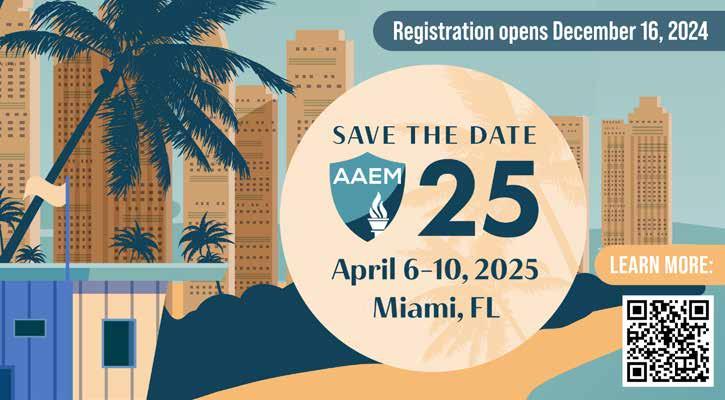
31st Annual Scientific Assembly
April 6-10, 2025 (Miami, Florida) https://www.aaem.org/aaem25/
Jointly Provided
Re-Occurring Monthly
Spanish Education Series*
Jointly provided by the AAEM International Committee https://www.aaem.org/committees/international/spanish-education-series/ (CME not provided)
Re-Occurring Monthly Unmute Your Probe Season 4
Jointly provided by the Emergency Ultrasound Section of AAEM (EUS-AAEM) https://www.aaem.org/get-involved/sections/eus/resources/ unmute-your-probe/ February 24-28, 2025
44th Annual Emergency Medicine Winter Conference
Jointly provided by UC Davis Health
Recommended Online CME
Recognizing Life-Threatening Emergencies in People with VEDS thesullivangroup.com/TSG_UG/VEDSAAEM/
The Difficult Airway Course: EmergencyTM
May 2 - 4, 2025 (Boston, MA); May 30 - June 1, 2025 (Orlando, FL); September 19 - 21, 2025 (Denver, CO); November 14-16, 2025 (San Diego, CA) theairwaysite.com/a-course/the-difficult-airway-course-emergency/
Explore AAEM CME Online, where we understand the fast-paced nature of emergency medicine (EM) and the need for concise, accessible education. This platform is designed to provide members of the American Academy of Emergency Medicine (AAEM) and AAEM Resident and Student Association (AAEM/RSA) with top-tier continuing medical education (CME) resources right at their fingertips. Access today!

Chris McNeil, MD
Iwant to spend a little time this month on post-retirement income generation.
During much of our lives, we accumulate wealth to use in our golden years. Saving and investing become second nature and volatility is embraced. The lower the prices, the more we should want to buy. For the most part, it is on autopilot; continue contributing to investment accounts regularly through dollar cost averaging. However, it is an entirely different ballgame in retirement when we are facing the need to dollar cost average out of our nest egg to fund our lives.
Generating a sustainable income stream in retirement is much different and involves a different skill set than accumulating assets. As you near retirement and certainly during retirement (depending on how large your nest egg is), risk tolerance generally shifts much more conservatively. Usually people are more interested in preserving assets and do not want to risk running out while still alive. You must consider the taxes owed on withdrawals and future inflation relative to the cost of living.
Based on your risk tolerance, there are many strategies for generating an income stream from your assets in retirement. There is no one-size-fits-all solution. Some want to become dividend investors. Some want to transfer risk to an insurance company through annuities to gain guaranteed fixed income and avoid stock market risks. Others will simply choose to dollar-cost average out of their target-date funds in their 401(k).
One of the most common retirement strategies I use for clients is the bucket method. After determining how much you can safely withdraw from your assets and adjusting for taxes and future inflation, you bucket your assets into time-based buckets. Generally, three to four buckets will suffice. Here is how the bucket strategy works.
[W]e live out of bucket one. When the market or our investments do well, we refill bucket one with our profits from buckets three or four. When the market is down, we refill bucket one with assets from buckets two and three.”
Bucket One: Money that we will need in the next two years should remain in low or no-risk investments such as money market funds or short-term treasuries. This guarantees the withdrawals you need to fund your life will not be disrupted over the next two years. If you want to live on $75,000 per year, you will want $150,000 in this bucket. Systematic withdrawals are set up from this investment, similar to having a monthly paycheck.
Bucket Two: Focus on moderately conservative investments. This bucket typically has roughly the next two to four years of income invested for low volatility. The goal is to preserve this wealth with minimal gains. If you include two years of income in bucket one and four years in bucket two, this is approximately six years of income in conservative investments. Rarely has a rolling bear market ever lasted more than six years. The goal of this strategy is to never withdraw money from accounts that are down due to market fluctuations.
Bucket Three: Move to moderate growth investments. This bucket has the next five to ten years of income invested for moderate growth. This is typically the largest bucket of assets targeting reasonable growth.
Bucket Four: Growth investments. You may have 30 to 40 years of life expectancy during retirement, which is a long time, and you need a reasonable portion of your assets still seeking growth returns to outpace inflation. This is one of the smaller buckets, but it is very necessary and often ignored.
Operationally, we live out of bucket one. When the market or our investments do well, we refill bucket one with our profits from buckets three or four. When the market is down, we refill bucket one with assets from buckets two and three.
There are clearly more sophisticated methods of income generation. My intent is to get those of you who are near or in retirement to consider your strategy for income generation. Decisions you make at the beginning of your retirement and the strategies you implement have meaningful impacts on maximizing your retirement income.
Dr. Chris McNeil, the author of this explanation, is an emergency physician and former emergency medicine residency program director who transitioned his career to finance. He owns a registered investment advisory firm, VitalStone Financial, LLC, and specializes in financial planning for physicians.

Amanda Dinsmore, MD, Kendra Morrison, DO, and Laura Cazier, MD



As this year starts to wind down, it can be a time of reflection. While emergency physicians excel in making quick, consequential decisions at work, charting a life path outside work can seem much harder. Indeed, once you committed to med school, the path was set for at least a decade. Get good grades in undergrad, take the MCAT, and get into med school. Take your USMLEs, complete residency, and become a board-certified attending. We buckle down, focus on each task, and complete them sequentially. Some add marriage and kids for extra flair. Regardless, with so much of our pre-attending life charted out, it can feel unsettling when we’re unsure of our next step after training.
For instance, have you been struggling to decide whether to stay at your current job or try a different location? Maybe you’ve been trying to determine the best time to retire. Should you stay in your current relationship or not? Start a side hustle? Leave medicine altogether? Smaller still, which Netflix series should you binge next, or what should you pack for vacation?
By remaining indecisive, you’ve got one foot in and one foot out the door. Certainly, informed decisions may require a bit of time and research. But, after that, failing to commit to a choice is a default decision to remain in the status quo physically while mentally being elsewhere. You’re not leaving but also not committed to improving your current scenario. Neither option gets your full attention.
There are many reasons for indecisive tendencies. Fear of failure, lack of confidence, or lack of information all contribute.1 A critical family of origin can imprint that “wrong” decisions bring severe consequences. Many overly catastrophize what making the “incorrect” choice would mean. (A surprising number of docs we meet predict homelessness and surviving on cat food.) If you’ve made a single regrettable decision before, you might mistakenly generalize that you’re a terrible decision-maker overall.
Psychologists assess indecisiveness using Frost’s Indecisiveness Scale, which rates statements from one (strongly disagree) to five (strongly agree).2 See if any of these resonate:
y I try to put off making decisions.
y I have a hard time planning my free time.
y I often worry about making the wrong choice.
y It seems that deciding on the most trivial thing takes me a long time.

Failing to commit to a choice is a default decision to remain in the status quo physically while mentally being elsewhere.”
Using this scale, psychologists have shown that indecisiveness is often a product of perfectionism.3 Maladaptive perfectionists (reportedly 19-25% of docs4) characteristically abhor negative judgment resulting from “wrong” choices.5 Instead, they might put off making decisions until the right thing is certain (which may never happen).
Nuala Walsh6 suggests indecision is usually an inner voice implying at least one of three things: the choice you’re making is too big (a proportion distortion), too far (a temporal distortion), or too hard (an emotional distortion).
It helps to reframe.
Break “too big” decisions into smaller pieces. You don’t need to know all the steps now, just the next one. Many paths can lead to the same place and even intersect. Just take the next reasonable step. Limit outside opinions to a few trusted sources rather than multitudes with conflicting views. Completely discard choices that least align with your values. Make it easier to get started. In Walsh’s example, when people were told to
You don’t need to know all the steps now, just the next one. Many paths can lead to the same place and even intersect.”

save $5 a day rather than $150 a month (the same result), they were four times more likely to do it. Improving your life by just 1% each day, week, or month yields incredible long-term results.
Challenge the lack of urgency, believing the decision is “too far.” When procrastinating on changing a bad situation, isn’t every day better worth taking uncomfortable action now? It might add up to months or years of a happier life. Don’t wait to improve things, whether going all-in on your current situation or moving on to the next. Set a deadline to gather the information needed to make a good enough decision, then choose. Set a date to reassess, and barring a deal-breaker, don’t look back until then. For example, Heather commits to crafting a sustainable life and keeping her current job for the upcoming year. She will create work boundaries, invest in meaningful friendships, and pursue hobbies outside work to enrich her life. If there is still no life improvement when the time’s up, she can leave this job knowing she did everything she could, at peace with her decision.
References
1. https://psychcentral.com/health/coping-with-indecision
2. https://sjdm.org/dmidi/Indecisiveness_Scale.html
3. https://pmc.ncbi.nlm.nih.gov/articles/PMC6716423/
4. https://pmc.ncbi.nlm.nih.gov/articles/PMC10449346/
5. https://www.bbc.com/worklife/article/20221111-why-indecision-makesyou-smarter
Question if it’s really “too difficult” to decide. Maybe it’s fear of disappointment from not picking the “right” choice. We desperately avoid shame and humiliation, but remember, shame and humiliation are just negative human emotions. It is possible to process negative emotions and remain intact.7 We promise. Beware the tendency to make choices either/or. There can be options in between. For example, stay together versus break up. But could therapy, a trial separation, or something else be an option? We unnecessarily raise the stakes by thinking choices are irreversible or that only one path leads to a happy life. Is that true? Rarely is anything permanent, and happiness may await with all options.
Adopting these mindset shifts helps reduce apprehension and finality. Walsh asks herself three questions to escape mentally exhausting rumination, procrastination, and indecision:
y If I make this decision, what’s the worst thing that will happen?
y What’s the likelihood of that happening?
y And if it did, what would I do about it?
Sometimes, acknowledging the worst-case scenario reveals no one dies, even in the worst-case scenario. The challenge might be inconvenient, but you’ll figure it out the same way you have over and over in your life. If you’ve gotten this far, remember the majority of your decisions have turned out well. Trust your instincts. There is only winning or learning. Even a non-ideal decision means you’re more informed next time. So, chart a course out of overwhelming indecision to make the most of your one precious life.
6. How to Overcome Indecision | Nuala Walsh | TEDxUniversityofSalfordhttps://youtu.be/xLSAkVxPOk0?si=KRxwlisHMlTuZiI6
7. https://journals.lww.com/emnews/Fulltext/2022/09000/Wellness_911__ Being_Stoic_Isn_t_Getting_EPs.22.aspx

Jessica Moore, MD FAAEM FASAM

obacco use is the leading cause of preventable death in the United States, with over 480,000 deaths attributed to tobacco use per year.1 When we consider the innumerable negative health consequences of tobacco use—including anything from pulmonary disease to premature coronary artery disease to cancer risk—treatment for tobacco use disorder (TUD) may be the single most beneficial long-term intervention we can offer our ED patients who use cigarettes or other tobacco products.2 What treatment options do we have, and how do we counsel patients more effectively on smoking cessation? Fortunately, we have several safe and effective medications for TUD including nicotine replacement, varenicline, and bupropion. Below are some quick tips focused on nicotine replacement therapy (NRT).
Default to combination NRT. All forms of NRT are associated with increased treatment success in studies.3 Furthermore, combination pharmacotherapy has shown superiority in TUD treatment, as compared to monotherapy (i.e., a single form of NRT, bupropion, or varenicline alone).4-10 In general, when starting NRT, recommend treatment with both a long-acting and short-acting formulation:
y Long-acting NRT: The nicotine patch is considered long-acting NRT. NRT patches are available in doses of 7mg, 14mg, and 21mg. The recommended starting dose is 7 to 14mg for someone who smokes 10 or fewer cigarettes per day; 14 to 21mg for 10 to 20 cigarettes per day; and at least 21mg for roughly one pack of cigarettes or more daily. Cigarettes come in packs of 20—think roughly 1mg per cigarette for a starting patch dose. NRT patches are available over the counter. If a patient continues to experience withdrawal symptoms or cravings with their starting patch dose, escalate to a higher dose. If 21mg is insufficient for symptom control, an additional patch can be utilized. Even high doses of NRT are generally well-tolerated.
y Short-acting NRT: Short acting NRT comes in multiple formulations including a gum, lozenge, inhaler, and nasal spray. Gum and lozenges are available over the counter and come in 2mg and 4mg dosages. The NRT inhaler and nasal spray require a prescription.
Counsel patients on how to use NRT effectively. NRT gum and lozenges are often used improperly, leading to suboptimal nicotine absorption, and therefore suboptimal effect. Rather than continuously chewing NRT gum, patients should be instructed to utilize the “chew and park” method: chew the gum briefly, then place it between the cheek and gingiva so that nicotine can be absorbed transbucally.
Additionally, it is important to counsel patients on the onset of action of NRT. Gum and lozenges will not take effect as quickly as cigarettes.
When we consider the innumerable negative health consequences of tobacco use…treatment for tobacco use disorder may be the single most beneficial long-term intervention we can offer our ED patients.”
While nicotine delivery is on the order of seconds with cigarette smoking, there is a significant delay with buccal absorption and time to effect for gum or lozenges.11 Patients may not appreciate the efficacy of NRT if they are not aware of these differences. You may hear something like, “I started chewing the nicotine gum when I had a craving, but I still ended up needing a cigarette.” If patients do not appreciate the efficacy of NRT, they may stop using it altogether. How do we optimize NRT effect?
Consider one or both of the following:
y Instruct patients to use short acting NRT 20 minutes before they anticipate a nicotine craving. For example, if a patient says, “I always have a cigarette on my lunch break,” instruct them to chew a piece of gum 20 minutes before lunch each day.
y Liberally use short acting NRT throughout the day, to help keep overall nicotine cravings and withdrawal at bay.
Anticipate side effects of NRT. Anticipating the common side effects of NRT can allow patients to mitigate them, increasing the likelihood of treatment continuation. The most commonly reported side effects of the NRT patch include local skin reactions as well as sleep disturbances. Rotating the patch site can reduce skin irritation, as can a topical steroid. Patches can be left on at night; however, if the patient experiences significant insomnia, nightmares, or vivid dreams related to the patch, it can be taken off 30 minutes prior to bed to reduce these symptoms. NRT gum can cause GI upset, which can be reduced by utilizing the “chew and park” method.11
Reframe treatment goals. Complete smoking cessation does not need to be the immediate emphasis of treatment. We know that the negative effects of cigarette use are cumulative: the greater the overall quantitative cigarette use (“pack-years”), the worse the patient health outcomes. While evidence for smoking reduction is still limited, from a harm
reduction perspective, any reduction in tobacco exposure is likely associated with decreased overall health risk.12-14 In fact, a successful small, sustained reduction just may be what gives a patient the confidence to try cutting back more, and ultimately reach complete cessation.12,15-17 Think about it. While going from smoking two packs of cigarettes per day to none at all can feel daunting and impossible, cutting back by 1-2 cigarettes per day may feel much more manageable. When successful, this may generate the self-efficacy needed for further reductions and cessation.
On the flip side, how discouraging and frustrating would it feel to be working so hard to quit—to even have cut back to just a fraction of what you used before—just to then be told by a doctor that your efforts are still not good enough, since you’re still smoking? When we think about smoking cessation from the patient’s perspective, it’s not surprising that some stop trying to quit, or no longer wish to discuss the topic with healthcare professionals at all. Take care to recognize and applaud all positive changes and efforts, no matter how small.
Acknowledge that it is difficult (but instill hope, too). If it was easy to quit, almost everyone would. Most patients who use tobacco would prefer to not to, and a majority have tried to quit on their own in the past year.18 Remember that addiction is a chronic disease, and that difficulty giving up the substance is one of its hallmark diagnostic criteria. Normalizing the difficulty of smoking cessation may help patients to feel less shame and embarrassment, and perhaps be more willing to discuss it. Patients are more likely to ask us for help and
make an attempt when they are not worried about being shamed if the treatment plan doesn’t work—and everyone does better when they have someone on their team who believes in their ability to succeed. Let patients know that most people make multiple attempts prior to treatment success—just because it didn’t work before, doesn’t mean it won’t work this time.19 Furthermore, if the initial treatment plan is ineffective, treatment escalation options such as increased NRT dosing, alternate NRT formulations, and/or other oral medication options are all available.
Share 1-800-QUIT-NOW. Consider sharing this resource with patients who are trying to stop or reduce tobacco use. It provides support, tips, free medications, and more: cdc.gov/tobacco/campaign/tips/ quit-smoking/quitline/index.html
Refer to outpatient treatment. Addiction is a chronic disease, and just like other chronic diseases, treatment success depends on quality long-term follow up. Refer patients to a primary care physician, addiction medicine specialist, or pulmonologist who can continue to adjust or escalate treatment plans as needed. Encouraging patients to continue these discussions with their doctors emphasizes the importance of TUD treatment, increases the chances of treatment success, and helps to reframe TUD as a medical condition worthy of dedicated, evidence-based treatment.
Look out for more from the Pain and Addiction Committee on oral medications for TUD in a future Common Sense issue.

If it was easy to quit, almost everyone would…Normalizing the difficulty of smoking cessation may help patients to feel less shame and embarrassment, and perhaps be more willing to discuss it.”


Seth Illu, MD, Spencer Masiewicz, DO, and Josh Mugele, MD


isaster education is an important part of emergency medicine resident education. Although, we might think of the skills we learn from disaster education as only being applicable to mass casualty events, they are also directly applicable to everyday work in the emergency department. At our residency at Northeast Georgia we host a mass casualty simulation event every year. The event is a big production—we hire dozens of actors to wear moulage and simulate dying and injured patients, we simulate multiple hospitals and EMS systems, and we include real-life hospital disaster managers, local law enforcement officials, paramedics, nurses, and fire personnel. We’ve even had actual members of the local press participate with residents fielding reporters’ questions simulating the role of Public Information Officers. The day is one of the residents’ favorite days, if not one of their more stressful. Residents are required to assign roles to themselves and other staff present, communicate effectively, make snap decisions about how to use their limited resources, and lead interdisciplinary teams. These skills set up a foundation for new and seasoned EM physicians to work in the everyday life of the emergency department.
A few weeks ago, our hospital system was alerted to an active shooter with multiple casualties at a local high school in Winder, Georgia. Our EMS and law enforcement services responded quickly and effectively, securing the scene, setting up an incident command structure, stabilizing and then transporting patients to multiple hospitals. This was one of the few mass shootings in US history in which there were zero preventable deaths, meaning there were no fatalities due to lack of timely and effective interventions. Fortunately our faculty physicians and residents were not overwhelmed with casualties on that day. While most emergency physicians in their career likely won’t be confronted with a true mass casualty incident, physicians working in emergency departments in Las Vegas in October of 2017, or in Orlando in June of 2016, or in Aurora in July of 2012, or in Joplin in May of 2011 would likely attest that their day-to-day work in the emergency department helped them to be as prepared as possible to rise to the occasion and work effectively during those times of overwhelming crises.
Our shifts in emergency departments are almost like daily mass casualty incidents. The lessons we carry with us from our disaster training and our responses to these situations are directly applicable to our shift work, and our work in the emergency department help us prepare for those rare
We are ultimately accountable for patient outcomes, regardless of the unique circumstances and limitations that can be out of our control.”
incidents when we are on the front lines of a disaster. The daily skills we require to do our jobs—some of which we outline and describe below— make us ideal responders in moments of extreme crisis like when victims of a shooting or natural disaster overwhelm our departments.
Universally, disaster responders will say that the first thing to break down in a disaster is communication, whether due to overwhelmed networks, malfunctioning equipment, or a chaotic and fast-paced environment. Many efforts are taken during these situations to prevent this type of communication breakdown. Similarly, emergency physicians must employ an adaptability in communication methodology when we face electronic medical record down-time, when dealing with difficult consultants, during a cardiac arrest, or when treating a crashing patient. Both environments—the chaos of a disaster scenario and the chaos of a resuscitation bay—require redundant systems as well as clear, concise, direct, and closed-loop communication.
Triage systems were created for mass casualty situations to save the greatest number of lives given limited resources and personnel. Emergency physicians are often denigrated as “simply triage doctors,” but this is our greatest strength. We are able to quickly scan a board and know who needs to be seen next. We can rapidly prioritize and triage not only the dozens of patients in our beds and waiting rooms, but also our every task and order. We know how best to prioritize sewing up a laceration, talking to a family member, seeing the next patient on the board, getting a blanket, calling a consultant, and placing orders. We know how to batch these processes to do them in the most efficient and effective manner. We are doctors of the entire emergency department, not just simply the patient immediately in front of us. This skill is vital in an MCI and vital every day on our shift.
Whether working a shift in the ED when half of our beds are occupied by boarders, working the scene of a disaster when we have limited transportation or surgical specialists, or working in a low-income country with no CT scanners or functional EMS system, our problem is the same and varies only by degree: we must do the best for our patients when we have a finite and limited number of resources. This is the definition of a disaster—when the number of patients overwhelms the amount of resources available to care for them. However, this is also our shift every day in the emergency department: what do we do with a patient with a STEMI when the cath labs are full? What drug alternatives do we use when there are national shortages? Who gets access first to the CT scanner on a busy Monday afternoon? What is our threshold to admit when the hospital is full? We are the experts of making these decisions and creatively using the resources we have available.
For those of us who have responded to disasters in the field or at the hospital level, we are familiar with the National Incident Management Structure (NIMS) used by first responders. This helps us to effectively manage a scene, establish command, set a span of control, and efficiently make decisions based on that command structure; assign teams and roles such as logistics, operations, safety officers, and information officiers. Similarly, as we develop during residency, we learn to move from being the physician doing the intubation or placing a line, to being a strong and decisive leader running a room, making critical decisions, assigning roles, and ensuring that assigned tasks are complete. We are ultimately accountable for patient outcomes, regardless of the unique circumstances and limitations that can be out of our control. Managing a room during a critical patient resuscitation mirrors the incident command structure used by fire services, by hospital disaster managers, and by FEMA nationally.
Disaster scenes are often chaotic mixes of multiple agencies and multiple specialties including EMS, fire, police, and volunteers. Similarly, when our emergency departments are dealing with mass casualty incidents, we know that we will be surrounded by many different specialties of surgeons, hospital administrators, security personnel, chaplains, and members of the media, which is also a normal day at work for us. Emergency medicine—perhaps more than any other specialty—is a team effort. Our team consists of nurses, therapists, techs, chaplains, interpreters, consultants, and more. We not only manage the team, but we pivot minute to minute in how we communicate to patients, their families, our nurse colleagues, our learners, and our consultants. This interprofessional teambased communication is a skill that’s honed through years of practice.
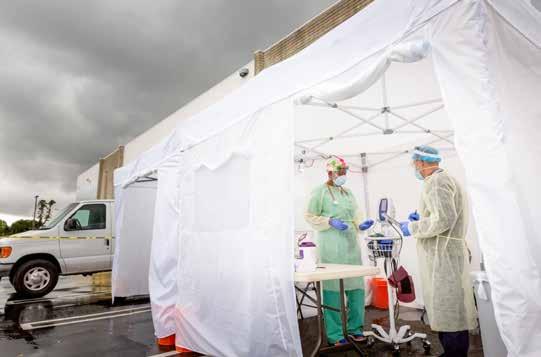
Emergency medicine—perhaps more than any other specialty—is a team effort.”
We all hope and pray that we and our community will never be faced with a disaster. However, as shocking as a disaster is to a community, we need first responders and medical personnel who have training and who have experience dealing with the elements of disaster response. In many ways, working a shift in the emergency department is a microcosm of a widespread disaster and the skills we learn in our day jobs are skills that translate if we’re ever needed to respond to a mass casualty. The disaster skills that we learn in residency or other MCI training help us better care for our patients in crisis in our departments.
Katrina Green, MD FAAEM

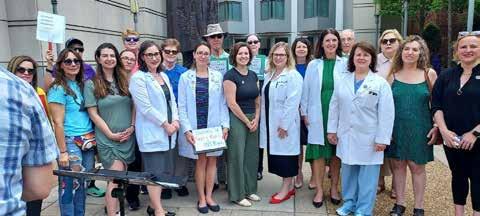
Some surprising good news came for Tennessee when the judges placed an injunction in Blackmon versus Tennessee, the lawsuit against the state of Tennessee by the Center for Reproductive Rights, who is representing several plaintiffs including physicians and women who were harmed by the abortion ban. The injunction allows for exceptions to the current abortion ban in place for certain conditions.
Dr. Laura Andreson, an OB-GYN in Tennessee and one of the physicians represented by the CRR in the lawsuit, had this to say in response, “Today’s ruling isn’t only about our lawsuit; it’s about upholding patients’ access to crucial healthcare and allowing doctors to practice medicine without fear. I’m grateful for the panel’s decision today. By temporarily blocking the state ban on abortion as applied to patients experiencing the same unthinkable diagnoses that my co-plaintiffs were forced to face, the panel has prevented immeasurable suffering. I am proudly in lockstep with my co-plaintiffs, and am ready to stand in court alongside them
to fight for the rights of pregnant Tennesseans and my fellow OB-GYNs across our state.”
The conditions that physicians can now treat without fear of losing their medical licenses or being reprimanded by the State Board of Medical Examiners include:
y Preterm premature rupture of membranes (PPROM)—this is when the water breaks before the fetus is viable. Viability usually considered around 24 weeks.
y Inevitable abortion where the cervix has dilated prior to viability or preterm labor has occurred.
y Fatal fetal diagnoses that threaten the health or life of the pregnant person.
y Fatal fetal anomalies leading to an infection that will result in uterine rupture or potential loss of fertility.
While this is undoubtedly good news for reproductive rights in Tennessee, there are still no exceptions for victims of rape or incest, or for pregnant patients diagnosed with cancer. In response to this news, I gave this quote to a reporter, “This ruling is good for physicians and patients who were caught between a rock and a hard place due to the state’s abortion ban. We now have clear exceptions where abortion
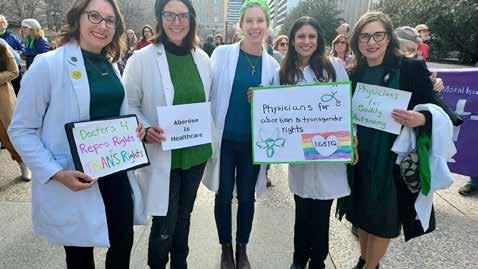
care is legal and doctors will not have to fear criminal prosecution for providing evidence based healthcare to their pregnant patients. This is a step in the right direction but we still have a ways to go before we fully restore bodily autonomy in Tennessee.”
While this is good news, unfortunately the injunction does nothing to stop the state Attorney General from criminally prosecuting doctors who provide abortions, even in these emergent conditions. The injunction only stops the state medical board from punishing the doctors. I’ve talked with some lawyer friends and it seems the injunction may only protect the doctors involved in the lawsuit. But there is hope that other doctors across Tennessee will see this news and feel empowered to provide care to their patients experiencing these four specific exceptions.
The case will now move forward to trial so there is still the possibility that this ruling could be overturned. But for now this means that pregnant patients can be reassured they can receive medical care if they experience several health and life threatening conditions. And the doctors who care for them have protection from prosecution for doing their jobs—caring for their patients.
And the doctors who care for [pregnant patients] have protection from prosecution for doing their jobs—caring for their patients.”
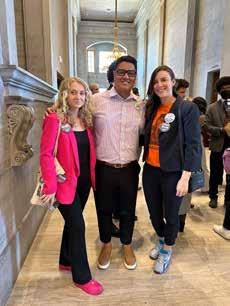
Two of the plaintiffs in the Blackmon versus Tennessee case are currently running for office: Allie Phillips and Dr. Laura Andreson. These two brave women have gone far above and beyond advocating for themselves, working to educate others about the dire consequences of the abortion ban and now, running for office.
Allie Phillips decided to run for office after meeting with her current representative, Jeff Burkhart and getting brushed off when she advocated for Miley’s Law, a bill she hoped he would consider passing to allow for exceptions to the abortion ban for fatal fetal anomalies. Allie was diagnosed with a fatal fetal anomaly around 19 weeks in her second pregnancy and had to travel to New York to receive abortion care. She is running for the Tennessee State House of Representatives in district 75 which includes part of Clarksville and Montgomery County.
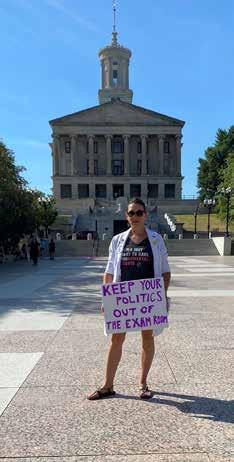
Dr. Laura Andreson is an OB-GYN who practices in Franklin, Tennessee. After the fall of Roe, she began advocating for reproductive healthcare, joining forces with other concerned physicians, nurses, and other healthcare workers and advocates. She spoke in press conferences about the dangers of the abortion ban, went up to the state Capitol to meet with legislators, testified in legislative committees, wrote op eds, and spoke with the media. When these efforts didn’t get the desired exceptions to the abortion ban in the most recent legislative session, Dr. Andreson decided to run for
office to get a seat at the table where these decisions are made. She is running for Tennessee state house of representatives for district 63, which includes Franklin and Brentwood in Williamson County.
These women who are willing to speak up for reproductive rights give me hope for the future here in Tennessee. Both of them would make great members of the state legislature and bring important perspectives to our legislative body. If you live in their districts, please look into their platforms and consider voting for them. If you don’t live in their districts, you can help their chances at getting elected by donating or volunteering.
There is so much at stake in this current election. Now more than ever, it is important to consider candidates based on their values and how those align with you and your beliefs. Another candidate’s slogan is appropriate more now than ever: People Over Party. This election, vote for candidates who support healthcare and reproductive rights.
Dr. Katrina Green, MD FAAEM, is a board certified emergency physician, and public safety and health advocate. She chairs the advocacy committee of AMWA and was elected to serve on the board of directors for 2024-26.
Editor’s note: This article was originally published on Substack on October 18, 2024, and is reproduced with author permission.


Akiva Dym, MD MBA FAAEM
The concept of artificial intelligence (AI) has become ubiquitous in nearly every industry, with its implementation already beginning to transform countless industries, including healthcare. One proposed definition of AI is “the capability of a computer program to perform tasks or reasoning processes that we usually associate with intelligence in a human being.”1 The scope of artificial intelligence is wide-ranging and encompasses various subdomains, including machine learning, neural networks, natural language models (NLM), and natural language processing (NLP). In healthcare, AI is driving innovation in multiple areas, including diagnostics, treatment plans, risk stratification, and clinical care coordination. Emergency medicine, uniquely positioned at the crossroads of healthcare, is already experiencing many of the impacts of AI on clinical operations and patient care. As the function and role of AI continues to evolve, it is crucial for emergency medicine physicians to remain informed about the current applications and implications of AI, as well as potential future developments which will directly impact clinical practice and patient care.
Emergency departments across the country continue to struggle with increasing patient volumes every year, often associated with prolonged wait times, an increased number of patients left without being seen, and increased admissions and ED boarding. It is thus more important than ever that EDs function as efficiently as possible to meet these challenges. There are a multitude of complex operational tasks required for the efficient functioning of an emergency department, many of which are well suited for the application of AI.
Patient triage is one of the earliest operational processes in the ED, and one which is critical to develop an appropriate acuity-based prioritization
of patient care. However, nursing triage is a human-driven process which may be subject to variability, as well as often prone to bottleneck during periods of high patient volume. The introduction of AI machine learning can expedite the triage process, as well as improve ESI designations and appropriate clinical assignment within an ED. Software such as Mednition’s KATE triage has demonstrated significant improvements in speed and accurate ESI designations as compared to nursing driven triage.2
System efficiency relies heavily on the appropriate throughput of patients through all steps of their care, including diagnostic testing, treatment, and disposition. Some of the major challenges to patient throughput in the ED include the performance and interpretation of diagnostic imaging, and the time to patient disposition and bed assignment. Machine learning models can utilize real-time clinical information as well as availability of radiology resources to determine the optimal prioritization for the performance and interpretation of patient imaging. This can lead to reduced times required for imaging to be performed and interpreted, and improve times to ED disposition. In addition, AI can be utilized to help with the challenge of bed management. Hospitals typically utilize a manual system of bed management, relying on a Tetris-style approach to try to find appropriate placement for admitted patients. This is an inefficient process which leads to significant time delays and contributes to the much-discussed boarding crisis. The incorporation of predictive modeling using historical discharge patterns and real-time clinical information can improve the bed management process and help reduce boarding gridlock in the ED.3
AI can also be utilized to improve time from workup completion to discharge, notifying physicians in real-time when ED workups are complete as well as assisting with automated discharge

Emergency medicine, uniquely positioned at the crossroads of healthcare, is already experiencing many of the impacts of AI on clinical operations and patient care.”
It is estimated that EM physicians spent upwards of 40 percent of their time performing data entry…AI scribes can instantly summarize entire patient encounters, and reduce physician charting workload significantly.”

planning. This can include auto-generation of discharge instructions, inclusion of incidental findings and appropriate follow up in discharge summaries, and relevant follow-up referrals and recommended discharge prescriptions based on ED management and results. This can reduce the time required for physicians to perform discharges, and allow them to focus their time on providing direct patient care.
AI modeling can utilize extensive historical and real-time data to predict ED patient volume, and the associated expected clinical and non-clinical staffing needs. Improved modeling of expected workforce needs can lead to optimized staff scheduling and appropriate resource allocation. AI can also be utilized to predict potential surges in volume and potential future boarding periods by analyzing historical and real-time patient arrival and hospital discharge data, as well as additional factors such as seasonal variation, weather and traffic patterns, local illness burdens, and other hyperlocal factors.4
In addition to providing operational support, AI has already begun to play a large role in clinical management, ranging from diagnostic recommendations to imaging interpretation to automated charting. The incorporation of AI into clinical care can expedite patient care, improve patient outcomes, and help reduce clinician workload.
The integration of AI into clinical decision support (CDS) is an area of growing interest for many clinicians. CDS provides targeted, real-time information at the point of care to help clinicians make informed decisions about patient care. AI has already been introduced into many aspects of CDS, including “intelligent” clinical alerts and predictive modeling. AI models have been developed to assist clinicians with the recognition of early disease processes, such as sepsis. These AI tools can notify clinicians in real time of developing clinical conditions, and recommend appropriate, evidence-based treatment algorithms. Additionally, through
machine learning, AI can help predict those patients at higher risk of morbidity and mortality, as well as those more likely to have return ED visits and/or hospital re-admissions. AI can also assist clinicians with EMR review, providing a concise overview of a patient’s medical history, diagnostics, and treatments. The continued incorporation of AI into CDS will allow clinicians to provide faster, more accurate, and more reliable care to their patients.
Diagnostic Interpretation
Radiology has seen significant advancements with the introduction of AI software. In addition to utilizing AI for imaging prioritization as mentioned earlier, AI pattern recognition can assist with real-time diagnostic imaging interpretation. Numerous companies, including RadAI, AIdoc, and VizAI have introduced AI software which can provide real-time radiology analysis, including automated screening for ICH, aneurysms, aortic dissection, PE, and many other pathologies. The integration of AI into diagnostic imaging has been shown to significantly reduce time to recognition and action for critical findings, as well as decrease overall patient length of stay. In addition, AI software is being utilized to detect incidental findings in imaging reports, and automatically generate outpatient referrals to ensure appropriate patient follow up.5
It is estimated that EM physicians spent upwards of 40 percent of their time performing data entry, including clinical documentation.6 By utilizing AI natural language processing, AI scribes can instantly summarize entire patient encounters, and reduce physician charting workload significantly.7 Time spent on electronic medical record (EMR) tasks has been directly linked to physician burnout, and the utilization of AI scribes can improve physician wellbeing as well as allow physicians to devote more time to patient care. In addition, with the increased emphasis on medical decision making (MDM) on billing on coding, AI scribes can help drive increased reimbursement for the clinical work EM physicians provide. AI is also capable of accurately coding charts, which can lead to more efficient coding, reduced administrative costs, and the potential for increased clinical revenue.8

In addition to providing direct clinical support within the emergency department, AI can analyze vast quantities of publicly available data, including social media and news reports. This can assist with the early recognition of potential future pandemics, as well as predict the timing and location of surges.9 Companies such as Epiwatch are already utilizing NLP to search the internet in real-time for keywords which may signal a potential outbreak. These early warning systems can in turn be utilized to help emergency departments prepare for an impending viral surge or new pandemic.
As the field of artificial intelligence rapidly evolves, the impact on healthcare operations and clinical care will continue to expand in ways we cannot yet imagine. The ideas mentioned above represent the tip of the AI iceberg, and the potential for future growth remains vast. As AI continues to expand, its impact will be felt in every aspect of emergency medicine and all of healthcare. As emergency medicine physicians on the frontlines of healthcare, we must commit to fully embrace the benefits AI can have in our clinical practice. The growth of AI will lead to increased ED efficiency, reduced physician workload and burnout, and ultimately improved care for all of our patients.
Author’s note: In the spirit of AI, ChatGPT was utilized to help proof this article.
References
1. Artificial Intelligence: Potential benefits and ethical ... Available at: https:// www.europarl.europa.eu/RegData/etudes/BRIE/2016/571380/IPOL_ BRI(2016)571380_EN.pdf
2. Ivanov O, Wolf L, Brecher D, et al. Improving ED Emergency Severity Index Acuity Assignment Using Machine Learning and Clinical Natural Language Processing. J Emerg Nurs 2021;47(2):265-278.e7.
3. Environment, A.C. (2023) Using AI to improve patient bed allocation decisions in hospital, GOV.UK Available at: https://www.gov.uk/ government/case-studies/using-ai-to-improve-patient-bed-allocationdecisions-in-hospital
4. Cleveland Clinic (2024) How AI assists with staffing, scheduling and once-tedious tasks, Cleveland Clinic Available at: https://consultqd. clevelandclinic.org/how-ai-assists-with-staffing-scheduling-and-oncetedious-tasks
5. Lubell, J. (2023) How geisinger uses AI to ensure incidental findings get follow up, American Medical Association Available at: https://www. ama-assn.org/practice-management/digital/how-geisinger-uses-ai-ensureincidental-findings-get-follow
6. Hill RG Jr, Sears LM, Melanson SW. 4000 clicks: a productivity analysis of electronic medical records in a community hospital ED. Am J Emerg Med 2013;31(11):1591-1594.
7. Robeznieks, A. (2024) Ai scribe saves doctors an hour at the keyboard every day, American Medical Association Available at: https://www. ama-assn.org/practice-management/digital/ai-scribe-saves-doctors-hourkeyboard-every-day
8. Morey J, Winters R, Jones D. (2024) Artificial Intelligence to Predict Billing Code Levels of Emergency Department Encounters. Ann Emerg Med.
9. Heilweil, R. (2024) Ai is already tracking the next pandemic, Harvard Public Health Magazine Available at: https://harvardpublichealth.org/ policy-practice/ai-services-like-epiwatch-are-already-tracking-the-nextpandemic/
Noah Tolby, MD,* Jessica Bates, MD, † Mari Ricker, MD, ‡ Kyle Meehan, MD, § and Lisa Stoneking, MD ¶
Emergency medicine (EM) is known for its high-intensity environment, demanding rapid decision-making and constant vigilance in the face of life-threatening situations. EM physicians must balance many medical challenges, often under intense pressure, while managing unpredictable patient volumes and acute cases. The physical, mental, and emotional demands of this specialty can contribute to high levels of burnout, making wellness a critical issue within the field. Given the unique stressors of EM, introducing integrative medicine (IM) into residency training can benefit not only patient care, but also support physician wellness. By promoting and integrating teaching on practices like mindfulness, stress reduction, and holistic health strategies, IM can provide EM physicians with tools to maintain their well-being in their demanding roles.
Incorporating IM into EM education holds the potential to enhance patient safety and quality of care for conditions often seen in the emergency department, such as persistent pain, anxiety, and metabolic diseases. Currently, over 40 percent of patients utilize some form of complementary or alternative medicine (CAM) in their healthcare,1 and the Institute of Medicine has recommended integrating CAM into medical education. However, formal training in these areas is lacking in EM residency programs. A structured IM curriculum would not only give residents the skills to handle these conditions with a broader, patient-centered approach but could also provide them with selfcare strategies, ultimately supporting both their patients’ and their own long-term well-being.
The primary objective of this pilot study is to assess the feasibility of a self-paced, interactive, online IM curriculum tailored for EM residents. The pilot program also aims to measure the impact of the curriculum on the residents’ knowledge, skills, and attitudes toward IM. A final objective was to expand the resources available to EM physicians for managing chronic pain, metabolic diseases,
and mental health issues through integrative approaches, thereby enriching the traditional scope of EM training and providing residents with tools for managing their own wellness in high-stress environments.
The curriculum design was the result of a collaboration between emergency medicine residency programs and the Andrew Weil Center for Integrative Medicine (AWCIM). This pilot program introduces a hybrid curriculum that combines self-paced online modules with in-person workshops and clinical rotations. The design accounted for the demanding schedules of EM residents, offering flexible learning opportunities without compromising their in-hospital responsibilities. The hybrid format also ensures that diverse learning styles are supported, providing accessibility through both digital and hands-on experiences. Additionally, the inclusion of IM practices like mindfulness and stress management could serve as valuable tools for reducing burnout and promoting resilience among residents.
The online component of the program consists of a 100-hour curriculum, broken into interactive modules focusing on the foundational principles of IM and includes management of chronic pain, metabolic diseases, and mental health conditions in acute care settings. The
Continued on page 26 >>

[B]y introducing EM physicians to techniques that promote both patient and personal well-being, the curriculum seeks to create a balanced approach to medicine that could help mitigate the risk of burnout.”
Alex Stern, MD

The importance of organizing your financial house in the early phase of your career as an attending physician cannot be understated. It’s relatively easy to get through medical school and residency without thinking about this problem too much. Things usually aren’t complicated at this stage—student loan payments are low, taxes are straightforward, and benefits are covered by your program. But this quickly changes, and if you aren’t organized, your new attending paycheck can quickly vanish in front of your eyes. It doesn’t help that financial education is notoriously lacking in most residency programs. For me, this process was made doubly more confusing because I incorporated and became an independent contractor around the time of graduation, which comes with its own set of new rules and fees. Why am I paying myself twice? When are quarterly taxes due? How do I open my own 401k? What even is payroll? While I won’t aim to answer all these questions for you in one article, I hope I can at least galvanize you to start thinking critically about your money.
Here are my five most important tips to help you get started.
Decide on your major financial goals over the next five years.
This is your most important task. If you don’t know where you’re going, how will you find the path that gets you there? If your goal is to own a home and have kids at year five, then estimate what that will cost you and when it will be financially feasible. Do you want to pay off your loans in the first five years out? Budget for it and figure out what you need to do to make it happen. If those goals aren’t attainable with your current pay, then you either need to increase your income or adjust your goalpost. This is really a personal task where finances only play a part. Your goals will be unique to you, so they will require some real introspection and reflection to figure out. Don’t skip this.
Anticipate major expenses.
Hand-in-hand with tip one is anticipating costs early. Before we even get to the big items like a house and kids, there will be several other smaller but significant expenses along the way. In my case, during my first year, I spent way more than I expected on things like board exams and licensing fees. I also played a bit of catch-up on my personal 401k, my disability insurance premiums tripled, and I had to start covering my own health insurance. Because a lot of these expenses popped up before I even got my first paycheck, those first few months out of residency were very lean. Your career transition out of residency might involve a geographic move, too, which always comes with unexpected costs. Anticipate these things early to keep yourself on track.

Find an accountant or advisor you trust. This is especially important for independent contractors. A good accountant will help you incorporate, will make sure that your taxes are accurate and on time, and will know how to prepare your taxes to save you the most money possible. To find one, ask a few trusted attendings from residency, or ask for a reference from some of your colleagues in your new group. This is absolutely a necessary cost. Think of it as an investment—paying a little extra for a great accountant will make you money in the long run. If you feel like you need a little more direction, you may consider a financial advisor but try to find one that is a fiduciary and that charges a flat fee for service rather than a percentage of your assets.
By putting in the work early, you can take control of your finances and set yourself up for the career and life you really want.”
Accept that at some point, you will probably goof something up and that it will be costly.
The fear of doing something, forgetting something, or submitting something incorrectly and paying for it can be paralyzing. I realized one month into a six-month auto insurance contract that I was paying far too high a premium. I submitted quarterly taxes late and got hit with a fee. I had an accountant that didn’t know what he was doing and ended up costing me money. At some point, something will fall through the cracks, and you will end up paying money that you didn’t need to. Don’t let the fear of this playing out stop you from engaging with your finances. Instead, expect these “oops” moments and budget for them.
Read, read, read.
While I hope to get you thinking about your finances with this article, for a deeper understanding, you’ll need a more definitive resource. The White Coat Investor and The Physician Philosopher’s Guide to Personal Finance are two highly regarded places to start with. Reading a little bit each day, or even each week, will go a long way towards helping you define and reach your financial goals.
Getting your finances figured out early will allow you to use more of your focus on things that really matter to you, like family, hobbies, or performing your job to a high standard. By putting in the work early, you can take control of your finances and set yourself up for the career and life you really want.

Mel Ebeling, BS

In the last issue of Common Sense, I introduced five basic physical properties of hazardous materials that are pertinent for disaster preparedness. Recall that in 2023 alone, the U.S. Department of Transportation Bureau of Transportation Statistics reported a total of 24,265 incidents involving the transport of hazardous materials via highway, rail, air, and water—all of which pose of threat to human life if released from their containers.1 Moreover, there also exists the threat posed by the use of common household and commercial hazardous materials for acts of terrorism. Because emergency physicians may be tasked with recognizing exposures to HAZMAT and initiating medical care, in addition to being involved in hospital emergency management and disaster preparedness, it is important to understand how the chemistry of different hazardous materials creates threat.
In the second part of this series on hazardous materials chemistry, let us now review some basic nuclear properties of radioactive isotopes.
Typically measured in curies (Ci) or becquerels (Bq), activity measures the rate of decay of a radioactive isotope (i.e., the number of unstable nuclides decaying per second). More simply, activity provides a measurement of the amount of ionizing radiation released by a radioisotope in a given amount of time. High activity is indicative of elevated levels of radioactivity. Specific activity describes the activity of a radioisotope per unit mass and is measured in Ci/gram or Bq/gram. While activity does not translate directly to absorbed dose or determine harmfulness, it does provide some information about exposure risk.
The half-life of a radioactive isotope is the length of time that it takes for half of the atoms present in a sample to decay, and this can vary drastically. For example, cesium-137, a radioactive isotope commonly used in soil density gauges, has a half-life of 30 years; in contrast, iodine-131, which is used in the treatment of thyrotoxicosis, has a half-life of eight days. There is naturally an inverse relationship between activity and half-life, whereby those isotopes that take longer to decay will emit that ionizing radiation via the process of decay at a lower rate (activity). In the aftermath of a HAZMAT incident involving radioactive materials, knowledge of half-life becomes crucial. This nuclear property sheds light on the material’s persistence in the environment, which directly impacts exposure risk and public health and clean-up responses, for example.
The threat posed by different radionuclides is significantly influenced by the types of particles released by these atoms in an effort to reach stability. This process is termed “radioactive decay.” The three most common types of decay are alpha, beta, and gamma.
In alpha decay, radionuclides release helium nuclei (two protons and two neurons) to become more stable. Alpha particles are “heavy” and pose significant injury to bodily tissues if they are inhaled or ingested; however, because of their size, these particles do not travel far from their source or penetrate the skin. Americium-241 is commonly found in smoke detectors and is one example of an alpha-emitter. Unfortunately, because of its accessibility, it has a risk of being used for nefarious purposes, as in construction of radiological
Because emergency physicians may be tasked with recognizing exposures to HAZMAT and initiating medical care…it is important to understand how the chemistry of different hazardous materials creates threat.”


three residency sites participating in this pilot study also incorporate in-person workshops and clinical experiences to enhance practical understanding. These interactive learning methods aim to foster a holistic approach to patient care, integrating conventional medicine with evidence-based CAM therapies. Furthermore, by introducing EM physicians to techniques that promote both patient and personal well-being, the curriculum seeks to create a balanced approach to medicine that could help mitigate the risk of burnout.
To evaluate the effectiveness of the curriculum, several assessment methods are being employed. Participation metrics, such as login
References
*Clinical Associate Professor, Emergency Medicine, University of Arizona, Tucson, AZ
†Associate Professor, Emergency Medicine, University of Arizona, Tucson, AZ
‡Professor, Family and Community Medicine, Director Integrative Medicine in Residency, AWCIM, Tucson, AZ
frequency and module completion rates are tracked to ensure engagement, with a target of 80 percent module completion. Residents are also required to complete a final exam, with a passing score of 70 percent necessary to earn a completion certificate. Additional assessments include satisfaction surveys, where participants can provide feedback on the content, delivery, and relevance of the program. These feedback mechanisms will inform future modifications to the curriculum, allowing for continuous improvement and broader implementation.
This pilot program represents a novel approach to incorporating integrative medicine into EM residency training. While balancing the
§Assistant Professor, Family and Community Medicine, Associate Director Integrative Medicine in Residency, AWCIM, Tucson, AZ
¶Professor, Emergency Medicine, University of Arizona, Tucson, AZ
demands of EM with participation in the curriculum presents challenges, the hybrid model offers a flexible solution. By equipping EM residents with IM skills, the program aims to enhance patient care, particularly for those with chronic conditions, and to address the diverse health needs of patients seen in emergency settings. Additionally, by focusing on wellness for both patients and physicians, this curriculum could become an integral part of EM residency education, fostering a more sustainable and compassionate approach to emergency care.
For programs who are interested in participating in or learning more about the pilot, please email Dr. Mari Ricker (rickerm@arizona.edu).
1. Harris, P. E., Cooper, K. L., Relton, C., & Thomas, K. J. (2012). Prevalence of complementary and alternative medicine (CAM) use by the general population: a systematic review and update. International journal of clinical practice, 66(10), 924-939.

Stephanie M. Marrero Borrero, MD
Case 1: You get called by emergency medical services (EMS) personnel; they were dispatched to a 74-year-old female who was found unresponsive by her daughter. The last wellknown time was earlier in the morning. She has a PMH of Congestive Heart Failure and Coronary Artery Disease. Initially, the rhythm on the cardiac monitor shows asystole.
Case 2: You get called by EMS; they were dispatched to a 42-year-old male obese patient who had a witnessed collapse and no bystander CPR. He has no past medical history. AED is placed by EMS, showing an initial rhythm of ventricular fibrillation.
The decision to cease resuscitative efforts is both clinically complex and ethically challenging, requiring a balance between evidence-based guidelines, clinical judgment, and respect for the patient’s dignity and wishes. Termination of resuscitation (TOR) in prehospital nontraumatic arrest refers to the decision made by EMS personnel to stop resuscitative efforts in the field. This protocol is utilized when there is no reasonable chance of survival based on specific clinical criteria, and sometimes, patient or family wishes which are expressed through advanced directives or “do not resuscitate” (DNR) orders. TOR protocols are designed to reduce unnecessary transport to hospitals and provide a dignified end to life.
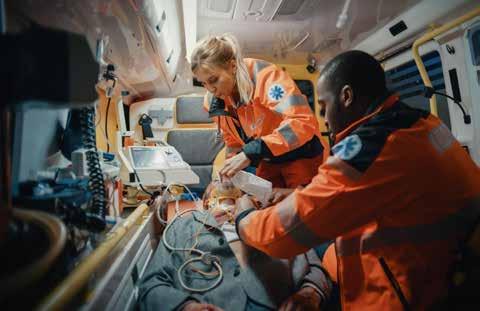
Evidence-Based Practice and Literature Review
Out-of-hospital cardiac arrest (OHCA) patients who fulfill basic life support (BLS) or advanced life support (ALS) TOR criteria most often do not survive to hospital discharge. Studies consistently show a survival of less than 0.5 percent if BLS TOR criteria are followed and zero percent if ALS criteria are followed.1,2
For OHCA, the guidelines generally recommend termination of resuscitation under the following conditions:
Basic Life Support Criteria:
y The arrest was not witnessed by emergency medical services personnel.
y No defibrillation shocks were administered or identified by an automated external defibrillator (AED).3,4
y No return of spontaneous circulation (ROSC) before EMS transport.4
Advanced Life Support Criteria:
y No ROSC despite advanced resuscitative efforts.
y The arrest was not witnessed by EMS personnel.4
y No defibrillation shocks were administered.3 These criteria have been validated to have high specificity and positive predictive value for predicting lack of survival to hospital discharge.1,3
In the context of traumatic cardiopulmonary arrest, the guidelines suggest that resuscitation should be withheld or terminated if:
The decision to cease resuscitative efforts is both clinically complex and ethically challenging, requiring a balance between evidence-based guidelines, clinical judgment, and respect for the patient’s dignity and wishes.”
Field TOR protocols can help optimize resources and improve decision-making for EMS teams while reducing the emotional and physical toll of futile resuscitation attempts.”
y There are no signs of life (e.g., no pulse, no spontaneous breathing, no pupil reactions).
y The injuries are obviously incompatible with life (e.g., decapitation, massive cranial and cerebral destruction, evisceration).
y There is evidence of prolonged arrest (e.g., rigor mortis, dependent lividity, decomposition).
y There is a lack of organized electrocardiographic activity.5
For pediatric considerations: Termination of resuscitation in pediatric cases is more complex, with protocols often excluding children due to ethical and emotional considerations. However, guidelines suggest that under certain circumstances, such as obvious signs of death, resuscitation may be withheld.6,7
The American Heart Association emphasizes the use of validated TOR rules to ensure accurate identification of futile cases, thereby optimizing resource utilization and patient outcomes.8
Regional and physician variability: There is significant variability in TOR decisions based on regional practices and individual physician biases. Studies have shown that physician discretion plays a substantial role, with biases potentially affecting the decision to terminate resuscitation. Regional differences also exist in the timing and rationale for TOR, highlighting the need for standardized guidelines.4,9,10
Protocols:
y Time Frame: Many TOR protocols are based on guidelines by NAEMSP and the European Resuscitation Council, which
recommend a time frame for resuscitation of at least 20 minutes on-scene, after which, if no improvement occurs, resuscitative efforts may be stopped.11
y Involvement of Medical Control: Some protocols require consultation with online medical control (a physician or medical director) before terminating resuscitative efforts in the field.4,11
y Role of End Tidal Carbon Dioxide (EtCO2): There is a lack of consensus on establishing the role of EtCO2 in TOR. Old studies have suggested a threshold of EtCO2 <10mmHg at the 20-minute mark of resuscitation as the predictive marker of non-survivability of OHCA and TOR. On the other hand, an increase in ETCO2 during cardiopulmonary resuscitation of more than 20-25mmHg has historically been predictive of ROSC. Yet, multiple EMS directors from the US Metropolitan Municipalities EMS Medical Directors Consortium found that TOR occurred in patients with EtCO2 values greater than 20mmHg.12
y Patient Wishes: Do Not Resuscitate (DNR) orders or advance directives should always be considered, if available, to respect the patient’s autonomy.
y Communication with Family: It is critical to provide compassionate and clear communication with family members about the decision to terminate resuscitation.
y Legal Protection: EMS personnel are generally protected from liability when following established TOR protocols, but documentation is essential.
y Reduces Patient Transport for Futile Cases: Prevents unnecessary transport to emergency departments when there is no chance of survival.2
y Preserves EMS and ED Resources: Allows EMS teams and emergency department personnel to be available for other emergencies rather than continuing resuscitation in cases deemed futile.2
y Mental Health and Burnout Prevention: Reduces the emotional toll on EMS personnel who may face the burden of continuing resuscitative efforts in non-survivable cases.
y Emotional Impact on Families: Families may struggle to accept the decision to terminate resuscitation in the field, especially in pediatric cases. In some cultures, family presence during resuscitation can influence the decision to terminate efforts. For instance, in East Asian societies, family presence has been associated with shorter CPR durations, suggesting that cultural factors may impact clinical decisions.13
y Variability in Protocols: TOR protocols can vary by region, which may cause confusion or hesitancy among EMS personnel.
y Education and Training: EMS personnel need thorough training on TOR criteria and ethical considerations to ensure consistency and confidence in decision-making.
Conclusion
Field TOR protocols can help optimize resources and improve decision-making for EMS teams while reducing the emotional and physical toll of futile resuscitation attempts. As an EMS physician or EMS medical director, you must be familiar with current recommendations and be active in creating TOR protocols for your agency. As an EM physician you should be aware of factors and variability that can go into prehospital decisions that might affect patient transport to your ED.
1. Termination of resuscitation in out-of-hospital cardiac arrest in women and men: An ESCAPE-NET project Smits, R.L.A. et al. Resuscitation, Volume 185, 109721
2. Time To Stop Beating A Dead Horse: Termination Of Resuscitation In The Field. Lulla A, Svancarek B. National Association of EMS Physicians. 2016. https://naemsp. org/2016-12-26-title-time-to-stop-beating-adead-horse-termin ation-of-resuscitation-inthe-field/
3. Out-of-Hospital Cardiac Arrest Termination of Resuscitation With Ongoing CPR: An Observational Study. Yates EJ, Schmidbauer S, Smyth AM, et al. Resuscitation. 2018;130:21-27. doi:10.1016/j. resuscitation.2018.06.021.
4. Termination of Resuscitation in Nontraumatic Cardiopulmonary Arrest. National Association of EMS Physicians. 2011;Prehospital Emergency Care, 15(4), 542. https://doi.org/1 0.3109/10903127.2011.598621
5. Withholding and Termination of Resuscitation of Adult Cardiopulmonary Arrest Secondary to Trauma: Resource Document to the Joint NAEMSP-ACSCOT Position Statements. Millin MG, Galvagno SM, Khandker SR, Malki A, Bulger EM. The Journal of Trauma and Acute Care Surgery. 2013;75(3):459-67. doi:10.1097/TA.0b013e31829cfaea.
6. Withholding or Termination of Resuscitation in Pediatric Out-of-Hospital Traumatic Cardiopulmonary Arrest. Fallat ME. Annals of Emergency Medicine. 2014;63(4):504-15. doi:10.1016/j.annemergmed.2014.01.013.
7. Withholding or Termination of Resuscitation in Pediatric Out-of-Hospital Traumatic Cardiopulmonary Arrest. Fallat ME.Pediatrics. 2014;133(4):e1104-16. doi:10.1542/ peds.2014-0176.
8. Part 3: Adult Basic and Advanced Life Support: 2020 American Heart Association Guidelines for Cardiopulmonary Resuscitation and Emergency Cardiovascular Care. Panchal AR, Bartos JA, Cabañas JG, et al. Circulation. 2020;142(16_suppl_2):S366-S468. doi:10.1161/CIR.0000000000000916.
9. Quantifying Physician’s Bias to Terminate Resuscitation. The TERMINATOR Study. Laurenceau T, Marcou Q, Agostinucci JM, et al. Resuscitation. 2023;188:109818. doi:10.1016/j.resuscitation.2023.109818.
10. Out-of-Hospital Cardiac Arrests Terminated Without Full Resuscitation Attempts: Characteristics and Regional Variability. Hutton G, Kawano T, Scheuermeyer FX, et al.Resuscitation. 2022;172:47-53. doi:10.1016/j.resuscitation.2022.01.013.
11. EMS Termination Of Resuscitation And Pronouncement of Death. Libby C, Skinner RB, Rawal AR. StatPearls Publishing; 2024, January. Available from: https://www.ncbi.nlm. nih.gov/books/NBK541113/
12. The Role of EtCO2 in Termination of Resuscitation. Joseph A, Morshedi B, Fowler Raymond. Journal of Emergency Medical Services. 2017, December 1.
13. https://www.jems.com/patient-care/the-role-ofetco2-in-termination-of-resuscit ation/#
14. Factors Associated With the Decision to Terminate Resuscitation Early for Adult in-Hospital Cardiac Arrest: Influence of Family in an East Asian Society. Wang CH, Chang WT, Huang CH, et al. PloS One. 2019;14(3):e0213168. doi:10.1371/journal. pone.0213168.

Alex Cavert, MD,* William Timbers, MD, † Frederick Gmora, DO, § and Skyler Lentz, MD ‡
Case
A patient presents with a witnessed aspiration event during an outpatient endoscopy while in the left lateral recumbent position. They are referred to the ED for evaluation. A chest X-ray (Figure 1) showed unilateral left-sided opacities. They have progressive hypoxemia and respiratory distress over the next hour and require intubation. The fraction of inspired oxygen (FiO2) is set at 100 percent with an initial positive end-expiratory pressure (PEEP) of 10cm H2O to maintain an oxygen saturation of 89 percent. The emergency physician increases the PEEP to 18cm H2O based on the PEEP/FiO2 table established for acute respiratory distress syndrome (ARDS).1 As the PEEP is titrated beyond 10cm H2O, the hypoxemia worsens, and the oxygen saturation is now 72 percent.
ARDS is a diffuse infiltrative process that affects the alveoli by disrupting the surfactant responsible for increasing surface tension and maintaining alveoli in their open state. As the alveoli become increasingly permeable, they develop edema that causes impaired gas exchange and ultimately collapse. These compromised alveoli require greater pressures to recruit and, as a result, can remain closed throughout a normal respiratory cycle. Hypoxemia develops as blood passes through intra-alveolar capillaries of unventilated lung parenchyma, causing a right to left intrapulmonary shunt.2,3
PEEP can be a helpful intervention to improve oxygenation by recruiting previously collapsed alveoli and increasing lung volumes. PEEP works to increase the lung’s functional residual capacity by applying a constant pressure to the alveoli throughout the entirety of the respiratory cycle, preventing alveolar collapse. Maintaining alveoli in their open state facilitates more efficient gas exchange by allowing each inhalation to start on the steeper, more compliant part of the lung’s pressure-volume curve, optimizing both oxygenation and ventilation.3,4
Utilizing PEEP, it may be possible to recruit collapsed or atelectatic alveoli to participate in gas exchange, allowing for increased ventilation, improved ventilation and perfusion matching, and decreasing shunt physiology. This intervention works well in diffuse lung processes such as ARDS that involve larger, more homogenous areas of recruitable lung. However, high PEEP titration may not be beneficial when employed in focal lung processes such as pneumonia.
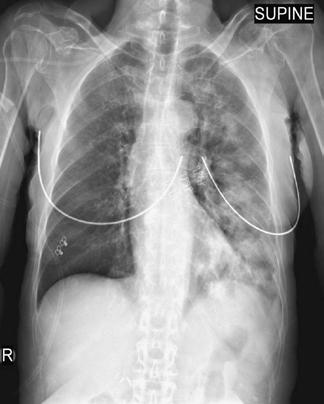
Figure 1. The chest X-ray demonstrates unilateral infiltrates of the left lung. (Images courtesy of Yaïr Glick, Radiopaedia.org, rID: 53647)
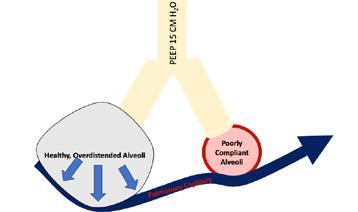
Figure 2. The effect of PEEP on a healthy and injured alveolar capillary unit. The blood is shunted to the injured alveolus if the healthy alveoli is over distended, potentially worsening shunt and gas exchange.
In focal infiltrative pathologies such as lobar pneumonia or unilateral aspiration pneumonia, an increase in PEEP can compromise the properly functioning alveoli disproportionately more than it recruits the collapsed alveoli, resulting in worsening hypoxemia. Because PEEP cannot be selectively applied to pathologic lung, the whole pulmonary system is subjected to the same end-expiratory pressure. The healthy, highly compliant lung reacts much differently than the poorly compliant diseased lung tissue, and can cause iatrogenic lung injury or worsen gas-exchange.
Poorly compliant, atelectatic lung requires greater pressures to facilitate adequate gas-exchange compared to healthy tissue. In contrast, healthy lung parenchyma is more compliant and responds to a smaller change in pressure with comparatively greater increases in lung volume. As PEEP is titrated in an effort to recruit injured alveoli, overdistention of the healthy, compliant tissue can occur. As these healthy alveoli begin to over distend, the surrounding capillaries are stretched and narrowed, resulting in a mechanical impedance of the capillary circulatory flow through intra-alveolar capillaries. This blood flow (i.e, perfusion) that was previously shunted towards the healthy lung, via compensatory hypoxic vasoconstriction of the poorly ventilated alveoli, is consequently diverted away from these now iatrogenically highly resistant capillary beds. This
References
*Emergency Medicine Resident, University of Vermont Medical Center
†Department of Emergency Medicine, University of Vermont Larner College of Medicine
§Department of Pulmonary & Critical Care Medicine, Jefferson Health New Jersey
‡Department of Emergency Medicine and Medicine, University of Vermont Larner College of Medicine
1. Acute Respiratory Distress Syndrome Network; Brower RG, Matthay MA, Morris A, Schoenfeld D, Thompson BT, Wheeler A. Ventilation with lower tidal volumes as compared with traditional tidal volumes for acute lung injury and the acute respiratory distress syndrome. N Engl J Med. 2000 May 4;342(18):1301-8. doi: 10.1056/NEJM200005043421801. PMID: 10793162.
worsens ventilation and perfusion mismatch (Figure 2).3 As a result, the poorly oxygenated collapsed alveoli receive a higher percentage of capillary blood flow, paradoxically worsening shunt physiology and hypoxemia.
In addition to unintentionally worsening shunt physiology through increasing pulmonary capillary resistance, positive pressure in the thoracic cavity can worsen hypoxemia by decreasing cardiac output. PEEP increases pressures in the thoracic cavity and consequently may impair venous return to the heart. This loss of venous return will decrease the cardiac preload and subsequently the cardiac output, further worsening hypoxemia.5
The application of higher PEEP can be either beneficial or detrimental depending on the clinical scenario. Diffuse processes, such as ARDS, typically respond favorably to higher levels of PEEP through alveolar recruitment of diseased lung. Conversely, in focal processes, higher PEEP may worsen gas exchange through iatrogenic right to left intrapulmonary shunt and impaired cardiac preload. The emergency clinician must be ready to apply this physiology and apply PEEP expertly in their next intubated patient.
2. Swenson KE, Swenson ER. Pathophysiology of Acute Respiratory Distress Syndrome and COVID-19 Lung Injury. Crit Care Clin. 2021 Oct;37(4):749-776. doi: 10.1016/j.ccc.2021.05.003. Epub 2021 May 28. PMID: 34548132; PMCID: PMC8162817.
3. Çoruh B, Luks AM. Positive end-expiratory pressure. When more may not be better. Ann Am Thorac Soc. 2014 Oct;11(8):1327-31. doi: 10.1513/ AnnalsATS.201404-151CC. PMID: 25343201.
4. Mora Carpio AL, Mora JI. Positive End-Expiratory Pressure. [Updated 2023 Aug 14]. In: StatPearls [Internet]. Treasure Island (FL): StatPearls Publishing; 2024 Jan-. Available from: Positive End-Expiratory PressureStatPearls - NCBI Bookshelf
5. Namendys-Silva SA, Domínguez-Cherit G. Mechanical ventilation can cause changes in pulmonary circulation. Crit Care Med. 2010 Aug;38(8):1759-60. doi: 10.1097/CCM.0b013e3181defc89. PMID: 20647815.
James Webley, MD FAAEM*
Emergency physicians are the experts for anterior shoulder dislocation reductions. We have the drugs, we have the airway skills, we have the reduction techniques, and we do most of the shoulder reductions in the USA. Bring ‘em on. We…just do it!
So, let me pose a hypothetical case for you.
While working in the ED you are transferred a demented nursing home patient who had a chest x-ray taken because he had been coughing. There was no pneumonia, but an anterior shoulder dislocation was discovered. The past records that accompany him do not mention any shoulder problem at all. Apparently, just a serendipitous finding. What would you do now?
Let’s go over a little history.
In 1941 Calvet reported a case series of 91 chronically dislocated anterior shoulder closed reductions.1 After reduction, 68 of the patients had an axillary artery rupture and 34 died. (Yikes!) In 1996, Rockwood recommended reduction of chronic anterior shoulder dislocations in the operating room, under general anesthesia, and with a vascular surgeon available. The orthopedic community had learned Calvet’s lesson and was wary.
The proposed mechanism for axillary artery rupture is thought to be:
1. Adhesions form between the chronically dislocated humeral head and the closely approximated axillary artery.
2. Reduction applies traction to the artery through the adhesions.
3. Traction causes the artery to rupture.
But what is a chronically unreduced anterior shoulder dislocation? Definitions of this vary all over the map from hours to a year. But, if the mechanism by which the artery’s rupture is the formation of adhesions, three weeks would seem to be a very reasonable time frame.
Chronic anterior shoulder dislocation is an unusual problem, but you will encounter it during your career. Your ability to recognize its lurking danger will help ensure good patient outcomes.”
Fine. But this is old news, right?
Verhaegen in 2012 reported two cases of axillary artery rupture following reduction of a chronic anterior shoulder dislocation.2 One of these cases was only 12 weeks old. Recommendations in “The Shoulder Fifth Edition” say reduction of a chronic anterior shoulder dislocation should be done under general anesthesia. In a 2021 series of patients, the orthopedists performed all their gentle reductions under general anesthesia.3 It makes me a little queasy to read these articles since on several occasions I have unwittingly tried to reduce a chronic anterior shoulder dislocation.
Even though there is a risk, at least, we are helping the patient…right?
Well…not so fast. Sahajpal reviewed 50 cases of chronic anterior shoulder dislocation and there were 27 good results.4 (Hooray!) But no good results if the shoulder was dislocated for more than four weeks. (Bummer.) So, an attempt of closed reduction has risk with no discernable benefit. A classic example of “Just don’t go there.”
Chronic anterior shoulder dislocation is an unusual problem, but you will encounter it during your career. Your ability to recognize its lurking danger will help ensure good patient outcomes.
So, what would you do with our hypothetical case? I’ll suggest since you do not know when the dislocation occurred, and it may well be more than three weeks, you should allow your local orthopedic surgeon to enjoy “this interesting consult.”
* Michigan State University College of Osteopathic Medicine
1. Calvet, E et al. [Dislocations of the shoulder and vascular lesions.] (in French). J Chir (Paris) 1941; 58: 337-346.
2. Filip Verhaegen, Ide Smets, Marc Bosquet, Peter Brys, Philippe Debeer. Chronic anterior shoulder dislocation : Aspects of current management and potential complications. Acta Orthop. Belg., 2012, 78, 291-295
3. Theophile NC, et al. Conservative treatment of chronic unreduced shoulder dislocations in Cameroon: Key results concerning 33 cases. Journal of Orthopaedics, Trauma and Rehabilitation 2021;28:online https://doi. org/10.1177/22104917211001868
4. Sahajpal DT, et al. Chronic glenohumeral dislocation. J Am Acad Orthop Surg. 2008 Jul;16(7):385-98
References
1. Centers for Disease Control and Prevention. Health Topics – Tobacco. 2024. https://www.cdc.gov/policy/polaris/healthtopics/tobacco/index. html#:~:text=Tobacco%20use%20is%20the%20single,die%20from%20 secondhand%20smoke%20exposure.
2. U.S. Department of Health and Human Services. The Health Consequences of Smoking—50 Years of Progress: A Report of the Surgeon General. Atlanta: U.S. Department of Health and Human Services, Centers for Disease Control and Prevention, National Center for Chronic Disease Prevention and Health Promotion, Office on Smoking and Health, 2014 [accessed 2024 Jul 18].
3. Hartmann-Boyce J, Chepkin SC, Ye W, Bullen C, Lancaster T. Nicotine replacement therapy versus control for smoking cessation. Cochrane Database Syst Rev. May 31 2018;5(5):Cd000146. doi:10.1002/14651858. CD000146.pub5
4. Hajek P, West R, Foulds J, Nilsson F, Burrows S, Meadow A. Randomized comparative trial of nicotine polacrilex, a transdermal patch, nasal spray, and an inhaler. Arch Intern Med. Sep 27 1999;159(17):2033-8. doi:10.1001/archinte.159.17.2033
5. Kornitzer M, Boutsen M, Dramaix M, Thijs J, Gustavsson G. Combined use of nicotine patch and gum in smoking cessation: a placebo-controlled clinical trial. Prev Med. Jan 1995;24(1):41-7. doi:10.1006/pmed.1995.1006
6. Fagerström KO, Schneider NG, Lunell E. Effectiveness of nicotine patch and nicotine gum as individual versus combined treatments for tobacco withdrawal symptoms. Psychopharmacology (Berl). 1993;111(3):271-7. doi:10.1007/bf02244941
7. Blondal T, Gudmundsson LJ, Olafsdottir I, Gustavsson G, Westin A. Nicotine nasal spray with nicotine patch for smoking cessation: randomised trial with six year follow up. Bmj. Jan 30 1999;318(7179):2858. doi:10.1136/bmj.318.7179.285
8. Bohadana A, Nilsson F, Rasmussen T, Martinet Y. Nicotine inhaler and nicotine patch as a combination therapy for smoking cessation: a randomized, double-blind, placebo-controlled trial. Arch Intern Med. Nov 13 2000;160(20):3128-34. doi:10.1001/archinte.160.20.3128
9. Smith SS, McCarthy DE, Japuntich SJ, et al. Comparative effectiveness of 5 smoking cessation pharmacotherapies in primary care clinics. Arch Intern Med. Dec 14 2009;169(22):2148-55. doi:10.1001/ archinternmed.2009.426
10. Theodoulou A, Chepkin SC, Ye W, et al. Different doses, durations and modes of delivery of nicotine replacement therapy for smoking cessation. Cochrane Database Syst Rev. Jun 19 2023;6(6):Cd013308. doi:10.1002/14651858.CD013308.pub2
11. Miller S. The ASAM Principles of Addiction Medicine. Sixth edition. ed. Philadelphia: Wolters Kluwer; 2018.
12. Le Houezec J, Säwe U. [Smoking reduction and temporary abstinence: new approaches for smoking cessation]. J Mal Vasc. Dec 2003;28(5):293300. Réduction de consommation tabagique et abstinence temporaire: de nouvelles approches pour l’arrêt du tabac.
13. Fucito LM, Palmer AM, Baldassarri SR. A new perspective on mitigating lung cancer risks through smoking cessation and reduction. J Natl Cancer Inst. Jun 7 2024;116(6):782-785. doi:10.1093/jnci/djae044
14. Chang JT, Anic GM, Rostron BL, Tanwar M, Chang CM. Cigarette Smoking Reduction and Health Risks: A Systematic Review and Metaanalysis. Nicotine Tob Res. Mar 19 2021;23(4):635-642. doi:10.1093/ntr/ ntaa156
15. Begh R, Lindson-Hawley N, Aveyard P. Does reduced smoking if you can’t stop make any difference? BMC Med. Oct 12 2015;13:257. doi:10.1186/ s12916-015-0505-2
16. Hughes JR, Carpenter MJ. The feasibility of smoking reduction: an update. Addiction. Aug 2005;100(8):1074-89. doi:10.1111/j.13600443.2005.01174.x
17. Hughes JR, Carpenter MJ. Does smoking reduction increase future cessation and decrease disease risk? A qualitative review. Nicotine Tob Res. Dec 2006;8(6):739-49. doi:10.1080/14622200600789726
18. Centers for Disease Control and Prevention. Smoking Cessation: Fast Facts. 2024. https://www.cdc.gov/tobacco/php/data-statistics/smokingcessation/index.html#:~:text=U.S.%20adult%20smoking%20cessation%20 behaviors&text=In%202022%2C%2067.7%25%20of%20adults,they%20 wanted%20to%20quit%20smoking.
19. Chaiton M, Diemert L, Cohen JE, et al. Estimating the number of quit attempts it takes to quit smoking successfully in a longitudinal cohort of smokers. BMJ Open. Jun 9 2016;6(6):e011045. doi:10.1136/ bmjopen-2016-011045
To place an ad in the Job Bank: Equitable positions consistent with the Mission Statement of the American Academy of Emergency Medicine and absent of restrictive covenants, will be published (upon approval). All ads run for a six month period or until canceled and will appear in the AAEM member magazine Common Sense and online. For pricing and more information visit www.aaem.org/membership/benefits/ job-bank.
Complete a Job Bank registration form, along with the Criteria for Advertising Section, and submit payment. If you are an outside recruiting agent, the Job Bank Criteria for Advertising must be downloaded and completed by a representative from the recruiting hospital/group.
Direct all inquiries to: www.aaem.org/membership/benefits/job-bank or email info@aaem.org.

Positions Available
For further information on a particular listing, please use the contact information listed.
Section I: Positions listed in Section I are in compliance with elements AAEM deems essential to advertising in our job bank. Fairness practices include democratic and equitable work environments, due process, no post contractual restrictions, no lay ownership, and no restrictions on residency training and have been given the AAEM Certificate of Workplace Fairness.
Section II: Positions listed in Section II are in compliance with elements AAEM deems essential to advertising in our job bank. Fairness practices include democratic and equitable work environments, due process, no post contractual restrictions, no lay ownership, and no restrictions on residency training but have not been given the AAEM Certificate of Workplace Fairness.
Section III: Positions listed in Section III are hospital, non-profit or medical school employed positions, military/government employed positions, or an independent contractor position and therefore cannot be in complete compliance with AAEM workplace fairness practices.
SECTION I: POSITIONS RECOGNIZED AS BEING IN FULL COMPLIANCE WITH AAEM’S JOB BANK CRITERIA AND GIVEN THE AAEM CERTIFICATE OF WORKPLACE FAIRNESS
Southern Colorado Emergency Medical Associates (SCEMA) is hiring full and part time emergency physicians. SCEMA is a democratic group of over 30 years based in Southern Colorado staffing UCHealth Parkview Medical Center in Pueblo, CO and UCHealth Parkview Pueblo West Hospital in Pueblo West, CO. SCEMA holds an AAEM Certificate of Workplace Fairness and is an AAEM practice group member. Come live and work in the beautiful Front Range of Colorado. We offer a superior financial package with a 2-year partnership track and subsequent income as a partner based upon productivity. Receive a competitive hourly rate pre-partnership with an average annual compensation of $250k. Alternative non-partnership
Private Democratic Group in California! This is an incredible opportunity that almost never comes along. Be a part of a private democratic group from the beginning. Shasta Regional Medical Center is a 226-bed tertiary care center in Redding, California. Democratic groups are incredibly rare in California. Redding has a cost of living that is almost 30% less than the rest of California. We still have all the benefits of California with a great climate, world class fishing, skiing, backcountry skiing, boating, hiking, rock climbing, mountaineering, kayaking, etc... One of the last places in the state where you can still buy a beautiful home. Physicians will all start out at $300 per hour! You will be paid as an independent contractor so you will be able to keep more of the money you make! Profit sharing immediately upon making partner. (PA 2072)
Email: robby@ruralpacmed.com
track, part-time hourly rate available. Partners average annual compensation is $470k per year including profit sharing, 401k plan, and a SCEMA funded cash balance plan. Additional benefits include health insurance, CME, malpractice insurance, compensation for licensing examinations and travel, medical and DEA licensing fees, as well as relocation expenses coverage. Full time status is approximately 13-14 shifts per month with 8-10 hour shifts. Must be BE/BC in emergency medicine. Please email Dr. Mary Russo at mary.russo@uchealth.org or Dr. Tyler Keller at tyler.keller@uchealth.org if interested. (PA 2104)
Email: mary.russo@uchealth.org
Kansas Emergency Physicians (KEP) is seeking physicians to join our practice serving the Greater Kansas City area. Our team staffs five community Emergency Departments within the AdventHealth system. Our contract with AdventHealth spans over 50 years. In 2025, we will be adding a new location in Lenexa, Kansas and are looking for enthusiastic physicians to join our group. KEP is an independent, democratic physician owned practice. We offer a highly competitive compensation/ benefits package and a 3-year partnership track. Must be BC/BE in Emergency Medicine. (PA 2058)
Email: rmesserli@kansasemergency.net
Doctors Emergency Services PA (DESPA) is seeking a full time board certified/board eligible Emergency Medicine Physician to join our independent group serving Luminis Anne Arundel Medical Center in Annapolis, Maryland. This is a high volume ED with 97,0000 visits annually with a diverse patient population with most specialist services available for consultation to minimize transfers. Epic EMR + Dragon dictation. We are proud of our stability at the hospital with low physician turnover because of our supportive environment and our prime location in Annapolis convenient to DC and Baltimore. Separate pediatric ED opportunities also available. (PA 2096)
Email: thaagdespa@gmail.com
Loma Linda University Faculty Medical Group, Department of Emergency Medicine is seeking full-time Emergency Medicine physicians to join our dedicated faculty. Candidates must be BE/ BC and Emergency Medicine trained. Loma Linda University Medical Center is a Level 1 Trauma Center. Our institution offers a variety of opportunities for professional growth and development, along with an academic appointment with the Loma Linda University School of Medicine. Our benefits include: Generous Retirement Contribution, Comprehensive Medical/ Dental Coverage, Competitive Vacation & Sick Days, CME Days and Funds, Relocation Assistance (if applicable), Paid Malpractice Insurance, Paid Life Insurance, as well as Loan Repayment/State & Federal (If eligible). The compensation range listed is for starting base compensation only and is adjusted based upon years of experience and/or faculty rank: $230,000 - $275,000. This amount does not include variable compensation or extra productivity and is subject to the individual department compensation plans. More information on compensation is discussed with the departments during the recruitment process. We are a California Employer - Please note that a California residency is required upon start date. This opportunity is not eligible for a J1 Waiver. (PA 2070) Email: recruitmd@llu.edu
Website: https://recruiting.myapps.paychex.com/appone/MainInfo Req.asp?R_ID=4418972&B_ID=91&fid=1&Adid=0&ssbgcolor= 5B5B5B&SearchScreenID=13903&CountryID=3& LanguageID=2
As a full-time faculty member in our community and academic clinical sites, be a part of a remarkable team dedicated to an inclusive learning and work environment and driven to save lives, educate health professionals and scientists, advance science, serve our communities, improve patient safety, experience, and clinical quality. We seek passionate physicians to join us at the University of Colorado Department of Emergency Medicine academic and community sites, which may include any affiliated free-standing emergency department, virtual healthcare, Broomfield Hospital, Highlands Ranch Hospital, or the University of Colorado Hospital. Your commitment to professional development is essential, and we support your continuous growth by providing the necessary Continuing Medical Education (CME) opportunities, competitive salary, and a robust benefits package. The University of Colorado is deeply committed to recruiting and supporting a diverse student body, faculty, and administrative staff; fostering a culture of inclusiveness, respect, communication, and understanding. We strongly encourage applications from persons of all backgrounds, genders, minorities, and abilities. Apply now for a Clinical Faculty Position in our academic and community sites at the University of Colorado Department of Emergency Medicine. (PA 2079)
Email: felicia.gallegospettis@CUANSCHUTZ.EDU Website: https://cu.taleo.net/careersection/2/jobdetail.ftl?job= 34105&lang=en
The Department of Emergency Medicine at Denver Health, in conjunction with the Denver Health Paramedic Division, is recruiting a full-time academic emergency physician to serve as an Associate EMS Medical Director with focus on EMS education and prehospital medical direction. Our highly functioning and established EMS team consists of the Paramedic Division Medical Director/Associate Department Chair of EMS and three associate directors, all subspecialty certified in EMS, working collaboratively to provide medical direction to over 265 Denver Paramedics and EMT’s, Denver Paramedics Dispatch and the Denver Health Paramedic School. This faculty position will directly report to the Associate Chair for EMS and ultimately to the Chair of Emergency Medicine at Denver Health. As a full-time academic faculty position, based at the sponsoring institution for the Denver Health Residency in Emergency Medicine, there will be a heavy emphasis on, and expectation for, scholarship/research, teaching, and education. All faculty are expected to contribute and promote in the Department of Emergency Medicine at the University of Colorado School of Medicine. The Denver Health Paramedic Division (DHPD) provides 911 Advanced Life Support (ALS) Emergency Medical Services (EMS) and ambulance transportation to the City and County of Denver, Denver International Airport, as well as the cities of Glendale, Sheridan, Englewood, and areas of unincorporated Arapahoe County. The Denver Health Paramedic Division consists of 269 front line paramedics and emergency
medical technicians (EMT), 41 command staff, and an additional 100 employees in communications, education, vehicle, and administration support. Our system responds to more than 128,000 calls for Emergency Medical Services annually. Interested applicants can apply online or submit CV/Cover Letter to: Aaron Ortiz, Manager of Provider Recruitment Denver Health Medical Center Aaron.ortiz@dhha.org (PA 2091) Email: aaron.ortiz@dhha.org Website: https://www.denverhealth.org
The Department of Emergency Medicine at Denver Health is recruiting a full-time academic emergency physician scientist to serve as a core member of our research program with focus on Social Emergency Medicine. Preference will be given to individuals who have advanced training, dedicated interest, and a track record of accomplishment in this area. Faculty are expected to be highly motivated and engaged academicians, robustly contributing to, and aligned with, our departmental mission of ‘Serving Our Patients and Leading Our Specialty.’ As such, our recruitment will place a strong emphasis on teamwork and collaboration. This faculty position will directly report to the Director of Emergency Medicine Research and ultimately to the Chair of Emergency Medicine at Denver Health. As a full-time academic faculty position, based at the sponsoring institution for the Denver Health Residency in Emergency Medicine, there will be a heavy emphasis on, and expectation for, scholarship/research, teaching, and education, particularly in Social Emergency Medicine. All faculty are expected to contribute and promote in the Department of Emergency Medicine at the University of Colorado School of Medicine. The emergency department (ED) at Denver Health includes a 57-bed adult ED, a 19-bed pediatric ED and urgent care, and a 23-bed CDU providing observation medicine. With a combined annual census of more than 100,000 patient visits from highly diverse cultures and backgrounds, the ED at Denver Health is the second busiest in Colorado. The Ernest E Moore Shock Trauma Center at Denver Health is a Level 1 adult and Level 2 pediatric trauma referral center for the Rocky Mountain Region. Additionally, the acuity managed by the adult ED is high, with a 25% admission rate. Staffing in the adult and pediatric EDs is provided by board-eligible or board-certified emergency physicians, emergency medicine residents and subspecialty fellows, and advanced practice providers. Strong and extremely collaborative relationships exist among physicians, advanced practice providers, nursing, and consultative services. As an institution, Denver Health is a nationally recognized integrated health care system that serves as the primary Anchor Institution to the Denver metropolitan area and its diverse community. Denver Health and the Department of Emergency Medicine are firmly committed to diversity of our workforce. As medical providers, we are passionate about serving our diverse patient population and providing them with the best care. To achieve this, we dedicate significant resources as a team to incorporate cultural responsiveness, equity, and inclusion into every aspect of our work. Interested applicants can apply online or submit CV/ Cover Letter to: Aaron Ortiz, Manager of Provider Recruitment Denver Health Medical Center Aaron.ortiz@dhha.org (PA 2092)
Email: aaron.ortiz@dhha.org
Website: https://www.denverhealth.org
Trinity Health Of New England seeks BC/BE EM Physicians to join our emergency medicine teams at Mercy Medical Center in Springfield, Massachusetts and Saint Mary’s Hospital in Waterbury, Connecticut. Our practice model empowers our physicians to work at their highest level, while allowing time for professional development and family life. Whether you are focused on providing outstanding patient-centered care or driven to grow into a leadership role, you will thrive at Trinity Health Of New England. To learn more, visit our provider portal at www. JoinTrinityNE.org (PA 2099)
Email: dhowe@TrinityHealthofNE.org
Website: https://www.jointrinityne.org/Physicians
ChristianaCare, the largest healthcare system in Delaware is searching for a Physician Executive to serve as the Chair, Department of Emergency Medicine and Service Line Leader. The Physician Executive will have a broad scope of authority and accountability for quality, value-based outcomes, workforce stability, financial vitality, and strategic direction of clinical services delivered by the Emergency Medicine service line across the health system in support of system strategy.
ChristianaCare is seeking an individual who will continue to expand and enhance Emergency Medicine and Trauma Care leveraging innovative approaches to care while advancing health equity and health preparedness initiatives. (PA 2102)
Email: megan.hopkins@christianacare.org
Website: https://careers.christianacare.org/posting/ JR74677/?page=1
The Department of Emergency Medicine at Indiana University School of Medicine and Riley Children’s Health invites applications for the Chief, Division of Pediatric Emergency Medicine and Vice-Chair, Pediatric Emergency Medicine, Department of Emergency Medicine. We seek a visionary leader dedicated to improving children’s health. The division is supported by a comprehensive system-wide commitment to building a nationally pre-eminent program. Candidates must possess: • MD, MD/PhD or equivalent degree • Board certified or board eligible in Pediatric Emergency Medicine or both EM and Pediatrics • Eligible for an unrestricted medical license in Indiana • Academic credentials for appointment at associate or full professor level (PA 2094)
Email: kerry@careerphysician.com
Website: https://www.rileychildrens.org
Emergency Physician Opening! Pittsfield, MA. Berkshire Health Systems Berkshire Health Systems is seeking a passionate and skilled Emergency Room Physician to join our team at Berkshire Medical Center. With an annual patient volume of 55,000, we are a regional referral center and trauma center committed to providing exceptional care to our community. Collaborative Environment: Join a very stable and collaborative group of professionals who share a commitment to high-quality patient care. Comprehensive Support: Work alongside seasoned Hospitalists, along with a team of Inpatient Psychiatrists, and various other specialists. Clinical Teaching Opportunities: Engage in periodic clinical teaching with medical students and off-service residents, enhancing the training of the next generation of healthcare providers. No Single Coverage: Enjoy the benefits of a team based approach to patient care, with no single coverage responsibilities. Comprehensive Benefits: • Competitive Sign on Bonus • Professional Liability Insurance • 403(b) & 457(b) Pension Plans • 12 weeks PTO • Short Term and Long Term Disability at no cost to you! • Life and AD&D Insurance at no cost to you! All Interested candidates may apply online at www.berkshirehealthsystems.org or reach out directly to Cody Emond at cemond@bhs1.org. (PA 2105)
Email: cemond@bhs1.org
Website: https://www.berkshirehealthsystems.org/
Mercy Emergency Medicine is currently seeking multiple board certified or board eligible Emergency Medicine Physicians to join our practices in Cape Girardeau, Dexter, and Perryville, Missouri. These positions offer: • Competitive, shift-based model • Comprehensive, day one benefits including health, dental, vision and CME. • System-wide Epic EMR • As a not-for-profit system, Mercy qualifies for Public Service Loan Forgiveness (PSLF) • These locations are eligible for J1 and H-1B sponsorship. • Select locations can accept Family Medicine trained physicians. Your life is our life’s work For more information, contact: Camryn Rivenburgh, Physician Recruiter Phone: 573-902-2676 Camryn. Rivenburgh@Mercy.net (PA 2061)
Email: camryn.rivenburgh@mercy.net
Website: https://careers.mercy.net
Mercy Emergency Medicine is currently seeking multiple board certified or board eligible Emergency Medicine Physicians to join our practices in Cape Girardeau, Dexter, and Perryville, Missouri. These positions offer: Competitive, shift-based model; Comprehensive, day one benefits including health, dental, vision and CME.; System-wide Epic EMR; As a not-for-profit system, Mercy qualifies for Public Service Loan Forgiveness (PSLF); These locations are eligible for J1 and H-1B sponsorship.; Select locations can accept Family Medicine trained physicians. Your life is our life’s work For more information, contact: Camryn Rivenburgh, Physician Recruiter Phone: 573-902-2676 Camryn. Rivenburgh@Mercy.net | Providers - Mercy Careers AA/EEO/ Minorities/Females/Disabled/Veterans (PA 2087)
Email: sandra.jones@mercy.net
Website: https://careers.mercy.net/
Emergency Medicine Physician Opportunity Benefis Health System, a large trauma center in Great Falls, MT, has a rare opening for an Emergency Medicine Physician to join our team. Department Information: - 33 bed Emergency Department, recent $12m remodel - 9 bed RME Unit - 11 bed Critical Care Unit - 13 bed Clinical Decision Unit - Well run, high functioning department, 30-35% admission rate - Large air ambulance program - fixed wing jet and helicopter completing 3-4 missions a day, 1100-1200 flights annually – flight team is based in ED (Adult, OB and NICU specific flight teams on call) - Always 2 board certified EM Physicians on shift as a resource – great staffing model to promote dedicated, safe patient careInnovative technology throughout department including: - IV pumps programed by chars - Bedside ultrasound in all trauma bays - CT, x-ray and ultrasound live in ED footprint - 2 way radio real time communication - Tele-stroke, tele-neuro servicesDedicated ED communication center for all transports/external transfers - Extremely low turnover, our first posted physician opening in over 7 years due to changes in staffing model CONTACT US TODAY! (PA 2065) Email: sydneewells@benefis.org Website: https://www.benefis.org/
Atrium Health Seeking Pediatric Emergency Medicine Physician - Charlotte, NC The Department of Emergency Medicine at Atrium Health Carolinas Medical Center and Atrium Health Levine Children’s Hospital at the Wake Forest School of Medicine in Charlotte, NC seeks to hire a full-time pediatric emergency physician to join our faculty. Atrium Health is now part of Advocate Health, the third largest non-profit healthcare system in the country. Academic rank at the time of the appointment is commensurate with the candidate’s experience and qualifications. Our Children’s Emergency Department is a level I, academic, tertiary care pediatric emergency department serving just over 38,000 children per year. Charlotte is a growing, welcoming community in a bustling city just a few hours from the coast and the mountains. At the Department of Emergency Medicine at Carolinas Medical Center, we believe in an inclusive and equitable working and learning environment for all learners, staff, and faculty. Contact: Dr. Stacy Reynolds at stacy.reynolds@ atriumhealth.org. (PA 2089)
Email: Laneisha.Faggart@atriumhealth.org
Website: https://careers.atriumhealth.org/jobs/14581950physician-pediatric-emergency-medicine-charlotte-nc
Brody School of Medicine at East Carolina University is seeking to hire a full-time Associate Dean of Clinical Simulation to lead its Interprofessional Clinical Simulation Program. Responsibilities include leadership and oversight to all activities including; Teaching/Instruction, Administration, Strategic Planning, and Research/Creative Activity. The current program is 10,000 sq. ft with 24-rooms in addition to a 44-foot specialized vehicle that provides simulation education throughout the region, and an MV-22 Osprey Military Transport Simulator. A new 30,000 sq ft Simulation Center will begin construction in spring 2025. (opening Fall 2027). https://apptrkr.com/5634863 (PA 2097) Website: https://apptrkr.com/5634863
Located in beautiful Windsor, Ontario, Canada, our client, Windsor Regional Hospital (WRH), is situated directly across the border from Detroit, Michigan. WRH is the regional provider of advanced care in complex trauma, renal dialysis, cardiac care, stroke and neurosurgery, and intensive care. WRH is seeking full-time or part-time Emergency Medicine Physicians to contribute to the top tier care provided in the Department of Emergency Medicine. Pathway licensure is easily available for US Board Certified Physicians through WRH and the College of Physicians of Ontario without requirement for supervision. Please forward a CV in confidence to: Robb Callaghan, E-mail: rcallaghan@medfall.com (PA 2068)
Email: rcallaghan@medfall.com
Website: https://www.medfall.com/
Thomas Jefferson University Hospital (TJUH) at Sidney Kimmel Medical College in Philadelphia, Pennsylvania is looking for a medical director for our 54-bed department. We serve as the main academic training center for SKMC and serve a diverse urban population of over 72,000 patients/yr. Applicants must have a minimum of 5 years of clinical experience, board certification in EM, a minimum of 3 years of clinical leadership/administrative experience, be eligible for licensure in Pennsylvania and have a track record of effective team leadership and strong communication skills. Prior experience at academic or large health center preferred. Deadline to apply is 08/31/2024. (PA 2066)
Email: theodore.christopher@jefferson.edu
PENNSYLVANIA
Jefferson Health Northeast (JHNE) in Philadelphia seeks a highly motivated Emergency Medicine Ultrasound physician to join our dynamic team as Associate Director. The department boasts EM, EM/IM and EM/FM residencies. The position offers an exciting opportunity to contribute to our institution’s commitment to excellence in emergency medicine education, patient care, and research. Candidates must be BE/BC in Emergency Medicine and will participate in training residents and students in ultrasound techniques, advancing clinical practice, and fostering academic growth within our department. Core responsibilities include teaching, curriculum development, quality assurance, image archiving and credentialing. Compensation is competitive for the region. (PA 2074)
Email: Amanda.neeson@jefferson.edu
Website: https://www.jeffersonhealth.org/home
PENNSYLVANIA
Department Chair & System Leader for Emergency Medicine, Thomas Jefferson University | Jefferson Health The successful candidate will serve as both Dept Chair for Emergency Medicine at Sidney Kimmel Medical College and System Leader for Jefferson Health’s 170 academic and community-based ED physicians, who saw 585,567 patients across the system’s 13 EDs last year. The Chair will oversee the academic department’s 55 clinical faculty, 55 residents & fellows, and 21 APPs who staff Thomas Jefferson University Hospitals’ 3 EDs, which saw 127,000 visits last year. For the full position description, email Jennifer.Rumain@jefferson.edu. (PA 2076)
Email: jennifer.rumain@jefferson.edu
Penn State Health Holy Spirit Hospital and Hampden Medical Center is seeking an experienced Emergency Medicine physician to join our team to rotate shifts between these two facilities located in the metro Harrisburg, PA region. This is an excellent opportunity for physicians who wish to enjoy a highquality of life while providing care within a community setting employed by the Penn State Health system. What we’re offering: • Competitive Salary & Sign-On bonus • Commitment to patient safety in a team approach model • Experienced colleagues and collaborative leadership • Comprehensive benefit and retirement package What we’re seeking: • M.D., D.O., or foreign equivalent • Completion of accredited training program • BC/BE in emergency medicine • Ability to acquire a license to practice in the State of Pennsylvania • Must be able to obtain valid federal and state narcotics certificates About Us: Penn State Health is a multihospital health system serving patients and communities across 29 counties in central Pennsylvania. Located in a safe familyfriendly setting, Hershey, PA, our local neighborhoods boast a reasonable cost of living whether you prefer a more suburban setting or thriving city rich in theater, arts, and culture. We’re conveniently located within a short distance to major cities such as Philadelphia, Pittsburgh, NYC, Baltimore, and Washington DC. We’re proud of our community involvement and encourage you to learn more about Penn State Health and our values. Penn State Health is fundamentally committed to the diversity of our faculty and staff. We believe diversity is unapologetically expressing itself through every person’s perspectives and lived experiences. We are an equal opportunity and affirmative action employer. All qualified applicants will receive consideration for employment without regard to age, color, disability, gender identity or expression, marital status, national or ethnic origin, political affiliation, race, religion, sex (including pregnancy), sexual orientation, veteran status, and family medical or genetic information. (PA 2106)
Email: hpeffley@pennstatehealth.psu.edu
Website: https://www.pennstatehealth.org/careers/jobopportunities/physicians
TEXAS
McGovern Medical School at UTHealth Houston invites applicants for its Chair of Emergency Medicine. Our department’s mission is to deliver state-of-the-art, compassionate, and equitable emergency and acute in-patient care to the community while implementing cutting-edge research; all while preparing the next generation of physicians. The department has a vibrant working environment characterized by an atmosphere of supportive, interdisciplinary collaboration. Candidates with a proven track record of implementing clinical/educational programs, faculty development and scholarship, and promoting innovative research are encouraged to apply. To confidentially request additional information or nominate a colleague, please email us at ChairEM@uth.tmc.edu. EOE, INCLUDING DISABILITY AND VETERANS (PA 2063)
Email: Gwendolyn.SmithJenkins@uth.tmc.edu
Website: https://careers.uth.tmc.edu/us/en/job/240000ZV/ChairEmergency-Medicine-McGovern-Medical-School