

COMMON SENSE
VOICE OF THE AMERICAN ACADEMY OF EMERGENCY MEDICINE VOLUME 31, ISSUE 3 MAY/JUNE 2024 Editor’s Message 5 48 AAEM/RSA Editor's Message: 37 Social EM & Population Health Committee 45 Young Physicians Section Patient Safety: A Crazy Suggestion Thank You for Attending the 2024 AAEM Scientific Assembly Five Must-Have Apps for Your Next ED Shift Transition to Outpatient Care After Emergency Department Discharge Why AAEM? 12 AAEM24 So It Begins... pg 2
Officers
President
Robert Frolichstein, MD FAAEM
President-Elect
Vicki Norton, MD FAAEM
Secretary-Treasurer
Phillip A. Dixon, MD MBA MPH FAAEM CHCQMPHYADV
Immediate Past President
Jonathan S. Jones, MD FAAEM
Past Presidents Council Representative
Tom Scaletta, MD MAAEM FAAEM
Board of Directors
Heidi Best, MD FAAEM
Laura J. Bontempo, MD MEd FAAEM
Kimberly M. Brown, MD MPH FAAEM
Frank L. Christopher, MD FAAEM
Fred E. Kency, Jr., MD FAAEM
Robert P. Lam, MD FAAEM
Bruce Lo, MD MBA RDMS FAAEM
Kevin C. Reed, MD FAAEM
Kraftin Schreyer, MD MBA FAAEM
YPS Director
Haig Aintablian, MD FAAEM
AAEM/RSA President
Mary Unanyan, DO
CEO, AAEM-PG
Ex-Officio Board Member
Mark Reiter, MD MBA MAAEM FAAEM
Editor, JEM
Ex-Officio Board Member
Stephen R. Hayden, MD FAAEM
Editor, Common Sense
Ex-Officio Board Member
Edwin Leap II, MD FAAEM
Executive Director
Missy Zagroba, CAE
Executive Director Emeritus
Kay Whalen, MBA CAE
Common Sense Editors
Mel Ebeling, MS3, Resident Editor
Stephanie Burmeister, MLIS, Managing Editor
Articles appearing in Common Sense are intended for the individual use of AAEM members. Opinions expressed are those of the authors and do not necessarily represent the official views of AAEM or AAEM/RSA. Articles may not be duplicated or distributed without the explicit permission of AAEM. Permission is granted in some instances in the interest of public education. Requests for reprints should be directed to AAEM, 555 East Wells Street, Suite 1100, Milwaukee, WI 53202, Tel: (800) 884-2236, Fax: (414) 276-3349, Email: info@aaem.org
Table of Contents
As part of AAEM's antitrust compliance plan, we invite all readers of Common Sense to report any AAEM publication or activity which
Mission Statement
The American Academy of Emergency Medicine (AAEM) is the specialty society of emergency medicine. AAEM is a democratic organization committed to the following principles:
1. Every individual, regardless of race, ethnicity, sexual identity or orientation, religion, age, socioeconomic or immigration status, physical or mental disability must have unencumbered access to quality emergency care.
2. The practice of emergency medicine is best conducted by a physician who is board certified or eligible by either the American Board of Emergency Medicine (ABEM) or the American Osteopathic Board of Emergency Medicine (AOBEM).
3. The Academy is committed to the personal and professional well-being of every emergency physician which must include fair and equitable practice environments and due process.
4. The Academy supports residency programs and graduate medical education free of harassment or discrimination, which are essential to the continued enrichment of emergency medicine, and to ensure a high quality of care for the patient.
5. The Academy is committed to providing affordable high quality continuing medical education in emergency medicine for its members.
6. The Academy supports the establishment and recognition of emergency medicine internationally as an independent specialty and is committed to its role in the advancement of emergency medicine worldwide.
Membership Information
Fellow and Full Voting Member (FAAEM): $525* (Must be ABEM or AOBEM certified, or have recertified for 25 years or more in EM or Pediatric EM)
Associate: $150 (Limited to graduates of an ACGME or AOA approved emergency medicine program within their first year out of residency) or $250 (Limited to graduates of an ACGME or AOA approved emergency medicine program more than one year out of residency)
Fellow-in-Training Member: $75 (Must be graduates of an ACGME or AOA approved emergency medicine program and be enrolled in a fellowship)
Emeritus Member: $250 (Please visit www.aaem.org for special eligibility criteria)
International Member: $150 (Non-voting status)
Resident Member: $60 (voting in AAEM/RSA elections only)
Transitional Member: $60 (voting in AAEM/RSA elections only)
International Resident Member: $30 (voting in AAEM/RSA elections only)
Student Member: $40 (voting in AAEM/RSA elections only)
International Student Member: $30 (voting in AAEM/RSA elections only) Pay dues online at www.aaem.org or send check or money order to: AAEM, 555 East Wells Street, Suite 1100, Milwaukee, WI 53202 Tel: (800) 884-2236, Fax: (414) 276-3349, Email: info@aaem.org
COMMONSENSE
TM
AAEM is a non-profit, professional organization. Our mailing list is private. AAEM ANTITRUST COMPLIANCE PLAN:
may restrain trade or limit competition. You may confidentially file a report at info@aaem.org or by calling 800-884-aaem. AAEM-0424-406 COMMON SENSE MAY/JUNE 2024 Upcoming Events 4 Foundation Contributions ........................................................................................................ 7 PAC Contributions 7 LEAD-EM Contributions 7 Financial Wellness: Pay it Forward! .......................................................................................... 8 The Whole Physician: The ABCs of Morale Resuscitation 10 New AAEM Leadership 18 Emergency Medical Services Section: San Antonio EMS Fellowships: A Unique Partnership ........................................................................................................ 28 Time Enough to Live 31 Operations Management Section: The Emergency Department Boarding Crisis 35 Social EM & Population Health Committee: Transition to Outpatient Care After Emergency Department Discharge 37 Academic Affairs Committee: A Rock and a Hard Place 39 Wellness Committee: Ctrl-Alt-Well: A Guide for AI-Generated Wellness 41 Government and National Affairs Committee: We Care for Our Patients, but Who Cares for Us? Reauthorization of the Dr. Lorna Breen Healthcare Provider Protection Act 42 Missing 43 No More Surprises .................................................................................................................. 44 Justice, Equity, Diversity, and Inclusion Section: Justice, Equity, Diversity, and Inclusion Section’s 2024 Medical Student Scholarship Awardee Highlight 45 Young Physicians Section: Why AAEM? 46 New AAEM/RSA Board of Directors ...................................................................................... 47 AAEM/RSA Editor’s Message: Five Must-Have Apps for Your Next ED Shift 48 Rick Simpson Oil (RSO) Overdose: A Tetrahydrocannabinol (THC) Concentrate Getting “Higher” on the Differential ................................................................................................ 50 AAEM Job Bank 55
COMMONSENSE
Featured Articles
2
President’s Message: So It Begins

In his first President’s Message, Dr. Robert Frolichstein introduces himself and how he came to lead AAEM. And while he does have thoughts on what he feels the Academy should focus on during his term, he admits that it is not just about him and what he wants to do. It is about what AAEM should do and about what you, as members, believe we should do. But don’t wait for him to call you, you need to reach out.
5
Editor’s Message: Patient Safety: A Crazy Suggestion
12
AAEM24: Thank You for Attending the 2024 AAEM Scientific Assembly
27 & 30
Two New Position Statements Approved by the AAEM Board of
Directors
In this issue’s Editor’s Message, Dr. Leap discusses the evolution of patient care in the emergency room (from a bed, or chair in the hallway, of the emergency room, to the emergency room waiting room, and out to the parking lots beyond) and wonders how we got here and what can be done to fix it. He determines the only fair thing to do is staff the places with enough human physicians with the training, experience, dedication, and passion to do the job right.
The 30th Annual AAEM Scientific Assembly was held in Austin, Texas from April 27-May 1, 2024. Celebrating 30 years of excellence, this event lived up to the hype of being one of the most anticipated academic conferences of the year. If you missed us this year, we’ll see you next year in Miami for AAEM25!
24
Live a Good Story

It started with every parent’s worst nightmare— the phone call. When Dr. Chris Neuman picked up that phone call he learned that the plane his 22-year-old son Josh was on was missing somewhere in Iceland. While waiting for a connecting flight to get to Iceland, he received another call. They had found the plane—but no survivors. Everyone has a different approach to tragedy, loss, and grief and the editors of Common Sense thank Dr. Neuman for sharing his story.
The AAEM Board of Directors recently approved two new position statements. Head over to page 27 to learn about the AAEM Joint Young Physician Section and Women in Emergency Medicine Section Position Statement on Scheduling Recommendations During Pregnancy, the Postpartum Period, and Parental Leave. Once you read that one, flip over to page 30 to read the AAEM Rural Medicine Interest Group’s Statement on Emergency Patient Access to Specialty Consultation in the Rural and Critical Access Emergency Department. (And by “flip over” the editors mean “thoroughly read all articles in between” on your way.)
33
Emergency Ultrasound
Section: Artificial Intelligence and POCUS: The Pros and Cons

Artificial Intelligence (AI) has emerged as the current hot topic, not just in emergency medicine, but across the world. Are there ways that physicians can incorporate AI into their practice that will benefit the practice of emergency medicine? And if there are benefits, are there drawbacks and risks to doing so? Drs. Sethi and Theophanous explore the pros and cons of AI in POCUS.
VOICE OF THE AMERICAN ACADEMY OF EMERGENCY MEDICINE VOLUME 31, ISSUE 3 MAY/JUNE 2024
COMMON SENSE MAY/JUNE 2024 1
So It Begins…
Robert Frolichstein, MD FAAEM
Allow me to in-
troduce myself. I was born and raised in St. Louis, MO and remain a lifelong St. Louis Cardinals fan. Please don’t stop reading if you are a misguided Cubs or Yankees fan. I attended college at Southern Illinois University-Edwardsville, a small school near St. Louis. I went there to play baseball and study wildlife biology because I loved baseball, hunting, and fishing.
staff leadership of the hospitals, I learned that physicians need to take an active role in shaping the policies and processes of the hospitals and groups in which they work. If physicians don’t act in their own best interests, and those of their patients, then we all know what happens. Someone else who doesn’t care about either physician or patient will make the policies and shape the culture.
I have been a member of AAEM since the

I plan on trying to involve as many of you as possible in the work of The Academy over the next couple of years. Don’t wait for me to call you though. Reach out to me. I want to hear and understand your expertise, interests, and passions. Together we will figure out how to channel those into something beneficial for AAEM.”
I left college with four important foundations that have helped form the rest of my life. A relationship with a young lady who is my wonderful wife of 32 years and mother of the four best kids in the world. A realization that I should allow God to shape my life. An acceptance to medical school. The sense that I loved being part of a team.
The Army put me through medical school at the University of Missouri-Columbia and trained me as an emergency physician at Brooke Army Medical Center. The Army also solidified my understanding that it is personally satisfying to be part of something that is bigger than the sum of its parts.
After leaving the Army I joined Greater San Antonio Emergency Physicians. I found another team to join! As I became more involved in the organization of my group and the medical
late 1990s after my residency was fortunate enough to have Dr. Bob McNamara come to speak to us. It was soon after “The Rape of Emergency Medicine” was published. If you have not read the book, do so. It details the evolution of staffing companies by “suits” who
owned contracts and filled the schedule however they could. Sometimes using physicians of questionable quality and ethical standards all with the goal of making money rather than actually caring for patients. I remember being appalled at the situation described in the book and thankful that AAEM was watching my back. It still is.
Mistakenly, I did not get involved in The Academy until many years later when my group needed their help. Help they did and in an attempt to repay a debt I felt, I became involved. I am a relationship driven person and the relationships I developed in those early days with Mark Reiter, Kevin Rogers, Bob McNamara, and others helped me become more involved. One thing led to another and here I am—President of AAEM. I never set

AAEM PRESIDENT’S MESSAGE
>>
COMMON SENSE MAY/JUNE 2024 2
this position as a personal goal. I just looked for ways I could help. I am humbled and thankful that I was chosen to be the President.
Many have asked what are you going to do during your term? What is your goal? I guess the short answer is that it is not about me and what I want to do. It is about what AAEM should do. Specifically, about what you, as members, believe we should do. My job is only to lead those efforts. I do have some thoughts on what I feel The Academy should focus upon in the near future.
AAEM holds itself to be the champion of the individual emergency physician. In my experience and from what I see, emergency physicians
the hospital or the owners of the group that employs you, are not necessarily aligned with the goals of the patient physician relationship. How can AAEM be the champion of the emergency physician?
AAEM is actively exploring what an AAEM union looks like and how this might help physicians to improve the conditions under which they are compelled to care for their patients. I have been part of a task force developed to explore the idea of an AAEM union and we have had many intriguing conversations
AAEM holds itself to be the champion of the individual emergency physician. In my experience and from what I see, emergency physicians are struggling. We need a champion.”

are struggling. We need a champion. This is a tough job and being made tougher for myriad reasons. There are clinical reasons our job is difficult—increasing complexity of disease, an aging population, and more diagnostic and therapeutic tools available to us make each patient more complex than a dozen years ago. Emergency physicians are okay with that. We like that. We trained for that.
However, there are other non-clinical challenges that make our jobs hard. Patient crowding, boarding, decreased reimbursement, metrics, and increased supervision of non-physician practitioners are some of the many other struggles we face each and every day. At the root of all those non-clinical issues is the corruption of the patient physician relationship by others to achieve their goals. Their goals, whether it be
over the last several months. We have talked with Dr. Michelle Weiner, the Union President in Detroit that united the physicians at her shop in attempts to improve their situation. Can that be replicated in other areas? Can AAEM make that happen? Will it have a beneficial effect on our practice? These and others are questions that The Academy will continue to
explore over the coming months. Unions tend to be a bit controversial in this country. Any tool used unwisely can create harm and unintended consequences. This can certainly be said about unions. However, it is hard to deny that they have helped oppressed workers in many areas. My sense is that many if not most emergency physician are feeling oppressed. Strikes are not the only action unions can take to help their members. It will be exciting to see how this all unfolds. Stay tuned.
The Academy is well situated to help physicians to capitalize on the growing interest in the harmful effects of private equity investment in aspects of our healthcare delivery system. AAEM has long stated that lay ownership has no business in the running of emergency physician groups. Groups have a fiduciary duty to do what is in the best interest of their owners. They are obliged to do this. Just like you and I are obliged to put the patients’ best interest first. Those that utilize private equity investment (PE) as a financial tool immediately accept that their fiduciary duty now lies with that PE firm. Doesn’t it make sense that the best model would be that the owners of the group
I did not get involved in The Academy until many years later when my group needed their help. Help they did and in an attempt to repay a debt I felt, I became involved.”
>>
COMMON SENSE MAY/JUNE 2024 3 AAEM PRESIDENT’S MESSAGE
are actually the physicians who work for the group? Or at least that the contract owners and managers believe that their primary duty is to the physicians they employ.
Thankfully, others are starting to hear the drum that we have been beating for decades. The FTC had a workshop exploring the ramifications of PE investment in our healthcare system. Featured prominently was our very own Immediate Past President, Dr. Jonathan Jones, who spoke powerfully of the impacts of PE that he has seen on his practice. Senator Peter’s office has launched an investigation of the impact of PE in healthcare and their office had discussions with me and several other key Academy leaders. We then asked our members to contact the Senator’s office. Reportedly they spoke to over forty physicians about the negative impact PE has on our practice and patient lives. AAEM needs to keep this conversation going at a national level. Frankly, most decision makers don’t care much about what AAEM says about this. They will care what
the FTC says or a Senate report says. We will continue to have these conversations and generate further discussion on this topic.

I think that this is where we should focus our efforts over the next several months. Ultimately, I will lead The Academy in the direction it wants and needs to go. That is my job. I feel I work for each member of AAEM. Y’all (that is proper English in Texas) do the work of this organization. I think when you join AAEM it ought to be a decision you make not because AAEM can do something for you but rather you can do something to make AAEM better. I plan on trying to involve as many of you as possible in the work of The Academy over the next couple of years. Don’t wait for me to call you though. Reach out to me. I want to hear and understand your expertise, interests, and passions. Together we will figure out how to channel those into something beneficial for AAEM. I look forward to serving you for the next two years and again, I thank you for trusting me to lead this fantastic organization made fantastic by each of you.
Upcoming Events: AAEM Directly, Jointly Provided, & Recommended
AAEM is featuring the following upcoming conferences and activities for your consideration. For a complete listing of upcoming conferences and other meetings, please visit: aaem.org/education/events
AAEM Events
2024 Oral Board Review Courses Course Set Two: August 27, August 28, September 5 Course Set Three: November 12, November 13, November 21 aaem.org/education/oral-boards/ April 6-10, 2025
31st Annual Scientific Assembly (Miami, FL) aaem.org/aaem25
Jointly Provided
Re-Occurring Monthly
Spanish Education Series*
Jointly provided by the AAEM International Committee https://www.aaem.org/committees/international/spanish-education-series/ (CME not provided)
June 25-29, 2024
UC Davis Emergency Medicine Summer Conference: InformED
Jointly provided by UC Davis Health https://na.eventscloud.com/ereg/index.php?eventid=784125&
July 24-26, 2024
Coalition for Physician Well-Being Joy & Wholeness Summit
Jointly provided by the Coalition for Physician Well-Being https://www.forphysicianwellbeing.org/annual-national-conference
October 21-25, 2024
19th Annual Emergency Medicine Update: Hot Topics 2024
Jointly provided by UC Davis Health
Recommended
The Difficult Airway Course: EmergencyTM
September 6-8, 2024 (San Diego, CA)
November 8-10, 2024 (Orlando, FL) theairwaysite.com/a-course/the-difficult-airway-course-emergency/ Online CME
Recognizing Life-Threatening Emergencies in People with VEDSthesullivangroup.com/TSG_UG/VEDSAAEM/
COMMON SENSE MAY/JUNE 2024 4 AAEM PRESIDENT’S MESSAGE
EDITOR’S MESSAGE

Patient Safety: A Crazy Suggestion
Edwin Leap II, MD FAAEMWe practice medicine in a strange time. Things are in evolution. The science of what we do seems to get better and better, while the way we do it, the practice of it, the application of that science sometimes seems to get worse. This thought has been running through my mind for a couple of weeks. In particular I’ve been thinking about safety.
I remember a few years ago when all the best minds in medicine assured us that patients were in constant peril in the waiting room and that the only way to make things better was to “pull till full.” As long as there was an open room, or room for a chair in the cluttered hallway, our patients would be whisked straight back from the death-trap of said waiting room where they would be safely embraced by the loving arms of physicians and nurses who could watch them right across from our desks, 24/7. While they tapped on the plexiglass asking for water and blankets.
Fast forward and patients are treated, across the land, in the waiting room. From check-in to discharge, the less sick (and sometimes the unknown very sick) are triaged, evaluated, examined, tested, treated, and discharged without ever going into the vast interior of our departments. Oh, and also billed hefty fees for the privilege.
This is simply what we do now. The waiting area is considered plenty safe. I anticipate a time when we move from waiting room medicine to parking lot medicine. At which point we’re circling back to telemedicine. (The difficult question will just be how administrations can find a way to bill facility fees for home visits.)
Of course, this is a complex issue that has to do with higher acuities, lack of insurance, boarding and all the rest. And also a misunderstanding by the “powers that be” about what’s happening in the ED. Because all of it feels increasingly unsafe. So what have we done in response? Well, we have policies. We have tablet-laden coordinators to stalk us and keep us on track and send us emails about our inadequacies. We have metrics

If
the AI makes a mistake and someone has a terrible outcome or dies, Skynet won’t be sued. The physician who used the AI will be sued.”
I anticipate a time when we move from waiting room medicine to parking lot medicine.”
about time to physician, time to disposition, time to antibiotics, cath lab, thrombolytics, and all the rest.
We also have computer prompts. Based on what I see at work on our EMR, roughly 95% of the patients who check in probably have sepsis, or need substance abuse counseling, or might be vaguely suicidal. In addition, it seems that almost every medicine interacts with every other so I need to keep clicking “benefits outweigh risk” and hoping for the best. I mean, the EMR doesn’t lie, it’s there to keep people safe. Right?
More recently we’re hearing a lot about the wonders of AI. Artificial intelligence will help keep things moving and will also keep patients safe. It will help us collate and coordinate all of the data about our terribly sick patients and will help us find the patients that might have slipped through our brains or fingers. Obviously I can see some benefits. I’m hardly one to critique such a technology. I grew up with a rotary phone, after all.

However, the AI issue brings me back to a salient point. If one of us highly skilled emergency physicians is working in the future when AI has reached a high level of functionality, and if the AI makes a mistake and someone has a terrible outcome or dies, Skynet won’t be sued. The physician who used the AI will be sued. The AI won’t be deposed, a physician will. And the AI won’t be listed on the National Practitioner Databank. The physician will bear that scarlet letter for life.
Continued on page 9 >> COMMON SENSE MAY/JUNE 2024 5



Penn State Health Emergency Medicine
About Us:
Penn State Health is a multi-hospital health system serving patients and communities across central Pennsylvania. We are the only medical facility in Pennsylvania to be accredited as a Level I pediatric trauma center and Level I adult trauma center. The system includes Penn State Health Milton S. Hershey Medical Center, Penn State Health Children’s Hospital and Penn State Cancer Institute based in Hershey, Pa.; Penn State Health Hampden Medical Center in Enola, Pa.; Penn State Health Holy Spirit Medical Center in Camp Hill, Pa.; Penn State Health Lancaster Medical Center in Lancaster, Pa.; Penn State Health St. Joseph Medical Center in Reading, Pa.; Pennsylvania Psychiatric Institute, a specialty provider of inpatient and outpatient behavioral health services, in Harrisburg, Pa.; and 2,450+ physicians and direct care providers at 225 outpatient practices. Additionally, the system jointly operates various healthcare providers, including Penn State Health Rehabilitation Hospital, Hershey Outpatient Surgery Center and Hershey Endoscopy Center.
We foster a collaborative environment rich with diversity, share a passion for patient care, and have a space for those who share our spark of innovative research interests. Our health system is expanding and we have opportunities in both academic hospital as well community hospital settings. Benefit highlights include:

• Competitive salary with sign-on bonus
• Comprehensive benefits and retirement package
• Relocation assistance & CME allowance
• Attractive neighborhoods in scenic central Pa.


Penn State Health is fundamentally committed to the diversity of our faculty and staff. We believe diversity is unapologetically expressing itself through every person’s perspectives and lived experiences. We are an equal opportunity and affirmative action employer. All qualified applicants will receive consideration for employment without regard to age, color, disability, gender identity or expression, marital status, national or ethnic origin, political affiliation, race, religion, sex (including pregnancy), sexual orientation, veteran status, and family medical or genetic information. FOR MORE INFORMATION PLEASE CONTACT: Heather Peffley, PHR CPRP - Penn State Health Lead Physician Recruiter hpeffley@pennstatehealth.psu.edu
JOIN OUR TEAM EMERGENCY MEDICINE OPPORTUNITIES AVAILABLE COMMON SENSE MAY/JUNE 2024 6
AAEM Foundation Contributors – Thank You!
AAEM established its Foundation for the purposes of (1) studying and providing education relating to the access and availability of emergency medical care and (2) defending the rights of patients to receive such care and emergency physicians to provide such care. The latter purpose may include providing financial support for litigation to further these objectives. The Foundation will limit financial support to cases involving physician practice rights and cases involving a broad public interest. Contributions to the Foundation are tax deductible.
Levels of recognition to those who donate to the AAEM Foundation have been established. The information below includes a list of the different levels of contributions. The Foundation would like to thank the individuals below who contributed from 1/1/2024 to 5/1/2024.
Contributions $1000 and above
Fred Earl Kency, Jr., MD FAAEM FACEP
Jonathan S. Jones, MD, FAAEM
Contributions $250-$499
Catherine V. Perry, MD FAAEM
Lillian Oshva, MD FAAEM
William E. Hauter, MD FAAEM
Contributions $100-$249
Andrew Langsam, MD
Bradley K. Gerberich, MD FAAEM
Brian R. Potts, MD MBA FAAEM
Edward T. Grove, MD FAAEM MSPH
Eric S. Kenley, MD FAAEM
Jalil A. Thurber, MD FAAEM
Jeffrey A. Rey MD, MD FAAEM
Kevin C. Reed, MD FAAEM
Marc D. Squillante, DO FAAEM
Mark A. Foppe, DO FAAEM FACOEP
Mark E. Zeitzer, MD FAAEM
Paul W. Gabriel, MD FAAEM
Rose Valentine Goncalves, MD FAAEM
Contributions up to $99
Chaiya Laoteppitaks, MD FAAEM
AAEM PAC Contributors – Thank You!
Eric M. Ketcham, MD MBA FAAEM FASAM
Jose G. Zavaleta, MD
Nicole A. Outten
Paul M. Clayton, MD FAAEM
Thomas A. Richardson, MD
Contributions $500-$999
Fred Earl Kency, Jr., MD FAAEM FACEP
Contributions $250-$499
Joseph M. Reardon, MD MPH FAAEM
Travis J. Maiers, MD FAAEM
Contributions $100-$249
Alexander Tsukerman, MD FAAEM
Brian R. Potts, MD MBA FAAEM
Catherine V. Perry, MD FAAEM
AAEM PAC is the political action committee of the American Academy of Emergency Medicine. Through AAEM PAC, the Academy is able to support legislation and effect change on behalf of its members and with consideration to their unique concerns. Our dedicated efforts will help to improve the overall quality of health care in our country and to improve the lot of all emergency physicians.
All contributions are voluntary and the suggested amount of contribution is only a suggestion. The amount given by the contributor, or the refusal to give, will not benefit or disadvantage the person being solicited.
Levels of recognition to those who donate to the AAEM PAC have been established. The information below includes a list of the different levels of contributions. The PAC would like to thank the individuals below who contributed from 1/1/2024 to 5/1/2024.
Chaiya Laoteppitaks, MD FAAEM
Cynthia Martinez-Capolino, MD FAAEM
David R. Steinbruner, MD FAAEM
Jeffrey A. Rey MD, MD FAAEM
Katrina Kissman, MD FAAEM
Lillian Oshva, MD FAAEM
Mark A. Foppe, DO FAAEM FACOEP
Paul M. Clayton, MD FAAEM
Peter G. Anderson, MD FAAEM
R. Lee Chilton III, MD FAAEM
Robert A. Frolichstein, MD FAAEM
Robert Bruce Genzel, MD FAAEM
Scott P. Marquis, MD FAAEM
Zachary J. Sletten, MD FAAEM
Contributions up to $99
Alex Kaplan, MD FAAEM
Amanda Dinsmore, FAAEM
Ameer Sharifzadeh, MD FAAEM
LEAD-EM Contributors – Thank You!
Donald L. Slack, MD FAAEM
Elizabeth Lojewski, DO FAAEM
James P. Alva, MD FAAEM
Kevin C. Reed, MD FAAEM
Marc D. Squillante, DO FAAEM
Patricia Phan, MD FAAEM
Peter H. Hibberd, MD FACEP FAAEM
Peter M.C. DeBlieux, MD FAAEM
Thomas A. Richardson, MD
Contributions $1000 and above
Fred Earl Kency, Jr., MD FAAEM FACEP
Jonathan S. Jones, MD, FAAEM
Contributions $250-$499
Catherine V. Perry, MD FAAEM
Lillian Oshva, MD FAAEM
William E. Hauter, MD FAAEM
The AAEM Institute for Leadership, Education & Advancement in the Development of Emergency Medicine, Inc. (LEAD-EM) was established after the tragic and unexpected death of AAEM president, Dr. Kevin G. Rodgers.
The Kevin G. Rodgers Fund and the Institute will LEAD-EM just like Dr. Rodgers did. The funds will support important projects such as development of leadership qualities, and clinical and operational knowledge of emergency physicians with a view toward improving and advancing the quality of medical care in emergency medicine, and public health, safety and well-being overall. LEAD-EM would like to thank the individuals below who contributed from 1/1/2024 to 5/1/2024.
Contributions $100-$249
Andrew Langsam, MD
Bradley K. Gerberich, MD FAAEM
Brian R. Potts, MD MBA FAAEM
Edward T. Grove, MD FAAEM MSPH
Eric S. Kenley, MD FAAEM
Jalil A. Thurber, MD FAAEM
Jeffrey A. Rey MD, MD FAAEM
Kevin C. Reed, MD FAAEM
Marc D. Squillante, DO FAAEM
Mark A. Foppe, DO FAAEM FACOEP
Mark E. Zeitzer, MD FAAEM
Paul W. Gabriel, MD FAAEM
Rose Valentine Goncalves, MD FAAEM
Contributions up to $99
Chaiya Laoteppitaks, MD FAAEM
Eric M. Ketcham, MD MBA FAAEM FASAM
Jose G. Zavaleta, MD
Nicole A. Outten
Paul M. Clayton, MD FAAEM
Thomas A. Richardson, MD
COMMON SENSE MAY/JUNE 2024 7
Pay it Forward!
Chris McNeil, MD“Pay It Forward” was a movie released in 2000. It is also an act of kindness that took off during COVID season. People started paying for coffee for the person behind them in the Starbucks drive-thru. Heck, anytime you can earn a bit of karma, why not? What I wanted to discuss this month was paying it forward to your children and grandchildren.
Typically, when I talk to someone about “passing it along” to their future generations, the first discussion is about legacy planning, setting up a trust fund, and ensuring assets are passed along to the next generation in the most tax-efficient way. Many of our grandparents handed us a U.S. savings bond 50 years ago. While that was a kind gesture, typically, when we try to cash it in we find out that it was not even close to keeping up with inflation. What I think is more valuable to pass on to our children and grandchildren is a strategic education about responsibility, money, and investing. Sort of along the lines of the fishing proverb: if you give a person a fish, you feed them for a day; if you teach a person to fish, they will eat for a lifetime.
Here is a (noninclusive) list of things to consider discussing or implementing with your children and grandchildren should you wish to teach them to fish for themselves. You have to start somewhere.
Establish fiscal responsibility early. Make them contribute to your family’s life obligations. Clearly, when children are younger, this means house chores or cleaning. Rewards with an allowance are great, especially if you don’t encourage the lesson that every effort is rewarded with money. Make them use their earnings for childhood purchases, like the impulse aisle in front of the grocery store check-out. At least for my kids, the constant begging for stuff was only curtailed when they

Many of our grandparents handed us a U.S. savings bond 50 years ago. While that was a kind gesture, typically, when we try to cash it in we find out that it was not even close to keeping up with inflation.”
knew they needed to use their own money. This helps teach them, on a small level, how to value the time they put in to earn their allowance.
Establish traditional checking and savings accounts. If we want our kids to function in the real world, exposing them early to the ways of the world seems to make sense. This allows for a discussion of the magic of compound interest. I don’t know about you, but until recently, there was no magic in my savings account. Now that interest rates have risen, a return on cash in savings accounts is a good place to start teaching about investing.
Consider opening a Uniformed Transfer to Minors Account (UTMA). Once they are a little bit older, expose them to investing with baby steps. A UTMA account allows minors to receive gifts and allows the custodian of the account to manage and invest it until the minor is an adult. This can be an excellent tool to engage your kids in investing. When my wife and I first opened these accounts for our kids, we gave them each $500 for Christmas. We told them the catch was they had to pick a stock or investment and buy it in their new UTMA account. As they saw their accounts go up (or down—both good lessons) it created countless conversations about investing. They can follow
the accounts on their smart devices. As their accounts have grown over the years, they now make their own contributions from their allowances and jobs and have an appreciation for how money can grow if invested properly.
Expose them to the real world. We all have debit cards or an Apple Pay equivalent and have to budget our money for life’s expenses. Encourage the kids to contribute, even if in small amounts, to future purchases. Teach them how to plan for expenses, transfer money from one account to another, and use their debit card for purchases. Even if you plan on paying them back for their debit card purchase of the hotdog at the after-school event, make them learn to use the card on their own.
Talk to your kids early about college and the costs of education. Even if your kids are lucky enough to have you pay for their college education, understanding the costs involved will give them an appreciation for their future education. If your kids will incur student loan debt, discussions of responsible decision-making (how much that pizza purchased with student loan money will cost 15 years from now in accrued interest) can go a long way.
FINANCIAL WELLNESS
>> COMMON SENSE MAY/JUNE 2024 8

Involve them in your adult discussions about money and debts routinely. This was by far the most impactful experience we imparted to our kids. We all develop our own individual psychology about money and debts. This is learned behavior that many of us picked up from the values our parents instilled in us. If you are like me, I grew up without financial resources and that led me to be very debt-averse and conservative toward investments. Most of us discuss with our partners what values we want to instill in our children and these typically involve ethics, education, and responsibility. Consider the financial values you want them to pick up from you. They will inevitably pick up something from how you live your life and how they hear you speak about money and finances. Your lead will be not only by discussion but by example. Consider involving them in your discussion about budgeting for life events, big purchases, job changes, college savings, rebalancing your retirement accounts, etc. You do not need to discuss the dollar amount if that is uncomfortable. Involving them in the broad concepts is the important part. And showing them an example goes a long way.
Sometimes I think children are too sheltered from the real world. Showing them the ropes doesn’t mean they need unfiltered reality. However,
EDITOR’S MESSAGE
Continued from page 5
What this says to me, ultimately, is that perhaps the most important key to patient safety is having adequate amounts of trained physicians in proximity to real, sick patients. This is an idea so anachronistic it just might work.
Sadly, what I have learned in my travels doing locums is that generally, staffing companies and hospital administrations don’t really see this as a priority. Understaffed emergency departments are everywhere. And if they aren’t understaffed in the daytime, they often are at night when the sense of being overwhelmed feels vastly worse, and approaches hopelessness as the night drags on to day.
Somehow the shiny glitz of computer prompts and policies is far more alluring to those in power than the mundane reality that human doctors are the way to keep people safe. But systems press on and add new departments, new outpatient procedure labs, new imaging centers, and all the rest. I get it. Those shiny things generate cash.
Nevertheless, particularly at the front door of the hospital, the public face of the hospital, the emergency department, we need physicians. And sometimes, excess physicians so that people don’t have to wait to be seen by an already overstressed doctor caring for three critically ill patients. (Obviously we need more space for the huddle masses yearning to breathe, but that’s another topic altogether.)
If we really want to keep our patients safe we also need other species of physicians. We need the specialists who do the things we aren’t trained to do, and honestly shouldn’t be expected to do. Unless one practices in
Pay it forward to your children and grandchildren by teaching them to fish.”
general guidance on financial topics can go a long way to ensuring they become the responsible and independent adults we all hope for. Pay it forward to your children and grandchildren by teaching them to fish.
Dr. Chris McNeil, the author of this article, is an emergency physician and former emergency medicine residency program director who transitioned his career to finance. He owns a registered investment advisory firm, VitalStone Financial, LLC, and specializes in financial planning for physicians.
a large urban center, every day at work is a mystery of specialist availability. In my job we have no ophthalmology, no oral surgery, no neurology on site, and perhaps most terrifying of all in terms of urgency, many days and nights we have no urology.
The paradigm of simply transferring what we don’t have works only until nobody else has those things either. And suddenly safety goes right out the window.
As our volumes explode and our patients implode, there’s simply no better way to keep them from crossing the River Styx than for us to have enough people doing the job. No amount of pizza parties, award certificates, ice-cream sundaes in the cafeteria, or photo opportunities will make things better. And none of that will help those physicians who are stressed to the breaking point by trying to do a hard job saving dying patients. Especially while being pressed to improve their metrics while administration considers bare-bones staffing adequate without asking the opinion of those seeing the patients.
Most important, when our hospitals hold themselves out as havens of safety for the citizens of the community, they owe it to those patients (or customers if they prefer) to truly make things safer. Especially when they bill them to the point of financial hemorrhage.
The only fair thing to do, the only proper thing to do, is staff the places with enough human physicians with the training, experience, dedication, and passion to do the job right. And to do it laying eyes and hands on the people who need them.
COMMON SENSE MAY/JUNE 2024 9 FINANCIAL WELLNESS
The ABCs of Morale Resuscitation
Amanda Dinsmore, MD, Kendra Morrison, DO, Laura Cazier, MD


As emergency physicians, we are all well-acquainted with the ABCs of resuscitation. We can secure an airway, assess breathing, and support circulation in our sleep. What if there were similar guidelines for the resuscitation of physician morale? Could it be that simple? Possibly. Please allow us to introduce you to Self-Determination Theory.
Self-determination theory is a psychological theory that was initially developed in the 1970s. It became prominent in the 1980s when psychologists Edward L. Deci and Richard Ryan wrote a book explaining its concepts.1 They theorized that human motivation, development, and wellness depend on three critical areas. The three areas can be simplified into ABCs: “A” stands for agency or autonomy, “B” for belonging, and “C” for competence. It is essential for humans to feel replete in each of these areas in order to be content and avoid burnout.2
We can secure an airway, assess breathing, and support circulation in our sleep. What if there were similar guidelines for the resuscitation of physician morale?”
A is for Agency/Autonomy
According to The British Psychological Society, “the formal definition of ‘autonomy’ suggests that it is the state of being the source of your own behavior. It means feeling psychologically free and having the ability to control your life. In short, autonomy is all about having a choice and a voice.”3 When we experience autonomy at work, we feel like we are in control of our actions and can practice medicine the way we think is best. Our feedback is received, validated, and acted upon by our leaders in the organization rather than being ignored or scoffed at. We don’t feel pressured to do things outside our comfort zone, and we have flexibility in our approach to our work rather than being required to do everything a certain way. In other words, when
we don’t have to pay attention to outside measures of our performance that seem meaningless to us, we have higher levels of job satisfaction. People who experience more autonomy at work are more loyal to their employers, more engaged in their work, more productive, and less likely to seek a different job.4
B is for Belonging
It’s no secret that feeling like a part of a group with a meaningful purpose enhances our well-being. Many EM physicians cite the fantastic people they work with as part of why they still work where they do. Emergency medicine would feel quite bleak and painful without the camaraderie of coworkers we enjoy, with whom we can laugh every day (and occasionally cry). “Groups that provide us with a sense of place, purpose, and belonging tend to be good for us psychologically. They give us a sense of grounding and imbue our lives with meaning. They make us feel distinctive and special, efficacious and successful. They enhance our self-esteem and sense of worth.”5
Multiple factors affect a sense of belonging, including feeling supported to do your best work, feeling valued and appreciated for your work, and having positive interpersonal relationships with colleagues. Factors creating a reduced sense of belonging for women physicians, in particular, include slowed career advancement, microaggressions, and lack of or sub-optimal family-friendly policies.
Organizations that are sensitive to and committed to ensuring belonging amongst their staff are less likely to struggle with turnover and attrition. Increased workplace belonging is associated with a reduction in the reported likelihood of departure from an institution. Factors affecting this measure include “feeling able to freely share thoughts and opinions” and “the belief that there was an opportunity to thrive professionally in the institution.”6 These seem like low-hanging fruit to enhance healthcare physicians’ well-being at work.

THE WHOLE PHYSICIAN
>> COMMON SENSE MAY/JUNE 2024 10
C is for Competence
There’s nothing like the feeling we get from a champagne tap or a smooth-as-silk intubation. Even getting a CT report back with confirmation of our suspected diagnosis gives us a nice little dopamine hit. Feeling like we know what we are doing, feeling competent, is essential to our workplace well-being. A sense of competence can come with experience and repeated success. Unfortunately, if we allow it, one bad outcome or missed diagnosis can quickly unravel all the evidence of our competence we have created over time. Additionally, negative patient satisfaction scores and meaningless metrics can erode the confidence of even the most competent emergency physicians.
What if our hospital is just not going to change? What if our leadership is stuck in the Dark Ages of “just suck it up, buttercup”? Are we all doomed to burnout? The good news is that we can address these areas of self-determination ourselves. We choose where to work, even if it doesn’t always feel that way. We can create belonging for ourselves if we don’t currently experience it—and we can pay more attention to all our “W”s so that the occasional “L” doesn’t feel like the end of the world. Ultimately, the physician burnout crisis won’t be solved without massive system reform, but we can learn to take care of ourselves in the meantime. And while pizza parties, meditation apps, and yoga classes are nice gestures, our hospitals’ and departments’ anti-burnout efforts might be better directed at assessing the ABCs of self-determination.
References
1. Deci, E. L., & Ryan, R. M. (1985). Intrinsic motivation and selfdetermination in human behavior. New York, NY: Plenum.
2. Guldner, G., MD. (n.d.). Drive Time Debrief Episode 41:Organizational Psychology with Dr. Greg Guldner. https://www.thewholephysician. com/podcasts/drive-time-debrief-with-the-whole-physician/ episodes/2147837983
3. (2022, August 23). Retrieved April 10, 2024, from https://www.bps.org.uk/ psychologist/autonomy-pillar-success
4. Perry, J. (2022). Ten Pillars of Success. Allen & Unwin.
5. Haslam SA, Jetten J, Postmes T, Haslam C. Social identity, health and well-being: An emerging agenda for applied psychology. Appl Psychol.
6. Schaechter JD, Goldstein R, Zafonte RD, Silver JK. Workplace Belonging of Women Healthcare Professionals Relates to Likelihood of Leaving. J Healthc Leadersh. 2023 October 26;15:273-284. doi: 10.2147/JHL. S431157. PMID: 37908972; PMCID: PMC10615104.
thewholephysician.com

THE WHOLE PHYSICIAN
COMMON SENSE MAY/JUNE 2024 11






30th Annual SCIENTIFIC ASSEMBLY 12
30th Annual SCIENTIFIC ASSEMBLY
30 TH ANNUAL AAEM SCIENTIFIC ASSEMBLY:
THANK YOU
FOR JOINING US!
Scientific Assembly Planning Work Group Co-Lead
The 30th Annual AAEM Scientific Assembly was held in Austin, Texas from April 27-May 1, 2024. Celebrating 30 years of excellence, this event was one of the most anticipated academic conferences of the year.
This year’s Scientific Assembly took an innovative and practical look at various topics within emergency medicine that are shaping our field of practice. We were excited to provide the opportunity to expand the conversation on the topics of cardiology, critical care, medical-legal, neurology, emergency medicine unionization, and many more. By combining discussion from leading scholars with innovative medical nuances, we were able to provide a resource to enhance the understanding of our beloved specialty.
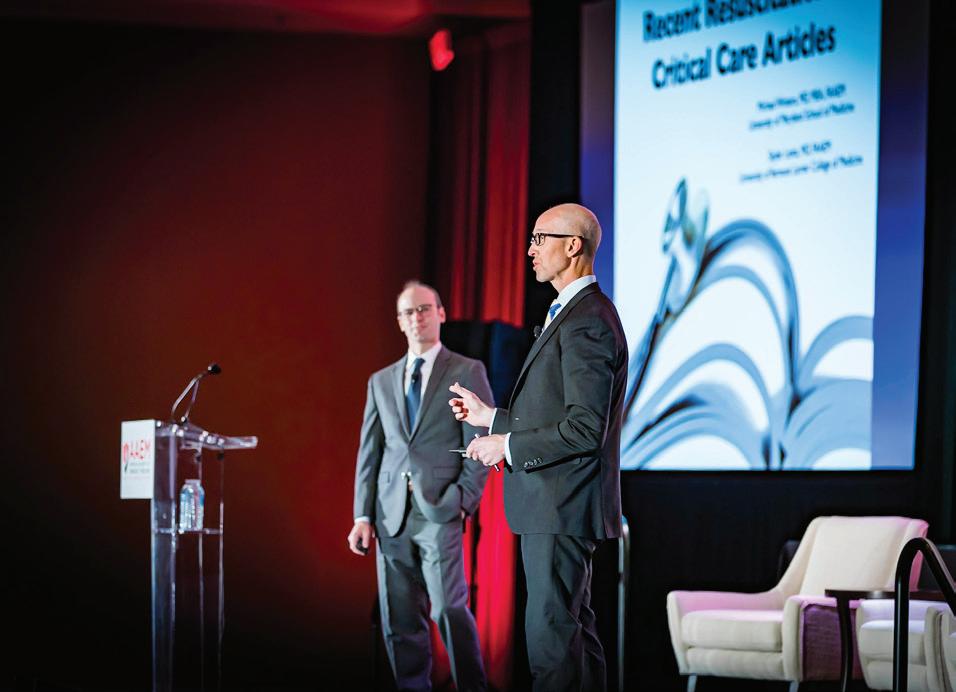
Powerhouse plenaries included Drs. Amal Mattu (Cardiology), Michael Winters and Skyler Lentz (Resuscitation and Critical Care), Ilene Claudius and Mimi Lu (Pediatrics), Mercy Hylton and Vicki Norton (Advocacy), and Wendy Chang (Neurology.) Panel discussions ruled the plenary stage: Dr. Leon Adelman led a conversation on emergency medicine unions with Drs. Bryce Pulliam, David Levin, and Sean Codier; Drs. Melanie Heniff and Joseph Wood gave a medical-legal crash course in “Mini Law School for Physicians” with moderator Dr. Malia Moore; and Dr. Harman Gill delved deep into the changing literature on transfusion practices in trauma with Drs. Luke Duncan and Michael Ditillo.
This year’s keynote speaker was Dr. Gita Pensa. Recounting the story of her own transformative journey through 12 years of grueling litigation and pulling from the wealth of knowledge amassed in her role as a performance and well-being coach for medical defendants, she uncovered the realities that often go unspoken and posed a clarion call to action in “Doctors and Litigation: Time for a New Paradigm.” Attendees left the presentation feeling inspired, hopeful, and ready to create change.
The ever-popular Breve Dulce sessions returned this year and continued to be some of the most attended sessions of AAEM24. The interactive Small Group Clinic sessions gave attendees hands-on practice in a variety of settings. The AAEM/RSA Track—selected by residents, for residents—prepared students for their careers in emergency medicine with presentations on clinical topics, career success, and a hands-on ultrasound workshop.
We had an energetic group of medical student ambassadors, who were omnipresent and ever helpful in keeping the conference going. Special educational sessions were targeted toward their benefit. Thank you, student ambassadors!
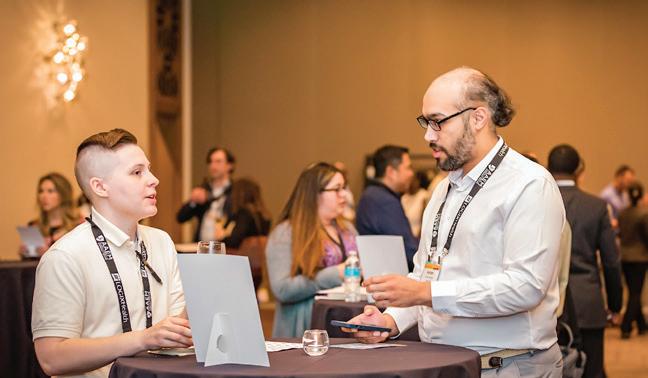
There were also a wide variety of networking opportunities available at Scientific Assembly. Whether in the hallways, at receptions, or near the coffee stations during breaks, the level of
interaction between attendees was high. The JEDI off-site reception, Women in EM networking lunch, and the RSA Party were all highly anticipated and attended. The engagEM! social was a novel and fun event for attendees to engage with the committees, sections, chapter divisions, and interest groups within AAEM. The Wellness Committee provided offerings such as Airways Storytelling, Paint ‘N Sip, Lost in Austin walking tour, a Mental Health Action Plan Workshop, and the Wellness Room.
The highlight of the social calendar was the 30th Anniversary Gala. Elegance and mystery converged in an atmosphere dripping with glamour straight out of a classic spy film. Agents infiltrated, networked, and danced the night away to a live band in support of the AAEM Foundation. Thank you to all the undercover operatives who completed this crucial mission.
We sincerely hope that you enjoyed the Assembly this year. Our goal is to continue in the tradition of bringing in a combination of your perennial favorites and some new speakers to keep you educated, inspired, and coming back every year for more.
Please let us know your thoughts and we hope to see you in Miami in 2025!
 Christopher Colbert, DO FAAEM, Co-Lead Molly K. Estes, MD FAAEM FACEP, Co-Vice Lead Zachary Repanshek, MD FAAEM, and Co-Vice Lead Julie Vieth, MD FAAEM
13
30th Annual SCIENTIFIC ASSEMBLY

SCIENTIFIC ASSEMBLY PLANNING WORK GROUP
Co-Leads
Christopher Colbert, DO FAAEM
Molly K. Estes, MD FAAEM FACEP
Co-Vice Leads
Zachary Repanshek, MD FAAEM
Julie Vieth, MD FAAEM FACEP
Members
Kene A. Chukwuanu, MD FAAEM
Harman S. Gill, MD FAAEM
Michael Gottlieb, MD FAAEM
Matthew N. Graber, MD PhD FAAEM
Siamak Moayedi, MD FAAEM
Andrew W. Phillips, MD MEd FAAEM
Eric M. Steinberg, DO MEHP FAAEM
Kathleen M. Stephanos, MD FAAEM
AAEM/RSA Representative
James Dean, MD
Advisors
Laura J. Bontempo, MD MEd FAAEM
Christopher I. Doty, MD MAAEM FAAEM
Kevin C. Reed, MD FAAEM
Joanne Williams, MD MAAEM FAAEM
George C. Willis, MD FAAEM
Breve Dulce Work Group
Jason Adler, MD FAAEM
Kimberly M. Brown, MD MPH FAAEM
Sarah B. Dubbs, MD FAAEM
Ryan C. Gibbons, MD FAAEM
Diana K. Ladkany, MD FAAEM
Thomas P. Noeller, MD FAAEM
Zachary Repanshek, MD FAAEM
Sherri L. Rudinsky, MD FAAEM
Kathleen M. Stephanos, MD FAAEM
Ad Hoc Members
AAEM Board President
Jonathan S. Jones, MD FAAEM
AAEM President-Elect
Robert A. Frolichstein, MD FAAEM
AAEM Secretary-Treasurer
L.E. Gomez, MD MBA FAAEM
AAEM Immediate Past President
Lisa A. Moreno, MD MS MSCR FAAEM FIFEM
AAEM Past Presidents Council Representative
Tom Scaletta, MD MAAEM FAAEM
Education Committee Chair
David J. Carlberg, MD FAAEM
Education Committee Vice Chair
Michael E. Silverman, MD MBA FAAEM FACEP
Education Committee Board Liaison
Laura J. Bontempo, MD MEd FAAEM


Total Registered for AAEM24: 1198
Exhibitors: 64
Sponsors: 10
Number of speakers: 192
Number of posters: 301
Number of oral abstract presentations: 301
Number of awards awarded: 30
Number of Airways at AAEM attendees: 160
Number of WiEM lunch attendees: 70
Number of JEDI social attendees: 56
Number of Wellness Paint ‘N Sip participants: 18
Number of Lost in Austin – Walk with Wellness participants: 26
Number of 30th Anniversary Gala attendees: 102
Oral Board Examiner Dinner Dinner: 29
CCMS After Dark attendees: 20
engagEM: 250
RSA Party: 297
Leadership Academy: 60
New Attendee Reception: 220


14
30th Annual SCIENTIFIC ASSEMBLY


2024 AAEM Award Winners

Advocate of the Year
Mercy Hylton, MD FAAEM

Amin Kazzi International Emergency Medicine Leadership Award
Eva Tovar Hirashima, MD FAAEM

David K. Wagner Award
Gary M. Gaddis, MD PhD MAAEM FIFEM

James Keaney Award
Allie Min, MD FAAEM

Joanne Williams Award
Gayle Galletta, MD FAAEM

Joe Lex Educator of the Year Award
Christopher Colbert, DO FAAEM

Joe Lex Educator of the Year Award
Molly Estes, MD FAAEM

Master of the American Academy of Emergency Medicine (MAAEM)
William G. Gossman, MD FAAEM

Master of the American Academy of Emergency Medicine (MAAEM)
Marianne Haughey, MD FAAEM
Resident of the Year Award
Heath Spencer, DO

Robert McNamara Award
Michael C. Bond, MD FAAEM FACEP


Young Educator Award
Cortlyn Brown, MD FAAEM

15
30th Annual SCIENTIFIC ASSEMBLY

AAEM24 COMPETITION WINNERS
AAEM/JEM Resident and Student Research Competition
1st Place: Karen Patricia Reyes
2nd Place: David A. Berger, MD FAAEM
3rd Place: Gopal Topiwala
AAEM/RSA & Western Journal of Emergency Medicine Population Health Research Competition
1st Place: Arthur Forbinger, MD
2nd Place: Mit Patel, MD
3rd Place: Parnika Telagi
CCMS-AAEM Breveloquent Competition
1st Place: Anthony Aswad, DO
2nd Place: Devin Dromgoole, DO
3rd Place: Katie Currie, MD
Open Mic Competition Winner
Lena Carleton, MD
Mitchell Zekhtser, MD
YPS-AAEM Research Competition
1st Place: Jeremy Kaswer, MD
2nd Place: Stephanie Costa, MD
3rd Place: Neeharika Bhatnagar, MD FAAEM
AAEM/RSA Resident Breve Dulce Competition
1st Place: Anis Adnani
2nd Place: Harshit Terala

SOCIAL MEDIA AT AAEM24
AAEM Twitter Impression: 11,000 Instragram Impressions: 5,400 Facebook Impressions: 9,200 LinkedIn Impressions: 2,900
AAEM/RSA Twitter Impressions: 1,900 Instagram Impressions: 10,000
Facebook Impressions: 938
LinkedIn Impressions: 125


AAEM Social Media Impressions: 28,500 AAEM/RSA Social Media Impressions: 12,963 Social Media Impressions (Overall): 41,463


16
30th Annual SCIENTIFIC ASSEMBLY


AAEM/RSA at AAEM24
246
as Student Ambassadors
2 residents presented in the AAEM/RSA Breve Dulce Competition 11 lectures presented during the AAEM/RSA Resident Track 75 medical students participated in the Medical Student Track 25 medical students competed in the second AAEM/RSA & EUS-AAEM Sim Sono Sleuthing Case Challenge


2023-24 AAEM/RSA Award Winners


Faculty Mentor of the Year
Brian Barbas, MD FAAEM
Midwest Regional Faculty Mentor Award
Kene Chukwuanu, MD FAAEM
Northeast Regional Faculty Mentor Award
Elisabeth Calhoun, MD FAAEM
Southern Regional Faculty Mentor Award
Al’ai Alvarez, MD FAAEM
Western Regional Faculty Mentor Award
Johnathon Lowe, DO FAAEM
Program Coordinator of the Year
Nikki Hansen
Student Committee Member of the Year
Mel Ebeling
Kevin G. Rodgers Program Director of the Year
Jillian Phelps, MD FAAEM


National Medical Student of the Year Scholarship Award
Katy Wyszynski
Northeast Regional Medical Student of the Year Scholarship Award
Alex Sneddon
Northeast Regional Medical Student of the Year Scholarship Award
William Zhu
Western Regional Medical Student of the Year Scholarship Award
Kelsey Newbold
Southern Regional Medical Student of the Year Scholarship Award
Tiffany Hanson
International Regional Medical Student of the Year Scholarship Award
Kadie Stephens
EMIG of the Year Award
Loyola University Chicago Stritch School of Medicine
residents attended AAEM24 110 students attended AAEM24 16 medical students volunteered
17
New Board of Directors
AAEM is proud to welcome the newly elected board of directors!


President
Robert Frolichstein, MD FAAEM

Immediate Past President
Jonathan S. Jones, MD FAAEM

At-Large Director
Heidi Best, MD FAAEM

At-Large Director
Frank L. Christopher, MD FAAEM

At-Large Director
Bruce Lo, MD MBA RDMS FAAEM

YPS Director
Haig Aintablian, MD FAAEM

CEO, AAEM-PG
Ex-Officio Board Member
Mark Reiter, MD MBA MAAEM FAAEM

President-Elect
Vicki Norton, MD FAAEM

Secretary-Treasurer
Phillip A. Dixon, MD MBA MPH FAAEM
CHCQM-PHYADV
Past Presidents Council
Representative Tom Scaletta, MD MAAEM FAAEM
At-Large Director
Laura J. Bontempo, MD MEd FAAEM

At-Large Director
Fred E. Kency, Jr., MD FAAEM

At-Large Director Kevin C. Reed, MD FAAEM

AAEM/RSA President Mary Unanyan, DO
At-Large Director
Kimberly M. Brown, MD MPH FAAEM
At-Large Director
Robert P. Lam, MD FAAEM
Editor, JEM
Ex-Officio Board Member
Stephen R. Hayden, MD FAAEM

At-Large Director
Kraftin Schreyer, MD MBA FAAEM
Editor, Common Sense
Ex-Officio Board Member
Edwin Leap, MD FAAEM
AAEM BOARD OF DIRECTORS
COMMON SENSE MAY/JUNE 2024 18
Section Leadership
Critical Care Medicine Section


Chair
David Hirsch Gordon, MD FAAEM

Chair Elect Allyson M. Hynes, MD FAAEM FACEP

Secretary/Financial Chair Frederick Gmora, DO FAAEM

Immediate Past Chair
Elias E. Wan, MD FAAEM
Councilors: Jeremy Kaswer, MD, Kaitlyn De Stefano, DO, Lindsay Ritter, MD FAAEM, Oluwafemi P. Owodunni RSA Rep Joshua Culberson
Emergency Medical Services Section

Councilors:

Erin Kane, MD MHPE FAAEM
Rachel Ely, DO FAAEM FAEMS
Emergency Ultrasound Section

Councilors:

Andrew W.


Katherine Raczek, MD FAAEM FACEP FAEMS

Ryan Newberry, DO MPH EMT-P FAAEM FAEMS

Chair

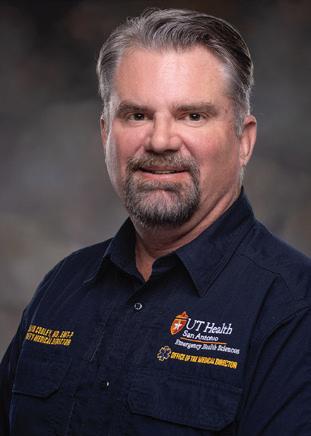


Craig Cooley, MD MPH

Scott Goldstein, DO FACEP FAEMS FAAEM EMT-PHP/T

Chair Elect
Secretary/Financial Chair
Stephanie M. Marrero Borrero, MD
Immediate Past Chair
Bryan Everitt, MD FAAEM

RSA Reps: Salvatore Aiello, PhD and Samuel (Rob) Hornberger

Secretary/Financial Chair
Shawn J. Sethi, DO FAAEM

Theophanous,

RSA

Immediate Past Chair
Neeharika Bhatnagar, MD FAAEM

AAEM LEADERSHIP
Alexis Salerno, MD FAAEM
Joshua Guttman, MD FRCPC FAAEM
Shannon, MD MPH FAAEM FPD-AEMUS
Kathlene Babalola, MD FAAEM
Kendra Mendez, MD FAAEM FPD AEMUS
Rebecca
MD MHSc FAAEM FACEP
COMMON SENSE MAY/JUNE 2024 19
Reps: Denise Elizondo, DO and Harshit Terala, DO
Justice, Equity, Diversity, and Inclusion Section

Councilors:



Secretary/Finance





Treasurer

Operations Management Section


Secretary/Financial

Councilors:


AAEM LEADERSHIP
Chair
Kristyn J. Smith, DO
Chair Elect
Valerie A. Pierre, MD FAAEM
Chair
Alyssa Eily, MD
Immediate Past Chair
Cortlyn Brown, MD FAAEM
JeVaughn Henry Jordan Vaughn, MD
Mel Ebeling Shawntaye Williams
RSA Reps: Adetoriola (Tori) Odetunde, MD MPH and Hanna Hussein, MD
Chair
Algis J. Baliunas, MD FAAEM
Chair Elect Akiva Dym, MD FAAEM
Chair
Tom Scaletta, MD MAAEM FAAEM
Immediate Past Chair
Anthony R. Rosania III, MD FAAEM
Jack Allan, MD
Jessica Schumann, DO Kelly Dougherty, MD
Kendall I. Moore, MD MBA FAAEM
Luke Weber, MD
Immediate Past Chair
Pamela A. Ross, MD FAAEM
Secretary Saba Rizvi, MD FAAEM
Locum Tenens Section
Trecia Henriques, MD FAAEM
Councilors:
Raviraj Patel, MD FAAEM
Harrison Lobdell, MD
COMMON SENSE MAY/JUNE 2024 20
Russ Reinbolt, MD FAAEM
Women in Emergency Medicine Section


Chair Molly Estes, MD FAAEM
Councilors:

Young Physicians Section


Councilors:


Chair Elect Elisabeth Calhoun, MD MPH FAAEM


Secretary/Financial Chair Cara Kanter, MD FAAEM


Chair
Jennifer Rosenbaum, MD FAAEM


Chair Elect Nicholas Boyko, DO


Secretary/Financial Chair Jack Allan, MD

Interest Group Leadership
Aging Well in Emergency Medicine Interest Group

Co-Chair
Gary Gaddis, MD PhD MAAEM FAAEM FIFEM

Co-Chair
Marianne Haughey, MD FAAEM
Rural Medicine Interest Group

Chair Christopher M. Tanner, MD FAAEM

Vice Chair
Robyn Hitchcock, MD FAAEM

Immediate Past Chair
Danielle E. Goodrich, MD FAAEM

Immediate Past Chair
Moiz
MD MBA FAAEM
Simulation Interest Group

Co-Chair
Afrah Abdul Wahid Ali, MD MBBS FAAEM

Co-Chair
Rose V. Goncalves, MD FAAEM
AAEM LEADERSHIP
Elspeth Pearce, MD FAAEM
Deborah Fletcher, MD FAAEM
Jennifer McGowan, MD FAAEM
Kathleen Stephanos, MD FAAEM
RSA Rep Camellia Nabati, MD
Jennifer McGowan, MD FAAEM
Kelly Dougherty, MD
Michelle Romeo, MD FAAEM
Robert Whitford, MD FAAEM
RSA Rep To Be Announced!
Qureshi,
Alex Stern, MD
COMMON SENSE MAY/JUNE 2024 21
Committee Leadership
Academic Affairs Committee

Chair
Sangeeta Sakaria, MD MPH MST FAAEM

Vice Chair
Gabriel Sudario, MD FAAEM
Chapter Division Committee

Chair TBD
Vice Chair
Jeff A. Baker, MD FAAEM
Education Committee

Chair
Michael E. Silverman, MD MBA FAAEM FACEP
Ethics Committee

Chair
Melissa Myers, MD FAAEM
Vice Chair
Kathleen M. Stephanos, MD FAAEM

Vice Chair
Alfredo E. Urdaneta, MD FAAEM
International Committee
Co-Chair
Christine T. Knettel, MD FAAEM

Co-Chair
Terrence M. Mulligan, DO MPH FAAEM FACOEP FIFEM FACEP FNVSHA FFSEM HPF
Business Partnership Committee

Chair
Tom Scaletta, MD MAAEM FAAEM

Vice Chair Dilan Patel, MD
Clinical Practice Committee

Chair
Robert L. Sherwin, MD FAAEM

Vice Chair
Bradley E. Barth, MD FAAEM
Emergency Medicine Workforce Committee

Chair
Joshua T. Bucher, MD FAAEM

Vice Chair
Deborah D. Fletcher, MD FAAEM
Government and National Affairs Committee

Co-Chair
William T. Durkin Jr., MD MBA MAAEM FAAEM

Vice Chair
Johnathon K. Lowe, DO FAAEM

Co-Chair
Gregory N. Jasani, MD FAAEM

Vice Chair
Anthony R. Rosania, III, MD FAAEM
Latin American/Hispanic Health & Education Committee

Chair
Victor M. Cisneros, MD MPH CPH FAAEM

Vice Chair
Juliana Jaramillo, FAAEM

Vice Chair
Faith C. Quenzer, DO MPH FAAEM
AAEM LEADERSHIP
COMMON SENSE MAY/JUNE 2024 22
Legal Committee

Chair
Malia J. Moore, MD


 FAAEM
Vice Chair
Melaine S. Heniff, MD JD MHA
Chair Shana EN Ross, DO MS FAAEM FACEP
Membership Committee
FAAEM
Vice Chair
Melaine S. Heniff, MD JD MHA
Chair Shana EN Ross, DO MS FAAEM FACEP
Membership Committee
AAEM LEADERSHIP
Vice Chair TBD
Pain and Addiction Committee
Chair Jessica Moore, MD FAAEM
Vice Chair Samantha Huo
Palliative Care Committee
Chair Margaret Putman, DO FAAEM
Vice Chair Bruce R. Gutierrez, DO
Chair
Allison Zanaboni, MD FAAEM
Vice Chair TBD
Section Leadership Committee
Social EM and Population Health Committee
Chair
Faith C. Quenzer, DO MPH FAAEM
Vice Chair Jordan Vaughn, MD
Social Media Committee
Chair
Danya Khoujah, MBBS MEHP FAAEM
Vice Chair TBD
Wellness Committee
Co-Chair
Neeharika Bhatnagar, MD FAAEM
Co-Chair
Jennifer Kanapicki Comer, MD FAAEM
COMMON SENSE MAY/JUNE 2024 23
Vice Chair TBD
Live a Good Story
Chris Neuman, MD FAAEMIt all started with the “The Phone Call.” Every parent’s nightmare. This particular afternoon, it came about 1:30pm, from one of Josh’s LA friends. Josh was currently in Iceland, shooting content for a clothing company. After the first five seconds of silence, I already knew. The sightseeing Cessna that Josh was on, was missing. No SOS signal, no distress signal, no flight plan, and no idea where it was. It hits you like the classic subarachnoid hemorrhage description—like a thunderbolt.

Being an EM physician, and my wife an inpatient pharmacist, we immediately go into damage control mode, getting down to business. We called the American Embassy in Iceland, got our flights for the next day, got our Covid tests (it was in the middle of Covid), notified family and friends, and got all of February shifts covered (thank you Universal Physician Services and Princeton/ Bluefield WV Hospital for that).
I happened to be looking at Find My Friends again, and it showed an exact location for one of Josh’s devices, right in the middle of Lake Pingvallavatn…I looked at my phone the next morning, and the location was gone.”
The American Embassy stated that they had no idea where the plane was. No idea. I looked at Find My Friends and it would only give me “last known location,” a circle of around 50 to 100 miles. The police started a search consisting of 1000 volunteers, the coast guard, police, and Danish helicopters. Sleep did not come easy that night
We get on the plane that morning, flying through JFK to Reykjavik, and while waiting for our connection, we get a phone call stating that they found the plane, 150 feet under water—and no survivors. The police said that they never would have found the plane without my snapshot of Find my Friends. They weren’t even searching within 50 miles of the accident. In retrospect, I realize that it was God, pointing us in the right direction with the fleeting screenshot of where the plane was.
I now finally understand how people “fall out,” because I felt like life was just sucked out of my body and I no longer had control, right in the middle of the airport lounge. The absolute worst thing that could ever happen, did happen.

and I woke up around 2:00am to call Verizon to see if they could help with pinging his phone. Unfortunately, they could not. But then I happened to be looking at Find My Friends again, and it showed an exact location for one of Josh’s devices, right in the middle of Lake Pingvallavatn. I took a snapshot, sent it to the Embassy and went back to a very restless sleep until the morning. I looked at my phone the next morning, and the location was gone.
To add insult to injury, they couldn’t find the bodies for two more days (they weren’t in the plane) and couldn’t retrieve the bodies for four more days after that due to weather. After the recovery, we spent another week in Iceland waiting for the autopsy, release of his body, a service over Zoom for family, cremation, and a huge amount of bureaucratic paperwork to bring him home with us. All in all, two weeks in Iceland just to bring our son home.
>> COMMON SENSE MAY/JUNE 2024 24
It is funny to us, how everyone has a different approach to tragedy. The advice we received about grieving was all over the place. From, “he’s in a better place,” to “do you have any other children?” and my favorite, “you know, 70 percent of marriages don’t survive the death of a child.” Huh? Well, Kristin and I looked at each other and promised that it would not be us. We realized that we will grieve differently and we gave each other permission (and our other son) to say anything we feel, no matter how ugly, morbid, or disgusting it was, without any judgement.
I especially grieve not seeing what he would have done for the world if he lived a full life. It would have been epic.”
to retrieve the plane until two months later when the lake thawed out) to the overwhelming feeling of His presence during the weeks we were in Iceland, and even to the people that He has brought into our lives since this tragedy. God has been with us. In fact, my personal relationship with God has gotten even stronger. I talk honestly to Him all the time. Even in the middle of this tragedy, I never questioned Him. I knew that He would make something great come from this.
My wife tried to go back to work that next month, but felt she could not do her job safely. So she took the next three months off. Me? Well I went back to work full time the next month. Like many males, and probably EM physicians, I am very good at compartmentalizing, and felt OK even while working. The first few weeks back were strange. People were afraid to talk to me, and it was literally the elephant in the room. Everyone who works with me, knows how much I like to talk about my children and how proud I am of them. That didn’t change. A trauma surgeon that I know, did one of the nicest things she could for me. She didn’t say anything, she just gave me a great big hug.
We started counseling the next month, but honestly, didn’t get a whole lot out of it. Both my wife and I are intellectual enough to know what we need to do. And there are only so many times you can be told “it’s OK to feel what you are feeling,” to validate your emotions. Now, two years out, people ask us how we are making it through all of this. Simply stated, it is our faith in God and our ability to communicate honestly with each other. No other way around it.
We do feel that God has been with us from the beginning. From the Find My Friends location at 2:00am that later disappeared, to the recovery of the bodies before the lake froze over the next day (they didn’t even bother
And that brings us to the foundation.

It was on day three, before they discovered the bodies, that my wife and I looked at each other, and almost at the same time, stated that this would not be the end of Josh’s story. For the next chapter in Josh’s story, we started the Josh Neuman Foundation. The Foundation’s main goal is to continue Josh’s legacy of helping those without access to clean water, food, and shelter. To understand this, you need to understand a little about Josh.
Josh was bit of a social media celebrity. He was a professional downhill longboarder and had 1.2 million followers on his YouTube channel. He used this to chronicle his adrenaline junkie side, skydiving, cliff jumping, hiking, and longboarding. He was the subject of commercials for GoPro,

LIVE A GOOD STORY
>> COMMON SENSE MAY/JUNE 2024 25
Brook’s Brothers, MotorTrend, Prada, and still has an LG commercial showing in Times Square in NYC.
Despite this, he was very compassionate. He felt very blessed and wanted to leave the world a better place. He used his social platform to encourage others to “live a good story.” He was very open about his mental health struggles. He designed a sweatshirt line, and used all of the proceeds to build a water well in Uganda. He had been on mission trips with his family. He donated his time to numerous charities. He even spent his 22nd birthday, serving at a food pantry in LA. Just prior to his accident, he was designing a new sweatshirt line to benefit mental health and suicidal prevention initiatives. And the list goes on.
His death made national news. We received too numerous to count texts and emails from people all over the world, whom Josh has touched. Forty people came to know Christ at his memorial service.
My speech at his memorial service was about how fathers can only hope to inspire their children. But this was the opposite. Josh inspired me. He took the best qualities from Kristin and me, and put them together to become better than both of us. He inspired people from all generations. I’ve been told by friends that he was a unicorn.
And all of this, at only 22 years old. Grief.
I don’t even know where to start. It has been over two years since Josh died, and we don’t feel it has gotten any better. Different—yes, better—no. We have been through all of the “stages” of grief. Sometimes all in one day. People who haven’t walked in these shoes will never understand. We feel that God has opened our eyes (we call it “neuvision,” the name of Josh’s company) to others that suffer. We see things differently now. I have more compassion for those that suffer, but less for those don’t.
People feel that grief is a condition that needs to be fixed, to be gotten through. But it is not. I read a book by the preacher Levi Lusko, “Through the eyes of a Lyon.” It is about his five-year-old daughter who died from an asthma attack. He described grief, not as something you fix or get through, but something that you just get stronger at carrying. I understand. It never goes away. I do not grieve because Josh is in heaven, but because he is not with us. I grieve the future adventures we will never go on. I grieve not seeing him get married, not holding little Josh grandchildren, not hearing his voice, not getting annoyed at his stupid sense of humor. I especially grieve not seeing what he would have done for the world if he lived a full life. It would have been epic

Sometimes I welcome the grief. Because without the grief, I won’t feel the love. It is a small price to pay to be close to my son, to feel his presence, to cherish the memories. There may be days that I don’t cry, but there are just as many that I do. Even two years out. I wake up every morning, and just feel something is missing, something is not right, a physical hole in my gut and a pain in my heart. It never goes away.
Is this the way I have to live the rest of my life? Occasional laughter with happiness thrown in between, but no true joy, no true peace, no true contentment. I have no idea. Well, God obviously has a plan for us. Is it the foundation? Is it continuing as an EM physician? Is it serving others? I don’t know, but I surrender, and will let God take me where he wants. I am a broken person, and God uses broken people.
I have been told that the happy talkative Dr. Neuman at work has become an “angry” Dr. Neuman. That may be so, but it is a righteous anger. I am more compassionate for patients, but less so for the business of medicine. I am tired of too many people making decisions for their own benefit, not the patient’s. The old Dr. Neuman is not coming back.
So where does that leave me? I am winding down my career, but always see myself working. In what capacity? No idea. Like most of you, I love taking care of patients, but hate the business of medicine. I worry about what medicine will look like when my wife and I become older and actually need physicians. I worry about retirement. I worry about how I will be leaving this world to my other son. I want to live by Josh’s five core values:
1. Do something because you are passionate about it.
2. A number will never make you happy.
3. If you don’t fail, you aren’t pushing yourself hard enough.
4. If you’re doing what you love, don’t worry about what others think. Because those who mind, don’t matter, and those that matter, don’t mind.
5. Life begins where your comfort zone ends.
Please go to theJNF.org or scan the code below to read more about the Josh Neuman Foundation and to read about Josh. We are continuing Josh’s legacy of helping those without access to clean water, food, and shelter, and leaving this world in better shape than we found it.
Most importantly, as Josh would say, “live a good story.”
joshneumanfoundation.org/
LIVE A GOOD STORY
COMMON SENSE MAY/JUNE 2024 26
Championing Flexible Scheduling for Pregnancy and Parenthood in Emergency Medicine
Elspeth Pearce, MD FAAEM
If you are waiting for the right time, it will never come. This adage is used frequently in all realms of work and personal life to prompt individuals to take a chance before all conditions are perfect. I have heard it time and time again regarding being a woman in medicine and family planning. The best time to plan a pregnancy often physiologically overlaps with some of the most difficult years in training and beginning our careers. If we don’t want to sacrifice progress in our careers, we have tough choices to make. We can try to “have it all” and balance long hours with a growing family, or we wait to have an established stable career and risk infertility and miscarriage. Either choice increases the health risk to the pregnant physician and the unborn child.1-9 Emergency medicine physicians have the added risk of shift work. Rapid cycling between night and day shifts significantly increases the risk of pregnancy complications including miscarriage, preterm labor, and intrauterine growth restriction, among other complications.1-5,8,9
The United States is woefully behind other countries when it comes to supporting pregnancy, breastfeeding, and parental leave.10 The federal government provides some guidance through legal frameworks like the Pregnant Workers Fairness Act, the Family and Medical Leave Act (FMLA), and the PUMP Act, but there are still significant hurdles for pregnant physicians in prioritizing personal health without compromising their professional duties. Emergency physicians work in an environment unlike many other medical careers, and as such, we should go above and beyond the bare minimum standards to support our colleagues. The AAEM Joint Young Physician Section and Women in Emergency Medicine Section Position Statement on Scheduling Recommendations During Pregnancy, the Postpartum Period, and Parental Leave outlines
the need for flexible scheduling initiatives including eliminating night shifts in the first and third trimesters, allowing exemptions for working over contract hours in the third trimester, and providing adequate time and resources for pumping while on shift.11 It also presents scheduling and staffing considerations regarding the increasingly common medical needs for situations of fertility treatments and miscarriages.11
As emergency physicians, we frequently care for others who experience pregnancy complications and loss, and we empathize with this vulnerable time in their lives. I would bet that you know colleagues who have struggled through similar circumstances. As AAEM board member Dr. Kraftin Schreyer states, “As both a medical director and mother, who oversees the schedules for a large ED group and has been through every iteration of pregnancy outlined in this position statement, I can say this is much needed. I’m very proud to stand behind a statement that promotes the health of mother and baby in a way that is the most fair and equitable to the larger ED group.” By embracing flexibility in scheduling, we’re creating a culture of care and compassion that resounds throughout our individual departments and our specialty. Well-supported physicians are happier, more productive, and less likely to experience burnout or turnover, which ultimately benefits the entire healthcare system.12
As part of the working group on this statement, I have spent a lot of time reflecting on what this position statement means to me personally. I am a woman in medicine without children. For now, I am in the demographic of EM physicians who would be creatively scheduled to help others achieve their family goals. From that perspective, I see this position statement as progressive and equitable, and I am delighted that the AAEM board agreed. Lead author of the position statement, Dr. Jennifer Rosenbaum,
Continued on page 32 >>

With thoughtful planning, collaboration, and a commitment to shared goals, flexible scheduling can be successfully implemented to the benefit of all. Now is the right time.”
WOMEN IN EMERGENCY MEDICINE SECTION
COMMON SENSE MAY/JUNE 2024 27
San Antonio EMS Fellowships: A Unique Partnership
Craig Cooley, MD MPH EMT-P FACEP FAAEM FAEMS,* Bryan Everitt, MD NRP FAAEM, † Rachel Ely, DO MHA MPH NRP FAAEM FAEMS, ‡ and Ryan Newberry, DO MPH NRP FAAEM FAEMS §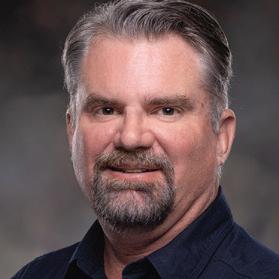


Introduction
Many advances in civilian trauma and prehospital care have stemmed from the evolution of military combat casualty care. However, translating these directly into the civilian world can be challenging and often needs to be adapted to the civilian environment for effectiveness. The approach to emergent prehospital care taken from the combat environment also often depends on the available system. For example, the United Kingdom (UK) military has developed a physician-led prehospital advanced trauma team that has published evidence of improved outcomes compared to current U.S. military medevac platforms. This UK physician-led prehospital team shares its roots with the physician-led teams of London’s Air Ambulance (LAA), thus creating a natural exchange of innovations between military and civilian prehospital physicians.
In contrast, the current U.S. civilian and military prehospital models are built around a paramedic and the assumption that the transport time to definitive care will be less than one hour. As violent and traumatic injuries continue to evolve across the U.S., the current EMS system will unlikely have the capabilities to improve upon present day patient outcomes without significant innovation. To address these concerns, one solution to consider is to enhance the ability of EMS systems to bring the capabilities of the emergency department and critical care to the patient. The next advances in trauma care that will improve survivability will come from finding the balance between maximizing the capabilities of a first responder and optimizing the niche of the prehospital physician who can deliver critical care at the point of injury. However, recognizing that physicians are rarely utilized in the U.S. prehospital system, we do not currently have a model in place to improve upon.
Given this long relationship between the practice of prehospital care in times of peace and under threat, a partnership between training platforms for aspiring EMS physicians is a relevant and worthwhile result. For 12 years the EMS fellowships at the University of Texas Health San Antonio (UTHSA) and San Antonio Uniformed Services Health Education Consortium (SAUSHEC) have partnered to train fellows as EMS experts. This partnership has served to promote physician presence in the field, as well as foster the exchange of information and innovation between the military and civilian community.
UTHSA Program
The EMS Fellowship at the University of Texas Health Science Center at San Antonio was established in 2012 in parallel with the military program. The one-year ACGME accredited program provides the educational foundation and practical experience for physicians wanting to advance their career in prehospital medicine. Currently, the program accepts up to three fellows per year, and funds the response vehicles for both programs’ fellows, allowing physicians to contribute critical decision-making skills at the scene of patient care, as well as to facilitate advanced physician-only procedures to be performed in the prehospital setting.
SAUSHEC Program


The Military EMS and Disaster Medicine Fellowship was established in 2012 to train physicians who would subsequently influence battlefield care and reduce preventable deaths. This tri-service program, housed within the San Antonio Uniformed Services Health Education Consortium (SAUSHEC) at Brooke Army Medical Center (BAMC), is two years in length and trains two to four fellows per academic year. The first year is an ACGME-accredited EMS fellowship focusing on the fundamentals of prehospital care and takes place predominantly in the civilian setting in parallel with UTHSA fellows and faculty. In the second year of training, fellows shift focus to military EMS systems as well as disaster response. Fellows complete a Master of Public Health over the course of the two years of training. Graduates go on to serve in various roles within their respective branch of service, to include leadership in installation EMS, clinical roles such as forward resuscitation teams or critical care air transport, trauma system development, and medical direction for training platforms for military medics and the special operations pipeline.
Benefits of the Partnership Strength in Numbers
One of the significant benefits of the relationship between the UTHSA and SAUSHEC programs is our numbers. The two programs have a complement of eleven EMS physician faculty, a Ph.D. researcher and prehospital practitioner, and nine fellows currently. The depth of the faculty roster allows for a structured weekly didactic curriculum and input
EMERGENCY MEDICAL SERVICES SECTION
>> COMMON SENSE MAY/JUNE 2024 28
In our experience, the increased physician field presence has resulted in the building of trust and comradery not previously seen between the OMD and SAFD.”
from various perspectives and experiences relevant to both the military and civilian settings. Faculty can also support a great deal of direct field supervision, especially early in the academic year, allowing specific feedback on topics such as emergency vehicle safety, online medical control, interprofessional interactions, and systems-based care. Fellows and faculty support several recurring formal teaching endeavors for prehospital practitioners in multiple organizations, including San Antonio Fire Department; Bexar, Wilson, Kerrville, Comal County EMS agencies; JBSA Fire and Emergency Services; and Lackland Air Force Base EMS, without undue responsibility on any single fellow or faculty instructor.
Field Response
While physicians have had a role in prehospital care in the United States since the 1960s, it has generally been behind-the-scenes, with physicians available via radio or phone for consultation but rarely spending time in the field. Dedicated physician response vehicles, similar to those currently utilized by the LAA and other UK systems, are a relatively new concept in the US. A Prehospital Emergency Care published survey in 2000 showed only two of the most populous cities in the United States had dedicated field response units for physicians, with 71% of cities surveyed having no physician field response capabilities at all.1 While anecdotally, these numbers have improved since 2000, there is not a currently published percentage. According to the National Association of EMS Physicians, less than 5% of U.S. helicopter EMS services are staffed with a physician. For the current U.S.-based EMS agencies with EMS physician field response capabilities, national standards or guidelines for staffing and equipping a physician response vehicle do not exist.
The San Antonio Fire Department (SAFD) is a metropolitan fire department that is the sole 911 provider for the seventh largest city in the United States and services approximately 1.4 million residents within a 460-square-mile area. SAFD provides emergency medical services with both first responder basic life support (BLS) and advanced life support (ALS) paramedic response fire companies and 35 dual paramedic (ALS) ambulances. Annually, SAFD responds to approximately 158,000 emergency medical incidents and 1200 out-of-hospital cardiac arrests (OHCAs). The UT Health San Antonio Office of the Medical Director (OMD) provides medical oversight for SAFD.
Prior to 2016 physician presence in the field in San Antonio was sporadic and was often limited to the training of EMS fellows or pre-planned largescale events. Funding eventually allowed the first dedicated fellow response vehicle in March 2017. Currently, between OMD and the UTHSA fellowship, there are six dedicated physician response vehicles: one for
the medical director, one for the deputy medical director, two other rotating vehicles for EMS faculty, and one primary and one secondary vehicle for the EMS fellows. The primary fellow vehicle is utilized on a weekly basis during scheduled street shifts during peak times, always staffed with two physicians. The secondary vehicle is a rotating take-home vehicle and is available 24 hours per day via dispatch by SAFD.
As there are currently no standards or guidelines regarding staffing or equipping such vehicles, the OMD has opted to carry the same equipment as SAFD first response vehicles, including advanced life support (ALS) medications. In addition to the capabilities of a front-line ALS ambulance in San Antonio, the physician response vehicle is equipped to provide advanced anesthesia management capabilities including medications for rapid sequence induction, advanced trauma procedures, and whole blood administration supplies. This allows the EMS physicians to start medical care for any patient if they happen to arrive before an SAFD ambulance or augment care already being provided by SAFD EMS crews.
The goal of the physician response vehicle is to increase EMS physician field presence to enhance prehospital care for the city of San Antonio. This presence directly benefits both the citizens of San Antonio as well as the EMS personnel of SAFD. In the six years since the implementation of the vehicle, feedback to the OMD from SAFD field personnel and SAFD senior leadership has been positive. Internal OMD quality assurance and quality improvement reviews have identified multiple cases in
As our national healthcare system continues to struggle with hospital and emergency department overcrowding, prehospital care will continue to evolve beyond simply ambulance transport to an emergency department.”
which the on-scene physician directly impacted patient care. Additional benefits of physician presence have been noted in other aspects of prehospital care to include high risk refusals, mass casualty incidents, critical incident stress debriefing, line of duty deaths of SAPD and SAFD personnel, protective custody issues with at-risk populations, conflict resolutions with receiving emergency departments, and real time feedback to SAFD crews.
In our experience, the increased physician field presence has resulted in the building of trust and comradery not previously seen between the OMD and SAFD. Increased field presence has also benefited the Office of the Medical Director and EMS fellows by increasing our visibility of the
EMERGENCY MEDICAL SERVICES SECTION
COMMON SENSE MAY/JUNE 2024 29
Continued on page 43 >>
Rural Patients, Critical Needs
Chris Tanner, MD FAAEMI’m on the phone and the cardiologist is shouting at me, “Why didn’t you call me before reversing their anticoagulation?!” This is the fourth hospital I’ve attempted to transfer them to. The patient is caught between bleeding out or having a heart valve clot off. There are no good options. I explain again that I’m calling from a critical access hospital. It is clear they have no understanding of what that means.
My patients and I are isolated. The ED where I work is next to a stable of horses. Seeing the sunrise after a night shift at our shop is incredible. Occasionally we ignite a flare and can call a helicopter. Now, for this patient, not even that will help. There are no facilities willing to accept them. Every year it gets worse.
The department, as usual, is full of boarders. Some ask if they can get in a car and drive to their tertiary care center instead of waiting.
Every emergency physician should be able to speak with consultants and other specialists regardless of location or bed availability. We will continue to fight for our patients and advocate for the care they need. To do so otherwise is to abandon them.”
Of course, this would be an EMTALA violation on my part if I recommended this. The roads are icy and pitch black next to the farms. I ask them how they would feel if they had to perform CPR on their family member on the side of the road. They resign to staying.
Our critical access facility is not appropriate for them. We don’t have the services they need. I call the transfer center to speak to a specialist. They repeatedly tell me they won’t speak with me unless they have an available bed. I open a textbook and search for guidance. I feel myself trying to practice cardiology. I wonder how the hospital credentialing committee would react.
This is outside my scope of practice. I explain to the patient that their specialist’s group refuses to speak with me. Though they are on call, they are abandoning them. It is a clear violation of their oath and obligation.
I have two NSTEMI patients boarding with no ability to get them a cath. One of them now shows the ST elevation I was anticipating. A wave of relief washes over me. Their worsening is the only way I can get them to definitive care today. We activate the cath lab. The other patient will have to wait. As the ambulance leaves, I check on my other high risk chest pain. A thin line of heparin is all that I can do to protect them.
I sigh, knowing that as the system breaks it becomes more dangerous to live in a rural area. We are the only resource for our patients here. The journey to the city is a distant one. The complex patients the specialists discharge home come back to our community. I continually need to explain how limited our resources are over the phone.

We have seen firsthand the dangers when consultants refuse to speak to us. We share in our patient’s frustration when systems refuse to even acknowledge them unless a potential bed opens. The role of EMTALA seems more important than ever. Some days it feels as if hospitals are abandoning our patients. We recognize that everywhere is understaffed and struggling.
It is recognizing this danger that the rural medicine committee pushed for a position statement from AAEM. Every emergency physician should be able to speak with consultants and other specialists regardless of location or bed availability. We will continue to fight for our patients and advocate for the care they need. To do so otherwise is to abandon them.
We must continue to remind our systems and specialists of EMTALA. The support of the state and national organizations is with us. We must gain the support of our directors and those at our local level. When the system breaks the finger of blame will point to us. If we do nothing, then it truly is our fault. We must never stop advocating.
I scroll through the discharge summary of the latest ambulance arrival. Their post op complication has already involved multiple teams at a university hospital. I explain I won’t be able to easily get them back there. They yell, “I never should have come here!” I am silent as part of me wishes they hadn’t. “But what am I supposed to do if I can’t make the trip?”
“You come here.”
Editor’s Note: To read the AAEM Statement on Emergency Patient Access to Specialty Consultation in the Rural and Critical Access Emergency Department, please scan the QR code or visit aaem.org/statements/emergency-patient-access-to-specialty-consultation-in-the-rural-and-critical-access-emergency-department
RURAL MEDICINE INTEREST GROUP
COMMON SENSE MAY/JUNE 2024 30
Time Enough to Live
Brenna Shackelford, MD FAAEM FACEM
“Ahuman being should be able to change a diaper, plan an invasion, butcher a hog, conn a ship, design a building, write a sonnet, balance accounts, build a wall, set a bone, comfort the dying, take orders, give orders, cooperate, act alone, solve equations, analyze a new problem, pitch manure, program a computer, cook a tasty meal, fight efficiently, die gallantly. Specialization is for insects.”
No doubt a large lot of you will recognize this as attributed to the prolific science-fiction writer, Robert Heinlein in “Time Enough for Love.” In the early days of my journey to the center of the ER, I met a sage paramedic named Bruce during my foray into wilderness medicine, who would eventually become a tremendous mentor in my life, not only educating my naive hands on the skills of rigging and rescue techniques in the depths of Belizean caves, but guiding erudite discussion on life and the pursuit. Over perspiring Belikin beers, we convened under the palapa of the Percy Fawcett Jungle Bar (a nod to the 1920s British explorer and our own rickety construction) where a gaggle of sorts from all different backgrounds leaned in with earnest ears and absorbed the distant call of howler monkeys, scurrying jungle critters, and Bruce’s deep, reassuring voice. I still visualize the first moment he shared this excerpt from Heinlein’s work—the dark night lit by kerosene lanterns, while my body spoke with the familiar muscle ache of a hard day’s work enveloped by lemon-eucalyptus insect repellent and old sweat. Important teachings just seem to stick a little bit better that way.
manure on the occasional night shift! However, among the variety of skills Heinlein highlights, one of these concepts has weighed heavily on me as something I felt I could just not get quite right.
Comfort the Dying
To comfort the dying means many things to many people. I would argue that history and literature tells us that humans did a much better job of accepting the process of dying back in the day than we do now. Various cultural practices and religious rituals often celebrate death over days and in joyous, not sullen, ways. As emergency physicians, we are faced with attempts at defeating death around every corner, and if not imminently, hereafter on the next go ‘round. Death does not discriminate. Death remains a certainty.
Rather than chastise me for specializing, I do believe Lazarus Long…would impart on me that learning more about a skill we feel we are not proficient in is exactly the idea of it all. After all, it is about how we live.”
Many of us have had shifts where we pronounce a patient, comfort that ingrown toenail next door, and then promptly shift gears back to addressing the deceased patient’s family in the tiny, sad, multi-use room in the back hallway (that is, if it’s available and not being used for a laceration repair or a pelvic exam). Our role with death and dying though isn’t always about that final act, the proverbial meeting with the grim reaper. We are often fighting with death over the course of days, weeks, months, and I would daresay, we become pretty numb and tend to ignore the living part of the dying process for many of our patients.
For those who may not find themselves fans of Frank Herbert, H.G. Wells, or Isaac Asimov genre, Heinlein might catch you off guard. His writing is set in a version of the future, yes, though often he explores individual and social themes that prove current, and his characters share universal wisdom with the reader not just in an explicit sense but by way of how they conduct themselves and evolve. I digress…
It might be obvious why an emergency physician would appreciate the above excerpt, as it wholly relates to our shared nature in wanting to be proficient at “all the things.” Over the past 12 years working in emergency departments of all shapes and sizes (including in a C-130 aircraft over Afghanistan), I thought I might eventually get there.
We set bones all the time! We routinely give orders, take orders (whether we like it or not), we cooperate, we act alone. Heck, I’ve even pitched
Some patients with advanced cancer have looked at me with immense, hopeful eyes asking me to relieve their pain and provide them comfort in one way, shape or form. These same patients often did not hear the word palliative come before chemotherapy and perhaps through one form of bias or another, have failed to concede that death is peaking at them from around the corner. It is often left up to us as EPs to scour their chart so we can enter the conversation using the right terminology, which was often difficult for me since I wasn’t even sure I knew what palliative meant for these patients. I embarked on a journey of self-reflection, recognizing just how mediocre my conversational skills surrounding life-sustaining treatments were (“so you wanna be full code?”) and the sub-standard way I often managed symptoms in those people suffering from life-limiting illnesses. It wasn’t always about fighting off death, but instead making remaining life liveable.
The Changing of the Diaper and Fellowship
At the ripe old age of 41, I became a mother for the first time, and really learned how to change that diaper that Lazarus Long recommended I
>> COMMON SENSE MAY/JUNE 2024 31
become proficient in (Lazarus Long is the oldest member of the human race in Heinlein’s “Time Enough for Love” and the story’s author of the aforementioned quote). Fast-forward to age 42, and I learned how to change that newborn diaper again with another baby (surprise!), while a wild savage of an 18-month old climbed on my shoulders and repeatedly screamed “MINE!” In between the realization of how quickly and beautifully my life has changed in the span of two short years, and the days, months, and years of reflection on how much better I could be as a practicing physician, I decided to apply to a Hospice and Palliative Care fellowship 12 years into practice.
Now that this world is upon me, I recognize how differently caring for the dying is in a world dedicated only to that. Sometimes time spent with patients and families is on the order of hours and not mere seconds, as it seems so often between the curtains of our ED “rooms.” By no means am I anywhere near satisfying Lazarus Long as it pertains to his recommendation to comfort the dying after a mere six months of fellowship, but there is a sense of pride in knowing that I have embarked on a professionally and morally fulfilling journey.
Rather than chastise me for specializing, I do believe Lazarus Long (and Robert Heinlein, for that matter), would impart on me that learning more about a skill we feel we are not proficient in is exactly the idea of it all. After all, it is about how we live.
WOMEN IN EMERGENCY MEDICINE SECTION
Continued from page 27
said it best, “I’m grateful to have worked on a guideline that aims to help our physicians advocate for their health and the health of their families!”
We encourage you to take the time to read the position statement, look at the recommendations for scheduling, and bring these to your medical director or your scheduling committee. Even if you are not pregnant or going to become pregnant, you can ally yourself to advocate for their health and the health of their pregnancies. With thoughtful planning, collaboration, and a commitment to shared goals, flexible scheduling can be successfully implemented to the benefit of all. Now is the right time.
Editor’s Note: The author would like to thank Drs. Jennifer Rosenbaum, Liz Calhoun, Danielle Goodrich, Molly Estes, and Kraftin Schreyer.
References
1. Behbehani, S., & Tulandi, T. Obstetrical complications in pregnant medical and surgical residents. Journal of Obstetrics and Gynaecology Canada, 2015; 37(1), 25– 31. https://doi.org/10.1016/s1701-2163(15)30359-5
2. Bonde JP, Jørgensen KT, Bonzini M, Palmer KT. Miscarriage and occupational activity: A systematic review and meta-analysis regarding shift work, working hours, lifting, standing, and physical workload. Scandinavian Journal of Work, Environment & Health. 2012;39(4):325334. doi:10.5271/sjweh.3337
3. Cai, C., Vandermeer, B., Khurana, R., Nerenberg, K., Featherstone, R., Sebastianski, M., & Davenport, M. H. The impact of occupational shift work and working hours during pregnancy on health outcomes: A
We set bones all the time! We routinely give orders, take orders (whether we like it or not), we cooperate, we act alone. Heck, I’ve even pitched manure on the occasional night shift!”

Now, please excuse me while I look into how to conn a ship.
Dr. Shackelford is currently a Hospice and Palliative Med fellow at the University of Nevada-Reno. She served in the United States Air Force as an EM and Critical Care Air Transport Team physician, has subsequently practiced EM in Nevada/California, as well as several years in NewZealand, more recently Hawaii. Dr. Shackelford also has a background in Event and Production medicine.
To read the AAEM Statement on Scheduling Recommendations During Pregnancy, the Postpartum Period, and Parental Leave, please scan the QR code or visit aaem.org/news/scheduling-recommendations-during-pregnancy/
aaem.org/news/scheduling-recommendationsduring-pregnancy/
systematic review and meta-analysis. American Journal of Obstetrics and Gynecology, 2019; 221(6), 563–576.https://doi.org/10.1016/j. ajog.2019.06.051
4. Flower JR, Culpepper L. Working during pregnancy. UpToDate. October 28, 2021. Accessed September 30, 2023. https://www.uptodate.com/ contents/working-during-pregnancy#H440425209.
5. Palmer, K. T., Bonzini, M., Harris, E. C., Linaker, C., Bonde, J. P. Work activities and risk of prematurity, low birth weight and pre-eclampsia: An updated review with Meta-analysis. Occupational and Environmental Medicine, 2013; 70(4), 213–222. https://doi.org/10.1136/oemed-2012101032
Continued on page 49 >>
TIME ENOUGH TO LIVE
COMMON SENSE MAY/JUNE 2024 32
Artificial Intelligence and POCUS: The Pros and Cons
Shawn Sethi, DO FAAEM and Rebecca Theophanous, MD MHSc FAAEM*

Introduction
Artificial intelligence (AI) involves developing computer systems to perform tasks that normally require human intelligence, including visual perception, image or speech recognition, decision-making, and language translation.1,2 AI is emerging as a current hot topic in society, from applications such as facial recognition to self-driving vehicles.3,4 These models can automate repetitive tasks and make processes more efficient. In medicine, AI is being incorporated into various ultrasound imaging applications, such as detection of B lines in lung ultrasound, measurements of the inferior vena cava, or estimation of bladder volume.5-7
Machine learning (ML) is a subcategory of AI that passes presented data through algorithms to adapt and learn.2 There are two main forms of machine learning, supervised learning and unsupervised learning. In supervised learning, scientists provide data inputs along with a set of labels and the ML algorithm determines which inputs match which labels. Unsupervised learning involves a set of unlabeled inputs.7 ML uses small data sets, is moderately accurate, and requires low processing power.8
Deep learning (DL) is a subset of machine learning. Unlike ML, it requires significant processing power to solve problems simultaneously, is highly accurate, and is useful in large data sets such as medical imaging.8 Like the complex neuron network of the human brain, DL uses large multi-layer neural networks to solve problems.2
POCUS interpretation accuracy, make complex measurements, and assist in reducing time to completing examinations.6 We aim to highlight the pros and cons of AI in POCUS.
Pros
Artificial intelligence has potential to transform the future of POCUS. By using both novel machine learning and deep learning models, we can train large data sets with still images and video clips to assist sonographers in making rapid and accurate diagnoses.

Machines can make diagnostic errors as AI is a relatively new technology.”
Incorporating artificial intelligence with point-ofcare ultrasound use
Although AI is a newer technology, studies show that it can recognize images with excellent accuracy. Point-of-care ultrasound (POCUS) is a useful bedside tool for expedited medical diagnosis, yet it is operator dependent, and training POCUS experts requires time and resources.6 There is hope that AI tools built into ultrasound machines can improve
AI has demonstrated accuracy in various POCUS applications. For example, a study of 56 subjects with COVID showed excellent agreement when comparing CT scan to an AI-based automated pneumonia detection method.5 In another study, automatic left ventricular ejection fraction, left ventricular outflow tract velocity time integral, and IVC collapsibility were assessed. The authors found good agreement between the automated tool measurements and the POCUS expert calculations.6 Similarly, Fiedler et al used an AI model to detect lung sliding and found high sensitivity for identifying pneumothorax when compared to expert consensus.9 Literature continues to mount with positive results in other POCUS applications such as measuring bladder volume, fetal heart rate detection, and in pre-hospital use. Although data is still preliminary, the use of AI POCUS models are broad in scope and demonstrate promising accuracy when compared to gold standards.5-7 These models can aid the sonographer in bridging the gap between novice and expert users.
As POCUS expands both within our specialty and beyond, there will be
a growing need for education across a wide variety of settings including academic centers, community hospitals, medical schools, and low-resource settings.8 Machine learning tools such as automated labeling, real-time scanning guidance, and grading of image quality have the potential to revolutionize how we teach POCUS, especially in settings with low teacher to learner ratios.
EMERGENCY ULTRASOUND SECTION
COMMON SENSE MAY/JUNE 2024 33
Cons
Despite the novelties and enthusiasm surrounding AI in medical imaging, there are some downsides to its use. Machines can make diagnostic errors as AI is a relatively new technology. Its success requires a large library of high-quality source images to teach the machine how to correctly interpret images. Thus, poor image quality being input into the system will result in poor output images and incorrect algorithms/learning models.8 The process of creating a clean data set is difficult. POCUS datasets are much more limited than radiology datasets due to the newer nature of POCUS (beginning in the 1990s) and since images may not always be cleanly recorded. The images often do not have intrinsic orientation markers, and multiple users may be obtaining images, which can introduce artifacts and make for suboptimal images.3,7 Also, the process of sorting through images and “teaching the computer” can be time consuming.8
By using both novel machine learning and deep learning models, we can train large data sets with still images and video clips to assist sonographers in making rapid and accurate diagnoses.”
method of image acquisition in POCUS, create visually inconclusive features and do not provide the necessary image information for the computer. As AI performs best with small or fixed structures, this limits its use.3,7
Finally, AI use has financial implications. Usually, these advanced AI features are added to expensive machines, thus creating a cost-prohibitive factor. Widespread use can outsource work from POCUS users and detract from our value as POCUS expert clinical practitioners.3.7
Summary
Artificial intelligence is an exciting tool that can be incorporated into ultrasound to potentially improve exam accuracy, reduce operator dependence, and make clinical care more efficient. Future studies are needed to determine the full potential of AI and the best applications to augment POCUS education, training, and clinical use. We look forward to seeing what the future holds for POCUS and AI innovations.
Furthermore, AI requires standardized protocols for image acquisition and works best with static images. Long cine loops, which are the typical
References
*Both authors contributed equally to this work.
1. Oxford Languages. Oxford University Press. 2024. https://languages.oup. com/google-dictionary-en/
2. HAI Stanford University Human-Centered Artificial Intelligence. Artificial Intelligence Definitions, Sept 2020. https://hai.stanford.edu/sites/default/ files/2020-09/AI-Definitions-HAI.pdf
3. Kim YH. Artificial intelligence in medical ultrasonography: driving on an unpaved road. Ultrasonography. 2021 Jul;40(3):313-317. doi: 10.14366/ usg.21031. Epub 2021 May 10. PMID: 34053212; PMCID: PMC8217795.
4. Artificial Intelligence—Putting the POC in POCUS. Primary Care Medicine. April 2019. https://www.pocus.org/artificial-intelligence-puttingthe-poc-in-pocus/
5. Kuroda Y, Kaneko T, Yoshikawa H, Uchiyama S, Nagata Y, Matsushita Y, Hiki M, Minamino T, Takahashi K, Daida H, Kagiyama N. Artificial intelligence-based point-of-care lung ultrasound for screening COVID-19 pneumoniae: Comparison with CT scans. PLoS One. 2023 Mar 16;18(3):e0281127. doi: 10.1371/journal.pone.0281127. PMID: 36928805; PMCID: PMC10019704. https://www.ncbi.nlm.nih.gov/pmc/articles/ PMC10019704/
6. Gohar E, Herling A, Mazuz M, Tsaban G, Gat T, Kobal S, Fuchs L. Artificial Intelligence (AI) versus POCUS Expert: A Validation Study of
Three Automatic AI-Based, Real-Time, Hemodynamic Echocardiographic Assessment Tools. J Clin Med. 2023 Feb 8;12(4):1352. doi: 10.3390/ jcm12041352. PMID: 36835888; PMCID: PMC9959768. https://www.ncbi. nlm.nih.gov/pmc/articles/PMC9959768/
7. Momodou L. Sonko, BS; T. Campbell Arnold, BS; Ivan A. Kuznetsov, BS. Machine Learning in Point of Care Ultrasound. The Perelman School of Medicine, The University of Pennsylvania. POCUS Journal 2022; 7(kidney):78-87. DOI: https://doi.org/10.24908/pocus.v7iKidney.15345 https://pocusjournal.com/article/2022-07-kidney-p78-87/
8. Introduction to AI in Acute Care Practice: Using Point-of-Care Ultrasound as a Case Study. SAEM 2022 talk. Drs. Nicole Duggan, Andrew Goldsmith, and Chanel Fischetti, Brigham Hospital, Harvard Medical School. https://www.youtube.com/watch?v=P5DqGxxN70s
9. Fiedler HC, Prager R, Smith D, Wu D, Dave C, Tschirhart J, Wu B, Van Berlo B, Malthaner R, Arntfield R. Automated Real-Time Detection of Lung Sliding Using Artificial Intelligence: A Prospective Diagnostic Accuracy Study. Chest. 2024 Feb 15:S0012-3692(24)00157-0. doi: 10.1016/j.chest.2024.02.011. PMID: 38365174. https://pubmed.ncbi.nlm. nih.gov/38365174/

EMERGENCY ULTRASOUND SECTION
COMMON SENSE MAY/JUNE 2024 34
The Emergency Department Boarding Crisis
Algis Baliunas, MD FAAEM*
At the start of a busy night shift with a full hospital, one of my practice partners used to say, “Most of the patients that I will see tonight are already here.” He wasn’t wrong. During my residency, it was a badge of honor if we could clear the waiting room at our level I trauma center and leave the next shift with an empty board and no sign out. Now, I can’t even remember when that last happened at my busy community hospital. It’s become fairly common for me to walk into a shift and find half the beds occupied by patients that should be upstairs and a waiting room six hours deep. How did we get here?
Each hospital can be thought of the sum of its inputs (patients coming in), throughputs (patients undergoing medical care), and outputs (patients leaving the hospital). Bottlenecks at each process flow will create backups and boarding is one of those.”
The COVID-19 pandemic brought to light the weaknesses in our system and the lack of surge capacity in almost all of our hospitals. Now that the pandemic has largely abated, why are we still boarding patients? In my opinion, the pandemic didn’t create the boarding crisis, it just stressed an already stressed system past its breaking point. The trends that created our current crisis have been in place for more than 30 years.
During the last 30 years, the percentage of our population over 65 has continually increased while the number of inpatient hospital beds has dropped year over year.1 Why is this? Hospital length of stay has decreased during this time2 while the number of surgeries performed in outpatient surgery centers has more than doubled.3 We are in the middle of a major shift from hospital based to outpatient based care. Orthopedic and neurosurgical procedures that once required a hospital stay are now done in ASCs at a fraction of the cost. All of this results in less required hospital beds over time. If you have any doubt, just look at the profit margins of the for-profit health systems that have heavily invested in an outpatient strategy (15%) versus nonprofit hospitals that still largely bear the burdens of most inpatient care (3-5%). With payor mix also shifting from high margin commercial insurance to low margin Medicare and Medicaid, why would your hospital system invest in more beds and inpatient staff?
Another way of looking at the problem involves a process flow model. Each hospital can be thought of the sum of its inputs (patients coming in), throughputs (patients undergoing medical care), and outputs (patients leaving the hospital).4 Bottlenecks at each process flow will create backups and boarding is one of those.

The input side has become increasingly stressed by complex inpatient surgeries, such as cardiac and neurosurgeries, requiring beds to be held for those post op patients. The closure of many smaller and rural hospitals has also increased the number of transfers to larger hospitals. The convenience factor also plays a role, with the ED going from the department for medical emergencies to the department for unscheduled care, available at any time. The decline of availability of primary care physicians and the large number of uninsured has also increased the reliance of the public on the safety net we provide. This is likely to be compounded in the future by the big box stores and online entities entry into healthcare, hiring inexperienced practitioners that have no long term relationship with the patient and the likely resultant referrals to the ED for any problem even mildly complex.
On the throughput side, the patients that are admitted are older and have more complex requirements for management. As an example, I can’t remember the last time I sent a patient home with a TIA. With advanced stroke care, most are admitted and receive a battery of tests, CTAs, MRI, Echo, etc. All of these take up more hospital bed days. The modern EMR has also ensured that inpatient rounds that used to take one to two hours now take all day with the documentation and order entry requirements. This leaves less time for actual medical care to take place. Cost cutting has also ensured that nothing really gets done on most weekends, further extending hospital bed days.
The output side has also become more complicated. The number of medically complex patients is increasing, while the number of extended care facility beds to house them at discharge is decreasing.5 This leads to multiple hospital bed days waiting for a bed at the ECF. If the medically
OPERATIONS MANAGEMENT SECTION
>> COMMON SENSE MAY/JUNE 2024 35
complex patient is going home, they may need home oxygen, home healthcare aides, PICC line nurses, and a host of other resources that take time to set in place.
While the winds of change appear to be bringing in smog and pollution, there are solutions.
The first solution is to focus first on what you can control, which is to make your department as efficient as possible. This starts with evaluating the real estate and resources you have in your department and maximizing them. Can you relocate patient care areas, laboratory, and radiology so that patients and workers move efficiently between those areas? Can you find a way to do it without a construction plan? By applying LEAN theory, we can save time and add value by eliminating wasteful steps that we and our patients go through. Triage can be made more efficient by a pull to full model, eliminating triage when the department has beds, adopting a split flow model where less acute patients are moved to a fast track area or placing a physician in triage to disposition patients from the waiting room and start workups.6 All of these strategies can either add or subtract value depending on the volume and acuity mix of your department. Adopting agreed upon clinical pathways for patients with COPD/ asthma, diabetes, and CHF can also provide efficient care. These pathways can also be adopted by your observation unit along with expanded criteria for observation.
Outside of the ED, engage other departments as stakeholders in reducing boarding. You may be able to send more patients home if they have guaranteed follow up with specialty clinics, such as CHF and COPD clinics, oncology, and cardiology. Discover your hospital’s partnership with community health workers. You may be able to send additional patients home safely that would otherwise have social barriers necessitating admission. Remote patient monitoring, either through your department or the hospital, also has potential to safely monitor patients that would otherwise be admitted.
We can also do more for the patients that are boarding in our ED.
References
*South Bend Emergency Physicians, South Bend, Indiana Chair-elect, AAEM Operations Management Section
1. Song Z, Ferris TG. Baby Boomers and Beds: a Demographic Challenge for the Ages. J Gen Intern Med. 2018 Mar;33(3):367-369. doi: 10.1007/ s11606-017-4257-x. Epub 2017 Dec 22. PMID: 29273896; PMCID: PMC5834972.
2. Centers For Disease Control. (n.d.). Table 82. hospital admission, average length of stay ... - cdc. Hospital admission, average length of stay, outpatient visits, and outpatient surgery, by type of ownership and size of hospital: United States, selected years 1975–2015. https://www.cdc.gov/ nchs/data/hus/2017/082.pdf
3. Munnich EL, Richards MR. Long-run growth of ambulatory surgery centers 1990-2015 and Medicare payment policy. Health Serv Res. 2022 Feb;57(1):66-71. doi: 10.1111/1475-6773.13707. Epub 2021 Jul 27. PMID: 34318499; PMCID: PMC8763276.
Eliminate the geographic divisions in the hospital by mandating that boarders be seen by all services, such as cardiology, intensive care, PT/ OT, speech therapy, social work, and case management.7 If you wait until they get upstairs, you are losing valuable time. Even better, mandate that the boarders be seen first by these services. Perhaps that patient in the ED with an ICU status can be downgraded by the intensivist in the morning and go to the floor. Maybe case management will find placement for that patient by 10:00am, right before the bus drops off in your waiting room.
With the low hanging fruit out of the way, we can consider more enlightened strategies that involve the blessing of the administration, which is frequently harder than any cardiac arrest or trauma that you are called to care for. Ask administration to send floor nurses to care for the boarders. If not, ask if then the budget can be shifted from the inpatient side to the ED for inpatient care occurring in the ED. The inpatient manager may be more willing to help out if a sizable portion of their budget is now threatened. Encourage your system to implement a hospital capacity command center along with a critical capacity plan that involves moving outpatient surgeries, calling in extra staff, and opening up other areas such as PACU to inpatient care. Involve your transfer center in the plan to load level your system by legally diverting transfers to smaller hospitals in your system that match the patient’s needs. Consider transferring patients that are likely to be boarding in your ED to one of your smaller hospitals if their needs can be met there. For the highly enlightened administrator, ask that boarders be transferred upstairs to hallway beds. If you have this level of enlightenment present at your hospital system, you are probably not reading this article.
Change has been and will always be one constant within our field. As emergency physicians, we interact with and therefore have the best perspective on how all of the different pieces of healthcare work together. This puts us in an excellent position to be leaders in enacting positive change for our patients. Want to learn more and get involved? Join the AAEM Operations Management Section.
4. Kenny JF, Chang BC, Hemmert KC. Factors Affecting Emergency Department Crowding. Emerg Med Clin North Am. 2020 Aug;38(3):573587. doi: 10.1016/j.emc.2020.04.001. Epub 2020 Jun 8. PMID: 32616280.
5. Miller KEM, Chatterjee P, Werner RM. Trends in Supply of Nursing Home Beds, 2011-2019. JAMA Netw Open. 2023 Mar 1;6(3):e230640. doi: 10.1001/jamanetworkopen.2023.0640. Erratum in: JAMA Netw Open. 2023 Apr 3;6(4):e2311154. PMID: 36857055; PMCID: PMC9978943.
6. Berg E, Weightman AT, Druga DA. Emergency Department Operations II: Patient Flow. Emerg Med Clin North Am. 2020 May;38(2):323-337. doi: 10.1016/j.emc.2020.01.002. PMID: 32336328.
7. Artenstein AW, Rathlev NK, Neal D, Townsend V, Vemula M, Goldlust S, Schmidt J, Visintainer P. Decreasing Emergency Department Walkout Rate and Boarding Hours by Improving Inpatient Length of Stay. West J Emerg Med. 2017 Oct;18(6):982-992. doi: 10.5811/ westjem.2017.7.34663. Epub 2017 Sep 18. PMID: 29085527; PMCID: PMC5654890.
OPERATIONS MANAGEMENT SECTION
COMMON SENSE MAY/JUNE 2024 36
Transition to Outpatient Care After Emergency Department Discharge
Brenda Arthur, MD and Jessica Pennington, BA

Background
Emergency medicine (EM) is the one field of medicine that creates physicians who are prepared to care for anyone, with any problem, on any day. The practice of EM includes caring for seemingly overlooked populations including, but not limited to: children, the elderly, patients who may not speak English as their primary language, survivors of trauma or abuse, individuals without stable housing, or patients without health insurance or a primary care physician (PCP). In addition, EM is the only specialty where physicians are not allowed to turn patients away, regardless of age, disease process, or ability to pay. By default, EM physicians provide patients with a safety net. At times, this may include non-emergent medical care.
A 2017 study by Chau et al7 investigates primary care access on a continuum related to ED care. This study offers updates on two prior patient-simulated studies performed by the Medicaid Access Study Group6 and Asplin et al.7 In 1994, the Medicaid Access Study Group found that patient-simulated callers who impersonated privately insured patients had easy outpatient access, while those impersonating patients with Medicaid were much more likely to be referred to the ED.7 Even recently, unsurprisingly, patients without established primary care (particularly indi-

Modest yield in successfully scheduled post-ED follow-up appointments does not say that such programs are not worthwhile, as greater than 50% of our patients who were scheduled for an outpatient visit made it to their appointment.”
Non-emergent care in the emergency department (ED) can disrupt continuity of care.1 Often, the ED is not the best environment for preventative care and management of chronic diseases.1,2 It also may be under-resourced to follow-up and address the continued challenges faced by the aforementioned overlooked populations.3
It is estimated that more than half of ED visits are avoidable, and more than a quarter of ED visits are recurrent.1 A 2022 paper published in the American Journal of Emergency Medicine proposes one explanation for return visits to the ED to be the perception by patients of poor access to outpatient care.1
Navigating our complex healthcare system alongside different social determinants of health hinders timely and necessary outpatient follow-up after a patient leaves the ED. Some barriers to outpatient follow-up are: 1) having patients schedule their own follow-up appointments,2 2) lack of insurance or transportation,4 3) perceived cost, 4) childcare, 5) work related reasons, 6) symptomatic improvement, 7) hospitalization, 8) patients unaware of their outpatient plan,5 9) mental illness, 10) substance use, 11) housing insecurity or 12) lack of access to a phone. In one study, patient race and ethnicity were not associated with the rate of outpatient follow-up.6
viduals with Medicaid) demonstrated a greater difficulty obtaining timely, outpatient follow-up after discharge from the ED.3,7,8,9
In contrast, different interventions have been shown to help improve patient access to outpatient medical care: 1) scheduling outpatient appointments prior to ED disposition,2 2) community based interventions such as telemedicine, expanded clinics, interrogations of emergency medical service pathways 3) care coordination from the emergency department (example, Skilled Nursing Facility (SNF) placement from the ED),10 4) case management telephone follow-up, 5) social work home visits, 6) diversion strategies that direct patients who do not require emergency department level care to appropriate non-ED settings,11 and 7) patient navigator programs.1 In general, patients are more likely to follow-up after an ED visit if they are not expected to schedule this follow-up themselves.2
While anecdotally ED utilization may be associated with outpatient follow-ups (or lack of), the 2017 article written by the Cooper University Hospital Division of Trauma suggests that improving outpatient follow-up does not prevent ED utilization by trauma patients, which is an interesting thing to consider.12 In a study on predictors of outpatient follow-up, the Journal of Asthma also suggests no association between outpatient follow-up and ED revisits. The authors do note that post-ED follow-up may
SOCIAL EM & POPULATION HEALTH COMMITTEE
>> COMMON SENSE MAY/JUNE 2024 37
improve other patient-centered outcomes, like healthcare literacy and quality of life. In this study, the strongest predictor of outpatient follow-up was patient socioeconomic status.13
In general, commentary by Rhodes empowers EM physicians, as default safety net physicians, to take on leadership roles to encourage health systems to provide proper outpatient resources for patients.3 She does not comment on decreasing utilization, but rather the importance of providing our patients access to necessary outpatient care.
Novel Follow-up Scheduling Program
A novel, expedited 48-hour follow-up program was developed at Temple University Hospital (TUH) a large, busy, urban, academic ED in a quaternary care center in North Philadelphia. This program was developed in an attempt to improve outpatient primary care follow-up after ED visits. Patients discharged from the ED, who were deemed by their care teams to need prompt follow-up with Family Medicine or Internal Medicine, had an expedited discharge appointment request placed in the electronic medical record (EMR). This was requested prior to discharge. Patient phone contact information was confirmed and a hospital scheduling team was automatically notified. The patient was subsequently scheduled for an outpatient appointment within 48-hours, regardless of insurance status.
Unfortunately, due to funding, implementation, and communication challenges, this particular program at TUH was discontinued.
Moving Forward
ED care is a safety net, especially at urban health care centers similar to TUH. The literature suggests that access to outpatient care may be positively affected by follow-up programs and other ED based interventions. These interventions, however, can be challenging given variable insurance and large hospital investment. As it stands now, medicare allows for billing of transitional care management, namely between inpatient and outpatient care settings. Unfortunately, this does not apply to the transition of care from the ED to the community, which is just as important.14
In general, patients are more likely to followup after an ED visit if they are not expected to schedule this follow-up themselves.”
The expedited 48-hour discharge follow-up process was implemented in January 2022. A retrospective chart review was conducted for 12 months after implementation. Charts were analyzed for both outcome metrics, defined as patients attending their scheduled follow-up appointments, and process metrics, defined as patients being successfully contacted to confirm their scheduled appointments.
In the first month after initiation of the 48-hour expedited follow-up process, 33 requests were placed and reviewed. Fifteen expedited, PCP follow-up appointments were scheduled from the ED. Out of 15 appointments scheduled, 13 (about 86%) were attended by patients.
Over the course of the first six months, 144 requests were made with 25 appointments made, 60% of which were attended. Over the latter six months of 2022, only one PCP appointment was scheduled despite over 58 requests. Notable reasons that appointments were not scheduled include: wrong or out of service number listed in EMR, unanswered scheduling phone calls, hospital admission, patients seeing their own PCP, and patients declining outpatient appointment.
Outpatient care is one of many social determinants of health that we attempted to address with the described novel TUH follow-up program. Although our program is seemingly simple, we were surprised by some of the communication challenges faced. One notable challenge was that we were unable to reach many patients by telephone to discuss scheduling an appointment, despite confirming phone numbers prior to discharge from the ED. This is difficult to evaluate. We are aware that the social barriers to care that our patients face are many fold, and may include housing insecurity and lack of access to a reliable telephone. It is not possible to directly correlate these barriers with the challenges of our program. We do know, however, that the yield of our follow-up program, or number of patients scheduled for follow-up appointments, was unexpectedly low for an intervention like this.
In contrast, modest yield in successfully scheduled post-ED follow-up appointments does not say that such programs are not worthwhile, as greater than 50% of our patients who were scheduled for an outpatient visit made it to their appointment. Qualitative research with patient-centered outcomes may be a better metric of success for programs concerning social determinants of health. Multiple, simultaneous, upstream interventions may be needed to confront and analyze the complex social barriers to care.
It is important to consider the care of our patients outside of the ED at the point of care. We must keep in mind that, for some, it may be difficult to access outpatient appointments, especially if other barriers to care are not considered. Better care of communities likely requires creative ED collaboration with outpatient medical and community resources.
Continued on page 40 >>
SOCIAL EM & POPULATION HEALTH COMMITTEE
COMMON SENSE MAY/JUNE 2024 38
A Rock and a Hard Place
Mary Claire O’Brien, MD FAAEM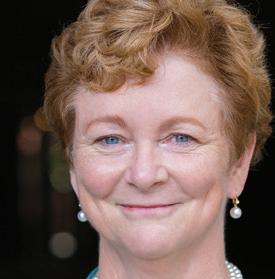
“Afew months ago my chair asked me to help with bedside teaching because the clerkship director was overwhelmed. I love medical students and was flattered. Unfortunately it has exploded from once a month to a weekly activity; in addition there are remediation sessions for the students who are struggling. Now the physician who runs our Morbidity and Mortality conferences has retired. The chair wants me to take that over too. One of the residents wants help to write up a case report on a patient we shared. I help with residency interviews; I go to conferences twice a month; I am on a working group about community paramedicine; I never miss a faculty meeting.

Is there a way to tell early on when I am becoming overwhelmed, before I get totally burnt out?
I want my colleagues to see me as a team player. I understand that junior faculty have to shoulder their fair share of administrative responsibilities. But how am I supposed to do all this while pulling 14 shifts a month, 50 percent of which is evenings and nights? I barely have time to sign my charts! It’s not like I am being paid “extra” for all this other activity.”
You, junior faculty member, are between a rock and a hard place. You chose medicine because you like to take care of patients. You chose academics because you enjoy teaching. What you didn’t count on was the heavy burden of all the “extra” tasks that faculty perform as part of institutional citizenship. There’s no way around it: you will never be finished at the end of the workday. But you can achieve a modicum of control over the deluge.
Don’t spend time looking over your shoulder trying to “count” what others are doing in comparison to you.”
Rest assured that your fellow faculty members are hip deep in their own institutional citizenship. Don’t spend time looking over your shoulder trying to “count” what others are doing in comparison to you. It will only make you angry. What constitutes your fair share of the department load is a matter of opinion. And while it is probably true that some of your fellow faculty members are not pulling their weight, repeat after me, “That is the chair’s problem, not mine.” It is not your problem! Let it go.
How do I say no without looking like a slacker?
“That sounds like a wonderful opportunity. I wish I could say yes. I really don’t have the *bandwidth* right now to give that all the attention it deserves. Thank you so much for considering me.”
As an academician, get used to using that word “bandwidth.”
Yes. When routine annoying things about patient care make you apoplectic, that’s the sign. The patient answers every “yes-no” question with a five-minute ramble. The EMTs forgot the medication list from the nursing home. The family insists you call their doctor in the middle of the night, even though she is not on call, because “somebody around here needs to know what they are doing.” The radiology techs filmed the wrong extremity. It has been 30 minutes and the nurse still hasn’t given the BP meds! Where is the ultrasound machine? Someone just threw up all over the hallway. Are you rolling your eyes, or is your head popping off? If the latter, you are overwhelmed.
How do I bow out of something that has become overwhelming?
Ideally, before waving the white flag you have found another person to take your place. Some jobs are so disagreeable or time-consuming that this is impossible. Unless your physical or mental health is at risk, it is possible you’ll be riding this bucking bronco until the end of the academic rodeo year. However, if you are unable to perform a task—for whatever reason—you have an obligation to inform your chair. The chair is interested in your welfare as well as your performance—but more than that, she is interested in the performance of the department as a whole. Whether or not you can complete the job satisfactorily, it is the chair’s responsibility to make sure it gets done.
“Dr. Chair, thank you for meeting with me. I came to discuss my committee obligations. I am struggling. I am currently unable to give XYZ the attention it deserves. I’d like to relinquish XYZ so I can focus more on my [other committees/clinical teaching/research/paper writing]. I’d like to ask your help with that.”
How do I ask for FTE for a current volunteer (or “voluntold”) assignment?
“Thank you for meeting with me, Dr. Chair. As you know, I have been serving as the department liaison for Trauma Surgery for the last six months. I am committed to that partnership and to streamlining care
ACADEMIC AFFAIRS COMMITTEE
>> COMMON SENSE MAY/JUNE 2024 39
for critically injured patients. It’s going well, although recently it has become very time consuming. My original commitment was to occasional emails about quality measures and twice-monthly education meetings. Currently however they are preparing for a major accreditation, and they expect me to attend weekly half-day planning sessions for the next calendar year. I came to ask if you have FTE available to support this effort.”
Have this conversation with your Chair after you have been involved in the project long enough to have a clear understanding of the time and energy required to do it well, and before you get ticked off!
I told the Chair I am overwhelmed but he won’t listen! He says there is no one else to do the work.
“Dr. Chair, I understand that you have many priorities. As a faculty member, I am committed

Unless your physical or mental health is at risk, it is possible you’ll be riding this bucking bronco until the end of the academic rodeo year.”
to shouldering my share of department responsibilities. But at this time, I don’t have the bandwidth to do this job well.”
The Chair says, “Do it anyway.”
“If that is your top priority, yes, of course I will do my best. Which of my other responsibilities do you prefer I put down, in order to dedicate my energy to your top priority?”
Be respectful and be candid. You are not haggling. You are informing the chair that you can no longer do a particular job well and asking him where he wants you to focus your efforts. Hard stop.
The professional journey of an academic clinician is long and can be difficult to navigate. It is also infinitely rewarding! Learn to gauge your bandwidth and establish your boundaries. It is up to you to balance your professional and personal responsibilities.
SOCIAL EM & POPULATION HEALTH COMMITTEE
Continued from page 38
References
1. Jiang L, Zhang Y, Greca E, et al. Emergency Department Patient Navigator Program Demonstrates Reduction in Emergency Department Return Visits and Increase in Follow-up Appointment Adherence. American Journal of Emergency Medicine. 2022; https://doi.org/10.1016/j. ajem.2022.01.009
2. Tessitore A & Brennan-Cook J. Improving Outpatient Follow-Up Through Innovative Appointment Scheduling at Emergency Department Discharge. Advanced Emergency Nursing Journal. 2021; DOI: 10.1097/ TME.0000000000000340
3. Rhodes K. Ensuring Access to Needed Follow-Up Care: An Emergency Department Quality Metric and Shared Responsibility. Annals of Emergency Medicine. 2017; https://doi.org/10.1016/j.annemergmed.
4. Magnusson AR, Hedges JR, Vanko M, et al. Follow-up Compliance After Emergency Department Evaluation. Annals of Emergency Medicine. 1993;22:560-567
5. Naderi S, Barnett B, Hoffman R, et al. Factors Associated With Failure to Follow-up At A Medical Clinic After an ED Visit. American Journal of Emergency Medicine. 2012; doi:10.1016/j.ajem.2010.11.034
6. Seegan P, Tangella K, Seivert N , et al. Factors Associated With Pediatric Burn Clinic Follow-up After Emergency Department Discharge. Journal of Burn Care & Research. 2022; doi:10.1093/jbcr/irab046.
7. Chou S-C, Deng Y, Smart J, et al. Insurance Status and Access to Urgent Primary Care Follow-up After an Emergency Department Visit in 2016. Annals of Emergency Medicine. 2017; http://dx.doi.org/10.1016/j. annemergmed.
8. Medicaid Access Study Group. Access of Medicaid Recipients to Outpatient Care. New England Journal of Medicine. 1994;330:1426-1430.
9. Asplin BR, Rhodes KV, Levy H, et al. Insurance Status and Access to Urgent Ambulatory Care Follow-up Appointments. JAMA. 2005;294:12481254.
10. Bukhman A, Baugh C, Yun, B. Alternative dispositions for Emergency Department Patients. Emergency Medicine Clinics of North America. 2020; https://doi.org/10.1016/j.emc.2020.04.004
11. Moe J, Kirkland S, Rawe E, et al. Effectiveness of Interventions to Decrease Emergency Department Visits by Adult Frequent Users: A Systematic Review. Academic Emergency Medicine. 2016; doi: 10.1111/ acem.13060
12. Dalton M, Fox N, Porter J, et al. Outpatient Follow-up Does Not Prevent Emergency Department Utilization by Trauma Patients. Journal of Surgical Research. 2017; http://dx.doi.org/10.1016/j.jss.2017.05.076
13. Ethan E. Abbott , Carmen Vargas-Torres , Sophie Karwoska Kligler, Sophia Spadafore & Michelle P. Lin (2023) Predictors of Outpatient Follow-up Care After Adult Emergency Department Asthma Visits and Association With 30-day Outcomes, Journal of Asthma, 60:5, 938-945, doi: 10.1080/02770903.2022.2109166
14. Gettel CJ, Hastings SN, Biese KJ, Goldberg EM. Emergency Departmentto-Community Transitions of Care: Best Practices for the Older Adult Population. Clin Geriatr Med. 2023;39(4):659-672. doi:10.1016/j. cger.2023.05.009
ACADEMIC AFFAIRS COMMITTEE
COMMON SENSE MAY/JUNE 2024 40

TCtrl-Alt-Well: A Guide for AI-Generated Wellness
Jennifer Kanapicki Comer, MD,* Andrew Grock, MD, † Robert Lam, MD FAAEM, ‡ and Al’ai Alvarez, MD FAAEM §


he rapidly changing landscape of today’s world highlights Artificial Intelligence (AI) as a source of innovation, offering significant opportunities to improve various aspects of our lives. However, despite its growing presence, the full potential of AI in enhancing physician wellness remains an under recognized area in medicine. The AAEM Wellness Committee recently hosted a webinar, “Ctrl-Alt-Well: A Guide for AI-Generated Wellness,” aiming to shed light on the capabilities of AI in enriching both professional and personal lives. We examine how AI tools can lessen workloads, streamline administrative tasks, and improve task management—efficiencies crucial for freeing up time and promoting wellness.
streamline preparation by generating relevant questions from the text.
Physicians often find themselves writing articles, blogs, and preparing lectures—rewarding yet time-consuming endeavors. Many spend hours devising the perfect, witty title for their next piece. To expedite this process, entering your vision and content into ChatGPT allows AI to quickly generate a selection of title options. AI even helped craft the title of this article! Moreover, AI tools like Midjourney and DallE2 can generate engaging images for projects and slides.3,4 These images can vary from realistic visuals to oil painting effects and cartoon styles in order to perfectly capture your audience’s attention while sidestepping copyright issues.
Integrating AI into medical practice offers significant potential for physicians by reducing workloads, automating repetitive tasks, and ultimately supporting wellness.”

Everyone grapples with burgeoning to-do lists, both professionally and personally, often leading to stress and the feeling of being overwhelmed. AI can markedly ease this burden, saving invaluable time—minutes, hours, and even days—by assisting with our increasing workload. Take, for example, the time-consuming task of writing letters of recommendation. With AI tools like ChatGPT, you can input your thoughts about the individual and their CV, and let AI generate a first draft.1 While every AI-generated draft requires careful review to ensure its accuracy and alignment with your intentions, this can greatly speed up the process, not just for recommendation letters but also for composing emails, which can be notoriously time-consuming. By inputting your intent, AI crafts emails with impeccable grammar, spelling, and even the desired tone, which is particularly helpful after a long and exhausting night shift.
Navigating through journal articles and conducting literature searches are tasks that require significant time and effort, especially for those not frequently engaged in such activities. However, AI platforms such as SciSpace present a solution that simplifies these tasks.2 As a browser extension, SciSpace summarizes journal articles and webpages. It highlights important text segments and provides high-level, condensed summaries. Furthermore, for journal club organizers, SciSpace can
Clinical shifts are frequently demanding, leading to feelings of exhaustion and fatigue. Nevertheless, certain AI tools can improve these shifts by liberating your time. For example, drafting discharge instructions can consume a significant amount of time, and yet AI can produce these instructions. The AI versions can be customized to the reading level and translated to the language of our patients! Thus improving both understanding and accessibility. Additionally, AI-powered dictation systems can lessen the burden of documentation to allow speedier and easier chart completion. These systems are particularly useful if your department lacks dictation software and can also simplify charting from home.
Integrating AI into medical practice offers significant potential for physicians by reducing workloads, automating repetitive tasks, and ultimately supporting wellness. As you consider integrating these suggestions into your routine, reflect on the substantial benefits of dedicating more time to personal well-being. Let’s welcome AI as a valuable asset to improve our professional practices and enrich our path toward personal well-being.
Author’s Note: The authors declare no financial conflicts of interest related to any of the applications mentioned in this article.
References
*Stanford University; @kanapicki †UCLA; @AndyGrock
‡University of Colorado; @doclam01
§Stanford University; @alvarezzzy
1. https://chat.openai.com/
2. https://typeset.io/
3. https://www.midjourney.com/home
4. https://openai.com/dall-e-2
WELLNESS
COMMON SENSE MAY/JUNE 2024 41
We Care for Our Patients, but Who Cares for Us? Reauthorization of the Dr. Lorna Breen Healthcare Provider Protection Act
Ashley Dailey, DO MBA
Health care workers are at a much higher risk of experiencing burnout and, unfortunately, are at twice the risk of dying by suicide when compared to the general population. The pandemic accentuated the burden placed on health care workers, highlighting the inherent strain placed on those dedicated to caring for others in an insensible and fragmented healthcare system. As emergency medicine physicians, who consistently have the highest rates of burnout amongst all specialties, we are at even higher risk.
To take care of others, we first need to be able to take care of ourselves without the fear of repercussions or having to even consider prioritizing our career over our own personal health and well-being.”
However, we are resilient and we continue to show up and care for our patients—but who cares for us? It may just be me, but an analogy comes to mind, “you can’t pour from an empty cup.” To take care of others, we first need to be able to take care of ourselves without the fear of repercussions or having to even consider prioritizing our career over our own personal health and well-being. Not to mention the impact on patient care and how our patients are affected when we are continually expected to work in an environment that has the potential to break us.
The Dr. Lorna Breen Healthcare Provider Protection Act is working to create structural change of the existing healthcare system. Named after Dr. Lorna Breen, a physician who sadly died by suicide in the early days
of the COVID pandemic, the bill attempts to ensure that as healthcare workers we have access to adequate resources needed to prioritize our own health.
The Dr. Lorna Breen Healthcare Provider Protection Act (HR 7153/S 3679) is a piece of legislation aimed to support and protect health care workers’ mental health and well-being. This Act dedicates funding to support and address mental health challenges placed on individuals putting themselves in harm’s way to take care of others. This piece of legislation was originally passed in 2022 and is now up for reauthorization.1

Since passage, the Lorna Breen Act has funded $103 million to implement evidence-informed strategies to reduce and prevent burnout, mental health conditions, substance use disorders, and suicide according to the Dr. Lorna Breen Hero’s Foundation—but there is much work left to do. Reauthorization of the Lorna Breen Act will additionally aim to reduce the administrative burden placed on healthcare workers, giving organizations evidence-informed solutions to sustain well-being and build a system where health care workers thrive. Reauthorization of this Act ensures we, as healthcare workers who are caring for others, can care for ourselves.
Editor’s note: If you or someone you know needs help, call or text 988 or chat 988lifeline.org for mental health support.
References
1. https://drlornabreen.org/reauthorizelba/
2. *The Dr. Lorna Breen Heroes’ Foundation logo was used with permission

GOVERNMENT AND NATIONAL AFFAIRS COMMITTEE
COMMON SENSE MAY/JUNE 2024 42
Missing
Efrat Kean, MD
Iwant to report a missing person, only I can’t tell you their name.
I feed my kids dinner, tuck them into bed. I make sure they have a safe, warm place to sleep tonight, before I go to work. I used to do the same for you.
You would come to the ER, hungry and tired, one of the people of the night. We could never talk for long but I would say hello, ask how you’re feeling, do what I could to alieve the myriad miseries of homelessness. New socks and a cream for your blistered feet. A coat to protect you from the cold. A shower, if things weren’t too busy. We’d check the weather for the next day or two so you can plan where you will go. I’d bring you a sandwich to fill your empty belly, a blanket to keep you warm. I have tended you the way I tend my children, and that makes you my family.
But lately, you don’t come in anymore. You are missing from my nights. No more blankets, no more socks, no more sandwiches given. I ask my colleagues if anyone has seen you—no one has. Months go by. My children grow. Where are you?
Maybe you found stable housing, health insurance, a primary care doctor, steady income. Maybe you have flown the nest and don’t need me anymore. I’d like to think that’s what happened.
2:00am, 3:00am, 4:00am, and I notice you are once again not on my list of patients. Are you out there in the cold night somewhere? Are you at another
hospital being cared for? Are you in jail? In another town?
Are you alive?
It happens that way sometimes. We don’t see someone for a long time and then hear through the grapevine that they died terribly. Run over by a car, an overdose, an infection, a murder. Tragic ends to tragic lives.
If my family were missing I would call the police, file a report, search the city. But how can I do that for you? We are family, but also, we are strangers.
If you’re out there, somewhere, I hope you’re OK. I hope you stopped coming to the ER because something wonderful happened and you don’t need us to feed you and clothe you. I hope you don’t need to check the weather anymore to know where you can sleep safely. I hope you never need the ER again.
But if you’re ever passing by, wave through the windows. There are people here who care about you.

EMERGENCY MEDICAL SERVICES SECTION
Continued from page 29
challenges of this urban EMS system. The most valuable result of the physician response vehicle has been the EMS fellows’ engagement with and investment in the performance of EMS crews, as opposed to simply managing via radios and protocols.
As our national healthcare system continues to struggle with hospital and emergency department overcrowding, prehospital care will continue to evolve beyond simply ambulance transport to an emergency department. As the role of the prehospital physician matures, much like with the development of the emergency physician, they will need to provide both high level critical physician level skills with the ability to evaluate and disposition patients with limited information to the best resources for their acute health care needs. Challenges persist, including the continued
Maybe you have flown the nest and don’t need me anymore. I’d like to think that’s what happened.”
lack of prehospital physician billing, but in the future it is clear that we will need more EMS physicians. Our program, like others that have developed over the past few years, demonstrates this is feasible and an effective way to help our patients receive the right care at the right time.
References
*Program Director, UT Health San Antonio EMS Fellowship
†Faculty, UT Health San Antonio EMS Fellowship
‡Major, US Air Force, Medical Corps; Program Director, SAUSHEC Military EMS & Disaster Medicine Fellowship
§Immediate Past Program Director, SAUSHEC Military EMS & Disaster
Medicine Fellowship
1. Cone, C. David et al, 2000.
COMMON SENSE MAY/JUNE 2024 43
No More Surprises
Timothy Chilcote, MD FAAEMThe implementation of the No Surprise Act (NSA) has been a significant challenge to the independent groups of EM practitioners. The NSA is a well-intentioned piece of legislation that has many good points such as diminished contact with patients regarding billing matters and outlawing balance billing. These were major problems in certain sectors of our field. There have, however, been unintended consequences of this legislation that directly threaten the livelihood and long term viability of independent groups across the country.
So what is the solution? Make noise. Contact your local congressional leaders…Explain that we are independent physician groups whose sole purpose is to provide excellent emergency care to their constituents.
The NSA was conceived as a way to remove patients from the billing equation in commercial settings. It has accomplished that. What was not foreseen was that the pressure of the consumer on commercial insurers to do the right thing has also been removed. There are no direct checks or balances to prevent insurance companies from devaluing the care that we provide. There are numerous instances of contract termination, diminished payments, or payers paying well below market rates. My individual practice saw some insurance payers decrease reimbursement upwards of 60 percent in some instances, presenting a major challenge to our group’s ability to remain financially viable. They also have no incentive to negotiate with individual groups as there is no penalty or oversight as to how they conduct their business. In the minds of payers, it has become a free-for-all where they get to call the shots.
The thought was that the IDR would serve as a remedy. While the physicians do win a majority of the cases that get to arbitration, actually reaching that point is fraught with peril. Costs per filing are $350 per claim. While this is under legal challenge, the cost is still great. Plus, EM claims must be filed on an individual basis, driving up the costs to pursue a fair payment. Ironically, most claims are for differences right around or slightly less than the cost to file, resulting in victories still being financial net losses. Other specialties can batch their claims against an insurance carrier, resulting in one fee for multiple cases. We have been excluded from that specifically due to the private equity abuse of balance billing in our field.
So what is the solution? Make noise. Contact your local congressional leaders. Ask to meet with them. Explain that we are independent physician groups whose sole purpose is to provide excellent emergency care to their constituents. Explain that without our independent groups they will accomplish the exact opposite of what the NSA was driving at. They will make independent groups look for outside funding to sustain practice. Your congressional leaders want to hear from us and need to hear from us in order to push for changes that can protect independent EM groups and allow us to flourish. When this happens, everyone wins.


COMMON SENSE MAY/JUNE 2024 44
Justice, Equity, Diversity, and Inclusion Section’s 2024 Medical Student Scholarship Awardee Highlight
Salma Yusuf, MS4, Cortlyn Brown, MD, and Jordan Vaughn, MDThe Justice, Equity, Diversity, and Inclusion (JEDI) section of the American Academy of Emergency Medicine (AAEM) aims to actively support underrepresented minorities and culture champions at various stages of education, training, and career, through mentorships, education and scholarships. In an effort to increase diversity (including but not limited to ethnicity, religion, gender, sexual orientation, and ability) throughout the practice of emergency medicine, we created the JEDI-AAEM Medical Student Scholarship to support URiM students as they apply into emergency medicine.

Student Doctor Amera Hassan
Hometown: Blaine, MN and Cairo, Egypt
Plans for next year: I’ll be starting my EM residency at UChicago and continuing my work on a new podcast, The Doldrums, about medicine, literature, and philosophy (find me on Spotify or Instagram @ TheDoldrumsPodcast)
Interest(s) within EM: I’ve always wanted to go back to my homeland of Egypt someday and serve those communities that I came from. My interest in global medicine is also more potent than ever given the horrific violence being committed in Gaza and Palestine over the past several months (and 75 years).
Fun fact: I’ve been to 16 countries, a few of them multiple times, and seven as a solo traveler. One of my favorite places I’ve ever been to is Vietnam!
What does JEDI in EM mean to you: JEDI means having a workforce that reflects the population we serve, in regards to our backgrounds, ideologies, values, and humanity.

Student Doctor Amina Ibrahim
Hometown: Borama, Somalia/Ottawa, ON, Canada
Plans for next year: EM residency PGY1
Interest(s) within EM: Global Health
Fun fact: I’ve never experienced a brain freeze. What does JEDI in EM mean to you? Inclusion
Perhaps no specialty treats such a broad range of patients spanning across cultures, ethnicity, gender, and sexual identity as emergency medicine. Through JEDI, we are creating a pathway to not just diversify EM but also help medical students and residents develop into future leaders. We had a competitive applicant pool this year with stellar applicants. This year, we had the honor of awarding eight URiM medical students with $500 to help offset the often prohibitive cost of residency applications, interviews, etc. Each of these students has exemplified true leadership, compassion, and commitment to our core mission. It is our pleasure to highlight our eight medical student winners.
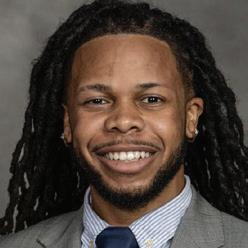
Student Doctor Donovan A. Inniss
Hometown: Nassau, The Bahamas
Plans for next year: PGY1 at HAEMR - MassGen Brigham
Interest(s) within EM: Disaster Medicine, Space Medicine, and Wilderness Medicine!
Fun fact: I will rarely swim in a lake; seawater is superior!
What does JEDI in EM mean to you: Opportunity to improve emergency medicine practices and policies by supporting the representation of those from communities often facing health disparities and socioeconomic marginalization.

Student Doctor Kelsey Newbold (she/ her/hers)
Hometown: Tucson, Arizona
Plans for next year: Starting EM residency at Creighton of Phoenix Arizona/Maricopa County!
Interests within EM: Social EM, Ultrasound, MedEd, Undersea medicine
Fun fact: I’m certified as an advanced scuba diver and have been diving in five different countries!
What does JEDI in EM mean to you: To me, JEDI in EM means having the opportunity to be my authentic self while representing the 3-4% of physicians in the U.S. that identify as LGBTQ+ and advocating for LGBTQ+ inclusive healthcare for my future patients.
Continued on page 49 >>
JUSTICE, EQUITY, DIVERSITY, AND INCLUSION SECTION
COMMON SENSE MAY/JUNE 2024 45
Why AAEM?
Nicholas Boyko, DO
As a pre-medical student, I worked as a medical scribe in an emergency department staffed by a democratic group. The decision was made by the physicians to sell the group to a corporate medical group (CMG). Over the course of a year, I witnessed changes in physician coverage, overheard discussions regarding decreases in physician pay, and witnessed the termination of department directors whom were subsequently replaced by long-term physician affiliates of the CMG. I was bewildered with several questions running through my head. How can a physician-owned group not expect work conditions to change after selling to a CMG? I had always been under the impression that physicians are compensated well—do they really need to sell the field of emergency medicine to a corporation to prosper?
So, ‘Why AAEM?’…There is only one national emergency medicine organization that has focused on the emergency medicine physician and our field as a whole since inception.”
Several years later, I proceeded through medical school and began residency. I performed a web search on the largest emergency medicine group in the country, the American College of Emergency Medicine (ACEP). I was disappointed to look at the leadership and see that the majority held some type of regional leadership position in a corporate medical group. New questions arose. Is this not an obvious conflict of interest? How can a regional director simultaneously contend with the best interest of the individual emergency medicine physician in contrast to a profit-driven CMG?
As I came towards the end of residency, I gained some clarity. Over the course of my educational pursuit, I accrued several hundred thousand dollars in student loans. I hoped that the next several years following graduation would include my wedding, the purchase of a home, the start of a family, and hobbies that I previously lacked time for. Concurrently, I was graduating residency during the worst emergency physician job market in history towards the end of the COVID-19 pandemic. When I thought about the expenses required of my aspirations and the grim job market, I saw how financial stressors impacted me and speculated that financial stressors likely contributed to the democratic groups who sold to a CMG. I am no longer disappointed in the decisions of the democratic groups who sold. I am not aware of the factors that lead to their decision and more so, disappointment in itself will not lead to change. Although we all face hardship, we as emergency physicians need to unite and remind ourselves that the decisions we make not only impact ourselves but also our patients and the future of our field.
So, “Why AAEM?” There are dozens of medical societies you can enroll
in. Some send you a gift box when you signup. Others have partnerships that can offer you a 0.125% discount on your student loans or discounts on other products. There is only one national emergency medicine organization that has focused on the emergency medicine physician and our field as a whole since inception. AAEM has released statements against the replacement of physicians by advanced practitioners, has sought legal action against a CMG in California, and has made resources available for the thousands of emergency physicians laid off with several weeks’ notice upon the closure of CMG American Physician Partners (APP). The decision to join AAEM was an easy decision for me to make. I joined AAEM during my intern year of residency and will continue to support the academy throughout my career.
Although continuing my yearly membership in AAEM is valuable, it did not satisfy my desire to support the Academy and everything it contributes to our field. I volunteer as a board examiner for AAEM’s oral board examination course and pursued leadership in the Young Physician Section (YPS). Two years ago, I first joined the YPS board and served as a Councilor. The Councilors have several focuses including creating resources for our young physicians, establishing our presence on social media, and organizing YPS events at Scientific Assembly to name a few. Following this, I served as Secretary/Finance Chair in which I maintained our section budget. I am now transitioning into the role of Chair Elect. My goal is to assist the Chair, Dr. Rosenbaum, in promoting the advocacy and accomplishments of AAEM to recent graduates and continuing to provide resources to our YPS members.
The Young Physician Section previously required an additional fee to join; this was removed years ago with the hope of supporting all new graduates and not adding to the expenses we all face after graduating. More recently, the duration of eligibility for YPS was increased. Previously five years, all AAEM members are now automatically enrolled in YPS for ten years following residency or fellowship graduation. If you are within ten years of graduating and share a similar goal of contributing to AAEM through the Young Physician Section, please reach out to me via the email address below. I would be happy to talk to you more about our section, my experience, and how you can become involved. Together, we can all work towards the best future of emergency medicine possible.
For more information on the resources YPS provides to our members, please visit at: aaem.org/get-involved/sections/yps/resources/ Nicholas Boyko, DO
Nick.BoykoDO@gmail.com
YOUNG PHYSICIANS SECTION
COMMON SENSE MAY/JUNE 2024 46


New AAEM/RSA Board of Directors
President Mary Unanyan, DO

Immediate Past President
Leah B. Colucci, MD MS

At-Large Board Member
Arya Hawkins-Zafarina, Rising PGY-1

At-Large Board Member
Sara Urquhart, MD

Vice President Jack Brodeur, DO

At-Large Board Member
Zoe Cole, Rising PGY-1

At-Large Board Member
William “Parker” Howard, MD

Student Representative Jonathan “Jake” Graff


Secretary-Treasurer
Katy Wyszynski, Rising PGY-1
At-Large Board Member
Lauren Day, MD
At-Large Board Member Yusuke Kishimoto, MD
Director of Publications
Ex-Officio Board Member
Mel Ebeling
AAEM/RSA BOARD OF DIRECTORS
Thank you 2023-2024 AAEM/RSA Board of Directors COMMON SENSE MAY/JUNE 2024 47
Five Must-Have Apps for Your Next ED Shift
Mel Ebeling, BS
In the hustle and bustle of the emergency department, it is common to reach a point of cognitive overload, especially in your formative years as a medical student or resident. With the rise of smartphones over the past decade or two, however, we now have a variety of apps marketed towards the emergency medicine physician that can aid in decreasing cognitive load as we care for patients. Here I will review five apps that have played a crucial role in my workflow and education in the emergency department thus far that I would recommend to other students or residents beginning their journey in emergency medicine. Please note that these reviews are not sponsored and based solely on opinion, and, ultimately, you should follow your institutions’ protocols and attending physician’s clinical judgment when caring for patients in the emergency department. All the following apps are currently available on both iOS and Android through the App Store and Google Play, respectively.

WikiEM Cost: Free
Starting off strong is WikiEM, the Wikipedia for all things emergency medicine. With over 4,600 pages, WikiEM is an open-access reference resource like Wikipedia, derived from contributions by emergency medicine professionals. Select a chief complaint or medical condition and WikiEM will provide you with a list of differential diagnoses, lab, and imaging studies to consider in your work-up, management recommendations, and disposition information. Medical Decision Making (MDM) templates for common chief complaints are also provided to assist you in your documentation. The utility of this app expands across all levels of training, and I would highly recommend it to medical students on their emergency medicine clerkship/sub-internship, residents, and other providers new to the field.

PediSTAT Cost: $5.99
With the rise of smartphones over the past decade or two, however, we now have a variety of apps marketed towards the emergency medicine physician that can aid in decreasing cognitive load as we care for patients.”
Albeit a little on the pricier side, this app is essential for your shifts in the pediatric emergency department. As we all know, children are not just “little adults,” and most medication dosing for children is actually calculated using body weight or body surface area, which comes with a high risk for medical error. PediSTAT has an intuitive, user-friendly design that rapidly calculates dosing of common medications by weight, age, height, or Broselow tape. Categories of medications available on the app include: anaphylaxis/allergic reaction (e.g., epinephrine, diphenhydramine, steroids, etc.), antiemetics, antimicrobials, fever (e.g., acetaminophen dosing), fluid/ blood resuscitation, hypoglycemia (e.g., dextrose dosing), pain management, pressure support, procedural sedation, respiratory (e.g., albuterol and steroid dosing), seizure/status epilepticus, shock, and trauma (e.g., pRBC dosing). Not only does PediSTAT calculate dosing for all of these commonly utilized fluids and medications, but it also provides the normal vital signs for the weight/age/height of the child you entered, correct sizing of a variety of equipment (e.g. airway devices, catheters, chest tubes, etc.), a Glasgow Coma Scale calculator, a burn size estimator, antidote dosing, and more. This app truly has it all and is worth its weight in gold during a busy shift in the emergency department.

Fractures: Splinting App
Cost: Free
Fractures is your one-stop shop for managing broken bones in the emergency department! The simplicity of this app is unparalleled. Using simple illustrations, narrow down your search for the affected bone, then Fractures will provide recommendations for the type of splint that should be applied alongside specific instructions for how to construct and apply the splint to your patient. Clinical pearls for management of the specific fracture at hand are also provided alongside follow-up recommendations. If a fracture is considered high-risk and requires surgical evaluation, a warning box is also displayed. At institutions where orthopedic surgery is not available or hard to access, this is a great app to help you manage a wide range of fractures in a pinch.
AAEM/RSA EDITOR’S MESSAGE
>> COMMON SENSE MAY/JUNE 2024 48

Suture: Laceration Repair App
Cost:
Free
While laceration repair is one of the most common procedures performed in emergency departments across the U.S., it is also a frequency source of malpractice claims. Suture comes from the same designer that brought you the Fractures app and is a quick tool that optimizes your laceration repairs. After taking a few seconds to select the location, depth (superficial or deep), shape (linear, irregular, or stellate), and any complications (galea or high-tension) of the laceration, Suture provides you with recommendations for how you should complete the repair. This includes the type of suture you should use, the technique (which includes a video example), and sample patient instructions that include the removal interval, precautions, and follow-up instructions. It even generates a procedure note that you can email to yourself for inclusion in the patient’s chart. For wounds that are contaminated, antibiotic prophylaxis recommendations are provided as well. Whether you are new to emergency medicine or a seasoned physician, this app ensures you are providing excellent wound care.

Student Doctor Aliza Siddiqui
Hometown: Saint Charles, IL
Plans for next year: Starting intern year at Denver Health!
Interest(s) within EM: Social EM, Global Health, Medical Education
Fun fact: I love anything and everything Bollywood!
What does JEDI in EM mean to you: Promoting equity and increasing

Student Doctor
Chinelo C. Agwuncha


Epocrates
Cost:
Free
A necessity regardless of your medical specialty, Epocrates is as close as you can get to having a pharmacist in your pocket. Epocrates is an online database of thousands of prescription and over-the-counter medications, providing you information about the pharmacology, indications/contraindications, dosing, adverse reactions, and black box warnings of almost any medication you can think of. Through its “Bugs & Drugs” feature, you can view antibiotic susceptibility data down to the zip code to support your selection of empiric antibiotic therapy. Of particular use to the emergency department, the “Pill ID” feature aids in the identification of “that little white pill” by way of imprint codes and tablet or capsule morphology. I have found this feature to be especially helpful throughout my training. While other features exist at a cost, the base app is free and simply too good to pass up.
diversity is essential in a field where we work to provide timely and quality care for all individuals with all different backgrounds and experiences. Embracing the principles of justice, equity, diversity, and inclusion not only enhances patient outcomes by addressing the unique needs and perspectives of each patient, but also promotes a more inclusive and culturally competent healthcare system, ultimately strengthening trust between physicians and the communities we serve.
Student Doctor Gabrielle Bastedo (nee Sallard)

We would like to thank our supporters AAEM/RSA for their contribution to supporting our URiM JEDI Scholarship.
Student Doctor Desean Lee
6. Rangel EL, Castillo-Angeles M, Easter SR, et al. Incidence of Infertility and Pregnancy Complications in US Female Surgeons [published correction appears in JAMA Surg. 2021 Oct 1;156(10):991]. JAMA Surg 2021;156(10):905-915. doi:10.1001/jamasurg.2021.3301
7. Stentz NC, Griffith KA, Perkins E, Jones RD, Jagsi R. Fertility and Childbearing Among American Female Physicians. J Womens Health (Larchmt). 2016;25(10):1059-1065. doi:10.1089/jwh.2015.5638
8. Stocker, L. J., Macklon, N. S., Cheong, Y. C., Bewley, S. J. Influence of shift work on early reproductive outcomes. Obstetrics & Gynecology, 2014; 124(1), 99–110. https://doi.org/10.1097/aog.0000000000000321
9. Vasconcelos SW, Guedes JC, Dias EC, Matias A. Pregnancy and working conditions in the hospital sector: A scoping review. Revista Brasileira de Medicina do Trabalho. 2023;21(01):01-13. doi:10.47626/1679-4435-2023947
10. Dennison, K. How U.S. Family Leave Policies Can Catch Up With The
Rest Of The World. Forbes. November 13, 2023. Accessed March 31, 2024. https://www.forbes.com/sites/karadennison/2023/11/13/ how-us-family-leave-policies-can-catch-up-with-the-rest-of-theworld/?sh=65dccbc332af
11. Rosenbaum J, Calhoun L, Schreyer K, Pearce E, Norton V. AAEM Joint Young Physician Section and Women in Emergency Medicine Section Position Statement: Scheduling Recommendations During Pregnancy, the Postpartum Period, and Parental Leave. Approved by the American Academy of Emergency Medicine (AAEM) Board of Directors. February 22, 2024. https://www.aaem.org/statements/schedulingrecommendations-during-pregnancy/
12. Shanafelt TD, Noseworthy JH. Executive Leadership and Physician Well-being: Nine Organizational Strategies to Promote Engagement and Reduce Burnout. Mayo Clin Proc. 2017;92(1):129-146. doi:10.1016/j. mayocp.2016.10.004
AAEM/RSA EDITOR’S MESSAGE
JUSTICE, EQUITY, DIVERSITY, AND INCLUSION SECTION
Continued from page 45
COMMON SENSE MAY/JUNE 2024 49
WOMEN IN EMERGENCY MEDICINE SECTION Continued from page 32
Rick Simpson Oil (RSO) Overdose: A Tetrahydrocannabinol (THC)
Concentrate Getting “Higher” on the Differential
Shaan Sarode, DO PGY-3*
Abstract
A 48-year-old woman came to the emergency department in an obtunded state after unintentionally overdosing on a highly concentrated tetrahydrocannabinol (THC) compound known as “Rick Simpson Oil” (RSO). She required minimal airway interventions but did have an adverse event of bradycardia. Though she required intensive care unit (ICU) level monitoring, she promptly had a full neurologic recovery without significant interventions and was discharged from the hospital within 24 hours. With cannabidiol (CBD) and THC products becoming more commercially available, it is becoming easier for patients to obtain and use them for poorly studied indications and in inappropriate doses.
Given the lack of regulation and oversight by a governing body, product ingredients are not standardized and are available with ever-growing THC concentrations. The various THC concentrations and ingredients of these products create a high potential for accidental overdose. Thus, emergency care physicians must be able to recognize THC toxicity and manage it swiftly. In this paper, we attempt to describe an example of RSO’s THC effects on human physiology, discuss marijuana-related compounds and their toxicities, and propose opportunities for healthcare practitioners to support patients who inevitably present to our emergency departments with an RSO overdose.
Background
It is common for patients to deviate from well-studied conventional treatment options in search of newer and unconventional methods to treat their ailments including chronic pain, insomnia, weight loss, and recreational purposes.
In this paper, we describe an example of a middle-aged woman who self-administered an inappropriate dose of a highly concentrated THC oil called RSO as a sleep aid which ended up requiring treatment in the emergency department, admission to the ICU, and eventual recovery and discharge from the hospital.
This case report is written to formally describe Rick Simpson Oil (RSO), a concentrated THC oil, in the literature as a foundation for future reference and research. We want to highlight potential toxicities associated with this potent THC formulation as well as treatment options.

Finally, we identify shortcomings of current resources available for RSO users and ways that clinicians can intervene to promote patient safety.
Case
A 48-year-old woman with a history of chronic back pain secondary to lumbar spondylosis, migraines, and obstructive sleep apnea and no history of tobacco or illicit drug use, was at home with her husband watching television when she mentioned she was going to self-administer an unknown dose of RSO THC as a sleep-aid (figure 1). The husband reported she was recommended to use RSO under medical supervision, however had not used it prior to this episode. Per the husband, she ingested a “few drops” of the oil on a cracker. Per the packaging data, the syringe holds 200 doses and overall, there was 1 gram of cannabinoids in a total volume of 1 milliliter. The ingredients of this concentrated THC formulation as listed are: THC 73.75%, THCA 0.066%, and CBD 0.167% (figure 2).

Approximately 0.25 mL appeared to have been missing in the syringe and with this dosing information this would correlate to 50 times the recommended single dose of 0.005 mL (figure 3). The patient was found unarousable by her husband 20 minutes later which prompted activation of the emergency medical system (EMS).
EMS noted that she was arousable to pain and had episodes of vomiting on the way to the emergency department which required intravenous (IV) ondansetron. She had blood glucose that was within normal range and had vital signs that were reassuring.
Upon emergency department arrival, her initial vital signs (30 minutes after ingestion) showed pulse rate around 80 beats per minute, blood pressure 122/61 mmHg, bradypnea to 10

>> COMMON SENSE MAY/JUNE 2024 50
Figure 1: Cresco branded Rick Simpson Oil (RSO) packaging, Indica strain, containing 1000mg of THC concentrate of Lime Sorbet flavor RSO
Figure 2: RSO packaging details showing flavor, approximate doses/packet, percentages of various types of THC, and various manufacturing details
Figure 3: RSO containing 1mL syringe with approximately 0.25mL missing
breaths/min, afebrile, and pulse oximetry 87% on room air which improved to 95% after she was placed on supplemental oxygen via nasal cannula. Her initial neurologic function showed that she was spontaneously breathing, maintaining a gag reflex, mumbling in response to pain, however unable to consistently follow commands. She was able to minimally move all extremities except for her right arm, which combined

4: Initial ECG showing normal sinus rhythm, with T wave inversions in anterior, septal, and lateral leads (V1-V6)
with her altered mental status, was significant enough for the primary emergency team to be suspicious of a stroke, for the indication of acute altered mental status with perceived motor deficits, which yielded a negative work-up. Given that she had witnessed ingestion with subsequent toxicity and no history of other drug use, there was no indication for empiric treatment of other toxicities. At that time venous blood gas showed pH 7.34 without hypercapnia. Given she was able to protect her own airway, she remained on minimal supplemental oxygen, and did not have significant secretions, and required no additional airway interventions.

5: Subsequent ECG showing sinus bradycardia at 35 beats per minute, with similar T wave inversions in anterior, septal, and lateral leads (V1-V6) to prior initial ECG, prior to receiving atropine
Her initial electrocardiogram (ECG) showed normal sinus rhythm with a rate of 84 beats per minute and T wave inversions in anterior, septal, and lateral leads (figure 4). However, after two hours in the emergency department the patient had an episode of significant bradycardia with witnessed pulse rates around 30 beats per minute and hypotension with systolic pressures around 80mmHg. Repeat ECG at that time showed sinus bradycardia with similar T-wave inversions without new ischemic changes (figure 5). She was given 1mg of atropine which increased her heart rate to around 50 beats per minute. She did not have recurrent bradycardia after this episode.
Her laboratory results showed no other acute co-ingestions or explanations for her acute obtunded state. Her blood counts and electrolyte panel were unremarkable. Her troponin was negative. Her chest X-ray was suspicious for aspiration pneumonia, and she was started on IV antibiotics.
Due to continued and profound somnolence in the emergency department after multiple hours, both Toxicology and Critical Care Medicine were consulted. The Toxicology team felt that this patient was likely profoundly altered from the significant dose of THC and recommended ICU level monitoring.
In the ICU the patient had an unremarkable course overnight and was seen by the Toxicology and Cardiology teams the next day. The patient did not have any additional adverse events. The patient was discharged the following day after returning to baseline with referral to primary care and pain management for follow-up.
Discussion
Marijuana is a naturally occurring plant from which cannabinoids are extracted. This family of cannabinoids includes tetrahydrocannabinol (THC), cannabidiol (CBD), cannabicyclol (CBL), cannabichromene (CBC), cannabinol (CBN), and others. THC and CBD are the most studied and commercially available and therefore most widely used. Chemically, the difference between the two compounds is a cyclic ring on THC and hydroxyl group on CBD. This cyclic ring on THC allows for its potent psychoactive effects.1
In the 1980s, a Canadian engineer named Rick Simpson, developed a highly concentrated homemade cannabis oil nicknamed “Rick Simpson Oil.” Originally developed as an alternative treatment for pain, it was touted as having significant medical benefits such as curing cancer, unfounded by medical evidence.2 He described the method of drying cannabis leaves (preferably indica strain) in liters of solvent such as 99% isopropyl alcohol, which is then mixed and boiled creating a thick honey like liquid as the final product; a highly concentrated THC containing oil.3
RSO recipes generally yield high concentration THC compounds. The main receptors activated by marijuana compounds are CB1 and CB2 receptors. CB1 receptors are primarily concentrated in the central nervous system (CNS) in anatomical areas associated with cognition, memory, reward, anxiety, and pain perception.1 Therefore, the receptor activation can give users a sense of altered perception, disruption of psychomotor behavior, and loss of time perception.4 This receptor activation is part of a larger endocannabinoid system activation.5
It is difficult to find consistently recommended doses for RSO that have been studied given that marijuana remains a Schedule 1 substance per the Drug Enforcement Administration (DEA). This means marijuana, specifically THC, has high potential for abuse, no currently accepted medical use in treatment, and a lack of accepted safety for use under medical supervision.
>> COMMON SENSE MAY/JUNE 2024 51
Figure
Figure
RICK SIMPSON OIL (RSO) OVERDOSE: A TETRAHYDROCANNABINOL (THC) CONCENTRATE GETTING “HIGHER” ON THE DIFFERENTIAL
Unfortunately, given the lack of regulations and health professional input, users must turn to crowd sourced outlets on the internet that cite doses in terms of vague volumes such as “half to a third of the size of a grain of rice.”6 In states such as Oregon, where marijuana compounds are legalized for both medical and recreational use, guidance on dosing exists for new users to turn to.7 There are previous dosing protocols regarding CBD, such as one published in 2021, where a Delphi process of analysis was used taking into account clinicians from around the globe and comprising their individual CBD and THC dosing strategies.8 What they came up with was starting with 5mg of CBD twice daily titrated by adding 10mg daily until either desired effect or 40mg/day was reached with addition of THC at 2.5mg daily, titrated by 2.5mg daily, until 40mg/day was reached. They also described more conservative and rapid protocols using varying amounts of CBD and THC. With such little consensus and lack of validated trials for dosing of these compounds, it becomes the onus of the user, or in this case our patient, to use their own experimentation to find a dosing that works for them.
Our described case highlights this scenario. The RSO packaging instructs that there are “~200 doses per syringe” without referencing any specific milliliter quantity or how many milligrams make up a dose (figure 3). Naturally it is expected that users will not be able to measure out such small quantities accurately and consistently. It is unreasonable to think that this patient could have measured out 0.005mL in a syringe where the smallest markings correspond to a volume of 0.01mL. This unfortunately puts this user and others at high risk of potential THC overdose eventually requiring emergency medical care.
Marijuana is a highly lipophilic compound that is taken up by tissues with high concentration of blood circulation such as the heart, lungs, brain, muscle, liver, and adipose tissue. Given this absorption pattern, it allows for THC to have storage and release potential that persists long after initial use. The half-life of infrequent users is 1.3 days and up to 5 to 13 days in frequent users.1 Toxicity exists in both physiological and behavioral forms. Physiologically clinicians can expect to see rapid changes in heart rate and diastolic blood pressure, scleral injection, and CNS depression among others. Behavioral changes often depend on how long the user has been using for and is dose dependent. These effects include euphoria, relaxation, inability to concentrate, panic, and paranoia.1
In a recent cohort analysis of over 100 patients (ranging in ages from 19 to over 70) with acute cannabis toxicity reported to a single poison control center in Oregon, adults over 60 nearly all had clinically relevant neurotoxic symptoms such as sedation, weakness, and reduced consciousness. Similar to our case, older adults were found more likely to have bradycardia than tachycardia. There were three cases classified as severe in the study. One involved the use of a RSO THC concentrate who had a full recovery in observation and another had a THC concentrate overdose who suffered cardiac arrest with unsuccessful resuscitation.9
In the patient described in our case, we treated a single episode of symptomatic bradycardia with atropine which resulted in resolution. This symptom is a form of cardiac depression that can be expected with acute cannabis toxicity as described above. In a 2020 analysis of acute cannabis toxicities in Oregon and Alaska post legalization, it is cited that only 6% of patients with acute cannabis toxicity had bradycardia, while 65% of patients had tachycardia, making our patient’s presentation far less common. The authors of this study also concluded that inhaled cannabis toxicities were correlated with higher rates of tachycardia than toxicity from ingested forms.10
Initial triage of a patient with suspected overdose with RSO THC concentrate involves calculating how much THC the patient ingested and in what time frame. Emergency department management should begin with a broad differential involving other causes of acute neurological changes, differentiation of toxicities of possible co-ingestants, and discussion with toxicology and local Poison Control Center. Similar to the “high” of cannabis use, it is expected that the effects of a pure THC overdose will self-resolve and the patient should return to baseline. Patients should receive continuous cardiac and respiratory monitoring. Patients will often present obtunded and will therefore require advanced supportive care and airway management. Early and serial EKGs should be used to monitor for arrhythmia and interval change. Often, the time to resolution is prolonged due to the high THC concentrations and prolonged observation is recommended.
Testing for THC is available in the form of a urine drug screen which uses “an immunoassay to detect delta-9-THC metabolite 11-nor-delta-9-tetrahydrocannabinol-9-carboxylic acid (9-carboxy-THC)”.11 Standard work up to include other causes of acute altered mental status should also be obtained from the emergency department as well as testing for co-ingestants.
Because there is no antidote or reversal agent of THC, time is the only treatment and therefore we recommend inpatient admission or observation correlated with acuity of symptoms. Finally, adequate counseling of dosing RSO is recommended using approaches described above, however return and use precautions should be given to all patients. Discharge instructions should include follow-up with pain management, neurology, or palliative care which may provide patients with alternative treatment options of the ailment they intended to cure with THC in RSO.
Edible marijuana exposures continue to increase year after year.12 This forebodes that emergency and primary care practitioners will become more likely to encounter and be required to manage patients using THC and CBD containing substances. Hence, practitioners should be familiar with the clinical presentation and features of a patient with THC intoxication and overdose. Clinicians need to be aware of the availability of highly concentrated THC oils and to place their use on the differential diagnosis of any patient presenting comatose or obtunded with suspected drug use.
>> COMMON SENSE MAY/JUNE 2024 52
RICK SIMPSON OIL (RSO) OVERDOSE: A TETRAHYDROCANNABINOL (THC) CONCENTRATE GETTING “HIGHER” ON THE DIFFERENTIAL
Learning Points
y Rick Simpson Oil (RSO) is a concentrated form of tetrahydrocannabinol (THC), the psychoactive component of marijuana.
y THC use is becoming more commonplace in many different age ranges; therefore, emergency clinicians should be aware of their increasing potential misuse and overdose along with associated toxicities.
y Toxicity includes physiological changes such as tachycardia in inhalation, bradycardia in ingestions, and CNS depression, and behavioral/ psychiatric changes such as euphoria, panic, and paranoia.
y Treatment is supportive, including airway precautions, continuous cardiac and respiratory monitoring, and observation until the THC can be metabolized.
Editor’s Note: The author would like to thank Dr. Julia Todd and Dr. David Goldberger for providing language help, writing assistance, and proof reading.
References
*Department of Emergency Medicine, Albert Einstein Healthcare Network, Philadelphia, PA
1. Sharma P, Murthy P, Bharath MMS. Chemistry, metabolism, and toxicology of cannabis: clinical implications. Iran J Psychiatry. 2012 Autumn;7(4):149–56.
2. The dangers of making and using rick Simpson Oil (RSO) [Internet]. Find Rehab Centers Based On Your Needs. 2018 [cited 2022 Oct 13]. Available from: https://www.rehabcenter.net/rick-simpson-oil-dangers/
3. Williams A. What is Rick Simpson Oil? Your complete guide to RSO [Internet]. Leafly. 2022 [cited 2022 Sep 29]. Available from: https://www. leafly.com/news/cannabis-101/what-is-rick-simpson-oil
4. Oberbarnscheidt T, Miller NS. Pharmacology of marijuana. J Addict Res Ther [Internet]. 2016 [cited 2022 Nov 9];8(1):1–7. Available from: https:// www.omicsonline.org/open-access/pharmacology-of-marijuana-21556105-S11-012.php?aid=84733
5. Iversen L. Cannabis and the brain. Brain [Internet]. 2003 [cited 2022 Nov 9];126(6):1252–70. Available from: https://academic.oup.com/brain/ article/126/6/1252/330602
6. Farmacy U. Consuming RSO: How to select an effective dose [Internet]. Urban Farmacy. 2019 [cited 2022 Nov 9]. Available from: https://www. urbanfarmacypdx.com/consuming-rso-how-to-select-an-effective-dose/
7. Oregon liquor and cannabis commission: Marijuana and hemp (cannabis) : State of Oregon [Internet]. Oregon.gov. [cited 2022 Nov 9]. Available from: https://www.oregon.gov/olcc/marijuana/pages/frequentlyasked-questions.aspx
8. Bhaskar A, Bell A, Boivin M, Briques W, Brown M, Clarke H, et al. Consensus recommendations on dosing and administration of medical cannabis to treat chronic pain: results of a modified Delphi process. J Cannabis Res [Internet]. 2021 [cited 2022 Nov 9];3(1):22. Available from: https://pubmed.ncbi.nlm.nih.gov/34215346/
9. Hendrickson RG, McKeown NJ, Kusin SG, Lopez AM. Acute cannabis toxicity in older adults. Toxicol Commun [Internet]. 2020;4(1):67–70. Available from: http://dx.doi.org/10.1080/24734306.2020.1852821
10. Hendrickson RG, Hughes AR, Kusin SG, Lopez AM. Variation in heart rate after acute cannabis exposure. Toxicol Commun [Internet]. 2021;5(1):88–92. Available from: http://dx.doi.org/10.1080/24734306.2021.1903777
11. Takakuwa KM, Schears RM. The emergency department care of the cannabis and synthetic cannabinoid patient: a narrative review. Int J Emerg Med [Internet]. 2021;14(1):10. Available from: http://dx.doi.org/10.1186/ s12245-021-00330-3
12. Gummin DD, Mowry JB, Beuhler MC, Spyker DA, Bronstein AC, Rivers LJ, Pham NPT, Weber J. 2020 Annual Report of the America’s Poison Centers’ National Poison Data System (NPDS): 38th Annual Report. Clin Toxicol (Phila). 2021 Dec;59(12):1282-1501. doi: 10.1080/15563650.2021.1989785. PMID: 34890263.
COMMON SENSE MAY/JUNE 2024 53
RICK SIMPSON OIL (RSO) OVERDOSE: A TETRAHYDROCANNABINOL (THC) CONCENTRATE GETTING “HIGHER” ON THE DIFFERENTIAL

COMMON SENSE MAY/JUNE 2024 54

AAEM Job Bank
Promote Your Open Position
To place an ad in the Job Bank: Equitable positions consistent with the Mission Statement of the American Academy of Emergency Medicine and absent of restrictive covenants, will be published (upon approval). All ads run for a six month period or until canceled and will appear in the AAEM member magazine Common Sense and online. For pricing and more information visit www.aaem.org/membership/benefits/ job-bank.
Complete a Job Bank registration form, along with the Criteria for Advertising Section, and submit payment. If you are an outside recruiting agent, the Job Bank Criteria for Advertising must be downloaded and completed by a representative from the recruiting hospital/group.
Direct all inquiries to: www.aaem.org/membership/benefits/job-bank or email info@aaem.org.
Positions Available
For further information on a particular listing, please use the contact information listed.
Section I: Positions listed in Section I are in compliance with elements AAEM deems essential to advertising in our job bank. Fairness practices include democratic and equitable work environments, due process, no post contractual restrictions, no lay ownership, and no restrictions on residency training and have been given the AAEM Certificate of Workplace Fairness.
Section II: Positions listed in Section II are in compliance with elements AAEM deems essential to advertising in our job bank. Fairness practices include democratic and equitable work environments, due process, no post contractual restrictions, no lay ownership, and no restrictions on residency training but have not been given the AAEM Certificate of Workplace Fairness.
Section III: Positions listed in Section III are hospital, non-profit or medical school employed positions, military/government employed positions, or an independent contractor position and therefore cannot be in complete compliance with AAEM workplace fairness practices.
SECTION I: POSITIONS RECOGNIZED AS BEING IN FULL COMPLIANCE WITH AAEM’S JOB BANK CRITERIA AND GIVEN THE AAEM CERTIFICATE OF WORKPLACE FAIRNESS
MISSISSIPPI
Join ER Group LTD on the Mississippi Coast! No buy-in or noncompete. Equal RVU/volume based pay AND group ownership from day one! Local SDG, 100% physician ownership! Seeking to add several partners as we have recently taken over another ED (from a CMG!). We use Epic EMR/Dragon, 8 and 10 hour shifts. Currently averaging between $250-300/hr gross pay.
Fredericksburg Emergency Medical Alliance is seeking fulltime, board-certified or board-eligible emergency physicians to join our team in Fredericksburg, Virginia, located just an hour outside Washington D.C. and Richmond, VA. FEMA Inc. is an independent democratic physician-owned and led practice. We are 30 equal physician owners and 15 PAs that staff two hospitals and two freestanding emergency departments. Our
Most partners live in Ocean Springs, a beautiful small town with great schools and very low crime! If you have any questions or are genuinely interested and feel like our group would be a good fit for you, please reach out! (PA 2048)
Email: jasonleeblack@mac.com
Website: https://sites.google.com/view/ERGroupLTD
partnership track is a quick two years and compensation is highly competitive, including an incentive/benefits package, 401K with match, and a profit sharing. Apply online at https://www.femainc. com (PA 2051)
Email: ashelyalker@gmail.com
Website: https://www.femainc.com/careers
CALIFORNIA
EMERGENCY MEDICINE FACULTY URGENT CARE MEDICAL
DIRECTOR University of California San Francisco The University of California San Francisco, Department of Emergency Medicine is recruiting for a full-time faculty member to serve as the Medical Director of our new Urgent Care based on the Mission Bay campus, opening in Fall of 2024. We seek individuals who meet the following criteria: emergency medicine faculty with administrative leadership experience and/or advanced administrative training (e.g., administrative fellowship training, MBA, MPP) and outstanding clinical and interpersonal skills. Rank, step and series will be commensurate with qualifications. UCSF Health - The Department of Emergency Medicine provides comprehensive emergency services to a large local and referral population at multiple academic hospitals across the San Francisco Bay Area, including UCSF Medical Center at Parnassus Heights, Zuckerberg San Francisco General Hospital,
and the UCSF Benioff Children’s Hospitals in San Francisco and Oakland. The Department of Emergency Medicine hosts a fully accredited 4-year Emergency Medicine residency program and multiple fellowship programs. This opportunity will involve clinical work at both the UCSF Parnassus ED campus and the new Urgent Care at the Mission Bay campus, and the Urgent Care Medical Director will work closely with the emergency medicine leadership team at Parnassus. Board certification in Emergency Medicine is required. All applicants should excel in bedside teaching and have a strong ethic of service to their patients and profession. The University of California, San Francisco (UCSF) is one of the nation’s top five medical schools and demonstrates excellence in basic science and clinical research, global health sciences, policy, advocacy, and medical education scholarship. The San Francisco Bay Area is well-known for its great food, mild climate, beautiful scenery, vibrant cultural environment, and its outdoor recreational activities. PLEASE
APPLY ONLINE AT: https://aprecruit.ucsf.edu/apply/JPF04867 UCSF seeks candidates whose experience, teaching, research, and community service has prepared them to contribute to our commitment to diversity and excellence. UCSF is an Equal Opportunity/Affirmative Action Employer. The University undertakes affirmative action to assure equal employment opportunity for underrepresented minorities and women, for persons with disabilities, and for covered veterans. All qualified applicants are encouraged to apply, including minorities and women. For additional information, please visit our website at http://emergency.ucsf.edu/ (PA 2044)
Email: susan.whigham@ucsf.edu
Website: https://emergency.ucsf.edu/
CONNECTICUT
Trinity Health Of New England seeks BC/BE EM Physicians to join our emergency medicine teams at Mercy Medical Center in
AAEM/RSA RESIDENT JOURNAL REVIEW
NOT RECOGNIZED AS BEING IN FULL COMPLIANCE WITH AAEM’S JOB BANK ADVERTISING CRITERIA
SECTION III: POSITIONS
SECTION II: POSITIONS RECOGNIZED AS BEING IN FULL COMPLIANCE WITH AAEM’S JOB BANK CRITERIA
VIRGINIA
COMMON SENSE MAY/JUNE 2024 55
Springfield, Massachusetts, Saint Francis Hospital and Medical Center in Hartford, Connecticut and Saint Mary’s Hospital in Waterbury, Connecticut. Our practice model empowers our physicians to work at their highest level, while allowing time for professional development and family life. Whether you are focused on providing outstanding patient-centered care or driven to grow into a leadership role, you will thrive at Trinity Health Of New England. To learn more, visit our provider portal at www. JoinTrinityNE.org (PA 2055)
Email: dhowe@TrinityHealthofNE.org
Website: https://www.jointrinityne.org/Physicians
MASSACHUSETTS
MASS EYE AND EAR and the DEPARTMENT OF EMERGENCY MEDICINE MASSACHUSETTS GENERAL HOSPITAL Emergency Medicine Positions Mass Eye and Ear, in conjunction with the Department of Emergency Medicine at Massachusetts General Hospital, is seeking BC/BE emergency physicians for FT/ PT academic faculty positions. Candidates must be committed to excellence in clinical care and teaching; both traditional and nocturnist schedules are available. Academic appointment will be at the instructor, assistant professor, or associate professor level at Harvard Medical School. MEE is a world-renowned Harvard teaching hospital focusing on evaluating and treating ocular and otolaryngologic conditions. The ED at MEE treats approximately 30,000 adult and pediatric patients annually and is adding 24/7 emergency medicine coverage for ENT and lower-acuity ocular patients. Ophthalmologists will continue to evaluate and treat higher-acuity ocular patients, and subspecialist ophthalmology and otolaryngology consults will remain available. The ED will also continue to be staffed by ophthalmology and otolaryngology residents and APPs. MEE is connected to MGH, a high volume, high acuity level 1 adult and pediatric trauma and burn center caring for over 120,000 patients annually. Patients can readily be transferred between the hospitals as necessary. Inquiries for these novel positions should be accompanied by a curriculum vitae and may be submitted by email (LNentwich@ mgh. harvard.edu) to: Lauren Nentwich, MD Vice Chair for Clinical Affairs Department of Emergency Medicine Massachusetts General Hospital Boston, Massachusetts 02114 We are an equal opportunity employer, and all qualified applicants will receive consideration for employment without regard to race, color, religion, sex, national origin, disability status, protected veteran status, gender identity, sexual orientation, pregnancy and pregnancy-related conditions, or any other characteristic protected by law. (PA 2049)
Email: LNENTWICH@mgh.harvard.edu
Website: http://www.massgeneral.org || http://www. masseyeandear.org
MICHIGAN
The American Board of Emergency Medicine (ABEM) is seeking their next Executive Director, Professional and Clinical Affairs. Candidates must hold an M.D., or D.O., and be ABEM certified in Emergency Medicine (EM). They will have served at least ten years of full-time work experience as an EM physician with a track record of outstanding mentorship and leadership qualities, strong and successful experience in program building, policy development, external relations and engagement, advancing diversity, equity, and inclusion initiatives, and integration across programs and institutions. Please email ABEM_ExecDirector@ wittkieffer.com for more information. (PA 2040)
Email: ABEM_ExecDirector@wittkieffer.com Website: https://www.abem.org/public
NEW YORK
Stony Brook University and the Renaissance School of Medicine seek an accomplished and dynamic academic leader to serve as the Chair, Department of Emergency Medicine. This is an extraordinary opportunity for a new Chair to lead a highperforming group of distinguished faculty and staff to further the advancement of clinical care, education, and research in Emergency Medicine within an exceptional, growing University and academic healthcare system. The Department of Emergency Medicine, recognized as a regional leader for comprehensive care - providing contemporary emergency services, is home to 50 accomplished adult and pediatric faculty, a robust residency program, and five fellowship programs. Emergency Medicine is one of 25 academic departments in the Renaissance School of Medicine at Stony Brook University, conducting research and providing services to a patient population of 1.5 million people
in Suffolk County on Long Island in New York. The Renaissance School of Medicine is a public medical school in Stony Brook, New York; it is part of Stony Brook University, a designated flagship institution of the State University of New York (SUNY) system and one of 62 members of the Association of American Universities (AAU) - the invitation-only organization of the best research universities in North America. The School of Medicine educates 500+ medical students, 750+ residents and fellows with 57 ACGME accredited residencies and fellowships in a broad range of specialties. The School of Medicine is one of five health sciences schools within the overarching Stony Brook Medicine organization, which is also home to 628-bed Stony Brook University Hospital and Stony Brook Children’s Hospital, Long Island’s premier academic medical center, two additional community hospitals and multiple outpatient care sites. The successful candidate will bring exceptional leadership and operational skills, the ability to enhance clinical operations in emergency medicine across the system and build upon an exceptional research and educational programs. This leader will provide strategic leadership of adult and pediatric emergency services and shape the advancement of a comprehensive emergency medicine clinical care model. The Chair, in collaboration with senior leadership, will foster innovative care delivery models, viable approaches to enhance patient throughput, length of stay, reduction in cost, and elevate the patient experience. This leader will have demonstrated success leading within a complex academic health system and possess the ability to initiate and lead change through collaboration and inspiration. Applicants must hold an MD or MD/PhD degree (or equivalent degree), current certification by the American Board of Emergency Medicine, must have or be eligible to obtain a New York medical license, and possess academic accomplishments that merit appointment at the rank of associate professor or higher. For confidential nominations or expressions of interest, please contact Aaron Mitra, Linda Komnick, or Kim Smith through the office of Katie Haddock via khaddock@wittkieffer.com. The Stony Brook University Renaissance School of Medicine values diversity and is committed to equal opportunity for all persons regardless of age, color, disability, ethnicity, marital status, national origin, race, religion, sex, sexual orientation, veteran status or any other status protected by law. (PA 2036)
Email: khaddock@wittkieffer.com
Website: http://www.stonybrook.edu/
NEW YORK
The Institute for Critical Care Medicine of the Mount Sinai Health System seeks dynamic fellowship-trained Intensivists to join its faculties in the Medical Intensive Care Unit and Rapid Response Team service at the Mount Sinai Hospital site! The ideal candidate will provide state-of-the-art, evidence-based, critical care at MSHS by investigating, diagnosing, and treating acutely ill patients. Compensation ranges from 300K to 375K (not including bonuses / incentive compensation or benefits). Full job description: https://www.healthecareers.com/job/criticalcare-physician-rapid-response-team-nicu-and-icu-manhattanny/3268823 Please specify Job Title of interest and send CV with Cover Letter to: Alex Cano Executive Director Physician Recruitment Mount Sinai Health System Alex.cano@mountsinai. org (PA 2053)
Email: Alex.cano@mountsinai.org
OHIO
Job Overview: As one of the oldest medical schools in the country, the University of Cincinnati College of Medicine (COM) has a reputation for training best-in-class health care professionals and developing cutting-edge procedures and research that improves the health and clinical care of patients. In partnership with the UC Health academic healthcare system and Cincinnati Children’s Hospital Medical Center, College of Medicine doctors transform the world of medicine. The Department of Emergency Medicine’s world-renowned faculty and staff offer an outstanding research, teaching, and medical practice environment. The University of Cincinnati (UC), College of Medicine (COM) invites applications and nominations for the Chair of the Department of Emergency Medicine. Reporting to the Dean of the College of Medicine, the Chair will model next-level leadership empowering faculty and staff, setting a tone of shared purpose with the College and UC Health, and establishing the highest standards in patient care and educational outcomes, research impact, and financial stewardship. Essential Functions: The Chair will be responsible for recruitment, development, and retention of an exceptional and diverse faculty. The Chair will foster opportunities to expand research across divisions and institutions, with a focus
on interdisciplinary and collaborative team-based scholarship. The Chair will elevate the department in this moment of true transformation at a systems level and promote partnerships across the College of Medicine, UC Health, community partners and external stakeholders. The applicant must demonstrate a record of educational and scholarly achievement, with recognition at the national level, and a strong commitment to advancing the practice and education of emergency medicine. The successful candidate will be an accomplished leader who understands current trends in healthcare and medical education and values the tripartite mission academic medical institutions promote. It is of the utmost importance that the Chair is a visible, democratic, and collaborative leader who advocates for patients, learners, staff and faculty members within the Department, College of Medicine, University and Health System. Minimum Qualifications: • An outstanding MD, MD/PhD, DO, or equivalent clinician with substantial leadership experience. • Significant academic, clinical, and administrative experience in a University Health Science Center or comparable organization, preferably at the rank of a Professor or Associate Professor academically. • American Board of Emergency Medicine Certified with demonstrated understanding of all elements of health care delivery, including strategy, business planning, operations, and finance. (PA 2039)
Email: adrienne.piontek@uc.edu
Website: https://jobs.uc.edu/job-invite/94816/
VIRGINIA
The University of Virginia School of Medicine is pleased to announce a national search for the Vice Chair for Research in the Department of Emergency Medicine. This is an opportunity to lead and advance the department’s research portfolio and efforts, work closely and collaboratively with the Emergency Medicine Research Office to execute clinical studies, and serve as the departmental steward in improving patient outcomes and emergency care through driving impactful research and training the next generation of Emergency Medicine researchers. Qualified candidates will have earned an MD or MD/PhD (or equivalent), be board certified in Emergency Medicine, and be eligible for licensure in the state of Virginia. Further, candidates must be eligible for a faculty appointment at the Associate or Full Professor level, have a strong record of research accomplishments, productivity, and peer-reviewed extramural funding, and a track record of program development and faculty and trainee recruitment and development. All application material should be submitted to: Tara Vittese Senior Associate, Healthcare Practice Korn Ferry tara.vittese@kornferry.com (PA 2054)
Email: tara.vittese@kornferry.com
Website: https://med.virginia.edu/
SECTION III: POSITIONS NOT RECOGNIZED AS BEING IN FULL COMPLIANCE WITH AAEM’S JOB BANK ADVERTISING CRITERIA — CONTINUED
COMMON SENSE MAY/JUNE 2024 56


EXTRAORDINARY


The doctors of the American Academy of Emergency Medicine represent strength, determination and resilience. The ones that thrive on chaos. Making life saving decisions in an instant. Relying on their skills, their education and their instincts to provide patients with the best quality care. The ones that do extraordinary things every day.
JOIN THE BOARD-CERTIFIED PHYSICIANS OF AAEM AND YOU WILL GET THESE BENEFITS:
• Free or discounted event registration and resources
• Membership networking
• Ongoing education tools and classes
Learn more at aaem.org/membership/join-or-renew IT’S YOUR CAREER. OWN IT! JOIN AAEM TODAY.
555 East Wells Street, Suite 1100 Milwaukee, WI 53202 | (800) 884-2236 | aaem.org
THINGS

COMMONSENSE 555 East Wells Street
Suite 1100 Milwaukee, WI 53202-3823 PRSRT STD U.S. POSTAGE PAID MILWAUKEE, WI PERMIT NO. 0188
/