Establishing Roots in Rural Regions

Intent on growing the next generation of pharmacists to provide care to rural communities, some schools are focused on creative approaches to building the pipeline.
Also in this issue: Wisdom from Leading Women in Pharmacy 10 Meet AACP’s Lee Vermeulen
Pharmacists
Pharmacy
NOW
Help People Live Healthier, Better Lives.
16
Volume 15 2022 Issue 4
25
Academic Pharmacy
Pharmacists Help People Live Healthier, Better Lives.
1400 Crystal Drive, Suite 300 P Arlington, VA 22202 703-739-2330 P www.aacp.org
Founded in 1900, the American Association of Colleges of Pharmacy is the national organization representing the interests of pharmacy education. AACP comprises all accredited colleges and schools of pharmacy, including more than 6,600 faculty, approximately 63,800 students enrolled in professional programs and 4,800 individuals pursuing graduate study.
Letters to the Editor
We welcome your comments. Please submit all letters to the editor to communications@aacp.org.
About Academic Pharmacy Now
Academic Pharmacy Now highlights the work of AACP member pharmacy schools and faculty. The magazine is published as a membership service.
Change of Address
For address changes, contact LaToya Casteel, Member Services Manager, at lcasteel@aacp.org.

©2021 by the American Association of Colleges of Pharmacy. All rights reserved. Content may not be reprinted without prior written permission.
Academic Pharmacy NOW 2022 Issue 42 @AACPharmacy who we are AACP’s
CEO & Publisher
Lee Vermeulen

Editorial Advisor
Lynette R. Bradley-Baker
Editorial Director Maureen Thielemans
Managing Editor Jane E. Rooney


Editorial Assistant Kyle R. Bagin


Communications Advisor Stephanie Saunders Fouch
Art Director Tricia Gordon
Digital Designer Sean Clark
Freelance Writer Joseph Cantlupe

Freelance Writer Emily Jacobs


Freelance Writer
Athena Ponushis

NOW Volume 15 2022 Issue 4 The News Magazine of the American Association of Colleges of Pharmacy Promotion Supporter
Professional Supporter Program
connection
A Rare Event
The University of Minnesota’s Center for Orphan Drug Research wants to illuminate the struggles facing patients with rare diseases. Their unconventional approach? A stage production.

.
community impact
Hearing Aid Access Set to Expand
A University of Pittsburgh collaboration demonstrates that partnership between pharmacists and audiologists can promote patient hearing health.
Women Taking the Lead
Women in pharmacy academia reflected on their experiences in leadership positions during an AACP webinar that explored the challenges and rewards that come with moving to an administrative role.
Establishing Roots in Rural Regions

Intent on growing the next generation of pharmacists to provide care to rural communities, some schools are focused on creative approaches to building the pipeline.
The Next Chapter
As AACP’s new Executive Vice President and CEO, Lee Vermeulen intends to promote the value of pharmacists while developing more innovative practice models to boost pharmacy school enrollment.
Back on the Big Stage
After two years of virtual conferences, AACP’s Annual Meeting made a successful comeback as a hybrid event with action-packed inperson and live-streaming sessions.
Academic Pharmacy NOW 2022 Issue 4 3 @AACPharmacy a look inside @AACPharmacy
campus
8 16
2022
10 25 28 5
Colleagues,
It is my great pleasure to introduce this issue of Academic Pharmacy Now, my first as CEO of the American Association of Colleges of Pharmacy. I have spent the past several months learning about AACP, meeting our leaders and members and getting to know our amazing staff. Through these months, I have come to understand the intense passion that all of you—everyone connected to AACP—bring to advancing the pharmacy Academy, our students and our profession. However, our shared sense of purpose is not the only thing that makes our organization so special. It’s also our culture as an Association that I have found so incredible. Our members truly embrace a shared vision for AACP, value collaboration and are passionate about achieving our strategic objectives. Moreover, our members truly like one another and seek collaboration on the work of the Association. Joining the AACP family has been wonderful, and I’m grateful to all our members for the warm welcome I’ve received since starting.
This issue includes several contributions focusing on important issues facing AACP and the Academy. Melissa Murer Corrigan and Miranda Steinkopf have highlighted three influential women who are all established leaders in our profession, offering insight into their career paths and guiding others seeking leadership roles. The timing of this article is coincidental to an event honoring several other women who have contributed significantly to our profession: the initiation of 10 new honorees in the APhA Foundation’s Women in Pharmacy Recognition Campaign. Located at the APhA headquarters, the Women in Pharmacy Exhibit and Conference room celebrates the achievements of remarkable women throughout the history of pharmacy. Among the new honorees inducted this year, several have close ties to pharmacy education and AACP, including Marialice Bennett, Cynthia Boyle, Jan Engle, Kelly Goode, Metta Lou Henderson and Magaly Rodriguez de Bittner. Another recipient this year is someone we have spent the past several months recognizing for her incredible contributions to AACP and pharmacy: Lucinda Maine. It is impossible for me to fully express my gratitude to Lucinda for her support and guidance during the recent CEO transition. I would encourage everyone to join me in honoring Lucinda, and the rest of the Women in Pharmacy inductees. More information on the program can be found at https://www.aphafoundation.org/honorees2022
Another article in this issue focuses on efforts to improve access to healthcare services in rural areas of our country. We are all working to address health disparities, and while much of our work is focused on addressing racial inequities, it is also important to note that individuals of all races and colors face access concerns in rural, medically underserved communities. While many of those areas lack hospitals and clinics and suffer from a shortage of physicians and other healthcare providers, many have pharmacies—and the pharmacists practicing there are exquisitely well positioned to make an impact on the health of rural residents. New and innovative programs aimed at addressing disparities in rural communities represent fantastic opportunities to continue to demonstrate the value of pharmacists and the care we provide!
Thanks again to all of you who have welcomed me to the AACP family. It is truly my honor to be serving as the CEO of our Association. If you need anything from me, please do not hesitate to contact me at LVermeulen@aacp.org.

Sincerely,
Lee Vermeulen, B.S.Pharm., M.S., FCCP, FFIP CEO and Publisher

Academic Pharmacy NOW 2022 Issue 44 campus publisher’sconnection note
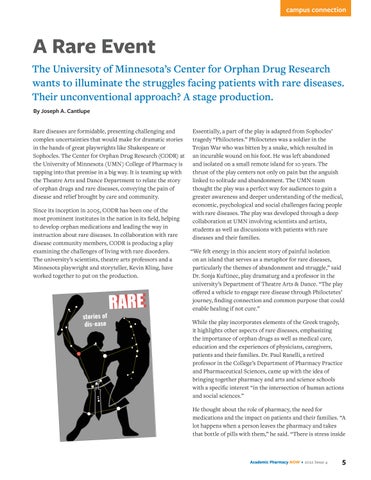
A Rare Event
The University of Minnesota’s Center for Orphan Drug Research wants to illuminate the struggles facing patients with rare diseases. Their unconventional approach? A stage production.
By Joseph A. CantlupeRare diseases are formidable, presenting challenging and complex uncertainties that would make for dramatic stories in the hands of great playwrights like Shakespeare or Sophocles. The Center for Orphan Drug Research (CODR) at the University of Minnesota (UMN) College of Pharmacy is tapping into that premise in a big way. It is teaming up with the Theatre Arts and Dance Department to relate the story of orphan drugs and rare diseases, conveying the pain of disease and relief brought by care and community.
Since its inception in 2005, CODR has been one of the most prominent institutes in the nation in its field, helping to develop orphan medications and leading the way in instruction about rare diseases. In collaboration with rare disease community members, CODR is producing a play examining the challenges of living with rare disorders. The university’s scientists, theatre arts professors and a Minnesota playwright and storyteller, Kevin Kling, have worked together to put on the production.
Essentially, a part of the play is adapted from Sophocles’ tragedy “Philoctetes.” Philoctetes was a soldier in the Trojan War who was bitten by a snake, which resulted in an incurable wound on his foot. He was left abandoned and isolated on a small remote island for 10 years. The thrust of the play centers not only on pain but the anguish linked to solitude and abandonment. The UMN team thought the play was a perfect way for audiences to gain a greater awareness and deeper understanding of the medical, economic, psychological and social challenges facing people with rare diseases. The play was developed through a deep collaboration at UMN involving scientists and artists, students as well as discussions with patients with rare diseases and their families.

“We felt energy in this ancient story of painful isolation on an island that serves as a metaphor for rare diseases, particularly the themes of abandonment and struggle,” said Dr. Sonja Kuftinec, play dramaturg and a professor in the university’s Department of Theatre Arts & Dance. “The play offered a vehicle to engage rare disease through Philoctetes’ journey, finding connection and common purpose that could enable healing if not cure.”
While the play incorporates elements of the Greek tragedy, it highlights other aspects of rare diseases, emphasizing the importance of orphan drugs as well as medical care, education and the experiences of physicians, caregivers, patients and their families. Dr. Paul Ranelli, a retired professor in the College’s Department of Pharmacy Practice and Pharmaceutical Sciences, came up with the idea of bringing together pharmacy and arts and science schools with a specific interest “in the intersection of human actions and social sciences.”
He thought about the role of pharmacy, the need for medications and the impact on patients and their families. “A lot happens when a person leaves the pharmacy and takes that bottle of pills with them,” he said. “There is stress inside
campus connection Academic Pharmacy NOW 2022 Issue 4 5
“It is increasingly apparent to me that we need to do more to raise awareness among our pharmacy graduates about rare diseases. The likelihood that a pharmacist will provide pharmaceutical care for rare diseases is increasing, whether you are at Walgreens or a major medical center.”
the household about that medication and whether it is taken properly. A lot of social pharmacy is brought to the table.”
Kevin Kling, the play’s author and a Minnesotan playwright who has contributed to NPR’s “All Things Considered,” said, “We all think we are logically driven. It’s the reverse: we are emotionally driven people.” That emotion, mixed with the clinical force, uncertainty and hope are what he wanted to convey. A preliminary version of the play was performed this past February by students in a class taught by Kuftinec and Luverne Seifert, head of BA theatre performance in the Department of Theatre Arts & Dance and the play’s codirector. Eight performances of “Rare: Stories of Dis-ease,” are slated to run in cities across Minnesota, Wisconsin and North Dakota from Oct. 8 through 23.
Raising Awareness
A rare disorder is a disease or condition that affects only a small number of people; “orphan” drugs target those diseases. More than 7,000 diseases in this country are considered rare, affecting one in 10 Americans and their families—or 30 million people. Too often, diagnosis is delayed and there are relatively few available effective treatments, which UMN researchers and others are trying to change. While there are drugs for some diseases, many patients still face obstacles receiving treatment. Despite the number of people with rare diseases, many conflicts and contradictions exist. Many rare diseases are life-threatening, and the delay in diagnosis results in delays in treatment.
Historically drug companies did not pursue development of orphan drugs due to poor economic returns, but thanks to the 1983 Orphan Drug Act and other factors, that appears to be changing. In addition to the pharmaceutical industry, many academic institutions are making substantial investments in research infrastructure, establishing new programs for drug discovery and development, including orphan drugs.
“Academic pharmacy can make significant contributions to orphan drug development given our expertise in drug design, delivery systems and clinical pharmacology,” said Dr. James Cloyd, III, director of the Center for Orphan Drug Research and a professor in the Department of Experimental and Clinical Pharmacology. He has been working on rare diseases at the university since the 1970s, initially focusing on epilepsy, a passion of his.
With Cloyd and colleagues, the UMN College of Pharmacy has developed into one of the leaders studying and researching orphan drugs with a focus on rare neurological disorders in children. Over the past several years, the Center has experienced substantial growth, expanding its research to include seizure disorders, spasticity and neurodegenerative disorders. Cloyd also noted that pharmacy schools have the opportunity to bridge gaps in their instruction about orphan drugs and rare diseases.
“Sometimes our faculty will talk about a condition, such as sickle cell disease or cystic fibrosis, and not think of them as rare, but they are,” he observed. “It is increasingly apparent to me that we need to do more to raise awareness among our pharmacy graduates about rare diseases. The likelihood that a pharmacist will provide pharmaceutical care for rare diseases is increasing, whether you are at Walgreens or a major medical center.”
“The topic of orphan drugs includes some categories that are not covered in much detail in pharmacy schools,” he continued. “We need to prepare our students for the practice of pharmacy in the future. They need to understand what the patient and family are going through not only in terms of the medical aspect, but also the psychological, social and economic impact. We want to make sure our graduates are ready and prepared.”
Learning opportunities for students at CODR range from research studies to seminars to advocacy programs, Cloyd
—Dr. James Cloyd III
campus connection Academic Pharmacy NOW 2022 Issue 46
said. “The center offers directed studies, summer research assistantships and an elective APPE research rotation.” The Experimental and Clinical Pharmacology (ECP) graduate program includes a course on Regulatory Issues on Drug Research that presents an introduction to the Orphan Drug Act. This fall, he added, ECP will provide a module on orphan drug development in a course on Principles of Clinical Pharmacology, which is available to graduate and Pharm.D. students.
Cloyd said that CODR’s research on orphan drugs and rare diseases is increasing, as is its coordination with drug companies in developing specialized medication. He pointed out that CODR’s mission is to “improve the care of people who have rare diseases through research on new drug therapies, education of health professionals and health profession students and contribute to the discussion and formulation of public policy relating to rare diseases and orphan drugs.”
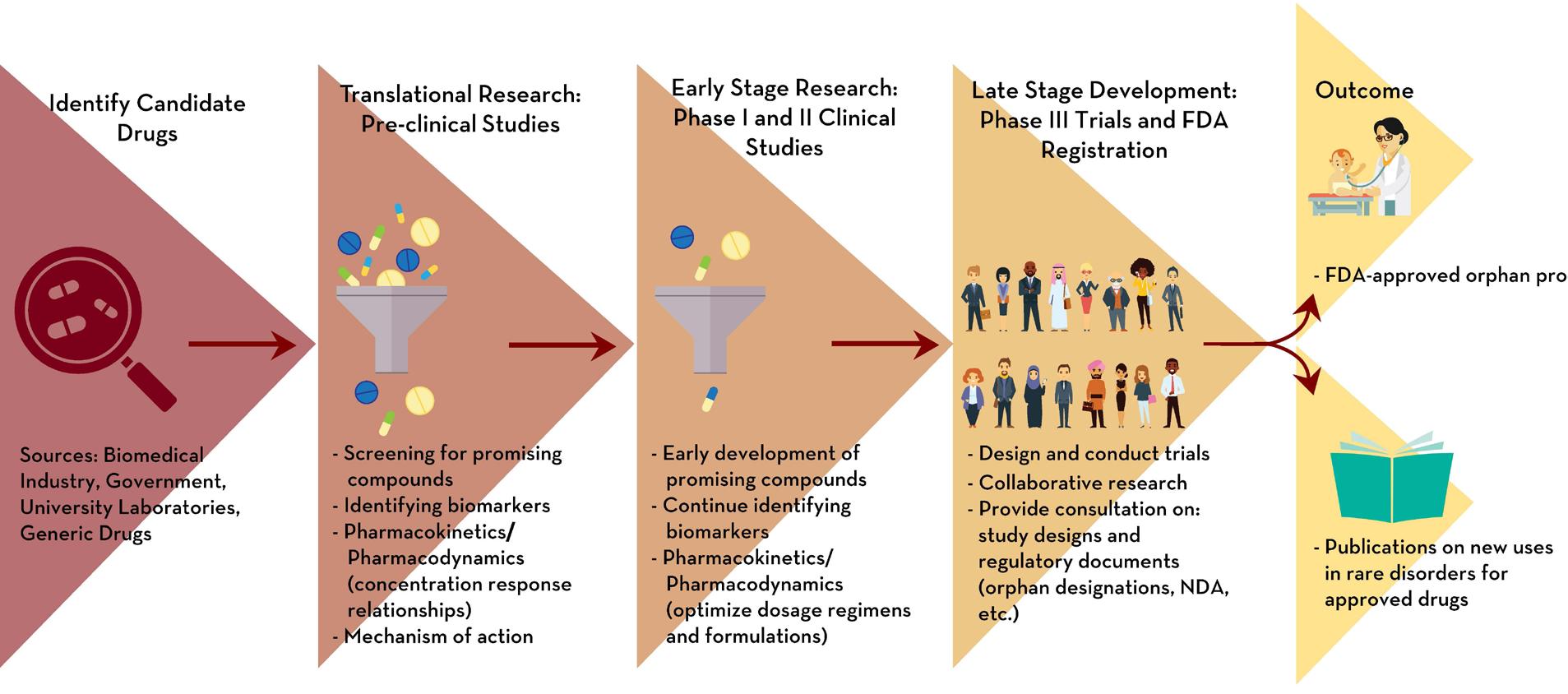
That mission correlates with the play. As they put the final touches on the script, Kling and others said that the obstacles that patients face in receiving care will be addressed. An example is sickle cell disease, a group of inherited blood disorders, which impact minority groups, particularly the Black population. For people in pain with sickle cell disease, the ailment is not always obvious to an outsider. The result is that some patients have faced discrimination and have been accused of feigning pain.
With rare diseases, “patients become experts because they have to be, and there is importance in moving from isolation to a community. That is a kind of healing, a story we heard time and time again,” said Kuftinec. Access to education is not only important for patients and families but doctors as
well, who too often may be putting on “blinders and not able to see rare diseases.”
Seifert said patients and families need to know that others are going through similar experiences. He mentioned the case of a young mother struggling with a mysterious illness. “The doctor said, ‘You know as much information as we know,’” Seifert related.
Cloyd noted that studying rare diseases means examining “precision medicine, picking the right drug and right dose and then maintaining that dose in the blood level over time.” Looking at the expansive accomplishments of the university, he said, “I think we have made some important contributions to the rare disease community.” He emphasized that advances in biomedical sciences have resulted in an acceleration of orphan drug development, “resulting in hope for the future. In fact, we have seen miracles taking place with respect to orphan drugs and gene therapies for rare diseases.”
In her classes, Dr. Reena Kartha, an assistant professor in the College of Pharmacy and an associate director of Translational Pharmacology at CODR, sees awakenings among students each day as she teaches her freshman course, “Rare Diseases: What It Takes to be a Medical Orphan.” Kartha said she has made it a point in her directed studies course and clerkship to have student pharmacists interact with rare disease patients. Inevitably, emotion becomes an important element in the educational scope of instruction. After learning about orphan drugs and rare diseases, one of her students observed, “I just realized all my complaints are so trivial, especially after understanding what others are going through.” P
Joseph A. Cantlupe is a freelance writer based in Washington, D.C.
campus connection Academic Pharmacy NOW 2022 Issue 4 7
Center for Orphan Drug Research: https://www.pharmacy.umn.edu/centers-and-institutes/center-orphan-drug-research
community
Hearing Aid Access Set to Expand
A University of Pittsburgh collaboration demonstrates that partnership between pharmacists and audiologists can promote patient hearing health.
By Emily JacobsIn October 2021, the U.S. Food and Drug Administration proposed a rule to create a new category of over-thecounter (OTC) hearing aids. This would allow some hearing aids to be sold directly to consumers without requiring a medical exam or a fitting by an audiologist. Now that the FDA finalized the rule in August, community pharmacists can expect more patients seeking assistance with hearing health. This has opened the door for new partnership opportunities between pharmacists and audiologists. At the University of Pittsburgh, the School of Pharmacy and the School of Health and Rehabilitation Sciences have incorporated these partnerships into the curriculum.
Under the pharmacy school’s SilverScripts program, student pharmacists visit local senior community centers to complete comprehensive medication reviews to identify drug therapy problems. Student pharmacists have real patient encounters in their first and second professional years. Dr. Lucas A. Berenbrok, associate professor of pharmacy & therapeutics at the University of Pittsburgh School of Pharmacy and the former director of SilverScripts, wanted to add hearing screenings to the program. In 2017, Berenbrok invited Dr. Elaine Mormer, an audiologist with the university’s School of Health and Rehabilitation Sciences, to collaborate. Hearing screenings were added to the SilverScripts program, and student pharmacists were paired with student audiologists to conduct those screenings.
Improved Care for Patients With Hearing Loss
At SilverScripts, students in the audiology and pharmacy programs work together to interview patients about their medications and hearing. When a SilverScripts patient has issues with a hearing aid, for example, the student pharmacist observes how the student audiologist addresses those concerns. If there is a problem with the patient’s medication, the student audiologist observes how the student pharmacist asks questions and assesses the medication’s safety and efficacy. All participating students also better understand how medications may affect hearing.
“Part of our intake when we see a patient who’s being evaluated for hearing loss is to ask about their medications,” said Mormer. “I think it’s been really helpful for the students to be right there talking about the medications and learning from the pharmacist about what different medications do… medications that are harmful for hearing, that are ototoxic. That is another topic that comes up all the time for both groups of students.”
In 2020, Berenbrok and Mormer developed an online microcredential preparing students to provide safe and effective guidance to patients seeking OTC hearing aids in the community pharmacy. The 2.5-hour course is called CHAMP (Championing Hearing Using Accessible Medication Experts at the Community Pharmacy) and is
“We want those pharmacists who are seeing people with hearing loss to be able to know something about it and to do more than just raise your voice or to lean in closer. We want them to be able to triage someone with hearing loss who’s out looking on the shelf for an OTC hearing device. We want them to be able to refer people to audiologists down the street when they’re not candidates for the OTC product.”
—Dr. Lucas A. BerenbrokAcademic Pharmacy NOW 2022 Issue 48
impact
community impact


required for all students as part of the pharmacy school’s core curriculum. It is also available as a continuing education course to licensed pharmacists. Students in the program first learn to recognize hearing loss in patients and understand its full impact, including the increased risks for depression, hospitalization and medication errors. Students also learn to help patients establish eligibility for OTC hearing aids, or when to connect them with local audiologists. Additionally, participants learn better methods for communicating with individuals with hearing loss.


Berenbrok noted that the microcredential first helps students become more aware of the extent of hearing loss among their patients and in their communities. Students also become more confident in taking further steps, such as referring a patient to an audiologist. “We want those pharmacists who are seeing people with hearing loss to be able to know something about it and to do more than just raise your voice or to lean in closer,” he said. “We want them to be able to triage someone with hearing loss who’s out looking on the shelf for an OTC hearing device. We want them to be able to refer people to audiologists down the street when they’re not candidates for the OTC product.”
SilverScripts and CHAMP are not the only ways that the two schools are working together. Audiology students have been co-investigators in pharmacy research, and pharmacy students have participated in audiology research. This has





encouraged co-learning in a research setting as well as in the classroom and patient care. Berenbrok and Mormer worked together on a paper published in the Journal of the American Pharmacists Association and completed a lot of their work with a student audiologist and a student pharmacist.
While the programs at the University of Pittsburgh are geared toward community pharmacists, it may have other applications. For example, the training can aid ambulatory care pharmacists who see patients and may become better at recognizing hearing issues, especially when other members of the healthcare team may not have time to make recommendations or referrals. It may also be of interest to pharmacists who go into research.
By encouraging interprofessional activity, SilverScripts has helped launch a conversation about the potential for partnerships between audiologists and pharmacists. Within this program, both audiologists and pharmacists gain a better understanding of the value of collaborative relationships. This could help them make better decisions with patients and become sources of referrals and information. “I think that’s what pharmacists do really well in communities: recognize that there’s a problem and help patients find the right person to solve that problem,” Berenbrok added. P


Emily Jacobs is a freelance writer based in Toledo, Ohio.





Academic Pharmacy NOW 2022 Issue 4 9
Women Taking the Lead
Women in pharmacy academia reflected on their experiences in leadership positions during an AACP webinar that explored the challenges and rewards that come with moving to an administrative role.
By Miranda Steinkopf and Melissa Murer Corrigan
AACP’s 2021–24 Strategic Plan elevates the organization’s commitment to leading diversity, equity, inclusion and anti-racism efforts. Diversity, equity and inclusion in leadership roles with AACP and at various member institutions is part of this priority. A recent AJPE article, “Women CEO Deans of U.S. Schools and Colleges of Pharmacy,” indicated that 74 women served as CEO deans of U.S. schools and colleges of pharmacy between January 1988 and December 2020. The article outlined recommendations for preparing future women deans, and it cited the need for increased mentoring and creating an advanced leadership program for potential female dean candidates.
In May 2022, the Women Faculty Special Interest Group held a webinar entitled “Making the Move to an Administrative Role—Advice from Administrators in Academia” to provide real-world perspectives from female leaders in pharmacy academia. The SIG’s five objectives were to: 1) describe considerations for pursuing an administrative position in academic pharmacy; 2) illustrate several professional pathways to administrative positions; 3) outline steps to take for pursuing an administrative position; 4) identify barriers and solutions for pursuing an administrative position; and 5) discuss practical advice for excelling in an administrative role. Major themes that emerged from the discussion included the importance of relationships, maintaining work-life balance, navigating evolving responsibilities and deciding when to pursue an administrative role.
The three panelists were Dr. Jaclyn Boyle, Dr. Diane Calinski and Dr. Julie Johnson.
Boyle currently serves as an associate professor and assistant dean of student success at Northeast Ohio Medical University (NEOMED). She completed her PGY-1 and PGY-2 in Internal Medicine and Academia and received a Master of Business Administration in Healthcare Management. She also serves as a career coach, helping pharmacists transition into new career opportunities or build innovative entrepreneurial businesses. She is the current chair for the College of Pharmacy’s Diversity, Equity, and Inclusion Task Force and is a member of AACP’s Diversity, Equity, Inclusion, and Anti-Racism Advisory Panel.
Calinski is transitioning from vice chair of Pharmaceutical Sciences and Pharmacogenomics to chair at Manchester University. She serves as the immediate past chair to the Biological Sciences Section of AACP, and she is the vice chair of the Board of Trustees to Cancer Services of Northeast Indiana.

Johnson was the dean of the University of Florida College of Pharmacy and distinguished professor of pharmacy and medicine until recently stepping down from the dean position in August. After a year of administrative leave, she will rejoin the college faculty in the department of pharmacotherapy and translational research. Under her leadership as dean, the College of Pharmacy implemented a new Pharm.D. curriculum, grew the faculty size by 90 percent, grew research funding threefold and achieved the highest percentage of underrepresented minority students among professional degree programs at the University of Florida and top 40 colleges of pharmacy.

Academic Pharmacy NOW 2022 Issue 410 community impact
community impact
This article highlights insights that the panelists shared during the webinar, which was moderated by Dr. Angela Chu, assistant professor and director of Interprofessional Education at Roseman University, South Jordan Campus. AACP members can access the full recording on AACP Connect by navigating to the Webinar Community Library. It can be purchased for CE credit under the “Distance” tab.

How have your responsibilities and expectations in teaching, service and scholarship changed since transitioning into an administrative role? How do you determine what responsibilities are necessary and which you can potentially give up?
Johnson: Even though I’m the dean, and a lot of people would view that as 100 percent an administrative role, I maintained active faculty activities. I still have funded research I maintain, but I did transition out of teaching in the classroom and had transitioned out of clinical practice activities when I became chair. When becoming an administrator, I encourage people not to give up all their faculty responsibilities because it doesn’t give you a good path back if you decide you don’t want to have that role at some point. I think it also challenges different parts of your brain to have those different types of responsibilities. I transitioned and gave up things or kept things where I felt like I was able to best contribute. The things where I felt I wasn’t uniquely qualified were what I walked away from first.
Boyle: To piggyback off what Dr. Johnson mentioned, I too had to leave the clinical practice behind. Something had to go. But that was what really shifted in my service responsibilities. I would say teaching responsibilities went down a little bit, but where they went down, my service responsibilities went up. I started getting more involved with college and university level committees and task forces. My scholarship really hasn’t changed very much.
Calinski: One of the things that I have struggled with in getting into different roles is what do you give up? Because you do have to give something up. If you don’t, you’re not going to have anything even close to a work-life balance. Then you’re also not an effective leader because you’re not ever taking a break for yourself. Giving up responsibilities is really difficult, but one of the things that kind of has helped me is going back to, “is this really necessary or something I need to hold onto?” Maybe it’s doing everybody a service if I let somebody else take that on for a while and we get a fresh perspective to do something different.
How did your colleagues’ perception of you change with your new role?
Johnson: I can’t speak for my colleagues, but I can share from my perspective what the change is like. I would say that if you’re in an executive leadership role where people report to you, meaning a chair or a dean, it is difficult in many ways because there has to be some space between you and the people in your unit, so in my case, my entire college. A lot of people develop really strong friendships with the people that they work with, and that can be challenged a little bit when you become an executive leader because there just has to be some space. It can be a little bit lonely.
Boyle: I too would have to look to my colleagues to see how their perception has changed. Although I do ask my direct reports to provide me with anonymous feedback, so I do get to see some of the thoughts that they have. Things that have come up over time have been that they look to me for support and to navigate the university-level relationships that we have. Being that conduit between the college and the university is really a great thing that I am able to participate in to advocate for resources or support on behalf of our college and our students.
Academic Pharmacy NOW 2022 Issue 4 11
community impact
Women who have recently transitioned to their first administrative position may have colleagues who still treat them as junior faculty. How would you handle this?
Boyle: Something that I pursued this year that I found really helpful for this sort of situation is executive coaching. This would be a third-party individual that helps you work on your leadership skills, and it could be a pharmacist, it could be a non-pharmacist. That person really helped me navigate some executive-level skills that I had just not developed because we really didn’t do too much of that in pharmacy school, and then with residency, or other practice responsibilities, I just didn’t get that sort of training.
How do you find mentors when few exist at a current institution? How have you created and maintained relationships with mentors?
Calinski: There’s a lot of opportunities for mentorship that people don’t always know about within AACP. The women’s SIG has a great mentorship program. We also run a mentorship program in [the Biological Sciences Section], and one of our questions in the beginning is, “What are your career goals?” We try to match that up with a mentor that has reached that goal or is on their path to doing that, if we can. I’ve used mentorship programs as a mentor and as a mentee, and I think those are really effective relationships. But the ones that I gain the most out of are not prescribed. I have four people, probably, that I’ll reach out to when things are coming up and I need some help or some advice. The other thing that I think is really fun is getting away from email, so I’ll just call them on their personal phones or send them a quick text message. It’s so much more personal than sending an email.
October is American Pharmacists Month, which recognizes the valuable services that pharmacists provide. Women Pharmacist Day will be observed on October 12 to highlight the important contributions made by female pharmacists.
Johnson: I think there are multiple layers. There’s the Academic Leadership Fellows Program, which is fantastic, and I would strongly encourage people to consider doing that. Second is a more formal mentorship. But the third is just getting to know people at other institutions. It can just be people in a similar role. There’s a group of deans at research intensive programs that communicate with each other frequently because we have common missions, common challenges. Nobody’s mentoring in that formal mentormentee relationship. We all mentor each other.
Boyle: Most of my really influential mentors are those people I’ve gravitated to because I want to be like them, or we have shared values or interests. At our institution, we implemented a type of group mentoring called progressive mentoring. In the mentoring groups, there are assistant, associate and full professors, and it’s usually five to seven individuals. We see that there’s learning across all levels of that mentoring group and that folks have different individuals they can reach out to, depending on who they gravitate toward most.
Academic Pharmacy NOW 2022 Issue 412
community impact
Describe your approach to being a mentor or your approach to relationships with those who directly report to you.
Calinski: It’s kind of cheesy, but at Manchester University, our mission is to respect the infinite worth of every individual, and I really love it. It’s something that resonates with me, hence why I’ve stayed at Manchester for so long. One of the things for me as a leader is to recognize that everybody has things that they’re bringing to the table. Not everybody is going to be a leader in the classic definition of the word leader, so in terms of encouraging leadership in the people I interact with, I pose it back to them. It’s going to the individual and seeing what their strengths are and promoting them and letting them showcase those strengths.
Boyle: I, too, believe that everyone has at least one innate superpower that they are ready to share with the world. They just may not feel confident enough to do it yet, or it’s untapped potential. If somebody could see that in you and bring it out, that is helpful.
For my mentees, I tend to try to connect them with opportunities that I see their strengths could excel in and push them slightly outside of what I think they might be comfortable doing because that’s what my mentors have done for me. Those areas of growth have been really transformational. Mentors who can see that kind of light in a person of what gets them going and plug them into opportunities to showcase that or share their gifts, that’s where I think the real magic happens.
Were you able to achieve an appropriate work-life balance after assuming your administrative position? How do you protect your time outside of work?
Boyle: I think my work-life integration got better when I took the administrative role, and that may be for several reasons. My practice site was extremely busy and there were a lot of system-level things that I was involved with. In this role, it really has been helpful to set pretty strict boundaries with work times. Something I learned in residency was to keep my email off of my phone, so I actually don’t check my email unless I’m at work or at my computer. I will say that there are times that I have to do college things outside of work hours, whether that’s student events or if there is a student crisis going on after hours, but that’s a minority of the time. The majority of the time, those boundaries are pretty solid, which is really helpful for other priorities in life like family and friends.
Calinski: I don’t email on my phone either. I’ll just put a plug in for this too, because I think sometimes we don’t do this, but you have full permission to not answer student emails. I had something set up that was an automatic response to students to ask them to come to my office to talk to me because a five-minute conversation with a student is infinitely shorter than writing up a giant response in an email. Also, you get to talk to them and get to know them.
Johnson: I wish I could say I don’t do email on my phone, but I don’t think my life would be possible if I didn’t do that. I do think it really is important to figure out boundaries for your life and your family. Depending on the role you’re in, it may not be possible to do it all in a 40-hour workweek, but then being very disciplined about identifying the times when you will do that.
Academic Pharmacy NOW 2022 Issue 4 13
community impact
Boyle: One of the good things about Covid is that it allowed us to see better what can be done from different locations. Organizations and leaders really need to think hard about the fact that women typically take on a majority of outside-of-work responsibilities. People don’t want traditional workplaces anymore, and if we can’t recruit and retain great people, we’re going to lose them. If we want more women in administrative roles, I think these issues need to be addressed because women are going to opt out if they can’t see themselves making it work. They’re smart individuals and they will just say, this is not worth it. If they can’t determine how to navigate this while having a life and not burning themselves out, then we won’t have women in administrative roles.
When is an ideal time to pursue an administrative role? What advice can you share with those interested in pursuing their first administrative position or advancing in their existing roles?
Johnson: I’ll say there is no ideal time. There is not a single answer to that question. I think that there might be situations where there are times when it seems sort of like the perfect time in your career. Then there may be an opportunity that is a really good opportunity, but the timing doesn’t feel right. I’ll be really honest, I never had intentions of becoming a dean. When the position at University of Florida became open, I still didn’t plan to apply for it. It felt like a completely non-ideal time. I had a lot of things we were launching, like our clinical implementation program in pharmacogenomics. I had a lot of grant funding—about 90 percent of my salary was covered on grant. So, it felt like absolutely the worst time, and yet it was a window that wasn’t just going to stay open. Sometimes you have to accept that an opportunity that is right for you to pursue is not always going to follow your timeline, so you have to decide whether you go ahead and pursue that. If you pass, then that window may not come up again in a time frame that makes sense.
Calinski: Sometimes in academia, we can get caught up in trying to get a certain title or be a certain thing. Just going back to questioning why you really want a role is important. Ask yourself, “Would I actually enjoy doing that job? Is that something that I would be good at?” Think about it because this is going to be your day-to-day job. Can you actually do those things, or would you enjoy doing those things?
Boyle: Something that my mentors encourage me to do is to talk to people about what you’re interested in. Consider, are there needs of your current institution or other institutions that you could fulfill and fill a gap where there isn’t a service or a person that exists yet? I agree with both ladies that I think there’s not really an ideal time, but if you see an opportunity where the work that you’re going to be doing is work that really makes you feel alive and excited about coming to work every day, those are the opportunities that you should really think hard about going for.
To continue these important conversations, please consider joining the Women Faculty SIG, and share your reflections on social media using #AACPATC to connect with the AACP Transformation Center. P
Dr. Miranda Steinkopf is AACP’s academic leadership and education fellow. Melissa Murer Corrigan is executive director of the AACP Transformation Center.
Any additional thoughts on finding work-life balance in a world with virtual work opportunities?
Academic Pharmacy NOW 2022 Issue 414
About PharmON
Established in 2022, the Pharmacy Opportunities Network (PharmON) is a national career center where a diverse array of corporations, associations and other entities can post experiential learning opportunities, such as internships or jobs, to thousands of current Pharm.D. students, residents, fellows, graduate students and practicing pharmacists.
The length of each experience is up to the host entity and, while many internships are traditionally available for 10 to 12 weeks in the May to August timeframe, the co-sponsoring organizations encourage host companies to think about flexible experiential learning opportunities. Opportunities can take place on site or remotely and can occur all year.
Questions?
Visit the AACP website for more information, including comprehensive FAQs, at www.aacp.org/resource/ pharmon. Contact Tom Maggio, Public Affairs and Engagement Manager, with any questions about PharmON, at tmaggio@aacp.org.


Connect with Pharmacy’s Best and Brightest
pharmon.careerwebsite.com
Give Your Opportunities Added Visibility
Reach more than 60,000 Pharm.D. and graduate students and 142 schools by posting a learning opportunity on PharmON. Your job will stay topof-mind for learners through multiple distribution networks, including:
• Regular email marketing through AACP’s numerous student and member listservs
• Regular announcements on AACP Connect, the organization’s online member community
• Frequent exposure on AACP’s social media channels, including LinkedIn and Facebook
Extend the Reach of Your Opportunities
Connect with thousands of prospective candidates by posting your experiential learning opportunity on PharmON. Packages and pricing include:
30-Day Posting: $199
60-Day Posting: $398
Job Flash™ Package: $299
• Posting for 30 days and job emailed to all opportunity seekers
Premium Internship Job Flash™ Package: $399
• Posting for 30 days and job emailed to all opportunity seekers
• Pinned as a top job in an individual’s search results
• Highlighted on the PharmON homepage
Sponsored by:
15 community impact
community impact

Academic Pharmacy NOW 2022 Issue 416
Establishing Roots in Rural Regions

Intent on growing the next generation of pharmacists to provide care to rural communities, some schools are focused on creative approaches to building the pipeline.
By Jane E. RooneyBeing a pharmacist often means fulfilling duties that aren’t traditionally part of the job description. Nowhere is that more evident than in rural areas, where healthcare resources can be scarce and the pharmacist may be the sole access point for patients. Bolstering the pharmacy pipeline is critical, particularly for these rural communities that rely heavily on pharmacies for care. Some pharmacy schools have found innovative ways to reach out to potential students and introduce them to the wide-ranging options that a pharmacy career can offer.
Academic Pharmacy NOW 2022 Issue 4 17 community impact
community impact
The three schools profiled in this article are building relationships with community pharmacies and helping them transform and strengthen their practices. Among the goals are to alleviate lack of access to care and to create pathways that will allow more healthcare professionals to reach underserved populations.
Planting the Seeds


One institution that sets itself apart with a unique approach to strengthening the pipeline is Drake University College of Pharmacy and Health Sciences. Its Cultivate program has a mission to assist rural community pharmacies in transforming their practices through the development of high-quality pharmacy technicians and future pharmacists. Dr. Erin Ulrich, associate professor of social and administrative pharmacy, came up with the idea while working as a Flip the Pharmacy practice transformation coach in 2019. “As I was traveling to rural areas, it became very apparent while working with these pharmacists on bringing them up to speed that the biggest barrier was the rapid turnover of pharmacy technicians,” she said. “Or they were never fully staffed. I would see pharmacists working the cash register. It was hard for them to recruit quality individuals into those support roles.”
Ulrich envisioned a way to help these pharmacies by recruiting high school students to assist with things like inventory and working the cash register, giving young students a positive experience and allowing Drake to be seen in areas where they don’t actively recruit, which she described as a win-win-win situation. The program works like this: Drake identified five CPESN rural pharmacies that wanted to participate. The college reached out to its network of high school science teachers across Iowa to make presentations to 10th and 11th grade students
about the pharmacy profession and the Cultivate program, which offers them a pharmacy experience before college. Interested students (the program accepted 12 in the first year) attended a two-day training to prepare them to work part-time for at least six months as a support person or tech trainee at one of the participating rural community pharmacies.
“During the Cultivate program, the first day mostly covers the role of a pharmacist,” Ulrich explained. “The second day is talking about where can you go with a pharmacy degree. I don’t focus that specifically on rural. My goal is to get quality individuals into pharmacy programs. They may be interested in doing remote patient monitoring. These kids are very tech oriented. We talk about what does clinical work in the Cloud look like, how does that support rural pharmacy. We go through all of the categories: community, hospital practice, managed care. The students realize that pharmacy is so much bigger than just community pharmacy. I do think the joy of the profession is there is self-selection bias. Some want to do health informatics. There’s a spot for them no matter what they want to do.”
Thanks to a grant from The Community Pharmacy Foundation, Cultivate is now underway for a second year with the same five pharmacies on board. Six high school students completed the training in July. Ulrich is pleased with the encouraging feedback from participating pharmacists. “They really enjoyed having high school
Academic Pharmacy NOW 2022 Issue 418
students there. It helped take the burden off,” she noted. “We made some changes to the curriculum based on their feedback—we added some things like having a professional appearance, how do you talk on the phone— some things they thought high school students needed.” Among last year’s 12 participants, one enrolled in Drake’s pre-pharmacy program and another enrolled in the health sciences undergraduate program with the intention of pursuing a nursing degree.
Ulrich said that Drake will apply for another grant to become a coordinating center and assist 10-15 pharmacy schools in replicating the program. “From a college of pharmacy perspective, I hope to see this scaled up,” she said. “It’s a win for the students, the pharmacies, the schools, so it’s really beneficial. [The program allows us to] get students on campus to see the options in a nopressure situation.” She reflected on another source of inspiration that prompted her to create Cultivate: observing her uncle own and operate a pharmacy in rural Iowa. “I saw my uncle do this, and his technicians worked with him for 35 years. I want to get engaged students in to have a positive pharmacy experience,” she continued. “Whether you go back and work in your pharmacy, or if

Students in Drake’s Cultivate program attend a twoday training that prepares them to work as a support person at a participating rural community pharmacy.



Academic Pharmacy NOW 2022 Issue 4 19 community impact
community impact
you choose to stay in your small town or go elsewhere, you know the role of a pharmacist and you know their importance. The long-term goal is to spread the word about the role of the pharmacist and what they can offer to a healthcare team. Helping with staffing is the immediate short-term goal. I want students to have lived a positive community pharmacy experience so they can take that with them no matter what they do.”
Helping Rural Communities Thrive
The relatively new rural health track at the Washington State University (WSU) College of Pharmacy and Pharmaceutical Sciences launched in late 2021 thanks to a $2.2 million gift from an anonymous donor. The program has a three-pronged approach, according to Dr. Angela Stewart, professor and associate dean for rural health. “First, we want to improve access to healthcare for rural residents in Washington state. Most counties in the eastern part of the state are considered medically underserved. We want to develop pharmacists as primary care providers and keep pharmacies open to serve their rural communities,” Stewart explained. “Second, we want to develop pathways into health sciences and into pharmacy for residents from those rural counties. Graduates are more likely to return to practice in those areas if that’s where they have roots. We want them to be successful and then return. Third, we want to foster economic development in rural communities. It’s about keeping those pharmacies open and providing job opportunities for residents.”
A hub-and-spoke model allows faculty and students to work from the main campus in Spokane, the secondlargest city in the state, and the extension campus in Yakima, to reach out to rural communities, tribal communities and smaller towns that rely on critical access
“We need to show support for independent community pharmacies knowing that those businesses are really being threatened right now. That’s also a terrific place to grow post-grad training. We’ll get those graduates circling back to those communities to set up practices. The ideal situation would be one of our rural track students working in a community pharmacy on a capstone project that leads to a relationship and them working for that pharmacy and eventually working into a part-ownership situation.”
—Dr. Angela Stewart
Academic Pharmacy NOW 2022 Issue 420
hospitals. Stewart emphasized that a key aspect of the rural health program is interprofessional engagement. “WSU’s nursing, medicine and pharmacy programs all make rural health a priority. We partner with our colleagues to work together as teams on service learning and clinical experiences in communities right from the beginning.”
The college has a strong network of rural pharmacies and is working to build new relationships. “We’d like to have a well-rounded representation of types of practice sites: some Federally Qualified Health Centers, ambulatory care, critical access hospitals,” Stewart said. “We need to show support for independent community pharmacies knowing that those businesses are really being threatened right now. That’s also a terrific place to grow post-grad training. We’ll get those graduates circling back to those communities to set up practices. The ideal situation would be one of our rural track students working in a community pharmacy on a capstone project that leads to a relationship and them working for that pharmacy and eventually working into a part-ownership situation. We’ll be watching for those opportunities.”
The track’s first cohort of five students completed community IPPEs this summer in underserved areas. A specialized elective course this fall will provide them with background information on what it means to be a care provider in a rural community, and additional electives will focus on supporting rural health delivery. “Students need to complete 10 elective credits and we expect them to do half of those with courses consistent with rural health,” Stewart added. “We are developing a researchbased capstone course that will be longitudinal. Students will identify an issue and work with faculty or preceptors to identify a solution and get that implemented. This is an
important way to impact these communities really early on in a meaningful way and students will get to publish a manuscript.”
To augment post-graduate training opportunities, the college is working with several community-based organizations to place a clinical faculty member at the sites. “We will embed faculty at those sites with the expectation that they support the development of innovative pharmacy care models,” she said. “They will develop additional training sites and post-graduate residency sites. For example, there are no post-graduate behavioral health training programs for pharmacists in Washington. So one of our priorities is placing a faculty member at a facility that provides mental healthcare for the medically underserved.”
On the other end of the spectrum, the university partners with local school districts to engage with their STEM programs and promote pathways into health sciences careers. “The College of Medicine has a relationship with one school district where they start with 7th graders with a progressive curriculum that introduces them to all of the health professions and prepares them to take the right courses to be able to matriculate in,” she noted. “We’re looking at how to better engage with and extend that program. We have also been able to bring some students to campus to experience pharmacy and develop a relationship with faculty and students. We expect our rural track students to be mentors for prospective students from their communities.”
A Solid Foundation
The University of Illinois Chicago College of Pharmacy also takes a decidedly interprofessional approach with its Rural Pharmacy Education (RPHARM) Program, which
Academic Pharmacy NOW 2022 Issue 4 21 community impact
community impact
started in 2010 when the college teamed up with the rural medical program at its Rockford campus. Four years ago, students from the nursing program also joined the rural track. The program emphasizes interprofessional collaboration and teamwork.
“We do team building at the beginning of every academic year to help students get to know each other and be comfortable working on teams,” said Dr. Heidi Olson, assistant professor and RPHARM Program director. “We have guest lecturers who come in to talk about their role in healthcare to give students a better idea of the roles and responsibilities of other professions. They get to see who they could be partnering with in a rural community.” Students also participate in three rural shadowing experiences (which must include a pharmacist and someone from another healthcare profession).
“A lot of the content is public health-based content that is specifically looking at things from a rural perspective,” she continued. “Population-based health, social determinants of health, community-based research is all part of the curriculum.” To learn how to assess and meet a community’s health needs, second-year students work in teams to create interactive sessions that simulate community health interventions for local students. “This half-day event usually focuses on 4th and 5th graders,” Olson explained. “They prepare educational activities for a local school we partner with and that is their first experience assessing a community and doing an intervention in the form of education.”
During the third year, “each student picks a rural community in Illinois, does an assessment of the health needs and creates a research project, which can include creating a survey or other small intervention. In their
fourth year, they implement the research project, do data collection and analysis and present their results at Research Day.” The curriculum emphasizes that pharmacists serving rural populations will probably have limited resources, so they need to be used efficiently. “You might only have two people on a team,” she pointed out, “so communication is important, teamwork is important. Some patients will have needs that aren’t typically a pharmacist’s bread and butter, but you help. One of the ways we teach this is with simulated patient cases. Students are put on small interprofessional teams and they interview a standardized patient and then develop a care plan together.”
For APPE rotations, the college works with rural communities that have enough resources to support both a pharmacy student and a medical student at the same time. “We’ve seen our graduates end up practicing where they’ve done their fourth year projects and APPEs,” she noted. “We require them to do three rural rotations in the same community where their project is based. We’ve seen more than a handful of students go back after graduation to the community they were originally from or where they did their research project.”
The RPHARM program does conduct outreach efforts aimed at sparking younger students’ interest in a pharmacy career. The event geared toward 4th and 5th graders focuses on medication safety and gives students an idea of what pharmacists do. “We have our student pharmacists get involved in the community and provide needed education to the community we live in. Kids are getting exposed to content they might not get otherwise,” Olson said. “We also partnered with the University Extension office to create pharmacy 4-H projects and kickoff events to get local kids interested in pharmacy. The
Academic Pharmacy NOW 2022 Issue 422
UIC College of Pharmacy also does a summer pharmacy institute, which is focused on pipeline development for college students. A local group does a health careers camp for rural high school kids, and our student pharmacists participate in that by creating an interactive pharmacy activity for the campers to do.”
A key message they want to convey to younger students in rural areas, she emphasized, is that pharmacy is a career option that offers variety in what you can do. “That awareness is the biggest key. We’ve seen that if you get students that are from a rural area, they are more likely to go practice in a rural community and stay there for an extended period of time. We want to get the message out to rural communities that pharmacy is a good career option.”
As WSU’s Stewart noted, “when you are a provider in a rural community, you may be the only person and the most accessible site for healthcare. Pharmacists have to be problem solvers, critical thinkers, excellent communicators and team players, as well as able to lead and engage others. They have to triage problems, maybe some that aren’t typical for pharmacists. They will be trained to implement therapy to save a patient from making a trip an hour away. They need to be aware of their community resources and do efficient handoffs of care, and we want them to be familiar with public health concepts and tools.”
Rural pharmacy care presents myriad career options and a chance to learn skills that are important in any setting, she added. “It’s an opportunity to really make a difference. To be the care provider in that community, you are making a difference for patients every day.” P
Jane E. Rooney is managing editor of Academic Pharmacy Now.
The [RPHARM Program] curriculum emphasizes that pharmacists serving rural populations will probably have limited resources, so they need to be used efficiently. “You might only have two people on a team, so communication is important, teamwork is important. Some patients will have needs that aren’t typically a pharmacist’s bread and butter, but you help. One of the ways we teach this is with simulated patient cases. Students are put on small interprofessional teams and they interview a standardized patient and then develop a care plan together.”
—Dr. Heidi Olson
Academic Pharmacy NOW 2022 Issue 4 23 community impact
Start building a broader applicant pool


of Waterloo School of Pharmacy increased their interview and


rate to 97.6%

Academic Pharmacy NOW 2022 Issue 424 @AACPharmacy Juanita is an exceptional fit for your class.
+53% increase in applicants interviewed by the University of Michigan College of Pharmacy 50+ hours of work saved by the University of New Mexico College of Pharmacy 97.6% University
attendance
Trusted by 700+ programs worldwide Discover how Kira supports virtual interviews that meet ACPE standards Let’s Talk Proud Partner Leadership Potential Self-Awareness Verbal Communication Empathy PROGRAM FIT 4.8
The Next Chapter
As AACP’s new Executive Vice President and CEO, Lee Vermeulen intends to promote the value of pharmacists while developing more innovative practice models to boost pharmacy school enrollment.
By Athena PonushisLee Vermeulen got his first glimpse into pharmacy while dusting shelves as a five-yearold at the hospital pharmacy where his father worked in Western New York. His father, the hospital’s first pharmacist, convinced the medical director to bring him on as he had been working at the community pharmacy for years, and immediately started making innovative moves. He built one of the first unit dose systems in the country in that small hospital that had only 82 beds. He was one of the first pharmacists in New York state to create an intravenous admixture program. He started a parental nutrition consult service. Vermeulen watched his dad do it all. Having been an observer of pharmacy his whole life, he now finds himself in a position, as the seventh Executive Vice President and CEO of AACP, to bring his own innovative thinking to a transformative time in pharmacy.
Vermeulen never imagined that the AACP board of directors would choose him. He was an outsider, working as the chief efficiency officer for UK HealthCare, the health system for the University of Kentucky. He wasn’t even an AACP member. But over a phone call one night, talking about something else entirely, Lucinda Maine said, “You know, I really think you ought to apply for this job.” Vermeulen applied the next morning.
Working outside of pharmacy for 15 years, he did his best to stay connected—publishing in the pharmacy space, staying involved with the American Society of HealthSystem Pharmacists (ASHP), American College of Clinical Pharmacy (ACCP) and the International Pharmaceutical Federation (FIP)—but he felt detached and he wanted to turn back. “You start to lose touch with the critical issues if they are not part of what you are doing every day, and for the last four or five years, especially during the pandemic, I started thinking, ‘It’s really time to get back home,’” Vermeulen said.
He had built himself into an executive leadership position and a career path that was divergent. He stopped and asked
himself, “What do I want to do? How do I want to get back? I didn’t want to give up all these things that I love doing as a health system executive as part of moving back home, if you will, professionally. With this job, I thought I could definitely leverage everything I’m good at, get back to my professional roots and make an impact for an association that I could become passionate about, and that’s really important to me. I need to believe in what I’m doing, and this was just it.”
Filling an Advocacy Role Vermeulen’s work in the past few years has focused on business development, identifying value streams where an organization can leverage its strengths in a way that meets its mission and produces new revenue sources. Finding those situations where it could spend less and still gain more is the value equation that encompassed the work he was doing at UK HealthCare. His responsibilities extended beyond pharmacy across the enterprise of all disciplines, but he kept looking back at pharmacists, telling his colleagues, “There are very few things you can do in a health system that will give you as much return on investment as adding a pharmacist into the care team.”
Academic Pharmacy NOW 2022 Issue 4 25 @AACPharmacy
Looking at health systems in the United States today, Vermeulen says a key to success is reducing inpatient readmission rates: “If I’ve got a patient in the hospital, you need to get them home and keep them home. That’s the coin of the realm. You need to do that to succeed in a value-based structure in a hospital, especially at an academic medical center and even more in a place like Kentucky, where they’re admitting patients from the entire state, particularly from communities that are medically underserved. Many patients don’t have primary care doctors. What do they have? They have a pharmacist. Finding ways of leveraging the incredible care pharmacists provide every day is essential to our success.”

The ability to see healthcare delivery systems in a different light may have been what caught the attention of the AACP board. Where others see problems, Vermeulen sees possibilities. He’s also a strategic planner. “Whether it was financial forecasting, expenditure forecasting or looking at the entire landscape of the healthcare market and trying to think about what’s coming that will affect pharmacy, I’ve been doing that my whole career as a way of informing strategic planning work,” he explained. He sees strategic plans as the day-to-day map to the future, and when he saw AACP’s 2021-24 strategic plan, it caught his attention.

“When you read our strategic plan, there are a number of intentional, deliberate and specific things we are going to do. You look for action verbs in strategic plans, and a lot of strategic plans you read are very vague. ‘We’re going to improve the culture of our association.’ Great, but what does that mean? When you read our plan, there are dozens of very specific actions,” he noted. “I look at this and think, ‘I want to work this plan.’”
Vermeulen’s top priority is increasing enrollment in colleges and schools of pharmacy to develop the size and diversity of the workforce the profession needs. “A lot of people look at this and say, ‘We’ve got a supply side problem, we’ve got too many colleges of pharmacy, we’ve got too many seats.’ I look at that and say, ‘No—we have a demand side problem.’ We need to help everyone—including pharmacists themselves— to recognize the value that they bring. That will lead to more innovative practice models, it will lead to greater demand for pharmacists and it’s going to be demand for jobs that are going to be incredibly rewarding and exciting for pharmacists. They are going to be amazing jobs, which will completely change the negative narrative about our profession that you hear from many pharmacists today.”
Academic Pharmacy NOW 2022 Issue 426 @AACPharmacy
His overarching plan would be to solve the problem of professional identity, build new practice models and help expand enrollment. Clear as Vermeulen’s vision may be, he realizes the problem will not be solved right away. “You’re going to ask me a decade from now, and I’m probably going to say the same thing: We’ve got to continue to build out those practice models to sustain the increase in enrollment that we’ve seen over the last decade.”
And Vermeulen sees AACP’s strategic plan as a means to that end—devoting effort to practice transformation; getting the AACP Transformation Center up-and-running; addressing diversity, inclusivity and anti-racism; addressing health disparities; and focusing on well-being and burnout to ensure that pharmacists are able to care for patients. “I wake up every day thinking about our strategic plan and our revenue streams, but I see it all as interconnected,” he said. “If we solve the problem of professional identity, if we progress the growth of pharmacists in innovative practice models, it will solve several other challenges and it will move us forward on the diversity and equity agenda.”

Regarding enrollment concerns, “we are not leveraging the advocacy that we could lever as a profession. We are not leveraging the advocacy that doctors could give us, but most importantly, we are not leveraging the advocacy our patients could give us, that sense of ‘I wouldn’t know what to do without my pharmacist.’” Where Vermeulen sees opportunity would be the skillset and presence of pharmacists in the healthcare system and the strength of the educational process and academic resources that can help advance innovative practice models. He would like to package that strength, communicate it and advocate for it better.
Where he sees work would be professional identity. “I don’t know another profession that is so self-critical,” Vermeulen said. “We will forgo improvements because they’re not perfect and we will sit around and wait for the perfect answer to something even though the good answer will get us further than where we are today.” He acknowledged that there are parts of this psychological makeup of a pharmacist that serve the profession well, especially when it comes to accurately dispensing medications. “However, we need to build programs and activities that allow us to overcome the drawbacks of our psychological endowment so we can see it and not fall victim to it.”
Vermeulen describes himself as a participatory leader with a caveat: he’s not afraid to make decisions or stand accountable. “When we do forecasting work, one of the things that I spend a lot of time thinking about is making sure that we have tapped the wisdom of the crowd because I think it really helps you make better informed and more durable decisions. That definitely is part of my [leadership] style.”
Even though Vermeulen did not expect to land the job, he pursued it because he missed pharmacy. He hopes that everything he gained on his path away from pharmacy will help guide AACP’s path. “I’m giving it everything I’ve got, because when somebody welcomes you as warmly as I was welcomed, you immediately have a sense of obligation to them. This is probably my last professional role, so I want to give this association, the Academy and my profession everything I’ve got.”P
Athena Ponushis is a freelance writer based in Ft. Lauderdale, Florida.
“We need to help everyone—including pharmacists themselves—to recognize the value that they bring. That will lead to more innovative practice models, it will lead to greater demand for pharmacists and it’s going to be demand for jobs that are going to be incredibly rewarding and exciting for pharmacists.”
Academic Pharmacy NOW 2022 Issue 4 27 @AACPharmacy
Back on the Big Stage
After two years of virtual conferences, AACP’s Annual Meeting made a successful comeback as a hybrid event with action-packed, in-person and live-streaming sessions.
By Maureen ThielemansThe excitement was building in the months, weeks and days leading up to Pharmacy Education 2022 at the Gaylord Texan Resort, July 23–27. More than 2,600 attendees arrived in Grapevine, Texas, energized and ready to connect and collaborate with decision makers from across the country. Across four days they shared ideas, solved problems, and found solutions to critical issues facing pharmacy education and the changing healthcare landscape.
“Much has changed since we last met in person in 2019 in Chicago,” said 2021–2022 AACP President Stuart T. Haines during Sunday’s Opening General Session. “The events of the past two-and-a-half years weigh heavy on our hearts and in our minds, but our roles as pharmacy educators, practitioners, and academic leaders are even more vital as we strive to help people live healthier, better lives.”

Top-Notch Thought Leaders
Three exciting plenary sessions with notable speakers addressing inclusivity, health equity and practice transformation provided major star power this year. Opening General Session keynote speaker Dr. Stefanie Johnson explained what it takes to make people feel included by digging into our two most basic human needs: to be unique and to belong. “You have to try to be inclusive,” said Johnson. “It’s the feeling that you can still be yourself while being an essential part of a team.”
AACP Annual Meeting
July 23–27, 2022 Grapevine, Texas
At the Monday General Session, Dr. Jerome Adams (above right), presidential fellow and the executive director of Pur due University’s Health Equity Initiatives, helped attendees@AACPharmacy
www.aacp.org/pharmed2022 2022
28 Academic Pharmacy NOW 2022 Issue 4
achieve a deeper understanding of health equity and to identify strategies for the profession, and academic phar macy more specifically. “What happens in a movie when they show a kid with an inhaler? It’s the kid getting bullied,” said the former Surgeon General of growing up with asthma. “I wanted all those kids to see me; that you can be standing at a podium in the White House, standing next to the President.”
Current AACP CEO and Executive Vice President Lee Vermeulen shared a fitting quote during the Tuesday General Session that resonated with attendees: “Change is inevitable, but transformation is by conscious choice,” by Heather Ash Amara. Together with former CEO and EVP Lucinda L. Maine they discussed AACP’s rich history and how embracing transformation will help deliver its bright future.
Let’s Come Together
During the First House of Delegates Session, then-incoming AACP President Russell B. Melchert discussed his vision for the future, emphasizing the themes of community and togetherness that will drive his work in the coming year.
“We have endured many challenges during the past two and a half years, and I am sure we have grown a bit weary of rehashing and reminding ourselves of all of them,” he said.
“I don’t want to stare too long into the rear-view mirror and steer us off into a ditch. But I believe some context of what we have learned is important as we work to advance our profession through our bold strategic priorities.
“As a result, what we are all facing now is not just this pan demic or the next one, it is a pandemic of disconnection, isolation and loneliness brought about by the breakdown of community and social structure. An unfortunate conse quence of the need for physical distancing was the side effect of “social distancing”—which significantly disrupted our well-being and negatively impacted our communities.
“I believe we must fight this with all the intentionality, energy and resources we can gather. We truly need to be together again.”
Snap, Click, Post
Social media was abuzz with the excitement of returning to an in-person meeting, with members documenting their connections with old and new colleagues across Facebook, Twitter, Instagram and LinkedIn.
Relive a few of the Twitter highlights:
@ClarkKebodeaux: Can’t believe this is our last day of @AACPharmacy #ALFP. Cohort 18 was fantastic and I’ve had the privilege of being part of such a fabulous group! #PharmEd22
@BJDSOP_ADAA: Stefanie Johnson reminds us of the power of inclusion for building connections and group stability and performance. A sense of inclusion is also part of developing a professional identity, so improving diversity will help improve PIF @AACPharmacy #PharmEd22
@LouiseBrownUCL: So privileged to be a delegate, representing @School_Pharmacy & presenting @AACPharmacy #PharmEd22 It’s a great place to become re-inspired pharmacy educators and meet great leaders like @ACPHSPrez @PhrmAlliance
@DrladyButler: Thank you former US Surgeon General @JeromeAdamsMD for bringing health equity to the fore front and discussing how pharmacists can play a necessary role @AACPharmacy. “The choices we make are based on the choices we have” #healthequity #PharmEd22
@echoooyim: One poster done one more to go! Thank you @AACPharmacy for putting together such amazing conference. Grateful that Dr. Young invited me to this #IPE project and the opportunity to present at the poster session. #PharmEd22 #PharmD #research #AcademicTwitter
@David_Steeb: Great to present @AACPharmacy with such an awesome team on time management principles to increase faculty productivity and promote work-life balance. Thanks for flying with us! #PharmEd22
@lilhwn2: Thanks Lee Vermeulen for this great quote!! I’m excited about your new position and service to @AACPharmacy I do think you need a Twitter account! #PharmEd22 #TwitteRx #AcademicRx #AcademicChatter #TwitteRx
@TweetTheADean: Reflecting on the incredible leadership of Dr. @LMaineAACP at the closing of her last @AACPharmacy meeting as Executive VP and CEO. I am indebted in gratitude. Thank you Dr Maine for your steadfast leadership and mentor ship #PharmEd22 #LegacyLeaders
@katesmithpharmd: Refreshed, encouraged, and energized after @AACPharmacy #PharmEd22 Good discussions about specifications grading, COEPA, leadership, the future of the profession. #PharmEd22 is about the people and I was especially grateful to spend time with @corevalues5 and Michelle Farland
@AACPharmacy Academic Pharmacy NOW 2022 Issue 4 29

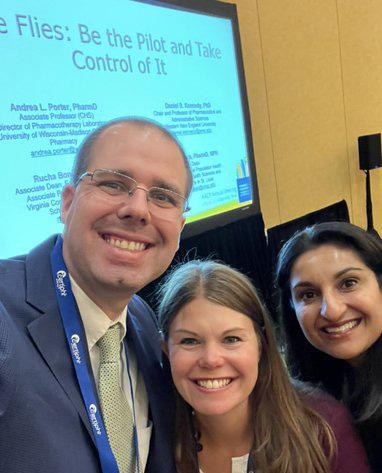


Academic Pharmacy NOW 2022 Issue 430 @AACPharmacy
Platinum Sponsors
Certiphi Screening is a leader in student screening, creating and administering the AACP’s centralized criminal background check and drug screening program and helping individual schools and other fields of study build thorough, compliant student screening programs. Certiphi Screening is proud to be a platinum sponsor for the AACP Annual Meeting.
Gold Sponsors
The CORE Software Suite supports both learners and administrators through every stage of the student journey by intelligently supporting student recruiting, experiential education, student assessment, career readiness, and continuing education. CORE Higher Education Group is proud to serve over 90% of Pharmacy Schools across the United States and Canada!


Founded in 2012, Kira transforms the admissions process by combining on-demand, timed video and timed written assessments, and structured live interview technology with existing admissions requirements.
Kira is trusted by more than 300 Universities and more than 700 programs worldwide, and with over 1 million Kira assessments completed by applicants.
Moderna, Inc. is a biotechnology company pioneering messenger RNA (mRNA) therapeutics and vaccines. Moderna’s mRNA platform builds on continuous advances in basic and applied mRNA science, delivery technology and manufacturing, and is allowing the development of therapeutics and vaccines for infectious diseases, immunooncology, rare diseases, cardiovascular diseases and auto-immune diseases.

Through a powerful combination of technology and services, Liaison helps over 31,000 undergraduate, graduate, and postbac programs across more than 1,500 campuses achieve their recruitment, admissions, enrollment, and student success goals. Liaison’s tools include TargetX, Othot, and the Enrollment Marketing Platform (EMP) as well as its Centralized Application Service (CAS™), SlideRoom and Time2Track.
Educational Day Sponsor

The National Association of Chain Drug Stores (NACDS) Foundation is a non-profit charitable organization that pursues ground-breaking, evidence-based research and educational initiatives that benefit communities, enhance health outcomes, foster equity, and advance public health. For more information, please visit NACDSFoundation.org.


Bronze Sponsors

Looking Ahead to 2023
We are thrilled to present Pharmacy Education 2023 , July 22–26, at the Gaylord Rockies Resort and Convention Center in Aurora, Colorado! Visit www. aacp.org/event/pharmacy-education-2023 for continuously updated information about the meeting. P


Maureen Thielemans is Director of Communications at AACP.
Special Thanks
Pharm4Me Campaign Sponsor CVS Health Minority Scholarship for Pharmacy Students


Walgreens’ purpose is to champion the health and well-being of every community in America. Operating more than 8,900 locations across America and its territories, Walgreens is proud to be a neighborhood health destination. Our pharmacists play a critical role in the healthcare system by providing a wide range of services.

Walmart Health Equity Scholarship for Pharmacy Students


AACP greatly appreciates the support from our meeting sponsors, whose contributions make this event possible:
Academic Pharmacy NOW 2022 Issue 4 31 @AACPharmacy
Pharmacists Help People Live Healthier, Better Lives.
1400 Crystal Drive, Suite 300 P Arlington, VA 22202 703-739-2330 P www.aacp.org
Practical Approaches for Implementing Digital Health Into Your Curriculum
All faculty, administrators and staff are encouraged to attend this synchronous virtual workshop from 10:00 a.m.–5:45 p.m. EST on Thursday, October 27 focused on integrating digital health into the curriculum and experiential training to ensure student pharmacists are prepared for current and emerging roles in the digital era.
Digital health is associated with the development and use of digital technologies to improve health. It includes categories such as mobile health, health information technology, telehealth, wearable devices, software based treatment, and personalized medicine (informed by FDA Digital Health Center of Excellence).
This topic is applicable to ANY faculty or administrator. You can attend alone or with a team from your institution and we encourage you to bring students!
Register for only $99 for AACP members and $49 for student pharmacists and residents. (students do not need to have an AACP membership).
Workshop Objectives:
P Describe updates in the digital health landscape.
P Identify opportunities for implementing digital health into the curriculum at the attendee’s home institution.
P Develop an initial curricular activity highlighting digital health and plan for continuing the process at the attendee’s home institution.
Learn more: https://www.aacp.org/event/digital-health-workshop-2022