
ANIMAL INSTINCTS A former MMA fighter rehabs wildlife in Cabot PAGE 14 VERMONT’S INDEPENDENT VOICE APRIL 24-MAY 1, 2024 VOL.29 NO.29 SEVENDAYSVT.COM CUDDLE PARTY PAGE 28 The pet photo contest returns! ALL FOR SHOWS PAGE 32 Meet VT’s ace horse-training family AS EWE LIKE IT PAGE 40 Tasty treats at the Sheep Shop Café The animal issue




802.985.8411 | eAutomasterHonda.com 3328 Shelburne Rd. | Shelburne, Vermont 05482-6849 Looking for your Call or visit and reserve your new Honda today! 2H-automasterHON092723.indd 1 9/20/23 4:16 PM WHAT VERMONT TASTES LIKE Send a Taste of Vermont Nationwide - Order Online or By Phone DAKINFARM.com | 1-800-993-2546 | 24 Hours...Every Day! Ferrisburgh 5797 US Route 7, Ferrisburgh 8 am to 6 pm - 7 Days a Week Dorset Street 100 Dorset Street, South Burlington Mon-Sat 9:30 am - 6 pm & Sun 10 am - 5 pm Treat Mom to a Delicious Spread of Handcrafted Cheese From Our Finest Vermont Artisan Producers MOTHER’S DAY IS SUNDAY, MAY 12TH 4T-dakin042424 1 4/22/24 9:48 AM The Best Time of the Year to Buy Birkenstock! BURLINGTON • COLCHESTER • SHELBURNE • ST ALBANS • DANFORMSHOESVT.COM Exclusions may apply. MEET THE REP Friday 4/26 St Albans 2 to 6PM Saturday 4/27 Shelburne 11 to 5PM Sunday 4/28 Colchester 11 to 3PM 4t-Danform042424 1 4/19/24 11:27 AM SEVEN DAYS APRIL 24-MAY 1, 2024 2







To learn more call: 802.372.2277 2 Freeman Woods, Essex Junction, VT 05452 MapleRidgeEssex.com Studio Savings this Spring Enjoy all the care, amenities and services that a maintenance free lifestyle at Maple Ridge Lodge has to offer at an affordable price with a studio apartment! SAVE $6,000 ON A STUDIO SUITE *Move in by April 30, 2024 4t-MapleridgeLodge041024 1 4/4/24 2:20 PM Shop
with
to your doorstep SHOP.MYTI.COM
22,000+
4t-unionbank031324 1 3/8/24 10:23 AM SEVEN DAYS APRIL 24-MAY 1, 2024 3
local independent stores online
delivery
·
items from independently-owned shops · Sustainable, on-time delivery throughout Vermont · Every dollar spent on Myti adds at least $2 to the local economy Find what you need and support Vermont stores by shopping Myti, a new online marketplace dedicated to our local community. Help fund social missions, support nonprofits, and strengthen local businesses. Your dollars make a di erence!

1t-salvidahealth042424 1 4/23/24 4:45 PM SEVEN DAYS APRIL 24-MAY 1, 2024 4
emoji that CASE C ONTINUED

$22 million
James Parker, one of two teenagers who fatally stabbed two Dartmouth professors in 2001, was granted parole. The murders shocked the region.

FANCY FARMHOUSE

Solar Heats Up

Vermont will receive $62.4 million from a new federal program that aims to make solar power more affordable for low-income residents.
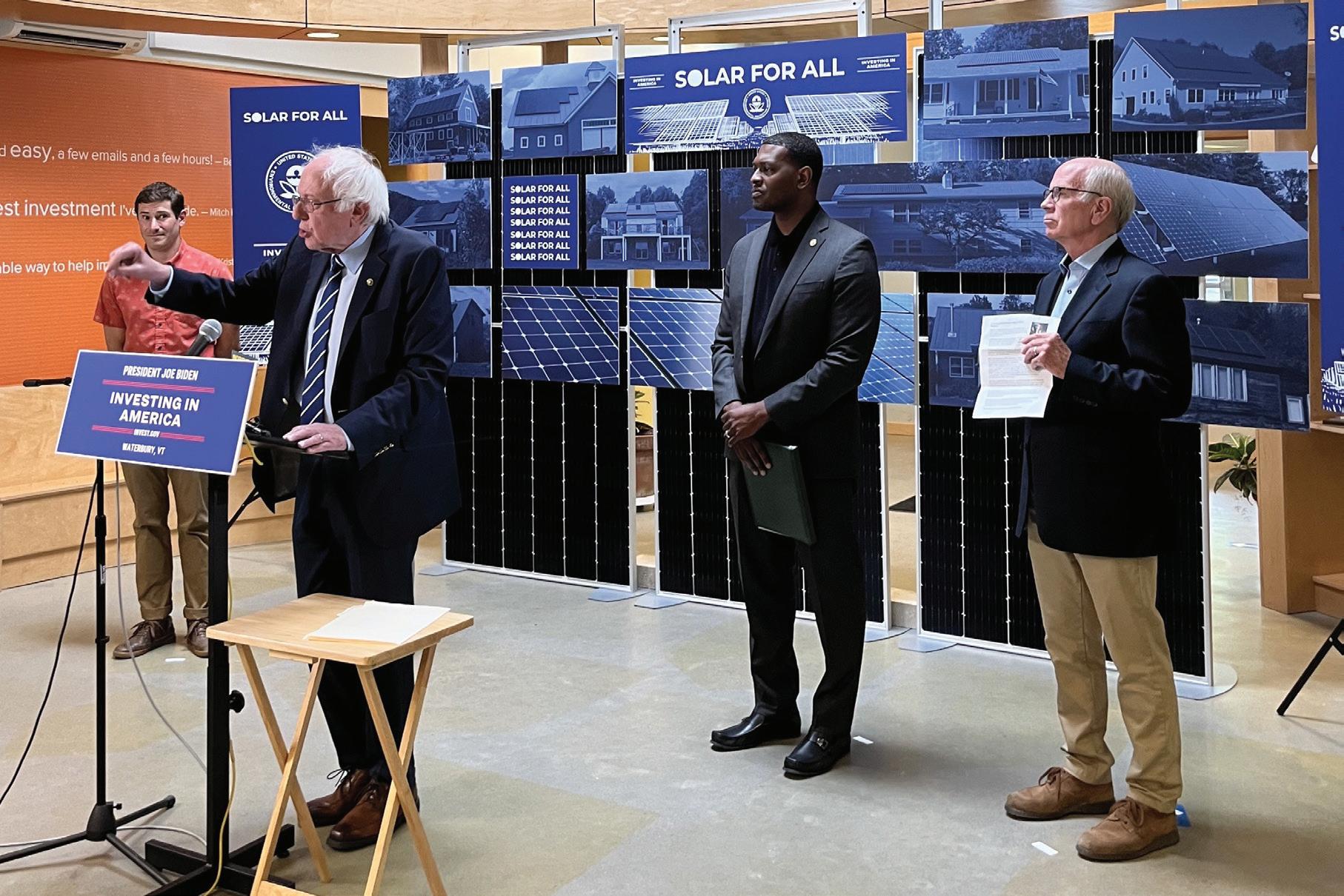
e U.S. Environmental Protection Agency announced the award on Monday — Earth Day — as part of a $7 billion initiative called Solar for All. e idea was championed by U.S. Sen. Bernie Sanders (I-Vt.), who kicked off the grant program in Waterbury last summer with EPA Administrator Michael Regan. e effort is designed to help people transition from fossil fuels and ensure working families can afford solar energy.
Funding came from the 2022 Inflation Reduction Act. e 60 grants announced on Monday are expected to help 900,000 households nationwide install solar panels.
Peter Sterling, executive director of Renewable Energy Vermont, called the award historic.
“ ere has never been anything on this scale in Vermont in terms of federal or state dollars to subsidize solar for low-income Vermonters,” Sterling told Seven Days
He praised Sanders and the state Department of Public Service for its application. e Department of Public Service asked for $100 million from the program. It pro-




posed a three-pronged approach for solar installations: for homeowners, affordable-housing projects and community arrays.
Without rebates, it currently costs about $18,000 to install home solar panels in Vermont. e new program will allow people to install five-kilowatt panels with no upfront cost and instead pay off a loan over six years. In some cases, residents can qualify for assistance to buy the required power-storing batteries, too.
In addition to lowering people’s electricity bills, Sterling said new solar installations help reduce climate-warming greenhouse gas emissions from fossil fuel plants.
e EPA estimated that the awards would eventually save low-income households $350 million annually in power costs and generate 200,000 jobs.
Sanders and President Joe Biden on Monday also announced the creation of the Vermont Climate Corps, “a workforce training and service initiative aimed at preparing young Americans for jobs in clean energy and climate resilience.” Vermont is one of just 13 states enrolled thus far in what’s known as the American Climate Corps.
Read Kevin McCallum’s full story at sevendaysvt.com.
Vermont jam band Phish wrapped up a four-night run of shows at Sphere, a futuristic new venue in Las Vegas. Phans could watch a live stream of the concerts, too.

NATURE VS. NURTURE
A plan to plant trees in Charlotte turned into a debacle that led the town’s tree warden and two deputies to resign, the Citizen reported. Green thumbs down.

STATEHOUSE STALWART
State Sen. Bobby Starr (D-Orleans) will retire after serving 46 years in the legislature, VTDigger.org reported. Another familiar face heading for the exit.
That’s how much FEMA will reimburse Vermont for flood damage to state buildings.
TOPFIVE
1. “Burlington Mayor Emma Mulvaney-Stanak’s First Term Starts With Major Staffing and Spending Decisions” by Courtney Lamdin. e work is only beginning for the Queen City’s first female mayor.
2. “Pauline’s Café Closes in South Burlington After Almost Half a Century” by Melissa Pasanen. e Shelburne Road eatery was known for its classic menu.
3. “Lot Six Brewing to Open in Jeffersonville” by Jordan Barry. A new brewpub will liven things up near Smugglers’ Notch this spring.
4. “More Vermont Seniors Are Working, Due to Financial Need or Choice. ey May Help Plug the Labor Gap” by Colin Flanders and Rachel Hellman. e latest in our “ is Old State” series explores Vermont’s aging workforce.
5. “Waitsfield’s Shaina Taub Arrives on Broadway, Starring in Her Own Musical, ‘Suffs’” by Mary Ann Lickteig. Former U.S. senator Hillary Clinton was a producer on Taub’s star-studded Broadway musical about women’s suffrage, which opened last week on Broadway.
post of the week
@PickleVermont
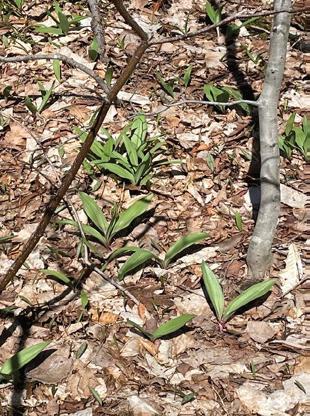
Go up high. Where the sun hits. All is brown. And so cold. Don’t give up hope. Never. Keep going. Have faith in the dirt and the breeze and the trees-
RAAAAAAAMPS!!

























PUP PARADISE
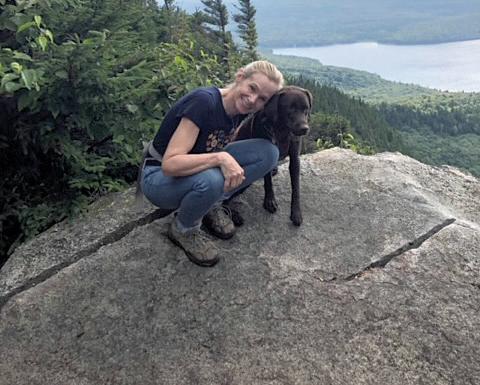
ere’s nothing that dog mom Robin Miller enjoys more than exploring a new hiking trail with her chocolate lab, Millie. Now she’s helping others find the same joy.
dog-friendly peaks in the Adirondacks. To curate her own list, Miller crowdsourced spots from her colleagues at the Vermont Department of Health, whose selections are in nine of Vermont’s 14 counties.
members who built the Waterbury Dam in the 1930s.


e VT Hiking Dog Challenge, which Miller launched in January, invites hikers and their hounds to traverse 35 handpicked bike paths, rail trails and summits all around the state. Finish at least 10 of them and you’ll get a certificate and a “pawsome prize.” It costs $10 to sign up, though Miller said she’d waive the fee if it’s a hardship.
e program is modeled after the ADK-9 Challenge, a collection of nine
e hikes range from the 0.3-mile Boreal Forest Trail in Brighton State Park to a 16-mile section of the West River Trail, a former railbed linking Londonderry to Townsend. irteen of them are wheelchair accessible, including Middlebury’s Otter View Park Trail and the Colchester Causeway in Miller’s hometown.
Miller has hiked just three of the trails to date. Her favorite so far is the Camp Charles M. Smith Trail, a lesser-known pathway where housing once stood for the 3,000 Civilian Conservation Corps
“ is is a trail that I never would have done if someone hadn’t suggested it, if it hadn’t made the list,” Miller said. “Not only is it beautiful nature, but you’re also learning some amazing Vermont history.”
ere’s no deadline to complete the challenge, and bringing a dog isn’t required, Miller said. People can hike in memory of a late pooch or as a fundraiser for their local humane society.
“It’s a fun way to discover new parts of Vermont,” she said.
For more, visit vtdoghikingchallenge. com.
COURTNEY LAMDIN
SEVEN DAYS APRIL 24-MAY 1, 2024 5
MOST POPULAR ITEMS ON SEVENDAYSVT.COM
WEEK IN REVIEW APRIL 17-24, 2024 ? ? ? ? ? ? true 802 THAT’S SO VERMONT FOLLOW US ON X @SEVENDAYSVT OR VISIT SEVENDAYSVT.COM/TWITTER
COMPILED BY SASHA GOLDSTEIN & MATTHEW ROY
FILE: KATIE FUTTERMAN
Robin Miller and her chocolate lab, Millie
U.S. Sen. Bernie Sanders, EPA head Michael Regan (center) and U.S. Sen. Peter Welch at the Solar for All launch last year






























2nd ANNUAL








Join
MAnAger John James
designer Jeff Baron
SALES & MARKETING
director of sAles Colby Roberts
senior Account executive Robyn Birgisson
Account executives Michelle Brown, Logan Pintka, Kaitlin Montgomery
events, proMotions & ticketing MAnAger
Carolann Whitesell
intern Oliver Frank
ADMINISTRATION
business MAnAger Marcy Stabile
director of circulAtion & logistics Matt Weiner
circulAtion deputy Andy Watts
AssistAnt to the publishers Gillian English
Jordan Adams, Justin Boland, Alex Brown, Chelsea Edgar, Erik Esckilsen, Steve Goldstein, Amy Lilly, Rachel Mullis, Bryan Parmelee, Mark Saltveit, Jim Schley, Carolyn Shapiro, Casey Ryan Vock
CONTRIBUTING ARTISTS
Luke Awtry, Kevin Goddard, Tim Newcomb
FOUNDERS
Pamela Polston, Paula Routly
CIRCULATION:
April 27,10:00am – 1:00pm at the Y, 298 College Street, Burlington
• Tons of fun activities for kids: activity booklet, crafts, and games
• Free bicycle helmets and t-shirts (while they last, limited availability)
• Family Dance + Yoga, Bounce House
• Music with DJ Melo Grant, food provided from local vendors
• Interpreters available (ASL, Burmese, Dari, French, Kirundi, MaiMai, Somali, Nepali, Pashto, Spanish, Swahili, and Vietnamese)
For more info, visit gbymca.org
Kids Fest 2024 is Hosted by: The Greater Burlington YMCA, SafeKids Vermont, and The University of Vermont Children’s Hospital
Kids Fest 2024 is Sponsored by: Children’s Miracle Network Hospitals, and NorthCountry Federal Credit Union

A DIFFERENT ED SECRETARY
‘EARTH-SHADOWING MOMENT’
[Re “Totally Transfixed,” April 10]: At 3:26 p.m. on April 8, 2024, in northern Vermont, it was our moon, the Rolling Stone in the sky, that heard: “I wanna see the sun / blotted out from the sky / I wanna see it painted, painted, painted / Painted black, yeah.” The irksome hype leading up was eclipsed only by the event itself. Truly an earth-shadowing moment!
Jeremy W. Bond WINOOSKI
‘SHAMEFUL’ PRICE GOUGING
[Re “Totally Transfixed,” April 10]: It was honestly very disappointing to observe how many hotels, etc. jacked up prices for their services, just to make money during the eclipse. Nice way to welcome needed visitors. Shameful? I think so!
Michael King ORWELL
SAUNDERS IS A JOKE
Is this a joke [“Top of the Class? Gov. Scott’s Pick for Education Secretary, Zoie Saunders, Faces Questions About Her Qualifications,” April 10]? Having a master’s degree in education; several years teaching American history, economics and American government; and serving in later years on the school board in Weathersfield, Vt., I am horrified that Gov. Phil Scott, who admitted not even discussing charter schools with the candidate — who has no other school experience!? — wants an anti-public-schools fool in this role!
Do we hire nonswimmers as lifeguards around here, too, non-smart Scott? Unbelievable! This must be stopped, reversed, immediately! Or my kids, our kids, our schools are jeopardized. By a very stupid governor!
Bob Stevens WEATHERSFIELD
CORRECTION
In last week’s story “Made in Japan: How a Vergennes Boatbuilder Is Saving an Endangered Tradition — and Got a Credit in the New ‘Shōgun,’” two Japanese words were spelled incorrectly: kibishii , meaning “craftsperson” and “strict”; and goen, meaning “good luck.”
Alison Novak has done thorough research on Gov. Phil Scott’s choice for education secretary, but I wish she had included other applicants who could and should replace Zoie Saunders [“Top of the Class? Gov. Scott’s Pick for Education Secretary, Zoie Saunders, Faces Questions About Her Qualifications,” April 10]. One I know of is Elijah Hawkes, former principal at Randolph Union High School. He has written several books about his experience as a Vermont educator: School for the Age of Upheaval: Classrooms That Get Personal, Get Political, and Get to Work

(2020) and Woke Is Not Enough: School Reform for Leaders With Justice in Mind (2022).
It’s clear, just by the titles of his books, that Hawkes knows our Vermont students. He has their best interests in mind and would make a great education secretary. Let’s petition that he replace Saunders.
Robin Lloyd BURLINGTON
SAUNDERS IS WHAT WE NEED [Re “Top of the Class? Gov. Scott’s Pick for Education Secretary, Zoie Saunders, Faces Questions About Her Qualifications,” April 10]: The week of April 15, as in years past, the University of Vermont Philosophy Department very generously offered the community Public Philosophy Week — 43 presentations and discussions. Many thanks to them.
Philosophy examines thinking: how to think, not what to think. Given the political groupthink that is tearing our communities apart, it is critical that we examine our lack of thinking and how destructive it has become.
I attended the “Purpose, Power and Promise of Public Education” talk — a panel of three dedicated teachers, facilitated by Alison Novak, Seven Days’
SEVEN DAYS APRIL 24-MAY 1, 2024 6
GOOD GNUS. publisher & editor-in-chief Paula Routly deputy publisher Cathy Resmer AssociAte publishers Don Eggert, Colby Roberts NEWS & POLITICS editor Matthew Roy deputy editor Sasha Goldstein consulting editors Ken Ellingwood, Candace Page stAff writers Derek Brouwer, Colin Flanders, Rachel Hellman, Courtney Lamdin, Kevin McCallum, Alison Novak, Anne Wallace Allen
& CULTURE coeditors Dan Bolles,
AssociAte editor Margot Harrison consulting editor Chelsea Edgar Art editor Pamela
Music editor Chris Farnsworth cAlendAr writer Emily
writers
Lickteig,
proofreAders
proofreAders
digitAl
DESIGN
production
ARTS
Carolyn Fox
Polston
Hamilton stAff
Jordan Barry, Hannah Feuer, Mary Ann
Melissa Pasanen, Ken Picard
Carolyn Fox, Angela Simpson AssistAnt
Katherine Isaacs, Martie Majoros, Elizabeth M. Seyler DIGITAL & VIDEO
production speciAlist Bryan Parmelee senior MultiMediA producer Eva Sollberger MultiMediA journAlist James Buck Audio/Aloud production Jeff Baron
creAtive director Don Eggert Art director Rev. Diane Sullivan
CONTRIBUTING WRITERS
Days is published by Da Capo Publishing Inc. every Wednesday. It is distributed free of charge in greater Burlington, Middlebury, Montpelier, Northeast Kingdom, Stowe, the Mad River Valley, Rutland, St. Albans, St. Johnsbury, White River Junction and Plattsburgh, N.Y. Seven Days is printed at Quebecor Media Printing in Mirabel, Québec. DELIVERY TECHNICIANS Harry Applegate,
Bouffard,
Bouffard, Colin Clary, Julie Copley, Elana Coppola-Dyer, Becky Gates, Matt Hagen, Russ Hagy, Nat Michael, Frankie Moberg, Liam Mulqueen-Duquette, Dan Nesbitt, Dan Oklan, Ezra Oklan, Matt Perry, Mike VanTassel, Andy Watts, Tracey Young With additional circulation support from PP&D. SUBSCRIPTIONS 6-Month 1st clAss: $140. 1-yeAr 1st clAss: $220. 6-Month 3rd clAss: $85. 1-yeAr 3rd clAss: $135. Please call 802-865-1020, ext. 132 with your credit card, contact circ@sevendaysvt.com or mail your check to: Seven Days, c/o Subscriptions, 255 S. Champlain St., Ste. 5, Burlington, VT 05401 Seven Days shall not be held liable to any advertiser for any loss that results from the incorrect publication of its advertisement. If a mistake is ours, and the advertising purpose has been rendered valueless, Seven Days may cancel the charges for the advertisement, or a portion thereof as deemed reasonable by the publisher. Seven Days reserves the right to refuse any advertising, including inserts, at the discretion of the publishers. ©2024 Da Capo Publishing Inc. All rights reserved.
35,000 Seven
Joe
Pat
OPEN EVERY DAY 8-5 2638 Ethan Allen Hwy, New Haven greenhavengardensandnursery.com @greenhavengardensvt 802-453-5382 CHECK OUT OUR SPRING BLOOMING BEAUTIES Forsythia, Magnolia, Fothergilla, Rhododendron, Pussy Willow & More! 12V-greenhaven042424.indd 1 4/22/24 10:27 AM
Zoie Saunders
us for a free, fun party that combines New American Safety Day and GBYMCA Healthy Kids Day
6v-YMCA042424 1 4/19/24 11:28 AM

Education has a deeply ingrained, lopsided liberal bias. Something like 75 to 80 percent of teachers come out of liberal colleges, making it almost impossible for non-liberals to have faith in the system. I can attest that some professors honor the how — others, not so much.
The talk was baffling: While teachers complain that they don’t have time to do all that is expected of them, they seemingly are not focused on the basics: reading, writing and math. We heard about teaching boys how to be men, tackling homelessness, public safety, inviting like-minded visitors in, and checking in with students’ feelings and identity.
Stats show that Vermont’s DEIobsessed liberal education system is failing our children. We need out-of-the-box thinkers. While some liberal legislators complain that Gov. Phil Scott’s pick to head the education department hasn’t been a teacher or climbed that ladder, she sounds exactly like what our education system and students need.
Marianne Ward BURLINGTON
Editor’s note: Novak convened the panel. She had profiled two of the featured panelists recently in Seven Days; the third is Vermont’s 2024 Teacher of the Year.
PANDEMIC REFLECTIONS
[Re From the Publisher: “2020 Hindsight,” March 13]: I appreciated Paula Routly’s pandemic recollections. Mine include losing a 15-year career,
four months into “15 days to slow the spread.” The shutdowns, which mostly ignored the World Health Organization’s pandemic guidance, wrought massive and lasting collateral damage.
We plunged ahead, following “the science.” But the six-foot rule wasn’t that scientific after all; it “sort of just appeared,” Dr. Anthony Fauci said recently. Some masks worked; most didn’t. Novel, gene-based vaccines warped to the rescue with lofty forecasts of herd immunity — “even if it’s a variant,” said Vermont’s health commissioner. Those hopes evaporated, as did the “pandemic of the unvaccinated.”
Early on, frontline physicians trying to reduce the carnage by innovating early treatments were coldly dismissed and deplatformed. More recently, the lab leak “conspiracy theory” ripened when former U.S. Centers for Disease Control and Prevention director Robert Redfield’s congressional testimony asserted exactly that origin scenario. Dr. Fauci downplays this, of course, notwithstanding his



1515 Shelburne Road Burlington, VT 05403 Mon-Sat. 10am-5pm; CLOSED Sunday www.townandcountryvt.com *see store for details. 50%OFF STOREWIDE!* ONCE IN A LIFETIME PRICING! STOP IN FOR A FREE SLICE OF CAKE! ANNIVERSARY SALE EVENT! The vast majority of our store is NOW 50% off. And this includes Special orders. The most luxurious , best quality furniture in Vermont at INCREDIBLE PRICES Untitled-6 1 7/2/19 10:46 AM LIQUIDATING TOWN & COUNTRY FURNITURE’S UNSOLD INVENTORY! Modern Design purchased the remaining unsold furniture inventory of Town & Country Furniture. We must sell o all of this high-end, top-quality furniture immediately. (Upholstery by Lee, C.R. Laine, Rowe) Note - Sale is ONLY located at 1515 Shelburne Road formerly Town & Country, currently Modern Design Rug Shop. Sale is NOT at Modern Design main store location. Mon-Sat 11-4:45, closed Sunday 70% OFF! FABRIC & LEATHER SOFAS, SECTIONALS, CHAIRS, CABINETS, LAMPS, ART, COCKTAIL, SOFA & END TABLES, ACCESSORIES, DINNERWARE AREA RUGS 65% OFF! GET THE BUY OF A LIFETIME! 2V-ModernDesign042424.indd 1 4/22/24 3:04 PM SEVEN DAYS APRIL 24-MAY 1, 2024 7 SAY SOMETHING! Seven Days wants to publish your rants and raves. Your feedback must... be 250 words or fewer; • respond to Seven Days content;
include your full name, town and a daytime phone number. Seven Days reserves the right to edit for accuracy, length and readability. Your submission options include: sevendaysvt.com/feedback • feedback@sevendaysvt.com • Seven Days, P.O. Box 1164, Burlington, VT 05402-1164 education reporter, a mother and former teacher.
•
» P.22
FEEDBACK










Supercharge the collagen and elastin production in your face to get firmer, smoother skin with just one treatment. This new technology from Exion targets acne scars, wrinkles, and fine lines, making your skin look years younger, with more volume and fewer wrinkles.




BEAST MODE
Getting wild and woolly in the Animal Issue
Italk to my dog. Like, a lot. I also make up dumb little songs about him and sing them around the house. Also a lot. But never once has my fuzzy buddy deigned to say anything back, let alone join in on high harmony.
Amy Wild does not have this problem.
The Starksboro resident is an ANIMAL COMMUNICATOR AND SPIRIT MEDIUM who claims to be able to connect telepathically with our furry, feathered and scaly friends. In doing so, she purports to divine a great deal of information about what your pet is feeling — whether they’re on this side of the rainbow bridge or the other. And all she needs is a photo (page 36).
If what she says is true, Wild may want to use psychic earplugs when she sees the BEST OF THE BEASTS PET PHOTO CONTEST, lest the chatter become overwhelming. Nearly 600 Seven Days readers submitted pet pics, ranging from dogs and cats to birds, pigs and Scottish Highland cows (page 28).
The VON BALLMOOS FAMILY in Manchester Center might wish to enlist Wild’s services in the unlikely event that they encounter a stallion they can’t break. They’re among the premier Morgan and American saddlebred horse trainers in the world (page 32).
Beyond domesticated animals, Vermont is teeming with wildlife, even in cities. At the GREATER BURLINGTON AREA CITY NATURE CELEBRATION BIOBLITZ, citizen scientists will connect with — and count — the Queen City’s nonhuman residents (page 38). That includes a large population of bees, which is good news to Jericho BEEKEEPER KATE BLOFSON. She’s an advocate for pollinators — and also makes beeswax candles and a variety of infused honeys (page 44).
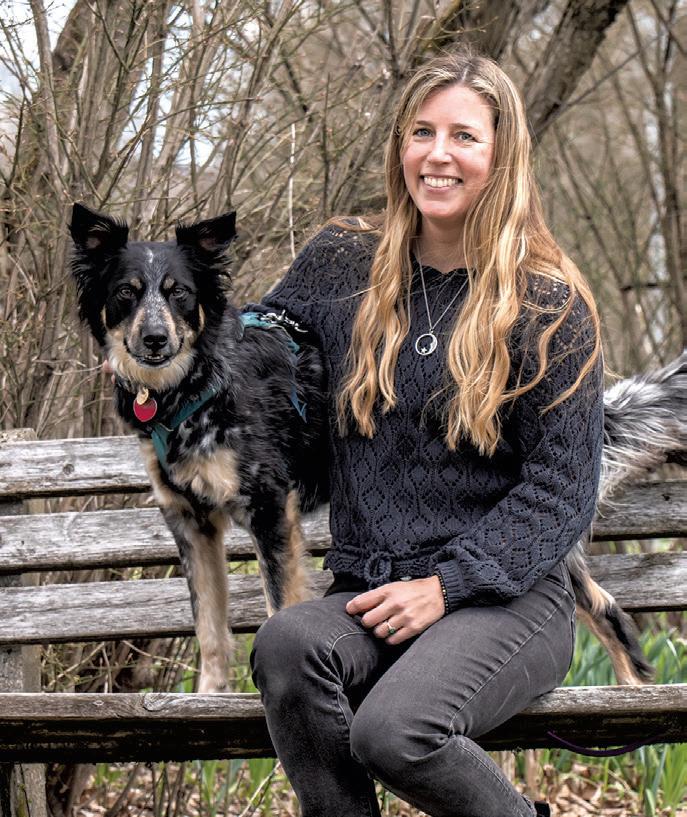



In Montpelier, lawmakers are advancing long-sought measures to improve Vermont’s response to animal cruelty (page 15). Meanwhile, in Cabot, a FORMER MMA FIGHTER RUNS A WILDLIFE REHABILITATION CENTER (page 14).
Finally, load up on handcrafted goods and sheep’s milk espresso cheesecake at the SHEEP SHOP CAFÉ in South Woodbury (page 40). While you’re there, flip through an ANIMAL BOOK (or five) by Vermont authors (page 48).

SEVEN DAYS APRIL 24-MAY 1, 2024 8
DAN
contents APRIL 24-MAY 1, 2024 VOL.29 NO.29 36 38 RadioMicroneedlingFrequency Schedule Your Free Consultation 802-871-5716 34 Blair Park Rd. Williston, VT www.Cheeks.cc
4t-cheeks(RFMad)041024 1 4/4/24 1:15 PM CECILE MCLORIN SALVANT WITH MELANIE CHARLES JUNE 5 FLYNN MAIN STAGE PRESENTED BY PRODUCED BY GET TICKETS AT ROBERT GLASPER OPENING ACT aja monet JUNE 9 FLYNN MAIN STAGE JUNE 5–9 DOWNTOWN BURLINGTON 4T-flynn042424 1 4/22/24 3:16 PM
BOLLES
Look Younger Faster
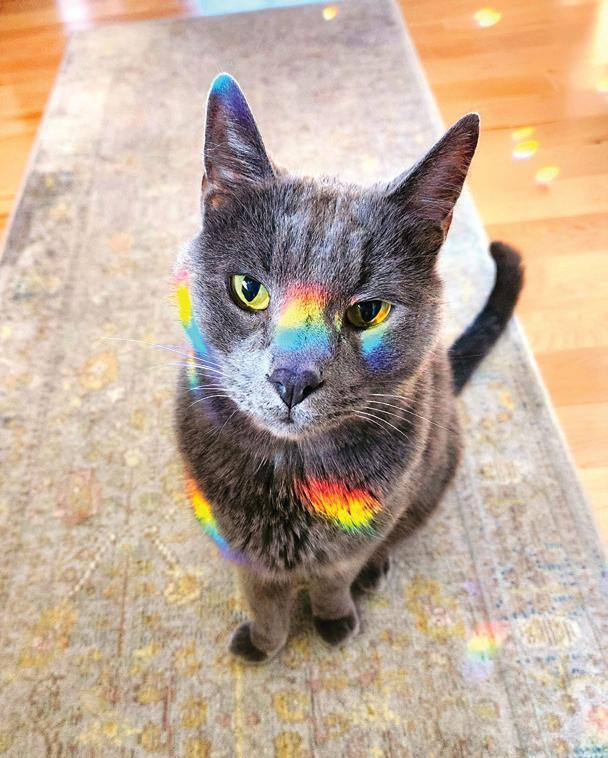



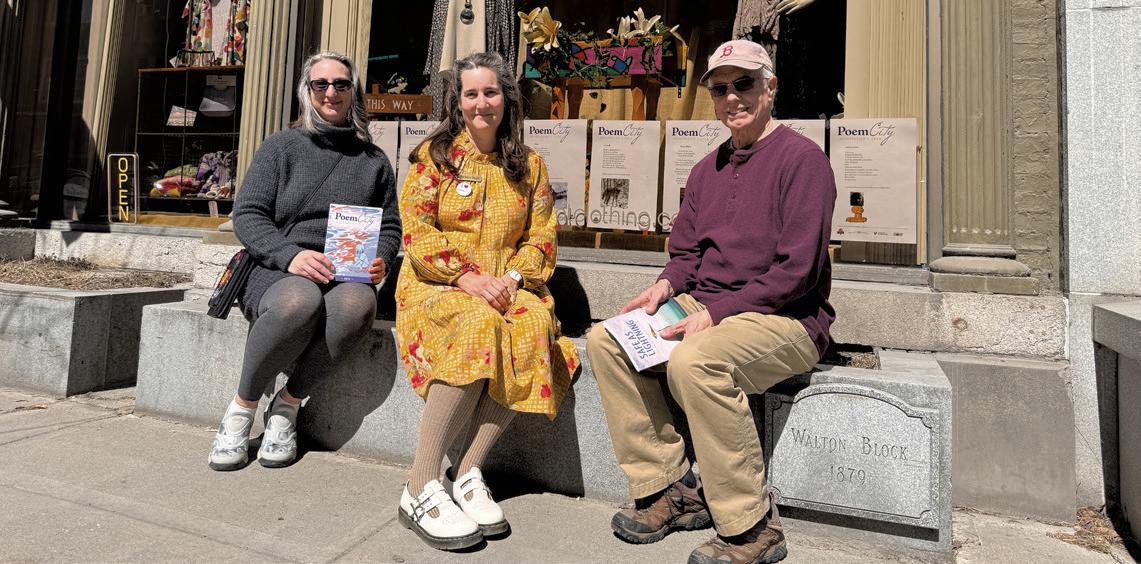
















SEVEN DAYS APRIL 24-MAY 1, 2024 9 FOOD+ DRINK 40 See You at the Sheep Shop New café on a South Woodbury homestead gathers the herd Sweet as Honey ree questions for Kate Blofson of Jericho’s Born to Swarm Apiaries NEWS+POLITICS 14 Ring Leader A former MMA fighter runs a wildlife rehabilitation center in Cabot Vermont Reports Its First Measles Case Since 2018 Animal Welfare State Legislature advances long-sought measures to improve Vermont’s response to animal cruelty Barre to Sell Two Parking Lots for $1 Taxing Work House Ways and Means chair Emilie Kornheiser sees raising revenue as part of her mission Senate Panel Grills Ed Secretary FEATURES 28 Reining Champions is Manchester Center family is a national show horse powerhouse Cat’s Got Her Tongue Animal communicator Amy Wild wants a word with your pet COLUMNS 11 Magnificent 7 13 From the Publisher 45 Side Dishes 54 Movie Review 60 Soundbites 66 Album Reviews 101 Ask the Reverend SECTIONS 25 Life Lines 40 Food + Drink 46 Culture 54 On Screen 56 Art 60 Music + Nightlife 68 Calendar 76 Classes 77 Classifieds + Puzzles 97 Fun Stuff 100 Personals COVER DESIGN REV. DIANE SULLIVAN • COVER MODEL LULU • IMAGE COURTESY OF SHELLY LACROIX 14 38 STUCK IN VERMONT Online Now April is National Poetry Month, when Montpelier transforms into PoemCity. e Kellogg-Hubbard Library organizes this event, during which 450 poems are displayed in the windows of 50 local businesses. Seven Days senior multimedia producer Eva Sollberger visited the Capital City in early April for a downtown poetry tour. SUPPORTED BY: The ‘Out’ Crowd At a Burlington nature celebration, citizen scientists connect with — and count — the city’s nonhuman residents ARTS+CULTURE 46 Over the Borderlines Book review: e Trauma Mantras: A Memoir in Prose Poems, Adrie Kusserow Page 32 Short takes on five Vermont books Major International Publisher Acquires Chelsea Green Publishing Happy Returns Two performances highlight a nearly forgotten Viennese composer with Vermont ties JAG Productions to Fold in June Beyond Words Downtown Montpelier transforms into PoemCity every April Flight Path Floyd Scholz has carved out a career sculpting birds of prey Printed Matters: A Vermont Studio Center Collection Is on View and at Auction 28 16t-pinzerproductions042424
Provided 1 4/17/24 9:14 AM 16t-vcam-weekly.indd 1 11/2/20 3:07 PM NANNY GOAT HILL READINGS SUNDAYS > 9:00 A.M Feline Veterinary Hospital and Boarding Suites Let us take care of all your cat’s needs, with services including affectionatelycats.com 802-860-CATS Ultrasound Dentistry Obesity Management Nutritional Consultation Behavior Consultation 8h-AffectionatelyCats042425.indd 1 4/17/24 4:06 PM


1T-Within(B&Js)042424 1 4/22/24 2:16 PM SEVEN DAYS APRIL 24-MAY 1, 2024 10








MAGNIFICENT

MUST SEE, MUST DO THIS WEEK COMPILED BY EMILY HAMILTON



ALL SHEEPS AND SIZES
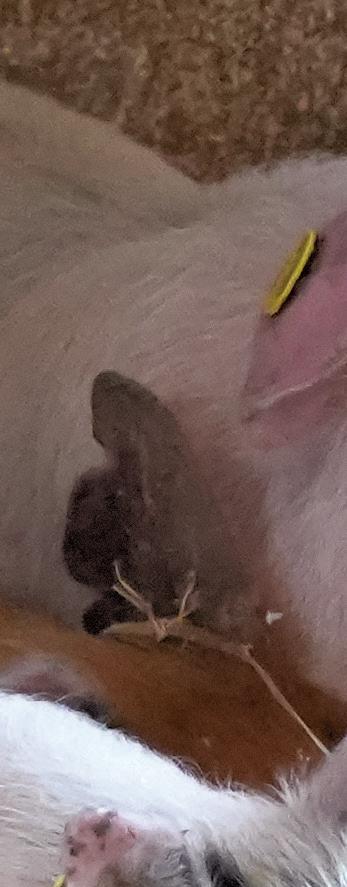





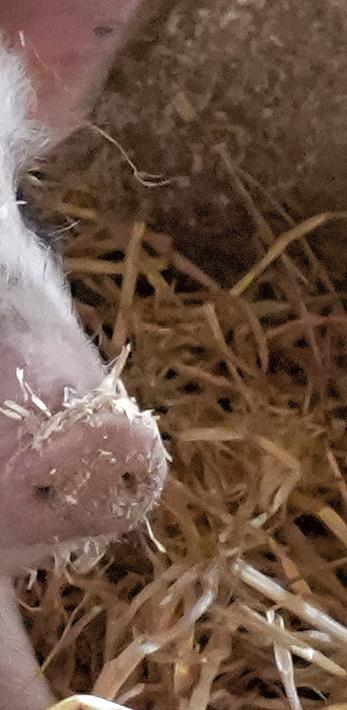
With an oink-oink here and a cheep-cheep there, families mark the start of
spring at Billings Farm & Museum’s annual Baby Farm Animal Celebration in Woodstock. Between sheepshearing demonstrations, wagon rides, stories,
THURSDAY 25
Enter the Dragon
Tony Award-nominated actor and playwright — and Dartmouth College alum — Sharon Washington makes an appearance at a screening of the documentary When My Sleeping Dragon Woke at the Hopkins Center for the Arts at Dartmouth College in Hanover, N.H. e 2023 film follows Washington’s efforts to write and perform a onewoman play about her seemingly idyllic childhood living in a New York Public Library.
SEE CALENDAR LISTING ON PAGE 68
SATURDAY 27
Brand Spanking New






SUNDAY 28
Caste Away


Writer, LGBTQ activist and sex advice columnist Dan Savage’s Hump! 2024 film festival, Part One, rolls into Burlington’s Merrill’s Roxy Cinemas. is sex-positive medley of indie erotic shorts features something for everybody and every body, from innovative stop-motion quickies to visually stunning art-house debauchery.
SEE CALENDAR LISTING ON PAGE 71
SATURDAY 27
Booking It
Independent Bookstore Day is celebrated at local bookshops all around the country, but it’s an extraspecial occasion at Waterbury’s Bridgeside Books. Readers of all ages play games, win prizes, shop sales and meet local writers at an indie author fair, and the store announces the 2024 pick for its One Town, One Book community reading initiative.
SEE CALENDAR LISTING ON PAGE 71
THROUGH TUESDAY 30
e Greater Burlington Multicultural Resource Center hosts an address by Pulitzer Prizewinning author Isabel Wilkerson at the Hilton Burlington. e journalist shares insights on race, class and power from her highly acclaimed books Caste: e Origins of Our Discontents and e Warmth of Other Suns: e Epic Story of America’s Great Migration.

SEE CALENDAR LISTING ON PAGE 72
Self-Portrait of a Lady
Lebanese American visual artist Feda Eid closes out her solo show “Rooted Revelations” at Waitsfield’s Firefolk Arts this week. e exhibit features photographic and video self-portraiture that draws on the artist’s Arab heritage. e closing reception on April 28 includes a live performance and workshop, with donations and print sales benefiting humanitarian aid in Gaza.
SEE GALLERY LISTING AT SEVENDAYSVT.COM/ART

Submit your upcoming events at sevendaysvt.com/postevent

WEDNESDAY 1
Labor Party
e Champlain Valley DSA invites nurses, farmers, teachers, bakers and supporters to its May Day celebration of International Workers’ Day at Burlington’s Battery Park. is family-friendly festival features food, speeches and live music and is cosponsored by local unions, including Teamsters Local 597, UVM Staff United, the Howard Center Union and the Vermont AFL-CIO.
SEE CALENDAR LISTING ON PAGE 74
LOOKING FORWARD BROWSE THE FULL CALENDAR, ART SHOWS, AND MUSIC+NIGHTLIFE LISTINGS AT SEVENDAYSVT.COM.
SEVEN DAYS APRIL 24-MAY 1, 2024 11
COURTESY OF JOE JENSON




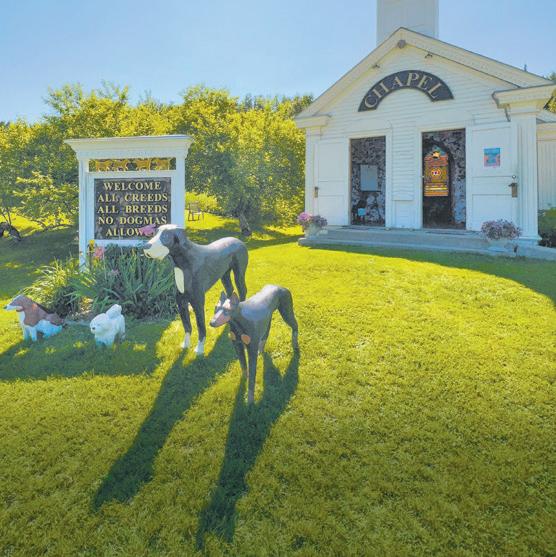
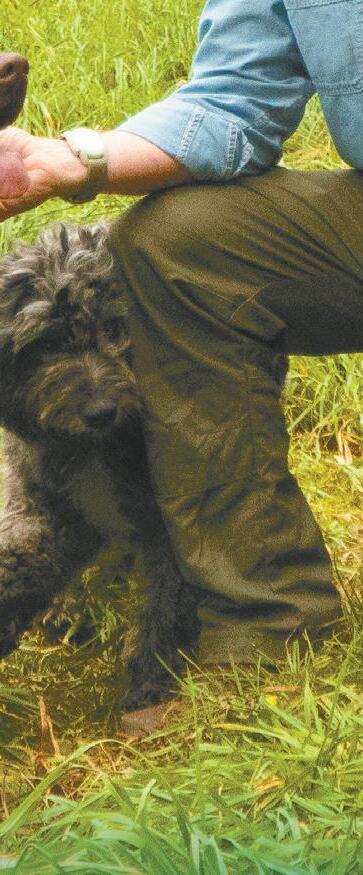
St. Johnsbury is your pet-friendly recreation destination.

St. Johnsbury’s world-famous Dog Mountain boasts 150 acres -season trail network to roam with your pup, but that’s not the only place in St. J that welcomes your furry friends.






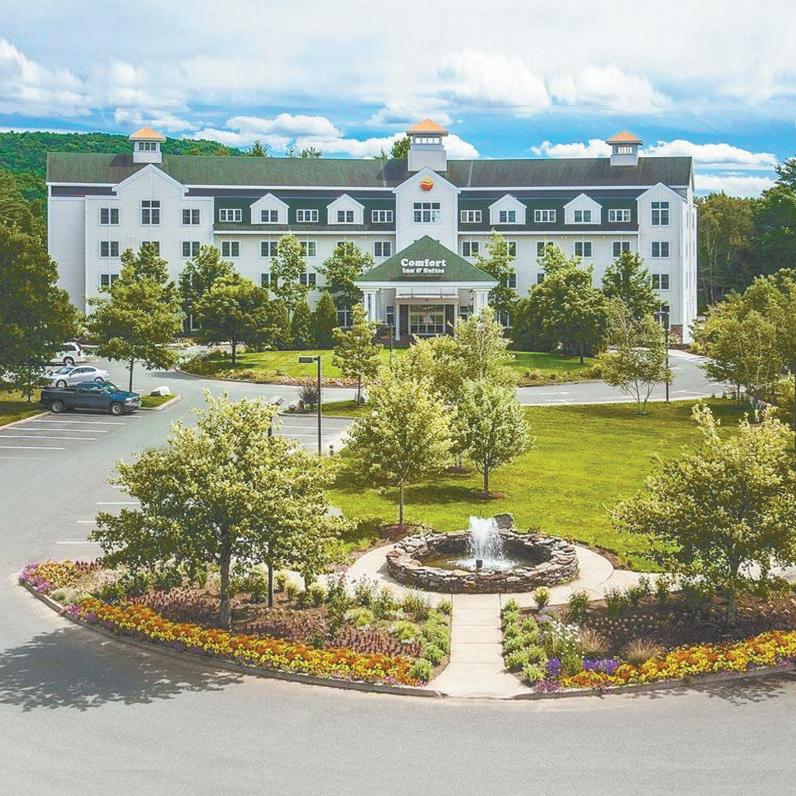
Discover St. Johnsbury’s pet-friendly eateries, lodging, outdoor activities, and events, perfect for exploring this summer.







There’s only one








DiscoverStJohnsbury.com
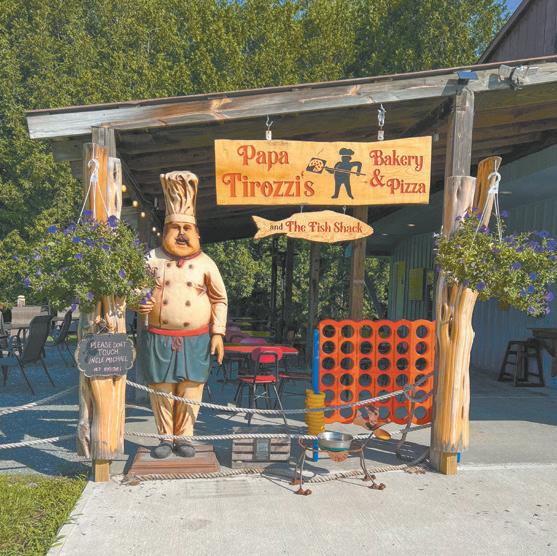
Woof Dog Mountain & STEPHEN HUNECK GALLERY DogMt.com PLAY! SHOP! Moose River Lake & Lodge Store MooseRiverLakeAndLodgeStore.com Comfort Inn ChoiceHotels.com/Vermont STAY! Papa Tirozzi’s BAKERY • PIZZA • FISH SHACK EAT! facebook.com/TirozziBakery 1t-stjohnsburychamber042424 1 4/19/24 10:29 AM SEVEN DAYS APRIL 24-MAY 1, 2024 12



Kitty Conundrum
In his poem “The Love Song of J. Alfred Prufrock,” T.S. Eliot wrote of a life measured out with co ee spoons. My existential yardstick has been: cats. A succession of them, from my twenties to my early sixties, has kept me company in adulthood. While I love dogs and their promise of unconditional a ection, I’ve found a feline is better suited to my personality and busy schedule. I need an animal that is patient, self-reliant and requires no walking.
Also: immortality. The only bummer about the cats I’ve loved through the years is that they didn’t live long enough. Animals — and our relationships with them — are the subject of this week’s Seven Days
Our last gray tiger, Frankie, died in March 2022 of a blood clot that paralyzed his hind quarters. He was only 8, so it was unexpected. My partner, Tim, and I don’t have children, and we took it hard — like losing a family member. A source of a ection, entertainment and joy, Frank had smoothed the sharp edges of our interactions in ways we didn’t realize until he was gone. Sometimes we talked to each other through him, like he was an inadvertent mediator. I’d say, “Frank, tell Tim he’s being unreasonable.” Tim would respond, “He thinks you should chill. Right, buddy?”
Roused from a catnap, Frank would look up: bored, a little annoyed and thoroughly adorable. We happily catered to his every need, from feeding him canned tuna water to letting him sleep on our bed every night between Tim’s legs.
Why haven’t we gotten another cat? Friends and colleagues, including Seven Days’ own Eva Sollberger, have certainly forwarded plenty of tantalizing adoption opportunities. “Too soon” no longer explains it, as we’ve been pet-less for more than two years.
One reason: Frank was an outdoor cat, and he killed mice and birds — just for the fun of it. Finding one of the latter, eviscerated on our foyer or bedroom floor, always brought me to tears. I don’t want to


unleash another predator on the local avian population. Birds are not as snuggly as cats, but they are wild and beautiful. The older I get, the more I worry about their plight.
On the other hand: Tim and I agree that to keep an outdoor-craving cat indoors — considered the “right” thing to do these days — seems cruel. I don’t want to deny a domesticated tiger its greatest instinctual thrill.
animal issue
So, we do nothing. The cat door that was once a busy thoroughfare — used regularly by Frank and the occasional enterprising raccoon — is boarded up on the outside and the inside is stu ed with insulation.
Now, if we’re in Montréal, there’s no reason not to stay overnight. But when we return the next day, the front door opens to a clean, quiet place that still doesn’t feel quite like home.
I think I know what Eliot would do. Another of his works, Old Possum’s Book of Practical Cats, was the inspiration for Frankie’s favorite blockbuster Broadway musical.
Paula Routly
If you like Seven Days and can a ord to help pay for it, become a Super Reader!
Look for the “Give Now” button at the top of sevendaysvt.com. Or send a check with your address and contact info to:
SEVEN DAYS, C/O SUPER READERS
P.O. BOX 1164
BURLINGTON, VT 05402-1164
For more information on making a financial contribution to Seven Days, please contact
Gillian English:
PHONE : 802-865-1020, EXT. 115
EMAIL: SUPERREADERS@SEVENDAYSVT.COM
FROM THE PUBLISHER
SEVEN DAYS APRIL 24-MAY 1, 2024 13
Ring Leader
A former MMA fighter runs a wildlife rehabilitation center in Cabot
Bryeanne Russillo’s day started at the crack of dawn with a wake-up call from Nate the rooster. Sporting hot pink sweatpants and fuzzy platform slippers, Russillo headed outside to chip away at the long list of daily chores she must complete to run her Cabot-based animal rescue and wildlife rehabilitation center, Nibbles of Love.
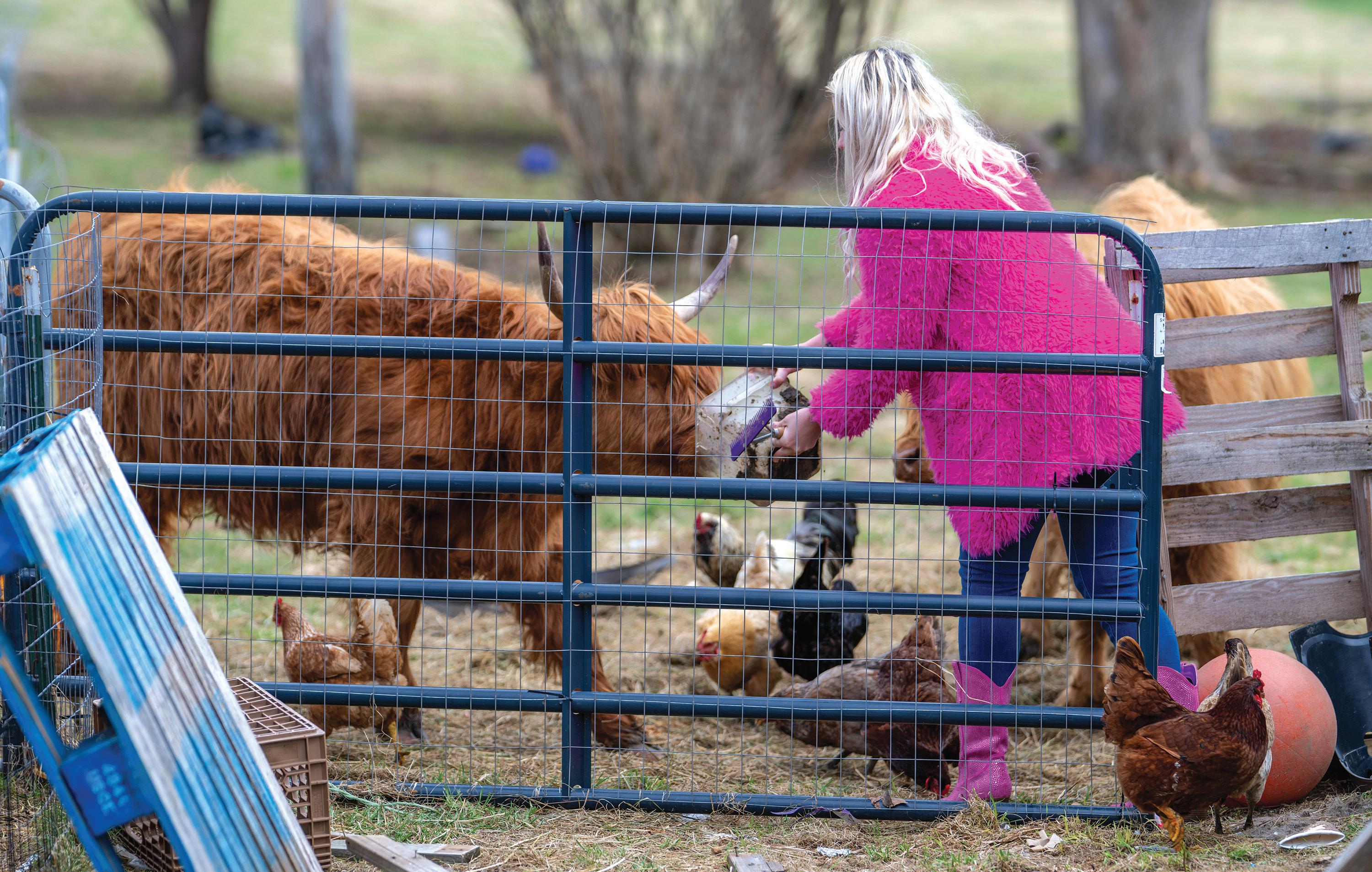
To start, Chino the baby squirrel needed his breakfast, fed through a small syringe. The palm-size creature opened his eyes in bliss as he drank formula. Then Russillo stopped by the pen holding her two Scottish Highland cows, Poppy Seed and Vanilla Bean, who demanded with a moooooo to be fed.
“They’ve been naughty,” Russillo said in her distinct Long Island accent, shaking her head as she tossed them their feed. “They tried to run away earlier this week.” The cows nuzzled her.
Next she fed Ziggy and Kylo, two 4-week-old pigs Russillo rescued from the woods, who live on her back porch. Then it was mealtime for four outdoor pigs, four cats and three dogs. Finally, Russillo
ANY TIME THERE IS AN ANIMAL THAT NEEDS HELP, BRYEANNE IS GOING TO DO WHATEVER IT TAKES TO HELP THAT CREATURE.
SOPHIA PARKER
checked on two opossums, Walter and Rocky, who live in — and stink up — her mudroom.
“This is my dream come true,” Russillo said matter-of-factly.
Vermont Reports Its First Measles Case Since 2018
BY COLIN FLANDERS colin@sevendaysvt.com

e Vermont Department of Health
confirmed on Tuesday that a person visiting the state as part of an international program has tested positive for measles. It’s the state’s first case of the highly contagious virus since 2018. e person was among a group of 26 travelers, mostly teenagers, who were exposed during an international flight to Atlanta. State officials say they learned of the exposure on April 10 and asked the group to quarantine until they could determine whether anyone was infected.
While the risk to members of the public remains low, the health department said there is a “limited possibility” of exposure at the hotel where some of the travelers were staying.
animal issue
Just a few years ago, Russillo, 38, was waking up early to pursue a very di erent goal: winning mixed martial arts fights. The New York native — also known as Bryeanne “Bone Breaker” Russillo — had a six-year career as an amateur Muay Thai fighter, a full-contact combat sport, competing around the Northeast.
In 2020, she traded in her boxing gloves for pink cowboy boots and moved to Vermont to pursue her lifelong dream of opening an animal sanctuary. Now she spends her days caring for animals on her rural six-acre property.
The self-described jack-of-all-trades does more than just rescue critters. Russillo also works full time as an accountant for a global engineering and architectural firm and runs a small bakery out of her home kitchen, putting formal culinary training to use.
Officials are encouraging anyone who was inside the Hampton Inn in Colchester on Wednesday, April 17, before 3:45 p.m. to confirm they’ve been vaccinated. ose people should also monitor themselves for symptoms through May 8.
“ e department has been working closely with the Hampton Inn management, which has been cooperative throughout the response, including to provide information to known guests and visitors,” the health department said in a press release. “ ere is no ongoing risk of measles associated with the hotel.”
Symptomatic people should stay home, consider wearing a mask around others and contact their health care provider.
A respiratory virus, measles can cause serious illness, with symptoms typically beginning with a cough, runny nose, watery eyes and a high fever that may spike to higher than 104 degrees. A rash of spots then breaks out on the head and face before spreading to the rest of the body.
e virus is spread through coughing or sneezing and can stay in the air for up to two hours. Measles has no proven treatments, but the virus can be prevented with the MMR — measles, mumps and rubella — vaccine. ➆
MORE INSIDE LAND SELLS FOR A SONG PAGE 16 ALL EYES ON KORNHEISER PAGE 18
PAGE 21
SAUNDERS SITS FOR SENATE
RING LEADER » P.16
BY RACHEL HELLMAN • rhellman@sevendaysvt.com
HEALTH
© FELIPE CAPARROS CRUZ/DREAMSTIME
Bryeanne Russillo feeding her Scottish Highland cows
KEVIN GODDARD
SEVEN DAYS APRIL 24-MAY 1, 2024 14
news
Animal Welfare State
Legislature advances long-sought measures to improve Vermont’s response to animal cruelty
BY KEVIN MCCALLUM • kevin@sevendaysvt.com
Lark Thompson heard desperate cries coming from a dark Charlotte farm on Ferry Road late one night in July 2022.
When she went to investigate, dozens of emaciated, bleating goats desperate for food and water swarmed her. Thompson, who was then 22 and house-sitting at a neighboring property, did the best she could to comfort the animals but was ill-equipped and overwhelmed.
WE HAVE A HUGE PROBLEM IN THE STATE RIGHT NOW WITH ANIMAL CRUELTY CASES NOT BEING INVESTIGATED PROPERLY OR WELL. ERIKA HOLM
“I showed up the next morning and found four dead baby goats,” Thompson told lawmakers in February. “That’s when I realized I needed to call some people.”
Group Fitness, A to Z!
• Aqua Aerobics to Zumba, Yoga, Cycling, Low Impact, + more
• All included — no extra fees
• Classes for all levels, all abilities
• More at the Miller Center!
• Financial assistance available gbymca.org Stop
The experience was Thompson’s first exposure to what animal welfare advocates say is Vermont’s confusing, fragmented and ultimately ineffectual system of responding to complaints of animal cruelty and neglect.
Thompson recounted how she contacted state police and was told to call the town’s animal control officer. She phoned the number she was given, but it was answered by a retired animal control officer living in Florida. She visited town hall and was told Charlotte’s animal control officer deals only with dogs. Someone directed her to the state veterinarian.
Thompson eventually reached a field specialist at the Agency of Agriculture, Food and Markets, who said he couldn’t do anything until law enforcement received a formal complaint.
The situation dragged on for months and was complicated by communication issues between the landowner and farmer, who was raising the goats for meat. Ultimately, Thompson convinced the owner to let her find new homes for some of the sickest goats, including four that went
















ANIMAL WELFARE STATE » P.20
SEVEN DAYS APRIL 24-MAY 1, 2024 15 3v-Motor032724 1 3/26/24 9:06 AM
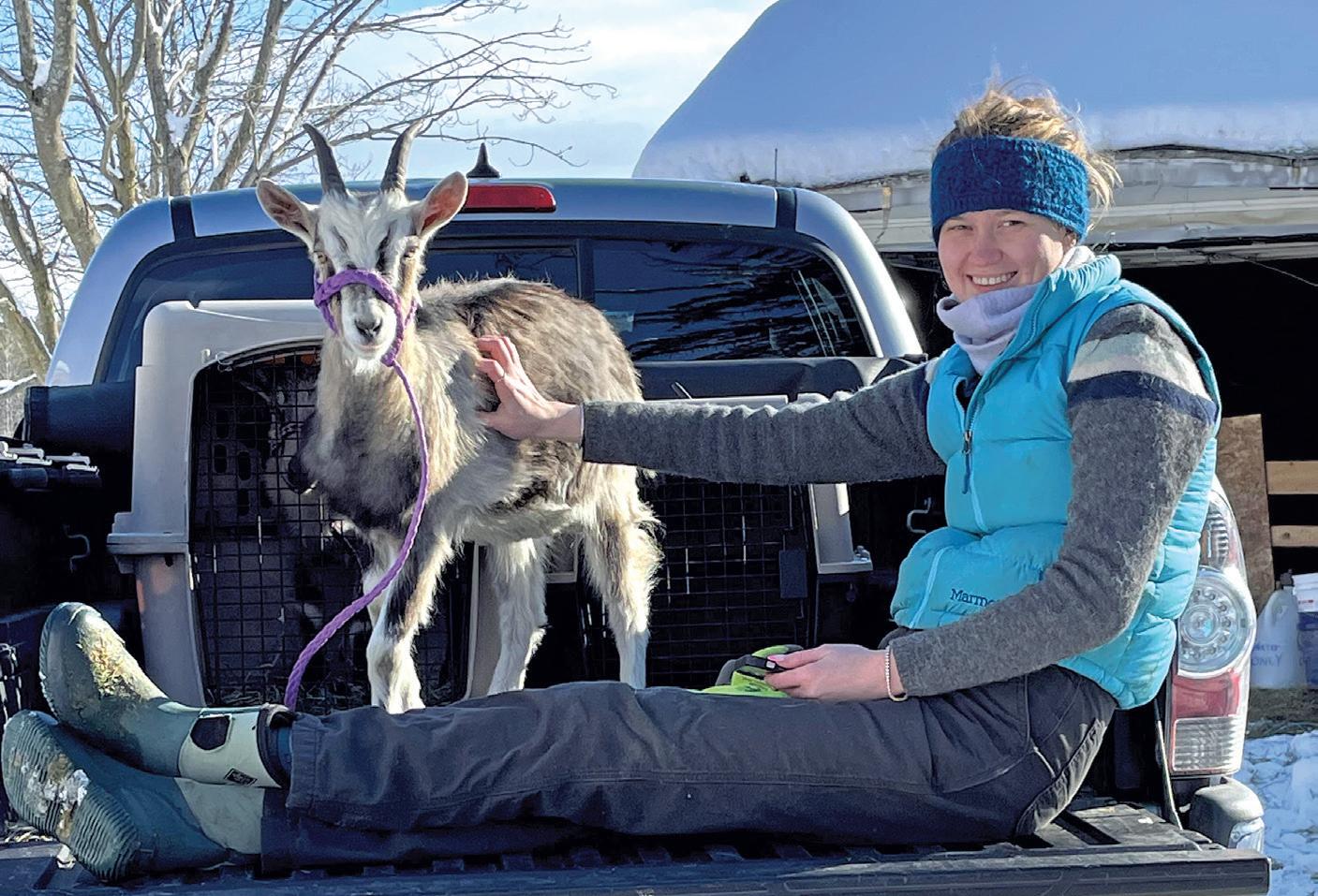
Lark Thompson with Willow, a goat she rescued
@298 College Street 6h-ymca042424 1 4/19/24 11:23 AM
by
Barre to Sell Two Parking Lots for $1
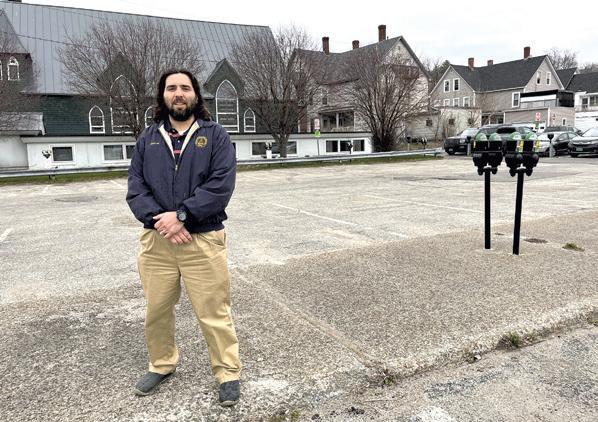
Barre city councilors on Tuesday approved the sale of two small parking lots for $1 to a developer who wants to build as many as 40 apartments there.
After going public last fall with its unorthodox plan to sell the lots off Seminary Street, the city heard from one potential developer: Downstreet Housing & Community Development, an agency that uses low-income housing tax credits and other programs to build affordable housing in central Vermont.
Downstreet CEO Angie Harbin said the project is in its very early stages and will face a gauntlet of permitting and financial reviews. But if it’s approved, the nonprofit will work with DEW Construction of Williston to build as many as 40 units of housing on the lots, which are located next to a church in an area of mixed commercial and residential development.
“We are thrilled to see Barre City being thoughtful and creative about how to get more housing,” Harbin said.
Homes are in short supply in Barre, as they are in many Vermont communities. The devastating flooding last July exacerbated the problem: It destroyed an estimated 363 structures containing 517 units of housing, most of them in Barre’s lower-income North End.
The shortage is causing so many difficulties for residents and employers that the city is now open to approaches that might have been off-limits in the past, city manager Nicolas Storellicastro said. The city is also planning to sell two other parking lots and the 0.4-acre Wobby Park, with the stipulation that the spaces be used for affordable and market-rate housing.
“The city council is basically at the point where things that might have made people uncomfortable in the past are now getting a different look,” Storellicastro said. “They’ve been really supportive of us with some of our offthe-wall ideas, like listing Wobby Park.”
Supporters said the idea of selling unneeded parking lots came up late last summer and quickly gained traction in the fall.
“We have these city-owned properties,” City Councilor Michael Deering said. “Why don’t we put them on the tax rolls?” ➆
Ring Leader
Turning out great pastries is one way the tall, bubbly blonde stands out in the agricultural community of Cabot. Russillo is also known for donning pink year-round and rocking flip-flops during mud season.
“She’s just so unapologetically and authentically herself,” said Sophia Parker, a co-owner of Otter Creek Wildlife Rescue in Addison, who has mentored and worked with Russillo for the past few years. “She inspires me to be the same.”
Scrappiness is in Russillo’s DNA. As a single mom living in Nassau County on Long Island, N.Y., a pricey suburb of New York City, she worked as a paralegal. But it was hard to make ends meet.
“You have to constantly change your hat and work five different shifts to be able to afford a closet,” Russillo said.
Russillo started culinary school in hopes of developing another profession: pastry chef. She gained some weight in the process, perfecting her meringueand fondant-making techniques, and so she joined a kickboxing gym. She quickly discovered that she had a knack for fighting. During her first mixed-martial arts competition, Russillo broke her opponent’s tibia and fibula.
“You could hear a crack,” Russillo said.
From that point forward, Russillo spent much of her time at the gym. She trained six days a week and traveled on weekends to competitions.
Russillo earned unexpected fame in 2015 when she disclosed in an interview that her “12-pound breasts” were forcing her to fight in a heavier weight class. Tabloids such as the New York Post sensationalized the comment, it went viral, and Russillo’s life changed.
“It was hard,” Russillo admitted, especially when people sent her hateful messages. But, with her typically cheerful attitude, Russillo added that the sudden attention “could also be fun at times” because it sparked conversation and opened unexpected doors.
While Russillo made a small amount of prize money, it was never enough to go pro. A hand injury eventually forced her to quit. Plus, Russillo explained, the time commitment was hard on her daughter, who would do her homework at the gym while Russillo trained.
Russillo first visited Vermont in 2016 to attend cooking classes at the Essex Resort & Spa and was instantly charmed by the pastoral beauty of the state. It was clearly a home to animal lovers. “Every place had dog biscuits,” Russillo recalled. “I had never been to a place with so many dog biscuits.”
As a teenager, Russillo spent her free time volunteering at a local veterinary
hospital. Caring for animals had always been an interest.
“I decided then and there that I was going to move to Vermont and save animals,” she said. “No matter what I had to do to get there, I was going to figure it out.”
Like many other Vermont transplants, Russillo arrived during the pandemic, when she started to do her accounting work remotely. Russillo and her daughter lived in an apartment in Morrisville before she purchased her 100-year-old home off Route 215 in Cabot.
Soon enough, she took in a menagerie of rescued pigs, dogs, cows and chickens. Russillo transformed her
“She certainly knows how to create a first impression,” Cappelli said. “But when you cut through all of that, she’s a total sweetheart. She’s got a big heart and takes everything she does very seriously.”
Russillo doesn’t shy away from her glam side, though.
“I will wear a crystal ball gown to the hardware store,” she said. “I don’t care.”
Soon after moving to Cabot, Russillo started taking animal rehabilitation courses through the International Wildlife Rehabilitation Council. She apprenticed under other “rehabbers” before applying for her own license.
She earned it last September. As one of only 25 state-certified wildlife reha-

backyard into a pen for cows — which she rescued from potential slaughter — and reconfigured the front and back porch of the house to accommodate cages for smaller animals.
Russillo quickly adjusted to smalltown life. She said she loves her neighbors and has made friends with all sorts, from farmers to truck drivers. She acknowledged that her 14-year-old daughter has had a difficult time adjusting to some of the changes, particularly at school.
Jay Cappelli, an auto mechanic who also cared for Highland cows, struck up a friendship with Russillo after meeting her at Harry’s Hardware, a part-café, part-bar, part-hardware store in downtown Cabot.
bilitators listed in a Vermont Fish & Wildlife Department online database, Russillo responds to wildlife emergencies around Vermont and nurses critters back to health, eventually releasing them back into their natural environment. Calls come in from concerned locals and game wardens alike. Russillo said her daughter gets first dibs on naming the animals and enjoys helping her mother care for them.
Unlike many other wildlife rehabilitators, Russillo is certified to care for animals highly susceptible to rabies, such as raccoons and groundhogs, and hopes to one day work with foxes.
“This is not a job for your average person,” Russillo said with a laugh.
Russillo often handles seriously injured animals. Providing a peaceful transition
« P.14 DEVELOPMENT
ANNE WALLACE ALLEN anne@sevendaysvt.com
STORY & PHOTO BY
Nicolas Storellicastro at the Seminary Street parking lots
SEVEN DAYS APRIL 24-MAY 1, 2024 16 news
Bryeanne Russillo with Thunder PHOTOS: KEVIN GODDARD


into death, Russillo said, is often the biggest gift she can o er.
Russillo works her remote accounting job mostly in the evenings to accommodate her animals’ schedules. Wildlife rehabilitation is expensive, so Russillo pays the vet bills herself and uses a GoFundMe page to solicit donations.
She’s been able to raise about $1,000 a month selling her baked goods at Harry’s Hardware. According to Mary Lou June, an employee there, Russillo’s treats sell out quickly. A handful of people actually call ahead to reserve slices of her famous cheesecake, which is gone within hours on Saturdays.
“She’s a good community member,” June said. “She brings a liveliness to Cabot.”
“You definitely have to be a little crazy, in the best way possible, to do this work,” said Parker of Otter Creek Wildlife Rescue. “Any time there is an animal that needs help, Bryeanne is going to do whatever it takes to help that creature. She’s one of the most courageous people I know.”
That’s landed Russillo in unique situations. Last summer, Parker asked Russillo to help rescue a skunk that was stuck in a pipe in St. Johnsbury.

“I brought a garden trowel and some olive oil, like any good New York Italian would,” Russillo said. “The cops came and went, the game warden came and went, and here I was, trying to rescue this skunk.”
A crowd gathered around Russillo as she oiled up the animal and attempted to pull it from the pipe. The skunk didn’t budge, but it sprayed Russillo in the face a few times. She didn’t give up. She found some zip ties in her car, carefully secured its legs and “deadlifted him out,” as she put it.
“That skunk owes his life to her,” Parker said. “I don’t know anyone else who would get sprayed in the face multiple times and still get him out of there.”
Once freed, the critter scurried away and the crowd cheered. Russillo rolled down her car windows and drove back to Cabot. It was feeding time at the sanctuary. ➆
Rachel Hellman covers Vermont’s small towns for Seven Days. She is a corps member of Report for America, a national service program that places journalists in local newsrooms. Find out more at reportforamerica.org.
















I WILL WEAR A CRYSTAL BALL GOWN TO THE HARDWARE STORE. I DON’T CARE.
RUSSILLO SEVEN DAYS APRIL 24-MAY 1, 2024 17 Reinvigorate your home's style this Spring Explore Our Sustainable Furnishings 1% OF SALES TO 4t-BurlFurniture041724 1 4/15/24 7:43 PM N4t-fullcirclegardens041923 1 4/13/23 2:56 PM OPEN FOR THE SEASON 4t-Fullcircle042424.indd 1
BRYEANNE
Taxing Work
House Ways and Means chair Emilie Kornheiser sees raising revenue as part of her mission
STORY & PHOTO BY ANNE WALLACE ALLEN • anne@sevendaysvt.com
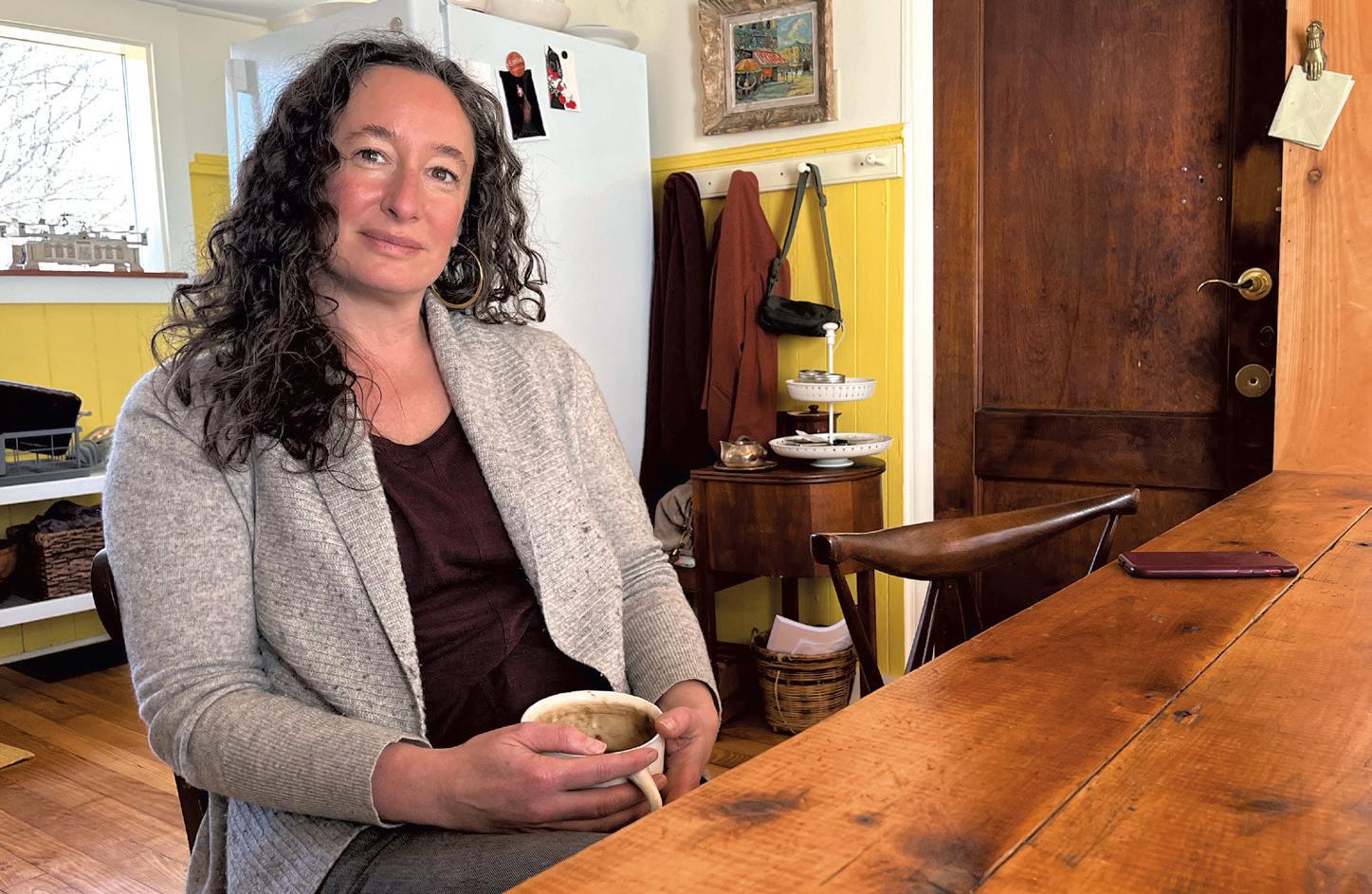
The person leading the class struggle in the Vermont Statehouse this year, Rep. Emilie Kornheiser, lives in a rented farmhouse with no mobile phone signal and sketchy WiFi. Her landlord’s goats graze across the driveway. A trip to town involves a narrow dirt road.
During the legislative session, Kornheiser, a Democrat from Brattleboro, leaves this woodsy idyll at dawn for the two-hour drive to Montpelier. There she throws herself into some of the state’s most contentious issues as chair of the powerful House Ways and Means Committee, the panel tasked with finding ways to pay for state government to work. In the end, that usually means taxes.
Tax policy has dominated the legislative session, and for months, the focus has been on Kornheiser. She’s chaired Ways and Means for barely a year but made a name for herself by calling upon the rich to pay more in order to, as she views it, help poor and middle-class Vermonters lead better lives.
That has meant proposing tax increases, an approach that has proved popular among many Progressives and Democrats who want to close the growing divide between Vermont’s wealthy residents and everybody else. Lined up on the opposing side are business groups, individuals, conservatives and the administration of Gov. Phil Scott, a Republican, who argue that her proposals would slow Vermont’s already torpid economic growth. Making Vermont affordable is a policy priority for Scott, and he argues that taxes are too high as it is.
Already this year, expected property tax increases have produced a fierce voter backlash. In 2022, Kornheiser helped draft Act 127, a law that steers more state aid to districts teaching disadvantaged students. The law was meant to enable some districts to offer more services without raising property taxes, but many people now say the law had the opposite effect: incentivizing lowerincome school districts to spend more.
That has contributed to projected potential tax increases approaching 20 percent in some school districts. On Town Meeting Day, Vermont voters rejected approximately a third of the school budgets that were up for a vote. Since then, budgets have failed a second time in 12 school districts. More revotes are planned in coming weeks.
Kornheiser has apologized for the property tax imbroglio, saying she didn’t
anticipate the sharp increases. But she remains unwavering in her view that more government services will improve life for struggling low-income and middle-class Vermonters. As a single mother who once received state assistance and help from her parents to get by, Kornheiser said government doesn’t work as it should because its resources are too limited. When she worked as a case manager for a state Department for Children and Families program called Reach Up, Kornheiser recalled, coworkers relied on food stamps because the program couldn’t afford to pay them enough to make ends meet.
“The path to making government work is that government has enough money,” she said.
To raise that money, Ways and Means this year voted out bills with a host of new taxes aimed mainly at the wealthy: H.829 contains a 3 percent income tax surcharge on households with annual income over $500,000 and would also increase the property transfer tax for homes worth more than $750,000; H.887, passed by the full House on Tuesday, includes a plan to tax cloud-based software and short-term rentals, which would raise revenue to help keep property taxes from rising as quickly as forecasted.
Republicans held a press conference last Thursday objecting to H.887, saying the bill was little more than an attempt to address the property tax debacle by raising other taxes; the bill aims to keep the property tax increases at about 15 percent for most homeowners.
STATEHOUSE
trenches of state policy want to risk ruffling feathers on Ways and Means.
Kornheiser has plenty of loyal friends and supporters, among them U.S. Rep. Becca Balint (D-Vt.), a former Vermont state senator who shared the long drive to the Statehouse with her for four years. They discussed policy a lot, along with books and poetry. Kornheiser, Balint said, is a loving and supportive friend but can rub people the wrong way on issues she deems imperatives. “She is really interested in passing good policy, and in the process of doing that, she wants to get people to work together,” Balint said, “but she isn’t particularly motivated by whether people like her.”
The House has also passed H.721 and H.880, which would increase corporate taxes.
Last year, Kornheiser’s panel backed a 3 percent property tax increase to provide meals to every public school student, regardless of income, as well as a payroll tax — effective in July — that will raise an estimated $120 million annually for childcare aid.
Billions in federal pandemic dollars have run out, darkening Vermont’s financial outlook, and lawmakers are facing the first budget decrease in a decade. Gov. Scott has repeatedly urged lawmakers not to raise spending and in late March warned that the tax increases proposed by the House would make Vermont “the highest taxed corporate state in America, not a great marketing strategy to attract businesses to our state.”
Many political insiders have pinned responsibility for the potential tax hikes squarely on Kornheiser, the sole sponsor of the wealth tax. Scott and many others are pushing back hard on her proposals, and it’s unclear how they’ll fare in the Senate.
“They are turning this place into a country club economy for the super-wealthy and those who serve them,” said Rob Roper, a former longtime president of the conservative Ethan Allen Institute, who described Kornheiser as “an extreme socialist in the Bernie Sanders sense of the word.”
Others agreed to talk about Kornheiser and taxes only if they could do so anonymously. Few people who labor in the
Tax opponents who are accustomed to facing down Kornheiser in her committee say they are often caught short by her directness and detached demeanor, which can come across as rude. One lobbyist described her as “mean.” In an interview, Kornheiser wondered aloud if she might be autistic. In any case, she is fond of saying that she finds opposing viewpoints edifying.
“I am more comfortable disagreeing and being disagreed with than I think a lot of people are,” she said.
Kornheiser, 45, traveled a winding road to the top seat at Ways and Means. She described a childhood spent playing alone in the woods and reading a lot in suburban Chappaqua, N.Y. “I didn’t understand the social nuance of what was happening in school at all,” she said. “My teachers liked me.”
Things went awry in high school. “I thought everything was bullshit,” Kornheiser recalled. She hung out with “a cute crew of other reprobates,” she said, and got arrested for possession of a drug — which one, she said, she doesn’t remember. Her parents kicked her out, and she moved in with a friend.
She found her way to the now defunct Marlboro College in southern Vermont, where she planned to study poetry and painting but was soon captivated by sociology and Karl Marx. She studied the way communities treat their most vulnerable residents and developed a commitment to social justice.
Kornheiser graduated with a bachelor’s degree in sociology, knowing she wanted to make a difference. She wasn’t sure how but knew it would involve redistributing money from the rich to the poor.
SEVEN DAYS APRIL 24-MAY 1, 2024 18 news
Emilie Kornheiser at home in Brattleboro
She started a short-lived restaurant, Weathervane Gallery and Performing Arts Café in Brattleboro, with her thenpartner. The 26-year-old single mom, who declared bankruptcy after the café went out of business, relied on friends, neighbors and state benefits as she adjusted to life with a newborn in a downtown Brattleboro apartment.
Kornheiser earned a master’s degree in public policy, community development and economics from the University of Vermont in 2009 and later ended up back in Brattleboro. She staffed the front desk at the local economic services office of the state Department for Children and Families, helping others navigate the paperwork needed to receive state benefits.
THE
Software glitches stalled applications while clients struggled with forms. A functional government, she concluded, should do better.
She went on to launch a consulting business called Equity Solutions that works with nonprofits — she declined to say which ones — and volunteered on town committees, the board of the Brattleboro Food Coop and the Windham County Action Network.
While showing a reporter around Brattleboro, Kornheiser displayed a warmth that she typically doesn’t in the halls of the Statehouse. She described with affection some of the town’s large affordable housing projects and reminisced about people she met while campaigning in the huge Tri-Park mobile home park, the largest in Vermont. She met the owner of a house that once sported signs supporting both Trump and Kornheiser.
“They trusted me, and they also didn’t trust the political establishment in Washington,” she said.
She weaves stories about friends into her accounts of life in Brattleboro and is known for hosting big dinners for Shabbat, Passover and Rosh Hashanah — or for no reason at all, Balint said.
Kornheiser, who handily defeated incumbent representative Valerie Stuart to win office in 2018, said she felt at home in the Statehouse right away. She started out on the House Commerce and Economic Development Committee and quickly moved over to Ways and Means.
With a pandemic-era exodus underway, Kornheiser rapidly rose to the position of vice chair with help from then-chair Janet Ancel, a Democrat from Calais who said she saw Kornheiser early on as a possible successor.
“She was obviously really smart and, I would say, ambitious in the right kinds of ways,” Ancel said in an interview. “Not in the sense that she was looking for the next office to run for but ambitious in the sense of wanting to work really hard and make a difference.”
To make that difference, Kornheiser may have to convince more of her colleagues that taxes are the answer to Vermont’s inequities and economic shortcomings. The state already has some of the highest taxes in the country, according to the Tax Foundation, a research group that describes itself as nonpartisan. Adding a 3 percent wealth tax, said Rep. Scott Beck (R-St. Johnsbury), who sits on House Ways and Means, would push Vermont’s income tax for high earners above the one in Massachusetts.
Talk of a wealth tax comes up every few years in the Vermont legislature. Whenever it does, some people embrace it — dozens of wealthy Vermonters, including Ben Cohen and Jerry Greenfield, signed a letter in favor of Kornheiser’s proposal in March — while others predict it will only prompt the rich to exit the state, taking their charitable donations and board service with them.
Kornheiser doesn’t buy that. She pointed to reports from the Joint Fiscal Office showing that wealthy people still choose to move to Vermont — and noted that in 2023, she was selected as legislator of the year by Vermont Businesses for Social Responsibility.
“People move here because they want to live in strong communities where folks take care of each other,” she said.
Republican lawmaker Beck, a teacher at St. Johnsbury Academy, said he likes Kornheiser, describing her as smart and hardworking. But he said Vermont’s government spending is outpacing its economic growth.
“The solution is to increase economic activity,” Beck said. “We need people that have income and have wealth to come to Vermont.”
Kornheiser said during an interview on April 15 — Tax Day — that property tax conversations have become increasingly difficult. But those tough discussions are what she says she is looking for.
“There’s something generative about people being willing to admit they don’t see eye to eye on something and then walking away with a new perspective,” Kornheiser said. “Unless we talk about it, how are we ever going to figure it out?” ➆













PATH
WORK
ENOUGH MONEY. REP. EMILIE KORNHEISER SEVEN DAYS APRIL 24-MAY 1, 2024 19 1% OF SALES TO Wake up refreshed this Spring with a Natural Latex Mattress. Its good for you & the environment 4t-BurlFurniture041724 1 4/15/24 7:47 PM (802) 253-8050 | 1813 MOUNTAIN RD. STOWE STOWELIVING.NET FREE INTERIOR DECORATING SERVICES! FURNITURE | HOME DECOR | KITCHEN | BATH SPA PRODUCTS | BEDDING | UNIQUE GIFTS WE SHIP + DELIVER EVERYTHING, EVERYWHERE! 4t-stoweliving042424 1 4/10/24 6:39 PM
TO MAKING GOVERNMENT
IS THAT GOVERNMENT HAS






Animal Welfare State « P.15
to a Charlotte animal sanctuary called Merrymac Farm Sanctuary. The owner of the goats was never charged.
But the case and the media attention it garnered helped drive a push in the Statehouse this year to create a Division of Animal Welfare. The House passed the bill, H.626, last week, and the Senate could take it up soon.
“I’m really glad something has come of it,” Thompson told Seven Days last week.
Some lawmakers say it’s long past time for the state to take charge of animal welfare complaints to ensure they are handled effectively. Thompson’s experience is common, they say, with no one taking responsibility despite years of complaints and efforts to provide accountability.
“An animal welfare bill in some form has been floating around the Statehouse for two decades,” Rep. Chea Waters Evans (D-Charlotte) told Seven Days last week.



The problem is complicated because communities handle animal complaints differently. Some towns have an animal control officer, while others don’t. Various police agencies — local, state or county sheriff’s departments — serve different towns. And responses can differ if the animals are livestock versus pets.
“There is no parent here,” Waters Evans said. “There is no state agency or department that is particularly enthusiastic about taking charge of this.”
That’s still true today, even with a bill pending in the legislature. Officials from the Agency of Agriculture, Food and Markets; the Department of Fish & Wildlife; and the Department of Public Safety all testified that they don’t think their organizations should become responsible for a central Division of Animal Welfare without significant additional funding.
“This is a little bit of a hot potato that no one wants to take ownership of,” Rep. Jim Harrison (R-Chittenden) told colleagues, echoing Waters Evans’ observation.
The bill calls for the animal welfare division to launch in 2025 and for the public safety commissioner to appoint a director of animal welfare. The start date was initially in 2024, but the Department of Public Safety asked for a delay, noting that it already has 54 open positions and would need time to hire the right person.
The director’s salary would be financed by a $2 increase in state dog licensing fees, which is expected to raise about $140,000. The new director would have eight months to write a comprehensive report detailing how to coordinate responses to complaints, how to ensure animals are properly cared for and how to fund it all.
The Department of Public Safety has already looked into the current state of animal welfare rules and regulations — and didn’t like what it saw. The department released a 218-page report last year that found the state has “a very fragmented and ineffective system for ensuring the humane and proper treatment of animals and the protection of the health and safety of Vermonters.”
news
AN ANIMAL WELFARE BILL IN SOME FORM HAS BEEN FLOATING AROUND THE STATEHOUSE FOR TWO DECADES. REP. CHEA WATERS EVANS Rep.
KEVIN MCCALLUM SEVEN DAYS APRIL 24-MAY 1, 2024 20 FOLLOW US Apply online at nefcu.com, scan the QR Code, or call 866.805.6267. NMLS#446767 Federally Insured by NCUA Put Your Home’s Equity to Work with a Home Equity Loan small projects big projects anything in between pawsathomevt.com • 802.871.2329
Home Mobile Veterinary Hospice & End of Life Care 6h-Pawsathome091323-2.indd 1 9/7/23 11:54 AM
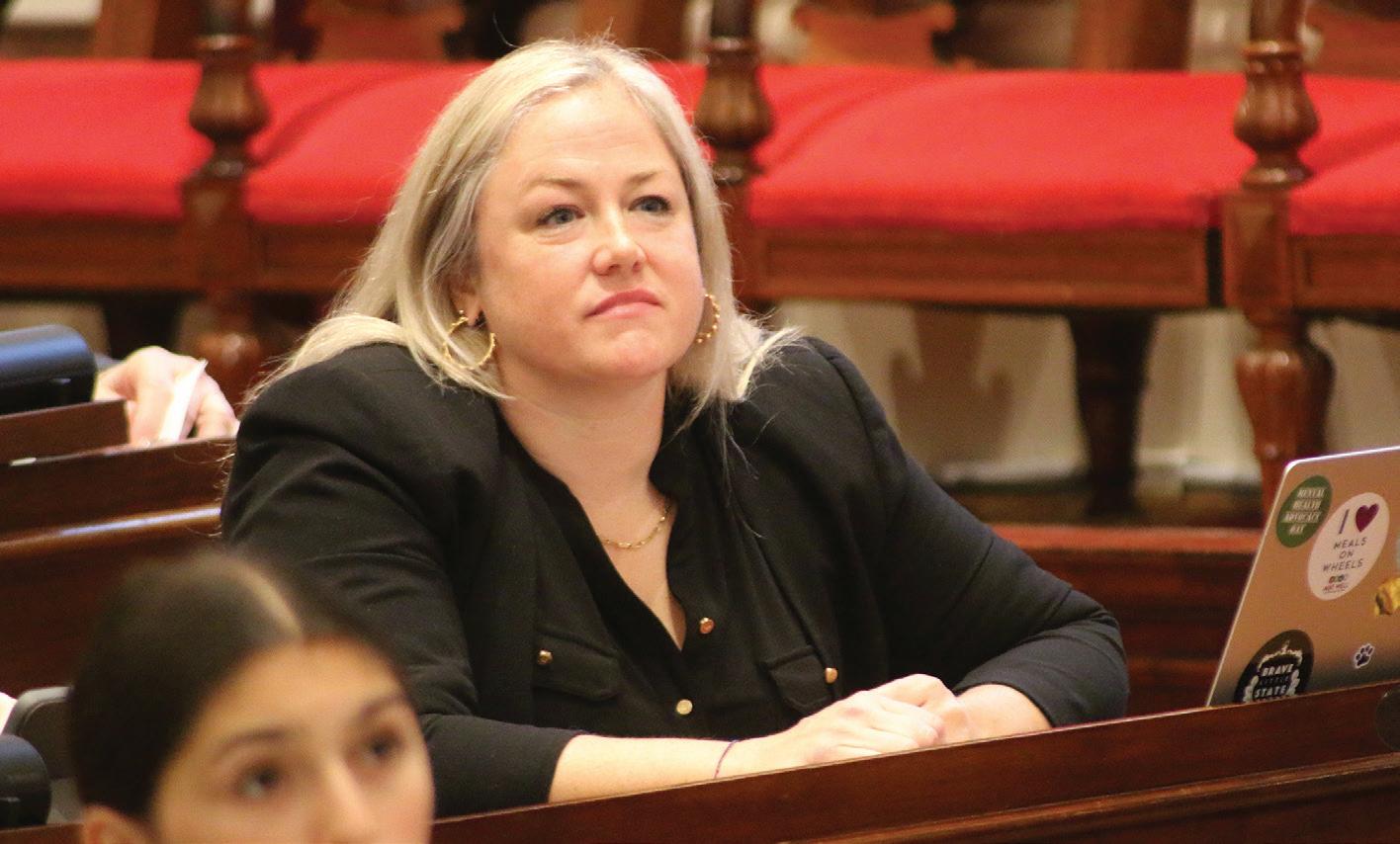
Chea Waters Evans
Paws At
“The buck really stops with no one person or agency,” the Report on Unification of Animal Welfare and Related Public Safety Functions said. It called for the Agency of Agriculture, Food and Markets to oversee the new division because of its expertise in the health and welfare of livestock.
But that makes no sense to Erika Holm, the chair of the Animal Cruelty Investigation Advisory Board, which has advised state officials on animal welfare since 2019. There are already plenty of laws about the treatment of animals, and ultimately, she said, it is a law enforcement issue.
“We have a huge problem in the state right now with animal cruelty cases not being investigated properly or well,” Holm said.
Since fall 2022, some of that work has fallen to wardens from the Department of Fish & Wildlife, who have helped state police investigate nearly 240 such cases. Wardens are doing an excellent job in this expanded role, Fish & Wildlife Commissioner Chris Herrick said, though he acknowledged that it’s not something they are primarily trained to do.
The bill currently in the Senate is less comprehensive than the one initially proposed. That version would have licensed rescue organizations to ensure the animals in their care are not subject to further neglect. It also would have regulated organizations that bring animals into Vermont for adoption. There has been a “huge explosion” in adoptions from other states, according to Holm. But those adoptions can bring diseases to Vermont and can lead more people to drop dogs and cats at local shelters when they don’t work out.
Lawmakers stripped the bill of those measures, according to Rep. Waters Evans, because of concerns about the workload it would put on a brand-new department.
The bill’s path in the Senate remains uncertain. It’s late in the legislative session for a measure to head from the House to the Senate for the first time, something House Republicans groused about. But Sen. Ruth Hardy (D-Addison) told Seven Days that she intends to ask leadership to allow her Government Operations Committee to take it up this week.
Sen. Anne Watson (D/P-Washington), who serves on Hardy’s committee, said she wants a crack at it.
“What kind of society do we want to live in?” Watson said. “Are Vermonters, especially those who own animals, willing to pay a little bit more for the safety and security of animals across the state? I think it’s a reasonable ask.” ➆
EDUCATION
Senate Panel Grills Ed Secretary
BY ALISON NOVAK alison@sevendaysvt.com
Zoie Saunders, Gov. Phil Scott’s pick for Vermont’s education secretary, took her first step toward confirmation on Tuesday when she spent 90 minutes answering questions from the state Senate Education Committee.
A school administrator from Florida, Saunders described herself as a data-driven leader committed to supporting Vermont’s public education system. She defended her professional experience, which some officials and members of the public have dissected since Scott nominated her. Critics have zeroed in on her seven-year stint as a strategist with a for-profit charter school management company. She’s also never worked as a teacher, principal or superintendent.
“I chose a career that afforded me a broad view of education and an understanding of the many factors that contribute to students’ success,” Saunders told the five-member panel.
Committee chair Sen. Brian Campion (D-Bennington) acknowledged the significant interest in Saunders and assured her the committee wanted a “fair, respectful, thoughtful confirmation hearing.”
The senators asked Saunders about her past work experience and her hopes for the future of Vermont schools. Several times, Saunders asserted that her experience working with charter schools was evidence that she supported public education.
“In every state that I’ve worked, charter schools are public schools,” Saunders said, noting that charter school students take the same state assessments as students in traditional public schools.
After the hearing, committee members discussed their impressions.
“She’s very composed,” Sen. Terry Williams (R-Rutland) said. “I thought she responded to the questions well.”
Sen. Nader Hashim (D-Windham) said he would have liked to hear Saunders talk more about local policy issues, such as PCBs.
Sen. Martine Gulick (D-ChittendenCentral) said that while Saunders seemed smart and well-spoken, “I think we need someone who just has more experience working in public education, in schools, understands policy, understands systems.”
The committee was expected to vote on Wednesday whether to recommend Saunders to the full Senate. A majority must vote to confirm her.
Visit sevendaysvt.com for the latest. ➆










1% OF SALES TO Spring into the season for outdoor living & explore our furniture Designed for Enjoying Life Outside 4t-BurlFurniture041724 1 4/15/24 7:52 PM
SEVEN DAYS APRIL 24-MAY 1, 2024 21 34 Patchen Road , Suite 201 South Burlington | 802-735-2123 BOOK NOW SERVICE LIST PERMANENT MAKEUP MICROBLADING LIP BLUSHING EYELASH EXTENSIONS CLASSIC STYLE HYBRID STYLE LASH ENHANCEMENT LASH LIFT & TINT OWNER REBECCA DANGER 8h-Craftbeauty013124.indd 1 1/26/24 3:25 PM ACCEPTING NEW CLIENTS 4/8/24 11:42 126 College Street• Burlington • 802.540.0762 126 College Street • 802-540-0762 • @houndstoothvt Taking a deep dive into social distancing? Buy now, shop later with a Houndstooth gift certificate! Call or DM us for info Vermont's destination for dapper dogs and fabulous felines. We’ve got stuff for humans, too! 8H-houndstooth051822.indd 1 5/12/22 12:27 PM

Job of the Week






FEEDback
«
widely reported funding of viral gain-offunction research in Wuhan. No worries?
normalizing scandal and driving rules of acceptable conduct into the ground?






CREW LEADER & GROUNDS CREW











Timber Tender is gearing up for our busy season and looking for hard working individuals to join our team! We are a locally owned business out of Barnard, VT, serving the Upper Valley of VT & NH.






Government restrictions, especially abroad, courted totalitarianism. China’s zero-COVID policy confined Shanghai residents indoors for months. Australia arrested citizens for not showing vaccination papers or masking outdoors; positive cases and international travelers had to isolate, not at home, but at governmentrun quarantine camps. Not a good look.












To succeed at the Limbo Rock takes great balance and strong quads. To get away with Limbo Ethics, all it takes is chutzpah, something Sen. Ram Hinsdale and her Democrat colleagues seem to have an excess of. In a one-party state, with a legislative supermajority and a monoculture of ideological thought, they may keep “winning,” but the more the Dems win at their cynical game, the more the people of Vermont lose. And we,









COVID-19 was a fog of war for local/ state public servants, who did their best with what they knew. I’m less confident with federal government, Big Pharma and the disturbing militarization of public health. The same people assure us another pandemic is coming. What will

Crew Leader We are seeking an experienced and motivated individual who enjoys all facets of tree work. $25-35/hour depending on experience
Responsibilities include:
• Climbing












• Utilizing necessary equipment to get the job done
• Working in a team environment, problem solving









Grounds Crew necessary! $20/Hour and up depending on experience.




Responsibilities include:





• Dragging brush,

• Safely operating chippers, saws, work trucks
• Working as a team : Experience a plus but not :




The Scoop on Timber Tender
From Timber Tender’s Vice President, Justin Romero
What challenges does the Crew Leader face on the job?
JR: We are aerial problem solvers, making crucial decisions from far up in the trees. Whether pruning or removing, we face daily obstacles searching for precise vantage points via lifts, occasionally climbing up trees and rigging them down. e tallest tree we’ve worked on was 135 feet high, a white pine in Woodstock.
What is your philosophy on arboriculture?
JR: Our industry is the care of trees. ese days, canopy is a premium, providing health advantages to those who live among it. As ISA Certified Arborists, our goal is to replace every tree we remove with one to two new ones.

Apply for this great local job and many more: jobs.sevendaysvt.com




ESSEX JUNCTION

‘LIMBO ETHICS’
[Re “Ethics Panel Dismisses Complaint Against Ram Hinsdale,” April 11, online]:


 Bruce S. Post ESSEX TOWN

Ditto the letter to the editor requesting a larger font for your crossword clues [Feedback, “Larger Type, Please,” March 20]! This is an accessibility issue for Vermont’s increasingly aging population!
Otherwise, really appreciate

Reading the recent allegations of ethical impropriety directed at Sen. Kesha Ram Hinsdale, of the Hinsdale Properties clan, I thought about singer Chubby Checker.
In the 1960s, Chubby popularized a Caribbean dance called the limbo. Participants faced a horizontal bar and then slowly bent backwards, cautiously inching forward, chest up, until they could pass under the bar without touching it. Those who succeeded competed in the next round, whereby the bar was progressively lowered closer to the ground, on and on until only one winner remained.
Chubby’s song “Limbo Rock” became a hit. It had a great beat, a fantastic rhythm and a memorable chorus: “Limbo lower now, limbo lower now. How low can you go?”
And now, given the Senate Ethics Committee’s pooh-poohing the charges against Ram Hinsdale, it’s fair to ask: How low can Vermont Democrats go with their patented brand of Limbo Ethics,

 BURLINGTON

Kevin McCallum missed the mark with his story describing the conflict-of-interest complaint against Senator Kesha Ram Hinsdale signed by a number of Vermonters [Re “Ethics Panel Dismisses Complaint Against Ram Hinsdale,” April 11, online].

It’s common knowledge in the halls of Montpelier that the senator is the chair of a committee promoting legislation that allows for wealthy landlords like the Hinsdale family to more easily carve up homes that should be available for single families and turn them into smaller rental units, mostly for students in the Burlington area.
That is a clear conflict of interest, as any veteran senator with courage would confirm. Few senators would say the complaint was “completely baseless.”
In the past, those who confronted the senator have been chastised as sexist or racist. In political circles, those labels produce fear and buy silence.
The truth is, the senator’s husband manages over 165 properties for his mother, Irene Hinsdale. The senator is family. How could the senator say that her work on housing “is neutral or negatively impacts my husband’s family’s business”? It is neither. Using the “cover” of
SEVEN DAYS APRIL 24-MAY 1, 2024 22
P.7
SOUTH
2v-JOTW042424.indd 1 4/23/24 1:38 PM

a ordable apartments, more core density and less sprawl does not excuse excessive profits and fewer homes for families.
If the Hinsdales managed some homeless shelters, created more Section 8 housing or created a ordable housing, their reputation would be di erent. But that’s not how to build a $50 million empire.
The Senate Ethics Committee failed to investigate because senators will be very reluctant to turn on one of their colleagues. Senator Ram Hinsdale should have recused herself from the Housing Committee. Vermonters deserve better.
WHAT ABOUT AIR POLLUTION?
The tail of the “All About Emma” letter [Feedback, March 27] was right on. Yes, those F-35s drive me nuts, too, but thanks to Sen. Bernie Sanders, who managed to divert their path where I live in Winooski, it’s not so bad now.
MAY 4


Missy Mazzoli
Sinfonia For Orbiting Spheres
Nico Muhly
Sounding ( World Premiere)
Josquin Des Prez
Mille Regretz
Wolfgang Amadeus Mozart
Requiem in D minor, K. 626
But that’s noise pollution. What about the air pollution generated by the tons of wood chips burned in South Burlington to produce electricity?




This concert is conducted by VSO Music Director Andrew Crust & is preceded at 6:30 p.m. by a free pre-concert discussion with Crust & VSO’s guest artists for insight into the evening’s program.
SEVEN DAYS APRIL 24-MAY 1, 2024 23
Bossange filed the complaint against Sen. Kesha Ram Hinsdale with the State Ethics Commission.
Sen. Kesha Ram Hinsdale
FLYNN CENTER, BURLINGTON
Tickets & information at vs o . org /events
& Muhly
7: 30 PM Mozart, Mazzoli
23t-VSO041724 1 4/15/24 1:37 PM



















Locally Owned and Operated Since 1931 STREAMING Eight hours DAILY of IN-DEPTH, LOCALLY-PRODUCED news, weather, sports and commentary: 5:00 – 9:00 AM Morning News Service Daily News Specials Keeping an Eye On Vermont while CBS Keeps an Eye On the World NEWS PARTNERS MORE LOCALLY PRODUCED NEWS EVERY DAY THAN ANY OTHER VERMONT RADIO STATION World & National News on the Hour Headlines on the Half-Hour Local, regional, and national sports news, interviews & features with listener call-ins. 5:30 – 7:00 PM Interviews with political and business leaders, authors, educators, and others in the news with call-ins from listeners. 9:00 – 11:00 AM VERMONT VIEWP INT hT e Homeof RedSoxBaseb a l l 96.1 96.5 98.3 101.9 AM550 RadioVermont Noon – 1:00 PM Noon News Hour 4:00 – 5:30 PM Afternoon News Service FREE PICKUP & DELIVERY HOURS: Mon-Fri. 7:30-5 Montpelier 90 River St. 229-4941 1800-639-1900 VERMONT TIRE & SERVICE The local tire store where your dollar buys more. South Burlington 1877 Williston Rd. 658-1333 1800-639-1901 Not responsible for typographical errors Winter is over, Spring is here! Open Saturdays till Noon! FINAL WEEK!! https://ballot.sevendaysvt.com/ 2v-VTTire042424 1 4/22/24 11:50 AM SEVEN DAYS APRIL 24-MAY 1, 2024 24
OBITUARIES
Newton C. Garland
OCTOBER 14, 1924-
APRIL 11, 2024
SOUTH BURLINGTON, VT.
Newton C. “Newt” Garland, 99, an avid outdoorsman, has climbed his final mountain. He died on ursday, April 11, 2024, at the Residence at Quarry Hill in South Burlington, after a short illness.
He was born in 1924 in Lowell, Mass. His parents owned a large dairy farm in Pelham, N.H., and he and his two brothers and sister were expected to help out. His lifelong attachment to the land and his ability to fix things served him well.
He attended Cornell University, joined the U.S. Navy, and graduated from Rensselaer Polytechnic Institute and the Massachusetts Institute of Technology. At RPI he was a lacrosse standout and in his senior year was selected as a midfielder on the North Squad in the 1946 annual North/South All Star Game. Newt received a master’s in mechanical engineering from MIT, with specialized postgraduate work in optics.
Mary Hagen
NOVEMBER 23, 1933-
APRIL 15, 2024
SHELBURNE, VT.
Mary Hagen, a longtime resident of Shelburne, Vt., passed away peacefully on April 15, 2024, at 90 years of age, after a brief illness. She was born in Minnesota, the daughter of Byrde and J. John Johannsen.
Mary attended the University of Minnesota, where she met and married Ronald L. Hagen, her husband of 26 years.
Mary lived a full life and, with her friends and daughters, traveled to far corners of the world to explore fine food, architecture and varied cultures in different countries. She was a docent
He spent most of his career as an engineer at General Electric in Schenectady, N.Y.; Pittsfield, Mass.; and Burlington, Vt. He worked on missile guidance systems and held several patents for his work on the Vulcan gun.
Newt raised two sons, and, in 1966, he and their late mother, Margaret “Peg” Garland, bought land in Fairfax, Vt. In 1971, he designed and built an A-frame house on the land. He fabricated the rafters at his house in Burlington and enlisted his sons, friends and neighbors to erect the cabin.
While well into his eighties, he spent many happy hours
at the Shelburne Museum for more than 10 years. For many years, she enjoyed activities such as sewing, skiing, tennis and golf. Later in life, she continued her love of sports and enjoyed watching football, tennis and golf tournaments with her friends.
on the land — clearing brush, cutting firewood and building trails — which he wanted the public to enjoy. He hiked, skied, bicycled and kayaked. As a volunteer, he worked on many trail-improvement projects in Vermont, New Mexico, Alaska and Hawaii.
After retiring from GE, Newt bought a house in Albuquerque and split his time between Vermont and New Mexico. A few years ago, tiring of his twiceyearly drives between the two states, he returned full time to Vermont. He granted a conservation easement on most of his Fairfax property to the Vermont Land Trust to protect it and ensure public access and in 2023 donated the 63 acres to the town.
He is survived by his longtime companion, Nancy Smith, of South Burlington; his sons, Russell and his wife, Gayle, of Santa Fe, N.M., and James and his wife, Sooyeon, of Danbury, Conn.; and three grandchildren, Stacy, Jason and Arin.
Burial will be private. In lieu of flowers, please send donations in his memory to the Green Mountain Club or your favorite charity.
She was thankful for her rich community of friends in the Burlington area.
She was preceded in death by her husband, parents, loving sister Caryl Deden and longtime companion Arthur Bernier. She is survived by her four daughters, five grandchildren and two greatgrandchildren. Precious to Mary was spending time with her grandchildren and greatgrandchildren on their visits to Shelburne.
In lieu of flowers, please send donations to the Lake Champlain Committee at lakechamplaincommittee. org/support/give-to-thelegacy-fund-lccs-workingendowment, or call LCC executive director Lori Fisher at 802-658-1421 to discuss making a contribution.
Patricia A. Bartlett
JUNE 19, 1945-
APRIL 9, 2024
JERICHO, VT.
Patricia A. Bartlett, 78, of Jericho, Vt., passed away at her home on April 9, 2024, surrounded by her loving family, after a courageous battle with lung cancer.
Pat was born in Jericho to Richard and Elizabeth Eddy on June 19, 1945. After growing up in Jericho and graduating from high school, she married her best friend, Robin Bartlett. She had first spotted him when she was 8 years old and he was only 10. He was riding his bicycle in the Jericho Memorial Day parade. e cards in his wheel spokes first caught her attention, and then Robin caught her eye. ey married in 1963 and moved to Connecticut, where they started a family. While raising two daughters, she managed the bookkeeping for their painting company, Porcelain Patch & Glaze. After moving back to Jericho, she worked at the Jericho Town Clerk’s Office, where she was a lister and assistant town clerk. She then started and ran a successful daycare on Park Street in Jericho, Browns River Little School, where she made great connections with children and families. ey all loved “Miss Pat.” At the same time, she managed the bookkeeping for their insulation company, Add-On Insulation, and helped whenever necessary, hanging insulation and feeding the hopper. She was not afraid to work hard and get her hands dirty.
Pat was a beautiful, loving, devoted wife and mother. She was a very special lady who was known by many for her kindness, great smile, positive spirit, great sense of humor, quick wit and sense of adventure. She had a

love of the outdoors, where she spent time walking, snowshoeing, cross-country skiing, canoeing and gardening. She especially loved biking with her friends on the Lamoille Valley Rail Trail, Missisquoi Valley Rail Trail and Burlington Bike Path. ey would bike 20 miles a day at least once or twice per week. She was an avid reader and enjoyed doing the daily crossword and Wordle. Her talents included crafting, painting, sewing, knitting, crocheting and cooking.
Pat was a dedicated member of the Jericho Congregational Church in Jericho Center. She was on the flower committee and could always be counted on to help with decorating the church with flowers or Christmas decorations or painting.
Pat is survived by her husband of 60 years,
Robin Bartlett; daughter Heidi Bartlett of Jericho; daughter Debora Bartlett and partner Christopher Hathaway of Shelburne, Vt.; sister, Dorothy Bergeron of South Windsor, Conn.; many nieces, nephews, cousins and in-laws; dear childhood friends Betty (Farrell) Keefe and Carol (Brown) Spence; and many other very close friends. She is predeceased by her parents and her brothers, John Eddy, Paul Eddy and Richard “Dickie” Eddy.
She was truly one of a kind and will be greatly missed by those who have known and loved her.
Eternal rest grant unto her, O Lord, and let perpetual light shine upon her. May she rest in peace. Amen. Her family wishes to express their gratitude to the teams at the University of Vermont Medical Center and Bayada Hospice for the care they gave Pat in the last few months of her life; to A.W. Rich Funeral Home for their kind service; and a special thanks to her cousin Donald Fleming. e family will have a private service at a future date. Memorial contributions can be made in her honor to the American Cancer Society (donate.cancer.org). Please visit awrfh. com to share your memories and condolences.
SEVEN DAYS APRIL 24-MAY 1, 2024 25
Mark your family’s milestones in life lines. sevendaysvt.com/lifelines
lifelines OBITUARIES, VOWS, CELEBRATIONS
Want to memorialize a loved one?
We’re here to help. Our obituary and in memoriam services are affordable, accessible and handled with personal care.
Share your loved one’s story with the local community in Lifelines.

lifelines
OBITUARIES
Charles Yergeau
AUGUST 18, 1959APRIL 17, 2024 CHOCTAW, OKLA.
Charles E. Yergeau, 64 of Choctaw, Okla., formerly of Vermont, passed peacefully into the arms of the Lord on Wednesday, April 17, 2024.
Chuck’s greatest gift was his ability to love. His highest priority in life was to extend his love to those around him. He sacrificed many things in his own life so that he could care for those he loved. Besides his own large and loving family, Chuck gave love, guidance and shelter to many others without reservation.
Chuck spent his life in building maintenance. If it could be taken apart, repaired and put back together, it was in Chuck’s realm.
Chuck’s wife of 35 years,
Jim Pittala
MARCH 19, 1949MARCH 30, 2024 WESTFORD, VT.
After a long illness, Jim Pittala died at his home in Westford, Vt., on Saturday, March 30, 2024.
Jim was born on March 19, 1949, in Brooklyn to Edward and Ann Pittala. He was christened Vincent Richard Pittala, after an uncle who died in World War II, but he was always known as “Jim” to his family and friends. After Brooklyn, his family moved to Wyckoff, N.J., where Jim completed his education and went on to serve in the U.S. Army.
Immediately after his marriage to Maryann Martin in 1973, Jim and Maryann moved to Vermont and lived in Bolton before settling in Westford. Jim worked at several local companies
Barbara, describes Chuck as always having a smile on his face, no matter what, and says the life they spent together were the most wonderful years of her life.
Chuck leaves his wife, Barbara; sons, Christopher, Scott, Robert, Jay, David, and Mathew; daughters, Cruzita, Crystal, Mary, Denise and Jessica; 16 grandchildren;
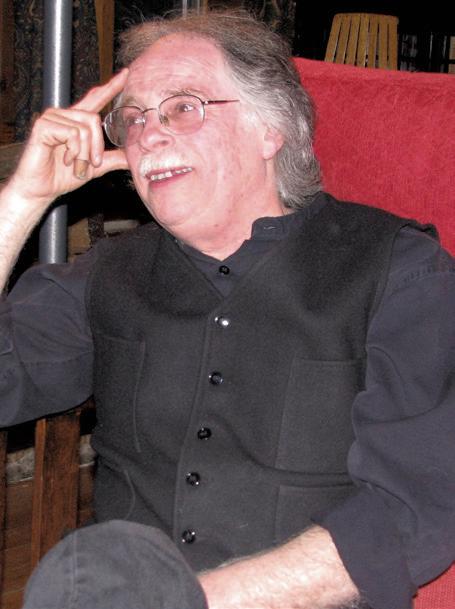
in their warehouse and logistics departments and ended his professional career after more than 20 years at Franklin August Trading in South Burlington.
Jim was a quiet man until you engaged him in conversation about something he cared about, and he cared deeply about the N.Y. Giants, any kind of music, science, astronomy, his home, his

and extended family. Chuck is predeceased by father, Gerald; his mother, Mary; and brothers Jerry and Neil. He is survived by brothers David and Allen, both of Vermont.
Services will be held at a later date.
“And in the end, the love you take, is equal to the love you make.”
friends and, above all, his wife, Maryann.
Left to treasure Jim’s memory are his cherished wife, Maryann; brother Richard Pittala and his wife, Donna; brother Robert Pittala and his wife, Patti; brotherin-law, John Cascone; sisterin-law Rosemary Martin; six nephews and one niece; and his dearest friends, Jack and Carolyn Kovac and Bob and Brenda Withey. He was predeceased by his beloved sister, Lorry Pittala Cascone, and his parents, Ed and Ann Pittala. His family would also like to express thanks and gratitude to friends Michelle and Roger Dufresne and to the University of Vermont Home Health & Hospice team for their tremendous support and care.
ere will be no visiting hours. A private service will be held later at the convenience of the family.
SEVEN DAYS APRIL 24-MAY 1, 2024 26 READ, POST, SHARE + COMMENT: sevendaysvt.com/lifelines
lifelines
us
or
ext. 121.
Post your obituary or in memoriam online and in print at sevendaysvt.com/lifelines Or contact
at lifelines@sevendaysvt.com
865-1020
2v-Obit House Filler.indd 1 2/6/24 5:07 PM
Patricia Ann Gallant
SEPTEMBER 19, 1950-
APRIL 10, 2024
FAIRFAX, VT.
Patricia “Pat” Gallant, EdD, passed away peacefully on April 10, 2024, at home in Fairfax, Vt., with loved ones at her side.
Pat was born on September 19, 1950, in Hardwick, Vt., to Florence (Couture) and Clarence Gallant. She treasured her childhood. Almost anyone who met her had the experience of learning about Hardwick and finding a connection. While there were many challenges during her childhood, she strongly loved her family, friends and community.
Pat was proud of her Hardwick identity. She enjoyed returning there for visits with family and friends, including high school reunions with the Hardwick Academy class of ’68. She had the fondest memories of her school days and maintained her friendships throughout her lifetime.
Classmates affectionately remember Pat as “the glue that held the class of ’68 together.” Pat never wanted the day to end. Through her last days, she enjoyed life to its fullest.
gardening and kept a beautiful home. The dust from the dirt road outside the front door never settled on her tastefully curated antiques.
While her children were young, Pat provided loving care to them and others in her home daycare before returning to teaching at the Maple School, a local Montessori school, which her daughters attended at the time. She soon returned to the Georgia, Vt., elementary school. She made memories with students and everlasting friendships with coworkers, including the “Ladies ‘Hiking’ Group.”
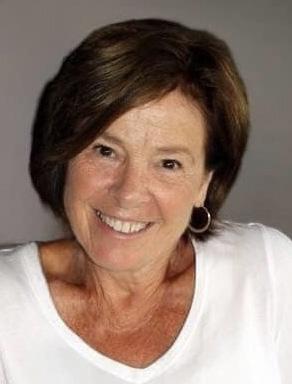
Pat was engaged to Dean Johnson from Craftsbury, Vt., who died in Vietnam. Dean’s tragic death set Pat on the path to becoming a classroom teacher, college educator and lifelong student. She lovingly kept the Johnsons as part of her own family for the rest of her years.
While completing her undergraduate degree at the University of Vermont, Pat’s summers were spent working at the Highland Lodge on Caspian Lake. She spoke frequently of those being the best summers of her life. During this time, Pat met and then married Alfred “Chum” Daniels from East Albany, Vt. She became lifelong friends with his Orleans buddies and his Johnson State College friends (and their families) and was beloved Aunt Pat to the Daniels, Sinon, and Ferguson families.
Pat and Chum honeymooned in their Volkswagen bus, traveling across the country and into Mexico. They settled in Fairfax, Vt., as elementary school teachers. While restoring and renovating a centuries-old farmhouse with views of Mount Mansfield, they raised three children (James “Jim,” Sara and Amy) to be curious, empathetic, independent, frugal and peace-seeking.
Pat practiced homesteading, made many in-town friends, enjoyed
Pat returned to UVM for her master’s degree in education and served as director of the Elementary Education Program. She dove into mentorship, the pursuit of knowledge and a passion for education with a focus on literacy. Through this, she began her numerous journal publications, as well as local and international conference presentations. In 1999, she achieved her doctorate in education at UVM. With that in hand, she became director of curriculum, instruction and assessment for her local school district.
It was through Pat’s ongoing commitment to literacy education that she met and then married Robert “Bob” Schwartz in 2004. They furthered their professional pursuits while residing in Lake Orion, Mich. There, she continued to build relationships with colleagues who became her “Michigan friends.” Her ever-expanding community of friends included teachers in the Lake Orion school district, the University of Michigan-Flint (where she was a faculty member), Oakland University (where Bob taught) and the Reading Recovery network. Her caring and compassion for others brought friendship and leadership roles. Both Vermont and Michigan elected her president of their state reading organizations.
As grandchildren were arriving, Pat returned with Bob to Fairfax, Vt., to be close to family and friends. Pat continued in higher education as a research professor at Vermont Reads Institute at UVM. She was a founding member of the Partnerships for Literacy and Learning board. She was a mentor to many in her profession, as well as personally to all with whom she shared her kindness and constant positivity.
Pat retired in 2015, but she continued her involvement in the field of literacy. She volunteered as chair of the Fairfax Community Library Trustees. She focused on friends and family,
including rekindled friendships in her book club; sought out many local live music venues; and hosted numerous family and friend gatherings. Pat’s love brought the Gallant family together.
Pat’s love of traveling and experiencing the world flourished as she aged. She was always planning journeys with Bob and close friends. She went to Europe, New Zealand, Australia and Egypt and took many Caribbean and Mediterranean cruises. Any two weeks away left her eager to return to her life in Vermont.
A 2022 diagnosis of ALS brought out Pat’s resilience, positivity, radiance and bravery. She quickly befriended others with ALS and participated in two successful fundraising campaigns for the ALS Association through the annual ALS walk in South Burlington. Many friends and family were by her side. She continued her long-distance friendships remotely by playing Words With Friends and sending many loving emails and Facebook messages. Bob tirelessly and lovingly became her steadfast main caregiver. She cherished the visits from those close to her, many of whom also compassionately assisted with her care and with keeping the house tidy. Her personality and determination continued to shine through on her last days, despite ALS progressively robbing her of the ability to move her body, swallow, communicate and breathe.
Patricia was predeceased by her parents. She is survived by her siblings, Phillip Gallant, Cynthia and James Cota, Jeffrey Gallant and Louis Godin, Clare and Tom Hale, and JoAnne Stubbs and Terry Hall; children, Jim Daniels, Sara and Craig Villeneuve, and Amy and Lucas Gendron; stepson, Michael Schwartz; grandchildren, Fred, Margaret, Anna, Camden, Cyrus, Ira and Colette; and great-grandsons, Ezra and Judah.
Friends and family are invited to attend a graveside service on May 19, 1 p.m., at Fairview Cemetery in Hardwick, followed by a celebration of life at Turning Stone Farm, 491 Country Club Rd., Greensboro, VT.
Pat’s family would like to thank Dr. Audrey von Lepel, the University of Vermont Medical Center ALS Clinic, the ALS Association and Compassionate Care ALS for their support over the past two years. Pat adored her caregivers from the VNA & Hospice of the Southwest Region and those from the community.
In lieu of flowers, donations can be made in Pat’s memory to Partnerships for Literacy and Learning, 250 Main St., Ste 202, Montpelier, VT 05602, and to the Northeast Chapter of the ALS Association at web.alsa.org/goto/ patricia_gallant.
Sylvia A. Weinhagen
DECEMBER 14, 1935APRIL 16, 2024
BURLINGTON, VT.
Sylvia A. Weinhagen of Burlington, Vt., died on April 16, 2024, with family by her side. She was 88, so what she died from is immaterial. What is important is that it was a long, full life.
Long and full does not mean easy. Sylvia was tough, resilient and feisty until the very end. She had a real wisdom that came from life experience. She started life in Essex Junction, Vt., as Sylvia A. Stanton, the first child of Thomas and Genevieve (Neill) Stanton. She spent her youth on River Street, picking berries near the banks of the Winooski River before IBM staked its claim. She was the daughter of the village “ice man,” who provided ice cut from the Winooski River.
After graduating from Essex Junction High School in 1953, her youthful path led from Vermont to Wisconsin, where she worked for the Wisconsin Tax Department. She logged many miles on a Harley Davidson, touring with her friends in the Family Motorcycle Club based in Madison, Wis. Shifting gears and marriages, she moved to British Columbia, to Florida, and then back to Vermont in the 1970s to raise her two youngest sons. In her mid-forties, as a single mom with little money but much determination, she pursued her dream of becoming a nurse. She graduated from the Fanny Allen School of Nursing in 1982 and spent the next 20 years working at Fanny Allen Hospital, Fletcher Allen Hospital (the University of Vermont Medical Center), and Cathedral Square. Her success as a nurse was evidenced by the heartfelt thanks she received from cancer patients and their families during the years she worked on Shepardson 4 at Fletcher Allen Hospital. What was her superpower? She combined critical commentary (yes, even biting sarcasm) with humility and empathy. This endeared her to her patients, her coworkers and her friends, as well as fellow residents and staff at Gazebo Senior Living and the Converse
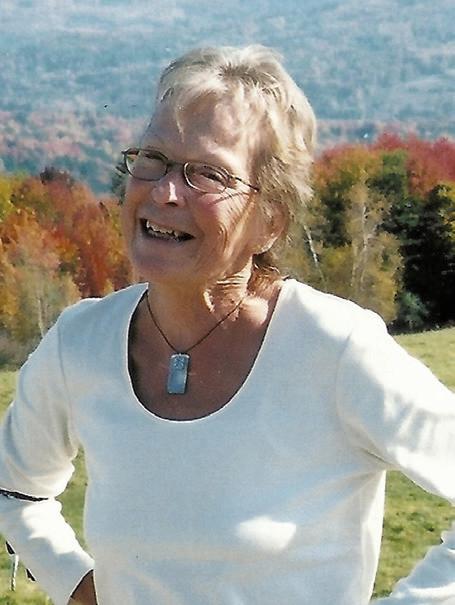
Home, where she spent the last chapter of her life.
Outside of work, she was a master gardener who excelled at arranging beauty in small spaces. Whether it was purchasing and planting flowers for dozens of flower boxes at Village Green in Essex Junction, cultivating an amazing patio garden complete with her favorite Japanese maple tree, or tending to her windowsill orchids, Sylvia’s green thumb and design aesthetic were legendary. She deeply respected the natural world, especially wildlife like wolves, owls and frogs. A Vermonter by birth and upbringing, she also loved the ocean — particularly the waves, the beaches and the sea glass of the Maine coast. Although no services are planned, we will honor her by scattering her ashes in those ocean waves.
Her siblings include Mike Stanton (deceased), Larry Stanton (South Burlington, Vt.) and Cathy Stanton (Carmel Valley, Calif.). Her three sons are John Bergin (Seattle, Wash.), Robert Frydenlund (Swanton, Vt.) and Alex Weinhagen (Burlington). Grandchildren include Caleb Weinhagen (Vancouver, B.C.) and Sarah Jacobs (Jay, Maine). Extended family include her best friend and eventual daughter-in-law, Leslie Frydenlund (Swanton), and Leslie’s two daughters, Cheryl Underwood (Georgia, Vt.) and Nikki Ellison (Fairfax, Vt.).
Sylvia did not mince her words. Growing up during World War II, she understood the danger of fascist “leaders.” She would tell you that fascist “leaders” exist today, in plain sight and just as dangerous. You can honor Sylvia’s memory by voting for democracy in November. You can also make a donation to the ACLU or the National Wildlife Federation.
SEVEN DAYS APRIL 24-MAY 1, 2024 27
PET PROJECT
Introducing the winners of the 2024 Best of the Beasts pet photo contest
Technological advancements are coming faster than ever these days, which is both exciting and terrifying. While it’s understandable to be leery of what automation and AI mean for the future of, well, everything, some developments truly make life more worth living. For example: Did you know that your iPhone can now recognize your pets?
It’s true! The Apple smartphone’s latest operating system, iOS 17, is capable of identifying the 47,582 pics of your houndPyrenees mix, Flu ernutter, that you have stored on your photo roll. The only possible downside: If you die suddenly, your friends and family might discover how many more photos you have of your pets than your human loved ones. (It’s OK. Us, too.)
That potential embarrassment aside, we here at Seven Days are in favor of anything that makes it easier to store, catalog and gratuitously share pet photos. If the results of the 2024 Best of the Beasts pet photo contest are any indication, we’re not alone.
After a hiatus in 2023, Best of the Beasts returned in fine form this year. Nearly 600 readers submitted photos in five categories: Doggone Adorable (dogs), Purrfect Poser (cats), Best Dressed (animals in costume), Lady & the Tramp (multiple cute animals together), and Wild Card, which included everything from reptiles to birds to pigs to this year’s Wild Card champ, Frolic the Scottish Highland cow.
Along with the winners, you’ll find a handful of pet photos that the judges felt were just too darned cute not to include.
DAN BOLLES


Sponsored by:
























DOGGONE ADORABLE
Winner: Kona (Human: Sarah Perryman)
Runners-Up
Below left: Daisy (Human: Felicia Far)
Below right: Marshmallow (Human: Suz McVey)


SEVEN DAYS APRIL 24-MAY 1, 2024 28

PURRFECT POSER
Winner: Shanti (Human: Kim Peine)
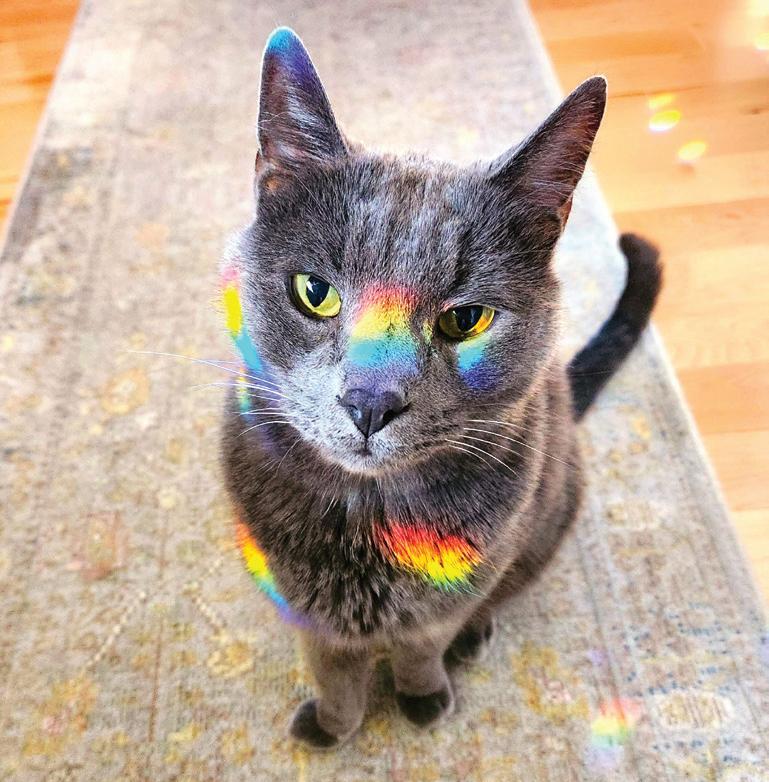


LADY & THE TRAMP
Winner: Pumpkin & Luna (Human: Bryan Holland)
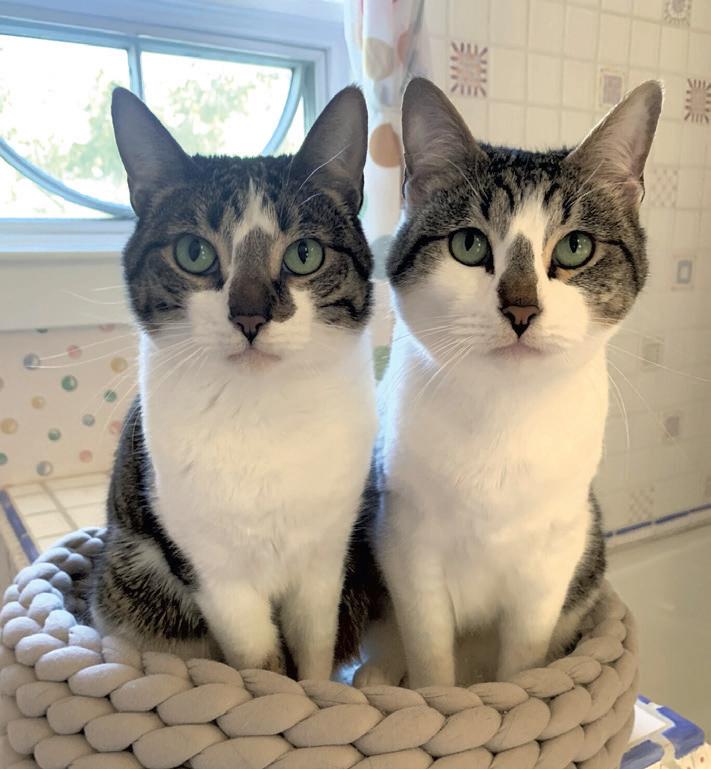

SEVEN DAYS APRIL 24-MAY 1, 2024 29
Runners-Up Right: Little Wing (Human: Katie Peck)
Below: Tomo (Human: Terry Allen)
Runners-Up Right: Oliver & Zooey III (Human: Alexandra Lazar)
Below: Frida & Aminta (Human: Robert Hitzig)
PET PROJECT » P.30
PET PROJECT

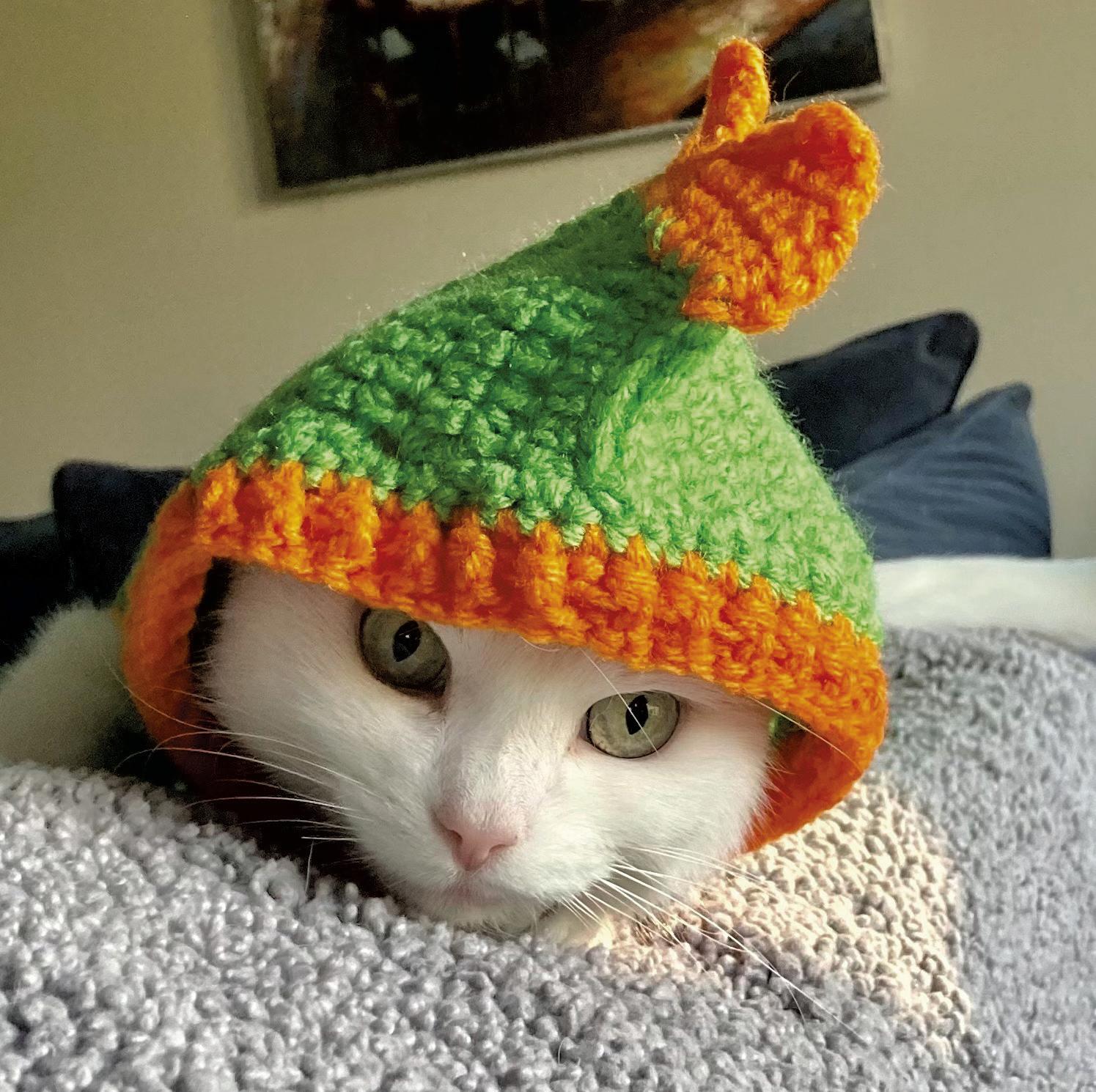
BEST DRESSED
Winner: Waylon (Human: Chelsey Robert)
Runners-Up
Below left: Maria (Human: Kat McGrath)
Below: Super Piglet (Human: Mari Lowder)

SEVEN DAYS APRIL 24-MAY 1, 2024 30
« P.29


WILD CARD
Winner: Frolic & Friends
(Human: Jan Thouron)
Runners-Up
Below left: Lulu
(Human: Shelly LaCroix)
Below: Slim Shady
(Human: Christine DeSimone)

SEVEN DAYS APRIL 24-MAY 1, 2024 31
Reining Champions
This Manchester Center family is a national show horse powerhouse
BY KEN PICARD • ken@sevendaysvt.com
Tango trotted boldly around the arena, mane flying, head upright and regal, like a chessboard knight come to life. The chestnut-colored gelding, an American saddlebred, circled the ring pulling a two-wheeled buggy, his high-stepping legs pumping like pistons.
“Steady! Watch your speed!” shouted Jaisen von Ballmoos, head trainer of Fairview Stable in Granville, N.Y., from the center of the ring. “Get more horse without going fast.”
Meghan von Ballmoos, Jaisen’s wife, translated the command for her guest: Show off the horse’s brilliance and height of motion while containing his exuberance. Horses are acutely sensitive to the driver’s emotions, especially in the excitement of a show, she explained, and they can feel nervousness though the reins like electricity.
Seated in the buggy was Lynn Schweikert, who’d never driven a horse under harness until a few years ago, when Jaisen and Meghan found her Tango on a Kentucky horse farm. The 74-year-old now makes the three-hour drive from her farm in Skaneateles, N.Y., to train at Fairview Stable once a week. It’s a long haul from the Finger Lakes, Schweikert said, but worth it.
“I’ve been showing Tango for two years. Last year he was undefeated at all the shows,” she boasted. In August, Schweikert will compete in the World’s Championship Horse Show in Louisville, Ky. “I wouldn’t bring my horses to anyone but Jaisen,” she said.
The name von Ballmoos has an impressive national reputation in the world of elite show horses, especially
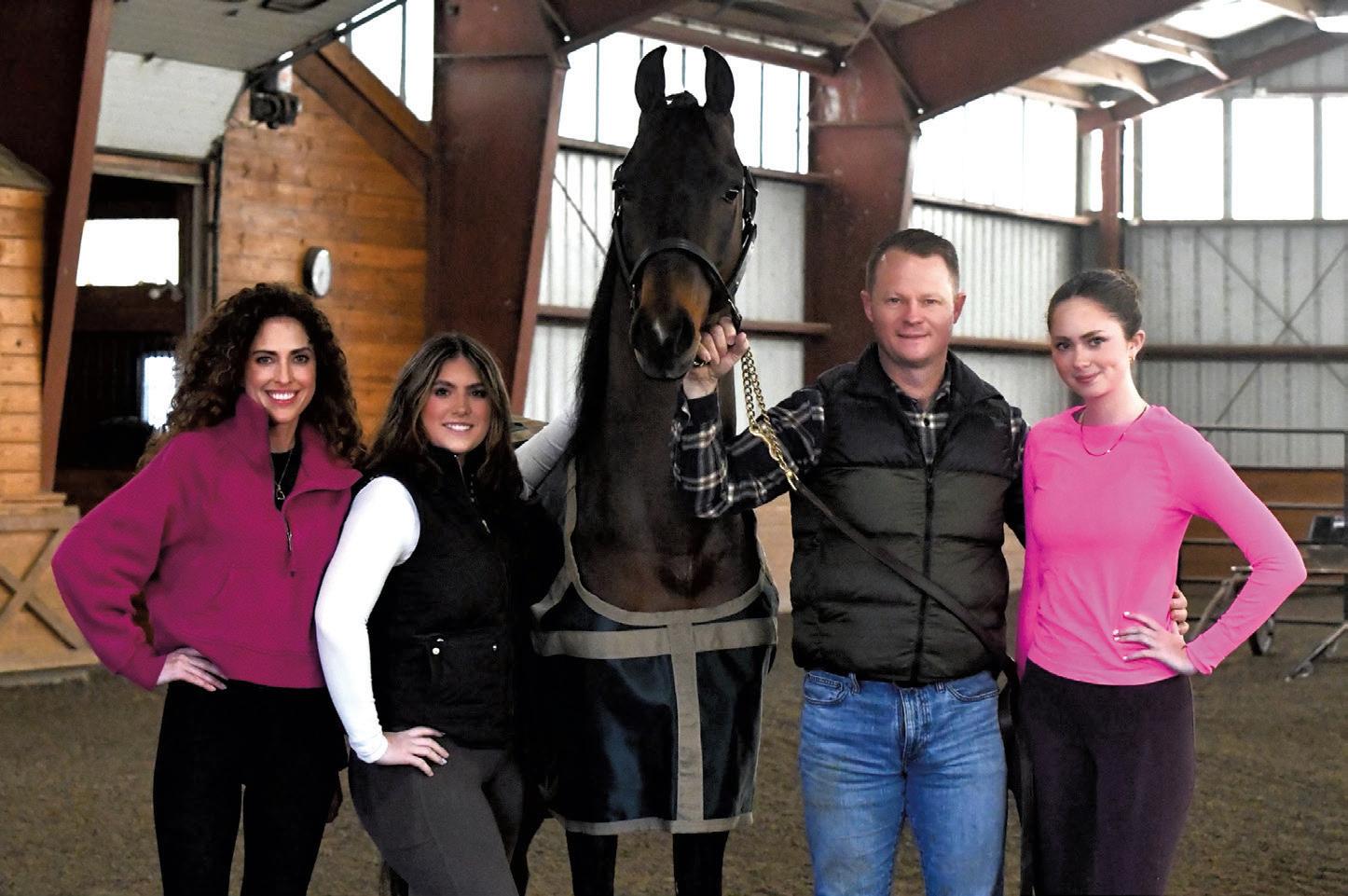
WE LIVE FOR DOING HORSE THINGS.
MEGHAN VON BALLMOOS
American saddlebreds and Morgan horses —Vermont’s official state animal. Jaisen, 44, and Meghan, 41, have years of experience rearing world champions and training top-notch equestrians, amateur and professional alike.
Jaisen, in particular, has an uncanny ability to recognize what a young horse will excel at, then match it with the right rider. Long before a competitor enters the ring in show attire — usually the formal jacket, derby, jodhpurs and riding boots

that make horse shows look like black-tie affairs — Jaisen has spent countless hours conditioning the animal into top physical and mental form. In a profession where clients can spend considerable sums on their blue-ribbon dreams, he knows how to deliver optimal performances.
Two of the von Ballmooses’ most accomplished students are their daughters, Emma and Madeline, or Maddie. Because the girls grew up in horse barns, they’ve mastered many different “seats,” or riding disciplines — saddle seat, western, hunt, jumper, equitation. Their versatility has made them very successful competitors on the national circuit.
At 16, Maddie has already won 20 national and world titles. Recently, she was one of 12 riders chosen for the U.S.
animal issue
team that will compete in December at the 2024 International Saddle Seat Equitation World Cup in Parys, South Africa. For Jaisen, a native of Capetown, the event will be a homecoming of sorts.
Emma, 18, who’s finishing her first year at Cornell University, has won 34 world titles and is in high demand as a professional rider, meaning that she can get paid for training and showing. Some of the country’s top breeders and trainers of Morgans and saddlebreds regularly fly her around the U.S. to compete on their million-dollar horses. Known as “catch riding,” this practice can challenge even the most experienced equestrian, who may get little or no training time on the animal before showing it.
“Some of the horses that Emma catch rides are not that great, but she gets them to win,” said Bonnie Sogoloff, 80, a retired professional horse trainer from South Burlington and a three-time world champion in another riding discipline, English pleasure. “She has that ... fierce competitiveness, and she’s as smart as a whip. So you want her on your horse.”
In 2021, when Sogoloff retired and sold her horse barn, Cedar Spring Farm in Charlotte, she referred her longtime clients to Fairview Stable. She knew that the von Ballmooses would take good care of their horses, she said, and that her clients would have fun and do well with them in competition.
“Not everyone has the feel for it that Jaisen and Meghan do,” Sogoloff added. “It takes a certain dedication and grit to handle it well, and they certainly have that.”


SEVEN DAYS APRIL 24-MAY 1, 2024 32
From left: Meghan, Emma, Jaisen and Madeline von Ballmoos
COURTESY OF MEGHAN VON BALLMOOS
4H-Hagan(VTPublic)042424 1 4/22/24 9:36 AM
COMPETITIVE FIRE
On a gray April morning, Meghan took a break from her chores in the 20-stall horse barn to show a reporter around. At her heels were two dogs: Morgan, a boxer; and Dolly, a wheezy, ottoman-shaped bulldog.
The von Ballmooses live 30 minutes away in Manchester Center and don’t own the 80-acre horse farm, which sits on a grassy hillside just across the New York state line near Whitehall. It belongs to Al Garner, a retired investment banker from New York City. In 2017, the von Ballmooses moved their business from Manchester Center to Fairview Stable, where Jaisen also runs Garner’s breeding operation.
In a paddock behind the training arena, a mare named Equinox Premonition stood watch over her week-old foal, which was napping in the grass. When the von Ballmooses moved to Vermont from Connecticut in 2007, they worked at Ivan Beattie’s East of Equinox Farm in Manchester Center, one of Vermont’s oldest breeding barns — hence the mare’s name and lineage.
“Morgan, I would not do that if I were you,” Meghan warned her dog, who’d crept into the paddock to sniff the foal curiously.
“She’s a very sweet mare, and I would trust her around anybody,” Meghan explained of the watchful mother. “But she definitely takes her job very seriously.”
As does Jaisen. When the mare appeared ready to give birth, he slept in the barn for several nights in a row to make sure he would be there to help her deliver the foal. “Too risky to leave it to nature and chance,” he said.
“We live for doing horse things. That’s all we ever do,” Meghan added, not as a complaint but as a statement of fact. “It’s a nice way to live and all that, but there’s no rest for the weary.”
During a break from his training, Jaisen talked about the commitment

required for his family’s success. At horse shows, it’s not unusual for them to work from 6 a.m. to 11 p.m. Emma, who’s been showing horses since she was 6, spent her spring break at the barn putting them through their paces for hours each day.
“We’ve sacrificed a lot, and it’s hard work,” Jaisen said. “If I win a class, I never come out thinking, That was good enough I’m always thinking, I can do better. That’s what drives me to come here and do this every single day.”
But Jaisen’s most dramatic display of determination occurred well outside the show arena. On October 2, 2018, he was driving to the Grand National & World Championship Morgan Horse Show in Oklahoma City, Okla., towing a trailer with six horses. On Interstate 44 near Joplin, Mo., one of the trailer’s tires started to fray. Its metal thread hit the wheel well, heating it up.
Once Jaisen noticed the problem, he pulled over. The hay inside the trailer burst into flames, trapping the horses inside. “It was horrific,” he said.
With cars speeding by at 75 miles per hour, Jaisen stopped traffic, flung open the trailer doors and ran inside to rescue the animals. To free them, he had to jump onto their backs and unclip metal clasps that scorched his hands. But because Jaisen had trained five of the six horses, they waited as he worked frantically to free them from the smoke and flames.
As Jaisen struggled to release the only horse he didn’t know well, a mare named Spirit, she “double-barreled” him, kicking him in the chest with both hind legs. The blow would leave him seriously bruised and barely able to walk for a week.
“There are determined people — and then there’s Jaisen,” Meghan recalled. “There was no answer but getting those horses off.”
Working through his injuries, Jaisen freed all six horses from the trailer. As he led each horse out of danger, drivers pulled over to help. Meghan distinctly remembers a small elderly man walking up to Black Dragon, a world champion Morgan that Emma was scheduled to show that year. The man removed his belt, casually looped

it around the horse’s neck and gently led him to safety.
One colt was so badly burned that Jaisen had to beg a highway patrolman to euthanize him on the spot. “I felt terrible,” he said. Afterward, he knelt by the roadside and wept.
The von Ballmooses still get choked up recounting the story, and not just because of the horse they lost. As news of the disaster spread, the national horse community rallied to their aid. Veterinarians were waiting for the horses in Oklahoma City.
In the days to come, packages of medication, creams and nutritional supplements for the wounded animals arrived from Vermont and elsewhere.
Because Jaisen and the surviving horses were too badly injured and traumatized to show that year, a little girl messaged Maddie, who had also planned to compete, and offered to let her show her own horse instead.
“This was for the world title. It’s not like there’s another one next week,” Meghan said. “Everyone just came together and wanted the girls to have some silver lining. The Morgan people are like a family.”
A BREED APART
From the time he was old enough to walk, riding horses was all Jaisen wanted to do.
“I would ride anything that even looked like a horse,” he said. “Finally, my parents said, ‘Enough is enough. You’re going for lessons.’”
From age 8 on, horses became Jaisen’s life. He started with show jumpers, then progressed to saddle seat, an English riding discipline that showcases a horse’s extravagant gaits.
As a teen, he made South Africa’s national team for equitation, a discipline that focuses on the rider’s ability to execute specific tasks elegantly. The


33
P.34
B E L L A L U S S O J E W E L E R S LOCAL WOMEN-OWNED U-MALL, SO. BURLINGTON, VT BRIDAL CUSTOM REPAIRS COME DESIGN WITH US!
Spirit, a mare Jaisen von Ballmoos rescued from a trailer fire, with her foal, Joy
COURTESY OF KATIE OLSON







selector told Jaisen afterward that he owed his spot to the need for a boy on the team — a remark that only pushed him to work harder.
In England, Jaisen was introduced to Morgans, a breed developed by Justin Morgan, an 18th-century schoolmaster from Randolph, Vt. Jaisen fell in love with Morgans and continued working with them after his move to the U.S. in 1999.
“What makes the Morgan so unique is its ability to be so versatile,” he explained. At shows, Morgans can do jumping, carriage, western or saddle seat. “That’s what makes the Morgan such a desirable horse for so many people. No matter what you get when you breed one, there will always be a job for them.”
Meghan grew up in Rhode Island and also started riding when she was 8, mostly her mother’s saddlebreds and Morgans. As a teen, she rode competitively and trained at a barn in Portsmouth, R.I., where Jaisen was working. The couple started dating and married in 2003.
Katie Olson, 31, is an amateur rider from Burlington who’s won two national titles and a world title on Spirit, the Morgan horse that kicked Jaisen in the chest during the trailer fire.
“Jaisen risked everything to save my horse,” said Olson, who until recently worked as events and ticketing manager at Seven Days. “So I was like, Oh, you’re an incredible human, more than I even realized.” When Spirit had an offspring, Olson named it Phoenix.
Olson used to stable her horses at Sogoloff’s Cedar Spring Farm in Charlotte, but now she makes the two-hour drive from her home in Burlington to Fairview Stable twice a week to train her horses with Jaisen and Meghan.
“Originally I thought maybe I’d try to move them closer,” she said. “But I have so much fun with the von Ballmoos family and I’ve learned so much in the last four years that it’s worth it for me. I can’t get that quality of instruction closer by, or know that my horses are being taken care of so well.”
What sets the von Ballmooses apart from other trainers?
Olson said one difference lies in their ability to recommend subtle changes that a rider should make in, say, body weight or hand position. For example, Jaisen might tell her to soften her wrist to get the horse to do precisely what she wants.
“To see it from the ground and articulate it clearly to the rider ... is a really special gift,” she added.
Though the von Ballmooses regularly compete at a world-class level with very expensive steeds, Jaisen said he’s always specialized in putting juvenile and amateur riders in the ring. He and Meghan have built a good family business breeding and training horses, as well as teaching riding to people who have no interest in ever going pro.
“It costs the same to keep a bad horse as a good horse,” Meghan said. “So you might as well have a good one.” ➆
SEVEN DAYS APRIL 24-MAY 1, 2024 34
INFO Find Fairview Stable on Facebook. Reining Champions « P.33
COURTESY OF JANELLE SCHROEDER PHOTOGRAPHY 3v-OGE042424 1 4/22/24 12:01 PM pawsathomevt.com • 802.871.2329
Mobile Veterinary Hospice & End of Life Care 6h-Pawsathome091323-3.indd 1 9/7/23 12:05 PM
Katie Olson and Break the Bank
Paws At Home

nomination round ends sunday!
Help us celebrate the best of Vermont by nominating your favorite businesses, people and places through April 28 at sevendaysvt.com/daysies-vote.

PRESENTED BY
START YOUR CAMPAIGN:
Learn about promotion options on the ballot and beyond and get an official campaign kit at sevendaysvt.com/daysies-info.

















Scan with your phone for quick access to the ballot! designate
MAY 27-JUNE 9
Pick the best from top finalists.
CELEBRATE
31
JULY
See who won in Seven Days! 2 3
1t-daysies042423.indd 1 4/22/24 11:53 AM SEVEN DAYS APRIL 24-MAY 1, 2024 35
Cat’s Got Her Tongue
Animal communicator Amy Wild wants a word with your pet
BY CHRIS FARNSWORTH • farnsworth@sevendaysvt.com
Amy Wild talks to animals. That’s not especially weird — who doesn’t chat with their pets, or with the occasional bird or chattering squirrel? The difference is that Wild says the animals talk back to her.
“Sometimes they speak in actual sentences,” Wild said matter-of-factly, “but usually I get images, shared emotion, that sort of thing.”
Wild, 38, is a Starksboro-based animal and spirit medium. The Massachusetts native started her business, Spectral Communications, in 2022 to offer her services to people who wish to converse with their pets, whether on this plane or across the rainbow bridge. In February, she became certified through the University of Vermont as a companion animal end-of-life doula.
For $99, Wild will “telepathically connect with your animal companion to provide insight, information and advice,” her website says. She claims to be able to help pet owners understand why their dog chases its tail when company comes over; whether a churlish cat will welcome a new family member; how a dearly departed hamster is getting on in the afterlife; and anything else they might want to know about their furry, feathered or scaly friends. Or, as I would aim to find out, whether the affections of a beloved pit bull are guided by his heart or his stomach.
And yes, she knows what you’re thinking.
“I wasn’t super public about it all at first because I was worried people would think I was crazy, going on about talking to animals,” she said over tea in Burlington.
Even by Vermont woo-woo standards, the notion of an animal medium seems out there. But Wild, who has been hired by clients around the world, isn’t an outlier.
Nationally, pet psychics are making mainstream inroads. The Wall Street Journal featured the trend in a November story, noting that “Pet psychics are making their way from the fringe to socially acceptable.” Outlets such as the New York Post and CBC News in Canada have covered the phenomena.
According to a 2018 study by the Pew Research Center, more than 60 percent of adult Americans harbor at least one so-called “new-age” belief. Combine that with the $136.8 billion that Americans spent on their pets in 2022 (according to a survey commissioned by Newsweek), and
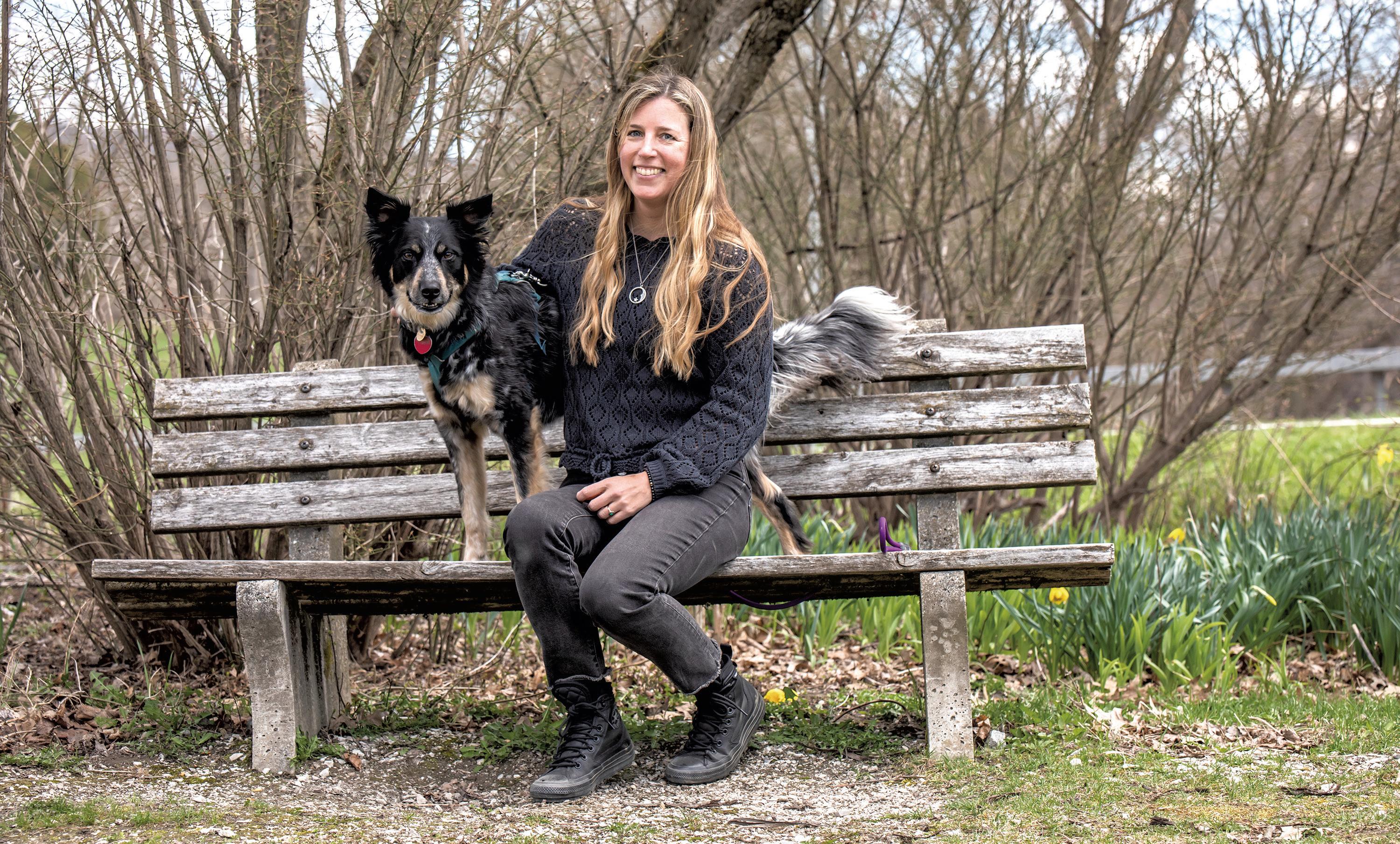
it’s little wonder the pet medium gig is turning lucrative.
Wild’s fees are on the lower end of the pet psychic spectrum. With a day job in public relations for concert promoter Higher Ground Presents, she sometimes even provides her services on a sliding scale. By contrast, the Journal highlighted a Philadelphia-area medium who charges $550 for a 90-minute session.
Some animal communicators prefer in-person sessions. Others, like the pricey Philly psychic, work primarily over the phone. Sometimes Wild connects with animals face-to-face, but she generally prefers to do it remotely, noting that the process goes more smoothly when she can meditate and concentrate in her own space. She asks clients to send her photographs of their animals and lists of question they’d like her to ask.
In seclusion, Wild clears her mind, then attempts to picture and connect with the animal. Once she does, she said, she can sense the animal wanting to show her images. Some are so talkative they start blabbing the moment she introduces herself, she said.
“I’ll usually talk with the animals for about an hour or so and ask them the
questions their owners provided,” she continued. “Then I just sort of ask them if there’s anything they want to tell me, and that’s often when they get really chatty.”
By and large, Wild said, owners aren’t surprised by the results.
“Most people, deep down, know what their pet is feeling,” she said. “Though every now and then they might hear something from the animal they don’t want to hear: Some pets don’t love it when their owner sings, things like that.”
Vermonter Hannah Rouleau learned about Spectral Communications through an episode of a podcast Wild cohosts, “New Moon Review.”
“I wasn’t skeptical, but I was wary,” Rouleau said. “I do believe people have abilities to read energy and talk to spirits and animals, but I also know there are scammers out there.”
Rouleau’s curiosity won out, and she hired Wild to do a reading for her two pet rabbits, Jed and Benjamin. Any trepidation disappeared when she received the results, and she has contracted Wild to read her bunnies several times since.
Rouleau said her younger rabbit told her he doesn’t like being picked up and cradled. The older rabbit was more
talkative, saying he sometimes got annoyed at the younger bunny but loved him. Both bunnies had lots of loving things to say about Rouleau, as well. I guess bunnies are big talkers?
“I feel closer to my rabbits now. I understand their personality and wants better,” Rouleau said. Though she felt as if she already had some subconscious awareness of the information Wild gave her, she was still overjoyed by the experience, saying it “opened up a channel” between her and her pets.
With her new doula certification from UVM, Wild is expanding her business to include helping pets and their owners prepare for death.
“Losing your pet can be traumatic,” Wild said. “But in our culture, it’s considered a shadow loss — you’re supposed to get over it and get back to life. But for many people, it can be even harder than losing a human in their life. It’s loss of unconditional love.”
Wild noted how rare it is for pets to die of natural causes. Owners are more likely to lose them through accidents or after making the difficult decision to euthanize.
“Animals have a completely different relationship with death than we do,” she
SEVEN DAYS APRIL 24-MAY 1, 2024 36
Amy Wild with Elvira LUKE AWTRY
said. “They’re not afraid. They know it’s all just part of life. But they worry about their people; they don’t want them to feel sad or guilty.
“As a doula, my goal is to provide support, alleviate any feelings of guilt an owner might have in having to put down their pet,” Wild continued, “and to normalize the grief they feel at the loss.” She plans to start a support group for people who have lost animals.
Wild is aware that veterinarians and other animal professionals take a dim view of her animal communication work, she said. When reached for comment on Wild and the field of pet psychics generally, several local vets declined to speak on the record for fear of lending credibility to the practice.
IF
“Veterinarians are steeped in science,” one said. “And the spirit guide admits that what she is doing is merely entertainment.”
Indeed, Wild includes a disclaimer on her website noting that animal and spirit communication “is for entertainment purposes only” and advising prospective clients: “For legal, financial or medical concerns, please consult with a lawyer, accountant, veterinarian or physician.”
Wild said she understands the doubters. She’s been dealing with them since she discovered she could communicate with animals as a child.
“I always make it clear that my clients should be speaking with vets about their pets’ issues. But there’s always going to be some raised eyebrows when you’re talking about communicating with the dead,” she added with a wry grin.
“If someone doesn’t want to believe me, that’s fine,” Wild continued. “But I’m still going to be over here, talking to whoever’s animal wants to talk to me.”
Succumbing to curiosity, I asked Wild to do a reading of a dear animal friend of mine, a pit bull named Wilbur who was my roommate for years before I moved to Colchester last year. His owner loved the
idea, so I sent Wild a picture of Wilbur and some questions for her to ask the good boy. Now, I love Wilbur. But he’s not exactly the Einstein of dogs. So I have to admit, I thought I might get back a dial tone for the reading.
Fortunately, Wilbur was feeling chatty, according to Wild. While any clever and empathetic mind could have inferred much of the info she relayed — Wilbs wants pizza, hates when things (socks) are taken away from him and views trash as “treasure” — a few insights got my attention.
Without knowing his medical history, Wild mentioned how much Wilbur loves his “hip treats,” aka his anti-inflammatory chews. I can confirm that they get him drooling whenever anyone so much as touches the bag.
But my real discovery, as I teared up reading Wild’s report on Wilbur, was the emotions it aroused. I didn’t need her to tell me who his favorite person is or where he likes to go for walks. Getting a glimpse of what might be on Wilbur’s mind was enough to make me want to drive to Burlington in the middle of the night and shower him in love.
Maybe that’s why vets are so reluctant to touch the subject of pet psychics. Here I was blubbering over a dog that was still very much alive and no longer even living with me. And Wild’s report had me ready to ask even more questions: Did Wilbur like watching soccer with me, or did he just put up with it to score some French fries? Did he mean to eat my favorite red sneakers that time I went away for a week? Why does he hate action movies so much?
Suddenly I could see the danger of the so-called Barnum effect. Named for P.T. Barnum, famous showman and lover of hoaxes, the term refers to the ease with which people apply vague descriptions and predictions to their own situation. Like a fortune teller’s client, was I just hearing what I wanted to hear about Wilbur? Was this any different from basing my expectations on a horoscope?
The next time I was with Wilbur, I looked deep into his eyes as he lay curled in his dog bed beside my office desk. He stared back, game for whatever was happening.
“Anything else you want to mention?”
I asked him.
He snorted, licked his chops and looked at my knapsack; his nose had clearly deduced that his beloved hip treats were hiding there. Whatever I believed, there was no doubt that Wild nailed that one. ➆




SEVEN DAYS APRIL 24-MAY 1, 2024 37
INFO Learn more at spectralcommunications.com.
SOMEONE
WANT TO BELIEVE ME, THAT’S FINE. BUT I’M STILL GOING TO BE OVER HERE, TALKING TO WHOEVER’S ANIMAL WANTS TO TALK TO ME. AMY WILD 3328 Shelburne Rd. | Shelburne, Vermont 05482-6849 802.985.8482 | TheAutomasterMercedesBenz.com 2016 GLA250 shown in Polar Silver metallic paint with optional equipment. *MSRP excludes all options, taxes, title, registration, transportation charge and dealer prep. Options, model availability and actual dealer price may vary. See dealer for details. ©2015 Authorized Mercedes-Benz Dealers For more information, call 1-800-FOR-MERCEDES, or visit MBUSA.com THE 2016 GLA STARTING AT $32,500* Exhilarating in every wa including the price. The 2016 GLA, starting at just $32,500. The GLA delivers thrills from the moment you hit the ignition button. A racing-inspired dual-clutch transmission makes for smoother shifting, while its advanced engineering delivers breathtaking SUV performance no matter what road you’re on. All that inside of a sleek, muscular design makes the 2016 GLA one extraordinary vehicle—for an equally extraordinary price. MBUSA.com/GLA 802.985.8482 | TheAutomasterBMW.com 3328 Shelburne Rd. | Shelburne, Vermont 05482-6849 CONFIDENCE DOESN’T TAKE DETOURS. THE BMW X5 ©2021 BMW of North Amer ca, LLC The BMW name, mode names and logo are reg stered trademarks The Automaster BMW 3328 Shelburne Rd She burne, Vermont 05482 802 985 8482 theautomasterbmw com You can turn left You can turn right Or if you’re beh nd the wheel of the BMW X5, you can decide not to turn at a l With an availab e mighty 456-horsepower engine, enhanced suspension for absolute driving comfort or a sportier driving style, and a ful y redes gned nterior, the BMW X5 is always ready, no matter the chal enge ahead Learn more about the BMW X5, and enjoy exceptional offers at The Automaster BMW CONFIDENCE DOESN’T TAKE DETOURS. THE BMW X5 ©2021 BMW of North America, LLC The BMW name, model names and ogo are registered trademarks The Automaster BMW 3328 Shelburne Rd Shelburne, Vermont 05482 802 985 8482 theautomasterbmw com You can turn left You can turn right Or if you’re behind the wheel of the BMW X5, you can decide not to turn at With an available mighty 456-horsepower engine, enhanced suspension for absolute driving comfort or a sportier drivi style, and a fully redesigned interior, the BMW X5 is always ready, no matter the challenge ahead Learn more about the BMW X5, and enjoy exceptional offers at The Automaster BMW 3v-AutomasterBMW051921.indd 1 5/12/21 2:51 PM VERY ACTIVELY PURCHASING Antique, Vintage & Modern Jewelry • Platinum • Gold • Silver • Diamonds Precious Stones • Sterling Silver Flatware • Holloware • Gold & Silver Coins • Watches 802.253.3033 9 1 M AIN ST R E E T , STOWE ~ FERRO JEWELERS COM @FERRO JEWELERS STOWE ~ FACEBOOK.COM /F ER RO.J EWELERS Certified Precious Metal Dealer State of Vermont Dealers Cert# 0028 Now Is The “PERFECT” Time To Sell Your Jewelry, Diamonds, Gold and Watches Actively Purchasing_4.75x3.67.qxp_Layout 1 8/22/22 9:35 AM Page 1 Call for an appointment! 6h-ferro041223.indd 1 3/31/23 11:18 AM
DOESN’T
The ‘Out’ Crowd
At a Burlington nature celebration, citizen scientists connect with — and count — the city’s nonhuman residents
BY RACHEL MULLIS
Vera Szumowski isn’t afraid of snakes. On a sunny April day, she found a nest of the harmless garter variety seeking warmth by the old well at Burlington’s Ethan Allen Homestead. The 6-year-old, who was visiting the park with her mom, held a writhing black serpent in each hand as if she had been doing it her whole life.
Children are often drawn to critters and plants, according to Zoe Richard, who cofounded and now leads Burlington Wildways, which links the urban park with a larger system of nature trails and open spaces around the Queen City. Adults may lose that interest, but those who manage to maintain their direct connections to the natural world reap many benefits, Richards said. Studies show that observing nature doesn’t just improve individual health and well-being — it also helps the planet.
Enter the fourth annual Greater Burlington Area City Nature Celebration, where local citizen scientists of all levels — from kids like Szumowski to pros — can rediscover the magic of observing their natural surroundings. The free festivities are coordinated by Burlington Wildways, a partnership of Burlington Parks, Recreation & Waterfront; Winooski Valley Park District; Rock Point; and the Intervale Center that aims to protect the city’s wild spaces.
Running now through Monday, April 29, this year’s celebration features a nature storytelling night at Railyard Apothecary, guided nature walks, speeches by local nature experts, and a full roster of handson activities and foraged-food tastings at the Intervale Center. (Where else can you try Japanese knotweed ice cream?)
But the festival’s centerpiece is the Greater Burlington Area City Nature Challenge bioblitz — a community biological census. Participants will scour the Queen City for flora and fauna, catalog it with their phone cameras, and upload their findings to the iNaturalist app. Their observations will fuel scientific research on animal and plant behaviors that are shifting rapidly in reaction to climate change and habitat loss.
The original City Nature Challenge, conceived of in 2016 as a friendly competition between science museums in San Francisco and Los Angeles, has grown to include more than 700 cities worldwide. Burlington joined in 2021, incorporating additional programming for those who

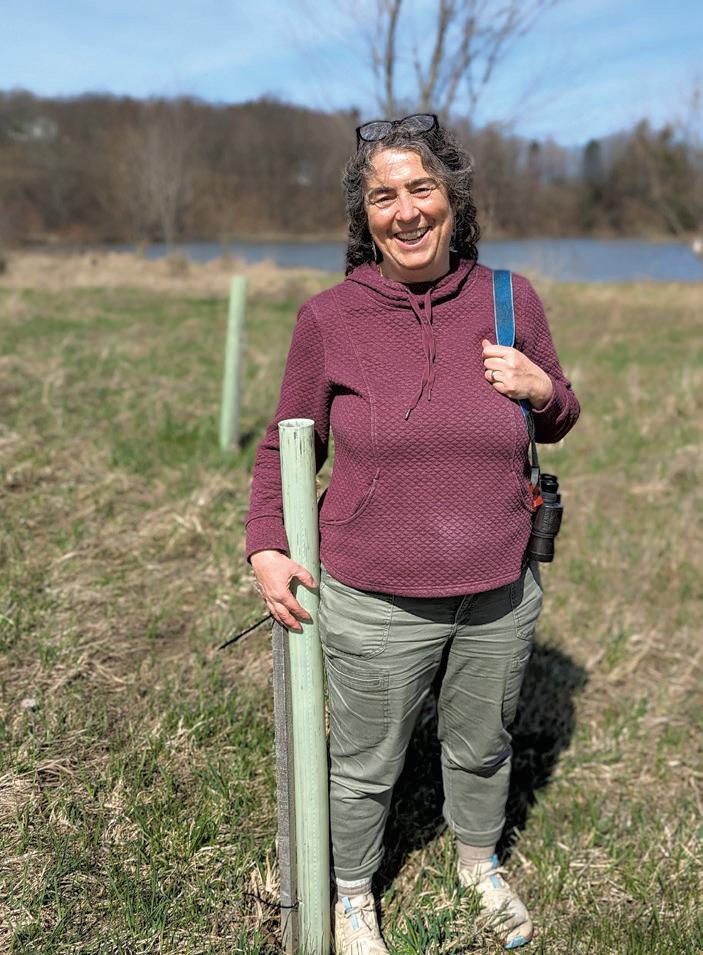

THERE ARE ACTUALLY A LOT OF INTERESTING THINGS THAT CAN BE OBSERVED JUST WALKING UP AND DOWN THE STREET.
TOM NORTON

aren’t inclined or able to participate in the challenge format.
The Burlington-area bioblitz has grown dramatically since. In 2022, participants recorded more than 3,000 total observations and identified 570 individual species. Last year, total observations more than doubled, and citizen scientists identified nearly 1,000 species — far more than local scientists could capture on their own.
“It’s this crowdsourced way of getting all this biological data that used to be just grueling,” Richards said. “Especially insects — insects are incredibly unknown.”
Bioblitzes such as the City Nature Challenge help inform nature-based solutions to climate change and biodiversity loss. Those solutions include everything from environmental justice initiatives to habitat restoration to policy reform, said Amy Seidl, a senior lecturer and codirector of the environmental studies program at the University of Vermont’s Rubenstein School of Environment and Natural Resources and a past City Nature Challenge keynote speaker.
“There’s some really good evidence that … being involved in community science actually predisposes people to sustainability behavior,” Seidl said.
As an example, she pointed to a bill passed in March by the Vermont House of Representatives to ban neonicotinoids, a class of synthetic pesticides that is wreaking havoc on honeybees and native bee species.
“To have a group of people get together and look for native bees in the Intervale and in urban environments is a really important agenda to further support [that] legislative work,” she said. “People start to develop this a nity and relationship to the pollinators they’re seeing.”
The bioblitz is open to anyone with a smartphone, and observations can be recorded in seconds. Just download the iNaturalist app and snap pictures of whatever captures your interest, be it beetle, wildflower or animal track. You can take photos in the app or upload them, and the app will crowdsource identifications with a little help from expert naturalists and scientists. Participants can join the Greater Burlington Area City Nature Challenge iNaturalist project page, but they don’t have to — Richards said any observations uploaded during the challenge period will be added to the project automatically.
SEVEN DAYS APRIL 24-MAY 1, 2024 38
COURTESY OF TOM
NORTON
Zoe Richards
Common baskettail
A leopard frog at Derway Island in Burlington
RACHEL MULLIS
COURTESY OF JOSHUA BROWN
COURTESY OF JOSHUA BROWN














See You at the Sheep Shop
STORY & PHOTOS BY JORDAN BARRY • jbarry@sevendaysvt.com




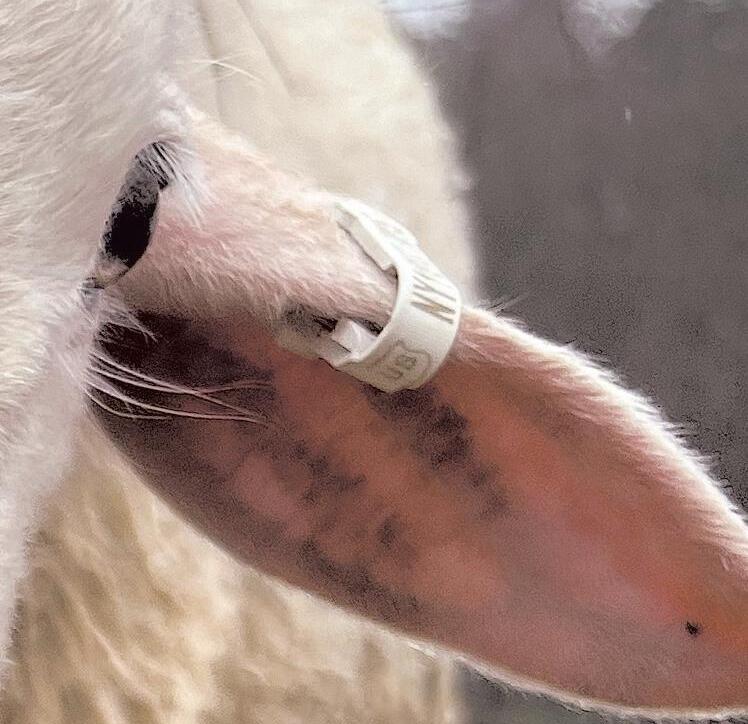



WNew café on a South Woodbury homestead gathers the herd
hen I arrived at South Woodbury’s Sheep Shop Café on a rainy early April day, I assumed I’d traveled the farthest to reach it, coming from Vergennes. I was wrong. A visitor from the West Coast who was still in town after the eclipse had me beat. But the competition for the shortest travel time had a clear winner, despite many local challengers: Two contractors working on the roof climbed down for midmorning cappuccinos and slices of sheep’s milk espresso cheesecake.
For all of us, the draws were decadent yet delicate treats, a strong cup of co ee and a good slice of community. Just more than a month after its March 7 opening, the Victorian-style café serves all of that, plus luxurious sheep’s milk soaps, scrubs and candles.
Marie-Hélène Bélanger and Marcial Rodriguez-Arenal have been selling Bélanger’s handcrafted goods on their 11-acre homestead since 2020, when they expanded from the online business they started in 2018. Their tiny store occupied the front of what’s now the café, and

Bélanger made her soaps and bath fizzes in the back.
“Our bestsellers were Marie-Hélène’s sister’s baked goods and merguez lamb sausage,” Rodriguez-Arenal said with a bright, easy laugh. “People love to eat and drink.”





and it became a passion for my
Shop, she’d never done it professionally.
To make the Sheep Shop more sustainable, the couple and their son, Marcialito, shifted the production area into a spare bedroom of their attached house and opened the diminutive café in its place. Instead of soap curing, the room now smells of co ee. A floral rug and an antique pastry case replaced drying racks. But milk from the family’s small herd of East Friesian-cross sheep still has the starring role, both in the products on the shelves and in several of the cakes, tarts, quiches and scones made by Bélanger’s sister, Sarah Bélanger-Molina.
The menu changes every week, Bélanger-Molina later told me by phone from her home in St. Johnsbury. She became her family’s “o cial baker” after precociously deciding to make profiteroles at age 12, having never baked before, she said. “They came out pretty well,
The Québec-born sisters are trained musicians — Bélanger, a pianist, and Bélanger-Molina, a violinist. They often played together, Bélanger-Molina said, and she followed her older sister to New York City and then to Vermont, where Bélanger once ran a music school.
Their current collaboration started with Bélanger-Molina making sheep’s milk caramel sauce to sell in the original shop. It was so popular that she moved on to desserts, which inspired the café.
Bélanger-Molina now bakes three or four days per week for the Sheep Shop, exploring new recipes and creating some of her own. She always makes a quiche and usually includes cheesecake and scones served with different butters. The day of my visit, the caramelized shallot-and-Manchego scones had jalapeño-honey butter on the side; last week’s Manchego-and-ham scones came with maple butter.
“Baking lets me tap into that creativity



inside of me, which I did when I was a musician,” Bélanger-Molina said. “And for the first time, I’m doing something that doesn’t feel like work.”
A recent trip to the Dominican Republic inspired her to make a tres leches cake, which she fl avored with pistachio and
SEVEN DAYS APRIL 24-MAY 1, 2024 40 FOOD LOVER? GET YOUR FILL ONLINE... FOOD NEWS SERVED TO YOUR INBOX FOR A SNEAK PEEK AT THE WEEK’S FOOD COVERAGE, RECIPES AND OTHER DELICIOUS TIDBITS, SIGN UP FOR THE BITE CLUB NEWSLETTER: SEVENDAYSVT.COM/ENEWS. GET COOKIN’ NEED INSPIRATION FOR HOMEMADE MEALS? GET RECIPE IDEAS FROM THE SEVEN DAYS FOOD TEAM. DIG INTO THE INGREDIENTS AT SEVENDAYSVT.COM/RECIPES
food+drink
INFO
animal issue animal issue
Sheep Shop Café, 1820 Route 14, South Woodbury, 456-7035, sheepshopvt.com.




rose. As she often does, Bélanger-Molina swapped in fatty sheep’s milk for the cow’s milk or cream the recipe called for. It doesn’t really impart flavor, she said. “I just love making it a little bit di erent. My sister makes such great products with sheep milk, why not bring it to the food, too?”
The sheep’s milk addition is what caught my eye while I was hemming and hawing in front of the pastry case. Rodriguez-Arenal was already making me a latte ($4). After struggling to choose among the elegant treats displayed on cake stands and under glass cloches, I finally ordered a slice of the deep-brown sheep’s milk espresso cheesecake ($6.50). To satisfy my indecisiveness, I added a slice of lemon tart with lavender-scented crust and mascarpone whipped cream ($6.50).

































































SEVEN DAYS APRIL 24-MAY 1, 2024 41
MY SISTER MAKES SUCH GREAT PRODUCTS WITH SHEEP MILK, WHY NOT BRING
TO THE FOOD,
SARAH BÉLANGER-MOLINA Lemon tart and sheep’s milk espresso cheesecake with a latte SEE YOU AT THE SHEEP SHOP » P.42 June 22, 2024 Hula Lakeside Burlington, Vermont burlingtonwineandfood.com ORDER ONLINE! PICKUP & DELIVERY thescalevt.com 373 Blair Park Road Williston • Daily 11-8 Vegan & Gluten Free Options 1/11/24 1:46 PM SUBSCRIBE AT sevendaysvt.com/enews ? Snack on the BITE-CLUB NEWSLETTER for a taste of this week’s flavorful food coverage. It’ll hold you over until Wednesday. 8H-BiteClubfiller.indd 1 12/21/20 6:08 PM
IT
TOO?
See You at the Sheep Shop « P.41
Each dessert was both rich and light, perfectly whipped where it needed to be and full of delicately balanced flavors. I alternated bites, giving up halfway through and requesting a box for the drive home.
Other customers soon arrived, and the classical music was drowned out by the cross-table chatter of friends old and new — and the hum and hiss of the espresso machine.
Rodriguez-Arenal deftly poured drink after drink, despite having only recently picked up the job of barista. Bélanger took a break from soapmaking to run the register when the café got busy. Their son usually helps serve, but he was “on strike” and playing outside, Rodriguez-Arenal said.
The couple moved to their South Woodbury homestead from New York City — where Rodriguez-Arenal was a paramedic for a fire department — during a snowstorm in late December 2006. They had no success with keeping sheep in the early days, he said, having “put the cart before the horse.”
In 2011, the couple was trying to have a baby “and nothing was working,” Rodriguez-Arenal continued. “We decided to get lambs and a guardian dog, and right off the bat, Marie-Hélène got pregnant. It worked.”
The family’s herd included five ewes when I visited, plus a ram that would leave the following week to join Vermont Shepherd’s herd in Westminster West. Sheltering from the drizzle at the front of the property, the friendly sheep came out to greet me and happily munched on a pile of hay.
The ewes will have their lambs in the summer, Rodriguez-Arenal said. East Friesians are known for their high milk production but not their hardiness, so they’re better off avoiding the cold. When the lambs arrive, the homestead will be in full bloom: lilacs first, then gardens full of other flowers in front of the café. Outdoor seating there and in the cherry and apple orchard will overlook the sheep’s pasture.
I headed home after a few sheep snuggles, with my leftovers and several of Bélanger’s bath products on the seat beside me. The promise of lambs and lilacs — and more of the Sheep Shop’s delightful treats — will bring me back. ➆
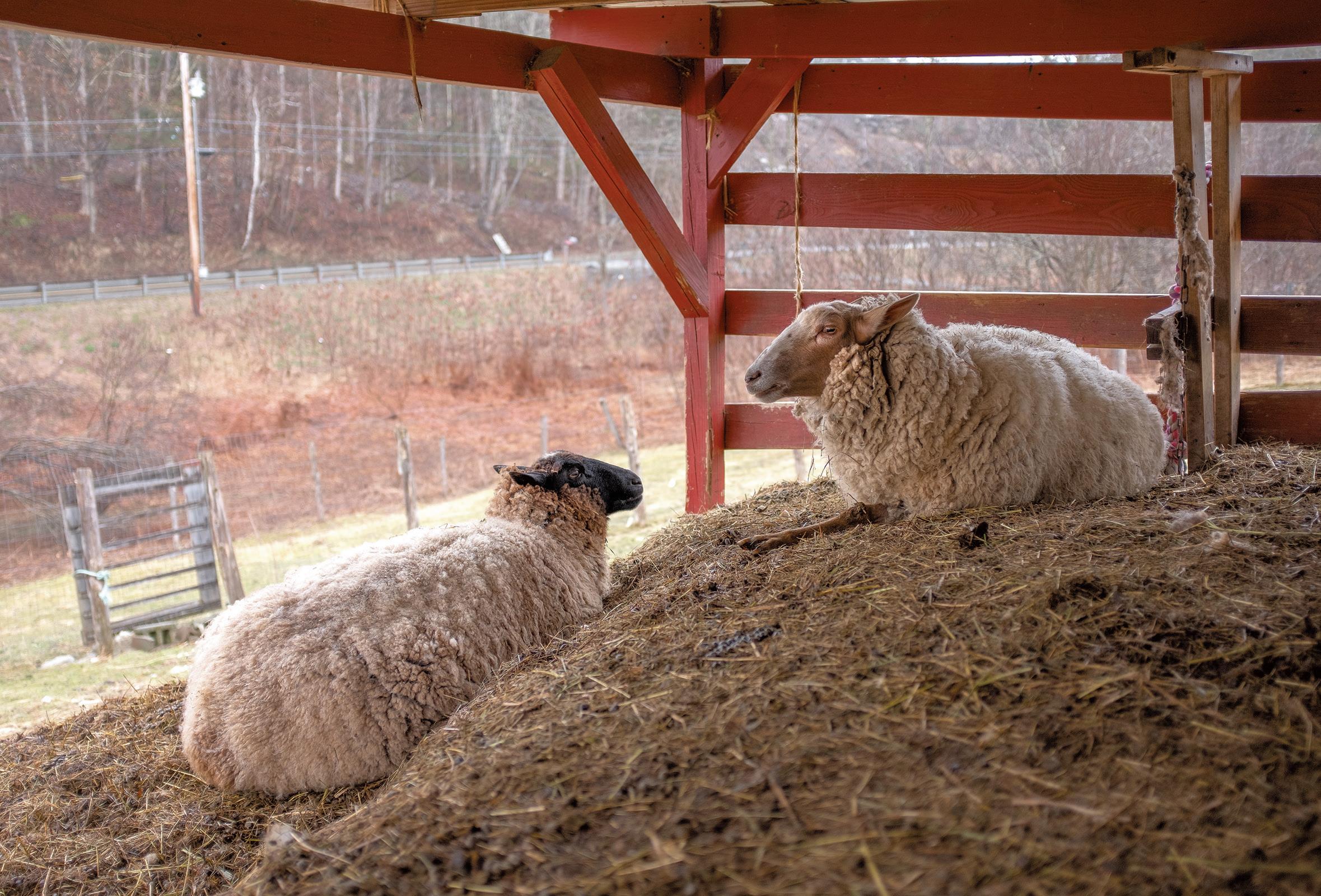

SEVEN DAYS APRIL 24-MAY 1, 2024 42 food+drink
Sheep from the Sheep Shop herd
Inside the Sheep Shop








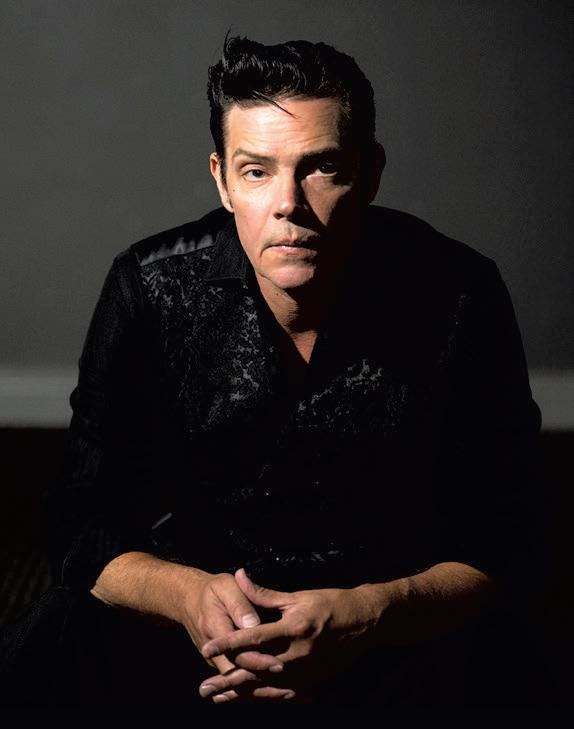
When you’re busy going the extra mile for those you serve, you shouldn’t have to go out of your way to bank. At NSB, you don’t have to. From our remote banking capabilities to onsite visits where you work, everything we do is carefully designed to keep your focus on what matters most. GET STARTED AT NSBVT.COM/CONNECT WE DELIVER OUR BANK TO YOUR BUSINESS. Distillery, t asting room, Coffeehouse, restaurant, retail store & Private events 2849 NYS Route 9N, Crown Point, NY. | 518-597-4040 | warcannonspirits.com presents a man nameD Cash featuring eri C h ofmanis A Tribute to Johnny Cash & June Carter Saturday, June 15, 8PM, Tickets $43.99 A Man Named Cash is recognized by fans as one of the most honest and true representations of Johnny Cash’s music live in concert. Join them as they take you on an exciting musical journey through the music and legacy of Johnny Cash. 2h-WarCannonSpirits041724.indd 1 4/16/24 11:55 AM SEVEN DAYS APRIL 24-MAY 1, 2024 43
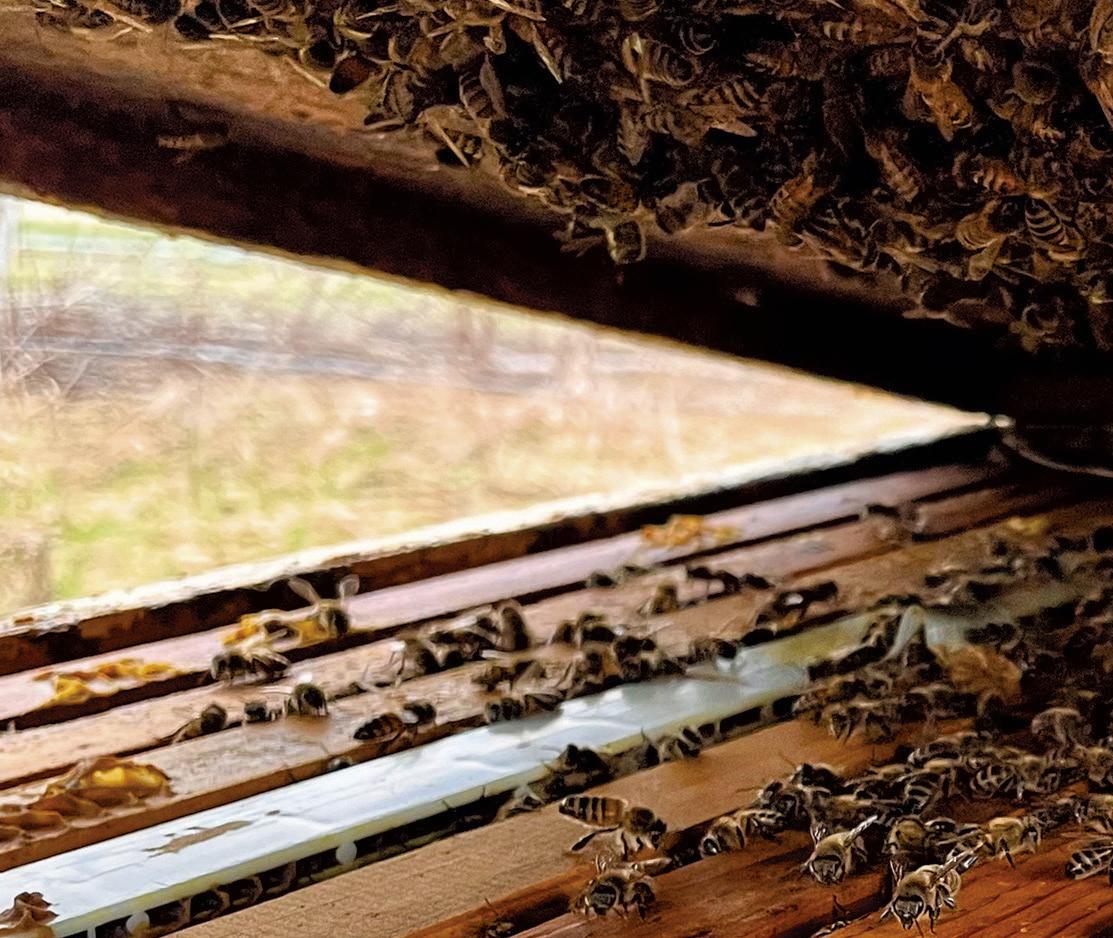
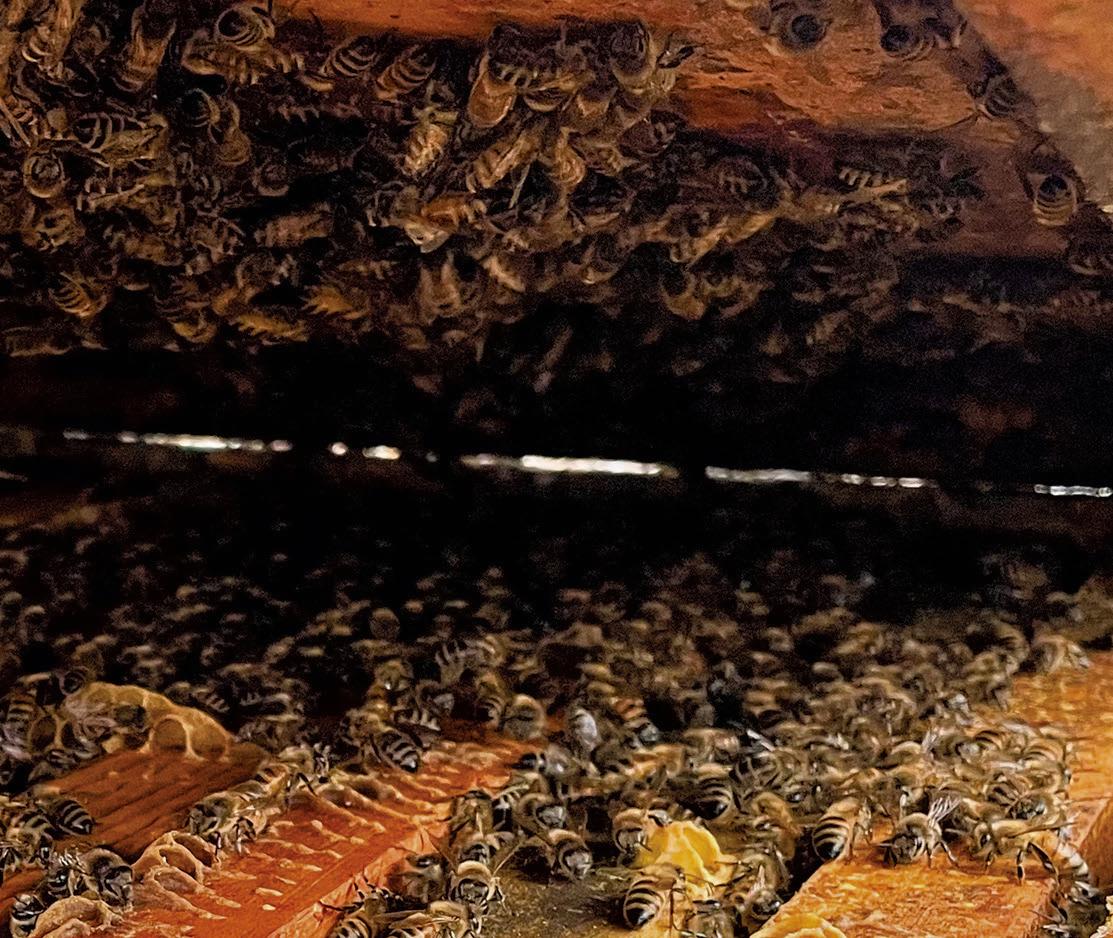

Sweet as Honey
ree questions for Kate Blofson of Jericho’s Born to Swarm Apiaries
STORY & PHOTOS BY GRETA SOLSAA
Kate Blofson loves springtime because she returns to days spent amid her reawakened swarm of bees.
“It’s just an awesome experience to be surrounded by tens of thousands of bees swirling around you,” said Blofson, 46, owner of Born to Swarm Apiaries in Jericho. O the winding dirt road where Blofson keeps her hives, bees recently spiraled through the warming air, touching down on maple buds and pussy willows, collecting nectar from the first blossoms of the season.
Blofson first dabbled in the art of beekeeping on a friend’s urban farm in Philadelphia. In 2011, her desire to work in nature brought her to Vermont, where she completed a master’s degree in natural resources at the University of Vermont. During that time, she took a job catching queen bees to raise and sell to people looking to start their own hives.
In spring 2022, Blofson acquired a hive of her own and established an apiary next to her neighbors at Bone Mountain Farm, a vegetable operation for which she also works. She is collaborating with the farmers on research investigating the impact of thyme on bees’ health and productivity.
With the farm’s abundant herbs, Blofson makes thyme- and lavender-infused honey.


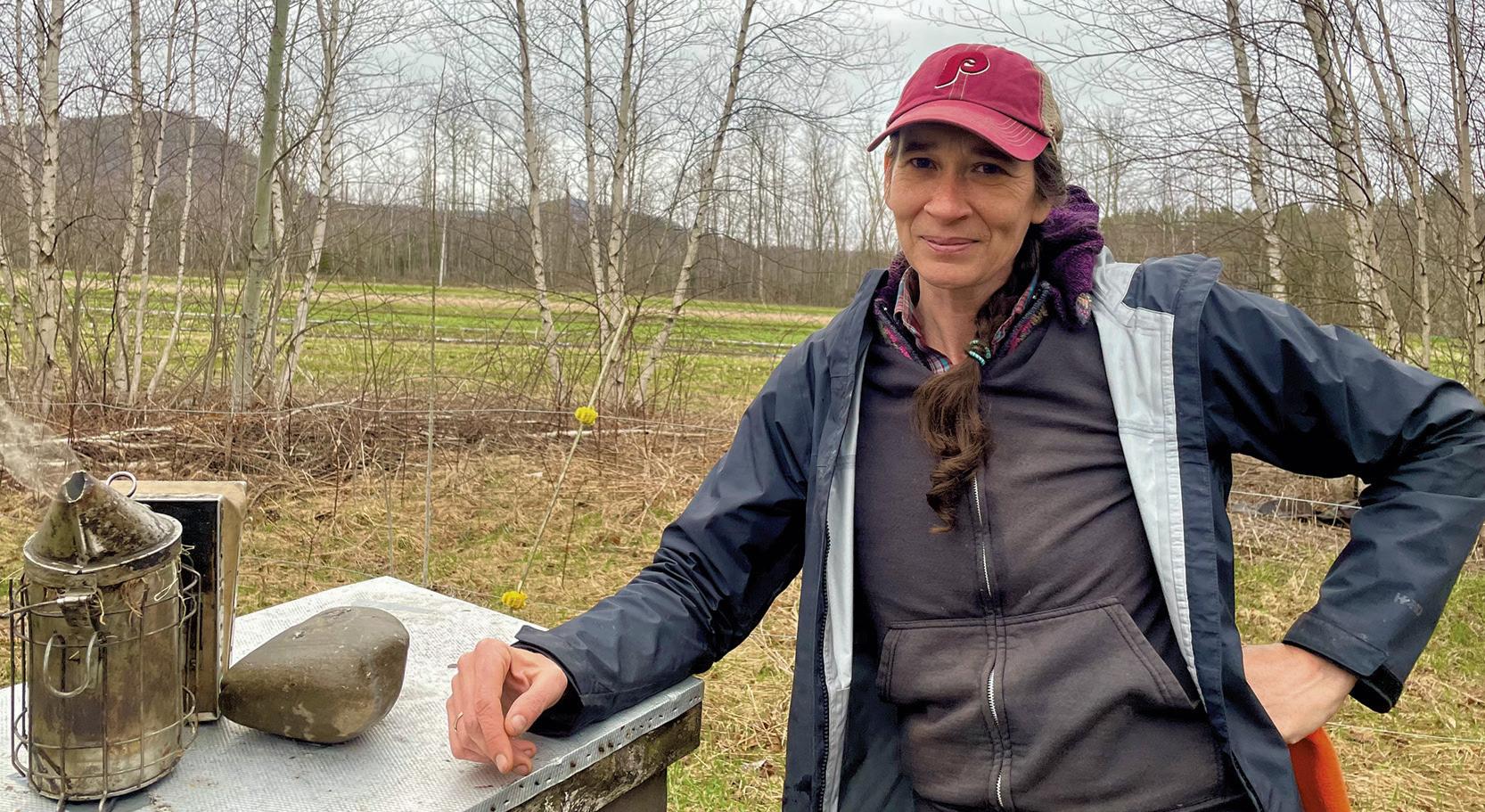
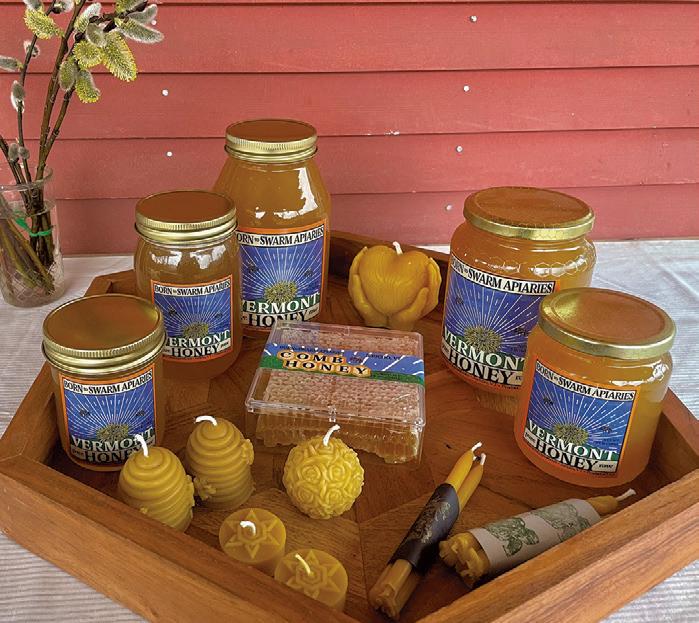
She also sells pure honey. The beekeeper said she can tell which blooms the bees have been frequenting based on the resulting honey: Goldenrod honey tastes like butterscotch, and basswood honey tastes minty.
Blofson started selling Born to Swarm honey, honeycomb and beeswax candles at the Tuesday farmers market in
Burlington’s Old North End. Her products can also be purchased through Miss Weinerz online, Railyard Apothecary in Burlington and Misery Loves Company in Winooski.
As her bees buzzed about her, Blofson chatted with Seven Days about the power of honey and bees and why she loves beekeeping.
Honey is tasty, but are there any other benefits to consuming it or anything else bees produce?
I really believe in the power of honey, as well as the bees, for healing. I think people are curious about nature, and bees are a great way to learn about and to connect with nature and its flow.
Honey is one of the oldest medicines in the world. [It] is incredibly helpful for a variety of ailments and has been used across cultures and centuries. It’s great for
cuts and for colds. Propolis, another hive product that the bees make from tree resin, is antibacterial and antiviral. Candles [made] with beeswax produce this beautiful scent to clean the air.
We have all heard the call to save the bees. What is the value of pollinators, and why are bee populations on the decline?
Our pollinators have a huge importance agriculturally. We rely on [them] for our food and pollinating our crops. Bees pollinate more than 130 types of fruits and vegetables like pumpkins, blueberries [and] apples.
One major factor a ecting the health of honeybees could be the use of pesticides, including neonicotinoid pesticides. Those are shown to have — even at really small levels — a lot of impacts on the bees in terms of their foraging ability, their development, how long they live, how productive they are. Bees have been su ering over the past 10 years as the use of these pesticides has ramped up.
Another big factor are these pests called varroa mites, which transmit a variety of viruses. Those have been super decimating for the bees. All of these interacting factors lead to a decline in the hive.
What lessons have you learned from the bees?
Beekeeping is always an adventure. It’s a good lesson on what you can and can’t control, as well as nature’s endless capacity to produce surprise and wonder.
I think bees span the wild and the domestic in this really wonderful and interesting way. You’re just so tied to the weather and the seasons and the floral blooms, so you’re in touch with the land in a di erent way that’s very beautiful.
The hive is such a mystery. The more you know about it, the more the mystery is revealed and starts to make sense. A master beekeeper seems almost like a magician. They can look at the front of a hive and know so much just from the way the bees are going in, what they’re bringing in and what they’re doing at the entrance. It’s just a really neat little ecosystem that’s connected very intimately to this larger ecosystem. ➆
SEVEN DAYS APRIL 24-MAY 1, 2024 44
condensed for clarity
INFO Contact borntoswarm@gmail.com for more.
This interview was edited and
and length.
From top: Bees in a hive; Kate Blofson; honey products by Born to Swarm Apiaries
SIDEdishes
The Café HOT. in Burlington Adds Late-Night Menu
ishes
After establishing the CAFÉ HOT. as a Burlington breakfast and brunch hot spot, ALLAN and TRAVIS WALKER-HODKIN decided they were ready to feed the night-owl crowd, too. Following a successful trial run on April 19 and 20, the brothers will o er a slider-size sandwich featuring their distinctive breaded, “chicken-fried” hunk of scrambled egg on a Hawaiian-style roll Thursday through Saturday nights from 9 p.m. to 2 a.m.
“We’ve always wanted to see Main Street at night, to be part of the hustle and bustle,” Travis said.
The sandwiches are available only to go from the restaurant’s original takeout window, with which the WalkerHodkins launched at 198 Main Street in fall 2020. They opened for indoor service in early 2022.

In contrast to the Café HOT.’s daytime menu, the late-night o erings are streamlined to just one snack-size sandwich, with sides of sauces — such as hot honey and house hot sauce — and a few basic beverages. While a single sandwich costs $3, orders of three ($8), six ($14), 10 ($20) or 20 ($37) bring increasing discounts, “kind of White Castle-style,” Travis explained, referring to the regional hamburger chain. “It’s quick. It’s easy. It’s got an easy price.”
He noted that customers placed very few orders for single sandwiches during the initial weekend.
The chicken-fried egg creation catapulted the Café Hot. onto Bon Appétit’s list of best restaurant meals of 2023. In the magazine’s write-up, the reviewer described the chicken-fried egg sandwich as both surprisingly meat-free and “glorious,” with “a craggy, crisp-crusted slab of flu y scrambled eggs.”
Melissa Pasanen
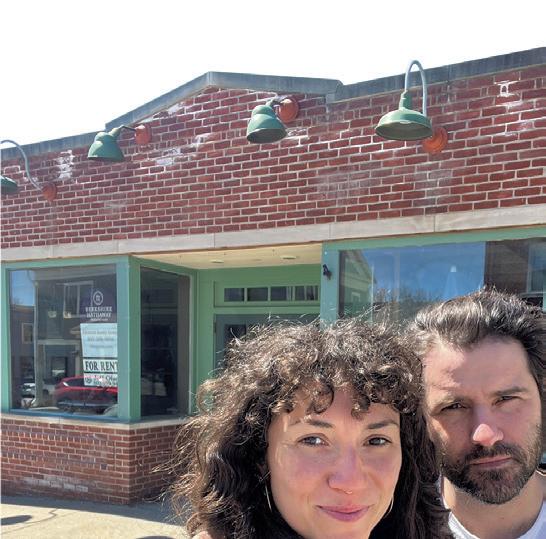


Wine Bar-Showroom to Open in Vergennes
Married couple CAMILA CARRILLO and NATHAN D’AVERSA will combine their crafts to open a shared wine bar and furniture showroom at 10 GREEN STREET in Vergennes.
Carrillo, 31, will run the wine bar in addition to making her LA MONTAÑUELA wine and coferments as part of GRUPPO GARAGISTA in Barnard. More than a tasting room, the bar will o er her wines alongside others from Vermont and beyond.
“It’s definitely a place for me to showcase my wines,” Carrillo said. “But my goal is to make Vermont wine accessible with glass pours, and it will also focus on hybrid wines from all over the world and wines that I love that complement the Vermont wine scene.”
When the bar opens in late summer or early fall, the menu will feature simple snacks such as “really good bread and butter,” olives, and desserts, Carrillo said. In the future, she hopes to have friends with food businesses host pop-ups.
The couple had planned to open a tasting room on their land in New Haven, where Carrillo planted vines last year. But they fell in love with the big-windowed antique store space above the former City Limits Night Club in the building’s basement.
Furniture maker D’Aversa, 34, will move his shop on-site and furnish the bar with his modern pieces made from Vermont-harvested wood. “When you’re drinking wine and hanging out, you’re sitting in one of my chairs,” he said. “It will be ever evolving, with rotating furniture and art.”
“It will be like your second — very nice — living room,” Carrillo added.
Jordan Barry

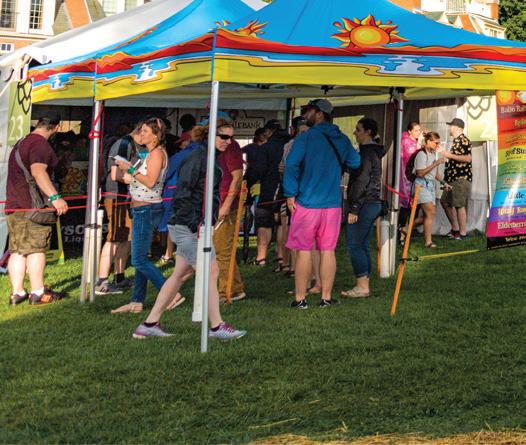
















SEVEN DAYS APRIL 24-MAY 1, 2024 45 food+drink
NEWS
SERVING UP FOOD
Camila Carrillo and Nathan D’Aversa in front of 10 Green Street
POND
SPRING IS HERE! NOW OPEN Monday thru Friday 10am-3pm 802.658.2244 • splashattheboathouse.com Burlington’s Boathouse Restaurant on the Lake 6h-Splash032024.indd 1 4/9/24 7:00 PM 1056 Stagecoach Rd • Morristown 802-888-7284 • bandbnurseries@gmail.com Annuals • Perennials • Trees • Stone & more OPENING DAY for our GREENHOUSE WEDNESDAY, APRIL 24 6h-b&bnurseries042424.indd 1 4/23/24 11:53 AM July 19-20 • Waterfront Park • Burlington, VT Join us for the 31st Vermont Brewers Festival, a world renowned beer event put on by the brewers for the brewers. TICKETS ON SALE MAY 3RD AT 10AM! VISIT VTBREWFEST.COM TO LEARN MORE 3 SESSIONS 36 BREWERIES 200+ BEERS MUSIC • GAMES LOCAL FOOD RETAIL VENDORS 6H-VTBrewersFest042424.indd 1 4/22/24 5:22 PM
Late-night sliders at the Café HOT. COURTESY OF CHEESE
PHOTOGRAPHY

BOOKS
Over the Borderlines
Book review: e Trauma Mantras: A Memoir in Prose Poems, Adrie
BY JIM SCHLEY • schley@sevendaysvt.com
We live in an epoch of refugees. According to the UN Refugee Agency, as of October 2023 more than 110 million people in our world had been “forcibly displaced” from their homes. This global emergency lends currency and urgency to The Trauma Mantras: A Memoir in Prose Poems, a new book by Adrie Kusserow, cultural anthropologist, self-described “ethnographic poet,” and chair of the Saint Michael’s College sociology and anthropology department.
Kusserow has been a relief worker and teacher in refugee communities in Asia, Africa and the United States, including in Vermont. According to her faculty web page, her most recent fieldwork “has focused on the influence of global media on youth identity in Bhutan and the sex trafficking of girls into brothels from Darjeeling, India.”
Author of the scholarly study American Individualisms: Child Rearing and Social Class in Three Neighborhoods and two
books of poems, Hunting Down the Monk (2002) and Refuge (2013), Kusserow lives with her family in Underhill Center, where she was born.
What kind of book is The Trauma Mantras? As its subtitle indicates, this is neither a standard academic monograph nor a typical personal chronicle. “Prose
Kusserow
a reader receptive to its avowedly di cult subject matter: the anguish that refugees carry long into their forced exile.
The brief “chapters,” only a few of which are longer than a page or two, seem to appear in intentionally scrambled order. It’s di cult to understand why they are sequenced in this and not some other way
THE TRAUMA MANTRAS IS A BOOK LARGELY CONCERNED WITH MISSED CONNECTIONS AND MISUNDERSTANDINGS.
poems” is an aesthetic category, suggesting an assemblage of individual pieces composed in language that is intensified and compressed. The term “memoir” connotes a life story with some measure of temporal progression and coherence.
But The Trauma Mantras is neither a collection of discrete literary texts nor a narrative autobiography. The book presents a number of obstacles, even for
inviting and illuminating early in the book, but it is delayed until page 48. The first mention of the narrator having a husband comes on page 56 and then only in passing. The last third of the book features four pieces that refer to the narrator’s cancer, with no elucidation. The book is divided into two parts, for no discernible reason.
Many of the pieces take place in more than one location in the world, their paired settings identified by subheadings such as “Trigger Fields” (Yei, South Sudan and Colchester, Vermont), “Prostrations” (Montpelier, Vermont and Boudhanath, Nepal), and “On the Brilliance of Your Story” (Burma, New Jersey, and Vermont). While this may be an e ort to demonstrate the writer’s acute awareness of very di erent realities coexisting in her life, the e ect tends to be jumpy, as if separate segments of writing had been spliced together.
Kusserow’s writing frequently calls attention to itself with mannerisms, stylistic gimmickry and emphatic repetitions. From “Ethnography of Horror, Domesticated”:
In the end, I remember the black figures spotted about the hill where we put my father into the earth. Like feeding a baby, spooning the co n deep into the soil. Shadows big as whales slid across the fields. The earth opened, the body forked in, sti and white in its box. My father would stay down forever, swallowed by the Northeast Kingdom, worked on, worked on in ways I wasn’t supposed to imagine.
Her narrator critiques and even mocks the intrusions of medical professionals (“white coats”), therapists and her own cadre, investigative intellectuals. From “NGO Elegy”:
Like the other expats, I doubt myself a hundred times a day, our e orts to help perhaps just more puppetry, in an endless play that has no plot, no meaning, no beginning, no eye dhatu , no ear dhatu , no Post , no Modern, no-anthro, no-polo, no-gist, only this country, with its sweet and terrible songs that hover like fog in giant capes of hope and doubt.
— for example, proceeding from childhood to youth to adulthood. While a memoir can succeed without following a strictly linear timeline, there is very little logical or even intuitive relationship between the individual pieces of The Trauma Mantras and their location in the book.
For instance, an episode remembered from childhood, “The Day I Really Became an Anthropologist,” would have been
At numerous points among the anecdotes that compose the book’s disjointed travelogue, the basic question — “What is happening here?” — is hard to answer. The language is so busy and agitated that it buries any possible story in figuration:
This is where Jésus dumped Immaculée, before wandering o
SEVEN DAYS APRIL 24-MAY 1, 2024 46
culture
OF
Adrie Kusserow
COURTESY
CHET SCERRA
FROM “GETTING THE STORY JUST RIGHT”
I’ve seen this before, refugees reaching for sanctioned American stories around suffering, trying to stuff themselves in. Desperately grafting themselves onto the trunk of the most popular legitimate story about suffering in this liberal town, then praying that it takes, waiting for their vines to grow upward and curl around. Usually, this involves moving toward a more singular, psychological view of the world and themselves. What withers in America are the clumsy, folksy, smelly stories that smack of soul, spirit, ancestors, cows, witches, tribe, too much history.
We like our stories shiny, sharp, to the point, dazzling, direct, like a well-trained TEDx talk.
Sometimes the two become one, the refugee and the story in vogue.


I wonder how thoroughly Ayen will come to inhabit the story of stress. At that point, who am I to challenge it, and coach her into something more authentic when it’s settled deep in her veins, deep as bone into her own body?
I resent how the doctors gave her a story because they couldn’t tolerate no story at all.
to tend another flock of clouds, down in the psych ward, clutching her Bible and scattered papers, preaching to the nurses. Jésus in his nursing-home bathrobe, polyester slippers, Jésus whose ringsof-Saturn halo floats passively from the fridges of all the Congolese in this quaint Vermont town.
Uh ... “floats passively from the fridges”? One of the most witheringly dismissive epithets for the genre of memoir is “me-moir” (as in: me, me, me…), and this came to mind each time the documentary acuity of one of Kusserow’s scenarios was (again) suddenly interrupted by a selfconscious intervention. As here, in “Western Psychonauts of the Postpartum Period”:
Sometimes I can sound lofty, anthropological, as if I’m high up in the sky again, looking down on humans fumbling around. Though I love it up here, of course I’m no different, I haven’t escaped Project Individual Self , locked as I am in the plush royal velvet of my exquisite emotions, whose ornate rooms and neuroses I have explored and analyzed and mostly made my home since childhood.
The most moving and memorable pieces in The Trauma Mantras have one setting and a penetrating focus. These describe less elaborately “literary” encounters between the narrator and

someone in distress, and they register an empathetic connection, both poetically and prosaically.
The book also o ers what could be a valuable insight for well-intentioned helpers: that wounded people may feel compelled to perform as “victims” with canny, inauthentic behaviors, aiming to fulfill the assumptions of those o ering aid.
A number of these more revelatory pieces — such as “American Skateboarders,” “The Careful Preservation of Child Atoms” and “Cybirds” — could have been (or still could be) seeds for fascinating essays, but in their present form they seem like sketches.
The Trauma Mantras is a book largely concerned with missed connections between people, misunderstandings about values and perspectives, and the many ways genuine communication is constrained or obstructed. Kusserow’s writing, passage by passage, has the jarring, jumping, flash-flood agitation of internet scrolling. In this sense, perhaps her new book exemplifies and thereby dramatizes the frenetic pitch at which we live, but its fractured surfaces and interruptive style may leave many readers more exhausted than enlightened. ➆
INFO
e Trauma Mantras: A Memoir in Prose Poems by Adrie Kusserow, Duke University Press, 176 pages. $19.95. Book launch on Friday, May 10, 5:30 p.m., at Hula in Burlington.




















SEVEN DAYS APRIL 24-MAY 1, 2024 47 JOIN US! greenupvermont.org Art by Adelyn O. 7th Grade VE ONT GREEN UP Saturday May 4 4T-Hagan(GreenUp)042424 1 4/17/24 9:29 AM WWW.QUEENCITYTANGO.ORG WORKSHOPS MILONGA PRIVATE CLASSES MAY 4TH -6TH, 2024 MAY 4TH -6TH, 2024 SHELBURNE, VT SHELBURNE, VT Director of Strictly Tango NYC 4T-QCTango042424 1 4/18/24 12:06 PM


Borrelia: A Microbial Mystery
Millicent Eidson, Maya Maguire Media, 348 pages. $14.99.
Maybe the lively songs could distract her restless brain and slow her thrashing legs.
No, bacteria do not count as animals; for the record, they’re classified as prokaryotes. But they are fond of using animal hosts, and that’s how veterinarian Maya Maguire finds herself tracking cases of Borrelia in this new “microbial mystery” from Millicent Eidson, who teaches public health at the University of Vermont. Like Maya, Eidson has worked as an epidemic intelligence service officer for the U.S. Centers for Disease Control and Prevention. In this second book of a trilogy, she brings that expertise to a tale that follows Maya from New Mexico to Norway as she investigates mysterious deaths from the tick-borne organism that causes Lyme disease. e young public health officer also weathers personal woes, from her boyfriend’s cognitive impairment (caused by the title character of the previous microbial mystery, Anthracis) to sexual harassment and her ongoing struggle with a panic disorder. While not structured like a mystery or thriller, Borrelia offers plenty of fascinating facts about the “squiggly spirochete bacteria” of the title.
MARGOT HARRISON
Short Takes on Five Vermont Books
Seven Days writers can’t possibly read, much less review, all the books that arrive in a steady stream by post, email and, in one memorable case, a flock of defecating cormorants.
No, that didn’t actually happen. We just like to be cute with the names for animal assemblages in this feature, which introduces you to a handful of books by Vermont authors by contextualizing each one and quoting a single representative sentence from page 32. For the Animal Issue, we gathered a selection of books featuring beasts — in one of which the aforementioned cormorants appear.


Toby Dog of Gold Shaw Farm Morgan Gold, Lillian Books, 164 pages. $19.99.
The thought of fighting coyotes scared little Toby Dog, but it didn’t stop him.
Life turns upside down for a fluffy white puppy who’s taken from the farm where he was born. Carried away by a friendly farmer who smells of sweat and peppermint, he’s dubbed Toby Dog — short for Sir Bartleby de Mimsy-Porpington, Earl of Caledonia County.
As Toby finds his place among a barnyard of colorful animals, both wild and domestic, he moves ever closer to fulfilling his purpose: protecting the farm and the animals who live there. As a puppy, he stood vigil with his mother, barking into the October nights at the menacing singsong of coyotes relishing a fresh kill. Now he begins to come into his own as a proud guardian. is middle-grade novel from Peacham influencer Morgan Gold is based on the real Toby Dog and other animals who populate the farm he portrays in his videos. Much like the childhood classic Charlotte’s Web it draws readers into a wholesome story with a gaggle of lovable animal pals.
JORDAN ADAMS


Birding to Change the World
Trish O’Kane, Ecco, 368 pages. $29.99.
The huge hawk who came down with a great whooshing of wings ... grabbed a rat, and sailed o ...
Trish O’Kane had “zero interest” in birds before Hurricane Katrina inundated her New Orleans house with 11 feet of water. Four months into one of the country’s worst environmental disasters, she became attuned to the first signs of life returning to her adopted city: the birds. Soon, New Orleans’ winged creatures became a form of salvation and personal therapy, sensitizing O’Kane to her own ecological footprint and, in the process, sending her life on a new flight path.
A journalist turned professor who now teaches environmental studies at UVM, O’Kane describes herself as an “accidental ornithologist.” Birding to Change the World combines engrossing storytelling with a reporter’s eye for scientific detail and an activist’s passion. Each chapter offers a new revelation about a bird species that taught O’Kane a valuable lesson about our place in the natural world. For anyone who enjoyed H Is for Hawk or e Soul of an Octopus: A Surprising Exploration Into the Wonder of Consciousness, this uplifting memoir is a must-read. KEN PICARD
issue animal issue animal issue


My Girl Vaida: An Adventurous Hiker, Her Big Yellow Dog and eir Everlasting Bond
Caitlin Quinn, Stars in the Sky Press, 139 pages. $12.99.
Everyone knew … that every weekend, Vaida and I were o on some outside adventure.
Caitlin Quinn is a self-described introvert. When she fell in love with hiking, she preferred to take excursions solo — until she met Vaida. e Lab-mix puppy had bright, beautiful eyes that seemed to stare into your soul — although, Quinn writes, she was probably just looking at your lunch. In My Girl Vaida, the central Vermonter chronicles her love story with Vaida, from adoption day to their great journey together on the Appalachian Trail.
While Quinn is quick to disclose that she’s not a writer, her casual, conversational style feels like catching up with a friend. She’s candid about her struggles and grief over the loss of Vaida, who died in November 2021. is heartfelt tribute to (wo)man’s best friend could be perfect for an adventurer who dreams of a monumental trek — but it also works for dog lovers who would rather experience a grueling hike vicariously from a comfy couch.
GILLIAN ENGLISH


Eat, Poop, Die: How Animals Make Our World
Joe Roman, Little, Brown Spark, 288 pages. $30.
Above the toilet, there was a picture of a cormorant defecating on the shore.
Shit doesn’t just happen — it makes the world go round. at’s what marine ecologist Joe Roman, writerin-residence at UVM’s Gund Institute for Environment, sets out to prove in his new book, which describes a sort of fecal diaspora. Animals consume matter and leave nutrient-rich dung in their wake, which adds nitrogen and phosphorus to the soil and delivers undigested seeds to new habitats. In Roman’s analogy, this process is the world’s circulatory system, much as trees and plants have been called the Earth’s lungs. is thesis takes Roman to sites around the world, beginning with Surtsey, a volcanic island near Iceland that sprang from the depths of the ocean in 1963. Once a lifeless rock, it now teems with life. Scientists have tracked the development of that biodiversity from day one — and tied it directly to feces. Roman entertainingly shows how death and defecation contribute more to the state of our world than we might like to admit.
JORDAN ADAMS
SEVEN DAYS APRIL 24-MAY 1, 2024 48 culture

Major International Publisher Acquires Chelsea Green Publishing
BY MARY ANN LICKTIEG • maryann@sevendaysvt.com
Rizzoli International Publications, the New York City-based subsidiary of Italian publishing house Mondadori Group, will acquire Chelsea Green Publishing, the 40-year-old White River Junction company known for its titles on the politics and practice of sustainable living.
Mondadori announced on April 15 that Rizzoli will pay $5 million for the Vermont company and its London subsidiary, Chelsea Green Publishing UK. e deal is expected to close by June 30.
“ is partnership aligns perfectly with our vision of promoting meaningful content that resonates with global audiences while addressing crucial issues related to sustainability and eco-friendly living,” Rizzoli’s CEO and president Stefano Peccatori said. Rizzoli International publishes illustrated books about fashion, interior design, art, architecture, photography, travel, sports and food. e company began in 1964 as a New York City bookstore, which still operates.
Chelsea Green, started in 1984 by married couple Ian and Margo Baldwin, is recognized as a preeminent publisher of books about homesteading, gardening and sustainable agriculture. It has been employee-owned since 2019. All employees — 17 in the U.S. and four in London — will continue to work for the publisher, Publishers Weekly reported.
Current and former U.S. employees who participate in the company’s employee stock ownership plan will receive net profits from the sale.
Chelsea Green president and publisher Margo Baldwin will become publisher emeritus of Chelsea Green and will join the Rizzoli International executive team.
“I’m thrilled to have Chelsea Green secure its future and join Rizzoli and the entire esteemed Mondadori family of book publishing and bookstore companies for the next phase of development,” Baldwin said in



the sale. “ is alliance will enable new growth and international expansion for our titles as well as significant new opportunities for our authors and employees.”
ere are no immediate plans for layoffs or relocating the company, Baldwin told VTDigger.org. “It will stay in Vermont, at least for the time being,” Baldwin said. When asked if she would retain editorial control, Baldwin said only that she “will be part of the editorial team.”
Charles Miers, publisher of all Rizzoli International imprints, said he has long admired Chelsea Green, adding that “throughout its history, it has been the tail wagging the dog, setting trends, encouraging innovation, establishing values, and publishing purposefully in areas of great importance to us all.”
Chelsea Green has appeared on Publishers Weekly’s fast-growing independent publisher list several times, including in 2021. It had sales of $8.1 million in 2022 and an operating income of $1.1 million, the trade magazine reported.
e company came under fire in 2021 when it published e Truth About COVID-19: Exposing the Great Reset, Lockdowns, Vaccine Passports, and the New Normal. e book, by osteopath Joseph Mercola and Organic Consumers Association founder Ronnie Cummins, suggested that COVID-19 vaccines are more lethal than the virus itself and that vitamins C and D can effectively prevent and treat severe COVID-19 infections, a claim for which Mercola had previously been sanctioned by the U.S. Food & Drug Administration.














e book sold more than a quartermillion copies in its first five months and was one of the titles that prompted U.S. Sen. Elizabeth Warren (D-Mass.) to ask Amazon officials to change the algorithms on their site to limit the visibility of books that contain false or misleading claims about the pandemic.

a statement announcing







In her letter to Amazon, Warren condemned the online retailer’s promotion of e Truth About COVID-19 as “an unethical, unacceptable, and potentially unlawful course of action.”



Chelsea Green, Mercola and Cummins, along with anti-vaccine activist Robert F. Kennedy Jr., who wrote the book’s foreword, sued Warren in federal court, claiming that her letter to Amazon constituted an attempt at censorship and a violation of the First Amendment. e lawsuit was dismissed last August. ➆
Learn more at chelseagreen.com.


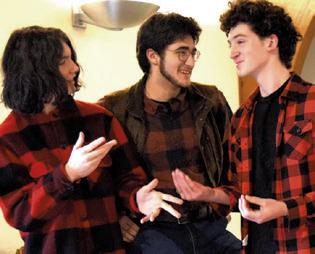


SEVEN DAYS APRIL 24-MAY 1, 2024 49 GENEROUSLY SPONSORED BY KAT WRIGHT AND: ELLEY-LONG MUSIC CENTER COLCHESTER May 4 A BENEFIT FOR KAT WRIGHT TWO SETS FROM WWW.SEVENDAYSTICKETS.COM 802-658-0381 FOOD TRUCKS! CASH BAR! ST. MARK CATHOLIC CHURCH 4T-DismasofVT042424 1 4/22/24 2:15 PM stoweperformingarts.com MAY 1
Trio
Quante - violin
Taubl - cello
Fukuda - piano
8
Sonidos
Levin - Classical guitar
Knuth - violin
15 A Country Store Opera Sung by Students of OCM's Youth Opera Company MAY 22
Gutman Piano
29
Stafford Organ Free concerts • Stowe Community Church Wednesday, Noon – 1 pm • Doors open at 11:20 pm Presented by the Family of Irene Bareau 4t-Stoweperformingarts042424 1 4/18/24 3:42 PM BOOKS
Champlain
Letitia
Emily
Hiromi
MAY
Duo
Adam
William
MAY
Renana
MAY
Joshua
INFO
In the European music capital of Vienna, between the world wars, one of the city’s most renowned musical pedagogues was the Austrian Jewish composer Richard Stöhr. During a 30-year career at the Vienna Academy of Music, Stöhr taught theory and composition to many of classical music’s future greats, including conductor Erich Leinsdorf and pianist Rudolf Serkin. A prolific composer in the Romantic tradition, he eventually wrote seven symphonies, two operas, and nearly 200 other works for chorus, chamber ensembles and more.
But Stöhr’s Viennese career was cut short when the Nazis fired him after the 1938 Anschluss, the annexation of Austria. He emigrated to the United States and jettisoned the umlaut in his name in favor of an “e.” Following a two-year stint teaching at the Curtis Institute of Music in Philadelphia, Stoehr lived the rest of his life in Vermont. In 1941, at the age of 67, he moved to Colchester to teach German and other subjects at Saint Michael’s College.
CLASSICAL MUSIC
Stoehr’s Nazi erasure and exile in Vermont contributed to his legacy languishing in obscurity. Since 2010, however, a dedicated cohort of musicians has been working to revive the composer’s work. Their e orts will be showcased at a chamber music concert celebrating Stoehr’s 150th birthday on Friday, May 3, at St. Michael’s McCarthy Arts Center.
The Vermont Philharmonic, directed by Lou Kosma, is also marking the occasion with a performance of Stoehr’s Trumpet Concerto at its spring concerts this Saturday and Sunday, April 27 and 28, in Randolph and Barre. Billy R. Hunter Jr., principal trumpet with the Metropolitan Opera in New York City, will join the community orchestra.
The St. Michael’s program features three of Stoehr’s Viennese compositions and a postwar piece he wrote in Vermont. Cellist Stefan Koch of Ann Arbor, Mich., and pianist Robert Conway of Huntington Woods, Mich., will perform his Cello Sonata in A Minor, from 1915, and Four Fantasy Pieces for Cello and Piano, dated 1907. Koch, Conway and Vermont bass-baritone Erik Kroncke will perform his 1909 Three Songs for Low Voice, Cello and Piano, and Vermonters Sofia Hirsch and Alison Cerutti will play First Suite for Violin and Piano, which Stoehr composed in 1946, on their respective instruments.
Koch, a member of the Lansing Symphony Orchestra in Michigan who has been leading the rediscovery, first learned of the composer in 2010, when he
Happy Returns
Two performances highlight a nearly forgotten Viennese composer with Vermont ties
BY AMY LILLY • lilly@sevendaysvt.com
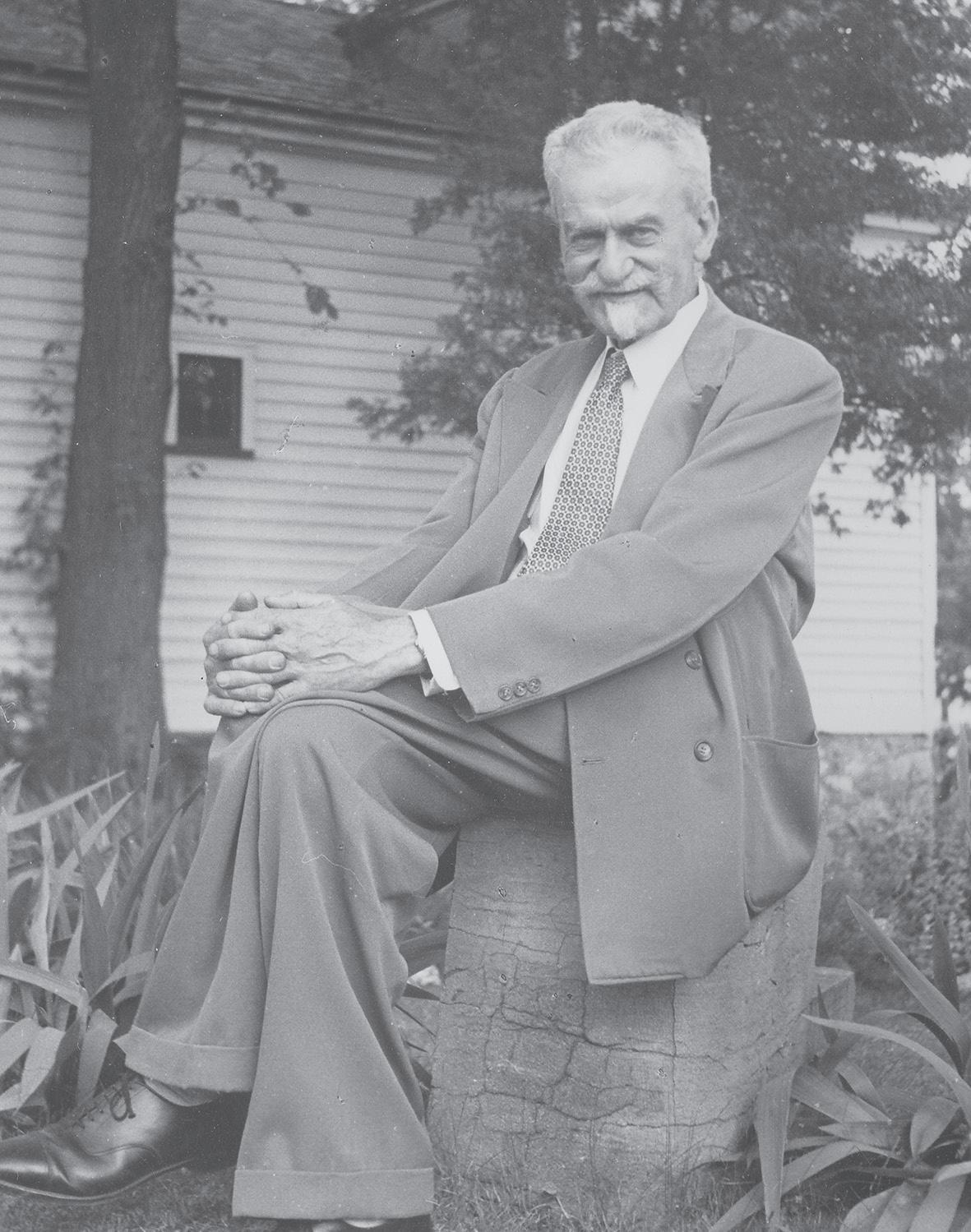
at the college in 2002. Lew subsequently met Stoehr’s daughter, Hedi Ballantyne, through Vermont alto singer Linda Radtke. Ballantyne escaped the Nazis via the Kindertransport before reaching Vermont, where she attended the University of Vermont and lived in Montpelier until her death in 2018.
For St. Michael’s 2004 centennial concert, directed by Lew, the Saint Michael’s College Chorale performed “A Song for Saint Michael’s,” which Stoehr wrote in the 1940s to honor the school. In 2018, Lew and choral director Dawn Lewis pored over of the composer’s catalog to select a program for Lew’s a cappella group Counterpoint and Lewis’ Bella Voce and Solaris Vocal Ensemble.

met his grandson, Dan Stohr, an attorney in Chicago who spells his surname without the “e.”
“I was pretty skeptical about this composer who was a Nazi escapee,” Koch recalled during a phone call. “I thought, Surely we’ve found and resurrected all the composers from that era. Turns out we hadn’t.”
Koch obtained Stoehr’s cello music from St. Michael’s College, where some 25 boxes of the composer’s personal effects, as well as hundreds of handwritten manuscripts, are archived. Dan Stohr facilitated the donation and transferred ownership of all unpublished music to the college.
performed or recorded so far. He and Conway made one of the first CDs; now there are 10, three of which feature Koch. Scott, who is organizing exhibitions of archival materials in the lobby of the McCarthy Arts Center and the school’s Durick Library for the occasion, said she receives “about one request a month” for Stoehr’s music.
I WAS PRETTY SKEPTICAL ABOUT THIS COMPOSER WHO WAS A NAZI ESCAPEE.
STEFAN KOCH
(Stoehr never had an American publisher.)
Archivist Liz Scott eventually had all 6,600 pages of music scanned, and the college has made most available for free on IMSLP, the international virtual library of music scores in the public domain. (A complete list of compositions lives on the Stoehr website, for which Koch created the content.)
Koch estimates that only “10 to 20 percent” of Stoehr’s music has been
The first, she said, came in 2005 from Karl Raab, now an octogenarian living in Vancouver, who grew up in Colchester listening to the composer play live. Raab’s father, Wilhelm, a physician and amateur violinist, was the first Austrian that Stoehr met in Vermont; the two became close friends. According to Koch, Raab suggested having the 150th birthday concerts. Another birthday concert will take place in Vienna this June, with Austrian musicians.
Nat Lew, a St. Michael’s music professor and director of the honors program, secured the May concert’s venue and Vermont musicians. Lew learned separately of Stoehr when Scott emailed him about the archive shortly after he arrived
The quality varied, Lew recalled. “There were some fabulous pieces, and then sometimes he wrote six songs in a morning.”
Stoehr composed within the classical tradition he had inherited, but in his own distinctive voice, Koch said. In his first CD’s liner notes, the cellist writes that Stoehr’s four Fantasy pieces “evoke the world of [Robert] Schumann and [Johannes] Brahms.”
While Stoehr played and taught the work of avant-garde composers such as Anton Webern and Alban Berg in Vienna, Lew said, “the music he composed was of a more Romantic style. People going to the concerts will hear something like [Richard] Strauss, but not as lyrical.”
The music Stoehr composed in Vienna is “dark,” Lew continued, but “when he gets to Vermont, his music is lighter in tone, more fun. I’m convinced it’s because he wanted to fit the world of America in the 1940s.”
Koch believes that Stoehr’s oeuvre is worth preserving and hearing — not only because it’s “just good,” he said, but “because the Nazis wanted to suppress him. In Richard Stoehr’s case, it worked, because he wasn’t heard for decades.”
Koch knows of no performances of Stoehr’s cello music in the U.S. between his death in 1967 and Koch’s first performances in 2011. The sesquicentennial concert will help acquaint new audiences with the composer’s music and revive his legacy — in Stoehr’s adopted state and, perhaps, beyond. ➆
INFO
Vermont Philharmonic Orchestra Spring Concert, “Trumpeting Spring” featuring Stoehr’s Trumpet Concerto, Saturday, April 27, 7:30 p.m., at Chandler Center for the Arts in Randolph and Sunday, April 28, 2 p.m., at the Barre Opera House. $5-25. vermontphilharmonic.com
Richard Stoehr Sesquicentennial Concert, Friday, May 3, at the McCarthy Arts Center Recital Hall, St. Michael’s College, in Colchester, 7:30 p.m. Donations. smcvt.edu/event-calendar
SEVEN DAYS APRIL 24-MAY 1, 2024 50
culture
Richard Stoehr COURTESY OF SAINT MICHAEL’S COLLEGE ARCHIVES
JAG Productions to Fold in June
BY MARY ANN LICKTEIG • maryann@sevendaysvt.com
JAG Productions, the 8-year-old White River Junction and New York City-based company committed to developing and presenting the work of Black and Black and queer theater artists, will close at the end of its season in June.
“Despite our successes, the broader crisis facing the arts has not spared us,” founder and producing artistic director Jarvis Antonio Green wrote in an April 18 email to supporters. The nonprofit theater model “increasingly proves unsustainable amid shifting societal support and financial pressures,” he continued. “JAG Productions, too, has felt the weight of these challenges, leading us to this juncture.”
The company will fold after the June 15 performance of Sondheimia, a cabaret featuring musical theater actor Larry Owens.
In their own letter to supporters, company directors cited the difficulty of deciding to close JAG: “Nonetheless, we take solace and pride in the transformative impact of nearly a decade of work from JAG Productions.”
“Nationally,” the directors continued, “JAG has been on the vanguard of creating a more just, equitable, and inclusive theater landscape. Through the power of

storytelling and the magic of the theater we have challenged the hierarchies of race, gender, class, and sexuality.”
Green and board chair Jameson C. Davis declined to be interviewed, referring Seven Days to the letters Green and the board released.

BarnArts Center for the Arts in 2012, Green became the first artistic director of the theater program at Artistree Community Arts Center in South Pomfret.
“He has such a magnetism,” Artistree founder and executive director Kathleen Dolan told Seven Days last year. “He’s got a lot of connective energy with people. His constant marveling at existence is kind of contagious.”
Traber, Esai’s Table by Nathan Yungerberg and Chasing Grace by Elizabeth Addison.
JAG Productions received the 2017 New England Theatre Conference Regional Award for Outstanding Achievement in the American Theater. Green was acknowledged in 2020 by the advocacy and networking nonprofit Native Son as a Black queer man who impacted the world. In 2022, he received the Governor’s Award for Excellence in the Arts, which the Vermont Arts Council calls “the most distinguished recognition bestowed by the State of Vermont.” (Green was a corecipient with visual artist Larry Bissonnette.)
In his letter, Green said he plans to pursue a master of fine arts degree in directing, and he expressed pride in JAG’s accomplishments and its legacy. “JAG — my initials, my identity — has been more than just a theatre company,” Green wrote, “it’s been a testament to the power of Black Queer storytelling to foster love, inspiration, and joy.”
Becoming an artistic director, he wrote, “was as unexpected as it was transformative.”
The Anderson, S.C., native grew up singing with his family at home and in church. He studied classical voice at Anderson University, worked as an actor and moved to Vermont in 2011. After founding Barnard’s
With a $250,000 gift from Dolan, Green started JAG Productions in 2016, he wrote in his email: “This journey has been a fairy tale; it’s been fun, an incredible learning experience, and, undoubtedly, hard.”
Shows the company has staged over the years include Choir Boy, Fences, Lady Day at Emerson’s Bar and Grill, and Next to Normal. Last year, Jarvis returned to acting to star in the one-person play Every Brilliant Thing
The company’s festival, JAGfest, presented new works by Black playwrights, including Blanks by Gethsemane HerronCoward, For The Love of Jazz by Raven Cassell, The Last Day of Black History Month: A Conversation With a Naked Black Southern Lesbian by Maine “the Maine Attraction” Anders, If This Be Sin by Kirya

JAG Productions had a $1.1 million budget in 2022, the year it received its first grant from the National Endowment for the Arts, according to that year’s annual report.
“The closure of JAG is as much a celebration of our achievements as it is a reflection on the state of the arts,” Green wrote to supporters. “It’s a deliberate choice, made with gratitude for the community that has supported us — artists, audiences, and allies who have been part of this incredible journey. Our legacy is not confined to physical space but lives on in the impact we’ve made, the conversations we’ve started, and the community we’ve built.” ➆
INFO
Learn more at jagproductionsvt.com.





















































SEVEN DAYS APRIL 24-MAY 1, 2024 51 NEW PRIZE every week valued at $500 or more! NEW WINNERS drawn every Friday now through June 28th! ENTER WEEKLY for the best chances to win! THE 5G ’ s GIVEAWAY GAS, GROCERIES, GREEN... AND GREAT GIFTS! LISTEN WEEKDAYS TO FRANK, FROGGY & THE PENGUIN. HEAR THE KEYWORD OF THE DAY & TEXT IT TO 844-RADIO-VT. ENTER WEEKLY. NEW WINNER EVERY FRIDAY. SCHEDULE OF 5G PRIZES 4/26: $1,000 Gift Card to Poulin Building Materials 5/3: Weber Grill from Nelson’s Ace Hardware ($750 Value) 5/10: New Bike from Green Mountain Bikes ($1,000 Value) 5/17: $650 Gas Card from Stone’s Service Station 5/24: $1,000 Gift Card from Wendell’s Furniture 5/31: Monthly Fresh Flower Bouquet from Emslie The Florist ($975 Value) 6/7: $500 in Groceries from Quality Market (2 Winners This Week!) 6/14: Stand Up Paddleboard & Paddle from Outdoor Gear Exchange ($1,500 Value) 6/21: $750 Gift Card to Yipes! of Central Vermont and Bevin & Son’s 6/28: Four Person Hot Tub From Green Mtn. Hot Tubs ($4,200 Value) OVER $15,000 IN PRIZES!! LISTEN TOWIN!! 2H-GreatEasternRadio042424.indd 1 4/22/24 2:53 PM
THEATER
Jarvis Antonio Green
GOING OUT OF BUSINESS SALE!

THURS-SUN - APRIL 25-28
10AM-6PM - ALL SALES FINAL
1186 Williston Rd. S. Burlington, VT
Cheese & Wine Traders has closed its doors and THCo has been retained to sell the remaining inventory. Discounts on 1000s of bottles of wine, beer, cider, and more starting at 20% off! Discounts on dry goods, bulk items, specialty cheeses, and more starting at 35% off.
TERMS OF SALE
• Sale per order of the U.S. Bankruptcy Court for the District of Vermont, Case 24-10071.
• Current government issued photo identification required for all alcohol purchases.
• Cash, debit card or credit card only.
• We cannot accept EBT cards or gift cards. Proof of claim forms for gift cards will available at the store & must be filed with the U.S. Bankruptcy Court.
• Sales are as is & final. No further discounts.
• Please bring your reusable shopping bags.

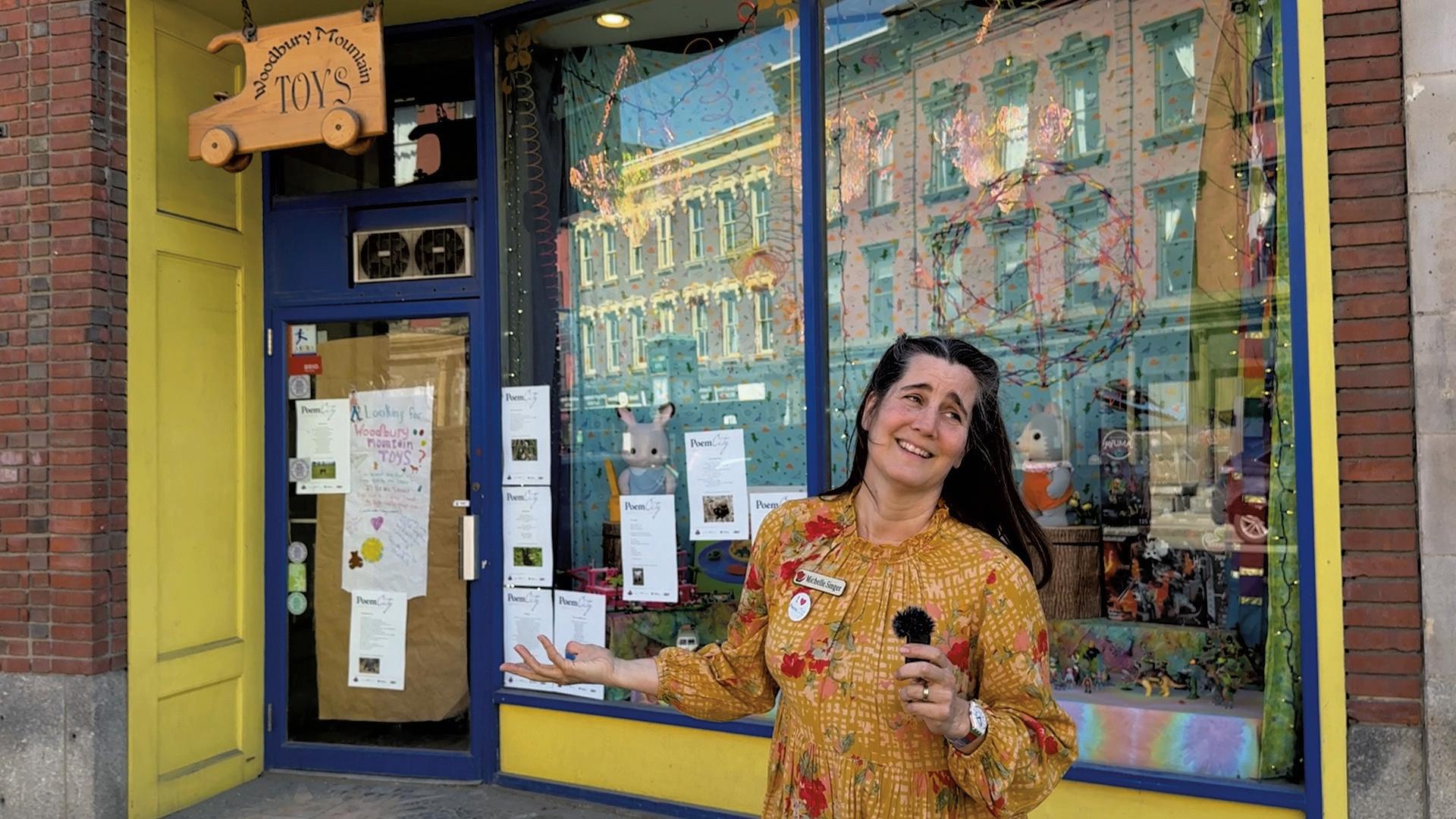
Beyond Words
Downtown Montpelier transforms into PoemCity every April
April is National Poetry Month — and the perfect time to visit Montpelier, as the Capital City transforms into PoemCity. Organized by the Kellogg-Hubbard Library, this year’s event features 450 poems displayed in the windows of 50 downtown businesses. The poets range in age from 3 to 94, include 200 students and represent 75 towns. Rounding out the monthlong celebration are 35 community events and poetry readings.

In her latest episode of “Stuck in Vermont,” Seven Days senior multimedia producer Eva Sollberger visited Montpelier in early April to get her poetry fix. She took a downtown tour of PoemCity with Michelle Singer, the adult programs and outreach coordinator at the Kellogg- Hubbard Library. They were joined by two poets, former state senator Scudder Parker and Samantha
and lots of Vermonty stu . An anthology of PoemCity’s 2024 works is available for purchase in bookstores across the state. Sollberger spoke with Seven Days about filming the episode.
Why did you pick this story?
Montpelier is a really vibrant and hyperconnected community. The July floods were such a devastating blow to our capital city, and it was heartbreaking watching the water swamp the downtown. Miraculously, the residents banded together and cleaned up, rebuilt and reopened many of their businesses. So when Michelle Singer contacted me a few months ago about PoemCity, I jumped at the chance to visit this special town and soak up some poetry, too.



Kolber, owner of Rootstock Publishing. The trio held impromptu poetry readings on the street, and Kolber read a poem by Reuben Jackson, a beloved former Vermont poet, radio DJ and jazz scholar who died in February. Three of Jackson’s poems can be found in the windows of Buch Spieler Records on Langdon Street. The 15th annual PoemCity means a lot to Montpelier residents, who have endured a tumultuous year. Last July, the city was deluged by catastrophic flooding. The basement at the Kellogg-Hubbard Library was underwater, destroying about 10,000 donated books. The building’s elevator, heating, electrical and sprinkler systems were all ruined, too. While the library is currently open and operational, there is still much work to be done. Likewise, many downtown businesses and organizations are back up and running, but others are still renovating.




Art is a great way to work through big life events, and some poems mention the floods. Others cover love, animals, pastries
Looked like a nice day to be outside. April weather is odd in Vermont. We filmed this video on April 2, and it was a warm, sunny day. Singer had just finished hanging the poems up around town. We joked that we’d get sunburns and be shoveling snow soon enough. Two days later, a storm dumped up to two feet of snow across the state. The following Friday, we had a small earthquake. And
Seven Days senior multimedia producer Eva Sollberger has been making her

one drops. And check these pages every other week for insights on the episodes.
SEVEN DAYS APRIL 24-MAY 1, 2024 52
Episode 713: Montpelier’s PoemCity
award-winning video series, “Stuck in Vermont,” since 2007. New episodes appear on the Seven Days website every other ursday and air the following night on the WCAX evening news. Sign up at sevendaysvt.com to receive an email alert each time a new
800-634-SOLD
culture THCAuction.com
8v-GreenLeafCentral042424 1 4/23/24 10:56 AM
8v-hirchakbrothers2-042424
1 4/22/24 4:10 PM
EVA
Michelle Singer
SOLLBERGER
then Monday was a beautiful spring day and the total solar eclipse. It’s never dull in our Green Mountains.
You had a nice crew for your poetry tour.
Thanks to Singer for organizing this group of wordsmiths at the last minute. I enjoyed hearing their poetry read aloud in different locations. Of course we stopped to say hello to a number of people, which garnered even more interviews. Ever a good citizen, Scudder Parker picked up garbage as we walked around.
And it turns out that I interviewed Samantha Kolber back in 2013 for a trippy “Stuck in Vermont” video about the Valentine’s Day Phantom. The Kellogg-Hubbard Library also plays a big role in that video, and you can see the Phantom’s hearts from this year are still displayed downtown alongside the poems.
Who were the young people reading their poems?
A group of students from Main Street Middle School took a tour of their work on April 3. I was originally planning to tag along on their visit, but due to the impending storm, we filmed one day earlier. Singer was nice enough to get some footage of the students for me. It must be very exciting for them to see their work displayed and also published in an anthology.
The poems about the flood were poignant.
Thinking of the flooding and Jackson’s death, I asked if this was a particularly emotional year for PoemCity, and Singer clarified that every year is emotional. Rootstock Publishing will put out a book of Jackson’s poems in the fall. It’s comforting to see Jackson’s words displayed downtown, keeping him alive.
Art and poetry are great ways to work through and express complex tangles of feelings. When the poem tour was over, I found myself wandering around reading the intimate words, letting their meaning sink in.
Parker talked about how community is something we find not only in the good times but also in the worst of times. Seeing the resilient city covered in words, expressing Vermonters’ deep, dark emotions and lighthearted thoughts, too, it brings new meaning to the term #vermontstrong. ➆

Known and respected throughout the region, a St. Mike’s graduate degree will open doors for you – and, with flexible, personalized pathways, you can balance work and life.
We have a personalized pathway that is right for you. Reach out to us today.
SEVEN DAYS APRIL 24-MAY 1, 2024 53
Advance Your Career with Saint Michael’s College Graduate Education Programs smcvt.edu/graduate | graduate@smcvt.edu | 802.654.3000 Master’s Programs Offered In: Education Teaching English to Speakers of Other Languages (TESOL) Graduate Certificates Offered In: Holistic Restorative Education Racial Equity & Educational Justice TESOL Advanced Graduate Study 34v-Stmikesgrad032724 1 3/25/24 1:47 PM
on screen
AVermont spring is lovely, but how would you like to take a virtual vacation? A new film and series, both gorgeously shot on location in Italy, go beyond bland touristic views of the country to explore how its storied past impinges on the present.
Ripley ★★★★★ La Chimera ★★★★★ REVIEW
In these filmmakers’ visions, you’ll find American expatriates climbing endless stairs to rented rooms in stone seaside ramparts; young people frolicking on a beach pocked with ancient tombs beneath the blinking lights of an electrical plant; a con man moving into a breathtaking Venetian palazzo; and Isabella Rossellini holding forth in the decaying splendor of a Tuscan villa. Both of these stories have criminal protagonists, but it’s impossible not to share their passion for the Italian landscape as they take perilous pathways toward rooting themselves there. Buona primavera!
You could be forgiven for assuming that the new “Ripley” series on Netflix is a cash grab. Patricia Highsmith’s Tom Ripley books (beginning in 1955 with The Talented Mr. Ripley) have already inspired a slew of film adaptations, and it’s hard to top Anthony Minghella’s 1999 version of the first book. Who didn’t feel for Matt Damon’s awkward social climber as he tried to claw his way into the world of the beautiful people, iconically represented by Gwyneth Paltrow and Jude Law?
But even die-hard fans of that film recognize how fundamentally it deviates from its source. Despite featuring a non-canonically older Tom Ripley (Andrew Scott), the new “Ripley” is a truer adaptation.
Scripted and directed by Steven Zaillian (The Irishman), the eight-episode Netflix series moves at a deliberate, detail-oriented pace perfectly suited to its midcentury setting. There are no action scenes or blockbuster flourishes to obscure the machinery of a well-constructed psychological thriller whose characters are all too human. The impeccable production design and the meticulously composed black-and-white cinematography of Robert Elswit (Oscar

winner for There Will Be Blood) bring postwar Italy to life in all its grubbiness and glamour.
Unlike Damon’s version of the character and like Highsmith’s, this Ripley is something of a sociopath — low on a ect and eager to pour himself into the mold of someone else, preferably someone richer. A small-time con man, he jumps at the allexpenses-paid trip to Italy o ered him by a shipping magnate who wants someone to convince his wayward heir, Dickie Greenleaf (Johnny Flynn), to return to the fold.
But once Ripley arrives in the coastal village where Dickie lounges on the beach with his writer girlfriend (Dakota Fanning), he doesn’t want to leave, either. What he wants is to be Dickie — to live Dickie’s golden-boy boho dream better than Dickie himself can do. Ripley clumsily yet methodically works toward that goal, eliminating every obstacle in his way.
Scott’s almost schlubby Ripley is the perfect antidote to the glamorized killers of series such as “Dexter.” For him, murder has such a steep learning curve that it’s a comedy of errors. With forensic technology in its infancy, he’s often less talented than just lucky. Ripley honed his criminal cred in Highsmith’s four subsequent books about him, however — and, with any luck,
the series will explore that evolution in a second season.
Ripley has a knack for going underground ( Ripley Under Ground is Book 2), and so does Arthur (Josh O’Connor), the protagonist of Italian director Alice Rohrwacher’s La Chimera. Celebrated at last year’s Cannes Film Festival, this magic realist period piece is playing at Merrill’s Roxy Cinemas through Thursday (after that, check showtimes and streaming release dates).
For a sizable early chunk of the movie, all we know about Arthur is that he’s an Englishman in Italy who has just been released from prison and is prone to lyrical remembrances of a lost love. Then we learn what he was jailed for: raiding Etruscan tombs.
With his friends, a scruffy crew of merry pranksters known as tombaroli , Arthur soon returns to his favorite pursuit, using his preternatural ability to sni out 2,000-year-old artifacts. Unlike most tomb raiders, he values his finds for more than their considerable value on the shadow market, dreaming of finding a route through a tomb to the afterlife. But a young single mother (Carol Duarte) would like to give him a reason to stay on this plane of existence.
That’s about as much of a central conflict as it’s possible to piece together from La Chimera, which isn’t a conventionally plotted crime film or even a character study. Now and then, Rohrwacher supplies exposition through a framing device: an invisible documentarian, a café troubadour singing of Arthur’s exploits. Mostly, however, the movie unfolds in a trancelike series of pastoral, delicately spring-tinted scenes that are impossible to look away from.
I couldn’t tell you the purpose of half the story elements in La Chimera , yet Rohrwacher conjures a mesmerizing sense of the arcane hidden beneath the mundane, just as tombs and shrines hollow out the landscape. If you grew up in the 1970s or ’80s (when the film is unobtrusively set), it might feel like an art movie you were brought to see far too young, one that still haunts your dreams even though (or because?) you fell asleep halfway through.
I won’t soon forget the scenes in the abandoned railway station, or another that begins in the velvety darkness of a tomb. In La Chimera, Italy is a vast graveyard, littered with the relics of the past, that is also a vital workshop of the future. It’s easy to see why Ripley decided to put down roots.
MARGOT HARRISON margot@sevendaysvt.com
SEVEN DAYS APRIL 24-MAY 1, 2024 54
Andrew Scott plays Patricia Highsmith’s con man anti-hero in an unmissable new adaptation of the classic thriller. COURTESY OF NETFLIX

NEW IN THEATERS
BOY KILLS WORLD: A bereaved young man (Bill Skarsgård) trains to become an instrument of bloody vengeance in this action thriller from director Moritz Mohr, also starring Famke Janssen and Jessica Rothe. (115 min, R. Essex, Paramount)
CHALLENGERS: Memories of a love triangle among three tennis pros (Zendaya, Mike Faist and Josh O’Connor) make sparks fly when two of them face off years later in this drama from Luca Guadagnino (Call Me by Your Name). (131 min, R. Capitol, Essex, Majestic, Roxy, Star)
UNSUNG HERO: This inspirational biopic tells the story of David and Helen Smallbone and their family’s rise in the Christian music industry. With Daisy Betts and Joel Smallbone, who codirected with Richard L. Ramsey. (112 min, PG. Essex, Majestic, Star)
CURRENTLY PLAYING
ABIGAILHHH Criminals who kidnap a gangster’s cute ballerina daughter get a rude awakening in this horror flick. Matt Bettinelli-Olpin and Tyler Gillett (Ready or Not) directed. (109 min, R. Essex, Majestic, Sunset)
ARTHUR THE KINGHH1/2 A stray dog inspires an athlete (Mark Wahlberg) to fight the odds in an endurance race. (90 min, PG-13. Bijou, Majestic)
CIVIL WARHHHH Journalists race toward a Washington, D.C., threatened by rebels in this dystopian action thriller from Alex Garland (Men), starring Kirsten Dunst and Wagner Moura. (109 min, R. Big Picture, Capitol, Essex, Majestic, Playhouse, Roxy, Star, Stowe, Sunset, Welden; reviewed 4/17)
DUNE: PART TWOHHH1/2 The saga of Paul Atreides (Timothée Chalamet) and the spice planet Arrakis continues in Denis Villeneuve’s adaptation of Frank Herbert’s sci-fi series. (166 min, PG-13. Capitol, Majestic, Roxy; reviewed 3/6)
GHOSTBUSTERS: FROZEN EMPIREHH1/2 A new generation of ghostbusters joins the old one to fight an evil force that threatens Earth with a new ice age. (115 min, PG-13. Bijou, Essex, Majestic, Marquis, Paramount, Sunset, Welden)
GODZILLA X KONG: THE NEW EMPIREHH1/2 The two legendary monsters square off again in this action adventure from Adam Wingard (Godzilla vs. Kong). (115 min, PG-13. Bijou, Capitol, Essex, Majestic, Marquis, Stowe, Sunset, Welden)
HOUSEKEEPING FOR BEGINNERSHHHH A woman (Anamaria Marinca) finds herself forced to raise her girlfriend’s two daughters in this acclaimed comedy-drama from Macedonia. Goran Stolevski directed. (107 min, R. Capitol, Roxy)
KUNG FU PANDA 4HHH Po (voice of Jack Black) must train his warrior successor in this animated adventure. With Awkwafina and Viola Davis. (94 min, PG. Bijou, Capitol, Majestic, Paramount, Sunset, Welden)
LA CHIMERA: An archaeologist (Josh O’Connor) gets embroiled in a black market for stolen artifacts in this acclaimed romantic adventure from director Alice Rohrwacher (The Wonders). (130 min, NR. Roxy; reviewed 4/24)
LOVE LIES BLEEDINGHHHH Kristen Stewart and Katy O’Brian play a gym manager and a bodybuilder who fall in love, but criminal entanglements threaten their dreams. (104 min, R. Roxy, Sunset; reviewed 4/3)
THE MINISTRY OF UNGENTLEMANLY WARFAREHHH
British special ops fight the Nazis in this action flick loosely based on Operation Postmaster. (120 min, R. Capitol, Essex, Majestic, Star)
MONKEY MANHHH1/2 In this action thriller set in Mumbai, Dev Patel (who also directed and cowrote) plays a young man who goes on a revenge crusade against the oppressors of the powerless. (121 min, R. Majestic, Stowe, Sunset)
PROBLEMISTAHHH1/2 An aspiring toy designer takes a job with an eccentric New York artist in this comedy. (104 min, R. Savoy)
SASQUATCH SUNSETHHH Jesse Eisenberg and Riley Keough play a Bigfoot couple in an offbeat adventure comedy from David and Nathan Zellner (Kumiko, the Treasure Hunter). (89 min, R. Roxy, Savoy)
SPY X FAMILY CODE: WHITEHHH1/2 This animated action comedy is based on the Spy x Family manga series. (110 min, PG-13. Essex, Majestic)
WICKED LITTLE LETTERSHHH The women of a small town investigate to see who has been sending profane missives in this comic period piece with Olivia Colman and Jessie Buckley. (100 min, R. Roxy, Savoy)
OLDER FILMS AND SPECIAL SCREENINGS
ALIEN 45TH ANNIVERSARY (Essex, Fri-Mon only; Majestic, Fri-Tue only)
DAN SAVAGE’S 2024 HUMP! FILM FESTIVAL (Roxy, Sat only)
EPIC TAILS (Welden)
THE FARM BOY (Savoy, Sun only)
IT’S ONLY LIFE AFTER ALL (Savoy, Sat only)
MIGRATION (Sunset)
THE MUMMY 25TH ANNIVERSARY (Essex, Fri-Mon only)
SHREK 2 20TH ANNIVERSARY (Bijou, Majestic)
SPIRITED AWAY (STUDIO GHIBLI FEST 2014) (Essex, Sat-Mon & Wed 1 only)
OPEN THEATERS
Catamount Arts’ theater is currently closed until further notice. (* = upcoming schedule for theater was not available at press time)
BIG PICTURE THEATER: 48 Carroll Rd., Waitsfield, 496-8994, bigpicturetheater.info (closed April 28 to May 6)
*BIJOU CINEPLEX 4: 107 Portland St., Morrisville, 888-3293, bijou4.com
CAPITOL SHOWPLACE: 93 State St., Montpelier, 229-0343, fgbtheaters.com
*CATAMOUNT ARTS: 115 Eastern Ave., St. Johnsbury, 748-2600, catamountarts.org
ESSEX CINEMAS & T-REX THEATER: 21 Essex Way, Suite 300, Essex, 879-6543, essexcinemas.com
MAJESTIC 10: 190 Boxwood St., Williston, 878-2010, majestic10.com
MARQUIS THEATER: 65 Main St., Middlebury, 3884841, middleburymarquis.com (closed for renovation)
*MERRILL’S ROXY CINEMAS: 222 College St., Burlington, 864-3456, merrilltheatres.net
PARAMOUNT TWIN CINEMA: 241 N. Main St., Barre, 479-9621, fgbtheaters.com
PLAYHOUSE MOVIE THEATRE: 11 S. Main St., Randolph, 728-4012, playhouseflicks.com
SAVOY THEATER: 26 Main St., Montpelier, 229-0598, savoytheater.com
STAR THEATRE: 17 Eastern Ave., St. Johnsbury, 748-9511, stjaytheatre.com
*STOWE CINEMA 3PLEX: 454 Mountain Rd., Stowe, 253-4678, stowecinema.com













SEVEN DAYS APRIL 24-MAY 1, 2024 55
SUNSET DRIVE-IN: 155 Porters Point Rd., Colchester, 862-1800, sunsetdrivein.com *WELDEN THEATRE: 104 N. Main St., St. Albans, 527-7888, weldentheatre.com La Chimera COURTESY OF NEON Friday, May 10, 8 pm Barre Opera House Bristles in the best American blues tradition ... with a voice in turns gritty, soulful, impassioned.” - NPR 802-476-8188 • barreoperahouse.org BOH PRESENTS “... haunting slide guitar lines, modern R&B beats and thoughtful lyrics” -Blues Rock Review Untitled-12 1 4/22/24 10:16 AM Celebrating Earth Day All Week APRIL 23-27 joyofhomevt.com Tuesdays-Fridays 10-5:30 Saturdays 10-4 1140 Williston Road, S. Burlington 802-488-9037 cf LOCALLY OWNED & SUSTAINABLY FOCUSED Professional custom work upholstery, pillows, drapes & more 15% off ALL IN-STOCK DECOR AND FABRIC MADE FROM RECYCLED/UPCYCLED MATERIALS SPRING TREE SALE •Shop at the Nursery •Order Online for Pickup •Local Delivery & Planting Route 7 - Charlotte, VT 2024-04-19 Horsford Ad - Spring Tree Sale.indd 1 4/18/2024 3:22:25 PM 6V-horsford042424 1 4/18/24 3:45 PM Theater reservations or info: fsmac-quarryworks.org or 802-229-6978 Performances will be at the Frank Suchomel Memorial Arts Center, 1231 Haggett Rd, Adamant, VT Find us on Facebook ! 1231 Haggett Road, Adamant, Vt. Love Letters May 10 -12 & May 17-19 Fri. and Sat. Evenings: 7:30 p.m. Sat. and Sun. Matinees: 2 p.m. QuarryWorks Theater Presents ... 12v-AdamantCommCulturalFoundation042424.indd 1 4/23/24 11:48 AM
art
Flight Path
Floyd Scholz has carved out a career sculpting birds of prey
STORY AND PHOTOS BY PAMELA POLSTON • ppolston@sevendaysvt.com
What’s a guy to do after he’s been declared a living legend? Ideally, keep on living and legending. That’s what Floyd Scholz has been up to since, in 2014, the Ward Museum of Wildfowl Art in Maryland awarded him that status. Scholz, 66, is known and venerated around the globe for his exquisitely lifelike carved and painted birds. And don’t think for a second that he plans to slow down anytime soon.
“I just love bird carving,” Scholz declared. “If I had Bill Gates’ checkbook, I would still come down here every day and carve birds.”
By “here,” Scholz means his home studio in Hancock. It’s a human aerie. He and his wife, Beatriz, own 270 acres atop a steep slope with a glorious Green Mountain view. A V-shaped slice of Rochester is visible just a few miles to the south. During a recent visit, Scholz pointed out the 26 bluebird houses he installed around the hillside. A wild turkey he calls Lonely Tom, apparently a committed celibate, ambled solo down the unpaved road. A Yorkie named Raven handled greeting duty with adorable gusto.
One could easily stand around slackjawed, taking in the panorama. But there’s a lot to look at inside the studio, too. Avian body parts in various stages of completion are scattered across a broad worktable. Awards, ribbons, plaques, framed magazine articles, photographs and memorabilia line the walls. A corner nook holds hundreds of Scholz’s prized books on birds. Many of them are about raptors — including his own 1993 volume, Birds of Prey. (“It sold half a million copies,” Scholz marveled.)
Since the early ’80s, Scholz’s sculptural focus has been raptors. “There’s an aura about them,” he explained. “They’re very exciting, dynamic birds with sharp beaks and talons and piercing eyes.” Aside from his genuine admiration, the artist added, “I had to make a business decision about my craft, too. Was I going to go with chickadees at craft fairs, or people who could write big checks?”
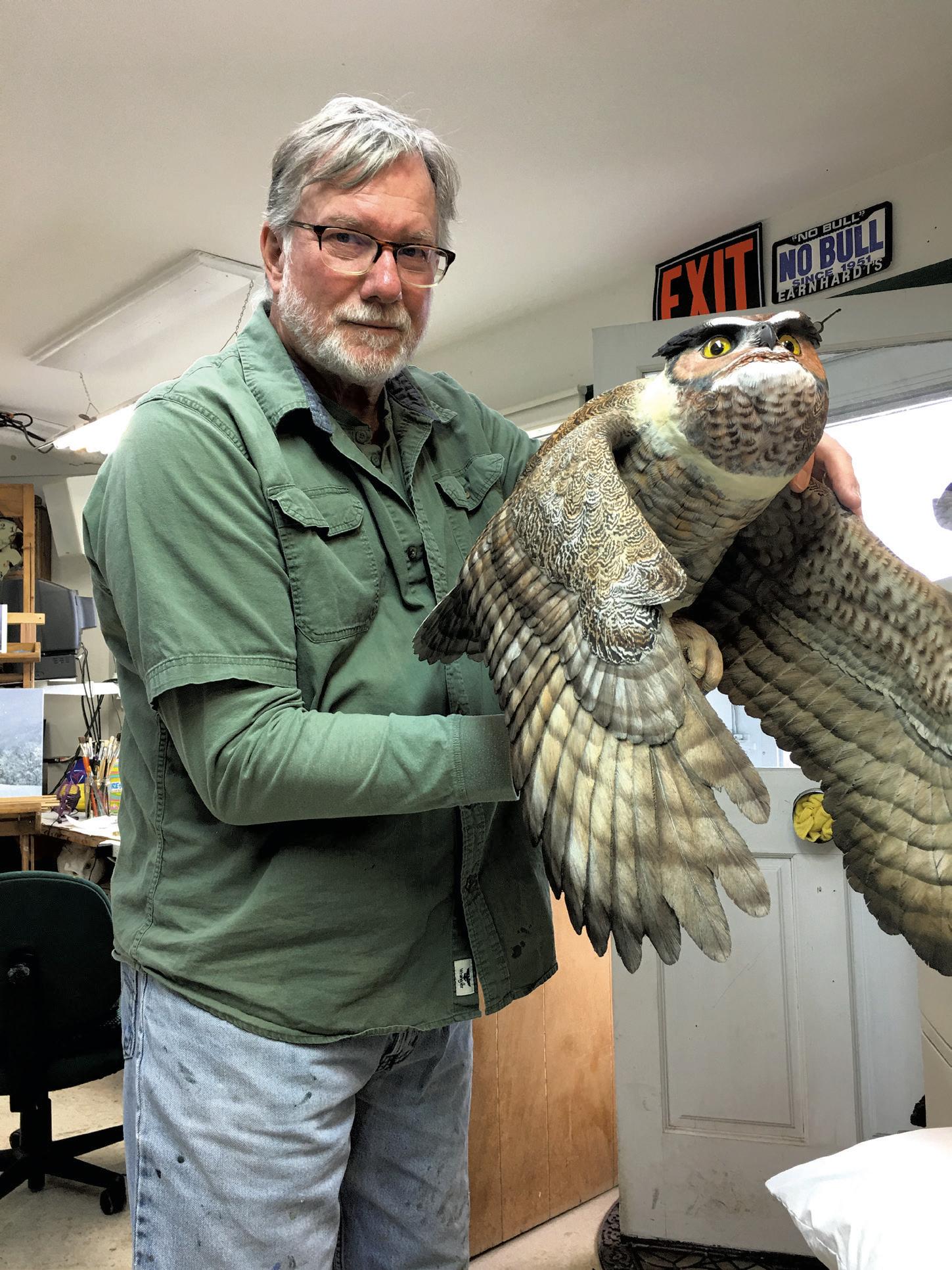
Those in lofty positions tend to go for “eagles, falcons, peregrines — birds that project power,” Scholz said. The swath of collectors in that category is broad and, according to Scholz, ever growing. The price tag for one of his life-size eagles with outstretched wings, he said, is “north of $100,000.” After all, such a sculpture can take him a year or more to complete.
And what astonishing achievements
they are, carved from tupelo wood he sources “from a bayou in Louisiana,” burnished and painted with impossibly fine brushes. An eagle and a red-tailed hawk perched in Scholz’s studio are so realistically detailed, it would hardly be surprising if they suddenly took flight. Although it might be terrifying. Again: beaks, talons, piercing eyes. But Scholz’s birds aren’t going

anywhere, except into the homes of grateful collectors. Some of them are celebrities, and not all of them want raptors. Elizabeth Taylor, for example, commissioned a pair of white doves and an African parrot. The late actress and Scholz became good friends. Once, during a visit to Taylor’s home, he recounted, she introduced him as “my carver” to fellow guest Shirley MacLaine. “She was hard of hearing and thought my name was Mike Carver,” Scholz said with a chuckle.
Actress Glenn Close has found her way to Scholz’s mountain home “multiple times,” he said. He also befriended collector and musician John Sebastian — best known for his 1960s group, the Lovin’ Spoonful. Scholz’s website includes photos of actress and conservationist Bo Derek with a pair of blue-footed boobies, and Robert F. Kennedy Jr. with a peregrine falcon. In 2016, Scholz carved a special commission for retiring Red Sox slugger David Ortiz, aka Big Papi. The maple burl sculpture is not a raptor, but represents significant elements of the player’s life: a Sox helmet, Madonna figure and, atop a bat, two palmchats — the Dominican Republic’s national bird. When Connecticut-born Scholz
SEVEN DAYS APRIL 24-MAY 1, 2024 56
Floyd Scholz with a great horned owl
animal issue animal
animal
Ribbons from carving competitions
issue
issue animal issue
inherited carving tools from a beloved uncle at age 10, he could not have predicted they would launch a career, but he was immediately drawn to the bird carvings his uncle had started. “I developed an instant passion,” he recalled. “It’s all I wanted to do: get home from school and carve.
“Added to that,” Scholz continued, “grown-ups wanted to buy them. Guess who had a new bicycle from money I earned.”
IF
Carving took a backseat when Scholz was an NCAA decathlon champion at Central Connecticut State University. “I’m six-four, so I could leap like an antelope,” he said. He expected to compete in the 1980 Summer Olympics in Moscow, but the Soviet invasion of Afghanistan provoked U.S. president Jimmy Carter to boycott the games.

Scholz ruefully recalled that disappointment, as well as the simultaneous end of a romance that left him broken-hearted. The new college graduate took off for Vermont, holing up in the cabin of family friends in Granville. It didn’t take him long to find a community of fellow musicians — bluegrass is Scholz’s other passion.
Scholz began going to Burlington to sell his carved birds “to tourists on Church Street.” Frog Hollow Vermont Craft Gallery started carrying them. After the parents of a People editor saw his work, he got a feature in that magazine. Scholz’s career snowballed from there, taking him around the world to display and sell his works, speak at conferences and other events, write eight books, attract media attention and ever more avian-obsessed customers. Scholz is a teacher, too; in 1996 he founded the Vermont Raptor Academy in Bennington, where he presents six seminars a year.
“Not to be cliché,” Scholz joked, “but I carved out a niche.”
Why do people like birds so much? The artist has thoughts.
“Americans spend billions a year on bird seed and other products. Birds, more than any other taxonomic category, are loved,” Scholz asserted. “They’re beautiful, they sing, they fly, they’re free. They taste good. They’re living, breathing works of art.
“A couple weeks ago we listened to the bluebirds singing,” he added. “The return of the birds is also a symbol of rebirth.” ➆



A panel discussion about substance use and how we can work together to create a safer, healthier community with Howard Center clinical staff: moderator
Beth Holden, MS, LCMHC, LADC,

















“What saved me was my carving hobby and picking on my banjo,” Scholz said. “You can’t be sad when you’re picking a banjo. I started going to bluegrass festivals and made a lot of new friends.” He’s played in Vermont bands over the years and named late banjo master Gordon Stone as a mentor.












In 1983, someone suggested that Scholz enter a bird-carving contest in Long Island. He did, presenting a piece called — wait for it — “Jeezum Crow.” It won best of show in the amateur category.





Learn more at floydscholz.com.


“I still have the big blue ribbon from that show,” Scholz said. “The crow sold to the president of Bausch + Lomb. So here comes the money again as an incentive. I started thinking I could do this as a living.”

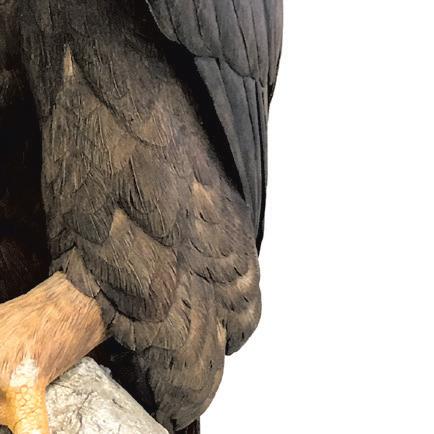








SEVEN DAYS APRIL 24-MAY 1, 2024 57
PROFILE
I HAD BILL GATES’ CHECKBOOK, I WOULD STILL COME DOWN HERE EVERY DAY AND CARVE BIRDS. FLOYD SCHOLZ COMMUNITY EDUCATION SPRING SERIES THE MARNA AND STEPHEN WISE TULIN FREE AND OPEN TO THE PUBLIC V mo t Ca Par CENTERO CE LENCE MEDIA SPONSOR VENUE SPONSOR WITH SUPPORT FROM SUBSTANCE
AND OUR
USE
COMMUNITY
Heidi
by Q&A. May 2, 2024
6:30-8:00 pm Dealer.com, 1 Howard Street, Burlington, VT Please join us! Two participation options are available: In-person at Dealer.com or virtually by livestream. Learn more and register for free by scanning the QR code or visiting our website. www.howardcenter.org 802-488-6912 4t-HowardCenter042424 1 4/1/24 10:02 AM Free Face Painting Maple Donuts Antique Show Ice Carving Demo Amazing Dog Show Kiddie Rides Sunday Parade Fiddler’s Show Teen Fest VNA & Hospice of the Southwest Region, Peoples Trust Company, Lapierre USA, 98.9 WOKO, Handy Chevrolet Toyota and downtown, CDL, D&G USA,Vermont Federal Credit Union, VIATRIS, Farm Credit East, WCAX, 99.9 the Buzz Star 92.9/95XXX/101.3 The Wolf, NUCAR, Eagle Country 97.5, TD Bank, New England Federal Credit Union, Leader Evaporator + H2O Innovation Many thanks to these super-sweet sponsors: Totally Eclipsed by Vermont Maple VERMONT MAPLE FESTIVAL St. Albans, Vermont April 26, 27, 28, 2024 k4t-VTMapleFest0324 1 3/6/24 11:39 AM www.vtmaplefestival .org 4t-VTMapleFest040324 1 3/13/24 11:36 AM Golden eagle by Floyd Scholz
and panelists John Brooklyn, MD; Dan Hall, LADC;
Melbostad, PhD, and others. Followed
|
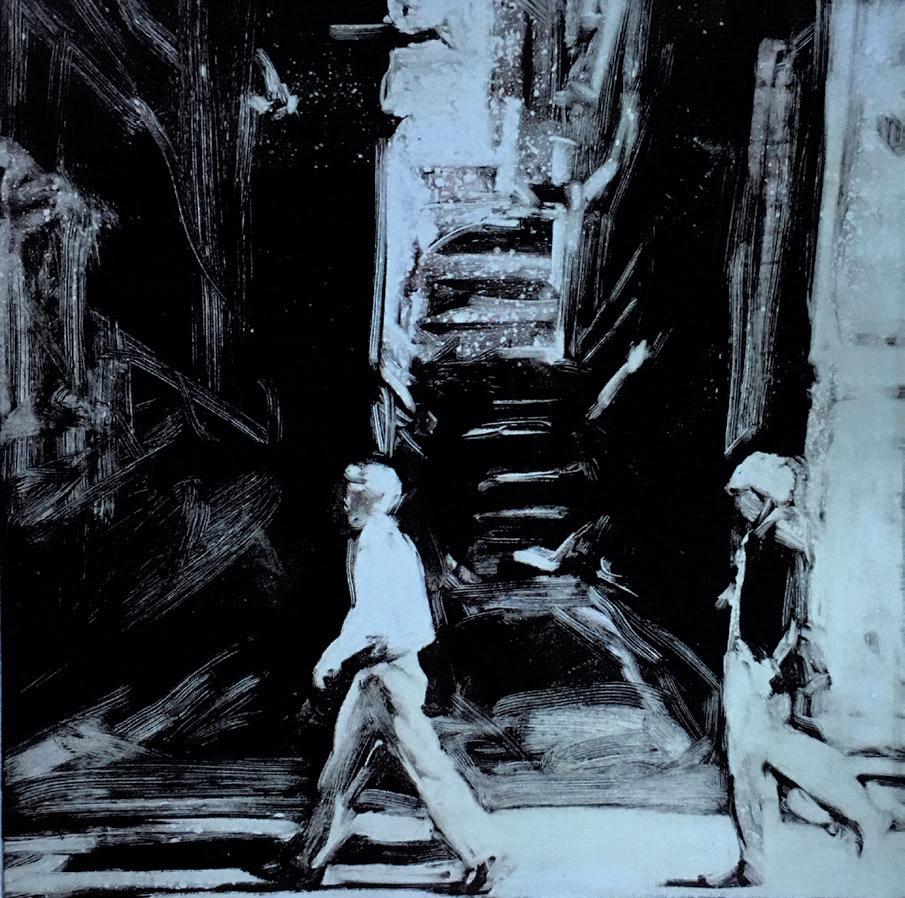
EXHIBITION
Printed Matters: A Vermont Studio Center Collection Is on View and at Auction
BY PAMELA POLSTON • ppolston@sevendaysvt.com
Forty prints for 40 years. That’s the general idea behind “collaboration,” a group exhibition at Vermont Studio Center in Johnson. But the display in the Red Mill Gallery isn’t just a shout-out to VSC’s four decades of existence. Embedded in the exhibition are layers of history and an aspirational offering to the center’s future.
The history: In 1994, VSC cofounder Jon Gregg and master printer Sarah Amos embarked on a print project that would continue for 10 years. The idea was to invite accomplished contemporary artists — with or without printmaking experience — for weeklong residencies at the VSC Printing Press. Over the decade, Amos worked with 250 artists who produced original work in printmaking techniques, including monotypes, etchings, woodcuts, collagraphs and drypoint. The participants could take home half of their prints, and VSC kept the rest. By 2004, the collection had grown to some 1,200 prints, which were placed in storage.
Income generated from the project supported fellowships at the center, which offers 12-, 19- and 26-day writing and visual artist residencies throughout the year, along with open-to-the-public talks and related programming.
In July 2023, torrential rains caused major flooding throughout central and northern Vermont, including Johnson. And including the building that housed VSC’s print
CALL TO ARTISTS
‘BOTANICAL’: PhotoPlace Gallery in Middlebury seeks submissions for an upcoming exhibition with the theme of wild and cultivated plants. Juror: Lee Anne White. Details and application at photoplacegallery. com. Deadline for submission: May 13. Online. $39 for five images; $6 each additional image. Info, 989-7556.
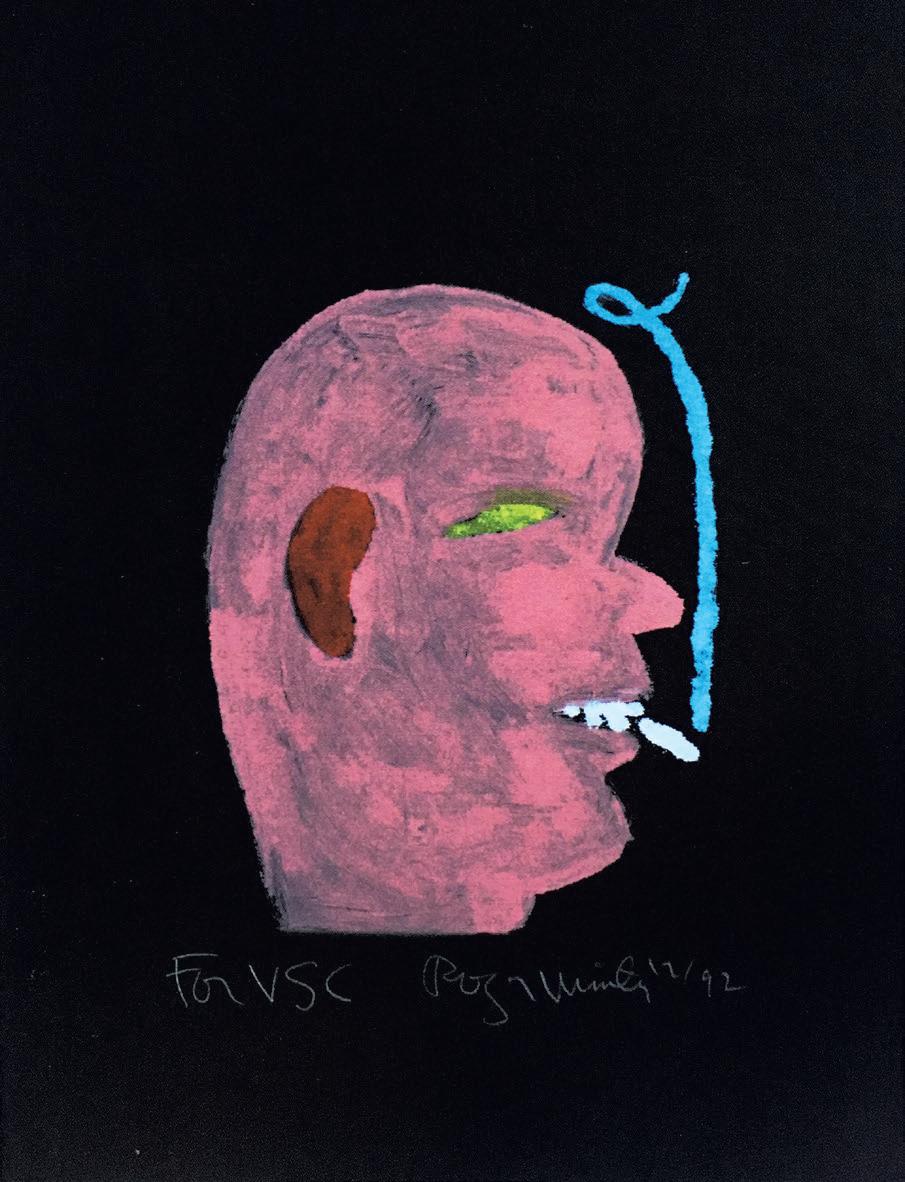
archive. “A third of the prints were affected by the flood,” said Leila Bandar, VSC’s gallery and visual arts program director. Fortunately, she added, “Only a handful were beyond repair.”
VSC staff, resident artists and community volunteers took quick action to rescue the archive and other spaces inundated by the overflowing Gihon River. Afterward, Amos — who lives in Australia — returned to support the print restoration with works-on-paper conservators Carolyn Frisa and Walter Newman.
Now, the renowned studio center is celebrating its 40th year, having survived floods, uncontrollable global events, including a pandemic, and multiple changes in leadership. Current executive director Hope Sullivan was just weeks into her tenure in July when she was handed a watery catastrophe. “Hope has been amazing,” Bandar said, adding that the flood “brought us to think about our mission for the next 40 years. How do we take a calamity and turn it into a benefit?”
“Collaboration,” curated by Amos, is more than a resurrection of artworks that languished in flat files for years. Visitors to the exhibit will see a fascinating array of artistic visions, including the whimsical, painterly monotype of the Statue of Liberty as a plein-air artist by New York artist Lois Dodd; a monotype of a cigarette-smoking pink head by Texas-born artist Roger Winter; the elegant white-on-black relief etching of a cityscape by late New York artist Yvonne Jacquette; and a brushy, blue and green abstraction that distills landscape by Philadelphia painter Stuart Shils.
OPENINGS + RECEPTIONS
ALAN JACOBS AND MARTHA VON AMMON: “Abstractions,” large oil paintings and ceramics, respectively. Reception: Friday, April 26, 5:30-7:30 p.m. Artistree Community Arts Center, South Pomfret, April 26-May 18. Info, 457-3500.
ANNE SARCKA: “An Exuberant Journey,” paintings, collages, drawings and other work by the Vermont


An accompanying exhibition book expresses the VSC community’s sense of resilience, gratitude and pride in the collection. The book and gallery signage also explain a concurrent opportunity for collectors: All 40 prints from the historic collaborations are for sale through an online auction; once again, proceeds will support artist and writer fellowships at VSC.
The auction will end on May 30 with a closing reception, which Amos plans to attend.
Bandar observed that the gallery is “the public face” of Vermont Studio Center. On the campus, among past and present residents, and in the supportive hub of Johnson, “it’s always been about community,” she said. ➆
INFO
“Collaboration: a survey of 40 prints from the VSC print archive” is on view through May 30 at the Red Mill Gallery, Vermont Studio Center, in Johnson. A closing reception is May 30, 4-6 p.m. Visit vermontstudiocenter.org for auction access.
artist. Third Floor Gallery, Studio Place Arts, Barre, May 1-June 15. Info, 479-7069.
ARI GRADUS: “Reflections,” figurative and abstract paintings of intense, vibrant color by the Israeli-born, Brooklyn-based artist. Monument Arts & Cultural Center, Bennington, through May 12. Info, 318-4444.
ART FROM THE SCHOOLS 2024: An exhibition of drawings, paintings, sculptures and more by area students ages 3 to 19. Reception: Saturday, April 27, 2-4 p.m. Southern Vermont Arts Center, Manchester, April 27-May 26. Info, 362-1405.
CHASE SCHOMP: “Big Woodshop Energy,” a solo exhibition of custom, handmade, wood surfboards, skis, snowboards and art objects as part of a senior capstone project. Reception: Thursday, May 2, 7 p.m. McCarthy Art Gallery, Saint Michael’s College, Colchester, April 30-May 2. Info, bcollier@smcvt.edu.
DREW WILLIAMS: “Stories For...,” a solo art exhibit as part of a senior capstone project. Reception: Thursday, April 25, 5 p.m. McCarthy Art Gallery, Saint Michael’s College, Colchester, through April 27. Info, bcollier@smcvt.edu.
SEVEN DAYS APRIL 24-MAY 1, 2024 58 VISUAL ART IN SEVEN DAYS: ART LISTINGS ARE WRITTEN BY PAMELA POLSTON. LISTINGS ARE RESTRICTED TO ART SHOWS IN TRULY PUBLIC PLACES. GET YOUR ART SHOW LISTED HERE AND ONLINE! PROMOTING AN ART EXHIBIT? SUBMIT THE INFO AND IMAGES BY FRIDAY AT NOON AT SEVENDAYSVT.COM/POSTEVENT OR ART@SEVENDAYSVT.COM. = ONLINE EVENT OR EXHIBIT art APRIL 24-MAY 1
Clockwise from top left: "Alley Downtown" by Lisbeth Firmin; “small heads (black)” by Roger Winter; "Dunands Vase" by Alfred DeCredico; “Liberty Painting” by Lois Dodd
FEDA EID: “Rooted Revelations,” photographicbased self-portraiture by the Lebanese American visual artist. Closing reception: Sunday, April 28, 3-6 p.m., with Hand Me Down Ritual Clothesline workshop and performance. Bring an object of significance to add to the remembrance circle. Firefolk Arts, Waitsfield, through April 30. Donations accepted. Info, firefolkarts@gmail.com.
‘GLANCING IN THE REARVIEW MIRROR’: A pop-up exhibit featuring artworks made from flood-soaked bricks recovered in the SPA basement, by students from Spaulding High School, Barre Middle School, and the Design & Fabrication program at the Central Vermont Career Center. Studio Place Arts, Barre, May 1-4. Info, 479-7069.
‘ILLUMINATION’: An annual fundraising exhibition and auction featuring donated works by local artists. Live and silent auction party: Saturday, April 27, 6-9 p.m. AVA Gallery and Art Center, Lebanon N.H., through April 27. Info, 603-448-3117.
JUANCARLOS GONZÁLEZ: “Vermont Female Farmers,” portraits by the Puerto Rico-born, Vermont-based photographer. Bennington Museum, through August 31. Info, 447-1571.
‘PASSIONATELY NEW NEW 2’: An exhibition of works by artists who took workshops and used open studio time in 2023: Jazz Heath, Lawrence Keyes, Nina Friscia, Liz Buchanan, Philip Galiga, Darcy Feralio, Lauren Giannullo, Tracy Cianciola and Madeleine Joinnides. Opening reception: Thursday, April 25, 5:30-7 p.m.; closing reception: Sunday, April 28, 4:30-6 p.m. new new art studio, Burlington, April 25-28. Info, 373-7096.
‘VIOLACEOUS’: An exhibition of works by more than 50 artists spotlights the many shades of the color purple. Main Floor Gallery. Studio Place Arts, Barre, May 1-June 15. Info, 479-7069.
ART EVENTS
TALK: ‘DESIGNING FOR A COLLECTIVE FUTURE’: As part of the “Architecture for All” symposium, architects Andrea Murray and Megan Nedzinski share information about Vermont Integrated Architecture’s proactive design and construction processes. Johnson Memorial Building, Middlebury College, Wednesday, April 24, 4:30-5:30 p.m. Free. Info, jmcleod@middlebury.edu.
TALK: JOHN MCLEOD: “Architecture for All: Community Engagement Through Architecture,” as part of the “Architecture for All” symposium, a discussion of three examples from practice and teaching that demonstrate architecture’s ability to serve anyone and anywhere. Johnson Memorial Building, Middlebury College, Wednesday, April 24, 5:45-7 p.m. Free. Info, jmcleod@middlebury.edu.
ARTIST TALK: TITUS KAPHAR: In a discussion titled “Personalizing Mass Incarceration: Exploring American Justice and Injustice,” the artist shares his inspiration for works in the current exhibition “Gilded.” A reception follows. Hood Museum, Dartmouth College, Hanover N.H., Thursday, April 25, 5-6 p.m. Free. Info, 603-646-2808.
‘GROWING HOPE’: A pop-up exhibition presented by H.O.P.E. Works that addresses the healing, effects and processing of sexual violence and trauma. The public is invited to contribute to an interactive mural. Refreshments and information about sexual violence are included. Spiral House Art Collective, Burlington, Saturday, April 27, 5-8 p.m. Free. Info, dama.astuta.designs@gmail.com.
BIPOC MAKER NIGHTS: WOODWORKING: Hosted in partnership with the Root Social Justice Center, affinity spaces for anyone who identifies as Black, Indigenous or a person of color to create community around woodworking. Bring a woodworking project to repair or make. HatchSpace, Brattleboro, Monday, April 29, 5:30-8:30 p.m. Free. Info, 552-8202.







SEVEN DAYS APRIL 24-MAY 1, 2024 59 FIND ALL ART SHOWS + EVENTS AT SEVENDAYSVT.COM/ART
OPEN STUDIOS: The artists and writers in residence throw open their doors to visitors. Vermont Studio Center, Johnson, Tuesday, April 30, 4-6 p.m. Free. Info, 635-2727. COFFEE CHAT: STORY QUILT PROJECT: An introductory meeting with quilting instructor Lisa Therrien to learn about a free series of quilting workshops for older adults beginning on May 22. Winooski Senior Center, Wednesday, May 1, 10 a.m.-noon. Info, 655-6425. ➆ But wait, there’s more! 127 additional art listings are on view at sevendaysvt.com/art. Find all the calls to artists, ongoing art shows and future events online. VERMONT COMMONS SCHOOL 4t-VTcommons042424 1 4/15/24 10:22 AM Horticulture • Burlington For biweekly Garden Maintenance & Plant Healthcare Please email info@treetree.llc Weeding, Pruning & Containers 4t-treetree041024-2.indd 1 4/5/24 2:56 PM
music+nightlife

S UNDbites
News and views on the local music + nightlife scene
BY CHRIS FARNSWORTH
O the Record: Burlington Record Plant to Move to Albany, N.Y.
JUSTIN CROWTHER comes across as a humble man. Speaking about the decadelong history of the business he helped launch in the Queen City’s South End, the owner and founder of Burlington Record Plant claimed little credit for his venture’s accomplishments.
“I don’t like to talk about legacy or things like that,” Crowther said about starting a boutique pressing plant in Burlington in 2014, as vinyl began staging its grand 21st-century comeback. “But if there’s one thing I’m proud of, it’s coming up with the idea to make the first record ever in Vermont.”
Crowther concocted that dream while touring with his former band, WAYLON SPEED. According to him, he knew “jack shit” about the resurgence of vinyl; he just wanted to start something cool and make records for his home music scene. So, with his brother and bandmate NOAH CROWTHER and a handful of friends, Crowther launched Burlington Record Plant, which specializes in printing 12-inch custom vinyl and has manufactured records for artists such as COHEED AND CAMBRIA, EVE 6 and DANIEL JOHNSTON
One reason Crowther might ponder his legacy now is that, come July, Burlington Record Plant will pick up stakes and move south to Albany, N.Y. The business has been purchased by EQUAL VISION RECORDS,
an independent label founded by punk musician RAY CAPPO (YOUTH OF TODAY, SHELTER) that is home to notable punk and hardcore acts such as HOT WATER MUSIC, ARMOR FOR SLEEP and YELLOWCARD
“I grew up listening to so many records Equal Vision put out,” Crowther told me on a recent visit to the plant with his wife and BRP co-owner, RANDI-LYNN CROWTHER. “To join that crew is such a cool feeling.”
The couple and several of their employees are gearing up to move to Albany this summer to work for Equal
when the business took on local partners as investors.
“It didn’t work out, and our values didn’t align,” Crowther said diplomatically, only noting that he had a stronger commitment to paying his employees fairly than the investors did.
“Justin and I have always been really good about staying true to our sense of integrity,” Randi-Lynn said. “So we realized we needed to get those guys out.”
After a few meetings with lawyers and forking over a significant sum to buy out their partners, Justin and Randi-
I PUT MY BLOOD, SWEAT AND TEARS INTO THIS PLACE — I DIDN’T WANT TO INVITE SOMEONE IN TO TAKE THE NAME AND JUST DO WHATEVER. JUSTIN
Vision. While their business will keep the name Burlington Record Plant, it will be a Vermont company only in name and spirit.
“I’m from Burlington and have lived here my entire life,” Randi-Lynn said, sitting with Justin near one of the plant’s vinyl printing presses. Records of many colors lined the walls, a tapestry of vinyl relating the history of the business.
“We built our life and our family here together, but we couldn’t pass up an opportunity like this,” she continued.
“This one is a unicorn.”
The chain of events leading to the sale began not long before the pandemic,
“That just felt o to me,” he explained. “I put my blood, sweat and tears into this place — I didn’t want to invite someone in to take the name and just do whatever. To take the business with us to this incredible label, it’s just such a better scenario.”
There’s no doubt it’s a loss for the Burlington music community. Many local artists printed their records at the plant, which often housed after-hours shows, including performances by DINOSAUR JR.’s LOU BARLOW and Brattleboro thrashers BARISHI
“I love this community, man,” Justin said with a shake of his head.
He added that loving Burlington has been tough for him the past few years, between dealing with “shitty local businesspeople” and the rise in crime and drugs. “I started to develop a sort of negative view of the city,” he said. “But when I moved here from Pennsylvania in 2001, this place helped change my life and has given me so much. Honestly, I’m going to miss it here a lot.”
Randi-Lynn pointed out that the move may not be permanent, as the couple are keeping their Burlington house and renting it out when they move to Albany. But she’s excited for the next chapter for her family and the business.
“We’ve paid all our loans o ; we hugged our banker. It’s all really happening,” she said with wide, incredulous eyes. “I kept my job at UVM for all these years while still working at the label so Justin and I and the kids could have health care and benefits. But my last day at the university was two weeks ago. I’m an employee of Equal Vision now, so … here we go!”
It’s an ideal scenario for the record plant and the Crowthers, and I’m beyond excited that the business survived bad investors and a pandemic to land where it has. That said, I can’t help feeling a little remorse about losing a vital piece of the local music scene, not to mention a unique and cool local business.
Lynn got control of their business again. But doing so left them broke and at a crossroads.
“I was ready to plan a big party and just memorialize the business when Equal Vision approached us with their o er,” Justin said. The label had been doing most of its printing in Europe, with high financial and environmental costs. In Burlington Record Plant, it found a ready-made solution for both parties’ problems.
According to Justin, other companies made bigger o ers, but most wanted to take over the Burlington facility as a new entity.
So often I’ve stopped at Feldman’s Bagels, which shares the record plant’s building, to grab a bagel on my way to the o ce. As I exited, I’d pause to stare at the nondescript warehouse in the back, marveling that vinyl records were being printed there at that very moment. In a music world dominated by downloads and streaming, there was a real GreatLibrary-of-Alexandria vibe to the BRP. I’m not sure we’ll see its like again in the Queen City.
So raise a glass to Burlington Record Plant before it moves on this summer. We were lucky to have you. ➆
SEVEN DAYS APRIL 24-MAY 1, 2024 60
From left: Justin Crowther, Andrew Rowekamp, Mitchell Baker, Alex Raine and Randi-Lynn Crowther at Burlington Record Plant
LUKE AWTRY
CROWTHER
On the Beat
Living in the spawning grounds of jamband giants PHISH has some funny side e ects. For instance, if the number of locals in their forties and fifties taking sudden trips to Las Vegas has been on the rise in the past month — probably in tandem with TSA confiscations of THC edibles — that’s because the Phab Phour just wrapped up a four-show residency at the new, cutting-edge venue, Sphere.
All those fans traveling to Sin City to get lost in the sauce can enjoy a fresh catch: The band released a new single, “Evolve,” earlier this month. A mid-tempo rocker featuring smooth harmonies and a surprisingly succinct run time of just more than four minutes, the tune is a harbinger of a brand-new full-length LP, also titled Evolve, that drops on Friday, July 12. With the announcement came news of a summer tour, launching in July with a show in Mansfield, Mass.
Two families steeped in the folk music tradition will play a double bill in Grafton on Saturday, May 4. Noted music journalist JOHN LOMAX III, a member of one of the most famous families in the history of the genre, is bringing his “Lomax on Lomax” show to the Brick Meeting House. In a sort of jukebox musical, Lomax sings classics such as “Home on the Range” and “Red River Valley.”
Opening the show is another famous folk family, the SPECKERS, featuring fiddle legend JOHN SPECKER and his daughters, IDA MAE and LILA. Tickets are available for $20 at the door the night of the performance. ➆

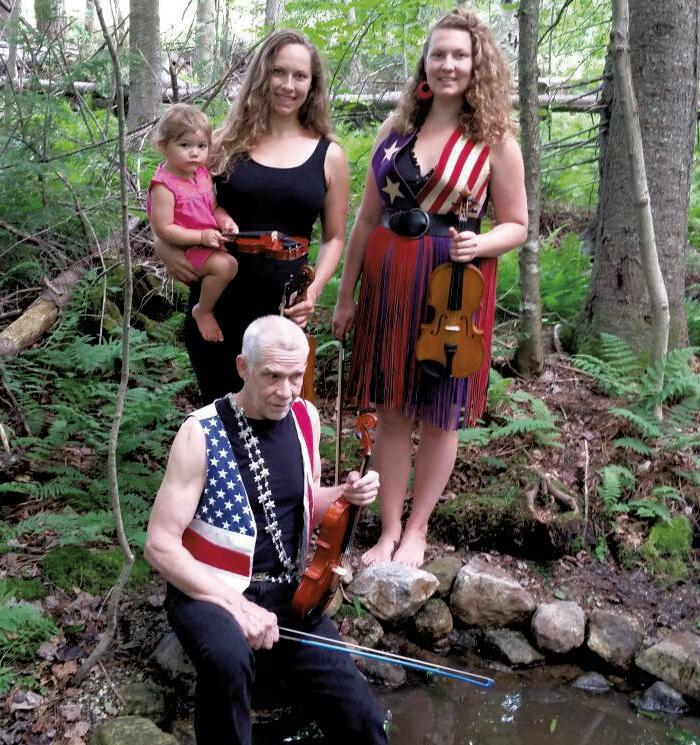



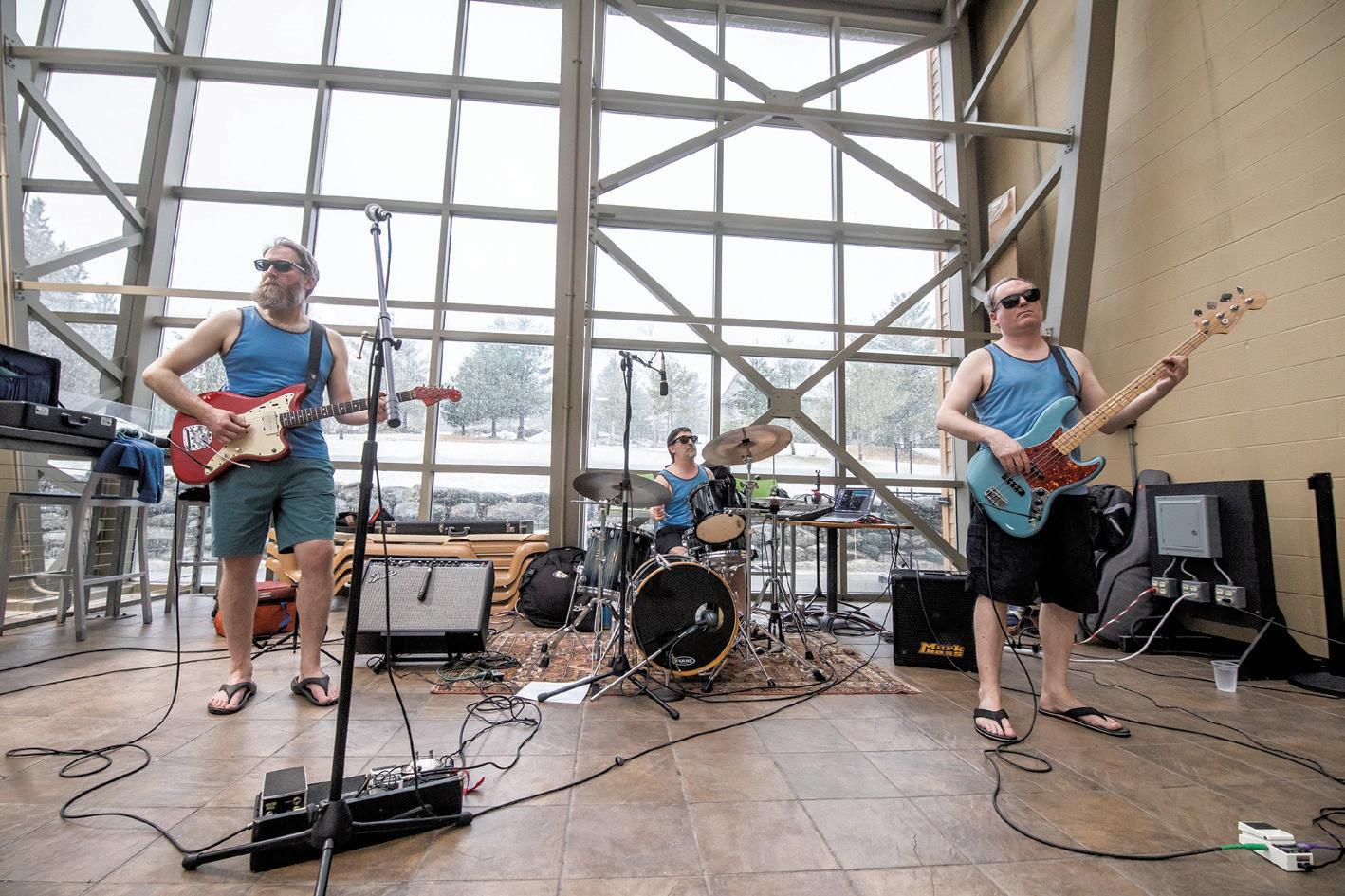
Eye on the Scene
Last week’s highlights from photographer Luke Awtry
THE HIGH BREAKS, JAY PEAK PUMP HOUSE INDOOR WATERPARK, JAY, SATURDAY, APRIL 20: It usually takes a lot of convincing to get me out of Burlington for an entire day. But on Friday night, while we were backstage at Higher Ground (happy birthday, DJ CRAIG MITCHELL!), guitarist MATT HAGEN mentioned that his surf band the HIGH BREAKS were playing a “beach party” at Jay Peak the following afternoon. ough I tend to prefer a nice, mellow high behind closed doors with a guitar or cat within reach, the spontaneous decision to head north for a 420 water park adventure was the right one. What a scene. e band played in the bar area, and its sound carried all the way across the park to the top of the water slides. When you’re in the park, the rush of water on all sides is loud. Mixed with live surf rock, it made for as authentic a beach party as you can have in northern Vermont — as long as you didn’t glance outside at the snowstorm that rolled in halfway through the band’s set.
SEVEN DAYS APRIL 24-MAY 1, 2024 61 GOT MUSIC NEWS? MUSIC@SEVENDAYSVT.COM
In
of
jams)
Listening
(Spotify mix
local
1. “AGPCFB” by Community Garden
GUYS”
Charlie
STRANGER”
Birdcode
LOVE”
listen
com/playlist 188 MAIN STREET BURLINGTON, VT 05401 | TUE-SAT 5PM-1:30AM | 802-658-4771 Live At Ne ctars.com RAQ FRI. 5.3, SAT 5.4, SUN 5.5 Hush Club, No Fun Haus THUR. 4.25 Led Zeppelin II FRI. 4.26 SAT. 4.27 Bearly Dead Sunday Night Mass w/ Magda DARCIIDARKA , Harder They Come ANXIOCIDE, Justin RE SUN 5.26 Grateful Tuesdays Sponsored by Fiddlehead, Upstate Elevator, Stowe Cider Dobbs’ Dead Apr. Residency (w/ guests) TUESDAYS Wheatus WED 5.1 w/ Troy Millette Strange Machines w/ Muscle Tough FRI 5.10 Satsang w/ Tim Snider THUR 5.16 Jazz Is Dead: w/ Steve kimock Alphonso Johnson, Bob Rodgers Pete Lavezzoli TUE 6.4* Distinct Motive w/ LYQD, Empti, Oddpace b2b Mvlleus & Kazm b2b Ryan Darling THUR 5.9 FULL MELT THURSDAY SAT 4.27 After Hours w/ Malachi Adam Ezra Group THUR 5.9 Cliffside Push FRI 5.17 The Full Cleveland VT’s Premier Yacht Rock Band SAT 5.18 A Phish Experience BURLINGTON JAZZ FEST JUN 4-8* WED 6.5, THUR 6.6* LaMP (Lawton, Metzger, Paczkowski) Purple (Tribute to Prince) FRI 6.7* Grippo Funk Band SAT 6.8* Grateful for Biggie (Fusion of Notorious B.I.G. & The Dead) FRI 5.24 Y2K Pop w/ Jason Baron SAT 5.4 FRI 5.10 Emo Night w/ Malachi FRI 6.7* Blues For Breakfast BURLINGTON JAZZ FEST JUN 4-8 Seth Yacovone Band SAT 5.25 4v-nectars042424 1 4/22/24 12:09 PM
2. “SHAKE THAT” by Mavstar 3. “ONE MEATBALL” by Whiskey Priest 4. “HEATHCARE” by McAsh 5. “THE GOOD
by Caleb Lodish,
Mayne 6. “WAYFARING
by
7. “TOO LATE FOR
by 8084 Scan to
sevendaysvt.
e Speckers
— Frank Lloyd Wright AMERICAN ARCHITECT AND DESIGNER






Find, fix and feather with Nest Notes — an e-newsletter filled with home design, Vermont real estate tips and DIY decorating inspirations. Sign up today at sevendaysvt.com/enews. sponsored by obsessed? 2H-WCAX041024 1 4/4/24 10:15 AM If
you wisely invest in beauty, it will remain with you all the days of your life.
4t-SweeneyDesign042424.indd 1 4/11/24 3:58 PM SEVEN DAYS APRIL 24-MAY 1, 2024 62
CLUB DATES
live music
WED.24
Fresh Pressed Wednesday (indie) at Radio Bean, Burlington, 8 p.m. $10.
Jazz Night with Ray Vega (jazz) at Hotel Vermont, Burlington, 8:30 p.m. Free.
Jazz Sessions (jazz) at the 126, Burlington, 9 p.m. Free.
Justin Mazer’s Mondo Jam-Piece (jam) at Zenbarn, Waterbury Center, 7 p.m. $10.
Live Jazz (jazz) at Leunig’s Bistro & Café, Burlington, 6:30 p.m. Free.
Nick Waterhouse, Ben Pirani Trio (singer-songwriter) at Higher Ground Showcase Lounge, South Burlington, 7 p.m. $20/$25.
Queen City Rounders (singersongwriter) at Foam Brewers, Burlington, 7 p.m. Free.
Umphrey’s McGee (jam) at Higher Ground Ballroom, South Burlington, 7 p.m. $45/$50.
The Water Tower Presents: Wet-Aid 3 (indie) at Radio Bean, Burlington, 8:30 p.m. $10.
Wednesday Night Dead (Grateful Dead covers) at Zenbarn, Waterbury Center, 7 p.m. $5.
Will Warren (singer-songwriter) at Two Heroes Brewery Public House, South Hero, 6 p.m. Free.
Willverine (electronic) at the Wallflower Collective, Burlington, 7:30 p.m. Free.
THU.25
All Night Boogie Band, Miss Transistor (blues) at Radio Bean, Burlington, 8 p.m. $10.
Baby Fearn and the Plants (folk, rock) at Black Flannel Brewing & Distilling, Essex, 6 p.m. Free.
Cooper (covers) at On Tap Bar & Grill, Essex Junction, 6 p.m. Free. Cozy (rock) at Bent Nails Bistro, Montpelier, 8 p.m. Free.
Dan Ryan Express (jazz) at Foam Brewers, Burlington, 7 p.m. Free.
Frankie & the Fuse (rock) at Red Square, Burlington, 7 p.m. Free.
Hush Club, No Fun Haus (indie rock) at Nectar’s, Burlington, 8 p.m. $10/$12.
Ira Friedman, Timothy Quigley
Duo (jazz) at Hugo’s, Montpelier, 7:30 p.m. Free.
Karl Lucas (folk) at Filling Station, Middlesex, 6 p.m. Free.
Lincoln Sprague (jazz) at Venetian Cocktail & Soda Lounge, Burlington, 5 p.m. Free.
Mama Tried (folk) at Stone’s Throw, Waterbury, 6 p.m. Free.
Nikki and the Barn Boys (rock) at Monkey House, Winooski, 8:30 p.m. $5.
A Sound Space Live with Deserie & Jim Gilmour (folk) at Merchants Hall, Rutland, 6:30 p.m. $20.
Find the most up-to-date info on live music, DJs, comedy and more at sevendaysvt.com/music. If you’re a talent booker or artist planning live entertainment at a bar, nightclub, café, restaurant, brewery or coffee shop, send event details to music@sevendaysvt.com or submit the info using our form at sevendaysvt.com/postevent.

Hidden Gems
Lauded by Rolling Stone as “one of Americana’s great upand-coming secrets,” singer-songwriter AMYTHYST KIAH plays music at a crossroads. Capable of channeling the alt-rock sounds that inspired her growing up as well as the traditional roots music she’s found success with, Kiah stirs a heady brew of powerful songwriting and fearless sonic exploration on her latest album, Wary + Strange. The album’s lead single, “Black Myself,” was nominated for a Grammy and won Song of the Year at the Folk Alliance International awards. Kiah performs in the Showcase Lounge at Higher Ground in South Burlington on Sunday, April 28.
Spose, Rigometrics (hip-hop) at Higher Ground Showcase Lounge, South Burlington, 7:30 p.m. $20/$25.
FRI.26
Bent Nails House Band (rock, blues) at Bent Nails Bistro, Montpelier, 9 p.m. Free.
Birdcode (jazz) at Bleu Northeast Kitchen, Burlington, 7:30 p.m. Free.
Cadaverette, Black Axe, Green Chapel, Dr Giuseppe’s Meatball Hospital (metal) at 1st Republic Brewing, Essex, 7 p.m. $10.
Christie Woods-Lucas (singersongwriter) at Hotel Vermont, Burlington, 7 p.m. Free.
Dad?!, Magic User, McAsh, Mechanical Canine (rock, punk) at Despacito, Burlington, 7:30 p.m. $5.
Dave Mitchell’s Blues Revue (blues) at Red Square, Burlington, 2 p.m. Free.
EDNA: The Residency (post-rock, experimental) at the Phoenix, Waterbury, 7:30-8:30 p.m. $15-$30.
The Hitsquad (covers) at On Tap Bar & Grill, Essex Junction, 9 p.m. Free.
Jade Bird, Adrianna Noone (folk) at Higher Ground Showcase Lounge, South Burlington, 7:30 p.m. $20/$25.
J.J. Booth (acoustic) at Two Heroes Brewery Public House, South Hero, 6 p.m. Free.
Joe Agnello & Friends (rock, blues) at Red Square, Burlington, 7 p.m. Free.
Led Zeppelin 2 (tribute) at Nectar’s, Burlington, 8 p.m. $20.
Matt Hagen (acoustic) at Stone’s Throw, Richmond, 6 p.m. Free.
Matty & Me (covers) at On Tap Bar & Grill, Essex Junction, 5 p.m. Free.
Modist & Friends (hip-hop) at the Underground, Randolph, 8 p.m. $12.
Mr French (rock) at the Old Post, South Burlington, 8 p.m. Free.
Nikki Adams (singer-songwriter) at Taps Tavern, Poultney, 6 p.m. Free.
Rap Night Burlington (hip-hop) at Drink, Burlington, 9 p.m. $5. Reverse the Grin (rock) at Monopole, Plattsburgh, N.Y., 10 p.m. Free.
Scram!, Fossil Record, Clive (indie) at Radio Bean, Burlington, 9:30 p.m. $10.
Shane McGrath (acoustic) at Gusto’s, Barre, 6 p.m. Free.
Sky Blue Boys (bluegrass) at Whammy Bar, Calais, 7 p.m. Free.
The Smokey Newfield Project (folk) at Jericho Café & Tavern, 7 p.m. Free.
The Songwriter Roundup : Songwriter Round with Danny LeFrancois, Ben Roque, David Karl Roberts (singer-songwriter) at Venetian Cocktail & Soda Lounge, Burlington, 8 p.m. $10.
Taylor LaValley (singer-songwriter) at Olive Ridley’s, Plattsburgh, N.Y., 6 p.m. Free.
The Trojan Horse, Brass Balagan (funk, soul) at Light Club Lamp Shop, Burlington, 9 p.m. $10.
The Warped Tour Band, All the Blink Things, Dookie (tribute) at Higher Ground Ballroom, South Burlington, 7 p.m. $20/$25.
SAT.27
90 Proof, Bad Horsey, the Maple Grove Band (rock) at Higher Ground Showcase Lounge, South Burlington, 7 p.m. $15/$18.
Bearly Dead (Grateful Dead tribute) at Nectar’s, Burlington, 8 p.m. $15.
Before This Time (covers) at On Tap Bar & Grill, Essex Junction, 9 p.m. Free.
Benjamin Tod & Lost Dog Street Band, Resonant Rogues (country) at Higher Ground Ballroom, South Burlington, 7:30 p.m. $28/$32.
Canyon Dreams (folk) at Jericho Café & Tavern, 7 p.m. Free.
Champlain Shoregasm, Fisher Wagg, Sturgeon, Future Party (punk, indie rock) at Despacito, Burlington, 8 p.m. $5.
The Devon McGarry Trio (folk rock) at 1st Republic Brewing, Essex, 6 p.m. Free.
Glass Onion (Beatles tribute) at Olive Ridley’s, Plattsburgh, N.Y., 9 p.m. Free.
Glass Onion (rock) at Olive Ridley’s, Plattsburgh, N.Y., 9 p.m. Free.
Greenbush (jazz, blues) at Venetian Cocktail & Soda Lounge, Burlington, 8 p.m. Free.
Hit Squad (covers) at Gusto’s, Barre, 9 p.m. Free.
Jerborn & Axe (covers) at On Tap Bar & Grill, Essex Junction, 5 p.m. Free.
JJ Booth (acoustic) at Whammy Bar, Calais, 7 p.m. Free.
Left Eye Jump (blues) at Red Square, Burlington, 2 p.m. Free.
Live Music Saturdays (live music series) at Dumb Luck Pub & Grill, Hinesburg, 7 p.m. Free.
McMaple (folk) at 14th Star Brewing, St. Albans, 6 p.m. Free.
Queer Takeover (indie, DJ) at Radio Bean, Burlington, 7:30 p.m. $10.
Scram! (indie) at Red Square, Burlington, 7 p.m. Free.
Steve Ellis (jazz) at Bleu Northeast Kitchen, Burlington, 7:30 p.m. Free.
TJ Powers (acoustic) at the Den at Harry’s Hardware, Cabot, 7 p.m. Free.
TPR, Bluto Salazar, Jeff Gallagher (rock) at Monopole, Plattsburgh, N.Y., 10 p.m. Free.
SUN.28
Amythyst Kiah (roots) at Higher Ground Showcase Lounge, South Burlington, 7:30 p.m. $22/$25.
Bluegrass Brunch (bluegrass) at the Skinny Pancake, Burlington, noon. Free.
The Ruta Beggars (bluegrass) at Roots & Wings Coffeehouse at UUCUV, Norwich, 4 p.m. $22.
Sunday Brunch Tunes (singersongwriter) at Hotel Vermont, Burlington, 10 a.m.
TUE.30
Big Easy Tuesdays with Jon McBride (jazz) at the 126, Burlington, 8 p.m. Free.
Bluegrass Jam (bluegrass) at Taps Tavern, Poultney, 7 p.m. Free.
Dobbs’ Dead (Grateful Dead tribute) at Nectar’s, Burlington, 9 p.m. $10/$20.
Honky Tonk Tuesday with Wild Leek River (country) at Radio Bean, Burlington, 9 p.m. $10.
John Lackard Blues Duo (blues) at Lawson’s Finest Liquids, Waitsfield, 5 p.m. Free.
The Takes, Leddy Moss (rock) at Radio Bean, Burlington, 7 p.m. $10/$12.
WED.1
Adirondack Jazz Orchestra (jazz) at Olive Ridley’s, Plattsburgh, N.Y., 7 p.m. Free.
Dead/Not Dead (tribute) at Zenbarn, Waterbury Center, 7 p.m. $10.
Elita, Andriana & the Bananas (indie) at Higher Ground Showcase Lounge, South Burlington, 7:30 p.m. $15/$18.
Jazz Night with Ray Vega (jazz) at Hotel Vermont, Burlington, 8:30 p.m. Free.
Jazz Sessions (jazz) at the 126, Burlington, 9 p.m. Free.
Jeff & Gina (acoustic) at Two Heroes Brewery Public House, South Hero, 6 p.m. Free.
Live Jazz (jazz) at Leunig’s Bistro & Café, Burlington, 6:30 p.m. Free.
Ryan Hanson (acoustic) at 14th Star Brewing, St. Albans, 6 p.m. Free.
Vireo, Sweet Petunia, Super Blue, Sheepskin (indie folk) at Radio Bean, Burlington, 8 p.m. $10.
Wednesday Night Dead (Grateful Dead covers) at Zenbarn, Waterbury Center, 7 p.m. $5.
SEVEN DAYS APRIL 24-MAY 1, 2024 63
music+nightlife
LIVE MUSIC » P.65
SUN.28 // AMYTHYST KIAH [ROOTS]



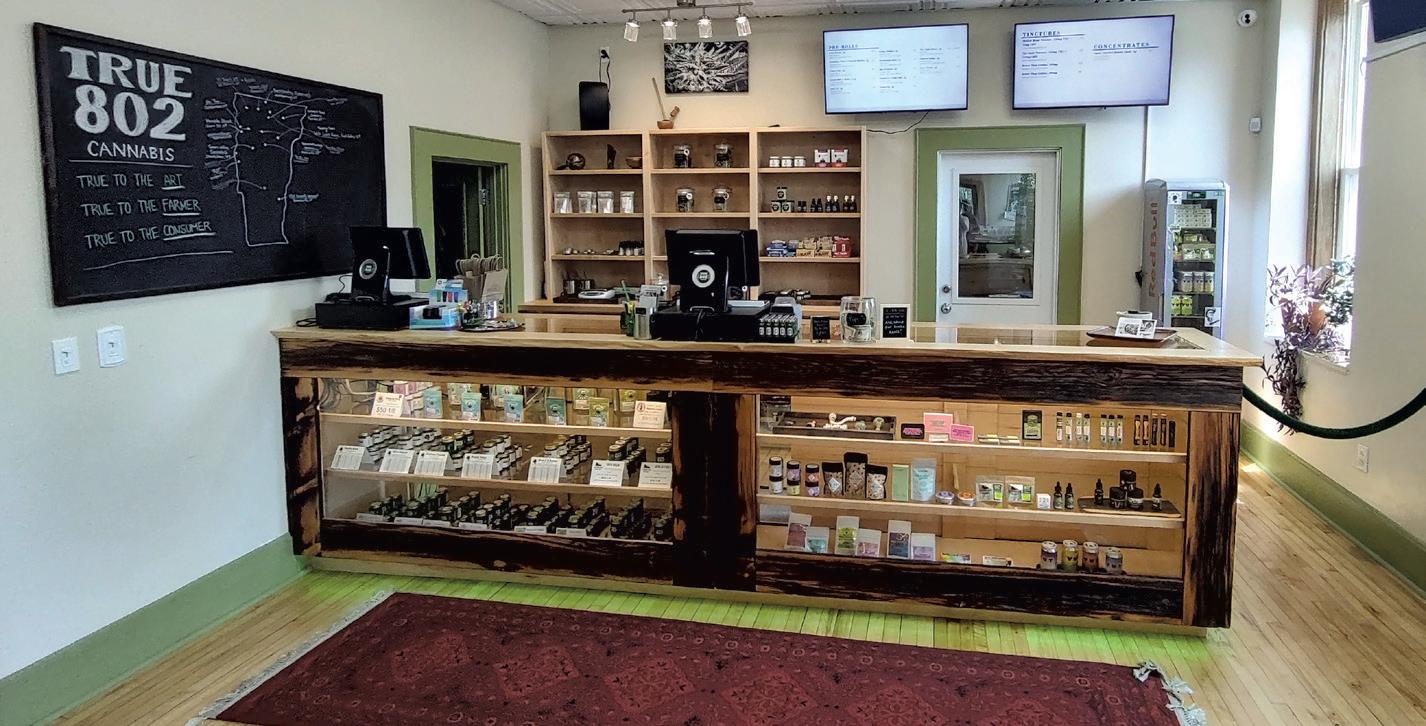




































SEVEN DAYS APRIL 24-MAY 1, 2024 64 Cannabis has not been analyzed or approved by the Food and Drug Administration (FDA). For use by individuals 21 years of age or older or registered qualifying patient only. KEEP THIS PRODUCT AWAY FROM CHILDREN AND PETS. DO NOT USE IF PREGNANT OR BREASTFEEDING. Possession or use of cannabis may carry significant legal penalties in some jurisdictions and under federal law. It may not be transported outside of the state of Vermont. The effects of edible cannabis may be delayed by two hours or more. Cannabis may be habit forming and can impair concentration, coordination, and judgment. Persons 25 years and younger may be more likely to experience harm to the developing brain. It is against the law to drive or operate machinery when under the influence of this product. National Poison Control Center 1-800-222-1222. GET DOWN AND COME UP! TRUE TO THE CONSUMER. TRUE TO THE FARMER. TRUE TO THE ART. 132 Church Street, upstairs • 802.540.1420 true802cannabis.com 4t-true802-070523.indd 1 LAN.258.23 Lane Series 7D Daniela Liebman Ad (4/24 Issue): 1/4 tile color: 4.75" x 5.56" 2024 SPRING SESSIONS TICKETS | ARTIST INFO | BROCHURE: 802.656.4455 OR UVM.EDU/LANESERIES WITH GRANT SUPPORT FROM: Vermont Community Foundation | Vermont Humanities | Vermont Council on the Arts OSHER LIFELONG LEARNING INSTITUTE and thanks to our anonymous donors Michael Brittenback in memory of William Meezan ’67 Friday, April 26, 7:30 pm UVM Recital Hall $39.50 ADULT $6.50 STUDENT SPONSORED BY: Daniela Liebman And on the seventh day, we do not rest. Instead we bring you... Get the newsletter featuring notable news, arts and food stories handpicked by our editors. Sit back, relax and read up on what you may have missed. SUBSCRIBE TODAY: SEVENDAYSVT.COM/ENEWS 2h-sundaybest-dog.indd 1 3/2/21 6:38 PM
music+nightlife
live music
WED.1 CONTINUED FROM P.65
Wheatus, Troy Millette (indie) at Nectar’s, Burlington, 8 p.m. $20/$25.
Willverine (electronic) at the Wallflower Collective, Burlington, 7:30 p.m. Free.
djs
WED.24
Dance Party (DJ) at Bent Nails Bistro, Montpelier, 8 p.m. Free.
Local Dork (DJ) at Foam Brewers, Burlington, 6 p.m. Free.
The Monthly Rotation (DJ) at Paradiso Hi-Fi, Burlington, 8 p.m. Free.
Steady J (DJ) at Monkey House, Winooski, 8 p.m. Free.
THU.25
DJ Chaston (DJ) at Red Square Blue Room, Burlington, 11 p.m. Free.
DJ Two Sev (DJ) at Red Square, Burlington, 11 p.m. Free.
Guest Selector Adam Schatz (DJ) at Paradiso Hi-Fi, Burlington, 8 p.m. Free.
Vinyl Night with Ken (DJ) at Taps Tavern, Poultney, 6 p.m. Free.
FRI.26
DJ Craig Mitchell (DJ) at Red Square Blue Room, Burlington, 10 p.m. Free.
DJ CRE8 (DJ) at Einstein’s Tap House, Burlington, 10 p.m. Free.
DJ Kata (DJ) at Red Square, Burlington, 10 p.m. Free.
DJ Skippy (DJ) at Olive Ridley’s, Plattsburgh, N.Y., 9 p.m. Free.
DJ Taka (DJ) at Light Club Lamp Shop, Burlington, 11 p.m. $10/$15.
DJ Two Rivers (DJ) at Gusto’s, Barre, 9 p.m. Free.
SAT.27
Blanchface (DJ) at Manhattan Pizza & Pub, Burlington, 10 p.m. Free.
Crypt Goth Night (DJ) at Bent Nails Bistro, Montpelier, 8 p.m. Free.
D Jay Baron (DJ) at Einstein’s Tap House, Burlington, 10 p.m. Free.
DJ A-Ra$ (DJ) at Red Square, Burlington, midnight. Free.
DJ Raul (DJ) at Red Square Blue Room, Burlington, 6 p.m. Free.
Malcolm Miller (DJ) at Club Metronome, Burlington, 10 p.m. $5.
Matt Payne (DJ) at Red Square Blue Room, Burlington, 10 p.m. Free.
Molly Mood (DJ) at Red Square, Burlington, 10 p.m. Free.
Reggae Saturdays with DJ
Badras, Nico (reggae DJ) at the Double E: T10 Listening Room, Essex, 7:30 p.m. $5.
THU.25 // NIKKI AND THE BARN BOYS [ROCK]
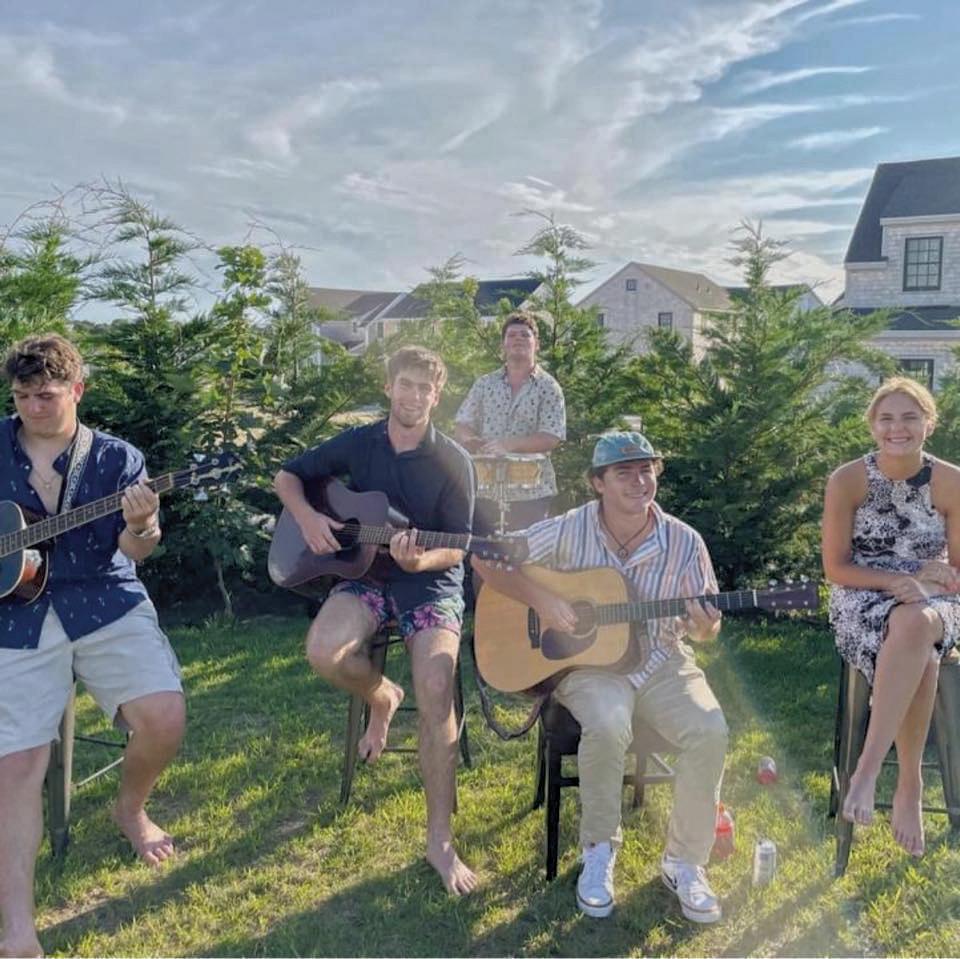
College Rock
A live gig from the Cape Cod-born band NIKKI AND THE BARN BOYS is no simple matter. For one, the band members live in three states at once: Liam Hempstead and twin brothers Thomas and John Bresette all recently moved to Vermont to attend Saint Michael’s College in Colchester, while Graham Hempstead goes to Eckerd College in Florida and vocalist Nikki Childs is the lone Massachusetts holdout. That didn’t stop the quintet from releasing Complicated Love in 2023 and playing shows all over New England. With the majority of the band ensconced in Vermont, the group is looking to establish a local presence with a show at the Monkey House in Winooski on Thursday, April 25.
SUN.28
Bizarre Celebrations: Foam’s 8th Anniversary (DJ) at Foam Brewers, Burlington, 6:30 p.m. Free.
Mi Yard Reggae Night with DJ Big Dog (reggae, dancehall) at Nectar’s, Burlington, 9 p.m. Free.
TUE.30
The Vanguard — Jazz on Vinyl (DJ) at Paradiso Hi-Fi, Burlington, 7 p.m. Free.
WED.1
Local Dork (DJ) at Foam Brewers, Burlington, 6 p.m. Free.
open mics & jams
WED.24
Irish Sessions (Celtic, open mic) at Burlington St. John’s Club, 6:30 p.m. Free.
Open Mic (open mic) at Monopole, Plattsburgh, N.Y., 10 p.m. Free.
Open Mic with Danny Lang (open mic) at Taps Tavern, Poultney, 7 p.m. Free.
THU.25
Old Time Jam (open jam) at Radio Bean, Burlington, 6 p.m. Free.
Open Mic (open mic) at Whammy Bar, Calais, 7 p.m. Free.
Open Stage Night (open mic) at Orlando’s Bar & Lounge, Burlington, 8 p.m. Free.
SUN.28
Olde Time Jam Session (open jam) at the Den at Harry’s Hardware, Cabot, noon. Free.
MON.29
Open Mic (open mic) at Despacito, Burlington, 7 p.m. Free.
TUE.30
Open Mic Night (open mic) at Drink, Burlington, 8 p.m. Free.
Kingdom Kids (comedy) at Vermont Comedy Club, Burlington, 6:30 p.m. $5.
Standup Comedy Open Mic (comedy open mic) at Vermont Comedy Club, Burlington, 8:30 p.m.
Whale Tales: An Evening of Comedic Storytelling (comedy) at Club Metronome, Burlington, 7 p.m. Free.
THU.25
Chloe Radcliffe (comedy) at Vermont Comedy Club, Burlington, 7:30 p.m. $25.
Distracted Sets (comedy) at Vermont Comedy Club, Burlington, 8:45 p.m. $5.
FRI.26
Chloe Radcliffe (comedy) at Vermont Comedy Club, Burlington, 7:30 & 9:30 p.m. $25.
Comedy Night (comedy) at Zenbarn, Waterbury Center, 8 p.m. $10.
SAT.27
Chloe Radcliffe (comedy) at Vermont Comedy Club, Burlington, 7:30 & 9:30 p.m. $25.
SUN.28
$5 Improv Night (comedy) at Vermont Comedy Club, Burlington, 7 p.m. $5.
TUE.30
Free Stuff! (comedy) at Lincolns, Burlington, 9:30 p.m. Free.
WED.1
Standup Comedy Open Mic (comedy open mic) at Vermont Comedy Club, Burlington, 8:30 p.m.
trivia, karaoke, etc.
WED.24
Venetian Soda Open Mic (open mic) at Venetian Cocktail & Soda Lounge, Burlington, 7 p.m. Free.
WED.1
Bluegrass Jam (open mic) at Stone’s Throw, Richmond, 6:30 p.m. Free.
Irish Sessions (Celtic, open mic) at Burlington St. John’s Club, 6:30 p.m. Free.
Open Mic (open mic) at Monopole, Plattsburgh, N.Y., 10 p.m. Free.
Open Mic with Danny Lang (open mic) at Taps Tavern, Poultney, 7 p.m. Free.
The Ribbit Review Open-Mic & Jam (open mic) at Lily’s Pad, Burlington, 7 p.m. Free.
comedy
WED.24
Comedy Night (comedy) at Olive Ridley’s, Plattsburgh, N.Y., 8 p.m. Free.
Trivia Night (trivia) at Four Quarters Brewing, Winooski, 6 p.m. Free.
Trivia Night (trivia) at McGillicuddy’s Five Corners, Essex Junction, 6:30 p.m. Free.
Trivia Night (trivia) at Nectar’s, Burlington, 6:30 p.m. Free.
Trivia Thursday (trivia) at Spanked Puppy Pub, Colchester, 7 p.m. Free.
FRI.26
Karaoke (karaoke) at McKee’s Pub & Grill, Winooski, 9 p.m. Free.
Karaoke Friday Night (karaoke) at Park Place Tavern & Grill, Essex Junction, 8 p.m. Free.
SUN.28
Sunday Funday (games) at 1st Republic Brewing, Essex, noon. Free.
Sunday Funday Karaoke (karaoke) at Pearl Street Pub, Essex Junction, 3 p.m. Free.
Venetian Karaoke (karaoke) at Venetian Cocktail & Soda Lounge, Burlington, 7 p.m. Free.
MON.29
Trivia (trivia) at the Filling Station, White River Junction, 6 p.m. Free.
Trivia (trivia) at North Hero House Inn & Restaurant, 7 p.m. Free.
TUE.30
Godfather Karaoke (karaoke) at the Other Half, Burlington, 10 p.m. Free.
Karaoke Tuesdays (karaoke) at Vermont Comedy Club, Burlington, 9 p.m. Free.
Karaoke with DJ Party Bear (karaoke) at Charlie-O’s World Famous, Montpelier, 9:30 p.m. Free.
Karaoke with Motorcade (karaoke) at Manhattan Pizza & Pub, Burlington, 9 p.m. Free.
Music Bingo (music bingo) at Stone Corral, Richmond, 7 p.m. Free.
Historically Close Friends Presents “Paper and Mud” (theater) at Radio Bean, Burlington, 7 p.m. $10.
Karaoke Night (karaoke) at Drink, Burlington, 8 p.m. Free.
Trivia Night (trivia) at Stone Corral, Richmond, 7 p.m. Free.
Venetian Trivia Night (trivia) at Venetian Cocktail & Soda Lounge, Burlington, 6 p.m. Free.
Wednesday Team Trivia (trivia) at Einstein’s Tap House, Burlington, 9 p.m. Free.
THU.25
Family-Friendly Karaoke (karaoke) at North Hero House Inn & Restaurant, 6 p.m. Free.
Karaoke Night (karaoke) at Zenbarn, Waterbury Center, 7 p.m. Free.
Karaoke with Matt Mero (karaoke) at Olive Ridley’s, Plattsburgh, N.Y., 8 p.m. Free.
Trivia (trivia) at Highland Lodge, Greensboro, 7 p.m. Free.
Taproom Trivia (trivia) at 14th Star Brewing, St. Albans, 6:30 p.m. Free.
Trivia Night (trivia) at the Depot, St. Albans, 7 p.m. Free.
Trivia Tuesday (trivia) at On Tap Bar & Grill, Essex Junction, 7 p.m. Free.
Tuesday Trivia (trivia) at Vermont Comedy Club, Burlington, 7 p.m. Free.
WED.1
Karaoke Night (karaoke) at Drink, Burlington, 8 p.m. Free.
Trivia Night (trivia) at Stone Corral, Richmond, 7 p.m. Free.
Venetian Trivia Night (trivia) at Venetian Cocktail & Soda Lounge, Burlington, 6 p.m. Free.
Wednesday Team Trivia (trivia) at Einstein’s Tap House, Burlington, 9 p.m. Free. ➆
SEVEN DAYS APRIL 24-MAY 1, 2024 65
Sudden Unknown Signal, Missy
(ONLYBANDS, DIGITAL)
Burlington alt-rockers Sudden Unknown Signal (sometimes known as SUS) carry the torch for ’90s guitar rock, once the dominant force in the Queen City music scene. Gone are the days of the Pants, Wide Wail and Guppyboy, and the city needs some new blood. Enter the quartet of Stephen O’Brien (guitar and vocals), Tobias Yandow (drums), Raven Aoyagi (guitar) and Tim Woos (bass), who dropped their debut album, Missy, toward the end of 2023.
Existing somewhere between the grungemeets-post-punk of Los Angeles rockers Health and shoegaze pioneers


Swervedriver, SUS can go from a whisper to a scream in a heartbeat. On “Stain,” which features O’Brien howling, “I want to be something / But I know I’m nothing,” all the lyrical angst and sonic dread are collected into a tidy package. “Our August Evening” is another highlight, showcasing the band’s ability to get heavier as it gets slower. “I Hate Models” is the record’s standout, edging into new-wave territory.
Missy is a dark, surprisingly melodic collection of music and a promising debut from SUS. It’s available now on all major streaming platforms.
CHRIS FARNSWORTH
Lilly Golden, Instar
(SELF-RELEASED, DIGITAL)
Hartland’s own Lilly Golden dropped her debut LP in March. No tepid, dip-a-toe-in-the-water introduction, the six-track Instar is the product of a theater-trained vocalist and music student at Bennington College. A natural mezzo-soprano, Golden puts what she describes as a “sapphic spin” on indie pop, and tracks such as “Cigarettes” sound exactly as described.
“I think you should quit cigarettes, get hooked on me instead,” Golden sings. “I’ll knock the air out of your lungs / And I promise, the addiction will be more fun.”
It’s a candy-coated mix of indie pop and Americana, blended with skill by a capable and intriguing new songwriter.


“Back to the Mountains” is an anthem for the underdog, as Golden writes about returning to a town where she always felt like a bridesmaid, never the bride. “And you know, wherever I go, you’ll be wondering what could have happened / if you’d bet on me,” she sings.
Golden took the name of her record from a phase in the metamorphosis of insects, such as caterpillars transforming into butterflies. Instar serves as her emergence from the chrysalis as a singer-songwriter, a talented and ambitious new voice on the Vermont music scene. Give it a listen on major streaming platforms and at lillygolden.bandcamp.com.
CHRIS FARNSWORTH
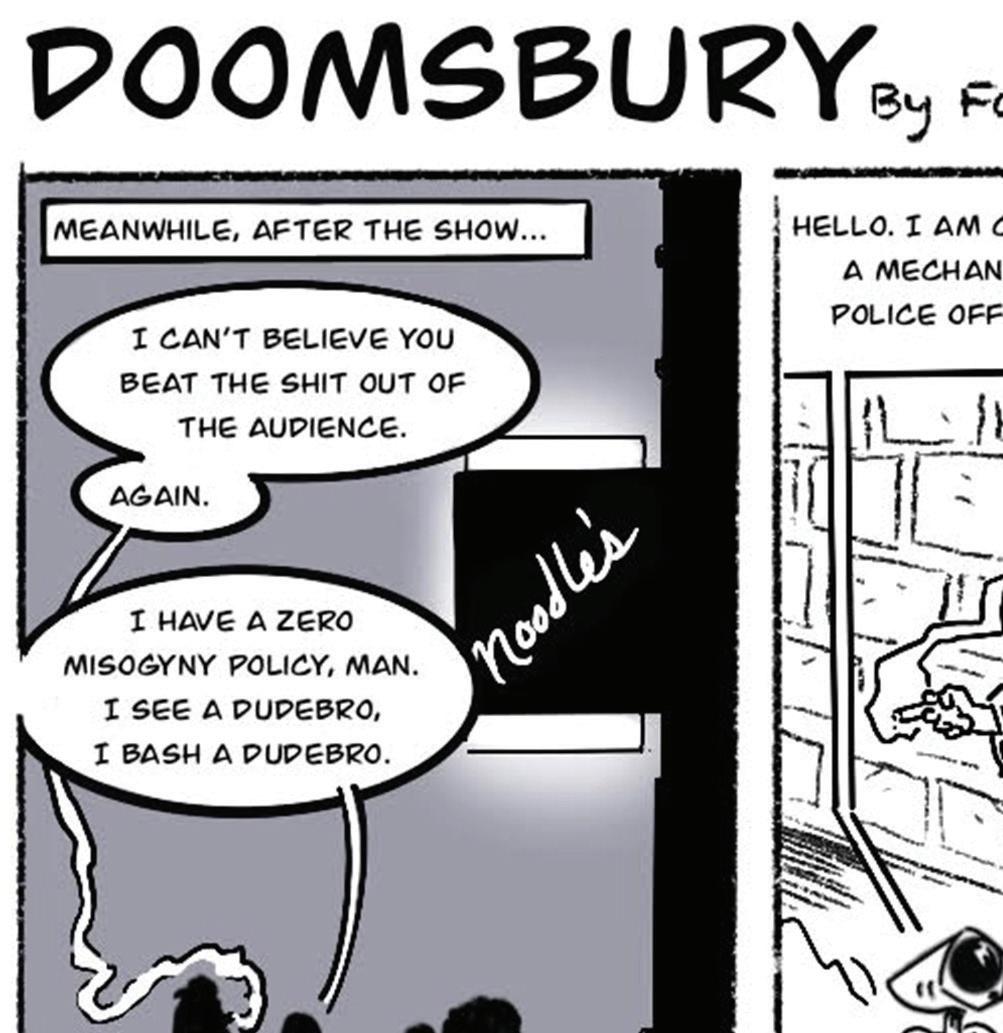
Jason Baker, Shutdown the System
(SELF-RELEASED, DIGITAL)
There are those who like their folk music to have a modern edge, incorporating country, pop or even rock. Then there are musicians like Jason Baker, who performs traditional folk music on his trusty banjo in the same spirit as Earl Scruggs, Ralph Stanley or his own Vermont mentor, Rik Palieri. This is the kind of folk music embedded in American DNA: a rolling banjo peeling o notes while Baker sings of societal woe and the plight of the common person.


Baker’s devotion to the art form has not gone unnoticed, garnering him New England Music Awards nominations and shout-outs in American Songwriter magazine. His latest record, Shutdown the System, will only solidify his bona fides. On “What Would the Prophets Say?,” Baker looks at the hypocrisy of socalled “holy wars,” and the title track is a full-on anticapitalist anthem that would make Woody Guthrie proud.
While it’s fascinating to hear all the ways musicians can reinterpret traditional forms to synthesize them with more modern sounds, there’s also something so e ective about a timeless-sounding record that addresses age-old human problems with little more than a banjo and a human voice.
Listen to Shutdown the System on major streaming platforms and at jbakervt.com.
CHRIS FARNSWORTH


SEVEN DAYS APRIL 24-MAY 1, 2024 66
music+nightlife GET YOUR MUSIC REVIEWED ARE YOU A VT ARTIST OR BAND? SEND US YOUR MUSIC! DIGITAL: MUSIC@SEVENDAYSVT.COM; SNAIL MAIL: MUSIC C/O SEVEN DAYS, 255 S. CHAMPLAIN ST., SUITE 5, BURLINGTON, VT 05401 CLUB DATES FIND THE MOST UP-TO-DATE INFO ON LIVE MUSIC, DJS, COMEDY AND MORE AT SEVENDAYSVT. COM/MUSIC. IF YOU’RE A TALENT BOOKER OR ARTIST PLANNING LIVE ENTERTAINMENT AT A BAR, NIGHTCLUB, CAFÉ, RESTAURANT, BREWERY OR COFFEE SHOP, SEND EVENT DETAILS TO MUSIC@SEVENDAYSVT.COM OR SUBMIT THE INFO USING OUR FORM AT SEVENDAYSVT.COM/POSTEVENT.
REVIEW this

This unforgettable production is coming to Burlington!
A funny and heartfelt story of an artist trying to hold onto his dreams.
playing May 1 - 26 vermontstage.org More info & tickets: Tickets start at $34 a musical by Jonathan Larson the composer of “Rent”

tick, tick... BOOM!
1t-VTStage042424 1 4/19/24 4:32 PM SEVEN DAYS APRIL 24-MAY 1, 2024 67
calendar
APRIL 24-MAY 1, 2024
WED.24
business
QUEEN CITY BUSINESS
NETWORKING INTERNATIONAL
GROUP: Savvy businesspeople make crucial contacts at a weekly chapter meeting. Burlington City Arts, 11:15 a.m.-1 p.m. Free. Info, 829-5066.
community
CURRENT EVENTS: Neighbors have an informal discussion about what’s in the news. Dorothy Alling Memorial Library, Williston, 10:30 a.m.noon. Free. Info, 878-4918.
crafts
YARN CRAFTERS GROUP: A drop-in meetup welcomes knitters, crocheters, spinners, weavers and beyond. BYO snacks and drinks. Must Love Yarn, Shelburne, 5-7 p.m. Free. Info, 448-3780.
dance
WEST COAST SWING DANCING: People pair up for a partner dance and move to every genre of music. Bring clean shoes. North Star Community Hall, Burlington, lessons, 7 p.m.; dance, 8-9:30 p.m. Donations. Info, team@802westiecollective. org. film
See what’s playing at local theaters in the On Screen section.
‘FUNGI: THE WEB OF LIFE
3D’: Sparkling graphics take viewers on a journey into the weird, wide world of mushrooms, which we are only just beginning to understand. Northfield Savings Bank 3D Theater: A National Geographic Experience, ECHO Leahy Center for Lake Champlain, Burlington, 10:30 a.m., 12:30, 2:30 & 4:30 p.m. $3-5 plus regular admission, $14.50-18; admission free for members and kids 2 and under. Info, 864-1848.
‘GREAT WHITE SHARK
3D’: Viewers learn the true story behind one of our most iconic — and misunderstood — predators. Northfield Savings Bank 3D Theater: A National Geographic Experience, ECHO Leahy Center for Lake Champlain, Burlington, noon, 2 & 4 p.m. $3-5 plus regular admission, $14.50-18; admission free for members and kids 2 and under. Info, 864-1848.
‘OCEANS: OUR BLUE PLANET
3D’: Scientists dive into the planet’s least-explored habitat, from its sunny shallows to its alien depths. Northfield Savings Bank 3D Theater: A National Geographic Experience, ECHO Leahy Center for Lake Champlain, Burlington,
11:30 a.m., 1:30 & 3:30 p.m. $3-5 plus regular admission, $14.50-18; admission free for members and kids 2 and under.
Info, 864-1848.
‘TINY GIANTS 3D’: Through the power of special cameras, audiences are transported into the world of the teeniest animals on Earth. Northfield Savings Bank 3D Theater: A National Geographic Experience, ECHO Leahy Center for Lake Champlain, Burlington, 11 a.m., 1 & 3 p.m. $3-5 plus regular admission, $14.50-18; admission free for members and kids 2 and under. Info, 864-1848.
food & drink
WHAT’S THAT WINE
WEDNESDAYS: Aspiring sommeliers blind-taste four wines from Vermont and beyond. Shelburne Vineyard, noon-6 p.m. $15. Info, 985-8222.
health & fitness
CHAIR YOGA: Waterbury Public Library instructor
Diana Whitney leads at-home participants in gentle stretches supported by seats. 10 a.m. Free. Info, 244-7036.
language
BEGINNER IRISH LANGUAGE CLASS: Celtic-curious students learn to speak an Ghaeilge in a supportive group. Fletcher Free Library, Burlington, noon-1 p.m. Free. Info, 863-3403.
ELL CLASSES: ENGLISH FOR BEGINNERS AND INTERMEDIATE STUDENTS: Learners of all abilities practice written and spoken English with trained instructors. Presented by Fletcher Free Library. 6:30-8 p.m. Free; preregister. Info, bshatara@ burlingtonvt.gov.
INTERMEDIATE IRISH
LANGUAGE CONVERSATION AND MUSIC: Speakers with
some experience increase their fluency through conversation and song. Fletcher Free Library, Burlington, 10:30 a.m.-noon. Free. Info, 863-3403.
outdoors
SEE IT. SKETCH IT. BIRD IT.: An interactive program uses bird carvings and other items to learn how to sketch birds. No drawing experience required, and all materials are supplied. Birds of Vermont Museum, Huntington, 1-3 p.m. $15-35; preregister. Info, 434-2167.
sports
GREEN MOUNTAIN TABLE
TENNIS CLUB: Ping-Pong players swing their paddles in singles and doubles matches. Rutland Area Christian School, 7-9 p.m. Free for first two sessions; $30 annual membership. Info, 247-5913.
talks
AMY TOMASSO: A community planning expert shares ideas for expanding affordable housing options statewide. Live stream available. Yestermorrow Design/ Build School, Waitsfield, 6:30-8 p.m. Free. Info, 496-5545.
theater
‘GOLDEN GIRLS: THE LAUGHS CONTINUE’: Four drag queens star as Sophia, Blanche, Rose and Dorothy in this hip-breakingly hilarious parody. The Flynn, Burlington, 7:30 p.m. $53.50-85. Info, 863-5966.
words
AMY ALLEN, MARY ELDER
JACOBSEN AND KIM WARD: Three poets celebrate National Poetry Month with readings from their latest collections. Norwich Bookstore, 7 p.m. Free. Info, 649-1114.
POEMCITY 2024: The beloved local festival of words, hosted by Kellogg-Hubbard Library, fills National Poetry Month with readings, workshops and talks. See kellogghubbard.org for full schedule. Various Montpelier locations. Free; some activities require preregistration. Info, 223-3338.
THU.25 activism
TAKE BACK THE NIGHT: Sexual violence survivors tell their stories at a HOPE Works march and rally. Royall Tyler Theatre, University of Vermont, Burlington, 5 p.m. Free. Info, 863-1236.
climate crisis
‘KISS THE GROUND’: After a screening of this hopeful 2020 documentary about regenerative agriculture, audiences enjoy a discussion, refreshments and writing letters to their representatives in honor of Earth Day. Unitarian Universalist Congregation of the Upper Valley, Norwich, 7-8:30 p.m. Free. Info, 373-0178.
RESILIENCE IMPLEMENTATION
STRATEGY KICK-OFF: The state’s Climate Action Office invites Vermonters to share input on a plan to build a more climate-resilient future. Noon-1:15 p.m. Free; preregister. Info, 522-9555.
crafts
KNIT FOR YOUR NEIGHBORS: Fiber artists of all abilities make hats and scarves to keep their neighbors warm. South Burlington Public Library & City Hall, 2-5 p.m. Free. Info, 846-4140.
KNITTING GROUP: Knitters of all experience levels get together to spin yarns. Latham Library, Thetford, 7 p.m. Free. Info, 785-4361.
film
See what’s playing at local theaters in the On Screen section.
‘FUNGI: THE WEB OF LIFE 3D’: See WED.24.
‘GREAT WHITE SHARK 3D’: See WED.24.
‘OCEANS: OUR BLUE PLANET 3D’: See WED.24.
‘TINY GIANTS 3D’: See WED.24.
‘WHEN MY SLEEPING DRAGON
WOKE’: Actor and playwright Sharon Washington develops a one-woman play in this 2023 documentary. Q&A with Washington and director Chuck Schultz follows. Loew Auditorium, Hopkins Center for the Arts, Dartmouth College, Hanover, N.H., 7 p.m. $12. Info, 603-646-2422.
food & drink
FOCACCIA ART WORKSHOP: Home bakers of all ages turn bread into a masterpiece using herbs, vegetables and cheeses. Red Poppy Cakery, Waterbury, 6-7:30 p.m. $15-80. Info, 203-400-0700.
FREE WINE TASTING: Themed wine tastings take oenophiles on an adventure through a region, grape variety, style of wine or producer’s offerings. Dedalus Wine Shop, Market & Wine Bar, Burlington, 4-7 p.m. Free. Info, 865-2368.
games
DUPLICATE BRIDGE: A lively group plays a classic, tricky game with an extra wrinkle. Waterbury Public Library, 12:30-4:30 p.m. Free. Info, 244-7223.
WEEKLY CHESS FOR FUN: Players of all ability levels face off and learn new strategies. United Community Church, St. Johnsbury, 5:30-9 p.m. Donations. Info, lafferty1949@ gmail.com.
language
ITALIAN CONVERSATION GROUP: Semi-fluent speakers practice their skills during a conversazione with others. Best for those who can speak at least basic sentences. Fletcher Free Library, Burlington, noon-1 p.m. Free. Info, 863-3403.
music
PERCUSSION ENSEMBLE: Student drummers keep the beat to works for traditional instruments, clapping and phone books. University of Vermont Recital Hall, Burlington, 7:30 p.m. Free. Info, 656-3040.
outdoors
FELLOWSHIP OF THE WHEEL
SEASON KICKOFF PARTY: Mountain bikers meet new friends, recap the 2023 season and learn about trail developments with Chittenden County’s local trail maintenance nonprofit. Switchback Brewing, Burlington, 5:30-8 p.m. Free. Info, info@ fotwheel.org.
québec
BLUE METROPOLIS
INTERNATIONAL LITERARY
FESTIVAL: Authors from around the world are on hand at this annual book bash featuring more than 120 events for adults and kids. Virtual programming available. See bluemetropolis.org for full schedule. See calendar spotlight. Various Montréal locations. Prices vary. Info, 438-304-9917.
talks
INDIGENOUS BELONGING AND RIGHTS IN THE NORTHEAST: Leading scholars of Indigenous identity Pamela Palmater, Darryl Leroux and Gordon Henry examine contested claims of indigeneity across the Northeast region, including Vermont. Davis Center, University of Vermont, Burlington, 5:30-7:30 p.m. Free; preregister. Info, andrea.rosencrantz@uvm. edu.
theater
NEUKOM FESTIVAL: ‘ANGEL’S
SHARE’: Dominic Finocchiaro’s new play takes place in a future where the dead can be archived and resurrected, with thorny ethical consequences. Barrette Center for the Arts, White River Junction, 7:30 p.m. Free; preregister. Info, 296-7000.
‘PROXY’: The Parish Players premiere a new drama about Munchausen syndrome by proxy. Eclipse Grange Theater, Thetford, 7:30-9 p.m. $15-25. Info, 785-4344.
words
EVENING BOOK GROUP: Readers discuss The Boys in the Boat by Daniel Brown in a relaxed round-robin. ADA accessible. South Burlington Public Library & City Hall, 6-7 p.m. Free. Info, 846-4140.
LAUREL’S BOOK GROUP: A discussion group dedicated to paperback releases reads The Dog of the North by Elizabeth McKenzie Phoenix Books, Essex, 6 p.m. Free; preregister. Info, 872-7111.
THE MOTH GRANDSLAM: In a battle of wits and words, storytellers compete to be declared the champion of telling tales and tugging heartstrings. The Flynn, Burlington, 8 p.m. $41.
SEVEN DAYS APRIL 24-MAY 1, 2024 68
Info, 863-5966. LIST YOUR UPCOMING EVENT HERE FOR FREE! All submissions must be received by Thursday at noon for consideration in the following Wednesday’s newspaper. Find our convenient form and guidelines at sevendaysvt.com/postevent Listings and spotlights are written by Emily Hamilton Seven Days edits for space and style. Depending on cost and other factors, classes and workshops may be listed in either the calendar or the classes section. Class organizers may be asked to purchase a class listing. Learn more about highlighted listings in the Magnificent 7 on page 11. = ONLINE EVENT FIND MORE LOCAL EVENTS IN THIS ISSUE AND ONLINE: art Find visual art exhibits and events in the Art section and at sevendaysvt.com/art. film See what’s playing at theaters in the On Screen section. music + nightlife Find club dates at local venues in the Music + Nightlife section online at sevendaysvt.com/music. These community event listings are sponsored by the WaterWheel Foundation, a project of the Vermont band Phish. THU.25 » P.70
FAMI LY FU N
Check out these family-friendly events for parents, caregivers and kids of all ages.
• Plan ahead at sevendaysvt.com/family-fun
Post your event at sevendaysvt.com/postevent.
WED.24
burlington
STEAM SPACE: Kids in kindergarten through fifth grade explore science, technology, engineering, art and math activities. Fletcher Free Library, Burlington, 5:30-6:30 p.m. Free. Info, 863-3403.
TODDLER TIME: Librarians bring out books, rhymes and songs specially selected for young ones 12 through 24 months. Fletcher Free Library, Burlington, 11-11:30 a.m. Free. Info, 863-3403.
chittenden county
BABYTIME: Caregivers and infants from birth through age 1 gather to explore board books and toys. South Burlington Public Library & City Hall, 10:30-11 a.m. Free. Info, 846-4140.
COMICS CLUB: Graphic novel and manga fans in third through sixth grades meet to discuss current reads and do fun activities together. Brownell Library, Essex Junction, 3-4 p.m. Free. Info, 878-6956.
EGGSTATIC!: Kids ages 6 through 10 learn how eggs work and why they evolved for some species. Birds of Vermont Museum, Huntington, 10-11:30 a.m. $15-35; preregister; limited space. Info, 434-2167.
PLAY TIME: Little ones build with blocks and read together. Ages 1 through 4. Brownell Library, Essex Junction, 1010:45 a.m. Free. Info, 878-6956.
VACATION CRAFTYTOWN: From painting and printmaking to collage and sculpture, creative kids explore different projects and mediums. Ages 8 and up, or ages 6 and up with an adult helper. ADA accessible. South Burlington Public Library & City Hall, 1-2:30 p.m. Free. Info, 846-4140.
mad river valley/ waterbury
LEGO CHALLENGE CLUB: Kids engage in a fun-filled hour of building, then leave their creations on display in the library all month long. Ages 9 through 11. Waterbury Public Library, 3-4 p.m. Free; preregister. Info, 244-7036.
THU.25 burlington
BABYTIME: Pre-walking little ones experience a story time catered to their infant interests. Fletcher Free Library, Burlington, 11-11:30 a.m. Free. Info, 863-3403.

APR. 26-28 | FAMILY FUN
Old Friends
Lebanon High School’s Wet Paint Players put their teenage talent to work at their latest production: Stephen Sondheim’s Merrily We Roll Along. Having just enjoyed an acclaimed Broadway revival starring Daniel Radcliffe, this sometimes tear-jerking, sometimes sidesplitting musical tells the story of three friends — in reverse chronological order. Starting with their friendship’s bitter dissolution after years of professional and personal resentments and ending with their first encounter as bright-eyed, hopeful young artists, this story is literally one for the ages. Admission is cash only at the door.
‘MERRILY WE ROLL ALONG’
Friday, April 26, and Saturday, April 27, 7 p.m.; and Sunday, April 28, 1 p.m., at Lebanon Opera House, N.H. $4. Info, 603-448-0400, lebanonoperahouse.org.
chittenden county
GREAT JIGSAW PUZZLE RACE FOR KIDS!: Teams of one to three race to put together 150-piece puzzles to win a prize. ADA accessible. Ages 4 and up. South Burlington Public Library & City Hall, 1-3 p.m. Free; preregister. Info, sbplkids@southburlingtonvt.gov.
INTERGENERATIONAL GAME TIME: Card games delight players of all ages. Brownell Library, Essex Junction, 3-4 p.m. Free. Info, 878-6956.
TIM JENNINGS: WORDS & MUSIC: The legendary local folk storyteller delivers an evening of kid-friendly tales and music. Live stream available. Lost Nation Theater, Montpelier City Hall, 1 p.m. $10. Info, 229-0492.
upper valley
BABY FARM ANIMAL CELEBRATION: With an oink-oink here and a cheepcheep there, families mark the start of spring with sheepshearing, wagon rides and baby animal meet and greets. Billings Farm & Museum, Woodstock, 10 a.m.-5 p.m. Regular admission, $12-19; free for members and kids 2 and under. Info, 457-2355.
outside vermont
‘MERRILY WE ROLL ALONG’: See FRI.26.
SUN.28 outside vermont
‘MERRILY WE ROLL ALONG’: See FRI.26, 1 p.m.
MON.29 burlington
PRESCHOOL STORY TIME: Bookworms ages 2 through 5 enjoy fun-filled reading time. Fletcher Free Library, Burlington, 11-11:30 a.m. Free. Info, 863-3403.
upper valley
STORY TIME WITH BETH: A bookseller and librarian extraordinaire reads two picture books on a different theme each week. Norwich Bookstore, 10 a.m. Free. Info, 649-1114.
mad river valley/ waterbury
PRESCHOOL STORY TIME: Games, activities, stories and songs engage 3through 5-year-olds. Waterbury Public Library, 10:30 a.m. Free. Info, 244-7036.
FRI.26
chittenden county
PRESCHOOL MUSIC WITH LINDA BASSICK: The singer and storyteller extraordinaire leads little ones in indoor music and movement. Birth through age 5. Dorothy Alling Memorial Library, Williston, 10:30-11 a.m. Free. Info, 878-4918.
PRESCHOOL PLAYTIME: Pre-K patrons play and socialize after music time. Dorothy Alling Memorial Library, Williston, 11-11:30 a.m. Free. Info, 878-4918.
STORY TIME: Little ones from birth through age 5 learn from songs, crafts and picture books. Brownell Library, Essex Junction, 10-10:30 a.m. Free. Info, 878-6956.
stowe/smuggs
WEE ONES PLAY TIME: Caregivers bring kiddos 3 and younger to a new sensory learning experience each week. Morristown Centennial Library, Morrisville, 10 a.m. Free. Info, 888-3853.
GROW PRESCHOOL YOGA: Colleen from Grow Prenatal and Family Yoga leads little ones in songs, movement and other fun activities. Ages 2 through 5. Fletcher Free Library, Burlington, 11-11:30 a.m. Free. Info, 863-3403.
OPEN BARN DAY: Families take self-guided tours of resident horses, donkeys, pigs, goats, sheep, ducks and turkeys. Merrymac Animal Sanctuary, Charlotte, 3-6 p.m. $15. Info, merrymacfarm@gmail. com.
SWITCH: Patrons of all experience levels play on the library’s new Nintendo video game console. Grades 3 through 8. Brownell Library, Essex Junction, 4-5 p.m. Free. Info, 878-6956.
upper valley
STORY TIME: Preschoolers take part in tales, tunes and playtime. Latham Library, Thetford, 11 a.m. Free. Info, 785-4361.
outside vermont
‘MERRILY WE ROLL ALONG’: Lebanon High School’s Wet Paint Players present Stephen Sondheim’s tear-jerking tale of friendship, art and resentment, told backwards. See calendar spotlight. Lebanon Opera House, N.H., 7 p.m. $4. Info, 603-448-0400.
SAT.27
burlington
FAMILY PLAYSHOP: Kids from birth through age 5 learn and play at this school readiness program. Fletcher Free Library, Burlington, 10-11:30 a.m. Free. Info, 863-3403.
KIDS FEST: A day of fun, fitness and food combines the New American Safety Festival and Healthy Kids Day. Greater Burlington YMCA, 10 a.m.-1 p.m. Free. Info, 862-9622.
STORIES WITH GEOFF: Little patrons of the library’s new location enjoy a morning of stories and songs. Fletcher Free Library New North End Branch, Burlington, 11:15-11:45 a.m. Free. Info, 863-3403.
chittenden county
INDEPENDENT BOOKSTORE DAY:
MILAGRO AMAYA TURNER: The author of Siber Sled Dogs brings the titular husky puppies themselves to an all-ages reading. Phoenix Books, Essex, 11 a.m.noon. Free. Info, 872-7111.
barre/montpelier
MASK MAKING & PUPPET REPAIR FOR ALL SPECIES DAY: Families prepare for the annual festival by unleashing their inner lions, tigers and bears through easy-to-make headdresses. AllTogetherNow!, East Montpelier, 10 a.m.-3 p.m. $10-25 suggested donation. Info, janice@alltogethernowvt.org.
TUE.30 burlington
SING-ALONG WITH LINDA BASSICK: Babies, toddlers and preschoolers sing, dance and wiggle along with Linda. Fletcher Free Library, Burlington, 11-11:30 a.m. Free. Info, 863-3403.
chittenden county
BUILD A KINETIC SCULPTURE FOR THE BIKE PATH: Middle and high school students take part in a community project to create a permanent installation through painting, assembling and decorating. South Burlington Public Library & City Hall, 4-5:30 p.m. Free. Info, 846-4140.
FREE PLAY ART: Creative kids make paintings to take home. Ages 8 and up, or 6 and up with and adult helper. ADA accessible. South Burlington Public Library & City Hall, 3-4 p.m. Free. Info, 846-4140.
PRESCHOOL STORY TIME: Little ones enjoy a cozy session of reading, rhyming and singing. Birth through age 5. Dorothy Alling Memorial Library, Williston, 10:30-11 a.m. Free. Info, 878-4918.
TODDLERTIME: Lively tykes gather for short stories, familiar songs, rhymes and fingerplays. South Burlington Public Library & City Hall, 10:30-11 a.m. Free. Info, 846-4140.
SEVEN DAYS APRIL 24-MAY 1, 2024 69 LIST YOUR EVENT FOR FREE AT SEVENDAYSVT.COM/POSTEVENT
WED.1 » P.74
POEMCITY 2024: See WED.24.
FRI.26 dance
BARNARTS COMMUNITY CONTRA
DANCE: Fueled by a potluck dinner, hoofers put their best foot forward when following calls by Erin Smith. Barnard Town Hall, 6-9 p.m. Free; donations accepted. Info, 234-1645.
CONTRA DANCE: Luke Donforth calls the steps and Oliver Scanlon and Everest Witman play the tunes at this all-levels party. Bring clean, soft-soled shoes. Shelburne Town Hall, beginners’ lesson, 6:45 p.m.; dance, 7-10 p.m. $5-12; free for kids under 12. Info, info@queencitycontras.com.
‘SARA JULI’S NAUGHTY BITS’: Performance artist Sara Juli presents her one-woman dance play about trauma and finding humor amid tragedy. Next Stage Arts Project, Putney, 7:30 p.m. $20-25. Info, 387-0102.
etc.
WES BARKER: A renowned stunt magician blows audience members’ minds. The Flynn, Burlington, 7 p.m. $35.50. Info, 863-5966.
film
See what’s playing at local theaters in the On Screen section.
‘FUNGI: THE WEB OF LIFE 3D’: See WED.24.
‘GREAT WHITE SHARK 3D’: See WED.24.
‘OCEANS: OUR BLUE PLANET 3D’: See WED.24.
‘‘ROUND MIDNIGHT’: Local trumpet legend Ray Vega hosts the latest installment of a new jazz movie screening series with this 1986 classic starring Dexter Gordon. The Screening Room @ VTIFF, Main Street Landing Performing Arts Center, Burlington, 7 p.m. $10. Info, 660-2600.
‘THE SANCTUARY’: A film premiere, an outdoor fashion show and live music help launch a new local scene. Burlington City Hall Park, 7-9 p.m. Free. Info, 404-7603.
‘TINY GIANTS 3D’: See WED.24.
health & fitness
GUIDED MEDITATION
ONLINE: Dorothy Alling Memorial Library invites attendees to relax on their lunch breaks and reconnect with their bodies. Noon-12:30 p.m. Free; preregister. Info, programs@ damlvt.org.
holidays
ARBOR DAY TREE PLANTING: Volunteers plant European larch trees to help maintain the historic site’s character. Marsh-BillingsRockefeller National Historical Park, Woodstock, 10 a.m.-1 p.m. Free. Info, savannah_spannaus@ partner.nps.gov.
BELTANE OPEN MIC: Locals share music, poetry and art in honor of the Celtic May Day festival. Performances are recorded for JAM’s cable station and YouTube channel. Junction Arts & Media, White River Junction, 6-7 p.m. Free; preregister to perform. Info, 295-6688.
lgbtq
RPG NIGHT: Members of the LGBTQ community gather weekly to play games such as Dungeons & Dragons and Everway. Rainbow Bridge Community Center, Barre, 5:30-8:30 p.m. Free. Info, 622-0692.
music
FRIDAY NIGHT PIANO: A performance of piano rolls from the 1900s through the present — and from ABBA to Led Zeppelin — entertains as audiences eat snacks around the firepit. Main Street Museum, White River Junction, 5-10 p.m. Free. Info, info@ mainstreetmuseum.org.
THE HILDALAND DUO: Appalachian and Scottish folk traditions intertwine with contemporary fiddling. Artistree Community Arts Center, South Pomfret, 7 p.m. $25. Info, 457-3500.
NIC GAREISS & SIMON CHRISMAN: Innovative performances on the hammer dulcimer and Greek lute and percussive dance redefine traditional and modern tunes. Richmond Free Library, 7-8:30 p.m. $20. Info, 233-5293.
NORTH COUNTRY CHORUS: The local ensemble marks its 75th spring concert with works by Leonard Bernstein, featuring Halcyon Chorale. South Church Hall, St. Johnsbury, 7:30 p.m. Donations. Info, president@ northcountrychorus.org.
UVM LANE SERIES: DANIELA
LIEBMAN: A 21-year-old Mexican pianist astounds audiences. University of Vermont Recital Hall, Burlington, 7:30-9:30 p.m. $6.50-39.50. Info, 656-4455.
FOMO?
Find even more local events in this newspaper and online: art
Find visual art exhibits and events in the Art section and at sevendaysvt.com/art.
film
See what’s playing at theaters in the On Screen section.
music + nightlife
Find club dates at local venues in the Music + Nightlife section online at sevendaysvt.com/ music.
Learn more about highlighted listings in the Magnificent 7 on page 11.
= ONLINE EVENT

Livre, Laugh, Love
Lovers of all things literary flock to Montréal for the Blue Metropolis International Literary Festival, an annual extravaganza that celebrates its 26th anniversary this year. Whether they’re catching a reading or dressing up for an awards ceremony, bookworms hardly know where to turn with four days of nearly nonstop in-person programming in French or English at their disposal. Offerings include lectures and discussions on topics ranging from YA literature to Alan Dershowitz; readings in every genre under the sun; and appearances by luminaries including Sarah Polley, Mariana Enríquez and Robert Macfarlane.
BLUE METROPOLIS INTERNATIONAL LITERARY FESTIVAL
Thursday, April 25, through Sunday, April 28, at various Montréal locations. Prices vary. Info, 438304-9917, bluemetropolis.org.
québec
BLUE METROPOLIS
INTERNATIONAL LITERARY
FESTIVAL: See THU.25. tech
PROTECTING PERSONAL
INFORMATION ONLINE: Students learn how to secure their passwords and spot scammers. Fletcher Free Library New North End Branch, Burlington, noon1:30 p.m. Free; preregister. Info, 863-3403.
theater
‘I LOVE YOU, YOU’RE PERFECT, NOW CHANGE’: The Borderline Players present a frantically romantic rendition of the musical comedy that stands as one of the longest-running off-Broadway plays in history. Haskell Free Library & Opera House, Derby Line, 7 p.m. $10-30. Info, artisticdirectorblp@gmail.com.
‘LITTLE SHOP OF HORRORS’: Boy meets girl and plant eats boy in this morbidly silly sci-fi musical from the Paramount Players. Paramount Theatre, Rutland, 7 p.m. $25-35. Info, 775-0903.
‘LUNGS’: A funny, clever drama follows a couple deciding whether to have a child amid betrayal, change and an increasingly chaotic world. Artistree Community
Arts Center, South Pomfret, 7 p.m. $15-20. Info, 457-3500.
NEUKOM FESTIVAL: ‘INSTAGIRL’: Award-winning playwright Jessica Moss debuts a new feminist comedy about a collective of influencers and the AI that tears it apart. Barrette Center for the Arts, White River Junction, 7:30 p.m. Free; preregister. Info, 296-7000.
‘PROXY’: See THU.25.
words
ALL AGES ANYTHING GOES
POETRY SLAM: From poets to musicians to magicians, performers share works up to three minutes long at this annual competition hosted by Geof Hewitt. Lost Nation Theater, Montpelier City Hall, 7-9 p.m. Donations. Info, 229-0492.
POEMCITY 2024: See WED.24.
WIT, WISDOM AND A WRITING
WORKSHOP: Joni B. Cole, author of Party Like It’s 2044: Finding the Funny in Life and Death and Good Naked: How to Write More, Write Better, and Be Happier leads a creative session of exploration. Norwich Bookstore, 7 p.m. Free. Info, 649-1114.
VOLUNTEER WORK DAY: Folks tackle indoor and outdoor chores to help prepare the museum for the open season. Birds of Vermont Museum, Huntington, 9 a.m.-2 p.m. Free; preregister for meals. Info, 434-2167.
etc.
INDEPENDENT BOOKSTORE DAY:
JAMES KOCHALKA: The Eisner Award-winning cartoonist does on-the-spot caricatures to raise funds for Very Merry Theatre. Phoenix Books, Burlington, 1-3 p.m. Donations. Info, 448-3350.
fairs & festivals
VERMONT GEAR MAKERS
FESTIVAL: Vermont’s cycling suppliers come together for a makers’ fair featuring repair clinics and a vendors’ market. Ranch Camp, Stowe, 11 a.m.-4 p.m. Free. Info, gearmakersfestival@gmail.com.
VERMONT SCI-FI & FANTASY
EXPO: Wizards, fairies and time travelers suit up for this convention featuring dozens of panels, screenings and demonstrations. See vtgatherings.com for full schedule. See calendar spotlight. Champlain Valley Exposition, Essex Junction, 10 a.m. $5-30; free for kids under 6. Info, 778-9178.
film
See what’s playing at local theaters in the On Screen section.
‘FUNGI: THE WEB OF LIFE 3D’: See WED.24.
‘GREAT WHITE SHARK 3D’: See WED.24.
‘OCEANS: OUR BLUE PLANET 3D’: See WED.24.
SAT.27 agriculture
BACKYARD COMPOSTING: John Malter of the Mad River Resource Management Alliance teaches locals how to process their food waste. Waterbury Public Library, 10-11:30 a.m. Free; preregister by April 25. Info, malterport@aol. com.
HORSE TACK SALE: Dog River
Horse Club invites locals to clean out their barns, sell their old supplies and stock up on deals. Jet Service Envelope, Barre, 9 a.m.-2 p.m. Free. Info, 839-0147.
business
CAREER EMPOWERMENT DAY 2024: Job seekers get free professional outfits and lessons on résumé writing, interviewing well, budgeting and taxes. Vermont Adult Learning, Burlington, 10 a.m.-2 p.m. Free. Info, 860-1417, ext. 112.
community
COMMUNITY SHRED DAY: The more documents that locals bring in to be destroyed, the more money Rockstar Real Estate donates to Golden Huggs dog rescue. Pet Food Warehouse, South Burlington, 9 a.m.-noon. Free. Info, danielle@rockstarvt.com.
‘OVERLAND’: A new documentary follows three people working to connect to the wilderness in a world driven by technology. Vermont Institute of Natural Science, Quechee, 7 p.m. $10-13. Info, 359-5000.
STUDIO PRODUCTION TOUR: Members explore the TV studio and its cameras, microphones and lights. The Media Factory, Burlington, 1-3 p.m. Free; preregister. Info, 651-9692.
‘TINY GIANTS 3D’: See WED.24.
food & drink
BURLINGTON WINTER FARMERS MARKET: Dozens of seasonal stands overflow with produce, artisanal wares and prepared foods. Burlington Beer, 11 a.m.-2 p.m. Free. Info, 560-5904.
CAPITAL CITY WINTER FARMERS MARKET: Root veggies, honey, maple syrup and more change hands at an off-season celebration of locally grown food. Barr Hill, Montpelier, 10 a.m.-1 p.m. Free. Info, nicole.zarrillo@ caledoniaspirits.com.
SEVEN DAYS APRIL 24-MAY 1, 2024 70 calendar
CHILI
CHESS CLUB: Players of all ages and abilities
off and learn
GREAT
COOK-OFF: 15 of the Upper Valley’s best chefs compete to cook the best crock. Live music follows. Main Street Museum, White River Junction, 6 p.m. Free. Info, info@mainstreetmuseum.org. games
face
APR. 25-28 | QUÉBEC
COURTESY OF BRYAN APPLEYARD THU.25 « P.68
Robert Macfarlane
new strategies. ADA accessible. South Burlington Public Library & City Hall, 11 a.m.-2 p.m. Free. Info, 846-4140.
health & fitness
COMMUNITY YOGA CLASS: An all-levels session offers a weekly opportunity to relax the mind and rejuvenate the body. Wise Pines, Woodstock, 10-11 a.m. Free; donations accepted. Info, 432-3126.
lgbtq
HUMP! 2024: PART ONE: This sex-positive medley of indie erotic shorts rolls into town, featuring something for everybody and every body. Merrill’s Roxy Cinemas, Burlington, 6:30-8 & 9-10:30 p.m. $20. Info, info@humpfilmfest. com.
music
ALMOST QUEEN: Chevron mustaches and face-melting guitar solos make for a startlingly authentic Queen tribute. The Flynn, Burlington, 8 p.m. $38-80. Info, 863-5966.
THE DAVE KELLER BAND: The triple-threat singer, songwriter and guitarist demonstrates his deep love of the blues and Southern soul. Highland Center for the Arts, Greensboro, 7 p.m. $5-22. Info, 533-2000.
MIDDLEBURY COMMUNITY WIND
ENSEMBLE SPRING CONCERT: A varied program demonstrates the versatility of reed instruments. Robison Concert Hall, Mahaney Arts Center, Middlebury College, 7:30-9 p.m. Free. Info, 443-5221.
‘NECESSITY SCREAMS (A MUSICAL PERFORMANCE)’:
Singers, fiddlers, cellists, percussionists, clarinetists and trumpeters are invited to participate in this primal howl of a performance. Bread and Puppet Theater, Glover, rehearsal, 2 p.m.; performance, 3 p.m. Donations. Info, 525-3031.
NORTH COUNTRY CHORUS: See FRI.26, 3 p.m.
VERMONT PHILHARMONIC: The orchestra’s 65th annual spring concert features trumpeter Billy Hunter and soprano Mary Bonhag. Chandler Center for the Arts, Randolph, 7:30 p.m. $5-25. Info, 728-9878.
québec
BLUE METROPOLIS
INTERNATIONAL LITERARY
FESTIVAL: See THU.25.
CARE YOU CAN COUNT ON.
theater
CIRCUS SPRINGBOARD: ‘WHAT
TO DO IF YOUR BALLOON POPS’: A brand-new circus-theater show follows its protagonist’s extraordinary journey through awe-inspiring acrobatics, hilarious clowning and heartwarming emotion. New England Center for Circus Arts, Brattleboro, 7-9 a.m. $15-35; free for kids 2 and under. Info, 254-9780.
‘I LOVE YOU, YOU’RE PERFECT, NOW CHANGE’: See FRI.26.
‘KEEPING IT INN’: Cindy Pierce’s one-woman show paints a picture of her mother Nancy’s life as a New Hampshire innkeeper. Town Hall Theater, Middlebury, 7 p.m. $28-37. Info, 382-9222.
‘LITTLE SHOP OF HORRORS’: See FRI.26.
NEUKOM FESTIVAL: ‘INSTAGIRL’: See FRI. 26. Dartmouth College, Hanover, N.H.
NEUKOM FESTIVAL: ‘ANGEL’S
SHARE’: See THU.25. Dartmouth College, Hanover N.H., 2 p.m.
‘PROXY’: See THU.25.
words
‘DO-OVER’ LIVE STORYTELLING
EVENT: Performers share tales relating to the theme at this Mosaic Vermont shindig. Plainfield Town Hall Opera House, 6-7:30 p.m. $520. Info, 476-1388.
INDEPENDENT BOOKSTORE
DAY: Readers meet local authors, enjoy all-ages activities and learn the selection for the 2024 One Town, One Book community read. Bridgeside Books, Waterbury, 10 a.m.-5 p.m. Free. Info, 244-1441.


INDEPENDENT BOOKSTORE DAY: CHRISTOPHE BERNARD: The author signs copies of his latest satirical epic, The Hollow Beast. Phoenix Books, Essex, 3-5 p.m. Free. Info, 872-7111.
INDEPENDENT BOOKSTORE DAY: KIRSTEN HATHAWAY: The local author celebrates the publication of Sugar on Snow, her romantic novel set in a small Vermont town. Phoenix Books, Rutland, 11 a.m.-1 p.m. Free. Info, 855-8078.
POEMTOWN: Readings from local wordsmiths and open mics punctuate National Poetry Month. See poemtown.org for full schedule. Various Randolph locations, 7 p.m. Free. Info, 728-5073.
POEMCITY 2024: See WED.24.
SAT.27
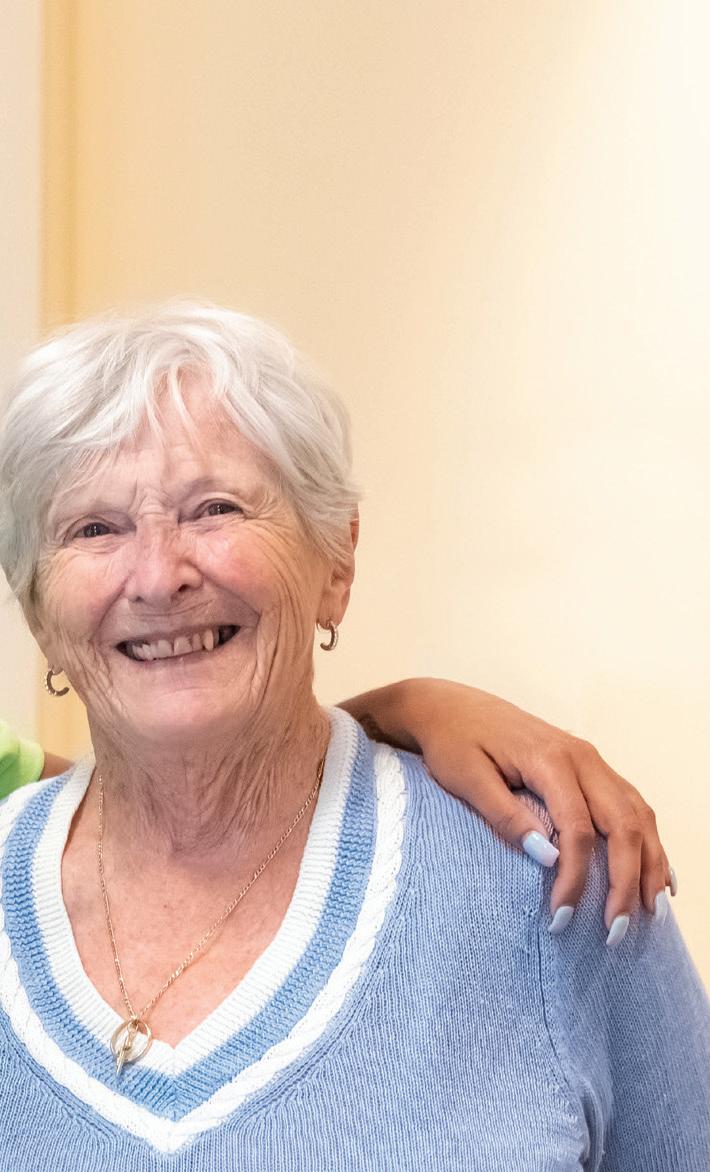

Ask about our Spring Incentives AND SECURE YOUR EXCLUSIVE RATE Independent, Assisted & Memory Care Living Middlebury | 802-231-3645 S. Burlington | 802-489-7627 Shelburne | 802-992-8420 LCB Senior Living Communities: More than 25 Years of Excellence
23t-ExploreComm(LCB)042424 1 4/18/24 4:54 PM SEVEN DAYS APRIL 24-MAY 1, 2024 71 LIST YOUR EVENT FOR FREE AT SEVENDAYSVT.COM/POSTEVENT
»
P.72
calendar
THE POETRY EXPERIENCE: Local wordsmith Rajnii Eddins hosts a supportive writing and sharing circle for poets of all ages. Fletcher Free Library, Burlington, 1-3 p.m. Free. Info, 863-3403.
SUN.28 community
HUMAN CONNECTION CIRCLE: Neighbors share stories from their lives and forge deep connections. Pickering Room, Fletcher Free Library, Burlington, 3-4:30 p.m. Free; preregister; limited space. Info, humanconnectioncircle@gmail.com.
crafts
FIBER ARTS CRAFT CIRCLE: Fabric and yarn aficionados gather for an afternoon of creativity.
Fletcher Free Library, Burlington, 1-3 p.m. Free. Info, 863-3403.
YARN CRAFTERS GROUP: See WED.24, 1-3 p.m.
fairs & festivals
VERMONT SCI-FI & FANTASY
EXPO: See SAT.27.
film
See what’s playing at local theaters in the On Screen section.
‘THE FARM BOY’: Waterbury Center director George Woodard presents a feature film based on his parents’ love story, set during World War II. Savoy Theater, Montpelier, 2 p.m. $12. Info, 229-0598.
‘FUNGI: THE WEB OF LIFE 3D’: See WED.24.
‘GREAT WHITE SHARK 3D’: See WED.24.
‘OCEANS: OUR BLUE PLANET 3D’: See WED.24.
‘TINY GIANTS 3D’: See WED.24.
health & fitness
DREAM BIG 5K: RUN, WALK, ROLL: Movers of all abilities race to raise funds for EDD Adaptive Sports programs. Virtual options available. Essex Middle School, 10 a.m.-noon. $25-40. Info, events@ eddfund.org.
KARUNA COMMUNITY
MEDITATION: A YEAR TO LIVE
(FULLY): Participants practice keeping joy, generosity and gratitude at the forefront of their minds. Jenna’s House, Johnson, 10-11:15 a.m. Free; donations accepted. Info, mollyzapp@live.com.
lgbtq
CRAFT CLUB: Crafty queer folks work on their knitting, crocheting and sewing projects. Rainbow Bridge Community Center, Barre, 10 a.m.-noon. Free. Info, 622-0692.
LGBTQ FIBER ARTS
GROUP: A knitting, crocheting and weaving session welcomes all ages, gender identities, sexual orientations and skill levels. Presented by Pride Center of Vermont. Noon-1 p.m.

Space Out
APR.
The fifth annual Vermont Sci-Fi & Fantasy Expo returns to Essex Junction this weekend with a bang (and a BIFF and a POW). Nerds of all stripes don their hobbit trousers and Han Solo jackets for two days of panels, demonstrations, workshops and more. Attendees learn about 3D printing, the history of cosplay, women in genre fiction, and how to write and self-publish a novel. Special guests include veteran puppet maker and Jim Henson colleague Bill Diamond; charity cosplay group the Montreal X-Men; local heroes the 802 Ghostbusters; and the Star Wars-themed gaming club the Outer Rim Sabacc League. Allons-y!
VERMONT SCI-FI & FANTASY EXPO
Saturday, April 27, and Sunday, April 28, 10 a.m.-6 p.m., at Champlain Valley Exposition in Essex Junction. $5-30; free for kids under 6. Info, 778-9178, vtgatherings.com.
Free. Info, laurie@pridecentervt. org.
music
COUNTERPOINT: The vocal ensemble sings works by Brahms, Beethoven and Bartok that draw on various European folk traditions. Cathedral Church of St. Paul, Burlington, 3-4:30 p.m. $5-25. Info, 864-0471.
DALÍ QUARTET: An energetic foursome plays works for the strings from the European and Latin American canons. South Church Hall, St. Johnsbury, 4:30 p.m. $6-20. Info, 748-2600.
HEATH QUARTET: Classical fans revel in works by Bach, Haydn and others from the acclaimed British ensemble. Robison Concert Hall, Mahaney Arts Center, Middlebury College, 2-4 p.m. Free. Info, 443-6433.
PLAY EVERY TOWN: Prolific pianist David Feurzeig continues a four-year, statewide series of shows in protest of high-pollution worldwide concert tours. West Newbury Congregational Church, 4-5:30 p.m. Free. Info, 505-5281.
VERMONT PHILHARMONIC: See SAT.27. Barre Opera House, 2 p.m. Info, 476-8188.
québec
BLUE METROPOLIS
INTERNATIONAL LITERARY
FESTIVAL: See THU.25.
theater
‘I LOVE YOU, YOU’RE PERFECT, NOW CHANGE’: See FRI.26, 3 p.m.
‘LITTLE SHOP OF HORRORS’: See FRI.26, 2 p.m.
‘LUNGS’: See FRI.26, 2 p.m.
‘PROXY’: See THU.25, 3-4:30 p.m.
words
ISABEL WILKERSON: The Pulitzer Prize-winning author of Caste: The Origins of Our Discontents shares insights. Q&A follows. Hilton Burlington, 6-7 p.m. $45; preregister. Info, patbw@hotmail. com.
JOAN ALESHIRE: The local author launches Belfield, her new historical novel on the life of American Revolution-era painter
Charles Willson Peale. Phoenix Books, Rutland, 3 p.m. Free. Info, 855-8078.
POEMCITY 2024: See WED.24.
MON.29
agriculture
CHARLIE NARDOZZI: The award-winning garden writer discusses ecological gardening and companion planting at the annual Friends of the Waterbury Public Library tea. Waterbury Public Library, 6 p.m. Free. Info, 244-7036.
dance
WEST AFRICAN DANCE AND DRUM CLASS: Participants learn songs, rhythms and moves from across the African diaspora. Ages 13 and up. Wilson Hall, McCullough Student Center, Middlebury College, 5-6:30 p.m. Free. Info, 443-3168.
film
See what’s playing at local theaters in the On Screen section.
‘FUNGI: THE WEB OF LIFE 3D’: See WED.24.
‘GREAT WHITE SHARK 3D’: See WED.24.
‘OCEANS: OUR BLUE PLANET 3D’: See WED.24.
‘TINY GIANTS 3D’: See WED.24.
TUE.30 community
CURRENT EVENTS
DISCUSSION GROUP: Brownell Library holds a virtual roundtable for neighbors to pause and reflect on the news cycle. 10-11:30 a.m. Free. Info, 878-6955.
crafts
LEARN TO CROCHET AND KNIT: Novices of all ages pick up a new skill. Brownell Library, Essex Junction, 5-6 p.m. Free. Info, 878-6955.
dance
SWING DANCING: Local Lindy hoppers and jitterbuggers convene at Vermont Swings’ weekly boogie-down. Bring clean shoes. North Star Community Hall, Burlington, beginner lessons, 6:30 p.m.; dance, 7:30-9 p.m. $5. Info, 864-8382.
education
games
MONDAY NIGHT GAMES:
Discounted wine by the glass fuels an evening of friendly competition featuring new and classic board games, card games, and cribbage. Shelburne Vineyard, 4-7 p.m. Free. Info, 985-8222.
music
CHAMBER ENSEMBLES: Student string players come together for a thrilling evening of works by Dvořák, Mozart and Schubert. University of Vermont Recital Hall, Burlington, 7:30 p.m. Free. Info, 656-3040.
DROP-IN KOREAN DRUMMING: Participants learn samulnori percussion techniques. No experience needed. Freeman International Center, Middlebury College, 6:30-7:30 p.m. Free. Info, 443-5832.
STORYTELLING IN CHINESE MUSIC FROM THE ANCIENT PAST
THROUGH MODERN TIMES: Master pipa player Gao Hong combines performance and education in this presentation on a 2,000-year-old musical tradition. Robison Concert Hall, Mahaney Arts Center, Middlebury College, 7-8 p.m. Free. Info, 443-5221.
theater
‘THE KITE RUNNER’: Matthew Spangler’s stage adaptation of the internationally bestselling novel by Khaled Hosseini follows two boys in Kabul and their friendship across two decades. The Flynn, Burlington, 7:30 p.m. $44.4672.50. Info, 863-5966.
words
POEMCITY 2024: See WED.24.
TURNING PAGES WITH MARY: Radio host Mary Cenci leads an in-depth discussion of Lessons in Chemistry by Bonnie Garmus. Phoenix Books, Essex, 5:30 p.m. Free. Info, 872-7111.
KATE MESSNER AND RAJANI LAROCCA: All educators are invited to a reading and Q&A from the authors of the new young readers’ series The Kids in Mrs. Z’s Class. Phoenix Books, Essex, 6:30 p.m. Free; preregister. Info, 872-7111.
film
See what’s playing at local theaters in the On Screen section.
ESSENTIALS OF CAMERA
OPERATION: Aspiring photographers and cinematographers learn how to shoot like the pros. The Media Factory, Burlington, 6-8 p.m. Free; donations accepted; preregister. Info, 651-9692.
‘FUNGI: THE WEB OF LIFE 3D’: See WED.24.
‘GREAT WHITE SHARK 3D’: See WED.24.
‘OCEANS: OUR BLUE PLANET 3D’: See WED.24.
‘TINY GIANTS 3D’: See WED.24.
language
PAUSE-CAFÉ FRENCH
CONVERSATION: Francophones and French-language learners meet pour parler la belle langue Burlington Bay Market & Café, 5-6:30 p.m. Free. Info, 343-5493.
music
NONET & LATIN JAZZ ENSEMBLE: The two student jazz combos directed by Ray Vega present the music of John Coltrane, Charles Mingus, and other jazz greats. University of Vermont Recital Hall, Burlington, 7:30 p.m. Free. Info, 656-3040.
theater
‘THE KITE RUNNER’: See MON.29.
words
BOOK DISCUSSION: South Burlington Affordable Housing Committee cohosts a conversation about Homelessness Is a Housing Problem: How Structural Factors Explain U.S. Patterns
SEVEN DAYS APRIL 24-MAY 1, 2024 72
| FAIRS
27 & 28
& FESTIVALS
SAT.27 « P.71 TUE.30 » P.74















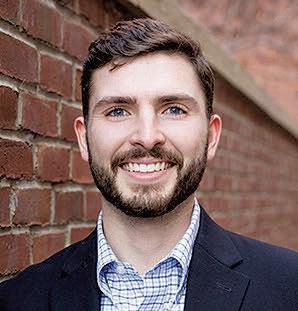
party
LAWYER
Mike Bouffard LENDER
James Gunger REALTOR
Talk with experts and ask questions from home! Take the first step at our free online workshop for first-time home buyers Wednesday, April 24, 6 p.m. READY TO MAKE MOVES? sevendaysvt.com/houseparty REGISTER TODAY: 1t-houseparty040324.indd 1 3/28/24 7:05 AM SEVEN DAYS APRIL 24-MAY 1, 2024 73
Cary Dube
PLEASE JOIN THE CONVERSATION ABOUT VERMONT’S ELECTRIC GRID
Public Meetings on the 2024 Vermont Long-Range Transmission Plan
May 1, 5:00pm – 7:00 pm
Delta Hotel, 1117 Williston Rd, South Burlington, VT
May 2, 12:00pm – 2:00pm Virtual Meeting – Registration required
May 14, 12:00pm – 2:00pm Rutland Free Library, 10 Court St, Rutland, VT
May 15, 5:00pm – 7:00pm St. Albans Town Office, 398 Georgia Shore Road, St. Albans, VT

Refreshments will be served. Please
calendar
by Gregg Colburn and Clayton Page Albern. ADA accessible. South Burlington Public Library & City Hall, 7-8 p.m. Free. Info, 846-4140.
BURLINGTON LITERATURE GROUP: LÁSZLÓ KRASZNAHORKAI:
Readers analyze the Man Booker International Prize-winning novel Seiobo There Below over seven weeks. 6:30-8 p.m. Free. Info, info@nereadersandwriters. com.
POEMCITY 2024: See WED.24.
WED.1 activism
DISABLED ACCESS & ADVOCACY OF THE RUTLAND AREA (DAARA)
MONTHLY ZOOM MEETING:


Community members gather online to advocate for accessibility and other disability rights measures. 11:30 a.m.-noon. Free. Info, 779-9021.
MAY DAY: Workers of all stripes
celebrate International Workers’ Day alongside local unions and labor activists, with live music, speeches and food from People’s Kitchen. Battery Park, Burlington, 6-8 p.m. Free. Info, hello@champlainvalleydsa.org.
business
QUEEN CITY BUSINESS NETWORKING INTERNATIONAL GROUP: See WED.24.
dance
WEST COAST SWING DANCING: See WED.24.
film
See what’s playing at local theaters in the On Screen section.
‘FUNGI: THE WEB OF LIFE 3D’: See WED.24.
‘GREAT WHITE SHARK 3D’: See WED.24.
‘OCEANS: OUR BLUE PLANET 3D’: See WED.24.
‘TINY GIANTS 3D’: See WED.24.
food & drink
WHAT’S THAT WINE
WEDNESDAYS: See WED.24.
health & fitness
CHAIR YOGA: See WED.24.
language
BEGINNER IRISH LANGUAGE CLASS: See WED.24.
ELL CLASSES: ENGLISH FOR BEGINNERS AND INTERMEDIATE STUDENTS: See WED.24.
INTERMEDIATE IRISH LANGUAGE CONVERSATION AND MUSIC: See WED.24.
SPANISH CONVERSATION: Fluent and beginner speakers brush up on their español with a discussion led by a Spanish teacher. Presented by Dorothy Alling Memorial Library. 5-6 p.m. Free; preregister. Info, programs@damlvt.org.
music
seminars
AARP VT: LEARN THE BASICS OF BIKE MAINTENANCE: Cyclists learn the basics of keeping their rigs riding smoothly from AARP VT and Old Spokes Home experts. Old Spokes Home, Burlington, 5:30-7:30 p.m. Free. Info, 866-227-7451.
ECOGATHERINGS: Sterling College hosts online learning sessions digging into big ideas such as joy, rage, climate change, mutual aid, food and art. See ce.sterlingcollege.edu for upcoming topics. 6-7:30 p.m. Free; preregister. Info, ecogather@sterlingcollege.edu.
sports
GREEN MOUNTAIN TABLE
TENNIS CLUB: See WED.24. talks
1A LIVE WITH JENN WHITE: VERMONT HOUSING STORIES AND SOLUTIONS: The NPR host moderates a panel and invites audience members to ask questions. Essex Cinemas & T-Rex Theater, 7:30-9 p.m. $15-20. Info, 540-6882.
ANYA BRICKMAN RAREDON: The president of Affordable Housing Institute shares ideas for expanding affordable housing options. Live stream available. Yestermorrow Design/Build School, Waitsfield, 6:30-8 p.m. Free. Info, 496-5545.
theater


All crafters donate a minimum of 50% of profits to charity
Admission: $3 per adult (under 12 free) 100% of door given to Vermont Food Shelves

Learn more about our adoption, treatment, and child and family services at lundvt.org Building Strong Families, Creating Stronger Communities
WORKING IN YOUR FLAME: THE ART OF BALANCING MULTIPLE BUSINESSES AND LIFE: A Women Business Owners Network Vermont webinar focuses on keeping the fire of motivation burning. 8:30-10 a.m. Free; preregister. Info, 503-0219.
crafts
JEWELRY MAKING WITH CASEY: Crafty folks string beads togeth-

MODERN DAY MUSICIENNES:
Librarian and musician Lois Price introduces guests to the music of modern female American composers such as Florence Price and Amy Beach. ADA accessible. South Burlington Public Library & City Hall, 1:15-2:30 p.m. Free. Info, 846-4140.
STUDENT RECITAL: University of Vermont music students prove their chops in a variety of genres. University of Vermont Recital Hall, Burlington, 7:30 p.m. Free. Info, 656-3040.
Vermont Folklife hosts a tuneful get-together for musicians of all ages and skill levels. BYO instruments. Fletcher Free Library, Burlington, 6:30-7:30 p.m. Free. Info, ytv@
NEUKOM FESTIVAL: ‘THE GREAT GATSBY’: Kelvin Grullon adapts an American classic into an innovative, one-actor experience. Barrette Center for the Arts, White River Junction, 7:30 p.m. $5-40. Info, 296-7000.
‘ROCHESTER LIGHT AND POWER’: Love triangle hijinks meet women’s empowerment in turn-of-the-century rural Vermont in this musical comedy from the White River Valley Players. Rochester School, 7:30 p.m. $15-18. Info, 767-4632.
‘TICK, TICK ... BOOM!’: Vermont Stage presents an autobiographical musical by Jonathan Larson, the late creator of Rent Black Box Theater, Main Street Landing Performing Arts Center, Burlington, 7:30 p.m. $34-64. Info, 862-1497. ➆
chittenden county
BABY TIME: Parents and caregivers bond with their pre-walking babes during this gentle playtime. Dorothy Alling Memorial Library, Williston, 10:30-11 a.m. Free. Info, 878-4918.
BABYTIME: See WED.24.
PLAY TIME: See WED.24.
mad river valley/ waterbury
QUEER READS: LGBTQIA+ and allied youth get together each month to read and discuss ideas around gender, sexuality and identity. Waterbury Public Library, 6-7 p.m. Free; preregister. Info, 244-7036.
TEEN HANGOUT: Middle and high schoolers make friends at a no-pressure meetup. Waterbury Public Library, 3-6 p.m. Free. Info, 244-7036. K
SEVEN DAYS APRIL 24-MAY 1, 2024 74
AMI LY N
TUE.30 « P.72
PARISH HALL,
ST., ESSEX JUNCTION
Saturday May 4th • 9:30 am-4 pm HOLY FAMILY
28 LINCOLN
beCAUSE
Come
Ucare! 6h-beccause042424.indd 1
6h-LundFamilyCenter041724 1 4/12/24 5:09 PM
RSVP at
www.velco.com/vlrtp or 802-770-6381
6H-VELCO042424
4/19/24 11:33 AM
1













SativA: Grape God, Cerebro Haze
Hybrid: Ice Cream Bean, Atomic Apple





Indica: Alien Dawg, Banana Kush, Cookie Punch, Star Fighter, Garlic Cookies, Secret Cookies


Sativa: Mai Thai, Skunk Haze, Oxygen19
Hybrid: Grape BubbleGum, Alien OG, Meat Breath, Gator Breath, Horechata
Indica: Black Gorilla, Critical Purple, SFV OG, Monster OG, Purple Gas, Lemon Diesel PLATINUM
SativA: Ya Hemi, Sour Patch Kids, Purple Tangie
Hybrid: StrawBerry Diesel
Indica: Bing SU, Gorilla Berry, HeadBand, White Gorilla, Wifi
Mintz, Tuna Cookies, Garlic Cookies, Godfather O.G





Open 7 days a week • 8am-10pm 227 RT. 37, HOGANSBURG 13665 exotikadispensaryakwesasne.com


scan to see selection















Tribal Licensed
DISPENSARY
SILVER
GOLD
TWO YEAR ANNIVERSARY PARTY SATURDAY, MAY 17 Prize wheel with ANY purchase
OFF Nano products (ice cream, slushies, drinks) BOGO 1 & 2 gram pens Dunk tank • $10 OFF all ounces Complimentary food 4t-exotika042424.indd 1 4/22/24 3:51 PM e Seven Days guide for Vermonters visiting Québec is back! Find it inside the Summer Preview issue on May 22 and online at sevendaysvt.com/quebec. Heading North this Summer? GUIDE SPONSORED BY: 4t-quebecpreview24.indd 1 4/22/24 2:47 PM • Up To $1,200 Tax Credit • FREE Cordless Upgrade • FREE Installation in Chittenden County • FREE Measuring and Consultation • Blind Repair Service Available CALL TODAY for a FREE in-home or o ce consultation. (802) 862-6701 tinashomedesigns.com *For tax credit details and restrictions and a list of qualifying products, see the Manufacturer’s Certification Statement and FAQs at www.hunterdouglas.com/tax-credit. Hunter Douglas and its dealers are not tax advisors. Consult a tax professional regarding your individual tax situation and ability to claim a tax credit related to the purchase of the qualifying Duette® Honeycomb Shades. © 2024 Hunter Douglas. All rights reserved. All trademarks used herein are the property of Hunter Douglas. All Hunter Douglas Window Shades On Sale SAVE up to $1200 with a new federal tax credit on energy-e cient Hunter Douglas shades* 4t-Tina'sHomeDesign040324.indd 1 3/13/24 5:11 PM Find your best self when you unwind at The Spa at Topnotch. Truly relax with a massage, facial, salon service and simply sitting poolside. Or get in shape with fitness classes or a round of tennis or pickleball. Either way, you deserve nothing less than Topnotch. 4000 Mountain Road • Stowe, Vermont • 800.451.8686 • Topnotchresort.com Relax. Rejuvenate. Renew. salon opnotch. 4t-topnotch041724 1 4/15/24 9:43 AM SEVEN DAYS APRIL 24-MAY 1, 2024 75
$5
Let us keep the wheels rolling along with your mojo! Call for an appointment today!
• diagnostics
• alignments
• tire repair
• brake service
• oil changes

• exhaust systems
• inspections





girlingtongarage.com












beverages
PRETTY IN PINK ROSÉ TASTING!: Jump into spring with Standing Stone Wines and Vermont Wine Merchants with this awesome rosé class and tasting. Discover something new and learn how rosés are made. We’re going to have fun! Tue., Apr. 30, 6:308:30 p.m. Cost: $40. Location: Standing Stone Wines, 33 Main St., Winooski. Info: 540-7160, sevendaystickets.com.
culinary
BERRY GALETTE WORKSHOP:
Join us for an in-person workshop in downtown Waterbury! Learn to make an extra-flaky homemade pie crust and delicious berry or other fruit filling. Enjoy a slice during the class, then take home your custom galette and the recipe. Recipe can be vegan or vegetarian but not gluten-free. Please disclose allergies when you register. Tue., May 14, 6-7:30 p.m. Cost: $85. Location: Red Poppy Cakery, 1 Elm St., Waterbury Village Historic District. Info: 203-4000700, sevendaystickets.com.
BUTTERCREAM CAKE
DECORATING: You’ll learn the basics of filling and crumb-coating a cake and styles of buttercream piping, with lots of fun colors to make your cake special. You’ll go home with some great new techniques and a 6-inch cake that serves 12. Select your flavor in the questionnaire section when you register. u., May 30, 6-7:30 p.m. Cost: $85. Location: Red Poppy Cakery, 1 Elm St., Waterbury Village Historic District. Info: 203-400-0700, sevendaystickets.com.
CHOCOLATE CHIP COOKIE PIZZA: We’ll make a chocolate chip cookie recipe in giant form so we can top with your choice of ganache, buttercream, caramel, white chocolate, fun candies, sprinkles and more! We will also get the chance to eat a slice during the class, then you’ll take home your whole cookie pizza. Tue., Jun. 4, 6-7:15 p.m. Cost: $65. Location: Red Poppy Cakery, 1 Elm St., Waterbury Village Historic District. Info: 203-400-0700, sevendaystickets.com.
CUBAN NIGHT: Join us for Latin flavor and fun! Janina will teach her family recipes for ropa vieja, yucca con mojo and a Vermont twist on a Cuban classic for dessert — maple flan. You’ll learn to make all three recipes, and we’ll finish off the class by having dinner together to enjoy all our hard work. Fri., May 17, 6-8 p.m.
Cost: $100. Location: Red Poppy Cakery, 1 Elm St., Waterbury Village Historic District. Info: 203-4000700, sevendaystickets.com.
SIZZLE & SIMMER: EVERYDAY
COOKING SUMMER CAMP FOR KIDS: Join Sizzle & Simmer for a summer of culinary fun! Learn practical skills, try new foods and build confidence with Elizabeth King, a licensed educator. From homemade pasta to savory pies, explore the joy of cooking! Limited spots available. Visit kinggirlskitchen.com for details.
Aug. 12-16, 9:30 a.m.-1:30 p.m.
Cost: $350. Location: Richmond Community Kitchen, 13 Jolina Ct., Richmond. Info: 434-3445, sevendaystickets.com.
WHISK & WONDERS: BAKING
FUN SUMMER CAMP FOR KIDS: Join King Girls Kitchen’s Whisk & Wonders summer camp! Kids explore ingredients and create treats such as cookies, muffins and cupcakes. Taught by licensed educator Elizabeth King, the camp focuses on fun, confidence building and practical kitchen skills. Limited spots available. Refundable tickets. Visit kinggirlskitchen.com for more info. Jul. 8-12, 9:30 a.m.-1:30 p.m.
Cost: $350. Location: Richmond Community Kitchen, 13 Jolina Ct., Richmond. Info: 434-3445, sevendaystickets.com.
fitness
FIRST STRIDES VERMONT: Women beginning or returning to running and/or walking are invited to join us in this 12-week program based on mentoring, peer support and lifestyle habits. Every Wed. beginning May 1, 5:45 p.m. Cost: $45 for the 12-week program. Location: Williston Village Community Park, 250 Library La., Williston. Info: First Strides Vermont, Kasie Enman, 238-0820, firststridesvermont@ gmail.com, firststridesvermont. com.
martial arts
AIKIDO: THE WAY OF HARMONY: Cultivate core power, aerobic fitness and resiliency. e dynamic, circular movements emphasize throws, joint locks and the development of internal energy. Inclusive training and a safe space for all. Friendlier than Cobra Kai: Visitors are always welcome! Adult basic classes 5 days/week. Membership rates incl. unlimited classes. Contact us for info about membership rates for adults, youths & families. Location: Aikido of Champlain Valley, 257 Pine St., Burlington. Info:
Benjamin Pincus, 951-8900, bpincus@burlingtonaikido.org, burlingtonaikido.org.
music
MUSIC TOGETHER FAMILY
MUSIC: e Music Together philosophy is that all children are musical. Parents learn how to integrate music into a child’s early learning environment and have fun while doing it. With simple instruments, included mp3s and songbooks, and our joyful moving bodies, you have a weekly dose of international musical fun. Every Wed., 9-9:45 a.m., starting May 1. Cost: $175/per family for 8 weeks of classes, incl. books/music code. Location: Murmurations
Aerial Studio, 208 Flynn Ave., Burlington. Info: Songiver Studio Music, Emily Mott, 617-872-4432, emilyarwenmott@gmail.com, songiverstudio.com/classes.
nature
MUSHROOM HUNTING ONLINE
CLASS: Join the Mushroom Forager for our 2024 Mycophile Membership and online class series. Each month of the Northeast mushroom hunting season (May through Oct.), members enjoy an interactive class focused on safely pursuing highlight mushrooms currently fruiting. Members receive colorful handouts and other benefits to pursue favorite edibles as the season unfolds. Live online classes will take place on the following 2024 dates, starting at 7 p.m.: May 9, Jun. 13, Jul. 11, Aug. 8, Sep. 12, Oct. 10. Membership packages start at $175. Location: Online. Info: Jenna Antonino DiMare, 413-374-4670, info@ themushroomforager.com, themushroomforager.com.
yoga
POSTPARTUM DOULA TRAINING: Serve women and families in your community during a time of huge transition and growth by becoming an Ayurveda postpartum doula. You will learn about pregnancy, birth and postpartum through the lens and language of Ayurveda while receiving training in traditional postpartum care practices, balanced with practical understanding for modern women. May 13-17, 9 a.m.-3:30 p.m.
Cost: $1,195/weeklong workshop w/ VSAC grants avail. Location: e Ayurvedic Center of Vermont, 34 Oak Hill Rd., Williston.
Info: Allison Morse, 872-8898, info@ayurvedavermont.com, ayurvedavermont.com.
HOW’S THE RIDE FEELIN’?
QUALITY CAR CARE, DELIVERED WITH RESPECT. 6H-girlington110123.indd 1 10/27/23 3:38 PM CLASSIC HITS of the ‘60s, ‘70s, and ‘80s THE BEST MUSIC EVER MADE! • BIGGEST PLAYLIST • FEWEST BREAKS At Least 50 Minutes of Music an Hour 24 Hours a Day - 7 Days a Week ClassicHitsVermont.com & STREAMING CENTRAL VERMONT NORTHERN VERMONT CHAMPLAIN VALLEY 3V-RadioVT(WCVT-BM3)042424 1 4/10/24 6:33 PM SEVEN DAYS APRIL 24-MAY 1, 2024 76 THE FOLLOWING CLASS LISTINGS ARE PAID ADVERTISEMENTS. ANNOUNCE YOUR CLASS FOR AS LITTLE AS $16.75/WEEK (INCLUDES SIX PHOTOS AND UNLIMITED DESCRIPTION ONLINE). SUBMIT YOUR CLASS AD AT SEVENDAYSVT.COM/POSTCLASS. classes
APARTMENTS, CONDOS & HOMES on the road »
CARS, TRUCKS, MOTORCYCLES pro services »
CHILDCARE, HEALTH/ WELLNESS, PAINTING
buy this stuff »
APPLIANCES, KID STUFF, ELECTRONICS, FURNITURE music »
INSTRUCTION, CASTING, INSTRUMENTS FOR SALE jobs »
NO SCAMS, ALL LOCAL, POSTINGS DAILY

Beau
AGE/SEX: 6-year-old neutered male
ARRIVAL DATE: March 26, 2024
SUMMARY: Beau is quite the special boy, and we’ve all grown to adore him since he arrived. He’s a sensitive dude, and he can often be concerned about new noises and new people. Due to his shy-guy attitude, it takes him a little bit of time to feel comfortable and settle in, but once you’re in his circle this fluffy guy will fill your heart with all the love he so badly wants to give! Beau may never be the life of the party, but he’ll always hold a special place for his trusted people. Spend a little time and patience on Beau, and we’re sure you’ll quickly fall in love!
DOGS/CATS/KIDS: Beau has no known history living with cats, dogs or children. Due to his shy nature, he may be a better fit for an adults-only home or one with older children who can respect his space. He may be happiest as the only pet in the home.
Visit the Humane Society of Chittenden County at 142 Kindness Court, South Burlington, Tuesday through Friday from 1 to 5 p.m. or Saturday from 10 a.m. to 4 p.m. Call 862-0135 or visit hsccvt.org for more info.
DID YOU KNOW?
Beau is a “Spirit Cat.” Spirit Cats are very shy with people — they live in your home but are rarely seen. They are a great choice for people with a quiet household, and earning their trust and affection is so rewarding!
Sponsored by:
SEVEN DAYS APRIL 24-MAY 1, 2024 77 NEW STUFF ONLINE EVERY DAY! PLACE YOUR ADS 24-7 AT SEVENDAYSVT.COM
housing »
Humane Society of Chittenden County
COURTESY OF KELLY SCHULZE/MOUNTAIN DOG PHOTOGRAPHY

5.3-liter v8. 4WD,
on, rims incl. Spray-on bedliner. Sirius XM radio & bluetooth connection. Asking $16,500/OBO. Contact 802-233-2795. 2019 SUBARU CROSSTREK, ONLY 49K MILES 2019 Subaru AWS CVT Crosstrek, only 49K miles. $21,000. Orange, garaged since 2022. Rarely driven in VT winters, w/ no accidents. Email rabbinro@gmail. com.
ROOMY 3-BR OR 1-BR
AVAIL. NOW
1-, 2-, 3-BR avail. now.
Great locations in Burlington, Vt. From $1,000-$1,900/mo. Call Joe’s cell: 802-318-8916.
1-BR IN ESSEX, INCL. UTILS.
Immaculate, well-built, mother-in-law/independent apt. attached to large country home in Essex. Surrounded by nature & forest on main road. $1,600 incl. utils. Text 802-373-4035.
HOUSEMATES
HOUSEMATE WANTED IN WINOOSKI
1-2 roommates to share pleasant Winooski home. $900/BR. Full walk-out cellar, W/D, DW, off-street parking, lawn
EQUAL HOUSING OPPORTUNITY
— OR — Vermont Human Rights Commission 14-16 Baldwin St. Montpelier, VT 05633-0633 1-800-416-2010 hrc@vermont.gov CLASSIFIEDS
housing ads: $25 (25 words) legals: 52¢/word buy this stuff: free online
service. Large, sunny backyard. 2 BR avail. w/ shared BA. Text Chris: 802-578-7526.
RENT-FREE HOMESHARE
Share lovely home w/ active 85-y/o woman in Swanton. No rent w/ utils. contribution in exchange for companionship & light help around the house. Private BA. NS. Call 802-863-5625 or visit homesharevermont. org for application. Interview, refs. & background checks req. EHO.
SHARE HOME W/ PIZZAZZ!
E. etford: Artist/ gardener & teen son seek compatible guest to share large home w/ lots of character. Furnished room, shared BA, no additional pets; $650 all incl. Call 802-863-5625 or visit homesharevermont. org for application. Interview, refs. & background checks req. EHO.
VEGETARIAN HOMESHARE
Share Montpelier home w/ independent senior woman. Seeking vegetarian, substance-free renter. $650 + utils. Call 802-863-5625 or visit homesharevermont. org for application. Interview, refs. & background checks required. EHO.
SHARE HOME & OUTINGS
Shelburne: Retired educator in her 70s, interested in chorus, church activities & mah-jongg, seeks housemate to share occasional outings. $650/ mo. Private BA. Must be cat-friendly! Call 802-863-5625 or visit homesharevermont. org for application. Interview, refs. & background checks req. EHO.
HELP W/ KIDS IN BTV HOME
Attractive home to share w/ professional & his 2 delightful kids in Burlington. Walkable to downtown. Help every other week (fl exible schedule) w/ evening meal prep & fun activities. $500/ mo. Private BA. Visit homesharevermont. org for application. Interview, refs. & background checks req. EHO.
OFFICE/ COMMERCIAL
OFFICE/RETAIL SPACE AT MAIN STREET LANDING on Burlington’s waterfront. Beautiful, healthy, affordable spaces for your business. Visit mainstreetlanding.com & click on space avail. Melinda, 864-7999.

ser vices
AUTO
DONATE YOUR CAR TO CHARITY
Running or not! Fast, free pickup. Maximum tax deduction. Support Patriotic Hearts. Your car donation helps veterans! 1-866-5599123. (AAN CAN)
CAREGIVING
CAREGIVERS AVAIL.! Looking to age in your home but need a little assistance? We have trained avail. caregivers to provide that extra support. Call 802-9233434 today.
RESPITE FOR SPECIAL NEEDS
Work wanted. We do respite for special-needs adults. Weeknights, weekdays & overnights. Call Denise at 802-598-1375.
CLEANING
CHASE CLEANING SERVICES
You know what would make cleaning more fun? A maid! I can offer you personal & quality service. I have competitive rates w/ over 10 years experience. Reliable & trustworthy. Great refs.! Come home from work knowing that your house has been thoroughly cleaned. Just relax: Your housework has been taken care of! Currently servicing Chittenden County. Call 802-355-6929 or email rd8chase@gmail.com.
FINANCIAL/LEGAL
$10K+ IN DEBT?
Be debt-free in 24-48 mos. Pay a fraction of your debt. Call National Debt Relief at 844-9773935. (AAN CAN)
DISABILITY BENEFITS
You may qualify for disability benefi ts if you are between 52-63 y/o & under a doctor’s care for a health condition that prevents you from working for a year or more. Call now! 1-877247-6750. (AAN CAN)


All real estate advertising in this newspaper is subject to the Federal Fair Housing Act of 1968 and similar Vermont statutes which make it illegal to advertise any preference, limitations, or discrimination based on race, color, religion, sex, national origin, sexual orientation, age, marital status, handicap, presence of minor children in the family or receipt of public assistance, or an intention to make any such preference, limitation or a discrimination. The newspaper will not knowingly accept any advertising for real estate, which is in violation of the law. Our readers are hereby informed that all dwellings advertised in this newspaper are available on an equal opportunity basis. Any home seeker who feels he or she has encountered discrimination should contact:
HUD Office of Fair Housing 10 Causeway St., Boston, MA 02222-1092 (617) 565-5309

FREE AUTO INSURANCE QUOTES
For uninsured & insured drivers. Let us show you how much you can save! Call 855-569-1909. (AAN CAN)
HEART-CENTERED FINANCE
Whether you contact Oak Maple w/ a fi nancial plan already in place & simply want to have a sounding board or hammer out details, or whether you show up w/ a shoebox full of receipts & a heart full of anxiety, once you connect w/ the team at Oak Maple, you are not alone. We aim to provide that deep peace of mind that comes from being organized & feeling understood. We will work w/ you until your plan feels right for you. To fi nd out more, go to oakmaple.com.
HEALTH/ WELLNESS
PSYCHIC COUNSELING
Psychic counseling, channeling w/ Bernice Kelman, Underhill. 40+ years’ experience.
Also energy healing, chakra balancing, Reiki, rebirthing, other lives, classes & more. Info, 802-899-3542, kelman.b@juno.com.
HOME/GARDEN
AGING ROOF? NEW
HOMEOWNER? STORM DAMAGE?
You need a local expert provider that proudly stands behind its work.
Fast, free estimate.
Financing avail. Call 1-888-292-8225. Have the zip code of the property ready when calling! (AAN CAN)
BATH & SHOWER UPDATES
In as little as 1 day!
Affordable prices. No payments for 18 mo.
Lifetime warranty & professional installs.
Senior & military discounts avail. Call 1-866-370-2939. (AAN CAN)
LOCKSMITH 24-7
We are there when you need us for home & car lockouts. We’ll get you back up & running quickly! Also, key reproductions,
lock installs & repairs, vehicle fobs.





























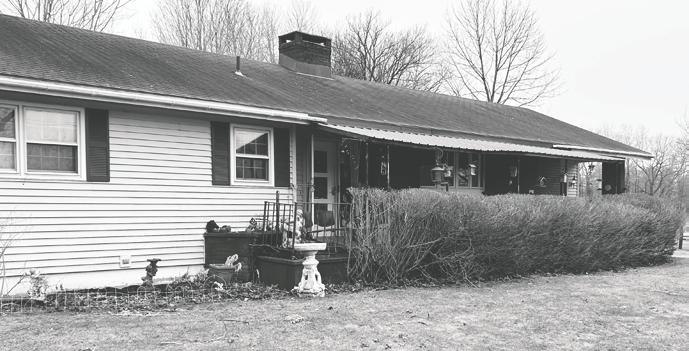
SEVEN DAYS APRIL 24-MAY 1, 2024 78
print deadline:
post
online
865-1020 x121
the road
SILVERADO
miles.
Mondays at 3:30 p.m.
ads
24/7 at: sevendaysvt.com/classifieds questions? classifieds@sevendaysvt.com 865-1020 x115 services: $12 (25 words) fsbos: $45 (2 weeks, 30 words, photo) jobs: michelle@sevendaysvt.com,
on
CARS/TRUCKS 2013 CHEVY
Extended cab. 86,450
towing package. Clean, no rust. Winter tires
housing FOR RENT
DAMAGE CLEANUP
RESTORATION
your family & your home’s value! Call 24-7: 1-888-290-2264. Have zip code of service location ready when you call! (AAN CAN) buy this stuff MISCELLANEOUS DIRECTV SATELLITE TV Service starting at $74.99/mo.! Free install. 160+ channels avail. Call now to get the most sports & entertainment on TV. 877-310-2472. (AAN CAN) PETS CFA MAINE COON KITTENS 2 adorable males avail. in 2 weeks: 1 red tabby, 1 red silver tabby. $2,750. Pet homes only. CFA registered cattery. Contact fourfeathers ofhampton@yahoo.com or see @fourfeathers ofhampton on Facebook. WANT TO BUY MEN’S WATCHES WANTED Men’s sport watches wanted. Rolex, Breitling, Omega, Patek Philippe, Here, Daytona, GMT, Submariner & Speedmaster. Paying cash for qualifi ed watches. Call 888-3201052. (AAN CAN) CLASSIFIEDS KEY appt. appointment apt. apartment BA bathroom BR bedroom DR dining room DW dishwasher HDWD hardwood HW hot water LR living room NS no smoking OBO or best offer refs. references sec. dep. security deposit W/D washer & dryer Spring Into Spring! Get an update on the value of your home. Robbi Handy Holmes • 802-951-2128 robbihandyholmes@vtregroup.com Client focused Making it happen for you! 16t-robbihandiholmes032024.indd 1 3/18/24 10:31 AM THCAuction.com 800-634-SOLD SPRING FIREARMS AUCTION! CONSIGNMENTS WANTED EMAIL: FFL@THCAuction.com LIVE AUCTION: THURSDAY, MAY 16 @ 11AM Regester & Inspect from 10AM OPEN HOUSE: WEDNESDAY, MAY 1 FROM 11AM-1PM 1141 Burgess Road, Bennington, VT 05201 REAL ESTATE AUCTION: 2-Bed, 2-Bath Ranch Home 300+ Pieces Including: SATURDAY, MAY. 4 @ 9AM 131 DORSET LANE, WILLISTON, VT Winchester Lever Guns, Colt Revolvers & Semi-Auto. Pistols, Smith & Wesson Revolvers, Savage 1899’s, Remingtons, Antique, Collectible & Engraved Arms BID ONLINE OR ONSITE! MORE PICS & INFO @ THCAUCTION.COM 8v-hirchakbrothers042424 1 4/22/24 9:37 AM ➆ BUY THIS STUFF »
Call us for your home, commercial & auto locksmith needs! 1-833-237-1233. (AAN CAN) PEST CONTROL Protect your home from pests safely & affordably. Roaches, bedbugs, rodents, termites, spiders & other pests. Locally owned & affordable. Call for service or an inspection today! 1-833-237-1199. (AAN CAN) WATER
&
A small amount of water can lead to major damage & mold growth in your home. Our trusted professionals do complete repairs to protect
CALCOKU BY JOSH REYNOLDS
DIFFICULTY THIS WEEK: HHH
Fill the grid using the numbers 1-6, only once in each row and column. The numbers in each heavily outlined “cage” must combine to produce the target number in the top corner, using the mathematical operation indicated. A one-box cage should be filled in with the target number in the top corner. A number can be repeated within a cage as long as it is not the same row or column.
SUDOKU BY JOSH REYNOLDS
DIFFICULTY THIS WEEK: HH
Place a number in the empty boxes in such a way that each row across, each column down and each 9-box square contains all of the numbers one to nine. The same numbers cannot be repeated in a row or column.
ANSWERS ON P.80
H = MODERATE H H = CHALLENGING H H H = HOO, BOY!
SEVEN DAYS APRIL 24-MAY 1, 2024 79 SEVENDAYSVT.COM/CLASSIFIEDS » Show and tell. View and post up to 6 photos per ad online. Open 24/7/365. Post & browse ads at your convenience. Extra! Extra! There’s no limit to ad length online.
WANT MORE PUZZLES?
these online news games from Seven Days at sevendaysvt.com/games.
your knowledge of
news to the test. NEW ON FRIDAYS:
how fast you can solve this weekly 10-word puzzle. 4-2÷2-40x 6x 2÷ 120x 3 2- 2÷ 22÷ 1- 14+ 2÷ 30x 71 4 23 1 2 1 1 9 84 7 2 5 3 9 29 15 38 6 Say you saw it in... sevendaysvt.com mini-sawit-black.indd 1 11/24/09 1:33:19 PM crossword ANSWERS ON P. 80 » SOLVING DA PUZZLE
Try
Put
Vermont
See
buy this stuff
[CONTINUED]
PORSCHE WANTED
Old & rusty OK! Don’t ship to Germany; keep in Vermont! I’ll buy anything & restore. Parts, panels, engines, cars. Any year, 1950-1998. Contact 802-391-0882.
TOP CASH FOR OLD GUITARS
1920-1980 Gibson, Martin, Fender, Gretsch, Epiphone, Guild, Mosrite, Rickenbacker, Prairie State, D’Angelico & Stromberg + Gibson mandolins & banjos. Call 877-589-0747. (AAN CAN)

music
INSTRUCTION
GUITAR INSTRUCTION
Berklee graduate w/ 30 years’ teaching experience offers lessons in guitar, music theory,
music technology, ear training. Individualized, step-by-step approach. All ages, styles, levels. Rick Belford, 864-7195, rickbelford.com.
GUITAR LESSONS VIA ZOOM!
Personalized guitar lessons. Learn songs of your choice & build skills along the way, all from your own home.
Beginners welcome! Contact 802-559-1319 or personalizedlessons@gmail.com. Info, personalizedguitar les sons.com.

ar t
AUDITIONS/ CASTING
RUNWAY MODELS FOR STRUT
Looking for runway models for STRUT 2024 on May 4 in Burlington. 18+, inclusive, alternative, volunteer. No experience needed. Contact fi tzfoot@gmail. com or 614-517 3660.
THE TOWN OF ADDISON AND THE CITY OF VERGENNES 2024 PUBLIC NOTICE HERBICIDE SPRAYING
e above-mentioned municipalities have requested from the Secretary of the Agency of Agriculture, Food and Markets a permit to apply the following herbicides: Oust Extra (Sulfometuron) and Rodeo (Glyphosate) to control unwanted vegetation along town and city owned highways. Selective spray operations will start approximately May 1st. e applications will be made by certifi ed pesticide applicators using mechanically controlled equipment and hand control methods. Residents along the right-of way are encouraged to protect sensitive environmental areas, organic farmland, and water supplies from spray. It is the resident’s responsibility to notify the town of the existence of these situations adjacent to the town right-of-way. Citizens wishing to inform the town are urged to contact the contact person for their town or city as follows:
Addison- Bryan Nolan 759-2570. Vergennes- Matt Crowley 802-877-2841
e appropriate place to contact with comments, other than the town is the Agency of Agriculture, Food and Markets, Agriculture Resource Management and Environmental Stewardship, 116 State Street, Montpelier, VT 05602, Telephone 802-828-2431. eir link web page that would describe the town’s spray permit request can be found at www.VermontAgriculture.com.
INVITATION TO BID
Engelberth Construction, acting as Construction Manager seeks qualifi ed subcontractors and suppliers for the City of Burlington Patrick Leahy Burlington International Airport (BTV)
Project NexT, located in South Burlington, VT. Federal Disadvantage Business Enterprise (DBE), Women-Owned, Veteran-Owned, Minority-Owned subcontractors and suppliers, and Small Businesses are strongly encouraged to submit a bid proposal.
Project Description: e project consists of a 64,500sf expansion of the existing North terminal at Patrick Leahy Burlington International Airport, demolition of a portion of the existing terminal,
utility construction, utility and generator relocation, new aircraft apron construction, geothermal wells, new passenger boarding bridges, and interior renovation of a portion of existing 2nd fl oor concourse level. e total estimated fi nished fl oor area of the expansion is 36,000 square feet. An unfi nished lower level of approximately 28,500 square feet is also part of the building.
Schedule: Construction is scheduled to begin Summer of 2025 and be completed during the Spring of 2026.
e construction work contains but is not limited to the following: cast-in-place foundations, polished concrete, masonry, structural steel, metal fabrications, heavy timber construction, interior fi nish carpentry, dampproofi ng & waterproofi ng, fluid-applied membrane air barriers, thermal protection, roofi ng, metal panel siding, fi reproofing, joint sealants, doors-frames-hardware, coiling doors, grilles, OHD doors, aluminum storefront / curtain wall, metal stud framing & GWB assemblies, acoustical ceilings, fl ooring / tile, painting & fi nish, signage, misc. specialties, tie back and life anchors, entrance mats & frames, elevators, sprinkler system, plumbing & HVAC, electrical, sitework, exterior concrete paving, fencing, and landscaping.
Funding: is project is funded by the Federal Aviation Administration (FAA) and will adhere to the Federal and City of Burlington procurement and contracting guidelines, including Davis Bacon wage rates and City of Burlington Livable Wage Ordinance, Compliance with FAA Buy American, Equal Employment Opportunities (EEO), City of Burlington annual Pre-Qualifi cation and Women and Construction Trade Ordinance (WACTO), and BTV Badging Qualifi cation. DBE, Women-Owned, Veteran-Owned, Minority-Owned, and Small Businesses are encouraged to submit quotes.
Any interested subcontractors and suppliers should contact Engelberth Construction by sending an email to: Preconstruction3@Engelberth. com Please include your company name, address, phone number, contact name, and the scope of work you wish to bid. When the Bid Package is fi nalized, a formal invitation to bid will then be
sent to you which will include electronic access to relevant documents including the plans and specifi cations.
Engelberth Construction, Inc. is an Equal Opportunity Employer.
Further information about Engelberth Construction is available at www.engelberth.com
NOTICE OF STORAGE UNIT DISPOSAL FOR NON-PAYMENT
Notice is hereby given pursuant to title 9 chapter 98 of the Vermont statutes.
A lien has been placed on the following storage units for non-payment.
Exit 16 Self Storage 295 Rathe Rd Colchester Vt. 05446
Dianne Fayette E48
Josh Leonard L32
Jefferey Nolan K32
Route 7 Climate Storage 189 Northside Dr
Shelburne Vt 05482
Madina Mohamed G48
Taylor Sikes G37
Julianna Graves I12
If full payment is not received by the facility by April 27th the unpaid unit will be disposed of at the facilities discretion.
For questions, please call:
Exit 16 Self Storage 802-497-0404
Route 7 Climate Storage 802-985-4212
STORAGE UNIT SALE
Notice is hereby given that the contents of the following will be sold to the public by sealed bid. e sale is being held to collect unpaid fees, late charges and expenses of the sale.
Jeff Cameron Unit 139
Storage Unit sale will take place on April 30, 2024 at 4:30pm at Fort Ethan Allen Mini Storage, 120 Hegeman Avenue, Colchester, VT 05446.
PROPOSED STATE RULES
By law, public notice of proposed rules must be given by publication in newspapers of record. e purpose of these notices is to give the public a chance to respond to the proposals. e public notices for administrative rules are now also available online at https://secure.vermont.gov/ SOS/rules/ . e law requires an agency to hold a public hearing on a proposed rule, if requested to do so in writing by 25 persons or an association having at least 25 members.
To make special arrangements for individuals with disabilities or special needs please call or write the contact person listed below as soon as possible. To obtain further information concerning any scheduled hearing(s), obtain copies of proposed rule(s) or submit comments regarding proposed rule(s), please call or write the contact person listed below. You may also submit comments in writing to the Legislative Committee on Administrative Rules, State House, Montpelier, Vermont 05602 (802-828-2231).
Rule 3.300 Disconnection of Residential Gas, Electric, and Water Service.
Vermont Proposed Rule: 24P016
AGENCY: Public Utility Commission
CONCISE SUMMARY: e proposed amendments bring the Public Utility Commission’s disconnection rules into alignment with Act 47 to allow for remote disconnections and require utilities to contact owners of rental properties when conducting a disconnection. Disconnections governed by this rule relate to the non-voluntary termination of utility service because of delinquency or non-payment. e rule amendments
SEVEN DAYS APRIL 24-MAY 1, 2024 80
FOR FURTHER INFORMATION, CONTACT: Daniel C. Burke, Esq., Vermont Public Utility Commission 112 State Street, 4th Floor, Montpelier, VT 05602 Tel: 802-828-1173 Fax: 802-828-3352 Email: dan.burke@vermont.gov URL: https://epuc. vermont.gov/?q=node/64/127248. Legal
PLACE AN AFFORDABLE NOTICE AT: SEVENDAYSVT.COM/LEGAL-NOTICES OR CALL 802-865-1020, EXT. 121. PUZZLE ANSWERS FROM P.79 7513 689 24 6234 195 78 8492 756 31 1 6 7 8 5 2 3 4 9 3846 971 52 2951 437 86 5 1 6 7 8 4 2 9 3 4729 368 15 9385 214 67 136524 564231 645312 352146 213465 421653 ➆
also modernize the disconnection notifi cation process by allowing utilities to contact affected customers with SMS text messages and emails instead of only telephone calls.
Notices
FOR COPIES: Ann Bishop, Vermont Public Utility Commission 112 State Street, 4th Floor, Montpelier, VT 05602 Tel: 802-828-2358 Fax: 802-828-3352
Email: ann.bishop@vermont.gov.
Rule 3.400 Disconnection of Cable Television Service and Non-Residential Electric, Gas, and Water Service.
Vermont Proposed Rule: 24P017
AGENCY: Public Utility Commission
CONCISE SUMMARY: The proposed amendments bring the Public Utility Commission’s disconnection rules into alignment with Act 47 to allow for remote disconnections and require utilities to contact owners of rental properties when conducting a disconnection. Disconnections governed by this rule relate to the non-voluntary termination of utility service because of delinquency or nonpayment. The rule amendments also modernize the disconnection notification process by allowing utilities to contact affected customers with SMS text messages and emails instead of only telephone calls.
FOR FURTHER INFORMATION, CONTACT: Daniel C. Burke, Esq., Vermont Public Utility Commission 112 State Street, 4th Floor, Montpelier, VT 05602 Tel: 802-828-1173 Fax: 802-828-3352 Email: dan.burke@vermont.gov URL: https://epuc. vermont.gov/?q=node/64/127248.
FOR COPIES: Ann Bishop, Vermont Public Utility Commission 112 State Street, 4th Floor, Montpelier, VT 05602 Tel: 802-828-2358 Fax: 802-828-3352 Email: ann.bishop@vermont.gov.
TOWN OF RICHMOND SELECTBOARD AMENDMENTS TO MUNICIPAL PARK ORDINANCE
At their meeting on April 15, 2024 the Richmond Selectboard voted to amend the Municipal Park Ordinance.
Copies of the amended ordinance are available at the Town Clerk’s Office, 203 Bridge Street Richmond, or by calling 434-5170, and, at www. richmondvt.gov.
Summary of Changes to Municipal Park Ordinance
Re-names “Brown’s Court Ballfield” to “Brown’s Court Park” in GENERAL section and on Attachment
A
Changes GENERAL section to include Overocker Park in the Ordinance.
Changes SECTION FOUR: RECREATIONAL ACTIVITIES, Subsection B:, 1 to read as follows:
NO PERSON SHALL, WITHOUT WRITTEN PERMISSION SECURED IN ADVANCE FROM THE RICHMOND ADMINISTRATIVE OFFICES:
1. Set up tents, campers, vehicles, or any other temporary shelter for the intention of overnight use.
Adds a map to Attachment A to show location of Overocker Park
In accordance with 24 V.S.A. 1973 residents of the Town or Richmond have the legal right to petition to disapprove of an ordinance. A petition for a vote on the question of disapproving an ordinance or rule shall be signed by not less than five per cent of the qualified voters of the municipality, and presented to the legislative body or the clerk of the municipality within 44 days following the date of adoption of the ordinance or rule by the legislative body. Unless a petition is filed in accordance with 24 V.S.A. 1973, the ordinance or rule shall become effective 60 days after the date of its adoption.
Interested persons with questions or comments may contact:
Josh Arneson, Richmond Town Manager (802) 434-5170, jarneson@richmondvt.gov, 203 Bridge St. PO Box 285 (mailing), Richmond, VT 05477
STATE OF VERMONT SUPERIOR COURT PROBATE DIVISION CHITTENDEN UNIT
DOCKET
In
LEGAL ADVERTISEMENT
Vermont Agency of Transportation Public Notice - Herbicide Spraying
The Vermont Agency of Transportation (VTrans) has requested from the Secretary of Agriculture, Food and Markets, a permit to apply the following herbicides: Garlon 4 ULTRA, Garlon 3A, Oust Extra, Escort, Krenite S, Polaris, and Roundup Custom to control unwanted vegetation along all State highways. Operations are authorized to start approximately May 15 th , 2024, but will not begin untilthe appropriate notification requirements are completed. The application will be made by certified pesticide applicators using mechanically controlled equipment and hand-controlled methods. The methods employed are intended to avoid or eliminate drift. Residents along the rights-of-way (ROW) are encouraged to protect sensitive environments or water supplies within 100 feet of the ROW limits, and to avoid entering the ROW as spray trucks pass and until products dry. Residents should notify VTrans of the existence of any water supplies within 100 feet of the State’s ROW. Citizens wishing to inform VTrans are urged to contact the nearest District Transportation Administrator as follows: District 1 - Bennington - (802) 447-2790, District 2 - Dummerston - (802) 254-5011, District 3 - Mendon - (802) 786-5826. District 4 - White River Junction - (802) 295-8888, District 5 - Colchester - (802) 655-1580, District 6 – Berlin – (802)-917-2879, District 7 - St. Johnsbury - (802) 748-6670, District 8 - St. Albans – (802) 524-5926, District 9 – Derby – (802) 334-7934. The contact person at the State Highway Department Headquarters is Brandon Garretto, Vegetation Management Admin, 2178 Airport Rd, Dill Bldg Unit A, Barre, VT 05641 or brandon.garretto@ vermont.gov. Contact can also be made using the VTrans Internet Web page at https://vtrans.vermont.gov/operations. The appropriate place to contact with comments other than VTrans is the Agency of Agriculture, Food and Markets, Agriculture Resource Management and Environmental Stewardship, 116 State Street, Montpelier, VT 05602, (802) 828-2431. The link to their web page that would describe the VTrans herbicide application permit request can be found at http://www.VermontAgriculture.com.
8h-VTrans041724.indd 1 4/15/24 2:06 PM
To the creditors of: Marian H. Astarita, late of Essex, Vermont.
I have been appointed to administer this estate. All creditors having claims against the decedent or the estate must present their claims in writing within four (4) months of the date of the first publication of this notice. The claim must be presented to me at the address listed below with a copy sent to the Court. The claim may be barred forever if it is not presented within the four (4) month period.
Dated: 04/16/2024
Signature of Fiduciary: /s/ James Astarita
Executor/Administrator: James Astarita, c/o Geraldine E. Stewart Jarrett | Hoyt, 1795 Williston Rd., Suite 125, South Burlington, VT 05403 phone: 802-864-5951 email: gerry@vtelaw.com
Paul Street, beginning 20 feet to the east of the designated public parking stall.
(7) On the north side of Spruce Street, beginning at the driveway for 10 Spruce Street, and extending west 20 feet.
(d)-(f) As written.
** Material stricken out deleted.
*** Material underlined added.
NOTICE OF PUBLIC HEARING
The Burlington Housing Authority has made some proposed changes to its Section 8 Administrative Plan effective October 1, 2024.
The Burlington Housing Authority has also made the proposed changes to the Section 8 Administrative Plan to fully comply with the new Housing Opportunity through Modernization Act (HOTMA). Those changes will not go into effect until sometime in 2025.
A public hearing to obtain comments regarding the proposed Administrative Plan revision will be held on Thursday, May 16th, 2024, at 2:00 pm at the Bobbin Mill Community Center. Details will be available at www.burlingtonhousing.org
Written comments should be sent to:
Steven Murray, Executive Director Burlington Housing Authority 65 Main Street Burlington, Vermont 05401
Electronic copies of the proposed plans will be available at BHA’s 65 Main Street Administrative offices on April 22, 2024. Supporting documents will also be available for review.
Equal Housing Opportunity
ACT 250 NOTICE MINOR APPLICATION 4C0907-4C 10 V.S.A. §§ 6001 – 6111
must state the criteria or sub-criteria at issue, why a hearing is required, and what additional evidence will be presented at the hearing. Any hearing request by an adjoining property owner or other person eligible for party status under 10 V.S.A. § 6085(c)(1)(E) must include a petition for party status under the Act 250 Rules. To request party status and a hearing, fill out the Party Status Petition Form on the Board’s website: https://nrb. vermont.gov/documents/party-status-petitionform, and email it to the District 4 Office at: NRB. Act250Essex@vermont.gov. Findings of Fact and Conclusions of Law may not be prepared unless the Commission holds a public hearing.
For more information contact Stephanie H. Monaghan at the address or telephone number below.
Dated this April 18, 2024.
By:Stephanie H. Monaghan District Coordinator
111 West Street Essex Junction, VT 05452 802-261-1944 stephanie.monaghan@vermont.gov
TOWN OF WESTFORD DEVELOPMENT REVIEW
BOARD NOTICE OF PUBLIC HEARING
Pursuant to 24 V.S.A. Chapter 117 and the Westford Land Use & Development Regulations, the Westford Development Review Board will hold public hearings at the Westford Public Library (1717 Route 128) & via ZOOM on Monday, May 13th, 2024 beginning at 7:00 PM to review the following application:
Site Plan/Conditional Use Public Hearing –Underhill
is a proposal to construct a new accessory structure, approve after-the-fact permitting of existing structures, and a request to vacate the December 28, 2005 ZBA decision regarding the Club.
Join Zoom Meeting
https://zoom.us/j/98364957727?pwd=bVhrZk9SQl YwR3ZOVmpXZktELzhCZz09
Meeting ID: 983 6495 7727 - Passcode: 6nbW6T
Or Dial +1 929 205 6099
Meeting ID: 983 6495 7727 - Passcode: 172761
For more information call the Town Offices at 878-4587 Monday–Thursday 8:30am–4:30pm & Friday 8:30a.m.-1:00 p.m.
Matt Wamsganz, Chairman
Dated April 18, 2024
REQUEST FOR PROPOSAL
MAPLE STREET PARK PLAYGROUND PROJECT
The City of Essex Junction has issued a Request for Proposal (RFP) for a Maple Street Park Playground Project.
(a)-(b) As written.
(c) Electric vehicles.
(1)-(2) As written.
(3) On the northwest side of Intervale Avenue, in front of 33-35 Intervale Avenue.
(4) On the west side of Murray Street, in front of 33 Murray St.
(5) On the west side of Front Street, beginning at the driveway for 39 Front Street and extending north 20 feet.
(6) On the north side of Maple Street, beginning at the intersection of Maple Street and Saint
Application 4C0907-4C from University of Vermont Medical Center, Inc., 1519 Shelburne Road, South Burlington, VT 05403 was received on April 12, 2024 and deemed complete on April 18, 2024. The project is generally described as retrofitting an existing infiltration basin, installing new underground pretreatment chambers, and converting an existing infiltration basin into a forebay to meet the 2017 VSMM 3-acre stormwater standards. The project is located at 327 Holly Court in Williston, Vermont. This application can be viewed online by visiting the Act 250 Database: (https://anrweb.vt.gov/ANR/Act250/Details. aspx?Num=4C0907-4C).
No hearing will be held and a permit will be issued unless, on or before May 15, 2024, a party notifies the District 4 Commission in writing of an issue requiring a hearing, or the Commission sets the matter for a hearing on its own motion. Any person as defined in 10 V.S.A. § 6085(c)(1) may request a hearing. Any hearing request must be in writing,
Essex Junction Recreation & Parks (EJRP) is seeking a cable net/space net/rope play structure(s) and components appropriate for 5-12-year-olds that is large, unique, and makes a statement. Bids shall include site prep, freight, and installation, have a maximum budget of $150K, and installation shall be as soon as possible.
Proposals are due on Friday, May 10, 2024, by 2 p.m. local time at the EJRP office, 75 Maple Street, Essex Junction, VT 05452. Proposals will be opened at 10 a.m. on Monday, May 13.
Information for bidders and the complete RFP may be obtained, without charge, on the City of Essex Junction webpage at www.essexjunction. org/news/invitation-to-bid, at the City Office, or by calling (802) 878-6944. Questions concerning this RFP should be sent to Mark Brislin, Assistant Recreation & Parks Director, at 802-878-1375 or mbrislin@ejrp.org. The City of Essex Junction, through its Authorized Representative, reserves the right to waive any informalities in or reject any and all proposals, in whole or in part, or to accept any proposal deemed to be in the best interest of the City of Essex Junction.
SEVEN DAYS APRIL 24-MAY 1, 2024 81 SEVENDAYSVT.COM/CLASSIFIEDS » Show and tell. View and post up to 6 photos per ad online. Open 24/7/365. Post & browse ads at your convenience. Extra! Extra! There’s no limit to ad length online. LEGALS »
NO.: 24-PR-01249
re ESTATE of Marian H.
NOTICE TO CREDITORS
Astarita
of
Days
Date: 04/24/24 Name of Probate Court: State of VermontChittenden Probate Division Address of Probate Court: 175 Main Street , Burlington, VT 05401 CITY OF BURLINGTON IN THE YEAR TWO THOUSAND TWENTY-FOUR A REGULATION IN RELATION TO RULES AND REGULATIONS OF THE TRAFFIC COMMISSION – 29 SPECIAL PARKING (C) ELECTRIC VEHICLES Sponsor: Public Works Commission Action: Approved Date: 3/20/2024 Attestation of Adoption: Phillip Peterson, PE Senior Transportation Planner, Technical Services Published 4/24/24 Effective: 5/15/24 It is hereby Ordained by the Public Works Commission of the City of Burlington as follows: That Appendix C, Rule and Regulations of the Traffic Commission, 29 Special parking of the Code of Ordinances of the City of Burlington is hereby amended as follows:
Special parking.
parking
at
Name
Publication: Seven
Publication
29
No
shall occur
the following locations unless by:
Rod & Gun Club Property; Applicant: Myron Palmer (approx. 113.25 acres) located off Buchanon
in the Rural 10 and Water Resource Overlay
Lane
Zoning Districts. This


With your financial support, we’ll keep delivering and making sense of the news.

Legal Notices
[CONTINUED]
NOTICE OF REQUEST FOR PROPOSALS
The CDI Development Fund, Inc., in collaboration with the Cooperative Development Institute, is seeking proposals for the purchase and placement of four new Energy Star homes on lots in the ANDCO Mobile Home Cooperative, located in the town of Highgate, VT. Two of the lots are cleared and ready for site work (includes leveling, grading, placing a new slab or expanding the existing slab, checking and upgrading utility hookups as needed), and two of the lots contain homes that are currently inhabited, requiring some additional steps (move-out, hazmat testing and removal, home demolition) prior to site work. Interested contractors / MH dealers should read through the full RFP, including the RFP Scope of Work and Submission Requirements. Proposals should include itemized costs for the known work (as shown in Attachment A), as well as estimated costs for any additional expenses not include in the RFP Scope of Work. This project is made possible by through federal funding of a set amount that cannot be increased. The winning contractor is required to provide price guarantees for their final and best offer, as well as a performance bond and payment bond, both in the amount of 100% of the contract price. The full RFP and attachments can be found here: https://cdi. coop/notice-of-request-for-proposals/.
TOWN OF ESSEX PLANNING COMMISSION
NOTICE OF PUBLIC HEARING
MAY 9, 2024, 6:00 PM
Hybrid & In Person (Municipal Conference Room, 81 Main St., Essex Jct.) Meeting. Anyone may attend this meeting in person at the above address or remotely through the following options: Zoom link: https://www.essexvt.org/1043/ Join-Zoom-Meeting-Essex-PC Call (audio only): 1-888-788-0099 | Meeting ID: 923 7777 6158 # | Passcode: 426269 | Public wifi is available at the Essex municipal offices, libraries, and hotspots listed here: https://publicservice.vermont.gov/ content/public-wifi-hotspots-vermont
1. CONTINUED FROM 4/11/24 Sketch Plan - Alan French is proposing a new conventional 9-lot residential subdivision, with 7 lots served by individual driveways connected to Chapin and Colonel Page Roads and 2 lots served by a shared driveway located at 60 Colonel Page Road, Parcel ID 2-010-071-000, located in the Low Density Residential (R1) Zone and Scenic Resource Preservation Overlay (SRPO) District.
2. Sketch Plan – Eurowest Retail Partners, LTD is requesting a review of a proposed 170 residential units, comprised in 4 buildings at “The Essex Experience”. The property is located at 21 Essex Way, Parcel ID 2-092-001-001, located in the Mixed Use Development - Planned Unit Development (MXD-PUD) District.
3. Site Plan – Franklin South LLC is requesting a review of a proposed 50’x60’ commercial building. The property is located at 108 Colchester Rd, Parcel ID 2-048-003-000, located in the Mixed Use Development (MXD) District.
JOIN THE SUPER READERS: sevendaysvt.com/super-readers
Need info? Contact Gillian English at 865-1020, ext. 115 or superreaders@sevendaysvt.com. Or send a note (and a check) to: Seven Days c/o Super Readers, PO Box 1164, Burlington, VT 05402
Application materials may be viewed before the meeting at https://www.essexvt.org/182/ Current-Development-Applications. Please call 802-878-1343 or email COMMUNITYDEVELOPMENT@ESSEX.ORG with any questions. This may not be the final order in which items will be heard. Please view the complete Agenda, at https://essexvt.portal.civicclerk.com or the office notice board before the hearing for the order in which items will be heard and other agenda items.
STORAGE UNIT SALE
The contents of storage unit 02-00204 located at 48 Industral Ave, Williston VT, will be sold on or about the 9th of May 2024 to satisfy the debt of Anthony Labounty. Any person claiming a right to the goods may pay the amount claimed due and reasonable expenses before the sale, in which case the sale may not occur.
IN ACCORDANCE WITH VT TITLE 9 COMMERCE AND TRADE CHAPTER
098
Storage Units 3905. Enforcement of Lien, Champlain Valley Self Storage, LLC shall host an auction of the following units on or after 5/4/24:
Location: 2211 Main St. Colchester, VT
Contents: household goods
Rose Parizo: #558
Lisa Friedman: #663, #662, #968 Auction pre-registration is required, email info@ champlainvalleyselfstorage.com to register.
NOTICE OF SELF STORAGE LIEN SALE
Burlington Self Storage, LLC
1825 Shelburne Road
South Burlington, VT 05403
Notice is hereby given that the contents of the self storage units listed below will be sold at public auction by sealed bid.
Name of Occupant Storage Unit
Macleod, Unit #30 – 10x15
Said sales will take place on Friday 04/26/24, beginning at 10:00am at Burlington Self Storage (BSS), 1825 Shelburne Road, South Burlington, VT 05403.
Units will be opened for viewing immediately prior to auction. Sale shall be by sealed bid to the highest bidder. Contents of entire storage unit will be sold as one lot. The winning bid must remove all contents from the facility at no cost to BSS, on the day of auction. BSS, reserves the right to reject any bid lower that the amount owed by the occupant or that is not commercially reasonable as defined by statute.
REQUEST FOR PROPOSAL CONSTRUCTION MANAGEMENT
Pathways Vermont, in collaboration with Duncan & Wisnieski Architects, is soliciting proposals for qualified Construction Managers for the renovation of a community/group home located at 141 Maple Street, Burlington, Vermont. This project entails retrofitting an existing building for Pathways Vermont’s A Home for Soteria Project. The objective is to convert the current structure into a nurturing environment tailored for young adults experiencing mental health challenges seeking additional support in a community setting. Utilizing the principles of Therapeutic Design, the project aims to establish a space conducive to healing. The scope prioritizes major renovations on the first floor while minimizing interventions in the basement, second floor, and roof areas. Envelope improvements will achieve thermal and acoustic comfort. The first floor will be fully accessible and compliant with ADA requirements.The DEADLINE for the proposal is April 30, 2024 by 5PM. Proposals shall be submitted by email to Jenny Johnson jenny@pathwaysvermont.org and Sam Beall samb@duncanwisniewski.com Any questions about the RFP should be directed to the same. Minority-owned, women-owned, locally-owned and Section 3 businesses are strongly encouraged to respond. This project is subject to the City of Burlington Livable Wage ordinance and adherence to VHCB procurement guidelines. https://shorturl. at/hFGVZ
TOWN OF WESTFORD REQUEST FOR PROPOSAL Town Wide Solid Waste
The Town of Westford is requesting quotes for the town wide collection of residential and commercial trash,
SEVEN DAYS APRIL 24-MAY 1, 2024 82
recycling, and food residuals for July 1, 2024 – June 30, 2026. Mail or hand deliver quotes to Town of Westford, Attn: Holly Delisle, 1713 Vermont Route 128, Westford, VT 05494 by 4:30pm May 9, 2024, for consideration. Notification of successful entity will be
2024, and
to both
Contractor
made by June 13,
a contract mutually acceptable
the
and the Town will be executed prior to June 30, 2024.
GIVE TODAY! 2v-countonyou030624.indd 1 3/1/24 3:10 PM
Support Groups
A CIRCLE OF PARENTS FOR MOTHERS OF COLOR
Please join our parent-led online support group designed to share our questions, concerns & struggles, as well as our resources & successes!
Contribute to our discussion of the unique but shared experience of parenting. We will be meeting weekly on Wed., 10-11 a.m. For more info or to register, please contact Heather at hniquette@pcavt.org, 802-498-0607, pcavt.org/family-support-programs.
A CIRCLE OF PARENTS FOR SINGLE MOTHERS
Please join our parent-led online support group designed to share our questions, concerns & struggles, as well as our resources & successes!
Contribute to our discussion of the unique but shared experience of parenting. We will be meeting weekly on Fri., 10-11 a.m. For more info or to register, please contact Heather at hniquette@ pcavt.org, 802-498-0607, pcavt.org/ family-support-programs.
A CIRCLE OF PARENTS W/ LGBTQ+ CHILDREN
Please join our parent-led online support group designed to share our questions, concerns & struggles, as well as our resources & successes!
Contribute to our discussion of the unique but shared experience of parenting. We will be meeting weekly on Mon., 10-11 a.m. For more info or to register, please contact Heather at hniquette@ pcavt.org, 802-498-0607, pcavt.org/ family-support-programs.
AL-ANON
For families & friends of alcoholics. Phone meetings, electronic meetings (Zoom) & an Al-Anon blog are avail. online at the Al-Anon website. For meeting info, go to vermontalanon alateen.org or call 866-972-5266.
ALCOHOLICS ANONYMOUS
Do you have a drinking problem? AA meeting sites are now open, & online meetings are also avail. Call our hotline at 802-864-1212 or check for in-person or online meetings at burlingtonaa.org.
ALZHEIMER’S ASSOCIATION SUPPORT GROUPS
Support groups meet to provide assistance & info on Alzheimer’s disease & related dementias. They emphasize shared experiences, emotional support & coping techniques in care for a person living w/ Alzheimer’s or a related dementia. Meetings are free & open to the public. Families, caregivers & friends may attend. Please call in advance to confirm the date & time.
The Williston Caregiver Support Group meets in person on the 2nd Tue. of every mo., 5-6:30 p.m., at the Dorothy Alling Memorial Library in Williston; this meeting also has a virtual option at the same time; contact support group facilitators Molly at dugan@cathedralsquare.org or Mindy at moondog@burlington telecom.net. The Middlebury Support Group for Individuals w/ Early Stage Dementia meets the 4th Tue. of each mo., 3 p.m., at the Residence at Otter Creek, 350 Lodge Rd., Middlebury; contact Daniel Hamilton, dhamilton@ residenceottercreek.com or 802-9890097. The Shelburne Support Group for Individuals w/ Early Stage Dementia meets the 1st Mon. of every mo., 2-3 p.m., at the Residence at Shelburne Bay, 185 Pine Haven Shores, Shelburne; contact support group facilitator Lydia Raymond, lraymond@residenceshelburnebay.com. The Telephone Support Group meets the 2nd Tue. of each mo., 4-5:30 p.m. Prereg. is req. (to receive
dial-in codes for toll-free call). Please dial the Alzheimer’s Association’s 24-7 Helpline, 800-272-3900, for more info. For questions or additional support group listings, call 800-272-3900.
AMPUTEE SUPPORT GROUP
VT Active Amputees is a new support group open to all amputees for connection, community & support. The group meets on the 1st Wed. of the mo. in S. Burlington, 5:30-6:30 p.m. Let’s get together & be active: running, pickleball & ultimate Frisbee. Email vtactiveamputees@gmail.com or call Sue at 802-582-6750 for more info & location.
ARE YOU HAVING PROBLEMS W/ DEBT?
Do you spend more than you earn? Get help at Debtor’s Anonymous & Business Debtor’s Anonymous. Wed., 6:30-7:30 p.m., Methodist Church in the Rainbow Room at Buell & S. Winooski, Burlington. Contact Jennifer, 917-568-6390.
BABY BUMPS SUPPORT GROUP FOR MOTHERS & PREGNANT WOMEN
Pregnancy can be a wonderful time of your life. But it can also be a time of stress often compounded by hormonal swings. If you are a pregnant woman, or have recently given birth & feel you need some help w/ managing emotional bumps in the road that can come w/ motherhood, please come to this free support group led by an experienced pediatric registered nurse. Held on the 2nd & 4th Tue. of every mo., 5:30-6:30 p.m. at the Birthing Center, Northwestern Medical Center, St. Albans. Info: Rhonda Desrochers, Franklin County Home Health Agency, 527-7531.
BETTER BREATHERS CLUB
American Lung Association support group for people w/ breathing issues, their loved ones or caregivers. Meets on the 1st Mon. of every mo., 11 a.m.-noon at the Godnick Center, 1 Deer St., Rutland. For more info, call 802-776-5508.
BRAIN INJURY SUPPORT GROUP
Vermont Center for Independent Living offers virtual monthly meetings, held on the 3rd Wed. of every mo., 1-2:30 p.m. The support group will offer valuable resources & info about brain injury. It will be a place to share experiences in a safe, secure & confidential environment. To join, email Linda Meleady at lindam@vcil.org & ask to be put on the TBI mailing list. Info: 800-639-1522.
BREAST CANCER SURVIVOR DRAGON BOAT TEAM
Looking for a fun way to do something active & health-giving? Want to connect w/ other breast cancer survivors? Come join Dragonheart Vermont. We are a breast cancer survivor & supporter dragon boat team who paddle together in Burlington. Please contact us at info@dragonheartvermont.org for info.
BURLINGTON MEN’S PEER GROUP
Tue. nights, 7-9 p.m. in Burlington. Free of charge, 30 years running. Call Neils 802-877-3742 or email neils@ myfairpoint.net.
PROSTATE CANCER SUPPORT GROUP
The Champlain Valley Prostate Cancer Support Group meets online on the 2nd Tue. of the mo., 6-7:30 p.m., via Zoom. Whether you are newly diagnosed, dealing w/ a reoccurrence or trying to manage the side effects of treatment, you are welcome here! More info: Andy Hatch, group leader, ahatch63@gmail. com.
CENTRAL VERMONT CELIAC SUPPORT
GROUP
Last Thu. of every mo., 7:30 p.m. in Montpelier. Please contact Lisa Masé for location: lisa@harmonizecookery.com.
CEREBRAL PALSY GUIDANCE
Cerebral Palsy Guidance is a very comprehensive informational website broadly covering the topic of cerebral palsy & associated medical conditions. Its mission is to provide the best possible info to parents of children living w/ the complex condition of cerebral palsy. Visit cerebralpalsyguidance.com/ cerebral-palsy.
CODEPENDENTS ANONYMOUS
CoDA is a 12-step fellowship for people whose common purpose is to develop healthy & fulfilling relationships. By actively working the program of Codependents Anonymous, we can realize a new joy, acceptance & serenity in our lives. Meets Sun. at noon at the Turning Point Center, 179 S. Winooski Ave., Suite 301, Burlington. Info: Tom, 238-3587, coda.org.
THE COMPASSIONATE FRIENDS SUPPORT GROUP
The Compassionate Friends international support group for parents, siblings & families grieving the loss of a child meets every 4th Tue. of the mo., 7-9 p.m., at St. John Vianney Catholic Church, 160 Hinesburg Rd, S. Burlington. Call/email Alan at 802-233-0544 alanday88@gmail.com or Claire at 802-448-3569.
DECLUTTERERS’ SUPPORT GROUP
Are you ready to make improvements but find it overwhelming? Maybe 2 or 3 of us can get together to help each other simplify. Info: 989-3234, 425-3612.
DISCOVER THE POWER OF CHOICE!
We welcome anyone, including family & friends, affected by any kind of substance or activity addiction. This is an abstinence-oriented program based on the science of addiction treatment & recovery. Meets are online Sun. at 5 p.m. at the link: meetings.smartrecovery. org/meetings/1868. Face-to-face meetings are 1st & 3rd Sun. at 3 p.m. at the Turning Point of Chittenden County. Meetings for family & friends are online on Mon. at 7 p.m. at the link: meetings/ smartrecovery.org/meetings/6337. Contact volunteer facilitator Bert at 802-399-8754 w/ questions. You can learn more at smartrecovery.org.
DOMESTIC VIOLENCE SUPPORT
Steps to End Domestic Violence offers a weekly drop-in support group for female-identified survivors of intimate partner violence, including individuals who are experiencing or have been affected by domestic violence. The support group offers a safe, confidential place for survivors to connect w/ others, to heal & to recover. In support group, participants talk through their experiences & hear stories from others who have experienced abuse in their relationships. Support group is also a resource for those who are unsure of their next step, even if it involves remaining in their current relationship. Tue., 6:30-8 p.m. Childcare is provided. Info: 658-1996.
FAMILY & FRIENDS OF THOSE EXPERIENCING MENTAL HEALTH CRISIS
This support group is a dedicated meeting for family, friends & community members who are supporting a loved one through a mental health crisis. Mental health crisis might include extreme states, psychosis, depression,
anxiety & other types of distress. The group is a confidential space where family & friends can discuss shared experiences & receive support in an environment free of judgment & stigma w/ a trained facilitator. Wed., 7-8:30 p.m. Downtown Burlington. Info: Jess Horner, LICSW, 866-218-8586.
FAMILY RESTORED: SUPPORT GROUP FOR FRIENDS & FAMILIES OF ADDICTS & ALCOHOLICS
Wed., 6:30-8 p.m., Holy Family/St. Lawrence Parish, 4 Prospect St., Essex Jct. For info, please visit thefamily restored.org or contact Lindsay Duford at 781-960-3965 or 12lindsaymarie@ gmail.com.
FCA FAMILY SUPPORT GROUP
Families Coping w/ Addiction (FCA) is an open community peer support group for adults (18+) struggling w/ the drug or alcohol addiction of a loved one. FCA is not 12-step-based but provides a forum for those living the family experience, in which to develop personal coping skills & to draw strength from one another. Our group meets every Wed., 5:30-6:30 p.m., live in person in the conference room at the Turning Point Center of Chittenden County (179 S. Winooski Ave., Burlington), &/or via our parallel Zoom session to accommodate those who cannot attend in person. The Zoom link can be found on the Turning Point Center website (turningpointcentervt. org) using the “Family Support” tab (click on “What We Offer”). Any questions, please send by email to thdaub1@gmail. com.
FIERCELY FLAT VT
A breast cancer support group for those who’ve had mastectomies. We are a casual online meeting group found on Facebook at Fiercely Flat VT. Info: stacy.m.burnett@gmail.com.
FOOD ADDICTS IN RECOVERY ANONYMOUS (FA)
Are you having trouble controlling the way you eat? FA is a free 12-step recovery program for anyone suffering from food obsession, overeating, under-eating or bulimia. Local meetings are held twice a week: Mon., 4-5:30 p.m., at the Unitarian Universalist Church, Norwich, Vt.; & Wed., 6:30-8 p.m., at Hanover Friends Meeting House, Hanover, N.H. For more info & a list of additional meetings throughout the U.S. & the world, call 603-630-1495 or visit foodaddicts.org.
G.R.A.S.P. (GRIEF RECOVERY AFTER A SUBSTANCE PASSING)
Are you a family member who has lost a loved one to addiction? Find support, peer-led support group. Meets once a mo. on Mon. in Burlington. Please call for date & location. RSVP to mkeasler3@ gmail.com or call 310-3301 (message says Optimum Health, but this is a private number).
GRIEF & LOSS SUPPORT GROUP
Sharing your sadness, finding your joy. Please join us as we learn more about our own grief & explore the things that can help us to heal. There is great power in sharing our experiences w/ others who know the pain of the loss of a loved one & healing is possible through the sharing. BAYADA Hospice’s local bereavement support coordinator will facilitate our weekly group through discussion & activities. Everyone from the community is welcome. 1st & last Wed. of every mo. at 4 p.m. via Zoom. To register, please contact bereavement program coordinator Max Crystal, mcrystal@bayada.com or 802-448-1610.
GRIEF SUPPORT GROUPS
Meet every 2nd Mon., 6-7:30 p.m., & every 3rd Wed. from 10-11:30 a.m., at Central Vermont Home Health & Hospice in Berlin. The group is open to the public & free of charge. More info: Diana Moore, 224-2241.
GRIEVING A LOSS SUPPORT GROUP
A retired psychotherapist & an experienced life coach host a free meeting for those grieving the loss of a loved one. The group meets upstairs at All Souls Interfaith Gathering in Shelburne. There is no fee for attending, but donations are gladly accepted. Meetings are held twice a mo., the 1st & 3rd Sat. of every mo. from 10-11:30 a.m. If you are interested in attending, please register at allsoulsinterfaith. org. More information about the group leader at pamblairbooks.com.
HEARING VOICES SUPPORT GROUP
This Hearing Voices Group seeks to find understanding of voice-hearing experiences as real lived experiences that may happen to anyone at any time. We choose to share experiences, support & empathy. We validate anyone’s experience & stories about their experience as their own, as being an honest & accurate representation of their experience, & as being acceptable exactly as they are. Tue., 2-3 p.m. Pathways Vermont Community Center, 279 N. Winooski Ave., Burlington. Info: 802-777-8602, abby@pathways vermont.org.
HELLENBACH CANCER SUPPORT
People living w/ cancer & their caretakers convene for support. Call to verify meeting place. Info, 388-6107.
INTERSTITIAL CYSTITIS/PAINFUL BLADDER SUPPORT GROUP
Interstitial cystitis (IC) & painful bladder syndrome can result in recurring pelvic pain, pressure or discomfort in the bladder/pelvic region & urinary frequency/ urgency. These are often misdiagnosed & mistreated as a chronic bladder infection. If you have been diagnosed or have these symptoms, you are not alone. For Vermont-based support group, email bladderpainvt@gmail.com or call 899-4151 for more info.
INTUITIVE EATING SUPPORT GROUP
Free weekly peer-led support group for anyone struggling w/ eating &/or body image. The only requirement is a desire to make peace w/ food & your body. Meeting format is: a short reading from Intuitive Eating by Evelyn Tribole & Elyse Resch, 4th edition, followed by open sharing & discussion. Come find community through sharing struggles, experience, strength & hope. Located at the Pickering Room, Fletcher Free Library, Sun. 1-2:30 p.m. Contact 202-553-8953 w/ any questions.
KINDRED CONNECTIONS PROGRAM OFFERED FOR CHITTENDEN COUNTY CANCER SURVIVORS
The Kindred Connections program provides peer support for all those touched by cancer. Cancer patients, as well as caregivers, are provided w/ a mentor who has been through the cancer experience & knows what it’s like to go through it. In addition to sensitive listening, Kindred Connections provides practical help such as rides to doctors’ offices & meal deliveries. The program has people who have experienced a wide variety of cancers. For further info, please contact info@vcsn.net.
SEVEN DAYS APRIL 24-MAY 1, 2024 83
CONTACT CLASSIFIEDS@SEVENDAYSVT.COM OR 802-865-1020 EXT. 115 TO UPDATE YOUR SUPPORT GROUP
SUPPORT GROUPS »
Support Groups
[CONTINUED]
KINSHIP CAREGIVER SUPPORT GROUP
A support group for grandparents who are raising their grandchildren. Led by a trained representative & facilitator. Meets on the 2nd Tue. of every mo., 6:30-7:45 p.m., at Milton Public Library. Free. For more info, call 802-893-4644, email library@miltonvt.gov or visit facebook.com/events/ 561452568022928.
LAUGHTER YOGA
Spontaneous, genuine laughter & gentle breathing for physical & emotional benefit. No yoga mat needed! This group is held every Mon., 2-3 p.m., at Pathways Vermont Community Center, 279 North Winooski Ave., Burlington. Contact Chris Nial for any questions: chrisn@ pathwaysvermont.org.
LGBTQ SURVIVORS OF VIOLENCE
The SafeSpace Anti-Violence Program at Pride Center of Vermont offers peer-led support groups for survivors of relationship, dating, emotional &/or hate-violence. These groups give survivors a safe & supportive environment to tell their stories, share info, & offer & receive support. Support groups also provide survivors an opportunity to gain info on how to better cope w/ feelings & experiences that surface because of the trauma they have experienced. Please call SafeSpace at 863-0003 if you are interested in joining.
LGBTQ VETERANS
Share the struggles & celebrate the joys of being a service member & LGBTQIA+ in this peer-led discussion group. Meetings are at the Rainbow Bridge Community Center in Barre on the 2nd & 4th Tue. of each mo. Visit rbccvt.org for more info.
LIVING THROUGH LOSS
Gifford Medical Center is announcing the restart of its grief support group, Living Through Loss. The program is sponsored by the Gifford Volunteer Chaplaincy Program & will meet weekly on Fri., 11 a.m.-12:30 p.m., in Gifford’s Chun Chapel. Meetings will be facilitated by the Rev. Timothy Eberhardt, spiritual care coordinator, & Emily Pizzale MSW, LICSW, a Gifford social worker. Anyone who has experienced a significant loss over the last year or so is warmly invited to attend & should enter through the hospital’s main entrance wearing a mask on the way to the chapel. Meetings will be based on the belief that, while each of us is on a unique journey in life, we all need a safe place to pause, to tell our stories &, especially as we grieve, to receive the support & strength we need to continue along the way.
MARIJUANA ANONYMOUS
Do you have a problem w/ marijuana? MA is a free 12-step program where addicts help other addicts get & stay clean. Ongoing Wed., 7 p.m., at Turning Point Center, 179 S. Winooski, Suite 301, Burlington. Info: 861-3150.
MYELOMA SUPPORT GROUP
Area myeloma survivors, families & caregivers have come together to form a Multiple Myeloma Support Group. We provide emotional support, resources about treatment options, coping strategies & a support network by
participating in the group experience w/ people who have been through similar situations. 3rd Tue. of every mo., 5-6 p.m., at the New Hope Lodge on East Ave. in Burlington. Info: Kay Cromie, 655-9136, kgcromey@aol.com.
NAMI CONNECTION PEER SUPPORT GROUP MEETINGS
Weekly virtual meetings. If you have questions about a group in your area, please contact the National Alliance on Mental Illness of Vermont, program@ namivt.org or 800-639-6480. Connection groups are peer recovery support group programs for adults living w/ mental health challenges.
NAMI FAMILY SUPPORT GROUP
Weekly virtual & in-person meetings. ASL interpreters avail. upon request. Family Support Group meetings are for family & friends of individuals living w/ mental illness. If you have questions about a group in your area, please contact the National Alliance on Mental Illness of Vermont, info@namivt.org or 800-639-6480.
NARCONON SUNCOAST DRUG & ALCOHOL REHABILITATION & EDUCATION
Narconon reminds families that overdoses due to an elephant tranquilizer known as Carfentanil have been on the rise in nearly every community nationwide. Carfentanil is a synthetic opioid painkiller 100 times more powerful than fentanyl & 1,000 times stronger than heroin. A tiny grain of it is enough to be fatal. To learn more about carfentanil abuse & how to help your loved one, visit narconon-suncoast.org/drug-abuse/ parents-get-help.html. Addiction screenings: Narconon can help you take steps to overcome addiction in your family. Call today for a no-cost screening or referral: 1-877-841-5509.
NARCOTICS ANONYMOUS is a group of recovering addicts who live without the use of drugs. It costs nothing to join. The only requirement for membership is a desire to stop using. Held in Burlington, Barre & St. Johnsbury. Info, 862-4516 or cvana.org.
NARCANON BURLINGTON GROUP
Group meets every Mon. at 7 p.m., at the Turning Point Center, 179 S. Winooski Ave., Suite 301, Burlington. The only requirement for membership is that there be a problem of addiction in a relative or friend. Info: Amanda H., 338-8106.
NEW (& EXPECTING) MAMAS & PAPAS!
EVERY PRIMARY CAREGIVER TO A BABY!
The Children’s Room invites you to join our weekly drop-in support group. Come unwind & discuss your experiences & questions around infant care & development, self-care & postpartum healing, & community resources for families w/ babies. Tea & snacks provided. Thu., 11 a.m.-12:30 p.m. Bring your babies! (Newborn through crawling stage.)
Located in Thatcher Brook Primary School, 47 Stowe St., childrensroom online.org. Contact childrensroom@ wwsu.org or 244-5605.
NORTHWEST VERMONT CANCER
PRAYER & SUPPORT NETWORK
A meeting of cancer patients, survivors & family members intended to comfort & support those who are currently suffering from the disease. 2nd Thu. of every mo., 6-7:30 p.m., St. Paul’s United
Methodist Church, 11 Church St., St. Albans. Info: stpaulum@myfairpoint. net. 2nd Wed. of every mo., 6-7:30 p.m., Winooski United Methodist Church, 24 W. Allen St., Winooski. Info: hovermann4@comcast.net.
OVEREATERS ANONYMOUS (OA)
A 12-step program for people who identify as overeaters, compulsive eaters, food addicts, anorexics, bulimics, etc. No matter what your problem w/ food, we have a solution! All are welcome, meetings are open, & there are no dues or fees. See oavermont.org/meeting-list for the current meeting list, meeting format & more; or call 802-863-2655 anytime!
PONDERING GENDER & SEXUALITY
Pondering Gender & Sexuality is a twicemonthly facilitated mutual support group for folks of any identity (whether fully formed or a work in progress) who want to engage in meaningful conversations about gender, sexuality & sexual orientation, &/or the coming-out process. Discussions can range from the personal to the philosophical & beyond as we work together to create a compassionate, safe & courageous space to explore our experiences. The group will be held on the 2nd Sun. & 4th Tue. of every mo., 1-2:30 p.m., either virtually or at Pride Center of Vermont. Email pgs@pridecentervt.org for more info or w/ questions!
POTATO INTOLERANCE SUPPORT
GROUP
Anyone coping w/ potato intolerance & interested in joining a support group, contact Jerry Fox, 48 Saybrook Rd., Essex Junction, VT 05452.
QUEER CARE GROUP
This support group is for adult family members & caregivers of queer &/or questioning youth. It is held on the 2nd Mon. of every mo., 6:30-8 p.m., at Outright Vermont, 241 N. Winooski Ave. This group is for adults only. For more info, email info@outrightvt.org.
READY TO BE TOBACCO-FREE GROUPS
Join a free 4-5-week group workshop facilitated by our coaches, who are certified in tobacco treatment. We meet in a friendly, relaxed & virtual atmosphere. You may qualify for a free limited supply of nicotine replacement therapy. Info: call 802-847-7333 or email quittobaccoclass@uvmhealth.org to get signed up, or visit myhealthyvt.org to learn more about upcoming workshops!
RECOVERING FROM RELIGION
Meets on the 2nd Tue. of every mo., 6-8 p.m., at Brownell Public Library, 6 Lincoln St., Essex Junction, unless there’s inclement weather or the date falls on a holiday. Attendees can remain anonymous if they so choose & are not required to tell their story if they do not wish to, but everyone will be welcome to do so. The primary focus of a Recovering From Religion support group is to provide ongoing & personal support to individuals as they let go of their religious beliefs. This transitional period is an ongoing process that can result in a range of emotions, as well as a ripple effect of consequences throughout an individual’s life. As such, the support meetings are safe & anonymous places to express these doubts, fears & experiences without biased feedback or proselytizing. We are here to help each other through this journey. Free.
RECOVERY DHARMA
Recovery Dharma uses Buddhist practices & principles to help people recover from all kinds of addictions & addictive
behaviors. This peer led, non-theistic group offers opportunities to deepen understanding, explore personal inquiry & connect w/ others. We meet every Wed. from 6:30-7:30 p.m. at the First United Methodist Church in Burlington (the “Red Door” Church, 21 Buell St.). Enter through the administrative office door (at far left when viewed from Buell St.) No meditation experience req.; all are welcome. Email rd.burlington.vt@ gmail.com for more information.
REFUGE RECOVERY MEETING
Burlington Refuge Recovery is a Buddhist-oriented, nontheistic addiction recovery group that meets every Tue. at 6:45 p.m. at Turning Point Center, located at 179 S. Winooski Ave. in Burlington.
SCLERODERMA FOUNDATION NEW ENGLAND
Support group meeting held on the 4th Tue. of every mo., 6:30-8:30 p.m., Williston Police Station. Info, Blythe Leonard, 878-0732.
SEX & LOVE ADDICTS ANONYMOUS
12-step recovery group. Do you have a problem w/ sex or relationships? We can help. Info: Shawn, 660-2645. Visit slaafws.org or saa-recovery.org for meetings near you.
SEX ADDICTS ANONYMOUS, MONTPELIER
Do you have a problem w/ compulsive sexual behavior? A 12-step program has helped us. SAA Montpelier meets twice weekly at 6 p.m.: Mon. virtual meeting, details at saatalk.info; Thu. face-toface at Bethany Church, Montpelier. Details at saa-recovery.org. Contact saa.vtrecovery@gmail.com or call 802-322-3701.
SEXUAL VIOLENCE SUPPORT
HOPE Works offers free support groups to women, men & teens who are survivors of sexual violence. Groups are avail. for survivors at any stage of the healing process. Intake for all support groups is ongoing. If you are interested in learning more or would like to schedule an intake to become a group member, please call our office at 864-0555, ext. 19, or email our victim advocate at advocate@sover.net.
SOCIAL ANXIETY SUPPORT GROUPS
For screened adults ages 28-40. Therapist-led sessions. For more info, contact diane@ldtayeby.com.
STUTTERING SUPPORT GROUPS
If you’re a person who stutters, you are not alone! Adults, teens & school-age kids who stutter, & their families are welcome to join 1 of our 3 free National Stuttering Association (NSA) stuttering support groups at UVM (join by Zoom or in person). Adults: 5:30-6:30 p.m., 1st & 3rd Tue. monthly; teens (ages 13-17): 5:30-6:30 p.m., 2nd Thu. monthly; school-age children (ages 8-12) & parents (meeting separately): 4:15-5:15 p.m., 2nd Thu. monthly. Pomeroy Hall (489 Main St., UVM campus). Info: nsachapters.org/burlington, burlingtonstutters@gmail.com, 656-0250. Go, Team Stuttering!
SUICIDE SURVIVORS SUPPORT GROUP
For those who have lost a friend or loved one through suicide. 6:30-8 p.m., on the 3rd Tue. of every mo. Maple Leaf Clinic, 167 N. Main St., Wallingford. Info: 446-3577.
SUICIDE HOTLINES IN VT
Brattleboro, 257-7989; Montpelier (Washington County Mental Health Emergency Services), 229-0591;
Randolph (Clara Martin Center Emergency Service), 800-639-6360.
SUPPORT GROUP FOR WOMEN who have experienced intimate partner abuse, facilitated by Circle (Washington Co. only). Please call 877-543-9498 for more info.
SURVIVORS OF SUICIDE
If you have lost someone to suicide & wish to have a safe place to talk, share & spend a little time w/ others who have had a similar experience, join us on the 3rd Thu. of every mo., 7-9 p.m., at the Faith Lighthouse Church, Route 105, Newport (105 Alderbrook). Please call before attending. Info: Mary Butler, 744-6284.
SURVIVORS OF SUICIDE: S. BURLINGTON
This group is for people experiencing the impact of the loss of a loved one to suicide. 1st Wed. of each mo., 6-7:30 p.m., at the Comfort Inn & Suites, 3 Dorset St., S. Burlington. Info: Bob Purvee at 802-922-4283 or ripurvee1@ yahoo.com, or Aya Kuki at 802-881-3606 or ayakokuki@gmail.com
TRANS & GENDER-NONCONFORMING
SUPPORT GROUP
As trans & GNC people in the world, we experience many things that are unique to our identities. For that reason, the Transgender Program hosts a support group for our community on the 1st & 3rd Wed. of every mo., 6:30-8 p.m., either virtually or at Pride Center of Vermont. The Trans & GNC Support group is for Vermonters at all stages of their gender journey to come together to socialize, discuss issues that are coming up in their lives & build community. We welcome anyone whose identity falls under the trans, GNC, intersex & nonbinary umbrellas, & folks questioning their gender identity. Email safespace@pridecentervt.org w/ any questions, comments or accessibility concerns.
TRANSGENDER FAMILY SUPPORT
We are people w/ adult loved ones who are transgender or gender nonconforming. We meet to support each other & to learn more about issues & concerns. Our sessions are supportive, informal & confidential. Meetings are held at 5:30 p.m., the 2nd Thu. of each mo., via Zoom. Not sure if you’re ready for a meeting? We also offer 1-on-1 support. For more info, email rex@pridecentervt.org or call 802-318-4746.
TRANS PARENT SUPPORT GROUP
We will be in community w/ parents of trans kids of all ages & supporting each other w/ storytelling, listening, learning & love. If we want to protect our trans kids, our first line of defense is uplifting their parents & guardians! This is a peer-support group & will be facilitated by Alison & Shawna. 4th Tue. of every month, 5:30-7:30 p.m at Rainbow Bridge Community Center. Contact 802-6220692 or info@rainbowbridgevt.org
WOMEN’S CANCER SUPPORT GROUP
FAHC. Led by Deb Clark, RN. Every 1st & 3rd Tue., 5-6:30 p.m. Call Kathy McBeth, 847-5715.
YOUNG ADULT SUPPORT GROUP
A support group for young adults to build community & access peer support. This group meets weekly on Thu., 3-4 p.m., at Pathways Vermont Community Center, 279 North Winooski Ave., Burlington. Contact Chris Nial for any questions: chrisn@ pathwaysvermont.org.
SEVEN DAYS APRIL 24-MAY 1, 2024 84
“ ere’s a lot of talent in Vermont, and we know that Seven Days Jobs is the best place to find it. I would recommend this job board to any local business looking to find qualified applicants quickly and within budget! e combination of the searchable website and the weekly print edition is a perfect package.”




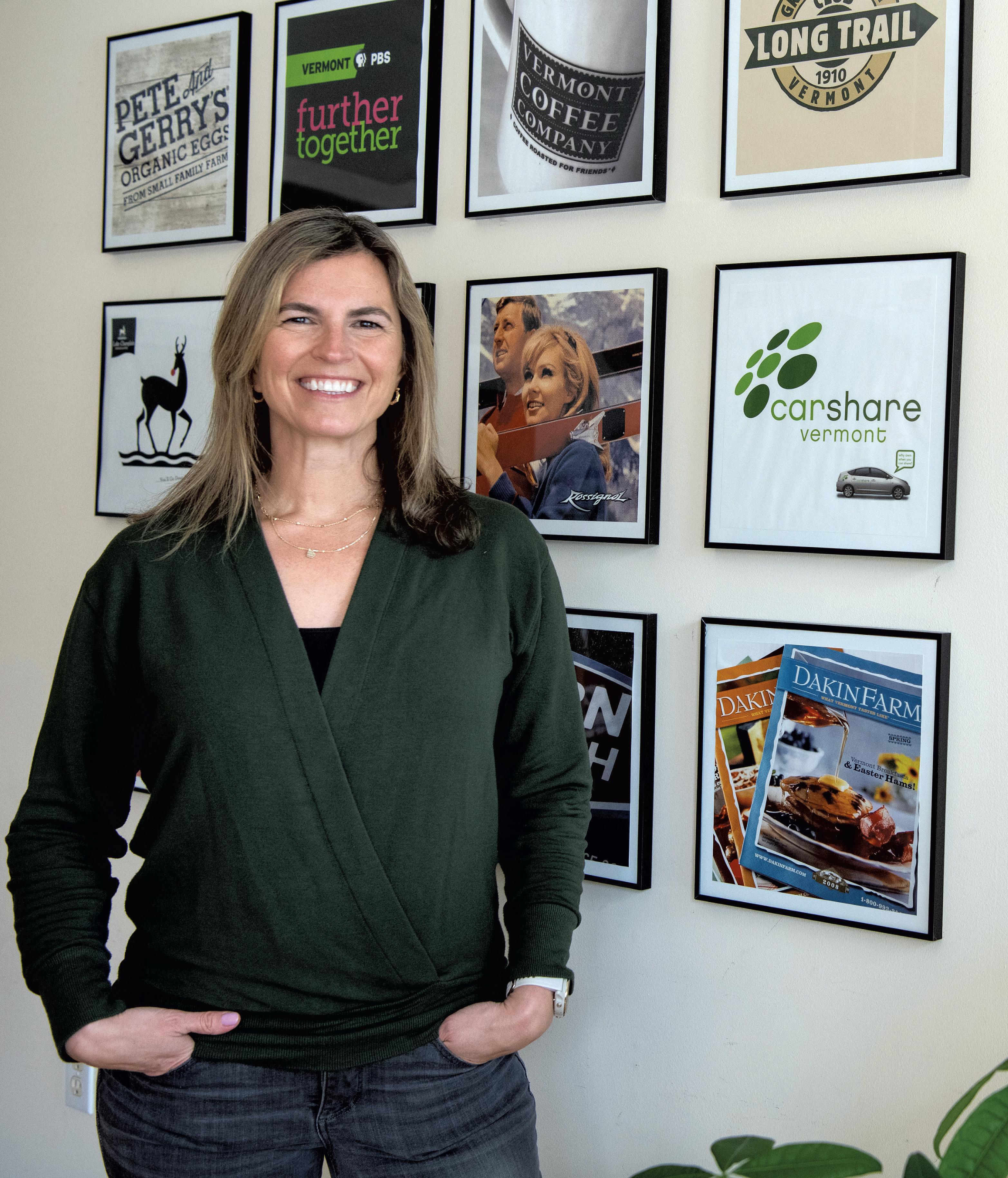
DARIA BISHOP …it works. GET STARTED WITH MICHELLE BROWN AT 802-865-1020, EXT. 121 OR SEVENDAYSVT.COM/POSTMYJOB. 1t-jobtesti-PlaceCreative0424.indd 1 4/1/24 2:25 PM SEVEN DAYS APRIL 24-MAY 1, 2024 85
KERI PIATEK Partner, Chief of Brand & Design Development, Place Creative






ATTENTION RECRUITERS:
POST YOUR JOBS AT: JOBS.SEVENDAYSVT.COM/POST-A-JOB PRINT DEADLINE: NOON ON MONDAYS (INCLUDING HOLIDAYS) FOR RATES & INFO: MICHELLE BROWN, 802-865-1020 X121, MICHELLE@SEVENDAYSVT.COM
YOUR TRUSTED LOCAL SOURCE. JOBS.SEVENDAYSVT.COM
Administrative Coordinator
The Intervale Center seeks a dynamic, missiondriven Administrative Coordinator with a passion for community food systems. The Administrative Coordinator supports the Center’s staff and Board of Directors to create a welcoming and highly productive organization and is an invaluable conduit for information and direction holding many aspects of dayto-day operations together. An ideal candidate has at least two years’ experience in this or a similar role; excellent communication; strong computer skills; great time management and attention to detail; and is self-motivated, conscientious, and proactive. Intervale Center is an E.O.E. that values diversity of experience, background, and perspective to enrich our work. Applications by members of all underrepresented groups are encouraged. Full job description and how to apply can be found at intervale.org
MU LTIPLE POSITIONS OPEN!
Are you our next Guest Services Representative? Buyer? Produce Associate?
Scan to see all open positions!

ST AFF CURATED BENEFIT S Apply online at healthylivingmarket.com/careers
CHURCH STREET RETAIL SALES
CHOCOLATE AMBASSADORS
Spend your days boxing up truffles, learning about chocolate, educating customers, and making life-altering hot chocolates. Bring a passion for chocolate, curiosity for learning, flexibility in a safe & fast-paced environment, and cooperation with team members.
CURRENTLY SEEKING: 4-5 Part-Time Employees (variable schedule, approximately 10 hours per week - up to 30 hours per week available).
ICE CREAM TRUCK STAFF
Spend the summer serving up Lake Champlain Chocolates' award-winning ice cream at Vermont's best local events! We'll give you all the training needed to delight our customers with sundaes and cones filled with our delicious small-batch ice cream flavors.
CURRENTLY SEEKING: 2 Seasonal Part-Time Employees (variable schedule, approximately 20-30 hours/week from May-September)
ENVIRONMENTAL SERVICES TECHNICIAN
We're immediately seeking one part-time Environmental Services Technician responsible for the general health of our Williston building space. Duties include standard custodial work and basic upkeep of most areas in and around the facility.
CURRENTLY SEEKING: 1 Part-Time Employee (M-F, 15 hours/week).
Ready to apply? Email your resume to employment@lakechamplainchocolates.com
Please visit our website for additional job details: https://www.lakechamplainchocolates.com/careers
DENTAL HYGIENIST
Middlebury Pediatric Dentistry is looking for a dental hygienist to join our practice. Help us take care of Vermont kids’ oral health! Four day work week. Competitive salary. Benefits include retirement plan, health insurance, 2 weeks paid vacation, licensure, and CE. Please send your resume to: frontdesk@middleburypediatricdentistry.com

2h-MiddleburyPediatricDentistry041724.indd 1 4/16/24 1:30 PM
JOB TRAINING. WELL DONE.
Join the Community Kitchen Academy!
Community Kitchen Academy (CKA) is a 9-week job training program featuring: Hands on learning, national ServSafe certification, job placement support and meaningful connections to community. Plus... the tuition is FREE and weekly stipends are provided for income eligible students!
At CKA you’ll learn from professional chefs in modern commercial kitchens and graduate with the skills and knowledge to build a career in food service, food systems and other related fields. Throughout the 9-week course, you’ll develop and apply new skills by preparing food that would otherwise be wasted. The food you cook is then distributed through food shelves and meal sites throughout the community. CKA is a program of the Vermont Foodbank, operated in partnership with Capstone Community Action in Barre and Feeding Chittenden in Burlington. Next sessions in Barre start May 7th and August 5th. APPLY: vtfoodbank.org/cka

Let chocolate change your world! It’s a great and bring happiness to our amazing customers throughout
•SEASONAL ORDER FULFILLMENT ASSOCIATE DAY
•SEASONAL ORDER FULFILLMENT ASSOCIATE (3:30PM11:30PM) (WILLISTON)
SERVE VERMONT COMMUNITIES
Shipping chocolates across the country every day is no small detail, enjoy fast-paced work, and love working with a team,
ECO AMERICORPS is accepting applications for the 2024-25 program year. Members serve at host sites across Vermont with a focus on projects to improve water quality and ecosystem function, reduce waste, and address climate resiliency in Vermont. We are seeking highly motivated individuals with a background in natural or agricultural sciences, environmental studies, conservation, engineering, government/policy, communications or other related fields. Preference may be given to applicants with a college degree. Full-time: 40 hours per week, September 17, 2024-August 15, 2025.
Benefits include
• Living allowance of $26,000
• Health insurance
• Professional training and networking
•SEASONAL CHOCOLATE MAKER & PACKAGING SPECIALIST
We are looking for motivated team players to join our community and packagers for the busy season at our factory
•SEASONAL FLAGSHIP STORE RETAIL ASSOCIATE (PINE
We seek team members who care about providing an exceptional in-store experience for the diverse community of chocolate-lovers
• $7,395 Segal Education Award Application deadline is May 10, but applications may be accepted on after the deadline. To view open positions, apply, and learn more about
ECO AmeriCorps visit ecoamericorps.vermont.gov. 4t-VtDeptEnvironmentalConservation030718.indd
APRIL 24-MAY 1, 2024 86
4t-HealthyLiving020922 1 2/2/22 4:58 PM
3/5/18 4:06 PM 4t-ECO-042424 1 4/22/24 9:45 AM
1
Now Hiring! Multiple Positions! an equal opportunity employer
5.25” 3.83”
5v-LakeChamplainChocolates042424 1 4/22/24 1:32 PM
7spot.indd 1 10/29/19 12:12 PM


Experienced, Skilled Carpenter
RED HOUSE BUILDING is currently seeking an experienced, skilled carpenter to join our wood shop team. This is a full-time position with flexible scheduling, benefits, and hourly pay based on skill level. The ideal candidate will have a minimum of 5 years experience with milling, cabinet construction, shop safety, and comprehensive use of machinery. This position is primarily based at our wood shop in Colchester, but job site installations are also included in the responsibilities.
If you are a reliable, motivated, and skilled person who is interested in being a part of unique, custom home building then please submit your resume to info@ redhousebuilding.com



General Assembly
IT User Support Specialist
The Legislative support offices are currently hiring. The nonpartisan offices are an interesting, challenging, and exciting place to work. You will be part of a highly professional and collegial team that is proud of, and enthusiastic about, the mission of the state legislature.
v To apply, please go to 'Career Opportunities' at legislature.vermont.gov.

Assistant to the Board of Trustees
The President’s Office at Saint Michael’s College is seeking a dynamic, diplomatic, culturally responsive Board of Trustees professional with experience managing and supporting Boards, including the Board of Trustees and Advisory Boards. The Assistant to the Board of Trustees’ position is a high-level comprehensive administrative support role for the Board of Trustees, Board Committees, and Presidential/Leadership Advisory Boards. In addition, the successful candidate will oversee policy organization, create a repository, and support leadership regarding changes and compliance. This position will also include special projects affecting campus-wide operations. For job description, benefits information and to apply, please visit: bit.ly/SMCABT
FARM TO PLATE NETWORK MANAGER
Join our team to strengthen VT's food system. Responsible for supporting the Network's focus areas of: food access, healthcare and community health, workforce development and education systems, racial equity, farmland access and land use planning, and community development.

FT salary between $63-66k, great benefits, casual but professional hybrid work environment, and an organizational culture where people feel valued, are energized, and can support forward-thinking solutions to our food system and climate challenges.
VSJF is an E.O.E. committed to diversity, equity, inclusion and a strong sense of belonging in the workplace.
PLEASE READ full job description here: vsjf.org/about-vsjfvermont/job-openings
Send cover letter & resume to jobs@vsjf.org by 5pm 5/13/24.



Join the Flynn & be part of a team striving to make the community better through the arts. All backgrounds encouraged to apply. This is a full-time, hourly, non-exempt position.
DIGITAL MARKETING ASSISTANT
The Flynn is seeking a dynamic Digital Marketing Assistant to join our Marketing team. The ideal candidate will assist in executing marketing strategies, analyzing data, post to and monitor social media, and jump in on creative projects contributing to the overall success of our marketing efforts.
The Flynn values all staff to provide a positive and professional experience for coworkers, tours, and patrons. Visit our website for a detailed job description: flynnvt.org/ About-Us/Employment-and-Internship-Opportunities

FOLLOW US ON TWITTER @SEVENDAYSJOBS, SUBSCRIBE TO RSS, OR BROWSE POSTS ON YOUR PHONE AT JOBS.SEVENDAYSVT.COM NEW JOBS POSTED DAILY! APRIL 24-MAY 1, 2024 JOBS.SEVENDAYSVT.COM 87
Jean Garvin School is hosting an Open House! Ve mont C Patners C N EROF CELENC Hiring Staff Members for the 2024-2025 School Year LEARN MORE 55 Day Lane, Williston, VT — Refreshments Provided — April 29 | 4:00-7:00pm WHERE WHEN 4t-HowardCenterOPENhouse041724 1 4/15/24 7:53 PM 4t-RockPointSchool042424 1 4/22/24 4:56 PM To apply, send resume to jlarock@chsi.org, or call Jill LaRock at 802-888-8228. NOW HIRING We are Hiring: Sleep Technician $60/hour | Housing Included 13-week contract with possible extension Flexible schedule: 2 to 3 nights/weekyour choice! RPSGT Certification required $60/hour Housing Included 13-week contract with extension Flexible schedule: 2 to 3your choice! RPSGT Certification required 4t-Copley041724 1 4/15/24 10:39 AM
Email materials to: HResources@flynnvt.org No phone calls, please. E.O.E.


Paralegal Essex, Vermont
On-site but may transition to a hybrid arrangement. Serve as an ongoing resource to agents and their employees and respond to inquiries and requests in a friendly, efficient, and timely manner regarding preparation of title insurance policies, residential and commercial real estate closings, Prep Express Online and any related matters. This is a very dynamic position which changes continuously based on agent demands.
EDUCATION AND/OR EXPERIENCE:
• Bachelor’s/Associate’s Degree as a paralegal and/or related field
• 5 years’ experience as a real estate paralegal in Vermont
• Proficiency with real estate closing software
For details and to apply: catic.com/about-us/careers. E.O.E.

Do you have a knack for donor stewardship and want to make a difference in VT communities?
The Vermont Community Foundation is looking for a Director of Donor Impact to oversee our impact strategy, co-create marketing campaigns, and provide excellent service for our fundholders. Bring a growth mindset to help drive charitable impact on our Philanthropy team!
If this sounds like a good fit for you, visit VERMONTCF.ORG/CAREERS for a complete job description and instructions for applying.

Manager - Community Health Programs Development
The Vermont Foodbank seeks a self-motivated, energetic Manager-Community Health Programs Development. This full time non-exempt hybrid position reports to the Director Community Health Programs. The primary components of this position include working primarily on Vermont Foodbank (VF) community impact programs including VT Fresh, Community Kitchen Academy (CKA), and Vermonters Feeding Vermonters (VFV). This position will work closely with the Director Community Health Programs and VF network partners to meet the needs of these communitybased programs to promote community wellness and dignity as it relates to access to fresh produce, nutrition, education, and food security. This position has responsibility for direct service education, community engagement and partner capacity building, in addition to project and grants management, planning, evaluation, reporting, and program development of the VT Fresh, CKA and VFV teams and programs. Hourly position: $28.61/hr (Approx. $59,500 annually).
For information and to apply, visit: vtfoodbank.org/employment/ current-openings. Submit an application with resume/cover letter attached.
Community Bankers BUILDERS | MAKERS | DOERS®
There is no better time to join our Team!
Northfield Savings Bank, founded in 1867, is the largest LOCAL BANK in Vermont. We are committed to providing a welcoming work environment for all. Consider joining our team as a Community Banker at our Marketplace or Richmond location!
Relevant Skills:
• Customer Service, Cash Handling (we’ll train you!)
• Even better… if you have prior banking experience, we encourage you to apply!
• If you are 18 or older and have a high school diploma, general education (GED) degree, or equivalent, consider joining the NSB Team!
Opportunity for Growth
NSB has training opportunities to engage employees and assist with professional development within our company. The average years of service for an NSB employee is 9! If you’re looking for a career in an environment that promotes growth, join our team!
What
NSB Can Offer You:
• Competitive compensation based on experience.
• Well-rounded benefits package, Profit-Sharing opportunity.
• Excellent 401(k) matching retirement program.
• Commitment to professional development.
• Opportunities to volunteer and support our communities.
Work-Life balance!
Please send an NSB Application & your resume in confidence to: Careers@nsbvt.com
E.O.E. / Member FDIC




Find 100+ new job postings from trusted, local employers in Seven Days newspaper and online.
Follow @SevenDaysJobs on Twitter

See who’s hiring at jobs.sevendaysvt.com
POST YOUR JOBS AT JOBS.SEVENDAYSVT.COM FOR FAST RESULTS, OR CONTACT MICHELLE BROWN: MICHELLE@SEVENDAYSVT.COM
APRIL 24-MAY 1, 2024 88
ATTENTION RECRUITERS:
SEEKING A DIRECTOR OF DONOR IMPACT 4t-VTCommunityFoundationDIRdonor041724 1 4/15/24 9:46 AM Baird School is hosting an Open House! V mon C e Par n CENTE OF X E LENCE Hiring Staff Members for the 2024-2025 School Year LEARN MORE 1138 Pine Street Burlington, VT — Refreshments Provided — May 9 | 3:00-6:00pm WHERE WHEN 4t-HowardCenter042424 1 4/22/24 9:46 AM
LOOKING FOR A COOLER OPPORTUNITY? Operations Coordinator
full details and to apply: acluvt.org/en/careers
For

JOIN THE GREAT TEAM at Burlington's communitysupported non profit bike shop doing important work making bikes accessible to all. As we gear up for the busy season, we are hiring for the following:
Retail Associate Inventory Coordinator Mechanic or Senior Mechanic Service Manager
Learn more at: oldspokeshome.com/people/ employment-opportunities


Veterinary Technician
Do you want to work in a practice where you are trained well, appreciated, and not burned out all the time? We believe it’s possible to have a great culture where the team feels like a family and provides excellent patient care, great customer service, and runs a good business at the same time. The Affectionately Cats Hospital in Williston, VT is the only feline only hospital in Vermont and since we are privately owned, we have had the opportunity to build a hospital that all of us want to come to work at every day.
We are looking for an experienced technician to join our team. We offer market competitive pay and benefits. There are no evenings or long weekend shifts, but your schedule will include some weekends. Apply at: Kandace@affectionatelycats.com

Drivers,
and Drivers
District Brookfield Transportation with a Transportation Street, crrussell@orangesouthwest.org schoolspring.com/ Employer

Immediate Openings For:
School Bus Drivers
Route Drivers
Substitute Drivers
Orange S.W. School District: Randolph, Braintree, Brookfield
Join our Transportation Team. Earn a great hourly wage with a flexible schedule.
Contact Craig Russell, Transportation Coordinator 24 Central Street Randolph, VT 05060 (802) 728-9276 crrussell@orangesouthwest.org
Or apply at: schoolspring.com/ jobdetail?jobId=4510062
Equal Opportunity Employer Openings
ASSOCIATE CLIENT SERVICE CHAMPLAIN INVESTMENT PARTNERS
Are you skilled at interpersonal and written communication?
Are you a team player, capable of working independently?
Are you organized, detail-oriented, adaptable, and able to manage time effectively in a fast-paced environment?
Do you understand basic investment concepts, especially those applicable to the equity asset class?
You may be a candidate to join our team
A Bachelor’s Degree, along with proficiency in Microsoft Office, is required. At least 1-3 years of relevant experience in client service support, marketing, or proposal writing, preferably in the investment management industry. Experience with Responsive (formerly RFPIO), Microsoft PowerBI, Python and SQL is a plus.

Learn more: cipvt.com/careers 4t-ChamplainInvestmentPartners041724
New GRAD RN program helps ensure success!
Kick-start your nursing career at Northeastern Vermont Regional Hospital (NVRH) with our innovative Nurse Residency Program. Designed for passionate new grads, the program offers wrap-a-round support for long-term career excellence. Beginning in summer 2024, full-time positions will be available in departments such as Med Surg, Emergency and more. Applicants need a Vermont or multi-state RN licenses, BLS certification, and to be a graduate of an accredited nursing program. Program pillars include Leadership, Patient Outcomes, and Professional Roles. New grads are provided daily support and collaborative guidance. Join NVRH for competitive compensation, benefits, and a supportive environment where patients, community and employees thrive. St. Johnsbury, Vermont.
Apply now at www.nvrh.org/careers


FOLLOW US ON TWITTER @SEVENDAYSJOBS, SUBSCRIBE TO RSS, OR BROWSE POSTS ON YOUR PHONE AT JOBS.SEVENDAYSVT.COM NEW JOBS POSTED DAILY! APRIL 24-MAY 1, 2024 JOBS.SEVENDAYSVT.COM 89 5v-ACHathorne040324 1 4/1/24 5:02 PM CURRENT OPENING Summer Activities Coordinator Join Our Team! Highgate Apartments is seeking a Summer Activities Coordinator to work with kids, ages 5-12, from mid-June thru mid-August. 25-40 hrs per week. Flexible schedule. Summerjob! Summerjob! ARE YOU ENERGETIC & POSITIVE? DO YOU ENJOY ENGAGING WITH KIDS? Great Jobs TOP PLACES TO WORK BOSTON GLOBE - 2023MALONEYPROPERTIESNOW HIRING! Apply today! Online: https://recruit.hirebridge.com/v3/applicationv2/Jobapplylogin.aspx?cid=6584&jid=626788 Email: HRinbox@maloneyproperties.com CURRENT OPENING Activities Coordinator EEO Our Team! Highgate Apartments is seeking a Summer Activities Coordinator to work with kids, ages 5-12, from mid-June thru mid-August. 25-40 hrs per week. Flexible schedule. Summerjob! Summerjob! YOU ENERGETIC & POSITIVE? YOU ENJOY ENGAGING WITH KIDS? Great Jobs TOP PLACES TO WORK BOSTON GLOBE - 2023MALONEYPROPERTIESNOW HIRING! Apply today! Online: https://recruit.hirebridge.com/v3/applicationv2/Jobapplylogin.aspx?cid=6584&jid=626788 Email: HRinbox@maloneyproperties.com CURRENT OPENING Summer Activities Coordinator Join Our Team! Highgate Apartments is seeking a Summer Activities Coordinator to work with kids, ages 5-12, from mid-June thru mid-August. 25-40 hrs per week. Flexible schedule. Summerjob! Summerjob! ARE YOU ENERGETIC & POSITIVE? DO YOU ENJOY ENGAGING WITH KIDS? Great Jobs TOP PLACES TO WORK BOSTON GLOBE - 2023MALONEYPROPERTIESNOW HIRING! Apply today! Online: https://recruit.hirebridge.com/v3/applicationv2/Jobapplylogin.aspx?cid=6584&jid=626788 Email: HRinbox@maloneyproperties.com 5v-MahoneyProperties042424.indd 1 4/22/24 2:29 PM
1 4/15/24 2:03 PM
7spot.indd 1 10/29/19 12:12 PM
90
ATTENTION RECRUITERS:

AmeriCorps Food & Farm Crew Member
Work outside this summer and make a difference! Help grow organic food that feeds Vermont communities.
Location: Richmond, VT
Dates: June 17 – August 15, 2024
Schedule: Mon - Thurs, 8:00–4:30
Compensation: $373/week
Age requirements: 17-23
Apply: www.vycc.org/join-us/positions
MEMBER SERVICES REPRESENTATIVE
General Summary of Job Responsibilities: Reliable, detail-oriented person with excellent customer service skills needed in a fastpaced, team-oriented office that works with WEC members to perform a variety of billing functions and data entry. Primary duties of the position include answering the telephone, working with members, responding to billing inquiries, receiving and processing payments, collecting delinquent accounts, and entering billing data.

Line Cook

Must be able to communicate effectively with members and employees of the Cooperative, and with representatives of other organizations as required. High school diploma with emphasis on business courses and two years’ experience in an office environment or an associate’s degree in business required.
Knowledge of Microsoft Office and cashiering experience preferred.
Submit cover letter and resume to Teia Greenslit, Director of Finance & Administration, Washington Electric Cooperative, P.O. Box 8, E. Montpelier, VT 05651, or teia.greenslit@wec.coop. Washington Electric Cooperative is an equal opportunity provider and employer.

Government Finance Specialist
The Vermont League of Cities and Towns, a non-profit, non-partisan membership organization that exists to serve and strengthen local government, seeks an experienced municipal finance practitioner to help teach Vermont’s cities, towns and villages how to be more resilient by following the best practices of municipal finance management. The ideal candidate will enjoy working directly with municipal treasurers, legislative body members, managers, administrators, and finance staff to teach and mentor them.
Some of the projects you’ll immediately start working on include developing an introductory level municipal finance education curriculum and delivering that curriculum to municipal officials. VLCT anticipates receiving funding aimed at building capacity in municipalities by strengthening municipal finance, operations and management capabilities to ensure more municipalities have the ability to respond to future disasters.
The ideal candidate will have a degree in accounting, business or public administration and eight to ten years of financial management, including three to five years’ experience with municipal governmental accounting.
VLCT offers a competitive salary (anticipated range is $75,000 - $90,000 depending on experience) and an extensive benefit package, which includes participation in the VMERS retirement system, a 401(a), employer paid health insurance and dental premiums, generous vacation, sick and holiday time, flexible work schedules and remote work opportunities (within Vermont).
For full job description & to apply, please visit vlct.org/careers Application deadline is Friday, May 3. Applicants will be reviewed as they are received. Position open until filled. E.O.E.

The Bobcat Cafe and Brewery is looking for a full time experienced line cook who loves the challenge of serving high quality food in a fast paced kitchen. Must be available nights and weekends.
Pay ranges from $27-$31 per hour depending on tips. Not a bad place to trade hours of your life for money.
salty.evc@gmail.com

POST YOUR JOBS AT JOBS.SEVENDAYSVT.COM FOR FAST RESULTS, OR CONTACT MICHELLE BROWN: MICHELLE@SEVENDAYSVT.COM
APRIL 24-MAY 1, 2024
New, local, scam-free jobs posted every day! jobs.sevendaysvt.com

High School Language Arts & Literature Teacher
Join our small creative alternative school! Pacem School is hiring a part-time high school language arts and literature teacher for Mondays and Wednesdays this fall. Experience working with students ages 14 to 18 and a passion for teaching literature and writing is required.
Apply online: pacemschool. org/about/employment

Front Desk Manager/ Receptionist
We’re excited to announce that our Aon Insurance Managers team based in Burlington, VT is expanding and seeking a Front Desk Manager/Receptionist. If you're an enthusiastic and personable administrator with front-office experience, then this opportunity is perfect for you.
Please visit bit.ly/4b4wZfu for a full job description and to apply now.
Front Desk Receptionist


Part-time Front Desk Receptionist at a busy Chiropractic office. Seeking a fun loving, friendly person to answer phones, greet and schedule patients, perform data entry, and clerical tasks as assigned. Must love working with people, be flexible and self-motivated with a strong work ethic. Must be proficient in computer use, have good verbal, writing and math skills and be comfortable with general office systems. Send resumes to: o ceofdrramirez@gmail.com.
CREW LEADER & GROUNDS CREW

Timber Tender is gearing up for our busy season and looking for hard working individuals to join our team! We are a locally owned business out of Barnard, VT, serving the Upper Valley of VT & NH.
Crew Leader: We are seeking an experienced and motivated individual who enjoys all facets of tree work. $25-35/hour depending on experience.
Responsibilities include:
• Climbing
• Utilizing necessary equipment to get the job done
• Working in a team environment, problem solving
Grounds
Crew: Experience a plus but not necessary! $20/Hour and up depending on experience.
Responsibilities include:
• Dragging brush,
• Safely operating chippers, saws, work trucks
• Working as a team
Contact us at info@timbertender.com or (802)234-5441 www.timbertender.com




Business Associate
As a member of the Student Government Association (SGA) team, the Business Associate will provide key management and operationalization of critical business functions. Responsibilities including management of the online payment platform, administering purchasing card and fleet card programs, reconciling expenses, and managing communications regarding revenue and expenses. The Associate responds to inquiries and supports student leaders in navigating business processes, collaborates on financial reporting, administers purchasing processes, and other business needs. As a member of the Business Office, the Associate will adhere to federal, University, and SGA policies, procedures, and guidelines, and perform other administrative functions. Our staff support and promote a safe and inclusive environment while supporting the mission and philosophy of the Department of Student Life, the Division of Student Affairs, and the University of Vermont. This is an 11-month position.
The University of Vermont is an Equal Opportunity/Affirmative Action Employer. All qualified applicants will receive consideration for employment without regard to race, color, religion, sex, sexual orientation, gender identity, national origin, disability, protected veteran status, or any other category legally protected by federal or state law. The University encourages applications from all individuals who will contribute to the diversity and excellence of the institution. Submit your application online uvmjobs.com/postings/72078.


Direct Support Professional
Why not have a job you love?
Provide direct supports to individuals with intellectual disabilities or autism in their home, the community or their workplace. This is a great entry level position to human services and for those looking to continue their work in this field. Starting wage is $20/hr with a sign on bonus of $1,000 at 6 months.
Benefit package includes 29 paid days off in the first year, comprehensive health insurance plan with premium as low as $13 per month, up to $6,400 to go towards medical deductibles and copays, retirement match, generous signon bonus and so much more.
And that’s on top of working at one of the “Best Places to Work in Vermont” for six years running.
Make a career making a difference and apply today: staff@ccs-vt.org


Distribution & Receiving Coordinator
Feeding Chittenden has an immediate opening for Distribution and Receiving Coordinator. The Distribution and Receiving Coordinator will distribute food directly to food shelf visitors, work with volunteers and organize the distribution and receiving rooms. Receive donations, manage donation log and pick up donations as needed. Maintain required documentation related to client’s eligibility and confidentiality, prepare statistical reports of Food Shelf use, provide information and outreach assistance to people in need & make referrals to other service providers as appropriate.
If you have an Associate’s Degree in human services, social work, or other related field and/or equivalent work experience; knowledge of food stamp eligibility; are familiar with services of other community social services and their eligibility requirements, have experience with database entry and Microsoft Office; effective verbal and written communication skills, (bilingual abilities are a plus) we’d like to hear from you! Must have a valid driver’s license, clean driving record, access to reliable transportation and willingness and ability to travel within CVOEO’s service area.
When you come to work for CVOEO you’re getting so much more than a paycheck! We offer a great working environment and an excellent benefit package including medical, dental and vision insurance, paid holidays, generous time off, a retirement plan and discounted gym membership.
Apply: cvoeo.org/careers. We are an Equal Opportunity Employer.
FOLLOW US ON TWITTER @SEVENDAYSJOBS, SUBSCRIBE TO RSS, OR BROWSE POSTS ON YOUR PHONE AT JOBS.SEVENDAYSVT.COM NEW JOBS POSTED DAILY! APRIL 24-MAY 1, 2024 JOBS.SEVENDAYSVT.COM 91
ATTENTION RECRUITERS:
WHERE YOU AND YOUR WORK MATTER...





When you work for the State of Vermont, you and your work matter. A career with the State puts you on a rich and rewarding professional path. You’ll find jobs in dozens of fields – not to mention an outstanding total compensation package.
ACCD ENVIRONMENTAL SPECIALIST – MONTPELIER
Join the Department of Housing and Community Development (DHCD) to support environmental review for community development and housing projects across the State. Looking for someone eager to collaborate with agencies, local partners, developers, and communities to protect the environment and strengthen communities. Working on environmental issues related to federal HUD programs with a focus on the Community Development Block Grant Program (CDBG), the HOME Investment Partnership Program (HOME), and the Recovery Housing Program (RHP). DHCD is remote-work friendly. For more information, contact Ann Karlene Kroll at annkarlene.kroll@vermont. gov. Department: Commerce & Community Development. Location: Montpelier. Status: Full-Time, Limited Service. Job ID #49961. Application Deadline: May 5, 2024.
THE GRIND GOT YOU

Head of Rescue Services
The Town of Shelburne is seeking candidates for a full-time, exempt leadership role for their Rescue Department (Shelburne Rescue). This position is Shelburne Rescue’s first full-time non-volunteer Head of Rescue Services. Shelburne Rescue is a municipal, combination (paid/ volunteer) ambulance service providing 911 emergency medical services to the Town and its neighboring communities. The Head of Service has the primary responsibility for executive oversight for Shelburne Rescue. The Department Head serves as the chief executive of the squad and represents both the Town of Shelburne as well as the Department and its providers to the public, the district and the state. The Department Head is expected to participate in emergency responses and is responsible for the leadership, management, and administration of the Department. This is to be accomplished through departmental planning, strategic visioning, and the development of long-term and short-term goals for the Department and its providers. Through the supervision of the Training Officer and lead providers (“Crew Chiefs”), the Department Head ensures the professional and efficient conduct of the Department operations.
MINIMUM QUALIFICATIONS:
• National Registry of EMTs Paramedic Level Certification
• 5+ years’ experience in EMS with increasing levels of responsibility
• Emergency Vehicle Operations Certification or similar
DESIRED QUALIFICATIONS:


• Supervisory/leadership experience
• VT EMS District 3 Credentialing / Paramedic Experience
• Firefighting experience (FFI or above)
• Interest in supporting the Town of Shelburne Fire Department emergency responses
• Bachelor’s Degree in EMS/Paramedicine/Emergency Management or similar
APPLICATION PROCESS:
Please submit your resume and complete the employment application, or contact Adam Backus, Town of Shelburne HR Assistant, at (802) 985-5121, abackus@shelburnevt.org. Equal Opportunity Employer
Administrative Coordinator

Work in collaboration with Vermont Center on Behavior and Health (VCBH) Director and Principal Investigators. Responsible for personnel, operations, financial and business activities and services for the research grant portfolio. Perform budget management, lab procurement and management, as well as operational and protocol development/oversight for research centers. Coordinate with the Psychiatry Department Administrator, or the HR Specialist position, to manage needs for personnel, effort reporting, institutional cost sharing, and salary distribution changes. Work closely with UVMMC and Psychiatry department to ensure consistency of changing aims, research effort and other administrative activities that cross institutions. Administratively supervise team and functionally supervise and approve time/schedules and purchasing cards for multiple trainee associates and research staff.
Apply at uvmjobs.com/postings/71674

School Engagement Specialist
LRC is hiring a 32-40 hr/wk School Engagement Specialist (SES). SES apply restorative case management practices to help children/youth and their families struggling with school attendance navigate multiple systems of support to address barriers to school engagement. They build relationships with youth and families and utilize established and collaborative connections with school personnel, DCF, and human services providers in the community, to help families develop and implement plans for improved school attendance. The SES use methodologies rooted in restorative practices, whereby parents and children feel heard and acknowledged, and their dignity and resilience are upheld.
This position is ideal for someone with an understanding of restorative work in schools, excellent communication, collaboration, and organizational skills, and those who are interested in a workplace that promotes employee well-being and is known for its inclusive and collaborative work environment. A bachelor’s degree or equivalent work experience required.
The hourly pay rate is between $21.97 and $23.12. A generous benefits policy provides $12,000 annually for each employee to pay for the benefits they need, such as: medical, dental, vision, and supplemental insurance, and retirement. Additional benefits include 27 paid days off and 17 paid holidays, pre-tax dependent care deductions, paid family medical leave, an annual training stipend, and life insurance.
Please submit a cover letter and resume to: info@lrcvt.org.
LRC is an equal opportunity employer and invites applications from professionals with lived experience. Applications will be accepted until the position is filled.
POST YOUR JOBS AT JOBS.SEVENDAYSVT.COM FOR FAST RESULTS, OR CONTACT MICHELLE BROWN: MICHELLE@SEVENDAYSVT.COM
APRIL 24-MAY 1, 2024 92
Learn more at: careers.vermont.gov The State of Vermont is an Equal Opportunity Employer
5h-VtDeptHumanResouces042424
1 4/22/24 9:41 AM
who’s hiring at jobs.sevendaysvt.com
@SevenDaysJobs on Twitter for the latest job opportunities Perk up! Trusted, local employers are hiring in Seven Days newspaper and online.
100+ new job postings each week. 4v-CoffeCampaign.indd 1 8/20/21 3:13 PM
DOWN? See
Follow
Browse
www.onedayinjuly.com/careers Opportunities for growth. No financial industry experience necessary.
WINGPERSON FOR YOUNG MAN WITH AUTISM
Seeking a responsible, creative, kind, spirited, initiative-taking individual to help my son continue to improve his living, recreation and communication skills.
Alternating weekends each month, Friday 5:00 pm — Saturday 5:00 pm, $500 per day.
Send resume to sk@kieselaw.com

Optician or Optician Trainee
Busy primary care optometry office looking to hire a licensed optician (or trainee) either full time or part time. We are open M-F 8am- 6pm. Choose between Four 10 hour days or Five 8 hour days. We are looking to hire for personality first. Must be good with people. We are happy to train the right candidate.
Job Type: Full-time
Salary: $20.00-$25.00/hour
Approx. hours: 32-40/week
Benefits: Flexible schedule, Health Insurance ,HSA, 401K, Professional development assistance, Vision/ eyeglass benefit
Send resumes to: mleipert@oeberlin.com YOUR TRUSTED LOCAL SOURCE.

CAREER EXPO
Discover your future at Dartmouth Health!
The Career Expo will have over 30 exhibitors where you can explore the possibilities, which include, current job openings at our member organizations, paid training programs, and opportunities for career advancement.
Who should attend?
Current and future healthcare workers, job seekers, college and high school students, parents, educators and community members are all encouraged to attend!
Explore the possibilities!
From job openings, to paid training programs and continued education and advancement opportunities, come learn about what the future can hold for you at Dartmouth Health.

• Take part in hands on health career demonstrations
• Meet current Dartmouth Health employees from different healthcare fields
• Talk with hiring managers and recruiters about open positions in the Dartmouth Health system
• Gather information about the Workforce Readiness Institute’s paid training programs
• Learn about the education benefits available to employees and talk with some of our college partners
High School Students! Join us for a special High School Student Session from 11:30 - 1:30, Auditoriums A-D.
FOLLOW US ON TWITTER @SEVENDAYSJOBS, SUBSCRIBE TO RSS, OR BROWSE POSTS ON YOUR PHONE AT JOBS.SEVENDAYSVT.COM NEW JOBS POSTED DAILY! APRIL 24-MAY 1, 2024 JOBS.SEVENDAYSVT.COM 93
Thursday, May 9, 2024 3:00pm - 6:00pm Auditoriums A-D DHMC Lebanon, NH
your starting point. dhwri.org/careerexpo 9h-HargerHoweDARTMOUTH042424 1 4/17/24 9:10 AM 7t-VTCommonsSchool031324 1 2/22/24 10:56 AM
Burlington,
2v-OneDayinJuly041724 1 4/16/24 1:00 PM
Find
Assoc. Financial Advisor
VT
JOBS.SEVENDAYSVT.COM
ATTENTION RECRUITERS:
FLORAL MERCHANDISER
MILTON, Part time
3 mornings per week (Tuesday, Friday, Sunday) approximately 15-20 hours. Fun and flexible job, perfect for a creative person who likes to work independently
Please contact Nathalie at the number below: 518-420-3786


OUTPATIENT THERAPIST
NKHS is seeking a dynamic Outpatient Therapist with strong clinical skills in mental health and addictions to join our team. Conduct screenings, assessments, and provide therapy sessions for adults with co-occurring conditions.
WHY WORK FOR NKHS?
Quality Care: Prioritize well-being, promote hope, healing, and support.
Impactful Work: Make a difference in nearly 4,000 lives annually.
Holistic Approach: Comprehensive programs address mental health and substance use challenges.
Collaborative Environment: Join over 450 committed employees in improving lives.
Beautiful Location : Enjoy scenic Vermont while contributing to community wellness.
Competitive Compensation : Including health, dental, retirement plans, and more.
Equal Opportunity Workplace : Valuing diversity and inclusion.
QUALIFICATIONS:
• Master's degree in counseling, social work, psychology, or related field.
• Dual licensure as an LADC and LCMHC preferred.
• Experience with co-occurring disorders preferred.
SALARY & BENEFITS:
• Competitive Salary: $52,603.20 plus, depending on experience.
• Tuition Reimbursement.
• Health and Dental Insurance.
• Generous Paid Time Off.
• Outstanding Employee Wellness Program.
NKHS is an equal opportunity workplace. Apply now at NKHS.org to make a positive impact in Vermont's Northeast Kingdom.

GO HIRE.
Job Recruiters:
• Post jobs using a form that includes key info about your company and open positions (location, application deadlines, video, images, etc.).
• Accept applications and manage the hiring process via our applicant tracking tool.
• Easily manage your open job listings from your recruiter dashboard.

Job Seekers:
• Search for jobs by keyword, location, category and job type.
• Set up job alert emails using custom search criteria.
• Save jobs to a custom list with your own notes on the positions.
• Apply for jobs directly through the site.
Get a quote when you post online or contact Michelle Brown: 865-1020, ext. 121, michelle@sevendaysvt.com.
jobs.sevendaysvt.com

POST YOUR JOBS AT JOBS.SEVENDAYSVT.COM FOR FAST RESULTS, OR CONTACT MICHELLE BROWN: MICHELLE@SEVENDAYSVT.COM
APRIL 24-MAY 1, 2024
94
2h-SimplyReady071421.indd 1 7/12/21 6:20 PM
12-jobsgohire-snowboarder20.indd 1 11/30/21 12:37 PM
Veterinary Technician
We are seeking a full time veterinary technician to join our team of dedicated animal care providers in Shelburne VT. We are the only holistically focused, full-service veterinary clinic in the area, offering one hour patient care consults. We have an excellent clientele, who are fun to work with, and highly motivated to give their animal companions the best care. We offer holistic nutrition, herbal medicine, acupuncture, chiropractic, surgery, dental care, dental radiography, digital radiography, ultrasound, laser, and stem cell therapy. We are seeking a Veterinary technician who has experience in surgery, anesthesia, and patient care along with a strong work ethic, and a willingness to learn about holistic medicine. The applicant must be skilled in placing catheters, monitoring anesthesia, and maintaining surgical equipment.

Our compensation package is competitive with the best in Vermont; hourly wages between $20-$30 per hour, two weeks paid vacation, one week personal/sick leave, 6.5 paid holidays, health care contribution, Simple IRA match to 3%, service discounts and wholesome, "home-made" lunches provided three days a week. Come learn a different way of practicing preventative holistic medicine in a full serve clinic.
These are the qualities we are looking for in our employees:
• Highly motivated, self-starting
• Mature, responsible/reliable
• Professional, good communicator
• Team player, strong work ethic
Salary: $20-$30 /hour. Compensation commensurate with experience.
To Apply: Please send us your resume and a cover letter telling us why you are interested in working at Qi and why you are the right person for us. Please note: we will not consider anyone who does not take the time to write a good cover letter! Send resumes: therese@Qivet.com

Are you ready for a new career?
Look no further! We’re hiring!
• 4-day work week
• No weekends!
• Medical Insurance
• Paid Vacation
• Holiday/Sick Time
• 401K
• Uniform & Footwear Allowance
Route Service Representatives
RSR’s drive a delivery truck along an established route, and will service, deliver, and pick up a variety of linen, uniforms, floor matting, and other rental products within an existing customer base. RSRs are the face of our company to our customers.
Foley Services fosters a workplace built on respect, hard work, and achievement.
Scan QR code for more information about our open position! Visit foleylinen.com/employment-opportunities for more information or to apply!
Foley Services is an equal opportunity employer.
Burlington Housing Authority (BHA)
Are you interested in a job that helps your community and makes a difference in people’s lives every day? Consider joining Burlington Housing Authority (BHA) in Burlington, VT to continue BHA’s success in promoting innovative solutions that address housing instability challenges facing our diverse population of low-income families and individuals.
We are currently hiring for the following positions:
Assistant Property Manager: Serves as a critical member of our property management team. This position is responsible for assisting the team of Property Managers in the day to day operations of BHA’s property portfolio. This position assists with leasing apartments, move in and move outs, maintaining accurate tenant files and assist with tenant complaints, collection of rents, lease violations, property inspections, vacant unit checks, delivery of resident notices and certifications, and other duties related to property management.
Building Operations Technician:
Performs general maintenance work in BHA owned and managed properties. This includes building exteriors, common areas, apartments, building systems, fixtures, and grounds. Our Building Operations Techs are required to participate in the on-call rotation, which covers night and weekend emergencies.
Housing Retention Services – Site
Based: Responsible for supporting those who have mental health and substance use challenges and/or who have moved from homelessness to Bobbin Mill, Wharf Lane, and other BHA properties. The position works closely with property management and other site-based staff to identify challenges and respond with appropriate direct service and coordination of community services, with a goal of eviction prevention and facilitating a healthy tenancy.
Offender Re-entry Housing Specialist:
Provides support to men and women under the VT Department of Corrections supervision from prison back to Chittenden County. The ORHS focuses on high-risk men and women who are being released from jail and graduating transitional housing programs and in need of permanent housing. The ORHS provides intensive retention and eviction prevention services and works collaboratively with the Burlington Probation and Parole Office. Additionally, the ORHS works with various case workers, ReEntry staff and the Administrative Staff from the VT Department of Corrections and the
broad network of COSA staff as necessary throughout Chittenden County.
Find more info about these career opportunities at burlingtonhousing.org
BHA serves a diverse population of tenants and partners with a variety of community agencies. To most effectively carry out our vision of delivering safe and affordable housing to all, we are committed to cultivating a staff that reflects varied lived experiences, viewpoints, and educational histories. Therefore, we strongly encourage candidates from diverse racial, ethnic, and cultural backgrounds, persons with disabilities, LGBTQ individuals, and women to apply. Multilingualism is a plus!
Our robust benefit package includes premium medical insurance with a health reimbursement account, dental, vision, short and long term disability, 10% employer funded retirement plan, 457 retirement plan, accident insurance, life insurance, cancer and critical illness insurance.
We provide a generous time off policy including 12 days of paid time off and 12 days of sick time in the first year. In addition to the paid time off, BHA recognizes 13 (paid) holidays and 2 (paid) floating cultural holidays.
Interested in this career opportunity?
Send a cover letter and resume to:
humanresources@ burlingtonhousing.org
Human Resources
Burlington Housing Authority 65 Main Street, Suite 101 Burlington, VT 05401
Find more info about these career opportunities at burlingtonhousing.org
BHA is an Equal Opportunity Employer


FOLLOW US ON TWITTER @SEVENDAYSJOBS, SUBSCRIBE TO RSS, OR BROWSE POSTS ON YOUR PHONE AT JOBS.SEVENDAYSVT.COM NEW JOBS POSTED DAILY! APRIL 24-MAY 1, 2024 JOBS.SEVENDAYSVT.COM 95

Readers help pay for the production of this award-winning weekly newspaper. Thousands have made one-time or recurring donations to sustain Seven Days. Their support — along with advertisers’ — allows us to keep delivering breaking news and thoughtful long-form journalism to Vermonters.
Support local journalism — make a contribution today!
If you like what we do and can a ord to help pay for it, please become a Seven Days Super Reader. Your donation will help to keep our community informed and connected.
Join the Super Readers at sevendaysvt.com/super-readers.
Or send a note (and a check) to: Seven Days c/o Super Readers PO Box 1164 Burlington, VT 05402




Contact Gillian English at 865-1020, ext. 115 or superreaders@sevendaysvt.com.


1t-PressOn-SR23.indd 1 11/21/23 6:28 PM SEVEN DAYS APRIL 24-MAY 1, 2024 96
Seven Days on the press in Mirabel, Québec PAULA ROUTLY
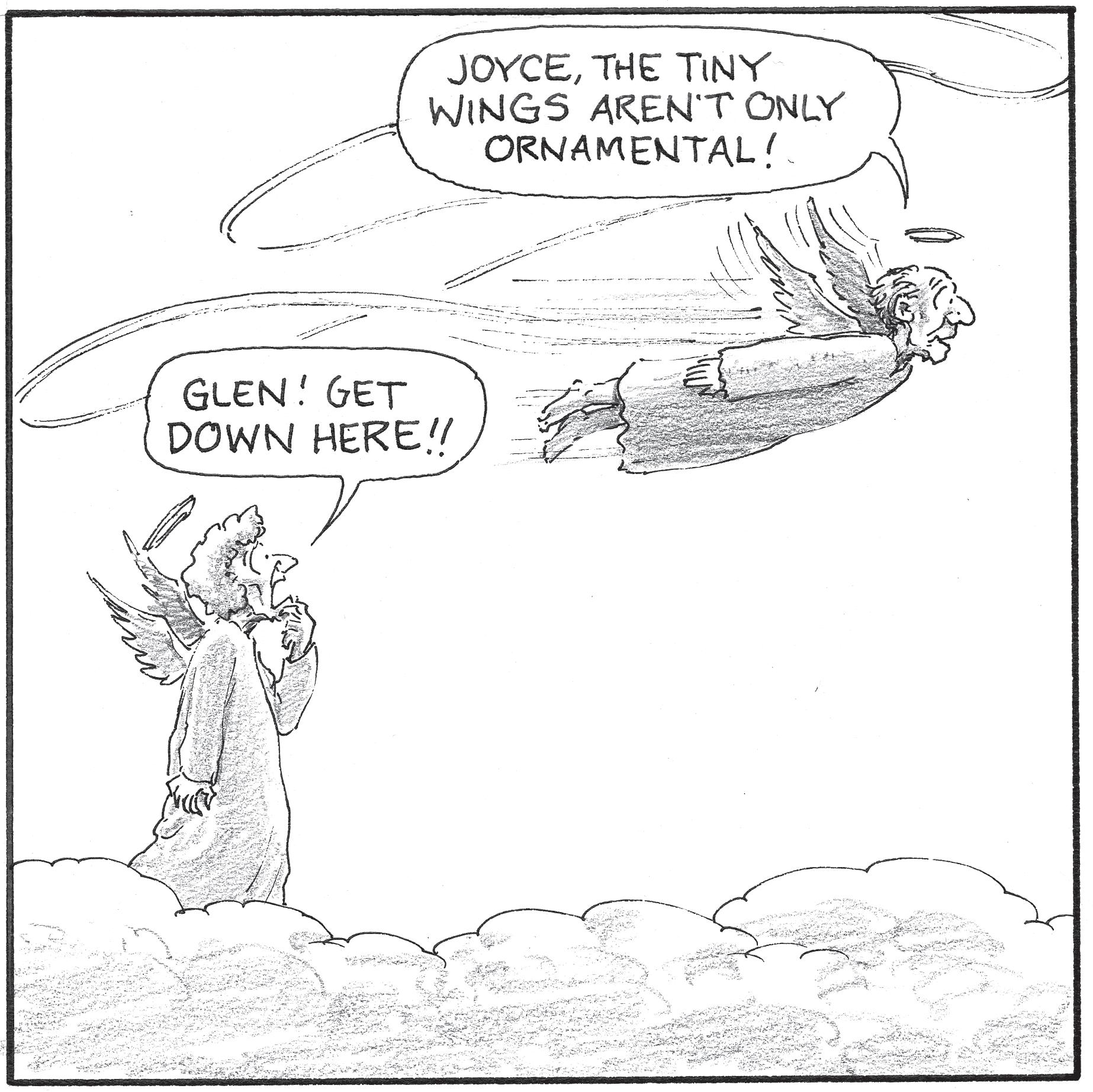
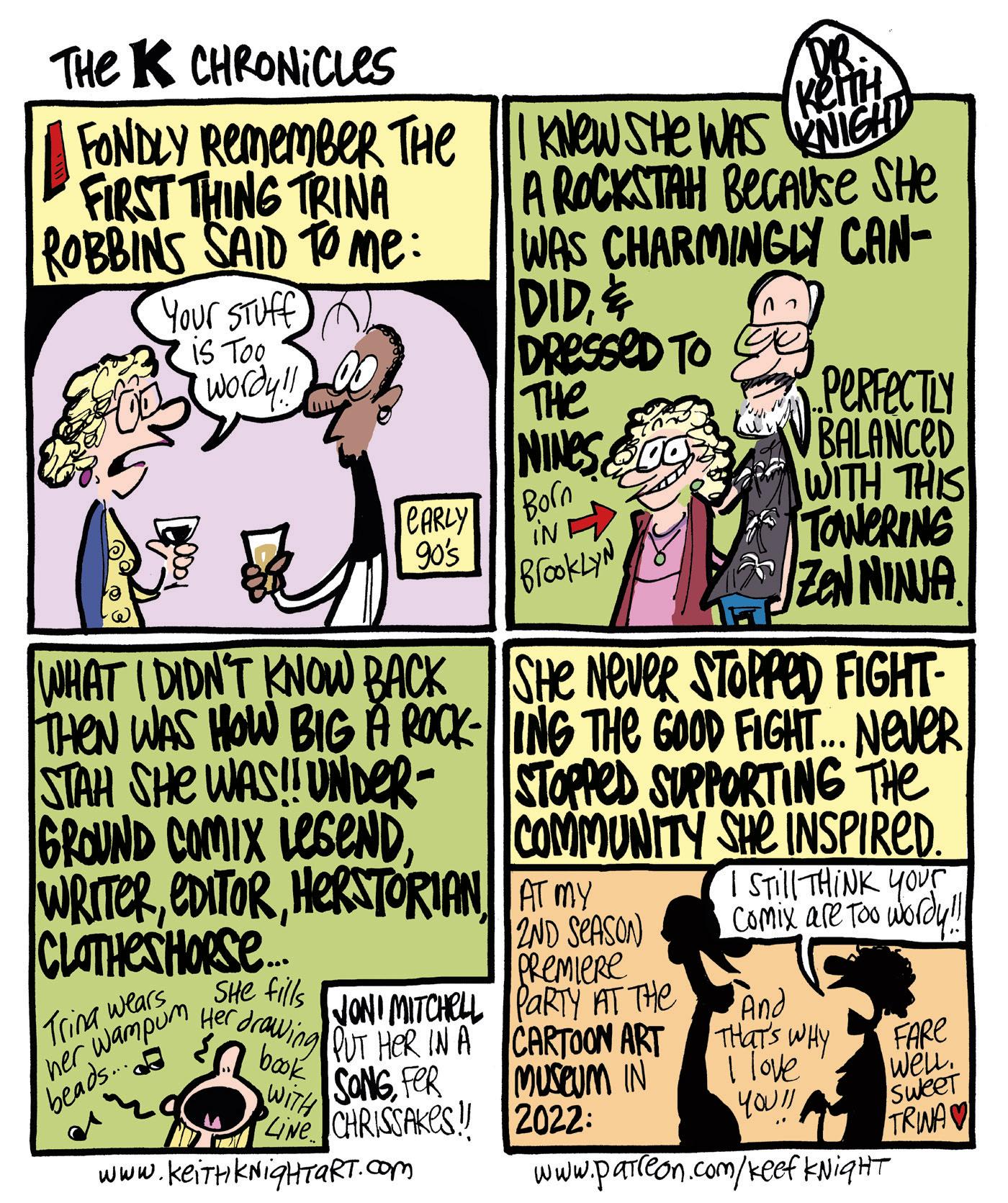

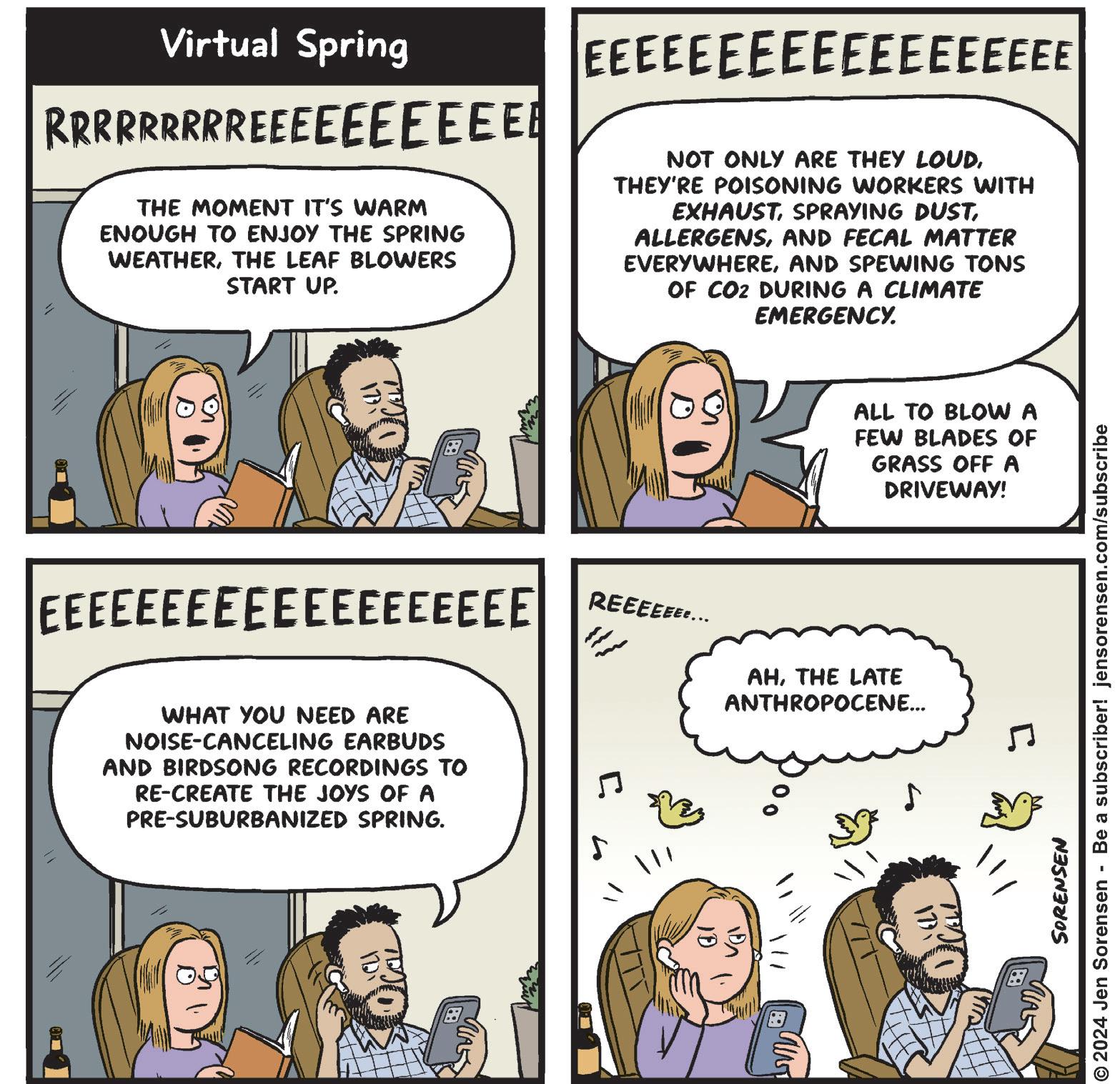
SEVEN DAYS APRIL 24-MAY 1, 2024 97
& SUDOKU (P.79) CROSSWORD (P.79)
CALCOKU
fun stuff
JEN SORENSEN
HARRY BLISS
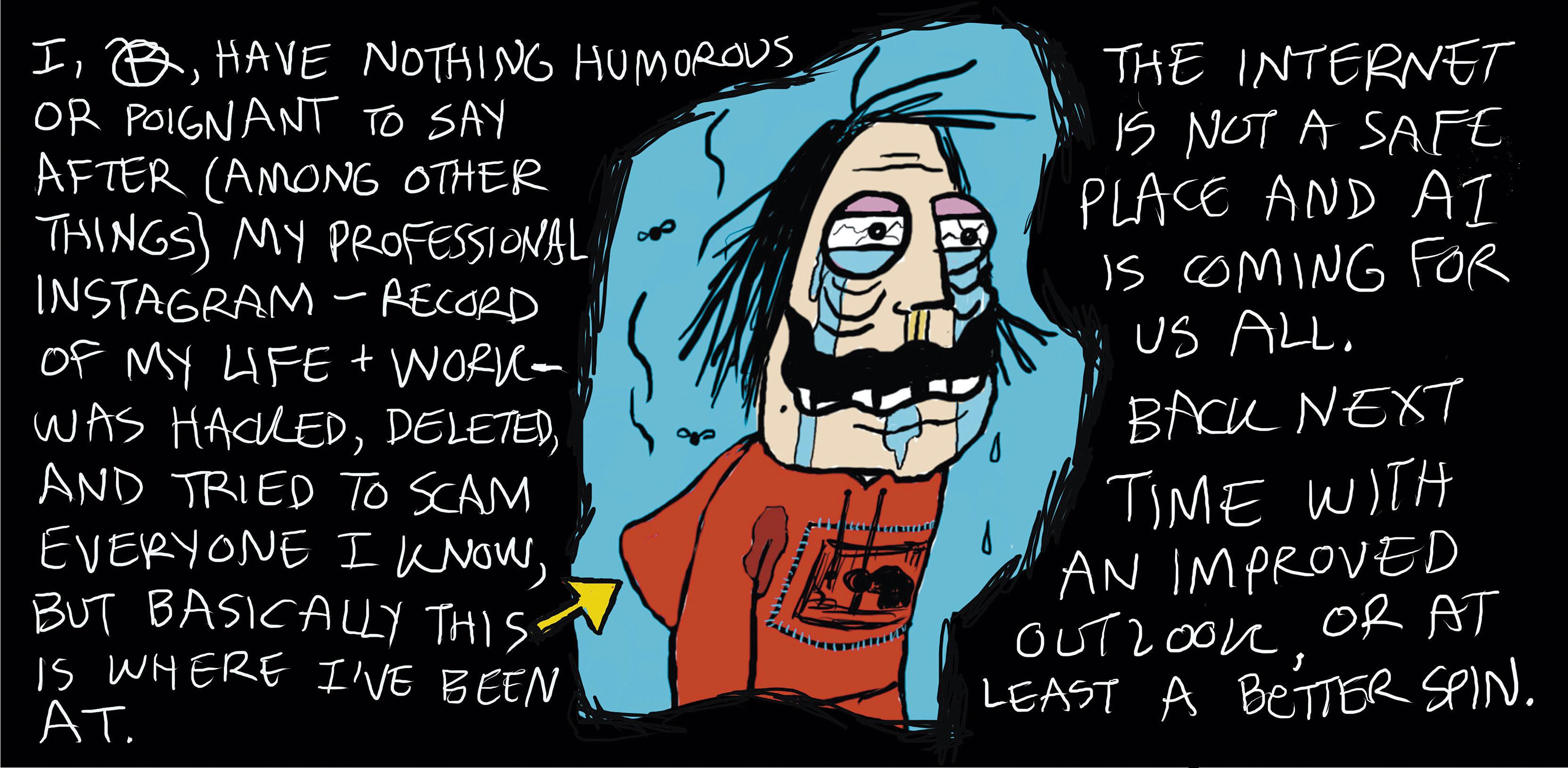
What Vermont landmark is due for an extensive renovation over the next few years?
Answer topical questions like these in our weekly news quiz. It’s quick, fun and informative. Take a new quiz each Friday at sevendaysvt.com/quiz.
LIKE TO DO PUZZLES?
Challenge yourself with online games from Seven Days at sevendaysvt.com/games.
See how fast you can solve this weekly 10-word puzzle.
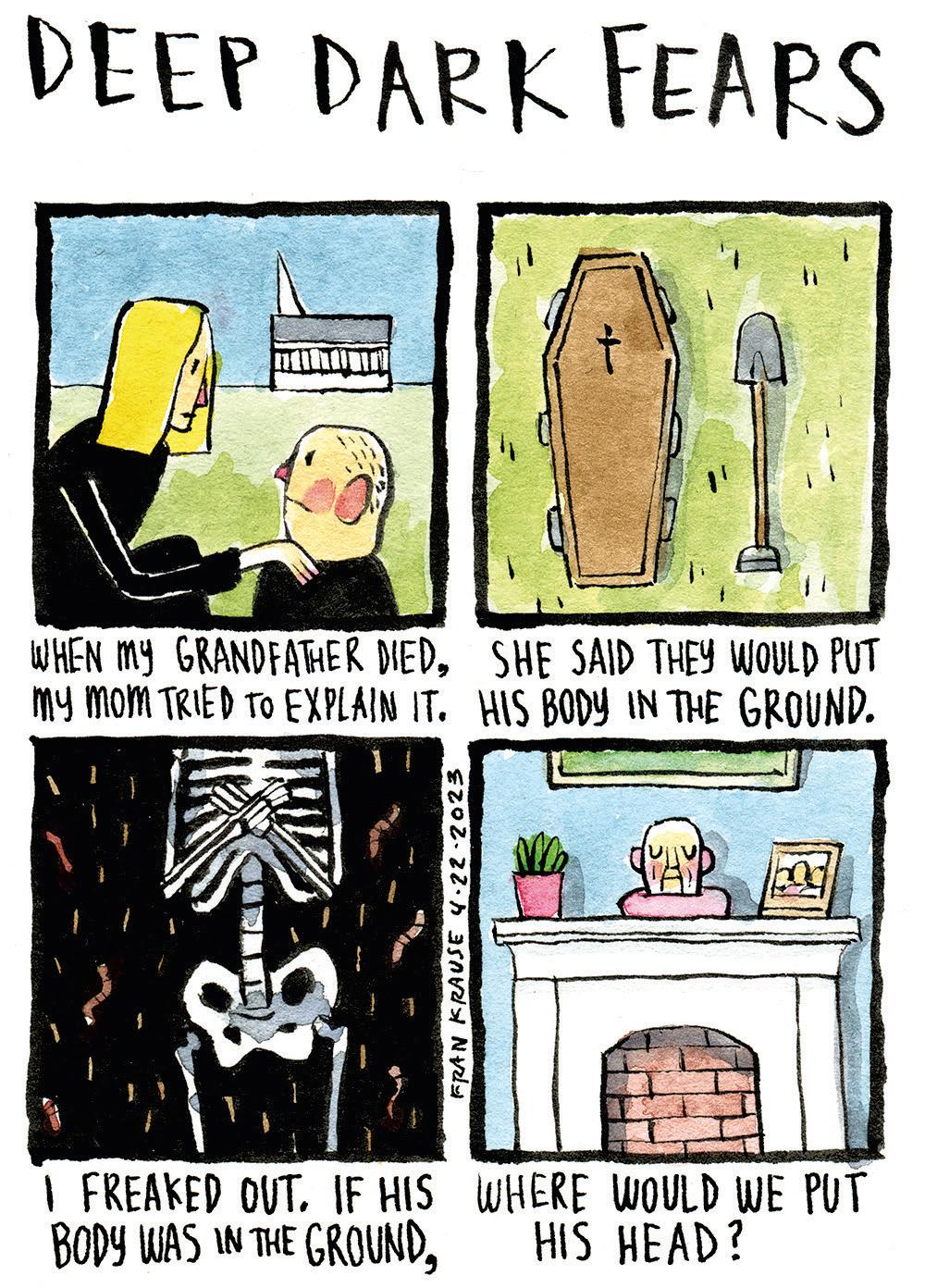
SEVEN DAYS APRIL 24-MAY 1, 2024 98
stuff RACHEL LINDSAY
fun
TAURUS
(APR. 20-MAY 20)
Bordering the Pacific Ocean for a thousand miles, Chile’s Atacama Desert is a place of stark and startling beauty. Unfortunately, its pristine landscape is also a dumping ground for vast amounts of discarded clothes that people bought cheaply, wore out quickly and didn’t want anymore. Is there any other place on earth that more poignantly symbolizes the overlap of sacred and profane? In the coming weeks, Taurus, you will possess a special aptitude for succeeding in situations with metaphorical resemblances to the Atacama. You will have an enhanced power to inject ingenious changes wherever messiness is mixed with elegance, wherever blemished beauty requires redemption, and wherever lyrical truths need to be rescued from careless duplicity or pretense.
ARIES (Mar. 21-Apr. 19): Have you ever gotten your mind, heart and soul in sweet alignment with the spiritual beauty of money? An opportunity to do that is available. During the next four weeks, you can cultivate an almost mystical communion with the archetype of well-earned wealth. What does that mean? Well, you could be the beneficiary of novel insights and hot tips about how best to conduct
your finances. You might get intuitions about actions you could take to bring more riches into your life. Be alert for help from unexpected sources. You may notice that the more generous you are, the more the world’s generosity will flow your way.
GEMINI (May 21-Jun. 20): My Gemini friend
Alicia thrives on having a quick, acute, whirling-dervish-like intelligence. It’s one of her strong points now, but it wasn’t always. She says she used to be hyperactive. She thought of serenity as boring — “like some wan, bland floral tea.” But after years of therapy, she is joyous to have discovered “a kind of serenity that’s like sweet, frothy hot chocolate spiced with cinnamon and nutmeg.” I’m guessing that many of you Geminis have been evolving in a similar direction in recent months — and will climax this excellent period of relaxing growth in the coming weeks.
CANCER (Jun. 21-Jul. 22): All Cancerians who read this oracle are automatically included on the Primal Prayer Power List. During the next 13 days, my team of 13 Prayer Warriors and I will sing incantations to nurture your vigor, sovereignty and clarity of purpose. We will envision your dormant potentials ripening. We will call on both human and divine allies to guide you in receiving and bestowing the love that gives your life supreme meaning. How should you prepare for this flood of blessings? Start by having a long talk with yourself in which you describe exactly why you deserve these gifts.
LEO (Jul. 23-Aug. 22): A meme on Instagram said, “The day I stopped worrying about what other people think of me was the day I became free.” This sentiment provokes mixed feelings in me. I agree it’s liberating not to be obsessed with what people think of us. On the other hand, I believe we should indeed care about how we affect others. We are wise to learn from them about how we can be our best selves. Our “freedom” includes the discernment to know which ideas people have about us are worth paying attention to and which are best forgotten and ignored. In my opinion, Leo, these are important themes for you to ruminate on right now.
VIRGO (Aug. 23-Sep. 22): The city of Mecca in Saudi Arabia is a holy place for Islam. Jerusalem is the equivalent for Judaism, and the Vatican is for Catholicism. Other spiritual traditions regard natural areas as numinous and exalting. For instance, the Yoruba people of Nigeria cherish Osun-Osogbo, a sacred grove of trees along the Osun River. I’d love it if there were equivalent sanctuaries for you, Virgo — where you could go to heal and recharge whenever you need to. The coming weeks will be an excellent time to identify power spots like these. If there are no such havens for you, find or create some.
LIBRA (Sep. 23-Oct. 22): In my astrological opinion, you are entering a period when you can turn any potential breakdown into a breakthrough. If a spiritual emergency arises, I predict you will use it to rouse wisdom that sparks your emergence from numbness and apathy. Darkness will be your ally because it will be the best place to access hidden strength and untapped resources. And here’s the best news of all: Unripe and wounded parts of your psyche will get healing upgrades as you navigate your way through the intriguing mysteries.
SCORPIO (Oct. 23-Nov. 21): According to my astrological perspective, you are entering a phase when you could dramatically refine how relationships function in your life. To capitalize on the potential, you must figure out how to have fun while doing the hard work that such an effort will take. Here are three questions to get you started. 1) What can you do to foster a graceful balance between being too self-centered and giving too much of yourself? 2) Are there any stale patterns in your deep psyche that tend to undermine your love life? If so, how could you transform or dissolve them? 3) Given the fact that any close relationship inevitably provokes the dark sides of both allies, how can you cultivate healthy ways to deal with that?
SAGITTARIUS (Nov. 22-Dec. 21): I feel sad when I see my friends tangling with mediocre problems. The uninspiring dilemmas aren’t very interesting and don’t provoke much personal growth. They use up psychic energy
that could be better allocated. Thankfully, I don’t expect you to suffer this bland fate in the coming weeks, Sagittarius. You will entertain high-quality quandaries. They will call forth the best in you. They will stimulate your creativity and make you smarter and kinder and wilder. Congratulations on working diligently to drum up such rich challenges!
CAPRICORN (Dec. 22-Jan. 19): In 1894, a modest Agave ferox plant began its life at a botanical garden in Oxford, England. By 1994, 100 years later, it had grown to be six feet tall but had never bloomed. Then one December day, the greenhouse temperature accidentally climbed above 68 degrees F. During the next two weeks, the plant grew twice as tall. Six months later, it bloomed bright yellow flowers for the first time. I suspect metaphorically comparable events will soon occur for you, Capricorn. They may already be underway.
AQUARIUS (Jan. 20-Feb. 18): Have you felt a longing to be nurtured? Have you fantasized about asking for support and encouragement and mentoring? If so, wonderful! Your intuition is working well! My astrological analysis suggests you would dramatically benefit from basking in the care and influence of people who can elevate and champion you; who can cherish and exalt you; who can feed and inspire you. My advice is to pursue the blessings of such helpers without inhibition or apology. You need and deserve to be treated like a vibrant treasure.
PISCES (Feb. 19-Mar. 20): In his book
Attention Deficit Disorder: A Different Perception, Thom Hartmann theorizes that distractibility may have been an asset for our ancestors. Having a short attention span meant they were ever alert for possible dangers and opportunities in their environment. If they were out walking at night, being lost in thought could prevent them from tuning into warning signals from the bushes. Likewise, while hunting, they would benefit from being ultra-receptive to fleeting phenomena and ready to make snap decisions. I encourage you to be like a hunter in the coming weeks, Pisces. Not for wild animals but for wild clues, wild signs and wild help.






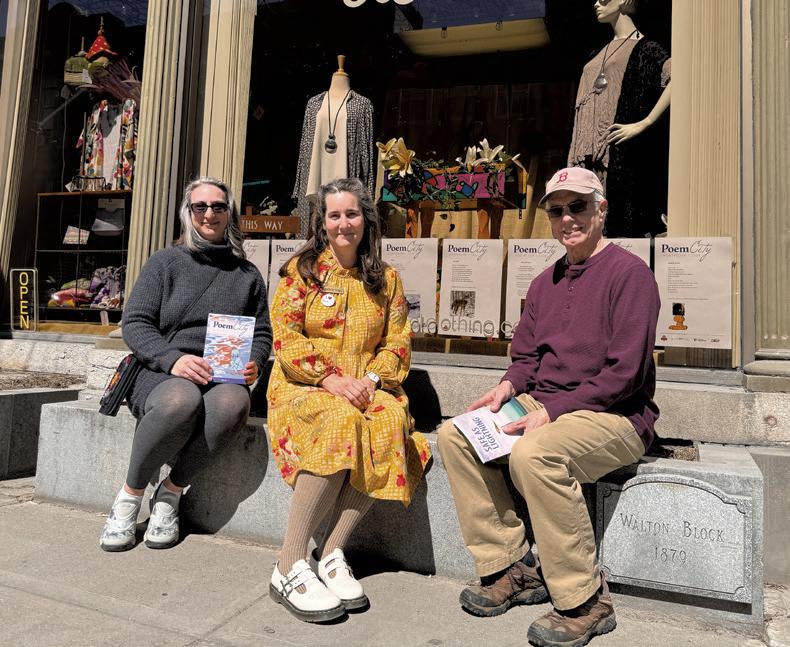
SEVEN DAYS APRIL 24-MAY 1, 2024 99 FREE WILL ASTROLOGY BY ROB BREZSNY REAL
OR 1-877-873-4888 APRIL 25-MAY 1 Watch at sevendaysvt.com Eva Sollberger’s supported by: April is National Poetry Month, when Montpelier transforms into PoemCity. e Kellogg-Hubbard Library organizes this event, during which 450 poems are displayed in the windows of 50 local businesses. Seven Days senior multimedia producer Eva Sollberger visited the Capital City in early April for a downtown poetry tour. LATEST VIDEO! 4h-StuckinVt041724.indd 1 4/16/24 2:10 PM
CHECK OUT ROB BREZSNY’S EXPANDED WEEKLY AUDIO HOROSCOPES & DAILY TEXT MESSAGE HOROSCOPES:
REALASTROLOGY.COM
WOMEN seeking...
OLD-FASHIONED PISCES
Left-handed, native Vermonter. Enjoy cooking, reading, writing, dinners out, dancing, hiking, biking, spending time with family and friends. Have two Persian cats. Can be insanely cute and affectionate. Go above and beyond for my special guy. Can dig in the dirt but dress for any occasion. Love the beach, ocean, NASCAR, antique cars. If any of this sounds good, say hello!
PassionPisces60 60 seeking: M, l
SPONTANEOUS, ADVENTURESOME, GENTLE AND ACTIVE
Looking for same in a man. My interests are so varied I fit a modern-day Renaissance woman model. Pickleball, cycling, hiking, adventure travel, watercolor painting, music, piano and singing, writing, plans for reentering the golf world after a 15-year hiatus. Fitness and laughter are both paramount! Careers in guidance counseling (longest in duration), teaching, geology, music, medicine. Salpal 68, seeking: M, l
THERE’S MUCH MORE TO DO!
Looking for someone to share adventures and laughs, long talks and quiet times, dinners out and dinners in. I am a retired educator, still enjoying working with children and storytelling around northern Vermont. I live a busy, fun but not fancy country life. I love to travel and have new experiences. Hoping to find someone to join me. warmandgentlelady, 70, seeking: M, l
WANT TO RESPOND?
You read Seven Days, these people read Seven Days — you already have at least one thing in common!
All the action is online. Create an account or login to browse hundreds of singles with profiles including photos, habits, desires, views and more. It’s free to place your own profile online.
l See photos of this person online.
W = Women
M = Men
TW = Trans women
TM = Trans men
Q = Genderqueer people
NBP = Nonbinary people
NC = Gender nonconformists
Cp = Couples
Gp = Groups
GENUINELY HAPPY, SEEKING SAME
Easygoing, life-loving sixtysomething in search of a man comfortable in his own skin who loves deep conversations. All the usuals apply: Must love dogs. It’s the way to my heart, for sure. Must also love the outdoors and not in a fanatic way. Enjoy being in nature. And finally, for now anyway, must love a good belly laugh. Joyful 64, seeking: M, l
GENUINE, THOUGHTFUL, PASSIONATE
Solo tiny-farming in the hills is sublime, but this unscripted homesteading comedy could use more characters: a partner in permaculture, a paddling companion, cross-country/backcountry ski buddy, Scrabble challenger. Some other favored pastimes: sailing, reading, Champlain Islands camping in fall, vegetarian cookery, making you laugh. Life is good. Just missing someone special to share the journey. nordicbette242 53, seeking: M, l
CUTE OLD CHICK!
I am compassionate, still a thrill seeker (I just zip-lined in Costa Rica), curious about the world and using the Google machine to search for answers. My bucket list is long. Get your passport out and let’s go! 70 years young, originally from Vermont, retired, enjoy long walks, gardening, biking, anything on water, eating sushi. ExoldVermonter 70 seeking: M, l
LIVING THE NEXT CHAPTER
Hello. I am looking for someone to spend this next chapter of life with. I enjoy taking walks, going for rides on the back roads with no destination in mind. I love the ocean. It’s my happy place. I enjoy going out for a meal now and then but am just as content to stay in. My grandchildren are my joy. Ajb 60, seeking: M, l
CARING, STRONG, NEVER LATE
Hello. I first want to start with that I am a breast cancer survivor. Absolutely nobody in this world is perfect. I have been through many different things, which has made me to be a very strong woman. If you cannot handle someone who is strong and independent, I am not the person for you. I speak my mind. Msviclynn 62 seeking: M, l
A FRESH START
I’m smart, work hard and want someone who can help me play hard. I’m not looking to meet “soon,” nor do I want an instant relationship (I just got out of one), but I am open to it if the right person comes along. I feel like I just woke up from a long nap — entertain me! Freshstart 57, seeking: M, l
CREATIVE WOMAN SEEKS LIBERATED MALE
I want a guy who was raised by a liberated mother. I am creative, witty, talented, graceful and devilish. Someone once said I think out of both sides of my brain — organized and artistic. I once auditioned for and was selected to sing backup for the Shirelles. People think I’m fun to be with. Maybe you will, too. San2Lus 74 seeking: M, l
HARDWORKING, INDEPENDENT TEACHER, GARDENER
Recently divorced after 25 years. Looking to rediscover fun! I am a hardworking, independent and very active person. Big gardener. Like to be outside, hanging with friends and family. Enjoy going out for dinner/ drinks/dancing or hanging out at home. Pretty easygoing. La, 54 seeking: M, l
BIODYNAMIC, SAGACIOUS ARTIST
Desire meaningful conversation, companionship, laughter and love. I am family- and community-minded with philanthropic tendencies; broadly studied in history, art, science and spirituality; well traveled and influenced by world cultures. I lead a conscientious, healthy lifestyle and keep a clean home, hands and heart. Retired, actively pursuing my passions and enjoying my grandchildren. Are you similarly inclined? Eruditee 60, seeking: M, l
INTROVERTED EXTROVERT TO DANCE
Are you a grown-up and still curious, playful, inquisitive, ever learning? I thrive outdoors in every season and relish reflective company, solitude and togetherness, sharing ideas and inspiration, and desires to love in a way that we feel free. I see that many of us here wonder how to describe themselves. Aren’t we all more than we can say? esmeflying, 60, seeking: M, l
NATURE GIRL
New to the area and looking for friends and dates for the first time in my life. I feel weird even doing this (does everyone say that?). I’m in my 50s but slim and fit and honestly look younger than I am. Prefer slim, tall men but honestly don’t care much as long as you’re open-minded, fun and a good conversationalist. Highmeadows 58 seeking: M, W, NC
MEN seeking...
OLD-SCHOOL
Looking for a wife-material woman. Enjoys outdoors and helps around the house. I am honest and loyal. Someone who is not religious but desires to grow spiritually. Hockeyman, 42, seeking: M
RETRO GROUCH
Quiet, more than a bit worn at the edges and lost inside my own head at times but warm, kind and thoughtful inside. My tolerance does run out with hypocrisy and mean-spiritedness. I am by no means the stereotypical male, and I never got the attraction of team sports. wanderling 66 seeking: W, NC, l
LAID-BACK, ORALLY BI, KINKY
Looking for kinky friends for friendship and more. Looking for people close to central Vermont. Looking for women, men and trans. I like to be involved in threesomes and group sex. If you are a man with a full beard, I’m not interested. It’s a really big turnoff for me. Sorry. looking67 56, seeking: M, W, TM, TW, Q, NC, NBP, Cp, Gp, l
EVERY DAY ABOVE GROUND IS GOOD
Active, athletic, open minded, optimistic and positive. Seeking long-term relationship with a like-minded woman. Davidus, 60 seeking: W, l
NEW TO THIS
In great shape. Look much younger than age. Hardworking homeowner who enjoys the outdoors, good food, traveling, riding my Harley, weekends on the boat. Any real adventure. Midvte, 53, seeking: W, TW
SUNNY SIDE OF LIFE
I have built a new house, new life in the NEK. I’m a young 67, active and always busy doing something, whether it’s work or play. Now that the house is done, it’s time to be outdoors creating my gardens and yard. I’m looking for a positive, happy, possibly nude gardener and creator that complements my own creative energy. MRO67, 67 seeking: W, l
DOWN-TO-EARTH
Hi. I’m looking for someone who likes to smile. I enjoy gardening, riding motorcycles, metal detecting, boating. I enjoy a cozy night at home with that special someone, maybe sitting around a fire. brian69 55, seeking: TW, l
SINGLE CAT OWNER
Longing for someone to spend time with, eating amazing lunches or dinners and maybe having long car or camping trips. melvin4503, 72, seeking: W, l
KARAOKE SINGER
Single, new in Vermont. Seem female. Enjoy karaoke, comedy, poetry. 30 to young 60 y/o, please reply. Albert1, 70 seeking: W, l
NATIVE VERMONTER LOOKING FOR FUN
I’m 48, 250 pounds, working on it. Just a laid-back Vermonter looking for fun. I am in a complicated relationship, but I will send a picture if you would like — just ask. I’m fun, adventurous and enjoy nature. I’ve been told that I’m kind and friendly, but that is subjective and something you would have to determine for yourself. jjay1120, 48, seeking: W
PASSIONATE YET KINKY
I am at ( vergennesman at yaho dot com ) 61-y/o male who wants to meet someone to become FWB who is open-minded, not afraid of trying new things sexually. I am looking for a trans woman, female or trans male. Looking4sez 61 seeking: W, TM, TW
STONER DEADHEAD LIVING HIS LIFE
Been on this mountain for 25 years. Empathetic, compassionate, generous egoist. Creative tool-using lover of science, magic and humanity. Maker of music, pizza, tie-dyes and other creative oddities. Seeking a fun distraction. A muse. Growth. A dinner companion. A break from solitude. If magic happens, I am not likely to run away. MountainAnarchist 58, seeking: W, l
FINDING PEACE IN VERMONT
Oh, boy. I love summer. March to the end of November I find the most appealing, though hiking and hockey do help me cope with winter. But there is nothing better than a meal off the grill, IMHO. I am not a fan of TV. I like to be busy. We live but once. So let’s live! Exploring_Vermont, 60, seeking: W, l
LIFE IS POETRY
I like to believe my heart is in the right place. I work on being aware and openminded, considerate and a good listener. I’m artsy and eclectic. Music, art and literature are the simple things that make me happy. I’m looking for someone to share life with and write our own poetry. Someone who is kind and self-aware. DogberryTouchstone, 60, seeking: W, l
TRANS WOMEN seeking...
RECENTLY RELOCATED, ADVENTUROUS, FREE SPIRIT
I’m a gorgeous, white, 100 percent passable trans lady who is 57 and could pass as 30 — yes, 30! I long for love, laughter and romance, along with loving nature. I want a man who’s all man, rugged, handsome, well built but prefers a woman like myself. It’s as simple as that. We meet, fall in love and live happily ever after. Sammijo 58, seeking: M, l
ARE YOU EXPERIENCED?
I hope to find someone who wants to get out into the world and share experiences in food, music, indoor activities, riding bikes or kayaking, and travel. I like to get dressed up, but I can dress down, too. Looking for companionship and a kind, gentle heart. Love is a wonderful thing. Luv2BaGurl 64, seeking: M, l
GENDERQUEER PEOPLE seeking...
BABY BUTCH SEEKS GUIDANCE
(Not sexual or romantic.) If you’re queer, an activist or anything of the like, I would love to connect! I’m a genderweird (truly) babydyke butch, and I desperately want to learn from older queers. As much research as I’ve done on gay history, I always want to learn more and connect. If there are any other butches out there, please reach out! antweed, 18, seeking: TM, TW, Q, NC, NBP, l
LET ME WRITE YOUR STORY
Truly just here to explore everyone else. Dating weirds me out, and sex is so intimidating, so just let me be your friend. I promise I’m actually kinda cool. orion_nebula 28, seeking: M, W, TM, TW, Q, NC, NBP, l
COUPLES seeking...
LOOKING FOR FUN PEEPS
Fun, open-minded couple seeking playmates. Shoot us a note if interested so we can share details and desires. Jackrabbits, 60, seeking: W, Cp
FUN COUPLE LOOKING FOR EXPLORATION
We are a secure couple who enjoy the outdoors, good wine, great food, playing with each other, exploring our boundaries and trying new things. We are 47 and 50, looking for a fun couple or bi man to play and explore with us. We are easygoing, and we’d love to meet you and see where our mutual adventures take us. vthappycouple, 50, seeking: M, Cp, Gp
JUST FRIENDS seeking...
FREE SPIRIT
I’m a 58-y/o woman, new in Vermont. I’m looking for an honest, loving, generous Christian man. I’m reliable and kindhearted. I’m looking for a good man who loves God and goes to church. I’m looking for someone financially independent who loves to travel and is willing to explore other cultures. I’m looking for a friendship of mutual respect, understanding and support. Ccentered24 57, seeking: M
MARRIED TO LOVELY ASEXUAL WOMAN
Yes, she knows. I am an overall “happy to be here” type of person. Not looking for anything serious or frequent. Pics shared privately (because there aren’t that many Black guys around here). I believe in honest communication, making healthy decisions, setting strong boundaries, consent and prioritizing safety while having maximum fun.
Richard_Boon 42, seeking: W, TW, l
SEVEN DAYS APRIL 24-MAY 1, 2024 100
to these people online: dating.sevendaysvt.com
Respond
i SPY
If you’ve been spied, go online to contact your admirer!
dating.sevendaysvt.com
RED HEAD AND TIGER BODY
Devastating, darling, just one of kind. At comedy improv you sat so close but had someone else sit on your lap. We drank. We sang. We got up to play improv games together. That sparkle in the eye, echoes of an Irish wild ancestress! You know I know. I know you know. We know we know. Remembering the good times. When: Saturday, March 30, 2024. Where: Hugo’s, Montpelier. You: Woman. Me: Woman. #915989
ASHLEY AND OLIVIA
We met at the Richmond playground the week of April 8. I thought I had your number in my phone, but now I can’t find it. Since you’re from Hinesburg, I don’t know if we’ll run into you again without making a plan. Playground meetup late afternoon on Apr. 30 or May 2? — Emily and Ellis When: Thursday, April 11, 2024. Where: Richmond Playground. You: Group. Me: Woman. #915988
APARTMENT CLEANING
I cleaned your apartment in 2023. You were moving out of it. I ripped out your carpet on the stairs. Super rainy day. I thought you were both very cute but didn’t want to be forward and tell you I’d love to be your third wheel. When: Tuesday, August 1, 2023. Where: Pearl. You: Couple. Me: Man. #915987
ARANDAS IN MONTPELIER
I was running late for work; you were paying for your gas. Gazes met, quick and charming smile.I got to the counter to pay; you came back in and sheepishly said a once-in-a-lifetime thing just happened: You tried to take the pump with you. I like to think our brief connection flummoxed you into your first pump drive away. Single?
When: Tuesday, April 16, 2024. Where: Arandas in downtown Montpelier. You: Man. Me: Woman. #915986
CHARLIE AT THE CO-OP
You might build floating shelves for your tiny kitchen, and you liked my smile. My kitchen is big and in need of a sous chef (though maybe we could take turns being head chef). Let’s make scrumptious meals together and fend off the crudeness of reality with the culinary arts. Bon appétit! When: Wednesday, April 17, 2024. Where: City Market. You: Man. Me: Woman. #915984
CHARLIE AT THE CO-OP (AN ADDENDUM)
I’m not looking for love, just a partner in the kitchen, shared creativity and maybe friendship/companionship. Perhaps one day we’ll open a Michelin- or Zagat-rated restaurant together. Who knows? Anything could happen. When: Wednesday, April 17, 2024. Where: City Market Co-op.
You: Man. Me: Woman. #915985
SAILING ON WITHOUT A WORD
I noticed you early in the cruise: tall, gray hair, dark jacket, 60s-ish. You sat on the deck in the stern, middle section, for a few minutes. I wish I had been braver and chatted with you. I was wearing a teal Patagonia jacket, gray hair in a ponytail and solar glasses.
When: Monday, April 8, 2024. Where: Spirit of Ethan Allen Eclipse Cruise.
You: Man. Me: Woman. #915983
MEMORIES OF MY FAVORITE KIDS
Anthony, Rowan, Xanny and Princess Liah, I’m sorry I failed you when you were young. I should’ve worked harder to remain in your lives. I wish I could’ve watched you grow up into the amazing adults you were always destined to become. You owe me nothing; just wanted to send you some love in case you needed it. XO Seerah
When: Wednesday, April 17, 2024. Where: In my happiest memories.
You: Group. Me: Woman. #915982
Dear Reverend,
Ever since the solar eclipse, I’ve been feeling weird. The event itself was amazing — like nothing I’ve ever experienced — and immediately after, I was exhausted. I thought it was just from the excitement of the day, but it’s been a while and I just can’t seem to shake it. Am I imagining things? Luna
BLUE HAIR, DON’T CARE
Blue hair, Supercuts stylist, Saturday Apr. 6. Something about the look in your eyes made me want to get to know you. It was a glow of confidence and beauty. I gave you a wave on my way out. If you’re interested, I Spy back. When: Saturday, April 6, 2024. Where: Williston. You: Woman. Me: Man. #915981
FATHER AND DAUGHTER AT AL’S
You were tall and potentially handsome (too far away to tell), standing outside, in line for a creemee. For some reason you were facing the road. I was headed home on a bus and wearing a navy bandanna. We glanced at each other before the light changed. I wonder what was on your mind. Hope you enjoyed your day together. When: Friday, April 5, 2024. Where: outside Al’s, the weekend of the eclipse. You: Man. Me: Woman. #915980
MILTON HANNAFORD
CHECKOUT LINE
We were standing next to each other in different lanes. I made a comment that it was as busy as I had ever seen it, and you said it must be the solar eclipse. You got through your lane a cart ahead of mine. If you see this message, I would like to get together sometime and chat some more. When: Saturday, April 6, 2024. Where: Milton Hannaford checkout line. You: Woman. Me: Man. #915979
ARE YOU THE QUEUE?
You laughed. You liked the word “queue,” found it quaint. Asked me, “Do you come here often?” You kept brushing your hands all over me! Long-bearded man, rough-handed construction man. Foxy Market was so busy that night. We had to fly, my friend and I, to Barre. You have my number? Those breeze-block dogs, give me a call! When: Friday, April 5, 2024. Where: East Montpelier. You: Man. Me: Woman. #915978
YOU SANG ‘COME OUT TO PLAY’
How did you know my true wild name? Clever, bravo! You see my beauty! I’ll play on this brand-new day. The sun is up, with an eclipse. Time to make a move. I’m wearing that daisy chain, eyes wide open. Looking up, as the light goes to dark. Sing to me. I want to hear your heart’s desire sung. When: Thursday, April 4, 2024. Where: central Vermont. You: Man. Me: Woman. #915977
Dear Luna Teague,
You are not imagining things, and you certainly are not alone.
After an eclipse, many people report feeling fatigued, moody or just plain not like themselves. So much so that there’s even a term for it: an eclipse hangover.
In astrology, eclipses signify revealing truths and reassessing paths — a spiritual overhaul, if you will. And that’s no joke. Even if you don’t believe in that sort of stuff, you know that what you’re feeling is real — and there are real ways to deal with it.
The best way to get out of this sort of funk is to indulge in self-care
GOOD MEASURE CONNECTION
You came to my show. We made lots of eye contact throughout and chatted afterward. I loved your dance moves and long hair. You were tall, named Austin and originally from the Carolinas. You commented on my eye shadow and left before I could ask for your number. Let’s go dancing together sometime? When: Saturday, April 6, 2024. Where: Good Measure Brewery. You: Man. Me: Woman. #915976
HEALTHY LIVING BARISTA
You served me a latte with almond milk. You: beautiful smile, jeans and black top. Would love to chat. Sigh. When: Saturday, April 6, 2024. Where: Healthy Living, Williston. You: Woman. Me: Man. #915975
FOUR OF MY FAVORITE KIDS
About 20 years ago, I had the honor and privilege of loving and caring for four wonderful children. I left my whole heart with them when that job ended. I’ve missed them every day since. I love you, Anthony, Rowie, Xanny and Princess Liah. If you ever need anything, I’ll help you in whatever ways I am able. Love, Seerah. When: Thursday, August 1, 2019. Where: Cabot Ct., Burlington (many years ago). You: Group. Me: Woman. #915974
KEVIN FROM 20 YEARS AGO
Kev, thank you for “The Office.” It’s brilliant and amazing. I was way too burdened by life to realize exactly what you had done for me. A few years ago, the dust settled and it became clear. That show will always belong to us. One day I hope we get credit for it. Take good care of yourself. Sarah. When: Thursday, August 1, 2019. Where: Cabot Ct., Burlington (many years ago). You: Man. Me: Woman. #915973
LOVELY CUSTOMER AT DELI
You were waiting for your sandwich beside the table where I was eating, and you left an impression on me. You were wearing a long, dark green coat, a light olive-green dress and dark stockings. You had a winter hat on with a pom-pom on top. I think I overheard the deli staff call you “Caroline.” I’d love a chance to introduce myself over a cup of coffee. When: Wednesday, April 3, 2024. Where: Top of the Block Sandwich Shop. You: Woman. Me: Man. #915972

HANDSOME HANDYMAN
I spy a tall, dark-haired hunk often fixing up the house next door. Wondering if you wanted to grab a Caprese sandwich at City Market sometime soon? When: Tuesday, March 12, 2024. Where: N. Prospect St., Burlington. You: Man. Me: Woman. #915971
SNACKY CLUSTERS GOT YOUR ATTENTION?
Handsome guy. Your gorgeous eyes definitely got my attention. I’d really like to know if there’s a chance I could meet you for dinner, lunch, breakfast, bag your groceries, carry your bags to the car? Don’t be shy; your eyes weren’t. When: Monday, March 25, 2024. Where: Trader Joe’s. You: Man. Me: Man. #915970
EVERYTHING SHE DOES IS MAGIC
Were you singing to me? You were fingering those bass strings expertly at open mic night. I raised my glass in your honor, a salute to your bravery. Later you were standing beside me, waiting to seal your instrument back into its large case! You radiated heat, a tantalizing “come hither” vibration. You could ask for my number. Why not? When: Thursday, March 21, 2024. Where: the Whammy Bar. You: Man. Me: Woman. #915969
FULL MOON, SPICY MERMAID
I see your soul under the full moon. It peers into mine when you look into my eyes. Our beings intertwined in such a beautiful way. The way life flickers against our beings like flames from a fire. We have traveled across time and space to be where we are together. You are loved unconditionally, beautiful woman! Many adventures ahead. When: Friday, March 22, 2024. Where: Calais. You: Woman. Me: Man. #915968
TRUE NORTH
I spy, out of the corner of my eye, someone driving by. It feels like we’re strangers passing like ships in the night. I give way when all I want is to be overtaken. When: Saturday, March 16, 2024. Where: central Vermont. You: Man. Me: Woman. #915967
UPSTAIRS NEIGHBOR
To the petite college girl who lives above me: I wouldn’t mind if you wanted to come downstairs to say hi. I’m sure we’d click. If things get heated, we can call the fire department and they’ll be here in seconds flat. When: Sunday, March 17, 2024. Where: Burlington. You: Woman. Me: Man. #915966
and compassion. Try not to work too hard or exert yourself too much. Take some time to meditate or do yoga. If that’s not your thing, get outside for a long walk in the fresh air or sit in the sunshine for a little while and just breathe. It’s essential to listen to your body and get plenty of rest.
Since the moon is a big player in an eclipse and it controls the tides, try adding more water to your daily routine. Soak in a bath or take extra-long showers. Make sure to stay hydrated and drink lots of it.
They say the aftereffects of an eclipse can last as long as six months. But just as the moon passes through phases, so do we wacky humans. I’m sure you’ll be feeling as right as rain soon enough.
Good luck and God bless, The Reverend
What’s your problem? Send it to asktherev@sevendaysvt.com.
SEVEN DAYS APRIL 24-MAY 1, 2024 101
the Irreverent counsel on
Teague (MALE, 38) REVEREND Ask
life’s conundrums
Come dance with me in the gazebo. Nice guy, 5’10, 195 pounds. 74 y/o but looks younger, new to the market. Seeks a good woman/partner 55 to 75 y/o to love and be loved by. Very attentive and affectionate, likes to have fun and travel. 420 friendly. #L1749
I’m a man in my late 60s, seeking a female. Seek female with some desire and passion for a relationship. Many interests. Let’s talk. See phone number, please. #L1748
I’m a GM, early 60s, looking for playtime friends. Can be long- or short-term. Nice guy, easygoing and fun to be with. #L1745
I’m a gay male, 65 y/o, seeking gay men for new friendships. Outgoing, fun, loving person seeking meaningful connections. “Best friend” kinda guy here! is is not an ad for sex; friendship only. Looking forward to hearing from you. #L1746
He needs it bad, and she needs it more: ISO ideal M/F couple in need of attentive oral assistance to complete their lovemaking pleasure. Mature M welcomes your thoughts. #L1747
70, young-looking, good shape. Enjoy karaoke, singing, comedy. Seek female, 45 to young 70s. I am 5’9, hazel eyes, 163 pounds, black hair. #L1743
Woman, 63. NEK, single, work full time. Healthy, adventurous, curious, kind. Seek male friend to hang out with, explore, share conversation, meals. Not into divisive politics. Definitely into nature/beautiful surroundings. If romance happens, that would be wonderful. #L1744
Very active, elderly gent who lives alone seeks a lady with similar interests to share his lovely home. Splendid views, huge deck, paved highway, free TV and Wi-Fi. I enjoy snowmobiling, antiques, classic cars, parades, long rides, eating out, flowers and community involvement. Seeking a woman who enjoys the same. #L1738
I’m a SWM, early 60s, island dweller seeking a SF. Do you like shots of tequila and getting caught in the rain? Do you like walks in the islands and the taste of Champagne? Do you like making love at midnight in a sweet summer sweat? Do you like any of these items? Come with me and escape. Active. Athletic. Adventurous. #L1742
I’m a 73-y/o male desiring a woman in her 70s or 80s to experience together the joys of a sensuous relationship. Phone number, please. #L1741
I’m a SWM seeking a bi male and bi female for fun times. Clean, nonsmoking, drink ok. Any age, race. Nudist, movies, porn. Send phone number. #L1739
NEK prince, 74, seeks princess.
I’m very attentive, sweet and good-looking, seeking the same in a woman, 60 to 74. Writer a plus. Don’t need a maid; want a partner to love and be loved by. Nice home on romantic property. No Trumpers. #L1737
Not a romantic/sexual request! Young, handsome woman seeking butch mentor (25 to 45) for guidance in selfexpression, strength and intersocietal relations. #L1735
I’m a 67-y/o woman seeking a 55- to 76-y/o man. I am looking for a man to enjoy inside and outside — one who finds time to be a companion, is not a couch potato, and enjoys the outdoors, traveling, golf, fishing, etc. Leave your cell number. #L1733
I’m a woman, 80 y/o, seeking a man, 70 to 80 y/o. I want friendship as well as a companion. Also like the outdoors in the summer. Swimming, boating and just reading at home. Like going out to eat once in a while. #L1734
Let’s do some things — coffee at Black Cap Coffee, dinner, the Green Mountain Film Festival, music at Hugo’s or Bent Nails Bistro. Woman, early 70s, seeking man of similar age to explore common interests. #L1732
I’m a 62-y/o female who wants a male companion to have fun with, maybe go for some drinks or smoke a bowl. Young in spirit, but I’m not into the romantic part of relationships anymore. Simply looking for a goofy friend to take me out on the town. #L1730
I am a 25-y/o male forager, tinkerer and dumpster diver seeking like-minded empathetic woman of a similar age. #L1729
Kind, loving and sincere 72y/o woman looking for a male companion/friend to spend time with and get to know. #L1726
I’m 47, seeking a male. I’m 5’6, 206 pounds, looking for someone to marry me and who is very wealthy. Please respond. #L1728
SEVEN DAYS APRIL 24-MAY 1, 2024 102
Int net-Free Dating! Reply to these messages with real, honest-to-goodness le ers. DETAILS BELOW. MAIL TO: SEVEN DAYS LOVE LETTERS • PO BOX 1164, BURLINGTON, VT 05402 OPTIONAL WEB FORM: SEVENDAYSVT.COM/LOVELETTERS HELP: 802-865-1020, EXT. 161, LOVELETTERS@SEVENDAYSVT.COM THIS FORM IS FOR LOVE LETTERS ONLY. Messages for the Personals and I-Spy sections must be submitted online at dating.sevendaysvt.com. Describe yourself and who you’re looking for in 40 words below: (OR, ATTACH A SEPARATE PIECE OF PAPER.) I’m a AGE + GENDER (OPTIONAL) seeking a AGE + GENDER (OPTIONAL) Required confidential info: NAME ADDRESS ADDRESS (MORE) CITY/STATE ZIP PHONE HOW TO REPLY TO THESE LOVE LE ERS: We’ll publish as many messages as we can in the Love Letters section above. 2 Interested readers will send you letters in the mail. No internet required! 3 PUBLISH YOUR MESSAGE ON THIS PAGE! 1 Submit your FREE message at sevendaysvt.com/loveletters or use the handy form at right. Seal your reply — including your preferred contact info — inside an envelope. Write your pen pal’s box number on the outside of that envelope and place it inside another envelope with payment. Responses for Love Letters must begin with the #L box number. MAIL TO: Seven Days Love Letters PO Box 1164, Burlington, VT 05402 PAYMENT: $5/response. Include cash or check (made out to “Seven Days”) in the outer envelope. To send unlimited replies for only $15/month, call us at 802-865-1020, ext. 161 for a membership (credit accepted).











Eggstatic! (For Kids!)
WED., APR. 24
BIRDS OF VERMONT MUSEUM, HUNTINGTON
See It. Sketch It. Bird It.
WED., APR. 24
BIRDS OF VERMONT MUSEUM, HUNTINGTON
One-Night Stand
THU., APR. 25
OLD SPOKES HOME, BURLINGTON

EDNA: e Residency, Night ree
FRI., APR. 26
THE PHOENIX, WATERBURY
Modist & Friends
FRI., APR. 26
THE UNDERGROUND LISTENING ROOM, RANDOLPH
April Bird Monitoring Walk & Volunteer Work Day
SAT., APR. 27
BIRDS OF VERMONT MUSEUM, HUNTINGTON
Sci-Fi & Fantasy Expo
SAT., APR. 27
CHAMPLAIN VALLEY EXPO, ESSEX JUNCTION
Capital City Winter Farmers Market
SAT., APR. 27
CALEDONIA SPIRITS, MONTPELIER
Counterpoint
SUN., APR. 28
CATHEDRAL CHURCH OF ST. PAUL, BURLINGTON
e Ruta Beggars
SUN., APR. 28
ROOTS & WINGS COFFEEHOUSE AT UUCUV, NORWICH












SUN., APR. 28



• Fundraisers
•
•
• Festivals
•
•
•
•
Isabel Wilkerson Pulitzer Prize-winning author of Caste: e Origins of Our Discontents
HILTON BURLINGTON LAKE CHAMPLAIN, BURLINGTON
Pretty in Pink Rosé Tasting
TUE., APR. 30
STANDING STONE WINES, WINOOSKI
Living with Loss: A Gathering for the Grieving
WED., MAY 1 ONLINE
Rochester Light and Power
MAY 1-5
ROCHESTER SCHOOL AUDITORIUM
Shifting Adjustment Workshop
THU., MAY 2
OLD SPOKES HOME, BURLINGTON
SAT., MAY 4 WATERBURY
STRUT! Fashion Show at Hula
SAT., MAY 4
HULA, BURLINGTON

2024 Waterbury Onesie Pub Crawl
Kentucky Derby Day Social and Dance
SAT., MAY 4
THE KIRK ALUMNI CENTER AT MIDDLEBURY COLLEGE
May the Fourth Be With You
SAT., MAY 4
THE BARNS AT LANG FARM, ESSEX
37th Annual Community Celebration with Kat Wright
SAT., MAY 4
ELLEY-LONG MUSIC CENTER, COLCHESTER
SELLING TICKETS?
Plays & Concerts
CAN HELP!
Sports WE
to you
No cost
Local support
Built-in promotion
options SELL TICKETS WITH US! Contact: 802-865-1020, ext. 110 getstarted@sevendaystickets.com
EVEN MORE EVENTS ONLINE AT SEVENDAYSTICKETS.COM
Custom
FIND
SOLD OUT TIX@ DOOR 1t-tickets042424.indd 1 4/23/24 3:59 PM SEVEN DAYS APRIL 24-MAY 1, 2024 103
SOLD OUT





“I feel supported here at CCV exploring different subjects that I’m passionate about...it’s a really good opportunity to get a good foundation.” – Liam


The Vermont high school class of 2025 is eligible for a free degree at the Community College of Vermont.


1. Enroll in the Early College program and spend your senior year of high school at CCV.


2. Continue at CCV and earn a free associate degree through the Free Degree Promise, generously supported by the McClure Foundation.
3. Get on the fast track to the workforce or a four-year degree. GET STARTED


CCV is committed to non-discrimination in its learning and working environments for all persons. All educational and employment opportunities at CCV are offered without regard to race, creed, color, national origin, marital status, sex, sexual orientation, gender identity, veteran status, or any other category protected by law. CCV is an equal opportunity employer. Auxiliary aids and services are available upon request to individuals with disabilities.
GOTOCOLLEGEVT.ORG SE_Backcover_April.indd 1 4/19/24 3:32 PM 1T-CCV042424 1 4/22/24 9:53 AM
TODAY!
