WATCH // EXPLORE // CRAVE
Illuminate Returns Following a two-year renovation project, the Lightner Museum’s beloved stained glass exhibit will once again open to the public. // B Y K A R I N FA B R Y- C U S H E N B E R Y
T
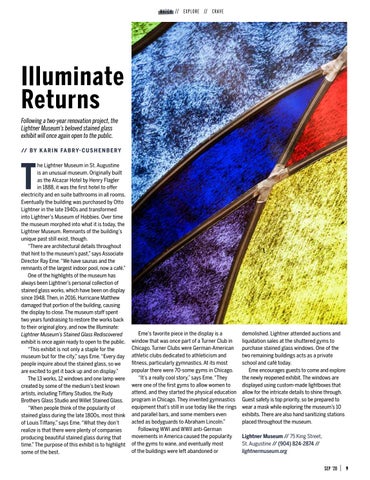
he Lightner Museum in St. Augustine is an unusual museum. Originally built as the Alcazar Hotel by Henry Flagler in 1888, it was the first hotel to offer electricity and en suite bathrooms in all rooms. Eventually the building was purchased by Otto Lightner in the late 1940s and transformed into Lightner’s Museum of Hobbies. Over time the museum morphed into what it is today, the Lightner Museum. Remnants of the building’s unique past still exist, though. “There are architectural details throughout that hint to the museum’s past,” says Associate Director Ray Eme. “We have saunas and the remnants of the largest indoor pool, now a café.” One of the highlights of the museum has always been Lightner’s personal collection of stained glass works, which have been on display since 1948. Then, in 2016, Hurricane Matthew damaged that portion of the building, causing the display to close. The museum staff spent two years fundraising to restore the works back to their original glory, and now the Illuminate: Lightner Museum’s Stained Glass Rediscovered exhibit is once again ready to open to the public. “This exhibit is not only a staple for the museum but for the city,” says Eme. “Every day people inquire about the stained glass, so we are excited to get it back up and on display.” The 13 works, 12 windows and one lamp were created by some of the medium’s best known artists, including Tiffany Studios, the Rudy Brothers Glass Studio and Willet Stained Glass. “When people think of the popularity of stained glass during the late 1800s, most think of Louis Tiffany,” says Eme. “What they don’t realize is that there were plenty of companies producing beautiful stained glass during that time.” The purpose of this exhibit is to highlight some of the best.
Eme’s favorite piece in the display is a window that was once part of a Turner Club in Chicago. Turner Clubs were German-American athletic clubs dedicated to athleticism and fitness, particularly gymnastics. At its most popular there were 70-some gyms in Chicago. “It’s a really cool story,” says Eme. “They were one of the first gyms to allow women to attend, and they started the physical education program in Chicago. They invented gymnastics equipment that’s still in use today like the rings and parallel bars, and some members even acted as bodyguards to Abraham Lincoln.” Following WWI and WWII anti-German movements in America caused the popularity of the gyms to wane, and eventually most of the buildings were left abandoned or
demolished. Lightner attended auctions and liquidation sales at the shuttered gyms to purchase stained glass windows. One of the two remaining buildings acts as a private school and café today. Eme encourages guests to come and explore the newly reopened exhibit. The windows are displayed using custom-made lightboxes that allow for the intricate details to shine through. Guest safety is top priority, so be prepared to wear a mask while exploring the museum’s 10 exhibits. There are also hand sanitizing stations placed throughout the museum. Lightner Museum // 75 King Street, St. Augustine // (904) 824-2874 // lightnermuseum.org SEP ‘20
9