Rubbhall AS +47 32 15 05 00 post@rubb.no www.rubb.no
Rubbhall AB +46 70 838 83 31 info@rubbhall.se www.rubb.se
Rubb UK +44 191 482 2211 info@rubb.co.uk www.rubbuk.com
Rubb Inc. +1 207 324 2877 info@rubbusa.com www.rubbusa.com
Rubb MEA +27 79 526 8560 info@rubbmea.com www.rubbmea.com
Rubb Polska +48 71 72 30 307 info@rubbpolska.pl www.rubbpolska.pl i
Renthall AS +47 671 12 100 post@renthall.no www.renthall.no
Renthall UK +44 191 814 7933 info@renthall.co.uk www.renthall.co.uk
Renthall USA +1 800 289 7822 info@renthall.com www.renthall.com
Renthall Polska +48 25 6324623 poczta@konstpol.pl www.renthall.pl
Plamek AS +47 67 11 21 00 post@plamek.no www.plamek.no
Managing Director
Rubb Buildings Ltd
Ian Hindmoor
This year marks the 25th anniversary of the EFASS hangar system, a milestone that reflects a quarter-century of innovation, operational performance, and close collaboration with defence customers worldwide.
2026 has already been an exceptional year for Rubb Buildings Ltd, and I am delighted to share some of the highlights in this latest edition of The Fabric Engineer.
This year marks the 25th anniversary of the EFASS hangar system, a milestone that reflects a quarter-century of innovation, operational performance, and close collaboration with defence customers worldwide.
The anniversary coincides with the award of a significant new Ministry of Defence contract and the successful deployment of our new 30m EFASS hangar by the Royal Air Force in support of the Protector RG Mk1 programme, further demonstrating Rubb’s commitment to supporting the evolving needs of military aviation.
Alongside this, we are proud to be supporting the RAF Museum Midlands with a major project that will help preserve and showcase an important part of the RAF’s aviation heritage.
39).
While defence remains a key focus, our team has continued to deliver successful projects across a broad range of sectors. The strength of our order book and project pipeline has made for an excellent start to the year, and there are already a number of exciting commercial projects underway that we look forward to sharing in future editions.
None of this would be possible without the dedication, skill, and professionalism of our team. This year, we were proud to recognise three colleagues who each celebrated 25 years with Rubb UK: Graham Rutland, Richie Nicholson, and Carly Joab. Their long service reflects the commitment, expertise, and loyalty that continue to underpin our success.
I would like to thank them, along with everyone across the business, for their hard work and contribution. As demand for our products and services continues to grow, we are pleased to be expanding the Rubb UK team during 2026.
We hope you enjoy this edition of The Fabric Engineer and learning more about the projects, people, and innovations shaping Rubb’s future.
Op CHESSMAN (p.
20 Narrow Aisle: Renthall UK maximises fleet efficiency
22 World-leading manufacturer: Protecting critical test equipment
23 Kaasa Transport AS: Insulated logistics hub 24 Built to last: Talking service and maintenance with Henry Robinson-Moore
North West Terminal: Rubb supports next step in port expansion
Prestige development: Triple warehouse delivery in southern Sweden
Oslo Municipality: Temporary sports hall gets Oslo school
34 EFASS anniversary: Looking back on 25 years of military hangar innovation
38 UK MoD: Six-year single-source contract awarded to Rubb UK
39 RAF Museum Midlands: Rubb to supply EFASS hangar for new exhibition
40 Op CHESSMAN: EFASS hangars support RAF & Swedish Air Force
44 30m EFASS: Mammoth modules trialled in UK yard
46 RFA Lyme Bay: Return to the Tyne 47 GeoPura: Clean energy powers critical defence infrastructure
48 Op SHADER: F-35Bs arrive at RAF Akrotiri
SolarFlex: Solar-powered fabric buildings
52 Built for consistency: Inside Thermohall® production at Rubb Polska
54 Rubb Inc.: Nathan Nickerson appointed as CEO
55 Zurhaar Industries: André Bakke appointed as CEO
56 Engineering clarity: The launch of Vevyr
58 Rubbhall AS: Celebrating 60 years of Rubb Norway
59 Zurhaar Academy: AI training for leaders across the Group
We are proud to engineer the world’s toughest fabric buildings, meeting our customers’ requirements right down to the millimetre.
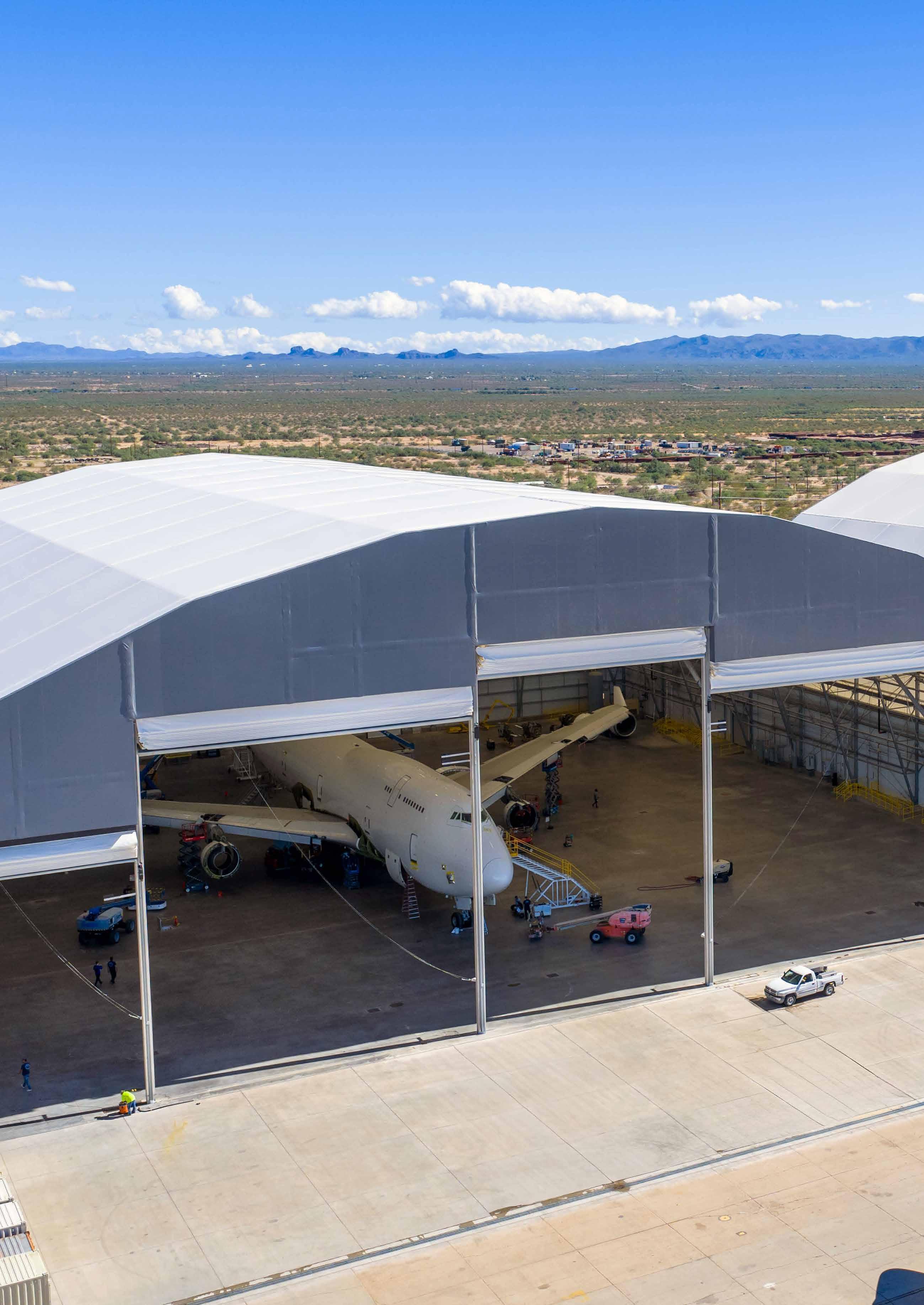
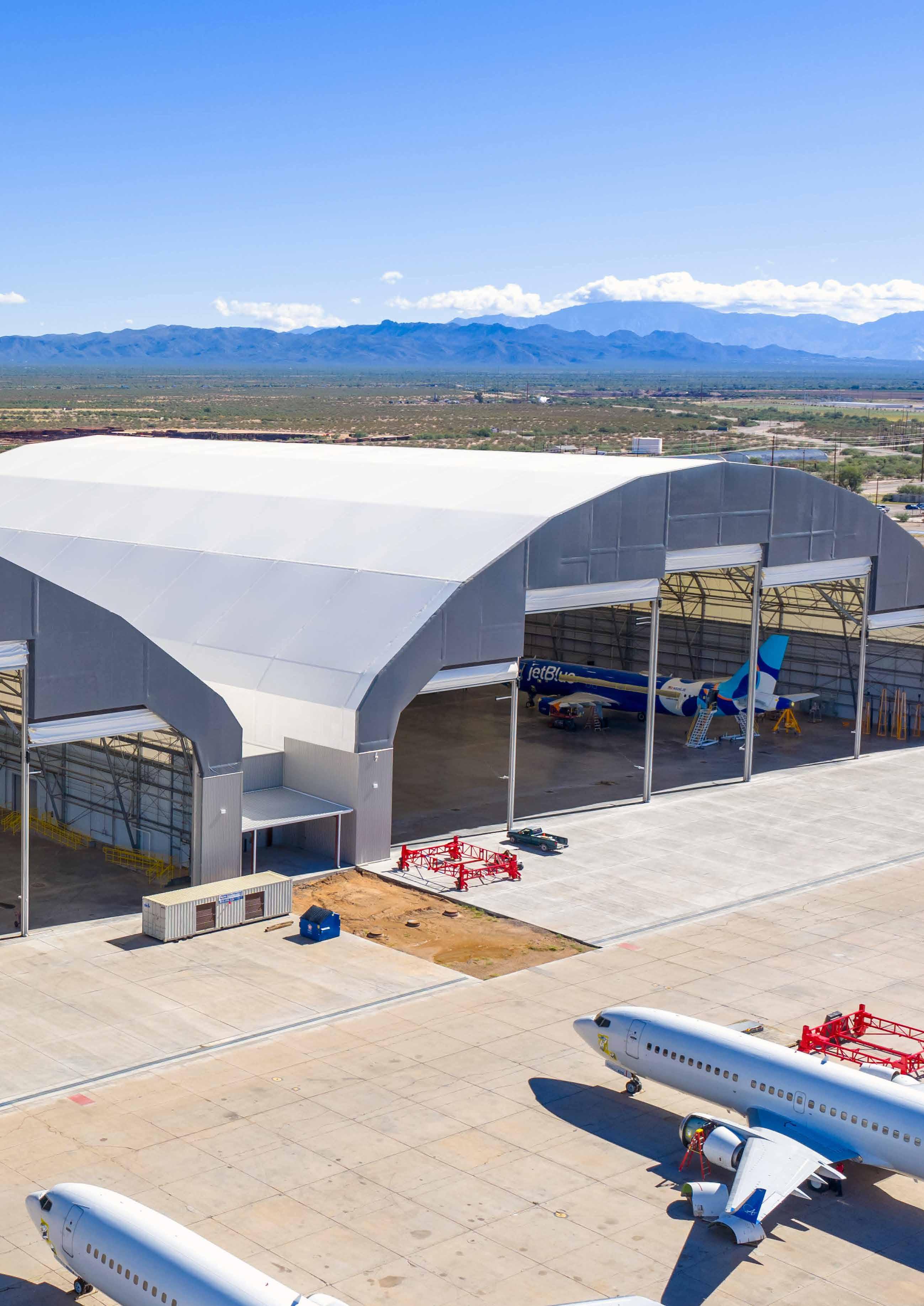
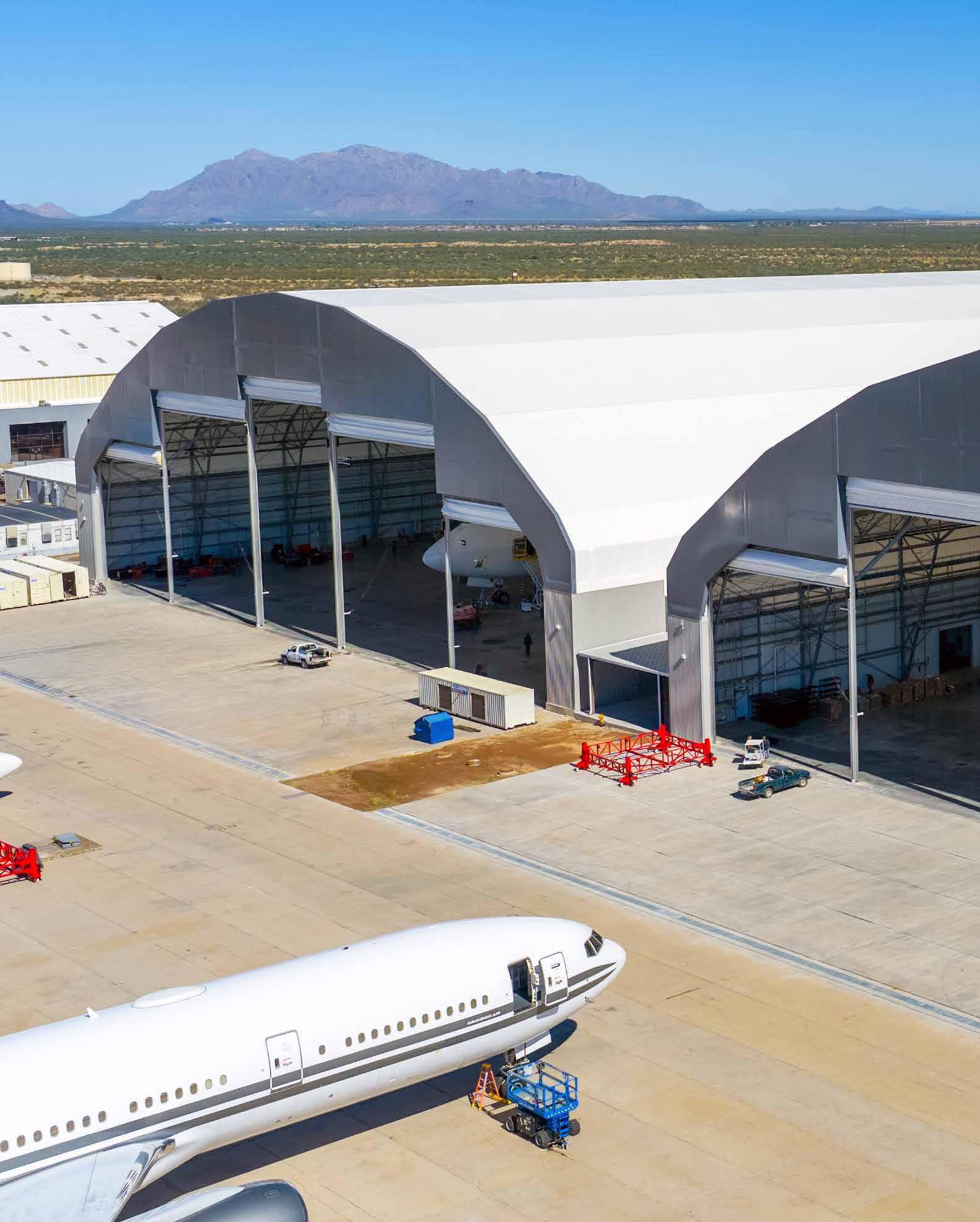
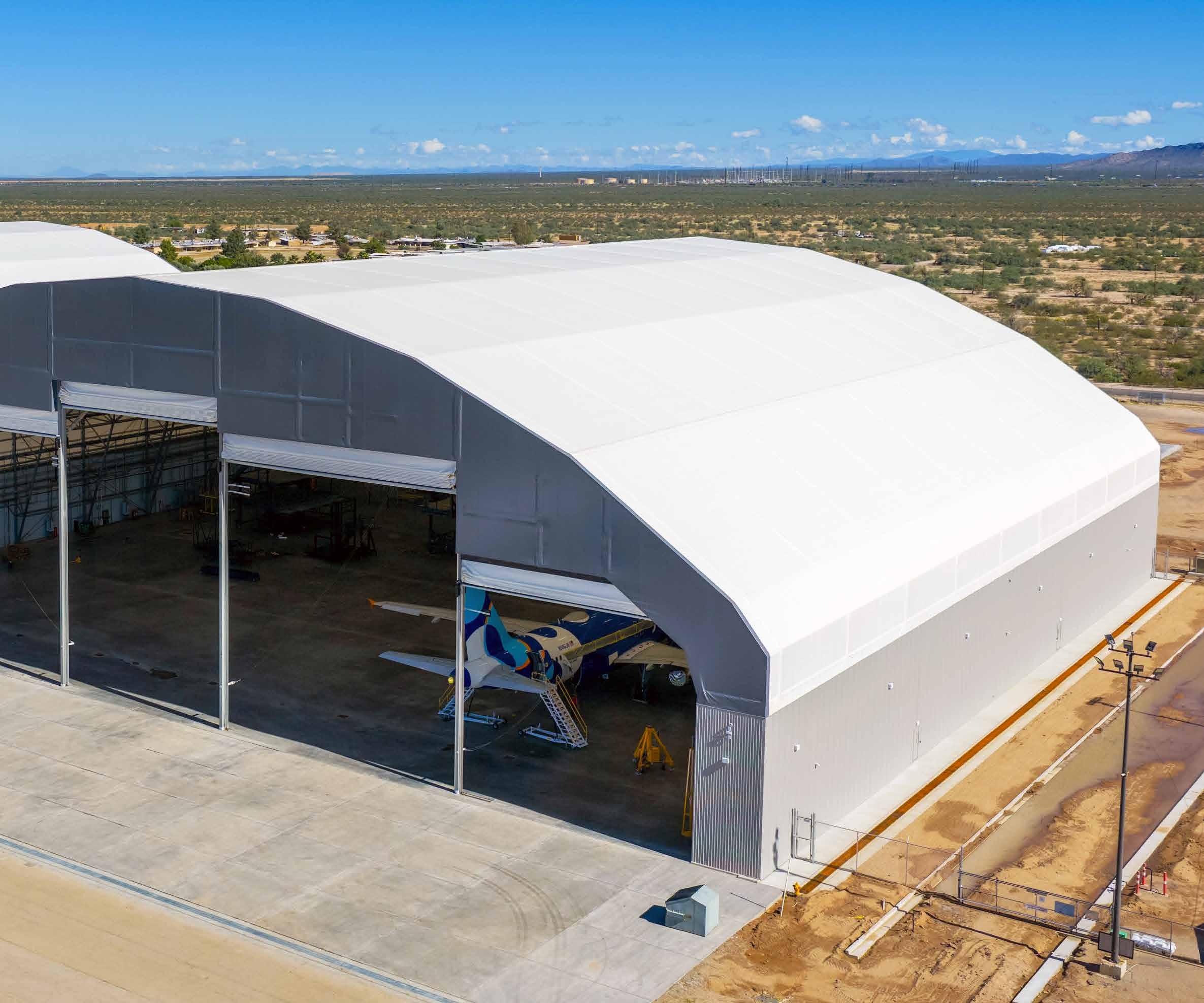
On December 8 2025, aviation leaders, community stakeholders, and state officials gathered in Marana, Arizona to celebrate a major milestone for Ascent Aviation Services.
The ribbon cutting of two new wide-body hangars marked a significant investment in reliability, workforce growth, and the continued rise of Southern Arizona as a center for aviation excellence.
The celebration reflected how important infrastructure has become in the highstakes world of maintenance, repair, and overhaul. In MRO operations, every hour on the ground carries cost. Facilities must protect uptime, support technicians, and deliver consistent performance, especially when wide-body aircraft are involved.
Ascent shared their gratitude following the event, noting: “Thank you to everyone who joined us yesterday to celebrate the opening of our two new 8,361 m² hangars. [...] This milestone highlights the economic growth these facilities will bring to Southern Arizona including more than 300 highpaying jobs and the continued development of an aviation hub built on excellence and innovation.”
When downtime matters
Supporting wide-body maintenance requires space, clarity, and predictable performance. These hangars offer more than 16,700 m² of open, unobstructed interior workspace, giving technicians room to move aircraft efficiently while keeping workflows safe and uninterrupted.
A moment during the ceremony captured the energy of the day. As the main doors opened for the first time, attendees saw the scale of the new space just as a group of parachuters descended nearby for training. It was an unexpected backdrop that highlighted the momentum and possibility surrounding the project.
Marana brings intense heat, harsh sunlight, and seasonal winds. The facility was designed to maintain stability in these extremes, helping teams work with precision year round. Clear spans exceeding 90m create flexibility inside, while the building’s modular design allows for future expansion without major operational disruption.
Sean Hickey, VP Sales, reflected on what the new hangars represent for the region and the industry: “The ceremony was well attended by many local community leaders and project stakeholders, and was a great showcase of the quality engineering and craftsmanship that goes into every Rubb structure.”
This project was originally planned for Roswell, New Mexico before being strategically relocated to Marana. That shift required a recalibrated approach to logistics, scheduling, and site planning to ensure work continued without slowing Ascent’s daily operations.
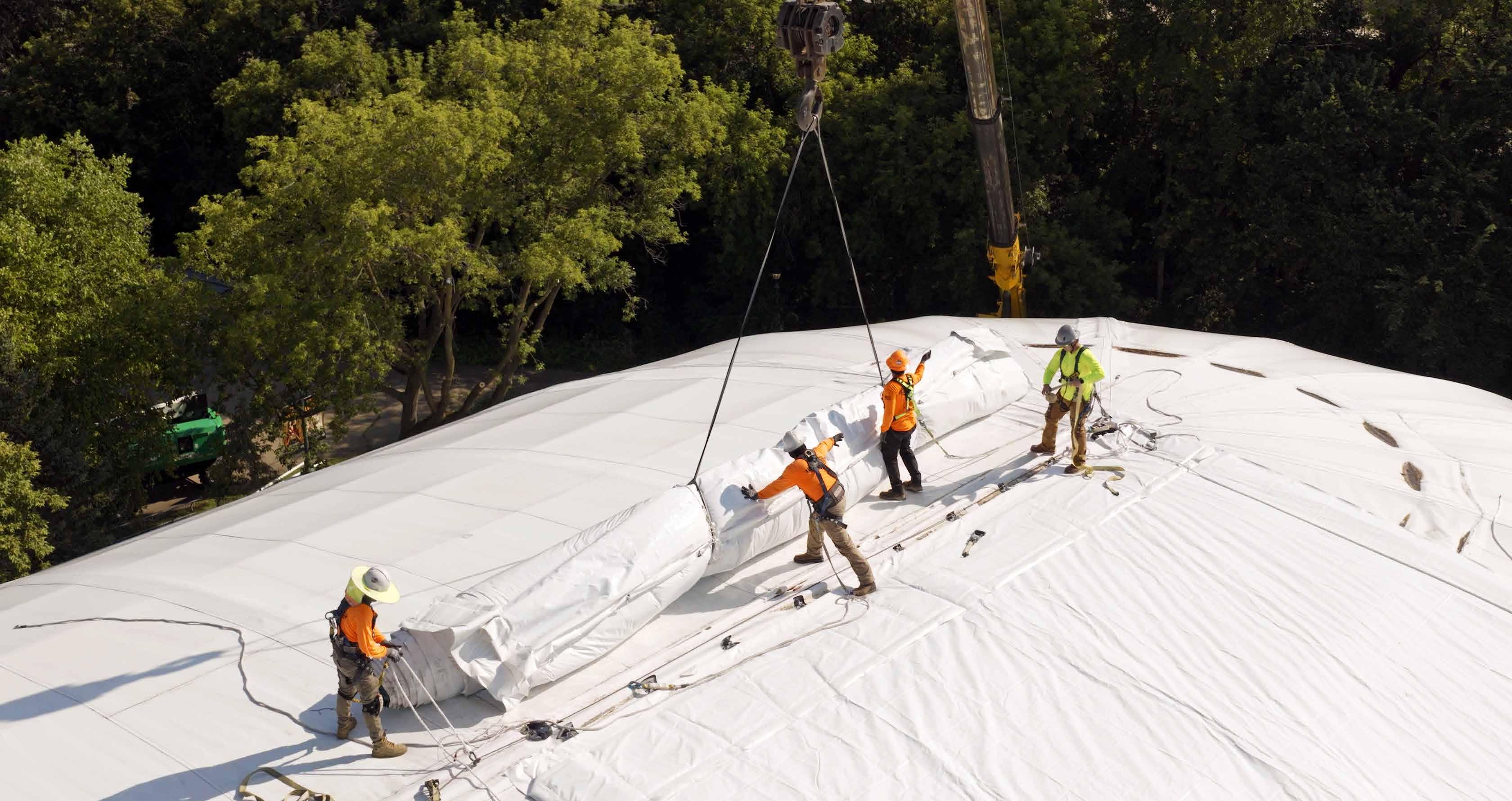
To keep progress steady, the construction sequence emphasised predictability. Materials were organised bay by bay to reduce sorting time, and large portions of the roof were assembled at ground level and lifted into place. This minimised work at height, improving safety and efficiency.
Jack Perreault, Head of Site Operations, summarised the impact of this approach: “Whenever you can build on the ground instead of at height, you improve both safety and efficiency. This method not only streamlined assembly but also resulted in significant cost savings. We didn’t just adjust to the relocation. We optimised for it.”
The new hangars represent a commitment to both operational capability and regional development. With more than 300 highpaying jobs supported by this expansion, Ascent is investing deeply in the local aviation workforce and contributing to the continued growth of a thriving aerospace economy.
With the ribbon officially cut, Ascent Aviation is equipped with flexible, highperforming space designed for the demands of wide-body MRO work. The facility prioritises uptime, protects workflows, and leaves room to grow as aviation needs evolve.
Dave Querio, CEO, Ascent Aviation Services captured the sentiment best: “In an industry where delays and surprises are the norm, Rubb delivered what they promised and then some. These hangars will serve Ascent for decades, and I wouldn’t hesitate to work with their team again.”
Desert conditions
In an industry where delays and surprises are the norm, Rubb delivered what they promised and then some. These hangars will serve Ascent for decades, and I wouldn’t hesitate to work with their team again.
CEO, Ascent Aviation Services
Dave Querio
Building trust at scale Talking sales with Sean Hickey
At Rubb Inc., sales is about much more than quoting projects and winning contracts. It requires technical understanding, strategic thinking, and building trust with customers making major investments in critical infrastructure.
The experience from design to fabrication to delivery and installation reinforces to customers that Rubb will do the right thing, and that they’ve made a good choice.
VP
Sales, Rubb Inc.
Sean Hickey
As Vice President of Sales, Sean Hickey plays a key role in driving growth while helping customers navigate the complexities of selecting the right building solution for their needs.
From market research and lead generation to pricing, proposals, and contract negotiation, Sean’s role spans nearly every stage of the customer journey.
“I tell people that my primary responsibility is to sell buildings,” Sean says, “but there’s lots of other stuff mixed in.”
That “other stuff,” as Sean describes it, includes everything from cold-calling and following up on inbound leads to attending trade shows, negotiating contracts, and helping projects transition into execution with Rubb’s Project Management team.
A strategic mindset
For Sean, successful sales leadership in a technical industry comes down to consistency and discipline.
“Having good, repeatable habits that you implement each day is critical,” he explains. “Being strategic about cold-calling, lead follow-up, networking with industry partners, and pricing new projects, not a ‘pray and spray’ approach.”
Sean believes sales is ultimately the driver of growth for a business like Rubb.
“Building sales don’t just fall out of the sky,” he says. “It’s a product of honesty, authenticity, and relentless pursuit of good projects.”
But strong sales efforts alone are not enough. Delivering on commitments is equally important.
“That success is totally reliant on the organisation behind sales following through and doing what we say we’re going to do.”
Understanding customers
When customers first approach Rubb, Sean says their concerns are often centered around practicality and uncertainty.
“It’s usually a combination of costs, lead times, and generally asking, ‘Will a big tent work for my project?’”
Overcoming that hesitation requires education, transparency, and above all, trust.
“Most prospective customers have a healthy dose of trepidation about spending significant money on a big tent,” Sean explains. “The only way to cross that bridge is to have them trust us to do the right thing.”
That trust is reinforced once customers see the full lifecycle of a Rubb project.
“Going to see old buildings in the field is a testament to the quality and craftsmanship that goes into our structures,” he says. “The experience from design to fabrication to delivery and installation reinforces to customers that Rubb will do the right thing, and that they’ve made a good choice.”
Long-term value
After installation, Sean says customers often come to appreciate the long-term reliability of Rubb’s structures most.
“Low maintenance, and knowing we’re here to provide after-sales support,” he says. That longevity is one of the things that keeps Sean motivated in his role.
“To keep my colleagues employed, grow the company, and provide career opportunities is important,” he says. “But also being a part of something that will last longer than my career. Many of our buildings will be used for twenty-plus years.”
High-performance expectations
Aviation remains one of Sean’s most closely followed markets and a personal passion.
“I love planes, love air travel, and love the complexity of aviation projects,” he says.
The aviation sector, he notes, often places a heightened emphasis on risk management and performance due to the value of the assets involved.
“The analysis of building options is much more critical when customers are considering protecting multi-million-dollar assets.”
That level of scrutiny reinforces lessons that apply well beyond aviation. “We need to honour and meet our commitments and focus on quality and schedule with urgency,” Sean says.
Looking ahead
As customer expectations continue to rise, Sean sees the industry becoming increasingly focused on performance, speed, and technology.
“They are going to be even more laser focused on quality, schedule, using modern design and project management tools, and IT security,” he explains.
Despite the challenges of a fast-paced and demanding industry, Sean remains energised by new opportunities.
“What keeps me going is looking for the next big project,” he says, “while providing for my family, keeping my colleagues employed, and helping grow the company.”
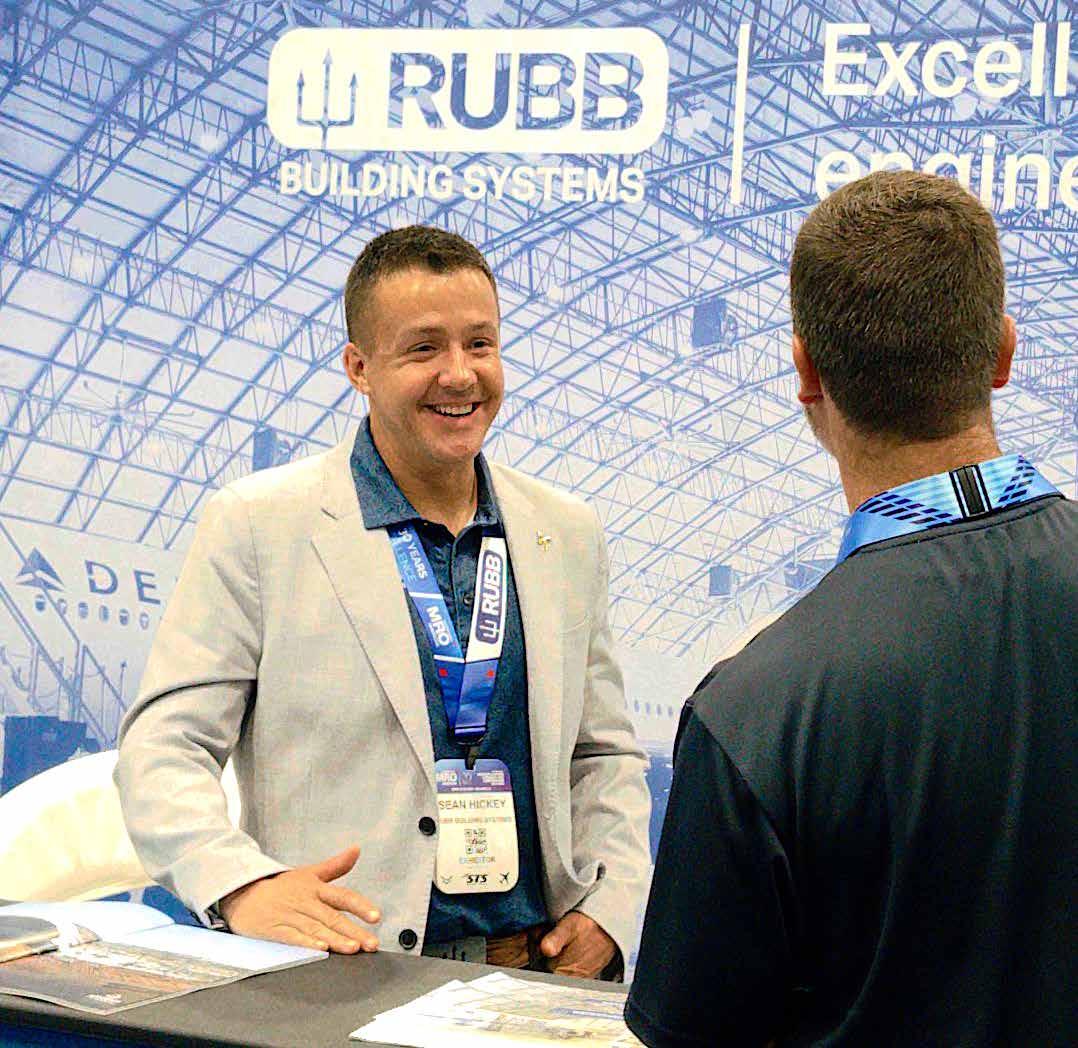
Sean stands in his recently completed Ascent Aviation Services project.
Vertical Aerospace
Pioneering electric aviation
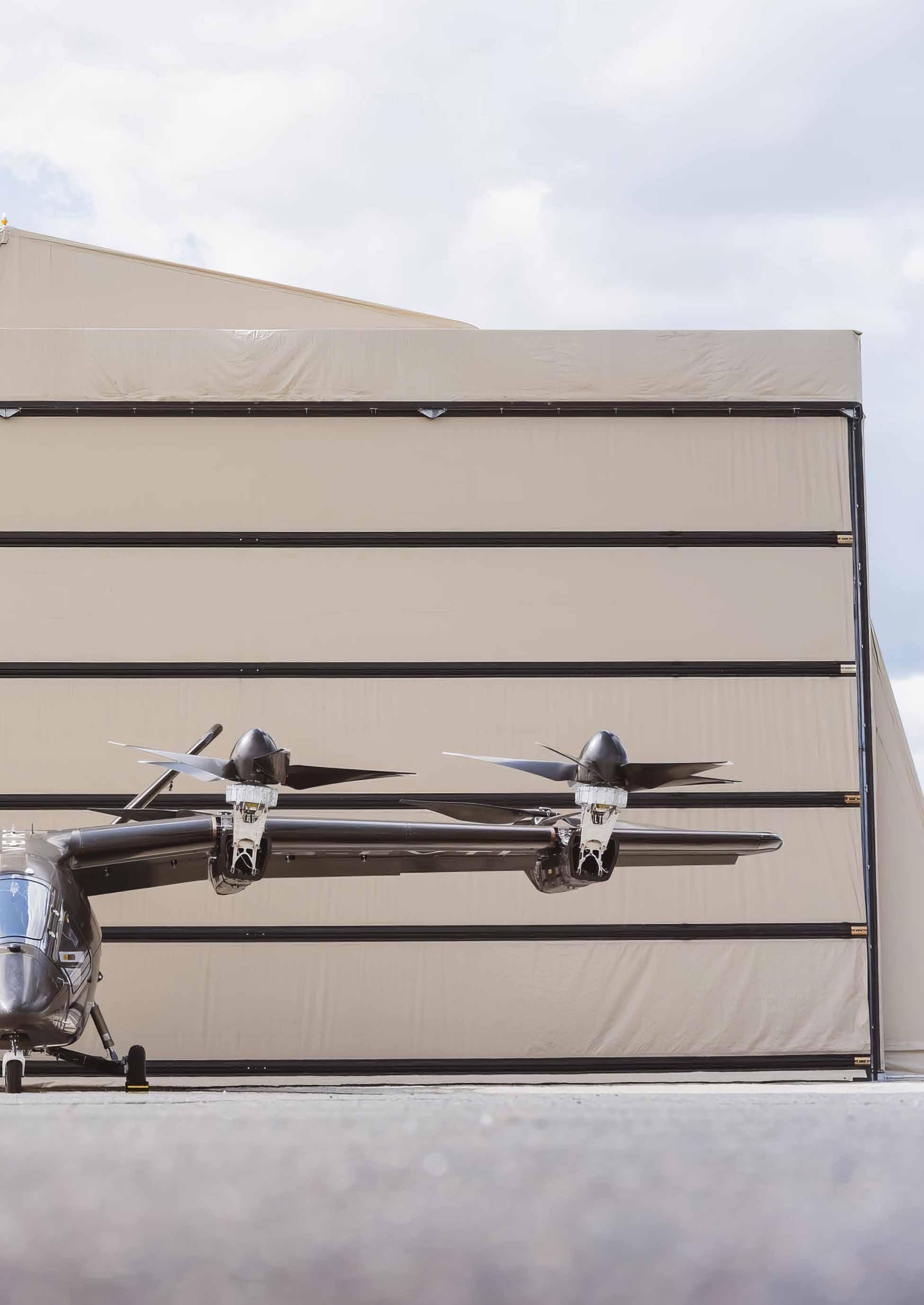
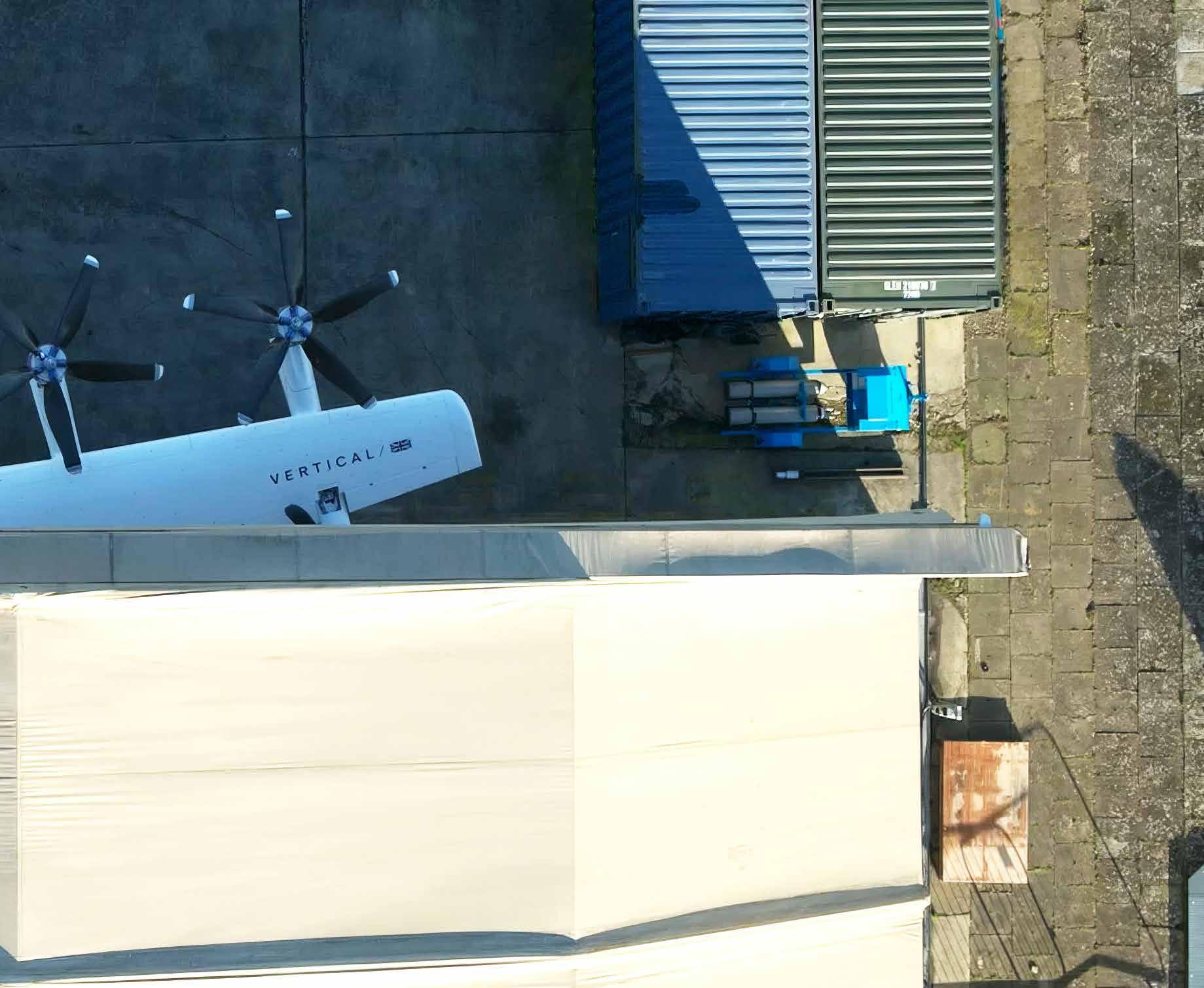
Vertical Aerospace is revolutionising urban travel with zero-emission air-taxis, supported by adaptable, airside structures from Renthall UK.
The future of flight
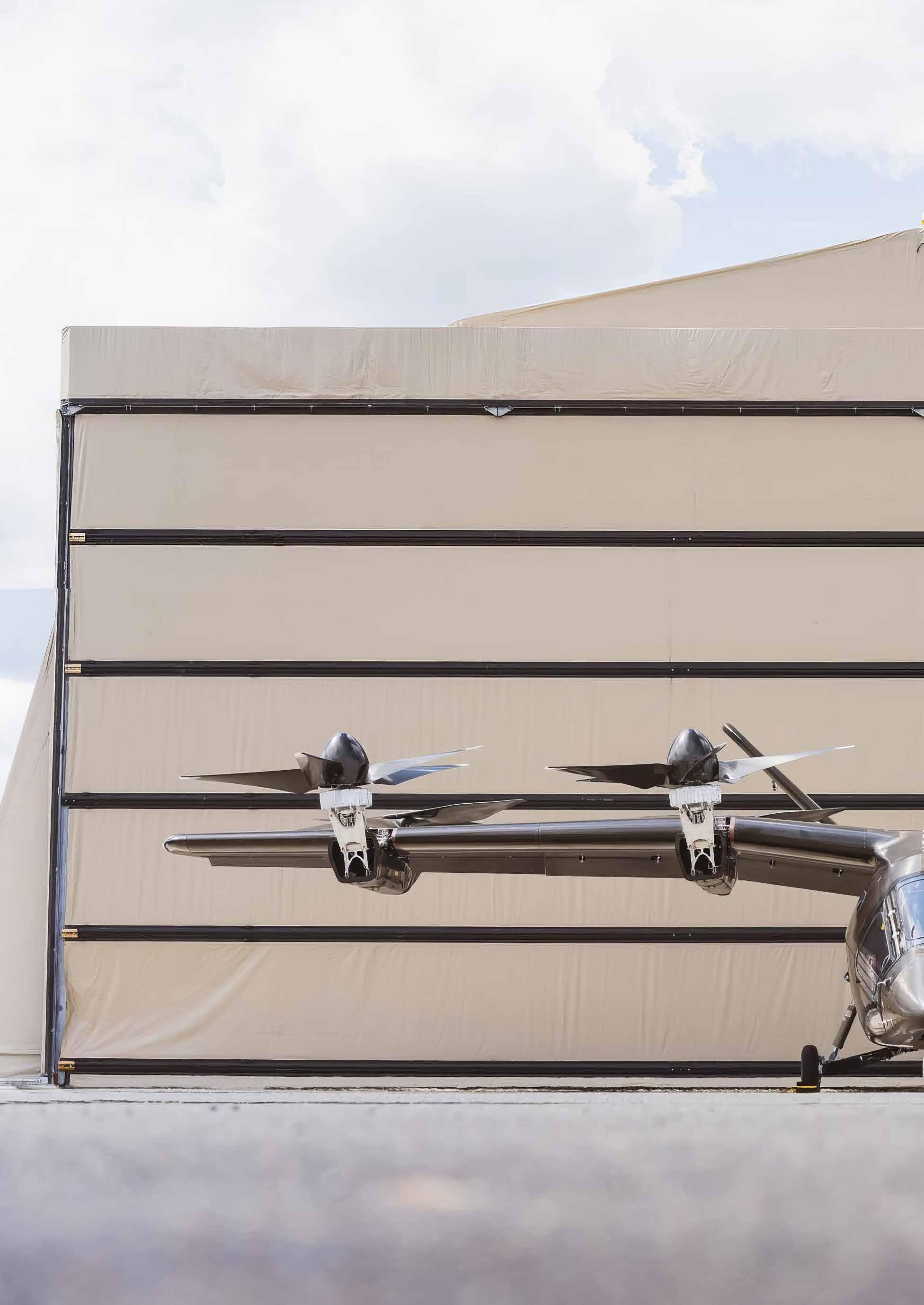
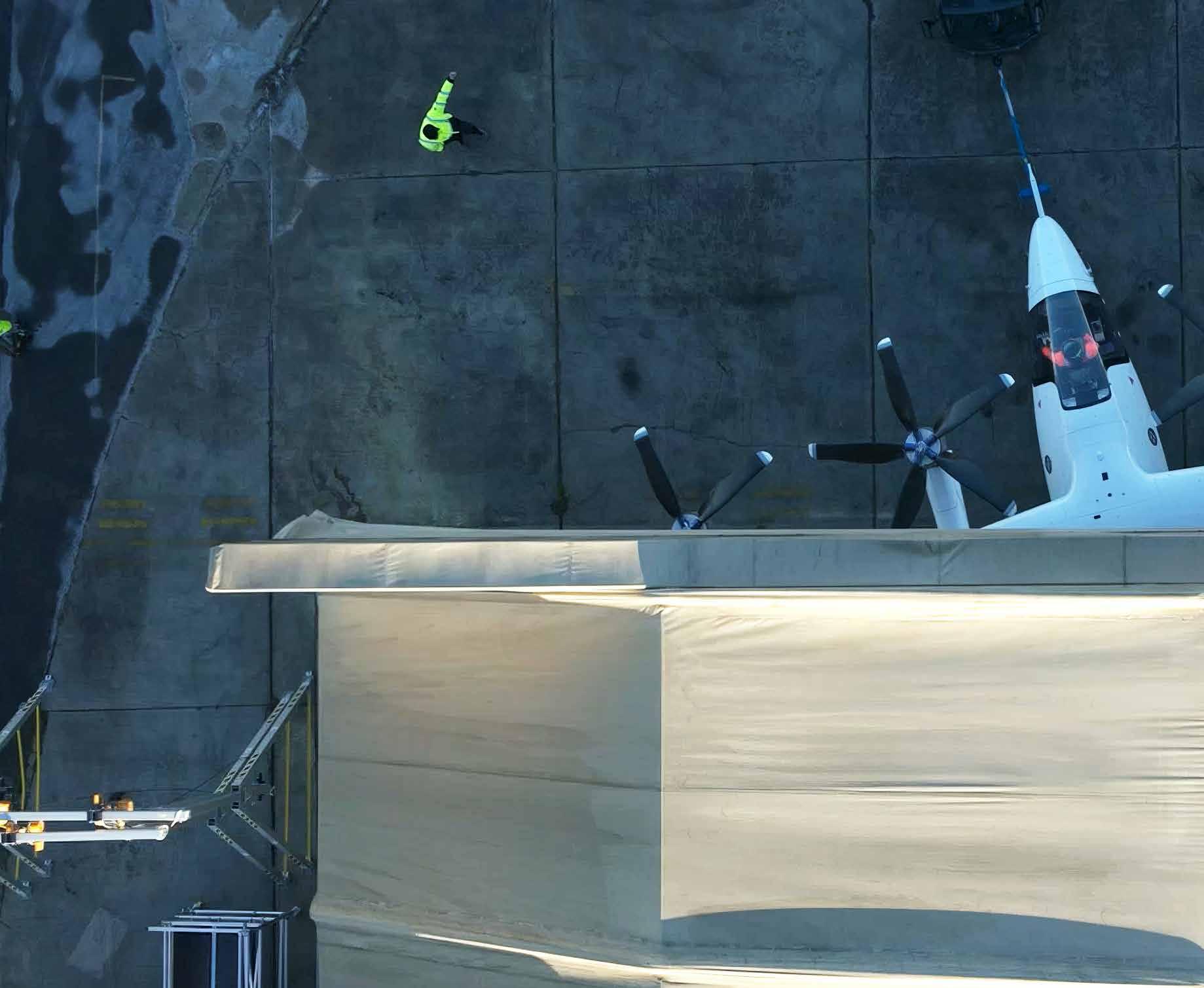
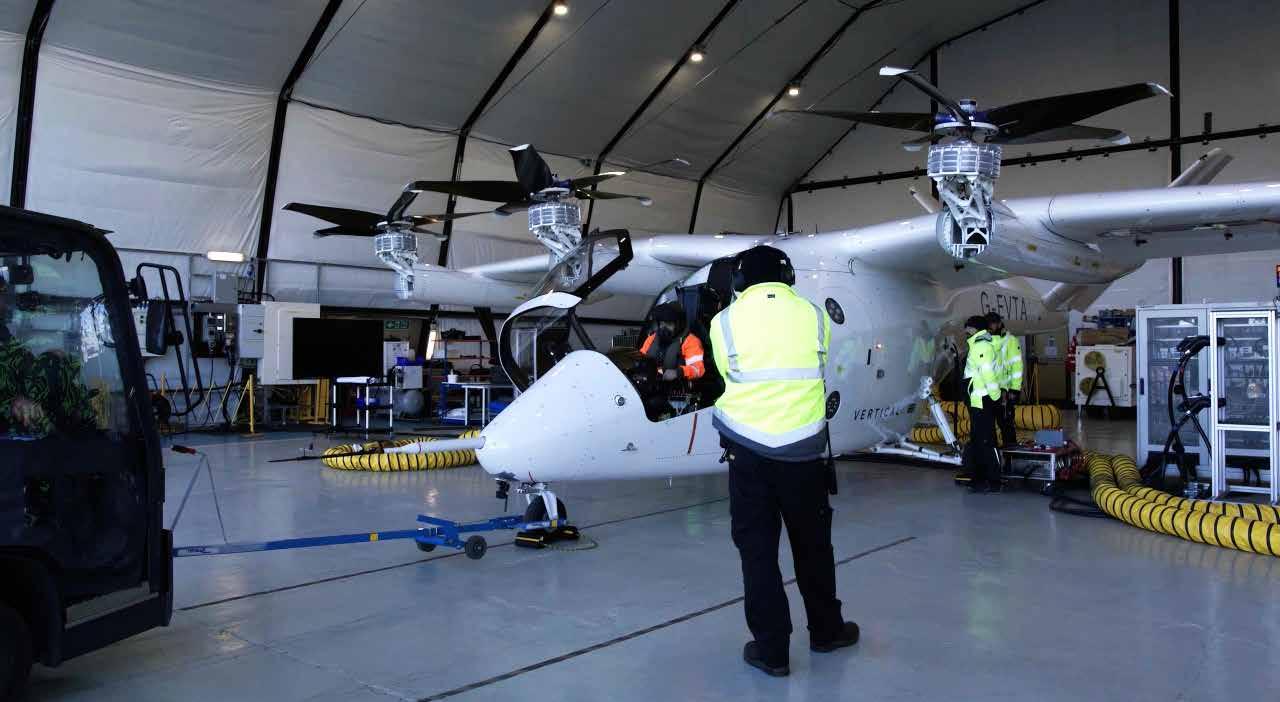
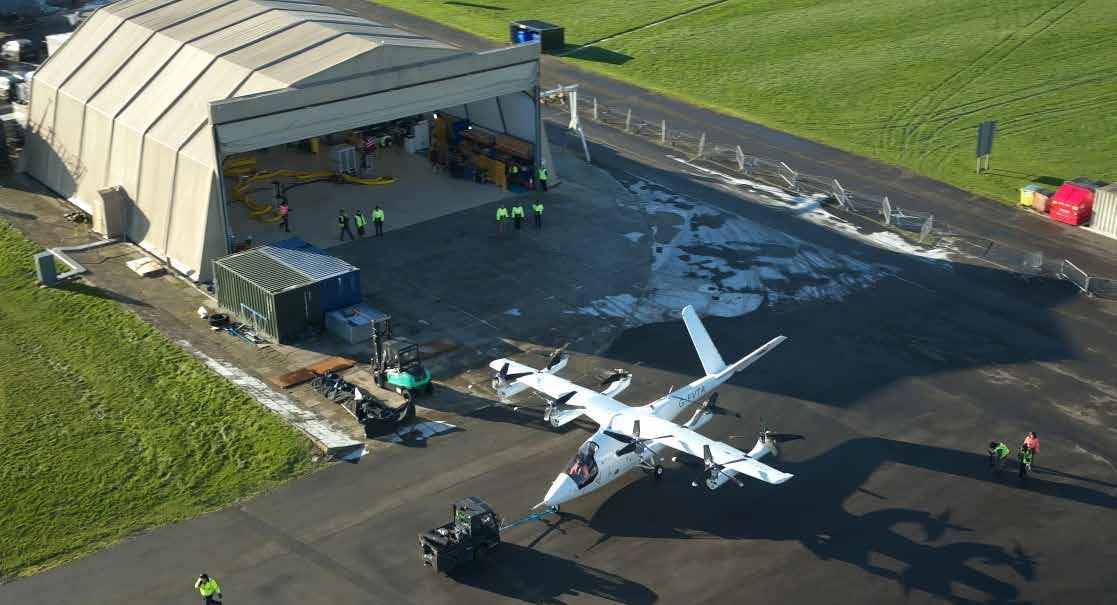
Cotswold Airport is home to Vertical’s full -scale VX4 prototype, operating out of two 25m-span Rubb EFASS hangars.
Vertical’s VX4 prototypes have completed extensive piloted flight testing there, with recent test phases expanding the transition flight envelope and delivering key achievements across hover, acceleration, deceleration, and wingborne manoeuvres.
Our airside solution
With their frequent test flights, Vertical needed a robust hangar solution. In 2022, Renthall UK supplied a 25m-span EFASS structure, originally designed to meet a stringent RAF compliance matrix. Previously used for offshore helicopter support, the hangar was fully refurbished and upgraded for deployment at Cotswold Airport.
Founded in Bristol in 2016, Vertical Aerospace is developing a new generation of electric vertical take‑off and landing (eVTOL) aircraft.
The company has made significant progress across its flight-test programme, using prototype data to shape the design and certification pathway for its next-generation aircraft, Valo.
Alongside prototype testing, Vertical has introduced Valo: a next-generation design shaped by insights from the VX4 programme. Designed for flights of up to 100 miles at speeds of up to 150 mph, Valo incorporates a premium cabin for four passengers at launch with a large cargo hold ideal for checked bags.
Together with Skyports and Bristow, Vertical has also announced plans for the UK’s first electric air-taxi network, with proposed routes linking Canary Wharf to major transport hubs such as Heathrow, Gatwick, Cambridge, and Oxford. The first phase, targeted for 2029, aims to cut typical hour-long road journeys to just 12 minutes.
The original framework and 21.5m Heli-Door was redeployed to the Vertical site, though the rest of the kit received substantial upgrades. New Thermohall® insulated cladding was installed to a U Value of 0.25 W/m2K, along with updated electrics to 18th Edition EICR compliance.
With ongoing aircraft development and the introduction of additional prototypes, Vertical required further hangar capacity in 2025. Renthall has now supplied a second brand -new EFASS hangar to the same specification as the first structure.
This provides additional space to support the growing fleet and ensures continued operational flexibility for flight-test activities at Cotswold Airport.
Supporting Vertical Aerospace’s test programme has required adaptable, reliable infrastructure. Rubb’s EFASS hangars are designed for fast deployment and high intensity operational environments, so it’s been a strong fit for their needs.
Managing Director, Renthall UK
Andrew Knox
Credit: André Martinsen
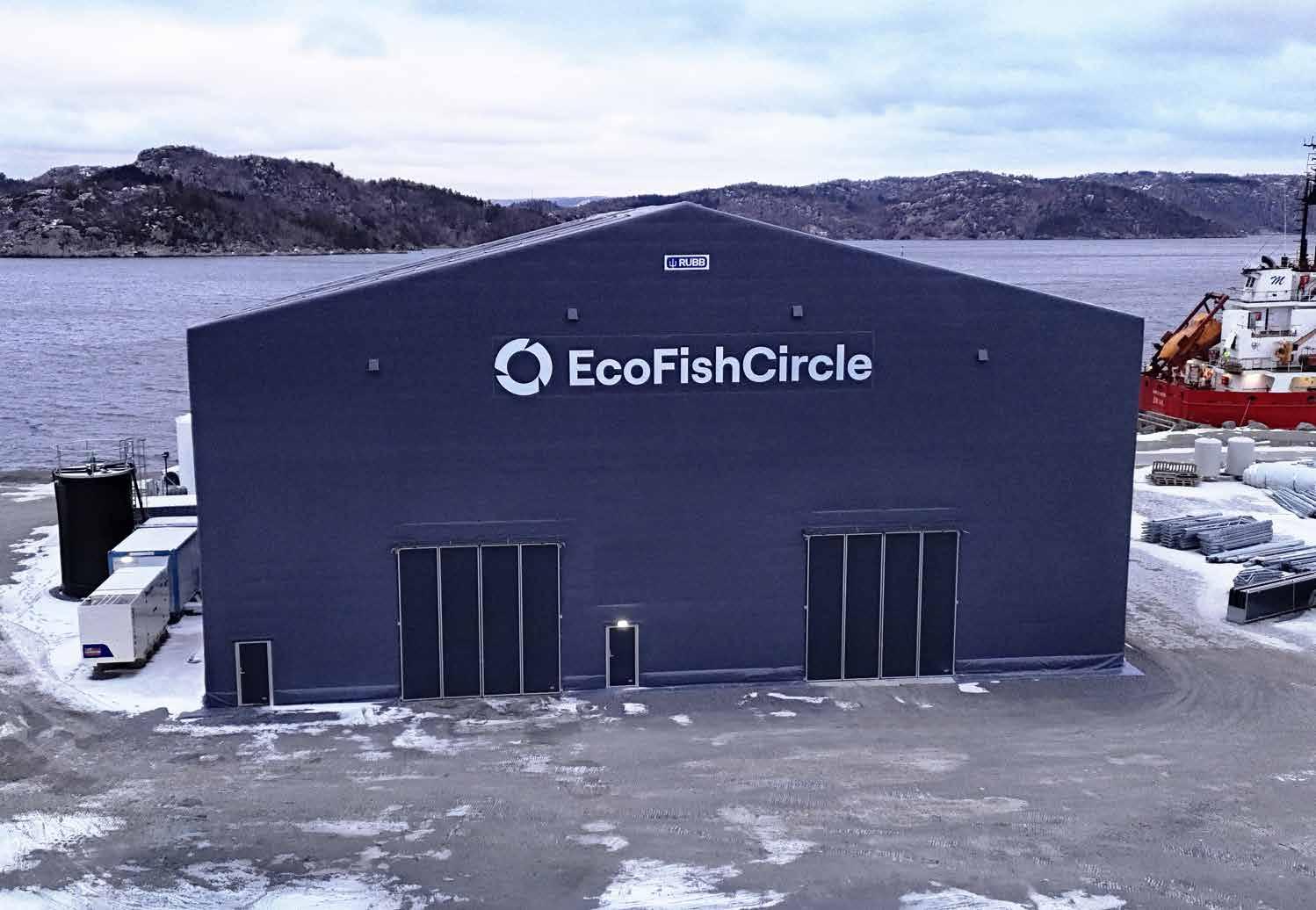
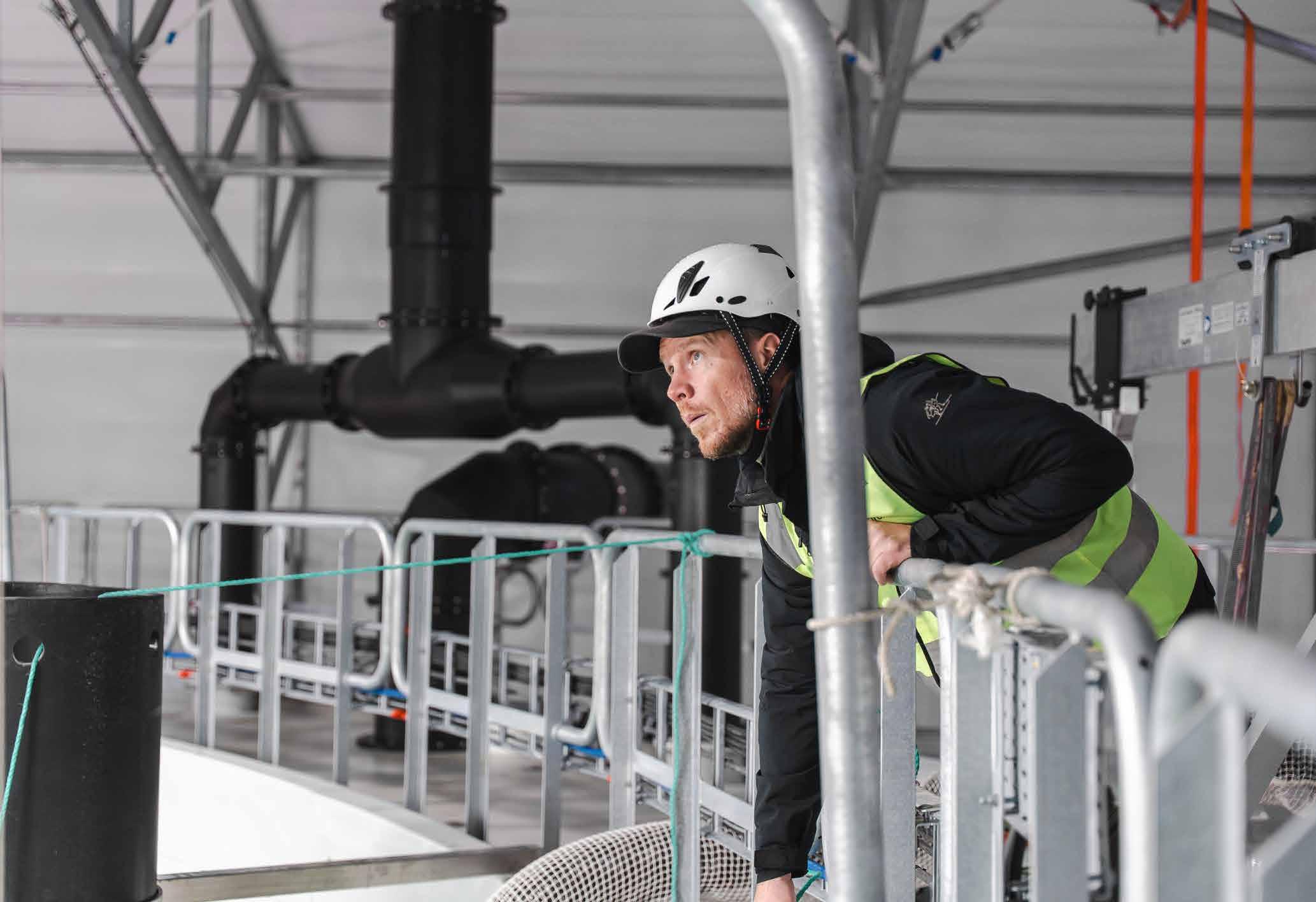
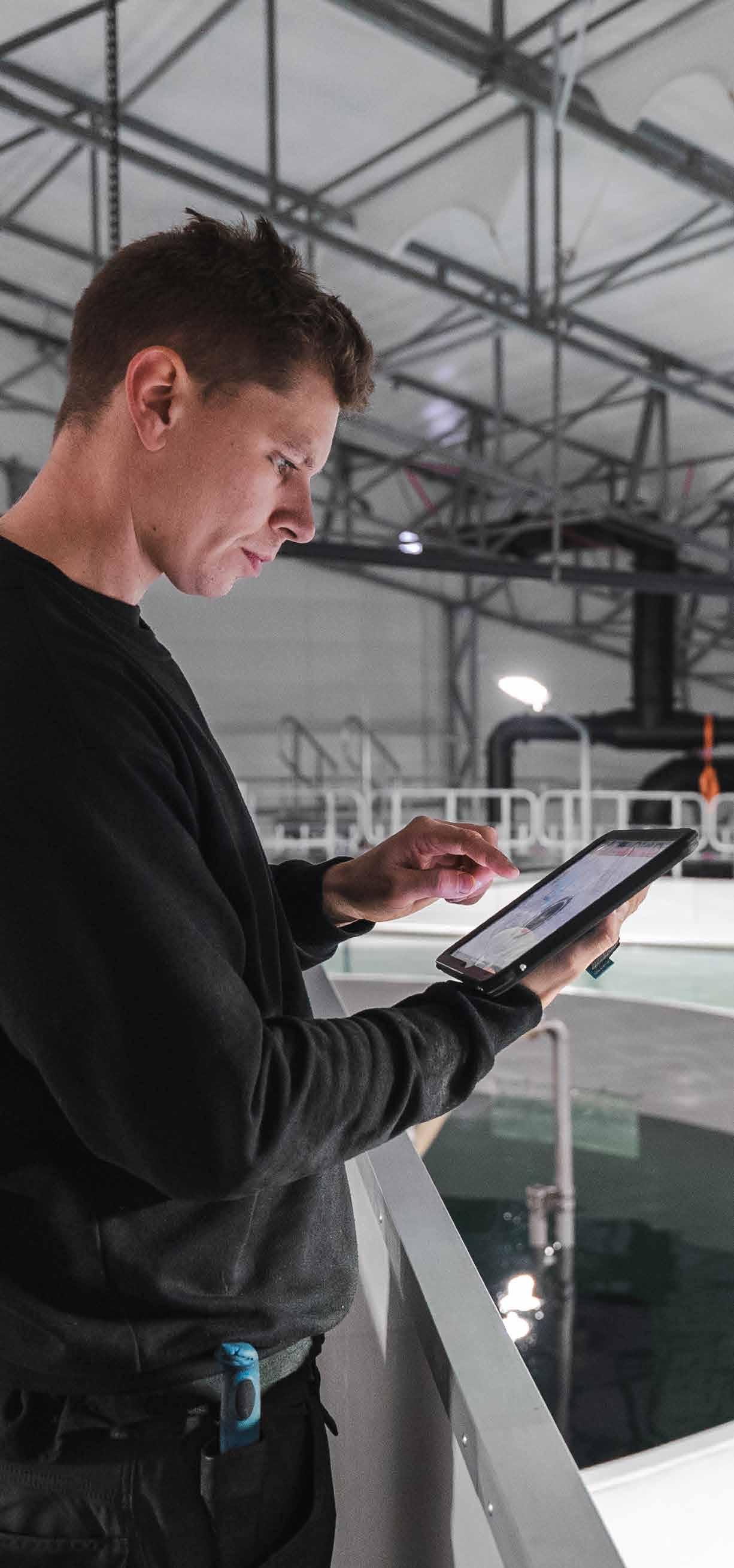
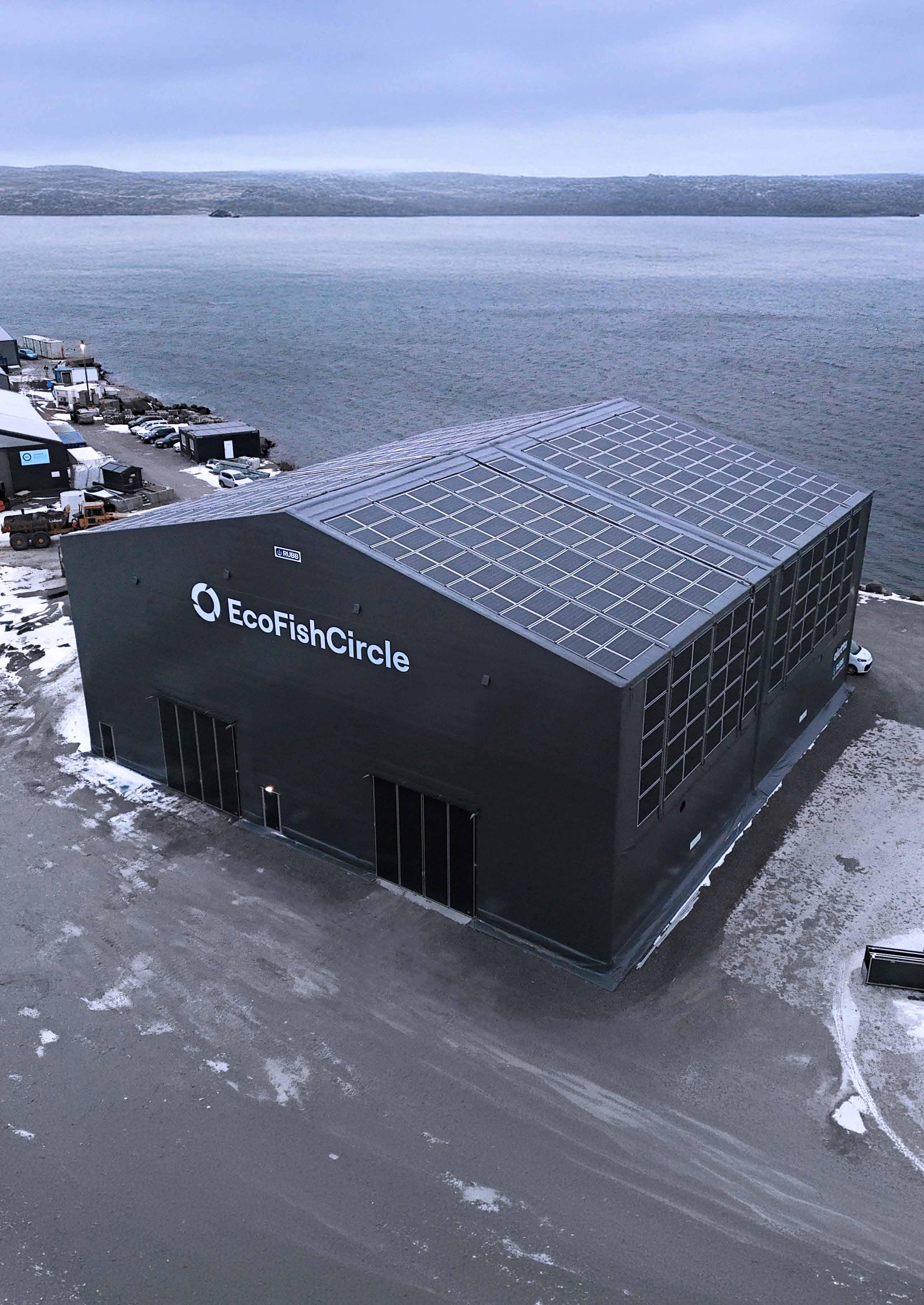
When EcoFishCircle developed its land -based aquaculture facility at Hausvik in Lyngdal, the requirements were clear. It needed to accommodate a huge breeding tank, protect sensitive equipment, and perform reliably in a demanding coastal environment.
“We received an enquiry from EcoFishCircle about building a structure to cover their advanced aquaculture facility,” says Øyvind Kristiansen, Sales Manager at Rubb Norway. “The challenge was that it needed to house all technical components while also withstanding weather and wind. The dimensions had to be right in every direction.”
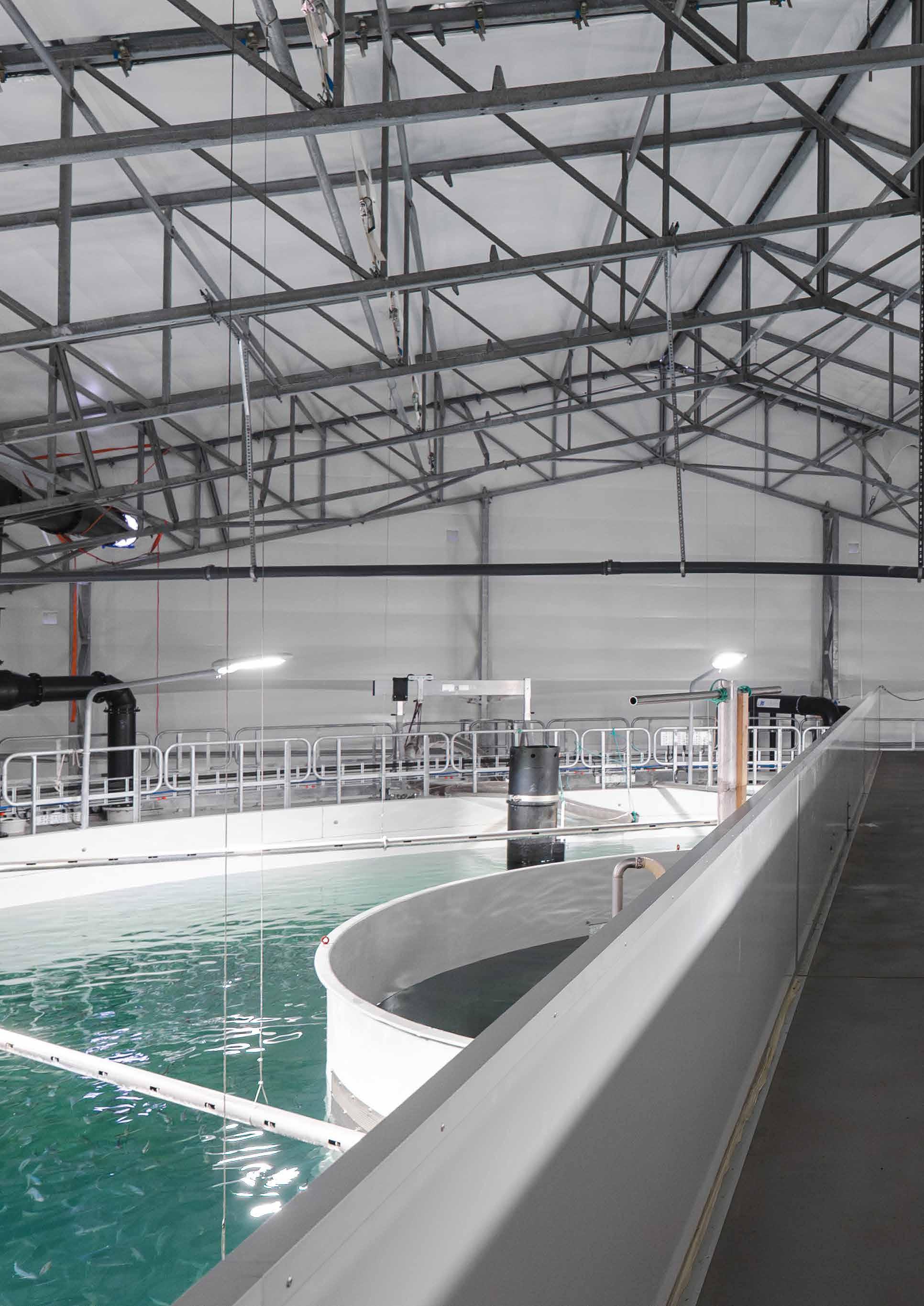
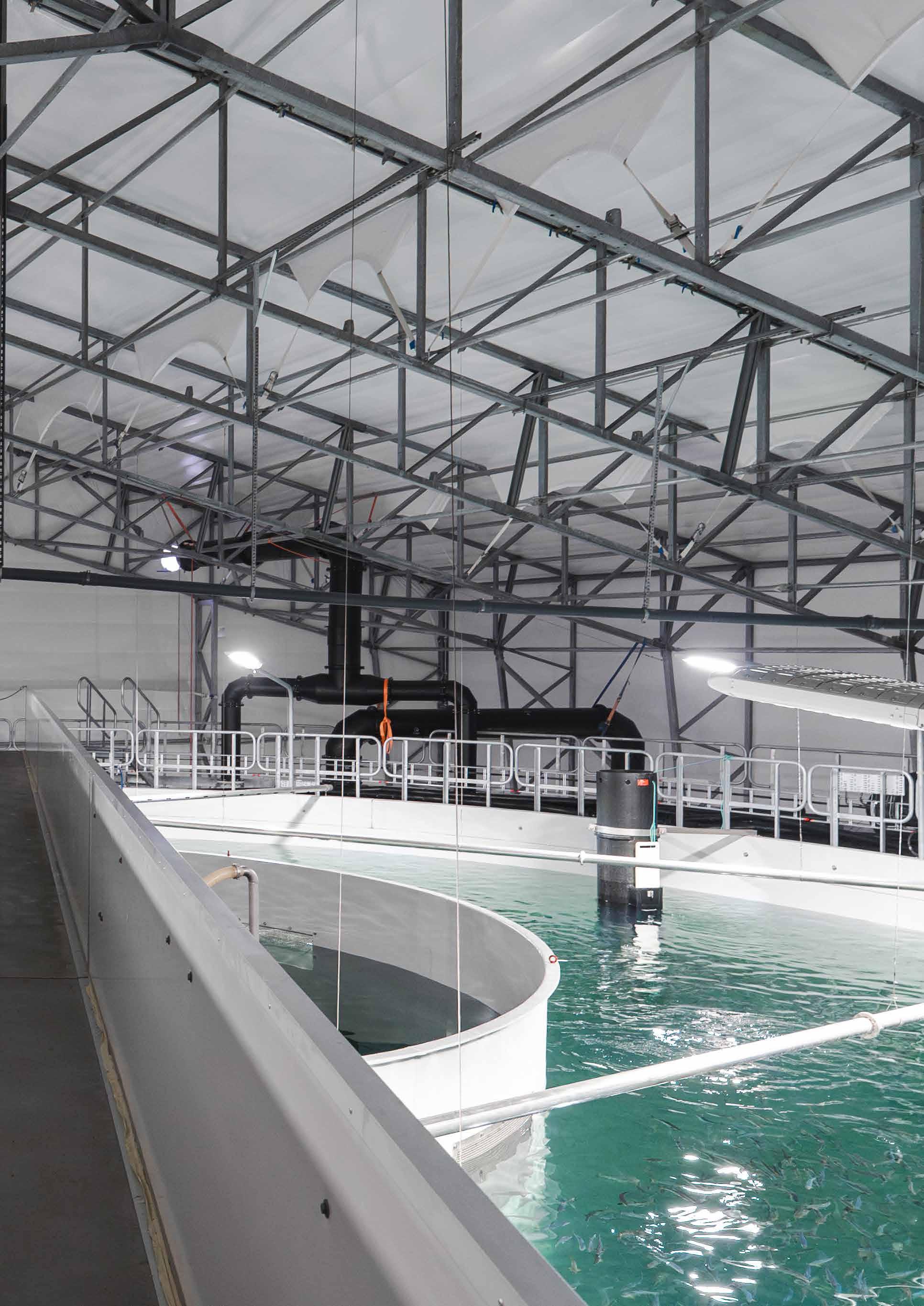
The heart of the facility: a 20m diameter post-smolt tank filled with around 2,000 m³ of water, surrounded by cutting-edge support systems. Here, salmon are farmed on-land with EcoFishCircle’s sustainable production process.
The project needed a partner that could build the tank’s home, which has a permit to produce 190 tonnes of fish per year.
Rubb’s solution
“The exact dimensions and spec of the building were something we worked through together,” says Mats Staddeland, Technology Manager at EcoFishCircle. “That coordination was important to ensure installation could be carried out in a controlled and efficient way.”
Rubb Norway delivered a 30 x 30m Rubbhall with 12m straight walls, complete with Thermohall® insulation to a U Value of 0.67 W/m2K, supporting stable internal conditions and reduced energy demand.
“The Rubbhall delivered here is designed to meet the specific needs of on-land aquaculture,” says Eirik Skjellhaugen, Project Manager at Rubb Norway. “Insulation was a key factor, both for energy efficiency and operational stability.”
Energy considerations were addressed early in the design process. Rubb proposed an integrated solar power solution at the outset, allowing renewable energy generation to be included in the overall building concept rather than added later.
The completed building is equipped with Rubb’s modular SolarFlex solar power system, installed across the roof and side walls. The integrated solar installation supplies renewable electricity directly to the facility, reducing reliance on external power and contributing to lower emissions.
Credit: André Martinsen
Thousands of post-smolts swim around the tank.
It has now been two months since we introduced fish into the facility and we are very satisfied with the complete solution that Rubb has delivered. The collaboration between EcoFishCircle and Rubb in this project has been incredibly good.
Technology Manager, EcoFishCircle AS Mats Staddeland
Precision below ground
Alongside the structure, the project required foundations capable of supporting the mammoth fish tank containing more than 2,000 cubic metres of water. CC Betong AS were responsible for delivering the foundations and floor slab, including a reinforced ring foundation with very tight tolerance requirements.
“This was a demanding task that required high precision,” says Fredrik Hellberg Hagen, CEO of CC Betong AS. “We worked closely with Rubb, the consulting engineer, and the project team to ensure accurate measurements and correct load data.”
Despite challenging weather conditions during construction, the foundation works were delivered to specification and on schedule.
The construction period coincided with several storms during both summer and autumn, providing an early test of the building’s robustness. Despite these conditions, the project progressed according to plan.
“Rubb was clear about the timeline from the start and adhered to it throughout,” says Staddeland. “For me as a project manager, that predictability was important, especially given the weather conditions.”
“It has now been two months since we introduced fish into the facility and we are very satisfied with the complete solution that Rubb has delivered. The collaboration between EcoFishCircle and Rubb in this project has been incredibly good,” Staddeland concludes.
Closing the circle
The result is a facility where infrastructure, energy use, and aquaculture technology operate as a coordinated system, setting a clear example for the future of the industry.
At the end of 2025, 70,000 post-smolts were placed in the tank.
Credit: André Martinsen
Narrow Aisle
Renthall UK maximises fleet efficiency
With a manufacturing heritage dating back to 1976, Narrow Aisle has built a reputation as a pioneer in very narrow aisle (VNA) truck development.
Operating from the Black Country, the company remains the UK’s last mass manufacturer of articulated warehouse trucks. Their Flexi range continues to evolve, backed by £1.5m in annual R&D investment and more than 13,500 units delivered to over 70 countries.
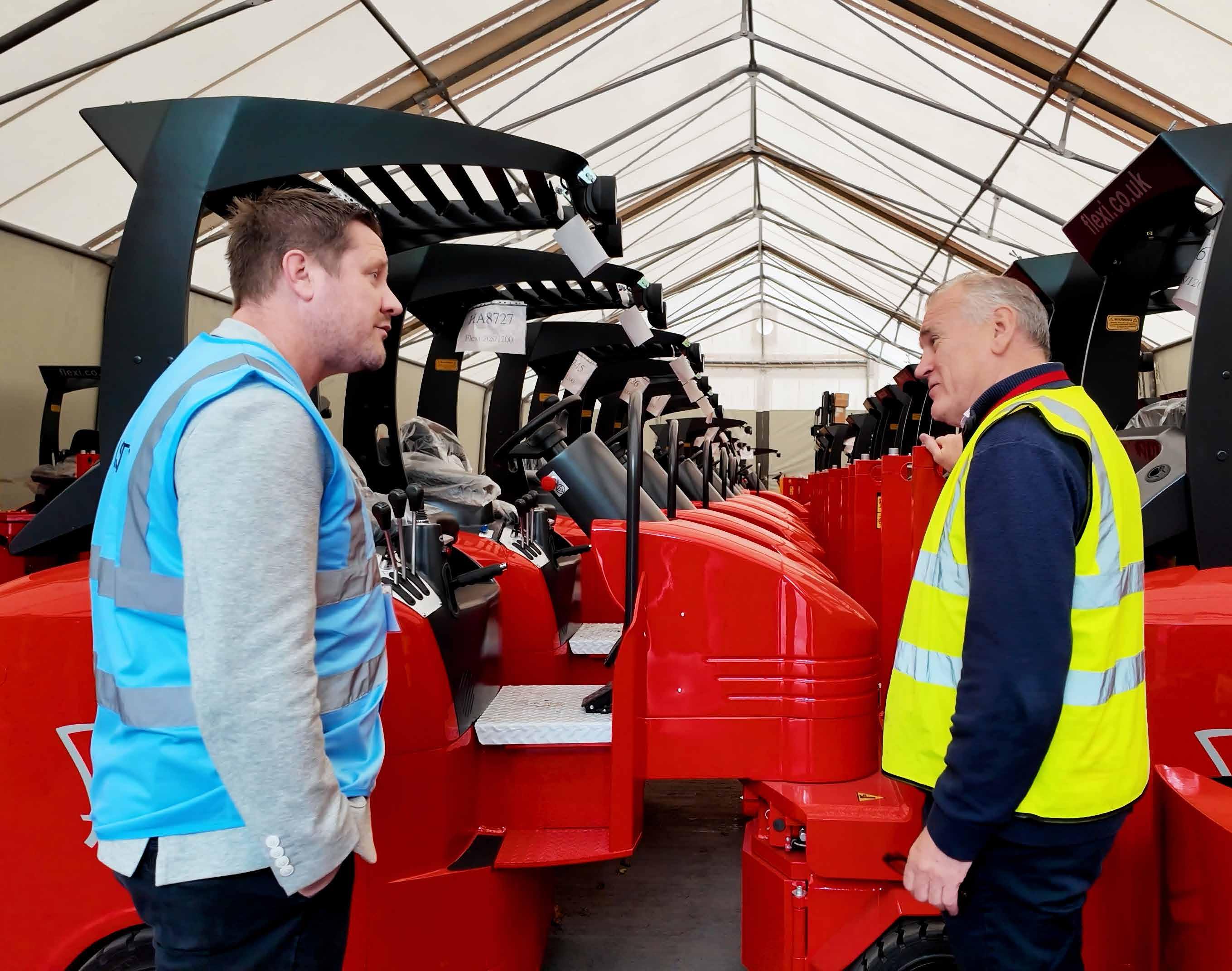
For Eric Holt, Head of Operations, efficient storage and asset management are central to keeping production moving. Protecting new chassis, improving stock rotation, and ensuring traceability across the site all rely on having the right infrastructure in place.
That’s where Renthall UK comes in.
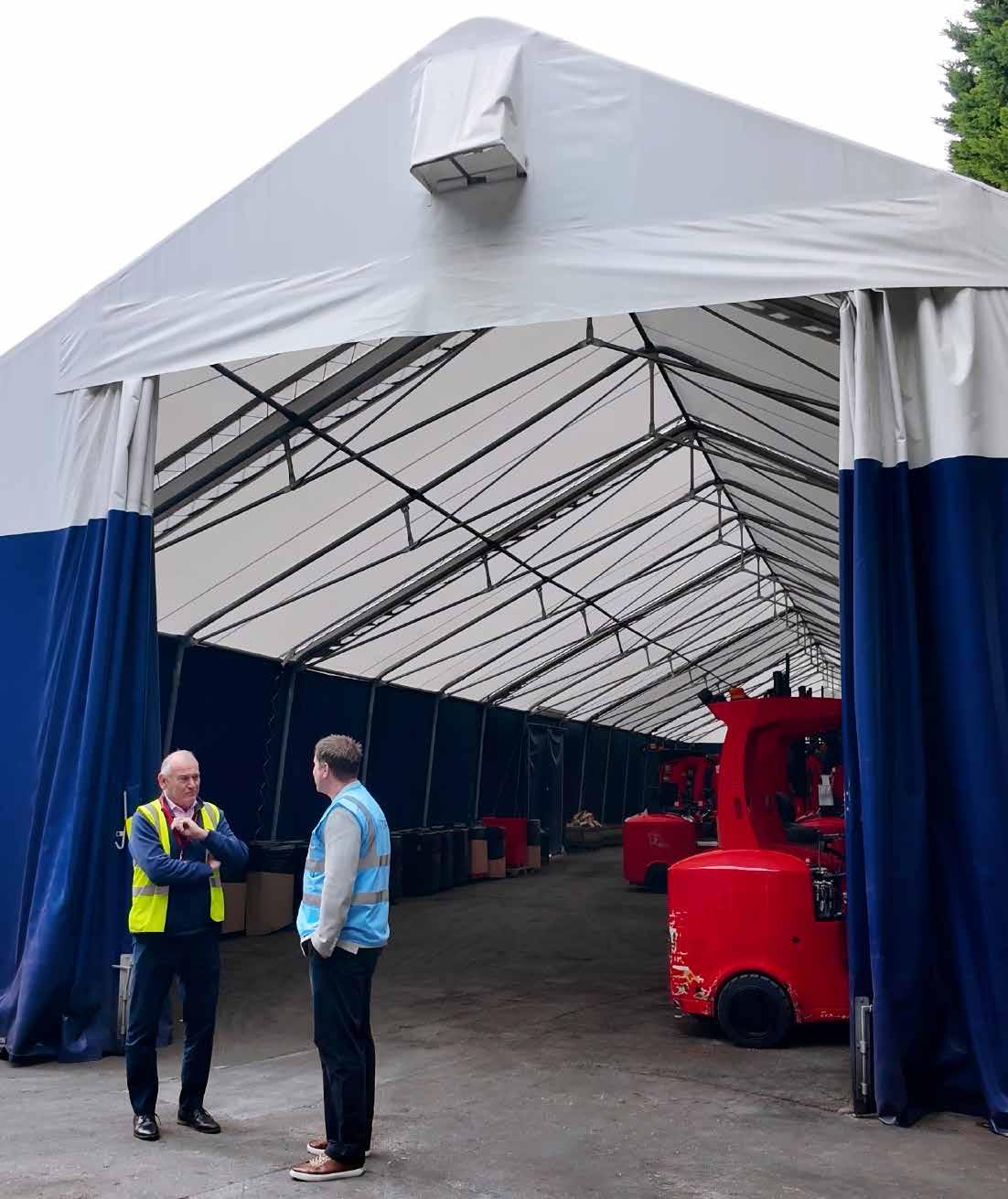
Two rental structures, a 12m x 30m green-clad shelter and a 12m x 45m blue-clad shelter, both with 3m legs and modular bay expansions, have now been on hire for two years.
Transforming asset storage
Holt is clear about the impact the structures have had on day-to-day operations. Before they were installed, chassis storage was a constant challenge.
“If it weren’t for this structure, all of these would be next door,” he explains, gesturing across the organised rows. “You can’t store a new chassis outside.”
With the new covered space, the team can now locate and access stock with ease.
“I can look on the system, pick out a chassis number, and it’ll tell me row 13, number 3. I’ll walk to it and touch it within 30 seconds.”
The efficient layout works hand -in-hand with the company’s product philosophy. “Because this is articulated, you can get 30% more in a warehouse by having narrower aisles. Hence the name of the business, Narrow Aisle.”
Depending on the model, each structure can house between 58 and 65 Flexi trucks.
Temporary mini-tents were previously used, but those came with limitations.
“We’ve got a delivery this week of sixteen new chassis,” Holt says. “But we’re building eight trucks a week, so we’ll go through those quite quickly.”
Most rental agreements sit between three and six months, though some last as little as three days or as long as two years. The flexibility of the structures helps the team manage this rapid turnover.
Cluttered yard to organised hub
The biggest transformation is how these assets are now valued and managed.
Before the shelters went up, Holt explains, the rental yard resembled “a scrap yard… old trucks that were so old they just became part of the furniture.” Exposed to the elements and overlooked, many units lost any recoverable value.
Now, the covered space means every truck has a purpose.
“Because we’re more organised, we get value out of every truck. We know it can either be refurbished for sale, refurbished for the hire fleet, or scrapped.”
With maintenance taking place under cover, refurbishment costs have also decreased. “It saves us money all ways up,” he adds.
A seamless installation
The installation process left a strong impression on the Narrow Aisle team. Holt recalls a moment during setup when the company wasn’t quite ready for the install crew.
“They came on site one day and we weren’t ready for them. He said, ‘We’ll just go back to the hotel. We’ll see you tomorrow.’ No issue.”
That positive experience influenced future decisions. “That meant a lot to us. Hence we went for the second building as well. And now we want a third building.”
This has changed our life, having this extra storage space. It’s changed our business quite significantly.
Head of Operations, Narrow Aisle
Eric Holt
“In a tent, these have to be stored lying down. It’s not ideal.” The Renthall solution, he says, has “improved our quality, as well as our stock rotation and stock location.”
Fast‑moving rental fleet
As Narrow Aisle’s own rental operation continues to expand, the need for efficient storage has only grown. The second building now supports their hire fleet.
For Renthall UK Managing Director Andrew Knox, the partnership has been equally valued. “From the first phone call, everything seemed to go almost too good to be true,” he says.
As the company continues to innovate in the VNA market, the ability to protect and manage its growing fleet remains essential. With scalable, weather-resistant storage now in place, Narrow Aisle is well positioned to support future growth and continue delivering industry-leading solutions.
Andrew Knox (left), Eric Holt (right).
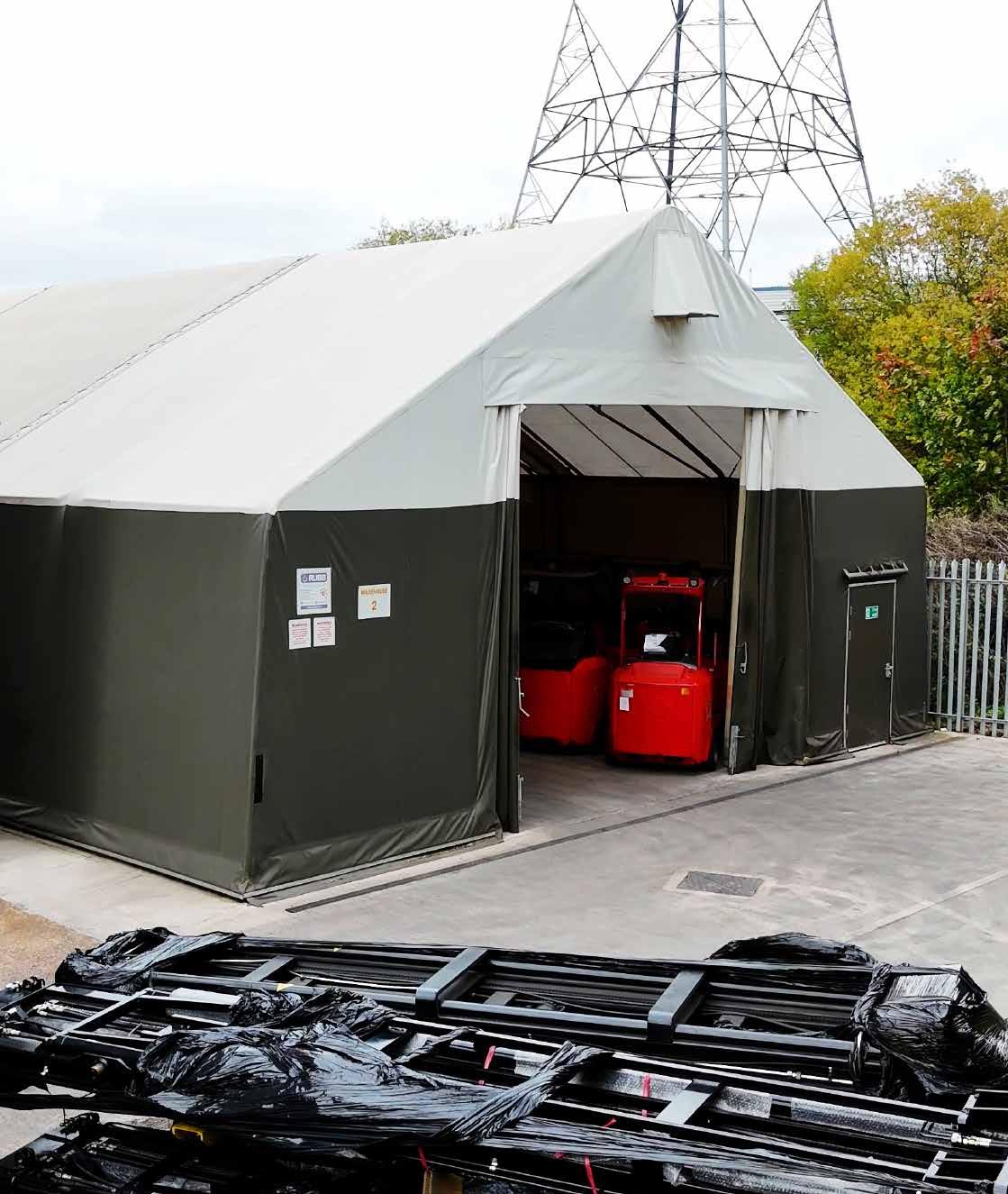
A world-leading manufacturer of advanced safety systems required a durable solution to protect critical test equipment that had previously been kept outdoors.
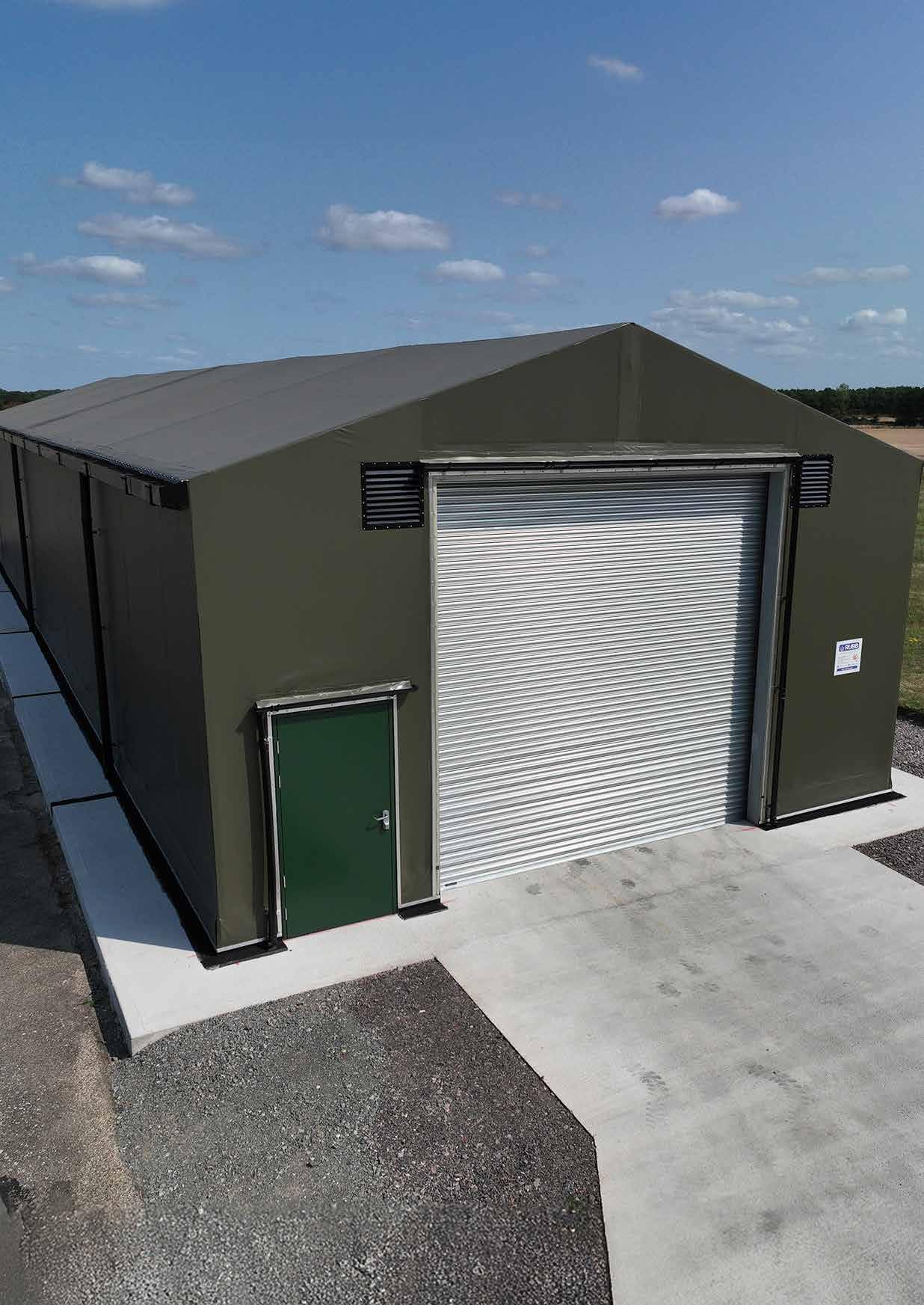
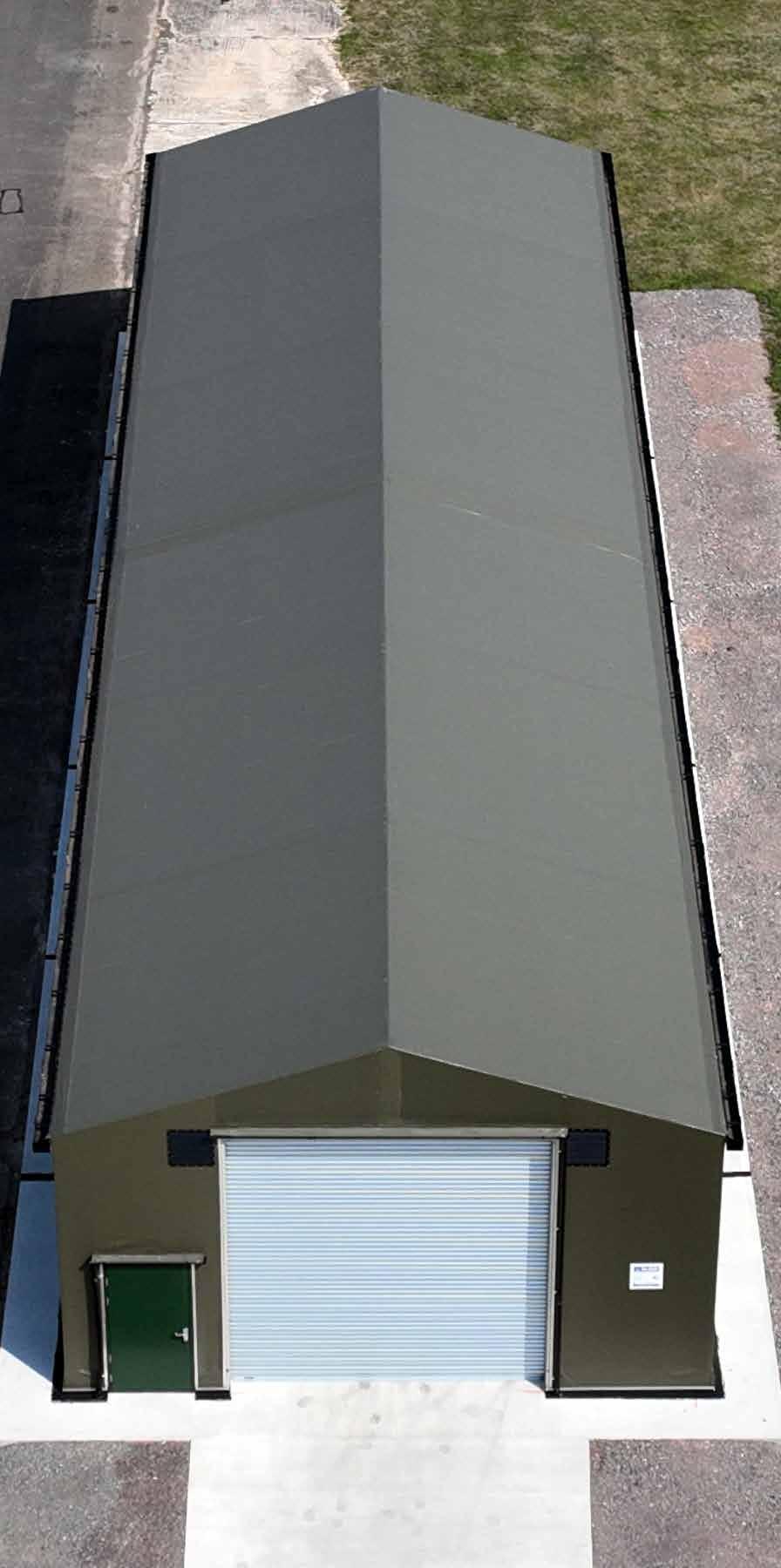
To meet this need, Rubb UK supplied a bespoke BVR type building, measuring 8m wide by 30m long, with a 4m leg height. The structure is configured in 5m modules, allowing for flexibility and ease of future expansion if required.
The building features a 4x4m manually operated roller shutter door to each gable, along with a personnel access door at both ends to support safe and convenient entry. Steel gutters were installed on both sides of the structure to ensure effective rainwater management.
World-leading manufacturer Protecting critical test equipment
Installed in 14 days
Green cladding was selected for the exterior, helping the building blend into its surroundings while aligning with the client’s site aesthetic.
Rubb provided chemical anchors to secure the structure to an existing concrete slab foundation, ensuring long-term stability and performance.
The entire structure was installed in just 14 days—significantly faster than traditional building methods. The client now benefits from a durable, weather-resistant solution that ensures its critical testing equipment remains protected and operational all year round.
This custom BVR solution offers a reliable, weather-resistant space to house and protect essential testing equipment, supporting continued innovation and operational efficiency.
Green cladding was requested to match the customer’s existing site.
Kaasa Transport AS Insulated logistics hub
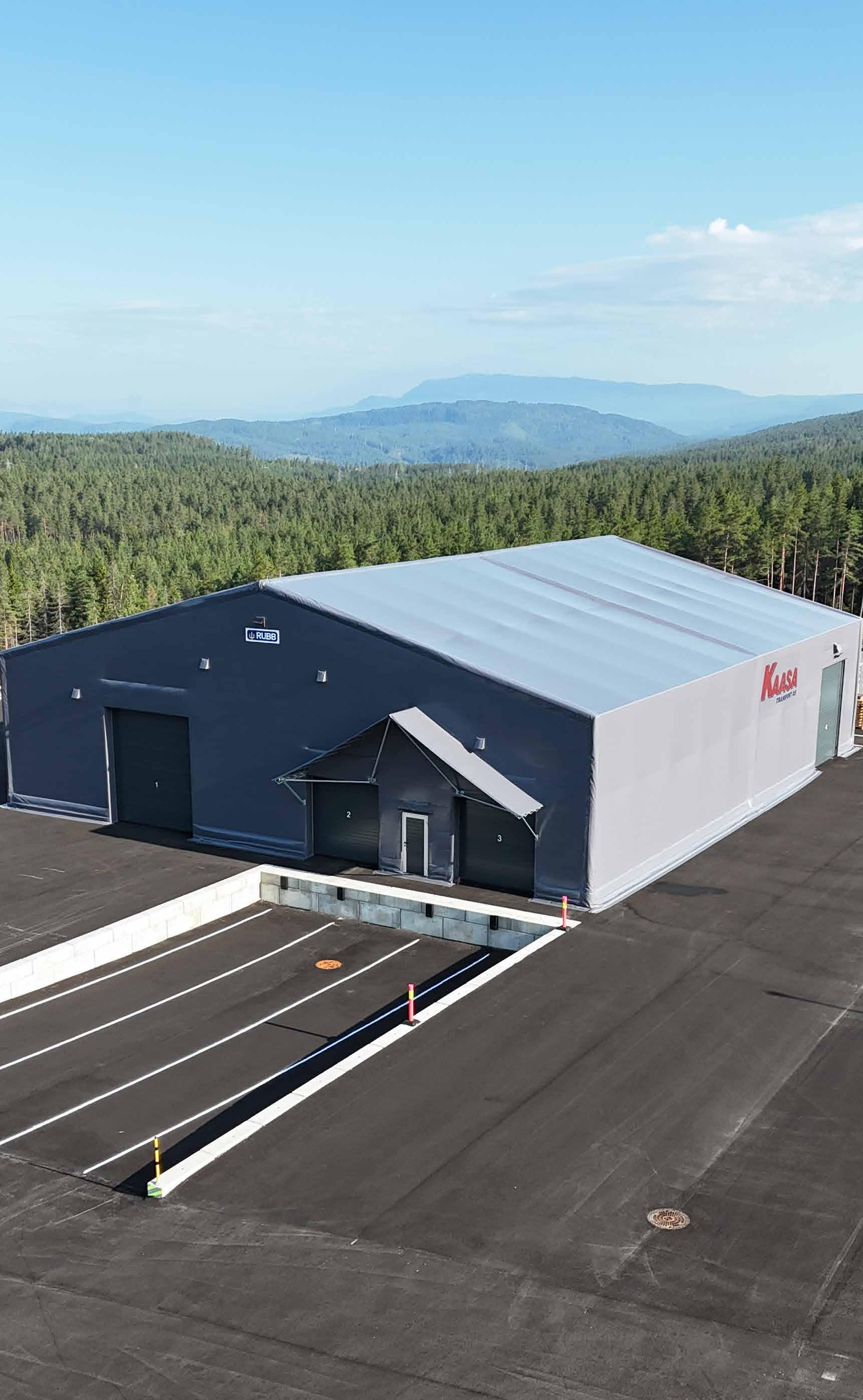
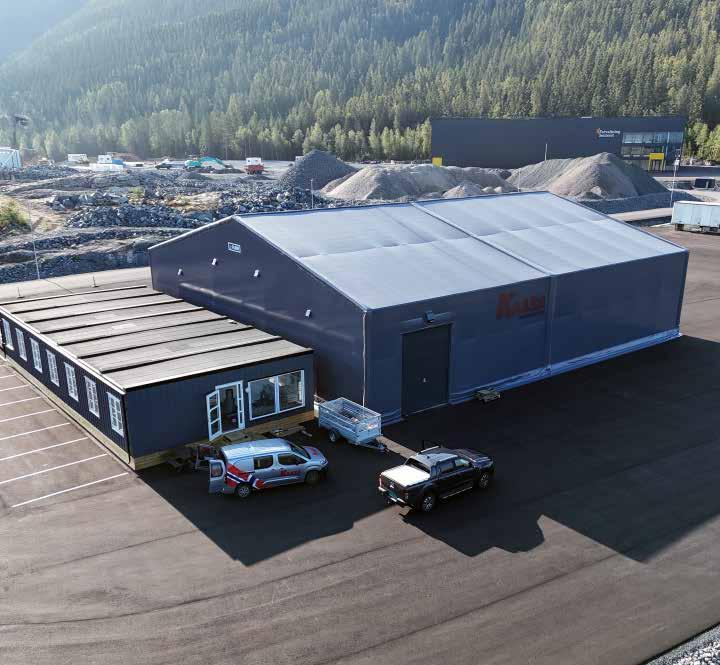
Rubb Norway has delivered a new insulated Rubbhall to Kaasa Transport AS, supporting the continued development of their logistics operations.
The 25m span x 29m long facility enhances their new site with a durable and energy‑efficient structure, designed specifically for their transport business.
Its hot-dip galvanised steel frame and rugged PVC cladding are combined with Thermohall® insulation to maintain a stable internal environment, year-round.
Growing network
Kaasa Transport AS, established in 1971, operates an extensive transport network throughout Norway and across Europe. Their new Rubb facility strengthens its capacity at Leivstein Industripark, providing an efficient, modern space for vehicle handling, storage, and daily logistics.
Several integrated features enhance workflow. A covered loading area and ramp allows trucks to be managed efficiently, while protecting staff and goods from the elements. To support safe 24-hour operations, exterior lighting has been incorporated around the structure. The facility is complete with printed logos to both sidewalls.
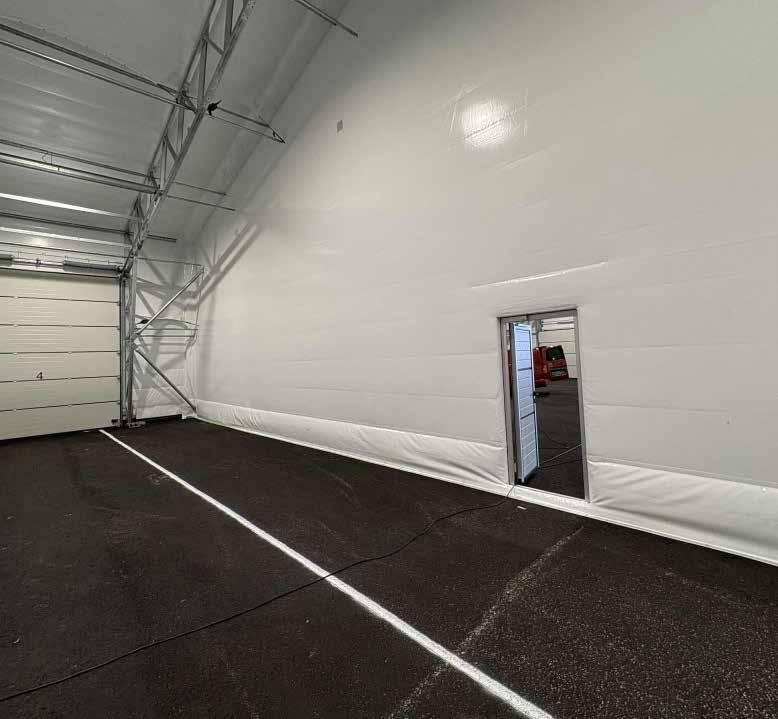
Inside, an insulated partition wall divides the space into separate working zones, offering flexibility as requirements develop. Four motorised roller shutter doors provide smooth access for vehicles and equipment, maintaining efficient traffic flow throughout daily operations.
Built to last Talking service and maintenance with Henry Robinson-Moore
A lot of my role is working with people that use our buildings every day. By the time my team is called in, their Rubb buildings have probably been on site longer than most of their staff. They’re central to their businesses, so we need to do right by them.
Service & Maintenance Manager, Rubb UK
Henry Robinson-Moore
Pictured: The George Clooney of Rubb.
Founded in 1977, Rubb UK is approaching its 50th anniversary in business. As we near this milestone, the importance of maintaining and extending the life of our buildings is more relevant than ever.
“You don’t make it that long in this industry without knowing what you’re doing,” says Henry Robinson-Moore, Rubb UK’s Service & Maintenance Manager.
Henry’s role is central to ensuring our galvanised steel-framed, PVC-clad structures continue to deliver value for decades. “We’ve been going for nearly 50 years in this country, and our buildings are built to last,” he explains.
“Reactive maintenance is a big part of my job: when a client calls with an issue, we investigate, quote, and repair. But our Rubb Service Plan, which is planned maintenance, keeps costs down and buildings in top condition.” With the Service Plan, Henry’s team will inspect the building, perform minor repairs or re-tensioning, and provide a discounted quote for any larger works.
Designed for confidence
Designed to British standards, our custom buildings have a reputation for quality. “They’re over-engineered; that’s why they last so long. The frames are hot-dip galvanised steel, and I’ve never come across one that’s rusted. They come with a 25-year anti-corrosion guarantee,” Henry notes. “PVC sheets have a life expectancy of around 20 years, but I’ve seen originals still going strong after 30 or 35 years.”
Henry’s go-to example is the Port of Tilbury, where Rubb’s history stretches back over three decades. “We’ve got a dozen buildings there, ranging in size. One building was dismantled and left in a field for six years, but with new sheets and fixings it looks and performs brand new. 35 years old and still being used for daily operations,” Henry recalls.
“All our buildings are modular. They can be moved, extended, reconfigured. Smart businesses take advantage of that.”
Smart and safe
Collaborating with the customer is key. “For planned works, we liaise closely with the company’s health and safety team to ensure everything is done safely and with minimal disruption.”
Henry’s team is also committed to minimising downtime. “We worked with CHEP in Scotland to determine the least disruptive route for the re-sheet of their production building. We ended up doing the job in sections so they could keep operating and avoid any downtime. They really appreciated that.”
Buying local
Our commitment to quality extends to our supply chain. “We manufacture our own steelwork and cladding on site, galvanise locally, and source doors and contractors from North East companies. Supporting local businesses is really important to us; we wouldn’t do any different as a North East manufacturer,” Henry says.
“We’re Made in Britain® certified, so you know what you’re buying with our custom buildings.”
“We’ve been on the same site in Gateshead’s Team Valley for nearly 50 years now,” Henry continues. “I joined the team in 2017, and it’s never been a chore to come to work. We collaborate for success. Our site and production teams are committed to delivering a great product, again and again.”
As we near our 50th anniversary, Henry’s focus on service and maintenance is more important than ever. “We have thousands of Rubb buildings up and down the UK that are all are designed to last, so how we manage them over time is crucial. With planned maintenance, we help our customers get the most from their investment; year after year.”
Henry’s Port of Tilbury project.
Rubb UK’s fabrication shop.
Inspecting the goods.
North West Terminal Rubb supports next step in port expansion
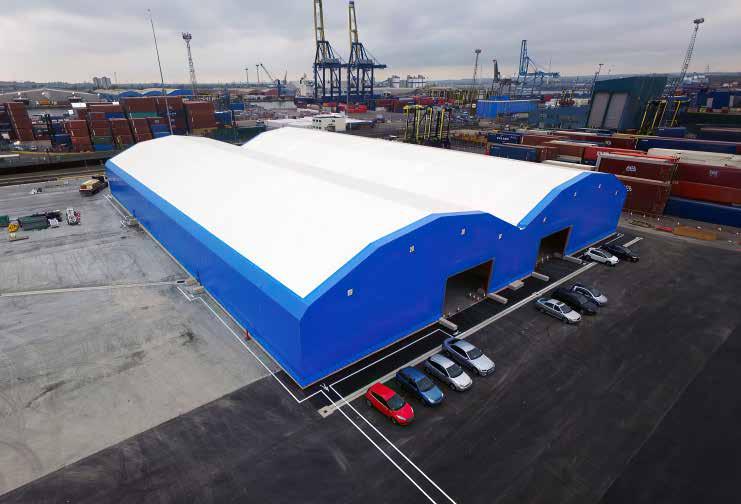
When our needs change, we require flexible solutions like this. Being able to increase capacity by extending two existing buildings rather than building new ones saves both time and cost for our operation.
Managing Director, North West Terminal
North West Terminal in Møre og Romsdal, Norway, has been a trusted customer of Rubb for many years. To date, Rubb has delivered a total of five fabric buildings to the terminal.
The latest project sees two of the existing structures extended, giving North West Terminal valuable space while minimising downtime and investment risk.
As operations evolve, North West Terminal required more indoor production space. Operating in a coast known for harsh and challenging conditions, durability and reliability were key requirements.
For this round of expansion, two production buildings were extended by a combined total of 90m without the need for new foundations or standalone buildings.
Modular solution
“It’s a major benefit that we can develop the facilities in stages. We can meet increased demand without a large investment all at once,” says Bjørn Roald Langnes, Managing Director of North West Terminal.
One of the key advantages of Rubb buildings is their modular design. They can be extended, relocated, upgraded or adapted as requirements change.
Rubb structures are not limited to just extensions. They can also be upgraded with Thermohall® insulation, improved lighting, and other functional improvements.
“It’s even possible to connect two existing buildings into a single structure. When working with modular solutions as flexible as Rubb, there are very few limitations,” says Øyvind Kristiansen, Sales Manager at Rubb Norway.
Trusted partner
Øyvind highlights that delivering a total of five buildings to the same customer over time is a clear indication of long-term value.
“North West Terminal once again choosing Rubb is something we see as a vote of confidence in both our product quality and the long-term partnership we have built. We look forward to continuing to deliver solutions that quite literally give our customers room to grow.”
According to Bjørn, the decision is straightforward.
“We have used Rubb for so long because they deliver every single time. Solid buildings, fast delivery, and solutionoriented people make them an easy choice for us. Here in Møre og Romsdal, we experience demanding weather conditions. Our Rubb buildings remain stable even in strong winds, which speaks volumes about their quality,” Bjørn concludes.
Bjørn Roald Langnes
Prestige development
Triple warehouse delivery in southern Sweden
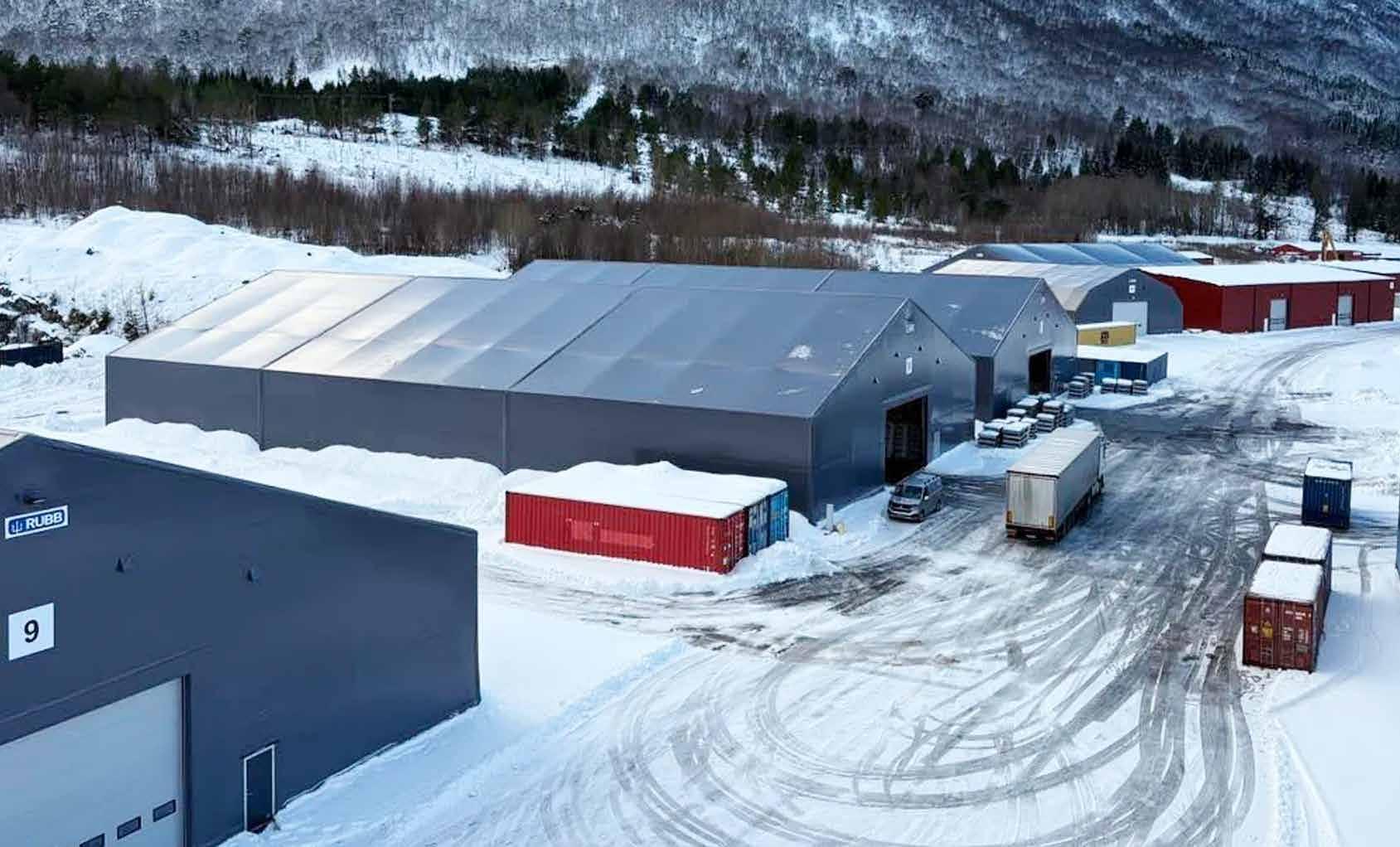
At the end of 2025, Rubbhall AB completed a significant warehouse development for a real estate client in southern Sweden.
The project comprised a total of 6,500 m² of storage space across three buildings, including 5,500 m² of Thermohall® insulated buildings and a 1,000 m² uninsulated structure.
The insulated buildings—two measuring 25 x 110m—were designed to provide a controlled environment for stored goods, while the additional uninsulated building offers flexible capacity for general warehousing requirements.
Long-term relationship
The project was built on a strong and established relationship between Rubbhall AB and the client. Over time, this partnership created the foundation for a smooth commercial process, supported by extensive preparatory work carried out by the customer prior to contract award.
A key requirement was the ability to meet a demanding delivery schedule. With a clearly defined programme in place, Rubbhall AB worked closely with its subcontractors to ensure efficient coordination and execution throughout the build.
Despite the tight timeframe, the entire project was completed on schedule, with final handover achieved in November 2025.
Essential supply chains
The completed structures will be used to store socially important products, underlining the role of reliable storage infrastructure in maintaining critical supply chains.
Close project management and collaboration across all parties ensured a successful outcome, from initial planning through to final delivery.
This was a prestigious project for us, built on a long-standing relationship with the client. Meeting the required delivery timeframe was essential, and thanks to strong cooperation and careful planning, we were able to complete and hand over the full facility on schedule.
Sales, Rubbhall AB Jan-Olof Magnusson
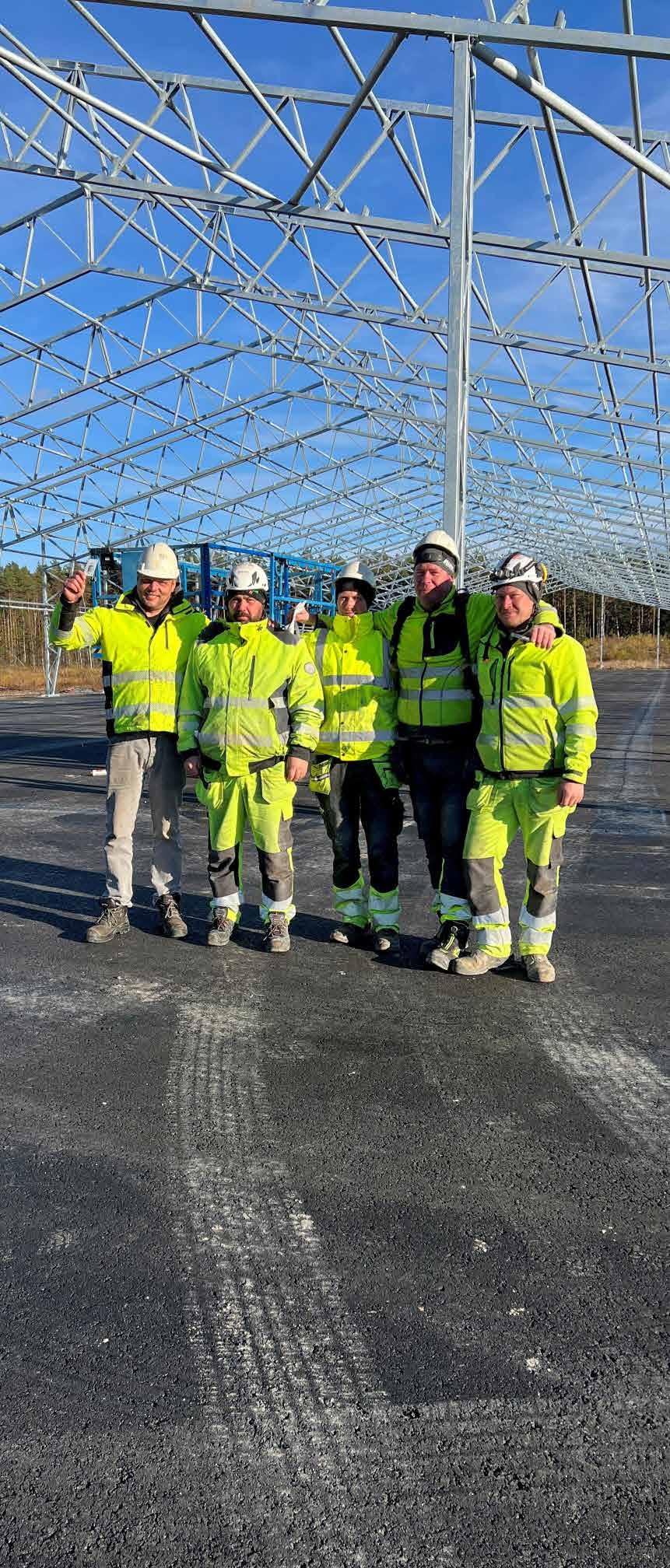
Steelwork up: The team celebrates.
When a building protects generations
Circus Juventas
Rubb is the company that designed our building 25 years ago, so we reached out to them because they’re the experts on this. We’ve been really impressed with how the original system held up.
Executive Director, Circus Juventas Rob Dawson
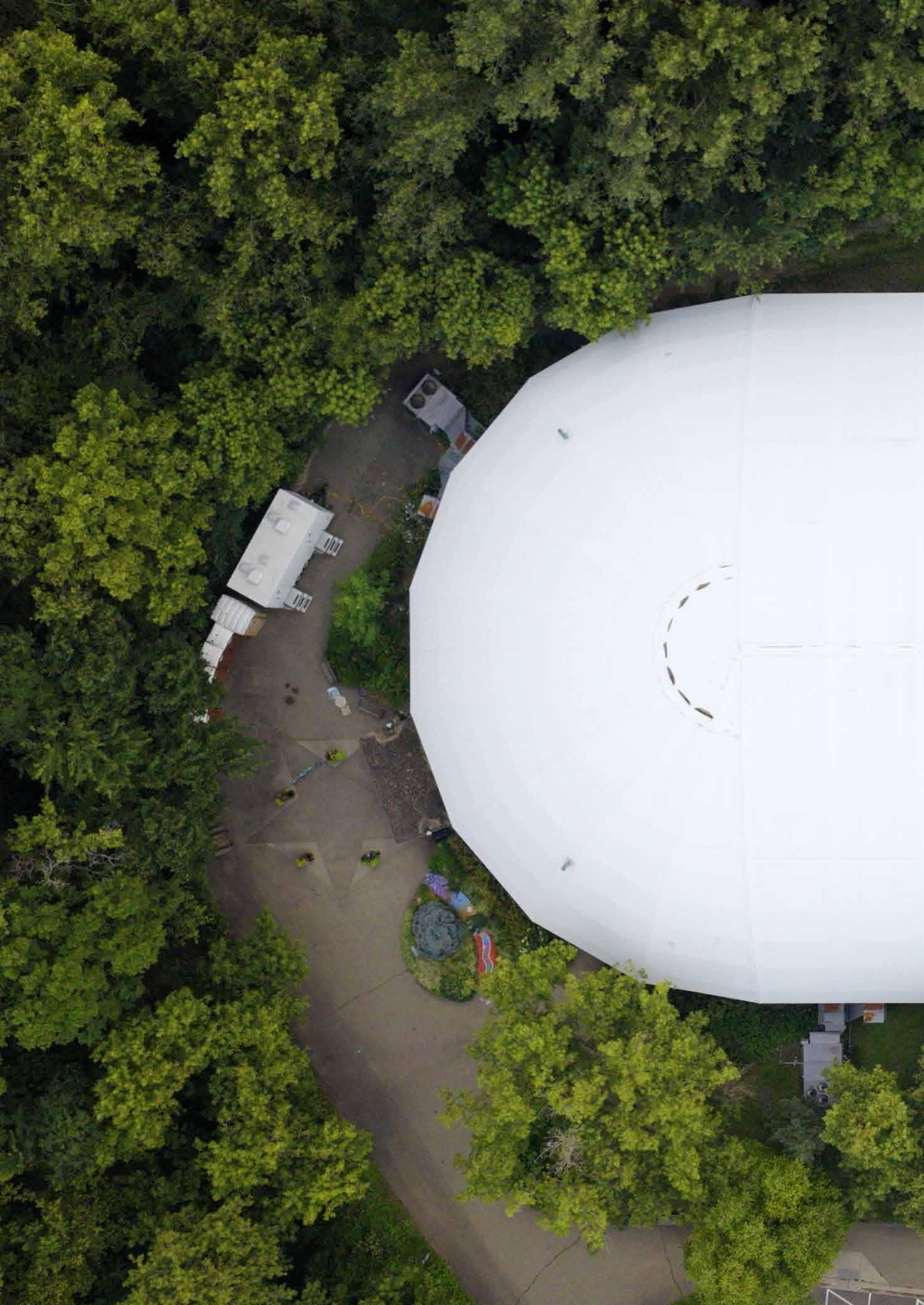
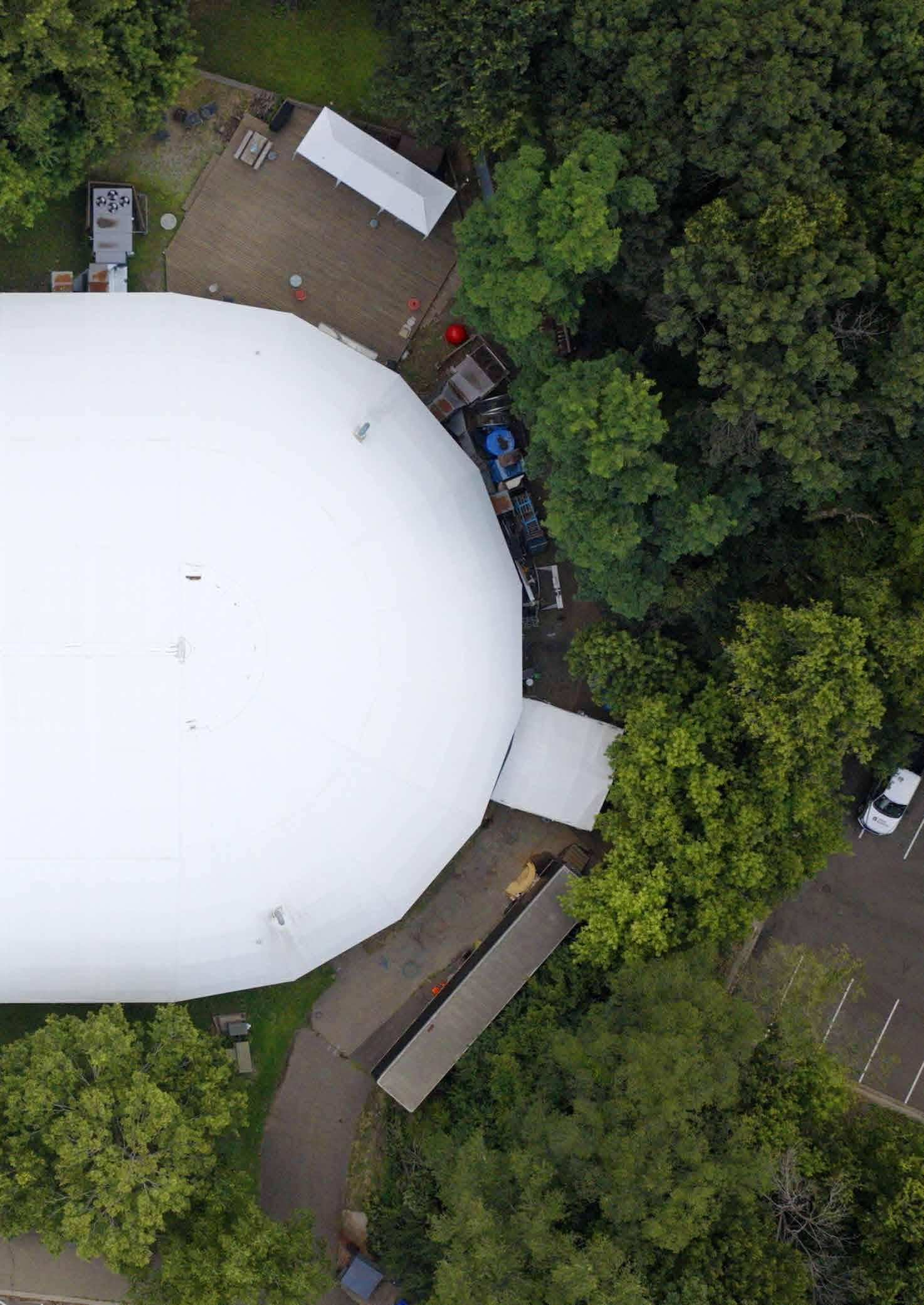
For more than two decades, Circus Juventas’ primary training and performance facility in St. Paul, Minnesota has been a permanent home for creativity, discipline, and youth development.
Rubb Inc. designed and manufactured a single-skin, custom-engineered facility for Circus Juventus in 2000 through a community‑funded effort. The structure supports year-round programming for thousands of students and tens of thousands of spectators each year.
After roughly 25 years of service, the original architectural membrane, constructed using Seaman Corporation’s Shelter-Rite® fabric, had reached the end of its planned service life. The challenge was not whether the building could continue to perform, but how to extend its life without disrupting the programs and people who depend on it.
Preserve the mission
“Being a nonprofit, every dollar counts,” said Rob Dawson, Executive Director of Circus Juventas. “We want our resources going into the school, the students, and the community, not constant building repairs.”
The structure itself remained sound. The question became how to recover the building in a way that respected its legacy, protected ongoing operations, and set the facility up for decades to come.
Recover, not replace
Circus Juventas returned to Rubb, the original designer of the structure, to evaluate the best path forward. The original membrane had delivered decades of reliable performance, which helped them decide to recover rather than replace the building.
“Rubb is the company that designed our building 25 years ago, so we reached out to them because they’re the experts on this,” Dawson explained. “We’ve been really impressed with how the original system held up.”
Rather than investing in a full replacement, the team chose a recover approach that would extend the life of the structure while improving its overall performance.
Zero disruption
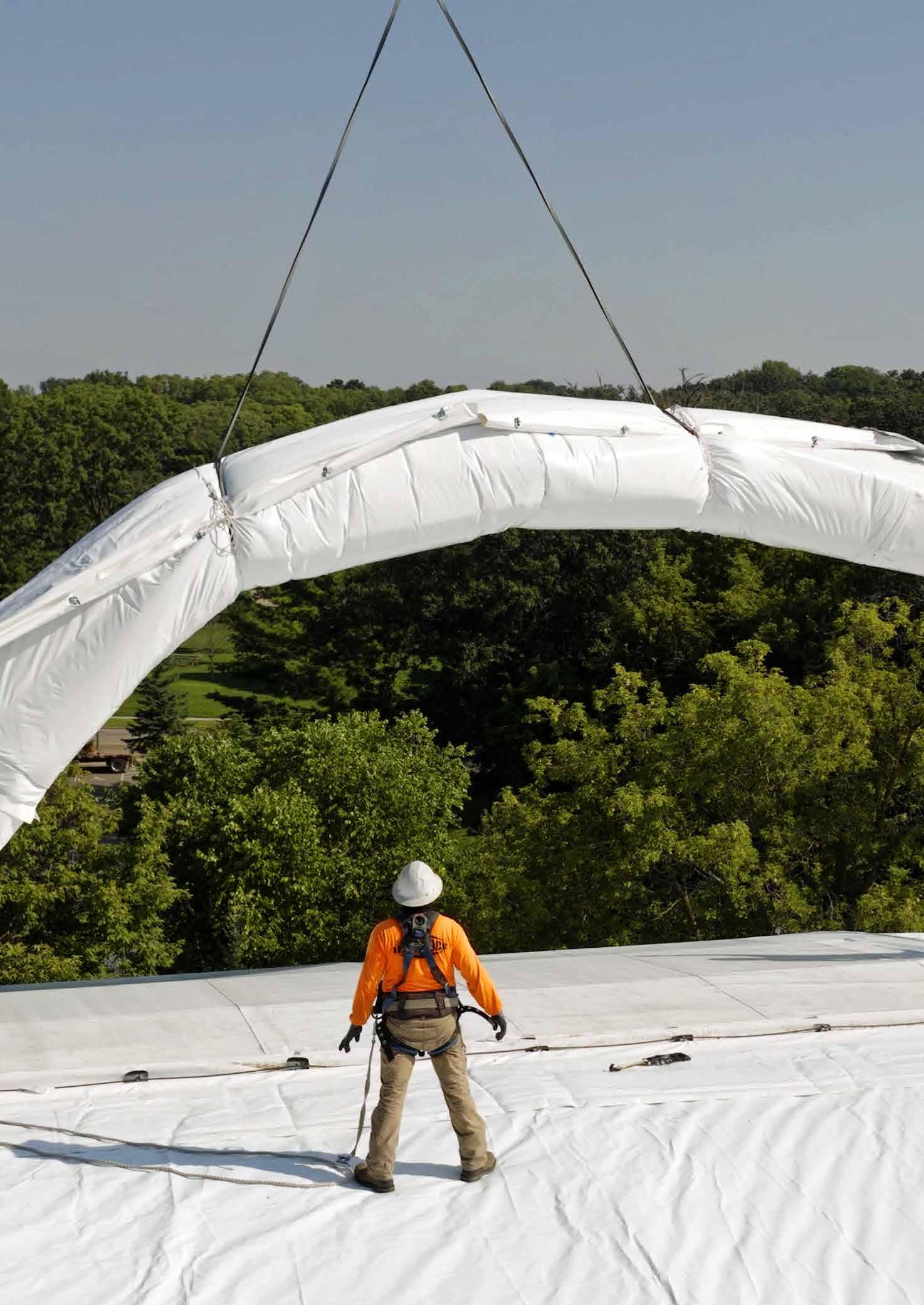
Because the facility needed to remain operational, the recover was performed entirely from the exterior. The original membrane remained in place throughout the project while the new system was installed and tensioned from outside the structure.
This approach required detailed planning, careful coordination around weather and access, and precise alignment with existing doors, penetrations, and structural connection points.
As the new system took shape, the results were immediately apparent. Dawson noted that seeing the condition of the original installation reinforced confidence in the recover approach. “We were able to go inside and look at what was put in 25 years ago, and it still looked brand new.”
Improving performance
Circus Juventas chose to upgrade the building with a R-19 Tedlar Thermohall® insulated cladding system. The insulation was installed over the existing fabric, improving thermal efficiency and enhancing interior comfort without disrupting daily operations.
The upgrade was selected to reduce long-term heating and cooling costs and to provide a more stable interior environment for year-round use. According to Matt Gagnon, the improved system was designed to deliver long-term value. The upgraded envelope is expected to provide another multi-decade service life while lowering operational demands on the facility.
For a nonprofit organization focused on investing in people rather than maintenance, the decision aligned closely with Circus Juventas’ long-term goals.
Renewed
The completed recover extends the life of the facility for decades while preserving the reliability and performance that had already been proven over a 25-year service history. With the upgraded membrane and insulation system in place, the structure continues to support year-round training and performances with improved efficiency and comfort.
For Circus Juventas, the project reinforced the value of choosing solutions that stand the test of time. As Dawson shared, having a building that does not require constant attention “means the world to us,” allowing the organisation to stay focused on its mission and the students it serves.
Oslo Municipality Temporary sports hall gets Oslo school moving
This project shows the strength of our concept. We were able to deliver a complete, insulated sports hall quickly, giving Oslo Municipality a professional and fully functional space when it was needed most.
Adm. Dir. / CEO, Renthall AS Terje Hals
When the sports hall at Lambertseter Upper Secondary School in Oslo burned down, the community faced an urgent need to restore facilities for students, clubs, and local sports groups.
To ensure sport could continue, Renthall AS supplied a fully insulated building as a temporary solution. The facility was designed, delivered, and installed quickly to meet the municipality’s requirements for a safe and functional facility.
The structure was rented for one year and has now been dismantled, ready to be used again by its next customer; a great example of how our solutions combine flexibility, sustainability, and long-term value.
Fully kitted out
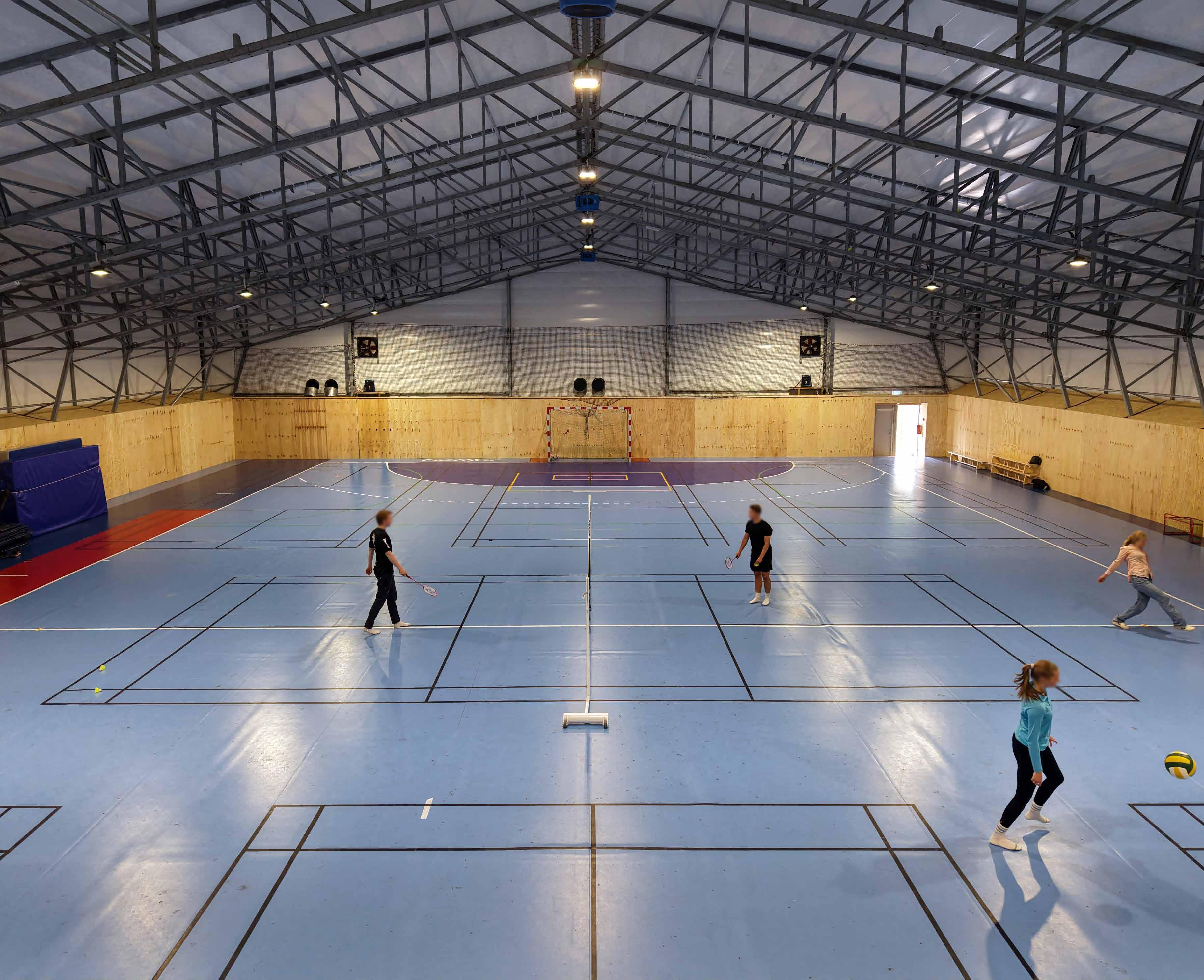
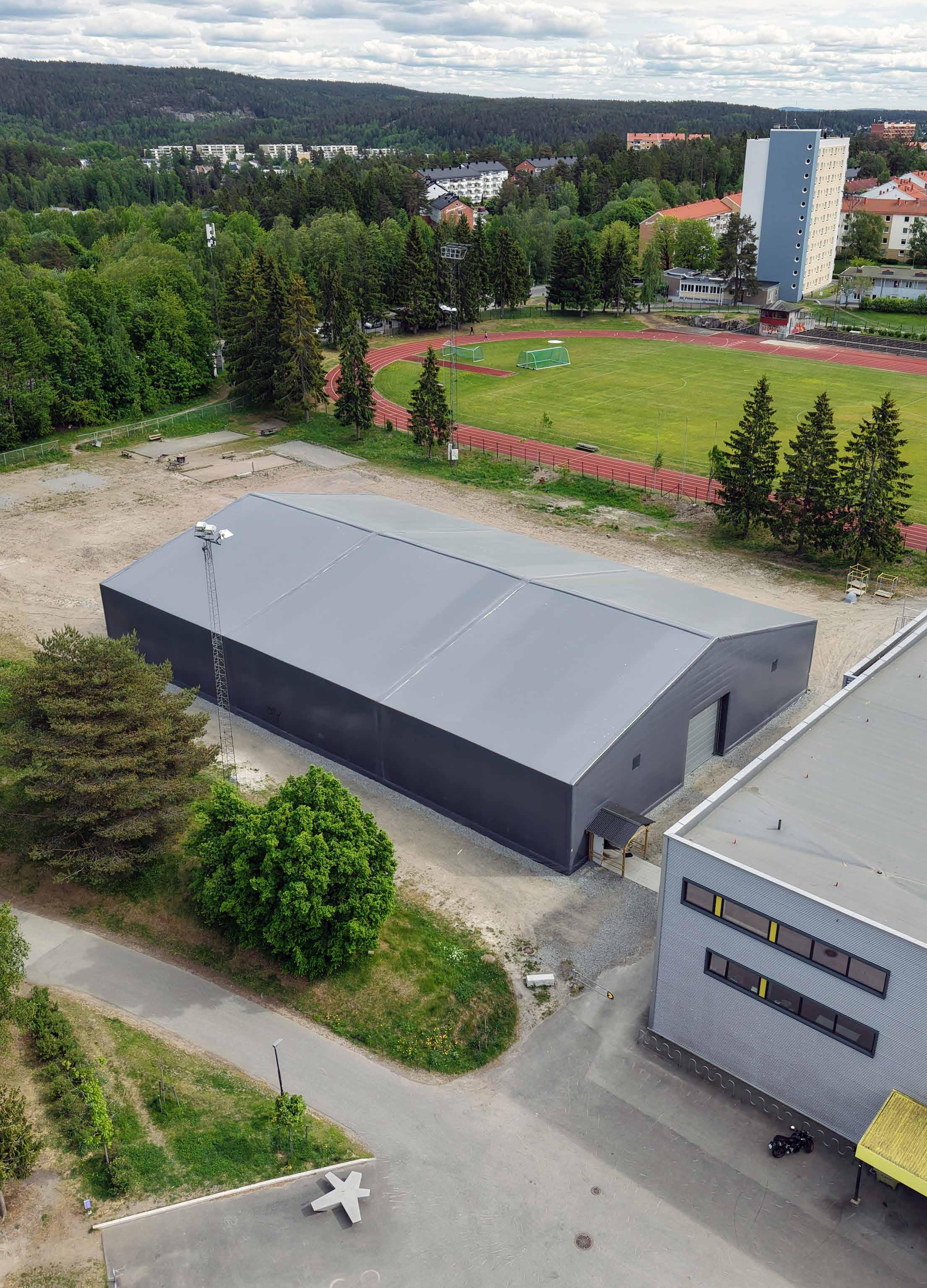
The building measures 45m in length, 30m in width, and 8m in height, with insulation and a light grey finish.
The structure includes a 5 x 5m sectional gate and pedestrian doors in both gables, each fitted with protective awnings for access in all weather conditions. A 345w mechanical ventilation system with speed regulation and a 90kw air-to-air heat pump maintain a comfortable indoor climate throughout the year.
Inside, the facility is equipped with a complete sport floor, professional wall finishes, and court markings suitable for a variety of activities. It also includes a fully installed plug-and-play electrical system with a distribution board and LED fixtures providing bright, even lighting.
Next round
This project demonstrates how quickly we can deliver a complete, insulated sports facility that meets professional standards. The modular system allowed Oslo Municipality to continue offering sports and recreation while planning a permanent replacement building.
The result was a bright, durable, and comfortable environment for multisport use, all completed within a tight schedule and fully equipped for daily training.
Now dismantled and prepared for relocation, the same building will soon begin its next chapter, supporting new players and extending its lifecycle even further.
Looking back on 25 years of military hangar innovation
In 2026, Rubb marks 25 years since the first EFASS drawing was completed on 22 November 2001, establishing what would become a cornerstone of modern deployable operations
Developed in response to a clear MoD requirement for a lighter, stronger and faster to deploy shelter system, EFASS built on more than two decades of experience supporting the RAF with rapid erect military structures in challenging environments.
That experience began in 1979, when Rubb supplied its first structure to the Red Arrows, starting a long standing relationship with UK Defence. Throughout the 1980s and 1990s, Rubb supported fast jet operations, delivered infrastructure during the Falklands conflict, and developed the Rapid Erect Hangar (REH), laying the technical and operational foundation for what would follow. By the late 1990s, evolving operational demands made clear that a new generation of deployable infrastructure was required.
The result was EFASS: the Expeditionary Forces Aircraft Shelter System. From the first 20.4m span design in 2001, the system introduced a new standard for deployable hangars: lightweight aluminium construction, rapid installation without heavy lifting equipment, and the flexibility to support a wide range of aircraft and mission requirements. Awarded its first major RAF contract in 2002, EFASS quickly moved from concept to operational deployment, with early trials in 2003 demonstrating its effectiveness in real world conditions.
Reaching 25 years of EFASS is a significant milestone for the business and for our partnership with the UK MoD. From the outset, the focus was on delivering a structure that could be deployed quickly, perform reliably in demanding conditions, and adapt to changing operational needs. That same approach continues to guide the development of EFASS today.
Managing Director, Rubb UK
Ian Hindmoor
Over the past 25 years, EFASS has supported operations worldwide. From Iraq and Afghanistan to NATO deployments across Europe and beyond, the system has evolved through continuous feedback from frontline personnel. This has driven the development of multiple span widths, improved environmental performance, integrated lifting systems, and containerised packing solutions designed for rapid global transport.
Alongside operational use, EFASS has continued to adapt to meet emerging requirements. Larger span variants, including the 25m, 28m and most recently the 30m EFASS, have expanded the system’s capability to support everything from rotary aircraft to next generation remotely piloted platforms. At the same time, advancements such as Thermohall® insulation and pre-approved packing systems have enhanced performance, efficiency, and ease of deployment.
Today, EFASS remains central to Rubb’s military offering, supported by long-term MoD contracts and ongoing collaboration with defence partners. As operational requirements continue to evolve, the system’s development reflects a consistent focus on readiness, flexibility, and engineering reliability; principles that have defined EFASS since that first drawing in 2001.
1979
Initial military engagement
Rubb UK supplied a storage building to the Red Arrows, marking the beginning of our relationship with the UK MoD.
1981 Expansion at RAF Cottesmore
Rubb secured a contract to provide four 16.5m span hangars for the Tornado Squadron at RAF Cottesmore.
1982
2002 52 hangars for RAF
Rubb was awarded a contract from the RAF for 52 20.4m-span EFASS hangars to be primarily used for Tornado aircraft storage.
1999-2001 Start of the EFASS range
The MoD required a lighter, stronger, quick erect structure. The contract was put out to competitive tender and Rubb came up with the winning concept: the EFASS. The first 20.4m span drawing is dated 22/11/2001.
2002
2003 First trials
Trial at RAF Leeming (22–24 July 2003), with a Tornado powering out of the hangar. A further trial followed at RAF Dishforth (15 August 2003), where an Apache helicopter was towed in and out.
2010
1982 Falklands conflict
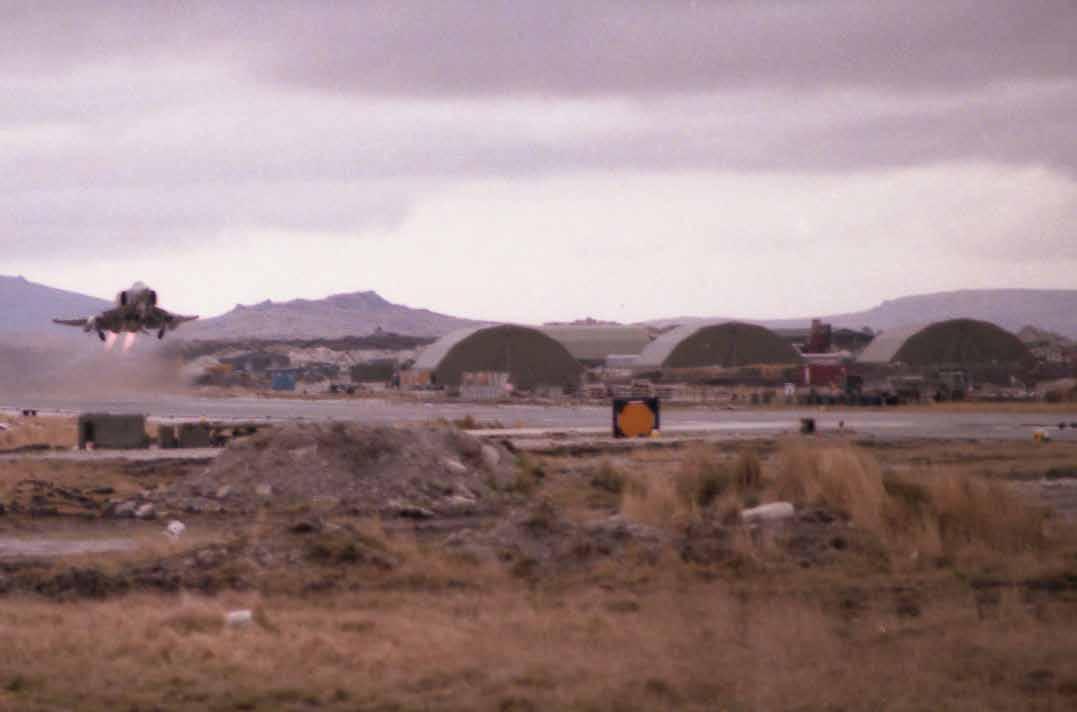
Rubb delivered 28 fast jet hangars to Port Stanley, earning the nickname ‘Rubb Alley’. After the Atlantic Sprinter was sunk, Rubb worked 24/7 to replace lost assets. A 25m-span hangar was also developed at Goose Green for the legendary Bravo November Chinook.
1980s International growth
Rubb military structures start to pop up all over the globe in locations including Belize and Ascension Island.
1995
2004 Global deployment
Multiple size hangars were deployed to support the UK and US forces during the Iraq conflict. Rubb also began to develop internal roof mounted maintenance crane technology.
2005 First EFASS for LAF
Rubb supplied four 20.4m span EFASS hangars to the Lithuanian Air Force for fast jet storage and operations at Šiauliai Air Base.
2005
25m EFASS enters the field
1995 Development of REH
Rubb developed the Rapid Erect Hangar (REH) and delivered 34 units to the UK MoD.
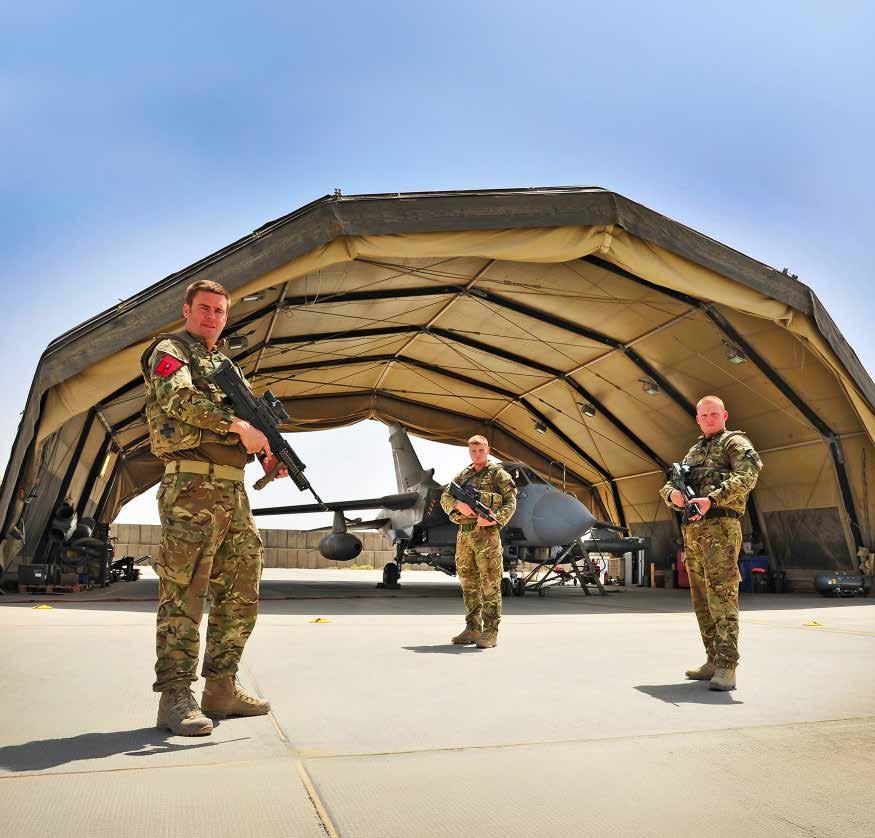
US Special Forces first purchased 25m variants for Chinook aircraft in Iraq. Multiple 25m EFASS units were used in Afghanistan by British, US, and Canadian forces for Chinook and Merlin operations.
2010 11.1m EFASS developed
R&D began development for an 11.1m-span land vehicle hangar.
2011 Longest EFASS to date
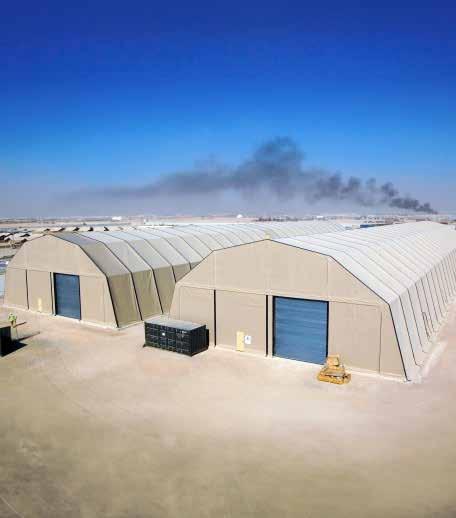
Four EFASS were converted into 25m x 100m military warehouses, deployed to Afghanistan by the UK MoD.
‘Rubb Alley’, Port Stanley, Falkland Islands.
Kandahar Airfield in Helmand Province, Afghanistan.
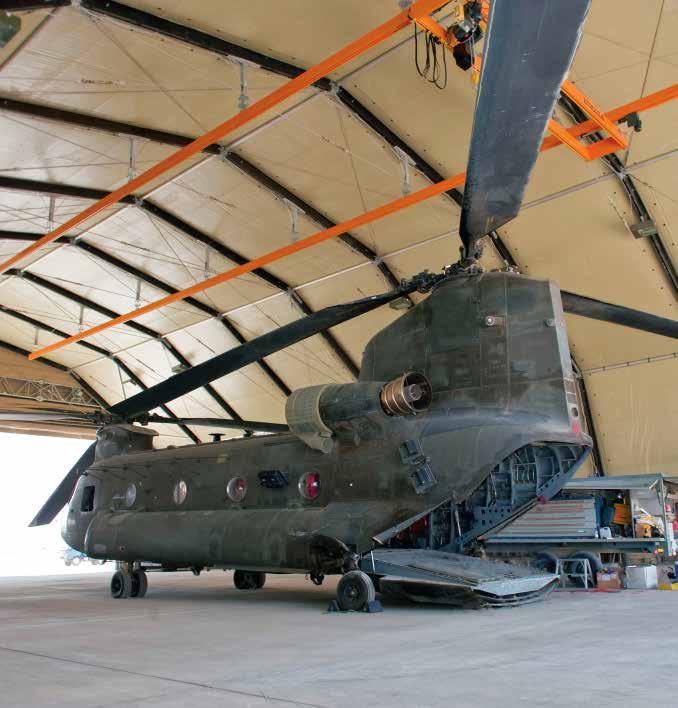
Chinook inside a 25m EFASS.
100m long EFASS used for camp infrastructure.
2020
2027
RAF Museum Midlands exhibition
Rubb will supply a refurbished 20.4m EFASS hangar for the RAF Museum Midlands’ The RAF: 1980 to Today exhibition.
2026
First deployment of 30m EFASS
Following the successful trial, NATO and the RAF placed a £1,345,000 order for two 30m x 21m EFASS to support the first global deployments of the RAF’s Protector RG1.
2026
Six-year MoD contract
The new contract extends support for RAF deployable infrastructure, strengthening readiness and asset availability.
2024
2022
EFASS for Danish MoD
Rubb supplied three 25m x 40m EFASS hangars to the Danish MoD, with a training session hosted at Rubb UK HQ.
First Thermohall® EFASS
Rubb supplied an EFASS to DE&S Ashchurch clad with inner-skin Thermohall® insulation.
2020
Operation Regain
Rubb refurbished 25 EFASS structures for the MoD’s Operation Regain, ensuring long-term operational effectiveness.
2020
2020
2022
Four-year MoD contract
Rubb secured a four-year £9.7 million contract with the UK MoD, ensuring continued support.
28m EFASS development & trials
Rubb trialled a 28m EFASS hangar at DEW for the Canadian Air Force, designed for increased wind and snow loads.
2017
‘Buzzard’s Nest’ trial at RAF Coningsby
The Typhoon trial showed Rubb’s TWE increased aircraft availability by 10% and reduced maintenance downtime.
2019
Two-year MoD contract
Rubb secured a further two-year £9.5 million contract with the UK MoD, continuing its supply of military shelters and support services.
2015
RAF 5001 Sqn’s 75th anniversary
Rubb was invited to RAF 5001 Sqn’s 75thanniversary, recognising our contributions to rapid-deployment military shelters.
2013
Five-year MoD contract
Rubb secured a five-year £6.86 million contract with the UK MoD, providing military shelters, repairs, refurbishments, spare parts, and Post Design Services (PDS).
Featuring a low profile and wide door system, the 30m EFASS was developed for RPAS/UAV. 2024 R&D begins on 30m EFASS for RPAS
2017
Pre-approved EFASS packing system
Rubb developed specific packing procedures for standard configurations to JADTEU Defence Standards.
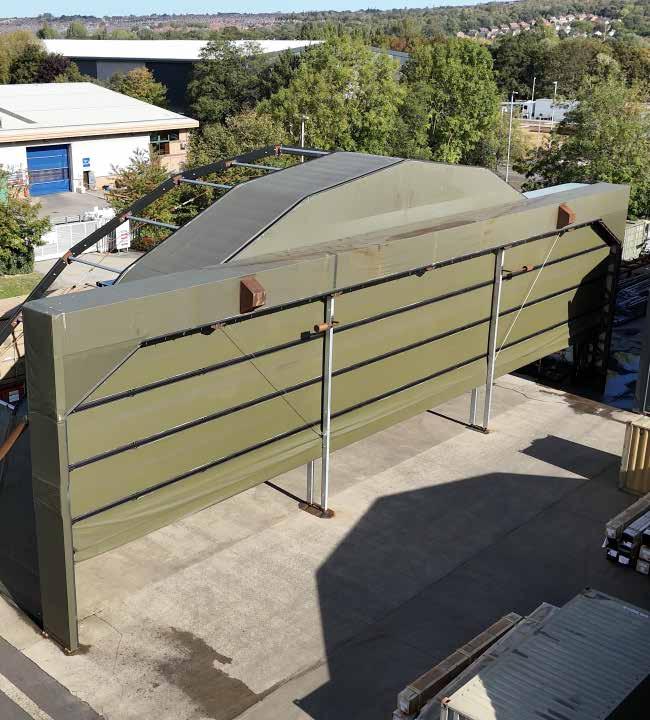
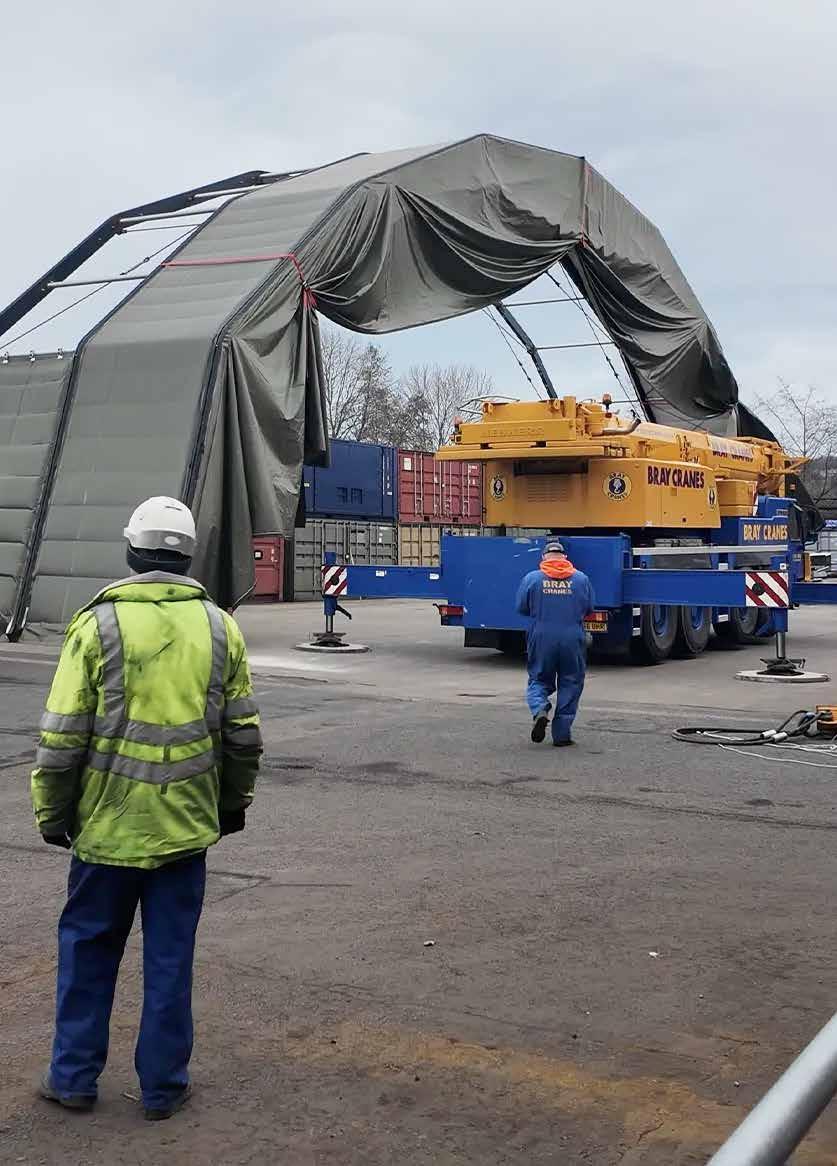
The 30m trial was conducted at Rubb UK’s Gateshead site.
Precise packing, repacking, and fast track transportation.
Rubb were invited to attend RAF 5001 Sqn’s special 75th luncheon.
The first 30m EFASS is ready for action.
Six-year single-source contract awarded to Rubb UK
Rubb UK has been awarded a six-year single-source contract by the UK Ministry of Defence, extending the company’s ongoing support to the RAF’s deployable infrastructure and operations.
Ready for action
The contract will be fulfilled from Rubb’s Gateshead facility, sustaining skilled employment in the region and ongoing collaboration with local suppliers across the Northern supply chain.
To deliver the programme, Military Project Lead Bryan Davis will oversee planning, stakeholder engagement, and performance across equipment and services.
Continued support
Rubb’s new six-year contract builds on a long history of support to UK Defence. Rubb delivered a five-year contract awarded in 2013, a two-year MoD contract in 2019, and a four-year contract secured in 2022.
Under the renewal, Rubb will continue to provide spares, repairs, refurbishments, training, and technical support across its deployable solutions in service with the RAF.
This includes through-life support for the 30m EFASS deployable RPAS hangar, strengthening availability and readiness across RAF applications.
“Our focus is readiness,” said Bryan Davis. “We will work closely with the MoD to keep assets available, extend service life, and enhance capability through responsive support, planned maintenance, and upgrades.”
Rubb has supplied deployable structures to the UK Armed Forces for decades, supporting operations at home and overseas. Today’s renewal underscores that long-standing partnership and Rubb’s ongoing role in delivering dependable infrastructure for demanding environments.
We are proud to continue supporting the RAF with reliable, rapidly deployable infrastructure. This contract recognises our team’s track record in through-life support and our commitment to engineering quality, responsiveness, and value.
Managing Director, Rubb UK Ian Hindmoor
RAF 5001 Sqn installs a 20.4m EFASS in Poland for Op CHESSMAN.
RAF Museum Midlands Rubb to supply EFASS hangar for new exhibition
Rubb UK is proud to support the RAF Museum Midlands as it develops its landmark new exhibition The RAF: 1980 to Today.
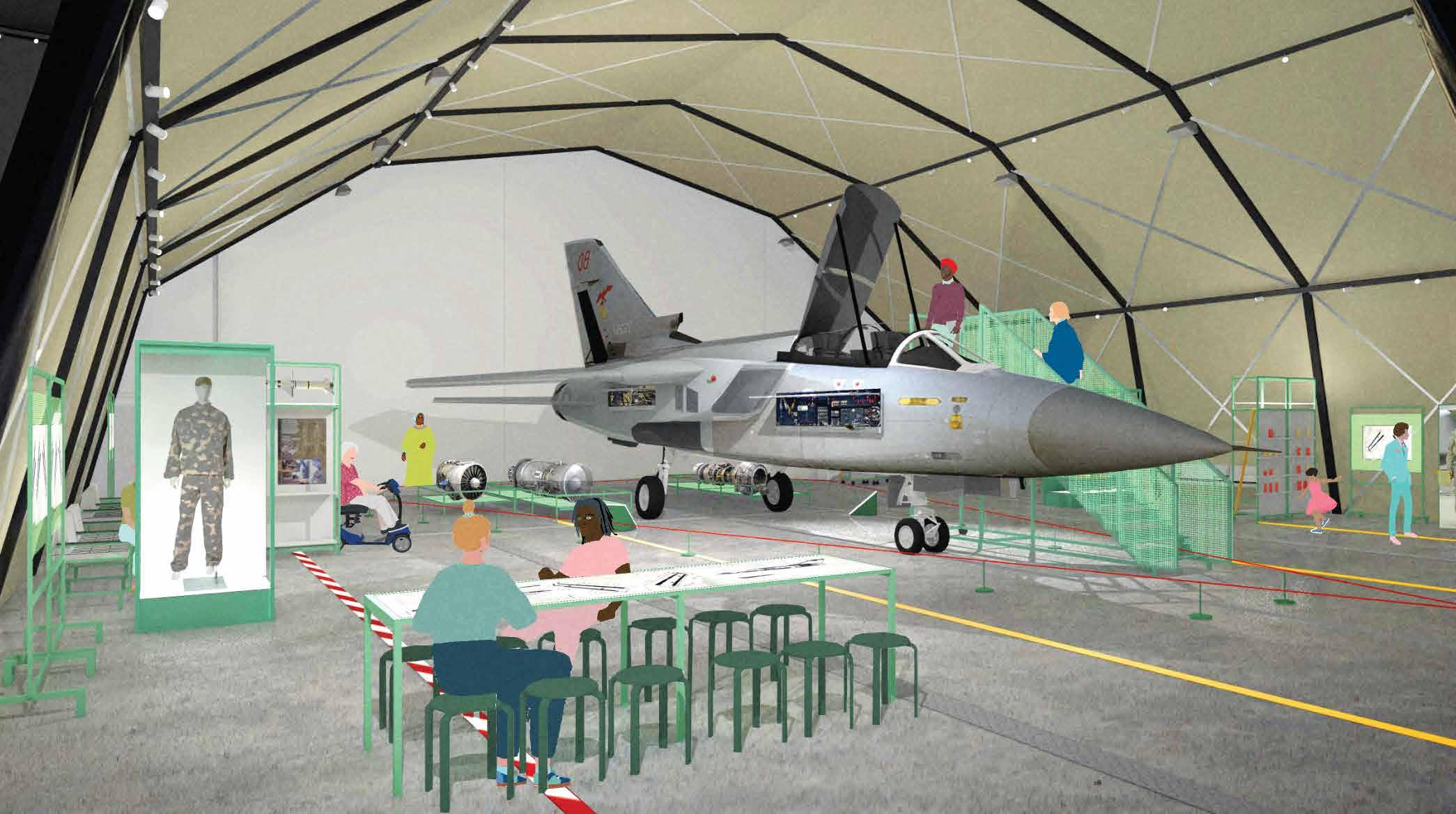
As part of this transformation, Rubb is supplying a refurbished 20.4m EFASS hangar, which will house a Tornado GR4 fast jet and form a central immersive environment within the Museum’s redeveloped Hangar 1.
This contribution comes at a significant moment for Rubb: 2026 marks the 25-year anniversary of the EFASS range, first designed in response to the RAF’s frontline requirements in 2001.
Deployed environment
Inside the EFASS structure, visitors will experience a full -scale representation of expeditionary air operations. Developed using genuine, previously deployed components, the hangar has been refurbished to retain the authentic wear associated with operational service. This includes its open-door ‘first petal’ configuration and field -condition cladding.
Working alongside RAF engineers, the Museum is curating an exhibition that accurately represents the working conditions, maintenance routines, and engineering challenges faced during deployed operations.
Digital interpretation will include interviews with personnel and a timelapse of the EFASS installation, offering the public a rare view into the life of RAF ground crews.
Karen Whitting, RAF Museum’s Director of Content and Programmes commented: “The installation of the EFASS hangar within our new exhibition will be a powerful way to bring RAF operations to life for all our visitors. By placing the Tornado GR4 inside an authentic, previously deployed structure, we will be able to immerse visitors in the realities of expeditionary air operations and highlight the skill, resilience and ingenuity of RAF and Rubb UK personnel.”
Past and present RAF operations
The new exhibition places modern RAF history in context, showcasing how the Service adapted from the Cold War era to today’s multi-domain responsibilities.
By placing a Tornado GR4 within a Rubb EFASS hangar, the Museum can present decades of RAF operations through environments that RAF personnel themselves would recognise, linking modern engineering back to earlier conflicts where Rubb structures played a vital role.
Working closely with the Rubb team and RAF engineers will enable us to share this story with accuracy and depth, ensuring that the lived experience of ground crews and aviators is central to how we interpret this pivotal period, showcasing how the Whole Force continually adapts to meet evolving global challenges.
Director of Content
and
Programmes, RAF Museum
Karen Whitting
Bravo November—the Chinook helicopter whose remarkable survival during the Falklands conflict became a defining RAF story—will also be featured in the exhibition. This marks a significant reunion, as Rubb developed a 25m-span Chinook hangar at Goose Green specifically to house the aircraft during the 1982 conflict.
Wider transformation
The EFASS installation contributes to a broader £28M transformation of the Midlands site, including a new Learning Centre, a Collections Hub, and major improvements to the Museum’s public spaces.
The new exhibition, opening in 2027, will explore 45 years of RAF history, inviting visitors to imagine the Service’s future as it faces the challenges of cyber and space defence. It will share diverse personal stories and engage new audiences through multi-sensory interpretation and accessible design.
Op CHESSMAN
EFASS hangars support RAF & Swedish Air Force
We’re proud to support 5001 Squadron in their deployment of 20.4m EFASS hangars for Op CHESSMAN. Adapting the structures to accommodate both RAF Typhoons and Swedish Gripens reflects the flexibility of the EFASS system and our commitment to supporting NATO’s rapid deployment capabilities.
Military Project Lead, Rubb UK
Bryan Davis
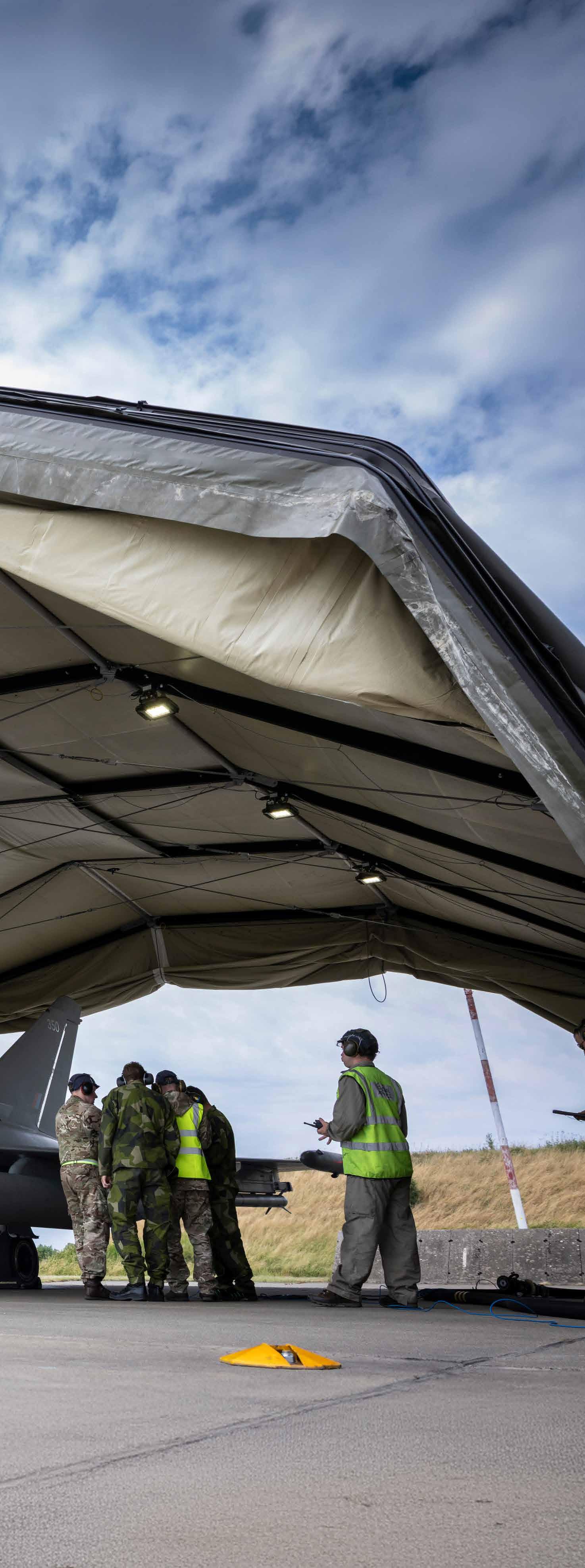
The RAF has deployed a fleet of EFASS hangars to Poland as part of Operation CHESSMAN, supporting NATO’s enhanced Air Policing mission.
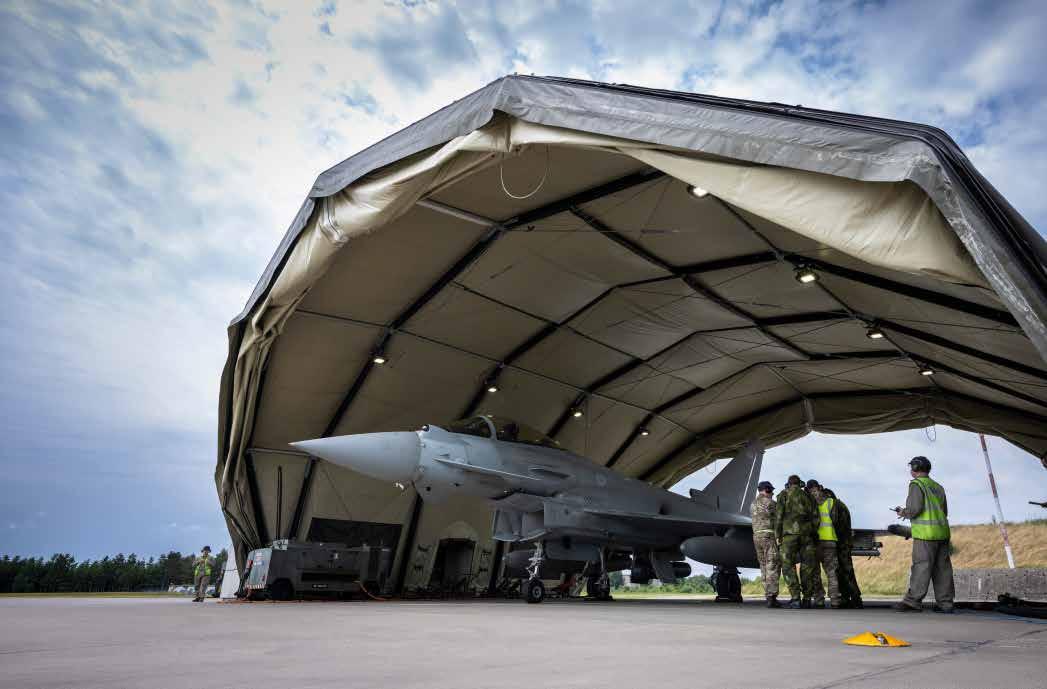
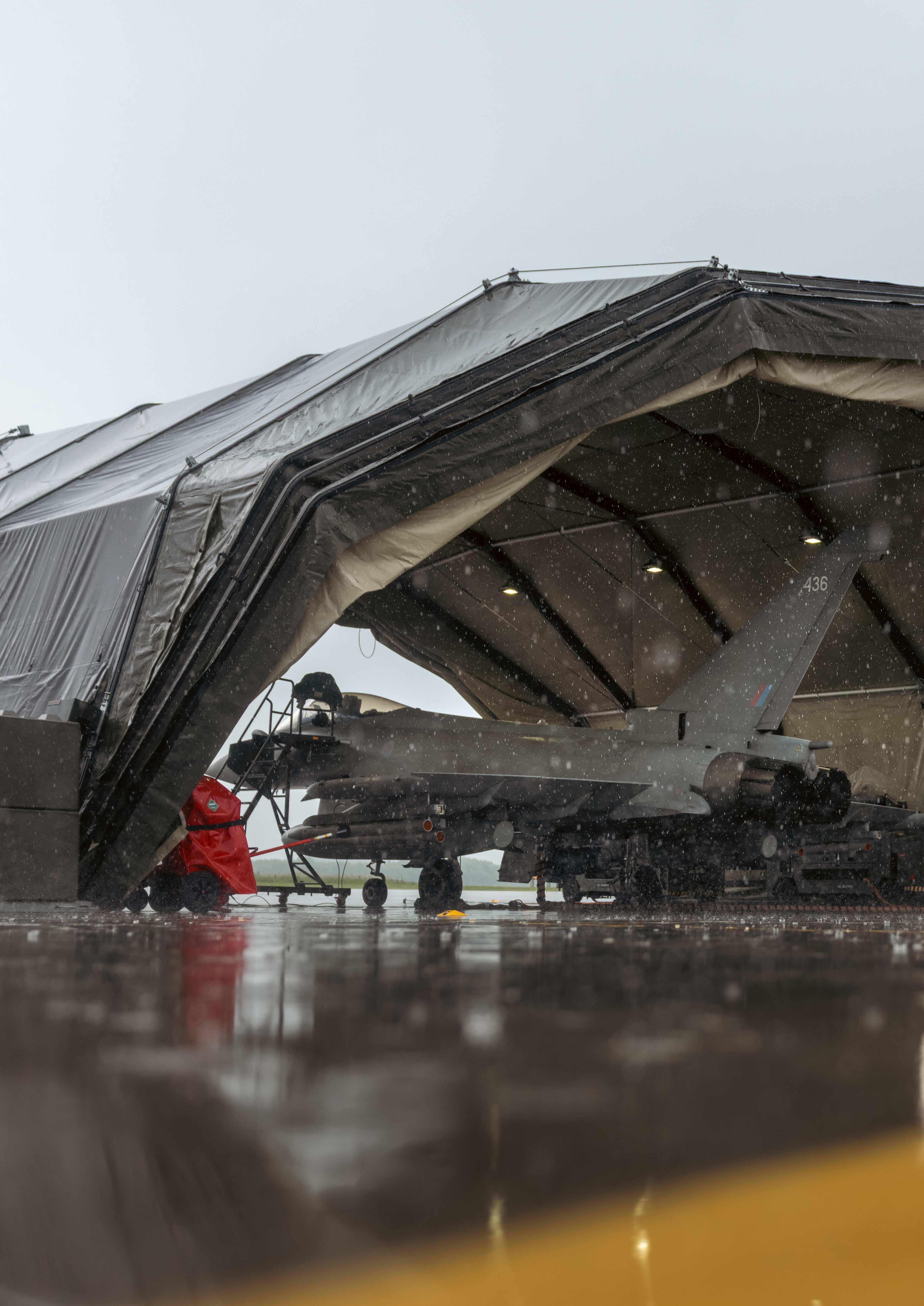
The 20.4m EFASS hangars and a 9.1m ECASS storage structure are all now operational at 22nd Air Base Malbork, supporting the RAF’s Typhoon and Swedish Gripen fighter jets.
Six RAF Typhoon FGR4 aircraft from RAF Lossiemouth’s II Army Cooperation (AC) Squadron arrived at Malbork on 25th March 2025, supported by 140 Expeditionary Air Wing and a UK C-17 delivering essential freight and equipment.
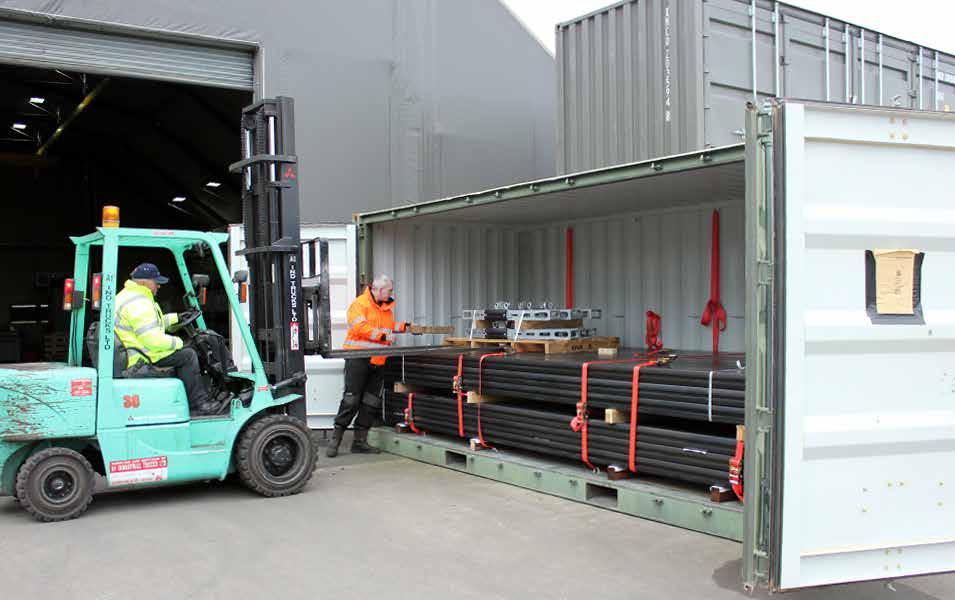
Each 20.4m hangar was packed into a single 20ft ISO container, ensuring streamlined transportation and rapid setup on arrival.
Joint operation
This deployment is a landmark moment for Sweden, as six JAS 39 Gripen aircraft from the Norrbotten Wing Fighter Squadron join the operation.
This is the first time Gripen jets from the Swedish Air Force (SweAF) are operating in an Ally’s territory under NATO command—a historic step since joining the alliance in 2024.
This operation marks another first for Swedish forces. Though the Rubb hangars were deployed by the RAF, the SweAF will be operating aircraft from within the EFASS system for the first time.
To accommodate this, bespoke exhaust adaptions were provided for the Swedish Gripen fighters. The aircraft’s vertical exhaust configuration required adjustments to the standard EFASS setup, which Rubb first developed during a 2024 project with the Lithuanian Air Force to ensure safe jet operation within the hangars.
Building foundations
To meet specific site and operational requirements, Rubb also supplied a concrete ballast solution to allow install without ground anchors.
Ideal for temporary missions where groundworks are restricted, the ballast arrangement uses specially designed trays that secure concrete block weights to anchor the structures.
This method allows for fast installation, easy reuse, and a lower environmental impact; critical for short-term NATO deployments like CHESSMAN where timescales are tight.
These are just two of countless adjustments based on frontline feedback that has made the EFASS into what it is today.
Rubb is a company of engineers, and we thrive on the opportunity to put our expertise to work. Whether it’s new NATO air assets or ground condition restraints, we design with the mission in mind.
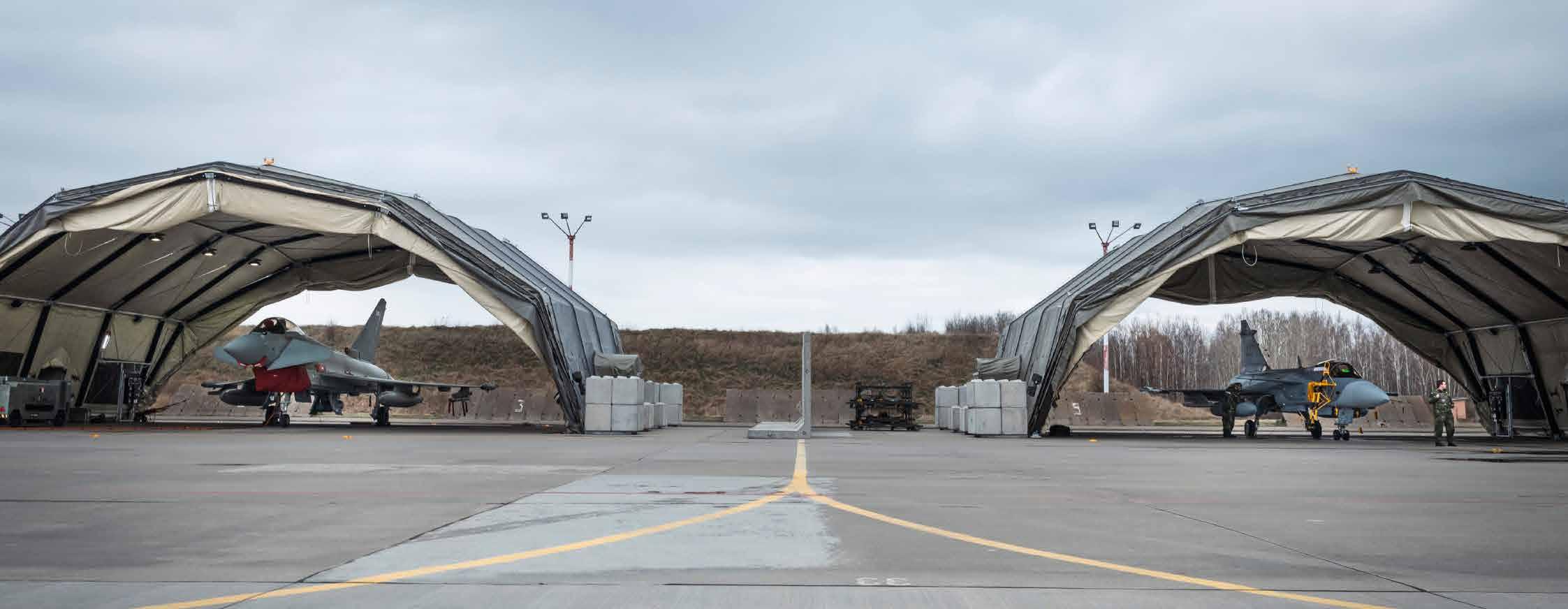
RAF Typhoon (left), SweAF Gripen (right). This marks the first time the SweAF have operated out of a Rubb EFASS hangar.
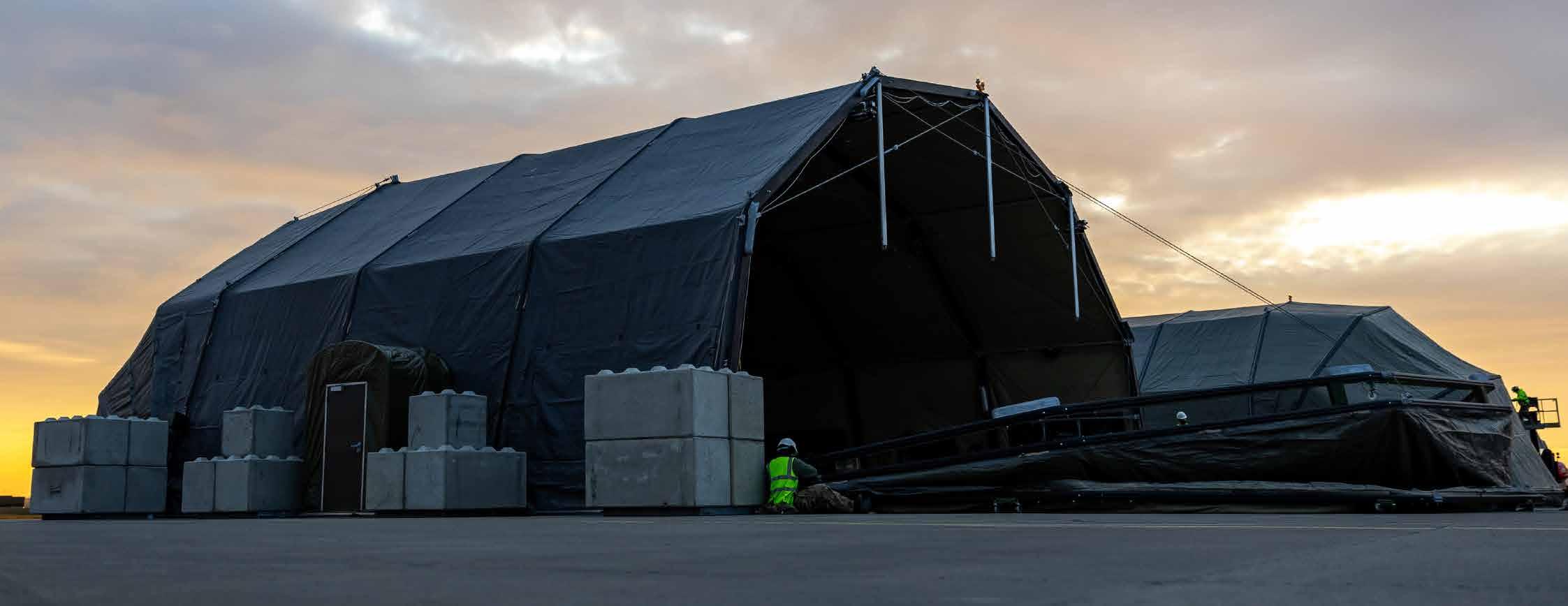
5001 Sqn install the 20.4m EFASS, complete with concrete block weights.
30m EFASS
Mammoth
modules trialled in UK yard
Last year, Rubb UK secured an order from NATO and the RAF for two 30m x 21m EFASS hangars to support the very first global deployments of the RAF’s Protector RG1.
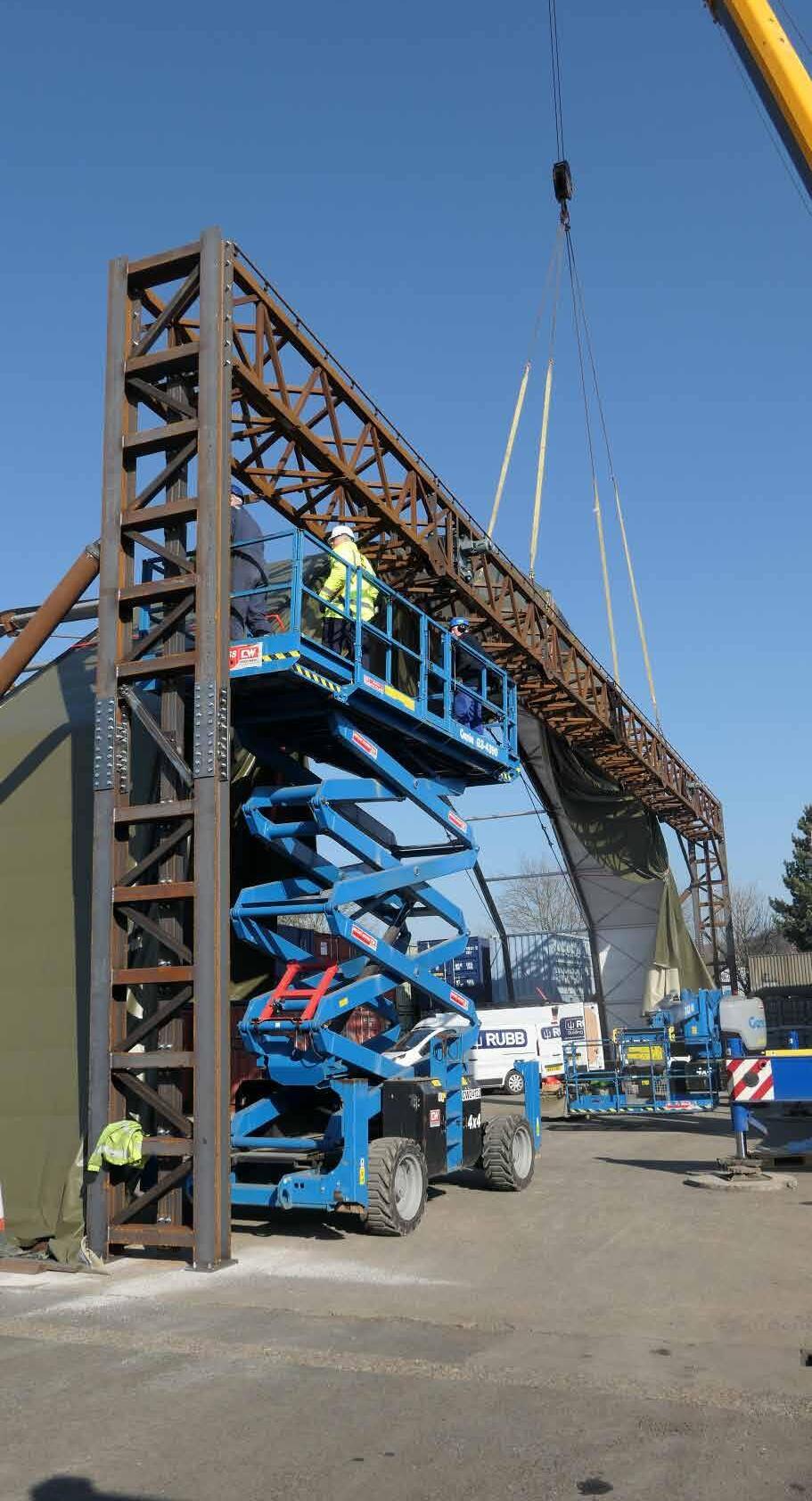
Ahead of their deployment, the Rubb team setup an on-site trial in our Gateshead facility to prototype the new model.
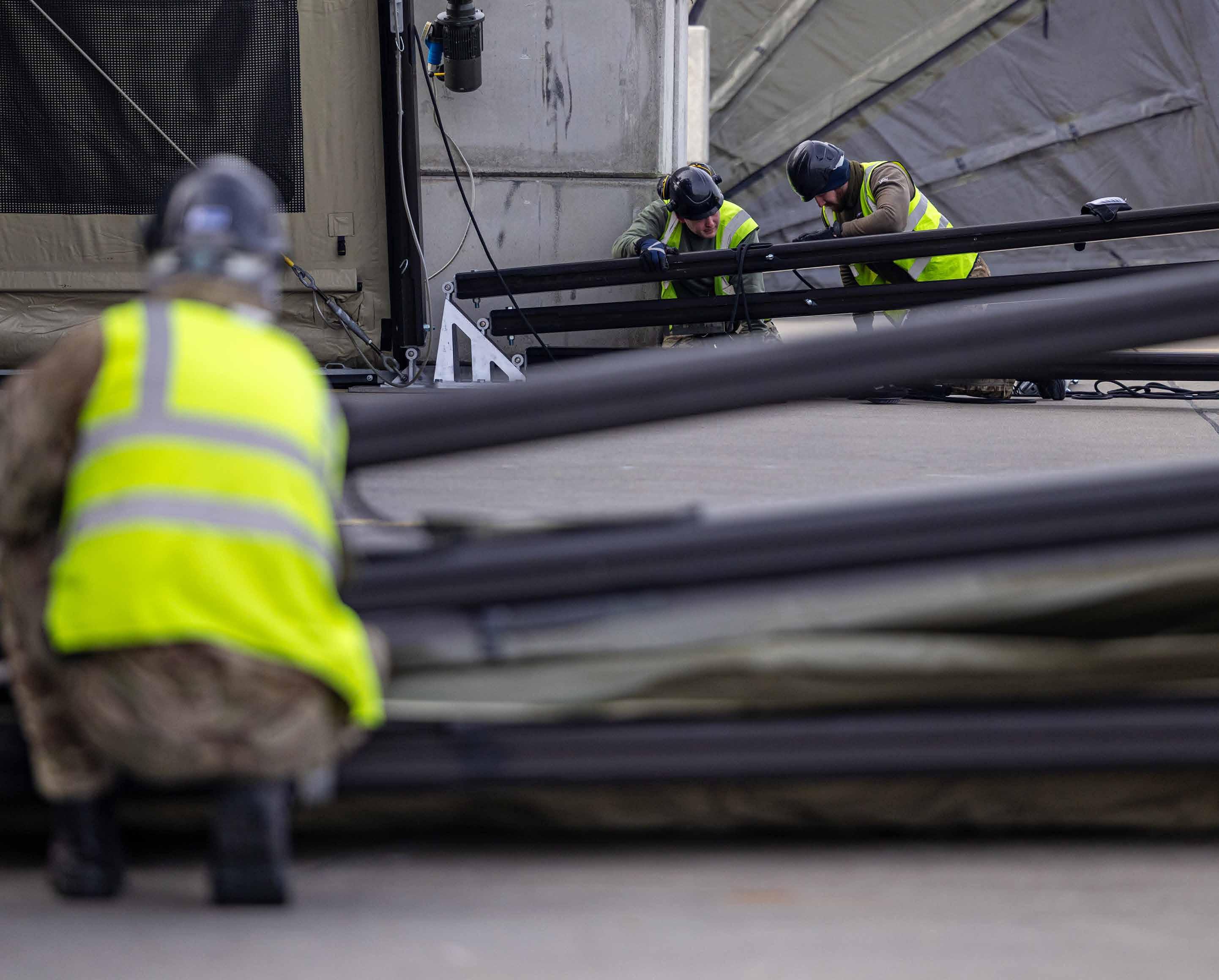
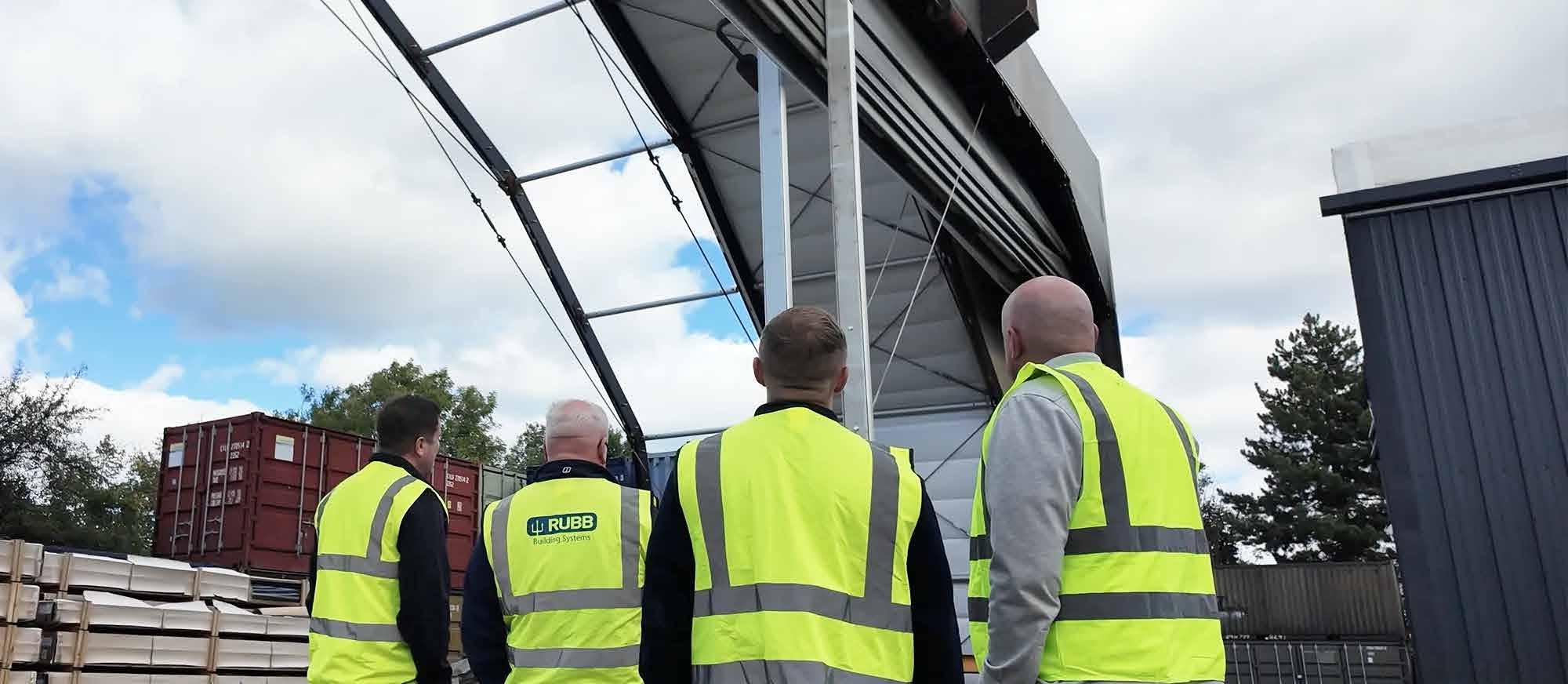
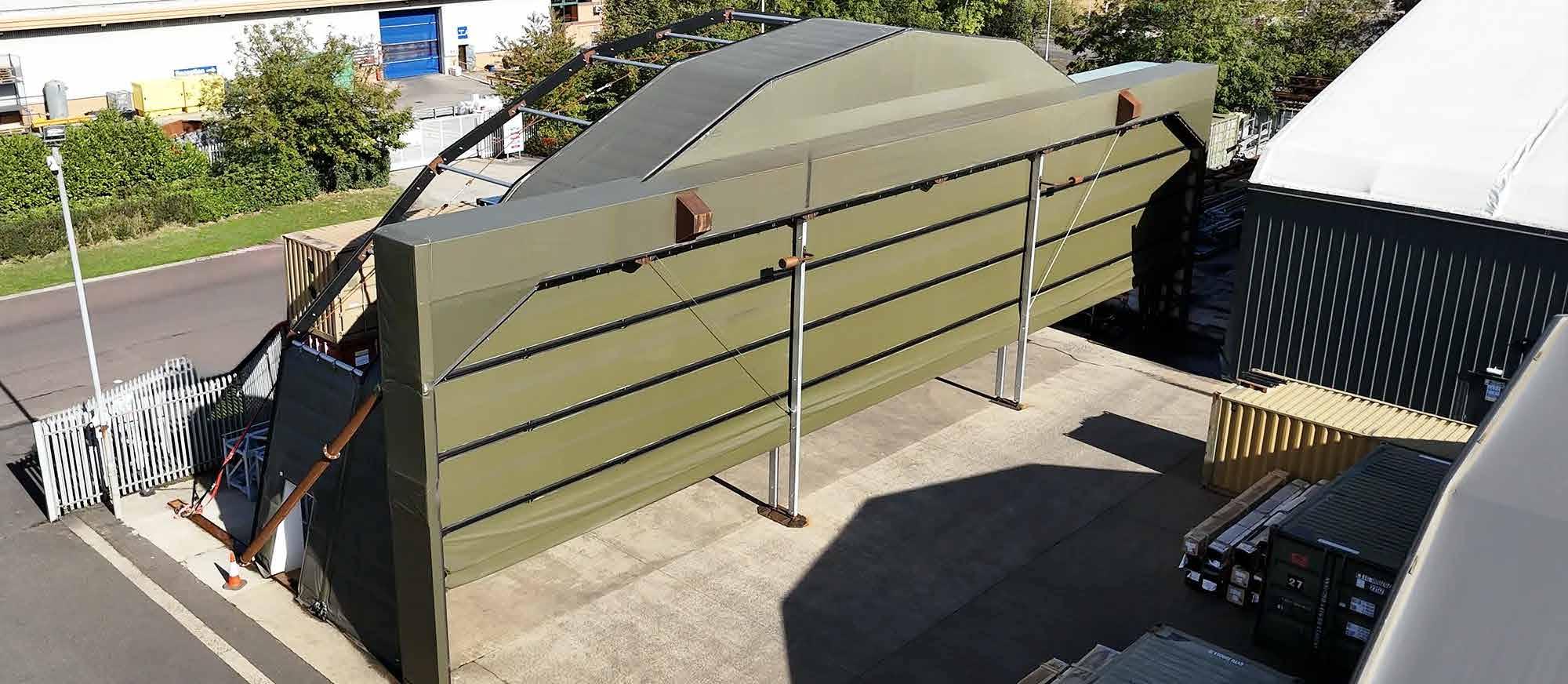
Two mammoth 30m-span modules and a fully-functioning Heli-Door were installed in our yard as we began the lengthy process of prototyping the next generation of unmanned aircraft hangars.
With the trial complete, the Rubb team sat down to discuss lessons learned.
A new approach
“We wanted to capture everything that we’ve developed and learned with all of the other hangars, and put it into one more up-to-date package that would be useful across the board,” says Andrew Knox, Sales Director. The 30m EFASS was designed specifically for unmanned aircraft, with a wide span and low profile to accommodate larger wingspans.
Ian Hindmoor, Managing Director, adds, “Our existing products worked well for fixed-wing and rotary aircraft, but this is tailored for RPAS. Larger wingspans, low profile. Exactly what the 30m provides.”
Worldwide deployment
Bryan Davis, Military Project Lead, points out the technical challenges: “The size of the door and the wind loads it has to withstand make this hangar much more complex than previous models.” The structure is built to handle wind speeds of 41.6m/s and snow loads of 100kg/m², meeting Eurocode standards.
The Heli-Door, with a clear opening of 30m by 6.8m, opens in two minutes, allowing quick turnaround for RPAS missions. All of this can be supported by an integrated backup generator. “This ensures the RPAS can stay in operation no matter what,” Bryan adds.
Thermal efficiency is achieved through Rubb’s Thermohall® PVC system, and the hangar is designed for easy shipping in 20ft ISO containers. “The packing arrangement was developed with the UK military, so it can be shipped by air, land, or sea,” says Andrew.
“It’s still very much a containerised, deployable hangar, but it’s got more capabilities to go worldwide,” Ian explains. “What we have now is the biggest deployable structure that this company has ever developed.”
Collaborating for success
The 30m EFASS was shaped by feedback from RAF 5001 and 31 Squadrons. Andrew notes, “Input from the squadrons on electrical supplies, installation methods, and operational requirements was invaluable. It helped us address real-world challenges and refine the design.” Ian adds, “Based on our lessons-learnt scheme with 5001 Squadron, we looked at components that needed regular maintenance and designed those out for easier access and reliability.”
Prototyping and the on-site trial allowed the team to make rapid adjustments. “You can take drawings and ideas back to the engineers and get them implemented the same day,” says Bryan. “Lots of things can be determined on a drawing board and visualised, but the most effective way of prototyping and research and development is to actually build a prototype,” adds Ian.
The collaborative process involved the installation, design, and production teams working closely across the entire trial period. “I’m very proud of how the team came together to create the product we have today,” says Ian. “We developed not only the product itself but also the methodology for building it.”
Built for the future
With our yard now cleared and the first 30m EFASS hangar ready for operational deployment this year, the whole process has been invaluable for Rubb.
“Overall, I think the experience will help us in future projects, from what we’ve learned from the contractual side with NATO to having the confidence and experience in the R&D work we’ve done,” Andrew begins. “The way everybody pulled together has shown that we can take on anything.”
The project brought together expertise from across Rubb, our partners, and RAF 5001 and 31 Sqns, creating a system that meets the needs of today’s unmanned aircraft operations. The contract continues Rubb’s relationship with the UK MoD and highlights its commitment to British manufacturing.
“This is a huge step forward for Rubb, bringing together years of experience and feedback from end users. Securing this order for NATO and the RAF is a significant milestone. We’re proud to support the deployment of the Protector RG1 with a system built for the future,” Ian concludes.
RFA Lyme Bay Return to the Tyne
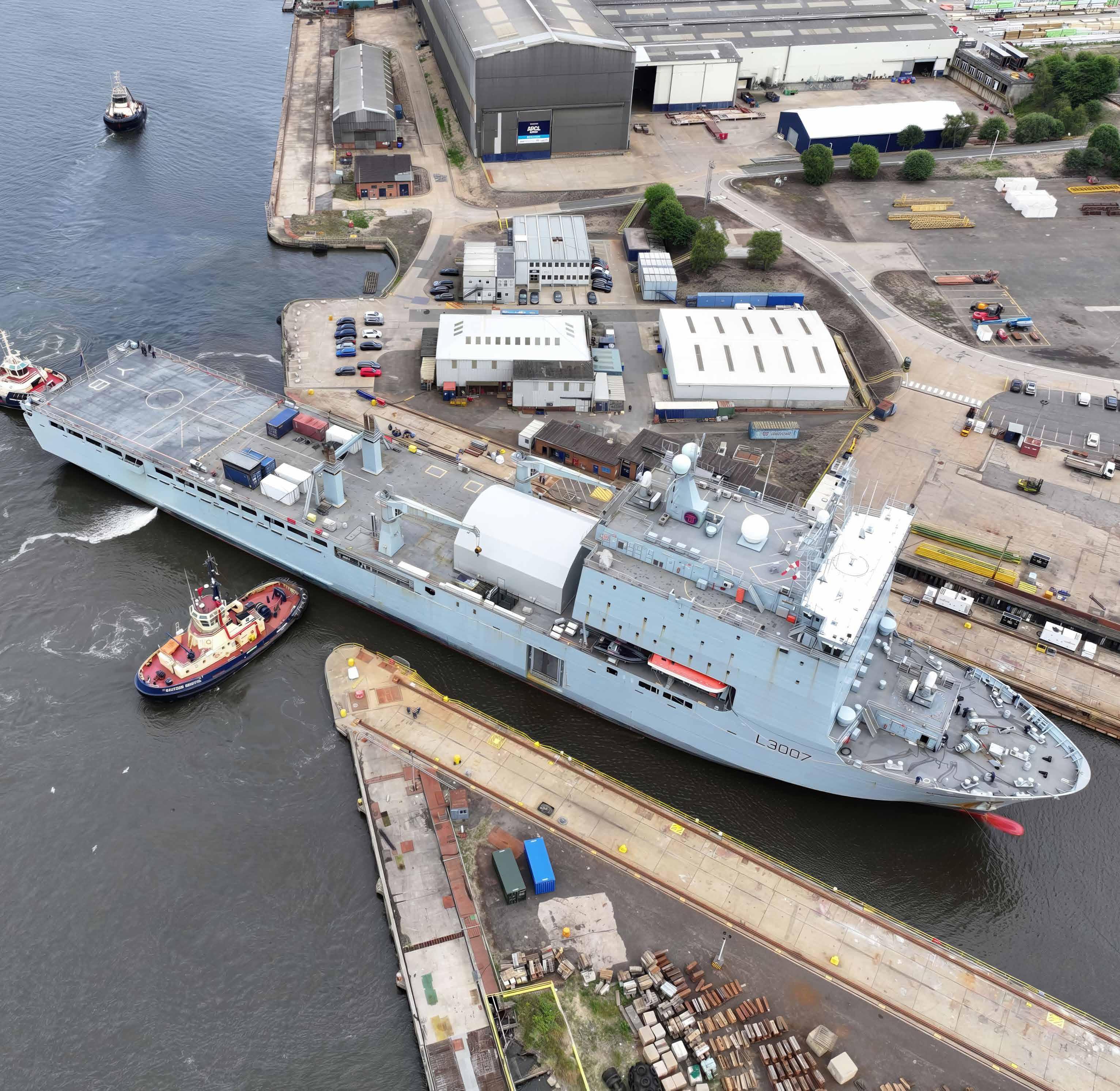
RFA Lyme Bay has docked in the River Tyne for the first time in over 15 years. Rubb is proud to play a small but significant part in the vessel’s ongoing story.
Rubb originally installed the 15m span, 18m long NV structure on the deck of RFA Lyme Bay back in 2015.
Designed to provide a protected environment for operations and storage, the structure has since supported various missions across the globe, including humanitarian deployments and military exercises such as Predators Run.
Now, as the ship returns to its home waters for refit and maintenance, the Rubb team will be facilitating maintenance of the structure almost exactly 10 years since its original installation.
The project was delivered in partnership with A&P Group, who continue to support the RFA fleet through their longstanding work at A&P Falmouth and A&P Tyne. With Rubb’s facility just a short distance from the dockyard, our team is well placed to ensure the structure continues to perform at its best in the demanding maritime environment.
Rubb has an almost 50-year track record of delivering flexible, durable structures for defence, aerospace, and marine applications. Whether on land, at sea, or somewhere in between; Rubb buildings are built to last.
GeoPura Clean energy powers critical defence infrastructure
Rubb supported a trial of GeoPura’s Hydrogen Power Unit (HPU) at RAF Waddington, demonstrating how clean energy can power critical defence infrastructure.
The trial took place inside one of RAF Waddington’s 25m x 40m EFASS hangars, complete with Thermohall® insulation and a Heli-Door. Crucially, this hangar has no mains power, making it the perfect venue to showcase the GeoPura’s HPU.
The unit successfully powered lighting, heating, and other essential systems throughout the event, proving that hydrogen technology can deliver reliable, sustainable energy in remote or off-grid locations worldwide.
Powering Net Zero goals
GeoPura, supported by Siemens Energy and the UK Ministry of Defence, is pioneering hydrogen solutions to help defence and aerospace sectors achieve Net Zero targets while maintaining operational resilience. The potential applications of the HPU extend far beyond defence, but the fact it’s deployable makes it valuable for military environments.
The trial brought together members of the North East Regional Defence and Security Cluster (NERDSC), the Greater Lincolnshire Regional Defence and Security Cluster (GLRDSC), representatives from the UK Ministry of Defence, and 5001 Squadron, alongside industry partners. It was an excellent opportunity to share knowledge, explore sustainable technologies, and strengthen connections across the sector.
Sustainable infrastructure
Hosting the trial in our deployable EFASS highlighted how sustainability is central to our hangar system. The EFASS range is designed for reuse and refurbishment, reducing carbon footprint and supporting a circular economy. Refurbishment costs are typically around 10-15% of a new build, delivering significant environmental and financial advantages.
All EFASS hangars pack down into 20ft ISO containers for ease of transport and deployment wherever the mission requires. This trial demonstrated how we can accommodate innovative power solutions like GeoPura’s HPU, supporting operational needs in challenging environments while being completely off-grid.
Thanks to GeoPura, we can add an instant sustainable power supply that aligns perfectly with the deployable nature of our hangars.
Sales Director, Rubb UK Andrew Knox
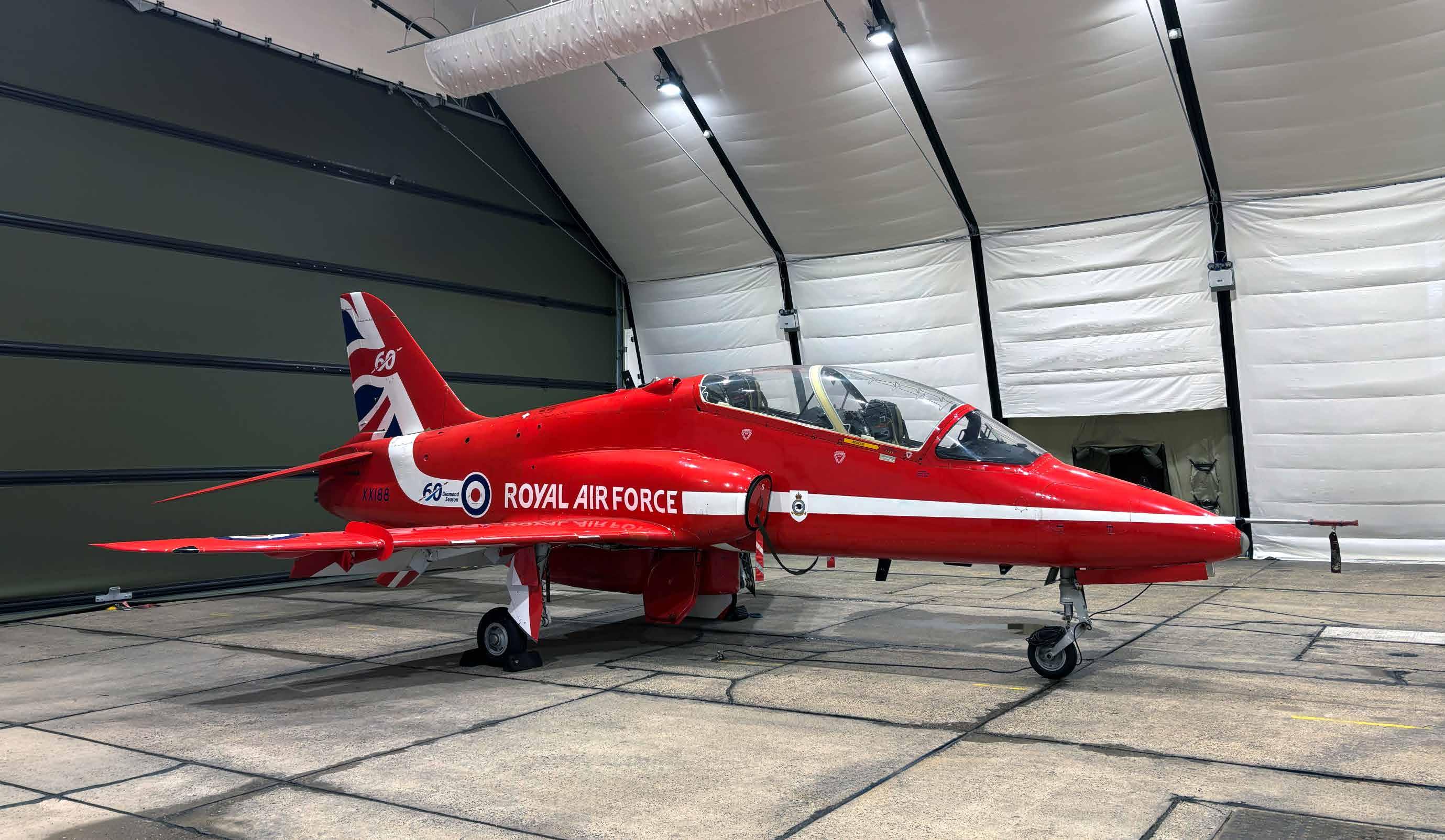
An iconic Red Arrows jet was the backdrop for the event.
Op SHADER
F-35Bs arrive at RAF Akrotiri
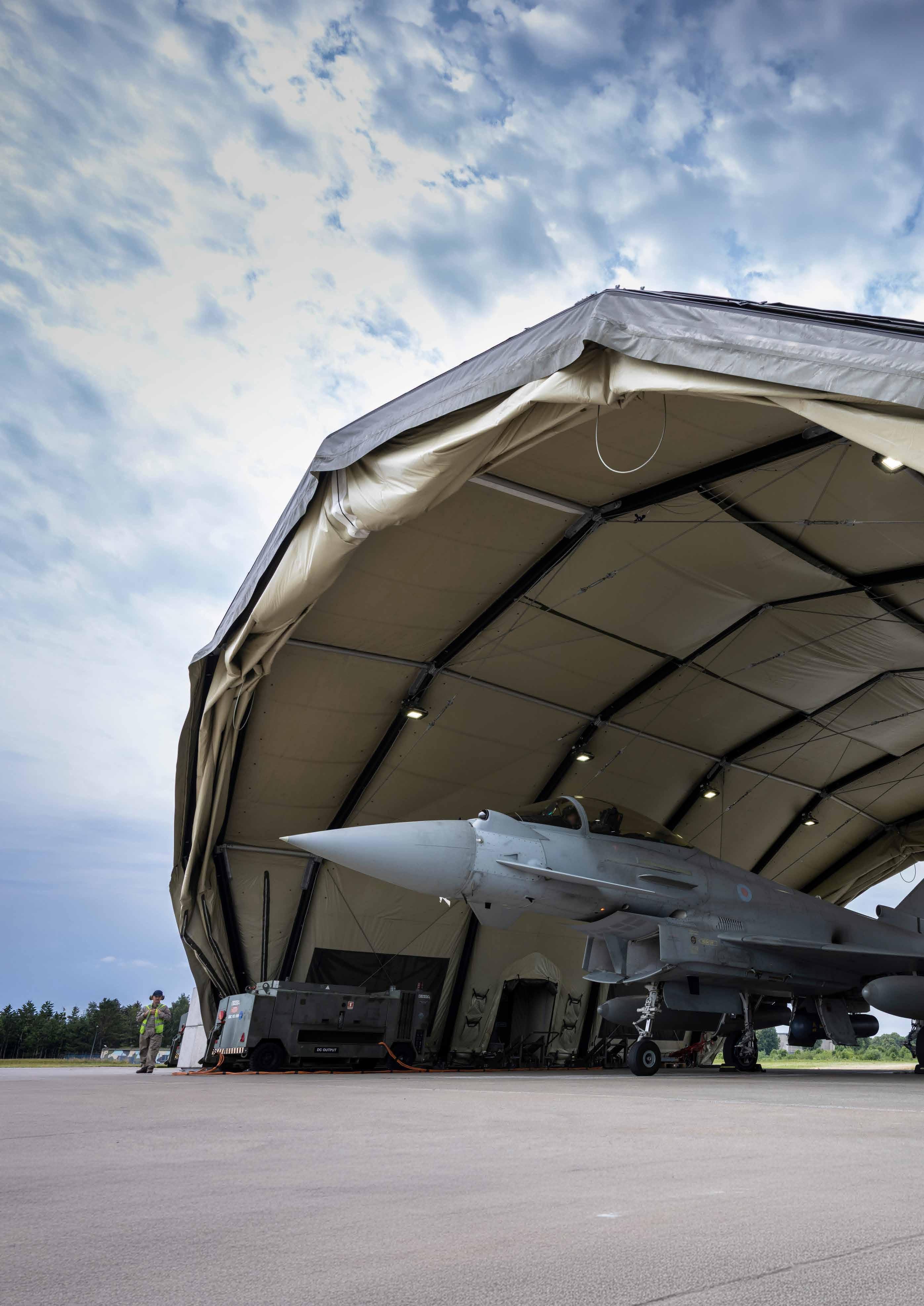
A formation of RAF F-35B Lightning aircraft has arrived at RAF Akrotiri from RAF Marham, operating from within the station’s 20.4m EFASS.
Our EFASS system is designed to support a full spectrum of fast jets—from Typhoon and Gripen to the latest F-35B. Its deployable, engineered framework gives air forces the flexibility to operate advanced aircraft efficiently, wherever the mission takes them.
The deployment sees the fighters working alongside Op SHADER Typhoons, sharing real -time battlespace information through their advanced sensor suites.
617 Squadron conducted Quick Reaction Alert training from Akrotiri, making use of the rapid -deployment infrastructure already supporting the RAF’s frontline operations.
The F-35B—normally based at RAF Marham—benefits from the flexibility of the EFASS system, which provides a controlled, mission-ready environment for engineering, maintenance, and daily operations.
The EFASS system has evolved through continual frontline feedback, shaping it into a highly adaptable solution for expeditionary air operations. Whether supporting Typhoons, F-35Bs, or RPAS platforms with our new 30m variant, our engineering approach ensures each structure meets specific operational requirements.
The arrival of the Lightnings further highlights the strategic role of Rubb’s deployable hangar capabilities at RAF Akrotiri, where the EFASS hangar system continues to support a range of aircraft and operational needs.
In a time where both regulatory requirements and expectations for emissions reductions are increasing, access to solar energy is becoming ever more important. Together with Rubb, we make it easier for customers to adopt lightweight and flexible solutions that perform in demanding environments – delivering both reduced emissions and greater control over energy use. We highly value our collaboration with Rubb and what we are achieving together.
CEO, Alotta Group AS Kari-Elin Hildre
Rubb and Alotta announce a strategic partnership on an integrated, patent pending solar panel solution for fabric-engineered buildings, based on Alotta Prism technology.
Rubb is pleased to introduce SolarFlex, a new solar-integrated building solution developed in partnership with Norwegian clean-energy company Alotta.
SolarFlex is based on Alotta Prism technology, combining Rubb’s expertise in fabric-engineered buildings with Alotta’s experience in delivering reliable solar power systems for demanding environments.
Lightweight solution
Designed specifically for Rubb buildings, SolarFlex integrates solar-generation capability directly into the roof, as part of the building envelope. The lightweight system enables on-site electricity generation while maintaining the durability and performance expected of industrial fabric structures.
SolarFlex supports grid -connected, off-grid, and hybrid energy configurations, helping customers reduce emissions, lower operating costs, and improve energy resilience across a wide range of applications.
The joint, patent-pending solution has been developed for deployment on Rubb’s industrial -strength fabric buildings, used worldwide in sectors such as ports, logistics, aquaculture, and heavy industry. Pilot and demonstration installations have been completed in Norway—including harsh coastal environments—to validate system integration and performance.
Designed for confidence
The system has been under development and testing since 2024, with further pilot installations now underway.
SolarFlex focuses on delivering:
• Solar power integrated into the building envelope
• Reduced dependency on diesel and grid supply
• Flexible system design tailored to site conditions
• A scalable platform designed for Rubb buildings
SolarFlex is designed as a long-life solution, with an expected system lifetime of 25–30 years, very low maintenance requirements, and long warranties on PV components. Service and support options are available through Rubb and Alotta.
André Bakke, CEO of Zurhaar Industries AS commented: “By combining Rubb’s proven fabric engineering capabilities with Alotta’s Prism technology and renewable energy expertise, SolarFlex strengthens our ability to support customers working towards lower emission operations. This partnership reflects a shared focus on practical, reliable solutions that deliver real long term value.”
SolarFlex will be introduced to selected markets throughout 2026. For more information or to request a free solar assessment, contact the Rubb team.
Built for consistency
Inside Thermohall® production at Rubb Polska
105,000 m²
Thermohall® membrane delivered in 2025
Since its establishment in 2017, Rubb Polska has become a central manufacturing hub within Zurhaar Industries, supporting projects across Europe and beyond.
From its facility in Łódź, the team produces Thermohall® insulated fabric systems that underpin some of the group’s most demanding builds.
But while volumes continue to grow, the conversation on site is less about scale, and more about control.
“Production capacity is always influenced by the complexity of the projects we’re working on,” explains Marcin Kominiak, Production Manager at Rubb Polska. “Some builds are straightforward; others require far more time and attention. That’s what really determines output.”
In 2025, the site delivered over 105,000 m² of Thermohall® covering, with current production running at approximately 8,000–9,000 m² per month. All output is dedicated to internal demand, supplying operations in the UK, USA, Norway, and Sweden.
By concentrating production in one location, the group is able to standardise processes, manage capacity, and ensure alignment across international deliveries.
Quality without compromise
Ask what defines the site, however, and the answer is immediate.
“One thing remains constant,” says Kominiak. “We maintain a very high quality standard across everything we produce.”
That focus has translated into a clear outcome: virtually no product complaints. For a manufacturing operation supplying markets worldwide, it is a point of pride.
“Our priority is simple: customer satisfaction and on-time delivery,” he continues. “Everything we do supports that.”
Rather than chasing volume alone, the emphasis remains on precision, repeatability, and attention to detail; particularly important given the technical role Thermohall® plays within structures.
Strengthening traceability
Alongside production, the team has also introduced improvements to internal processes, particularly around product identification and traceability.
“In the past year, we’ve implemented a labelling system for every membrane we produce,” Kominiak explains. “Each one is marked with key information such as the project number, membrane ID, hall type, and year of manufacture.”
While simple in principle, the impact is significant.
“It brings order to the process,” he adds. “It makes identification much easier—whether that’s during production, installation, or later in the lifecycle of the building.”
For a business built on long-term performance and repeat use, that level of traceability supports both operational efficiency and aftersales support across the group.
Supporting the wider network
Beyond its own output, Rubb Polska plays an important role in balancing demand across the wider organisation. During peak periods or large-scale projects, the facility provides additional capacity, ensuring that delivery schedules are maintained even as requirements shift.
This flexibility has been key to supporting international projects, including major aviation and warehousing developments delivered across multiple markets.
As production continues to evolve, the approach remains measured. Growth is important—but not at the expense of consistency.
“We’re always looking at how we can improve,” says Kominiak. “But whatever changes we introduce, quality has to stay at the centre of it.”
Consistency is everything in production. Our processes are set up so that every membrane is traceable, controlled, and delivered to the same quality standard, regardless of project complexity.
Production Manager, Rubb Polska Marcin Kominiak
Rubb Inc.
Nathan Nickerson appointed as CEO
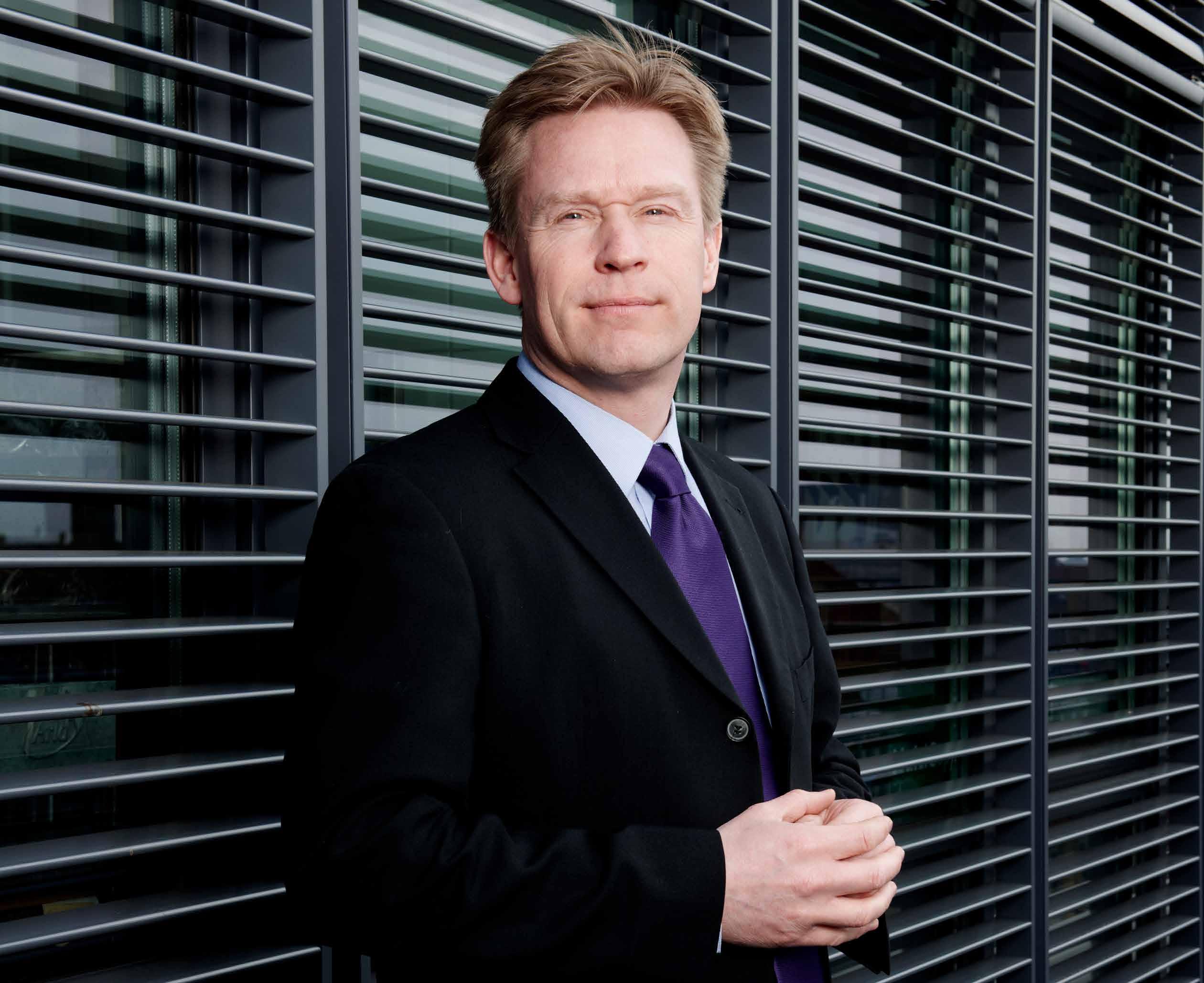
Nathan Nickerson has been appointed CEO of Rubb Inc., bringing a combination of operational expertise, industry knowledge, and a long-standing connection to the business.
Earlier in his career, he worked within the Rubb Group, gaining hands-on experience across PVC and steel fabrication and installation. This grounding, combined with his external perspective, positions him well to lead the business in its next phase.
A return to Rubb
For Nickerson, the move back to Rubb reflects a desire to take on long-term responsibility and contribute to a business he knows well.
Looking ahead
Having experienced Rubb from multiple perspectives, he highlights its culture as a defining strength, particularly its entrepreneurial mindset and willingness to take on complex challenges.
“What makes Rubb unique is its entrepreneurial spirit, the belief that no challenge is too difficult when we take it on together.”
Nickerson sees strong potential to build on Rubb Inc.’s reputation for delivering complex, high-quality projects in demanding environments.
“I’m excited for Rubb to continue doing innovative, inspiring projects and to expand what is possible.”
Drawing on his own experience working on projects in challenging locations, he emphasises the company’s ability to solve technical problems through engineering expertise, manufacturing capability and practical know-how.
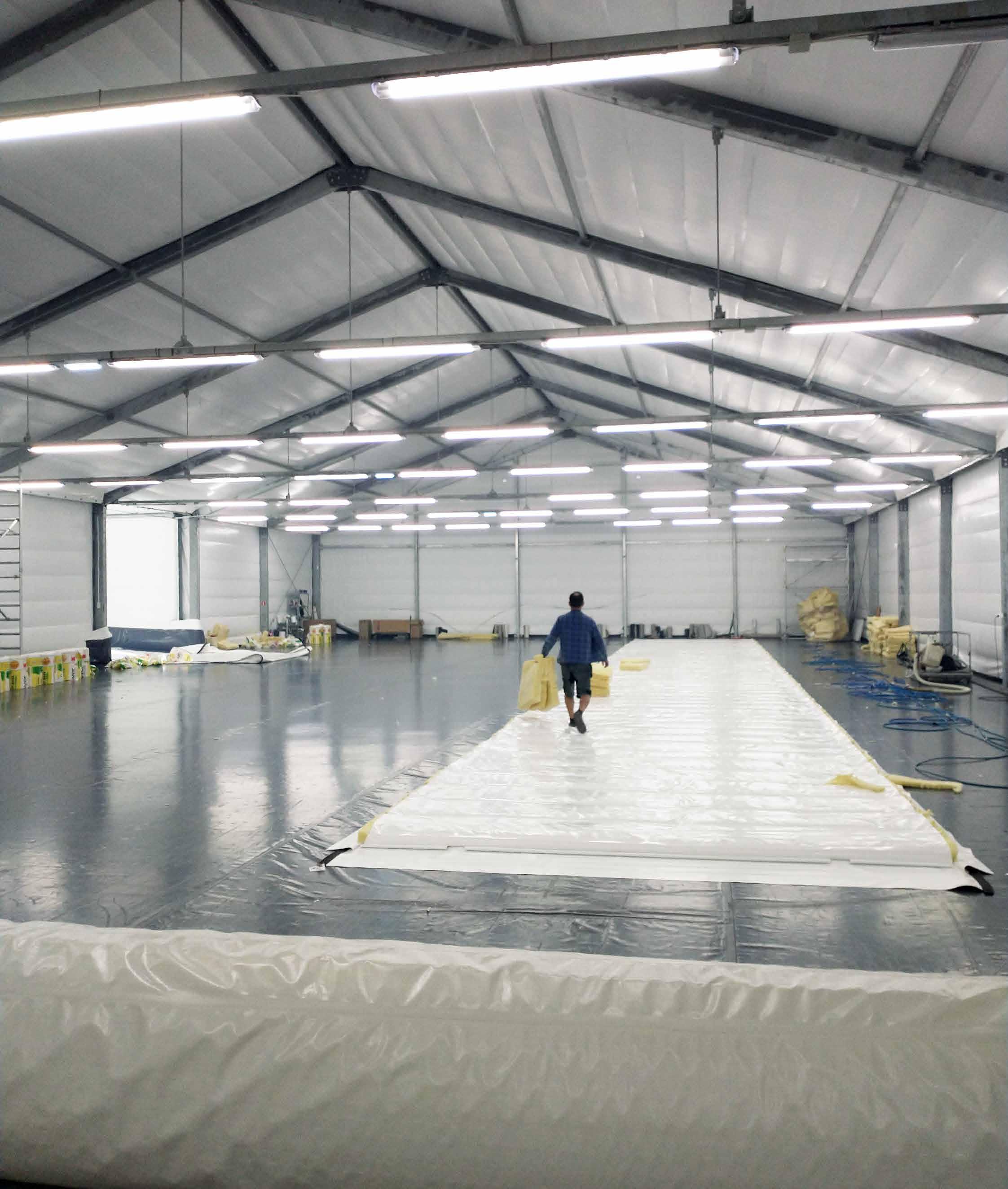
He is also clear that the company’s core values remain unchanged.
“Safety and quality remain non-negotiable; discipline and integrity will guide the business; and collaboration and hard work will continue to make Rubb an industry leader.”
With a focus on operational strength, continuous learning, and long-term performance, Nickerson’s appointment marks the next stage in the development of Rubb Inc.
He holds two bachelor’s degrees from Washington & Lee University—a Bachelor of Science in Business Administration and a Bachelor of Arts in East Asian Languages and Literature—as well as a Master of Science in International Logistics from Maine Maritime Academy.
Nickerson joins from Accenture, where he built extensive experience supporting organisations with operational improvement, technology implementation, and business development.
“What I find most rewarding is understanding how a business truly works and being accountable for long-term outcomes. This role at Rubb provides a unique opportunity to lead a business and contribute to a place which I care deeply about.”
His immediate focus is on listening, learning and understanding the organisation, with a hands-on approach to leadership.
“Learning is how I will get better. I want to be a better leader, run a better business, and create a better place to work.”
What makes Rubb unique is its entrepreneurial spirit, the belief that no challenge is too difficult when we take it on together. This is a company where people lean in, no matter how big or small the task, to deliver quality and exceed customer expectations.
CEO, Rubb Inc. Nathan Nickerson
Zurhaar Industries
André Bakke appointed as CEO
André Bakke assumed the role of CEO of Zurhaar Industries AS from 1 January 2026. The appointment marks an important step in the company’s continued development, with a clear focus on the Group’s industrial operations.
André Bakke joins from his position as Group Director at O.B.Wiik AS and brings more than 25 years of experience in sales and rental for the industrial, construction and infrastructure sectors.
He has held several leadership positions within the Ramirent Group and, over the past four years, within the O.B.Wiik Group, where he has documented strong results in profitability and employee satisfaction.
“We are very pleased with André’s appointment and look forward to him taking up the position in January 2026. This will strengthen the further development of our industrial division,” says Rune Birkeland, CEO of Zurhaar AS.
I look forward to taking on new challenges and getting to know both the team and the company’s 26 industrial businesses across Norway, Sweden, Denmark, Poland, the USA and England.
CEO, Zurhaar Industries AS André Bakke
Engineering clarity The launch of Vevyr
Founded in 2025, Vevyr Engineering AS enters the market as a new specialist in structural engineering and technical design for membrane and sandwich-clad buildings.
Though the company is new, its expertise is anything but. Backed by the Zurhaar Group, Vevyr builds upon decades of industrial knowledge from across Rubb and Zurhaar Industries, delivering precision-engineered steel structures for fabric and modular buildings.
At the helm is Fredrik Holmedal, CEO of both Rubbhall AS and Vevyr Engineering AS.
A natural evolution
“Vevyr was created to meet an internal and external demand for advanced structural engineering,” Fredrik explains. “We already had a strong technical foundation within the group, but as projects grew in scale and complexity, it made sense to establish a dedicated engineering company.”
The idea was simple: to create a focused technical unit that serves both the group’s operational companies and independent clients across Scandinavia and Europe.
“By centralising our engineering capability, we can ensure every structure—no matter where it’s built—meets the same high standard of design, documentation, and compliance,” Fredrik continues. “It’s about bringing clarity and confidence to every project.”
Built on steel
Vevyr’s team specialises in the analysis and design of steel constructions for membrane and sandwich-clad buildings. Their work covers everything from early concept design and load calculations to full digital models and compliance documentation.
“We focus on what we know best: structural precision,” says Fredrik. “Our engineers combine experience from the field with digital tools like Tekla Structures and Trimble Connect. That allows us to deliver efficient, traceable, and fully verified results.”
This focus on accuracy and coordination supports a wide range of industries—from logistics and aviation to defence and sports—where reliability and turnaround time are crucial.
Engineering with integrity
Fredrik sees Vevyr as more than just a technical service provider. “We’re engineers, but we’re also partners,” he says. “Whether we’re working with architects, contractors, or developers, our role is to make the design process easier and the results more predictable.”
That philosophy extends to sustainability as well. “By optimising steel use and applying low-carbon design principles, we help reduce material waste and environmental impact,” he explains. “It’s good engineering and good practice.”
The power of collaboration
Vevyr’s position within the Zurhaar Group allows it to work closely with Rubb worldwide, supporting projects from Norway to the UK and beyond.
“Collaboration is at the heart of what we do,” Fredrik says. “We’re surrounded by companies that build at scale and operate globally. That environment pushes us to maintain a very high standard in both design quality and delivery speed.”
He notes that Vevyr’s independence within the group is key. “We’re a neutral engineering partner. That means we can work just as easily with clients outside the group as we can with our own operating companies.”
Looking ahead
Although Vevyr’s foundation is in the Zurhaar Group’s long-standing expertise, its future lies in innovation.
“We’re investing in automation and digital workflows to make our processes faster and even more reliable,” Fredrik says. “The goal is to keep improving how engineering supports construction—less risk, more precision.”
With an experienced team, group-wide backing, and a clear technical vision, Vevyr is set to bring engineering clarity to an industry built on steel.
Fredrik Holmedal, CEO of Rubbhall AS & Vevyr Engineering AS.
Rubbhall AS
Celebrating 60 years of Rubb Norway
Founded on 25 April 1966 by Finn Haldorsen, the company set out to develop durable fabric solutions suited to the demanding conditions of Western Norway.
That same commitment to quality, reliability, and performance remains at the core of Rubb today.
The first fabric building was introduced in 1968—an important milestone not only for the company, but for the wider industry. It marked the beginning of a new approach to lightweight, flexible structures designed to withstand harsh environments.
The Rubb name itself originates from Rubbestadneset, the small coastal village where Haldorsen’s father developed Norway’s first combustion engine in 1903.
This heritage of engineering innovation carried forward into the founding of Rubb, shaping a company built on practical solutions and technical expertise.
From these origins, Rubb has grown into a global group, delivering engineered fabric buildings across a wide range of sectors including storage, logistics, aviation, energy, and defence.
Today, with operations spanning Europe and North America, the company continues to apply the same principles it was founded on—designing structures that perform in the most challenging conditions.
Over six decades, Rubb Norway has earned a reputation for high-quality buildings that provide safe, reliable protection for equipment, operations, and people.
Many early structures are still in use today, a testament to the durability of the engineering behind them.
As Rubb Norway marks this milestone, it also looks ahead. Continued innovation, new applications, and evolving customer needs will shape the next phase of development, while the company’s core values remain unchanged.
Rubb extends its thanks to all customers, partners, and employees who have contributed to its journey over the past 60 years.
Rubb’s original location in Rubbestadneset, Norway.
Zurhaar Academy AI training for leaders across the Group
Zurhaar Academy continues to strengthen the Group’s shared expertise with a new programme focused on artificial intelligence.
Hosted in Y215 (the former Telenor Building) at Kokstad, the AI Course was held in partnership with Jupiter System Partner AS and brought together leaders from the USA, UK, and across Scandinavia for an in-depth introduction to AI strategy, tools, and applications.
The initiative forms part of the Academy’s ongoing effort to develop competence across all levels of the organisation, ensuring that employees are equipped to make informed, future-ready decisions.
Insight to implementation
The course combined structured learning with hands-on workshops, helping participants explore how AI can enhance processes in project management, finance, operations and customer service.
Sessions covered topics including machine learning, automation, Copilot 365, AI agents, and process improvement.
People
‑first approach
Zurhaar Academy emphasises that digital progress begins with people, not technology. The programme encouraged leaders to consider change management, governance and ethics alongside AI tools—ensuring responsible and effective implementation across the Group.
By strengthening leadership competence in AI, the course supports smarter, faster and more data-driven decision-making, helping every company within the Zurhaar Group stay competitive in a rapidly evolving market.
AI is reshaping how we work and compete, but its success depends on our people. Through Zurhaar Academy, we’re investing in skills that enable responsible innovation across every company in the Group.