Zuidasdok is one of the largest infrastructure projects in the country. Aimed at improving transport links to Amsterdam and the northern Randstad region, area safety, access and quality of life are central to its implementation. This year, mobility has taken centre stage in Zuidas. The introduction of smart new mobility solutions is helping to keep Zuidas well connected for both commuters and visitors. Electric mobility has gained substantial ground and the local network of shared cars and bicycles has expanded further.
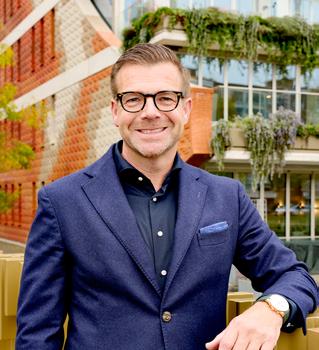
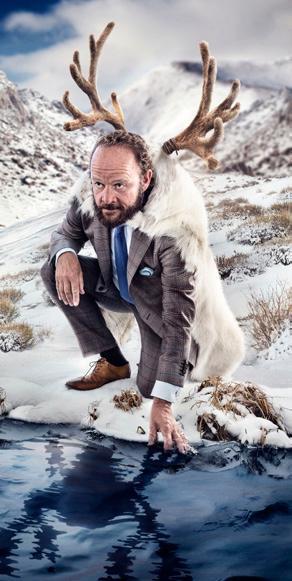
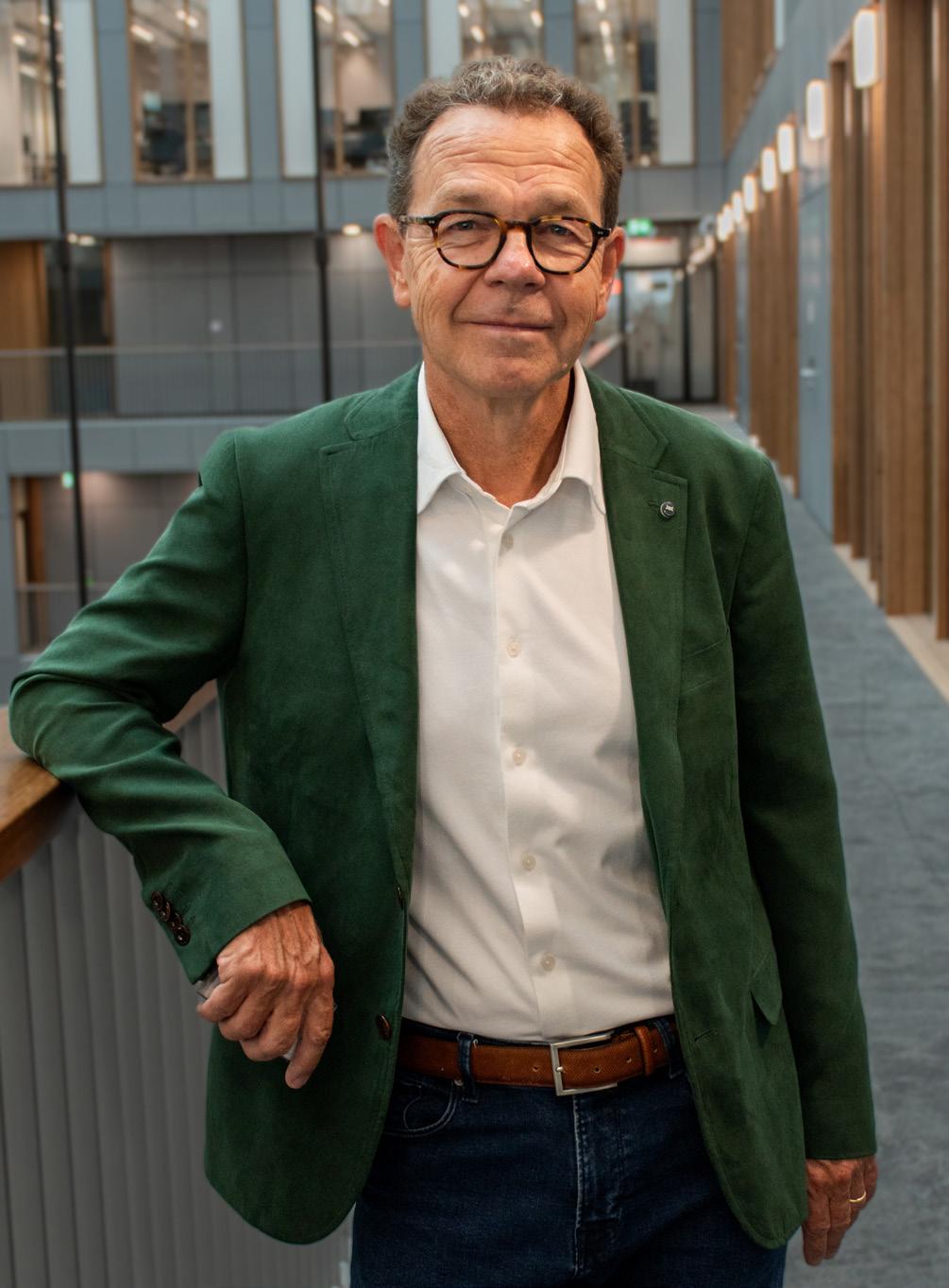
On the cover of this issue – in which we zoom in on Mobility – is Vincent Priem. As the managing director of a-point, he’s also eager to ramp up the mobility revolution.
This issue brings us to the end of another year, and it’s always nice to look back on all that has made the past 12 months eventful in Zuidas. Certainly, developments in the district are helping to make it an ever more vibrant, lively and forward-looking quarter of Amsterdam.
Together, we’ll continue working to make - and keep - Zuidas smart, dynamic, safe and accessible.
Happy reading, and see you in the new year!
ROMY LANGE Editor-in-chief Hello Zuidas r.lange@zuidaspublishers.nl
We often don’t stop to consider what a safe place Zuidas is to live and work. Even despite the upsurge in traffic incidents caused by the proliferation of fat bikes, speed pedelecs and city cars on the road. Last week, we organised a training session for safety and security managers in Zuidas, centring on the hostage situation at the Leidseplein Apple Store in 2022. Members of the safety region and police joined us to talk about lessons learned. What can companies and organisations in Zuidas do to aid our safety partners in the event of a similar crisis? But also, how do you support employees in aftermath of such a traumatic experience? For anyone interested in the hostage incident, I highly recommend the documentary available on Videoland. Act safe, stay safe. Hello Zuidas, connecting the city.
OLIVIER OTTEN
Managing director of Hello Zuidas
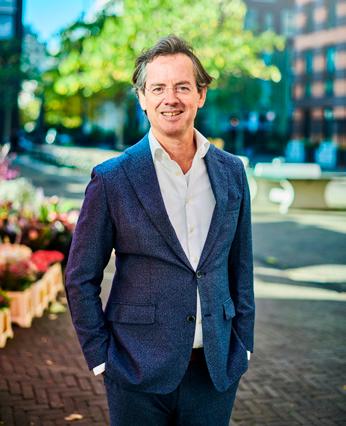


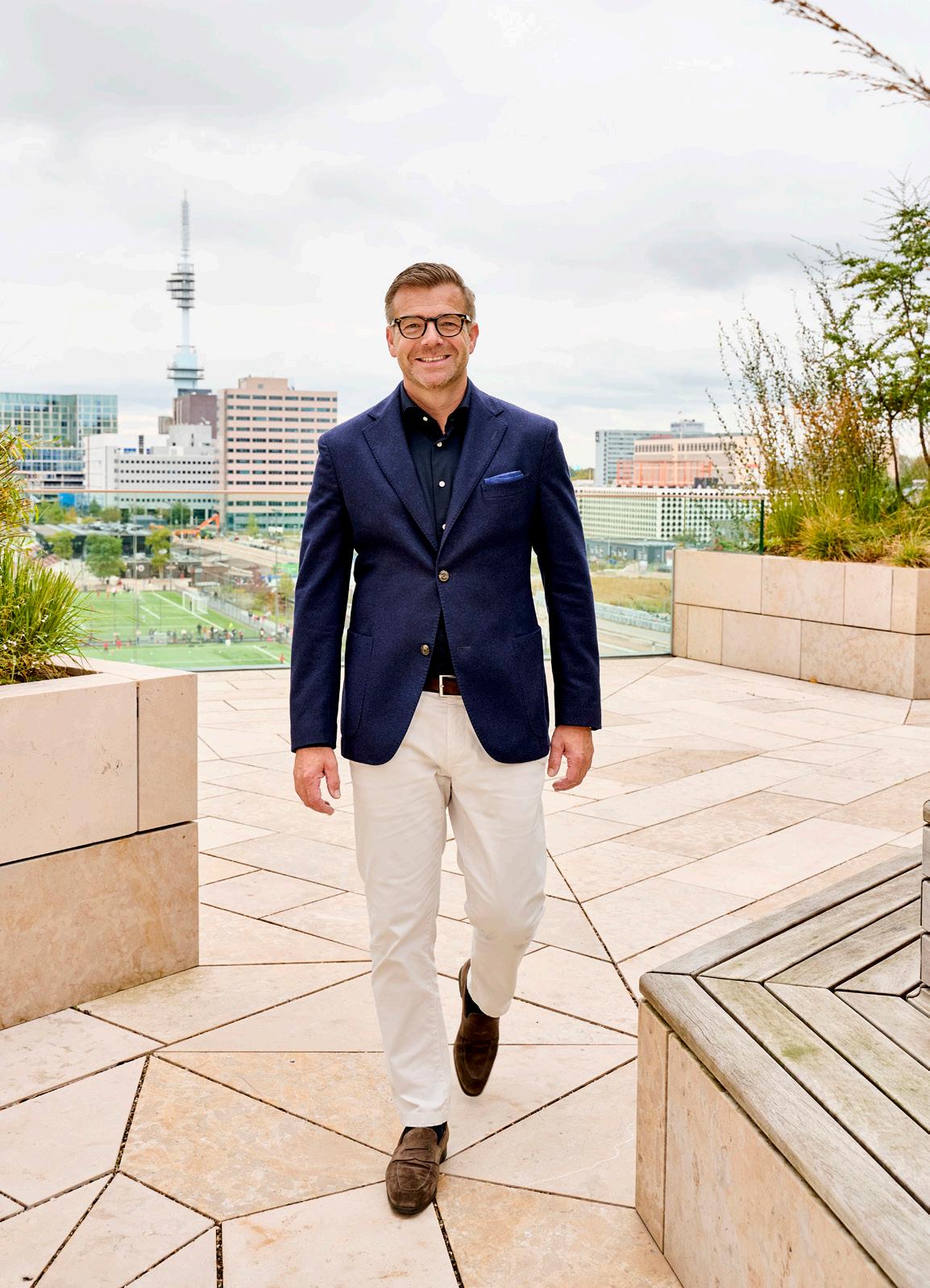
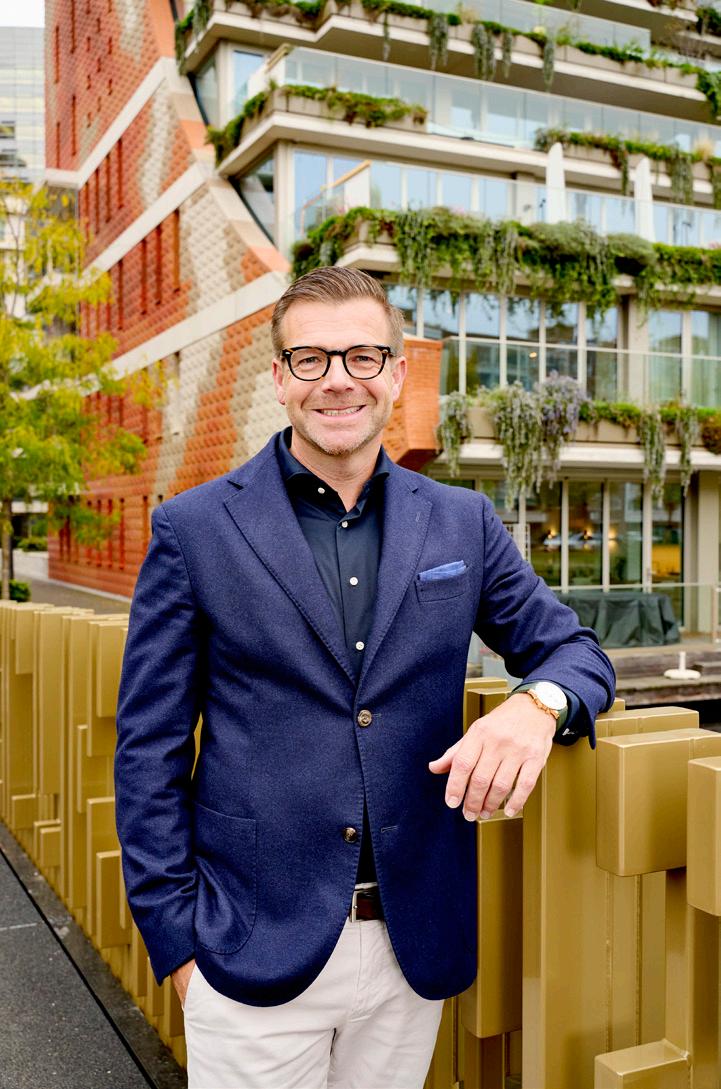
Vincent Priem, managing director of a-point
Growing up, and like many kids his age, Vincent Priem developed a life-long love of cars after multiple visits to the AutoRAI in Amsterdam. Employed in the automotive industry for 25 years and counting, he was recently named managing director of a-point, the official Volkswagen, Audi, SEAT, Škoda, CUPRA and Volkswagen Commercial Vehicles dealership. Vincent lives on the outskirts of Zuidas, plays football with a team of friends at AFC (Amsterdamsche Football Club) and is well-acquainted with the capital and Zuidas district. He sat down with us to share his vision on the local hot topic of mobility.
With electric vehicles, shared cars and autonomous vehicles on the horizon, mobility is rapidly changing. What’s your view on these developments?
“Everyone is working on future-focused developments. We’re seeing an increasing number of shared cars, and electric vehicles are popular. That goes for both passenger and company vehicles. There is still a great deal of potential, particularly in urban areas. With zero-emissions vehicles set to become the norm in cities like Amsterdam, what is needed are custom solutions, such as electric pickups for landscaping companies. There’s a tremendous demand for safe, sustainable vehicles – especially in urban areas. Motorists mainly want to be able to get from A to B hassle-free and not get too tied up in rules.”
Text: Romy Lange and Ruby van Oers • Photography: Roxanne Wilm
What mobility technologies or innovations are you personally most interested in, and why?
“There are two technologies that fascinate me in particular. Hybrid vehicles is one. It’s great that you can now drive clean in and around town, while EV ranges are also continuing to grow. Being able to drive electric in urban areas and still have a combustion engine for longer distances really offers the best of both worlds. I’m also fascinated with driverless cars. It’s amazing, for example, to see the autonomous shuttle buses driving around at Schiphol with actual passengers on board. In Germany, driverless cars are already allowed on motorways. It’s both a personal and professional time-saver and that pays off.”
What about shared cars?
Do they have a future, or are the margins too small for operators?
“There is certainly a market for shared cars, both for private and professional use. More and more new building developments are including shared mobility in their plans. Car parks are setting aside space for not only shared cars but also shared bicycles and other mobility solutions. People living in these new-build complexes often don’t have any other option and are nudged to drive or ride electric. The expansion of shared mobility is particularly evident in Zuidas. It is a more robust and sustainable solution for organisations looking to be smarter and more efficient about their mobility.”
How is the automotive industry faring at the moment?
“This is a dynamic time. It’s no longer all about selling cars. These days, we’re being asked to deliver complete solutions, from cars to charging points to flexible, green mobility options. Meanwhile, the market is shrinking and a steady stream of new players are entering, all of which is
pushing us to become more competitive and attuned to current and future needs.
We’re working to set ourselves apart, based on our knowledge, expertise and strong network.”
What are some automotive trends that are not making headlines yet, but that you think in the coming years will be?
“One trend that I think isn’t big yet but will be, is digital mobility services. Think
mobility-as-a-service, with a single card providing access to a variety of modalities, such as public transportation and bicycles. There is loads of potential for bundling an access card, platform and invoicing. Our partner Shuttle is already offering this, complete with tax solutions.”
What’s your view of the connectivity of Amsterdam and Zuidas? And of the municipality’s urban mobility plans?
“Connectivity will always be a challenge in Amsterdam and especially in Zuidas. The municipality is encouraging the use of public transport and bicycles, and its reduction of parking permits is making it tougher for car owners. But maybe this is what needs to happen to keep the city accessible. I take my bike to places like the football club more often. Guaranteeing access to Zuidas Monday to Friday is paramount, and I understand why most road works are carried out at weekends. It’s essential for the many companies based here.”
What are you driving at the moment?
“Right now, I’ve got a Volkswagen Touareg Hybrid. It’s ideal, because I can drive fully electric but also make longer journeys when needed. The massage seats are a nice bonus. After twenty years in the industry, I think the last few years have been the most interesting, because now we’re really responding to changing mobility needs. We were delighted to introduce our sixth brand, Cupra, at a prime location in the Q-Residence building. I am very proud of this.”


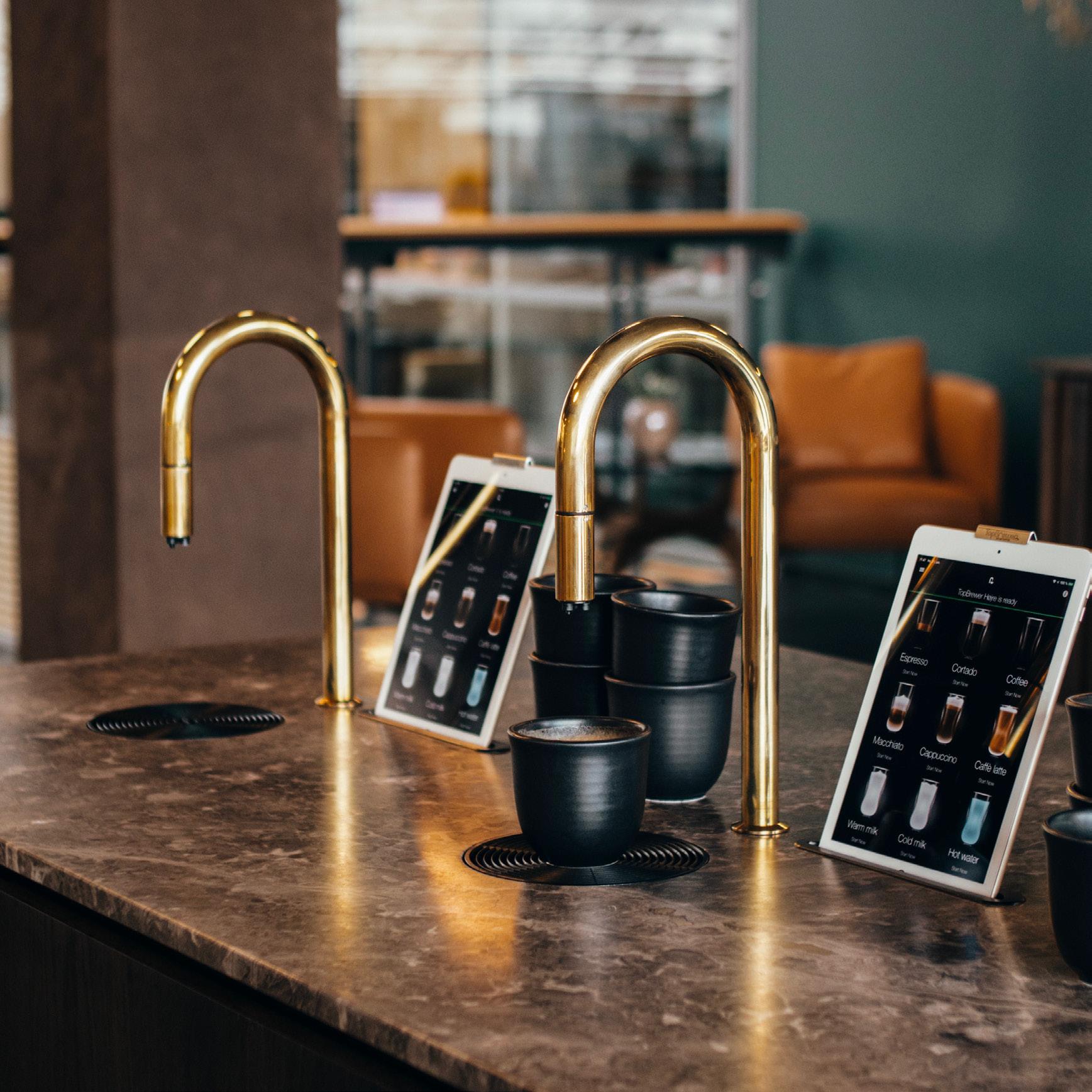
Explore the Topbrewer Coffee Experience in our showroom in Zuidas!

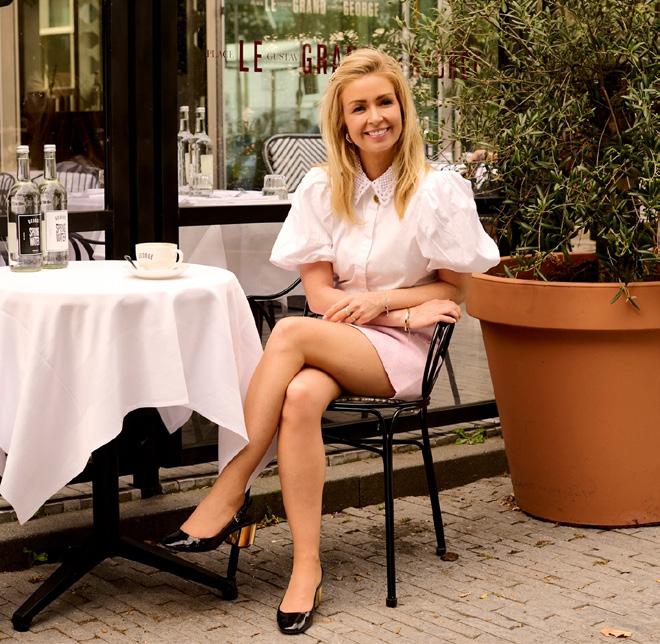
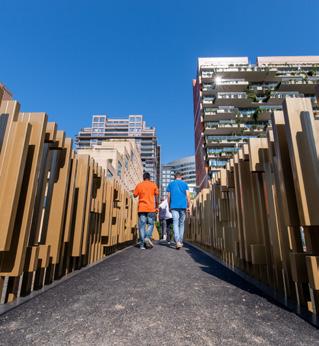
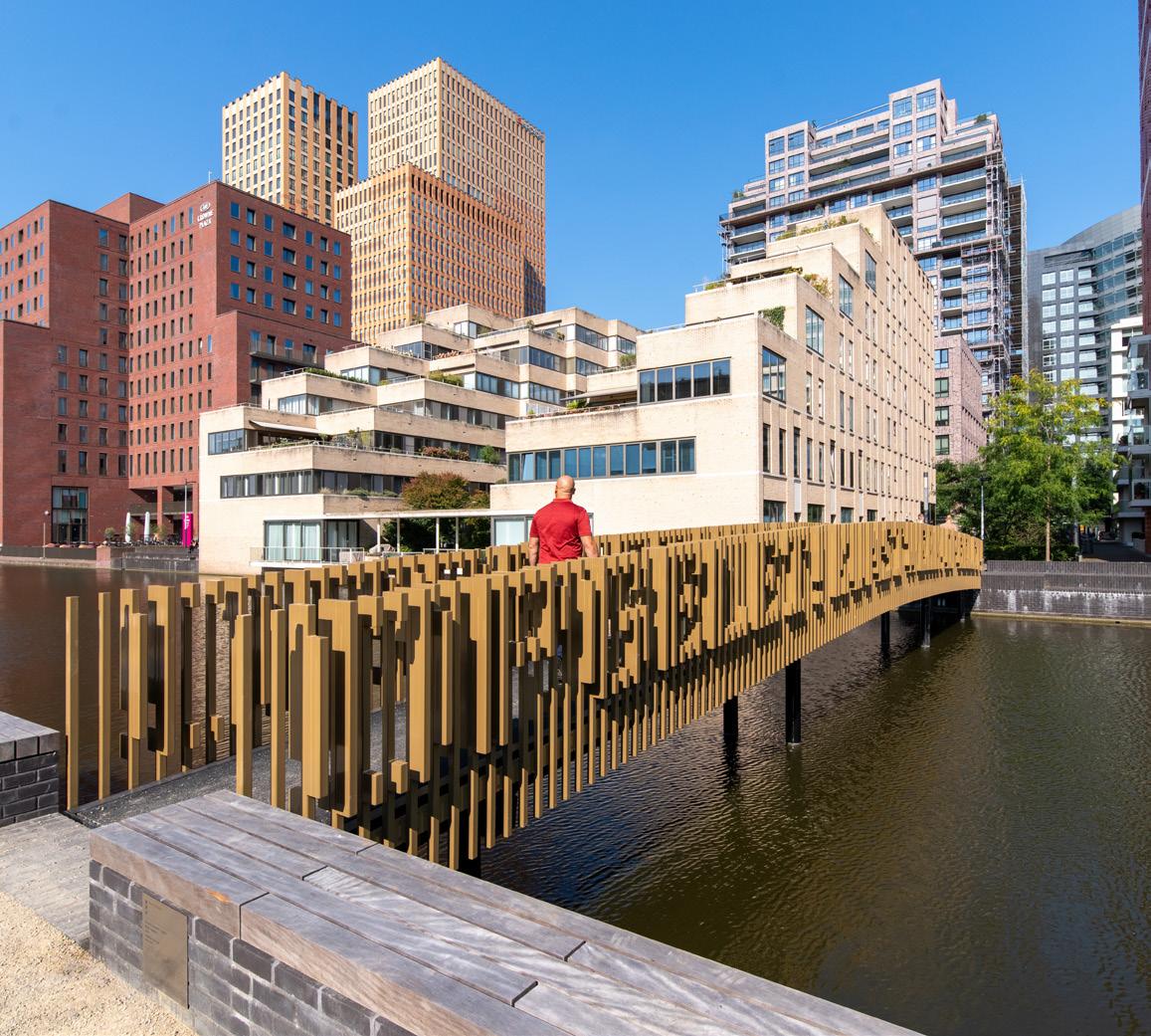
It’s not been there very long, but it is already a familiar sight: the Kunstbrug (‘art bridge’) over De Boelegracht. This striking pedestrian bridge invites you to consider the relationship between art and architecture. And of course, you can also use it to stroll to Buitenveldert.

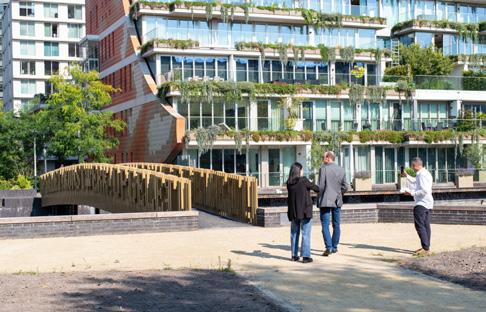
The 26-metre long bridge at Rosy Wertheimstraat connects Zuidas with Buitenveldert, and forms part of an attractive pair with the Lex van Deldenbrug bridge some 170 metres away. On the De Boelelaan side is a plaque bearing information about the bridge. And for those who enjoy walks with an informative character, the Kunstbrug is part of our Zuidas Art Tour (Ommetje Kunst).
A bridge as a work of art, a work of art as a bridge
Artist Martijn Sandberg designed a bridge with goldcoloured bars, so that every movement on the bridge is reflected in the De Boelegracht. Of particular note is that, viewed from the correct angle, the bars on the side form the words ‘Opgelet! Kunstwerk! Opgelet!’ (‘Attention! Work of art Attention!’) Thanks to that interplay of light, relief, and shade, the bridge now gains a level of attention that would normally be expected of a painting or sculpture. However, the bridge is also a product of civil engineering – also known in the construction world as a ‘work of art’. That means, says Sandberg, you can use the Kunstbrug simply as a bridge, but ‘at the same time it is a nod to art and remains what the viewer wishes to make of it’.
Amsterdam Zuidas Information Centre Central Hall, WTC +31 (0)800 50 65 contact@zuidas.nl www.zuidas.nl
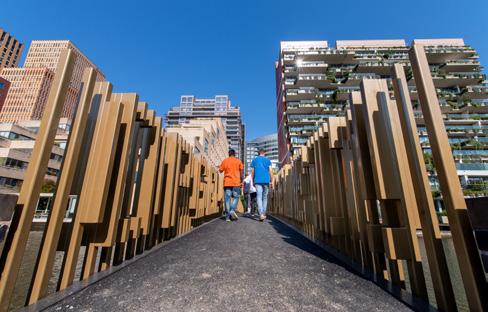
The Kunstbrug is a gift from Ontwikkelcombinatie Zuidschans (developers BPD | Bouwfonds and AM), responsible for The George and The Gustav residential buildings. The developers were keen to enhance the quality of the local environment by means of a work of art, and to combine that idea with the plans for an extra link between Zuidas and Buitenveldert.
The Kunstbrug is now open
The Kunstbrug has been under development for some time. The project saw seemingly endless stopping and starting. And as sharpeyed observers have noted, this week we have again raised it from its ‘home’ position. This was to enable us to adjust the supporting points in the De Boelegracht so that the bridge could rest seamlessly on both banks. But the wait has certainly been worth it: The Kunstbrug is now open.
Have you already done the “Art Walk”?
Scan the QR code here!


Digital nomads can learn some valuable lessons from the lifestyles of traditional tribes that have been leading a nomadic existence in all sorts of environments for thousands of years. Though the context is different, there are universal principles that are every bit as relevant for modern digital workers who can operate anywhere across the globe.
1. Adaptability
Like traditional nomads, digital workers have to stay flexible amid changing circumstances. That goes from adapting to new technologies, to navigating disparate cultures and working environments. The ability to quickly pivot between locations, time zones and tasks is crucial to uphold efficiency and productivity. Whether you’re working from a tropical island, Zuidas, or a remote mountain cabin, all demand an equal level of agility.
2. Community spirit and networking
Nomadic tribes survive thanks to their strong communal ties. By the same token, digital nomads can benefit tremendously from being part of networks and a supportive community. Such ties give rise to collaboration and knowledge sharing and provide emotional support, helping to stave off loneliness and isolation. Digital nomads can use online platforms or coworking spaces to strengthen their professional networks.
3. Minimalism and efficiency
Traditional nomads carry only what they need, and digital nomads can learn from that simplicity. Limiting possessions to the bare essentials like a laptop and good internet connection serves to minimise distractions and maximise focus on the business at hand. A minimalist approach can free up headspace and get creativity flowing.
4. Connection to nature and wellbeing
Just as traditional nomads have a deep connection with nature, digital nomads can also benefit from time outdoors. Spending time in nature can boost wellbeing, inspiration and productivity.
In short, by embracing adaptability, community spirit, minimalism and resilience, digital nomads can lead more enriching and successful lives.
Eduard Schaepman is CEO and founder of Tribes Inspiring Workplaces, an international network of flexible workspaces. With a background in business development and change management, he has previously worked for companies including Chalet Group, Regus, Fortis, Robeco and Bank Mees & Hope. Entrepreneurship, innovation and the creation of inspiring workplaces for nomadic professionals are common denominators in his career. Schaepman has a strong focus on promoting productivity and flexibility in modern working environments He is also active as a speaker and writer, sharing his passion for nomadic working and forward-thinking business models.
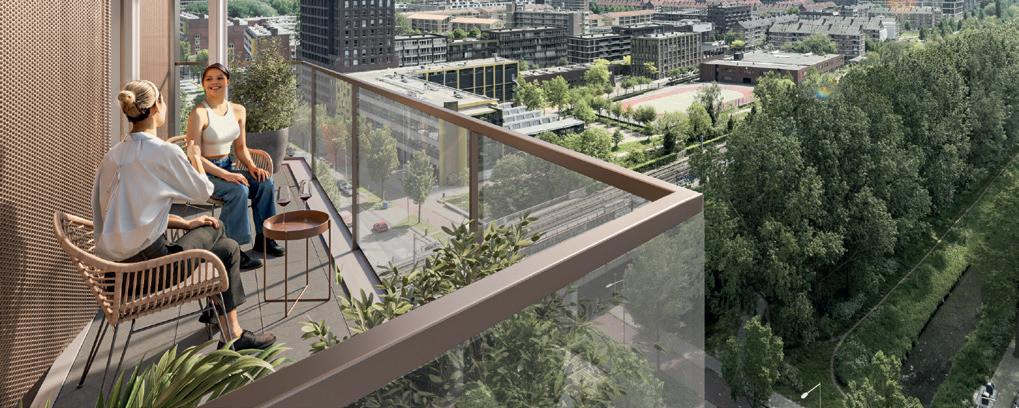
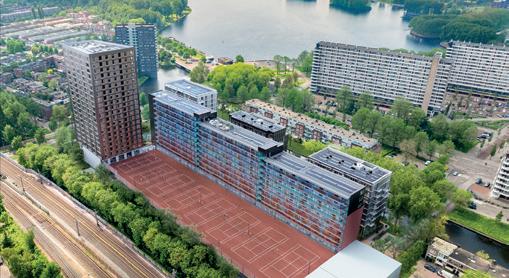
One of Amsterdam’s main business districts, Zuidas is gradually transforming into a true urban quarter and becoming home to a growing number of people. A vital piece of this transformation is creating conditions for a lively street scene – not only during the daytime, but also during evenings and weekends. Perhaps surprisingly, the built environment has a key role to play.
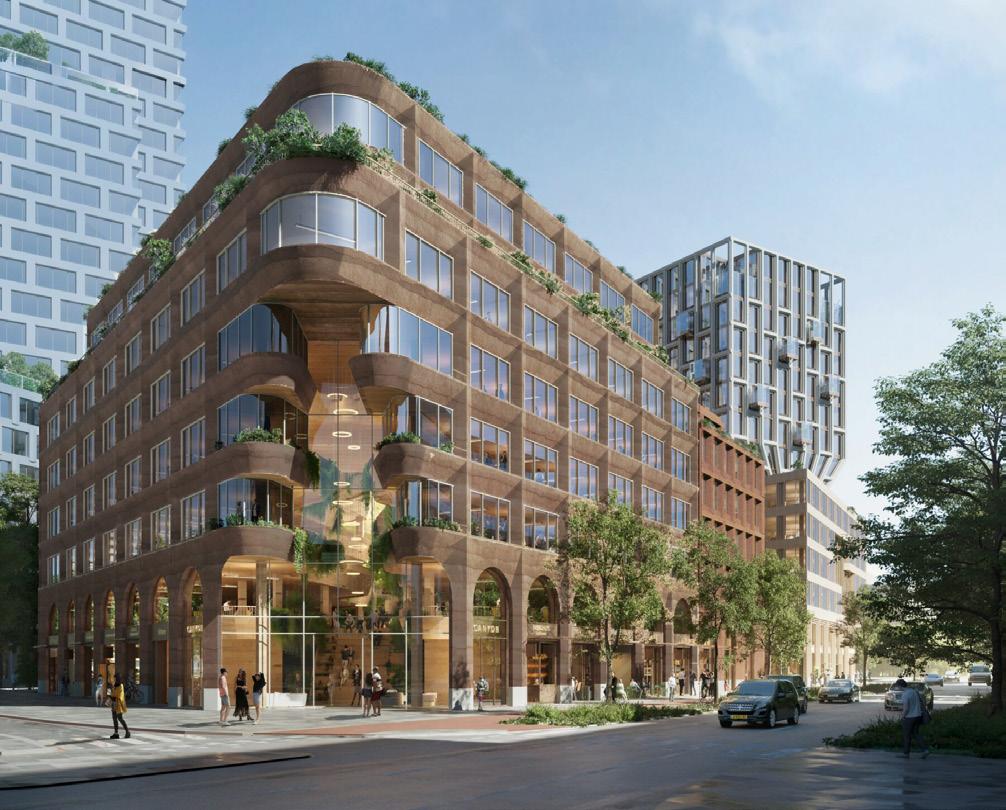
Earlier this year, property developer Zadelhoff won the tender for a project called The Harmony in the new car-free neighbourhood of Ravel. On the ground floor, the building’s design emphasises flexibility, with modular spaces. This approach reflects a shifting conception of how buildings may contribute to the vibrancy of a neighbourhood. The interplay between structures and their environment is becoming increasingly important, says Jaap Brouwer, an urban designer with the municipality of Amsterdam.
Restaurants, gyms and health services can be found all over Zuidas. Harder to find is a vibrant street scene, especially outside office hours. Urban planner Kirsten Plattje, also with the municipality of Amsterdam, says that a varied mix of amenities has a defining impact on the feel of a neighbourhood. “When developing new buildings”, she says, “it makes more sense to provide for multiple smaller spaces on the ground floor than for huge commercial units”. This keeps rents affordable and so creates opportunities for local merchants, such as florists and bakers.
Though the municipality is not in the business of bricks and mortar, it plays a significant role in the development of municipal land through the public tenders it issues. Tenders are assessed on a range of criteria, including the development plans’ ground floor layouts and public accessibility. Municipal authorities may for example award more points to designs with smaller, more accessible spaces that help enliven the street.
Over the long term, adding social and cultural functions to buildings can make a neighbourhood more appealing for a wider range of target groups. However, as Brouwer points out, because such functions often depend on subsidies, property owners tend to be less interested in these sorts of tenants than in big players, such as supermarket chains and fitness clubs. And yet, over time, the payoffs of street level diversity are higher. According to Brouwer, “A building that is situated in a lively neighbourhood is more attractive”. Developers and property owners are starting to realise this and are now partnering with the municipality more often.
Good collaboration is essential for projects on private land. The redevelopment of the former ABN AMRO complex, now owned by Victory Group, is a case in point. The new owners have appointed a commercial real estate manager to coordinate base-level occupancy, and the first building to go up
here, Mahler 1, will explicitly be integrated with its surroundings.
The challenge of existing real estate Apart from new developments, the other major challenge is the street level space of existing buildings. Redevelopment and attracting new tenants usually offer good prospects to enliven a neighbourhood. Rising on the site of the former Circl pavilion on Gustav Mahlerplein, Mahler 1 will accommodate a variety of public functions geared towards the public space.
WTC owner CBRE is meanwhile making plans to refurbish the publicly accessible atrium on Zuidplein. Brouwer explains: “The trick is to time developments so they will reinforce each other.”
For example, Mahler 1 can become a place to congregate when it’s nice out, while the WTC atrium offers shelter in bad weather. Designing buildings as part of their surroundings rather than as isolated structures will help to make Zuidas into a lively, thriving urban district.
Traffic in and around Zuidas is dynamic and diverse and comprises every type of vehicle that thousands of commuters use daily. Many go for public transport to speed them efficiently all over the country, while bicyclists appreciate the area’s tiptop parking facilities. The mix of transportation options is part of what makes Zuidas a thriving and well-connected hub to live in and work.
Robert Jong
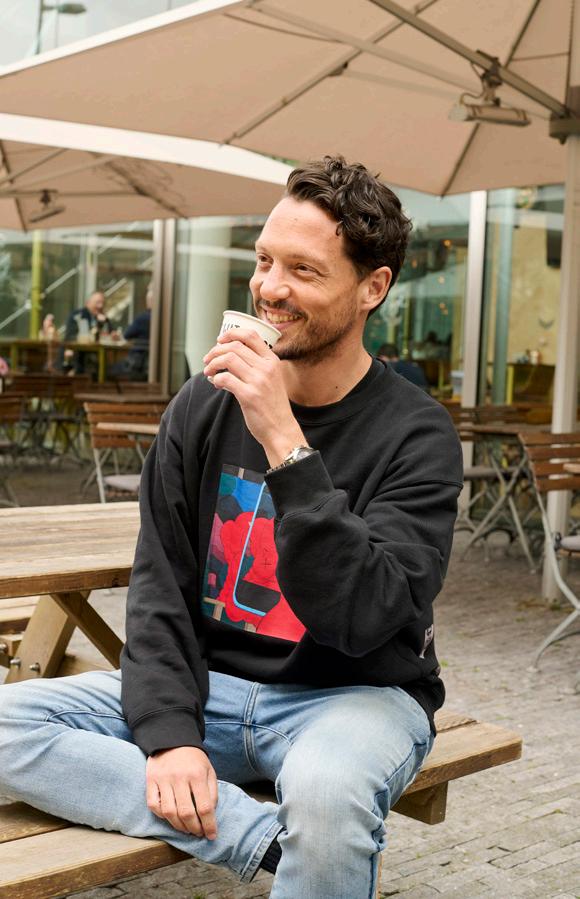
“Cycling through Vondelpark feels like my transition from work to private life. Work starts when I get to the edge of the park, and I’m home when I come back out the other side. Raincoat? No problem, that’s just life in the Netherlands. Sometimes I take the Noord/Zuid route, particularly if I’ve got my fitness gear or am in a rush. It’s super fast! Honestly though, I prefer cycling. I think the infrastructure here is great.”
Reneé Kagie
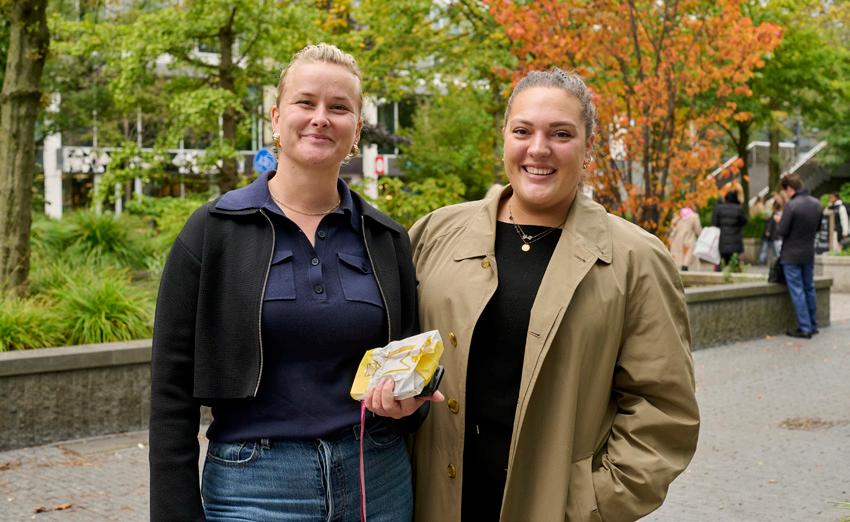
“I ride my bike to Amstel station and take the metro to Zuid from there. When the weather’s nice I travel all the way from Oost, where I live, to Zuidas on my classic granny bike, which is an anomaly around here these days. I cover the distance in around thirty minutes. The connections here are great, as you’ve got it all: bus, metro, train and enough parking for bikes. And even through there are problems with public transport quite often, this is a key part of the city. We’re pretty spoiled with our infrastructure and punctuality in the Netherlands.”
Sidney van de Wal
“I live in Hilversum so I cycle to Hilversum CS and then take the train to work. The journey is about twenty minutes. I think the connection between Zuid and Hilversum is excellent. Loads of people I know, like Renée, have longer commutes than I do to Hilversum. Trains usually run on time, with only occasional problems, and in that case I can travel via Amsterdam CS, which is efficient too. If I could change anything, it would be to have trains run more frequently, four times an hour instead of twice.”
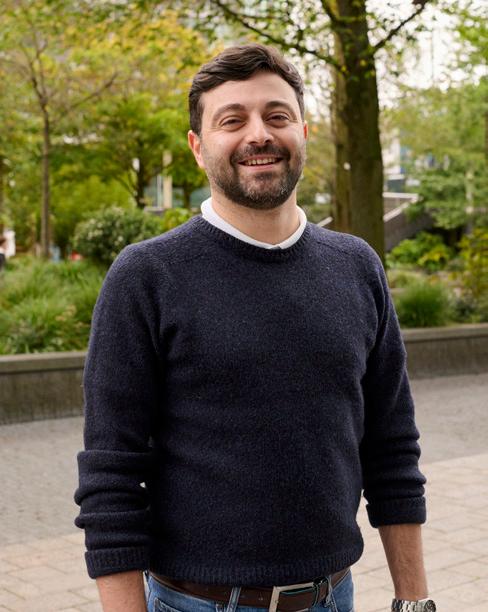
Ivan Afonin
“I take the metro to Zuidas, and while it is delayed sometimes, most of the time it’s a pleasant ride. It would be great if the train could take me directly to the office, haha! The public areas are quite busy all the time, making pedestrian access tricky. You often have to navigate around cyclists, which can be a bit disruptive. Overall, I enjoy the commute, even with these minor challenges.”
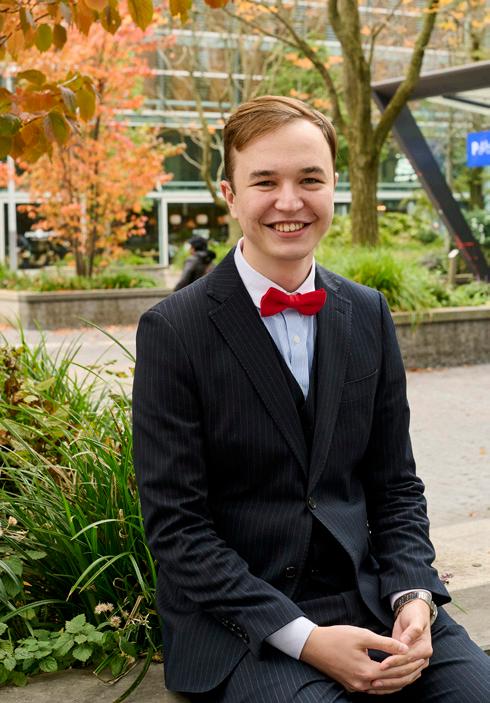
Marco Corrado
“I just take a direct bus to Zuid from Haarlem. The journey’s not long. If I were to change any aspect of mobility, it would be to modernise the station. Fortunately, though, plans for that are in the works. I am mostly very satisfied with the transport system and accessibility as it is. It gives me the freedom to quickly and easily get from A to B.”
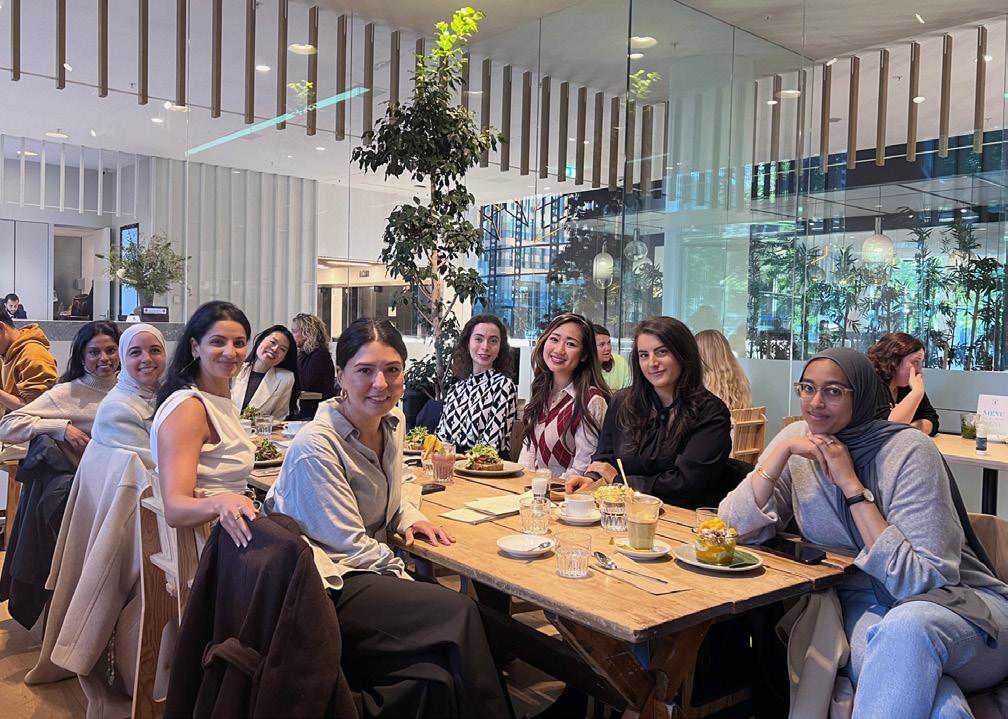
Necla Kaplan is the founder of First Gen and works at ABN AMRO, where she began her career in 2017 through a management traineeship. Since then, she has focused on innovation, digitalization, and proposition development.
Born in the Netherlands to Turkish parents, Necla’s journey has been shaped by the
experience of navigating two worlds.
“As a first-generation professional, I was the first in my family to pursue higher education and a corporate career,” she explains. “This brought both opportunities and challenges. While I was motivated to succeed, I entered the corporate world with no prior exposure, unfamiliar with its social norms, and without any role models. I was forging a new path.”
Necla founded First Gen to empower firstgeneration professionals by providing the resources and community they need to succeed. First Gen addresses the unique needs of those who are the first in their families to take these steps. “There’s a lot of unspoken pressure on first-generation professionals,” Kaplan explains. “We often lack social capital and networks, which
can make it harder to break into certain industries and thrive early in our careers. First Gen aims to change that.”
The concept for First Gen emerged from Necla’s realisation that many challenges she faced were shared by others but not talked about. “When I started my career, I often felt like an outsider. There wasn’t much representation” she reflects. “I knew there were many others like me, and I wanted to create a space that would not only help first-generation professionals enter these industries, but also excel within them.”
At one point, Necla realized that her challenges were not solely linked to her cultural background, but also tied to shifts in her socio-economic status. She explains: “I no longer felt a sense of belonging to where I came from, but at the same time, I didn’t quite fit into the new social class I had become a part of.”
Kaplan emphasizes the significance of first-generation professionals, noting that over one-third of graduates each year are first-generation-which adds up to more than 50,000 young professionals. Despite their growing numbers, many companies remain unaware of the unique challenges and untapped potential within this group, often failing to provide structured support in the early stages of their careers.
She adds that the barriers for firstgeneration professionals go beyond academic achievements. “It’s about breaking into established networks, navigating social mobility, overcoming imposter syndrome, and finding mentors who can guide you through these unfamiliar environments,” Kaplan explains.
What Are your goals for First Gen?
Necla envisions a thriving community of first-generation professionals ,“I want to see first gens thriving in their careers,” Kaplan asserts. “It’s not just about getting a seat at the table; it’s about ensuring every talent has the opportunity to succeed, especially those from underrepresented backgrounds.”
To support this mission, Kaplan launched a podcast addressing topics that impact first-generation professionals. First Gen the podcast covers issues like code-switching, using your voice as a minority, and social mobility. It also serves as a platform for first-generation professionals from various backgrounds and sectors to share their stories, showing that talent knows no boundaries.
Additionally, Kaplan has developed a training program based on interviews with first-generation professionals. This program empowers professionals with 0-5 years of experience to discover and leverage their unique strengths and

navigate professional environments, while staying true to their background and values. It’s designed for organisations to better support and empower their firstgeneration employees
Is First Gen Active on the Zuidas?
Necla organises monthly First Gen x Zuidas network lunches for firstgeneration professionals, aimed at expanding their cross-sector networks and fostering shared recognition and experiences.
Necla will be sharing her story live on November 5th at our Cultural Diversity Network Event.














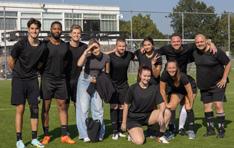
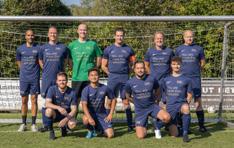
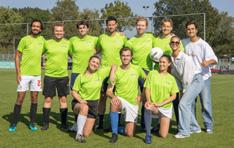
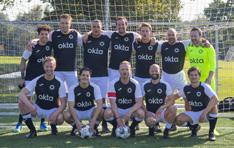
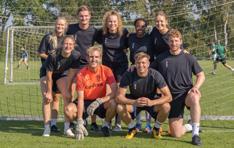
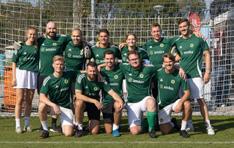
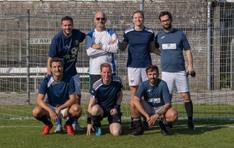
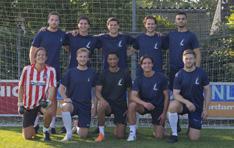

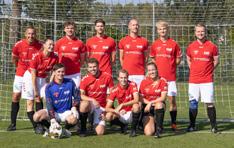
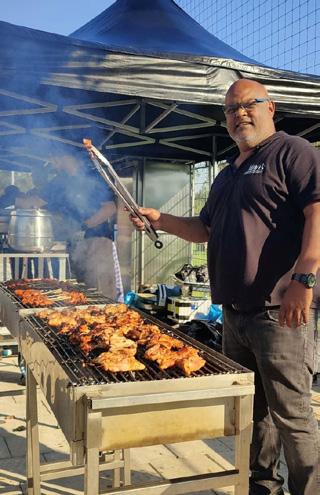
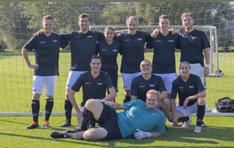
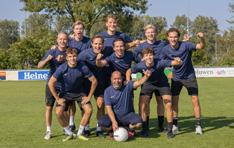
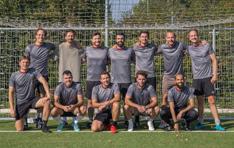

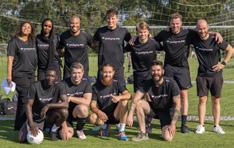
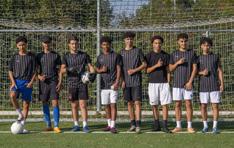
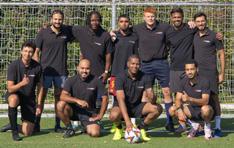
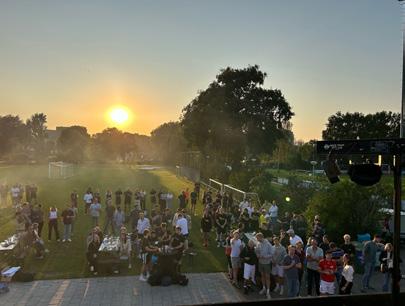
The football tournament for companies and other organizations in Zuidas, took place again at the end of September. Sports club RAP organized the tournament this year. Many men’s and mixed teams from various Zuidas companies participated. The tournament was a great success!
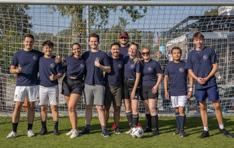
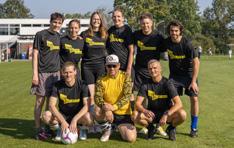


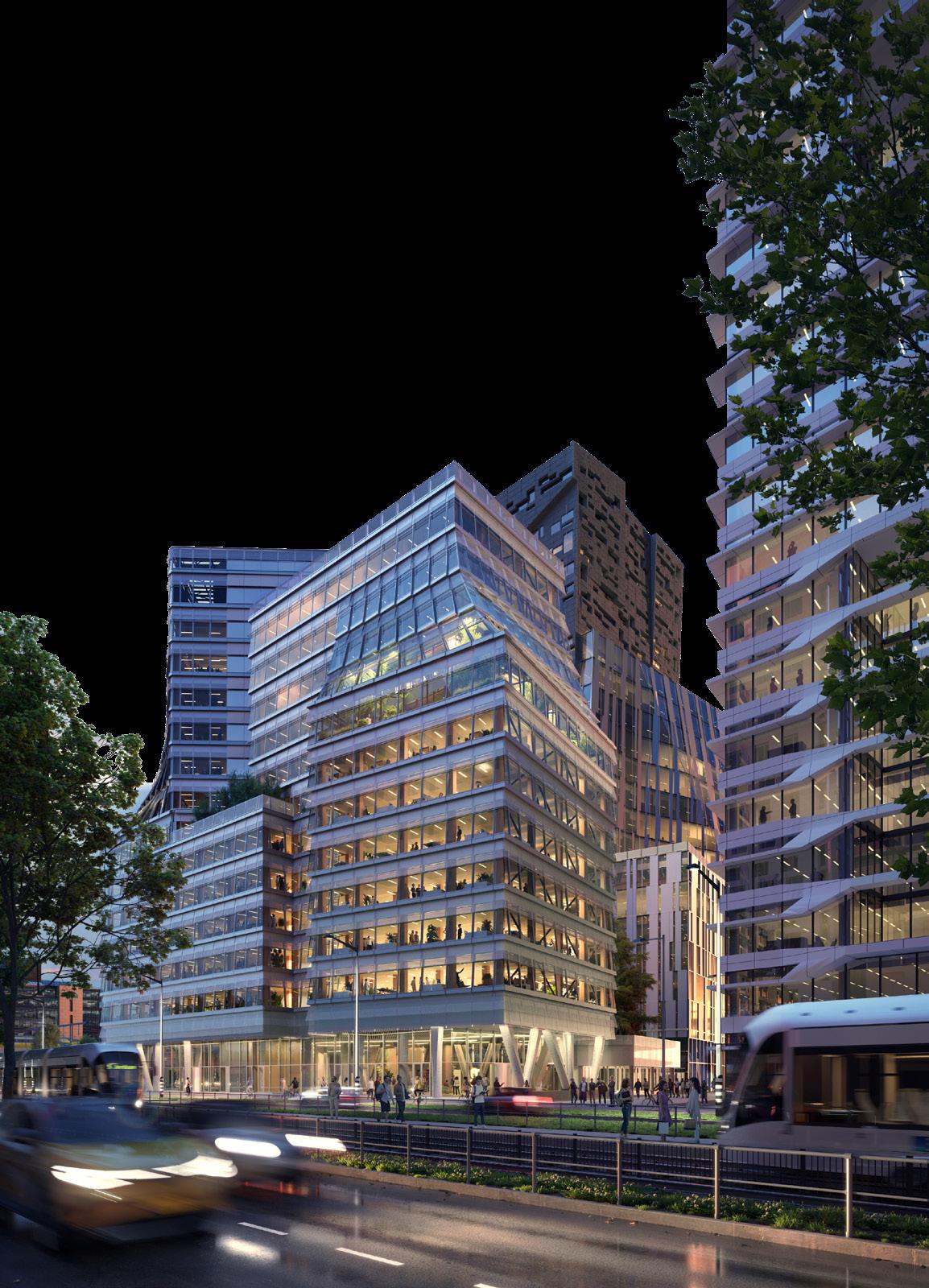
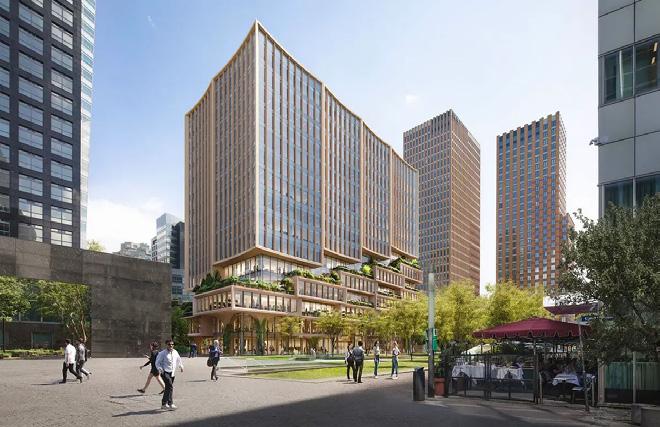
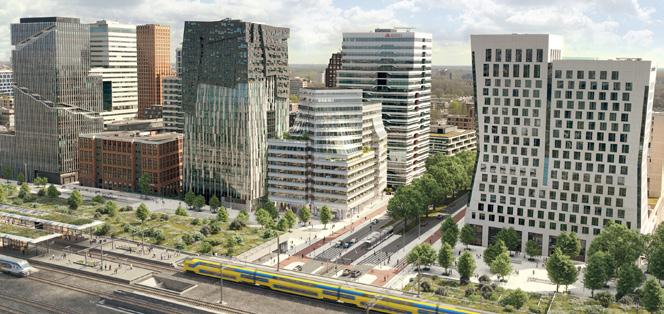
Located at the intersection of Parnassusweg, Arnold Schönberglaan, and Claude Debussylaan, The CubeHouse completes the Mahler plot. Its distinctive architecture by SO-IL promotes community connectivity and reflects the multifunctional character of the Zuidas. The CubeHouse – a development by G&S& – is a next-generation office building designed to inspire tomorrow’s working world, and will be the first hybrid timber building at the Zuidas.
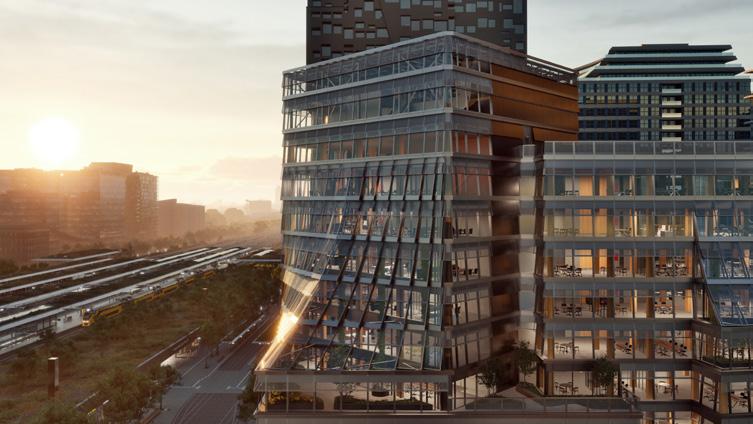
The CubeHouse is born out of the ambition to inspire, connect, and accelerate tomorrow’s working world, right here, in Zuidas. It stands as a testament to this vision, embodying it in every aspect of its design and purpose. With the aim to create spaces that empower users to reach their full potential day after day.
The CubeHouse sets a new standard in sustainable architecture by incorporating 75% reclaimed and bio-based materials in its construction, primarily utilizing timber. Bio-based materials are derived entirely from natural sources and are free from raw fossil materials. Approximately 13,000 cubic meters of sustainable timber will be used in the building of The CubeHouse, effectively sequestering up to 9,000 tons of CO2.
This significant amount of stored carbon dioxide is equivalent to the emissions generated from the annual electricity consumption of 10,000 households. By adopting these environmentally conscious construction practices, The CubeHouse not only minimizes its ecological footprint but also promotes a model of sustainable construction.
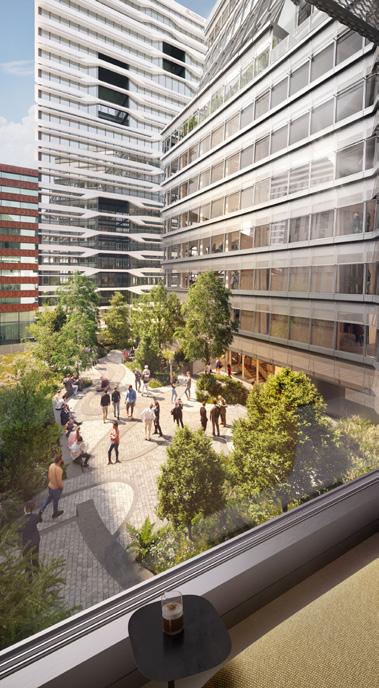
The Breathe Spaces, located at the sixth, seventh, and eight floor, connect the indoors and the outdoors. These buffer zones remain cool in the summer and warm in the winter, offering a comfortable environment to sit, relax and/or socialize during their breaks. The publicly accessible rooftop garden adds lush greenery to a rather dense Zuidas. Here, employees and visitors can enjoy lunch outdoors, surrounded by biodiversityboosting flora and fauna.
Facts
• A leading sustainable office building at the heart of the Zuidas
• 2-minute walking distance from Amsterdam Zuid station
• BREEAM Excellent, Well Gold and Paris Proof 2030
• ESG and Net-Zero aligned
• Extraordinary rooftop garden with public access
• Approx. 4,700 m2 available office space
• Approx. 1,200 m2 amenities on the vibrant ground floor
• Delivery in Q1 2026
For information on the available floors, please contact one of the real estate agents or visit the-cubehouse.com.
“I did a work placement in Zuidas seven years ago, and even back then I was saying I wanted to live here one day.”
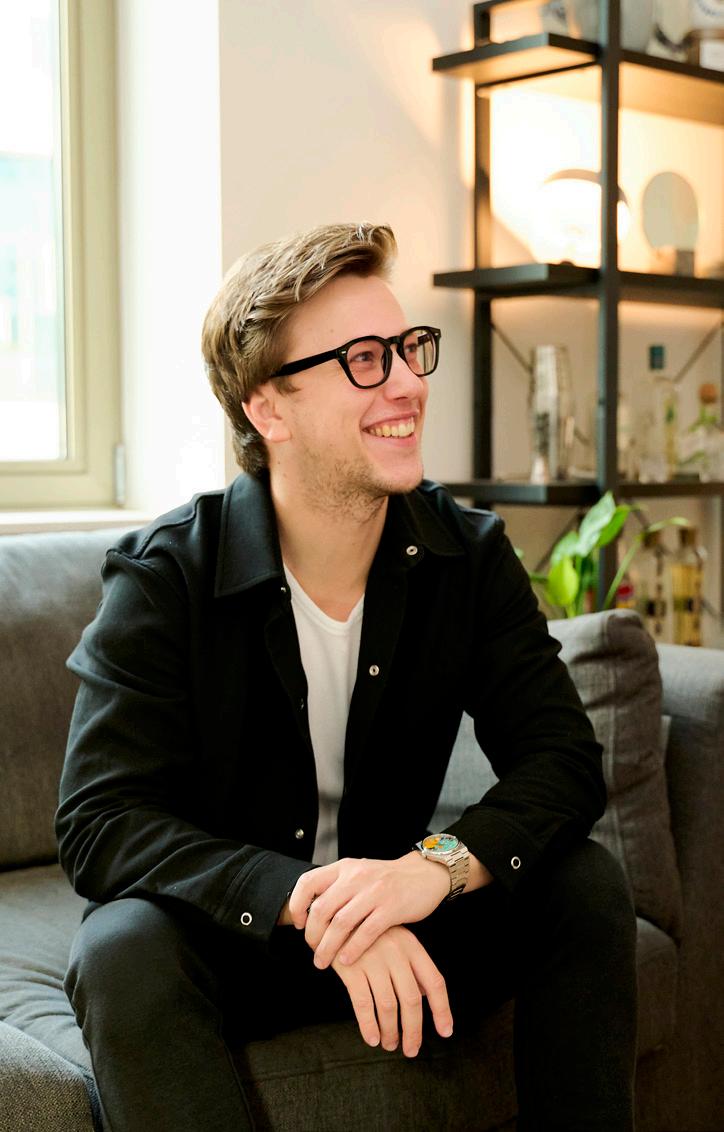
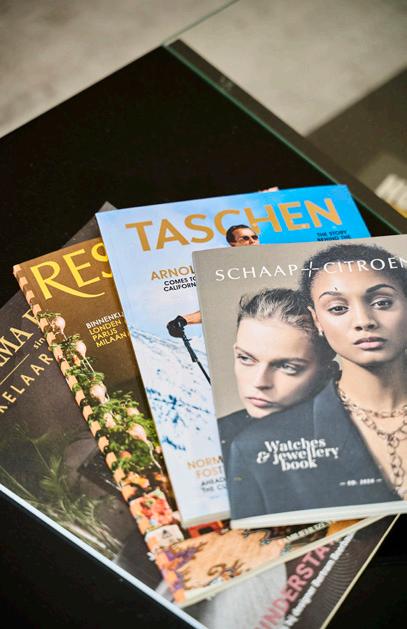
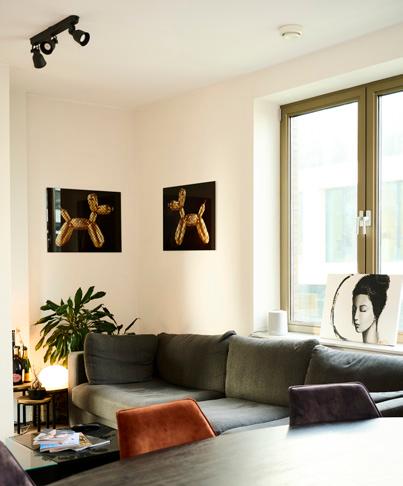
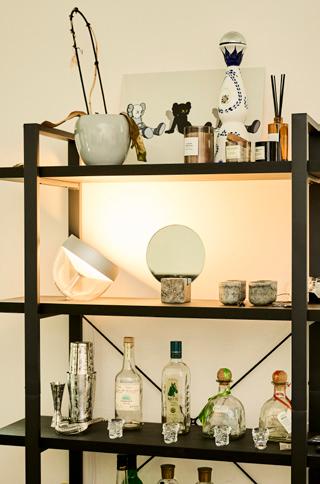
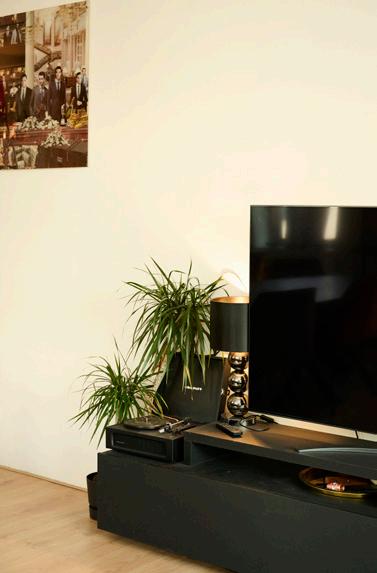
Dimitri Brom has been living in Zuidas for three and a half years. He runs his own content company, Now Up Next, that reviews restaurants, bars, and events, and also operates Nowness Agency, his advertising company catering to e-commerce brands. Favourite haunts include Clubsportive, where he regularly works out, and Doppio, for delicious coffee. While Dimitri revels in the hustle and bustle of Amsterdam, his home is a haven of calm.
Can you tell us something about yourself?
“I have my own content company for which I review restaurants, bars and events on TikTok. I’m doing some big places in Amsterdam now, which is pretty awesome, and recently started doing reviews in The Hague, too. There was an Italian restaurant for which we got a half million views in one week, so that was super cool. Business is going very well and more and more food places are coming to me. Outside work, I’m also living it up in Amsterdam. Going to parties, coffees with friends, meeting new people… for me that’s what makes life worth living!”
What brought you to Zuidas?
“I’ve been in Zuidas for three and a half years now. After spending a year in Barcelona, which was amazing, I felt myself getting a bit lazy there and wanted to come back to Amsterdam. I had done a work placement in Zuidas seven years ago, and even back then I was saying I wanted to live here one day. Eventually I found this flat and was lucky enough to get it. I had just started my company at the time, so it took some smooth talking, but it all worked out.”
What is your favourite spot at home?
“My favourite spot at home is the sofa. It’s where I completely unwind at the end of a busy working day. Since having my
own office on Prinsengracht, home really feels like a haven to me. It’s also nice to sit at my desk in my room here, where I can take some time out to reflect or work away from it all.”
What is your favourite spot in Zuidas?
“Hands down, Doppio. It’s an ideal spot to grab a quick coffee. I also like working out at Clubsportive, a great gym practically around the corner from my apartment –just across the road. For groceries, I usually go to Gelderlandplein and I walk there so I can also get some steps in.”
What do you hope the future holds for Zuidas?
“I’d love to see some more low-key restaurants in Zuidas. Small, cosy joints instead of the big, loud places there are now. And there is a lot of concrete here.
Adding some more n greenery would make the environment feel a little less urban and more zen.”
Are there any downsides to living in Zuidas?
“It can get quite noisy. The trains, especially. I use earplugs in the night to keep the sounds out and help me relax. I need to get my rest.”
Do you want to stay in Zuidas for good?
“It would be cool to stay here. But when thinking about the future, and maybe kids, I can’t say for sure. Zuidas is amazing, if you ask me, and I think it will be ideal until I hit 35. After that, I’ll want to live some place quieter. Amsterdam-Zuid or near the Amstel would be terrific.”

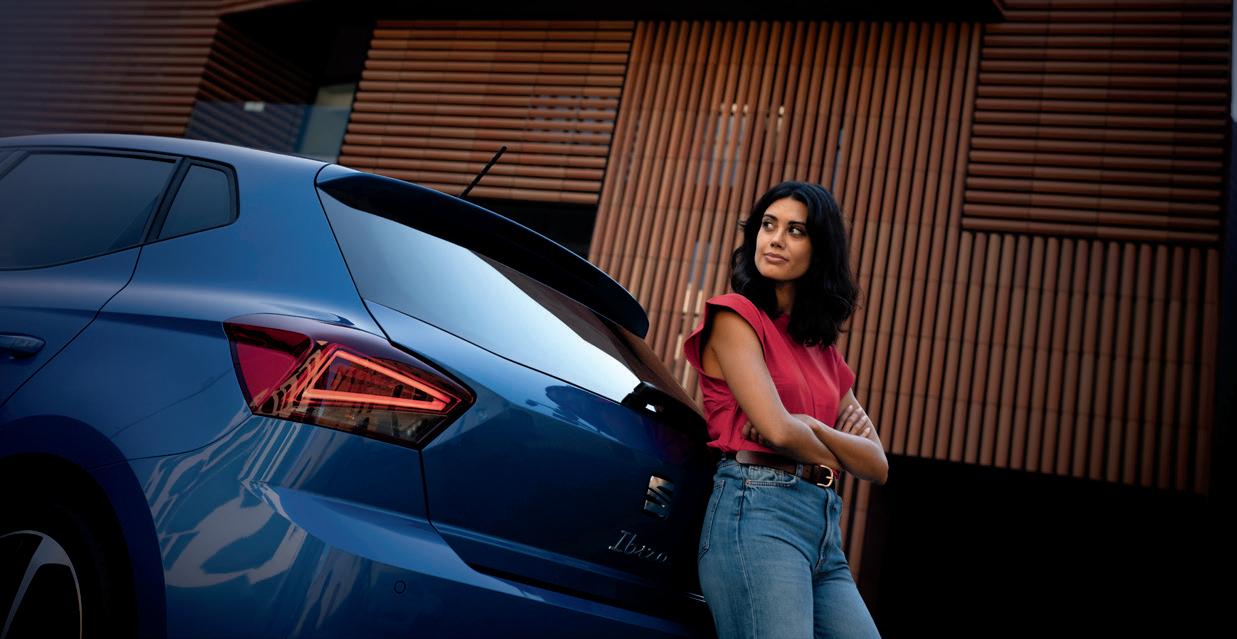
We’re here to meet your mobility needs, both today and in the future. As an official brand dealer, we provide expert advice and a wide range of services for new and pre-owned vehicles. From maintenance and repairs to private and operational leasing, rentals, and innovative mobility solutions. Visit us in Amsterdam, Hoofddorp, or Almere to discover our extensive selection of fully electric and hybrid models from premium brands.
Or explore online at a-point.nl

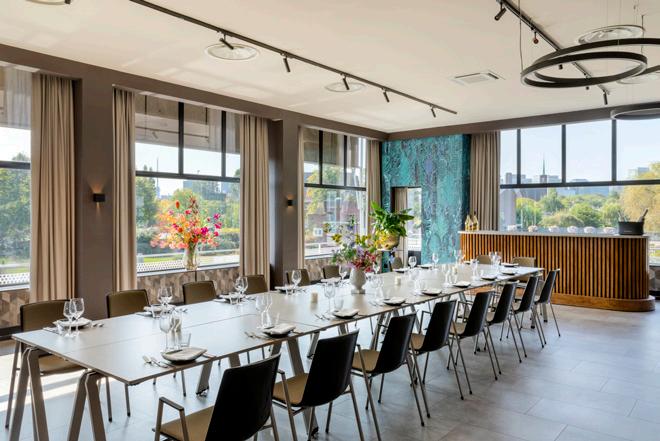
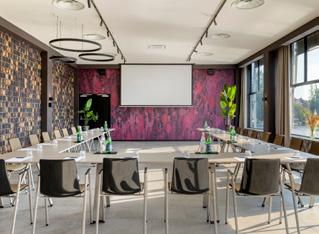
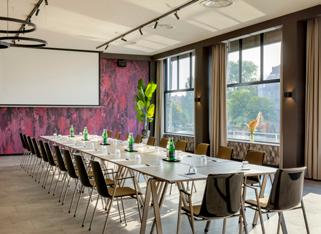
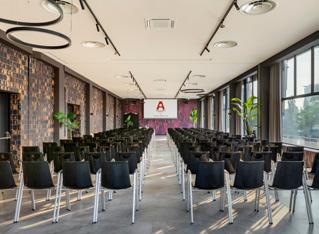
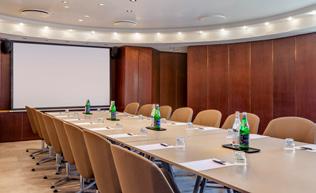
A crown jewel in Marriott’s Tribute Portfolio. Apollo Hotel Amsterdam, a Tribute Portfolio Hotel, could not wish for a better reference, neither nationally or internationally. Its ideal location on the edge of the city center, partly surrounded by water, along with its excellent accessibility, adds purely practical advantages. During the spring, the final touches were made to a large-scale renovation and restyling of the event spaces. Among other things, the upholstery was completely replaced, the lighting was upgraded, and a new color scheme was chosen for the walls and the staircase.
The flagship of the space offerings at the Apollo Hotel Amsterdam, a Tribute Portfolio Hotel, is the Canal Studio. As the name suggests, it is located directly by the water, with ample daylight and beautiful views. The Canal Studio measures over 200 square meters. In a theater setup, it can accommodate around 200 guests. This space
is suitable not only for business meetings, but also for training sessions and workshops. There is a bar available for drinks and guests can also enjoy the terrace on the waterfront.
In addition to the restaurant The Harbour Club Amsterdam Zuid, the hotel also features The Living Room, where guests
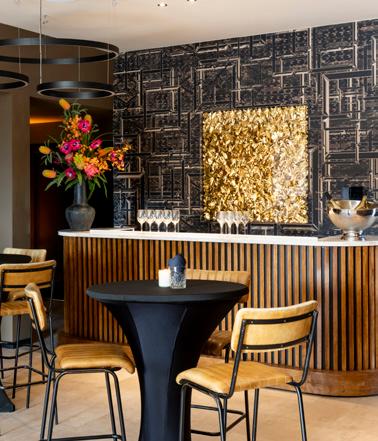
can enjoy a good cup of coffee with pastries, lunch, or an extensive dinner. Quality is paramount, and perfection is pursued anew every day. This applies to the hotel team, event staff, service personnel, and the kitchen crew alike.
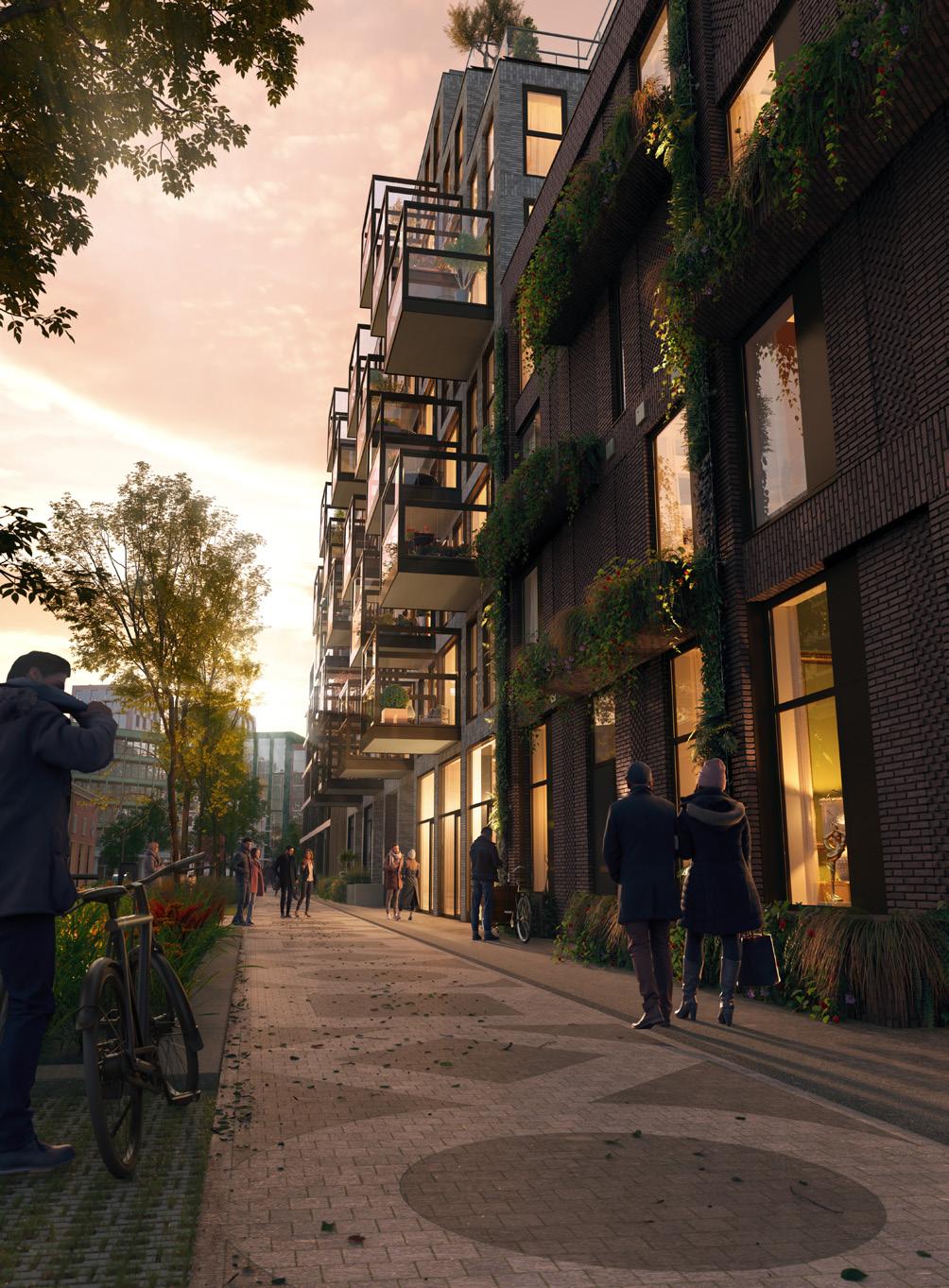
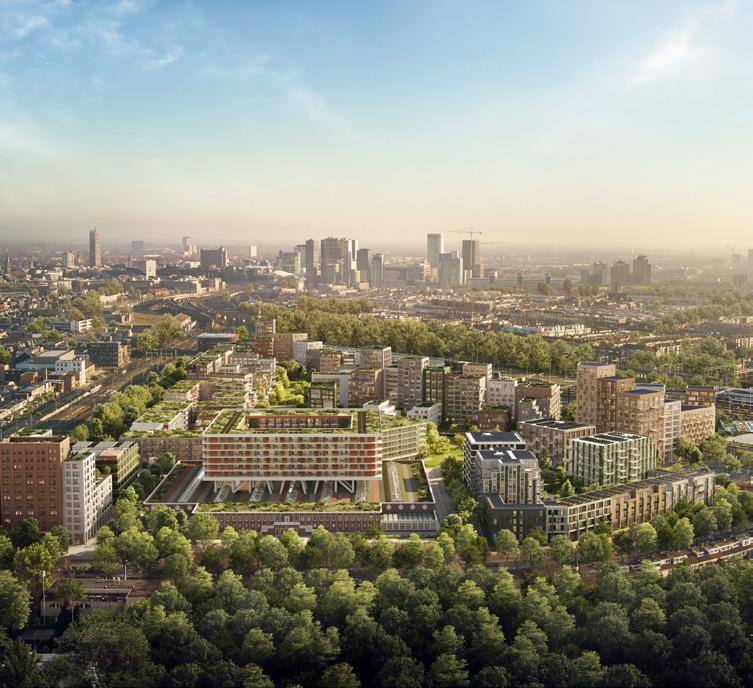
3,000 homes: from compact apartments to luxury townhouses, all woven into a cleverly designed network of green landscaping. The new Cartesius district in Utrecht is being built for biodiversity and sustainability and incorporates an abundance of space between all its different elements. Space to live, space to work and space to relax together or away from it all. Space to be free. Cartesius is more than a new neighbourhood: it’s a blueprint for the future of urban living.
Cartesius Utrecht: award-winning Blue Zone for healthy living Okinawa in Japan, Ikaria in Greece, Sardinia in Italy – like each of these places, Cartesius in Utrecht boasts all the ingredients for a healthier, longer and richer life. That’s because it is the first urban area in the Netherlands to fully embrace so-called ‘Blue Zone’ characteristics. An area that perfectly balances space and connectedness in a lush residential setting. These qualities helped Cartesius to win first prize in the property development category at the first Blue Zone Festival in Zwolle in June 2024. According to the judges’ report: “Cartesius Utrecht is a wonderful example of a highdensity urban development, concerned with more than construction alone.”
Unique residential blocks held together by a green heart
Distinctive on multiple fronts, there is a philosophy underpinning every element of Cartesius, from the landscaping design to the placement of the car park. Mark Spijkerman, designer of the townhouses: “Our design team came up with the area concept. In the first phase that involved a lot of liaising with the client, advisers and City authorities, and later on with building contractors and suppliers. We were asked to design the area as a unified whole, made up of individual residential blocks, each with its own architecture and attributes. Each block has its own look and distinctive character: one more rugged with staggered balconies, another more streamlined with green façades. Together, they form a
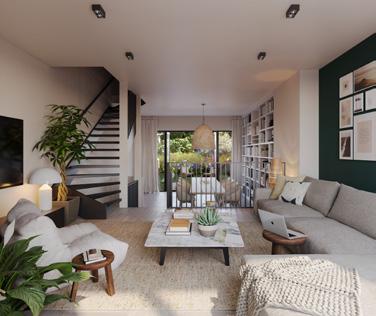
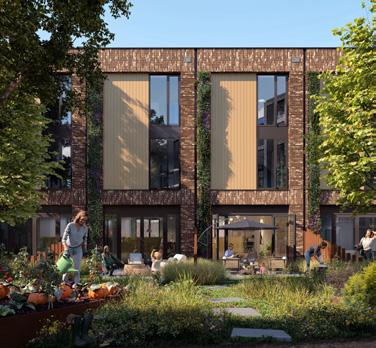
beautiful whole that’s held together by the green central garden. This spacious garden is what ties the buildings together and forms the heart of the neighbourhood. A place to gather, to exercise and to unwind.”
Perfectly linked to city and globe
Located on the outskirts of Utrecht’s historical city centre, Cartesius has excellent road links, with the A2 only seven minutes and the A27 and A28 nine minutes by car. Utrecht’s central station is just six minutes via the bicycle tunnel or three minutes by rail from Utrecht Zuilen station. You’ll be in the city centre in the blink of an eye – and always on time for the train to Amsterdam, Paris, London and beyond.
Interested?
www.cartesius-utrecht.nl
Our property agents would be happy to tell you more: Eefje Voogd Makelaardij Parnassusweg 201 1077 DG Amsterdam + 31 (0) 20 305 05 60 info@eefjevoogd.nl
Brecheisen Makelaars Maliebaan 2 3581 CM Utrecht +31 (0) 30 200 36 00 nieuwbouw@brecheisen.nl
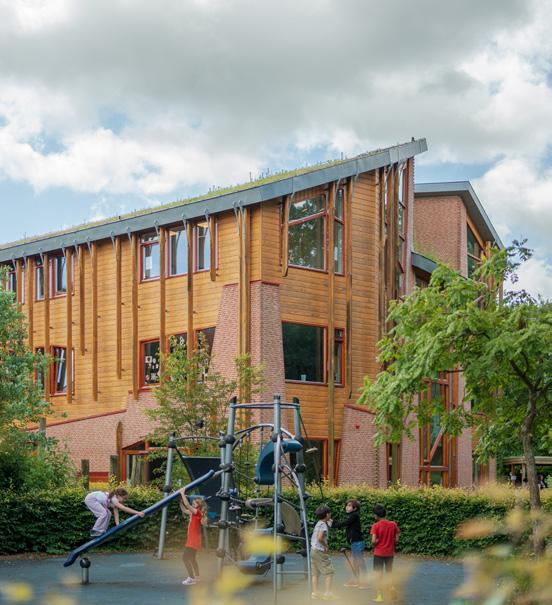

The International School of Amsterdam (ISA) first opened its doors in 1964 to what was then just a handful of children. Sixty years on, the school has become a beacon in the education landscape, offering a first-class curriculum in English and enrolling 1,200 students from more than sixty countries.
Over the past sixty years, ISA has both embraced change and stayed true to its roots, says the school’s head of Safeguarding and Wellbeing, Sarah Grace. During that time, its mission – to educate for international understanding – has remained unchanged. “Our focus has always been on expatriate families, on
business people who travel the globe and bring their children with them. At the same time, we welcome Dutch families with an open outlook on the world who want their kids to get an international education.” ISA is clearly succeeding in its mission: after starting out with a class of 13 in the 1960s, today the private school in Amstelveen
enrols 1,200 students from more than sixty different countries.
Our international focus is paramount. On average, students stay with us for three to five years, before moving onto another country.” ISA offers IB education covering the entire age range from 2 to 18 years. Short for International Baccalaureate, the IB curriculum is internationally recognised and equivalent to Dutch VWO (pre-university) education. ISA


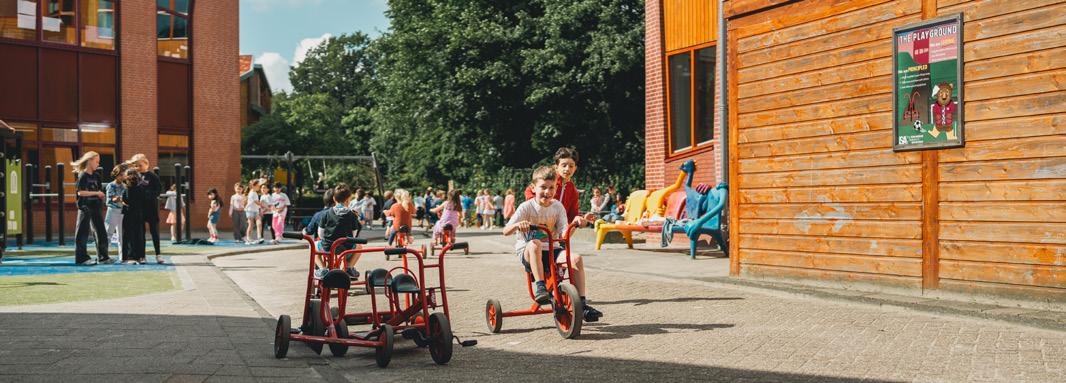
was the first school worldwide to offer the three main programmes of the International Baccalaureate, Grace notes. “Our education is divided into four phases: Nursery (age 2-3), Primary Years (age 3-11), Middle Years (age 11-16) and Diploma Years (age 16-18). Classes number 25 students at most to ensure everyone gets personal attention, and allows the school to cater to a diversity of learning need.”
ISA has established a “culture of thinking” through our 20-year collaboration with Harvard Graduate School of Education’s research department Project Zero, which gives learners a solid foundation to go on to university: “Many of our former students tell us their first year at university was easy.” According to
Grace, that’s because ISA isn’t just about cramming knowledge, but about learning how to gather and assimilate information. “This is a crucial skill in today’s world, given the sheer amount of information.” Students frequently work in groups and learn discussion skills. “We want them to grow up to be open, caring, responsible citizens who are thoughtful about each other and their environment. Even our youngest kids learn about things like recycling.”
ISA also puts a particular focus on inclusion. “Our main language is English, but we encourage kids to go on developing other languages they speak. For example, by organising activities in those languages.” Also, national representatives welcome new families
and help them to feel at home in their new country. Besides education, ISA offers a wide range of extracurricular activities, from ballet to drumming and from swimming to expeditions. But Grace says she is probably proudest of all of ISA’s focus on safety and mental health, which is her department. “International kids are a quite vulnerable group and we want to make them feel safe. Mental health is also a priority for us. So much is expected of young people today. We want to give them the tools to cope with stress.” While the numbers clearly testify to ISA’s success, Grace says that what really counts are students’ reactions. “We often hear that they can’t wait to come back to school after the holidays.” International School of Amsterdam Sportlaan 45 1185 TB Amstelveen www.isa.nl
Thursday
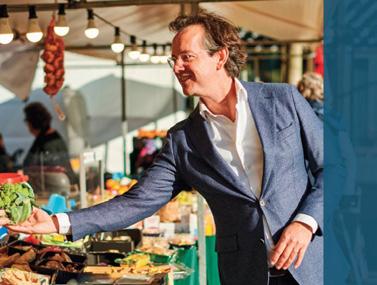
@George Gershwinplein
At the market, you will find a wide range of products. The market entrepreneurs know their trade, understand what true service looks like, and give you, their customer, their full attention. This is the foundation of Zuidas Market.
Thursday and Friday BITES & DRINKS
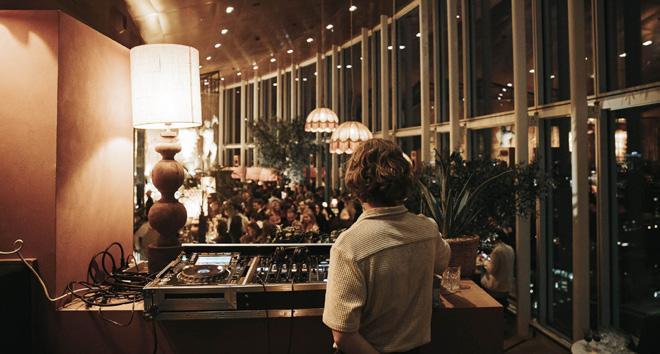
@ Hasta La Vista Baby – www.hastalavista.baby
Every Thursday and Friday, Hasta la Vista Baby opens its doors from 5:00 PM for all those looking to enjoy drinks at Zuidas! Buena Vista is a weekly event where you can kick off the weekend with colleagues, teams, or friends, accompanied by drinks and snacks. Enjoy the best view of beautiful Amsterdam from our 19th floor. The disco ball is spinning, the DJ is playing great tunes, and no reservation is needed—just walk in. So, mark it on your calendar: Buena Vista, every Thursday and Friday at Hasta La Vista Baby!
November & December
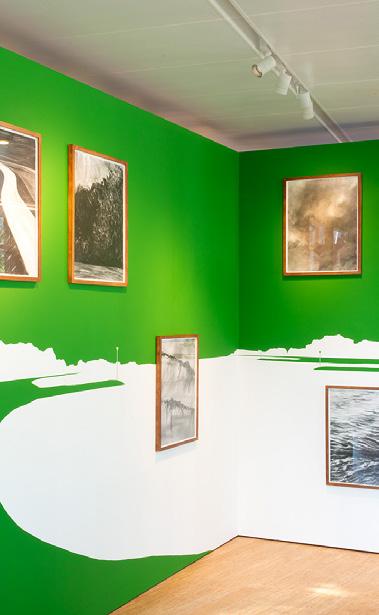
EXHIBITION “EARTH”
@AkzoNobel Art Space www.zuidas.nl
Currently on display at the AkzoNobel headquarters in the Art Space is the exhibition EARTH: showcasing artworks that focus on our natural environment, depicting themes like landscapes, ecological awareness, and the artificial divide between humans and nature.
November & December GET FIT
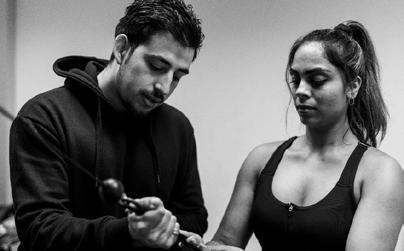
@ MyoReset
In honor of Hello Zuidas’ Mobility Edition, MyoReset is opening its vitality center in the WTC during November and December. Only in November, your 30-minute training sessions are free, and in December, you get a 40% discount. Be quick, as there are only 30 spots available via myoreset@myoreset.nl. Don’t forget to bring your workout clothes and a towel.
November 7, 2024
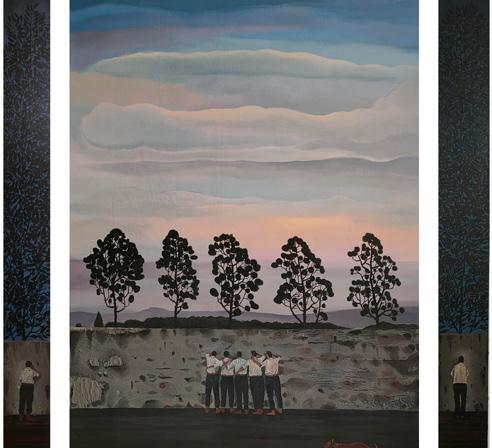
FOREIGN LAND
@VU ART SCIENCE GALLERY
From November 7 to the end of March, you can visit the exhibition Foreign Land at the VU ART SCIENCE Gallery. Through the works of four internationally operating artists, the exhibition explores what it’s like to grow up in a foreign land. The public program will feature discussions between artists, scientists, and the audience. Besides deepening knowledge about migration, Foreign Land aims to exchange personal stories and experiences. In a time of war and extreme politics, the exhibition seeks to foster human connection.
November 15, 2024, 7:00 PM - 8:30 PM
FULL MOON EXCURSION
@ Amsterdamse Bos
On the evening of November 15, it will be a full moon, and that always brings something special. You might hear the call of the mysterious tawny owl or spot the last hedgehogs before they settle into hibernation. Accompanied by the Forest Ranger, you will discover the nighttime forest in an entirely new way. During this atmospheric 5-kilometer walk, you will learn about the animals that are active at night and how nature responds to the light of the full moon. You will follow a route through iconic spots in the forest, where your senses will be heightened by the mystery of the night.
Thursday, November 14, 2024 - 3:00 PM
ZUIDAS SUSTAINABILITY AWARD
@Robert Walters WTC
Who will win the Zuidas Sustainability Award 2024?
During the festive award ceremony, the professional jury will announce the winning organisations in six different categories. The winner of the Public Award will also be revealed. This is a public event. Keep an eye on Hello Zuidas’ socials for more information.
November 24
- December 1, 2024
PAN AMSTERDAM
@RAI – www.rai.nl
For 37 years, PAN Amsterdam has been a unique fair for art, antiques, and design held annually. The 45 presentations on various art topics at PAN Podium attract a lot of attention.

November 26, 2024
ZUIDAS ART ROUTE
@VU ART SCIENCE Gallery, ABN AMRO, and AkzoNobel
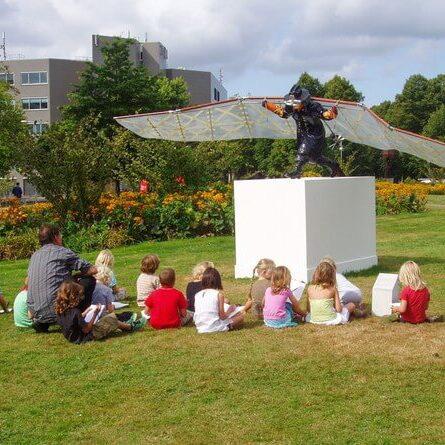
The VU Art Science Gallery, ABN AMRO ArtSpace, and AkzoNobel Art Space form an art route on the Zuidas. In honor of PAN, the three art spaces are ohosting a special afternoon with guided tours on November 26. Each location will host tours at 4:00 PM, 4:45 PM, and 5:30 PM. More information: www.zuidas.nl
Thursday, November 28, 2024 - 5:00 PM ART EVENING
@PAN AMSTERDAM
@RAI (Members only)
Hello Zuidas members are invited to an exclusive visit to the PAN art fair. They can also join tours to get all the ins and outs of the participating galleries. This festive evening will conclude with snacks and drinks at Bar Bouchon. This is not to be missed!

December 3, 2024
TASKFORCE ACCESSIBILITY ZUIDAS:
@ Symphony (members only) During this meeting, KPN will elaborate on their bike promotion initiative, where employees receive high mileage compensation for cycling. They will share their experiences and the impact on travel behavior. Zuidasdok will give an update on the progress of the construction work, the temporary public space around the station, and changes in accessibility and bike parking.
December 3, 2024
LUNCH CONCERT CVA BRASS
@De Thomas – www.dethomas.nl
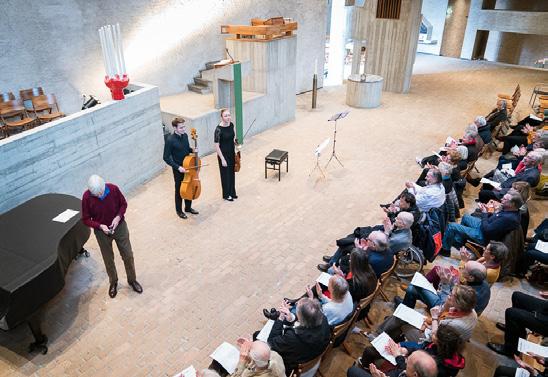
At a unique location on the edge of the Zuidas is DeThomas, a place to recharge. Take a break from your workday with a lunch concert in the church hall. Every two weeks, there is a free lunch concert at De Thomas. Classical music, each time performed by a different ensemble or musician.
December 3 & 10, 2024
BUSINESS ENGLISH
– TAALCENTRUM VU WORKSHOP
@Taalcentrum-VU
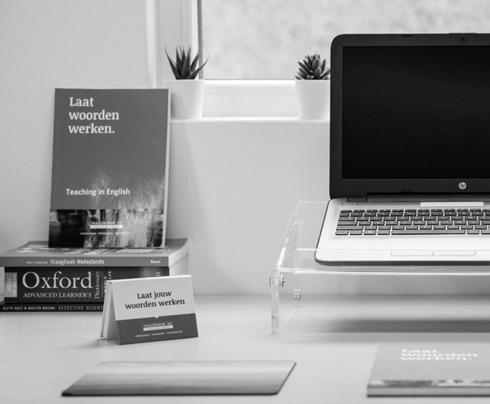
English fluency is crucial in international business. Would you like to communicate more effectively with your English-speaking clients? Taalcentrum-VU’s language experts are here to help! Our Business English workshop will boost your fluency in no time. The workshops cover two full days, from 9:30 AM to 4:30 PM. Register now at: www.taalcentrum-vu.nl/en/business-english

December 7, 2024
MAHER ZAIN LIVE ON STAGE WITH ORCHESTRA
@ Amsterdam RAI
Maher Zain is coming to the Netherlands for an exclusive concert in the Rai on Saturday 7 December. Singer and songwriter Maher Zain is the star of modern Islamic music. With his songs, he wants to spread a message of peace and hope to the world with the aim of inspiring people. Maher Zain has gained worldwide fame in a short time with his warm voice, captivating compositions and impressive lyrics. With his modern music in which influences from pop to R&B can be heard, he has become a world star with fans from Canada to Malaysia. This concert promises to be an unforgettable experience, so don’t miss it!
Thursday, December 12, 2024
ZUIDAS WINTER MARKET & SINGING CHRISTMAS TREE
@Amsterdam Zuidas
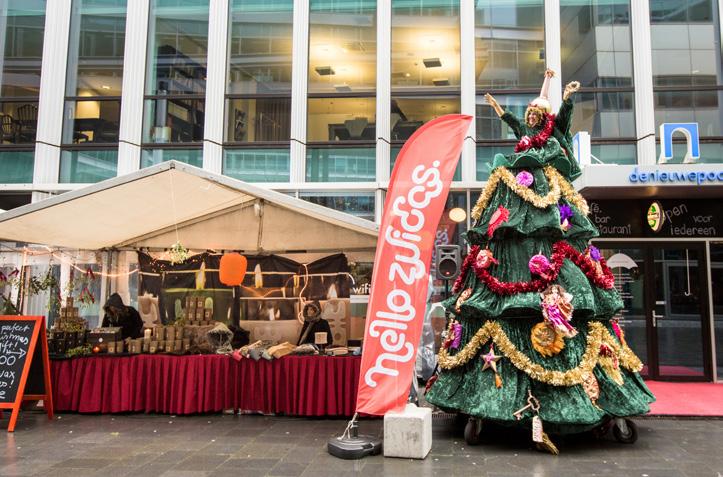
On the twelfth of the twelfth, exactly two weeks before Christmas, we bring Zuidas into a winter atmosphere. A unique musical performance awaits you, along with hot chocolate and more. Follow Hello Zuidas’ socials for updates on the locations where you can expect performances by the Singing Christmas Tree. Stop by for the festive fun and snap a special selfie.
December 10, 2024
(members only)
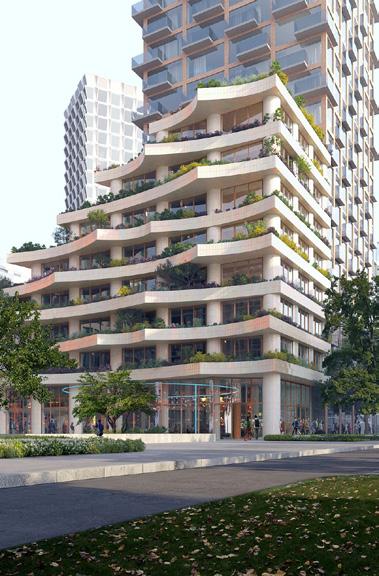
‘Ceci n’est pas une maison’ is the central theme of the meeting on December 10. Project developer Being and architect Space Encounters will take us through the project. They will share information about the origin, vision, location, architecture, unique features of the apartments, and other important aspects. Zuidas management will provide details on the tender and the planning of projects in Kenniskwartier Noord.
Friday, January 24, 2025
FESTIVE GALA CONCERT
@concertgebouw
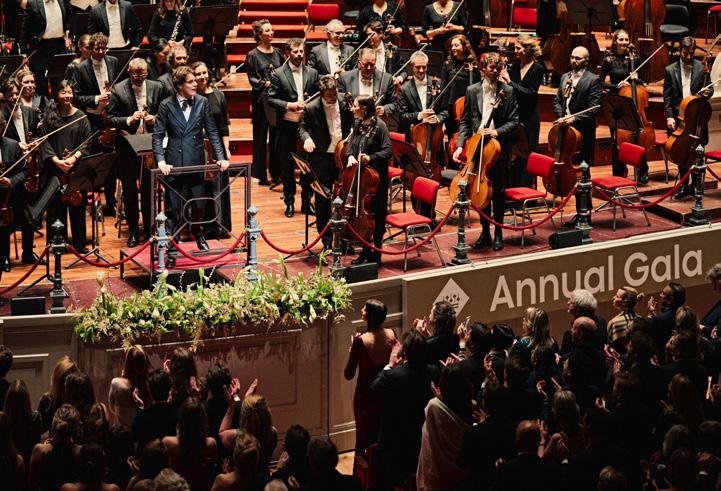
On January 24, 2025, the Royal Concertgebouw Orchestra will present its Annual Gala at The Concertgebouw. Conducted by Klaus Mäkelä and featuring soloist Janine Jansen, the orchestra will perform works by Purcell, Britten, Dowland, and Schumann. The evening begins at 7:30 PM with a pre-reception, followed by the concert at 8:30 PM. A festive afterparty with dancing until midnight will conclude the event. Dress code: black tie.
This year marks the 25th anniversary of VU Griffioen, VU Amsterdam’s vibrant campus cultural centre in Zuidas. For more than a quarter century, it has been a space where the area community – whether you study, work or live in Zuidas – can enjoy a mental getaway.
There’s no shortage of culture in Zuidas: with the VU Amsterdam campus based here, locals have their pick of cinemas (Rialto and, opening soon, The Pulse), a centre for debate, a gallery, Bar Boele and of course the campus cultural centre, VU Griffioen. This year, VU Griffioen is celebrating its 25th anniversary as a performing arts venue, after relocating to new premises in the New University Building three years ago. “Before that, Griffioen was located on the Uilenstede Campus”, says its director, Eme van der Schaaf. After 15 years at the centre, he is passing on the baton this autumn.
“Griffioen’s roots go back to the 1950s and 1960s”, he says, “starting out as a platform for amateur orchestras and choirs at VU.”
Fast forward and today VU Griffioen has grown into a bona fide cultural centre, beloved by not only student audiences but the whole of Amsterdam. It is probably best known for its high-profile programme of theatrical productions (up to 140 a year), in which cabaret plays a leading role. “We like to offer a stage for cabaret
Text: Grete Simkuté • Photography: Lynn Vaessen
artists”, Van der Schaaf confirms. “It’s great to see how some have really made a name for themselves in our theatre. “Van der Laan and Woe got their start here, as did Pieter Derks and René van Meurs. Alongside stand-up comedy, we also have musical cabaret, including artists like Ellen ten Damme.” But Griffioen is not just a showcase for big names. With its own cabaret festival, young talents also have plenty of opportunities to spread their artistic wings.
“Cabaret is a performing art that appeals to a wide audience, from students to boomers. It offers an outlet and humour”, Van der Schaaf explains. “But we have plenty of space for drama and dance, too. Recently, we’ve also been experimenting with live talks, wedding popular science to performing arts. As well being a stage, Griffioen is also known for offering courses, with 65 in all for both university students and the general public to choose from. “From drama to painting to botanical drawing to bookbinding – you name it, we’ve got it. Most popular are our dance
classes. They make up half of our courses and we have multiple levels, so participants can go on advancing. Our high-heel dance classes are a particular favourite. You know the musical Chicago? Imagine something like that. People have a blast.”
Van der Schaaf says the courses owe their success to the fact that they take people out of their heads for a while, which is nice for students – and everyone else. “These courses offer a brief mental timeout from responsibilities, brain overload, expectations... Plus you meet new people, of which many are from different backgrounds and of varying ages.” The courses are affordable and taught in small groups by professional instructors. VU Griffioen is also easy to reach by bike and car, with plenty of parking available. “People can also hire our spaces for conferences, presentations and other gatherings. If you’re looking for a warm, lively setting with good sound and lighting, this is the place. We’re pros at creating the right atmosphere”, Van der Schaaf concludes. So, for those in search of culture, performing arts and a great vibe, you can find it right here in Zuidas!
VU Griffioen
New University Building De Boelelaan 1111 1081 HV Amsterdam www.griffioen.vu.nl

Mirror, mirror on the wall... Do you still feel the fairest of all every day? Let’s face it: there comes a time when the mirror shows us looking older and more tired than we would like. Fortunately, it’s no secret any longer that there are countless ways to delay or even reverse the inevitable signs of ageing. Surgery and Botox are options, but there’s also a new and far more effective treatment: introducing the Aēslift™ liquid facelift.
With the help of the Aēslift™ liquid facelift
“I just wanted a fresher and more rested look. The results are amazing: tighter and smoother!”
Patty Zomer (Dolly Dots)
“It’s often said that you get more comfortable in your skin as you get older. While that’s true, your face and body do start to sag. The Aēslift™ liquid facelift has rejuvenated my face with a very natural, fresh look.”
Curious about Patty’s experience?
In the podcast called *Aēstalks*, Patty will share her personal experience with the Aēslift™ liquid facelift. You can listen to it on Spotify and YouTube.
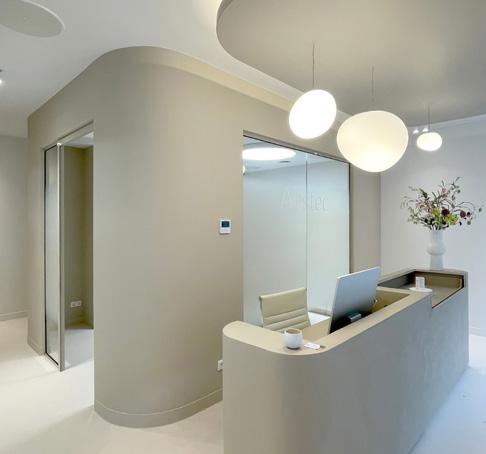
Well-known names like Leontine Ruiters, Trijntje Oosterhuis, Saskia Noort and Patty Zomer are all fans of the treatment that has them looking every bit as youthful and radiant as our own Queen Maxima. All opted for Aēstec in Zuidas, the only clinic to offer the Aēslift™ liquid facelift. This specialised revolutionary treatment yields beautiful and exceptionally natural results. Aēstec’s cosmetic doctors use an ultrasound machine to inject special hyaluronic acid fillers. These fillers are carefully applied in specific skin layers to shape the contours of the face. The results are visible for up to a year and a half to two years, and easy to maintain with touch-up treatments, thanks to the fillers’ collagenstimulating effect.
Aēstec uses fillers in the form of injectable gels specifically designed to restore and shape key areas of the face. The active ingredient, hyaluronic acid, is a substance that occurs naturally in the body. However, we produce less of it as we age, causing skin and facial features to sag. Injecting hyaluronic acid firms and plumps the skin.
The Aēstec method is backed by scientific research, carried out in collaboration with Erasmus MC, examining the application of fillers in the correct skin layer and the long-term effects. The study found that injecting fillers in the wrong layers of the skin leads to an unnatural appearance in the long term. These results were recently published in an international scientific journal to alert other cosmetic doctors to the findings.
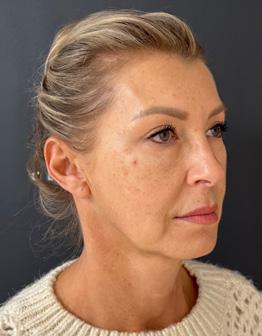

The Aēslift™ liquid facelift finally makes it possible to age in a way that looks both beautiful and natural, is safe and requires no surgery. The Aēslift™ liquid facelift is a 30-minute, virtually painless treatment with extraordinary results. You can return to your daily activities immediately afterwards. Alternatively, have the treatment in stages for a more gradual result.
Visit us for an honest consultation For further information, or to schedule an appointment, go to www.aestec.nl. Aēstec’s cosmetic doctors look forward to welcoming you for a comprehensive and honest consultation at one of their professional clinics in Amsterdam (Zuidas) or Rotterdam.
Aēstec Amsterdam Aēstec Rotterdam George Gershwinlaan 687 Karel doormanstraat 326 1082 MT Amsterdam 3012 GP Rotterdam +31 (0)20 244 00 12 +31 (0)10 307 18 61 info@aestec.nl rotterdam@aestec.nl www.aestec.nl www.aestec.nl
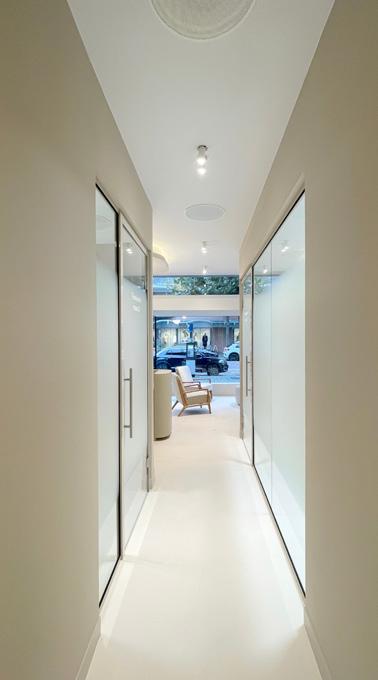
Mobility is a hot topic in Zuidas, where innovation and sustainability go hand in hand. Area companies are working hard to get mobility solutions up and running and provide access to a wide range of shared mobility options. For our intro to this issue’s special feature, we talked to several local players. We asked their opinions about why shared mobility is so important in this busy business hub and about the options currently on offer. From bikes to cars and everything in between: what’s their take on the future of mobility?
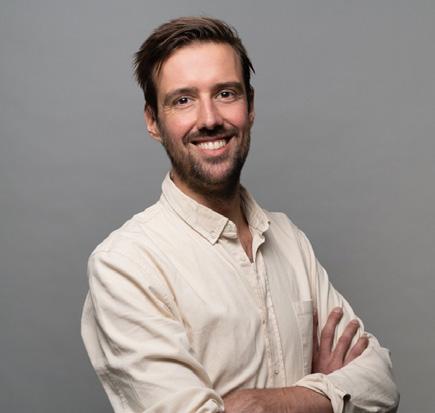
Alex van Riel Greenwheels
“Public spaces are under huge pressure in Zuidas, and shared mobility can help lighten it. With Greenwheels, people can use a car, without the burdens and costs of ownership. We call it ‘enjoying what you don’t have’. It’s an easy and sustainable step that’s becoming increasingly important for companies, because we simply cannot go on with business as usual. The range of options is growing, but there is still loads of untapped potential. Greenwheels offers more than 15 cars in Zuidas, including popular models on Gustav Mahlerlaan, and that’s helping workers to travel smarter.”
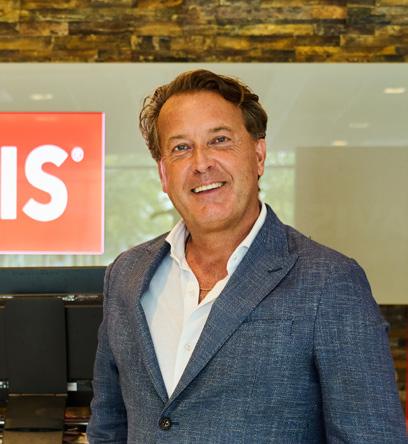
Marc Beers
Sales director, Avis Budget NL
“The high concentration of companies and professionals makes shared mobility a must in Zuidas. Using shared vehicles instead of private cars is more efficient and more environmentally friendly in an area as crowded and short on parking space as this. It gives people the flexibility of having a car at their disposal when they need it, without the hassles of ownership and parking headaches. There are enough different options available. Avis is contributing with a modern, energyefficient fleet. A utilisation rate of less than 85% ensures our vehicle fleet is used efficiently, and by offering customers the flexibility to return vehicles to other locations, we cater to the specific needs of users in Zuidas.”
Pepe Lammertijn
Country manager NL, Donkey Republic
Thomas Wolters
Enterprise Car Sharing & Rental
“Zuidas is a place where lots of people live and work in a geographically small area, and where, despite there being plenty of public transport options available, people also regularly need a car of their own. Car sharing or hire is ideal for business meetings, family visits or as a temporary solution, avoiding the problem of everyone wanting to park their own car here. While the shared mobility range is growing, it’s still mostly limited to small cars operated by app. Enterprise, by contrast, offers a wide selection of vehicles, from compact to premium models; always clean and with a full tank. Hiring a car is also sharing a car – and we have smart, practical solutions to suit everyone.”
“The district’s increasing popularity, resulting in tremendous pressure on public space, makes shared mobility paramount in Zuidas. With our back to many hub system, we offer shared Donkey bikes on multiple locations with the aim to grow over the coming years. It allows us to unlock the full potential of shared bikes in the modern heart of Amsterdam. Shared bikes have the potential to replace stationary second bikes still in the streets, as well as help people make more conscious choices. Encouraging effortless movement across the district (with a positive climate impact.) Sharing a Donkey bike keeps you flexible at affordable prices, which goes especially for employers. Who wouldn’t want a bike in their pocket for a mere 28 cents a day?”
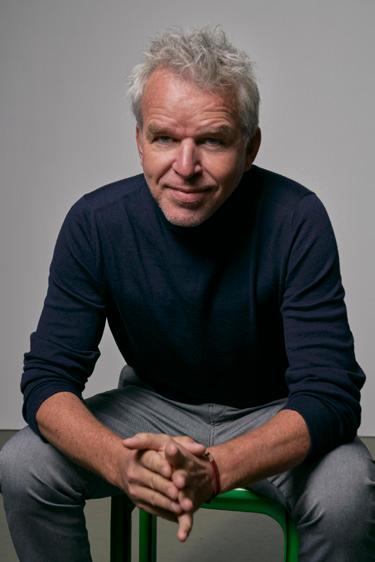
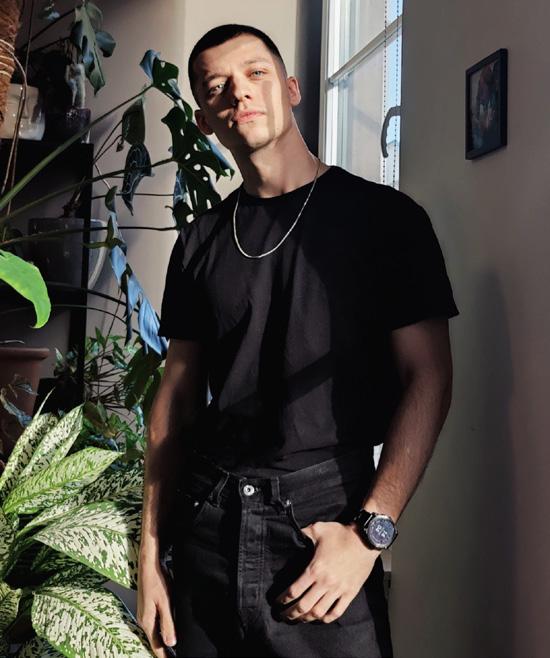

The Zuidas Accessibility Task Force is holding its fifth meeting of the year on 3 December, to focus on cycling incentives. For this edition, KPN has been invited to shine a light on their employee bicycle incentive scheme. Some 1,000 KPN employees are now taking part in the scheme, constituting almost ten per cent of the telecom company’s total workforce.
KPN wants to both encourage and reward employees who cycle to work. It is the first company in the Netherlands to offer a net kilometre allowance of €0.40 per kilometre cycled. This, in combination with an attractive bicycle leasing scheme, lets KPN employees use e-bikes or conventional bikes at very low cost. In fact, cycling a two-way 15-kilometre commute just once a week lets employees ride the average electric bike virtually for free. And the payoff is even better for those who cycle more often.
KPN has made a serious commitment to CO₂ emissions reduction, setting itself a cross-chain zero-emissions target for 2040. This ambition includes business travel. To achieve its goal, KPN has joined Coalitie Anders Reizen, a Dutch network of more than seventy major employers working to drastically green their mobility. Carlo Steenvoorden is in charge of mobility
policy at KPN: “Sustainability, for us, entails minimising our environmental impact, while at the same time contributing to solving societal issues. Mobility is one of those issues. The question is: how do we make commuting by bike or public transport the attractive choice? You need to change behaviour. We believe you can do this by encouraging and rewarding sustainable travel choices. So, the better a choice is for the environment, the better it is for your wallet.”
For KPN, the answer was a new optional lease plan that enables all employees to use bikes at low cost. Employees receive €0.40 net for every kilometre cycled. Those who take their own bicycle to work or the station also get reimbursed for those kilometres. Steenvoorden continues: “The Netherlands are synonymous with cycling, so bicycles as well as public transport
should be the go-to option for commuters in this country. I am convinced that, with a bike scheme like this, paired with a public transport pass and offices near public transport stations, more and more KPN employees will choose sustainable forms of travel. If KPN employees were to cycle an average 30 kilometres a week, that would be amazing.”
The bicycle kilometre allowance and bike lease plan are part of KPN’s revised mobility policy that came into effect on 1 August of this year. Of course, cycling is not an option for everyone, so while encouraging sustainable mobility, KPN leaves employees free to choose from a wide mix of travel modalities. It also has an attractive personal electric vehicle lease plan, shared cars, departmental cars and a €0.23 kilometre allowance for employees who use their own car.
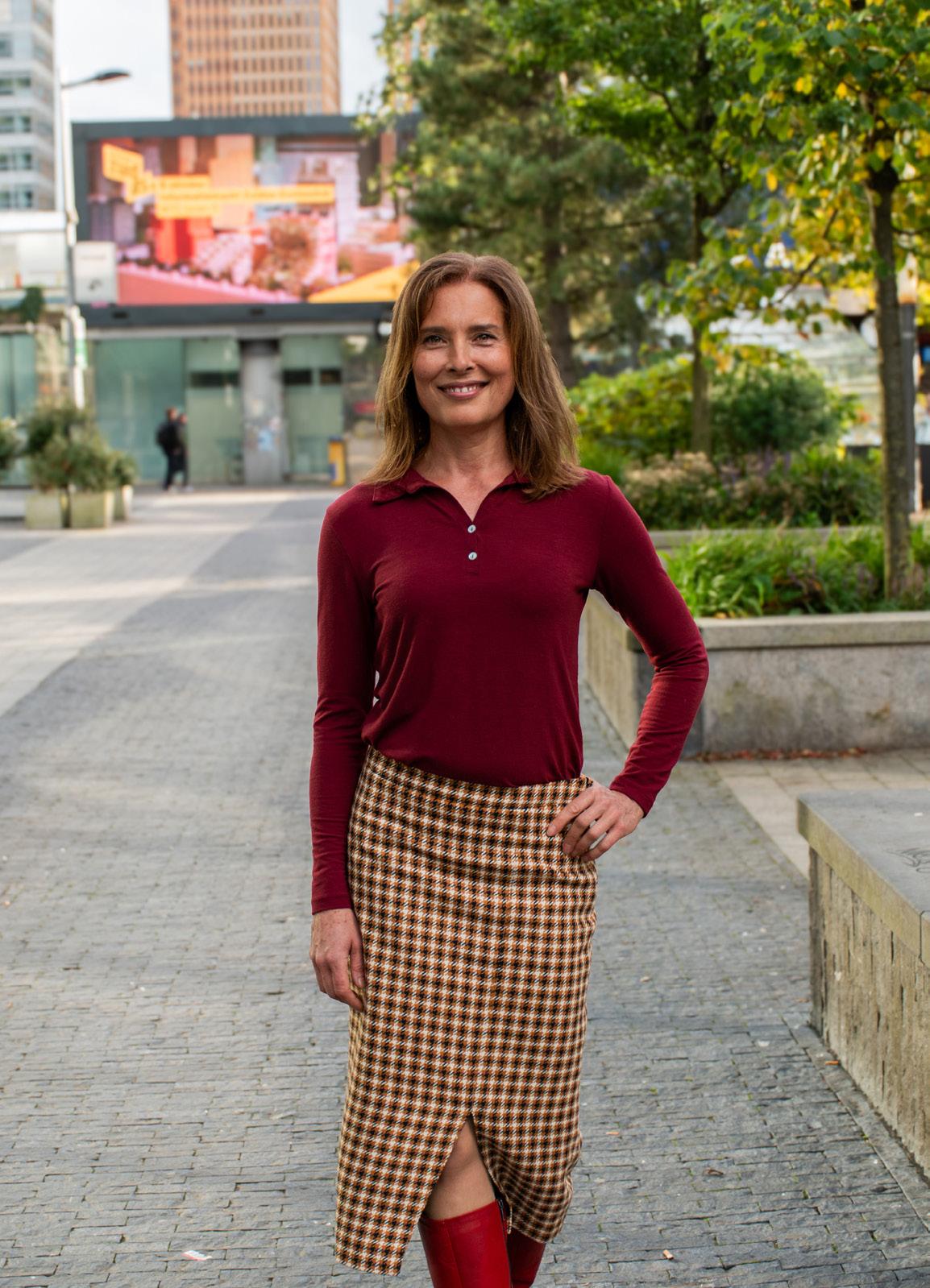
Helen van Empel is the founding director of Yet, a platform dedicated to mental wellbeing in the workplace. We sat down with Helen to talk about the importance of embracing mobility at work.
How does work impact us?
“We spend a third of our lives in the workplace, and the workplace experience greatly impacts our overall health and wellbeing, influencing other parts of our lives as well. The general and especially media focus on workplace stress and burnout can obscure work’s positive potential. Work is about more than just earning a paycheque: work shapes our identities and can provide growth, meaning and connection. But most people aren’t tapping into this potential. A Gallup poll shows that only 12% of Dutch professionals feel truly engaged in their work, while 16% are ‘loud quitting’ –actively working against their company’s goals. Meanwhile, 72% of workers feel disengaged, simply filling a seat and watching the clock, while doing the bare minimum. Instead of feeling relaxed, they tend to experience more stress and are more prone to burnout than engaged colleagues, as they feel lost and disconnected from their work.”
Why do people stay in unfulfilling jobs despite better options?
“Habituation can be a part of it. We get used to things and then we stop reacting as strongly to them. That’s just how we’re wired. When we get used to a negative situation, we lose the motivation to change. This can make us miss important shifts, such as changes in our kids’ behaviour, cracks in our relationships or inefficiencies at work. When we get used to something that is harmful, we
stop recognising it. We don’t realise the situation is bad for us, so we don’t take action; we just accept it. If someone starts feeling stressed out, sleeping poorly or becomes irritable, the focus is often on treating the symptoms instead of looking at, and changing, the root cause.”
Why is change needed for growth?
“In today’s fast-paced world, we need to stay mobile – adapting to remote work, hybrid models, AI, new products, competitors and generational shifts. Change isn’t slowing down, but that’s not necessarily a bad thing. In fact, we also habituate to good things. Even things we once loved – a relationship, a job, a favourite song – lose their lustre over time. To regain joy, we may have to step back and ‘dishabituate’, letting familiar things surprise us again. Even small breaks can help us reconnect with what’s good. If we always felt the same excitement about our job as in the beginning, we might stay in the same role for years, comfortable but not growing. While contentment seems appealing, it also lowers our drive to learn, grow and evolve.”
How easy is it to change?
“Learning and change are good for us, but we’re naturally risk-averse and tend to delay decisions and resist change. Habituation plays a role, as we get used to negatives in our current situation, like adjusting to a bad smell. We’re also wary of unknowns in a new situation and reluctant to let go of what we’ve built. It’s a shame, because research shows that
while change can be tough at first, it often leads to enhanced wellbeing in the long run. This doesn’t mean everyone should quit their job or leave their partner. Change can happen within an existing situation, it just requires attention and engagement. People often ignore dissatisfaction until they’re no longer aware of it. This is why it’s important to take note of small conflicts and frustrations early on. Frequent change gives rise to shifting roles and expectations, and addressing issues early leads to healthier, more fulfilling environments.”
How can Yet help in this process?
“Yet provides targeted, expert-led sessions at the point of need. Our sessions focus on the current situation, allowing for rapid adjustments. For example, our career coach can help identify your strengths and development goals within your current organisation. Yet’s leadership coaches provide support and guidance in the process of self-reflection and navigating complex situations that demand flexibility, resilience and mobility. A psychologist can provide insights into unhelpful thought patterns and how to address them. Another option we offer are ‘threeway conversations’ to help two people resolve disagreements or communication challenges quickly and effectively. Yet’s range of services helps people and companies become more mobile and navigate workplace changes effectively.”
YET +31 (0) 63 012 38 97 get@yet.nl yet.nl
From convention centre to sustainable, innovation-rich urban and residential district
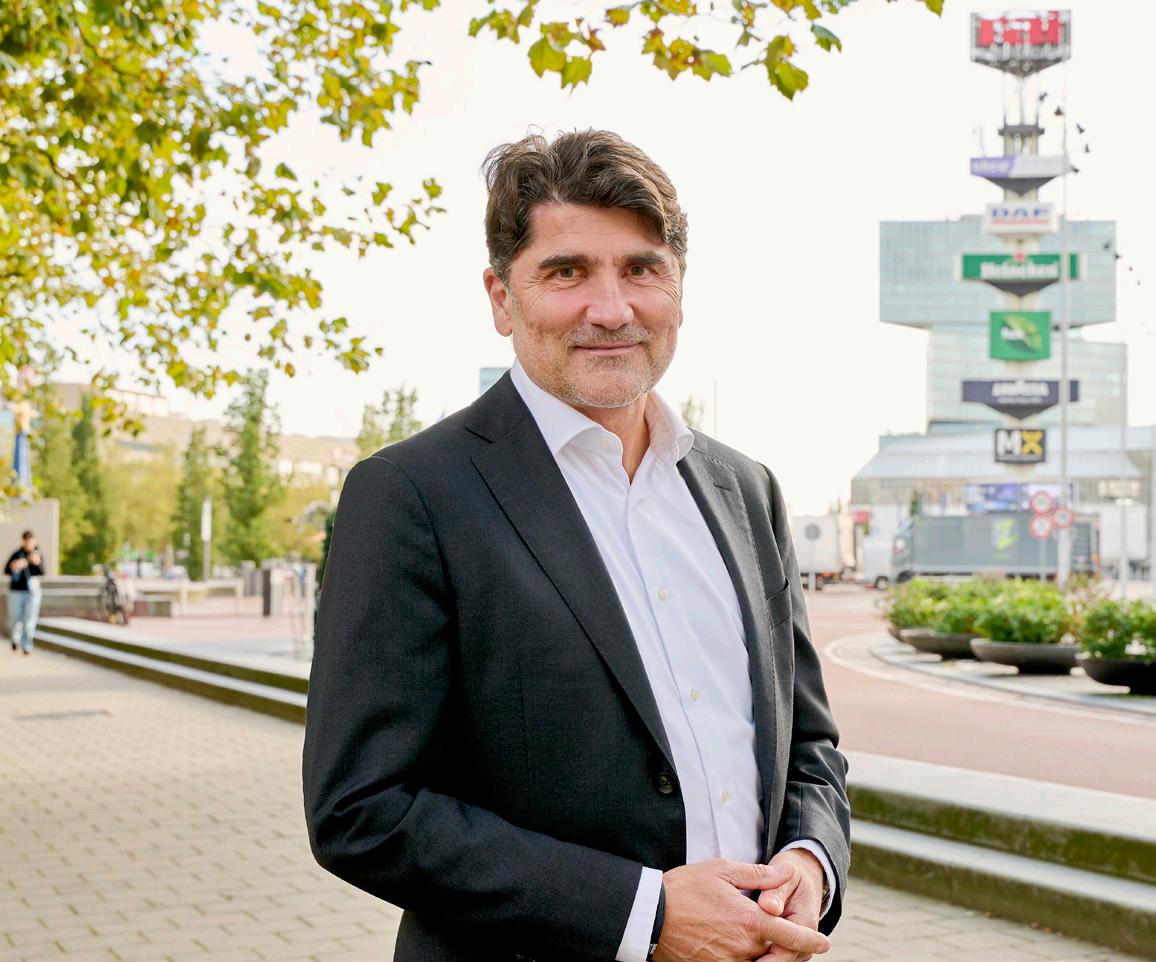
If CEO Paul Riemens has his way, the area around RAI Amsterdam is on the cusp of a major metamorphosis. Last year, the exhibition and convention centre hosted a total of 322 events, attracting almost 1.5 million visitors. “Worlds are changing, and we want to play a socially and economically meaningful role with all of the different events we host here. Fortunately, that coincides with what a growing number of our clients are demanding. And it goes without saying, that events held here should also foster innovation and provide an economic boost for the city.”

Riemens stresses that RAI Amsterdam wants to do all it can to contribute to urban wellbeing, development and transformation. “RAI Amsterdam is a sort of fortress, but we want to make this a friendly corner of the city. We have been working on an integral area development plan for several years, but this is a process that takes time. Collaborating intensively with the city has helped both us and them to realise what we have offer each other. In the next few years, we’ll be further developing our area vision with the City of Amsterdam and stakeholders. This will add even more value to the RAI premises for organisers, exhibitors, visitors, the city and region. The plan also provides an alternative for our logistics. We will be presenting our choices next year, in a dialogue with the city and local community. A whole new world will open up as we work towards avoiding lorry traffic in this area. It’s incredibly exciting to be driving these ambitious plans forward.”
RAI has used recent years to invest in sustainability as well, dramatically cutting both its energy consumption and CO2 emissions. Riemens: “We have reduced the convention centre’s gas consumption by almost half, relative to five years
ago, cut our total energy consumption by about 20 per cent in five years and our CO2 emissions by more than 16 per cent. Beyond that, RAI has installed drinking water dispensers to reduce water consumption. The RAI kitchen now uses plant-based and local products wherever possible. Moreover, we are replacing carpeting throughout the complex with circular carpet tiles. And all employee shoes, helmets and old uniforms are now being reused or recycled into raw material for car upholstery. We are working to make all the events held here one hundred per cent circular. This includes stand construction, dismantling and storage, where we can make a big difference.”
In time, new residential and office real estate will also be developed on the RAI grounds. Riemens: “We did a full analysis of Amsterdam municipal and metropolitan policy to look at where RAI can offer solutions that are also commercially interesting for us. Housing and offices will be part of it, since we have found solutions for both logistics and parking on our grounds. But we’ll be growing vertically, of course.”
David van Dijk, managing shareholder of Greenberg Traurig Amsterdam:
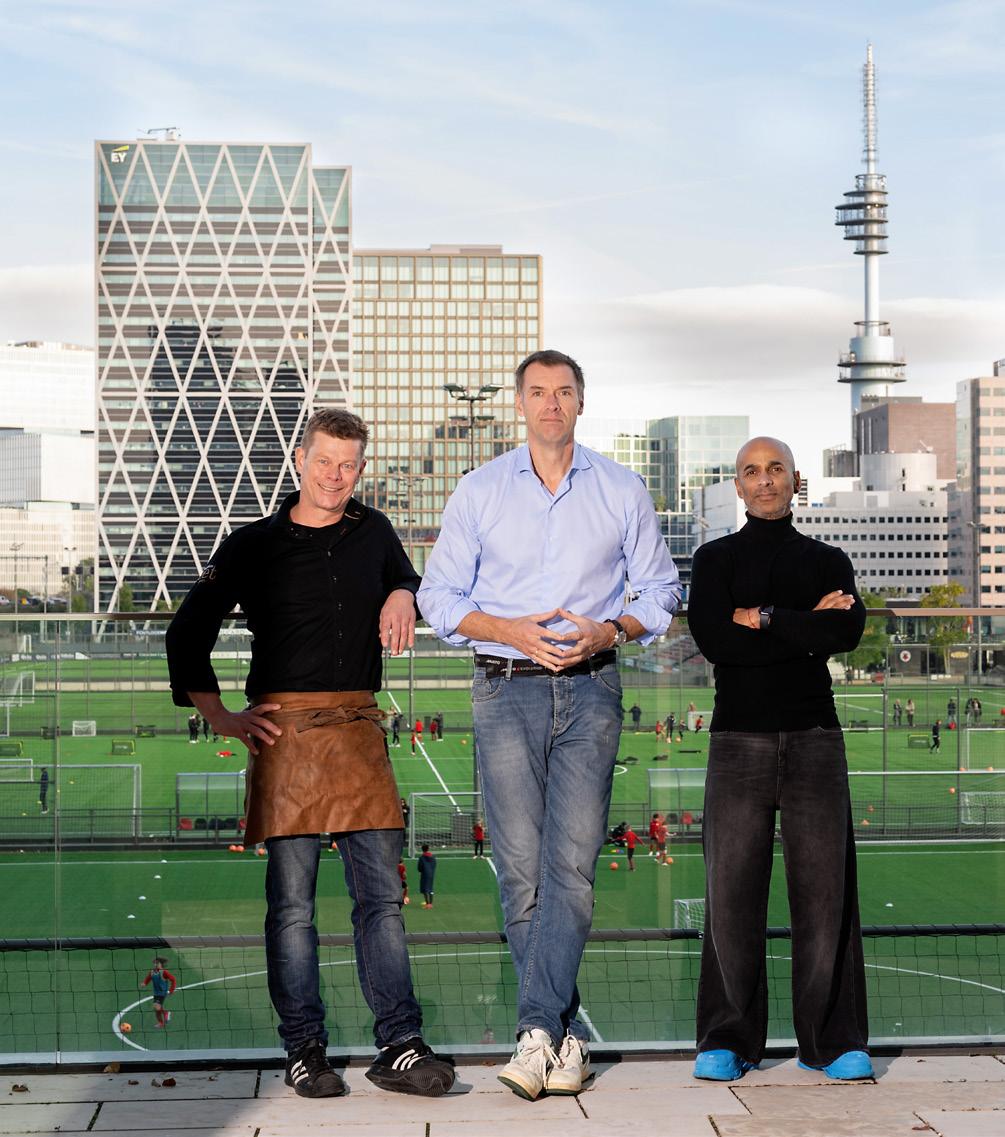
David van Dijk became managing shareholder of Greenberg Traurig Amsterdam earlier this year. In his new role, the prominent lawyer is also focusing on the firm’s social and environmental impact. “There are quite a few variables if you aim to be a sustainable firm with a fit and dynamic workforce.”
Van Dijk explains: “Mobility is obviously an important theme for a firm with offices in 48 countries. Digital meetings are here to stay, but it’s also essential for people to keep meeting in person – with colleagues and certainly with clients. It’s virtually impossible to maintain a solid culture and real time communication – two essential ingredients for any team to perform well – without people actually coming into the office. Sure, you can email and Zoom, but virtual communication is never a real substitute for face-to-face interaction.”
Like many of his colleagues, David racks up quite few a frequent flyer miles every year. “It’s unavoidable, though I have to say we always consider whether we really need to cross the pond or not.” At a local level there is a major focus on reducing the number of miles by car. The firm has a mobility scheme for employees that gives them a choice between a free bicycle or a public transport travel pass that they can use seven days a week. “Of course, we really urge people to take advantage of the free bicycle”, Van Dijk says. “Many of them live within easy cycling or even walking distance of our office in Zuidas. They love
taking their bike or walking to work and getting some exercise.”
The drive to connect with clients, while also providing employees with the best possible support, is omnipresent within Greenberg Traurig. Van Dijk: “For us, this also means not just being present on ‘Wall Street’, but also on ‘Main Street’. In the US we have offices in all the major economic centres. In New York, for example, Greenberg Traurig recently moved into new offices in One Vanderbilt in Midtown Manhattan, a location with good public transport links that’s literally next to Grand Central Station. But we have also opened several new, smaller satellite offices outside of Manhattan, including two on Long Island. Many of Greenberg Traurig’s lawyers and clients live there”, Van Dijk explains. “We set up these new offices in the New York City area to spend less time commuting while still maintaining our cohesion, community of lawyers and that all-important personal touch. These hubs give our firm and staff the best of both worlds and benefit both the quality of our work and the interests of our clients. Our satellite offices, for example, enable clients to meet with
their lawyer in person any time, if that’s preferred.” An added bonus to these close-to-home offices is that they help lower the firm’s carbon footprint. “Travel comes with the job, but of course the fewer the miles, the better.“
Mobility and vitality go hand in glove for Van Dijk. “First of all, because travelling a lot requires good health, stamina and energy. You’re better able to cope with time differences and jet lags when you’re fit.” And it’s also, because Greenberg Traurig has a strong culture of fitness and wellness. Among its employees are a fair number of regular marathoners and almost all of them do daily sessions in the gym or extreme sports like HYROX. “We didn’t create this culture; it grew organically. We have a pretty fit team and you can see it inspires people to adopt that lifestyle.” This strong focus on vitality is also reflected in another important aspect of the workplace: the staff restaurant. “At Greenberg Traurig Amsterdam, we have an in-house chef who prepares breakfast, lunch and dinner, so everyone can eat well and, above all, healthily. We also have a fitness trainer to help our colleagues to optimize the effect of their workouts. If you’re going to do something, do it well. And if your people push themselves hard, you need to provide the support they need to perform at their best.”
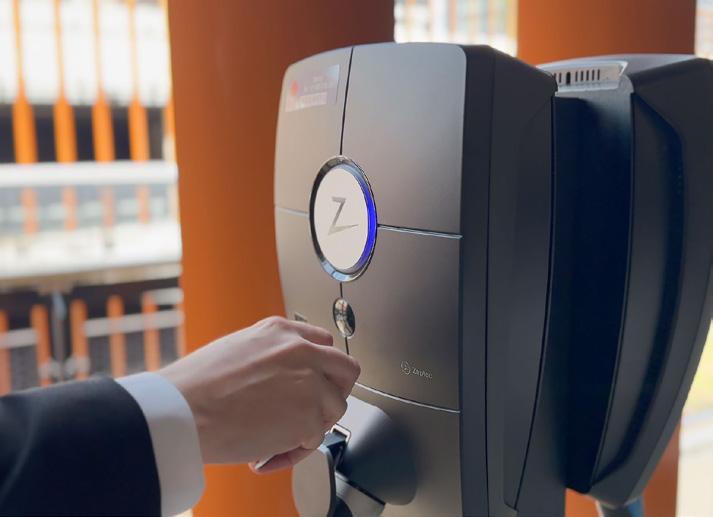
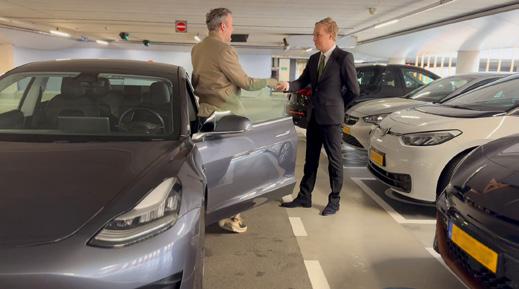
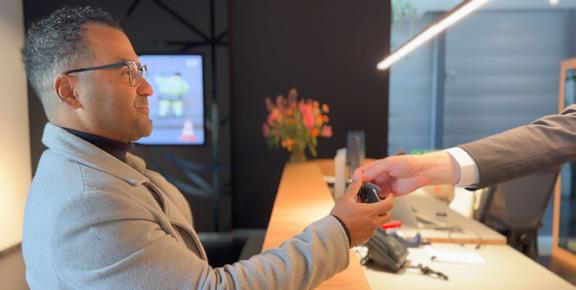
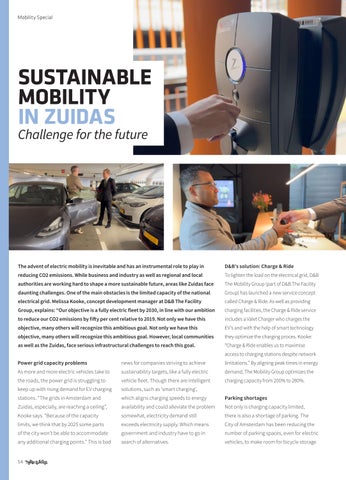
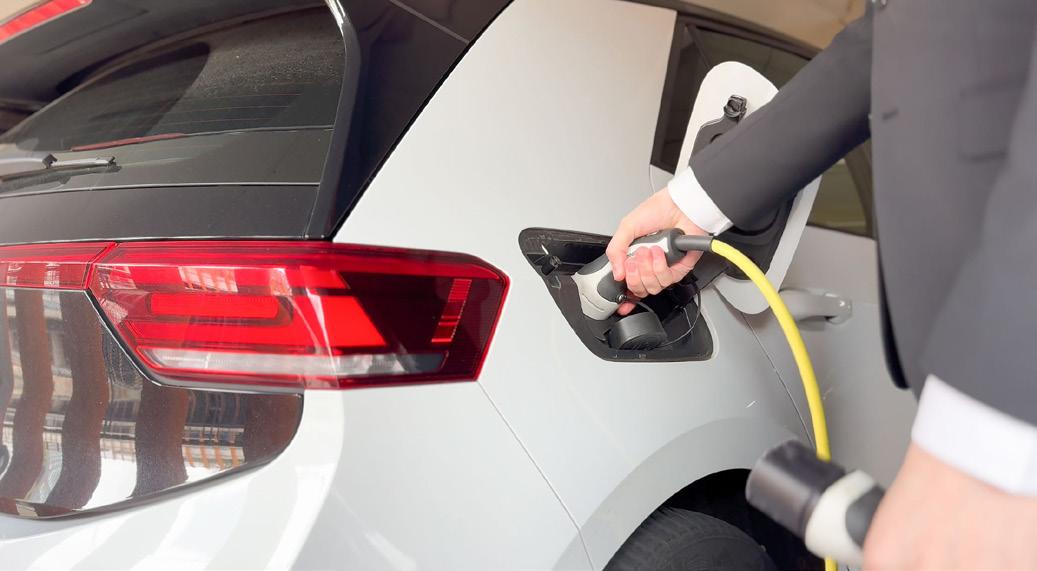
The advent of electric mobility is inevitable and has an instrumental role to play in reducing CO2 emissions. While business and industry as well as regional and local authorities are working hard to shape a more sustainable future, areas like Zuidas face daunting challenges. One of the main obstacles is the limited capacity of the national electrical grid. Melissa Kooke, concept development manager at D&B The Facility Group, explains: “Our objective is a fully electric fleet by 2030, in line with our ambition to reduce our CO2 emissions by fifty per cent relative to 2019. Not only we have this objective, many others will recognize this ambitious goal. Not only we have this objective, many others will recognize this ambitious goal. However, local communities as well as the Zuidas, face serious infrastructural challenges to reach this goal.
As more and more electric vehicles take to the roads, the power grid is struggling to keep up with rising demand for EV charging stations. “The grids in Amsterdam and Zuidas, especially, are reaching a ceiling”, Kooke says. “Because of the capacity limits, we think that by 2025 some parts of the city won’t be able to accommodate any additional charging points.” This is bad
news for companies striving to achieve sustainability targets, like a fully electric vehicle fleet. Though there are intelligent solutions, such as ‘smart charging’, which aligns charging speeds to energy availability and could alleviate the problem somewhat, electricity demand still exceeds electricity supply. Which means government and industry have to go in search of alternatives.
D&B’s solution: Charge & Ride
To lighten the load on the electrical grid, D&B
The Mobility Group (part of D&B The Facility Group) has launched a new service concept called Charge & Ride. As well as providing charging facilities, the Charge & Ride service includes a Valet Charger who charges the EV’s and with the help of smart technology they optimize the charging proces. Kooke: “Charge & Ride enables us to maximise access to charging stations despite network limitations.” By aligning peak times in energy demand, The Mobility Group optimizes the charging capacity from 200% to 280%.
Not only is charging capacity limited, there is also a shortage of parking. The City of Amsterdam has been reducing the number of parking spaces, even for electric vehicles, to make room for bicycle storage
facilities and green zones. This is making it extra difficult for employers in Zuidas to enable their workers to make sustainable mobility choices. Kooke says that “the reduction in parking spaces combined with the llimitation of charging facilities means we face a double dilemma.”
In spite of these obstacles, D&B The Facility Group is pushing ahead to realise its sustainability ambitions. Cutting carbon emissions and fleet electrification are essential steps towards achieving the climate targets in the Paris Agreement, aimed at keeping global warming below 1.5 degrees Celsius. Collaboration is crucial, says Kooke. “Innovative thinking and partnerships will be key to solving grid infrastructure and capacity problems. Charge & Ride is a step in the right direction, but we also need support
from the government to prepare the power grid for future demand.”
Workplaces with D&B’s Service
D&B The Mobility Group is part of Multi Service Provider D&B The Facility Group. Kooke: “In addition to mobility services, D&B also provides Hospitality, Security, Food & Beverage, and Cleaning services to ambitious corporates and high-end real estate in cities such as Amsterdam, Rotterdam, The Hague, Utrecht, Amersfoort, and Eindhoven. D&B continues to focus on enhancing quality and employee well-being in leading work environments.”
D&B The Mobility Group Gondel 1 1186 MJ Amstelveen +31 (0)20 420 0691 www.themobilitygroup.nl www.db.nl
How does Charge & Ride work?
When going to charge their vehicles, employees or office users are directed to a charging station and hand their car keys over to the driver, the Valet Charger.
The Valet Charger plugs the vehicle into the charging station.
When the vehicle is charged fully or up to an agreed range, our Valet Charger moves it to a regular parking space on site or in the car park.
This frees up a connection for the next vehicle, which our Valet Charger moves to the charging station.
When the employee or office user leaves after work or at any other point in the day, they can collect their car key from our Valet Charger, who directs them to where their vehicle is parked.
• Intuitive spreadsheets
• Complex models
• Multi-user spreadsheets
• Tailored administrations
• Powerful macro’s

> www.excelengineers.nl


Boost the Dutch skills of your international employees with our customised language training
flexible tailor programmes for maximum learning impact
increases Dutch language proficiency
invest in the professional growth of expats
www.taalcentrum-vu.nl
020 - 244 3400 | info@taalcentrum-vu.nl








Want to truly get to know each other and celebrate recent successes together? A team ski trip is an ideal choice! Wens Hotels offers a full package, with a high-end hotel located right at the base of the Schattberg in Austria, next to the ski lift and the valley run. After a day on the slopes, you can enjoy a lively après-ski scene each evening.
A relatively new company under the umbrella of the well-established Wens Business Events, Wens Hotels was founded by Jeanet van der Vlugt and Lusan Meeder during the pandemic. “The travel industry was frozen at the time and we had a sense that, by the time it was all over, people would want to go skiing not once, but four times a year.” The two contacted Hotel Auwirt Zentrum in Saalbach-Hinterglemm, a town in one of Austria’s three biggest ski areas, and now Wens Hotels offers bespoke short-ski holidays there for groups of up to 120 people.
on the slopes
According to Jeanet and Lusan, their concept ‘proved to be unique, and companies love it. This is reflected in the reviews, with a rating of 8.6 on Booking.com and excellent ratings on Google as well. For starters, people
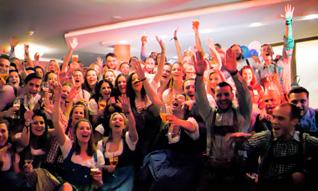
rave about the area where Hotel Auwirt is located.” Saalbach and Hinterglemm are two picturesque, mostly car-free villages famed for their charm. The ski area is vast and amazing for ski trips. With a mix of blue and red pistes, there’s loads for both beginners and advanced skiers to enjoy. And there are plenty of après-ski options, of course. The hotel itself is also a big favourite with corporate clients. When it has snowed, you can ski right up to the hotel entrance. Moreover, all rooms boast mountain views, plus the hotel has a sauna, in-house masseur, and wines and cocktails for guests.
Private Hotel for
All Business Group Needs
Wens Hotels tailors each trip to the specific wishes of the client and company. “We make sure all your ski gear is ready for you to hit the slopes within 15 minutes of arrival
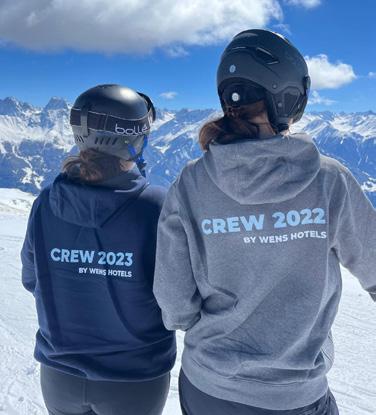
and have everything arranged for you in advance, including group check-ins, so guests can be at the ski lift or rental shop in no time. Maybe your company wants to host a party with a private DJ? Or to sample the local food? An Apfelstrudl workshop or an outdoor barbecue? We can arrange it all!” Other activities include horse-drawn sleigh rides, quad rides, snowshoeing and ice karting. Basically, whatever you please. With Hotel Auwirt having proved such a success, Wens Hotels will soon be offering a second hotel at a higher elevation in Austria. “It’s brilliant that something so beautiful has come out of the pandemic. Wens Hotels is doing great”, say its founders, “so we’re very happy”.
Wens Business Events Stationsweg 24 3743 EN Baarn +31 (0 )35 303 55 55 www.wensbusinessevents.nl
Only a few more days to go before our judges finally announce the winners of the 2024 Zuidas Sustainability Award! We were delighted to receive scores of wonderful and inspiring submissions again this year. So which companies and initiatives will snag the coveted awards in each category?
As always, you can also vote for your own personal favourite project. The 2024 Zuidas Sustainability Public Choice Award gives everyone the chance to have a say about which sustainable initiative is the most impactful. Don’t wait: there are only a few more days to vote! You can vote at: zuidasduurzaam.nl/stemmen/?editie=2024
This year’s festive award ceremony will be hosted in the cool new Robert Walters neuroscientific office in WTC Tower Ten. The programme promises an exciting and inspiring line-up of speakers, including Amsterdam Zuid district councillor Rocco Piers, whose portfolio includes Sustainability and Circular Economy, as well as Robert Walters CEO Jose Bokhorst and Marijke Hogers, owner of Stadshout.
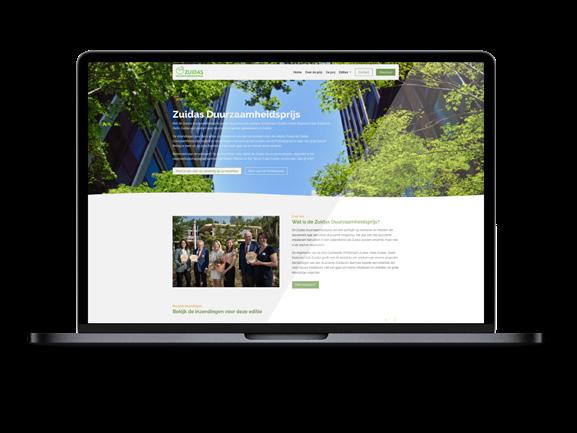
Sustainability Award website! This year Zuidas has invested more in sustainability than ever. You can see all that’s happening on our new website. Haven’t visited yet? Check it out: www.zuidasduurzaam.nl
And last but certainly not least, we’re pleased to introduce a new member of our judging panel. Maurits Groen will be joining the team of judges during this edition. Groen is an entrepreneur committed to sustainability and environmental awareness. He is best known as the co-founder of WakaWaka, a company that develops innovative, sustainable solar energy solutions, such as portable solar chargers and lamps, to combat energy poverty. Groen has also helped launch a variety of environmental initiatives and campaigns to raise climate awareness.
With projects tackling both local and global climate and energy challenges, Groen is a leading voice in the Dutch sustainable business world and highly regarded as a pioneer in sustainable innovations and social enterprise. Welcome to the team!



Submissions for the 2024 Zuidas Sustainability Award are in! On Thursday 14 November, from 3pm to 5pm, Hello Zuidas, Green Business Club Zuidas and the Amsterdam Zuidas district office will be announcing the winners of the third edition of this special award. This year’s venue is the Robert Walters neuroscientific office in WTC Tower Ten. There will be an informal reception afterwards. You are cordially invited to join us!
Don’t miss it!
Sign up now via the QR code.
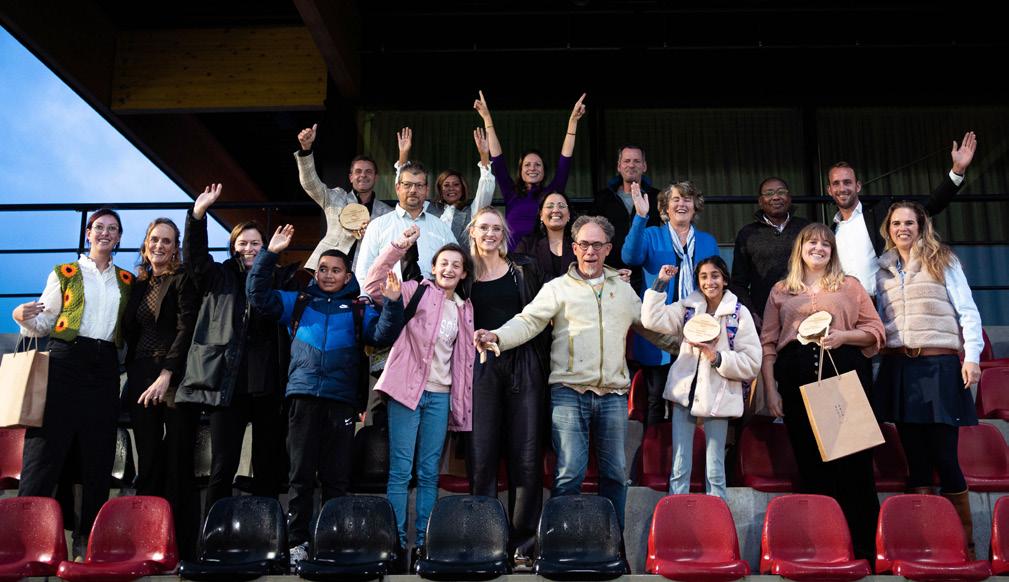

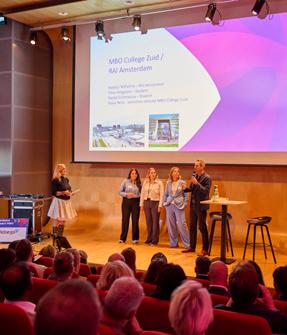
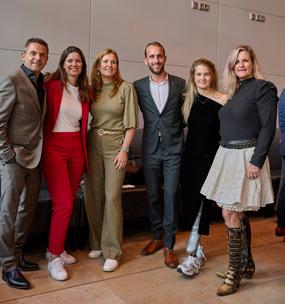
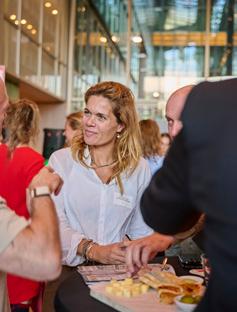
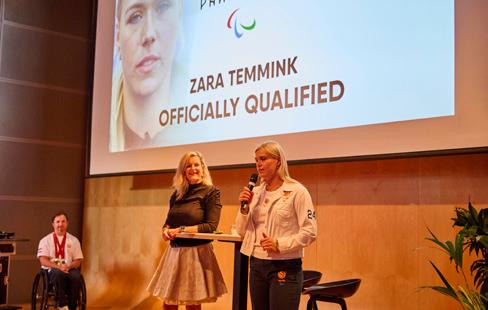
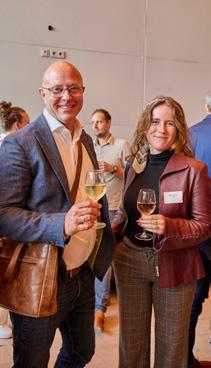
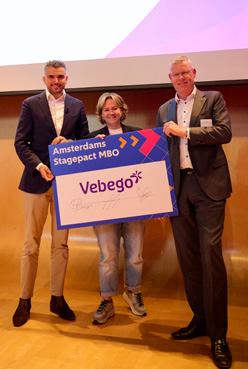
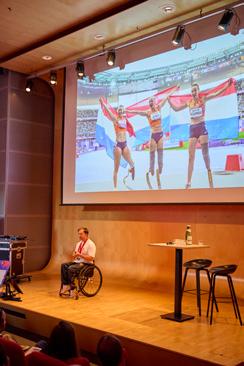
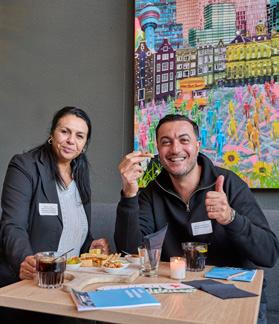
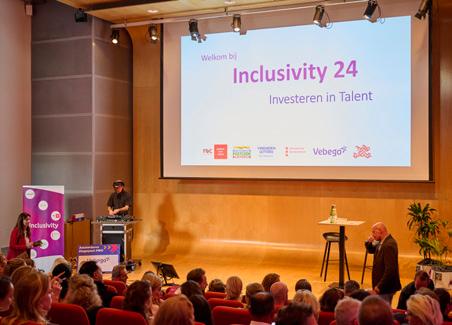
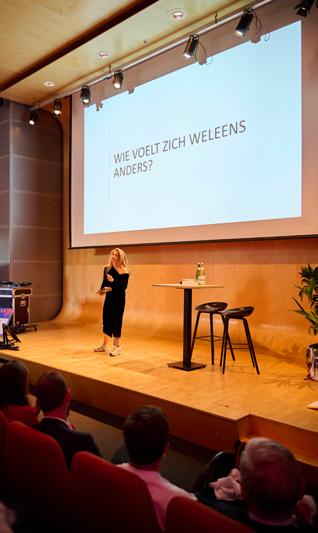
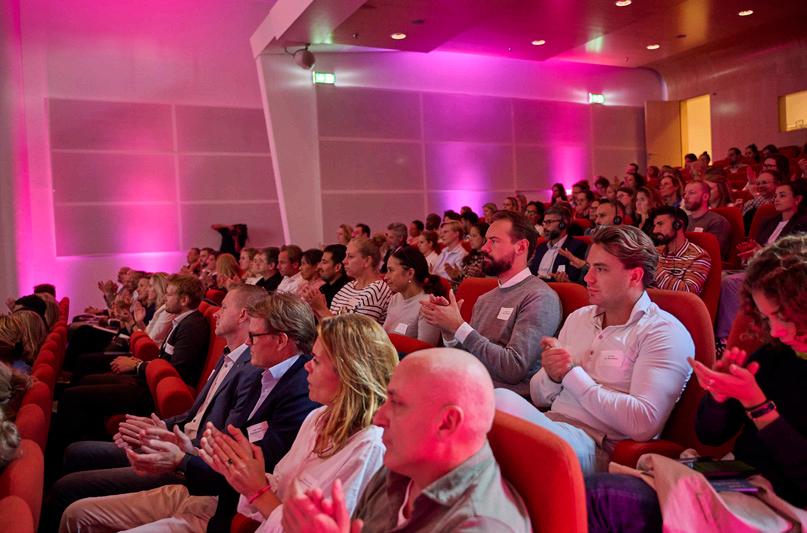
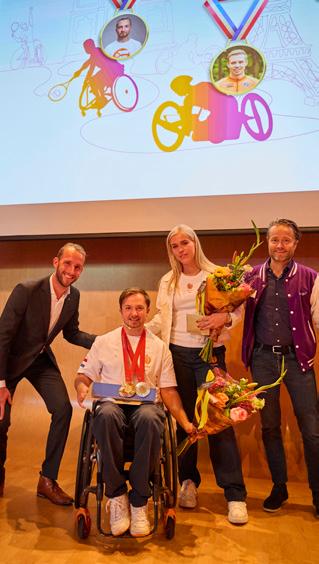
Thursday, September 12th, marked the event ‘Inclusivity 24’ with the theme ‘Investing in Talent’ at the World Trade Center (WTC) Amsterdam. A collaboration between Hello Zuidas, Vebego, Nationale Postcode Loterij & VriendenLoterij, with contributions from MBO College Zuid | ROC of Amsterdam, flowburo & RAI Amsterdam, made possible by the Municipality of Amsterdam Zuidas.
Sophie-Anne Onland inspired the audience with her talk, ‘Being Different is the new normal.’ Saskia Rosmalen from ‘Onbeperkt aan de Slag’ made us realize how one can suddenly belong to a different target group.
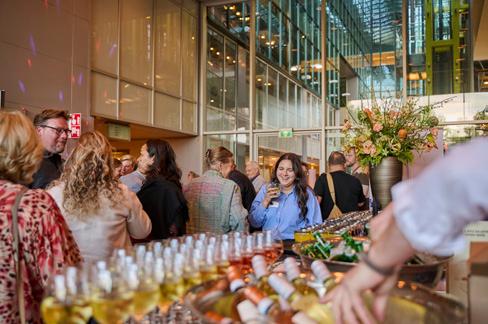
Deputy mayor Sofyan Mbarki made a wonderful plea for vocational education (MBO) and, together with Vebego, signed the MBO Internship Pact. Paralympic athletes Sam Schröder & Zara Temmink shared their top-level sports careers with us. Wow, what achievements! And those medals are heavy!
An event we are proud to have co-organized. Let’s make Zuidas more inclusive together!
If your Zuidas organisation has any great ideas in the field of Diversity & Inclusion, please feel free to contact: Elisa Schouten, Project Manager Diversity & Inclusion at elisa.schouten@hellozuidas.com
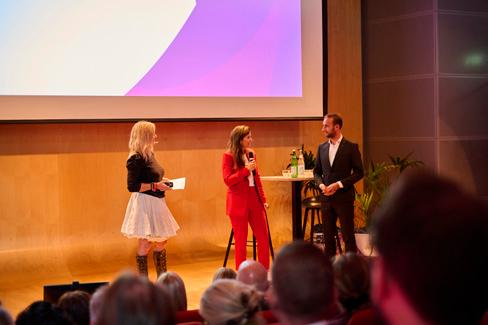
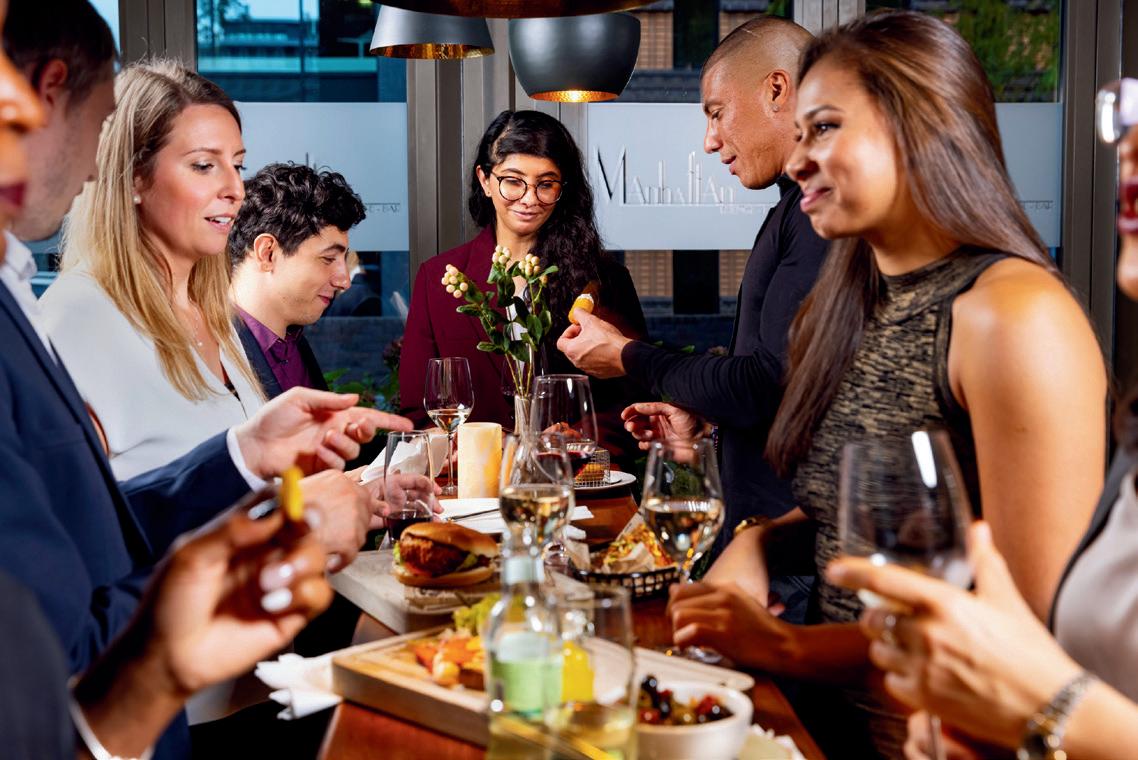
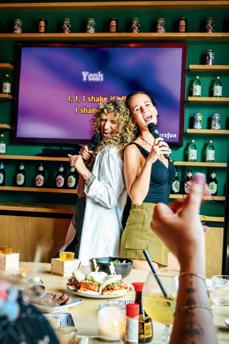
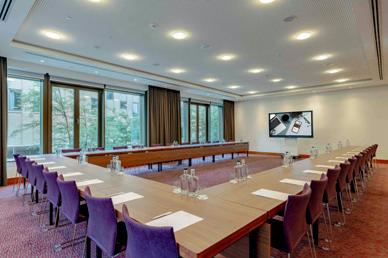

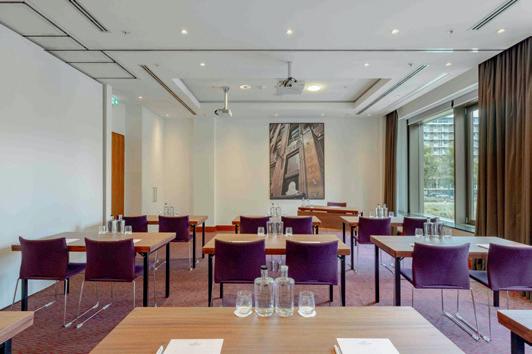
With friends or colleagues, we are all looking for a nice place to celebrate the end of the year. Here is our selection in A’dam Zuidas
A cosy bar with a music theme. No renting fee to privatise the bar. You can host up to 120 people and a fresh new menu from chef Alessandro!
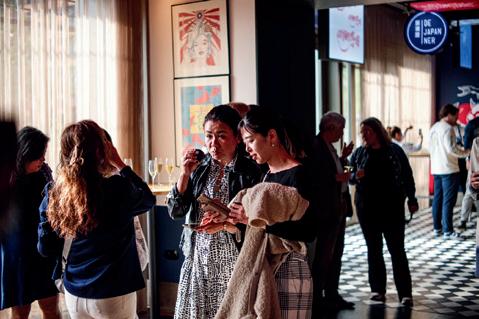
2
info@manhattanbar.nl
The new De Japanner on the Zuidas can host up to 250 people. The layout also allows private areas for smaller groups. Enjoy delicious Japanese dishes, unique drinks, combined with the cheapest karaoke in town (just 5 euros per person*)
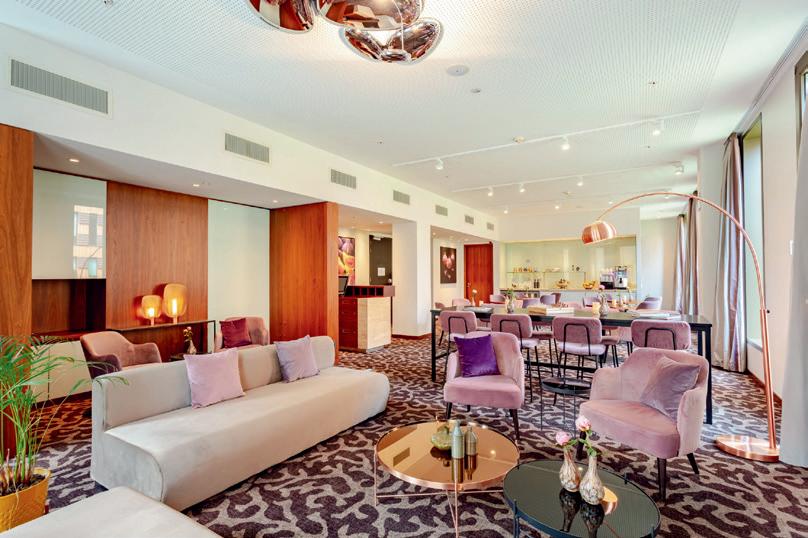
zuid@dejapanner.com
3
For the end of the year, Crowne Plaza is making their Club Lounge available for events. A glamorous option, with great service. And if you want to combine fun with a little bit of business, they have 7 meeting rooms with natural daylight available.
amspc.meetings@ihg.com
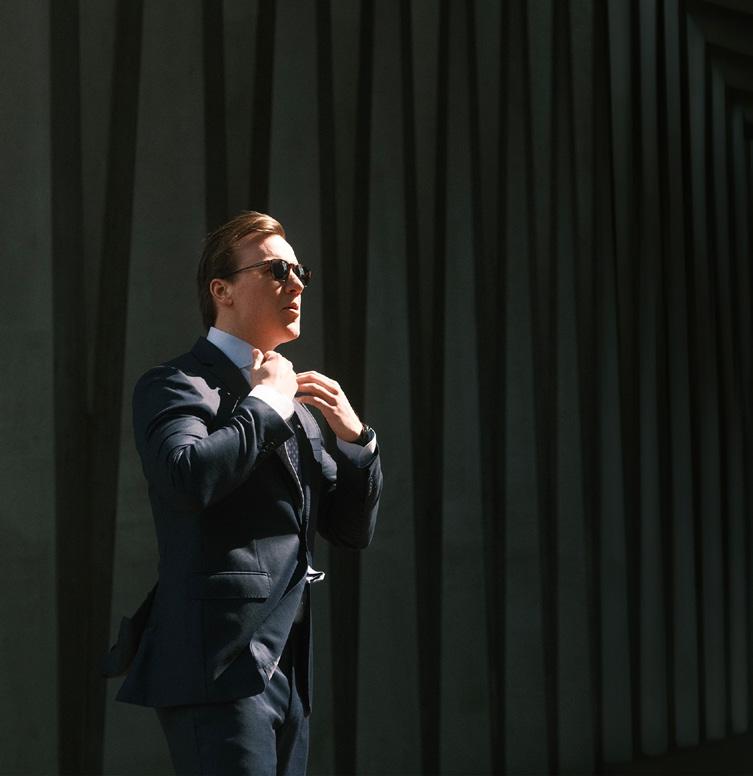
In his day job, Marinus Prakke is an attorney at law with Loyens & Loeff and member of the firm’s Litigation & Risk Management practice group. Specialised in advising, drafting, litigating and negotiating commercial contracts, he’s an expert in all commercial contracting aspects of environmental, social and governance (ESG) objectives, intellectual property (IP), information technology (IT) and consumer law. Marinus also has extensive experience in distribution, franchise and agency agreements.
Meanwhile, Marinus just released his second studio album, Rappende Raadsman II, under his stage name MC Prak$.
Outside his legal career, people may also know Marinus from the hit song ‘Typen’ that went viral in 2022. Marinus: “It began as a fun way to bring some light-heartedness to the professional services bubble of Amsterdam Zuidas”. What began as a simple hobby has become a tongue-in-cheek ambition “to be the first and best rapping lawyer of the Low Countries”.
But how on earth did this legal eagle wind up in the music scene? Marinus: “From a young age, I was deeply inspired by rappers like
Eminem, 50 Cent, and – in my humble opinion, the greatest rapper of all time – Li’l Wayne. Although I aimed for a career as a lawyer, I was eager to embark on a rap journey myself. In the end, practicing law and making music together bring me the greatest joy”.
With the brand-new release of his new album, Rappende Raadsman II, Prak$’s career is entering a new stage: “This album includes both yuppie and more personal themes. My producer, friend and radiologist-in-training Robijntje and I are looking to deliver a whole range of sounds and styles: from old school rap and trap to poppy hits and house bangers. We think this album is jamming with creative vibes and are super excited to perform it on stage”.
MC Prak$’s new album Rappende Raadsman II is available on all streaming services. Follow @mcpraks on Instagram and TikTok to catch his latest releases.
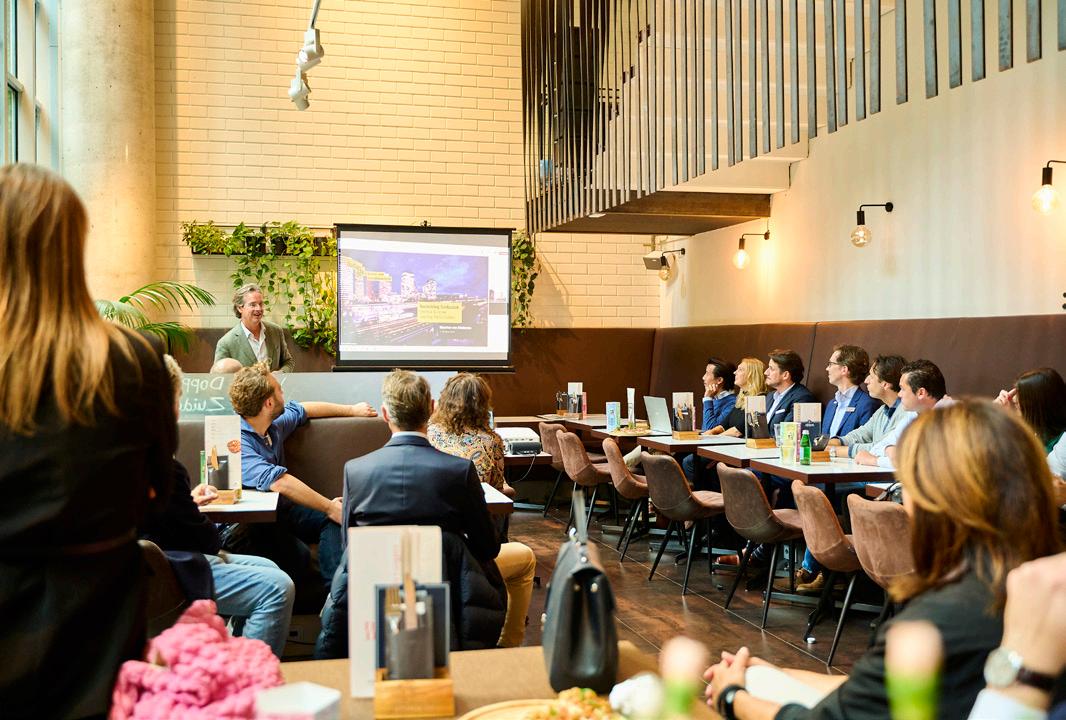
On 7 October, hospitality and retail business owners joined at Doppio Zuidas for an inspiring gathering, organised by Hello Zuidas. Topics discussed were the precario tax (a ‘sufferance’ tax on outdoor terraces and advertising), the municipal economic vision on Zuidas as a new urban centre, and the latest developments at Zuid Station.
The afternoon yielded plenty of interesting insights and spirited discussion led by an impressive panel of speakers. Amsterdam alderwoman for Finance Hester van Buren, Amsterdam Zuid
district council chair Bart Vink, Amsterdam KHN regional manager Eveline Doornhegge, and Zuidasdok project environmental manager Maarten van Ettekoven were our guests at this edition and gave presentations to local business owners. They also answered audience questions and offered practical advice on dealing with what many feel are high precario costs.
Alderwoman van Buren responds
As alderwoman for Finance, Hester van Buren was able to update participants on developments around the precario tax. There
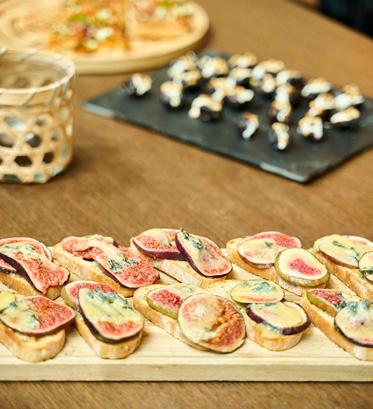
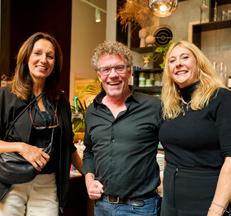
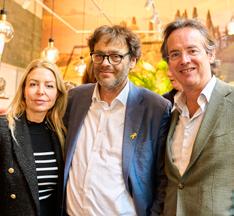
has been a big upset over this tax as business owners, not only in Zuidas, but citywide are shocked at the high rates. There has been wide media coverage of this as well. After suspending collection for three years during the COVID-19 pandemic, vendors with terraces recently received assessments for 2023. “The documentation and enforcement are all in order”, the alderwoman assured, “and though it may not feel like it, the precario has not gone up. The City Council took a decision to raise the terrace tax back in 2019”.
There was also positive news for business owners. Prompted by the uproar over rates and communication, the alderwoman has now sent a proposal to the Council asking that sports clubs and uncovered winter terraces be excluded from the tax. Van Buren argued that “it was disproportionate”. If the proposal passes, it will be applied with retroactive effect as from 2025.
She further advised business owners to file objections if they believe amounts are wrong. “All of the precario tax bills have gone out. If you think there’s an error, get in touch with the municipal office and file an objection. There is no payment due for as long as the objection remains pending.”
A common complaint among local operators concerns the fact that business mostly dries up during weekends, evenings and between two and five in the afternoons. Therefore, they say it is unfair to assess Zuidas at the same rates as busy neighbourhoods like the city centre and De Pijp. According to one audience member, “A terrace costs more than it pays!”.
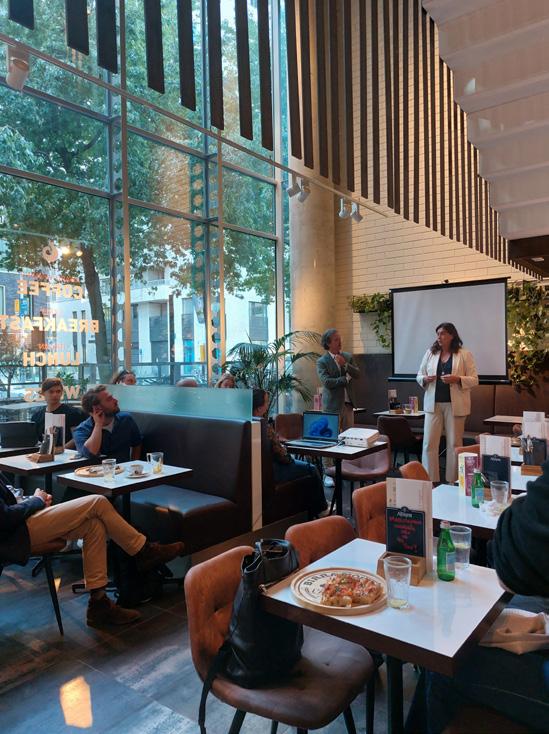
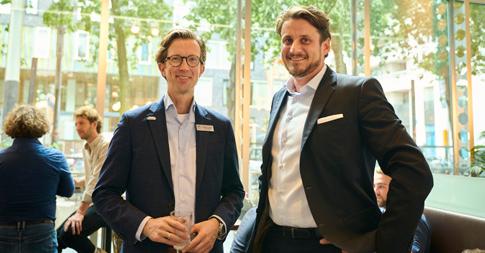
Eveline Doornhegge of the KHN (national hospitality industry association) likewise called the tax “disproportionate”. In Zuidas, the rate has spiked from 42 to 70 euros, plus over 38 euros for those with a winter terrace. She said: “I’m glad that Hester has listened to the objections and submitted a proposal to exclude winter terraces.”
The KHN has prepared a sample objection letter that business owners can use to object to the terrace tax. Doornhegge told the audience that the association can also assist with next steps in the event of rejections.
Want to read more about this meeting? You can find a full report on the Hello Zuidas website: www.hellozuidas.com.


Nova Ploum is currently doing a work placement at Hello Zuidas, focusing on the Safety and Security Network, previously known as the Safety Platform. She is studying Integral Safety and Security Science at HU Utrecht, a programme covering all aspects of safety management. With her expertise, Nova contributes to making the Zuidas safer. As part of her internship, she is researching the Safety and Security Network, exploring how it fosters connectedness among members and enhances safety in the area.
Zuidas is best known for being Amsterdam’s business district, chock-a-block with skyscrapers and scores of offices. More recently, however, the district has grown into a veritable urban neighbourhood and a great place to live and hang out. Many businesses have also discovered Zuidas, and with their arrival, the district has added a wide range of services and amenities, including shops, schools, fitness centres and places to drink and dine. Powering each of these establishments are entrepreneurs and employees with their own special, personal stories that we’re eager to share with you.
According to the 2022 Area Analysis by the Municipality of Amsterdam, safety has decreased due to three factors: social cohesion, fluctuating levels of crowding, and traffic safety. Nova’s research focuses specifically on ‘social cohesion,’ addressing the lack of it through the network, with the aim of improving overall safety in Zuidas.
“By integrating these measures, Hello Zuidas aims to enhance social cohesion among Safety Members, ensuring and improving safety in the area,” she explains.
Despite her research, Nova views Zuidas as a safe place. “It has a friendly atmosphere, with plenty of eateries and shops, making it an attractive area. I’ve only been here for two months, but it’s a fun place. I feel safe here, though I understand people might feel uneasy at night.”
Nova’s goal for the coming months is to gain experience both personally and professionally. She is also eager to see the results of her research, which could improve connectedness among network members and contribute to a safer Zuidas. Her research aims to determine whether the Safety and Security Network strengthens member connectedness and contributes to a safer environment.
Every Thursday and Friday afternoon, Hasta La Vista opens its doors at 5pm for the Zuidas after-work crowd. Buena vista is the not-to-be-missed weekly cocktail hour where you can relax with colleagues, teams or friends and ring in the weekend. Enjoy drinks and nibbles plus the best view of beautiful Amsterdam from our prime 19th floor location. The disco ball is spinning, our DJ is playing your favourite tunes, and all are welcome – no advance booking necessary. So mark your calendar for buena vista every Thursday and Friday at Hasta La Vista Baby!
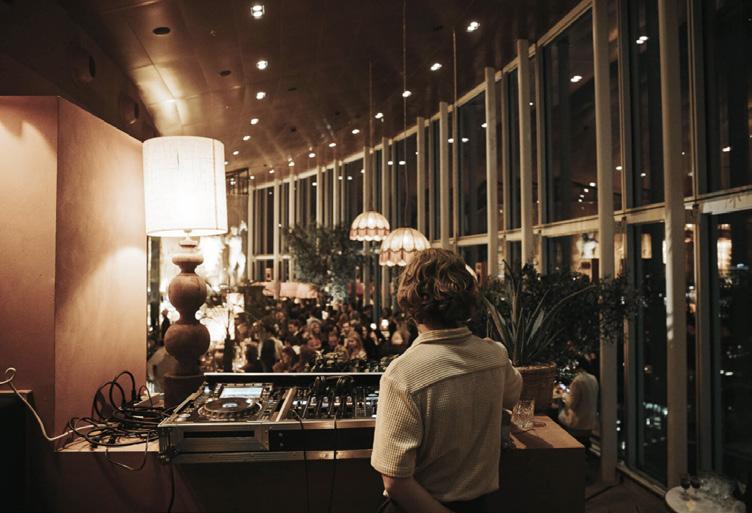
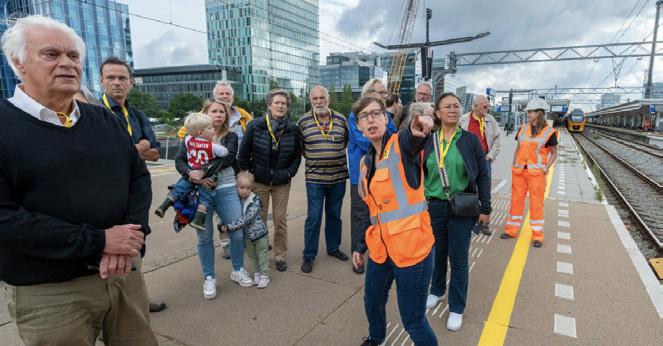
Want to discover more of Zuidas and about the Zuidasdok project? The guided tour on 30 November is your chance! During this walking tour you’ll get a unique glimpse into the development of both the district and the infrastructural mega-project. The tour is from 1.30pm to 5pm and free of charge. For details and to register, go to www.zuidas.nl.
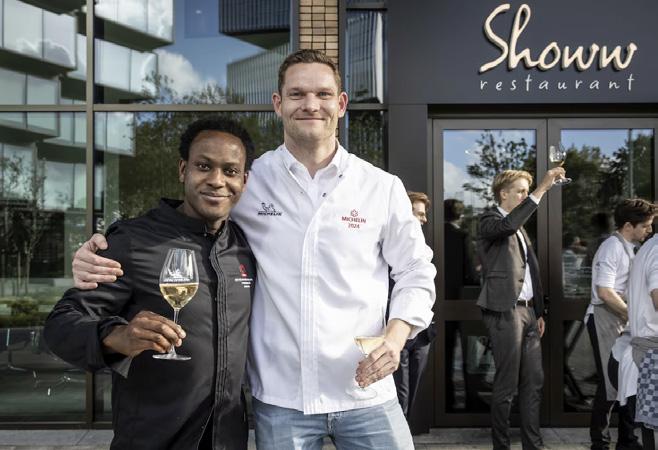
Restaurant Showw in Amsterdam-Zuid has been awarded a coveted Michelin star, to the surprised delight of Chef Dorus Floris. In addition to this star, the restaurant’s sommelier, Lendl Mijnhijmer, received a prestigious sommelier award. Showw opened on Gelrestraat earlier this year with an international menu, spanning meat to fish to vegetarian dishes. Floris and Mijnhijmer were previously also a team at Restaurant Bougainville. While Showw celebrated, two other Amsterdam restaurants, The Duchess and Graphite, lost their Michelin stars.
Law firm Loyens & Loeff has announced structural changes to improve in-house collaboration. Though some jobs will be lost, cuts will be limited, reported Het Financieele Dagblad. “I think this restructuring is a good benchmark for
the rest of Zuidas”, said Anton Wiggers, corporate turnaround specialist and partner at Themis Company. The country’s largest law firm in terms of turnover, Loyens & Loeff is restructuring to streamline collaboration among its lawyers, tax specialists and civil-law notaries. Too often, it says, clients are still being served on an ad hoc basis, rather than by a specialist with the right expertise.
Source: BNR
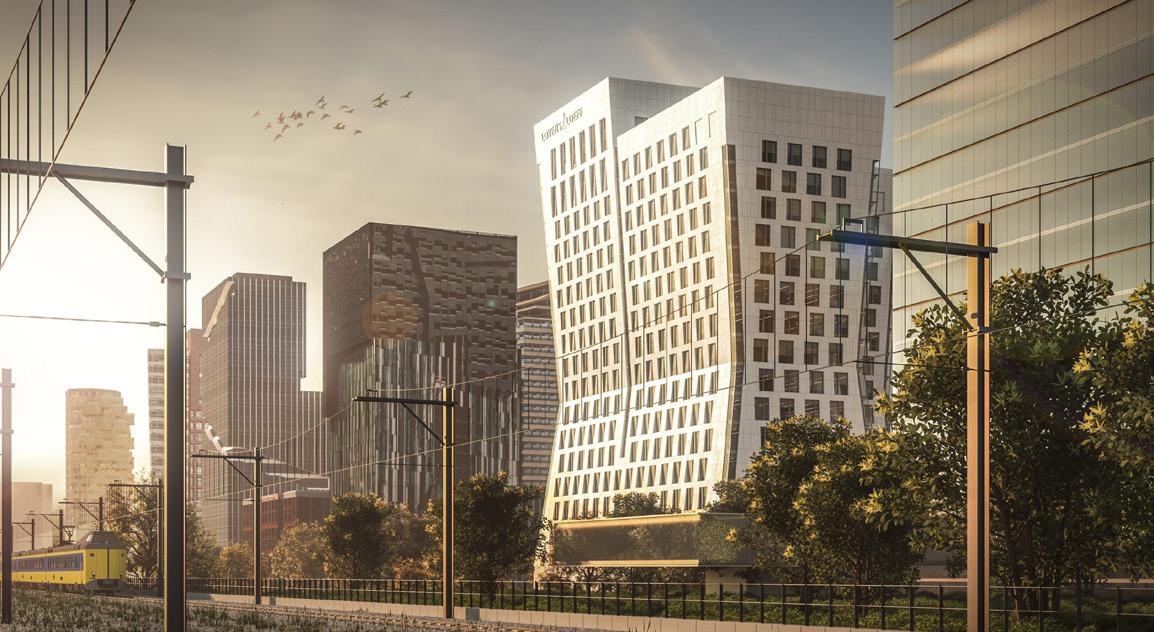
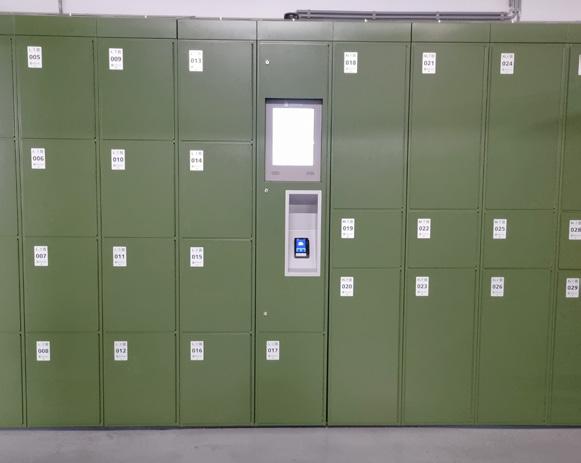
Sector: Service (Luggage store)
Number of employees: 3 FTE’s
Link with Zuidas: Lockerpoint is specializes in operating luggage lockers at unmanned locations. Currently, Lockerpoint has lockers at 16 locations. In Zuidas, they can be found in the Q-Park Mahler parking garage. Reason for becoming a Hello Zuidas member: Lockerpoint likes to stay informed about developments in Zuidas but also hopes to increase brand awareness so that visitors to the are will frequently use the lockers, for example, employees attending after-work drinks or international visitors wanting to store their luggage.
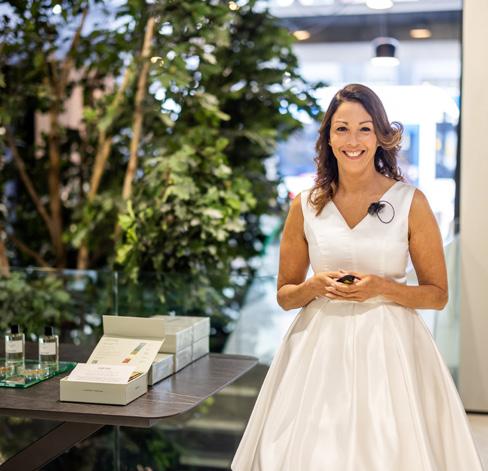
Sector: Education
Number of employees: 1
Link with Zuidas: Awa Prenilla found the perfect location at HOFF Offices in prestigious Zuidas, featuring fully equipped and state-ofthe-art meeting spaces to receive her clients and host her events. As a certified life coach and hypnotherapist, she helps individuals and teams overcome anxieties and self-doubt through advanced hypnotherapy, promoting personal and professional growth. She offers in-person sessions and online consultations worldwide. Schedule a complimentary discovery call at awaprenilla.com and receive a 15% discount on your first session.
Reason for becoming a Hello Zuidas member: Awa values her membership in Hello Zuidas as it allows her to connect with likeminded professionals and clients.
Sector: LinkedIn Marketing
Number of employees: 15
Link with Zuidas: Our headquarters are located there. Reason for becoming a Hello Zuidas member: Community building is in our DNA. In B2B, it’s all about building long-term relationships. We do this for our clients through LinkedIn.
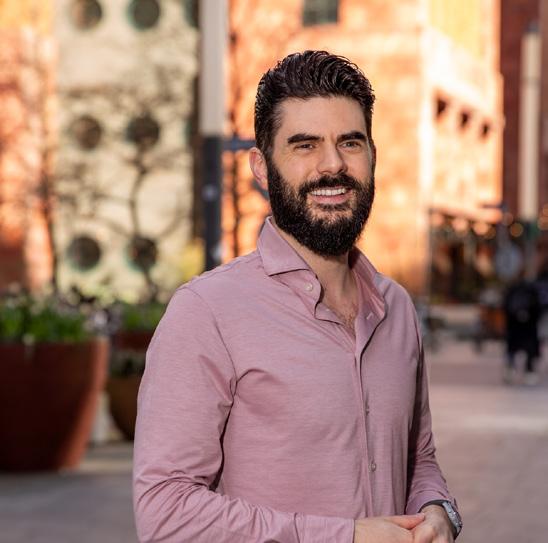
01. ABN AMRO
02. Accendium
03. Accenture
04. À Deauville
05. Adhoc Horecamakelaars
06. Acre
07. AFC
08. AkzoNobel
09. Albert Heijn
10. Albert Heijn Parnassusweg
11. Alpha Security
12. amsterdam inbusiness
13. Amsterdam UMC
14. Amsterdamse Bos
15. Arcadis
16. Arnold & Siedsma
17. ARTZUID
18. Asunaro Holland Interplan
19. Avenue Services
20. Avis Budget Autoverhuur
21. Awa Prenilla
22. BACK FOOD
23. Bagels & Beans
24. Baker McKenzie
25. Bar Boele
26. Bar Valdi
27. Being Development
28. Betaalvereniging Nederland
29. BNP Parisbas Real Estate
30. Bolenius
31. Boontje Advocaten
32. Bouwens&
33. Bouwinvest
34. Boyden Global Executive Search
35. BPD
36. Breevast
37. BREIKERS
38. Bright Digital
39. Broersma Nieuwbouw
40. Bundel.it
41. Cboe Clear Europe N.V.
42. CBRE B.V.
43. Changing Dishes
44. Cinema The Pulse
45. Clean Center
46. Clubsportive
47. CMS
48. Coffee & Coconuts
49. Cognito
50. Commonwealth Bank of Australia (Europe)
51. Confius Executive Search
52. Cora Delicatessen
53. Corporate Housing Factory
54. Cosmo Hairstyling
55. Crossover (AM)
56. Crowne Plaza A’dam South
57. Customized Media
58. Cyrille van Hoof Presentatiecoach
59. D&B The Facility Group
60. De Brauw Blackstone Westbroek
61. De Hypotheker
62. De Japanner
63. Deloitte
64. De Kredieter
65. De Pizzabakkers | Zuidas
66. De Thomas
67. De Uitsmijter
68. Dentons
69. Dickys Grand Cafe
70. Ditt Officemakers
71. Doctor Feelgood
72. Donkey Republic
73. Doppio Espresso Amsterdam Zuidas
74. Eden McCallum
75. Edge Technologies
76. Eefje Voogd Makelaardij
77. Element Amsterdam
78. Enterprise Netherlands
79. EMA (European Medicines Agency)
80. Expat Center
81. EY
82. Fam. Advocaten
83. Ferilli’s Specialità UpTown
84. Financial Offices
85. Flexform Amsterdam
86. FLOW Real Estate
87. Food & i
88. Fornet International B.V.
89. Frans Otten Stadion
90. Freshfields Bruckhaus Deringer
91. Fris Makelaars
92. Frits Friday
93. FSB Beveiliging
94. FYEO
95. Gelderlandplein
96. Gen25
97. G&S&
98. Gerrit Rietveld Academie
99. Goede Doelen Loterijen
100. Grand Café LIVING
101. Grand Café Mahler
102. Grand Prix Copyrette Printing & Design
103. Greenberg Nielsen
104. Greenberg Traurig
105. Green Business Club Zuidas
106. GREEN Gastrobar
107. Greenwheels
108. Gustavino
109. GVB
110. Hasta La Vista Baby
111. Heidrick & Struggles
112. Het Zwarte Fietsenplan
113. Hielkema & co
114. HIND cooking
115. HOFF Amsterdam
116. Hogan Lovells International LLP
117. Hotel & Wellness Zuiver
118. Hourglass
Foundation Hello Zuidas
WTC Amsterdam
Strawinskylaan 61 1077 XW - Amsterdam +31 (0)20 333 74 41 servicepoint@hellozuidas.com www.hellozuidas.com www.facebook.com/hellozuidas www.instagram.com/hellozuidas www.twitter.com/hellozuidas
Our goal
With an excellent business climate, worldrenowned educational institutions within reach, and leading companies in many sectors from many countries, the Zuidas has huge potential. The foundation Hello Zuidas contributes to the Zuidas by realizing a well functioning area. The goal is to promote a district that has international appeal, and high quality working and living conditions.
119. Houthoff
120. House of Sports
121. Htel Serviced Apartments
122. HVO Querido
123. IEF Real Estate
124. IMA
125. InAmsterdam
126. Industrious
127. Infusion Clinics
128. Innside by Melia
129. In2Matrix
130. ISX Beveiliging
131. Jeroen 020 Training/Coaching
132. Kindercampus Zuidas
133. KNAP Makelaardij
134. König + Neurath (Nederland) A.G.
135. Kraft Heinz
136. KRNWTR+
137. Lazzoni
138. Lebkov & Sons
139. Leger des Heils
140. Le Grand George
141. Lexence
142. Lieven de Key
143. Limon
144. Lockerpoint
145. Loyens & Loeff
146. Luke Recruitment
147. Lunshof Makelaardij
148. Lyon Office Support
149. Maarsen Groep Beheer B.V.
150. Magazine-Masters.nl
151. Manhattan Bar
152. Market 33
153. MBO College Zuid
154. Miele X
155. Molteni&C|Dada Amsterdam Flagship Store
156. MOST
157. Move Amsterdam
158. Multicopy Amsterdam Centrum
159. MyoReset
160. NatWest Markets
161. NDI ICT Solutions
162. Nederlandse Ver. van Banken
163. Nedstede Real Estate
164. NewGround Law
165. NH Amsterdam Zuid
166. nhow Amsterdam RAI
167. Nicolaas Lyceum
168. Niezink Finance
169. Nineyards Law
170. Nino’s Surinam Food
171. Norton Rose Fulbright
172. Novotel Amsterdam City
173. NS Stations
174. Oliver’s
175. Olympic Gym
176. Olympisch Stadion
Hello Zuidas invests in trees! How we do that? Through our sponsorship for Trees for All, we plant trees that restore existing forests.
Zuidas Publishers
WTC Amsterdam Strawinskylaan 151 1077 XX Amsterdam +31 (0)20 362 09 93 info@zuidaspublishers.nl www.zuidaspublishers.nl
Copyright © 2024 Zuidas Publishers
All rights reserved. Nothing appearing in this magazine (information, pictures, images) may be copied or reproduced, in any manner whatsoever, unless explicit permission has been given in writing.
Circulation Free for Zuidas and Amsterdam South. It is be distributed by promo teams, loose circulation, HRM departments of companies within Zuidas to guarantee reaching the (sub) target groups of Zuidas, Amsterdam and Schiphol.
Would you like to place an ad in Hello Zuidas Magazine?
Please send an e-mail to info@zuidaspublishers.nl
177. ONE-Dyas B.V.
178. Onemeeting.com
179. Openbare Bibliotheek Amsterdam
180. ORAM
181. Oranje Energie
182. Ox & Bucks
183. Palo Alto
184. PAN Amsterdam
185. Pancakes Amsterdam
186. Papa’s Loft House
187. Partou Kinderopvang
188. Peak Development
189. Pleo
190. Poké Perfect
191. Premier Suites Plus Amsterdam
192. Projectorganisatie Zuidasdok
193. Property NL B.V.
194. Provast
195. Q-Park Nederland
196. RAI Amsterdam
197. Regus
198. Renessence
199. Restaurant Showw
200. Restaurant Het Bosch
201. RGA International Reinsurance
202. Rialto
203. Rivers
204. Rob Peetoom
205. Robert Clinics
206. Robert Walters
207. Roland Berger
208. Rosarium
209. Russell Investments
210. Russell Reynolds Associates
211. Sabic
212. Savills Amsterdam
213. Salsa Shop
214. Salsa Zuidas
215. Season-Flowers
216. Securitas
217. Selva
218. Shinyu Body & Mind
219. Simmons & Simmons LLP
220. Sixt
221. Smartphone Citywalk Zuidas
222. Sonora
223. Specialists in Security
224. STACH
225. Stadsdeel Zuid
226. SThree
227. Stibbe
228. Stichting Open The Doors
229. Strand Zuid
230. Student Experience
231. Summertime
232. Sushito Zuidas
233. SV RAP
234. Symphony’s
235. Taalcentrum - VU
Editor-in-chief Romy Lange
Editor Ruby van Oers, Sophia Etmans & Grete Simkuté
Art Director Emiel Brouwers • IMAGEAU
Translation Taalcentrum-VU
Final Editor Ellen Josée Westrik
Printed by Magazine Masters
Frequency Six times a year (bi-monthly)
Editors
Romy Lange, Ruby van Oers, Sophia Etmans, Ilana Schmidt, Elisa Schouten, Gordana Todorovic, Grete Simkuté & Eduard
Schaepman
Photography
Caily Bobbie Jo, Roxanne Wilm, Lynn Vaessen & Richie Damwijk
Editorial advisory board
Olivier Otten, Angela Ham, Elisa Schouten, Gordana Todorovic & Ilana Schmidt
236. Tandartsenpraktijk Van de Veer
237. Tandartspraktijk Noordermeer
238. Taylor Wessing
239. Tax Consultants International
240. Taxicentrale Amsterdam (TCA)
241. The Bank of New York Mellon
242. The Boston Conulting Group
243. The Breakfast Club
244. The Office Operators
245. The July Twenty Eight
246. The Upside Down Amsterdam
247. Tierra
248. Topsport Amsterdam
249. TPEX
250. Trainmore
251. TREC
252. Tribes
253. UNGA
254. Urban Gym Group
255. Urban Salad
256. Van der Valk Hotel Amsterdam Zuidas
257. Van Dijk & Ten Cate
258. Van Gool Elburg
259. Van Lanschot Kempen
260. Vascobelo
261. VEBEGO
262. Vermaat Groep
263. Vermaz
264. Vesteda
265. Victory Group
266. Von Poll Real Estate
267. VondelGym
268. VORM Ontwikkeling
269. Vrije Universiteit Amsterdam
270. VU | Griffioen
271. Vuurzee Bar
272. Wagamama
273. Watersportvereniging De Koenen
274. Welcome Home
275. Wild & The Moon
276. Wineboutique & Spirits
277. WYNE Strategy & Innovation
278. Wintertaling
279. WTC Amsterdam
280. WTC A’dam Business Club
281. WTCafé De Blauwe Engel
282. XO Optics
283. X2X Worldwide Express
284. YET
285. YouLinq.me
286. Zone2Source
287. Zuidas Apotheek
288. Zuidas Art Projects
289. Zuidas gemeente Amsterdam
290. Zuidas Markt
291. Zuidas Publishers
292. ZuidasTravel.nl
Magazine Hello Zuidas is issued by
Thanks to Vincent Priem, a-point, Amsterdam Zuidas, Kroonenberg Groep, Gelderlandplein, Renessence, Eduard Schaepman, Carlo Wijers, Robert Jong, Ivan Afonin, Marco Corrado, Reneé Kagie, Sidney van de Wal, Dimitri Brom, Apollo Hotel Amsterdam, Paul Riemens, RAI Amsterdam, Eme van der Schaaf, VU Griffioen, David van Dijk, Martijn van Ling, Gio Baumgart, Greenberg Traurig, Marinus Prakke, Necla Kaplan, Alex van Riel, Greenwheels, Marc Beers, Avis, Thomas Wolters, Enterprise, Pepe Lammertijn, Donkey Republic, Birò, Helen van Empel, Yet, G&S&, Ballast Nedam, Eefje Voogd Makelaardij, Vebego, QuizX, D&B The Facility Group, Aēstec Amsterdam, Aēstec Rotterdam, International School of Amsterdam, Excel Engineers, Taalcentrum-VU, Jeanet van der Vlugt, Lusan Meeder, Wens Business Events, Sixt, Awa Prenilla, Lockerpoint, YouLynq.me, Nova Ploum, Vorm, Zuidas Information Centre, Manhattan Lounge Bar, De Japanner Zuid & Crowne Plaza.
SCAN FOR ALL HOLIDAY EVENTS