Understanding personalised learning in the information age
OUR ROWING ROYALTY
Gary Hay brings Olympic rowing to Rangi Ruru
WIDE SKY is produced bi-annually for students, their families, alumnae and the wider Rangi Ruru Girls’ School community. It provides a forum to celebrate the successes of current and past students and staff, while sharing the latest in events, happenings and developments.
DESIGNER
Melissa Walter
EDITOR
Morgan Tait E: m.tait@rangiruru.school.nz
PROOF READING
Barbara Smith, Kerry-Anne Murnane and Krissi Schumacher
PHOTOGRAPHY
• Melissa Walter
• Tony Stewart, photoshots.co.nz
• Rowing Celebration
• Geoff Soper
• Sharron Bennett
• Rangi Ruru Teaching & Admin Staff
PUBLISHER Ovato Printing
PRODUCTION ASSISTANCE
Jude Connochie and Katrina Topp
RANGI RURU GIRLS’ SCHOOL 59 Hewitts Road, Merivale Christchurch 8014 New Zealand rangiruru.school.nz facebook.com/rangiruru instagram.com/rangiruru
COVER IMAGE
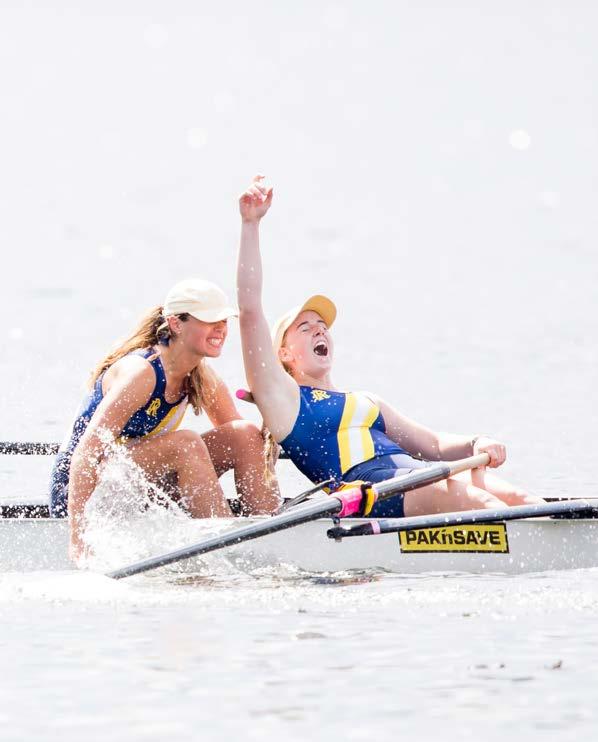
Rangi Ruru rowers Caitlin Muir and Polly Cross celebrate after the U16 Girls’ Eight - A Final at Maadi Cup 2021
Being primary school aged in the late 1990s, my memories of the decade are scarce and a bit hazy. Yet there is one particular recall which seems imprinted in my brain alongside my times tables and my childhood landline number.
And that, very randomly, is the words to ‘The Sunscreen Song’ Those of you who remember the decade may be familiar with the chart-topping song produced and spoken by the dulcet-voiced Hollywood director Baz Luhrmann.
What you may not remember though, and that I learnt many years later, is that the song started life as a newspaper column for the Chicago Tribune by journalist Mary Schimich as her would-be advice to high school graduates, should she ever be asked to give a commencement speech.
So, it seemed fitting that a line from the song was the first thought to pop into my mind when the theme of the final Wide Sky for 2021 was set as Be Your Best.
That line was, “The race is long, and in the end, it is only with yourself.” This one liner has often presented itself (yes, in Luhrmann’s deep vocals) at times in my own life when, upon reflection, I was being challenged to be my best.
It has served me as a reminder to stay patient, focussed and to not fall into the comparison trap—and it is also the sentiment echoed by many of the contributors on these pages when asked to share their own personal journeys of success.
When writing about being their best, Rangi Ruru’s students, teachers, leaders and community have offered up fascinating reflections on how far they have come, where they hope to go and the importance of enjoying the ride.
Once again, I am blown away by the insight and eloquence of our student contributors and the passion and experience of our leaders and community: I am so excited for you all to enjoy this issue.
Happy holidays and happy reading,
Morgan Tait
EDITOR AND COMMUNICATIONS MANAGER
BEING YOUR BEST AT RANGI RURU
Kia Rangatira Te Kawea ōu
Welcome to our second edition of Wide Sky for 2021. Following on from our previous theme of Belong, this edition focuses on another of our strategic pillars of our Rangi Graduate model, Be your Best.
Being your best comes from a positive growth mindset that allows our students to recognise and celebrate their own individual strengths rather than compare themselves to others. Through encouragement in setting their individual ‘personal best goals’, which are not just academic but incorporate wellbeing, cultural and social, we are allowing students the opportunity to share, plan and above all celebrate, no matter how small those success steps may be.
Being your best can only happen if our students give themselves permission to embrace failure. Embracing failure is necessary—we can’t become the best version of
ourselves by playing it safe or only taking part in events or activities we know we will have success in.
We need to encourage our students to take a risk and step outside their comfort zone not just in activities but, more importantly, in their learning. It is that action of “feeling the fear and doing it anyway” that we need to get them to embrace—not easy for any of us at times—but listening or giving in to that fear we know inevitably gets in the way of being our best self.
Being your best comes through demonstrating a willingness to learn— it is a key behaviour that helps us get on in life, whether personally or professionally. Simply put, it is being open to or seeking out new experiences, skills and information that improve our abilities and enjoyment. This is one of the essential skills that employers are looking for in today’s graduates, and it is necessary to ensure our students are able to receive and seek constructive feedback in
order to continue to develop and grow to be their best.
We know that students learn best when they feel good and function well in an environment that knows and cares about them. What goes handin-hand with this, however, is showing them that by reaching out and helping others to become better versions of themselves—in other words paying it forward—not only makes them feel that others care but also gives a sense of satisfaction and pleasure. It also means giving others the room they need to be themselves and being accepting of them as individuals and developing our respect and empathy towards others.
It is our hope that the Rangi Ruru graduate leaves equipped for their future knowing that they are good enough just as they are.
Words by Dr Sandra Hastie SCHOOL PRINCIPAL
DEFINING YOUR OWN BEST
We often hear the words “be your best” said to us by parents, coaches and teachers. If you say that something is “for the best”, it’s the most desirable or helpful thing that could have happened.
But is this what they really mean? To be the best hints you’re being compared to someone else, so if you are the best, then another person must have come second. In this case, being the
the worker bees suddenly decided they were better than all the other bees and went on strike! The ‘best’ could therefore be the students who don’t win awards but do other things behind the scenes, quietly achieving without the recognition but still with great purpose.
honeycombs if
Of course, it’s easy to be your best at Rangi Ruru. We’re privileged to be provided with the best opportunities, encouragement and environment to excel. We have the best people running our school, the best role models to look up to, and the best educational ecosystem. All of this must rub off on us each subconsciously since we have started at Rangi Ruru. I see it every day; students doing extraordinary things, pushing themselves far beyond what they could have ever imagined.
of life, and other people’s position before I make a decision. When I’m on the football field, I just want to play better than I did last time. I’m on my best behaviour when meeting new people to make a good first impression. And my best happy place is when I’m with my family.
“I see it every day, students doing extraordinary things, pushing themselves far beyond what they could have ever imagined.”
SAM SENIOR
Writing this article made me think, what is ‘best’ to me? I think I’m at my best when I’m not overthinking a problem and go with my instinct. I try to be better at considering the bigger picture
To finish, I do like the term ‘best’, but I think you need to come up with your own definition. Maybe it’s being your best self for more days during the week than less. Or being more kind, grateful, having perspective and appreciating how lucky we are to be brought up in this country. Maybe you can be the best at listening to others and saying “hi” to those you walk past, or showing determination when times get hard and be the best at being resilient. Whatever it happens to be, being the best is applying yourself to your full potential and being the best version of you, whatever that is, for you, not for anyone else.
Words
by
Sam Senior HEAD OF SCHOOL
TO BE MANA WĀHINE
Tohaina o painga ki te ao Share your gifts with the world
Being one’s best is individual and personal. Success looks different for all our learners. Being your best self is not about winning; it’s about a feeling of personal accomplishment. This is what we encourage and celebrate at Rangi in a myriad of ways.
W e are consistently overwhelmed at the achievements of our students and want to acknowledge and celebrate these personal bests. For some, the satisfaction and success are in the journey. For others, it is in aspiring to and reaching goals.
The commonality for all is the representation of the Rangi Ruru values in what our students do. Showing respect and empathy towards others, being dignified in the face of success or defeat, showing positivity and willingness
to learn—these are the attributes of a Rangi Ruru graduate exemplifying Be Your Best.
Recognising Achievement
One of the ways we acknowledge those who have demonstrated Be Your Best is through awards. Our school awards are predicated on the demonstration of commitment, service to the school and, above all, upholding the Rangi values.
The accumulation of points towards our awards are an opportunity for the student to be considered for an award; they are not, in themselves, sufficient. Rangi Ruru awards are presented in recognition of scholarship, academic, cultural, sporting and service achievements associated with the school. Students
can accrue points from activities and performances, and earn a Pocket, a Colour, an Elite Colour or a Silver Fern Award in their field.
Recognising Classroom Achievement
“One of the main reasons I play music is because of the joy of sharing my music and bringing entertainment to the audience. I maintain my integrity, being truthful to myself, while either achieving a prize or facing a challenge.”
Mana Wāhine Awards are curriculum awards for students exemplifying the Rangi Ruru Values in their classroom practice and subject endeavour. Teachers nominate students in their classes and awards are presented to those who receive the most nominations across all their subjects. Awarded only in Terms 2 and 3, Mana Wāhine Awards are a tangible affirmation of students’ classroom practice. Second time recipient Saffron Mogridge (Year 10) says receiving the award the first time inspired her to keep working hard.
“I did some research and found out
what the award meant and I was very proud of myself. It gave me purpose and I wanted to continue to work hard. I like the fact that you don’t have to be in any particular class to be able to achieve this award—it’s about being consistent with your work ethic.”
Young Achiever
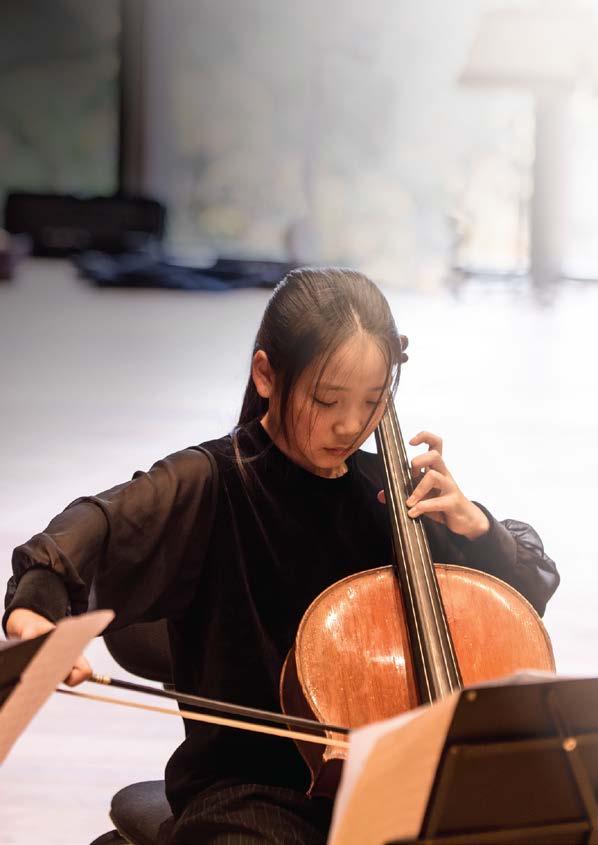
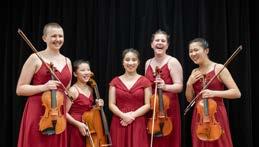
Year 8 student Elise Tian is the youngest student to ever be awarded Colours at Rangi Ruru. As a member of the Florestan Quintet—which won Gold at the National Chamber Music Competition—Elise demonstrates outstanding work ethic, resilience, and joy in her learning in Music.
She says she feels very honoured to have her achievement recognised by the school and that she aims to reflect
the Rangi Ruru Values in all that she does.
“During my rehearsals and performances, I always show respect to my teachers and fellow musicians. I absolutely love making music and enjoy working with others. I am passionate about the programs I work on for different events like concerts and competitions.
“One of the main reasons I play music is because of the joy of sharing my music and bringing entertainment to the audience. I maintain my integrity, being truthful to myself, while either achieving a prize or facing a challenge.”
Learning from the Competition
Molly Moffatt (Year 11) gained her Elite Equestrian Colours in Term 3 and says being recognised for her horse riding is very rewarding.
“You have to dedicate years and years of hard work and time into the sport in
order to get the results you want,” she says.
Molly is now competing at a threestar level and says she has learnt much from her competitors—many of whom are much older and some are even Olympic athletes.
“Riding horses is very different to a lot of other sports; it’s not just yourself you have to think about but also the horse. Horses have feelings, and if horses do not have trust in you as their rider, they will not perform for you. Gaining a strong relationship with your horse is the key to success.”
Sharing Success
We are very proud of the achievements of all our students and want to recognise them. There is a lot of hard work behind each one, yet for our students sharing this satisfaction can be complex.
Being proud of one’s achievements is not boastful—it is a celebration to be shared.
Words by Juliet Collins ASSISTANT PRINCIPAL-CURRICULUM
ON THE RECORD
National athletics record holder Una Kinajil-Reding (they/them) hopes to not only compete at the Paralympics one day—but also help open up conversations around disability and inclusion.
Dozens of medals hang on the wall of Una’s bedroom. At just 15, the Year 11 student holds multiple national secondary school championship records for shotput, discus and javelin in the F46 classification.
They have been competing in athletics since they started primary school: in the para classifications since they were 10 and for regional organisation Parafed Canterbury since they were 12.
“When I was in primary school and competing at the Canterbury competition, my sports director asked me if I wanted to compete in the para categories, so I did and two years later Parafed Canterbury picked me up and I started properly competing from then.”
While Una was selected and started competing in para athletics young, they believe one of the biggest misconceptions is that it is easier than non-disability sports.
“A lot of people think it is really easy to get into para sports but for a lot of people it really isn’t,” they say.
“Because of all the classifications, it can be very difficult to qualify. For example, I am not allowed to compete
in swimming because my disability doesn’t meet the classification system for that.”
Una’s classification is based on their limited range of motion in their right shoulder.
“I have Erb’s palsy, which is a birthing injury. It affects my right shoulder. Basically, when I was born the nerves and tendons in my right shoulder ripped and tore, which is why I can’t move my arm properly.”
Una considers winning their shotput category at the 2019 Canterbury Secondary School Athletics Champs by 0.01% one of their proudest achievements, and hopes to one day compete at the all ages Australia Track and Field Championships—and, of course, the Paralympics.
Talking about Disability
be discussed much more.
“In general with disability it’s not talked about much. You don’t really hear about people with disability in the media, well you do with the Paralympics, but in general you don’t.
“I want to see parasport being talked more about because it opens up more conversations about disabilities and the amazing things people can do that are not just physical.”
“I want to see parasport being talked more about because it opens up more conversations about disabilities and the amazing things people can do that are not just physical.”
UNA KINAJIL-REDING
Such events, Una says, are a great way to open up conversations about disability; a topic they think needs to
In fact, it wasn’t until they started competing in their sports that Una had the right words to describe why their arm worked differently from other people’s.
“The main mental challenge I went through is when I first started out competing, I didn’t realise I had a disability because no one ever told me explicitly for my first 12 years of life.
“I just thought I was weird or different, because I was around my class and friends and none of them
had a disability. Then once I did realise, I actually felt less stigmatised because at that point my experience with people with disabilities was through sport and seeing their potential.”
Getting to the Top
Meeting fellow para athletes has not only exposed Una to inspiring role models, like New Zealand javelin thrower Holly Robinson, but has introduced them to many new friends and shown them they can overcome challenges, both mental and physical.
“For me, being my best is pushing myself to always do better and not giving up when I don’t do as well as I would hope. And learning from that and keeping going.”
To keep on top of their game, Una has two athletics trainings each week, as well as doing their own fitness workouts and shoulder stretches, playing netball in winter and running in summer.
“Being at Rangi has really created a support system around
me to help push me. I have some amazing teachers who have helped me in general aspects and in my sport.
“My parents are also very encouraging; they are always trying to help me push to the next level and so are all the friends I have made through parasports competitions. We are always encouraging each other to be better.”
When Una is not training, they also have an active interest in music and hope to follow an engineering pathway after high school.
“I am in Resolutions as well as another out-of-school choir, and I have an interest in science, so I’m thinking of pursuing engineering, as well as keeping up with my sports.”
Oh, and Una is also currently teaching themself to skateboard.
Words by Morgan Tait
COMMUNICATIONS MANAGER AND WIDE SKY EDITOR
HITTING THE HIGH NOTES
As we again faced disruptions for our competitive events season due to Covid-19, it is a reminder that such markers are part of a lifelong musical journey defined not by one singular award or end point—but by always trying to challenge yourself to be better.
It is interesting reflecting on what Be Your Best means during a nationwide lockdown in the light of cancellation of events, some of which rate student performances. For the music department, the lockdown occurred at the very end of our competitive season, with some outstanding national and regional results.
However, Resolutions choir experienced major disappointment with the national Big Sing Finale being cancelled. The focus for Resolutions very much had been on ‘being their best’ in a highly competitive environment, and they were looking forward to their performances being evaluated and coming away with an award that they could feel proud of.
Being Better is a Never-Ending Goal
How does one measure and tangibly show what Be Your Best looks like in music? Being in a competitive event is only one way—but it is not that important with respect to the bigger picture and should not be considered an end point. It is important to challenge yourself, work towards a goal, have a chance to listen to and critically evaluate your own and others’ work. But being your best does not necessarily have a defined end point or an award attached to it. At any given moment you can Be Your Best, but a
lifelong journey and more worthy goal is really about striving to be better.
As Dr Paul Wood says in his book, How to Escape from Prison: “To strive to be good at something is to compare ourselves to some standard outside ourselves and outside our control. To aim to be better is to work on the element that we can control; ourselves.”
And: “To live the most fulfilling and meaningful life you can, the goal is not to be good or perfect but to get better. And the goal of getting better never stops.”
Learning from Each Other
I asked some of our music students for their perspectives on what being their best means to them, and they offered some great perspective.
Ella Chen, on behalf of the Florestan Quintet, says being your best is not something that is easily quantified.
“We believe that it means being motivated to enjoy the creative process because we want the best for our group,” she says.
“We all have to prepare individually so that the collective can improve and get stronger. In addition to learning from amazing coaches, we learnt a lot from each other and from the music.
“We discovered how to connect with the audience through the music we were creating and, more importantly, how to connect with each other. There were skills learnt that not only applied to music but to daily life. For example,
knowing that it is okay to make a mistake because no-one is perfect.
“It was important to always be honest with ourselves and with each other, and we developed resilience through setbacks. These setbacks, however, pushed us beyond our limits that we ever thought possible – that was the real prize.”
The
Power of Music
Emily Gambrill, on behalf of Resolutions choir, says the unexpected cancellation of the Big Sing Finale revealed some positive lessons amongst the disappointment.
“In 2020 the Big Sing Finale was never a reality but this year, with its cancellation one week prior, the disappointment caused by the Alert Level 4 Lockdown was immense for us all. However, on reflection the individual and collective hard work in rehearsals along with the excitement building towards our performances—the same reasons fuelling our disappointment—are reasons why we can also feel incredibly proud.
each other, and not simply as a means to an end (the end in this case being Big Sing Finale). Therefore, we can stand back and recognise how much we have learned, grown and improved both as individuals and as a group and know that it was not all in vain – that we have indeed been our best.”
A Lifestyle of Striving
Member of the Jazz Band, Jazz Combo, Dear No-One rock band and Rangi Sinfonia Kaia Johnstone says, “In the Rangi music community ‘being your best’ is more of a lifestyle than a goal.
“It was important to always be honest with ourselves and with each other, and we developed resilience through setbacks. These setbacks, however, pushed us beyond our limits that we ever thought possible –that was the real prize.”
“I am constantly being pushed to do better not only by teachers but by my peers as well. The constant support and drive from everyone around me makes it nearly impossible to not strive to be better, not only for yourself but also for the people you perform with and the teachers who support you.
“To me being your best is about carrying on when you make a mistake and learning and improving from those mistakes.”
“The most important thing we have learnt is how powerful music can be as a way of growing and connecting with
Words by Janet Kingsbury DIRECTOR OF MUSIC
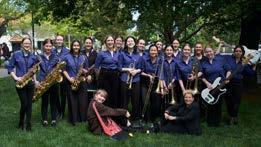
The Jazz Band and Combo had an oustanding Southern Jam Youth Jazz Festival, winning some big awards
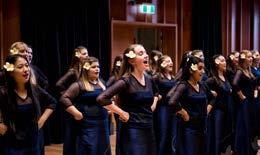
Resolutions was to compete in the Big Sing Finale at the end of August before it was cancelled due to Covid
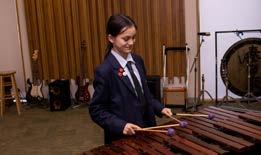
Keina Rollinson (Year 9) was selected in the New Zealand Secondary Schools’ Brass Band
The Florestan Quintet won one of six Gold Awards at the National Chamber Music Finals. Photo by Jeffrey Wren
THE SPIRIT OF BOARDING
In 2017 the Head of House at the time, Monica Marshall, believed being a boarder wasn’t just
a name, but a badge of honour and she wanted all boarders to feel proud of who they are and never be afraid of being themselves.
Monica wanted boarders to celebrate and value the importance of recognising outstanding contributions to the house, servant leadership and most importantly embracing the boarding house spirit. And so she donated the Marshall Cup, which now every boarder awaits with anticipation at our end of year Boarders Christmas Chapel service to see who is awarded it for the year.
Monica wanted all boarders to be part of choosing the recipient as she knew the key to building a strong sense of
community was for each boarder to feel their voice was heard. It is important for every boarder to be encouraged to always be themselves, take risks and grow as human beings. We constantly learn from one another–regardless of our age–and we are inspired seeing others reaching goals and giving back to those in our community. I am proud to say all our boarders could easily be nominated for this award for the unique qualities and abilities they bring to enrich our Boarding House spirit.
What Former Marshall Cup Winners Say
Supporting the sisterhood
“From a young age my parents always taught me to treat others how I would want to be treated, respecting everyone’s values and opinions.
“For me ‘Being Your Best’ in the Boarding House is about not sweating the small stuff, life is full of hurdles—you just have to get on with it. We are a big sisterhood, always trying to get on with everyone and supporting them as well as living your own values, setting personal goals, grabbing new opportunities and experiences, and becoming a better person.
“Receiving the Marshall Cup also showed recognition by my fellow peers and staff of the positive impact that I had on others. It allowed me to grow in maturity as a person in life after Rangi Ruru. On reflection it has shown me that
I always upheld Rangi Ruru’s core values. I will always be grateful to the boarding community as I would not have achieved The Marshall Cup without their positive encouragement and the impact it has left on my life.”
- Becky Schmack, 2018 recipient
Being your best is being kind
“I didn’t expect to be recognised for being me. I’ve always strived to be a kind and compassionate person, and to be recognised for ‘embodying what it means to be a boarder’. It has given me a boost in confidence to continue to be the best version of myself.
“Being your best is not only being kind to yourself but also to those around you, whether they’re your best friend or a stranger. Spreading selfless acts of
In Term 4, the voting for The Marshall Cup will once again open for every boarder to have the opportunity to nominate a person they feel deserves this honourable award, a person they believe has embraced the above and someone who inspires them to be a better person. Ultimately someone who is brave and unafraid to be their best.
Words by Kyleigh Lyth DIRECTOR OF BOARDING
kindness can go a long way—you don’t know how other people are feeling and something as simple as a smile or saying hello can brighten up someone’s day.”
- Emma Schroder, 2019 recipient
Part of a legacy
“I was very surprised to receive the Marshall Cup. The girls that had received it in previous years I had looked up to as role models and leaders; they all embraced our boarding house values and their own. I didn’t think in a million years I would have my name engraved next to theirs. The boarding house was not only my second home but has helped me grow in becoming the best version of me, and I feel humbled to be part of the legacy.”
- Anna Casey, 2020 recipient
SCIENCE UNDER THE SEA
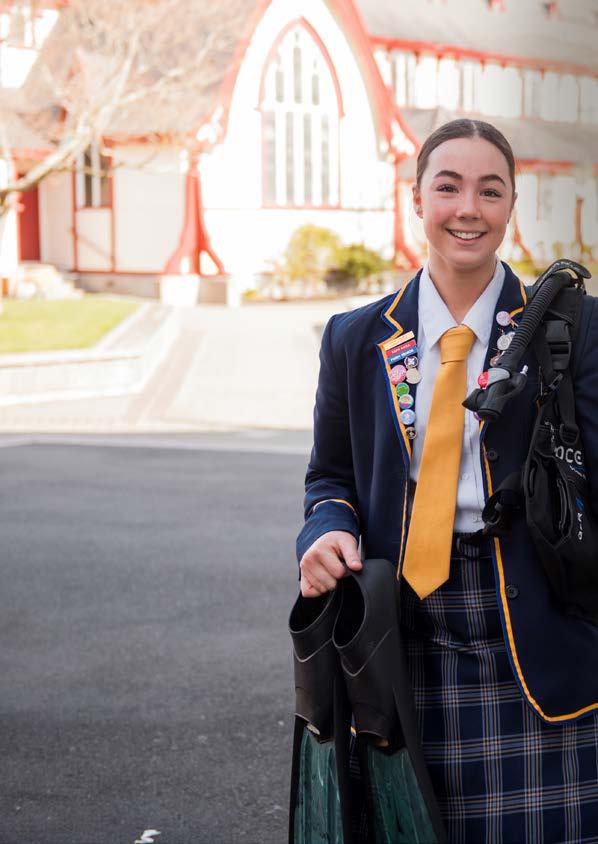
The ocean covers 71 percent of the Earth’s surface and impacts weather, temperature and the world’s food supply. It is also the place where Year 13 student Holly Kamo has spent her childhood boating, diving and exploring with her family. And for as long as she has been enjoying these important eco-systems, she knew she wanted to help protect them as a marine biologist or conservationist.
F or as long as she can remember, Holly’s life has been centred around the sea. Frequent trips to Kaikoura have allowed her to swim with seal pups, dolphins and orca whales, and travelling further afield to Fiji, Australia and Thailand has only intensified her interest in the ocean.
“I have been diving since I was very little where I would snorkel in the ocean and watch my dad dive down to catch paua or crayfish,” she says.
“Some of my favourite moments were swimming with a small pod of orcas and swimming with a super pod of dolphins that was coming through Kaikoura— there were roughly over 1000 dolphins and my brother and I were lucky enough to jump off the side of the boat and swim with them.”
Diving In
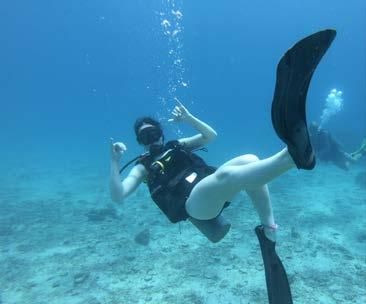
“My first big experience with the ocean started in Fiji at the age of nine where my dad gave me the opportunity to scuba dive with a local dive instructor. Since then, I’ve fallen in love with the ocean even more and knew that it was my passion, and I have been lucky enough to scuba dive all over New Zealand, Fiji, Australia and Thailand where I have been able to experience things in the ocean that many wouldn’t.”
It was this passion that has fuelled Holly’s dream to become a marine biologist.
“Ever since I got my scuba diving qualification, all I wanted to do is be in the ocean swimming and exploring everything in it and to become a marine biologist or conservationist.”
Achieving this goal has in turn fuelled her to be her best at Rangi Ruru so she can make her dream happen.
“This dream has inspired me to be my best because I know that I have to work hard to reach my goals. I want to work hard to go to university and study for the degree I need to have to get my dream job.”
This meant taking a STEMheavy course load and taking up opportunities to further explore the field of marine biology.
Holly earned her scuba diving licence at just 15 and has jumped at academic opportunities provided via her Form Tutor and Chemistry teacher Anne Bissland.
It’s these mysteries and threats which Holly hopes to investigate and influence.
“Being under the water feels like another world,” she says. “So much hasn’t been discovered yet, and so I would love to pursue a career in marine biology to be able to study and learn new things about the ocean.
“Ever since I was very little, I would always be out on the boat and in the ocean swimming. I would collect heaps of shells and fossils and take them home to study and because of that my whole room is full of fossils, cool looking shells and other things from the ocean and beaches.”
“This dream has inspired me to be my best because I know that I have to work had to reach my goals. I want to work hard to go to university and study for the degree I need to have to have my dream job.”
HOLLY KAMO
“Mrs Bissland has been the teacher to help and support me all throughout my time at Rangi Ruru, and without her I would not be where I am today. I could not ask for anyone better to help me with learning anything to do with science.
“She has also given me so many amazing opportunities, such as being awarded a scholarship down in Otago to take part in a marine biology field trip for a week and being part of a group of girls going to Fiji for a field trip through Operation Wallace to be alongside marine biologists and field researchers.”
Under the Surface
Despite the ocean’s vast size and influence over life on Earth, it still holds many secrets. More than 80 percent of the ocean has never been mapped, explored or even seen by humans—and many of its vital ecosystems are under threat from rising sea temperatures, pollution and over-fishing.
Following her Dream
Next year Holly plans to either study biological and environmental science at the University of Canterbury or marine biology at the University of Otago so she can enter the workforce and help protect the place she loves.
“I would love to work in the marine conservation area, which means my job would involve preserving and restoring marine ecosystems and helping vulnerable marine species or in the fisheries management sector helping to ensure fish stocks are sustainable.”
And for her next adventure?
“I would love to go cage diving with great white sharks and to travel to Tonga to swim with the humpback whales.”
Words
by Morgan Tait COMMUNICATIONS MANAGER AND WIDE SKY EDITOR
WINNING SECRETS
It would seem obvious that being your best in sport is most visible when our wāhine toa achieve excellence through awards and results. Yet, it is often the strength gained through overcoming challenges which makes us feel our best, as athletes and as people.
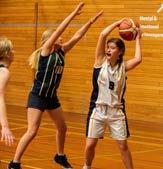
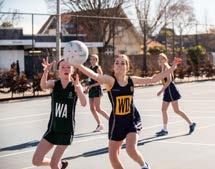
Indeed earlier this year at Rangi Ruru we celebrated several summer sporting successes and have continued to acknowledge achievements across sports codes throughout the year. Prior to Alert Level 4 lockdown in August, our winter sports teams were about to launch into Winter Tournament Week— the culmination of a season of training and playing at their best. Some teams were hoping to come home with podium placings as a sign they had been at their best against opposition from around the country.
However, when being your best is only defined by winning a game or tournament or being named in a representative team, and those opportunities get taken away, we have to be able to reframe what being our best looks like.
Reframing Success
Lessons from the Covid-19 environment constantly remind us that results and accolades cannot be the only examples of being your best in any context, let alone in sport. Because sometimes, some things are entirely out of your control.
When speaking with our student athletes on this subject, their thoughtful responses clearly expressed this
sentiment.
As cricket athlete Eliza McIntosh (Year 13) says: “The final result is not always entirely in our control in sport, and therefore by determining our success through our progress towards personal goals or our authenticity as a competitor, we are able to be our best selves and achieve goals without necessarily coming first place or winning a trophy.”
Trusting the Process
No life journey is without its challenges and students also spoke to these. What happens if you feel you are not at your best? Or if injury hinders your focus on being your best?
Hockey and athletics athlete Emily Jackson (Year 12) shared her insight into this after becoming injured during the winter season where she was forced to question how she could still be her best when she couldn’t play.
connected to my teammates and the game, and making sure that I could do everything in my physical power and mental strength to make sure that when I was able to play again, I would be set up well.”
Resilience Triumphs
For touch and hockey athlete Hayley McKellow (Year 13), being successful means you “need to overcome bumps in the road.”
“That is why the definition of success is different for everyone. Facing different bumps in the road is what makes everyone so special and able to reach those high standards.”
“That is why the definition of success is different for everyone. Facing different bumps in the road is what makes everyone so special and able to reach those high standards.”
“I was the best that I could be by being patient, trusting the process of rehabilitation, pushing myself (responsibly), continuing to be
For Hayley, being at your best is also about, “being vulnerable to be able to ask for help or to speak up if you are unhappy and feel as though you are not at your best.”
A Wellbeing Approach Hayley also speaks about the support the Rangi Ruru network provides. The concern for athlete wellbeing is what makes Rangi Ruru special, she says.
“Not only do the coaches look after
us so well but we get support from the school if we feel as though we are facing any challenges.
This wellbeing approach and the wraparound support at Rangi Ruru, helps athletes to get back to being their best when faced with challenges, assisting students to develop the physical and mental capabilities to be successful.
Which is how football athlete Sarah Griffiths (Year 11) describes being her best in sport: “[It is] soaking up all the skills you learn through coaches and playing with teammates and turning this into an all-rounded player who thrives purely off of the love of sport to be their own best.”
More Than a Score
It is heartening to hear our wāhine toa recognise that being their best is about more than just wins on the board - a philosophy we passionately believe in at Rangi Ruru. For our students to express that being authentic, asking for help, playing for the love of the game and for your teammates, and recognising what is or isn’t in their control all contribute to being your best reinforces the value of this approach.
And the key reason this is so valuable is because through all of these experiences, and in dealing with challenges and uncertainty, we see growth as people, not just as athletes.
Words by Mandy Anderson DIRECTOR OF SPORT
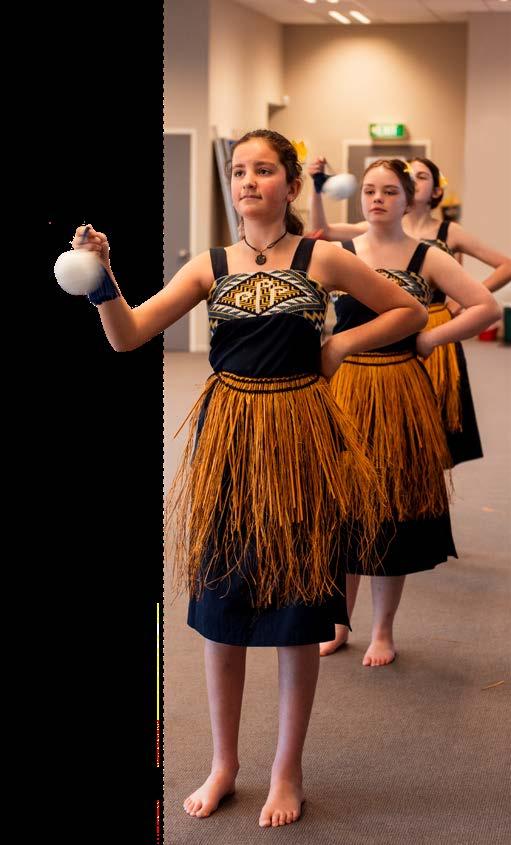
Our Rangi Ruru kapa haka group is a dedicated group of students who practise regularly and support each other to welcome special guests to the school and showcase the groups’ talents and skills at performance events. While lockdown curtailed some of our plans, the group was still able to contribute to some key events.
Ko Aoraki te mauka
Ko Takitimu te waka
Ko Te Koraha te wharenui
Ko Rangi Ruru te kura
Ko Helen Gibson te wahine Whāia to te rangi!
This year our kapa haka group has 21 dedicated members who practise every Monday after school in the Helen
reliable leadership by being a present, encouraging leader across seniors and uploading video practices to our team page. Year 13s Ruby Moore and Meredith Herdman are our extraordinary senior members who, alongside Krissy, really are the glue to this young group. Their presence, leadership and manaakitanga of the teina within our group help us to give
approximately 60 dancers from all over Aotearoa to a national dance workshop symposium. This was held outside in front of our very ornate whakairo, carved by esteemed rangatira Riki Manuel. We showcased a long poi item for the manuhiri and were invited to watch a beautiful dance that some of the Ōtautahi dancers had put together. Manaakitanga, Aroha
“To me, being your best in kapa haka means trying to improve the work of the group as a whole, as well as individually. Being your best extends further than just looking out for yourself; it also includes making sure everyone else in kapa haka is also feeling their best and doing their best work. It means that you are trying as hard during practice as you would during performance and also that you are proud of the things that you are achieving during your time in kapa haka.”
- RUBY MOORE, YEAR 13
and parents for availing themselves during term break to come and be a part of these performances.
Kura Showcase
Term 3 was supposed to bring the annual school performing arts showcase, with this year’s theme of Dream Scape. While Alert Level 4 lockdown meant the event sadly had to be cancelled, our group will still perform their four perpared items. These occur in a medley style featuring karanga, hymn, an action song, short poi item and, lastly, our finale displaying the long poi skills. Each student is involved within a smaller group collaborating to choreograph long poi movements set to Māori music. ‘Hiwa i te Rangi’ by singer songwriter Maisey Rika will see each of the groups take the stage during the four minute song culminating with the whole group on stage using long poi.
Words by Sherrilee Herangi-Harrison
TEACHER OF TE REO MAORI
Being your best extends further than just looking out for yourself; it also includes making sure everyone else in kapa haka is also feeling their best and doing their best work.
- RUBY MOORE, YEAR 13
LEVELLING UP FOR THE FUTURE
What does it mean to Be Your Best? It can mean a lot of different things to different people. For many, though, especially the students here at Rangi Ruru, it means living up to a set of core values that help to define not only who a student is, but also what they can become.
The idea of “levelling up” is close to my heart as it’s also one of Crimson’s core values. As Crimson Education co-founder and Chief Business Development Officer Fangzhou Jiang describes it, “Levelling up is about understanding your personal strengths as well as areas for development and constantly pushing yourself to become a stronger version of yourself.”
“The Rangi values have set me up to become a woman I am proud of! I’m working hard, being my best and always striving to level up.”
recognises that she’s been able to reach her goals thanks, in part, to the environment created and nurtured here: “Rangi has provided me with everything I need to pursue my dreams— the facilities and learning, accessibility to companies like
AMY CLOUGH
do your best but truly want you to succeed, wherever that may lead you.”
Amy Clough
BACHELOR OF MUSIC AT THE NEW ZEALAND SCHOOL OF MUSIC IN WELLINGTON
Amber Spurway
Crimson co-founder and CEO Jamie Beaton adds that, “Students who develop a level up mindset continually seek to challenge their own personal horizons, acquiring more content, skills and experiences to create a powerful toolkit for their future successes—through a consistent level up mindset, they will be able to adapt to all kinds of scenarios and emerge on top.”
The commitment to Rangi Values works hand-in-hand with that level up mindset, as is evident in the successes our students achieve. As former student and recipient of both the Liveris Academy scholarship and the ConocoPhillips SPIRIT scholarship Amber Spurway tells me, “The Rangi Values helped guide me throughout my time at Rangi and the values were what helped me with the application
As Elizabeth Jurlina, Senior Vice President of People and Performance at Crimson, notes, “Rangi Ruru and Crimson have a synergy where we see the benefit in encouraging an individual in their growth trajectory.
“Levelling up is about looking for opportunities to grow, tapping into experiences and persevering through hard times. Having that mindset to continuously develop, grow and utilize new strategies equips students with mental elasticity and toughness that can help see them through increasingly complex situations in life.”
By working with our students to level up, we help our students recognise their potential to not only be their best, but also to become their best.
Words by Krissi Schumacher CAREERS & PATHWAYS STRATEGIST
RECIPIENT OF THE LIVERIS ACADEMY SCHOLARSHIP AND THE CONOCOPHILLIPS SPIRIT SCHOLARSHIP
Georgina Scott STUDYING AT JASON COLEMAN’S MINISTRY OF DANCE IN MELBOURNE
Sophie Pye
ACCEPTED PLACE AT PRINCETON UNIVERSITY AFTER BEING OFFERED PLACES AT FOUR TOP US COLLEGES
Sam Senior HAS ACCEPTED A SCHOLARSHIP TO ACADEMY OF ART IN SAN FRANCISCO
OUR ROWING ROYALTY
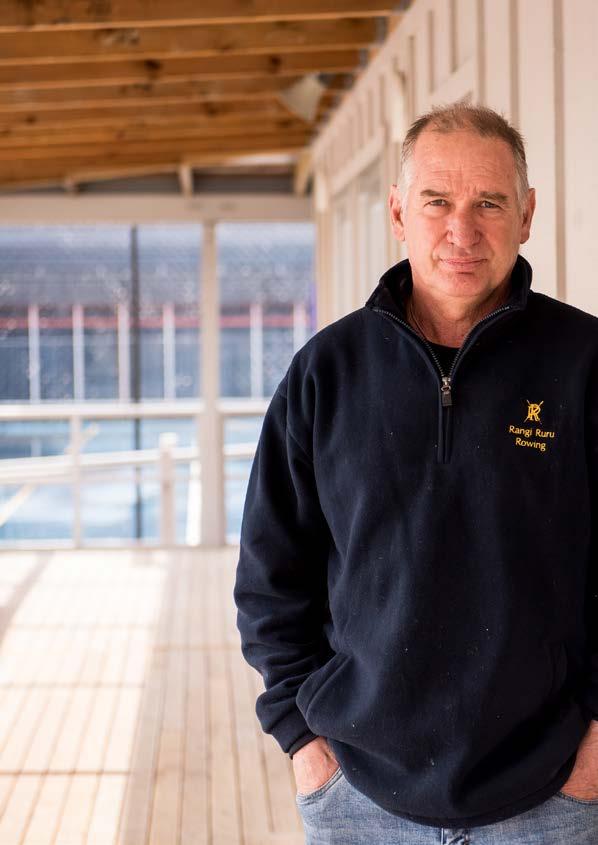
Fresh from a successful Olympic campaign, New Zealand rowing royalty Gary Hay has returned to Rangi Ruru as Head Rowing Coach. He tells Wide Sky what makes a successful squad. Hint: It’s the same for high school and international teams.
Those who know rowing will know the name Gary Hay. But they might not know his decorated coaching career began right here at Rangi Ruru Girls’ School.
A born and bred Cantabrian, Gary was himself a schoolboy rower and represented New Zealand from 1985 to 1987, competing at the 1986 Commonwealth Games and World Championships. Where it all Began
He then hung up his oars to become a police officer for 22 years, but it was rowing at Rangi Ruru that lured him back to the sport.
“I came back to rowing here at the school and rowing took over my profession, I left the police and went rowing coaching fulltime,” he says.
That was in 2003, and he was a rowing coach here until 2009 before taking up a suite of positions for Rowing New Zealand. He started as head coach for the Southern Rowing Performance Centre and then moved on to New Zealand’s High Performance Centre at Lake Karapiro as a high performance coach.
In 2016 he was named head of the New Zealand women’s rowing programme, and since then he’s been to three Olympics and his athletes have won an impressive collection of international accolades. In 2019 he was named World Rowing Coach of the Year, and at the most recent Tokyo games the New Zealand women’s pair and eight came home with gold and silver medals, respectively, under his tutelage.
strong foundation of support.
At a national level, he says, New Zealand’s success comes from its centralised programme where “the training and environment is always consistent”.
“There’s no substitute for just pure hard work and hard training, but you have good support people like nutritionists, strength and conditioning coaches and psychologists.
“And that is no different to creating a supportive culture [at Rangi Ruru].
“I often think that why Rangi Ruru is so good at rowing, or why they were the best school last year by some while, is down to the good team environment.”
School versus Interntional Rowing
In fact, he says there are quite a lot of parallels between a school programme and an international programme.
“You have to, I think, create a good environment of support and the success will come from that. It is no different to coaching an Olympic rowing team, no different at all.
“You have to, I think, create a good environment of support and the success will come from that. It is no different to coaching an Olympic rowing team, no different at all.”
GARY HAY
Despite this level of accomplishment, Gary says school coaching is amongst his career highlights.
“I’m lucky in a coaching sense to have had some success internationally, but I always look back at my school coaching as some of the most enjoyable experiences I’ve had from a coaching point of view.”
He says that is down to “being part of the learning that the students have and contributing to the way they grow and develop as rowers but also as young women.
“And they are always so respectful and thankful for the coaching they are given.”
Not all About Winning
When defining success as a coach, Gary surprisingly says it is not about winning medals.
“Some of the best coaching experiences I’ve had or things I look back on with the most pride often aren’t associated with winning.
“Probably one of the best ones was when the New Zealand women’s pair [Kerri Gowler and Grace Prendergast] got second at the 2018 World Championships. That was one of the best performances I have ever seen—and it wasn’t a win.”
Strong Foundations
That’s because, in Gary’s expert opinion, success at all levels of the sport follows on from a
“Yes, winning medals is good, everyone loves getting up and winning a medal, but I think the success of a school rowing programme should be the amount of students who want to come back again. The aim is when they leave here that they still love rowing.”
Winning Means Learning to Lose
Gary also believes that to win, you have to learn how to lose.
“The Olympics are seen as being the pinnacle of world sport, and very few medals are handed out, so there’s always going to be those that aren’t successful.
“I have been to three and, yes, at the last two I have come away with medals, but I also know it is quite a hollow feeling [when you don’t]. But, that’s where you draw on that experience: You almost have to lose and learn how to deal with not living up to your expectations and the expectations of others before you can go on and compete successfully.”
Rowing as a Teacher
Results aside, Gary says he has long seen rowing teach students skills they can apply to their lives outside of sport and that will serve them long after high school.
From managing their time to learning about nutrition and physical health to how to care for their mental health.
And when it comes to being his best as a coach? He says it’s down to “being encouraging and supportive, being open and honest in your communications and providing a safe environment where rowers can excel.”
Words by Morgan Tait COMMUNICATIONS MANAGER AND WIDE SKY EDITOR
EVENT HIGHLIGHTS
Our staff and students have worked hard to ensure as many of our much-loved moments on the Term 3 events calendar could come to life despite the nationwide lockdown and restrictions. Here are some of our favourite moments!
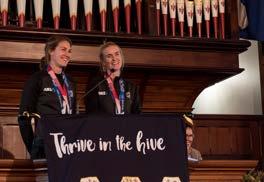
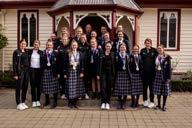
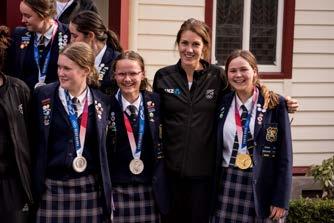
OLYMPIANS @ RANGI
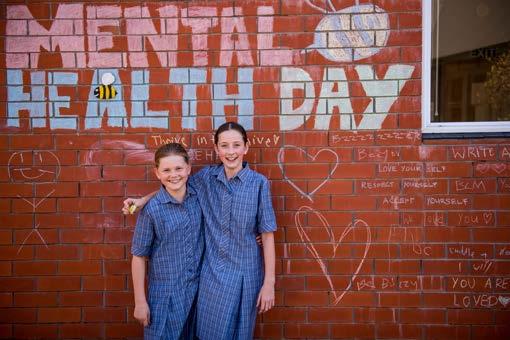
MENTAL HEALTH DAY
PUTTING THE HEART INTO ART
Legendary Ballerina Margot Fonteyn said, “Great artists are those who find a way to be themselves in the art”. She was correct but may have omitted what we see as the most important aspect of the artistic process: relationships. Yes, undoubtedly other factors underpin artistic achievement but the greatest tool to Be Your Best is the strength gained from collaborative relationships.
Collaboration is a core value in Theatre Arts, whether creating work from scratch in groups for a devised drama assessment, creating choreography as a group in curricular Dance or working together to perform a piece for an audience.
On Stage
In Theatre Arts we search for performance festival opportunities that are inclusive and focus on opportunities for our ākonga (students) to see the work of other schools and groups. After the joint senior production this year the cast of As You Like It so enjoyed working together they felt the need to work on another show Teechers, directed by Nikki Bleyendaal of Christ’s College,
which they entered into the local TheatreFest.
The Rehearsal Ingredient
The rehearsal process is hugely important—where ākonga are encouraged to make mistakes in order to present a finished work in performance—and this is also at the core of creating great art; making mistakes is not simply a part of Being Your Best, it is another vital ingredient. This is a central ethos in curricular and co-curricular Dance and Drama.
Ākonga Led
Exemplifying the heart in art and being herself in the art is our student Head of Dance for 2021, Makayla Barrett (Year 13). Makayla works with the Elite
Dance Company to draw out their best. Her passion for Hip Hop is evident in her choreography and her support for the elite crew—whose overall exposure to the style is limited—is generous. Makayla has told us: “I strive to make sure everyone is giving their best performance, within the group and individually, through technique and facial expression.”
Georgia Moynihan (Year 13), our student Head of Arts for 2021 is another leader within the arts at Rangi Ruru who is passionate about creating a collaborative atmosphere in rehearsal to encourage student performers to Be their Best.
Of the process towards the excerpt from Romeo and Juliet being nominated
“I worked to ensure the whole team has the opportunity and is encouraged to contribute. Ensuring everyone was heard and seen was one of my main objectives during the Sheilah Winn rehearsal process, and I think it makes for an authentic and engaging piece.”
GEORGIA MOYNIHAN
DanceNZ Made
National University of Otago Sheilah Winn Shakespeare Festival
Years 7 and 8 Dance Company rehersals
BEING YOUR BEST AT RANGI
E huri to aroaro ki te ra, tukuna to ataarangi ki muri i a koe
Turn your face to the sun and the shadows fall behind you
As they are about to begin the next chapter of their lives we ask some of our Year 13 students what being their best means to them and how they navigated their personal journeys of success throughout their time at Rangi Ruru.
Olivia Armitage
Success is hard to define because it is relative to what is important to an individual. Although I have won awards and held positions of leadership throughout my school career, what I believe has made me successful is how I have created strong and lifelong friendships while at school, and always tried my hardest in all aspects of school life. People and relationships are very important to me, and I am so grateful that throughout my time at Rangi I have been able to meet so many amazing people and connect with a wide range of individuals.
Alice Edwards
My journey at Rangi has been amazing; I have met so many wonderful people, and I am proud of the person that I have become. In terms of being my best during my time at Rangi, I have gained a love of community service and participating in opportunities to give back to my community. I now regularly volunteer at the Red Cross Shop, tutor younger students and participate in a range of different service opportunities. From this, I’ve also learnt that so many people need our help, and the smallest acts can make the biggest difference. Rangi has given me so many opportunities to get involved and give to those people who need it most, and for that I am very grateful.
Bridget Maw
While having actively partaken in activities in and around school, something that I have also been involved in outside of the classroom is my participation in the LearnCoach comedy competition. The competition, hosted weekly for New Zealand secondary school students, involves writing three one-liners about NCEA each week with cash prizes for winning entries. My persistence in this competition has paid off, having won the competition 22 times since 2018, with numerous second and third placings, and a fair share of bonus prizes. My steadfastness with this competition is something I am proud of and have learnt to improve and refine during my time at Rangi.
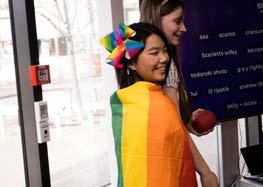
As Co-Head of Pride this year, my team and I run a group called Rainbow Rangi. Over the past year, a group of students have come together with a shared vision for a group that strived to make our school a safer, more aware place, and through the hard work of many we have set up a group that achieves this. Rainbow Rangi—our school’s LGBT+ support group—meets weekly on Friday lunchtimes to educate and support the rainbow youth within our student population. Rainbow Rangi is open and available to any students who identify within the rainbow community, as well as anyone else who seeks support or simply wants to learn and educate themselves on how to be better allies. We held a very successful Pride Week this year, with an underlying objective to raise money, which we donated to support charities for the LGBT+ community.
Emma McCusker
I have been given countless opportunities while at Rangi, which I believe have made my time at school hugely successful. While I have benefited greatly from the academic and sporting opportunities available to me, I found Rangi providing experiences such as taking part in the Duke of Edinburgh awards and community service projects truly invaluable. Although the contributions I have made through community service are small in the grand scheme of things, they are something I am proud of. Through the Duke of Edinburgh awards, I have been challenged and discovered a number of new interests and lifelong skills.
I distinctly remember my first day at Rangi, as a tiny Year 7 with no idea how it would all pan out. I gained a bit of a reputation for being a slightly obnoxious 11-year-old, who clearly felt a great sense of pride in being the only one of my age in Kapa Haka. In fact, I built upon my list of commitments by joining as many clubs and groups as possible. For me, those groups define my own personal success. My Dear No One band mates are some of the coolest people I know, and we have genuinely had such a great time playing music together and developing as people together over the past few years. The friendships that I have made through musical and cultural groups have been the most special aspect of school for me and will be the part of Rangi that I
Jorja Tuanui
Ko Wharekauri tōku k
Ko Tokumaru te waka
Ko Takehanga te awa
Ko Maunganui te maunga
Ko Whakamaharatanga te Marae
Ko Jorja Tuanui ahau
Coming from the Chatham Islands to attend boarding school at Rangi Ruru in 2017 was tough with having to be away from my whānau, home, and everything that I had grown up to know. The simple quiet country living had not prepared me in any way for the life I now know and love at Rangi. Boarding has been challenging from the start, as it took time to get used to but over the past four years it has become one of the best things about Rangi. Living with girls who are now like sisters to me, making awesome memories and friends for life. The support of the matrons and staff are second to none and the guidance from them has been amazing. Rangi has become my second home and has been everything I hoped it would be and more. One of my major successes with my time at Rangi would be completing my higher education to my best. Staying on after a tough year in 2020 saw me getting back up and carrying on after losing my dad suddenly. This has contributed to the personal growth within me, spiritually, mentally, and emotionally.
Eliza McIntosh
My success at Rangi definitely can’t be defined as a single event and doesn’t necessarily depend on academic results. Over the years I’ve filled my spare time with cricket practices, choir rehearsals, and committees, all of which encourage me to be my best self. I underwent knee surgeries in Years 12 and 13 which have proved a challenge, but also made me realise the importance of the support network I have created at Rangi. Despite missing out on sport, I’ve learned that success doesn’t always come down to the trophies we win and I’ve felt proud of my efforts to stay connected with others, and to value the journey as much as the end result.
Emily Gambrill
The biggest way in which being at Rangi has enabled me to be my best is being involved with music. When I started out in Year 9, the extent of my involvement with music was simply playing the trumpet. But I have since found opportunities and a community that I never could have imagined. Playing the trumpet and singing in Resolutions, I have been fortunate to have had so many amazing experiences, including singing in the Big Sing National Finale, playing in the Evita orchestra, and travelling to Blenheim for Southern Jam Jazz Festival. The support, encouragement and musical community that I have found at Rangi has allowed me to grow and is something I will be forever grateful for.
Scarlett Banks
I have been at Rangi since Year 9 and have loved and am so grateful for my five years here. I am particularly grateful for the opportunities Rangi has given me to give back to my community and find my passion for service and helping others. Through the school, I have been able to get involved with 40 Hour Famine and organising this amazing event, with all the cool things Eco Action does and the Student Volunteer Army and all the good work they do, most recently volunteering at the vaccine clinics in Christchurch. All thanks to these opportunities, finding out how rewarding and fun it is to help others and give back, not to mention the amazing connections you make with others while doing it, I have been inspired to pursue a career in nursing and that has definitely been one of the most valuable things I’ve got out of my time here.
Elsie Westphall
I had a challenging time when I first started Rangi, but now in Year 13 I can’t imagine going anywhere else. In Year 9 I found it difficult; I had no friends, I lost a lot of confidence, but with the help of another girl in my class, my Dean and all the teachers who cared for me, I have learned to be strong, proud of myself and achieve my own goals (even though they might not be the same as other girls). What Rangi has taught me is to keep aiming high, work hard and that we are all unique, and we all have our own paths to follow. I love walking my dog called Eddie, watching my friends play hockey, and playing social sport—even though I’m completely uncoordinated.
RETHINKING LEARNING
Education is disruptive. Never more so than now as we grapple with one of the most significant realities of our age; that knowledge is no longer scarce. At Rangi Ruru, we understand the disconnect between the traditional school model and the challenges and opportunities of today’s world.
Which is why we are committed to reconceptualising learning so that we move well beyond an experience where young people move through school as consumers of a lockstep system of lessons, units, courses and grades. We are committed to moving well beyond a traditional experience where the student’s role is to be compliant and direction-following, where the student arrives at a predictable response and remains largely passive in the process.
The New New
Although personalised learning is not a new concept—it can be traced back to the 1700s when Jean-Jacques Rousseau advocated for schools “built on individual capacities and choices to capitalize on inherent motivations”—it has finally become the pedagogy of choice in education as we leave the legacy of the industrial age behind. And with good reason; it is regarded as the solution to help us take learning into its next iteration, much
in keeping with society’s focus on the whole child and a young person’s wellbeing. Personalisation is the reconceptualisation of education from a teacher-driven learning experience— the “sage on the stage” to a studentdriven learning experience—where young people have more influence over the what and the how of their learning and where their voices, aspirations, character and interests are woven into the learning experiences.
Student Investment
At Rangi we understand that the best way to grow young people into the best versions of themselves, with all of the skills and mindsets needed to succeed and contribute to our shared future is to ensure that every student is invested in their learning.
“Why is personalized learning a better way of doing school? Because it is a better way to attain current learning outcomes, leading to deeper and more meaningful learning experiences.”
Our staff are on a journey to create personalised learning experiences where our students see school and learning as a way of acting on their interests and passions. We understand that students deserve to see themselves as powerful forces in their environment and where teachers work in collaboration with students, where students learn to become competent, reflective, curious and compassionate individuals.
A Tailored Approach
MELISSA CAMPBELL
Another viable tool at our disposal to enable our learners to be their best is to differentiate. As differentiation expert Carol Tomlinson describes, “Teachers begin where students are, not the front of a curriculum guide. They accept and build upon the
premise that learners differ in important ways.” This means that increasingly our teachers tailor content, process, product and the learning environment for individual students in the classroom to make it more likely that each student will succeed.
Recently our Head of Learning Area for English, Erin Fitzpatrick, shared an impactful reflection about one of her experiences with a senior student, a lover of Hip Hop. The student moved beyond the realm of classroom text discussions and, with the support of her teacher, she developed her own knowledge of Hip Hop in order to develop her passion and explore the ideas of Hip Hop in her independent learning and assessments. Erin remarked at the positive impact this had on the
student’s sense of agency and motivation.
Starting
with Why
As Simon Sinek promotes in his TED talk, Start with the Why. Why is personalized learning a better way of doing school? Because it is a better way to attain current learning outcomes, leading to deeper and more meaningful learning experiences. And because it is a better way to grow young people.
After all, we don’t teach subjects; we teach students to be their very best.
Acknowledgement: ‘Learning Personalised: The Evolution of The Contemporary Classroom’ by Allison Zmuda, Greg Curtis and Diane Ullman.
Words by Melissa Campbell
ASSISTANT PRINCIPALTEACHING AND LEARNING
Read an article on Stuff.co.nz about personalised education at Rangi Ruru
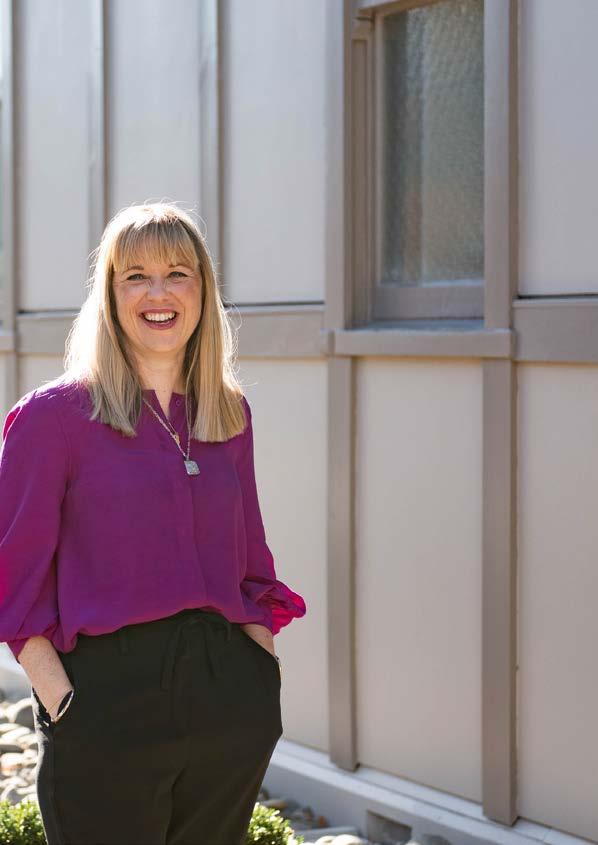
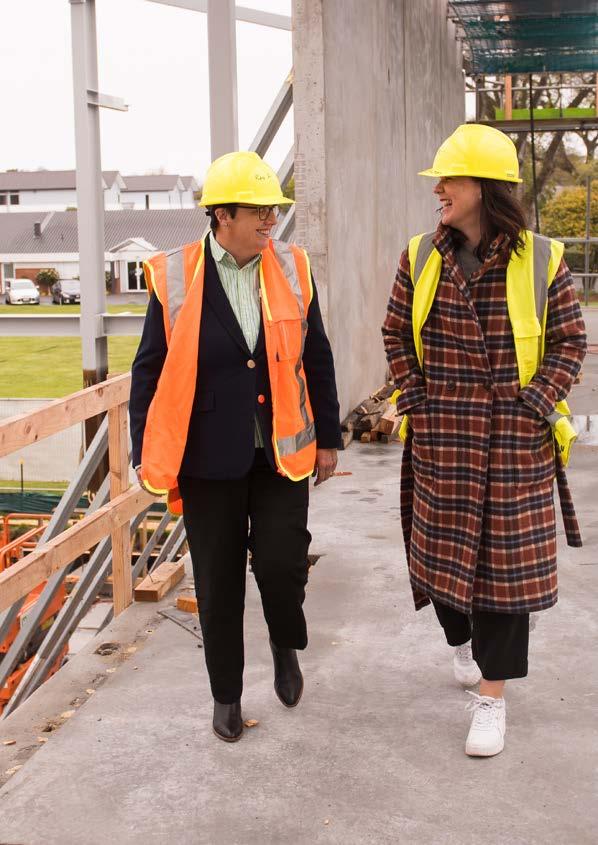
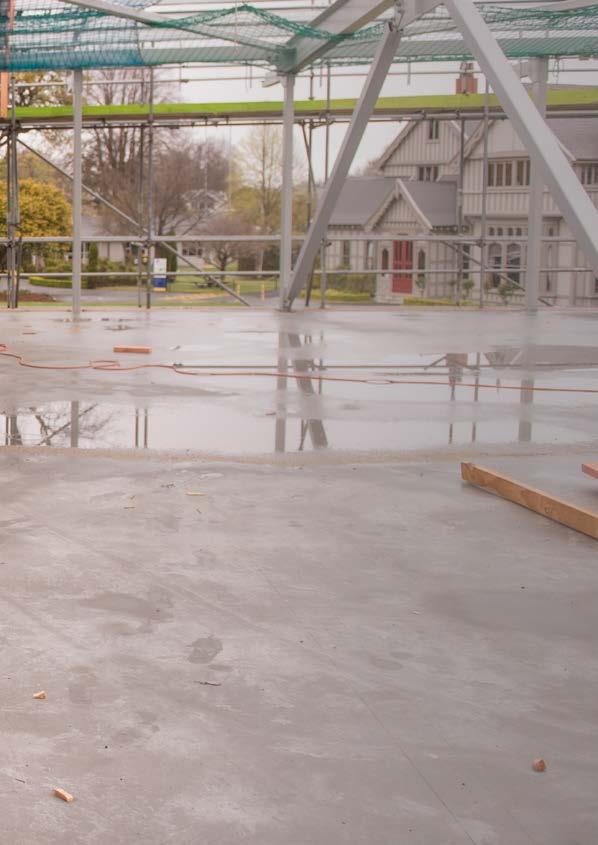
Bridget Woodham, right, and Dr Sandra Hastie check out progress at the new Sport and Multi-Purpose Centre
DEVELOPING OUR LEGACY
As I write this, I do so from the comfort of my own home, with the sun streaming through the window, on the eve of moving to Covid-19 Alert Level 2. What a roller coaster year, just when we got used to a new norm post 2020 events, the pandemic rears its head again and puts us in another spin.
Once again we stop, we adapt, and we transform. Businesses have learnt to be agile and not fear the unknown (too much). Best laid plans have been prepared, set aside, revisited and re-set.
With such a cracking start to the year, we were hopeful the Development Team’s plan would map out. The school held its first Friends at Five Thirty speaker event for the year and what a night it was. To our speakers—thank you for sharing such personal stories with us and to those who were fortunate enough to be there—how privileged were we to share in that moment and gain such insights.
The wonderful Gibson Girls were also brought together for a special lunch. This is always such a memorable day, and the school was grateful 18 wonderful Old Girls who were at school during the leadership of the Gibson sisters were able to join us.
The school’s legacy society the Gibson Circle—a group of women who have planned to leave a gift in their will to Rangi Ruru—also gathered for a personalised and very special tour of the school’s art collection with Juliet Collins. Looking back now, we are incredibly grateful to have been fortunate enough to come together, connect and celebrate our community.
that, the school and our students are grateful.
After the success of Giving Day in March (which raised $276,000) and with leadership gifts from several members of our community along with the incredible legacy left by Miss Elizabeth Reid, we hit 70 percent of the fundraising target for the Sport and Multi-Purpose Centre. I would like to take this opportunity to thank once again everyone who has supported Project Blue Sky to date.
With just over $1.5 million further to raise to hit our $5.6 million target, and less than a year before the Sport and Multi-Purpose Centre is officially opened, we live in hope that those within our community who can support the campaign, particularly with major gifts, reach out and start the conversation.
You have the opportunity to make a real difference; to help ensure a sustainable future for the school, and to do so knowing that thousands of incredibly lucky young women now and in the future will benefit.
BRIDGET WOODHAM
Thank you once again to the many businesses who sponsor teams and programmes within the school. This support enriches different aspects of our co-curriculur programmes and, for
With $45 million already spent on the post-earthquake campus masterplan Project Blue Sky, and completing 60 percent of it with major gifts from only a select few prior to 2020, we are now calling on those who can to lead the way for others to follow. You have the opportunity to make a real difference: to help ensure a sustainable future for the school, and to do so knowing that thousands of incredibly lucky young women now and in the future will benefit. If you would like to find out more, please connect with us via development@rangiruru.school.nz.
As the end of the year is upon us, it is opportune to reflect and share gratitude to the wonderful champions who support the school in various ways.
Thank you to those who volunteer their services throughout the year: Readers/ writers, those who manage and assist our co-curricular teams, the wonderful people who come into our community and share career and personal insights with our students and wider community, our wonderful PTA, those who serve on the Rangi Ruru Board of Governors, the Old Girls Association, and the Foundation, those who attend performances and events, and those who simply cheer us on from the side lines – we acknowledge your support and thank you for being part of our special Rangi Ruru whānau.
May your summer holidays be filled with love and laughter and hopefully be mask free!
Words by Bridget Woodham HEAD OF DEVELOPMENT
The Gibson Circle is Rangi Ruru’s Legacy Society to acknowledge those who intend to leave a gift in their will to the Rangi Ruru Foundation. Leaving a gift in your will is an opportunity to support the school in the way you have always wanted but perhaps been unable to in your lifetime. It can have an enduring impact by benefitting thousands of students and helping secure the school’s long term financial security and continued independence. Becoming a Gibson Circle member is straightforward, simply let us know you have named the Rangi Ruru Foundation as a beneficiary in your will. All gifts to Rangi Ruru are an investment in its future and for that we are incredibly grateful.
CREATING
Some helpful resources
Need to Talk?
Free call or text 1737
Talk with a trained counsellor, anytime
Youthline
Free call 0800 376 633 or free text 234
For young people and their parents, whanau and friends
The Lowdown
Thelowdown.co.nz or free text 5626
Support for young people experiencing depression or anxiety
AWARENESS
LEADERSHIP IS TEAMWORK
Being your best in the Service Council looks like teamwork. You can’t be your absolute best as a council if everyone’s functioning as separate units; we can only be our best when everyone’s putting in the same amount of effort and are collaborating together on ideas.
We work as a team to pull everything together from initial planning and brainstorming, through logistics and specifics and all the way to the actual execution of an event or initiative.
The events only run their best when everyone in our team is performing their best—showing up on time, following through with their tasks and, most importantly, always helping each other.
One event we organised was Beelong Week, which celebrated belonging at Rangi Ruru and involved co-ordinating a heap of activities designed to bring everyone together. We organised a
whole school Jump Jam, friendship bracelet making, a movie screening, morning hot chocolates and a scavenger hunt.
We couldn’t have pulled it all together and executed the amount of ideas we had without having everyone fully on board and committed.
Also, I find that going with the flow and being flexible has been really important. Like when we planned to do a big outdoor coin trail and gratitude wall for the 40-hour Famine, but it started bucketing with rain a few hours before.
So, just 10 minutes before lunch we managed to find a big piece of
What student leaders say being their best is:
“Being our best in our council means being able to help our school use our privilege to make a difference in our community. Whether it’s helping other humans or the environment, we all feel so grateful to be able to give back.”
- SCARLETT BANKS (YEAR 13), SERVICE COUNCIL
cardboard and did a smaller scale coin trail inside which worked just as well and still raised close to $8,500 for the cause.
I’ve found team work is the secret to being your best in the wider student leadership team, too. For Bee Kind Week, every student leader joined a production line to pack 700-ish lolly bags for students.
On top of that, a whole group of Year 12s and 13s (many from the Community Council) spent an evening at home writing kind notes to go with the lollies.
Words by by Camille Perelini HEAD OF SERVICE
“Being our best in the Service Council means we all contribute our ideas to plan the best possible events to help our school and community. If we aren’t all working together and helping each other then we can’t do our best for others.”
- ISSY KENNEDY (YEAR
13),
SERVICE COUNCIL
Camille Perelini, right, and Sam Senior
A PHILOSOPHY OF FUN
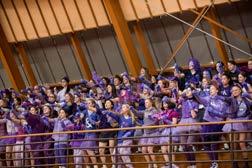
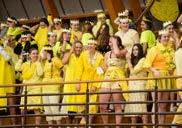
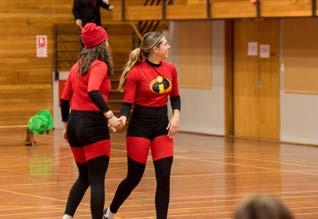
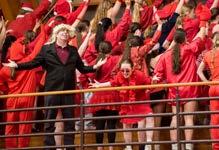
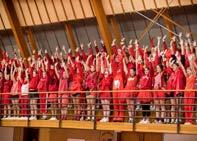
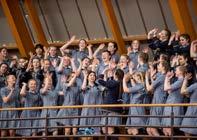
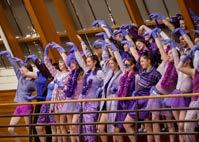
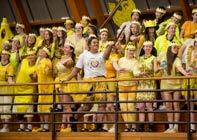
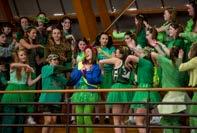
Being your best in your clan is simply having fun! This looks like cheering on the competitive athletes at sporting events, scouring your wardrobe for the best clan clothes and belting your heart out at clan singing.
It’s actively getting involved in all activities, competitions and clan meetings alike. It’s being enthusiastic and making the most of all opportunities. This helps create a positive, fun-loving environment where everyone feels a sense of belonging.
A special part of being in a clan is forming connections between different year groups. Being your best looks like mingling with students of all ages and making an effort to say, “hi” to everyone around school. Clans are a space where all students should feel welcome and safe, have the confidence to speak up and share their ideas.
We asked Rangi Ruru students in junior year groups what being their best in clans meant to them, and they told
us how it is about embracing team spirit, striving to involve themselves in clan activities and events and making an effort to step out of their comfort zones and socialise with students in different classes or years.
In senior years, students become the leaders of their clan. They have the chance to be their best role model for the junior students, as their seniors did for them. This ties into the idea that being in a clan is being a part of something bigger than yourself.
Words by Saskia Simmers and Rosa Blake HEADS OF STIRLING
What students say being their best is in clans:
“Being my best in a clan is about contributing to the activities, building friendships with the other girls and showing lots of respect to the senior leaders who are doing their best to make the experience lots of fun for me and everyone else.”
- HARPER SCALES, YEAR 7
“Being kind and sharing ideas and kindness to your clan. Also having an open mind about making new friendships with your year group in your clan and other ages.”
- ABBIE DONALDSON, YEAR 9
“I think it’s about having a team spirit but also having a ‘big family’ sort of relationship with your clan, like getting to know different people from different years in your clan.”
- TESSA LANGMAN, YEAR 9
“I think that being your best in your clan means always helping out, being kind to everyone and having heaps of fun. I think that you’re always your best self whilst in clan time as you’re just playing games and having a good time.”
- ELSIE ULLRICH, YEAR 10
EMPOWERED BY PRINT
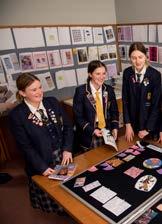
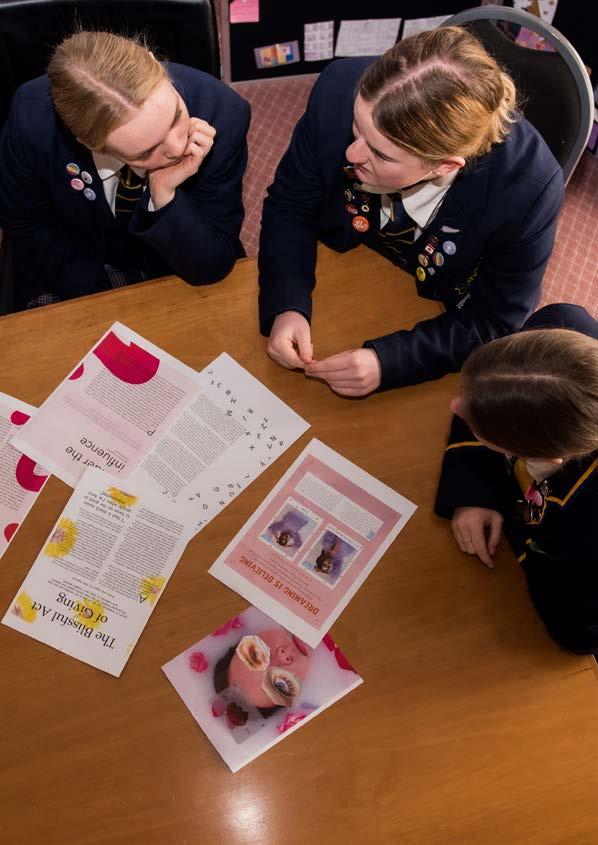
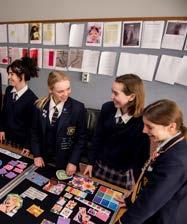
Rangi Ruru’s student-produced magazine is edited, written, photographed and designed by students, offering a unique insight into youth lifestyle and community. Shelter gives readers a glimpse into the issues most important to young people, in their own words. Head of Media Studies Jude Morgan asks 2021’s editorial team about the impending Thrive Edition.
Since launching in 2016, Shelter has shared the diverse thinking and creative skills of Rangi Ruru’s students from all levels of the school. Believed to be the only one of its kind in Aotearoa entirely produced by students, its content explores the myriad of matters important to our young people.
This year’s issue mirrors the student school theme for 2021, Thrive in the Hive, and features student perspectives on mental health, cultural and gender identity alongside original photography, illustration and design work.
QHow has being involved in producing Shelter helped you be your best in work/study at school?
Frankie Gosney, Editor: “Being a part of the Shelter team this year has helped me develop great skills in organisation around my schoolwork and other aspects of my life. It’s like picking up another subject but not having allocated time for it: You find yourself having to plan out your days and study times more, which I think is an important life skill to have, as we are leaving school and entering the big world where we don’t have teachers telling us what to do.”
Pippa Russek, Deputy Editor: “It’s helped me consider who I am producing my work for and how I can alter it to fit them. Being a part of the Shelter team has also helped me with my organising, planning, and prioritising.”
Sadie Lee, Deputy Art Director: “It’s allowed me to maintain my focus in other classes as it gives me in-school time to outlet my creative side, while not getting in the way of my other subjects.”
one big idea. I have learnt how to think from not only my perspective, but that of who we are making our magazine for.”
Frankie: “Being on the Shelter team has helped me become more creative and assisted me in coming out of my shell. I had to cooperate with students I had never even met before and make connections with each of them. My ways of communicating have also improved this year. Working with all different types of people, introverts, extroverts, opinionated, reserved, creative and not so creative, has helped develop my skill set in communicating with different people.”
“It has really pushed me outside of the limits I thought I could once achieve. I know I can create a platform for a variety of unheard voices that have the power to evoke change and inspiration. It reminded me that as a teen I do still have some power in this world, and I can accomplish great things.”
EMILY WILLIAMSON
Emily Williamson, Section Editor: “It has shown me the high level at which I can achieve in Shelter is the same level I am able to achieve in my schooling. That has really inspired me to push my own work further.”
QHow is being on the Shelter team helping you be your best self?
Emily: “It has really pushed me outside of the limits I thought I could once achieve. I know I can create a platform for a variety of unheard voices that have the power to evoke change and inspiration. It reminded me that as a teen I do still have some power in this world, and I can accomplish great things.”
Sadie: “Just being around like-minded people who are passionate about similar things is inspiring.”
Pippa: “I am learning how to contribute to everyone’s great ideas and turn them all into
QHow do you think being involved in producing Shelter will help you beyond school?
Emily: “Working together effectively, finding a medium between two strong ideas and essentially just getting stuff done.”
Sadie: “I think just having that experience to work as a team and to experience sharing ideas, thoughts, queries as well as discussing issues and resolving problems to produce work we are proud of. This will benefit me greatly when it comes to my future and I’m having this experience before entering the work force.”
Pippa: “In many ways, from working in a team to marketing and making decisions.”
QFinal thoughts?
Pippa: “I think that being a part of the Shelter editorial team is a great opportunity for all students at Rangi Ruru. You just need interest and passion.”
Frankie: “It’s going to be such a bittersweet feeling when the magazine is released. Although it has been stressful at times…also so rewarding. I hope that in the following years I can continue to be a part of the making of the Shelter magazine and share my insight with the students in charge of producing the magazine in that particular year.”
AWAY, AT HOME
As one of the four pillars at Rangi Ruru, Be Your Best focuses on the attitude and mindset that we aim to instil in our students so that they have the tools and skills to become their very best selves.
Our personalised approach to learning comes from knowing and understanding each student and helping them find what makes them tick so they can succeed on their own terms. Helping them to discover this enables us to focus their learning needs to support and encourage them to be engaged and active in finding their best self.
For many of our international students, success in their home country may have a very different definition. Perhaps academic outcomes are valued over effort, and the rote learning and routinised instruction in other countries’ exam-oriented education leaves little room to develop critical thinking skills and independent learning. In such an environment, school life can be monotonous and stressful with long days studying and memorising—offering little scope for creativity, diversity, or innovation.
International Independence
Rangi Ruru’s Head of International, Year 13 student Seoyeong Lee, says coming to New Zealand offered the chance to develop her own identity and find her passions outside of the rigorous 14-hour days she was used to in Korea.
was scared to leave home, but coming to New Zealand has been one of the best experiences of my life.”
Whether it is leading international events at school, encouraging other students, participating in sport and cultural activities, or being in her happy place in the music department, Seoyeong says she has dared to go out of her comfort zone and is not letting anything stand in her way of being her best self.
Freedom to Succeed
Arriving from Shanghai in 2017 with her mother, Eva Wu started at Rangi Ruru in Term 4 of Year 8 as the only international student in her year group. She says there was no option but to smile and take it one step, one class, one day at a time.
Fast forward to 2021 and Eva was a finalist in the Year 12 speech competition with an articulately presented speech infused with humour. She loves Art, Music and Dance and says the fact that she can study these as subjects at school is lifechanging.
“What I am most proud of is that Rangi has made me a confident person.
She says arriving in Year 10 was scary, and she was worried about how she would look after herself on her own. She spent the first year at school in Nelson and was so homesick that her mother came out to stay with her for a while.
It has made me brave to perform and speak confidently in front of an audience.
EVA WU, YEAR 12
The move to Christchurch and Rangi Ruru in Year 11 was a turning point for her, she says.
Seoyeong settled into the boarding house and hasn’t looked back. Fully immersing herself into school life, Seoyeong has embraced the opportunities offered to her and has found her ‘why’ in all things music and more recently Art History.
The journey has not been without its challenges, but she says, “Every single step is an achievement.
“Everything I have done is my best. I
In China, the compulsory courses focussed on the Sciences and Math, Geopolitics and History. There was little choice— no Art, Music or Dance. Eva has embraced all that Rangi Ruru offers. She credits the Music department with her interest in music and the breadth of her involvement has encompassed school choirs, Sinfonia, Chamber Music, Percussion Ensemble and Rock Band. Whilst encouraged and celebrated here, in China these activities and clubs are a luxury for students.
“What I am most proud of is that Rangi has made me a confident person,” says Eva. “It has made me brave to perform and speak confidently in front of an audience. I am also very grateful that I have been able to study abroad at Rangi Ruru.
“I feel that the children in China have been overwhelmed by learning and have endured pressures they shouldn’t have at this age.”
By helping her to discover what makes her tick, Eva has thrived and succeeded to be her best on her own terms, in her own way.
The Added Challenges of Lockdown
For our international students, their time in New Zealand is mirrored by time away from their family and friends in their home countries. For Japanese American student Lil Ogano, she hasn’t seen her dad since January 2020.
When the August lockdown brought challenges for all our students, Lil had the added worry of not seeing her dad for even longer.
“Although I FaceTime him very often, it’s not the same. I do look at the positive side and hope the borders will open soon.”
During the August lockdown, Lil decided to focus on her work and wellbeing to keep her mind off missing her dad.
“Be Your Best to me means that with anything I do, I am pleased with the outcome and feel accomplished by the end and that I never turn down a challenge.
“During lockdown it’s hard to keep motivated to do work. You can feel lazy and unaccomplished at the end of another day of online school. At the start of this lockdown, I knew I didn’t want to do that as I knew nothing came out of it last year.
“So, this lockdown I focused on work and still took time to look after my wellbeing. As we are nearing the end of lockdown, I feel I have definitely accomplished many things and dealt with many new situations.”
Words by Louise Stanton INTERNATINAL DEAN
Year 10 student Lil Ogano
CHANGING THE WAY KIWIS EAT
Making an impact on the planet can be as simple as what you put on your plate. And for Rangi Ruru Alumnae, sisters Miranda and Josie Burdon, this was the motivation for their award-winning plant-based food products.
Josie, left, and Miranda Burdon
As the daughters of New Zealand’s leading mushroom producers, Miranda and Josie Burdon have long known the power of plants. So when the rest of the world started to catch on to the benefits of plant-based diets, they knew it was time to turn their formidable experience into entrepreneurship.
Eating more whole plant-based foods is not only scientifically proven to reduce a person’s risk of heart, metabolic and infectious diseases and cancer, it also markedly reduces environmental impacts on the earth.
Enter Food Nation, a new business launched by Miranda (Class of 1984-1988) and Josie (Class of 1989-1993) to give people a fun and delicious way to eat more plants while also showcasing the New Zealand produce they know and love.
“There’s been a consciousness around what’s happening in the environment for a long time but in 2019 EAT-Lancet* quantified the impact of dietary systems, and it just brought home that the one thing that could make the biggest difference to human and planetary health was diet,” says Miranda.
“We have a huge amount of respect and appreciation for our environment and all the growers and producers in this country and really felt that there was an opportunity to present New Zealand as not just the farm to the world but the garden to the world.”
Miranda started looking at alternative meat ideas in 2017 and, propelled by the report, launched Food Nation with Josie in late 2020. The bright and quirky packaging now sits in New Zealand’s best supermarkets and stores with its vivid colours and fun imagery. So far, the range includes
Magic Mince, available in mushroom and hemp and Mexican corn and red pepper; Amaze Balls, in Vietnamese pea and kaffir lime, and beetroot, Kumara and quinoa; Happy Patties, in broccoli, pea and quinoa, and cauliflower, turmeric and ginger; and Mushroom & Grain Super Sausies. A new sauce range has also just been launched.
The brand has won awards in New Zealand and overseas, but Miranda says, for Food Nation, success is defined by being their best.
“Success is never guaranteed. In New Zealand, we’re often nervous of not succeeding and that impedes us starting. Whereas whatever you do, you actually get a great deal from.
“We should strive to do our absolute best and not think, ‘Someone else is going to do it,’ and therefore not try. I think we should be proud of what we have set out to achieve, irrespective of how it goes.”
industries; Miranda at the family business, Meadow Mushrooms, and Josie with Fonterra’s predecessor the New Zealand Dairy Board.
Josie went on to work in IT and has worked and lived in Asia and Europe, and Miranda has held directorships and senior positions at prominent New Zealand companies like NZ Dairy Foods, Pernot Ricard, NZ Lotteries, New Zealand Global Women (where she was CEO), Live Ocean and Emerging Proteins NZ.
Josie says this experience helped form a foundation for them to build Food Nation from.
“We should strive to do our absolute best and not think, ‘Someone else is going to do it’, and therefore not try. I think we should be proud of what we have set out to achieve, irrespective of how it goes.”
MIRANDA BURDON
“Over all of those career opportunities you’ve built your confidence in yourself and your ability to chase the dream. Female entrepreneurs often run it a bit later in life because we get caught up in our 30s with that whole giving birth thing, so slightly later in life we start chasing our dreams.”
Josie says she learnt early how to chase her “why” and attributes it to her time at Rangi Ruru.
“One of the things about going to Rangi Ruru was that you came out with a sense that you could do anything and there was no reason why you shouldn’t.
“I really felt like the world was there for us to take and to just get out there and be brave and be proud. Rangi Ruru really gave me the courage to believe that the pathway I chose was possible for me.”
And what a pathway they both took. After leaving high school the sisters went to university and both started working in the primary
Miranda says Rangi Ruru also showed her how important relationships are for personal and professional growth.
“For me, a key outtake from Rangi Ruru is the power of friendships and the importance of the people around you, and the effect they have on your life. I look at how experiences I had at Rangi Ruru and the support of the people gave me the courage to take on things I otherwise would never have tried.”
Words by Morgan Tait COMMUNICATIONS MANAGER AND WIDE SKY EDITOR
ALUMNAE
The Committee of the Rangi Ruru Old Girls’ Association would like to acknowledge Diana Reid for her prestigious accolade. Diana was awarded a Queen’s Service Medal (QSM) earlier this year for services to cancer support–a fantastic display of being your best.
Diagnosed with bowel cancer aged just 34, Diana recovered from the disease and in 1983 helped to establish the Malvern Cancer Support Group in Darfield after identifying the need for a local group.
And now, 38 years later, she is still an active member of the group, which provides transport to hospital for patients’
treatments, supplies affected families with meals and offers cleaning and gardening services as well as companionship and moral support.
She told the Malvern News the recognition was not only for her, but for her late friend Janice Collier with whom she co-founded the group, as well as all the other people who have contributed to their efforts over the years.
Diana has also been involved with fundraising for the Cancer Society of New Zealand Canterbury – West Coast Division, including its signature Daffodil Day event and Relay for Life.
Diana Reid neé Millickin
Class of 1955
Queen’s Service Medal (QSM) for services to cancer support.
Upcoming Events
It is with great disappointment that we must postpone the 2021 reunions and Whaea Ora morning tea once again. We have high regard for the school’s health and safety guidelines and commitment to keeping students safe. We apologise for any inconvenience incurred to those who registered and we will continue to do our very best to make this happen for you at a later date. Keep safe.
GIBSON GIRLS’ WHAEA ORA MORNING TEA
Cancelled for 2021, will be held November 18, 2022
LEAVER’S BALL
December 3, 2021
2021 REUNIONS
Postponed until 2022, dates TBC
It is your school reunion if you were in Year 9 (Form 3) in 1941, 1951, 1961, 1971, 1981, 1991, 2001, 2011.
2022 REUNIONS
March 4 & 5, 2022
It is your school reunion if you were in Year 9 (Form 3) in 1942, 1952, 1962, 1972, 1982, 1992, 2002, 2012.
ANNUAL GOLF TOURNAMENT
March 18, 2022
ANNUAL BRIDGE TOURNAMENT
May 26, 2022
GIBSON GIRLS’ LUNCHEON
June 2, 2022
AGM
August 2022, date TBC
Please contact RROGA Administrator Tamara Tait for additional information. rroga@rangiruru.school.nz