Wide Sky is a biannual magazine for the wider Rangi Ruru Girls’ School community celebrating the voices of students, teachers, leaders and alumnae of the Rangi Ruru whānau.
Editor Morgan Tait m.tait@rangiruru.school.nz
Designer Lauren O’Kell
Proofreading
Michele Stephens, Catherine Bartlett, Anna Harrison
Photography
Lauren O’Kell
Rangi Ruru staff and students
Printer
Blueprint
Rangi Ruru Girls’ School 59 Hewitts Road Christchurch 8014 New Zealand
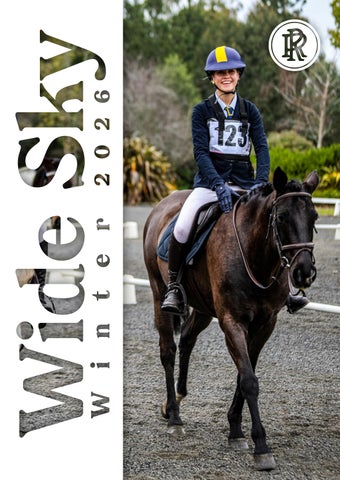
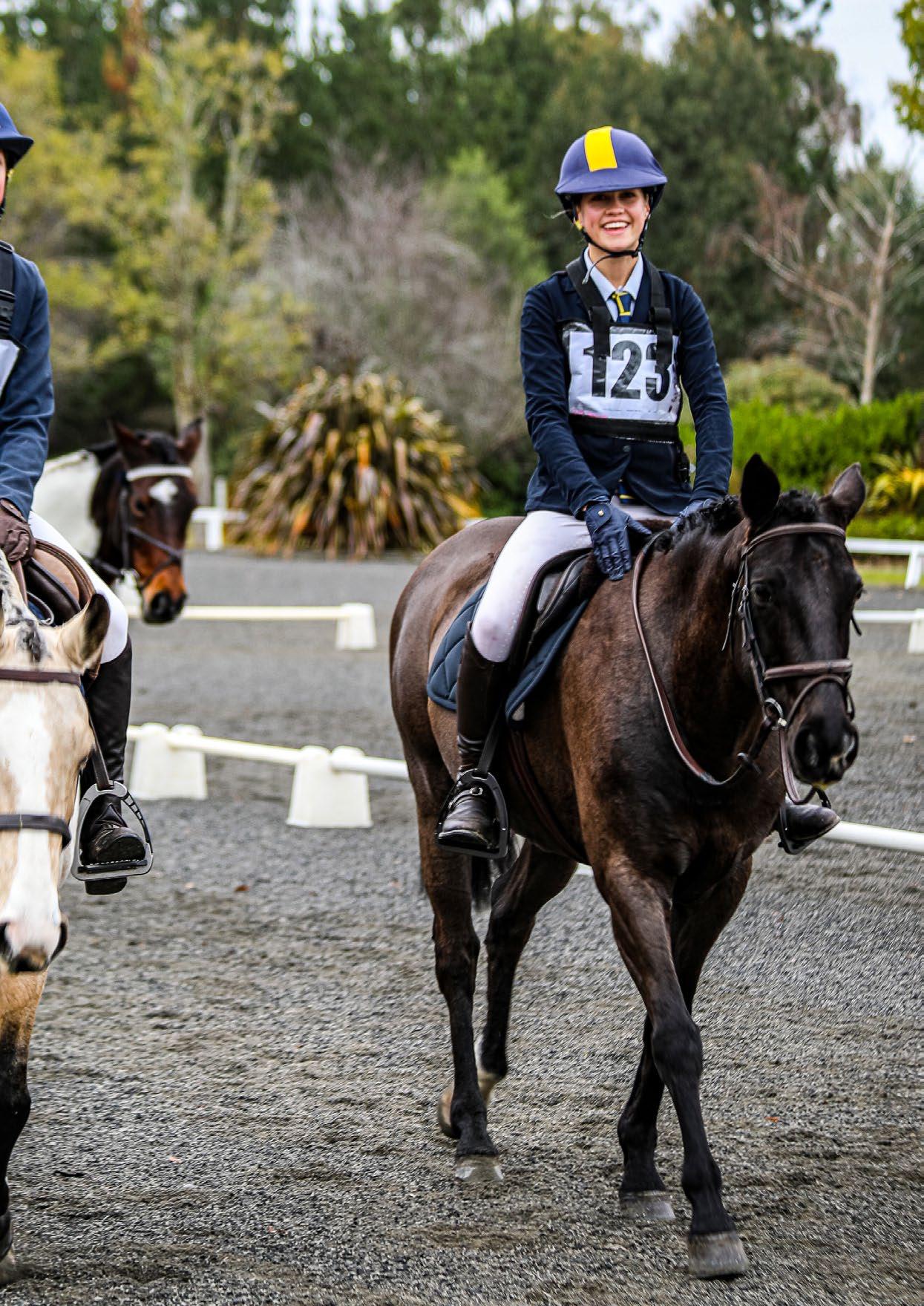
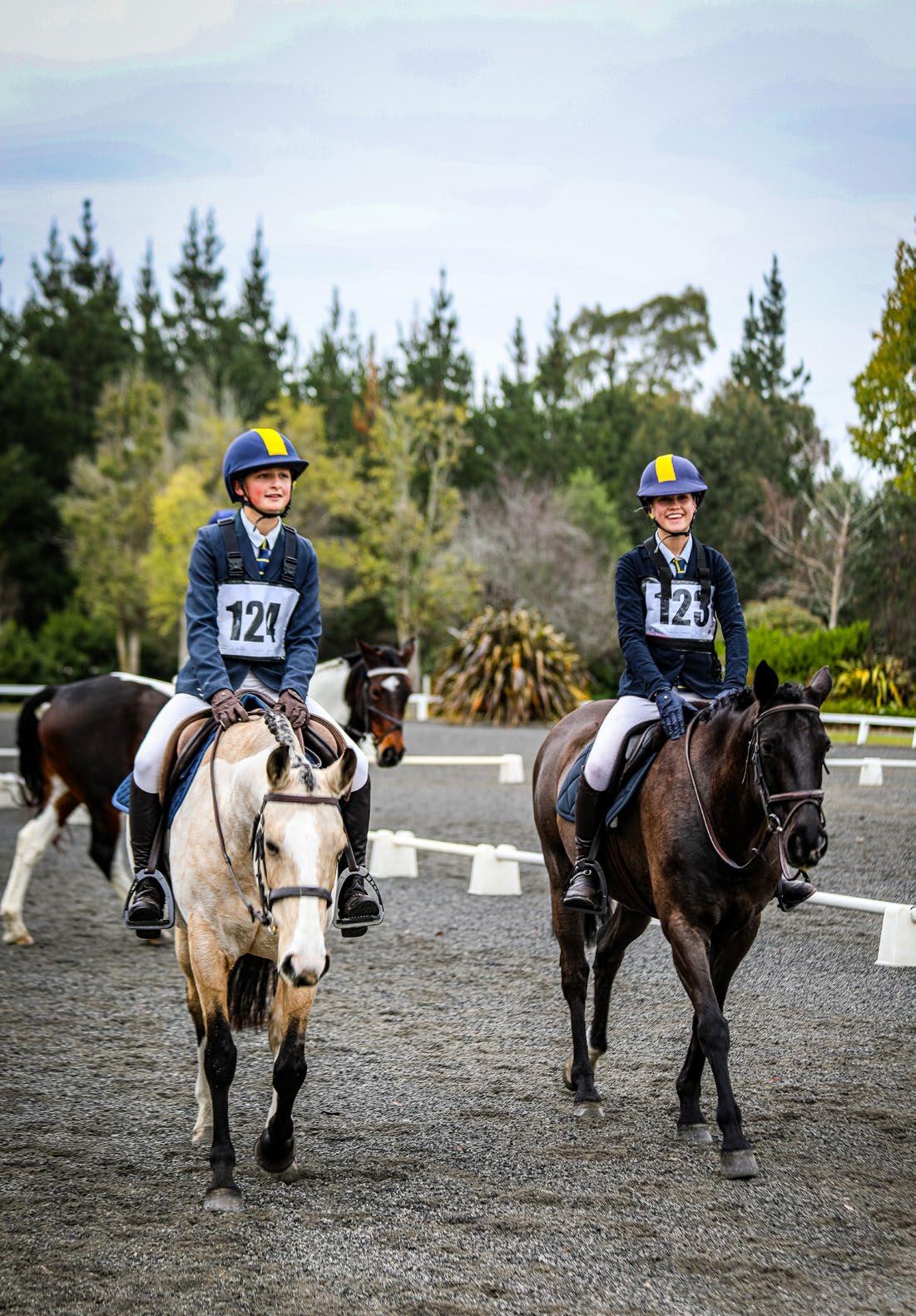
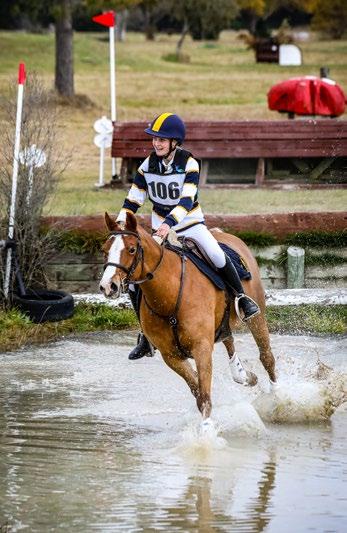
Zoe Innes (Year 10) and Galaxy in Disguise representing Rangi Ruru at the School Sport Canterbury Secondary Schools One Day Horse Event 2026.
Read about Zoe's equestrian journey on Page 46.
Photo by Sarah Robotham Photography
Editor’s Note
Welcome back to the first issue of Wide Sky for 2026. This edition follows the school theme for the year, Courage to Grow, which reminds us that growth is not simply about individual achievement: it happens when we are willing to learn, lead and contribute to something bigger than ourselves.
Across these pages, you'll see the theme brought to life in so many ways. We hear from our ākonga about their Build Your
Braid kaupapa; explore the growth that comes through student exchanges and the Enrichment programme; dive into our new family and staff education series Whānau Ako, Tipu Tahi and Ako Tahi, and check-in on the wellbeing and Learning Centre support networks there to assist.
We also celebrate members of our alumnae community whose journeys continue to inspire. Like Charlotte Rozen, Rangi Ruru's first student with Down
4 Collective Momentum for Future Possibilities
Tracy Herft 6
The Courage to Keep Growing
Amanda Dick 8
Braiding Bravery Violetta Dacre
Nurturing Futures in Primary Industries
Juliet Collins
Learning (and Growing) Together
Michelle Enright
The Science (and Art) of Jewellery
Amelia Pascoe
16 A Lifelong Love of Languages
Judith Leckie
18
The Quiet Courage of Boarding
Kyleigh Lyth
20 The Courage to Stand Up for What's Right
Liz Alden Wily
22
24
Tipu Tahi: Growing As one
Kistina Wu
Charting New Waters
Charlotte Rozen
26 The Joy of Creative Risks
Kirsty Bell
syndrome, who continues to challenge expectations and break records in the pool, and Liz Alden Wily the political economist and inaugural recipient the school’s new Founders’ Medal.
The theme has resonated personally, too. For years, I have thought about doing a Master's degree. But, between work commitments and growing my young family there seemed (perfectly legitimate) reasons not to. Then, before students returned
for Term 1, alumna and recent King's Birthday Honours recipient Kendall Flutey challenged staff to consider what Courage to Grow might look like in our own lives. So, I enrolled. One semester in, I can confirm that juggling work, study and family life is as happily chaotic as anticipated. But I've also realised there will probably always be a (perfectly legitimate) reason not to do something. Perhaps the courage to grow is simply giving it a shot anyway.
Throughout this edition, you'll meet people who are creating and embracing opportunities, challenging themselves and encouraging others to do so, too. I hope you enjoy reading their stories as much as we enjoyed bringing them together. WORDS BY
Morgan Tait Editor & Communications Manager
Ka mua, ka muri | walking backwards into the future. We move forward with our eyes on what matters most, shaped by our past, and guided by both clear thinking and deep care—with both the head and the heart.
Future Possibilities Collective Momentum for
Courage to Grow is more than a theme for this year. It captures something deeper about where we are as a kura. Growth at Rangi Ruru is not simply individual progress; it is collective, shaped by both the thinking we bring and the values we hold. It is growth of the head and the heart, of capability and character.
Our core purpose anchors us in this work: to support and inspire every student to grow in character, confidence, and capability so they are ready for life beyond the Rangi Ruru gates. This year, we are leaning into that purpose with renewed clarity. Growth requires courage. It means to try, to question, to step forward and lead, and to imagine something different from what exists today. We see this courage in our ākonga every day.
Across the school, there is a strong sense of shared momentum. Students are stepping into leadership with increasing confidence and authenticity. Staff are modelling what it means to be lifelong learners, open to change and committed to improvement. Whānau are engaged, not just as supporters, but as partners in learning, bringing both insight and care to the shared work of raising our young people.
Central to this is the strength of our academic care. The relationships we build, the sense of belonging we foster, and the focus on each learner’s success create an environment where students feel supported and able to achieve their best. Building on these strong foundations, we are placing greater emphasis on developing critical thinking, metacognition, and learning to learn. By making these more explicit, we are helping students better understand how they learn, take ownership of their progress, and grow in confidence as adaptable, self-regulated learners. This is what Courage to Grow looks like in action, developing the belief and capability to keep learning, adapting, and stepping forward with confidence.
We are also seeing this shift through our partnership with parents and caregivers. There is a growing understanding of both individual learning journeys and the wider direction of the school. Our new Whānau Ako evenings are one example of this. This parent education series
creates space for connection, learning, and shared understanding across academic, social, and emotional aspects of adolescence. These events are about equipping and empowering whānau to walk alongside their daughters with confidence.
For our staff, this year is about thinking differently and working collectively. It means embracing innovation, sharing leadership, and continually refining practice. We are forwardthinking and intentional, and we are investing in professional learning, strengthening systems, and shaping our learning environment so that students feel they belong and can be their best. We know that high-quality professional learning improves teacher expertise and collective efficacy, which in turn enhances student experience through clearer teaching, better feedback, and ultimately leads to stronger student outcomes.
Courage to Grow also speaks to our long-term stewardship. As kaitiaki | guardians of this kura, we honour what has come before us while making thoughtful, future-focused decisions. It is grounded in our values, guided by purpose, and shaped by tradition and future possibilities.
Ka mua, ka muri | walking backwards into the future. We move forward with our eyes on what matters most, shaped by our past, and guided by both clear thinking and deep care—with both the head and the heart.
In 2026, we continue to grow as one kura: connected, courageous, and ready for what lies ahead, together.
WORDS BY Tracy Herft Principal
The Courage to Keep Growing
The theme of this edition of Wide Sky resonates with me because it reflects what I felt during my time at Rangi Ruru. It perfectly captures the culture of the kura: our wide sky shelter provided a growth environment where we were encouraged to try, the outcome did not matter as long as we gave it our best. Success was rewarded, but falling short was also celebrated, if you tried.
Growth can be uncomfortable as it requires us to change and go beyond what we know and what is familiar. When taking on new challenges, we need to trust the foundation laid and our friendships made at Rangi Ruru will carry us forward as we reach further.
The vision and values of the Gibson sisters created the wide sky of Rangi Ruru. This canvas encourages ākonga to go beyond what they know, to undertake new activities, to grow, and to seek the heavenly things. Rangi Ruru is a place where students can be themselves and a place where they truly belong, just as the Rangi Ruru Old Girls’ Association is for alumnae.
Growth is not just for our time as ākonga, it is part of every day throughout our lives. In each edition of Wide Sky, I am inspired by the stories our alumnae share with our wider community. From tales of alumnae retraining later in life, to launching new businesses,
to stepping into leadership roles and becoming themselves more fully. Growth is relative to each individual, and each narrative is an act of courage.
Growth is a journey we choose every time we say yes to something that scares us a little. Wherever life has taken you, whatever your stage of life is, your wide sky shelter is here, always supporting and encouraging you.
School Prizes
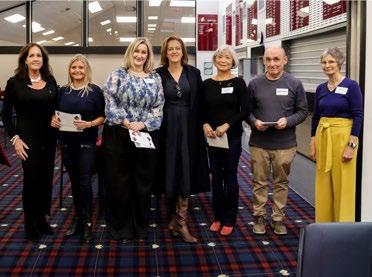
Prizes sponsored by the Rangi Ruru Old Girls’ Association awarded at the end of year Prize Giving 2025 were:
Special Prize for Excellence in Year 12
Cate Ambury Katie Hickling
Elise Tian Lucy Houghton
Special Prize for Excellence in Year 13
Joyce Chen Honor Forbes
Cindy Liu Millie Liu
Monet Lowe Kate Lynas
Save the Date
RROGA AGM
August 10, 2026
Gibson Girls' Whaea Ora Morning Tea
November 6, 2026
Prize Giving December 3, 2026
Leavers Ball
December 4, 2026
RROGA Reunions
February 19 and 20, 2027
RROGA Committee Members
Patron – Jo Dodgshun
Honorary life members – Helen Dunn, Deborah Errington, Jo Dodgshun, Robyn Cartwright
OFFICERS
President – Amanda Dick
Honorary legal advisor – Rebecca Cresswell
Honorary accountant/treasurer – Charlotte Bryden
Coordinator – Taryn Cooper
COMMITTEE MEMBERS
Board of Governors Representative – Joanna den Hollander
Members – Mandy Brazier, Robyn Cartwright, Elizabeth Wright, Stephanie Withell, Felicity Williams, Jendy Judd and Kelli Scott
WORDS BY Amanda Dick RROGA President
You cannot ask others to be courageous if you are not willing to be courageous and vulnerable yourself.
Braiding Bravery
As Head of School, the theme Courage to Grow resonates deeply with the reality of leadership in 2026. Growth is rarely comfortable. It asks us to sit with uncertainty, to make decisions without perfect clarity, and to lead others through change while continuing to evolve ourselves.
At Rangi Ruru, courage is found in our willingness to rethink what learning can be. It appears in the conversations where we challenge assumptions, in the moments where we prioritise wellbeing alongside achievement, and in the decisions to innovate even when outcomes are not guaranteed. Growth requires us to be both steady and flexible, to hold firm to our values while remaining open to new ways of thinking and being.
Recent images of Artemis II astronauts returning to the Moon offer a compelling reminder of what courage to grow can look like on a global stage. These missions reflect years of uncertainty, risk, collaboration, and belief in something bigger than ourselves. They show humanity’s willingness to step into the unknown, not because it is easy, but because it matters. In many ways, education mirrors this journey. Each day, our students and staff at Rangi Ruru are explorers; testing ideas, navigating challenges, and expanding what they believe is possible.
This is where Build Your Braid, our student theme for 2026, becomes a powerful metaphor. The braid represents the weaving together of identity, knowledge, relationships, and experiences. As leaders, we support young people to understand who they are, where they come from, and how they contribute to the world. Courage is required to honour each strand of that braid, especially in a rapidly changing environment where identity and belonging matter more than ever.
In 2026, my role is about creating space where others can grow with confidence. This means empowering students to step outside their comfort zones and fostering a culture where mistakes are seen as essential to learning. Courage becomes contagious when it is modelled; it creates room for others to be vulnerable and act with bravery too.
Earlier this year, I had the opportunity to attend a leadership conference in Sydney, where I reflected deeply on authentic leadership and leading through values. I left with a realisation that continues to guide me: you cannot ask others to be courageous if you are not willing to be courageous and vulnerable yourself. As part of my own leadership journey, I am stepping into moments of vulnerability and doing things I never imagined I would do.
At its heart, Courage to Grow is about connection. Growth does not happen in isolation but through strong relationships with each other, with our community, and with our shared purpose. Like astronauts who rely on their team, their preparation, and their mission, we too grow strongest when we move forward together; each of us bringing our own strand of identity, experience, and strength to the braid we continue to build as a school.
WORDS BY Violetta Dacre 2026 Head of School
Nurturing Futures in Primary Industries
The 2026 school year has seen the introduction of a new Level 3 subject, Primary Industries. No one can deny the importance of this sector to New Zealand and its economy.
In fact, one of our most popular Friends at Five Thirty community events in 2025 focused on agribusiness, with three outstanding speakers sharing their experiences in the industry. Introducing this course helps strengthen connections between students, alumnae and the whānau of current students. We know that within our wider school community there are people who can add real value to student learning and help build authentic pathways into future careers.
Our Primary Industries course uses agribusiness standards, enabling students to gain University Entrance through this subject. The standards link to a wide range of sectors, including agriculture, aquaculture, dairy manufacturing, equine, forestry, horticulture and seafood. As a result, students can bring their own knowledge, or that of their whānau, from a variety of industries into both course material and assessment.
This informed the decision to name the course Primary Industries rather than Agribusiness. We have students who are more familiar with horticulture or viticulture, and it was important that the course felt inclusive of a diverse range of industry experiences.
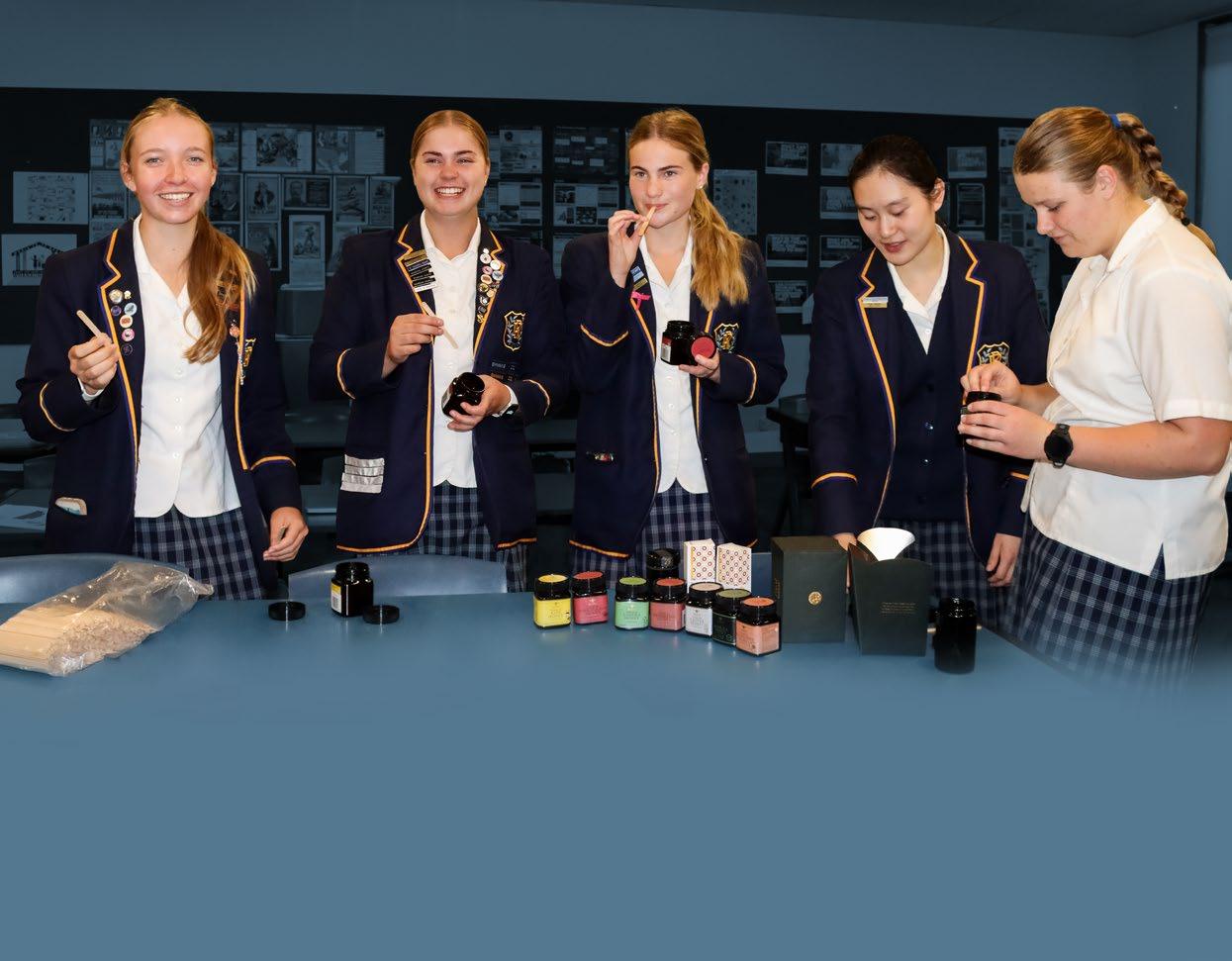
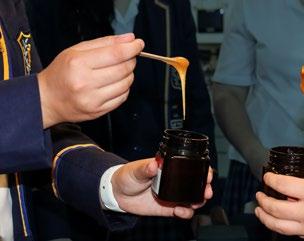
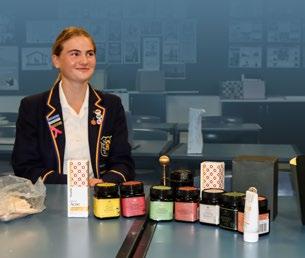
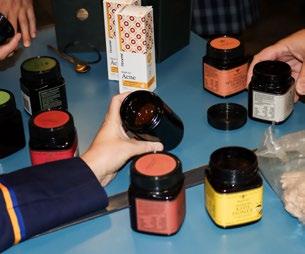
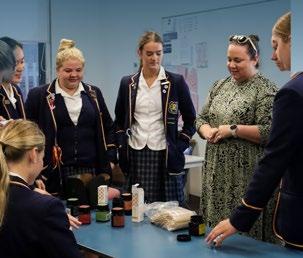
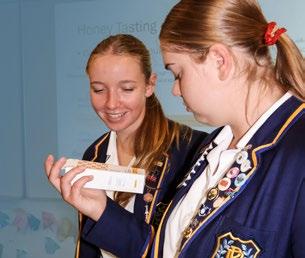
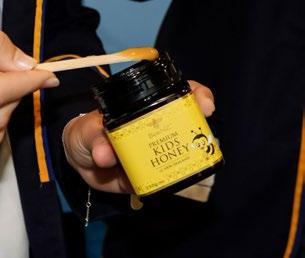
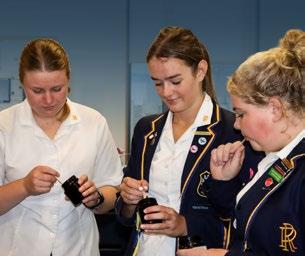
Simone Hamilton, teacher and developer of the course, notes: “I am really enjoying how much knowledge students are bringing to the classroom to share with each other and align with the business concepts. Today a student told me about the costs and benefits of using drones for fertiliser spreading. This term we've tasted eight kinds of honey, freeze dried asparagus, and red kiwifruit as we examine the impact of production and its contribution to the marketplace.”
This course also has clear links to undergraduate programmes at Lincoln University and a range of other tertiary pathways.
Year 13 student Mikayla Molloy shares: “I picked Primary Industries because I wanted a subject that actually
connected to real life for me, rather than something that only existed in a classroom. I’ve grown up around agriculture, so taking this course felt like a natural way to build on what I already knew and understand the industry more thoroughly.
“One of the most interesting things I’ve learned has been the value chains of a primary product, there’s so much more involved than I ever realised. You start to see how many different steps, people, and decisions it takes before something even makes it to a consumer.
“In the very near future, I’ll be stepping into the industry as a Trainee Agronomist and Seed Shed Assistant, which means I’ll be working directly
with crops, soils, and seed quality. It’s a role that lets me learn on the job while building real skills, and it’s a great starting point for a long term career in agriculture.”
This course represents a meaningful step in connecting learning to the real world, grounded in the industries that shape Aotearoa New Zealand. It is already opening doors, linking knowledge, people, and pathways in ways that matter for our students’ futures.
WORDS BY Juliet Collins Deputy PrincipalCurriculum
Learning ( and Growing ) Together
For many students, learning does not come easily. Tyla shares her experience honestly:
Courage to Grow is something we see lived out every day by our students and staff in the Learning Centre. In fact, growth itself often asks us to be courageous: brave enough to try, to change, to ask for help, and to keep going when learning feels hard. “I have always found school hard. It has never been something that has come easily to me.”
With the support of the Learning Centre, Tyla’s journey has become one of both academic and personal growth.
“Over my time at Rangi Ruru, I have been given the opportunity to grow not only academically, but also personally. With the support of the Learning Centre, I have learned that success does not always look the same for everyone, and that asking for help is not a weakness but a strength.”
Our teachers and teacher aides also demonstrate Courage to Grow every day as they continue to learn, adapt, and embrace change. Moving from classroom teaching into specialist teaching is a brave shift, requiring openness, reflection, and a willingness to step into the unfamiliar.
Kaiako Geraldine Bovett and Nicky Greenslade have shown this courage through their commitment to studying, training in, and implementing evidence-based approaches. The move toward Structured Literacy has been a significant and important shift—one that better reflects how students learn and ensures our support is grounded in research and best practice.
Our teacher aide team plays a vital role in this journey. Working across a wide range of classes, they support students with diverse needs and learning profiles. This work requires constant flexibility: knowing when to step in and when to step back, how to reframe learning in different ways, and how to persist when a student doesn’t quite understand the first time. Their ability to pivot, respond, and remain patient is a powerful example of courage and professionalism.
Stepping away from familiar thinking can be challenging. Change requires courage from both senior leaders who are willing to trust new directions, and from classroom teachers who are open to adapting their practice in the best interests of students. It is this shared courage (to question, reflect, and grow) that makes Rangi Ruru such a special place to learn.
For students like Tyla, personalised support has helped her better understand herself as a learner.
“The Learning Centre has helped me understand how I learn and has supported me with the skills and strategies needed for me to unlock my full academic potential,” she says.
Growth is not instant, and courage is often quiet. She says it looks like perseverance, selfbelief, and resilience.
“They have helped me build confidence in my own abilities and have shown me that learning is a journey, not something that happens overnight. Through challenges, setbacks, and small wins, I have learned to trust myself more and keep trying, even when things feel difficult.”
Lulu highlights how simple encouragement can make all the difference:
“Feeling encouraged helped me not give up when I would really struggle in class or feel behind.”
Evie reminds us that feeling safe, welcomed, and supported is a powerful part of learning:
“The Learning Centre has really helped me grow and improve my skills in my life. I really appreciate everyone in the Learning Centre because they are so kind and helpful. I am always looking forward to working in the Learning Centre!!!!”
These voices reflect what Courage to Grow looks like in action: Students finding the confidence to persist, teachers embracing change, and a community committed to learning together.
It is a privilege to walk alongside our students as they take brave steps forward, supporting one another to grow.
WORDS
BY
Michelle Enright Learning Centre Leader
The Science (and Art ) of Jewellery
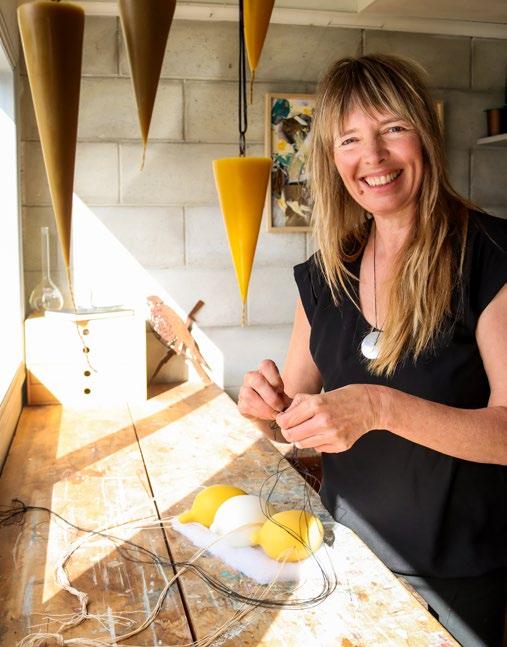
Amelia Pascoe Class of 1984
Daughter of Linda Pascoe (née Lyttle), class of 1957 and teacher in the junior school 1988-2010
Amelia grew up in a family that was intelligent to science, nature and the outdoors. They often spent holidays in the family’s old railway hut in Arthur’s Pass, hiking the mountains, steep gorges and rivers.
She started Rangi Ruru in 1984. After receiving a C for her efforts from her art teacher, she figured that she didn’t have artistic talent and focused on the sciences. She went on to study at university, completing a Master of Science in Zoology in 1995.
After travelling overseas, Amelia returned to New Zealand and spent the next 20 years working in conservation and biosecurity for regional council, Department of Conservation and the Ministry for Primary Industries.
Working in this field of pest management took her back into the wilderness that she so enjoyed when she was growing up. But, there was also a creative itch that needed to be scratched. After completing her master’s she started attending life drawing and other creative night classes. In the late 1990s she took a night class in jewellery and loved it.
In 2000, Amelia moved to Wellington for work and took the opportunity to assist a friend and jewellery artist who was having trouble with her hands. Amelia was taught to make components of pieces that the artist had conceived. She learnt a lot from this generous teacher and the experience inspired her to want to do more. In 2010, Amelia, feeling like she was stuck in a rut, took the courageous decision to leave her job for a year and undertake a one-year diploma in contemporary jewellery. She loved it so much, she resigned from her job to finish her degree. Amelia says that although it was a risky decision, it was the best thing she did, because it changed her life.
Over the next eight years Amelia’s creative journey encompassed further study, exhibition, mentorship from internationally renowned artists, and travel to Italy, Germany and the Netherlands. All this as a Third Former, would have seemed unattainable.
Amelia now balances her work as a Principal Advisor for the Ministry for Primary Industries, with an established practice as an artist. Her works are held in Te Papa, the Dowse Art Museum, and private collections. Her science background strongly informs her work:
“The inter-relationships—connections and tensions—between science and art have been an ongoing source of inspiration,” she says.
“Not just the disciplines, their immediate concerns and broader contexts, but also how together they affect the way I think about and operate in the world. My studies in contemporary jewellery have provided an additional lens through which to explore and frame these interests. A lens which promotes reflection, refraction, inflection and results in outputs that stray towards the edges.”
To this day Amelia’s school Third Form art report is still proudly displayed next to her Bachelor of Fine Arts First Class Honours, a souvenir or reminder, of what’s possible if you follow your dreams.
What is your favourite memory of school?
“Friends. I remember that at lunch time we would squeeze orange juice on our legs and then sit outside with our legs up the wall in the hope that it would improve our suntans. I also have a strong memory of having to dissect snails in science class. I loved animals, refusing even to squash flies.
It was extremely confronting to have to kill them by putting them in boiling water first. I never would have believed that later in life while working to protect New Zealand’s native plants and animals, I would be doing so much pest control work, dispatching possums, ferrets and feral cats, and sifting through their stomachs to check what they were eating.”
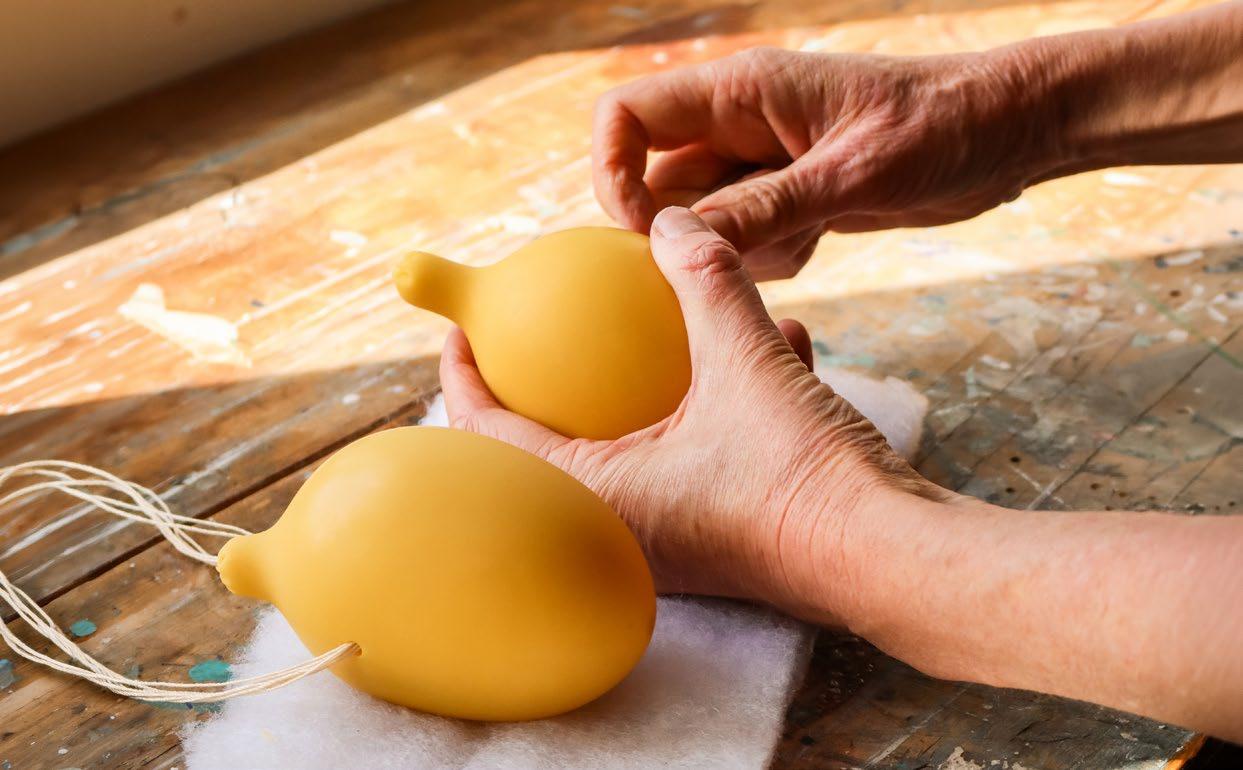
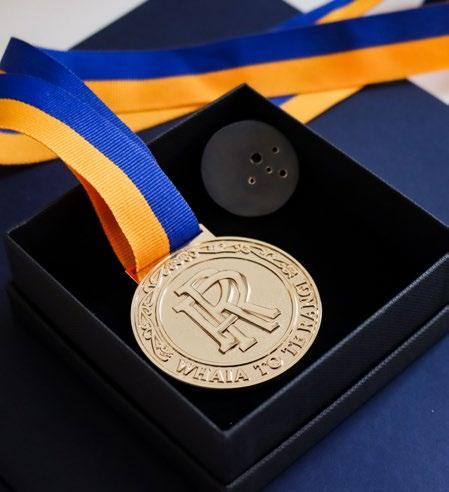
This year has seen the introduction of the Rangi Ruru Founders' Medal for outstanding alumna. You have been tasked with designing a medal for the recipient to be awarded at the ceremony and also a pin which can be worn discretely by recipients, whenever they choose, as an art piece that is connected to Rangi Ruru. Could you tell us how you developed these?
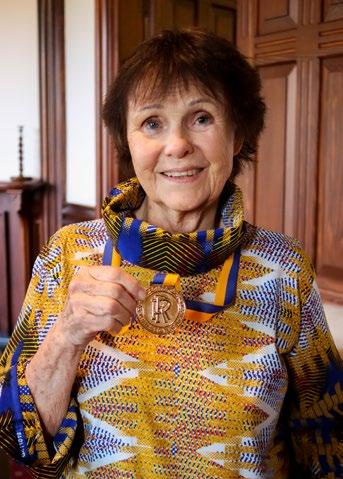
The front of the medal is based on the wooden plaque carved in 1963. The word ‘Behold’ on the back, celebrates the achievements of the recipient and their demonstration of the four Rangi Ruru pillars - Be You, Be Your best, Belong, and Be the Change. In future years the blue/gold ribbon may be hand-woven by current students.
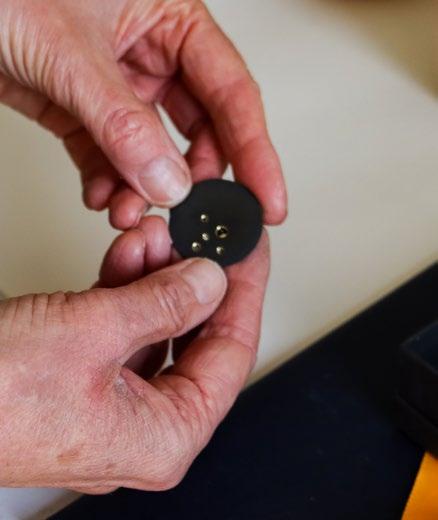
Much of my work is inspired by the wonder and allure of our universe. The blackened, brass pin is a visual reference to the Rangi Ruru name, Wide Sky Shelter. The five pierced stars echo the five values at the heart of Rangi Ruru, their arrangement mirroring the Southern Cross as it appears on the Atawhai screen. A single central pin allows the brooch to rotate freely, reflecting the ever-changing night sky across the seasons. As it turns, glimpses of the wearer's clothing beneath speak to the many facets of the individual being celebrated.
Words of advice for current students?
Follow your interests because it’s amazing how things can come together in quite unexpected ways.
AS TOLD TO Charlotte Gray RROGA Committee Member
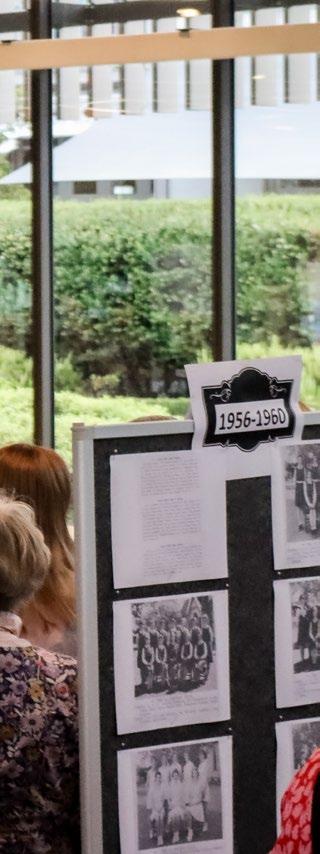
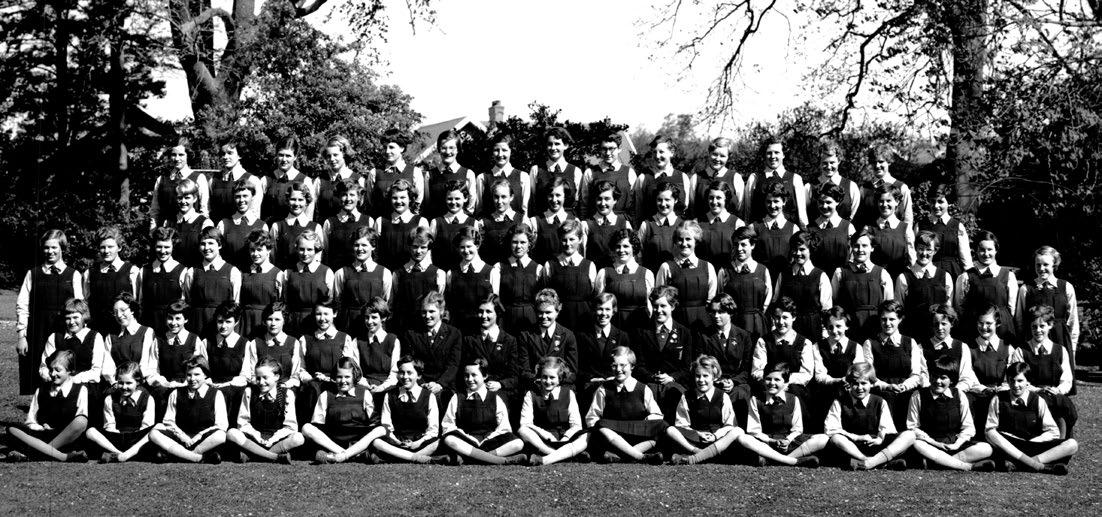
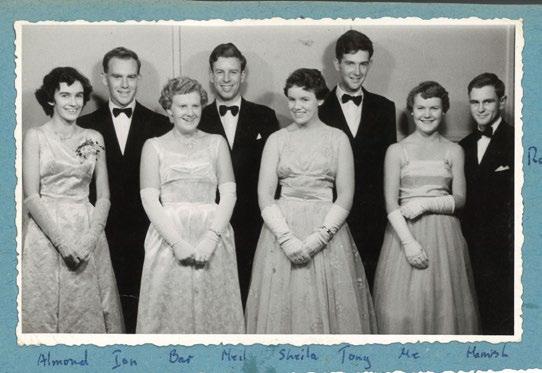
1954 - Doune. Judith standing top row, first on the left
A Lifelong Love of Language
Judith Leckie (née Johnson) Class of 1951
Judith’s daughter, Brigette Leckie, was Class of 1981
I began at Rangi Ruru in 1951 in Form 3 and I didn’t know a single soul! We’d just shifted to Christchurch. I’d attended many different primary schools during my childhood, as my father, a civil servant, had relocated many times for his work.
We lived at the foot of Cashmere Hills and depending on the weather I either bused or biked—mostly—to school. I was a shy timid little girl, but I took everything in and I soon made friends. I remember us day girls would sit in the field near the swimming pool and have lunch together. Lifelong friendships were made eating sandwiches and apples.
Rangi Ruru had a huge influence on my life, but I didn’t realise until later the extent of that influence.
I was in the professional class and so I took Latin, French and, later, German. I also did maths, history and social studies and science. My academic abilities were recognised in the Upper Sixth when I was awarded Dux of the school.
In my final year, I had the choice of Latin or maths, and my father wisely said, "take what you enjoy," so I did Latin. I’m so glad I did as it was the basis for my future career in European languages.
The teachers were great role models for me. In the Third Form I had Mrs Dennis. She had a law degree from Edinburgh and
she taught French, social studies, and possibly scripture, I can’t remember. She ran a very disciplined classroom which suited me. Miss Webster was another excellent teacher. And I really looked up to Miss Paul with a master’s from Oxford. She taught history and English.
But of all of them, it was Mrs Lydia Nakelis who had the biggest influence on my life. She began at Rangi Ruru in 1954 after escaping heroically in a rowboat from Riga the capital of Latvia. She ended up in Christchurch as a teacher, through an immigrant relocation scheme. She was tough and uncompromising but we got on extremely well. She taught me Latin and German. I’ve never forgotten her.
In the second term of my first year at Rangi Ruru Mrs Patrick began. She was also a huge influence on me. She’d come from Switzerland and was extremely fluent in French language and culture. Memories of stiletto heels clicking away under a black floating gown. You never knew when she was going to pop up around the corner.
One of the highlights of my school days were the geography field trips to the North Island. I’m pretty sure these were the first field trips that Rangi Ruru ever did and it would’ve established the tradition of education outside the classroom.
I loved the discipline and structure that Rangi Ruru provided, which shaped my school days and beyond. I remember saying to Mrs Patrick, “I never want to stop learning,” and I never have.
After school I did a degree in French language and civilisation at the Sorbonne in Paris. Upon returning to New Zealand, I fell into the library world and spent a fulfilling career at the University of Canterbury library as European language specialist.
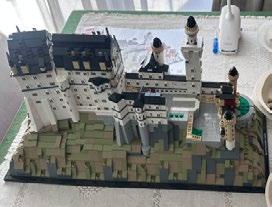
I keep myself engaged with committee work across a broad spectrum of cultural interests in Christchurch. I play Mahjong weekly with two other Rangi Ruru old girls and I enjoy the complexity of architectural Lego.
Writer's note: I look across to the tables where on one side there is an intricate Lego depiction of the Trevi fountain and on the opposite side, even more elaborate, Neuschwanstein Castle. Small China saucers with tweezers contain the last few pieces yet to be fitted. It’s a work in progress.
AS TOLD TO
Committee Member
Boarding is not simply a place to live; it is a place where courage is practised daily. It is found in the first night away from home, the first difficult conversation, the first moment a girl realises she is capable.
The Quiet Courage of Boarding
For many girls, the first act of courage as a student at Rangi Ruru begins long before they put on a school uniform or unpack their bags. It starts with saying goodbye. Goodbye to Mum and Dad, to younger siblings, to family routines and familiar places. For many, it also means leaving the steadiness of rural life and stepping into the pace of the city. Boarding does not begin with confidence; it begins with uncertainty and courage.
Arriving at boarding, everything is new. New people, new spaces, new expectations. Girls find themselves sharing rooms with strangers who soon become friends, navigating shared living, learning when to speak up and when to compromise. The everyday things once managed by parents; organising meals, keeping track of time, remembering what to pack for sports practise all suddenly rest on their own shoulders. It is here, in these ordinary moments, that courage begins to take shape.
In the junior years, courage often looks like asking for help. It shows up in moments of missing home, unfamiliar routines, or when boarding feels overwhelming. It takes strength to trust unfamiliar adults, to lean on peers they have only just met, and to believe that the discomfort of being new will fade. Every small step from trying a new activity to speaking in a group, quietly strengthens their resilience.
As the years progress, courage changes form. Girls begin to give back, supporting younger boarders, taking on roles of responsibility and contributing to their community. They learn to notice others, to offer reassurance and to lead with care. What once felt daunting becomes familiar, and what once required courage becomes second nature. In serving others, they deepen their own sense of purpose.
By the senior years, the transformation is clear. These young women carry themselves with assurance shaped by years of shared living, challenge and growth. They know how to advocate for themselves and for others. They understand the value of routine, self-awareness and connection. Most importantly, they have learned that courage does not mean coping alone but recognising when to ask for extra support.
Boarding is not simply a place to live; it is a place where courage is practised daily. From the first night away from home and the first difficult conversation, to the first moment a girl realises she is capable of taking on such tasks. Given time, trust and care, that courage becomes confidence and that confidence becomes readiness to step into the wider world.
WORDS BY Kyleigh Lyth Director of Boarding
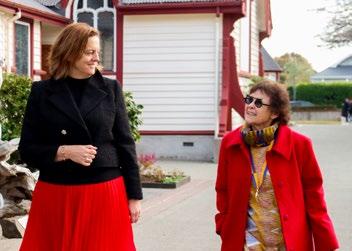
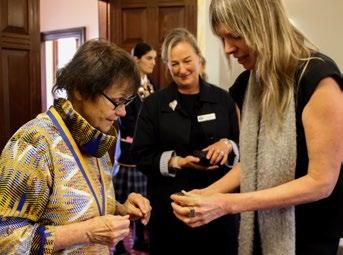
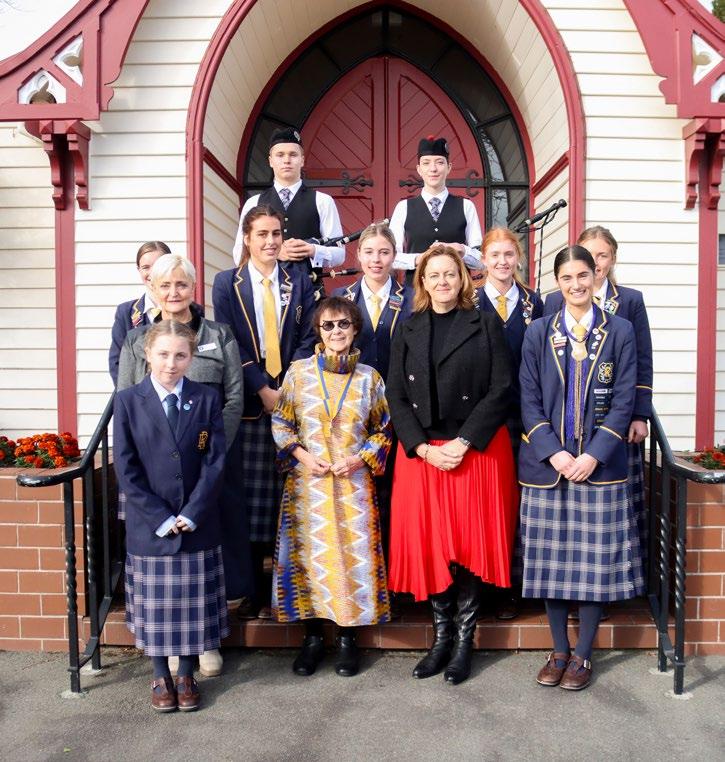
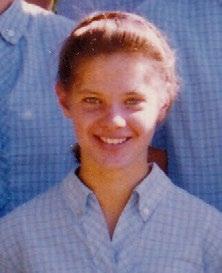
Each year Rangi Ruru pays homage to the school’s history with the Founders’ Day Assembly. This year, a new tradition was added as alumna Liz Alden Wily (class of 1961) was awarded the inaugural Founders' Medal for her work as an internationally-recognised land economist.
When Liz Alden Wily left Rangi Ruru in the mid-1960s, she had no grand career plan.
“My only interest was outward,” she recalls. “I wanted to see the entire world, which was rather a big ask—but I didn’t know what I wanted to do.”
What followed was a journey that would take her across continents and into some of the world’s most complex social and political landscapes. Today, Liz is internationally recognised for her work advancing land rights for indigenous and customary communities, helping people secure legal ownership of the lands and resources on which their livelihoods depend.
For more than four decades, she has worked across Africa, Asia and beyond,
contributing to land and governance reforms in countries including Kenya, Uganda, Tanzania, Nepal and Afghanistan. Her work has ranged from grassroots community engagement to helping shape national laws and policies, always with a focus on ensuring communities have both a voice in, and legal rights to, their land.
Underpinning much of her work is a deep commitment to fairness.
“I feel strongly that if you can’t fight for justice and people’s rights—rights that really shouldn’t even be questioned— then what are we doing?” she says.
That conviction was evident long before her international career began.
The Courage to
Stand Up for What’s Right
“I was rather difficult at school,” she laughs. “Actually, I’m beginning to realise I was a little bit of a rebel.”
She recalls one teacher asking students to sit down unless they had something to say. While everyone else sat, Liz remained standing.
“She asked what I had to say and I replied, ‘I think you’re being unfair.’ She didn’t really know how to punish me for that.”
Rangi Ruru Girls’ School Principal Tracy Herft says she launched the Founders’ Medal to honour inspiring alumnae who have lived the school values and uplifted others through their work.
“Liz has had significant impact on the lives of many, many people,” she says.
“What stands out most is not just the scale of her work, but the heart behind it. She truly embodies the spirit of Rangi Ruru: using knowledge for good, leading with humility, and working tirelessly to make the world more just and equitable.”
Liz attended Rangi Ruru alongside her twin sister Jennifer and older sister Susan. Their mother, Helen, was a Teacher of Mathematics here, too. Despite experiencing significant eyesight challenges, she remembers school as a place where she felt accepted and supported.
“Looking back, perhaps Rangi Ruru was important because nobody teased me. Nobody made fun of the binoculars I used to read. That mattered.”
Now based in Kenya, Liz continues to contribute to global conversations on land rights through research, governance and advisory roles. During her recent visit to Rangi Ruru, she was struck by the confidence and ambition of today’s ākonga.
Her advice to them is simple.
“Don’t rush into making decisions. Take opportunities, see things, keep your eyes open and find something that matters deeply to you. I think it’s important for all of us to find something we feel strongly about.”
WORDS BY
Morgan Tait Editor & Communications Manager
Opportunities to share strategies and experiences within subject areas revealed the rich professional knowledge that teachers bring, regardless of where they are in their careers.
Tipu Tahi : Growing
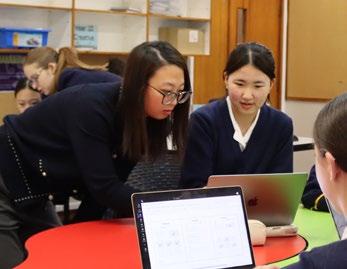
In Term 3 of last year, I had the privilege of organising and leading Tipu Tahi alongside Mrs Alice Drummond, a professional learning event designed to support new and beginning teachers. The event brought together early career teachers from across Ōtautahi, with strong attendance reflecting a shared commitment to professional growth and collective support.
As One
Tipu Tahi, meaning Growing Together, was grounded in the belief that the most meaningful professional learning is collective, relevant, and shaped by teachers themselves. Rather than prescribing content, the session was informed directly by what new teachers identified as most important to them. This led to rich, purposeful discussions around classroom management, student engagement, teacher wellbeing, and the growing role of AI in education, the topics closely connected to the realities of everyday teaching.
Recognising that the early years of teaching can be both exciting and challenging, Tipu Tahi was intentionally designed as a supportive space where teachers could connect, reflect, and learn alongside one another. The kaupapa centred on professional learning as something built with teachers, not for them.
The session reflected this approach through a balance of short provocation presentations and extended opportunities for teacher-led sharing. Opportunities to share strategies and experiences within subject areas
revealed the rich professional knowledge that teachers bring, regardless of where they are in their careers.
One of the most powerful aspects of Tipu Tahi was witnessing the courage shown by new teachers. Many spoke honestly about challenges, reflected critically on their practice, and embraced vulnerability as a strength. This openness and willingness highlights that professional growth thrives through connection rather than isolation.
Tipu Tahi strongly embodies our school theme, Courage to Grow. As facilitators, we also demonstrated this courage by stepping into leadership, learning alongside colleagues, and responding authentically to their needs. With potential for the initiative to continue across schools, Tipu Tahi affirmed that when we have the courage to grow together, our entire profession is strengthened.
WORDS
BY
Kistina Wu Head of Learning AreaTechnology
Charting New Waters
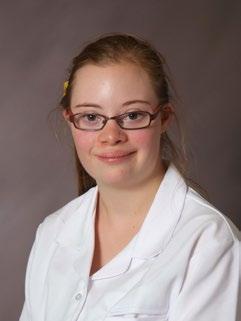
Charlotte Rozen Class of 2010
Charlotte and her mother Tracey helped RROGA correspondent
Charlotte Gray find out how Rangi Ruru’s first girl with Down syndrome has achieved so much.
Charlotte is a swimming star and has helped pave the way for swimming athletes with intellectual and physical disabilities in New Zealand. She started swimming at 12 years old, when her family moved to New Zealand, and simply finds it “good fun”. But more than that, she enjoys the challenge of striving to be her best by constantly setting and achieving new goals for herself.
Charlotte enjoyed her time at Rangi Ruru and especially representing the school in swimming races. Tracey says that the pathway Charlotte forged was enabled by the inclusive nature of the school and the leadership of the then principal Mrs Julie Moor. Together with Mrs Jean Brouwer, the head of the Learning Centre, these enlightened leaders recognised that diversity and inclusion would benefit the whole school community and provided Charlotte with the chance to fulfil her potential.
2025 Swimming Success
Charlotte currently swims for Wharenui Club and is an S18 Para swimmer. Her achievements for her various clubs over the years have been many. In 2025 she had another record-breaking year, claiming four New Zealand records and three gold medals at the South Island championships in Blenheim, followed by another three New Zealand records, one gold and three silver medals, at the New Zealand short course Championships in Auckland. She was duly awarded the Wharenui Club Para swimmer of the year award for the 2024/25 season.
Challenges
The path for Charlotte has not been without its challenges however. Charlotte says that competitive swimming for people with intellectual disabilities has been very slow to develop in New Zealand.
“When I swam in the New Zealand secondary school swimming championships for Rangi Ruru, there were only two events for people with intellectual disabilities and we were all lumped together.”
Charlotte used to have to travel to Australia to swim in their national Down syndrome championships as there were no comparable competitions for her in New Zealand. Finally, New Zealand now has an S18 para category. It means she and other athletes with Down syndrome now have a level playing field to compete on. Charlotte says that although there are still not events for her at every swimming meet, it is getting better.
Another challenge for Charlotte was missing the 2020 World Down Syndrome Swimming Championships in Turkey. Just before she was due to leave, the event was cancelled because of the Covid-19 outbreak. So, it is perhaps predictable that her next goal is to break the New Zealand 100m freestyle record and to compete at the World Down Syndrome Swimming Championships in Portugal in November 2026. We look forward to reporting on her future triumphs!
Tell us about your school days. What did you enjoy at Rangi Ruru?
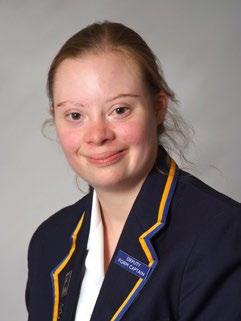
“When I was at Rangi Ruru I loved everything there. I liked being deputy form captain and having fun with my friends. I was in Dunvegan and my most memorable moment was the Clan Singing.”
Do you remember what it was like at Rangi Ruru during the earthquakes?
“It was very stressful! The Learning Centre got demolished and we often had to go and evacuate on the field and stand in our form groups. I remember a boy called Angus in my computer studies class. We didn’t normally have boys at school.”
Advice for the next talented generation of school leavers?
“Find something that you love doing and keep setting and trying to achieve new goals.”
AS TOLD TO Charlotte Gray RROGA Committee Member
The Joy of Creative Risks
In Theatre Arts, Courage to Grow means allowing yourself to be seen, to take creative risks, to make mistakes and learn from them, and that by trusting the process, you will discover something new about yourself and others.
Across our programme, we celebrate the fact that courage is not a single moment. It is a practice.
For our junior students, courage begins with simply having a go. In Year 7 Drama, students learn to use their voices and bodies to bring characters to life, often for the very first time.
This is done through improvisation, mime, and clowning. Students are discovering that taking creative risks can be joyful. Similarly, our Year 8 Dance students explore styles across decades focused around how pop culture evolves. They spend their two terms creating and performing original works. These early experiences build confidence, not through perfection, but through participation, creativity and teamwork.
As students move through the programme, courage deepens into creative ownership. Year 11 Drama students have explored a wide range of theatre forms, from Shakespeare to puppetry, even creating their own puppets from scratch to bring inanimate objects to life.
Our Shakespeare Festival performers not only demonstrated skill on stage but also showed courage in directing and supporting one another, reminding us that growth happens in community.
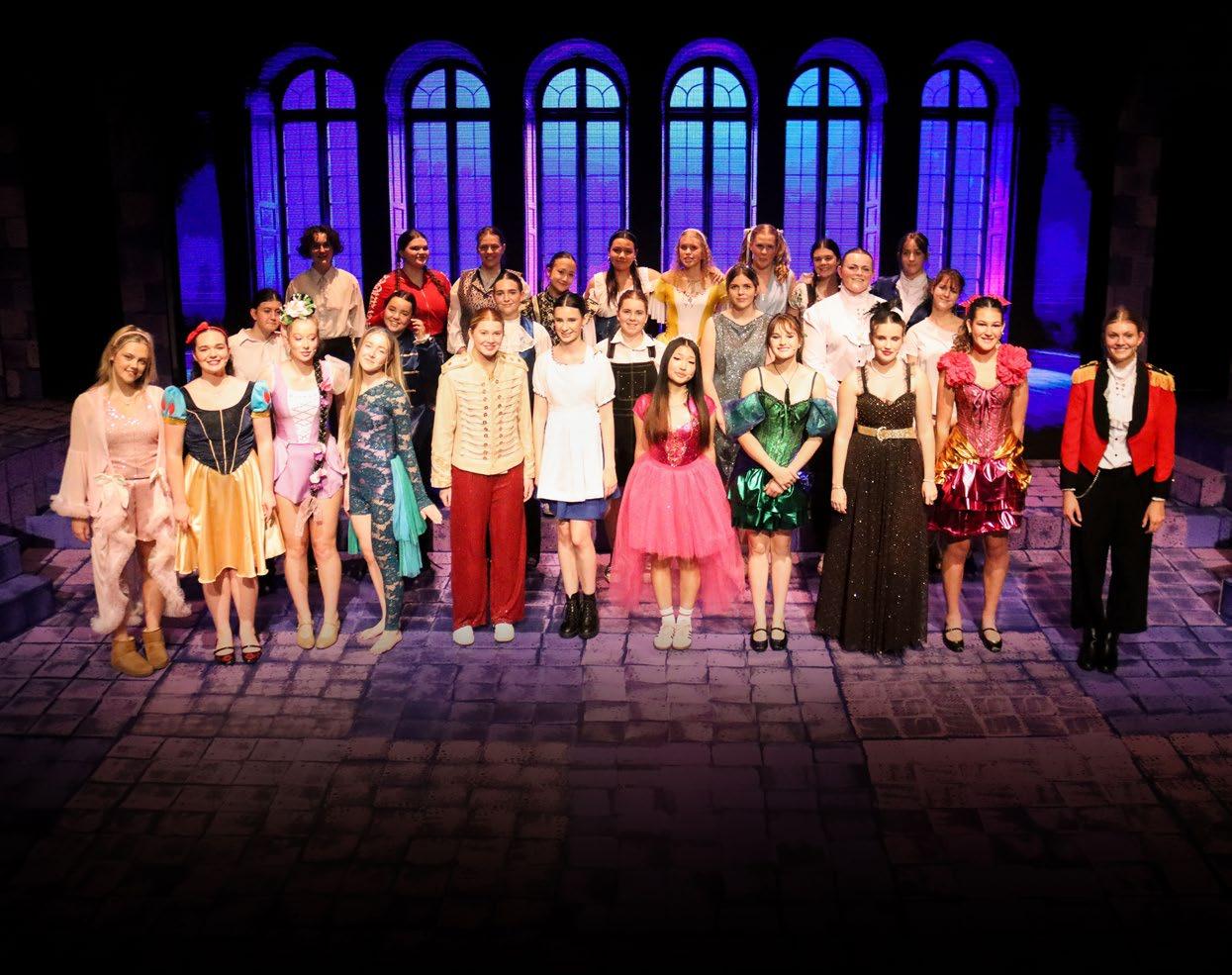
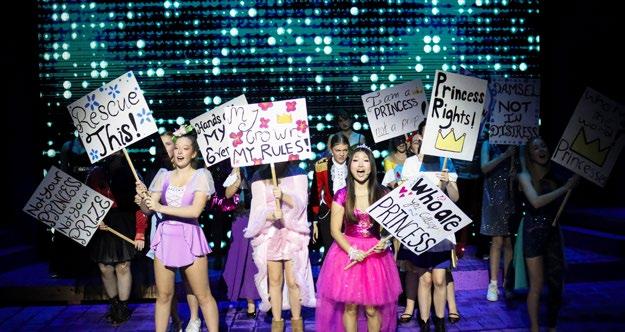
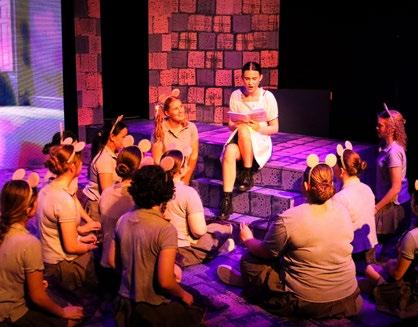
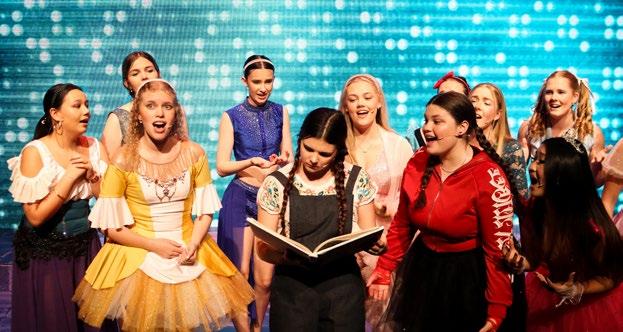
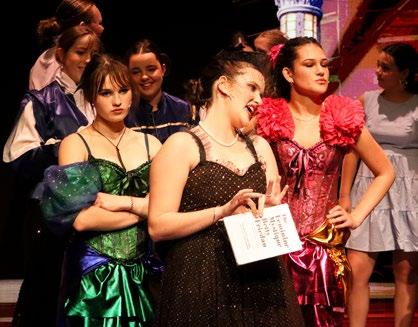
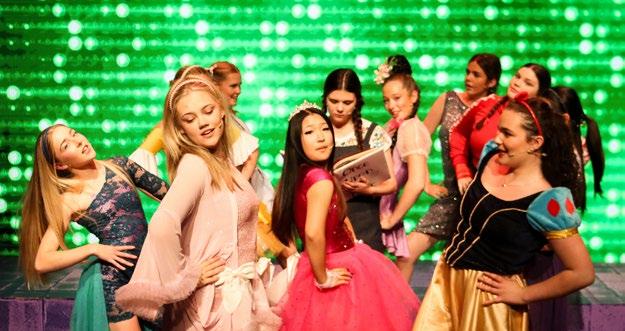
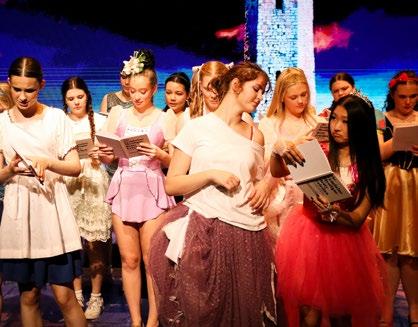
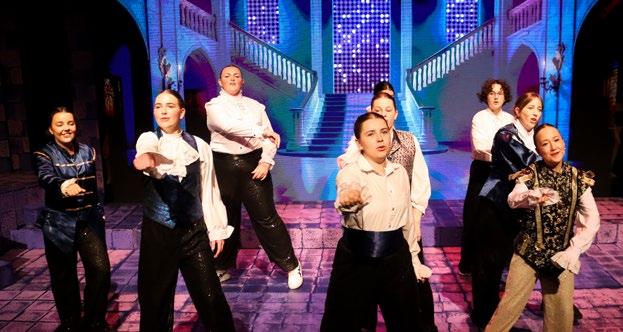
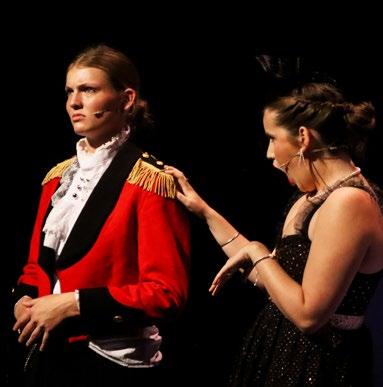
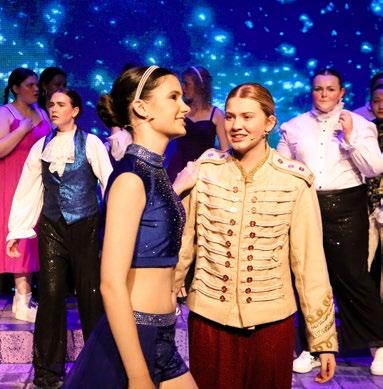
At the senior level, courage is most visible in the commitment required to bring large-scale productions to life. Our recent production of Once Upon a One More Time showcased not only talent, but resilience, teamwork and dedication. Students spoke about learning to stay in character when things go wrong, to manage their time, and to trust the process.
Year 12 student Catherine O'Gara reflected that growth came from “not being afraid to put myself out there
and make mistakes,” recognising that mistakes are an essential part of learning.
Beyond the school gates, our students continue to demonstrate remarkable courage. From performing with The Court Theatre to competing at national and international dance events, they step into new environments and challenge themselves among the best. Year 10 dancer Isabel Wigley captured this beautifully when reflecting on her experience at the Victorian Dance Festival. Isabel learnt to “be brave by standing at the front of the class,” even in a room of over 100 dancers. This simple act speaks volumes about what it means to grow.
Underlying all these experiences is a strong sense of whanaungatanga. Growth
in Drama and Dance is never a solo journey. It is built on support, connection and the willingness to lift each other up.
Ultimately, Courage to Grow is not about becoming fearless or perfect, it is about choosing to step forward despite fear. In Drama and Dance, our students are learning that growth comes from being present, being open, and being brave enough to try. We focus on developing confident, creative young people ready to take their place in the world.
WORDS BY Kirsty Bell Director of Theatre Arts
The Gift of Growth
Rangi Ruru Girls’ School has philanthropy in its DNA: we were founded on it. The Gibson Sisters were visionary, courageous and forward-thinking women. Now, 137 years on, we continue to build on that legacy, gaining momentum and strengthening the deep sense of trust that has always underpinned giving at Rangi Ruru.
Our success is no accident. It comes from a close-knit community and the power of authentic relationships. Our ability to “net-weave” (to connect, support, and uplift one another) is our strength. Each success builds confidence, and in turn, creates a stronger case for investment in what comes next.
Our alumnae, current parents, and board members are the storytellers and champions of Rangi Ruru. They advocate, they inspire, and they bring others with them—inviting them to be part of something enduring.
Increasingly, women are seeking meaningful involvement and long-term impact. For Rangi Ruru, this creates a natural alignment with our mission: to inspire, challenge, and empower girls to realise their potential to become confident, connected, and curious young women.
Philanthropy by women, for women, can be a powerful engine for progress in girls’ education. It is something we must continue to embrace. We need the courage to grow; to honour and extend the legacy that has shaped Rangi Ruru from the very beginning.
A key part of our role, and the part I value most, is connecting with members of our community who want to make a difference, who want to be part of something bigger than themselves. For many, Rangi Ruru has been the starting point of their philanthropic journey. They take the long view and are now seeing, firsthand, the impact of their generosity.
And that is where the true power of giving lies. As we look to the future, we do so with courage: grounded in our past, strengthened by our community, and inspired by the generations of women who have come before us. At Rangi Ruru, we continue to grow, to give, and to believe in what is possible.
There is a sense, too, that the story is still being written. And so, with courage, we turn the page, ready to write what comes next.
WORDS BY Kirsty Rueppell Former Development and Sponsorship Executive
Sponsors !
A big shout out to our amazing sponsors helping create opportunties and enhancing programmes at Rangi Ruru. Thank you to:
PRINCIPAL SPONSORS
MERIVALE
Charlotte & Marcel Gray
Michelle & Anthony King
1941:PamelaWebbRR1934-1941
1996:KateTaylorRR1993-1997
1941: PamelaWebbRR1934-1941
1990:LouiseTaylorRR1989-1993
1926:BettyWebbRR1918-1926
TeWepu (TheWebbs).126 Papanui Rd.
1939: Margaret Webb off to War (2nd left)
Webb Brothers
1891: RR Old Boy Rick Webb
2026: IslaTaylor
While on a trip to the Wānaka A&P Show, I sat down with Hamish Taylor, grandfather to Year 13 student Isla Taylor. Isla is the 28th member of her family to attend Rangi Ruru, and I was intrigued to learn about this relationship that spans five generations and more than 130 years of the school’s history.
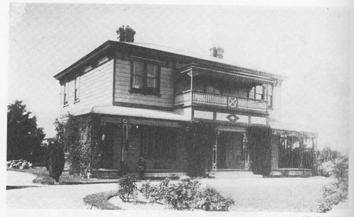
The story begins in 1882 when Henry Webb, Hamish’s great-grandfather, commissioned renowned Canterbury architect Samuel Farr to design a threequarter acre section on Papanui Road. The house was later renamed Te Wepu, a Māori transliteration of Webb, and still stands today as a Heritage New Zealand Category 2 listed building.
The house itself is not the focus of this story, but its location is. In 1890, when a fire broke out at Te Wepu, the Webb family sought refuge across the road at the home of their neighbours, who were none other than the Gibson family.
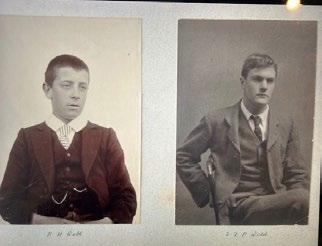
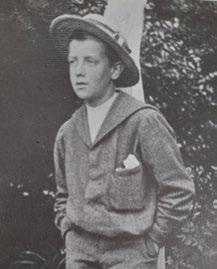
This proximity is believed to be the thread that first weaved these two families together—with the first two Webb children enrolling at the Gibson sisters’ school, Rangi Ruru, in 1891. Interestingly, these were not daughters, but Henry Webb’s two sons, Rickards and Steffano.
Education and community service were clearly important to Henry. A committed supporter of his faith and education alike, he served on the Board of School Commissioners for 18 years, chaired the North Canterbury Board of Education, and was one of the original members of the Board of Governors for Canterbury College.
That spirit of service would continue through future generations. Hamish’s aunt, Betty Webb, became a devoted member of the Rangi Ruru community, serving on the Board of Governors for many years and holding both Secretary and President roles within the Rangi Ruru Old Girls’ Association.
The family’s involvement with Rangi Ruru continued with Hamish himself, who served on the Board of Governors for seven years. During his tenure, he helped establish the Rangi Ruru Foundation and oversaw the purchase of several key properties on Rhodes St and Hewitts Rd, helping secure space for the school’s future growth.
Reflecting on the family’s enduring connection to the school, Hamish is characteristically understated. “I am proud that my family have been involved for so long,” he says. “May it continue with another generation.”
Asked what distinguishes Rangi Ruru from other schools, Hamish points not first to facilities or reputation, but to the students themselves.
“I think the main reason is the girls,” he says. “They are treated as adults, not like at some other schools. They always seem to be a very happy bunch and continue to keep in touch with each other.”
He also credits the school’s broader culture for its enduring appeal.
“The academic record speaks for itself, along with sports, arts and music. The Boards and staff have always been approachable.”
For Hamish, sending his daughters Louise and Kate to Rangi Ruru felt like a natural continuation of family tradition. Their grandmother still lived nearby on Winchester Street, meaning the girls could regularly visit after school.
Today, the connection continues with Isla. When the time came to choose a secondary school, the decision was left entirely to Isla. After visiting several options, it was Rangi Ruru, and particularly the boarding house, Te Whare Aroha o Rangi Ruru, that stood out.
“Deciding if Rangi Ruru was the right school for me was made easy when I came for my experience day,” she says. “I found that this place holds a unique way of welcoming in new people, especially in the boarding house, where my one-night stay convinced me that I could see myself living and thriving here for the rest of my high school years.”
Now in her final year, Isla says the sense of community has defined her experience.
“My time here at Rangi Ruru has flown by, and I can’t believe I’m in my final year already. What makes this place so special is the vibrant school culture that you are welcomed into when you join, with a community that provides support and uplift like nothing I’d really been a part of before.”
Like many boarders, some of Isla’s favourite memories are the quiet, dayto-day moments shared with friends.
“One of my favourite memories would have to be staying up late talking in the boarding house when I joined in Year 10. Having conversations with girls who become like sisters until long past lights out is something you can’t really beat.”
For Hamish, seeing Isla embrace the same school community that shaped earlier generations has been deeply meaningful. While the campus today bears little resemblance to the one first encountered by his ancestors more than a century ago, he believes they would recognise the spirit that continues to define the school.
“They would be astounded at the changes since they were there,” he says. “From virtually one building and a dozen pupils to the current campus and over 700 pupils.”
Across five generations, the school has evolved dramatically, yet the connection between one family and Rangi Ruru remains remarkably constant, shaped by the enduring relationships formed along the way.
WORDS BY Ben Hogg Head of Marketing & Communications
Highlights Reel
Easter Baskets
Potential Giving Wings to
Brooke Edmond Olivia Johnson & Issy Abbott HATCH members & SISS 4x100m gold medalists
Rangi Ruru Sport Co-ordinator Anna Kennedy (née Thompson) Silver Ferns World Series Netball
They say that growth begins where comfort ends, and courage makes the crossing. In sport, development happens when we step outside the familiar and into situations that feel challenging, uncertain and uncomfortable.
To cross the gap from comfort to growth, it takes courage, and for aspiring athletes in our HATCH and SOAR athlete development programmes what could be more important?
Beginning on the frozen courts of North Canterbury as a seven year old, Rangi Ruru Sport Co-ordinator Anna Kennedy (née Thompson) built a netball career on hard work and belief. Her growth carried her to U21 World Cup gold in 2005, Flames, Otago Rebels, Tactix, a Silver Ferns debut in 2009, and 13 appearances in the black dress.
“As my career grew, so did the importance of strength and conditioning, mental skills, nutrition,” she says. Her experience taught her that growth is not purely performance driven: it requires support and a willingness to develop the whole athlete. Developing the whole athlete is how we cultivate the courage to grow.
Anna now co-ordinates the Years 9 and 10 foundational athlete development programme HATCH (Helping Aspiring Athletes to Thrive, Connect and Harness Potential) and the Years 11 to 13 programme SOAR (Supporting Outstanding Athletes at Rangi).
Aspiring athletes are supported through mentoring, fortnightly meetings, guest speakers and engagement with health professionals and experts. Whilst members come from a diverse range of sports from skiing, BMX, tennis, water polo, athletics, rowing, touch, beach volleyball (the list goes on), what they all have in common is a hunger to be the best they can be, and Anna sees it as her role to nurture this.
“Sport for young athletes looks very different from what it did years ago, whilst we see greater access to high performance pathways, global exposure and young people accessing elite level opportunities much earlier, these all come with increased pressure and time management challenges,” says Anna.
Learning how to manage time, pressure, and expectation are key skills in today’s sporting climate. With courage seen as the
by-product of belief, aspiring athletes at Rangi Ruru first develop belief in themselves: positive self-talk, a focus on controllables, clear goals, self-awareness and values.
Learning that fear isn’t the absence of courage (but something to be used proactively to optimise performance) is a powerful lesson.
Belief in their bodies comes from understanding physical preparation: training load and with intensity, balance with life, recovery, and strength and conditioning. I’ve done the work, now I can step into the moment. Empowering conversations around female athletic health (what is normal and when to be concerned) and the links between nutrition, health, and performance further strengthen this belief.
Our young wāhine are more likely to step into opportunities for growth when effort is rewarded, not just outcomes, and mistakes are framed as learning. Therefore, the environments created by coaches, officials, and sporting organisations matter.
Belief in the team, belonging, and trust, is central to courageous athletes: my team has my back. At the heart of the SOAR and HATCH programmes is connection, shared purpose, and being part of something bigger than the moment.
Reflecting on her netball journey, Anna says, “Sport is ultimately about connection and people…the relationships built give sport its meaning and a sense of belonging that lasts long after the final whistle.”
As per the whakatauki, Mā te huruhuru ka rere te manu | Adorn the bird with feathers so it may soar: with more access to athlete development, peer connection and support than ever before, our ākonga are in good hands.
WORDS BY Gwen Harrop Director of Sport
While Courage to Grow is often seen as an individual journey, some of the most meaningful growth happens collectively.
Educational research consistently shows that learning thrives when schools and families work in genuine partnership. More than communication, partnership is built through trust, shared understanding, and mutual respect. This is the thinking behind Whānau Ako and Ako Tahi.
Whānau Ako creates space for families to learn alongside one another about key issues, challenges, and developments affecting teens. It begins from a position of respect, recognising that parents and caregivers already bring deep knowledge of their young people and a keenness to be involved in their learning and development at school.
Through an annual series of focussed sessions, families engage with topics relevant to modern adolescent development and life beyond school. These include supporting young people to manage worries, understanding brain development, navigating their qualifications, and exploring wellbeing, nutrition, and the impact of digital environments. Practical sessions also help families build confidence with key school platforms and processes.
The purpose is connection. Whānau Ako brings together different perspectives and experiences, creating opportunities for meaningful conversation between home and school. Our psychologists offer insight into young person development, a parent reflects on what it looks like at home. Meaning is built in that intersection.
When families and schools develop a common understanding, communication becomes clearer and support becomes more consistent. Small shifts in perspective often lead to significant changes in practice. Whānau Ako is not about telling families what to do; it is about creating the conditions for informed, confident partnership.
Alongside this sits Ako Tahi. While Whānau Ako strengthens the partnership between home and school, Ako Tahi strengthens the learning within it through school-wide professional learning.
Grounded in the concept of ako, where learning is reciprocal and ongoing, Ako Tahi extends across the entire Rangi Ruru organisation. Staff from all areas come together regularly to learn, collaborate, and align their work with the school's strategic direction. These opportunities
A Shared Culture of Learning
build collective capability while strengthening the culture and shared purpose that underpins all that we do.
Professional learning takes many forms. Staff engage in role-specific development while also participating in shared learning in areas such as child protection, waiata, tikanga, and leadership. Middle leaders continue to build capability in relational and strategic leadership, focusing on trust, empathy, self-awareness, and the skills needed to support and develop others.
A key part of this work is our extended Monday Ako Tahi sessions. These provide dedicated time for teachers to explore research, reflect on practice, trial new approaches, and learn from one another. The focus is not simply on acquiring new knowledge, but there is a deliberate cycle at play: New learning is introduced, reflected on, and then applied in context.
One of the most powerful expressions of this approach is Ako in Action. When staff engage in professional learning beyond the school, they bring that learning back to colleagues, sharing insights, challenges, and practical applications. Learning becomes collective rather than individual, strengthening consistency and impact across the school.
This same principle is evident in professional learning groups, where teachers revisit inquiry goals, examine progress, and adjust their practice. Growth is shared, and no one works in isolation.
Together, Whānau Ako and Ako Tahi reflect a common belief: learning is relational. It develops through dialogue, reflection, and a willingness to remain open to new perspectives.
This is where courage comes in. Courage is found in listening deeply, reconsidering what we know, and embracing learning as a shared endeavour. While Courage to Grow is often seen as an individual journey, some of the most meaningful growth happens collectively. It happens when we learn with and from one another, when relationships are strong, and when knowledge is built together rather than delivered.
Whānau Ako builds the partnership. Ako Tahi strengthens the learning within it. Together, they create the conditions for our community to learn, reflect, and grow side by side.
WORDS BY Melissa Campbell Assistant Principal— Teaching & Learning
Yourself
Discovering the World and
Each year, our exchange students cross borders, languages, and cultures, discovering not only the world beyond Aotearoa, but also new parts of themselves. This a powerful embodiment of Courage to Grow, a theme which speaks to the heart of our international exchange programmes.
To grow is to step beyond what is comfortable; to be courageous is to do so with openness, humility, and curiosity. International exchange is, at its core, an act of courage. Choosing to live with a host family, attend a new school, and navigate daily life in another language requires resilience and a willingness to take risks.
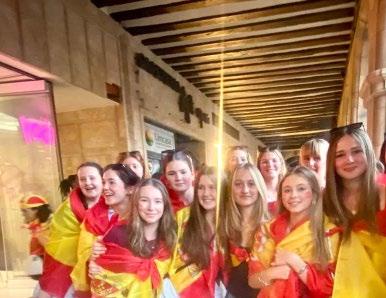
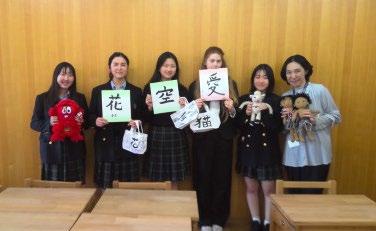
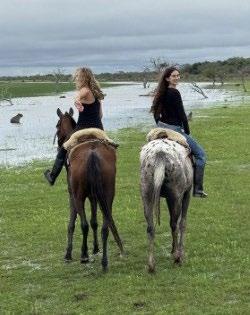
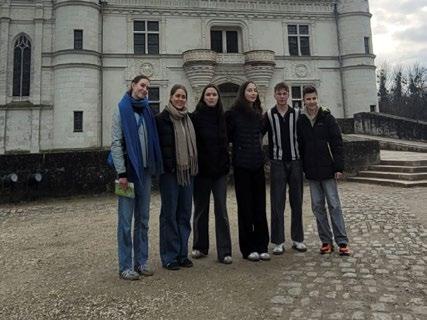
This year alone, Rangi Ruru students have embraced these challenges through exchanges with Lycée Mennais in France, Pestalozzi College in Argentina, and our sister school Yokohama Jogakuin in Japan, with an Indian exchange in Term 2. Whether student numbers are small or exchanges brief, the impact on each participant is profound.
For our senior students studying French or Spanish, the exchanges with France and Argentina offer authentic language immersion that cannot be replicated in a classroom. Lessons learned in grammar and vocabulary come alive in real conversations, friendships, and shared experiences.
One student reflected, “My exchange taught me the courage to make mistakes and keep going. Communicating in another language wasn’t always easy, but each challenge helped me become more resilient and open-minded.” Growth here is both linguistic and personal—learning to persist despite mistakes, and to see errors as part of the journey.
Our cultural exchanges with Japan and India offer a different but equally valuable form of growth. Students are invited into family life, traditions, and perspectives that broaden their understanding of the world. Living as both guest and ambassador, they learn empathy, adaptability, and gratitude.
As another student shared, “Going on this exchange gave me the chance to step outside my comfort zone and face unfamiliar situations with confidence. It showed my courage to grow by adapting to new environments, languages, embracing challenges, and giving me a chance to become more independent.”
Importantly, these are mutual exchanges. Our international students bring their own courage to Rangi Ruru, enriching our community through shared learning and connection. Classrooms, playgrounds, and homes become spaces of cultural exchange, reminding us that global citizenship begins with relationships.
Courage to Grow is a mindset. Through international exchange, our students learn that growth often happens on the other side of uncertainty. They return not only with improved language skills or cultural knowledge, but with confidence, independence, and a deeper sense of who they are.
The courage and growth forged through exchanges is reflected in the whakataukī: Whāia te iti kahurangi, ki te tūohu koe, me he maunga teitei | Pursue that which is precious, and if you must bow your head, let it be to a lofty mountain.
These experiences shape young women who are prepared to step forward, embrace challenge, and bow only to the highest mountains.
WORDS BY Tania Morgan Head of Community and Global Connections
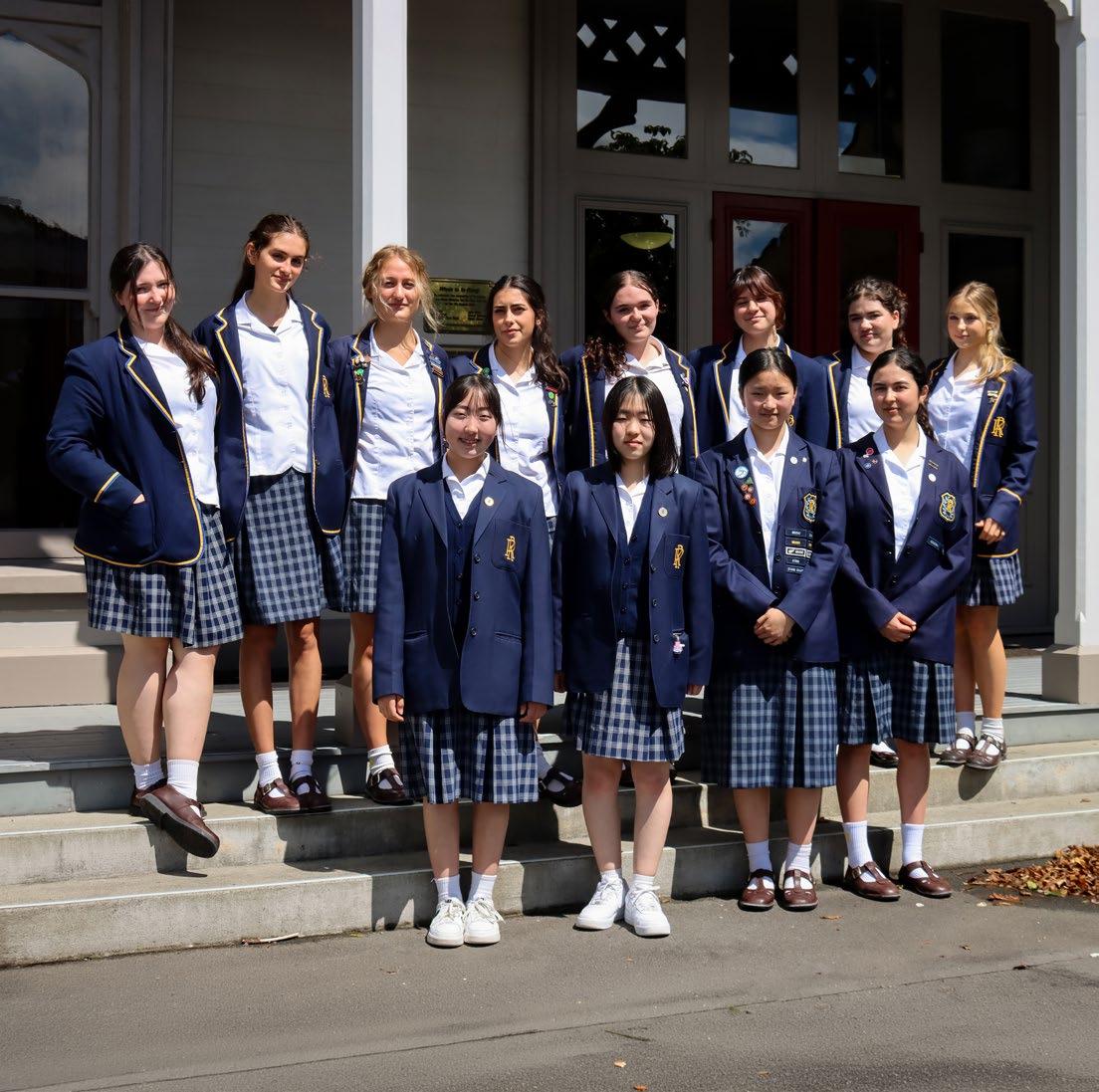
Argentina and Japanese Exchange Students reunite with their Exchange Partners
The Catch Up
What have you been up to since leaving school?
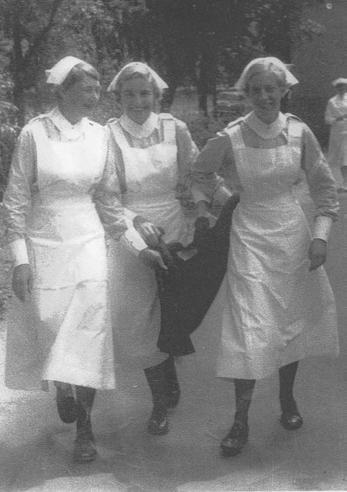
Studied a Bachelor of Nursing and then moved to Auckland to work at Middlemore ED, then to London for five years to work across multiple ED departments as a nurse (including the Covid-19 pandemic years) and did a lot of travel! I got married in 2021, moved home to New Zealand in 2023, started working in Children's ED here in Christchurch. Had our daughter Neave in 2023 and son Ronan in January.
Greatest achievement to date?
My two children! But also spending five years exploring the world with my husband.
Favourite memory from school?
Any Clan activity! I was in Stirling and the Clan atmosphere and chaos was so much fun! I also loved the Wednesday music sessions in chapel.
Words of advice for today’s students?
Your school years go so fast and they seem stressful at the time, but you have so many opportunities and support systems around you to do the best you can. So don't be scared to ask for help— Rangi Ruru is an incredible place to be learning!
What have you been up to since leaving school?
After school I completed my nursing diploma and worked as a nurse for ten years in New Zealand, Australia, the UK and US. I then attended Lincoln University where I completed a Bachelor of Commerce, Finance and Business Administration. I then worked with the Ministry of Health in Christchurch on the project management team, which allowed me to work part-time as I became a wife and mother. Since 2005, I have lived in Nelson where I started two successful community newspapers (the Waimea Weekly and the Nelson Weekly)…and where I am now slowly moving towards retirement.
Greatest achievement to date?
My husband Steve Page and myself started the Waimea and Nelson Weekly newspapers and they are now two of the largest circulating newspapers in the top of the South Island. Both titles are loved in the Nelson/Tasman area.
Favourite memory of school?
No one clear memory, just meeting lifelong friends and being educated in a safe and happy place.
Words of advice for today’s students? If you are a little different from your
peers or you ‘paddle your own canoe’ in life, try to stay off social media, seek out and find your tribe either at school or in the big wide world, it may take years, but you will find them. Remember do your own thing with confidence and to ignore judgy people.
Caroline Black (née Marsh)
1991-1995
What have you been up to since leaving school?
Since leaving school, I have spent more than two decades working in education, a career that has allowed me to combine my curiosity about how we learn with a passion for helping others grow and thrive. English Literature sparked my interest in the humanities and led me to study it at university, and while I explored other pathways along the way, I was ultimately drawn to Education.
Over the years, my work has taken me from the classroom into leadership, mentoring, and consultancy. Today, I am the founder and director of Grow Daily™, an educational consultancy
We love hearing what our alumnae have been up to. The following passages illustrate that no matter the road our alumnae travel, they are empowered and capable of navigating life’s challenges and seizing every opportunity to live fulfilled and purposeful lives. If you would like to share your story in the next edition of Wide Sky, scan the QR code or connect with us at rroga@rangiruru.school.nz.
that works with schools, educators, leaders, students, and families to support emotional literacy, sustainable wellbeing, and high-performance learning. We also run the Grow Daily Academy, which provides specialised tutoring and mindset mentoring.
In many ways, my career has come full circle, helping young people develop the same confidence, curiosity, and sense of possibility that my teachers at Rangi Ruru helped nurture in me.
Greatest achievement to date?
Without question, being a mum to my son and daughter. Watching them grow, discover who they are, and find their place in the world is one of the greatest joys in life. As they navigate their teenage years, I am constantly in awe of their courage, curiosity, and capacity to become more fully themselves. They challenge me, teach me, make me laugh, and remind me every day of what truly matters.
Favourite memory from school?
I have so many, but the strongest memories are of the friendships, laughter, and sense of belonging. I remember Mrs Billing’s lively classroom debates, French lessons with Madame Barnett, the colour and energy of our sports days, and those small but powerful moments of encouragement from teachers like Ms L’Eef, who believed in me. They were the sparks that nudged me towards the work I do now.
Words of advice for today’s students? Don’t worry about having it all figured out straight away - life isn’t a straight line. Be curious, stay open to opportunities, and trust that the things you love and care about will guide you. Most importantly, look after yourself and your relationships. They are the foundations that will carry you through life’s challenges and successes.
Mary Hickey (née Sharp) 1951-1960
What have you been up to since leaving school?
I am retired, widowed and living in Tasmania. Since 1963 I’ve lived and worked in London, Japan (in 1970, working for the New Zealand government), Australia, Europe and Asia. My career was varied but for 25 years I worked in higher education in Australia where I’ve lived since 1971, except for eight years in London in the early 2000s and Thames on the Coromandel for nine years. I’ve been an active volunteer in the aged care and continuing education sectors, local group and trusts. I have many interests including bush walking, Pilates, travel, music and the arts and am an active member of several interest groups.
Greatest achievement to date?
Undertaking university education in my late 30s in Melbourne, married with two young children whilst working part time, and graduating with honours. This led to senior management positions in universities in Melbourne, Ballarat, London and Europe.
Favourite memory from school?
The feeling of connection with others as we grew some turned into lifelong friendships. The formation of ideas, encouraged by Mrs Dennis, which very slowly became reality. I also felt we learnt to be kind.
Words of advice for today’s students?
Be prepared, be responsible for yourself, take risks and be kind to yourself and others.
Kathryn Cross (née Russell)
1986-1990
What have you been up to since leaving school?
Travelled lots, worked abroad, started a business back here, met my husband and had our two gorgeous kids. After seeing them both through schooling I retrained as a Real Estate Agent with NZ Sotheby's International Realty and I am loving it!
Greatest achievement to date?
Definitely my family, I adore them. Also, quite stoked that I can swim out to Quail Island and back.
Favourite memory of school?
Rowing was a lot of fun, hard work but incredibly rewarding coming home from regattas with medals shared amongst your besties. I was so proud that my daughter followed suit, it was the making of her at Rangi Ruru.
Words of advice for today’s students? You do you, because you can and you should!
Rise to Your Rhythm
During the Term 1 break, I followed the remarkable journey of the Artemis II space mission, as four astronauts orbited the moon on Orion spacecraft Integrity, setting a new record for the greatest distance humans have travelled from Earth.
Pilot Victor Glover reflected that every part of life offers opportunities to grow, and that adopting a deliberate growth mindset with the following principles, was central to his journey to the moon: being resilient and growing through challenge; being a lifelong learner in the classroom, community, and family, and being a good teammate who recognises that people matter, and that dignity and respect remain essential even when we disagree. These principles are evident every day
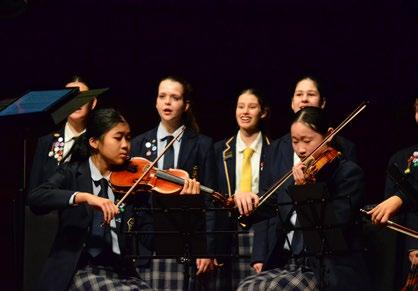
in our music whānau. At the beginning of each school year, we welcome new students into classes and co-curricular groups. Many arrive not knowing others, some having never been part of an ensemble before. Stepping into this space requires resilience—taking risks with learning, making mistakes, and having the courage to return and try again. Through listening, practising, reflecting, and learning from one another, students grow in musicianship and confidence. Over time, they become part of high-functioning teams where members support and champion each other’s progress. This has been clearly demonstrated in groups such as Rangi Voices, Rangi Players, rock bands, and percussion ensembles, where students, supported and mentored by senior
students, have achieved far more individually and collectively than they initially believed possible.
In our advanced ensembles, growth is evidenced through aspects such as risk-taking, self-reflection, and vulnerability. Students take ownership of the process, sometimes requiring the courage to start again as individuals and as a team, together pushing towards the next level of competency. This journey teaches as much about personal character and teamwork as it does about musical skill and understanding.
Courage to grow is also found in music creation itself. Composing original music requires vulnerability: exposing inner thoughts and taking
creative risks, building resilience. Students are supported to create music in response to personal experiences: connections with whānau, responses to events, landscapes, or artforms, or simply allowing music to carry their deepest thoughts and feelings. Through this, students creatively and freely expressive their own narratives. Growth is not always accompanied by immediate success. When expected results do not materialise, disappointment and self-doubt can surface. However, these moments can often prove very powerful in terms of growth. Students learn they are not defined by a single outcome, but by consistency, collaboration, and perseverance. One win means little; consistency is key.
Rarely a comfortable process, growth requires stepping into the unknown, recalibrating old habits, and being brave and vulnerable to the change process. Involvement in music creates a safe space to explore growth courageously—an experience that, by necessity, engages personal emotional responses. Music fuels motivation and action, making daunting challenges feel achievable and meaningful.
WORDS BY Janet Kingsbury Director of Music
Our role is to support students to step confidently into this future, not with all the answers, but with the skills, mindset and courage to grow alongside it.
Adapting for a
Changing World
In a rapidly evolving job market, developing adaptable and future-focused learners has never been more important.
The world of work is not just changing, it is being reshaped in real time. It is within this context that the school theme, Courage to Grow feels particularly relevant to Careers and Pathways conversations.
One of the most common questions we hear from students and families is, “Will AI take my job?” It’s a valid and very real concern when exploring tertiary options and future career pathways. In our conversations with Rangi Ruru ākonga, this question comes up often and understandably so.
What we do know is this: AI is unlikely to take jobs entirely, but it will absolutely change them.
Across industries, this shift is already happening. In healthcare, AI is being used in diagnostics and even to help predict hospital bed demand. In finance, algorithms can analyse huge volumes of transactions in real time to detect anomalies. In legal and professional services, AI tools can scan and summarise complex contracts in minutes rather than weeks. Automation and personalisation are reshaping administration and process-drive systems and processes across the board.
So what does this mean for our rangatahi as they step into the world of work?
Firstly, we are seeing a shift away from the traditional “stepping stone” job model, where experience alone led to progression. While hard work still matters, the pathway is becoming less linear and more dynamic.
Secondly, while AI is powerful, it lacks what makes us human. Skills such as empathy, emotional intelligence, complex problem solving and critical thinking are becoming increasingly valuable. These are the qualities that will set our students apart.
Finally, education and career development are no longer about preparing for one fixed role. Instead, they are about building adaptability. Our students will need to continuously learn, up-skill and respond to change across a range of industries.
At Rangi Ruru, we are intentionally responding to this shift.
From Year 11 Te Ara onwards, modules are designed to help students understand and prepare for the changing world of work. We are also looking forward to hosting a parents' evening later this year with a guest speaker focused on the future of work, to continue this important conversation as a community. Central to all of this is student voice, ensuring our approach remains relevant, engaging and grounded in their experiences.
We are also mindful of where future opportunities lie. Sectors such as trades, aging care, general health and education continue to show strong and growing demand, both in New Zealand and globally. While technology will play an increasing role in the workplace, it is unlikely to replace the human element. If anything, humans will become the quality checkers of AI, not the other way around.
Looking ahead, those attributes embedded in our Rangi Ruru Graduate Profile (such as reliability, self-awareness, resilience, perseverance and the ability to understand others’ perspectives) will matter more than ever. Our role is to support students to step confidently into the future, not with all the answers, but with the skills, mindset and courage to grow alongside it.
WORDS BY Victoria Gray Careers & Pathways Strategist
At Rangi Ruru, equestrian isn’t just a cocurricular activity, it’s a way of life that shapes students long after they leave.
Photo: Sarah Robotham Photography
Taking the Reins
At Rangi Ruru, equestrian isn’t just a cocurricular activity, it is a way of life that shapes students long after they leave. Here, growth and courage happen beyond the classroom: you will find both being built in local paddocks, stables and competition arenas.
For boarders, being able to bring their horses to Christchurch makes all the difference. It means they don’t have to leave a huge part of their lives behind when they come to school. After a full day of classes, they head out to ride, care for their horses, and keep up the country routines they’ve grown up with.
The school supports this in a practical, down-to-earth way, providing daily transport so students can balance their academic work with their riding commitments. It’s a juggle, but one that teaches resilience, time management and dedication. These are skills that carry well beyond the school gates.
“Having my horse at school is probably one of the best opportunities and fun experiences ever,” says Year 10 student Zoe Innes. “It gives me a chance to get out of the boarding house and spend time out in the country when I really need a break. It’s great getting the bus after school and being able to do the thing you love especially when you live in Wānaka and can have the experience of having your horse at school.”
There’s a real sense of community among the equestrian students. Time spent with horses naturally brings people together: whether they’re getting ready for a competition, lending a hand, or just talking about all things horses. Friendships are built on shared
experience, mutual support and a genuine love of the sport.
For many, especially those from rural backgrounds, being around horses offers a strong connection to home. It’s a reminder of the land, the lifestyle, and the independence they’re used to, even while living in a boarding environment.
Caring for a horse also teaches responsibility in a very real way. Horses depend on routine, patience, and trust. Students quickly learn that their effort matters; not just for performance, but for the wellbeing of their animals. That builds confidence, accountability, and a strong work ethic.
While equestrian can seem like an individual sport, teamwork is a big part of it at Rangi Ruru. Riders support each other, share advice, and represent the school together. Competing in school events brings a strong sense of pride; pulling on the navy and gold and giving it their all.
Representing Rangi Ruru in equestrian takes courage. It’s about putting yourself out there, learning from mistakes, and pushing to improve. Every ride, every competition, is part of that growth.
WORDS
BY
Sally Goldsmith Equestrian Manager
Photo: Sarah Robotham Photography
Growth doesn’t happen in comfort; it happens in moments of uncertainty, vulnerability, and determination.
Grow Boldly Support to
At Rangi Ruru, wellbeing is not a standalone initiative: it’s the heartbeat of our school community. It informs how we teach, how we connect, and how we support every ākonga to flourish. This year’s theme, Courage to Grow, captures the essence of what it means to be part of the Rangi Whānau: stepping bravely into new experiences, stretching ourselves, and discovering the strength that comes from being truly supported.
It's a good thing that wellbeing isn’t just about feeling good, because growth doesn’t happen in comfort. It happens in moments of uncertainty, vulnerability, and determination. And it takes courage.
For our young people, courage can be as simple as joining a new sport, speaking up in class, or asking for help. At Rangi Ruru, our pastoral care structure ensures that every learner has at least one adult walking alongside them as they take on these challenges.
A key part of this pastoral tapestry is Pulse. This is a weekly check-in for students and it enables them to ask for help in a low friction, low-risk way. Pulse is a measurement tool rather than a psychological or wellbeing intervention. It provides information from individual students about their wellbeing and from that information, we can help our students grow as well as growing as a whole school community.
Connectedness is woven deeply into the Rangi Ruru experience through our Clan Whānau groups. Each whānau brings together students from multiple year levels, creating a sense of belonging, mentoring, and shared identity. These inter year relationships help younger students feel anchored and supported, while giving senior students opportunities to grow leadership and empathy. Our whole Clan
Hui strengthens these bonds even further, providing time for fun, connection, reflection, and community building—moments where courage to grow is fostered simply by being part of something bigger than oneself.
Courage shines in our ākonga-led assemblies too. These gatherings give students a platform to speak, lead, inspire, and represent their community. For many, stepping up to a microphone or guiding their peers is a bold act, but one they take on proudly, knowing they are encouraged to grow through leadership and voice.
Our wellbeing framework helps students develop emotional literacy, resilience, and self awareness. Through our Rangi Graduate attributes and wellbeing pathways, ākonga are encouraged to understand what strengthens them, how to navigate setbacks, and how to thrive in community with others.
Ultimately, Courage to Grow is an invitation. It reminds us that growth is continual, that bravery comes in many forms, and that when we are supported by a strong, caring community, we can step forward with confidence.
WORDS BY Sally Fail Year 8 Dean and Wellbeing Co-ordinator
From Red Fence to Red Door
Jill Brathwaite (née Weideman)
Class of 1948
I was born in England. My father, Lieutenant Colonel Frank Weideman, MBE, drew up the document of surrender for Field Marshall Lord Montgomery, one of the leading generals in World War II. After all that excitement he found regular life back in England uninspiring. He was Australian by birth, and he was offered a job in Christchurch. So off we went.
My father flew out, and after we sold the house, my mother, my sister Rosemary and I, came by sea on the NZ Star, a small sailing ship. It took about six weeks. I thought my mother was so brave! We shared a cabin with Miss Shack, as in Shackleton. She was the eighth sister of Sir Earnest Shackleton. Shack was going to Christ’s College as a
matron.
I started at Rangi Ruru immediately, wearing my English school uniform, much to my embarrassment! I had a frightfully English accent and I got put up a class, not the best move in retrospect, because although my sister, in the Upper Sixth, was very clever, I was just ordinary; ahead in languages but behind in maths. To my regret I don’t think I ever caught up with the maths and I’m always saying to all the grandchildren, "Do your maths, do your maths".
What impressed my family about Rangi Ruru was the fact that it was unpretentious, a little old school untouched since the war—with a dilapidated corrugated iron fence around the perimeter painted red.
We had classes in the stables, a fire hazard, but as there were no supplies to repair anything it wasn’t surprising.
Around the old house, Te Koraha, there were beautiful trees. And Miss Mason was a charming lady. She got married to Mr Gardener which was a thrill for all of us girls. Mrs Margaret Patrick succeeded her. Now she was a really sharp cookie, she brought Rangi Ruru into the next generation, it became more academic
rather than focusing on skills of social etiquette.
I had wonderful teachers: English with Miss Paul and Madame Ziffer, ex Sorbonne University in France, who taught French.
I played netball in the A team, and I remember a wonderful match against
The signing of the Surrender on Luneberg Heath. Jill's Father, Lieutenant Colonel Frank Weideman, MBE, standing second from Right.
Jill, Sue Western and Hilary Thacker going on duty
Te Waipounamu: These strapping girls determined to crush us—and I was determined they wouldn’t. I was the only one as Goal Defence that was able to stop them getting goals. And I did! It was a jolly good match and we won.
I stayed at Rangi Ruru until Lower Sixth. I got pneumonia that year around exam time and didn’t sit the exam (much to my relief) so I left school, and being too young to enter nursing, I elected to go to the Canterbury School of Art for a ‘gap year’.
I hadn’t ever done art at school but attending CSA was fantastic—I learned from Bill Sutton and Ivy Fyfe, who was sister of Miss Fyfe, the geography teacher at Rangi Ruru.
I did my nursing training the following year and the minute I finished I got married. My husband, David Brathwaite, was an engineer with the Ministry of Works. He designed the concrete penstocks for the Benmore Dam, and we had two years in Wellington, where I worked briefly as a dental nurse. I had my daughter, Rebecca, in Wellington, then relocated to Benmore, Otematamata, where I had my son, Richard.
After four years in Benmore, we spent 25 years in Dunedin and I worked
as a nurse at the Mater, the Catholic hospital. Then I did my Elizabeth Ardern training and worked at Arthur Barnett’s, behind the ‘Red Door’!
My outstanding memories of Rangi Ruru were a cheerful group of girls, it wasn’t madly academic, but more athletic, and it was a great learning curve for me coming from England.
At 90, I play bridge, I paint, I belong to book groups, I sing in a choir, and I just joined a startup French conversation group. I started a Flat Earth walking group with University of the Third Age
(U3A), it’s dwindled to just four of us, but we still walk once a fortnight.
I am so grateful to my parents Frank and Iris, for bringing me and my sister Rosemary to this wonderful country and I am so grateful to Rangi Ruru for giving me a happy secure girlhood with mature loving teachers.
Jill, (third girlfrom left), with friends. Circa1951
Family Connections
Welcome to the daughters, granddaughters, great granddaughters and great great granddaughters of alumnae, past and present, who commenced their education at Rangi Ruru in 2026.
Student Mother
Aurelia Ashman
Mealla Ayers
Leah Barnett
Fern Broomhall
Lottie Buchan
Pippa Burridge
Emily Butcher
Elise Cain
Willa Chapman
Isabella Clarkson
Annabel Costley Neal
Zoe Drennan
Paige Edward
Samantha Ensor
Nina Fahy
Annabelle Fisher-Starzynski
Violet France
Arabella Griffin
Pippa Henshaw
Penelope Ioannou
Miller Joyce
Chelsea Knotts
Addison Langton
Bonnie Lester
Millar Logan Ferris
Nina Marfell
Bella Mauger
Alex Miller
Aurélie Montelle
Isabel Moore
Hazel O'Steen
Charlotte Robertson
Isabelle Schroder
Ruby Shepherd
Lucy Steetskamp
Poppy Stocker
Xanthe Sutherland
Maisie Teutenberg
Sadie Todd
Lacey Trayner
Sylvie Trevella
Chloe & Emma Vallely
Charlotte Ward
Grace Williams
Mary Winter
Stephanie Broomhall (Mortimer) 1995
Kate Easton 1993
Olivia Butcher (Vallance) 1994
Kate Cain (Bellaney) 2004
Harriet Chapman (de Latour) 1991
Tamara Clarkson (Tait) 1990
Helen Costley 1988
Elizabeth Drennan (Johns) 1990
Samantha Haydon 1999
Jane Ensor (Wright) 1991
Sarah Fahy (Sidey) 1992
Amelia Fisher-Starzynski (Foley) 1993
Penelope (Penny) France (Morrow) 1995
Kate Henshaw (Satterthwaite) 1994
Sarah Greig 1999
Brylee Flutey 2002
Pippa Bonifant 1994
Kate Logan (1985)
Emily Marfell (Ross) 1992
Emma Jade Mauger 2003
Tiffany Glass 1991
Clemency Montelle (Williams) 1991
Amy Moore (Jones) 2000
Anna Hall 1995
Rachel Robertson (Claridge) 1997
Amy Nixon 1997
Kate Shepherd (Marshall) 2002
Charlotte Steetskamp (Smith) 1997
Sara Stocker (Scott) 1996
Lenore Farrelly 1991
Julia Teutenberg (Satterthwaite) 1996
Anna McCormack 1998
Victoria Trayner (Timperley) 1998
Louise Trevella (McIvor) 1990
Annabel Ward (Hartnell) 1986
Jaime Elisabeth Winter (Hawkins) 1998
Grandmother Great Grandmother Great Great Grandmother
Miriam Hughes (Anderson) 1950
Sarah Armstrong (Ballin) 1965
Adrienne Barnett (McDougall) 1964
Frances de Latour (Milne) 1964
Susan Haydon (Clephane) 1968
Christine Wright (Wightman) 1965
Maureen Knotts (Black) 1957
Barbara George (Stocks) -1962
Felicity Williams (Walker) 1968
Helen Williams (Anderson) 1961
Nicola Elisabeth Hawkins (Hunter) 1969
Nan Douglas (Cunningham) 1943
Josephine de Latour (Knight) 1937
Margaret Pickerill (Tisdall) 1935
Marshall (Miller) 1949
Yvette Elisabeth Hunter (Nichols) 1941
Janice
Helen Hanna (Banks) 1898
Betty Scott (Knubley) 1935
Kathleen Knubley (Chapman) 1900
Senior Debating Team
Da Vinci Decathlon Team
Ethics Olympiad Team
Discomfort Leaning into
When we choose challenge, lean into uncertainty, and recognise that real growth often comes from moments of discomfort, we are showing the true essence of Courage to Grow.
As Enrichment Strategist, my role is to help cultivate this mindset (formerly known as High Performance Learning) across the school, ensuring that every student, regardless of where they begin, has opportunities to be extended, inspired, and supported in their learning.
Enrichment is not a separate pathway for a select few; it is an approach to learning that can and should be woven into every classroom and experience. It involves designing opportunities that deepen thinking, encourage curiosity, and invite students to make connections across disciplines. While extension opportunities such as debating, Future Problem Solving, the Da Vinci Decathlon, and the Ethics Olympiad are visible examples of this work, they are also part of a much wider picture.
One student recently reflected that, “Enrichment at Rangi Ruru has encouraged me to grow in many different ways, from giving me new opportunities such as the Da Vinci Decathlon and Ethics Olympiad, to helping me push out of my learning comfort zone.”
This captures the essence of what enrichment seeks to achieve. In debating, students develop the confidence to articulate ideas clearly and respond thoughtfully under pressure. Future Problem Solving challenges students to grapple with complex, real-world issues, fostering creativity and forward-thinking. The da Vinci Decathlon brings together knowledge and lateral thinking across disciplines, while the Ethics Olympiad encourages students to engage with diverse perspectives, strengthening both reasoning and empathy.
Importantly, these opportunities are not just about academic growth. They also help students find their people. As another student observed, enrichment allows you to “grow and gain courage and experiences with likeminded others around you, helping to build close connections.” Through shared challenges, students form friendships, learn from one another, and discover that intellectual curiosity is something to be celebrated.
My role involves working alongside teachers to embed these kinds of opportunities into everyday learning. This might look like providing more open-ended tasks, encouraging deeper questioning, or creating space for students to pursue individual interests and passions. It also involves identifying and supporting students who would benefit from additional challenge, ensuring they are both stretched and supported.
Ultimately, enrichment is about creating a culture where challenge is welcomed, effort is valued, and students are encouraged to see themselves as capable of growth. The courage to grow is not about always succeeding; it is about being willing to try, to think differently, and to keep going. At Rangi Ruru, we are committed to fostering that courage in all our students.
WORDS BY Anna Harrison Teacher of English and Enrichment Strategist
RROGA Photo Gallery
Gibson
Girls Lunch
8 May 2026
Gibson Girls Whaea Ora Morning Tea
7 November 2025
Leavers Ball
3 December 2025
Preschool Story The Rangi Ruru
The story of Rangi Ruru Preschool began long before its doors opened in 1989, and its legacy will continue despite its doors closing for the last time at the end of 2025.
In 1984, when early childhood education was still emerging as a professional field in Aotearoa New Zealand, the Rangi Ruru Girls' School Board of Governors made the decision to establish a one-year tertiary programme focused on working with children in the home. The initiative was driven by Jill Bromley, then Head of Biology at Rangi Ruru, and Jenny Walker, Head of the Home Economics Department, with the support of Principal Raywyn Ramage.
Initially known as The Rangi Ruru School of Home Management, the college was led by Mrs Bromley, who worked closely with educators, health professionals and the wider early childhood sector to develop its curriculum. The Department of Education approved the Diploma of Home Management & Family Care, and the programme opened in February 1985.
The course quickly gained momentum. Beginning with 20 students, it attracted more than 100 applicants for 24 places by 1987. As increasing numbers of women entered the workforce, a need for preschool education and care was identified. In response, Mrs Bromley prepared a proposal for a preschool attachment, which was approved in 1988. Norah Fryer was appointed supervisor.
The following year, the organisation was renamed The Rangi Ruru Nanny School, becoming a department of the Rangi Ruru Centre for Advanced Studies. In February 1989, the Rangi Ruru Nursery and Preschool opened at 46 Rhodes Street.
The centre initially catered for children aged one to five years and offered a range of morning and afternoon sessions. Its close relationship with the Nanny School created opportunities for students to gain practical experience, regularly assisting with music, movement and creative programmes.
This connection also enabled the preschool to develop innovative learning opportunities. In 1991, the Centre introduced a Gifted and Talented Education (GATE) programme for
preschool-aged children, facilitated by Norah Fryer. The programme became a distinctive feature of the preschool and provided valuable practical learning for students completing the national diploma qualification.
Over time, ideas developed through initiatives such as GATE, Group Education and Care, and Sensory Motor Skills programmes became embedded in the Centre's approach to early childhood education.
Mrs Fryer, regarded as a pioneer in infant and toddler care in New Zealand, became a full-time tutor with the college in 1992 while maintaining strong links with the preschool. Paula Rogers, who had been involved since its establishment, succeeded her
as supervisor and remained in the role until 2009. She was followed by Vanessa Pauley (2009–2014), Linda Scanlan (2015–2022), and the final Centre Manager, Keri Granger.
Throughout its history, the preschool maintained strong connections with families and the wider community. Many children who attended in its early years later enrolled their own children, creating a sense of continuity across generations. The preschool also benefited from a stable and experienced teaching team, many of whom spent significant parts of their careers at the centre.
The preschool's contribution extended beyond its own community. Through its affiliation with the Nanny School
and later the Early Childhood College, it helped prepare generations of childcare and early childhood professionals who went on to work throughout New Zealand.
Although the Early Childhood College closed in 2014, Rangi Ruru continued operating the preschool for the children of staff and families from the wider community. One of its distinctive features remained its connection with the school, providing opportunities for preschoolers to interact with Rangi Ruru students and access facilities across the campus.
Children regularly explored the school's gardens and playing fields and visited spaces including the library, gymnasium, science laboratories and drama suites.
These experiences contributed to a learning environment that was unique within the early childhood sector.
Reflecting on the preschool's history shortly before its closure, Centre Manager Keri Granger noted that while facilities and staff evolved over time, the values that underpinned the preschool remained consistent.
"The Rangi Ruru Preschool remained very much the preschool of days gone by. Although the kaiako changed over the years, and the buildings and playground were updated and revitalised, the core values of the Rangi Ruru community continued to hold strong."
After 37 years of operation, Rangi Ruru Preschool closed in December 2025. During that time, it provided education and care for hundreds of children, supported the development of early childhood professionals, and formed an important part of the wider Rangi Ruru community.
Following its closure, the preschool's extensive collection of resources and equipment was gifted to a new early childhood centre preparing to open on Rēkohu / the Chatham Islands, ensuring that part of its legacy would continue in a new setting.
Johnann
School Archivist
WORDS BY
Williams
1957. Prefects. Margaret - standing back row, second from right.
1957. 'A' BasketballTeam. Margaret - sitting front row, first left.
Treasuring a Life of Education
Margaret Quigley (née Wilson)
Class of 1953
After a happy childhood in Timaru, I started Rangi Ruru at the age of 13 in 1953. My father, Malcolm Wilson, was Minister at Knox Church, a position which then included the chaplaincy at Rangi Ruru and St Andrew’s, so I was given a free place at school and began in 3P1.
My father was also Chair of the Board of Governors at Rangi Ruru for a number of years. I loved the school from the beginning and throughout all my five years there. Our year had a great crowd of girls and at 86 I am still friends with many of them and see some weekly for walks and coffees.
Margaret Patrick had become principal a year or two earlier. She was a remarkable woman who lifted the academic standards of the school amazingly. Mrs P was also a good friend of many parents so I knew her personally and admired and loved her.
My father instilled a love of English literature and history in me, and this was fostered by two well remembered teachers, Margaret Dennis, with her lovely Scottish accent, and Enid Hardie, a young energetic woman, who had just returned to New Zealand after years in
London and many expeditions to Nepal. Mrs Nakelis, a World War II refugee from Latvia, was an amazing linguist who taught us Latin and German. She was also a skilled embroiderer and shared this with my friend Barbara Royds in the "options" programme we were offered one afternoon a week. Bar and I remained friends with Mrs Nakelis until her death.
I did School Certificate and UE, had a year in the Upper Sixth (as it was then known) and went on to the University of Canterbury where I studied mostly English and History and graduated with a Master of Arts. My plans to continue study at Cambridge were abandoned when I met and married Paul Quigley. We had three daughters all of whom attended Rangi Ruru and I followed my father and served on the school’s Board of Governors for a number of years.
After graduating, I tutored at the University of Canterbury, taught at Christchurch Girls' High School until my first daughter was born and then mainly did part time or relief teaching at St Andrew’s and Rangi Ruru. For more than 40 years I wrote book reviews and occasional articles for The Christchurch
Press which allowed me to indulge my love of reading and say I was working.
Nowadays I still lead a fairly busy and active life. I walk with friends most days, attend concerts and films regularly, and read and read. Once a fortnight I drive over to Hinewai Reserve to spend the weekend helping my brother Hugh Wilson, a botanist and conservationist who is Kaitiaki of Hinewai.
At least once a week I drive up to Hawarden to garden with my daughter Sarah, who after 23 years living in the centre of Berlin has returned to Aotearoa, bought a small house and is establishing a garden.
Rangi Ruru gave me five very happy years and was a positive influence in my teenage growth and development. I remember with pleasure the fun of team sports, the lessons in the old stables and treasure most of all the enduring friendships I made there. AS TOLD TO
Committee Member
Highlights Reel
Fifty Years
This year, we celebrate 50 years of Sotheby’s International Realty® – and three years since NZ Sotheby’s International Realty opened its doors in Canterbury. With two offices in Christchurch, and experienced sales associates servicing the Marlborough region, our team curate some of the South Island’s most distinctive homes – connecting local stories with an international audience and laying strong foundations for the years ahead.