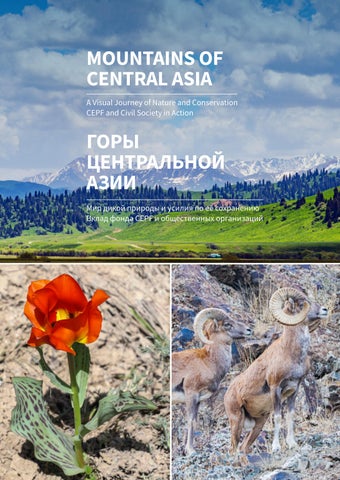
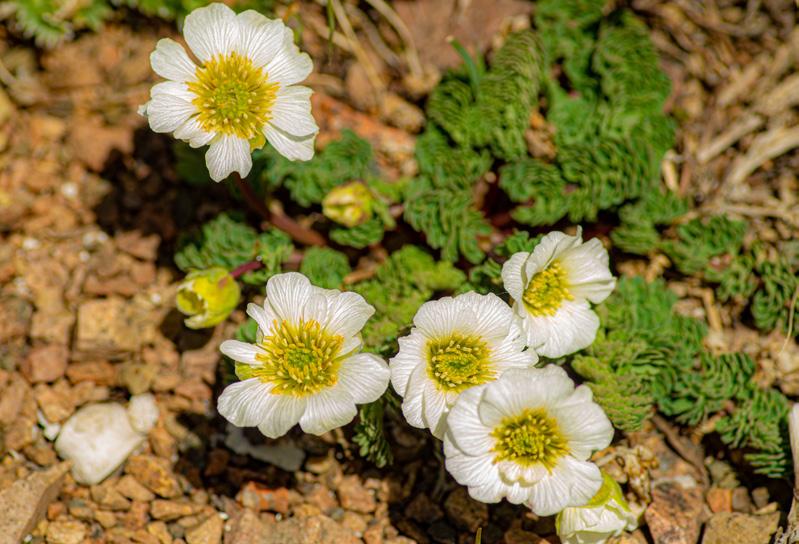
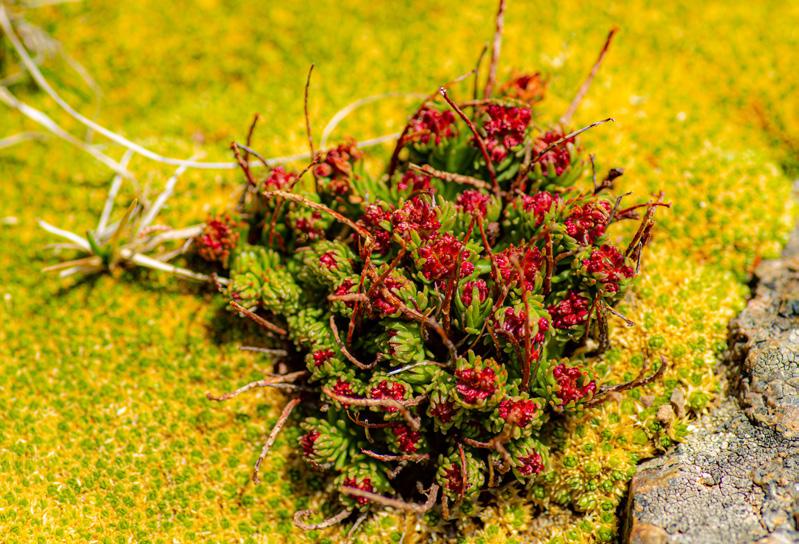
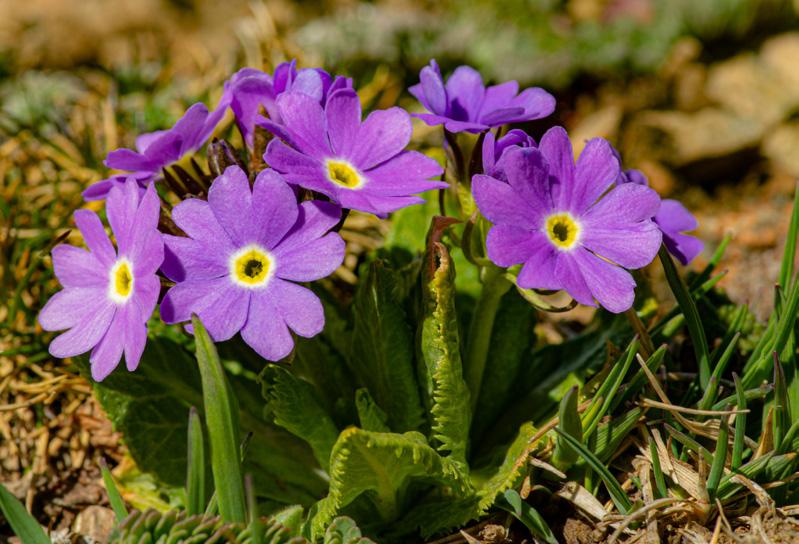
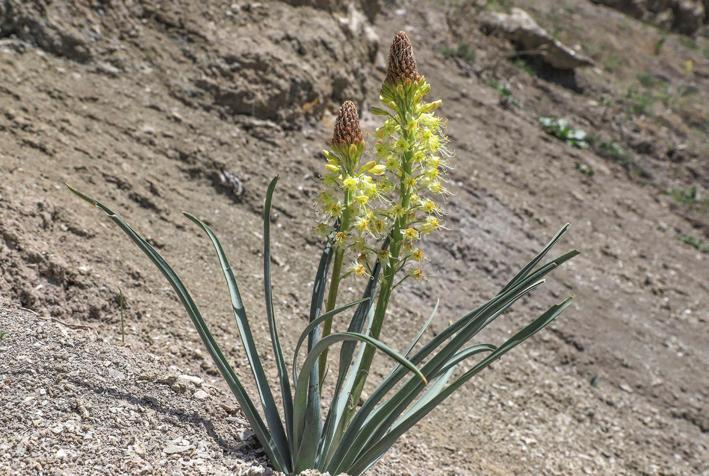
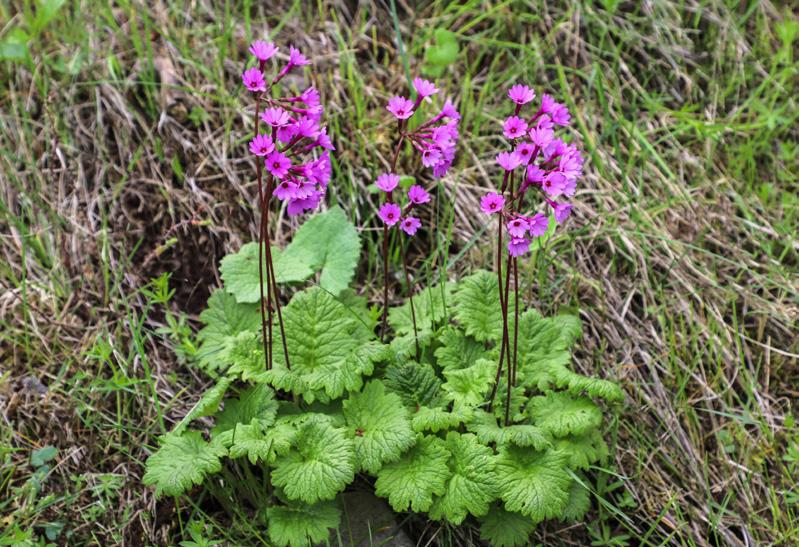
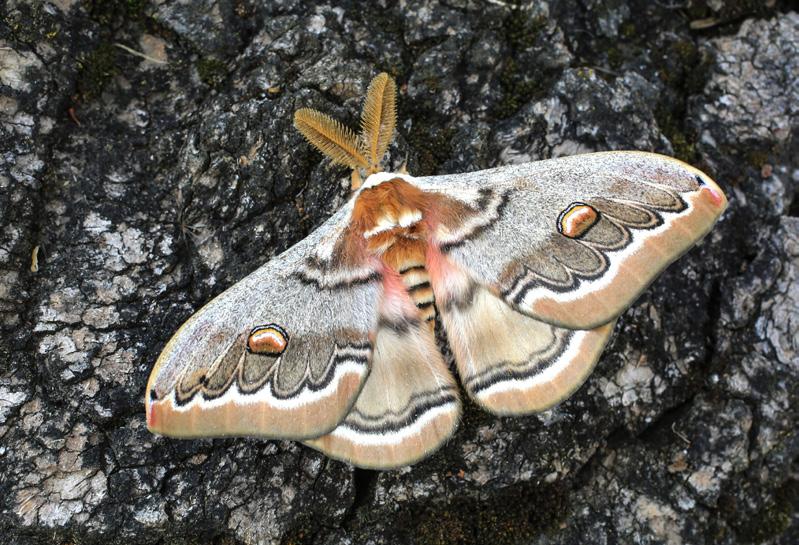
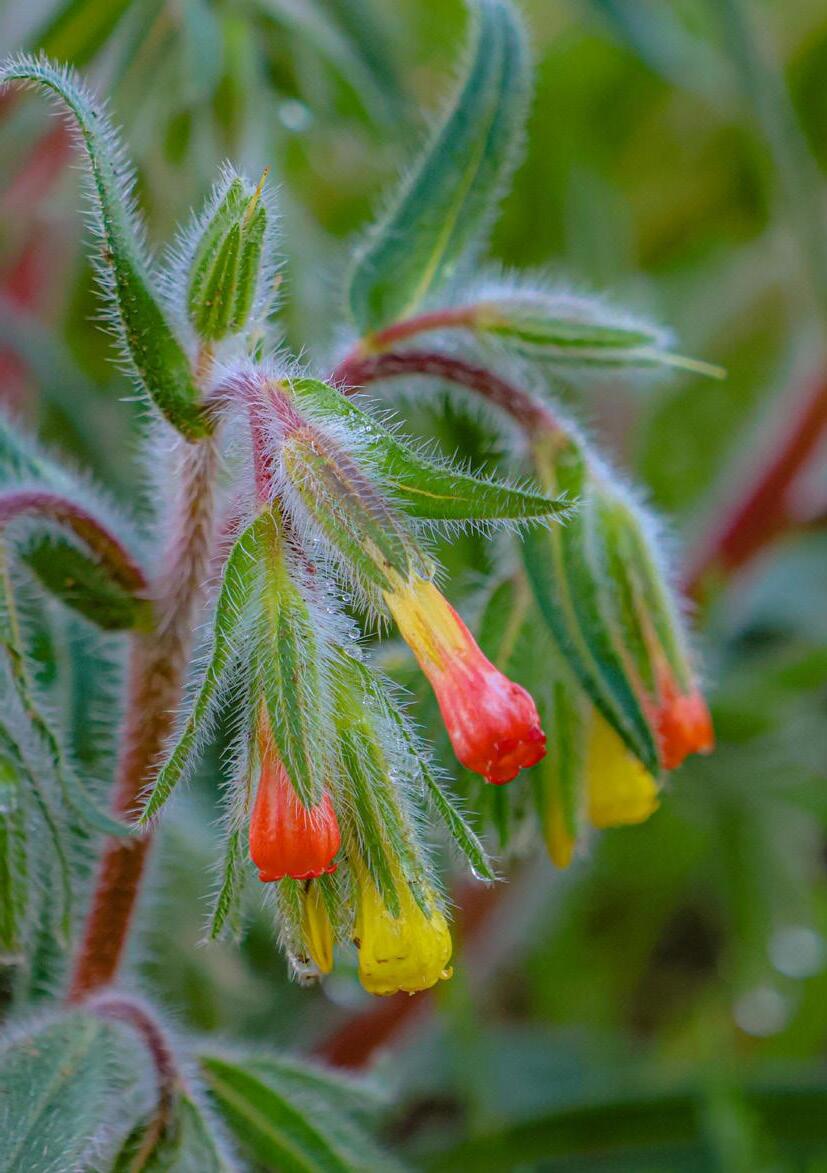
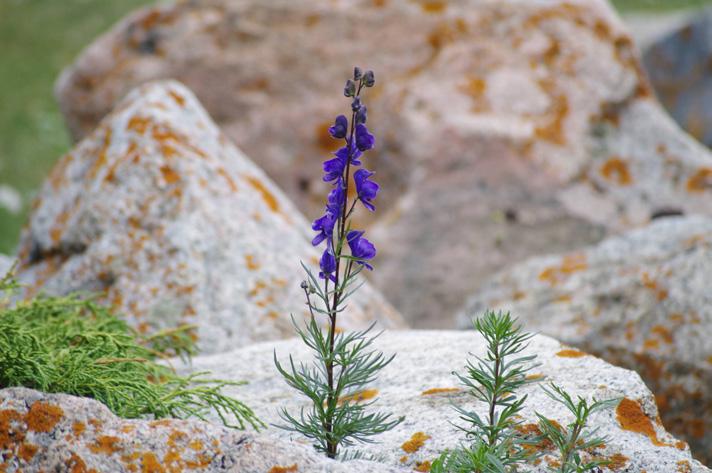
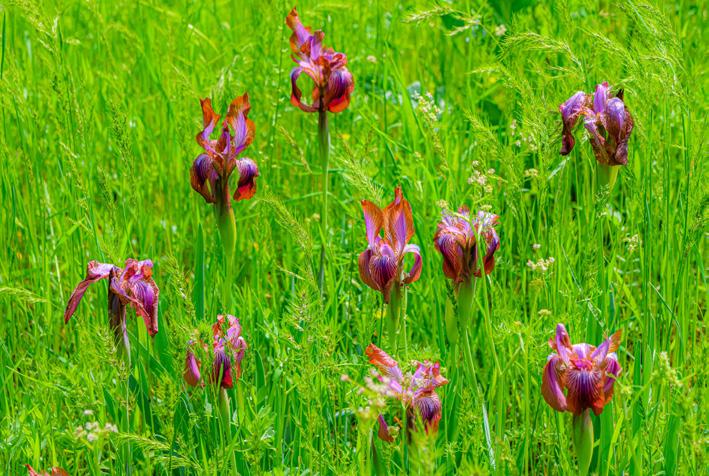
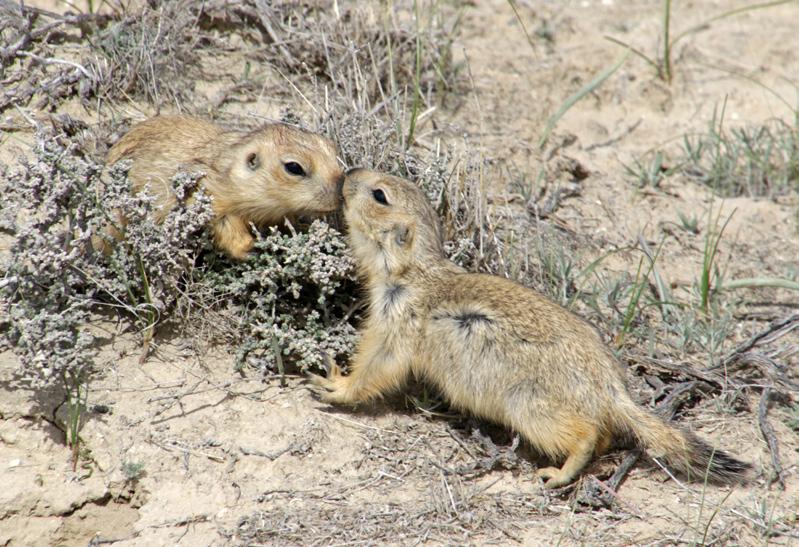
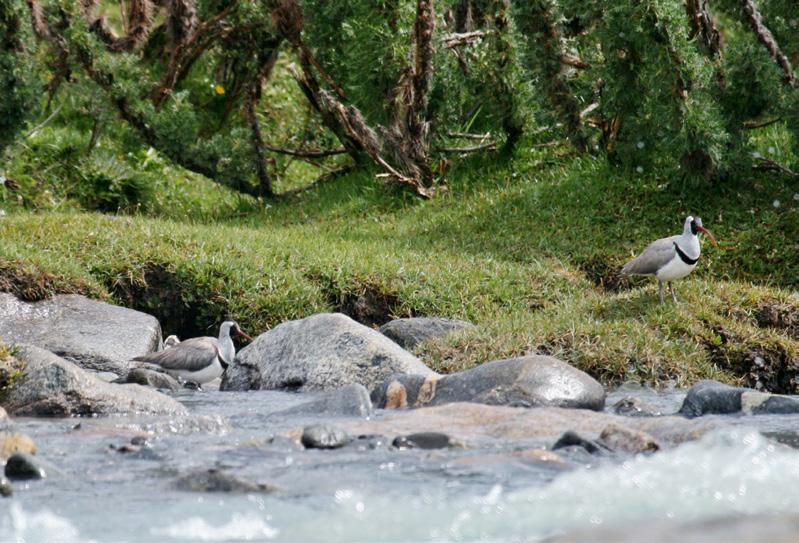
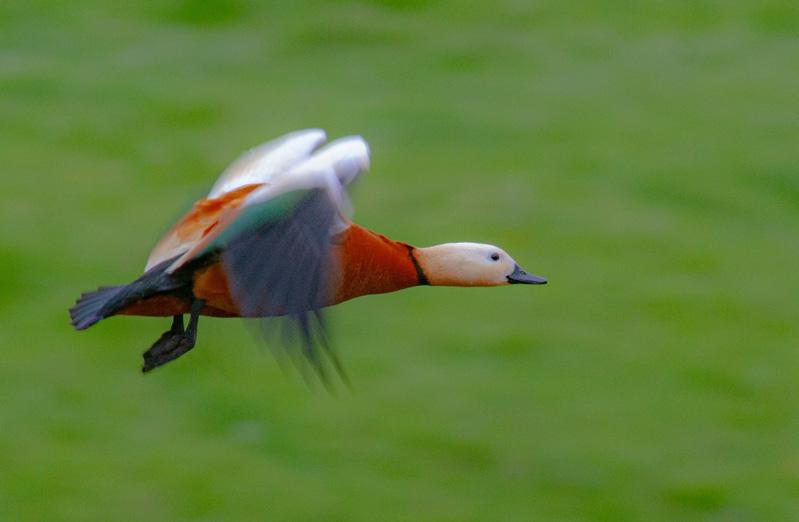
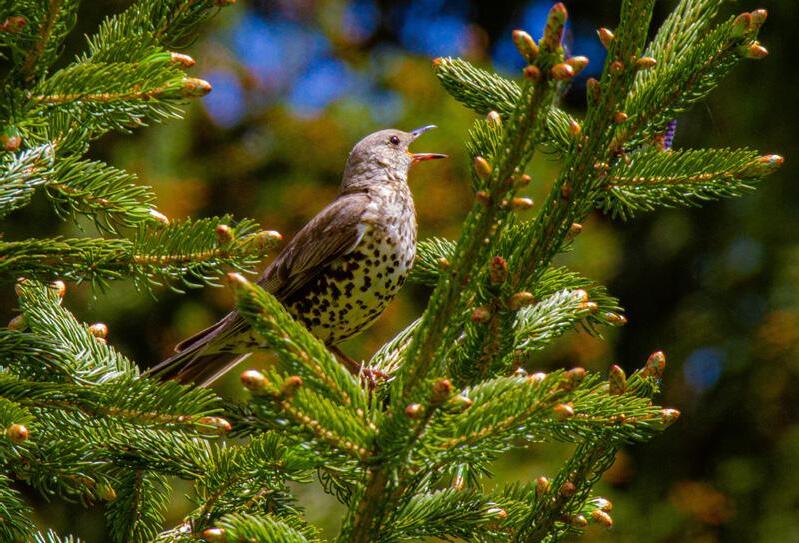
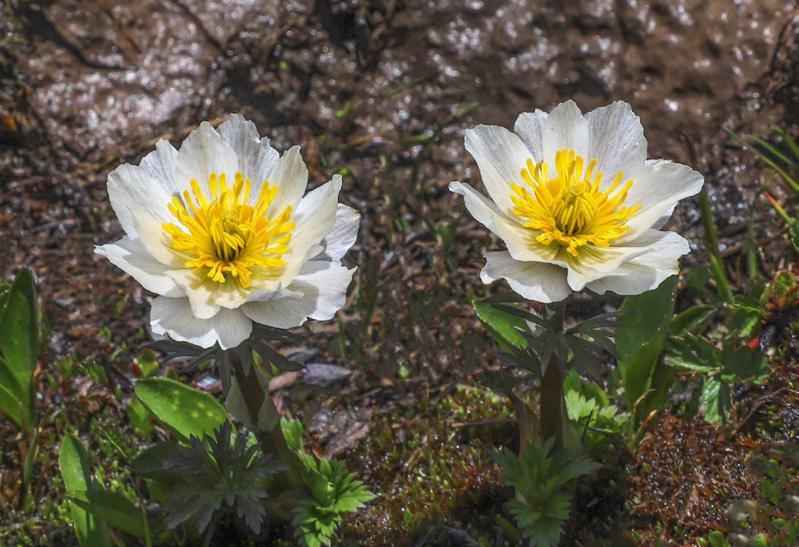
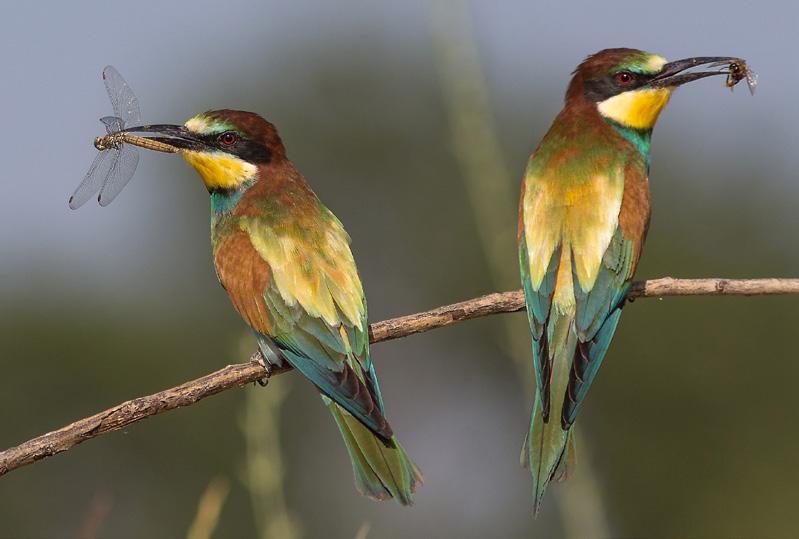
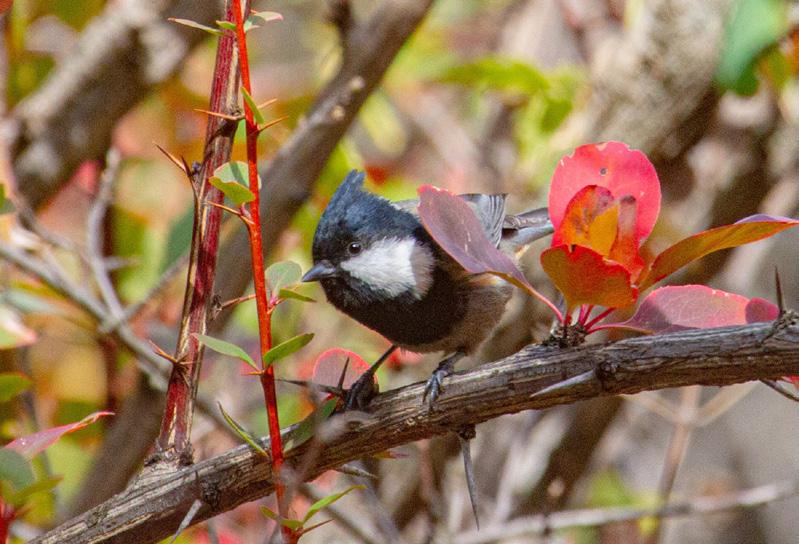
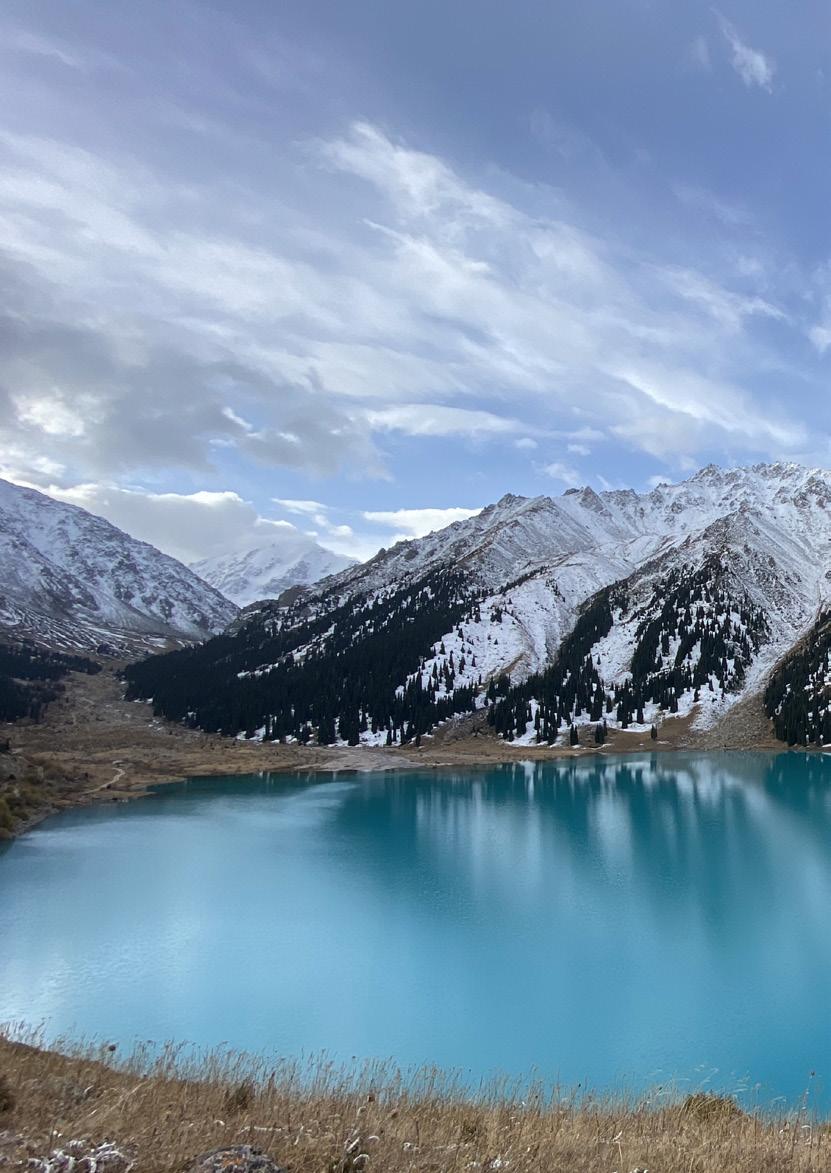
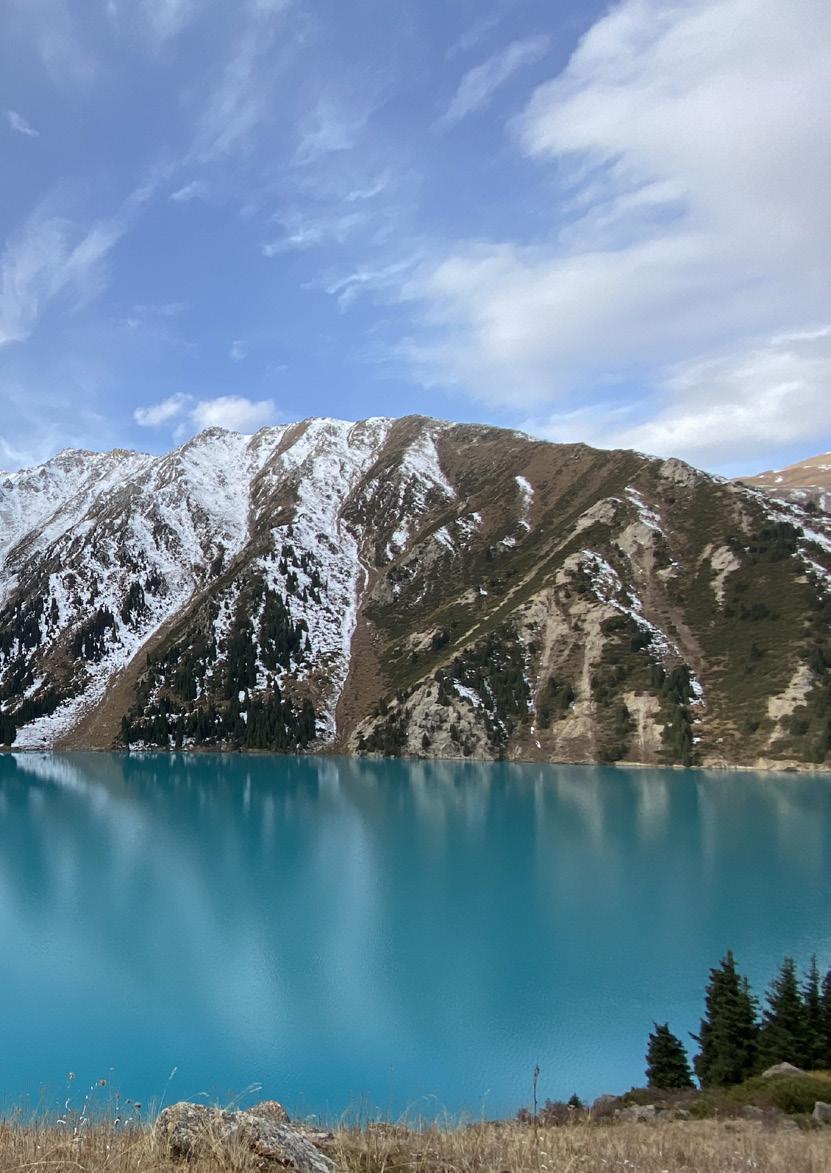
Mountains of Central Asia. A Visual Journey of Nature and Conservation
MOUNTAINS OF CENTRAL ASIA
A Visual Journey of Nature and Conservation
CEPF and Civil Society in Action
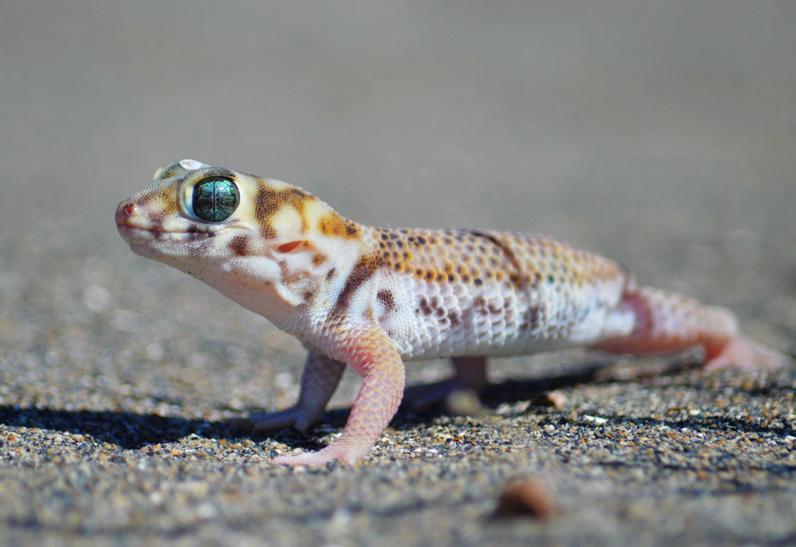
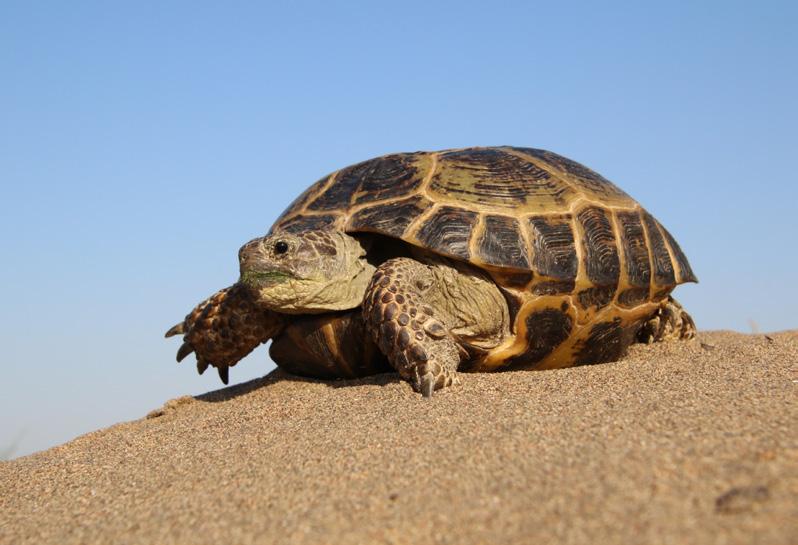
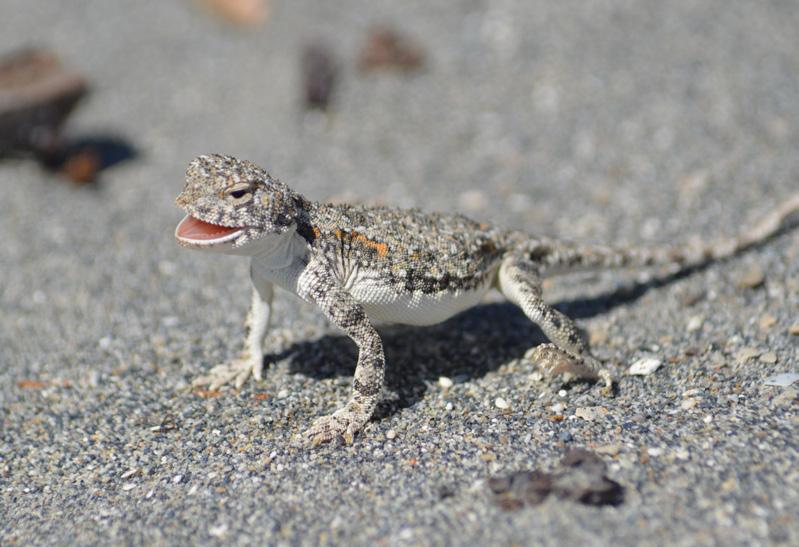
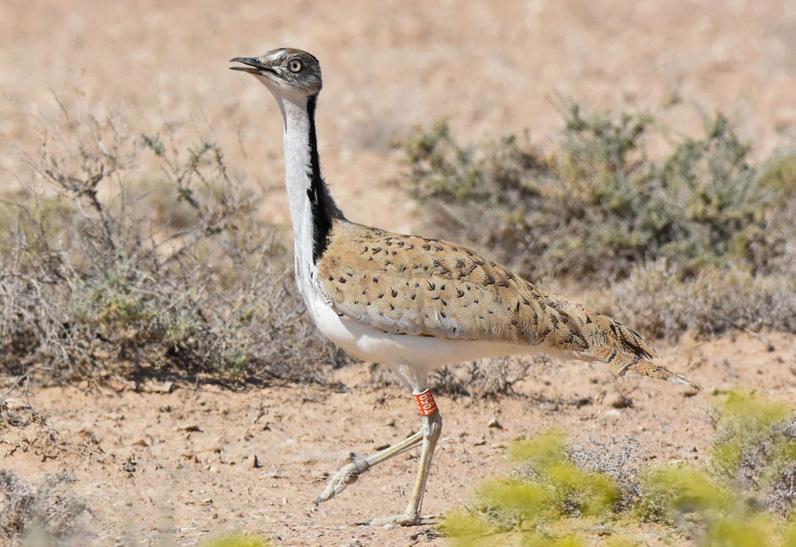
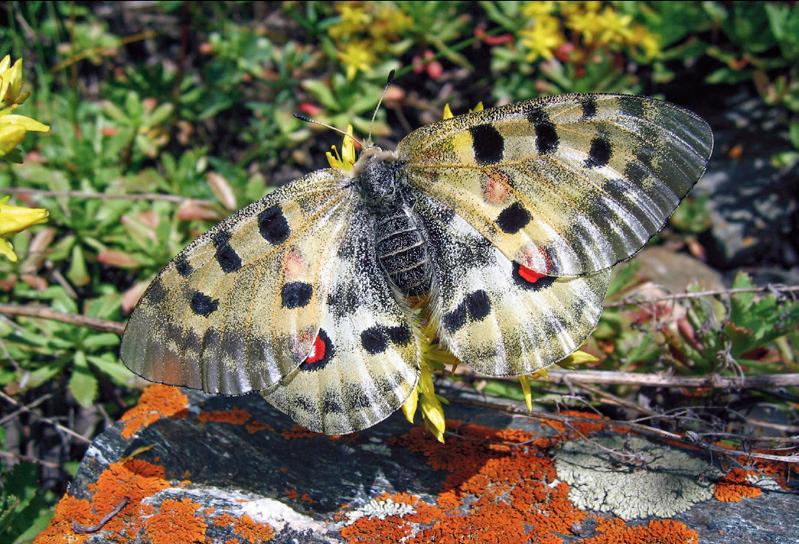
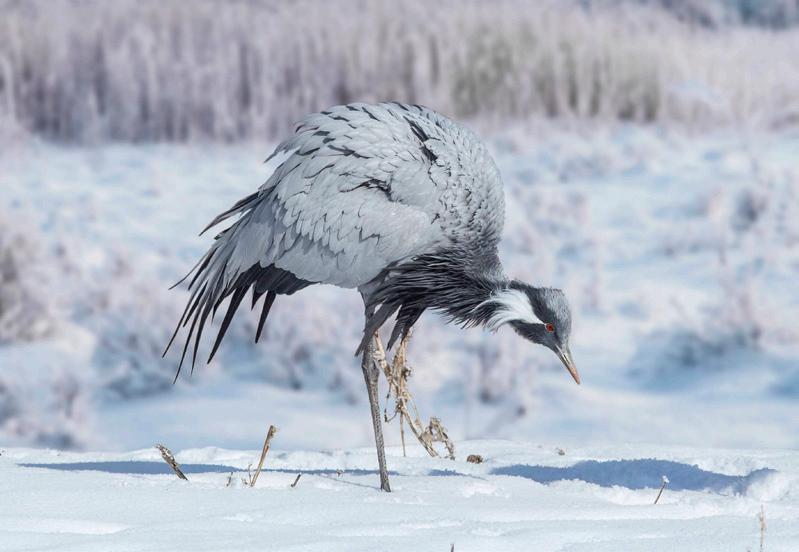
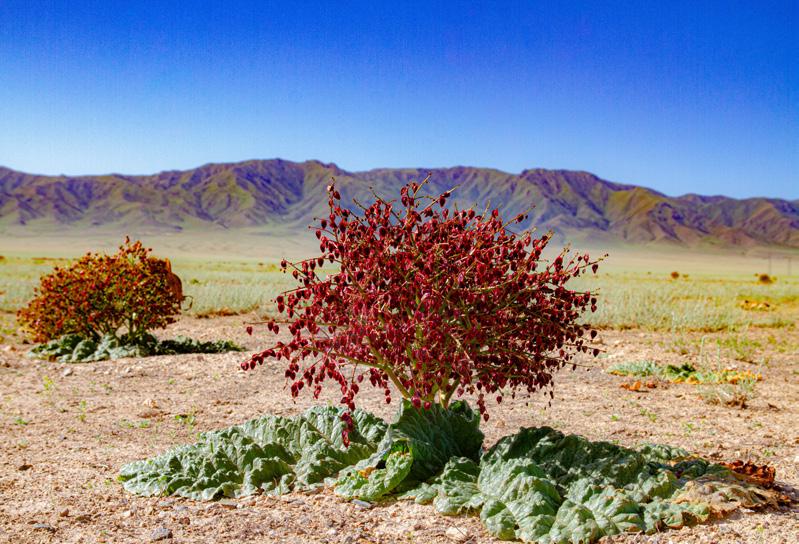
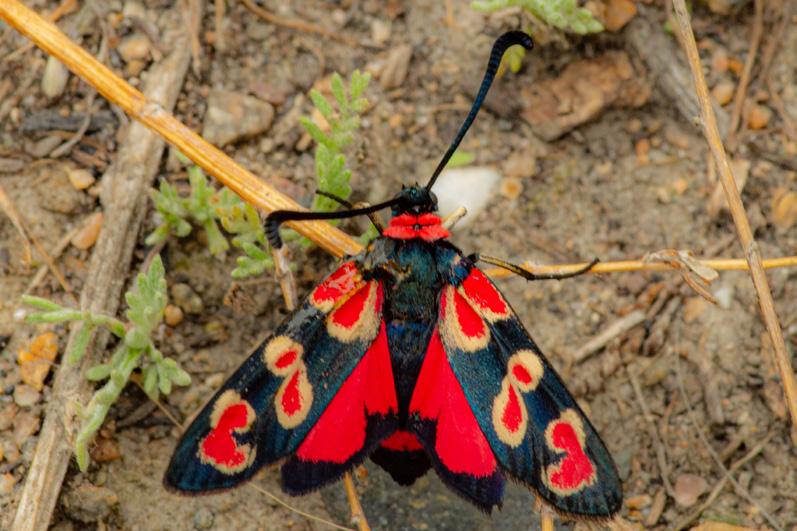
This photo album is organized in a simple way. It begins by showing the diversity of landscapes across the Mountains of Central Asia. It then highlights selected globally threatened species and other unique and spectacular biodiversity found in the region.
Next, it presents examples of Key Biodiversity Areas (KBAs)—from wetlands to high mountains and ecological corridors—that serve as important habitats and connections for wildlife. The report concludes with examples of how people and nature interact, the benefits and pressures involved, and the role of civil society organizations working with CEPF to support conservation.
From thousands of images, the editorial team selected just 130 to keep this book and web-site concise yet meaningful. There is much more to discover—so we invite you to explore, engage, and contribute to this shared story and conservation efforts.
Cover page photos: Elena Kreuzberg
MOUNTAINS OF CENTRAL ASIA
A Visual Journey of Nature and Conservation
CEPF and Civil Society in Action
This photo album invites you on a journey into the Mountains of Central Asia—a region of breathtaking beauty, rich biodiversity, and growing vulnerability. Through powerful and unique images, it brings these remote landscapes closer, inspiring care and curiosity among civil society organizations, youth, partners, and donors. Rooted in the updated CEPF ecosystem profile (2026), the album captures moments from field expeditions, as well as the everyday work of conservation and community outreach. The photographs tell the story of nature and of the people who depend on it and work to protect it.
From fragile ecosystems and unique, threatened species to migratory wildlife and the ecological corridors that sustain the connections of nature, the album reveals the remarkable diversity of life woven into these mountain landscapes—and reminds us why their protection matters now more than ever.
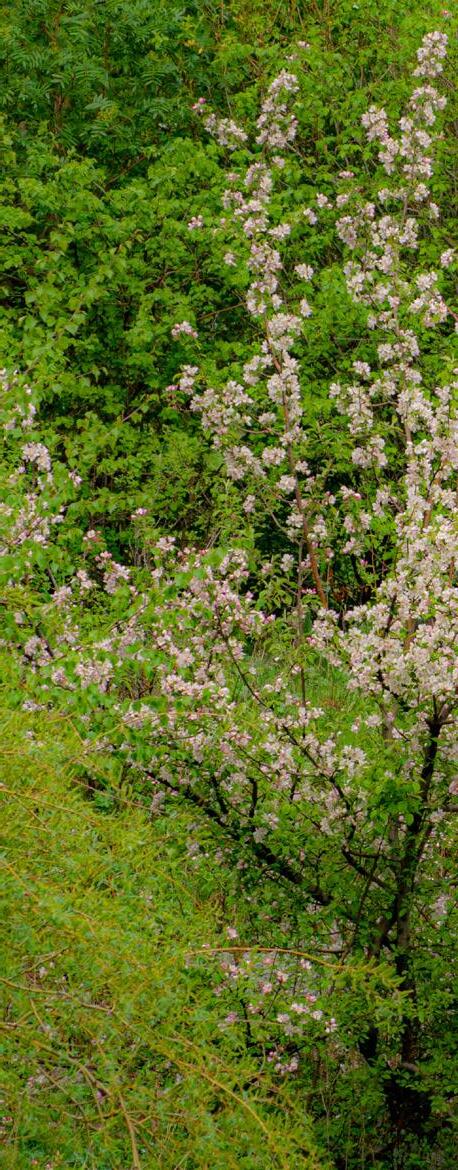
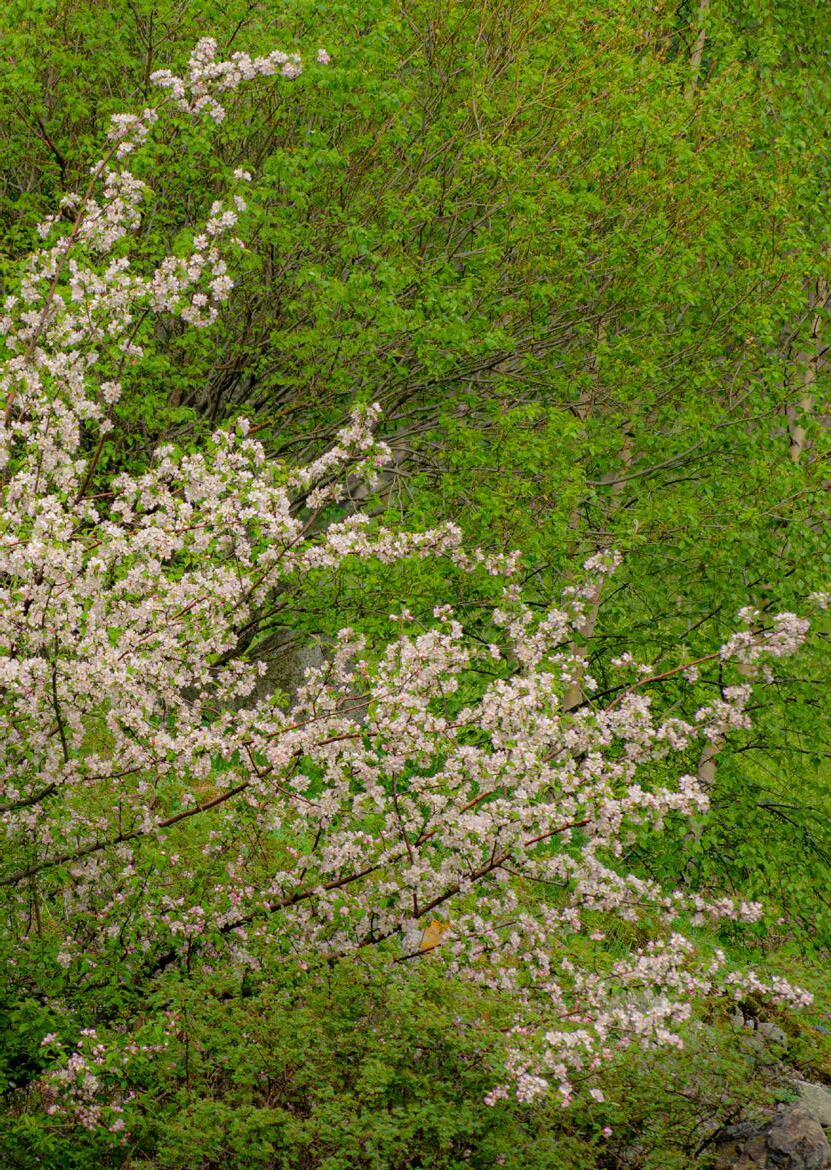
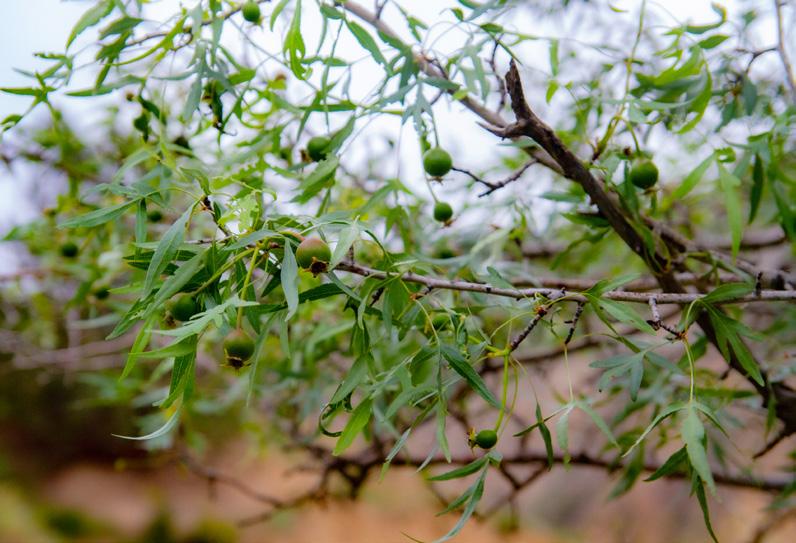
→ Sievers apple Malus sieversii
Этот фотоальбом приглашает вас в виртуальное путешествие по региону «Горы Центральной Азии», которые поражают своей красотой, богатым биологическим разнообразием, но становятся всё более уязвимыми. Благодаря выразительным и уникальным фотоснимкам альбом позволяет по-новому увидеть эти удалённые
ландшафты, пробуждая интерес и вовлечённость организаций гражданского общества, молодёжи, партнёров и доноров. Основанный на обновлённой характеристике экосистем фонда CEPF (2026), альбом отражает полевые экспедиции и работу по охране природы, включая взаимодействие с общинами. Фотографии рассказывают историю о природе и людях, которые живут с ней и защищают её.
От хрупких экосистем и уникальных и находящихся под угрозой видов — до мигрирующих диких животных и экологических коридоров, обеспечивающих связность природных территорий, — альбом раскрывает разнообразие жизни, вплетённое в эти горные ландшафты, и напоминает, почему их защита сегодня важна как никогда.
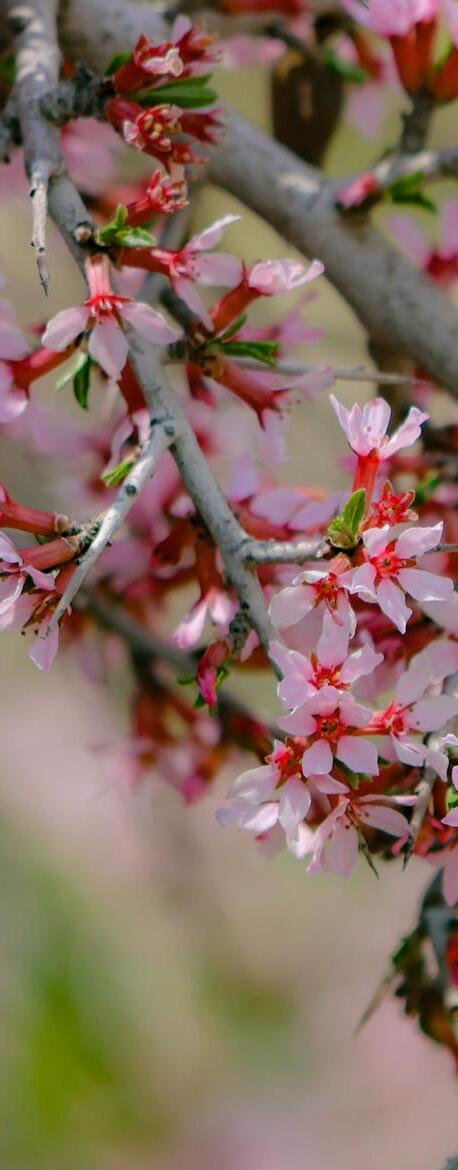
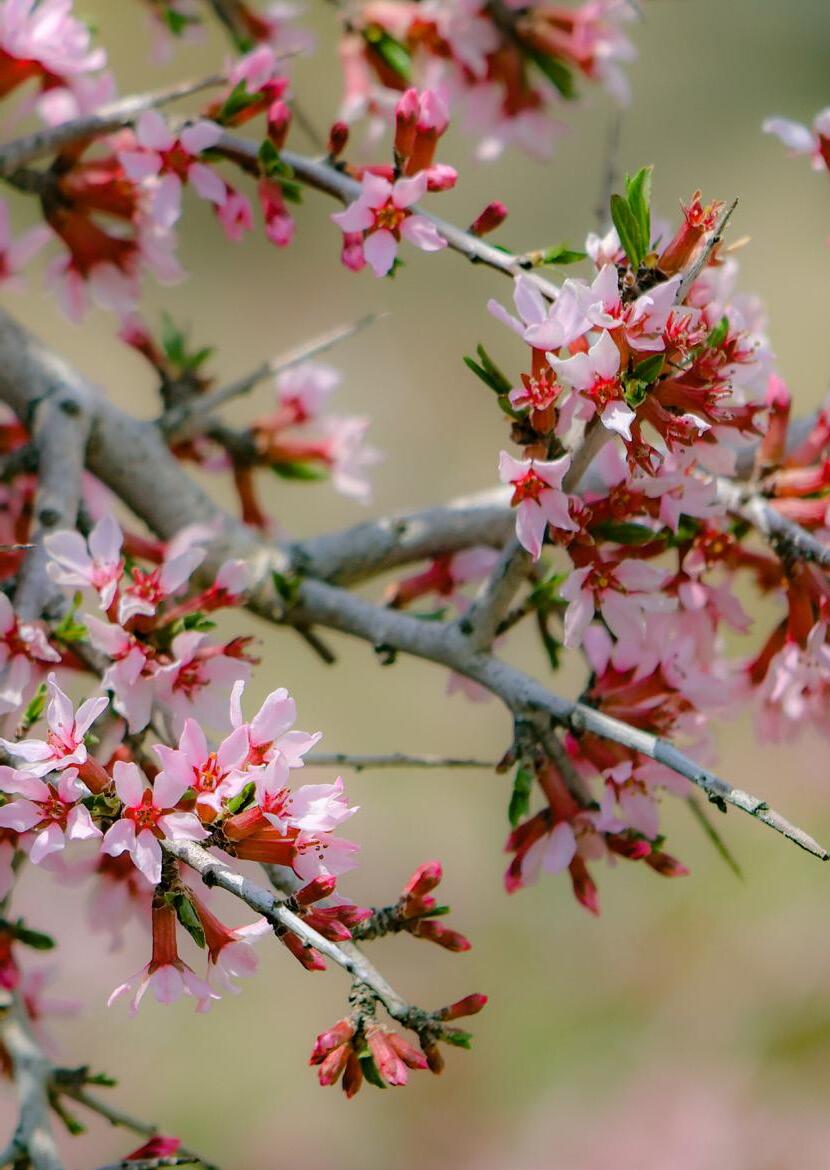
→ Bukhara almond Prunus bucharica
Ala-Archa State Nature Park, Kyrgyzstan—alpine gorges, glaciers, and forests
BIODIVERSITY HOTSPOT: MOUNTAINS OF CENTRAL ASIA
ЛАНДШАФТЫ ГОР ЦЕНТРАЛЬНОЙ
The Critical Ecosystem Partnership Fund (CEPF) safeguards the world’s biologically richest and most threatened regions, known as biodiversity hotspots. Thirty-six biodiversity hotspots, defined as regions that have at least 1,500 endemic plant species and have lost more than 70 percent of their original vegetation, have been identified globally. One of these hotspots is the Mountains of Central Asia, a global priority for conservation and the important centre of origin of domestic fruits and nuts , and several other agricultural crops.
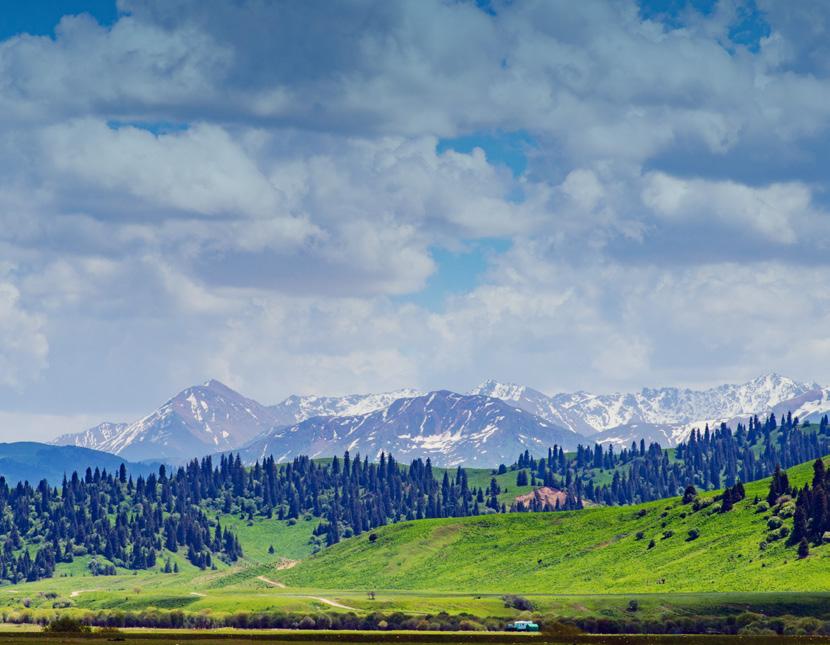
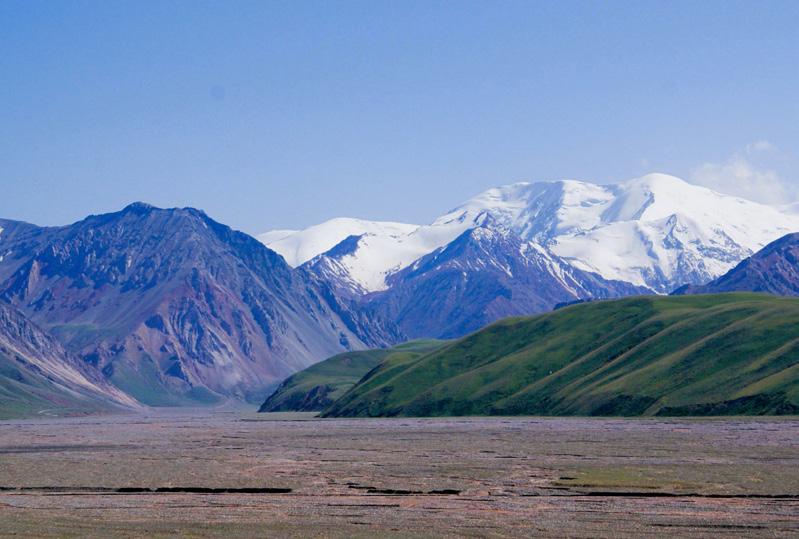
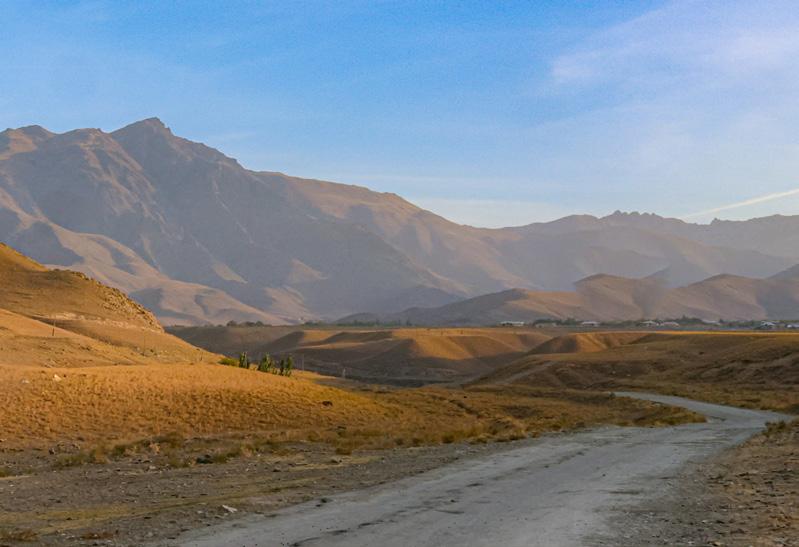
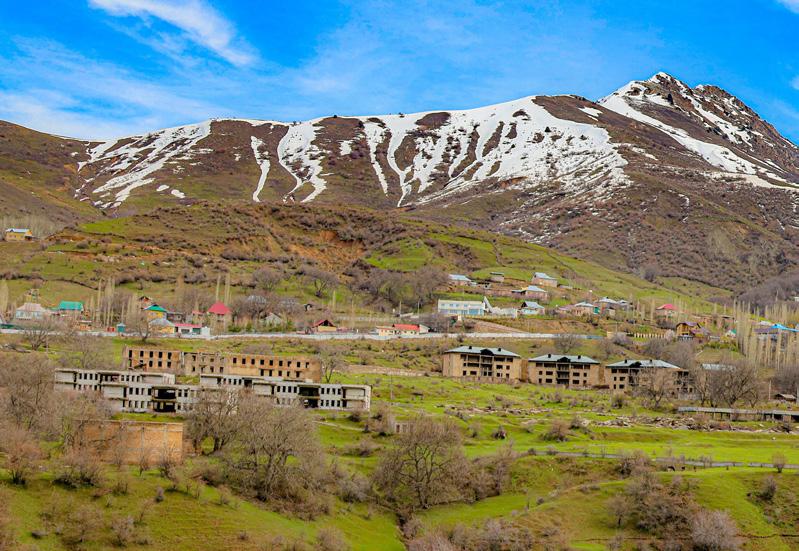
This hotspot includes two of Asia’s major mountain systems—the Pamir and the Tien Shan. Covering about 860,000 square kilometers, it spans parts of seven countries: southeastern Kazakhstan, most of Kyrgyzstan and Tajikistan, eastern Uzbekistan, western China, northeastern Afghanistan, and a small mountainous area of southeastern Turkmenistan.
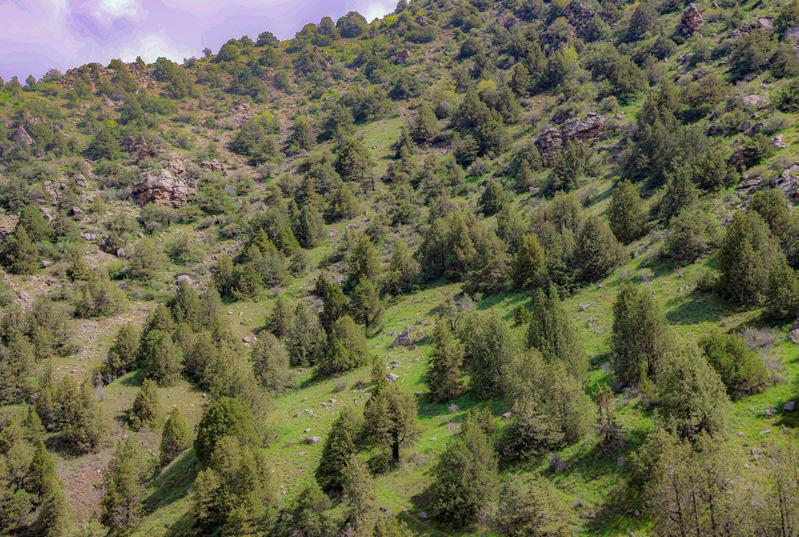
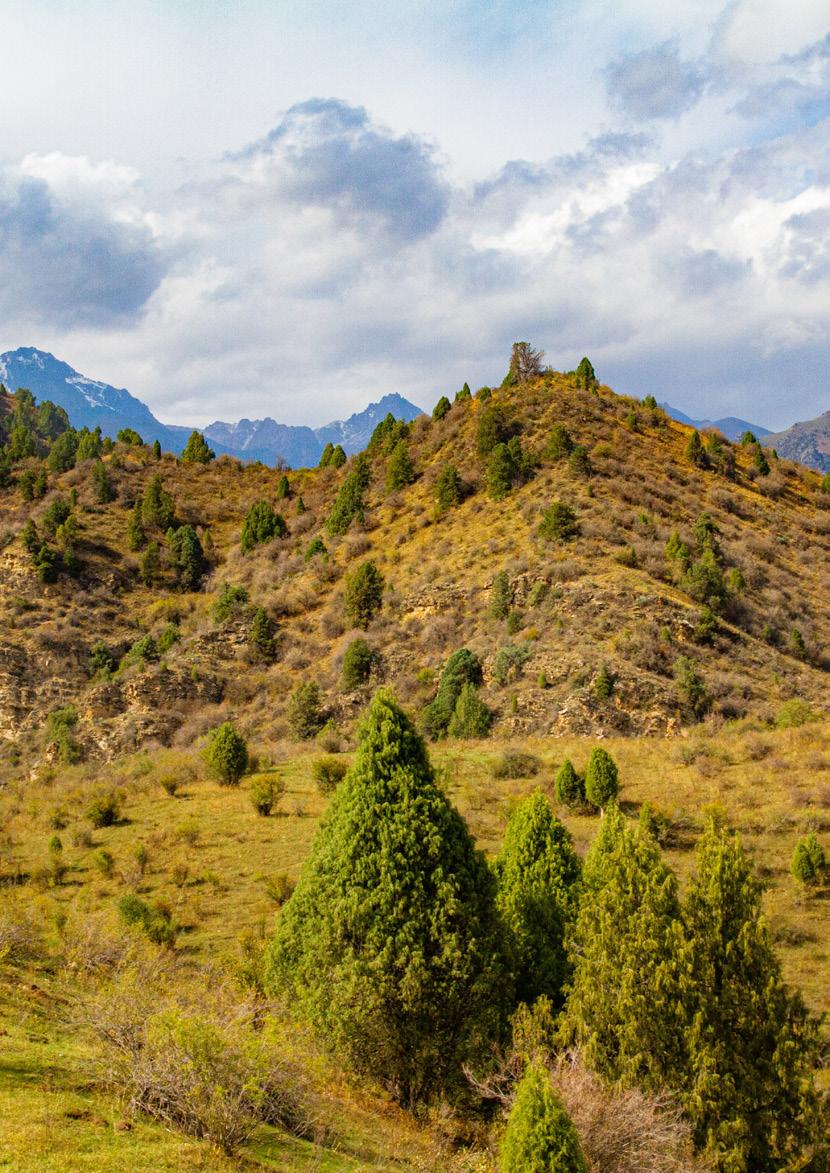
↓ Mountain juniper Juniperus spp. forest, Kyrgyzstan—ancient trees on mountain slopes
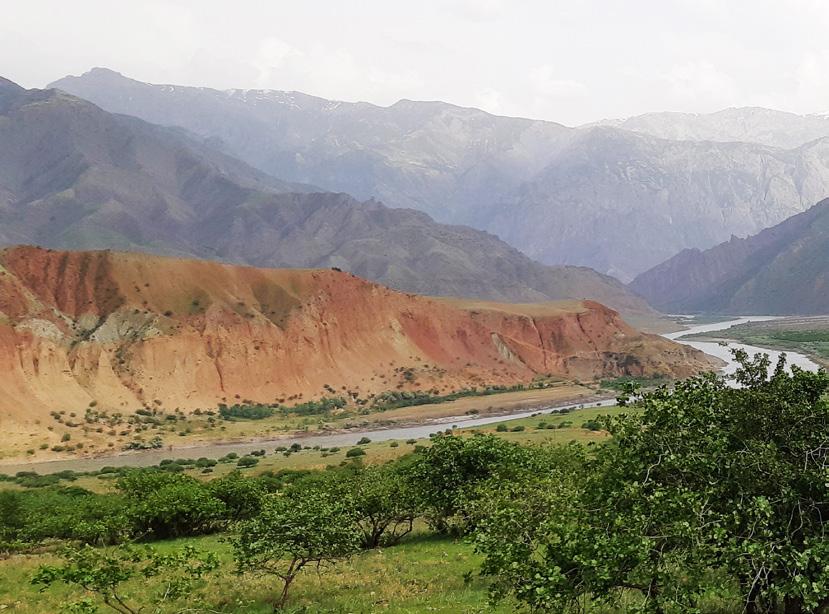
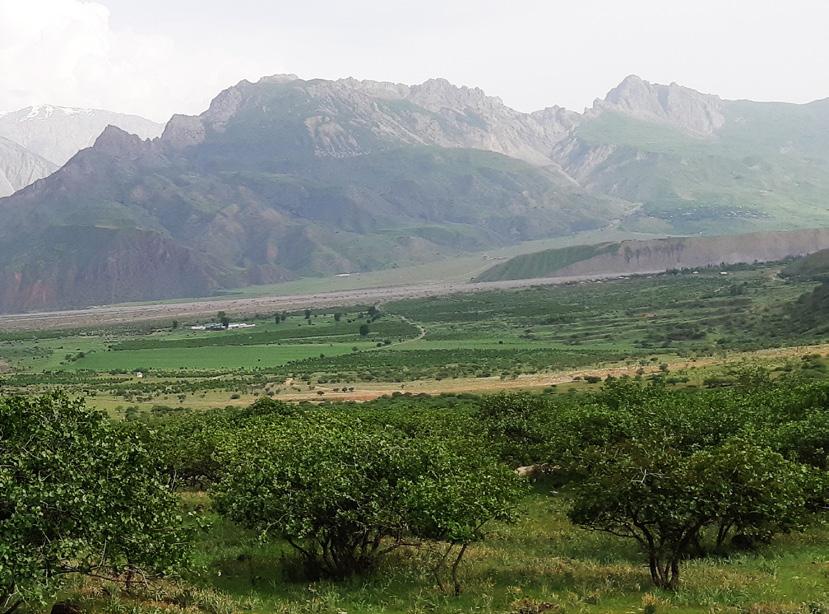
↑ Alay Valley and Kyzylsu River, Pamir-Alai, Kyrgyzstan—a vast high-altitude region spanning 3,000–7,000 m
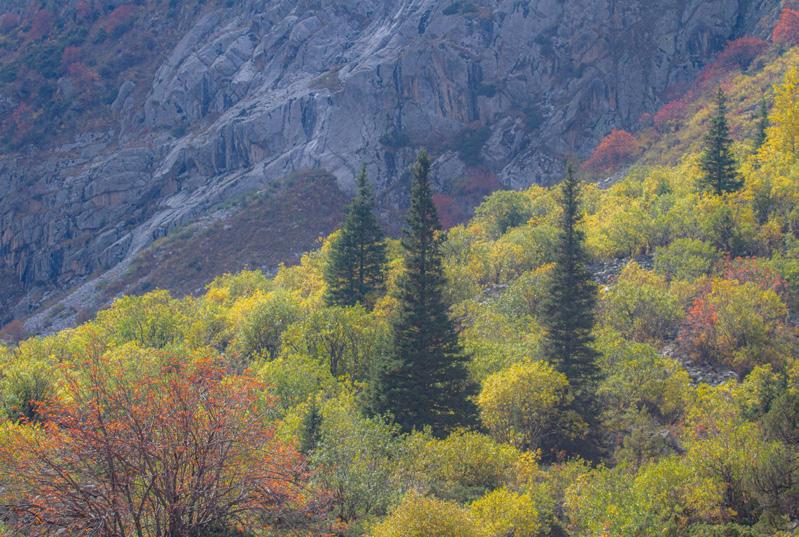
↓ Mixed forests of the Tien Shan, Kyrgyzstan—diverse conifer and broadleaf mountain forests
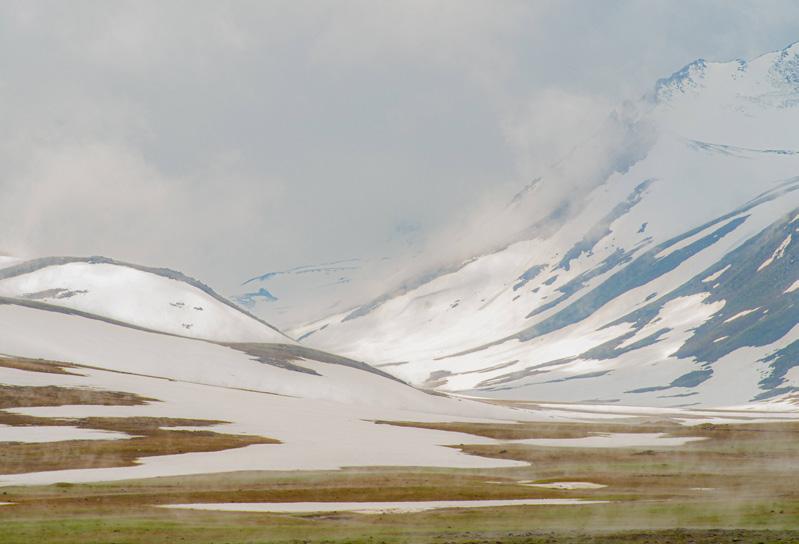
↑ High mountain zone of snow and glaciers, Kyrgyzstan • Высокогорная
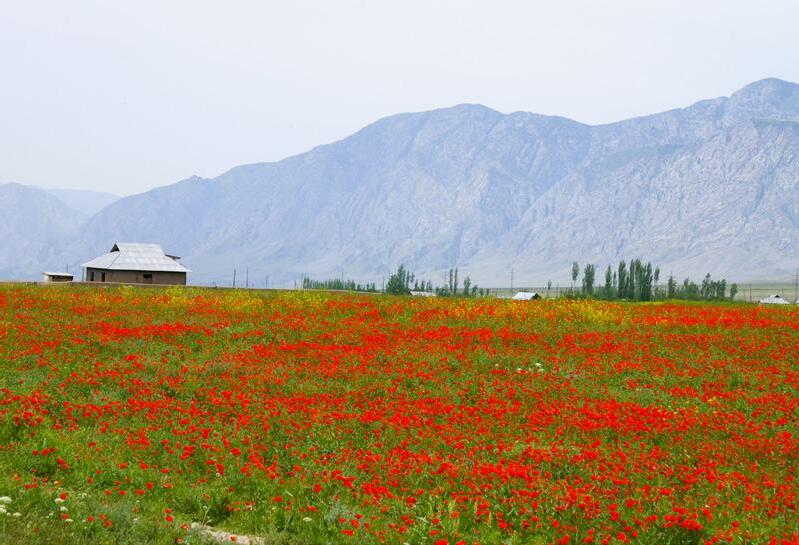
↓ Poppy field, southern Kyrgyzstan—bright spring blooms in the foothills •
«Горы Центральной
включает Памир и
занимает около 860 тыс. км² и простирается на территории семи стран: юго-восток Казахстана, большая часть Кыргызстана и Таджикистана, восток Узбекистана, запад Китая, северо-восток Афганистана, небольшая горная область на юго-востоке Туркменистана.
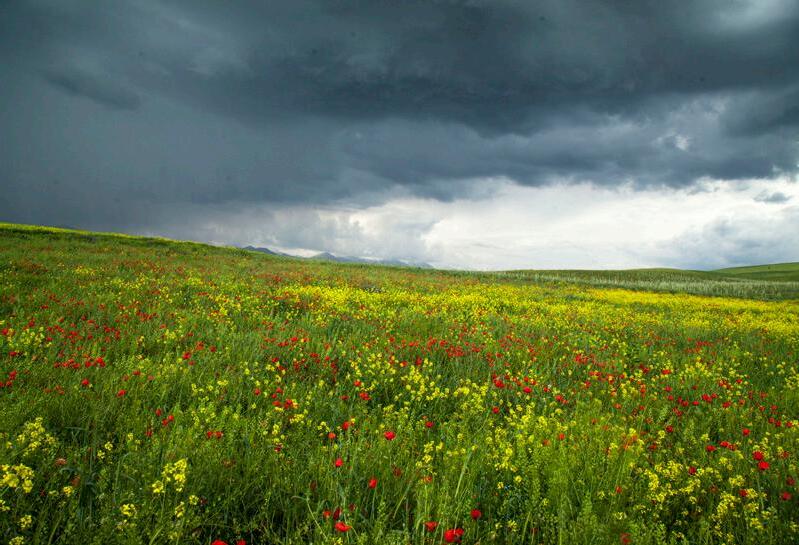
↓ Tien Shan grasslands, Kyrgyzstan—lush alpine meadows rich in plant life Пышная луговая растительность в горах Тянь-Шаня, Кыргызстан
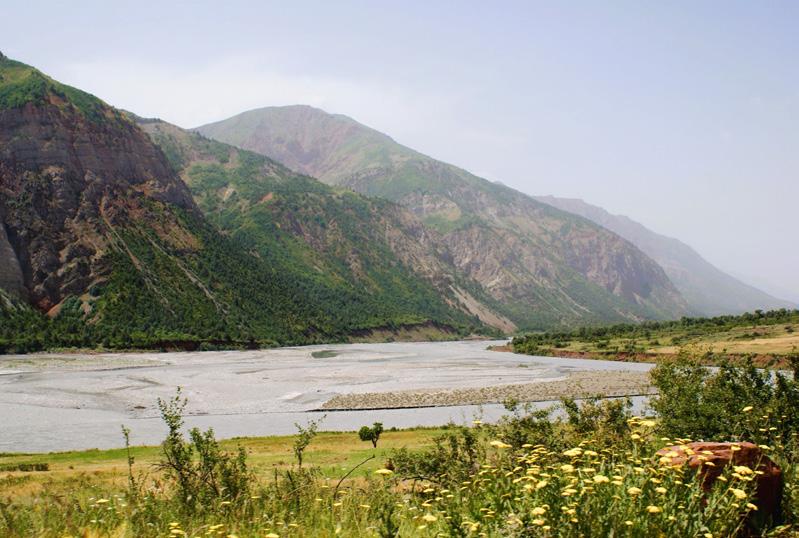
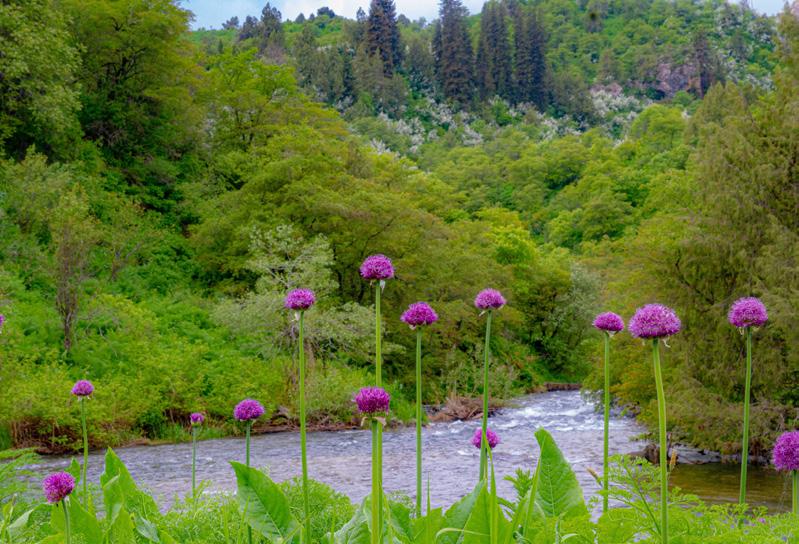
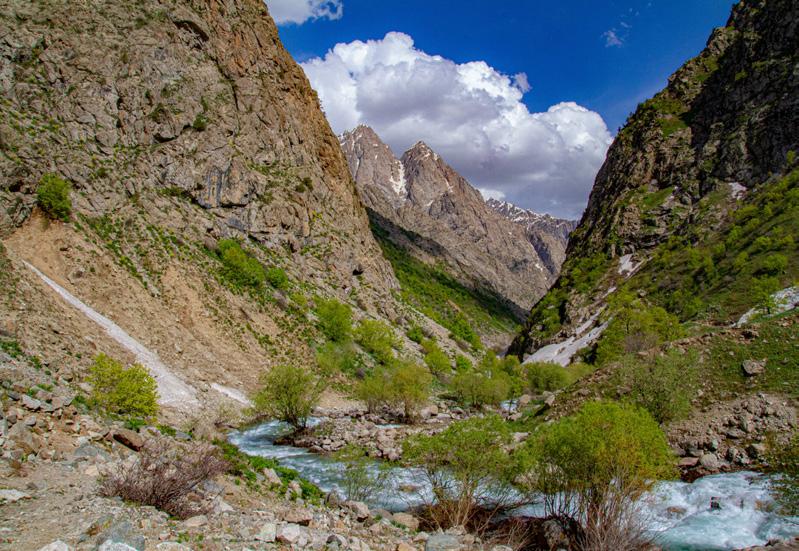
↑ Obikhingou River valley, Tajikistan—broadleaf forests and shrubs along a mountain river Долина р. Обихингоу,
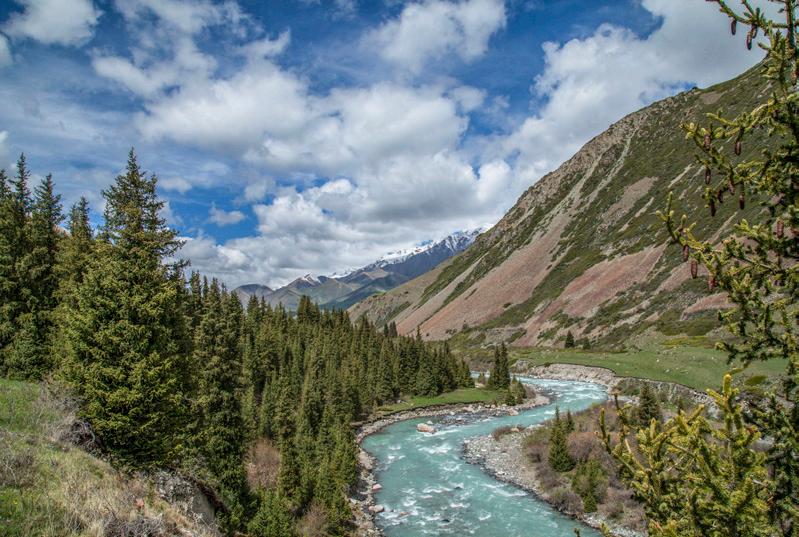
↑ Chon-Kemin River valley, Kyrgyzstan—landscapes dominated by Tien Shan spruce Picea schrenkiana
Долина р.
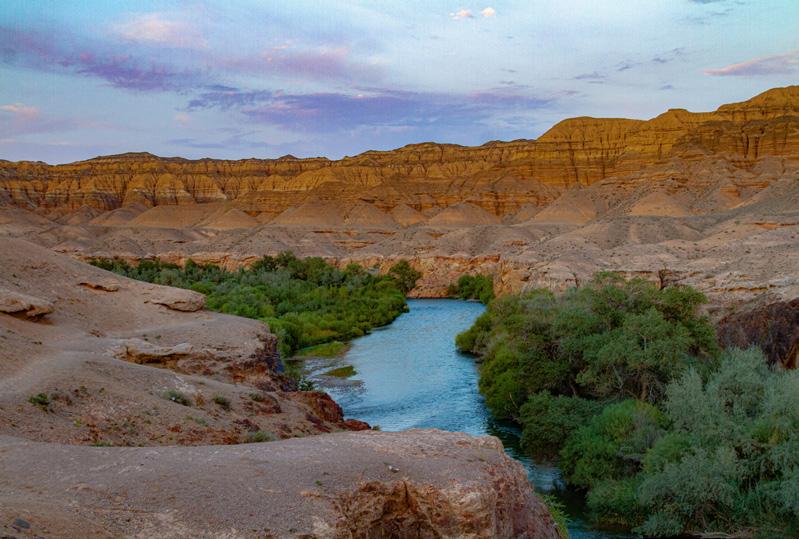
↓ Tugai vegetation, upper Charyn River, Kazakhstan
Тугайные
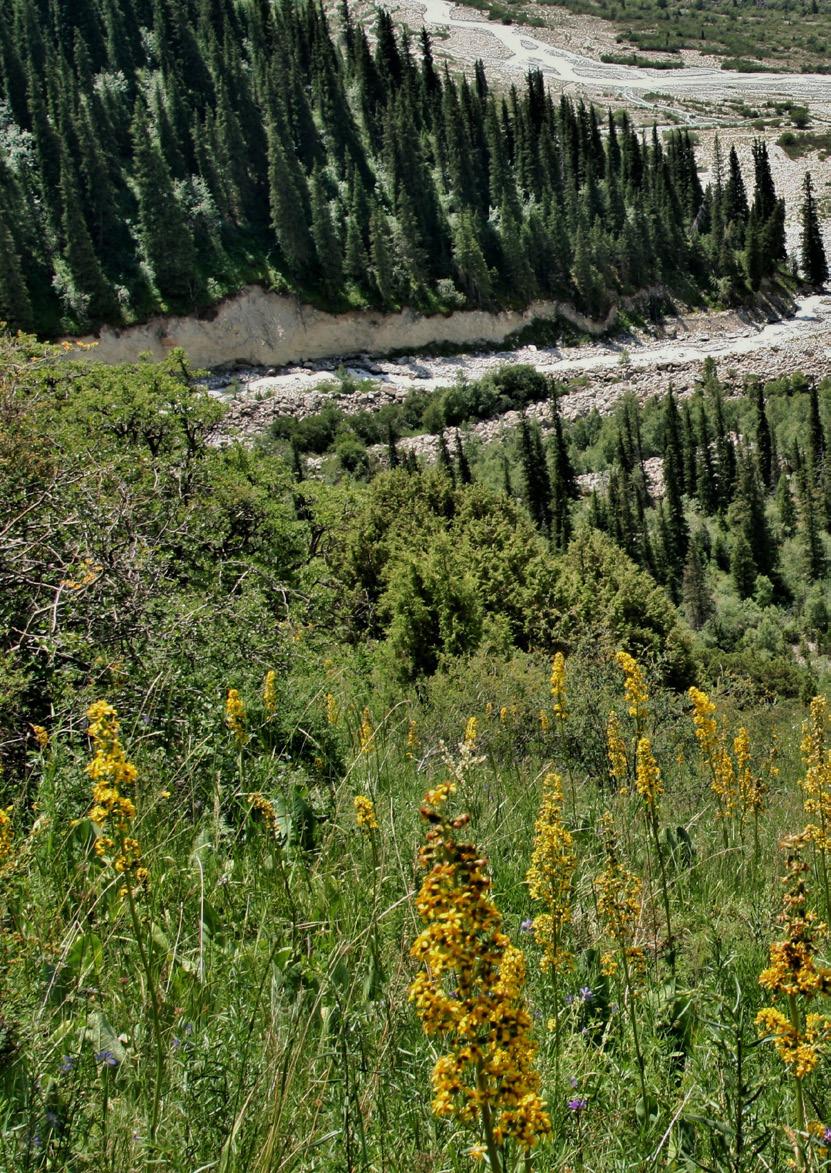
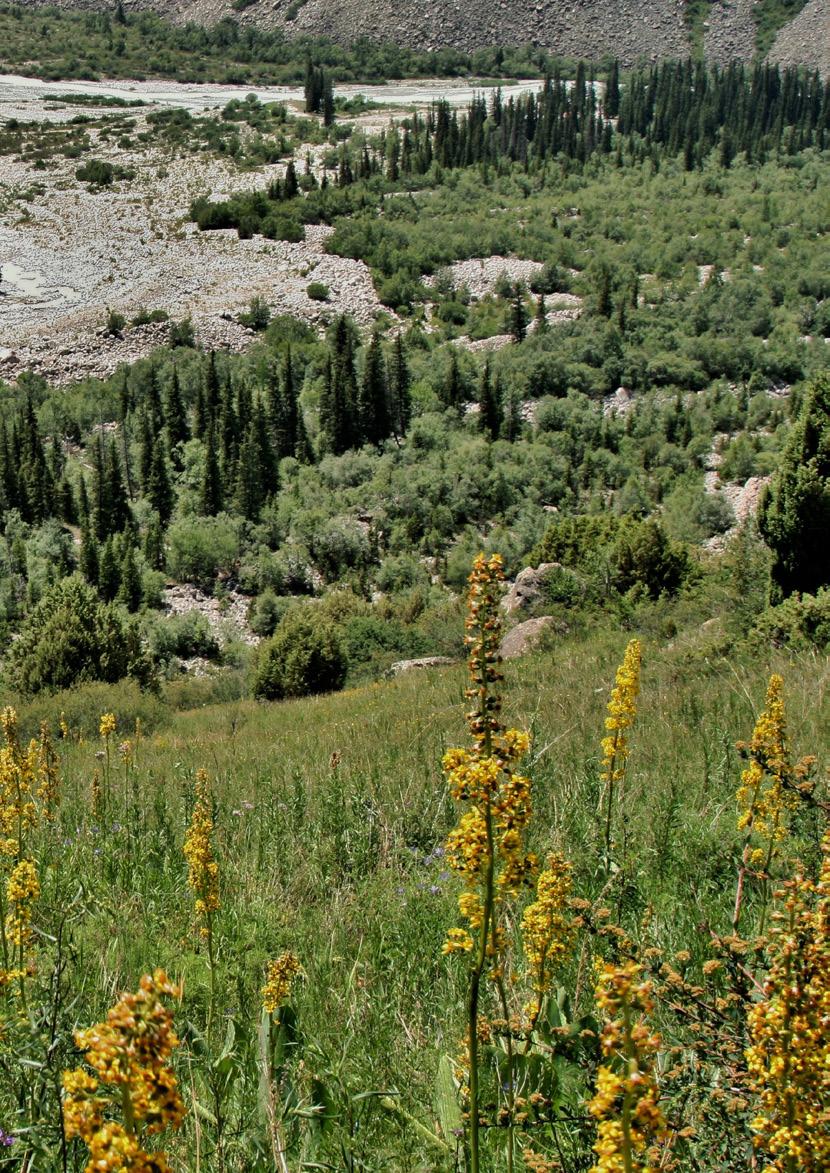
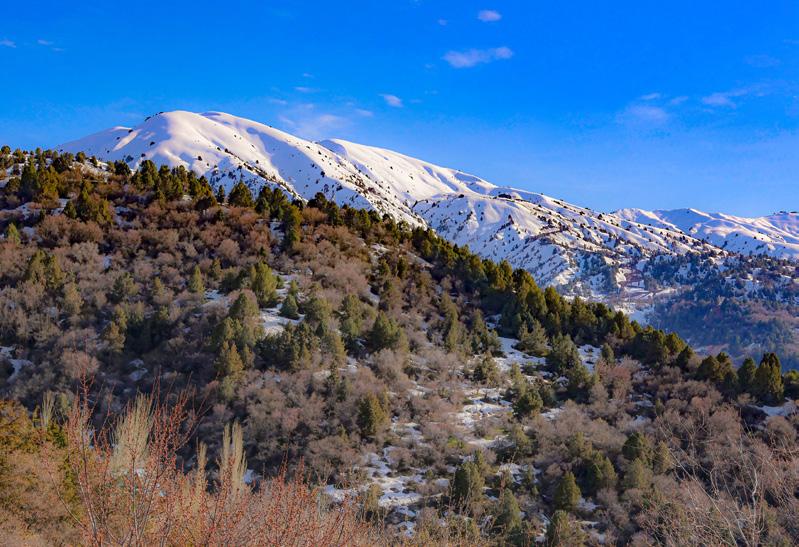
The Mountains of Central Asia stand out for their rich biodiversity amid surrounding deserts. Variations in altitude and climate create a wide range of ecosystems—from semi-deserts to evergreen and broadleaf forests, and high mountain grasslands—where diverse plant and animal life thrives.
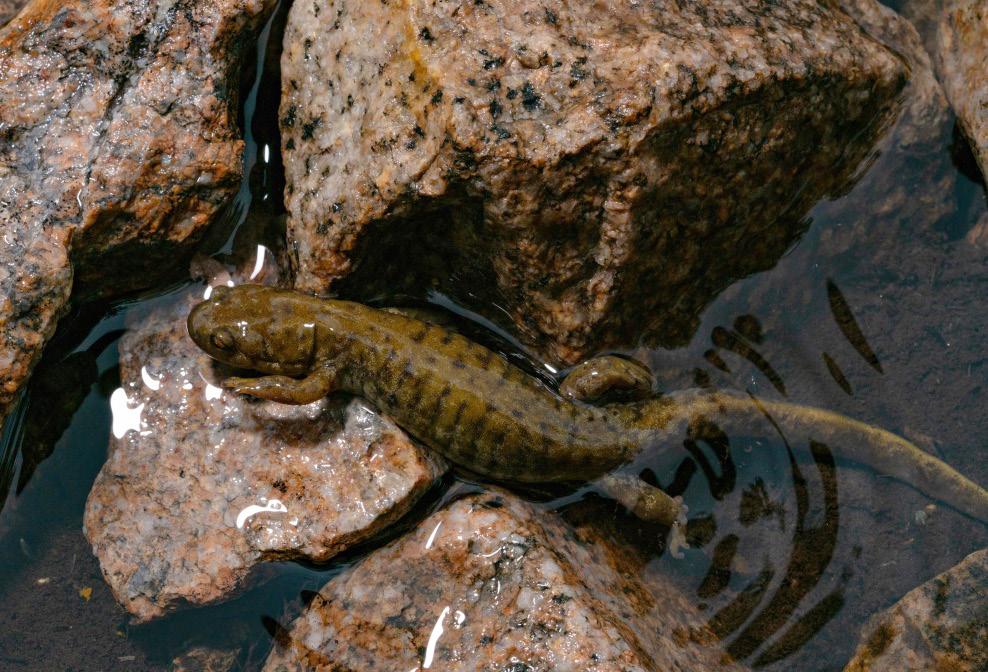
The region is home to around 1,500 endemic plant species and about 50 endemic species of mammals, reptiles, amphibians, and freshwater fish. Many of these species are found only in isolated mountains, rivers, or caves. It also hosts rare relict species that have survived since the Ice Ages. Together, these landscapes form a “living laboratory of evolution,” where species adapt to changing climates and environments.
Climate change and natural hazards are increasingly affecting both nature and people in these mountains.
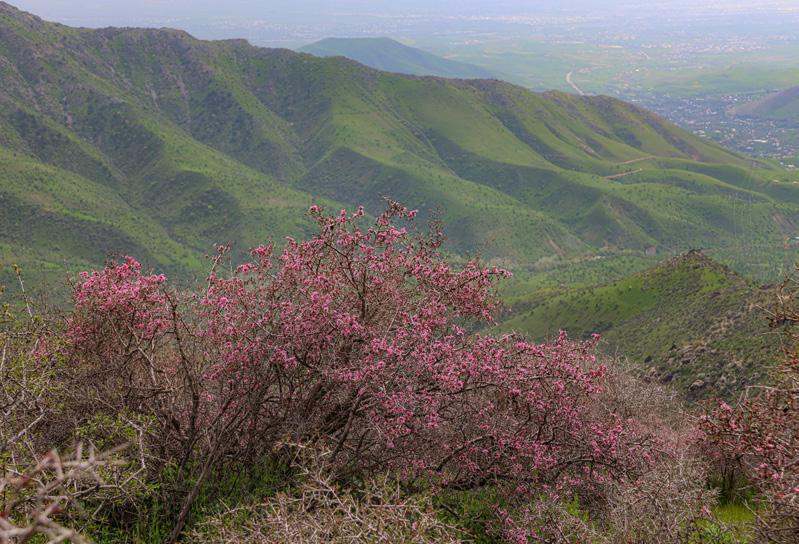
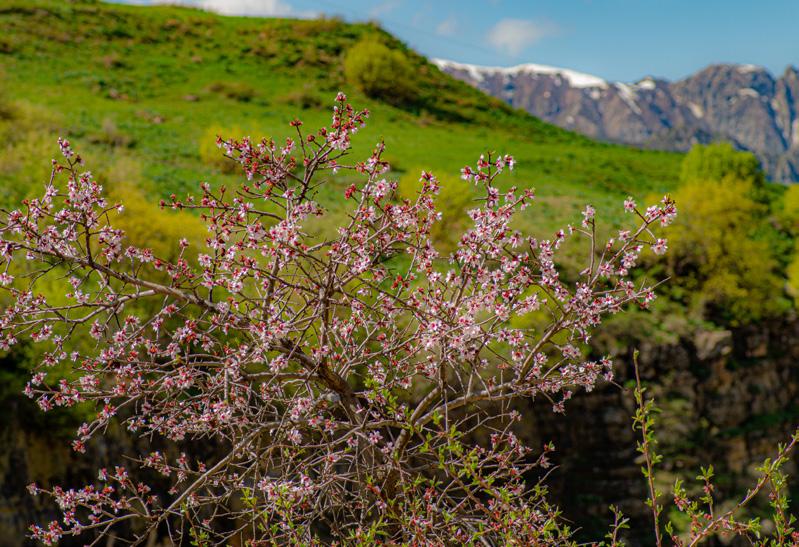
↓ Flowering almond, Zeravshan Range, Uzbekistan
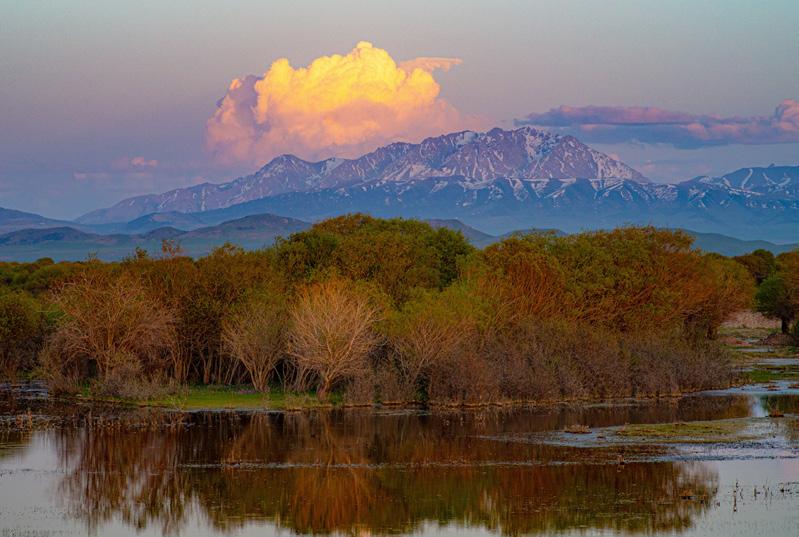
↑ Narynkol, Northern Tien Shan, Kazakhstan—remote high-mountain valleys and lakes Северный Тянь-Шань, Нарынколь,
↓ Lower Vakhsh River, Tigrovaya Balka Reserve, Tajikistan—biodiverse floodplain forests Низовья р. Вахш,
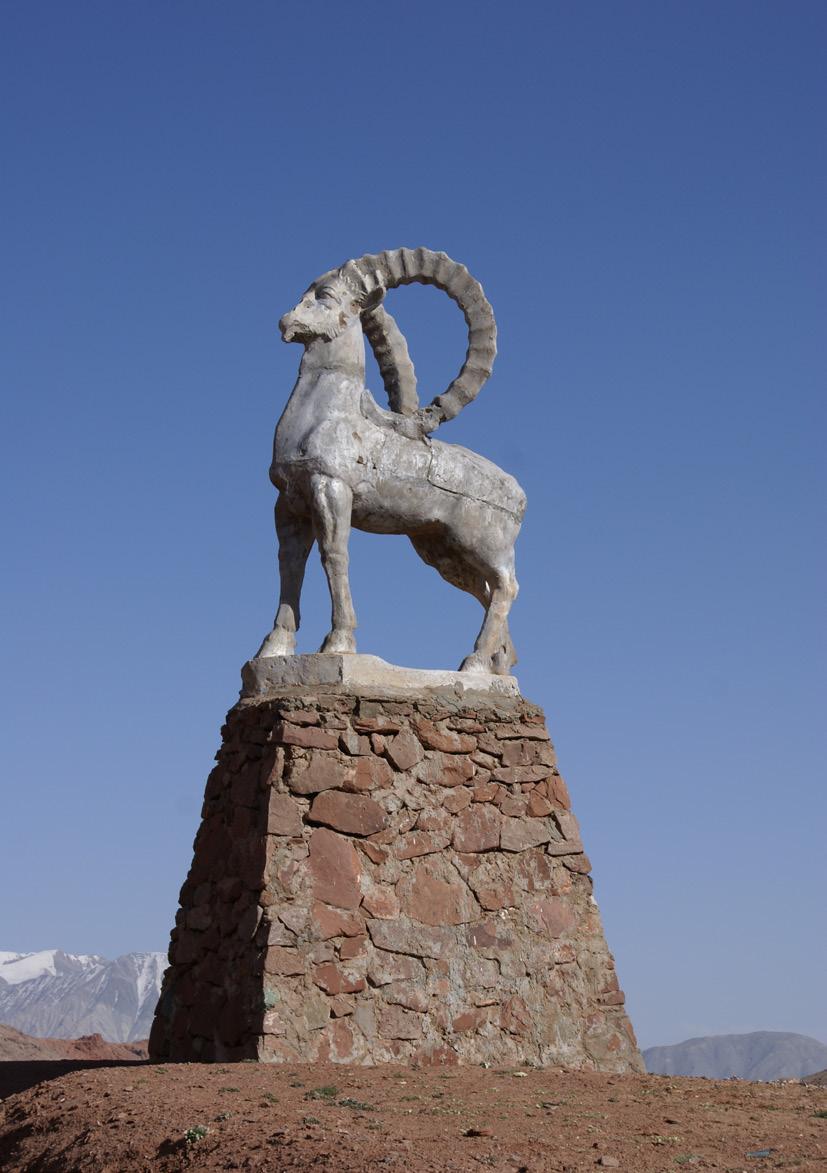
← Mountain ibex sculpture, Kyrgyzstan—symbol of mountain wildlife • Скульптура горного козерога, Кыргызстан
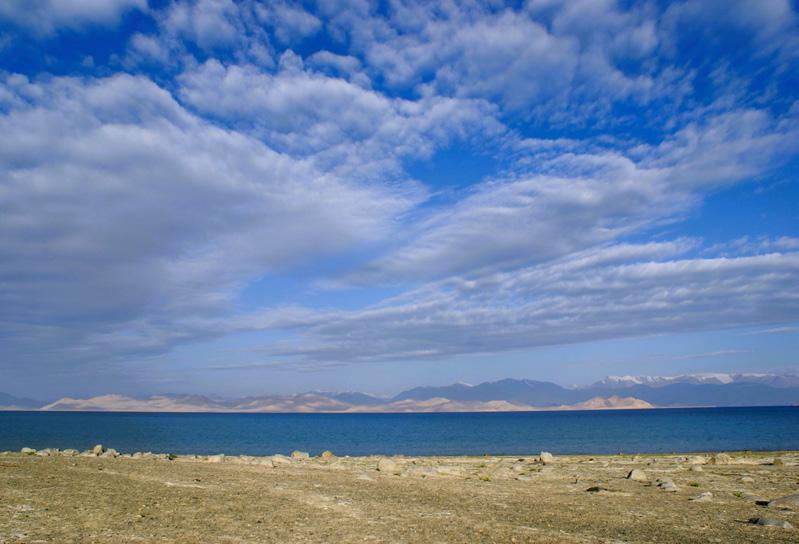
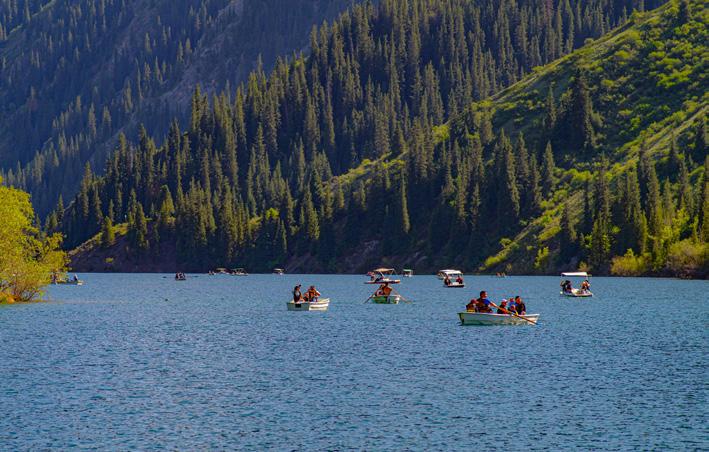
↓ Lake Karakul, Tajikistan—vast high-altitude lake among stark mountains • Высокогорное озеро Каракуль, Таджикистан
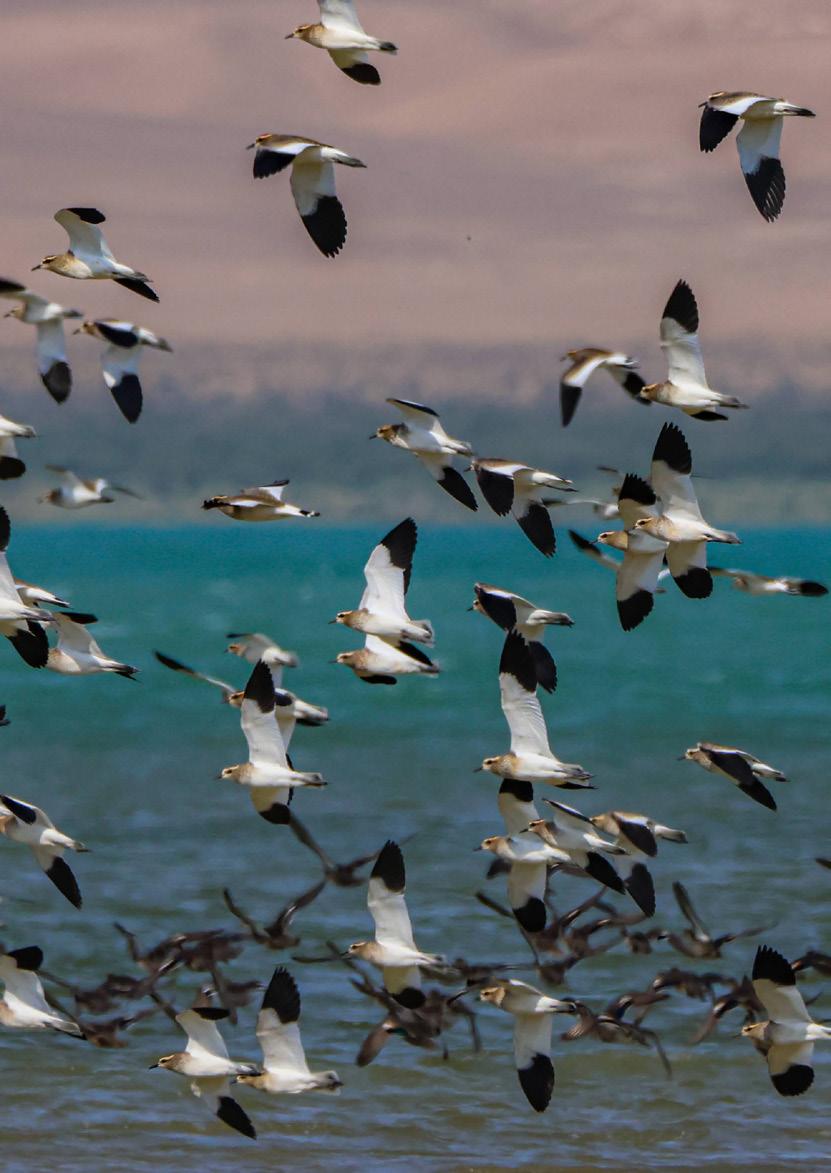
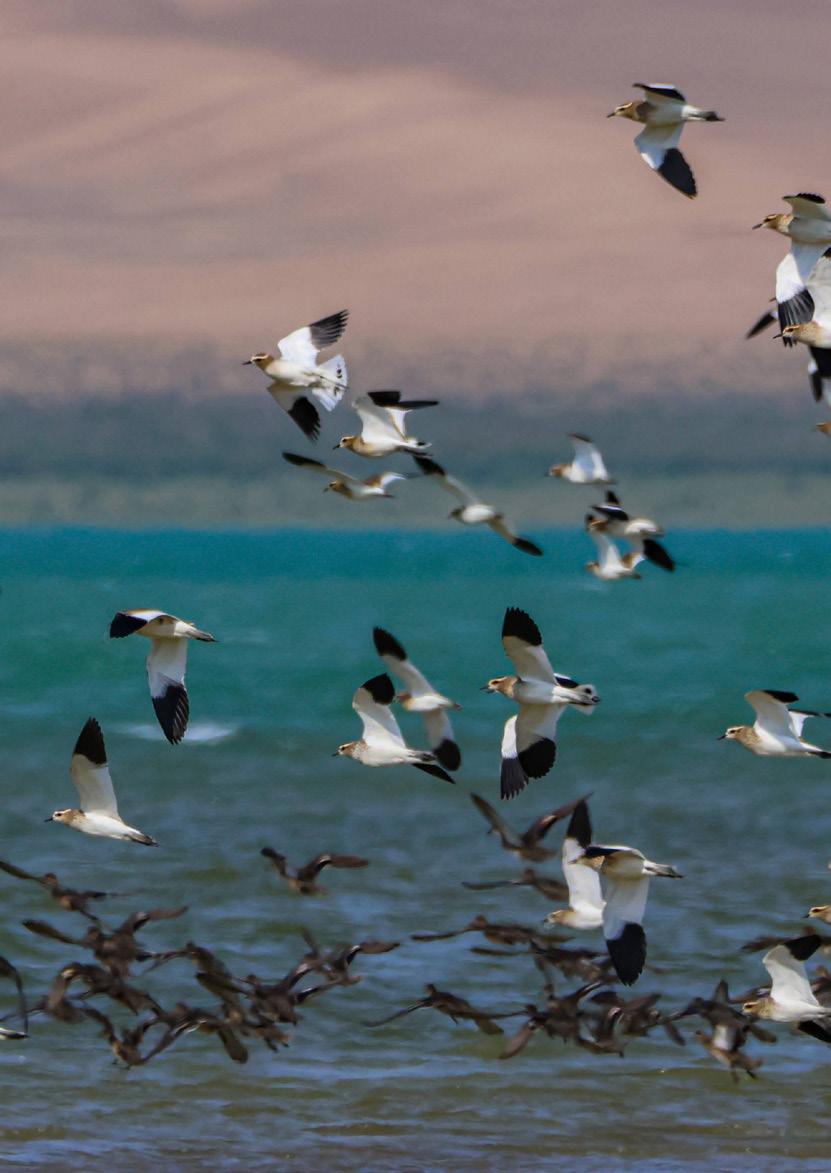
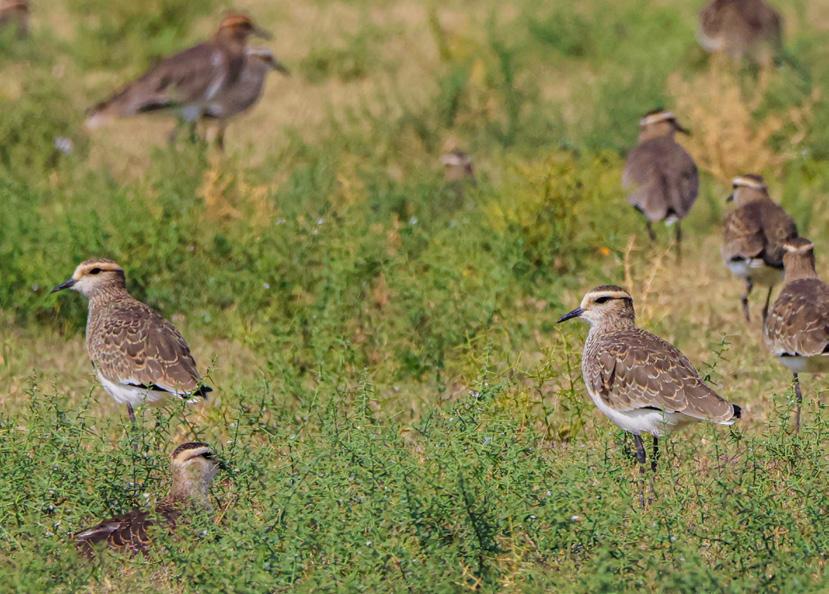
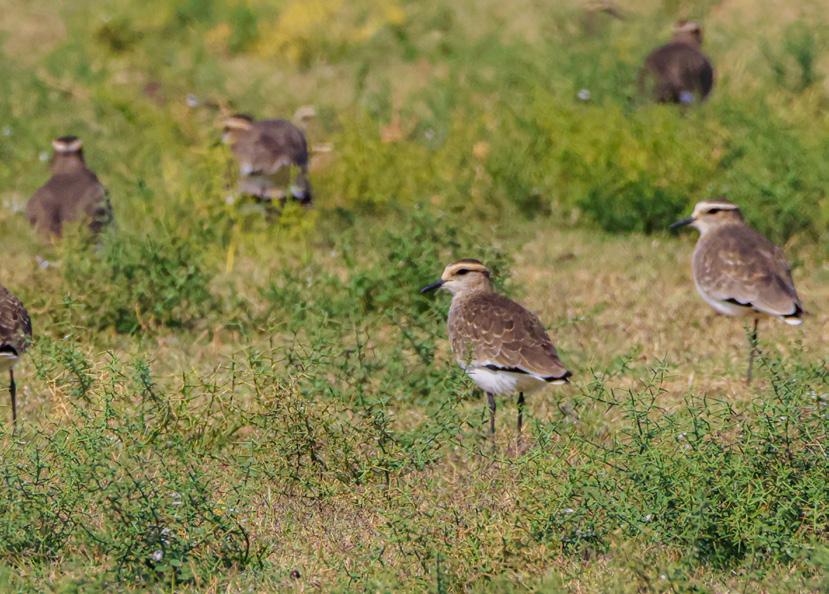
Flock of Sociable Lapwings
Vanellus gregarius, Uzbekistan
GLOBALLY THREATENED SPECIES
ВИДЫ ПОД УГРОЗОЙ НА ГЛОБАЛЬНОМ УРОВНЕ
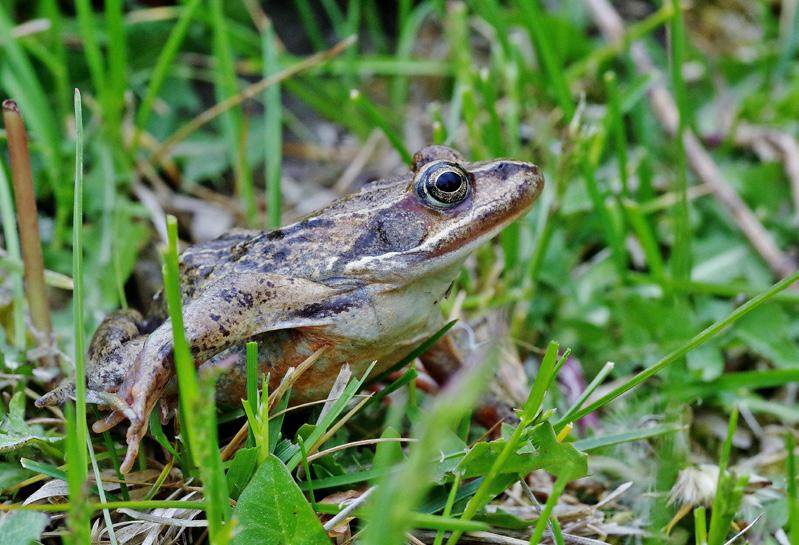
In the Mountains of Central Asia, at least 126 species are at risk of extinction, according to the International Union for Conservation of Nature (IUCN). About half are animals and half are plants—each part of a delicate balance of life in these mountains.
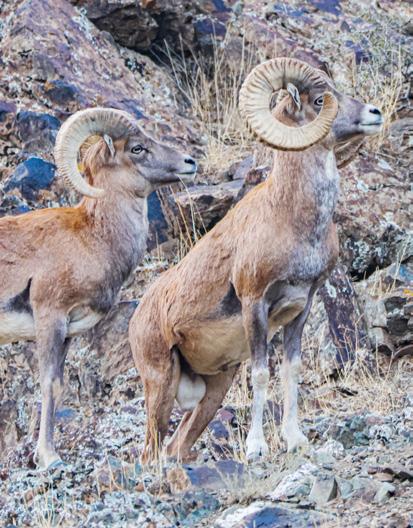
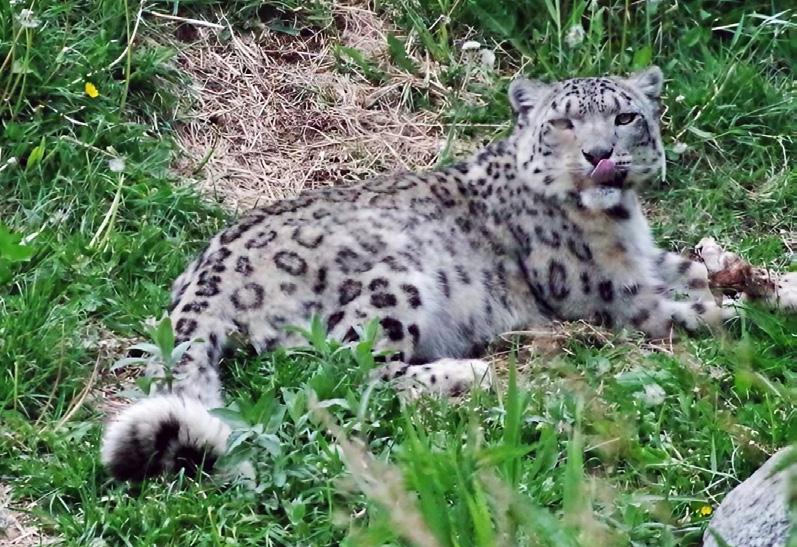
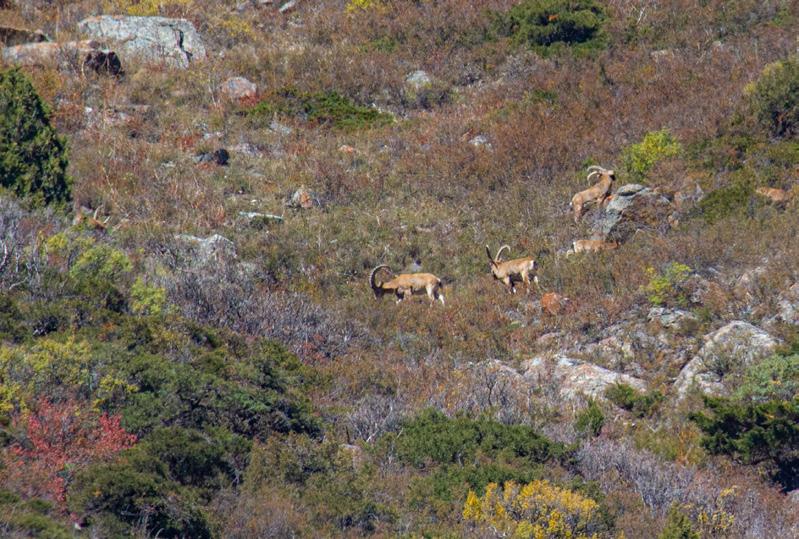
The snow leopard, one of the region’s most iconic species, has become a focus of conservation efforts. Thanks to these actions, its situation— and that of large mountain mammals like urial, argali, and markhor— has begun to improve.
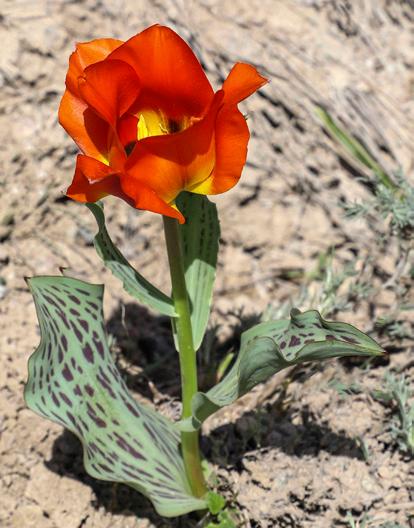
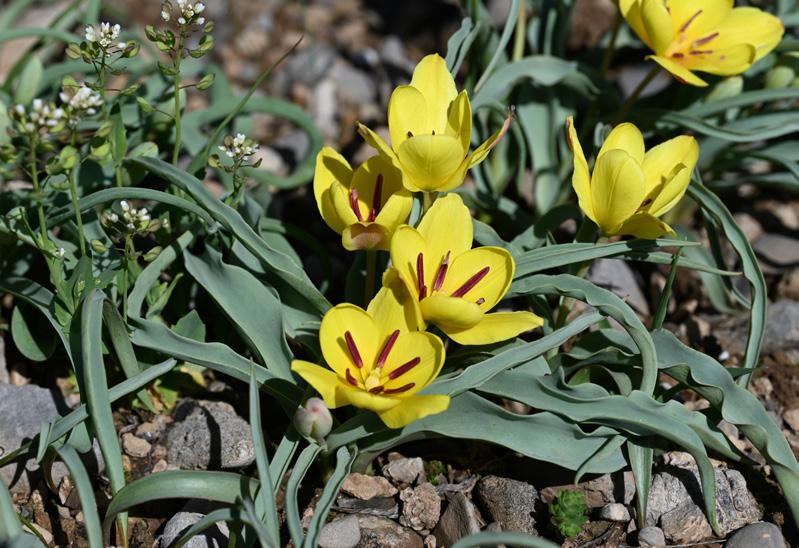
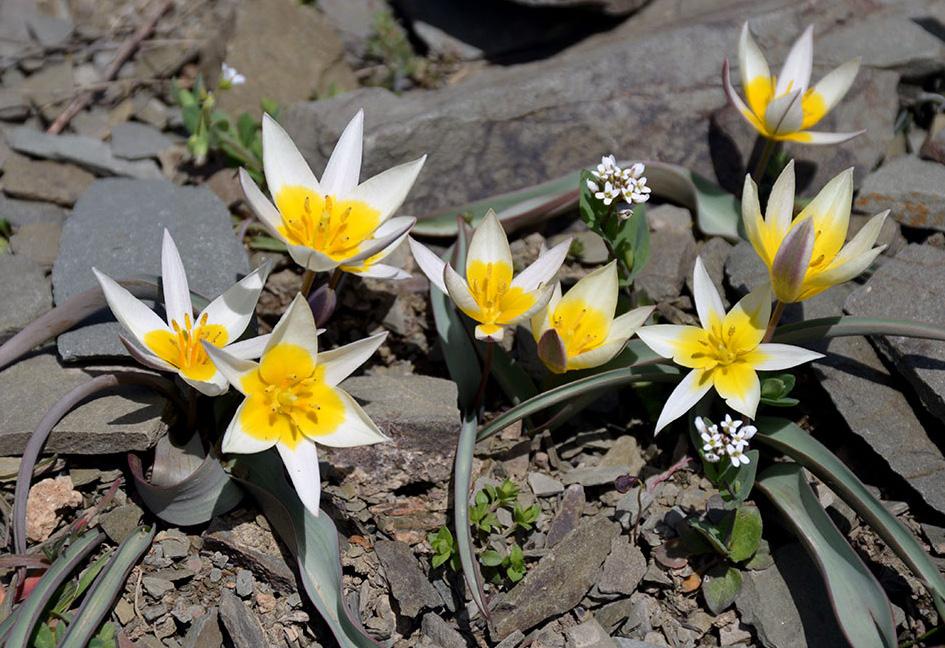
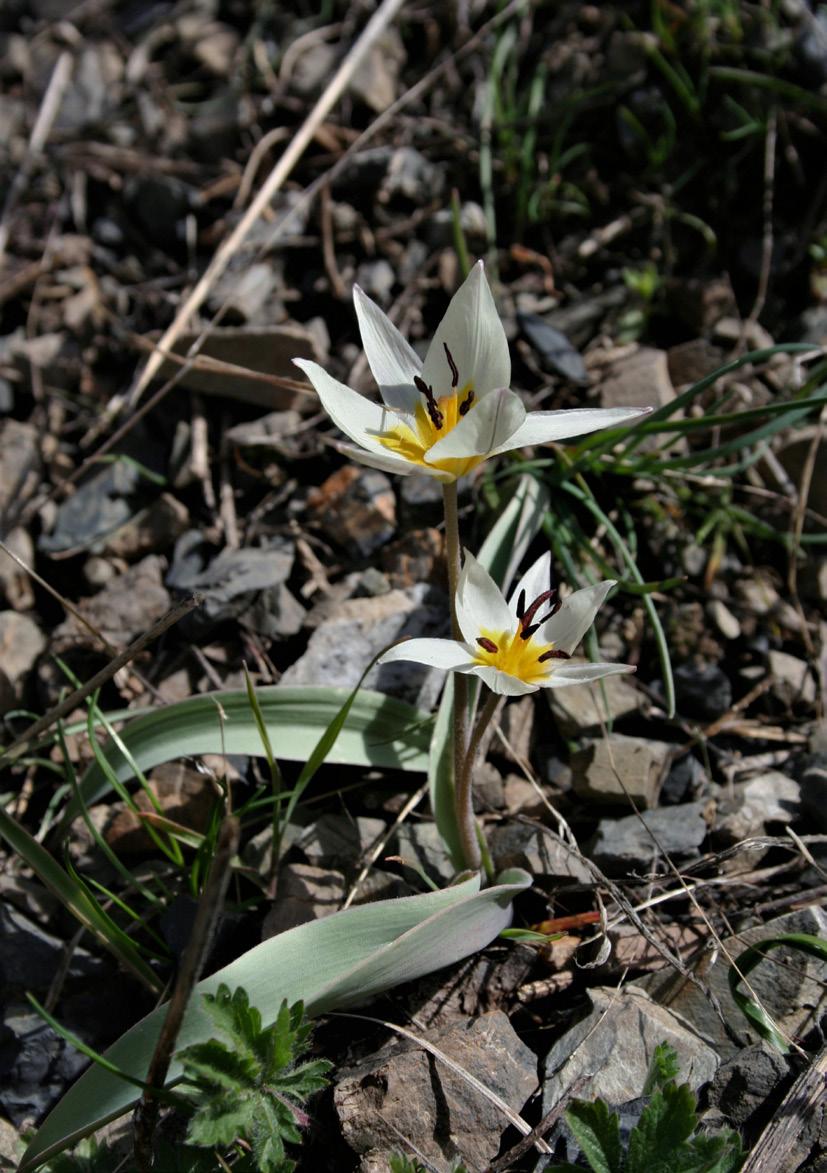
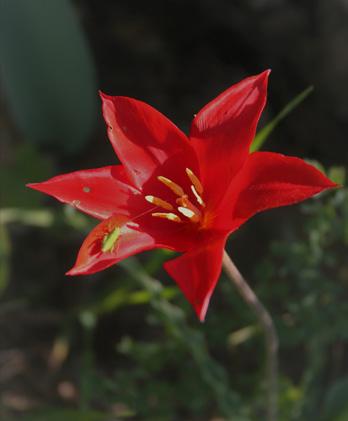
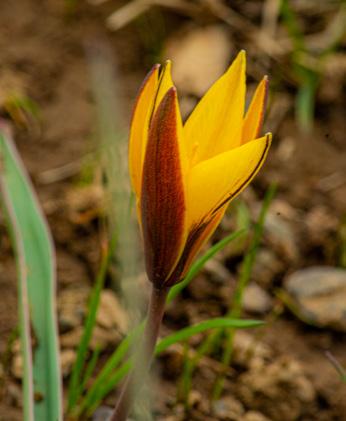
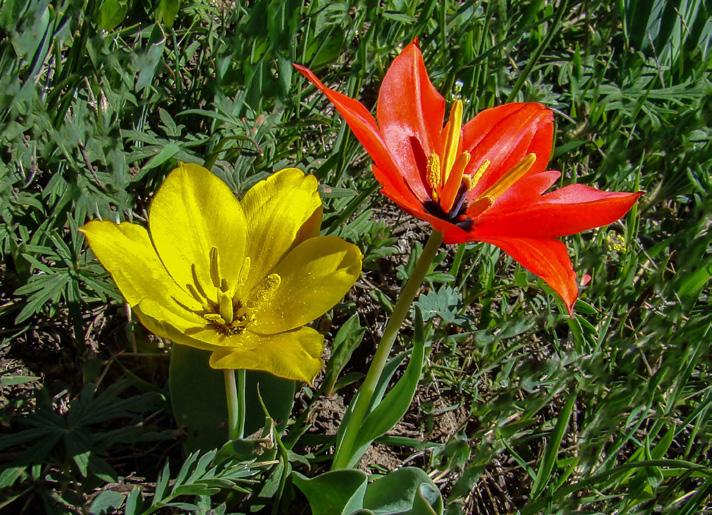
Yet many plants remain under threat. Some grow only in small, isolated places, and others are wild relatives of crops like apple, pear, and apricot. Endemic and endangered tulips, a symbol of spring in the region, are also at risk from overgrazing and collection.
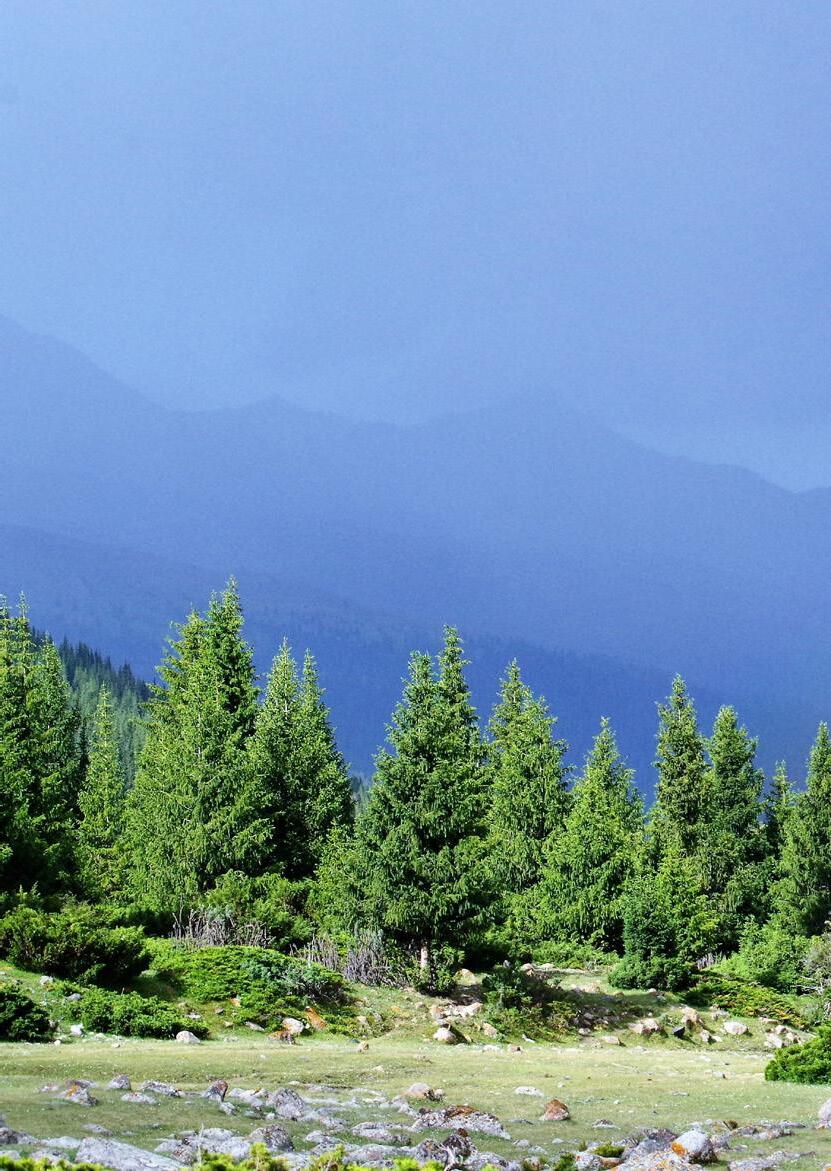
High mountain forest in Chon-Aksu (Kyrgyzstan) before a storm
Key Biodiversity Areas (KBAs) are sites that play a critical role in maintaining global biodiversity. They are identified because they support species and ecosystems that are globally threatened, limited to small areas, or otherwise irreplaceable. KBAs are selected using internationally agreed criteria and thresholds set out in the IUCN 2016 Standard. In the Mountains of Central Asia hotspot, the ecosystem profile mainly applies three criteria: A1 (globally threatened species), B1 (geographically restricted species), and D1 (large concentrations of species). There are around 170 KBAs in the hotspot, including about 150 that have been confirmed. About 50 KBAs are important for birds and mammals, while most are identified because of endemic plant species and their habitats.
Here are a few selected examples of KBAs; more detailed information is available in the CEPF ecosystem profile.
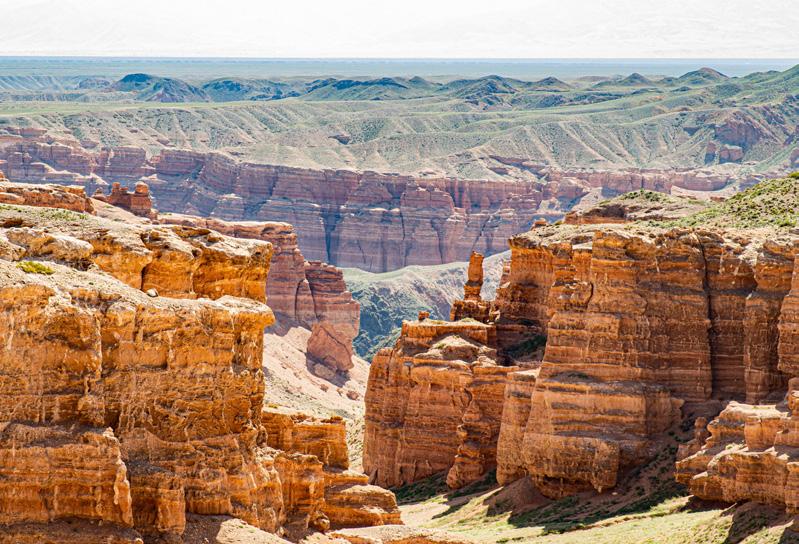
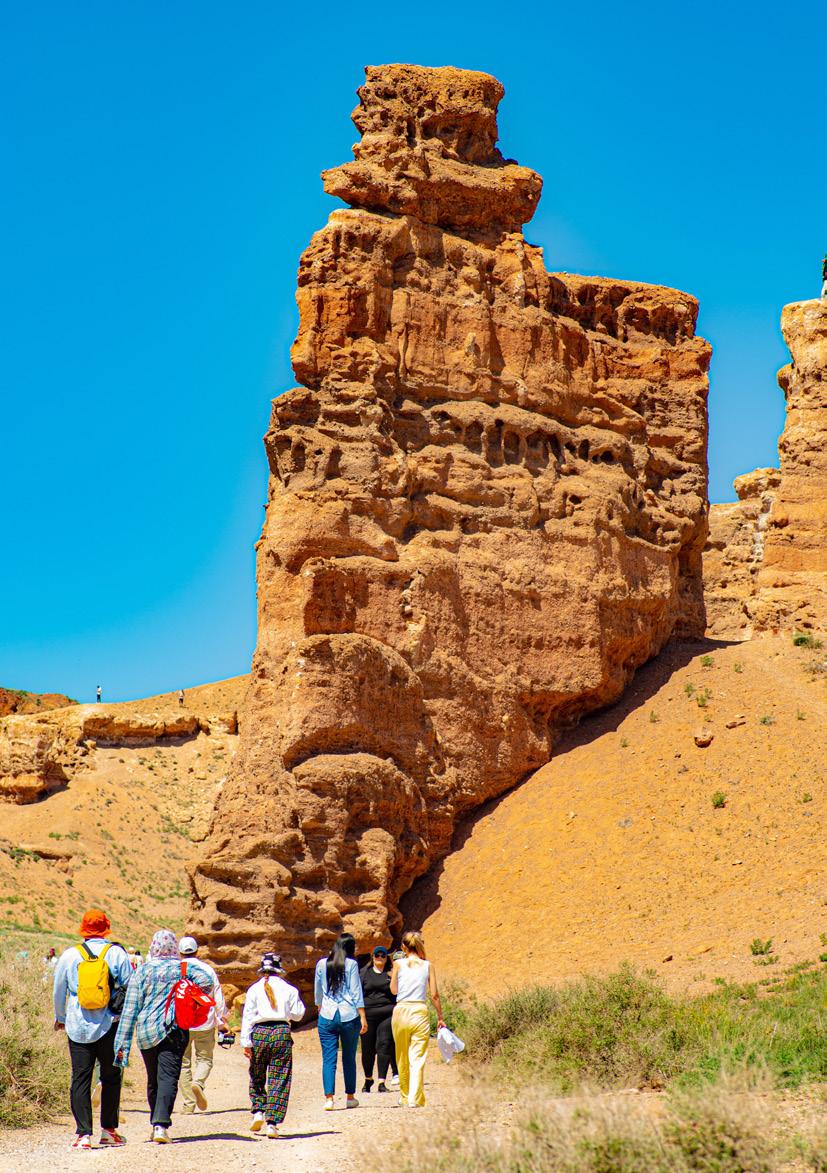
Charyn Canyon in southeastern Kazakhstan is one of the region’s most striking KBAs. Often compared to the Grand Canyon, it is known for its dramatic rock formations and rare and endemic species. The area provides important habitats for birds, mammals, and plants adapted to arid climate. Despite its beauty and ecological value, Charyn Canyon faces pressures from tourism and land use.
Далее представлены несколько примеров
Чарынский каньон на
в
ется важным местом обитания птиц, млекопитающих и эндемичных растений. Несмотря на свою красоту и высокую экологическую ценность, Чарынский каньон испытывает растущее давление со стороны туризма и выпаса скота.
↓ Charyn Canyon, Kazakhstan Чарынский каньон, Казахстан
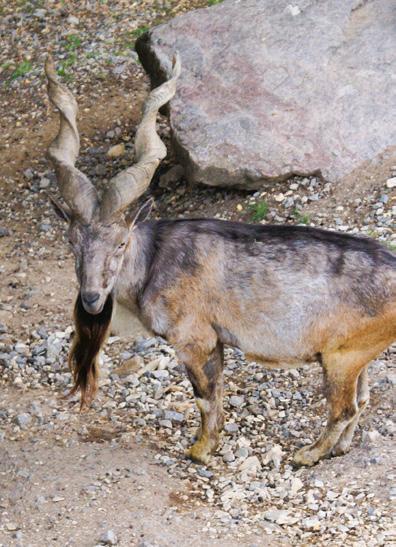
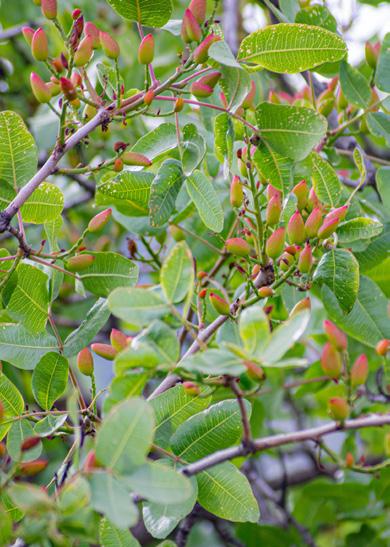
Dashtijum and Khushvoristan KBAs in southern Tajikistan, along the Afghan border, are among the country’s most striking landscapes, ranging from 700 to 3,000 meters and encompassing rugged mountains, river valleys, and intact ecosystems. The area is exceptionally rich in plants, including endemic flora and wild fruit and nut forests, especially pistachio. It is a stronghold for the markhor, whose population is among the most important in Central Asia. КРБ
← ← Markhor Capra falconeri
Мархур
← Wild pistachio Pistacia
vera—native tree of Central Asian foothills
Дикая фисташка
↓ Panj River, Dashtijum, Tajikistan—a wild river valley along the Afghan border
Панорама реки Пяндж
в районе Даштидум, Таджикистан
KBAs Kasansay and Sary-Chelek in Kyrgyzstan, located in the Western Tian Shan, combine forested slopes and river valleys, and alpine meadows, supporting rich biodiversity, including many endemic plants and rare wildlife. Kasansay is known for its plant diversity and riparian forests along the Kasansay River. However, mining in the valley poses growing risks. Nearby Sary-Chelek Nature Reserve is one of the best-preserved areas in the region, famous for its mountain lakes and walnut-fruit forests.
КРБ «Каcан-Cай» и «Сары-Челек» в Кыргызстане, расположенные
в Западном Тянь-Шане, объединяют лесистые склоны, речные долины
и альпийские луга, формируя богатое биоразнообразие с множеством эндемиков и редкой фауны. Каcан-Cай выделяется разноо-
бразием флоры и прибрежными лесами вдоль одноимённой реки.
В то же время горная добыча в долине создаёт растущую угрозу для уязвимых экосистем. Заповедник Сары-Челек — один из наиболее хорошо сохранившихся природных участков региона, известный своими горными озёрами и орехово-плодовыми лесами.
↓ Mountain meadow in bloom—a burst of color in early summer Горный луг в пору цветения
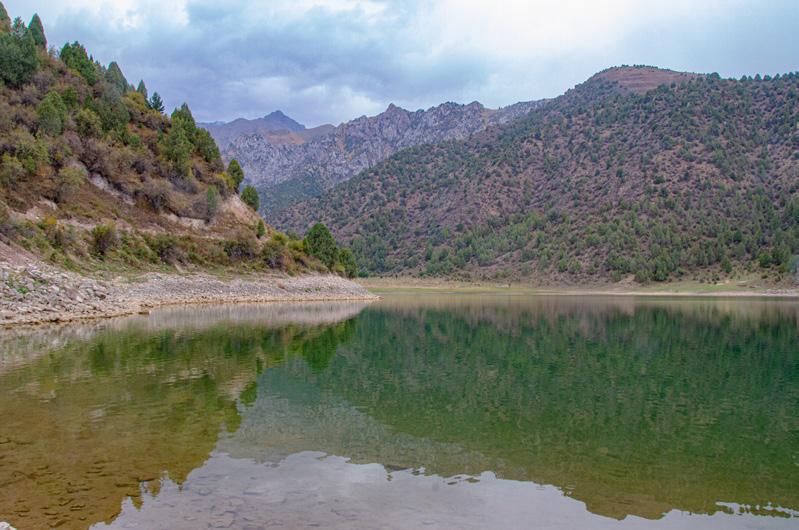
↑ Kasansay and Sary-Chelek, Kyrgyzstan—mountain lake surrounded by forested slopes
Горный
↓ Korzhinsky pear Pyrus korshinskyi—a wild ancestor of cultivated fruit trees
Груша
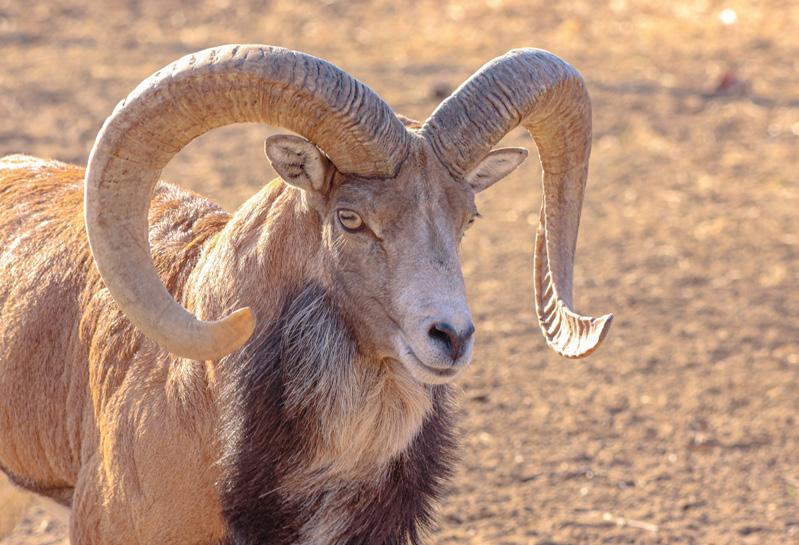
The Nuratau Mountains in Uzbekistan form a KBA at the meeting point of deserts and mountains. This transition zone creates a rich mosaic of habitats, from dry foothills to rocky slopes and mountain pastures. The area supports rare and endemic species adapted to these harsh conditions, including the endangered Severtsov’s wild sheep and diverse plants. At the same time, grazing pressure, land use change, and increasing water scarcity pose growing challenges.
Нуратау в Узбекистане представляет собой КРБ на стыке пустынь
и гор. Эта переходная зона формирует богатую мозаику мест обитаний — от засушливых предгорий до скал и горных пастбищ. Здесь
обитают редкие и эндемичные виды, включая барана Северцова,
а также разнообразные сообщества растений. В то же время на
эту экосистему влияет выпас скота, изменение землепользования
и растущий дефицит воды.
↓ Ukhum village near Nuratau Nature Reserve, Uzbekistan Посёлок Ухум на подъезде к Нуратинскому
↑ Livestock grazing near Nuratau Nature Reserve—pressure on fragile ecosystems
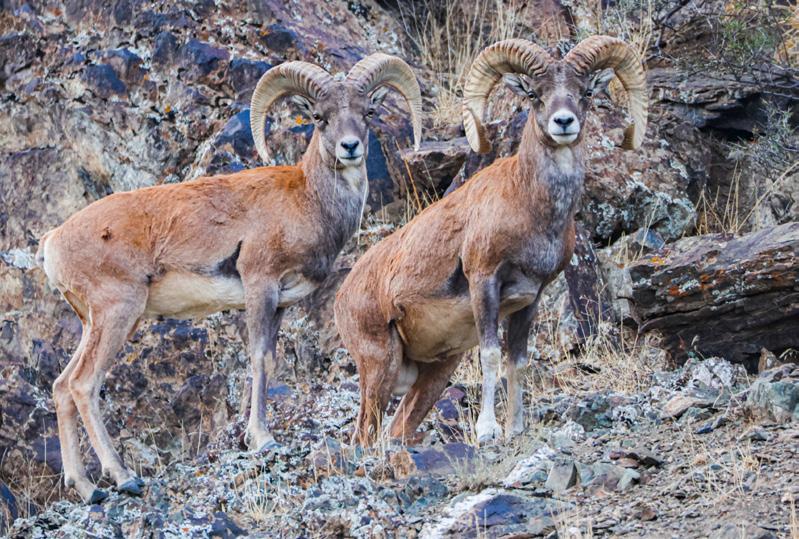
↓ Severtsov’s wild sheep Ovis ammon
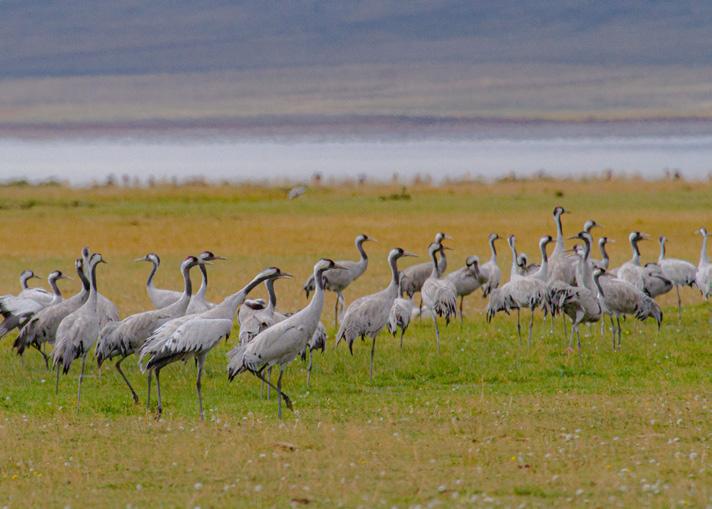
Narynkol and Tuzkol in southeastern Kazakhstan, near the border with China, are remote KBAs surrounded by high mountains. Their isolation has helped preserve largely undisturbed ecosystems. Together, they provide important habitats for many bird species and support unique mountain plants adapted to cold, dry conditions. Tuzkol is a key stopover site along the Central Asian–Indian flyway. In spring and autumn, thousands of cranes, ducks, and birds of prey gather here to rest and feed during migration.
Нарынколь и Тузколь на юго-востоке Казахстана, представляют собой высокогорные КРБ. Их удалённость способствовала сохранению нетронутых экосистем, которые служат важными местами оби-
тания для многих видов птиц и уникальных горных растений, приспособленных к холодным и засушливым условиям. Соленое озеро Тузколь является ключевым местом
пути Центральная Азия
→ Foothills between Narynkol and Tuzkol, Kazakhstan
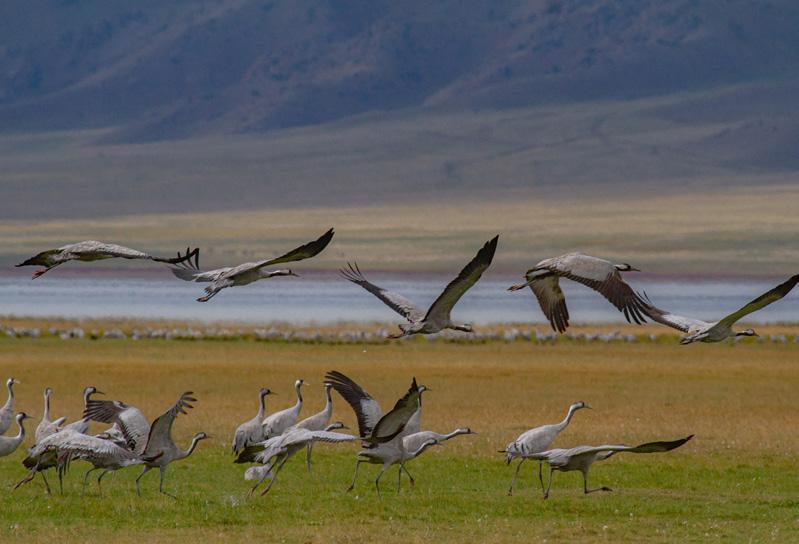
↓ Common crane Grus grus on migration
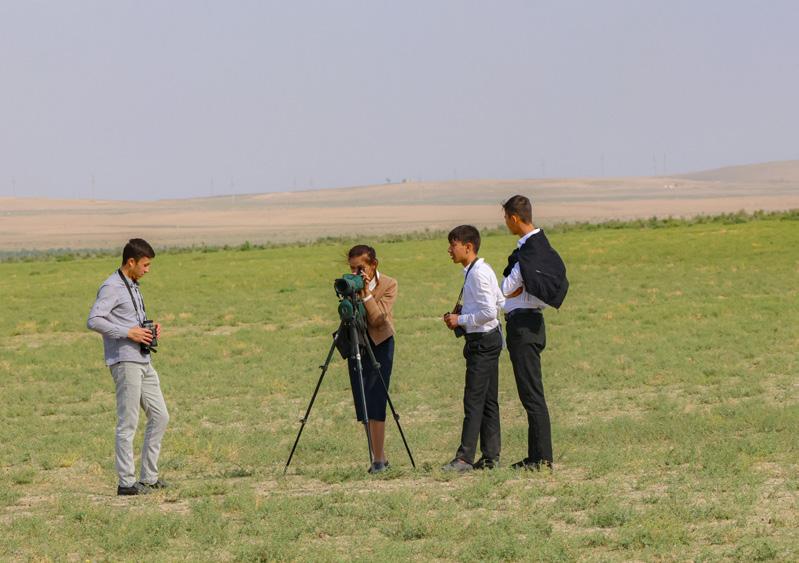
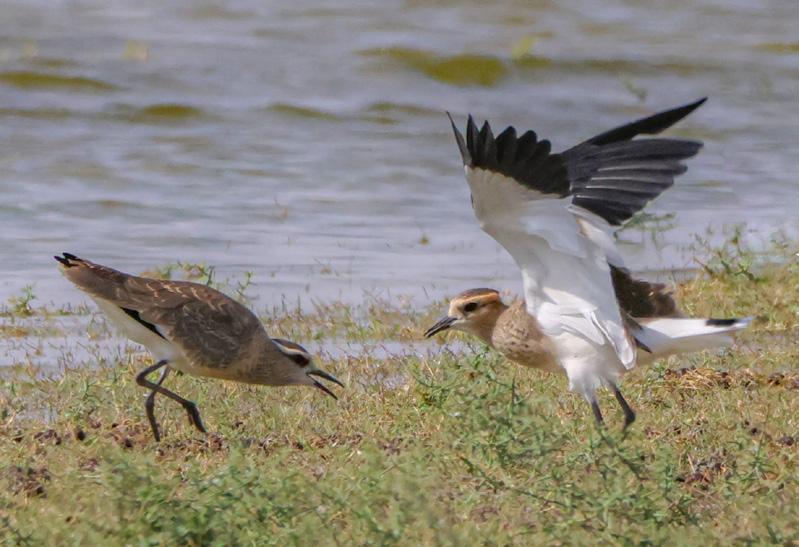
The Talimarjan Reservoir in southern Uzbekistan is an important place for migratory birds. It is a key stopover and KBA for the critically endangered Sociable Lapwing (Vanellus gregarius), which needs safe places to rest and feed during migration. CEPF grantees have worked in the area to monitor bird populations, raise awareness, and engage local communities in conservation efforts. Their work has helped highlight the site’s importance and reduce pressures on this habitat. A roadmap has also been developed to establish a locally managed protected area, supporting its long-term conservation.
Талимаржанское водохранилище на юге Узбекистана — важное место для перелётных птиц, которое является
миграции останавливается кречётка (Vanellus gregarius) — вид, находящийся под угрозой исчезновения. Партнеры фонда CEPF ведут здесь мониторинг численности, повышают осведомлённость и вовлекают местные сообщества в природоохранную деятельность. Их работа помогла подчеркнуть значимость этой КРБ и снизить угрозы.
Разработана дорожная карта по созданию охраняемой природной территории местного значения.
→ Sociable Lapwing survey with schoolchildren, Uzbekistan—engaging youth in conservation
Учёт кречётки с участием школьников, Узбекистан
↓ Flock of Sociable Lapwings Vanellus gregarius, Talimarjan Reservoir Стая кречётки у водохранилища Талимарджан, Узбекистан
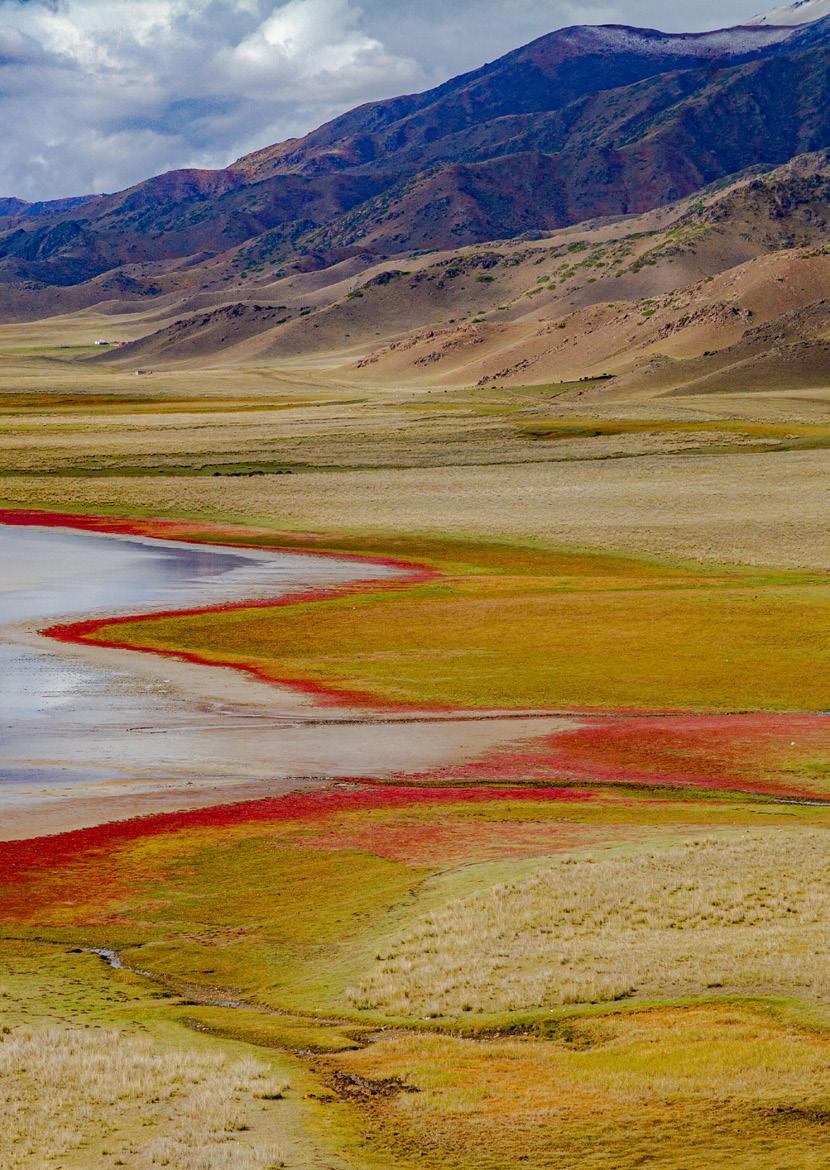
Lake and mountains of Dzungaria, Kazakhstan
CONSERVATION CORRIDORS AND MIGRATORY SPECIES
Conservation corridors are large, connected landscapes that allow nature to function and species to move freely. They are especially important in mountain regions, where animals such as snow leopards, wild ungulates, and migratory birds need wide areas to survive. Corridors link Key Biodiversity Areas, helping maintain ecological connections and making ecosystems more resilient to climate change. In the Mountains of Central Asia, 26 corridors have been identified, covering a total of about 580,000 km². Their size varies depending on the landscape—from smaller river-based corridors of 1,000–2,000 km² to vast transboundary areas like the Pamir-Alai and Wakhan corridor, spanning up to 122,000 km².
↓ Sociable Lapwings Vanellus gregarius resting and feeding at Talimarjan Reservoir
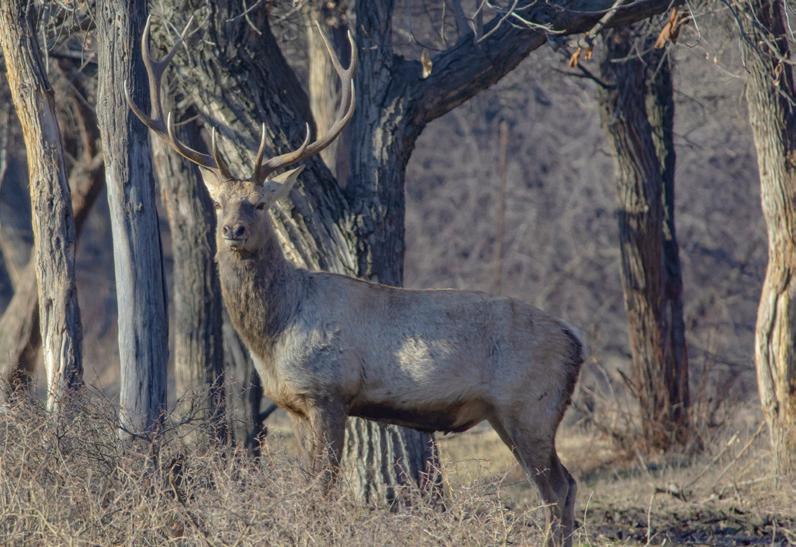
↓ Bukhara deer Cervus
elaphus bactrianus—a rare species of floodplains
Бухарский олень
↑↓ Water bodies and mountain ridges—natural corridors for wildlife migration
↑ Central Tajikistan ecological corridor
↓ Velvet scoter Melanitta fusca—seen during migration and wintering periods
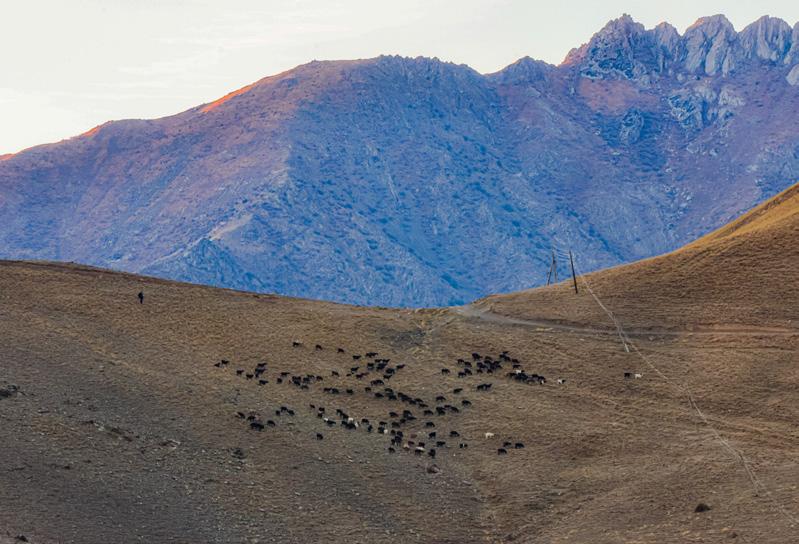
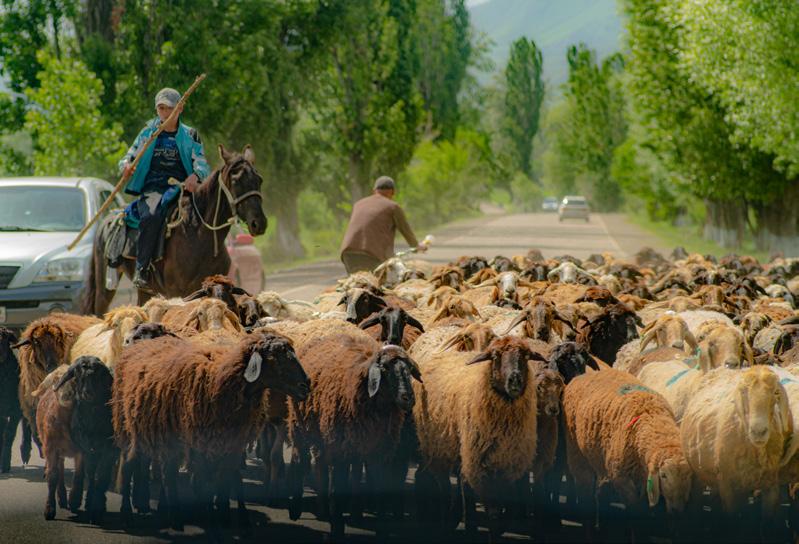
High mountain pastures—used by herders for summer grazing
PEOPLE AND NATURE
СВЯЗЬ ПРИРОДЫ И ЧЕЛОВЕКА
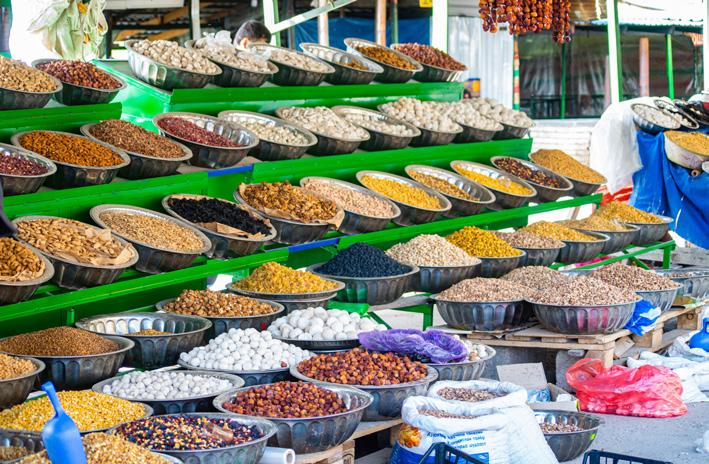
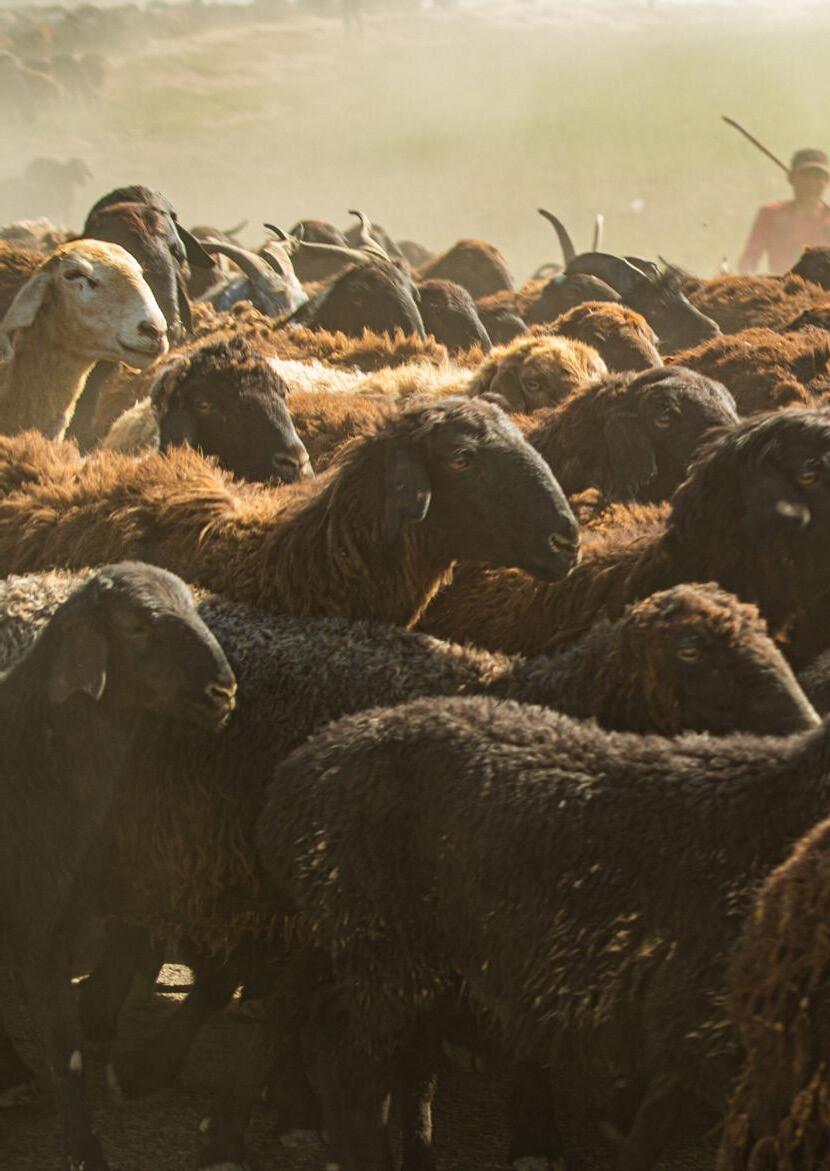
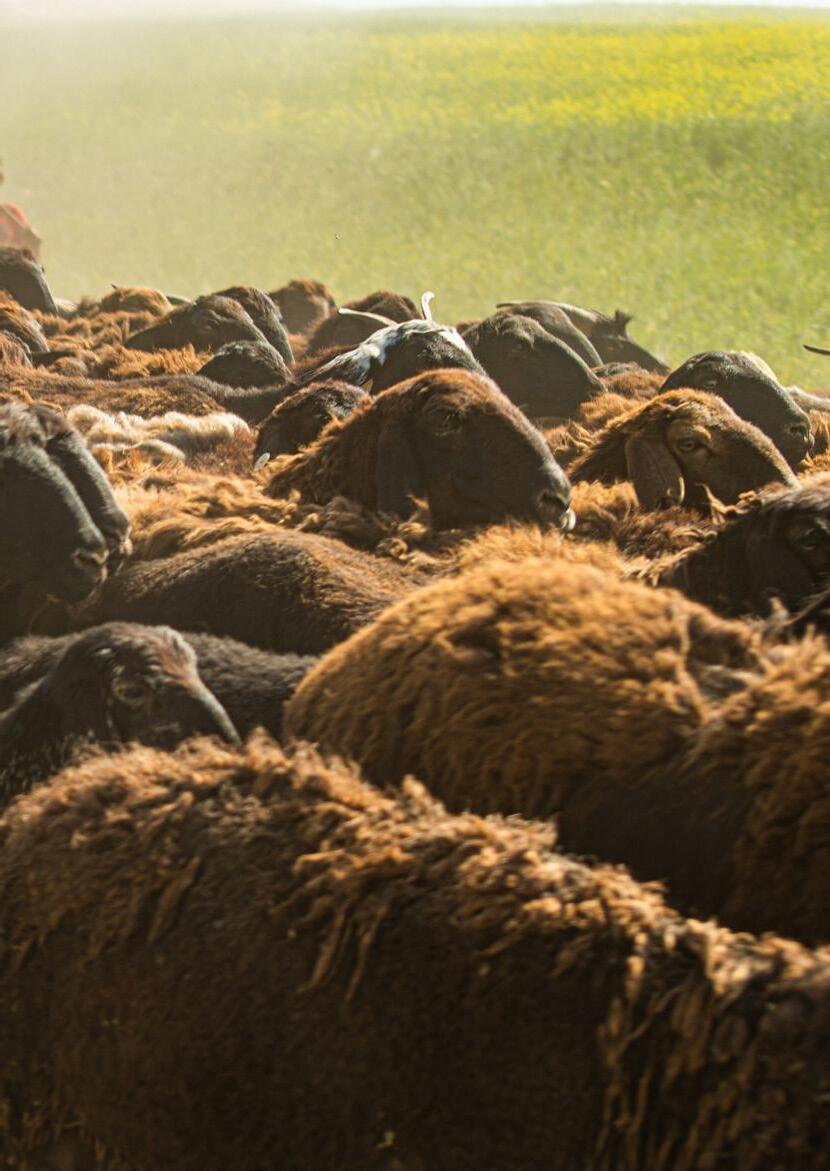
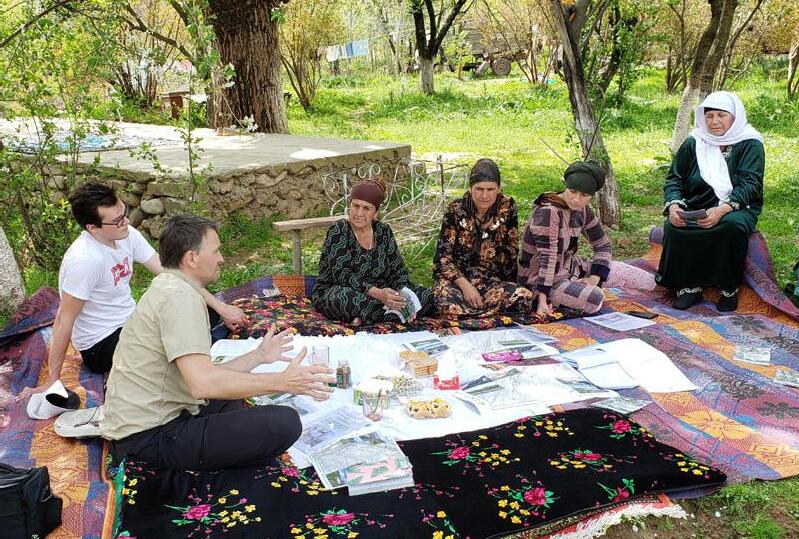
The Mountains of Central Asia are closely linked to people’s lives. Natural pastures support livestock grazing and traditional herding. Local communities collect medicinal plants used in traditional healing. Mountain forests are home to wild relatives of crops—such as apples, pears, apricots, and nuts—many of which have shaped local varieties. Their fruits and nuts are sold in local markets and provide important income for families. The mountains also attract visitors with their beauty and rare wildlife. In some areas, trophy hunting supports local incomes and conservation. Protecting these mountains matters—for nature and for the people who depend on them.
Горы Центральной Азии тесно связаны с жизнью
пасут скот, собирают лекарственные растения и плоды
— яблоки, орехи, абрикосы. Всё это помогает
батывать и сохранять традиции. Горы притягивают туристов своей красотой и редкими животными.
развивается трофейная охота, приносящая доход и поддерживающая охрану природы. Сохранение этих гор
которые там живут.
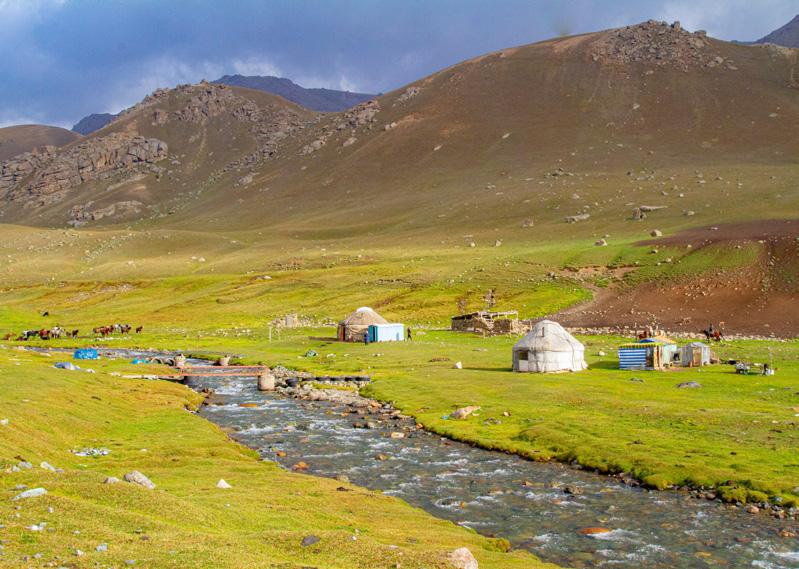
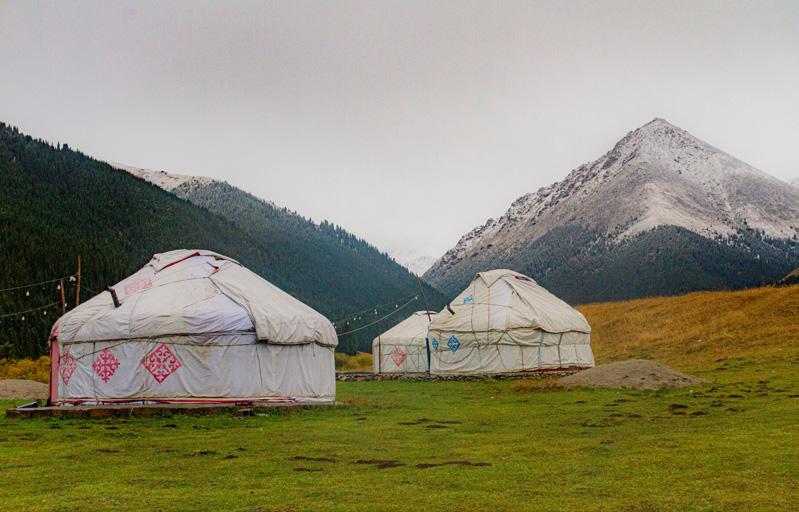
↓ Yurt camp—naturebased tourism in the mountains Юртовый
↑ Livestock—the foundation of mountain livelihoods
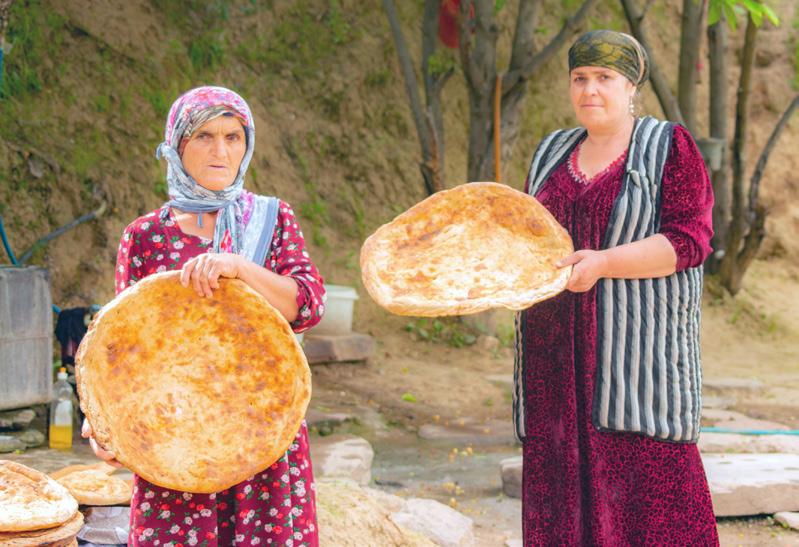
↓ Traditional crafts and bread-making
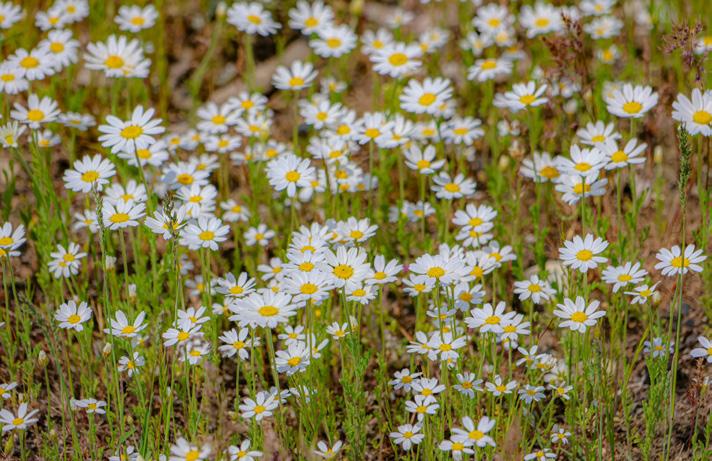
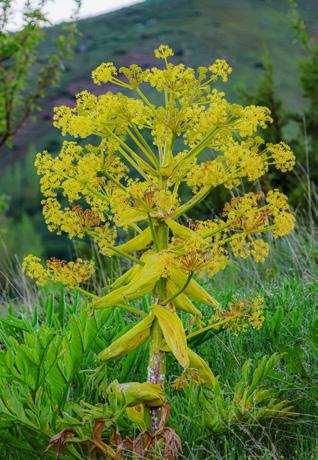
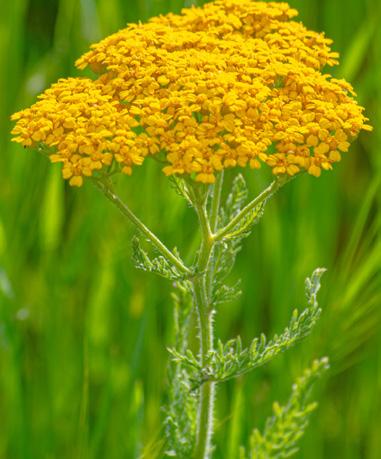
↑↓ Medicinal plants—widely used and collected for trade, including chamomile Matricaria chamomilla, ferula Ferula tadshikorum, and yarrow Achillea millefolium Лекарственные
↑ Natural resources—used by local communities for both subsistence and trade
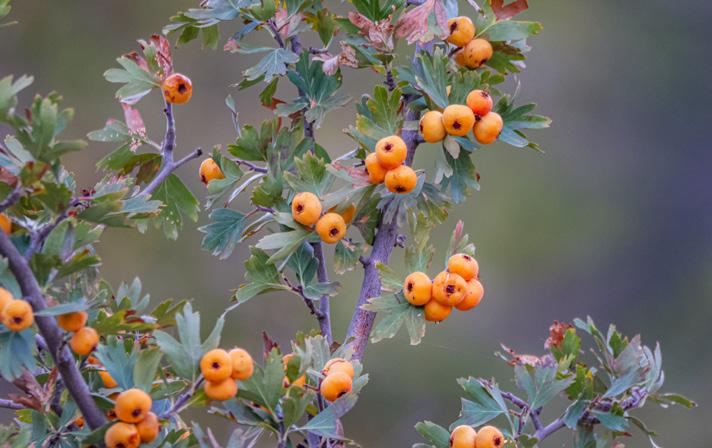
↓ Hawthorns Crataegus spp. •
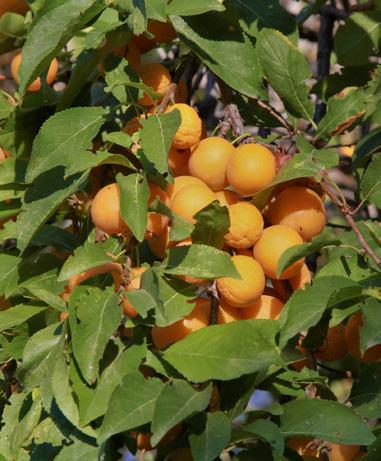
↑ Apricot Prunus armeniaca
Tourists in Charyn Canyon, Kazakhstan—exploring dramatic landscapes Туристы в Чарынском
↑ Visitors at Kolsai Lakes, Kazakhstan—popular mountain destination Отдыхающие
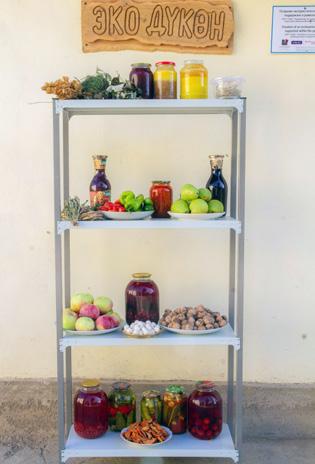
↓ Forest and orchard products at a local market, Tajikistan—linking nature and livelihoods Продукты
The Mountains of Central Asia are under growing pressure from people. Farming, overgrazing, and mining are degrading forests and pastures and shrinking wildlife habitats. Tourism, roads, and expanding cities— along with rising waste—even inside national parks, disrupt natural connections and migration routes. Poaching and illegal wildlife trade add to the strain, while invasive species and diseases are spreading. Climate change makes things worse: the region is becoming drier, glaciers are shrinking, and habitats are shifting.
Горы Центральной Азии всё сильнее испытывают
со стороны человека. Выпас скота, расширение сельского хозяйства и горная добыча разрушают леса и пастбища, сокращают места
обитания животных. Развитие туризма и инфраструктуры, рост городов и отходов нарушают природные связи и пути миграции. Браконьерство, торговля объектами дикой природы и распространение чужеродных видов усиливают угрозы. Изменение
климата усугубляет ситуацию: становится суше, тают ледники, меняются условия обитания.
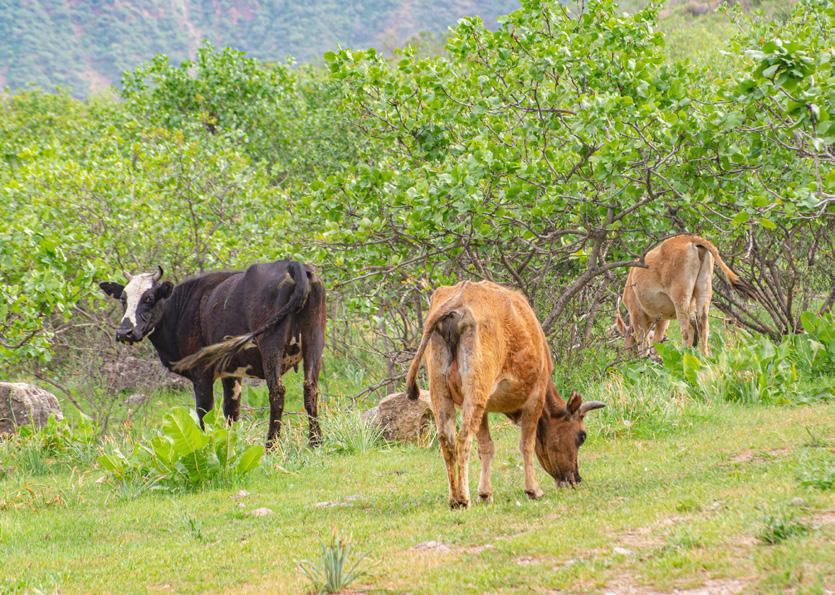
← Grazing in mountain forests
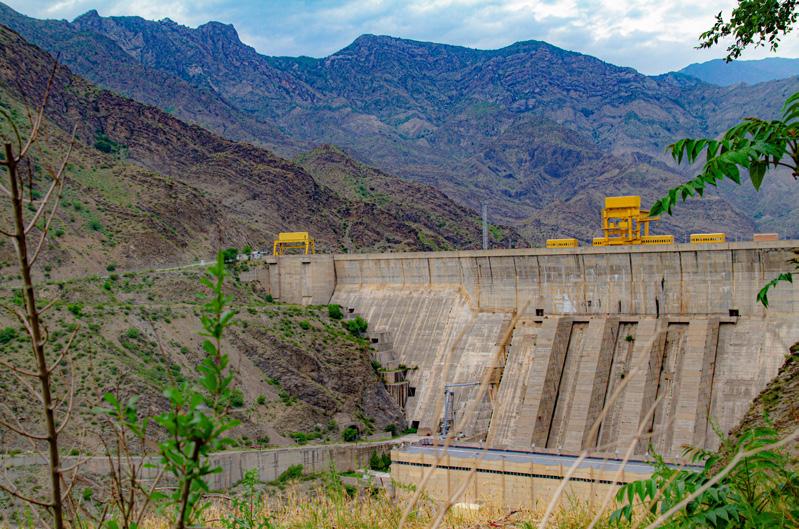
↑ Hydropower provides clean energy but alters rivers
Гидроэлектростанции
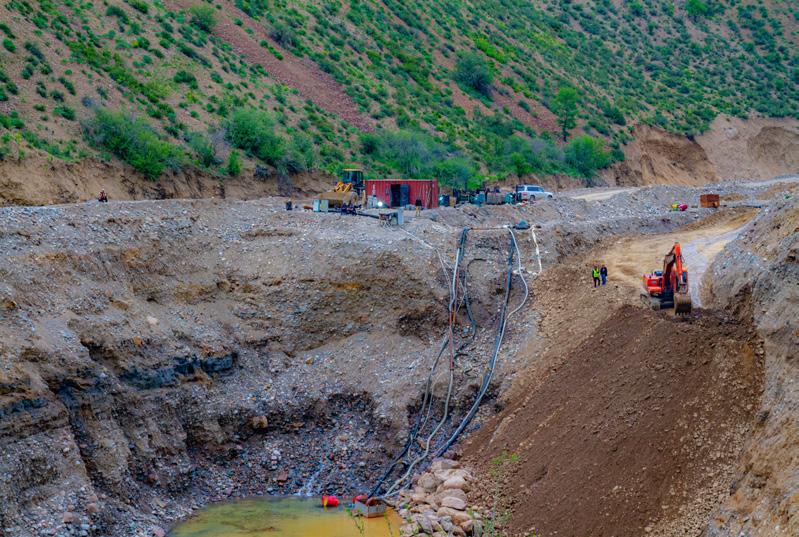
↓ Mining has local but significant impacts on nature
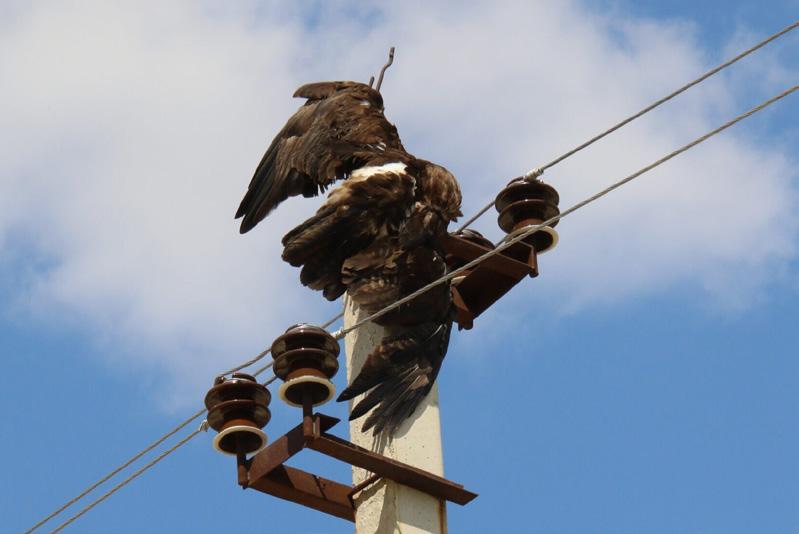
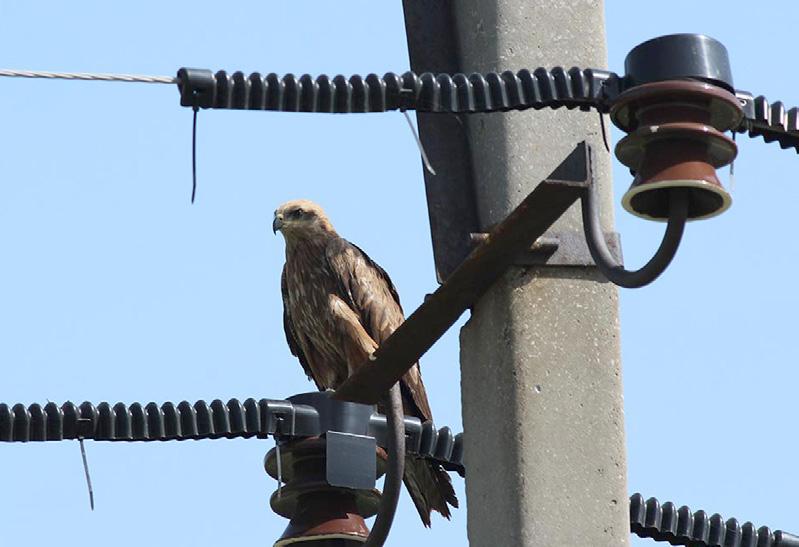
↑ Power lines kill birds
Без
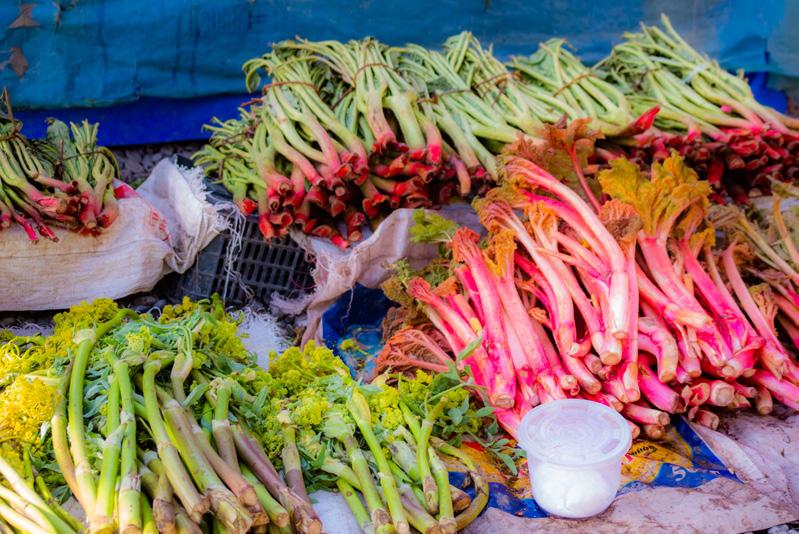
↓ Overharvesting of wild rhubarb and ferula leads to decline
↑ Wild flower picking harms nature
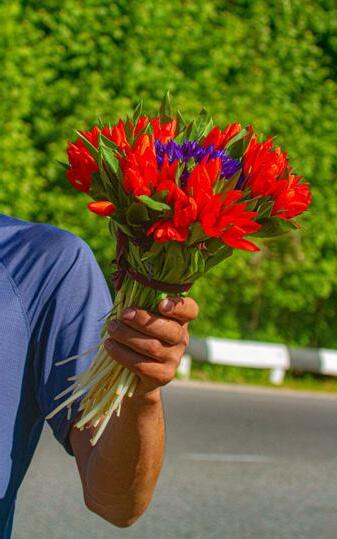
Wild tulips are picked without a second thought, while demand during holidays and tourism drives their decline.
↓ Tourism development in the Western Tien Shan is reshaping mountain ecosystems
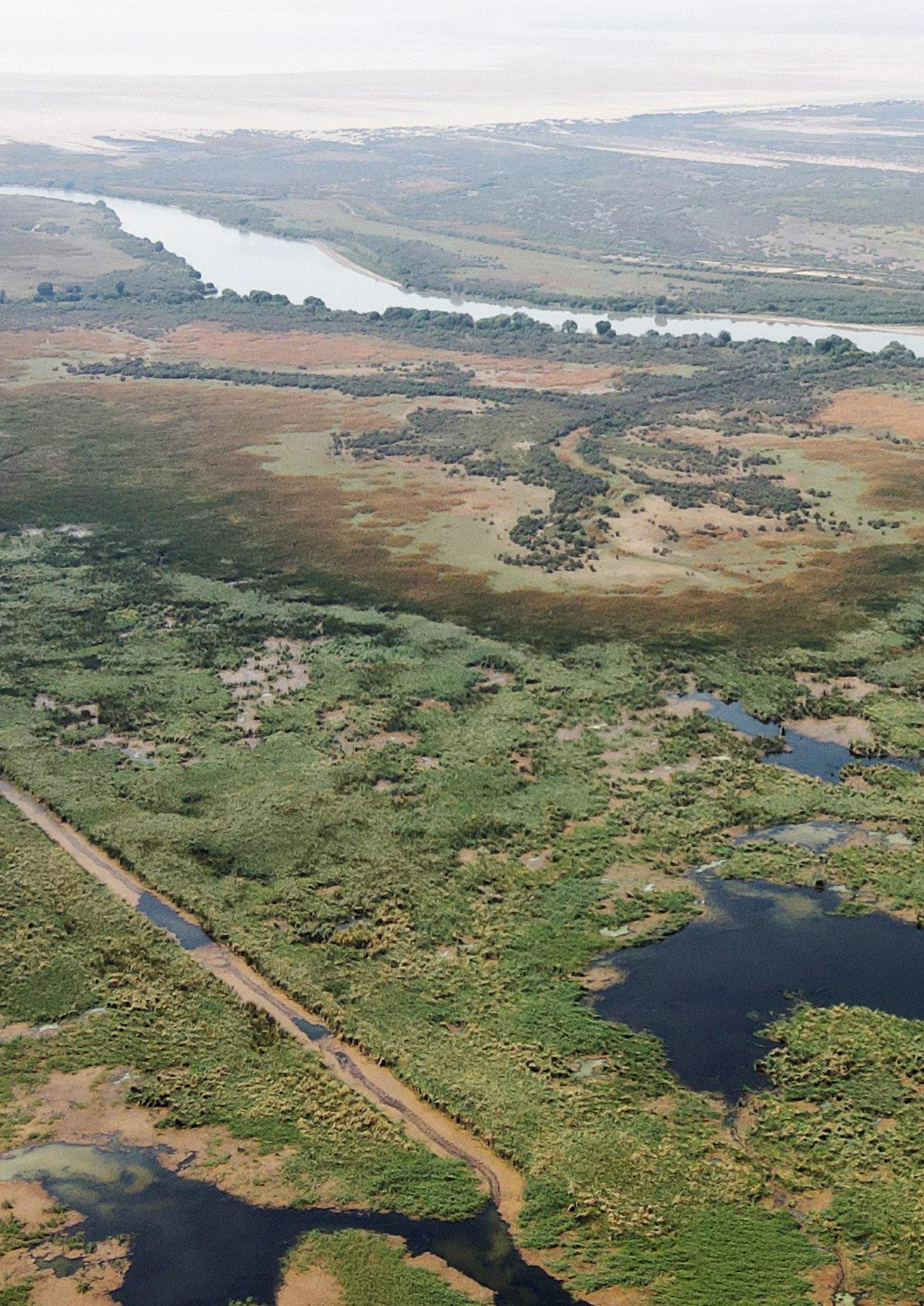
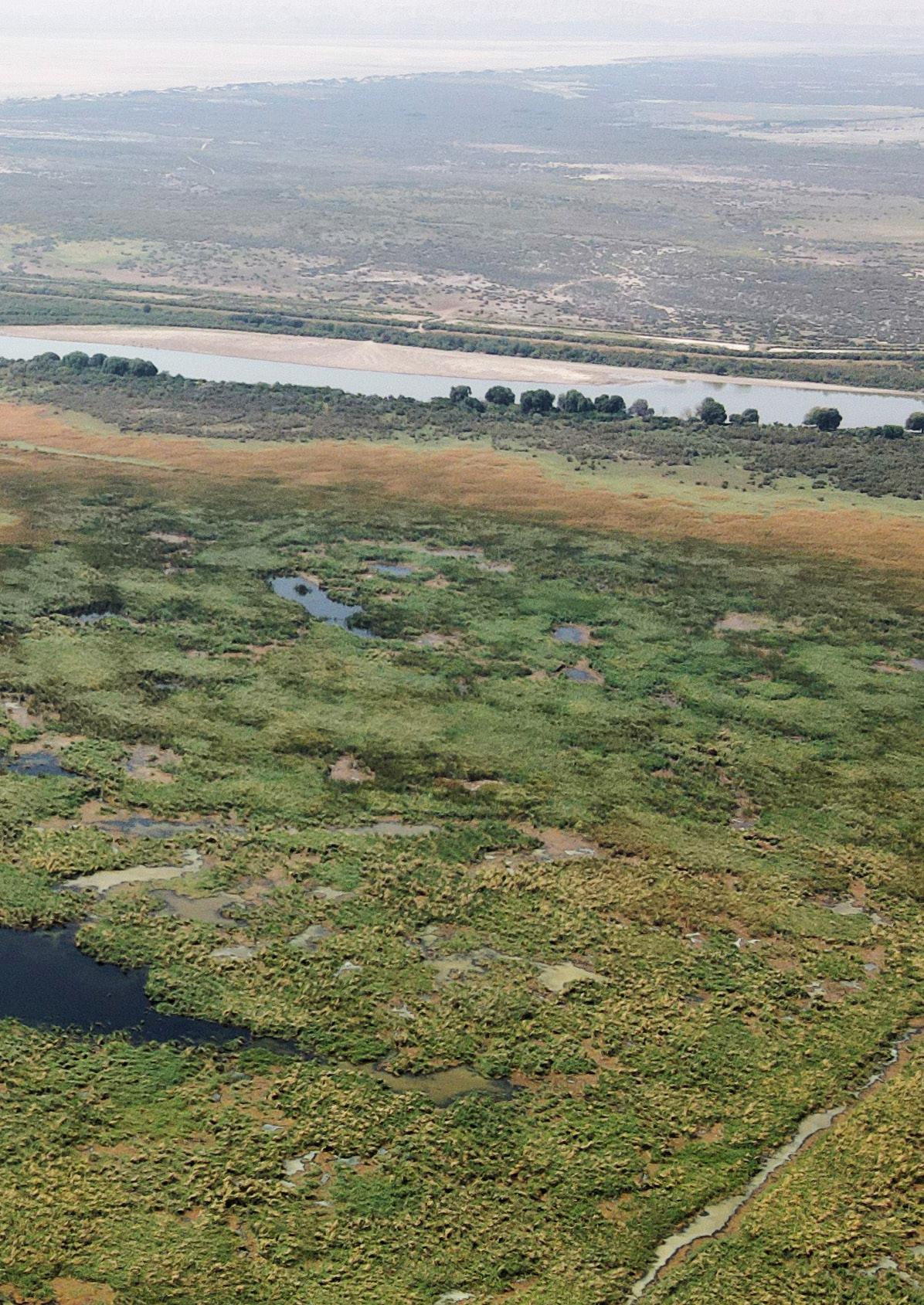
Floodplain wetlands of the Syr Darya River, Tajikistan
CEPF AND THE ROLE OF CIVIL SOCIETY
ФОНД CEPF И ВКЛАД
ОБЩЕСТВЕННЫХ
The Critical Ecosystem Partnership Fund (CEPF) is a joint initiative of l’Agence Française de Développement, Conservation International, the European Union, Fondation Franklinia, Fondation Hans Wilsdorf, the Global Environment Facility, the Government of Canada, the Government of Japan, the Hempel Foundation and the World Bank. CEPF supports civil society to conserve the world’s biodiversity hotspots, build stronger organizations and help communities thrive.
In the Mountains of Central Asia, CEPF began its work in 2016–2017 with the preparation of an ecosystem profile led by Zoï Environment Network, updated in 2025. The civil society grant programme (Phase I) ran from 2019 to 2025. During this time, grantees worked to protect wild fruit and nut trees, monitor threatened wildlife, improve protected areas, and reduce pressure on nature. These efforts helped improve the management of 2.6 million hectares across 55 Key Biodiversity Areas and involved around 150 communities.
CEPF’s grant programme in the Mountains of Central Asia will continue in 2026–2031. For more information and grant applications, please visit: cepf.net/our-work/biodiversity-hotspots/mountains-central-asia
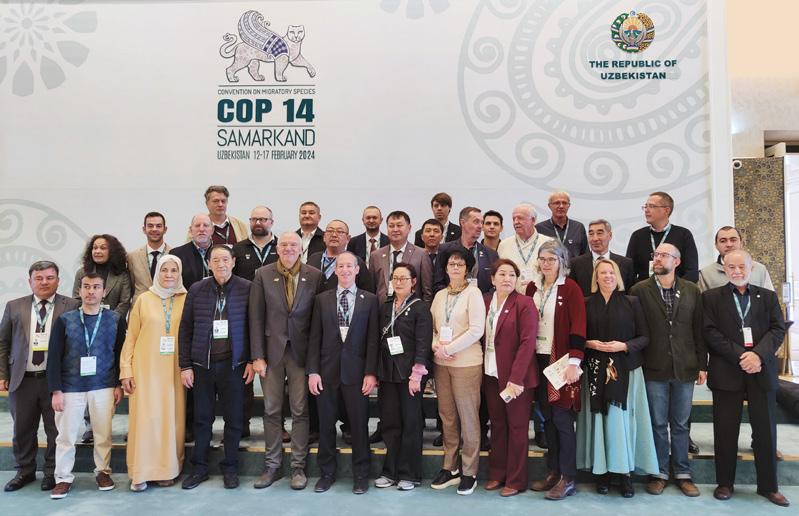
↓ Central Asian CSO delegates and CEPF Secretariat at CMS COP14, Samarkand, February 2024
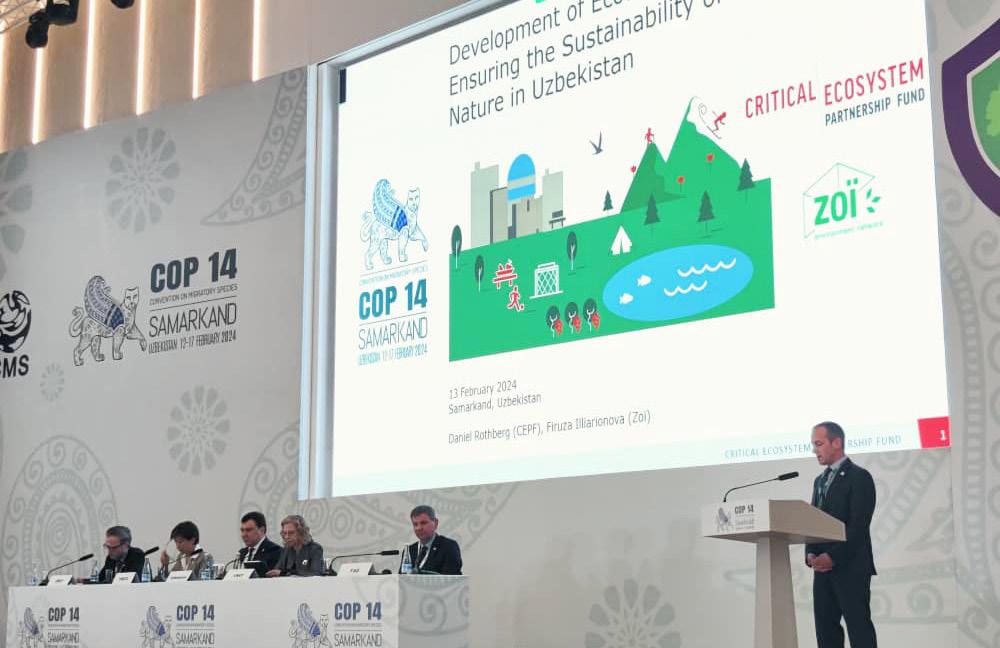
↓ CEPF Secretariat presentation at CMS COP14 with national and UNEP leadership
Доклад Секретариата CEPF на COP14, с участием Министра экологии
циатива Французского
развития (AFD), Conservation International, Европейского союза,
Вильсдорфа, Фонда Хемпеля, Глобального
(ГЭФ), Правительства Канады, Правительства Японии и Всемирного банка. CEPF поддерживает
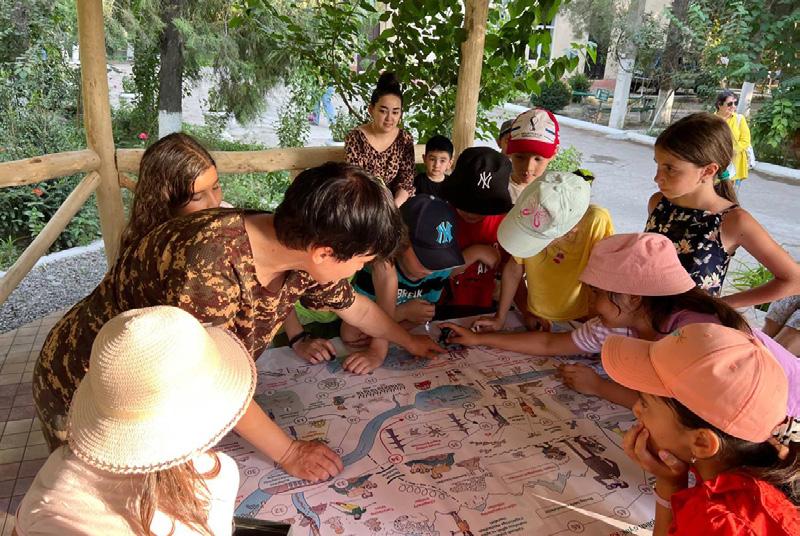
↓ Engaging youth through interactive biodiversity studies and actions, Uzbekistan
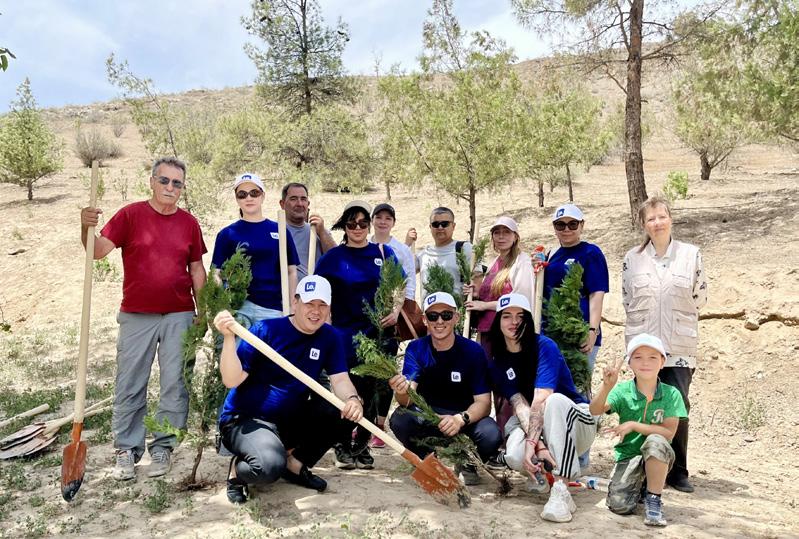
↑ Juniper planting and youth environmental action, Turkmenistan
Посадка
↓ Planning wetland conservation measures, Syr Darya, Tajikistan
Планирование
↑ Installing bird protection on power lines, Kazakhstan
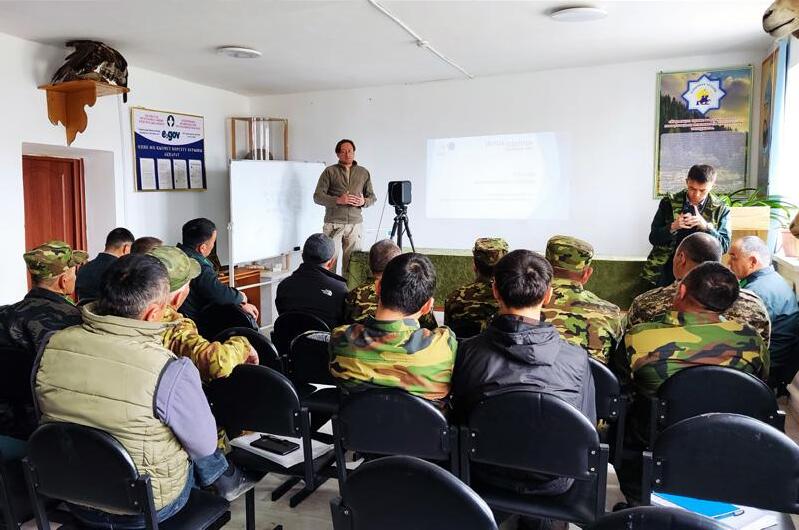
↓ Ecotourism workshop and knowledge exchange, Kazakhstan
Обмен
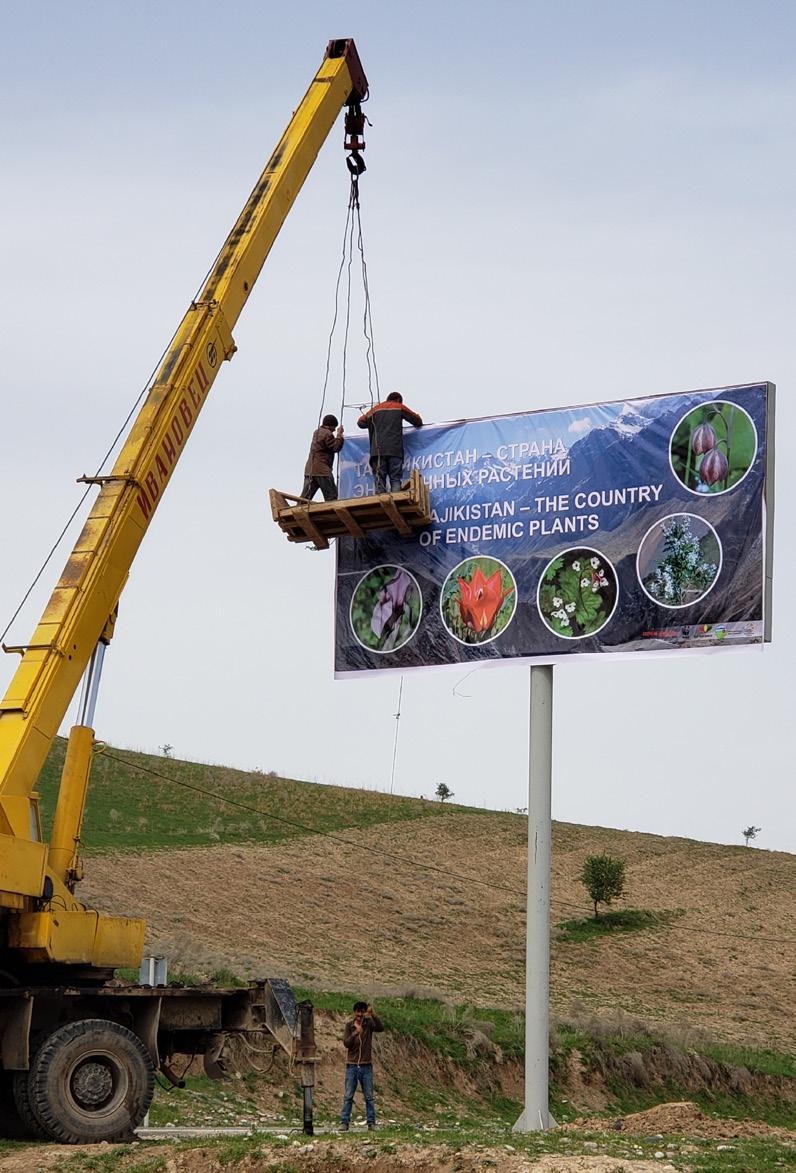
Information board for rare plants and ecotourism, Tajikistan
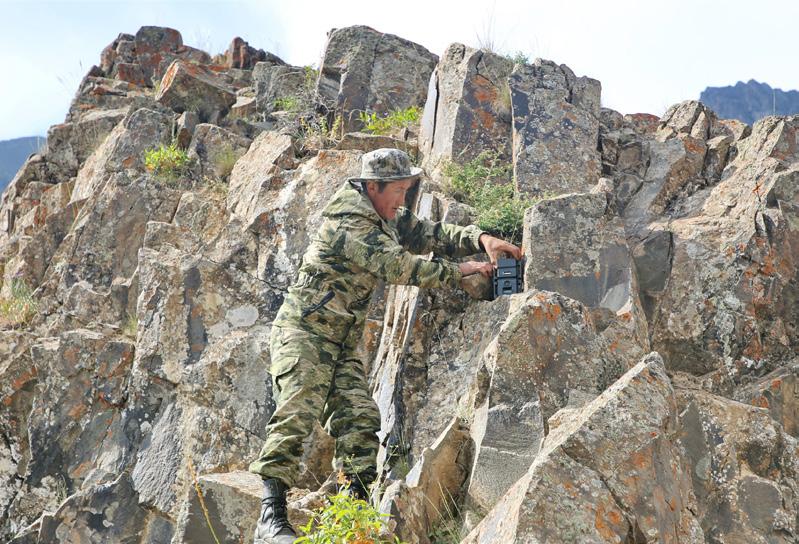
↑ Camera trap installation, Kyrgyzstan
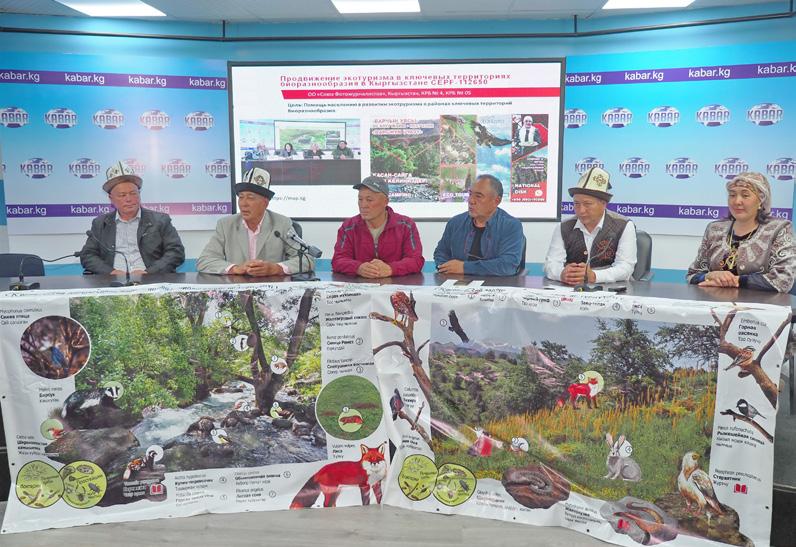
↓ Press conference on ecotourism, Kabar News Agency
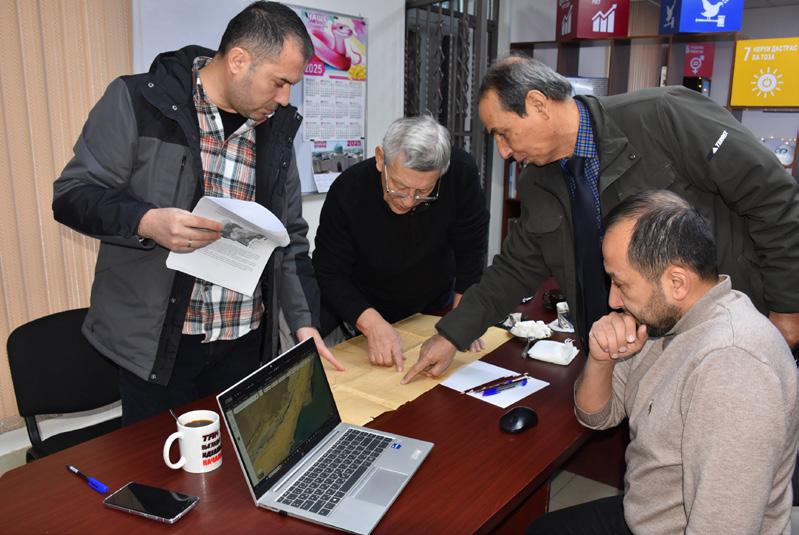
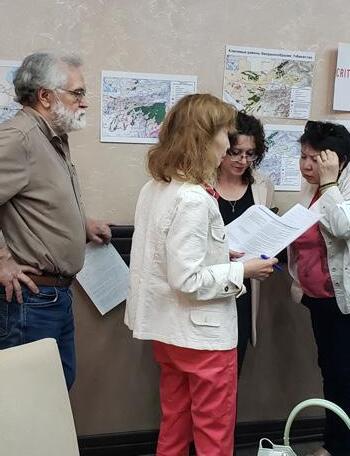
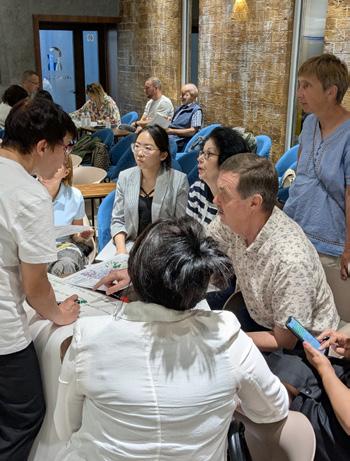
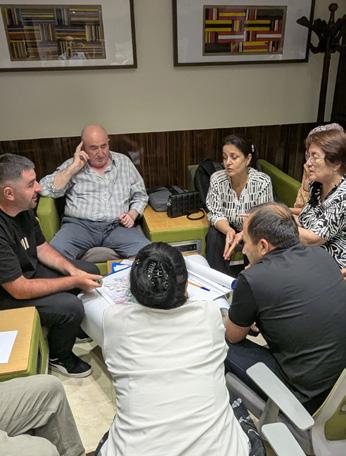
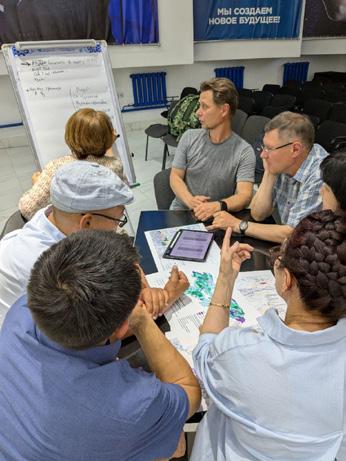
↑ Ecosystem profile update consultations in 2025, Almaty
↑ Dushanbe
↓ Bishkek
Acknowledgements
This photo album was made possible through the contributions of many people, with the support of CEPF.
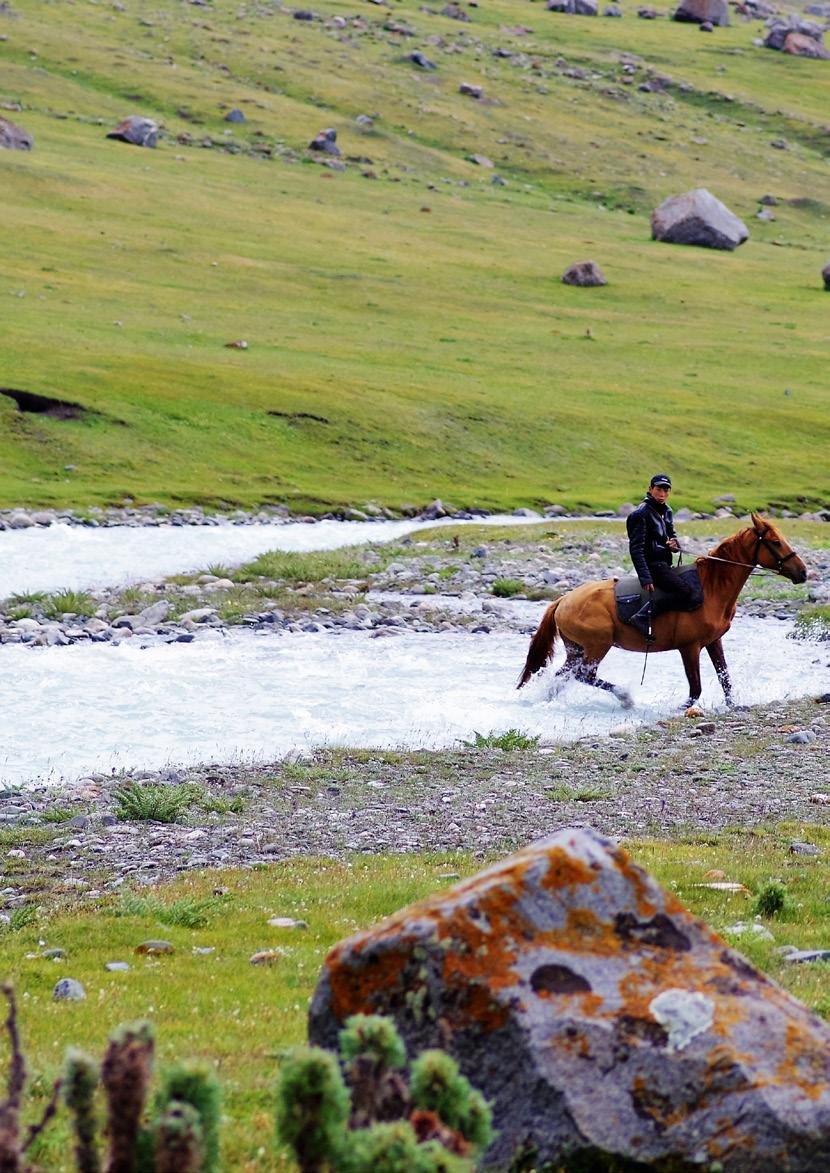
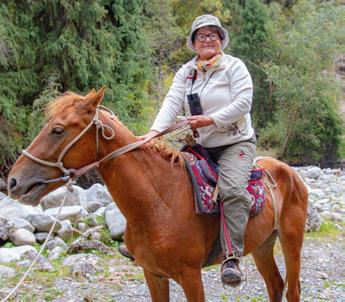
We would like to extend special thanks to Elena Kreuzberg (pictured on horseback), a CEPF grantee who visited nearly all countries in the region and many Key Biodiversity Areas and nature reserves as part of capacity-building work with CSOs. Her photographs and captions form the core of this album, and her perspective as both a biologist and a passionate nature photographer helped capture the beauty and fragility of the Mountains of Central Asia.
We thank Sergey Toropov, Mark Pestov, Lina Waldschmidt, Rauf Sabitov, Vlad Ushakov, Merdan Arazmedov, Khurshed Olimov, Timur Abduraupov, Bakhtiyor Mardonov, Abduvokhid Safarov, Viktor Novikov, Firuza Illarionova and other CEPF partners— including “Avalon”, ACBK, Biodiversity Research and Conservation Center, Nature Protection Team, Flora & Fauna and the CEPF Secretariat—for generously providing project photos.
Design (print and online): Dina Adylova
Overall coordination: Viktor Novikov, Firuza Illarionova