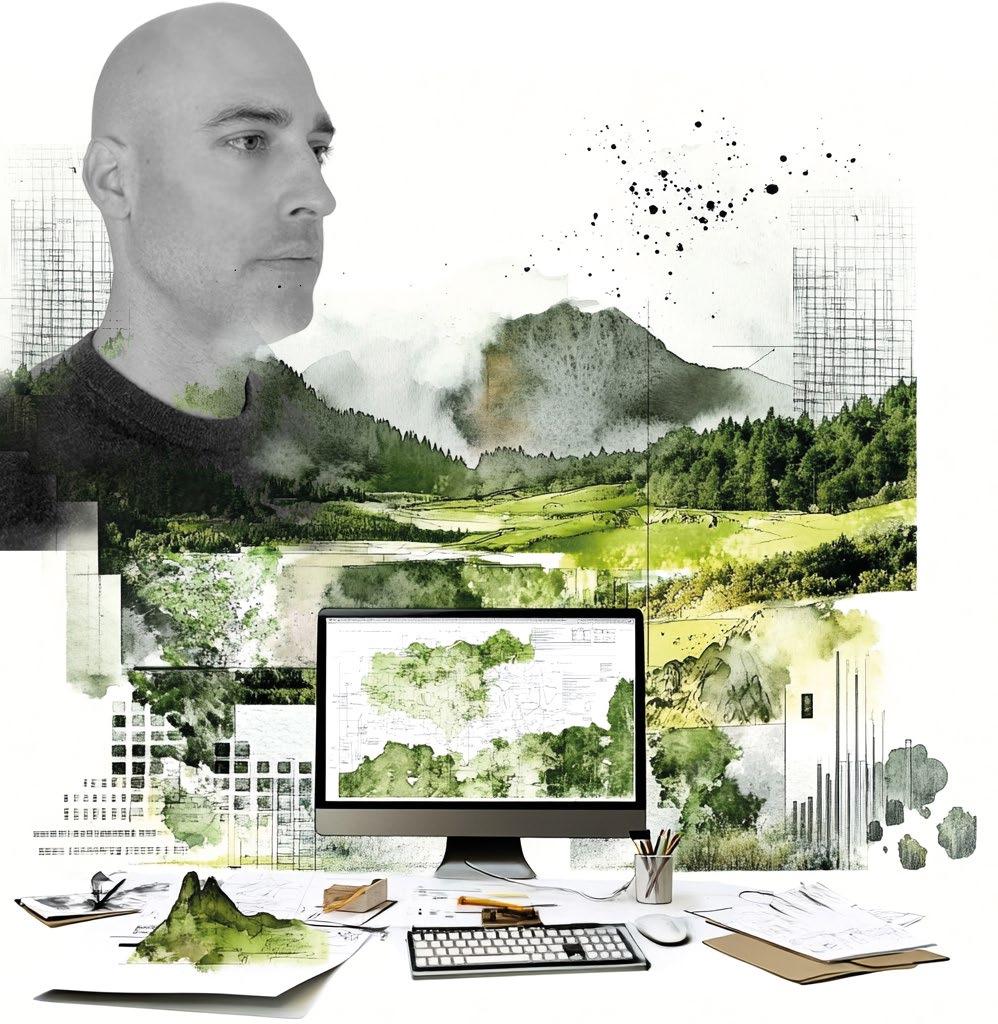
In meetings, we often see the project managers and directors. They present the milestones, the timelines, the outcomes. They carry the narrative forward.
But behind every milestone, there are hands.
Invisible hands sketching the first layout at 7 a.m.
Hands adjusting a color scale so that a map can speak clearly across languages. Hands rewriting paragraphs until complexity becomes clarity.
Hands translating not just words, but meaning, nuance, and diplomacy.
Hands taking notes in dusty field offices, listening before speaking.
Hands balancing budgets and columns of figures so that every project stands on solid ground.
Zoï is known for its reports, its atlases, its workshops, its presence in international forums.
But Zoï stands because of those who build quietly.
The designers who turn data into visual pathways.
The cartographers who transform territories into understanding. The editors who shape collective intelligence into a single voice.
The translators who ensure that no audience is left behind.
The social media manager who amplifies our voices and connects our work to the world.
The experts and partners on the ground who gather the first essential pieces of reality.
The board members whose guidance shapes strategic decisions.
And those who keep the numbers aligned, ensuring that ambition meets responsibility.
They are not always in the spotlight. They are not always on the cover. Yet they are everywhere in the work. They are the patience behind precision. The structure behind creativity.
The discipline behind sustainability.
The rhythm behind delivery.
In 2025, as we explored new themes and continued navigating complex environmental challenges, we wanted to acknowledge something fundamental:
Zoï is not a single voice. It is a constellation. A constellation of disciplines. Of talents. Of quiet commitments.
This annual report carries the fingerprints of all those who work quietly behind the scenes.
Carolyne Daniel — One of the quiet hands shaping Zoï
the complete list of partners, please see the full version online.
Maps in the making
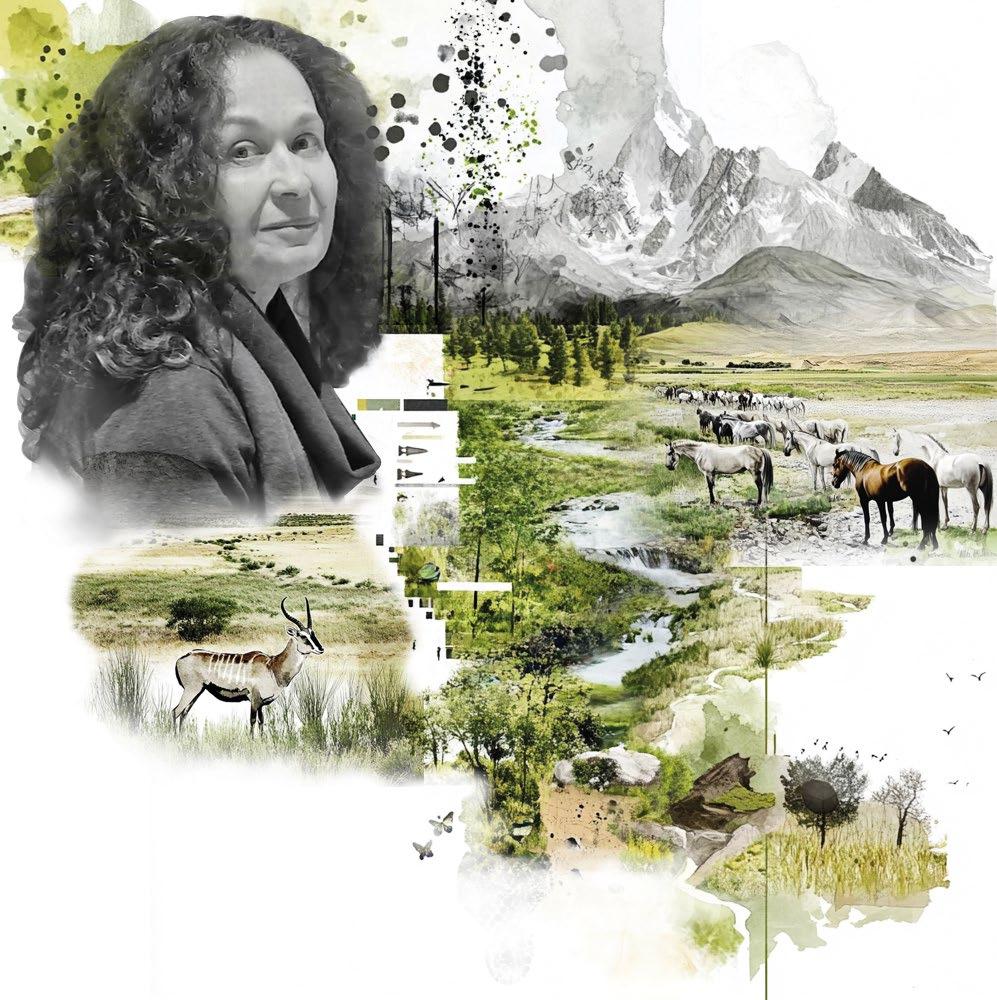
At the beginning, I never know how a map should look, just that it must be a harmonic fusion of information (ratio) and beauty (muse).
Interacting with clients, project managers and researchers should be like a dance where one step leads to another; suggestions, criticism, dead ends and breakthroughs are all elements of this process. Creating maps involves a mix of information gathering, data processing and drawing, which I often do all at once. I’m also optimistic about technical innovations in mapmaking, such as the role of AI. Still, I stay well aware of the downsides of such innovation, maintaining that the human factor should always remain decisive.
Matthias Beilstein Cartography
Cristina Jaramillo Lopera
From global reports to local conversations
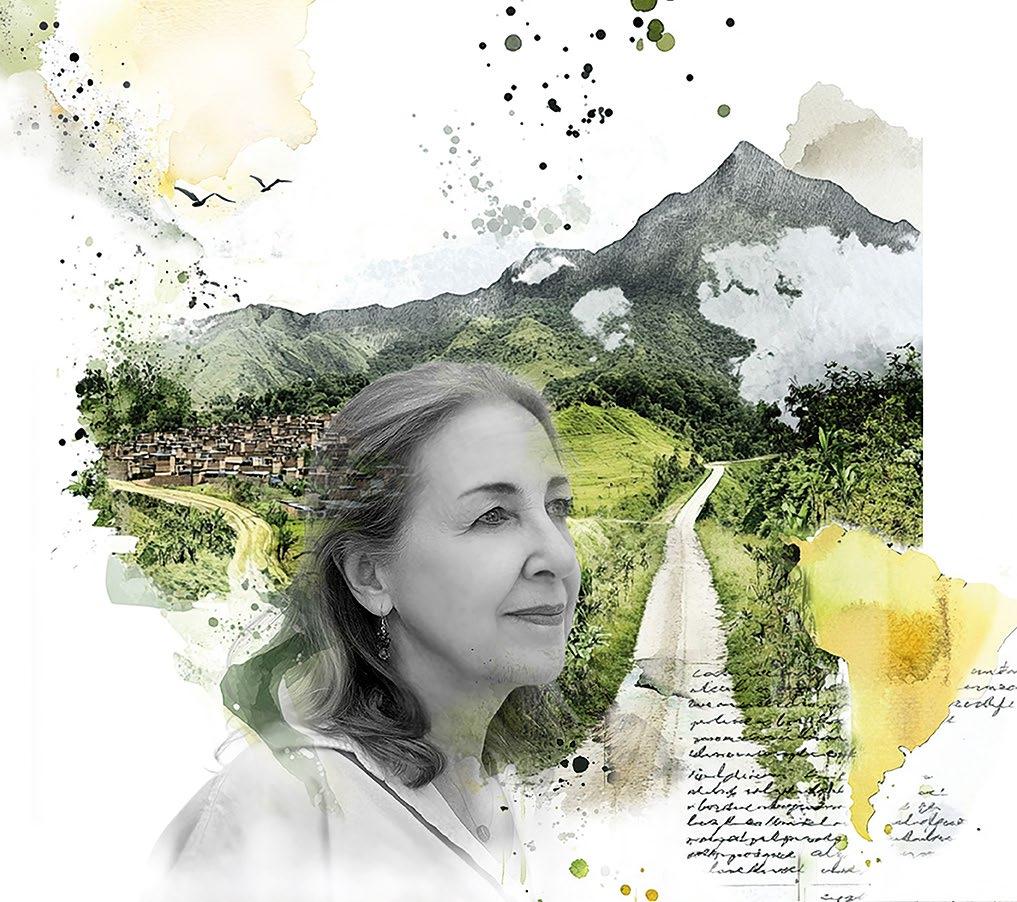
For nearly eight years, I have translated Zoï’s publications on climate, biodiversity, gender, and disaster risk reduction into Spanish. But beyond ensuring accuracy and consistency between languages, I have come to understand that my work is also about connection.
I live in Jardín, a small town in Colombia with a landscape highly vulnerable to severe weather. Last year, we were isolated from the outside world for two months after a landslide caused by heavy rain – it was exactly the type of event that my work covers.
In my community, I am also part of a women’s reading club of nearly 100 members, where texts I have translated often become the basis for exchange and community action. These moments remind me that climate communication does not end with publication. It continues in conversations, shared reflections, and through local initiatives. Climate tools only work if they are understood.
Making room for intuition
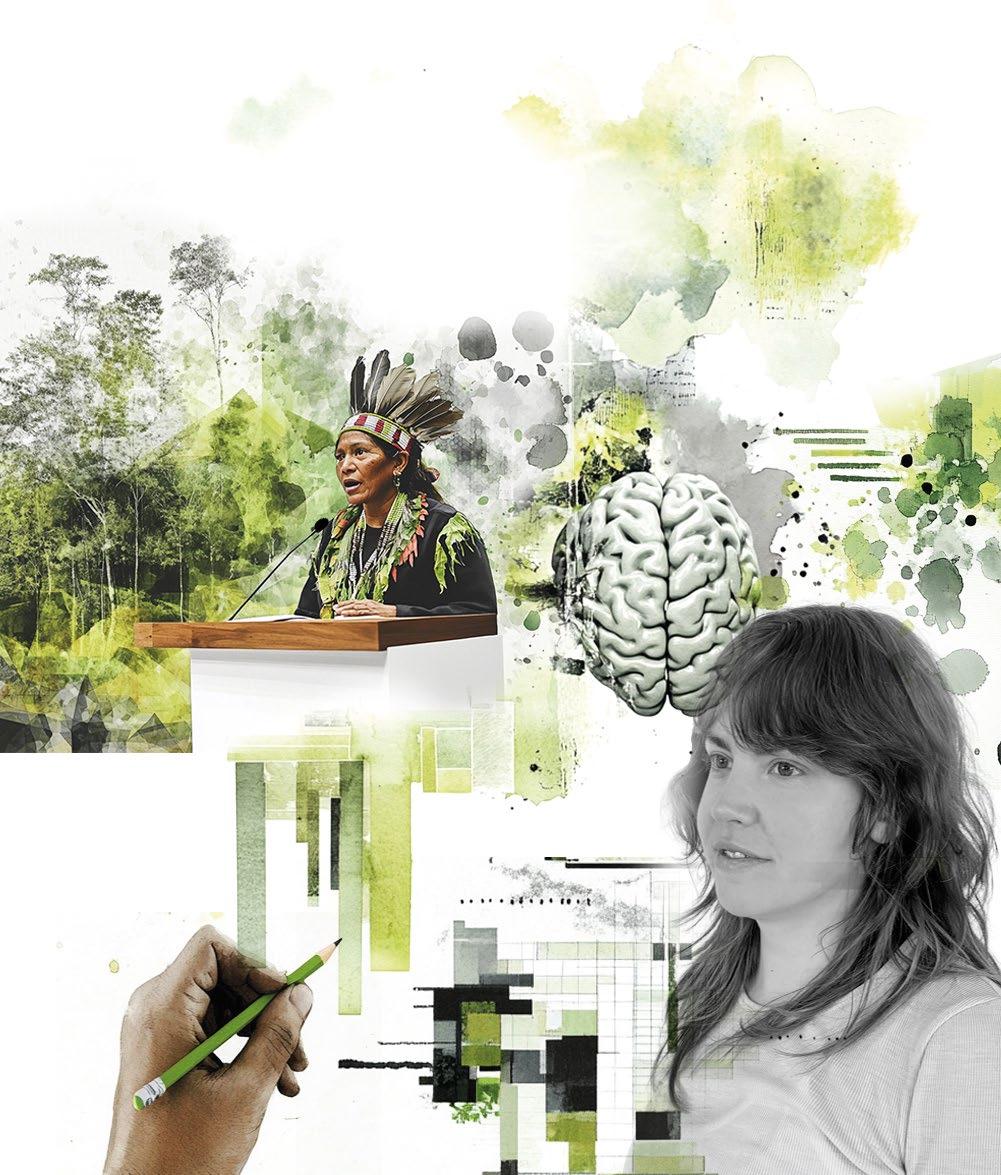
One of my recent jobs was to make real-time drawings summarizing the sessions at a learning event. It was my first time drawing anything live, and, given my typical reliance on drafts and reflections, I was quite nervous. Of course, being pregnant did not reduce my anxiety.
It was challenging to listen to the presentation and read the slides all while trying to illustrate the essentials. Detached from my conscious mind and my otherwise analytical and judging eyes, one part of my body was creating a baby, and another creating drawings while I let my intuition guide the work. The result turned out to be a visual summary of the session. With no time to consciously review, choose, consider, or research, my brain and hand had done this all by themselves.
Maria Libert Illustrations and graphic design
Camila Ponte
Content creation and social media management
Digital communications for a growing audience
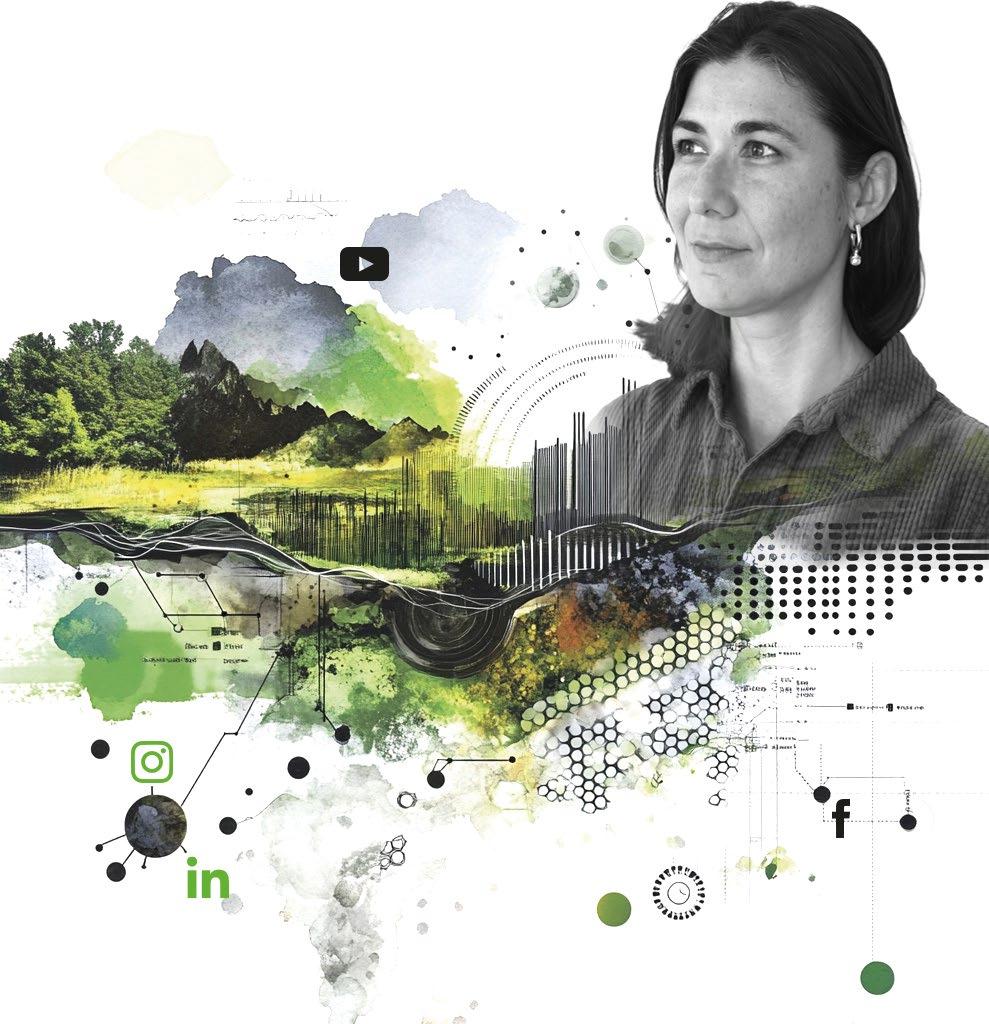
My challenge as Zoï’s content creator and social media manager is to navigate the demands of algorithms while making sure our messages about the latest environmental issues reach more people. But social media also allows me to bring the questions, perspectives, and inspirations of followers and friends across the globe back to Zoï.
In a time when digital communication is tending toward provocation and polarization, I feel privileged to be helping build networks of exchange, share messages of collaboration, and show that a better world is possible when communication is grounded in respect, attention, and curiosity.
Firuza Illarionova
Field and policy support Central Asia
Celebrating glaciers and biodiversity
One of the best ways to engage our partners is to expose them to interesting topics and prospects linked with international days, processes, and events.
In 2025, the focus was on glaciers. The International Year of Glaciers’ Preservation took us to Paris and Dushanbe, and we looked deeper into what the cryosphere means for places like Tajikistan, where glaciers cover twice the area of all forests and feed hydropower, irrigation, and drinking water through dry summers.
Glaciers are cool. But my passion is conservation. So, last year, I was excited to work on updating the ecosystem profile for the Mountains of Central Asia. Here, I helped conduct stakeholder consultations in conjunction with celebrations of the International Day for Biodiversity, collaborating with governments and civil society across the region. I look forward to continuing the work in 2026.
Our man in Ukraine
Text by Nickolai Denisov
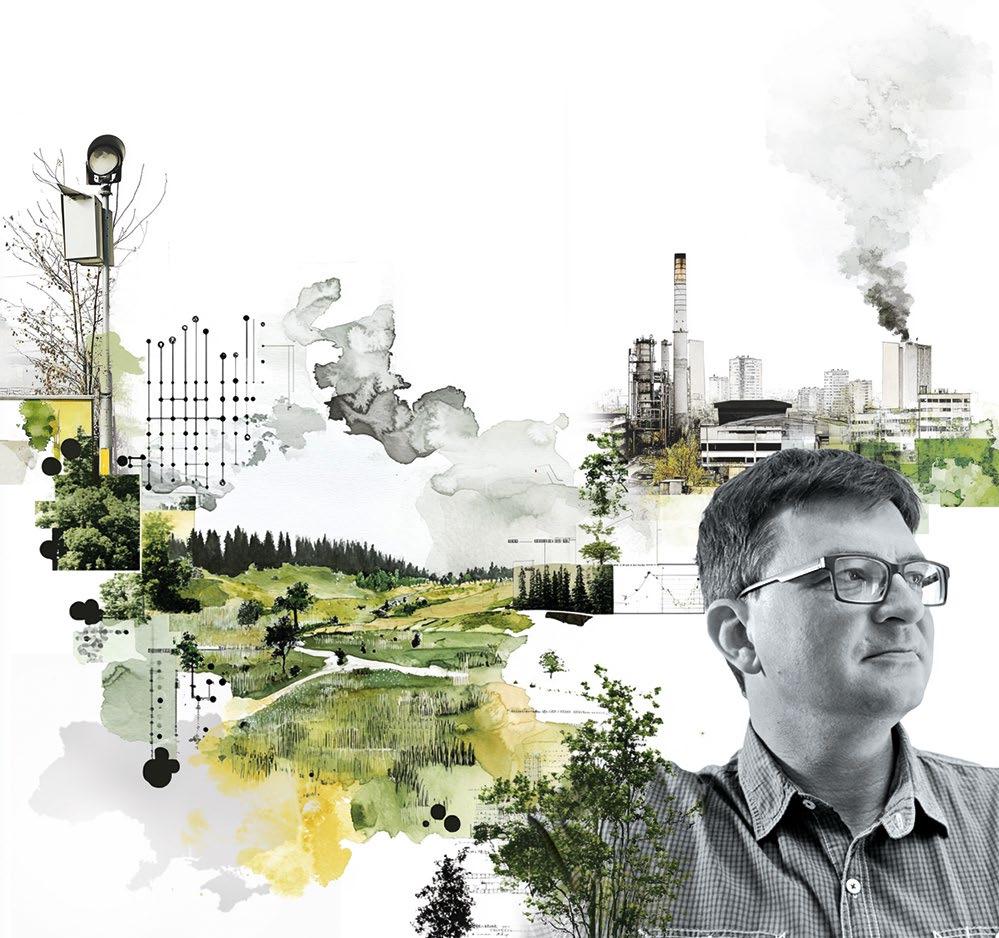
Dmytro Averin is an environmental monitoring specialist from Donetsk who first partnered with Zoï Environment Network in 2007 to address the ecological challenges of Ukraine’s industrial heartland.
Driven by a bold vision, he built a cutting-edge automated monitoring system by 2014, connecting all regional air quality posts into a unified, policy-ready network. When full-scale war came in 2022, he created Ecodozor.org, documenting environmental damage to support future restoration. Between 2014 and 2022, Dmytro also worked with Ukraine’s Ministry of Environment Protection to advance cooperation with the European Environment Agency, an early step on Ukraine’s road to EU membership.
Visionary, devoted, and deeply European in outlook, Dmytro embodies the kind of professional Ukraine will need as it builds its future.
Dmytro Averin
War impact analysis and data management
People
Alex Mackey
Project management, analysis and communication
Alexandra Povarich – Taskhent
Graphic design, climate and biodiversity
Alison La France
Key Performance Indicators specialist
Camila Ponte
Content creation and social media management
Carolyne Daniel
Print and digital design, artistic direction
Defne Salli
Analysis and fact-checking
Dina Adylova – Tashkent
Graphic design
Dmytro Averin – Irpin
War impact analysis and data management
Firuza Illarionova – Nicosia, Dushanbe
Field and policy support Central Asia
Geoff Hughes – Port Townsend
Editing, ghostwriting
Johanna Zwahlen
Senior project management and analysis
Karma Denisov – Himalayas
Webmaster and social media
Maria Libert – Stockholm
Illustrations and graphic design
Maria Ziaja – Krakow
Biodiversity and war (Intern)
Last year, Alex Kirby – our friend, colleague, and longtime Zoï board member – passed away in Lewes, England.
We learned a lot from Alex, more than he would ever have imagined. Most importantly, he showed us how to be generous and to say thank you.
Marianne Gémin
Finance and administration
Matthias Beilstein – Schaffhausen
Cartography
Nickolai Denisov
Deputy director
Environment and conflict
Otto Simonett Director
Creative thinking and leadership
Viktor Novikov
Senior project development and management Central Asia
Yevheniia Averina – Irpin
OSINT monitoring and analysis
→ For the complete list of associates, please see the full version online.
Board
Jörg Balsiger – Geneva President of the Board
Professor, Environmental Governance and Territorial Development, Université de Genève
Rupa Mukerji – St.Gallen Chief Executive Officer, SKAT
Now it is our turn to say, “Thank you, Alex. Thank you for being part of us, and for allowing us to be part of your life.”
Otto Simonett and Nickolai Denisov
Founded in 2009, we are a non-profit environmental organization driven by our belief that access to information lies at the heart of democracy and plays a prominent role in the quest to build sustainable societies. Offering analysis, training, dialogue and communication, we work on climate change, biodiversity, chemicals and waste, security and conflict, water, responsible consumption and production, and access to information.
Design & illustrations by Carolyne Daniel
Zoï Environment Network
International Environment House 2 • Chemin de Balexert 7 - 9 CH-1219 Châtelaine • Geneva, Switzerland
Tel. +41 22 917 83 42
Zoï Environment Network EU Chaussée de la Hulpe 178 1170 Watermael-Boitsfort • Brussels, Belgium