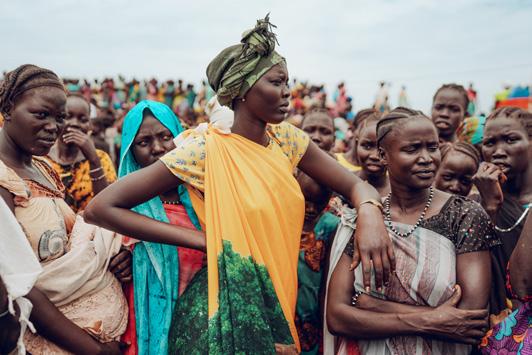
Inspired by our Christian faith, we provide relief and recovery to people impacted by conflicts and disasters as we envision a world where people have hope and live dignified lives in peaceful communities.
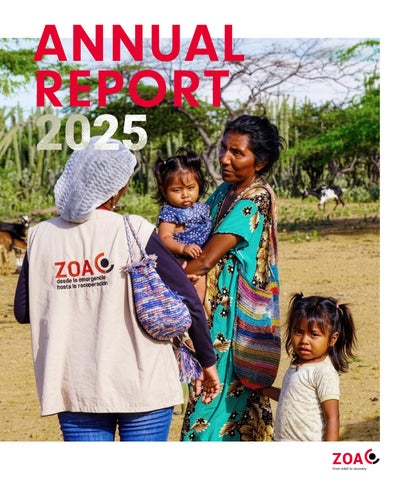
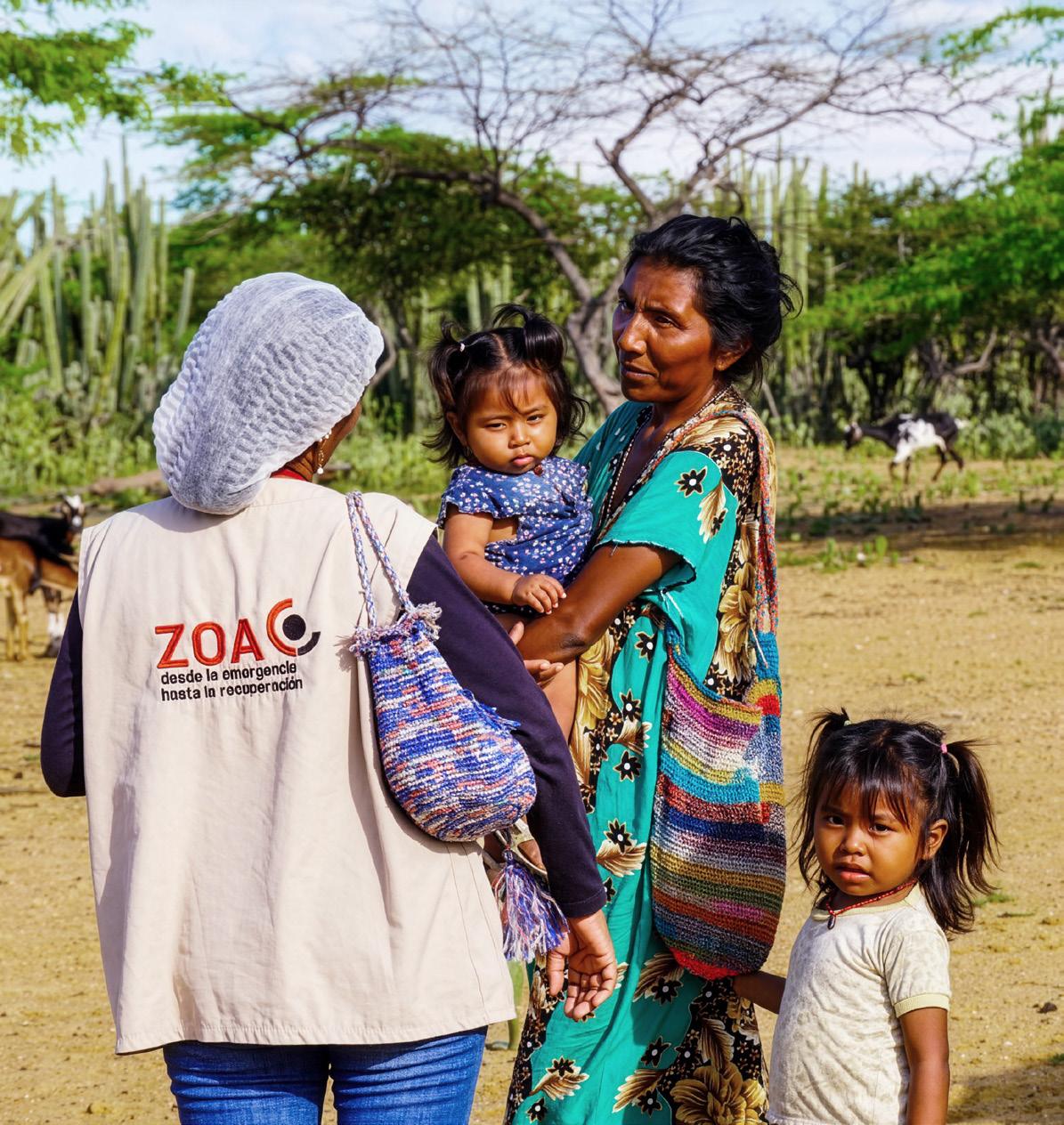
ZOA colleague Norelis Estrada speaks with a young family in Wuitkat, Carrizal, Colombia, where extreme drought has made farming nearly impossible. The region faces malnutrition and child mortality, and ZOA supported the community with vital food assistance.
Again and again
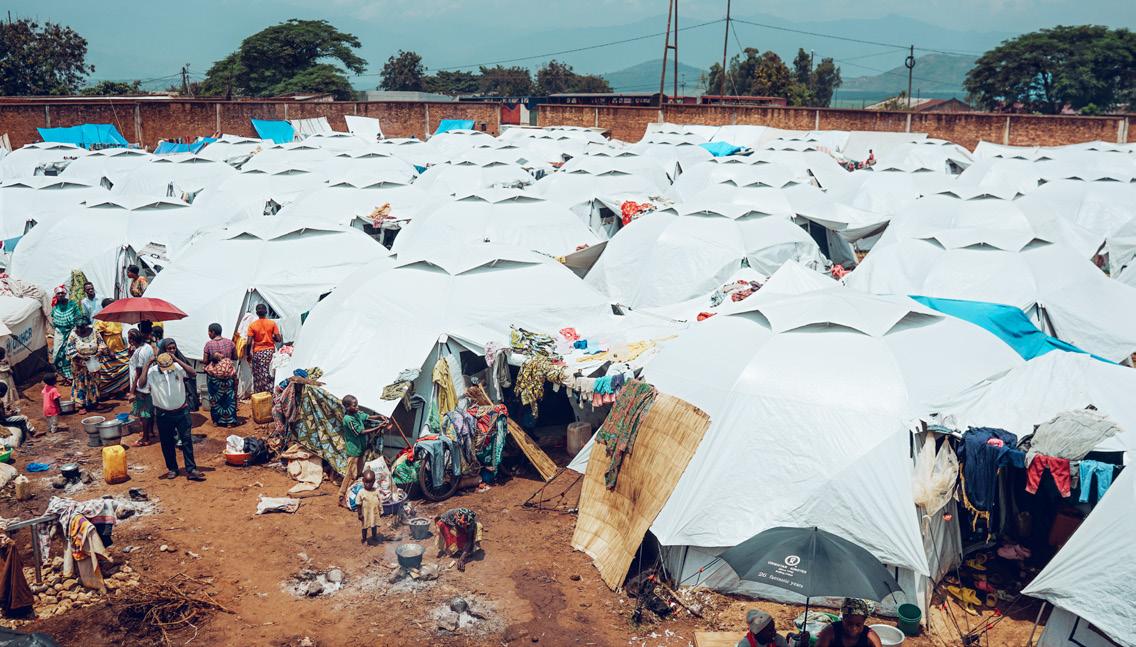
Early in 2025, many Congolese fled to neighbouring Burundi, afraid of the advances made by M23 in Eastern DR Congo. They left behind most of their belongings and became dependent on aid. ZOA was able to help in those first difficult days.
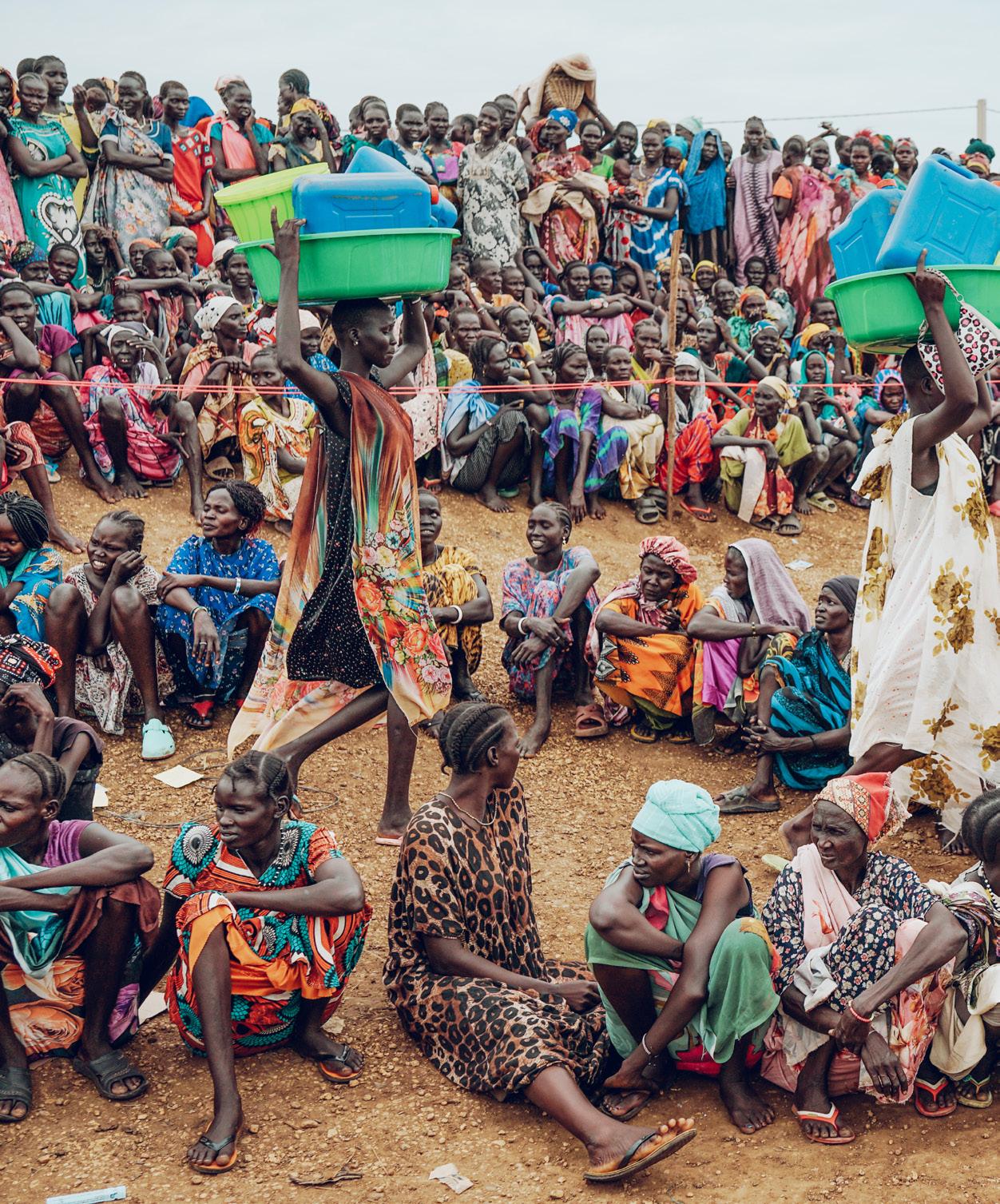
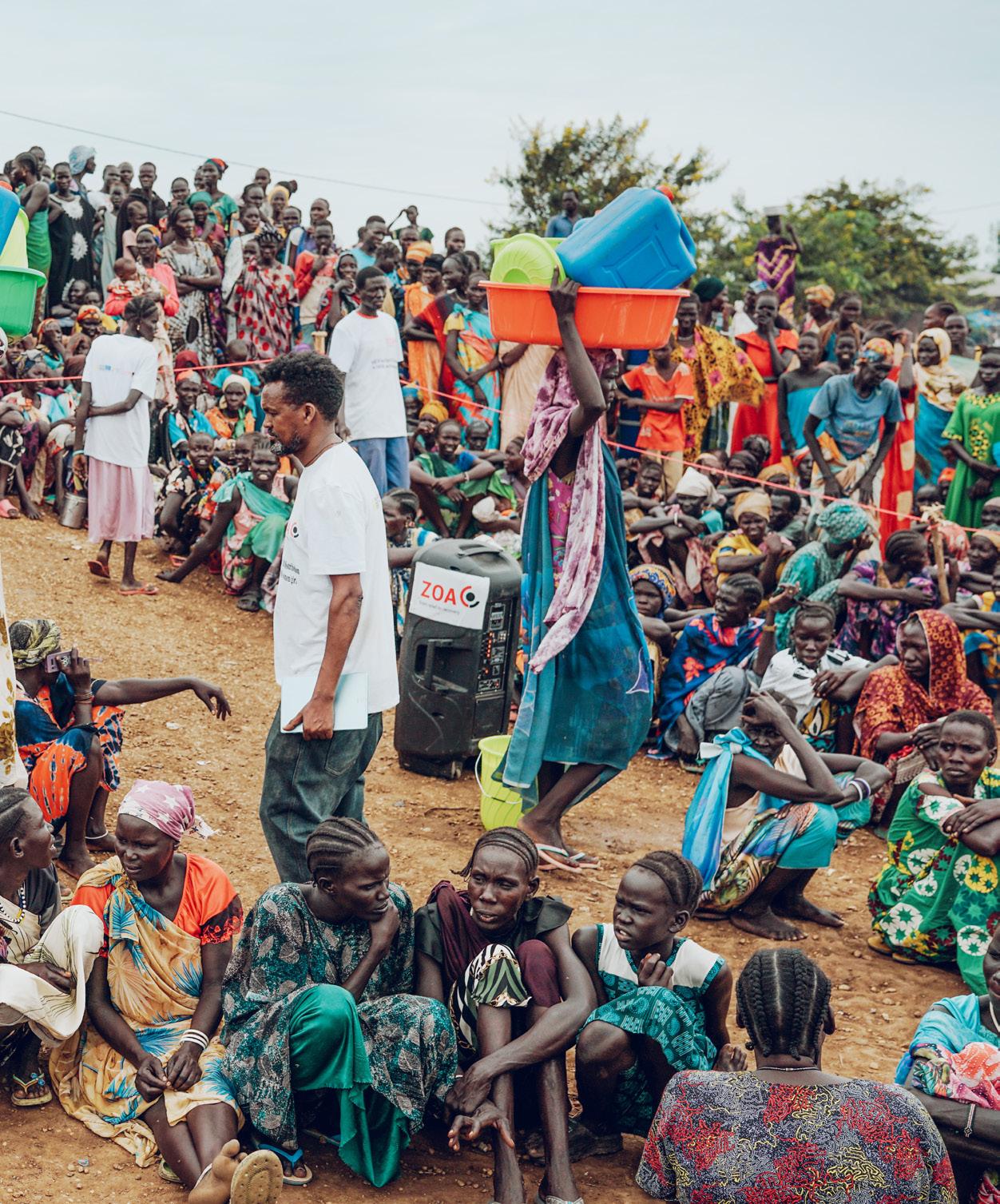
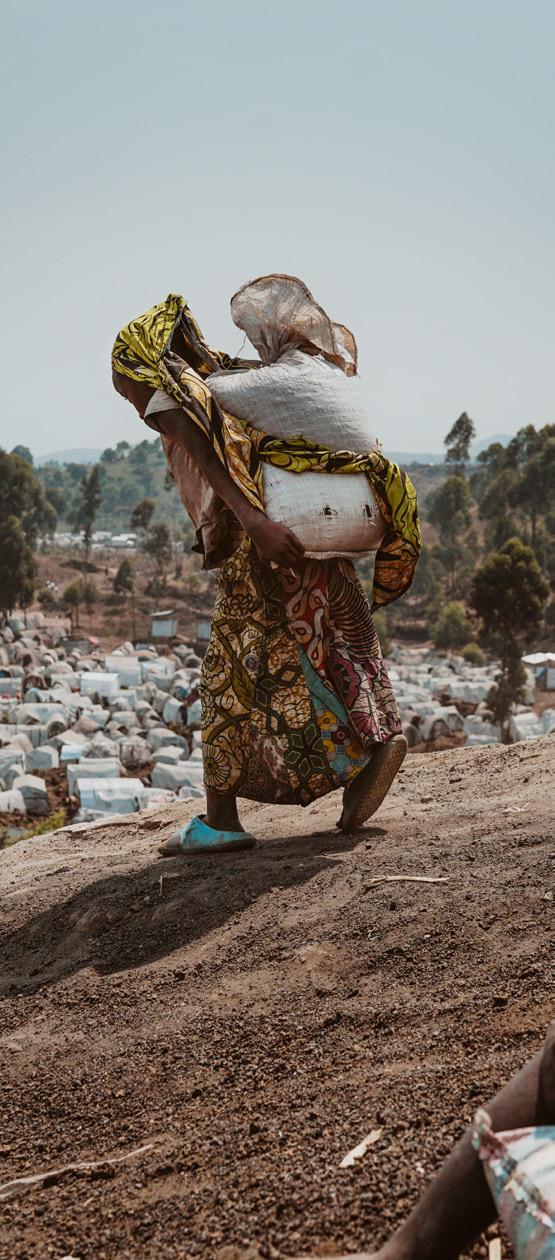
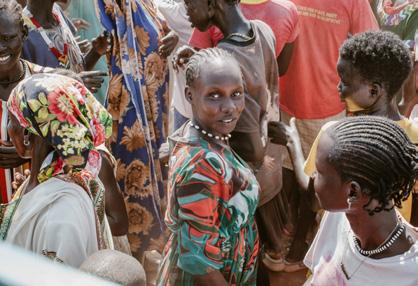
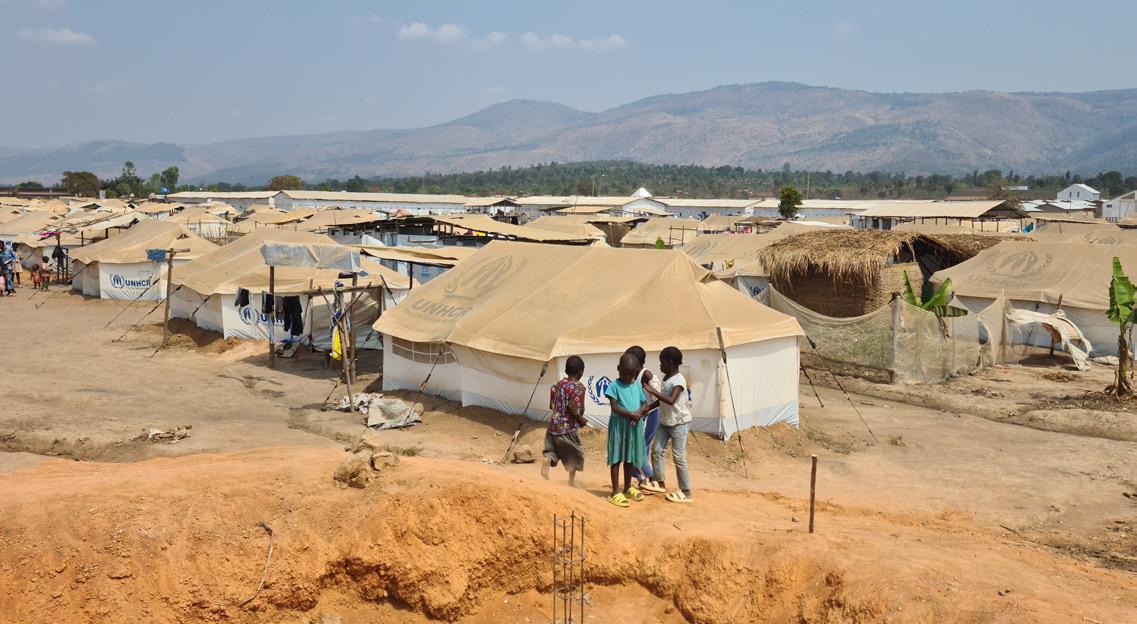
Many of these refugees were moved to Musenyi in the eastern part of Burundi several months later. I visited this camp late in 2025. A small town had appeared in a short time, with endless rows of tents and nearly 20,000 people.
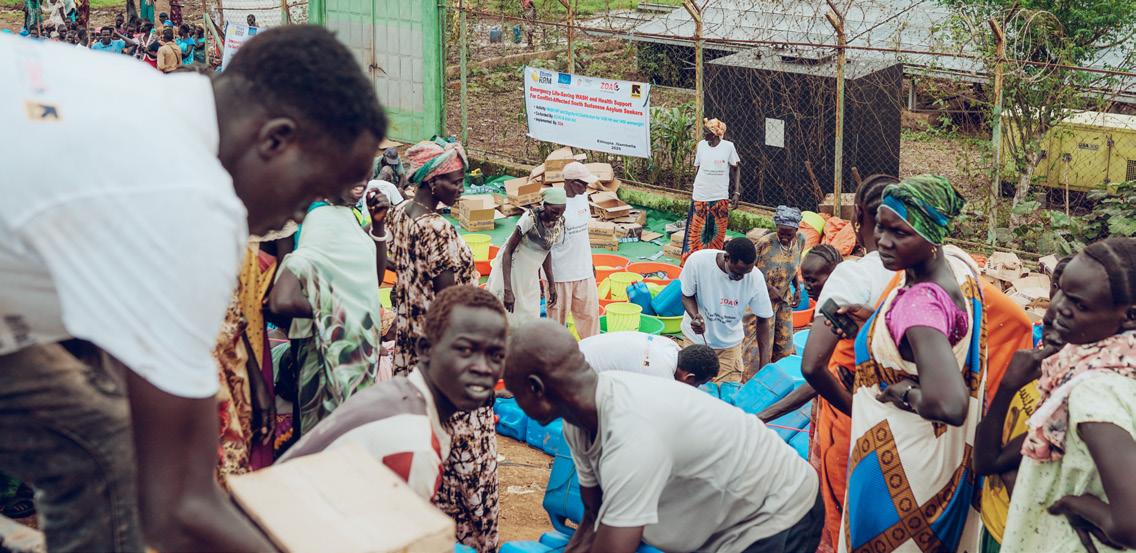
I watched a food distribution taking place, to which ZOA had contributed. I also saw the sanitary units that ZOA had helped to build.
As I watched the crowds gathering and listened to the many sounds around me, I could only admire the resilience of these people. They have suffered for decades because of the ongoing conflict in the region. Yet again and again they manage to rise up, even when it means leaving everything behind and starting from zero in a new place.
ZOA wants to be present in exactly these kinds of places. I consider it a privilege that we can walk alongside these people, helping them rebuild their lives once more. Our vision is for people to have hope and live dignified lives in peaceful communities. How much we wish this for the 20,000 people in Musenyi — and for millions of others around the world.
East Darfur, North Darfur, South Darfur, Central Darfur, Gedaref, Kassala, White Nile, Blue Nile, South Kordofan, Khartoum, Al Jazira
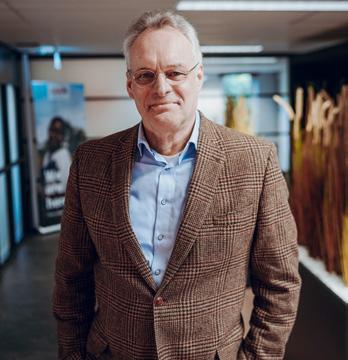
In a year of escalating humanitarian need and sharply declining institutional funding, ZOA continued to operate in some of the world’s most complex crises. Amid these challenges, growing support from private donors proved a vital source of resilience, say Chief Executive Officer Chris Lukkien and Chief Programme Officer Edwin Visser as they reflect on 2025.
ZOA’s Executive Board reflects upon 2025
Fewer funds, growing needs — and a stronger locally led response
This was a demanding year for the humanitarian sector. What moment reminded you the most why this work matters?
Chris: During a project visit to Tigray, Ethiopia, I entered a classroom where displaced families had found shelter after fleeing violence. An elderly woman sitting on the floor called out, ‘Look at me’, asking not to be passed by unseen. To me, that moment captured the heart of ZOA’s work. Following the example of Jesus, we want to stand with people like her, make hidden pain visible, and work together to build hope for a better future.
The past year brought a huge decrease in institutional funding and more protracted crises. What did this mean for ZOA’s work?
Edwin: Most of the people we supported in 2025 were affected by conflict. In Sudan,
Myanmar, Yemen, and parts of DR Congo, displacement deepened and needs grew — while attention and access didn’t always keep pace. That gap sharpened our choice to be present where others cannot be.
Chris: Yes, and our choices demanded clarity and clear communication internally. In addition, we used scenario planning to better prepare ourselves for a rapidly changing humanitarian context. Externally, we stayed focused on our humanitarian mandate: we aim to reach those most in need, even where that is difficult or controversial.
What are you most proud of when you look back on 2025?
Chris: We kept the organisation steady in an unusually turbulent year. That steadiness mattered to our teams and for our project participants.
Edwin: I’m proud that we remained active in some of the world’s hardest contexts and that a larger share of our portfolio was implemented locally. Community-led approaches — including group cash transfers — grew further, shifting ownership to local people, reducing overhead, and speeding up results. And across countries we worked more deliberately with national partners.
What was ZOA’s biggest challenge in 2025?
Chris: Without doubt, the drastic reductions in institutional funding, precisely when humanitarian needs increased. We saw NGOs scale back activities. The shift we feared has become reality, and also ZOA had to adjust quickly.
Edwin: That adjustment is not just budget cuts, but also means a different operating landscape. We’re reassessing modalities, sharpening cost-effectiveness, and diversifying income so we can remain present where needs are acute. The aim is not just to cope, but to come out of this storm stronger.
The sudden stop of USAID funding led to ZOA’s closure in Colombia. How do you look back on that decision?
Edwin: It was very hard and unexpected. We said goodbye to colleagues in a dignified way, but the closure meant renewed vulnerability for many Venezuelan migrants. The lesson is clear: donor diversification is crucial. In similar contexts we will, in future, more actively seek to reduce dependency on a single donor and explore alternative routes to sustain at least a minimum level of support.
How did ZOA fare financially in 2025?
Chris: We closed the year with a positive result, better than the breakeven
we anticipated. Thus, we managed to keep our continuity and other reserves at an appropriate level. Reserves protect continuity in uncertain times. However, our priority remains to channel as much funding as possible to our programmes.
Edwin: Our Dutch constituency once again responded generously. Private income continued to grow, which partially offset the decline in institutional funds. Private giving can’t fully replace institutional cuts, but it is helping us stay present where the need is highest.
How do you explain the loyalty of ZOA’s constituency in a challenging political climate?
Chris: People in our constituency feel deeply connected to our work and the Christian identity of our organisation. We’ve received major donations from the business community in response to the decline in institutional funding. But many private individuals also increased their monthly donations in response to drastic Dutch government cuts.
Which goals from the three-year strategy did you achieve in 2025 — and which not?
Chris: A midterm evaluation showed good progress on our strategic priorities, with a clear call to accelerate localisation, working more with and through local partners and community-led models. We also saw that our climate resilience agenda lags behind. In future, we will apply a climate lens across country portfolios and priorities.
Edwin: Practically, that means helping people becoming more resilient to climate shocks within our recovery and livelihoods work. This goes from water management and flood protection to drought-tolerant agriculture and risk-aware market support tailored to each context.
What trends do you see — and how will ZOA respond?
Chris: The institutional funding market has structurally changed. We are planning for fewer institutional funds amid greater need, and we are adjusting our operating model accordingly.
Edwin: We will focus on more locally led programming, including settings where we work fully through partners without a permanent ZOA office. Programmes may be smaller on average, but with stronger capacity strengthening, monitoring, and accountability. We will prioritise forgotten crises where our added value is highest and where we can mobilise the right mix of funding.
Looking ahead to 2026, what gives you hope?
Chris: We are Able! — the five-year disability inclusion programme we led with partners in six African countries — came to an end in 2025. Through this programme we not only supported individuals but also worked with civil society organisations and authorities to influence and change policies impacting persons with disabilities. What gives me hope is that through programmes like these we can demonstrate that systemic change is indeed possible.
Edwin: Our growing constituency in the Netherlands gives me hope. Against the current, many people choose generosity: that is ZOA’s backbone.
Read more about ZOA’s Board and their additional positions.
ZOA’s core values
We value people
All people are made in God’s image; therefore, we place people at the centre of our work. We treat people with respect and dignity, irrespective of ethnicity, gender, religion, age, or any other distinctive feature. We stand with people, acknowledge their potential and support them in their search for living dignified and peaceful lives and in regaining hope for the future.
We are faithful
We want to bring lasting change and are committed to staying when the initial crisis is over. Even when local circumstances are challenging, we seek to reach out to the most vulnerable. We recognise the role and capacity of local actors and seek to collaborate with them. Being aware of our temporary role and presence, we are committed to investing in strengthening local civil society.
We are good stewards
We utilise the resources entrusted to us in the best possible and most responsible way. We are efficient, effective, transparent and accountable to those we support and those who support us. We are committed to contributing to environmental sustainability, and we encourage the people we serve to do the same.
We serve with integrity
We hold ourselves to the highest standards of personal and organisational integrity. We are open and honest in the way we deal and communicate with our stakeholders. We treat people with respect and speak the truth in love to one another.
Vasyl DEEP RELIEF
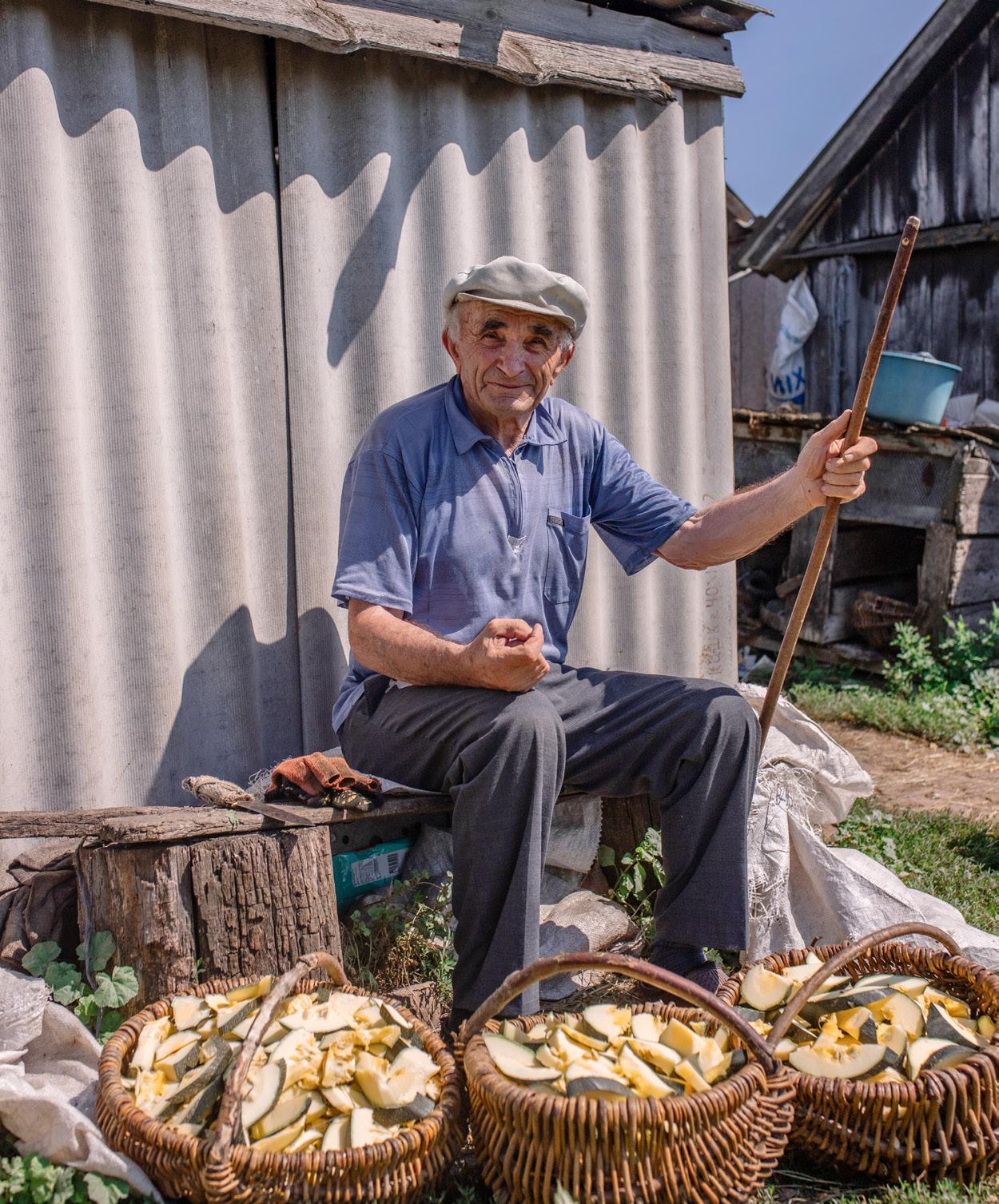
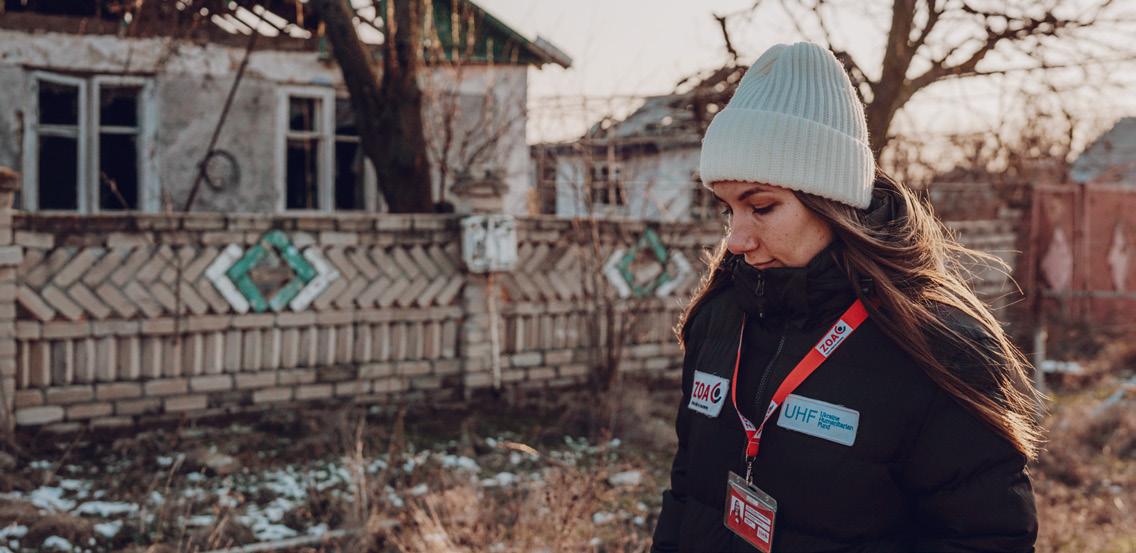
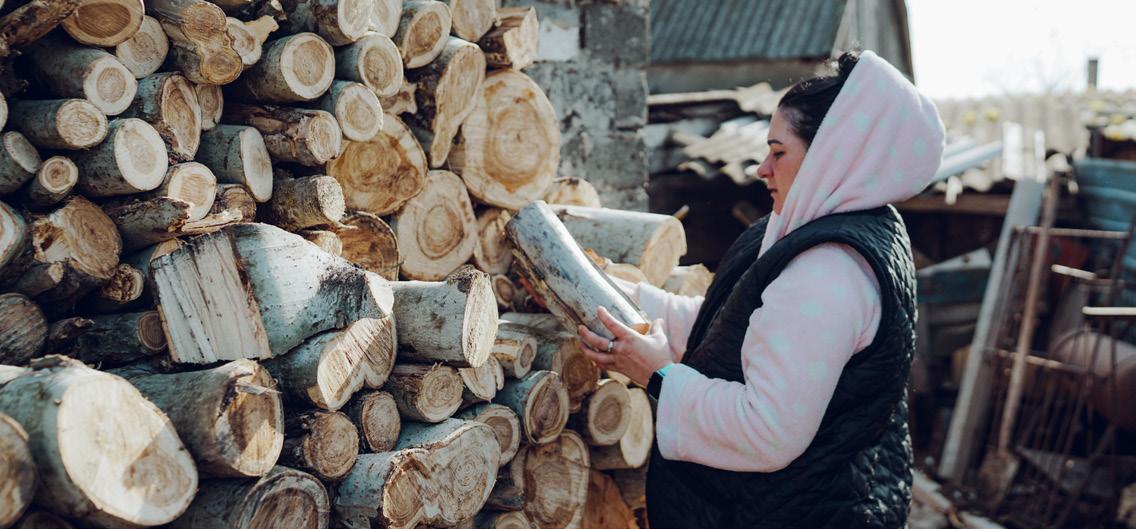
In the village of Velyki Budky in Ukraine’s Sumy region, Vasyl Ivanovych (83) is doing his best to support his family, despite age and declining health. Once known locally for crafting sturdy wicker baskets, he can no longer work as he used to. Yet Vasyl remains a steady presence for his daughter, Kateryna Kiyashko. As the family is internally displaced due to the conflict in their country, Kateryna carries the heavy burden of caring for him, her mother who is confined to her bed, and her young daughter.
Although he can now weave only for his own needs, Vasyl helps around the household whenever his strength allows. He watches with pride as Kateryna cultivates the land alone to grow vegetables and tends their three cows — work that provides the family’s only income.
Kateryna received financial assistance from ZOA to buy an engine to ease the labour. This support brings deep relief to Vasyl, because his daughter’s load is now lighter, and their family’s resilience can endure.
Statement of the Supervisory Board
The context in which ZOA operates became increasingly complex and challenging in 2025, while the needs arising from conflicts and disasters continued to grow across many countries. Humanitarian suffering in conflict areas such as Sudan and Gaza reached unprecedented levels, with no realistic prospect of peace or stability in sight. In countries like South Sudan and Burundi, humanitarian needs remain enormous, yet these crises rarely reach the front pages of international media.
Globally, geopolitical tensions rose sharply, and the established world order continued to shift at great speed. In several Western countries, political support for official development assistance (ODA) declined. The United States withdrew as a leading humanitarian donor in a surprisingly short period, and ODA budgets came under pressure in several other countries as well.
In 2025, ZOA faced the major challenge of responding effectively to these rapid changes and the accompanying budget cuts in order to safeguard programme continuity.
The Supervisory Board is very pleased with the early development of scenarios, which enabled timely adjustments where necessary. At times, difficult decisions had to be made — such as the closure of ZOA’s programme in Colombia. Even so, ZOA was able to implement most of its country programmes largely as planned. Although some decline in institutional funding could not be avoided, financial support from private donors even increased.
The Supervisory Board considers this an encouraging sign that ZOA can continue to rely on a loyal and committed supporter base, even in challenging times.
The Supervisory Board greatly appreciates the leadership and direction provided by the Executive Board — Chris Lukkien, Chief Executive Officer (CEO), and Edwin Visser, Chief Programme Officer (CPO) — together with the International Management Team, in steering the organisation through these difficult circumstances.
Income was spent effectively and efficiently, in line with the current strategy and approved budget, the Supervisory Board has
ascertained. Consequently, the 2025 Annual Report — discussed in the Supervisory Board meeting of 19 May 2026 — was approved, including the financial statements presented by the Executive Board.
We are grateful to our staff, management, and volunteers, as well as to our private and institutional donors, for their commitment and support. Above all, we are grateful to God for bestowing such care and protection. May the work of ZOA reflect something of God’s peace for this troubled world.
REPORT OF THE SUPERVISORY BOARD
The Supervisory Board holds the formal responsibility to oversee ZOA’s policies and plans, safeguard its Christian identity, approve and monitor strategic direction, monitor risk mitigation, approve the annual budget and annual report, and appoint and evaluate the performance of Executive Board members. In addition, the Supervisory Board represents both ZOA’s constituency and society at large. ZOA’s Executive Board is responsible for executive decision-making and the dayto-day management of the organisation.
Separating “management” from “supervision” within its governance model is a key requirement set out in the governance guidelines for charitable organisations, as described in the Regulations and Appendices for Recognition of Charitable Organisations. ZOA complies with these standards and is formally recognised for this by the Netherlands Fundraising Regulator (CBF).
Niels Hofstede Supervisory Board Chair
The Supervisory Board, with the Executive Board attending, met four times in 2025 for their regulatory meetings, with an attendance rate of 87%. Regular topics for the agenda — such as the 2024 Annual Accounts and Annual Report, the 2026 Business Plan and Annual Budget, the quarterly Board reports, meetings with the Works Council, the evaluation of the Board members’ performance, and external developments — were scheduled as anticipated. Other topics discussed include the development and monitoring of strategic management scenarios, additional investments in private fundraising, trends in HR management, preparations for the selection of an external accountant, and review of the regulations for the Executive and Supervisory Boards.
The Supervisory Board reviewed the external positions held by the members of the Executive Board and concluded that these roles are compatible with their responsibilities at ZOA and do not present any conflict of interest.
AUDIT AND REMUNERATION COMMITTEES
Two committees function within the Supervisory Board: the Audit Committee and the Remuneration Committee. The Audit Committee discussed the 2024 Annual Accounts and the corresponding audit findings report by the external auditor,
Crowe Foederer, as well as internal audit reports and the 2026 annual budget. The Audit Committee was regularly updated on the financial situation and risk status of ZOA’s country organisations.
The Remuneration Committee evaluated the performance of the CEO and CPO and advised on their salaries. In determining the salary and additional benefits of the members of the Executive Board, the Supervisory Board adheres to the Scheme for Remuneration of Management of Charitable Organisations, set by the Dutch branch organisation for charities (Goede Doelen Nederland). This remuneration scheme is part of the Regulations and Appendices for Recognition for Charitable Organisations.
Members of the Supervisory Board
Members of the Supervisory Board serve a term of five years and are eligible for one reappointment. They are selected based on criteria indicated in the profile of the Supervisory Board. They receive no financial compensation for their work. They can, however, claim expenses incurred in accordance with the rules for claiming expenses applicable to ZOA employees. In 2025, Niels Hofstede was reappointed for a second term as chair of the Supervisory Board. After 10 years of dedicated participation, Hannie Olij-Haak left the Supervisory Board.
Niels Hofstede
• Function on the Supervisory Board: Chair, Remuneration Committee
• Period of service: 2020–2030 (second term)
Hannie Olij-Haak (until September 2025)
• Function on the Supervisory Board: Member, Remuneration Committee
• Period of service: 2015–2025 (second term)
Anne Strijker
• Function on the Supervisory Board: Member, Audit Committee Chair
• Period of service: 2019–2029 (second term)
Jan Hendrik Dronkers
• Function on the Supervisory Board: Member, Audit Committee
• Period of service: 2018–2028 (second term)
Peter Kleijwegt
• Function on the Supervisory Board: Member, Remuneration Committee
• Period of service: 2024–2029 (first term)
Stieneke van der Graaf
Scan the QR code to learn more about ZOA’s Supervisory Board, their experience, and their additional positions.
• Function on the Supervisory Board: Member, Deputy Chair
• Period of service: 2024–2029 (first term)
ZOA’s approach and strategy
ZOA is an international relief and recovery organisation that works in fragile and conflictaffected contexts, providing humanitarian assistance to people impacted by violence and natural disasters, and supporting them as they rebuild their lives. Together with local partners, ZOA follows a sectoral approach as it improves access to food and land, and water, sanitation, and hygiene; provides shelter, restores livelihoods, and promotes peacebuilding, including land rights.
ZOA’s goal is to contribute to stable communities where people can live in peace and dignity. The focus is always on those most vulnerable — regardless of race, ethnicity, religion, disability, gender, or sexual orientation.
From relief to recovery
ZOA, with the dual mandate of relief and recovery, responds to urgent needs for water, food, and shelter. Recovery programmes take a longer-term perspective, helping people rebuild livelihoods and strengthen community stability.
This shift from relief to recovery is rarely straightforward. Situations can change quickly, and in many contexts immediate assistance and longer-term support are needed at the same time.
FROM RELIEF ...
When disasters or conflicts occur, ZOA responds quickly with cash assistance, food, safe water, essential household items, and shelter, working closely with national authorities and local organisations to ensure coordinated support.
... TO RECOVERY
ZOA’s expertise lies in early recovery in fragile settings. Lasting impact requires addressing the root causes of conflict, often linked to access to land, water, and livelihoods. Conflict not only arises from these pressures, but also further disrupts how people earn a living.
CRISIS-AFFECTED PEOPLE
Most people displaced by violence or disaster remain within their own country. ZOA prioritises support in affected regions, within countries, and across borders when necessary.
ZOA’s strategic priorities
In the strategy 2023-2026, Towards Peace and Resilience, ZOA identifies three closely connected priorities: Peace Nexus, climate resilience, and localisation. Focused attention is also given to gender, diversity, and inclusion (GDI), recognising that inequality and exclusion can both cause and worsen conflict.
Progress is monitored through key indicators and “adoption ladders”, a five-step model developed by ZOA. Based on models for behavioural change, this model tracks the progress of country teams toward full integration of each strategic theme in their day-to-day work. Significant progress toward strategic goals was reported in 2025 based on this methodology.
PEACE NEXUS
In all relief and recovery settings, ZOA works to reduce tensions and support peaceful coexistence. Because its programmes operate in fragile and conflict-affected areas, ZOA applies conflict-sensitive approaches and protection principles across all sectors, ensuring that its interventions do not unintentionally cause harm.
ZOA’S PROGRAMME STRATEGY
Relief & Recovery
Peacebuilding
Food Security and Livelihoods (FSL)
Shelter
Water, Sanitation, and Hygiene (WASH)
Education
For ZOA, peace involves social cohesion, mutual acceptance, gender equality, and opportunities for people to improve their livelihoods. This approach reflects the Triple Nexus linking humanitarian aid, development, and peacebuilding.
CLIMATE RESILIENCE
ZOA supports communities in adapting to climate change and environmental pressures, and promotes activities that strengthen resilience, such as sustainable water management and climate-smart agriculture. To assess potential environmental impacts in its programmes, ZOA uses an Environmental Stewardship Tool. At organisational level, each country office has set targets to reduce its environmental footprint. In the Netherlands, for example, solar panels and a VRV system have been installed, as well as a charging station and new LED lighting.
LOCALISATION
Strengthening local leadership and community ownership is central to the work.
ZOA partners with community- and faithbased organisations and local governments to ensure that their perspectives shape programme decisions. While maintaining operational capacity where needed, ZOA prioritises community-driven and participatory approaches that reinforce local structures and contribute to a strong, inclusive civil society.
RESULTS AND ACCOUNTABILITY
ZOA applies a professional, organisationwide framework for monitoring, evaluation, accountability, and learning (MEAL). This core technical discipline ensures the quality, credibility, and strategic value of the programmes. The framework uses advanced methodologies and clear roadmaps to guide evaluations, data collection and analysis, and strong accountability practices.
By using the same MEAL approach in all programme countries, ZOA ensures that the information is consistent and reliable. This system facilitates the evaluation of progress toward strategic goals by creating a solid foundation for robust evaluations. The following 2025 examples demonstrate how MEAL is applied in practice and how evaluations drive learning and accountability across ZOA’s programmes.
Peace and Stability in South Sudan — Increasing Resilience in Bor South (Pharus)
Evaluator: STOOS Consulting (external)
What the evaluation found: The independent evaluation found that the five-year programme helped communities in Bor South recover from conflict, flooding, and trauma. Community-based sociotherapy significantly improved emotional well-being and rebuilt trust among groups. Peace Committees and Peace Promoters became trusted local actors, helping at an early stage to promote dialogue to address
tensions. Farmers increased production, thanks to training and improved seeds, which led to more diverse diets and higher incomes. Youth learned skills to start small agricultural businesses, strengthening livelihoods and community relations. Climateresilient farming and Disaster Risk Reduction Committees improved preparedness for floods and droughts.
Overall, the programme contributed to greater social cohesion, improved food security, stronger youth engagement, and increased resilience.
What ZOA learned: Inclusive participation requires continuous attention. Future programmes should strengthen the involvement of women, persons with disabilities, and marginalised youth from the outset.
Evaluation of New Country Start-Ups through the Disaster Response Team (2025)
Evaluator: ZOA MEAL Team (internal evaluation)
What the evaluation found: This internal evaluation reviewed how ZOA’s Disaster Response Team (DRT) establishes new country programmes, drawing on experiences in Ukraine and Colombia. The DRT played a key role in rapidly launching operations, securing early funding, and building relationships with institutional donors.
Successful transitions depended on funding, leadership, and strong headquarter support. Early funding and DRT-led proposal development enabled teams to expand. Clarifying leadership roles — by recognising Country Representatives’ responsibilities as equivalent to that of Country Directors — supported ownership and smoother transitions.
Early involvement of HR, Finance, and Programme departments strengthened
systems and reduced dependency on DRT support.
What ZOA learned: Transition planning should begin early, with clear milestones and deliberate handover of leadership and funding responsibilities to build confident, independent teams.
Integrated Basic Services and Livelihoods for Refugees and Host Communities in Gambella, Ethiopia (2023 – 2026)
What the evaluation found: This independent midterm evaluation assessed the EU-funded, multi-sector project implemented by ZOA and Action Against Hunger in Gambella. The project responded to urgent needs related to water scarcity, food insecurity, weak health services, and displacement. Communities reported measurable improvements. Access to safe drinking water increased substantially, water-related diseases declined, and maternal and child health services became more consistent. Food security improved through higher crop production, more diverse diets, and reduced reliance on negative coping strategies. The project also strengthened social cohesion and gender inclusion.
Implementation delays in WASH and livelihoods were noted, mainly due to procurement challenges, insecurity, and high demand.
What ZOA learned: Flexibility and early problem-solving are essential in protracted refugee settings. Strong community participation and government coordination are key strengths, while accelerating WASH and livelihoods activities and strengthening follow-up systems remain priorities for the final phase.
‘THIS FILTER IS PRICELESS!’
Myanmar
Daw Aye Aye Khine
In Myanmar’s Sagaing township, Daw Aye Aye Khine (47) is rebuilding her life after the devastating 7.7-magnitude earthquake that struck the region in March 2025. A single mother of two, she once ran a small shop selling traditional rice vermicelli salad to support her family. But everything changed when the earthquake severely damaged her home and disrupted water supplies.
With transport routes blocked and purification plants destroyed, safe, clean drinking water became almost impossible to find. ‘For one or two days after the earthquake, we had no safe water at all’, she recalls. ‘We had to drink from the river.’ Dehydration and the threat of disease quickly grew.
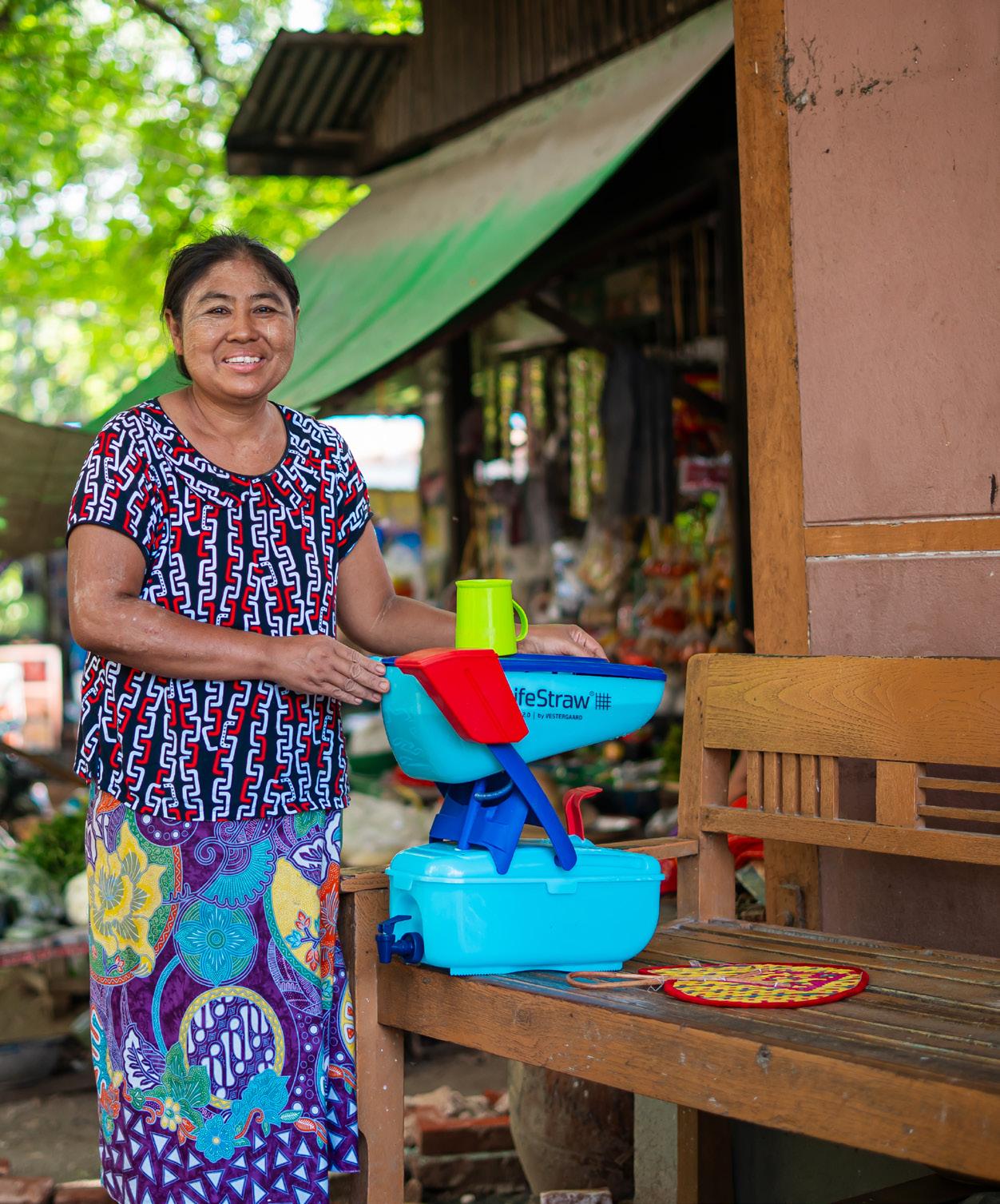
As part of its emergency response, ZOA distributed portable water filters to over 1,000 affected households. For Daw Aye Aye Khine, this was life-changing. ‘This filter is ...priceless’, she says. With safe water available again, she reopened her shop, safeguarded her children’s health, and found renewed hope for the future.
STRATEGIC PRIORITIES IN 2025
Myanmar
REBUILDING SHATTERED LAND
In 2025, a major earthquake hit Myanmar’s central dry zone, destroying homes, farmland, and food systems. With ZOA’s access restricted by insecurity, local organisations supported by ZOA became the first and most effective responders, making localisation the lifeblood of this relief and recovery response.
Localisation
Strong communities, empowered civil societies, and local leadership are key to lasting solutions and locally led responses are essential for long-term recovery and resilience. With a local presence in the countries and regions where we work, ZOA collaborates with local partners and other stakeholders.
Besides gradually increasing the funding to local actors, ZOA focuses on the quality of collaboration, for example through joint decisionmaking and strengthening of institutional capacities. Community-led relief efforts are made possible through the group cash transfer approach, ensuring local ownership and support.
ZOA and three local partners helped farming families rebuild their livelihoods from the ground up. The creation of 44 groups of farmers, who took leadership in planning recovery and coordinating support, was a major achievement. Each group received a group cash transfer to establish a revolving fund, along with a digital tool to track agricultural purchases and ensure transparency in fund management. The revolving funds enable the farmers to access small loans for seeds, fertiliser, and tools — thereby strengthening their long-term resilience.
ZOA and its partners gave each farmer group technical coaching, empowering the farmers to rehabilitate hundreds of acres. The change was visible: the cash support helped to quickly stabilise families, village committees took real leadership, and farmers who had feared losing a full year of harvest regained the ability to plant.
Despite the obstacles of security restrictions and inflation, the strong synergy between ZOA’s technical expertise and the deep local roots of community organisations kindled meaningful recovery and renewed hope for farming families.
Scan the QR code to a website overview of ZOA’s work in Myanmar.
Syria
RECOVERY AMID INSECURITY
Syria has been battling the effects of 14 years of conflict, economic collapse, and climate disaster. In 2025, Syria also faced a volatile security situation resulting in displacement, and the most severe drought in 36 years.
ZOA has a longstanding cooperation with three national partner organisations, as well as with local authorities and communities, strengthening local capacities.
In 2025, ZOA and local partners improved lives in Syria through life-saving aid: distributing hot meals, providing agricultural tools and alternative sustainable fuel (olive pomace) for heating during the harsh winter season, rehabilitating water sources, and conducting psychosocial sessions for displaced persons and refugees.
Early recovery efforts focused on boosting resilience by solarising and rehabilitating key infrastructure such as irrigation systems and wells. Considering the drought, this was highly relevant. However, reliable information on community needs, capacities, and technical gaps, such as the condition of water and irrigation systems, remains limited, complicating effective planning.
Immediate impacts were visible in emergency aid, but long-term change — such as community ownership and maintenance of projects — requires time and follow-up. Security risks and bureaucratic delays hindered progress, while ongoing volatility delayed assistance to critical areas. These challenges underscore the complexity of achieving sustainable recovery in Syria’s unstable environment.
Ukraine
ENABLING LOCAL RESPONSE
Group cash transfers (GCTs) in Ukraine are reshaping how ZOA supports people in need. GCTs empower local communities to work on their own solutions for local problems. This can have significant impact, enabling communities to rapidly respond to needs, particularly in emergency situations.
Conditions are favourable for GCTs to work well in Ukraine, as the banking system is functional and an abundance of community groups already support their fellow citizens throughout this brutal war. ZOA uses those existing community structures to deliver humanitarian assistance as best as possible. A commitment to localisation and scaling up of GCTs also aligns with the Humanitarian Needs and Response Plan strategic priorities for Ukraine, which is in large part led by local and national actors. ZOA wants to amplify the voices of those who live and operate on the front lines, who risk their lives to support people in need, and who are best positioned to respond innovatively and effectively.
More than USD 300,000 in GCTs were delivered to 45 initiatives in 2025 to achieve a wide variety of humanitarian outcomes. Some examples include the purchase of water containers for local water management companies to deliver water during power outages, psychological support for children with disabilities, and the repair of community centres for Internally Displaced Persons.
Scan the QR code to a website overview of our work in Ukraine.
Scan the QR code to a website overview of ZOA’S work in Syria.
Ahmed Kabon (12), Syria: ‘I attended mental support sessions where I learned about emotions, ideas, and communication. I also learned how to draw a happy child!’
DR Congo
CUT OFF FOR MONTHS
Communities in North and South Kivu faced intense conflict in 2025, with people repeatedly being displaced, houses destroyed, and access to food, safe water, and health care severely disrupted. By working with locally rooted structures, ZOA aims to support families who have lost everything.
Insecurity frequently prevented direct access by national and international staff, but the local field supervisors remained present. Thus ZOA’s localised approach enabled continuous, life-saving relief across both provinces — thanks to the commitment of these local staff. Thousands of households regained access to safe water via rehabilitated water systems and community-run chlorination points, significantly reducing cholera cases and other waterborne diseases. Cash assistance allowed vulnerable families to purchase food, pay for medical treatment, repair damaged homes, or restart small income activities.
In the isolated highland area of South Kivu that was cut off entirely due to conflict, ZOA managed to have emergency food support delivered and health facilities supplied with essential medical items, offering a rare lifeline to families trapped for months.
Violence, blocked routes, and cash shortages limited the scale and pace of assistance. Still, local ZOA supervisors continued their work alongside local partners, and provided life-saving help to communities that no one else could access.
Scan the QR code to a website overview of ZOA’S work in DR Congo.
Results
‘On behalf of the population and staff, we extend our profound gratitude to the leaders of ZOA, both nationally and internationally, and your partners, for daring to defy the barricades imposed upon innocent people. ZOA did not just offer basic necessities; it offered a sign of hope to a community that has been besieged, injured, and ignored for too long.’
Name and location of the quoted person in DR Congo needs to remain anonymous for security reasons.
ZOA IS PROUD TO WORK WITH A RANGE OF LOCAL PARTNERS
Burkina Faso: Christian Relief and Development Organisation (CREDO).
Burundi: Association pour la Promotion de la Santé des Communautés et le Développement (SACODE), Conseil pour l’Education et le Développement (COPED), L’Union des Personnes Handicapées du Burundi (UPHB), Ministère Paix et Réconciliation Sous la Croix (MiPAREC).
DR Congo: Action des Volontaires Unis pour le Développement et la Sante (AVUDS), Action Pour
la Paix et la Concorde (APC), Assises Communautaire pour le Développement Rural (ASCODER), La Fédération nationale des personnes vivant avec handicap du Congo (FENAPHACO), National Partnership of Children and Youth in Peacebuilding (NPCYP), Paix et Développement Durable (PDD), Programme de Secours aux Vulnerables et Sinistres (PSVS), Union Pour L’Emancipation de la Femme Autochtone (UEFA), Université Chrétienne Bilingue du Congo (UCBC), Université Eben-Ezer de Minembwe (UEMI).
Ethiopia: Action for Social Development and Environmental Protection Organization (ASDEPO), Development for Peace (DPO), Federation of Ethiopian Associations of Persons with Disabilities (FEAPD), Nexus Ethiopia, Tigray Youth Association (TYA).
Nigeria: Care Best Initiatives (CBI), Community Health Justice and Peace Initiative for Development (JDPH), Damnaish Human Capacity Building Initiative (DHCBI), Grassroot Initiative for Strengthening Community Resilience (GISCOR), Life Helpers Initiative (LHI), Lindii Peace Foundation (LPF), Smiling Heart Initiatives International (SHI), Precious Pride and Great Work (PPGW), Peace Restoration and Integral Global Development Initiative (PRIDE), Sheriff Aid Foundation (SAF).
Occupied Palestinian Territory: iTrust.One.
South Sudan: Awake Women and Children Empowerment (AWACE), Community Empowerment for Progress Organization (CEPO), Eas West Seed Knowledge Transfer (EWS-KT), University of Juba, Women Development Group (WDG).
Syrian Arab Republic (Syria): Blind Care Association Quneitra, Greek Orthodox Patriarchate of Antioch – Department of Ecumenical Relations and Development (GOPADERD), Syrian Society for Social Development (SSSD), St Ephrem Patriarchal Development Committee (EPDC).
Uganda: Fiber Foods Uganda, National Union of Disabled Persons of Uganda (NUDIPU), PALM Corps, Refugee Law Project, THRIVE Gulu, Uganda Community Based Association for Women and Children Welfare (UCOBAC).
Ukraine: Agency for Democratic Development (ADD), League of Modern Women, Shchedryk.
Yemen: Nahda Makers Organization (NMO), Sustainable Development Foundation (SDF), Youth Leadership Development Foundation (YLDF).
Locally we work with groups in many forms, formal and informal, such as civil society organisations, groups for group cash transfers, and organisations for people with disabilities.
Sudan: Alsawaid Alkhadra Organisation (AAO), Al Tawaki, Building Resilience Development Organization (BRDO), Green Peace Association (GPA), Hope and Friendship for Development Organization (HOPE), National Humanitarian Aid (NAHA), Neutrality for Peace and Development Organization (NPDO), SOS Sahel Sudan, Sahari Organization for Development (SAHARI), Emergency Relief Rehabilitation and Development Agency (ERRADA).
Gatbel
In Itang woreda (district), Ethiopia, ZOA’s largescale livestock vaccination campaign is bringing lasting change to the host community. For cattle farmer Gatbel Majak (65), the difference is remarkable. With tens of thousands of South Sudanese refugees settling in the region, pressure on local resources has increased significantly. Protecting cattle, goats, and sheep from disease has become essential for safeguarding livelihoods. Thankfully, no outbreaks have been reported since the start of the campaign. Milk production has risen, and stronger animals now reproduce more frequently, offering families renewed stability.
Gatbel cares for his animals with dedication, building simple shelters from local materials and keeping their living areas clean. He follows vaccination guidance closely, and when an animal shows signs of illness, he immediately contacts animal health workers for treatment. While grazing his herd, he keeps a close watch to protect his livestock from predators.
‘I STARTED WITH ONLY TWO COWS, NOW I HAVE MORE THAN 20’
Ethiopia
Results
Climate resilience
Climate change is a risk multiplier, increasingly threatening livelihoods and ecosystems and negatively impacting all of creation. It is primarily caused by human activity, with greenhouse gas emissions causing temperatures to rise and disrupt rainfall patterns. Excessive rainfall is increasing flooding, and severe droughts are causing crops and cattle to die. Extreme and irregular climatic conditions in fragile states put a strain on the livelihoods of hundreds of millions of vulnerable people, with rapidly growing numbers of women, men, and children left with no choice but to flee. This displacement comes on top of people fleeing war and violent conflicts. In many cases, these conflicts are also partially caused by the struggle for scarce resources such as water and land. The poorest and most vulnerable groups are the first to be affected, as their resources and resilience are limited.
IMPROVED FOOD SECURITY
Conflict-affected communities in Biu, Borno State, Nigeria, continue to face recurrent climate shocks, including erratic rainfall, prolonged dry spells, and declining soil fertility. These conditions deepen food insecurity, reduce household income, and push households into harmful coping strategies.
ZOA strengthened climate resilience in Biu through a graduation-style approach* integrating diversified livelihoods, climate-smart agriculture, cash assistance, and women-led economic empowerment. ZOA worked with 15 farmer groups implementing Participatory Integrated Planning (PIP), enabling households to set long-term adaptation goals and make practical changes to farming and income strategies. Farmers used existing basins and water reservoirs, reducing dependence on rain-fed production. Households adopted drought-tolerant crops and expanded poultry production. Saving groups stimulated income diversification and women had more input into decision-making over savings, production, and household food use.
Food security for project participants showed marked improvement. According to the endline survey, three years after the start of the project, 92% of the 377 families reported acceptable food consumption, compared to 0.5% at the start. Though security restrictions, rising input costs, delayed rainfall, and limited irrigation infrastructure constrained scale-up, this reflects a clear shift toward more adaptive and sustainable livelihoods.
Scan the QR code to a website overview of ZOA’S work in Nigeria.
* A graduation-style approach is a sequenced model that first stabilises vulnerable households through cash assistance to meet immediate food needs, and then supports them with skills training, savings promotion, and livelihood inputs so they can build sustainable income sources. The goal is to help households “graduate” from short-term crisis support to long-term self-reliance and resilience.
Yemen
LONG-TERM RESILIENCE
Yemen faces conflict, economic collapse, and climate shocks, leaving millions without basic needs such as safe water. ZOA responds through WASH and FSL initiatives, prioritising rehabilitation of water systems and solar pump installation for sustainable access and resilience. Our goal: to foster food-secure communities with access to clean water, improved hygiene, and empowered local structures for long-term resilience.
ZOA and its partners reached 50,361 people directly and 196,815 indirectly in 2025 through WASH, FSL, and CSO-empowerment projects. Two water sources benefitting 10,000 people were rehabilitated with solarised pumping systems, ensuring reliable access to safe water, reducing disease risks, and eliminating fuel dependency. By harnessing renewable energy, these systems strengthen climate resilience, ensuring communities maintain water access even during extreme weather, while reducing environmental impact. Women and girls benefit from reduced time fetching water, improving safety and freeing time for education and livelihoods. Training water user committees (WUC) strengthened local ownership and sustainability, marking progress toward climate-resilient, self-reliant communities. However, ongoing conflict and systemic fragility limited deeper change. In 2025, operational and security challenges — including ground clashes, airstrikes, civil unrest, access restrictions, and banking disruptions — severely impacted assistance delivery. Governance-related challenges and funding cuts added uncertainty, making it difficult to sustain climate-resilient, community-led systems and to fully realise the aspired goals.
Scan the QR code to a website overview of
Uganda
CLIMATE-SMART AGRICULTURE
In the West Nile Region of Uganda, ZOA’s DRIVE project supported 112 refugee and host communities in Terego and Madi-Okollo districts to strengthen resilient and inclusive local food systems. These communities face food insecurity due to climate variability, declining soil fertility, pest pressure, and limited access to markets, with women and children particularly affected. In 2025, ZOA applied the Participatory Integrated Planning (PIP) approach to strengthen household-level resilience and ownership. A total of 200 PIP Innovators were identified and trained, of whom 197 trained another 1,970 households to develop household PIPs and adopt climate-smart agro-ecological practices. Supported households produced crops such as cassava, okra, cabbage, beans, and maize using practices including Integrated Pest Management, mulching, intercropping, and micro-irrigation.
Demonstration plots and peer-to-peer learning contributed to improved soil management and reduced pest damage. Many households reported increased production and began selling surplus produce in local markets, contributing to improved food availability and income.
Climate variability continues to affect agricultural production, underscoring the importance of resilient farming practices. Progress was also constrained by limited access to quality inputs, high transport costs, and weak market infrastructure. Despite these challenges, communities demonstrated increased capacity to plan, adapt, and apply resilient farming practices.
Scan the QR code to a website overview of ZOA’S work in Uganda.
ZOA’S work in Yemen.
Peace Nexus
How can ZOA contribute to peace and social cohesion?
This is a crucial question for ZOA as we work in conflict and post-conflict contexts. Peace Nexus is a crucial part of the Triple Nexus approach, which focuses on the interlinkages between humanitarian work, development efforts, and peace actions and actors. ZOA strives to maximise peace and reduce conflict in all humanitarian and recovery interventions. This extends beyond ZOA’s peacebuilding work; it also encompasses interventions in the WASH, food security and livelihoods, shelter, and land rights sectors.
‘Women are now more involved in conflict resolution, which is good. Women have had enough of all the conflicts and want them to stop.’
– a female Peace Promoter in Kolnyang, South Sudan
South Sudan
OPPORTUNITIES AND PEACE
Prolonged conflict in South Sudan has led to widespread displacement and the erosion of livelihoods, pushing millions into extreme poverty. In response, one of ZOA’s key areas of focus is the Peace Nexus approach, combining peacebuilding efforts with creating economic opportunities for youth, strengthening food security, enhancing resilience to natural disasters, and promoting good governance. In Bor South County in Jonglei State, trauma, scarce resources, and mixed clan identities continue to strain social cohesion. Youth in particular face high risks due to minimal economic opportunities and the widespread presence of small arms.
ZOA’s interventions have led to tangible improvements. Youth who had lost livelihoods were supported to join agribusiness groups and village savings and loan associations. Joint agribusiness training brought together youth from different tribes, fostering trust-based relationships. This resulted in youth collaboration toward shared goals, reduced exposure to political manipulation, and strengthening of peaceful coexistence. Improved access to shared resources such as rehabilitated water points has reduced common triggers of conflict. Peace Promoters played a crucial role, successfully mediating disputes related to gender-based violence, family disputes, and access to land and water, often preventing escalation through timely interventions. Community-based sociotherapy (CBS) participants have reported improved mental well-being, reduced domestic violence, stronger social cohesion, and a growing preference for dialogue over revenge.
Scan the QR code to a website overview of ZOA’S work in South Sudan.
Burkina Faso
PEACE CHAMPIONS
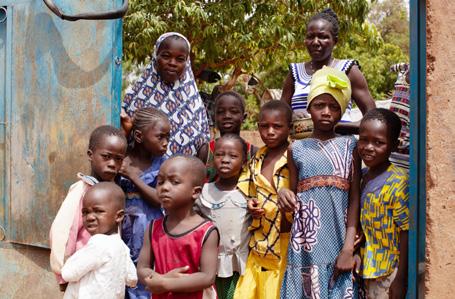
Since 2015, Burkina Faso has been facing a deepening security and humanitarian crisis that has led to large-scale displacement, driven mainly by armed violence from nonstate armed groups. Most displaced families arrive in host communities empty-handed, increasing their vulnerability and putting additional pressure on already limited host community resources like food, water, and firewood used as cooking fuel.
ZOA, together with Woord en Daad and local partner CREDO, implemented a relief project in Ouahigouya in 2025. We addressed not only the immediate need for food but also the underlying tensions between host communities and IDPs. Alongside three rounds of food assistance for 509 households (6,670 individuals), we introduced fuel-efficient stoves to help prevent environment-related conflict. Recognising the needs of both displaced families and vulnerable host households — and the sensitivities between them — we ensured that both groups were equally included in the intervention.
Peace and gender champions were trained to promote non-violence and dialogue within their communities and homes. They facilitated community dialogues that moved far beyond basic awarenessraising, leading to noticeable behavioural change. People felt more free to speak, community mediation increased, and conflicts were resolved or have entered into a process of active resolution.
Scan the QR code to a website overview of ZOA’S work in Burkina Faso.
Burundi
PRESSURE ON COMMUNITIES
In 2025, ZOA operated in a highly volatile environment shaped by climate shocks, severe land and watershed degradation, fuel shortages, administrative restructuring, and the national electoral period. Renewed conflict in eastern DR Congo compounded the complications, triggering two refugee influxes totalling more than 150,000 people entering Burundi. At the same time, increased returns of Burundians who were refugees in Tanzania added further pressure on already fragile communities and services. Competition over land and water intensified, disrupting development programming and requiring a rapid shift of organisational capacity toward humanitarian relief. The year underscored the fragility of resilience gains in contexts where humanitarian crises and structural challenges overlap.
ZOA continued to integrate working toward climateresilient livelihoods, inclusion, and land governance. Erosion control and agro-ecological support resulted in productivity gains. However, technical interventions alone proved to be insufficient without addressing household liquidity, collective watershed governance, and secure access to land.
Systematic land registration and women’s land rights emerged as central peacebuilding levers. Increased registration of husband and wife jointly on land certificates strengthened women’s agency and access to finance, while local land mediation mechanisms reduced disputes and contributed to social cohesion.
Scan the QR code to a website overview of
ZOA’S work in Burundi.
Results
Relief
Many ZOA country programmes have a relief component in their project portfolio. Yemen, Syria, and South Sudan are among the countries where relief work takes place alongside recovery projects. The Disaster Response Team (DRT) supports these countries on request, but also scans the crises developing elsewhere in the world in order to stand ready to respond when needed.
The situation in Burkina Faso remains highly volatile, and several regions are difficult to access. Three organisations, ZOA, Woord en Daad, and CREDO (Christian Relief and Development Organisation), bundle forces bundle forces to provide relief to people in acute need, while also striving to create conditions for long-term improvement. This approach requires a significant shift in mindset for beneficiaries: moving from reliance on free, life-saving assistance to a recovery process in which they regain independence from aid and rebuild their lives after a crisis.
The ZOA team in DR Congo requested support from the DRT following renewed violence by the armed rebel group M23, and a cholera outbreak. ZOA was able to fund an emergency project to address severe water shortages and food insecurity in the Sake region, 25 km northwest of Goma. As a result, cholera cases dropped sharply from 435 to 22, and hygiene conditions and access to safe water in health centres improved.
The Palestinian Territories were one of DRT’s priorities in 2025. The violence in Gaza continued and the humanitarian needs were extremely high, with large constraints in terms of security and access. In spite of
this, ZOA managed to pilot and afterwards scale up an innovative way of providing digital multi-purpose cash assistance to 1,924 war-affected persons in Gaza. In addition, ZOA assisted 26,625 persons with ready-to-eat meals. Furthermore, the Palestinian Authority awarded ZOA with registration, which enables ZOA to further scale up the response into the future.
In Morocco, ZOA finalised an emergency shelter project for 555 persons, victims of the September 2023 earthquake, implemented through local partner Operation Mercy. The intervention provided emergency shelter during the first phase and repairs to damaged homes in the second, recovery-focused phase. Progress temporarily slowed down during the winter of 2024-2025 due to exceptional snowfall and related access issues, but the project was completed in March 2025, achieving all objectives within the allocated budget.
Following the 2023 storm Daniel floods in Libya, in 2025 ZOA continued its WASH support through International Medical Corps by rehabilitating municipal water services, including providing essential spare parts to the local water authorities to ensure long-term system sustainability, benefitting 12,000 people. This activity linking relief to recovery was successfully completed in 2025.
A new project was launched in Afghanistan in response to the Kunar earthquake of 31 August 2025, which caused widespread destruction and resulted in over 5,000 deaths. ZOA supported Mission East in delivering life-saving assistance, including hygiene kits for 190 households, 180 Non-Food Item (NFI) kits containing blankets and sheets, and 185 food packages with wheat flour, rice, pulses, oil, and BP5 for children.
Burkina Faso
REDUCING CHOLERA AFTER FLOODS
In Gambella, delayed rains followed by heavy downpours led to severe flooding, especially affecting Gog, Lare, and Wantwa woredas (districts). This disaster displaced thousands of households, submerged farmland, and destroyed shelters across the three woredas. Communities lost homes, livestock, and crops, leaving them without livelihoods or means of recovery. The floods also caused the collapse of WASH systems, contaminating water sources and washing away sanitation facilities, elevating the risk of cholera.
ZOA responded within 72 hours with a rapid emergency response. The intervention addressed urgent humanitarian needs by providing essential WASH supplies and hygiene promotion to households who had lost their homes, assets, and access to basic services. Flood-affected families (3,266 households;18,023 individuals) in regained access to essential WASH supplies, significantly reducing the risk of cholera and other waterborne diseases.
Inclusive and protection-sensitive response was ensured, prioritising female-headed households, elderly persons, children, and persons with disabilities. Challenges in implementation, including road inaccessibility and newly emerging displacement, were handled by modifying distribution plans and deploying local staff.
Scan the QR-code for more information on ZOA’s disaster response activities.
‘I was selected to receive financial support through the project. This support became a ray of hope in our dark days, as we lived in a tarpaulin shelter.’
- Muisha Busisi Maria, mother of six children, Sake, Goma, DR Congo
Gender, diversity, and inclusion
ZOA recognises that peace, resilience, and sustainable development cannot be achieved without gender equality, social inclusion, and the celebration of diversity. Therefore, we integrate gender and social inclusion with our relief and recovery interventions to ensure reaching those most in need of assistance and equal access to opportunities and resources. We stand by people affected by conflict or disaster, the poor and most vulnerable, irrespective of ethnicity and nationality, gender, age, religion, qualities, abilities and disabilities, or any other distinctive feature. Within the organisation, ZOA is committed to putting people at the centre and ensuring a diverse workforce that is representative of the people we serve.
Sudan
EMPOWERING WOMEN, SUPPORTING COMMUNITIES
Sudan has endured decades of protracted conflict, economic collapse, and large-scale displacement. The siege of El Fasher and subsequent huge displacements and mass killings in October 2025 were an abhorrent symbol of the cruelty of this war. Most families have been uprooted, livelihoods destroyed, and vulnerable groups, especially women and children, have struggled to survive. Meanwhile, the availability of humanitarian assistance is continually shrinking.
ZOA aims for conflict-affected communities to meet their basic needs with dignity, moving from survival to recovery and resilience. The situation in Sudan meant that ZOA was simultaneously involved in relief and recovery projects. In 2025, ZOA Sudan reached nearly 150,000 people with life-saving aid, livelihood support, and climate-adaptive agriculture.
Under the SIPRA project, women-led associations have transformed subsistence farming into agri-business through training and small grants, launching initiatives like peanut oil production. A milestone achievement came when the women collectively repaid their bank loan on time, which earned them respect from sceptics. They also revived traditional communal labour (Nafir) to support the most vulnerable in preparing land, harvesting, and maintaining food security. The project demonstrates how women’s empowerment benefits entire communities.
Progress could have been greater if not for the ongoing conflict and persistent funding gaps, which have reversed earlier gains. The suffering of the Sudanese people remains significant, and ZOA is committed to supporting communities as they move from humanitarian dependence toward more sustainable, long-term solutions.
Scan the QR code to a website overview of ZOA’S work in Sudan.
Elshaday Tasfay, Ethiopia: ‘As a young staff member, I transformed from a hesitant participant to a confident leader. I am now able to lead dialogues, coordinate youth discussions, and mediate community conflicts. The training helped me find my voice and use it for peace.’
Ethiopia
GOVERNANCE, PEACEBUILDING, AND INCLUSION
The Tigray region struggles with fragmented conflict dynamics rooted in poor governance, resource scarcity, and gender-based violence. Traditional conflict resolution mechanisms have proven to be limited in addressing these structural causes. This results in marginalised groups encountering systemic barriers to participation and leadership.
To address these challenges in Tigray, ZOA implemented a project in collaboration with the Tigray Youth Association to strengthen local governance, peacebuilding, and inclusive development. The project empowers community-based organisations (CBOs) — especially those led by youth, women, and persons with disabilities — to engage in decision-making at the local level (kebele, woreda, and zonal). These communities are recovering from war and are experiencing heightened vulnerability. Youth participation, conflict sensitivity, gender diversity and inclusion are especially relevant in this context. In 2025, the project deepened its impact by partnering with two NGOs and 17 CBOs, creating tailored capacity-building plans to enhance their effectiveness and promote participatory governance.
Furthermore, ZOA provided training in Tigray to 40 CBO staff in financial management, monitoring and evaluation, gender, diversity and inclusion, and peacebuilding. ZOA also organised knowledge exchange forums for 45 local staff; trained 189 government officials in peacebuilding, inclusion, and building trusted relationships; and trained 213 youth leaders in leadership — thereby strengthening grassroots governance.
Scan the QR code to a website overview of ZOA’s work in Ethiophia.
AWARENESS RAISING
In a year marked by growing humanitarian needs and sharply declining institutional funding, ZOA’s role in giving voice to people affected by conflict has become even more vital. As our Executive Board reflects elsewhere in this report, we remain committed to standing with those who might otherwise go unseen, and to staying present in difficult contexts.
Growing support from private donors proved essential in 2025, reinforcing the deep connection within our constituency. That is why ZOA continues to invest in awareness raising and strong relationships with churches, businesses, schools, and individual supporters. On the following pages, we highlight some of last year’s encouraging results
LinkedIn followers increased from 18,419 to
21,779
Instagram followers increased from 2,297 to
2,795
Facebook followers increased from 7,904 to
8,130
The number of ZOA Business Ambassadors (ZBA) increased from six to eight teams, supporting recovery projects in: Burundi DR Congo Ethiopia Uganda and disaster relief efforts in several other countries.
‘It breaks my heart that people have lost everything’
Jolanda Dekker is an organiser of the door-to-door fundraising campaign in Gorinchem. She is deeply driven to support ZOA’s work. ‘It breaks my heart that people have lost everything, whether through war or disaster. By working on this campaign, I’m constantly reminded of how blessed my own life is. I can feed my children and I have a roof over my head. I wish those basic things for everyone. After all, one might just find oneself living in the wrong place in the world.’
Jolanda Dekker collects for ZOA:
7,015 primary school pupils
were made aware of the importance of ZOA’s work through guest lessons, an activity booklet, or via classmate presentations.
A total of EUR 1,918,595 was raised by 927 CHURCHES in the Netherlands.
ZOA’s media coverage
increased from 76 to 100 references in Dutch and international media.
MOST MEDIA ATTENTION
HIGHLIGHTED
ZOA’S response to the Myanmar earthquake, the crisis in Sudan, and the impact of
USAID’s budget cuts.
900 schoolhighstudents
at Driestar College raised EUR 173,000 for ZOA; 400 students at Calvijn College raised nearly EUR 40,000.
64 individuals
have included ZOA in their will: a growth of 11 legacy pledgers in 2025.
‘We really don’t need any new things’
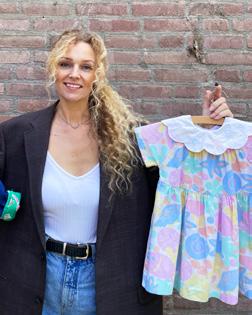
‘I’m a huge fan of thrift stores. Not only because they’re fun to browse, but also with creation in mind. When you see how many used items are still quite beautiful and usable, you realise we really don’t need new products in this world. Hopefully, we’ll pollute the earth much less’, says Ellis Pitta from Emmen. Ellis’s passion for conservation led her to start a webshop called Picco Bliss where she sells, among other things, second-hand children’s clothing. A portion of the proceeds goes to ZOA. ‘I’ve been a ZOA donor for a very long time because I’m deeply moved by the suffering that exists. When I think about the children who are hungry, it breaks my heart.’
‘I’m happy to contribute my time and talents’
Ronald Meems joined ZOA as a volunteer to help with odd jobs at the headquarters in Apeldoorn. He now works regularly with the facilities team, helping to organise building maintenance. ‘I have a warm heart for ZOA because I feel compassion for people in need. Caring for them from the wealthy Netherlands — this is what God calls us to do. If there’s anything I can do to make a difference with my time or talents, then that’s what I want to do.’
Ellis Pitta donates to ZOA:
Ronald Meems volunteers for ZOA:
Fundraising and Communication
Empowering people to make a change
The rapidly declining funding from Western governments in combination with a growth in humanitarian needs was challenging. In DR Congo, Sudan, Ukraine, and Gaza, we saw the devastating effects of armed conflicts: civilian casualties, mass displacement, and hunger. Amid these grim developments, we also found hope and encouragement in the ever-increasing support from the Dutch constituency.
René Vlug, Director of Fundraising and Communication, reflects on 2025 — a year in which ZOA’s constituency stepped up to support people in need.
Which crises received specific attention in ZOA’s 2025 communication?
At the start of 2025, we were confronted with the earthquake in Myanmar. Our team on the ground were able to respond very quickly. At the same time, we joined forces in reaching out to the media and engaging our supporters. This worked out well, and thousands of people responded to the campaign to support the people in Myanmar. Throughout the year, the deteriorating situation in Gaza was prominently in the news. We noticed that within our supporter base, the situation in Gaza was a sensitive subject and people had different perspectives on this crisis. In our communication, we stayed close to our mandate as a humanitarian
organisation. We showed how, be it on a small scale, we were able to support vulnerable people in need through a network of local churches and individuals. In Sudan, after the fall of Al Fasher in October, the media reported widely on the scale of human suffering in this conflict. We saw that many people were deeply moved by the plight of Sudanese families and wanted to support them.
Meanwhile, we also kept our supporters informed about crises that were less prominent in the media, such as people fleeing violence in DR Congo and South Sudan. Our donors enabled us to stand alongside them as well.
How did fundraising develop?
The support of the Dutch constituency is crucial for ZOA. Thankfully more supporters found their way to ZOA in 2025. More than ever, individuals and organisations became aware of the impact of their contributions. In a year when too many Western governments stepped back, we saw that many caring people wanted to make a meaningful difference for those in need.
We witnessed increasing engagement from both individuals and organisations — churches, foundations, and companies alike. Our supporters tell us: ‘We feel blessed and we want to share from what was given to us. If you can’t share, you can’t multiply.’
The number of individual donors grew from around 38,656 to 41,020; and overall fundraising in 2025 was strong, reaching a total of EUR 23,791,530. As a result, the percentage of private fundraising has
increased from 24.5% in 2024 to 32.2% in 2025. In this way, we managed to secure the targeted ratio between institutional funding and private funding.
What strategic choices are we making in our fundraising?
Our Christmas campaign carried the title, “See the person behind the need”. I believe this reflects our approach very well. In our communication, we always strive to tell the human story — this is how we make it personal. We do this through individual conversations with our supporters and through other channels such as our magazine and newsletters.
We strongly believe in relational fundraising, meaning we want to engage with everyone who supports ZOA as personally as possible. We value each donation, focus on keeping people well informed, and are open to conversation and questions. We care deeply about the sentiments and priorities of our constituency, so we regularly conduct research among our supporter base.
How do you look ahead to next year?
The environment in which we work is changing rapidly, so we must stay alert to these developments. Technological change is accelerating. We do not want to alter our relational fundraising approach, but the way we implement this must remain up to date. We will therefore invest in the systems needed to support this approach; for example, our customer relations management system is due for an update, which is planned for the year ahead. In
2026, we will also further strengthen and align collaboration among the communication, marketing, and account teams, empowering each team to utilise its core strength. Above all, we want to continue encouraging people to care for their “far-away neighbours” in need. Our call for 2026 will be to stay compassionate.
ZOA’s expenses
69,575,042
SZOA’s income
tichting Mitswah has been supporting ZOA projects for nearly three decades, including in complex contexts such as Yemen. Johan van Manen and his son Martin share their story — without wishing to put themselves at the centre: ‘Our role is to facilitate.’
They tell that from the very beginning the collaboration with former ZOA Country Director Corine Verdoold was special. She agrees: ‘It never felt like, “you provide the money and we carry out the work.” There was a sense of equality between us and Stichting Mitswah.’
Johan set up the Mitswah in 1995, driven by his conviction that entrepreneurship means more than making a profit. A meeting with a farmer who supported Georgian refugees provided the final push. ‘This is what the Gospel asks of me’, the farmer had said simply — a statement that stayed with Johan ever since.
In Yemen, Mitswah’s support proved crucial for various projects, such as solar-powered pumps that draw water from great depths and make it suitable for drinking. ‘In Yemen, water is a matter of life and death’, says Corine. For Johan and Martin, the mission is as crystal clear as the water from their wells: ‘For us, it’s all about people in need.’
A special collaboration
Partnerships to support more people
The humanitarian needs worldwide call for collaboration to support more people during — and following — crises. To maximise the effectiveness of its work, ZOA is actively involved in numerous partnerships, alliances, and networks. Some of these collaborations are highlighted within these pages.
Partnerships and Networks
Learning
ZOA is a learning organisation that collaborates with universities and knowledge institutions across the globe. ZOA also partners with local universities in the countries of implementation to increase project success.
In recent years, ZOA has collaborated with the Zero Hunger Lab of Tilburg University to enhance its humanitarian assistance by using data science to improve the quality of food security interventions and to contribute towards climate-resilient programming. ZOA teams share concrete case studies, and bachelor’s, master’s, and PhD students carry out valuable research under the academic guidance of Tilburg University staff.
The “Accelerating Value Chain and Agrifood Enterprise Development that Builds Food Systems Resilience in South Sudan” is a cooperative project among ZOA-Dorcas, Integrated Seed Sector Development (ISSD), Wageningen University, and Juba University. It aims to address national food system transformation challenges by implementing three proven approaches: integrated seed sector development, farmer agency for rural economies, and learning for adaptive programming.
A cooperation with Learning Loop is allowing ZOA to implement Outcome Harvesting as an evaluation methodology. This methodology is used in complex programming that involves behaviour change. The methodology allows testing of ZOA’s theory of change and gives a better understanding of the changes in environment and behaviour. In 2025 we used Outcome Harvesting to evaluate the effects of peacebuilding projects in South Sudan and a Food Security and Livelihoods project in Ukraine.
Learning partners: CALP Network, International Institute of Social Studies (ISS), KUNO
(Platform for Humanitarian Exchange in the Netherlands), Netherlands Food Partnership, LANDAC (The Netherlands Land Academy), Netherlands Water Partnership, Learning Loop, Prisma, Partos, CHS Alliance, Stichting Collecteplan, Radboud Universiteit, Zero Hunger Lab (Tilburg University), Theologische Universiteit Utrecht, and Wageningen University.
Programmatic cooperation
ZOA often works in consortia and in alliances. Dutch Relief Alliance (DRA) is a sterling example of one of our partnerships. DRA is a coalition of 14 Dutch humanitarian organisations that work in partnership with the Ministry of Foreign Affairs of the Netherlands and numerous local organisations. Within DRA, members collaborate to provide a timely, efficient, high-calibre and effective humanitarian response through equitable partnerships aiming to alleviate suffering and contribute to the resilience of people affected by crisis. In 2025, ZOA led the Syria Joint Response in addition to serving as a member of the joint responses in Sudan and Yemen. ZOA played a pivotal role in shaping and advancing DRA’s Risk Sharing Dialogues that promote fair and collaborative risk management across partnerships.
ZOA led several consortia, such as the We are Able! Consortium for Inclusive Food Security, implemented in six African countries; the TRIDE consortium in DR Congo, and the SIPRA Consortium in Sudan. The different consortia partners have complementary roles and expertise. In We are Able! for example, several partners contributed their expertise in disability inclusion, whereas ZOA brought food security knowledge to the consortium.
This cooperation resulted in improved food security for persons with disabilities.
Additional partnerships: Action Against Hunger, African Disability Forum (ADF), Aid Environment, Agriterra, Cadasta, Christelijk Noodhulp Cluster, Christian Blind Mission (CBM), Cordaid, Fiber Foods BV, Integral Alliance, International Rescue Committee, MAF, See You, The Hague Academy, The Leprosy Mission (Leprazending), Terre des Hommes, VNG International, and World Relief Sudan.
Lobby and advocacy
To support its core mission and values, ZOA continued its efforts to advocate for the most vulnerable in 2025. ZOA strongly believes in the need for synergy between policy and practice, and therefore lobbies for effective development policies to support the practical assistance it brings across the globe. As such, staff brought stories from Sudan to Parliament, supported initiatives to increase the budget for humanitarian aid, and took part in discussions about reforms of the humanitarian system.
One of the events in 2025 that was most consequential to ZOA’s work was the USAID shutdown. Their stop-work order meant that ZOA had to shut down operations in Colombia. When president Trump signed the decree in January, ZOA initiated a manifest, which was subsequently signed by up to 40 political parties, companies, and organisations. This manifest asked the Dutch government to step up in European spaces to see how the effects of the USAID shutdown could be minimalised. ZOA’s efforts resulted in an adopted motion in Parliament, and contributed to discussions about European countries increasing their humanitarian budget.
‘LIFE IS DIFFICULT’
Marta
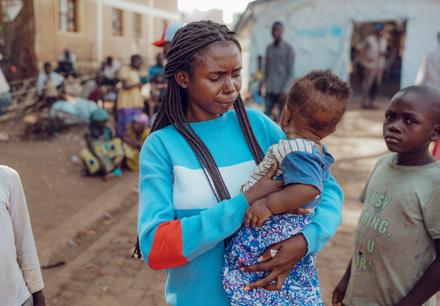
When violence erupted in her hometown in the Democratic Republic of the Congo, young mother Marta Fariji (21) was standing by the river with her sevenmonth-old baby. Warned by fleeing neighbours that returning home was too dangerous, she turned back towards the water, unsure of what to do next. Along the riverbank, people were desperately trying to find ways to cross the international border into Burundi. With no belongings and no money to pay for help, after two days a man at last offered to help Marta. After wrapping her baby carefully in a plastic sheet, he helped her swim with her baby through the rough current to the opposite shore.
Today, Marta lives with her child in a refugee camp in Burundi, where ZOA distributed reusable sanitary pads, jerry cans, kitchen utensils, buckets, sleeping mats, and blankets. Life is difficult, yet she does her best to adapt. ‘People here treat me like family’, she says. ‘They help me because I am human, just like them.’
Burundi
Governance and organisation
ORGANISATIONAL STRUCTURE
In line with ZOA’s current strategic direction, the organisation applies a hybrid operational model that combines direct implementation with collaboration through local partners. In most countries where it is active, ZOA maintains a local presence and works with its own in-country staff. ZOA will continue to use this hybrid model and is committed to advancing a transformative approach to localisation, thus strengthening local capacities, leadership, and ownership.
ZOA employs strong administrative policies and procedures and has a flat organisational structure. Decision-making takes place close to where projects are implemented and within the framework of the organisational strategy and policies. This structure ensures the flexibility needed to operate effectively across diverse country contexts. ZOA’s headquarters provides support and oversight in the areas of cohesion, continuity, roles and responsibilities, quality control, knowledge exchange, financial management, fundraising, and HR management. Country Directors report directly to the Executive Board.
ZOA’s Management Team in the Netherlands, the Country Directors, and the Executive Board collectively form the International Management Team. In 2025,
the International Management Team convened three times — in person or online — to exchange knowledge, discuss and agree on strategy and policies, share best practices, and review annual planning and reporting.
Organisation
Information Technology
Security
Quality
Human Resources
Fundraising & Communication
Finance & Control
ORGANISATION CHART
Supervisory Board
Chief Executive Officer
Chief Programme Officer
Country Directors Country Directors
Programme Development & Support
Institutional Relations
Disaster Response Team
Country Director Burundi Ethiopia DR Congo Uganda Ukraine Myanmar South Sudan Nigeria Sudan Yemen Syria
ZOA’s main asset is its highly committed staff — both in its country programmes and in the Netherlands — many of whom are prepared to go the extra mile despite challenging contexts and high workloads. In 2025, ZOA employed 775 staff members worldwide (headcount as at 31 December 2025), 109 (14%) of whom were based at ZOA Netherlands. Among the 666 country staff members, 33 (5%) were expatriates.
At the end of the year, the ZOA Netherlands’ workforce represented 84.2 FTE, with an average of 81.7 FTE over the course of 2025.
In 2025, as part of its HR strategy, ZOA continued implementing various “people at the centre” initiatives. This included the further roll-out of a new performance and professional development approach emphasising regular conversations and feedback, expanded use of the ZOA online
ZOA applies its own conditions of service and systems for job evaluation and remuneration, with all positions classified into salary scales. Manager/ Director of Programme Quality Manager/ Director of Operations Programme Manager
learning system (ZOA Academy), and the facilitation of several leadership training programmes. Given that many staff work in highly challenging environments, ZOA also provided a range of psychosocial support services. The roll-out of the new HR information system continued throughout 2025.
For staff employed in the Netherlands, these salary scales are adjusted annually based on the government sector wage index (“CBS-uurloon index CAO-lonen”). Their remuneration package includes a 13th month, holiday allowance, and a pension accrual scheme.
For staff in programme countries, different systems and remuneration packages apply, tailored to local labour market conditions, trends, and developments. In 2025, ZOA also launched a project to review its job evaluation framework.
VOLUNTEERS AND TRAINEES
Volunteers are a vital part of the organisation. ZOA offers many opportunities for volunteers to contribute to its mission, and they are deeply appreciated for their dedication and expertise.
Several volunteers informed schools and churches across the Netherlands about ZOA’s work; 1,007 people helped organise the annual national door-to-door fundraising collection, with over 10,000 volunteers participating in the actual collection. 11 volunteers worked at the headquarters. 584 volunteers supported the programme countries. In addition, one trainee joined a ZOA country programme staff.
Volunteers and trainees are treated much like employees: expectations, responsibilities, and tasks are jointly agreed, planned, and reviewed. They participate fully in office meetings and events and receive the same tokens of appreciation as staff. Work-related costs are reimbursed, and volunteers receive a commuting allowance.
WORKS COUNCIL
The Works Council represents ZOA staff in discussions with the Executive Board and closely monitors organisational interests, recognising that a healthy organisation
is essential to achieving ZOA’s mission and vision. In 2025, two new members joined the Works Council. A support panel, consisting of several former members, remains available for consultation on specific topics when needed.
In 2025, the Works Council was actively involved in discussions on salary indexation and strategic scenario planning. The Works Council and the Executive Board collaborated closely on these issues, and scenario planning remains an important topic on the agenda for 2026 and 2027. Consultations with the Supervisory Board also took place during the year.
Throughout 2025, the Works Council organised several walk-in sessions to engage with staff and gather input on various topics. The insights from these sessions were subsequently discussed with the Executive Board.
QUALITY STANDARDS AND CODES
Apart from ZOA’s own Code of Conduct, ZOA has committed to the following:
• The Code of Conduct for the International Red Cross and Red Crescent Movement and NGOs in Disaster Relief; and the humanitarian principles of humanity, neutrality, impartiality, and independence.
• The Code of Conduct of Partos, the Dutch association of NGOs working in Development Cooperation.
ZOA is fully committed to the Core Humanitarian Standard on Quality and Accountability (CHS) and has been externally CHS-certified. The CHS sets out nine commitments for humanitarian and development actors to measure and improve the quality and effectiveness of their assistance.
Scan the QR code to read ZOA’s Code of Conduct on the website.
Scan the QR code to read about our external CHS certification.
Scan the QR code to read the CBF Recognition Passport.
Scan the QR code to read the general risk register.
ZOA places communities and people affected by crisis at the centre of humanitarian action. In 2025, an external maintenance audit was successfully completed.
ZOA holds the certificate for the ISO 9001:2015 / Partos 9001 (version 2018) quality standard for management systems. An external maintenance audit was conducted in 2025, resulting in reconfirmation of the certificate.
ZOA has been recognised by the Central Bureau of Fundraising (CBF) for complying with the CBF Recognition Scheme Standards for Charitable Organisations.
DIGITAL SYSTEMS
In 2025, ZOA continued strengthening its digital systems, starting with an upgrade of Salesforce to modernise its CRM capabilities, supporting the ambition to grow in private fundraising. ZOA also digitalised the Feedback and Complaints process into a central service management system, ensuring secure, consistent reporting of programmatic feedback and alleged misconduct. Furthermore, the HR core and procurement modules were rolled out to additional country programmes, thus improving operational coherence across the organisation.
RISK MANAGEMENT
The contexts in which ZOA operates are often marked by extensive humanitarian needs, armed conflict, widespread poverty, weak governance, and challenging economic conditions. To fund its work, ZOA relies on donations from its private constituency as well as grants from institutional donors. The organisation also depends on the availability of qualified staff who are willing to work under often difficult circumstances. The combination of these and other factors creates significant complexity, risks, and challenges.
To safeguard the continuity and quality of the organisation and its programmes, ZOA applies an integrated risk management approach. Mitigating measures — at both strategic and operational levels — are embedded across internal processes and procedures to manage risks as effectively as possible. Given the combination of its mission to support people affected by conflict and disaster, and the challenging environments in which it works, ZOA maintains a realistic level of risk appetite, doing everything it can to mitigate risks, but also recognising that, due to the nature of the work, risks can never be eliminated entirely.
ZOA’s most significant risks and corresponding mitigating measures are listed in the organisation’s general risk register, which is evaluated annually and adjusted where necessary.
In 2025, extra attention was given to some specific risks and corresponding measures:
Reduced institutional funding
Approximately 75% of ZOA’s income used to come from institutional donors. In early 2025, the US government terminated more than 80% of its ongoing funding contracts. A substantial decrease in the availability of funds from other institutional donors can be anticipated for the coming years. Although ZOA had anticipated such developments, the speed and scale of these changes pose additional risks. While most country programmes continued as planned, ZOA was forced to terminate a major cash assistance programme for Venezuelan refugees in Colombia. This project had been the backbone of ZOA’s work in the country, and in the absence of prospects for renewed funding, the organisation made the difficult decision to phase out
operations in Colombia. The programme in Ethiopia was also affected by the USAID decision, resulting in project closures and staff redundancies.
In response to these developments, ZOA has prepared multiyear scenarios to enable timely adjustments to this new funding reality. To optimise the use of available funding, ZOA reviewed and adapted its strategies for institutional relations and proposal development, and increased the capacity of the Institutional Relations team. Meanwhile, ZOA’s private constituency continued its support, surpassing budgeted expectations. Plans to further strengthen private fundraising were implemented with even greater emphasis, recognising the importance of financial agility by increasing the relative share of private income.
Increasing focus on quality and compliance
Institutional donors impose strict conditions and quality requirements on the funding they provide. Over the years, compliance rules have become increasingly stringent, heightening the risk of cost ineligibility and potential damage to donor relationships. At the same time, ZOA is strongly committed to delivering high-quality services to programme participants and other stakeholders.
ZOA continually evaluates the quality of its work and the supporting processes and procedures. In 2025, renewed attention was given to strengthening the quality management system, including Internal Audit. The system was redefined, procedures for internal auditing and continuous improvement were reviewed and reinforced, and the capacity of the quality unit was enhanced. Dedicated capacity has been allocated to support quality management across all country programmes, and to have each country programme audited at least every two years.
Integrity
ZOA’s core values form the foundation of its organisational culture and promote consistency and transparency in the implementation of programmes and activities. The ZOA Integrity Framework guides everyday conduct across ZOA and its programmes, and ensures an adequate response whenever undesirable behaviour occurs or is suspected.
ZOA revised its Integrity Framework in 2025, adding an additional pillar to enhance safeguarding and prevention of misconduct. It now comprises four interconnected pillars: the ZOA Code of Conduct, prevention and safeguarding, procedures on reporting an (alleged) misconduct, and procedures for addressing reported misconduct. All staff and those acting on ZOA’s behalf must sign the Code of Conduct and receive training. Country Integrity Teams support the practical implementation of the framework, each comprising an Integrity Coordinator, and
male and female Integrity Support Persons for confidential advice and support to colleagues. An independent external advisor is available to all ZOA staff. Throughout the year, these teams organised regular trainings for staff, volunteers, and local partners, with particular emphasis on preventing sexual exploitation, abuse, and harassment (PSEAH). The Integrity & CHS Advisor at headquarters provided continuous guidance and facilitated a Community of Practice to promote learning across countries.
The systemic application of integrity standards and procedures has further improved across ZOA programme countries. Programme participants are increasingly well informed about expected staff behaviour, the type of issues they can report, and the various channels available for reporting concerns. Reporting mechanisms are diverse and adapted to local contexts and aim to maximise accessibility. They include verbal reporting, telephone lines, dedicated email addresses, and additional country-specific options. Specific attention was given to ensuring safe reporting of SEAH-related
Interpersonal 3 Bullying and misbehaviour.
Interpersonal SEAH 4 Sexual exploitation and harassment.
concerns and to promote survivor-centred responses.
In 2025, ZOA received 30 integrity complaints (29 cases) from staff, project participants, and other stakeholders. Three cases were carried over from 2024. Of these, 27 cases were investigated and closed. The remaining five cases were still under investigation at the end of 2025.
Lessons learned from the investigations included the need to strengthen clarity about and implementation and monitoring of the relevant procedures. In several countries, the need for more consistent training of (community) volunteers was identified.
In 2026, ZOA will continue to invest in the systemic application of integrity standards across the organisation and its partners. This includes further improving the availability of SEAH referral networks and survivor-focused support, regular moral peer review practices, and the introduction of moral judgement sessions.
One case of bullying was substantiated and a final warning was given. The other cases did not concern Code of Conduct breaches.
Sexual harassment within teams was partially substantiated in two cases. Final warnings were issued. One case of attempted SEA could not be substantiated and another case appeared to be unrelated to SEAH. Abuse of power and position 7 Abuse of power in management lines; conflict of interest related to employment and in recruitment.
Financial / material 18 Suspected fraud or corruption, such as theft, document manipulation, and kickbacks.
None of the abuse of power cases concerned breaches of the Code of Conduct. No conflict of interest was found in recruitment of new staff or employment.
Financial / material misconduct was found in six cases. These included cases of attempted corruption, theft from a non-ZOA warehouse, project data manipulation by ZOA volunteers, and leaking of procurement bid information. Formal warnings were given and volunteers were dismissed.
ZOA IS VERY GRATEFUL TO A WIDE VARIETY OF DONORS
GOVERNMENTS
And:
• the Embassies of the Kingdom of the Netherlands as in Ethiopia, Rwanda, and Sudan
EUROPEAN UNION
THIRD-PARTIES
UN ORGANISATIONS
CORPORATES
ROCKS FOUNDATION
And the ZOA Business Ambassador teams for Burundi, Colombia-Burundi, DR Congo, Ethiopia, Uganda, and the Disaster Response Team.
FOUNDATIONS
And many donors who wish to remain anonymous and, of course, our 41,020 private donors in the Netherlands.
ANNUAL FINANCIAL REPORT
2025
ZOA is committed to ensuring its income is used responsibly, efficiently, effectively, and transparently. We are pleased to share the consolidated financial accounts of Stichting ZOA, Sleutelbloemstraat 45, Apeldoorn.
Financial Report
Global humanitarian needs continued to escalate in 2025. Ongoing conflicts in regions such as Ukraine, Sudan, Syria, and DR Congo continued to require largescale response efforts. In addition, the year was marked by the devastating earthquake in Myanmar, leaving millions of people in urgent need. ZOA remained actively engaged in providing humanitarian aid under these challenging circumstances.
INCOME
ZOA looks back with gratitude on 2025 as a year of transition and adaptation. After reaching a historic milestone in 2024, with income exceeding EUR 100 million, total income in 2025 reached EUR 86.5 million. This decline was mainly due to reduced income from government subsidies, reflecting broader shifts in institutional donor priorities. At the same time, the strong growth of 21% in income generated through ZOA’s fundraising activities and thirdparty campaigns is encouraging. Contributions from private donors, churches, companies, and third-party campaigns increased significantly and now represent 33% of total income. This marks an important step towards a more balanced and diversified funding base.
SPENT ON OBJECTIVES
In line with reduced project volumes in several countries, total expenditures decreased to EUR 82.4 million (2024: EUR 98.8 million). ZOA maintained a strong focus on its mission: 93.6% of total expenditures were spent directly on programme objectives, well above the internal minimum threshold of 88% and underscoring the commitment to cost-effective impact.
A notable development in 2025 was the abrupt halt of USAID funding. This had immediate operational consequences, including ZOA’s difficult decision to discontinue activities in Colombia. This step was taken with great care for the staff and communities affected. The sudden funding stop illustrates the volatility of the humanitarian funding landscape and reinforces the importance of maintaining healthy reserves and diversified income.
STRENGTHENING FINANCIAL FOUNDATION
Despite the decrease in income, ZOA maintained a solid financial foundation. The positive result enabled strategic allocations to reserves based on a reassessment of the reserve position. This includes an addition to the continuity reserve to respond swiftly to unforeseen shocks and shortfalls. Furthermore, ZOA established a strategic project reserve to fund upcoming activities in line with its mission. These measures strengthen the organisation’s ability to respond to emerging crises and navigate uncertainties in funding.
LOOKING AHEAD
ZOA remains committed to delivering high-quality humanitarian assistance while continuing to build a more resilient financial foundation. The financial and operational developments of 2025 demonstrated again the need for agility and careful forecasting. Increased investments in fundraising are already producing positive results. At the same time, ZOA continues to prioritise flexibility in programme design and implementation, enabling faster adaptation to changing circumstances.
There is an important step towards a more balanced and diversity funding base
Balance sheet
After the appropriation of the result
Statement of income and expenditure
Cash flow overview
The cash flow statement was compiled utilising the indirect method.
The cash position should be analysed as part of the overall liquidity ratio, including current assets, short-term liabilities, provisions, and restricted programme funds. The ACID ratio measures ZOA’s ability to use its cash or quick assets for immediate payment or retirement of its current liabilities and provisions. In 2025, the working capital position increased by EUR 2.51 million. The liquidity ratio was 1.48 at the end of 2025. The required ratio for covering ZOA’s short-term commitments is at least 1.0, which means liquidity remained sufficient to cover all of the 2025 short-term obligations.
Explanatory notes to the annual accounts
GENERAL
The annual accounts were prepared in accordance with Guideline 650 of Fundraising Organisations (RJ650) on a historical cost basis or at fair value. Unless otherwise indicated, assets and liabilities are presented at historical costs. Income and expenditure are allocated to the period to which they relate. The annual accounts are presented in euros.
ASSOCIATED PARTIES
Stichting ZOA and ZOA Deutschland gGmbH have a mutual relationship that is formalised in a charter agreement. Following an assessment of its future perspective, the board of ZOA Deutschland gGmbH made the difficult decision to cease operations and transfer any remaining contractual commitments to ZOA Netherlands. The liquidation is now in its final phase. In accordance with Guideline 650 of Fundraising Organisations, no consolidated annual accounts have been prepared.
Stichting ZOA and Stichting Dorcas Aid International established Coöperatie Dutch Coalition for Relief and Development U.A. on 21 March 2022 to integrate operations in South Sudan into a joint working organisation. The purpose is to achieve
more impact for the people in South Sudan. In accordance with the guidelines, members will partially consolidate the annual figures in proportion to their interest (50% each).
CONSORTIA PARTNERS’ INCOME AND EXPENDITURE
Income and expenditure of consortia partners are excluded from indicator percentages unless otherwise indicated.
REPORTING PERIOD
The annual accounts were prepared based on a reporting period of one year. The financial year coincides with the Gregorian calendar year.
COMPARISON WITH THE PREVIOUS YEAR
The valuation principles and methods of determining the result are the same as those used in the previous year, with the exception of the changes in accounting principles as set out in the relevant sections.
TRANSACTIONS IN FOREIGN CURRENCIES
Transactions in foreign currencies are converted against the exchange rate applicable at the time of transaction. Monetary assets and liabilities in foreign currencies are converted at the balance sheet date in the functional currency against the rate applicable on that date. Non-monetary assets and liabilities in foreign currencies presented at historical cost are converted into euros at the exchange rates applicable on transaction dates. As a result, differences in exchange rates appear in the statement of income and expenditure.
USE OF ESTIMATES
Preparing the annual accounts requires the Executive Board to make judgements, estimates, and assumptions that influence the application of accounting principles, as well as the reported value of assets, liabilities, income, and expenditure. The actual outcome may deviate from these estimates. The estimates and underlying assumptions are assessed on an ongoing basis. Revised estimates are used once the estimate changes and in future periods when revisions may have consequences.
IMPAIRMENT
If the book value of an asset exceeds the value of the direct sales value — or the estimated present value of the future cash flow — impairment is charged, which equals the difference between the book value and the recoverable amount.
FINANCIAL INSTRUMENTS
During the normal course of business, ZOA uses various financial instruments that expose the organisation to market and credit risks. These relate to financial instruments that are included on the balance sheet. Receivables on the balance sheet mainly relate to donor receivables and are generally obtained from large institutional parties. Therefore, the credit risks incurred by these receivables are limited. ZOA runs very limited interest rate risks, as the organisation has no interest-bearing loans. The market value of the financial instruments stated on the balance sheet is approximately equal to their carrying amount. ZOA does not make use of financial derivatives.
UNCERTAINTIES IN LOCAL LEGISLATION
Financial risk may arise from tax and regulatory legislation. In the unstable environments in which the organisation works, legislation is subject to varying interpretations. Interpretations may also change over time. ZOA accepts a minimal to cautious risk level in relation to local (tax) laws and regulations in its programmes. Where management decided a position on the interpretation of relevant legislation could not likely be sustained, an appropriate amount has been included in the provisions within these financial statements.
The financial and operational developments of 2025 demonstrated the need for agility and careful forecasting
Accounting principles for the balance sheet
FIXED ASSETS
The intangible assets, buildings, refurbishments, fixtures, equipment, and means of transportation in programme areas are valued at acquisition or manufacturing cost, minus the cumulative depreciations or accumulated impairment losses, where relevant.
Partially or fully depreciated fixed assets are removed from the fixed asset registers only when sold or officially decommissioned. Maintenance expenses are only capitalised as assets if they extend the economic life of the object. Expenses regarding major maintenance of buildings are not accrued in a provision. These costs are registered directly in the statement of income and expenditure.
Depreciations are calculated as a percentage of the acquisition price according to the straight-line method. They are based on the estimated useful life of the assets. Land and tangible fixed assets for sale are not depreciated.
Financial fixed assets are stated at cost, less any provisions for permanent impairment, if necessary.
INVENTORIES
Stock is valued at the acquisition price, which comprises the purchase price and additional costs such as import duties, costs of transportation, and other costs that can be directly allocated to stock acquisition. The valuation of stock takes account of any downward value adjustments on the balance sheet date.
RECEIVABLES AND ACCRUED INCOME
Receivables are valued at fair value, including a provision for non-recoverability, if needed. Provisions are determined according to an individual assessment of the collectability of debts. Receivables that extend beyond one year after the balance date are not included.
SECURITIES
Securities are valued at fair value.
CASH AND CASH EQUIVALENTS
Cash and bank balances are valued at face value. Non-euro cash and bank balances are converted against actual rates at the year’s end, based on international EU rates.
RESERVES AND FUNDS
ZOA’s reserves and funds exist to achieve the organisation’s objectives. They can be summarised as follows:
Continuity reserves
The continuity reserve enables the organisation to meet its commitments in the event of unexpected financial shocks or income volatility. Restrictions on spending continuity reserves are determined by ZOA’s Executive Board.
Designated reserves
The designated reserves are established by the Executive Board to earmark funds for specific future purposes. Each reserve has a clearly defined objective and, where relevant, an expected duration.
Programme funds
Programme funds concern funding acquired for a specific use designated by the donor that has not yet been spent on these designations in the financial year.
Provisions
Provisions are recognised for legally enforceable obligations that exist at the balance sheet date, for which an outflow of resources will be required and a reasonable estimate can be made. Provisions are measured at the best estimate of the amount necessary to settle the obligation.
LIABILITIES
ZOA enters into obligations to donors in countries where ZOA implements programmes. A donor obligation is recognised once the Executive Board passes the resolution and communicates this to the donor and grant recipient, leading to a legally enforceable or actual obligation to spend funds on the agreed project. On the balance sheet, the remaining obligation is presented as a liability. Liabilities are calculated at fair value. Obligations extending beyond one year after the balance date are registered as long-term liabilities.
LEASING
Economic reality — including all facts and circumstances — determines whether a new contract is a lease contract. A lease contract is applicable when the fulfilment of the contract depends on the particular use of an asset or on the rights to use the asset. In the case of a financial lease, the asset is activated and depreciated as part of the fixed assets. ZOA does not normally engage in operational leases; however, in case of an operational lease, the lease terms are charged to the expenditure statement in line with the lease period. At ZOA, this applies to some office equipment in the Netherlands.
Accounting principles for the statement of income and expenditure
Income and expenditure are attributed to the period to which they relate. Unless explicitly stated otherwise, all proceeds are entered as income for their gross amount. Costs necessary to realise certain income are presented as expenditures in the statement of income and expenditure.
INCOME RAISED
Income from private individuals, companies, churches, and schools is recognised as income in the year of reception or at the moment of signing a contract, including that from door-to-door collections, legacies, contributions, donations, and gifts. In-kind donations are valued at a fair price. Legacies are recorded as income in the year in which the notary has communicated the content of the deed, or “akte van scheiding en deling”.Donations and legacies still under usufruct by the donating party are recognised in the year the usufruct ends; in these financial accounts, they are presented as off-balance sheet receivables.
Income recognition related to projects implemented by partners is based on periodically received expenditure reports. Contributions from other nonprofit organisations are accounted for as ”income from other non-profit organisations” at the amount received by the organisation. They are recognised in the year that income
from the campaign by other non-profit organisations was received or pledged. Campaigns by other non-profit organisations only include campaigns for which ZOA bears no risk.
PROJECT GRANTS FOR CONSORTIA PARTNERS
Project grants for consortia partners are recognised as both income and expenditure in the statement of income and expenditure in the year of the contractual spending obligation.
PROJECT GRANTS FOR ZOA
Operating grants are recognised in the statement of income and expenditure of the year that include the subsidised expenditure. Losses are taken into account if they originate in the relevant financial year and as soon as they are anticipated. In-kind grants, often food and relief supplies, are valued at the cost stated in the contract relating to the goods. If the contract does not provide for this, the goods are valued at fair value at the place of delivery. If goods received are not based on a contract and a reliable valuation is lacking, the transaction is not accounted for in the income and expenditure statement.
INCOME IN EXCHANGE FOR THE DELIVERY OF PRODUCTS AND SERVICES
Income raised from products or services delivered is presented as a net figure. The direct costs are deducted from the gross income and reported as net income.
EXPENDITURE
Stakeholders require insight into the level and breakdown of the costs of fundraising organisations, thus the notes provide a specification of these costs in accordance with model C of the RJ 650 guidelines. Employee costs (salary, social security, pension, etc.) are not presented as a separate item in the statement of income and expenditure, rather these costs are included in other expenditure components.
SPENT ON OBJECTIVES
Expenditures spent on objectives include amounts allocated for implementation costs and activities necessary to meet the objectives during the financial year. Expenditures include subsidies to local partners.
FUNDRAISING EXPENSES
All costs incurred for activities aimed at encouraging people to donate money toward one or more of ZOA’s objectives are earmarked as costs for fundraising. This means the costs for publicity and public relations are regarded as costs of fundraising unless they are for education and awareness raising. Often, activities contain elements of both information sharing (awareness raising) and fundraising. In such cases, the portion of the costs relating to the information activity will be allocated to that activity. The allocation formula is decided in advance, depending on the objectives for each activity.
MANAGEMENT AND ADMINISTRATION EXPENSES
Costs of management and administration are expenses that ZOA incurs for (internal) management and administration that cannot be directly allocated to ZOA’s objectives or fundraising income.
BALANCE OF FINANCIAL INCOME AND EXPENSES
Exchange rate differences arising upon the settlement or conversion of monetary items are recognised in the statement of income in the period they are realised, unless hedge accounting applies. Other income and expenses are recognised in the period they appear.
CASH FLOW OVERVIEW
The cash flow statement is compiled utilising an indirect method that prescribes a distinction between cash flow from operational activities and cash flow from investments and financial activities.
The information for the cash flow statement is taken directly from the statement of income and expenditure as well as from the changes in balance sheet positions at the beginning and end of the year.
Explanatory notes to the balance sheet
In 2025, the investments of EUR 0.5 million consisted primarily of inventory, equipment, and vehicles used in country programmes. Divestments are assets sold by ZOA after they became redundant or economically too expensive to operate. Land and buildings in the Netherlands were acquired in 2013 and have a WOZ valuation of EUR 0.92 million.
Receivables from donors
Receivables from donors relate to project grant instalments for projects implemented by ZOA and include the amounts for partners. All receivables are claimable within one year.
The securities are valued at actual value and are available without restrictions.
ZOA aims to limit large balances in unstable foreign currencies. On 31 December 2025, foreign currencies held by ZOA were local currencies needed for short-term project implementation. ZOA is aware of concentration risks and tries to divide its cash between different banks. Cash held in programme countries is needed for project implementation purposes in the short term. RECEIVABLES AND ACCRUED INCOME 2
CASH AND CASH EQUIVALENTS 4 31 Dec 2025 31 Dec 2024
Pounds in the Netherlands
Pounds in programme countries - -
Cash and bank balances are freely available without restrictions. The cash position should be analysed as part of the overall liquidity position (see the cash flow overview and liquidity ratio). Of this amount, approximately EUR 32.1 million consists of earmarked funds and donor contributions received in advance which will be spent after 2025.
ZOA aims to keep its cash and cash equivalents balances in EUR, USD, or GBP, depending on the currency of the planned expenditure. Contracts with institutional donors can contain obligations in non-EUR currency, which lead to rate differences. To minimise risk, a separate exchange rate reserve was formed. In general, these rate differences do not influence programme activities.
Financial Report
Liabilities
The net changes in reserves correspond with allocations from the 2025 result shown in the income and expenditure statement.
ZOA RESERVE POLICY
ZOA needs to maintain reserves for strategic, financial, and operational risks. ZOA does not keep more reserves than reasonably necessary to realise its organisational goals. If the reserves are needed to cover a particular risk, the Executive Board and the Supervisory Board base the level of the reserve on a risk assessment and take precautionary measures to reduce risks.
CONTINUITY RESERVE 5
ZOA maintains a continuity reserve to safeguard the organisation’s ability to continue operations in the event of unexpected financial shocks or income volatility. This reserve is permitted under the Dutch ANBI regulation, which allows nonprofit organisations to retain a buffer
to ensure continuity. The reserve is intended to cover strategic, financial, operational, and unforeseen risks, including but not limited to:
• decreasing or suddenly lost institutional or private income,
• liquidity shortages, inflationary pressures, fraud, or challenges related to operating in sanctioned countries,
• IT failures, cyberattacks, or security incidents, and
• obligations arising from a sudden reduction or cessation of programme activities.
The size of the reserve is calculated based on the average cost level of ZOA’s own work organisation over the previous three years. For 2025, ZOA proposed a policy-based target range of 100% – 130% of the cost level of the work organisation, a more conservative range than the ANBI maximum. This lower target is justified because ZOA also maintains several designated reserves for specific purposes. Based on the 2025 financial results, the continuity reserve is within this range.
DESIGNATED RESERVES 6
Designated reserves are established to earmark funds for specific future purposes. Each reserve has a clearly defined objective and, where relevant, an expected duration. These reserves are reviewed annually. The following designated reserves are maintained by ZOA:
Pre-financing
This reserve covers liquidity risks associated with pre-financing programme expenditures for institutional donors. Such pre-financing allows ZOA to continue project implementation at the quality level and pace ZOA deems necessary, despite delays in payments by donors.
Exchange rate reserve
This reserve is intended to cover future foreign exchange rate risks. Additions are made from realised exchange gains. Based on past experience, the amount ranges from EUR 0.5 million to 1,5 million. In 2025, a dotation was made in order to bring the reserve to the appropriate level.
Financing fixed assets
This reserve reflects the value of ZOA’s investments in fixed assets such as buildings, installations, and vehicles that are in use. This is meant to counterbalance the financial resources used for tangible fixed assets in line with RJ650.308.
Programme reserve
This reserve covers compliance risks related project expenses that may be unrecoverable from donors.
Strategic investment fund
The strategic investment fund reserve was formed for the implementation of the strategic investment plan for 2025 – 2028. With this reserve, ZOA plans to make additional investments to strengthen the relationship with its constituency.
Programme innovation
This reserve supports innovation and improvements in programmes and business processes, particularly in IT.
Disaster response reserve
The disaster response reserve funds one of ZOA’s primary activities. ZOA must be financially able to respond to urgent requests for aid without delay. This reserve enables ZOA to rapidly initiate emergency interventions or to launch a new country programme. Its size is based on the estimated emergency needs and expected start-up costs for new programme settings over the next two years.
Strategic project reserves
This reserve consists of funds not needed for the above risk-related reserves and is available for financing future activities in line with ZOA’s mission. Funds allocated to this reserve must be spent within two years and are used as strategically as possible.
The Programme Funds include available financial means that donors or contributors have earmarked for a particular programme or project — either emergency relief or rehabilitation. Because private and institutional funding is unpredictable, the pattern of project income versus project expenditure may fluctuate. Where possible, surpluses and deficits are settled within funds and projects with similar goals. Remainders are added to or withdrawn from other reserves.
Provisions for potential liabilities for costs and claims relate to ineligible project costs, pensions, and tax (re)payments in programme countries. On 31 December 2025, it was uncertain if these costs required payment, but a provision was deemed necessary. A reasonable estimate could be made based on the amount of project spending and local pension provision. The projected outflow of resources is expected to occur during subsequent years, but the exact timing cannot be predicted.
CURRENT
Accruals to donors 9
Ministry of Foreign Affairs, Embassies, RVO the Netherlands
16,999,187 European Union (ECHO / INTPA)
organisations
Canadian Foodgrains Bank (CFGB)
Tearfund
Other donors
Deutsche Gesellschaft für Internationale Zusammenarbeit (GIZ) 55,167
US Agency for International Development (USAID) 13,010World Renew - 52,267 Funds and third parties 3,252,272 2,558,145
Other liabilities and accruals 10
Contractual obligations to be paid to partners 2,795,225 3,490,007 Staff related liabilities
ACCRUALS TO DONORS 9
Institutional donor contributions received in advance — to be spent after 2025 — are shown as liabilities. ZOA received these payments based on programme proposals and contracts. ZOA is required to spend funds accordingly and return money to its original donor if a commitment is not fulfilled.
OTHER LIABILITIES AND ACCRUALS 10
Contractual obligations to be paid to partners
These liabilities concern projects implemented by partner organisations requiring ZOA funding.
Staff related liabilities
These liabilities relate to severance pay, holiday allowance and annual leave provisions for staff. They can vary per country as they are based on government and sector regulations.
OFF-BALANCE SHEET LIABILITIES
Liabilities not presented on the balance sheet at the end of the financial year relate to office rent and other contracts in countries totalling EUR 50,000. These off-balance liabilities are entirely related to short-term liabilities (maximum of one year).
Explanatory notes to the statement of income and expenditure
Income
TOTAL INCOME AND FUNDING COMPOSITION
INCOME GENERATED FROM ZOA’S FUNDRAISING ACTIVITIES AND THIRD-PARTY CAMPAIGNS
ZOA’s total income decreased from EUR 101.5 million in 2024 to EUR 86.5 million in 2025, representing a decline of EUR 15.0 million (14.7%), primarily due to lower government subsidy income. In contrast, income generated through ZOA’s fundraising activities and third-party campaigns grew significantly: 21% compared to 2024 and 31% above budget. As a result, the overall funding composition improved: government subsidies represented 67.5% of total income, while ZOA’s fundraising and third-party campaigns accounted for 32.5%. The ratio between unearmarked and earmarked income remained consistent with budget expectations. The income components are specified in the following paragraphs.
FROM PRIVATE INDIVIDUALS 11
General income from contributions, donations, and gifts increased from EUR 6.7 million to EUR 7.9 million — a positive variation of EUR 1.2 million — in relation to the 2024 actuals. Categorically, income from legacies is hard to predict and fluctuates substantially over the years.
INCOME FROM GOVERNMENT SUBSIDIES
FROM GRANTS FOR CONSORTIA PARTNERS 12
of Foreign Affairs - We are Able!
Relief Alliance - Syria Joint Response
When taking the lead in a consortium, ZOA assumes contractual responsibilities for the entire consortium and is obliged to report total consortium income and expenses. Therefore, the consortia amount shown as income in the statement of income and expenditure equals the amount appearing in the expenses.
Income from institutional donors reflects contributions from the Dutch government, other governmental donors, the European Union, United Nations organisations — such as UNHCR, UNDP, UNICEF, WFP — and others. Whether and to what degree donors are willing to contribute to an emergency situation or reconstruction projects during the year is difficult to anticipate in a budget. The actual figure — EUR 49.4 million — is significantly lower than the 2024 actual figure of EUR 59.8 million. ZOA’s policy is to partner with donors when their priorities meet the programme goals and mandate.
Embassy of the Kingdom of the Netherlands in
Embassy of the Kingdom of the Netherlands in Sudan
Embassy of the Kingdom of the Netherlands in Uganda
of the Kingdom of the Netherlands in Burundi
of the Kingdom of the Netherlands
INCOME FROM OTHER NON-PROFIT ORGANISATIONS 14
In 2025, income from other non-profit organisations increased from EUR 8.2 million in 2024 to EUR 9.9 million in 2025. This income category is a combination of funds, third parties, churches, and schools.
INCOME IN EXCHANGE FOR THE DELIVERY OF PRODUCTS AND SERVICES 15
Income in exchange for the delivery of products and services represents the income from sold products and services delivered. Direct costs are immediately deducted, and the net income is reported in this category.
OTHER INCOME 16
income from Coöperatie Dutch Coalition for Relief and Development U.A.
Financial Report
Expenditure
TOTAL EXPENSES DURING THE FINANCIAL YEAR
Total expenses amounted to EUR 82.4 million in 2025, representing a decrease of EUR 16.5 million compared to the previous financial year. This reduction is primarily the result of lower project volumes in several country programmes. Despite this reduction, ZOA ensured that resources were deployed in a highly effective manner: 93.6% of all expenditures were spent directly on objectives, remaining well above the internal minimum threshold of 88%. Expenditure related to fundraising and to management and administration remained well within the boundaries set by organisational policy, reflecting ZOA’s continued commitment to prudent cost management and financial stewardship.
PROJECTS SPENT THROUGH CONSORTIUM PARTNERS
When ZOA takes the lead in a consortium, it assumes contractual responsibilities for the consortium as a whole and is obliged to report total consortium income and expenses. Therefore, the consortia amount shown as an expense in the statement of income and expenditure equals the amount appearing in the income.
SPENT ON OBJECTIVES IN COUNTRIES
ZOA’s budget was drawn up in September 2024. It was based on a project portfolio and the opportunities known at that time. To initiate programme activities during the financial year, ZOA depends on government approval, donor approval, and the circumstances in the countries in which it operates. As a result, projects may start later or have a lower budget than initially planned. Assets required for a specific project — and fully subsidised by the donor — are presented as project expenditures.
Preparation and coordination include the direct attributable costs of the departments.
EDUCATION AND AWARENESS RAISING 19
Education and awareness raising are ZOA’s statutory objectives. Costs include education of and awareness raising among the general public at schools and among ZOA constituents in particular.
FUNDRAISING EXPENSES 20
The increase in fundraising expenses in 2025 is the result of a deliberate strategic choice to invest more in ZOA’s fundraising activities. This aligns with the organisation’s long - term ambition to strengthen and diversify its income base. At the same time, government subsidies remain under pressure, making it increasingly important to reduce dependency on these funding streams. ZOA therefore expects this upward trend in fundraising expenses to continue to a maximum of 8% in the coming years.
MANAGEMENT AND ADMINISTRATION EXPENSES 21
ZOA incurs costs for internal management and administration that are paid in or from the Netherlands and which cannot be directly attributed to objectives or fundraising. These costs include a percentage of several cost categories, as shown in the table ”Cost allocation to management and administration.” Based on ZOA’s operations and resulting managerial and administrative responsibilities, the Executive
COST ALLOCATION TO MANAGEMENT AND ADMINISTRATION % Explanation
Allocation only from ZOA Netherlands departments
Building and depreciation pro rata
Finance & Control
50 The other 50% allocated to preparation and coordination
IT pro rata Support of countries allocated to preparation and coordination
Human Resources pro rata
Board, security and managment support
40
BALANCE OF FINANCIAL INCOME AND EXPENSES 22
The balance of financial income and expenses shows an overall negative result in 2025, primarily driven by currency exchange differences resulting from the settlement and revaluation of monetary items. These losses were mainly caused by the weakening of the US dollar against the euro, influenced by inflation concerns and geopolitical tensions. In line with ZOA’s financial policy, this negative exchange result was covered through a withdrawal from the designated exchange -rate reserve, ensuring that operational performance was not impacted.
ATTRIBUTION OF COSTS
BREAKDOWN OF STAFF COSTS
Costs are allocated to the prescribed categories: Objectives, Fundraising, Management, and Administration, in accordance with the ”Recommendation application of RJ 650 for costs management and administration” of Goede Doelen Nederland, the Dutch industry body for fundraising institutions.
Costs have been allocated according to the following criteria::
A) SPENT ON OBJECTIVES IN COUNTRY PROGRAMMES
The amount of EUR 71.4 million represents the total expenditure in the countries related to direct project costs (including staff costs of posted field workers and office expenses). The expenditure is directly related to the implementation of projects in countries outside the Netherlands. Costs of ZOA offices in countries are fully accounted for under this objective.
B) SPENT ON OBJECTIVES IN / FROM THE NETHERLANDS
Costs that are directly attributable to the implementation of the objectives — or that contain a statutory objective — of ZOA:
• The direct costs relating to education and awareness raising are EUR 1.0 million, which is a statutory ZOA objective.
• The preparation and coordination costs from the Netherlands are EUR 5.4 million. These costs mainly relate to costs incurred by the Disaster Response Team, Programme Development & Support Department, Finance & Control Department, Quality Unit, the IT Unit, and selected costs of other departments.
C) FUNDRAISING EXPENSES
Fundraising expenditures are the total costs of raising project grants and third-party campaigns at a total of EUR 3.2 million.
D) COSTS ALLOCABLE TO MANAGEMENT & ADMINISTRATION
Expenditures in departments in the Netherlands are costs that cannot be directly allocated to objectives or fundraising. These expenditures of EUR 1.2 million consist of socalled “mixed costs” allocated to Management and Administration for a specific percentage per department. These percentages have been established based on prudency criteria (number of workplaces, deployment of staff, etc.) and according to consistent policy.
REMUNERATION BOARD AND EXTERNAL AUDITORS
ZOA’s Supervisory Board members receive no remuneration. They can, however, claim expenses incurred in the course of their duties as Supervisory Board members. The rules for claiming expenses are similar to those applicable to ZOA employees.
The remuneration of the Board of Directors has been set in accordance with the guidelines and BSD scales for CEOs of Goede Doelen Nederland, the Dutch industry body for fundraising institutions. The policy is updated periodically. The regulation sets a maximum standard for annual income based on weighted criteria. This led to a so-called BSD score of 492 points for ZOA’s CEO and a maximum annual income of EUR 187,861. This also led to a so-called BSD score of 452 points for ZOA’s CPO and a maximum annual income of EUR 163,473. Based on their responsibilities and scope of work, the CEO and CPO positions belong to scales J and I, respectively.
In 2025, the actual annual income of board members included in the assessment, based on applicable limits, amounted to EUR 121,805 for C.T. Lukkien (0.9 FTE/12 months) and EUR 126,958 for C.W.A. Visser (1.0 FTE/12 months). In both cases, the salary level is well below the applicable maximum.
REMUNERATION EXTERNAL AUDITORS Actual
In countries of operation, (local) project audit costs are charged to project or country budgets and are subsequently represented as programme costs in the present financial statements. These costs are not included in the table above.
APPROPRIATION OF RESULTS
The result has been appropriated according to the breakdown indicated in the statement of income and expenditure.
Independent auditor’s report
TO: THE EXECUTIVE BOARD AND SUPERVISORY BOARD OF STICHTING ZOA
REPORT ON
THE AUDIT OF THE FINANCIAL STATEMENTS 2025 INCLUDED IN THE ANNUAL REPORT
Our opinion
We have audited the financial statements 2025 of Stichting ZOA based in Apeldoorn.
In our opinion, the accompanying financial statements give a true and fair view of the financial position of Stichting ZOA as at December 31, 2025 and of its result for 2025 in accordance with the Guideline for annual reporting 650 ‘Fundraising organizations’ of the Dutch Accounting Standards Board.
The financial statements comprise:
1. tthe balance sheet as at December 31, 2025;
2. the profit and loss account for 2025;
3. the cashflow statement 2025; and
4. the notes comprising of a summary of the accounting policies and other explanatory information.
Financial Report
Basis for our opinion
We conducted our audit in accordance with Dutch law, including the Dutch Standards on Auditing. Our responsibilities under those standards are further described in the ‘Our responsibilities for the audit of the financial statements’ section of our report. We are independent of Stichting ZOA in accordance with the Verordening inzake de onafhankelijkheid van accountants bij assurance-opdrachten (ViO, Code of Ethics for Professional Accountants, a regulation with respect to independence) and other relevant independence regulations in the Netherlands. Furthermore we have complied with the Verordening gedrags- en beroepsregels accountants (VGBA, Dutch Code of Ethics).
We believe the audit evidence we have obtained is sufficient and appropriate to provide a basis for our opinion.
REPORT ON THE OTHER INFORMATION INCLUDED IN THE ANNUAL REPORT
The annual report contains other information, in addition to the financial statements and our auditor’s report thereon that consists of:
• ZOA’s purpose and vision;
• Introduction;
• ZOA Worldwide in 2025
• Reflections of the Executive board;
• ZOA’s core values;
• Vasyl’s story (Ukraine)
• Statement of the Supervisory Board;
• ZOA’s approach and strategy;
• Daw Aye Aye Khine’s story (Myanmar).
Based on the following procedures performed, we conclude that the other information:
• is consistent with the financial statements and does not contain material misstatements;
• contains the information that is required by the guideline for annual reporting 650 ‘Fundraising organizations’.
We have read the other information. Based on our knowledge and understanding obtained through our audit of the financial statements or otherwise, we have considered whether the other information contains material misstatements.
By performing these procedures, we comply with the requirements of the Dutch Standard 720. The scope of the procedures performed is substantially less than the scope of those performed in our audit of the financial statements.
Management is responsible for the preparation of the other information in accordance with the Guideline for annual reporting 650 ‘Fundraising organizations’ of the Dutch Accounting Standards Board.
DESCRIPTION OF RESPONSIBILITIES REGARDING THE FINANCIAL STATEMENTS
Responsibilities of management and the supervisory board for the financial statements
Management is responsible for the preparation and fair presentation of the financial statements in accordance with the Guideline for annual reporting 650 Fundraising organizations’ of the Dutch Accounting Standards Board. Furthermore, management is responsible for such internal control as management determines is necessary to enable the preparation of the financial statements that are free from material misstatement, whether due to fraud or error.
As part of the preparation of the financial statements, management is responsible for assessing organization’s ability to continue as a going concern. Based on the financial reporting framework mentioned, management should prepare the financial statements using the going concern basis of accounting, unless management either intends to liquidate the organization or to cease operations, or has no realistic alternative but to do so.
Management should disclose events and circumstances that may cast significant doubt on the organization’s ability to continue as a going concern in the financial statements. The supervisory board is responsible for overseeing the company’s financial reporting process.
Our
responsibilities for the audit of the financial statements
Our objective is to plan and perform the audit engagement in a manner that allows us to obtain sufficient and appropriate audit evidence to provide a basis for our opinion.
Our audit has been performed with a high, but not absolute, level of assurance, which means we may not detect all material errors and fraud during our audit. Misstatements can arise from fraud or error and are considered material if, individually or in the aggregate, they could reasonably be expected to influence the economic decisions of users taken on the basis of these financial statements. The materiality affects the nature, timing and extent of our audit procedures and the evaluation of the effect of identified misstatements on our opinion.
We have exercised professional judgement and have maintained professional skepticism throughout the audit, in accordance with Dutch Standards on Auditing, ethical requirements and independence requirements. Our audit included among others:
• identifying and assessing the risks of material misstatement of the financial statements, whether due to fraud or error, designing and performing audit procedures responsive to those risks, and obtaining audit evidence that is sufficient and appropriate to provide a basis for our opinion. The risk of not detecting a material misstatement resulting from fraud is higher than for one resulting from error, as fraud may involve collusion, forgery, intentional omissions, misrepresentations, or the override of internal control;
• obtaining an understanding of internal control relevant to the audit in order to design audit procedures that are appropriate in the circumstances, but not for the purpose of expressing an opinion on the effectiveness of the entity’s internal control;
• evaluating the appropriateness of accounting policies used and the reasonableness of accounting estimates and related disclosures made by management;
• concluding on the appropriateness of management’s use of the going concern basis of accounting, and based on the audit evidence obtained, whether a material uncertainty exists related to events or conditions that may cast significant doubt on the company’s ability to continue as a going concern. If we conclude that a material uncertainty exists, we are required to draw attention in our auditor’s report to the related disclosures in the financial statements or, if such disclosures are inadequate, to modify our opinion.
Our conclusions are based on the audit evidence obtained up to the date of our auditor’s report. However, future events or conditions may cause a company to cease to continue as a going concern;
• evaluating the overall presentation, structure and content of the financial statements, including the disclosures; and
• evaluating whether the financial statements represent the underlying transactions and events in a manner that achieves fair presentation.
We communicate with the supervisory board regarding, among other matters, the planned scope and timing of the audit and significant audit findings, including any significant findings in internal control that we identify during our audit.
We provide the supervisory board with a statement that we have complied with relevant ethical requirements regarding independence, and to communicate with them all relationships and other matters that may reasonably be thought to bear on our independence, and where applicable, related safeguards.
Lelystad, 21 May 2026
Crowe Foederer Audit & Assurance B.V.
Signed on the original: P.H.M. Huijsmans RA AA
Budget 2026
EXPENDITURE
Colophon
ZOA
Sleutelbloemstraat 45, Apeldoorn
PO Box 4130, 7320 AC Apeldoorn
The Netherlands
T +31 (0)55 36 63 339
E info@zoa.ngo
ZOA is registered with the Chamber of Commerce under number 41009723
Executive Board
C.T. Lukkien – Chief Executive Officer
C.W.A. Visser – Chief Programme Officer
Text and editing
ZOA staff
Diana Lynn Denton
Project management
Els Sytsma
Photography
Page 28, photo Else Lotte Faasse; page 32, photo Jolanda Dekker: Elisabeth Ismail Photography; photo Ellis Pitta: courtesy of Pitta family. All other photos: Lieuwe Siebe de Jong
Design www.tinekewerkt.nl
Printed by De Bunschoter B.V.
The information in this report may be reproduced (excluding the photos), provided ZOA is notified and this annual report is acknowledged as the source. ZOA would appreciate receiving a copy of the publication.